EP4342460A1 - Lipidnanopartikel mit nukleinsäurefracht - Google Patents
Lipidnanopartikel mit nukleinsäurefracht Download PDFInfo
- Publication number
- EP4342460A1 EP4342460A1 EP22196901.7A EP22196901A EP4342460A1 EP 4342460 A1 EP4342460 A1 EP 4342460A1 EP 22196901 A EP22196901 A EP 22196901A EP 4342460 A1 EP4342460 A1 EP 4342460A1
- Authority
- EP
- European Patent Office
- Prior art keywords
- lnp
- mol
- lipid
- amine
- fraction
- Prior art date
- Legal status (The legal status is an assumption and is not a legal conclusion. Google has not performed a legal analysis and makes no representation as to the accuracy of the status listed.)
- Withdrawn
Links
Images




Classifications
-
- A—HUMAN NECESSITIES
- A61—MEDICAL OR VETERINARY SCIENCE; HYGIENE
- A61K—PREPARATIONS FOR MEDICAL, DENTAL OR TOILETRY PURPOSES
- A61K9/00—Medicinal preparations characterised by special physical form
- A61K9/48—Preparations in capsules, e.g. of gelatin, of chocolate
- A61K9/50—Microcapsules having a gas, liquid or semi-solid filling; Solid microparticles or pellets surrounded by a distinct coating layer, e.g. coated microspheres, coated drug crystals
- A61K9/51—Nanocapsules; Nanoparticles
- A61K9/5107—Excipients; Inactive ingredients
- A61K9/5123—Organic compounds, e.g. fats, sugars
-
- A—HUMAN NECESSITIES
- A61—MEDICAL OR VETERINARY SCIENCE; HYGIENE
- A61K—PREPARATIONS FOR MEDICAL, DENTAL OR TOILETRY PURPOSES
- A61K31/00—Medicinal preparations containing organic active ingredients
- A61K31/70—Carbohydrates; Sugars; Derivatives thereof
- A61K31/7088—Compounds having three or more nucleosides or nucleotides
- A61K31/7105—Natural ribonucleic acids, i.e. containing only riboses attached to adenine, guanine, cytosine or uracil and having 3'-5' phosphodiester links
-
- A—HUMAN NECESSITIES
- A61—MEDICAL OR VETERINARY SCIENCE; HYGIENE
- A61K—PREPARATIONS FOR MEDICAL, DENTAL OR TOILETRY PURPOSES
- A61K48/00—Medicinal preparations containing genetic material which is inserted into cells of the living body to treat genetic diseases; Gene therapy
- A61K48/0008—Medicinal preparations containing genetic material which is inserted into cells of the living body to treat genetic diseases; Gene therapy characterised by an aspect of the 'non-active' part of the composition delivered, e.g. wherein such 'non-active' part is not delivered simultaneously with the 'active' part of the composition
- A61K48/0025—Medicinal preparations containing genetic material which is inserted into cells of the living body to treat genetic diseases; Gene therapy characterised by an aspect of the 'non-active' part of the composition delivered, e.g. wherein such 'non-active' part is not delivered simultaneously with the 'active' part of the composition wherein the non-active part clearly interacts with the delivered nucleic acid
- A61K48/0033—Medicinal preparations containing genetic material which is inserted into cells of the living body to treat genetic diseases; Gene therapy characterised by an aspect of the 'non-active' part of the composition delivered, e.g. wherein such 'non-active' part is not delivered simultaneously with the 'active' part of the composition wherein the non-active part clearly interacts with the delivered nucleic acid the non-active part being non-polymeric
-
- C—CHEMISTRY; METALLURGY
- C12—BIOCHEMISTRY; BEER; SPIRITS; WINE; VINEGAR; MICROBIOLOGY; ENZYMOLOGY; MUTATION OR GENETIC ENGINEERING
- C12N—MICROORGANISMS OR ENZYMES; COMPOSITIONS THEREOF; PROPAGATING, PRESERVING, OR MAINTAINING MICROORGANISMS; MUTATION OR GENETIC ENGINEERING; CULTURE MEDIA
- C12N15/00—Mutation or genetic engineering; DNA or RNA concerning genetic engineering, vectors, e.g. plasmids, or their isolation, preparation or purification; Use of hosts therefor
- C12N15/09—Recombinant DNA-technology
- C12N15/87—Introduction of foreign genetic material using processes not otherwise provided for, e.g. co-transformation
- C12N15/88—Introduction of foreign genetic material using processes not otherwise provided for, e.g. co-transformation using microencapsulation, e.g. using amphiphile liposome vesicle
-
- C—CHEMISTRY; METALLURGY
- C12—BIOCHEMISTRY; BEER; SPIRITS; WINE; VINEGAR; MICROBIOLOGY; ENZYMOLOGY; MUTATION OR GENETIC ENGINEERING
- C12R—INDEXING SCHEME ASSOCIATED WITH SUBCLASSES C12C - C12Q, RELATING TO MICROORGANISMS
- C12R2001/00—Microorganisms ; Processes using microorganisms
- C12R2001/01—Bacteria or Actinomycetales ; using bacteria or Actinomycetales
Definitions
- the field of the present invention relates to lipid nanoparticles (LNPs) with nucleic acid cargo, in particular as used in messenger ribonucleic acid (mRNA) vaccines.
- LNPs lipid nanoparticles
- mRNA messenger ribonucleic acid
- LNPs have recently come into focus because LNP-based mRNA vaccines against SARS-CoV-2 (primarily elasomeran marketed under Spikevax ® by Moderna Inc., and tozinameran marketed under Comirnaty ® by Biontech SE/Pfizer Inc) were administered to hundreds of millions of individuals.
- LNPs as delivery systems for RNA-based vaccines in general are reviewed in Aldosari et al., 2021. LNPs for mRNA delivery are discussed in detail also in Hou et al, 2021.
- LNPs with nucleic acid cargo comprise a lipid layer as well as microdomains of lipid and encapsulated nucleic acid. They have a median diameter between 10 nm to 1000 nm (e.g. as determined by dynamic light scattering, DLS) and may adopt e.g. a spherical or polyhedral shape. They may be multilamellar, dependent on their specific lipid composition.
- the LNPs comprise cationic lipids (in particular lipids which are protonated at low pH, i.e. when in an endosome, also called ionizable lipids).
- the LNPs further comprise stabilizers such as polyethylenglycol (PEG) lipids which decrease LNP aggregation.
- PEG polyethylenglycol
- LNPs usually comprise other types of lipid (often termed "helper lipids"), such as phosphatidylcholines or phosphatidylethanolamines, to improve properties such as delivery efficacy, tolerability or biodistribution.
- helper lipids such as phosphatidylcholines or phosphatidylethanolamines
- LNPs may contain cholesterol or other sterols to modulate membrane integrity and rigidity.
- LNPs are for instance also disclosed in US patents US 7,404,969 , US 8,058,069 , US 9,364,435 and US 9,404,127 .
- WO 2017/099823 A1 discloses an accelerated-blood-clearance-insensitive LNP, comprising a cationic lipid, a polyethylene glycol (PEG)-lipid, a sterol, and a helper lipid, wherein the helper lipid does not comprise a phosphatidyl choline.
- PEG polyethylene glycol
- WO 2020/061284 A1 also concerns LNPs with PEG lipids.
- WO 2020/219941 A1 discloses further LNPs and formulations containing LNPs.
- WO 2021/123332 A1 relates to cationic lipids and to LNPs comprising said cationic lipids useful for the delivery of nucleic acids into living cells.
- LNP-based SARS-CoV-2 vaccine Comirnaty ® generally has to be stored at -90°C to -60°C (Summary of product characteristics, version of 13 September 2022, EMEA/H/C/005735 - 11/0143, European Medicines Agency - EMA). Furthermore, an increase in transformation efficiency would allow for lower doses, thereby decreasing potential side effects.
- nucleic acid cargo such as mRNA cargo
- LNP nucleic acid cargo
- storage stability especially at non-refrigerated temperatures (e.g., room temperature).
- the present invention provides an LNP encapsulating a nucleic acid cargo.
- the LNP comprises at least a cationic lipid fraction (which preferably comprises at least one ionizable lipid) and a stabilizer fraction (preferably comprising PEG lipids).
- the LNP comprises at least one glycerol dialkyl glycerol tetraether (GDGT) lipid.
- GDGT glycerol dialkyl glycerol tetraether
- the present invention also provides a pharmaceutical composition (in particular a vaccine) comprising the LNP.
- This pharmaceutical composition typically comprises further excipients. It is preferably for use in prevention or treatment of a disease or condition in a (human) patient, in particular as a vaccine to prevent (or ameliorate) a disease such as an infectious disease or as a cancer vaccine.
- LNPs are distinct from other lipid-containing delivery vehicles such as liposomes, lipo(poly)plexes or archaeosomes and present unique advantages but also challenges, especially in the context of packaging mRNA.
- Midoux & Pichon, 2014 reviews various lipid-based mRNA vaccine delivery systems, and distinguishes between lipoplexes, lipopolyplexes, LNPs and cationic nanoemulsions.
- drug delivery for RNA therapeutics is enabled by lipid-based vehicles such as micelles, liposomes and LNPs (Paunovska et al, 2022).
- liposomes are spherical lipid bilayer vesicles (lipid esters) surrounding an aqueous space. They are carriers for the administration of drugs, vaccines, genes, proteins, small molecules, antibiotics and nutrients. Liposomes are made of phospholipids, mainly phosphatidylcholine, and cholesterol, but may also include other lipids, like phosphatidylethanolamine. Liposomes are generated by a large number of different methods (reviewed e.g. by van Hoogevest, 2017; Szoka et al., 1980), for example by dispersing phospholipids in aqueous medium, e.g. using mechanical treatment (e.g. in a homogenizer, preferably by high pressure homogenization) or sonication. They vary between 0.02 to 10 ⁇ m in diameter.
- Archaeosomes represent a special class of liposomes based on membrane lipids isolated from archaea.
- Archaeosomes are made of lipid ethers, namely diether structures (such as archaeols) and tetraether structures (e.g. GDGTs, such as caldarchaeols); see e.g. Kaur et al., 2016; Patel et al., 1999.
- Diether structures are typically composed of a glycerol moiety carrying two phytanyl chains (20-40 carbons in length) on the sn-2,3 positions.
- Tetraether structures typically carry two di-phytanyl chains linked to two glycerol residues in either an antiparallel manner (caldarchaeol) or a parallel manner (iso-caldarchaeol). Furthermore, one or several cyclopentane rings may occur.
- Caldarchaeol refers to the whole group of isoprenoid GDGT lipids with 0 up to 8 cyclopentane moieties.
- GDGT-x where x denotes the number of cyclopentane moieties, i.e. GDGT-0, GDGT-1, GDGT-2, GDGT-3, GDGT-4, GDGT-5, GDGT-6, GDGT-7 and GDGT-8. All of these belong to the group of caldarchaeols.
- the lipid layer of archaeosomes is a mono- or a bi-layer or a mixture thereof.
- WO 2020/187526 A1 discloses archaeosomes comprising archaeal lipids from a Sulfolobus cell culture, mainly intended for oral acute or oral retard delivery.
- Daswani et al, 2021 discloses that the polar lipid fraction E from Sulfolobus acidocaldarius can be used as liposomal drug stabilizing agents to reduce the leakage of the antivascular drug combretastatin a4 disodium phosphate from tetraether/diester hybrid archaeosomes.
- LNPs In contrast to archaeosomes, LNPs contain cationic lipids (in particular ionizable lipids).
- the cationic lipid is an ionizable lipid (i.e. a lipid which carries an overall positive charge at endosomal pH, e.g. a pH between 5.0-6.5, such as pH 5.0, 5.5, 6 or 6.5, but is neutral at a higher pH such as pH 7.0).
- an ionizable lipid i.e. a lipid which carries an overall positive charge at endosomal pH, e.g. a pH between 5.0-6.5, such as pH 5.0, 5.5, 6 or 6.5, but is neutral at a higher pH such as pH 7.0).
- the cationic lipid fraction comprises at least one cationic lipid (such as an ionizable lipid) selected from the group consisting of [(4-hydroxybutyl)azanediyl]di(hexane-6,1-diyl) bis(2-hexyldecanoate) (ALC-0315), heptadecan-9-yl 8- ⁇ (2-hydroxyethyl)[6-oxo-6-(undecyloxy)hexyl]amino ⁇ octanoate (SM-102),3-(didodecylamino)-N1,N1,4-tridodecyl-1-piperazineethanamine (KL10), N1-[2-(didodecylamino)ethyl] N1,N4,N4-tridodecyl-1,4-piperazinediethanamine (KL22), 14,25-ditridecyl-15,18,21,24-
- the cationic lipid is preferably selected from the group consisting of (20Z,23Z)-N,N-dimethylnonacosa-20,23-dien-10-amine, (17Z,20Z)-N,N-dimemylhexacosa-17,20-dien-9-amine, (1Z,19Z)-N5N-dimethylpentacosa-16, 19-dien-8-amine, (13Z,16Z)-N,N-dimethyldocosa-13,16-dien-5-amine, (12Z,15Z)-N,N dimethylhenicosa-12,15-dien-4-amine, (14Z,17Z)-N,N-dimethyltricosa-14,17-dien-6-amine, (15Z,18Z)-N,N-dimethyltetracosa-15,18-dien-7-amine, (18Z,21Z)-N,N-dimethylheptacosa-18,21-dien-10-amine, (17Z,
- cationic lipids in particular ionizable lipids
- suitable cationic lipids are disclosed e.g. in Hou et al, 2021, US patents US 7,404,969 , US 8,058,069 , US 9,364,435 and US 9,404,127 , WO 2017/099823 A1 , WO 2020/061284 A1 , WO 2020/219941 A1 and WO 2021/123332 A1 . These documents are included herein by reference in their entirety.
- Suitable cationic lipids are disclosed e.g. in WO 2017/049245 A1 , WO 2017/112865 A1 , WO 2012/040184 , WO 2011/153120 A1 , WO 2011/149733 A1 , WO 2011/090965 A1 , WO 2011/043913 A1 , WO 2011/022460 A1 , WO 2012/061259 A1 , WO 2012/054365 A1 , WO 2012/044638 A1 , WO 2010/080724 A1 , WO 2010/21865 A1 , WO 2008/103276 A1 , WO 2013/086373 A1 and WO 2013/086354 A1 , US patent nos.
- the stabilizer fraction of the inventive LNP is typically suitable for achieving one or more of the following: decreasing LNP aggregation, increasing average particle size or hydrodynamic radius, increasing the half-life of the LNP in vivo (e.g. in a human, in particular in blood circulation) and modifying zeta potential.
- the stabilizer fraction comprises at least one PEG lipid.
- PEG lipids are for instance 2-[(polyethylene glycol)-2000]-N,N-ditetradecylacetamide (ALC-0159), pegylated diacylglycerol lipid (PEG-DAG), a pegylated ceramide lipid (PEG-Cer), a pegylated phosphatidylethanoloamine lipid (PEG-PE), a pegylated succinate diacylglycerol lipid (PEG-S-DAG), a pegylated dialkoxypropylcarbamate lipid, 1 ,2-dimyristoyl-rac-glycero-3-methoxypolyethylene glycol ("PEG-DMG” or "DMG-PEG”), in particular PEG2000-DMG, 1,2-dicapryl-rac-glycero-3-methylpolyoxyethylene glycol (Ci 0 -diacylg)
- PEG lipids are e.g. disclosed in Hou et al, 2021, WO 2017/099823 , WO 2020/061284 A1 , WO 2020/219941 A1 and WO 2021/123332 A1 . All of these documents are incorporated by reference herein in their entirety.
- the stabilizer fraction may comprise at least one non-PEG moiety such as an XTEN peptide that may or may not be conjugated to a lipid.
- the XTEN peptide is capable of forming a hydrated shell around the LNP due to its hydrophilic nature. It further serves to increase the half-life of the LNP, compared to an LNP lacking (or free of) a stabilizer fraction.
- XTEN amino acid sequences are known in the art, including for example those reported in U.S. patent no. 9,062,299 (incorporated herein by reference in its entirety).
- the stabilizer fraction may comprise non-PEG moiety such as a PAS peptide (that may or may not be conjugated to a lipid).
- a PAS peptide is a peptide comprising primarily if not exclusively proline, alanine and serine. Like PEG and XTEN peptides, the PAS peptide is capable of forming a hydrated shell around the LNP. It too serves to increase the half-life of an LNP, compared to an LNP lacking (or free of) a stabilizer fraction.
- PAS amino acid sequences are known in the art, including for example, those reported in WO 2008/155134 A1 (incorporated herein by reference in its entirety).
- GDGT lipids also called “GDGTs” herein
- GDGTs were discovered as membrane lipids of extremophilic archaea but more recently were also observed as membrane components of some bacteria (cf. Schouten et al, 2013).
- Many phylogenetic groups within the Archaea synthesize GDGTs. They form a monolayer instead of a bilayer in the cell membrane.
- GDGT lipids are exceptionally well suited to improve the properties (such as storage stability and transformation efficiency) of LNPs with nucleic acid cargo.
- the inventive LNP comprises at least one GDGT lipid.
- This GDGT lipid may e.g. be an isoprenoid GDGT lipid such as a GDGT-0, a GDGT-1, a GDGT-2, a GDGT-3, a GDGT-4, a GDGT-5, a GDGT-6, a GDGT-7 and a GDGT-8, or crenarchaeol (unsubstituted, cf. Schouten et al, 2013, Fig. 1 , or substituted), or a branched GDGT such as GDGT-I, GDGT-II or GDGT-III, or any mixture thereof.
- the GDGT lipid may comprise any of the GDGTs disclosed in Schouten et al, 2013 (in particular Fig. 1 ), Kaur et al, 2016 (in particular Fig. 2 , Fig. 3 and Fig. 4), and WO 2020/187526 Al (all of which are incorporated herein by reference in their entirety).
- the GDGTs may be substituted (e.g. with hexose moieties or phosphatidylinositol moieties) or unsubstituted.
- At least one GDGT lipid (of the ether lipid fraction of the LNP) thus comprises at least one caldarchaeol, preferably selected from the group consisting of unsubstituted caldarchaeol, phosphatidylinositol (PI)-caldarchaeol, dihexose(2Hex)-caldarchaeol and 2Hex-PI-caldarchaeol (in particular as disclosed in WO 2020/187526 Al , Fig.
- PI phosphatidylinositol
- Hex-caldarchaeol is:
- the inventive LNPs are particularly suitable for RNA cargo.
- the nucleic acid cargo comprises at least one (therapeutic) RNA.
- suitable RNA payloads are for instance disclosed in Paunovska et al, 2022 (in particular Fig. 1 ).
- the cargo may be a small interfering RNA (siRNA), an antisense oligonucleotide, an adenosine deaminase acting on RNA (ADAR) oligonucleotide or an mRNA.
- siRNA small interfering RNA
- ADAR adenosine deaminase acting on RNA
- the RNA may be chemically modified, e.g. to improve its chemical stability.
- it may comprise nucleoside analogs such as analogs having chemically modified bases or sugars, and backbone modifications.
- the RNA may comprise nucleoside analogs (e.g, 2- aminoadenosine, 2-thiothymidine, inosine, pyrrolo-pyrimidine, 3-methyl adenosine, 5- methylcytidine, 2-aminoadenosine, C5-bromouridine, C5-fluorouridine, C5-iodouridine, C5- propynyl-uridine, C5-propynyl-cytidine, C5-methylcytidine, 2-aminoadenosine, 7-deazaadenosine, 7-deazaguanosine, 8-oxoadenosine, 8-oxoguanosine, 0(6)-methylguanine, and 2-thiocytidine
- the nucleic acid cargo of the LNP hence comprises an mRNA.
- the mRNA may e.g. be a therapeutic mRNA or an mRNA encoding a vaccine antigen.
- the mRNA may be codon-optimized. Examples of suitable mRNAs are for instance given in WO 2017/099823 A1 and WO 2020/061284 A1 (each incorporated by reference in their entirety), in particular paragraphs [00178]-[00180] of the latter.
- the LNP comprises at least one further ether lipid, preferably a diether lipid (in particular an archaeol).
- the diether lipid lipid may comprise any of the diether lipid disclosed in Kaur et al, 2016 and WO 2020/187526 Al (all of which are incorporated herein by reference in their entirety).
- the diether lipid (in particular the archaeol) may be substituted (e.g. with hexose moieties or phosphatidylinositol moieties) or unsubstituted.
- a particularly preferred substituted archaeol is phosphatidyl inositol-archaeol (PI-Arc).
- the LNP comprises an ether lipid fraction comprising at least one GDGT lipid (especially "the at least one GDGT lipid” as disclosed above, in particular a caldarchaeol) and preferably at least one further ether lipid (in particular the diether lipid as disclosed above).
- the ether lipid fraction comprises ether lipids obtainable by extraction from an archaeal culture, preferably a Sulfolobus culture, more preferably a Sulfolobus acidocaldarius culture.
- Suitable growth conditions and extraction methods are e.g. disclosed in WO 2020/187526 A1 (incorporated herein by reference in its entirety).
- the entire ether lipid fraction is obtainable by extraction from said culture.
- the archaeal culture may e.g. also be a culture of S. acidocaldarius, M. hungatei, M. voltae, M. concilii, M. smithii, M. espanolae, T. acidophilum, M. mazei, M. espanole, T. acidophilum, H. salinarum, M. smithii, M. stadtmanae, H. halobium, H. morrhuae, M. jannaschii, S. islandicus, S. solfataricus, S. shibatae, S. tokodaii, S. Metallicus, M. sedula, H. hispanica, or H.volcanii, or mixtures (co-cultures) thereof.
- total archaeal lipids may be extracted from e.g. lyophilized or spray-dried biomass by organic solvent extraction using chloroform/methanol/water. Then, the polar and the neutral lipids may be separated by precipitation using acetone. The resulting lipid extracts may be used directly for the preparation of the ether lipid fraction used for LNP production or may be further purified by chromatography to isolate ether lipids of a particular class to be used for LNP production.
- the LNPs themselves may be produced by microfluidic mixing of the LNP components (fractions), including the GDGT lipids (e.g. present in isolated form or in an ether lipid fraction comprising several ether lipids).
- Suitable LNP production methods are e.g. disclosed in WO 2017/099823 A1 , WO 2020/061284 A1 , and WO 2021/123332 A1 ; each incorporated herein by reference in its entirety. Further LNP production methods are available to the person skilled in the art.
- the LNP further comprises a sterol lipid fraction. Incorporation of sterol lipids in the LNP mitigates aggregation of other lipids in the LNP.
- Sterol lipids are preferably selected from the group consisting of cholesterol, fecosterol, sitosterol, ergosterol, campesterol, stigmasterol, brassicasterol, phytosterols and mixtures thereof.
- "sterol lipids" comprise the entire subgroup of steroids which consists of steroid alcohols.
- the sterol lipid fraction comprises cholesterol.
- the LNP further comprises a helper lipid fraction.
- Helper lipids useful in the present invention comprise (preferably consist of) non-cationic lipids.
- the helper lipid may be a phospholipid.
- the helper lipid is selected from the group consisting of distearoylphosphatidylcholine (DSPC), dioleoylphosphatidylethanolamine (DOPE), Dipalmitoylphosphatidylcholine (DOPC), phosphatidylcholine (PC) and mixtures thereof.
- DSPC distearoylphosphatidylcholine
- DOPE dioleoylphosphatidylethanolamine
- DOPC Dipalmitoylphosphatidylcholine
- PC phosphatidylcholine
- 1,2-dilinoleoyl-sn-glycero-3-phosphocholine DLPC
- 1,2-dimyristoyl-sn-glycero-phosphocholine DMPC
- 1,2-dipalmitoyl-sn-glycero-3-phosphocholine DPPC
- 1,2-diundecanoyl-sn-glycero-phosphocholine DUPC
- 1-palmitoyl-2-oleoyl-sn-glycero-3-phosphocholine POPC
- 1,2-di-O-octadecenyl-sn-glycero-3-phosphocholine 18:0 Diether PC
- 1-oleoyl-2-cholesterylhemisuccinoyl-sn-glycero-3-phosphocholine OChemsPC
- 1-hexadecyl-sn-glycero-3-phosphocholine C16 Lyso PC
- helper lipids and sterol lipids are e.g. disclosed in WO 2017/099823 A1 and WO 2020/061284 A1 which are incorporated herein by reference.
- the ether lipid fraction (as defined above) accounts for 1 mol% - 20 mol% of total lipids, preferably 2 mol% - 15 mol% of total lipids, even more preferably 4 mol% - 12 mol% of total lipids, especially 6 mol% - 10 mol% of total lipids or even 7 mol% - 9 mol% of total lipids of the LNP.
- the molar ratio of ether lipid fraction to helper lipid fraction is from 20:1 to 1:20, preferably from 15:1 to 1:10, more preferably from 12:1 to 1:3, even more preferably from 8:1 to 4:1, especially from 7:1 to 5:1.
- the molar ratio of ether lipid fraction to sterol lipid fraction is from 0.25:1 to 1:30, preferably from 0.5:1 to 1:20, more preferably from 1:1 to 1:10, even more preferably from 1:2 to 1:6, especially from 1:3 to 1:5.
- the pharmaceutical composition of the present invention (which comprises a plurality of the inventive LNP) is preferably provided with at least one excipient.
- Excipients suitable for the pharmaceutical composition of the present invention are known to the person skilled in the art, upon having read the present specification, for example water (especially water for injection), saline, Ringer's solution, dextrose solution, buffers, Hank solution, 5% dextrose in saline, substances that enhance isotonicity and chemical stability, buffers and preservatives.
- This pharmaceutical composition can (as a drug) be administered via appropriate procedures known to the skilled person (upon having read the present specification) to a patient or individual in need thereof (i.e. a patient or individual having or having the risk of developing the diseases or conditions mentioned herein).
- the preferred route of administration of said pharmaceutical composition is parenteral administration, in particular through intraperitoneal, subcutaneous, intramuscular and/or intravenous administration.
- the dosage and method of administration depends on the individual patient or individual to be treated.
- Said pharmaceutical composition can be administered in any suitable dosage known from other biological dosage regimens or specifically evaluated and optimised for a given individual.
- the nucleic acid cargo may be present in the pharmaceutical composition in an amount from 1 mg to 10 g, preferably 50 mg to 2 g, in particular 100 mg to 1 g.
- Usual dosages can also be determined on the basis of kg body weight of the patient, for example preferred dosages are in the range of 0.1 mg to 100 mg/kg body weight, especially 1 to 10 mg/kg body weight (per administration session). The administration may occur e.g.
- the pharmaceutical composition according to the present invention is preferably liquid or ready to be dissolved in liquid such sterile, de-ionised or distilled water or sterile isotonic phosphate-buffered saline (PBS).
- PBS phosphate-buffered saline
- 1000 ⁇ g (dry-weight) of such a composition comprises 0.1-990 ⁇ g, preferably 1-900 ⁇ g, more preferably 10- 200 ⁇ g compound, and option-ally 1-500 ⁇ g, preferably 1-100 ⁇ g, more preferably 5-15 ⁇ g (buffer) salts (preferably to yield an isotonic buffer in the final volume), and optionally 0.1-999.9 ⁇ g, preferably 100-999.9 ⁇ g, more preferably 200-999 ⁇ g other excipients.
- 100 mg of such a dry composition is dissolved in sterile, de-ionised/distilled water or sterile isotonic phosphate-buffered saline (PBS) to yield a final volume of 0.1-100 ml, preferably 0.5-20 ml, more preferably 1-10 ml.
- PBS sterile isotonic phosphate-buffered saline
- the LNP of the present invention has a z-average diameter between 10 nm and 900 nm, preferably between 20 nm and 750 nm, more preferably between 30 nm and 500 nm, especially between 40 nm and 250 nm or even between 50 nm and 150 nm as determined by DLS, in particular according to ISO 22412:2017.
- the z-average diameter as defined in ISO 22412-2017 is determined by the cumulants method and yields a scattered light intensity-weighted harmonic mean particle diameter. For instance, Markova et al, 2022, discloses in detail how to measure the z-average diameter of LNPs.
- Lipid stock solutions (archaeal membrane lipids obtained from Sulfolobus acidocaldarius including GDGTs (see Table 1 below; see also WO 2020/187526 A1 ), DSPC, ALC-0315, ALC-0159, cholesterol, rhodamine) were filtered through a 0.2 ⁇ m polytetrafluoroethylene (PTFE) filter and mixed according to the molar ratio used in the respective experiment (see also Tables 2 and 3 below).
- the organic solvent for the reference formulation was ethanol while as in formulations containing GDGTs, a mixture of dimethyl sulfoxide (DMSO) and 2-propanol (2:3) served as the organic solvent.
- DMSO dimethyl sulfoxide
- a typical lipid composition for the GDGT-containing archaeal membrane lipid stock solution i.e. the ether lipid fraction
- Table 1 Lipid component Relative abundance within the ether lipid fraction (mol%) archaeols 5-25% unsubstituted caldarchaeols 15-50% Hex-caldarchaeols 8-14% PI-caldarchaeols 3-10% 2Hex-caldarchaeols 10-22% 2Hex-PI-caldarchaeols 3-10% sulfono-3Hex-PI-caldarchaeols 0-5%
- Table 2 gives tested variations in helper lipid composition: LNP sample DSPC (mol%) GDGTs (mol%) Cholesterol (mol%) reference 9.4 0.0 42.6 1 1.4 8.0 42.6 3 5.4 4.0 42.6 5 7.4 2.0 42.6
- Table 3 gives tested variations in cholesterol lipid composition: LNP sample DSPC (mol%) GDGTs (mol%)
- Caco-2 cells were seeded in 48 well plates at a cell density of 10 5 cells/well in 1 mL medium (Dulbecco's Modified Eagle Medium (DMEM) + L-glutamine, 10% fetal bovine serum (FBS), 1% antibiotic mix). After 24 hours of incubation (37°C, 5% CO 2 ), LNPs were added to the wells at a cargo concentration of 5.2 ⁇ g Poly(A)/well. After another incubation for 24 hours, cells were washed twice with 500 ⁇ L 10 mM PBS buffer in order to remove LNPs remaining in the supernatant. This was followed by the addition of Hoechst solution and another incubation step of 5 min.
- DMEM Dulbecco's Modified Eagle Medium
- FBS fetal bovine serum
- GDGTs increased cellular uptake of LNPs compared to a reference LNP formulation used in an EMA-approved SARS-CoV-2 mRNA vaccine (see Fig. 1 ).
- GDGTs increased transfection efficiency of LNPs compared to a reference LNP formulation used in an EMA-approved SARS-CoV-2 mRNA vaccine (see Fig. 2 ).
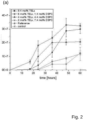
- LNPs were stored in 2 mL Eppendorf tubes at 4°C and 25°C (room temperature), respectively.
- Physiochemical characterization via Ribogreen assay and ZetaSizer analysis was conducted in certain time intervals over a period of 6 weeks.
- GDGT-LNPs turned out to be stable even at room temperature (see Fig. 3 ).
Landscapes
- Health & Medical Sciences (AREA)
- Life Sciences & Earth Sciences (AREA)
- Chemical & Material Sciences (AREA)
- Engineering & Computer Science (AREA)
- Genetics & Genomics (AREA)
- Bioinformatics & Cheminformatics (AREA)
- General Health & Medical Sciences (AREA)
- Biomedical Technology (AREA)
- Veterinary Medicine (AREA)
- Biochemistry (AREA)
- Epidemiology (AREA)
- Animal Behavior & Ethology (AREA)
- Molecular Biology (AREA)
- Public Health (AREA)
- Medicinal Chemistry (AREA)
- Pharmacology & Pharmacy (AREA)
- Biotechnology (AREA)
- Organic Chemistry (AREA)
- Wood Science & Technology (AREA)
- Physics & Mathematics (AREA)
- Zoology (AREA)
- General Engineering & Computer Science (AREA)
- Microbiology (AREA)
- Biophysics (AREA)
- Plant Pathology (AREA)
- Nanotechnology (AREA)
- Optics & Photonics (AREA)
- Medicinal Preparation (AREA)
- Medicines Containing Antibodies Or Antigens For Use As Internal Diagnostic Agents (AREA)
- Pharmaceuticals Containing Other Organic And Inorganic Compounds (AREA)
- Medicines Containing Material From Animals Or Micro-Organisms (AREA)
Priority Applications (10)
| Application Number | Priority Date | Filing Date | Title |
|---|---|---|---|
| EP22196901.7A EP4342460A1 (de) | 2022-09-21 | 2022-09-21 | Lipidnanopartikel mit nukleinsäurefracht |
| JP2025517633A JP2025533764A (ja) | 2022-09-21 | 2023-09-21 | 核酸カーゴを有する脂質ナノ粒子 |
| KR1020257013043A KR20250073303A (ko) | 2022-09-21 | 2023-09-21 | 핵산 카고를 갖는 지질 나노입자 |
| IL319752A IL319752A (en) | 2022-09-21 | 2023-09-21 | Lipid nanoparticle with nucleic acid payload |
| EP23772897.7A EP4590282A1 (de) | 2022-09-21 | 2023-09-21 | Lipidnanopartikel mit nukleinsäurefracht |
| AU2023347022A AU2023347022A1 (en) | 2022-09-21 | 2023-09-21 | Lipid nanoparticle with nucleic acid cargo |
| CA3267922A CA3267922A1 (en) | 2022-09-21 | 2023-09-21 | NUCLEIC ACID LIPID NANOPARTICLE CARGO |
| CN202380068001.7A CN119947709A (zh) | 2022-09-21 | 2023-09-21 | 具有核酸负载物的脂质纳米颗粒 |
| PCT/EP2023/076004 WO2024062001A1 (en) | 2022-09-21 | 2023-09-21 | Lipid nanoparticle with nucleic acid cargo |
| MX2025003345A MX2025003345A (es) | 2022-09-21 | 2025-03-20 | Nanoparticula lipidica con carga de acido nucleico |
Applications Claiming Priority (1)
| Application Number | Priority Date | Filing Date | Title |
|---|---|---|---|
| EP22196901.7A EP4342460A1 (de) | 2022-09-21 | 2022-09-21 | Lipidnanopartikel mit nukleinsäurefracht |
Publications (1)
| Publication Number | Publication Date |
|---|---|
| EP4342460A1 true EP4342460A1 (de) | 2024-03-27 |
Family
ID=83400658
Family Applications (2)
| Application Number | Title | Priority Date | Filing Date |
|---|---|---|---|
| EP22196901.7A Withdrawn EP4342460A1 (de) | 2022-09-21 | 2022-09-21 | Lipidnanopartikel mit nukleinsäurefracht |
| EP23772897.7A Pending EP4590282A1 (de) | 2022-09-21 | 2023-09-21 | Lipidnanopartikel mit nukleinsäurefracht |
Family Applications After (1)
| Application Number | Title | Priority Date | Filing Date |
|---|---|---|---|
| EP23772897.7A Pending EP4590282A1 (de) | 2022-09-21 | 2023-09-21 | Lipidnanopartikel mit nukleinsäurefracht |
Country Status (9)
| Country | Link |
|---|---|
| EP (2) | EP4342460A1 (de) |
| JP (1) | JP2025533764A (de) |
| KR (1) | KR20250073303A (de) |
| CN (1) | CN119947709A (de) |
| AU (1) | AU2023347022A1 (de) |
| CA (1) | CA3267922A1 (de) |
| IL (1) | IL319752A (de) |
| MX (1) | MX2025003345A (de) |
| WO (1) | WO2024062001A1 (de) |
Cited By (1)
| Publication number | Priority date | Publication date | Assignee | Title |
|---|---|---|---|---|
| WO2026006741A1 (en) * | 2024-06-27 | 2026-01-02 | The Regents Of The University Of California | Lipid nanoparticle adjuvant compositions |
Families Citing this family (1)
| Publication number | Priority date | Publication date | Assignee | Title |
|---|---|---|---|---|
| CN119909014A (zh) * | 2024-12-16 | 2025-05-02 | 南方科技大学 | 一种脂质体及其制备方法、应用 |
Citations (41)
| Publication number | Priority date | Publication date | Assignee | Title |
|---|---|---|---|---|
| US6316260B1 (en) | 1997-08-22 | 2001-11-13 | Bernina Biosystems Gmbh | Tetraether lipid derivatives and liposomes and lipid agglomerates containing tetraether lipid derivatives, and use thereof |
| EP0883624B1 (de) | 1996-02-29 | 2002-11-06 | Humatrix AG | Tetraetherlipide und diese enthaltende liposomen sowie deren verwendung |
| US7404969B2 (en) | 2005-02-14 | 2008-07-29 | Sirna Therapeutics, Inc. | Lipid nanoparticle based compositions and methods for the delivery of biologically active molecules |
| WO2008103276A2 (en) | 2007-02-16 | 2008-08-28 | Merck & Co., Inc. | Compositions and methods for potentiated activity of biologicaly active molecules |
| WO2008155134A1 (en) | 2007-06-21 | 2008-12-24 | Technische Universität München | Biological active proteins having increased in vivo and/or vitro stability |
| US20100036115A1 (en) | 1997-07-23 | 2010-02-11 | Sirna Therapeutics, Inc. | Novel Compositions for the Delivery of Negatively Charged Molecules |
| WO2010021865A1 (en) | 2008-08-18 | 2010-02-25 | Merck Sharp & Dohme Corp. | Novel lipid nanoparticles and novel components for delivery of nucleic acids |
| WO2010080724A1 (en) | 2009-01-12 | 2010-07-15 | Merck Sharp & Dohme Corp. | Novel lipid nanoparticles and novel components for delivery of nucleic acids |
| US7893302B2 (en) | 2005-02-14 | 2011-02-22 | Sirna Therapeutics, Inc. | Lipid nanoparticle based compositions and methods for the delivery of biologically active molecules |
| WO2011022460A1 (en) | 2009-08-20 | 2011-02-24 | Merck Sharp & Dohme Corp. | Novel cationic lipids with various head groups for oligonucleotide delivery |
| WO2011043913A2 (en) | 2009-10-08 | 2011-04-14 | Merck Sharp & Dohme Corp. | Novel cationic lipids with short lipid chains for oligonucleotide delivery |
| WO2011090965A1 (en) | 2010-01-22 | 2011-07-28 | Merck Sharp & Dohme Corp. | Novel cationic lipids for oligonucleotide delivery |
| US8058069B2 (en) | 2008-04-15 | 2011-11-15 | Protiva Biotherapeutics, Inc. | Lipid formulations for nucleic acid delivery |
| WO2011149733A2 (en) | 2010-05-24 | 2011-12-01 | Merck Sharp & Dohme Corp. | Novel amino alcohol cationic lipids for oligonucleotide delivery |
| WO2011153120A1 (en) | 2010-06-04 | 2011-12-08 | Merck Sharp & Dohme Corp. | Novel low molecular weight cationic lipids for oligonucleotide delivery |
| WO2012040184A2 (en) | 2010-09-20 | 2012-03-29 | Merck Sharp & Dohme Corp. | Novel low molecular weight cationic lipids for oligonucleotide delivery |
| WO2012044638A1 (en) | 2010-09-30 | 2012-04-05 | Merck Sharp & Dohme Corp. | Low molecular weight cationic lipids for oligonucleotide delivery |
| WO2012054365A2 (en) | 2010-10-21 | 2012-04-26 | Merck Sharp & Dohme Corp. | Novel low molecular weight cationic lipids for oligonucleotide delivery |
| WO2012061259A2 (en) | 2010-11-05 | 2012-05-10 | Merck Sharp & Dohme Corp. | Novel low molecular weight cyclic amine containing cationic lipids for oligonucleotide delivery |
| US20120202871A1 (en) | 2009-07-01 | 2012-08-09 | Protiva Biotherapeutics, Inc. | Cationic lipids and methods for the delivery of therapeutic agents |
| US8283333B2 (en) | 2009-07-01 | 2012-10-09 | Protiva Biotherapeutics, Inc. | Lipid formulations for nucleic acid delivery |
| EP2109459B1 (de) | 2006-12-15 | 2013-03-06 | National Research Council of Canada | Archaeale polare lipid-aggregate zur verabreichung bei tieren |
| US20130064894A1 (en) | 2011-08-31 | 2013-03-14 | Protiva Biotherapeutics, Inc. | Novel cationic lipids and methods of use thereof |
| US20130129785A1 (en) | 2010-05-10 | 2013-05-23 | Alnylam Pharmaceuticals, Inc | Methods and compositions for delivery of active agents |
| WO2013086354A1 (en) | 2011-12-07 | 2013-06-13 | Alnylam Pharmaceuticals, Inc. | Biodegradable lipids for the delivery of active agents |
| WO2013086373A1 (en) | 2011-12-07 | 2013-06-13 | Alnylam Pharmaceuticals, Inc. | Lipids for the delivery of active agents |
| US8466122B2 (en) | 2010-09-17 | 2013-06-18 | Protiva Biotherapeutics, Inc. | Trialkyl cationic lipids and methods of use thereof |
| WO2014143806A1 (en) * | 2013-03-15 | 2014-09-18 | The Penn State Research Foundation | Acid stable liposomal compositions |
| US9062299B2 (en) | 2009-08-24 | 2015-06-23 | Amunix Operating Inc. | Coagulation factor IX compositions and methods of making and using same |
| EP1999137B1 (de) | 2006-03-30 | 2016-03-30 | National Research Council Of Canada | Synthetische archealglykolipidadjuvantien |
| US9404127B2 (en) | 2010-06-30 | 2016-08-02 | Protiva Biotherapeutics, Inc. | Non-liposomal systems for nucleic acid delivery |
| WO2017049245A2 (en) | 2015-09-17 | 2017-03-23 | Modernatx, Inc. | Compounds and compositions for intracellular delivery of therapeutic agents |
| US20170152533A1 (en) | 2008-11-06 | 2017-06-01 | Kiverdi, Inc. | Engineered CO2-Fixing Chemotrophic Microorganisms Producing Carbon-Based Products and Methods of Using the Same |
| WO2017099823A1 (en) | 2015-12-10 | 2017-06-15 | Modernatx, Inc. | Compositions and methods for delivery of therapeutic agents |
| WO2017112865A1 (en) | 2015-12-22 | 2017-06-29 | Modernatx, Inc. | Compounds and compositions for intracellular delivery of agents |
| WO2018126084A1 (en) | 2016-12-30 | 2018-07-05 | Phaserx, Inc. | Branched peg molecules and related compositions and methods |
| WO2020061284A1 (en) | 2018-09-19 | 2020-03-26 | Modernatx, Inc. | Peg lipids and uses thereof |
| WO2020093061A1 (en) | 2018-11-02 | 2020-05-07 | Genevant Sciences Gmbh | Therapeutic methods |
| WO2020187526A1 (en) | 2019-03-15 | 2020-09-24 | Technische Universität Wien | Method for producing a composition comprising archaeal lipids from a sulfolobus cell culture |
| WO2020219941A1 (en) | 2019-04-26 | 2020-10-29 | Genevant Sciences Gmbh | Lipid nanoparticles |
| WO2021123332A1 (en) | 2019-12-20 | 2021-06-24 | Curevac Ag | Lipid nanoparticles for delivery of nucleic acids |
-
2022
- 2022-09-21 EP EP22196901.7A patent/EP4342460A1/de not_active Withdrawn
-
2023
- 2023-09-21 EP EP23772897.7A patent/EP4590282A1/de active Pending
- 2023-09-21 WO PCT/EP2023/076004 patent/WO2024062001A1/en not_active Ceased
- 2023-09-21 CN CN202380068001.7A patent/CN119947709A/zh active Pending
- 2023-09-21 AU AU2023347022A patent/AU2023347022A1/en active Pending
- 2023-09-21 CA CA3267922A patent/CA3267922A1/en active Pending
- 2023-09-21 JP JP2025517633A patent/JP2025533764A/ja active Pending
- 2023-09-21 IL IL319752A patent/IL319752A/en unknown
- 2023-09-21 KR KR1020257013043A patent/KR20250073303A/ko active Pending
-
2025
- 2025-03-20 MX MX2025003345A patent/MX2025003345A/es unknown
Patent Citations (45)
| Publication number | Priority date | Publication date | Assignee | Title |
|---|---|---|---|---|
| EP0883624B1 (de) | 1996-02-29 | 2002-11-06 | Humatrix AG | Tetraetherlipide und diese enthaltende liposomen sowie deren verwendung |
| US20100036115A1 (en) | 1997-07-23 | 2010-02-11 | Sirna Therapeutics, Inc. | Novel Compositions for the Delivery of Negatively Charged Molecules |
| US6316260B1 (en) | 1997-08-22 | 2001-11-13 | Bernina Biosystems Gmbh | Tetraether lipid derivatives and liposomes and lipid agglomerates containing tetraether lipid derivatives, and use thereof |
| US7893302B2 (en) | 2005-02-14 | 2011-02-22 | Sirna Therapeutics, Inc. | Lipid nanoparticle based compositions and methods for the delivery of biologically active molecules |
| US7404969B2 (en) | 2005-02-14 | 2008-07-29 | Sirna Therapeutics, Inc. | Lipid nanoparticle based compositions and methods for the delivery of biologically active molecules |
| EP1999137B1 (de) | 2006-03-30 | 2016-03-30 | National Research Council Of Canada | Synthetische archealglykolipidadjuvantien |
| EP2109459B1 (de) | 2006-12-15 | 2013-03-06 | National Research Council of Canada | Archaeale polare lipid-aggregate zur verabreichung bei tieren |
| WO2008103276A2 (en) | 2007-02-16 | 2008-08-28 | Merck & Co., Inc. | Compositions and methods for potentiated activity of biologicaly active molecules |
| WO2008155134A1 (en) | 2007-06-21 | 2008-12-24 | Technische Universität München | Biological active proteins having increased in vivo and/or vitro stability |
| US8058069B2 (en) | 2008-04-15 | 2011-11-15 | Protiva Biotherapeutics, Inc. | Lipid formulations for nucleic acid delivery |
| US9364435B2 (en) | 2008-04-15 | 2016-06-14 | Protiva Biotherapeutics, Inc. | Lipid formulations for nucleic acid delivery |
| WO2010021865A1 (en) | 2008-08-18 | 2010-02-25 | Merck Sharp & Dohme Corp. | Novel lipid nanoparticles and novel components for delivery of nucleic acids |
| US20170152533A1 (en) | 2008-11-06 | 2017-06-01 | Kiverdi, Inc. | Engineered CO2-Fixing Chemotrophic Microorganisms Producing Carbon-Based Products and Methods of Using the Same |
| WO2010080724A1 (en) | 2009-01-12 | 2010-07-15 | Merck Sharp & Dohme Corp. | Novel lipid nanoparticles and novel components for delivery of nucleic acids |
| US20120202871A1 (en) | 2009-07-01 | 2012-08-09 | Protiva Biotherapeutics, Inc. | Cationic lipids and methods for the delivery of therapeutic agents |
| US8283333B2 (en) | 2009-07-01 | 2012-10-09 | Protiva Biotherapeutics, Inc. | Lipid formulations for nucleic acid delivery |
| WO2011022460A1 (en) | 2009-08-20 | 2011-02-24 | Merck Sharp & Dohme Corp. | Novel cationic lipids with various head groups for oligonucleotide delivery |
| US9062299B2 (en) | 2009-08-24 | 2015-06-23 | Amunix Operating Inc. | Coagulation factor IX compositions and methods of making and using same |
| WO2011043913A2 (en) | 2009-10-08 | 2011-04-14 | Merck Sharp & Dohme Corp. | Novel cationic lipids with short lipid chains for oligonucleotide delivery |
| WO2011090965A1 (en) | 2010-01-22 | 2011-07-28 | Merck Sharp & Dohme Corp. | Novel cationic lipids for oligonucleotide delivery |
| US20130129785A1 (en) | 2010-05-10 | 2013-05-23 | Alnylam Pharmaceuticals, Inc | Methods and compositions for delivery of active agents |
| US20130150625A1 (en) | 2010-05-24 | 2013-06-13 | Brian W. Budzik | Novel Amino Alcohol Cationic Lipids for Oligonucleotide Delivery |
| WO2011149733A2 (en) | 2010-05-24 | 2011-12-01 | Merck Sharp & Dohme Corp. | Novel amino alcohol cationic lipids for oligonucleotide delivery |
| WO2011153120A1 (en) | 2010-06-04 | 2011-12-08 | Merck Sharp & Dohme Corp. | Novel low molecular weight cationic lipids for oligonucleotide delivery |
| US9404127B2 (en) | 2010-06-30 | 2016-08-02 | Protiva Biotherapeutics, Inc. | Non-liposomal systems for nucleic acid delivery |
| US8466122B2 (en) | 2010-09-17 | 2013-06-18 | Protiva Biotherapeutics, Inc. | Trialkyl cationic lipids and methods of use thereof |
| WO2012040184A2 (en) | 2010-09-20 | 2012-03-29 | Merck Sharp & Dohme Corp. | Novel low molecular weight cationic lipids for oligonucleotide delivery |
| US20130178541A1 (en) | 2010-09-20 | 2013-07-11 | Matthew G. Stanton | Novel low molecular weight cationic lipids for oligonucleotide delivery |
| WO2012044638A1 (en) | 2010-09-30 | 2012-04-05 | Merck Sharp & Dohme Corp. | Low molecular weight cationic lipids for oligonucleotide delivery |
| WO2012054365A2 (en) | 2010-10-21 | 2012-04-26 | Merck Sharp & Dohme Corp. | Novel low molecular weight cationic lipids for oligonucleotide delivery |
| WO2012061259A2 (en) | 2010-11-05 | 2012-05-10 | Merck Sharp & Dohme Corp. | Novel low molecular weight cyclic amine containing cationic lipids for oligonucleotide delivery |
| US20130225836A1 (en) | 2010-11-05 | 2013-08-29 | Merck Sharp & Dohme Corp. | Novel low molecular weight cyclic amine containing cationic lipids for oligonucleotide delivery |
| US20130064894A1 (en) | 2011-08-31 | 2013-03-14 | Protiva Biotherapeutics, Inc. | Novel cationic lipids and methods of use thereof |
| WO2013086373A1 (en) | 2011-12-07 | 2013-06-13 | Alnylam Pharmaceuticals, Inc. | Lipids for the delivery of active agents |
| WO2013086354A1 (en) | 2011-12-07 | 2013-06-13 | Alnylam Pharmaceuticals, Inc. | Biodegradable lipids for the delivery of active agents |
| WO2014143806A1 (en) * | 2013-03-15 | 2014-09-18 | The Penn State Research Foundation | Acid stable liposomal compositions |
| WO2017049245A2 (en) | 2015-09-17 | 2017-03-23 | Modernatx, Inc. | Compounds and compositions for intracellular delivery of therapeutic agents |
| WO2017099823A1 (en) | 2015-12-10 | 2017-06-15 | Modernatx, Inc. | Compositions and methods for delivery of therapeutic agents |
| WO2017112865A1 (en) | 2015-12-22 | 2017-06-29 | Modernatx, Inc. | Compounds and compositions for intracellular delivery of agents |
| WO2018126084A1 (en) | 2016-12-30 | 2018-07-05 | Phaserx, Inc. | Branched peg molecules and related compositions and methods |
| WO2020061284A1 (en) | 2018-09-19 | 2020-03-26 | Modernatx, Inc. | Peg lipids and uses thereof |
| WO2020093061A1 (en) | 2018-11-02 | 2020-05-07 | Genevant Sciences Gmbh | Therapeutic methods |
| WO2020187526A1 (en) | 2019-03-15 | 2020-09-24 | Technische Universität Wien | Method for producing a composition comprising archaeal lipids from a sulfolobus cell culture |
| WO2020219941A1 (en) | 2019-04-26 | 2020-10-29 | Genevant Sciences Gmbh | Lipid nanoparticles |
| WO2021123332A1 (en) | 2019-12-20 | 2021-06-24 | Curevac Ag | Lipid nanoparticles for delivery of nucleic acids |
Non-Patent Citations (18)
| Title |
|---|
| ALDOSARI BASMAH N. ET AL: "Lipid Nanoparticles as Delivery Systems for RNA-Based Vaccines", PHARMACEUTICS, vol. 13, no. 2, 2 February 2021 (2021-02-02), CH, pages 206, XP055929575, ISSN: 1999-4923, DOI: 10.3390/pharmaceutics13020206 * |
| ALDOSARI, BASMAH N. ET AL.: "Lipid nanoparticles as delivery systems for RNA-based vaccines", PHARMACEUTICS, vol. 13.2, 2021, pages 206 |
| DASWANI, VARSHA P.: "The Polar Lipid Fraction E fromSulfolobus acidocaldarius Can Be Used as Liposomal DrugStabilizing Agents to Reduce the Leakage of the AntivascularDrug Combretastatin A4 Disodium Phosphate fromTetraether/Diester Hybrid Archaeosomes.", BIOPHYSICA, vol. 1.4, 2021, pages 474 - 486 |
| HOU, XUCHENG ET AL.: "Lipid nanoparticles for mRNA delivery", NATURE REVIEWS MATERIALS, vol. 6.12, 2021, pages 1078 - 1094, XP037634156, DOI: 10.1038/s41578-021-00358-0 |
| JAIN, SAMTA ET AL.: "Biosynthesis of archaeal membrane ether lipids", FRONTIERS IN MICROBIOLOGY, vol. 5, 2014, pages 641 |
| KAUR GURMEET ET AL: "Archaeosomes: an excellent carrier for drug and cell delivery", DRUG DELIVERY, vol. 23, no. 7, 1 September 2016 (2016-09-01), US, pages 2497 - 2512, XP093025771, ISSN: 1071-7544, Retrieved from the Internet <URL:http://dx.doi.org/10.3109/10717544.2015.1019653> DOI: 10.3109/10717544.2015.1019653 * |
| KAUR, GURMEET ET AL.: "Archaeosomes: an excellent carrier for drug and cell delivery", DRUG DELIVERY, vol. 23.7, 2016, pages 2497 - 2512 |
| MARKOVA, NATALIA ET AL.: "Biophysical Characterization of Viral and Lipid-Based Vectors for Vaccines and Therapeutics with Light Scattering and Calorimetric Techniques", VACCINES, vol. 10.1, 2021, pages 49 |
| MIDOUX, PATRICK ET AL.: "Lipid-based mRNA vaccine delivery systems", EXPERT REVIEW OF VACCINES, vol. 14.2, 2015, pages 221 - 234, XP055439935, DOI: 10.1586/14760584.2015.986104 |
| PATEL, GIRISHCHANDRA B. ET AL.: "Archaeobacterial ether lipid liposomes (archaeosomes) as novel vaccine and drug delivery systems", CRITICAL REVIEWS IN BIOTECHNOLOGY, vol. 19.4, 1999, pages 317 - 357, XP000993262, DOI: 10.1080/0738-859991229170 |
| PATRICK MIDOUX ET AL: "Lipid-based mRNA vaccine delivery systems", EXPERT REVIEW OF VACCINES, vol. 14, no. 2, 12 February 2015 (2015-02-12), GB, pages 221 - 234, XP055439935, ISSN: 1476-0584, DOI: 10.1586/14760584.2015.986104 * |
| PAUNOVSKA, KALINA ET AL.: "Drug delivery systems for RNA therapeutics", NATURE REVIEWS GENETICS, vol. 23.5, 2022, pages 265 - 280, XP037802879, DOI: 10.1038/s41576-021-00439-4 |
| SCHOUTEN, STEFAN ET AL.: "The organic geochemistry of glycerol dialkyl glycerol tetraether lipids: A review", ORGANIC GEOCHEMISTRY, vol. 54, 2013, pages 19 - 61 |
| SILIAKUS, MELVIN F. ET AL.: "Adaptations of archaeal and bacterial membranes to variations in temperature, pH and pressure.", EXTREMOPHILES, vol. 21.4, 2017, pages 651 - 670, XP036261593, DOI: 10.1007/s00792-017-0939-x |
| SZOKA JR, FRANK ET AL.: "Comparative properties and methods of preparation of lipid vesicles (liposomes", ANNUAL REVIEW OF BIOPHYSICS AND BIOENGINEERING, vol. 9.1, 1980, pages 467 - 508, XP000600718, DOI: 10.1146/annurev.bb.09.060180.002343 |
| VAN HOOGEVEST, PETER: "Review-an update on the use of oral phospholipid excipients.", EUROPEAN JOURNAL OF PHARMACEUTICAL SCIENCES, vol. 108, 2017, pages 1 - 12, XP085189558, DOI: 10.1016/j.ejps.2017.07.008 |
| VISHWAKARMA, NIKHAR ET AL.: "Lipid-based nanocarriers for lymphatic transportation.", AAPS PHARMSCITECH, vol. 20.2, 2019, pages 1 - 13, XP036699310, DOI: 10.1208/s12249-019-1293-3 |
| ZAVEC APOLONIJA BEDINA ET AL: "Archaeosomes can efficiently deliver different types of cargo into epithelial cells grownin vitro", JOURNAL OF BIOTECHNOLOGY, ELSEVIER, AMSTERDAM NL, vol. 192, 28 September 2014 (2014-09-28), pages 130 - 135, XP029104808, ISSN: 0168-1656, DOI: 10.1016/J.JBIOTEC.2014.09.015 * |
Cited By (1)
| Publication number | Priority date | Publication date | Assignee | Title |
|---|---|---|---|---|
| WO2026006741A1 (en) * | 2024-06-27 | 2026-01-02 | The Regents Of The University Of California | Lipid nanoparticle adjuvant compositions |
Also Published As
| Publication number | Publication date |
|---|---|
| KR20250073303A (ko) | 2025-05-27 |
| WO2024062001A1 (en) | 2024-03-28 |
| MX2025003345A (es) | 2025-07-01 |
| IL319752A (en) | 2025-05-01 |
| JP2025533764A (ja) | 2025-10-09 |
| CA3267922A1 (en) | 2024-03-28 |
| CN119947709A (zh) | 2025-05-06 |
| EP4590282A1 (de) | 2025-07-30 |
| AU2023347022A1 (en) | 2025-04-03 |
Similar Documents
| Publication | Publication Date | Title |
|---|---|---|
| US20250230131A1 (en) | Novel ionizable lipid and lipid nanoparticle composition using same | |
| WO2002087541A1 (en) | Lipid-based formulations for gene transfer | |
| US20220168234A1 (en) | Lipid nanoparticles encapsulation of large rna | |
| EP4590282A1 (de) | Lipidnanopartikel mit nukleinsäurefracht | |
| US12582610B2 (en) | Lipid-polymer compositions and methods of use | |
| EP1867726A1 (de) | Zur wirksamen zuführung einer gegebenen substanz in den zellkern fähiges liposom | |
| US20190328903A1 (en) | Polymer nanoparticle composition for plasmid dna delivery, and preparation method therefor | |
| US20230099898A1 (en) | Composite rna particles | |
| CN118598769A (zh) | 一种可质子化类脂化合物、脂质体、脂质纳米颗粒及其应用 | |
| CN121752256A (zh) | 具有核酸负载物和可电离脂质的脂质纳米颗粒 | |
| EP4527380A1 (de) | Lipidnanopartikel | |
| KR20260065891A (ko) | 핵산 카고 및 이온화가능한 지질을 갖는 지질 나노입자 | |
| WO2024057237A1 (en) | Lipid nanoparticles | |
| EP4691476A1 (de) | Verfahren zur herstellung von nukleinsäureverkapselten lipidnanopartikeln | |
| US20250381149A1 (en) | Cationic amphiphilic compound-based nanoparticle compositions | |
| CA3287902A1 (en) | Method for producing nucleic acid-encapsulated lipid nanoparticles | |
| WO2025061874A1 (en) | Novel lipid nanoparticles | |
| US20260000627A1 (en) | Novel lipid nanoparticle compositions and uses thereof | |
| CN121752257A (zh) | pH诱导的结构转换脂质纳米载体、半合成细胞外囊泡、其制备方法及应用 | |
| WO2009131216A1 (ja) | オリゴアルキレングリコールで修飾された脂質膜構造体 | |
| WO2012117971A1 (ja) | 脂質膜構造体、脂質膜構造体の製造方法および1の目的物質を1枚の脂質膜で封入する方法 |
Legal Events
| Date | Code | Title | Description |
|---|---|---|---|
| PUAI | Public reference made under article 153(3) epc to a published international application that has entered the european phase |
Free format text: ORIGINAL CODE: 0009012 |
|
| STAA | Information on the status of an ep patent application or granted ep patent |
Free format text: STATUS: THE APPLICATION HAS BEEN PUBLISHED |
|
| AK | Designated contracting states |
Kind code of ref document: A1 Designated state(s): AL AT BE BG CH CY CZ DE DK EE ES FI FR GB GR HR HU IE IS IT LI LT LU LV MC MK MT NL NO PL PT RO RS SE SI SK SM TR |
|
| STAA | Information on the status of an ep patent application or granted ep patent |
Free format text: STATUS: THE APPLICATION IS DEEMED TO BE WITHDRAWN |
|
| 18D | Application deemed to be withdrawn |
Effective date: 20240928 |