EP4346308A1 - Optimierung kleiner datenübertragung unter verwendung eines direktzugriffskanals für benutzergerät mit reduzierter kapazität - Google Patents
Optimierung kleiner datenübertragung unter verwendung eines direktzugriffskanals für benutzergerät mit reduzierter kapazität Download PDFInfo
- Publication number
- EP4346308A1 EP4346308A1 EP23189165.6A EP23189165A EP4346308A1 EP 4346308 A1 EP4346308 A1 EP 4346308A1 EP 23189165 A EP23189165 A EP 23189165A EP 4346308 A1 EP4346308 A1 EP 4346308A1
- Authority
- EP
- European Patent Office
- Prior art keywords
- shared channel
- uplink shared
- channel resources
- physical uplink
- configuration
- Prior art date
- Legal status (The legal status is an assumption and is not a legal conclusion. Google has not performed a legal analysis and makes no representation as to the accuracy of the status listed.)
- Pending
Links
- 230000005540 biological transmission Effects 0.000 title claims description 14
- 238000005457 optimization Methods 0.000 title 1
- 238000000034 method Methods 0.000 claims abstract description 75
- 238000004891 communication Methods 0.000 claims abstract description 24
- 238000004590 computer program Methods 0.000 abstract description 10
- 101150071746 Pbsn gene Proteins 0.000 abstract 1
- 230000015654 memory Effects 0.000 description 22
- 230000006870 function Effects 0.000 description 10
- 238000012545 processing Methods 0.000 description 7
- 238000010586 diagram Methods 0.000 description 6
- 238000005516 engineering process Methods 0.000 description 5
- 230000008569 process Effects 0.000 description 5
- 101100533725 Mus musculus Smr3a gene Proteins 0.000 description 4
- 101150096310 SIB1 gene Proteins 0.000 description 3
- 230000007774 longterm Effects 0.000 description 3
- 230000008901 benefit Effects 0.000 description 2
- 125000004122 cyclic group Chemical group 0.000 description 2
- 238000013507 mapping Methods 0.000 description 2
- 230000009467 reduction Effects 0.000 description 2
- 230000011664 signaling Effects 0.000 description 2
- 241000700159 Rattus Species 0.000 description 1
- 230000003139 buffering effect Effects 0.000 description 1
- 230000001413 cellular effect Effects 0.000 description 1
- 238000010276 construction Methods 0.000 description 1
- 229940055355 control rx Drugs 0.000 description 1
- 238000013500 data storage Methods 0.000 description 1
- 238000007689 inspection Methods 0.000 description 1
- 238000012986 modification Methods 0.000 description 1
- 230000004048 modification Effects 0.000 description 1
- 230000006855 networking Effects 0.000 description 1
- 230000004044 response Effects 0.000 description 1
Images




Classifications
-
- H—ELECTRICITY
- H04—ELECTRIC COMMUNICATION TECHNIQUE
- H04W—WIRELESS COMMUNICATION NETWORKS
- H04W74/00—Wireless channel access
- H04W74/08—Non-scheduled access, e.g. ALOHA
- H04W74/0833—Random access procedures, e.g. with 4-step access
-
- H—ELECTRICITY
- H04—ELECTRIC COMMUNICATION TECHNIQUE
- H04W—WIRELESS COMMUNICATION NETWORKS
- H04W72/00—Local resource management
- H04W72/20—Control channels or signalling for resource management
- H04W72/23—Control channels or signalling for resource management in the downlink direction of a wireless link, i.e. towards a terminal
-
- H—ELECTRICITY
- H04—ELECTRIC COMMUNICATION TECHNIQUE
- H04L—TRANSMISSION OF DIGITAL INFORMATION, e.g. TELEGRAPHIC COMMUNICATION
- H04L5/00—Arrangements affording multiple use of the transmission path
- H04L5/003—Arrangements for allocating sub-channels of the transmission path
- H04L5/0053—Allocation of signalling, i.e. of overhead other than pilot signals
-
- H—ELECTRICITY
- H04—ELECTRIC COMMUNICATION TECHNIQUE
- H04W—WIRELESS COMMUNICATION NETWORKS
- H04W74/00—Wireless channel access
- H04W74/002—Transmission of channel access control information
- H04W74/006—Transmission of channel access control information in the downlink, i.e. towards the terminal
-
- H—ELECTRICITY
- H04—ELECTRIC COMMUNICATION TECHNIQUE
- H04W—WIRELESS COMMUNICATION NETWORKS
- H04W72/00—Local resource management
- H04W72/04—Wireless resource allocation
- H04W72/044—Wireless resource allocation based on the type of the allocated resource
- H04W72/0457—Variable allocation of band or rate
-
- H—ELECTRICITY
- H04—ELECTRIC COMMUNICATION TECHNIQUE
- H04W—WIRELESS COMMUNICATION NETWORKS
- H04W72/00—Local resource management
- H04W72/50—Allocation or scheduling criteria for wireless resources
- H04W72/51—Allocation or scheduling criteria for wireless resources based on terminal or device properties
Definitions
- Some example embodiments may generally relate to mobile or wireless telecommunication systems, such as 3 rd Generation Partnership Project (3GPP) Long Term Evolution (LTE), 5 th generation (5G) radio access technology (RAT), new radio (NR) access technology, 6 th generation (6G), and/or other communications systems.
- 3GPP 3 rd Generation Partnership Project
- LTE Long Term Evolution
- 5G 5 th generation radio access technology
- NR new radio
- 6G 6 th generation
- certain example embodiments may relate to systems and/or methods for sharing physical random access channel (PRACH) and physical uplink shared channel (PUSCH) resources when performing random access channel (RACH) small data transmission (SDT) procedures, such as for reduced capability (RedCap) devices.
- PRACH physical random access channel
- PUSCH physical uplink shared channel
- RACH random access channel
- SDT small data transmission
- RedCap reduced capability
- Examples of mobile or wireless telecommunication systems may include radio frequency (RF) 5G RAT, the Universal Mobile Telecommunications System (UMTS) Terrestrial Radio Access Network (UTRAN), LTE Evolved UTRAN (E-UTRAN), LTE-Advanced (LTE-A), LTE-A Pro, NR access technology, and/or MulteFire Alliance.
- 5G wireless systems refer to the next generation (NG) of radio systems and network architecture.
- a 5G system is typically built on a 5G NR, but a 5G (or NG) network may also be built on E-UTRA radio. It is expected that NR can support service categories such as enhanced mobile broadband (eMBB), ultra-reliable low-latency-communication (URLLC), and massive machine-type communication (mMTC).
- eMBB enhanced mobile broadband
- URLLC ultra-reliable low-latency-communication
- mMTC massive machine-type communication
- the next generation radio access network represents the radio access network (RAN) for 5G, which may provide radio access for NR, LTE, and LTE-A.
- RAN radio access network
- the nodes in 5G providing radio access functionality to a user equipment e.g., similar to the Node B in UTRAN or the Evolved Node B (eNB) in LTE
- gNB next-generation Node B
- NG-eNB next-generation eNB
- a method may include receiving, by a user equipment, from a network entity, a configuration indicating physical uplink shared channel resources.
- the method may further include determining physical uplink shared channel resources based on at least one of reduced bandwidth or reduced physical resource blocks.
- the method may further include adjusting at least one characteristic of a physical resource block allocation based on the physical uplink shared channel resources and reduced bandwidth.
- the method may further include performing data communication based on the adjusted at least one characteristic of the physical resource block allocation.
- an apparatus may include means for receiving, from a network entity, a configuration indicating physical uplink shared channel resources.
- the apparatus may further include means for determining physical uplink shared channel resources based on at least one of reduced bandwidth or reduced physical resource blocks.
- the apparatus may further include means for adjusting at least one characteristic of a physical resource block allocation based on the physical uplink shared channel resources and reduced bandwidth.
- the apparatus may further include means for performing data communication based on the adjusted at least one characteristic of the physical resource block allocation.
- a non-transitory computer readable medium may include program instructions that, when executed by an apparatus, cause the apparatus to perform at least a method.
- the method may include receiving, by a user equipment, from a network entity, a configuration indicating physical uplink shared channel resources.
- the method may further include determining physical uplink shared channel resources based on at least one of reduced bandwidth or reduced physical resource blocks.
- the method may further include adjusting at least one characteristic of a physical resource block allocation based on the physical uplink shared channel resources and reduced bandwidth.
- the method may further include performing data communication based on the adjusted at least one characteristic of the physical resource block allocation.
- a computer program product may perform a method.
- the method may include receiving, by a user equipment, from a network entity, a configuration indicating physical uplink shared channel resources.
- the method may further include determining physical uplink shared channel resources based on at least one of reduced bandwidth or reduced physical resource blocks.
- the method may further include adjusting at least one characteristic of a physical resource block allocation based on the physical uplink shared channel resources and reduced bandwidth.
- the method may further include performing data communication based on the adjusted at least one characteristic of the physical resource block allocation.
- an apparatus may include at least one processor and at least one memory storing instructions that, when executed by the at least one processor, cause the apparatus at least to receive, from a network entity, a configuration indicating physical uplink shared channel resources.
- the at least one memory and instructions, when executed by the at least one processor, may further cause the apparatus at least to determine physical uplink shared channel resources based on at least one of reduced bandwidth or reduced physical resource blocks.
- the at least one memory and instructions, when executed by the at least one processor may further cause the apparatus at least to adjust at least one characteristic of a physical resource block allocation based on the physical uplink shared channel resources and reduced bandwidth.
- the at least one memory and instructions, when executed by the at least one processor may further cause the apparatus at least to perform data communication based on the adjusted at least one characteristic of the physical resource block allocation.
- an apparatus may include receiving circuitry configured to receive, from a network entity, a configuration indicating physical uplink shared channel resources.
- the apparatus may further include determining circuitry configured to determine physical uplink shared channel resources based on at least one of reduced bandwidth or reduced physical resource blocks.
- the apparatus may further include adjusting circuitry configured to adjust at least one characteristic of a physical resource block allocation based on the physical uplink shared channel resources and reduced bandwidth.
- the apparatus may further include communication circuitry configured to perform data communication based on the adjusted at least one characteristic of the physical resource block allocation.
- a method may include transmitting, to a user equipment, a configuration indicating usage of physical uplink shared channel resources with reduced bandwidth.
- an apparatus may include means for transmitting, to a user equipment, a configuration indicating usage of physical uplink shared channel resources with reduced bandwidth.
- a non-transitory computer readable medium may include program instructions that, when executed by an apparatus, cause the apparatus to perform at least a method.
- the method may include transmitting, to a user equipment, a configuration indicating usage of physical uplink shared channel resources with reduced bandwidth.
- a computer program product may perform a method.
- the method may include transmitting, to a user equipment, a configuration indicating usage of physical uplink shared channel resources with reduced bandwidth.
- an apparatus may include at least one processor and at least one memory storing instructions that, when executed by the at least one processor, cause the apparatus at least to transmit, to a user equipment, a configuration indicating usage of physical uplink shared channel resources with reduced bandwidth.
- an apparatus may include transmitting circuitry configured to transmit, to a user equipment, a configuration indicating usage of physical uplink shared channel resources with reduced bandwidth.
- 3GPP Release (Rel)-17 specified various capabilities for RedCap user equipment (UE), some of which are shown in Table 1 below: Category Frequency Range 1 (FR1) (cmWave) Frequency Range 2 (FR2) (mmWave) Device Bandwidth 20 MHz 100 MHz Antenna lTx-lRx Configuration 1Tx-2Rx (optional) Downlink MIMO Support Yes for device with 2Rx branches Duplex Operation FD-FDD, HD-FDD, TDD TDD Maximum Modulation DL: 256-QAM (optional), 64-QAM mandatory DL: 64-QAM UL: 64-QAM UL: 64-QAM Peak Data Rate FD-FDD, 1Rx: 85 Mbps DL/91 Mbps UL TDD 50:50 DL/UL split, 1Rx: 213 Mbps DL, 228 Mbps UL TDD 50:50 DL/UL split, 1Rx: 42 Mbps DL, 45 Mbps UL
- 3GPP Rel-18 is contemplating further device complexity reduction in frequency range (FR)1 to accommodate lower-tier devices between massive IoT and 3GPP Rel-17 RedCap devices.
- the supported peak data rate for UE Rel-18 devices may be approximately 10 Mbps.
- Such device complexity reduction techniques may be based on factors such as how the network, UE, and specifications would be impacted, as well as supporting the coexistence of 3GPP Rel-17 RedCap, 3GPP Rel-18 RedCap, non-RedCap UEs within the same cell.
- Some techniques to reduce device complexity may include reducing UE bandwidth down to 5MHz in FR1, possibly in combination with relaxed UE processing timelines for physical downlink shared channel (PDSCH), PUSCH, and/or channel state information (CSI).
- PDSCH physical downlink shared channel
- PUSCH physical downlink shared channel
- CSI channel state information
- device complexity may be reduced by reducing UE peak data rates in FR1, including restricting bandwidth for PDSCH and/or PUSCH, and again, in combination with
- NR Rel-16 introduced 2-step RACH as a technique to reduce latency of RACH procedures, which was then adopted in Rel-17 for SDT.
- SDT procedure may be performed either by random access procedure (i.e ., "2-step RACH-based SDT" procedure (as illustrated in FIG. 1 or " 4 -step RACH-based SDT") or by configured grant Type 1.
- the 2-step RACH-based SDT procedure can reduce UE power consumption, and may be ideal for RedCap IoT devices that require infrequent and/or small uplink transmission (e.g ., reporting, updates, keepalive (KA) messages).
- KA keepalive
- the base station may configure MsgA (i.e. , Msg1 + Msg3) resources for use by the RedCap UE (e.g., PRACH and PUSCH) via a system information block (SIB)1 ( i.e., via radio resource control (RRC) parameter msgA-ConfigCommon ).
- SIB system information block
- RRC radio resource control
- PUSCH configurations may include parameters such as bandwidth part (BWP), modulation and coding scheme (MCS), a number of slots, time & frequency domain resources, demodulation reference signal (DMRS), and power control.
- Rel-18 RedCap UE use bandwidth of 5 MHz (e.g ., RF or baseband bandwidth), the UE may be unable to share the PUSCH with Rel-17 RedCap UE if the configured PUSCH region is larger than 5 MHz.
- configuring separate PRACH and PUSCH regions for Rel-17 and Rel-18 RedCap UE may significantly increase the required overhead, as shown in FIG. 2 .
- Certain example embodiments described herein may have various benefits and/or advantages to overcome the disadvantages described above. For example, certain example embodiments may enable the sharing of resources between 3GPP Rel-17 and Rel-18 RedCap UE, resulting in lower control overhead (e.g. , PRACH/PUSCH overhead), as well as improved system efficiency. In addition, various example embodiments may reduce SIB1 overhead saving and/or facilitate coexistence between 3GPP Rel-17 and Rel-18 RedCap UE. Thus, certain example embodiments discussed below are directed to improvements in computer-related technology.
- uplink (UL) grants for PUSCH in MsgA may be reserved for all RedCap UEs, but may be processed differently by Rel-17 RedCap UEs and Rel-18 RedCap UEs ( i.e ., enhanced RedCap or eRedCap UEs), including eRedCap UE in a RRC inactive state performing RACH-based or configured grant-based SDT.
- various example embodiments may also apply to any eRedCap UE in a RRC Idle/Inactive that intends to use legacy RACH procedure, wherein the information on access for eRedCap UE may be provided in a release message (e.g. , RRC Release).
- FIG. 3 depicts how 10 MHz PUSCH may be shared between Rel-17 and Rel-18 RedCap UEs.
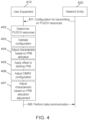
- FIG. 4 illustrates an example of a signaling diagram depicting sharing PRACH and PUSCH resources when performing 2-step RA-based SDT procedures, such as for RedCap UE.
- UE 410 and NE 420 may be similar to UE 720 and NE 710, respectively, as illustrated in FIG. 7 , according to certain example embodiments.
- UE 410 may be configured to reserve UL resources for PUSCH (e.g., common set of resources).
- UL grants e.g ., time/frequency/BW given in msgA-ConfigCommon
- the same UL grant may be used differently (e.g ., adjusted based on UE capabilities) by Rel-18 RedCap UEs which support reduced BW of 5 MHz or reduced number of maximum physical resource blocks (PRBs).
- UE 410 may support a bandwidth smaller than the received physical uplink shared channel resources or number of PRBs smaller than the configured physical uplink shared channel resources.
- the reduced BW of 5 MHz may be seen as equivalent to defining the maximum of contiguous PRBs, e.g ., 25 PRBs using 15 kHz sub-carrier spacing, or 11 PRBs using 30 kHz sub-carrier spacing.
- NE 420 may transmit to UE 410 a configuration indicating PUSCH resources to be used, such as based on reduced BW support.
- the indication may be transmitted via SIB and/or RRC configuration.
- a new information element in SIB 1 may inform UE 410 to use the PUSCH allocation even though it is larger than the maximum BW of UE 410 ( i.e ., 5 MHz).
- the configuration may be received as part of a RRC Release message with suspend configuration that is received by NE 420 when suspending the RRC configuration.
- UE 410 may determine PUSCH resources based on reduced bandwidth, and an indication received from NE 420, on a predefined rule known to UE 410 ( e.g. , using the first 25 PRBs of the PRB allocation, or otherwise), and/or the like.
- UE 410 may validate the configuration received at 401 and determine whether the configuration indicates an MsgA configuration. Upon UE 410 determining that the MsgA configuration is valid, UE 410 may perform data communication (e.g ., 2-step RA-based SDT). However, upon UE 410 determining that the MsgA configuration is invalid, UE 410 may determine whether the configuration indicates an MsgA adjustment. Upon UE 410 determining that an MsgA adjustment is indicated, UE 410 may perform SDT using other schemes (e.g ., 4-step RACH SDT or configured grant (CG)-based SDT) and/or perform legacy RA procedures. However, upon UE 410 determining that an MsgA adjustment is not indicated, UE 410 may proceed to perform 404, as discussed next. It is noted that some example embodiments may also apply to 4-step SDT and configured grant type 1.
- UE 410 may adjust a BW (i.e ., a PRB) allocation or at least one characteristic of a PRB allocation. For example, the adjustment may be based on a predetermined number of PRBs, or may be based on a number of preambles mapped to PUSCH resources.
- a BW i.e ., a PRB
- the adjustment may be based on a predetermined number of PRBs, or may be based on a number of preambles mapped to PUSCH resources.
- some embodiments may include a many-to-one mapping of preambles to PUSCH, wherein UE 410 may apply an offset to a starting PRB based on a preamble index.
- the PRB offset may be determined in a cyclic ( i.e ., modulo) manner.
- UE 410 may determine the number of PRBs for transmission based on a guard band established for MsgA transmissions (i.e ., guardBandMsgA-PUSCH-r16 ). In some embodiments where UE 410 comprises a Rel-18 20 MHz UE, UE 410 may transmit in multiple frequency regions.
- UE 410 may use different DMRS configurations for Rel-17 UEs (not shown in FIG. 4 ) to enable NE 420 to differentiate between the two UE types.
- UE 410 may determine some of the configuration aspects of a DMRS MsgA configuration to be employed based on the Rel-17 MsgA-DMRS-Config. For example, UE 410 may determine the use of an additional DMRS location ( i.e. , location not used by UE 410) if this is not configured for Rel-17 UEs.
- UE 410 may be configured with specifications that could provide further rules for UE 410 to determine the DMRS configuration for this and other scenarios.
- UE 410 may adjust at least one characteristic (e.g., transport block size (TBS)) of the PRB allocation adjustment at 404 (i.e., number of PRBs determined for MsgA transmission). UE 410 may also retain the original MCS as configured by NE 420.
- TBS transport block size
- UE 410 may perform data communication (e.g ., 2-step RA-based SDT) with NE 420 according to the adjusted at least one characteristic of the PRB allocation and/or DMRS configuration.
- UE 410 may also transmit an Msg1, and then an Msg3 that includes a small amount of data.
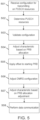
- FIG. 5 illustrates an example of a flow diagram of a method that may be performed by a UE, such as UE 720 illustrated in FIG. 7 , according to various example embodiments.
- the UE may be configured to reserve UL resources for PUSCH (e.g ., common set of resources).
- UL grants e.g., time/frequency/BW given in msgA-ConfigCommon
- the same UL grant may be used differently ( e.g ., adjusted based on UE capabilities) by Rel-18 RedCap UEs which support reduced BW of 5 MHz or reduced number of maximum PRBs.
- the UE may support a bandwidth smaller than the received PUSCH resources or number of PRBs smaller than the configured PUSCH resources.
- the reduced BW of 5 MHz may be seen as equivalent to defining the maximum of contiguous PRBs, e.g ., 25 PRBs using 15 kHz sub-carrier spacing, or 11 PRBs using 30 kHz sub-carrier spacing.
- the method may include receiving, from a NE such as NE 710 illustrated in FIG. 7 , a configuration indicating PUSCH resources to be used, such as based on reduced BW support.
- the indication may be transmitted via SIB and/or RRC configuration.
- a new information element in SIB1 may inform the UE to use the PUSCH allocation even though it is larger than the maximum BW of the UE ( i.e., 5 MHz).
- the configuration may be received as part of a RRC Release message with suspend configuration that is received by the NE when suspending the RRC configuration.
- the method may further include determining PUSCH resources based on reduced bandwidth, and an indication received from the NE, on a predefined rule known to the UE (e.g., using the first 25 PRBs of the PRB allocation, or otherwise), and/or the like.
- the method may include validating the configuration received at 501, and determining whether the configuration indicates an MsgA configuration.
- the UE may perform data communication (e.g ., 2-step RA-based SDT).
- the UE may determine whether the configuration indicates an MsgA adjustment.
- the UE may perform SDT using other schemes (e.g ., 4-step RACH SDT or CG-based SDT) and/or perform legacy RA procedures.
- the UE may proceed to perform 504, as discussed next. It is noted that some example embodiments may also apply to 4-step SDT and configured grant type 1.
- the method may include adjusting a BW (i.e. , PRB) allocation or at least one characteristic of a PRB allocation.
- the adjustment may be based on a predetermined number of PRBs, or may be based on a number of preambles mapped to PUSCH resources.
- some embodiments may include a many-to-one mapping of preambles to PUSCH, wherein the method may include applying an offset to a starting PRB based on a preamble index.
- the PRB offset may be determined in a cyclic ( i.e. , modulo) manner.
- the UE may determine the number of PRBs for transmission based on a guard band established for MsgA transmissions ( i.e ., guardBandMsgA-PUSCH-r16 ). In some embodiments where the UE comprises a Rel-18 20 MHz UE, the UE may transmit in multiple 5 MHz regions.
- the method may include using different DMRS configurations for Rel-17 UEs to enable the NE to differentiate between the two UE types.
- the UE may determine some of the configuration aspects of a DMRS MsgA configuration to be employed based on the Rel-17 MsgA-DMRS-Config. For example, the UE may determine the use of an additional DMRS location ( i.e. , location not used by the UE) if this is not configured for Rel-17 UEs.
- the UE may be configured with specifications that could provide further rules for the UE to determine the DMRS configuration for this and other scenarios.
- the method may include adjusting at least one characteristic (e.g ., TBS) of the PRB allocation adjustment at 504 (i.e. , number of PRBs determined for MsgA transmission).
- the method may also include retaining the original MCS as configured by the NE.
- the method may include performing data communication (e.g ., 2-step RA-based SDT) with the NE according to the adjusted at least one characteristic of the PRB allocation and/or DMRS configuration.
- the UE may transmit an Msg1, and then an Msg3 that includes a small amount of data.
- FIG. 6 illustrates an example of a flow diagram of a method that may be performed by a NE, such as NE 710 illustrated in FIG. 7 , according to various example embodiments.
- a UE such as UE 720 illustrated in FIG. 7 , may be configured to reserve UL resources for PUSCH ( e.g ., common set of resources).
- UL grants e.g ., time/frequency/BW given in msgA-ConfigCommon
- the same UL grant may be used differently ( e.g ., adjusted based on UE capabilities) by Rel-18 RedCap UEs which support reduced BW of 5 MHz or reduced number of maximum PRBs.
- the UE may support a bandwidth smaller than the received PUSCH resources or number of PRBs smaller than the configured PUSCH resources.
- the reduced BW of 5 MHz may be seen as equivalent to defining the maximum of contiguous PRBs, e.g., 25 PRBs using 15 kHz sub-carrier spacing, or 11 PRBs using 30 kHz sub-carrier spacing.
- the method may include transmitting, to the UE, a configuration indicating PUSCH resources to be used, such as based on reduced BW support.
- the indication may be transmitted via SIB and/or RRC configuration.
- a new information element in SIB1 may inform the UE to use the PUSCH allocation even though it is larger than the maximum BW of the UE ( i.e., 5 MHz).
- the configuration may be transmitted as part of a RRC Release message with suspend configuration that is received by the NE when suspending the RRC configuration. It is noted that some example embodiments may also apply to 4-step SDT and configured grant type 1.
- the method may include performing data communication (e.g., 2-step RA-based SDT) with the UE according to an adjusted PRB allocation and DMRS configuration.
- the NE may receive an Msg1, and then an Msg3 that includes a small amount of data.
- FIG. 7 illustrates an example of a system according to certain example embodiments.
- a system may include multiple devices, such as, for example, NE 710 and/or UE 720.
- NE 710 may be one or more of a base station (e.g., 3G UMTS NodeB, 4G LTE Evolved NodeB, or 5G NR Next Generation NodeB), a serving gateway, a server, and/or any other access node or combination thereof.
- a base station e.g., 3G UMTS NodeB, 4G LTE Evolved NodeB, or 5G NR Next Generation NodeB
- serving gateway e.g., a serving gateway, a server, and/or any other access node or combination thereof.
- NE 710 may further comprise at least one gNB-centralized unit (CU), which may be associated with at least one gNB-distributed unit (DU).
- the at least one gNB-CU and the at least one gNB-DU may be in communication via at least one F1 interface, at least one X n -C interface, and/or at least one NG interface via a 5 th generation core (5GC).
- CU gNB-centralized unit
- DU gNB-distributed unit
- the at least one gNB-CU and the at least one gNB-DU may be in communication via at least one F1 interface, at least one X n -C interface, and/or at least one NG interface via a 5 th generation core (5GC).
- 5GC 5 th generation core
- UE 720 may include one or more of a mobile device, such as a mobile phone, smart phone, personal digital assistant (PDA), tablet, or portable media player, digital camera, pocket video camera, video game console, navigation unit, such as a global positioning system (GPS) device, desktop or laptop computer, single-location device, such as a sensor or smart meter, or any combination thereof.
- a mobile device such as a mobile phone, smart phone, personal digital assistant (PDA), tablet, or portable media player, digital camera, pocket video camera, video game console, navigation unit, such as a global positioning system (GPS) device, desktop or laptop computer, single-location device, such as a sensor or smart meter, or any combination thereof.
- GPS global positioning system
- NE 710 and/or UE 720 may be one or more of a citizens broadband radio service device (CBSD).
- CBSD citizens broadband radio service device
- NE 710 and/or UE 720 may include at least one processor, respectively indicated as 711 and 721.
- processors 711 and 721 may be embodied by any computational or data processing device, such as a central processing unit (CPU), application specific integrated circuit (ASIC), or comparable device.
- the processors may be implemented as a single controller, or a plurality of controllers or processors.
- At least one memory may be provided in one or more of the devices, as indicated at 712 and 722.
- the memory may be fixed or removable.
- the memory may include computer program instructions or computer code contained therein.
- Memories 712 and 722 may independently be any suitable storage device, such as a non-transitory computer-readable medium.
- the term "non-transitory,” as used herein, may correspond to a limitation of the medium itself (i.e., tangible, not a signal) as opposed to a limitation on data storage persistency (e.g., random access memory (RAM) vs. read-only memory (ROM)).
- RAM random access memory
- ROM read-only memory
- a hard disk drive (HDD), random access memory (RAM), flash memory, or other suitable memory may be used.
- the memories may be combined on a single integrated circuit as the processor, or may be separate from the one or more processors.
- the computer program instructions stored in the memory, and which may be processed by the processors may be any suitable form of computer program code, for example, a compiled or interpreted computer program written in any suitable programming language.
- Processors 711 and 721, memories 712 and 722, and any subset thereof, may be configured to provide means corresponding to the various blocks of FIGs. 4-6 .
- the devices may also include positioning hardware, such as GPS or micro electrical mechanical system (MEMS) hardware, which may be used to determine a location of the device.
- MEMS micro electrical mechanical system
- Other sensors are also permitted, and may be configured to determine location, elevation, velocity, orientation, and so forth, such as barometers, compasses, and the like.
- transceivers 713 and 723 may be provided, and one or more devices may also include at least one antenna, respectively illustrated as 714 and 724.
- the device may have many antennas, such as an array of antennas configured for multiple input multiple output (MIMO) communications, or multiple antennas for multiple RATs. Other configurations of these devices, for example, may be provided.
- Transceivers 713 and 723 may be a transmitter, a receiver, both a transmitter and a receiver, or a unit or device that may be configured both for transmission and reception.
- the memory and the computer program instructions may be configured, with the processor for the particular device, to cause a hardware apparatus, such as UE, to perform any of the processes described above ( i.e., FIGs. 4-6 ). Therefore, in certain example embodiments, a non-transitory computer-readable medium may be encoded with computer instructions that, when executed in hardware, perform a process such as one of the processes described herein. Alternatively, certain example embodiments may be performed entirely in hardware.
- an apparatus may include circuitry configured to perform any of the processes or functions illustrated in FIGs. 4-6 .
- circuitry may refer to one or more or all of the following: (a) hardware-only circuit implementations (such as implementations in only analog and/or digital circuitry), (b) combinations of hardware circuits and software, such as (as applicable): (i) a combination of analog and/or digital hardware circuit(s) with software/firmware and (ii) any portions of hardware processor(s) with software (including digital signal processor(s)), software, and memory(ies) that work together to cause an apparatus, such as a mobile phone or server, to perform various functions), and (c) hardware circuit(s) and or processor(s), such as a microprocessor(s) or a portion of a microprocessor(s), that requires software ( e.g., firmware) for operation, but the software may not be present when it is not needed for operation.
- circuitry also covers an implementation of merely a hardware circuit or processor (or multiple processors) or portion of a hardware circuit or processor and its (or their) accompanying software and/or firmware.
- circuitry also covers, for example and if applicable to the particular claim element, a baseband integrated circuit or processor integrated circuit for a mobile device or a similar integrated circuit in server, a cellular network device, or other computing or network device.
- FIG. 8 illustrates an example of a 5G network and system architecture according to certain example embodiments. Shown are multiple network functions that may be implemented as software operating as part of a network device or dedicated hardware, as a network device itself or dedicated hardware, or as a virtual function operating as a network device or dedicated hardware.
- the NE and UE illustrated in FIG. 8 may be similar to NE 710 and UE 720, respectively.
- the user plane function (UPF) may provide services such as intra-RAT and inter-RAT mobility, routing and forwarding of data packets, inspection of packets, user plane quality of service (QoS) processing, buffering of downlink packets, and/or triggering of downlink data notifications.
- the application function (AF) may primarily interface with the core network to facilitate application usage of traffic routing and interact with the policy framework.
- processors 711 and 721, and memories 712 and 722 may be included in or may form a part of processing circuitry or control circuitry.
- transceivers 713 and 723 may be included in or may form a part of transceiving circuitry.
- an apparatus may include means for performing a method, a process, or any of the variants discussed herein.
- the means may include one or more processors, memory, controllers, transmitters, receivers, and/or computer program code for causing the performance of the operations.
- apparatus 710 may be controlled by memory 712 and processor 711 to receive, from a network entity, a configuration indicating physical uplink shared channel resources; determine physical uplink shared channel resources based on at least one of reduced bandwidth or reduced physical resource blocks; adjust at least one characteristic of a physical resource block allocation based on the physical uplink shared channel resources and reduced bandwidth; and perform data communication based on the adjusted at least one characteristic of the physical resource block allocation.
- Certain example embodiments may be directed to an apparatus that includes means for performing any of the methods described herein including, for example, means for receiving, from a network entity, a configuration indicating physical uplink shared channel resources; means for determining physical uplink shared channel resources based on at least one of reduced bandwidth or reduced physical resource blocks; means for adjusting at least one characteristic of a physical resource block allocation based on the physical uplink shared channel resources and reduced bandwidth; and means for performing data communication based on the adjusted at least one characteristic of the physical resource block allocation.
- apparatus 710 may be controlled by memory 712 and processor 711 to transmit, to a user equipment, a configuration indicating usage of physical uplink shared channel resources with reduced bandwidth.
- Certain example embodiments may be directed to an apparatus that includes means for performing any of the methods described herein including, for example, means for transmitting, to a user equipment, a configuration indicating usage of physical uplink shared channel resources with reduced bandwidth.
Landscapes
- Engineering & Computer Science (AREA)
- Signal Processing (AREA)
- Computer Networks & Wireless Communication (AREA)
- Mobile Radio Communication Systems (AREA)
Applications Claiming Priority (1)
| Application Number | Priority Date | Filing Date | Title |
|---|---|---|---|
| US202263411882P | 2022-09-30 | 2022-09-30 |
Publications (1)
| Publication Number | Publication Date |
|---|---|
| EP4346308A1 true EP4346308A1 (de) | 2024-04-03 |
Family
ID=87554803
Family Applications (1)
| Application Number | Title | Priority Date | Filing Date |
|---|---|---|---|
| EP23189165.6A Pending EP4346308A1 (de) | 2022-09-30 | 2023-08-02 | Optimierung kleiner datenübertragung unter verwendung eines direktzugriffskanals für benutzergerät mit reduzierter kapazität |
Country Status (2)
| Country | Link |
|---|---|
| US (1) | US20240114555A1 (de) |
| EP (1) | EP4346308A1 (de) |
Citations (2)
| Publication number | Priority date | Publication date | Assignee | Title |
|---|---|---|---|---|
| WO2022133357A1 (en) * | 2020-12-18 | 2022-06-23 | Ofinno, Llc | Random access identifier for reduced capability device |
| WO2022154577A1 (ko) * | 2021-01-18 | 2022-07-21 | 엘지전자 주식회사 | 무선 통신 시스템에서 pucch를 송수신하는 방법 및 이를 위한 장치 |
-
2023
- 2023-08-02 EP EP23189165.6A patent/EP4346308A1/de active Pending
- 2023-08-03 US US18/364,910 patent/US20240114555A1/en active Pending
Patent Citations (3)
| Publication number | Priority date | Publication date | Assignee | Title |
|---|---|---|---|---|
| WO2022133357A1 (en) * | 2020-12-18 | 2022-06-23 | Ofinno, Llc | Random access identifier for reduced capability device |
| WO2022154577A1 (ko) * | 2021-01-18 | 2022-07-21 | 엘지전자 주식회사 | 무선 통신 시스템에서 pucch를 송수신하는 방법 및 이를 위한 장치 |
| US20230292322A1 (en) * | 2021-01-18 | 2023-09-14 | Lg Electronics Inc. | Method of transmitting and receiving pucch in wireless communication system and device therefor |
Also Published As
| Publication number | Publication date |
|---|---|
| US20240114555A1 (en) | 2024-04-04 |
Similar Documents
| Publication | Publication Date | Title |
|---|---|---|
| EP4193543B1 (de) | Signalisierung zur aktualisierung des tci-zustands eines coreset mit dci | |
| CN116783840A (zh) | 对多trp场景中波束组报告的增强 | |
| CN114009142A (zh) | Rrc状态之间ue辅助的快速转换 | |
| WO2022084215A1 (en) | Dci-based tci state update with flexible channel selection | |
| CN114982276A (zh) | 事件触发的上行链路波束报告 | |
| US12185376B2 (en) | Spectrum extension for initial access | |
| CN121056109A (zh) | 一种随机接入资源确定方法、电子设备及存储介质 | |
| EP4627872A2 (de) | Mobilitätsverbesserungen und energieeinsparung für benutzergerätekommunikation | |
| WO2022048437A1 (en) | User equipment (ue) initiated reference signal requests | |
| CN119586297A (zh) | 用于小区间多发送和接收点的定时调整指示 | |
| KR20240067887A (ko) | 포지셔닝을 위한 사용자 장비 요청 포지셔닝 기준 신호 측정 갭들의 최소화 | |
| JP2024514131A (ja) | 処理能力が制約されたシナリオにおいてマルチrtt測位を改善するためにprsとsrsとの関連付けを定義すること | |
| WO2024021046A1 (en) | Method and apparatus of mobile-terminated small data transmission (mt-sdt) | |
| US20250261131A1 (en) | Periodic power headroom report for uplink carrier aggregation | |
| CN119174277A (zh) | 用于多prach传输的通信装置和通信方法 | |
| US12075415B2 (en) | Sidelink aided scalable initial access for massive IIoT support | |
| EP4346308A1 (de) | Optimierung kleiner datenübertragung unter verwendung eines direktzugriffskanals für benutzergerät mit reduzierter kapazität | |
| WO2024092618A1 (en) | Method and apparatus for ntn coverage enhancement for pucch and pusch | |
| KR20250129636A (ko) | L1 및 l2 이동성에서 후보 셀에 대한 빔 표시 및 prach 구성 | |
| KR20240049558A (ko) | Prs와 다른 다운링크 채널들 사이의 충돌 규칙 고려사항들 | |
| CN119654938A (zh) | 隐式更新l1/l2移动性中的定时超前 | |
| CN119586264A (zh) | 针对松弛的取消激活小区的定时提前更新 | |
| US20240340867A1 (en) | Time domain resource allocation of random access message for reduced capability devices | |
| CN116746217A (zh) | 终端及通信方法 | |
| EP4443992A1 (de) | Mehrfach-zeitvorlaufbetrieb |
Legal Events
| Date | Code | Title | Description |
|---|---|---|---|
| PUAI | Public reference made under article 153(3) epc to a published international application that has entered the european phase |
Free format text: ORIGINAL CODE: 0009012 |
|
| STAA | Information on the status of an ep patent application or granted ep patent |
Free format text: STATUS: THE APPLICATION HAS BEEN PUBLISHED |
|
| AK | Designated contracting states |
Kind code of ref document: A1 Designated state(s): AL AT BE BG CH CY CZ DE DK EE ES FI FR GB GR HR HU IE IS IT LI LT LU LV MC ME MK MT NL NO PL PT RO RS SE SI SK SM TR |
|
| STAA | Information on the status of an ep patent application or granted ep patent |
Free format text: STATUS: REQUEST FOR EXAMINATION WAS MADE |
|
| 17P | Request for examination filed |
Effective date: 20240927 |
|
| RBV | Designated contracting states (corrected) |
Designated state(s): AL AT BE BG CH CY CZ DE DK EE ES FI FR GB GR HR HU IE IS IT LI LT LU LV MC ME MK MT NL NO PL PT RO RS SE SI SK SM TR |