EP4348043B1 - Method for training a machine learning model to be used to determine a remaining life of a further wind power installation - Google Patents
Method for training a machine learning model to be used to determine a remaining life of a further wind power installation Download PDFInfo
- Publication number
- EP4348043B1 EP4348043B1 EP22727069.1A EP22727069A EP4348043B1 EP 4348043 B1 EP4348043 B1 EP 4348043B1 EP 22727069 A EP22727069 A EP 22727069A EP 4348043 B1 EP4348043 B1 EP 4348043B1
- Authority
- EP
- European Patent Office
- Prior art keywords
- wind turbine
- load
- parameter
- machine learning
- training
- Prior art date
- Legal status (The legal status is an assumption and is not a legal conclusion. Google has not performed a legal analysis and makes no representation as to the accuracy of the status listed.)
- Active
Links
Images



Classifications
-
- F—MECHANICAL ENGINEERING; LIGHTING; HEATING; WEAPONS; BLASTING
- F03—MACHINES OR ENGINES FOR LIQUIDS; WIND, SPRING, OR WEIGHT MOTORS; PRODUCING MECHANICAL POWER OR A REACTIVE PROPULSIVE THRUST, NOT OTHERWISE PROVIDED FOR
- F03D—WIND MOTORS
- F03D17/00—Monitoring or testing of wind motors, e.g. diagnostics
- F03D17/005—Monitoring or testing of wind motors, e.g. diagnostics using computation methods, e.g. neural networks
- F03D17/0065—Monitoring or testing of wind motors, e.g. diagnostics using computation methods, e.g. neural networks for diagnostics
-
- F—MECHANICAL ENGINEERING; LIGHTING; HEATING; WEAPONS; BLASTING
- F03—MACHINES OR ENGINES FOR LIQUIDS; WIND, SPRING, OR WEIGHT MOTORS; PRODUCING MECHANICAL POWER OR A REACTIVE PROPULSIVE THRUST, NOT OTHERWISE PROVIDED FOR
- F03D—WIND MOTORS
- F03D7/00—Controlling wind motors
- F03D7/02—Controlling wind motors the wind motors having rotation axis substantially parallel to the air flow entering the rotor
- F03D7/04—Automatic control; Regulation
- F03D7/042—Automatic control; Regulation by means of an electrical or electronic controller
- F03D7/043—Automatic control; Regulation by means of an electrical or electronic controller characterised by the type of control logic
- F03D7/045—Automatic control; Regulation by means of an electrical or electronic controller characterised by the type of control logic with model-based controls
-
- G—PHYSICS
- G05—CONTROLLING; REGULATING
- G05B—CONTROL OR REGULATING SYSTEMS IN GENERAL; FUNCTIONAL ELEMENTS OF SUCH SYSTEMS; MONITORING OR TESTING ARRANGEMENTS FOR SUCH SYSTEMS OR ELEMENTS
- G05B23/00—Testing or monitoring of control systems or parts thereof
- G05B23/02—Electric testing or monitoring
- G05B23/0205—Electric testing or monitoring by means of a monitoring system capable of detecting and responding to faults
- G05B23/0259—Electric testing or monitoring by means of a monitoring system capable of detecting and responding to faults characterized by the response to fault detection
- G05B23/0283—Predictive maintenance, e.g. involving the monitoring of a system and, based on the monitoring results, taking decisions on the maintenance schedule of the monitored system; Estimating remaining useful life [RUL]
-
- G—PHYSICS
- G06—COMPUTING OR CALCULATING; COUNTING
- G06N—COMPUTING ARRANGEMENTS BASED ON SPECIFIC COMPUTATIONAL MODELS
- G06N3/00—Computing arrangements based on biological models
- G06N3/02—Neural networks
- G06N3/04—Architecture, e.g. interconnection topology
- G06N3/0499—Feedforward networks
-
- G—PHYSICS
- G06—COMPUTING OR CALCULATING; COUNTING
- G06N—COMPUTING ARRANGEMENTS BASED ON SPECIFIC COMPUTATIONAL MODELS
- G06N3/00—Computing arrangements based on biological models
- G06N3/02—Neural networks
- G06N3/08—Learning methods
-
- G—PHYSICS
- G06—COMPUTING OR CALCULATING; COUNTING
- G06N—COMPUTING ARRANGEMENTS BASED ON SPECIFIC COMPUTATIONAL MODELS
- G06N3/00—Computing arrangements based on biological models
- G06N3/02—Neural networks
- G06N3/08—Learning methods
- G06N3/09—Supervised learning
-
- F—MECHANICAL ENGINEERING; LIGHTING; HEATING; WEAPONS; BLASTING
- F05—INDEXING SCHEMES RELATING TO ENGINES OR PUMPS IN VARIOUS SUBCLASSES OF CLASSES F01-F04
- F05B—INDEXING SCHEME RELATING TO WIND, SPRING, WEIGHT, INERTIA OR LIKE MOTORS, TO MACHINES OR ENGINES FOR LIQUIDS COVERED BY SUBCLASSES F03B, F03D AND F03G
- F05B2260/00—Function
- F05B2260/80—Diagnostics
-
- F—MECHANICAL ENGINEERING; LIGHTING; HEATING; WEAPONS; BLASTING
- F05—INDEXING SCHEMES RELATING TO ENGINES OR PUMPS IN VARIOUS SUBCLASSES OF CLASSES F01-F04
- F05B—INDEXING SCHEME RELATING TO WIND, SPRING, WEIGHT, INERTIA OR LIKE MOTORS, TO MACHINES OR ENGINES FOR LIQUIDS COVERED BY SUBCLASSES F03B, F03D AND F03G
- F05B2260/00—Function
- F05B2260/84—Modelling or simulation
-
- F—MECHANICAL ENGINEERING; LIGHTING; HEATING; WEAPONS; BLASTING
- F05—INDEXING SCHEMES RELATING TO ENGINES OR PUMPS IN VARIOUS SUBCLASSES OF CLASSES F01-F04
- F05B—INDEXING SCHEME RELATING TO WIND, SPRING, WEIGHT, INERTIA OR LIKE MOTORS, TO MACHINES OR ENGINES FOR LIQUIDS COVERED BY SUBCLASSES F03B, F03D AND F03G
- F05B2270/00—Control
- F05B2270/30—Control parameters, e.g. input parameters
- F05B2270/328—Blade pitch angle
-
- F—MECHANICAL ENGINEERING; LIGHTING; HEATING; WEAPONS; BLASTING
- F05—INDEXING SCHEMES RELATING TO ENGINES OR PUMPS IN VARIOUS SUBCLASSES OF CLASSES F01-F04
- F05B—INDEXING SCHEME RELATING TO WIND, SPRING, WEIGHT, INERTIA OR LIKE MOTORS, TO MACHINES OR ENGINES FOR LIQUIDS COVERED BY SUBCLASSES F03B, F03D AND F03G
- F05B2270/00—Control
- F05B2270/30—Control parameters, e.g. input parameters
- F05B2270/331—Mechanical loads
-
- F—MECHANICAL ENGINEERING; LIGHTING; HEATING; WEAPONS; BLASTING
- F05—INDEXING SCHEMES RELATING TO ENGINES OR PUMPS IN VARIOUS SUBCLASSES OF CLASSES F01-F04
- F05B—INDEXING SCHEME RELATING TO WIND, SPRING, WEIGHT, INERTIA OR LIKE MOTORS, TO MACHINES OR ENGINES FOR LIQUIDS COVERED BY SUBCLASSES F03B, F03D AND F03G
- F05B2270/00—Control
- F05B2270/30—Control parameters, e.g. input parameters
- F05B2270/335—Output power or torque
-
- F—MECHANICAL ENGINEERING; LIGHTING; HEATING; WEAPONS; BLASTING
- F05—INDEXING SCHEMES RELATING TO ENGINES OR PUMPS IN VARIOUS SUBCLASSES OF CLASSES F01-F04
- F05B—INDEXING SCHEME RELATING TO WIND, SPRING, WEIGHT, INERTIA OR LIKE MOTORS, TO MACHINES OR ENGINES FOR LIQUIDS COVERED BY SUBCLASSES F03B, F03D AND F03G
- F05B2270/00—Control
- F05B2270/70—Type of control algorithm
- F05B2270/709—Type of control algorithm with neural networks
-
- G—PHYSICS
- G05—CONTROLLING; REGULATING
- G05B—CONTROL OR REGULATING SYSTEMS IN GENERAL; FUNCTIONAL ELEMENTS OF SUCH SYSTEMS; MONITORING OR TESTING ARRANGEMENTS FOR SUCH SYSTEMS OR ELEMENTS
- G05B13/00—Adaptive control systems, i.e. systems automatically adjusting themselves to have a performance which is optimum according to some preassigned criterion
- G05B13/02—Adaptive control systems, i.e. systems automatically adjusting themselves to have a performance which is optimum according to some preassigned criterion electric
- G05B13/0265—Adaptive control systems, i.e. systems automatically adjusting themselves to have a performance which is optimum according to some preassigned criterion electric the criterion being a learning criterion
-
- G—PHYSICS
- G06—COMPUTING OR CALCULATING; COUNTING
- G06N—COMPUTING ARRANGEMENTS BASED ON SPECIFIC COMPUTATIONAL MODELS
- G06N20/00—Machine learning
-
- G—PHYSICS
- G06—COMPUTING OR CALCULATING; COUNTING
- G06N—COMPUTING ARRANGEMENTS BASED ON SPECIFIC COMPUTATIONAL MODELS
- G06N3/00—Computing arrangements based on biological models
- G06N3/02—Neural networks
- G06N3/04—Architecture, e.g. interconnection topology
- G06N3/047—Probabilistic or stochastic networks
-
- Y—GENERAL TAGGING OF NEW TECHNOLOGICAL DEVELOPMENTS; GENERAL TAGGING OF CROSS-SECTIONAL TECHNOLOGIES SPANNING OVER SEVERAL SECTIONS OF THE IPC; TECHNICAL SUBJECTS COVERED BY FORMER USPC CROSS-REFERENCE ART COLLECTIONS [XRACs] AND DIGESTS
- Y02—TECHNOLOGIES OR APPLICATIONS FOR MITIGATION OR ADAPTATION AGAINST CLIMATE CHANGE
- Y02E—REDUCTION OF GREENHOUSE GAS [GHG] EMISSIONS, RELATED TO ENERGY GENERATION, TRANSMISSION OR DISTRIBUTION
- Y02E10/00—Energy generation through renewable energy sources
- Y02E10/70—Wind energy
- Y02E10/72—Wind turbines with rotation axis in wind direction
Definitions
- the application relates to a method for training a machine learning model, particularly usable for determining, in particular estimating, a system condition of at least one component of a wind turbine, particularly preferably usable for determining, in particular estimating, a remaining service life of the wind turbine.
- the application further relates to a method for using a machine learning model and a computing device.
- Wind energy is increasingly being generated using renewable energy sources.
- (onshore and/or offshore) wind farms with at least one wind turbine are being installed.
- a wind turbine is designed to convert wind energy, i.e., the kinetic energy of moving air, into electrical energy.
- a wind turbine typically consists of a tower and a nacelle mounted on the tower. Wind energy is converted into electrical energy by means of a rotor, a generator, and the like.
- a wind turbine is exposed to high (mechanical) loads after installation and during operation. These loads lead to a finite technical service life of every wind turbine. This is primarily due to fatigue phenomena in certain (non-repairable or non-replaceable) components of a wind turbine. These components are also referred to as load-bearing structural components (e.g., tower, nacelle, foundation, etc.).
- the basic objective is to operate a wind turbine, if possible, until the end of its actual technical service life.
- the end of the technical service life is, in particular, the end of the safe operating time of a wind turbine.
- the actual service life refers in particular to the point in time at which the actual condition of the wind turbine reaches, falls below, or exceeds a certain condition limit.
- the certain condition limit can be predetermined.
- the certain condition limit can, in particular, indicate a condition of the wind turbine (in particular of one of the structural components of the wind turbine) beyond which the risk of damage (in particular fatigue damage) to one of the non-repairable or non-replaceable components of the wind turbine is no longer acceptable.
- the operation of a wind turbine may no longer be permitted if at least one specific turbine condition limit value is reached.
- the RUL can be determined by the fatigue damage introduced into the structure of the wind turbine, i.e. the at least one structural component of the wind turbine, up to the time of assessment (cf. current turbine condition) in comparison to the permissible damage (for example defined by the at least one turbine condition limit value of the at least one structural component).
- state-of-the-art simulation models are used to estimate the RUL of a wind turbine.
- so-called aeroelastic simulation models are used to estimate the component loads of a wind turbine.
- a simulation model specifically represents a specific turbine type. However, this representation is associated with considerable effort.
- the simulation models are then calibrated and validated with available operating data of a wind turbine, such as power curve, thrust curve, foundation loads under design conditions, etc.
- An operating data record contains at least one operation-related parameter value of the reference wind turbine.
- An operating data record preferably contains a plurality of these operating parameters (values).
- An operating parameter refers, in particular, to an operating parameter of the wind turbine recorded during operation of a wind turbine (for the operation of the wind turbine) that relates to the operation of the wind turbine.
- a provided operating data record of the reference wind turbine is a SCADA operating data record of the reference wind turbine or an operating data record of the reference wind turbine with at least one SCADA operating parameter of the reference wind turbine.
- an operating data record has an operating data duration as previously described.
- Table 1 Operating parameters Operating parameter value Turret head acceleration - max. acceleration value - min. acceleration value - averaged acceleration value - Standard deviation of acceleration values Pitch angle - max. angle value - min. angle value - averaged angle value - Standard deviation of the angle values Rotor speed - max. speed value - min. speed value - average speed value - Standard deviation of the speed values Electrical power, - max. power value especially electrical - min. power value Active power - averaged performance value - Standard deviation of performance values Nacelle wind speed - max. speed value - min. speed value - average speed value - Standard deviation of the speed values
- an operating data record contains at least one further (offshore-related)
- Operating parameters should include, or a further operating data set with at least one further (offshore-related) operating parameter should be provided.
- an operating data set (or another offshore operating data set that can be additionally assigned according to the described synchronous assignment) can contain at least one water status parameter.
- a water status parameter means, in particular, a parameter that indicates the status of the body of water surrounding the offshore wind turbine (in particular, a sea).
- Table 2 Operating parameters Operating parameter value Wave height - max. altitude value - min. altitude value - averaged altitude value - Standard deviation of the altitude values Wave frequency - max. frequency value - min. frequency value - averaged frequency value - Standard deviation of the frequency value Current velocity and/or wave velocity - max. speed value - min. speed value - average speed value - Standard deviation of the speed values
- the provided operating parameter values and/or load parameter values and/or wind power training data parameter values can be preprocessed.
- the quality of the training data sets can be improved if the quality of the aforementioned values is improved (e.g., erroneous values due to measurement errors are identified in advance and then, in particular, remain unconsidered or are replaced by more suitable values using suitable means).
- a provided load data set can be based on at least one measured load parameter of the reference wind turbine. “Based” means, in particular, that the load data set does not directly comprise the (measured) load parameter values of the at least one load parameter, but rather fatigue load indicators or indicator values derived or determined therefrom.
- the load dataset can be based on only one of the aforementioned load parameters.
- the load dataset can be based on two of the aforementioned load parameters, preferably on all of these load parameters.
- the at least one blade root loading parameter can in particular be a blade bending parameter (also referred to as flap bending) and/or an edge bending parameter (also referred to as edge bending).
- the at least one rotor loading parameter can be a tilt moment parameter (also referred to as tilt moment), a yaw moment and/or a rotor torque (also referred to as rotor torque).
- the at least one tower loading parameter can be a tower root bending parameter (in two directions).
- the at least one tower head moment parameter can be a tilt moment parameter (also referred to as tilt moment), a yaw moment and/or a roll moment parameter (also referred to as roll moment).
- a system condition or a component condition of a specific component, in particular a structural component, of the wind turbine can be determined.
- the load parameter values of a load parameter can be (continuously) measured and, in particular, provided by at least one load sensor of a sensor arrangement.
- the at least one load sensor can measure with a high resolution (e.g., 20 Hz). Buffering of the measured values for further processing is possible.
- the at least one load sensor can be arranged at a suitable position in or on the wind turbine.
- a stress dataset can be based on at least two of the specified stress parameter values, preferably on all of these stress parameter values. This allows for the creation of higher-quality training datasets.
- a preferred example of stress parameters and stress parameter values on which a stress data set can be based is given in particular in Table 3.
- Table 3 Load parameters Load parameter value Blade bending parameters - max. bending value - min. bending value - averaged bending value - Standard deviation of the bending values Edge bending parameters - max. bending value - min. bending value - averaged bending value - Standard deviation of the bending values Rotor tilting moment parameters - max. torque value - min. torque value - averaged moment value - Standard deviation of the moment values
- Each measured (digital) load parameter value can be assigned a timestamp of the measurement time. This can be used to create a load data set and in particular for the synchronized assignment described above (at least indirectly).
- At least one operating parameter can be continuously recorded and, in particular, measured.
- the measured data can be temporarily stored.
- the measurement period can be at least 3 months, preferably at least 6 months.
- approximately 100,000 wind power training datasets can be generated.
- approximately 20,000 of these wind power training datasets can be used as validation datasets.
- a load data set can be based on at least one measured load parameter value of at least one load parameter of the reference wind turbine.
- a load data set be based on at least one converted load parameter value, i.e. in particular contain at least one fatigue load indicator.
- the at least one measured load parameter value of the reference wind turbine can be converted into at least one fatigue load indicator according to the standard ASTM E1049 - 85 (2017).
- the wind farm 100 may preferably have a (central) control device 106, in particular comprising at least one control module 108, for example a SCADA control module 108.
- the operating parameter values of at least one operating parameter of at least one wind turbine 102, 104, preferably all wind turbines, of the wind farm 100 can be recorded and transmitted, for example, via a (wireless and/or wired) communication network 110 to the (central) control device 106.
- Preferred operating parameters are, for example, the parameters listed in Table 1.
- the reference wind turbine 102 has a sensor arrangement 112 with at least one load sensor (in particular a plurality of load sensors).
- the at least one load sensor is configured to measure at least one load parameter (e.g. Blade root load parameters, rotor load parameters, tower load parameters, tower torsion parameters and/or tower tip moment parameters).
- the measured load parameter values of the at least one load parameter can preferably be stored in a data memory (not shown) (e.g., the control device 106) for subsequent processing, as will be described.
- the wind turbines 102, 104 of the wind farm 100 can be of the same wind turbine type.
- each operating data record can be assigned an operating data period which refers to the measurement period of the measurement of the at least one operating parameter.
- an operating data period may include a start time (e.g., 1/1/21, 1:00 AM), a time length (e.g., 10 min), and an end time (e.g., 1/1/21, 1:10 AM).
- step 202 a plurality of load data sets of the reference wind turbine are provided, wherein a load data set is based on at least one load parameter measured on the reference wind turbine.
- each load data record can be assigned a load data period that refers to the measurement period for the measurement of the at least one load parameter.
- This load data period can be selected according to the operating data period.
- a load data period may include a start time (e.g., 1/1/21; 1:00 a.m.), a time length (e.g., 10 min), and an end time (e.g., 1/1/21, 1:10 a.m.).
- a start time e.g., 1/1/21; 1:00 a.m.
- a time length e.g., 10 min
- an end time e.g., 1/1/21, 1:10 a.m.
- an operational data period and/or a load data period may also be sufficiently determined by a single timestamp.
- a plurality of wind power training data sets are generated for training a machine learning model.
- the generation occurs by synchronously assigning a respective operating data set to a respective load data set.
- the matching includes forming a wind power training dataset containing the data from the operational dataset and the associated load dataset.
- an operational dataset can be correlated with a load dataset to form a wind power training dataset.
- Example wind power training datasets WTD 1 , WTD 2 , ..., WTD n are shown in Table 4.
- Table 4 WTD1 WTD2 WTD n Blade_Load_Ind 4.002E+03 4.344E+03 4.172E+03 Blade_Load_dev_Ind 2.444E+02 3.050E+02 1.811E+02 Power_Active_Mean 1,300E+03 1.465E+03 1.370E+03 Power_Active_Min 1.067E+03 1.175E+03 1.195E+03 Power_Active_Max 1.502E+03 1.757E+03 1.568E+03 Power_Active_dev 1.081E+02 1.707E+02 6.498E+01 Rotor_Speed_Mean 1.179E+01 1.223E+01 1.205E+01 Rotor_Speed_Min 1.117E+01
- Mean represents the mean value
- Min represents the minimum value
- Max represents the maximum value
- Dev represents the standard deviation
- Ind represents a fatigue load indicator. It is understood that (as indicated by 7) a variety of other data may be included.
- the machine learning model is trained using the generated wind power training data sets.
- a portion of the generated wind power training data sets can be used as validation data sets.
- a machine learning model can preferably be trained in the form of a neural network.
- a wind power training data set can be transformed into a vector, a matrix, and/or a tensor.
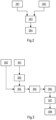
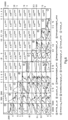
- the Figure 3 shows a diagram of another embodiment of a method according to the present application. To avoid repetition, only the differences from the embodiment according to Figure 2 described and otherwise referred to the previous explanations.
- At least one load parameter of the reference wind turbine i.e., of at least one component of the reference wind turbine
- a measurement period preferably at least 6 months
- the measurement of at least one load parameter can be carried out in particular in accordance with the IEC 61400-13 standard [2].
- the load parameter values of a plurality of load parameters of a plurality of components of the reference wind turbine can be measured.
- step 303 which can be performed at least partially in parallel with step 301, the at least one measured load parameter value of the reference wind turbine can be converted into at least one fatigue load indicator.
- all load parameter values can be converted.
- the conversion can be based, in particular, on a rainflow counting method.
- the at least one measured load parameter value of the reference wind turbine can be converted into at least one fatigue load indicator in accordance with the ASTM E1049-85(2017) standard.
- the load data sets can also be created.
- the fatigue load indicators in particular according to the timestamp provided with the load parameter values (or the corresponding sample values)
- the load data period can preferably correspond to the operating data period.
- an operating data period is assigned to each provided (SCADA) operating data set.
- the operating parameter values of the at least one operating parameter can be recorded during the measurement period and in particular (in a known manner) provided in the form of operating data records in step 302 (see, for example, Table 1 and/or 2).
- a preprocessing or pretreatment of the generated wind power training data sets can take place.
- a Removal of invalid values and/or indicators can also be performed.
- Feature selection can also be performed in the manner described above in step 305. Examples of this are sequential feature selection (e.g.: Ferri, FJ & Pudil, Pavel & Hatef, M. (2001). Comparative Study of Techniques for Large-Scale Feature Selection. Pattern Recognition in Practice, IV: Multiple Paradigms, Comparative Studies and Hybrid Systems. 16. 10.1016/B978-0-444-81892-8.50040-7 ), Recursive feature selection (e.g. Guyon, I, J Weston, S Barnhill, and V Vapnik. 2002.
- sequential feature selection e.g.: Ferri, FJ & Pudil, Pavel & Hatef, M. (2001). Comparative Study of Techniques for Large-Scale Feature Selection. Pattern Recognition in Practice, IV: Multiple Paradigms, Comparative Studies and Hybrid Systems.
- the generated wind power training data sets are divided into training data sets (e.g., 80%) and validation data sets (e.g., 20%). Furthermore, the wind power training data sets are transformed into data representations that are suitable as input for the machine learning model to be trained, i.e., that can depend in particular on the machine learning model to be trained (in a known manner). Preferably, a wind power training data set is transformed into a vector, a matrix, and/or a tensor.
- the machine learning model is trained or learned during a training period.
- a neural network can be trained.
- so-called supervised training or learning takes place using the training data sets and the validation data sets.
- Bayesian neural networks allow the representation of heteroskedastic uncertainties, i.e., uncertainties whose magnitude depends on the expected value of the estimated target variable (plant condition).
- these can be determined during the training period or during the training process using other methods (especially bootstrapping).
- the Figure 4 shows a diagram of an embodiment of a method for using a machine learning model which is implemented according to the present application, for example according to the embodiment according to Figure 2 and/or 3 was trained.
- the machine learning model outputs at least one system condition data set.
- the system condition data set may, for example, contain at least one determined fatigue load indicator of the additional wind turbine. It is understood that a different load parameter indicator may also be output.
- the Figure 7 shows a schematic view of an embodiment of a computing device 700 according to the present application.
- the computing device 700 comprises at least one processor (e.g., microprocessor, DSP, FPGA, and/or the like) and at least one data memory 720 containing computer program code.
- the data memory 720 contains, in particular, the trained or yet-to-be-trained machine learning model 750.
Landscapes
- Engineering & Computer Science (AREA)
- Theoretical Computer Science (AREA)
- Physics & Mathematics (AREA)
- Life Sciences & Earth Sciences (AREA)
- General Engineering & Computer Science (AREA)
- Evolutionary Computation (AREA)
- Artificial Intelligence (AREA)
- General Physics & Mathematics (AREA)
- Computing Systems (AREA)
- Health & Medical Sciences (AREA)
- General Health & Medical Sciences (AREA)
- Molecular Biology (AREA)
- Computational Linguistics (AREA)
- Biophysics (AREA)
- Biomedical Technology (AREA)
- Mathematical Physics (AREA)
- Software Systems (AREA)
- Data Mining & Analysis (AREA)
- Sustainable Development (AREA)
- Sustainable Energy (AREA)
- Chemical & Material Sciences (AREA)
- Combustion & Propulsion (AREA)
- Mechanical Engineering (AREA)
- Automation & Control Theory (AREA)
- Wind Motors (AREA)
Description
Die Anmeldung betrifft ein Verfahren zum Trainieren eines Machine-Learning-Modells, insbesondere verwendbar zum Bestimmen, insbesondere Schätzen, eines Anlagenzustands mindestens eines Bauteils einer Windkraftanlagen, besonders bevorzugt verwendbar zum Bestimmen, insbesondere Schätzen, einer Restnutzungsdauer der Windkraftanlage. Die Anmeldung betrifft darüber hinaus ein Verfahren zum Verwenden eines Machine-Learning-Modells und eine Rechenvorrichtung.The application relates to a method for training a machine learning model, particularly usable for determining, in particular estimating, a system condition of at least one component of a wind turbine, particularly preferably usable for determining, in particular estimating, a remaining service life of the wind turbine. The application further relates to a method for using a machine learning model and a computing device.
Elektrische Energie wird vermehrt unter Nutzung von erneuerbaren Energien generiert. So werden (Onshore- und/oder Offshore-) Windparks mit mindestens einer Windkraftanlage installiert. Eine Windkraftanlage ist eingerichtet, die Windenergie, also die kinetische Energie bewegter Luft, in elektrische Energie zu wandeln.Electrical energy is increasingly being generated using renewable energy sources. For example, (onshore and/or offshore) wind farms with at least one wind turbine are being installed. A wind turbine is designed to convert wind energy, i.e., the kinetic energy of moving air, into electrical energy.
In der Regel weist eine Windkraftanlage einen Turm und eine auf dem Turm angeordnete Gondel auf. Mittels eines Rotors, eines Generators und dergleichen wird die Windenergie in elektrische Energie gewandelt.A wind turbine typically consists of a tower and a nacelle mounted on the tower. Wind energy is converted into electrical energy by means of a rotor, a generator, and the like.
Eine Windkraftanlage ist nach der Installation und während des Betriebs der Windkraftanlage hohen (mechanischen) Belastungen ausgesetzt. Diese führen zu einer endlichen technischen Lebensdauer einer jeden Windkraftanlage. Grund sind insbesondere Ermüdungserscheinungen an bestimmten (nicht-reparablen bzw. nicht-austauschbaren) Bauteilen eine Windkraftanlage. Diese Bauteile werden auch als so genannte tragende Strukturkomponenten (z.B. Turm, Gondel, Fundament etc.) bezeichnet.A wind turbine is exposed to high (mechanical) loads after installation and during operation. These loads lead to a finite technical service life of every wind turbine. This is primarily due to fatigue phenomena in certain (non-repairable or non-replaceable) components of a wind turbine. These components are also referred to as load-bearing structural components (e.g., tower, nacelle, foundation, etc.).
Derartige Strukturkomponenten können in der Praxis insbesondere nicht durch Ersatzteile ausgetauscht oder repariert werden. Dies meint insbesondere, dass ein/e Austausch/Reparatur eines derartigen Bauteils im Vergleich zu einer Neuinstallation aus Kostengründen in der Praxis nicht durchgeführt wird, auch wenn diese theoretisch möglich wäre.In practice, such structural components cannot be replaced or repaired with spare parts. This means, in particular, that replacing or repairing such components is not carried out in practice for cost reasons, even if it would be theoretically possible, compared to a new installation.
Grundsätzlich wird das Ziel verfolgt, eine Windkraftanlage möglichst bis zum Erreichen des Endes der tatsächlichen technischen Lebensdauer der Windkraftanlage zu betreiben. Das Ende der technischen Lebensdauer ist insbesondere das Ende der sicheren Betriebszeit einer Windkraftanlage. Die tatsächliche Lebensdauer meint insbesondere den Zeitpunkt, an dem der tatsächlich vorliegende Anlagenzustand der Windkraftanlage mindestens einen bestimmten Anlagenzustandsgrenzwert erreicht oder unter- bzw. überschreitet. Der bestimmte Anlagenzustandsgrenzwert kann vorgegeben sein. Der bestimmte Anlagenzustandsgrenzwert kann insbesondere einen Zustand der Windkraftanlage (insbesondere von einem der Strukturkomponenten der Windkraftanlage) angeben, ab der das Risiko einer Beschädigung (insbesondere eines Ermüdungsschadens) eines der nicht-reparablen bzw. nicht-austauschbaren Bauteile der Windkraftanlage nicht mehr akzeptabel ist.The basic objective is to operate a wind turbine, if possible, until the end of its actual technical service life. The end of the technical service life is, in particular, the end of the safe operating time of a wind turbine. The actual service life refers in particular to the point in time at which the actual condition of the wind turbine reaches, falls below, or exceeds a certain condition limit. The certain condition limit can be predetermined. The certain condition limit can, in particular, indicate a condition of the wind turbine (in particular of one of the structural components of the wind turbine) beyond which the risk of damage (in particular fatigue damage) to one of the non-repairable or non-replaceable components of the wind turbine is no longer acceptable.
Anders ausgedrückt, kann ein Betreiben einer Windkraftanlage bei einem Erreichen des mindestens einen bestimmten Anlagenzustandsgrenzwerts nicht mehr zulässig sein.In other words, the operation of a wind turbine may no longer be permitted if at least one specific turbine condition limit value is reached.
Daher besteht bei der ständig wachsenden Anzahl von Windkraftanlagen bzw. Windparks grundsätzlich der Bedarf, die technische Lebensdauer, auch als Restnutzungsdauer bzw. "Remaining Useful Life" (RUL) bezeichnet, einer sich im Betrieb befindlichen Windkraftanlage mit einer möglichst hohen Genauigkeit zu bestimmen, also insbesondere vorherzusagen. Die RUL von Windkraftanlagen ist eine wichtige Kennzahl bei der Bewertung eines Windparks.Therefore, with the ever-increasing number of wind turbines and wind farms, there is a fundamental need to determine, and in particular, predict, the technical service life, also known as the "Remaining Useful Life" (RUL), of an operating wind turbine with the highest possible accuracy. The RUL of wind turbines is an important key figure in the evaluation of a wind farm.
Die RUL kann bestimmt werden durch die bis zum Bewertungszeitpunkt in die Struktur der Windkraftanlage, also die mindestens eine Strukturkomponente der Windkraftanlage, eingebrachten Ermüdungsschäden (vgl. augenblicklicher Anlagenzustand) im Vergleich zu den zulässigen Beschädigungen (beispielsweise definiert durch den mindestens einen Anlagenzustandsgrenzwert der mindestens einen Strukturkomponente).The RUL can be determined by the fatigue damage introduced into the structure of the wind turbine, i.e. the at least one structural component of the wind turbine, up to the time of assessment (cf. current turbine condition) in comparison to the permissible damage (for example defined by the at least one turbine condition limit value of the at least one structural component).
Es versteht sich, dass bei den zulässigen Beschädigungen entsprechende Sicherheitsfaktoren umfasst sein können. Anders ausgedrückt, kann der tatsächliche Anlagenzustand der mindestens einen Strukturkomponente im Vergleich zu einem zulässigen Anlagenzustand ermittelt werden, also mit mindestens einem bestimmten Anlagenzustandsgrenzwert verglichen werden.It is understood that the permissible damage may include appropriate safety factors. In other words, the actual system condition of at least one structural component can be determined in comparison to a permissible system condition, i.e., compared with at least one specific system condition limit.
Aus dem Stand der Technik ist es bekannt, die Schädigung einer Windkraftanlage aus den Windkraftanlagenlasten bzw. -belastungen auf der Grundlage eines geeigneten Schädigungsmodells für die Windkraftanlage durch eine Rechenvorrichtung zu berechnen. Insbesondere kann ein Modell für jedes betrachtete Bauteil bzw. jede betrachtete Strukturkomponente verwendet werden. Der genaueste Lösungsansatz wäre daher die kontinuierliche Messung der Bauteilbelastungen an sämtlichen Windkraftanlagen über die gesamte Lebensdauer der jeweiligen Windkraftanlage und dann die Vorhersage anhand des Schädigungsmodells. Aufgrund der enormen Kosten, die mit diesem Ansatz einhergehen, bei jeder Windkraftanlage derartige Messungen über einen Zeitraum von zumindest drei Monaten vorzunehmen, vorzugsweise zumindest sechs Monaten, ist dieser Ansatz in der Praxis schlicht nicht umsetzbar.It is known from the prior art to calculate the damage to a wind turbine from the wind turbine loads or stresses using a computer system based on a suitable damage model for the wind turbine. In particular, a model can be used for each component or structural component under consideration. The most accurate approach would therefore be to continuously measure the component loads on all wind turbines over the entire service life of the respective wind turbine and then make a prediction based on the damage model. Due to the enormous costs associated with this approach, which would require performing such measurements on each wind turbine over a period of at least three months, preferably at least six months, this approach is simply not feasible in practice.
Beim Stand der Technik werden daher Simulationsmodelle eingesetzt, um die RUL einer Windkraftanlage abzuschätzen. So werden beim Stand der Technik so genannte aero-elastische Simulationsmodelle zur Abschätzung der Komponentenlasten bzw. Komponentenbelastungen einer Windkraftanlage eingesetzt. Mit einem Simulationsmodell wird insbesondere ein bestimmter Anlagentyp abgebildet. Diese Abbildung ist jedoch mit einem hohen Aufwand verbunden. Die Simulationsmodelle werden dann mit verfügbaren Betriebsdaten einer Windkraftanlage kalibriert und validiert, wie z. B. Leistungskurve, Schubkurve, Fundamentlasten unter Auslegungsbedingungen etc.Therefore, state-of-the-art simulation models are used to estimate the RUL of a wind turbine. For example, so-called aeroelastic simulation models are used to estimate the component loads of a wind turbine. A simulation model specifically represents a specific turbine type. However, this representation is associated with considerable effort. The simulation models are then calibrated and validated with available operating data of a wind turbine, such as power curve, thrust curve, foundation loads under design conditions, etc.
Belastungsmessung bzw. Lastmessungen im Betrieb einer Windkraftanlage werden in der Regel nicht durchgeführt. Die Unsicherheit eines solchen Simulationsmodells ist daher in der Regel sehr hoch. Entsprechend der hohen Unsicherheit werden entsprechend hohe Sicherheitsfaktoren berücksichtigt, so dass es zu sehr konservativen RUL-Ergebnissen kommt. Die hohe Unsicherheit und der ohnehin schon hohe Aufwand kann beim Stand der Technik jedoch nur durch den Einsatz erheblicher Ressourcen verbessert werden.Load measurements during operation of a wind turbine are generally not performed. The uncertainty of such a simulation model is therefore usually very high. Due to the high uncertainty, correspondingly high safety factors are taken into account, resulting in very conservative RUL results. However, with the current state of technology, the high uncertainty and the already high effort involved can only be improved by investing considerable resources.
Eine in der Praxis nur selten angewandte Möglichkeit, die Unsicherheit zumindest etwas zu reduzieren, basiert auf einer Abschätzung der auf eine Windkraftanlage wirkenden Lasten anhand von Betriebsdaten der Windkraftanlage, insbesonderein Form von SCADA (Supervisory Control and Data Acquisition) Betriebsdaten der Windkraftanlage.A rarely used option in practice to at least somewhat reduce the uncertainty is based on an estimation of the loads acting on a wind turbine using operating data from the wind turbine, in particular in the form of SCADA (Supervisory Control and Data Acquisition) operating data from the wind turbine.
Problematisch bei einem Abschätzungsprozess der Schadensakkumulation, der auf der Ableitung von Lasten aus SCADA Betriebsdaten basiert, ist, dass dieser in einem hohen Maße nicht-linear ist. Bei den bekannten Simulationsmodellen führt diese Problematik regelmäßig zu sehr unzuverlässigen Ergebnissen.The problem with a damage accumulation estimation process based on deriving loads from SCADA operating data is that it is highly non-linear. This problem regularly leads to highly unreliable results in existing simulation models.
Zusammenfassend kann festgestellt werden, dass die Abschätzung einer Restnutzungsdauer einer Windkraftanlage im Stand der Technik sehr aufwendig ist und gleichzeitig eine hohe Unsicherheit aufweist.In summary, it can be stated that the estimation of the remaining service life of a wind turbine is very complex and, at the same time, involves a high degree of uncertainty.
Daher liegt der Anmeldung die Aufgabe zugrunde, eine Möglichkeit zur Bestimmung einer Restnutzungsdauer einer Windkraftanlage bereitzustellen, welche eine zuverlässigere Bestimmung der Restnutzungsdauer mit einem insbesondere geringeren Aufwand ermöglicht.Therefore, the application is based on the object of providing a possibility for determining the remaining useful life of a wind turbine, which enables a more reliable determination of the remaining useful life with, in particular, less effort.
Die Aufgabe wird gemäß einem ersten Aspekt der Anmeldung gelöst durch ein Verfahren nach Anspruch 1, insbesondere ein computer-implementiertes Verfahren, zum Trainieren eines Machine-Learning-Modells, das zum Bestimmen einer Restnutzungsdauer einer weiteren Windkraftanlage verwendet wird. Das Verfahren umfasst:
- Bereitstellen einer Vielzahl von (zeitabhängigen) Betriebsdatensätzen einer Referenz-Windkraftanlage,
- Bereitstellen einer Vielzahl von (zeitabhängigen) Belastungsdatensätze der Referenz-Windkraftanlage, wobei ein Belastungsdatensatz zumindest auf mindestens einem an der Referenz-Windkraftanlage gemessenen Belastungsparameter basiert, und
- Generieren einer Vielzahl von Windkraft-Trainingsdatensätzen zum Trainieren eines Machine-Learning-Modells durch synchronisiertes Zuordnen eines jeweiligen Betriebsdatensatzes zu einem jeweiligen Belastungsdatensatz.
- Providing a large number of (time-dependent) operating data sets of a reference wind turbine,
- Providing a plurality of (time-dependent) load data sets of the reference wind turbine, wherein a load data set is based on at least one load parameter measured on the reference wind turbine, and
- Generating a plurality of wind power training datasets for training a machine learning model by synchronously mapping a respective operational dataset to a respective load dataset.
Die Aufgabe wird gemäß einem weiteren Aspekt der Anmeldung gelöst durch ein Verfahren nach Anspruch 12 zum Verwenden eines Machine-Learning-Modells, welches gemäß dem beschriebenen Verfahren trainiert wurde. Das Verfahren umfasst:
- Eingeben mindestens eines Betriebsdatensatzes der weiteren Windkraftanlage in das (trainierte) Machine-Learning-Modell, und
- Ausgeben, durch das (trainierte) Machine-Learning-Modell, mindestens eines Anlagenzustandsdatensatzes.
- Entering at least one operating data set of the further wind turbine into the (trained) machine learning model, and
- Output, by the (trained) machine learning model, at least one asset status data set.
Das Verfahren dient insbesondere zum Bestimmen des augenblicklichen und insbesondere tatsächlichen (strukturellen und mechanischen) Anlagenzustands mindestens einer Strukturkomponente der weiteren Windkraftanlage. Basierend auf diesem (mindestens einen) Anlagenzustand kann dann insbesondere eine Restnutzungsdauer der weiteren Windkraftanlange bestimmt werden, insbesondere mit einer erhöhten Genauigkeit vorhergesagt werden.The method is used in particular to determine the current and, in particular, actual (structural and mechanical) condition of at least one structural component of the additional wind turbine. Based on this (at least one) condition, a remaining service life of the additional wind turbine can then be determined, in particular predicted with increased accuracy.
Im Gegensatz zum Stand der Technik wird anmeldungsgemäß eine Möglichkeit zur Bestimmung eines augenblicklichen Anlagenzustands einer Windkraftanlage, und basierend hierauf einer Restnutzungsdauer der Windkraftanlage bereitgestellt, welche eine zuverlässigere Bestimmung der Restnutzungsdauer mit einem insbesondere geringeren Aufwand ermöglicht, indem ein Machine-Learning-Modell mit Trainingsdatensätzen trainiert wird, welche jeweils synchronisierte Betriebsdaten und Belastungsdaten einer Referenz-Windkraftanlage enthalten, und indem das trainierte Machine-Learning-Modell dann zum Bestimmen des Anlagenzustands einer weiteren Windkraftanlage verwendbar ist. Basierend auf diesem bestimmten Anlagenzustand kann dann wiederum die Restnutzungsdauer der weiteren Windkraftanlage (beispielweise in herkömmlicher Weise) bestimmt werden.In contrast to the prior art, the application provides a method for determining the current state of a wind turbine and, based thereon, the remaining service life of the wind turbine. This method enables a more reliable determination of the remaining service life with, in particular, less effort by training a machine learning model with training data sets, each of which contains synchronized operating data and load data from a reference wind turbine. The trained machine learning model can then be used to determine the state of another wind turbine. Based on this determined state, the remaining service life of the other wind turbine can then be determined (for example, in a conventional manner).
Anmeldungsgemäß wird ein Verfahren zum Trainieren eines Machine-Learning-Modells bereitgestellt. Anders ausgedrückt, kann ein Machine-Learning-Modell durch das anmeldungsgemäße Verfahren angelernt werden. Das trainierte Machine-Learning-Modell ist anschließend insbesondere mittelbar verwendbar zum Bestimmen einer Restnutzungsdauer einer Windkraftanlage.According to the application, a method for training a machine learning model is provided. In other words, a machine learning model can be trained using the method according to the application. The trained machine learning model can then be used, in particular indirectly, to determine the remaining service life of a wind turbine.
Das Machine-Learning-Modell (auch als maschinelles Lernmodell oder Maschinenlernmodell bezeichnet) kann vorzugsweise ein künstliches neuronales Netz sein und/oder umfassen.The machine learning model (also referred to as machine learning model or machine learning model) may preferably be and/or comprise an artificial neural network.
Ein künstliches neuronales Netz umfasst künstliche Neuronen. Ein derartiges Neuron ist insbesondere eingerichtet zum Erhalten jeweils mindestens einer Eingabe von mindestens zwei weiteren künstlichen Neuronen. Die mindestens zwei Eingaben können jeweils über mindestens eine Verbindung mit einer bestimmten (trainierbaren) Gewichtung erhalten werden.An artificial neural network comprises artificial neurons. Such a neuron is particularly configured to receive at least one input from at least two other artificial neurons. The at least two inputs can each be received via at least one connection with a specific (trainable) weighting.
Ein künstliches Neuron kann ferner eingerichtet sein, die mindestens eine Eingabe zu mindestens einer Ausgabe zu integrieren, indem das Neuron zum Beispiel mindestens zwei erhaltene Eingaben summiert und zum Beispiel eine Funktion, wie beispielsweise eine Sigmoidtransformation, auf die Summe anwendet, um eine Ausgabe zu generieren. Die Ausgabe eines künstlichen Neurons, insbesondere multipliziert mit einer Verbindungsgewichtung einer weiteren Verbindung zu einem weiteren Neuron, kann eine Eingabe für dieses weitere Neuron bilden.An artificial neuron may further be configured to integrate the at least one input into at least one output, for example by the neuron integrating at least Two received inputs are summed and, for example, a function such as a sigmoid transformation is applied to the sum to generate an output. The output of an artificial neuron, in particular multiplied by a connection weight of another connection to another neuron, can form an input for this additional neuron.
Anmeldungsgemäß werden für mindestens eine Referenz-Windkraftanlage eine Vielzahl von Betriebsdatensätzen dieser mindestens einen Referenz-Windkraftanlage und eine Vielzahl von (mechanischen und/oder strukturellen) Belastungsdatensätzen dieser mindestens einen Referenz-Windkraftanlage bereitgestellt.According to the application, a plurality of operating data sets of this at least one reference wind turbine and a plurality of (mechanical and/or structural) load data sets of this at least one reference wind turbine are provided for at least one reference wind turbine.
Wie bereits beschrieben wurde, kann ein aktueller Anlagenzustand einer Strukturkomponente aus Belastungsparametern bzw. den Belastungsparameterwerten, die an einer Windkraftanlage während einer Messzeitdauer gemessen werden, bestimmt werden, insbesondere geschätzt werden. Eine Bestimmung des augenblicklichen Anlagenzustands, ausschließlich basierend auf den während einer Erfassungszeitdauer erfassten Betriebsdaten (vorzugsweise SCADA-Betriebsdaten), ist hingegen gemäß dem Stand der Technik nicht möglich.As already described, the current system condition of a structural component can be determined, in particular estimated, from load parameters or the load parameter values measured on a wind turbine during a measurement period. However, determining the current system condition based solely on the operating data (preferably SCADA operating data) acquired during a measurement period is not possible according to the state of the art.
Anmeldungsgemäß ist erkannt worden, dass grundsätzlich ein Zusammenhang zwischen den Belastungsparameterwerten und den Betriebsdatenwerten besteht. Insbesondere ist erkannt worden, dass durch spezielle Trainingsdatensätze, welche sowohl Belastungsparameterwerte als auch Betriebsdatenwerte einer (Referenz-) Windkraftanlage enthalten, ein Machine-Learning-Modell derart trainiert werden kann, dass dieser Zusammenhang bzw. Zusammenhänge detektiert und in dem Machine-Learning-Modell abgebildet werden können. Insbesondere können durch ein Machine-Learning-Modell Muster zwischen Belastungsparameterwerten und Betriebsdatenwerten erkannt werden. Diese können in dem Machine-Learning-Modell abgebildet werden.According to the application, it has been recognized that there is a fundamental relationship between the load parameter values and the operating data values. In particular, it has been recognized that, using special training data sets containing both load parameter values and operating data values of a (reference) wind turbine, a machine learning model can be trained in such a way that this relationship or relationships can be detected and mapped in the machine learning model. In particular, a machine learning model can recognize patterns between load parameter values and operating data values. These can be mapped in the machine learning model.
Hierdurch ist es anschließend möglich, die Restnutzungsdauer einer weiteren Windkraftanlage (zumindest mittelbar) unter Verwendung (ausschließlich) der Betriebsdaten dieser weiteren Windkraftanlage zu bestimmen, insbesondere zu schätzen. So kann mindestens ein Betriebsdatensatz, vorzugsweise eine Vielzahl von Betriebsdatensätzen, einer weiteren Windkraftanlage in das Machine-Learning-Modell eingegeben werden, also insbesondere als Eingabe(n) zur Verfügung gestellt werden. Als Ausgabe kann zumindest ein Anlagenzustandsdatensatz durch das Machine-Learning-Modell bereitgestellt werden, der bereits eine (geschätzte) Restnutzungsdauer oder zumindest mindestens einen Anlagenzustandsindikator (z.B. mindestens einen Ermüdungsbelastungsindikator) enthalten kann, aus dem die Restnutzungsdauer bestimmbar ist, insbesondere in konventioneller Weise abschätzbar ist.This subsequently makes it possible to determine, in particular estimate, the remaining service life of another wind turbine (at least indirectly) using (exclusively) the operating data of this other wind turbine. Thus, at least one operating data set, preferably a plurality of operating data sets, of another wind turbine can be input into the machine learning model, i.e., in particular, made available as input(s). As output, at least one turbine condition data set can be provided by the machine learning model, which may already contain an (estimated) remaining service life or at least one turbine condition indicator (e.g., at least one fatigue load indicator) from which the remaining service life can be determined, in particular, estimated in a conventional manner.
Wie bereits beschrieben wurde, werden zum Bilden von einer Vielzahl von Trainingsdatensätzen eine Vielzahl von Betriebsdatensätzen und eine Vielzahl von Belastungsdatensätzen einer Referenz-Windkraftanlage bereitgestellt. Eine Referenz-Windkraftanlage meint insbesondere eine im Betrieb befindliche Windkraftanlage insbesondere eines Windparks, deren Betriebsparameterwerte und Belastungsparameterwerte erfasst werden, um Trainingsdatensätze zu bilden. Eine Referenz-Windkraftanlage kann in beliebiger Weise aus einer Mehrzahl von Windkraftanlagen eines Windparks ausgewählt werden.As already described, a plurality of operating data sets and a plurality of load data sets of a reference wind turbine are provided to create a plurality of training data sets. A reference wind turbine refers in particular to an operating wind turbine, particularly of a wind farm, whose operating parameter values and load parameter values are recorded to create training data sets. A reference wind turbine can be selected in any manner from a plurality of wind turbines of a wind farm.
Ein Betriebsdatensatz enthält mindestens einen betriebsbezogenen Parameterwert der Referenz-Windkraftanlage. Vorzugsweise enthält ein Betriebsdatensatz eine Vielzahl dieser Betriebsparameter(-werte). Ein Betriebsparameter meint insbesondere einen während des Betriebs einer Windkraftanlage (für den Betrieb der Windkraftanlage) erfassten Betriebsparameter der Windkraftanlage, der sich auf den Betrieb der Windkraftanlage bezieht. Vorzugweise ist ein bereitgestellter Betriebsdatensatz der Referenz-Windkraftanlage ein SCADA-Betriebsdatensatz der Referenz-Windkraftanlage bzw. ein Betriebsdatensatz der Referenz-Windkraftanlage mit mindestens einem SCADA-Betriebsparameter der Referenz-Windkraftanlage.An operating data record contains at least one operation-related parameter value of the reference wind turbine. An operating data record preferably contains a plurality of these operating parameters (values). An operating parameter refers, in particular, to an operating parameter of the wind turbine recorded during operation of a wind turbine (for the operation of the wind turbine) that relates to the operation of the wind turbine. Preferably, a provided operating data record of the reference wind turbine is a SCADA operating data record of the reference wind turbine or an operating data record of the reference wind turbine with at least one SCADA operating parameter of the reference wind turbine.
Ein Belastungsdatensatz, insbesondere in Form eines Ermüdungsbelastungsdatensatz, enthält mindestens einen strukturellen und/oder mechanischen Belastungsparameter bzw. Belastungsparameterwert einer (zuvor beschriebenen) Strukturkomponente der Referenz-Windkraftanlage.A load data set, in particular in the form of a fatigue load data set, contains at least one structural and/or mechanical load parameter or load parameter value of a (previously described) structural component of the reference wind turbine.
Insbesondere werden während des Betriebs einer Referenz-Windkraftanlage gleichzeitig Belastungsparameterwerte mindestens eines Belastungsparameters der Referenz-Windkraftanlage und Betriebsparameterwerte mindestens eines Betriebsparameters der Referenz-Windkraftanlage erfasst.In particular, during the operation of a reference wind turbine, load parameter values of at least one load parameter of the reference wind turbine and operating parameter values of at least one operating parameter of the reference wind turbine are recorded simultaneously.
Aus den erfassten Betriebsparameterwerten des mindestens einen Betriebsparameters kann dann eine Vielzahl von zeitabhängigen Betriebsdatensätzen gebildet werden, insbesondere in herkömmlicher Weise. Jedem Betriebsdatensatz kann insbesondere eine Betriebsdatenzeitdauer (z.B. ein Zeitstempel) zugeordnet sein, die sich auf den Messzeitraum der Messung bzw. Erfassung des mindestens einen Betriebsparameters bezieht. Beispielsweise kann eine Betriebsdatenzeitdauer einen Anfangszeitpunkt (gebildet insbesondere durch Datum und Uhrzeit (z.B. 1.1.21, 1:00 Uhr)), eine Zeitlänge (vorzugsweise zwischen 5 und 30 min, insbesondere (in herkömmlicher Weise) 10 min) und einen Endzeitpunkt (gebildet insbesondere durch Datum und Uhrzeit (z.B. 1.1.21, 1:10 Uhr)) umfassen.A plurality of time-dependent operating data records can then be formed from the recorded operating parameter values of the at least one operating parameter, in particular in a conventional manner. Each operating data record can, in particular, be assigned an operating data duration (e.g., a timestamp) that relates to the measurement period of the measurement or recording of the at least one operating parameter. For example, an operating data duration can comprise a start time (formed, in particular, by the date and time (e.g., 1/1/21, 1:00 a.m.)), a time length (preferably between 5 and 30 minutes, in particular (in a conventional manner) 10 minutes), and an end time (formed, in particular, by the date and time (e.g., 1/1/21, 1:10 a.m.)).
Aus den erfassten Belastungsparameterwerten des mindestens einen Belastungsparameters kann dann eine Vielzahl von zeitabhängigen Belastungsdatensätzen gebildet werden. Um insbesondere ein (zeitlich) synchronisiertes Zuordnen von Betriebsdatensätzen zu Belastungsdatensätzen zu ermöglichen, kann sich das Bilden von Belastungsdatensätzen vorzugsweise an die Bildung der Betriebsdatensätze (beispielsweise ohnehin durch ein SCADA-System vorgegeben) orientieren bzw. hierzu korrespondieren.A plurality of time-dependent load data sets can then be created from the recorded load parameter values of the at least one load parameter. In particular, to enable a (temporally) synchronized assignment of operating data sets to load data sets, the creation of load data sets can preferably be based on or correspond to the creation of the operating data sets (e.g., already specified by a SCADA system).
Jedem Belastungsdatensatz kann insbesondere eine Belastungsdatenzeitdauer (z.B. ein Zeitstempel) zugeordnet sein, die sich auf den Messzeitraum der Messung bzw. Erfassung des mindestens einen Belastungsparameters bezieht. Diese Belastungsdatenzeitdauer kann entsprechend der Betriebsdatenzeitdauer gewählt sein. Beispielsweise kann eine Belastungsdatenzeitdauer einen Anfangszeitpunkt (gebildet insbesondere durch Datum und Uhrzeit (z.B. 1.1.21, 1:00 Uhr)), eine Zeitlänge (vorzugsweise zwischen 5 und 30 min, insbesondere (in herkömmlicher Weise) 10 min) und einen Endzeitpunkt (gebildet insbesondere durch Datum und Uhrzeit (z.B. 1.1.21, 1:10 Uhr)) umfassen.In particular, each load data record can be assigned a load data duration (e.g., a timestamp) that relates to the measurement period of the measurement or recording of the at least one load parameter. This load data duration can be selected according to the operating data duration. For example, a load data duration can comprise a start time (formed in particular by the date and time (e.g., 1/1/21, 1:00 a.m.)), a time length (preferably between 5 and 30 minutes, in particular (conventionally) 10 minutes), and an end time (formed in particular by the date and time (e.g., 1/1/21, 1:10 a.m.)).
Zum Generieren von Windkraft-Trainingsdatensätzen erfolgt anmeldungsgemäß ein synchrones bzw. synchronisiertes Zuordnen von Belastungsdatensätzen zu Betriebsdatensätzen, insbesondere abhängig von der jeweils zugeordneten Belastungsdatenzeitdauer bzw. Betriebsdatenzeitdauer. Anders ausgedrückt, kann insbesondere ein zeitlich synchrones bzw. zeitlich synchronisiertes Zuordnen von zeitlich synchronen Datensätzen, also Datensätzen mit gleicher Zeitabhängigkeit (z.B. gleichem Zeitstempel), zueinander erfolgen.To generate wind power training datasets, according to the application, load datasets are assigned to operating datasets in a synchronous or synchronized manner, in particular depending on the respective assigned load data period or operating data period. In other words, a temporally synchronous or synchronized assignment of temporally synchronous datasets, i.e., datasets with the same time dependency (e.g., the same timestamp), to one another can be performed.
Beispielsweise wird ein Betriebsdatensatz mit Anfangszeitpunkt tA1 (z.B. 1.1.21, 1:00 Uhr), Zeitlänge TL1 (z.B. 10 min) und einem Endzeitpunt tE1 (z.B. 1.1.21, 1:10 Uhr) einen Belastungsdatensatz mit einem entsprechenden Anfangszeitpunkt tA1 (z.B. 1.1.21, 1:00 Uhr), einer entsprechenden Zeitlänge TL1 (z.B. 10 min) und einem entsprechenden Endzeitpunt tE1 (z.B. 1.1.21, 1:10 Uhr) zugeordnet.For example, an operating data record with a start time t A1 (e.g. 1.1.21, 1:00 a.m.), time length T L1 (e.g. 10 min) and an end time point t E1 (e.g. 1.1.21, 1:10 a.m.) is assigned a load data record with a corresponding start time t A1 (e.g. 1.1.21, 1:00 a.m.), a corresponding time length T L1 (e.g. 10 min) and a corresponding end time point t E1 (e.g. 1.1.21, 1:10 a.m.).
Durch die anmeldungsgemäße synchrone Zuordnung wird insbesondere ein Windkraft-Trainingsdatensatz gebildet, der (stets) (genau) einen Belastungsdatensatz (bzw. die entsprechenden Parameterwerte) und (genau) einen Betriebsdatensatz (bzw. die entsprechenden Parameterwerte) enthält bzw. hieraus gebildet ist.The synchronous assignment according to the application creates, in particular, a wind power training data set which (always) contains (exactly) one load data set (or the corresponding parameter values) and (exactly) one operating data set (or the corresponding parameter values) or is created from them.
Gemäß einer Ausführungsform des anmeldungsgemäßen Verfahrens kann das Machine-Learning-Modell (in herkömmlicher Weise) mit den generierten Windkraft-Trainingsdatensätzen während einer Trainingszeitdauer trainiert werden. Anders ausgedrückt, werden dem Machine-Learning-Modell die generierten Windkraft-Trainingsdatensätzen bereitgestellt, um insbesondere angelernt zu werden.According to one embodiment of the method according to the application, the machine learning model can be trained (in a conventional manner) with the generated wind power training data sets be trained during a training period. In other words, the generated wind turbine training data sets are provided to the machine learning model for training purposes.
Gemäß einer weiteren Ausführungsform des anmeldungsgemäßen Verfahrens kann ein Teil (zum Beispiel zwischen 10 % und 30 %, vorzugsweise zwischen 15 % und 25 %) der generierten Windkraft-Trainingsdatensätzen als Validierungsdatensätze während einer Trainingszeitdauer verwendet werden. Insbesondere kann der Trainingserfolg eines Machine-Learning-Modells mittels Validierungsdatensätzen überprüft werden, also insbesondere validiert werden. Die Validierungsdatensätze können vorzugsweise zufällig aus den generierten Windkraft-Trainingsdatensätzen ausgewählt werden.According to a further embodiment of the method according to the application, a portion (for example, between 10% and 30%, preferably between 15% and 25%) of the generated wind power training data sets can be used as validation data sets during a training period. In particular, the training success of a machine learning model can be checked, i.e., validated, using validation data sets. The validation data sets can preferably be randomly selected from the generated wind power training data sets.
Gemäß einer bevorzugten Ausführungsform des anmeldungsgemäßen Verfahrens kann ein bereitgestellter Betriebsdatensatz mindestens einen Betriebsparameter (bzw. einen erfassten Betriebsparameterwert) der Referenz-Windkraftanlage enthalten. Der mindestens eine Betriebsparameter kann ausgewählt sein aus der Gruppe, umfassend:
- Turmkopfbeschleunigung (auch als tower top acceleration bezeichnet),
- Pitchwinkel (auch als pitch angle bezeichnet),
- Pitchgeschwindigkeit (also insbesondere die Geschwindigkeit, mit der das Blatt verstellt wird)
- Rotorgeschwindigkeit (auch als rotor speed bezeichnet),
- Elektrische Leistung, insbesondere elektrische Wirkleistung (auch als active power bezeichnet),
- Gondelwindgeschwindigkeit(en) (auch als nacelle windspeed(s) bezeichnet).
- Tower top acceleration (also called tower top acceleration),
- Pitch angle (also called pitch angle),
- Pitch speed (in particular the speed at which the blade is adjusted)
- Rotor speed (also called rotor speed),
- Electrical power, especially electrical active power (also called active power),
- Nacelle wind speed(s) (also called nacelle windspeed(s)).
Der Betriebsdatensatz kann nur einen der vorgenannten Betriebsparameter, vorzugsweise zwei der vorgenannten Betriebsparameter umfassen, besonders bevorzugt sämtliche dieser Betriebsparameter. Es versteht sich, dass ggf. auch zusätzliche, hier nicht explizit genannte Betriebsparameter alternativ oder zusätzlich vorgesehen sein können. Insbesondere kann mindestens ein Sensormodul, insbesondere eine Mehrzahl von (unterschiedlichen) Sensormodulen, vorgesehen sein, um den mindestens einen Betriebsparameter bzw. dessen Betriebsparameterwerte (vorzugsweise kontinuierlich) zu messen. Die gemessen Betriebsparameterwerte und/oder -signale eines Betriebsparameters können dann, beispielsweise durch ein SCADA-Steuermodul, bereitgestellt werden.The operating data set may comprise only one of the aforementioned operating parameters, preferably two of the aforementioned operating parameters, particularly preferably all of these operating parameters. It is understood that additional operating parameters not explicitly mentioned here may also be included alternatively or additionally. may be provided. In particular, at least one sensor module, in particular a plurality of (different) sensor modules, may be provided to measure the at least one operating parameter or its operating parameter values (preferably continuously). The measured operating parameter values and/or signals of an operating parameter can then be provided, for example, by a SCADA control module.
Vorzugsweise weist ein Betriebsdatensatz eine Betriebsdatenzeitdauer auf, wie zuvor beschrieben wurde.Preferably, an operating data record has an operating data duration as previously described.
Gemäß einer weiteren Ausführungsform des anmeldungsgemäßen Verfahrens kann ein Betriebsdatensatz als Betriebsparameterwert eines Betriebsparameters mindestens einen Betriebsparameterwert umfassen, der ausgewählt ist aus der Gruppe, umfassend:
- maximaler Betriebsparameterwert erfasst während (der Zeitlänge) der Betriebsdatenzeitdauer des Betriebsdatensatzes,
- minimaler Betriebsparameterwert erfasst während (der Zeitlänge) der Betriebsdatenzeitdauer des Betriebsdatensatzes,
- Betriebsparametermittelwert ermittelt aus den während (der Zeitlänge) der Betriebsdatenzeitdauer des Betriebsdatensatzes erfassten Betriebsparameterwerten,
- Standardabweichung ermittelt aus den während (der Zeitlänge) der Betriebsdatenzeitdauer des Betriebsdatensatzes erfassten Betriebsparameterwerten.
- maximum operating parameter value recorded during (the time length of) the operating data period of the operating data record,
- minimum operating parameter value recorded during (the time length of) the operating data period of the operating data record,
- Operating parameter mean value determined from the operating parameter values recorded during (the time length) of the operating data period of the operating data set,
- Standard deviation determined from the operating parameter values recorded during (the time length) of the operating data period of the operating data set.
Ein Betriebsdatensatz kann für den mindestens einen Betriebsparameter zwei der genannten Betriebsparameterwerte umfassen, vorzugsweise sämtliche dieser Betriebsparameterwerte. Hierdurch können qualitativ höherwertige Trainingsdatensätze gebildet werden.An operating data set can comprise two of the aforementioned operating parameter values for the at least one operating parameter, preferably all of these operating parameter values. This allows higher-quality training data sets to be created.
Ein bevorzugtes Beispiel eines Betriebsdatensatzes gemäß der vorliegenden Anmeldung ist in Tabelle 1 angegeben.
Die vorbeschriebenen bevorzugten Betriebsparameter beziehen sich insbesondere auf Onshore- Windkraftanlagen.The preferred operating parameters described above refer in particular to onshore wind turbines.
Anmeldungsgemäß ist erkannt worden, dass bei einer Offshore-Windkraftanlage ein Betriebsdatensatz mindestens einen weiteren (offshore-bezogenen)According to the application, it has been recognized that in the case of an offshore wind turbine, an operating data record contains at least one further (offshore-related)
Betriebsparameter umfassen sollte bzw. ein weiterer Betriebsdatensatz mit mindestens einem weiteren (offshore-bezogenen) Betriebsparameter bereitgestellt werden sollte. Insbesondere ist anmeldungsgemäß erkannt worden, dass bei einer Offshore-Windkraftanlage ein Betriebsdatensatz (oder ein weiterer Offshore-Betriebsdatensatz, der entsprechend der beschriebenen synchronen Zuordnung zusätzlich zugeordnet werden kann) mindestens einen Gewässerzustandsparameter enthalten kann. Ein Gewässerzustandsparameter meint insbesondere einen Parameter, der den Zustand des die Offshore-Windkraftanlage umgebenden Gewässers (insbesondere ein Meer) angibt.Operating parameters should include, or a further operating data set with at least one further (offshore-related) operating parameter should be provided. In particular, according to the application, it has been recognized that, for an offshore wind turbine, an operating data set (or another offshore operating data set that can be additionally assigned according to the described synchronous assignment) can contain at least one water status parameter. A water status parameter means, in particular, a parameter that indicates the status of the body of water surrounding the offshore wind turbine (in particular, a sea).
Der mindestens eine Gewässerzustandsparameter ist vorzugsweise ein hydrodynamischer Parameter. Der mindestens eine Gewässerzustandsparameter kann ein Wellenparameter (z.B. Wellenhöhe, Wellenrichtung und/oder Wellenfrequenz) und/oder ein Strömungsparameter (z.B. Strömungsgeschwindigkeit und/oder Strömungsrichtung) sein.The at least one water body condition parameter is preferably a hydrodynamic parameter. The at least one water body condition parameter can be a wave parameter (e.g., wave height, wave direction, and/or wave frequency) and/or a flow parameter (e.g., flow velocity and/or flow direction).
Ein Beispiel eines (Offshore-)Betriebsdatensatzes gemäß der vorliegenden Anmeldung mit offshore-bezogenen Betriebsparametern ist in Tabelle 2 angegeben.
Es versteht sich, dass die Tabelle 1 und die Tabelle 2 miteinander kombinierbar sind.It is understood that Table 1 and Table 2 can be combined with each other.
Gemäß einer weiteren bevorzugten Ausführungsform des anmeldungsgemäßen Verfahrens kann eine Vorverarbeitung der bereitgestellten Betriebsparameterwerte und/oder Belastungsparameterwerte und/oder Windkraft-Trainingsdatenparameterwerte erfolgen. Insbesondere kann die Qualität der Trainingsdatensätze verbessert werden, wenn die Qualität der genannten Werte verbessert wird (z.B. fehlerhafte Werte aufgrund von Messfehler vorab identifiziert werden und dann insbesondere unbeachtlich bleiben oder mit geeigneten Mitteln durch passendere Werte ersetzt werden).According to a further preferred embodiment of the method according to the application, the provided operating parameter values and/or load parameter values and/or wind power training data parameter values can be preprocessed. In particular, the quality of the training data sets can be improved if the quality of the aforementioned values is improved (e.g., erroneous values due to measurement errors are identified in advance and then, in particular, remain unconsidered or are replaced by more suitable values using suitable means).
Eine Vorverarbeitung kann insbesondere mindestens eine der nachfolgenden Maßnahmen umfassen:
- Entfernen ungültiger Betriebsparameterwerte und/oder Belastungsparameterwert und/oder Windkraft-Trainingsdatenparameterwerte (bzw. entsprechende Ausreißer). Dies erfolgt vorzugsweise über direkte Indikatoren für den Windkraftanlagenzustand (Windkraftanlagenzustandssignal in SCADA, falls vorhanden) und/oder indirekt über das Leistungssignal in SCADA in Verbindung mit der Leistungskurvenspezifikation.
- Extrahieren von einem geeigneten Satz von Merkmalen/Parameterwerten, indem eine Kollinearität der Merkmalen/Parameterwerten berücksichtigt wird. Dies kann durch die Berechnung der Korrelationen der Parameter untereinander und Vergleich mit einer zulässigen Obergrenze geschehen.
- Alternativ können alle Merkmalen/Parameterwerten (mit Ausnahme der stark kollinearen) beibehalten und eine maschinelle Lernmethode mit impliziter Merkmals-Auswahl verwendet werden (z. B. Bayes'sches LASSO (vgl. z.B.
Trevor Park & George Casella (2008), The Bayesian Lasso, Journal of the American Statistical Association Friedman, J.H. (1991) "Multivariate Adaptive Regression Splines - Skalierung der Betriebsparameterwerte und/oder Belastungsparameterwert und/oder Windkraft-Trainingsdatenparameterwerte, z. B. Standardisierung der Betriebsparameterwerte mit Erwartungswert Null (zero mean) und z.B. konstanter Varianz (üblicherweise gleich 1).
- Removal of invalid operating parameter values and/or load parameter values and/or wind turbine training data parameter values (or corresponding outliers). This is preferably done via direct indicators of wind turbine health (wind turbine health signal in SCADA, if available) and/or indirectly via the power signal in SCADA in conjunction with the power curve specification.
- Extracting a suitable set of features/parameter values by considering collinearity between the features/parameter values. This can be done by calculating the correlations between the parameters and comparing them with a permissible upper bound.
- Alternatively, all features/parameter values (except for the strongly collinear ones) can be retained and a machine learning method with implicit feature selection can be used (e.g. Bayesian LASSO (cf. e.g.
Trevor Park & George Casella (2008), The Bayesian Lasso, Journal of the American Statistical Association Friedman, JH (1991) "Multivariate Adaptive Regression Splines - Scaling of the operating parameter values and/or load parameter value and/or wind power training data parameter values, e.g. standardization of the operating parameter values with zero mean and e.g. constant variance (usually equal to 1).
Andere Transformationen sind auch denkbar. Ziel ist es insbesondere immer, dass die Variablen nach der Transformation näherungsweise standardnormalverteilt sind.Other transformations are also conceivable. The goal is always that the variables are approximately standard normally distributed after the transformation.
Gemäß einer weiteren bevorzugten Ausführungsform des anmeldungsgemäßen Verfahrens kann ein bereitgestellter Belastungsdatensatz auf mindestens einem gemessenen Belastungsparameter der Referenz-Windkraftanlage basieren. Basierend meint insbesondere, dass der Belastungsdatensatz nicht die (gemessenen) Belastungsparameterwerte des mindestens einen Belastungsparameter unmittelbar umfasst, sondern hieraus abgeleitete bzw. bestimmte Ermüdungsbelastungsindikatoren bzw. -indikatorwerte.According to a further preferred embodiment of the method according to the application, a provided load data set can be based on at least one measured load parameter of the reference wind turbine. "Based" means, in particular, that the load data set does not directly comprise the (measured) load parameter values of the at least one load parameter, but rather fatigue load indicators or indicator values derived or determined therefrom.
Der mindestens eine Belastungsparameter kann vorzugsweise ausgewählt sein, aus der Gruppe, umfassend:
- Blattfußbelastungsparameter (auch als blade root load bezeichnet),
- Rotorbelastungsparameter (auch als rotor load bezeichnet),
- Turmbelastungsparameter (auch als tower load bezeichnet),
- Turmtorsionsparameter (auch als tower torsion bezeichnet),
- Turmkopfmomentparameter (auch als tower top moment bezeichnet).
- Blade root load parameters (also called blade root load),
- Rotor load parameters (also called rotor load),
- Tower load parameters (also called tower load),
- Tower torsion parameters (also called tower torsion),
- Tower top moment parameter (also called tower top moment).
Der Belastungsdatensatz kann auf nur einem der vorgenannten Belastungsparameter basieren. Der Belastungsdatensatz kann auf zwei der vorgenannten Belastungsparameter basieren, vorzugsweise auf sämtlichen dieser Belastungsparameter.The load dataset can be based on only one of the aforementioned load parameters. The load dataset can be based on two of the aforementioned load parameters, preferably on all of these load parameters.
Der mindestens eine Blattfußbelastungsparameter kann insbesondere ein Blattbiegungsparameter (auch als flap bending bezeichnet) und/oder ein Kantenbiegungsparameter (auch als edge bending bezeichnet) sein. Darüber hinaus kann der mindestens eine Rotorbelastungsparameter ein Kippmomentparameter (auch als tilt moment bezeichnet), ein Giermoment (auch als yaw moment bezeichnet) und/oder ein Rotordrehmoment (auch als rotor torque bezeichnet) sein. Der mindestens eine Turmbelastungsparameter kann ein Turmfußbiegungsparameter (in zwei Richtungen) sein. Der mindestens eine Turmkopfmomentparameter kann Kippmomentparameter (auch als tilt moment bezeichnet), ein Giermoment (auch als yaw moment bezeichnet) und/oder ein Rollmomentparameter (auch als roll moment bezeichnet) sein.The at least one blade root loading parameter can in particular be a blade bending parameter (also referred to as flap bending) and/or an edge bending parameter (also referred to as edge bending). Furthermore, the at least one rotor loading parameter can be a tilt moment parameter (also referred to as tilt moment), a yaw moment and/or a rotor torque (also referred to as rotor torque). The at least one tower loading parameter can be a tower root bending parameter (in two directions). The at least one tower head moment parameter can be a tilt moment parameter (also referred to as tilt moment), a yaw moment and/or a roll moment parameter (also referred to as roll moment).
Aus den genannten Belastungsparametern kann ein Anlagenzustand bzw. ein Bauteilzustand eines bestimmten Bauteils, insbesondere einer Strukturkomponente, der Windkraftanlage bestimmt werden.From the load parameters mentioned, a system condition or a component condition of a specific component, in particular a structural component, of the wind turbine can be determined.
Die Belastungsparameterwerte eines Belastungsparameters können durch mindestens einen Belastungssensor einer Sensoranordnung (kontinuierlich) gemessen und insbesondere bereitgestellt werden. Insbesondere kann ein Messen des mindestens einen Belastungssensors mit einer hohen Auflösung (z.B. 20 Hz) erfolgen. Eine Zwischenspeicherung der gemessenen Werte für eine weitere Verarbeitung ist möglich. Der mindestens eine Belastungssensor kann hierzu an einer geeigneten Position in bzw. an der Windkraftanlage angeordnet werden.The load parameter values of a load parameter can be (continuously) measured and, in particular, provided by at least one load sensor of a sensor arrangement. In particular, the at least one load sensor can measure with a high resolution (e.g., 20 Hz). Buffering of the measured values for further processing is possible. For this purpose, the at least one load sensor can be arranged at a suitable position in or on the wind turbine.
Gemäß einer besonders bevorzugten Ausführungsform des anmeldungsgemäßen Verfahrens kann das Verfahren ferner umfassen:
- Messen des mindestens einen Belastungsparameters der Referenz-Windkraftanlage,
- wobei das Messen des mindestens einen Belastungsparameters insbesondere entsprechend dem Standard IEC 61400-13 [2] erfolgt.
- Measuring at least one load parameter of the reference wind turbine,
- wherein the measurement of the at least one load parameter is carried out in particular in accordance with the standard IEC 61400-13 [2].
Insbesondere können zumindest die in Abschnitt 3.3.2 des Standards IEC 61400-13 [2] genannten (Schlüssel-) Belastungsparameter gemessen werden, insbesondere entsprechend dem genannten Standard.In particular, at least the (key) stress parameters referred to in section 3.3.2 of the standard IEC 61400-13 [2] can be measured, in particular in accordance with the said standard.
Gemäß einer weiteren Ausführungsform des anmeldungsgemäßen Verfahrens kann als Belastungsparameterwert eines Belastungsparameters ein Belastungsparameterwert vorgesehen sein, der ausgewählt ist aus der Gruppe, umfassend:
- maximaler Belastungsparameterwert gemessen während (der Zeitlänge) der Belastungsdatenzeitdauer ,
- minimaler Betriebsparameterwert gemessen während (der Zeitlänge) der Belastungsdatenzeitdauer ,
- Belastungsparametermittelwert ermittelt aus den während (der Zeitlänge) der Belastungsdatenzeitdauer gemessenen Belastungsparameterwerten,
- Standardabweichung ermittelt aus den während (der Zeitlänge) der Belastungsdatenzeitdauer gemessenen Belastungsparameterwerten.
- maximum load parameter value measured during (the time length of) the load data period,
- minimum operating parameter value measured during (the time length of) the load data period,
- Stress parameter mean value determined from the stress parameter values measured during (the time length of) the stress data period,
- Standard deviation determined from the stress parameter values measured during (the time length of) the stress data period.
Ein Belastungsdatensatz kann auf mindestens zwei der genannten Belastungsparameterwerte basieren, vorzugsweise auf sämtlichen dieser Belastungsparameterwerte. Hierdurch können qualitativ höherwertige Trainingsdatensätze gebildet werden.A stress dataset can be based on at least two of the specified stress parameter values, preferably on all of these stress parameter values. This allows for the creation of higher-quality training datasets.
Ein bevorzugtes Beispiel von Belastungsparametern und Belastungsparameterwerten, auf denen ein Belastungsdatensatz basieren kann, ist insbesondere in der Tabelle 3 angegeben.
Gemäß einer weiteren Ausführungsform des anmeldungsgemäßen Verfahrens kann das Verfahren ferner umfassen:
- Messen des mindestens einen Belastungsparameters der Referenz-Windkraftanlage während einer Messzeitdauer, und
- Erfassen der Betriebsdaten der Referenz-Windkraftanlage während der Messzeitdauer,
- wobei die Messzeitdauer insbesondere mindestens 3 Monate beträgt,
vorzugsweise mindestens 6 Monate (und z.B. höchstens 36 Monaten).
- Measuring at least one load parameter of the reference wind turbine during a measurement period, and
- Recording the operating data of the reference wind turbine during the measurement period,
- whereby the measurement period is in particular at least 3 months, preferably at least 6 months (and e.g. at most 36 months).
Jedem gemessenen (digitalen) Belastungsparameterwert kann ein Zeitstempel des Messzeitpunkts zugeordnet sein. Dieser kann zum Bilden eines Belastungsdatensatzes und insbesondere zum zuvor beschriebenen synchronisierten Zuordnen (zumindest mittelbar) berücksichtigt werden.Each measured (digital) load parameter value can be assigned a timestamp of the measurement time. This can be used to create a load data set and in particular for the synchronized assignment described above (at least indirectly).
Während einer Messzeitdauer kann kontinuierlich der mindestens eine Betriebsparameter jeweils erfasst und insbesondere gemessen werden. Beispielsweise kann eine Zwischenspeicherung der gemessenen Daten erfolgen.During a measurement period, at least one operating parameter can be continuously recorded and, in particular, measured. For example, the measured data can be temporarily stored.
Wie bereits beschrieben wurde, können entsprechende Datensätze gebildet und dann bereitgestellt werden, um insbesondere eine Vielzahl von Windkraft-Trainingsdatensätzen zum Trainieren eines Machine-Learning-Modells generieren zu können. Um eine ausreichende Anzahl von Trainingsdatensätzen (insbesondere unter einer angenommen Zeitlänge von 10 min für jeden Betriebsdatensatz (und Belastungsdatensatz) zu erhalten, kann die Messzeitdauer mindestens 3 Monate sein, vorzugsweise mindestens 6 Monate.As already described, corresponding datasets can be created and then provided, in particular to generate a large number of wind power training datasets for training a machine learning model. To obtain a sufficient number of training datasets (especially with an assumed time length of 10 minutes for each operating dataset (and load dataset), the measurement period can be at least 3 months, preferably at least 6 months.
Beispielsweise können ca. 100.000 Windkraft-Trainingsdatensätze generiert werden. Vorzugsweise können hiervon ca. 20.000 Windkraft-Trainingsdatensätze als Validierungsdatensätze verwendet werden.For example, approximately 100,000 wind power training datasets can be generated. Preferably, approximately 20,000 of these wind power training datasets can be used as validation datasets.
Gemäß einer weiteren Ausführungsform des anmeldungsgemäßen Verfahrens kann das Verfahren ferner umfassen:
- Bilden eines (zeitabhängigen) Belastungsdatensatzes durch Umwandeln des mindestens einen gemessenen Belastungsparameterwertes der Referenz-Windkraftanlage in mindestens einen Ermüdungsbelastungsindikator,
- wobei das Umwandeln insbesondere auf einer Rainflow Counting Methode basiert ((auch Rainflowzählverfahren genannt).
- Forming a (time-dependent) load data set by converting the at least one measured load parameter value of the reference wind turbine into at least one fatigue load indicator,
- The conversion is based in particular on a rainflow counting method (also called rainflow counting method).
Wie bereits beschrieben wurde, kann ein Belastungsdatensatz auf mindestens einem gemessenen Belastungsparameterwert von mindestens einem Belastungsparameter der Referenz-Windkraftanlage basieren. Insbesondere kann ein Belastungsdatensatz auf mindestens einem umgewandelten Belastungsparameterwert basieren, also insbesondere den mindestens einen Ermüdungsbelastungsindikator enthalten.As already described, a load data set can be based on at least one measured load parameter value of at least one load parameter of the reference wind turbine. In particular, a load data set be based on at least one converted load parameter value, i.e. in particular contain at least one fatigue load indicator.
Besonders bevorzugt kann ein Umwandeln des mindestens einen gemessenen Belastungsparameterwertes der Referenz-Windkraftanlage in mindestens einen Ermüdungsbelastungsindikator entsprechend dem Standard ASTM E1049 - 85 (2017) durchgeführt werden.Particularly preferably, the at least one measured load parameter value of the reference wind turbine can be converted into at least one fatigue load indicator according to the standard ASTM E1049 - 85 (2017).
Um ein qualitativ hochwertiges Machine-Learning-Modell zu erhalten, ist anmeldungsgemäß erkannt worden, dass ein so genanntes Overfitting während des Trainingsvorgangs vermieden werden sollte. Dies meint insbesondere, dass beim Trainingsvorgang sichergestellt wird, dass das Machine-Learning-Modell nur solche Muster in den Trainingsdaten erkennt, die auch tatsächlich vorhanden sind, und nicht zufällig (einmalig) aufgetreten sind.To obtain a high-quality machine learning model, it has been recognized, as stated in the application, that so-called overfitting should be avoided during the training process. This specifically means ensuring that the machine learning model only recognizes patterns in the training data that actually exist, rather than patterns that occurred randomly (once).
Daher schlägt die Anmeldung gemäß einer weiteren bevorzugten Ausführungsform des anmeldungsgemäßen Verfahrens vor, dass während der Trainingszeitdauer mindestens eine Regularisierungstechnik angewendet wird. Hierdurch kann das Risiko eines Overfittings zumindest reduziert werden.Therefore, according to a further preferred embodiment of the method according to the application, the application proposes that at least one regularization technique be applied during the training period. This can at least reduce the risk of overfitting.
Die mindestens eine Regularisierungstechnik kann insbesondere ausgewählt sein aus der Gruppe, umfassend:
- Lineare Bayes'sche Regression (auch als Bayesian linear regression bezeichnet),
- Bayes'sche Neuronales Netzwerk mit Concrete Dropout (auch als Bayesian neural network by concrete dropout bezeichnet) oder Bayesian by Variational Inference,
- Adaptive Bayes'sche Spline Regression (auch als Bayesian adaptive spline regression bezeichnet).
- Linear Bayesian regression (also called Bayesian linear regression),
- Bayesian neural network with concrete dropout (also called Bayesian neural network by concrete dropout) or Bayesian by Variational Inference,
- Adaptive Bayesian spline regression (also called Bayesian adaptive spline regression).
Derartige Regularisierungstechniken haben sich als besonders vorteilhaft gezeigt.Such regularization techniques have proven to be particularly advantageous.
Gemäß einer weiteren Ausführungsform des anmeldungsgemäßen Verfahrens kann während der Trainingszeitdauer ein Modell zum Abschätzen der aleatorischen und/oder epistemischen Ungewissheiten angewendet werden.According to a further embodiment of the method according to the application, a model for estimating the aleatoric and/or epistemic uncertainties can be applied during the training period.
Ferner kann beim Trainingsvorgang zum Beispiel eine sogenannte Verlustfunktion (auch als loss function bezeichnet) verwendet werden, um das maschinelle Lernmodell zumindest teilweise anhand der Ausgabe zu bewerten. Eine Verlustfunktion kann beispielsweise eine Metrik des Vergleichs der Ausgabe mit einer Referenzgröße enthalten. Eine Verlustfunktion kann zum Beispiel definiert werden, wenn eine Referenzausgabe für eine gegebene Eingabe bekannt ist. Beispielsweise kann die Verlustfunktion eine sogenannte "Gaussian negative log likelihood function" sein.Furthermore, during the training process, a so-called loss function can be used to evaluate the machine learning model, at least partially, based on the output. A loss function can, for example, contain a metric comparing the output with a reference value. A loss function can, for example, be defined when a reference output is known for a given input. For example, the loss function can be a so-called "Gaussian negative log likelihood function."
In einem Trainingsschritt des Trainingsvorgangs kann das Machine-Learning-Modell angepasst werden. Ein Anpassen kann insbesondere ein Ändern mindestens eines Parameters des Machine-Learning-Modells umfassen.In a training step of the training process, the machine learning model can be adapted. Adapting can, in particular, involve changing at least one parameter of the machine learning model.
Ein Windkraft-Trainingsdatensatz kann vorzugsweise in Form von Textdaten vorliegen, woraus eine geeignete Darstellung bzw. Repräsentation erzeugt werden kann. Die erzeugte Darstellung kann z. B. aus einem Vektor, einer Matrix und/oder einem Tensor gebildet sein.A wind power training dataset can preferably be in the form of text data, from which a suitable representation can be generated. The generated representation can, for example, be formed from a vector, a matrix, and/or a tensor.
Wie bereits beschrieben wurde, kann das trainierte Machine-Learning-Modell verwendet werden, um den Anlagenzustand einer weiteren Windkraftanlage zu bestimmen, insbesondere mit einer hohen Genauigkeit zu schätzen.As already described, the trained machine learning model can be used to determine the turbine condition of another wind turbine, in particular to estimate it with a high accuracy.
Ein Machine-Learning-Modell kann zum Beispiel ein beliebiger Algorithmus sein, der eine Eingabe (vorliegend insbesondere mindestens ein Betriebsdatensatz, vorzugsweise eine Vielzahl von historischen und gespeicherten Betriebsdatensätzen einer weiteren Windkraftanlage) empfängt und eine Ausgabe (vorliegend insbesondere mindestens ein Anlagenzustandsdatensatz, vorzugsweise enthaltend mindestens einen Ermüdungsbelastungsindikator von mindestens einem Bauteil der weiteren Windkraftanlage) zurückgibt, wobei die Ausgabe sowohl von der Eingabe als auch von mindestens einem Parameter des maschinellen Lernmodells abhängig ist.A machine learning model can, for example, be any algorithm that receives an input (in this case, in particular at least one operating data set, preferably a plurality of historical and stored operating data sets of another wind turbine) and provides an output (in this case in particular at least one system condition data set, preferably containing at least one fatigue load indicator of at least one component of the further wind turbine), wherein the output depends both on the input and on at least one parameter of the machine learning model.
Wie beschrieben wurde, wird das Machine-Learning-Modell zuvor trainiert, um eine Beziehung zwischen Eingaben und Ausgaben zu lernen. Das trainierte Machine-Learning-Modell kann dann verwendet werden, um aus einer neuen Eingabe eine neue Ausgabe zu erzeugen.As described, the machine learning model is previously trained to learn a relationship between inputs and outputs. The trained machine learning model can then be used to generate a new output from a new input.
Die Eingabe für das trainierte Machine-Learning-Modell sind vorliegend insbesondere Betriebsdatensätze, die für eine Eingabe vorzugsweise in einen Vektor, eine Matrix und/oder einen Tensor transformiert werden können.The input for the trained machine learning model in this case is in particular operational data sets, which can preferably be transformed into a vector, a matrix and/or a tensor for input.
Gemäß einer weiteren Ausführungsform des anmeldungsgemäßen Verfahrens kann die weitere Windkraftanlage ein Windkraftanlagentyp sein, der identisch ist zu dem Windkraftanlagentyp der Referenz-Windkraftanlage. Anders ausgedrückt, wenn die Referenz-Windkraftanlage vom Typ V1 ist, dann kann das trainierte Machine-Learning-Modell vorzugsweise verwendet werden, um den Anlagenzustand und insbesondere RUL von weiteren Windkraftanlagen gleichen oder ähnlichen Typs (also Typ V.x) zu bestimmen, insbesondere zu schätzen. Es versteht sich, dass das anmeldungsgemäß trainierte Machine-Learning-Modell auch bei ähnlichen Typen (beispielsweise mit einem Upgrade) noch akzeptable Ergebnisse liefern kann.According to a further embodiment of the method according to the application, the additional wind turbine can be a wind turbine type that is identical to the wind turbine type of the reference wind turbine. In other words, if the reference wind turbine is of type V1, then the trained machine learning model can preferably be used to determine, in particular to estimate, the turbine state and in particular the RUL of additional wind turbines of the same or a similar type (i.e., type V.x). It is understood that the machine learning model trained according to the application can still deliver acceptable results even for similar types (for example, with an upgrade).
Alternativ oder zusätzlich können die weitere Windkraftanlage und die Referenz-Windkraftanlage von dem gleichen Windpark umfasst sein. Ein Windpark kann eine Vielzahl von Windkraftanlagen umfassen. Um den Anlagenzustand und insbesondere RUL von vorzugsweise sämtlichen Windkraftanlagen eines Windparks zu bestimmen, kann mindestens eine Windkraftanlage des Windparks (bei Varianten der Anmeldungen können auch mehr, beispielsweise zwei, ausgewählt werden) als Referenz-Windkraftanlage ausgewählt werden. Nach dem Training eines Machine-Learning-Modells, wie zuvor beschrieben wurde, kann der Anlagenzustand und insbesondere RUL von mindestens einer weiteren Windkraftanlage, vorzugsweise sämtlichen weiteren Windkraftanlagen, des Windparks unter Nutzung des trainierten Machine-Learning-Modells bestimmt werden.Alternatively or additionally, the additional wind turbine and the reference wind turbine can be part of the same wind farm. A wind farm can comprise a plurality of wind turbines. To determine the turbine condition and, in particular, the RUL of preferably all wind turbines in a wind farm, at least one wind turbine in the wind farm (in variants of the applications, more, for example, two, can be selected) can be selected as the reference wind turbine. After training a machine learning model, As described above, the turbine condition and in particular RUL of at least one other wind turbine, preferably all other wind turbines, of the wind farm can be determined using the trained machine learning model.
Gemäß einer bevorzugten Ausführungsform des anmeldungsgemäßen Verfahrens kann das Verfahren ferner umfassen:
- Bestimmen der Restlaufzeit der weiteren Windkraftanlage, basierend auf dem mindestens einen Anlagenzustandsdatensatz der weiteren Windkraftanlage.
- Determining the remaining operating time of the additional wind turbine based on at least one turbine status data set of the additional wind turbine.
Wie bereits beschrieben wurde, kann die Restlaufzeit bzw. RUL der weiteren Windkraftanlage aus dem ausgegebenen Anlagenzustandsdatensatz mit einer hohen Genauigkeit abgeschätzt werden (insbesondere mit bereits bekannten Schätzverfahren).As already described, the remaining operating time or RUL of the other wind turbine can be estimated with a high degree of accuracy from the output turbine status data set (especially using already known estimation methods).
Für einige Bauteile bzw. Strukturkomponenten einer Windkraftanlage, wie z. B. Stahlrohrtürme, kann die Schädigung (und damit die RUL) anhand von Strukturmodellen der Turmschale und der Schweißnähte (und dem Anlagenzustandsdatensatz) abgeschätzt werden. Dazu können beispielsweise Schweißdetails, Turmgeometrie (z.B. Dicken, Durchmesser) und Materialeigenschaften bekannt sein oder (konservativ) geschätzt werden.For some components or structural elements of a wind turbine, such as tubular steel towers, the damage (and thus the RUL) can be estimated using structural models of the tower shell and welds (and the turbine condition dataset). For this purpose, weld details, tower geometry (e.g., thicknesses, diameters), and material properties may be known or (conservatively) estimated.
Für Strukturkomponenten, wie z.B. Rotorblätter, Maschinenrahmen, Generatorgrundplatte und/oder Nabe, würde dies jedoch einen erheblichen Aufwand bedeuten, um Materialgüte und Geometrien zu ermitteln, FEM-Modelle zu erstellen und die Dauerfestigkeit zu berechnen. Ein solcher Ansatz ist nur dann sinnvoll, wenn detailliertere Informationen vom Turbinenhersteller eingeholt werden können oder wenn die Anzahl der Turbinen des betrachteten Typs groß genug ist.However, for structural components such as rotor blades, machine frames, generator baseplates, and/or hubs, this would require considerable effort to determine material grades and geometries, create FEM models, and calculate fatigue strength. Such an approach is only useful if more detailed information can be obtained from the turbine manufacturer or if the number of turbines of the type under consideration is sufficiently large.
Alternativ könnte es eine Option sein, zu versuchen, Referenz-/Auslegungslasten zu erhalten. Für den Turmfuß können solche Lasten in öffentlich zugänglichen Fundamentlastangaben gefunden werden; für andere Komponenten könnte eine Zusammenarbeit mit dem OEM unvermeidlich sein.Alternatively, it might be an option to try to obtain reference/design loads. For the tower base, such loads can be obtained from publicly accessible Foundation load specifications can be found; for other components, cooperation with the OEM may be unavoidable.
Eine Variante der weiteren Option könnte darin bestehen, aus den Messungen Windbedingungen auszuwählen, die nahe an den Auslegungsbedingungen der Turbine liegen, und die Referenzlasten aus den Messungen selbst zu nehmen und sie auf 20 Jahre zu extrapolieren.A variation of the further option could be to select wind conditions from the measurements that are close to the design conditions of the turbine and to take the reference loads from the measurements themselves and extrapolate them to 20 years.
Ein noch weiterer Aspekt der Anmeldung ist eine Rechenvorrichtung nach Anspruch 15, umfassend mindestens einen Datenspeicher, enthaltend Computerprogrammcode, und mindestens einen Prozessor, wobei der Programmcode und der Prozessor eingerichtet sind, derart, dass die Rechenvorrichtung veranlasst wird zum Generieren mindestens eines Anlagenzustandsdatensatzes, basierend auf mindestens einem bereitgestellten Betriebsdatensatz und zumindest teilweise unter der Verwendung eines Machine-Learning-Modells, welches nach einem der Ansprüche 1 bis 11 trainiert wurde.Yet another aspect of the application is a computing device according to
Das Machine-Learning-Modell kann insbesondere in dem Datenspeicher gespeichert sein.In particular, the machine learning model can be stored in the data store.
Ein zuvor beschriebenes Modul, Element etc. kann zumindest teilweise Hardwareelemente (z.B. Prozessor, Speichermittel etc.) und/oder zumindest teilweise Softwareelemente (z.B. ausführbaren Code) umfassen.A previously described module, element, etc. may at least partially comprise hardware elements (e.g. processor, memory means, etc.) and/or at least partially comprise software elements (e.g. executable code).
Es gibt nun eine Vielzahl von Möglichkeiten, das anmeldungsgemäße Verfahren zum Trainieren eines Machine-Learning-Modells verwendbar zum Bestimmen einer Restnutzungsdauer einer Windkraftanlage, das anmeldungsgemäße Verfahren zum Verwenden eines trainierten Machine-Learning-Modells und die anmeldungsgemäße Rechenvorrichtung auszugestalten und weiterzuentwickeln. Hierzu sei einerseits verwiesen auf die den unabhängigen Patentansprüchen nachgeordneten Patentansprüche, andererseits auf die Beschreibung von Ausführungsbeispielen in Verbindung mit der Zeichnung. In der Zeichnung zeigt:
- Fig. 1
- eine schematische Ansicht eines Beispiels eines Windparks mit einer Mehrzahl von Windkraftanlagen,
- Fig. 2
- ein Diagramm eines Ausführungsbeispiels eines Verfahrens gemäß der vorliegenden Anmeldung,
- Fig. 3
- ein Diagramm eines weiteren Ausführungsbeispiels eines Verfahrens gemäß der vorliegenden Anmeldung,
- Fig. 4
- ein Diagramm eines weiteren Ausführungsbeispiels eines Verfahrens gemäß der vorliegenden Anmeldung,
- Fig. 5
- ein beispielhaftes Anlagenzustandsdiagramm,
- Fig. 6
- ein beispielhaftes Diagramm zum Prüfen der Kollinearität durch Korrelation, und
- Fig. 7
- eine schematische Ansicht eines Ausführungsbeispiels einer Rechenvorrichtung gemäß der vorliegenden Anmeldung.
- Fig. 1
- a schematic view of an example of a wind farm with a plurality of wind turbines,
- Fig. 2
- a diagram of an embodiment of a method according to the present application,
- Fig. 3
- a diagram of another embodiment of a method according to the present application,
- Fig. 4
- a diagram of another embodiment of a method according to the present application,
- Fig. 5
- an example plant status diagram,
- Fig. 6
- an example diagram for testing collinearity by correlation, and
- Fig. 7
- a schematic view of an embodiment of a computing device according to the present application.
Die
Der Windpark 100 kann vorzugsweise über eine (zentrale) Steuervorrichtung 106 verfügen, insbesondere umfassend mindestens ein Steuermodul 108, beispielsweise ein SCADA-Steuermodul 108.The
Insbesondere können die Betriebsparameterwerte mindestens eines Betriebsparameters von mindestens einer Windkraftanlage 102, 104, vorzugsweise sämtlichen Windkraftanlagen, des Windparks 100 erfasst und beispielsweise über ein (drahtloses und/oder drahtgebundenes) Kommunikationsnetz 110 an die (zentrale) Steuervorrichtung 106 übertragen werden. Bevorzugte Betriebsparameter sind beispielsweise die in Tabelle 1 genannten Parameter.In particular, the operating parameter values of at least one operating parameter of at least one
Das mindestens eine Steuermodul 108 kann vorzugsweise den Windpark in herkömmlicher Weise steuern und/oder regeln, basierend zumindest auch auf den erhaltenen (SCADA) Betriebsdatensätzen der Windkraftanlagen 102, 104.The at least one
Ferner können die Betriebsdatensätze aufgezeichnet bzw. gespeichert werden (in einem nicht dargestellten Datenspeicher (z.B. der Steuervorrichtung 106)). Dies kann ohnehin zu Dokumentationszwecken vorgesehen sein. Vorzugsweise können die Betriebsdatensätze der Windkraftanlage 102, 104 gespeichert werden und zum Bestimmen eines jeweiligen Anlagenzustands der jeweiligen Windkraftanlage 102, 104 verwendet werden (wie noch beschrieben werden wird).Furthermore, the operating data records can be recorded or stored (in a data storage device (not shown) (e.g., of the control device 106). This can be provided for documentation purposes anyway. Preferably, the operating data records of the
Wie ferner zu erkennen ist, weist die Referenz-Windkraftanlage 102 eine Sensoranordnung 112 mit mindestens einem Belastungssensor (insbesondere einer Vielzahl von Belastungssensoren) auf. Der mindestens eine Belastungssensor ist eingerichtet zum Messen mindestens eines Belastungsparameters (z.B. Blattfußbelastungsparameter, Rotorbelastungsparameter, Turmbelastungsparameter, Turmtorsionsparameter und/oder Turmspitzenmomentparameter).As can also be seen, the
Die gemessenen Belastungsparameterwerte des mindestens einen Belastungsparameters können vorzugsweise in einem (nicht gezeigten) Datenspeicher (z.B. der Steuervorrichtung 106) für eine nachfolgende Weiterverarbeitung gespeichert werden, wie noch beschrieben werden wird.The measured load parameter values of the at least one load parameter can preferably be stored in a data memory (not shown) (e.g., the control device 106) for subsequent processing, as will be described.
Vorzugsweise können die Windkraftanlagen 102, 104 des Windparks 100 vom gleichen Windkraftanlagentyp sein.Preferably, the
Die
In einem Schritt 201 erfolgt ein Bereitstellen einer Vielzahl von Betriebsdatensätzen einer Referenz-Windkraftanlage. Ein Betriebsdatensatz ist insbesondere ein SCADA-Betriebsdatensatz. Bei einer Onshore-Windkraftanlage kann der Betriebsdatensatz entsprechend der beispielhaften Tabelle 1 gebildet sein. Es versteht sich, dass andere, weitere oder weniger Betriebsparameter und/oder -werte enthalten sein können. Bei einer Offshore-Windkraftanlage kann der Betriebsdatensatz entsprechend der beispielhaften Tabellen 1 und 2 gebildet sein. Dies umfasst insbesondere, dass ein Betriebsdatensatz aus zwei separaten Sub-Betriebsdatensätzen gebildet sein kann. Es versteht sich auch hier, dass andere, weitere oder weniger Betriebsparameter und/oder -werte enthalten sein könnenIn a
Jedem Betriebsdatensatz kann insbesondere eine Betriebsdatenzeitdauer zugeordnet sein, die sich auf den Messzeitraum der Messung des mindestens einen Betriebsparameters bezieht. Beispielsweise kann eine Betriebsdatenzeitdauer einen Anfangszeitpunkt (z.B. 1.1.21, 1:00 Uhr), eine Zeitlänge (z.B. 10 min) und einen Endzeitpunkt (z.B. 1.1.21, 1:10 Uhr) umfassen.In particular, each operating data record can be assigned an operating data period which refers to the measurement period of the measurement of the at least one operating parameter. For example, an operating data period may include a start time (e.g., 1/1/21, 1:00 AM), a time length (e.g., 10 min), and an end time (e.g., 1/1/21, 1:10 AM).
Insbesondere kann für die gesamte Erfassungs- bzw. Messzeitdauer die Vielzahl von Betriebsdatensätzen bereitgestellt werden.In particular, a large number of operational data sets can be provided for the entire recording or measurement period.
In Schritt 202 erfolgt ein Bereitstellen einer Vielzahl von Belastungsdatensätze der Referenz-Windkraftanlage, wobei ein Belastungsdatensatz zumindest auf mindestens einem an der Referenz-Windkraftanlage gemessenen Belastungsparameter basiert.In
Jedem Belastungsdatensatz kann insbesondere eine Belastungsdatenzeitdauer zugeordnet sein, die sich auf den Messzeitraum der Messung des mindestens einen Belastungsparameters bezieht. Diese Belastungsdatenzeitdauer kann entsprechend der Betriebsdatenzeitdauer gewählt sein.In particular, each load data record can be assigned a load data period that refers to the measurement period for the measurement of the at least one load parameter. This load data period can be selected according to the operating data period.
Beispielsweise kann eine Belastungsdatenzeitdauer einen Anfangszeitpunkt (z.B. 1.1.21; 1:00 Uhr), eine Zeitlänge (z.B. 10 min) und einen Endzeitpunkt (z.B. 1.1.21, 1:10 Uhr) umfassen. Bei anderen Varianten (insbesondere wenn die Zeitlänge stets fest definiert ist) kann eine Betriebsdatenzeitdauer und/oder eine Belastungsdatenzeitdauer auch durch einen einzelnen Zeitstempel in ausreichender Weise bestimmt sein.For example, a load data period may include a start time (e.g., 1/1/21; 1:00 a.m.), a time length (e.g., 10 min), and an end time (e.g., 1/1/21, 1:10 a.m.). In other variants (particularly if the time length is always fixed), an operational data period and/or a load data period may also be sufficiently determined by a single timestamp.
In einem weiteren Schritt 203 erfolgt ein Generieren einer Vielzahl von Windkraft-Trainingsdatensätzen zum Trainieren eines Machine-Learning-Modells. Das Generieren erfolgt durch synchronisiertes Zuordnen eines jeweiligen Betriebsdatensatzes zu einem jeweiligen Belastungsdatensatz.In a
Das (zeitlich) synchronisierte Zuordnen eines Betriebsdatensatzes zu einem Belastungsdatensatzes erfolgt insbesondere abhängig von den jeweils zugeordneten Belastungsdatenzeitdauern bzw. Betriebsdatenzeitdauern. Insbesondere kann hierzu der Anfangszeitpunkt und/oder der Endzeitpunkt ausgewertet werden. Wenn beispielsweise wie im oben genannten Beispiel der Anfangszeitpunkt (z.B. 1.1.21, 1:00 Uhr) und/oder Endzeitpunkt (z.B. 1.1.21, 1:10 Uhr) eines Betriebsdatensatzes und eines Belastungsdatensatzes gleich sind, dann können diese Betriebsdatensätze einander zugeordnet werden.The (temporally) synchronized assignment of an operating data record to a load data record is carried out in particular depending on the respectively assigned load data durations or operating data durations. In particular, The start time and/or the end time are evaluated. For example, if, as in the example above, the start time (e.g., 1/1/21, 1:00 a.m.) and/or end time (e.g., 1/1/21, 1:10 a.m.) of an operating data record and a load data record are the same, then these operating data records can be assigned to each other.
Das Zuordnen umfasst insbesondere das Bilden eines Windkraft-Trainingsdatensatzes, enthaltend die Daten des Betriebsdatensatzes und des zugeordneten Belastungsdatensatzes. Anders ausgedrückt, kann ein Betriebsdatensatz mit einem Belastungsdatensatz in Korrelation gebracht werden, um einen Windkraft-Trainingsdatensatz zu bilden.In particular, the matching includes forming a wind power training dataset containing the data from the operational dataset and the associated load dataset. In other words, an operational dataset can be correlated with a load dataset to form a wind power training dataset.
Beispielhafte Windkraft-Trainingsdatensätze WTD1, WTD2, ..., WTDn (n ist eine natürliche Zahl für unterschiedliche Trainingsdatensatzzeiträume, um entsprechend unterschiedliche Betriebsdatenzeiträumen zu repräsentieren) sind in der Tabelle 4 dargestellt. Die genannten Parameterwerte sind Veranschaulichungsbeispiele.
Hierbei meint Mean den Mittelwert, Min den minimalen Wert, Max den maximalen Wert, dev die Standardabweichung und Ind einen Ermüdungsbelastungsindikator. Es versteht sich, dass (wie durch ... angedeutet) eine Vielzahl weiterer Daten enthalten sein kann.Here, Mean represents the mean value, Min represents the minimum value, Max represents the maximum value, Dev represents the standard deviation, and Ind represents a fatigue load indicator. It is understood that (as indicated by ...) a variety of other data may be included.
In einem (optionalen) Schritt 204 erfolgt ein Trainieren des Machine-Learning-Modells mit den generierten Windkraft-Trainingsdatensätzen. Vorzugsweise kann ein Teil der generierten Windkraft-Trainingsdatensätze als Validierungsdatensätze verwendet werden. In insbesondere herkömmlicher Weise kann ein Machine-Learning-Modell vorzugsweise in Form eines neuronalen Netzes trainiert werden. Hierbei kann für eine Eingabe ein Windkraft-Trainingsdatensatz in einen Vektor, eine Matrix und/oder einen Tensor transformiert werden.In an (optional)
Die
Um den mindestens einen Belastungsdatensatz bereitzustellen, kann in Schritt 301 ein Messen mindestens eines Belastungsparameters der Referenz-Windkraftanlage (also von mindestens einem Bauteil der Referenz-Windkraftanlage) während einer Messzeitdauer (vorzugsweise zumindest 6 Monate) erfolgen.In order to provide the at least one load data set, in
Insbesondere kann eine zumindest nahezu kontinuierliche Messung und damit Überwachung erfolgen. Wie bereits beschrieben wurde, kann das Messen des mindestens einen Belastungsparameters insbesondere entsprechend dem Standard IEC 61400-13 [2] erfolgen. Vorzugsweise können die Belastungsparameterwerte einer Vielzahl von Belastungsparametern einer Mehrzahl von Bauteilen der Referenz-Windkraftanlage erfolgen.In particular, at least almost continuous measurement and thus monitoring can be performed. As already described, the measurement of at least one load parameter can be carried out in particular in accordance with the IEC 61400-13 standard [2]. Preferably, the load parameter values of a plurality of load parameters of a plurality of components of the reference wind turbine can be measured.
In Schritt 303, der zumindest teilweise parallel zu Schritt 301 durchgeführt werden kann, kann ein Umwandeln des mindestens einen gemessenen Belastungsparameterwertes der Referenz-Windkraftanlage in mindestens einen Ermüdungsbelastungsindikator erfolgen. Vorzugsweise können sämtliche Belastungsparameterwerte umgewandelt werden. Das Umwandeln kann insbesondere auf einer Rainflow Counting Methode basieren. Besonders bevorzugt kann Umwandeln des mindestens einen gemessenen Belastungsparameterwertes der Referenz-Windkraftanlage in mindestens einen Ermüdungsbelastungsindikator entsprechend dem Standard ASTM E1049 - 85(2017) durchgeführt werden.In
In Schritt 303 können zudem die Belastungsdatensätze gebildet werden. Hierzu können die Ermüdungsbelastungsindikatoren (insbesondere entsprechend dem Zeitstempel, mit dem die Belastungsparameterwerte (bzw. die entsprechenden Abtastwerte) versehen sind) in eine Vielzahl von Belastungsdatensätzen jeweils mit einer zuvor beschriebenen Belastungsdatenzeitdauer unterteilt werden. Die Belastungsdatenzeitdauer kann vorzugsweise zu der Betriebsdatenzeitdauer korrespondieren. Insbesondere ist jedem bereitgestellten (SCADA-) Betriebsdatensatz eine Betriebsdatenzeitdauer zugeordnet.In
Die Betriebsparameterwerte des mindestens einen Betriebsparameters können während der Messzeitdauer erfasst und insbesondere (in bekannter Weise) in Form von Betriebsdatensätzen in Schritt 302 bereitgestellt werden (vgl. z.B., Tabelle 1 und/oder 2).The operating parameter values of the at least one operating parameter can be recorded during the measurement period and in particular (in a known manner) provided in the form of operating data records in step 302 (see, for example, Table 1 and/or 2).
In Schritt 304 erfolgt ein Generieren einer Vielzahl von Windkraft-Trainingsdatensätzen (vgl. Tabelle 4) zum Trainieren eines Machine-Learning-Modells durch synchronisiertes Zuordnen eines jeweiligen Betriebsdatensatz zu einem jeweiligen Belastungsdatensatz, wie zuvor beschrieben wurde.In
In Schritt 305 kann insbesondere eine Vorverarbeitung bzw. Vorbehandlung der generierten Windkraft-Trainingsdatensätze erfolgen. Beispielsweise kann ein Entfernen von ungültigen Werten und/oder Indikatoren erfolgen. Auch kann eine Merkmalsauswahl in zuvor beschriebener Weise in Schritt 305 durchgeführt werden. Beispiele hierfür sind die sequentielle Merkmalsauswahl (z.B.:
In Schritt 306 erfolgt insbesondere ein Aufteilen der generierten Windkraft-Trainingsdatensätze in Trainingsdatensätze (z.B. 80 %) und Validierungsdatensätze (z.B. 20 %). Zudem erfolgt insbesondere ein Transformieren der Windkraft-Trainingsdatensätze in Datendarstellungen, die als Eingabe für das zu trainierende Machine-Learning Modell geeignet sind, also insbesondere von dem zu trainierenden Machine-Learning Modell (in bekannter Weise) abhängen können. Vorzugsweise erfolgt ein Transformieren eines Windkraft-Trainingsdatensatzes in einen Vektor, eine Matrix und/oder einen Tensor.In
In Schritt 307 erfolgt insbesondere ein Trainieren bzw. Lernen des Machine- Learning Modells während einer Trainingszeitdauer. Vorzugsweise kann ein neuronales Netz trainiert werden. Vorzugsweise erfolgt ein sogenanntes überwachtes Trainieren bzw. Lernen mittels der Trainingsdatensätze und der Validierungsdatensätze.In
Während der Trainingszeitdauer kann ein Modell zum Abschätzen der aleatorischen und/oder epistemischen Unsicherheiten angewendet werden, wobei die Abschätzung durch Anwendung mindestens eines Machine-Learning-Verfahren erreicht werden kann. Während der Trainingszeitdauer bzw. beim Trainingsvorgang kann mindestens eine Regularisierungstechnik angewendet werden. Hierdurch kann das Risiko eines Overfittings zumindest reduziert werden. Die mindestens eine Regularisierungstechnik (insbesondere das mindestens eine Machine-Learning-Verfahren) kann insbesondere ausgewählt sein aus der Gruppe, umfassend:
- Lineare Bayes'sche Regression (auch als Bayesian linear regression bezeichnet),
- Bayes'sche Neuronales Netzwerk mit Concrete Dropout (auch als Bayesian neural network by concrete dropout bezeichnet) oder Bayes'sche Neuronales Netzwerk mit Variationsinferenz (Bayesian neural network by Variational Inference),
- Adaptive Bayes'sche Spline Regression (auch als Bayesian adaptive spline regression bezeichnet).
- Linear Bayesian regression (also called Bayesian linear regression),
- Bayesian neural network with concrete dropout (also called Bayesian neural network by concrete dropout) or Bayesian neural network with variational inference (Bayesian neural network by variational inference),
- Adaptive Bayesian spline regression (also called Bayesian adaptive spline regression).
Die genannten Methoden beinhalten bereits eine Abschätzung der aleatorischen und/oder epistemischen Unsicherheiten. Insbesondere die Bayes'schen Neuronalen Netzwerke erlauben die Abbildung heteroskedastischer Unsicherheiten, d.h. Unsicherheiten, deren Größe vom Erwartungswert der geschätzten Zielgröße (Anlagenzustand) abhängig ist.The methods mentioned already include an estimation of aleatory and/or epistemic uncertainties. Bayesian neural networks, in particular, allow the representation of heteroskedastic uncertainties, i.e., uncertainties whose magnitude depends on the expected value of the estimated target variable (plant condition).
Alternativ (oder zusätzlich) können diese während der Trainingszeitdauer bzw. beim Trainingsvorgang durch andere Verfahren (im speziellen Bootstrapping) ermittelt werden.Alternatively (or additionally), these can be determined during the training period or during the training process using other methods (especially bootstrapping).
Nach dem Training kann in Schritt 308 ein trainiertes Machine-Learning Modell zur weiteren Verwendung zur Verfügung gestellt werden.After training, a trained machine learning model can be made available for further use in
Die
In einem ersten Schritt 401 erfolgt ein Eingeben mindestens eines Betriebsdatensatzes (vorzugsweise einer Vielzahl von Betriebsdatensätzen) einer weiteren Windkraftanlage in das Machine-Learning-Modell. Vorzugsweise können die über einen bestimmten Zeitraum (insbesondere von zumindest 2 Monaten, vorzugsweise zumindest 3 Monaten (und z.B. höchstens 24 Monate)) erfassten Betriebsdatensätze eingegeben werden. Die weitere Windkraftanlage ist vorzugsweise vom gleichen, zumindest ähnlichen Typ, wie die Referenz-Windkraftanlage. Vorzugsweise zusätzlich kann die weitere Windkraftanlage von dem gleichen Windpark umfasst sein, wie die Referenz-Windkraftanlage (vgl. z.B.
In Schritt 402 erfolgt ein Ausgeben, durch das Machine-Learning-Modell, mindestens eines Anlagenzustandsdatensatzes. Der Anlagenzustandsdatensatz kann beispielsweise zumindest einen ermittelten Ermüdungsbelastungsindikator der weiteren Windkraftanlage enthalten. Es versteht sich, dass auch ein anderer Belastungsparameterindikator ausgegebenen werden kann.In
In einem optionalen Schritt 403 kann ein Bestimmen der Restlaufzeit (RUL) der weiteren Windkraftanlage erfolgen, basierend auf dem mindestens einen ausgegebenen Anlagenzustandsdatensatz der weiteren Windkraftanlage. Dies umfasst insbesondere das Bestimmen, insbesondere Abschätzen, des RUL von zumindest einem Bauteil der weiteren Windkraftanlage.In an
Indem anmeldungsgemäß ein Machine-Learning-Modell mit Belastungsdaten und Betriebsdaten einer Referenz-Windkraftanlage trainiert wird, um Muster zwischen diesen Daten zu erkennen und entsprechend in dem trainierten Machine-Learning-Modell "abzuspeichern", kann zumindest der Anlagenzustand einer weiteren Windkraftanlage nur anhand der Betriebsdaten dieser weiteren Windkraftanlage (also ohne eine tatsächliche Messung eines Belastungsparameters) mittels des trainierten Machine-Learning Modells bestimmt, insbesondere mit einer hohen Zuverlässigkeit, abgeschätzt werden. Wie bereits beschrieben wurde, umfasst der Anlagenzustand der Windkraftanlage den Zustands einer (oder mehrerer) Strukturkomponente(n) der Windkraftanlage.By training a machine learning model with load data and operating data of a reference wind turbine in accordance with the application in order to recognize patterns between these data and to "store" them accordingly in the trained machine learning model, at least the system status of another wind turbine can be determined using the trained machine learning model only on the basis of the operating data of this other wind turbine (i.e. without an actual measurement of a load parameter), in particular with a high Reliability can be estimated. As already described, the condition of the wind turbine includes the condition of one (or more) structural component(s) of the wind turbine.
Die
Auf der y-Achse ist der Anlagenzustand WKcond der Windkraftanlage bzw. Bauteilzustands WKcond einer Strukturkomponente der Windkraftanlage dargestellt und auf der x-Achse die Zeit t.The y-axis shows the system condition WK cond of the wind turbine or the component condition WK cond of a structural component of the wind turbine and the time t is shown on the x-axis.
Zunächst kann angenommen werden, dass zum (augenblicklichen) Zeitpunkt t1 der (augenblickliche) Anlagenzustand WKcond_1 ist. Dieser kann insbesondere entsprechend dem Verfahren der
Der bestimmte Anlagenzustandsgrenzwert WKcond_grenz kann vorgegeben sein. Dann kann mit Hilfe von Modellen, wie beschrieben wurde, der Zeitpunkt t2 bestimmt werden. Der Zeitpunkt t2 ist insbesondere der Zeitpunkt, ab dem die Windkraftanlage voraussichtlich (aus Sicherheitsgründen) nicht mehr weiterbetrieben werden kann. Dann kann die RUL bzw. TRUL allgemein wie folgt berechnet werden: TRUL = t2 - t1.The specific turbine condition limit WK cond_grenz can be specified. Then, using models as described, the time t 2 can be determined. In particular, the time t 2 is the point in time beyond which the wind turbine is expected to no longer be able to operate (for safety reasons). The RUL or T RUL can then generally be calculated as follows: T RUL = t 2 - t1.
Die
Wie zu insbesondere aus der
Die
Ferner ist mindestens eine Kommunikationsschnittstelle 730 und/oder mindestens eine Nutzerschnittstelle 740 vorgesehen, eingerichtet zum Eingeben und/oder Ausgeben von Daten, wie Betriebsdatensätzen, Trainingsdatensätzen und/oder Anlagenzustandsdatensätzen.Furthermore, at least one
Der Datenspeicher 720 und der Prozessor 710 sind derart eingerichtet, dass die Rechenvorrichtung 700 veranlasst wird zum Generieren mindestens eines Anlagenzustandsdatensatzes, basierend auf mindestens einem bereitgestellten Betriebsdatensatz und zumindest teilweise unter der Verwendung eines Machine-Learning-Modells 750, welches beispielsweise entsprechend dem Ausführungsbeispiel nach
Claims (15)
- A method, in particular a computer-implemented method, for training a machine learning model (750) used for determining a remaining useful life of a further wind turbine (104), comprising:- providing a plurality of operation data sets of a reference wind turbine (102),- providing a plurality of load data sets of the reference wind turbine (102), wherein a load data set is based on at least one load parameter measured at the reference wind turbine (102), and- generating a plurality of wind turbine training data sets for training the machine learning model (750) by synchronously assigning a respective operation data set with a respective load data set.
- The method according to claim 1, characterized in that- the machine learning model (750) is trained with the generated wind power training data sets during the training time period.
- The method according to claim 2, characterized in that- a portion of the generated wind power training data sets is used as validation data sets during a training time period.
- The method according to any one of the previous claims, characterized in that- a provided operation data set contains at least one operation parameter of the reference wind turbine (102),- wherein the at least one operation parameter is selected from the group comprising:- tower top acceleration,- pitch angle,- pitch speed,- rotor speed,- electrical power, in particular active electrical power,- nacelle wind speed.
- The method according to claim 4, characterized in that- an operation data set comprises as operation parameter value of an operation parameter at least one operation parameter value selected from the group comprising:- maximum operation parameter value detected during the operating data period,- minimum operation parameter value detected during the operation data time period,- operation parameter mean value determined from the operation parameter values detected during the operation data time period,- standard deviation determined from the operation parameter values detected during the operation data time period.
- The method according to one of the previous claims, characterized in that- a provided load data set is based on at least one measured load parameter of the reference wind turbine (102),- wherein the load parameter is selected from the group comprising:- blade root load parameter,- rotor load parameter,- tower load parameter,- tower torsion parameter,- tower top moment parameter.
- The method according to any of the previous claims, characterized in that the method comprises:- measuring the at least one load parameter of the reference wind turbine (102),- wherein measuring the at least one load parameter is in particular performed according to the IEC 61400-13 standard [2].
- The method according to claim 6 or 7, characterized in that- as load parameter value of a load parameter a load parameter value is provided, selected from the group comprising:- maximum load parameter value measured during the load data time period,- minimum operation parameter value measured during the load data time period,- load parameter mean value determined from the load parameter values measured during the load data time period,- standard deviation determined from the load parameter values measured during the load data time period.
- The method according to any of the previous claims, characterized in that the method comprises:- measuring the at least one load parameter of the reference wind turbine (102) during a measurement time period; and- detected the operational data parameter values of the reference wind turbine (102) during the measurement time period,- wherein the measurement time period is in particular at least 3 months, preferably at least 6 months.
- The method according to any one of the previous claims, characterized in that the method comprises:- forming a load data set by converting the at least one measured load parameter value of the reference wind turbine (102) into at least one fatigue load indicator,- wherein the converting is based in particular on a Rainflow Counting method.
- The method according to any one of the previous claims, characterized in that- at least one regularization technique is applied during the training time period,- wherein the regularization technique is in particular selected from the group comprising:- linear Bayesian regression,- Bayesian neural network with concrete dropout,- Bayesian neural network with variational inference- adaptive Bayesian spline regression,
and/or- during the training time period, a model for estimating the aleatory and/or epistemic uncertainties is applied, wherein the estimation is achieved by applying at least one machine learning method, wherein the machine learning method is in particular selected from the group comprising:- linear Bayesian regression,- Bayesian neural network with concrete dropout,- Bayesian neural network with variational inference- adaptive Bayesian Spline Regression,
and/or- wherein the estimation is implemented by bootstrapping. - A method of using a machine learning model (750) trained according to any one of claims 1 to 11, comprising:- inputting at least one operation data set of the further wind turbine (104) into the machine learning model (750), and- outputting, by the machine learning model (750), at least one turbine condition data set.
- The method according to claim 12, characterized in that- the further wind turbine (104) is a wind turbine type identical to the wind turbine type of the reference wind turbine (102),
and/or- the further wind turbine (104) and the reference wind turbine (102) are comprised by the same wind farm (100). - The method according to claim 12 or 13, characterized in that the method comprises:- determining the remaining runtime of the further wind turbine (104) based on the at least one turbine condition data set of the further wind turbine (104).
- A computing device (700) comprising at least one data memory (720) containing computer program code and at least one processor (710), wherein the data memory (720) and the processor (710) are configured such that the computing device (700) is caused to generate at least one turbine condition data set based on at least one provided operation data set and at least in part using a machine learning model (750) trained according to any one of claims 1 to 11.
Applications Claiming Priority (2)
| Application Number | Priority Date | Filing Date | Title |
|---|---|---|---|
| DE102021113547.8A DE102021113547A1 (en) | 2021-05-26 | 2021-05-26 | Method for training a machine learning model that can be used to determine a remaining useful life of a wind turbine |
| PCT/EP2022/061701 WO2022248164A1 (en) | 2021-05-26 | 2022-05-02 | Method for training a machine learning model able to be used to determine a remaining life of a wind power installation |
Publications (3)
| Publication Number | Publication Date |
|---|---|
| EP4348043A1 EP4348043A1 (en) | 2024-04-10 |
| EP4348043B1 true EP4348043B1 (en) | 2025-07-02 |
| EP4348043C0 EP4348043C0 (en) | 2025-07-02 |
Family
ID=81877761
Family Applications (1)
| Application Number | Title | Priority Date | Filing Date |
|---|---|---|---|
| EP22727069.1A Active EP4348043B1 (en) | 2021-05-26 | 2022-05-02 | Method for training a machine learning model to be used to determine a remaining life of a further wind power installation |
Country Status (4)
| Country | Link |
|---|---|
| US (1) | US20240084783A1 (en) |
| EP (1) | EP4348043B1 (en) |
| DE (1) | DE102021113547A1 (en) |
| WO (1) | WO2022248164A1 (en) |
Families Citing this family (2)
| Publication number | Priority date | Publication date | Assignee | Title |
|---|---|---|---|---|
| CN116644618B (en) * | 2023-07-27 | 2023-11-14 | 中国电力科学研究院有限公司 | Fatigue life assessment method, system, equipment and medium for wind turbine generator |
| DE102023133670A1 (en) * | 2023-12-01 | 2025-06-05 | Rwe Offshore Wind Gmbh | Procedure for a wind farm |
Citations (2)
| Publication number | Priority date | Publication date | Assignee | Title |
|---|---|---|---|---|
| EP3608538A1 (en) * | 2018-12-18 | 2020-02-12 | Vestas Wind Systems A/S | Model-based repowering solutions for wind turbines |
| WO2020200421A1 (en) * | 2019-04-01 | 2020-10-08 | Acciona Energia S.A. | A method for estimating remaining useful life of components of an operational wind turbine |
Family Cites Families (13)
| Publication number | Priority date | Publication date | Assignee | Title |
|---|---|---|---|---|
| US20120200699A1 (en) * | 2011-02-08 | 2012-08-09 | Steffen Bunge | Balancing of Wind Turbine Parts |
| JP5832644B2 (en) * | 2011-06-03 | 2015-12-16 | シーメンス アクチエンゲゼルシヤフトSiemens Aktiengesellschaft | A computer-aided method for forming data-driven models of technical systems, in particular gas turbines or wind turbines |
| EP2736003A1 (en) | 2012-11-26 | 2014-05-28 | Siemens Aktiengesellschaft | Method for determining an appropriate operating time range for maintenance work on a technical installation |
| US9822762B2 (en) | 2013-12-12 | 2017-11-21 | General Electric Company | System and method for operating a wind turbine |
| WO2017163562A1 (en) | 2016-03-25 | 2017-09-28 | 株式会社日立製作所 | Remaining service life evaluating device and method, and wind power electricity generating system |
| EP3260700A1 (en) * | 2016-06-22 | 2017-12-27 | Siemens Aktiengesellschaft | A computer-based method and a prediction device for predicting operating data of a wind turbine |
| EP4657194A3 (en) * | 2017-08-02 | 2026-03-04 | Strong Force Iot Portfolio 2016, LLC | Methods and systems for detection in an industrial internet of things data collection environment with large data sets |
| DE102019111307A1 (en) | 2018-05-04 | 2019-11-07 | Eickhoff Antriebstechnik Gmbh | Bearing device for supporting a rotor shaft of a wind turbine |
| EP3791060B1 (en) * | 2018-05-07 | 2023-12-06 | Vestas Wind Systems A/S | Wind turbine control method |
| EP3605404B1 (en) * | 2018-08-03 | 2023-10-04 | Siemens Healthcare Diagnostics, Inc. | Method and device for the training of a machining learning routine for controlling a technical system |
| US10605228B2 (en) * | 2018-08-20 | 2020-03-31 | General Electric Company | Method for controlling operation of a wind turbine |
| DE102018214099A1 (en) | 2018-08-21 | 2020-02-27 | Zf Friedrichshafen Ag | Method and system for the direct determination of a theoretical damage to at least one component of a device |
| CN110147624B (en) * | 2019-05-24 | 2023-05-09 | 重庆大学 | Gear contact fatigue life prediction method based on load spectrum |
-
2021
- 2021-05-26 DE DE102021113547.8A patent/DE102021113547A1/en active Pending
-
2022
- 2022-05-02 EP EP22727069.1A patent/EP4348043B1/en active Active
- 2022-05-02 WO PCT/EP2022/061701 patent/WO2022248164A1/en not_active Ceased
-
2023
- 2023-11-16 US US18/511,216 patent/US20240084783A1/en active Pending
Patent Citations (2)
| Publication number | Priority date | Publication date | Assignee | Title |
|---|---|---|---|---|
| EP3608538A1 (en) * | 2018-12-18 | 2020-02-12 | Vestas Wind Systems A/S | Model-based repowering solutions for wind turbines |
| WO2020200421A1 (en) * | 2019-04-01 | 2020-10-08 | Acciona Energia S.A. | A method for estimating remaining useful life of components of an operational wind turbine |
Also Published As
| Publication number | Publication date |
|---|---|
| WO2022248164A1 (en) | 2022-12-01 |
| DE102021113547A1 (en) | 2022-12-01 |
| EP4348043C0 (en) | 2025-07-02 |
| EP4348043A1 (en) | 2024-04-10 |
| US20240084783A1 (en) | 2024-03-14 |
Similar Documents
| Publication | Publication Date | Title |
|---|---|---|
| EP2697695B1 (en) | Method for the computer-supported generation of a data-driven model of a technical system, in particular of a gas turbine or wind turbine | |
| DE112022000106T5 (en) | Transmission fault diagnosis and signal acquisition method, apparatus and electronic device | |
| EP4348043B1 (en) | Method for training a machine learning model to be used to determine a remaining life of a further wind power installation | |
| DE4008510C2 (en) | Control device with optimal decision unit | |
| EP3803711B1 (en) | Design and production of a turbomachine vane | |
| EP2218097A1 (en) | Method and apparatus for ultrasonic bonding | |
| EP1132614A2 (en) | Control system for a wind turbine | |
| DE102008055593A1 (en) | Methods and systems for neural network modeling of turbine components | |
| EP2954467A1 (en) | Method and device for controlling an energy-generating system which can be operated with a renewable energy source | |
| DE102006045820A1 (en) | Engine controller adjusting method, involves utilizing position direction model as position direction value, and adjusting control parameter of position feed forward control unit such that overshooting value does not exceed given value | |
| EP3283762A1 (en) | Method for determining the remaining service life of a wind turbine | |
| EP3876060A1 (en) | Method and computing unit for analyzing the reason for an anomalous state of a machine | |
| EP2673503B1 (en) | Method for determining lost energy production | |
| DE112018001318T5 (en) | WIND POWER GENERATION SYSTEM | |
| WO2025113906A1 (en) | Method for a wind farm | |
| DE102010048008A1 (en) | Condition monitoring method and system for wind turbines | |
| DE102019208922A1 (en) | Method and device for controlling a production process | |
| DE102007031969A1 (en) | Method and device for determining a load of a wind energy plant | |
| EP2088486A1 (en) | Method for measuring a non-linear dynamic real system using design of experiment | |
| LU507983B1 (en) | A YAW CONTROL SYSTEM AND A METHOD FOR APPLYING LASER WIND MEASUREMENT RADAR OPTIMIZATION | |
| EP3870849A1 (en) | Control of a wind energy installation | |
| WO2021013487A1 (en) | Method for controlling a wind farm, control module for a wind farm, and wind farm | |
| EP3906522A1 (en) | Computer-assisted energy management method and energy management system | |
| DE102016209721A1 (en) | Model-based determination of a system state by means of a dynamic system | |
| EP3980850B1 (en) | Active data generation taking uncertainties into consideration |
Legal Events
| Date | Code | Title | Description |
|---|---|---|---|
| STAA | Information on the status of an ep patent application or granted ep patent |
Free format text: STATUS: UNKNOWN |
|
| STAA | Information on the status of an ep patent application or granted ep patent |
Free format text: STATUS: THE INTERNATIONAL PUBLICATION HAS BEEN MADE |
|
| PUAI | Public reference made under article 153(3) epc to a published international application that has entered the european phase |
Free format text: ORIGINAL CODE: 0009012 |
|
| STAA | Information on the status of an ep patent application or granted ep patent |
Free format text: STATUS: REQUEST FOR EXAMINATION WAS MADE |
|
| 17P | Request for examination filed |
Effective date: 20231114 |
|
| AK | Designated contracting states |
Kind code of ref document: A1 Designated state(s): AL AT BE BG CH CY CZ DE DK EE ES FI FR GB GR HR HU IE IS IT LI LT LU LV MC MK MT NL NO PL PT RO RS SE SI SK SM TR |
|
| DAV | Request for validation of the european patent (deleted) | ||
| DAX | Request for extension of the european patent (deleted) | ||
| GRAP | Despatch of communication of intention to grant a patent |
Free format text: ORIGINAL CODE: EPIDOSNIGR1 |
|
| STAA | Information on the status of an ep patent application or granted ep patent |
Free format text: STATUS: GRANT OF PATENT IS INTENDED |
|
| INTG | Intention to grant announced |
Effective date: 20241209 |
|
| GRAS | Grant fee paid |
Free format text: ORIGINAL CODE: EPIDOSNIGR3 |
|
| GRAA | (expected) grant |
Free format text: ORIGINAL CODE: 0009210 |
|
| STAA | Information on the status of an ep patent application or granted ep patent |
Free format text: STATUS: THE PATENT HAS BEEN GRANTED |
|
| AK | Designated contracting states |
Kind code of ref document: B1 Designated state(s): AL AT BE BG CH CY CZ DE DK EE ES FI FR GB GR HR HU IE IS IT LI LT LU LV MC MK MT NL NO PL PT RO RS SE SI SK SM TR |
|
| REG | Reference to a national code |
Ref country code: GB Ref legal event code: FG4D Free format text: NOT ENGLISH |
|
| REG | Reference to a national code |
Ref country code: CH Ref legal event code: EP |
|
| REG | Reference to a national code |
Ref country code: DE Ref legal event code: R096 Ref document number: 502022004517 Country of ref document: DE |
|
| REG | Reference to a national code |
Ref country code: IE Ref legal event code: FG4D Free format text: LANGUAGE OF EP DOCUMENT: GERMAN |
|
| U01 | Request for unitary effect filed |
Effective date: 20250710 |
|
| U07 | Unitary effect registered |
Designated state(s): AT BE BG DE DK EE FI FR IT LT LU LV MT NL PT RO SE SI Effective date: 20250716 |
|
| PG25 | Lapsed in a contracting state [announced via postgrant information from national office to epo] |
Ref country code: IS Free format text: LAPSE BECAUSE OF FAILURE TO SUBMIT A TRANSLATION OF THE DESCRIPTION OR TO PAY THE FEE WITHIN THE PRESCRIBED TIME-LIMIT Effective date: 20251102 |
|
| PG25 | Lapsed in a contracting state [announced via postgrant information from national office to epo] |
Ref country code: NO Free format text: LAPSE BECAUSE OF FAILURE TO SUBMIT A TRANSLATION OF THE DESCRIPTION OR TO PAY THE FEE WITHIN THE PRESCRIBED TIME-LIMIT Effective date: 20251002 |
|
| PG25 | Lapsed in a contracting state [announced via postgrant information from national office to epo] |
Ref country code: HR Free format text: LAPSE BECAUSE OF FAILURE TO SUBMIT A TRANSLATION OF THE DESCRIPTION OR TO PAY THE FEE WITHIN THE PRESCRIBED TIME-LIMIT Effective date: 20250702 |
|
| PG25 | Lapsed in a contracting state [announced via postgrant information from national office to epo] |
Ref country code: GR Free format text: LAPSE BECAUSE OF FAILURE TO SUBMIT A TRANSLATION OF THE DESCRIPTION OR TO PAY THE FEE WITHIN THE PRESCRIBED TIME-LIMIT Effective date: 20251003 |
|
| PG25 | Lapsed in a contracting state [announced via postgrant information from national office to epo] |
Ref country code: CZ Free format text: LAPSE BECAUSE OF FAILURE TO SUBMIT A TRANSLATION OF THE DESCRIPTION OR TO PAY THE FEE WITHIN THE PRESCRIBED TIME-LIMIT Effective date: 20250702 |
|
| PG25 | Lapsed in a contracting state [announced via postgrant information from national office to epo] |
Ref country code: PL Free format text: LAPSE BECAUSE OF FAILURE TO SUBMIT A TRANSLATION OF THE DESCRIPTION OR TO PAY THE FEE WITHIN THE PRESCRIBED TIME-LIMIT Effective date: 20250702 |
|
| PG25 | Lapsed in a contracting state [announced via postgrant information from national office to epo] |
Ref country code: RS Free format text: LAPSE BECAUSE OF FAILURE TO SUBMIT A TRANSLATION OF THE DESCRIPTION OR TO PAY THE FEE WITHIN THE PRESCRIBED TIME-LIMIT Effective date: 20251002 |
|
| PG25 | Lapsed in a contracting state [announced via postgrant information from national office to epo] |
Ref country code: ES Free format text: LAPSE BECAUSE OF FAILURE TO SUBMIT A TRANSLATION OF THE DESCRIPTION OR TO PAY THE FEE WITHIN THE PRESCRIBED TIME-LIMIT Effective date: 20250702 |
|
| PG25 | Lapsed in a contracting state [announced via postgrant information from national office to epo] |
Ref country code: SM Free format text: LAPSE BECAUSE OF FAILURE TO SUBMIT A TRANSLATION OF THE DESCRIPTION OR TO PAY THE FEE WITHIN THE PRESCRIBED TIME-LIMIT Effective date: 20250702 |
|
| PGFP | Annual fee paid to national office [announced via postgrant information from national office to epo] |
Ref country code: GB Payment date: 20260325 Year of fee payment: 5 |
|
| PG25 | Lapsed in a contracting state [announced via postgrant information from national office to epo] |
Ref country code: SK Free format text: LAPSE BECAUSE OF FAILURE TO SUBMIT A TRANSLATION OF THE DESCRIPTION OR TO PAY THE FEE WITHIN THE PRESCRIBED TIME-LIMIT Effective date: 20250702 |