EP4348043B1 - Procédé de formation d'un modèle d'apprentissage machine utilisé pour déterminer une durée de vie restante d'une autre installation d'énergie éolienne - Google Patents
Procédé de formation d'un modèle d'apprentissage machine utilisé pour déterminer une durée de vie restante d'une autre installation d'énergie éolienne Download PDFInfo
- Publication number
- EP4348043B1 EP4348043B1 EP22727069.1A EP22727069A EP4348043B1 EP 4348043 B1 EP4348043 B1 EP 4348043B1 EP 22727069 A EP22727069 A EP 22727069A EP 4348043 B1 EP4348043 B1 EP 4348043B1
- Authority
- EP
- European Patent Office
- Prior art keywords
- wind turbine
- load
- parameter
- machine learning
- training
- Prior art date
- Legal status (The legal status is an assumption and is not a legal conclusion. Google has not performed a legal analysis and makes no representation as to the accuracy of the status listed.)
- Active
Links
Images



Classifications
-
- F—MECHANICAL ENGINEERING; LIGHTING; HEATING; WEAPONS; BLASTING
- F03—MACHINES OR ENGINES FOR LIQUIDS; WIND, SPRING, OR WEIGHT MOTORS; PRODUCING MECHANICAL POWER OR A REACTIVE PROPULSIVE THRUST, NOT OTHERWISE PROVIDED FOR
- F03D—WIND MOTORS
- F03D17/00—Monitoring or testing of wind motors, e.g. diagnostics
- F03D17/005—Monitoring or testing of wind motors, e.g. diagnostics using computation methods, e.g. neural networks
- F03D17/0065—Monitoring or testing of wind motors, e.g. diagnostics using computation methods, e.g. neural networks for diagnostics
-
- F—MECHANICAL ENGINEERING; LIGHTING; HEATING; WEAPONS; BLASTING
- F03—MACHINES OR ENGINES FOR LIQUIDS; WIND, SPRING, OR WEIGHT MOTORS; PRODUCING MECHANICAL POWER OR A REACTIVE PROPULSIVE THRUST, NOT OTHERWISE PROVIDED FOR
- F03D—WIND MOTORS
- F03D7/00—Controlling wind motors
- F03D7/02—Controlling wind motors the wind motors having rotation axis substantially parallel to the air flow entering the rotor
- F03D7/04—Automatic control; Regulation
- F03D7/042—Automatic control; Regulation by means of an electrical or electronic controller
- F03D7/043—Automatic control; Regulation by means of an electrical or electronic controller characterised by the type of control logic
- F03D7/045—Automatic control; Regulation by means of an electrical or electronic controller characterised by the type of control logic with model-based controls
-
- G—PHYSICS
- G05—CONTROLLING; REGULATING
- G05B—CONTROL OR REGULATING SYSTEMS IN GENERAL; FUNCTIONAL ELEMENTS OF SUCH SYSTEMS; MONITORING OR TESTING ARRANGEMENTS FOR SUCH SYSTEMS OR ELEMENTS
- G05B23/00—Testing or monitoring of control systems or parts thereof
- G05B23/02—Electric testing or monitoring
- G05B23/0205—Electric testing or monitoring by means of a monitoring system capable of detecting and responding to faults
- G05B23/0259—Electric testing or monitoring by means of a monitoring system capable of detecting and responding to faults characterized by the response to fault detection
- G05B23/0283—Predictive maintenance, e.g. involving the monitoring of a system and, based on the monitoring results, taking decisions on the maintenance schedule of the monitored system; Estimating remaining useful life [RUL]
-
- G—PHYSICS
- G06—COMPUTING OR CALCULATING; COUNTING
- G06N—COMPUTING ARRANGEMENTS BASED ON SPECIFIC COMPUTATIONAL MODELS
- G06N3/00—Computing arrangements based on biological models
- G06N3/02—Neural networks
- G06N3/04—Architecture, e.g. interconnection topology
- G06N3/0499—Feedforward networks
-
- G—PHYSICS
- G06—COMPUTING OR CALCULATING; COUNTING
- G06N—COMPUTING ARRANGEMENTS BASED ON SPECIFIC COMPUTATIONAL MODELS
- G06N3/00—Computing arrangements based on biological models
- G06N3/02—Neural networks
- G06N3/08—Learning methods
-
- G—PHYSICS
- G06—COMPUTING OR CALCULATING; COUNTING
- G06N—COMPUTING ARRANGEMENTS BASED ON SPECIFIC COMPUTATIONAL MODELS
- G06N3/00—Computing arrangements based on biological models
- G06N3/02—Neural networks
- G06N3/08—Learning methods
- G06N3/09—Supervised learning
-
- F—MECHANICAL ENGINEERING; LIGHTING; HEATING; WEAPONS; BLASTING
- F05—INDEXING SCHEMES RELATING TO ENGINES OR PUMPS IN VARIOUS SUBCLASSES OF CLASSES F01-F04
- F05B—INDEXING SCHEME RELATING TO WIND, SPRING, WEIGHT, INERTIA OR LIKE MOTORS, TO MACHINES OR ENGINES FOR LIQUIDS COVERED BY SUBCLASSES F03B, F03D AND F03G
- F05B2260/00—Function
- F05B2260/80—Diagnostics
-
- F—MECHANICAL ENGINEERING; LIGHTING; HEATING; WEAPONS; BLASTING
- F05—INDEXING SCHEMES RELATING TO ENGINES OR PUMPS IN VARIOUS SUBCLASSES OF CLASSES F01-F04
- F05B—INDEXING SCHEME RELATING TO WIND, SPRING, WEIGHT, INERTIA OR LIKE MOTORS, TO MACHINES OR ENGINES FOR LIQUIDS COVERED BY SUBCLASSES F03B, F03D AND F03G
- F05B2260/00—Function
- F05B2260/84—Modelling or simulation
-
- F—MECHANICAL ENGINEERING; LIGHTING; HEATING; WEAPONS; BLASTING
- F05—INDEXING SCHEMES RELATING TO ENGINES OR PUMPS IN VARIOUS SUBCLASSES OF CLASSES F01-F04
- F05B—INDEXING SCHEME RELATING TO WIND, SPRING, WEIGHT, INERTIA OR LIKE MOTORS, TO MACHINES OR ENGINES FOR LIQUIDS COVERED BY SUBCLASSES F03B, F03D AND F03G
- F05B2270/00—Control
- F05B2270/30—Control parameters, e.g. input parameters
- F05B2270/328—Blade pitch angle
-
- F—MECHANICAL ENGINEERING; LIGHTING; HEATING; WEAPONS; BLASTING
- F05—INDEXING SCHEMES RELATING TO ENGINES OR PUMPS IN VARIOUS SUBCLASSES OF CLASSES F01-F04
- F05B—INDEXING SCHEME RELATING TO WIND, SPRING, WEIGHT, INERTIA OR LIKE MOTORS, TO MACHINES OR ENGINES FOR LIQUIDS COVERED BY SUBCLASSES F03B, F03D AND F03G
- F05B2270/00—Control
- F05B2270/30—Control parameters, e.g. input parameters
- F05B2270/331—Mechanical loads
-
- F—MECHANICAL ENGINEERING; LIGHTING; HEATING; WEAPONS; BLASTING
- F05—INDEXING SCHEMES RELATING TO ENGINES OR PUMPS IN VARIOUS SUBCLASSES OF CLASSES F01-F04
- F05B—INDEXING SCHEME RELATING TO WIND, SPRING, WEIGHT, INERTIA OR LIKE MOTORS, TO MACHINES OR ENGINES FOR LIQUIDS COVERED BY SUBCLASSES F03B, F03D AND F03G
- F05B2270/00—Control
- F05B2270/30—Control parameters, e.g. input parameters
- F05B2270/335—Output power or torque
-
- F—MECHANICAL ENGINEERING; LIGHTING; HEATING; WEAPONS; BLASTING
- F05—INDEXING SCHEMES RELATING TO ENGINES OR PUMPS IN VARIOUS SUBCLASSES OF CLASSES F01-F04
- F05B—INDEXING SCHEME RELATING TO WIND, SPRING, WEIGHT, INERTIA OR LIKE MOTORS, TO MACHINES OR ENGINES FOR LIQUIDS COVERED BY SUBCLASSES F03B, F03D AND F03G
- F05B2270/00—Control
- F05B2270/70—Type of control algorithm
- F05B2270/709—Type of control algorithm with neural networks
-
- G—PHYSICS
- G05—CONTROLLING; REGULATING
- G05B—CONTROL OR REGULATING SYSTEMS IN GENERAL; FUNCTIONAL ELEMENTS OF SUCH SYSTEMS; MONITORING OR TESTING ARRANGEMENTS FOR SUCH SYSTEMS OR ELEMENTS
- G05B13/00—Adaptive control systems, i.e. systems automatically adjusting themselves to have a performance which is optimum according to some preassigned criterion
- G05B13/02—Adaptive control systems, i.e. systems automatically adjusting themselves to have a performance which is optimum according to some preassigned criterion electric
- G05B13/0265—Adaptive control systems, i.e. systems automatically adjusting themselves to have a performance which is optimum according to some preassigned criterion electric the criterion being a learning criterion
-
- G—PHYSICS
- G06—COMPUTING OR CALCULATING; COUNTING
- G06N—COMPUTING ARRANGEMENTS BASED ON SPECIFIC COMPUTATIONAL MODELS
- G06N20/00—Machine learning
-
- G—PHYSICS
- G06—COMPUTING OR CALCULATING; COUNTING
- G06N—COMPUTING ARRANGEMENTS BASED ON SPECIFIC COMPUTATIONAL MODELS
- G06N3/00—Computing arrangements based on biological models
- G06N3/02—Neural networks
- G06N3/04—Architecture, e.g. interconnection topology
- G06N3/047—Probabilistic or stochastic networks
-
- Y—GENERAL TAGGING OF NEW TECHNOLOGICAL DEVELOPMENTS; GENERAL TAGGING OF CROSS-SECTIONAL TECHNOLOGIES SPANNING OVER SEVERAL SECTIONS OF THE IPC; TECHNICAL SUBJECTS COVERED BY FORMER USPC CROSS-REFERENCE ART COLLECTIONS [XRACs] AND DIGESTS
- Y02—TECHNOLOGIES OR APPLICATIONS FOR MITIGATION OR ADAPTATION AGAINST CLIMATE CHANGE
- Y02E—REDUCTION OF GREENHOUSE GAS [GHG] EMISSIONS, RELATED TO ENERGY GENERATION, TRANSMISSION OR DISTRIBUTION
- Y02E10/00—Energy generation through renewable energy sources
- Y02E10/70—Wind energy
- Y02E10/72—Wind turbines with rotation axis in wind direction
Definitions
- the application relates to a method for training a machine learning model, particularly usable for determining, in particular estimating, a system condition of at least one component of a wind turbine, particularly preferably usable for determining, in particular estimating, a remaining service life of the wind turbine.
- the application further relates to a method for using a machine learning model and a computing device.
- Wind energy is increasingly being generated using renewable energy sources.
- (onshore and/or offshore) wind farms with at least one wind turbine are being installed.
- a wind turbine is designed to convert wind energy, i.e., the kinetic energy of moving air, into electrical energy.
- a wind turbine typically consists of a tower and a nacelle mounted on the tower. Wind energy is converted into electrical energy by means of a rotor, a generator, and the like.
- a wind turbine is exposed to high (mechanical) loads after installation and during operation. These loads lead to a finite technical service life of every wind turbine. This is primarily due to fatigue phenomena in certain (non-repairable or non-replaceable) components of a wind turbine. These components are also referred to as load-bearing structural components (e.g., tower, nacelle, foundation, etc.).
- the basic objective is to operate a wind turbine, if possible, until the end of its actual technical service life.
- the end of the technical service life is, in particular, the end of the safe operating time of a wind turbine.
- the actual service life refers in particular to the point in time at which the actual condition of the wind turbine reaches, falls below, or exceeds a certain condition limit.
- the certain condition limit can be predetermined.
- the certain condition limit can, in particular, indicate a condition of the wind turbine (in particular of one of the structural components of the wind turbine) beyond which the risk of damage (in particular fatigue damage) to one of the non-repairable or non-replaceable components of the wind turbine is no longer acceptable.
- the operation of a wind turbine may no longer be permitted if at least one specific turbine condition limit value is reached.
- the RUL can be determined by the fatigue damage introduced into the structure of the wind turbine, i.e. the at least one structural component of the wind turbine, up to the time of assessment (cf. current turbine condition) in comparison to the permissible damage (for example defined by the at least one turbine condition limit value of the at least one structural component).
- state-of-the-art simulation models are used to estimate the RUL of a wind turbine.
- so-called aeroelastic simulation models are used to estimate the component loads of a wind turbine.
- a simulation model specifically represents a specific turbine type. However, this representation is associated with considerable effort.
- the simulation models are then calibrated and validated with available operating data of a wind turbine, such as power curve, thrust curve, foundation loads under design conditions, etc.
- An operating data record contains at least one operation-related parameter value of the reference wind turbine.
- An operating data record preferably contains a plurality of these operating parameters (values).
- An operating parameter refers, in particular, to an operating parameter of the wind turbine recorded during operation of a wind turbine (for the operation of the wind turbine) that relates to the operation of the wind turbine.
- a provided operating data record of the reference wind turbine is a SCADA operating data record of the reference wind turbine or an operating data record of the reference wind turbine with at least one SCADA operating parameter of the reference wind turbine.
- an operating data record has an operating data duration as previously described.
- Table 1 Operating parameters Operating parameter value Turret head acceleration - max. acceleration value - min. acceleration value - averaged acceleration value - Standard deviation of acceleration values Pitch angle - max. angle value - min. angle value - averaged angle value - Standard deviation of the angle values Rotor speed - max. speed value - min. speed value - average speed value - Standard deviation of the speed values Electrical power, - max. power value especially electrical - min. power value Active power - averaged performance value - Standard deviation of performance values Nacelle wind speed - max. speed value - min. speed value - average speed value - Standard deviation of the speed values
- an operating data record contains at least one further (offshore-related)
- Operating parameters should include, or a further operating data set with at least one further (offshore-related) operating parameter should be provided.
- an operating data set (or another offshore operating data set that can be additionally assigned according to the described synchronous assignment) can contain at least one water status parameter.
- a water status parameter means, in particular, a parameter that indicates the status of the body of water surrounding the offshore wind turbine (in particular, a sea).
- Table 2 Operating parameters Operating parameter value Wave height - max. altitude value - min. altitude value - averaged altitude value - Standard deviation of the altitude values Wave frequency - max. frequency value - min. frequency value - averaged frequency value - Standard deviation of the frequency value Current velocity and/or wave velocity - max. speed value - min. speed value - average speed value - Standard deviation of the speed values
- the provided operating parameter values and/or load parameter values and/or wind power training data parameter values can be preprocessed.
- the quality of the training data sets can be improved if the quality of the aforementioned values is improved (e.g., erroneous values due to measurement errors are identified in advance and then, in particular, remain unconsidered or are replaced by more suitable values using suitable means).
- a provided load data set can be based on at least one measured load parameter of the reference wind turbine. “Based” means, in particular, that the load data set does not directly comprise the (measured) load parameter values of the at least one load parameter, but rather fatigue load indicators or indicator values derived or determined therefrom.
- the load dataset can be based on only one of the aforementioned load parameters.
- the load dataset can be based on two of the aforementioned load parameters, preferably on all of these load parameters.
- the at least one blade root loading parameter can in particular be a blade bending parameter (also referred to as flap bending) and/or an edge bending parameter (also referred to as edge bending).
- the at least one rotor loading parameter can be a tilt moment parameter (also referred to as tilt moment), a yaw moment and/or a rotor torque (also referred to as rotor torque).
- the at least one tower loading parameter can be a tower root bending parameter (in two directions).
- the at least one tower head moment parameter can be a tilt moment parameter (also referred to as tilt moment), a yaw moment and/or a roll moment parameter (also referred to as roll moment).
- a system condition or a component condition of a specific component, in particular a structural component, of the wind turbine can be determined.
- the load parameter values of a load parameter can be (continuously) measured and, in particular, provided by at least one load sensor of a sensor arrangement.
- the at least one load sensor can measure with a high resolution (e.g., 20 Hz). Buffering of the measured values for further processing is possible.
- the at least one load sensor can be arranged at a suitable position in or on the wind turbine.
- a stress dataset can be based on at least two of the specified stress parameter values, preferably on all of these stress parameter values. This allows for the creation of higher-quality training datasets.
- a preferred example of stress parameters and stress parameter values on which a stress data set can be based is given in particular in Table 3.
- Table 3 Load parameters Load parameter value Blade bending parameters - max. bending value - min. bending value - averaged bending value - Standard deviation of the bending values Edge bending parameters - max. bending value - min. bending value - averaged bending value - Standard deviation of the bending values Rotor tilting moment parameters - max. torque value - min. torque value - averaged moment value - Standard deviation of the moment values
- Each measured (digital) load parameter value can be assigned a timestamp of the measurement time. This can be used to create a load data set and in particular for the synchronized assignment described above (at least indirectly).
- At least one operating parameter can be continuously recorded and, in particular, measured.
- the measured data can be temporarily stored.
- the measurement period can be at least 3 months, preferably at least 6 months.
- approximately 100,000 wind power training datasets can be generated.
- approximately 20,000 of these wind power training datasets can be used as validation datasets.
- a load data set can be based on at least one measured load parameter value of at least one load parameter of the reference wind turbine.
- a load data set be based on at least one converted load parameter value, i.e. in particular contain at least one fatigue load indicator.
- the at least one measured load parameter value of the reference wind turbine can be converted into at least one fatigue load indicator according to the standard ASTM E1049 - 85 (2017).
- the wind farm 100 may preferably have a (central) control device 106, in particular comprising at least one control module 108, for example a SCADA control module 108.
- the operating parameter values of at least one operating parameter of at least one wind turbine 102, 104, preferably all wind turbines, of the wind farm 100 can be recorded and transmitted, for example, via a (wireless and/or wired) communication network 110 to the (central) control device 106.
- Preferred operating parameters are, for example, the parameters listed in Table 1.
- the reference wind turbine 102 has a sensor arrangement 112 with at least one load sensor (in particular a plurality of load sensors).
- the at least one load sensor is configured to measure at least one load parameter (e.g. Blade root load parameters, rotor load parameters, tower load parameters, tower torsion parameters and/or tower tip moment parameters).
- the measured load parameter values of the at least one load parameter can preferably be stored in a data memory (not shown) (e.g., the control device 106) for subsequent processing, as will be described.
- the wind turbines 102, 104 of the wind farm 100 can be of the same wind turbine type.
- each operating data record can be assigned an operating data period which refers to the measurement period of the measurement of the at least one operating parameter.
- an operating data period may include a start time (e.g., 1/1/21, 1:00 AM), a time length (e.g., 10 min), and an end time (e.g., 1/1/21, 1:10 AM).
- step 202 a plurality of load data sets of the reference wind turbine are provided, wherein a load data set is based on at least one load parameter measured on the reference wind turbine.
- each load data record can be assigned a load data period that refers to the measurement period for the measurement of the at least one load parameter.
- This load data period can be selected according to the operating data period.
- a load data period may include a start time (e.g., 1/1/21; 1:00 a.m.), a time length (e.g., 10 min), and an end time (e.g., 1/1/21, 1:10 a.m.).
- a start time e.g., 1/1/21; 1:00 a.m.
- a time length e.g., 10 min
- an end time e.g., 1/1/21, 1:10 a.m.
- an operational data period and/or a load data period may also be sufficiently determined by a single timestamp.
- a plurality of wind power training data sets are generated for training a machine learning model.
- the generation occurs by synchronously assigning a respective operating data set to a respective load data set.
- the matching includes forming a wind power training dataset containing the data from the operational dataset and the associated load dataset.
- an operational dataset can be correlated with a load dataset to form a wind power training dataset.
- Example wind power training datasets WTD 1 , WTD 2 , ..., WTD n are shown in Table 4.
- Table 4 WTD1 WTD2 WTD n Blade_Load_Ind 4.002E+03 4.344E+03 4.172E+03 Blade_Load_dev_Ind 2.444E+02 3.050E+02 1.811E+02 Power_Active_Mean 1,300E+03 1.465E+03 1.370E+03 Power_Active_Min 1.067E+03 1.175E+03 1.195E+03 Power_Active_Max 1.502E+03 1.757E+03 1.568E+03 Power_Active_dev 1.081E+02 1.707E+02 6.498E+01 Rotor_Speed_Mean 1.179E+01 1.223E+01 1.205E+01 Rotor_Speed_Min 1.117E+01
- Mean represents the mean value
- Min represents the minimum value
- Max represents the maximum value
- Dev represents the standard deviation
- Ind represents a fatigue load indicator. It is understood that (as indicated by 7) a variety of other data may be included.
- the machine learning model is trained using the generated wind power training data sets.
- a portion of the generated wind power training data sets can be used as validation data sets.
- a machine learning model can preferably be trained in the form of a neural network.
- a wind power training data set can be transformed into a vector, a matrix, and/or a tensor.
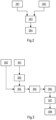
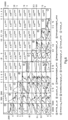
- the Figure 3 shows a diagram of another embodiment of a method according to the present application. To avoid repetition, only the differences from the embodiment according to Figure 2 described and otherwise referred to the previous explanations.
- At least one load parameter of the reference wind turbine i.e., of at least one component of the reference wind turbine
- a measurement period preferably at least 6 months
- the measurement of at least one load parameter can be carried out in particular in accordance with the IEC 61400-13 standard [2].
- the load parameter values of a plurality of load parameters of a plurality of components of the reference wind turbine can be measured.
- step 303 which can be performed at least partially in parallel with step 301, the at least one measured load parameter value of the reference wind turbine can be converted into at least one fatigue load indicator.
- all load parameter values can be converted.
- the conversion can be based, in particular, on a rainflow counting method.
- the at least one measured load parameter value of the reference wind turbine can be converted into at least one fatigue load indicator in accordance with the ASTM E1049-85(2017) standard.
- the load data sets can also be created.
- the fatigue load indicators in particular according to the timestamp provided with the load parameter values (or the corresponding sample values)
- the load data period can preferably correspond to the operating data period.
- an operating data period is assigned to each provided (SCADA) operating data set.
- the operating parameter values of the at least one operating parameter can be recorded during the measurement period and in particular (in a known manner) provided in the form of operating data records in step 302 (see, for example, Table 1 and/or 2).
- a preprocessing or pretreatment of the generated wind power training data sets can take place.
- a Removal of invalid values and/or indicators can also be performed.
- Feature selection can also be performed in the manner described above in step 305. Examples of this are sequential feature selection (e.g.: Ferri, FJ & Pudil, Pavel & Hatef, M. (2001). Comparative Study of Techniques for Large-Scale Feature Selection. Pattern Recognition in Practice, IV: Multiple Paradigms, Comparative Studies and Hybrid Systems. 16. 10.1016/B978-0-444-81892-8.50040-7 ), Recursive feature selection (e.g. Guyon, I, J Weston, S Barnhill, and V Vapnik. 2002.
- sequential feature selection e.g.: Ferri, FJ & Pudil, Pavel & Hatef, M. (2001). Comparative Study of Techniques for Large-Scale Feature Selection. Pattern Recognition in Practice, IV: Multiple Paradigms, Comparative Studies and Hybrid Systems.
- the generated wind power training data sets are divided into training data sets (e.g., 80%) and validation data sets (e.g., 20%). Furthermore, the wind power training data sets are transformed into data representations that are suitable as input for the machine learning model to be trained, i.e., that can depend in particular on the machine learning model to be trained (in a known manner). Preferably, a wind power training data set is transformed into a vector, a matrix, and/or a tensor.
- the machine learning model is trained or learned during a training period.
- a neural network can be trained.
- so-called supervised training or learning takes place using the training data sets and the validation data sets.
- Bayesian neural networks allow the representation of heteroskedastic uncertainties, i.e., uncertainties whose magnitude depends on the expected value of the estimated target variable (plant condition).
- these can be determined during the training period or during the training process using other methods (especially bootstrapping).
- the Figure 4 shows a diagram of an embodiment of a method for using a machine learning model which is implemented according to the present application, for example according to the embodiment according to Figure 2 and/or 3 was trained.
- the machine learning model outputs at least one system condition data set.
- the system condition data set may, for example, contain at least one determined fatigue load indicator of the additional wind turbine. It is understood that a different load parameter indicator may also be output.
- the Figure 7 shows a schematic view of an embodiment of a computing device 700 according to the present application.
- the computing device 700 comprises at least one processor (e.g., microprocessor, DSP, FPGA, and/or the like) and at least one data memory 720 containing computer program code.
- the data memory 720 contains, in particular, the trained or yet-to-be-trained machine learning model 750.
Landscapes
- Engineering & Computer Science (AREA)
- Theoretical Computer Science (AREA)
- Physics & Mathematics (AREA)
- Life Sciences & Earth Sciences (AREA)
- General Engineering & Computer Science (AREA)
- Evolutionary Computation (AREA)
- Artificial Intelligence (AREA)
- General Physics & Mathematics (AREA)
- Computing Systems (AREA)
- Health & Medical Sciences (AREA)
- General Health & Medical Sciences (AREA)
- Molecular Biology (AREA)
- Computational Linguistics (AREA)
- Biophysics (AREA)
- Biomedical Technology (AREA)
- Mathematical Physics (AREA)
- Software Systems (AREA)
- Data Mining & Analysis (AREA)
- Sustainable Development (AREA)
- Sustainable Energy (AREA)
- Chemical & Material Sciences (AREA)
- Combustion & Propulsion (AREA)
- Mechanical Engineering (AREA)
- Automation & Control Theory (AREA)
- Wind Motors (AREA)
Claims (15)
- Méthode, en particulier méthode mis en œuvre par ordinateur, pour entraîner un modèle d'apprentissage automatique (750) qui est utilisé pour déterminer une durée de vie résiduelle d'une autre éolienne (104), comprenant:- fournir une pluralité d'ensembles de données de fonctionnement d'une éolienne de référence (102),- fournir une pluralité d'ensembles de données de charge de l'éolienne de référence (102), où un ensemble de données de charge est basé sur au moins un paramètre de charge mesuré sur l'éolienne de référence (102), et- générer une pluralité d'ensembles de données d'entraînement éolien pour entraîner le modèle d'apprentissage automatique (750) par attribution synchronisée d'un ensemble de données de fonctionnement respectif à un ensemble de données de charge respectif.
- Méthode selon la revendication 1, caractérisé en ce que- le modèle d'apprentissage automatique (750) est entraîné avec les ensembles de données d'entraînement éolien générés pendant la durée de l'entraînement.
- Méthode selon la revendication 2, caractérisé en ce que- une partie des ensembles de données d'entraînement éolien générés est utilisée comme ensembles de données de validation pendant une durée d'entraînement.
- Méthode selon l'une des revendications précédentes, caractérisé en ce qu'- un ensemble de données de fonctionnement fourni contient au moins un paramètre de fonctionnement de l'éolienne de référence (102),- où ledit au moins un paramètre de fonctionnement est choisi dans le groupe comprenant:- accélération en haut de tour,- angle de pas,- vitesse de pas,- vitesse de rotor,- puissance électrique, en particulier puissance active,- vitesse de de nacelle.
- Méthode selon la revendication 4, caractérisé en ce que- un ensemble de données de fonctionnement comprend, en tant que valeur de paramètre de fonctionnement d'un paramètre de fonctionnement, au moins une valeur de paramètre de fonctionnement, choisi dans le groupe comprenant:- valeur maximale de paramètre de fonctionnement enregistrée pendant la durée de données de fonctionnement,- valeur minimale du paramètre de fonctionnement enregistrée pendant la durée de données de fonctionnement,- valeur moyenne de paramètre de fonctionnement déterminée à partir des valeurs du paramètre de fonctionnement enregistrées pendant la durée de données de fonctionnement,- écart type déterminé à partir des valeurs de paramètre de fonctionnement enregistrées pendant la durée de données de fonctionnement.
- Méthode selon l'une des revendications précédentes, caractérisé en ce que- un ensemble de données de charge fourni est basé sur au moins un paramètre de charge mesuré de l'éolienne de référence (102),- le paramètre de charge étant choisi dans le groupe comprenant :- où le paramètre de charge est choisi dans la group comprenant :- paramètre de charge de rotor,- paramètre de charge de tour,- paramètre de torsion d tour,- paramètre de couple de tête de tour.
- Méthode selon l'une des revendications précédentes, caractérisé en ce que la méthode comprend :- mesurer au moins un paramètre de charge de l'éolienne de référence (102),- où mesurer au moins un paramètre de charge est effectuée en particulier conformément à la norme CEI 61400-13 [2].
- Méthode selon la revendication 6 ou 7, caractérisé en ce que- une valeur de paramètre de charge est prévue comme valeur de paramètre de charge. choisie dans le groupe comprenant:- valeur maximale de paramètre de charge mesurée pendant la durée de données de charge,- valeur minimale de paramètre de charge mesurée pendant la durée de données de charge,- valeur moyenne de paramètre de charge déterminée à partir des valeurs des paramètres de charge mesurées pendant la durée de données de charge,- écart type déterminé à partir des valeurs des paramètres de charge mesurées pendant la durée des données de charge.
- Méthode selon l'une des revendications précédentes, caractérisé en ce que la méthode comprend :- mesurer au moins un paramètre de charge de l'éolienne de référence (102) pendant une période de mesure, et- enregistrer les valeurs de paramètres de données de fonctionnement de l'éolienne de référence (102) pendant la période de mesure,- où la période de mesure est en particulier d'au moins 3 mois, de préférence d'au moins 6 mois.
- Méthode selon l'une des revendications précédentes, caractérisé en ce que le procédé comprend :- former un ensemble de données de charge par conversion de l'au moins une valeur de paramètre de charge mesurée de l'éolienne de référence (102) en au moins un indicateur de charge de fatigue,- où la conversion est basée en particulier sur une méthode de comptage de Rainflow.
- Méthode selon l'une des revendications précédentes, caractérisé en ce que- au moins une technique de régularisation est utilisée pendant la durée de période d'entraînement,- où la technique de régularisation est choisie en particulier dans le groupe comprenant :- régression bayésienne linéaire,- réseau neuronal bayésien avec abandon concret,- réseau neuronal bayésien avec inférence de variation- régression spline bayésienne adaptative,
et/ou- pendant la durée de la période d'entraînement, un modèle est utilisé pour estimer les incertitudes aléatoires et/ou épistémiques, où l'estimation est obtenue par application d'au moins une méthode d'apprentissage automatique, où la méthode d'apprentissage automatique est en particulier choisi dans le groupe comprenant:- régression bayésienne linéaire,- réseau neuronal bayésien avec abandon concret,- réseau neuronal bayésien avec inférence de variation- régression spline bayésienne adaptative,où l'estimation est réalisée par bootstrap.
et/ou - Méthode d'utilisation d'un modèle d'apprentissage automatique (750) qui a été entrainé selon l'une des revendications 1 à 11, comprenant :- entrer d'au moins un ensemble de données de fonctionnement de l'éolienne supplémentaire (104) dans le modèle d'apprentissage automatique (750), et- délivrer, par le modèle d'apprentissage automatique (750), au moins un ensemble de données d'état de l'installation.
- Méthode selon la revendication 12, caractérisé en ce que- l'autre éolienne (104) est un type d'éolienne identique au type d'éolienne de l'éolienne de référence (102),
et/ou- l'autre éolienne (104) et l'éolienne de référence (102) font partie du même parc éolien (100). - Méthode selon la revendication 12 ou 13, caractérisé en ce que la méthode comprend :- déterminer la durée de vie restante de l'autre éolienne (104), sur la base de l'au moins un ensemble de données d'état de l'autre éolienne (104).
- Dispositif de calcul (700), comprenant au moins une mémoire de données (720), contenant un code de programme informatique, et au moins un processeur (710), où la mémoire de données (720) et le processeur (710) sont configurés de telle sorte que le dispositif de calcul (700) est amené à générer au moins un ensemble de données d'état d'installation, sur la base d'au moins un ensemble de données de fonctionnement fourni et au moins en partie en utilisant un modèle d'apprentissage automatique (750) qui a été entrainé selon l'une des revendications 1 à 11.
Applications Claiming Priority (2)
| Application Number | Priority Date | Filing Date | Title |
|---|---|---|---|
| DE102021113547.8A DE102021113547A1 (de) | 2021-05-26 | 2021-05-26 | Verfahren zum Trainieren eines Machine-Learning-Modells verwendbar zum Bestimmen einer Restnutzungsdauer einer Windkraftanlage |
| PCT/EP2022/061701 WO2022248164A1 (fr) | 2021-05-26 | 2022-05-02 | Procédé de formation d'un modèle d'apprentissage machine pouvant être utilisé pour déterminer une durée de vie restante d'une installation d'énergie éolienne |
Publications (3)
| Publication Number | Publication Date |
|---|---|
| EP4348043A1 EP4348043A1 (fr) | 2024-04-10 |
| EP4348043B1 true EP4348043B1 (fr) | 2025-07-02 |
| EP4348043C0 EP4348043C0 (fr) | 2025-07-02 |
Family
ID=81877761
Family Applications (1)
| Application Number | Title | Priority Date | Filing Date |
|---|---|---|---|
| EP22727069.1A Active EP4348043B1 (fr) | 2021-05-26 | 2022-05-02 | Procédé de formation d'un modèle d'apprentissage machine utilisé pour déterminer une durée de vie restante d'une autre installation d'énergie éolienne |
Country Status (4)
| Country | Link |
|---|---|
| US (1) | US20240084783A1 (fr) |
| EP (1) | EP4348043B1 (fr) |
| DE (1) | DE102021113547A1 (fr) |
| WO (1) | WO2022248164A1 (fr) |
Families Citing this family (2)
| Publication number | Priority date | Publication date | Assignee | Title |
|---|---|---|---|---|
| CN116644618B (zh) * | 2023-07-27 | 2023-11-14 | 中国电力科学研究院有限公司 | 一种风电机组的疲劳寿命评估方法、系统、设备及介质 |
| DE102023133670A1 (de) * | 2023-12-01 | 2025-06-05 | Rwe Offshore Wind Gmbh | Verfahren für einen Windpark |
Citations (2)
| Publication number | Priority date | Publication date | Assignee | Title |
|---|---|---|---|---|
| EP3608538A1 (fr) * | 2018-12-18 | 2020-02-12 | Vestas Wind Systems A/S | Solutions de remotorisation basées sur des modèles pour éoliennes |
| WO2020200421A1 (fr) * | 2019-04-01 | 2020-10-08 | Acciona Energia S.A. | Procédé pour estimer la durée de vie utile restante de composants d'une turbine éolienne fonctionnelle |
Family Cites Families (13)
| Publication number | Priority date | Publication date | Assignee | Title |
|---|---|---|---|---|
| US20120200699A1 (en) * | 2011-02-08 | 2012-08-09 | Steffen Bunge | Balancing of Wind Turbine Parts |
| JP5832644B2 (ja) * | 2011-06-03 | 2015-12-16 | シーメンス アクチエンゲゼルシヤフトSiemens Aktiengesellschaft | 殊にガスタービンまたは風力タービンのような技術システムのデータドリブンモデルを計算機支援で形成する方法 |
| EP2736003A1 (fr) | 2012-11-26 | 2014-05-28 | Siemens Aktiengesellschaft | Procédé de détermination d'une plage de temps de fonctionnement adaptée pour les travaux de maintenance sur une installation technique |
| US9822762B2 (en) | 2013-12-12 | 2017-11-21 | General Electric Company | System and method for operating a wind turbine |
| WO2017163562A1 (fr) | 2016-03-25 | 2017-09-28 | 株式会社日立製作所 | Dispositif et procédé d'évaluation de durée de vie restante, et système de génération d'électricité à énergie éolienne |
| EP3260700A1 (fr) * | 2016-06-22 | 2017-12-27 | Siemens Aktiengesellschaft | Procédé informatisé et dispositif de prévision pour données de fonctionnement d'une éolienne |
| EP4657194A3 (fr) * | 2017-08-02 | 2026-03-04 | Strong Force Iot Portfolio 2016, LLC | Procédés et systèmes de détection dans un environnement de collecte de données de l'internet des objets industriel avec de grands ensembles de données |
| DE102019111307A1 (de) | 2018-05-04 | 2019-11-07 | Eickhoff Antriebstechnik Gmbh | Lagervorrichtung zum Abstützen einer Rotorwelle einer Windkraftanlage |
| EP3791060B1 (fr) * | 2018-05-07 | 2023-12-06 | Vestas Wind Systems A/S | Procédé de commande d'éolienne |
| EP3605404B1 (fr) * | 2018-08-03 | 2023-10-04 | Siemens Healthcare Diagnostics, Inc. | Procédé et dispositif d'entraînement d'une routine d'apprentissage mécanique permettant de commander un système technique |
| US10605228B2 (en) * | 2018-08-20 | 2020-03-31 | General Electric Company | Method for controlling operation of a wind turbine |
| DE102018214099A1 (de) | 2018-08-21 | 2020-02-27 | Zf Friedrichshafen Ag | Verfahren und System zur unmittelbaren Ermittlung einer theoretischen Schädigung mindestens einer Komponente einer Vorrichtung |
| CN110147624B (zh) * | 2019-05-24 | 2023-05-09 | 重庆大学 | 一种基于载荷谱的齿轮接触疲劳寿命预测方法 |
-
2021
- 2021-05-26 DE DE102021113547.8A patent/DE102021113547A1/de active Pending
-
2022
- 2022-05-02 EP EP22727069.1A patent/EP4348043B1/fr active Active
- 2022-05-02 WO PCT/EP2022/061701 patent/WO2022248164A1/fr not_active Ceased
-
2023
- 2023-11-16 US US18/511,216 patent/US20240084783A1/en active Pending
Patent Citations (2)
| Publication number | Priority date | Publication date | Assignee | Title |
|---|---|---|---|---|
| EP3608538A1 (fr) * | 2018-12-18 | 2020-02-12 | Vestas Wind Systems A/S | Solutions de remotorisation basées sur des modèles pour éoliennes |
| WO2020200421A1 (fr) * | 2019-04-01 | 2020-10-08 | Acciona Energia S.A. | Procédé pour estimer la durée de vie utile restante de composants d'une turbine éolienne fonctionnelle |
Also Published As
| Publication number | Publication date |
|---|---|
| WO2022248164A1 (fr) | 2022-12-01 |
| DE102021113547A1 (de) | 2022-12-01 |
| EP4348043C0 (fr) | 2025-07-02 |
| EP4348043A1 (fr) | 2024-04-10 |
| US20240084783A1 (en) | 2024-03-14 |
Similar Documents
| Publication | Publication Date | Title |
|---|---|---|
| EP2697695B1 (fr) | Procédé pour générer, de manière assistée par ordinateur, un modèle piloté par des données d'un système technique, notamment d'une turbine à gaz ou d'une éolienne | |
| DE112022000106T5 (de) | Verfahren zur Getriebefehlerdiagnose und Signalerfassung, eine Vorrichtung und ein elektronisches Gerät | |
| EP4348043B1 (fr) | Procédé de formation d'un modèle d'apprentissage machine utilisé pour déterminer une durée de vie restante d'une autre installation d'énergie éolienne | |
| DE4008510C2 (de) | Regeleinrichtung mit Optimal-Entscheidungseinheit | |
| EP3803711B1 (fr) | Conception et fabrication d'une aube de turbomachine | |
| EP2218097A1 (fr) | Procédé et dispositif de soudage par ultrasons | |
| EP1132614A2 (fr) | Système de réglage pour une éolienne | |
| DE102008055593A1 (de) | Verfahren und Systeme zur neuronalen Netzwerkmodellierung von Turbinenkomponenten | |
| EP2954467A1 (fr) | Procédé et dispositif de commande d'une installation de production d'énergie exploitable avec une source d'énergie renouvelable | |
| DE102006045820A1 (de) | Verfahren und Vorrichtung zur automatischen Einstellung eines Motorreglers | |
| EP3283762A1 (fr) | Procédé servant à déterminer la durée de vie restante d'une éolienne | |
| EP3876060A1 (fr) | Procédé et unité de calcul destinés à l'analyse des causes d'un état anormal d'une machine | |
| EP2673503B1 (fr) | Procédé pour déterminer d'énergie perdue | |
| DE112018001318T5 (de) | Windleistungserzeugungssystem | |
| WO2025113906A1 (fr) | Procédé pour parc éolien | |
| DE102010048008A1 (de) | Zustandsüberwachungsverfahren und -system für Windenergieanlagen | |
| DE102019208922A1 (de) | Verfahren und Vorrichtung zum Kontrollieren eines Produktionsprozesses | |
| DE102007031969A1 (de) | Verfahren und Vorrichtung zur Ermittlung einer Belastung einer Windenergieanlage | |
| EP2088486A1 (fr) | Procédé de mesure d'un système réel dynamique non linéaire selon un plan d'expériences | |
| LU507983B1 (de) | Ein giersteuerungssystem und ein verfahren zur anwendung der laser-windmessradar-optimierung | |
| EP3870849A1 (fr) | Commande d'une éolienne | |
| WO2021013487A1 (fr) | Procédé pour commander un parc éolien, module de commande pour un parc éolien et parc éolien | |
| EP3906522A1 (fr) | Procédé de gestion d'énergie assisté par ordinateur et système de gestion d'énergie | |
| DE102016209721A1 (de) | Modellbasierte Ermittlung eines Systemzustandes mittels eines dynamischen Systems | |
| EP3980850B1 (fr) | Génération de données actives en tenant compte des incertitudes |
Legal Events
| Date | Code | Title | Description |
|---|---|---|---|
| STAA | Information on the status of an ep patent application or granted ep patent |
Free format text: STATUS: UNKNOWN |
|
| STAA | Information on the status of an ep patent application or granted ep patent |
Free format text: STATUS: THE INTERNATIONAL PUBLICATION HAS BEEN MADE |
|
| PUAI | Public reference made under article 153(3) epc to a published international application that has entered the european phase |
Free format text: ORIGINAL CODE: 0009012 |
|
| STAA | Information on the status of an ep patent application or granted ep patent |
Free format text: STATUS: REQUEST FOR EXAMINATION WAS MADE |
|
| 17P | Request for examination filed |
Effective date: 20231114 |
|
| AK | Designated contracting states |
Kind code of ref document: A1 Designated state(s): AL AT BE BG CH CY CZ DE DK EE ES FI FR GB GR HR HU IE IS IT LI LT LU LV MC MK MT NL NO PL PT RO RS SE SI SK SM TR |
|
| DAV | Request for validation of the european patent (deleted) | ||
| DAX | Request for extension of the european patent (deleted) | ||
| GRAP | Despatch of communication of intention to grant a patent |
Free format text: ORIGINAL CODE: EPIDOSNIGR1 |
|
| STAA | Information on the status of an ep patent application or granted ep patent |
Free format text: STATUS: GRANT OF PATENT IS INTENDED |
|
| INTG | Intention to grant announced |
Effective date: 20241209 |
|
| GRAS | Grant fee paid |
Free format text: ORIGINAL CODE: EPIDOSNIGR3 |
|
| GRAA | (expected) grant |
Free format text: ORIGINAL CODE: 0009210 |
|
| STAA | Information on the status of an ep patent application or granted ep patent |
Free format text: STATUS: THE PATENT HAS BEEN GRANTED |
|
| AK | Designated contracting states |
Kind code of ref document: B1 Designated state(s): AL AT BE BG CH CY CZ DE DK EE ES FI FR GB GR HR HU IE IS IT LI LT LU LV MC MK MT NL NO PL PT RO RS SE SI SK SM TR |
|
| REG | Reference to a national code |
Ref country code: GB Ref legal event code: FG4D Free format text: NOT ENGLISH |
|
| REG | Reference to a national code |
Ref country code: CH Ref legal event code: EP |
|
| REG | Reference to a national code |
Ref country code: DE Ref legal event code: R096 Ref document number: 502022004517 Country of ref document: DE |
|
| REG | Reference to a national code |
Ref country code: IE Ref legal event code: FG4D Free format text: LANGUAGE OF EP DOCUMENT: GERMAN |
|
| U01 | Request for unitary effect filed |
Effective date: 20250710 |
|
| U07 | Unitary effect registered |
Designated state(s): AT BE BG DE DK EE FI FR IT LT LU LV MT NL PT RO SE SI Effective date: 20250716 |
|
| PG25 | Lapsed in a contracting state [announced via postgrant information from national office to epo] |
Ref country code: IS Free format text: LAPSE BECAUSE OF FAILURE TO SUBMIT A TRANSLATION OF THE DESCRIPTION OR TO PAY THE FEE WITHIN THE PRESCRIBED TIME-LIMIT Effective date: 20251102 |
|
| PG25 | Lapsed in a contracting state [announced via postgrant information from national office to epo] |
Ref country code: NO Free format text: LAPSE BECAUSE OF FAILURE TO SUBMIT A TRANSLATION OF THE DESCRIPTION OR TO PAY THE FEE WITHIN THE PRESCRIBED TIME-LIMIT Effective date: 20251002 |
|
| PG25 | Lapsed in a contracting state [announced via postgrant information from national office to epo] |
Ref country code: HR Free format text: LAPSE BECAUSE OF FAILURE TO SUBMIT A TRANSLATION OF THE DESCRIPTION OR TO PAY THE FEE WITHIN THE PRESCRIBED TIME-LIMIT Effective date: 20250702 |
|
| PG25 | Lapsed in a contracting state [announced via postgrant information from national office to epo] |
Ref country code: GR Free format text: LAPSE BECAUSE OF FAILURE TO SUBMIT A TRANSLATION OF THE DESCRIPTION OR TO PAY THE FEE WITHIN THE PRESCRIBED TIME-LIMIT Effective date: 20251003 |
|
| PG25 | Lapsed in a contracting state [announced via postgrant information from national office to epo] |
Ref country code: CZ Free format text: LAPSE BECAUSE OF FAILURE TO SUBMIT A TRANSLATION OF THE DESCRIPTION OR TO PAY THE FEE WITHIN THE PRESCRIBED TIME-LIMIT Effective date: 20250702 |
|
| PG25 | Lapsed in a contracting state [announced via postgrant information from national office to epo] |
Ref country code: PL Free format text: LAPSE BECAUSE OF FAILURE TO SUBMIT A TRANSLATION OF THE DESCRIPTION OR TO PAY THE FEE WITHIN THE PRESCRIBED TIME-LIMIT Effective date: 20250702 |
|
| PG25 | Lapsed in a contracting state [announced via postgrant information from national office to epo] |
Ref country code: RS Free format text: LAPSE BECAUSE OF FAILURE TO SUBMIT A TRANSLATION OF THE DESCRIPTION OR TO PAY THE FEE WITHIN THE PRESCRIBED TIME-LIMIT Effective date: 20251002 |
|
| PG25 | Lapsed in a contracting state [announced via postgrant information from national office to epo] |
Ref country code: ES Free format text: LAPSE BECAUSE OF FAILURE TO SUBMIT A TRANSLATION OF THE DESCRIPTION OR TO PAY THE FEE WITHIN THE PRESCRIBED TIME-LIMIT Effective date: 20250702 |
|
| PG25 | Lapsed in a contracting state [announced via postgrant information from national office to epo] |
Ref country code: SM Free format text: LAPSE BECAUSE OF FAILURE TO SUBMIT A TRANSLATION OF THE DESCRIPTION OR TO PAY THE FEE WITHIN THE PRESCRIBED TIME-LIMIT Effective date: 20250702 |
|
| PGFP | Annual fee paid to national office [announced via postgrant information from national office to epo] |
Ref country code: GB Payment date: 20260325 Year of fee payment: 5 |
|
| PG25 | Lapsed in a contracting state [announced via postgrant information from national office to epo] |
Ref country code: SK Free format text: LAPSE BECAUSE OF FAILURE TO SUBMIT A TRANSLATION OF THE DESCRIPTION OR TO PAY THE FEE WITHIN THE PRESCRIBED TIME-LIMIT Effective date: 20250702 |