EP4356596B1 - Procédé et système de fourniture des services temporellement critiques au moyen d'un environnement de commande de déroulement - Google Patents
Procédé et système de fourniture des services temporellement critiques au moyen d'un environnement de commande de déroulement Download PDFInfo
- Publication number
- EP4356596B1 EP4356596B1 EP22751689.5A EP22751689A EP4356596B1 EP 4356596 B1 EP4356596 B1 EP 4356596B1 EP 22751689 A EP22751689 A EP 22751689A EP 4356596 B1 EP4356596 B1 EP 4356596B1
- Authority
- EP
- European Patent Office
- Prior art keywords
- process control
- control environment
- virtual communication
- communication network
- reverse proxy
- Prior art date
- Legal status (The legal status is an assumption and is not a legal conclusion. Google has not performed a legal analysis and makes no representation as to the accuracy of the status listed.)
- Active
Links
Images
Classifications
-
- H—ELECTRICITY
- H04—ELECTRIC COMMUNICATION TECHNIQUE
- H04L—TRANSMISSION OF DIGITAL INFORMATION, e.g. TELEGRAPHIC COMMUNICATION
- H04L41/00—Arrangements for maintenance, administration or management of data switching networks, e.g. of packet switching networks
- H04L41/08—Configuration management of networks or network elements
- H04L41/0803—Configuration setting
- H04L41/0806—Configuration setting for initial configuration or provisioning, e.g. plug-and-play
-
- H—ELECTRICITY
- H04—ELECTRIC COMMUNICATION TECHNIQUE
- H04L—TRANSMISSION OF DIGITAL INFORMATION, e.g. TELEGRAPHIC COMMUNICATION
- H04L41/00—Arrangements for maintenance, administration or management of data switching networks, e.g. of packet switching networks
- H04L41/08—Configuration management of networks or network elements
- H04L41/0895—Configuration of virtualised networks or elements, e.g. virtualised network function or OpenFlow elements
-
- H—ELECTRICITY
- H04—ELECTRIC COMMUNICATION TECHNIQUE
- H04L—TRANSMISSION OF DIGITAL INFORMATION, e.g. TELEGRAPHIC COMMUNICATION
- H04L41/00—Arrangements for maintenance, administration or management of data switching networks, e.g. of packet switching networks
- H04L41/12—Discovery or management of network topologies
- H04L41/122—Discovery or management of network topologies of virtualised topologies, e.g. software-defined networks [SDN] or network function virtualisation [NFV]
-
- H—ELECTRICITY
- H04—ELECTRIC COMMUNICATION TECHNIQUE
- H04L—TRANSMISSION OF DIGITAL INFORMATION, e.g. TELEGRAPHIC COMMUNICATION
- H04L41/00—Arrangements for maintenance, administration or management of data switching networks, e.g. of packet switching networks
- H04L41/40—Arrangements for maintenance, administration or management of data switching networks, e.g. of packet switching networks using virtualisation of network functions or resources, e.g. SDN or NFV entities
-
- H—ELECTRICITY
- H04—ELECTRIC COMMUNICATION TECHNIQUE
- H04L—TRANSMISSION OF DIGITAL INFORMATION, e.g. TELEGRAPHIC COMMUNICATION
- H04L63/00—Network architectures or network communication protocols for network security
- H04L63/08—Network architectures or network communication protocols for network security for authentication of entities
-
- H—ELECTRICITY
- H04—ELECTRIC COMMUNICATION TECHNIQUE
- H04L—TRANSMISSION OF DIGITAL INFORMATION, e.g. TELEGRAPHIC COMMUNICATION
- H04L67/00—Network arrangements or protocols for supporting network services or applications
- H04L67/2866—Architectures; Arrangements
- H04L67/2895—Intermediate processing functionally located close to the data provider application, e.g. reverse proxies
-
- H—ELECTRICITY
- H04—ELECTRIC COMMUNICATION TECHNIQUE
- H04L—TRANSMISSION OF DIGITAL INFORMATION, e.g. TELEGRAPHIC COMMUNICATION
- H04L67/00—Network arrangements or protocols for supporting network services or applications
- H04L67/50—Network services
- H04L67/56—Provisioning of proxy services
-
- H—ELECTRICITY
- H04—ELECTRIC COMMUNICATION TECHNIQUE
- H04L—TRANSMISSION OF DIGITAL INFORMATION, e.g. TELEGRAPHIC COMMUNICATION
- H04L63/00—Network architectures or network communication protocols for network security
- H04L63/10—Network architectures or network communication protocols for network security for controlling access to devices or network resources
- H04L63/102—Entity profiles
-
- H—ELECTRICITY
- H04—ELECTRIC COMMUNICATION TECHNIQUE
- H04L—TRANSMISSION OF DIGITAL INFORMATION, e.g. TELEGRAPHIC COMMUNICATION
- H04L67/00—Network arrangements or protocols for supporting network services or applications
- H04L67/01—Protocols
- H04L67/12—Protocols specially adapted for proprietary or special-purpose networking environments, e.g. medical networks, sensor networks, networks in vehicles or remote metering networks
Definitions
- Industrial automation systems typically comprise a multitude of automation devices interconnected via an industrial communication network and are used to control or regulate systems, machines, or devices within the framework of production or process automation. Due to the time-critical conditions in industrial automation systems, real-time communication protocols such as PROFINET, PROFIBUS, Real-Time Ethernet, or Time-Sensitive Networking (TSN) are predominantly used for communication between automation devices. In particular, control services or applications can be automated and distributed among currently available servers or virtual machines of an industrial automation system, depending on the load.
- real-time communication protocols such as PROFINET, PROFIBUS, Real-Time Ethernet, or Time-Sensitive Networking (TSN) are predominantly used for communication between automation devices.
- TSN Time-Sensitive Networking
- control services or applications can be automated and distributed among currently available servers or virtual machines of an industrial automation system, depending on the load.
- Interruptions in communication connections between computer units of an industrial automation system or automation devices can lead to an unwanted or unnecessary retransmission of a service request.
- messages that are not transmitted or are not transmitted in full can, for example, prevent an industrial automation system from transitioning to or remaining in a safe operating state.
- a method for providing control applications is known in which communication network addresses of process control components that provide control applications, as well as identifiers of the process control components or of server devices on which the process control components are executed, are queried by a monitoring device.
- a configuration control device generates configuration information for a forwarding device from the queried communication network addresses and identifiers, as well as from the designations of the control applications.
- the forwarding device receives requests from end devices for using the control applications and forwards them to a respective process control component according to the configuration information.
- the present invention is based on the object of providing a low-cost method for providing time-critical services that enables secure decoupling between services provided by means of container virtualization or comparable virtualization concepts, as well as to specify a suitable device for carrying out the method.
- each service is assigned a server component that comprises at least one application instance and is formed by a scheduling component that can be loaded into and executed in the scheduling environment.
- a dedicated virtual communications network is made available for each server component using the scheduling environment.
- the virtual communications networks can, in particular, each comprise virtual Ethernet point-to-point connections or be formed by a virtual bridge within the scheduling environment.
- the flow control components are, or include, in particular, software containers that run isolated from other software containers or container groups, e.g., pods, within the flow control environment on a host operating system of a server device.
- software containers that run isolated from other software containers or container groups, e.g., pods, within the flow control environment on a host operating system of a server device.
- alternative micro-virtualization concepts such as snaps, can also be used for the flow control components.
- one flow control component can be loaded into the flow control environment for each application instance. and executed there.
- the software containers, together with other software containers running on the respective server device use a kernel of the server device's host operating system. Memory images for the software containers can, for example, be retrieved from a storage and provisioning system that is accessible for reading and writing by a large number of users.
- the flow control environment is a container engine through which virtual resources are created, deleted, or linked.
- the virtual resources include software containers, virtual communication networks, and the connections associated with them.
- the flow control environment can include a Docker Engine or a Snap Core running on a server device.
- a reverse proxy of a subnetwork comprising the process control environment forwards service access requests for using the services outside the subnetwork to the respective server component via its virtual communication network according to predefined forwarding rules.
- the virtual communication networks are used for forwarding the service access requests for all application instances of the respective server component.
- a configuration unit for the reverse proxy determines globally valid access information for addressing information valid within the subnetwork, which is assigned to the server components or their virtual communication networks, and transmits forwarding rules reflecting the access information to the reverse proxy.
- at least one directory service component makes the globally valid access information available for use of the services outside the subnetwork.
- the globally valid access information can include, for example, addressing information and access authorizations.
- the access authorizations are made available after successful user or device authentication.
- the forwarding rules map the access authorizations for selected users or devices to selected services.
- the addressing information valid within the subnetwork can include, for example, communication network addresses, port numbers, host names, or full domain names.
- the configuration unit evaluates event messages from the process control environment to determine whether virtual communication networks within the process control environment need to be set up or deleted.
- a newly set up virtual communication network connects the configuration unit to the reverse proxy by means of a first control command directed to the process control environment.
- the configuration unit terminates the process by means of a second control command directed to the flow control environment establishes a connection of a virtual communication network to be deleted with the reverse proxy.
- the configuration unit releases the removal of the respective server component from the flow control environment by means of a third control command directed to the flow control environment. This ensures that the correct sequence for terminating the connection with the reverse proxy and for removing the respective server component is maintained. This prevents a server component or a software container from being removed due to an existing connection with the reverse proxy.
- the configuration unit determines whether an assigned virtual communication network is already provided for a sequence control component to be loaded into the sequence control environment and executed there. If the assigned virtual communication network is present, the configuration unit instructs the sequence control environment to use this virtual communication network to connect the sequence control component to the reverse proxy. In contrast, if an assigned virtual communication network is missing, the configuration unit advantageously instructs the sequence control environment to set up a virtual communication network within the sequence control environment for the server component formed by the sequence control component and to use this virtual communication network to connect the sequence control component to the reverse proxy.
- appropriate network isolation can be implemented for apps or devices.
- the system according to the invention for providing time-critical services using a scheduling environment is particularly intended for implementing a method according to the preceding embodiments and comprises a scheduling environment, a subnetwork comprising the scheduling environment, a reverse proxy of the subnetwork, a configuration unit for the reverse proxy, and a plurality of server components, each assigned to a service.
- the server components each comprise at least one application instance and are formed by a scheduling component that can be loaded into the scheduling environment and executed there.
- the process control environment of the system according to the invention is designed and configured to provide a dedicated virtual communications network for each server component.
- the reverse proxy is designed and configured to forward service access requests for using the services outside the subnetwork to the respective server component via its virtual communications network according to predefined forwarding rules.
- the virtual communications networks are designed and configured to be used for forwarding the service access requests for all application instances of the respective server component.
- the configuration unit for the reverse proxy of the system according to the invention is designed and configured to provide globally valid addressing information that is valid within the subnetwork and is assigned to the server components or their virtual communication networks. To determine access information and transmit forwarding rules mapping the access information to the reverse proxy. Furthermore, the configuration unit is designed and configured to evaluate event messages from the flow control environment to determine whether virtual communication networks should be set up or deleted within the flow control environment.
- the configuration unit of the system according to the invention is designed and configured to connect a newly established virtual communication network to the reverse proxy by means of a first control command directed to the process control environment and to terminate a connection of a virtual communication network to be deleted to the reverse proxy by means of a second control command directed to the process control environment. Furthermore, the configuration unit is designed and configured to enable removal of the respective server component from the process control environment by means of a third control command directed to the process control environment after the connection of the virtual communication network to be deleted to the reverse proxy has been terminated.
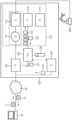
- the arrangement shown in the figure comprises a server device 110 for providing services or control and monitoring applications of an industrial automation system.
- the services or control and monitoring applications of the industrial automation system are exemplary of time-critical services.
- the services or control and monitoring applications can, for example, be provided based on OPC UA.
- the services or control and monitoring applications include interface definitions that can be used for permanent access to the services or control and monitoring applications.
- the arrangement shown in Figure 1 comprises a terminal 10 assigned to at least one user who, in the present exemplary embodiment, sends service access requests 11 for using the services via a communications network 20 to an automation system or subnetwork 100 comprising the server device 110 and receives corresponding responses 12 or measured values and status messages from the server device.
- the communications network 20 can be configured, for example, as a time-sensitive network, in particular in accordance with IEEE 802.10, IEEE 802.1AB, IEEE 802.1AS, IEEE 802.1BA, or IEEE 802.1CB.
- the server device 110 implements functions of control devices of an industrial automation system, such as programmable logic controllers, or of field devices, such as sensors or actuators, using a container-virtualized server component 113.
- the server device 110 serves to exchange control and measurement variables with machines or devices 200 controlled by the server device 110.
- the server device 110 is provided for determining suitable control variables from acquired measurement variables.
- the terminal 10 is an operator control and monitoring station and serves to visualize process data or measurement and control variables that are processed or acquired by the server device 110 or other automation devices.
- the terminal 10 is used to display values of a control loop and to change control parameters or programs.
- Each service is assigned a server component 113, which comprises at least one application instance and is formed by a scheduling component that can be loaded into a scheduling environment 112 and executed there.
- a scheduling component is loaded into the scheduling environment 112 for each application instance and executed there.
- the scheduling environment 112 is provided by the server device 110 and is installed there as an application on a host operating system 111 of the server device 110.
- the flow control components are or comprise software containers, each of which runs isolated from other software containers, container groups, or pods within the flow control environment 112 on the host operating system 111 of the server device 110.
- the software containers together with other software containers running on the server device 110, use a kernel of the host operating system 111 of the server device 110.
- the flow control environment 112 is, in particular, a container engine through which virtual resources are created, deleted, or linked.
- the virtual resources can be software containers, virtual communication networks and the connections associated with them.
- Control groups can be used to define process groups to restrict available resources for selected groups.
- Namespaces can be used to isolate or hide individual processes or control groups from other processes or control groups.
- Memory images for software containers can, for example, be retrieved from a storage and provisioning system that can be accessed by multiple users (read or write).
- a dedicated virtual communication network 114 is made available for each server component 114 by means of the scheduling environment 112.
- the virtual communication networks 114 can each comprise virtual Ethernet point-to-point connections or can each be formed by a virtual bridge within the scheduling environment 112.
- a reverse proxy 101 of a host system or subnetwork 100 comprising the server device 110 and the process control environment 112 forwards the service access requests 11 for using the services outside the host system or subnetwork 100 according to predetermined forwarding rules 121 to the respective server component 113 via its virtual communication network 114.
- the virtual communication networks 114 are used for forwarding the service access requests 11 for all application instances of the respective server component 113.
- a configuration unit 102 for the reverse proxy 101 determines globally valid access information 131 for addressing information valid within the host system or subnetwork 100, which is assigned to the server components 113 or their virtual communication networks 114, and transmits forwarding rules 121 mapping the access information 131 to the reverse proxy 101.
- the addressing information valid within the host system or subnetwork 100 includes, for example, communication network addresses, port numbers, host names, or full domain names.
- the globally valid access information 131 is made available for use of the services outside the host system or subnetwork 100 by a directory service component 103.
- the globally valid access information 131 preferably includes addressing information and access authorizations, whereby the access authorizations are only made available after successful user or device authentication. Access authorizations for selected users or devices to selected services are advantageously also mapped by the forwarding rules 121.
- the configuration unit 102 determines whether an associated virtual communications network 114 is already provided for a sequence control component to be loaded into the sequence control environment 112 and executed there. To determine this, the configuration unit 102 accesses sequence control information 122 stored in a database 120 for the server component 114 or the sequence control components associated with it.
- the configuration unit 102 instructs the scheduling environment 112, using scheduling information 122 derived from the database 120, to use this virtual communications network 114 to connect the scheduling component to the reverse proxy 102.
- the configuration unit 102 instructs the scheduling environment 112 to set up a virtual communications network 114 within the scheduling environment 112 for the server component 113 formed by the scheduling component and to use this virtual communications network 114 to connect the scheduling component to the reverse proxy 102.
- the configuration unit 102 evaluates event messages 123 from the process control environment 112 to determine whether virtual communication networks 114 are to be set up or deleted within the process control environment 112. Using a first control command C1 directed to the process control environment 112, the configuration unit connects a newly set up virtual communication network to the reverse proxy 101.
- the configuration unit 102 terminates a connection of a virtual communication network 114 to be deleted with the reverse proxy 101 by means of a second control command C2 directed to the flow control environment 112.
- the configuration unit 102 releases a removal of the respective server component 113 from the flow control environment 112 by means of a third control command C3 directed to the flow control environment 112 after terminating the connection of the virtual communication network 114 to be deleted with the reverse proxy 101.
Landscapes
- Engineering & Computer Science (AREA)
- Computer Networks & Wireless Communication (AREA)
- Signal Processing (AREA)
- Computing Systems (AREA)
- Computer Hardware Design (AREA)
- Computer Security & Cryptography (AREA)
- General Engineering & Computer Science (AREA)
- Health & Medical Sciences (AREA)
- General Health & Medical Sciences (AREA)
- Medical Informatics (AREA)
- Data Exchanges In Wide-Area Networks (AREA)
- Computer And Data Communications (AREA)
Claims (12)
- Procédé pour disposer de services critiques du point de vue du temps au moyen d'un environnement de commande de déroulement, dans lequel- aux services, on affecte respectivement un composant (113) serveur, qui comprend au moins une instance d'application et qui est formé par un composant de commande de déroulement pouvant être chargé dans l'environnement (112) de commande de déroulement ainsi que pouvant y être exécuté,- au moyen de l'environnement de commande de déroulement, on rend disponible pour chaque composant serveur son propre réseau (114) de communication virtuel,- un proxy inverse (101) d'un réseau (100) partiel comprenant l'environnement de commande de déroulement achemine au composant serveur respectif par son réseau de communication virtuel des règles (121) d'acheminement données à l'avance correspondant à des demandes (11) d'accès aux services pour l'utilisation des services en dehors du réseau partiel,- on utilise les réseaux de communication virtuels respectivement pour l'ensemble des instances d'application des composants serveurs respectifs pour l'acheminement des demandes d'accès aux services,- une unité (102) de configuration détermine, pour le proxy reverse (101) respectivement des informations d'adressage valables dans le réseau (100) partiel, qui sont affectées aux composants serveurs (113) et/ou à leurs réseaux (114) de communication virtuels, des informations (131) d'accès valables et transmet au reverse proxy des règles (121) d'acheminement reproduisant les informations d'accès,- l'unité (102) de configuration évalue des messages (123) d'évènement de l'environnement (112) de commande de déroulement sur le point de savoir, si des réseaux (114) de communication virtuels sont agencés dans l'environnement de commande de déroulement ou doivent être effacés,- l'unité de configuration met, au moyen d'une première instruction (C1) de commande dirigée sur l'environnement de commande de déroulement, un réseau de communication virtuel à installer nouvellement en communication avec le proxy (101) inverse,- l'unité de configuration met fin, au moyen d'une deuxième instruction (C2) de commande dirigée sur l'environnement de commande de déroulement, à une liaison d'un réseau de communication virtuel à effacer avec le proxy inverse,- l'unité (102) de configuration, après qu'il a été mis fin à la liaison du réseau (114) de communication virtuel à effacer avec le proxy (101) inverse, valide, au moyen d'une troisième instruction (C3) de commande dirigée sur l'environnement (112) de commande de déroulement, un éloignement du composant serveur (113) respectif de l'environnement de commande de déroulement.
- Procédé suivant la revendication 1,
dans lequel les informations (131) valables globalement comprennent des informations d'adressage et des justifications d'accès et dans lequel on rend disponible les justifications d'accès après une authentification d'utilisateur et/ou d'appareil couronné de succès. - Procédé suivant la revendication 2,
dans lequel les règles (121) d'acheminement reproduisent des justifications d'accès pour des utilisateurs et/ou des appareils sélectionnés à des services sélectionnés. - Procédé suivant l'une des revendications 1 à 3,
dans lequel les informations d'adressage valables dans le réseau (100) partiel sont des adresses de réseau de communication, des numéros d'accès, des noms d'hôtes et/ou des noms de domaines complets. - Procédé suivant l'une des revendications 1 à 4,
dans lequel l'unité (102) de configuration détermine s'il est prévu pour un composant de commande de déroulement à charger dans l'environnement (112) de commande de déroulement ainsi que s'y exécutant, déjà un réseau (114) de communication virtuel affecté, dans lequel l'unité de configuration donne instruction à l'environnement de commande de déroulement, en présence du réseau de communication virtuel affecté, d'utiliser ce réseau de communication virtuel pour une liaison du composant de commande de déroulement au proxy (101) inverse. - Procédé suivant la revendication 5,
dans lequel l'unité (102) de configuration donne instruction à l'environnement (112) de commande de déroulement s'il manque un réseau (114) de communication virtuel affecté, d'établir, pour le composant serveur (113) formé par le composant de commande de déroulement, un réseau de communication virtuel dans l'environnement de commande de déroulement et d'utiliser ce réseau de communication virtuel pour une liaison du composant de commande de déroulement avec le proxy inverse. - Procédé suivant l'une des revendications 1 à 6,
dans lequel les composants de commande de déroulement sont ou comprennent des conteneurs logiciels, qui, respectivement isolés d'autres conteneurs logiciels ou groupes de conteneurs logiciels, se déroulent dans l'environnement (112) de commande de déroulement sur un système (111) de fonctionnement hôte d'un dispositif (110) serveur. - Procédé suivant la revendication 7,
dans lequel l'environnement de commande de déroulement est un moteur conteneur, par lequel s'effectue une application, un effacement et/ou une combinaison de ressources virtuelles, dans lequel les conteneurs logiciels de ressources virtuelles comprennent des réseaux de communication virtuels et des liaisons affectées à ceux-ci. - Procédé suivant l'une des revendications 1 à 8,
dans lequel pour chaque instance d'application on charge respectivement un composant de commande de déroulement dans l'environnement de commande de déroulement et on l'y exécute. - Procédé suivant l'une des revendications 1 à 9,
dans lequel au moins un composant (103) de service de relevé rend disponible les informations (131) d'accès valables dans l'ensemble pour l'utilisation des services en dehors du réseau partiel. - Procédé suivant l'une des revendications 1 à 10,
dans lequel les réseaux (114) de communication virtuels comprennent respectivement des liaisons point à point Ethernet virtuelles et/ou sont formées respectivement par un bridge virtuel dans l'environnement (112) de commande de déroulement. - Système de mise à disposition de services critiques du point de vue du temps au moyen d'un environnement de commande de déroulement comprenant- un environnement (112) de commande de déroulement,- un réseau (100) partiel comprenant l'environnement de commande de déroulement,- un proxy (101) inverse du réseau partiel,- une unité (102) de configuration du proxy (101) inverse,- plusieurs composants serveur (113) affectés respectivement à un service, qui comprennent respectivement au moins une instance d'application et qui sont formés par un composant de commande de déroulement pouvant être chargé dans l'environnement (112) de commande de déroulement ainsi que pouvant y être exécuté,- dans lequel l'environnement de commande de déroulement est conformé et agencé pour, pour chaque composant serveur, rendre disponible son propre réseau (114) de communication virtuel,- dans lequel le proxy inverse est conformé et agencé pour acheminer au composant serveur respectif par son réseau de communication virtuel des règles d'acheminement données à l'avance correspondant aux demandes (11) d'accès de services pour l'utilisation des services en dehors du réseau partiel,- dans lequel les réseaux de communication virtuels sont conformés et agencés pour être utilisés respectivement pour des instances d'application d'ensemble des composants serveur respectifs pour l'acheminement des demandes d'accès aux services,- dans lequel l'unité (102) de configuration du proxy (101) inverse est conformée et agencée pour déterminer des informations (131) d'accès valables globalement respectivement par rapport à des informations d'adressage valables dans le réseau (100) partiel, qui sont affectées au composant serveur (113) et/ou à leurs réseaux (114) de communication virtuels et transmettre au proxy inverse les règles (121) d'acheminement reproduisant les informations d'accès,- dans lequel l'unité de configuration est en outre conformée et agencée pour évaluer des messages (123) d'évènement de l'environnement (112) de commande de déroulement sur le point de savoir, si des réseaux (114) de communication virtuels sont établis à l'intérieur de l'environnement de commande de déroulement sont à établir à l'intérieur de l'environnement de commande de déroulement ou à effacer,- dans lequel l'unité de configuration est conformée et agencée en outre pour relier, au moyen d'une première instruction (C1) de commande dirigée sur l'environnement de commande de déroulement, un réseau de communication virtuel à établir nouvellement au proxy (101) inverse,- dans lequel l'unité de configuration est en outre conformée et agencée pour mettre fin, au moyen d'une deuxième instruction (C2) de commande dirigée sur l'environnement de commande de déroulement, à une liaison d'un réseau de communication virtuel à effacer avec le proxy inverse,- dans lequel l'unité de configuration est conformée et agencée en outre pour, après qu'il a été mis fin à la liaison du réseau (114) de communication virtuel à effacer avec le proxy (101) inverse, valider, au moyen d'une troisième instruction (C3) de commande dirigée sur l'environnement (112) de commande de déroulement, un éloignement du composant serveur (113) respectif de l'environnement de commande de déroulement.
Applications Claiming Priority (2)
| Application Number | Priority Date | Filing Date | Title |
|---|---|---|---|
| EP21191302.5A EP4135298A1 (fr) | 2021-08-13 | 2021-08-13 | Procédé et système de fourniture des services temporellement critiques au moyen d'un environnement de commande de déroulement |
| PCT/EP2022/069739 WO2023016744A1 (fr) | 2021-08-13 | 2022-07-14 | Procédé et système de fourniture de services à durée critique au moyen d'un environnement de contrôle de flux |
Publications (3)
| Publication Number | Publication Date |
|---|---|
| EP4356596A1 EP4356596A1 (fr) | 2024-04-24 |
| EP4356596C0 EP4356596C0 (fr) | 2025-05-28 |
| EP4356596B1 true EP4356596B1 (fr) | 2025-05-28 |
Family
ID=77338567
Family Applications (2)
| Application Number | Title | Priority Date | Filing Date |
|---|---|---|---|
| EP21191302.5A Withdrawn EP4135298A1 (fr) | 2021-08-13 | 2021-08-13 | Procédé et système de fourniture des services temporellement critiques au moyen d'un environnement de commande de déroulement |
| EP22751689.5A Active EP4356596B1 (fr) | 2021-08-13 | 2022-07-14 | Procédé et système de fourniture des services temporellement critiques au moyen d'un environnement de commande de déroulement |
Family Applications Before (1)
| Application Number | Title | Priority Date | Filing Date |
|---|---|---|---|
| EP21191302.5A Withdrawn EP4135298A1 (fr) | 2021-08-13 | 2021-08-13 | Procédé et système de fourniture des services temporellement critiques au moyen d'un environnement de commande de déroulement |
Country Status (6)
| Country | Link |
|---|---|
| US (1) | US12231501B2 (fr) |
| EP (2) | EP4135298A1 (fr) |
| JP (1) | JP7577894B2 (fr) |
| KR (1) | KR102778118B1 (fr) |
| CN (1) | CN117795934B (fr) |
| WO (1) | WO2023016744A1 (fr) |
Families Citing this family (1)
| Publication number | Priority date | Publication date | Assignee | Title |
|---|---|---|---|---|
| EP4718294A1 (fr) * | 2024-09-30 | 2026-04-01 | Siemens Aktiengesellschaft | Procédé et dispositif de communication pour la transmission sécurisée cryptographique entre utilisateurs de communication |
Family Cites Families (14)
| Publication number | Priority date | Publication date | Assignee | Title |
|---|---|---|---|---|
| EP3255576B1 (fr) | 2015-02-03 | 2024-10-30 | Nec Corporation | Système de réseau virtuel, procédé de commande de réseau virtuel, base de données de fonction de réseau virtuel, dispositif de commande intégré, dispositif de commande, et procédé de commande et programme de commande associés |
| JP6737471B2 (ja) | 2017-03-30 | 2020-08-12 | 日本電気株式会社 | 制御装置、制御システム、制御方法及びプログラム |
| US20200028848A1 (en) * | 2017-08-11 | 2020-01-23 | Nutanix, Inc. | Secure access to application instances in a multi-user, multi-tenant computing environment |
| WO2019119305A1 (fr) | 2017-12-20 | 2019-06-27 | Nokia Shanghai Bell Co., Ltd. | Procédé et appareil d'équilibrage de charge dans un réseau d'accès radio en nuage |
| EP3544265A1 (fr) | 2018-03-19 | 2019-09-25 | Siemens Aktiengesellschaft | Procédé de fourniture de services par l'intermédiaire d'un système serveur à des appareils d'automatisation d'un système d'automatisation industrielle et unité de configuration |
| CN112188444B (zh) | 2018-04-09 | 2021-08-03 | 华为技术有限公司 | 一种订阅服务的方法及装置 |
| CN110661761B (zh) * | 2018-06-29 | 2021-12-14 | 西门子股份公司 | 一种访问控制设备、方法、计算机程序产品和计算机可读介质 |
| CN108833991A (zh) | 2018-06-29 | 2018-11-16 | 北京优酷科技有限公司 | 视频字幕显示方法及装置 |
| US20220116267A1 (en) | 2018-08-10 | 2022-04-14 | Nec Corporation | Fault recovery control method, communication apparatus, communication system, and program |
| EP3751421A1 (fr) * | 2019-06-13 | 2020-12-16 | Siemens Aktiengesellschaft | Procédé de fourniture des applications de commande et dispositif de commande de configuration |
| CN110572439B (zh) | 2019-08-14 | 2020-07-10 | 中电莱斯信息系统有限公司 | 一种基于元数据服务和虚拟转发网桥的云监控方法 |
| EP3843332A1 (fr) | 2019-12-23 | 2021-06-30 | Siemens Aktiengesellschaft | Procédé de surveillance du trafic de données dans un réseau de communication et système de contrôle d'accès |
| EP3962026A1 (fr) * | 2020-08-31 | 2022-03-02 | Siemens Aktiengesellschaft | Procédé et système de fourniture des prestation à durée critique |
| EP3975502B1 (fr) * | 2020-09-28 | 2023-07-26 | Siemens Aktiengesellschaft | Procédé et système de fourniture des services temporellement critiques au moyen d'un environnement de commande de déroulement |
-
2021
- 2021-08-13 EP EP21191302.5A patent/EP4135298A1/fr not_active Withdrawn
-
2022
- 2022-07-14 WO PCT/EP2022/069739 patent/WO2023016744A1/fr not_active Ceased
- 2022-07-14 CN CN202280055644.3A patent/CN117795934B/zh active Active
- 2022-07-14 EP EP22751689.5A patent/EP4356596B1/fr active Active
- 2022-07-14 KR KR1020247008155A patent/KR102778118B1/ko active Active
- 2022-07-14 JP JP2024508556A patent/JP7577894B2/ja active Active
- 2022-07-14 US US18/682,500 patent/US12231501B2/en active Active
Also Published As
| Publication number | Publication date |
|---|---|
| EP4356596C0 (fr) | 2025-05-28 |
| EP4356596A1 (fr) | 2024-04-24 |
| US20240333799A1 (en) | 2024-10-03 |
| EP4135298A1 (fr) | 2023-02-15 |
| US12231501B2 (en) | 2025-02-18 |
| KR20240039059A (ko) | 2024-03-26 |
| CN117795934B (zh) | 2024-11-12 |
| KR102778118B1 (ko) | 2025-03-06 |
| CN117795934A (zh) | 2024-03-29 |
| JP7577894B2 (ja) | 2024-11-05 |
| JP2024530681A (ja) | 2024-08-23 |
| WO2023016744A1 (fr) | 2023-02-16 |
Similar Documents
| Publication | Publication Date | Title |
|---|---|---|
| EP4176545B1 (fr) | Procédé et système de fourniture des prestations à durée critique | |
| EP3975502B1 (fr) | Procédé et système de fourniture des services temporellement critiques au moyen d'un environnement de commande de déroulement | |
| DE102010016283A1 (de) | Verfahren zur Übertragung von Daten über einen CANopen-Bus sowie Verwendung des Verfahrens zum Konfigurieren und/oder Parametrieren von Feldgeräten über den CANopen-Bus | |
| EP3843332A1 (fr) | Procédé de surveillance du trafic de données dans un réseau de communication et système de contrôle d'accès | |
| DE602004009746T2 (de) | Teilen von Diensten in einem Netz | |
| WO2020043408A1 (fr) | Procédé de simulation d'un traitement de demandes de réservation pour des flux de données de multidiffusion dans des réseaux de communication et système de simulation | |
| WO2020249345A1 (fr) | Procédé de fourniture d'applications de contrôle et dispositif de contrôle de la configuration | |
| EP4356596B1 (fr) | Procédé et système de fourniture des services temporellement critiques au moyen d'un environnement de commande de déroulement | |
| EP3576376A1 (fr) | Transmission de données dans un système d'automatisation industrielle | |
| EP4482126A1 (fr) | Procédé et système de transmission de données dans un système d'automatisation industriel et appareil d'automatisation industriel | |
| EP4413429A1 (fr) | Procédé et système pour fournir des applications de commande pour un système d'automatisation industrielle | |
| EP3560153B1 (fr) | Procédé pour faire fonctionner un dispositif de traitement de données et dispositif de traitement de données | |
| WO2024068303A1 (fr) | Procédé et système de transmission de données critiques dans le temps dans un réseau de communication | |
| EP4204909B1 (fr) | Dispositif périphérique, procédé et logiciel pour fournir des fonctions de redondance sur un dispositif périphérique | |
| DE102007039427A1 (de) | Steuerknoten für ein Netzwerk aus Steuerknoten | |
| EP4007212A1 (fr) | Procédé de surveillance et/ou de commande des appareils de communication fournissant des applications de commande et appareil de communication | |
| EP4136824A1 (fr) | Dispositif destiné à être utilisé dans l'internet des objets | |
| EP3974972A1 (fr) | Appareil de communication, système de communication et procédé de fonctionnement d'un appareil de communication | |
| EP4482122A1 (fr) | Procédé et système de transmission de données temporellement critiques dans un réseau de communication | |
| DE102017209493A1 (de) | Verfahren und System zur Durchführung eines Setups bei einem industriellen Netzwerk | |
| EP4254907A1 (fr) | Procédé et systéme de transmission commandée par événement des données de commande | |
| EP4250147A1 (fr) | Procédé et système d'octroi de droits d'accès à des applications de commande d'un système industriel d'automatisation | |
| WO2026002611A1 (fr) | Procédé de transmission de données à des récepteurs dans un environnement de commande séquentiel et hôte |
Legal Events
| Date | Code | Title | Description |
|---|---|---|---|
| STAA | Information on the status of an ep patent application or granted ep patent |
Free format text: STATUS: UNKNOWN |
|
| STAA | Information on the status of an ep patent application or granted ep patent |
Free format text: STATUS: THE INTERNATIONAL PUBLICATION HAS BEEN MADE |
|
| PUAI | Public reference made under article 153(3) epc to a published international application that has entered the european phase |
Free format text: ORIGINAL CODE: 0009012 |
|
| STAA | Information on the status of an ep patent application or granted ep patent |
Free format text: STATUS: REQUEST FOR EXAMINATION WAS MADE |
|
| 17P | Request for examination filed |
Effective date: 20240117 |
|
| AK | Designated contracting states |
Kind code of ref document: A1 Designated state(s): AL AT BE BG CH CY CZ DE DK EE ES FI FR GB GR HR HU IE IS IT LI LT LU LV MC MK MT NL NO PL PT RO RS SE SI SK SM TR |
|
| DAV | Request for validation of the european patent (deleted) | ||
| DAX | Request for extension of the european patent (deleted) | ||
| GRAP | Despatch of communication of intention to grant a patent |
Free format text: ORIGINAL CODE: EPIDOSNIGR1 |
|
| STAA | Information on the status of an ep patent application or granted ep patent |
Free format text: STATUS: GRANT OF PATENT IS INTENDED |
|
| INTG | Intention to grant announced |
Effective date: 20250130 |
|
| GRAS | Grant fee paid |
Free format text: ORIGINAL CODE: EPIDOSNIGR3 |
|
| GRAA | (expected) grant |
Free format text: ORIGINAL CODE: 0009210 |
|
| STAA | Information on the status of an ep patent application or granted ep patent |
Free format text: STATUS: THE PATENT HAS BEEN GRANTED |
|
| AK | Designated contracting states |
Kind code of ref document: B1 Designated state(s): AL AT BE BG CH CY CZ DE DK EE ES FI FR GB GR HR HU IE IS IT LI LT LU LV MC MK MT NL NO PL PT RO RS SE SI SK SM TR |
|
| REG | Reference to a national code |
Ref country code: GB Ref legal event code: FG4D Free format text: NOT ENGLISH |
|
| REG | Reference to a national code |
Ref country code: CH Ref legal event code: EP |
|
| REG | Reference to a national code |
Ref country code: DE Ref legal event code: R096 Ref document number: 502022004093 Country of ref document: DE |
|
| REG | Reference to a national code |
Ref country code: IE Ref legal event code: FG4D Free format text: LANGUAGE OF EP DOCUMENT: GERMAN |
|
| U01 | Request for unitary effect filed |
Effective date: 20250610 |
|
| U07 | Unitary effect registered |
Designated state(s): AT BE BG DE DK EE FI FR IT LT LU LV MT NL PT RO SE SI Effective date: 20250616 |
|
| U20 | Renewal fee for the european patent with unitary effect paid |
Year of fee payment: 4 Effective date: 20250718 |
|
| PG25 | Lapsed in a contracting state [announced via postgrant information from national office to epo] |
Ref country code: ES Free format text: LAPSE BECAUSE OF FAILURE TO SUBMIT A TRANSLATION OF THE DESCRIPTION OR TO PAY THE FEE WITHIN THE PRESCRIBED TIME-LIMIT Effective date: 20250528 |
|
| PG25 | Lapsed in a contracting state [announced via postgrant information from national office to epo] |
Ref country code: NO Free format text: LAPSE BECAUSE OF FAILURE TO SUBMIT A TRANSLATION OF THE DESCRIPTION OR TO PAY THE FEE WITHIN THE PRESCRIBED TIME-LIMIT Effective date: 20250828 Ref country code: GR Free format text: LAPSE BECAUSE OF FAILURE TO SUBMIT A TRANSLATION OF THE DESCRIPTION OR TO PAY THE FEE WITHIN THE PRESCRIBED TIME-LIMIT Effective date: 20250829 |
|
| PG25 | Lapsed in a contracting state [announced via postgrant information from national office to epo] |
Ref country code: PL Free format text: LAPSE BECAUSE OF FAILURE TO SUBMIT A TRANSLATION OF THE DESCRIPTION OR TO PAY THE FEE WITHIN THE PRESCRIBED TIME-LIMIT Effective date: 20250528 |
|
| PG25 | Lapsed in a contracting state [announced via postgrant information from national office to epo] |
Ref country code: HR Free format text: LAPSE BECAUSE OF FAILURE TO SUBMIT A TRANSLATION OF THE DESCRIPTION OR TO PAY THE FEE WITHIN THE PRESCRIBED TIME-LIMIT Effective date: 20250528 |
|
| PG25 | Lapsed in a contracting state [announced via postgrant information from national office to epo] |
Ref country code: RS Free format text: LAPSE BECAUSE OF FAILURE TO SUBMIT A TRANSLATION OF THE DESCRIPTION OR TO PAY THE FEE WITHIN THE PRESCRIBED TIME-LIMIT Effective date: 20250828 |
|
| PG25 | Lapsed in a contracting state [announced via postgrant information from national office to epo] |
Ref country code: IS Free format text: LAPSE BECAUSE OF FAILURE TO SUBMIT A TRANSLATION OF THE DESCRIPTION OR TO PAY THE FEE WITHIN THE PRESCRIBED TIME-LIMIT Effective date: 20250928 |
|
| PG25 | Lapsed in a contracting state [announced via postgrant information from national office to epo] |
Ref country code: SM Free format text: LAPSE BECAUSE OF FAILURE TO SUBMIT A TRANSLATION OF THE DESCRIPTION OR TO PAY THE FEE WITHIN THE PRESCRIBED TIME-LIMIT Effective date: 20250528 |
|
| PG25 | Lapsed in a contracting state [announced via postgrant information from national office to epo] |
Ref country code: CZ Free format text: LAPSE BECAUSE OF FAILURE TO SUBMIT A TRANSLATION OF THE DESCRIPTION OR TO PAY THE FEE WITHIN THE PRESCRIBED TIME-LIMIT Effective date: 20250528 |
|
| PG25 | Lapsed in a contracting state [announced via postgrant information from national office to epo] |
Ref country code: SK Free format text: LAPSE BECAUSE OF FAILURE TO SUBMIT A TRANSLATION OF THE DESCRIPTION OR TO PAY THE FEE WITHIN THE PRESCRIBED TIME-LIMIT Effective date: 20250528 |
|
| REG | Reference to a national code |
Ref country code: CH Ref legal event code: H13 Free format text: ST27 STATUS EVENT CODE: U-0-0-H10-H13 (AS PROVIDED BY THE NATIONAL OFFICE) Effective date: 20260224 |
|
| PLBE | No opposition filed within time limit |
Free format text: ORIGINAL CODE: 0009261 |
|
| STAA | Information on the status of an ep patent application or granted ep patent |
Free format text: STATUS: NO OPPOSITION FILED WITHIN TIME LIMIT |
|
| REG | Reference to a national code |
Ref country code: CH Ref legal event code: L10 Free format text: ST27 STATUS EVENT CODE: U-0-0-L10-L00 (AS PROVIDED BY THE NATIONAL OFFICE) Effective date: 20260409 |
|
| PG25 | Lapsed in a contracting state [announced via postgrant information from national office to epo] |
Ref country code: CH Free format text: LAPSE BECAUSE OF NON-PAYMENT OF DUE FEES Effective date: 20250731 |