EP4356962A2 - Selektive il-6-trans-signalisierende zusammensetzungen - Google Patents
Selektive il-6-trans-signalisierende zusammensetzungen Download PDFInfo
- Publication number
- EP4356962A2 EP4356962A2 EP24154182.0A EP24154182A EP4356962A2 EP 4356962 A2 EP4356962 A2 EP 4356962A2 EP 24154182 A EP24154182 A EP 24154182A EP 4356962 A2 EP4356962 A2 EP 4356962A2
- Authority
- EP
- European Patent Office
- Prior art keywords
- polypeptide
- seq
- polypeptide dimer
- composition
- cells
- Prior art date
- Legal status (The legal status is an assumption and is not a legal conclusion. Google has not performed a legal analysis and makes no representation as to the accuracy of the status listed.)
- Pending
Links
Images





Classifications
-
- C—CHEMISTRY; METALLURGY
- C07—ORGANIC CHEMISTRY
- C07K—PEPTIDES
- C07K14/00—Peptides having more than 20 amino acids; Gastrins; Somatostatins; Melanotropins; Derivatives thereof
- C07K14/435—Peptides having more than 20 amino acids; Gastrins; Somatostatins; Melanotropins; Derivatives thereof from animals; from humans
- C07K14/705—Receptors; Cell surface antigens; Cell surface determinants
-
- C—CHEMISTRY; METALLURGY
- C07—ORGANIC CHEMISTRY
- C07K—PEPTIDES
- C07K14/00—Peptides having more than 20 amino acids; Gastrins; Somatostatins; Melanotropins; Derivatives thereof
- C07K14/435—Peptides having more than 20 amino acids; Gastrins; Somatostatins; Melanotropins; Derivatives thereof from animals; from humans
- C07K14/52—Cytokines; Lymphokines; Interferons
- C07K14/54—Interleukins [IL]
- C07K14/5412—IL-6
-
- C—CHEMISTRY; METALLURGY
- C07—ORGANIC CHEMISTRY
- C07K—PEPTIDES
- C07K14/00—Peptides having more than 20 amino acids; Gastrins; Somatostatins; Melanotropins; Derivatives thereof
- C07K14/435—Peptides having more than 20 amino acids; Gastrins; Somatostatins; Melanotropins; Derivatives thereof from animals; from humans
- C07K14/705—Receptors; Cell surface antigens; Cell surface determinants
- C07K14/715—Receptors; Cell surface antigens; Cell surface determinants for cytokines; for lymphokines; for interferons
- C07K14/7155—Receptors; Cell surface antigens; Cell surface determinants for cytokines; for lymphokines; for interferons for interleukins [IL]
-
- A—HUMAN NECESSITIES
- A61—MEDICAL OR VETERINARY SCIENCE; HYGIENE
- A61K—PREPARATIONS FOR MEDICAL, DENTAL OR TOILETRY PURPOSES
- A61K38/00—Medicinal preparations containing peptides
- A61K38/16—Peptides having more than 20 amino acids; Gastrins; Somatostatins; Melanotropins; Derivatives thereof
- A61K38/17—Peptides having more than 20 amino acids; Gastrins; Somatostatins; Melanotropins; Derivatives thereof from animals; from humans
- A61K38/177—Receptors; Cell surface antigens; Cell surface determinants
-
- A—HUMAN NECESSITIES
- A61—MEDICAL OR VETERINARY SCIENCE; HYGIENE
- A61K—PREPARATIONS FOR MEDICAL, DENTAL OR TOILETRY PURPOSES
- A61K38/00—Medicinal preparations containing peptides
- A61K38/16—Peptides having more than 20 amino acids; Gastrins; Somatostatins; Melanotropins; Derivatives thereof
- A61K38/17—Peptides having more than 20 amino acids; Gastrins; Somatostatins; Melanotropins; Derivatives thereof from animals; from humans
- A61K38/177—Receptors; Cell surface antigens; Cell surface determinants
- A61K38/1793—Receptors; Cell surface antigens; Cell surface determinants for cytokines; for lymphokines; for interferons
-
- A—HUMAN NECESSITIES
- A61—MEDICAL OR VETERINARY SCIENCE; HYGIENE
- A61K—PREPARATIONS FOR MEDICAL, DENTAL OR TOILETRY PURPOSES
- A61K47/00—Medicinal preparations characterised by the non-active ingredients used, e.g. carriers or inert additives; Targeting or modifying agents chemically bound to the active ingredient
- A61K47/06—Organic compounds, e.g. natural or synthetic hydrocarbons, polyolefins, mineral oil, petrolatum or ozokerite
- A61K47/26—Carbohydrates, e.g. sugar alcohols, amino sugars, nucleic acids, mono-, di- or oligo-saccharides; Derivatives thereof, e.g. polysorbates, sorbitan fatty acid esters or glycyrrhizin
-
- A—HUMAN NECESSITIES
- A61—MEDICAL OR VETERINARY SCIENCE; HYGIENE
- A61K—PREPARATIONS FOR MEDICAL, DENTAL OR TOILETRY PURPOSES
- A61K9/00—Medicinal preparations characterised by special physical form
- A61K9/0012—Galenical forms characterised by the site of application
- A61K9/0019—Injectable compositions; Intramuscular, intravenous, arterial, subcutaneous administration; Compositions to be administered through the skin in an invasive manner
-
- A—HUMAN NECESSITIES
- A61—MEDICAL OR VETERINARY SCIENCE; HYGIENE
- A61P—SPECIFIC THERAPEUTIC ACTIVITY OF CHEMICAL COMPOUNDS OR MEDICINAL PREPARATIONS
- A61P1/00—Drugs for disorders of the alimentary tract or the digestive system
-
- A—HUMAN NECESSITIES
- A61—MEDICAL OR VETERINARY SCIENCE; HYGIENE
- A61P—SPECIFIC THERAPEUTIC ACTIVITY OF CHEMICAL COMPOUNDS OR MEDICINAL PREPARATIONS
- A61P1/00—Drugs for disorders of the alimentary tract or the digestive system
- A61P1/04—Drugs for disorders of the alimentary tract or the digestive system for ulcers, gastritis or reflux esophagitis, e.g. antacids, inhibitors of acid secretion, mucosal protectants
-
- A—HUMAN NECESSITIES
- A61—MEDICAL OR VETERINARY SCIENCE; HYGIENE
- A61P—SPECIFIC THERAPEUTIC ACTIVITY OF CHEMICAL COMPOUNDS OR MEDICINAL PREPARATIONS
- A61P17/00—Drugs for dermatological disorders
- A61P17/06—Antipsoriatics
-
- A—HUMAN NECESSITIES
- A61—MEDICAL OR VETERINARY SCIENCE; HYGIENE
- A61P—SPECIFIC THERAPEUTIC ACTIVITY OF CHEMICAL COMPOUNDS OR MEDICINAL PREPARATIONS
- A61P19/00—Drugs for skeletal disorders
- A61P19/02—Drugs for skeletal disorders for joint disorders, e.g. arthritis, arthrosis
-
- A—HUMAN NECESSITIES
- A61—MEDICAL OR VETERINARY SCIENCE; HYGIENE
- A61P—SPECIFIC THERAPEUTIC ACTIVITY OF CHEMICAL COMPOUNDS OR MEDICINAL PREPARATIONS
- A61P27/00—Drugs for disorders of the senses
- A61P27/02—Ophthalmic agents
-
- A—HUMAN NECESSITIES
- A61—MEDICAL OR VETERINARY SCIENCE; HYGIENE
- A61P—SPECIFIC THERAPEUTIC ACTIVITY OF CHEMICAL COMPOUNDS OR MEDICINAL PREPARATIONS
- A61P29/00—Non-central analgesic, antipyretic or antiinflammatory agents, e.g. antirheumatic agents; Non-steroidal antiinflammatory drugs [NSAID]
-
- A—HUMAN NECESSITIES
- A61—MEDICAL OR VETERINARY SCIENCE; HYGIENE
- A61P—SPECIFIC THERAPEUTIC ACTIVITY OF CHEMICAL COMPOUNDS OR MEDICINAL PREPARATIONS
- A61P37/00—Drugs for immunological or allergic disorders
- A61P37/08—Antiallergic agents
-
- A—HUMAN NECESSITIES
- A61—MEDICAL OR VETERINARY SCIENCE; HYGIENE
- A61P—SPECIFIC THERAPEUTIC ACTIVITY OF CHEMICAL COMPOUNDS OR MEDICINAL PREPARATIONS
- A61P9/00—Drugs for disorders of the cardiovascular system
- A61P9/10—Drugs for disorders of the cardiovascular system for treating ischaemic or atherosclerotic diseases, e.g. antianginal drugs, coronary vasodilators, drugs for myocardial infarction, retinopathy, cerebrovascula insufficiency, renal arteriosclerosis
-
- C—CHEMISTRY; METALLURGY
- C12—BIOCHEMISTRY; BEER; SPIRITS; WINE; VINEGAR; MICROBIOLOGY; ENZYMOLOGY; MUTATION OR GENETIC ENGINEERING
- C12N—MICROORGANISMS OR ENZYMES; COMPOSITIONS THEREOF; PROPAGATING, PRESERVING, OR MAINTAINING MICROORGANISMS; MUTATION OR GENETIC ENGINEERING; CULTURE MEDIA
- C12N15/00—Mutation or genetic engineering; DNA or RNA concerning genetic engineering, vectors, e.g. plasmids, or their isolation, preparation or purification; Use of hosts therefor
- C12N15/09—Recombinant DNA-technology
- C12N15/63—Introduction of foreign genetic material using vectors; Vectors; Use of hosts therefor; Regulation of expression
-
- A—HUMAN NECESSITIES
- A61—MEDICAL OR VETERINARY SCIENCE; HYGIENE
- A61K—PREPARATIONS FOR MEDICAL, DENTAL OR TOILETRY PURPOSES
- A61K38/00—Medicinal preparations containing peptides
-
- C—CHEMISTRY; METALLURGY
- C07—ORGANIC CHEMISTRY
- C07K—PEPTIDES
- C07K2319/00—Fusion polypeptide
-
- C—CHEMISTRY; METALLURGY
- C07—ORGANIC CHEMISTRY
- C07K—PEPTIDES
- C07K2319/00—Fusion polypeptide
- C07K2319/30—Non-immunoglobulin-derived peptide or protein having an immunoglobulin constant or Fc region, or a fragment thereof, attached thereto
Definitions
- IL-6 is a pleiotropic cytokine produced by hematopoietic and non-hematopoietic cells, e.g. in response to infection and tissue damage.
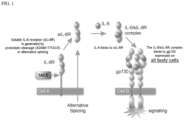
- IL-6 exerts its multiple biological activities through two main signalling pathways, a so-called classic ligand-receptor pathway via membrane-bound IL-6R present mainly on hepatocytes and certain leukocytes, and a trans- signalling pathway via circulating sIL-6R originating from proteolytic cleavage of the membrane-bound IL-6R or from alternative splicing.
- IL-6 directly binds to membrane-bound IL-6R on the surface of a limited range of cell types.
- the IL-6/IL-6R complex associates with a pre-formed dimer of the signal-transducing gp130 receptor protein, causing steric changes in the gp130 homodimer and thereby initiating an intracellular signalling cascade.
- Classic signalling is responsible for acute inflammatory defence mechanisms and crucial physiological IL-6 functions, such as growth and regenerative signals for intestinal epithelial cells.
- the extracellular domains of IL-6R and gp130 can be generated without the membraneanchoring domains by translation of alternatively-spliced mRNAs resulting in sIL-6R and sgp130 variants. Additionally, the extracellular domain of IL-6R can be shed by membrane-bound proteases of the A disintegrin and metalloprotease (ADAM) family (in humans, ADAM17) to generate sIL-6R.
- ADAM A disintegrin and metalloprotease
- sIL-6R binds to IL-6, forming an agonistic complex which binds to trans-membrane gp130 dimers present on a multitude of cell types that do not express membrane-bound IL-6R; IL-6 signalling by signal transducers and activators of transcription (STATs) is then induced in cells which do not normally respond to IL-6.
- STATs signal transducers and activators of transcription
- the activity of the IL-6/sIL-6R complex is normally controlled by high levels of sgp130 present in the circulation which effectively compete with membrane-bound gp130.
- Trans- signalling is mainly involved in chronic inflammation and has been shown to prevent disease-promoting mucosal T-cell populations from going into apoptosis.
- a selective IL-6- trans -signalling inhibitor can be administered to humans without any significant deleterious effects over a large dosage range.
- This inhibitor is substantially free of aggregation and glycosylation patterns that are associated with immunogenic potential.
- the inhibitor provides a favorable half-life in humans.
- the invention provides a polypeptide dimer comprising two monomers of SEQ ID NO: 1.
- the monomers are linked by one or more disulfide bridges.
- dimer is linked by disulfide bridges at positions Cys 623 and Cys 626 of SEQ ID NO: 1.
- the invention also provides a polypeptide dimer comprising two monomers of SEQ ID NO: 2.
- the monomers are linked by one or more disulfide bridges.
- the dimer is linked by disulfide bridges at positions Cys 623 and Cys 626 of SEQ ID NO: 2.
- the polypeptide dimer comprises no greater than 6 % of galactose-alpha-1,3-galactose per mole polypeptide and/or includes at least 52% of glycans having one or more sialic acid residues.
- the invention also provides a composition comprising the polypeptide dimers disclosed herein.
- no greater than 5% of the polypeptide dimer in the composition is present as an oligomeric aggregate and/or the composition comprises no greater than 10.0%, 8.0%, 6.0 or 4.0% by weight of polypeptides that are a truncated variation of the polypeptide (e.g., a truncated version of SEQ ID NO: 1 with respect to polypeptides of SEQ ID NO: 1 or a truncated version of SEQ ID NO: 2 with respect to polypeptides of SEQ ID NO: 2).
- the dimers in such compositions can include the features described in the paragraph above and described in further detail below.
- the invention further includes methods of treating conditions described herein with a polypeptide dimer or composition described herein.
- the invention includes the use of polypeptide dimers and compositions described herein for the manufacture of a medicament for treating a condition described herein.
- the invention includes methods of preparing the polypeptide dimers, which encompasses associated nucleotide sequences, expression vectors, cells expressing the polypeptide, and purifying the polypeptide.
- the invention includes nucleotide sequences encoding the polypeptides disclosed herein, in particular, a polypeptide of SEQ ID NO: 1 or SEQ ID NO:2 or a polypeptide having an amino acid sequence at least 90% identical to SEQ ID NO: 1 or SEQ ID NO:2.
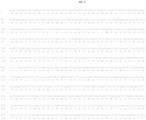
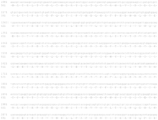
- the nucleotide sequence is at least 90% identical to the nucleotide sequence of FIG. 3 or FIG. 7 and more preferably encodes a polypeptide of SEQ ID NO: 1 or SEQ ID NO: 2.
- the nucleotide sequence is the nucleotide sequence of Figure 7 .
- One aspect of the invention provides a dimer of two gp130-Fc fusion monomers (e.g., two monomers of SEQ ID NO: 1).
- the polypeptide of SEQ ID NO: 1 exists as a dimer linked by two disulfide linkages at Cys 623 and Cys 626 ( FIG. 2 ).
- SEQ ID NO: 2 corresponds to the amino acid sequence of a gp130-Fc fusion monomer having the endogenous signal peptide. The signal peptide is removed during protein synthesis, resulting in the production of the polypeptide of SEQ ID NO: 1.
- the polypeptide dimers described herein selectively inhibit excessive trans-signalling ( FIG. 1 ) and induces apoptosis of the detrimental T-cells involved in multiple inflammatory diseases.
- the polypeptide dimer targets and neutralises IL-6/sIL-6R complexes and is therefore expected to only inhibit IL-6 trans -signalling in the desired therapeutic concentrations, leaving classic signalling and its many physiological functions, as well as its acute inflammatory defence mechanisms, intact ( FIG. 2 ).
- the polypeptide dimer is believed to be unable to interfere with classic IL-6 signalling due to steric hindrance; the Fc portion is unable to insert into a cell membrane, making the gp130 portion unavailable for binding to membrane-bound IL-6/sIL-6R complex.
- polypeptide dimers described herein preferably comprise gp130-Fc monomers having the sequence corresponding to SEQ ID NO: 1. In certain embodiments, the monomers have the sequence corresponding to SEQ ID NO:2. In certain embodiments, polypeptide dimers described herein comprise polypeptides having at least 90%, 95%, 97%, 98%, 99% or 99.5% sequence identity to SEQ ID NO: 1 or SEQ ID NO:2 .
- the polypeptide comprises the gp130 D6 domain (in particular amino acids TFTTPKFAQGE: amino acid positions 585-595 of SEQ ID NO: 1), AEGA in the Fc domain hinge region (amino acid positions 609-612 of SEQ ID NO: 1) and does not comprise a linker between the gp130 portion and the Fc domain.
- the disclosure provides a polypeptide dimer comprising two monomers having an amino acid sequence at least 90% sequence identify to SEQ ID NO: 1, wherein the amino acid sequence comprises the gp130 D6 domain, AEGA in the Fc domain hinge region, and there is no linker present between the gp130 portion and the Fc domain.
- the disclosure provides a polypeptide dimer comprising two monomers having an amino acid sequence at least 90% sequence identify to SEQ ID NO: 2, wherein the amino acid sequence comprises the gp130 D6 domain, AEGA in the Fc domain hinge region, and there is no linker present between the gp130 portion and the Fc domain, preferably wherein the monomers are linked by one or more disulfide bridges, and more preferably wherein:
- polypeptides it is desirable for polypeptides to be substantially free of galactose-alpha-1,3-galactose moieties, as these are associated with an immunogenic response. It was surprisingly found that dimers of the invention have low levels of such moieties.
- the polypeptide e.g., a polypeptide monomer and/or dimer described herein
- the polypeptide contains no greater than 4 mole %, 3 mole %, 2 mole %, 1 mole %, 0.5 mole %, 0.2 mole %, 0.1 mole % or even an undetectable level of galactose-alpha-1,3-galactose (e.g., as measured by WAX-HPLC, NP-HPLC or WAX, preferably as determined by WAX-HPLC).
- an undetectable level of galactose-alpha-1,3-galactose e.g., as measured by WAX-HPLC, NP-HPLC or WAX, preferably as determined by WAX-HPLC.
- the polypeptides contain less than 6%, 4%, 3%, 2%, 1%, 0.5%, 0.2%, or even 0.1% of galactose-alpha-1,3-galactose, relative to the total amount of glycans, either by mass or on a molar basis.
- a polypeptide of the invention it is also desirable for a polypeptide of the invention to be sialylated, e.g., to increase the half-life of polypeptides of the invention.
- Each chain of the polypeptide contains 10 putative N-glycosylation sites; nine N-glycosylation sites are located in the gp130 portion and one N-glycosylation site is located in the Fc portion.
- the polypeptide therefore contains a total of 20 glycosylation sites.
- a mean of at least 52% or at least 54% of glycans on the polypeptide include a sialic acid residue, such as a mean from 52-65% (e.g., as measured by WAX-HPLC, NP-HPLC or WAX, preferably as determined by WAX-HPLC).
- the polypeptide of the invention has an approximate molecular weight of 220 kDa; each 93 kDA having an additional ⁇ 20 kDa molecular weight derived from 10 N-glycosylation chains.
- compositions comprising a plurality of polypeptides described herein (e.g., a plurality of polypeptide monomers and/or polypeptide dimers described herein).
- a composition comprises a mean of at least 25% (e.g., at least 26%, 27%, 28%, 29%, 30%, 31%, 32%, 33%, 34%, 35%, 36%, 37%, 38%, 39%, or 40%) mono-sialylated polypeptides; a mean of at least 10% (e.g., at least 11%, 12%, 13%, 14%, 15%, 16%, 17%, 18%, 19%, 20%, 21%, 22%, 23%, 24%, or 25%) di-sialylated polypeptides; a mean of at least 1% (e.g., at least 1%, 1.5%, 2%, 2.5%, 3%, 3.5%, 4%, 4.5%, 5%, 5.5%, or 6%) tri
- oligomerization which results in oligomeric aggregates.
- Oligomeric aggregates does not refer to the active dimerized peptide. Instead, the term refers to at an aggregate of a least three monomers (e.g., of SEQ ID NO: 1) or, more typically, at least a dimer of active dimers. It was surprisingly found that the peptide dimers of the invention display low levels of aggregation. In certain embodiments, less than 5%, less than 4%, less than 3%, less than 2%, less than 1.5%, or even less than 1.0% of the polypeptide is present as an oligomer.
- the oligomer content can be measured, for example, by size exclusion chromatography-multi angle light scatting (SEC-MALS) or SEC-UV.
- the polypeptide is present in its full-length form (e.g., includes two full length monomers, e.g., of SEQ ID NO: 1).
- cell culture can produce a truncated variant referred to herein as the single gp130 form (SGF).
- SGF is a covalently-bound two-chain molecule, one chain comprising a the full-length gp130-Fc monomer (e.g., of SEQ ID NO: 1) and a second chain comprising a truncated gp130-Fc monomer (e.g., a truncation of SEQ ID NO: 1), which second chain includes the Fc domain and lacks most or all of the gp130 domain (e.g., terminated before the linker sequence to the Fc region).
- gp130-Fc monomer e.g., of SEQ ID NO: 1
- a truncated gp130-Fc monomer e.g., a truncation of SEQ ID NO: 1
- SGF does not have a heterogeneous amino-terminus.
- SGF can be formed at consistent levels in a bioreactor and once formed, SGF levels are not readily changed during purification, processing or accelerated storage conditions.
- the composition of the invention comprises no greater than 4.0% by weight, 3.0% by weight, 2.0% by weight or even 1.5% by weight of polypeptides that are a truncated variation of the polypeptide of SEQ ID NO: 1 with respect to polypeptides of SEQ ID NO: 1.
- the composition of the invention comprises no greater than 4.0% by weight, 3.0% by weight, 2.0% by weight or even 1.5% by weight of polypeptides that are a truncated variation of the polypeptide of SEQ ID NO: 2 with respect to polypeptides of SEQ ID NO: 2.
- polypeptide of the invention is typically administered parenterally, such as intravenously or subcutaneously.
- Suitable formulations include those comprising a surfactant, particularly a nonionic surfactant such as a polysorbate surfactant (e.g., polysorbate 20).
- Formulations can also include buffering agents and sugars.
- An exemplary buffering agent is histidine.
- An exemplary sugar is sucrose.
- a suitable formulation could include polysorbate 20 (e.g., 0.01-1 mg/mL, 0.02-0.5 mg/mL, 0.05-0.2 mg/mL), histidine (e.g., 0.5 mM-250 mM, 1-100 mM, 5-50 mM, 10-20 mM) and sucrose (e.g., 10-1000 mM, 20-500 mM, 100-300 mM, 150-250 mM).
- polysorbate 20 e.g., 0.01-1 mg/mL, 0.02-0.5 mg/mL, 0.05-0.2 mg/mL
- histidine e.g., 0.5 mM-250 mM, 1-100 mM, 5-50 mM, 10-20 mM
- sucrose e.g., 10-1000 mM, 20-500 mM, 100-300 mM, 150-250 mM.
- IL-6 has been shown to induce the acute phase response in the liver leading to release of the cascade of acute phase proteins, in particular CRP.
- CRP central nervous system
- Chronic inflammation such as in Crohn's disease (CD), ulcerative colitis (UC), rheumatoid arthritis (RA) or psoriasis
- CD Crohn's disease
- UC ulcerative colitis
- RA rheumatoid arthritis
- psoriasis is histologically associated with the presence of mononuclear cells, such as macrophages and lymphocytes, persisting in the tissue after having been acquired for the resolution of the acute inflammatory phase.
- IL-6 seems to have a detrimental role favouring mononuclear-cell accumulation at the site of injury, through induction of continuous MCP-1 secretion, angio-proliferation and anti-apoptotic functions on T-cells.
- IBD Inflammatory bowel disease
- CD or UC is a chronic inflammation occurring in the gut of susceptible individuals that is believed to be independent of a specific pathogen. Alterations in the epithelial mucosal barrier with increased intestinal permeability lead to an enhanced exposure of the mucosal immune system to luminal antigens, which causes an inappropriate activation of the intestinal immune system in patients.
- the uncontrolled activation of mucosal CD4+ T-lymphocytes with the consecutive excessive release of proinflammatory cytokines induces pathogenic gastrointestinal inflammation and tissue damage.
- the main activated immune cells involved in the pathogenesis of IBD are intestinal T-cells and macrophages.
- IL-6 is shown to be a central cytokine in IBD in humans. Patients with CD and UC have been found to produce increased levels of IL-6 when compared with controls, the IL-6 levels being correlated to clinical activity. CD patients have also been found to have increased levels of sIL-6R and consequently, IL-6/sIL-6R complex in serum. Lamina intestinal mononuclear cells obtained from surgical colon specimens from patients with CD and UC showed that both CD4+ T-cells and macrophages produced increased amounts of IL-6 compared to controls. sIL-6R was found to be released via shedding from the surface of macrophages and mononuclear cells with increased production associated with elevated levels of IL-6.
- the polypeptide of the invention can treat IL-6-mediated conditions.
- IL-6-mediated conditions include inflammatory disease or a cancer.
- the polypeptides and compositions described herein may be administered to a subject having an inflammatory disease, such as juvenile idiopathic arthritis, Crohn's disease, colitis (e.g., colitis not associated with IBD, including radiation colitis, diverticular colitis, ischemic colitis, infectious colitis, celiac disease, autoimmune colitis, or colitis resulting from allergies affecting the colon), dermatitis, psoriasis, uveitis, diverticulitis, hepatitis, irritable bowel syndrome (IBS), lupus erythematous, nephritis, Parkinson's disease, ulcerative colitis, multiple sclerosis (MS), Alzheimer's disease, arthritis, rheumatoid arthritis, asthma, and various cardiovascular diseases such as atherosclerosis and vasculitis.
- the inflammatory disease such as juvenile
- the inflammatory disease or IL-6-mediated condition is inflammatory bowel disease, preferably wherein the treatment induces the remission of inflammatory bowel disease.
- the inflammatory bowel disease is Crohn's disease or ulcerative colitis, preferably wherein the treatment maintains the remission of inflammatory bowel disease.
- the inflammatory disease or IL-6-mediated condition is rheumatoid arthritis, psoriasis, uveitis or atherosclerosis.
- the inflammatory disease or IL-6-mediated condition is colitis not associated with inflammatory bowel disease, preferably wherein the colitis is radiation colitis, diverticular colitis, ischemic colitis, infectious colitis, celiac disease, autoimmune colitis, or colitis resulting from allergies affecting the colon.
- the inflammatory disease or IL-6-mediated condition is selected from Crohn's disease, ulcerative colitis, rheumatoid arthritis and psoriasis, more preferably from Crohn's disease and ulcerative colitis.
- treatment can include remission of the condition, maintenance of remission of the condition, or both.
- a cancer including, but not limited to multiple myeloma, plasma cell leukemia, renal cell carcinoma, Kaposi's sarcoma, colorectal cancer, gastric cancer, melanoma, leukemia, lymphoma, glioma, glioblastoma multiforme, lung cancer (including but not limited to non-small cell lung cancer (NSCLC; both adenocarcinoma and squamous cell carcinoma)), non-Hodgkin's lymphoma, Hodgkin's disease, plasmocytoma, sarcoma, thymoma, breast cancer, prostate cancer, hepatocellular carcinoma, bladder cancer, uterine cancer, pancreatic cancer, esophageal cancer, brain cancer, head and neck cancers, ovarian cancer, cervical cancer, testicular cancer, stomach cancer, esophageal cancer, hepatoma, acute lymphoblast
- treatment refers to reversing, alleviating, delaying the onset of, or inhibiting the progress of a disease or disorder, or one or more symptoms thereof, as described herein.
- treatment may be administered after one or more symptoms have developed.
- treatment may be administered in the absence of symptoms.
- treatment may be administered to a susceptible individual prior to the onset of symptoms (e.g., in light of a history of symptoms and/or in light of genetic or other susceptibility factors). Treatment may also be continued after symptoms have resolved, for example to prevent or delay their recurrence.
- the polypeptide of the invention can be administered in conjunction with a second active agent.
- the second active agent can be one or more of 5-aminosalicylic acid, azathioprine, 5-mercaptopurine and a corticosteroid. Dosage regimes for the administration of 5-aminosalicylic acid, azathioprine, 5-mercaptopurine and corticosteroids are well-known to a skilled person.
- a further aspect of the invention provides a vector, which comprises a nucleic acid molecule encoding SEQ ID NO: 1 or SEQ ID NO:2 as well as cells comprising said vector.
- the DNA encoding the amino acid sequence of SEQ ID NO: 1 or SEQ ID NO: 2 may be cloned into the vector such that the signal peptide is linked in-frame to the amino terminus of the amino acid sequence of the antibody chain.
- the signal peptide can be an immunoglobulin signal peptide or a heterologous signal peptide (i.e., a signal peptide from a non-immunoglobulin protein).
- Regulatory sequences for mammalian host cell expression include viral elements that direct high levels of protein expression in mammalian cells, such as promoters and/or enhancers derived from retroviral LTRs, cytomegalovirus (CMV) (such as the CMV promoter/enhancer), Simian Virus 40 (SV40) (such as the SV40 promoter/enhancer), adenovirus, (e.g., the adenovirus major late promoter (AdMI,P)), polyoma and strong mammalian promoters such as native immunoglobulin and actin promoters.
- CMV cytomegalovirus
- SV40 Simian Virus 40
- AdMI,P adenovirus major late promoter
- polyoma e.g., the adenovirus major late promoter (AdMI,P)
- AdMI,P adenovirus major late promoter
- polyoma e.g., the adenovirus major late
- the host cell may be a mammalian, insect, plant, bacterial, or yeast cell, preferably the cell is a mammalian cell such as a Chinese hamster ovary (CHO) cell.
- CHO Chinese hamster ovary
- Exemplary CHO cells are (CHO)/dhfr- cells obtained from the European Collection of Cell Cultures (ECACC, No. 9406067).
- the host cell is a CHO cell and the nucleic acid encoding the polypeptide is codon optimized for use in CHO cells.
- the nucleic acid encoding the polypeptide is the sequence depicted in FIG. 3 or FIG. 7 .
- the disclosure further provides methods for producing the polypeptides of the invention.
- a method is provided for producing a dimer comprising two monomers of SEQ ID NO: 1 linked by a disulfide bridge, said method comprising expressing SEQ ID NO: 1 in cells and purifying said polypeptide.
- methods are provided for producing a dimer comprising two monomers of SEQ ID NO: 2 linked by a disulfide bridge, said method comprising expressing SEQ ID NO: 2 in cells and purifying said polypeptide.
- Methods for introducing nucleic acid vectors are known to a skilled person and include, e.g., electroporation, transfection, and the like. The transfected cells are cultured to allow the cells to express the desired protein.
- polypeptide dimers are purified, e.g., by chromatography column steps (e.g., MAbSelect Sure, SP Sepharose, Capto Q).
- the dimer can also be concentrated and/or treated with viral reduction/ inactivation steps.
- a further aspect of the invention encompasses polypeptide dimers produced by the methods disclosed herein.
- the dimers Preferably, the dimers have the characteristics described herein (e.g., % of galactose-alpha-1,3-galactose per mole polypeptide, sialylation).
- Dimers produced by the methods can be used to prepare suitable compositions. Said compositions preferably have the characteristics described herein (e.g., low aggregation, truncations).
- CHO / dhfr - cells were obtained from the European collection of cell cultures (ECACC, No. 9406067).
- the adherent CHO / dhfr - cells are deficient in dihydrofolate reductase (DHFR), an enzyme that catalyses the reduction of folate to dihydrofolate and then to tetrahydrofolate.
- DHFR dihydrofolate reductase
- MTX methotrexate
- the CHO/ dhfr - cell line is well characterised and tested.
- the safety of the CHO / dhfr - parental cell line as a cell substrate for the production of biopharmaceuticals for human use was confirmed by ECACC (Porton Down, UK) for microbial sterility, mycoplasma, and adventitious viruses according to 21 CFR.
- the cDNA sequence of Peptide 1 (the polypeptide sequence of SEQ ID NO: 1) was synthesised as a single DNA fragment by GeneArt AG (Regensburg, Germany) using the sequence for the extracellular domain of gp130 (IL6ST, NCBI Gene ID 3572, transcript variant 1 (NP_002175), amino acids 23-617) and Fc domain of human IgG1 (IGHG1, NCBI Gene ID 3500, amino acids 221-447 according to Kabat EU numbering).
- the sequence was optimised for optimal codon usage in CHO cells. Three well-characterised point mutations were introduced into the lower hinge region of the Fc part.
- the cDNA sequence was further modified by replacing the original gp130 signal peptide with a mouse IgG heavy chain signal peptide of known efficacy in CHO cell expression systems.
- the signal peptide is cleaved off during protein synthesis.
- the presence of the IgG1 Cys-Pro-Pro-Cys sequence in the Fc region results in the dimerisation of two identical gp130-Fc subunits via the sulfhydryl residues on the Fc region, which together form Peptide 1.
- FIG. 3 presents the nucleotide and amino acid sequence of the gp130-Fc subunit used for the formation of Peptide 1.
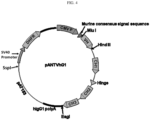
- the Peptide 1 cDNA was cloned into a pANTVhG1 expression vector (Antitope) containing the dhfr gene for transfectant selection with MTX ( FIG. 4 ) as follows: First, the expression vector was digested with MluI and EagI restriction enzymes to permit the insertion of Peptide 1 cDNA. Second, the Peptide 1 coding region was PCR amplified using the OL1425 and OL1426 primers (Table 1) and digested with MluI and EagI restriction enzymes. Third, the digested fragments were gel purified and ligated together to generate the pFER02 expression vector ( FIG. 5 ). The Peptide 1 cDNA was inserted under the control of the cytomegalovirus (CMV) promoter.
- CMV cytomegalovirus
- Table 2 presents the function of the pFER02 expression elements.
- FIG. 6 presents the nucleotide sequences of the pFER02 expression elements.
- Table 1 Oligonucleotide Sequences Used to Amplify the Peptide 1 Coding Region for Cloning into pANTVhG1 Primer Sequence (5'-3')* OL1425 ctgttgct acgcgt gtccactccGAGCTGCTGGATCCTTGCGGC OL1426 gcgggggcttg ccggccg tggcactcaCTTGCCAGGAGACAGAGACAG *Peptide 1-specific sequences are shown in upper case, vector-specific sequences are shown in lower case and restriction sites are underlined Table 2 pFER02Expression Elements Feature Function CMV promoter Immediate-early promoter/enhancer.
- the pFER02 vector was linearised with the blunt-end restriction enzyme SspI, which has a single recognition site located in the beta-lactamase gene.
- the linearised plasmid was transfected into 5 x 10 6 CHO/ dhfr cells using lipid-mediated transfection. Twenty-four hours after transfection, transfected cells were selected in medium supplemented with 5% dialysed foetal calf serum (FCS) and 100 nM methotrexate (MTX). Transfected cells were diluted into this medium at various densities and dispensed into 96-well, flat bottom tissue culture plates. Cells were then incubated in a humidified atmosphere at 5% CO 2 and 37°C. Fresh MTX selection medium was added at regular intervals during the incubation time to ensure that MTX levels and nutrient levels remained constant.
- FCS dialysed foetal calf serum
- MTX methotrexate
- tissue culture plates were examined using a Genetix CloneSelect ® Imager, and >2,000 wells were observed to have actively growing colonies. Supernatants from these wells were sampled and assayed for Peptide 1 titre by ELISA. Based on the results of this assay, a total of 105 of the best expressing wells were expanded into 48-well plates. A total of 83 cell lines were selected for expansion into 6-well plates or T-25 flasks; supernatant from each of the cell lines was sampled and assayed for Peptide 1 titre (ELISA).
- the 13 selected cell lines were chosen for the first round of gene amplification by selective pressure under increasing concentrations of MTX (0.1-50 M). After 7-10 days, supernatant from each well from each of the 13 cell lines were sampled and assayed for Peptide 1 titre (ELISA). Wells from each cell line with high Peptide 1 expression levels were assessed for productivity (pg/cell/day). A second round of gene amplification was initiated with a total of 16 wells from cell lines that showed significant increases in productivity.
- the second round of gene amplification was conducted in the presence of increased MTX concentrations; supernatants from each culture were assayed for Peptide 1 titre (ELISA). Selected wells from each cell line were expanded and productivity was assessed (pg/cell/day); five cell lines with increased productivity in response to increased MTX selection pressure were identified. These five cell lines were progressed to a third round of gene amplification using selection pressure under increased MTX concentration; supernatants from each well were assayed for Peptide 1 titre (ELISA). Selected wells for each cell line were expanded and productivity (pg/cell/day) was assessed; five cell lines demonstrating high Peptide 1 expression were selected.
- Limiting dilution cloning was performed on the five cell lines demonstrating Peptide 1 expression. After one week of incubation, plates were examined using a Genetix CloneSelect ® Imager and single colonies were identified. The growth rates of two cell lines during dilution cloning were noted as being particularly slow and so these cell lines were discontinued. In total, from the three remaining cell lines, 58 clonal colonies were selected for expansion, first into 48-well plates and then successively expanded through 12-well plates, T-25 flasks and T-75 flasks in the absence of MTX. Each of the 58 selected clones was then assessed for productivity (pg/cell/day); 16 clones were selected for suspension adaptation and adaptation to growth in a chemically-defined medium.
- the 16 cell lines were adapted to suspension culture in a chemically-defined medium as follows: selected cell lines in adherent culture were first adapted to suspension both in CHO suspension growth medium (DMEM high glucose, including L-glutamine and sodium pyruvate, 5% dialysed FCS, 20 mg/L L-proline, 1 x penicillin/streptomycin, 1% pluronic F68) and then in chemically defined suspension growth medium (CD Opti-CHO ® from Life Technologies Ltd. (Paisley, UK), 2.5% dialysed FCS, 0.1 x penicillin/streptomycin, 8 mM Glutamax ® ).
- DMEM high glucose, including L-glutamine and sodium pyruvate 5% dialysed FCS, 20 mg/L L-proline, 1 x penicillin/streptomycin, 1% pluronic F68
- CD Opti-CHO ® from Life Technologies Ltd. (Paisley, UK)
- 2.5% dialysed FCS 0.1 x pen
- the cell lines were weaned, in stages, into a serum-free chemically-defined suspension growth medium (CD Opti-CHO ® , 0.1 x penicillin/streptomycin, 8 mM Glutamax ® ).
- MTX was omitted from all suspension cultures.
- the adapted lines were expanded and seed cell banks were prepared. Briefly, cells were expanded to 300 mL total volume and harvested when cell density exceeded 0.85 x 10 6 cells/mL and viability was >90%. A further 3 x 10 7 cells were seeded into a fresh flask containing 70 mL suspension growth medium for growth and productivity analysis.
- the remaining cells were harvested by centrifugation and resuspended in an appropriate volume of freezing medium to yield a cell suspension at 1 x 10 7 cells/mL. Vials were frozen down to -80°C. The cell bank was then transferred to liquid nitrogen for long-term storage.
- the 16 cell lines were further refined down to 5 clones after serum-free adaptation.
- the 5 clones were assessed for growth (cell density and cell doubling time) and productivity (pg/cell/day), after which 3 clones were selected.
- One clone was selected to make a master cell bank.
- MCB master cell bank
- WCB working cell bank
- cryopreservation medium 92.5% CD OptiCHO ® / 7.5% DMSO
- polypropylene vials each containing approximately 1.5 x 10 7 viable cells
- Vials are stored in a vapour phase liquid nitrogen autofill container in a GMP controlled area.
- Peptide 1 DS manufacturing process is as follows. Cells from a WCB vial are revived and progressively expanded using protein-free medium prior to inoculation into a production bioreactor. Upon completion of the cell culture, cells and cell debris are removed by filtration of the culture.
- Purification consists of three chromatography column steps (MAbSelect Sure, SP Sepharose, Capto Q), a concentration and diafiltration step and includes two specific viral reduction/ inactivation steps; Triton X-100 (inactivation of enveloped viruses) treatment and a nanofiltration step (removal of enveloped and non-enveloped viruses).
- the formulated Peptide 1 is 0.22 ⁇ m filtered into containers.
- the Sartobind Phenyl column used in the 10,000 L batch in place of the Capto Q column, is effective in reducing the presence of oligomers. This column was able to reduce the level of oligomeric forms from an average of 2.7% to 1%.
- Glycan structure analysis was carried out at Procognia Limited (Ashdod, Israel). N-glycans were released from the sample using PNGase F and then labelled with 2-aminobenzamide. Released glycans were treated with or without a series of exoglycosidases in order to generate different glycan forms. Glycans were separated by two-dimensional HPLC analysis (NP-HPLC and WAX) and identified by comparison to a retention time database which was built using in-house-prepared standards separated and analysed by the same two-dimensional HPLC analysis.
- Ultra high pressure liquid chromatography was used to determine the sialic acid content and confirm peptide identity.
- the method was conducted using a Acquity UPLC BEH C18 1.7 ⁇ m 2.1x50 column and the following mobile phase: 9:7:84/ acetonitrile: methanol: water, with a flow rate 0.3 mL/min.
- the sialic acids were released from the test sample by enzymatic cleavage with sialydase and were thereafter derivatised with a fluorescent label (1,2 diamino 4,5 methylenedioxybenzene dihydrochloride (DMB)).
- DMB fluorescent label
- the labelled test sample was separated by UPLC with isocratic elution and fluorescence detection with an excitation wavelength of 373 nm and an emission wavelength of 448 nm.
- the sialic acid content in the test samples was quantified relative to the N-glycolylneuraminic acid (NGNA) and N-acetlyneuraminic acid (NANA) standards, run as a standard curve. NGNA and NANA sialic acid content is reported as pmol sialic acid / pmol protein.
- Weak anion exchange (WAX) - HPLC was used for determination of the % of the neutral, mono-, di-, tri- and tetra- sialylated glycans.
- the method entails enzymatic release of the N-glycans from the drug substance with PNGase, fluorescent labelling with 2-aminobenzamide (2-AB), desalting using Ludger D1 cartridges.
- the separation of sialylated glycans was conducted by WAX-HPLC, using a Glyco Sep C column with a 20 % acetonitrile/0.5M ammonium format gradient at 40°C.
- the fluoresce detection was set to at 330 nm excitation and 420 nm emission. Testing of a reference standard was carried out in parallel.
- the % of the neutral, mono-, di-, tri- and tetra- sialylated glycans were determined from the WAX-HPLC chromatogram and reported.
- Size-exclusion HPLC was used to determine drug substance purity by separating intact active dimers from the SGF and oligomeric forms (comprised primarily of dimers of active dimers).
- the intact active dimer molecule consists of the two identical glycosylated protein subunits (the gp130 extracellular domain fused to the Fc part of the human IgG1 heavy chain).
- Samples were separated on the basis of molecular weight using a gel permeation column (TSK G3000 SWXL ) with a flow rate of 1 mL/min and a mobile phase of 0.2 M sodium phosphate pH 7.0. Column eluate was monitored at 280 nm.
- TSK G3000 SWXL gel permeation column
- Column eluate was monitored at 280 nm.
- the intact species is identified by its characteristic retention time; the % purity of the active dimer is expressed as a percentage of the total integrated peak area.
- the percentage of oligomeric forms is determined using the SEC method presented above.
- the percentage of oligomeric forms is expressed as a percentage of the total integrated peak area.
- the percentage of SGF was determined using the SEC method presented above. The percentage of SGF is expressed as a percentage of the total integrated peak area.
- the DP is a sterile solution to be administered by i.v. infusion.
- the DP consists of Peptide 1 at a concentration of 15 mg/mL in an isotonic solution containing 25 mM L-histidine, 200 mM sucrose and 0.1 mg polysorbate 20/mL at pH 7.6.
- the vials are overlaid with nitrogen for protection against oxidation.
- the product is intended for single use and storage at -20°C until thawing for clinical administration.
- Part 1 64 subjects were included, of whom 48 (44 men, 4 women) received active treatment and 16 (all men) received placebo. Seven doses were investigated and administered as an i.v. infusion over 30 minutes (0.75 mg, 7.5 mg, 75 mg), or 1 hour (150 mg, 300 mg, 600 mg, and 750 mg). In addition, 6 subjects received a s.c. dose of 60 mg Peptide 1 and 2 subjects received a s.c. dose of placebo. Peptide 1 was administered at 15 mg/mL in 25 mM histidine, 200 mM sucrose and 0.1 mg/mL polysorbate 20.
- the PK evaluation after i.v. administrations of Peptide 1 showed dose proportionality for both AUC and Cmax in the range 0.75 mg to 750 mg, the Cmax concentrations in plasma ranging from 0.2 to 170 ⁇ g/mL ( FIG. 3 ).
- the clearance was approx. 0.13 L/h, the mean terminal half-life approx. 4.5 days, and the distribution volume approx. 20 L, the latter indicating some extravascular distribution.
- the s.c. administration of 60 mg Peptide 1 showed a Cmax of 1.1 ⁇ g/mL at 2.3 days, and a half-life of 5.0 days.
- the bioavailability after s.c. administration of Peptide 1 was calculated to be approx. 50%.
- the i.v. administration of 75, 300, and 750 mg to CD patients in remission showed very similar results as for the healthy subjects ( FIG. 4 ).
- the AUC and Cmax were dose proportional with Cmax concentrations of 16, 76, and 186 ⁇ g/mL (16, 77, and 161 ⁇ g/mL for healthy subjects).
- the clearance was approx. 0.13 L/h, the mean terminal half-life approx. 4.6 days, and the distribution volume approx. 22 L.
- the safety profile of Peptide 1 was favourable with few adverse events occurring in all treatment groups, including the placebo group, all being mild or moderate. No apparent dose-related trends in incidence or frequency of adverse events were observed.
- the infusions were discontinued in two subjects, one due to mild (Part 1, 300 mg group) and one due to moderate (Part 2, 75 mg group) infusion reactions.
- Peptide was safe and well tolerated when administered intravenously up to 750 mg as a single i.v. dose, and at 60 mg as a single s.c. dose.
- the PK evaluation showed very close characteristics on the first and last treatment days, and similar to the results in the single-dose study.
- the AUC and Cmax were dose proportional after first and fourth dosing with Cmax concentrations of 19, 78, and 148 ⁇ g/mL after the first dose, and 19, 79, and 142 ⁇ g/mL after the fourth dose (16, 77, and 161 ⁇ g/mL for single dose in healthy subjects; FIG. 5 ).
- the corresponding trough values were 0.66, 2.68, 4.56 ⁇ g/mL and 0.98, 3.95 and 7.67 ⁇ g/mL for the three dose levels.
- the mean terminal half-life as calculated after the last dose was approx. 5.5 days.
- Peptide 1 The safety profile of Peptide 1 was favourable with few adverse events occurring in all treatment groups, including the placebo group, all being mild or moderate. No apparent dose-related trends in incidence or frequency of adverse events were observed. One subject (600 mg group) was withdrawn due to mild infusion reactions.
- Peptide 1 was safe and well tolerated when administered i.v. up to 600 mg once weekly for 4 weeks.
Landscapes
- Health & Medical Sciences (AREA)
- Life Sciences & Earth Sciences (AREA)
- Chemical & Material Sciences (AREA)
- General Health & Medical Sciences (AREA)
- Medicinal Chemistry (AREA)
- Organic Chemistry (AREA)
- Animal Behavior & Ethology (AREA)
- Veterinary Medicine (AREA)
- Public Health (AREA)
- Pharmacology & Pharmacy (AREA)
- Engineering & Computer Science (AREA)
- Biochemistry (AREA)
- Molecular Biology (AREA)
- Bioinformatics & Cheminformatics (AREA)
- Chemical Kinetics & Catalysis (AREA)
- General Chemical & Material Sciences (AREA)
- Genetics & Genomics (AREA)
- Zoology (AREA)
- Epidemiology (AREA)
- Proteomics, Peptides & Aminoacids (AREA)
- Gastroenterology & Hepatology (AREA)
- Biophysics (AREA)
- Immunology (AREA)
- Nuclear Medicine, Radiotherapy & Molecular Imaging (AREA)
- Toxicology (AREA)
- Cell Biology (AREA)
- Dermatology (AREA)
- Oil, Petroleum & Natural Gas (AREA)
- Wood Science & Technology (AREA)
- General Engineering & Computer Science (AREA)
- Biotechnology (AREA)
- Biomedical Technology (AREA)
- Rheumatology (AREA)
- Physics & Mathematics (AREA)
- Microbiology (AREA)
- Plant Pathology (AREA)
- Ophthalmology & Optometry (AREA)
- Physical Education & Sports Medicine (AREA)
- Cardiology (AREA)
- Vascular Medicine (AREA)
Applications Claiming Priority (3)
| Application Number | Priority Date | Filing Date | Title |
|---|---|---|---|
| EP14195726 | 2014-12-01 | ||
| EP15834723.7A EP3227325B1 (de) | 2014-12-01 | 2015-12-01 | Selektive, il-6-trans-signalisierende zusammensetzungen |
| PCT/NL2015/050837 WO2016089206A2 (en) | 2014-12-01 | 2015-12-01 | Selective il-6-trans-signalling inhibitor compositions |
Related Parent Applications (2)
| Application Number | Title | Priority Date | Filing Date |
|---|---|---|---|
| EP15834723.7A Division-Into EP3227325B1 (de) | 2014-12-01 | 2015-12-01 | Selektive, il-6-trans-signalisierende zusammensetzungen |
| EP15834723.7A Division EP3227325B1 (de) | 2014-12-01 | 2015-12-01 | Selektive, il-6-trans-signalisierende zusammensetzungen |
Publications (2)
| Publication Number | Publication Date |
|---|---|
| EP4356962A2 true EP4356962A2 (de) | 2024-04-24 |
| EP4356962A3 EP4356962A3 (de) | 2024-07-24 |
Family
ID=52000745
Family Applications (2)
| Application Number | Title | Priority Date | Filing Date |
|---|---|---|---|
| EP24154182.0A Pending EP4356962A3 (de) | 2014-12-01 | 2015-12-01 | Selektive il-6-trans-signalisierende zusammensetzungen |
| EP15834723.7A Active EP3227325B1 (de) | 2014-12-01 | 2015-12-01 | Selektive, il-6-trans-signalisierende zusammensetzungen |
Family Applications After (1)
| Application Number | Title | Priority Date | Filing Date |
|---|---|---|---|
| EP15834723.7A Active EP3227325B1 (de) | 2014-12-01 | 2015-12-01 | Selektive, il-6-trans-signalisierende zusammensetzungen |
Country Status (20)
| Country | Link |
|---|---|
| US (3) | US10519218B2 (de) |
| EP (2) | EP4356962A3 (de) |
| JP (2) | JP6827941B2 (de) |
| KR (2) | KR102699098B1 (de) |
| CN (1) | CN107406491A (de) |
| CA (1) | CA2969314A1 (de) |
| DK (1) | DK3227325T3 (de) |
| ES (1) | ES2981475T3 (de) |
| FI (1) | FI3227325T3 (de) |
| HR (1) | HRP20240581T1 (de) |
| HU (1) | HUE066987T2 (de) |
| LT (1) | LT3227325T (de) |
| MA (1) | MA41116B1 (de) |
| MD (1) | MD3227325T2 (de) |
| MX (2) | MX388268B (de) |
| PL (1) | PL3227325T3 (de) |
| PT (1) | PT3227325T (de) |
| RS (1) | RS65665B1 (de) |
| SI (1) | SI3227325T1 (de) |
| WO (1) | WO2016089206A2 (de) |
Families Citing this family (9)
| Publication number | Priority date | Publication date | Assignee | Title |
|---|---|---|---|---|
| DK3227325T3 (da) * | 2014-12-01 | 2024-07-08 | Ferring Bv | Sammensætninger med selektive hæmmere af il-6-trans-signalering |
| HRP20210737T1 (hr) | 2014-12-01 | 2021-06-11 | Ferring B.V. | Primjena selektivnog inhibitora il-6-trans-signalizacije |
| ES2991988T3 (es) | 2017-10-30 | 2024-12-05 | Takeda Pharmaceuticals Co | Detergentes compatibles con el medio ambiente para la inactivación de virus con envoltura lipídica |
| RU2020121415A (ru) * | 2017-11-30 | 2021-12-30 | Био-Тера Солюшнз, Лтд. | Жидкий препарат гуманизированного антитела для лечения заболеваний, опосредованных ил-6 |
| WO2019155833A1 (ja) * | 2018-02-07 | 2019-08-15 | 学校法人日本医科大学 | 改良型アデノ随伴ウイルスベクター |
| WO2021250069A1 (en) * | 2020-06-10 | 2021-12-16 | Christian-Albrechts-Universität Zu Kiel | Pharmaceutical compound for the treatment of atherosclerotic cardiovascular disease |
| TW202242142A (zh) | 2020-12-22 | 2022-11-01 | 荷蘭商菲林公司 | 預測炎性腸病患者的響應之血液基因表現生物標誌物 |
| CN114681592A (zh) * | 2020-12-31 | 2022-07-01 | 天境生物科技(杭州)有限公司 | 包含可溶性gp130二聚体的制剂和使用方法 |
| WO2024011946A1 (en) * | 2022-07-12 | 2024-01-18 | I-Mab Biopharma (Hangzhou) Co., Ltd | Polypeptide dimers for the treatment of systemic sclerosis |
Family Cites Families (23)
| Publication number | Priority date | Publication date | Assignee | Title |
|---|---|---|---|---|
| US4751180A (en) | 1985-03-28 | 1988-06-14 | Chiron Corporation | Expression using fused genes providing for protein product |
| JPH04218000A (ja) | 1990-02-13 | 1992-08-07 | Kirin Amgen Inc | 修飾ポリペプチド |
| WO1994012520A1 (en) | 1992-11-20 | 1994-06-09 | Enzon, Inc. | Linker for linked fusion polypeptides |
| US5457035A (en) | 1993-07-23 | 1995-10-10 | Immunex Corporation | Cytokine which is a ligand for OX40 |
| US5783672A (en) | 1994-05-26 | 1998-07-21 | Immunex Corporation | Receptor for oncostatin M |
| US6472179B2 (en) | 1998-09-25 | 2002-10-29 | Regeneron Pharmaceuticals, Inc. | Receptor based antagonists and methods of making and using |
| DE19941897B4 (de) | 1999-09-02 | 2006-06-14 | GSF - Forschungszentrum für Umwelt und Gesundheit GmbH | IL-6 Rezeptor-Protein, Beta-Kette (gp130) des IL-6 Rezeptor-Proteins, für diese Proteine kodierende DNA, davon abgeleitete RNA, Peptid mit den Aminosäuren 771-811 dieser Beta-Kette oder Teilen davon und deren Verwendungen |
| HUP0204475A2 (en) | 2000-02-11 | 2003-04-28 | Merck Patent Gmbh | Enhancing the circulating half-life of antibody-based fusion proteins |
| ES2298106T3 (es) | 2000-04-21 | 2008-05-16 | Conaris Research Institute Ag | Proteinas de fusion que comprenden dos moleculas gp130 solubles. |
| CZ20033182A3 (cs) | 2001-05-21 | 2004-09-15 | Nektar Therapeutics | Inzulínový prostředek a způsob podávání inzulínu |
| US7507412B2 (en) | 2001-07-18 | 2009-03-24 | Merck Patent Gmbh | Glycoprotein VI fusion proteins |
| WO2003024389A2 (en) | 2001-07-30 | 2003-03-27 | Immunex Corporation | T. reesei phytase enyzmes, polynucleides encoding the enzymes, vectors and host cells thereof, and methods of using |
| JP2004182638A (ja) | 2002-12-03 | 2004-07-02 | Yakult Honsha Co Ltd | 炎症性疾患又は悪性腫瘍の予防治療剤 |
| EP1491554A1 (de) | 2003-06-23 | 2004-12-29 | CONARIS research institute AG | PEGlierte lösliche gp130-Dimeren geignet als Medikament |
| ATE399868T1 (de) * | 2004-08-27 | 2008-07-15 | Conaris Res Inst Ag | Optimierte nukleotidsequenzen die für sgp130 kodieren |
| EP1801121A1 (de) | 2005-12-23 | 2007-06-27 | CONARIS research institute AG | Lösliche Varianten des Moleküls gp130 nützlich als Arzneimittel |
| ATE550353T1 (de) * | 2005-12-30 | 2012-04-15 | Merck Patent Gmbh | Die bindung von mit il-6ralpha komplexiertem il-6 an gp130 verhindernde anti-il-6-antikörper |
| KR20140107702A (ko) * | 2006-06-30 | 2014-09-04 | 코나리스 리써치 인스티튜트 아게 | 개선된 sgp130Fc 이량체 |
| ES2352561T3 (es) | 2006-06-30 | 2011-02-21 | Conaris Research Institute Ag | Dímeros de sgp 130fc mejorados. |
| EP2050759A1 (de) | 2007-10-19 | 2009-04-22 | CONARIS research institute AG | Lösliche gp-130-Muteine mit verbesserter Bindungsaktivität |
| US20130243744A1 (en) | 2011-01-06 | 2013-09-19 | Michael J. Betenbaugh | Method of production of recombinant glycoproteins with increased circulatory half-life in mammalian cells |
| HRP20210737T1 (hr) * | 2014-12-01 | 2021-06-11 | Ferring B.V. | Primjena selektivnog inhibitora il-6-trans-signalizacije |
| DK3227325T3 (da) | 2014-12-01 | 2024-07-08 | Ferring Bv | Sammensætninger med selektive hæmmere af il-6-trans-signalering |
-
2015
- 2015-12-01 DK DK15834723.7T patent/DK3227325T3/da active
- 2015-12-01 RS RS20240718A patent/RS65665B1/sr unknown
- 2015-12-01 US US15/532,097 patent/US10519218B2/en active Active
- 2015-12-01 MD MDE20170158T patent/MD3227325T2/ro unknown
- 2015-12-01 ES ES15834723T patent/ES2981475T3/es active Active
- 2015-12-01 WO PCT/NL2015/050837 patent/WO2016089206A2/en not_active Ceased
- 2015-12-01 LT LTEPPCT/NL2015/050837T patent/LT3227325T/lt unknown
- 2015-12-01 PT PT158347237T patent/PT3227325T/pt unknown
- 2015-12-01 CN CN201580075068.9A patent/CN107406491A/zh active Pending
- 2015-12-01 EP EP24154182.0A patent/EP4356962A3/de active Pending
- 2015-12-01 HU HUE15834723A patent/HUE066987T2/hu unknown
- 2015-12-01 MX MX2017007069A patent/MX388268B/es unknown
- 2015-12-01 KR KR1020177018154A patent/KR102699098B1/ko active Active
- 2015-12-01 KR KR1020247027872A patent/KR20240131465A/ko active Pending
- 2015-12-01 EP EP15834723.7A patent/EP3227325B1/de active Active
- 2015-12-01 CA CA2969314A patent/CA2969314A1/en active Pending
- 2015-12-01 JP JP2017547367A patent/JP6827941B2/ja active Active
- 2015-12-01 SI SI201532012T patent/SI3227325T1/sl unknown
- 2015-12-01 HR HRP20240581TT patent/HRP20240581T1/hr unknown
- 2015-12-01 MA MA41116A patent/MA41116B1/fr unknown
- 2015-12-01 PL PL15834723.7T patent/PL3227325T3/pl unknown
- 2015-12-01 FI FIEP15834723.7T patent/FI3227325T3/fi active
-
2017
- 2017-06-05 MX MX2021007899A patent/MX2021007899A/es unknown
-
2019
- 2019-11-06 US US16/675,621 patent/US11306136B2/en active Active
-
2021
- 2021-01-20 JP JP2021007075A patent/JP7184936B2/ja active Active
-
2022
- 2022-03-09 US US17/690,711 patent/US20220275056A1/en active Pending
Also Published As
Similar Documents
| Publication | Publication Date | Title |
|---|---|---|
| US20220275056A1 (en) | Selective il-6-trans-signalling inhibitor compositions | |
| US20220135652A1 (en) | Administration of a selective il-6-trans-signalling inhibitor | |
| US10603358B2 (en) | Combination tumor treatment with an integrin-binding-Fc fusion protein and immune stimulator | |
| JP2025525535A (ja) | 三重特異性抗体及びその使用 | |
| US20040086507A1 (en) | Antibody inhibiting vplf activity | |
| US20240391977A1 (en) | Tpo mimetic fusion proteins and methods of use | |
| HK40109135A (en) | Selective il-6-trans-signalling inhibitor compositions | |
| HK1236960B (en) | Selective il-6-trans-signalling inhibitor compositions | |
| HK1236960A1 (en) | Selective il-6-trans-signalling inhibitor compositions | |
| HK40064038A (en) | Administration of a selective il-6-trans-signalling inhibitor | |
| HK1236812A1 (en) | Administration of a selective il-6-trans-signalling inhibitor | |
| HK1236812B (en) | Administration of a selective il-6-trans-signalling inhibitor |
Legal Events
| Date | Code | Title | Description |
|---|---|---|---|
| PUAI | Public reference made under article 153(3) epc to a published international application that has entered the european phase |
Free format text: ORIGINAL CODE: 0009012 |
|
| STAA | Information on the status of an ep patent application or granted ep patent |
Free format text: STATUS: REQUEST FOR EXAMINATION WAS MADE |
|
| 17P | Request for examination filed |
Effective date: 20240126 |
|
| AC | Divisional application: reference to earlier application |
Ref document number: 3227325 Country of ref document: EP Kind code of ref document: P |
|
| AK | Designated contracting states |
Kind code of ref document: A2 Designated state(s): AL AT BE BG CH CY CZ DE DK EE ES FI FR GB GR HR HU IE IS IT LI LT LU LV MC MK MT NL NO PL PT RO RS SE SI SK SM TR |
|
| P01 | Opt-out of the competence of the unified patent court (upc) registered |
Effective date: 20240425 |
|
| REG | Reference to a national code |
Ref country code: DE Ref legal event code: R079 Free format text: PREVIOUS MAIN CLASS: A61P0017060000 Ipc: C07K0014715000 |
|
| PUAL | Search report despatched |
Free format text: ORIGINAL CODE: 0009013 |
|
| AK | Designated contracting states |
Kind code of ref document: A3 Designated state(s): AL AT BE BG CH CY CZ DE DK EE ES FI FR GB GR HR HU IE IS IT LI LT LU LV MC MK MT NL NO PL PT RO RS SE SI SK SM TR |
|
| RIC1 | Information provided on ipc code assigned before grant |
Ipc: A61P 17/06 20060101ALI20240619BHEP Ipc: A61P 1/04 20060101ALI20240619BHEP Ipc: A61K 47/26 20060101ALI20240619BHEP Ipc: A61K 38/00 20060101ALI20240619BHEP Ipc: A61K 9/00 20060101ALI20240619BHEP Ipc: C07K 14/54 20060101ALI20240619BHEP Ipc: A61P 9/00 20060101ALI20240619BHEP Ipc: A61P 1/00 20060101ALI20240619BHEP Ipc: A61K 38/17 20060101ALI20240619BHEP Ipc: C07K 14/715 20060101AFI20240619BHEP |
|
| REG | Reference to a national code |
Ref country code: HK Ref legal event code: DE Ref document number: 40109135 Country of ref document: HK |
|
| RAP3 | Party data changed (applicant data changed or rights of an application transferred) |
Owner name: FERRING B.V. |
|
| STAA | Information on the status of an ep patent application or granted ep patent |
Free format text: STATUS: EXAMINATION IS IN PROGRESS |