EP4358441A1 - Procédé et appareil de communication - Google Patents
Procédé et appareil de communication Download PDFInfo
- Publication number
- EP4358441A1 EP4358441A1 EP21945500.3A EP21945500A EP4358441A1 EP 4358441 A1 EP4358441 A1 EP 4358441A1 EP 21945500 A EP21945500 A EP 21945500A EP 4358441 A1 EP4358441 A1 EP 4358441A1
- Authority
- EP
- European Patent Office
- Prior art keywords
- cross link
- measurement signal
- interference measurement
- indication information
- link interference
- Prior art date
- Legal status (The legal status is an assumption and is not a legal conclusion. Google has not performed a legal analysis and makes no representation as to the accuracy of the status listed.)
- Pending
Links
- 230000006854 communication Effects 0.000 title claims abstract description 290
- 238000004891 communication Methods 0.000 title claims abstract description 249
- 238000000034 method Methods 0.000 title claims abstract description 164
- 238000005259 measurement Methods 0.000 claims abstract description 350
- 238000012545 processing Methods 0.000 claims abstract description 132
- 238000013468 resource allocation Methods 0.000 claims description 257
- 230000011664 signaling Effects 0.000 claims description 57
- 238000004590 computer program Methods 0.000 claims description 53
- 230000015654 memory Effects 0.000 claims description 26
- 230000005540 biological transmission Effects 0.000 abstract description 49
- 230000006870 function Effects 0.000 description 52
- 230000003213 activating effect Effects 0.000 description 21
- 238000010586 diagram Methods 0.000 description 8
- 238000005516 engineering process Methods 0.000 description 7
- 238000013461 design Methods 0.000 description 5
- 239000004065 semiconductor Substances 0.000 description 4
- 230000008878 coupling Effects 0.000 description 3
- 238000010168 coupling process Methods 0.000 description 3
- 238000005859 coupling reaction Methods 0.000 description 3
- 238000010295 mobile communication Methods 0.000 description 3
- 229910000577 Silicon-germanium Inorganic materials 0.000 description 2
- 238000007726 management method Methods 0.000 description 2
- 229910044991 metal oxide Inorganic materials 0.000 description 2
- 150000004706 metal oxides Chemical class 0.000 description 2
- JBRZTFJDHDCESZ-UHFFFAOYSA-N AsGa Chemical compound [As]#[Ga] JBRZTFJDHDCESZ-UHFFFAOYSA-N 0.000 description 1
- LEVVHYCKPQWKOP-UHFFFAOYSA-N [Si].[Ge] Chemical compound [Si].[Ge] LEVVHYCKPQWKOP-UHFFFAOYSA-N 0.000 description 1
- 238000003491 array Methods 0.000 description 1
- 238000013473 artificial intelligence Methods 0.000 description 1
- 230000003190 augmentative effect Effects 0.000 description 1
- 230000001413 cellular effect Effects 0.000 description 1
- 230000000295 complement effect Effects 0.000 description 1
- 238000013500 data storage Methods 0.000 description 1
- 239000000835 fiber Substances 0.000 description 1
- 230000007774 longterm Effects 0.000 description 1
- 230000003287 optical effect Effects 0.000 description 1
- 239000007787 solid Substances 0.000 description 1
- 238000007711 solidification Methods 0.000 description 1
- 230000008023 solidification Effects 0.000 description 1
- 238000006467 substitution reaction Methods 0.000 description 1
- 238000001356 surgical procedure Methods 0.000 description 1
- 230000009466 transformation Effects 0.000 description 1
- 238000000844 transformation Methods 0.000 description 1
Images

Classifications
-
- H—ELECTRICITY
- H04—ELECTRIC COMMUNICATION TECHNIQUE
- H04W—WIRELESS COMMUNICATION NETWORKS
- H04W24/00—Supervisory, monitoring or testing arrangements
- H04W24/08—Testing, supervising or monitoring using real traffic
-
- H—ELECTRICITY
- H04—ELECTRIC COMMUNICATION TECHNIQUE
- H04B—TRANSMISSION
- H04B17/00—Monitoring; Testing
- H04B17/30—Monitoring; Testing of propagation channels
- H04B17/309—Measuring or estimating channel quality parameters
- H04B17/345—Interference values
-
- H—ELECTRICITY
- H04—ELECTRIC COMMUNICATION TECHNIQUE
- H04L—TRANSMISSION OF DIGITAL INFORMATION, e.g. TELEGRAPHIC COMMUNICATION
- H04L5/00—Arrangements affording multiple use of the transmission path
- H04L5/003—Arrangements for allocating sub-channels of the transmission path
- H04L5/0048—Allocation of pilot signals, i.e. of signals known to the receiver
- H04L5/005—Allocation of pilot signals, i.e. of signals known to the receiver of common pilots, i.e. pilots destined for multiple users or terminals
-
- H—ELECTRICITY
- H04—ELECTRIC COMMUNICATION TECHNIQUE
- H04L—TRANSMISSION OF DIGITAL INFORMATION, e.g. TELEGRAPHIC COMMUNICATION
- H04L5/00—Arrangements affording multiple use of the transmission path
- H04L5/0091—Signalling for the administration of the divided path, e.g. signalling of configuration information
- H04L5/0092—Indication of how the channel is divided
-
- H—ELECTRICITY
- H04—ELECTRIC COMMUNICATION TECHNIQUE
- H04W—WIRELESS COMMUNICATION NETWORKS
- H04W24/00—Supervisory, monitoring or testing arrangements
- H04W24/10—Scheduling measurement reports ; Arrangements for measurement reports
-
- H—ELECTRICITY
- H04—ELECTRIC COMMUNICATION TECHNIQUE
- H04L—TRANSMISSION OF DIGITAL INFORMATION, e.g. TELEGRAPHIC COMMUNICATION
- H04L5/00—Arrangements affording multiple use of the transmission path
- H04L5/14—Two-way operation using the same type of signal, i.e. duplex
Definitions
- the disclosure relates to a field of communication technologies, and particularly to a communication method, and a communication device.
- a full duplex communication technology means that mutual transmission of services between devices may occur at the same time and at the same frequency bandwidth.
- the full duplex communication technology is directly applied to a communication system, it may cause a serious interference for each of the devices. Therefore, it becomes an urgent problem to be solved how to reduce the interference in a full duplex communication process between the devices.
- a communication method and a communication device are provided in the embodiments of the disclosure, which are applicable to a field of communication technologies.
- a network device indicates resource allocation information for processing a cross link interference measurement signal to a terminal device, so that the terminal device may perform a full duplex communication based on the obtained resource allocation information, thus reducing the interference during the full duplex communication process of the terminal device as much as possible, and improving the quality and efficiency of communication transmission.
- the embodiments of the disclosure provide a communication method, which is performed by a network device.
- the method includes: sending first indication information, in which the first indication information is configured to indicate resource allocation information for processing a cross link interference measurement signal to a terminal device.
- the network device indicates the resource allocation information for processing the cross link interference measurement signal to the terminal device, so that the terminal device may perform the full duplex communication based on the obtained resource allocation information, thus reducing the interference during the full duplex communication process of the terminal device as much as possible, and improving the quality and efficiency of communication transmission.
- the first indication information includes at least one of: time-frequency domain resource allocation information for sending the cross link interference measurement signal; a sending beam group for sending the cross link interference measurement signal; time-frequency domain resource allocation information for measuring the cross link interference measurement signal; time-frequency domain resource allocation information for receiving the cross link interference measurement signal; a receiving beam group for receiving the cross link interference measurement signal; or, a reporting threshold for a number of cross link interference measurements.
- the cross link interference measurement signal includes at least one of: a physical uplink shared channel (PUSCH) signal; a physical uplink control channel (PUCCH) signal; a sounding reference signal (SRS); or a specified cross link interference measurement signal.
- PUSCH physical uplink shared channel
- PUCCH physical uplink control channel
- SRS sounding reference signal
- the sending beam group for sending the cross link interference measurement signal is indicated by any one of: a specified set of synchronization signal blocks (SSBs), or a specified set of channel state information (CSI) reference signals (RSs).
- SSBs synchronization signal blocks
- CSI channel state information reference signals
- sending the first indication information includes: sending the first indication information based on a radio resource control (RRC) signaling.
- RRC radio resource control
- the network device indicates the resource allocation information for processing the cross link interference measurement signal to the terminal device via the RRC signaling, so that the terminal device may perform the full duplex communication based on the obtained resource allocation information, thus reducing the interference during the full duplex communication process of the terminal device as much as possible, and improving the quality and the efficiency of communication transmission.
- the method further includes: sending second indication information, in which the second indication information is configured to indicate the terminal device to activate one or more pieces of the resource allocation information for processing the cross link interference measurement signal, or the second indication information is configured to indicate the terminal device to deactivate one or more pieces of the resource allocation information for processing the cross link interference measurement signal.
- the network device may indicate activating or deactivating the resource allocation information for processing the cross link interference measurement signal to the terminal device, so that the terminal device may perform the full duplex communication based on the resource allocation information, thus reducing the interference during the full duplex communication process of the terminal device as much as possible, and improving the quality and the efficiency of communication transmission.
- sending the second indication information includes: sending the second indication information based on a media access control (MAC) control element (CE).
- MAC media access control
- CE control element
- the network device may indicate activating or deactivating the resource allocation information for processing the cross link interference measurement signal to the terminal device via the MAC CE signaling, so that the terminal device may perform the full duplex communication based on the resource allocation information, thus reducing the interference during the full duplex communication process of the terminal device as much as possible, and improving the quality and the efficiency of communication transmission.
- the method further includes: sending third indication information, in which the third indication information is configured to indicate the terminal device to trigger one or more pieces of the resource allocation information for processing the cross link interference measurement signal.
- the network device may indicate triggering the resource allocation information for processing the cross link interference measurement signal to the terminal device, so that the terminal device may perform the full duplex communication based on the resource allocation information, thus reducing the interference during the full duplex communication process of the terminal device as much as possible, and improving the quality and the efficiency of communication transmission.
- sending the third indication information includes: sending the third indication information based on downlink control information (DCI).
- DCI downlink control information
- the network device may indicate triggering the resource allocation information for processing the cross link interference measurement signal to the terminal device via the DCI, so that the terminal device may perform the full duplex communication based on the resource allocation information, thus reducing the interference during the full duplex communication process of the terminal device as much as possible, and improving the quality and the efficiency of communication transmission.
- the embodiments of the disclosure provide another communication method, which is performed by a first terminal device.
- the method includes: receiving first indication information, in which the first indication information is configured to indicate resource allocation information for sending a cross link interference measurement signal to the first terminal device.
- the first terminal device may obtain the resource allocation information for sending the cross link interference measurement signal based on the received first indication information, so that the first terminal device may perform the full duplex communication based on the obtained resource allocation information, thus reducing the interference during the full duplex communication process of the terminal device as much as possible, and improving the quality and the efficiency of communication transmission.
- the first indication information includes at least one of: time-frequency domain resource allocation information for sending the cross link interference measurement signal; or a sending beam group for sending the cross link interference measurement signal.
- the cross link interference measurement signal includes at least one of: a PUSCH signal; a PUCCH signal; an SRS; or a specified cross link interference measurement signal.
- the sending beam group for sending the cross link interference measurement signal is indicated by any one of: a specified set of SSBs, or a specified set of CSI RSs.
- the method further includes: determining an uplink beam corresponding to an optimal receiving beam in a specified set of SSBs as a sending beam of the cross link interference measurement signal; or, determining an uplink beam corresponding to an optimal receiving beam in a specified set of CSI RSs as a sending beam of the cross link interference measurement signal.
- receiving the first indication information includes: receiving the first indication information based on an RRC signaling.
- the first terminal device may receive the first indication information via the RRC signaling, to obtain the resource allocation information for sending the cross link interference measurement signal, so that the first terminal device may perform the full duplex communication based on the obtained resource allocation information, thus reducing the interference during the full duplex communication process of the terminal device as much as possible, and improving the quality and the efficiency of communication transmission.
- the method further includes: receiving second indication information, in which the second indication information is configured to indicate the first terminal device to activate one or more pieces of the resource allocation information for sending the cross link interference measurement signal, or the second indication information is configured to indicate the first terminal device to deactivate one or more pieces of the resource allocation information for sending the cross link interference measurement signal.
- the first terminal device may obtain activating or deactivating the resource allocation information for sending the cross link interference measurement signal based on the received second indication information, so that the first terminal device may perform the full duplex communication based on the obtained resource allocation information, thus reducing the interference during the full duplex communication process of the terminal device as much as possible, and improving the quality and the efficiency of communication transmission.
- receiving the second indication information includes: receiving the second indication information based on an MAC CE signaling.
- the first terminal device may receive the second indication information via the MAC CE signaling, to obtain activating or deactivating the resource allocation information for sending the cross link interference measurement signal, so that the first terminal device may perform the full duplex communication based on the obtained resource allocation information, thus reducing the interference during the full duplex communication process of the terminal device as much as possible, and improving the quality and the efficiency of communication transmission.
- the method further includes: receiving third indication information, in which the third indication information is configured to indicate the first terminal device to trigger one or more pieces of the resource allocation information for sending the cross link interference measurement signal.
- the first terminal device may obtain trigger the resource allocation information for sending the cross link interference measurement signal based on the received third indication information, so that the first terminal device may perform the full duplex communication based on the obtained resource allocation information, thus reducing an interference during the full duplex communication process of the terminal device as much as possible, and improving the quality and the efficiency of communication transmission.
- receiving the third indication information includes: receiving the third indication information based on DCI.
- the first terminal device may receive the third indication information via the DCI, to obtain triggering the resource allocation information for sending the cross link interference measurement signal, so that the first terminal device may perform the full duplex communication based on the obtained resource allocation information, thus reducing an interference during the full duplex communication process of the terminal device as much as possible, and improving the quality and the efficiency of communication transmission.
- the embodiments of the disclosure provide another communication method, which is performed by a second terminal device.
- the method includes: receiving first indication information, in which the first indication information is configured to indicate resource allocation information for processing a cross link interference measurement signal to the second terminal device.
- the second terminal device may obtain the resource allocation information for processing the cross link interference measurement signal based on the indication of the first indication information.
- the second terminal device may perform the full duplex communication based on the obtained resource allocation information, thus reducing the interference during the full duplex communication process of the terminal device as much as possible, and improving the quality and the efficiency of communication transmission.
- the first indication information includes at least one of: time-frequency domain resource allocation information for measuring the cross link interference measurement signal; time-frequency domain resource allocation information for receiving the cross link interference measurement signal; a receiving beam group for receiving the cross link interference measurement signal; or, a reporting threshold for a number of cross link interference measurements.
- the cross link interference measurement signal includes at least one of: a PUSCH signal; a PUCCH signal; an SRS; or a specified cross link interference measurement signal.
- the method further includes: receiving the cross link interference measurement signal by using a receiving beam of a physical downlink control channel (PDCCH); or, receiving the cross link interference measurement signal by using a receiving beam of a physical downlink shared channel (PDSCH); or, receiving the cross link interference measurement signal by using a receiving beam configured by a network device.
- a receiving beam of a physical downlink control channel PDCCH
- PDSCH physical downlink shared channel
- receiving the first indication information includes: receiving the first indication information based on an RRC signaling.
- the second terminal device may obtain resource allocation information for processing the cross link interference measurement signal based on the indication of the first indication information.
- the terminal device may perform the full duplex communication based on the obtained resource allocation information, thus reducing the interference during the full duplex communication process of the terminal device as much as possible, and improving the quality and the efficiency of communication transmission.
- the method further includes: receiving second indication information, in which the second indication information is configured to indicate the second terminal device to activate one or more pieces of the resource allocation information for processing the cross link interference measurement signal, or the second indication information is configured to indicate the second terminal device to deactivate one or more pieces of the resource allocation information for processing the cross link interference measurement signal.
- receiving the second indication information includes: receiving the second indication information based on an MAC CE signaling.
- the second terminal device may obtain activating or deactivating the resource allocation information for processing the cross link interference measurement signal via the MAC CE signaling.
- the terminal device may perform the full duplex communication based on the obtained resource allocation information, thus reducing the interference during the full duplex communication process of the terminal device as much as possible, and improving the quality and the efficiency of communication transmission.
- the method further includes: receiving third indication information, in which the third indication information is configured to indicate the second terminal device to trigger one or more pieces of the resource allocation information for processing the cross link interference measurement signal.
- the second terminal device may obtain triggering the resource allocation information for processing the cross link interference measurement signal based on the received third indication information.
- the terminal device may perform the full duplex communication based on the obtained resource allocation information, thus reducing the interference during the full duplex communication process of the terminal device as much as possible, and improving the quality and the efficiency of communication transmission.
- receiving the third indication information includes: receiving the third indication information based on DCI.
- the second terminal device may receive third indication information via the DCI, to obtain resource allocation information for processing the cross link interference measurement signal.
- the terminal device may perform the full duplex communication based on the obtained resource allocation information, thus reducing the interference during the full duplex communication process of the terminal device as much as possible, and improving the quality and the efficiency of communication transmission.
- the embodiments of the disclosure provide a communication apparatus.
- the communication apparatus has part of or all functions of the network device in the method as described in the first aspect.
- the functions of the communication apparatus may possess the functions in part of or all embodiments in the disclosure or may possess the functions of any one embodiment in the disclosure.
- the functions may be implemented in hardware, or in the hardware to execute corresponding software.
- the software or hardware includes one or more units or modules corresponding to the above functions.
- a structure of the communication apparatus may include a transceiving module and a processing module.
- the processing module is configured to support the communication apparatus to perform corresponding functions in the above methods.
- the transceiving module is configured to support a communication between the communication apparatus and other devices.
- the communication apparatus may further include a storage module for coupling the transceiving module with the processing module and store a necessary computer program and data in the communication apparatus.
- the processing module may be a processor
- the transceiving module may be a transceiver or a communication interface
- the storage module may be a memory
- the communication apparatus indicates the resource allocation information for processing the cross link interference measurement signal to the terminal device, so that the terminal device may perform the full duplex communication based on the obtained resource allocation information, thus reducing the interference during the full duplex communication process of the terminal device as much as possible, and improving the quality and the efficiency of communication transmission.
- the embodiments of the disclosure provide a communication apparatus.
- the communication apparatus has part of or all functions of the first terminal device in the method as described in the second aspect.
- the functions of the communication apparatus may possess the functions in part of or all embodiments in the disclosure or may the possess functions of any one embodiment in the disclosure.
- the functions may be implemented in hardware, or in hardware to execute corresponding software.
- the software or hardware includes one or more units or modules corresponding to the above functions.
- a structure of the communication apparatus may include a transceiving module and a processing module.
- the processing module is configured to support the communication apparatus to perform corresponding functions in the above methods.
- the transceiving module is configured to support a communication between the communication apparatus and other devices.
- the communication apparatus may further include a storage module for coupling the transceiving module with the processing module and store a necessary computer program and data in the communication apparatus.
- the processing module may be a processor
- the transceiving module may be a transceiver or a communication interface
- the storage module may be a memory
- the communication apparatus may obtain the resource allocation information for sending the cross link interference measurement signal based on the received first indication information, so that the full duplex communication may be performed based on the obtained resource allocation information, thus reducing the interference during the full duplex communication process of the terminal device as much as possible, and improving the quality and the efficiency of communication transmission.
- the embodiments of the disclosure provide a communication apparatus.
- the communication apparatus has part of or all functions of the second terminal device in the method as described in the third aspect.
- the functions of the communication apparatus may possess the functions in part of or all embodiments in the disclosure or may possess the functions of any one embodiment in the disclosure.
- the functions may be implemented in hardware, or in the hardware to execute corresponding software.
- the software or hardware includes one or more units or modules corresponding to the above functions.
- a structure of the communication apparatus may include a transceiving module and a processing module.
- the processing module is configured to support the communication apparatus to perform corresponding functions in the above method.
- the transceiving module is configured to support a communication between the communication apparatus and other devices.
- the communication apparatus may further include a storage module for coupling the transceiving module with the processing module and store a necessary computer program and data in the communication apparatus.
- the processing module may be a processor
- the transceiving module may be a transceiver or a communication interface
- the storage module may be a memory
- the communication apparatus may obtain the resource allocation information for processing the cross link interference measurement signal based on the indication of the first indication information.
- the full duplex communication may be performed based on the obtained resource allocation information, thus reducing the interference during the full duplex communication process of the terminal device as much as possible, and improving the quality and the efficiency of communication transmission.
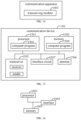
- the embodiments of the disclosure provide a communication device, which includes a processor.
- the processor calls a computer program in a memory, the method as described in the first aspect is performed.
- the embodiments of the disclosure provide a communication device, which includes a processor.
- the processor calls a computer program in a memory, the method as described in the second aspect is performed.
- the embodiments of the disclosure provide a communication device, which includes a processor.
- the processor calls a computer program in a memory, the method as described in the third aspect is performed.
- the embodiments of the disclosure provide a communication device, which includes a processor and a memory storing a computer program; and the processor executes the computer program stored in the memory, so that the communication device performs the method as described in the first aspect.
- the embodiments of the disclosure provide a communication device.
- the communication device includes a processor and a memory storing a computer program; and the processor executes the computer program stored in the memory, so that the communication device performs the method as described in the second aspect.
- the embodiments of the disclosure provide a communication device, which includes a processor and a memory storing a computer program; and the processor executes the computer program stored in the memory, so that the communication device performs the method as described in the third aspect.
- the embodiments of the disclosure provide a communication device, which includes a processor and an interface circuit.
- the interface circuit is configured to receive code instructions and send the code instructions to the processor; and the processor is configured to run the code instructions so that the device performs the method as described in the above first aspect.
- the embodiments of the disclosure provide a communication device, which includes a processor and an interface circuit.
- the interface circuit is configured to receive code instructions and send the code instructions to the processor; and the processor is configured to run the code instructions so that the device performs the method as described in the above second aspect.
- the embodiments of the disclosure provide a communication device, which includes a processor and an interface circuit.
- the interface circuit is configured to receive code instructions and send the code instructions to the processor; and the processor is configured to run the code instructions so that the device performs the method as described in the above third aspect.
- the embodiments of the disclosure provide a computer-readable storage medium.
- the computer-readable storage medium is configured to store instructions used for the network device. When the instructions are executed, the method as described in the first aspect is implemented.
- the embodiments of the disclosure provide a computer-readable storage medium.
- the computer-readable storage medium is configured to store instructions used for the first terminal device. When the instructions are executed, the method as described in the second aspect is implemented.
- the embodiments of the disclosure provide a computer-readable storage medium.
- the computer-readable storage medium is configured to store instructions used for the second terminal device. When the instructions are executed, the method as described in the third aspect is implemented.
- the embodiments of the disclosure provide a computer program product including a computer program.
- the computer program When the computer program is running on a computer, the computer is caused to perform the method as described in the first aspect.
- the embodiments of the disclosure provide a computer program product including a computer program.
- the computer program When the computer program is running on a computer, the computer is caused to perform the method as described in the second aspect.
- the embodiments of the disclosure provide a computer program product including a computer program.
- the computer program When the computer program is running on a computer, the computer is caused to perform the method as described in the third aspect.
- the embodiments of the disclosure provide a system on chip (SOC).
- the SOC includes at least one processor and an interface, and is configured to support a network device to perform the functions involved in the first aspect, for example, to determine or process at least one of data and information involved in the above method.
- the SOC further includes a memory.
- the memory is configured to store a necessary computer program and data of the network device.
- the SoC may include a chip, or may include a chip and other discrete devices.
- the embodiments of the disclosure provide an SOC.
- the SOC includes at least one processor and an interface, and is configured to support a first terminal device to perform the functions involved in the second aspect, for example, to determine or process at least one of data and information involved in the above method.
- the SOC further includes a memory.
- the memory is configured to store a necessary computer program and data of the first terminal device.
- the SoC may include a chip, or may include a chip and other discrete devices.
- the embodiments of the disclosure provide an SOC.
- the SOC includes at least one processor and an interface, and is configured to support a second terminal device to perform the functions involved in the third aspect, for example, to determine or process at least one of data and information involved in the above method.
- the SOC further includes a memory.
- the memory is configured to store a necessary computer program and data of the second terminal device.
- the SoC may include a chip, or may include a chip and other discrete devices.
- the embodiments of the disclosure provide a computer program.
- the computer program When the computer program is running on a computer, the computer is caused to perform the method as described in the first aspect.
- the embodiments of the disclosure provide a computer program.
- the computer program When the computer program is running on a computer, the computer is caused to perform the method as described in the second aspect.
- the embodiments of the disclosure provide a computer program.
- the computer program When the computer program is running on a computer, the computer is caused to perform the method as described in the third aspect.
- the full duplex communication may be divided into frequency division multiplexing (FDM) and time division multiplexing (TDM).
- FDM frequency division multiplexing
- TDM time division multiplexing
- the FDM means that an entire transmission frequency band may be divided into several frequency channels, each UE may occupy one frequency channel to send data, and there is a guard band between the frequency channels.
- the TDM means that time may be divided into small time slices, each time slice is divided into several channels (slots), and each UE may occupy one channel to send data.
- RRC Radio Resource Control
- the RRC referred to as radio resource management (RRM) or radio resource allocation (RRA), performs wireless resource management, control and scheduling by certain strategies and means, and makes full use of limited wireless network resources as much as possible on the premise of satisfying requirements of quality of service, to ensure to reach a planned coverage area, and improve a service capacity and a resource utilization rate as much as possible.
- RRM radio resource management
- RRA radio resource allocation
- DCI Downlink Control Information
- the DCI may include uplink and downlink resource allocation, hybrid automatic repeat request information, power control, etc.
- FIG. 1 is a architecture diagram illustrating a communication system according to an embodiment of the disclosure.
- the communication system may include, but is not limited to, one network device, one first terminal device and one second terminal device.
- the number of devices and the device form shown in FIG. 1 are only for example and do not constitute a limitation of the embodiments of the disclosure. Two or more network devices, two or more first terminal devices and two or more second terminal devices may be included in practical applications.
- the communication system as illustrated in FIG. 1 includes one network device 11, one first terminal device 12 and one second terminal device 13 for example.
- a sidelink in the embodiments of the disclosure may be referred to as a side link or a direct link.
- the network device 11 in the embodiments of the disclosure is an entity for sending or receiving a signal at a network side.
- the network device 11 may be an evolved NodeB (eNB), a transmission reception point (TRP), a next generation NodeB (gNB) in an NR system, a base station in other future mobile communication systems, or an access point in a wireless fidelity (WiFi) system.
- eNB evolved NodeB
- TRP transmission reception point
- gNB next generation NodeB
- WiFi wireless fidelity
- a specific technology and a specific device form adopted by the network device are not limited in the embodiments of the disclosure.
- the network device 11 may consist of a central unit (CU) and a distributed unit (DU).
- the CU may also be referred to as a control unit, and protocol layers of the network device such as a base station, may be split by using a structure of the CU-DU, functions of a part of the protocol layers are placed in the CU for centralized control, and functions of a remaining part or all of the protocol layers are distributed in the DU, and the DU is centrally controlled by the CU.
- the first terminal device 12 and the second terminal device 13 in the embodiments of the disclosure are entities for receiving or sending a signal at a user side, for example, a mobile phone.
- the terminal device may be referred to as a terminal, a user equipment (UE), a mobile station (MS), a mobile terminal (MT), etc.
- the terminal device may be an automobile with a communication function, a smart automobile, a mobile phone, a wearable device, a tablet computer (Pad), a computer with a wireless transceiving function, a virtual reality (VR) terminal device, an augmented reality (AR) terminal device, a wireless terminal device in industrial control, a wireless terminal device in self-driving, a wireless terminal device in a remote medical surgery, a wireless terminal device in a smart grid, a wireless terminal device in transportation safety, a wireless terminal device in a smart home, etc.
- Specific technologies and specific device forms adopted by the first terminal device 12 and the second terminal device 13 are not limited in the embodiments of the disclosure.
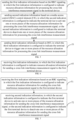
- FIG. 2 is a flowchart illustrating a communication method according to an embodiment of the disclosure.
- the method is performed by a network device.
- the method may include but not limited to the following step.
- first indication information is sent.
- the first indication information is configured to indicate resource allocation information for processing a cross link interference measurement signal to a terminal device.
- the terminal device may be a first terminal device or a second terminal device.
- the first terminal device may determine resource allocation information for sending the cross link interference measurement signal based on the first indication information from the network device, thus performing the full duplex communication with the network device based on the determined resource allocation information.
- the second terminal device may determine resource allocation information for receiving the cross link interference measurement signal based on the first indication information from the network device, thus performing the full duplex communication with the network device based on the determined resource allocation information.
- the network device may perform the full duplex communication based on full duplex communication information supported by the network device itself.
- the terminal device when the terminal device performs the full duplex communication, there may be a self-interference and a mutual interference between adjacent terminal devices, which may cause an interference on the communication transmission and affect the quality and the efficiency of communication transmission.
- the network device may indicate resource allocation information for processing the cross link interference measurement signal to the terminal device, so that the terminal device may perform the full duplex communication based on the obtained resource allocation information, thus reducing the interference during the full duplex communication process of the terminal device as much as possible, and improving the quality and the efficiency of communication transmission.
- the first indication information may indicate time-frequency domain resource allocation information for sending the cross link interference measurement signal.
- the time-frequency domain resource allocation information may be time domain resource allocation information for sending the cross link interference measurement signal, or may be frequency domain resource allocation information for sending the cross link interference measurement signal, or may be time domain and frequency domain resource allocation information for sending the cross link interference measurement signal, which is not limited in the disclosure.
- the first indication information indicates to the first network device that time domain resources for sending the cross link interference measurement signal are tl to t2.
- the cross link interference measurement signal may be sent within the tl to t2 time domain resources.
- the first indication information may indicate a sending beam group for sending the cross link interference measurement signal.
- the first indication information indicates that the first network device may send the cross link interference measurement signal by using a beam 1 and a beam 2.
- the cross link interference measurement signal may be sent by using the beam 1 and the beam 2.
- the first indication information may indicate time-frequency domain resource allocation information for measuring the cross link interference measurement signal.
- the first indication information indicates to the second terminal device that frequency domain resources for measuring the cross link interference measurement signal are F1 and F2.
- the cross link interference measurement signal may be measured on the F1 and F2 frequency domain resources.
- the first indication information may indicate time-frequency domain resource allocation information for receiving the cross link interference measurement signal.
- the first indication information indicates to the second terminal device that a frequency domain resource for receiving the cross link interference measurement signal is F1.
- the cross link interference measurement signal may be received on the F1 frequency domain resource.
- the first indication information may indicate a receiving beam group for receiving the cross link interference measurement signal.
- receiving beams in the receiving beam group may be one or more receiving beams in the receiving beam group, which are not limited in the disclosure.
- the first indication information indicates that the second network device may receive the cross link interference measurement signal by using the beam 1.
- the cross link interference measurement signal may be received by using a beam.
- the first indication information may indicate a reporting threshold for a number of cross link interference measurements.
- the first indication information indicates to the second terminal device that the reporting threshold for the number of cross link interference measurements is X. After the second terminal device receives the first indication information, reporting may be performed when the number of cross link interference measurements exceeds X.
- the first indication information may include the above one content item, or may include the above plurality of content items, which is not limited in the disclosure.
- the cross link interference measurement signal includes at least one of: a physical uplink shared channel (PUSCH) signal; a physical uplink control channel (PUCCH) signal; a sounding reference signal (SRS); or a specified cross link interference measurement signal.
- PUSCH physical uplink shared channel
- PUCCH physical uplink control channel
- SRS sounding reference signal
- cross link interference measurement signals There may be a plurality of cross link interference measurement signals, and the specified cross link interference measurement signalmay be one or more of the cross link interference measurement signals, which are not limited in the disclosure.
- the first indication information indicates that the frequency domain resource for sending the PUSCH signal is F1 and the frequency domain resource for sending the PUCCH signal is F2.
- the PUSCH signal may be sent on the F 1 frequency domain resource, and the PUCCH signal may be sent on the F2 frequency domain resource.
- the sending beam group of the cross link interference measurement signal may be indicated by any one of: a specified set of synchronization signal blocks (SSBs), or a specified set of channel state information (CSI) reference signals (RSs).
- SSBs synchronization signal blocks
- CSI channel state information reference signals
- the SSBs may consist of primary synchronization signals (PSSs), secondary synchronization signals (SSSs) and a physical broadcast channel (PBCH).
- PSSs primary synchronization signals
- SSSs secondary synchronization signals
- PBCH physical broadcast channel
- SSBs there may be a plurality of SSBs in the set of SSBs, and there may be one or more SSBs in the specified set of SSBs, which are not limited in the disclosure,
- the cross link interference measurement signal may be sent by using the beam 1 and the beam 3.
- the network device may indicate resource allocation information for processing the cross link interference measurement signal to the terminal device, so that the terminal device may perform the full duplex communication based on the obtained resource allocation information, thus reducing the interference during the full duplex communication process of the terminal device as much as possible, and improving the quality and the efficiency of communication transmission.
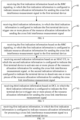
- FIG. 3 is a flowchart illustrating a communication method according to an embodiment of the disclosure. The method is performed by a network device. As illustrated in FIG. 3 , the method may include but not limited to the following steps.
- the first indication information is sent based on an RRC signaling.
- the first indication information is configured to indicate the resource allocation information for processing the cross link interference measurement signal to the terminal device.
- a specific bit may be added in the RRC signaling, and a value of the added bit represents the first indication information.
- the first indication information may be obtained based on the value of the specific bit according to the agreed protocol, which is not limited in the disclosure.
- second indication information is sent.
- the second indication information is configured to indicate the terminal device to activate one or more pieces of the resource allocation information for processing the cross link interference measurement signal, or the second indication information is configured to indicate the terminal device to deactivate one or more pieces of the resource allocation information for processing the cross link interference measurement signal.
- a specific bit may be added in the second indication information, and a value of the added bit represents the second indication information.
- the network device configures that, there are 4 added bits, and each bit corresponds to one piece of resource allocation information for processing the cross link interference measurement signal. If a value of a certain bit is 1, it indicates activating a piece of the resource allocation information for processing the cross link interference measurement signal corresponding to the bit; if the values of a plurality of bits are 1, it indicates activating pieces of the resource allocation information for processing the cross link interference measurement signal corresponding to the plurality of bits.
- a value of a certain bit is 0, it indicates deactivating a piece of the resource allocation information for processing the cross link interference measurement signal corresponding to the bit; if the values of a plurality of bits are 0, it indicates deactivating pieces of the resource allocation information for processing the cross link interference measurement signal corresponding to the plurality of bits.
- activating or deactivating one or more pieces of resource allocation information for processing the cross link interference measurement signal may be obtained based on the value of the specific bit according to the agreed protocol.
- the network device may send the first indication information based on the RRC signaling to indicate resource allocation information for processing the cross link interference measurement signal to the terminal device, and may further send the second indication information to indicate activating or deactivating the resource allocation information for processing the cross link interference measurement signal to the terminal device, so that the terminal device may perform the full duplex communication based on the obtained resource allocation information, thus reducing the interference during the full duplex communication process of the terminal device as much as possible, and improving the quality and the efficiency of communication transmission.
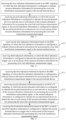
- FIG. 4 is a flowchart illustrating a communication method according to an embodiment of the disclosure. The method is performed by a network device. As illustrated in FIG. 4 , the method may include but not limited to the following steps.
- the first indication information is sent based on the RRC signaling.
- the first indication information is configured to indicate the resource allocation information for processing the cross link interference measurement signal to the terminal device.
- step 41 may refer to descriptions of other embodiments, which are not repeated here.
- third indication information is sent based on downlink control information (DCI).
- DCI downlink control information
- the third indication information is configured to indicate the terminal device to trigger one or more pieces of the resource allocation information for processing the cross link interference measurement signal.
- a value of first 2 bits in the third indication information are configured to indicate triggering a sending beam group for sending the cross link interference measurement signal and a reporting threshold for a number of cross link interference measurements. For example, when the value of the first 2 bits is "01”, it indicates triggering the sending beam group for sending the cross link interference measurement signal; when the value of the first 2 bits is "10", it indicates triggering the reporting threshold for the number of cross link interference measurements; and the value of the first 2 bits is "11", it indicates triggering both the sending beam group for sending the cross link interference measurement signal and the reporting threshold for the number of cross link interference measurements, etc.
- triggering the one or more pieces of resource allocation information for processing the cross link interference measurement signal may be obtained based on the value of the specific bit according to the agreed protocol.
- the value of the plurality of bits indicates triggering the one or more pieces of resource allocation information for processing the cross link interference measurement signal, which is not limited in the disclosure.
- the third indication information includes "AAA”, it indicates triggering one piece of resource allocation information for processing the cross link interference measurement signal, and when the third indication information includes "BBB", it indicates triggering a plurality of pieces of resource allocation information for processing the cross link interference measurement signal.
- the network device may send the first indication information based on the RRC signaling to indicate resource allocation information for processing the cross link interference measurement signal to the terminal device, and may further send the third indication information based on the DCI to indicate triggering the resource allocation information for processing the cross link interference measurement signal to the terminal device, so that the terminal device may perform the full duplex communication based on the obtained resource allocation information, thus reducing the interference during the full duplex communication process of the terminal device as much as possible, and improving the quality and the efficiency of communication transmission.
- FIG. 5 is a flowchart illustrating a communication method according to an embodiments of the disclosure. The method is performed by a network device. As illustrated in FIG. 5 , the method may include but not limited to the following steps.
- the first indication information is sent based on the RRC signaling.
- the first indication information is configured to indicate the resource allocation information for processing the cross link interference measurement signal to the terminal device.
- step 51 may refer to descriptions of other embodiments, which are not repeated here.
- second indication information is sent based on a media access control (MAC) control element (CE).
- the second indication information is configured to indicate the terminal device to activate one or more pieces of the resource allocation information for processing the cross link interference measurement signal, or the second indication information is configured to indicate the terminal device to deactivate one or more pieces of the resource allocation information for processing the cross link interference measurement signal.
- MAC media access control
- the MAC is responsible for controlling and connecting a physical medium of a physical layer.
- a corresponding relationship between the resource allocation information for processing the cross link interference measurement signal and the bit of the MAC CE signaling may be agreed in the protocol or configured by the network device. For example, it is agreed in the protocol that, the time-frequency domain resource allocation information for sending the cross link interference measurement signal corresponds to a first bit of the MAC CE signaling, and the time-frequency domain resource allocation information for receiving the cross link interference measurement signal corresponds to a second bit of the MAC CE signaling, etc. It is not limited in the disclosure.
- the network device configures that, if a certain piece of resource allocation information for processing the cross link interference measurement signal is activated, the value of the corresponding bit may be taken as 1, and if a certain piece of resource allocation information for processing the cross link interference measurement signal is deactivated, the value of the corresponding bit may be taken as 0.
- the value of the plurality of bits of the MAC CE signaling may indicate resource allocation information for processing the cross link interference measurement signal.
- the MAC CE signaling includes 2 bits
- the resource allocation information for processing the cross link interference measurement signal includes respectively a sending beam group for sending the cross link interference measurement signal and a receiving beam group for receiving the cross link interference measurement signal.
- the value of the 2 bits is 00, it indicates deactivating both the sending beam group for sending the cross link interference measurement signal and the receiving beam group for receiving the cross link interference measurement signal; when the value of the 2 bits is 01, it indicates activating the sending beam group for sending the cross link interference measurement signal and deactivating the receiving beam group for receiving the cross link interference measurement signal; when the value of the two bits is 10, it indicates activating the receiving beam group for receiving the cross link interference measurement signal and deactivating the sending beam group for sending the cross link interference measurement signal; when the value of the two bits is 11, it indicates activating both the sending beam group for sending the cross link interference measurement signal and the receiving beam group for receiving the cross link interference measurement signal, etc.
- third indication information is sent based on the DCI.
- the third indication information is configured to indicate the terminal device to trigger one or more pieces of the resource allocation information for processing the cross link interference measurement signal.
- a specific bit may be added in the DCI, and the added bit represents the third indication information.
- each bit corresponds to one piece of resource allocation information for processing the cross link interference measurement signal.
- a first bit corresponds to the time-frequency domain resource allocation information for sending the cross link interference measurement signal
- a second bit corresponds to the sending beam group for sending the cross link interference measurement signal
- a third bit corresponds to the time-frequency domain resource allocation information for receiving the cross link interference measurement signal
- a fourth bit corresponds to the receiving beam group for receiving the cross link interference measurement signal.
- the terminal device may trigger the time-frequency domain resource allocation information for sending the cross link interference measurement and the sending beam group for sending the cross link interference measurement signal based on the values of the specific bits according to the agreed protocol, after receiving the DCI from the network device.
- the network device may send the first indication information based on the RRC signaling to indicate resource allocation information for processing the cross link interference measurement signal to the terminal device, and may send the second indication information based on the MAC CE signaling to indicate the terminal device to activate or deactivate the resource allocation information for processing the cross link interference measurement signal, so that the terminal device may perform the full duplex communication based on the obtained resource allocation information, thus reducing the interference during the full duplex communication process of the terminal device as much as possible, and improving the quality and the efficiency of communication transmission.
- FIG. 6 is a flowchart illustrating a communication method according to an embodiment of the disclosure. The method is performed by a first terminal device. As illustrated in FIG. 6 , the method may include but not limited to the following step.
- first indication information is received.
- the first indication information is configured to indicate resource allocation information for sending a cross link interference measurement signal to the first terminal device.
- the network device may perform the full duplex communication based on full duplex communication information supported by the network device itself.
- the terminal device when the terminal device performs the full duplex communication, there may be a self-interference and a mutual interference between adjacent terminal devices, which may cause an interference on the communication transmission and affect the quality and the efficiency of communication transmission.
- the first terminal device may obtain resource allocation information for sending the cross link interference measurement signal based on the received first indication information from the network device.
- the first terminal device may perform the full duplex communication based on the obtained resource allocation information, thus reducing the interference during the full duplex communication process of the terminal device as much as possible, and improving the quality and the efficiency of communication transmission.
- the first indication information may include at least one of: time-frequency domain resource allocation information for sending the cross link interference measurement signal and a sending beam group for sending the cross link interference measurement signal.
- the cross link interference measurement signal includes at least one of: a PUSCH signal; a PUCCH signal; an SRS; or a specified cross link interference measurement signal.
- cross link interference measurement signal may refer to descriptions of other embodiments of the disclosure, which are not repeated here.
- the sending beam group for sending the cross link interference measurement signal may be indicated by any one of: a specified set of SSBs, or a specified set of CSI RSs.
- SSBs there may be a plurality of SSBs in the set of SSBs, and there may be one or more SSBs in the specified set of SSBs, which are not limited in the disclosure, It needs to be noted that, the specific contents and implementations of the specified set of SSBs and the specified set of CSI RSs may refer to descriptions of other embodiments, which are not repeated here.
- an uplink beam corresponding to an optimal receiving beam in a specified set of SSBs may be determined as a sending beam of the cross link interference measurement signal.
- Interference may be minimized by receiving the beam via the optimal receiving beam.
- the uplink beam corresponding to the optimal receiving beam in the specified set of SSBs may be determined as the sending beam of the cross link interference measurement signal, to minimize the interference of sending the cross link interference measurement signal as much as possible.
- the uplink beam corresponding to the optimal receiving beam in the specified set of CSI SSBs may be further determined as the sending beam of the cross link interference measurement signal, so as to reduce the interference as much as possible, to improve the accuracy and reliability of sending the cross link interference measurement signal.
- the first terminal device may obtain the resource allocation information for sending the cross link interference measurement signal based on the indication of the first indication information, so that the first terminal device may perform the full duplex communication based on the obtained resource allocation information, thus reducing the interference during the full duplex communication process of the terminal device as much as possible, and improving the quality and the efficiency of communication transmission.
- FIG. 7 is a flowchart illustrating a communication method according to an embodiment of the disclosure. The method is performed by a first terminal device. As illustrated in FIG. 7 , the method may include but not limited to the following steps.
- the first indication information is received based on the RRC signaling.
- the first indication information is configured to indicate the resource allocation information for sending the cross link interference measurement signal to the first terminal device.
- a specific bit may be added in the RRC signaling, and a value of the added bit represents the first indication information.
- the first indication information may be obtained based on the value of the specific bit according to the agreed protocol, which is not limited in the disclosure.
- second indication information is received.
- the second indication information is configured to indicate the first terminal device to activate one or more pieces of the resource allocation information for sending the cross link interference measurement signal, or the second indication information is configured to indicate the first terminal device to deactivate one or more pieces of the resource allocation information for sending the cross link interference measurement signal.
- a specific bit may be added in the second indication information, and a value of the added bit represents the second indication information.
- activating or deactivating the resource allocation information for sending the cross link interference measurement signal indicated by the first indication information may be obtained based on the value of the specific bit according to the agreed protocol.
- the first network device may receive the first indication information based on the RRC signaling to obtain the resource allocation information for sending the cross link interference measurement signal, and may determine activating or deactivating the resource allocation information for sending the cross link interference measurement signal based on the indication of the received second indication information, so that the first terminal device may perform the full duplex communication based on the obtained resource allocation information, thus reducing the interference during the full duplex communication process of the terminal device as much as possible, and improving the quality and the efficiency of communication transmission.
- FIG. 8 is a flowchart illustrating a communication method according to an embodiment of the disclosure. The method is performed by a first terminal device. As illustrated in FIG. 8 , the method may include but not limited to the following steps.
- the first indication information is received based on the RRC signaling.
- the first indication information is configured to indicate the resource allocation information for sending the cross link interference measurement signal to the first terminal device.
- step 81 may refer to descriptions of other embodiments, which are not repeated here.
- third indication information is received.
- the third indication information is configured to indicate the first terminal device to trigger one or more pieces of the resource allocation information for sending the cross link interference measurement signal.
- a specific bit may be added in the third indication information, and a value of the added bit represents the third indication information.
- triggering the resource allocation information for sending the cross link interference measurement signal indicated by the first indication information may be obtained based on the value of the specific bit according to the agreed protocol.
- the first terminal device may receive the first indication information based on the RRC signaling to obtain the resource allocation information for sending the cross link interference measurement signal, and may obtain triggering the resource allocation information for sending the cross link interference measurement signal based on the indication of the received third indication information, so that the full duplex communication may be performed based on the obtained resource allocation information, thus reducing the interference during the full duplex communication process of the terminal device as much as possible, and improving the quality and the efficiency of communication transmission.
- FIG. 9 is a flowchart illustrating a communication method according to an embodiment of the disclosure. The method is performed by a first terminal device. As illustrated in FIG. 9 , the method may include but not limited to the following steps.
- the first indication information is received based on the RRC signaling.
- the first indication information is configured to indicate the resource allocation information for sending the cross link interference measurement signal to the first terminal device.
- step 91 may refer to descriptions of other embodiments, which are not repeated here.
- second indication information is received based on the MAC CE signaling.
- the second indication information is configured to indicate the first terminal device to activate one or more pieces of the resource allocation information for sending the cross link interference measurement signal, or the second indication information is configured to indicate the terminal device to deactivate one or more pieces of the resource allocation information for sending the cross link interference measurement signal.
- a corresponding relationship between the resource allocation information for sending the cross link interference measurement signal and the specific bit in the MAC CE signaling may be agreed in the protocol or configured by the network device. For another example, if the value of the bit is set to 1, it indicates activating the resource allocation information for sending the cross link interference measurement signal corresponding to the bit; if the value of the bit is 0, it indicates deactivating the resource allocation information for deactivating the cross link interference measurement signal corresponding to the bit.
- the first terminal device may determine activating or deactivating one or more pieces of resource allocation information for sending the cross link interference measurement signal based on the value of the specific bit in the received MAC CE signaling.
- third indication information is received based on DCI.
- the third indication information is configured to indicate the first terminal device to trigger one or more pieces of the resource allocation information for sending the cross link interference measurement signal.
- a specific bit may be added in the DCI, and the added bit represents the third indication information.
- the first terminal device may determine triggering the corresponding resource allocation information for sending the cross link interference measurement signal based on the value of the specific bit in the received DCI.
- the first network device may receive the first indication information based on the RRC signaling to determine the resource allocation information for sending the cross link interference measurement signal, may determine activating or deactivating the resource allocation information for sending the cross link interference measurement signal based on the indication of the MAC CE signaling, and may further determine triggering the resource allocation information for sending the cross link interference measurement signal based on the indication of the DCI, so that the first terminal device may perform the full duplex communication based on the obtained resource allocation information, thus reducing the interference during the full duplex communication process of the terminal device as much as possible, and improving the quality and the efficiency of communication transmission.
- FIG. 10 is a flowchart illustrating a communication method according to an embodiment of the disclosure. The method is performed by a second terminal device. As illustrated in FIG. 10 , the method may include but not limited to the following step.
- first indication information is received.
- the first indication information is configured to indicate resource allocation information for processing a cross link interference measurement signal to the second terminal device.
- the network device may perform the full duplex communication based on full duplex communication information supported by the network device itself.
- the terminal device when the terminal device performs the full duplex communication, there may be a self-interference and a mutual interference between adjacent terminal devices, which may cause an interference on the communication transmission and affect the quality and the efficiency of communication transmission.
- the second terminal device may obtain resource allocation information for processing the cross link interference measurement signal based on the received first indication information from the network device.
- the second terminal device may perform the full duplex communication based on the obtained resource allocation information, thus reducing the interference during the full duplex communication process of the terminal device as much as possible, and improving the quality and the efficiency of communication transmission.
- the first indication information may include at least one of: time-frequency domain resource allocation information for measuring the cross link interference measurement signal; time-frequency domain resource allocation information for receiving the cross link interference measurement signal; a receiving beam group for receiving the cross link interference measurement signal; or, a reporting threshold for a number of cross link interference measurements.
- the cross link interference measurement signal includes at least one of: a PUSCH signal; a PUCCH signal; an SRS; or a specified cross link interference measurement signal.
- cross link interference measurement signal may refer to descriptions of other embodiments of the disclosure, which are not repeated here.
- the cross link interference measurement signal may be received by using a receiving beam of the PDCCH.
- the receiving beam of the PDCCH is a beam 1, in which case the second terminal device may receive the cross link interference measurement signal via the beam 1.
- the cross link interference measurement signal may be received by using a receiving beam of the PDSCH.
- the receiving beam of the PDSCH is a beam 3, in which case the second terminal device may receive the cross link interference measurement signal via the beam 3.
- the cross link interference measurement signal may be received by using a receiving beam configured by the network device.
- the receiving beam configured by the network device is a beam 4, in which case the second terminal device may receive the cross link interference measurement signal via the beam 4.
- the second terminal device may obtain resource allocation information for processing the cross link interference measurement signal based on the indication of the first indication information.
- the terminal device may perform the full duplex communication based on the obtained resource allocation information, thus reducing the interference during the full duplex communication process of the terminal device as much as possible, and improving the quality and the efficiency of communication transmission.
- FIG. 11 is a flowchart illustrating a communication method according to an embodiment of the disclosure. The method is performed by a second terminal device. As illustrated in FIG. 11 , the method may include but not limited to the following steps.
- the first indication information is received based on the RRC signaling.
- the first indication information is configured to indicate the resource allocation information for processing the cross link interference measurement signal to the second terminal device.
- step 111 may refer to descriptions of other embodiments, which are not repeated here.
- second indication information is received.
- the second indication information is configured to indicate the second terminal device to activate one or more pieces of the resource allocation information for processing the cross link interference measurement signal, or the second indication information is configured to indicate the second terminal device to deactivate one or more pieces of the resource allocation information for processing the cross link interference measurement signal.
- step 112 may refer to descriptions of other embodiments, which are not repeated here.
- the second network device may receive the first indication information based on the RRC signaling to obtain the resource allocation information for processing the cross link interference measurement signal, and may further determine activating or deactivating the resource allocation information for processing the cross link interference measurement signal based on the indication of the received second indication information, so that the second terminal device may perform the full duplex communication based on the obtained resource allocation information, thus reducing the interference during the full duplex communication process of the terminal device as much as possible, and improving the quality and the efficiency of communication transmission.
- FIG. 12 is a flowchart illustrating a communication method according to an embodiment of the disclosure. The method is performed by a second terminal device. As illustrated in FIG. 12 , the method may include but not limited to the following steps.
- the first indication information is received based on the RRC signaling.
- the first indication information is configured to indicate resource allocation information for processing the cross link interference measurement signal to the second terminal device.
- step 121 may refer to descriptions of other embodiments, which are not repeated here.
- third indication information is received.
- the third indication information is configured to indicate the second terminal device to trigger one or more pieces of the resource allocation information for processing cross link interference measurement signal.
- step 122 may refer to descriptions of other embodiments, which are not repeated here.
- the second terminal device may receive the first indication information based on the RRC signaling to obtain the resource allocation information for processing the cross link interference measurement signal, and may further obtain triggering the resource allocation information for processing the cross link interference measurement signal based on the indication of the received third indication information, so that the full duplex communication may be performed based on the obtained resource allocation information, thus reducing the interference during the full duplex communication process of the terminal device as much as possible, and improving the quality and the efficiency of communication transmission.
- FIG. 13 is a flowchart illustrating a communication method according to an embodiment of the disclosure. The method is performed by a second terminal device. As illustrated in FIG. 13 , the method may include but not limited to the following steps.
- the first indication information is received based on the RRC signaling.
- the first indication information is configured to indicate the resource allocation information for processing the cross link interference measurement signal to the second terminal device.
- step 131 may refer to descriptions of other embodiments, which are not repeated here.
- second indication information is received based on the MAC CE signaling.
- the second indication information is configured to indicate the second terminal device to activate one or more pieces of the resource allocation information for processing the cross link interference measurement signal, or the second indication information is configured to indicate the second terminal device to deactivate one or more pieces of the resource allocation information for processing the cross link interference measurement signal.
- step 131 may refer to descriptions of other embodiments, which are not repeated here.
- third indication information is received based on the DCI.
- the third indication information is configured to indicate the second terminal device to trigger one or more pieces of the resource allocation information for processing the cross link interference measurement signal.
- step 133 may refer to descriptions of other embodiments, which are not repeated here.
- the second network device may receive the first indication information based on the RRC signaling to determine triggering the resource allocation information of the cross link interference measurement signal, may determine activating or deactivating the resource allocation information for processing the cross link interference measurement signal based on the indication of the MAC CE signaling, and may further determine triggering the resource allocation information for processing the cross link interference measurement signal based on the indication of the DCI, so that the second terminal device may perform the full duplex communication based on the obtained resource allocation information, thus reducing the interference during the full duplex communication process of the terminal device as much as possible, and improving the quality and the efficiency of communication transmission.
- the methods according to the embodiments of the disclosure are introduced mainly from the perspective of the network device, the first terminal device and the second terminal device.
- the network device, the first terminal device and the second terminal device may include a hardware structure and a software module, to achieve the above functions in the form of the hardware structure, or the software module or a combination of the hardware structure and the software module.
- the certain function in the above functions may be performed by the hardware structure, the software module or a combination of the hardware structure and the software module.
- FIG. 14 is a structural diagram illustrating a communication apparatus 140 according to an embodiment of the disclosure.
- the communication apparatus 140 as illustrated in FIG. 14 may include a transceiving module 1401.
- the transceiving module 1401 may include a sending module and/or a receiving module.
- the sending module is configured to implement a sending function
- the receiving module is configure to implement a receiving function
- the transceiving module 1401 may implement the sending function and/or the receiving function.
- the communication apparatus 140 may be a network device, an apparatus in the network device, or an apparatus capable of being used with the network device.
- the communication apparatus 140 includes a transceiving module 1401.
- the transceiving module 1401 is configured to send first indication information.
- the first indication information is configured to indicate resource allocation information for processing a cross link interference measurement signal to a terminal device.
- the first indication information includes at least one of: time-frequency domain resource allocation information for sending the cross link interference measurement signal; a sending beam group for sending the cross link interference measurement signal; time-frequency domain resource allocation information for measuring the cross link interference measurement signal; time-frequency domain resource allocation information for receiving the cross link interference measurement signal; a receiving beam group for receiving the cross link interference measurement signal; or, a reporting threshold for a number of cross link interference measurements.
- the cross link interference measurement signal includes at least one of: a PUSCH signal; a PUCCH signal; an SRS; or a specified cross link interference measurement signal.
- the sending beam group for sending the cross link interference measurement signal is indicated by any one of: a specified set of SSBs, or a specified set of CSI RSs.
- the transceiving module 1401 is specifically configured to: send the first indication information based on an RRC signaling.
- the transceiving module 1401 is further configured to: send second indication information.
- the second indication information is configured to indicate the terminal device to activate one or more pieces of the resource allocation information for processing the cross link interference measurement signal, or the second indication information is configured to indicate the terminal device to deactivate one or more pieces of the resource allocation information for processing the cross link interference measurement signal.
- the transceiving module 1401 is further specifically configured to: send the second indication information based on an MAC CE.
- the transceiving module 1401 is further configured to: send third indication information.
- the third indication information is configured to indicate the terminal device to trigger one or more pieces of the resource allocation information for processing the cross link interference measurement signal.
- the transceiving module 1401 is further specifically configured to: send the third indication information based on DCI.
- the communication apparatus indicates resource allocation information for processing the cross link interference measurement signal to the terminal device, so that the terminal device may perform the full duplex communication based on the obtained resource allocation information, thus reducing the interference during the full duplex communication process of the terminal device as much as possible, and improving the quality and the efficiency of communication transmission.
- the communication apparatus 140 may be a first terminal device, an apparatus in the first terminal device, or an apparatus capable of being used with the first terminal device.
- the communication apparatus 140 includes a transceiving module 1401.
- the transceiving module 1401 is configured to receive first indication information.
- the first indication information is configured to indicate resource allocation information for sending a cross link interference measurement signal to the apparatus.
- the first indication information includes at least one of: time-frequency domain resource allocation information for sending the cross link interference measurement signal; or a sending beam group for sending the cross link interference measurement signal.
- the cross link interference measurement signal includes at least one of: a PUSCH signal; a PUCCH signal; an SRS; or a specified cross link interference measurement signal.
- the sending beam group for sending the cross link interference measurement signal is indicated by any one of: a specified set of SSBs, or a specified set of CSI RSs.
- the apparatus 140 further includes a processing module.
- the processing module is configured to determine an uplink beam corresponding to an optimal receiving beam in a specified set of SSBs is a sending beam of the cross link interference measurement signal; or, the processing module is further configured to determine an uplink beam corresponding to an optimal receiving beam in a specified set of CSI RSs is a sending beam of the cross link interference measurement signal.
- the transceiving module 1401 is specifically configured to: receive the first indication information based on an RRC signaling.
- the transceiving module 1401 is further configured to: receive second indication information.
- the second indication information is configured to indicate the apparatus to activate one or more pieces of the resource allocation information for sending the cross link interference measurement signal, or the second indication information is configured to indicate the apparatus to deactivate one or more pieces of the resource allocation information for sending the cross link interference measurement signal.
- the transceiving module 1401 is further specifically configured to: receive the second indication information based on an MAC CE.
- the transceiving module 1401 is further configured to: receive third indication information.
- the third indication information is configured to indicate the apparatus to trigger one or more pieces of the resource allocation information for sending the cross link interference measurement signal.
- the transceiving module 1401 is further specifically configured to: receive the third indication information based on DCI.
- the communication apparatus may obtain resource allocation information for sending the cross link interference measurement signal based on the indication of the first indication information.
- the full duplex communication may be performed based on the obtained resource allocation information, thus reducing the interference during the full duplex communication process of the terminal device as much as possible, and improving the quality and the efficiency of communication transmission.
- the communication apparatus 140 may be a second terminal device, an apparatus in the second terminal device, or an apparatus capable of being used with the second terminal device.
- the communication apparatus 140 includes a transceiving module 1401.
- the transceiving module 1401 is configured to receive first indication information.
- the first indication information is configured to indicate resource allocation information for processing a cross link interference measurement signal to the apparatus.
- the first indication information includes at least one of: time-frequency domain resource allocation information for measuring the cross link interference measurement signal; time-frequency domain resource allocation information for receiving the cross link interference measurement signal; a receiving beam group for receiving the cross link interference measurement signal; or, a reporting threshold for a number of cross link interference measurements.
- the cross link interference measurement signal includes at least one of: a PUSCH signal; a PUCCH signal; an SRS; or a specified cross link interference measurement signal.
- the transceiving module 1401 is further configured to: receive the cross link interference measurement signal by using a receiving beam of a PDCCH; or, receive the cross link interference measurement signal by using a receiving beam of a PDSCH; or, receive the cross link interference measurement signal by using a receiving beam configured by a network device.
- the transceiving module 1401 is specifically configured to: receive the first indication information based on an RRC signaling.
- the transceiving module 1401 is further configured to: receive second indication information.
- the second indication information is configured to indicate the apparatus to activate one or more pieces of the resource allocation information for processing the cross link interference measurement signal, or the second indication information is configured to indicate the apparatus to deactivate one or more pieces of the resource allocation information for processing the cross link interference measurement signal.
- the transceiving module 1401 is further specifically configured to: receive the second indication information based on an MAC CE signaling.
- the transceiving module 1401 is further configured to: receive third indication information.
- the third indication information is configured to indicate the apparatus to trigger one or more pieces of the resource allocation information for processing cross link interference measurement signal.
- the transceiving module 1401 is further specifically configured to: receive the third indication information based on DCI.
- the communication apparatus may obtain the resource allocation information for processing the cross link interference measurement signal based on the indication of the first indication information.
- the full-duplex communication may be performed based on the obtained resource allocation information, thus reducing the interference during the full-duplex communication process of the terminal device as much as possible, and improving the quality and the efficiency of communication transmission.
- FIG. 15 is a structural diagram illustrating another communication device 150 according to an embodiment of the disclosure.
- the communication device 150 may be a first terminal device, or a second terminal device, or a chip, a system on chip, a processor or the like that supports the network device to implement the method, or a chip, a system on chip, a processor or the like that supports the first terminal device to implement the method, or a chip, a system on chip, a processor or the like that supports the second terminal device to implement the method, etc.
- the device may be configured to implement the method described in the method embodiments, and may refer to descriptions in the method embodiments.
- the communication device 150 may include one or more processors 1501.
- the processor 1501 may include a general purpose processor or a dedicated processor, for example, a baseband processor or a central processor.
- the baseband processor may be configured to process a communication protocol and communication data
- the central processor may be configured to control a communication device (e.g., a base station, a baseband chip, a terminal device, a terminal device chip, a DU or CU, etc.), to execute a computer program, and process data of the computer program.
- a communication device e.g., a base station, a baseband chip, a terminal device, a terminal device chip, a DU or CU, etc.
- the communication device 150 may further include one or more memories 1502 stored with a computer program 1504 .
- the processor 1501 executes the computer program 1504 so that the communication device 150 performs the methods as described in the above method embodiments.
- the memory 1502 may further store data.
- the communication device 150 and the memory 1502 may be independently configured or integrated together.
- the communication device 150 may further include a transceiver 1505 and an antenna 1506.
- the transceiver 1505 may be referred to as a transceiving unit, a transceiver, a transceiving circuit or the like, which may be configured to achieve a transceiving function.
- the transceiver 1505 may include a receiver and a sender.
- the receiver may be referred to as a receiver or a receiving circuit, etc., for implementing a receiving function;
- the sender may be referred to as a sender or a sending circuit, etc. for implementing a sending function.
- the communication device 150 may further include one or more interface circuits 1507.
- the interface circuit 1507 is configured to receive code instructions and send the code instructions to the processor 1501.
- the processor 1501 runs the code instructions so that the communication device 150 performs the methods as described in the above method embodiments.
- the transceiver 1505 is configured to perform step 21 in FIG. 2 ; step 31 in FIG. 3 ; step 32 in FIG. 3 ; step 41 in FIG. 4 ; step 42 in FIG. 4 ; step 51 in FIG. 5 ; step 52 in FIG. 5 or step 53 in FIG. 5 .
- the transceiver 1505 is configured to perform step 61 in FIG. 6 ; step 71 in FIG. 7 ; step 72 in FIG. 7 ; step 81 in FIG. 8 ; step 82 in FIG. 8 ; step 91 in FIG. 9 ; step 92 in FIG. 9 or step 93 in FIG. 9 .
- the transceiver 1505 is configured to perform step 101 in FIG. 10 ; step 111 in FIG. 11 ; step 112 in FIG. 11 ; step 121 in FIG. 12 ; step 122 in FIG. 12 ; step 131 in FIG. 13 ; step 132 in FIG. 13 or step 133 in FIG. 13 .
- the processor 1501 may include a transceiver configured to implement receiving and sending functions.
- the transceiver may be a transceiving circuit, or an interface, or an interface circuit.
- the transceiving circuit, the interface or the interface circuit configured to implement receiving and sending functions may be separate or integrated together.
- the transceiving circuit, the interface or the interface circuit may be configured to read and write codes/data, or the transceiving circuit, the interface or the interface circuit may be configured to transmit or deliver a signal.
- the processor 1501 may be stored with a computer program 1503.
- the computer program 1503 is running on the processor 1501 so that the communication device 150 performs the methods as described in the above method embodiments.
- the computer program 1503 may be solidified in the processor 1501, in which case the processor 1501 may be implemented in hardware.
- the communication device 150 may include a circuit that may implement a sending or receiving or communication function in the above method embodiments.
- the processor and the transceiver described in the disclosure may be implemented on integrated circuits (ICs), analog ICs, radio frequency integrated circuits (RFICs), mixed signal ICs, application specific integrated circuits (ASICs), printed circuit boards (PCBs), electronic devices, etc.
- the processor and the transceiver may further be fabricated by using various IC process technologies, such as complementary metal oxide semiconductor (CMOS), nMetal-oxide-semiconductor (NMOS), positive channel metal oxide semiconductor (PMOS), bipolar junction transistor (BJT), bipolar CMOS (BiCMOS), silicon germanium (SiGe) and gallium arsenide (GaAs), etc.
- CMOS complementary metal oxide semiconductor
- NMOS nMetal-oxide-semiconductor
- PMOS positive channel metal oxide semiconductor
- BJT bipolar junction transistor
- BiCMOS bipolar CMOS
- SiGe silicon germanium
- GaAs gallium arsenide
- the communication device described in the above embodiments may be a network device, but the scope of the communication device described in the disclosure is not limited to the network device, and a structure of the communication device may not be limited to FIG. 15 .
- the communication device may be a stand-alone device or may be a part of a large device.
- the communication device may be:
- the communication device may be a chip or a system on chip
- the chip illustrated in FIG. 16 may include a processor 1601 and an interface 1602. There may be one or more processors 1601, and there may be a plurality of interfaces 1602.
- the interface 1602 is configured to perform step 21 in FIG. 2 ; step 31 in FIG. 3 ; step 32 in FIG. 3 ; step 41 in FIG. 4 ; step 42 in FIG. 4 ; step 51 in FIG. 5 ; step 52 in FIG. 5 ; step 61 in FIG. 6 or step 62 in FIG. 6 .
- the interface 1602 is configured to perform step 61 in FIG. 6 ; step 71 in FIG. 7 ; step 72 in FIG. 7 ; step 81 in FIG. 8 ; step 82 in FIG. 8 ; step 91 in FIG. 9 ; step 92 in FIG. 9 or step 93 in FIG. 9 .
- the interface 1602 is configured to perform step 101 in FIG. 10 ; step 111 in FIG. 11 ; step 112 in FIG. 11 ; step 121 in FIG. 12 ; step 122 in FIG. 12 ; step 131 in FIG. 13 ; step 132 in FIG. 13 or step 133 in FIG. 13 .
- the chip further includes a memory 1603.
- the memory 1603 is configured to store a necessary computer program and data.
- a communication system is further according to an embodiment of the disclosure.
- the system includes a communication apparatus serving as a network device in the embodiment of FIG. 14 , or the system includes a communication device serving as a network device in the embodiment of FIG. 15 .
- a computer-readable storage medium stored with instructions is further provided in the disclosure. When the instructions are executed, functions of the any one method embodiment are implemented.
- a computer program product is further provided in the disclosure.
- the computer program product implements functions of the above any one method embodiment when executed by a processor.
- the computer program product includes one or more computer programs.
- the procedures or functions according to an embodiment of the disclosure are fully or partially generated when the computer programs are loaded and executed on a computer.
- the computer may be a general purpose computer, a special purpose computer, a computer network, or other programmable device.
- the computer program may be stored in a computer-readable storage medium or sent from one computer-readable storage medium to another computer-readable storage medium.
- the computer program may be sent from one website, computer, server, or data center to another website, computer, server, or data center via wire (such as a coaxial cable, a fiber optic, a digital subscriber line (DSL)) or wireless (such as infrared, wireless, microwave).
- the computer-readable storage medium may be any available medium that may be accessed by a computer or a data storage device such as a server a data center, etc. that integrates one or more of the available media.
- the available medium may be a magnetic medium (such as a floppy disk, a hard disk and a magnetic tape), an optical medium (such as a digital video disk (DVD)), or a semiconductor medium (such as a solid state disk (SSD)), etc.
- the corresponding relationships indicated by tables in the disclosure may be configured or predefined.
- the values of information in tables are only examples, and may be configured as other values, which are not limited in the disclosure.
- the corresponding relationships indicated by some rows may not be configured.
- appropriate transformations and adjustments, such as splitting and merging may be made based on the above tables.
- the names of parameters shown in headers in the tables may be other names that may be understood by the communication apparatus, and the values or representations of the parameters may be other values or representations that may be understood by the communication apparatus.
- other data structures may be used, for example, arrays, queues, containers, stacks, linear lists, pointers, linked lists, trees, graphs, structures, classes, heaps or hash tables.
- Predefinition in the disclosure may be understood as definition, pre-definition, storage, pre-storage, pre-negotiation, pre-configuration, solidification or pre-burning.
Landscapes
- Engineering & Computer Science (AREA)
- Signal Processing (AREA)
- Computer Networks & Wireless Communication (AREA)
- Quality & Reliability (AREA)
- Physics & Mathematics (AREA)
- Electromagnetism (AREA)
- Mobile Radio Communication Systems (AREA)
Applications Claiming Priority (1)
| Application Number | Priority Date | Filing Date | Title |
|---|---|---|---|
| PCT/CN2021/100744 WO2022261915A1 (fr) | 2021-06-17 | 2021-06-17 | Procédé et appareil de communication |
Publications (2)
| Publication Number | Publication Date |
|---|---|
| EP4358441A1 true EP4358441A1 (fr) | 2024-04-24 |
| EP4358441A4 EP4358441A4 (fr) | 2025-04-30 |
Family
ID=84526111
Family Applications (1)
| Application Number | Title | Priority Date | Filing Date |
|---|---|---|---|
| EP21945500.3A Pending EP4358441A4 (fr) | 2021-06-17 | 2021-06-17 | Procédé et appareil de communication |
Country Status (3)
| Country | Link |
|---|---|
| EP (1) | EP4358441A4 (fr) |
| CN (1) | CN115707352B (fr) |
| WO (1) | WO2022261915A1 (fr) |
Families Citing this family (3)
| Publication number | Priority date | Publication date | Assignee | Title |
|---|---|---|---|---|
| CN118844106A (zh) * | 2023-02-13 | 2024-10-25 | 北京小米移动软件有限公司 | 通信方法、通信装置、通信设备及存储介质 |
| CN119676830A (zh) * | 2023-09-19 | 2025-03-21 | 华为技术有限公司 | 一种通信方法和装置 |
| CN119922570A (zh) * | 2023-10-31 | 2025-05-02 | 华为技术有限公司 | 一种通信方法和通信装置 |
Family Cites Families (15)
| Publication number | Priority date | Publication date | Assignee | Title |
|---|---|---|---|---|
| US10516495B2 (en) * | 2014-10-17 | 2019-12-24 | Lg Electronics Inc. | Method for measuring inter-device interference in wireless communication system supporting FDR transmission, and apparatus therefor |
| CN110024462A (zh) * | 2017-01-06 | 2019-07-16 | 富士通株式会社 | 基于动态时分双工的传输装置、方法以及通信系统 |
| CN110383722A (zh) * | 2017-01-09 | 2019-10-25 | Lg电子株式会社 | 报告测量数据的方法及其终端 |
| KR102319178B1 (ko) * | 2017-03-24 | 2021-10-28 | 후아웨이 테크놀러지 컴퍼니 리미티드 | 간섭 측정 방법 및 관련 장치 |
| CN108811102A (zh) * | 2017-05-04 | 2018-11-13 | 株式会社Ntt都科摩 | 干扰协调信息交互方法、减轻交叉链路干扰的方法和基站 |
| CN109219970B (zh) * | 2017-05-05 | 2021-10-08 | 联发科技股份有限公司 | 移动通信中跨链路干扰测量方法及设备 |
| CN109088683B (zh) * | 2017-06-14 | 2020-12-29 | 中国移动通信有限公司研究院 | 一种用户终端间交叉链路干扰测量的方法、用户终端和传输接收点 |
| CN112422211B (zh) * | 2017-06-16 | 2024-03-01 | 华为技术有限公司 | 信号传输方法、相关装置及系统 |
| CN110049510B (zh) * | 2018-01-16 | 2021-01-15 | 中国移动通信有限公司研究院 | 交叉链路干扰测量通知方法、网络侧设备及移动通信终端 |
| CN111385042B (zh) * | 2018-12-28 | 2021-07-20 | 成都华为技术有限公司 | 干扰测量的方法和通信装置 |
| CN111417133B (zh) * | 2019-01-08 | 2022-04-01 | 中国移动通信有限公司研究院 | 一种干扰测量的方法和装置 |
| WO2020143027A1 (fr) * | 2019-01-11 | 2020-07-16 | Qualcomm Incorporated | Transmission d'un signal de référence de sondage pour une mesure d'interférences de liaison croisée entre des ue |
| CN111867062A (zh) * | 2019-04-26 | 2020-10-30 | 北京三星通信技术研究有限公司 | 用于干扰协调的方法和装置 |
| WO2020165210A1 (fr) * | 2019-02-14 | 2020-08-20 | Nokia Technologies Oy | Rapport de mesure de cli dans des systèmes de télécommunication |
| CN111565401A (zh) * | 2019-02-14 | 2020-08-21 | 北京三星通信技术研究有限公司 | 测量交叉链路干扰的方法、终端设备、基站和计算机可读介质 |
-
2021
- 2021-06-17 CN CN202180001871.3A patent/CN115707352B/zh active Active
- 2021-06-17 EP EP21945500.3A patent/EP4358441A4/fr active Pending
- 2021-06-17 WO PCT/CN2021/100744 patent/WO2022261915A1/fr not_active Ceased
Also Published As
| Publication number | Publication date |
|---|---|
| CN115707352B (zh) | 2025-12-23 |
| WO2022261915A1 (fr) | 2022-12-22 |
| EP4358441A4 (fr) | 2025-04-30 |
| CN115707352A (zh) | 2023-02-17 |
| US20240275508A1 (en) | 2024-08-15 |
Similar Documents
| Publication | Publication Date | Title |
|---|---|---|
| EP4618653A1 (fr) | Procédé et appareil de détermination de ressources de signal de référence de positionnement (prs) basée sur une liaison latérale | |
| US20240340989A1 (en) | Transmission configuration indicator (tci) state configuration method and apparatus | |
| EP4550905A1 (fr) | Procédé de détermination du temps d'utilisation d'état d'indication de configuration de transmission (tci), et appareil associé | |
| EP4358441A1 (fr) | Procédé et appareil de communication | |
| US20240297702A1 (en) | Channel state feedback method and apparatus | |
| US20250048337A1 (en) | Slot structure configuration method and apparatus thereof | |
| CN117730597A (zh) | 确定探测参考信号srs资源配置信息的方法及其装置 | |
| EP4586564A1 (fr) | Procédé/appareil/dispositif de détermination d'informations, et support de stockage | |
| EP4550706A1 (fr) | Procédé et appareil pour déterminer une retour de demande automatique de répétition hybride (harq) | |
| US20240323929A1 (en) | Method for determining transmission configuration indication state, and apparatus therefor | |
| US20260095361A1 (en) | Information reporting method and apparatus thereof | |
| EP4618460A1 (fr) | Procédé de détermination de retard de traitement, et appareil, dispositif et support de stockage | |
| EP4465719A1 (fr) | Procédé et appareil pour déterminer un paramètre de temps de traitement d'un canal partagé de liaison descendante physique | |
| US12621065B2 (en) | Communication method and apparatus | |
| EP4362564A1 (fr) | Procédé et appareil d'ajustement de relation de synchronisation | |
| EP4422265A1 (fr) | Procédé de détermination de mode de communication et appareil associé | |
| EP4383789A1 (fr) | Procédé de mesure de cellule de desserte et appareil associé | |
| US20240276281A1 (en) | Measurement gap scheduling method and apparatus therefor | |
| CN115336221A (zh) | 一种信道状态信息csi反馈的确定方法及其装置 | |
| WO2023184438A1 (fr) | Procédés et appareils d'annulation d'interférences par répartition dans le temps | |
| CN114026907A (zh) | 一种上行波束的测量方法及其装置 | |
| EP4665038A1 (fr) | Procédé et appareil de rétroaction, dispositif et support de stockage | |
| CN113875266B (zh) | 一种定位测量的方法及其装置 | |
| US12407400B2 (en) | Communication method and device | |
| US20250386339A1 (en) | Indication method and apparatus |
Legal Events
| Date | Code | Title | Description |
|---|---|---|---|
| STAA | Information on the status of an ep patent application or granted ep patent |
Free format text: STATUS: THE INTERNATIONAL PUBLICATION HAS BEEN MADE |
|
| PUAI | Public reference made under article 153(3) epc to a published international application that has entered the european phase |
Free format text: ORIGINAL CODE: 0009012 |
|
| STAA | Information on the status of an ep patent application or granted ep patent |
Free format text: STATUS: REQUEST FOR EXAMINATION WAS MADE |
|
| 17P | Request for examination filed |
Effective date: 20240111 |
|
| AK | Designated contracting states |
Kind code of ref document: A1 Designated state(s): AL AT BE BG CH CY CZ DE DK EE ES FI FR GB GR HR HU IE IS IT LI LT LU LV MC MK MT NL NO PL PT RO RS SE SI SK SM TR |
|
| DAV | Request for validation of the european patent (deleted) | ||
| DAX | Request for extension of the european patent (deleted) | ||
| REG | Reference to a national code |
Ref country code: DE Ref legal event code: R079 Free format text: PREVIOUS MAIN CLASS: H04B0017336000 Ipc: H04L0005000000 |
|
| A4 | Supplementary search report drawn up and despatched |
Effective date: 20250331 |
|
| RIC1 | Information provided on ipc code assigned before grant |
Ipc: H04W 24/08 20090101ALI20250325BHEP Ipc: H04L 5/14 20060101ALI20250325BHEP Ipc: H04B 17/345 20150101ALI20250325BHEP Ipc: H04B 17/336 20150101ALI20250325BHEP Ipc: H04L 5/00 20060101AFI20250325BHEP |