EP4375539A1 - Getriebevorrichtung - Google Patents
Getriebevorrichtung Download PDFInfo
- Publication number
- EP4375539A1 EP4375539A1 EP22306724.0A EP22306724A EP4375539A1 EP 4375539 A1 EP4375539 A1 EP 4375539A1 EP 22306724 A EP22306724 A EP 22306724A EP 4375539 A1 EP4375539 A1 EP 4375539A1
- Authority
- EP
- European Patent Office
- Prior art keywords
- input stage
- stage
- input
- component
- output
- Prior art date
- Legal status (The legal status is an assumption and is not a legal conclusion. Google has not performed a legal analysis and makes no representation as to the accuracy of the status listed.)
- Pending
Links
Images

Classifications
-
- B—PERFORMING OPERATIONS; TRANSPORTING
- B64—AIRCRAFT; AVIATION; COSMONAUTICS
- B64C—AEROPLANES; HELICOPTERS
- B64C13/00—Control systems or transmitting systems for actuating flying-control surfaces, lift-increasing flaps, air brakes, or spoilers
- B64C13/24—Transmitting means
- B64C13/38—Transmitting means with power amplification
- B64C13/50—Transmitting means with power amplification using electrical energy
-
- F—MECHANICAL ENGINEERING; LIGHTING; HEATING; WEAPONS; BLASTING
- F16—ENGINEERING ELEMENTS AND UNITS; GENERAL MEASURES FOR PRODUCING AND MAINTAINING EFFECTIVE FUNCTIONING OF MACHINES OR INSTALLATIONS; THERMAL INSULATION IN GENERAL
- F16H—GEARING
- F16H1/00—Toothed gearings for conveying rotary motion
- F16H1/28—Toothed gearings for conveying rotary motion with gears having orbital motion
- F16H1/46—Systems consisting of a plurality of gear trains each with orbital gears, i.e. systems having three or more central gears
-
- B—PERFORMING OPERATIONS; TRANSPORTING
- B64—AIRCRAFT; AVIATION; COSMONAUTICS
- B64C—AEROPLANES; HELICOPTERS
- B64C13/00—Control systems or transmitting systems for actuating flying-control surfaces, lift-increasing flaps, air brakes, or spoilers
- B64C13/24—Transmitting means
- B64C13/26—Transmitting means without power amplification or where power amplification is irrelevant
- B64C13/28—Transmitting means without power amplification or where power amplification is irrelevant mechanical
- B64C13/34—Transmitting means without power amplification or where power amplification is irrelevant mechanical using toothed gearing
-
- F—MECHANICAL ENGINEERING; LIGHTING; HEATING; WEAPONS; BLASTING
- F16—ENGINEERING ELEMENTS AND UNITS; GENERAL MEASURES FOR PRODUCING AND MAINTAINING EFFECTIVE FUNCTIONING OF MACHINES OR INSTALLATIONS; THERMAL INSULATION IN GENERAL
- F16H—GEARING
- F16H1/00—Toothed gearings for conveying rotary motion
- F16H1/28—Toothed gearings for conveying rotary motion with gears having orbital motion
-
- F—MECHANICAL ENGINEERING; LIGHTING; HEATING; WEAPONS; BLASTING
- F16—ENGINEERING ELEMENTS AND UNITS; GENERAL MEASURES FOR PRODUCING AND MAINTAINING EFFECTIVE FUNCTIONING OF MACHINES OR INSTALLATIONS; THERMAL INSULATION IN GENERAL
- F16H—GEARING
- F16H1/00—Toothed gearings for conveying rotary motion
- F16H1/28—Toothed gearings for conveying rotary motion with gears having orbital motion
- F16H2001/289—Toothed gearings for conveying rotary motion with gears having orbital motion comprising two or more coaxial and identical sets of orbital gears, e.g. for distributing torque between the coaxial sets
Definitions
- the gear device may comprise the output shaft.
- the first input stage component may be the input stage sun and the first output stage component may be the output stage sun.
- the third input stage component may be the input stage carrier and the third output stage component may be the output stage carrier. This may provide a convenient, on-axis output from the gear device.
- the first input stage component may be connectable to an input shaft.
- the gear device may comprise the input shaft.
- the input stage epicyclic gear may have an input stage fixed carrier train ratio, Ri, and the output stage epicyclic gear may have an output stage fixed carrier train ratio, Ro, wherein Ri ⁇ Ro and
- / Ro may be less than 0.5.
- / Ro may be approximately 0.2.
- / Ro may be approximately 0.19.
- the input stage sun may comprise an input stage sun number of teeth, Nis, and the output stage sun may comprise an output stage sun number of teeth, Nos, wherein Nis ⁇ Nos and
- / Nos may be less than 0.5.
- / Nos may be approximately 0.2.
- Nis may be approximately 30 and Nos may be approximately 25
- a gear device for a gear system for an aircraft comprising: an input stage epicyclic gear comprising an input stage sun, an input stage carrier and an input stage ring; and an output stage epicyclic gear comprising an output stage sun, an output stage carrier and an output stage ring, wherein the input stage sun is connected to the output stage sun, wherein the input stage ring is connected to the output stage ring, wherein the input stage carrier is held stationary, wherein the output stage carrier is connectable to an output shaft.
- the gear device of the second aspect may comprise any of the features described above with respect to the gear device of the first aspect.
- a gear system comprising the gear device described above (with respect to the first aspect and/or the second aspect) and a system input shaft connectable to an actuator and a system output shaft connectable to flight control component, the input stage epicyclic gear configured to receive torque from the system input shaft and the output stage epicyclic gear configured to transmit torque to the output shaft.
- the actuator may be an electric motor.
- the flight control component may comprise an aileron.
- the flight control component may comprise a flap.
- the flight control component may comprise a rudder.
- the flight control component may comprise a spoiler,
- the flight control component may comprise an elevator.
- the flight control component may comprise a slat.
- an aircraft comprising a flight control system as described above.
- the aircraft of the fifth aspect may comprise any of the features of the flight control system of the fourth aspect.
- the flight control system of the fourth aspect may comprise any of the features of the gear system of the third aspect.
- the gear system of the third aspect may comprise any of the features of the gear device of the first aspect and/or the second aspect.
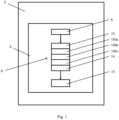
- the aircraft comprises a flight control system 4.
- the flight control system 4 comprises an actuator 6.
- the actuator 6 is an electric motor 6.
- the actuator 6 is a high speed low torque electric motor 6.
- the flight control system 4 comprises a gear system 8.
- the flight control system 4 comprises a flight control component 10.
- the flight control component 10 comprises a wing flap.
- the flight control component 10 comprises other components, including an aileron and/or a rudder.
- the gear system 8 comprises a system input shaft 12.
- the system input shaft 12 is connected to the actuator 6.
- the system input shaft 12 is configured to receive a torque from the actuator 6 and rotate in response to the torque.
- the gear system 8 comprises a system output shaft 14.
- the system output shaft 14 is connected to the flight control component 10.
- the system output shaft 14 is configured to apply a torque to a shaft (not shown) of the flight control component 10 to control the aircraft 2.
- Fig. 1 While only a single flight control system is depicted in Fig. 1 , it will be understood that in practice the aircraft may include several flight control systems (e.g. ailerons, spoilers, rudders, elevators, slats and/or flaps), with each flight control system comprising one or more flight control components and associated gear systems as described here.
- flight control systems e.g. ailerons, spoilers, rudders, elevators, slats and/or flaps
- each flight control system comprising one or more flight control components and associated gear systems as described here.
- the gear system 8 comprises first, second and third gear devices 100a-c. As described below, each of the first, second and third gear devices 100a-c provides a gearing stage and is configured to increase a torque and reduce a speed of a rotation.
- the first, second and third gear devices 100a-c are connected in series.
- the first gear device 100a is connected to the system input shaft 12 to receive a first rotational motion from the system input shaft 12.
- the first gear device 100a converts the first rotational motion to a second rotational motion, the second rotational motion being of a higher torque and lower speed than the first rotational motion.
- the second gear device 100b is connected to the first gear device 100a to receive the second rotational motion from the first gear device 100a.
- the second gear device 100b converts the second rotational motion to a third rotation motion, the third rotational motion being of higher torque and lower speed than the second rotational motion.
- the third gear device 100c is connected to the second gear device 100b to receive the third rotational motion from the second gear device 100b.
- the third gear device 100c converts the third rotational motion to a fourth rotational motion, the fourth rotational motion being of higher torque and lower speed than the third rotational motion.
- the third gear device 100c is connected to the system output shaft 14.
- the third gear device 100c provides the fourth rotational motion to the system output shaft 14, such that the system output shaft 14 provides the fourth rotational motion to the flight control component 10.
- the gear system 8 comprises a different number of gear devices 100a-c to provide a different number of stages (e.g. more than three devices and stages).
- a gear device 100 which may be the first gear device 100a, the second gear device 100b and/or the third gear device 100c.
- the gear device 100 comprises an input stage epicyclic gear 102.
- the input stage epicyclic gear 102 comprises an input stage sun 104.
- the input stage sun 104 is a gear.
- the input stage sun 104 comprises external teeth (i.e. extending radially outwardly from the input stage sun 104).
- the input stage epicyclic gear 102 comprises an input stage carrier 106.
- the input stage carrier 106 is connected to input stage planets 108.
- the input stage planets 108 are gears.
- the input stage planets 108 comprise external teeth (i.e. extending radially outwards from a central axis of each input stage planet 108).
- the input stage planets 108 mesh with the input stage sun 104.
- the teeth of the input stage planets 108 mesh with the teeth of the input stage sun 104.
- the input stage epicycle gear 102 comprises three input stage planets 108.
- the input stage planets 108 are evenly circumferentially displaced about the input stage sun 104.
- Each the input stage planet 108 is individually rotatable (e.g. about its central axis) relative to the input stage carrier 106.
- the input stage epicyclic gear 102 comprises an input stage ring 110.
- the input stage ring 110 is a gear.
- the input stage ring 110 comprises internal teeth (i.e. extending radially inwardly from the input stage ring 110).
- the input stage ring 110 meshes with the input stage planets 108.
- the teeth of the input stage ring 110 mesh with the teeth of the input stage planets 108.
- the gear device 100 comprises an output stage epicyclic gear 112.
- the output stage epicyclic gear 112 comprises an output stage sun 114.
- the output stage sun 114 is a gear.
- the output stage sun 114 comprises external teeth (i.e. extending radially outwardly from the output stage sun 114).
- the output stage epicyclic gear 112 comprises an output stage carrier 116.
- the output stage carrier 116 is connected to output stage planets 118.
- the output stage planets 118 are gears.
- the output stage planets 118 comprise external teeth (i.e. extending radially outwards from a central axis of each output stage planet 118).
- the output stage planets 118 mesh with the output stage sun 114. In particular, the teeth of the output stage planets 118 mesh with the teeth of the output stage sun 114.
- the output stage epicycle gear 112 comprises three output stage planets 118.
- the output stage planets 118 are evenly circumferentially displaced about the output stage sun 114.
- Each output stage planet 118 is individually rotatable (e.g. about its central axis) relative to the output stage carrier 116.
- the output stage planets 118 are able to orbit the output stage sun 112, causing rotation of the output stage carrier 116.
- the output stage epicyclic gear 112 comprises an output stage ring 120.
- the output stage ring 120 is a gear.
- the output stage ring 120 comprises internal teeth (i.e. extending radially inwardly from the output stage ring 120).
- the output stage ring 120 meshes with the output stage planets 118.
- the teeth of the output stage ring 120 mesh with the teeth of the output stage planets 118.
- the gear device 100 comprises an input shaft 122 and an output shaft 124.
- the input shaft 122 is connected to an output shaft of another gear device or to the actuator 6 to receive rotational motion therefrom.
- the output shaft 124 is connected to an input shaft of another gear device or to the flight control component 10 to transmit rotation motion therefrom.
- Each component of the input stage epicyclic gear 102 corresponds to a component of the output stage epicyclic gear 112.
- the input stage sun 104 corresponds to the output stage sun 114.
- the input stage carrier 106 corresponds the output stage carrier 116.
- the input stage ring 110 corresponds to the output stage ring 120.
- the input stage epicyclic gear 102 and the output stage epicyclic gear 112 are arranged concentrically with each other.
- the input stage sun 104 is concentric with the output stage sun 114.
- the input stage carrier 106 is concentric with the output stage carrier 116.
- the input stage ring 110 is concentric with the output stage ring 120.
- a first input stage component of the input stage sun 104, the input stage carrier 106 and the input stage ring 110 is fixed to a corresponding first output stage component of the output stage sun 114, the output stage carrier 116 and the output stage ring 120.
- the first input stage component is connected to the input shaft 122.
- the first input stage component is the input stage sun 104.
- the first output stage component is the output stage sun 114.
- the input stage sun 104 is rigidly connected to the input shaft 122 (in the present example, formed as an integral component), such that the input stage sun 104 is configured to rotate with the input shaft 122.
- the output stage sun 114 is rigidly connected to the input stage sun 104.
- the output stage sun 114 is rigidly connected to the input shaft 122 (via the input stage sun 104).
- the output stage sun 114 is therefore configured to rotate with the input stage sun 104 and the input shaft 122.
- a second input stage component of the input stage sun 104, the input stage carrier 106 and the input stage ring 110 is fixed to a corresponding second output stage component of the output stage sun 114, the output stage carrier 116 and the output stage ring 120.
- the second input stage component is a different component from the first input stage component.
- the second input stage component is the input stage ring 110.
- the second output stage component is the output stage ring 120.
- the input stage ring 110 is rigidly connected to the output stage ring 120 (in the present example, formed as an integral component), such that the output stage ring 120 is configured to rotate with the input stage ring 110.
- a third input stage component of the input stage sun 104, the input stage carrier 106 and the input stage ring 110 is held stationary.
- the third input stage component is a different component from the first input stage component and the second input stage component.
- a third output stage component of output stage sun 114, the output stage carrier 116 and the output stage ring 120 is connected to the output shaft 124.
- the third output stage component corresponds to the third input stage component.
- the third input stage component is the input stage carrier 106 and the third output stage component is the output stage carrier 116.
- the output stage carrier 116 is rigidly connected to the output shaft 124, such that the output shaft 124 is configured to rotate with the output stage carrier 116 (i.e. on orbiting of the output stage planets 118 about the output stage sun 114).
- the input shaft 122 rotates, causing rotation of the input stage sun 104.
- the rotation of the input stage sun 104 causes rotation of the input stage planets 108 about their own axes. Rotation of the input stage carrier 106 is prevented, so the input stage planets 108 cannot orbit the input stage sun 104.
- the rotation of the input stage planets 108 causes rotation of the input stage ring 110.
- the output stage sun 114 rotates at the same speed as the input stage sun 104.
- the output stage ring 120 rotates at the same speed as the input stage ring 110.
- the fixed carrier train ratios of the input and output epicyclic gears 102, 112 are different (due to different kinematics of the input and output epicyclic gears resulting from different numbers of teeth), which means that the rotation of the output stage ring 120 and the output stage sun 114 causes rotation of the output stage carrier 116. This in turn causes rotation of the output shaft 124.
- the output stage carrier 116 is only able to rotate slowly. This results in output rotation at the output shaft 124 which is significantly lower speed and higher torque than at the input shaft 122, resulting in a high gear ratio for a compact gear device 100.
- this effect is amplified by the input stage epicyclic gear and the output stage epicyclic gear being kinematically similar but not identical, which, due to the input stage carrier having zero rotation, results in the speed of the rotation of the output stage carrier 116 being close to zero but not zero.
- the applicant has found that the gear ratio is further increased where the input stage sun number of teeth, Nis, is similar but not identical to the output stage sun number of teeth, Nos, in particular, where
- / Nos 0.20 (2 sf).
- the gear ratio is 15.
- the gear ratio increases.
- increasing the kinematic similarity may also require tighter manufacturing tolerances.
- Increasing the kinematic similarity, particularly where tight manufacturing tolerances cannot be achieved, may increase contact friction between the gears, reducing efficiency of the system.
- Design of the gear device may also be constrained by gears needing to have an integer number of teeth.
Landscapes
- Engineering & Computer Science (AREA)
- Mechanical Engineering (AREA)
- General Engineering & Computer Science (AREA)
- Automation & Control Theory (AREA)
- Aviation & Aerospace Engineering (AREA)
- Retarders (AREA)
Priority Applications (3)
| Application Number | Priority Date | Filing Date | Title |
|---|---|---|---|
| EP22306724.0A EP4375539A1 (de) | 2022-11-23 | 2022-11-23 | Getriebevorrichtung |
| CA3211936A CA3211936A1 (en) | 2022-11-23 | 2023-09-11 | Gear device |
| US18/508,718 US12415598B2 (en) | 2022-11-23 | 2023-11-14 | Gear device |
Applications Claiming Priority (1)
| Application Number | Priority Date | Filing Date | Title |
|---|---|---|---|
| EP22306724.0A EP4375539A1 (de) | 2022-11-23 | 2022-11-23 | Getriebevorrichtung |
Publications (1)
| Publication Number | Publication Date |
|---|---|
| EP4375539A1 true EP4375539A1 (de) | 2024-05-29 |
Family
ID=84421596
Family Applications (1)
| Application Number | Title | Priority Date | Filing Date |
|---|---|---|---|
| EP22306724.0A Pending EP4375539A1 (de) | 2022-11-23 | 2022-11-23 | Getriebevorrichtung |
Country Status (3)
| Country | Link |
|---|---|
| US (1) | US12415598B2 (de) |
| EP (1) | EP4375539A1 (de) |
| CA (1) | CA3211936A1 (de) |
Citations (5)
| Publication number | Priority date | Publication date | Assignee | Title |
|---|---|---|---|---|
| US2488660A (en) * | 1947-03-08 | 1949-11-22 | Borg Warner | Transmission |
| US6739550B2 (en) * | 2001-10-09 | 2004-05-25 | Teijin Seiki Co., Ltd. | Flight control surface control unit |
| US20100120574A1 (en) * | 2007-05-02 | 2010-05-13 | Hitoshi Maekawa | High reduction combined planetary gear mechanism |
| EP2636924A1 (de) * | 2010-11-01 | 2013-09-11 | Kabushiki Kaisha Yaskawa Denki | Verbundplanetengetriebemechanismus |
| JP2015515590A (ja) * | 2013-03-08 | 2015-05-28 | リ、ジャンリLI, Jianli | フローティング歯車減速機 |
Family Cites Families (7)
| Publication number | Priority date | Publication date | Assignee | Title |
|---|---|---|---|---|
| JPH05340449A (ja) * | 1992-04-08 | 1993-12-21 | Nissan Motor Co Ltd | 電気自動車用動力伝達装置 |
| US6409622B1 (en) | 1998-11-14 | 2002-06-25 | Robert Bosch Gmbh | Electric motor with drive |
| US8235861B2 (en) | 2008-10-30 | 2012-08-07 | General Electric Company | Split torque compound planetary drivetrain for wind turbine applications |
| US20110009232A1 (en) * | 2009-07-13 | 2011-01-13 | Alexander Kapelevich | Planetary gear |
| US9545903B2 (en) | 2015-02-02 | 2017-01-17 | Goodrich Corporation | Electromechanical brake actuator with variable speed epicyclic gearbox |
| JP6587674B2 (ja) * | 2017-12-27 | 2019-10-09 | 本田技研工業株式会社 | 電動機用減速装置 |
| DE102018132224A1 (de) * | 2018-12-14 | 2020-06-18 | Schaeffler Technologies AG & Co. KG | Planetengetriebe für einen Roboter |
-
2022
- 2022-11-23 EP EP22306724.0A patent/EP4375539A1/de active Pending
-
2023
- 2023-09-11 CA CA3211936A patent/CA3211936A1/en active Pending
- 2023-11-14 US US18/508,718 patent/US12415598B2/en active Active
Patent Citations (5)
| Publication number | Priority date | Publication date | Assignee | Title |
|---|---|---|---|---|
| US2488660A (en) * | 1947-03-08 | 1949-11-22 | Borg Warner | Transmission |
| US6739550B2 (en) * | 2001-10-09 | 2004-05-25 | Teijin Seiki Co., Ltd. | Flight control surface control unit |
| US20100120574A1 (en) * | 2007-05-02 | 2010-05-13 | Hitoshi Maekawa | High reduction combined planetary gear mechanism |
| EP2636924A1 (de) * | 2010-11-01 | 2013-09-11 | Kabushiki Kaisha Yaskawa Denki | Verbundplanetengetriebemechanismus |
| JP2015515590A (ja) * | 2013-03-08 | 2015-05-28 | リ、ジャンリLI, Jianli | フローティング歯車減速機 |
Also Published As
| Publication number | Publication date |
|---|---|
| CA3211936A1 (en) | 2024-05-23 |
| US12415598B2 (en) | 2025-09-16 |
| US20240166338A1 (en) | 2024-05-23 |
Similar Documents
| Publication | Publication Date | Title |
|---|---|---|
| EP3041737B1 (de) | Drehflügelflugzeug mit einem leistungsverzweigungsgetriebe | |
| RU2359875C1 (ru) | Редуктор с разделением крутящего момента для винтокрылого летательного аппарата с системой поступательной тяги | |
| CA2954108C (en) | Planetary gear assembly | |
| US11713108B2 (en) | Hinge-line actuator for rotating an aircraft control surface | |
| EP2955412B1 (de) | Drehflügler und planetengetriebesysteme | |
| US9878798B2 (en) | Aircraft with counter-rotating turbofan engines | |
| EP3076045B1 (de) | Spielkorrektursystem für verbindungs-planetengetriebezug | |
| US20170190415A1 (en) | Transmission for coaxial multi-rotor system | |
| JP2019041567A (ja) | 反転ハーモニックギヤアクチュエータ及び反転ハーモニックギヤアクチュエータの組立方法 | |
| EP4375539A1 (de) | Getriebevorrichtung | |
| US20240209930A1 (en) | Strain wave drive | |
| EP3279508B1 (de) | Kraftantriebseinheit mit dualem getriebeübersetzungsmechanismus | |
| US11702197B2 (en) | Coaxial split torque gearbox with sequential load distribution | |
| CN111630302B (zh) | 双流百向传动器 | |
| US12529413B2 (en) | Actuators | |
| US3485450A (en) | Planetary gear system drive mechanism | |
| BR102023020520A2 (pt) | Dispositivo de engrenagem, sistemas de engrenagem e de controle de voo, e, aeronave | |
| EP4467845A1 (de) | Spannungswellenantrieb | |
| US12140213B2 (en) | Compound harmonic gear system with dual output arms | |
| US12460704B2 (en) | Rotary actuator for flight control surface | |
| EP4400745A1 (de) | Epizyklisches getriebesystem | |
| EP4296542A1 (de) | Verformungswellgetriebe | |
| TR2023010704A2 (tr) | Orbi̇küler di̇şli̇ mekani̇zmasi | |
| EP3392530A1 (de) | Umlaufend verzahnter stellantrieb |
Legal Events
| Date | Code | Title | Description |
|---|---|---|---|
| PUAI | Public reference made under article 153(3) epc to a published international application that has entered the european phase |
Free format text: ORIGINAL CODE: 0009012 |
|
| STAA | Information on the status of an ep patent application or granted ep patent |
Free format text: STATUS: THE APPLICATION HAS BEEN PUBLISHED |
|
| AK | Designated contracting states |
Kind code of ref document: A1 Designated state(s): AL AT BE BG CH CY CZ DE DK EE ES FI FR GB GR HR HU IE IS IT LI LT LU LV MC ME MK MT NL NO PL PT RO RS SE SI SK SM TR |
|
| STAA | Information on the status of an ep patent application or granted ep patent |
Free format text: STATUS: REQUEST FOR EXAMINATION WAS MADE |
|
| 17P | Request for examination filed |
Effective date: 20241127 |
|
| RBV | Designated contracting states (corrected) |
Designated state(s): AL AT BE BG CH CY CZ DE DK EE ES FI FR GB GR HR HU IE IS IT LI LT LU LV MC ME MK MT NL NO PL PT RO RS SE SI SK SM TR |
|
| STAA | Information on the status of an ep patent application or granted ep patent |
Free format text: STATUS: EXAMINATION IS IN PROGRESS |
|
| 17Q | First examination report despatched |
Effective date: 20251031 |