EP4378460A1 - Composition pharmaceutique pour la prévention ou le traitement d'une tumeur et utilisation correspondante - Google Patents
Composition pharmaceutique pour la prévention ou le traitement d'une tumeur et utilisation correspondante Download PDFInfo
- Publication number
- EP4378460A1 EP4378460A1 EP22849912.5A EP22849912A EP4378460A1 EP 4378460 A1 EP4378460 A1 EP 4378460A1 EP 22849912 A EP22849912 A EP 22849912A EP 4378460 A1 EP4378460 A1 EP 4378460A1
- Authority
- EP
- European Patent Office
- Prior art keywords
- antibody
- imidazo
- dihydro
- cancer
- kinase inhibitor
- Prior art date
- Legal status (The legal status is an assumption and is not a legal conclusion. Google has not performed a legal analysis and makes no representation as to the accuracy of the status listed.)
- Pending
Links
Images





Classifications
-
- A—HUMAN NECESSITIES
- A61—MEDICAL OR VETERINARY SCIENCE; HYGIENE
- A61K—PREPARATIONS FOR MEDICAL, DENTAL OR TOILETRY PURPOSES
- A61K31/00—Medicinal preparations containing organic active ingredients
- A61K31/33—Heterocyclic compounds
- A61K31/395—Heterocyclic compounds having nitrogen as a ring hetero atom, e.g. guanethidine or rifamycins
- A61K31/435—Heterocyclic compounds having nitrogen as a ring hetero atom, e.g. guanethidine or rifamycins having six-membered rings with one nitrogen as the only ring hetero atom
- A61K31/4353—Heterocyclic compounds having nitrogen as a ring hetero atom, e.g. guanethidine or rifamycins having six-membered rings with one nitrogen as the only ring hetero atom ortho- or peri-condensed with heterocyclic ring systems
- A61K31/437—Heterocyclic compounds having nitrogen as a ring hetero atom, e.g. guanethidine or rifamycins having six-membered rings with one nitrogen as the only ring hetero atom ortho- or peri-condensed with heterocyclic ring systems the heterocyclic ring system containing a five-membered ring having nitrogen as a ring hetero atom, e.g. indolizine, beta-carboline
-
- A—HUMAN NECESSITIES
- A61—MEDICAL OR VETERINARY SCIENCE; HYGIENE
- A61K—PREPARATIONS FOR MEDICAL, DENTAL OR TOILETRY PURPOSES
- A61K31/00—Medicinal preparations containing organic active ingredients
- A61K31/33—Heterocyclic compounds
- A61K31/395—Heterocyclic compounds having nitrogen as a ring hetero atom, e.g. guanethidine or rifamycins
- A61K31/435—Heterocyclic compounds having nitrogen as a ring hetero atom, e.g. guanethidine or rifamycins having six-membered rings with one nitrogen as the only ring hetero atom
- A61K31/44—Non condensed pyridines; Hydrogenated derivatives thereof
- A61K31/4427—Non condensed pyridines; Hydrogenated derivatives thereof containing further heterocyclic ring systems
- A61K31/4439—Non condensed pyridines; Hydrogenated derivatives thereof containing further heterocyclic ring systems containing a five-membered ring with nitrogen as a ring hetero atom, e.g. omeprazole
-
- A—HUMAN NECESSITIES
- A61—MEDICAL OR VETERINARY SCIENCE; HYGIENE
- A61K—PREPARATIONS FOR MEDICAL, DENTAL OR TOILETRY PURPOSES
- A61K31/00—Medicinal preparations containing organic active ingredients
- A61K31/33—Heterocyclic compounds
- A61K31/395—Heterocyclic compounds having nitrogen as a ring hetero atom, e.g. guanethidine or rifamycins
- A61K31/435—Heterocyclic compounds having nitrogen as a ring hetero atom, e.g. guanethidine or rifamycins having six-membered rings with one nitrogen as the only ring hetero atom
- A61K31/47—Quinolines; Isoquinolines
-
- A—HUMAN NECESSITIES
- A61—MEDICAL OR VETERINARY SCIENCE; HYGIENE
- A61K—PREPARATIONS FOR MEDICAL, DENTAL OR TOILETRY PURPOSES
- A61K31/00—Medicinal preparations containing organic active ingredients
- A61K31/33—Heterocyclic compounds
- A61K31/395—Heterocyclic compounds having nitrogen as a ring hetero atom, e.g. guanethidine or rifamycins
- A61K31/435—Heterocyclic compounds having nitrogen as a ring hetero atom, e.g. guanethidine or rifamycins having six-membered rings with one nitrogen as the only ring hetero atom
- A61K31/47—Quinolines; Isoquinolines
- A61K31/4709—Non-condensed quinolines and containing further heterocyclic rings
-
- A—HUMAN NECESSITIES
- A61—MEDICAL OR VETERINARY SCIENCE; HYGIENE
- A61K—PREPARATIONS FOR MEDICAL, DENTAL OR TOILETRY PURPOSES
- A61K31/00—Medicinal preparations containing organic active ingredients
- A61K31/33—Heterocyclic compounds
- A61K31/395—Heterocyclic compounds having nitrogen as a ring hetero atom, e.g. guanethidine or rifamycins
- A61K31/495—Heterocyclic compounds having nitrogen as a ring hetero atom, e.g. guanethidine or rifamycins having six-membered rings with two or more nitrogen atoms as the only ring heteroatoms, e.g. piperazine or tetrazines
- A61K31/498—Pyrazines or piperazines ortho- and peri-condensed with carbocyclic ring systems, e.g. quinoxaline, phenazine
-
- A—HUMAN NECESSITIES
- A61—MEDICAL OR VETERINARY SCIENCE; HYGIENE
- A61K—PREPARATIONS FOR MEDICAL, DENTAL OR TOILETRY PURPOSES
- A61K31/00—Medicinal preparations containing organic active ingredients
- A61K31/33—Heterocyclic compounds
- A61K31/395—Heterocyclic compounds having nitrogen as a ring hetero atom, e.g. guanethidine or rifamycins
- A61K31/495—Heterocyclic compounds having nitrogen as a ring hetero atom, e.g. guanethidine or rifamycins having six-membered rings with two or more nitrogen atoms as the only ring heteroatoms, e.g. piperazine or tetrazines
- A61K31/505—Pyrimidines; Hydrogenated pyrimidines, e.g. trimethoprim
- A61K31/519—Pyrimidines; Hydrogenated pyrimidines, e.g. trimethoprim ortho- or peri-condensed with heterocyclic rings
-
- A—HUMAN NECESSITIES
- A61—MEDICAL OR VETERINARY SCIENCE; HYGIENE
- A61K—PREPARATIONS FOR MEDICAL, DENTAL OR TOILETRY PURPOSES
- A61K39/00—Medicinal preparations containing antigens or antibodies
- A61K39/395—Antibodies; Immunoglobulins; Immune serum, e.g. antilymphocytic serum
-
- A—HUMAN NECESSITIES
- A61—MEDICAL OR VETERINARY SCIENCE; HYGIENE
- A61K—PREPARATIONS FOR MEDICAL, DENTAL OR TOILETRY PURPOSES
- A61K45/00—Medicinal preparations containing active ingredients not provided for in groups A61K31/00 - A61K41/00
- A61K45/06—Mixtures of active ingredients without chemical characterisation, e.g. antiphlogistics and cardiaca
-
- A—HUMAN NECESSITIES
- A61—MEDICAL OR VETERINARY SCIENCE; HYGIENE
- A61P—SPECIFIC THERAPEUTIC ACTIVITY OF CHEMICAL COMPOUNDS OR MEDICINAL PREPARATIONS
- A61P35/00—Antineoplastic agents
-
- C—CHEMISTRY; METALLURGY
- C07—ORGANIC CHEMISTRY
- C07K—PEPTIDES
- C07K16/00—Immunoglobulins [IG], e.g. monoclonal or polyclonal antibodies
- C07K16/18—Immunoglobulins [IG], e.g. monoclonal or polyclonal antibodies against material from animals or humans
- C07K16/28—Immunoglobulins [IG], e.g. monoclonal or polyclonal antibodies against material from animals or humans against receptors, cell surface antigens or cell surface determinants
- C07K16/2803—Immunoglobulins [IG], e.g. monoclonal or polyclonal antibodies against material from animals or humans against receptors, cell surface antigens or cell surface determinants against the immunoglobulin superfamily
- C07K16/2818—Immunoglobulins [IG], e.g. monoclonal or polyclonal antibodies against material from animals or humans against receptors, cell surface antigens or cell surface determinants against the immunoglobulin superfamily against CD28 or CD152
-
- C—CHEMISTRY; METALLURGY
- C07—ORGANIC CHEMISTRY
- C07K—PEPTIDES
- C07K16/00—Immunoglobulins [IG], e.g. monoclonal or polyclonal antibodies
- C07K16/18—Immunoglobulins [IG], e.g. monoclonal or polyclonal antibodies against material from animals or humans
- C07K16/28—Immunoglobulins [IG], e.g. monoclonal or polyclonal antibodies against material from animals or humans against receptors, cell surface antigens or cell surface determinants
- C07K16/2803—Immunoglobulins [IG], e.g. monoclonal or polyclonal antibodies against material from animals or humans against receptors, cell surface antigens or cell surface determinants against the immunoglobulin superfamily
- C07K16/2827—Immunoglobulins [IG], e.g. monoclonal or polyclonal antibodies against material from animals or humans against receptors, cell surface antigens or cell surface determinants against the immunoglobulin superfamily against B7 molecules, e.g. CD80, CD86
-
- A—HUMAN NECESSITIES
- A61—MEDICAL OR VETERINARY SCIENCE; HYGIENE
- A61K—PREPARATIONS FOR MEDICAL, DENTAL OR TOILETRY PURPOSES
- A61K39/00—Medicinal preparations containing antigens or antibodies
- A61K2039/505—Medicinal preparations containing antigens or antibodies comprising antibodies
-
- A—HUMAN NECESSITIES
- A61—MEDICAL OR VETERINARY SCIENCE; HYGIENE
- A61K—PREPARATIONS FOR MEDICAL, DENTAL OR TOILETRY PURPOSES
- A61K39/00—Medicinal preparations containing antigens or antibodies
- A61K2039/505—Medicinal preparations containing antigens or antibodies comprising antibodies
- A61K2039/507—Comprising a combination of two or more separate antibodies
-
- A—HUMAN NECESSITIES
- A61—MEDICAL OR VETERINARY SCIENCE; HYGIENE
- A61K—PREPARATIONS FOR MEDICAL, DENTAL OR TOILETRY PURPOSES
- A61K39/00—Medicinal preparations containing antigens or antibodies
- A61K2039/545—Medicinal preparations containing antigens or antibodies characterised by the dose, timing or administration schedule
-
- A—HUMAN NECESSITIES
- A61—MEDICAL OR VETERINARY SCIENCE; HYGIENE
- A61K—PREPARATIONS FOR MEDICAL, DENTAL OR TOILETRY PURPOSES
- A61K2300/00—Mixtures or combinations of active ingredients, wherein at least one active ingredient is fully defined in groups A61K31/00 - A61K41/00
Definitions
- the present invention relates to a pharmaceutical composition for preventing or treating a tumor, a method for preventing or treating a tumor, and a use of the pharmaceutical composition, in which a low-molecular kinase inhibitor that blocks the signaling pathway of transforming growth factor- ⁇ (TGF- ⁇ ) is administered in combination with at least one among an immune checkpoint regulator and a receptor tyrosine kinase inhibitor.
- TGF- ⁇ transforming growth factor- ⁇
- Tumor cells are characterized in that the tumor cells secrete substances that make T cells inactive, thereby avoiding the attack of immune cells, changing the tumor microenvironment, rapidly dividing, as well as allowing the tumor cells to escape from the tissues in which they were generated and to spread to other tissues. Meanwhile, tumor cells create blood vessels on their own to obtain nutrients required for rapid growth and metastasis (Tumor angiogenesis).
- Regulatory T cells are known to be main cells involved in immune avoidance of tumor cells, and several treatment strategies have been developed to reduce the number of regulatory T cells in tumor tissue.
- an immune checkpoint regulator such as an antibody targeting a molecule such as CD25, CTLA-4, or PD-1, or a chemokine receptor, which are specifically expressed by regulatory T cells
- ipilimumab Yervoy ®
- pembrolizumab Keytruda ®
- Opdivo TM targeting programmed cell death protein-1 (PD-1) have been approved by the U.S. Food and Drug Administration (FDA) for sale.
- FDA U.S. Food and Drug Administration
- vascular endothelial cell growth factor receptors VAGFRs
- PDGFRs- ⁇ platelet-derived growth factor receptors
- RET transfection
- FGFRs fibroblast growth factor receptors 1 to 4 are receptor tyrosine kinases known to be involved in cell division and angiogenesis of tumor cells. Accordingly, drugs for selectively inhibiting receptor tyrosine kinase have been developed, and research on a method for increasing an anti-cancer treatment effect by using a combination of a receptor tyrosine kinase selective inhibitor and an immune checkpoint regulator has also been actively conducted.
- lenvatinib which is a receptor tyrosine kinase inhibitor
- pembrolizumab which is an anti-PD-1 antibody.
- Patent Document 1 Korean Patent No. 2220275
- the present inventors have found that the administration of a low-molecular kinase inhibitor that blocks the signaling pathway of TGF- ⁇ to a subject in combination with at least one selected from among an immune checkpoint regulator and a receptor tyrosine kinase inhibitor has better effects of suppressing tumor growth and is safer than the administration of the low-molecular kinase inhibitor that blocks the signaling pathway of TGF- ⁇ , the receptor tyrosine kinase inhibitor, or the immune checkpoint regulator alone, thereby completing the present invention.
- the present invention provides a pharmaceutical composition for preventing or treating a tumor, the pharmaceutical composition including a low-molecular kinase inhibitor that blocks the signaling pathway of TGF- ⁇ , in which the low molecular kinase inhibitor that blocks the signaling pathway of TGF- ⁇ is administered in combination with at least one among an immune checkpoint regulator and a receptor tyrosine kinase inhibitor.
- a pharmaceutical composition for preventing or treating a tumor including a low-molecular kinase inhibitor that blocks the signaling pathway of TGF- ⁇ , and at least one among an immune checkpoint regulator and a receptor tyrosine kinase inhibitor.
- the present invention provides a combination for preventing or treating a tumor, the combination including a low-molecular kinase inhibitor that blocks the signaling pathway of TGF- ⁇ , and at least one among an immune checkpoint regulator and a receptor tyrosine kinase inhibitor.
- the present invention provides a method for preventing or treating a tumor in a subject, the method including administering to the subject a low-molecular kinase inhibitor that blocks the signaling pathway of TGF- ⁇ , and at least one among an immune checkpoint regulator and a receptor tyrosine kinase inhibitor.
- the present invention provides a use of a low-molecular kinase inhibitor that blocks the signaling pathway of TGF- ⁇ , which is administered in combination with at least one among an immune checkpoint regulator and a receptor tyrosine kinase inhibitor for preparing a medicament for preventing or treating a tumor.
- the present invention provides a kit for preventing or treating a tumor, the kit including a low-molecular kinase inhibitor that blocks the signaling pathway of TGF- ⁇ , and an instruction manual that instruct the administration of a low-molecular kinase inhibitor that blocks the signaling pathway of TGF- ⁇ in combination with at least one among an immune checkpoint regulator and a receptor tyrosine kinase inhibitor.
- a low-molecular kinase inhibitor that blocks the signaling pathway of TGF- ⁇ to a subject in combination with at least one selected from among an immune checkpoint regulator and a receptor tyrosine kinase inhibitor has superior effects of suppressing tumor growth to the use of the low-molecular kinase inhibitor, the immune checkpoint regulator, or the tyrosine kinase inhibitor alone.
- An embodiment of the present invention relates to a pharmaceutical composition for preventing or treating a tumor, the pharmaceutical composition including a low-molecular kinase inhibitor that blocks the signaling pathway of transforming growth factor- ⁇ (TGF- ⁇ ), in which the low-molecular kinase inhibitor that blocks the signaling pathway of TGF- ⁇ is administered in combination with at least one among an immune checkpoint regulator and a receptor tyrosine kinase inhibitor.
- TGF- ⁇ transforming growth factor- ⁇
- low-molecular kinase inhibitor that blocks the signaling pathway of TGF- ⁇ refers to a low-molecular kinase inhibitor that can inhibit the signaling pathway of TGF- ⁇ , such as a TGF-type I receptor kinase inhibitor, or a kinase inhibitor that dually inhibits a TGF- ⁇ type I receptor and vascular endothelial growth factor receptor (VEGFR)-2.
- the low-molecular kinase inhibitor that blocks the signaling pathway of TGF- ⁇ may be a novel 2-pyridyl-substituted imidazole derivative, or a pharmaceutically acceptable salt or solvate thereof disclosed in Korean Patent No. 1938368 .
- the low-molecular kinase inhibitor that blocks the signaling pathway of TGF- ⁇ may be a compound or a pharmaceutically acceptable salt thereof selected from the group consisting of 1-[6-(6-methyl-pyridin-2-yl)-5-quinoxalin-6-yl-2,3-dihydro-imidazo[1,2- a ]imidazol-1-yl]-ethanone, 6-[2-(6-methyl-pyridin-2-yl)-6,7-dihydro-5 H -imidazo[1,2- a ]imidazol-3-yl]-quinoxaline, 6-[2-(6-methyl-pyridin-2-yl)-5,6,7,8-tetrahydro-imidazo[1,2- a ]pyrimidin-3-yl]-quinoxaline, 6-[2-(6-methyl-pyridin-2-yl)-6,7-dihydro-5 H -imidazo[1,2- a ]imidazol-3
- the low-molecular kinase inhibitor that blocks the signaling pathway of TGF- ⁇ may be a compound or a pharmaceutically acceptable salt thereof selected from the following compound group: 6-[2-(6-methyl-pyridin-2-yl)-6,7-dihydro-5 H -imidazo[1,2- a ]imidazol-3-yl]-quinoxaline; 6-[2-(6-methyl-pyridin-2-yl)-5,6,7,8-tetrahydro-imidazo[1,2- a ]pyrimidin-3-yl]-quinoxaline; 6-[2-(6-methyl-pyridin-2-yl)-6,7-dihydro-5 H -imidazo[1,2- a ]imidazol-3-yl]-quinoline; 2-[2-(6-methyl-pyridin-2-yl)-6,7-dihydro-5 H -imidazo[1,2- a ]imidazol-3-yl]-quinoline; 2-[2-
- the term "pharmaceutically acceptable salt” refers to a salt suitable for use in contact with human and animal tissues.
- suitable salts having such inorganic and organic acids include, but are not limited to, acetic acid, citric acid, formic acid, fumaric acid, hydrochloric acid, lactic acid, maleic acid, malic acid, methane-sulfonic acid, nitric acid, phosphoric acid, p -toluenesulfonic acid, succinic acid, sulfuric acid, tartaric acid, trifluoroacetic acid, and the like.
- the pharmaceutically acceptable salt may be an acid- or base-addition salt formed by the reaction of an inorganic base such as sodium hydroxide, ammonium hydroxide, or potassium hydroxide, with an organic base such as mono-, di-, tri-alkyl, and aryl amines, or substituted ethanolamine.
- an inorganic base such as sodium hydroxide, ammonium hydroxide, or potassium hydroxide
- an organic base such as mono-, di-, tri-alkyl, and aryl amines, or substituted ethanolamine.
- the low-molecular kinase inhibitor that blocks the signaling pathway of TGF- ⁇ may be 6-[2-(6-methyl-pyridin-2-yl)-6,7-dihydro-5 H -imidazo[1,2- a ]imidazol-3-yl]-quinoxaline, 6-[2-(6-methyl-pyridin-2-yl)-5,6,7,8-tetrahydro-imidazo[1,2- a ]pyrimidin-3-yl]-quinoxaline, 6-[2-(6-methyl-pyridin-2-yl)-6,7-dihydro-5 H -imidazo[1,2- a ]imidazol-3-yl]-quinoline, 2-[2-(6-methyl-pyridin-2-yl)-6,7-dihydro-5 H -imidazo[1,2- a ]imidazol-3-yl]-thieno[3,2- c ]pyridine, 6-[2-(6-methyl-pyridin
- TGF- ⁇ is known to inhibit the proliferation of cells and induce apoptosis in a normal environment, but is present in a tumor microenvironment at a high concentration, while inhibiting immunity and promoting cancer cell metastasis, increasing the density and hardness of tumors through fibrosis of a cancer stroma and promoting angiogenesis, and blocking the delivery of anticancer drugs into tumor tissue and the infiltration of immune cells, thereby causing drug resistance.
- the low-molecular kinase inhibitor that blocks the signaling pathway of TGF- ⁇ not only inhibits immune avoidance and metastasis of cancer cells, but also inhibits the fibrosis of tumor stroma caused by TGF- ⁇ and normalizes tumor vascular functions, thereby increasing intratumoral delivery of a drug used in combination and the infiltration rate of immune cells into tumors and also increasing oxygen concentration in a microenvironment around tumors.
- the low-molecular kinase inhibitor that blocks the signaling pathway of TGF- ⁇ of the present invention may be used in combination with various anticancer therapies/anticancer drugs such as an immune checkpoint regulator (e.g., a drug that inhibits immune checkpoint proteins to suppress regulatory T cells, a drug that binds to immune checkpoint proteins to activate effector T cells, etc. ), chemotherapy, targeted therapeutics, nanoparticles, and radiotherapy.
- an immune checkpoint regulator e.g., a drug that inhibits immune checkpoint proteins to suppress regulatory T cells, a drug that binds to immune checkpoint proteins to activate effector T cells, etc.
- chemotherapy targeted therapeutics
- nanoparticles e.g., nanoparticles, and radiotherapy.
- the low-molecular kinase inhibitor that blocks the signaling pathway of TGF- ⁇ of the present invention when used in combination with chemotherapy, targeted therapeutics, or nanoparticles, the low-molecular kinase inhibitor that blocks the signaling pathway of TGF- ⁇ may increase the efficiency of drug delivery and exhibit improved anti-cancer efficacy, and when the low-molecular kinase inhibitor that blocks the signaling pathway of TGF- ⁇ of the present invention is used in combination with radiotherapy, the low-molecular kinase inhibitor may increase the oxygen concentration in a tumor microenvironment and thus exhibit improved effects in treating/suppressing tumors.
- An immune checkpoint refers to a group of signal molecules possessed by immune cells, and includes a signal molecule that may regulate and control the persistence of an immune response while maintaining self-tolerance, and is involved in an inhibitory pathway that maintains self-tolerance and aids the immune response, and a signal molecule that is involved in a stimulatory pathway.
- the effect of an immune response is determined by a subtle balance between a co-stimulatory signal and a co-inhibitory signal.
- An immune checkpoint protein refers to both a protein involved in a pathway that inhibits an immune response and a protein involved in a pathway that activates an immune response.
- the immune checkpoint protein may be a protein involved in a signaling pathway that inhibits the activity of regulatory T cells or may be a protein involved in a signaling pathway that directly stimulates effector T cells or memory T cells.
- the immune checkpoint regulation may be to inhibit immune tolerance or activate the immune system, and may include inhibiting all signaling pathways that activate regulatory T cells involved in immune tolerance or stimulating signaling pathways that activate effector T cells or memory T cells in order to increase the anti-tumor immune response.
- immune checkpoint proteins include T cell receptors
- T cell receptor proteins include, but are not limited to, programmed cell killing protein ligand 1 (PD-L1), programmed cell death protein 1 (PD-1), cytotoxic T-lymphocyte-associated antigen 4 (CTLA-4), Band T lymphocyte attenuator (BTLA), killer cell immunoglobulin-like receptor (KIR), lymphocyte activation gene 3 (LAG3), T-cell membrane protein 3 (corresponding to T-cell immunoglobulin mucin receptor 3: TIM3), OX40, V-domain immunoglobulin suppressor of T cell activation (VISTA), T cell immunoreceptor with immunoglobulin and ITIM domain (TIGIT), 4-1BB (CD137), Glucocorticoid-induced tumor necrosis factor related protein (GITR), adenosine A2a receptor (A2aR), and the like.
- P-L1 programmed cell killing protein ligand 1
- PD-1 programmed cell death protein 1
- CTL-4 cytotoxic T-
- the immune checkpoint regulator may be an anti-immune checkpoint protein antibody or an antigen-binding fragment thereof, an aptamer, a fusion protein binding to the immune checkpoint protein, or a low-molecular compound that binds to the immune checkpoint protein or is involved in a mechanism related to inhibition or activation thereof.
- the immune checkpoint regulator may be a material for regulating the signaling pathway in which an immune checkpoint protein selected from the group consisting of PD-L1, PD-1, CTLA-4, BTLA, KIR, LAG3, TIM3, OX40, VISTA, TIGIT, 4-1BB, GITR, and A2aR is involved.
- the immune checkpoint regulator may be a substance that inhibits the signal transduction or reduces the expression of a T cell receptor selected from the group consisting of PD-L1, PD-1, CTLA-4, BTLA, KIR, LAG3, TIM3, OX40, VISTA, TIGIT, 4-1BB, GITR, and A2aR.
- the immune checkpoint regulator may inhibit regulatory T cells or activate effector T cells or memory T cells by inhibiting the signal transduction or reducing the expression through PD-L1, PD-1, CTLA-4, BTLA, KIR, LAG3, TIM3, OX40, VISTA, TIGIT, 4-1BB, GITR, A2aR, or a combination thereof.
- the immune checkpoint regulator may be a PD-L1 inhibitor, a PD-1 inhibitor, a CTLA-4 inhibitor, an OX40 agonist, or a combination thereof.
- the immune checkpoint regulator may be at least one selected from among at least one selected from the group consisting of an aptamer, a peptide, an antibody, and an antigen-binding fragment of the antibody, which specifically bind to the PD-L1 protein; at least one selected from the group consisting of an aptamer, a peptide, an antibody, and an antigen-binding fragment of the antibody, which specifically bind to the PD-1 protein; at least one selected from the group consisting of an aptamer, a peptide, an antibody, and an antigen-binding fragment of the antibody, which specifically bind to the OX40 protein; and at least one selected from the group consisting of an aptamer, a peptide, an antibody, and an antigen-binding fragment of the antibody, which specifically bind to the CTLA-4 protein.
- the immune checkpoint regulator may be an anti-PD-L1 antibody or an antigen-binding fragment thereof; an anti-PD-1 antibody or an antigen-binding fragment thereof; an anti-OX40 antibody or an antigen-binding fragment thereof; or an anti-CTLA-4 antibody or an antigen-binding fragment thereof.
- the PD-L1 inhibitor may be a neutralizing antibody or an antigen-binding fragment thereof, an aptamer, which binds to PD-L1, or a fusion protein including an antibody capable of binding to PD-L1, or may be a low-molecular compound that inhibits the function of PD-L1, but is not limited thereto.
- the PD-L1 inhibitor include, but are not limited to, BMS-936559 (MDX1105, Bristol Myers Squibb), MEDI4736 (MedImmune, AstraZeneca), MPDL3280A (Roche), CK-301 (Checkpoint Therapeutica), MSB0010718C (Merck), and the like.
- the PD-1 inhibitor may be a neutralizing antibody or an antigen-binding fragment thereof, an aptamer, which binds to PD-1, or a fusion protein including an antibody capable of binding to PD-1, or may be a low-molecular compound that inhibits the function of PD-1, but is not limited thereto.
- Examples of the PD-1 inhibitor include, but are not limited to, AMP-224 (Amplimmune, GlaxoSmith Klein), AMP-514 (MEDI0680, Amplimmune, GlaxoSmith Klein), nivolumab (Opdivo, Bristol Myers Squibb), pembrolizumab (Keytruda, Merck), pidilizumab (Cure Tech), BGB-A317 (BeiGene, Celgene), PF-06801591 (Pfizer), PDR001 (Novartis), TSR-042 (Tesaro, GlaxoSmithKline), MGA012 (Incyte/MacroGenics), IBI308 (Innovent, Eli Lilly), BI 754091 (Boehringer Ingelheim), and the like.
- AMP-224 Amplimmune, GlaxoSmith Klein
- AMP-514 MEDI0680, Amplimmune, GlaxoSmith Klein
- nivolumab Opdivo,
- the CTLA-4 inhibitor may be a neutralizing antibody or an antigen-binding fragment thereof, an aptamer, which binds to CTLA-4, or a fusion protein including an antibody capable of binding to CTLA-4, or may be a low-molecular compound that inhibits the function of CTLA-4, but is not limited thereto.
- CTLA-4 inhibitor include, but are not limited to, ipilimumab (Yervoy, Bristol Myers Squibb), tremelimumab (Pfizer), and the like.
- the OX40 agonist may be a neutralizing antibody or an antigen-binding fragment thereof, an aptamer, which binds to OX40, or a fusion protein including an antibody capable of binding to OX40, or a low-molecular compound that activates the function of OX40, but is not limited thereto.
- the OX40 agonist include, but are not limited to, ABBV-368 (Abbvie), GSK3174998 (GlaxoSmithKline), MOXR0916 (Genentech), INCAGN01949 (Incyte Biosciences International), IBI101 (Innovent), BMS-986178 (Bristol Myers Squibb), PF-04518600 (Pfizer), and the like.
- receptor tyrosine kinase refers to a receptor that is a transmembrane protein that penetrates a cell membrane and is responsible for a cell signaling system that regulates cell proliferation, cell migration, cell cycle, and cell differentiation.
- the term "receptor tyrosine kinase inhibitor” may be an anti-receptor tyrosine kinase antibody or an antigen-binding fragment thereof, an aptamer, a fusion protein that binds to a receptor tyrosine kinase protein, or a low-molecular compound that binds to a receptor tyrosine kinase protein or is involved in a mechanism related to inhibition.
- the receptor tyrosine kinase inhibitor may be an inhibitor of at least one tyrosine kinase selected from among a VEGF receptor, an FGF receptor, PDGFR ⁇ , KIT, RET, and c-Met.
- the receptor tyrosine kinase inhibitor may be an antibody or an antigen-binding fragment thereof, an aptamer, which binds to at least one tyrosine kinase selected from among a VEGF receptor, an FGF receptor, PDGFR ⁇ , KIT, RET, and c-Met, or a fusion protein including an antibody capable of binding to the tyrosine kinase, or may be a low-molecular compound that selectively inhibits the tyrosine kinase.
- the receptor tyrosine kinase inhibitor may be a compound that inhibits the function of at least one tyrosine kinase selected from among a VEGF receptor, an FGF receptor, PDGFR ⁇ , KIT, RET, and c-Met, or may be at least one selected from among an aptamer, a peptide, an antibody, and an antigen-binding fragment of the antibody, which specifically bind to the tyrosine kinase protein, and includes, but is not limited to, cabozantinib, lenvatinib, vandetanib, selpercatinib, pralsetinib, and the like.
- antibody may be a neutralizing antibody having the ability to neutralize a target protein.
- the term "pharmaceutical composition” encompasses any product resulting from combining components specified in a directly or indirectly specified amount as well as a product including a specified component in a predetermined amount or ratio.
- this encompasses any carrier including one or more active ingredients, and an inert ingredient, as well as any product resulting directly or indirectly from a combination, complexation or aggregation of any two or more ingredients, or from decomposition of one or more ingredients, or from interaction of one or more ingredients or other types of reactions.
- tumor refers to a cellular disorder characterized by uncontrolled or dysregulated cell proliferation, decreased cell differentiation, inappropriate ability to invade surrounding tissue, and/or the ability to establish new growth at ectopic sites.
- tumors include, but are not limited to, solid tumors and blood-borne tumors, and further include diseases of skin, tissues, organs, bone, cartilage, blood and blood vessels, or primary and metastatic tumors.
- tumors include, but are not limited to, (1) leukemia including, but not limited to, acute leukemia, acute lymphocytic leukemia, acute myelocytic leukemia, such as myeloblast leukemia, promyelocytic leukemia, myelomonocytic leukemia, monocytic leukemia, erythroleukemia, myelodysplastic syndrome, proleukemia, and chronic myelomonocytic leukemia (CMML), (2) chronic leukemia including, but not limited to, chronic myelocytic (granulocytic) leukemia, chronic lymphocytic leukemia, and hairy cell leukemia; (3) lymphoma including, but not limited to, Hodgkin's disease and non-Hodgkin's disease; (4) multiple myeloma including, but not limited to, smoldering multiple myeloma, nonsecretory myeloma, osteosclerotic myelom
- the tumor may be a metastatic tumor, an unresectable tumor, or a locally advanced tumor.
- the tumor may be selected from the group consisting of melanoma, sarcoma, brain tumor, breast cancer, adrenal cancer, thyroid cancer, pancreatic cancer, pituitary carcinoma, glioblastoma, ocular cancer, vaginal cancer, vulvar cancer, cervical cancer, endometrial carcinoma, uterine cancer, ovarian cancer, esophageal cancer, stomach cancer, colon cancer, rectal cancer, liver cancer, gallbladder cancer, cholangiocarcinoma, lung cancer, testicular cancer, prostate cancer, penile cancer, oral cancer, basal cancer, salivary gland cancer, pharynx cancer, skin cancer, kidney cancer, Wilms' tumor, bladder cancer, head and neck cancer, head and neck squamous cell carcinoma, hepatocellular carcinoma, appendix cancer, bronchial cancer, chorial carcinoma, chordoma, ependymoma, gastrointestinal stromal tumor (GIST), neuroendocrine cancer, and urethral cancer.
- GIST
- prevention refers to all actions embodiment inhibit cancer or delay the onset of cancer
- treatment refers to all actions in which symptoms of cancer are improved or beneficially changed.
- the term "subject” refers to an animal, preferably a mammal, and most preferably a human.
- a subject in need of the treatment of a tumor or the inhibition of tumor growth may be, but is not limited to, a subject at risk of developing or experiencing tumor recurrence.
- a subject in need of the treatment of a tumor or the inhibition of tumor growth may be a subject that has been treated with at least one anticancer therapy selected from surgery, radiotherapy, and chemotherapy, but is not limited thereto.
- a subject in need of the treatment of a tumor or the inhibition of tumor growth may be a subject that has been administered at least one chemotherapy selected from the group consisting of a receptor tyrosine kinase inhibitor and an immune checkpoint regulator.
- a combination includes administering a low-molecular kinase inhibitor that blocks the signaling pathway of TGF- ⁇ in combination with an immune checkpoint regulator and/or receptor tyrosine kinase inhibitor simultaneously or separately at different time points.
- the administration cycles thereof may be different from each other, and the administration routes thereof may be different from each other.
- the term "pharmaceutically acceptable” refers to a substance that is biologically or otherwise not undesirable, i.e., a substance that may be administered to a subject with a composition that does not cause any undesirable biological effect or interact in a harmful manner with any other component of a pharmaceutical composition containing it.
- the term "pharmaceutically acceptable carrier” refers to a carrier and an auxiliary substance compatible with other components of a formulation, such as a diluent or an excipient.
- pharmaceutically acceptable carriers include, but are not limited to, saline, Ringer's solution, and dextrose solution.
- the carrier will be chosen to minimize any degradation of the active ingredient, and to minimize any adverse effects on the subject, as well known to those skilled in the art.
- the pH of the solution is preferably from about 5 to 8, more preferably from about 7 to about 7.5.
- the carrier includes a sustained release preparation, such as semipermeable matrices of a solid hydrophobic polymer containing antibodies, in which the matrix thereof is in the form of shaped articles, e.g., films, liposomes, or microparticles.
- a sustained release preparation such as semipermeable matrices of a solid hydrophobic polymer containing antibodies, in which the matrix thereof is in the form of shaped articles, e.g., films, liposomes, or microparticles.
- the pharmaceutical composition of the present invention may include thickeners, diluents, buffers, preservatives, surface active agents, and the like.
- compositions for parenteral injection include a pharmaceutically acceptable sterile aqueous solution or a non-aqueous solution, dispersion, suspension or emulsion, as well as sterile powders for the reconstitution into sterile injectable solutions or dispersions just prior to use.
- suitable aqueous and non-aqueous carriers, diluents, solvents, or vehicles include water, ethanol, glycerol, polyols (such as propylene glycol, polyethylene glycol, or the like), carboxymethylcellulose, and suitable mixtures thereof, vegetable oils (such as olive oils), and injectable organic esters such as ethyl oleates.
- Proper fluidity can be maintained, for example, by the use of coating materials, such as lecithin, by the maintenance of the required particle size in the case of dispersions, and by the use of surfactants.
- These compositions may also contain preservatives, wetting agents, emulsifying agents, and dispersing agents. Prevention of microbial action may be ensured by the inclusion of various antimicrobial and antifungal agents such as paraben, chlorobutanol, phenol sorbic acid, and the like. It may also be desirable to include isotonic agents, such as sugars, sodium chloride, and the like. Prolonged absorption of the injectable pharmaceutical form may be brought about by the inclusion of agents which delay absorption such as aluminum monostearate and gelatin.
- Injectable depot forms are made by forming microencapsule matrices of the drugs in biodegradable polymers such as polylactide-polyglycolide, poly(orthoesters), and poly(anhydrides). Depending on the ratio of drug to polymer, and the nature of the particular polymer employed, the rate of drug release can be controlled. Depot injectable formulations are also prepared by entrapping the agent in liposomes or microemulsions which are compatible with body tissue. The injectable formulations may be sterilized by, for example, filtration through a bacteria-retaining filter, or by incorporating sterilizing agents in the form of sterile solid compositions which can be dissolved in sterile water, or some other sterile injectable medium immediately before use.
- biodegradable polymers such as polylactide-polyglycolide, poly(orthoesters), and poly(anhydrides).
- Depot injectable formulations are also prepared by entrapping the agent in liposomes or microemulsions which are compatible
- compositions for oral administration may be in the form of, for example, tablets, lozenges, aqueous or oily suspensions, granules, powders, emulsions, capsules, syrups or elixirs.
- Orally administered pharmaceutical compositions may contain one or more optional agents, for example, sweetening agents such as fructose, aspartame or saccharin; flavoring agents such as peppermint, oil of wintergreen, or cherry coloring agents and preserving agents, to provide a pharmaceutically palatable preparation.
- sweetening agents such as fructose, aspartame or saccharin
- flavoring agents such as peppermint, oil of wintergreen, or cherry coloring agents and preserving agents
- the compositions may be coated to delay disintegration and absorption in the gastrointestinal tract, thereby providing a sustained action over an extended period of time.
- Selectively permeable membranes surrounding an osmotically active driving compound are also suitable for orally administered compounds of the present invention.
- fluid from the environment surrounding the capsule is imbibed by the driving compound, which swells to displace the agent or agent composition through an aperture.
- delivery platforms can provide an essentially zero order delivery profile as opposed to the spiked profiles of immediate release formulations.
- a time delay material such as glycerol monostearate or glycerol stearate may also be used.
- Oral compositions may include standard vehicles such as mannitol, lactose, starch, magnesium stearate, sodium saccharine, cellulose, magnesium carbonate, etc. Such vehicles are preferably of pharmaceutical grade.
- suitable carriers, excipients or diluents include water, saline, alkyleneglycols (e.g., propylene glycol), polyalkylene glycols (e.g., polyethylene glycol) oils, alcohols, slightly acidic buffers between pH 4 and pH 6 (e.g., acetate, citrate, ascorbate between about 5.0 mM to about 50.0 mM) etc.
- alkyleneglycols e.g., propylene glycol
- polyalkylene glycols e.g., polyethylene glycol
- slightly acidic buffers between pH 4 and pH 6 e.g., acetate, citrate, ascorbate between about 5.0 mM to about 50.0 mM
- flavoring agents, preservatives, coloring agents, bile salts, acylcarnitines and the like may be added.
- the pharmaceutical composition for oral administration may take the form of tablets, capsules, and the like formulated in a conventional manner
- a therapeutically effective amount of a low-molecular kinase inhibitor that blocks the signaling pathway of TGF- ⁇ refers to at least a minimum dose of the low-molecular kinase inhibitor disclosed herein necessary to achieve a desired therapeutic effect and includes a dose sufficient to reduce tumor symptoms, tumor growth, and the like.
- a therapeutically effective amount of an immune checkpoint regulator and a receptor tyrosine kinase inhibitor refer to at least a minimum dose of the immune checkpoint regulator and the receptor tyrosine kinase inhibitor disclosed herein necessary to achieve the desired therapeutic effect, and include a dose sufficient to reduce tumor symptoms, tumor growth, and the like.
- the effectiveness of a combination of the low-molecular kinase inhibitor with at least one selected from among the immune checkpoint regulator and the receptor tyrosine kinase inhibitor disclosed herein in treating a tumor can be determined by observing an improvement in a subject based on one or more clinical symptoms and/or physiological indicators associated with the condition. An improvement in tumor can also be indicated by a reduced need for a concurrent therapy.
- the low-molecular kinase inhibitor that blocks the signaling pathway of TGF- ⁇ may be administered once daily, twice daily, or trice daily, but is not limited thereto.
- the low-molecular kinase inhibitor that blocks the signaling pathway of TGF- ⁇ may be administered twice daily in the same dose or in different doses. More preferably, the low-molecular kinase inhibitor that blocks the signaling pathway of TGF- ⁇ may be administered twice daily in the same dose.
- the low-molecular kinase inhibitor, the immune checkpoint regulator, and the receptor tyrosine kinase inhibitor may each independently be administered to a subject in need of treatment through topically, parenterally, orally, intravenously, intramuscularly, subcutaneously administration, or by aerosol, but is not limited thereto.
- the low-molecular kinase inhibitor that blocks the signaling pathway of TGF- ⁇ may be administered in combination with the immune checkpoint regulator.
- the low-molecular kinase inhibitor that blocks the signaling pathway of TGF- ⁇ may be administered in combination with the receptor tyrosine kinase inhibitor.
- the low-molecular kinase inhibitor that blocks the signaling pathway of TGF- ⁇ may be administered in combination with the receptor tyrosine kinase inhibitor and the immune checkpoint regulator.
- the low-molecular kinase inhibitor that blocks the signaling pathway of TGF- ⁇ , the immune checkpoint regulator, and the receptor tyrosine kinase inhibitor are each contained as an active ingredient in different formulations and may be administered simultaneously or at different times. Specifically, the low-molecular kinase inhibitor that blocks the signaling pathway of TGF- ⁇ , the immune checkpoint regulator, and the receptor tyrosine kinase inhibitor may be administered separately at different times.
- the low-molecular kinase inhibitor may be orally administered.
- the immune checkpoint regulator and the receptor tyrosine kinase inhibitor may be administered according to known administration methods, dosage, and administration cycles of the corresponding immune checkpoint regulator and the receptor tyrosine kinase inhibitor in the art to which the present invention pertains.
- the present invention may be a pharmaceutical composition for treating a tumor, the pharmaceutical composition including a low-molecular kinase inhibitor that blocks the signaling pathway of TGF- ⁇ in order to treat a tumor patient which has been administered an immune checkpoint regulator and/or a receptor tyrosine kinase inhibitor.
- the present invention may be a pharmaceutical composition for treating a tumor, the pharmaceutical composition including a low-molecular kinase inhibitor that blocks the signaling pathway of TGF- ⁇ , wherein the low-molecular kinase inhibitor that blocks the signaling pathway of TGF- ⁇ is administered in combination with at least one selected from among an immune checkpoint regulator and a receptor tyrosine kinase inhibitor, thereby increasing the action of the immune checkpoint regulator and/or the receptor tyrosine kinase inhibitor or increasing the action of the low-molecular kinase inhibitor that blocks the signaling pathway of TGF- ⁇ .
- the present invention may be a combination or pharmaceutical composition for preventing or treating a tumor, the combination or pharmaceutical composition including a low-molecular kinase inhibitor that blocks the signaling pathway of TGF- ⁇ , and at least one among an immune checkpoint regulator and a receptor tyrosine kinase inhibitor.
- the low-molecular kinase inhibitor that blocks the signaling pathway of TGF- ⁇ , the immune checkpoint regulator, and the receptor tyrosine kinase inhibitor may be administered simultaneously, sequentially, or separately, and the types of the low-molecular kinase inhibitor that blocks the signaling pathway of TGF- ⁇ , the immune checkpoint regulator, and the receptor tyrosine kinase inhibitor, the tumor types, the administration methods, and doses thereof are as defined above.
- a combination refers to a product produced by mixing or blending two or more active ingredients, and includes both fixed and non-fixed combinations of the active ingredients.
- the term "fixed combination” means that active ingredients, e.g., a low-molecular kinase inhibitor that blocks the signaling pathway of TGF- ⁇ , and at least one selected from among an immune checkpoint regulator, and a receptor tyrosine kinase inhibitor, are all administered to a patient simultaneously in the form of a single entity or dosage.
- non-fixed combination means that active ingredients, e.g., a low-molecular kinase inhibitor that blocks the signaling pathway of TGF- ⁇ , and at least one selected from among an immune checkpoint regulator, and a receptor tyrosine kinase inhibitor, are administered to a subject as separate entities either concurrently, simultaneously, or sequentially with no specific time limits, wherein such administration provides therapeutically effective levels of the active ingredients in the body of the patient.
- the non-fixed combination also applies to cocktail therapy, e.g., the administration of three or more active ingredients.
- the pharmaceutical composition or combination of the present invention may be a pharmaceutical composition or combination for preventing or treating melanoma, colorectal cancer, bladder cancer, sarcoma, breast cancer, cervical cancer, head and neck squamous cell carcinoma, or liver cancer, including 6-(6-(6-methylpyridin-2-yl)-2,3-dihydro-1 H -imidazo[1,2- a ]imidazol-5-yl)-[1,2,4]triazole[1,5- a ]pyridine or a pharmaceutically acceptable salt thereof, which may be administered in combination with a PD-1 inhibitor (preferably an anti-PD-1 antibody or fragment thereof).
- a PD-1 inhibitor preferably an anti-PD-1 antibody or fragment thereof.
- the pharmaceutical composition or combination of the present invention may be a pharmaceutical composition or combination for preventing or treating melanoma, including 6-(6-(6-methylpyridin-2-yl)-2,3-dihydro-1 H -imidazo[1,2- a ]imidazol-5-yl)-[1,2,4]triazole[1,5- a ]pyridine or a pharmaceutically acceptable salt thereof, which may be administered in combination with a PD-L1 inhibitor (preferably an anti-PD-L1 antibody or fragment thereof).
- a PD-L1 inhibitor preferably an anti-PD-L1 antibody or fragment thereof.
- the pharmaceutical composition or combination of the present invention may be a pharmaceutical composition or combination for preventing or treating melanoma, colorectal cancer, sarcoma, breast cancer, cervical cancer, head and neck squamous cell carcinoma, or liver cancer, including 6-(6-(6-methylpyridin-2-yl)-2,3-dihydro-1 H -imidazo[1,2- a ]imidazol-5-yl)-[1,2,4]triazole[1,5-a]pyridine or a pharmaceutically acceptable salt thereof, which may be administered in combination with a CTLA-4 inhibitor (preferably an anti-CTLA-4 antibody or fragment thereof).
- a CTLA-4 inhibitor preferably an anti-CTLA-4 antibody or fragment thereof.
- the pharmaceutical composition or combination of the present invention may be a pharmaceutical composition or combination for preventing or treating colorectal cancer, cervical cancer, head and neck squamous cell carcinoma, or liver cancer, including 6-(6-(6-methylpyridin-2-yl)-2,3-dihydro-1 H- imidazo[1,2- a ]imidazol-5-yl)-[1,2,4]triazole[1,5- a ]pyridine or a pharmaceutically acceptable salt thereof, which may be administered in combination with lenvatinib.
- the pharmaceutical composition or combination of the present invention may be a pharmaceutical composition or combination for preventing or treating colorectal cancer, cervical cancer, head and neck squamous cell carcinoma, or liver cancer, including 6-(6-(6-methylpyridin-2-yl)-2,3-dihydro-1 H- imidazo[1,2- a ]imidazol-5-yl)-[1,2,4]triazole[1,5- a ]pyridine or a pharmaceutically acceptable salt thereof, which may be administered in combination with lenvatinib and a PD-1 inhibitor (preferably an anti-PD-1 antibody or fragment thereof).
- a PD-1 inhibitor preferably an anti-PD-1 antibody or fragment thereof.
- the pharmaceutical composition or combination of the present invention may be a pharmaceutical composition or combination for preventing or treating colorectal cancer, cervical cancer, head and neck squamous cell carcinoma, or liver cancer, including 6-(6-(6-methylpyridin-2-yl)-2,3-dihydro-1 H- imidazo[1,2- a ]imidazol-5-yl)-[1,2,4]triazole[1,5- a ]pyridine or a pharmaceutically acceptable salt thereof, which may be administered in combination with lenvatinib and a CTLA-4 inhibitor (preferably an anti-CTLA-4 antibody or fragment thereof).
- a CTLA-4 inhibitor preferably an anti-CTLA-4 antibody or fragment thereof.
- the pharmaceutical composition or combination of the present invention may be a pharmaceutical composition or combination for preventing or treating colorectal cancer, cervical cancer, head and neck squamous cell carcinoma, or liver cancer, including 6-(6-(6-methylpyridin-2-yl)-2,3-dihydro-1 H- imidazo[1,2- a ]imidazol-5-yl)-[1,2,4]triazole[1,5- a ]pyridine or a pharmaceutically acceptable salt thereof, which may be administered in combination with a PD-1 inhibitor (preferably, an anti-PD-1 antibody or fragment thereof) and a CTLA-4 inhibitor (preferably, an anti-CTLA-4 antibody or fragment thereof).
- a PD-1 inhibitor preferably, an anti-PD-1 antibody or fragment thereof
- CTLA-4 inhibitor preferably, an anti-CTLA-4 antibody or fragment thereof
- the present invention may be a method for preventing or treating a tumor in a subject, the method including administering to the subject a low-molecular kinase inhibitor that blocks the signaling pathway of TGF- ⁇ , and at least one among an immune checkpoint regulator and a receptor tyrosine kinase inhibitor.
- the low-molecular kinase inhibitor that blocks the signaling pathway of TGF- ⁇ , the immune checkpoint regulator, and the receptor tyrosine kinase inhibitor may be administered simultaneously, sequentially, or separately, and the types of the low-molecular kinase inhibitor that blocks the signaling pathway of TGF- ⁇ , the immune checkpoint regulator, and the receptor tyrosine kinase inhibitor, the tumor types, the administration methods, and doses thereof are as defined above.
- the present invention may be a method for preventing or treating melanoma, colorectal cancer, bladder cancer, sarcoma, breast cancer, cervical cancer, head and neck squamous cell carcinoma, or liver cancer in a subject, the method including administering to the subject 6-(6-(6-methylpyridin-2-yl)-2,3-dihydro-1 H -imidazo[1,2- a ]imidazol-5-yl)-[1,2,4]triazol[1,5- a ]pyridine or a pharmaceutically acceptable salt thereof and a PD-1 inhibitor (preferably an anti-PD-1 antibody or fragment thereof).
- a PD-1 inhibitor preferably an anti-PD-1 antibody or fragment thereof.
- the present invention may be a method for preventing or treating melanoma in a subject, the method including to the subject 6-(6-(6-methylpyridin-2-yl)-2,3-dihydro-1 H -imidazo[1,2- a ]imidazol-5-yl)-[1,2,4]triazole[1,5- a ]pyridine or a pharmaceutically acceptable salt thereof and a PD-L1 inhibitor (preferably an anti-PD-L1 antibody or fragment thereof).
- a PD-L1 inhibitor preferably an anti-PD-L1 antibody or fragment thereof.
- the present invention may be a method for preventing or treating melanoma, colorectal cancer, sarcoma, breast cancer, cervical cancer, head and neck squamous cell carcinoma, or liver cancer in a subject, the method including administering to the subject 6-(6-(6-methylpyridin-2-yl)-2,3-dihydro-1 H- imidazo[1,2- a ]imidazol-5-yl)-[1,2,4]triazol[1,5- a ]pyridine or a pharmaceutically acceptable salt thereof and a CTLA-4 inhibitor (preferably an anti-CTLA-4 antibody or fragment thereof).
- a CTLA-4 inhibitor preferably an anti-CTLA-4 antibody or fragment thereof.
- the present invention may be a method for preventing or treating colorectal cancer, cervical cancer, head and neck squamous cell carcinoma or liver cancer in a subject, the method including administering to the subject 6-(6-(6-methylpyridin-2-yl)-2,3-dihydro-1 H -imidazo[1,2- a ]imidazol-5-yl)-[1,2,4]triazole[1,5- a ]pyridine or a pharmaceutically acceptable salt thereof and lenvatinib.
- the present invention may be a method for preventing or treating colorectal cancer, cervical cancer, head and neck squamous cell carcinoma, or liver cancer in a subject, the method including administering to the subject 6-(6-(6-methylpyridin-2-yl)-2,3-dihydro-1 H -imidazo[1,2- a ]imidazol-5-yl)-[1,2,4]triazol[1,5-a]pyridine or a pharmaceutically acceptable salt thereof, lenvatinib, and a PD-1 inhibitor (preferably an anti-PD-1 antibody or fragment thereof).
- the present invention may be a method for preventing or treating colorectal cancer, cervical cancer, head and neck squamous cell carcinoma, or liver cancer in a subject, the method including administering to the subject 6-(6-(6-methylpyridin-2-yl)-2,3-dihydro-1 H -imidazo[1,2- a ]imidazol-5-yl)-[1,2,4]triazol[1,5- a ]pyridine or a pharmaceutically acceptable salt thereof, lenvatinib, and a CTLA-4 inhibitor (preferably an anti-CTLA-4 antibody or fragment thereof).
- a CTLA-4 inhibitor preferably an anti-CTLA-4 antibody or fragment thereof.
- the present invention may be a method for preventing or treating colorectal cancer, cervical cancer, head and neck squamous cell carcinoma, or liver cancer in a subject, the method including administering to the subject 6-(6-(6-methylpyridin-2-yl)-2,3-dihydro-1 H -imidazo[1,2- a ]imidazol-5-yl)-[1,2,4]triazol[1,5-a]pyridine or a pharmaceutically acceptable salt thereof, a PD-1 inhibitor (preferably, an anti-PD-1 antibody or fragment thereof), and a CTLA-4 inhibitor (preferably, an anti-CTLA-4 antibody or fragment thereof).
- a PD-1 inhibitor preferably, an anti-PD-1 antibody or fragment thereof
- CTLA-4 inhibitor preferably, an anti-CTLA-4 antibody or fragment thereof
- the present invention relates to a use of a low-molecular kinase inhibitor that blocks the signaling pathway of TGF- ⁇ , which is administered in combination with at least one among an immune checkpoint regulator and a receptor tyrosine kinase inhibitor for preparing a medicament for preventing or treating a tumor.
- the low-molecular kinase inhibitor that blocks the signaling pathway of TGF- ⁇ , the immune checkpoint regulator, and the receptor tyrosine kinase inhibitor may be administered simultaneously, sequentially, or separately, and the types of the low-molecular kinase inhibitor that blocks the signaling pathway of TGF- ⁇ , the immune checkpoint regulator, and the receptor tyrosine kinase inhibitor, the tumor types, the administration methods, and doses thereof are as defined above.
- the present invention may be a use of 6-(6-(6-methylpyridin-2-yl)-2,3-dihydro-1 H -imidazo[1,2- a ]imidazol-5-yl)-[1,2,4]triazol[1,5- a ]pyridine or a pharmaceutically acceptable salt thereof, which is administered in combination with a PD-1 inhibitor (preferably an anti-PD-1 antibody or fragment thereof) for preparing a medicament for preventing or treating melanoma, colorectal cancer, bladder cancer, sarcoma, breast cancer, cervical cancer, head and neck squamous cell carcinoma, or liver cancer.
- a PD-1 inhibitor preferably an anti-PD-1 antibody or fragment thereof
- the present invention may be a use of 6-(6-(6-methylpyridin-2-yl)-2,3-dihydro-1 H -imidazo[1,2- a ]imidazol-5-yl)-[1,2,4]triazol[1,5- a ]pyridine or a pharmaceutically acceptable salt thereof, which is administered in combination with a PD-L1 inhibitor (preferably an anti-PD-L1 antibody or fragment thereof) for preparing a medicament for preventing or treating melanoma.
- a PD-L1 inhibitor preferably an anti-PD-L1 antibody or fragment thereof
- the present invention may be a use of 6-(6-(6-methylpyridin-2-yl)-2,3-dihydro-1 H -imidazo[1,2- a ]imidazol-5-yl)-[1,2,4]triazol[1,5- a ]pyridine or a pharmaceutically acceptable salt thereof, which is administered in combination with a CTLA-4 inhibitor (preferably an anti-CTLA-4 antibody or fragment thereof) for preparing a medicament for preventing or treating melanoma, colorectal cancer, sarcoma, breast cancer, cervical cancer, head and neck squamous cell carcinoma, or liver cancer.
- a CTLA-4 inhibitor preferably an anti-CTLA-4 antibody or fragment thereof
- the present invention may be a use of 6-(6-(6-methylpyridin-2-yl)-2,3-dihydro-1 H -imidazo[1,2- a ]imidazol-5-yl)-[1,2,4]triazole[1,5- a ]pyridine or a pharmaceutically acceptable salt thereof, which is administered in combination with lenvatinib for preparing a medicament for preventing or treating colorectal cancer, cervical cancer, head and neck squamous cell carcinoma, or liver cancer.
- the present invention may be a use of 6-(6-(6-methylpyridin-2-yl)-2,3-dihydro-1 H -imidazo[1,2- a ]imidazol-5-yl)-[1,2,4]triazol[1,5- a ]pyridine or a pharmaceutically acceptable salt thereof, which is administered in combination with lenvatinib and a PD-1 inhibitor (preferably, an anti-PD-1 antibody or fragment thereof) for preparing a medicament for preventing or treating melanoma, colorectal cancer, head and neck squamous cell carcinoma, or liver cancer.
- a PD-1 inhibitor preferably, an anti-PD-1 antibody or fragment thereof
- the present invention may be a use of 6-(6-(6-methylpyridin-2-yl)-2,3-dihydro-1 H -imidazo[1,2- a ]imidazol-5-yl)-[1,2,4]triazol[1,5- a ]pyridine or a pharmaceutically acceptable salt thereof, which is administered in combination with lenvatinib and a CTLA-4 inhibitor (preferably an anti-CTLA-4 antibody or fragment thereof) for preparing a medicament for preventing or treating colorectal cancer, cervical cancer, head and neck squamous cell carcinoma, or liver cancer.
- a CTLA-4 inhibitor preferably an anti-CTLA-4 antibody or fragment thereof
- the present invention may be a use of 6-(6-(6-methylpyridin-2-yl)-2,3-dihydro-1 H -imidazo[1,2- a ]imidazol-5-yl)-[1,2,4]triazol[1,5- a ]pyridine or a pharmaceutically acceptable salt thereof, which is administered in combination with a PD-1 inhibitor (preferably, an anti-PD-1 antibody or fragment thereof) and a CTLA-4 inhibitor (preferably, an anti-CTLA-4 antibody or fragment thereof) for preparing a medicament for preventing or treating colorectal cancer, cervical cancer, head and neck squamous cell carcinoma, or liver cancer.
- a PD-1 inhibitor preferably, an anti-PD-1 antibody or fragment thereof
- CTLA-4 inhibitor preferably, an anti-CTLA-4 antibody or fragment thereof
- the present invention may be a kit for preventing or treating a tumor, the kit including a low-molecular kinase inhibitor that blocks the signaling pathway of TGF- ⁇ , and an instruction manual that instruct the administration of a low-molecular kinase inhibitor that blocks the signaling pathway of TGF- ⁇ in combination with at least one selected from among an immune checkpoint regulator and a receptor tyrosine kinase inhibitor.
- the low-molecular kinase inhibitor that blocks the signaling pathway of TGF- ⁇ , the immune checkpoint regulator, and the receptor tyrosine kinase inhibitor may be administered simultaneously, sequentially, or separately, and the types of the low-molecular kinase inhibitor that blocks the signaling pathway of TGF- ⁇ , the immune checkpoint regulator, and the receptor tyrosine kinase inhibitor, the tumor types, the administration methods, and doses thereof are as defined above.
- the present invention may be a kit for preventing or treating melanoma, colorectal cancer, bladder cancer, sarcoma, breast cancer, cervical cancer, head and neck squamous cell cancer, or liver cancer, the kit including: 6-(6-(6-methylpyridin-2-yl)-2,3-dihydro-1 H -imidazo[1,2- a ]imidazol-5-yl)-[1,2,4]triazole[1,5- a ]pyridine or a pharmaceutically acceptable salt thereof; and an instruction manual that instruct the administration of 6-(6-(6-methylpyridin-2-yl)-2,3-dihydro-1 H -imidazo[1,2- a ]imidazol-5-yl)-[1,2,4]triazole[1,5- a ]pyridine or a pharmaceutically acceptable salt thereof in combination with a PD-1 inhibitor (preferably, an anti-PD-1 antibody or fragment thereof).
- a PD-1 inhibitor preferably, an anti-PD
- the present invention may be a kit for preventing or treating melanoma, the kit including: 6-(6-(6-methylpyridin-2-yl)-2,3-dihydro-1 H -imidazo[1,2- a ]imidazol-5-yl)-[1,2,4]triazole[1,5- a ]pyridine or a pharmaceutically acceptable salt thereof; and an instruction manual that instruct the administration of 6-(6-(6-methylpyridin-2-yl)-2,3-dihydro-1 H -imidazo[1,2- a ]imidazol-5-yl)-[1,2,4]triazole[1,5- a ]pyridine or a pharmaceutically acceptable salt thereof in combination with a PD-L1 inhibitor (preferably, an anti-PD-L1 antibody or fragment thereof).
- a PD-L1 inhibitor preferably, an anti-PD-L1 antibody or fragment thereof.
- the present invention may be a kit for preventing or treating melanoma, colorectal cancer, sarcoma, breast cancer, cervical cancer, head and neck squamous cell cancer, or liver cancer, the kit including: 6-(6-(6-methylpyridin-2-yl)-2,3-dihydro-1 H -imidazo[1,2- a ]imidazol-5-yl)-[1,2,4]triazole[1,5- a ]pyridine or a pharmaceutically acceptable salt thereof; and an instruction manual that instruct the administration of 6-(6-(6-methylpyridin-2-yl)-2,3-dihydro-1 H -imidazo[1,2- a ]imidazol-5-yl)-[1,2,4]triazole[1,5- a ]pyridine or a pharmaceutically acceptable salt thereof in combination with a CTLA-4 inhibitor (preferably, an anti-CTLA-4 antibody or fragment thereof).
- a CTLA-4 inhibitor preferably, an anti-CTLA-4
- the present invention may be a kit for preventing or treating colorectal cancer, cervical cancer, head and neck squamous cell cancer, or liver cancer, the kit including: 6-(6-(6-methylpyridin-2-yl)-2,3-dihydro-1 H- imidazo[1,2- a ]imidazol-5-yl)-[1,2,4]triazole[1,5- a ]pyridine or a pharmaceutically acceptable salt thereof; and an instruction manual that instruct the administration of 6-(6-(6-methylpyridin-2-yl)-2,3 -dihydro- 1 H -imidazo[1,2- a ]imidazol-5-yl)-[1,2,4]triazole[1,5- a ]pyridine or a pharmaceutically acceptable salt thereof in combination with lenvatinib.
- the present invention may be a kit for preventing or treating colorectal cancer, cervical cancer, head and neck squamous cell cancer, or liver cancer, the kit including: 6-(6-(6-methylpyridin-2-yl)-2,3-dihydro-1 H -imidazo[1,2- a ]imidazol-5-yl)-[1,2,4]triazole[1,5- a ]pyridine or a pharmaceutically acceptable salt thereof; and an instruction manual that instruct the administration of 6-(6-(6-methylpyridin-2-yl)-2,3-dihydro-1 H -imidazo[1,2- a ]imidazol-5-yl)-[1,2,4]triazole[1,5- a ]pyridine or a pharmaceutically acceptable salt thereof in combination with lenvatinib and a PD-1 inhibitor (preferably, an anti-PD-1 antibody or fragment thereof).
- a PD-1 inhibitor preferably, an anti-PD-1 antibody or fragment thereof.
- the present invention may be a kit for preventing or treating colorectal cancer, cervical cancer, head and neck squamous cell cancer, or liver cancer, the kit including: 6-(6-(6-methylpyridin-2-yl)-2,3-dihydro-1 H- imidazo[1,2- a ]imidazol-5-yl)-[1,2,4]triazole[1,5- a ]pyridine or a pharmaceutically acceptable salt thereof; and an instruction manual that instruct the administration of 6-(6-(6-methylpyridin-2-yl)-2,3-dihydro-1 H -imidazo[1,2- a ]imidazol-5-yl)-[1,2,4]triazole[1,5- a ]pyridine or a pharmaceutically acceptable salt thereof in combination with lenvatinib and a CTLA-4 inhibitor (preferably, an anti-CTLA-4 antibody or fragment thereof).
- CTLA-4 inhibitor preferably, an anti-CTLA-4 antibody or fragment thereof.
- the present invention may be a kit for preventing or treating colorectal cancer, cervical cancer, head and neck squamous cell cancer, or liver cancer, the kit including: 6-(6-(6-methylpyridin-2-yl)-2,3-dihydro-1 H -imidazo[1,2- a ]imidazol-5-yl)-[1,2,4]triazole[1,5- a ]pyridine or a pharmaceutically acceptable salt thereof; and an instruction manual that instruct the administration of 6-(6-(6-methylpyridin-2-yl)-2,3 -dihydro- 1 H -imidazo[1,2- a ]imidazol-5-yl)-[1,2,4]triazole[1,5- a ]pyridine or a pharmaceutically acceptable salt thereof in combination with a PD-1 inhibitor (preferably, an anti-PD-1 antibody or fragment thereof) and a CTLA-4 inhibitor (preferably, an anti-CTLA-4 antibody or fragment thereof).
- a PD-1 inhibitor preferably
- mice 40 female C57BL/6 mice, which were 6-8 weeks old, were purchased from OrientBio, and 1 ⁇ 10 6 B 16F 10 cell lines (KCLB, #80008) were subcutaneously injected into the right flank of each mouse, thereby transplanting the cancer cell lines thereto.
- the B16F10 cell line transplantation date was determined as Day 0, and the tumor volume was measured on Day 9. The mice were classified according to the mean and deviation of the tumor volume on Day 9.
- a 0.9% physiological saline solution was prepared as a vehicle, and a mixed solution of a mouse anti-PD-1 antibody (BioXCell, clone #RMP1-14) and PBS, and a mixed solution of Compound 1 and the vehicle were prepared.
- Example 1.1.2 Method for Administration, Measurement Variables, and Statistical Analysis of Study Drugs
- mice classified in Example 1.1.1. were assigned to a control group (vehicle oral administration), a group in which Compound 1 was orally administered, a group in which an anti-PD-1 antibody was intraperitoneally administered, or a group in which an anti-PD-1 antibody was administered in combination with Compound 1, and drug administration was initiated on Day 9 from the B16F10 cell line transplantation date, and the study was terminated on Day 24 from the drug administration date.
- the dose and administration method of the drug administered to each group are shown in Table 1 below, and when administered orally (p.o) and intraperitoneally (i.p.), the dose per individual is 5 mL/kg in the both cases.
- the mouse tumor volume and weight were measured twice a week during the study period after the drug administration.
- the mouse tumor volume was calculated as (tumor length (L) ⁇ tumor width (W) ⁇ tumor width (W)) ⁇ 2, wherein the tumor length (L) is the longest tumor dimension, and the tumor width (W) is the longest tumor dimension perpendicular to L. Meanwhile, when the tumor volume of an individual mouse was greater than 3,000 mm 3 , the corresponding mouse was euthanized and the study was terminated.
- a change in tumor volume for each group was statistically analyzed using Two-way ANOVA test.
- the tumor volume of a group in which an anti-PD-1 antibody was administered alone was 45% lower than the tumor volume measured in the control group
- the tumor volume of a group in which Compound 1 was administered alone was 44% lower than the tumor volume measured in the control group
- the tumor volume of the combined administration group of the anti-PD-1 antibody and Compound 1 was 74% lower than the tumor volume measured in the control group.
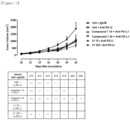
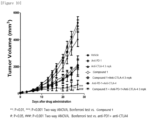
- the tumor volume on Day 15 from the drug administration was examined, it was found that the tumor volume of the group in which Compound 1 was administered in combination with the anti-PD-1 antibody had a statistically significant level of difference (i.e., p ⁇ 0.05 and p ⁇ 0.001) compared to the group in which the anti-PD-1 antibody was administered alone or the group in which Compound 1 was administered alone (see FIG. 1 ).
- mice 90 female C57BL/6 mice, which were 8 weeks old, were purchased from OrientBio, and a melanoma mouse model was prepared by the method used in the preparation of the melanoma mouse model in Example 1.1.1.
- the B16F10 cell line transplantation date was determined as Day 0, and the tumor volume was measured on Day 4.
- the mice were classified according to the mean and deviation of the tumor volume on Day 4.
- Example 1.1.1 and PBS were used as carriers to prepare a mixed solution of a mouse anti-IgG2b antibody (BioXCell) and PBS, a mixed solution of a mouse anti-PDL1 antibody (BioXCell) and PBS, a mixed solution of Compound 1 and the vehicle, and a mixed solution of LY2157299 (Chembo Pharma) and the vehicle.
- Example 1.2.2 Method for Administration, Measurement Variables, and Statistical Analysis of Study Drug
- mice classified in Example 1.2.1 were assigned to a control group (combined administration of vehicle and an anti-IgG2b antibody and PBS mixture), a vehicle and anti-PDL1 antibody administration group, a combined administration group of anti-PDL1 antibody and Compound 1 (low dose: 15 mg/kg/day, high dose: 30 mg/kg/day), or a combined administration group of anti-PDL1 antibody and LY2157299 (low dose: 75 mg/kg/day, high dose: 150 mg/kg/day), and drugs were administered from Day 4 to Day 21 from the date of B16F10 cell line transplantation, and the study was terminated on Day 22.
- a control group combined administration of vehicle and an anti-IgG2b antibody and PBS mixture
- a vehicle and anti-PDL1 antibody administration group a combined administration group of anti-PDL1 antibody and Compound 1
- a combined administration group of anti-PDL1 antibody and Compound 1 low dose: 15 mg/kg/day, high dose: 30 mg/kg/day
- mice twice a day (p.o.) + 12.5 mg/kg, Mouse anti-IgG2b antibody, twice a week (i.p.) 15 Vehicle, twice a day (p.o.) + Mouse anti-PD-L1 antibody, 12.5 mg/kg, twice a week (i.p.) 15 Mouse anti-PD-L1 antibody, 12.5 mg/kg, twice a week (i.p.) + Compound 1* 15 mg/kg/day, twice a day (p.o., 7.5 mg/kg/time) * the amount is calculated with the salt included 15 Mouse anti-PD-L1 antibody, 12.5 mg/kg, twice a week (i.p.) + Compound 1* 30 mg/kg/day, twice a day (p.o.,
- mice The tumor volume of mice was measured at intervals of 2 days from the date of drug administration, and the tumor volume was measured by autopsy at the end of the study.
- the mouse tumor volume was calculated by the same method as the tumor volume calculation method of Example 1.1.2.
- mouse weights were measured on Day 4, Day 7, Day 11, Day 14, Day 18 and Day 21 from the date of B16F10 cell line transplantation.
- Tumor volume changes and weight changes for each group were statistically analyzed using Tukey's multiple comparison after ANOVA test.
- Tukey's multiple comparison after ANOVA test When comparing tumor volumes on Day 22 from the date of B16F10 cell line transplantation, statistical significance compared to the control group in which a vehicle and anti-IgG2b antibody were administered was analyzed using Dunnett's multiple comparison after ANOVA test.
- mice 40 female C57BL/6 mice, which were 6-8 weeks old, were purchased from OrientBio, and 1 ⁇ 10 6 B16F10 cell lines (KCLB, #80008) were subcutaneously injected into the right flank of each mouse, thereby transplanting the cancer cell lines thereto.
- the B16F10 cell line transplantation date was determined as Day 0, and the tumor volume was measured on Day 9. The mice were classified according to the mean and deviation of the tumor volume on Day 9.
- a 0.9% physiological saline solution was prepared as a vehicle, and a mixed solution of a mouse anti-CTLA-4 antibody (BioXCell, clone #9D9) and PBS, and a mixed solution of Compound 1 and the vehicle were prepared as the study drug.
- Example 1.3.2 Method for Administration, Measurement Variables, and Statistical Analysis of Study Drug
- mice classified in Example 1.3.1 were assigned to a control group (vehicle oral administration), a Compound 1 oral administration group, an anti-CTLA-4 antibody intraperitoneal administration group, or a combined administration group of an anti-CTLA-4 antibody and Compound 1, and drug administration was initiated from Day 9 to Day 21 from the B16F10 cell line transplantation date, and the study was terminated on Day 22.
- the dose and administration method of the drug administered to each group are shown in Table 3 below, and when administered orally (p.o) and intraperitoneally (i.p.), the dose per individual is 5 mL/kg in the both cases.
- mice Vehicle twice a day (p.o.) 10
- Compound 1 50 mg/kg, twice a day (p.o.) 10
- Mouse anti-CTLA-4 antibody 10 mg/kg, once every three days (i.p.)
- Mouse anti-CTLA-4 antibody 10 mg/kg, once every three days (i.p.) + Compound 1, 50 mg/kg, twice a day (p.o.) 10
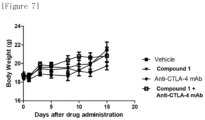
- the mouse tumor volume and weight were measured twice a week during the study period after the drug administration.
- the mouse tumor volume was calculated by the same method as the tumor volume calculation method of Example 1.1.2. Meanwhile, when the tumor volume of an individual mouse was greater than 3,000 mm 3 , the corresponding mouse was euthanized and the study was terminated.
- Tumor volume changes and weight changes for each group were statistically analyzed using Two-way ANOVA test and one-tailed t-test.
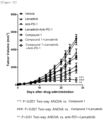
- the tumor volume on Day 15 from the drug administration was examined, it was found that the tumor volume of the group in which Compound 1 was administered in combination with the anti-CTLA-4 antibody had a statistically significant level of difference (i.e., p ⁇ 0.01) compared to the group in which the anti-CTLA-4 antibody was administered alone or the group in which Compound 1 was administered alone (see FIG. 6(b) ).
- a 0.9% physiological saline solution was prepared as a vehicle, and a mixed solution of a mouse anti-PD-1 antibody (BioXCell, clone #RMP1-14) and PBS, a mixed solution of a mouse anti-CTLA-4 antibody (BioXCell, clone #9D9) and PBS, a mixed solution of lenvatinib and the vehicle, and a mixed solution of Compound 1 and the vehicle were prepared.
- Example 2.2 Method for Administration, Measurement Variables, and Statistical Analysis of Study Drug
- mice selected in Example 2.1 were assigned to the groups listed in Table 4 below, and vehicles or drugs were administered, and drug administration was initiated on Day 7 from the cell line inoculation date, and the study was terminated on Day 27 from the drug administration date.
- the dose When administered orally (p.o) and intraperitoneally (i.p.), the dose was 5 mL/kg in the both cases.
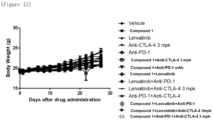
- the mouse tumor volume and weight were measured twice a week during the study period after the drug administration.
- the mouse tumor volume was calculated by the same method as the tumor volume calculation method of Example 1.1.2. Meanwhile, when the tumor volume of an individual mouse was greater than 3,000 mm 3 , the corresponding mouse was euthanized and the study was terminated.
- Tumor volume changes and weight changes for each group were statistically analyzed using Two-way ANOVA test, Bonferroni test, and one-tailed t-test.
- Example 2.3.1 Combination Administration of Compound 1 and Anti-PD-1 Antibody and Combination of Compound 1 and Anti-CTLA-4 Antibody
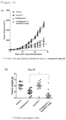
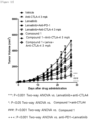
- the tumor volume of the group in which the anti-PD-1 antibody was administered in combination with Compound 1 was measured to be lower than that of the group in which the anti-PD-1 antibody was administered alone, the group in which Compound 1 was administered alone, or the control group in which the vehicle was administered (see FIG. 8(a) ).
- the tumor volume of a group in which an anti-PD-1 antibody was administered alone was 4.8% lower than the tumor volume measured in the control group
- the tumor volume of a group in which Compound 1 was administered alone was 59% lower than the tumor volume measured in the control group
- the tumor volume of the combined administration group of the anti-PD-1 antibody and Compound 1 was 77% lower than the tumor volume measured in the control group.
- the tumor weight (g) measured on Day 26 from the drug administration date was compared, it was found that the tumor weight of the group in which the anti-PD-1 antibody was in combination with Compound 1 was the smallest, and the difference in the tumor weights of the group in which Compound 1 was administered alone, and the group in which the anti-PD-1 antibody was administered in combination with Compound 1 was found to be statistically significant (see FIG. 8(b) ).
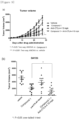
- the tumor volume of the group in which the high-dose anti-CTLA antibody was administered in combination with Compound 1 was measured to be lower than the tumor volume of the group in which the high-dose anti-CTLA antibody was administered alone, the group in which Compound 1 was administered alone, or the control group in which only the vehicle was administered over the entire study period (see FIG. 9(a) ).
- the tumor volume measured on Day 26 from the drug administration date was compared, it was found that the tumor volume of the group in which the high-dose anti-CTLA-4 antibody was administered alone was lower by 27% than the tumor volume of the control group, the tumor volume of the group in which Compound 1 was administered alone was lower by 59% than the tumor volume of the control group, and the tumor volume of the group in which the high-dose anti-CTLA-4 antibody was administered in combination with Compound 1 was lower by 77% than the tumor volume of the control group (see FIG. 9(b) ).
- the tumor volume observed in the group in which the anti-PD-1 antibody, the low-dose anti-CTLA-4 antibody, and Compound 1 were administered in combination was found to be lower than the tumor volume observed in the group in which only the vehicle was administered alone, the group in which the anti-PD-1 antibody was administered alone, the group in which the low-dose anti-CTLA-4 antibody was administered alone, the group in which Compound 1 was administered alone, the group in which the anti-PD-1 antibody was administered in combination with the high-dose anti-CTLA-4 antibody, and the group in which Compound 1 was administered in combination with the low-dose anti-CTLA-4 antibody (see FIG. 10 ).
- the tumor volume of the group in which the anti-PD-1 antibody, the low-dose anti-CTLA-4 antibody, and Compound 1 were administered in combination was lower by 88% than the tumor volume of the control group in which only the vehicle was administered, and the tumor volumes observed in the group in which the anti-PD-1 antibody was administered alone, the group in which the low-dose anti-CTLA-4 antibody was administered alone, the group in which Compound 1 was administered alone, the group in which Compound 1 was administered in combination with the low-dose anti-CTLA-4 antibody, and the group in which the anti-PD-1 antibody was administered in combination with the high-dose anti-CTLA-4 antibody was lower by 4.8%, 23%, 59%, 60%, and 63% than the tumor volume of the control group in which only the vehicle was administered, respectively (see FIG. 10 ).
- Example 2.3.2 Combination of Compound 1 and Lenvatinib or Combination of Compound 1 and Lenvatinib and Anti-PD-1 Antibody and/or Anti-CTLA-4 Antibody
- the tumor volume of the group in which lenvatinib was administered in combination with Compound 1 was measured to be lower than the tumor volume of the group in which the anti-PD-1 antibody was administered alone, the group in which lenvatinib was administered alone, the group in which Compound 1 was administered alone, the group in which lenvatinib was administered in combination with the anti-PD-1 antibody, or the control group in which only the vehicle was administered over the entire study period, and the tumor volume in which lenvatinib, Compound 1, and the anti-PD-1 antibody were administered in combination was found to be lower than the tumor volume of the group in which lenvatinib was administered in combination with Compound 1 (see FIG. 11 ).
- the tumor volume of the group in which lenvatinib, the anti-CTLA-4 antibody, and Compound 1 were administered in combination was measured to be lower than the tumor volume of each of the group in which the anti-CTLA-4 antibody was administered alone, the group in which lenvatinib was administered alone, the group in which lenvatinib was administered in combination with the anti-PD-1 antibody, the group in which lenvatinib was administered in combination with the anti-CTLA-4 antibody, and the control group over the entire study period (see FIG. 12 ).
- the drops in the tumor volume of the group in which Compound 1 was administered alone, the group in which lenvatinib was administered alone, the group in which the anti-PD-1 antibody was administered alone, the group in which the anti-CTLA-4 antibody was administered alone, the group in which lenvatinib was administered in combination with the anti-PD1 antibody, and the group in which lenvatinib was administered in combination with the anti-CTLA-4 antibody were 59%, 30%, 4.8%, 23%, 41%, and 56%, respectively, as compared to the tumor volume of the control group in which only the vehicle was administered.
- the drops in the tumor volume of the group in which lenvatinib was administered in combination with Compound 1 and the group in which lenvatinib, Compound 1, and the anti-PD-1 antibody were administered in combination were found to be 68% and 90%, respectively, as compared to the tumor volume of the control group in which only the vehicle was administered.
- the drop in the tumor volume of the group in which lenvatinib, Compound 1, and the anti-CTLA-4 antibody were administered in combination was 82% as compared to the tumor volume of the control group in which only the vehicle was administered.
- Compound 1 in combination with at least one selected from among lenvatinib, the anti-PD-1 antibody, and the anti-CTLA-4 antibody shows an anti-cancer effect superior to that of the case of using lenvatinib, the anti-PD-1 antibody, or the anti-CTLA-4 antibody alone or administering the vehicle only.
- IFN- ⁇ secretion function of T cells was measured under the condition of T cell receptor single stimulus.
- Changes in IFN- ⁇ secretion in hPBMCs were measured by treating human peripheral blood mononuclear cells (hPBMCs) only with vehicle, treating only anti-CD3 antibodies and anti-CD28 antibodies (T cell stimulants), treating only TGF- ⁇ (T cell function inhibitors), or treating lenvatinib and/or Compound 1 with TGF- ⁇ , anti-CD3 antibodies, and anti-CD28 antibodies.
- hPBMCs human peripheral blood mononuclear cells
- a 6-well plate was coated with anti-CD3 monoclonal antibodies (OKT3) at 4 °C overnight. Each well of the 6-well plate was suctioned with an antibody solution, and washed using PBS.
- hPBMCs were plated on the coated 6-well plate. In order to increase the reactivity of hPBMCs, culturing was performed for 5 days under the conditions of 37 °C, 5% carbon dioxide humidification incubator. The hPBMCs cultured for 5 days were inoculated in a 96-well plate at a concentration of 1 ⁇ 10 5 cells/well.
- the hPBMCs inoculated in the 96-well plate were treated with lenvatinib or Compound 1 and the hPBMCs were incubated for 1 hour, then TGF- ⁇ was added thereto and the hPBMCs were cultured for 1 hour.
- the hPBMCs were treated with anti-CD3 antibody/anti-CD28 antibody-coated microbeads so that the ratio of cell:beads was 2:1 and the hPBMCs were stimulated for 72 hours. After 72 hours, the supernatants were recovered and conventional IFN- ⁇ ELISA was performed. The IFN- ⁇ content generated for each group was measured. Data analysis was performed using Prism 5 (GraphPad Software, Inc.), and statistical analysis was performed using One-way ANOVA and Tukey's multiple comparison.
- the stimulus with anti-CD3 antibodies and anti-CD28 antibodies increased the secretion of IFN ⁇ in human PBMCs
- TGF- ⁇ treatment inhibited the secretion of IFN ⁇ in human PBMCs.
- treatment of lenvatinib with anti-CD3 antibodies, anti-CD28 antibodies, and TGF- ⁇ resulted in increased secretion of IFN ⁇ in human PBMCs
- treatment of Compound 1 with anti-CD3 antibodies, anti-CD28 antibodies and TGF- ⁇ resulted in increased secretion of IFN ⁇ in human PBMCs.
- lenvatinib is known to have insufficient anti-cancer effects in an endothelial cell anergy environment accompanied by a decrease in binding proteins such as VCAM-1 generated on the surface of vascular endothelial cells. Therefore, using Compound 1 in combination with lenvatinib having different mechanism of action complements and improves the anti-cancer effect of lenvatinib.
- mice 60 female BALB/C mice, 6-8 weeks old, were purchased from Vital River Laboratories Research Model and Services Company. 1 ⁇ 10 6 WEHI-164 cell lines (Murine sarcoma cells) were injected subcutaneously into the right flank of each mouse to transplant a cancer cell line. The WEHI-164 cell line transplantation date was determined as Day 0, and the tumor volume was measured on Day 7. The average tumor volume on Day 7 was found to be 53 mm 3 , and mice were selected to maintain a constant average and deviation for each group by excluding individuals having a significantly larger tumor volume or a significantly smaller tumor volume than the average tumor volume.
- WEHI-164 cell lines Manine sarcoma cells
- a 0.9% physiological saline solution was prepared as a vehicle, and a mixed solution of an anti-PD-1 antibody (BioXCell) and PBS, a mixed solution of an anti-CTLA-4 antibody (BioXCell) and PBS, and a mixed solution of Compound 1 and the vehicle were prepared as study drugs.
- Example 3.2 Method for Administration, Measurement Variables, and Statistical Analysis of Study Drugs
- mice selected in Example 3.1 were assigned to a control group, a group in which an anti-PD-1 antibody was administered, a group in which Compound 1 was administered, a group in which an anti-CTLA-4 antibody was administered, a group in which Compound 1 was administered in combination with an anti-PD-1 antibody, or a group in which Compound 1 was administered in combination with an anti-CTLA-4 antibody, respectively.
- Drugs were administered from Day 7 to Day 23 from the WEHI-164 cell line transplantation date.
- the dose and administration method of the drug administered to each group are shown in Table 5 below, and when administered orally (p.o) and intraperitoneally (i.p.), the dose was 5 mL/kg in the both cases.
- the difference in tumor volumes during the study period was statistically analyzed using one-tailed t-test, ANOVA and Tukey's multiple comparison test.
- the tumor volume of the group in which the anti-PD-1 antibody was administered in combination with Compound 1 was shown to be smaller than that of the group in which the anti-PD-1 antibody was administered alone, the group in which Compound 1 was administered alone, or the control group in which the vehicle was administered (see FIG. 14 ).
- the tumor volume of the group in which the anti-PD-1 antibody was administered alone measured on Day 16 from the drug administration initiation date was smaller by 64% than the tumor volume of the control group, and the tumor volume of the group in which Compound 1 was administered alone was smaller by 71% than the tumor volume of the control group.
- the tumor volume of the group in which the anti-PD-1 antibody was administered in combination with Compound 1 was smaller by a staggering 98% than the tumor volume of the control group, and a difference in the tumor volume between the group in which the anti-PD-1 antibody was administered in combination with Compound 1 and the group in which Compound 1 was administered alone or the group in which the anti-PD-1 antibody was administered alone was statistically significant (p ⁇ 0.05) (see FIG. 14 ).
- the complete remission rate of the tumor when the anti-CTLA-4 antibody was administered alone compared to the control group in which the vehicle was administered was 20%
- the complete remission rate of the tumor when Compound 1 was administered alone compared to the control group in which the vehicle was administered was 30%
- the complete remission rate of the tumor when the anti-CTLA-4 antibody was administered in combination with Compound 1 compared to the control group in which the vehicle was administered was 80%.
- the difference in the complete remission rate of the tumor between the group in which the anti-CTLA-4 antibody was administered in combination with Compound 1 and the group in which the anti-CTLA-4 antibody was administered alone or the group in which Compound 1 was administered alone was statistically significant (p ⁇ 0.05), and thus the combination administration of the anti-CTLA-4 antibody and Compound 1 has an excellent effect of suppressing tumor growth (see FIG. 15 ).
- mice 60 female BALB/C mice, 6-8 weeks old, were purchased from Vital River Laboratories Research Model and Services Company. 3 ⁇ 10 5 4T1 cell lines (Murine breast cancer cells) were injected subcutaneously into the right flank of each mouse to transplant a cancer cell line. The 4T1 cell line transplantation date was determined as Day 0, and the tumor volume was measured on Day 6. The average tumor volume on Day 6 was found to be 52 mm 3 , and mice were selected to maintain a constant average and deviation for each group by excluding individuals having a significantly larger tumor volume or a significantly smaller tumor volume than the average tumor size.
- a 0.9% physiological saline solution was prepared as a vehicle, and a mixed solution of an anti-PD-1 antibody (BioXCell) and PBS, a mixed solution of an anti-CTLA-4 antibody (BioXCell) and PBS, and a mixed solution of Compound 1 and the vehicle were prepared as study drugs.
- Example 4.2 Method for Administration, Measurement Variables, and Statistical Analysis of Study Drugs
- mice selected in Example 4.1 were assigned to a control group, a group in which an anti-PD-1 antibody was administered, a group in which Compound 1 was administered, a group in which an anti-CTLA-4 antibody was administered, a group in which Compound 1 was administered in combination with an anti-PD-1 antibody, or a group in which Compound 1 was administered in combination with an anti-CTLA-4 antibody, respectively.
- Drugs were administered from Day 6 to Day 30 from the 4T1 cell line transplantation date.
- the dose and administration method of the drug administered to each group are shown in Table 6 below, and when administered orally (p.o) and intraperitoneally (i.p.), the dose was 5 mL/kg in the both cases.
- the difference in tumor volumes was statistically analyzed using ANOVA and Tukey's multiple comparison test.
- the tumor volume of the group in which the anti-PD-1 antibody was administered in combination with Compound 1 was shown to be smaller than that of the group in which the anti-PD-1 antibody was administered alone, the group in which Compound 1 was administered alone, or the control group in which the vehicle was administered (see FIG. 17(a) ).
- the tumor volume of the group in which the anti-PD-1 antibody was administered alone measured on Day 23 from the cell line inoculation date was increased by 2.6% compared to the tumor volume of the control group, and the tumor volume in which Compound 1 was administered alone was reduced by 16% compared to the tumor volume of the control group (see FIG.
- the tumor volume of the group in which the anti-PD-1 antibody was administered in combination with Compound 1 was found to be reduced by a staggering 35% compared to the tumor volume of the control group, and a difference in the tumor volume between the control group and the group in which the anti-PD-1 antibody was administered in combination with Compound 1 was found to be less than 0.001 of a p-value when analyzed by using two-way ANOVA, and was found to be less than 0.01 of a p-value when analyzed by using one-way ANOVA and Tukey's multiple comparison test, resulting in a statistically significant decrease in the tumor volume compared to the control group (see FIG. 17 ).
- the tumor volume when the anti-CTLA-4 antibody was administered alone was decreased by 17%
- the tumor volume when Compound 1 was administered alone was decreased by 16% compared to the tumor volume of the control group in which the vehicle was administered
- the tumor volume of the group in which the anti-CTLA-4 antibody was administered in combination with Compound 1 was decreased by a staggering 46% compared to the tumor volume of the control group in which the vehicle was administered.
- mice C3H/HeN female mice, 7 weeks old, were purchased from OrientBio.
- 2.5 ⁇ 10 5 MBT2 cell lines (Murine bladder cancer cells) were injected subcutaneously into the right flank of each mouse to transplant a cancer cell line.
- the MBT2 cell line transplantation date was determined as Day 0, and the tumor volume was measured on Day 6.
- the average tumor volume on Day 6 was found to be 50 mm 3 , and mice were selected to maintain a constant average and deviation for each group by excluding individuals having a significantly larger tumor volume or a significantly smaller tumor volume than the average tumor size.
- A0.9% physiological saline solution was prepared as a vehicle, and a mixed solution of an anti-PD-1 antibody (BioXCell) and PBS, and a mixed solution of Compound 1 and the vehicle were prepared as study drugs.
- Example 5.2 Method for Administration, Measurement Variables, and Statistical Analysis of Study Drugs
- mice selected in Example 5.1 were assigned to a control group, a group in which an anti-PD-1 antibody was administered, a group in which Compound 1 was administered, or a group in which Compound 1 was administered in combination with an anti-PD-1 antibody, respectively.
- Drugs were administered from Day 6 to Day 28 from the MBT2 cell line transplantation date.
- the dose and administration method of the drug administered to each group are shown in Table 7 below, and when administered orally (p.o) and intraperitoneally (i.p.), the dose was 10 mL/kg in the both cases.
- mice Vehicle twice a day (p.o.) 12 Compound 1, 15 mg/kg, twice a day (p.o.) 11 Mouse anti-PD-1 antibody, 12.5 mg/kg, twice a week (i.p.) 9 Mouse anti-PD-1 antibody, 12.5 mg/kg, twice a week (i.p.) + Compound 1, 50 mg/kg, twice a day (p.o.) 13
- the mouse tumor volume and weight were measured three times a week during the study period after the drug administration.
- the tumor volume was measured by the same method as the method for measuring the tumor volume in Example 1.1.2. Meanwhile, when the tumor volume of individual mice is greater than 1,500 mm 3 or is just before the moribund state due to deterioration of health, the mouse was euthanized and the study was terminated, and when the tumor volume was less than 1/4 of the tumor volume of the euthanasia criteria, it was classified as a responder to the drug.
- Survival rates were calculated using the date of death of individual mice or the date of euthanasia in which the tumor volume of individual mice is greater than 1,500 mm 3 , and the significant difference in survival rates was analyzed by using Kaplan-Meier survival curve (survival curve) analysis (Prism 5.0).
- a 0.9% physiological saline solution was prepared as a vehicle, and a mixed solution of a mouse anti-CTLA-4 antibody and PBS, a mixed solution of a mouse anti-PD-1 antibody and PBS, a mixed solution of the vehicle and lenvatinib, and a mixed solution of Compound 1 and the vehicle were prepared.
- mice Female C57BL/6 mice, 6-8 weeks old, were purchased, and 3 ⁇ 10 6 U14 cell lines were subcutaneously injected into the flank of each mouse to transplant a cancer cell line.
- the U14 cell line transplantation date was determined as Day 0, and the tumor size was measured on Day 7, and mice were classified so that there is no difference between the deviations in the average tumor volume of 50 mm 3 on Day 7 for each group.
- the classified mice were assigned to the groups listed in Table 9 below, and vehicles or drugs were administered, and the drug administration was initiated on Day 7 from the cell line inoculation date, and the study was terminated on Day 27 from the drug administration initiation date, and when administered orally (p.o) and intraperitoneally (i.p.) the administration volume was 5 mL/kg in the both cases.
- the mouse tumor volume and weight were measured twice a week during the study period after the drug administration.
- the mouse tumor volume was calculated by the same method as the tumor volume calculation method of Example 1.1.2. Meanwhile, when the tumor volume of an individual mouse was greater than 3,000 mm 3 , the corresponding mouse was euthanized and the study was terminated.
- A0.9% physiological saline solution was prepared as a vehicle, and a mixed solution of a mouse anti-CTLA-4 antibody and PBS, a mixed solution of a mouse anti-PD-1 antibody and PBS, a mixed solution of the vehicle and lenvatinib, and a mixed solution of Compound 1 and the vehicle were prepared.
- mice Female C57BL/6 mice, 6-8 weeks old, were purchased, and 3 ⁇ 10 6 MOC1 cell lines were subcutaneously injected into the flank of each mouse to transplant a cancer cell line.
- the MOC1 cell line transplantation date was determined as Day 0, and the tumor size was measured on Day 7, and mice were classified so that there is no difference between the deviations in the average tumor volume of 50 mm 3 on Day 7 for each group.
- mice were assigned to the groups listed in Table 10 below, and vehicles or drugs were administered, and the drug administration was initiated on Day 7 from the cell line inoculation date, and the study was terminated on Day 27 from the drug administration initiation date, and when administered orally (p.o) and intraperitoneally (i.p.) the administration volume was 5 mL/kg in the both cases.
- the mouse tumor volume and weight were measured twice a week during the study period after the drug administration.
- the mouse tumor volume was calculated by the same method as the tumor volume calculation method of Example 1.1.2. Meanwhile, when the tumor volume of an individual mouse was greater than 3,000 mm 3 , the corresponding mouse was euthanized and the study was terminated.
- a 0.9% physiological saline solution was prepared as a vehicle, and a mixed solution of a mouse anti-CTLA-4 antibody and PBS, a mixed solution of a mouse anti-PD-1 antibody and PBS, a mixed solution of the vehicle and lenvatinib, and a mixed solution of Compound 1 and the vehicle were prepared.
- H22 cell lines Mitine liver cancer cell line
- mice Female BALB/6 mice, 6-8 weeks old, were purchased, and 1 ⁇ 10 6 H22 cell lines (Murine liver cancer cell line) were subcutaneously injected into the flank of each mouse to transplant a cancer cell line.
- the H22 cell line transplantation date was determined as Day 0, and the tumor size was measured on Day 7, and mice were classified so that there is no difference between the deviations in the average tumor volume of 50 mm 3 on Day 7 for each group.
- mice were assigned to the groups listed in Table 11 below, and vehicles or drugs were administered, and the drug administration was initiated on Day 7 from the cell line inoculation date, and the study was terminated on Day 27 from the drug administration initiation date, and when administered orally (p.o) and intraperitoneally (i.p.) the administration volume was 5 mL/kg in the both cases.
- the mouse tumor volume and weight were measured twice a week during the study period after the drug administration.
- the mouse tumor volume was calculated by the same method as the tumor volume calculation method of Example 1.1.2. Meanwhile, when the tumor volume of an individual mouse was greater than 3,000 mm 3 , the corresponding mouse was euthanized and the study was terminated.
Landscapes
- Health & Medical Sciences (AREA)
- Chemical & Material Sciences (AREA)
- Life Sciences & Earth Sciences (AREA)
- Medicinal Chemistry (AREA)
- General Health & Medical Sciences (AREA)
- Pharmacology & Pharmacy (AREA)
- Veterinary Medicine (AREA)
- Public Health (AREA)
- Animal Behavior & Ethology (AREA)
- Epidemiology (AREA)
- Immunology (AREA)
- Organic Chemistry (AREA)
- Chemical Kinetics & Catalysis (AREA)
- Nuclear Medicine, Radiotherapy & Molecular Imaging (AREA)
- General Chemical & Material Sciences (AREA)
- Biochemistry (AREA)
- Genetics & Genomics (AREA)
- Biophysics (AREA)
- Molecular Biology (AREA)
- Proteomics, Peptides & Aminoacids (AREA)
- Engineering & Computer Science (AREA)
- Bioinformatics & Cheminformatics (AREA)
- Microbiology (AREA)
- Mycology (AREA)
- Pharmaceuticals Containing Other Organic And Inorganic Compounds (AREA)
- Medicines That Contain Protein Lipid Enzymes And Other Medicines (AREA)
- Medicines Containing Antibodies Or Antigens For Use As Internal Diagnostic Agents (AREA)
Applications Claiming Priority (2)
| Application Number | Priority Date | Filing Date | Title |
|---|---|---|---|
| KR20210099500 | 2021-07-28 | ||
| PCT/KR2022/011149 WO2023008936A1 (fr) | 2021-07-28 | 2022-07-28 | Composition pharmaceutique pour la prévention ou le traitement d'une tumeur et utilisation correspondante |
Publications (2)
| Publication Number | Publication Date |
|---|---|
| EP4378460A1 true EP4378460A1 (fr) | 2024-06-05 |
| EP4378460A4 EP4378460A4 (fr) | 2025-08-06 |
Family
ID=85087969
Family Applications (1)
| Application Number | Title | Priority Date | Filing Date |
|---|---|---|---|
| EP22849912.5A Pending EP4378460A4 (fr) | 2021-07-28 | 2022-07-28 | Composition pharmaceutique pour la prévention ou le traitement d'une tumeur et utilisation correspondante |
Country Status (7)
| Country | Link |
|---|---|
| US (1) | US20240342166A1 (fr) |
| EP (1) | EP4378460A4 (fr) |
| JP (1) | JP2024527978A (fr) |
| KR (1) | KR20230017756A (fr) |
| CN (1) | CN117999077A (fr) |
| CA (1) | CA3227334A1 (fr) |
| WO (1) | WO2023008936A1 (fr) |
Family Cites Families (9)
| Publication number | Priority date | Publication date | Assignee | Title |
|---|---|---|---|---|
| WO2011056494A1 (fr) * | 2009-10-26 | 2011-05-12 | Genentech, Inc. | Combinaisons d'antagonistes de la kinase-1 du type récepteur de l'activine et d'antagonistes vegfr3 |
| AU2012281281B2 (en) | 2011-07-13 | 2017-06-01 | Tiumbio Co., Ltd | 2-pyridyl substituted imidazoles as ALK5 and/or ALK4 inhibitors |
| PL3102605T3 (pl) * | 2014-02-04 | 2019-06-28 | Pfizer Inc. | Połączenie antagonisty pd-1 i inhibitora vegfr do leczenia nowotworu |
| EA037112B1 (ru) * | 2015-03-02 | 2021-02-08 | Ригель Фармасьютикалс, Инк. | Ингибиторы tgf- |
| KR20160120157A (ko) * | 2015-04-07 | 2016-10-17 | 주식회사 메드팩토 | 암 예방 또는 치료용 약학적 조성물 및 이를 이용한 방법 |
| IL300122A (en) | 2015-11-18 | 2023-03-01 | Merck Sharp ַ& Dohme Llc | Substances that bind to PD1 and/or LAG3 |
| TW201923089A (zh) * | 2017-11-06 | 2019-06-16 | 美商建南德克公司 | 癌症之診斷及治療方法 |
| CN111655288A (zh) * | 2017-11-16 | 2020-09-11 | 诺华股份有限公司 | 组合疗法 |
| CA3166328A1 (fr) * | 2020-01-11 | 2021-07-15 | Scholar Rock, Inc. | Inhibiteurs de tgf-beta et leur utilisation |
-
2022
- 2022-07-28 CA CA3227334A patent/CA3227334A1/fr active Pending
- 2022-07-28 WO PCT/KR2022/011149 patent/WO2023008936A1/fr not_active Ceased
- 2022-07-28 JP JP2024504990A patent/JP2024527978A/ja active Pending
- 2022-07-28 KR KR1020220094192A patent/KR20230017756A/ko active Pending
- 2022-07-28 US US18/292,228 patent/US20240342166A1/en active Pending
- 2022-07-28 CN CN202280064928.9A patent/CN117999077A/zh active Pending
- 2022-07-28 EP EP22849912.5A patent/EP4378460A4/fr active Pending
Also Published As
| Publication number | Publication date |
|---|---|
| CA3227334A1 (fr) | 2023-02-02 |
| US20240342166A1 (en) | 2024-10-17 |
| KR20230017756A (ko) | 2023-02-06 |
| WO2023008936A1 (fr) | 2023-02-02 |
| JP2024527978A (ja) | 2024-07-26 |
| EP4378460A4 (fr) | 2025-08-06 |
| CN117999077A (zh) | 2024-05-07 |
Similar Documents
| Publication | Publication Date | Title |
|---|---|---|
| CN116234931B (zh) | 对nectin-4具有特异性的双环缀合物及其用途 | |
| AU2025242155A1 (en) | Preservation of immune response during chemotherapy regimens | |
| CA2867174C (fr) | Traitement du cancer avec des inhibiteurs de la kinase tor | |
| AU2013202993B2 (en) | Treatment of cancer with TOR kinase inhibitors | |
| MXPA06014015A (es) | Tratamiento con gemcitabina y un inhibidor del receptor del factor de crecimiento epidermico. | |
| KR20150038593A (ko) | 교모세포종의 치료를 위한 조합 요법 | |
| US20150044220A1 (en) | Co-use of a clusterin inhibitor with an egfr inhibitor to treat cancer | |
| US20220072003A1 (en) | Organic compounds | |
| AU2014254058A1 (en) | Combination therapy comprising a Dihydropyrazino-Pyrazine Compound and an androgen receptor antagonist for treating prostate cancer | |
| MXPA06014002A (es) | Tratamiento con cisplatina y un inhibidor de cinasa del receptor del factor de crecimiento epidermico (egfr). | |
| JP2012211158A (ja) | 細胞外アンタゴニストおよび細胞内アンタゴニストによる受容体チロシンキナーゼの抑制方法 | |
| JP2011504926A (ja) | Egfrキナーゼ阻害剤とc−kit阻害剤による併用治療 | |
| EP4378460A1 (fr) | Composition pharmaceutique pour la prévention ou le traitement d'une tumeur et utilisation correspondante | |
| WO2021209633A1 (fr) | Procédés et formulations pour l'administration d'inhibiteurs a2a de dérivés de thiocarbamate | |
| US20230233546A1 (en) | Methods of treating cancer | |
| US20260061031A1 (en) | Methods and pharmaceutical compositions for the treatment of dilated cardiomyopathy | |
| EP4115902A1 (fr) | Utilisation combinée de ctb006 et de ponatinib | |
| JP2024515100A (ja) | 特定のhdac6阻害剤及び、少なくとも一つのctla4チェクポイント阻害剤を含む組合せ | |
| WO2026039718A1 (fr) | Traitement du cancer à l'aide de 5,6-dihydro-4h-benzo[dé] quinoléine-camptothécine | |
| US20230404998A1 (en) | Combination Therapies for Treating Cancer | |
| KR20250000043A (ko) | 나노입자, 이의 제조 방법 및 이를 포함하는 암의 예방 또는 치료용 약학 조성물 | |
| KR20250025627A (ko) | 대상체의 종양을 치료하는 방법 | |
| AU2012318272B2 (en) | Treatment of cancer with TOR kinase inhibitors | |
| WO2024231875A1 (fr) | Inhibiteur de hpk1 destiné à être utilisé dans le traitement du cancer | |
| CN115429882A (zh) | 伤害性感觉神经细胞调控药物的用途 |
Legal Events
| Date | Code | Title | Description |
|---|---|---|---|
| STAA | Information on the status of an ep patent application or granted ep patent |
Free format text: STATUS: THE INTERNATIONAL PUBLICATION HAS BEEN MADE |
|
| PUAI | Public reference made under article 153(3) epc to a published international application that has entered the european phase |
Free format text: ORIGINAL CODE: 0009012 |
|
| STAA | Information on the status of an ep patent application or granted ep patent |
Free format text: STATUS: REQUEST FOR EXAMINATION WAS MADE |
|
| 17P | Request for examination filed |
Effective date: 20240220 |
|
| AK | Designated contracting states |
Kind code of ref document: A1 Designated state(s): AL AT BE BG CH CY CZ DE DK EE ES FI FR GB GR HR HU IE IS IT LI LT LU LV MC MK MT NL NO PL PT RO RS SE SI SK SM TR |
|
| DAV | Request for validation of the european patent (deleted) | ||
| DAX | Request for extension of the european patent (deleted) | ||
| REG | Reference to a national code |
Ref country code: DE Ref legal event code: R079 Free format text: PREVIOUS MAIN CLASS: A61K0031444000 Ipc: A61K0031437000 |
|
| A4 | Supplementary search report drawn up and despatched |
Effective date: 20250707 |
|
| RIC1 | Information provided on ipc code assigned before grant |
Ipc: A61K 31/437 20060101AFI20250701BHEP Ipc: A61K 31/444 20060101ALI20250701BHEP Ipc: A61K 31/47 20060101ALI20250701BHEP Ipc: A61K 31/4709 20060101ALI20250701BHEP Ipc: A61K 31/498 20060101ALI20250701BHEP Ipc: A61K 39/395 20060101ALI20250701BHEP Ipc: A61K 45/06 20060101ALI20250701BHEP Ipc: A61P 35/00 20060101ALI20250701BHEP |