EP4385522A1 - Antikörper-wirkstoff-konjugat auf basis eines mikrotubuli-inhibitors - Google Patents
Antikörper-wirkstoff-konjugat auf basis eines mikrotubuli-inhibitors Download PDFInfo
- Publication number
- EP4385522A1 EP4385522A1 EP22855468.9A EP22855468A EP4385522A1 EP 4385522 A1 EP4385522 A1 EP 4385522A1 EP 22855468 A EP22855468 A EP 22855468A EP 4385522 A1 EP4385522 A1 EP 4385522A1
- Authority
- EP
- European Patent Office
- Prior art keywords
- compound
- pharmaceutically acceptable
- acceptable salt
- stereoisomer
- antibody
- Prior art date
- Legal status (The legal status is an assumption and is not a legal conclusion. Google has not performed a legal analysis and makes no representation as to the accuracy of the status listed.)
- Withdrawn
Links
Images
Classifications
-
- A—HUMAN NECESSITIES
- A61—MEDICAL OR VETERINARY SCIENCE; HYGIENE
- A61K—PREPARATIONS FOR MEDICAL, DENTAL OR TOILETRY PURPOSES
- A61K47/00—Medicinal preparations characterised by the non-active ingredients used, e.g. carriers or inert additives; Targeting or modifying agents chemically bound to the active ingredient
- A61K47/50—Medicinal preparations characterised by the non-active ingredients used, e.g. carriers or inert additives; Targeting or modifying agents chemically bound to the active ingredient the non-active ingredient being chemically bound to the active ingredient, e.g. polymer-drug conjugates
- A61K47/51—Medicinal preparations characterised by the non-active ingredients used, e.g. carriers or inert additives; Targeting or modifying agents chemically bound to the active ingredient the non-active ingredient being chemically bound to the active ingredient, e.g. polymer-drug conjugates the non-active ingredient being a modifying agent
- A61K47/68—Medicinal preparations characterised by the non-active ingredients used, e.g. carriers or inert additives; Targeting or modifying agents chemically bound to the active ingredient the non-active ingredient being chemically bound to the active ingredient, e.g. polymer-drug conjugates the non-active ingredient being a modifying agent the modifying agent being an antibody, an immunoglobulin or a fragment thereof, e.g. an Fc-fragment
- A61K47/6835—Medicinal preparations characterised by the non-active ingredients used, e.g. carriers or inert additives; Targeting or modifying agents chemically bound to the active ingredient the non-active ingredient being chemically bound to the active ingredient, e.g. polymer-drug conjugates the non-active ingredient being a modifying agent the modifying agent being an antibody, an immunoglobulin or a fragment thereof, e.g. an Fc-fragment the modifying agent being an antibody or an immunoglobulin bearing at least one antigen-binding site
- A61K47/6849—Medicinal preparations characterised by the non-active ingredients used, e.g. carriers or inert additives; Targeting or modifying agents chemically bound to the active ingredient the non-active ingredient being chemically bound to the active ingredient, e.g. polymer-drug conjugates the non-active ingredient being a modifying agent the modifying agent being an antibody, an immunoglobulin or a fragment thereof, e.g. an Fc-fragment the modifying agent being an antibody or an immunoglobulin bearing at least one antigen-binding site the antibody targeting a receptor, a cell surface antigen or a cell surface determinant
-
- A—HUMAN NECESSITIES
- A61—MEDICAL OR VETERINARY SCIENCE; HYGIENE
- A61K—PREPARATIONS FOR MEDICAL, DENTAL OR TOILETRY PURPOSES
- A61K47/00—Medicinal preparations characterised by the non-active ingredients used, e.g. carriers or inert additives; Targeting or modifying agents chemically bound to the active ingredient
- A61K47/50—Medicinal preparations characterised by the non-active ingredients used, e.g. carriers or inert additives; Targeting or modifying agents chemically bound to the active ingredient the non-active ingredient being chemically bound to the active ingredient, e.g. polymer-drug conjugates
- A61K47/51—Medicinal preparations characterised by the non-active ingredients used, e.g. carriers or inert additives; Targeting or modifying agents chemically bound to the active ingredient the non-active ingredient being chemically bound to the active ingredient, e.g. polymer-drug conjugates the non-active ingredient being a modifying agent
- A61K47/62—Medicinal preparations characterised by the non-active ingredients used, e.g. carriers or inert additives; Targeting or modifying agents chemically bound to the active ingredient the non-active ingredient being chemically bound to the active ingredient, e.g. polymer-drug conjugates the non-active ingredient being a modifying agent the modifying agent being a protein, peptide or polyamino acid
- A61K47/65—Peptidic linkers, binders or spacers, e.g. peptidic enzyme-labile linkers
-
- A—HUMAN NECESSITIES
- A61—MEDICAL OR VETERINARY SCIENCE; HYGIENE
- A61K—PREPARATIONS FOR MEDICAL, DENTAL OR TOILETRY PURPOSES
- A61K47/00—Medicinal preparations characterised by the non-active ingredients used, e.g. carriers or inert additives; Targeting or modifying agents chemically bound to the active ingredient
- A61K47/50—Medicinal preparations characterised by the non-active ingredients used, e.g. carriers or inert additives; Targeting or modifying agents chemically bound to the active ingredient the non-active ingredient being chemically bound to the active ingredient, e.g. polymer-drug conjugates
- A61K47/51—Medicinal preparations characterised by the non-active ingredients used, e.g. carriers or inert additives; Targeting or modifying agents chemically bound to the active ingredient the non-active ingredient being chemically bound to the active ingredient, e.g. polymer-drug conjugates the non-active ingredient being a modifying agent
- A61K47/68—Medicinal preparations characterised by the non-active ingredients used, e.g. carriers or inert additives; Targeting or modifying agents chemically bound to the active ingredient the non-active ingredient being chemically bound to the active ingredient, e.g. polymer-drug conjugates the non-active ingredient being a modifying agent the modifying agent being an antibody, an immunoglobulin or a fragment thereof, e.g. an Fc-fragment
- A61K47/6801—Drug-antibody or immunoglobulin conjugates defined by the pharmacologically or therapeutically active agent
- A61K47/6803—Drugs conjugated to an antibody or immunoglobulin, e.g. cisplatin-antibody conjugates
-
- A—HUMAN NECESSITIES
- A61—MEDICAL OR VETERINARY SCIENCE; HYGIENE
- A61K—PREPARATIONS FOR MEDICAL, DENTAL OR TOILETRY PURPOSES
- A61K47/00—Medicinal preparations characterised by the non-active ingredients used, e.g. carriers or inert additives; Targeting or modifying agents chemically bound to the active ingredient
- A61K47/50—Medicinal preparations characterised by the non-active ingredients used, e.g. carriers or inert additives; Targeting or modifying agents chemically bound to the active ingredient the non-active ingredient being chemically bound to the active ingredient, e.g. polymer-drug conjugates
- A61K47/51—Medicinal preparations characterised by the non-active ingredients used, e.g. carriers or inert additives; Targeting or modifying agents chemically bound to the active ingredient the non-active ingredient being chemically bound to the active ingredient, e.g. polymer-drug conjugates the non-active ingredient being a modifying agent
- A61K47/68—Medicinal preparations characterised by the non-active ingredients used, e.g. carriers or inert additives; Targeting or modifying agents chemically bound to the active ingredient the non-active ingredient being chemically bound to the active ingredient, e.g. polymer-drug conjugates the non-active ingredient being a modifying agent the modifying agent being an antibody, an immunoglobulin or a fragment thereof, e.g. an Fc-fragment
- A61K47/6835—Medicinal preparations characterised by the non-active ingredients used, e.g. carriers or inert additives; Targeting or modifying agents chemically bound to the active ingredient the non-active ingredient being chemically bound to the active ingredient, e.g. polymer-drug conjugates the non-active ingredient being a modifying agent the modifying agent being an antibody, an immunoglobulin or a fragment thereof, e.g. an Fc-fragment the modifying agent being an antibody or an immunoglobulin bearing at least one antigen-binding site
- A61K47/6851—Medicinal preparations characterised by the non-active ingredients used, e.g. carriers or inert additives; Targeting or modifying agents chemically bound to the active ingredient the non-active ingredient being chemically bound to the active ingredient, e.g. polymer-drug conjugates the non-active ingredient being a modifying agent the modifying agent being an antibody, an immunoglobulin or a fragment thereof, e.g. an Fc-fragment the modifying agent being an antibody or an immunoglobulin bearing at least one antigen-binding site the antibody targeting a determinant of a tumour cell
- A61K47/6855—Medicinal preparations characterised by the non-active ingredients used, e.g. carriers or inert additives; Targeting or modifying agents chemically bound to the active ingredient the non-active ingredient being chemically bound to the active ingredient, e.g. polymer-drug conjugates the non-active ingredient being a modifying agent the modifying agent being an antibody, an immunoglobulin or a fragment thereof, e.g. an Fc-fragment the modifying agent being an antibody or an immunoglobulin bearing at least one antigen-binding site the antibody targeting a determinant of a tumour cell the tumour determinant being from breast cancer cell
-
- A—HUMAN NECESSITIES
- A61—MEDICAL OR VETERINARY SCIENCE; HYGIENE
- A61K—PREPARATIONS FOR MEDICAL, DENTAL OR TOILETRY PURPOSES
- A61K47/00—Medicinal preparations characterised by the non-active ingredients used, e.g. carriers or inert additives; Targeting or modifying agents chemically bound to the active ingredient
- A61K47/50—Medicinal preparations characterised by the non-active ingredients used, e.g. carriers or inert additives; Targeting or modifying agents chemically bound to the active ingredient the non-active ingredient being chemically bound to the active ingredient, e.g. polymer-drug conjugates
- A61K47/51—Medicinal preparations characterised by the non-active ingredients used, e.g. carriers or inert additives; Targeting or modifying agents chemically bound to the active ingredient the non-active ingredient being chemically bound to the active ingredient, e.g. polymer-drug conjugates the non-active ingredient being a modifying agent
- A61K47/68—Medicinal preparations characterised by the non-active ingredients used, e.g. carriers or inert additives; Targeting or modifying agents chemically bound to the active ingredient the non-active ingredient being chemically bound to the active ingredient, e.g. polymer-drug conjugates the non-active ingredient being a modifying agent the modifying agent being an antibody, an immunoglobulin or a fragment thereof, e.g. an Fc-fragment
- A61K47/6889—Conjugates wherein the antibody being the modifying agent and wherein the linker, binder or spacer confers particular properties to the conjugates, e.g. peptidic enzyme-labile linkers or acid-labile linkers, providing for an acid-labile immuno conjugate wherein the drug may be released from its antibody conjugated part in an acidic, e.g. tumoural or environment
-
- A—HUMAN NECESSITIES
- A61—MEDICAL OR VETERINARY SCIENCE; HYGIENE
- A61P—SPECIFIC THERAPEUTIC ACTIVITY OF CHEMICAL COMPOUNDS OR MEDICINAL PREPARATIONS
- A61P35/00—Antineoplastic agents
-
- C—CHEMISTRY; METALLURGY
- C07—ORGANIC CHEMISTRY
- C07K—PEPTIDES
- C07K16/00—Immunoglobulins [IG], e.g. monoclonal or polyclonal antibodies
- C07K16/18—Immunoglobulins [IG], e.g. monoclonal or polyclonal antibodies against material from animals or humans
- C07K16/28—Immunoglobulins [IG], e.g. monoclonal or polyclonal antibodies against material from animals or humans against receptors, cell surface antigens or cell surface determinants
- C07K16/30—Immunoglobulins [IG], e.g. monoclonal or polyclonal antibodies against material from animals or humans against receptors, cell surface antigens or cell surface determinants from tumour cells
Definitions
- the present disclosure relates to an antibody-drug conjugate (ADC) that binds a human oncology antigen target and/or provides anti-tubulin drug activity.
- ADC antibody-drug conjugate
- the present disclosure further relates to a method and composition for treating a cancer that express a tumor antigen target and/or is treatable by disrupting tubulin.
- ADCs antibody-drug conjugates obtained by conjugating monoclonal antibodies to toxin small molecules have become a hot spot in targeted tumor therapy.
- An antibody-drug conjugate (ADC) is obtained by linking a biologically active small molecule drug to a monoclonal antibody via a chemical linkage. The monoclonal antibody serves as a vector to transfer the small molecule drug into a target cell.
- Research on ADCs can be traced back to the 1980s, but it was not until 2000 that the first ADC (trade name: Mylotarg, developed by Pfizer) was approved by the FDA for the treatment of acute myeloid leukemia, and was withdrawn from the market in 2010 due to fatal toxicity caused by immature technology.
- An ADC consists of an antibody, a small molecule toxin and a linker.
- the small molecule toxin is covalently conjugated to the antibody via the linker.
- the antibody (such as a monoclonal antibody) can specifically recognize a specific target on the surface of tumor cells and can then guide the ADC to the surface of cancer cells, allowing the ADC to enter the cells by endocytosis and kill the cells.
- Small molecule toxins used for ADCs comprise two categories: DNA damaging agents and microtubule inhibitors.
- the former includes camptothecins, and the latter includes aplysiatoxin and its auristatins (MMAE, MMAF, MMAD), as well as maytansine and maytansinoids (DM1, DM2, DM3, DM4).
- MMAE aplysiatoxin and its auristatins
- DM1, DM2, DM3, DM4 maytansine and maytansinoids
- the small molecule toxin used in this ADC is eribulin.
- Eribulin is a tubulin polymerization inhibitor. It is a synthetic analog of halichondrin B.
- Halichondrin B is a substance discovered from black sponges growing along the coast of Japan. It was first approved by the US FDA in 2010 for the treatment of metastatic breast cancer and can effectively cure tumors. This drug is the only single-agent chemotherapy drug available. In addition to its very significant therapeutic effect on metastatic breast cancer, eribulin can be used for multiple indications, so there is huge room for its late-stage development, and it is a drug with great ADC development value.
- One of the most common linking sites on antibodies used for conjugation in ADC is lysine, and its ⁇ -amino group can react with the activated carboxyl group of the linker to form an amide bond.
- amide bonds are prone to hydrolysis under the action of enzymes in the body, causing the bioactive molecules and antibodies to fall off before they reach the target cells. This results in the loss of ADC targeting and increased toxicity.
- Another common linking site is a cysteine residue.
- the thiol groups of antibody cysteine all exist in the form of disulfide bonds. By opening the disulfide bonds in the antibody, multiple free thiol groups as conjugating sites can be provided.
- one method is to have a Michael addition reaction between the free thiol group in the antibody and maleimide, or it can also be implemented by two Michael addition reactions between a specific substrate and the free thiol group in the antibody to form a sulfur bridge having a unique structure.
- the Michael reaction turns in reverse Michael addition in the systemic circulation, resulting in premature shedding of toxins and toxic reactions.
- the small molecule toxin eribulin is at least 10 times more toxic than DNA-damaging toxoids such as camptothecin derivatives. Therefore, in development of an ADC based on eribulin, it is even more important to consider its safety. At present, there are few modifications and innovations based on the reactive groups of ADC antibody linking sites, and especially for the development of ADC linkers to eribulin, there is still a lot of room. That is, there is still a need in this field to improve the reactive groups of the linking sites to obtain ADCs with smaller off-target effects and higher effectiveness.
- the present disclosure provides an antibody-drug conjugate (ADC) with the effect of inhibiting tumor cells.
- the ADC has an improved linker moiety, which has an antibody conjugating reaction group that is not easily cleaved, and a more specific enzyme cleavage site than an acid-base sensitive linker, thereby increasing the blood flow stability of the ADC and reducing off-target effects.
- it has the ability to quickly and specifically release small molecule toxins after reaching the tumor site and has high conjugating efficiency and high drug loading capacity (the DAR is between 5 and 8).
- the DAR is between 5 and 8.
- L 3 is selected from GGFG,VEC, and VC.
- R 1 is -(CH 2 ) a -. In some embodiments, R 1 is -(CH 2 CH 2 O) b -(CH 2 ) c -. In some embodiments, R 1 is -CH 2 CH 2 -(OCH 2 CH 2 ) b -NH-(CO)-CH 2 -O-CH 2 -.
- L 2 is a single bond. In some embodiments, L 2 is -NH-R 1 -(CO)-.
- L 3 is GGFG. In some embodiments, L 3 is VEC. In some embodiments, L 3 is VC.
- L 4 is -NH-CH 2 -. In some embodiments, L 4 is a single bond. In some embodiments, L 4 is
- L 1 is L 2 is -NH-R 1 -(CO)-, R 1 is -(CH 2 ) a -, and a is 2, 3, 4, 5 or 6.
- L 1 is L 2 is -NH-R 1 -(CO)-, R 1 is - (CH 2 CH 2 O) b -(CH 2 ) c -, b is 2, 3, 4, 5, 6
- L 1 is L 2 is a single bond.
- L 1 is L 2 is -NH-R 1 -(CO)-, R 1 is - CH 2 CH 2 -(OCH 2 CH 2 ) b -NH-(CO)-CH 2 -O
- L 1 -L 2 is wherein L 2 is -R 1 -(CO)-, R 1 is -CH 2 CH 2 -(OCH 2 CH 2 ) b -NH-(CO)-CH 2 -O-CH 2 -; In some embodiments, b is 2, 3, 4, 5, 6, 7 or 8.
- L 1 is L 2 is -NH-R 1 -(CO)-, R 1 is -(CH 2 ) a -, a is 2, 3, 4, 5 or 6, and L 3 is GGFG.
- L 1 is L 2 is -NH-R 1 -(CO)-, R 1 is - (CH 2 CH 2 O) b -(CH 2 ) c -, b is 2, 3, 4, 5, 6, 7 or 8, cis 1 or 2, and L 3 is GGFG or EVC.
- L 1 is L 2 is a single bond
- L 3 is GGFG.
- L 1 is L 2 is -NH-R 1 -(CO)-, R 1 is - CH 2 CH 2 -(OCH 2 CH 2 ) b -NH-(CO)-CH 2 -O-CH 2 -, b is 2, 3, 4, 5, 6, 7 or 8, and L 3 is EVC.
- L 1 -L 2 is wherein L 2 is - R 1 -(CO)-, R 1 is -CH 2 CH 2 -(OCH 2 CH 2 ) b -NH-(CO)-CH 2 -O-CH 2 -, b is 2, 3, 4, 5, 6, 7 or 8, and L 3 is EVC.
- L 1 is L 2 is a single bond
- L 3 is VC or GGFG.
- L 2 is selected from the group consisting of a single bond
- L 1 -L 2 is
- L 3 is GGFG
- L 4 is a single bond
- L 3 is GGFG
- L 4 is -NH-CH 2 -.
- L 3 is EVC
- L 4 is EVC
- L 3 is GGFG
- L 4 is
- D is eribulin or its derivative. In some embodiments, D is selected from the group consisting of and
- L 4 is -NH-CH 2 -, and D is d1.
- L 4 is -NH-CH 2 -, and D is d2.
- L 4 is -NH-CH 2 -, and D is d3.
- L 4 is a single bond
- D is d2.
- L 4 is and D is d2.
- the compound of formula (I) is selected from:
- the compound of formula (I) can be used as a connector-drug intermediate compound for the synthesis of an antibody-drug conjugate. Therefore, in the second aspect of the present disclosure, provided is an antibody-drug conjugate, a pharmaceutically acceptable salt thereof, a stereoisomer thereof, or a solvate of the conjugate, the pharmaceutically acceptable salt of the conjugate or the stereoisomer of the conjugate, which can be formed by linking a targeting moiety to the compound of formula (I) via a thioether linkage.
- the antibody-drug conjugate has a structure of formula (II) Ab-(S-L 1 -L 2 -L 3 -L 4 -D) p (II)
- the Ab targeting moiety is an antibody, an antibody fragment, a bispecific or other multivalent antibody, or other antibody-based molecule or compound.
- the antibody may be of various isotypes, preferably human IgGl, IgG2, IgG3 or IgG4, and more preferably comprise human IgGl hinges and constant region sequences.
- the antibody or a fragment thereof may be a chimeric human-mouse, chimeric human-primate, humanized (human framework and mouse hypervariable (CDR) regions) or fully human antibody and variants thereof, such as half-IgG4 antibodies (referred to as "monoclonal antibodies”) as described by van der Neut Kolfschoten et al. (Science 2007; 317:1554-1557 ).
- the antibody or the fragment thereof can be designed or selected to comprise human constant region sequences belonging to a specific allotype, which can result in reduced immunogenicity when the antibody or an immunoconjugate thereof is administered to a human subject.
- a preferred allotype for administration includes a non-G1m1 allotype (nG1m1), such as G1m3, G1m3,1, G1m3,2 or G1m3,1,2. More preferably, the allotype is selected from the group consisting of allotypes of nG1m1, G1m3, nG1m1,2, and Km3.
- a suitable antibody may bind to any disease-associated antigen known in the art.
- the disease state is a cancer
- many antigens expressed by or otherwise associated with tumor cells are known in the art, including but not limited to carbonic anhydrase IX, alpha-fetoprotein (AFP), ⁇ -actinin-4, A3, antigens specific for A33 antibody, ART-4, B7, Ba 733, BAGE, BrE3 antigen, CA125, CAMEL, CAP-1, CASP-8/m, CCL19, CCL21, CD1, CD1a, CD2, CD3, CD4, CD5, CD8, CD11A, CD14, CD15, CD16, CD18, CD19, CD20, CD21, CD22, CD23, CD25, CD29, CD30, CD32b, CD33, CD37, CD38, CD40, CD40L, CD44, CD45, CD46, CD52, CD54, CD55, CD59, CD64, CD66a-e, CD67, CD70, CD70L, CD74
- Exemplary antibodies that may be used include, but are not limited to, hR1 (anti-IGF-1R, U.S. Pat. 13/688,812 ), hPAM4 (antimucin, U.S. Pat. 7,282,567 ), hA20 (anti-CD20, U.S. Pat. 7,151,164 ), hA19 (anti-CD19, U.S. Pat. 7,109,304 ), hIMMU31 (anti-AFP, U.S. Pat. 7,300,655 ), hLL1 (anti-CD74, U.S. Pat. 7,312,318 ), hLL2 (anti-CD22, U.S. Pat.
- the antibody is IMMU-31 (anti-AFP), hRS7 (anti-Trop-2), hMN-14 (anti-CEACAM5), hMN-3 (anti-CEACAM6), hMN-15 (anti-CEACAM6), hLL1 (anti-CD74), hLL2 (anti-CD22), hL243 or IMMU-114 (anti-HLA-DR), hA19 (anti-CD19), or hA20 (anti-CD20).
- IMMU-31 anti-AFP
- hRS7 anti-Trop-2
- hMN-14 anti-CEACAM5
- hMN-3 anti-CEACAM6
- hMN-15 anti-CEACAM6
- hLL1 anti-CD74
- hLL2 anti-CD22
- hL243 or IMMU-114 anti-HLA-DR
- hA19 anti-CD19
- hA20 anti-CD20
- the terms “epratuzumab” and “hLL2” are interchangeable, the same to the terms “veltuzumab” and “hA20”, hL243g4P, hL243y4P and IMMU-114.
- the antibody is an anti-Trop-2 antibody, such as hRS7; and anti-ROR1 antibodies, such as 99961( CN patent No. 104662044 ).
- Suitable alternative antibodies include, but are not limited to, abciximab (anti-glycoprotein Ilb/IIIa), alemtuzumab (anti-CD52), bevacizumab (anti-VEGF), cetuximab (anti-EGFR), gemtuzumab (anti-CD33), ibritumomab (anti-CD20), panitumumab (anti-EGFR), rituximab (anti-CD20), tositumomab (anti-CD20), trastuzumab (anti-ErbB2), lambrolizumab (anti-PD1 receptor), atezolizumab (anti-PD-L1), MEDI4736 (anti-PD-L1), nivolumab (anti-PD-1 receptor), ipilimumab (anti-CTLA-4), abagovomab (anti-CA-125), adecatumumab (anti-EpCAM), atlizumab (anti-IL
- the targeting moiety is a hRS7 antibody.
- the amino acid sequences of the light chain and heavy chain in the hRS7 antibody are as shown in SEQ ID NO:1 and SEQ ID NO:2 respectively, and their corresponding nucleotide sequences are as shown in SEQ ID NO: 3 and SEQ ID NO:4, respectively.
- the drug moiety conjugated to the subject antibody is selected from eribulin or a derivative thereof, such as a mesylate salt of eribulin.
- eribulin refers to a synthetic analog of halichondrin B, a macrocyclic compound originally isolated from the sponge Halichondria okadais. Eribulin is a microtubule kinetic inhibitor and is believed to bind to tubulin and cause cell cycle arrest in the G2/M phase by inhibiting mitotic spindle components.
- eribulin mesylate refers to the mesylate salt of eribulin, which is sold under the tradename Halaven TM .
- the drug moiety may also be a water-soluble camptothecin compound or a derivative thereof, such as Exatecan, Irinotecan, Chimmitecan, dxd, Gimatecan, SN-38 or CPT-11.
- Extensive clinical data are available involving the pharmacology of CPT-11 and its conversion to active SN-38 in vivo ( Iyer and Ratain, Cancer Chemother Pharmacol. 42: S31-43 (1998 ); Mathijssen et al., Clin Cancer Res. 7: 2182-2194 (2002 ); Rivory, Ann NY Acad Sci. 922: 205-215, 2000 )).
- the active form of SN-38 is approximately 2 to 3 orders of magnitude more potent than CPT-11.
- the drug moiety may also be selected as auristatins (such as monomethyl auristatin E (MMAE), monomethyl auristatin F (MMAF)).
- auristatins such as monomethyl auristatin E (MMAE), monomethyl auristatin F (MMAF)
- the antibody or the fragment thereof is linked to at least one chemotherapeutic moiety, for example, 1 to 5 (e.g., 1, 2, 3, 4, or 5) drug moieties, 5 to 8 (e.g., 5, 6, 7, or 8) drug moieties or 8 to 12 (8, 9, 10, 11, or 12) drug moieties.
- chemotherapeutic moiety for example, 1 to 5 (e.g., 1, 2, 3, 4, or 5) drug moieties, 5 to 8 (e.g., 5, 6, 7, or 8) drug moieties or 8 to 12 (8, 9, 10, 11, or 12) drug moieties.
- the present disclosure provides a preparation method of the compound, pharmaceutically acceptable salt, stereoisomer or solvate described in the first aspect and the antibody-drug conjugate, pharmaceutically acceptable salt, stereoisomer or solvate described in the second aspect.
- the method comprises the following steps:
- the method comprises the following steps:
- L 1 -L 2 may be prepared first, and then synthesis procedures proceed according to the above three methods.
- L 1 -L 2 may be generated through a condensation reaction between the carboxyl group and the amino group to form an amide bond, or L 1 -L 2 may be generated through a click reaction of the azide-alkynyl group.
- 6-(2-(methylsulfonyl)pyrimidine)-5-hexynoic acid and HATU were placed in a reaction bottle and dissolved with an appropriate amount of DMF, and then DIEA (2.0 equivalents) was added to react for about half an hour. Then, compound VC-PAB-OH (1.0 equivalent) was added to react for another 3 h. The crude product was purified to give the product A2 of interest. The linker A2 and p-nitrophenyl chloroformate (1.5 equivalents) were completely dissolved in an appropriate amount of DMF solvent. Then, 2 equivalents of DIEA were added to react for about 3 h. The crude product was purified to give the product A3 of interest.
- an antibody-drug conjugate in which an antibody and a connector structure are linked via a thioether may be produced by the following method.
- the compound, pharmaceutically acceptable salt, stereoisomer or solvate described in the first aspect as a connector-drug intermediate reacts with a targeting moiety (e.g., an antibody) such that the connector-drug intermediate is linked to the targeting moiety via a thioether linkage formed by the disulfide bond portion of the hinge region in the targeting moiety, thereby preparing the antibody-drug conjugate of formula (II).
- a targeting moiety e.g., an antibody
- L 1 , L 2 , L 3 , L 4 , D, Ab, and S are defined as described in the specification of the present invention.
- the antibody-drug conjugate of formula (II) is described as a structure in which one structural moiety from the drug to the end of the connector is linked to one antibody.
- multiple such structural moieties are linked to one antibody molecule.
- 2 to 8, preferably 4 to 8, more preferably 6 to 8 connector-drug intermediate compounds are linked to one antibody molecule.
- This case is also applicable to the following description of the production method.
- the average number of connector-drug structures linked to each antibody molecule is expressed as the average number of drug moieties linked.
- the antibody-drug conjugate of formula (II) can be produced.
- a reducing agent 1 to 7 molar equivalents of TCEP per hinge disulfide bond within the antibody is used to react with the antibody in a buffer containing the chelating agent EDTA, thereby obtaining an antibody (AB-SH) carrying a thiol group by partially or completely reducing the disulfide in the hinge region of the antibody.
- chelating agent include ethylenediaminetetraacetic acid (EDTA), diethylenetriaminepentaacetic acid (DTPA), and the like. They can be used at concentrations of 1 mM ⁇ 20 mM. Sodium phosphate, sodium borate, sodium acetate solution or the like may be used as a buffer.
- each antibody Ab-SH having a thiol group 2 to 20 molar equivalents of the compound of formula (I) can be used to produce an antibody-drug conjugate (II) in which 2 to 8 drug moieties are linked to one antibody molecule.
- a solution in which the compound of the formula (I) is dissolved is added to a buffer containing the antibody Ab-SH having a thiol group to have a reaction.
- sodium acetate solution, sodium phosphate, sodium borate, or the like may be used as a buffer.
- the pH during the reaction is between 5 and 9, and more preferably around pH7 during the reaction.
- the mercaptan-containing reagent is, for example, cysteine or N-acetyl-L-cysteine (NAC). More specifically, the reaction is terminated by adding 1 to 2 molar equivalents of cysteine relative to the compound of formula (I) used and incubating at room temperature for 10-30 min.
- the following common procedures can be implemented to perform operations such as concentration, buffer exchange, and purification.
- a solution of an antibody or an antibody-drug conjugate is placed in a container and then centrifuged on a centrifuge (e.g., at 2000 G ⁇ 3800 G for 5-20 min) to concentrate the solution of the antibody or the antibody-drug conjugate.
- a centrifuge e.g., at 2000 G ⁇ 3800 G for 5-20 min
- antibody concentration is measured according to the manufacturer's instructions.
- the 280 nm absorbance coefficient (1.3 mLmg -1 cm -1 -1.8 mLmg -1 cm -1 ) that varies depending on the antibody is used.
- a phosphate buffer e.g., PBS
- NaCl e.g., 137 mM
- EDTA ethylenediaminetetraacetic acid
- a PD-10 column using the Sephadex G-25 carrier is equilibrated.
- 1 mL of a solution of an antibody in water is loaded.
- the fraction (3.5 mL) eluted with 2 mL of PBS/EDTA is separated.
- the fraction is concentrated by common procedure A, the antibody concentration is measured by common procedure B, and then the antibody concentration is adjusted, using PBS/EDTA, to 10 mg/mL.
- a phosphate buffer containing NaCl (e.g., 50 mM) and EDTA (e.g., 2 mM) (e.g., 50 mM, pH 6.5, also referred to herein as PBS6.5/EDTA) is used.
- a PD-10 column using the Sephadex G-25 carrier is equilibrated.
- 1 mL of a solution of an antibody in water is loaded.
- the fraction (3.5 mL) eluted with 2 mL of PBS6.5/EDTA is separated and obtained.
- the fraction is concentrated by common procedure A, the antibody concentration is measured by common procedure B, and then the antibody concentration is adjusted, using PBS6.5/EDTA, to 5 mg/mL.
- the PD-10 column is equilibrated using any one of a commercially available phosphate buffer (e.g., PBS7.4), a NaCl (e.g., 137 mM)-containing sodium phosphate buffer (e.g., 10 mM, pH6.5; also referred to herein as PBS6.5), or a sorbitol (e.g., 5%)-containing acetate buffer (e.g., 10 mM, pH 5.5; also referred to herein as ABS) or MES 25 mM pH 6.5, or His 10 mM pH 5.5.
- a commercially available phosphate buffer e.g., PBS7.4
- a NaCl e.g., 137 mM
- 10 mM, pH6.5 also referred to herein as PBS6.5
- a sorbitol e.g., 5%
- the column is loaded with a reaction solution of an antibody-drug conjugate in water (e.g., about 1 mL), and an antibody fraction is separated by elution with a buffer in an amount specified by the manufacturer, thereby obtaining an antibody-drug conjugate in which unlinked drug connectors and low molecular compounds (such as tris(2-carboxyethyl)phosphine hydrochloride (TCEP), cysteine, and dimethyl sulfoxide) are removed.
- TCEP tris(2-carboxyethyl)phosphine hydrochloride
- An AKTA column (packing: sephadex G 25) is equilibrated using any one of a phosphate buffer (e.g., PBS7.4), a NaCl (e.g., 137 mM)-containing sodium phosphate buffer (e.g., 10 mM, pH 6.5; also referred to herein as PBS6.5), or a sorbitol (e.g., 5%)-containing acetate buffer (e.g., 10 mM, pH 5.5; also referred to herein as ABS) or MES 25 mM pH 6.5, or His 10 mM pH 5.5.
- a phosphate buffer e.g., PBS7.4
- a NaCl e.g., 137 mM
- 10 mM, pH 6.5 also referred to herein as PBS6.5
- a sorbitol e.g., 5%
- a sample injector is loaded with the reaction solution of an antibody-drug conjugate in water (e.g., about 2 mL), and an antibody fraction is separated by elution with a buffer in an amount specified by the manufacturer, thereby obtaining an antibody-drug conjugate in which unlinked drug connectors and low molecular compounds (such as tris(2-carboxyethyl)phosphine hydrochloride (TCEP), cysteine, and dimethyl sulfoxide) are removed.
- TCEP tris(2-carboxyethyl)phosphine hydrochloride
- the present disclosure provides a pharmaceutical composition, comprising the compound, pharmaceutically acceptable salt, stereoisomer or solvate described in the first aspect or the antibody-drug conjugate, pharmaceutically acceptable salt, stereoisomer or solvate described in the second aspect, and one or more pharmaceutical excipients, such as carriers and/or excipients.
- the pharmaceutical composition may be made into any pharmaceutically acceptable dosage form.
- the pharmaceutical composition may also be administrated to individuals in need of such treatment in any suitable way of administration, such as oral, parenteral, rectal or pulmonary administration.
- oral administration the pharmaceutical composition may be made into conventional solid preparations, such as tablets, capsules, pills, granules, etc. It may also be made into oral liquid preparations, such as oral solutions and oral suspensions, and syrups.
- suitable fillers, binders, disintegrants, lubricants, etc. may be added.
- parenteral administration the pharmaceutical composition may be made into injection preparations, including injection solutions, sterile powders for injection, and concentrated solutions for injection.
- injection preparations they may be produced by a conventional method in the current pharmaceutical field.
- additives may be not added, or appropriate additives may be added according to the properties of the medicament.
- rectal administration the pharmaceutical composition may be made into suppositories and the like.
- pulmonary administration the pharmaceutical composition may be made into an inhalant or a spray.
- the present disclosure provides a use of the compound, pharmaceutically acceptable salt, stereoisomer or solvate described in the first aspect or the antibody-drug conjugate, pharmaceutically acceptable salt, stereoisomer or solvate described in the second aspect in preparation of a medicament for treating a disease associated with an abnormal cell activity, such as a cancer disease.
- the present disclosure provides a use of the compound, pharmaceutically acceptable salt, stereoisomer or solvate described in the first aspect, or the antibody-drug conjugate, pharmaceutically acceptable salt, stereoisomer or solvate described in the second aspect, or the pharmaceutical composition described in the fourth aspect in treatment of a disease associated with an abnormal cell activity, such as a cancer disease.
- the present disclosure provides a method for treating a disease associated with an abnormal cellular activity, such as a cancer disease, including: administering to an individual in need thereof an effective dose of the compound, pharmaceutically acceptable salt, stereoisomer or solvate described in the first aspect, or the antibody-drug conjugate, pharmaceutically acceptable salt, stereoisomer or solvate described in the second aspect, or the pharmaceutical composition described in the fourth aspect.
- the dosage regimen can be adjusted to provide the best desired response. For example, a single bolus can be administered, several divided doses can be administered over time, or the dose can be proportionally reduced or increased as indicated by the urgent need for the treatment situation.
- the dose value may vary with the type and severity of the illness condition to be alleviated and may include single or multiple doses. It should be further understood that for any particular individual the specific dosage regimen should be adjusted over time according to the individual's needs and the professional judgment of the person administering the composition or supervising the administration of the composition.
- a cancer including, but not limited to, metastatic breast cancer, non-small cell lung cancer, Burkitt lymphoma, Hodgkin's lymphoma, acute myeloid leukemia , chronic myelogenous leukemia, acute lymphocytic leukemia, chronic lymphocytic leukemia, skin cancer, oral cancer, esophageal cancer, gastrointestinal cancer, lung cancer, lung cancer, gastric cancer, colon cancer, rectal cancer, triple negative breast cancer, ovarian cancer, prostate cancer, uterine cancer, endometrial cancer, cervical cancer, bladder cancer, pancreatic cancer, bone cancer, brain cancer, connective tissue cancer, thyroid cancer, liver cancer, gallbladder cancer, bladder (urothelial) cancer, kidney cancer, skin cancer, central nervous system cancer, and testicular cancer.
- the antibodies or immunoconjugates may be used in combination with surgery, radiation therapy, chemotherapy, immunotherapy with naked antibodies including inhibitory antibodies of checkpoint, radioimmunotherapy, immunomodulators, vaccines, etc.
- the antibodies or immunoconjugates are used in combination with PARP inhibitors, microtubule inhibitors, Bruton's kinase inhibitors and/or PI3K inhibitors.
- These combined therapies may allow lower doses of the therapeutic agents to be administered in the context of the combinations, thereby reducing some of the severe side effects and potentially reducing the duration of treatment required.
- the respective full doses may also be administered when there is no or minimal overlapping toxicity.
- the antibody or immunoconjugate may be administered as a periodic bolus injection, in alternative embodiments, the antibody or immunoconjugate may be administered by continuous infusion.
- continuous infusion can be implemented, for example, through an indwelling catheter.
- indwelling catheter Such devices are known in the art, such as HICKMAN ® , BROVIAC ® , or Port-A-Cath ® catheter (see, e.g., Skolnik et al., Ther Drug Monit 32:741-48, 2010 ), and any such known indwelling catheter may be used.
- a variety of continuous infusion pumps are also known in the art, and any such known infusion pump may be used.
- the antibody or immunoconjugate and the dosing schedule may be effective in patients who are resistant to standard therapies.
- a hRS7-eribulin immunoconjugate can be administered to a patient who has not responded to prior therapy with eribulin.
- the ability of an immunoconjugates to specifically target tumor tissue may overcome tumor resistance due to improved targeting and enhanced delivery of therapeutic agents.
- a particularly preferred subject may be a patient with Trop-2 positive breast cancer, ovarian cancer, cervical cancer, endometrial cancer, lung cancer, prostate cancer, colon cancer, rectal cancer, gastric cancer, esophageal cancer, bladder (urothelial) cancer, kidney cancer, pancreatic cancer, brain cancer, thyroid cancer, epithelial cancer, or head and neck cancer.
- the cancer is a metastatic cancer. More preferably, the patient has previously failed treatment with at least one standard anti-cancer therapy.
- the present disclosure provides a pharmaceutical preparation, comprising the compound, pharmaceutically acceptable salt, stereoisomer or solvate described in the first aspect, or the antibody-drug conjugate, pharmaceutically acceptable salt, stereoisomer or solvate described in the second aspect, or the pharmaceutical composition described in the fourth aspect.
- the present disclosure provides a use of the compound, pharmaceutically acceptable salt, stereoisomer or solvate described in the first aspect, or the antibody-drug conjugate, pharmaceutically acceptable salt, stereoisomer or solvate described in the second aspect, or the pharmaceutical composition described in the fourth aspect in preparation of a pharmaceutical preparation.
- the present disclosure provides a kit, comprising the compound, pharmaceutically acceptable salt, stereoisomer or solvate described in the first aspect, or the antibody-drug conjugate, pharmaceutically acceptable salt, stereoisomer or solvate described in the second aspect, or the pharmaceutical composition described in the fourth aspect, or the pharmaceutical preparation described in the eighth aspect.
- the compounds, conjugates, pharmaceutically acceptable salts, stereoisomers, or solvates, pharmaceutical preparations or kits provided by the present disclosure can be used for inhibiting the growth, proliferation or migration of a cancer cell.
- the compounds, conjugates, pharmaceutically acceptable salts, stereoisomers, or solvates, pharmaceutical preparations or kits are for in vivo or in vitro administration, for example, administered into the body of an individual, or to cells in vitro (e.g., a cell line or cells from an individual, such as cancer cells).
- the present disclosure provides a method for inhibiting the growth, proliferation or migration of a cancer cell, including: administering to the cancer cell an effective dose of the compound, pharmaceutically acceptable salt, stereoisomer or solvate described in the first aspect, or the antibody-drug conjugate, pharmaceutically acceptable salt, stereoisomer or solvate described in the second aspect, or the pharmaceutical composition described in the fourth aspect, or the pharmaceutical preparation described in the eighth aspect.
- the "connector”, “connector structure” or “linker” or “linking unit” mentioned in the present invention refers to a chemical structural fragment or bond that is linked to an antibody at one end and to a drug (drug compound) at the other end, and may also be linked to other linker(s) and then linked to the pharmaceutical compound.
- the connector structure of the present invention may be synthesized by methods known in the art, or may be synthesized using the method described herein.
- the "antibody-drug conjugate" of the present invention refers to a targeting moiety linked to a biologically active drug via a stable linking unit.
- pharmaceutically acceptable salt refers to a relatively nontoxic acid addition salt or base addition salt of the conjugate of the present invention.
- the acid addition salt refers to a salt formed by the conjugate of the present invention and a suitable inorganic or organic acid. These salts may be prepared by reacting the conjugate of the present invention with a suitable organic or inorganic acid in a suitable solvent.
- Representative acid addition salts include hydrobromide, hydrochloride, sulfate, hydrogen sulfate, sulfite, acetate, oxalate, valerate, oleate, palmitate, stearate, lunar silicate, borate, benzoate, lactate, nitrate, phosphate, hydrogen phosphate, carbonate, bicarbonate, toluate, citrate, maleate, fumarate, succinate, malate, ascorbate, tannate, pamoate, alginate, naphthalene sulfonate, tartrate, benzoate, methanesulfonate, p-toluenesulfonate, gluconate, lactobionate and lauryl sulfonate.
- the base addition salt is a salt formed by the conjugate of the present invention and a suitable inorganic or organic base. These salts may be prepared by reacting the conjugate of the present invention with a suitable inorganic or organic base in a suitable solvent.
- Representative base addition salts include, for example, salts formed by reaction with alkali metal, alkaline earth metal, and quaternary ammonium cations, such as sodium salts, lithium salts, potassium salts, calcium salts, magnesium salts, tetramethyl quaternary ammonium salts, tetraethyl quaternary ammonium salts; amine salts, including salts formed by reaction with ammonia (NH 3 ), primary amine, secondary amine or tertiary amine, such as methylamine salts, dimethylamine salts, trimethylamine salts, triethylamine salts, ethylamine salts.
- NH 3 ammonia
- the conjugate of the present invention may exist in specific geometric or stereoisomer forms.
- a chiral center may exist in the drug, in the connector structure, or in the antibody and its derivative.
- all such compounds including cis- and trans-isomers, (-)- and (+)-enantiomers, (R)- and (S)-enantiomers, diastereomers, (D)-isomers, (L)-isomers, and their racemic mixtures and other mixtures, such as enantiomerically or diastereomerically enriched mixtures, are included within the scope of the present invention.
- optically active (R)- and (S)-isomers as well as the D and L isomers may be prepared by chiral synthesis or chiral reagents or other conventional techniques. If it is desired to obtain an enantiomer of the conjugate of the invention, the enantiomer may be prepared by asymmetric synthesis or derivatization with chiral reagents, in which the resulting diastereomer mixture is separated and the auxiliary group is cleaved to provide a pure product of the desired enantiomer.
- a salt of a diastereoisomer is formed by reaction with an appropriate optically active acid or base, and then the diastereoisomer is resolved by conventional methods known in the art, and then a pure enantiomer is recovered and obtained.
- the separation of enantiomers and diastereomers is usually accomplished through use of chromatography, and the chromatography uses chiral stationary phases and is optionally combined with a chemical derivatization method (for example, carbamates are formed from amines).
- solvates such as hydrates of the compounds, conjugates, pharmaceutically acceptable salts, and stereoisomersof the present invention are also within the scope of the present invention.
- suitable solvates specifically, solvates formed by reaction between the conjugate of the present invention and acetone, 2-butanol, 2-propanol, ethanol, ethyl acetate, tetrahydrofuran, diethyl ether, and the like may be recited. Hydrates or ethanolates may also be recited.
- treating an individual suffering from a disease or disease condition means that the symptoms of the individual are partially or completely relieved or remain unchanged after treatment. Therefore, the treating includes preventing, treating and/or curing.
- the preventing refers to the prevention of underlying diseases and/or prevention of symptoms from worsening or disease progression.
- the treating also includes any pharmaceutical use of the ADC provided as well as the pharmaceutical composition and pharmaceutical preparation provided herein.
- therapeutic effect means the effect resulting from treatment of an individual, which is a change, usually amendment or amelioration of symptoms of a disease or disease condition, or cure of a disease or disease condition.
- the term "individual”, as used herein, includes human or non-human animals. Exemplary human individuals include human individuals (referred to as patients) suffering from diseases such as those described herein and normal individuals.
- non-human animal includes all vertebrates, such as non-mammals (such as birds, amphibians, and reptiles) and mammals, such as non-human primates, livestock and/or domesticated animals (such as sheep, dogs, cats, cows, and pigs).
- compositions and methods are not limited to the specific compositions and methods described and/or illustrated herein, and that the terms used herein are for the purpose of describing specific embodiments by way of example only and are not intended to limit the claimed compositions and methods.
- compositions and methods of using the compositions are described. Where the present disclosure describes or claims features or embodiments in connection with a composition, such features or embodiments apply equally to methods of using the composition. Likewise, where the present disclosure describes or claims features or embodiments in connection with methods of using a composition, such features or embodiments apply equally to the composition.
- references to values recited in a range include every value within that range. All ranges include their endpoints and can be combined. When values are expressed as approximations, by use of the preceding word "about,” it is understood that the particular value forms an alternative embodiment. Unless the context clearly dictates otherwise, references to a specific numerical value include at least the stated specific value. The use of “or” will mean “and/or” unless the specific context in which it is used dictates otherwise. All references cited herein are incorporated by reference for any purpose. In the event of a conflict between a reference and this specification, this specification will control.
- ADC-137 was only used as a control.
- the linker-toxin small molecule moiety was purchased from Changzhou Chenhong Biotechnology Co., Ltd., CAS#: 1279680-68-0.
- the antibody conjugating method was the same as that of ADC-4 below.
- the structure of ADC-137 is represented by:
- the hRS7 antibodies were produced in CHO cells.
- Expression vectors containing the hRS7 antibody gene were constructed using conventional molecular biology methods.
- the amino acid sequences of the light chain and heavy chain in the hRS7 antibody are as shown in SEQ ID NO: 1 and SEQ ID NO: 2 respectively, and their corresponding nucleotide sequences are as shown in SEQ ID NO: 3 and SEQ ID NO: 4, respectively.
- the above two sequences were inserted into the same expression vector, a large amount of transfection plasmids were extracted and prepared, and transfected into CHO-K1 cells (ATCCCCL-61).
- the specific transfection and antibody preparation processes were as follows:
- the highly expressed cell fluid cultured in shake flasks was harvested and subjected to affinity purification with protein A (GE, Mab Select SuRe) and ion exchange purification (GE, Capto S).
- SDS-PAGE and SEC-HPLC were implemented to analyze the molecular weight and purity of the purified antibodies.
- the SDS-PAGE measurement results showed that the molecular weight of the prepared hRS7 was in line with expectations, and the antibody purity measured by SEC-HPLC was 98.8%.
- the crude conjugate product was test by SEC, SEC was performed under the following conditions:
- the crude product was purified by PD-10 desalting column (packing: sephadex G 25) to give a conjugate.
- the conjugate was then transferred to a solution of trehalose 5% in MES 25 Mm with pH 5.5. It was found by SEC that small molecules had been completely removed.
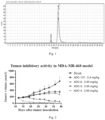
- the SEC-HPLC results of purified ADC-4 are shown in Figure 1 .
- DTT dithiothreitol
- MDA-MB-468 (ATCC HTB-132) cells were incubated in monolayer in vitro in L-15 medium supplemented with 10% heat-inactivated fetal bovine serum at 37 °C in an incubator without CO 2 atmosphere. The liquid was changed 2-3 times a week. When the cells were in the exponential growth phase, digesting the cells by using 0.25% trypsin, and carrying out passage in a ratio of 1:2-1:4 were performed. After entering the logarithmic growth phase, the cells were harvested, counted and inoculated.
- mice Five nude mice (P1) were inoculated at the right scapula with 4.5.0 ⁇ 10 6 MDA-MB-468 tumor cells which were suspended in 0.1 ml of mixture of PBS and Matrigel (1:1). When tumor size reached 600-800 mm 3 , the tumor-bearing mice were killed under CO 2 anesthesia, the tumor mass was removed, the surrounding necrotic tissue was removed, the tumor mass was cut into small masses of 20-30 mm 3 , and then inoculated into a new batch of nude mice (P2).
- P6 tumor tissue was used to evaluate the anti-tumor activity of the test product.
- the tumor in P5 had a size of 600-800 mm 3
- the tumor-bearing mice were killed under CO 2 anesthesia, the tumor mass was removed, the surrounding necrotic tissue was removed, the tumor mass with good state was cut into small masses of 20-30 mm 3 , and then inoculated into total 40 experimental mice at the right scapula.
- the average tumor volume reached approximately 135 mm 3 in 13 days after tumor inoculation, mice with tumors that were too small or too large were eliminated, and the remaining 20 mice were randomly grouped according to tumor volume and subjected to drug administration.
- the dosage regimen was shown in the table below.
- Fig. 2 shows statistical curves of tumor-inhibitory activity. As shown in the figure, in this experiment, the antitumor activity of ADC-4 and ADC-5 is better than that of ADC-137.
Landscapes
- Health & Medical Sciences (AREA)
- Life Sciences & Earth Sciences (AREA)
- Chemical & Material Sciences (AREA)
- Bioinformatics & Cheminformatics (AREA)
- Engineering & Computer Science (AREA)
- General Health & Medical Sciences (AREA)
- Medicinal Chemistry (AREA)
- Immunology (AREA)
- Veterinary Medicine (AREA)
- Animal Behavior & Ethology (AREA)
- Pharmacology & Pharmacy (AREA)
- Public Health (AREA)
- Epidemiology (AREA)
- Cell Biology (AREA)
- Organic Chemistry (AREA)
- Proteomics, Peptides & Aminoacids (AREA)
- Biophysics (AREA)
- Genetics & Genomics (AREA)
- Nuclear Medicine, Radiotherapy & Molecular Imaging (AREA)
- Molecular Biology (AREA)
- Oncology (AREA)
- Chemical Kinetics & Catalysis (AREA)
- General Chemical & Material Sciences (AREA)
- Biochemistry (AREA)
- Medicines Containing Antibodies Or Antigens For Use As Internal Diagnostic Agents (AREA)
- Peptides Or Proteins (AREA)
- Medicinal Preparation (AREA)
- Medicines That Contain Protein Lipid Enzymes And Other Medicines (AREA)
- Pharmaceuticals Containing Other Organic And Inorganic Compounds (AREA)
Applications Claiming Priority (2)
| Application Number | Priority Date | Filing Date | Title |
|---|---|---|---|
| CN202110929642 | 2021-08-13 | ||
| PCT/CN2022/111443 WO2023016488A1 (zh) | 2021-08-13 | 2022-08-10 | 一种基于微管抑制剂的抗体偶联药物 |
Publications (1)
| Publication Number | Publication Date |
|---|---|
| EP4385522A1 true EP4385522A1 (de) | 2024-06-19 |
Family
ID=85200578
Family Applications (1)
| Application Number | Title | Priority Date | Filing Date |
|---|---|---|---|
| EP22855468.9A Withdrawn EP4385522A1 (de) | 2021-08-13 | 2022-08-10 | Antikörper-wirkstoff-konjugat auf basis eines mikrotubuli-inhibitors |
Country Status (4)
| Country | Link |
|---|---|
| EP (1) | EP4385522A1 (de) |
| JP (1) | JP2024531258A (de) |
| CN (1) | CN118043080A (de) |
| WO (1) | WO2023016488A1 (de) |
Families Citing this family (7)
| Publication number | Priority date | Publication date | Assignee | Title |
|---|---|---|---|---|
| EP4480499A1 (de) * | 2022-02-16 | 2024-12-25 | Medilink Therapeutics (Suzhou) Co., Ltd. | Konjugat aus antikörper-eribulin oder einem derivat davon, zwischenprodukt davon, herstellungsverfahren dafür, pharmazeutische zusammensetzung davon und verwendung davon |
| CN120981250A (zh) * | 2023-05-12 | 2025-11-18 | 四川科伦博泰生物医药股份有限公司 | 具有生物活性的化合物及其制备方法和用途 |
| TW202600609A (zh) * | 2024-02-28 | 2026-01-01 | 大陸商杭州中美華東製藥有限公司 | 抗mucin 17抗體、其偶聯物及其用途 |
| WO2025228172A1 (zh) * | 2024-04-28 | 2025-11-06 | 上海拓济医药有限责任公司 | 艾日布林衍生物及其抗体药物偶联物和医药用途 |
| WO2025242099A1 (zh) * | 2024-05-21 | 2025-11-27 | 康诺亚生物医药科技(成都)有限公司 | 针对cdh17的抗体偶联药物及其用途 |
| WO2025242098A1 (zh) * | 2024-05-21 | 2025-11-27 | 康诺亚生物医药科技(成都)有限公司 | 针对ceacam5的抗体偶联药物及其用途 |
| TW202615010A (zh) * | 2024-06-24 | 2026-04-16 | 大陸商北京加科思新藥研發有限公司 | 藥物連接子、其偶聯物及其用途 |
Family Cites Families (23)
| Publication number | Priority date | Publication date | Assignee | Title |
|---|---|---|---|---|
| US5831034A (en) | 1987-11-13 | 1998-11-03 | Hermann Katinger | Human monoclonal anti-HIV-I-antibodies |
| AU3272695A (en) | 1994-08-12 | 1996-03-07 | Immunomedics Inc. | Immunoconjugates and humanized antibodies specific for b-cell lymphoma and leukemia cells |
| US5874540A (en) | 1994-10-05 | 1999-02-23 | Immunomedics, Inc. | CDR-grafted type III anti-CEA humanized mouse monoclonal antibodies |
| ES2178672T3 (es) | 1995-04-19 | 2003-01-01 | Polymun Scient Immunbio Forsch | Anticuerpos monoclonales frente al vih-1 y vacunas hechas a partir de ellos. |
| US7387772B1 (en) | 1999-06-22 | 2008-06-17 | Immunimedics, Inc. | Chimeric, human and humanized anti-CSAP monoclonal antibodies |
| US7138496B2 (en) | 2002-02-08 | 2006-11-21 | Genetastix Corporation | Human monoclonal antibodies against human CXCR4 |
| CA2476166C (en) | 2002-02-14 | 2011-11-15 | Immunomedics, Inc. | Anti-cd20 antibodies and fusion proteins thereof and methods of use |
| KR101017732B1 (ko) | 2002-03-01 | 2011-02-28 | 이뮤노메딕스, 인코오포레이티드 | 내재화 항-cd74 항체 및 그 이용방법 |
| CA2478047C (en) | 2002-03-01 | 2014-01-21 | Immunomedics, Inc. | Rs7 antibodies |
| ES2524767T3 (es) | 2002-06-14 | 2014-12-12 | Immunomedics, Inc. | Anticuerpo monoclonal humanizado HPAM4 |
| KR101115797B1 (ko) | 2002-08-01 | 2012-07-27 | 이뮤노메딕스, 인코오포레이티드 | 알파 태아 단백질 Immu31 항체 및 융합단백질, 및이들의 이용 방법 |
| US7541440B2 (en) | 2002-09-30 | 2009-06-02 | Immunomedics, Inc. | Chimeric, human and humanized anti-granulocyte antibodies and methods of use |
| JP4733635B2 (ja) | 2003-07-31 | 2011-07-27 | イミューノメディクス、インコーポレイテッド | 抗cd19抗体 |
| CN101171034B (zh) | 2005-03-03 | 2014-06-18 | 免疫医疗公司 | 人源化l243抗体 |
| CN101506358B (zh) | 2006-05-15 | 2013-07-17 | 免疫医学股份有限公司 | 使用偶合的抗体或抗体片段治疗人免疫缺陷病毒感染的方法和组合物 |
| ITTO20080313A1 (it) | 2008-04-22 | 2009-10-23 | Marco Colombatti | Anticorpo monoclonale isolato o suo frammento legante l'antigene specifico di membrana della prostata, suoi coniugati e suoi usi |
| WO2011034660A1 (en) | 2009-09-16 | 2011-03-24 | Immunomedics, Inc. | Class i anti-cea antibodies and uses thereof |
| PL3489261T3 (pl) | 2012-08-24 | 2021-08-16 | The Regents Of The University Of California | Przeciwciała i szczepionki do stosowania w leczeniu nowotworów z ekspresją ROR1 i w hamowaniu przerzutu |
| MY199595A (en) * | 2016-03-02 | 2023-11-08 | Eisai R&D Man Co Ltd | Eribulin-based antibody-drug conjugates and methods of use |
| CN119219654A (zh) * | 2017-12-15 | 2024-12-31 | 四川科伦博泰生物医药股份有限公司 | 生物活性物偶联物及其制备方法和用途 |
| CN110903395A (zh) * | 2018-09-14 | 2020-03-24 | 四川科伦博泰生物医药股份有限公司 | 抗体、偶联物及其制备方法和用途 |
| WO2021090062A1 (en) * | 2019-11-07 | 2021-05-14 | Eisai R&D Management Co., Ltd. | Anti-mesothelin eribulin antibody-drug conjugates and methods of use |
| CA3164797A1 (en) * | 2019-12-23 | 2021-07-01 | Eisai R&D Management Co., Ltd. | Method of producing eribulin based antibody-drug conjugate |
-
2022
- 2022-08-10 EP EP22855468.9A patent/EP4385522A1/de not_active Withdrawn
- 2022-08-10 WO PCT/CN2022/111443 patent/WO2023016488A1/zh not_active Ceased
- 2022-08-10 CN CN202280055366.1A patent/CN118043080A/zh active Pending
- 2022-08-10 JP JP2024508789A patent/JP2024531258A/ja not_active Withdrawn
Also Published As
| Publication number | Publication date |
|---|---|
| JP2024531258A (ja) | 2024-08-29 |
| WO2023016488A1 (zh) | 2023-02-16 |
| CN118043080A (zh) | 2024-05-14 |
Similar Documents
| Publication | Publication Date | Title |
|---|---|---|
| US20240352147A1 (en) | Efficacy of anti-trop-2-sn-38 antibody drug conjugates for therapy of tumors relapsed/refractory to checkpoint inhibitors | |
| JP6980980B2 (ja) | 抗hla‐drまたは抗trop‐2抗体と微小管阻害剤、parp阻害剤、ブルトンキナーゼ阻害剤またはホスホイノシチド3‐キナーゼ阻害剤との併用は癌の治療効果を有意に改善する | |
| JP2024531258A (ja) | 微小管阻害剤に基づく抗体薬物複合体 | |
| JP7583460B2 (ja) | 抗体-薬物コンジュゲート | |
| JP6828950B2 (ja) | Cl2aリンカーを有する抗体−sn−38免疫抱合体 | |
| JP6427789B2 (ja) | Cl2aリンカーを有する抗体−sn−38免疫複合体 | |
| TWI793513B (zh) | 對cd123具專一性之抗體和抗體-藥物共軛體及彼等之用途 | |
| EP4393514A1 (de) | Über einen brechbaren linker konjugiertes antikörper-wirkstoff-konjugat | |
| JP7784795B2 (ja) | 抗cd20/抗cd3二重特異性抗体による処置のための投与 | |
| US20170224837A1 (en) | Combination of abcg2 inhibitors with sacituzumab govitecan (immu-132) overcomes resistance to sn-38 in trop-2 expressing cancers | |
| US10137196B2 (en) | Dosages of immunoconjugates of antibodies and SN-38 for improved efficacy and decreased toxicity | |
| RU2757395C2 (ru) | Терапия метастатического уротелиального рака с использованием конъюгата антитело-лекарственное средство сацитузумаба говитекана (immu-132) | |
| CN121338027A (zh) | 功效改进且毒性降低的抗体与sn-38的免疫缀合物的剂量 | |
| JP7413519B2 (ja) | びまん性大細胞型b細胞リンパ腫を処置するための抗cd79b免疫抱合体の使用方法 | |
| US20230233540A1 (en) | Combination of antibody-drug conjugate and cdk9 inhibitor | |
| WO2024189428A1 (en) | Antibody-drug conjugate comprising antibodies against human l1cam and uses thereof | |
| EP4445919A1 (de) | Antikörper-wirkstoff-konjugat mit verbesserter affinität sowie herstellungsverfahren dafür und anwendung davon | |
| US20240139324A1 (en) | Dosages of immunoconjugates of antibodies and sn-38 for improved efficacy and decreased toxicity | |
| US20250242043A1 (en) | Antibody-drug conjugate comprising antibody against human trop2 and use thereof | |
| HK40091980A (en) | Methods of using anti-cd79b immunoconjugates | |
| HK40007319A (en) | Conjugated biological molecules, pharmaceutical compositions and methods |
Legal Events
| Date | Code | Title | Description |
|---|---|---|---|
| STAA | Information on the status of an ep patent application or granted ep patent |
Free format text: STATUS: THE INTERNATIONAL PUBLICATION HAS BEEN MADE |
|
| PUAI | Public reference made under article 153(3) epc to a published international application that has entered the european phase |
Free format text: ORIGINAL CODE: 0009012 |
|
| STAA | Information on the status of an ep patent application or granted ep patent |
Free format text: STATUS: REQUEST FOR EXAMINATION WAS MADE |
|
| 17P | Request for examination filed |
Effective date: 20240209 |
|
| AK | Designated contracting states |
Kind code of ref document: A1 Designated state(s): AL AT BE BG CH CY CZ DE DK EE ES FI FR GB GR HR HU IE IS IT LI LT LU LV MC MK MT NL NO PL PT RO RS SE SI SK SM TR |
|
| STAA | Information on the status of an ep patent application or granted ep patent |
Free format text: STATUS: THE APPLICATION HAS BEEN WITHDRAWN |
|
| 18W | Application withdrawn |
Effective date: 20240625 |