EP4389966A1 - Production de ctmp à partir d'un mélange de bois dur/bois mou - Google Patents
Production de ctmp à partir d'un mélange de bois dur/bois mou Download PDFInfo
- Publication number
- EP4389966A1 EP4389966A1 EP22215622.6A EP22215622A EP4389966A1 EP 4389966 A1 EP4389966 A1 EP 4389966A1 EP 22215622 A EP22215622 A EP 22215622A EP 4389966 A1 EP4389966 A1 EP 4389966A1
- Authority
- EP
- European Patent Office
- Prior art keywords
- chips
- impregnated
- mass flow
- hardwood
- naoh
- Prior art date
- Legal status (The legal status is an assumption and is not a legal conclusion. Google has not performed a legal analysis and makes no representation as to the accuracy of the status listed.)
- Withdrawn
Links
Images

Classifications
-
- D—TEXTILES; PAPER
- D21—PAPER-MAKING; PRODUCTION OF CELLULOSE
- D21H—PULP COMPOSITIONS; PREPARATION THEREOF NOT COVERED BY SUBCLASSES D21C OR D21D; IMPREGNATING OR COATING OF PAPER; TREATMENT OF FINISHED PAPER NOT COVERED BY CLASS B31 OR SUBCLASS D21G; PAPER NOT OTHERWISE PROVIDED FOR
- D21H11/00—Pulp or paper, comprising cellulose or lignocellulose fibres of natural origin only
- D21H11/02—Chemical or chemomechanical or chemothermomechanical pulp
-
- D—TEXTILES; PAPER
- D21—PAPER-MAKING; PRODUCTION OF CELLULOSE
- D21B—FIBROUS RAW MATERIALS OR THEIR MECHANICAL TREATMENT
- D21B1/00—Fibrous raw materials or their mechanical treatment
- D21B1/02—Pretreatment of the raw materials by chemical or physical means
- D21B1/021—Pretreatment of the raw materials by chemical or physical means by chemical means
-
- D—TEXTILES; PAPER
- D21—PAPER-MAKING; PRODUCTION OF CELLULOSE
- D21C—PRODUCTION OF CELLULOSE BY REMOVING NON-CELLULOSE SUBSTANCES FROM CELLULOSE-CONTAINING MATERIALS; REGENERATION OF PULPING LIQUORS; APPARATUS THEREFOR
- D21C1/00—Pretreatment of the finely-divided materials before digesting
- D21C1/02—Pretreatment of the finely-divided materials before digesting with water or steam
-
- D—TEXTILES; PAPER
- D21—PAPER-MAKING; PRODUCTION OF CELLULOSE
- D21C—PRODUCTION OF CELLULOSE BY REMOVING NON-CELLULOSE SUBSTANCES FROM CELLULOSE-CONTAINING MATERIALS; REGENERATION OF PULPING LIQUORS; APPARATUS THEREFOR
- D21C1/00—Pretreatment of the finely-divided materials before digesting
- D21C1/06—Pretreatment of the finely-divided materials before digesting with alkaline reacting compounds
-
- D—TEXTILES; PAPER
- D21—PAPER-MAKING; PRODUCTION OF CELLULOSE
- D21C—PRODUCTION OF CELLULOSE BY REMOVING NON-CELLULOSE SUBSTANCES FROM CELLULOSE-CONTAINING MATERIALS; REGENERATION OF PULPING LIQUORS; APPARATUS THEREFOR
- D21C3/00—Pulping cellulose-containing materials
- D21C3/02—Pulping cellulose-containing materials with inorganic bases or alkaline reacting compounds, e.g. sulfate processes
- D21C3/022—Pulping cellulose-containing materials with inorganic bases or alkaline reacting compounds, e.g. sulfate processes in presence of S-containing compounds
-
- D—TEXTILES; PAPER
- D21—PAPER-MAKING; PRODUCTION OF CELLULOSE
- D21D—TREATMENT OF THE MATERIALS BEFORE PASSING TO THE PAPER-MAKING MACHINE
- D21D1/00—Methods of beating or refining; Beaters of the Hollander type
- D21D1/20—Methods of refining
Definitions
- the present invention relates to the field of chemithermomechanical pulp (CTMP) and in particular the production thereof.
- CMP chemithermomechanical pulp
- CTMP Chemithermomechancial pulp
- CTMP chemithermomechanical pulp
- HT-CTMP high temperature chemithermomechanical pulp
- HT-CTMP high temperature chemithermomechanical pulp
- step a) The chips from step a) are typically washed and then pre-steamed before being impregnated in step b). Embodiments of the washing and pre-steaming as well as other preparatory steps are described in the examples section below.
- the mass flow of sulfite (calculated as Na 2 SO 3 ) to step b) is preferably at least 50% higher than the mass flow of NaOH to step b). In one embodiment, the mass flow of sulfite (calculated as Na 2 SO 3 ) to step b) is at least 100% higher than the mass flow of NaOH to step b).
- HT-CTMP of satisfactory properties can be produced without supplying any NaOH or other alkali to step b).
- NaOH may be supplied to step b), but in an amount not greater than 15 kg/tonne dry wood chips, such as not greater than 10 kg/tonne dry wood chips.
- the mass flow of sulfite (calculated as Na 2 SO 3 ) to step b) may be 5-30 kg per tonne dry wood chips, such as 10-30 kg per tonne dry wood chips, such as 15-28 kg per tonne dry wood chips
- the pH of the impregnation liquid is below 10.9. Such a pH reflects that no or only a small amount of NaOH has been added to the sulfite-containing impregnation liquid.
- the hardwood chips may be birch wood chips.
- the softwood chips may be spruce wood chips.
- the steam temperature in step c) is at least 155°C, such as at least 160°C.
- An upper limit for the steam temperature in step c) may be 190°C.
- the dry weight ratio of hardwood to softwood in said mixture is preferably between 80:20 and 65:35, such as between 72:25 and 65:35.
- the temperature of the impregnation liquid is preferably at least 70°C, such as 70°C-99°C, such as 80°C-99°C. At such a relatively high temperature, the viscosity of the impregnation liquid is lower, which facilitates the absorption thereof.
- the chips may be fed to an impregnation zone comprising the impregnation liquid using a plug screw (or another compressing device) such that the chips expand in the impregnation zone and absorb the impregnation liquid, thereby providing the impregnated chips.
- a plug screw or another compressing device
- step b) comprises:
- the temperatures of the pre-impregnation liquid and the impregnation liquid are preferably at least 70°C, such as 70°C-99°C, such as 80°C-99°C. At such temperatures, the viscosity of the liquids is lower, which facilitates the absorption thereof.
- the impregnated chips obtained in step b) are transferred to step c) without compressing the impregnated chips.
- the transfer of the impregnated chips may comprise lifting the impregnated chips out of the impregnation liquid using a transport screw and then allowing the impregnated chips to fall into a heating zone in which the steam-based heattreatment of step c) takes place.
- the residence time in step c) is preferably no more than two minutes.
- step d) The defibration of step d) is typically carried out under pressure.
- the pulp obtained from step d) may be subjected to refining (such as low consistency refining) and/or bleaching.
- refining such as low consistency refining
- bleaching Embodiments of such refining and/or bleaching are described in the examples section below with reference to figures 1-3 .
- the chips were then impregnated with an aqueous impregnation liquid comprising NaOH, Na 2 SO 3 and DTPA in an impregnation vessel of a pilot plant.
- the washed and pre-steamed chips were fed to the impregnation vessel using a plug screw such that the chips expanded in the impregnation liquid, which had a temperature of 40°C.
- NaOH, Na 2 SO 3 and DTPA were supplied to the impregnation vessel in amounts of 20, 20 and 2 kg per tonne dry chips, respectively.
- the impregnated chips were then heated by the application of steam having a temperature of 165°C. No plug screw was used to transfer the chips from the impregnation to the steaming step. Hence, the chips were transferred to the steaming step without being compressed.
- the residence time in the steaming step was less than two minutes.
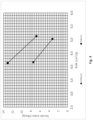
- the pretreated chips from the steaming step were subjected to different degrees of high consistency defibration/refining such that pulps were obtained.
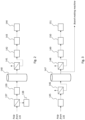
- Figures 1-3 illustrate exemplary embodiments of a full-scale system for producing HT-CTMP.
- a chipper 101 is used to prepare chips from hardwood (e.g. birch wood) and softwood (e.g. spruce wood). It may be preferred to prepare hardwood chips that are relatively short, such as ⁇ 20 mm, to aid impregnation. Spruce wood chips are generally easier to impregnate and can hence be longer, such as 22-24 mm. However, the spruce chips may also have the same length as the hardwood chips. The settings of a conventional wood chipper can be adjusted to achieve desired chip lengths. Shorter chips from such a chipper are also thinner.
- hardwood e.g. birch wood
- softwood e.g. spruce wood
- the hardwood chips and the spruce wood chips from the chipper 101 are stored in a hardwood chips silo 102a and a softwood chips silo 102b, respectively.
- a chips mixing system 103 is arranged downstream the silos 102a, 102b to prepare a chips mixture having the desired ratio of hardwood chips to spruce wood chips. This ratio is in the range of 85:15 to 65:35 (based on dry weight).
- the chips from the chips mixing system 103 are optionally stored in an aerobic environment in a maturation silo 104 for a period of at least 24 h (typically about 72 h).
- a typical temperature in the maturation silo 104 is 60°C, which can be achieved by feeding low-pressure steam into the maturation silo 104.
- the treatment of the chips in the maturation silo 104 degrades triglycerides. The degradation products can then be extracted in downstream process steps.
- Another option is to design the chip silos 102a, 102b as maturation silos.
- a benefit of this option is that the maturation time and temperature can be individually adapted to the respective wood types.
- the chips are washed in a chips washing arrangement 106.
- a conditioning device 105 Upstream the chips washing arrangement 106, a conditioning device 105 may be arranged.
- the conditioning device 105 is typically a chip steaming bin.
- the purpose of the conditioning device 105 is to provide chips of fairly constant temperature.
- the conditioning device 105 may also, to some extent, reduce variations in moisture content. During cold winter months, ice on the chips is melted in the conditioning device 105, which facilitates the downstream washing and processing.
- the conditioning device 105 may be particularly advantageous when there is no upstream maturation silo. In case there is an upstream maturation silo, the conditioning device 105 may be omitted.
- the chips are typically soaked and agitated in water and then dewatered.
- the washed and dewatered chips are then steamed in a pre-steaming bin 107.
- the residence time of the chips in the pre-steaming bin 107 is typically at least 10 min.
- the steamed chips from the pre-steaming bin 107 are subjected to impregnation in one or two steps.
- a plug screw 108 feeds the steamed chips into a reactor 109.
- the steamed chips which were compressed in the plug screw 108, expands in a bath of aqueous impregnation liquid 110 in the reactor 109. During the expansion, the chips absorb impregnation liquid.
- the temperature of the impregnation liquid is preferably 80°C-99°C.
- the impregnation liquid which is aqueous, comprises sulfite (added as Na 2 SO 3 ) and optionally alkali (e.g. NaOH). If included, the concentration of NaOH in the impregnation liquid is lower than that of Na 2 SO 3 .
- the (expanded and impregnated) chips are lifted from the bath of impregnation liquid 110 by means of a transport screw 111 and are then allowed to fall over an edge 112 and into steaming area 113 of the reactor 109, in which they are heated by steam having a temperature of at least 150°C.
- the chips treated in the reactor 109 are transferred to a chips defibrator 114 without flashing off any steam on the way.
- a plug screw 115 feeds the steamed chips into a pre-impregnation chamber 116.
- the steamed chips which were compressed in the plug screw 115, expands in a bath of pre-impregnation liquid 117 in the pre-impregnation chamber 116. During the expansion, the chips absorb pre-impregnation liquid.
- the temperature of the pre-impregnation liquid is preferably 80°C-99°C.
- the pre-impregnation liquid is water that may comprise alkali and optionally sulfite.
- the (expanded and impregnated) chips are lifted from the bath of pre-impregnation liquid 117 by means of a transport screw 118.
- a plug screw 119 then feeds the pre-impregnated chips into a reactor 120.
- the pre-impregnated chips which were compressed in the plug screw 119, expands in a bath of impregnation liquid 121 in the reactor 120.
- the chips absorb impregnation liquid, which preferably has a temperature of 80°C-99°C.
- the impregnation liquid which is aqueous, comprises sulfite and optionally some alkali.
- the (expanded and impregnated) chips are lifted from the bath of impregnation liquid 121 by means of a transport screw 122 and are then allowed to fall over an edge 123 and into steaming area 124 of the reactor 120, in which they are heated by steam having a temperature or at least 150°C (as a consequence of the steam temperature, the final product is a HT-CTMP).
- the chips treated in the reactor 120 are transferred to the chips defibrator 114 without flashing off any steam on the way.
- the dry matter content may be about 45%-50% (in case there is no plug screw between the steaming area 124 and the chips defibrator 114, the dry matter content may however be as low as 30%).
- the pulp from the chips defibrator 114 is subjected to flashing in a steam separator 125 and then pulped in a first pulper 126.
- the pulp from the first pulper 126 is then treated in a first dewatering press 127.
- the pressate from the first dewatering press 127 contains extractives (and dissolved wood substances and residual chemicals) that are unwanted in the final CTMP product.
- Separation of extractives by pressing in this position is advantageous since the pulp still has very high freeness (typically >650 ml or even >700 ml) and is thus easily dewatered.
- Limiting the residence time in the first pulper 126 to below 10 min (typically about 3 min) is advantageous since it limits the time available to the extractives to be adsorbed onto the fibers before the first dewatering press 127.
- the pulp from the first dewatering press 127 has undergone chemical treatment, heat treatment by high temperature steam and mechanical treatment (i.e. defibration/refining) and it thus a HT-CTMP.
- This pulp may be used in the production of paperboard without further chemical treatment or refining.
- I may also be subjected to low consistency (LC) refining before being used in paperboard production.
- Yet another option is to further treat the pulp by bleaching and LC refining as described below.
- the pulp from the first dewatering press 127 is subjected to middle consistency (MC) bleaching in a MC bleach tower 128 using unreacted peroxide from the downstream high consistency (HC) bleaching and, if needed, make-up quantities of NaOH and peroxide.
- MC means 10%-12%.
- the MC-bleached pulp is treated in a second dewatering press 129 also producing a pressate.
- the pulp from the second dewatering press 129 is subjected to high consistency (HC) bleaching in a HC bleach tower 130 using fresh peroxide and alkali (and optionally a peroxide stabilizer, such as a silicate or a non-silicate stabilizer and/or a chelating agent, such as DTPA or EDTA).
- HC high consistency
- the HC-bleached pulp from the HC bleach tower 130 are pulped in a second pulper 131 (residence time: ⁇ 10 min, such as about 3 min) to produce a pulp having a consistency of about 4%-6%.
- This pulp is then subjected to low consistency (LC) refining in LC refiners 132.
- a third dewatering press 133 then separates a third pressate from the LC-refined pulp.
- the fibers from the third dewatering press 133 are pulped in a third pulper 134 (residence time: ⁇ 10 min, such as about 3 min) to produce a pulp having a consistency of 2%-4%.
- Screens 135 are then used to separate a reject from the pulp from the third pulper 134.
- the separated reject is collected in a reject tank 136.
- the design of the remaining parts of the system depends on if only market pulp is produced (i.e. all CTMP is subjected to flash drying and baling) or if there is an adjacent board-making machine to which at least part of the CTMP is supplied without drying.
- the pulp from the screens 135 are cleaned in cleaners 137 to provide cleaned pulp and second reject that is collected in a second reject tank 138.
- the cleaned pulp is then filtered in a disc filter 139 and collected in a MC tower 140.
- a fourth dewatering press 141 produces dewatered fibers and a fourth pressate.
- the dewatered fibers are led to an arrangement for fiber treatment and shredding 142 and then to a flash drying arrangement 143.
- bales of the dried fibers from the flash drying arrangement 143 are formed in a baling arrangement 144.
- the pulp from the screens is filtered in a disc filter 145 and treated in a fourth dewatering press 146 such that a fourth pressate and an MC pulp are obtained.
- the MC pulp is collected in a MC tower 147.
- a fifth dewatering press 148 produces dewatered fibers and a fifth pressate from MC pulp from the MC tower 147.
- the dewatered fibers are led to an arrangement for fiber treatment and shredding 149 and then to a flash drying arrangement 150.
- bales of the dried fibers from the flash drying arrangement 150 are formed in a baling arrangement 151.
- MC pulp from the MC tower 147 is led to a board-making machine.
Landscapes
- Chemical & Material Sciences (AREA)
- Chemical Kinetics & Catalysis (AREA)
- General Chemical & Material Sciences (AREA)
- Engineering & Computer Science (AREA)
- Mechanical Engineering (AREA)
- Inorganic Chemistry (AREA)
- Paper (AREA)
Priority Applications (4)
| Application Number | Priority Date | Filing Date | Title |
|---|---|---|---|
| EP22215622.6A EP4389966A1 (fr) | 2022-12-21 | 2022-12-21 | Production de ctmp à partir d'un mélange de bois dur/bois mou |
| FIEP23836479.8T FI4590894T3 (fi) | 2022-12-21 | 2023-12-20 | Ctmp:n valmistus lehtipuun/havupuun sekoituksesta |
| EP23836479.8A EP4590894B1 (fr) | 2022-12-21 | 2023-12-20 | Production de ctmp à partir d'un mélange de bois dur/bois mou |
| PCT/EP2023/086959 WO2024133460A1 (fr) | 2022-12-21 | 2023-12-20 | Production de ctmp à partir d'un mélange de bois dur/bois tendre |
Applications Claiming Priority (1)
| Application Number | Priority Date | Filing Date | Title |
|---|---|---|---|
| EP22215622.6A EP4389966A1 (fr) | 2022-12-21 | 2022-12-21 | Production de ctmp à partir d'un mélange de bois dur/bois mou |
Publications (1)
| Publication Number | Publication Date |
|---|---|
| EP4389966A1 true EP4389966A1 (fr) | 2024-06-26 |
Family
ID=84569644
Family Applications (2)
| Application Number | Title | Priority Date | Filing Date |
|---|---|---|---|
| EP22215622.6A Withdrawn EP4389966A1 (fr) | 2022-12-21 | 2022-12-21 | Production de ctmp à partir d'un mélange de bois dur/bois mou |
| EP23836479.8A Active EP4590894B1 (fr) | 2022-12-21 | 2023-12-20 | Production de ctmp à partir d'un mélange de bois dur/bois mou |
Family Applications After (1)
| Application Number | Title | Priority Date | Filing Date |
|---|---|---|---|
| EP23836479.8A Active EP4590894B1 (fr) | 2022-12-21 | 2023-12-20 | Production de ctmp à partir d'un mélange de bois dur/bois mou |
Country Status (3)
| Country | Link |
|---|---|
| EP (2) | EP4389966A1 (fr) |
| FI (1) | FI4590894T3 (fr) |
| WO (1) | WO2024133460A1 (fr) |
Citations (2)
| Publication number | Priority date | Publication date | Assignee | Title |
|---|---|---|---|---|
| US4486267A (en) * | 1983-11-14 | 1984-12-04 | Mead Corporation | Chemithermomechanical pulping process employing separate alkali and sulfite treatments |
| US4798651A (en) * | 1987-03-24 | 1989-01-17 | Stake Technology Ltd. | Process for preparing pulp for paper making |
-
2022
- 2022-12-21 EP EP22215622.6A patent/EP4389966A1/fr not_active Withdrawn
-
2023
- 2023-12-20 EP EP23836479.8A patent/EP4590894B1/fr active Active
- 2023-12-20 WO PCT/EP2023/086959 patent/WO2024133460A1/fr not_active Ceased
- 2023-12-20 FI FIEP23836479.8T patent/FI4590894T3/fi active
Patent Citations (2)
| Publication number | Priority date | Publication date | Assignee | Title |
|---|---|---|---|---|
| US4486267A (en) * | 1983-11-14 | 1984-12-04 | Mead Corporation | Chemithermomechanical pulping process employing separate alkali and sulfite treatments |
| US4798651A (en) * | 1987-03-24 | 1989-01-17 | Stake Technology Ltd. | Process for preparing pulp for paper making |
Also Published As
| Publication number | Publication date |
|---|---|
| FI4590894T3 (fi) | 2026-02-03 |
| EP4590894A1 (fr) | 2025-07-30 |
| EP4590894B1 (fr) | 2025-11-05 |
| WO2024133460A1 (fr) | 2024-06-27 |
Similar Documents
| Publication | Publication Date | Title |
|---|---|---|
| US4486267A (en) | Chemithermomechanical pulping process employing separate alkali and sulfite treatments | |
| EP1002154B1 (fr) | Procede de pretraitement de matieres contenant des fibres de lignocellulose utile pour procede de fabrication de pate a papier | |
| WO1991012367A1 (fr) | Procede de fabrication de pate chimiothermomecanique | |
| US4116758A (en) | Method of producing high yield chemimechanical pulps | |
| RU2690562C2 (ru) | Способы и системы для варки целлюлозы из лигноцеллюлозных материалов | |
| WO2004050983A1 (fr) | Procede et systeme de traitement de copeaux de bois | |
| AU2002244309B2 (en) | Method for producing pulp | |
| EP4389966A1 (fr) | Production de ctmp à partir d'un mélange de bois dur/bois mou | |
| AU2002244309A1 (en) | Method for producing pulp | |
| EP4389963A1 (fr) | Ctmp à grand volume | |
| EP0199481B1 (fr) | Procédé de fabrication de pâtes cellulosiques | |
| EP4590895B1 (fr) | Imprégnation en deux étapes dans la production de ht-ctmp | |
| EP0030778B1 (fr) | Procédé de préparation d'une pâte raffinée | |
| EP4590893B1 (fr) | Procédé de production de ht-ctmp ayant une résistance à la traction élevée | |
| WO2024133442A1 (fr) | Pctm-ht d'érable | |
| WO2024133425A1 (fr) | Imprégnation en deux étapes dans la production de ctmp à partir de bois d'érable | |
| WO2011063800A2 (fr) | Procédé de fabrication de fibres de papier lignocellulosiques, papiers, cartons et cartons-pâtes à base de ces fibres | |
| EP4389965A1 (fr) | Procédé de production de ctmp ayant une faible teneur en produits d'extraction | |
| WO2024133473A1 (fr) | Préparation de bois d'érable pour la production de ctmp | |
| EP4389967A1 (fr) | Procédé de production de ctmp ayant une faible teneur en produits d'extraction | |
| WO2024136742A1 (fr) | Ht-ctmp formé à partir d'un mélange bois d'érable/bois de résineux et procédé de production d'un ht-ctmp à partir d'un mélange de bois d'érable/bois de résineux | |
| DE3034042C2 (de) | Verfahren zur Reduzierung des Harzgehalts bei der Herstellung von Zellulosepulpe aus Lignozellulose-Material | |
| WO2013177487A2 (fr) | Procédé de production de pâte à l'aide d'acide oxalique |
Legal Events
| Date | Code | Title | Description |
|---|---|---|---|
| PUAI | Public reference made under article 153(3) epc to a published international application that has entered the european phase |
Free format text: ORIGINAL CODE: 0009012 |
|
| STAA | Information on the status of an ep patent application or granted ep patent |
Free format text: STATUS: THE APPLICATION HAS BEEN PUBLISHED |
|
| AK | Designated contracting states |
Kind code of ref document: A1 Designated state(s): AL AT BE BG CH CY CZ DE DK EE ES FI FR GB GR HR HU IE IS IT LI LT LU LV MC ME MK MT NL NO PL PT RO RS SE SI SK SM TR |
|
| STAA | Information on the status of an ep patent application or granted ep patent |
Free format text: STATUS: THE APPLICATION IS DEEMED TO BE WITHDRAWN |
|
| 18D | Application deemed to be withdrawn |
Effective date: 20250103 |