EP4390692A1 - Fahrzeuginterne peripherieberechnungsvorrichtung, elektronisches system zur ausführung von softwareanwendungen und verfahren zur ausführung von softwareanwendungen dafür - Google Patents
Fahrzeuginterne peripherieberechnungsvorrichtung, elektronisches system zur ausführung von softwareanwendungen und verfahren zur ausführung von softwareanwendungen dafür Download PDFInfo
- Publication number
- EP4390692A1 EP4390692A1 EP23218761.7A EP23218761A EP4390692A1 EP 4390692 A1 EP4390692 A1 EP 4390692A1 EP 23218761 A EP23218761 A EP 23218761A EP 4390692 A1 EP4390692 A1 EP 4390692A1
- Authority
- EP
- European Patent Office
- Prior art keywords
- execution
- software applications
- application
- board
- software application
- Prior art date
- Legal status (The legal status is an assumption and is not a legal conclusion. Google has not performed a legal analysis and makes no representation as to the accuracy of the status listed.)
- Pending
Links
Images

Classifications
-
- G—PHYSICS
- G06—COMPUTING OR CALCULATING; COUNTING
- G06F—ELECTRIC DIGITAL DATA PROCESSING
- G06F9/00—Arrangements for program control, e.g. control units
- G06F9/06—Arrangements for program control, e.g. control units using stored programs, i.e. using an internal store of processing equipment to receive or retain programs
- G06F9/46—Multiprogramming arrangements
- G06F9/54—Interprogram communication
-
- G—PHYSICS
- G06—COMPUTING OR CALCULATING; COUNTING
- G06F—ELECTRIC DIGITAL DATA PROCESSING
- G06F9/00—Arrangements for program control, e.g. control units
- G06F9/06—Arrangements for program control, e.g. control units using stored programs, i.e. using an internal store of processing equipment to receive or retain programs
- G06F9/46—Multiprogramming arrangements
- G06F9/50—Allocation of resources, e.g. of the central processing unit [CPU]
- G06F9/5005—Allocation of resources, e.g. of the central processing unit [CPU] to service a request
- G06F9/5027—Allocation of resources, e.g. of the central processing unit [CPU] to service a request the resource being a machine, e.g. CPUs, Servers, Terminals
-
- G—PHYSICS
- G06—COMPUTING OR CALCULATING; COUNTING
- G06F—ELECTRIC DIGITAL DATA PROCESSING
- G06F9/00—Arrangements for program control, e.g. control units
- G06F9/06—Arrangements for program control, e.g. control units using stored programs, i.e. using an internal store of processing equipment to receive or retain programs
- G06F9/44—Arrangements for executing specific programs
- G06F9/455—Emulation; Interpretation; Software simulation, e.g. virtualisation or emulation of application or operating system execution engines
-
- G—PHYSICS
- G06—COMPUTING OR CALCULATING; COUNTING
- G06F—ELECTRIC DIGITAL DATA PROCESSING
- G06F9/00—Arrangements for program control, e.g. control units
- G06F9/06—Arrangements for program control, e.g. control units using stored programs, i.e. using an internal store of processing equipment to receive or retain programs
- G06F9/44—Arrangements for executing specific programs
- G06F9/455—Emulation; Interpretation; Software simulation, e.g. virtualisation or emulation of application or operating system execution engines
- G06F9/45533—Hypervisors; Virtual machine monitors
- G06F9/45558—Hypervisor-specific management and integration aspects
-
- G—PHYSICS
- G06—COMPUTING OR CALCULATING; COUNTING
- G06F—ELECTRIC DIGITAL DATA PROCESSING
- G06F9/00—Arrangements for program control, e.g. control units
- G06F9/06—Arrangements for program control, e.g. control units using stored programs, i.e. using an internal store of processing equipment to receive or retain programs
- G06F9/46—Multiprogramming arrangements
- G06F9/48—Program initiating; Program switching, e.g. by interrupt
-
- G—PHYSICS
- G06—COMPUTING OR CALCULATING; COUNTING
- G06F—ELECTRIC DIGITAL DATA PROCESSING
- G06F9/00—Arrangements for program control, e.g. control units
- G06F9/06—Arrangements for program control, e.g. control units using stored programs, i.e. using an internal store of processing equipment to receive or retain programs
- G06F9/46—Multiprogramming arrangements
- G06F9/48—Program initiating; Program switching, e.g. by interrupt
- G06F9/4806—Task transfer initiation or dispatching
-
- G—PHYSICS
- G06—COMPUTING OR CALCULATING; COUNTING
- G06F—ELECTRIC DIGITAL DATA PROCESSING
- G06F9/00—Arrangements for program control, e.g. control units
- G06F9/06—Arrangements for program control, e.g. control units using stored programs, i.e. using an internal store of processing equipment to receive or retain programs
- G06F9/46—Multiprogramming arrangements
- G06F9/48—Program initiating; Program switching, e.g. by interrupt
- G06F9/4806—Task transfer initiation or dispatching
- G06F9/4843—Task transfer initiation or dispatching by program, e.g. task dispatcher, supervisor, operating system
-
- G—PHYSICS
- G06—COMPUTING OR CALCULATING; COUNTING
- G06F—ELECTRIC DIGITAL DATA PROCESSING
- G06F9/00—Arrangements for program control, e.g. control units
- G06F9/06—Arrangements for program control, e.g. control units using stored programs, i.e. using an internal store of processing equipment to receive or retain programs
- G06F9/46—Multiprogramming arrangements
- G06F9/48—Program initiating; Program switching, e.g. by interrupt
- G06F9/4806—Task transfer initiation or dispatching
- G06F9/4843—Task transfer initiation or dispatching by program, e.g. task dispatcher, supervisor, operating system
- G06F9/4881—Scheduling strategies for dispatcher, e.g. round robin, multi-level priority queues
-
- G—PHYSICS
- G06—COMPUTING OR CALCULATING; COUNTING
- G06F—ELECTRIC DIGITAL DATA PROCESSING
- G06F9/00—Arrangements for program control, e.g. control units
- G06F9/06—Arrangements for program control, e.g. control units using stored programs, i.e. using an internal store of processing equipment to receive or retain programs
- G06F9/46—Multiprogramming arrangements
- G06F9/50—Allocation of resources, e.g. of the central processing unit [CPU]
-
- G—PHYSICS
- G06—COMPUTING OR CALCULATING; COUNTING
- G06F—ELECTRIC DIGITAL DATA PROCESSING
- G06F9/00—Arrangements for program control, e.g. control units
- G06F9/06—Arrangements for program control, e.g. control units using stored programs, i.e. using an internal store of processing equipment to receive or retain programs
- G06F9/46—Multiprogramming arrangements
- G06F9/50—Allocation of resources, e.g. of the central processing unit [CPU]
- G06F9/5005—Allocation of resources, e.g. of the central processing unit [CPU] to service a request
-
- G—PHYSICS
- G06—COMPUTING OR CALCULATING; COUNTING
- G06F—ELECTRIC DIGITAL DATA PROCESSING
- G06F9/00—Arrangements for program control, e.g. control units
- G06F9/06—Arrangements for program control, e.g. control units using stored programs, i.e. using an internal store of processing equipment to receive or retain programs
- G06F9/46—Multiprogramming arrangements
- G06F9/50—Allocation of resources, e.g. of the central processing unit [CPU]
- G06F9/5005—Allocation of resources, e.g. of the central processing unit [CPU] to service a request
- G06F9/5027—Allocation of resources, e.g. of the central processing unit [CPU] to service a request the resource being a machine, e.g. CPUs, Servers, Terminals
- G06F9/505—Allocation of resources, e.g. of the central processing unit [CPU] to service a request the resource being a machine, e.g. CPUs, Servers, Terminals considering the load
-
- G—PHYSICS
- G06—COMPUTING OR CALCULATING; COUNTING
- G06F—ELECTRIC DIGITAL DATA PROCESSING
- G06F9/00—Arrangements for program control, e.g. control units
- G06F9/06—Arrangements for program control, e.g. control units using stored programs, i.e. using an internal store of processing equipment to receive or retain programs
- G06F9/46—Multiprogramming arrangements
- G06F9/50—Allocation of resources, e.g. of the central processing unit [CPU]
- G06F9/5061—Partitioning or combining of resources
-
- G—PHYSICS
- G06—COMPUTING OR CALCULATING; COUNTING
- G06F—ELECTRIC DIGITAL DATA PROCESSING
- G06F9/00—Arrangements for program control, e.g. control units
- G06F9/06—Arrangements for program control, e.g. control units using stored programs, i.e. using an internal store of processing equipment to receive or retain programs
- G06F9/46—Multiprogramming arrangements
- G06F9/50—Allocation of resources, e.g. of the central processing unit [CPU]
- G06F9/5061—Partitioning or combining of resources
- G06F9/5072—Grid computing
Definitions
- the present invention relates to a peripheral computing device on board an aircraft, as well as an associated electronic system for executing software applications and an associated method for executing software applications.
- the invention lies in the field of avionics, and more particularly in the field of executing software applications on board an aircraft.
- the invention applies to any type of aircraft, with or without a pilot on board, both in a civil or military context.
- aircraft include on-board electronic devices (or on-board computers) with certified operation according to an avionics certification standard.
- any software application embedded in this type of device must be compliant and certified.
- on-board software applications which are useful for navigation, for controlling on-board equipment, for example various sensors, e.g. optical or thermal cameras, radars, etc., are limited in number, because they are expensive to develop and maintain. certify.
- the computing resources e.g. CPU, ROM, RAM
- certified on-board computers are generally pre-allocated, to guarantee security and limit any risk of hacking or external intrusion.
- the hardware and software structure of certified operating on-board computers is rigid, any development or modification being slow and costly.
- such a peripheral computing device makes it possible to considerably increase the computing resources available on board, while managing the execution of the software application(s) between local on-board computing resources and remote computing resources.
- the on-board peripheral computing device according to the invention may also have one or more of the characteristics below, taken independently or in all technically conceivable combinations.
- the execution stack management module implements, for the determination of local computational resources allocated by software application to be executed, at least one criterion among: an availability criterion of computational resources, a connectivity criterion, a criterion of data protection, a priority criterion.
- the device is configured to dynamically receive, from an external control device, at least one parameter for allocating computational resources and/or connectivity and/or an execution priority.
- the device further comprises a data and results management module, configured to consolidate and memorize results obtained by the execution of each software application, to communicate the results to the external control device and/or to the remote calculation system.
- the module for managing a plurality of software applications is configured to download new software applications or an update of a previously stored software application and/or to delete a previously stored software application.
- the invention relates to an electronic system for executing software applications comprising a calculation system onboard an aircraft, and at least one remote calculation system located on the ground, the onboard calculation system comprising at least one on-board electronic device operating certified according to an avionics certification standard, and a peripheral computing device as briefly described above.
- the electronic system for executing software applications may also have one or more of the characteristics below, taken independently or in any technically conceivable combination.
- the remote computing system further comprises a supervision device comprising a man-machine interface and being configured to receive observability signals from said peripheral computing device, said observability signals comprising data relating to local computing resources and information relating to the execution of at least one of said software applications, to calculate an operating state of said peripheral computing device and an execution state of said at least one software application from the observability signals received, and to display said operating state and said execution state on said man-machine interface.
- a supervision device comprising a man-machine interface and being configured to receive observability signals from said peripheral computing device, said observability signals comprising data relating to local computing resources and information relating to the execution of at least one of said software applications, to calculate an operating state of said peripheral computing device and an execution state of said at least one software application from the observability signals received, and to display said operating state and said execution state on said man-machine interface.
- the peripheral computing device is configured to record, during a mission of the aircraft, a set of information in at least one execution report, comprising status and execution information of the peripheral computing device and the devices on-board electronics with certified operation, as well as information complementary information including environment information and connectivity information, and to transmit said execution report to the supervision device, the supervision device being further configured to execute and display on the man-machine interface a replay of the states of the peripheral computing device and on-board electronic devices.
- the method further comprises an application stack management step, implementing, for each software application to be executed, an allocation of local computational resources to execute a first part of the software application, and, in the case where said first part is less than 100%, a step of transmitting execution command of a second part of said software application, complementary to the first part, to the remote calculation system.
- the invention relates to a computer program comprising software instructions which, when executed by a programmable electronic device, implement a method for executing software applications as briefly described above .
- the electronic system for executing software applications, on board an aircraft finds applications in all types of aircraft, and more particularly for lightweight aircraft such as drones, carrying equipment such as image sensors, of the optical camera type, thermal camera, imaging radar, positioning sensors (GNSS, inertial units, anemo-barometric sensors, radio navigation beacons, triangulation), measuring systems such as telemeters, weather and traffic sensors and monitoring systems or field, radio or digital communication systems, radio frequency (RF) antennas, etc.
- image sensors of the optical camera type, thermal camera, imaging radar, positioning sensors (GNSS, inertial units, anemo-barometric sensors, radio navigation beacons, triangulation), measuring systems such as telemeters, weather and traffic sensors and monitoring systems or field, radio or digital communication systems, radio frequency (RF) antennas, etc.
- GNSS positioning sensors
- inertial units inertial units
- anemo-barometric sensors anemo-barometric sensors
- radio navigation beacons triangulation
- RF radio frequency
- FIG. 1 schematically illustrates a system 2 which is an electronic system for executing embedded software.
- System 2 is a system allowing on-board-ground cooperation.
- the system 2 comprises on the one hand an on-board calculation system 4, comprising devices on board an aircraft 6, and on the other hand, one or more ground calculation systems 8.
- the on-board calculation system 4 comprises a set 10 of on-board electronic devices operating certified according to an avionics certification standard, comprising at least one on-board computer 12, and on-board equipment 14, e.g. sensors, for example cameras, radars, actuator, navigation system, autopilot system, flight controls, geolocation system, certified monitoring systems (terrain traffic, weather), certified communication systems (e.g. Radios).
- sensors for example cameras, radars, actuator, navigation system, autopilot system, flight controls, geolocation system, certified monitoring systems (terrain traffic, weather), certified communication systems (e.g. Radios).
- certified operating on-board devices comply with one or more of the following standards: RTCA DO178B for the software certification level and RTCA DO160 for the hardware certification part, AEEC Arinc 702A for the flight management system (Flight Management System) , etc.
- the on-board computer 12 is configured to implement certified software applications, for example applications for aiding navigation, controlling the operation of the sensors 14 and receiving and processing data from sensors 14.
- the on-board computer 12 comprises hardware resources, in particular a central processing unit comprising in particular one or more processors 15, adapted to execute computer program instructions when the processing unit is powered on.
- the on-board computer 12 also includes information storage units 16, including in particular random access memory units (RAM memory), ROM type memory units, adapted to store data and executable code instructions, a communication interface 18 and a man-machine interface 17.
- RAM memory random access memory units
- ROM type memory units adapted to store data and executable code instructions
- communication interface 18 adapted to store data and executable code instructions
- man-machine interface 17 man-machine interface
- the on-board computing system 4 advantageously comprises an on-board peripheral computing device 20.
- This peripheral computing device 20 advantageously makes it possible to increase the on-board computing capacity, in a more flexible manner, allowing easier and less costly software and hardware updates than for the on-board computer 12.
- the peripheral computing device 20 comprises a first communication interface 22 configured to communicate, according to a first communication protocol, with the on-board electronic device(s) with certified operation, and in particular with the on-board computer 12.
- the first communication interface 22 is configured to communicate, using bidirectional communication, with the communication interface 18 of the on-board computer 12.
- the communication between the peripheral computing device 20 and the on-board computer 12 is a wired communication.
- the communication between the peripheral computing device 20 and the on-board computer 12 is a wireless communication, for example of the Wifi or Bluetooth type.
- the peripheral calculation device 20 comprises a second radio communication interface 24, configured to communicate, according to a second radio communication protocol, with the remote calculation system(s) 8 located on the ground.
- the second communication protocol is a radio communication protocol, for example a standard 4G or 5G mobile telephone protocol, the SATCOM satellite communication protocol, the Datalink AOC/ATC protocol (for “Aeronautical Operation Control”/“Air Traffic Control”). ").
- the peripheral calculation device 20 comprises several second radio communication interfaces 24, according to several radio communication protocols, making it possible to communicate with external devices, via a second radio communication interface 24A making it possible to communicate with the calculation system 8 and a second radio communication interface 24B making it possible to communicate according to another radio communication protocol, for example with one or more external control devices 25, configured to send commands for implementing software applications by the peripheral computing device 20 and receiving data, in particular data from on-board sensors, in return.
- An external control device 25 is for example a tablet, a laptop, a smartphone (or smartphone).
- Such an external control device 25 is for example also on board the aircraft.
- such an external control device 25 is operated by an operator on board the aircraft, for example a pilot of the aircraft, via a man-machine interface, e.g. a touch screen or any other type adequate human-machine interface (not shown here).
- a man-machine interface e.g. a touch screen or any other type adequate human-machine interface (not shown here).
- the peripheral computing device 20 is configured to communicate, bidirectionally, with the remote computing system 8 and with at least one external control device 25.
- the peripheral computing device 20 further comprises a processing unit 26, comprising one or more processors (CPU or GPU), and at least one electronic memory unit 28, these elements being adapted to communicate via a communication bus (not shown ).
- a processing unit 26 comprising one or more processors (CPU or GPU), and at least one electronic memory unit 28, these elements being adapted to communicate via a communication bus (not shown ).
- the electronic memory unit 28 notably comprises RAM, ROM type memories, any type of non-volatile memory (for example EPROM, EEPROM, FLASH, NVRAM).
- RAM random access memory
- ROM type memories any type of non-volatile memory (for example EPROM, EEPROM, FLASH, NVRAM).
- All the processing unit(s) 26 and electronic memory unit(s) 28 form the local computing resources of the peripheral computing device 20.
- the peripheral computing device 20 is modular, several processing and memory units can be added, which allows a dynamic increase in the available resources, depending on needs.
- the dynamic increase in available resources is limited, in practice, in certain embodiments, by the consumption of electrical energy and/or the total weight of such a peripheral computing device 20. Indeed, the total weight can be limited for certain types of aircraft, for example for drones, depending on the aerodynamic lift of the drone, and/or its maneuverability. Likewise, the consumption of electrical energy when the peripheral computing device executes software applications with maximum occupation of computing and storage resources 26, 28, must be taken into account, in order to ensure the achievement of a planned mission. , over a planned mission duration.
- mission means a set of tasks to be carried out, for example by on-board sensors, linked to associated flight indications (trajectories, durations, waypoints, etc.).
- the electronic memory unit 28 is configured in particular to store a library of software applications 35, comprising a variable number of software applications APP 1 , APP 2 ... APP i .
- Each software application is stored as executable program code.
- executable application is also used to refer to such a software application.
- software applications are obtained by downloading (in English “Dataloading”), from an external control device 25 or from a ground calculation system 8.
- an APP i software application can be obtained from a computer-readable medium, for example a medium capable of memorizing electronic instructions and being coupled to a bus of a computer system (eg USB key , non-volatile memory (e.g. EPROM, EEPROM, FLASH, NVRAM), a magnetic card or an optical card).
- a computer-readable medium for example a medium capable of memorizing electronic instructions and being coupled to a bus of a computer system (eg USB key , non-volatile memory (e.g. EPROM, EEPROM, FLASH, NVRAM), a magnetic card or an optical card).
- the electronic memory unit 28 is also configured to store data and results 37, in particular data obtained from on-board electronic devices with certified operation (for example, images obtained by on-board sensors, operating data, data relating to the trajectory or performance of the aircraft), and the results obtained by executing the APP i software applications.
- data and results 37 can be transmitted to the ground as “observability signals”, allowing a human operator or a system to monitor the proper functioning of the overall system, ensure debugging, and perform simulations or replay ( in English “replay”) of mission.
- the electronic memory unit 28 is configured to store parameters useful for the implementation of a method of executing software applications as described below, in particular parameters relating to the allocation of resources calculations per software application, where applicable, a table of execution priorities or a set of static rules defining execution priorities of software applications.
- the modules 30, 32, 34, 36 are adapted to cooperate, as described in more detail below, to implement a method of executing software applications as described in more detail below.
- the modules 30, 32, 34, 36 are produced in the form of software instructions forming a computer program, which, when executed by a computer, implements a method of executing software applications according to the invention.
- the computer program comprising software instructions is also capable of being recorded on a non-transitory computer-readable medium.
- the computer-readable medium is, for example, a medium capable of storing electronic instructions and of being coupled to a bus of a computer system.
- the readable medium is an optical disk, a magneto-optical disk, a ROM memory, a RAM memory, any type of non-volatile memory (for example EPROM, EEPROM, FLASH, NVRAM), a magnetic card or an optical card.
- the modules 30, 32, 34, 36 are each produced in the form of programmable logic components, such as FPGAs (from the English Field Programmable Gate Array ), microprocessors, GPGPU components (from the English General-purpose processing on graphics processing ), or even dedicated integrated circuits, such as ASICs ( Application Specifies Integrated Circuit ).
- programmable logic components such as FPGAs (from the English Field Programmable Gate Array ), microprocessors, GPGPU components (from the English General-purpose processing on graphics processing ), or even dedicated integrated circuits, such as ASICs ( Application Specifies Integrated Circuit ).
- the peripheral computing device 20 is thus configured to locally execute a first part of the applications to be executed, and to delegate, where appropriate, a second execution part to the remote computing system 8. Indeed, in certain cases, the first part is equal to 100% of the software application to be executed, in which case there is no need to delegate a second execution part to the remote calculation system.
- the remote computing system 8 comprises one or more interconnected electronic computing devices.
- the remote computing system 8 comprises or is connected to a cloud of computers or “cloud” in English.
- the remote calculation system 8 comprises a processing unit 40, comprising one or more calculation processors, an electronic memory unit 42, a ground communication interface 44, adapted to communicate with the second communication interface 24 of the on-board peripheral computing device 20, and a man-machine interface 46.
- the processing unit 40 is configured to execute parts of the APPi software applications, by executing a corresponding part of the executable code, stored in the electronic memory unit 42, upon request from the peripheral computing device 20, at memorize data and calculation results and transmit these calculation results, via the communication interface 44, to the peripheral calculation device 20 and/or to an external control device 25.
- the remote calculation system 8 located on the ground is also configured to transmit data and calculation results to another aircraft 6, for example as part of a mission involving a plurality of aircraft.
- execution stack management is dynamic and flexible, and makes it possible to take into account one or more criteria among: a criterion of availability of computational resources, a criterion of connectivity, a criterion of criticality of the data, a criterion of priority, as explained in more detail below.
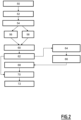
- FIG. 2 is a block diagram of the main stages of a method for executing software applications, implemented in the electronic system 2 for executing software applications, in a first embodiment.
- the method comprises a set of steps implemented by a processing unit, comprising at least one processor, of an on-board peripheral computing device 20. These steps are executed after power on the peripheral computing device.
- the method includes an initialization step 50, which is a preliminary step, executed in a delayed time compared to the other steps of the method.
- the first and second communication interfaces are initialized, in particular configured with respective communication addresses, so as to allow communications, on the one hand with the on-board electronic devices 10 with certified operation, on the other hand with external devices 25, and with the ground calculation system 8.
- the peripheral computing device executes the initialization of the communication interfaces following a request, for example transmitted by an operator or by an external application via an external control device 25.
- first configuration structures e.g. first configuration tables are received from at least one computer. edge 12, and stored in a local electronic memory unit of the peripheral computing device.
- second configuration structures e.g. second configuration tables are received from at least one remote calculation system 8, and stored in a local electronic memory unit of the peripheral computing device.
- the first and second configuration structures notably contain connectivity information (e.g. identifiers and communication addresses).
- the APP i software application library is re-initialized.
- the data and results 37 stored in the memory unit of the peripheral computing device are erased during initialization 50.
- the APP i applications and/or the data and results stored during prior use of the peripheral computing device are retained.
- parameters useful for implementing the method of executing software applications are obtained and stored. These parameters include parameters relating to the allocation of resources per software application, for example for a minimum allocation per software application, a maximum allocation or an average allocation, and/or a table of execution priorities or a set of rules statics defining execution priorities of software applications.
- the resource allocation parameters contain for example: computing power, for example expressed in processor clock frequency (e.g. in GHz), and/or an associated storage capacity, expressed for example in kilobytes, and/or a percentage of first communication bandwidth with certified operating on-board electronic devices, and/or a percentage of second communication bandwidth with the remote computing system.
- processor clock frequency e.g. in GHz
- associated storage capacity expressed for example in kilobytes, and/or a percentage of first communication bandwidth with certified operating on-board electronic devices, and/or a percentage of second communication bandwidth with the remote computing system.
- a vector comprising only a subpart of the allocation parameters is defined.
- the method comprises a step 52 of receiving a software application addition/deletion command, coming from an external control device, or from the ground calculation system or from one of the on-board devices.
- a deletion command is received from an external control device or an authorized operator, for example owner of the software application to be deleted.
- authorized operator authentication is implemented, by an authentication method, numerous variants of such authentication methods being known.
- the addition/update of an application is carried out by an operator, preferably an authorized operator, by means of a data storage medium (e.g. USB key).
- a data storage medium e.g. USB key
- the method includes an application management step 54, which updates the library of software applications according to the commands received.
- Step 54 includes receiving a new software application or an update of a previously stored software application, by means of a wired connection or to be downloaded by means of a radio communication link, then storing new APP j applications, and/or the deletion of APP i applications from the application library.
- the software applications stored in the application library 35 are adapted to provide at least one control parameter and/or receive at least one piece of data from at least one on-board electronic device.
- the process implements validations of integrity and validity of the downloaded applications, by usual methods ( authentication, cyclic redundancy check (CRC) validation, etc.).
- the method includes enabling execution 56 of one or more of the stored software applications, which then become software applications to be executed.
- Execution activation is based on either receiving an execution request from at least one software application from an external device or on validating an execution activation condition.
- condition for activating the execution of a software application APP i is the end of execution of a software application APP; or corresponds to a reduction in the resource requirements of the Appj software application compatible with its operation.
- commands to pause or stop execution of one or more software applications can also be received (step 58), their management being carried out directly.
- Stopping execution frees up resources and therefore redistributes available resources. As with execution, automatic validation of the stopping condition also makes it possible to trigger the stopping or pausing of the execution of an application.
- Steps 54, 56, 58 are preferably executed in the background, substantially in parallel, so as to constantly take into account the reception of new software applications or the updating of existing software applications, as well as the activations of execution and commands to stop or pause execution.
- the method further comprises a step 60 of managing an execution stack of the software applications to be executed. This step is repeated regularly, at predetermined time intervals or upon event (for example request to start a new application, event which ends or significantly modifies the computational resource requirements of an application).
- the management step 60 implements, for each application to be executed APP k , an allocation of resources, in particular of computational resources (processor and memory) of the peripheral computing device, called local resources, to execute all or part of the application to run APP k .
- the same quantity of local resources is allocated to each APP k , the quantity being predetermined in initialization step 50.
- the resources are allocated dynamically, for example according to an expected response time per application, which makes it possible to dynamically define execution priorities.
- the allocation of resources is carried out according to priorities, defined in a previously recorded execution priority table or according to a previously programmed set of static rules.
- the priorities are dynamically updated by means of an external control device.
- the management module also implements a priority criterion.
- a criterion of availability of computational resources is implemented to determine the local or remote execution of each software application.
- the communication conditions according to the second radio communication protocol may vary depending on the movement, weather conditions, etc.
- Detection can be done using cameras embedded in the drone, whose resolution, width of field and frame rate will have a direct impact on the need for resources:
- a video sequence in 4K definition/resolution, wide field, at 50 images/sec will, for example, require much more storage resources (RAM/ROM) and CPU (or GPU) resources for its processing, than 'a low resolution video sequence (480p for example), or with a narrower field width or at 25 frames/sec.
- the electricity consumption of the drone will also be a function of the bandwidth communication between the board and the ground, and the quality of the network, which determines the means of communication used and the power necessary to power the transmitting and receiving antennas.
- the system may choose to have all of the mapping and detection and geo-referencing calculations carried out locally by the APP k,1 application.
- the system may choose to have the mapping and detection and geo-referencing calculations carried out locally by the APP k,21 application by sending images taken locally by the camera to the ground device.
- the first and second parts to be executed locally/remotely respectively are for example defined in terms of percentage of code to be executed.
- the first part is equal to 100% of the application to be executed, in which case there is no need to transfer part of the execution to the ground calculation system.
- software applications are coded to be executed in parts.
- all or part of each software application is also previously stored in the electronic memory 42 of the remote calculation system 8, which facilitates the delegation of calculations.
- a data criticality criterion is implemented to determine the second APP part k,2 , to be executed on the ground, thus making it possible to avoid transmitting data or results considered sensitive or confidential to the calculation system on the ground, via the second transmission interface.
- Such data considered confidential, and therefore to be protected are for example data relating to the performance of the aircraft, or even confidential data of the client who owns the application to be executed (e.g. airline, institution, company).
- the method includes a request 62 for remote execution, comprising the transmission of associated information (e.g. execution point, data to be used, intermediate results).
- associated information e.g. execution point, data to be used, intermediate results.
- the executable code forming the second part APP k,2 is transmitted to the remote calculation system during step 62.
- the remote calculation system executes the second part APP k,2 of software application (step 64), and transmits the results of the calculations to the on-board peripheral calculation device (step 66).
- the peripheral computing device receives the results in step 68.
- the results are consolidated in consolidation step 70.
- the consolidation involves the temporal and/or spatial synchronization of the results, and/or a fusion of data, for example a fusion of inertial sensor data with positions calculated by software processing from camera data. view.
- the consolidated results are stored and/or transmitted (step 72) to the external control device, initiator of the execution of the software application.
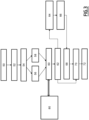
- FIG. 3 illustrates a second embodiment of the application execution method implemented in the application execution system 2.
- a supervision device which is either one of the external control devices, or the remote calculation system at ground, implements real-time supervision of the operation of the on-board peripheral computing device.
- the supervision device is part of the remote ground computing system and includes a man-machine interface, allowing the display of information to an operator and the reception of commands from the operator.
- the method includes supervision 80 implemented by the supervision device.
- Supervision 80 is carried out continuously, the supervision device comprising a man-machine interface and being configured to receive observability signals from the peripheral calculation device 20.
- observability signals from the peripheral computing device comprising data relating to local computing resources and information relating to the execution of at least one of the software applications are transmitted to the supervision device.
- the observability signals include in particular information relating to the use of local resources of the peripheral computing device and the stack of applications to be executed/being executed.
- the supervision device is configured to calculate an operating state of the peripheral computing device and an execution state of the or each software application from the received observability signals.
- the supervision device then implements, for example, displays on the man-machine interface, representative of the operating state of the peripheral computing device (state of local resources, connectivity) and the execution state of the applications, with optionally in addition to the data and results of these applications.
- These displays follow, in one embodiment, substantially in real time, the operation of the peripheral computing device. This allows an operator to set execution priorities in real time, allowing execution of certain software applications to be prioritized and other software applications to be low priority or paused, and/or resource allocations to be changed. in real time.
- Commands relating to the execution priorities of the software applications and/or modifications to the allocation of resources are then transmitted via the supervision device to the on-board peripheral computing device.
- the supervision extends to all on-board devices, including certified operating devices, thus allowing overall supervision of the use of on-board resources. Indeed, via the on-board peripheral computing device, data provided by sensors or on-board devices are also transmitted to the supervision device for display.
- execution reports e.g. files, tables
- additional information including environmental information and connectivity information
- the set of information includes all the states of the execution stack, and the computational/hardware resources of the peripheral computing device, for example the software applications executed, the description of the computational resources allocated, the data and results, as well as additional information such as: the meteorological situation, the availability of communication interfaces, the bandwidth available for communications with the ground computing system, internal operating data of the systems, the energy consumption taken by each application, and by the other aircraft systems, the flight profile.
- the execution report(s) containing this set of information are transmitted to the ground supervision device.
- the supervision device is configured to display; in cooperation with graphic representation mechanisms on the man-machine interface, a complete progress of the mission (replay), in particular of the successive states of the peripheral computing device and, optionally, of the on-board electronic devices, which allows for maintenance and debugging operations.
- a replay phase also makes it possible to recalculate the parameters provided in the initialization step 50 such as the minimum, maximum or average allocation of the resources of the peripheral computing device.
- the on-board hardware resources of an aircraft are increased dynamically and flexibly, and the implementation of client software applications is then possible, while ensuring execution security.
- an aircraft carrying a peripheral computing device as described can be used as a mobile data capture means, like satellites.
- the invention makes it possible to carry out calculations using complex algorithms, which would not be possible by certified on-board devices due to the limitations imposed by the certifications.
- the flexibility introduced by the possibility of deporting parts of the execution of applications to the ground makes it possible to adapt to the constraints of the aircraft, in particular the constraints of on-board weight and electrical energy consumption.
Landscapes
- Engineering & Computer Science (AREA)
- Software Systems (AREA)
- Theoretical Computer Science (AREA)
- Physics & Mathematics (AREA)
- General Engineering & Computer Science (AREA)
- General Physics & Mathematics (AREA)
- Mathematical Physics (AREA)
- Stored Programmes (AREA)
- Selective Calling Equipment (AREA)
Applications Claiming Priority (1)
| Application Number | Priority Date | Filing Date | Title |
|---|---|---|---|
| FR2214319A FR3144352B1 (fr) | 2022-12-22 | 2022-12-22 | Dispositif de calcul périphérique embarqué, système électronique d’exécution d’applications logicielles et procédé d’exécution d’applications logicielles associés |
Publications (1)
| Publication Number | Publication Date |
|---|---|
| EP4390692A1 true EP4390692A1 (de) | 2024-06-26 |
Family
ID=86007774
Family Applications (1)
| Application Number | Title | Priority Date | Filing Date |
|---|---|---|---|
| EP23218761.7A Pending EP4390692A1 (de) | 2022-12-22 | 2023-12-20 | Fahrzeuginterne peripherieberechnungsvorrichtung, elektronisches system zur ausführung von softwareanwendungen und verfahren zur ausführung von softwareanwendungen dafür |
Country Status (3)
| Country | Link |
|---|---|
| US (1) | US20240211313A1 (de) |
| EP (1) | EP4390692A1 (de) |
| FR (1) | FR3144352B1 (de) |
Citations (5)
| Publication number | Priority date | Publication date | Assignee | Title |
|---|---|---|---|---|
| US20020035416A1 (en) * | 2000-03-15 | 2002-03-21 | De Leon Hilary Laing | Self-contained flight data recorder with wireless data retrieval |
| FR2959579A1 (fr) * | 2010-04-29 | 2011-11-04 | Eurocopter France | Equipement comportant un systeme d'echange de donnees optimise pour configurer un systeme avionique d'un aeronef |
| US20160093124A1 (en) * | 2014-09-30 | 2016-03-31 | SZ DJI Technology Co., Ltd. | System and method for data recording and analysis |
| FR3045879A1 (fr) * | 2015-12-21 | 2017-06-23 | Thales Sa | Plateforme d'execution avionique et plateforme de developpement permettant la certification independante de composants logiciels |
| EP3376388A1 (de) * | 2017-03-16 | 2018-09-19 | Airbus Helicopters | Verfahren zur kommunikation von computerdaten zwischen mindestens einem flugzeug und mindestens einem separaten elektronischen gerät |
Family Cites Families (5)
| Publication number | Priority date | Publication date | Assignee | Title |
|---|---|---|---|---|
| US10078534B2 (en) * | 2015-01-23 | 2018-09-18 | Cisco Technology, Inc. | Network-aware workload placement in a data center |
| US10853115B2 (en) * | 2018-06-25 | 2020-12-01 | Amazon Technologies, Inc. | Execution of auxiliary functions in an on-demand network code execution system |
| US11271994B2 (en) * | 2018-12-28 | 2022-03-08 | Intel Corporation | Technologies for providing selective offload of execution to the edge |
| EP4083796A1 (de) * | 2021-04-29 | 2022-11-02 | ABB Schweiz AG | Flexibler aktualisierungsmechanismus für zustandsabhängige anwendungen |
| US20230100051A1 (en) * | 2022-12-06 | 2023-03-30 | Intel Corporation | Methods and apparatus to service workloads locally at a computing device |
-
2022
- 2022-12-22 FR FR2214319A patent/FR3144352B1/fr active Active
-
2023
- 2023-12-17 US US18/542,715 patent/US20240211313A1/en active Pending
- 2023-12-20 EP EP23218761.7A patent/EP4390692A1/de active Pending
Patent Citations (5)
| Publication number | Priority date | Publication date | Assignee | Title |
|---|---|---|---|---|
| US20020035416A1 (en) * | 2000-03-15 | 2002-03-21 | De Leon Hilary Laing | Self-contained flight data recorder with wireless data retrieval |
| FR2959579A1 (fr) * | 2010-04-29 | 2011-11-04 | Eurocopter France | Equipement comportant un systeme d'echange de donnees optimise pour configurer un systeme avionique d'un aeronef |
| US20160093124A1 (en) * | 2014-09-30 | 2016-03-31 | SZ DJI Technology Co., Ltd. | System and method for data recording and analysis |
| FR3045879A1 (fr) * | 2015-12-21 | 2017-06-23 | Thales Sa | Plateforme d'execution avionique et plateforme de developpement permettant la certification independante de composants logiciels |
| EP3376388A1 (de) * | 2017-03-16 | 2018-09-19 | Airbus Helicopters | Verfahren zur kommunikation von computerdaten zwischen mindestens einem flugzeug und mindestens einem separaten elektronischen gerät |
Non-Patent Citations (1)
| Title |
|---|
| FARRUKH, WEST: "FLYOS: Integrated Modular Avionics for Autonomous Multicopters", 2022 IEEE 28TH REAL-TIME AND EMBEDDED TECHNOLOGY AND APPLICATIONS SYMPOSIUM (RTAS), IEEE, 4 May 2022 (2022-05-04), pages 68 - 81, XP034140860 * |
Also Published As
| Publication number | Publication date |
|---|---|
| FR3144352B1 (fr) | 2025-07-11 |
| FR3144352A1 (fr) | 2024-06-28 |
| US20240211313A1 (en) | 2024-06-27 |
Similar Documents
| Publication | Publication Date | Title |
|---|---|---|
| US11689623B2 (en) | Adaptive real-time streaming for autonomous vehicles | |
| US20220018972A1 (en) | Path planning using forecasts of obscuration and multipath | |
| US8634975B2 (en) | Vessel performance optimization reporting tool | |
| JP2023538588A5 (de) | ||
| GB2601861A (en) | Improving accuracy of a GNSS receiver that has a non-directional antenna | |
| KR101280066B1 (ko) | 선박 운항 시스템, 선박 운항정보 표시방법, 및 그 기록매체 | |
| WO2022015873A2 (en) | An architecture for providing forecasts of gnss obscuration and multipath | |
| US12517264B2 (en) | Architecture for providing forecasts of low earth orbit (LEO) satellite obscuration and multipath | |
| US20220380048A1 (en) | Recording data associated with an unmanned aerial vehicle | |
| US11599839B2 (en) | Systems and methods for limiting autonomous vehicle requests | |
| US12298409B2 (en) | GNSS forecast and background obscuration prediction | |
| US12429599B2 (en) | GNSS forecast and spoofing/jamming detection | |
| WO2021202202A2 (en) | Utilizing unmanned aerial vehicles for emergency response | |
| US20230118232A1 (en) | Gnss forecast and line of sight detection | |
| EP4014216A1 (de) | Bestimmung, ob ein unbemanntes luftfahrzeug gewartet werden soll | |
| EP4390701A1 (de) | Überwachungsvorrichtung zur kommunikation mit einer edge-computing-vorrichtung an bord eines flugzeugs und elektronisches system zur ausführung von softwareanwendungen dafür | |
| EP4390692A1 (de) | Fahrzeuginterne peripherieberechnungsvorrichtung, elektronisches system zur ausführung von softwareanwendungen und verfahren zur ausführung von softwareanwendungen dafür | |
| US20200132883A1 (en) | Micro-weather report capture by unmanned aerial system (uas) deployment | |
| CN113965241A (zh) | 一种给无人机巡采巡查赋予人工智能的方法及相关装置 | |
| FR3139688A1 (fr) | Procédé et dispositif de configuration adaptative de télécommunications sans fil | |
| US20240104199A1 (en) | Systems and methods for robust scan and upload cyber security patch to edge node | |
| CN114930124A (zh) | 信息处理装置、信息处理方法和程序 | |
| US12143825B2 (en) | Method of secondary device real-time utilization, transience, and data movement in THZ-enabled devices | |
| US20240420513A1 (en) | Pseudonymous logging and directives | |
| GB2638808A (en) | Utilizing low earth orbit (LEO) satellite data for obscuration and multipath risk analysis |
Legal Events
| Date | Code | Title | Description |
|---|---|---|---|
| PUAI | Public reference made under article 153(3) epc to a published international application that has entered the european phase |
Free format text: ORIGINAL CODE: 0009012 |
|
| STAA | Information on the status of an ep patent application or granted ep patent |
Free format text: STATUS: THE APPLICATION HAS BEEN PUBLISHED |
|
| AK | Designated contracting states |
Kind code of ref document: A1 Designated state(s): AL AT BE BG CH CY CZ DE DK EE ES FI FR GB GR HR HU IE IS IT LI LT LU LV MC ME MK MT NL NO PL PT RO RS SE SI SK SM TR |
|
| STAA | Information on the status of an ep patent application or granted ep patent |
Free format text: STATUS: REQUEST FOR EXAMINATION WAS MADE |
|
| 17P | Request for examination filed |
Effective date: 20241128 |
|
| RBV | Designated contracting states (corrected) |
Designated state(s): AL AT BE BG CH CY CZ DE DK EE ES FI FR GB GR HR HU IE IS IT LI LT LU LV MC ME MK MT NL NO PL PT RO RS SE SI SK SM TR |