EP4393477A2 - Compositions, procédés et systèmes pour l'administration de médicament en aérosol - Google Patents
Compositions, procédés et systèmes pour l'administration de médicament en aérosol Download PDFInfo
- Publication number
- EP4393477A2 EP4393477A2 EP24161189.6A EP24161189A EP4393477A2 EP 4393477 A2 EP4393477 A2 EP 4393477A2 EP 24161189 A EP24161189 A EP 24161189A EP 4393477 A2 EP4393477 A2 EP 4393477A2
- Authority
- EP
- European Patent Office
- Prior art keywords
- particles
- active agent
- pharmaceutical composition
- budesonide
- formoterol
- Prior art date
- Legal status (The legal status is an assumption and is not a legal conclusion. Google has not performed a legal analysis and makes no representation as to the accuracy of the status listed.)
- Pending
Links
Images



















Classifications
-
- A—HUMAN NECESSITIES
- A61—MEDICAL OR VETERINARY SCIENCE; HYGIENE
- A61K—PREPARATIONS FOR MEDICAL, DENTAL OR TOILETRY PURPOSES
- A61K31/00—Medicinal preparations containing organic active ingredients
- A61K31/13—Amines
- A61K31/135—Amines having aromatic rings, e.g. ketamine, nortriptyline
- A61K31/136—Amines having aromatic rings, e.g. ketamine, nortriptyline having the amino group directly attached to the aromatic ring, e.g. benzeneamine
-
- A—HUMAN NECESSITIES
- A61—MEDICAL OR VETERINARY SCIENCE; HYGIENE
- A61K—PREPARATIONS FOR MEDICAL, DENTAL OR TOILETRY PURPOSES
- A61K31/00—Medicinal preparations containing organic active ingredients
- A61K31/16—Amides, e.g. hydroxamic acids
- A61K31/165—Amides, e.g. hydroxamic acids having aromatic rings, e.g. colchicine, atenolol, progabide
-
- A—HUMAN NECESSITIES
- A61—MEDICAL OR VETERINARY SCIENCE; HYGIENE
- A61K—PREPARATIONS FOR MEDICAL, DENTAL OR TOILETRY PURPOSES
- A61K31/00—Medicinal preparations containing organic active ingredients
- A61K31/16—Amides, e.g. hydroxamic acids
- A61K31/165—Amides, e.g. hydroxamic acids having aromatic rings, e.g. colchicine, atenolol, progabide
- A61K31/167—Amides, e.g. hydroxamic acids having aromatic rings, e.g. colchicine, atenolol, progabide having the nitrogen of a carboxamide group directly attached to the aromatic ring, e.g. lidocaine, paracetamol
-
- A—HUMAN NECESSITIES
- A61—MEDICAL OR VETERINARY SCIENCE; HYGIENE
- A61K—PREPARATIONS FOR MEDICAL, DENTAL OR TOILETRY PURPOSES
- A61K31/00—Medicinal preparations containing organic active ingredients
- A61K31/33—Heterocyclic compounds
- A61K31/395—Heterocyclic compounds having nitrogen as a ring hetero atom, e.g. guanethidine or rifamycins
- A61K31/40—Heterocyclic compounds having nitrogen as a ring hetero atom, e.g. guanethidine or rifamycins having five-membered rings with one nitrogen as the only ring hetero atom, e.g. sulpiride, succinimide, tolmetin, buflomedil
-
- A—HUMAN NECESSITIES
- A61—MEDICAL OR VETERINARY SCIENCE; HYGIENE
- A61K—PREPARATIONS FOR MEDICAL, DENTAL OR TOILETRY PURPOSES
- A61K31/00—Medicinal preparations containing organic active ingredients
- A61K31/33—Heterocyclic compounds
- A61K31/395—Heterocyclic compounds having nitrogen as a ring hetero atom, e.g. guanethidine or rifamycins
- A61K31/40—Heterocyclic compounds having nitrogen as a ring hetero atom, e.g. guanethidine or rifamycins having five-membered rings with one nitrogen as the only ring hetero atom, e.g. sulpiride, succinimide, tolmetin, buflomedil
- A61K31/4015—Heterocyclic compounds having nitrogen as a ring hetero atom, e.g. guanethidine or rifamycins having five-membered rings with one nitrogen as the only ring hetero atom, e.g. sulpiride, succinimide, tolmetin, buflomedil having oxo groups directly attached to the heterocyclic ring, e.g. piracetam, ethosuximide
-
- A—HUMAN NECESSITIES
- A61—MEDICAL OR VETERINARY SCIENCE; HYGIENE
- A61K—PREPARATIONS FOR MEDICAL, DENTAL OR TOILETRY PURPOSES
- A61K31/00—Medicinal preparations containing organic active ingredients
- A61K31/33—Heterocyclic compounds
- A61K31/395—Heterocyclic compounds having nitrogen as a ring hetero atom, e.g. guanethidine or rifamycins
- A61K31/435—Heterocyclic compounds having nitrogen as a ring hetero atom, e.g. guanethidine or rifamycins having six-membered rings with one nitrogen as the only ring hetero atom
- A61K31/44—Non condensed pyridines; Hydrogenated derivatives thereof
-
- A—HUMAN NECESSITIES
- A61—MEDICAL OR VETERINARY SCIENCE; HYGIENE
- A61K—PREPARATIONS FOR MEDICAL, DENTAL OR TOILETRY PURPOSES
- A61K31/00—Medicinal preparations containing organic active ingredients
- A61K31/56—Compounds containing cyclopenta[a]hydrophenanthrene ring systems; Derivatives thereof, e.g. steroids
-
- A—HUMAN NECESSITIES
- A61—MEDICAL OR VETERINARY SCIENCE; HYGIENE
- A61K—PREPARATIONS FOR MEDICAL, DENTAL OR TOILETRY PURPOSES
- A61K31/00—Medicinal preparations containing organic active ingredients
- A61K31/56—Compounds containing cyclopenta[a]hydrophenanthrene ring systems; Derivatives thereof, e.g. steroids
- A61K31/58—Compounds containing cyclopenta[a]hydrophenanthrene ring systems; Derivatives thereof, e.g. steroids containing heterocyclic rings, e.g. danazol, stanozolol, pancuronium or digitogenin
-
- A—HUMAN NECESSITIES
- A61—MEDICAL OR VETERINARY SCIENCE; HYGIENE
- A61K—PREPARATIONS FOR MEDICAL, DENTAL OR TOILETRY PURPOSES
- A61K33/00—Medicinal preparations containing inorganic active ingredients
- A61K33/16—Fluorine compounds
-
- A—HUMAN NECESSITIES
- A61—MEDICAL OR VETERINARY SCIENCE; HYGIENE
- A61K—PREPARATIONS FOR MEDICAL, DENTAL OR TOILETRY PURPOSES
- A61K45/00—Medicinal preparations containing active ingredients not provided for in groups A61K31/00 - A61K41/00
- A61K45/06—Mixtures of active ingredients without chemical characterisation, e.g. antiphlogistics and cardiaca
-
- A—HUMAN NECESSITIES
- A61—MEDICAL OR VETERINARY SCIENCE; HYGIENE
- A61K—PREPARATIONS FOR MEDICAL, DENTAL OR TOILETRY PURPOSES
- A61K47/00—Medicinal preparations characterised by the non-active ingredients used, e.g. carriers or inert additives; Targeting or modifying agents chemically bound to the active ingredient
- A61K47/06—Organic compounds, e.g. natural or synthetic hydrocarbons, polyolefins, mineral oil, petrolatum or ozokerite
-
- A—HUMAN NECESSITIES
- A61—MEDICAL OR VETERINARY SCIENCE; HYGIENE
- A61K—PREPARATIONS FOR MEDICAL, DENTAL OR TOILETRY PURPOSES
- A61K9/00—Medicinal preparations characterised by special physical form
- A61K9/0012—Galenical forms characterised by the site of application
- A61K9/007—Pulmonary tract; Aromatherapy
- A61K9/0073—Sprays or powders for inhalation; Aerolised or nebulised preparations generated by other means than thermal energy
- A61K9/008—Sprays or powders for inhalation; Aerolised or nebulised preparations generated by other means than thermal energy comprising drug dissolved or suspended in liquid propellant for inhalation via a pressurized metered dose inhaler [MDI]
-
- A—HUMAN NECESSITIES
- A61—MEDICAL OR VETERINARY SCIENCE; HYGIENE
- A61K—PREPARATIONS FOR MEDICAL, DENTAL OR TOILETRY PURPOSES
- A61K9/00—Medicinal preparations characterised by special physical form
- A61K9/14—Particulate form, e.g. powders, Processes for size reducing of pure drugs or the resulting products, Pure drug nanoparticles
- A61K9/16—Agglomerates; Granulates; Microbeadlets ; Microspheres; Pellets; Solid products obtained by spray drying, spray freeze drying, spray congealing,(multiple) emulsion solvent evaporation or extraction
- A61K9/1605—Excipients; Inactive ingredients
- A61K9/1611—Inorganic compounds
-
- A—HUMAN NECESSITIES
- A61—MEDICAL OR VETERINARY SCIENCE; HYGIENE
- A61K—PREPARATIONS FOR MEDICAL, DENTAL OR TOILETRY PURPOSES
- A61K9/00—Medicinal preparations characterised by special physical form
- A61K9/14—Particulate form, e.g. powders, Processes for size reducing of pure drugs or the resulting products, Pure drug nanoparticles
- A61K9/16—Agglomerates; Granulates; Microbeadlets ; Microspheres; Pellets; Solid products obtained by spray drying, spray freeze drying, spray congealing,(multiple) emulsion solvent evaporation or extraction
- A61K9/1605—Excipients; Inactive ingredients
- A61K9/1617—Organic compounds, e.g. phospholipids, fats
-
- A—HUMAN NECESSITIES
- A61—MEDICAL OR VETERINARY SCIENCE; HYGIENE
- A61M—DEVICES FOR INTRODUCING MEDIA INTO, OR ONTO, THE BODY; DEVICES FOR TRANSDUCING BODY MEDIA OR FOR TAKING MEDIA FROM THE BODY; DEVICES FOR PRODUCING OR ENDING SLEEP OR STUPOR
- A61M15/00—Inhalators
- A61M15/0001—Details of inhalators; Constructional features thereof
-
- A—HUMAN NECESSITIES
- A61—MEDICAL OR VETERINARY SCIENCE; HYGIENE
- A61M—DEVICES FOR INTRODUCING MEDIA INTO, OR ONTO, THE BODY; DEVICES FOR TRANSDUCING BODY MEDIA OR FOR TAKING MEDIA FROM THE BODY; DEVICES FOR PRODUCING OR ENDING SLEEP OR STUPOR
- A61M15/00—Inhalators
- A61M15/0001—Details of inhalators; Constructional features thereof
- A61M15/0013—Details of inhalators; Constructional features thereof with inhalation check valves
-
- A—HUMAN NECESSITIES
- A61—MEDICAL OR VETERINARY SCIENCE; HYGIENE
- A61P—SPECIFIC THERAPEUTIC ACTIVITY OF CHEMICAL COMPOUNDS OR MEDICINAL PREPARATIONS
- A61P1/00—Drugs for disorders of the alimentary tract or the digestive system
Definitions
- inhalers are well known devices for administering an active agent to a subject's respiratory tract, and several different inhaler systems are currently commercially available. Three common inhaler systems include dry powder inhalers, nebulizers, and metered dose inhalers (MDIs), also known as pressurized metered dose inhalers (pMDIs).
- MDIs metered dose inhalers
- pMDIs pressurized metered dose inhalers
- MDIs may be used to deliver medicaments in a solubilized form or as a suspension.
- MDIs use a relatively high vapor pressure propellant to expel aerosolized droplets containing an active agent into the respiratory tract when the MDI is activated.
- Dry powder inhalers generally rely on the patient's inspiratory efforts to introduce a medicament in a dry powder form to the respiratory tract.
- Nebulizers form a medicament aerosol to be inhaled by imparting energy to a liquid solution or suspension.
- MDI have provided a reliable, instantly available, and easy to use medical aerosol delivery system for more than sixty years. While dry powder inhalers and nebulizers both have an important role to play in the management of airway and parenchymal disease, there is not yet any all-purpose aerosol generation and delivery system to replace the MDI.
- MDIs are active delivery devices that utilize the pressure generated by a propellant.
- the propellant must be safe for patients' use and be pharmaceutically acceptable.
- the active agent to be delivered by an MDI is typically provided as a suspension of fine particulates dispersed within a propellant or a combination of two or more propellants (i.e., a propellant "system").
- a propellant "system” a propellant "system”
- fine particles of active agent suspended in a propellant or propellant system tend to aggregate or flocculate rapidly. In turn, aggregation or flocculation of these fine particles may complicate the delivery of the active agent.
- Another problem associated with such suspension MDI formulations relates to crystal growth of the drug during storage, resulting in a decrease over time of aerosol properties and delivered dose uniformity of such MDIs.
- the active agents with the excipients and propellants it is critical to properly formulate the active agents with the excipients and propellants to form a stable suspension suitable for MDI.
- the properties of the propellant play an important role in the performance of a suspension formulation for MDIs.
- the liquid density, vapor pressure and water solubility of a propellant affect the suspension stability, dose uniformity, aerosol performance and moisture ingress.
- Other properties of a propellant, such as dipole moment, surface tension, boiling point, liquid viscosity, latent heat, etc., are also factors to be considered when formulating the suspension formulation.
- CFC chlorofluorocarbon
- HFA hydrofluoroalkane
- GWP global warming potential
- reformulation of MDI propellants is not a simple task - substantial new technology had to be developed to enable the switch from CFCs to HFAs in MDIs due to considerations of the physicochemical properties of various excipients and how the addition of these excipients may impact overall MDI performance.
- one of the main challenges was that conventional surfactants used for CFC-based MDIs were not suitable for HFAs.
- compositions, methods, and systems for respiratory delivery of one or more active agents are provided.
- compositions described herein are formulated for pulmonary delivery of one or more active agents via an MDI. In other embodiments, the compositions described herein may be formulated for nasal delivery via an MDI.
- the compositions comprise a propellant of pharmaceutical grade (1E)-1,3,3,3-tetrafluoropropene (HFO-1234ze(E)), a plurality of active agent particles, and a plurality of phospholipid particles comprising perforated microstructures.
- the plurality of active agent particles comprise one, two, three or four active agents selected from a long-acting muscarinic antagonist (LAMA), a long-acting ⁇ 2-agonist (LABA), a short-acting beta-agonist (SABA), an inhaled corticosteroid (ICS), and a non-corticosteroid anti-inflammatory agent.
- LAMA long-acting muscarinic antagonist
- LABA long-acting ⁇ 2-agonist
- SABA short-acting beta-agonist
- ICS inhaled corticosteroid
- non-corticosteroid anti-inflammatory agent a non-corticosteroid anti-inflammatory agent.
- the compositions comprise a propellant of pharmaceutical grade (1 E )-1,3,3,3-tetrafluoropropene (HFO-1234ze(E)), a plurality of LAMA particles, and a plurality of phospholipid particles comprising perforated microstructures.
- the compositions comprise a propellant of pharmaceutical grade (1 E )-1,3,3,3-tetrafluoropropene (HFO-1234ze(E)), a plurality of LABA particles, and a plurality of phospholipid particles comprising perforated microstructures.
- the compositions comprise a propellant of pharmaceutical grade (1 E )-1,3,3,3-tetrafluoropropene (HFO-1234ze(E)), a plurality of SABA particles, and a plurality of phospholipid particles comprising perforated microstructures.
- the compositions comprise a propellant of pharmaceutical grade (1 E )-1,3,3,3-tetrafluoropropene (HFO-1234ze(E)), a plurality of ICS particles, and a plurality of phospholipid particles comprising perforated microstructures.
- compositions comprise a propellant of pharmaceutical grade (1 E )-1,3,3,3-tetrafluoropropene (HFO-1234ze(E)), a plurality of non-corticosteroid anti-inflammatory agent particles, and a plurality of phospholipid particles comprising perforated microstructures.
- the compositions comprise a propellant of pharmaceutical grade (1 E )-1,3,3,3-tetrafluoropropene (HFO-1234ze(E)), a plurality of one or more species of active agent particles and a plurality of phospholipid particles comprising perforated microstructures.
- the compositions comprise a propellant of pharmaceutical grade (1 E )-1,3,3,3-tetrafluoropropene (HFO-1234ze(E)), a plurality of a first species of active agent particle, a plurality of a second species of active agent particle, and a plurality of phospholipid particles comprising perforated microstructures.
- the first species of active agent particles comprise a first active agent and the second species of active agent particles comprise a second active agent.
- the compositions described herein further comprise a plurality of a third species of active agent particle, wherein the third species of active agent particle comprises a third active agent.
- the compositions described herein further comprise a plurality of a fourth species of active agent particle, wherein the fourth species of active agent particle comprises a fourth active agent.
- the active agents are selected from a long-acting muscarinic antagonist (LAMA), a long-acting ⁇ 2-agonist (LABA), a short-acting beta-agonist (SABA), an inhaled corticosteroid (ICS), and a non-corticosteroid anti-inflammatory agent.
- the first and second active agents are selected from a long-acting muscarinic antagonist (LAMA), a long-acting ⁇ 2-agonist (LABA), a short-acting beta-agonist (SABA), an inhaled corticosteroid (ICS), and a non-corticosteroid anti-inflammatory agent.
- the third active agent is selected from a long-acting muscarinic antagonist (LAMA), a long-acting ⁇ 2-agonist (LABA), a short-acting beta-agonist (SABA), an inhaled corticosteroid (ICS), and a non-corticosteroid anti-inflammatory agent.
- the fourth active agent is selected from a long-acting muscarinic antagonist (LAMA), a long-acting ⁇ 2-agonist (LABA), a short-acting beta-agonist (SABA), an inhaled corticosteroid (ICS), and a non-corticosteroid anti-inflammatory agent.
- the methods described herein include methods of treating a pulmonary disease or disorder in a patient by actuating a metered dose inhaler containing a composition as described herein.
- such systems include an MDI comprising a canister with an outlet valve including an actuator (e.g., a depressible valve stem) for dispensing a metered amount of a composition as described herein.
- the outlet valve is at least partially composed of bromobutyl material.
- an internal neck gasket of the outlet valve may comprise or consist of bromobutyl material.
- one or more internal seat gaskets of the outlet valve may comprise or consist of bromobutyl material.
- the present disclosure provides a pharmaceutical composition deliverable from a metered dose inhaler, the pharmaceutical composition comprising: a propellant of pharmaceutical grade (1 E )-1,3,3,3-Tetrafluoro-1-propene (HFO-1234ze(E)) having a purity of at least about 99.90%; a plurality of one or more species of active agent particles; and a plurality of phospholipid particles comprising perforated microstructures; wherein the one or more active agents are selected from a long-acting muscarinic antagonist (LAMA), a long-acting ⁇ 2-agonists (LABA), a short-acting beta-agonists (SABA), an inhaled corticosteroid (ICS), and a non-corticosteroid anti-inflammatory agent.
- LAMA long-acting muscarinic antagonist
- LABA long-acting ⁇ 2-agonists
- SABA short-acting beta-agonists
- ICS inhaled corticosteroid
- the pharmaceutical composition comprises a plurality of a first species of active agent particle; wherein the active agent is a LAMA selected from glycopyrrolate, dexpirronium, tiotropium, trospium, aclidinium, umeclidinium, and darotropium; or a pharmaceutically acceptable salt or solvate thereof; and a plurality of a second species of active agent particle; wherein the active agent is a LABA selected from bambuterol, clenbuterol, formoterol, salmeterol, carmoterol, milveterol, indacaterol, vilanterol, and saligenin- or indole-containing and adamantyl-derived ⁇ 2 agonists; or a pharmaceutically acceptable salt or solvate thereof.
- the active agent is a LAMA selected from glycopyrrolate, dexpirronium, tiotropium, trospium, aclidinium, umeclidinium, and darotropium; or a pharmaceutically acceptable
- the LAMA is glycopyrrolate or a pharmaceutically acceptable salt or solvate thereof; and the LABA is formoterol or a pharmaceutically acceptable salt or solvate thereof.
- the pharmaceutical composition comprises a plurality of a first species of active agent particle; wherein the active agent is a LAMA selected from glycopyrrolate, dexpirronium, tiotropium, trospium, aclidinium, umeclidinium, and darotropium, or a pharmaceutically acceptable salt or solvate thereof; a plurality of a second species of active agent particle; wherein the active agent is a LABA selected from bambuterol, clenbuterol, formoterol, salmeterol, carmoterol, milveterol, indacaterol, vilanterol, and saligenin- or indole-containing and adamantyl-derived ⁇ 2 agonists; or a pharmaceutically acceptable salt or solvate thereof; and a plurality of a third species of active agent particle; wherein the active agent is an ICS selected from beclomethasone, budesonide, ciclesonide, flunisolide, fluticasone, methyl
- the LAMA is glycopyrrolate or a pharmaceutically acceptable salt or solvate thereof; the LABA is formoterol or a pharmaceutically acceptable salt or solvate thereof; and the ICS is budesonide or a pharmaceutically acceptable salt or solvate thereof.
- the LAMA is present at a concentration in the range of about 0.04 mg/mL to about 2.25 mg/mL.
- the LABA is present at a concentration in the range of about 0.01 mg/mL to about 1 mg/mL.
- the ICS is present at a concentration in the range of about 0.1 mg/mL to about 20 mg/mL.
- the perforated microstructures comprise 1,2-Distearoyl-sn-glycero-3-phosphocholine (DSPC). In another embodiment, the perforated microstructures further comprise calcium chloride.
- the phospholipid particles are present at a concentration in the range of about 0.1 mg/mL to about 10 mg/mL.
- the pharmaceutical composition comprises: a propellant of pharmaceutical grade HFO-1234ze(E) having a purity of at least about 99.90%; a plurality of glycopyrrolate particles; a plurality of formoterol particles; and a plurality of phospholipid particles comprising perforated microstructures.
- the pharmaceutical composition comprises: a propellant of pharmaceutical grade HFO-1234ze(E) having a purity of at least about 99.90%; a plurality of glycopyrrolate particles; a plurality of formoterol particles; a plurality of budesonide particles; and a plurality of phospholipid particles comprising perforated microstructures.
- the glycopyrrolate particles are in the propellant at a concentration sufficient to provide a delivered dose of glycopyrrolate per actuation of the metered dose inhaler selected from between about 5 ⁇ g and about 50 ⁇ g per actuation, between about 2 ⁇ g and about 25 ⁇ g per actuation, and between about 6 ⁇ g and about 15 ⁇ g per actuation.
- the glycopyrrolate particles comprise micronized and crystalline glycopyrronium bromide.
- the formoterol particles are included in the composition at a concentration sufficient to provide a delivered dose of formoterol selected from between about 1 ⁇ g and about 30 ⁇ g, between about 0.5 ⁇ g and about 10 ⁇ g, between about 2 ⁇ g and 5 ⁇ g, between about 3 ⁇ g and about 10 ⁇ g, between about 5 ⁇ g and about 10 ⁇ g, and between 3 ⁇ g and about 30 ⁇ g per actuation of the metered dose inhaler.
- the formoterol particles comprise micronized and crystalline formoterol fumarate.
- the budesonide particles are included in the composition at a concentration sufficient to provide a delivered dose of budesonide selected from between about 50 ⁇ g and about 400 ⁇ g, between about 20 ⁇ g and about 600 ⁇ g, between about 30 ⁇ g and 100 ⁇ g, between about 50 ⁇ g and about 200 ⁇ g, and between about 150 ⁇ g and about 350 ⁇ g per actuation of the metered dose inhaler.
- the budesonide particles comprise micronized budesonide.
- the phospholipid particles are included in the composition at a concentration sufficient to provide a delivered dose of the phospholipid particles selected from between about 50 ⁇ g and about 400 ⁇ g.
- the pharmaceutical composition exhibits Cmax, AUCinf or AUClast of any one or more of the active agents, which is about 80% to about 125% of Cmax, AUCinf or AUClast of the one or more of the active agents of a reference pharmaceutical composition which comprises a propellant of pharmaceutical grade HFA-134a.
- the present disclosure provides a metered dose inhaler comprising a canister with an outlet valve including an actuator for dispensing a metered amount of a pharmaceutical composition according to any one of the aforementioned embodiments, wherein the canister contains the pharmaceutical composition.
- the metered dose inhaler exhibits less than about 10%, 9%, 8%, 7%, 6%, or 5% reduced shot weight per actuation throughout emptying of the canister.
- the metered dose inhaler exhibits less than about 1.0%, 0.5%, 0.4%, 0.3%, 0.2%, or 0.1% weight loss at 25°C/60% RH per year.
- the metered dose inhaler exhibits a delivered dose uniformity (DDU) for the pharmaceutical formulation selected from a DDU of ⁇ 20%, or better, a DDU of ⁇ 15%, or better, and a DDU of ⁇ 10%, or better, throughout emptying of the canister.
- DDU delivered dose uniformity
- the pulmonary disease or disorder is asthma or COPD.
- the present disclosure provides a pharmaceutical composition according to any one of the aforementioned embodiments for use in the manufacture of a medicament for the treatment of a pulmonary disease or disorder.
- the present disclosure provides pharmaceutical composition according to any one of the aforementioned embodiments for use in the treatment of a pulmonary disease or disorder.
- active agent is used herein to include any agent, drug, compound, composition, or other substance that may be used on, or administered to, a human or animal for any purpose, including therapeutic, pharmaceutical, pharmacological, diagnostic, cosmetic, and prophylactic agents and immunomodulators. Active agent may be used interchangeably with the terms drug, pharmaceutical, medicament, drug substance, or therapeutic. As used herein, active agent may also encompass natural or homeopathic products that are not generally considered therapeutic.
- association refers to an interaction or relationship between a chemical entity, composition, or structure in a condition of proximity of a surface, such as the surface of another chemical entity, composition, or structure. Association includes, for example, adsorption, adhesion, covalent bonding, hydrogen boding, ionic bonding and electrostatic attraction, Lifshitzvan der Waals interactions, and polar interactions.
- association includes, for example, adsorption, adhesion, covalent bonding, hydrogen boding, ionic bonding and electrostatic attraction, Lifshitzvan der Waals interactions, and polar interactions.
- association refer to a form of association, and are used a generic terms for all forces tending to cause a particle or mass to be attracted to a surface.
- Adhere also refers to bringing and keeping particles in contact with each other, such that there is substantially no visible separation between particles due to their different buoyancies in a propellant under normal conditions.
- a particle that attaches to or binds to a surface is encompassed by the term adhere.
- Normal conditions may include storage at room temperature or under an accelerative force due to gravity.
- active particles may associate with suspending particles to form a co-suspension, where there is substantially no visible separation between the suspending particles and the active agent particles or flocculates thereof due to differences in buoyance within a propellant.
- Suspending particles refer to a material or combination of materials that is acceptable for respiratory delivery and acts as a vehicle for active agent particles. Suspending particles interact with the active agent particle to facilitate repeatable dosing, delivery, or transport of active agent to the target site of delivery, i.e., the respiratory tract.
- the suspending particles described herein are dispersed within a suspension medium including a propellant or propellant system, and can be configured according to any shape, size, or surface characteristic suited to achieving a desired suspension stability or active agent delivery performance.
- Exemplary suspending particles include particles that exhibit a particle size that facilitates respiratory delivery of active agent and have physical configurations suited to formulation and delivery of the stabilized suspensions as described herein.
- co-suspension refers to a suspension of two or more types of particles having different compositions within a suspension medium, wherein one type of particle associates at least partially with one or more of the other particle types.
- the association leads to an observable change in one or more characteristics of at least one of the individual particle types suspended in the suspension medium. Characteristics modified by the association may include, for example, one or more of the rate of aggregation or flocculation, the rate and nature of separation, i.e., sedimentation or creaming, density of a cream or sediment layer, adhesion to container walls, adhesion to valve components, and the rate and level of dispersion upon agitation.
- co-suspension includes partial co-suspensions, where a majority of the at least two particle types associate with each other, however, some separation (i.e., less than a majority) of the at least two particle types may be observed.
- the term “metered dose” or “actuated dose” refers to the amount of active agent contained in the volume of formulation that exits the canister upon actuation of an MDI.
- the term “delivered dose” refers to the amount of active agent contained in the volume of formulation that exits the actuator nozzle and is available to be drawn into a patient's lungs. In some embodiments, the delivered dose is about 85% to about 95% of the metered dose.
- fine particle dose refers to the dose, either in total mass or fraction of the nominal dose or metered dose, that is within a respirable range.
- the dose that is within the respirable range in measured in vitro to be the sum of the dose delivered at stages 3 through Micro Orifice Collector in a Next Generation Impactor operated at a flow rate of 30 l/min.
- fine particle fraction refers to the proportion of the delivered material relative to the delivered dose (i.e., the amount that exits the actuator of a delivery device, such as an MDI) that is within a respirable range.
- the amount of delivered material within the respirable range is measured in vitro as the sum of the material delivered at stages 3 through Micro Orifice Collector in a Next Generation Impactor operated at a flow rate of 30 l/min.
- the term “inhibit” refers to a measurable lessening of the tendency of a phenomenon, symptom, or condition to occur or the degree to which that phenomenon, symptom, or condition occurs.
- the term “inhibit”, or any form thereof, is used in its broadest sense and includes minimize, prevent, reduce, repress, suppress, curb, constrain, restrict, slow progress of, and the like.
- Mass median aerodynamic diameter refers to the aerodynamic diameter of an aerosol below which 50% of the mass of the aerosol consists of particles with an aerodynamic diameter smaller than the MMAD, with the MMAD being calculated according to monograph 601 of the United States Pharmacopeia (“USP).
- USP United States Pharmacopeia
- optical diameter indicates the size of a particle as measured by the Fraunhofer diffraction mode using a laser diffraction particle size analyzer equipped with a dry powder dispenser (e.g., Sympatec GmbH, Clasthal-Zellerfeld, Germany).
- solution mediated transformation refers to the phenomenon in which a more soluble form of a solid material (i.e., particles with small radius of curvature (a driving force for Ostwald ripening), or amorphous material) dissolves and recrystallizes into the more stable crystal form that can coexist in equilibrium with its saturated propellant solution.
- a “patient” refers to an animal in which the one or more active agents as described herein will have a therapeutic effect.
- the patient is a human being.
- Porous microstructures refers to suspending particles that include a structural matrix that exhibits, defines, or comprises voids, pores, defects, hollows, spaces, interstitial spaces, apertures, perforations, or holes that allow the surrounding suspension medium to permeate, fill, or pervade the microstructure, such as those materials and preparations described in U.S. Patent No. 6, 309,623 to Weers, et al. , which methods are incorporated herein by reference, and in U.S. Patent No. 8,815,258 , U.S. Patent No. 9,463,161 , and U.S. Patent Application Publication 2011/0135737 .
- the primary form of the perforated microstructure is, generally, not essential, and any overall configuration that provides the desired formulation characteristics is contemplated herein. Accordingly, in some embodiments, the perforated microstructures may comprise approximately spherical shapes, such as hollow, porous, spray-dried microspheres. However, collapsed, corrugated, deformed, or fractured particulates of any primary form or aspect ratio may also be compatible.
- perforated microstructures may be formed of any biocompatible material that does not substantially degrade or dissolve in the selected suspension medium. While a wide variety of materials may be used to form the particles, in some embodiments, the structural matrix is associated with, or includes, a surfactant such as a phospholipid or fluorinated surfactant.
- suspension medium refers to a substance providing a continuous phase within which active agent particles and suspending particles can be dispersed to provide a co-suspension formulation.
- the suspension medium used in formulations described herein includes propellant.
- propellant refers to one or more pharmacologically inert substances which exert a sufficiently high vapor pressure at normal room temperature to propel a medicament from the canister of an MDI to a patient on actuation of the MDI's metering valve. Therefore, the term “propellant” refers to both a single propellant and to a combination of two or more different propellants forming a "propellant system.”
- respirable generally refers to particles, aggregates, drops, etc. sized such that they can be inhaled and reach the airways of the lung.
- the terms “physical stability” and “physically stable” refer to a composition that is resistant to one or more of aggregation, flocculation, and particle size changes due to solution mediated transformations and is capable of substantially maintaining the MMAD of suspending particles and the fine particle dose.
- physical stability may be evaluated through subjecting compositions to accelerated degradation conditions, such as by temperature cycling.
- potent indicates active agents that are therapeutically effective at or below doses ranging from about 0.01 mg/kg to about 1 mg/kg. Typical doses of potent active agents generally range from about 100 ⁇ g to about 100 mg.
- highly potent indicates active agents that are therapeutically effective at or below doses of about 10 ⁇ g/kg. Typical doses of highly potent active agents generally range up to about 100 ⁇ g.
- suspension stability and “stable suspension” refer to suspension formulations capable of maintaining the properties of a co-suspension of active agent particles and suspending particles over a period of time.
- suspension stability may be measured through delivered dose uniformity achieved by compositions described herein.
- substantially insoluble means that a composition is either totally insoluble in a particular solvent or it is poorly soluble in that particular solvent.
- Substantially insoluble means that a particular solute has a solubility of less than one part per 100 parts solvent.
- substantially insoluble includes the definitions of "slightly soluble” (from 100 to 1000 parts solvent per one part solute), “very slightly soluble” (from 1000 to 10,000 parts solvent per one part solute), and “practically insoluble” (more than 10,000 parts solvent per one part solute) as given in Table 16-1 of Remington: The Science and Practice of Pharmacy, 21st ed. Lippincott, Williams & Wilkins, 2006, p. 212 .
- surfactant refers to any agent with preferentially adsorbs to an interface between two immiscible phases, such as the interface between water and an organic polymer solution, a water/air interface, or an organic solvent/air interface.
- Surfactants generally possess a hydrophilic moiety and a lipophilic moiety, such that upon adsorbing to microparticles they tend to present moieties to the continuous phase that do not attract similarly-coated particles, thus reducing particle agglomeration.
- a “therapeutically effective amount” is the amount of compound which achieves a therapeutic effect by inhibiting a disease or disorder in a patient or by prophylactically inhibiting or preventing the onset of a disease or disorder.
- a therapeutically effective amount may be an amount which relieves to some extent one or more symptoms of a disease or disorder in a patient; returns to normal either partially or completely one or more physiological or biochemical parameters associated with or causative of the disease or disorder; and/or reduces the likelihood of the onset of the disease or disorder.
- chemically stable and “chemical stability” refer to formulations wherein the individual degradation products of active agent remain below the limits specified by regulatory requirements during the shelf life of the product for human use (e.g., 1% of total chromatographic peak area per ICH guidance Q3B(R2)) and there is acceptable mass balance (e.g., as defined in ICH guidance Q1E) between active agent assay and total degradation products.
- compositions described herein comprise a suspension medium including a propellant, active agent particles, and suspending particles.
- the compositions described herein may include one or more additional constituents.
- variations and combinations of components of the compositions described herein may be used.
- the active agent particles included in the compositions may include two or more active agents; or two or more different species of active agent particles may be used, with each different species of active agent particle comprising a different active agent.
- two or more species of suspending particles may be used in compositions for the delivery of two or more active agents or active agent particles.
- the present composition is in form of a fixed dose combination.
- fixed dose combination it is meant two or more active agents in a single dose form, such as a formulation in a single metered dose inhaler.
- buoyancy forces cause creaming of particles with lower density than the propellant and sedimentation of particles with higher density than the propellant. Therefore, in suspensions that consist of a mixture of different types of particles with different density or different tendencies to flocculate, sedimentation or creaming behavior is expected to be specific to each of the different particle types and to the specific suspension medium used, and is expected to lead to separation of the different particle types within the suspension medium.
- compositions formulated according to the present teachings inhibit physical and/or chemical degradation of the active agents included therein.
- the compositions described herein may inhibit one or more of chemical degradation, flocculation, aggregation, and solution mediated transformation of the active agents included in the compositions.
- the chemical and suspension stability provided by the compositions described herein provides for enhanced robustness in simulated use testing (SUT) as compared to conventional preparations. Simulated use testing includes storage of an MDI canister for five weeks at 25 °C and 75% relative humidity (RH), with no weekly cleaning of the device, and dispensing of the composition from the MDI at 25 °C and 50% RH.
- Enhanced robustness can take the form of consistency of shot weight (i.e., the weight of the composition dispensed upon activation of the MDI), low levels of propellant leakage, and desirable delivered dose uniformity throughout emptying of an MDI canister ("DDU"), even where the active agents to be delivered are highly potent and delivered at very low doses.
- the compositions described herein exhibit less than about 10%, less than about 9%, less than about 8%, less than about 7%, less than about 6%, or less than about 5% reduced shot weight when delivered by MDI in SUT.
- compositions described herein exhibit less than about 1.0%, less than about 0.5%, less than about 0.4%, less than about 0.3%, less than about 0.2%, or less than about 0.1% weight loss in the MDI per year at 20 °C and 60% RH.
- the compositions described herein exhibit a DDU of ⁇ 20% or better, ⁇ 15% or better, or ⁇ 10% or better, throughout emptying of the MDI canister.
- compositions according to the present description exhibit enhance robustness by substantially preserving FPF and FPD performance throughout emptying of an MDI canister, even after being subjected to accelerated degradation conditions.
- compositions described herein are dispensed from an MDI at a FPF that is maintained within about 85% or within about 95% of the initial FPF.
- Compositions described herein provide the added benefit of achieving such performance while being formulated using HFO propellants.
- the compositions described herein achieve one or more of a targeted DDU, FPF, or FPD, while being formulated with suspension medium including only one or more HFO propellants and without the need to modify the characteristics of the propellant, such as by the addition of, for example, one or more cosolvent, antisolvent, solubilizing agent, adjuvant, or other propellant modifying material.
- the performance of a pMDI is highly dependent on the propellant because the propellant properties impact on the suspension stability, suspension atomization, aerosol droplet diameter, etc.
- a recent study has shown that the same suspending particles have lower suspension stability in HFO-1234ze compared to HFA-134a and HFA-227ea ( Wang, H., et al., Respiratory Drug Delivery, Lisbon, Portugal, 2019 ).
- extensive experimentation would be needed to identify a formulation that would deliver the desired doses of active agent particles with desirable DDU and consistent FPF values.
- Table A the physiochemical properties vary widely among different propellants. Table A.
- MDI formulations comprising HFO propellants are suitable for use as inhalant medicine, despite the fact that HFOs and other propellants, e.g., HFAs, have significantly different structures and properties.
- the HFO propellant is 1,3,3,3-tetrafluoropropene, also referred to as HFO-1234ze.
- HFO-1234ze has a trans form ((1 E )-1,3,3,3-tetrafluoropropene, also referred to as HFO-1234ze(E)) and a cis form ((1 Z )-1,3,3,3-tetrafluoropropene, also referred to as HFO-1234ze(Z)).
- the HFO propellant is HFO-1234ze(E), also known as trans -1,3,3,3-Tetrafluoroprop-1-ene.
- the propellant is a pharmaceutical grade HFO, such as pharmaceutical grade HFO-1234ze(E).
- pharmaceutical grade propellant indicates a propellant that is in compliance with the GMP regulations for use in humans.
- the pharmaceutical grade propellant is consistent with the major health authorities' guidelines, such as FDA's or EMA's Guideline on The Pharmaceutical Quality of Inhalation and Nasal Products, and its specification as an excipient has been established to ensure the quality and safety of the propellant, e.g., HFO-1234ze(E), for pharmaceutical product use.
- the specification tests include propellant identity, appearance, assay, acidity, total residue, moisture content, related impurities, and unrelated impurities.
- the pharmaceutical grade HFO-1234ze(E) has a purity of at least about 99.90%.
- the propellant is pharmaceutical grade HFO-1234ze(E) having a purity of at least about 99.90%, at least about 99.91%, at least about 99.92%, at least about 99.93%, at least about 99.94%, at least about 99.95%.
- Pharmaceutical grade HFO-1234ze(E) is suitable for use as a propellant due to both its overall purity and the absence or low concentration of specific impurities.
- the pharmaceutical grade HFO-1234ze(E) contains about 10 ppm or less, about 9 ppm or less, about 8 ppm or less, about 7 ppm or less, about 6 ppm or less, or about 5 ppm or less of HFO-1225ye(E). In some embodiments, the pharmaceutical grade HFO-1234ze(E) contains about 10 ppm or less, about 9 ppm or less, about 8 ppm or less, about 7 ppm or less, about 6 ppm or less, or about 5 ppm or less of CFC-113.
- the pharmaceutical grade HFO-1234ze(E) contains about 400 ppm or less, about 375 ppm or less, about 350 ppm or less, about 325 ppm or less, or about 300 ppm or less of HFC-152a.
- the suspension medium may be formed of a single propellant, e.g., the pharmaceutical grade HFO-1234ze(E).
- certain vapor pressure compounds are present in a relatively low level. Such compounds may be associated with the suspending particles.
- the suspension medium may be formed of a propellant or propellant system that is substantially free of additional materials, including, for example, antisolvents, solubilizing agents, stabilizing agents, cosolvents, or adjuvants.
- the present pharmaceutical composition which comprises a propellant of pharmaceutical grade HFO-1234ze(E); a plurality of active agent particles; and a plurality of phospholipid particles, exhibits similar or comparable bioavailability of the active agent(s) compared to a reference pharmaceutical composition, which comprises a propellant of pharmaceutical grade HFA-134a; a plurality of active agent particles; and a plurality of phospholipid particles.
- a "reference pharmaceutical composition” means an alternative pharmaceutical composition which contains the same active agent particles and the same suspending particles as the present pharmaceutical composition except the propellant.
- a ratio of the geometric mean of logarithmic transformed Cmax, AUCinf or AUClast for the two products is about 0.80 to about 1.25 with or without the 90% confidence interval (CI) limits.
- the present pharmaceutical composition exhibits Cmax, AUCinf or AUClast of any one or more of the active agents, which is about 80% to about 125% of Cmax, AUCinf or AUClast of the one or more of the active agents of a reference pharmaceutical composition with geometric means.
- the present pharmaceutical composition comprises a propellant of pharmaceutical grade HFO-1234ze(E); a plurality of active agent particles; and a plurality of phospholipid particles comprising perforated microstructures
- the reference pharmaceutical composition comprises a propellant of pharmaceutical grade HFA-134a; a plurality of active agent particles; and a plurality of phospholipid particles comprising perforated microstructures.
- the present pharmaceutical composition and the reference pharmaceutical composition are both administered by actuating metered dose inhalers, wherein each actuation of the present pharmaceutical composition provides the same delivered dose of the active agent(s) as each actuation of the reference pharmaceutical composition does.
- the active agent particles comprise an active agent selected from a long-acting muscarinic antagonist (LAMA), a long-acting ⁇ 2-agonists (LABA), a short-acting beta-agonists (SABA), an inhaled corticosteroid (ICS), and a non-corticosteroid anti-inflammatory agent as described herein.
- Cmax means the highest concentration of an active agent in the blood after a dose is administered, e.g., via inhalation.
- AUC area under the curve
- AUCinf means area under the curve from the time of dosing to the last measurable concentration and extrapolated to infinity.
- AUClast means area under the curve from the time of dosing to the last measurable concentration.
- the present pharmaceutical composition exhibits Cmax of budesonide, which is about 80% to about 125% of Cmax of budesonide of a reference pharmaceutical composition. In some embodiments, the present pharmaceutical composition exhibits Cmax of glycopyrrolate, which is about 80% to about 125% of Cmax of glycopyrrolate of a reference pharmaceutical composition. In some embodiments, the present pharmaceutical composition exhibits Cmax of formoterol, which is about 80% to about 125% of Cmax of formoterol of a reference pharmaceutical composition. In some embodiment, Cmax of budesonide is the geometric mean of logarithmic transformed value. In some embodiments, the present pharmaceutical composition comprises a combination of budesonide and formoterol active agent particles.
- the present pharmaceutical composition comprises a combination of budesonide and albuterol active agent particles. In some embodiments, the present pharmaceutical composition comprises a combination of glycopyrrolate and formoterol active agent particles. In some embodiments, the present pharmaceutical composition comprises a combination of budesonide, glycopyrrolate and formoterol active agent particles. In some embodiments, the present pharmaceutical composition comprises a combination of budesonide, glycopyrrolate, formoterol and roflumilast active agent particles.
- the present pharmaceutical composition exhibits AUCinf of budesonide, which is about 80% to about 125% of AUCinf of budesonide of a reference pharmaceutical composition. In some embodiments, the present pharmaceutical composition exhibits AUCinf of formoterol, which is about 80% to about 125% of AUCinf of formoterol of a reference pharmaceutical composition. In some embodiment, AUCinf of budesonide is the geometric mean of logarithmic transformed value. In some embodiments, the present pharmaceutical composition comprises a combination of budesonide and formoterol active agent particles. In some embodiments, the present pharmaceutical composition comprises a combination of budesonide and albuterol active agent particles.
- the present pharmaceutical composition comprises a combination of glycopyrrolate and formoterol active agent particles. In some embodiments, the present pharmaceutical composition comprises a combination of budesonide, glycopyrrolate and formoterol active agent particles. In some embodiments, the present pharmaceutical composition comprises a combination of budesonide, glycopyrrolate, formoterol and roflumilast active agent particles.
- the present pharmaceutical composition exhibits AUClast of budesonide, which is about 80% to about 125% of AUClast of budesonide of a reference pharmaceutical composition. In some embodiments, the present pharmaceutical composition exhibits AUClast of glycopyrrolate, which is about 80% to about 125% of AUClast of glycopyrrolate of a reference pharmaceutical composition. In some embodiments, the present pharmaceutical composition exhibits AUClast of formoterol, which is about 80% to about 125% of AUClast of formoterol of a reference pharmaceutical composition.
- the present pharmaceutical composition comprises a combination of budesonide, glycopyrrolate and formoterol active agent particles. In some embodiments, the present pharmaceutical composition comprises a combination of budesonide, glycopyrrolate, formoterol and roflumilast active agent particles.
- the active agent particles are provided as micronized particles wherein at least 50% of the active agent particles by volume exhibit an optical diameter selected from a range of about 4 ⁇ m to about 1 ⁇ m, about 3 ⁇ m to about 1 ⁇ m, about 2 ⁇ m to about 1 ⁇ m, about 1.3 ⁇ m, and about 1.9 ⁇ m.
- the active agent particles may be formed entirely of active agent or they may be formulated to include one or more active agents in combination with one or more excipients or adjuvants.
- an active agent present in the active agent particles may be entirely or substantially crystalline.
- the active agent particles may include an active agent present in both crystal and amorphous states.
- the active agent particles may include an active agent present in both crystal and amorphous states.
- at least one such active agent may be present in crystalline or substantially crystalline form and at least another active agent may be present in an amorphous state.
- each such active agent may be present in crystalline or substantially crystalline form.
- the active agent particles described herein include one or more active agents in combination with one or more excipients or adjuvants, the excipients and adjuvants can be selected based on the chemical and physical properties of the active agent used. Suitable excipients for formulation of active agent particles include, for example, lipid, phospholipids, carbohydrates, amino acids, organic salts, peptides, proteins, alditols, synthetic or natural polymers, or surfactant materials.
- the active agent particles may be provided in any suitable concentration within the suspension medium.
- the active agent included in the active agent particles is substantially insoluble in the suspension medium.
- the active agent despite being substantially insoluble, exhibits measurable solubility in the suspension medium.
- the compositions described herein work to preserve the physical stability of such active agents.
- an active agent included in the compositions described herein may exhibit sufficient solubility in the suspension medium such that as much as 5% of the total active agent mass dissolves in the suspension medium.
- the solubility of an active agent may result in dissolution of as much as 1% of the total active agent mass in the suspension medium.
- the active agent included in the compositions described herein may be selected from one or more potent or highly potent active agents.
- the compositions described herein may include one or more potent active agents that are to be delivered at a dose selected from between about 100 ⁇ g and about 100 mg, about 100 ⁇ g and about 10 mg, and about 100 ⁇ g and 1 mg per actuation of an MDI.
- Glycopyrrolate can be used to treat inflammatory or obstructive pulmonary diseases and disorders such as, for example, those described herein.
- glycopyrrolate acts as a bronchodilator and provides an antisecretory effect, which is a benefit for use in the therapy of pulmonary diseases and disorders characterized by increased mucus secretions.
- Glycopyrrolate is a quaternary ammonium salt.
- glycopyrrolate may be used in the form of salts (e.g., alkali metal or amine salts, or as acid addition salts) or as esters or as solvates (hydrates).
- compositions described herein include glycopyrrolate
- the compositions may include sufficient glycopyrrolate to provide a target delivered dose selected from between about 1 ⁇ g and about 200 ⁇ g per actuation of an MDI, about 5 ⁇ g and about 150 ⁇ g per actuation of an MDI, about 10 ⁇ g and 100 ⁇ g per actuation of an MDI, about 5 ⁇ g and about 50 ⁇ g per actuation of an MDI, between about 2 ⁇ g and about 25 ⁇ g per actuation of an MDI, and between about 6 ⁇ g and about 15 ⁇ g per actuation of an MDI.
- tiotropium including any pharmaceutically acceptable salts, esters, isomers or solvates thereof, may be selected as a LAMA active agent for inclusion in a composition as described herein.
- Tiotropium is a known, long-acting anticholinergic drug suitable for use in treating diseases or disorders associated with pulmonary inflammation or obstruction, such as those described herein.
- Tiotropium, including crystal and pharmaceutically acceptable salt forms of tiotropium is described, for example, in U.S. Pat. No. 5,610,163 , U.S. Pat. No. RE39,820 , U.S. Pat. No. 6,777,423 , and U.S. Pat. No. 6,908,928 .
- the compositions described herein include tiotropium
- the compositions may include sufficient tiotropium to provide a delivered dose selected from between about 2.5 ⁇ g and about 50 ⁇ g, about 4 ⁇ g and about 25 ⁇ g per actuation, and about 2.5 ⁇ g and about 20 ⁇ g, about 10 ⁇ g and about 20 ⁇ g, and about 2.5 ⁇ g and about 10 ⁇ g per actuation of an MDI.
- the formulations include sufficient tiotropium to provide a delivered dose selected from up to about 50 ⁇ g, up to about 20 ⁇ g, up to about 10 ⁇ g, up to about 5 ⁇ g, or up to about 2.5 ⁇ g per actuation of an MDI.
- the formulations include sufficient tiotropium to provide a delivered dose selected from about 3 ⁇ g, 6 ⁇ g, 9 ⁇ g, 18 ⁇ g, and 36 ⁇ g per actuation of the MDI.
- the amount of tiotropium included in the compositions may be selected from, for example, between about 0.01 mg/mL and about 0.5 mg/mL.
- compositions described herein include a LABA active agent.
- a LABA active agent can be selected from, for example, bambuterol, clenbuterol, formoterol, salmeterol, carmoterol, milveterol, indacaterol, vilanterol, and saligenin- or indole-containing and adamantyl-derived ⁇ 2 agonists, and any pharmaceutically acceptable salts, esters, isomers or solvates thereof.
- a LABA active agent is present at a concentration in the range of about 0.01 mg/mL to about 1 mg/mL.
- the ratio of the total mass of the suspending particles to the total mass of the active agent particles may be selected from between about 1 and about 20, between about 1 and about 15, between about 1.5 and about 10, between about 2.5 and about 15, between about 2.5 and about 10, between about 2.5 and about 8, between about 10 and about 30, between about 15 and about 25, between about 10 and about 200, between about 50 and about 125, and between about 5 and about 50.
- the composition described herein may include albuterol sulfate, including any pharmaceutically acceptable salts, esters, isomers or solvates thereof, at a concentration that achieves a targeted delivered dose selected from between about 75 ⁇ g to about 95 ⁇ g and between 80 ⁇ g to about 90 ⁇ g of albuterol sulfate per inhalation.
- the composition may be administered as two inhalations per dose in two doses per day.
- the composition described herein may include formoterol, including any pharmaceutically acceptable salts, esters, isomers or solvates thereof, at a concentration that achieves a targeted delivered dose selected from between about 1 ⁇ g to about 5 ⁇ g and between about 2 ⁇ g to about 4 ⁇ g of formoterol per inhalation.
- the composition described herein may include roflumilast, including any pharmaceutically acceptable salts, esters, isomers or solvates thereof, at a concentration that achieves a targeted delivered dose selected from between about 1 ⁇ g to about 25 ⁇ g, between about 5 ⁇ g to about 20 ⁇ g, and between about 10 ⁇ g to about 15 ⁇ g of roflumilast per inhalation.
- the dose of active agent delivered throughout emptying of an MDI canister is not more than 20% greater than the mean delivered dose and is not less than 20% less than the mean delivered dose. In some embodiments, the dose of active agent delivered throughout emptying of an MDI canister is not more than 15% greater or less than the mean delivered dose. In some embodiments, the dose of active agent delivered throughout emptying of an MDI canister is not more than 10% greater or less than the mean delivered dose.
- co-suspensions according to the present description When compared to the active agent contained in the same suspension medium in the absence of suspending particles, co-suspensions according to the present description have been found to exhibit a higher tolerance to solution mediated transformation and irreversible crystal aggregation, and thus can lead to improved stability and dosing uniformity, allowing the formulation of active agents that are somewhat physically unstable in the suspension medium alone.
- a suspension medium as described herein such as a suspension medium formed by an HFO propellant, is obtained.
- Suspending particles are also obtained or prepared as described herein.
- One or more species of active agent particles as described herein are also obtained, and the suspension medium, suspending particles and active agent particles are combined to form a co-suspension wherein the active agent particles associate with suspending particles within the suspension medium. Even after exposure of such composition to one or more temperature cycling events, the co-suspension maintains an FPD or FPF within ⁇ 20%, ⁇ 15%, ⁇ 10%, or even ⁇ 5% of the respective values measured prior to exposure of the composition to the one or more temperature cycling events.
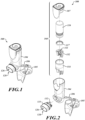
- the aerosol delivery unit 100 includes a base housing 104 and a canister 110 received in the base housing 104, the canister 110 being displaceable from an initial position I, as shown in FIG. 3A , to a discharge position D, as shown in FIG. 3B , for selectively discharging a dose of aerosolized matter for inhalation by a user.
- the canister 110 comprises a canister body 116, which contains the matter to be discharged, and an outlet valve 112, which includes a movable valve stem 114 that extends from the canister body 116.
- the desiccant housing 154 may be coupled to the end or collar of the canister 110 to form a cartridge 160 ( FIG. 2 ) that is readily removable from the base housing 104.
- the desiccant housing 154 and canister 110 may be easily removed from the base housing 104 to replace the canister 110 when depleted and/or to replace the desiccant material 152 as desired.
- the desiccant housing 154 may be coupled to the end or collar of the canister 110 via a resilient band, clips, detents or other fastening devices or techniques, including friction fit or interference fit arrangements.
- the desiccant chamber 150 is shown in the example embodiment of FIGs 3A and 3B as being coupled to a lower end or collar of the canister 110, it is appreciated that in other embodiments a desiccant chamber may be provided in a separate desiccant housing that is coupled to the base housing 104 separate from the canister 110, the desiccant chamber may be formed integrally in the base housing itself, or the desiccant chamber may be provided in a separate component that is attached to the base housing 104.
- the desiccant material may be provided in a variety of different forms, such as gel form, powder form, granular form or molded form, and may consist of or comprise different materials, such as silica, activated charcoal, calcium sulfate or calcium chloride.
- the desiccant housing 154 may be coupled to the end or collar of the canister 110 to form a cartridge 160 that is installable in the base housing 104 to engage a stem seat/nozzle block 132 provided therein. Further details of the components of the cartridge 160 and the stem seat/nozzle block 132 can be seen in the exploded view of FIG. 2 .
- the desiccant housing 154 may form a cup-like structure with a generally cylindrical sidewall that is sized and shaped to receive a lower end of the canister 110.
- the desiccant material 152 may be provided in a molded form.
- the desiccant material 152 may be configured to be positioned in a lower end of the desiccant housing 154.
- the desiccant housing 154 may include one or more locating or coupling features to assist in joining or otherwise positioning the desiccant material 152 within the desiccant housing 154.
- the desiccant material 152 may be shaped so as to not obstruct a valve stem aperture of the stem seal 156 provided in the desiccant housing 154 for receiving the valve stem 114 of the canister 110.
- the desiccant material 152 may have a semi-annular shape with a central passage 153 or other clearance for the valve stem 114.
- the desiccant material 152 may be shaped to partially encircle the valve stem 114 and may extend beyond a terminal end of the valve stem 114.
- the desiccant housing 154 and the desiccant material 152 may also be correspondingly shaped, and may each extend beyond a terminal end of the valve stem 114.
- the desiccant material 152 may substantially fill the desiccant chamber 150 and provide a relatively large volume of desiccant material suitable to continuously remove moisture at least from the passage of the valve stem 114 throughout the usable life of the material (e.g., drug formulation) contained in the canister 110.
- a canister seal 117 may be positioned around the canister body 116, such as around a lower neck portion thereof, to provide a resilient member between the canister body 116 and the desiccant housing 154 which may be compressed when the canister 110 and the desiccant housing 154 are coupled together.
- the canister seal 117 may provide a seal location to assist in isolating the desiccant chamber 150 when the aerosol delivery unit 100 is fully assembled and in preventing the ingress of moisture into said desiccant chamber 150 other than through the discharge passageway 120.
- the stem seal 156 may provide a seal location to assist in isolating the desiccant chamber 150 when the aerosol delivery unit 100 is fully assembled and in preventing the ingress of moisture into said desiccant chamber 150.
- the desiccant chamber 150 is effectively isolated from the external environment apart from the discharge passageway 120, which may be exposed to the external environment through the inhalation passageway 126 when the mouthpiece cap 105 is removed from the base housing 104.
- valve stem 114 when the valve stem 114 is in an expanded position, the portion of the discharge passageway 120 defined by the valve stem 114 is in fluid communication with the desiccant chamber 152 via the aperture 124 in the side of the valve stem 114. Conversely, when the valve stem 114 of the canister 110 is fully depressed, the desiccant chamber 152 is temporarily isolated from the discharge passageway 120 defined by the valve stem 114.
- the valve stem 114 protrudes from a lower end thereof to be subsequently received in the stem seat/nozzle block 132 provided in the base housing 104.
- the stem seat/nozzle block 132 may be provided in a mouthpiece unit 131 that is coupleable to the base housing 104 and includes the inhalation passageway 126 and the mouthpiece aperture 128 for delivering aerosolized matter to the user.
- the desiccant material 152 may extend from a location above the discharge orifice 122 of the stem seat/nozzle block 132 to a location below the discharge orifice 122, and may substantially fill the desiccant chamber 150 within the desiccant housing 154 to provide a relatively large volume of desiccant material suitable to continuously remove moisture at least from the passage of the valve stem 114 throughout the usable life of the material (e.g., drug formulation) contained in the canister 110.
- the material e.g., drug formulation
- embodiments may be particularly well suited to eliminate, reduce or minimize the presence of moisture in the discharge passageway 120 and to eliminate, reduce or minimize any fouling associated therewith even when not completely isolating the discharge passageway 120 from the external environment after discharging the material during the inhalation event.
- an MDI is provided, such as the aerosol delivery unit 100 shown in FIGs 1-3B , wherein one or more internal components of the outlet valve 112 is at least partially composed of bromobutyl material (e.g., bromobutyl rubber).
- bromobutyl material e.g., bromobutyl rubber
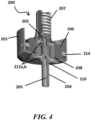
- FIG. 4 illustrates an outlet valve 200 of a canister 201 of an MDI containing a formulation to be discharged, wherein the outlet valve 200 is provided with one or more internal components that comprise or consist of a bromobutyl material (e.g., bromobutyl rubber).
- the outlet valve 200 includes an inner core 202 and a valve stem 204 that are movably displaceable relative to a valve body 206 and to a metering chamber 208 to dispense a metered amount of a formulation through a discharge passageway 205 of the outlet valve 200 during operation of the MDI device.
- the inner core 202 and the valve stem 204 are biased toward an extended position by a spring element 207 and are selectively depressible to dispense a metered dose of formulation.
- the outlet valve 200 further comprises a plurality of gaskets to seal and isolate an internal cavity of the metering chamber 208 relative to the valve body 206 and the canister 201 and to seal and isolate an internal formulation cavity of the canister 201 from an external environment. More particularly, upper and lower seat gaskets 212a,b are provided that slidably engage the inner core 202 and the valve stem 204 to seal and isolate the internal cavity of the metering chamber 208 relative to the valve body 206 and the canister 201. As shown in FIG.
- the upper seat gasket 212a is provided between the metering chamber 208 and the valve body 206 and encircles and seals against a portion of the displaceable inner core 202.
- the lower seat gasket 212b is provided between the metering chamber 208 and the canister 201 and encircles and seals against a portion of the displaceable valve stem 204, which projects from the canister 201.
- one or more of the seat gaskets 212a,b may comprise or consist of a bromobutyl material (e.g., bromobutyl rubber).
- a bromobutyl material e.g., bromobutyl rubber
- a neck gasket 214 is provided between the valve body 206 and the canister 201 to further assist in sealing and isolating the internal formulation cavity from the external environment.
- the neck gasket 214 may comprise or consist of a bromobutyl material (e.g., bromobutyl rubber).
- FIG. 5 shows a CT scan of a discharge passageway of an MDI having a formulation canister with an outlet valve that includes internal seat and neck gaskets composed of a bromobutyl material (e.g., bromobutyl rubber), wherein the MDI was used to repeatedly discharge a formulation under controlled environmental conditions (25°C / 60% RH).
- FIG. 5 shows a discharge orifice of the MDI substantially free of deposited or accumulated matter despite repeated use of the MDI to dispense formulations described herein.
- FIG. 6 provides a comparison of formulation weight loss over time for different valve seat gasket and valve neck gasket materials.
- a bromobutyl material e.g., bromobutyl rubber
- FIG. 6 shows that when the valve neck gasket composed a bromobutyl material (e.g., bromobutyl rubber) consistently showed significant reductions in weight loss over time as compared to a control configuration (leftmost column in the chart).
- the valve seat gaskets also composed a bromobutyl material, e.g., bromobutyl rubber, (rightmost columns in the chart), the weight loss over time approached 0%.
- a bromobutyl material e.g., bromobutyl rubber
- the present disclosure provides the following specific embodiments:
- Active agent particles formed of glycopyrrolate (Pyrrolidinium, 3-((cyclopentylhydroxyphenylacetyl)oxy)-1,1-dimethyl-, bromide) were formed by micronizing glycopyrrolate using a jet mill.
- the particle size distribution of the micronized glycopyrrolate (GP) was determined by laser diffraction. 50% by volume of the micronized particles exhibited an optical diameter smaller than 2.1 ⁇ m, 90% by volume were smaller than 5 ⁇ m.
- Formoterol fumarate ( ⁇ )-2-hydroxy-5-[(1RS)-1-hydroxy-2-[[(1RS)-2-(4-methoxyphenyl)-1-methylethyl]-amino]ethyl]formanilide fumarate, also known as ( ⁇ )-2'-hydroxy-5-[(RS)-1-hydroxy-2-[[RS)-p-methoxy- ⁇ -methylphenethyl]-amine]ethyl]formanilide fumarate, dihydrate was received micronized by the manufacturer (Inke) and used as active agent particles. The particle size distribution of the micronized formoterol fumarate (FF) was determined by laser diffraction. 50% by volume of the micronized particles exhibited an optical diameter smaller than 1.6 ⁇ m, and 90% by volume exhibited an optical diameter smaller than 3.9 ⁇ m.
- Active agent particles formed of budesonide, 16,17-(butylidenebis(oxy))-11,21-dihydroxy-(11- ⁇ ,16- ⁇ )-pregna-1,4-diene-3,20-dione, were formed by micronizing budesonide using a jet mill.
- the particle size distribution of the budesonide (BD) was determined by laser diffraction. 50% by volume of the micronized particles exhibited an optical diameter smaller than 1.9 ⁇ m, 90% by volume exhibited an optical diameter smaller than 4.3 ⁇ m.
- Active agent particles formed of albuterol were formed by micronizing albuterol sulfate using a jet mill.
- the particle size distribution of the albuterol sulfate (AS) was determined by laser diffraction. 50% by volume of the micronized particles exhibited an optical diameter smaller than 1.5 ⁇ m, 90% by volume exhibited an optical diameter smaller than 3.3 ⁇ m.
- Active agent particles formed of roflumilast were formed by micronizing roflumilast using a jet mill.
- the particle size distribution of the roflumilast (RF) was determined by laser diffraction. 50% by volume of the micronized particles exhibited an optical diameter smaller than 1.0 ⁇ m, 90% by volume exhibited an optical diameter smaller than 2.4 ⁇ m.
- Metered dose inhalers were prepared by first dispensing the appropriate quantities of suspending particles and active agent particles an addition vessel (AV) and adding an appropriate quantity of HFO-1234ze(E) (1,3,3,3-Tetrafluoropropene) propellant. The mixture is agitated to facilitate powder wetting and then transferred to a pressure vessel where the suspension is mixed. Valves comprised of 50 ⁇ L metering chambers (BK357, Bespak, King's Lynn, UK) are crimped onto fluorinated ethylene polymer (FEP) coated aluminum cans (Presspart, Blackburn, UK) and the suspension is then pressure filled through the valve. The canisters were fitted with polypropylene actuators with a 0.32 mm orifice (# 10024269, Bespak, King's Lynn, UK).
- Metered dose inhalers containing a triple co-suspension composition comprising glycopyrrolate, budesonide, and formoterol active agent particles were prepared, with each type of active agent particle being provided as a micronized, crystalline API material.
- the active agent particles were suspended in HFO-1234ze(E) propellant, either with or without phospholipid particles.
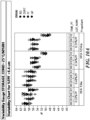
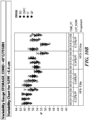
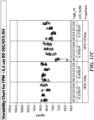
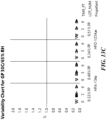
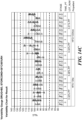
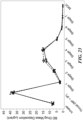
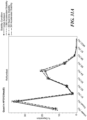
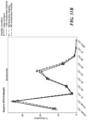
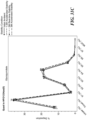
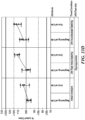
- the three types of active agent particles showed uniform deposition distributions as shown in FIG. 7 .
- the three types of active agent particles showed individual deposition distributions in the formulation without phospholipid particles.
- Metered dose inhalers containing a triple co-suspension composition comprising glycopyrrolate, budesonide, and formoterol active agent particles were prepared, with each type of active agent particle being provided as a micronized, crystalline API material.
- the active agent particles were suspended in HFA-134a propellant or in HFO-1234ze(E) propellant, without phospholipid particles.
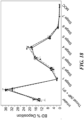
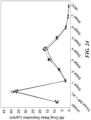
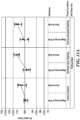
- the deposition distribution of budesonide in each formulation was tested at 0% and at 50% relative humidity.
- the HFA-134 propellant formulation showed a greater impact of relative humidity upon the deposition distribution than did the HFO-1234ze(E) propellant.
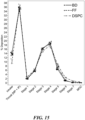
- Metered dose inhalers containing a dual co-suspension composition comprising budesonide and formoterol active agent particles were prepared, with each type of active agent particle being provided as a micronized, crystalline API material.
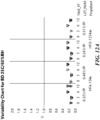
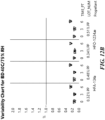
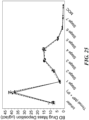
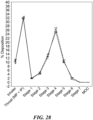
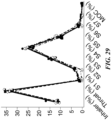
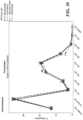
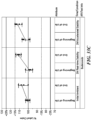
- the active agent particles were suspended in HFO-1234ze(E) propellant, either with or without phospholipid particles. As shown in FIG. 15 , the two types of active agent particles and the suspending particles showed a uniform deposition distribution.
- Table 6 provides the FPF (Fine Particle Fraction), FPD (Fine Particle Dose), MMAD (Mass Median Aerodynamic Diameter), and Throat Deposition as characterized by NGI (Next Generation Impactor).
- budesonide and formoterol fumarate produced a similar aPSD (aerodynamic particle size distributions) by NGI in HFO-1234ze(E) as in HFA-134a.
- Table 7 provides the FPF (Fine Particle Fraction), FPD (Fine Particle Dose), MMAD (Mass Median Aerodynamic Diameter), and Throat Deposition as characterized by NGI (Next Generation Impactor).
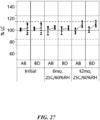
- the aPSD of budesonide, formoterol fumarate, and the suspending particle depicted as DSPC, respectively was stable for twelve months when stored valve down and protected at 25°C/60% RH.
- Table 8 provides the FPF (Fine Particle Fraction), FPD (Fine Particle Dose), MMAD (Mass Median Aerodynamic Diameter), and Throat Deposition as characterized by NGI (Next Generation Impactor).
- FPF Freine Particle Fraction
- FPD Fine Particle Dose
- MMAD Mass Median Aerodynamic Diameter
- Throat Deposition as characterized by NGI (Next Generation Impactor).
- budesonide and formoterol fumarate demonstrated consistent delivered dose as represented as %LC (percent of label claim) and were stable for twelve months when stored valve down and protected at 25°C/60% RH. Table 6.
- budesonide and albuterol produced a similar aPSD (aerodynamic particle size distributions) by NGI in HFO-1234ze(E) as in HFA-134a.
- Table 10 provides the FPF (Fine Particle Fraction), FPD (Fine Particle Dose), MMAD (Mass Median Aerodynamic Diameter), and Throat Deposition as characterized by NGI (Next Generation Impactor).
- the aPSD of budesonide and albuterol, respectively was stable for twelve months when stored valve down and protected at 25°C/60% RH.
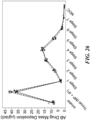
- the two types of active agent particles showed individual deposition distributions, while in the formulation containing phospholipid particles, the two types of active agent particles showed uniform deposition distributions.
- the deposition distribution of the glycopyrrolate active agent particles was tested at several different environmental humidity (RH) levels, ranging from 0% to 100%.
- RH environmental humidity
- both the HFA-134a and HFO-1234ze(E) formulations are more sensitive to RH as compared to the formulations without phospholipid particles, and both formulations showed similar changes to deposition distribution based on RH levels.
- the fine particle fraction (FPF) present in the delivered dose upon actuation of an MDI containing budesonide, formoterol, or glycopyrrolate active agent particles and phospholipid particles was measured following storage of the MDI under various temperature and relative humidity conditions for varied periods of time. ( FIGs 10A , 10B , 10C )
Landscapes
- Health & Medical Sciences (AREA)
- Life Sciences & Earth Sciences (AREA)
- Chemical & Material Sciences (AREA)
- Veterinary Medicine (AREA)
- General Health & Medical Sciences (AREA)
- Public Health (AREA)
- Animal Behavior & Ethology (AREA)
- Pharmacology & Pharmacy (AREA)
- Medicinal Chemistry (AREA)
- Epidemiology (AREA)
- Engineering & Computer Science (AREA)
- Bioinformatics & Cheminformatics (AREA)
- Pulmonology (AREA)
- Otolaryngology (AREA)
- Biophysics (AREA)
- Molecular Biology (AREA)
- Inorganic Chemistry (AREA)
- Pain & Pain Management (AREA)
- General Chemical & Material Sciences (AREA)
- Chemical Kinetics & Catalysis (AREA)
- Nuclear Medicine, Radiotherapy & Molecular Imaging (AREA)
- Organic Chemistry (AREA)
- Hematology (AREA)
- Biomedical Technology (AREA)
- Heart & Thoracic Surgery (AREA)
- Anesthesiology (AREA)
- Oil, Petroleum & Natural Gas (AREA)
- Pharmaceuticals Containing Other Organic And Inorganic Compounds (AREA)
- Medicinal Preparation (AREA)
- Acyclic And Carbocyclic Compounds In Medicinal Compositions (AREA)
- Medicines That Contain Protein Lipid Enzymes And Other Medicines (AREA)
Applications Claiming Priority (4)
| Application Number | Priority Date | Filing Date | Title |
|---|---|---|---|
| US202163220362P | 2021-07-09 | 2021-07-09 | |
| US202163282356P | 2021-11-23 | 2021-11-23 | |
| PCT/US2022/036542 WO2023283438A1 (fr) | 2021-07-09 | 2022-07-08 | Compositions, méthodes et systèmes pour l'administration d'un médicament en aérosol |
| EP22751897.4A EP4175620B1 (fr) | 2021-07-09 | 2022-07-08 | Compositions, méthodes et systèmes pour l'administration d'un médicament en aérosol |
Related Parent Applications (2)
| Application Number | Title | Priority Date | Filing Date |
|---|---|---|---|
| EP22751897.4A Division EP4175620B1 (fr) | 2021-07-09 | 2022-07-08 | Compositions, méthodes et systèmes pour l'administration d'un médicament en aérosol |
| EP22751897.4A Division-Into EP4175620B1 (fr) | 2021-07-09 | 2022-07-08 | Compositions, méthodes et systèmes pour l'administration d'un médicament en aérosol |
Publications (2)
| Publication Number | Publication Date |
|---|---|
| EP4393477A2 true EP4393477A2 (fr) | 2024-07-03 |
| EP4393477A3 EP4393477A3 (fr) | 2024-09-11 |
Family
ID=82748203
Family Applications (6)
| Application Number | Title | Priority Date | Filing Date |
|---|---|---|---|
| EP24161253.0A Pending EP4393478A3 (fr) | 2021-07-09 | 2022-07-08 | Compositions, procédés et systèmes pour l'administration de médicament en aérosol |
| EP24161189.6A Pending EP4393477A3 (fr) | 2021-07-09 | 2022-07-08 | Compositions, procédés et systèmes pour l'administration de médicament en aérosol |
| EP22748658.6A Pending EP4366695A1 (fr) | 2021-07-09 | 2022-07-08 | Compositions, méthodes et systèmes pour l'administration d'un médicament en aérosol |
| EP22748656.0A Active EP4175619B1 (fr) | 2021-07-09 | 2022-07-08 | Compositions, procédés et systèmes pour l'administration d'un médicament en aérosol |
| EP22751897.4A Active EP4175620B1 (fr) | 2021-07-09 | 2022-07-08 | Compositions, méthodes et systèmes pour l'administration d'un médicament en aérosol |
| EP23155432.0A Active EP4197528B1 (fr) | 2021-07-09 | 2022-07-08 | Compositions, procédés et systèmes pour l'administration de médicament en aérosol |
Family Applications Before (1)
| Application Number | Title | Priority Date | Filing Date |
|---|---|---|---|
| EP24161253.0A Pending EP4393478A3 (fr) | 2021-07-09 | 2022-07-08 | Compositions, procédés et systèmes pour l'administration de médicament en aérosol |
Family Applications After (4)
| Application Number | Title | Priority Date | Filing Date |
|---|---|---|---|
| EP22748658.6A Pending EP4366695A1 (fr) | 2021-07-09 | 2022-07-08 | Compositions, méthodes et systèmes pour l'administration d'un médicament en aérosol |
| EP22748656.0A Active EP4175619B1 (fr) | 2021-07-09 | 2022-07-08 | Compositions, procédés et systèmes pour l'administration d'un médicament en aérosol |
| EP22751897.4A Active EP4175620B1 (fr) | 2021-07-09 | 2022-07-08 | Compositions, méthodes et systèmes pour l'administration d'un médicament en aérosol |
| EP23155432.0A Active EP4197528B1 (fr) | 2021-07-09 | 2022-07-08 | Compositions, procédés et systèmes pour l'administration de médicament en aérosol |
Country Status (28)
| Country | Link |
|---|---|
| US (5) | US20240252440A1 (fr) |
| EP (6) | EP4393478A3 (fr) |
| JP (3) | JP2024525555A (fr) |
| KR (3) | KR20240042436A (fr) |
| AU (3) | AU2022305962A1 (fr) |
| CA (3) | CA3226557A1 (fr) |
| CL (3) | CL2024000041A1 (fr) |
| CO (3) | CO2024000631A2 (fr) |
| CR (3) | CR20240064A (fr) |
| DK (3) | DK4197528T3 (fr) |
| DO (3) | DOP2024000004A (fr) |
| EC (1) | ECSP24011022A (fr) |
| ES (3) | ES2983201T3 (fr) |
| FI (3) | FI4175620T3 (fr) |
| HR (3) | HRP20240716T1 (fr) |
| HU (3) | HUE067283T2 (fr) |
| IL (3) | IL309888A (fr) |
| LT (3) | LT4175619T (fr) |
| MA (3) | MA60224B1 (fr) |
| MX (3) | MX2024000465A (fr) |
| PE (3) | PE20240807A1 (fr) |
| PL (3) | PL4197528T3 (fr) |
| PT (3) | PT4175619T (fr) |
| RS (3) | RS65598B1 (fr) |
| SI (3) | SI4175620T1 (fr) |
| SM (3) | SMT202400370T1 (fr) |
| TW (3) | TW202317079A (fr) |
| WO (3) | WO2023283439A1 (fr) |
Families Citing this family (10)
| Publication number | Priority date | Publication date | Assignee | Title |
|---|---|---|---|---|
| US20250345292A1 (en) * | 2022-04-28 | 2025-11-13 | Astrazeneca Ab | Combination of albuterol and budesonide for the treatment of asthma |
| CN116270464B (zh) * | 2023-03-01 | 2025-09-30 | 深圳市贝美药业有限公司 | 一种克立硼罗气雾剂及其制备方法 |
| FR3150798B1 (fr) | 2023-07-07 | 2025-11-21 | Aptar France Sas | Dispositif de distribution de produit fluide |
| WO2025179277A1 (fr) | 2024-02-23 | 2025-08-28 | Zelicovich Marcelo Lazaro | Système de distribution d'aérosol à suspension d'air améliorée |
| TW202600144A (zh) * | 2024-02-23 | 2026-01-01 | 瑞典商阿斯特捷利康公司 | Copd之三重組合療法 |
| WO2026006658A1 (fr) * | 2024-06-27 | 2026-01-02 | Lupin Inc. | Compositions pharmaceutiques stables pour inhalateurs doseurs sous pression |
| US20260007598A1 (en) * | 2024-07-05 | 2026-01-08 | Honeywell International Inc. | Compositions, devices and methods for respritory delivery of active pharmaceutical ingredients |
| GB202410910D0 (en) * | 2024-07-25 | 2024-09-11 | Bespak Europe Ltd | Method of filling a pressurised dispensing container and filled pressurised dispensing container |
| US12496272B1 (en) | 2024-07-31 | 2025-12-16 | Amphastar Pharmaceuticals, Inc. | Stable epinephrine suspension formulation for inhalation with HFO propellant |
| US12383516B1 (en) | 2025-01-06 | 2025-08-12 | Amphastar Pharmaceuticals, Inc. | Albuterol aerosol suspension formulation for oral inhalation with high amount of green propellant hydrofluoroolefin (HFO) and free of co-solvent |
Citations (41)
| Publication number | Priority date | Publication date | Assignee | Title |
|---|---|---|---|---|
| US37872A (en) | 1863-03-10 | Improved mast-hoop | ||
| US2956062A (en) | 1959-02-26 | 1960-10-11 | Robins Co Inc A H | Esters of amino alcohols |
| US3705233A (en) | 1966-09-23 | 1972-12-05 | Allen & Hanburys Ltd | Phenylaminoethanol derivatives |
| US3929768A (en) | 1972-05-19 | 1975-12-30 | Bofors Ab | Steroids, processes for their manufacture and preparations containing same |
| US3994974A (en) | 1972-02-05 | 1976-11-30 | Yamanouchi Pharmaceutical Co., Ltd. | α-Aminomethylbenzyl alcohol derivatives |
| US4187301A (en) | 1978-04-05 | 1980-02-05 | Syntex (U.S.A.) Inc. | 17 Beta-thiocarboxylic acid esters of 6 alpha, 6 beta-difluoro-3-oxoandrost-4-enes |
| US4335121A (en) | 1980-02-15 | 1982-06-15 | Glaxo Group Limited | Androstane carbothioates |
| US4472393A (en) | 1981-02-02 | 1984-09-18 | Schering Corporation | 3,20-Dioxo-1,4-pregnadiene-17α-ol 17-aromatic heterocycle carboxylates |
| US4992474A (en) | 1983-04-18 | 1991-02-12 | Glaxo Group Ltd. | Phenethanolamine derivatives |
| WO1995005805A1 (fr) | 1993-08-27 | 1995-03-02 | Astra Aktiebolag | Procede pour conditionner des substances |
| WO1996032149A1 (fr) | 1995-04-14 | 1996-10-17 | Inhale Therapeutic Systems | Administration par voie pulmonaire de medicaments en aerosols |
| US5610163A (en) | 1989-09-16 | 1997-03-11 | Boehringer Ingelheim Gmbh | Esters of thienyl carboxylic acids and amino alcohols and their quaternization products |
| US5684199A (en) | 1993-12-28 | 1997-11-04 | Novartis Corporation | Process for the preparation of an optically pure enantiomer of formoterol |
| US5707634A (en) | 1988-10-05 | 1998-01-13 | Pharmacia & Upjohn Company | Finely divided solid crystalline powders via precipitation into an anti-solvent |
| US5833891A (en) | 1996-10-09 | 1998-11-10 | The University Of Kansas | Methods for a particle precipitation and coating using near-critical and supercritical antisolvents |
| US5851453A (en) | 1993-07-01 | 1998-12-22 | University Of Bradford | Method and apparatus for the formation of particles |
| US5858410A (en) | 1994-11-11 | 1999-01-12 | Medac Gesellschaft Fur Klinische Spezialpraparate | Pharmaceutical nanosuspensions for medicament administration as systems with increased saturation solubility and rate of solution |
| US5886200A (en) | 1996-07-01 | 1999-03-23 | Schering Corporation | Process for the preparation of 17-esters of 9 α, 21-dihalo-pregnane-11 β, 17 α-diol-20-ones |
| US5889015A (en) | 1994-01-27 | 1999-03-30 | Schering Corporation | Use of mometasone furoate for treating lower airway passage and lung diseases |
| US5928469A (en) | 1991-06-26 | 1999-07-27 | Inhale Therapeutic Systems | Process for storage of materials |
| US6040344A (en) | 1996-11-11 | 2000-03-21 | Sepracor Inc. | Formoterol process |
| US6057581A (en) | 1997-08-21 | 2000-05-02 | Micron Technology, Inc. | Self-aligned contacts |
| US6063138A (en) | 1994-06-30 | 2000-05-16 | Bradford Particle Design Limited | Method and apparatus for the formation of particles |
| US6177560B1 (en) | 1999-08-02 | 2001-01-23 | Hovione Inter Ltd. | Process for the preparation of mometasone furoate |
| US6258341B1 (en) | 1995-04-14 | 2001-07-10 | Inhale Therapeutic Systems, Inc. | Stable glassy state powder formulations |
| US6309623B1 (en) | 1997-09-29 | 2001-10-30 | Inhale Therapeutic Systems, Inc. | Stabilized preparations for use in metered dose inhalers |
| US6309671B1 (en) | 1995-04-14 | 2001-10-30 | Inhale Therapeutic Systems | Stable glassy state powder formulations |
| US6358530B1 (en) | 1995-04-14 | 2002-03-19 | Inhale Therapeutic Systems, Inc. | Powdered pharmaceutical formulations having improved dispersibility |
| US6518239B1 (en) | 1999-10-29 | 2003-02-11 | Inhale Therapeutic Systems, Inc. | Dry powder compositions having improved dispersivity |
| US6777423B2 (en) | 2000-10-12 | 2004-08-17 | Boehringer Ingelheim Pharma Kg | Crystalline tiotropium bromide monohydrate, processes for the preparation thereof, and pharmaceutical compositions |
| WO2005000267A2 (fr) | 2003-05-28 | 2005-01-06 | Nektar Therapeutics | Produit pharmaceutique formule comprenant un principe actif insoluble dans l'eau |
| WO2007009164A1 (fr) | 2005-07-15 | 2007-01-25 | Eiffel Technologies Limited | Procede de formation de particules |
| USRE39820E1 (en) | 1989-09-16 | 2007-09-04 | Boehringer Ingelheim Pharma Gmbh & Co. Kg | Esters of thienyl carboxylic acids and amino alcohols and their quaternization products |
| US20080125407A1 (en) | 2005-07-26 | 2008-05-29 | Shanghai Aurisco International Trading Co., Ltd. | Method for preparation of fluticasone propionate |
| US7442388B2 (en) | 2000-05-10 | 2008-10-28 | Weers Jeffry G | Phospholipid-based powders for drug delivery |
| WO2010138862A2 (fr) | 2009-05-29 | 2010-12-02 | Pearl Therapeutics, Inc. | Compositions permettant l'administration de principes actifs par voie respiratoire et méthodes et systèmes associés |
| US8604064B2 (en) | 2003-03-10 | 2013-12-10 | Takeda Gmbh | Process for the preparation of roflumilast |
| US8815258B2 (en) | 2009-05-29 | 2014-08-26 | Pearl Therapeutics, Inc. | Compositions, methods and systems for respiratory delivery of two or more active agents |
| US9145365B2 (en) | 2011-11-09 | 2015-09-29 | Mylan Laboratories Ltd. | Process for the preparation of Roflumilast |
| US9321726B2 (en) | 2012-10-17 | 2016-04-26 | Interquim, S.A. | Process for preparing roflumilast |
| WO2019074799A1 (fr) | 2017-10-09 | 2019-04-18 | Pearl Therapeutics, Inc. | Systèmes d'administration de médicaments et procédés associés |
Family Cites Families (10)
| Publication number | Priority date | Publication date | Assignee | Title |
|---|---|---|---|---|
| GB8903593D0 (en) | 1989-02-16 | 1989-04-05 | Pafra Ltd | Storage of materials |
| SI3170880T1 (sl) | 2002-10-25 | 2020-07-31 | Honeywell International Inc. | Uporaba sestavkov, ki kot hladilni sestavek vsebujejo HFO-1234ZE ali HFO-1234YF |
| US7550133B2 (en) * | 2002-11-26 | 2009-06-23 | Alexza Pharmaceuticals, Inc. | Respiratory drug condensation aerosols and methods of making and using them |
| US9308199B2 (en) | 2004-04-29 | 2016-04-12 | Honeywell International Inc. | Medicament formulations |
| CA2669924A1 (fr) * | 2006-11-20 | 2008-05-29 | Cipla Limited | Dispositif aerosol |
| SG181870A1 (en) * | 2009-12-23 | 2012-07-30 | Chiesi Farma Spa | Aerosol formulation for copd |
| RU2013155903A (ru) * | 2011-05-17 | 2015-06-27 | Перл Терапьютикс, Инк. | Композиции, способы и устройства для респираторной доставки двух или более активных средств |
| CN107596518B (zh) * | 2012-02-29 | 2021-04-23 | 普马特里克斯营业公司 | 可吸入干粉剂 |
| HUE052275T2 (hu) * | 2013-01-28 | 2021-04-28 | Incozen Therapeutics Pvt Ltd | Eljárások autoimmun, légzõszervi és gyulladásos rendellenességek kezelésére roflumilaszt N-oxid inhalálásával |
| US20150150787A1 (en) * | 2013-05-22 | 2015-06-04 | Pearl Therapeutics, Inc. | Compositions, methods & systems for respiratory delivery of three or more active agents |
-
2022
- 2022-07-08 CA CA3226557A patent/CA3226557A1/fr active Pending
- 2022-07-08 KR KR1020247004328A patent/KR20240042436A/ko active Pending
- 2022-07-08 EP EP24161253.0A patent/EP4393478A3/fr active Pending
- 2022-07-08 MA MA60224A patent/MA60224B1/fr unknown
- 2022-07-08 PL PL23155432.0T patent/PL4197528T3/pl unknown
- 2022-07-08 SM SM20240370T patent/SMT202400370T1/it unknown
- 2022-07-08 MX MX2024000465A patent/MX2024000465A/es unknown
- 2022-07-08 KR KR1020247004330A patent/KR20240042438A/ko active Pending
- 2022-07-08 TW TW111125752A patent/TW202317079A/zh unknown
- 2022-07-08 US US18/577,168 patent/US20240252440A1/en active Pending
- 2022-07-08 DK DK23155432.0T patent/DK4197528T3/da active
- 2022-07-08 HU HUE22751897A patent/HUE067283T2/hu unknown
- 2022-07-08 US US17/861,072 patent/US20230026203A1/en not_active Abandoned
- 2022-07-08 CR CR20240064A patent/CR20240064A/es unknown
- 2022-07-08 SI SI202230039T patent/SI4175620T1/sl unknown
- 2022-07-08 MX MX2024000467A patent/MX2024000467A/es unknown
- 2022-07-08 LT LTEPPCT/US2022/036543T patent/LT4175619T/lt unknown
- 2022-07-08 WO PCT/US2022/036543 patent/WO2023283439A1/fr not_active Ceased
- 2022-07-08 FI FIEP22751897.4T patent/FI4175620T3/fi active
- 2022-07-08 TW TW111125764A patent/TW202317080A/zh unknown
- 2022-07-08 US US18/577,176 patent/US20240252432A1/en active Pending
- 2022-07-08 WO PCT/US2022/036542 patent/WO2023283438A1/fr not_active Ceased
- 2022-07-08 HU HUE23155432A patent/HUE067547T2/hu unknown
- 2022-07-08 TW TW111125791A patent/TW202317081A/zh unknown
- 2022-07-08 HU HUE22748656A patent/HUE067281T2/hu unknown
- 2022-07-08 WO PCT/US2022/036548 patent/WO2023283441A1/fr not_active Ceased
- 2022-07-08 SI SI202230041T patent/SI4175619T1/sl unknown
- 2022-07-08 SM SM20240368T patent/SMT202400368T1/it unknown
- 2022-07-08 FI FIEP22748656.0T patent/FI4175619T3/fi active
- 2022-07-08 AU AU2022305962A patent/AU2022305962A1/en active Pending
- 2022-07-08 HR HRP20240716TT patent/HRP20240716T1/hr unknown
- 2022-07-08 LT LTEP23155432.0T patent/LT4197528T/lt unknown
- 2022-07-08 ES ES22751897T patent/ES2983201T3/es active Active
- 2022-07-08 EP EP24161189.6A patent/EP4393477A3/fr active Pending
- 2022-07-08 RS RS20240630A patent/RS65598B1/sr unknown
- 2022-07-08 PL PL22751897.4T patent/PL4175620T3/pl unknown
- 2022-07-08 RS RS20240629A patent/RS65597B1/sr unknown
- 2022-07-08 HR HRP20240753TT patent/HRP20240753T1/hr unknown
- 2022-07-08 CR CR20240063A patent/CR20240063A/es unknown
- 2022-07-08 JP JP2024500203A patent/JP2024525555A/ja active Pending
- 2022-07-08 DK DK22748656.0T patent/DK4175619T3/da active
- 2022-07-08 SM SM20240312T patent/SMT202400312T1/it unknown
- 2022-07-08 PE PE2024000057A patent/PE20240807A1/es unknown
- 2022-07-08 EP EP22748658.6A patent/EP4366695A1/fr active Pending
- 2022-07-08 ES ES22748656T patent/ES2981514T3/es active Active
- 2022-07-08 MA MA60223A patent/MA60223B1/fr unknown
- 2022-07-08 JP JP2024500250A patent/JP2024525567A/ja active Pending
- 2022-07-08 JP JP2024500201A patent/JP2024527348A/ja active Pending
- 2022-07-08 CA CA3226153A patent/CA3226153A1/fr active Pending
- 2022-07-08 PT PT227486560T patent/PT4175619T/pt unknown
- 2022-07-08 MX MX2024000468A patent/MX2024000468A/es unknown
- 2022-07-08 HR HRP20240725TT patent/HRP20240725T1/hr unknown
- 2022-07-08 PE PE2024000056A patent/PE20241067A1/es unknown
- 2022-07-08 CR CR20240066A patent/CR20240066A/es unknown
- 2022-07-08 PE PE2024000058A patent/PE20240808A1/es unknown
- 2022-07-08 IL IL309888A patent/IL309888A/en unknown
- 2022-07-08 ES ES23155432T patent/ES2981709T3/es active Active
- 2022-07-08 IL IL309907A patent/IL309907A/en unknown
- 2022-07-08 AU AU2022306682A patent/AU2022306682A1/en active Pending
- 2022-07-08 IL IL309908A patent/IL309908A/en unknown
- 2022-07-08 PT PT227518974T patent/PT4175620T/pt unknown
- 2022-07-08 EP EP22748656.0A patent/EP4175619B1/fr active Active
- 2022-07-08 FI FIEP23155432.0T patent/FI4197528T3/fi active
- 2022-07-08 AU AU2022308837A patent/AU2022308837A1/en active Pending
- 2022-07-08 PL PL22748656.0T patent/PL4175619T3/pl unknown
- 2022-07-08 DK DK22751897.4T patent/DK4175620T3/da active
- 2022-07-08 RS RS20240576A patent/RS65537B1/sr unknown
- 2022-07-08 KR KR1020247004329A patent/KR20240042437A/ko active Pending
- 2022-07-08 CA CA3226155A patent/CA3226155A1/fr active Pending
- 2022-07-08 PT PT231554320T patent/PT4197528T/pt unknown
- 2022-07-08 EP EP22751897.4A patent/EP4175620B1/fr active Active
- 2022-07-08 US US18/577,165 patent/US20240358662A1/en active Pending
- 2022-07-08 MA MA61888A patent/MA61888B1/fr unknown
- 2022-07-08 LT LTEPPCT/US2022/036542T patent/LT4175620T/lt unknown
- 2022-07-08 SI SI202230038T patent/SI4197528T1/sl unknown
- 2022-07-08 EP EP23155432.0A patent/EP4197528B1/fr active Active
-
2024
- 2024-01-03 DO DO2024000004A patent/DOP2024000004A/es unknown
- 2024-01-04 DO DO2024000005A patent/DOP2024000005A/es unknown
- 2024-01-05 CL CL2024000041A patent/CL2024000041A1/es unknown
- 2024-01-05 DO DO2024000006A patent/DOP2024000006A/es unknown
- 2024-01-05 CL CL2024000039A patent/CL2024000039A1/es unknown
- 2024-01-05 CL CL2024000037A patent/CL2024000037A1/es unknown
- 2024-01-25 CO CONC2024/0000631A patent/CO2024000631A2/es unknown
- 2024-01-26 CO CONC2024/0000742A patent/CO2024000742A2/es unknown
- 2024-01-26 CO CONC2024/0000748A patent/CO2024000748A2/es unknown
- 2024-02-09 EC ECSENADI202411022A patent/ECSP24011022A/es unknown
- 2024-02-28 US US18/590,826 patent/US20240325298A1/en active Pending
Patent Citations (53)
| Publication number | Priority date | Publication date | Assignee | Title |
|---|---|---|---|---|
| US37872A (en) | 1863-03-10 | Improved mast-hoop | ||
| US2956062A (en) | 1959-02-26 | 1960-10-11 | Robins Co Inc A H | Esters of amino alcohols |
| US3705233A (en) | 1966-09-23 | 1972-12-05 | Allen & Hanburys Ltd | Phenylaminoethanol derivatives |
| US3994974A (en) | 1972-02-05 | 1976-11-30 | Yamanouchi Pharmaceutical Co., Ltd. | α-Aminomethylbenzyl alcohol derivatives |
| US3929768A (en) | 1972-05-19 | 1975-12-30 | Bofors Ab | Steroids, processes for their manufacture and preparations containing same |
| US4187301A (en) | 1978-04-05 | 1980-02-05 | Syntex (U.S.A.) Inc. | 17 Beta-thiocarboxylic acid esters of 6 alpha, 6 beta-difluoro-3-oxoandrost-4-enes |
| US4335121A (en) | 1980-02-15 | 1982-06-15 | Glaxo Group Limited | Androstane carbothioates |
| US4472393A (en) | 1981-02-02 | 1984-09-18 | Schering Corporation | 3,20-Dioxo-1,4-pregnadiene-17α-ol 17-aromatic heterocycle carboxylates |
| US4992474A (en) | 1983-04-18 | 1991-02-12 | Glaxo Group Ltd. | Phenethanolamine derivatives |
| US5126375A (en) | 1983-04-18 | 1992-06-30 | Glaxo Group Ltd. | Phenethanolamine derivatives |
| US5225445A (en) | 1983-04-18 | 1993-07-06 | Glaxo Group Ltd. | Phenethanolamine derivatives having β2 -adrenoreceptor selective stimulant action |
| US5707634A (en) | 1988-10-05 | 1998-01-13 | Pharmacia & Upjohn Company | Finely divided solid crystalline powders via precipitation into an anti-solvent |
| USRE39820E1 (en) | 1989-09-16 | 2007-09-04 | Boehringer Ingelheim Pharma Gmbh & Co. Kg | Esters of thienyl carboxylic acids and amino alcohols and their quaternization products |
| US5610163A (en) | 1989-09-16 | 1997-03-11 | Boehringer Ingelheim Gmbh | Esters of thienyl carboxylic acids and amino alcohols and their quaternization products |
| US5928469A (en) | 1991-06-26 | 1999-07-27 | Inhale Therapeutic Systems | Process for storage of materials |
| US6372258B1 (en) | 1992-07-08 | 2002-04-16 | Inhale Therapeutic Systems | Methods of spray-drying a drug and a hydrophobic amino acid |
| US5851453A (en) | 1993-07-01 | 1998-12-22 | University Of Bradford | Method and apparatus for the formation of particles |
| WO1995005805A1 (fr) | 1993-08-27 | 1995-03-02 | Astra Aktiebolag | Procede pour conditionner des substances |
| US5684199A (en) | 1993-12-28 | 1997-11-04 | Novartis Corporation | Process for the preparation of an optically pure enantiomer of formoterol |
| US6677323B2 (en) | 1994-01-27 | 2004-01-13 | Schering Corporation | Use of mometasone furoate for treating airway passage and lung diseases |
| US5889015A (en) | 1994-01-27 | 1999-03-30 | Schering Corporation | Use of mometasone furoate for treating lower airway passage and lung diseases |
| US6677322B2 (en) | 1994-01-27 | 2004-01-13 | Schering Corporation | Use of mometasone furoate for treating airway passage and lung diseases |
| US6057307A (en) | 1994-01-27 | 2000-05-02 | Schering Corporation | Use of mometasone furoate for treating airway passage and lung diseases |
| US6365581B1 (en) | 1994-01-27 | 2002-04-02 | Schering Corporation | Use of mometasone furoate for treating airway passage and lung diseases |
| US6063138A (en) | 1994-06-30 | 2000-05-16 | Bradford Particle Design Limited | Method and apparatus for the formation of particles |
| US5858410A (en) | 1994-11-11 | 1999-01-12 | Medac Gesellschaft Fur Klinische Spezialpraparate | Pharmaceutical nanosuspensions for medicament administration as systems with increased saturation solubility and rate of solution |
| US6258341B1 (en) | 1995-04-14 | 2001-07-10 | Inhale Therapeutic Systems, Inc. | Stable glassy state powder formulations |
| US6309671B1 (en) | 1995-04-14 | 2001-10-30 | Inhale Therapeutic Systems | Stable glassy state powder formulations |
| US6358530B1 (en) | 1995-04-14 | 2002-03-19 | Inhale Therapeutic Systems, Inc. | Powdered pharmaceutical formulations having improved dispersibility |
| WO1996032149A1 (fr) | 1995-04-14 | 1996-10-17 | Inhale Therapeutic Systems | Administration par voie pulmonaire de medicaments en aerosols |
| US5886200A (en) | 1996-07-01 | 1999-03-23 | Schering Corporation | Process for the preparation of 17-esters of 9 α, 21-dihalo-pregnane-11 β, 17 α-diol-20-ones |
| US5833891A (en) | 1996-10-09 | 1998-11-10 | The University Of Kansas | Methods for a particle precipitation and coating using near-critical and supercritical antisolvents |
| US6040344A (en) | 1996-11-11 | 2000-03-21 | Sepracor Inc. | Formoterol process |
| US6057581A (en) | 1997-08-21 | 2000-05-02 | Micron Technology, Inc. | Self-aligned contacts |
| US6309623B1 (en) | 1997-09-29 | 2001-10-30 | Inhale Therapeutic Systems, Inc. | Stabilized preparations for use in metered dose inhalers |
| US6177560B1 (en) | 1999-08-02 | 2001-01-23 | Hovione Inter Ltd. | Process for the preparation of mometasone furoate |
| US6518239B1 (en) | 1999-10-29 | 2003-02-11 | Inhale Therapeutic Systems, Inc. | Dry powder compositions having improved dispersivity |
| US7442388B2 (en) | 2000-05-10 | 2008-10-28 | Weers Jeffry G | Phospholipid-based powders for drug delivery |
| US6908928B2 (en) | 2000-10-12 | 2005-06-21 | Bi Pharma Kg. | Crystalline tiotropium bromide monohydrate, processes for the preparation thereof, and pharmaceutical compositions |
| US6777423B2 (en) | 2000-10-12 | 2004-08-17 | Boehringer Ingelheim Pharma Kg | Crystalline tiotropium bromide monohydrate, processes for the preparation thereof, and pharmaceutical compositions |
| US8604064B2 (en) | 2003-03-10 | 2013-12-10 | Takeda Gmbh | Process for the preparation of roflumilast |
| WO2005000267A2 (fr) | 2003-05-28 | 2005-01-06 | Nektar Therapeutics | Produit pharmaceutique formule comprenant un principe actif insoluble dans l'eau |
| WO2007009164A1 (fr) | 2005-07-15 | 2007-01-25 | Eiffel Technologies Limited | Procede de formation de particules |
| US20080125407A1 (en) | 2005-07-26 | 2008-05-29 | Shanghai Aurisco International Trading Co., Ltd. | Method for preparation of fluticasone propionate |
| WO2010138862A2 (fr) | 2009-05-29 | 2010-12-02 | Pearl Therapeutics, Inc. | Compositions permettant l'administration de principes actifs par voie respiratoire et méthodes et systèmes associés |
| WO2010138884A2 (fr) | 2009-05-29 | 2010-12-02 | Pearl Therapeutics, Inc. | Compositions, méthodes et systèmes permettant une administration par voie respiratoire de deux principes actifs ou plus |
| WO2010138868A2 (fr) | 2009-05-29 | 2010-12-02 | Pearl Therapeutics, Inc. | Compositions permettant l'administration par voie pulmonaire d'antagonistes, à action prolongée, des récepteurs muscariniques et d'agonistes, à action prolongée, des récepteurs adrénergiques β2 et méthodes et systèmes associés |
| US20110135737A1 (en) | 2009-05-29 | 2011-06-09 | Pearl Therapeutics, Inc. | Compositions for respiratory delivery of active agents and associated methods and systems |
| US8815258B2 (en) | 2009-05-29 | 2014-08-26 | Pearl Therapeutics, Inc. | Compositions, methods and systems for respiratory delivery of two or more active agents |
| US9463161B2 (en) | 2009-05-29 | 2016-10-11 | Pearl Therapeutics, Inc. | Compositions for pulmonary delivery of long-acting muscarinic antagonists and associated methods and systems |
| US9145365B2 (en) | 2011-11-09 | 2015-09-29 | Mylan Laboratories Ltd. | Process for the preparation of Roflumilast |
| US9321726B2 (en) | 2012-10-17 | 2016-04-26 | Interquim, S.A. | Process for preparing roflumilast |
| WO2019074799A1 (fr) | 2017-10-09 | 2019-04-18 | Pearl Therapeutics, Inc. | Systèmes d'administration de médicaments et procédés associés |
Non-Patent Citations (2)
| Title |
|---|
| "Remington: The Science and Practice of Pharmacy", 2006, LIPPINCOTT, WILLIAMS & WILKINS, pages: 212 |
| WANG, H ET AL., RESPIRATORY DRUG DELIVERY, 2019 |
Also Published As
Similar Documents
| Publication | Publication Date | Title |
|---|---|---|
| EP4175619B1 (fr) | Compositions, procédés et systèmes pour l'administration d'un médicament en aérosol | |
| CN117940115A (zh) | 用于气溶胶药物递送的组合物、方法和系统 | |
| US20250057764A1 (en) | Compositions, methods and systems for aerosol drug delivery | |
| HK40110160A (en) | Compositions, methods and systems for aerosol drug delivery | |
| HK40109490A (en) | Compositions, methods and systems for aerosol drug delivery | |
| HK40093100B (en) | Compositions, methods and systems for aerosol drug delivery | |
| HK40093100A (en) | Compositions, methods and systems for aerosol drug delivery | |
| HK40096570A (en) | Compositions, methods and systems for aerosol drug delivery | |
| HK40096570B (en) | Compositions, methods and systems for aerosol drug delivery | |
| HK40091516B (en) | Compositions, methods and systems for aerosol drug delivery | |
| BR112024000138B1 (pt) | Composições e inaladores para liberação de fármaco por aerossol | |
| BR122025013449B1 (pt) | Composições, inaladores para liberação de fármaco por aerossol, e usos | |
| BR112024000159B1 (pt) | Composições e inaladores para a aplicação de fármaco via aerossol | |
| BR122025013470A2 (pt) | Composições, inaladores para a aplicação de fármaco via aerossol, e usos |
Legal Events
| Date | Code | Title | Description |
|---|---|---|---|
| PUAI | Public reference made under article 153(3) epc to a published international application that has entered the european phase |
Free format text: ORIGINAL CODE: 0009012 |
|
| STAA | Information on the status of an ep patent application or granted ep patent |
Free format text: STATUS: THE APPLICATION HAS BEEN PUBLISHED |
|
| AC | Divisional application: reference to earlier application |
Ref document number: 4175620 Country of ref document: EP Kind code of ref document: P |
|
| AK | Designated contracting states |
Kind code of ref document: A2 Designated state(s): AL AT BE BG CH CY CZ DE DK EE ES FI FR GB GR HR HU IE IS IT LI LT LU LV MC MK MT NL NO PL PT RO RS SE SI SK SM TR |
|
| REG | Reference to a national code |
Ref country code: DE Ref legal event code: R079 Free format text: PREVIOUS MAIN CLASS: A61K0009000000 Ipc: A61K0031167000 |
|
| PUAL | Search report despatched |
Free format text: ORIGINAL CODE: 0009013 |
|
| AK | Designated contracting states |
Kind code of ref document: A3 Designated state(s): AL AT BE BG CH CY CZ DE DK EE ES FI FR GB GR HR HU IE IS IT LI LT LU LV MC MK MT NL NO PL PT RO RS SE SI SK SM TR |
|
| RIC1 | Information provided on ipc code assigned before grant |
Ipc: A61K 9/16 20060101ALI20240806BHEP Ipc: A61P 1/00 20060101ALI20240806BHEP Ipc: A61K 31/58 20060101ALI20240806BHEP Ipc: A61K 31/40 20060101ALI20240806BHEP Ipc: A61K 31/167 20060101AFI20240806BHEP |
|
| P01 | Opt-out of the competence of the unified patent court (upc) registered |
Free format text: CASE NUMBER: APP_47083/2024 Effective date: 20240814 |
|
| REG | Reference to a national code |
Ref country code: HK Ref legal event code: DE Ref document number: 40110160 Country of ref document: HK |
|
| STAA | Information on the status of an ep patent application or granted ep patent |
Free format text: STATUS: REQUEST FOR EXAMINATION WAS MADE |
|
| 17P | Request for examination filed |
Effective date: 20250228 |
|
| RAV | Requested validation state of the european patent: fee paid |
Extension state: TN Effective date: 20250228 Extension state: MA Effective date: 20250228 |
|
| RAX | Requested extension states of the european patent have changed |
Extension state: ME Payment date: 20250228 Extension state: BA Payment date: 20250228 |
|
| STAA | Information on the status of an ep patent application or granted ep patent |
Free format text: STATUS: EXAMINATION IS IN PROGRESS |
|
| 17Q | First examination report despatched |
Effective date: 20250625 |