EP4393507A1 - Composition pharmaceutique pour le traitement d'une lésion du nerf périphérique - Google Patents
Composition pharmaceutique pour le traitement d'une lésion du nerf périphérique Download PDFInfo
- Publication number
- EP4393507A1 EP4393507A1 EP22848863.1A EP22848863A EP4393507A1 EP 4393507 A1 EP4393507 A1 EP 4393507A1 EP 22848863 A EP22848863 A EP 22848863A EP 4393507 A1 EP4393507 A1 EP 4393507A1
- Authority
- EP
- European Patent Office
- Prior art keywords
- substance
- neutrophils
- injury
- nerve
- peripheral nerve
- Prior art date
- Legal status (The legal status is an assumption and is not a legal conclusion. Google has not performed a legal analysis and makes no representation as to the accuracy of the status listed.)
- Pending
Links
Images









Classifications
-
- A—HUMAN NECESSITIES
- A61—MEDICAL OR VETERINARY SCIENCE; HYGIENE
- A61P—SPECIFIC THERAPEUTIC ACTIVITY OF CHEMICAL COMPOUNDS OR MEDICINAL PREPARATIONS
- A61P25/00—Drugs for disorders of the nervous system
- A61P25/02—Drugs for disorders of the nervous system for peripheral neuropathies
-
- C—CHEMISTRY; METALLURGY
- C07—ORGANIC CHEMISTRY
- C07K—PEPTIDES
- C07K16/00—Immunoglobulins [IG], e.g. monoclonal or polyclonal antibodies
- C07K16/18—Immunoglobulins [IG], e.g. monoclonal or polyclonal antibodies against material from animals or humans
- C07K16/24—Immunoglobulins [IG], e.g. monoclonal or polyclonal antibodies against material from animals or humans against cytokines, lymphokines or interferons
-
- A—HUMAN NECESSITIES
- A61—MEDICAL OR VETERINARY SCIENCE; HYGIENE
- A61K—PREPARATIONS FOR MEDICAL, DENTAL OR TOILETRY PURPOSES
- A61K31/00—Medicinal preparations containing organic active ingredients
- A61K31/16—Amides, e.g. hydroxamic acids
- A61K31/165—Amides, e.g. hydroxamic acids having aromatic rings, e.g. colchicine, atenolol, progabide
- A61K31/166—Amides, e.g. hydroxamic acids having aromatic rings, e.g. colchicine, atenolol, progabide having the carbon of a carboxamide group directly attached to the aromatic ring, e.g. procainamide, procarbazine, metoclopramide, labetalol
-
- A—HUMAN NECESSITIES
- A61—MEDICAL OR VETERINARY SCIENCE; HYGIENE
- A61K—PREPARATIONS FOR MEDICAL, DENTAL OR TOILETRY PURPOSES
- A61K31/00—Medicinal preparations containing organic active ingredients
- A61K31/33—Heterocyclic compounds
- A61K31/395—Heterocyclic compounds having nitrogen as a ring hetero atom, e.g. guanethidine or rifamycins
-
- A—HUMAN NECESSITIES
- A61—MEDICAL OR VETERINARY SCIENCE; HYGIENE
- A61K—PREPARATIONS FOR MEDICAL, DENTAL OR TOILETRY PURPOSES
- A61K31/00—Medicinal preparations containing organic active ingredients
- A61K31/33—Heterocyclic compounds
- A61K31/395—Heterocyclic compounds having nitrogen as a ring hetero atom, e.g. guanethidine or rifamycins
- A61K31/41—Heterocyclic compounds having nitrogen as a ring hetero atom, e.g. guanethidine or rifamycins having five-membered rings with two or more ring hetero atoms, at least one of which being nitrogen, e.g. tetrazole
- A61K31/42—Oxazoles
-
- A—HUMAN NECESSITIES
- A61—MEDICAL OR VETERINARY SCIENCE; HYGIENE
- A61K—PREPARATIONS FOR MEDICAL, DENTAL OR TOILETRY PURPOSES
- A61K31/00—Medicinal preparations containing organic active ingredients
- A61K31/33—Heterocyclic compounds
- A61K31/395—Heterocyclic compounds having nitrogen as a ring hetero atom, e.g. guanethidine or rifamycins
- A61K31/41—Heterocyclic compounds having nitrogen as a ring hetero atom, e.g. guanethidine or rifamycins having five-membered rings with two or more ring hetero atoms, at least one of which being nitrogen, e.g. tetrazole
- A61K31/42—Oxazoles
- A61K31/422—Oxazoles not condensed and containing further heterocyclic rings
-
- A—HUMAN NECESSITIES
- A61—MEDICAL OR VETERINARY SCIENCE; HYGIENE
- A61K—PREPARATIONS FOR MEDICAL, DENTAL OR TOILETRY PURPOSES
- A61K31/00—Medicinal preparations containing organic active ingredients
- A61K31/33—Heterocyclic compounds
- A61K31/395—Heterocyclic compounds having nitrogen as a ring hetero atom, e.g. guanethidine or rifamycins
- A61K31/535—Heterocyclic compounds having nitrogen as a ring hetero atom, e.g. guanethidine or rifamycins having six-membered rings with at least one nitrogen and one oxygen as the ring hetero atoms, e.g. 1,2-oxazines
- A61K31/5375—1,4-Oxazines, e.g. morpholine
- A61K31/5377—1,4-Oxazines, e.g. morpholine not condensed and containing further heterocyclic rings, e.g. timolol
-
- A—HUMAN NECESSITIES
- A61—MEDICAL OR VETERINARY SCIENCE; HYGIENE
- A61K—PREPARATIONS FOR MEDICAL, DENTAL OR TOILETRY PURPOSES
- A61K31/00—Medicinal preparations containing organic active ingredients
- A61K31/70—Carbohydrates; Sugars; Derivatives thereof
- A61K31/7088—Compounds having three or more nucleosides or nucleotides
- A61K31/7105—Natural ribonucleic acids, i.e. containing only riboses attached to adenine, guanine, cytosine or uracil and having 3'-5' phosphodiester links
-
- A—HUMAN NECESSITIES
- A61—MEDICAL OR VETERINARY SCIENCE; HYGIENE
- A61K—PREPARATIONS FOR MEDICAL, DENTAL OR TOILETRY PURPOSES
- A61K38/00—Medicinal preparations containing peptides
- A61K38/16—Peptides having more than 20 amino acids; Gastrins; Somatostatins; Melanotropins; Derivatives thereof
- A61K38/43—Enzymes; Proenzymes; Derivatives thereof
- A61K38/46—Hydrolases (3)
- A61K38/465—Hydrolases (3) acting on ester bonds (3.1), e.g. lipases, ribonucleases
-
- A—HUMAN NECESSITIES
- A61—MEDICAL OR VETERINARY SCIENCE; HYGIENE
- A61K—PREPARATIONS FOR MEDICAL, DENTAL OR TOILETRY PURPOSES
- A61K45/00—Medicinal preparations containing active ingredients not provided for in groups A61K31/00 - A61K41/00
- A61K45/06—Mixtures of active ingredients without chemical characterisation, e.g. antiphlogistics and cardiaca
-
- A—HUMAN NECESSITIES
- A61—MEDICAL OR VETERINARY SCIENCE; HYGIENE
- A61P—SPECIFIC THERAPEUTIC ACTIVITY OF CHEMICAL COMPOUNDS OR MEDICINAL PREPARATIONS
- A61P25/00—Drugs for disorders of the nervous system
- A61P25/28—Drugs for disorders of the nervous system for treating neurodegenerative disorders of the central nervous system, e.g. nootropic agents, cognition enhancers, drugs for treating Alzheimer's disease or other forms of dementia
-
- A—HUMAN NECESSITIES
- A61—MEDICAL OR VETERINARY SCIENCE; HYGIENE
- A61P—SPECIFIC THERAPEUTIC ACTIVITY OF CHEMICAL COMPOUNDS OR MEDICINAL PREPARATIONS
- A61P43/00—Drugs for specific purposes, not provided for in groups A61P1/00-A61P41/00
-
- C—CHEMISTRY; METALLURGY
- C07—ORGANIC CHEMISTRY
- C07K—PEPTIDES
- C07K16/00—Immunoglobulins [IG], e.g. monoclonal or polyclonal antibodies
- C07K16/18—Immunoglobulins [IG], e.g. monoclonal or polyclonal antibodies against material from animals or humans
-
- C—CHEMISTRY; METALLURGY
- C07—ORGANIC CHEMISTRY
- C07K—PEPTIDES
- C07K16/00—Immunoglobulins [IG], e.g. monoclonal or polyclonal antibodies
- C07K16/18—Immunoglobulins [IG], e.g. monoclonal or polyclonal antibodies against material from animals or humans
- C07K16/28—Immunoglobulins [IG], e.g. monoclonal or polyclonal antibodies against material from animals or humans against receptors, cell surface antigens or cell surface determinants
- C07K16/2866—Immunoglobulins [IG], e.g. monoclonal or polyclonal antibodies against material from animals or humans against receptors, cell surface antigens or cell surface determinants against receptors for cytokines, lymphokines, interferons
-
- C—CHEMISTRY; METALLURGY
- C07—ORGANIC CHEMISTRY
- C07K—PEPTIDES
- C07K16/00—Immunoglobulins [IG], e.g. monoclonal or polyclonal antibodies
- C07K16/44—Immunoglobulins [IG], e.g. monoclonal or polyclonal antibodies against material not provided for elsewhere, e.g. haptens, metals, DNA, RNA, amino acids
-
- C—CHEMISTRY; METALLURGY
- C12—BIOCHEMISTRY; BEER; SPIRITS; WINE; VINEGAR; MICROBIOLOGY; ENZYMOLOGY; MUTATION OR GENETIC ENGINEERING
- C12N—MICROORGANISMS OR ENZYMES; COMPOSITIONS THEREOF; PROPAGATING, PRESERVING, OR MAINTAINING MICROORGANISMS; MUTATION OR GENETIC ENGINEERING; CULTURE MEDIA
- C12N15/00—Mutation or genetic engineering; DNA or RNA concerning genetic engineering, vectors, e.g. plasmids, or their isolation, preparation or purification; Use of hosts therefor
- C12N15/09—Recombinant DNA-technology
- C12N15/11—DNA or RNA fragments; Modified forms thereof; Non-coding nucleic acids having a biological activity
- C12N15/113—Non-coding nucleic acids modulating the expression of genes, e.g. antisense oligonucleotides; Antisense DNA or RNA; Triplex- forming oligonucleotides; Catalytic nucleic acids, e.g. ribozymes; Nucleic acids used in co-suppression or gene silencing
- C12N15/1136—Non-coding nucleic acids modulating the expression of genes, e.g. antisense oligonucleotides; Antisense DNA or RNA; Triplex- forming oligonucleotides; Catalytic nucleic acids, e.g. ribozymes; Nucleic acids used in co-suppression or gene silencing against growth factors, growth regulators, cytokines, lymphokines or hormones
-
- C—CHEMISTRY; METALLURGY
- C12—BIOCHEMISTRY; BEER; SPIRITS; WINE; VINEGAR; MICROBIOLOGY; ENZYMOLOGY; MUTATION OR GENETIC ENGINEERING
- C12N—MICROORGANISMS OR ENZYMES; COMPOSITIONS THEREOF; PROPAGATING, PRESERVING, OR MAINTAINING MICROORGANISMS; MUTATION OR GENETIC ENGINEERING; CULTURE MEDIA
- C12N15/00—Mutation or genetic engineering; DNA or RNA concerning genetic engineering, vectors, e.g. plasmids, or their isolation, preparation or purification; Use of hosts therefor
- C12N15/09—Recombinant DNA-technology
- C12N15/11—DNA or RNA fragments; Modified forms thereof; Non-coding nucleic acids having a biological activity
- C12N15/113—Non-coding nucleic acids modulating the expression of genes, e.g. antisense oligonucleotides; Antisense DNA or RNA; Triplex- forming oligonucleotides; Catalytic nucleic acids, e.g. ribozymes; Nucleic acids used in co-suppression or gene silencing
- C12N15/1138—Non-coding nucleic acids modulating the expression of genes, e.g. antisense oligonucleotides; Antisense DNA or RNA; Triplex- forming oligonucleotides; Catalytic nucleic acids, e.g. ribozymes; Nucleic acids used in co-suppression or gene silencing against receptors or cell surface proteins
-
- C—CHEMISTRY; METALLURGY
- C12—BIOCHEMISTRY; BEER; SPIRITS; WINE; VINEGAR; MICROBIOLOGY; ENZYMOLOGY; MUTATION OR GENETIC ENGINEERING
- C12N—MICROORGANISMS OR ENZYMES; COMPOSITIONS THEREOF; PROPAGATING, PRESERVING, OR MAINTAINING MICROORGANISMS; MUTATION OR GENETIC ENGINEERING; CULTURE MEDIA
- C12N15/00—Mutation or genetic engineering; DNA or RNA concerning genetic engineering, vectors, e.g. plasmids, or their isolation, preparation or purification; Use of hosts therefor
- C12N15/09—Recombinant DNA-technology
- C12N15/11—DNA or RNA fragments; Modified forms thereof; Non-coding nucleic acids having a biological activity
- C12N15/115—Aptamers, i.e. nucleic acids binding a target molecule specifically and with high affinity without hybridising therewith ; Nucleic acids binding to non-nucleic acids, e.g. aptamers
Definitions
- the present invention relates to a pharmaceutical composition for treating peripheral nerve injury, containing a substance that suppresses the formation of neutrophil extracellular traps (NETs) outside the parenchyma of an injured peripheral nerve.
- the present invention further relates to a method for evaluating the peripheral nerve regeneration-promoting activity of a test substance by using its activity of suppressing NETs formation outside the parenchyma of an injured peripheral nerve as an indicator.
- NETs neutrophil extracellular traps
- the present invention provides a new means for promoting axonal regeneration that can be used in the regenerative treatment of injured peripheral nerves.
- the inventors of the present invention have found that neutrophils delay the regenerative process of injured peripheral nerves via NETs.
- proteins and genes will be given with human-derived proteins and genes as examples unless otherwise specified, but proteins and genes used in the present invention are not limited to human-derived ones, and the subject to which the present invention is applied is not limited to humans.
- the present invention provides a pharmaceutical composition for treating peripheral nerve injury, containing a substance that suppresses the formation of NETs outside the parenchyma of an injured peripheral nerve.
- Neutrophils are a type of granulocyte that, after differentiation and maturation in the bone marrow, are normally stored in the bone marrow (reservoir pool), peripheral blood (circulating pool), and vascular walls and tissues (marginal pool).
- neutrophils When inflammation occurs due to tissue injury, neutrophils accumulate at the injury site in response to neutrophil migration stimulating factors such as inflammatory cytokines and chemokines produced at the inflammatory site, and are known to be involved in tissue repair and regeneration.
- the inventors of the present invention have found that in the distal regions to the injury site of peripheral nerves, neutrophils first accumulate outside the nerve parenchyma, and then macrophages accumulate in the nerve parenchyma with the disappearance of neutrophils, that inhibition of neutrophil accumulation causes macrophages to accumulate early and in large numbers in the nerve parenchyma, leading to the promotion of axonal regeneration and myelin clearance, and that, in contrast, an increase in the number of neutrophils accumulated suppresses macrophage accumulation, and axonal regeneration and myelin clearance are also suppressed.
- NETs are located outside the nerve parenchyma and overlap their localization with neutrophils, and that suppression of NETs formation outside the nerve parenchyma causes macrophages to accumulate early and in large numbers in the nerve parenchyma, leading to the promotion of axonal regeneration.
- a substance that suppresses the formation of NETs is useful for the treatment of peripheral nerve injury.
- the parenchyma of a peripheral nerve means the internal region of the peripheral nerve surrounded by the epineurium, and the parenchyma includes the nerve bundle in which axons are wrapped by the perineurium.
- Outside the parenchyma of the nerve means the epineurium and the surrounding area, particularly the epineurium.
- a substance that suppresses the formation of NETs outside the parenchyma of an injured peripheral nerve includes a substance that inhibits the accumulation of neutrophils in an injured peripheral nerve, a substance that inhibits NETs formation by neutrophils, and a substance that degrades NETs.
- the substance that inhibits the accumulation of neutrophils in an injured peripheral nerve used in the present disclosure is any substance having the ability to inhibit the accumulation of neutrophils in an injured peripheral nerve, and is preferably at least one substance selected from the group consisting of an antibody against neutrophils and antigen-binding fragments thereof, an aptamer targeting neutrophils, an inhibitor of neutrophil migration stimulating factor, and a neutrophil migration inhibitory factor.
- the substance that inhibits the accumulation of neutrophils in an injured peripheral nerve is an antibody against neutrophils or an antigen-binding fragment thereof.
- the antibody against neutrophils can be any antibody that can bind to neutrophils, for example, to a protein on the cell surface of neutrophils, thereby reducing the number of neutrophils or inhibiting neutrophil function, and is preferably a specific antibody against neutrophils.
- a specific antibody against neutrophils includes, for example, an antibody against Ly-6G (also called myeloid cell differentiation antigen Gr-1), which is a GPI-anchored protein of the Ly-6 family, an anti-PMN (polymorphonuclear neutrophil) antibody, an anti-RP3 antibody.
- a specific antibody can also be represented as an antibody that binds preferentially to a target protein over non-target proteins, or an antibody having high binding affinity for a target protein.
- the specific antibody can bind to the target protein with affinity at least 5 times stronger, preferably at least 10 times stronger, more preferably at least 100 times stronger, and most preferably at least 1000 times stronger than affinity to the non-target proteins.
- the specific antibody can also be an antibody that binds to the target protein with a dissociation constant of 10 -7 M, preferably 10 -8 M, more preferably 10 -9 M.
- the antibody used in the present disclosure can originate from any species including, for example, mice, rats, sharks, rabbits, pigs, hamsters, camels, llamas, goats, or humans.
- the antibody can be of any class (for example, IgG, IgE, IgM, IgD, or IgA) and subclass of immunoglobulin molecules, and IgG is preferred.
- the antibody used in the present disclosure can be a polyclonal antibody or a monoclonal antibody, and a monoclonal antibody is preferred.
- the antibody may be a chimeric antibody, a humanized antibody, or a human antibody.
- an antigen-binding fragment of an antibody is defined as a partial fragment of the antibody having the ability to bind to the target protein of the antibody.
- the antigen-binding fragment of an antibody is preferably a partial fragment of a specific antibody having the ability to bind specifically to the target protein of the antibody, and can include, but not limited to, a fragment of antigen binding (Fab), Fab', F(ab')2, single chain Fv, disulfide stabilized Fv, and a peptide containing the CDRs of the antibody.
- the antibody and antigen-binding fragment thereof can be produced using methods known to those skilled in the art. For example, they can be produced by preparing the target protein by genetic recombination techniques based on the amino acid sequence or the nucleotide sequence of DNA encoding the target protein, immunizing an appropriate animal with the target protein as an antigen, and then fusing B cells of the animal with myeloma cells to obtain hybridomas.
- the hybridoma method see, for example, Meyaard et al. (1997) Immunity 7:283-290 ; Wright et al. (2000) Immunity 13:233-242 ; Kaithamana et al. (1999) J.Immunol. 163:5157-5164 .
- the antibody and antigen-binding fragment thereof may be further conjugated with other drugs to form antibody-drug conjugates.
- aptamer targeting neutrophils can bind to neutrophils, for example, to a protein on the cell surface of neutrophils, thereby reducing the number of neutrophils or inhibiting neutrophil function.
- aptamer targeting neutrophils is an aptamer targeting Ly-6G.
- An aptamer is a molecule that has the ability to bind specifically to a target substance by its three-dimensional structure.
- An aptamer composed of nucleic acids is called a nucleic acid aptamer, and an aptamer composed of amino acids is called a peptide aptamer.
- nucleic acid aptamer an aptamer composed of amino acids
- peptide aptamer an aptamer composed of amino acids.
- both of these aptamers, the nucleic acid aptamer and the peptide aptamer can be used.
- the nucleic acid aptamer used in the present disclosure can be deoxyribonucleic acid (DNA), ribonucleic acid (RNA), or a chimeric nucleic acid containing both deoxyribonucleotides and ribonucleotides as its component units.
- the nucleic acid aptamer can be produced by methods known to those skilled in the art, such as the SELEX (systematic evolution of ligands by exponential enrichment) method.
- the peptide aptamer can be produced by methods known to those skilled in the art, such as the phage display method and cell surface display method.
- Another example of the substance that inhibits the accumulation of neutrophils in an injured peripheral nerve is a substance that exhibits inhibitory activity against a factor that promotes neutrophil migration (also called neutrophil migration stimulating factor, neutrophil migration factor, or neutrophil migration activating factor), examples of the factor include cytokines such as interleukin 8 (IL-8), IL-17, growth-related gene products alpha (Gro alpha), neutrophil activating protein-2 (NAP-2), macrophage inflammatory protein 2 (MIP-2); lipid mediators such as leukotriene B4; N-formyl-methionyl-leucyl-phenylanine (fMLP); and complement components such as C5a.
- the substance that exhibits inhibitory activity against the factor is referred to herein as an inhibitor of neutrophil migration stimulating factor. Examples of such an inhibitor include an antibody against neutrophil migration stimulating factor, an antagonist for the receptor of neutrophil migration stimulating factor.
- neutrophil migration inhibitory factor a factor that inhibits neutrophil migration
- colchicine a factor that inhibits neutrophil migration inhibitory factor
- resolvin a factor that inhibits neutrophil migration inhibitory factor
- protectin a factor that inhibits neutrophil migration inhibitory factor
- 17 ⁇ estradiol a factor that inhibits neutrophil migration inhibitory factor
- the substance that inhibits NETs formation by neutrophils can be selected from the group consisting of a substance that suppresses the expression or inhibits the function of MIF, a substance that suppresses the expression or inhibits the function of CXCR4, and a substance that suppresses the expression or inhibits the function of PAD4. That is, the substance that inhibits NETs formation by neutrophils can be selected from the group consisting of a substance that suppresses the expression of MIF, a substance that inhibits the function of MIF, a substance that suppresses the expression of CXCR4, a substance that inhibits the function of CXCR4, a substance that suppresses the expression of PAD4, and a substance that inhibits the function of PAD4.
- MIF glycosylation-inhibiting factor
- GIF glycosylation-inhibiting factor
- L-dopachrome isomerase phenylpyruvate tautomerase
- MIF is known to be involved in both innate and acquired immunity and to induce the production of inflammatory molecules.
- NCBI Reference Sequence NC_000022.11
- NM_002415.2 the mRNA sequence as NM_002415.2
- amino acid sequence as NP_002406.1 (both searched on July 19, 2021).
- the present invention in one aspect, utilizes a substance that suppresses the expression or inhibits the function of MIF in a pharmaceutical composition for treating peripheral nerve injury.
- the substance that suppresses the expression or inhibits the function of MIF used in the present disclosure is any substance having the ability to suppress the expression of MIF at the gene or protein level or having the ability to inhibit the function of MIF, and is preferably at least one substance selected from the group consisting of a nucleic acid that suppresses the expression of MIF, an antibody against MIF and antigen-binding fragment thereof, an aptamer targeting MIF, and a MIF inhibitor.
- the substance that suppresses the expression of MIF is a nucleic acid that suppresses the expression of MIF.
- the nucleic acid that suppresses the expression of MIF encompasses a nucleic acid having the ability to suppress transcription of mRNA from MIF gene (MIF mRNA), a nucleic acid having the ability to degrade MIF mRNA, and a nucleic acid having the ability to suppress protein translation from MIF mRNA.
- MIF mRNA MIF gene
- Examples include an antisense nucleic acid or a nucleic acid causing RNA interference, such as siRNA, shRNA, or miRNA, which can be designed and produced by those skilled in the art based on the nucleotide sequence of MIF gene or the nucleotide sequence of MIF mRNA.
- One example of the substance that inhibits the function of MIF is an antibody against MIF, preferably a specific antibody against MIF, or an antigen-binding fragment of an antibody against MIF.
- Another example of the substance that inhibits the function of MIF is an aptamer targeting MIF. Definitions and other descriptions of antibodies, specific antibodies, antigen-binding fragments, and aptamers are as described above.
- MIF inhibitor is any substance that has the ability to inhibit the function of MIF.
- MIF inhibitor can include ISO-1 ( CAS No. 478336-92-4 ; (S,R)-3-(4-Hydroxyphenyl)-4,5-dihydro-5-isoxazole acetic acid), ( ⁇ )-CPSI 1306 ( CAS No. 1309793-47-2 ; 2-[3-(3-(2,4-Difluorophenyl)-4,5-dihydro-5-isoxazolyl]-1-(4-morpholinyl)ethanone), 4-IPP ( CAS No.
- CXCR4 is a G protein-coupled receptor belonging to the CXC-motif chemokine receptor family and is known to induce migration of immune cells with its ligands CXC-motif chemokine ligand 12 (CXCL12) and stromal cell-derived factor 1 (SDF-1).
- a chimeric RNA in which a portion of ribonucleotides constituting RNA that suppresses the expression is substituted by corresponding deoxyribonucleotide(s) or nucleotide analog(s) is also encompassed in the nucleic acids that suppress the expression.
- nucleic acids that suppress the expression can be artificially synthesized using genetic recombination or chemical synthesis techniques. Genetic recombination methods, chemical synthesis methods for nucleic acids, as well as techniques of synthesizing non-natural-type bases or techniques of synthesizing nucleic acids containing these are well known to those skilled in the art.
- the substance that degrades NETs is any substance having the ability to degrade chromatin or antimicrobial proteins constituting NETs, particularly chromatin, examples of which include DNA degrading enzymes, such as DNase I, Staphylokinase ( Thammavongsa et al., Science. 2013. 342(6160): 863-866. doi: 10.1126/science.1242255 ).
- DNA degrading enzymes such as DNase I, Staphylokinase ( Thammavongsa et al., Science. 2013. 342(6160): 863-866. doi: 10.1126/science.1242255 ).
- the pharmaceutical composition can contain other medical agents for the treatment of peripheral nerve injury, or pharmaceutically acceptable additives, such as a buffer, a stabilizer, a preservative, and an excipient.
- pharmaceutically acceptable additives are well known to those skilled in the art and can be selected and used by those skilled in the art within the normal practice ability.
- the pharmaceutical composition is applied to subjects with peripheral nerve injury, for example, mammalian individuals such as rodents including mice, rats, hamsters, and guinea pigs, primates including humans, chimpanzees, and rhesus monkeys, domestic animals including pigs, cattle, goats, horses, and sheep, and pet animals including dogs and cats.
- mammalian individuals such as rodents including mice, rats, hamsters, and guinea pigs, primates including humans, chimpanzees, and rhesus monkeys
- domestic animals including pigs, cattle, goats, horses, and sheep
- pet animals including dogs and cats.
- Preferred subjects are humans.
- the pharmaceutical composition can be prepared in the form of a solution and administered intravenously or intraperitoneally.
- the pharmaceutical composition can be prepared in the form of a solution and placed in the distal vicinity of an injury site of a peripheral nerve, either as-is or impregnated in a biocompatible medical material.
- the placement may be made, for example, by injecting the solution agent into the distal vicinity of an injury site of a peripheral nerve, or by impregnating the solution agent into a biocompatible medical material and placing it in the distal vicinity of an injury site of a peripheral nerve.
- the shape of the biocompatible medical material can be any shape suitable for placement in the distal vicinity of an injury site of a peripheral nerve, such as a sheet or gel.
- the medical material in sheet form can be used by covering the region in the distal vicinity of an injury site of a peripheral nerve.
- the medical material in gel form, such as fibrin glue, and alginate, can be used by spraying or applying it in the distal vicinity of an injury site of a peripheral nerve or by implanting it at the distal side of the injury site.
- the pharmaceutical composition can promote axonal regeneration by being applied in the distal vicinity of an injury site of a peripheral nerve where Wallerian degeneration occurs, for a relatively short duration somewhere within the period beginning immediately after peripheral nerve injury and continuing through the accumulation and until the subsequent disappearance of neutrophils outside the nerve parenchyma distal to the injury site.
- the pharmaceutical composition is not required to exist over the entire injured peripheral nerve, nor is it required to exist over the entire period from immediately after peripheral nerve injury until the completion of axonal regeneration.
- the pharmaceutical composition can be used by being placed in the distal vicinity of, particularly in the distal close vicinity of an injury site of a peripheral nerve, for a relatively short duration, for example, for 30 minutes to 7 days, somewhere within the period of neutrophil accumulation outside the nerve parenchyma distal to the injury site after peripheral nerve injury, for example, somewhere within the period beginning immediately after surgical invasion and continuing through the accumulation and until the subsequent disappearance of neutrophils outside the nerve parenchyma distal to the injury site.
- the duration for placing the pharmaceutical composition in the distal vicinity of a peripheral nerve injury site can be, for example, 30 minutes or more, 60 minutes or more, or 90 minutes or more, and can be 7 days or less, 24 hours or less, 12 hours or less, 6 hours or less, 4 hours or less, or 3 hours or less.
- the pharmaceutical composition can be effective even with such temporally and spatially limited treatment. Therefore, for example, when performing nerve suture in cases of peripheral nerve injury, it is possible to place the pharmaceutical composition in the distal close vicinity of an injury site of a peripheral nerve and suture the nerve, and to remove the pharmaceutical composition after several tens of minutes to several hours, for example, 30 minutes to 3 hours, have elapsed since its placement.
- the invention provides a method for treating peripheral nerve injury, including applying to a subject with peripheral nerve injury the pharmaceutical composition containing an effective amount of the substance that suppresses the formation of NETs outside the parenchyma of an injured peripheral nerve, for example, the substance that inhibits the accumulation of neutrophils in an injured peripheral nerve or the substance that suppresses the expression or inhibits the function of MIF.
- the application is performed by placement of the pharmaceutical composition preferably in the distal vicinity of, particularly in the distal close vicinity of an injury site of a peripheral nerve.
- the invention also provides a substance that suppresses the formation of NETs outside the parenchyma of an injured peripheral nerve for use in the treatment of peripheral nerve injury.
- the invention further provides use of the substance that suppresses the formation of NETs outside the parenchyma of an injured peripheral nerve in the manufacture of the pharmaceutical composition. Definitions and other descriptions are as described above.
- the present invention provides a method for evaluating the peripheral nerve regeneration-promoting activity of a test substance by using its activity of suppressing NETs formation outside the parenchyma of an injured peripheral nerve as an indicator.
- the activity of suppressing NETs formation outside the parenchyma of an injured peripheral nerve includes the activity of inhibiting the accumulation of neutrophils in an injured peripheral nerve; the activity of inhibiting NETs formation by neutrophils, for example, the activity of suppressing the expression or inhibiting the function of MIF, the activity of suppressing the expression or inhibiting the function of CXCR4, and the activity of suppressing the expression or inhibiting the function of PAD4; and the activity of degrading NETs.
- the method for evaluation by using the activity of inhibiting the accumulation of neutrophils in an injured peripheral nerve as an indicator includes determining the peripheral nerve regeneration-promoting activity of a test substance by comparing the viability or migration ability of neutrophils in vitro, both in the presence and absence of the test substance.
- the test substance that reduces the viability or migration ability of neutrophils can be determined to have peripheral nerve regeneration promoting activity.
- the method for evaluation by using the activity of inhibiting the accumulation of neutrophils in an injured peripheral nerve as an indicator includes determining the peripheral nerve regeneration-promoting activity of a test substance by comparing the number of neutrophils in the blood or the number of neutrophils accumulated in an injury site of peripheral nerve in vivo, both in the presence and absence of the test substance.
- the test substance that reduces the number of neutrophils in the blood or the number of neutrophils accumulated in an injury site of peripheral nerve can be determined to have peripheral nerve regeneration-promoting activity.
- the method for evaluation by using the activity of inhibiting NETs formation by neutrophils as an indicator includes determining the peripheral nerve regeneration-promoting activity of a test substance in vitro by comparing the promoter activity of either MIF, CXCR4 or PAD4 gene (hereinafter referred to as the indicator gene) in vitro, both in the presence and absence of the test substance.
- the evaluation method can include, for example, the step of incubating the test substance together with cells containing a nucleic acid having a marker gene under the control of a promoter region that controls expression of the indicator gene, under a condition where expression of the marker gene is induced by said promoter; the step of measuring the intensity of the marker gene-derived signal in said cells; the step of comparing the above measured intensity of the marker gene-derived signal with the intensity of the marker gene-derived signal in the absence of the test substance; and the step of determining that the test substance that reduces the intensity of the marker gene-derived signal has peripheral nerve regeneration-promoting activity.
- the marker gene can be any gene whose expression induction can be detected, such as a gene encoding a fluorescent protein such as GFP or a chemiluminescent protein such as luciferase, or a gene that confers a phenotypic change on cells, such as a drug resistance gene or a gene that can complement the nutritional requirements of cells.
- the cells containing a nucleic acid having a marker gene under the control of a promoter region that controls expression of the indicator gene can be produced, for example, by recombining the nucleotide sequence of the open reading frame region of the indicator gene in a cell that originally has the indicator gene with the nucleotide sequence that encodes the marker gene.
- the cells can also be produced by constructing an expression vector containing the promoter region of the human indicator gene and the recombined marker gene under its control based on the human genome sequence information, and introducing the expression vector into appropriate cells.
- Incubation can be performed by allowing said cells and the test substance to coexist in a medium or buffer solution in an appropriate container.
- the temperature, time, and other conditions of incubation can be any conditions under which the cells can express the marker gene.
- the marker gene-derived signal can be measured by a method suitable for the marker gene used.
- the evaluation method includes determining the peripheral nerve regeneration-promoting activity of the test substance by comparing the expression of the indicator gene or either MIF, CXCR4 or PAD4 protein (hereinafter referred to as the indicator protein) both in the presence and absence of the test substance.
- the evaluation method can include, for example, the step of incubating the test substance together with cells having the ability to express the indicator gene or indicator protein; the step of measuring the intensity of the indicator gene- or indicator protein-derived signal in said cells after incubation; the step of comparing the above measured intensity of the indicator gene- or indicator protein-derived signal with the intensity of the indicator gene- or indicator protein-derived signal in the absence of the test substance; and the step of determining that the test substance that reduces the intensity of the indicator gene or indicator protein-derived signal has peripheral nerve regeneration-promoting activity.
- the cells having the ability to express the indicator gene or indicator protein are preferably cells expressing a human indicator gene or indicator protein, for example, a cultured cell line incorporating a human indicator gene, for example, a human MIF gene, can be used.
- the indicator gene-derived signal can be measured by general methods that can detect and quantify specific gene expression, such as hybridization using the nucleotide sequence information of the indicator gene, quantitative PCR, and RNA-Seq.
- the indicator protein-derived signal can be measured by general methods that can detect and quantify specific protein expression, for example, immunological detection methods such as ELISA and Western blotting using a specific antibody against the indicator protein.
- test substance that reduces the intensity of the indicator gene or indicator protein-derived signal in cells incubated with the test substance compared to cells not incubated with the test substance under conditions that the expression of the indicator gene or indicator protein is induced can be determined to have peripheral nerve regeneration-promoting activity.
- the method for evaluation by using the activity of inhibiting NETs formation by neutrophils as an indicator includes determining the peripheral nerve regeneration-promoting activity of the test substance by comparing the function of MIF, CXCR4, or PAD4 both in the presence and absence of the test substance.
- the method for evaluation by using the activity of inhibiting NETs formation by neutrophils as an indicator includes determining the peripheral nerve regeneration-promoting activity of the test substance by comparing the inhibitory activity of MIF on macrophage migration both in the presence and absence of the test substance.
- the test substance that is determined to have activity to inhibit the function of MIF can be evaluated as having peripheral nerve regeneration-promoting activity. Comparison of the activity of MIF both in the presence and absence of the test substance can be performed using methods employed in the evaluation or screening of the inhibitory activity of known MIF inhibitors.
- the NETs-derived signal is, for example, a signal derived from a known NETs marker molecule such as citrullinated histone H3, and can be measured by methods suitable for the marker molecule, such as immunological detection methods.
- the test substance that is determined to have activity to degrade NETs can be evaluated as having peripheral nerve regeneration-promoting activity.
- the right atrial appendage of the animals was incised under anesthesia to release the blood, and a PBS solution was poured into the left heart to remove the blood. After transcardial perfusion and fixation with 4% paraformaldehyde-added PBS, the sciatic nerve was collected.
- GFP-labeled neutrophils used in Test Example 2 were prepared as follows: Bone marrow cells from the femur and lower leg bones of C57BL/6 GFP mice (8-10 weeks old) were collected by draining them with PBS. Erythrocytes contained in bone marrow cells were lysed with RBC lysis buffer (Funakoshi) to purify bone marrow cells. Neutrophils were isolated from bone marrow cells using Neutrophil isolation kit, mouse (Miltenyi Biotec).
- Sciatic nerves collected from animals were fixed in 4% PFA at 4°C overnight and then transferred to 30% Sucrose/PB solution and allowed to stand for 24 hours or longer.
- Longitudinal sciatic nerve sections of 10 ⁇ m thickness, or in the case of mice, transverse sections at predetermined locations, were prepared using a cryostat. The sections were blocked in TBS (pH 8.4) containing 5% Normal horse serum (Thermo Fisher Scientific, Waltham, MA) and 0.25% Triton X-100 (Sigma-Aldrich, St. Louis, MO) for 1 hour, and then immersed in TBS containing primary antibody at 4°C overnight and in TBS containing secondary antibody at room temperature for 1 hour for staining.
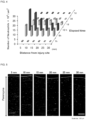
- Test Example 1 Spatiotemporal distribution analysis of neutrophils and macrophages in peripheral nerve injury area
- the increase in the number of neutrophils in the distal regions to the injury site peaked at 12 hours after injury and had almost disappeared by 3 days ( Fig. 4 ).
- CD68 a macrophage marker
- the sciatic nerves were collected 12 hours or 7 days after injury creation, and their longitudinal sections were subjected to HE staining and immunohistochemical staining.
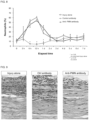
- the number of neutrophils in the nerve and macrophages in the nerve parenchyma were counted from the stained images, and the axonal regeneration percentage was calculated.
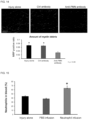
- the MBP positive ratio an index of the amount of axonal debris, was calculated by dividing the area of MBP positive regions in the MBP-immunostained images by the total area.
- Figure 11 shows the distribution of macrophages in the distal regions to the injury site of sciatic nerve 12 hours and 7 days after injury.
- the anti-neutrophil antibody group showed a greater accumulation of macrophages at an earlier time point than the injury alone group and the control antibody group.
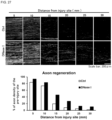
- Figure 19 shows representative ⁇ 3 tubulin-immunostained images
- Figure 20 shows axon density 7 days after injury.
- axon density increased closer to the injury site, while axon density was generally lower in the neutrophil group.
- Figure 21 shows representative MBP-immunostained images 7 days after injury
- Figure 22 shows the MBP positivity ratio.
- the neutrophil group showed a higher MBP positive ratio and an increased amount of myelin debris compared to the injury alone group and the PBS group.
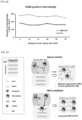
- FIG. 23 A conceptual diagram of axonal regeneration process controlled by neutrophils, as inferred from Test Examples 1 and 2 and Example 1, is shown in Figure 23 .
- Crush injuries were created in the sciatic nerve of rats.
- the sciatic nerves from 5 mm to 25 mm distal to the injury site were wrapped with collagen sheets impregnated with either 100 ⁇ l of PBS containing 1 mg of the CXCR4 inhibitor AMD3100 (Abcam #10599), or 100 ⁇ l of PBS.
- the sciatic nerves were collected, and immunohistochemical staining of their longitudinal sections was performed to count the number of macrophages in the nerve parenchyma, and the axonal regeneration percentage was calculated.
Landscapes
- Health & Medical Sciences (AREA)
- Life Sciences & Earth Sciences (AREA)
- Chemical & Material Sciences (AREA)
- General Health & Medical Sciences (AREA)
- Engineering & Computer Science (AREA)
- Organic Chemistry (AREA)
- Genetics & Genomics (AREA)
- Medicinal Chemistry (AREA)
- Biomedical Technology (AREA)
- Public Health (AREA)
- Veterinary Medicine (AREA)
- Animal Behavior & Ethology (AREA)
- Pharmacology & Pharmacy (AREA)
- Bioinformatics & Cheminformatics (AREA)
- Molecular Biology (AREA)
- Epidemiology (AREA)
- Biochemistry (AREA)
- Biophysics (AREA)
- Biotechnology (AREA)
- Wood Science & Technology (AREA)
- General Engineering & Computer Science (AREA)
- Zoology (AREA)
- Immunology (AREA)
- Proteomics, Peptides & Aminoacids (AREA)
- Physics & Mathematics (AREA)
- Microbiology (AREA)
- Plant Pathology (AREA)
- Neurosurgery (AREA)
- Neurology (AREA)
- Chemical Kinetics & Catalysis (AREA)
- General Chemical & Material Sciences (AREA)
- Nuclear Medicine, Radiotherapy & Molecular Imaging (AREA)
- Gastroenterology & Hepatology (AREA)
- Hospice & Palliative Care (AREA)
- Endocrinology (AREA)
- Psychiatry (AREA)
- Medicines That Contain Protein Lipid Enzymes And Other Medicines (AREA)
- Medicines Containing Antibodies Or Antigens For Use As Internal Diagnostic Agents (AREA)
Applications Claiming Priority (2)
| Application Number | Priority Date | Filing Date | Title |
|---|---|---|---|
| JP2021126207 | 2021-07-30 | ||
| PCT/JP2022/005504 WO2023007779A1 (fr) | 2021-07-30 | 2022-02-10 | Composition pharmaceutique pour le traitement d'une lésion du nerf périphérique |
Publications (2)
| Publication Number | Publication Date |
|---|---|
| EP4393507A1 true EP4393507A1 (fr) | 2024-07-03 |
| EP4393507A4 EP4393507A4 (fr) | 2025-04-09 |
Family
ID=85086454
Family Applications (1)
| Application Number | Title | Priority Date | Filing Date |
|---|---|---|---|
| EP22848863.1A Pending EP4393507A4 (fr) | 2021-07-30 | 2022-02-10 | Composition pharmaceutique pour le traitement d'une lésion du nerf périphérique |
Country Status (4)
| Country | Link |
|---|---|
| US (1) | US20250074976A1 (fr) |
| EP (1) | EP4393507A4 (fr) |
| JP (1) | JPWO2023007779A1 (fr) |
| WO (1) | WO2023007779A1 (fr) |
Family Cites Families (6)
| Publication number | Priority date | Publication date | Assignee | Title |
|---|---|---|---|---|
| JP4773976B2 (ja) | 2004-01-30 | 2011-09-14 | エモリー ユニバーシティ | 神経再生を促進する材料および方法 |
| ES2738287T3 (es) | 2013-04-09 | 2020-01-21 | Shinji Kagaya | Inhibidor de la formación de trampas extracelulares en leucocitos |
| WO2018056412A1 (fr) | 2016-09-23 | 2018-03-29 | 国立大学法人大阪大学 | Promoteur de la différenciation des cellules de schwann et promoteur de la régénération des nerfs périphériques |
| CA3049856C (fr) | 2017-01-13 | 2021-10-26 | Tobishi Pharmaceutical Co., Ltd. | Regulateur d'activation des neutrophiles |
| WO2019208805A1 (fr) | 2018-04-27 | 2019-10-31 | 小野薬品工業株式会社 | AGENT PRÉVENTIF ET/OU THÉRAPEUTIQUE POUR MALADIE AUTO-IMMUNE COMPRENANT UN COMPOSÉ AYANT UNE ACTIVITÉ INHIBITRICE DE Btk EN TANT QUE PRINCIPE ACTIF |
| US11969522B2 (en) * | 2019-07-08 | 2024-04-30 | The Board Of Regents Of The University Of Texas System | Use of immune modulators to improve nerve regeneration |
-
2022
- 2022-02-10 WO PCT/JP2022/005504 patent/WO2023007779A1/fr not_active Ceased
- 2022-02-10 EP EP22848863.1A patent/EP4393507A4/fr active Pending
- 2022-02-10 JP JP2023538221A patent/JPWO2023007779A1/ja active Pending
- 2022-02-10 US US18/293,199 patent/US20250074976A1/en active Pending
Also Published As
| Publication number | Publication date |
|---|---|
| JPWO2023007779A1 (fr) | 2023-02-02 |
| EP4393507A4 (fr) | 2025-04-09 |
| WO2023007779A1 (fr) | 2023-02-02 |
| US20250074976A1 (en) | 2025-03-06 |
Similar Documents
| Publication | Publication Date | Title |
|---|---|---|
| Chen et al. | TGFβ signaling pathways in human health and disease | |
| Okada et al. | Integrin alphavbeta3 is expressed in selected microvessels after focal cerebral ischemia | |
| de la Torre et al. | Anti-phospholipid induced murine fetal loss: novel protective effect of a peptide targeting the β2 glycoprotein I phospholipid-binding site. Implications for human fetal loss | |
| US10774153B2 (en) | Human soluble CD146, preparation and uses thereof | |
| BRPI0712607A2 (pt) | mÉtodos de tratamento de acidente vascular cerebral | |
| Montague-Cardoso et al. | Changes in vascular permeability in the spinal cord contribute to chemotherapy-induced neuropathic pain | |
| JP2019514913A (ja) | 術後癒着の予防及び治療のための方法及び組成物 | |
| US20130195863A1 (en) | Methods and Pharmaceutical Compositions for the Treatment of Bone Density Related Diseases | |
| Beck et al. | Egr-1 regulates expression of the glial scar component phosphacan in astrocytes after experimental stroke | |
| Costa et al. | Bridging the gap of axonal regeneration in the central nervous system: A state of the art review on central axonal regeneration | |
| Dennis et al. | Collagen XIII induced in vascular endothelium mediates α1β1 integrin-dependent transmigration of monocytes in renal fibrosis | |
| Yamamoto et al. | Neutrophils delay repair process in Wallerian degeneration by releasing NETs outside the parenchyma | |
| Nevo et al. | Fibrosis inhibition and muscle histopathology improvement in laminin‐α2‐deficient mice | |
| Flinn et al. | Myofibroblast Ccn3 is regulated by Yap and Wwtr1 and contributes to adverse cardiac outcomes | |
| Holthaus et al. | Loss of peptidylarginine deiminase 4 mitigates maladaptive cardiac remodeling after myocardial infarction through inhibition of inflammatory and profibrotic pathways | |
| Qin et al. | Long non-coding RNA Malat1 fine-tunes bone homeostasis and repair by orchestrating cellular crosstalk and β-catenin-OPG/Jagged1 pathway | |
| WO2004064770A2 (fr) | Utilisation d'un inhibiteur de smad3 dans le traitement d'une fibrose dependant de la transition epithelium-mesenchyme comme dans l'oeil et le rein | |
| EP4393507A1 (fr) | Composition pharmaceutique pour le traitement d'une lésion du nerf périphérique | |
| EP3782647A1 (fr) | Agent antifibrotique et biomarqueur de fibrose | |
| Glaser-Gabay et al. | Endothelial cell surface vimentin binding peptide induces angiogenesis under hypoxic/ischemic conditions | |
| Puspitasari et al. | Antibody-mediated PCSK9 neutralization worsens outcome after bare-metal stent implantation in mice | |
| JP2006516024A (ja) | α1β1インテグリンの誘導性リガンドおよび使用 | |
| Niemann et al. | Hyaluronan synthase 3 deficiency lowers the incidence of ruptures of abdominal aortic aneurysms by reducing monocyte infiltration | |
| KR102179375B1 (ko) | Ctrp3의 건병증 마커 용도 및 ctrp3를 표적으로 하는 건병증 치료용 조성물 및 방법 | |
| JP7759032B2 (ja) | 脳血管攣縮抑制剤 |
Legal Events
| Date | Code | Title | Description |
|---|---|---|---|
| STAA | Information on the status of an ep patent application or granted ep patent |
Free format text: STATUS: THE INTERNATIONAL PUBLICATION HAS BEEN MADE |
|
| PUAI | Public reference made under article 153(3) epc to a published international application that has entered the european phase |
Free format text: ORIGINAL CODE: 0009012 |
|
| STAA | Information on the status of an ep patent application or granted ep patent |
Free format text: STATUS: REQUEST FOR EXAMINATION WAS MADE |
|
| 17P | Request for examination filed |
Effective date: 20240522 |
|
| AK | Designated contracting states |
Kind code of ref document: A1 Designated state(s): AL AT BE BG CH CY CZ DE DK EE ES FI FR GB GR HR HU IE IS IT LI LT LU LV MC MK MT NL NO PL PT RO RS SE SI SK SM TR |
|
| DAV | Request for validation of the european patent (deleted) | ||
| DAX | Request for extension of the european patent (deleted) | ||
| REG | Reference to a national code |
Ref country code: DE Ref legal event code: R079 Free format text: PREVIOUS MAIN CLASS: A61K0045000000 Ipc: A61K0031155000 |
|
| RIC1 | Information provided on ipc code assigned before grant |
Ipc: C07K 16/44 20060101ALI20241209BHEP Ipc: C07K 16/18 20060101ALI20241209BHEP Ipc: A61K 45/00 20060101ALI20241209BHEP Ipc: A61K 45/06 20060101ALI20241209BHEP Ipc: A61P 43/00 20060101ALI20241209BHEP Ipc: A61P 25/02 20060101ALI20241209BHEP Ipc: A61K 39/395 20060101ALI20241209BHEP Ipc: A61K 31/7105 20060101ALI20241209BHEP Ipc: A61K 31/5377 20060101ALI20241209BHEP Ipc: A61K 31/422 20060101ALI20241209BHEP Ipc: A61K 31/42 20060101ALI20241209BHEP Ipc: A61K 31/395 20060101ALI20241209BHEP Ipc: A61K 31/166 20060101ALI20241209BHEP Ipc: A61K 31/155 20060101AFI20241209BHEP |
|
| RIC1 | Information provided on ipc code assigned before grant |
Ipc: C07K 16/44 20060101ALI20250127BHEP Ipc: C07K 16/18 20060101ALI20250127BHEP Ipc: A61K 45/00 20060101ALI20250127BHEP Ipc: A61K 45/06 20060101ALI20250127BHEP Ipc: A61P 43/00 20060101ALI20250127BHEP Ipc: A61P 25/02 20060101ALI20250127BHEP Ipc: A61K 39/395 20060101ALI20250127BHEP Ipc: A61K 31/7105 20060101ALI20250127BHEP Ipc: A61K 31/5377 20060101ALI20250127BHEP Ipc: A61K 31/422 20060101ALI20250127BHEP Ipc: A61K 31/42 20060101ALI20250127BHEP Ipc: A61K 31/395 20060101ALI20250127BHEP Ipc: A61K 31/166 20060101ALI20250127BHEP Ipc: A61K 31/155 20060101AFI20250127BHEP |
|
| A4 | Supplementary search report drawn up and despatched |
Effective date: 20250306 |
|
| RIC1 | Information provided on ipc code assigned before grant |
Ipc: C07K 16/44 20060101ALI20250228BHEP Ipc: C07K 16/18 20060101ALI20250228BHEP Ipc: A61K 45/00 20060101ALI20250228BHEP Ipc: A61K 45/06 20060101ALI20250228BHEP Ipc: A61P 43/00 20060101ALI20250228BHEP Ipc: A61P 25/02 20060101ALI20250228BHEP Ipc: A61K 39/395 20060101ALI20250228BHEP Ipc: A61K 31/7105 20060101ALI20250228BHEP Ipc: A61K 31/5377 20060101ALI20250228BHEP Ipc: A61K 31/422 20060101ALI20250228BHEP Ipc: A61K 31/42 20060101ALI20250228BHEP Ipc: A61K 31/395 20060101ALI20250228BHEP Ipc: A61K 31/166 20060101ALI20250228BHEP Ipc: A61K 31/155 20060101AFI20250228BHEP |
|
| STAA | Information on the status of an ep patent application or granted ep patent |
Free format text: STATUS: EXAMINATION IS IN PROGRESS |
|
| 17Q | First examination report despatched |
Effective date: 20260330 |