EP4394978A1 - Festkörperbatterie - Google Patents
Festkörperbatterie Download PDFInfo
- Publication number
- EP4394978A1 EP4394978A1 EP22876199.5A EP22876199A EP4394978A1 EP 4394978 A1 EP4394978 A1 EP 4394978A1 EP 22876199 A EP22876199 A EP 22876199A EP 4394978 A1 EP4394978 A1 EP 4394978A1
- Authority
- EP
- European Patent Office
- Prior art keywords
- solid electrolyte
- solid
- porous substrate
- negative electrode
- positive electrode
- Prior art date
- Legal status (The legal status is an assumption and is not a legal conclusion. Google has not performed a legal analysis and makes no representation as to the accuracy of the status listed.)
- Pending
Links
Images

Classifications
-
- H—ELECTRICITY
- H01—ELECTRIC ELEMENTS
- H01M—PROCESSES OR MEANS, e.g. BATTERIES, FOR THE DIRECT CONVERSION OF CHEMICAL ENERGY INTO ELECTRICAL ENERGY
- H01M50/00—Constructional details or processes of manufacture of the non-active parts of electrochemical cells other than fuel cells, e.g. hybrid cells
- H01M50/40—Separators; Membranes; Diaphragms; Spacing elements inside cells
- H01M50/409—Separators, membranes or diaphragms characterised by the material
- H01M50/44—Fibrous material
-
- H—ELECTRICITY
- H01—ELECTRIC ELEMENTS
- H01M—PROCESSES OR MEANS, e.g. BATTERIES, FOR THE DIRECT CONVERSION OF CHEMICAL ENERGY INTO ELECTRICAL ENERGY
- H01M10/00—Secondary cells; Manufacture thereof
- H01M10/05—Accumulators with non-aqueous electrolyte
- H01M10/056—Accumulators with non-aqueous electrolyte characterised by the materials used as electrolytes, e.g. mixed inorganic/organic electrolytes
- H01M10/0561—Accumulators with non-aqueous electrolyte characterised by the materials used as electrolytes, e.g. mixed inorganic/organic electrolytes the electrolyte being constituted of inorganic materials only
- H01M10/0562—Solid materials
-
- H—ELECTRICITY
- H01—ELECTRIC ELEMENTS
- H01M—PROCESSES OR MEANS, e.g. BATTERIES, FOR THE DIRECT CONVERSION OF CHEMICAL ENERGY INTO ELECTRICAL ENERGY
- H01M10/00—Secondary cells; Manufacture thereof
- H01M10/05—Accumulators with non-aqueous electrolyte
- H01M10/058—Construction or manufacture
- H01M10/0585—Construction or manufacture of accumulators having only flat construction elements, i.e. flat positive electrodes, flat negative electrodes and flat separators
-
- H—ELECTRICITY
- H01—ELECTRIC ELEMENTS
- H01M—PROCESSES OR MEANS, e.g. BATTERIES, FOR THE DIRECT CONVERSION OF CHEMICAL ENERGY INTO ELECTRICAL ENERGY
- H01M50/00—Constructional details or processes of manufacture of the non-active parts of electrochemical cells other than fuel cells, e.g. hybrid cells
- H01M50/40—Separators; Membranes; Diaphragms; Spacing elements inside cells
- H01M50/409—Separators, membranes or diaphragms characterised by the material
- H01M50/411—Organic material
- H01M50/414—Synthetic resins, e.g. thermoplastics or thermosetting resins
- H01M50/417—Polyolefins
-
- H—ELECTRICITY
- H01—ELECTRIC ELEMENTS
- H01M—PROCESSES OR MEANS, e.g. BATTERIES, FOR THE DIRECT CONVERSION OF CHEMICAL ENERGY INTO ELECTRICAL ENERGY
- H01M50/00—Constructional details or processes of manufacture of the non-active parts of electrochemical cells other than fuel cells, e.g. hybrid cells
- H01M50/40—Separators; Membranes; Diaphragms; Spacing elements inside cells
- H01M50/409—Separators, membranes or diaphragms characterised by the material
- H01M50/411—Organic material
- H01M50/414—Synthetic resins, e.g. thermoplastics or thermosetting resins
- H01M50/423—Polyamide resins
-
- H—ELECTRICITY
- H01—ELECTRIC ELEMENTS
- H01M—PROCESSES OR MEANS, e.g. BATTERIES, FOR THE DIRECT CONVERSION OF CHEMICAL ENERGY INTO ELECTRICAL ENERGY
- H01M50/00—Constructional details or processes of manufacture of the non-active parts of electrochemical cells other than fuel cells, e.g. hybrid cells
- H01M50/40—Separators; Membranes; Diaphragms; Spacing elements inside cells
- H01M50/409—Separators, membranes or diaphragms characterised by the material
- H01M50/411—Organic material
- H01M50/429—Natural polymers
-
- H—ELECTRICITY
- H01—ELECTRIC ELEMENTS
- H01M—PROCESSES OR MEANS, e.g. BATTERIES, FOR THE DIRECT CONVERSION OF CHEMICAL ENERGY INTO ELECTRICAL ENERGY
- H01M50/00—Constructional details or processes of manufacture of the non-active parts of electrochemical cells other than fuel cells, e.g. hybrid cells
- H01M50/40—Separators; Membranes; Diaphragms; Spacing elements inside cells
- H01M50/409—Separators, membranes or diaphragms characterised by the material
- H01M50/411—Organic material
- H01M50/429—Natural polymers
- H01M50/4295—Natural cotton, cellulose or wood
-
- H—ELECTRICITY
- H01—ELECTRIC ELEMENTS
- H01M—PROCESSES OR MEANS, e.g. BATTERIES, FOR THE DIRECT CONVERSION OF CHEMICAL ENERGY INTO ELECTRICAL ENERGY
- H01M50/00—Constructional details or processes of manufacture of the non-active parts of electrochemical cells other than fuel cells, e.g. hybrid cells
- H01M50/40—Separators; Membranes; Diaphragms; Spacing elements inside cells
- H01M50/409—Separators, membranes or diaphragms characterised by the material
- H01M50/431—Inorganic material
- H01M50/434—Ceramics
-
- H—ELECTRICITY
- H01—ELECTRIC ELEMENTS
- H01M—PROCESSES OR MEANS, e.g. BATTERIES, FOR THE DIRECT CONVERSION OF CHEMICAL ENERGY INTO ELECTRICAL ENERGY
- H01M50/00—Constructional details or processes of manufacture of the non-active parts of electrochemical cells other than fuel cells, e.g. hybrid cells
- H01M50/40—Separators; Membranes; Diaphragms; Spacing elements inside cells
- H01M50/409—Separators, membranes or diaphragms characterised by the material
- H01M50/431—Inorganic material
- H01M50/434—Ceramics
- H01M50/437—Glass
-
- H—ELECTRICITY
- H01—ELECTRIC ELEMENTS
- H01M—PROCESSES OR MEANS, e.g. BATTERIES, FOR THE DIRECT CONVERSION OF CHEMICAL ENERGY INTO ELECTRICAL ENERGY
- H01M50/00—Constructional details or processes of manufacture of the non-active parts of electrochemical cells other than fuel cells, e.g. hybrid cells
- H01M50/40—Separators; Membranes; Diaphragms; Spacing elements inside cells
- H01M50/46—Separators, membranes or diaphragms characterised by their combination with electrodes
-
- H—ELECTRICITY
- H01—ELECTRIC ELEMENTS
- H01M—PROCESSES OR MEANS, e.g. BATTERIES, FOR THE DIRECT CONVERSION OF CHEMICAL ENERGY INTO ELECTRICAL ENERGY
- H01M50/00—Constructional details or processes of manufacture of the non-active parts of electrochemical cells other than fuel cells, e.g. hybrid cells
- H01M50/40—Separators; Membranes; Diaphragms; Spacing elements inside cells
- H01M50/489—Separators, membranes, diaphragms or spacing elements inside the cells, characterised by their physical properties, e.g. swelling degree, hydrophilicity or shut down properties
- H01M50/491—Porosity
-
- H—ELECTRICITY
- H01—ELECTRIC ELEMENTS
- H01M—PROCESSES OR MEANS, e.g. BATTERIES, FOR THE DIRECT CONVERSION OF CHEMICAL ENERGY INTO ELECTRICAL ENERGY
- H01M10/00—Secondary cells; Manufacture thereof
- H01M10/05—Accumulators with non-aqueous electrolyte
- H01M10/052—Li-accumulators
- H01M10/0525—Rocking-chair batteries, i.e. batteries with lithium insertion or intercalation in both electrodes; Lithium-ion batteries
-
- H—ELECTRICITY
- H01—ELECTRIC ELEMENTS
- H01M—PROCESSES OR MEANS, e.g. BATTERIES, FOR THE DIRECT CONVERSION OF CHEMICAL ENERGY INTO ELECTRICAL ENERGY
- H01M4/00—Electrodes
- H01M4/02—Electrodes composed of, or comprising, active material
- H01M2004/021—Physical characteristics, e.g. porosity, surface area
-
- H—ELECTRICITY
- H01—ELECTRIC ELEMENTS
- H01M—PROCESSES OR MEANS, e.g. BATTERIES, FOR THE DIRECT CONVERSION OF CHEMICAL ENERGY INTO ELECTRICAL ENERGY
- H01M2300/00—Electrolytes
- H01M2300/0017—Non-aqueous electrolytes
- H01M2300/0065—Solid electrolytes
- H01M2300/0068—Solid electrolytes inorganic
-
- Y—GENERAL TAGGING OF NEW TECHNOLOGICAL DEVELOPMENTS; GENERAL TAGGING OF CROSS-SECTIONAL TECHNOLOGIES SPANNING OVER SEVERAL SECTIONS OF THE IPC; TECHNICAL SUBJECTS COVERED BY FORMER USPC CROSS-REFERENCE ART COLLECTIONS [XRACs] AND DIGESTS
- Y02—TECHNOLOGIES OR APPLICATIONS FOR MITIGATION OR ADAPTATION AGAINST CLIMATE CHANGE
- Y02E—REDUCTION OF GREENHOUSE GAS [GHG] EMISSIONS, RELATED TO ENERGY GENERATION, TRANSMISSION OR DISTRIBUTION
- Y02E60/00—Enabling technologies; Technologies with a potential or indirect contribution to GHG emissions mitigation
- Y02E60/10—Energy storage using batteries
-
- Y—GENERAL TAGGING OF NEW TECHNOLOGICAL DEVELOPMENTS; GENERAL TAGGING OF CROSS-SECTIONAL TECHNOLOGIES SPANNING OVER SEVERAL SECTIONS OF THE IPC; TECHNICAL SUBJECTS COVERED BY FORMER USPC CROSS-REFERENCE ART COLLECTIONS [XRACs] AND DIGESTS
- Y02—TECHNOLOGIES OR APPLICATIONS FOR MITIGATION OR ADAPTATION AGAINST CLIMATE CHANGE
- Y02P—CLIMATE CHANGE MITIGATION TECHNOLOGIES IN THE PRODUCTION OR PROCESSING OF GOODS
- Y02P70/00—Climate change mitigation technologies in the production process for final industrial or consumer products
- Y02P70/50—Manufacturing or production processes characterised by the final manufactured product
Definitions
- the present invention relates to an all-solid-state battery capable of suppressing the occurrence of charging abnormalities.
- an organic electrolyte solution containing an organic solvent and a lithium salt as nonaqueous electrolytes is used.
- lithium-ion batteries having an increased life-span, a higher capacity, and a higher energy density, and a high degree of reliability is also required for the lithium-ion batteries having an increased life-span, a higher capacity, and a higher energy density.
- an organic electrolyte solution used in a lithium-ion battery contains a flammable organic solvent, the organic electrolyte solution may abnormally generate heat when an abnormal situation such as a short circuit occurs in the battery.
- the energy density of lithium-ion batteries and the amount of organic solvent in the organic electrolyte solution have increased, there is growing need for reliability in lithium-ion batteries.
- An all-solid-state battery includes, instead of conventional organic solvent-based electrolytes, a molded body made of a solid electrolyte in which no organic solvents are used, and is very safe because there is no risk of the solid electrolyte abnormally generating heat.
- all-solid-state batteries are very safe as well as being highly reliable and highly environmentally resistant, and have an increased life-span. Therefore, it is anticipated that all-solid-state batteries will become maintenance-free batteries that can continue to contribute to the development of society, as well as to safety and security. Providing all-solid-state batteries to society will contribute to reaching the following goals of the 17 Sustainable Development Goals (SDGs) established by the United Nations: Goal 3 (to ensure healthy lives and promote well-being for all people of all ages), Goal 7 (to ensure access for all people to affordable, reliable, sustainable and modern energy), Goal 11 (to achieve inclusive, safe, resilient and sustainable cities and human settlements), and Goal 12 (to ensure sustainable production and consumption patterns).
- SDGs Sustainable Development Goals
- Patent Documents 1 to 4 propose that a solid electrolyte sheet having both lithium ion conductivity and strength is obtained by filling pores of a base member made of a porous substrate such as a nonwoven fabric with a solid electrolyte, and that an all-solid-state secondary battery is formed using this solid electrolyte sheet.
- Patent Document 4 discloses that the mechanical strength of a solid electrolyte sheet can be increased by setting the thickness of the porous substrate to 70% or more of the thickness of the entire solid electrolyte sheet, and even when the area of the solid electrolyte sheet is increased, it is possible to prevent damage to the solid electrolyte and the solid electrolyte from falling from the porous substrate.
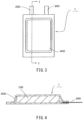
- FIG. 1 shows a cross-sectional view schematically showing a portion of an example of a stacked body having a positive electrode, a negative electrode, and a solid electrolyte sheet according to an all-solid-state battery of the present invention.
- FIG. 1 shows a region that includes a solid electrolyte sheet 30, and a positive electrode 10 and a negative electrode 20 that are respectively disposed on the upper and lower sides of the solid electrolyte sheet 30 in the stacked body 100.
- the distance (A) between the porous substrate and the positive electrode active material in the positive electrode is 1 ⁇ m or more, and preferably 3 ⁇ m or more.
- the distance (A) has the above value, lithium ions smoothly move between the positive electrode and the solid electrolyte sheet during charging and discharging of the all-solid-state battery, thus more effectively suppressing the occurrence of charging abnormalities, for example.
- the difference between the distance (A) and the distance (B) may also become larger.
- the difference between the distance (A) and the distance (B) is preferably 10 ⁇ m or less.
- the solid electrolyte sheet contains a porous substrate and a solid electrolyte, the solid electrolyte is retained in pores of the porous substrate, and both surfaces of the porous substrate are covered with the solid electrolyte.
- FIG. 2 shows an enlarged diagram of a portion of FIG. 1.
- FIG. 2 shows the vicinity of a stacked surface of the stacked body where the positive electrode 10 and the solid electrolyte sheet 30 are stacked. Note that, in order to keep FIG. 2 from being complicated, no diagonal lines indicating a cross-section are shown in FIG. 2 .
- a surface of the positive electrode 10 that is in contact with the solid electrolyte sheet 30 contains the positive electrode active material 11 and the like (only the positive electrode active material 11 is shown in FIG. 2 ).
- the surface of the porous substrate 31 (fibrous articles constituting the porous substrate 31 are shown in FIG.
- the distance (B) used in this specification refers to the length between the surface of the porous substrate and the negative electrode active material in the fields of view, the length being obtained at the shortest distance in the thickness direction of the stacked body.
- a coating method such as a screen printing method, a doctor blade method, or an immersion method can be adopted as a method for forming the slurry coating film on the surface of the porous substrate while filling the pores of the porous substrate with a slurry containing a solid electrolyte.
- the slurry is prepared by introducing the solid electrolyte, and a binder as needed, into a solvent, and mixing the resulting mixture. It is preferable to select a slurry solvent that is less likely to deteriorate a solid electrolyte.
- the sulfide-based solid electrolytes and the hydride-based solid electrolytes cause chemical reactions with a minute amount of water, and therefore, it is preferable to use non-polar aprotic solvents such as hydrocarbon solvents including hexane, heptane, octane, nonane, decane, decaline, toluene, and xylene.
- a super dehydrated solvent in which the water content is reduced to 0.001% by mass (10 ppm) or less.
- fluorine-based solvents such as "VERTREL (registered trademark)” manufactured by Du Pont-Mitsui Fluorochemicals Co., Ltd., "ZEORORA (registered trademark)” manufactured by Zeon Corporation, and "NOVEC (registered trademark)” manufactured by Sumitomo 3M Limited, and nonaqueous organic solvents such as dichloromethane and diethyl ether.
- the solid electrolyte sheet can be obtained by filling the pores of the porous substrate with the slurry as described above, forming a slurry coating film on the surface of the porous substrate, then removing the slurry solvent through drying, and performing compression molding as needed.
- the method for producing the solid electrolyte sheet is not limited to the above wet process.
- the pores may be filled with the solid electrolyte or a mixture of the solid electrolyte and a binder in a dry process, and compression molding may be performed.
- a sheet obtained by molding a mixture of the solid electrolyte and the binder may be attached to the surface of a sheet obtained by filling pores of the porous substrate with the solid electrolyte.
- the all-solid-state battery is a secondary battery
- the same active material as the positive electrode active material that is used in conventionally known nonaqueous electrolyte secondary batteries, that is, an active material capable of intercalating and deintercalating Li (lithium) ions.
- the positive electrode active material include spinel-type lithium manganese composite oxides represented by Li 1-X M r Mn 2-r O 4 (where M is at least one element selected from the group consisting of Li, Na, K, B, Mg, Ca, Sr, Ba, Ti, V, Cr, Zr, Fe, Co, Ni, Cu, Zn, Al, Sn, Sb, In, Nb, Ta, Mo, W, Y, Ru, and Rh, and x and r satisfy 0 ⁇ x ⁇ 1 and 0 ⁇ r ⁇ 1), layered compounds represented by Li r Mn (1-g-t) Ni s M t O (2-u) F v (where M is at least one element selected from the group consisting of Co, Mg, Al, B, Ti, V, Cr, Fe, Cu, Zn, Zr, Mo, Sn, Ca, Sr, and W, and r, s, t, u, and v satisfy 0 ⁇ r ⁇ 1.2, 0 ⁇ s ⁇ 0.5, 0 ⁇ t ⁇ 0.5
- the average particle size of the positive electrode active material is preferably 1 ⁇ m or more, and more preferably 2 ⁇ m or more, and is preferably 10 ⁇ m or less, and more preferably 8 ⁇ m or less.
- the positive electrode active material may be primary particles or secondary particles obtained through aggregation of primary particles.
- the positive electrode active material includes, on its surface, a reaction suppressing layer for suppressing a reaction between the positive electrode active material and the solid electrolyte contained in the positive electrode.
- the positive electrode active material comes into direct contact with the solid electrolyte in the molded body made of the positive electrode mixture, there is a risk that the solid electrolyte will be oxidized and a resistive layer will be formed, which will lead to a reduction in ion conductivity in the molded body. It is possible to suppress a reduction in ion conductivity in the molded body due to oxidation of the solid electrolyte by providing the reaction suppressing layer for suppressing a reaction with the solid electrolyte on the surface of the positive electrode active material to prevent direct contact between the positive electrode active material and the solid electrolyte.
- the reaction suppressing layer is only required to be made of a material that has ion conductivity and can suppress a reaction between the positive electrode active material and the solid electrolyte.
- materials that can constitute the reaction suppressing layer include oxides that include Li and at least one element selected from the group consisting of Nb, P, B, Si, Ge, Ti, and Zr, or more specifically, Nb-containing oxides such as LiNbO 3 , and Li 3 PO 4 , Li 3 BO 3 , Li 4 SiO 4 , Li 4 GeO 4 , LiTiOs, LiZrOs, and Li 2 WO 4 .
- the reaction suppressing layer may contain only one of these oxides, two or more of these oxides, or a composite compound formed by two or more of these oxides. Among these oxides, Nb-containing oxides are preferably used, and LiNbOs is more preferably used.
- reaction suppressing layer Preferably, 0.1 to 1.0 part by mass of the reaction suppressing layer is present on the surface of the positive electrode active material relative to 100 parts by mass of the positive electrode active material.
- amount of the reaction suppressing layer is within this range, it is possible to favorably suppress a reaction between the positive electrode active material and the solid electrolyte.
- the reaction suppressing layer can be formed on the surface of the positive electrode active material using a sol-gel method, a mechano-fusion method, a CVD method, a PVD method, an ALD method, or the like.
- the content of the positive electrode active material in the positive electrode mixture is preferably 60% by mass to 98% by mass.
- a conductive assistant to the positive electrode mixture.
- Specific examples thereof include carbon materials such as graphite (natural graphite, artificial graphite), graphene, carbon black, carbon nanofiber, and carbon nanotubes. Note that, for example, in a case where Ag 2 S is used as an active material, conductive Ag is generated during the discharge reaction, and thus a conductive assistant does not need to be added.
- the content of the conductive assistant is preferably 1% by mass to 10% by mass.
- a binder to the positive electrode mixture.
- a binder include fluoropolymer such as PVDF, and acrylic resins. Note that, for example, in a case where favorable moldability can be ensured when a molded body made of the positive electrode mixture is formed without using a binder as in the case where a sulfide-based solid electrolyte is added to the positive electrode mixture (details will be described later), a binder does not need to be added to the positive electrode mixture.
- the binder content is preferably 15% by mass or less, and preferably 0.5% by mass or more.
- a preferable binder content is 0.1% by mass or more and 15% by mass or less, and a more preferable binder content is 0.5% by mass or more and 5% by mass or less.
- Examples of the solid electrolyte to be added to the positive electrode mixture include solid electrolytes that are the same as the solid electrolytes listed above that can be used in the solid electrolyte sheet.
- solid electrolytes listed above it is more preferable to use sulfide-based solid electrolytes because they have high lithium-ion conductivity and also functions for improving the moldability of the positive electrode mixture.
- the content of the solid electrolyte in the positive electrode mixture is preferably 4% by mass to 40% by mass.
- a current collector When a current collector is used in the positive electrode, it is possible to use, as the current collector, a foil, a punched metal, a net, an expanded metal, and a foamed metal that are made of metal such as aluminum or stainless steel; carbon sheets, and the like.
- the positive electrode can be produced using a method for applying a positive electrode mixture-containing composition (paste, slurry, or the like) obtained by dispersing, in a solvent, the positive electrode active material and the solid electrolyte, and a conductive assistant, a binder, and the like that are to be added as needed, to the current collector, drying the composition, and then performing compression molding such as calendaring as necessary, to form a molded body (positive electrode mixture layer) made of the positive electrode mixture on the surface of the current collector.
- a positive electrode mixture-containing composition paste, slurry, or the like
- NMP N-methyl-2-pyrrolidone
- a molded body made of a positive electrode mixture may be formed by compressing, using compression molding or the like, the positive electrode mixture prepared by mixing the positive electrode active material, and a solid electrolyte with a conductive assistant, a binder, and the like that are added as needed.
- the molded body made of the positive electrode mixture obtained using such a method can also be used directly as a positive electrode as described above, or a molded body to which a current collector is press-bonded or the like can also be used as a positive electrode.
- the molded body made of a positive electrode mixture (a positive electrode mixture layer) formed using a positive electrode mixture-containing composition that contains a solvent preferably has a thickness (when a current collector is provided, the thickness per side of the current collector) of 10 to 1000 ⁇ m. Further, the molded body made of a positive electrode mixture obtained through compression molding preferably has a thickness of 0.15 to 4 mm.
- the positive electrode can be produced using a method for filling pores of the conductive porous substrate with the positive electrode mixture-containing composition, drying the composition, and performing compression molding such as calendering as needed.
- the positive electrode produced using such a method readily has high strength, thus making it possible to hold a solid electrolyte sheet with a larger area.
- a positive electrode may be produced using a method for filling, in a dry process, pores of a conductive porous substrate with a positive electrode mixture that does not contain a solvent and contains a positive electrode active material, a solid electrolyte, a conductive assistant, a binder, and the like instead of the positive electrode mixture-containing composition, and performing compression molding such as calendering as needed.
- a positive electrode obtained using a method for filling pores of a conductive porous substrate with a positive electrode mixture-containing composition or a positive electrode mixture preferably has a thickness of 30 to 4000 ⁇ m.
- a negative electrode of the all-solid-state battery includes, for example, a molded body made of a negative electrode mixture containing a negative electrode active material, a lithium sheet, or a lithium alloy sheet. Further, pores of a conductive porous substrate may be filled with a negative electrode mixture containing a negative electrode active material, and the resultant may be used as a negative electrode.
- the negative electrode is a molded body made of a negative electrode mixture containing a negative electrode active material
- examples thereof include a negative electrode having a structure in which a layer (a negative electrode mixture layer) constituted by the molded body made of the negative electrode mixture is formed on a current collector, a negative electrode constituted only by a molded body made of the negative electrode mixture (pellets or the like), and the like.
- the negative electrode active material thereof include carbon materials such as graphite, simple substances and compounds (such as oxides) that contain elements such as Si or Sn, and alloys thereof. It is also possible to use, as negative electrode active materials, lithium metal and lithium alloys (lithium-aluminum alloy, lithium-indium alloy, and the like).
- the content of the negative electrode active material in the negative electrode mixture is preferably 10% by mass to 99% by mass.
- the binder content is preferably 15% by mass or less, and preferably 0.5% by mass or more.
- a preferable binder content is 0.3% by mass or more and 15% by mass or less, and a more preferable binder content is 0.7% by mass or more and 7% by mass or less.
- a solid electrolyte is added to the negative electrode mixture.
- Specific examples thereof include solid electrolytes that are the same as the solid electrolytes listed above that can be used in the solid electrolyte sheet.
- solid electrolytes listed above it is more preferable to use sulfide-based solid electrolytes because they have high lithium-ion conductivity and also functions for improving the moldability of the negative electrode mixture.
- the content of the solid electrolyte in the negative electrode mixture is preferably 4% by mass to 49% by mass.
- the negative electrode can be produced using a method for applying a negative electrode mixture-containing composition (paste, slurry, or the like) obtained by dispersing, in a solvent, the negative electrode active material, and a conductive assistant, a solid electrolyte, a binder, and the like that are to be added as needed, to the current collector, drying the composition, and then performing compression molding such as calendaring as necessary, to form a molded body (negative electrode mixture layer) made of the negative electrode mixture on the surface of the current collector.
- a negative electrode mixture-containing composition paste, slurry, or the like
- a molded body made of a negative electrode mixture may be formed by compressing, using compression molding or the like, the negative electrode mixture prepared by mixing the negative electrode active material, and a conductive assistant, a solid electrolyte, and a binder and the like that are added as needed.
- the molded body made of the negative electrode mixture obtained using such a method can also be used directly as a negative electrode, or a molded body to which a current collector is press-bonded or the like can also be used as a negative electrode.
- the current collector at the negative electrode preferably has a thickness of 0.01 to 0.1 mm.
- a stacked body is prepared by stacking a layer that contains an alloying element for forming a lithium alloy on the surface of a lithium layer (a layer containing lithium) constituted by a lithium metal foil or the like through press-bonding, for example, and the negative electrode can be prepared by forming a lithium alloy on the surface of the lithium layer by bringing the stacked body into contact with a solid electrolyte in a battery.
- a stacked body having a layer containing an alloying element on only one surface of the lithium layer may be used, or a stacked body having a layer containing an alloying element on both surfaces of the lithium layer may also be used.
- the stacked body can be formed, for example, by press-bonding a lithium metal foil and a foil made of an alloying element to each other.
- the lithium layer preferably has a thickness of 0.1 to 1.5 mm.
- the sheet according to the negative electrode having a lithium sheet or a lithium alloy sheet also preferably has a thickness of 0.1 to 1.5 mm.
- the negative electrode having a lithium sheet or a lithium alloy sheet has a current collector
- the same current collector as those listed above that can be used for a negative electrode having a molded body made of a negative electrode mixture.
- the negative electrode can be produced using a method for filling pores of the conductive porous substrate with the negative electrode mixture-containing composition, drying the composition, and performing compression molding such as calendering as needed.
- the negative electrode produced using such a method readily has high strength, thus making it possible to hold a solid electrolyte sheet with a larger area.
- a negative electrode may be produced using a method for filling, in a dry process, pores of a conductive porous substrate with a negative electrode mixture that does not contain a solvent and contains a negative electrode active material, a solid electrolyte, a binder, a conductive assistant, and the like instead of the negative electrode mixture-containing composition, and performing compression molding such as calendering as needed.
- a solid electrolyte sheet was produced in the same manner as in Example 1, except that, when the slurry was applied to a PET nonwoven fabric, the nonwoven fabric was pulled up using the applicator through a 20- ⁇ m gap at an angle of 45 degrees with respect to its bottom surface, and a cell (an all-solid-state secondary battery) was produced in the same manner as in Example 1, except that this solid electrolyte sheet was used.
Landscapes
- Chemical & Material Sciences (AREA)
- General Chemical & Material Sciences (AREA)
- Electrochemistry (AREA)
- Chemical Kinetics & Catalysis (AREA)
- Engineering & Computer Science (AREA)
- Manufacturing & Machinery (AREA)
- Inorganic Chemistry (AREA)
- Physics & Mathematics (AREA)
- General Physics & Mathematics (AREA)
- Condensed Matter Physics & Semiconductors (AREA)
- Ceramic Engineering (AREA)
- Materials Engineering (AREA)
- Life Sciences & Earth Sciences (AREA)
- Wood Science & Technology (AREA)
- Secondary Cells (AREA)
- Battery Electrode And Active Subsutance (AREA)
Applications Claiming Priority (2)
| Application Number | Priority Date | Filing Date | Title |
|---|---|---|---|
| JP2021160521 | 2021-09-30 | ||
| PCT/JP2022/035880 WO2023054333A1 (ja) | 2021-09-30 | 2022-09-27 | 全固体電池 |
Publications (2)
| Publication Number | Publication Date |
|---|---|
| EP4394978A1 true EP4394978A1 (de) | 2024-07-03 |
| EP4394978A4 EP4394978A4 (de) | 2025-07-30 |
Family
ID=85782730
Family Applications (1)
| Application Number | Title | Priority Date | Filing Date |
|---|---|---|---|
| EP22876199.5A Pending EP4394978A4 (de) | 2021-09-30 | 2022-09-27 | Festkörperbatterie |
Country Status (6)
| Country | Link |
|---|---|
| US (1) | US20240387947A1 (de) |
| EP (1) | EP4394978A4 (de) |
| JP (1) | JPWO2023054333A1 (de) |
| KR (1) | KR20240064633A (de) |
| CN (1) | CN117999686A (de) |
| WO (1) | WO2023054333A1 (de) |
Families Citing this family (1)
| Publication number | Priority date | Publication date | Assignee | Title |
|---|---|---|---|---|
| JP2024066898A (ja) * | 2022-11-02 | 2024-05-16 | 旭化成株式会社 | 固体電解質積層体、固体二次電池、及びその製造方法 |
Family Cites Families (17)
| Publication number | Priority date | Publication date | Assignee | Title |
|---|---|---|---|---|
| JP6206900B2 (ja) * | 2012-11-12 | 2017-10-04 | 国立研究開発法人産業技術総合研究所 | 固体電解質シート、電極シート、及び全固体二次電池 |
| JP6310716B2 (ja) | 2014-02-10 | 2018-04-11 | 古河機械金属株式会社 | 固体電解質シート、全固体型リチウムイオン電池、および固体電解質シートの製造方法 |
| JP2016031789A (ja) * | 2014-07-25 | 2016-03-07 | ニッポン高度紙工業株式会社 | 固体電解質シート、及び、全固体二次電池 |
| KR101622355B1 (ko) * | 2014-07-28 | 2016-05-18 | 울산과학기술원 | 고체전해질 복합체, 이의 제조방법, 및 이를 포함하는 전고체전지 |
| JP2016139482A (ja) | 2015-01-26 | 2016-08-04 | 三星電子株式会社Samsung Electronics Co.,Ltd. | 固体電解質シート、及び全固体二次電池 |
| US20180026302A1 (en) * | 2016-07-20 | 2018-01-25 | University Of Dayton | High-performance ceramic-polymer separators for lithium batteries |
| CN111712891A (zh) * | 2017-12-22 | 2020-09-25 | 罗伯特·博世有限公司 | 用于电解质支撑和加工的多孔陶瓷纤维 |
| CN108598563B (zh) * | 2018-04-27 | 2020-08-04 | 溧阳天目先导电池材料科技有限公司 | 一种水性固态电解质膜及其制备方法和二次电池 |
| JP7014900B2 (ja) | 2018-04-27 | 2022-02-01 | 富士フイルム株式会社 | 固体電解質含有シート、全固体二次電池用電極シート、全固体二次電池、電子機器及び電気自動車、並びに、これらの製造方法 |
| CN110581314B (zh) * | 2018-06-08 | 2021-12-14 | 郑州宇通集团有限公司 | 一种多层结构复合固态电解质膜及其制备方法、固态电池 |
| CN112640179B (zh) | 2018-09-11 | 2024-09-13 | 麦克赛尔株式会社 | 固体电解质片及全固体锂二次电池 |
| JP7542196B2 (ja) | 2018-10-01 | 2024-08-30 | パナソニックIpマネジメント株式会社 | ハロゲン化物固体電解質材料およびこれを用いた電池 |
| WO2020070955A1 (ja) | 2018-10-01 | 2020-04-09 | パナソニックIpマネジメント株式会社 | ハロゲン化物固体電解質材料およびこれを用いた電池 |
| CN109494390A (zh) * | 2018-10-30 | 2019-03-19 | 溧阳天目先导电池材料科技有限公司 | 一种改性固态电解质膜及其制备方法和锂电池 |
| KR102449206B1 (ko) * | 2018-12-21 | 2022-09-28 | 주식회사 엘지에너지솔루션 | 고체 전해질막 및 이를 제조하는 방법 및 이를 포함하는 전고체 전지 |
| KR102605224B1 (ko) * | 2019-03-19 | 2023-11-23 | 주식회사 엘지에너지솔루션 | 고체 전해질막, 이를 제조하는 방법 및 고체 전해질막을 선정하는 방법 |
| CN111933999B (zh) * | 2020-09-15 | 2021-03-26 | 江苏时代新能源科技有限公司 | 一种固态电池、电池模组、电池包及其相关的装置 |
-
2022
- 2022-09-27 JP JP2023551513A patent/JPWO2023054333A1/ja active Pending
- 2022-09-27 WO PCT/JP2022/035880 patent/WO2023054333A1/ja not_active Ceased
- 2022-09-27 CN CN202280062533.5A patent/CN117999686A/zh active Pending
- 2022-09-27 KR KR1020247006307A patent/KR20240064633A/ko active Pending
- 2022-09-27 EP EP22876199.5A patent/EP4394978A4/de active Pending
- 2022-09-27 US US18/694,494 patent/US20240387947A1/en active Pending
Also Published As
| Publication number | Publication date |
|---|---|
| WO2023054333A1 (ja) | 2023-04-06 |
| US20240387947A1 (en) | 2024-11-21 |
| KR20240064633A (ko) | 2024-05-13 |
| JPWO2023054333A1 (de) | 2023-04-06 |
| EP4394978A4 (de) | 2025-07-30 |
| CN117999686A (zh) | 2024-05-07 |
Similar Documents
| Publication | Publication Date | Title |
|---|---|---|
| KR102648753B1 (ko) | 고체 전해질 시트 및 전고체 리튬 이차전지 | |
| US12294083B2 (en) | Negative electrode for all-solid-state battery and all-solid-state battery | |
| EP4160729A1 (de) | Negativelektrode für festkörpersekundärzelle, verfahren zur herstellung davon und festkörpersekundärzelle | |
| EP4258378A1 (de) | Festkörperbatteriesystem | |
| JP2021144924A (ja) | 全固体電池用電極および全固体電池 | |
| JP7374664B2 (ja) | 固体電解質シートおよび全固体リチウム二次電池 | |
| EP4394978A1 (de) | Festkörperbatterie | |
| EP4715929A1 (de) | Festelektrolytfolie und festkörperbatterie | |
| JPWO2024237330A5 (de) | ||
| EP4657537A1 (de) | Elektrode für festkörpersekundärbatterien und festkörpersekundärbatterie | |
| EP4369454B1 (de) | Festkörperbatterie | |
| JP7713760B2 (ja) | 全固体電池 | |
| JP7657576B2 (ja) | 全固体電池用正極および全固体電池 | |
| JP7033697B2 (ja) | 全固体電池用電極および全固体電池 | |
| JP7712778B2 (ja) | 全固体電池 | |
| EP4239714A1 (de) | Negative elektrode für festkörpersekundärzelle und festkörpersekundärzelle | |
| EP4475264A1 (de) | Batterie | |
| JP7776284B2 (ja) | 全固体電池 | |
| JP7814876B2 (ja) | 全固体電池 | |
| WO2024253075A1 (ja) | 全固体電池およびその製造方法 | |
| JP2024131954A (ja) | 全固体電池 | |
| CN117642903A (zh) | 电池及其使用方法以及电池的系统 | |
| CN117546332A (zh) | 电池 |
Legal Events
| Date | Code | Title | Description |
|---|---|---|---|
| STAA | Information on the status of an ep patent application or granted ep patent |
Free format text: STATUS: THE INTERNATIONAL PUBLICATION HAS BEEN MADE |
|
| PUAI | Public reference made under article 153(3) epc to a published international application that has entered the european phase |
Free format text: ORIGINAL CODE: 0009012 |
|
| STAA | Information on the status of an ep patent application or granted ep patent |
Free format text: STATUS: REQUEST FOR EXAMINATION WAS MADE |
|
| 17P | Request for examination filed |
Effective date: 20240325 |
|
| AK | Designated contracting states |
Kind code of ref document: A1 Designated state(s): AL AT BE BG CH CY CZ DE DK EE ES FI FR GB GR HR HU IE IS IT LI LT LU LV MC MK MT NL NO PL PT RO RS SE SI SK SM TR |
|
| DAV | Request for validation of the european patent (deleted) | ||
| DAX | Request for extension of the european patent (deleted) | ||
| A4 | Supplementary search report drawn up and despatched |
Effective date: 20250630 |
|
| RIC1 | Information provided on ipc code assigned before grant |
Ipc: H01M 10/0562 20100101AFI20250624BHEP Ipc: H01M 50/414 20210101ALI20250624BHEP Ipc: H01M 50/417 20210101ALI20250624BHEP Ipc: H01M 50/423 20210101ALI20250624BHEP Ipc: H01M 50/429 20210101ALI20250624BHEP Ipc: H01M 50/434 20210101ALI20250624BHEP Ipc: H01M 50/437 20210101ALI20250624BHEP Ipc: H01M 50/44 20210101ALI20250624BHEP Ipc: H01M 50/46 20210101ALI20250624BHEP Ipc: H01M 10/0525 20100101ALI20250624BHEP Ipc: H01M 10/0585 20100101ALI20250624BHEP Ipc: H01M 4/02 20060101ALI20250624BHEP Ipc: H01M 50/491 20210101ALI20250624BHEP |