EP4397545A2 - Formation d'un faisceau de câbles rigide avec un manchon durcissable - Google Patents
Formation d'un faisceau de câbles rigide avec un manchon durcissable Download PDFInfo
- Publication number
- EP4397545A2 EP4397545A2 EP24171855.0A EP24171855A EP4397545A2 EP 4397545 A2 EP4397545 A2 EP 4397545A2 EP 24171855 A EP24171855 A EP 24171855A EP 4397545 A2 EP4397545 A2 EP 4397545A2
- Authority
- EP
- European Patent Office
- Prior art keywords
- cable harness
- curable
- curable compound
- sleeve
- rigid cable
- Prior art date
- Legal status (The legal status is an assumption and is not a legal conclusion. Google has not performed a legal analysis and makes no representation as to the accuracy of the status listed.)
- Pending
Links
Images


Classifications
-
- H—ELECTRICITY
- H01—ELECTRIC ELEMENTS
- H01B—CABLES; CONDUCTORS; INSULATORS; SELECTION OF MATERIALS FOR THEIR CONDUCTIVE, INSULATING OR DIELECTRIC PROPERTIES
- H01B13/00—Apparatus or processes specially adapted for manufacturing conductors or cables
- H01B13/012—Apparatus or processes specially adapted for manufacturing conductors or cables for manufacturing wire harnesses
- H01B13/01209—Details
-
- B—PERFORMING OPERATIONS; TRANSPORTING
- B29—WORKING OF PLASTICS; WORKING OF SUBSTANCES IN A PLASTIC STATE IN GENERAL
- B29C—SHAPING OR JOINING OF PLASTICS; SHAPING OF MATERIAL IN A PLASTIC STATE, NOT OTHERWISE PROVIDED FOR; AFTER-TREATMENT OF THE SHAPED PRODUCTS, e.g. REPAIRING
- B29C63/00—Lining or sheathing, i.e. applying preformed layers or sheathings of plastics; Apparatus therefor
- B29C63/02—Lining or sheathing, i.e. applying preformed layers or sheathings of plastics; Apparatus therefor using sheet or web-like material
- B29C63/04—Lining or sheathing, i.e. applying preformed layers or sheathings of plastics; Apparatus therefor using sheet or web-like material by folding, winding, bending or the like
- B29C63/044—Lining or sheathing, i.e. applying preformed layers or sheathings of plastics; Apparatus therefor using sheet or web-like material by folding, winding, bending or the like continuously
-
- B—PERFORMING OPERATIONS; TRANSPORTING
- B29—WORKING OF PLASTICS; WORKING OF SUBSTANCES IN A PLASTIC STATE IN GENERAL
- B29C—SHAPING OR JOINING OF PLASTICS; SHAPING OF MATERIAL IN A PLASTIC STATE, NOT OTHERWISE PROVIDED FOR; AFTER-TREATMENT OF THE SHAPED PRODUCTS, e.g. REPAIRING
- B29C63/00—Lining or sheathing, i.e. applying preformed layers or sheathings of plastics; Apparatus therefor
- B29C63/02—Lining or sheathing, i.e. applying preformed layers or sheathings of plastics; Apparatus therefor using sheet or web-like material
- B29C63/04—Lining or sheathing, i.e. applying preformed layers or sheathings of plastics; Apparatus therefor using sheet or web-like material by folding, winding, bending or the like
- B29C63/08—Lining or sheathing, i.e. applying preformed layers or sheathings of plastics; Apparatus therefor using sheet or web-like material by folding, winding, bending or the like by winding helically
-
- B—PERFORMING OPERATIONS; TRANSPORTING
- B29—WORKING OF PLASTICS; WORKING OF SUBSTANCES IN A PLASTIC STATE IN GENERAL
- B29C—SHAPING OR JOINING OF PLASTICS; SHAPING OF MATERIAL IN A PLASTIC STATE, NOT OTHERWISE PROVIDED FOR; AFTER-TREATMENT OF THE SHAPED PRODUCTS, e.g. REPAIRING
- B29C65/00—Joining or sealing of preformed parts, e.g. welding of plastics materials; Apparatus therefor
- B29C65/48—Joining or sealing of preformed parts, e.g. welding of plastics materials; Apparatus therefor using adhesives, i.e. using supplementary joining material; solvent bonding
- B29C65/4805—Joining or sealing of preformed parts, e.g. welding of plastics materials; Apparatus therefor using adhesives, i.e. using supplementary joining material; solvent bonding characterised by the type of adhesives
- B29C65/483—Reactive adhesives, e.g. chemically curing adhesives
- B29C65/4835—Heat curing adhesives
-
- B—PERFORMING OPERATIONS; TRANSPORTING
- B29—WORKING OF PLASTICS; WORKING OF SUBSTANCES IN A PLASTIC STATE IN GENERAL
- B29C—SHAPING OR JOINING OF PLASTICS; SHAPING OF MATERIAL IN A PLASTIC STATE, NOT OTHERWISE PROVIDED FOR; AFTER-TREATMENT OF THE SHAPED PRODUCTS, e.g. REPAIRING
- B29C65/00—Joining or sealing of preformed parts, e.g. welding of plastics materials; Apparatus therefor
- B29C65/48—Joining or sealing of preformed parts, e.g. welding of plastics materials; Apparatus therefor using adhesives, i.e. using supplementary joining material; solvent bonding
- B29C65/4805—Joining or sealing of preformed parts, e.g. welding of plastics materials; Apparatus therefor using adhesives, i.e. using supplementary joining material; solvent bonding characterised by the type of adhesives
- B29C65/483—Reactive adhesives, e.g. chemically curing adhesives
- B29C65/4845—Radiation curing adhesives, e.g. UV light curing adhesives
-
- B—PERFORMING OPERATIONS; TRANSPORTING
- B32—LAYERED PRODUCTS
- B32B—LAYERED PRODUCTS, i.e. PRODUCTS BUILT-UP OF STRATA OF FLAT OR NON-FLAT, e.g. CELLULAR OR HONEYCOMB, FORM
- B32B1/00—Layered products having a non-planar shape
-
- B—PERFORMING OPERATIONS; TRANSPORTING
- B32—LAYERED PRODUCTS
- B32B—LAYERED PRODUCTS, i.e. PRODUCTS BUILT-UP OF STRATA OF FLAT OR NON-FLAT, e.g. CELLULAR OR HONEYCOMB, FORM
- B32B27/00—Layered products comprising a layer of synthetic resin
- B32B27/06—Layered products comprising a layer of synthetic resin as the main or only constituent of a layer, which is next to another layer of the same or of a different material
- B32B27/08—Layered products comprising a layer of synthetic resin as the main or only constituent of a layer, which is next to another layer of the same or of a different material of synthetic resin
-
- B—PERFORMING OPERATIONS; TRANSPORTING
- B32—LAYERED PRODUCTS
- B32B—LAYERED PRODUCTS, i.e. PRODUCTS BUILT-UP OF STRATA OF FLAT OR NON-FLAT, e.g. CELLULAR OR HONEYCOMB, FORM
- B32B27/00—Layered products comprising a layer of synthetic resin
- B32B27/18—Layered products comprising a layer of synthetic resin characterised by the use of special additives
- B32B27/22—Layered products comprising a layer of synthetic resin characterised by the use of special additives using plasticisers
-
- B—PERFORMING OPERATIONS; TRANSPORTING
- B32—LAYERED PRODUCTS
- B32B—LAYERED PRODUCTS, i.e. PRODUCTS BUILT-UP OF STRATA OF FLAT OR NON-FLAT, e.g. CELLULAR OR HONEYCOMB, FORM
- B32B37/00—Methods or apparatus for laminating, e.g. by curing or by ultrasonic bonding
- B32B37/12—Methods or apparatus for laminating, e.g. by curing or by ultrasonic bonding characterised by using adhesives
-
- B—PERFORMING OPERATIONS; TRANSPORTING
- B32—LAYERED PRODUCTS
- B32B—LAYERED PRODUCTS, i.e. PRODUCTS BUILT-UP OF STRATA OF FLAT OR NON-FLAT, e.g. CELLULAR OR HONEYCOMB, FORM
- B32B37/00—Methods or apparatus for laminating, e.g. by curing or by ultrasonic bonding
- B32B37/14—Methods or apparatus for laminating, e.g. by curing or by ultrasonic bonding characterised by the properties of the layers
- B32B37/16—Methods or apparatus for laminating, e.g. by curing or by ultrasonic bonding characterised by the properties of the layers with all layers existing as coherent layers before laminating
-
- C—CHEMISTRY; METALLURGY
- C08—ORGANIC MACROMOLECULAR COMPOUNDS; THEIR PREPARATION OR CHEMICAL WORKING-UP; COMPOSITIONS BASED THEREON
- C08K—Use of inorganic or non-macromolecular organic substances as compounding ingredients
- C08K3/00—Use of inorganic substances as compounding ingredients
- C08K3/02—Elements
- C08K3/06—Sulfur
-
- C—CHEMISTRY; METALLURGY
- C09—DYES; PAINTS; POLISHES; NATURAL RESINS; ADHESIVES; COMPOSITIONS NOT OTHERWISE PROVIDED FOR; APPLICATIONS OF MATERIALS NOT OTHERWISE PROVIDED FOR
- C09J—ADHESIVES; NON-MECHANICAL ASPECTS OF ADHESIVE PROCESSES IN GENERAL; ADHESIVE PROCESSES NOT PROVIDED FOR ELSEWHERE; USE OF MATERIALS AS ADHESIVES
- C09J7/00—Adhesives in the form of films or foils
- C09J7/20—Adhesives in the form of films or foils characterised by their carriers
- C09J7/21—Paper; Textile fabrics
-
- C—CHEMISTRY; METALLURGY
- C09—DYES; PAINTS; POLISHES; NATURAL RESINS; ADHESIVES; COMPOSITIONS NOT OTHERWISE PROVIDED FOR; APPLICATIONS OF MATERIALS NOT OTHERWISE PROVIDED FOR
- C09J—ADHESIVES; NON-MECHANICAL ASPECTS OF ADHESIVE PROCESSES IN GENERAL; ADHESIVE PROCESSES NOT PROVIDED FOR ELSEWHERE; USE OF MATERIALS AS ADHESIVES
- C09J7/00—Adhesives in the form of films or foils
- C09J7/30—Adhesives in the form of films or foils characterised by the adhesive composition
- C09J7/35—Heat-activated
-
- D—TEXTILES; PAPER
- D03—WEAVING
- D03D—WOVEN FABRICS; METHODS OF WEAVING; LOOMS
- D03D1/00—Woven fabrics designed to make specified articles
- D03D1/0035—Protective fabrics
- D03D1/0043—Protective fabrics for elongated members, i.e. sleeves
-
- H—ELECTRICITY
- H01—ELECTRIC ELEMENTS
- H01B—CABLES; CONDUCTORS; INSULATORS; SELECTION OF MATERIALS FOR THEIR CONDUCTIVE, INSULATING OR DIELECTRIC PROPERTIES
- H01B13/00—Apparatus or processes specially adapted for manufacturing conductors or cables
- H01B13/0016—Apparatus or processes specially adapted for manufacturing conductors or cables for heat treatment
-
- H—ELECTRICITY
- H01—ELECTRIC ELEMENTS
- H01B—CABLES; CONDUCTORS; INSULATORS; SELECTION OF MATERIALS FOR THEIR CONDUCTIVE, INSULATING OR DIELECTRIC PROPERTIES
- H01B13/00—Apparatus or processes specially adapted for manufacturing conductors or cables
- H01B13/003—Apparatus or processes specially adapted for manufacturing conductors or cables using irradiation
-
- H—ELECTRICITY
- H01—ELECTRIC ELEMENTS
- H01B—CABLES; CONDUCTORS; INSULATORS; SELECTION OF MATERIALS FOR THEIR CONDUCTIVE, INSULATING OR DIELECTRIC PROPERTIES
- H01B13/00—Apparatus or processes specially adapted for manufacturing conductors or cables
- H01B13/012—Apparatus or processes specially adapted for manufacturing conductors or cables for manufacturing wire harnesses
- H01B13/01263—Tying, wrapping, binding, lacing, strapping or sheathing harnesses
- H01B13/0129—Sheathing harnesses with foil material
-
- H—ELECTRICITY
- H01—ELECTRIC ELEMENTS
- H01B—CABLES; CONDUCTORS; INSULATORS; SELECTION OF MATERIALS FOR THEIR CONDUCTIVE, INSULATING OR DIELECTRIC PROPERTIES
- H01B13/00—Apparatus or processes specially adapted for manufacturing conductors or cables
- H01B13/22—Sheathing; Armouring; Screening; Applying other protective layers
-
- H—ELECTRICITY
- H01—ELECTRIC ELEMENTS
- H01B—CABLES; CONDUCTORS; INSULATORS; SELECTION OF MATERIALS FOR THEIR CONDUCTIVE, INSULATING OR DIELECTRIC PROPERTIES
- H01B7/00—Insulated conductors or cables characterised by their form
- H01B7/17—Protection against damage caused by external factors, e.g. sheaths or armouring
- H01B7/18—Protection against damage caused by wear, mechanical force or pressure; Sheaths; Armouring
-
- H—ELECTRICITY
- H02—GENERATION; CONVERSION OR DISTRIBUTION OF ELECTRIC POWER
- H02G—INSTALLATION OF ELECTRIC CABLES OR LINES, OR OF COMBINED OPTICAL AND ELECTRIC CABLES OR LINES
- H02G3/00—Installations of electric cables or lines or protective tubing therefor in or on buildings, equivalent structures or vehicles
- H02G3/02—Details
- H02G3/04—Protective tubing or conduits, e.g. cable ladders or cable troughs
- H02G3/0462—Tubings, i.e. having a closed section
- H02G3/0481—Tubings, i.e. having a closed section with a circular cross-section
-
- B—PERFORMING OPERATIONS; TRANSPORTING
- B29—WORKING OF PLASTICS; WORKING OF SUBSTANCES IN A PLASTIC STATE IN GENERAL
- B29K—INDEXING SCHEME ASSOCIATED WITH SUBCLASSES B29B, B29C OR B29D, RELATING TO MOULDING MATERIALS OR TO MATERIALS FOR MOULDS, REINFORCEMENTS, FILLERS OR PREFORMED PARTS, e.g. INSERTS
- B29K2075/00—Use of PU, i.e. polyureas or polyurethanes or derivatives thereof, as moulding material
-
- B—PERFORMING OPERATIONS; TRANSPORTING
- B29—WORKING OF PLASTICS; WORKING OF SUBSTANCES IN A PLASTIC STATE IN GENERAL
- B29K—INDEXING SCHEME ASSOCIATED WITH SUBCLASSES B29B, B29C OR B29D, RELATING TO MOULDING MATERIALS OR TO MATERIALS FOR MOULDS, REINFORCEMENTS, FILLERS OR PREFORMED PARTS, e.g. INSERTS
- B29K2105/00—Condition, form or state of moulded material or of the material to be shaped
- B29K2105/06—Condition, form or state of moulded material or of the material to be shaped containing reinforcements, fillers or inserts
- B29K2105/20—Inserts
-
- B—PERFORMING OPERATIONS; TRANSPORTING
- B29—WORKING OF PLASTICS; WORKING OF SUBSTANCES IN A PLASTIC STATE IN GENERAL
- B29K—INDEXING SCHEME ASSOCIATED WITH SUBCLASSES B29B, B29C OR B29D, RELATING TO MOULDING MATERIALS OR TO MATERIALS FOR MOULDS, REINFORCEMENTS, FILLERS OR PREFORMED PARTS, e.g. INSERTS
- B29K2105/00—Condition, form or state of moulded material or of the material to be shaped
- B29K2105/25—Solid
- B29K2105/253—Preform
- B29K2105/256—Sheets, plates, blanks or films
-
- B—PERFORMING OPERATIONS; TRANSPORTING
- B29—WORKING OF PLASTICS; WORKING OF SUBSTANCES IN A PLASTIC STATE IN GENERAL
- B29K—INDEXING SCHEME ASSOCIATED WITH SUBCLASSES B29B, B29C OR B29D, RELATING TO MOULDING MATERIALS OR TO MATERIALS FOR MOULDS, REINFORCEMENTS, FILLERS OR PREFORMED PARTS, e.g. INSERTS
- B29K2627/00—Use of polyvinylhalogenides or derivatives thereof for preformed parts, e.g. for inserts
- B29K2627/12—Use of polyvinylhalogenides or derivatives thereof for preformed parts, e.g. for inserts containing fluorine
- B29K2627/18—PTFE, i.e. polytetrafluoroethylene, e.g. ePTFE, i.e. expanded polytetrafluoroethylene
-
- B—PERFORMING OPERATIONS; TRANSPORTING
- B29—WORKING OF PLASTICS; WORKING OF SUBSTANCES IN A PLASTIC STATE IN GENERAL
- B29K—INDEXING SCHEME ASSOCIATED WITH SUBCLASSES B29B, B29C OR B29D, RELATING TO MOULDING MATERIALS OR TO MATERIALS FOR MOULDS, REINFORCEMENTS, FILLERS OR PREFORMED PARTS, e.g. INSERTS
- B29K2995/00—Properties of moulding materials, reinforcements, fillers, preformed parts or moulds
- B29K2995/0037—Other properties
- B29K2995/0077—Yield strength; Tensile strength
-
- B—PERFORMING OPERATIONS; TRANSPORTING
- B29—WORKING OF PLASTICS; WORKING OF SUBSTANCES IN A PLASTIC STATE IN GENERAL
- B29L—INDEXING SCHEME ASSOCIATED WITH SUBCLASS B29C, RELATING TO PARTICULAR ARTICLES
- B29L2031/00—Other particular articles
- B29L2031/34—Electrical apparatus, e.g. sparking plugs or parts thereof
- B29L2031/3462—Cables
-
- B—PERFORMING OPERATIONS; TRANSPORTING
- B29—WORKING OF PLASTICS; WORKING OF SUBSTANCES IN A PLASTIC STATE IN GENERAL
- B29L—INDEXING SCHEME ASSOCIATED WITH SUBCLASS B29C, RELATING TO PARTICULAR ARTICLES
- B29L2031/00—Other particular articles
- B29L2031/707—Cables, i.e. two or more filaments combined together, e.g. ropes, cords, strings, yarns
-
- B—PERFORMING OPERATIONS; TRANSPORTING
- B32—LAYERED PRODUCTS
- B32B—LAYERED PRODUCTS, i.e. PRODUCTS BUILT-UP OF STRATA OF FLAT OR NON-FLAT, e.g. CELLULAR OR HONEYCOMB, FORM
- B32B37/00—Methods or apparatus for laminating, e.g. by curing or by ultrasonic bonding
- B32B37/12—Methods or apparatus for laminating, e.g. by curing or by ultrasonic bonding characterised by using adhesives
- B32B2037/1253—Methods or apparatus for laminating, e.g. by curing or by ultrasonic bonding characterised by using adhesives curable adhesive
-
- B—PERFORMING OPERATIONS; TRANSPORTING
- B32—LAYERED PRODUCTS
- B32B—LAYERED PRODUCTS, i.e. PRODUCTS BUILT-UP OF STRATA OF FLAT OR NON-FLAT, e.g. CELLULAR OR HONEYCOMB, FORM
- B32B2307/00—Properties of the layers or laminate
- B32B2307/50—Properties of the layers or laminate having particular mechanical properties
- B32B2307/54—Yield strength; Tensile strength
-
- B—PERFORMING OPERATIONS; TRANSPORTING
- B32—LAYERED PRODUCTS
- B32B—LAYERED PRODUCTS, i.e. PRODUCTS BUILT-UP OF STRATA OF FLAT OR NON-FLAT, e.g. CELLULAR OR HONEYCOMB, FORM
- B32B2327/00—Polyvinylhalogenides
- B32B2327/12—Polyvinylhalogenides containing fluorine
- B32B2327/18—PTFE, i.e. polytetrafluoroethylene
-
- B—PERFORMING OPERATIONS; TRANSPORTING
- B32—LAYERED PRODUCTS
- B32B—LAYERED PRODUCTS, i.e. PRODUCTS BUILT-UP OF STRATA OF FLAT OR NON-FLAT, e.g. CELLULAR OR HONEYCOMB, FORM
- B32B2375/00—Polyureas; Polyurethanes
-
- B—PERFORMING OPERATIONS; TRANSPORTING
- B60—VEHICLES IN GENERAL
- B60R—VEHICLES, VEHICLE FITTINGS, OR VEHICLE PARTS, NOT OTHERWISE PROVIDED FOR
- B60R16/00—Electric or fluid circuits specially adapted for vehicles and not otherwise provided for; Arrangement of elements of electric or fluid circuits specially adapted for vehicles and not otherwise provided for
- B60R16/02—Electric or fluid circuits specially adapted for vehicles and not otherwise provided for; Arrangement of elements of electric or fluid circuits specially adapted for vehicles and not otherwise provided for electric constitutive elements
- B60R16/0207—Wire harnesses
-
- B—PERFORMING OPERATIONS; TRANSPORTING
- B60—VEHICLES IN GENERAL
- B60R—VEHICLES, VEHICLE FITTINGS, OR VEHICLE PARTS, NOT OTHERWISE PROVIDED FOR
- B60R16/00—Electric or fluid circuits specially adapted for vehicles and not otherwise provided for; Arrangement of elements of electric or fluid circuits specially adapted for vehicles and not otherwise provided for
- B60R16/02—Electric or fluid circuits specially adapted for vehicles and not otherwise provided for; Arrangement of elements of electric or fluid circuits specially adapted for vehicles and not otherwise provided for electric constitutive elements
- B60R16/0207—Wire harnesses
- B60R16/0215—Protecting, fastening and routing means therefor
-
- C—CHEMISTRY; METALLURGY
- C08—ORGANIC MACROMOLECULAR COMPOUNDS; THEIR PREPARATION OR CHEMICAL WORKING-UP; COMPOSITIONS BASED THEREON
- C08K—Use of inorganic or non-macromolecular organic substances as compounding ingredients
- C08K3/00—Use of inorganic substances as compounding ingredients
- C08K3/01—Use of inorganic substances as compounding ingredients characterized by their specific function
- C08K3/011—Crosslinking or vulcanising agents, e.g. accelerators
-
- C—CHEMISTRY; METALLURGY
- C09—DYES; PAINTS; POLISHES; NATURAL RESINS; ADHESIVES; COMPOSITIONS NOT OTHERWISE PROVIDED FOR; APPLICATIONS OF MATERIALS NOT OTHERWISE PROVIDED FOR
- C09J—ADHESIVES; NON-MECHANICAL ASPECTS OF ADHESIVE PROCESSES IN GENERAL; ADHESIVE PROCESSES NOT PROVIDED FOR ELSEWHERE; USE OF MATERIALS AS ADHESIVES
- C09J2301/00—Additional features of adhesives in the form of films or foils
- C09J2301/40—Additional features of adhesives in the form of films or foils characterized by the presence of essential components
- C09J2301/408—Additional features of adhesives in the form of films or foils characterized by the presence of essential components additives as essential feature of the adhesive layer
-
- C—CHEMISTRY; METALLURGY
- C09—DYES; PAINTS; POLISHES; NATURAL RESINS; ADHESIVES; COMPOSITIONS NOT OTHERWISE PROVIDED FOR; APPLICATIONS OF MATERIALS NOT OTHERWISE PROVIDED FOR
- C09J—ADHESIVES; NON-MECHANICAL ASPECTS OF ADHESIVE PROCESSES IN GENERAL; ADHESIVE PROCESSES NOT PROVIDED FOR ELSEWHERE; USE OF MATERIALS AS ADHESIVES
- C09J2400/00—Presence of inorganic and organic materials
- C09J2400/20—Presence of organic materials
- C09J2400/26—Presence of textile or fabric
- C09J2400/263—Presence of textile or fabric in the substrate
-
- C—CHEMISTRY; METALLURGY
- C09—DYES; PAINTS; POLISHES; NATURAL RESINS; ADHESIVES; COMPOSITIONS NOT OTHERWISE PROVIDED FOR; APPLICATIONS OF MATERIALS NOT OTHERWISE PROVIDED FOR
- C09J—ADHESIVES; NON-MECHANICAL ASPECTS OF ADHESIVE PROCESSES IN GENERAL; ADHESIVE PROCESSES NOT PROVIDED FOR ELSEWHERE; USE OF MATERIALS AS ADHESIVES
- C09J2409/00—Presence of diene rubber
-
- C—CHEMISTRY; METALLURGY
- C09—DYES; PAINTS; POLISHES; NATURAL RESINS; ADHESIVES; COMPOSITIONS NOT OTHERWISE PROVIDED FOR; APPLICATIONS OF MATERIALS NOT OTHERWISE PROVIDED FOR
- C09J—ADHESIVES; NON-MECHANICAL ASPECTS OF ADHESIVE PROCESSES IN GENERAL; ADHESIVE PROCESSES NOT PROVIDED FOR ELSEWHERE; USE OF MATERIALS AS ADHESIVES
- C09J2475/00—Presence of polyurethane
-
- H—ELECTRICITY
- H02—GENERATION; CONVERSION OR DISTRIBUTION OF ELECTRIC POWER
- H02G—INSTALLATION OF ELECTRIC CABLES OR LINES, OR OF COMBINED OPTICAL AND ELECTRIC CABLES OR LINES
- H02G3/00—Installations of electric cables or lines or protective tubing therefor in or on buildings, equivalent structures or vehicles
- H02G3/02—Details
- H02G3/04—Protective tubing or conduits, e.g. cable ladders or cable troughs
-
- H—ELECTRICITY
- H02—GENERATION; CONVERSION OR DISTRIBUTION OF ELECTRIC POWER
- H02G—INSTALLATION OF ELECTRIC CABLES OR LINES, OR OF COMBINED OPTICAL AND ELECTRIC CABLES OR LINES
- H02G3/00—Installations of electric cables or lines or protective tubing therefor in or on buildings, equivalent structures or vehicles
- H02G3/02—Details
- H02G3/04—Protective tubing or conduits, e.g. cable ladders or cable troughs
- H02G3/0406—Details thereof
-
- Y—GENERAL TAGGING OF NEW TECHNOLOGICAL DEVELOPMENTS; GENERAL TAGGING OF CROSS-SECTIONAL TECHNOLOGIES SPANNING OVER SEVERAL SECTIONS OF THE IPC; TECHNICAL SUBJECTS COVERED BY FORMER USPC CROSS-REFERENCE ART COLLECTIONS [XRACs] AND DIGESTS
- Y10—TECHNICAL SUBJECTS COVERED BY FORMER USPC
- Y10T—TECHNICAL SUBJECTS COVERED BY FORMER US CLASSIFICATION
- Y10T156/00—Adhesive bonding and miscellaneous chemical manufacture
- Y10T156/10—Methods of surface bonding and/or assembly therefor
- Y10T156/1002—Methods of surface bonding and/or assembly therefor with permanent bending or reshaping or surface deformation of self sustaining lamina
- Y10T156/1028—Methods of surface bonding and/or assembly therefor with permanent bending or reshaping or surface deformation of self sustaining lamina by bending, drawing or stretch forming sheet to assume shape of configured lamina while in contact therewith
- Y10T156/103—Encasing or enveloping the configured lamina
-
- Y—GENERAL TAGGING OF NEW TECHNOLOGICAL DEVELOPMENTS; GENERAL TAGGING OF CROSS-SECTIONAL TECHNOLOGIES SPANNING OVER SEVERAL SECTIONS OF THE IPC; TECHNICAL SUBJECTS COVERED BY FORMER USPC CROSS-REFERENCE ART COLLECTIONS [XRACs] AND DIGESTS
- Y10—TECHNICAL SUBJECTS COVERED BY FORMER USPC
- Y10T—TECHNICAL SUBJECTS COVERED BY FORMER US CLASSIFICATION
- Y10T156/00—Adhesive bonding and miscellaneous chemical manufacture
- Y10T156/10—Methods of surface bonding and/or assembly therefor
- Y10T156/1002—Methods of surface bonding and/or assembly therefor with permanent bending or reshaping or surface deformation of self sustaining lamina
- Y10T156/1028—Methods of surface bonding and/or assembly therefor with permanent bending or reshaping or surface deformation of self sustaining lamina by bending, drawing or stretch forming sheet to assume shape of configured lamina while in contact therewith
- Y10T156/1033—Flexible sheet to cylinder lamina
Definitions
- Cable harnesses used in the field today may comprise molded plastic amongst other materials.
- An injection mold may be prepared having a specific shape, and the injected plastic may conform to said shape to provide the desired cable harness.
- the cable harness may then be fit into the automobile when desired for use.
- the process may have several drawbacks.
- One drawback is that a new cable harness mold may be needed any time there is a design change to the automobile affecting the shape of the cable harness. For example, if a new model of the automobile is designed that necessitates a change to the shape in which the cables are to be bundled, an entirely new mold must be prepared to provide a cable harness having the new shape. If a significant design overhaul was made to the automobile, multiple new cable harnesses may be required, which would in turn require multiple new injection molds to be prepared. The cost of preparing the new injection molds may be significant.
- a method for forming a rigid cable harness comprises providing a curable sleeve comprising a curable compound, an adhesive, and a backing; wherein the curable adhesive tape has a longitudinal direction; placing a plurality of cables on the sleeve in the longitudinal direction; wrapping the curable sleeve around the placed plurality of cables to form a cable harness, wherein the wrapping comprises wrapping the plurality of cables with the curable sleeve in the longitudinal direction; positioning the cable harness into a desired shape; and curing the curable compound of the cable harness to form the rigid cable harness, wherein the rigid cable harness has the desired shape.
- the method may include one or more of the following features individually or in combination.
- the curing of the curable compound may further comprise applying radiant energy selected from the group consisting of heat, ultraviolet radiation, infrared radiation, magnetic induction, and any combination thereof.
- the degree of rigidity of the rigid cable harness may be selected by choosing the duration, temperature, or source of radiant energy to cure the curable compound.
- the curable compound may be covered with a covering during the placing of the plurality of cables on the curable sleeve; wherein the plurality of cables does not contact the curable compound.
- the rigid cable harness may comprise an exterior and an interior; wherein the exterior of the rigid cable harness does not comprise the curable adhesive; wherein the curable compound and the adhesive does not substantially extrude out of the interior of the rigid cable harness or substantially contact the exterior of the rigid cable harness.
- the curable compound may be thermally vulcanizable, meltable, and comprise a polybutadiene-polyurethane and ground sulfur; wherein the curable compound further comprises at least one additional component selected from the group consisting of vulcanization accelerator, filler, epoxy resin, tackifier resin, bitumen, plasticizer, and any combination thereof.
- the method may include one or more of the following features individually or in combination.
- the curable compound may be covered with a covering during the placing of the plurality of cables on the curable sleeve in the longitudinal direction; wherein the plurality of cables does not contact the curable compound.
- the rigid cable harness may comprise an exterior and an interior; wherein the exterior of the rigid cable harness does not comprise the curable adhesive; wherein the curable compound and the adhesive does not substantially extrude out of the interior of the rigid cable harness or substantially contact the exterior of the rigid cable harness.
- a rigid cable harness comprises a curable sleeve comprising a curable compound, an adhesive, and a backing; wherein the curable sleeve has a longitudinal direction; wherein the curable sleeve is a single-sided tape having a first longitudinal edge and a second longitudinal edge; wherein the curable compound is placed proximate the first longitudinal edge; and a plurality of cables placed on the interior of the curable sleeve in the longitudinal direction and wrapped by the curable sleeve in the longitudinal direction; wherein the rigid cable harness has a desired shape; and wherein the desired shape was fixed by curing the curable compound after the plurality of cables were wrapped by the curable sleeve in the longitudinal direction.
- the curable compound does not leak or extrude at all to the outside of the cable harness at the area of backing overlap or from the edges of the cable harness.
- the curable compound may be covered to prevent contact between the curable compound and the cables during curing. Another advantage of the present embodiments is that the functionality of stiffening and wrapping is separated. Specifically, the adhesion needed for the wrapping may be performed by one part of the curable sleeve, while the curing needed for stiffening is performed by a separate curable compound that may or may not have adhesive properties.
- FIG. 2 is a cross-section schematic of curable sleeve 5 extending in the transverse direction along arrow C-D.
- the curable sleeve 5 comprises a layer of a adhesive 6 disposed adjacent to the backing 15 on the adhesive side 35 of the curable sleeve 5.
- the curable sleeve 5 also comprises a strip of curable compound 10 proximate the first longitudinal edge 20.
- the strip of curable compound 10 is positioned on the adhesive side 35 of backing 15 where the adhesive 6 and the curable compound 10 is exposed.
- Backing 15 also comprises a non-adhesive side 40 that does not comprise adhesive.
- FIG. 3 is a schematic illustrating an example of the curable sleeve 5 with a plurality of cables 45 placed thereon in accordance with certain embodiments of the present disclosure.
- a desired length of curable sleeve 5 may be cut or otherwise separated from any other portion of curable sleeve 5.
- the curable sleeve 5 may then be laid flat such that the adhesive side 35 is exposed and the non-adhesive side 40 (obscured in illustration) may rest on a flat surface supporting the curable sleeve 5.
- a liner may be removed from the adhesive side 35 to expose adhesive 6 and curable compound 10.
- a plurality of cables 45 may be placed adjacent to the cable placement area 31.
- the individual cables 45 within the plurality may be positioned to extend in the longitudinal direction illustrated along arrow A-B and bundled or grouped as desired.
- the curable sleeve 5 may be formed into a cable harness. This process may be described generally as wrapping the curable sleeve 5 around the cables 45 in the longitudinal direction to form a sleeve around the cables 45. More particularly, the method may be performed by holding the leading side 30 and rolling it in the direction of the cables 45 such that it is rolled over the cables 45 (i.e., rolling towards direction D of arrow C-D). The leading side 30 is rolled such that it wraps around the plurality of cables 45 as tightly as desired. Rolling may continue until the adhesive side 35 of the curable sleeve 5 is able to contact the non-adhesive side 40 of the curable sleeve 5 to form a sleeve around the cables 45.
- the amount of leakage would not be substantial and could be removed from the exterior by wiping with a cloth.
- no leakage or extrusion of the curable compound 10 and the adhesive 6 may occur and the curable compound 10 and adhesive 6 does not contact the rolled exterior of the cable harness (e.g., cable harness 50 described below).
- the layer of adhesive 6 and the strip of curable compound 10 is also placed on the interior of the cable harness 50 and the layer of adhesive 6 and the strip of curable compound 10 is not exposed or on the outside of cable harness 50.
- the cable harness 50 forms a sleeve around the bundled cables wrapping them in the longitudinal direction, the layer of adhesive 6 and the strip of curable compound 10 does not leak to the outside of the cable harness 50 allowing for clean handling of the cable harness 50 when formed. If any leakage does occur, it would not be substantial and may be removed by wiping.
- the plurality of cables 45 may be covered with a protective covering (not illustrated) such as cloth or paper before placement on the cable placement area 31.
- This protective covering may prevent contact between the cables 45 and the layer of adhesive 6 and the strip of curable compound 10 during the curing process.
- only the strip of curable compound 10 may be covered with the protective covering so that the plurality of cables 45 do not contact the strip of curable compound 10.
- the protective covering may be removed after curing or may be allowed to remain in place to prevent contact of the plurality of cables 45 with the strip of curable compound 10.
- the protective covering may be any material which prevents contact of the strip of curable compound 10 and/or the adhesive 6 with the plurality of cables 45. Examples of covering materials may include, but are not limited to, textile materials (e.g., paper, tissue, cloth), plastics, or any combination thereof.
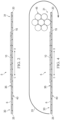
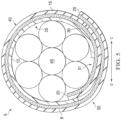
- FIG. 6 is a schematic illustrating another view of cable harness 50 with a plurality of cables 45 disposed therein in accordance with certain embodiments of the present disclosure.
- the formed cable harness 50 contains a plurality of cables 45 disposed on the interior of the cable harness 50.
- the terminal ends of the individual cables 45 may extend past the edge of the portion of the curable sleeve 5 used to form cable harness 50. These terminal ends may be connected or spliced to other wires or components. Further, only the non-adhesive side 40 of the backing 15 is exposed, and the cable harness 50 may be handled without contacting the curable adhesive or the non-curable adhesive (i.e., curable compound 10 as illustrated in FIGs. 1-5 .)
- FIG. 7 is a schematic illustrating an isometric view of the cable harness 50 after it is positioned into a desired shape in accordance with certain embodiments of the present disclosure.
- the cable harness 50 may be positioned into a desired shape for an application.
- cable harness 50 may be positioned into a shape sufficient to avoid contact with a heated surface or a sharp edge when placed in the interior of an automobile.
- the material of backing 15 and curable compound 10 is sufficiently flexible to allow the cable harness 50 to be positioned in any desirable shape for an application.
- the desirable shape may be held in position by the use of any restraining tool 55 (e.g., clamps).
- the use of longitudinal wrapping and a smaller section of curable compound 10 prevents the curable adhesive from the strip of curable compound 10 from leaking outside of the cable harness 50 before and after curing.
- the adhesive 6 may also be prevented from leaking outside of the cable harness 50 before and after curing by using a thinner layer of non-curable compound 10, by reducing the surface area of non-curable compound 10 such that it does not extend to or outside of one or both longitudinal edges 20 and 25 or any lateral edge or side when the cable harness 50 is formed.
- allowing -curable compound 10 to soak into the backing 15 to a desired degree may also help ensure that the curable compound 10 does not leak or extrude from the longitudinal edges 20 and 25 or any lateral side or edge after forming cable harness 50.
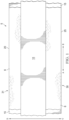
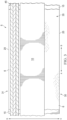
- FIGs. 3-8 illustrate the formation of a cable harness 50 and a rigid cable harness 65 with a plurality of cables 45 disposed therein
- this disclosure expressly contemplates alternative embodiments where the cables 45 are not disposed therein during the formation of the cable harness 50 and/or the rigid cable harness 65.
- the curable sleeve 5 may be rolled into the shape of cable harness 50 without any elongated material on the inside of the rolled curable sleeve 5.
- the curable sleeve 5 may be rolled into the shape of cable harness 50 with a standard-sized elongated material on the inside of the roll to provide a standard interior diameter to the cable harness 50.
- the standard elongated material may then be pushed or pulled out of the cable harness 50 and/or the rigid cable harness 65, and the cables 45 may be inserted therein.
- the terminal end of said standard-sized elongated material may be tied or otherwise coupled to the cables 45 such that if it is pulled out of the cable harness 50 and/or the rigid cable harness 65, the cables 45 may then be pulled into the interior of the cable harness 50 and/or the rigid cable harness 65.
- suitable backing 15 materials may include polymeric filmic materials.
- the polymeric filmic materials may include, but are not limited to, polyethylene, polypropylene, polyolefin, polyvinyl chloride, polyethylene terephthalate, polyethylene naphthalate, ethylene-vinyl alcohol, polyvinylidene chloride, polyvinylidene fluoride, polyacrylonitrile, polycarbonate, polyamide, polyethersulphone, polyimide, aramid, biopolymers (e.g., cellulose, hemp, cotton, sisal, flax, silk, hemp, linen, coconut or wool), rubber, glass, composites thereof, or a combination thereof.
- biopolymers e.g., cellulose, hemp, cotton, sisal, flax, silk, hemp, linen, coconut or wool
- G' storage modulus
- G" loss modulus
- DMA Dynamic Mechanical Analysis
- thermal vulcanization means sulfur vulcanization - in other words, the crosslinking of unsaturated compounds, by means of sulfur, that is activated and completed by a temperature increase.
- sulfur vulcanization it is possible to add vulcanization accelerators and vulcanizing auxiliaries and additives. These substances may bring about a reduction in the activation temperature and/or accelerated curing and crosslinking.
- a meltable polybutadiene-polyurethane for the purposes of this specification means a meltable reaction product which is prepared by a polyaddition reaction of at least one at least doubly hydroxyl-functionalized polybutadiene or polybutadiene derivative and at least one diisocyanate, and which at room temperature is sufficiently solid and dimensionally stable to allow it to be wound to a roll at room temperature, on a release liner, or on the backing 15, without running out at the side or being squeezed out as a result of the winding pressure.
- At least doubly hydroxyl-functionalized polybutadiene derivatives are those compounds which may be derived from polybutadiene-diols or polyols and which possess a plurality of C4 units, each containing a carbon/carbon double bond, and at the same time may also carry other additional functional groups such as, for example, epoxide groups or additional side chains such as vinyl groups, for example, or other additional structural elements.
- Vulcanization accelerators which may be present, optionally, in the curable compound 10, are understood in this specification to be all substances which are known to accelerate vulcanization. They may at the same time also be sulfur donors. The concept of the invention also embraces those known sulfur donors which in the technical literature are not explicitly also classified simultaneously as accelerators.
- vulcanization accelerators may be ordered in the following known classes of substance: mercapto accelerators, sulphenamide accelerators, sulphenimide accelerators, thiuram accelerators, dithiocarbamate accelerators, dithiocarbamyl-isulphenamide accelerators, xanthogenate accelerators, guanidine accelerators, amine accelerators, thiourea accelerators, dithiophosphate accelerators, and sulphur donors.
- mercapto accelerators are 2-mercaptobenzothiazole (MBT), zinc 2-mercaptobenzothiazole (ZMBT) and dibenzothiazyl disulphide (MBTS).
- Typical sulphenamide accelerators are N-cyclohexyl-2-benzothiazolesulphenamide (CBS), N-tert-butyl-2-benzo ⁇ thiazolesulphenamide (TBBS), N-oxydiethylene-2-benzothiazolesulphenamide (MBS) and N,N'-di-icyclohexyl-2-benzothiazolesulphenamide (DCBS).
- CBS N-cyclohexyl-2-benzothiazolesulphenamide
- TBBS N-tert-butyl-2-benzo ⁇ thiazolesulphenamide
- MBS N-oxydiethylene-2-benzothiazolesulphenamide
- DCBS N,N'-di-icyclohexyl-2-benzothiazolesulphenamide
- An example of a sulphenimide accelerator is N-tert-butyl-2-benzothiazolesulphenimide.
- thiuram accelerators examples include tetramethylthiuram monosulphide (TMTM), tetramethylthiuram disulphide (TMTD), tetraethyl ⁇ thiuram disulphide (TETD), tetrabenzylthiuram disulphide (TBzTD), tetraisopropylthiuram disulphide (TiPTD), dimethyldiphenylthiuram disulphide (MPTD) and dipentamethylenethiuram tetrasulphide (TPTT).
- TMTM tetramethylthiuram monosulphide
- TMTD tetramethylthiuram disulphide
- TETD tetraethyl ⁇ thiuram disulphide
- TBzTD tetrabenzylthiuram disulphide
- TiPTD tetraisopropylthiuram disulphide
- MPTD dimethyldiphenylthiuram disulphide
- TPTT dipentamethylenethiuram t
- Zinc dimethyldithiocarbamate ZDMC
- zinc diethyldithiocarbamate ZDEC
- zinc dibutyldithiocarbamate ZDBC
- zinc pentamethylenedithiocarbamate Z5MC
- zinc ethylphenyl ⁇ dithiocarbamate ZEPC
- zinc dibenzyldithiocarbamate ZBEC
- zinc diisopropyldithiocarbamate ZDIPC
- piperidine pentamethylenedithiocarbamate PPC
- tellurium dimethyldithiocarbamate TDMC
- tellurium diethyldithiocarbamate ZDEC
- lead dimethyldithiocarbamate PbDMC
- copper dimethyldithiocarbamate CuDMC
- copper dibutyldithiocarbamate CuDBC
- bismuth dimethyldithiocarbamate BiDMC
- Typical dithiocarbamylsulphenamide accelerators are N-oxydiethylenedithiocarbamyl-N'-oxydiethylenesulphenamide (OTOS) and N-oxydiethylenedithiocarbamyl-N'-tert-butylsulphenamide (OTTBS).
- OTOS N-oxydiethylenedithiocarbamyl-N'-oxydiethylenesulphenamide
- OTTBS N-oxydiethylenedithiocarbamyl-N'-tert-butylsulphenamide
- xanthogenated accelerators are zinc isopropylxanthogenate (ZIX), zinc butylxanthogenate (ZBX), sodium isopropylxanthogenate (NaIX) and polyxanthogenate.
- Typical guanidine accelerators are diphenylguanidine (DPG), di-o-tolylguanidine (DOTG) and o-tolyl biguanide (OTBG).
- Amine accelerators are, for example, butyraldehydeaniline (BAA), tricrotonylidenetetramine (TCT), hexamethylenetetramine (HEXA), polyethylenepolyamines (PEP) and cyclohexylethylamine (CEA).
- N,N'-ethylenethiourea ETU
- N,N'-dibutylthiourea DBTU
- N,N'-diethylthiourea DETU
- N,N'-diphenylthiourea DPTU
- thiourea accelerators Known dithiophosphate accelerators are zinc dibutyldithiophosphate (ZBPD), zinc diisooctyldithiophosphate (ZOPD), dodecyl-iammonium diisooctyldithiophosphate (AOPD) and copper diisopropyldithiophosphate (CuPPD).
- Sulphur donors include 2-morpholinodithiobenzothiazole (MBSS), N,N'-dithiodimorpholine (DTDM) and caprolactam disulphide (CLD).
- Preferred classes of substance are mercapto accelerators, thiuram accelerators and dithiocarbamate accelerators.
- Mercapto accelerators are regarded as "all-purpose" accelerators, which ensure rapid vulcanization and have no adverse effect on the stability of the as yet unvulcanized curable compound in the temperature range from 160° C to 180° C.
- the thiuram accelerators and dithiocarbamate accelerators are regarded as “ultra-accelerators", which ensure rapid vulcanization even at temperatures from 130° C upwards and which nevertheless ensure sufficient stability during the production of the curable compound, even in the case of compounding temperatures of up to around 90° C, and during subsequent storage at temperatures between room temperature and 30° C.
- a preferred "all-purpose" vulcanization accelerator is MBTS.
- Preferred "ultra-accelerators" are TBzTD and ZBEC.
- fillers which may likewise be included optionally, it is possible to use not only reinforcing fillers, such as carbon black, for example, but also non-reinforcing fillers, such as carbonates, for example, especially chalk, or sulfates such as barium sulfate, for example.
- non-reinforcing fillers such as carbonates, for example, especially chalk, or sulfates such as barium sulfate, for example.
- Other examples of fillers that are contemplated are silicates, such as talc, kaolin, calcined or partly calcined kaolin, wollastonites or micas, hydroxides or oxides, such as finely ground quartz, for instance, aluminium hydroxide, zinc oxide or calcium oxide. Microspheres are also contemplated as fillers.
- epoxyphenolnovolac resins epoxydicyclopentadiene-phenol-novolac resins, epoxycresol-novolac resins, glycidylamine-based epoxy resins, especially triglycidyl ethers of para-aminophenol, triglycidyl ethers of meta-aminophenol, tetraglycidyl ethers of methylenedianiline, hydroxyphenyl-based epoxy resins, and aliphatic epoxy resins, especially those which are cycloaliphatic. Particularly noteworthy here is 3,4-epoxycyclohexylmethyl 3',4'-epoxycyclohexanecarboxylate ( CAS No. 2386-87-0 ).
- An advantageous concentration of the epoxy resin in the thermally vulcanizable, meltable, curable compound is between 1.0 wt% (inclusive) and 20 wt% (inclusive). Particularly advantageous is a concentration between 5.0 wt% (inclusive) and 15.0 wt% (inclusive).
- the addition of epoxy resins has emerged as being advantageous particularly in respect of the adhesion properties of the thermally vulcanizable, meltable, curable compound on oiled metal sheets after the thermal vulcanization reaction. Moreover, the viscosity of the compounded formulation during the production of the curable compound is lowered advantageously, allowing operation to take place at lower process temperatures.
- the chemical conversion to form the meltable polybutadiene-polyurethane advantageously takes place already in the presence of the optional at least one epoxy resin.
- the advantage of this process is that the at least one epoxy resin can be incorporated in an energy-saving manner, at room temperature. If, alternatively, the polybutadiene-polyurethane were to be prepared first, and then the at least one epoxy resin added, it would be necessary to heat the polybutadiene-polyurethane first of all to a temperature in which it was present as a melt. The disadvantage of that would be the need for a higher energy input.
- a further advantage is that the softening or melting temperature of the mixture of prepolymer and epoxy resin is significantly lower than the softening or melting temperature of the pure prepolymer, but with the hot-melt character still retained. Subsequent compounding with sulfur and other substances, such as vulcanization accelerators, for example, can therefore take place in an energy-saving manner, and gently, at lower temperatures than without the epoxy resin already incorporated during polybutadiene-polyurethane preparation. In this way, compounding with so-called ultra-accelerators, which occasionally cause onset of vulcanization even at approximately 120° C within a few minutes, is possible without any unwanted instances of curing or gelling during the compounding operation.
- the thermally vulcanizable, meltable, curable compound may optionally also comprise tackifier resins.
- tackifier resin is understood by the skilled person to refer to a resinbased substance which increases the tack. Tackifier resins can be divided into natural resins and synthetic resins.
- Terpene-phenolic resins are resins produced by acid-catalyzed addition reaction of phenols with terpenes or rosin.
- plasticizers include, but are not limited to, phthalic esters, also called phthalates for short, include, among others, dioctyl phthalate (DOP; di(2-ethylhexyl) phthalate), diisononyl phthalate (DINP), diisodecyl phthalate (DIDP), phthalic esters with predominantly linear C6 to C11 alcohols, dibutyl phthalate (DBP), diisobutyl phthalate (DIBP), dicyclohexyl phthalate (DCHP), dimethyl phthalate (DMP) and diethyl phthalate (DEP), and also mixed esters, comprising benzyl (butyl) phthalate (BBP), butyl octyl phthalate, butyl decyl phthalate and dipentyl phthalate, bis(2-methoxyethyl) phthalate and dicapryl phthalate (DCP).
- DOP diocty
- trimellitic esters with (predominantly) linear C6 to C11 alcohols is tris(2-ethylhexyl) trimellitate (TOTM).
- Acyclic aliphatic dicarboxylic esters are, for example, esters of adipic acid such as bis(2-ethylhexyl) adipate (dioctyl adipate, DOA), bis(8-methylnonyl) adipate (diisodecyl adipate, DIDA), dibutyl decanedioate (dibutyl sebacate, DBS), bis(2-ethylhexyl) decanedioate (dioctyl sebacate, DOS).
- An example of a cyclic aliphatic dicarboxylic ester is diisononyl 1,2-cyclohexanedicarboxylate (DINCH).
- polymer plasticizers are polyesters of adipic, decanedioic, nonanedioic and phthalic acid with diols such as butane-1,3-diol, propane-1,2-diol, butane-1,4-diol, hexane-1,6-diol and others (Mr about 1800-13 000 g/mol).
- Phosphoric esters, called phosphates for short, are a further group.
- Citric esters are examples of the group of hydroxycarboxylic esters. Further examples are tartaric esters and lactic esters.
- the curable compound 10 comprises further auxiliaries and additives such as, for example, rheological additives, ageing inhibitors (antioxidants), light stabilizers or UV absorbers.
- rheological additives are pyrogenic, hydrophobized or non-hydrophobized silicas, phyllosilicates (bentonites), high molecular mass polyamide powders or castor oil derivative powders.
- the stated rheological additives may also be classed under the heading of fillers.
- the suitable antioxidants include, for example, sterically hindered phenols, hydroquinone derivatives, amines, organic sulphur compounds or organic phosphorus compounds.
- Light stabilizers employed are, for example, the compounds disclosed in Gaechter and Müller, Taschenbuch der Kunststoff-Additive, Kunststoff 1979, in Kirk-Othmer (3rd) 23, 615 to 627 , in Encycl. Polym. Sci. Technol. 14, 125 to 148 , and in Ullmann (4.) 8, 21; 15, 529, 676, all of which are incorporated by reference herein.
- the meltable polybutadiene-polyurethane is a reaction product prepared by a polyaddition reaction of at least one polybutadiene-diol, at least one chain extender having a hydroxyl functionality of two and a molar mass of less than or equal to 300 g/mol and optionally at least one polybutadiene-polyol having a number-averaged average functionality of between greater than 2.0 and less than or equal to 3.0 with at least one aliphatic or alicyclic diisocyanate.
- Chain extenders in the sense of this specification are all hydroxyl-bearing compounds having a hydroxyl functionality of two and a molar mass of less than or equal to 300 g/mol. They carry no further isocyanate-reactive groups. They are therefore diols having a molar mass of less than or equal to 300 g/mol. It is known that many chain extenders used in the preparation of polyurethanes based on polyester-polyols or polyether-polyols are not compatible with polybutadiene-diols and polyols. Separation occurs. Inventively preferred are the chain extenders that are compatible with polybutadiene-diols and polyols.
- N,N-diisopropanol-ianiline CAS No. 003077-13-2
- 2,2,4-trimethyl-1,3-pentanediol CAS No. 144-19-4
- 2-butyl-2-ethyl-1,3-propanediol CAS No. 115-84-4
- Particularly preferred is 2-ethyl-1,3-he ⁇ xanediol ( CAS No. 94-96-2 ).
- the numerical proportion of the hydroxyl groups introduced for forming the polybutadiene-polyurethane that originate from the at least one chain extender is between greater than or equal to 20.0% and less than or equal to 80.0%, preferably between greater than or equal to 30.0% and less than or equal to 70.0%.
- the numerical fraction always corresponds to the amount-of-substance fraction.
- a polybutadiene-diol in this specification refers to all hydroxyl-functionalized polybutadienes or derivatives thereof whose number-averaged average hydroxyl functionality is two or somewhat less than two, but at least 1.5, preferably at least 1.8.
- the number-averaged average hydroxyl functionality of a polybutadiene-diol is in no case greater than two.
- a polybutadiene-polyol for the purposes of this specification refers to all hydroxyl-functionalized polybutadienes or derivatives thereof having a number-averaged average functionality of between greater than 2.0 and less than or equal to 3.0.
- the number-averaged average hydroxyl functionality is understood to be the average number of hydroxyl groups per molecule of a polyol.
- f M n g / mol ⁇ OHN mmol OH / kg / 10 6
- M n is the number-averaged average molecular weight of the respective polyol in the units [g/mol]
- OHN is the hydroxyl number of the polyol in the units [mmol OH/kg].
- the hydroxyl number is a measure of the amount of hydroxyl groups in a polyol. The hydroxyl number is determined here according to DIN 53240.
- the hydroxyl number is expressed in the units [mg KOH/g]. It corresponds to the amount of KOH in [mg] which is equivalent to the amount of acetic acid bound in the acetylation of 1 g of polyol.
- the bonding of the hydroxyl groups of the polybutadiene-diols and -polyols to the polybutadiene chain may be primary or secondary.
- the butadiene units of the polybutadiene chain may be linked with one another in a 1,4 cis or trans form or in a 1,2 form with vinyl groups in the side chain, or in a mixed way.
- Polybutadiene-diols are prepared by anionic polymerization, whereas polybutadiene-polyols having a number-averaged average functionality of between greater than 2.0 and less than or equal to 3.0 are prepared by radical polymerization.
- polybutadiene-diols having a number-averaged average molar mass of between greater than 1000 g/mol and less than 5000 g/mol, preferably between greater than or equal to 2000 g/mol and less than or equal to 3000 g/mol.
- the optional polybutadiene-polyols having a number-averaged average functionality of between greater than 2.0 and less than or equal to 3.0 ought also to have a number-averaged average molar mass of between greater than 1000 g/mol and less than 5000 g/mol, preferably between greater than or equal to 2000 g/mol and less than or equal to 3000 g/mol.
- the polybutadiene-polyols having a number-averaged average functionality of between greater than 2.0 and less than or equal to 3.0 may be used optionally for producing the polybutadiene-polyurethane, in order to incorporate branching sites into the polyurethane.
- a certain degree of branching would have the advantage of reduced softening on the part of the coated polyurethane during thermal vulcanization, in the course of the supplying of temperature but before the onset of the vulcanization reaction, and hence of a greater shear strength in this phase immediately prior to the curing brought about by the vulcanization.
- the optional polybutadiene-polyols having a number-averaged average functionality of between greater than 2.0 and less than or equal to 3.0 for producing the polybutadiene-polyurethane, it is necessary to ensure that no gelling occurs, in other words that the degree of branching in relation to the length of the prepolymer chains produced is not so high that there is crosslinking during the polyaddition reaction.
- a degree of branching is set such as to ensure the meltability of the polybutadiene-polyurethane, in other words such that no crosslinked structures are formed. In order to rule out crosslinked structures, it is mandatory not to exceed what is called the gel point.
- the theoretical gel point can be calculated using the gel point equation of P.J. Flory.
- NCO OH gelling 1 1 + 1 diol ⁇ OH triol ⁇ OH + 1
- Diol-OH in this formula refers to the total number of hydroxyl groups involved in the polyurethane formation reaction and originating from polyols whose hydroxyl functionality is less than or equal to two. This also includes the chain extenders.
- Triol-OH refers to the total number of hydroxyl groups involved in the polyurethane formation reaction and bonded to polyols whose functionality is greater than two and less than or equal to three.
- the polybutadiene-polyurethane is obtained by reaction of the stated diols/polyols with at least one aliphatic or alicyclic diisocyanate.
- Aliphatic or alicyclic diisocyanates are understood in this specification to be all organic polyisocyanates having an isocyanate functionality of two in which the isocyanate groups are not bonded directly to a ring system which is aromatic in accordance with Hückel's rule.
- aliphatic or alicyclic diisocyanates examples include butane 1,4-diisocyanate, tetramethoxybutane 1,4-diisocyanate, hexane 1,6-diisocyanate, ethylene diisocyanate, 2,2,4-trimethylhexamethylene diisocyanate, ethylethylene diisocyanate, dicyclohexylmethane 4,4'-diisocyanate (H12MDI), 1,4-diisocyanatocyclohexane, 1,3-diisocyanatocyclohexane, 1,2-diisocyanatocyclohexane, 1,3-diisocyanatocyclopentane, 1,2-diisocyanatocyclopentane, 1,2-diisocyanatocyclobutane, 1-isocyanatomethyl-3-isocyanato-1,5,5-trimethylcyclohexane (isophorone
- the ratio of the total number of isocyanate groups to the total number of hydroxyl groups in the substances involved in the chemical reaction to give the polybutadiene-polyurethane is between greater than or equal to 0.3 and less than or equal to 1.3, preferably between greater than or equal to 0.4 and less than or equal to 1.2, more preferably between greater than or equal to 0.5 and less than or equal to 1.1, especially preferably between greater than or equal to 0.6 and less than or equal to 1.0.
- the preferred ratios result in hot-melt polyurethanes having a particularly firm consistency at room temperature and at the same time a high adhesiveness (high tack).
- the polybutadiene-polyurethane of the invention preferably comprises the chemical reaction product of exclusively one or more polybutadiene-diols, optionally one or more polybutadiene-polyols having a number-averaged average functionality of between greater than 2.0 and less than or equal to 3.0, and one or more chain extenders having a hydroxyl functionality of two and a molar mass of less than or equal to 300 g/mol with one or more aliphatic or alicyclic diisocyanates.
- polys or isocyanates involved in the chemical reaction to give the polybutadiene-polyurethane, and more particularly no polyether-polyols, no polyester-polyols and no aromatic diisocyanates.
- polyether-polyols and polyester-polyols have disadvantageous consequences for the adhesion properties after the vulcanization reaction, especially for the adhesion properties on oiled metal sheets.
- aromatic diisocyanates are disadvantageous for the adhesiveness (the tack).
- the concentration of the catalysts is tailored to the desired reaction rate and is situated typically at between 0.01 wt% and 0.5 wt% of the polybutadiene-polyurethane to be prepared.
- the polybutadiene-polyurethane is preferably prepared without the use of solvents. Including solvents in the production operation, while readily possible technically, does not normally bring any advantages.
- the polybutadiene-polyurethane is advantageously produced batchwise, in other words discontinuously, for example, in a heatable mixing vessel, kneading apparatus, planetary mixer or dissolver. In order to achieve absence of bubbles, mixing takes place in the end phase of the operation, when the chemical reaction is largely concluded, preferably under reduced pressure.
- the curable compound 10 is a polymer forming a continuous phase and have a reactive resin dissolved and/or dispersed therein to form the discontinuous phase.
- This specific example of a curable compound may have a large resin fraction, for example, the reactive resin fraction may comprise up to 85 wt.% of the curable compound.
- the reactive resins are preferably present at least partly in homogeneous solution in the continuous phase.
- the reactive resin is present fully in homogeneous solution in the polymer, and so in the cured state a continuous epoxide phase is formed, producing shear strengths comparable to those of the liquid epoxide adhesives.
- in homogeneous solution means that under a scanning electron microscope there are no different phases apparent between dissolved material and solvating material.
- the curable compound comprises at least 120 parts of reactive resin per 100 parts of polymer and, optionally, tackifier resin, preferably at least 200 parts of reactive resin, more particularly at least 300 parts of reactive resin.
- Part here is based on parts by weight.
- the wording "at least 120 parts of reactive resin per 100 parts of polymer” means that at least 120 g are used for 100 g of polymer.
- tackifier resin is also present, the parts of polymer and tackifier resin are combined.
- the figures are based on the sum of the parts by weight of the reactive resins; where more than one polymer is used, on the sum of the parts by weight of the polymers used, with the addition, where appropriate, of the amount of the tackifier resin or of the sum of the parts by weight of the tackifier resins used.
- a reactive resin there is preference given to using an epoxy resin.
- epoxy resins curable compounds of particularly high shear strength can be produced. Moreover, the crosslinking reactions are readily initiated and managed. In the uncured state, the curable compounds produced using epoxy resins are sufficiently storage-stable.
- Particularly preferred as reactive resin here is at least one epoxy resin based on bisphenol A, bisphenol S, bisphenol F, an epoxy novolak, an epoxy-cresol novolak or an epoxidized nitrile rubber.
- resins which can be used in the curable compound are partially or fully hydrogenated resins based on rosin and rosin derivatives, hydrogenated polymers of dicyclopentadiene, partially, selectively or fully hydrogenated hydrocarbon resins based on C5, C5/C9 or C9 monomer streams, polyterpene resins based on ⁇ -pinene and/or ⁇ -pinene and/or ⁇ -limonene and/or ⁇ 3-carene, hydrogenated polymers of preferably pure C8 and C9 aromatics.
- Aforesaid tackifier resins may be used either alone or in a mixture.
- triphenylsulphonium hexafluoroarsenate such as triphenylsulphonium hexafluoroarsenate, triphenylsulphonium hexafluoroborate, triphenylsulphonium tetrafluoroborate, triphenylsulphonium tetrakis(pentafluorobenzyl)borate, methyldiphenylsulphonium tetrafluoroborate, methyldiphenylsulphonium tetrakis(pentafluorobenzyl)borate, dimethylphenylsulphonium hexafluorophosphate, triphenylsulphonium hexafluorophosphate, triphenylsulphonium hexafluoroantimonate, diphenylnaphthylsulphonium hexafluoroarsenate, tritolylsulphonium hexafluorophosphate
Landscapes
- Engineering & Computer Science (AREA)
- Chemical & Material Sciences (AREA)
- Manufacturing & Machinery (AREA)
- Organic Chemistry (AREA)
- Chemical Kinetics & Catalysis (AREA)
- Mechanical Engineering (AREA)
- Health & Medical Sciences (AREA)
- General Chemical & Material Sciences (AREA)
- Medicinal Chemistry (AREA)
- Civil Engineering (AREA)
- Polymers & Plastics (AREA)
- Structural Engineering (AREA)
- Architecture (AREA)
- Physics & Mathematics (AREA)
- Thermal Sciences (AREA)
- General Health & Medical Sciences (AREA)
- Toxicology (AREA)
- Textile Engineering (AREA)
- Insulated Conductors (AREA)
- Adhesives Or Adhesive Processes (AREA)
- Details Of Indoor Wiring (AREA)
- Adhesive Tapes (AREA)
- Installation Of Indoor Wiring (AREA)
Applications Claiming Priority (2)
| Application Number | Priority Date | Filing Date | Title |
|---|---|---|---|
| US15/841,948 US10297370B1 (en) | 2017-12-14 | 2017-12-14 | Forming a rigid cable harness with a curable sleeve |
| EP18210816.7A EP3499664A1 (fr) | 2017-12-14 | 2018-12-06 | Harnais de câbles rigide avec un manchon durcissable et methode de formation de ce harnais de câbles |
Related Parent Applications (1)
| Application Number | Title | Priority Date | Filing Date |
|---|---|---|---|
| EP18210816.7A Division EP3499664A1 (fr) | 2017-12-14 | 2018-12-06 | Harnais de câbles rigide avec un manchon durcissable et methode de formation de ce harnais de câbles |
Publications (2)
| Publication Number | Publication Date |
|---|---|
| EP4397545A2 true EP4397545A2 (fr) | 2024-07-10 |
| EP4397545A3 EP4397545A3 (fr) | 2024-09-25 |
Family
ID=64650284
Family Applications (2)
| Application Number | Title | Priority Date | Filing Date |
|---|---|---|---|
| EP18210816.7A Ceased EP3499664A1 (fr) | 2017-12-14 | 2018-12-06 | Harnais de câbles rigide avec un manchon durcissable et methode de formation de ce harnais de câbles |
| EP24171855.0A Pending EP4397545A3 (fr) | 2017-12-14 | 2018-12-06 | Formation d'un faisceau de câbles rigide avec un manchon durcissable |
Family Applications Before (1)
| Application Number | Title | Priority Date | Filing Date |
|---|---|---|---|
| EP18210816.7A Ceased EP3499664A1 (fr) | 2017-12-14 | 2018-12-06 | Harnais de câbles rigide avec un manchon durcissable et methode de formation de ce harnais de câbles |
Country Status (4)
| Country | Link |
|---|---|
| US (2) | US10297370B1 (fr) |
| EP (2) | EP3499664A1 (fr) |
| JP (1) | JP6835804B2 (fr) |
| CN (1) | CN109994288B (fr) |
Families Citing this family (17)
| Publication number | Priority date | Publication date | Assignee | Title |
|---|---|---|---|---|
| US9588315B1 (en) * | 2014-03-28 | 2017-03-07 | Daniel Ryan Turner | Method and apparatus for deployment of a communication line onto a surface such as a roadway or pathway |
| JP6855966B2 (ja) * | 2017-07-19 | 2021-04-07 | 住友電装株式会社 | ワイヤハーネス |
| US10866380B2 (en) | 2017-07-28 | 2020-12-15 | Traxyl, Inc. | Method and apparatus for deployment of a communication line onto a surface such as a roadway or pathway |
| US20190237950A1 (en) * | 2018-01-30 | 2019-08-01 | Michael Lee Schroder | Corner Guide for Wire Installation |
| DE102019103124B4 (de) * | 2019-02-08 | 2022-02-03 | Tesa Se | Thermisch härtbares Klebeband, Verwendung zum Ummanteln von langgestrecktem Gut insbesondere Leitungen und Kabelstrang |
| DE102019103122A1 (de) | 2019-02-08 | 2020-08-13 | Tesa Se | Mit Feuchtigkeit härtbares Klebeband und Verfahren zum Ummanteln von langgestrecktem Gut insbesondere Leitungen |
| DE102019103123A1 (de) | 2019-02-08 | 2020-08-13 | Tesa Se | Thermisch erweichbares Klebeband und Verfahren zum Ummanteln von langgestrecktem Gut insbesondere Leitungen |
| DE102019103120A1 (de) | 2019-02-08 | 2020-08-13 | Tesa Se | UV-härtbares Klebeband und Verfahren zum Ummanteln von langgestrecktem Gut insbesondere Leitungen |
| DE102019211178B3 (de) | 2019-07-26 | 2020-09-17 | Tesa Se | Verfahren zum Ummanteln von langgestrecktem Gut, ummanteltes Gut und dessen Verwendung |
| DE102019212589A1 (de) * | 2019-08-22 | 2021-02-25 | Tesa Se | Verfahren zum Ummanteln von langgestrecktem Gut, insbesondere Leitungen |
| DE102019212592A1 (de) * | 2019-08-22 | 2021-02-25 | Tesa Se | Verfahren zum Ummanteln von langgestrecktem Gut, insbesondere Leitungen |
| DE102019212591A1 (de) * | 2019-08-22 | 2021-02-25 | Tesa Se | Verfahren zum Ummanteln von langgestrecktem Gut, insbesondere Leitungen |
| JP7456190B2 (ja) * | 2020-02-28 | 2024-03-27 | 住友電装株式会社 | 配線部材 |
| US12546968B2 (en) | 2020-07-07 | 2026-02-10 | Traxyl, Inc. | Method and apparatus for deployment of a tubular body onto a surface |
| DE102020209634B4 (de) | 2020-07-30 | 2024-07-25 | Volkswagen Aktiengesellschaft | Verfahren zum Herstellen eines Kabelbündels, Fertigungsanlage zur Herstellung eines Kabelbündels, sowie Kabelbündel |
| WO2022167972A1 (fr) * | 2021-02-03 | 2022-08-11 | 3M Innovative Properties Company | Bande contenant une couche réactive et procédé de fabrication de la bande |
| CN114006316B (zh) * | 2021-09-07 | 2023-11-21 | 华北电力大学 | 一种线缆护套安装装置 |
Citations (13)
| Publication number | Priority date | Publication date | Assignee | Title |
|---|---|---|---|---|
| US3018262A (en) | 1957-05-01 | 1962-01-23 | Shell Oil Co | Curing polyepoxides with certain metal salts of inorganic acids |
| US3117099A (en) | 1959-12-24 | 1964-01-07 | Union Carbide Corp | Curable mixtures comprising epoxide compositions and divalent tin salts |
| US3729313A (en) | 1971-12-06 | 1973-04-24 | Minnesota Mining & Mfg | Novel photosensitive systems comprising diaryliodonium compounds and their use |
| US3741769A (en) | 1972-10-24 | 1973-06-26 | Minnesota Mining & Mfg | Novel photosensitive polymerizable systems and their use |
| US4058401A (en) | 1974-05-02 | 1977-11-15 | General Electric Company | Photocurable compositions containing group via aromatic onium salts |
| US4138255A (en) | 1977-06-27 | 1979-02-06 | General Electric Company | Photo-curing method for epoxy resin using group VIa onium salt |
| US4231951A (en) | 1978-02-08 | 1980-11-04 | Minnesota Mining And Manufacturing Company | Complex salt photoinitiator |
| US4250053A (en) | 1979-05-21 | 1981-02-10 | Minnesota Mining And Manufacturing Company | Sensitized aromatic iodonium or aromatic sulfonium salt photoinitiator systems |
| US4256828A (en) | 1975-09-02 | 1981-03-17 | Minnesota Mining And Manufacturing Company | Photocopolymerizable compositions based on epoxy and hydroxyl-containing organic materials |
| US4394403A (en) | 1974-05-08 | 1983-07-19 | Minnesota Mining And Manufacturing Company | Photopolymerizable compositions |
| EP0542716B1 (fr) | 1982-11-22 | 1997-06-25 | Minnesota Mining And Manufacturing Company | Compositions polymérisables par apport d'énergie contenant des initiateurs organométalliques |
| US6908722B2 (en) | 2001-06-29 | 2005-06-21 | Jsr Corporation | Acid generator, sulfonic acid, sulfonic acid derivatives and radiation-sensitive resin composition |
| US20100063221A1 (en) | 2006-12-01 | 2010-03-11 | Kaneka Corporation | Polysiloxane composition |
Family Cites Families (14)
| Publication number | Priority date | Publication date | Assignee | Title |
|---|---|---|---|---|
| JPH04181609A (ja) * | 1990-11-14 | 1992-06-29 | Fujikura Ltd | 架橋絶縁電線 |
| DE4334039A1 (de) * | 1993-10-06 | 1995-04-13 | Coroplast Fritz Mueller Kg | Klebeband sowie Verwendung des Klebebandes zum Umwickeln eines Leitungssatzes |
| JP2010154634A (ja) * | 2008-12-25 | 2010-07-08 | Sumitomo Wiring Syst Ltd | 電線用テープ |
| JP5638939B2 (ja) | 2010-12-28 | 2014-12-10 | 矢崎総業株式会社 | ワイヤハーネス及びワイヤハーネスの製造方法 |
| JP2012248527A (ja) * | 2011-05-31 | 2012-12-13 | Auto Network Gijutsu Kenkyusho:Kk | ワイヤーハーネス及びその製造方法 |
| WO2013132570A1 (fr) * | 2012-03-05 | 2013-09-12 | 住友電装株式会社 | Procédé de production d'une structure de protection de fils électriques et structure de protection de fils électriques |
| EP2897135A4 (fr) * | 2012-09-12 | 2016-04-20 | Autonetworks Technologies Ltd | Matériau de protection pour faisceaux de câbles et élément de protection de faisceau de câbles |
| DE102013213726A1 (de) | 2013-07-12 | 2015-01-15 | Tesa Se | Verfahren zum Ummanteln von langgestrecktem Gut wie insbesondere Leitungen oder Kabelsätzen |
| EP3019571B2 (fr) * | 2013-07-12 | 2021-11-17 | tesa SE | Procédé permettant d'envelopper un produit étendu en longueur, par exemple en particulier des fils ou des ensembles de câbles |
| US20150013874A1 (en) * | 2013-07-12 | 2015-01-15 | Tesa Se | Method for jacketing elongate material, especially leads or cable looms |
| JP2016169297A (ja) * | 2015-03-12 | 2016-09-23 | 日東電工株式会社 | 架橋剤および硬化性樹脂組成物、偏光フィルムおよびその製造方法、光学フィルムならびに画像表示装置 |
| DE102015217860A1 (de) | 2015-05-05 | 2016-11-10 | Tesa Se | Klebeband mit Klebemasse mit kontinuierlicher Polymerphase |
| ES2828697T5 (es) | 2015-08-05 | 2024-04-09 | Synthomer Usa Llc | Composiciones adhesivas sensibles a la presión y métodos para prepararlas |
| JP6634790B2 (ja) * | 2015-11-24 | 2020-01-22 | 株式会社オートネットワーク技術研究所 | 保護部材付電線及び保護部材 |
-
2017
- 2017-12-14 US US15/841,948 patent/US10297370B1/en active Active
-
2018
- 2018-12-06 EP EP18210816.7A patent/EP3499664A1/fr not_active Ceased
- 2018-12-06 EP EP24171855.0A patent/EP4397545A3/fr active Pending
- 2018-12-13 JP JP2018233125A patent/JP6835804B2/ja active Active
- 2018-12-14 CN CN201811534791.0A patent/CN109994288B/zh active Active
-
2019
- 2019-04-05 US US16/377,049 patent/US11081261B2/en active Active
Patent Citations (13)
| Publication number | Priority date | Publication date | Assignee | Title |
|---|---|---|---|---|
| US3018262A (en) | 1957-05-01 | 1962-01-23 | Shell Oil Co | Curing polyepoxides with certain metal salts of inorganic acids |
| US3117099A (en) | 1959-12-24 | 1964-01-07 | Union Carbide Corp | Curable mixtures comprising epoxide compositions and divalent tin salts |
| US3729313A (en) | 1971-12-06 | 1973-04-24 | Minnesota Mining & Mfg | Novel photosensitive systems comprising diaryliodonium compounds and their use |
| US3741769A (en) | 1972-10-24 | 1973-06-26 | Minnesota Mining & Mfg | Novel photosensitive polymerizable systems and their use |
| US4058401A (en) | 1974-05-02 | 1977-11-15 | General Electric Company | Photocurable compositions containing group via aromatic onium salts |
| US4394403A (en) | 1974-05-08 | 1983-07-19 | Minnesota Mining And Manufacturing Company | Photopolymerizable compositions |
| US4256828A (en) | 1975-09-02 | 1981-03-17 | Minnesota Mining And Manufacturing Company | Photocopolymerizable compositions based on epoxy and hydroxyl-containing organic materials |
| US4138255A (en) | 1977-06-27 | 1979-02-06 | General Electric Company | Photo-curing method for epoxy resin using group VIa onium salt |
| US4231951A (en) | 1978-02-08 | 1980-11-04 | Minnesota Mining And Manufacturing Company | Complex salt photoinitiator |
| US4250053A (en) | 1979-05-21 | 1981-02-10 | Minnesota Mining And Manufacturing Company | Sensitized aromatic iodonium or aromatic sulfonium salt photoinitiator systems |
| EP0542716B1 (fr) | 1982-11-22 | 1997-06-25 | Minnesota Mining And Manufacturing Company | Compositions polymérisables par apport d'énergie contenant des initiateurs organométalliques |
| US6908722B2 (en) | 2001-06-29 | 2005-06-21 | Jsr Corporation | Acid generator, sulfonic acid, sulfonic acid derivatives and radiation-sensitive resin composition |
| US20100063221A1 (en) | 2006-12-01 | 2010-03-11 | Kaneka Corporation | Polysiloxane composition |
Non-Patent Citations (5)
| Title |
|---|
| ENCYCL. POLYM. SCI. TECHNOL, vol. 14, pages 125 - 148 |
| GAECHTERMULLER: "Kirk-Othmer", vol. 23, 1979, article "Taschenbuch der Kunststoff-Additive", pages: 615 - 627 |
| J. ADHESION, vol. 34, 1991, pages 189 - 200 |
| J. M. G. COWIE: "Chemie and Physik der synthetischen Polymere", 1997, VIEWEG |
| ULLMANN, vol. 8, no. 4, pages 21,15,529,676 |
Also Published As
| Publication number | Publication date |
|---|---|
| US10297370B1 (en) | 2019-05-21 |
| EP3499664A1 (fr) | 2019-06-19 |
| JP2019133917A (ja) | 2019-08-08 |
| US11081261B2 (en) | 2021-08-03 |
| US20190228885A1 (en) | 2019-07-25 |
| CN109994288B (zh) | 2021-02-26 |
| CN109994288A (zh) | 2019-07-09 |
| JP6835804B2 (ja) | 2021-02-24 |
| EP4397545A3 (fr) | 2024-09-25 |
Similar Documents
| Publication | Publication Date | Title |
|---|---|---|
| US11081261B2 (en) | Forming a rigid cable harness with a curable sleeve | |
| US11111423B2 (en) | Thermally vulcanizable adhesive tape with shear strength during the heating and curing phase | |
| US11267957B2 (en) | Modified resins and uses thereof | |
| US20210033578A1 (en) | Modified resins and uses thereof | |
| KR102219758B1 (ko) | 열 가황성 접착제 및 이로부터 제조된 접착 스트립 | |
| EP3606991B1 (fr) | Résines modifiées et utilisations de celles-ci | |
| US11958995B2 (en) | Sealing adhesive tape for vehicle bodies | |
| WO2015004190A1 (fr) | Procédé permettant d'envelopper un produit étendu en longueur, par exemple en particulier des fils ou des ensembles de câbles | |
| JP2016530373A (ja) | とりわけ穴の持続的な封止のためのダイカット | |
| CA2927930A1 (fr) | Ruban adhesif comportant un adhesif a phase polymere continue | |
| US12555704B2 (en) | Method for jacketing elongate articles, in particular lines | |
| EP3606993B1 (fr) | Résines modifiées et utilisations de celles-ci | |
| EP2548737B1 (fr) | Feuille de renfort pour article moulé en résine, structure renforcée d'article moulé en résine, et procédé de renforcement | |
| CN115305037B (zh) | 一种热熔压敏胶、其制备方法及防水卷材 | |
| EP3790940B1 (fr) | Film antiadhésif partiellement revêtu de silicone | |
| EP4017928B1 (fr) | Procédé de recouvrement d'articles allongés, en particulier de lignes | |
| EP3741803A1 (fr) | Procédé de fabrication de bandes adhésives réactives autoadhésives | |
| CN113165210A (zh) | 使用第一行星辊式挤出机和布置在下游的第二脱气行星辊式挤出机制造压敏胶粘性的胶粘剂的方法 | |
| EP4673512A1 (fr) | Ruban adhésif réactif pour détachement facile | |
| JP2014223796A (ja) | 防水シート、施工方法および施工構造 |
Legal Events
| Date | Code | Title | Description |
|---|---|---|---|
| PUAI | Public reference made under article 153(3) epc to a published international application that has entered the european phase |
Free format text: ORIGINAL CODE: 0009012 |
|
| STAA | Information on the status of an ep patent application or granted ep patent |
Free format text: STATUS: THE APPLICATION HAS BEEN PUBLISHED |
|
| AC | Divisional application: reference to earlier application |
Ref document number: 3499664 Country of ref document: EP Kind code of ref document: P |
|
| AK | Designated contracting states |
Kind code of ref document: A2 Designated state(s): AL AT BE BG CH CY CZ DE DK EE ES FI FR GB GR HR HU IE IS IT LI LT LU LV MC MK MT NL NO PL PT RO RS SE SI SK SM TR |
|
| REG | Reference to a national code |
Ref country code: DE Ref legal event code: R079 Free format text: PREVIOUS MAIN CLASS: B60R0016020000 Ipc: H02G0003040000 |
|
| PUAL | Search report despatched |
Free format text: ORIGINAL CODE: 0009013 |
|
| AK | Designated contracting states |
Kind code of ref document: A3 Designated state(s): AL AT BE BG CH CY CZ DE DK EE ES FI FR GB GR HR HU IE IS IT LI LT LU LV MC MK MT NL NO PL PT RO RS SE SI SK SM TR |
|
| RIC1 | Information provided on ipc code assigned before grant |
Ipc: C09J 7/21 20180101ALN20240819BHEP Ipc: B60R 16/02 20060101ALI20240819BHEP Ipc: H01B 13/012 20060101ALI20240819BHEP Ipc: H02G 3/04 20060101AFI20240819BHEP |
|
| STAA | Information on the status of an ep patent application or granted ep patent |
Free format text: STATUS: REQUEST FOR EXAMINATION WAS MADE |
|
| 17P | Request for examination filed |
Effective date: 20250325 |
|
| STAA | Information on the status of an ep patent application or granted ep patent |
Free format text: STATUS: EXAMINATION IS IN PROGRESS |
|
| 17Q | First examination report despatched |
Effective date: 20260319 |