EP4397977A2 - Systèmes et procédés de préparation d'un échantillon et de réalisation d'un dosage en temps réel de l'échantillon - Google Patents
Systèmes et procédés de préparation d'un échantillon et de réalisation d'un dosage en temps réel de l'échantillon Download PDFInfo
- Publication number
- EP4397977A2 EP4397977A2 EP24167772.3A EP24167772A EP4397977A2 EP 4397977 A2 EP4397977 A2 EP 4397977A2 EP 24167772 A EP24167772 A EP 24167772A EP 4397977 A2 EP4397977 A2 EP 4397977A2
- Authority
- EP
- European Patent Office
- Prior art keywords
- sample
- vial
- column
- port valve
- molecules
- Prior art date
- Legal status (The legal status is an assumption and is not a legal conclusion. Google has not performed a legal analysis and makes no representation as to the accuracy of the status listed.)
- Granted
Links
Images




Classifications
-
- B—PERFORMING OPERATIONS; TRANSPORTING
- B01—PHYSICAL OR CHEMICAL PROCESSES OR APPARATUS IN GENERAL
- B01D—SEPARATION
- B01D15/00—Separating processes involving the treatment of liquids with solid sorbents; Apparatus therefor
- B01D15/08—Selective adsorption, e.g. chromatography
- B01D15/10—Selective adsorption, e.g. chromatography characterised by constructional or operational features
- B01D15/14—Selective adsorption, e.g. chromatography characterised by constructional or operational features relating to the introduction of the feed to the apparatus
-
- B—PERFORMING OPERATIONS; TRANSPORTING
- B01—PHYSICAL OR CHEMICAL PROCESSES OR APPARATUS IN GENERAL
- B01D—SEPARATION
- B01D15/00—Separating processes involving the treatment of liquids with solid sorbents; Apparatus therefor
- B01D15/08—Selective adsorption, e.g. chromatography
- B01D15/10—Selective adsorption, e.g. chromatography characterised by constructional or operational features
- B01D15/24—Selective adsorption, e.g. chromatography characterised by constructional or operational features relating to the treatment of the fractions to be distributed
-
- C—CHEMISTRY; METALLURGY
- C07—ORGANIC CHEMISTRY
- C07K—PEPTIDES
- C07K1/00—General methods for the preparation of peptides, i.e. processes for the organic chemical preparation of peptides or proteins of any length
- C07K1/14—Extraction; Separation; Purification
- C07K1/16—Extraction; Separation; Purification by chromatography
- C07K1/20—Partition-, reverse-phase or hydrophobic interaction chromatography
-
- G—PHYSICS
- G01—MEASURING; TESTING
- G01N—INVESTIGATING OR ANALYSING MATERIALS BY DETERMINING THEIR CHEMICAL OR PHYSICAL PROPERTIES
- G01N30/00—Investigating or analysing materials by separation into components using adsorption, absorption or similar phenomena or using ion-exchange, e.g. chromatography or field flow fractionation
- G01N30/02—Column chromatography
- G01N30/04—Preparation or injection of sample to be analysed
- G01N30/06—Preparation
-
- G—PHYSICS
- G01—MEASURING; TESTING
- G01N—INVESTIGATING OR ANALYSING MATERIALS BY DETERMINING THEIR CHEMICAL OR PHYSICAL PROPERTIES
- G01N30/00—Investigating or analysing materials by separation into components using adsorption, absorption or similar phenomena or using ion-exchange, e.g. chromatography or field flow fractionation
- G01N30/02—Column chromatography
- G01N30/04—Preparation or injection of sample to be analysed
- G01N30/06—Preparation
- G01N30/08—Preparation using an enricher
-
- G—PHYSICS
- G01—MEASURING; TESTING
- G01N—INVESTIGATING OR ANALYSING MATERIALS BY DETERMINING THEIR CHEMICAL OR PHYSICAL PROPERTIES
- G01N30/00—Investigating or analysing materials by separation into components using adsorption, absorption or similar phenomena or using ion-exchange, e.g. chromatography or field flow fractionation
- G01N30/02—Column chromatography
- G01N30/04—Preparation or injection of sample to be analysed
- G01N30/16—Injection
- G01N30/20—Injection using a sampling valve
-
- G—PHYSICS
- G01—MEASURING; TESTING
- G01N—INVESTIGATING OR ANALYSING MATERIALS BY DETERMINING THEIR CHEMICAL OR PHYSICAL PROPERTIES
- G01N30/00—Investigating or analysing materials by separation into components using adsorption, absorption or similar phenomena or using ion-exchange, e.g. chromatography or field flow fractionation
- G01N30/02—Column chromatography
- G01N30/26—Conditioning of the fluid carrier; Flow patterns
- G01N30/28—Control of physical parameters of the fluid carrier
- G01N30/30—Control of physical parameters of the fluid carrier of temperature
-
- G—PHYSICS
- G01—MEASURING; TESTING
- G01N—INVESTIGATING OR ANALYSING MATERIALS BY DETERMINING THEIR CHEMICAL OR PHYSICAL PROPERTIES
- G01N30/00—Investigating or analysing materials by separation into components using adsorption, absorption or similar phenomena or using ion-exchange, e.g. chromatography or field flow fractionation
- G01N30/02—Column chromatography
- G01N30/62—Detectors specially adapted therefor
- G01N30/72—Mass spectrometers
- G01N30/7233—Mass spectrometers interfaced to liquid or supercritical fluid chromatograph
-
- G—PHYSICS
- G01—MEASURING; TESTING
- G01N—INVESTIGATING OR ANALYSING MATERIALS BY DETERMINING THEIR CHEMICAL OR PHYSICAL PROPERTIES
- G01N30/00—Investigating or analysing materials by separation into components using adsorption, absorption or similar phenomena or using ion-exchange, e.g. chromatography or field flow fractionation
- G01N30/02—Column chromatography
- G01N30/84—Preparation of the fraction to be distributed
-
- G—PHYSICS
- G01—MEASURING; TESTING
- G01N—INVESTIGATING OR ANALYSING MATERIALS BY DETERMINING THEIR CHEMICAL OR PHYSICAL PROPERTIES
- G01N30/00—Investigating or analysing materials by separation into components using adsorption, absorption or similar phenomena or using ion-exchange, e.g. chromatography or field flow fractionation
- G01N30/02—Column chromatography
- G01N30/88—Integrated analysis systems specially adapted therefor, not covered by a single one of the groups G01N30/04 - G01N30/86
-
- G—PHYSICS
- G01—MEASURING; TESTING
- G01N—INVESTIGATING OR ANALYSING MATERIALS BY DETERMINING THEIR CHEMICAL OR PHYSICAL PROPERTIES
- G01N33/00—Investigating or analysing materials by specific methods not covered by groups G01N1/00 - G01N31/00
- G01N33/48—Biological material, e.g. blood, urine; Haemocytometers
- G01N33/50—Chemical analysis of biological material, e.g. blood, urine; Testing involving biospecific ligand binding methods; Immunological testing
- G01N33/68—Chemical analysis of biological material, e.g. blood, urine; Testing involving biospecific ligand binding methods; Immunological testing involving proteins, peptides or amino acids
- G01N33/6803—General methods of protein analysis not limited to specific proteins or families of proteins
- G01N33/6848—Methods of protein analysis involving mass spectrometry
-
- B—PERFORMING OPERATIONS; TRANSPORTING
- B01—PHYSICAL OR CHEMICAL PROCESSES OR APPARATUS IN GENERAL
- B01D—SEPARATION
- B01D15/00—Separating processes involving the treatment of liquids with solid sorbents; Apparatus therefor
- B01D15/08—Selective adsorption, e.g. chromatography
- B01D15/26—Selective adsorption, e.g. chromatography characterised by the separation mechanism
- B01D15/38—Selective adsorption, e.g. chromatography characterised by the separation mechanism involving specific interaction not covered by one or more of groups B01D15/265 and B01D15/30 - B01D15/36, e.g. affinity, ligand exchange or chiral chromatography
- B01D15/3847—Multimodal interactions
-
- C—CHEMISTRY; METALLURGY
- C07—ORGANIC CHEMISTRY
- C07K—PEPTIDES
- C07K1/00—General methods for the preparation of peptides, i.e. processes for the organic chemical preparation of peptides or proteins of any length
- C07K1/14—Extraction; Separation; Purification
- C07K1/16—Extraction; Separation; Purification by chromatography
-
- G—PHYSICS
- G01—MEASURING; TESTING
- G01N—INVESTIGATING OR ANALYSING MATERIALS BY DETERMINING THEIR CHEMICAL OR PHYSICAL PROPERTIES
- G01N30/00—Investigating or analysing materials by separation into components using adsorption, absorption or similar phenomena or using ion-exchange, e.g. chromatography or field flow fractionation
- G01N30/02—Column chromatography
- G01N2030/022—Column chromatography characterised by the kind of separation mechanism
- G01N2030/027—Liquid chromatography
-
- G—PHYSICS
- G01—MEASURING; TESTING
- G01N—INVESTIGATING OR ANALYSING MATERIALS BY DETERMINING THEIR CHEMICAL OR PHYSICAL PROPERTIES
- G01N30/00—Investigating or analysing materials by separation into components using adsorption, absorption or similar phenomena or using ion-exchange, e.g. chromatography or field flow fractionation
- G01N30/02—Column chromatography
- G01N30/04—Preparation or injection of sample to be analysed
- G01N30/06—Preparation
- G01N30/08—Preparation using an enricher
- G01N2030/085—Preparation using an enricher using absorbing precolumn
-
- G—PHYSICS
- G01—MEASURING; TESTING
- G01N—INVESTIGATING OR ANALYSING MATERIALS BY DETERMINING THEIR CHEMICAL OR PHYSICAL PROPERTIES
- G01N30/00—Investigating or analysing materials by separation into components using adsorption, absorption or similar phenomena or using ion-exchange, e.g. chromatography or field flow fractionation
- G01N30/02—Column chromatography
- G01N30/04—Preparation or injection of sample to be analysed
- G01N30/16—Injection
- G01N30/20—Injection using a sampling valve
- G01N2030/201—Injection using a sampling valve multiport valves, i.e. having more than two ports
-
- G—PHYSICS
- G01—MEASURING; TESTING
- G01N—INVESTIGATING OR ANALYSING MATERIALS BY DETERMINING THEIR CHEMICAL OR PHYSICAL PROPERTIES
- G01N30/00—Investigating or analysing materials by separation into components using adsorption, absorption or similar phenomena or using ion-exchange, e.g. chromatography or field flow fractionation
- G01N30/02—Column chromatography
- G01N30/04—Preparation or injection of sample to be analysed
- G01N30/16—Injection
- G01N30/20—Injection using a sampling valve
- G01N2030/207—Injection using a sampling valve with metering cavity, e.g. sample loop
-
- G—PHYSICS
- G01—MEASURING; TESTING
- G01N—INVESTIGATING OR ANALYSING MATERIALS BY DETERMINING THEIR CHEMICAL OR PHYSICAL PROPERTIES
- G01N30/00—Investigating or analysing materials by separation into components using adsorption, absorption or similar phenomena or using ion-exchange, e.g. chromatography or field flow fractionation
- G01N30/02—Column chromatography
- G01N30/84—Preparation of the fraction to be distributed
- G01N2030/8429—Preparation of the fraction to be distributed adding modificating material
- G01N2030/8435—Preparation of the fraction to be distributed adding modificating material for chemical reaction
-
- G—PHYSICS
- G01—MEASURING; TESTING
- G01N—INVESTIGATING OR ANALYSING MATERIALS BY DETERMINING THEIR CHEMICAL OR PHYSICAL PROPERTIES
- G01N30/00—Investigating or analysing materials by separation into components using adsorption, absorption or similar phenomena or using ion-exchange, e.g. chromatography or field flow fractionation
- G01N30/02—Column chromatography
- G01N30/84—Preparation of the fraction to be distributed
- G01N2030/8429—Preparation of the fraction to be distributed adding modificating material
- G01N2030/8441—Preparation of the fraction to be distributed adding modificating material to modify physical properties
-
- G—PHYSICS
- G01—MEASURING; TESTING
- G01N—INVESTIGATING OR ANALYSING MATERIALS BY DETERMINING THEIR CHEMICAL OR PHYSICAL PROPERTIES
- G01N30/00—Investigating or analysing materials by separation into components using adsorption, absorption or similar phenomena or using ion-exchange, e.g. chromatography or field flow fractionation
- G01N30/02—Column chromatography
- G01N30/88—Integrated analysis systems specially adapted therefor, not covered by a single one of the groups G01N30/04 - G01N30/86
- G01N2030/8809—Integrated analysis systems specially adapted therefor, not covered by a single one of the groups G01N30/04 - G01N30/86 analysis specially adapted for the sample
- G01N2030/8813—Integrated analysis systems specially adapted therefor, not covered by a single one of the groups G01N30/04 - G01N30/86 analysis specially adapted for the sample biological materials
- G01N2030/8831—Integrated analysis systems specially adapted therefor, not covered by a single one of the groups G01N30/04 - G01N30/86 analysis specially adapted for the sample biological materials involving peptides or proteins
-
- G—PHYSICS
- G01—MEASURING; TESTING
- G01N—INVESTIGATING OR ANALYSING MATERIALS BY DETERMINING THEIR CHEMICAL OR PHYSICAL PROPERTIES
- G01N30/00—Investigating or analysing materials by separation into components using adsorption, absorption or similar phenomena or using ion-exchange, e.g. chromatography or field flow fractionation
- G01N30/02—Column chromatography
- G01N30/88—Integrated analysis systems specially adapted therefor, not covered by a single one of the groups G01N30/04 - G01N30/86
- G01N2030/8809—Integrated analysis systems specially adapted therefor, not covered by a single one of the groups G01N30/04 - G01N30/86 analysis specially adapted for the sample
- G01N2030/8813—Integrated analysis systems specially adapted therefor, not covered by a single one of the groups G01N30/04 - G01N30/86 analysis specially adapted for the sample biological materials
- G01N2030/8836—Integrated analysis systems specially adapted therefor, not covered by a single one of the groups G01N30/04 - G01N30/86 analysis specially adapted for the sample biological materials involving saccharides
Definitions
- the present disclosure relates generally to assays and, more specifically, to systems and methods for preparing a sample and performing a real-time assay of the sample.
- sequence listing in electronic format.
- the sequence listing provided as a file titled, "53661_Seqlisting.txt” created February 11, 2020 and is 263,959 bytes in size.
- the information in the electronic format of the sequence listing is incorporated herein by reference in its entirety.
- the MAM assay is a manually-operated process that is performed in, for example, a Large Molecule Release Testing (LMRT) laboratory.
- MAM is a liquid chromatography (LC) - mass spectrometry (MS) -based peptide mapping method, having three steps: (1) sample preparation (which can include, for example, polypeptide denaturation, reduction, alkylation, and digestion); (2) separating the digested polypeptides by LC and detecting them by MS; and (3) analysis of the data for targeted CQAs and detection of new signal (i.e., peaks) when compared to a reference standard.
- sample preparation which can include, for example, polypeptide denaturation, reduction, alkylation, and digestion
- MS mass spectrometry
- MS mass spectrometry
- CQAs are chemical, physical, or biological properties that are present within a specific value or range values.
- physical attributes and modifications of amino acids are important CQAs that are monitored during and after manufacturing, as well as during drug development.
- MAM detects specific CQAs at the amino acid level.
- One aspect of the present disclosure provides a method including the steps of (a) moving a sample comprising molecules from a first vial to a sample loop; (b) moving a volume of the sample from the sample loop to a first multi-port valve; (c) moving the volume of the sample from the first multi-port valve to a second multi-port valve fluidly coupled to and arranged downstream of the first multi-port valve; (d) when the second multi-port valve is in a first position, moving the volume of the sample from the second multi-port valve to a capture column; (e) capturing the molecules in the sample in the capture column, thereby separating the molecules in the sample from a matrix of the sample; (f) moving an elution buffer solution from a buffer source to the capture column, thereby eluting molecules captured by the capture column and moving an elution/molecule mixture comprising the elution buffer solution and the eluted molecules to a second vial arranged downstream of the capture column, the second vial comprising a flow-through vial;
- Another aspect of the present disclosure provides a method including the steps of: (a) moving a sample comprising polypeptides from a first vial to a sample loop; (b) moving a volume of the sample from the sample loop to a first multi-port valve; (c) moving the volume of the sample from the first multi-port valve to a second multi-port valve fluidly coupled to and arranged downstream of the first multi-port valve; (d) when the second multi-port valve is in a first position, moving the volume of the sample from the second multi-port valve to a polypeptide binding column; (e) capturing the polypeptides in the sample in the polypeptide binding column, thereby separating the polypeptides in the sample from a matrix of the sample; (f) moving an elution buffer solution from a buffer source to the capture column, thereby eluting polypeptides captured by the capture column and moving an elution/molecule mixture comprising the elution buffer solution and the eluted polypeptides to a second vial
- a “vial” or “first vial” from which the sample is initially moved may comprise or consist of any suitable vial, such as a flow-through vial or a non-flow-through vial.
- non-flow-through vials (as well as flow-through vials) may be used in methods and systems described herein as temporary or transitional containers for intermediate/partially-processed samples before they carried on to the next processing step in the system.
- Another aspect of the present disclosure provides a method including the steps of: (a) moving a sample comprising polypeptides from a first vial to a sample loop; (b) moving a volume of the sample from the sample loop to a first multi-port valve; (c) moving the volume of the sample from the first multi-port valve to a second multi-port valve fluidly coupled to and arranged downstream of the first multi-port valve; (d) moving the volume of the sample from the second multi-port valve to a polypeptide binding column; (e) binding the polypeptides in the volume of the sample to the polypeptide binding column, thereby separating the polypeptides in the sample from a matrix of the sample; (f) moving glycosidases (such as glucanases) to the polypeptide-binding column via the second multi-port valve to release glycans from the bound polypeptides; (g) moving the released glycans out of the polypeptide-binding column and to a second vial arranged downstream of the
- a closed system including a first vial adapted to contain a sample comprising molecules, one or more change agents, a sample loop adapted to receive the sample from the first vial, a first multi-port valve fluidly coupled to the sample loop and arranged to obtain a volume of the sample via a first port of the first multi-port valve, and a second multi-port valve fluidly coupled to and arranged downstream of the first multi-port valve.
- the closed system includes a capture column arranged to be fluidly coupled to the second multi-port valve when the second multi-port valve is in a first position. The capture column is configured to capture the molecules from the volume of the sample.
- the closed system also includes a desalting column arranged to be fluidly coupled to the second multi-port valve when the second multi-port valve is in a second position different from the first position.
- the desalting column is configured to reduce a salt concentration of the molecules.
- the closed system further includes a first reaction coil arranged to be selectively fluidly coupled to the first multi-port valve.
- the first reaction coil is arranged to receive one or more of the change agents and configured to incubate the molecules and the one or more of the change agents to change the molecules.
- the closed system further includes a second vial arranged downstream of and fluidly coupled to the second multi-port valve.
- the second vial is arranged to receive a mixture comprising the molecules from the capture column, the desalting column, or the first reaction coil.
- the second vial includes a flow-through valve. In some examples, the flow-through vial is configured to separate the molecules from a remainder of the mixture, such that the molecules can be analyzed.
- a closed system including a first vial adapted to contain a sample comprising polypeptides, one or more change agents, a sample loop adapted to receive the sample from the first vial, a first multi-port valve fluidly coupled to the sample loop and arranged to obtain a volume of the sample via a first port of the first multi-port valve, a second multi-port valve fluidly coupled to and arranged downstream of the first multi-port valve, and a capture column arranged to be fluidly coupled to the second multi-port valve when the second multi-port valve is in a first position.
- the capture column is configured to capture the polypeptides from the volume of the sample.
- the closed system also includes a desalting column arranged to be fluidly coupled to the second multi-port valve when the second multi-port valve is in a second position different from the first position.
- the desalting column is configured to reduce a salt concentration of the polypeptides.
- the closed system further includes a first reaction coil arranged to be selectively fluidly coupled to the first multi-port valve.
- the first reaction coil is arranged to receive one or more of the change agents and configured to incubate the polypeptides and the one or more of the change agents to change the polypeptides.
- the closed system further includes a second vial arranged downstream of and fluidly coupled to the second multi-port valve.
- the second vial is arranged to receive a mixture comprising the polypeptides from the capture column, the desalting column, or the first reaction coil.
- the second vial includes a flow-through valve configured to separate the polypeptides from a remainder of the mixture, such that the polypeptides can be analyzed.
- a closed system including a first vial adapted to contain a sample comprising polypeptides, a sample loop adapted to receive the sample from the first vial, a first multi-port valve fluidly coupled to the sample loop and arranged to obtain a volume of the sample via a first port of the first multi-port valve, a second multi-port valve fluidly coupled to and arranged downstream of the first multi-port valve, and a polypeptide-binding column arranged to be fluidly coupled to the second multi-port valve when the second multi-port valve is in a first position.
- the polypeptide binding column is configured to bind the polypeptides from the sample.
- the closed system also includes a second vial arranged downstream of the polypeptide-binding column, and a buffer source fluidly coupled to the first multi-port valve and arranged to supply elution buffer solution to the second vial via the second multi-port valve and the polypeptide-binding column when the second multi-port valve is in the first position, such that the elution buffer solution is adapted to elute substantially all of the polypeptides from the polypeptide binding column.
- the second vial includes a flow-through valve configured to filter the elution buffer solution from the elution/polypeptide mixture out of the second vial, thereby leaving only the eluted polypeptides in the second vial.
- a closed system including a first vial adapted to contain a sample comprising polypeptides, a sample loop adapted to receive the sample from the first vial, a first multi-port valve fluidly coupled to the sample loop and arranged to obtain a volume of the sample via a first port of the first multi-port valve, a second multi-port valve fluidly coupled to and arranged downstream of the first multi-port valve, and a polypeptide-binding column arranged to be fluidly coupled to the second multi-port valve when the second multi-port valve is in a first position.
- the polypeptide binding column is configured to bind the polypeptides from the sample.
- the carrier solution is adapted to release and carry the glycans from the polypeptide-binding column and to the second vial.
- the closed system further includes a reaction coil arranged to receive a mixture of the released glycans and the glycan-labeling reagent from the second vial via the first multi-port valve.
- the reaction coil is configured to incubate the mixture of the released glycans and the glycan-labeling reagent to label the glycans.
- the closed system further includes a third vial arranged downstream of the reaction coil to receive the labeled glycans and the glycan-labeling reagent.
- the third vial also comprises a flow-through valve configured to substantially filter the glycan-labeling reagent out of the third vial, thereby leaving substantially only the labeled glycans in the third vial.
- Another aspect of the present disclosure provides a method including the steps of (a) moving a sample comprising molecules from a sample vial to a sample loop; (b) moving a volume of the sample from the sample loop to an injection valve; (c) moving the volume of the sample from the injection valve to a first multi-port valve fluidly coupled to and arranged downstream of the injection valve; (d) when the first multi-port valve is in a second position, moving the volume of the sample from the first multi-port valve to a capture column on the second multi-port valve; (e) capturing the molecules in the sample in the capture column, thereby separating the molecules in the sample from a matrix of the sample; (f) moving an elution buffer solution from a buffer source to the capture column, thereby eluting molecules captured by the capture column and moving an elution/molecule mixture comprising the elution buffer solution and the eluted molecules to a receiving vial on the third multi-port valve arranged downstream of the capture column on the second multi-port valve, the receiving via
- Another aspect of the present disclosure provides a method including the steps of: (a) moving a sample comprising polypeptides from a sample vial to a sample loop; (b) moving a volume of the sample from the sample loop to an injection valve; (c) moving the volume of the sample from the injection valve to a first multi-port valve fluidly coupled to and arranged downstream of the injection valve; (d) when the first multi-port valve is in a second position, moving the volume of the sample from the first multi-port valve to a polypeptide binding column on the second multi-port valve; (e) capturing the polypeptides in the sample in the polypeptide binding column, thereby separating the polypeptides in the sample from a matrix of the sample; (f) moving an elution buffer solution from a buffer source to the capture column, thereby eluting polypeptides captured by the capture column and moving an elution/molecule mixture comprising the elution buffer solution and the eluted polypeptides to a receiving vial arranged downstream
- Another aspect of the present disclosure provides a method including the steps of: (a) moving a sample comprising polypeptides from a sample vial to a sample loop; (b) moving a volume of the sample from the sample loop to an injection valve; (c) moving the volume of the sample from the injection valve to a first multi-port valve fluidly coupled to and arranged downstream of the injection valve; (d) moving the volume of the sample from the first multi-port valve to a polypeptide binding column on the second multi-position valve; (e) binding the polypeptides in the volume of the sample to the polypeptide binding column, thereby separating the polypeptides in the sample from a matrix of the sample; (f) moving glycosidases (such as glucanase) to the polypeptide-binding column via the second multi-port valve to release glycans from the bound polypeptides; (g) moving the released glycans out of the polypeptide-binding column and to a receiving vial arranged downstream of the polypeptid
- a closed system including a sample vial adapted to contain a sample comprising molecules, one or more change agents, a sample loop adapted to receive the sample from the sample vial, an injection valve fluidly coupled to the sample loop and arranged to obtain a volume of the sample via a second port of the injection valve, and a first multi-port valve fluidly coupled to and arranged downstream of the injection valve.
- the closed system includes a capture column arranged to be fluidly coupled to the second multi-port valve when the second multi-port valve is in a second position. The capture column is configured to capture the molecules from the volume of the sample.
- the closed system also includes a desalting column arranged to be fluidly coupled to the second multi-port valve when the second multi-port valve is in a third position different from the second position.
- the desalting column is configured to reduce a salt concentration of the molecules.
- the closed system further includes a reaction coil arranged to be selectively fluidly coupled to the second multi-port valve.
- the reaction coil is arranged to receive one or more of the change agents and configured to incubate the molecules and the one or more of the change agents to change the molecules.
- the receiving vial is arranged to receive a mixture comprising the molecules from the capture column, the desalting column, or the reaction coil.
- the receiving vial includes a flow-through valve configured to separate the molecules from a remainder of the mixture, such that the molecules can be analyzed.
- a closed system including a sample vial adapted to contain a sample comprising polypeptides, one or more change agents, a sample loop adapted to receive the sample from the first vial, an injection valve fluidly coupled to the sample loop and arranged to obtain a volume of the sample via a second port of the injection valve, a first multi-port valve fluidly coupled to and arranged downstream of the injection valve, and a capture column arranged to be fluidly coupled to the second multi-port valve when the second multi-port valve is in a second position.
- the capture column is configured to capture the polypeptides from the volume of the sample.
- the closed system also includes a desalting column arranged to be fluidly coupled to the second multi-port valve when the second multi-port valve is in a third position different from the second position.
- the desalting column is configured to reduce a salt concentration of the polypeptides.
- the closed system further includes a reaction coil arranged to be selectively fluidly coupled to the second multi-port valve.
- the reaction coil is arranged to receive one or more of the change agents and configured to incubate the polypeptides and the one or more of the change agents to change the polypeptides.
- the closed system further includes a receiving vial arranged downstream of and fluidly coupled to the third multi-port valve.
- the receiving vial is arranged to receive a mixture comprising the polypeptides from the capture column, the desalting column, or the first reaction coil.
- the receiving vial includes a flow-through valve configured to separate the polypeptides from a remainder of the mixture, such that the polypeptides can be analyzed.
- a closed system including a sample vial adapted to contain a sample comprising polypeptides, a sample loop adapted to receive the sample from the sample vial, an injection valve fluidly coupled to the sample loop and arranged to obtain a volume of the sample via a second port of the injection valve, a first multi-port valve fluidly coupled to and arranged downstream of the injection valve, and a polypeptide-binding column arranged to be fluidly coupled to the second multi-port valve when the second multi-port valve is in a second position.
- the polypeptide binding column is configured to bind the polypeptides from the sample.
- the closed system also includes a receiving vial on the third multi-port valve arranged downstream of the polypeptide-binding column on the second multi-port valve.
- a closed system including a sample vial adapted to contain a sample comprising polypeptides, a sample loop adapted to receive the sample from the first vial, an injection valve fluidly coupled to the sample loop and arranged to obtain a volume of the sample via a second port of the injection valve, a first multi-port valve fluidly coupled to and arranged downstream of the injection valve, and a polypeptide-binding column arranged to be fluidly coupled to the second multi-port valve when the second multi-port valve is in the second position.
- the polypeptide binding column is configured to bind the polypeptides from the sample.
- the closed system also includes a receiving vial on the third multi-port valve arranged downstream of the polypeptide-binding column, the receiving vial being a flow-through vial. comprising a glycan-labeling reagent, and a glycosidase source arranged to supply glycosidases (such as glucanase) to the polypeptide-binding column via the second multi-port valve, such that the glycosidases are infused with the polypeptides bound to the polypeptide-binding column.
- the closed system also includes a carrier solution source arranged to supply a carrier solution to the polypeptide-binding column via the second multi-port valve.
- the carrier solution is adapted to release and carry the glycans from the polypeptide-binding column and to the receiving vial.
- the closed system further includes a reaction coil arranged to receive a mixture of the released glycans and the glycan-labeling reagent from the flow-through vial via the first multi-port valve.
- the reaction coil is configured to incubate the mixture of the released glycans and the glycan-labeling reagent to label the glycans.
- the closed system uses the same flow-thru vial on the third multi-port valve arranged downstream of the reaction coil on the second multi-port valve to divert the glycan-labeling reagent but to receive the labeled glycans in the flow-through vial.
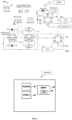
- the system 100 need not include one or more of the above-listed components and/or can include additional components.
- the second reaction coil e.g., Coil B in FIG. 1
- the second reaction coil may be omitted from the system 100.
- the multi-port valve 112 in this example is a 4-position 10-port valve, the position of which determines whether the multi-port valve 108 is fluidly coupled to the first column or the second column (both of which are downstream of the multi-port valve 108).
- the multi-port valve 112 When the multi-port valve 112 is in a first position, the first column is fluidly coupled to the multi-port valve 108 (and in turn the multi-port valve 104) and the second column is fluidly isolated from the multi-port valve 108, such that the first column can receive the sample, the buffer(s), the change reagent(s), the carrier solution(s), or combinations thereof.
- the capture column takes the form of a polypeptide-binding column selected from a group consisting of a protein A column, a protein G column, a protein A/G column, a protein L column, an amino acid column, an avidin column, a streptavidin column, a carbohydrate bonding column, a carbohydrate column, a glutathione column, a heparin column, a hydrophobic interaction column, an immunoaffinity column, a nucleotide/coenzyme column, a specialty column, and an immobilized-metal affinity chromatography (IMAC) column.
- a polypeptide-binding column selected from a group consisting of a protein A column, a protein G column, a protein A/G column, a protein L column, an amino acid column, an avidin column, a streptavidin column, a carbohydrate bonding column, a carbohydrate column, a glutathione column, a heparin column, a hydrophobic interaction column,
- a denaturing reagent can be utilized to denature the molecules (e . g ., the polypeptides) in the sample.
- the change reagent(s) is or includes a denaturing reagent
- the denaturing reagent can be or include a denaturing detergent or a chaotrope.
- a solution containing glycosidases can be utilized to direct glycosidases to and infuse glycosidases with the molecules ( e . g ., the polypeptides) captured by the first column, which in turn releases glycans in the captured molecules ( e . g ., the polypeptides) from the captured molecules ( e . g ., the polypeptides) into the solution.
- the needle When glycans are released into the solution in this manner, the needle is further movable to obtain a carrier solution (e . g ., de-ionized (DI) water) from the one or more sources of carrier solutions and deposit the carrier solution in the sample loop.
- a carrier solution e . g ., de-ionized (DI) water
- DI de-ionized
- the carrier solution can flow to the multi-port valve 108 via the multi-port valve 104 in a similar manner as described above (in connection with the flow of the sample).
- the carrier solution can, for example, subsequently be supplied to and through the first column to carry the released glycans from the first column.
- the logic 364 when executed, causes the processor 352 to control components of the system 100, particularly the multi-port valves 104, 108, 112, 116, the needle, the pumps 120, 124, and the heating element(s), such that the system 100 operates in the desired manner discussed herein.
- the logic 364 can, when executed, cause the processor 352 to move the multi-port valve 112 and/or the multi-port valve 116 to or between any of the positions described herein, thereby fluidly coupling various components of the system 100 as described above.
- the logic 364 can, when executed by the processor 352, cause additional, less, and/or different functionality to be performed. Moreover, in other versions, the logic 364 can be executed by the processor 352 in a different order than described herein. Finally, it is appreciated that the logic 364 can be executed by the processor 352 any number of different times, as the system 100 can be used to perform real-time analyses of multiple samples (from the same product and/or from a different product).
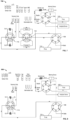
- FIG. 6 illustrates another example of a method 600 of automatically (or substantially automatically) performing a fourth real-time assay of a sample using the system 100.
- the assay is a glycosylation profiling assay and the method 600 generally includes: (1) moving (e.g., automatically moving) the needle to obtain a sample from a first vial (one of the sample vials) and to deposit the sample in the sample loop, (2) pushing the sample from the sample loop into the needle seat port, (3) moving the sample from the needle seat port to the multi-port valve 108 via the multi-port valve 104, (4) moving the sample from the multi-port valve 108 to the first column via the multi-port valve 112 (which is in the first position), (5) capturing the molecules in the sample in the first column, thereby separating the molecules in the sample from a matrix of the sample, which flows out of the first column and to waste via a second vial (one of the receiving vials) fluidly coupled thereto, (6) moving a solution containing glycosidases (
- FIG. 7 illustrates another example of a method 700 of automatically (or substantially automatically) performing a fifth real-time assay of a sample using the system 100.
- the assay is a MAM assay and the method 700 generally includes: (1) moving (e.g., automatically moving) the needle to obtain a sample from a first vial (one of the sample vials) and to deposit the sample in the sample loop, (2) pushing the sample from the sample loop into the needle seat port, (3) moving the sample from the needle seat port to the multi-port valve 108 via the multi-port valve 104, (4) moving the sample from the multi-port valve 108 to the first column via the multi-port valve 112 (which is in the first position), (5) capturing the molecules in the sample in the first column, thereby separating the molecules in the sample from a matrix of the sample, which flows out of the first column and to waste via a second vial (one of the receiving vials) fluidly coupled thereto, (6) moving an elution buffer solution from a buffer source to the first column
- the method 900 advantageously facilitates the analysis of metabolites without using differential labeling or ion-pair reagents. It will also be appreciated that the method 900 can be used to analyze over two-hundred different metabolites, including, for example, amino acids (and very hydrophilic amino acids such as the leucine isomers), vitamins, nucleotide-sugars, nucleoside analogues, keto acids, carbohydrates, amino alcohols, nucleotides, polyamines, and phospholipids.
- amino acids and very hydrophilic amino acids such as the leucine isomers
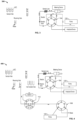
- the system 1000 is, like the system 100, a closed system for automatically or substantially automatically preparing a sample of a product containing molecules for analysis and automatically performing an assay of that sample.
- automating or substantially automating this process using the system 1000, the assay can be performed in real-time (or substantially in real-time) and on the manufacturing floor (when used in the manufacturing facility), such that the entire process can be performed, and the desired result obtained, in a matter of hours ( e . g ., 2 to 3 hours), a significant improvement over the few days to a few weeks typically entailed by the conventionally known, manually-operated processes.
- the closed nature of the process that utilizes the system 1000 maintains sterile conditions.
- the system 1000 is a flexible system that can be used to prepare any number of samples (the same or different) for different analyses and can automatically perform a number of different assays on these samples, thereby obviating the need for multiple different systems for preparing different samples for different analyses.
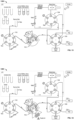
- FIG. 12 illustrates another example of a method 1200 of automatically (or substantially automatically) performing a second real-time assay of a sample using the system 1000.
- the assay is an size-exclusion chromatography (SEC) assay and the method 1200 generally includes: (1) moving (e.g., automatically moving) the needle to obtain a sample comprising molecules from a first vial (one of the sample vials) and to deposit the sample in the sample loop, (2) pushing the sample from the sample loop into the needle seat port, (3) moving the sample from the needle seat port to the multi-port valve 108 via the multi-port valve 104, (4) moving the sample from the multi-port valve 108 to the first column via the multi-port valve 112 (which is in the second position), (5) capturing the molecules in the sample in the first column, thereby separating the molecules in the sample from a matrix of the sample, which flows out of the first column and to waste fluidly coupled thereto, (6) moving an elution buffer solution from a buffer source to the first column via the
- FIG. 13 illustrates another example of a method 1300 of automatically (or substantially automatically) performing a third real-time assay of a sample using the system 1000.
- the assay is an ion-exchange chromatography (IEX) assay and the method 1300 generally includes: (1) moving (e.g., automatically moving) the needle to obtain a sample (in which the sample comprises molecules) from a first vial (one of the sample vials) and to deposit the sample in the sample loop, (2) pushing the sample from the sample loop into the needle seat port, (3) moving the sample from the needle seat port to the multi-port valve 108 via the multi-port valve 104, (4) moving the sample from the multi-port valve 108 to the first column via the multi-port valve 112 (which is in the second position), (5) capturing the molecules in the sample in the first column, thereby separating the molecules in the sample from a matrix of the sample, which flows out of the first column and to waste fluidly coupled thereto, (6) moving an elution buffer solution from a buffer
- FIG. 14 illustrates another example of a method 1400 of automatically (or substantially automatically) performing a fourth real-time assay of a sample using the system 1000.
- the assay is a MAM assay and the method 1400 generally includes: (1) moving (e.g., automatically moving) the needle to obtain a sample from a first vial (one of the sample vials) and to deposit the sample in the sample loop, (2) pushing the sample from the sample loop into the needle seat port, (3) moving the sample from the needle seat port to the multi-port valve 108 via the multi-port valve 104, (4) moving the sample from the multi-port valve 108 to the first column via the multi-port valve 112 (which is in the second position), (5) capturing the molecules in the sample in the first column, thereby separating the molecules in the sample from a matrix of the sample, which flows out of the first column and to waste fluidly coupled thereto, (6) moving an elution buffer solution from a buffer source to the first column via the needle, the needle seat port, and the multi-
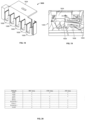
- FIGS. 16 and 17 illustrate one example of a flow-through vial 1600 that can be employed in the system 100 or the system 1000 to enable continuous flow through the system 100 or the system 1000.
- the flow-through vial 1600 in this example generally includes a base 1604, a lip 1606 coupled to the base 1604, and a gutter 1608 that is coupled to and extend outwards from both the base 1604 and the lip 1606.
- the base 1604 is defined by a first, substantially cylindrical portion 1612 and a second, substantially rectangular portion 1616 coupled to the first, substantially cylindrical portion 1612.
- the first, substantially cylindrical portion 1612 generally extends from a first end 1620 to a second end 1624 opposite the first end 1620 along a first axis 1628.
- the first, substantially cylindrical portion 1612 has a substantially cylindrical bore 1632 formed therein between the first end 1620 and the second end 1624.
- the second, substantially rectangular portion 1616 extends outward from the first, substantially cylindrical portion 1612 along a second axis 1636 that is perpendicular to the first axis 1628.
- the flow-through vial components may have different shapes.
- the gutter 1608 may have a cylindrical or other non-rectangular shape.
- the base 1604 can have a cylindrical or substantially cylindrical shape defined only by the substantially cylindrical portion 1612.
- the lip 1606 is a substantially cylindrical lip that is integrally formed with and extends outward from the first, substantially cylindrical portion 1612 (particularly the first end 1620 thereof) along the first axis 1628. So arranged, the lip 1606 fluidly connects the substantially cylindrical bore 1632 to the gutter 1608.
- the lip 1606 can have a different shape, can be fixedly or removably coupled to the first, substantially cylindrical portion 1612 (or another portion), and/or can extend outward from the first, substantially cylindrical portion 1612 along an axis that is angled relative to the first axis 1628.
- the flow-through vial 1600 may not include the lip 1606 at all, in which case the gutter 1608 is directly fluidly connected to the substantially cylindrical bore 1632.
- the gutter 1608 is defined by a substantially rectangular base 1640 and a downspout 1644 that is coupled to the rectangular base 1640.
- the substantially rectangular base 1640 of the gutter 1608 extends outward from the second, substantially rectangular portion 1616 of the base 1604 and from the lip 1606 along a third axis 1648 that is perpendicular to both the first axis 1628 and the second axis 1636 and is inclined relative to the horizontal (see FIG. 17 ).
- the substantially rectangular base 1640 defines a substantially rectangular channel 1652 that fluidly connects the lip 1606 (and in turn the substantially cylindrical bore 1632) to the downspout 1644.
- the downspout 1644 in this example is cylindrical and extends outward (downward in FIG.
- the gutter 1608 can have a differently-shaped base 1640 (e.g., the base 1640 can have a cylindrical shape), and/or the downspout 1644 can have a different shape. In other examples, the gutter 1608 need not include the downspout 1644.
- the flow-through vial 1600 also includes an inlet port 1660 and an outlet port 1664.
- the inlet port 1660 is generally arranged in the base 1604 of the flow-through vial so as to receive incoming fluid from the automated sampling system, the multi-port valve 112, the multi-port valve 116, or other components of the system 100 or the system 1000, as desired.
- the inlet port 1660 in this example formed in the second, substantially rectangular portion 1616 and extends along a fifth axis 1668 that is inclined relative to reach of the first axis 1628, the second axis 1636, the third axis 1648, and the fourth axis 1652.
- the fifth axis 1668 may, for example, be oriented at an angle of approximately 45 degrees relative to the first axis 1628.
- the outlet port 1664 is generally arranged in the gutter 1608 of the flow-through vial so as to direct fluid that has flowed into the base 1604 via the inlet port 1660 and flowed through the substantially cylindrical bore 1632 and the channel 1652 of the gutter 1608 out of the flow-through vial 1600.
- the outlet port 1664 is formed in the downspout 1644, though in other examples (e.g., when the flow-through vial 1600 does not include the downspout 1644), the outlet port 1664 can be formed in a different part of the gutter 1608.
- conduit may not be used to fluidly connect the outlet port 1664 to the desired destination.
- the needle of the system 100 or the system 1000 can retrieve the fluid directly from the flow-through vial 1600 and deposit the fluid into the desired component of the system 100 (e.g., the sample loop) or the system 1000.
- the flow-through vial 1600 can be positioned so that the downspout 1644 is placed directly over the waste, such that the fluid flowing through gutter 1608 is directed to waste.
- the flow-through vial 1600 is configured to facilitate continuous flow therethrough, which, for example, obviates the need to periodically change out sample vials (particularly when different samples are being tested).
- FIGS. 18 and 19 illustrate a vial holder 1800 that may be employed in the system 100 or the system 1000 to hold a plurality of the flow-through vials 1600.
- the vial holder 1800 is configured to be disposed within or otherwise coupled to the automatic sampling system. In other examples, however, the vial holder 1800 can be coupled to another component of the system 100 or the system 1000.
- the vial holder 1800 illustrated in FIGS. 18 and 19 includes a mounting flange 1804 and a plurality of vial receptacles 1808 coupled to the mounting flange 1804. As illustrated in FIG.
- Proteins including those that bind to one or more of the following, can be useful in the disclosed systems and methods. These include CD proteins, including CD3, CD4, CD8, CD19, CD20, CD22, CD30, and CD34; including those that interfere with receptor binding.
- HER receptor family proteins including HER2, HER3, HER4, and the EGF receptor.
- Cell adhesion molecules for example, LFA-I, Mol, pl50, 95, VLA-4, ICAM-I, VCAM, and alpha v/beta 3 integrin.
- Colony stimulating factors and receptors thereof including the following, among others, M-CSF, GM-CSF, and G-CSF, and receptors thereof, such as CSF-1 receptor (c-fms).
- Receptors and receptor-associated proteins including, for example, flk2/flt3 receptor, obesity (OB) receptor, LDL receptor, growth hormone receptors, thrombopoietin receptors ("TPO-R,” "c-mpl”), glucagon receptors, interleukin receptors, interferon receptors, T-cell receptors, stem cell factor receptors, such as c-Kit, and other receptors.
- Receptor ligands including, for example, OX40L, the ligand for the OX40 receptor.
- Neurotrophic factors including bone-derived neurotrophic factor (BDNF) and neurotrophin-3, -4, -5, or -6 (NT-3, NT-4, NT-5, or NT-6).
- Interleukins and interleukin receptors including IL-I to IL-33 and IL-I to IL-33 receptors, such as the IL-8 receptor, among others.
- Viral antigens including an AIDS envelope viral antigen.
- Exemplary polypeptides and antibodies include Activase ® (Alteplase); alirocumab, Aranesp ® (Darbepoetin-alfa), Epogen ® (Epoetin alfa, or erythropoietin); Avonex ® (interferon ⁇ -la); Bexxar ® (Tositumomab); Betaseron ® (Interferon- ⁇ ); bococizumab (anti-PCSK9 monoclonal antibody designated as L1L3, see US8080243 ); Campath ® (Alemtuzumab); Dynepo ® (Epoetin delta); Velcade ® (bortezomib); MLN0002 (anti- ⁇ 4 ⁇ 7 mAb); MLN1202 (anti-CCR2 chemokine receptor mAb); Enbrel ® (etanercept); Eprex ® (Epoetin
- antibodies suitable for the methods and pharmaceutical formulations include the antibodies shown in Table 1.
- suitable antibodies include infliximab, bevacizumab, cetuximab, ranibizumab, palivizumab, abagovomab, abciximab, actoxumab, adalimumab, afelimomab, afutuzumab, alacizumab, alacizumab pegol, ald518, alemtuzumab, alirocumab, altumomab, amatuximab, anatumomab mafenatox, anrukinzumab, apolizumab, arcitumomab, aselizumab, altinumab, atlizumab, atorolimiumab, tocilizumab, bapineuzumab, basiliximab, bavituximab, bectumomab, be
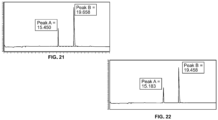
- Tecan-Atoll purification was used as the conventional technique in this example. It is believed to be representative of conventional techniques. As illustrated in FIG. 20 , the Applicant discovered that the results of 25 of the 27 different assays were comparable to the results of the same 27 assays performed using the conventional technique, as demonstrated by the 25 different check marks. The remaining two assays could not be compared because results from the conventional technique were not available. As used herein, "comparable” has its ordinary and customary meaning as understood by one of ordinary skill in the art in view of this disclosure.
Landscapes
- Life Sciences & Earth Sciences (AREA)
- Health & Medical Sciences (AREA)
- Chemical & Material Sciences (AREA)
- Physics & Mathematics (AREA)
- Analytical Chemistry (AREA)
- Immunology (AREA)
- General Health & Medical Sciences (AREA)
- Biochemistry (AREA)
- General Physics & Mathematics (AREA)
- Pathology (AREA)
- Engineering & Computer Science (AREA)
- Molecular Biology (AREA)
- Biomedical Technology (AREA)
- Bioinformatics & Cheminformatics (AREA)
- Bioinformatics & Computational Biology (AREA)
- Urology & Nephrology (AREA)
- Hematology (AREA)
- Proteomics, Peptides & Aminoacids (AREA)
- Medicinal Chemistry (AREA)
- Biophysics (AREA)
- Organic Chemistry (AREA)
- Microbiology (AREA)
- Spectroscopy & Molecular Physics (AREA)
- Food Science & Technology (AREA)
- Biotechnology (AREA)
- Cell Biology (AREA)
- Chemical Kinetics & Catalysis (AREA)
- Genetics & Genomics (AREA)
- Peptides Or Proteins (AREA)
- Apparatus Associated With Microorganisms And Enzymes (AREA)
- Sampling And Sample Adjustment (AREA)
- Automatic Analysis And Handling Materials Therefor (AREA)
- Investigating Or Analysing Biological Materials (AREA)
Applications Claiming Priority (4)
| Application Number | Priority Date | Filing Date | Title |
|---|---|---|---|
| US201962805902P | 2019-02-14 | 2019-02-14 | |
| US201962951346P | 2019-12-20 | 2019-12-20 | |
| EP20714331.4A EP3924083B1 (fr) | 2019-02-14 | 2020-02-14 | Systèmes et procédés de préparation d'un échantillon et de réalisation d'un dosage en temps réel de l'échantillon |
| PCT/US2020/018225 WO2020168156A1 (fr) | 2019-02-14 | 2020-02-14 | Systèmes et procédés de préparation d'un échantillon et de réalisation d'un dosage en temps réel de l'échantillon |
Related Parent Applications (2)
| Application Number | Title | Priority Date | Filing Date |
|---|---|---|---|
| EP20714331.4A Division-Into EP3924083B1 (fr) | 2019-02-14 | 2020-02-14 | Systèmes et procédés de préparation d'un échantillon et de réalisation d'un dosage en temps réel de l'échantillon |
| EP20714331.4A Division EP3924083B1 (fr) | 2019-02-14 | 2020-02-14 | Systèmes et procédés de préparation d'un échantillon et de réalisation d'un dosage en temps réel de l'échantillon |
Publications (3)
| Publication Number | Publication Date |
|---|---|
| EP4397977A2 true EP4397977A2 (fr) | 2024-07-10 |
| EP4397977A3 EP4397977A3 (fr) | 2024-09-11 |
| EP4397977B1 EP4397977B1 (fr) | 2026-04-29 |
Family
ID=70005713
Family Applications (2)
| Application Number | Title | Priority Date | Filing Date |
|---|---|---|---|
| EP24167772.3A Active EP4397977B1 (fr) | 2019-02-14 | 2020-02-14 | Systèmes et procédés de préparation d'un échantillon et de réalisation d'un dosage en temps réel de l'échantillon |
| EP20714331.4A Active EP3924083B1 (fr) | 2019-02-14 | 2020-02-14 | Systèmes et procédés de préparation d'un échantillon et de réalisation d'un dosage en temps réel de l'échantillon |
Family Applications After (1)
| Application Number | Title | Priority Date | Filing Date |
|---|---|---|---|
| EP20714331.4A Active EP3924083B1 (fr) | 2019-02-14 | 2020-02-14 | Systèmes et procédés de préparation d'un échantillon et de réalisation d'un dosage en temps réel de l'échantillon |
Country Status (7)
| Country | Link |
|---|---|
| US (1) | US12352755B2 (fr) |
| EP (2) | EP4397977B1 (fr) |
| JP (2) | JP7483731B2 (fr) |
| AU (1) | AU2020221372B2 (fr) |
| CA (1) | CA3128233A1 (fr) |
| ES (1) | ES2987091T3 (fr) |
| WO (1) | WO2020168156A1 (fr) |
Families Citing this family (8)
| Publication number | Priority date | Publication date | Assignee | Title |
|---|---|---|---|---|
| JP7237022B2 (ja) | 2017-08-01 | 2023-03-10 | アムジエン・インコーポレーテツド | 質量分析法による分析用ポリペプチド試料のリアルタイム調製のためのシステム及び方法 |
| BR112020001922A2 (pt) | 2017-08-01 | 2020-08-04 | Amgen Inc. | sistemas e métodos para realização de um ensaio de glicanas em tempo real de uma amostra |
| US12411064B2 (en) | 2020-05-08 | 2025-09-09 | Waters Technologies Corporation | Methods for heat-assisted enzyme digestion |
| CN115552215A (zh) | 2020-05-08 | 2022-12-30 | 沃特世科技公司 | 用于热辅助酶消化的方法 |
| US20230129707A1 (en) * | 2020-06-29 | 2023-04-27 | Bristol-Myers Squibb Company | Automated system and method for analyzing samples from a bioreactor |
| JP7823481B2 (ja) * | 2022-04-11 | 2026-03-04 | 株式会社島津製作所 | オンラインサンプリングシステム |
| US12110324B2 (en) | 2022-07-22 | 2024-10-08 | Flagship Pioneering Innovations Vi, Llc | Antigen binding molecules targeting thymic stromal lymphopoietin (TSLP) |
| US20260015427A1 (en) | 2024-06-25 | 2026-01-15 | Kiniksa Pharmaceuticals, Gmbh | Formulations of anti-interleukin 1 receptor 1 antibodies |
Citations (7)
| Publication number | Priority date | Publication date | Assignee | Title |
|---|---|---|---|---|
| US7153507B2 (en) | 2001-08-23 | 2006-12-26 | Genmab A/S | Human antibodies specific for interleukin 15 (IL-15) |
| US7592429B2 (en) | 2005-05-03 | 2009-09-22 | Ucb Sa | Sclerostin-binding antibody |
| US7906625B2 (en) | 2005-01-24 | 2011-03-15 | Amgen Inc. | Humanized anti-amyloid antibody |
| US7982016B2 (en) | 2007-09-10 | 2011-07-19 | Amgen Inc. | Antigen binding proteins capable of binding thymic stromal lymphopoietin |
| US8080243B2 (en) | 2008-09-12 | 2011-12-20 | Rinat Neuroscience Corp. | Isolated antibody which specifically binds to PCSK9 |
| US8101182B2 (en) | 2007-06-20 | 2012-01-24 | Novartis Ag | Methods and compositions for treating allergic diseases |
| US8715663B2 (en) | 2005-05-03 | 2014-05-06 | Amgen Inc. | Epitopes |
Family Cites Families (11)
| Publication number | Priority date | Publication date | Assignee | Title |
|---|---|---|---|---|
| US5462660A (en) * | 1994-04-22 | 1995-10-31 | The United States Of America As Represented By The Secretary Of Agriculture | High performance liquid chromatography injection system for the simultaneous concentration and analysis of trace components |
| JPH0815278A (ja) * | 1994-06-28 | 1996-01-19 | Shimadzu Corp | 試料導入装置 |
| JPH0943217A (ja) * | 1995-07-28 | 1997-02-14 | Shimadzu Corp | 試料導入装置 |
| JP2006242720A (ja) * | 2005-03-02 | 2006-09-14 | Shimadzu Corp | 自動試料導入装置 |
| JP4992401B2 (ja) * | 2006-12-06 | 2012-08-08 | 株式会社島津製作所 | オートサンプラ洗浄機構 |
| WO2013162951A1 (fr) | 2012-04-22 | 2013-10-31 | Perfinity Biosciences, Inc. | Digestion, récupération et analyse automatisées de protéines |
| JP2016070695A (ja) * | 2014-09-26 | 2016-05-09 | 株式会社島津製作所 | オートサンプラ及びそのオートサンプラを備えた液体クロマトグラフ |
| CN109564144A (zh) * | 2016-10-26 | 2019-04-02 | 株式会社岛津制作所 | 流通瓶以及自动取样器 |
| JP6790744B2 (ja) | 2016-11-10 | 2020-11-25 | トヨタ自動車株式会社 | 電動車両の制御装置 |
| JP7237022B2 (ja) | 2017-08-01 | 2023-03-10 | アムジエン・インコーポレーテツド | 質量分析法による分析用ポリペプチド試料のリアルタイム調製のためのシステム及び方法 |
| BR112020001922A2 (pt) | 2017-08-01 | 2020-08-04 | Amgen Inc. | sistemas e métodos para realização de um ensaio de glicanas em tempo real de uma amostra |
-
2020
- 2020-02-14 WO PCT/US2020/018225 patent/WO2020168156A1/fr not_active Ceased
- 2020-02-14 EP EP24167772.3A patent/EP4397977B1/fr active Active
- 2020-02-14 US US17/431,075 patent/US12352755B2/en active Active
- 2020-02-14 ES ES20714331T patent/ES2987091T3/es active Active
- 2020-02-14 EP EP20714331.4A patent/EP3924083B1/fr active Active
- 2020-02-14 CA CA3128233A patent/CA3128233A1/fr active Pending
- 2020-02-14 JP JP2021547073A patent/JP7483731B2/ja active Active
- 2020-02-14 AU AU2020221372A patent/AU2020221372B2/en active Active
-
2024
- 2024-04-30 JP JP2024073447A patent/JP7741240B2/ja active Active
Patent Citations (7)
| Publication number | Priority date | Publication date | Assignee | Title |
|---|---|---|---|---|
| US7153507B2 (en) | 2001-08-23 | 2006-12-26 | Genmab A/S | Human antibodies specific for interleukin 15 (IL-15) |
| US7906625B2 (en) | 2005-01-24 | 2011-03-15 | Amgen Inc. | Humanized anti-amyloid antibody |
| US7592429B2 (en) | 2005-05-03 | 2009-09-22 | Ucb Sa | Sclerostin-binding antibody |
| US8715663B2 (en) | 2005-05-03 | 2014-05-06 | Amgen Inc. | Epitopes |
| US8101182B2 (en) | 2007-06-20 | 2012-01-24 | Novartis Ag | Methods and compositions for treating allergic diseases |
| US7982016B2 (en) | 2007-09-10 | 2011-07-19 | Amgen Inc. | Antigen binding proteins capable of binding thymic stromal lymphopoietin |
| US8080243B2 (en) | 2008-09-12 | 2011-12-20 | Rinat Neuroscience Corp. | Isolated antibody which specifically binds to PCSK9 |
Non-Patent Citations (1)
| Title |
|---|
| ROGERS RSNIGHTLINGER NSLIVINGSTON BCAMPBELL PBAILEY RBALLAND A, MABS, vol. 7, no. 5, 2015, pages 881 - 90 |
Also Published As
| Publication number | Publication date |
|---|---|
| EP3924083B1 (fr) | 2024-05-15 |
| AU2020221372A1 (en) | 2021-08-19 |
| JP7741240B2 (ja) | 2025-09-17 |
| US12352755B2 (en) | 2025-07-08 |
| AU2020221372B2 (en) | 2026-02-05 |
| EP4397977B1 (fr) | 2026-04-29 |
| JP7483731B2 (ja) | 2024-05-15 |
| ES2987091T3 (es) | 2024-11-13 |
| WO2020168156A1 (fr) | 2020-08-20 |
| EP4397977A3 (fr) | 2024-09-11 |
| EP3924083A1 (fr) | 2021-12-22 |
| CA3128233A1 (fr) | 2020-08-20 |
| US20220137061A1 (en) | 2022-05-05 |
| JP2024105378A (ja) | 2024-08-06 |
| JP2022520235A (ja) | 2022-03-29 |
Similar Documents
| Publication | Publication Date | Title |
|---|---|---|
| US20240402058A1 (en) | Systems and methods for performing a real-time assay of a sample | |
| EP4397977B1 (fr) | Systèmes et procédés de préparation d'un échantillon et de réalisation d'un dosage en temps réel de l'échantillon | |
| US20250003975A1 (en) | Systems and Methods for Performing a Real-Time Glycan Assay of a Sample | |
| CA3071636C (fr) | Systemes et procedes pour effectuer un dosage du glycane en temps reel d'un echantillon | |
| CA3071676C (fr) | Systemes et procedes de preparation en temps reel d'un echantillon de polypeptide pour analyse par spectrometrie de masse | |
| AU2026203390A1 (en) | Systems and methods for preparing a sample and performing a real-time assay of the sample | |
| EA043925B1 (ru) | Системы и способы для выполнения анализа гликанов в образце в режиме реального времени | |
| EA043377B1 (ru) | Системы и способы для подготовки в режиме реального времени образца полипептида для анализа с помощью масс-спектрометрии | |
| HK40015208B (zh) | 用於对样品进行实时聚醣测定的系统和方法 |
Legal Events
| Date | Code | Title | Description |
|---|---|---|---|
| PUAI | Public reference made under article 153(3) epc to a published international application that has entered the european phase |
Free format text: ORIGINAL CODE: 0009012 |
|
| STAA | Information on the status of an ep patent application or granted ep patent |
Free format text: STATUS: THE APPLICATION HAS BEEN PUBLISHED |
|
| AC | Divisional application: reference to earlier application |
Ref document number: 3924083 Country of ref document: EP Kind code of ref document: P |
|
| AK | Designated contracting states |
Kind code of ref document: A2 Designated state(s): AL AT BE BG CH CY CZ DE DK EE ES FI FR GB GR HR HU IE IS IT LI LT LU LV MC MK MT NL NO PL PT RO RS SE SI SK SM TR |
|
| REG | Reference to a national code |
Ref country code: DE Ref legal event code: R079 Free format text: PREVIOUS MAIN CLASS: G01N0033680000 Ipc: B01D0015240000 Ref document number: 602020071434 Country of ref document: DE |
|
| PUAL | Search report despatched |
Free format text: ORIGINAL CODE: 0009013 |
|
| AK | Designated contracting states |
Kind code of ref document: A3 Designated state(s): AL AT BE BG CH CY CZ DE DK EE ES FI FR GB GR HR HU IE IS IT LI LT LU LV MC MK MT NL NO PL PT RO RS SE SI SK SM TR |
|
| RIC1 | Information provided on ipc code assigned before grant |
Ipc: G01N 30/20 20060101ALN20240807BHEP Ipc: G01N 30/02 20060101ALN20240807BHEP Ipc: C07K 1/16 20060101ALN20240807BHEP Ipc: B01D 15/38 20060101ALN20240807BHEP Ipc: B01D 15/14 20060101ALI20240807BHEP Ipc: G01N 30/08 20060101ALI20240807BHEP Ipc: G01N 33/68 20060101ALI20240807BHEP Ipc: G01N 30/06 20060101ALI20240807BHEP Ipc: G01N 30/88 20060101ALI20240807BHEP Ipc: G01N 30/84 20060101ALI20240807BHEP Ipc: B01D 15/24 20060101AFI20240807BHEP |
|
| STAA | Information on the status of an ep patent application or granted ep patent |
Free format text: STATUS: REQUEST FOR EXAMINATION WAS MADE |
|
| 17P | Request for examination filed |
Effective date: 20250311 |
|
| GRAP | Despatch of communication of intention to grant a patent |
Free format text: ORIGINAL CODE: EPIDOSNIGR1 |
|
| STAA | Information on the status of an ep patent application or granted ep patent |
Free format text: STATUS: GRANT OF PATENT IS INTENDED |
|
| RIC1 | Information provided on ipc code assigned before grant |
Ipc: B01D 15/24 20060101AFI20250623BHEP Ipc: G01N 30/84 20060101ALI20250623BHEP Ipc: G01N 30/88 20060101ALI20250623BHEP Ipc: G01N 30/06 20060101ALI20250623BHEP Ipc: G01N 33/68 20060101ALI20250623BHEP Ipc: G01N 30/08 20060101ALI20250623BHEP Ipc: B01D 15/14 20060101ALI20250623BHEP Ipc: B01D 15/38 20060101ALN20250623BHEP Ipc: C07K 1/16 20060101ALN20250623BHEP Ipc: G01N 30/02 20060101ALN20250623BHEP Ipc: G01N 30/20 20060101ALN20250623BHEP |
|
| INTG | Intention to grant announced |
Effective date: 20250715 |
|
| RAP3 | Party data changed (applicant data changed or rights of an application transferred) |
Owner name: AMGEN INC. |
|
| GRAJ | Information related to disapproval of communication of intention to grant by the applicant or resumption of examination proceedings by the epo deleted |
Free format text: ORIGINAL CODE: EPIDOSDIGR1 |
|
| STAA | Information on the status of an ep patent application or granted ep patent |
Free format text: STATUS: REQUEST FOR EXAMINATION WAS MADE |
|
| GRAP | Despatch of communication of intention to grant a patent |
Free format text: ORIGINAL CODE: EPIDOSNIGR1 |
|
| STAA | Information on the status of an ep patent application or granted ep patent |
Free format text: STATUS: GRANT OF PATENT IS INTENDED |
|
| INTC | Intention to grant announced (deleted) | ||
| RIC1 | Information provided on ipc code assigned before grant |
Ipc: B01D 15/24 20060101AFI20251110BHEP Ipc: G01N 30/84 20060101ALI20251110BHEP Ipc: G01N 30/88 20060101ALI20251110BHEP Ipc: G01N 30/06 20060101ALI20251110BHEP Ipc: G01N 33/68 20060101ALI20251110BHEP Ipc: G01N 30/08 20060101ALI20251110BHEP Ipc: B01D 15/14 20060101ALI20251110BHEP Ipc: B01D 15/38 20060101ALN20251110BHEP Ipc: C07K 1/16 20060101ALN20251110BHEP Ipc: G01N 30/02 20060101ALN20251110BHEP Ipc: G01N 30/20 20060101ALN20251110BHEP |
|
| INTG | Intention to grant announced |
Effective date: 20251124 |
|
| GRAS | Grant fee paid |
Free format text: ORIGINAL CODE: EPIDOSNIGR3 |
|
| GRAA | (expected) grant |
Free format text: ORIGINAL CODE: 0009210 |
|
| STAA | Information on the status of an ep patent application or granted ep patent |
Free format text: STATUS: THE PATENT HAS BEEN GRANTED |
|
| AC | Divisional application: reference to earlier application |
Ref document number: 3924083 Country of ref document: EP Kind code of ref document: P |
|
| AK | Designated contracting states |
Kind code of ref document: B1 Designated state(s): AL AT BE BG CH CY CZ DE DK EE ES FI FR GB GR HR HU IE IS IT LI LT LU LV MC MK MT NL NO PL PT RO RS SE SI SK SM TR |
|
| REG | Reference to a national code |
Ref country code: CH Ref legal event code: F10 Free format text: ST27 STATUS EVENT CODE: U-0-0-F10-F00 (AS PROVIDED BY THE NATIONAL OFFICE) Effective date: 20260429 Ref country code: GB Ref legal event code: FG4D |