EP4398086A1 - Vorrichtung, authentifizierungssystem, authentifizierungsverfahren und trägermittel - Google Patents
Vorrichtung, authentifizierungssystem, authentifizierungsverfahren und trägermittel Download PDFInfo
- Publication number
- EP4398086A1 EP4398086A1 EP23219994.3A EP23219994A EP4398086A1 EP 4398086 A1 EP4398086 A1 EP 4398086A1 EP 23219994 A EP23219994 A EP 23219994A EP 4398086 A1 EP4398086 A1 EP 4398086A1
- Authority
- EP
- European Patent Office
- Prior art keywords
- authentication
- user
- image
- information
- unit
- Prior art date
- Legal status (The legal status is an assumption and is not a legal conclusion. Google has not performed a legal analysis and makes no representation as to the accuracy of the status listed.)
- Pending
Links
Images













Classifications
-
- G—PHYSICS
- G06—COMPUTING OR CALCULATING; COUNTING
- G06F—ELECTRIC DIGITAL DATA PROCESSING
- G06F3/00—Input arrangements for transferring data to be processed into a form capable of being handled by the computer; Output arrangements for transferring data from processing unit to output unit, e.g. interface arrangements
- G06F3/12—Digital output to print unit, e.g. line printer, chain printer
- G06F3/1201—Dedicated interfaces to print systems
- G06F3/1202—Dedicated interfaces to print systems specifically adapted to achieve a particular effect
- G06F3/1203—Improving or facilitating administration, e.g. print management
- G06F3/1204—Improving or facilitating administration, e.g. print management resulting in reduced user or operator actions, e.g. presetting, automatic actions, using hardware token storing data
-
- G—PHYSICS
- G06—COMPUTING OR CALCULATING; COUNTING
- G06F—ELECTRIC DIGITAL DATA PROCESSING
- G06F3/00—Input arrangements for transferring data to be processed into a form capable of being handled by the computer; Output arrangements for transferring data from processing unit to output unit, e.g. interface arrangements
- G06F3/12—Digital output to print unit, e.g. line printer, chain printer
- G06F3/1201—Dedicated interfaces to print systems
- G06F3/1223—Dedicated interfaces to print systems specifically adapted to use a particular technique
- G06F3/1237—Print job management
- G06F3/1238—Secure printing, e.g. user identification, user rights for device usage, unallowed content, blanking portions or fields of a page, releasing held jobs
-
- G—PHYSICS
- G06—COMPUTING OR CALCULATING; COUNTING
- G06F—ELECTRIC DIGITAL DATA PROCESSING
- G06F21/00—Security arrangements for protecting computers, components thereof, programs or data against unauthorised activity
- G06F21/30—Authentication, i.e. establishing the identity or authorisation of security principals
-
- G—PHYSICS
- G06—COMPUTING OR CALCULATING; COUNTING
- G06F—ELECTRIC DIGITAL DATA PROCESSING
- G06F3/00—Input arrangements for transferring data to be processed into a form capable of being handled by the computer; Output arrangements for transferring data from processing unit to output unit, e.g. interface arrangements
- G06F3/12—Digital output to print unit, e.g. line printer, chain printer
- G06F3/1201—Dedicated interfaces to print systems
- G06F3/1202—Dedicated interfaces to print systems specifically adapted to achieve a particular effect
- G06F3/1222—Increasing security of the print job
-
- G—PHYSICS
- G06—COMPUTING OR CALCULATING; COUNTING
- G06F—ELECTRIC DIGITAL DATA PROCESSING
- G06F3/00—Input arrangements for transferring data to be processed into a form capable of being handled by the computer; Output arrangements for transferring data from processing unit to output unit, e.g. interface arrangements
- G06F3/12—Digital output to print unit, e.g. line printer, chain printer
- G06F3/1201—Dedicated interfaces to print systems
- G06F3/1223—Dedicated interfaces to print systems specifically adapted to use a particular technique
- G06F3/1237—Print job management
- G06F3/1267—Job repository, e.g. non-scheduled jobs, delay printing
-
- G—PHYSICS
- G06—COMPUTING OR CALCULATING; COUNTING
- G06F—ELECTRIC DIGITAL DATA PROCESSING
- G06F3/00—Input arrangements for transferring data to be processed into a form capable of being handled by the computer; Output arrangements for transferring data from processing unit to output unit, e.g. interface arrangements
- G06F3/12—Digital output to print unit, e.g. line printer, chain printer
- G06F3/1201—Dedicated interfaces to print systems
- G06F3/1278—Dedicated interfaces to print systems specifically adapted to adopt a particular infrastructure
- G06F3/1292—Mobile client, e.g. wireless printing
-
- H—ELECTRICITY
- H04—ELECTRIC COMMUNICATION TECHNIQUE
- H04N—PICTORIAL COMMUNICATION, e.g. TELEVISION
- H04N1/00—Scanning, transmission or reproduction of documents or the like, e.g. facsimile transmission; Details thereof
- H04N1/00127—Connection or combination of a still picture apparatus with another apparatus, e.g. for storage, processing or transmission of still picture signals or of information associated with a still picture
- H04N1/00204—Connection or combination of a still picture apparatus with another apparatus, e.g. for storage, processing or transmission of still picture signals or of information associated with a still picture with a digital computer or a digital computer system, e.g. an internet server
-
- H—ELECTRICITY
- H04—ELECTRIC COMMUNICATION TECHNIQUE
- H04N—PICTORIAL COMMUNICATION, e.g. TELEVISION
- H04N1/00—Scanning, transmission or reproduction of documents or the like, e.g. facsimile transmission; Details thereof
- H04N1/00127—Connection or combination of a still picture apparatus with another apparatus, e.g. for storage, processing or transmission of still picture signals or of information associated with a still picture
- H04N1/00281—Connection or combination of a still picture apparatus with another apparatus, e.g. for storage, processing or transmission of still picture signals or of information associated with a still picture with a telecommunication apparatus, e.g. a switched network of teleprinters for the distribution of text-based information, a selective call terminal
- H04N1/00307—Connection or combination of a still picture apparatus with another apparatus, e.g. for storage, processing or transmission of still picture signals or of information associated with a still picture with a telecommunication apparatus, e.g. a switched network of teleprinters for the distribution of text-based information, a selective call terminal with a mobile telephone apparatus
-
- H—ELECTRICITY
- H04—ELECTRIC COMMUNICATION TECHNIQUE
- H04N—PICTORIAL COMMUNICATION, e.g. TELEVISION
- H04N1/00—Scanning, transmission or reproduction of documents or the like, e.g. facsimile transmission; Details thereof
- H04N1/00127—Connection or combination of a still picture apparatus with another apparatus, e.g. for storage, processing or transmission of still picture signals or of information associated with a still picture
- H04N1/00281—Connection or combination of a still picture apparatus with another apparatus, e.g. for storage, processing or transmission of still picture signals or of information associated with a still picture with a telecommunication apparatus, e.g. a switched network of teleprinters for the distribution of text-based information, a selective call terminal
- H04N1/00315—Connection or combination of a still picture apparatus with another apparatus, e.g. for storage, processing or transmission of still picture signals or of information associated with a still picture with a telecommunication apparatus, e.g. a switched network of teleprinters for the distribution of text-based information, a selective call terminal with a radio transmission apparatus
-
- H—ELECTRICITY
- H04—ELECTRIC COMMUNICATION TECHNIQUE
- H04N—PICTORIAL COMMUNICATION, e.g. TELEVISION
- H04N1/00—Scanning, transmission or reproduction of documents or the like, e.g. facsimile transmission; Details thereof
- H04N1/44—Secrecy systems
- H04N1/4406—Restricting access, e.g. according to user identity
Definitions
- the present disclosure relates to an apparatus, an authentication system, an authentication method, and carrier means.
- a user operates a terminal apparatus to store a print job in an information processing system on a network via the terminal apparatus, downloads the print job in the information processing system via an apparatus such as an image forming apparatus, and performs printing based on the print job.
- the apparatus performs authentication of the user to perform printing based on the print job registered by the user.
- An authentication method of the related art uses an authentication image such as a Quick Response (QR) code ® .
- QR Quick Response
- Japanese Unexamined Patent Application Publication No. 2017-097564 discloses a technique in which a terminal apparatus displays an authentication image, and an image forming apparatus reads the authentication image, authenticates the terminal apparatus, and permits execution of a process in the image forming apparatus.
- a dedicated application for processing data using the apparatus is to be installed in the terminal apparatus. That is, in order for the terminal apparatus to display the authentication image including authentication information of the user, an application for converting the authentication information into the authentication image is to be used. Therefore, the user prepares the dedicated application when the user performs printing with the image forming apparatus.
- a service provider that provides such a printing service manages and operates the application. For example, it is burdensome for the user to prepare an additional application when the user performs printing with an image forming apparatus in a store. This discourages the user from using the image forming apparatus.
- an apparatus is communicably connected with a terminal apparatus and an information processing system.
- the apparatus includes: an operation receiving unit configured to receive input of authentication information of a user; a conversion unit configured to convert the authentication information input by the user into an authentication image based on a success of authentication using the authentication information of the user; a display control unit configured to display the authentication image that is converted at the terminal apparatus; an authentication information acquisition unit configured to acquire the authentication information of the user from the authentication image displayed at the terminal apparatus; a data acquisition unit configured to acquire, from the information processing system, data associated with identification information of the user who is authenticated using the acquired authentication information; and a data processing unit configured to process the data that is acquired.
- an authentication system includes the above-described apparatus, and an information processing system.
- the information processing system communicates with the apparatus and stores the data to be processed by the apparatus in a job management unit.
- an authentication method is performed by an apparatus that processes data registered in an information processing system.
- the authentication method includes: receiving input of authentication information of a user; converting the authentication information input by the user into an authentication image based on a success of authentication using the authentication information of the user; displaying the authentication image that is converted at a terminal apparatus; acquiring the authentication information of the user from the authentication image displayed at the terminal apparatus; acquiring, from an information processing system, data associated with identification information of the user who is authenticated using the acquired authentication information; and processing the data that is acquired.
- carrier means carries computer readable code for controlling a computer system to carry out the above-described authentication method.
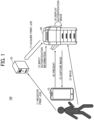
- FIG. 1 is a diagram for describing an overview of an authentication method performed by an authentication system 100 in pull printing.
- the authentication system 100 can implement easy authentication and easy printing based on the print job in response to the user presenting a photograph of the authentication image.
- the user may skip input of the authentication information at each printing. Since the terminal apparatus 10 at least including a camera function is used, installation of a dedicated application for printing by the user is omitted.
- Pull printing is a service in which a user stores a print job in an information processing system on a network via a terminal apparatus operated by the user, downloads the print job in the information processing system via an apparatus such as an image forming apparatus, and performs printing based on the print job.
- Pull printing is also referred to as location-free printing, secure printing, or the like.
- a print job is a process serving as a unit of execution when the image forming apparatus 40 prints document data requested to be printed.
- the print job includes at least document data and may further include a print setting.
- a job of the image forming apparatus 40 is referred to as a print job.
- a job having a name corresponding to a function of the another apparatus is executed.
- the document data may include an image and a figure as well as text or may include an image alone.
- authentication refers to verifying who a user is.
- the authentication may further refer to determining whether the authenticated user is an authorized person.
- Authentication information is information that is input to an apparatus by a user at authentication and is used for authentication by the apparatus or the information processing system.
- the authentication information is, for example, an email address (user ID) and a password. If authentication is successful, the user logs into the image forming apparatus 40.
- Login refers to an act of accessing a resource of a system using account information registered in advance when using various services on a computer or the Internet.
- the authentication information may be an integrated circuit (IC) card number, biometrics information, or the like in addition to a user ID and a password.
- IC integrated circuit
- An authentication image is an image into which authentication information which is a character string is converted.
- the authentication image has a function of allowing an image-capturing device to easily and quickly detect a position, a size, and a tilt of the authentication image, a function of representing original data by a size and an arrangement of black and white squares and lines, and an error correcting function of reproducing the data even if the authentication image has an unreadable portion due to a stain.
- the image-capturing device can acquire the authentication information more accurately and more quickly than reading the character string.
- Processing of data refer to processing data using a function of the apparatus.
- processing of data is, for example, execution of a print job, scanning, copying, email transmission, scan to folder (executing scanning of a document image and requesting storage of scan data in a predetermined storage area), or reproduction of a print setting or reading setting (such as a color setting, a resolution, a density, or a transmission destination folder).
- FIG. 2 is an example of a system configuration diagram of the authentication system 100 according to the present embodiment.
- the authentication system 100 includes the terminal apparatus 10, the information processing system 20, and the image forming apparatus 40.
- the terminal apparatus 10 and the information processing system 20 communicate with each other via a network N 1 .
- the network N 1 is a network using a public line of 3rd generation (3G), 4th generation (4G), 5th generation (5G), Long Term Evolution (LTE), or the like.
- the public line is a communication line that connects sites to one another and is used by unspecified users who physically share the same line. Examples of the public line include a mobile phone network and a personal handy-phone system (PHS) communication network.
- the terminal apparatus 10 can be connected to an access point via a wireless local area network (LAN) such as Wireless Fidelity (Wi-Fi ® ) to communicate with the information processing system 20 via the Internet or may communicate with the information processing system 20 through a cable.
- LAN wireless local area network
- Wi-Fi ® Wireless Fidelity
- the image forming apparatus 40 and the information processing system 20 communicate with each other via a network N 2 .
- the network N 2 may be a LAN built at a facility or the like where the image forming apparatus 40 and the information processing system 20 are installed, a wide area network (WAN) including a plurality of LANs, the Internet, or the like.
- the network N 2 allows the image forming apparatus 40 and the information processing system 20 to communicate with each other.
- the network N 2 may be built in a wired or wireless manner, or in a combination of wired and wireless manners.
- the image forming apparatus 40 may be connected to a public line to communicate with the information processing system 20.
- the terminal apparatus 10 and the image forming apparatus 40 may not communicate with each other via a network.
- the terminal apparatus 10 and the image forming apparatus 40 use image-capturing functions thereof to capture the authentication image displayed by the other.
- the terminal apparatus 10 and the image forming apparatus 40 may communicate with each other via a network.
- This network is, for example, a network using short-range wireless communication such as Near Field Communication (NFC) or Bluetooth ® (including Bluetooth Low Energy).
- the network is preferably for communication in a relatively short range such as infrared communication or visible light communication.
- the terminal apparatus 10 has functions of a computer and has a function (for example, a web browser) of registering a print job and authentication information in the information processing system 20 and acquiring and displaying a print job list.
- the terminal apparatus 10 may have a function of editing or deleting a print job.
- General-purpose applications for a function of capturing an authentication image, for assisting creation of document data, and for acquiring document data from the Internet operate in the terminal apparatus 10.
- the terminal apparatus 10 does not use a dedicated application for causing the image forming apparatus 40 to perform printing based on a print job stored in the information processing system 20.
- the terminal apparatus 10 is, but not limited to, a smartphone, a mobile phone, a tablet terminal, a game machine, a personal digital assistant (PDA), a digital camera, a wearable personal computer (PC) of a wrist watch type or the like, or a PC.
- PDA personal digital assistant
- PC wearable personal computer
- An apparatus other than the terminal apparatus 10 may register a print job and authentication information. That is, any PC or the like that communicates with the information processing system 20 can register a print job and authentication information in the information processing system 20.
- the information processing system 20 is, for example, one or more information processing apparatuses on the Internet.
- the information processing system 20 on the network may be referred to as a server.
- the server is a computer or software having a function of providing information or a processing result in response to a request from a client.
- the information processing system 20 may support cloud computing. Cloud computing refers to the availability of resources on a network without any awareness of specific hardware resources.
- the information processing system 20 receives registration of authentication information transmitted from the terminal apparatus 10 and stores a print job.
- the information processing system 20 also performs authentication of a user in response to a request from the image forming apparatus 40, and transmits a print job to the image forming apparatus 40 if the authentication is successful.
- the information processing system 20 may exist on the Internet or may exist on premise.
- the information processing system 20 may be referred to as a cloud server, a server system, or the like.
- the information processing system 20 includes a storage for storing a print job.
- This storage may be a storage used in a service that provides users with a disk space on the Internet.
- the storage for storing a print job may be referred to as an online storage (that is free or charged).
- the information processing system 20 is available to both general users and companies. The use of the information processing system 20 saves the companies an effort to build a file server environment by themselves and allows the companies to increase or decrease the capacity according to their need.
- the image forming apparatus 40 is an example of an apparatus.
- the image forming apparatus 40 is a printer, a printing apparatus, an image processing apparatus, a copier, a multi-function peripheral/product/printer (MFP), or the like that executes a print job.
- the image forming apparatus 40 has at least a printer function.
- the image forming apparatus 40 may be an apparatus having a function of outputting data other than the printer function.
- the image forming apparatus 40 is, for example, a projector, a head-up display (HUD) device, an electronic whiteboard, a digital signage, or the like. In the case of these devices, the image forming apparatus 40 outputs (displays, reproduces, or the like) data of a video, a document, and music acquired from the information processing system 20.
- HUD head-up display
- the image forming apparatus 40 is not limited to a printer and may be any apparatus having a communication function.
- the image forming apparatus 40 may be, for example, an industrial machine, an image-capturing apparatus, a sound collecting apparatus, a medical device, a network home appliance, a connected car, a notebook PC, a mobile phone, a smartphone, a tablet terminal, a game machine, a PDA, a digital camera, a wearable PC, or a desktop PC.
- a hardware configuration of the authentication system 100 will be described with reference to FIGs. 3 to 5 .
- FIG. 3 is a hardware configuration diagram of the terminal apparatus 10.
- the terminal apparatus 10 includes a central processing unit (CPU) 401, a read-only memory (ROM) 402, a random access memory (RAM) 403, an electrically erasable and programmable ROM (EEPROM) 404, a complementary metal oxide semiconductor (CMOS) sensor 405, an imaging element interface (I/F) 406, an acceleration and orientation sensor 407, a medium I/F 409, and a global positioning system (GPS) receiver 411.
- CPU central processing unit
- ROM read-only memory
- RAM random access memory
- EEPROM electrically erasable and programmable ROM
- CMOS complementary metal oxide semiconductor
- I/F imaging element interface
- I/F acceleration and orientation sensor
- medium I/F 409 a medium I/F 409
- GPS global positioning system
- the CPU 401 controls operations of the entire terminal apparatus 10.
- the ROM 402 stores a program such as an initial program loader (IPL) used for driving the CPU 401.
- the RAM 403 is used as a work area for the CPU 401.
- the EEPROM 404 reads or writes various kinds of data such as a program for the terminal apparatus 10 under control of the CPU 401.
- the CMOS sensor 405 is an example of a built-in imaging means that captures an image of a subject (mainly a self-image) under control of the CPU 401 to obtain image data. Note that an alternative to the CMOS sensor 405 may be an imaging means such as a charge-coupled device (CCD) sensor.
- the imaging element I/F 406 is a circuit that controls driving of the CMOS sensor 405.
- the acceleration and orientation sensor 407 is any of various sensors such as an electromagnetic compass or gyrocompass that detects geomagnetism or an acceleration sensor.
- the medium I/F 409 controls reading or writing (storing) of data from or to a recording medium 408 such as a flash memory.
- the GPS receiver 411 receives a GPS signal from a GPS satellite.
- the terminal apparatus 10 further includes a long-range communication circuit 412, an antenna 412a for the long-range communication circuit 412, a CMOS sensor 413, an imaging element I/F 414, a microphone 415, a speaker 416, an audio input/output I/F 417, a display 418, an external device connection I/F 419, a short-range communication circuit 420, an antenna 420a for the short-range communication circuit 420, and a touch panel 421.
- the long-range communication circuit 412 is a circuit that communicates with other devices via the network N 1 .
- the CMOS sensor 413 is an example of a built-in imaging means that captures a subject under control of the CPU 401 to obtain image data.
- the imaging element I/F 414 is a circuit that controls driving of the CMOS sensor 413.
- the microphone 415 is a built-in circuit that converts sound into an electric signal.
- the speaker 416 is a built-in circuit that generates sound such as music or voice by converting an electric signal into physical vibration.
- the audio input/output I/F 417 is a circuit that inputs and outputs an audio signal between the microphone 415 and the speaker 416 under control of the CPU 401.
- the display 418 is an example of a display means that displays an image of the subject, various icons, etc. Examples of the display 418 include a liquid crystal display (LCD) and an organic electroluminescence (EL) display.
- the external device connection I/F 419 is an interface that connects various external devices to the terminal apparatus 10.
- the short-range communication circuit 420 is a communication circuit that is compliant with NFC, Bluetooth ® , or the like.
- the touch panel 421 is an example of an input means that allows a user to operate the terminal apparatus 10 by touching the display 418.
- the terminal apparatus 10 further includes a bus line 410.
- the bus line 410 is, for example, an address bus or a data bus for electrically connecting the components such as the CPU 401 illustrated in FIG. 3 to one another.
- FIG. 4 is a hardware configuration diagram of the information processing system 20.
- the information processing system 20 is a computer, and includes a CPU 501, a ROM 502, a RAM 503, a hard disk (HD) 504, a hard disk drive (HDD) controller 505, a display 506, an external device connection I/F 508, a network I/F 509, a bus line 510, a keyboard 511, a pointing device 512, a digital versatile disc-rewritable (DVD-RW) drive 514, and a medium I/F 516 as illustrated in FIG. 4 .
- the CPU 501 controls operations of the entire information processing system 20.
- the ROM 502 stores a program such as an IPL for driving the CPU 501.
- the RAM 503 is used as a work area for the CPU 501.
- the HD 504 stores various kinds of data such as a program.
- the HDD controller 505 controls reading or writing of various kinds of data from or to the HD 504 under control of the CPU 501.
- the display 506 displays various kinds of information such as a cursor, a menu, a window, text, or an image.
- the external device connection I/F 508 is an interface that connects various external devices to the information processing system 20. Examples of the external devices in this case include, but are not limited to, a Universal Serial Bus (USB) memory and a printer.
- the network I/F 509 is an interface for performing data communication via the networks N 1 and N 2 .
- the bus line 510 is, for example, an address bus or a data bus for electrically connecting the components such as the CPU 501 illustrated
- the keyboard 511 is an example of an input means including a plurality of keys with which a user inputs characters, numerals, or various instructions.
- the pointing device 512 is an example of an input means that allows a user to select or execute any of various instructions, select a target for processing, or move a cursor being displayed.
- the DVD-RW drive 514 controls reading or writing of various kinds of data from or to a DVD-RW 513, which is an example of a removable recording medium. In another example, an alternative to the DVD-RW may be a DVD-R or the like.
- the medium I/F 516 controls reading or writing (storing) of data from or to a recording medium 515 such as a flash memory.
- FIG. 5 is a hardware configuration diagram of the image forming apparatus 40. As illustrated in FIG. 5 , the image forming apparatus 40 includes a controller 910, a short-range communication circuit 920, an engine controller 930, an operation panel 940, and a network I/F 950.
- the image forming apparatus 40 includes a controller 910, a short-range communication circuit 920, an engine controller 930, an operation panel 940, and a network I/F 950.
- the controller 910 includes a CPU 901 as a main processor, a system memory (MEM-P) 902, a north bridge (NB) 903, a south bridge (SB) 904, an application specific integrated circuit (ASIC) 906, a local memory (MEM-C) 907 as a memory, a HDD controller 908, and an HD 909 as a memory.
- the NB 903 and the ASIC 906 are connected through an accelerated graphics port (AGP) bus 921.
- AGP accelerated graphics port
- the CPU 901 is a controller that controls the entire image forming apparatus 40.
- the NB 903 connects the CPU 901 to the MEM-P 902, the SB 904, and the AGP bus 921.
- the NB 903 includes a memory controller for controlling reading or writing of various kinds of data from or to the MEM-P 902, a Peripheral Component Interconnect (PCI) master, and an AGP target.
- PCI Peripheral Component Interconnect
- the MEM-P 902 includes a ROM 902a as a memory that stores a program and data for implementing various functions of the controller 910.
- the MEM-P 902 further includes a RAM 902b as a memory to which the program and data are loaded or as a rendering memory that stores data rendered for printing.
- the program stored in the RAM 902b may be stored in any computer-readable recording medium, such as a compact disc-read only memory (CD-ROM), compact disc-recordable (CD-R), or digital versatile disc (DVD), in an installable or executable file format for distribution.
- the SB 904 connects the NB 903 to a PCI device or a peripheral device.
- the ASIC 906 is an IC dedicated to an image processing use and including hardware elements for image processing, and connects the AGP bus 921, a PCI bus 922, the HDD controller 908, and the MEM-C 907 to each other.
- the ASIC 906 includes a PCI target, an AGP master, an arbiter (ARB) as a central processor of the ASIC 906, a memory controller, a plurality of direct memory access controllers (DMACs), and a PCI unit.
- the memory controller controls the MEM-C 907.
- the DMACs perform rotation of image data with a hardware logic.
- the PCI unit transfers data to a scanner controller 931 and a printer controller 932 through the PCI bus 922.
- the ASIC 906 may include a USB interface or an Institute of Electrical and Electronics Engineers 1394 (IEEE1394) interface.
- the short-range communication circuit 920 is provided with a short-range communication circuit antenna 920a.
- the short-range communication circuit 920 is a communication circuit that is compliant with NFC, Bluetooth ® , or the like.
- the engine controller 930 includes the scanner controller 931 and the printer controller 932.
- the operation panel 940 includes a panel display 940a and a hardware keypad 940b.
- the panel display 940a is implemented by, for example, a touch panel that displays current set values or a selection screen to receive an input from an operator.
- the hardware keypad 940b includes a numeric keys that receive set values of image forming conditions such as a density setting condition and a start key that receives an instruction for starting copying.
- the controller 910 controls the entire image forming apparatus 40 and controls, for example, rendering, communication, and input from the operation panel 940.
- the scanner controller 931 and the printer controller 932 each include an image processor for error diffusion or gamma conversion.
- the image forming apparatus 40 sequentially switch between a document box function, a copy function, a printer function, and a fax function to select one of the functions.
- the image forming apparatus 40 enters a document box mode.
- the copy function is selected, the image forming apparatus 40 enters a copy mode.
- the printer function is selected, the image forming apparatus 40 enters a printer mode.
- the fax function is selected, the image forming apparatus 40 enters a fax mode.
- the network I/F 950 is an interface for performing data communication via the network N 2 .
- the short-range communication circuit 920 and the network I/F 950 are electrically connected to the ASIC 906 through the PCI bus 922.
- FIG. 6 is a diagram illustrating an overview of functions of the terminal apparatus 10, the image forming apparatus 40, and the information processing system 20 and relationships between the functions.
- the authentication information displayed by the image forming apparatus 40 may be encrypted.
- the image forming apparatus 40 performs encryption in advance at generation of the authentication image, and performs decryption at reading of the authentication image. Any specific method may be used for encryption and decryption.
- Processing of a job, execution of the job, and execution of image formation (processing performed by a data processing unit described later) performed if authentication is successful are, for example, printing.
- the user may perform a scan with the image forming apparatus 40. Since the user is identified by authentication, the information processing system 20 stores, in association with the user ID of the user, image data generated by scanning an original and transmitted to the information processing system 20 by the image forming apparatus 40. Execution of a scan, transmission of scan data, or a registration request of the scan data may be performed by using data (for example, a personal scan setting, a storage destination setting, a transmission destination address information, or the like) acquired from the information processing system 20 by a data acquisition unit described alter.
- a copy service is also usable. The user may perform merely copying without leaving the image data in the information processing system 20.
- a usage is also possible in which the print setting frequently used by the user is registered in the information processing system 20, and the frequently used print setting is automatically set (reproduced) in the image forming apparatus 40 in response to the user logging into the information processing system 20 via the image forming apparatus 40. If the user registers an address book of the user in the information processing system 20, the image forming apparatus 40 may transmit image data generated by scanning to an email address in the address book. The user selects the email address of the transmission destination from the address book downloaded by the image forming apparatus 40.
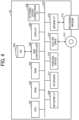
- FIG. 7 is an example of a functional block diagram for describing, as individual blocks, functions of the terminal apparatus 10, the information processing system 20, and the image forming apparatus 40 of the authentication system 100.
- the communication unit 14 is connected to the network N 1 and performs communication to register a print-target file in the information processing system 20.
- the communication unit 14 is connected to a public line (of 3G, 4G, LTE, or the like), a wireless LAN, or the like, and transmits the file to the information processing system 20.
- the transmission is not limited to wireless transmission, and may be performed via a wired LAN or the like.
- the file transmitted by the communication unit 14 serves as a print job in the information processing system 20.
- the print job is, for example, a combination of PDL-format print data converted from a file and a print setting.
- the display control unit 11 generates a screen serving as a user interface (UI) and displays the screen on the display 418. Some of the functions of the display control unit 11 may be implemented by a web browser.
- the display control unit 11 displays the image data of the authentication image stored in the image data storage unit 15.
- the communication unit 21 is connected to the network N 1 or N 2 , and transmits and receives various kinds of data to and from the terminal apparatus 10 and the image forming apparatus 40.
- the communication unit 21 receives authentication information and a print job from the terminal apparatus 10.
- the communication unit 21 also receives authentication information from the image forming apparatus 40. If the authentication is successful, the communication unit 21 transmits a print job list or a print job to the image forming apparatus 40. Since the information processing system 20 is present in a data center or the like, the communication unit 21 is connected to a high-speed LAN or the like. Therefore, the communication unit 21 is not directly connected to the public line, and communicates with the terminal apparatus 10 via a gateway of a telephone company.
- the image forming apparatus 40 includes an authentication information acquisition unit 41, an operation screen unit 42, an encryption and decryption unit 43, an authentication information receiving unit 44, a data acquisition unit 45, a conversion unit 46, a data processing unit 47, and a communication unit 48.
- These functional units of the image forming apparatus 40 are functions or means implemented by any of the components illustrated in FIG. 5 operating in accordance with instructions from the CPU 901 based on a program loaded to the RAM 902b from the HD 909.
- the data acquisition unit 45 acquires the print job list from the information processing system 20 in response to receipt of a notification that authentication of the user based on the authentication information is successful from the information processing system 20.
- the data acquisition unit 45 acquires a print job instructed by the user from the information processing system 20, and requests the data processing unit 47 to execute processing of data such as the print job.
- the data processing unit 47 processes the data acquired by the data acquisition unit 45.
- the processing of data includes processing of a job, setting processing, and processing of requesting an external apparatus to perform predetermined processing.
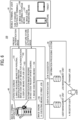
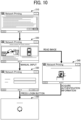
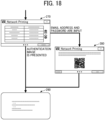
- Whether the operation screen unit 42 displays the authentication image display screen 280 or the print setting screen 290 is switched depending on whether the user presses the first button 221 or the second button 222 on the login method selection screen 220 or depending on whether the user presses the image login button 261 or the login button 264 on the login information input screen 260. If the user has not used the authentication image for login, the image forming apparatus 40 automatically displays the authentication image. This allows the user to capture the authentication image for the next login. If the user has used the authentication image for login, the image forming apparatus 40 does not display the authentication image. This save the user a troublesomeness.
- the authentication image 282 is coded authentication information (email address and password) of the user.
- the image forming apparatus 40 displays the print setting screen 290.
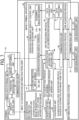
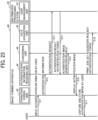
- FIG. 23 is a sequence diagram for describing a process in which the user operates the image forming apparatus 40 to log into the information processing system 20 at first pull printing.
- the authentication information receiving unit 44 sends an authentication image display request to the operation screen unit 42.
- the user management unit 22 of the information processing system 20 transmits an authentication result (success or failure) to the image forming apparatus 40 via the communication unit 21.
- the user management unit 22 also transmits an authentication token to the image forming apparatus 40 via the communication unit 21.
- S34 The user selects (presses) a print job to be printed, and the operation screen unit 42 receives the selection.
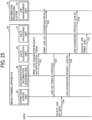
- the authentication information receiving unit 44 sends a request to display the login method selection screen 220 to the operation screen unit 42.
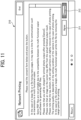
- the login method selection screen 220 has transitioned from the consent screen 210.
- the operation screen unit 42 displays the login method selection screen 220.
- the operation screen unit 42 sends the received login method to the authentication information receiving unit 44.
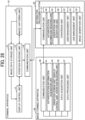
- the image forming apparatus 40 includes the communication unit 48, the authentication information acquisition unit 41, the operation screen unit 42, the data acquisition unit 45, and the data processing unit 47. These functions may be substantially the same as those in FIG. 7 . All the functions of the image forming apparatus 40 are not necessarily implemented by the web app.
- the communication unit 48 and the operation screen unit 42 may be implemented by a web app
- the data acquisition unit 45 and the data processing unit 47 may be implemented by a native app.
- the information processing system 20 includes the communication unit 21, the authentication information receiving unit 44, the encryption and decryption unit 43, the conversion unit 46, the user management unit 22, the job management unit 23, and a screen generation unit 24. These functions may be substantially the same as those in FIG. 7 .
- the screen generation unit 24 newly added generates screen information of a screen to be displayed by the image forming apparatus 40.
- the screen information is a program described in Hyper Text Markup Language (HTML), Extensible Markup Language (XML), a script language (for example, JavaScript ® ), a Cascading Style Sheet (CSS), and the like.
- HTML Hyper Text Markup Language
- XML Extensible Markup Language
- a script language for example, JavaScript ®
- CSS Cascading Style Sheet
- the operation screen unit 42 of the image forming apparatus 40 is a web browser, and displays the screens of FIGs. 10 to 21 based on the screen information. That is, the image forming apparatus 40 provides a user interface to be operated by the user and execute a print job, and the information processing system 20 performs creation of a screen, generation of an authentication image, and the like.
- the authentication method according to the present embodiment can be implemented in the similar manner regardless of whether the image forming apparatus 40 executes a native app or a web app.
- the terminal apparatus 10 may communicate with the information processing system 20 via a web browser, and the user may display an authentication image converted from authentication information thereof after login and present the authentication image to the image forming apparatus 40.
- the image forming apparatus 40 may capture this authentication image and authenticate the user.
- a dedicated application is not to be used in the terminal apparatus 10.
- the authentication image displayed by the terminal apparatus 10 may be an image transmitted by email when a print job is registered in the information processing system 20.
- the operation of inputting the email address and the password to the image forming apparatus 40 by the user may be omitted or simplified.
- the image forming apparatus 40 acquires biometric information such as a face image, a palm print, or a fingerprint of the user, and transmits an authentication request to the information processing system 20. If the authentication using the biometric information is successful, the information processing system 20 transmits the email address and the password of the user to the image forming apparatus 40.
- the image forming apparatus 40 can convert the authentication information into the authentication image and display the authentication image.
- the image forming apparatus 40 may perform authentication using an IC card carried by the user in addition to the biometric information.
- the authentication image may be a two-dimensional code or a one-dimensional code such as a barcode.
- the two-dimensional code may be PDF417 ® , CODE49 ® , Data Matrix ® , VeriCode ® , or the like in addition to the QR code ® .
- the information processing system 20 performs the authentication process.
- the image forming apparatus 40 may perform the authentication process.
- the image forming apparatus 40 may hold the authentication information.
- the image forming apparatus 40 is used as the apparatus in the description.
- the apparatus is not limited to the image forming apparatus 40.
- the apparatus is, for example, a PJ (projector), an electronic whiteboard, a digital signage. etc.
- the apparatus may be the image forming apparatus 40 and a PC that are connected to each other.
- the image forming apparatus 40 has a printing function, a scanning function, a copying function, and the like as the apparatus, and the PC displays the screens and communicates with the information processing system 20.
- the image forming apparatus 40 and the PC are communicably connected to each other via a cable or wirelessly.
- the terminal apparatus 10, the information processing system 20, and the image forming apparatus 40 are each divided in accordance with the major functions thereof to facilitate understanding of the processes performed by the terminal apparatus 10, the information processing system 20, and the image forming apparatus 40.
- No limitation is intended by how the functions are divided by process or by the name of the functions.
- the processes of the terminal apparatus 10, the information processing system 20, and the image forming apparatus 40 may be divided into more processing units in accordance with the processing content. The division may be performed so that one processing unit includes more processing.
- the information processing system 20 may share the processing steps disclosed herein, for example, steps in FIG. 8 or the like in various combinations. For example, a process performed by a predetermined unit may be performed by multiple information processing apparatuses included in the information processing system 20. The functions of the information processing system 20 may be integrated into one server apparatus or divided into a plurality of apparatuses.
- processing circuit in the present specification includes a processor programmed to execute each function by software such as a processor implemented by an electronic circuit, and a device such as an application specific integrated circuit (ASIC), a digital signal processor (DSP), a field programmable gate array (FPGA), or a conventional circuit module designed to execute each function described above.
- ASIC application specific integrated circuit
- DSP digital signal processor
- FPGA field programmable gate array
- an apparatus that processes data registered in an information processing system includes an operation receiving unit, a conversion unit, a display control unit, an authentication information acquisition unit, a data acquisition unit, and a data processing unit.
- the operation receiving unit receives input of authentication information of a user.
- the conversion unit converts the authentication information input by the user into an authentication image in response to a success of authentication using the authentication information of the user.
- the display control unit displays the converted authentication image obtained by the conversion unit.
- the authentication information acquisition unit acquires the authentication information of the user from the authentication image displayed on a terminal apparatus by the user.
- the data acquisition unit acquires the data associated with identification information of the user from the information processing system in response to a success of authentication using the authentication information acquired by the authentication information acquisition unit.
- the data processing unit performs processing of the data acquired by the data acquisition unit.
- the display control unit displays a screen for receiving selection of a login method that is either input of the authentication information of the user or presentation of the authentication image.
- the conversion unit (46) converts the authentication information input by the user into the authentication image in response to the operation receiving unit receiving selection of the login method that is input of the authentication information of the user and in response to a success of authentication using the authentication information input by the user.
- the display control unit displays the converted authentication image obtained by the conversion unit and to be captured by the terminal apparatus.
- the display control unit in response to the operation receiving unit receiving the selection of the login method that is input of the authentication information of the user, displays an input field for the authentication information of the user. In response to the operation receiving unit receiving the selection of the login method that is presentation of the authentication image, the display control portion displays a screen for prompting the user to present the authentication image.
- the display control unit displays a screen including an input field for the authentication information of the user and a display component for instructing login based on presentation of the authentication image.
- the operation receiving unit receives input of the authentication information of the user.
- the conversion unit converts the authentication information input by the user into the authentication image in response to a success of authentication using the authentication information of the user.
- the display control unit displays the converted authentication image obtained by the conversion unit and to be captured by the terminal apparatus.
- the apparatus of any one of Aspects 2 to 6 further includes an encryption and decryption unit.
- the encryption and decryption unit encrypts the authentication information input by the user.
- the conversion unit converts the authentication information encrypted by the encryption and decryption unit into the authentication image.
- the display control unit displays the converted authentication image obtained by the conversion unit.
- the processing of the data performed by the data processing unit includes printing of the data.
- the processing of the data performed by the data processing unit includes processing of acquiring a print setting or a read setting associated with the identification information of the user from the information processing system and setting the print setting or the read setting in the apparatus.
- the present invention can be implemented in any convenient form, for example using dedicated hardware, or a mixture of dedicated hardware and software.
- the present invention may be implemented as computer software implemented by one or more networked processing apparatuses.
- the processing apparatuses include any suitably programmed apparatuses such as a general purpose computer, a personal digital assistant, a Wireless Application Protocol (WAP) or third-generation (3G)-compliant mobile telephone, and so on. Since the present invention can be implemented as software, each and every aspect of the present invention thus encompasses computer software implementable on a programmable device.
- the computer software can be provided to the programmable device using any conventional carrier medium (carrier means).
- the carrier medium includes a transient carrier medium such as an electrical, optical, microwave, acoustic or radio frequency signal carrying the computer code.
Landscapes
- Engineering & Computer Science (AREA)
- Theoretical Computer Science (AREA)
- General Engineering & Computer Science (AREA)
- Human Computer Interaction (AREA)
- Physics & Mathematics (AREA)
- General Physics & Mathematics (AREA)
- Computer Security & Cryptography (AREA)
- Multimedia (AREA)
- Signal Processing (AREA)
- Computer Networks & Wireless Communication (AREA)
- Computing Systems (AREA)
- Computer Hardware Design (AREA)
- Software Systems (AREA)
- Facsimiles In General (AREA)
- Accessory Devices And Overall Control Thereof (AREA)
Applications Claiming Priority (1)
| Application Number | Priority Date | Filing Date | Title |
|---|---|---|---|
| JP2023001296A JP2024097671A (ja) | 2023-01-06 | 2023-01-06 | 機器、機器システム、認証方法、プログラム |
Publications (1)
| Publication Number | Publication Date |
|---|---|
| EP4398086A1 true EP4398086A1 (de) | 2024-07-10 |
Family
ID=89321916
Family Applications (1)
| Application Number | Title | Priority Date | Filing Date |
|---|---|---|---|
| EP23219994.3A Pending EP4398086A1 (de) | 2023-01-06 | 2023-12-22 | Vorrichtung, authentifizierungssystem, authentifizierungsverfahren und trägermittel |
Country Status (4)
| Country | Link |
|---|---|
| US (1) | US20240231720A1 (de) |
| EP (1) | EP4398086A1 (de) |
| JP (1) | JP2024097671A (de) |
| CN (1) | CN118317037A (de) |
Families Citing this family (2)
| Publication number | Priority date | Publication date | Assignee | Title |
|---|---|---|---|---|
| JP2024110810A (ja) * | 2023-02-03 | 2024-08-16 | キヤノン株式会社 | 画像形成装置、情報端末、それらの制御方法、プログラム、及び画像形成システム |
| JP2025007247A (ja) * | 2023-06-30 | 2025-01-17 | キヤノン株式会社 | 画像形成装置と情報処理装置の制御方法、及び印刷システムとプログラム |
Citations (3)
| Publication number | Priority date | Publication date | Assignee | Title |
|---|---|---|---|---|
| JP2016081523A (ja) * | 2014-10-15 | 2016-05-16 | 株式会社リコー | 情報処理システム及び機器制御方法 |
| US20170127278A1 (en) * | 2015-10-29 | 2017-05-04 | Kohji Yamamoto | Authentication system, terminal apparatus, and authentication method |
| JP2017097564A (ja) | 2015-11-20 | 2017-06-01 | 株式会社リコー | 認証システム、端末装置、およびプログラム |
Family Cites Families (10)
| Publication number | Priority date | Publication date | Assignee | Title |
|---|---|---|---|---|
| JP2004088726A (ja) * | 2002-06-26 | 2004-03-18 | Casio Comput Co Ltd | ネットワークプリントシステム |
| JP2016173761A (ja) * | 2015-03-17 | 2016-09-29 | 株式会社リコー | 情報処理装置、分散処理方法及び記憶媒体 |
| US10481839B2 (en) * | 2016-10-07 | 2019-11-19 | Ricoh Company, Ltd. | Communication system, mobile terminal, and device |
| JP6592828B2 (ja) * | 2016-12-22 | 2019-10-23 | 京セラドキュメントソリューションズ株式会社 | 認証設定システムおよび画像形成装置 |
| JP7204497B2 (ja) * | 2019-01-18 | 2023-01-16 | キヤノン株式会社 | クラウドプリントサービスに対応した印刷装置および印刷装置の制御方法およびプログラム |
| JP7215241B2 (ja) * | 2019-03-08 | 2023-01-31 | 富士フイルムビジネスイノベーション株式会社 | 情報処理装置およびプログラム |
| GB2597273A (en) * | 2020-07-17 | 2022-01-26 | Canon Europa Nv | Budget control for printing and copying |
| JP2023122435A (ja) * | 2022-02-22 | 2023-09-01 | ブラザー工業株式会社 | サーバ、および、プログラム |
| JP7832587B2 (ja) * | 2022-02-22 | 2026-03-18 | ブラザー工業株式会社 | サーバ、および、プログラム |
| JP2023149791A (ja) * | 2022-03-31 | 2023-10-13 | セイコーエプソン株式会社 | 情報処理装置、情報処理システムおよび情報処理方法 |
-
2023
- 2023-01-06 JP JP2023001296A patent/JP2024097671A/ja active Pending
- 2023-12-22 EP EP23219994.3A patent/EP4398086A1/de active Pending
-
2024
- 2024-01-02 CN CN202410003117.9A patent/CN118317037A/zh active Pending
- 2024-01-04 US US18/403,745 patent/US20240231720A1/en active Pending
Patent Citations (3)
| Publication number | Priority date | Publication date | Assignee | Title |
|---|---|---|---|---|
| JP2016081523A (ja) * | 2014-10-15 | 2016-05-16 | 株式会社リコー | 情報処理システム及び機器制御方法 |
| US20170127278A1 (en) * | 2015-10-29 | 2017-05-04 | Kohji Yamamoto | Authentication system, terminal apparatus, and authentication method |
| JP2017097564A (ja) | 2015-11-20 | 2017-06-01 | 株式会社リコー | 認証システム、端末装置、およびプログラム |
Also Published As
| Publication number | Publication date |
|---|---|
| US20240231720A1 (en) | 2024-07-11 |
| JP2024097671A (ja) | 2024-07-19 |
| CN118317037A (zh) | 2024-07-09 |
Similar Documents
| Publication | Publication Date | Title |
|---|---|---|
| JP7586273B2 (ja) | サービス提供システム、ログイン設定方法、情報処理システム | |
| US12131085B2 (en) | System and method for transmitting electronic data associated with a user identified based on source identification information | |
| EP3800540A1 (de) | Programm, informationsverarbeitungssystem, informationsverarbeitungsverfahren und informationsverarbeitungsvorrichtung | |
| US20240231720A1 (en) | Apparatus, authentication system, authentication method, and recording medium | |
| US20230171319A1 (en) | Communication system, communication method, and non-transitory recording medium | |
| US11704079B2 (en) | Output system, information processing system, including circuitry to generate a character string to perform authentication for a user, and authentication method | |
| JP2022172598A (ja) | 情報処理システム、情報処理装置、処理実行方法、プログラム | |
| US11645027B2 (en) | Information processing system and method for processing data output requests and identification information | |
| US11533403B2 (en) | Process executing system, information processing system, information processing method, and recording medium for detecting duplicate image data from a same output material | |
| US10389913B2 (en) | Information management control apparatus, image processing apparatus, and information management control system | |
| JP2021060974A (ja) | プログラム、情報処理システム、情報処理方法、情報処理装置 | |
| EP4270168B1 (de) | Ausgabevorrichtung, informationsverarbeitungssystem, ausgabeverfahren und trägermittel | |
| JP2020198555A (ja) | 情報処理システムおよび情報処理方法 | |
| JP2023162118A (ja) | 出力装置、出力方法、プログラム及び情報処理システム | |
| JP7459659B2 (ja) | 情報処理装置、通信システムおよび情報処理方法 | |
| JP2022053955A (ja) | 方法、プログラム、情報処理装置、認証サーバ、および情報処理システム | |
| JP2023118487A (ja) | プログラム、情報処理システム、端末装置、出力方法 | |
| WO2023175407A1 (en) | Recommendation management apparatus, recommendation management system, recommendation management method, and recording medium | |
| JP2023101961A (ja) | 情報処理装置、情報処理システム、情報処理方法及びプログラム | |
| CN120112931A (zh) | 管理设备、管理系统、管理方法、以及记录介质 | |
| JP2021009575A (ja) | 情報処理システム、情報処理方法、及びプログラム | |
| JP6142679B2 (ja) | 画像形成システムおよび画像形成方法 | |
| CN119317913A (zh) | 信息管理装置、信息管理方法、以及记录介质 |
Legal Events
| Date | Code | Title | Description |
|---|---|---|---|
| PUAI | Public reference made under article 153(3) epc to a published international application that has entered the european phase |
Free format text: ORIGINAL CODE: 0009012 |
|
| STAA | Information on the status of an ep patent application or granted ep patent |
Free format text: STATUS: REQUEST FOR EXAMINATION WAS MADE |
|
| 17P | Request for examination filed |
Effective date: 20231222 |
|
| AK | Designated contracting states |
Kind code of ref document: A1 Designated state(s): AL AT BE BG CH CY CZ DE DK EE ES FI FR GB GR HR HU IE IS IT LI LT LU LV MC ME MK MT NL NO PL PT RO RS SE SI SK SM TR |
|
| STAA | Information on the status of an ep patent application or granted ep patent |
Free format text: STATUS: EXAMINATION IS IN PROGRESS |
|
| 17Q | First examination report despatched |
Effective date: 20260305 |