EP4398512A1 - Procédé d'authentification d'une pièce électronique, terminal et pièce électronique - Google Patents
Procédé d'authentification d'une pièce électronique, terminal et pièce électronique Download PDFInfo
- Publication number
- EP4398512A1 EP4398512A1 EP22874484.3A EP22874484A EP4398512A1 EP 4398512 A1 EP4398512 A1 EP 4398512A1 EP 22874484 A EP22874484 A EP 22874484A EP 4398512 A1 EP4398512 A1 EP 4398512A1
- Authority
- EP
- European Patent Office
- Prior art keywords
- electronic part
- authentication
- credential
- identity
- digital certificate
- Prior art date
- Legal status (The legal status is an assumption and is not a legal conclusion. Google has not performed a legal analysis and makes no representation as to the accuracy of the status listed.)
- Pending
Links
Images



Classifications
-
- H—ELECTRICITY
- H04—ELECTRIC COMMUNICATION TECHNIQUE
- H04L—TRANSMISSION OF DIGITAL INFORMATION, e.g. TELEGRAPHIC COMMUNICATION
- H04L63/00—Network architectures or network communication protocols for network security
- H04L63/08—Network architectures or network communication protocols for network security for authentication of entities
-
- H—ELECTRICITY
- H04—ELECTRIC COMMUNICATION TECHNIQUE
- H04L—TRANSMISSION OF DIGITAL INFORMATION, e.g. TELEGRAPHIC COMMUNICATION
- H04L9/00—Cryptographic mechanisms or cryptographic arrangements for secret or secure communications; Network security protocols
- H04L9/32—Cryptographic mechanisms or cryptographic arrangements for secret or secure communications; Network security protocols including means for verifying the identity or authority of a user of the system or for message authentication, e.g. authorization, entity authentication, data integrity or data verification, non-repudiation, key authentication or verification of credentials
- H04L9/3263—Cryptographic mechanisms or cryptographic arrangements for secret or secure communications; Network security protocols including means for verifying the identity or authority of a user of the system or for message authentication, e.g. authorization, entity authentication, data integrity or data verification, non-repudiation, key authentication or verification of credentials involving certificates, e.g. public key certificate [PKC] or attribute certificate [AC]; Public key infrastructure [PKI] arrangements
-
- B—PERFORMING OPERATIONS; TRANSPORTING
- B60—VEHICLES IN GENERAL
- B60R—VEHICLES, VEHICLE FITTINGS, OR VEHICLE PARTS, NOT OTHERWISE PROVIDED FOR
- B60R16/00—Electric or fluid circuits specially adapted for vehicles and not otherwise provided for; Arrangement of elements of electric or fluid circuits specially adapted for vehicles and not otherwise provided for
- B60R16/02—Electric or fluid circuits specially adapted for vehicles and not otherwise provided for; Arrangement of elements of electric or fluid circuits specially adapted for vehicles and not otherwise provided for electric constitutive elements
- B60R16/023—Electric or fluid circuits specially adapted for vehicles and not otherwise provided for; Arrangement of elements of electric or fluid circuits specially adapted for vehicles and not otherwise provided for electric constitutive elements for transmission of signals between vehicle parts or subsystems
-
- G—PHYSICS
- G06—COMPUTING OR CALCULATING; COUNTING
- G06F—ELECTRIC DIGITAL DATA PROCESSING
- G06F21/00—Security arrangements for protecting computers, components thereof, programs or data against unauthorised activity
- G06F21/30—Authentication, i.e. establishing the identity or authorisation of security principals
- G06F21/31—User authentication
- G06F21/33—User authentication using certificates
-
- G—PHYSICS
- G06—COMPUTING OR CALCULATING; COUNTING
- G06F—ELECTRIC DIGITAL DATA PROCESSING
- G06F21/00—Security arrangements for protecting computers, components thereof, programs or data against unauthorised activity
- G06F21/30—Authentication, i.e. establishing the identity or authorisation of security principals
- G06F21/44—Program or device authentication
-
- G—PHYSICS
- G06—COMPUTING OR CALCULATING; COUNTING
- G06F—ELECTRIC DIGITAL DATA PROCESSING
- G06F21/00—Security arrangements for protecting computers, components thereof, programs or data against unauthorised activity
- G06F21/70—Protecting specific internal or peripheral components, in which the protection of a component leads to protection of the entire computer
- G06F21/71—Protecting specific internal or peripheral components, in which the protection of a component leads to protection of the entire computer to assure secure computing or processing of information
- G06F21/73—Protecting specific internal or peripheral components, in which the protection of a component leads to protection of the entire computer to assure secure computing or processing of information by creating or determining hardware identification, e.g. serial numbers
-
- H—ELECTRICITY
- H04—ELECTRIC COMMUNICATION TECHNIQUE
- H04L—TRANSMISSION OF DIGITAL INFORMATION, e.g. TELEGRAPHIC COMMUNICATION
- H04L63/00—Network architectures or network communication protocols for network security
- H04L63/08—Network architectures or network communication protocols for network security for authentication of entities
- H04L63/0823—Network architectures or network communication protocols for network security for authentication of entities using certificates
-
- H—ELECTRICITY
- H04—ELECTRIC COMMUNICATION TECHNIQUE
- H04L—TRANSMISSION OF DIGITAL INFORMATION, e.g. TELEGRAPHIC COMMUNICATION
- H04L67/00—Network arrangements or protocols for supporting network services or applications
- H04L67/01—Protocols
- H04L67/12—Protocols specially adapted for proprietary or special-purpose networking environments, e.g. medical networks, sensor networks, networks in vehicles or remote metering networks
- H04L67/125—Protocols specially adapted for proprietary or special-purpose networking environments, e.g. medical networks, sensor networks, networks in vehicles or remote metering networks involving control of end-device applications over a network
-
- H—ELECTRICITY
- H04—ELECTRIC COMMUNICATION TECHNIQUE
- H04L—TRANSMISSION OF DIGITAL INFORMATION, e.g. TELEGRAPHIC COMMUNICATION
- H04L9/00—Cryptographic mechanisms or cryptographic arrangements for secret or secure communications; Network security protocols
- H04L9/40—Network security protocols
-
- H—ELECTRICITY
- H04—ELECTRIC COMMUNICATION TECHNIQUE
- H04L—TRANSMISSION OF DIGITAL INFORMATION, e.g. TELEGRAPHIC COMMUNICATION
- H04L2209/00—Additional information or applications relating to cryptographic mechanisms or cryptographic arrangements for secret or secure communication H04L9/00
- H04L2209/84—Vehicles
Definitions
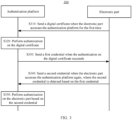
- This application provides an authentication method for an electronic part, a terminal, and an electronic part, to simplify an authentication process of the electronic part, so that the electronic part can quickly complete authentication when the terminal is started.
- the terminal may deliver the first credential to the electronic part after the electronic part gets access for the first time and completes the authentication, so that the electronic part obtains the second credential based on the first credential.
- digital certificate authentication does not need to be performed on the electronic part again, and is replaced by the authentication on the second credential.
- the authentication process of the second credential is greatly simplified. This can shorten authentication time and improve authentication efficiency. Therefore, the electronic part can quickly complete authentication when the terminal is started.
- the first credential is obtained by encrypting an identity and a first key
- the identity is used to identify the electronic part
- the first key is used to encrypt the identity
- the second credential includes an encrypted identity obtained by encrypting the identity based on the first key
- the first credential sent to the electronic part may be the encrypted identity and the first key, so that the electronic part encrypts the identity based on the first key to obtain the encrypted identity, that is, generates the second credential, and the encrypted identity is used to perform authentication by using the identity when the electronic part gets access again.
- the second credential may include the encrypted identity, so that the terminal performs authentication on the electronic part when detecting that the electronic part gets access again.
- each electronic part corresponds to one first key
- the terminal needs to store a large quantity of first keys, and first keys allocated by a same terminal to different electronic parts are the same, and only one first key needs to be stored. This saves storage space.
- the sending a first credential to the electronic part when the authentication on the digital certificate succeeds includes: negotiating with the electronic part about a session key (session key, SK) when the authentication on the digital certificate succeeds, where the SK is used for encryption and decryption of data transmission; encrypting, based on the SK, an identity and a first key allocated to the electronic part, to obtain the first credential; and sending the first credential to the electronic part.
- SK session key
- the terminal When the electronic part accesses the terminal for the first time, if the authentication on the digital certificate succeeds, the terminal encrypts the identity and the first key by using the SK negotiated with the electronic part, to obtain the first credential, and sends the first credential to the electronic part, so that the electronic part obtains the second credential based on the first credential, and may use the second credential when the electronic part gets access next time. This simplifies an authentication process when the electronic part gets access again, shortens authentication time, and improves authentication efficiency.
- the performing authentication on the digital certificate includes: determining, based on a certificate serial number of a revoked digital certificate, whether the digital certificate of the electronic part is revoked.
- the terminal determines that the authentication on the digital certificate of the electronic part fails.
- the certificate serial number of the revoked digital certificate comes from a public key infrastructure (public key infrastructure, PKI) server, the revoked digital certificate is determined based on a check result of a plurality of logs including a log of the electronic part, and each of the plurality of logs includes a certificate serial number of one digital certificate and use time of the certificate serial number.
- the revoked digital certificate may be determined based on the check result of the plurality of logs including the log of the electronic part, and each of the plurality of logs includes a certificate serial number of one digital certificate and use time of the certificate serial number.
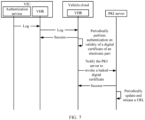
- a vehicle cloud may receive a plurality of logs of a plurality of electronic parts. Based on the plurality of logs, the vehicle cloud determines a revoked digital certificate, and sends a certificate SN of the revoked digital certificate to the PKI server. The PKI server further releases the certificate SN to the terminal.
- the token includes a DID and the certificate SN of the digital certificate.
- the electronic part accesses the terminal again, if the authentication succeeds, the electronic part receives the encrypted updated token from the terminal, and decrypts the token by using the first key, so that the electronic part performs authentication by using the updated token when accessing the terminal next time, and security is improved by continuously updating the token.
- the terminal may further include a memory, configured to store program instructions and data.
- the memory is coupled to the processor.
- the terminal executes the instructions stored in the memory, the method described in the foregoing aspects may be implemented.
- the terminal further includes a communication interface.
- the communication interface is used by the apparatus to communicate with another device.
- the communication interface may be a transceiver, a circuit, a bus, a module, or another type of communication interface.
- this application provides an electronic part, including units configured to implement the method according to any one of the second aspect or the possible implementations of the second aspect. It should be understood that each unit may implement a corresponding function by executing a computer program.
- this application provides an electronic part, including a processor.
- the processor is configured to perform the authentication method for a vehicle electronic part according to any one of the second aspect or the possible implementations of the second aspect.
- the electronic part may further include a memory, configured to store instructions and data.
- the memory is coupled to the processor.
- the processor executes the instructions stored in the memory, the method described in the foregoing aspects may be implemented.
- the electronic part may further include a communication interface.
- the communication interface is used by the apparatus to communicate with another device.
- the communication interface may be a transceiver, a circuit, a bus, a module, or another type of communication interface.
- this application provides a computer-readable storage medium, including a computer program.
- the computer program When the computer program is run on a computer, the computer is enabled to implement the method according to any one of the first aspect and the second aspect and the possible implementations of the first aspect and the second aspect.
- this application provides a computer program product.
- the computer program product includes a computer program (which may also be referred to as code or instructions).
- a computer is enabled to perform the method according to any one of the first aspect and the second aspect and the possible implementations of the first aspect and the second aspect.
- the electronic part may be a component, or may be a part including a plurality of components. It should be understood that the part may independently complete a function.
- a vehicle is used as an example. Electronic parts of the vehicle include but are not limited to: a motor control unit (motor control unit, MCU), a telematics box (telematics box, TBOX), a power distribution unit (power distribution unit, PDU), and the like.
- an original equipment manufacturer (original equipment manufacturer, OEM) can protect its interests by controlling a 4S store.
- OEM original equipment manufacturer
- the interests of a back-end market of the electronic parts of the vehicle cannot be guaranteed.
- an original electronic part may be replaced with an inferior part. If authenticity of the electronic part cannot be identified, the interests of the OEM cannot be guaranteed. In addition, performance of the electronic part cannot be guaranteed.
- the schematic structure in this embodiment of this application does not constitute any limitation on the vehicle 110.
- the vehicle 110 may include more or fewer parts than those shown in the figure, or some parts may be combined, or some parts may be split, or different part arrangements may be used.
- the parts shown in the figure may be implemented by hardware, software, or a combination of software and hardware.
- the electronic part may prestore a digital certificate, or may generate a digital certificate with a digital signature after obtaining the digital signature from the PKI server. This is not limited in embodiments of this application.
- the digital certificate may be used by the authentication platform to perform authentication on an electronic part that accesses the vehicle for the first time.
- the first credential may include an encrypted second credential, for example, include an encrypted identity and an encrypted first key that are encrypted by using the SK.
- the identity is used to identify the electronic part, and the first key is used to encrypt the identity.
- the first key corresponds to the authentication platform, and first keys allocated by a same authentication platform to different electronic parts are a same first key. That is, each VIU has only one first key, and all electronic parts accessing the VIU share one first key. This may save some storage space.
- the enabling the electronic part may be understood as starting the electronic part.
- the electronic part may receive or send a signal in an enabled state, to implement a corresponding function of the electronic part.
- a disabled state the electronic part cannot receive or send a signal, that is, the electronic part cannot be started, and therefore cannot implement a corresponding function.
- the electronic part may be enabled, that is, the electronic part may be started, to implement a corresponding function of the electronic part.
- the electronic part is prohibited enabling, that is, the electronic part cannot be started, that is, a corresponding function of the electronic part cannot be implemented.
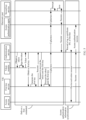
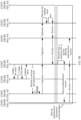
- the authentication platform uses a VIU as an example.
- the VIU includes an access service, a first key service, a token module, and an authentication service.
- the electronic part includes an access authentication agent and a second key service. The following provides description from a perspective of interaction between services.
- the authentication service first performs authentication on the DID and the challenge value, for example, compares the DID with a locally stored DID, and compares the decrypted challenge value with the challenge value generated by the authentication service. Further, the authentication service sends a message of "Request to authenticate the token" to the token module. The message carries the decrypted token.
- the token module authenticates the token, sends a certificate SN to the first key service, and further determines whether a digital certificate is revoked. After determining that the digital certificate is not revoked, the first key service sends a "Success" message to the authentication service.
- the revoked digital certificates include a plurality of digital certificates that have a same certificate serial number and that have at least partially overlapped use time. For example, when an electronic part accesses the authentication platform for the first time, authentication on a digital certificate needs to be performed, and a time period of a certificate SN of the digital certificate of the electronic part starts from authentication time. Specifically, in a normal case, a time period of the certificate SN is time 1 to time n, or time n+1 to time 2n.
- the vehicle cloud periodically performs authentication on validity of a digital certificate, notifies the PKI server of a leaked digital certificate, and releases a revoked digital certificate to the authentication platform by using the PKI server, so that when performing authentication on a certificate SN of an electronic part, the authentication platform can query, by using the certificate SN, whether a current certificate is revoked, thereby preventing the digital certificate from being forged, and effectively performing ecological control on the electronic part.
- FIG. 3 and the embodiment shown in FIG. 7 described above may be used in combination or separately.
- authentication time can be shortened, a vehicle can be quickly started, user experience can be improved, and a digital certificate can be prevented from being forged, so that ecological control can be effectively performed on an electronic part.
- an authentication platform performs activation authentication on an electronic part.
- the electronic part accesses the authentication platform for the first time, and the electronic part is activated and authenticated.
- the digital certificate of the electronic part is authenticated as described above, and a first credential is delivered when the authentication succeeds.
- a specific authentication process refer to related descriptions in FIG. 4 and FIG. 5 . Details are not described herein again.
- the authentication platform performs start-up authentication on the electronic part.
- the authentication platform performs start-up authentication on the electronic part, that is, performs authentication on the electronic part by using a second credential.
- the authentication platform performs continuous authentication on the electronic part, and a token does not need to be updated during the continuous authentication. Other steps are the same as those in the start-up authentication process. Therefore, when the vehicle is started again, authentication on the digital certificate does not need to be performed, and only authentication on the second credential needs to be performed.
- an authentication process of the second credential is relatively simple, and authentication time is quite short. Therefore, the vehicle can be quickly started, thereby improving user experience.
- the vehicle cloud After the determining is complete, the vehicle cloud sends the certificate SN of the digital certificate to be revoked to the PKI server.
- the PKI server further sends a list of digital certificates that need to be revoked to the authentication platform.
- the authentication platform performs authentication on the certificate SN of the digital certificate, authentication on the revoked digital certificate fails.
- the authentication platform when the electronic part accesses the authentication platform for the first time, the authentication platform performs certificate authentication on the electronic part and delivers the first credential.
- the electronic part accesses the authentication platform again, authentication is performed by using only the second credential.
- the second credential is obtained based on the first credential.
- An authentication process of the second credential is relatively simple, thereby shortening authentication time, enabling the vehicle to quickly start, and improving user experience.
- the vehicle cloud is used to determine whether the digital certificate is forged, thereby avoiding a phenomenon of shoddy goods replacing for quality goods, and effectively performing ecological control on the electronic part.
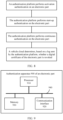
- FIG. 9 is a schematic block diagram of an authentication apparatus 900 of an electronic part according to an embodiment of this application.
- the apparatus 900 may be a chip system, or may be an apparatus configured with a chip system to implement an authentication function of the electronic part in the foregoing method embodiment.
- the chip system may include a chip, or may include a chip and another discrete component.
- the processor 910 may be configured to: obtain a digital certificate from an electronic part when it is detected that the electronic part gets access for the first time; perform authentication on the digital certificate; send a first credential to the electronic part when the authentication on the digital certificate succeeds, where the first credential includes an encrypted second credential; obtain the second credential from the electronic part when it is detected that the electronic part gets access again, where the second credential is obtained based on the first credential; and perform authentication on the electronic part based on the second credential.
- the processor 910 may be configured to: send a digital certificate to a terminal when the terminal is accessed for the first time; receive a first credential from the terminal; and send a second credential to the terminal when the terminal is accessed again, where the second credential is obtained based on the first credential.
- a specific connection medium between the processor 910, the communication interface 920, and the memory 930 is not limited in embodiments of this application.
- the processor 910, the communication interface 920, and the memory 930 are connected through a bus 940.
- the bus 940 is represented by a thick line in FIG. 9 , and a connection manner between other components is merely described as an example, and is not limited thereto.
- the bus may be classified into an address bus, a data bus, a control bus, and the like. For ease of indication, the bus is indicated by using only one thick line in FIG. 9 . However, it does not indicate that there is only one bus or only one type of bus.
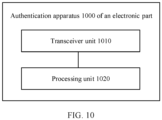
- the apparatus 1000 may correspond to the electronic part in the foregoing method embodiment.
- the apparatus 1000 may correspond to the electronic part in the foregoing method embodiment, or a part configured in the electronic part, like a chip or a chip system.
- the units in the apparatus 1000 may be configured to implement a corresponding process performed by the electronic part in the method shown in FIG. 3 to FIG. 8 .
- the computer-readable storage medium stores a computer program (which may also be referred to as code or instructions).
- the computer program When the computer program is run, the computer is enabled to perform the method performed by the authentication platform or the electronic part in the embodiments shown in FIG. 3 to FIG. 8 .
- the processor in embodiments of this application may be an integrated circuit chip, and has a signal processing capability.
- steps in the foregoing method embodiments can be implemented by using a hardware integrated logic circuit in the processor, or by using instructions in a form of software.
- the foregoing processor may be a general-purpose processor, a digital signal processor (digital signal processor, DSP), an application-specific integrated circuit (application-specific integrated circuit, ASIC), a field programmable gate array (field programmable gate array, FPGA) or another programmable logic device, a discrete gate or a transistor logic device, or a discrete hardware component.
- DSP digital signal processor
- ASIC application-specific integrated circuit
- FPGA field programmable gate array
- the processor may implement or perform the methods, steps, and logical block diagrams that are disclosed in embodiments of this application.
- the memory in embodiments of this application may be a volatile memory or a nonvolatile memory, or may include both a volatile memory and a nonvolatile memory.
- the nonvolatile memory may be a read-only memory (read-only memory, ROM), a programmable read-only memory (programmable ROM, PROM), an erasable programmable read-only memory (erasable PROM, EPROM), an electrically erasable programmable read-only memory (electrically EPROM, EEPROM), or a flash memory.
- the volatile memory may be a random access memory (random access memory, RAM), used as an external cache.
- a plurality of forms of RAMs may be used, for example, a static random access memory (static RAM, SRAM), a dynamic random access memory (dynamic RAM, DRAM), a synchronous dynamic random access memory (synchronous DRAM, SDRAM), a double data rate synchronous dynamic random access memory (double data rate SDRAM, DDR SDRAM), an enhanced synchronous dynamic random access memory (enhanced SDRAM, ESDRAM), a synchlink dynamic random access memory (synchlink DRAM, SLDRAM), and a direct rambus dynamic random access memory (direct rambus RAM, DR RAM).
- static random access memory static random access memory
- DRAM dynamic random access memory
- DRAM dynamic random access memory
- SDRAM synchronous dynamic random access memory
- double data rate SDRAM double data rate SDRAM
- DDR SDRAM double data rate SDRAM
- ESDRAM enhanced synchronous dynamic random access memory
- synchlink dynamic random access memory synchlink dynamic random access memory
- direct rambus RAM direct rambus RAM
- unit and “module” used in this specification may be used to indicate computer-related entities, hardware, firmware, combinations of hardware and software, software, or software being executed.
- the units described as separate parts may or may not be physically separate, and parts displayed as units may or may not be physical units, may be located in one position, or may be distributed on a plurality of network units. All or a part of the units may be selected based on actual requirements to achieve the objectives of the solutions of embodiments.
- function units in embodiments of this application may be integrated into one processing unit, each of the units may exist alone physically, or two or more units are integrated into one unit.
Landscapes
- Engineering & Computer Science (AREA)
- Computer Security & Cryptography (AREA)
- Computer Hardware Design (AREA)
- Computer Networks & Wireless Communication (AREA)
- Signal Processing (AREA)
- General Engineering & Computer Science (AREA)
- Theoretical Computer Science (AREA)
- Physics & Mathematics (AREA)
- Computing Systems (AREA)
- Software Systems (AREA)
- General Physics & Mathematics (AREA)
- Mechanical Engineering (AREA)
- Mathematical Physics (AREA)
- Health & Medical Sciences (AREA)
- General Health & Medical Sciences (AREA)
- Medical Informatics (AREA)
- Storage Device Security (AREA)
- Management, Administration, Business Operations System, And Electronic Commerce (AREA)
Applications Claiming Priority (2)
| Application Number | Priority Date | Filing Date | Title |
|---|---|---|---|
| CN202111147818.2A CN115913590B (zh) | 2021-09-29 | 2021-09-29 | 一种电子零部件的认证方法、终端和电子零部件 |
| PCT/CN2022/113835 WO2023051090A1 (fr) | 2021-09-29 | 2022-08-22 | Procédé d'authentification d'une pièce électronique, terminal et pièce électronique |
Publications (2)
| Publication Number | Publication Date |
|---|---|
| EP4398512A1 true EP4398512A1 (fr) | 2024-07-10 |
| EP4398512A4 EP4398512A4 (fr) | 2024-11-27 |
Family
ID=85729422
Family Applications (1)
| Application Number | Title | Priority Date | Filing Date |
|---|---|---|---|
| EP22874484.3A Pending EP4398512A4 (fr) | 2021-09-29 | 2022-08-22 | Procédé d'authentification d'une pièce électronique, terminal et pièce électronique |
Country Status (3)
| Country | Link |
|---|---|
| EP (1) | EP4398512A4 (fr) |
| CN (4) | CN121150990A (fr) |
| WO (1) | WO2023051090A1 (fr) |
Families Citing this family (1)
| Publication number | Priority date | Publication date | Assignee | Title |
|---|---|---|---|---|
| CN119728078B (zh) * | 2024-12-26 | 2025-09-26 | 上海芯钛信息科技有限公司 | 基于UVM和python的车规芯片PKI验证系统以及验证方法 |
Family Cites Families (13)
| Publication number | Priority date | Publication date | Assignee | Title |
|---|---|---|---|---|
| US7131005B2 (en) * | 2002-06-28 | 2006-10-31 | Motorola, Inc. | Method and system for component authentication of a vehicle |
| US7546452B2 (en) * | 2002-08-20 | 2009-06-09 | Intel Corporation | Hardware-based credential management |
| JP5451445B2 (ja) * | 2010-02-18 | 2014-03-26 | 株式会社東海理化電機製作所 | 認証システム及び認証方法 |
| CN105246071B (zh) * | 2014-07-11 | 2019-05-21 | 电信科学技术研究院 | 一种车联网系统中的消息生成和验证方法、设备 |
| US10484359B2 (en) * | 2015-07-25 | 2019-11-19 | Confia Systems, Inc. | Device-level authentication with unique device identifiers |
| US20200177398A1 (en) * | 2016-06-17 | 2020-06-04 | Kddi Corporation | System, certification authority, vehicle-mounted computer, vehicle, public key certificate issuance method, and program |
| CN106469474A (zh) * | 2016-09-05 | 2017-03-01 | 上海科世达-华阳汽车电器有限公司 | 一种汽车电子零部件使用情况监测的方法 |
| CN108123948A (zh) * | 2017-12-21 | 2018-06-05 | 深圳市沃特沃德股份有限公司 | 对车载设备进行验证的方法及服务器 |
| US10250383B1 (en) * | 2018-03-20 | 2019-04-02 | Mocana Corporation | Dynamic domain key exchange for authenticated device to device communications |
| CN109242512A (zh) * | 2018-08-24 | 2019-01-18 | 维沃移动通信有限公司 | 一种基于区块链的零件真伪信息处理方法、装置及设备 |
| CN110191112B (zh) * | 2019-05-22 | 2022-03-11 | 阿波罗智联(北京)科技有限公司 | 身份验证方法、装置、车载设备和服务器 |
| CN113347133B (zh) * | 2020-02-18 | 2023-04-28 | 华为技术有限公司 | 车载设备的认证方法及装置 |
| CN112398810B (zh) * | 2020-10-16 | 2022-03-25 | 郑州信大捷安信息技术股份有限公司 | 一种obd设备的身份认证系统及方法 |
-
2021
- 2021-09-29 CN CN202511055961.7A patent/CN121150990A/zh active Pending
- 2021-09-29 CN CN202111147818.2A patent/CN115913590B/zh active Active
- 2021-09-29 CN CN202511058251.XA patent/CN121150991A/zh active Pending
- 2021-09-29 CN CN202511054377.XA patent/CN121150989A/zh active Pending
-
2022
- 2022-08-22 WO PCT/CN2022/113835 patent/WO2023051090A1/fr not_active Ceased
- 2022-08-22 EP EP22874484.3A patent/EP4398512A4/fr active Pending
Also Published As
| Publication number | Publication date |
|---|---|
| CN121150990A (zh) | 2025-12-16 |
| EP4398512A4 (fr) | 2024-11-27 |
| CN115913590B (zh) | 2025-08-08 |
| CN115913590A (zh) | 2023-04-04 |
| CN121150991A (zh) | 2025-12-16 |
| WO2023051090A1 (fr) | 2023-04-06 |
| CN121150989A (zh) | 2025-12-16 |
Similar Documents
| Publication | Publication Date | Title |
|---|---|---|
| CN108430060B (zh) | 移动装置与基站之间的安全会话通信 | |
| CN111788811B (zh) | 车载电子控制单元之间的安全通信 | |
| US10419220B2 (en) | Management device, key generating device, vehicle, maintenance tool, management system, management method, and computer program | |
| EP3926500B1 (fr) | Procédé de mise à niveau de dispositif et dispositif associé | |
| US10652742B2 (en) | Hybrid authentication of vehicle devices and/or mobile user devices | |
| US11546173B2 (en) | Methods, application server, IoT device and media for implementing IoT services | |
| CN112448812B (zh) | 用于车辆与外部服务器的受保护的通信的方法 | |
| EP3609121A1 (fr) | Procédé et dispositif de gestion de certificat numérique | |
| US20190053052A1 (en) | Systems and Methods for Authentication | |
| US11516194B2 (en) | Apparatus and method for in-vehicle network communication | |
| CN111783068A (zh) | 设备认证方法、系统、电子设备及存储介质 | |
| WO2022160124A1 (fr) | Procédé et appareil de gestion d'autorisation de service | |
| US20180287787A1 (en) | Method and system for providing security for the first time a mobile device makes contact with a device | |
| CN115967920B (zh) | 一种汽车蓝牙密钥安全管理方法、系统、设备和介质 | |
| US9038143B2 (en) | Method and system for network access control | |
| EP4412152A1 (fr) | Procédé d'authentification et appareil de communication | |
| US12476829B2 (en) | Secure startup method, controller, and control system | |
| CN114697113B (zh) | 一种基于硬件加速卡的多方隐私计算方法、装置及系统 | |
| CN117041958B (zh) | 车载v2x-obu与智能域控制器通信内容的认证方法 | |
| EP4398512A1 (fr) | Procédé d'authentification d'une pièce électronique, terminal et pièce électronique | |
| US12598064B2 (en) | Establishing trust by a community of vehicles | |
| US11570008B2 (en) | Pseudonym credential configuration method and apparatus | |
| WO2022241799A1 (fr) | Procédé et appareil de génération de clé | |
| CN110730447B (zh) | 一种用户身份保护方法、用户终端和核心网 | |
| US20170311158A1 (en) | Technique for connecting a mobile device to a vehicle-based system |
Legal Events
| Date | Code | Title | Description |
|---|---|---|---|
| STAA | Information on the status of an ep patent application or granted ep patent |
Free format text: STATUS: THE INTERNATIONAL PUBLICATION HAS BEEN MADE |
|
| PUAI | Public reference made under article 153(3) epc to a published international application that has entered the european phase |
Free format text: ORIGINAL CODE: 0009012 |
|
| STAA | Information on the status of an ep patent application or granted ep patent |
Free format text: STATUS: REQUEST FOR EXAMINATION WAS MADE |
|
| 17P | Request for examination filed |
Effective date: 20240404 |
|
| AK | Designated contracting states |
Kind code of ref document: A1 Designated state(s): AL AT BE BG CH CY CZ DE DK EE ES FI FR GB GR HR HU IE IS IT LI LT LU LV MC MK MT NL NO PL PT RO RS SE SI SK SM TR |
|
| A4 | Supplementary search report drawn up and despatched |
Effective date: 20241025 |
|
| RIC1 | Information provided on ipc code assigned before grant |
Ipc: G06F 21/73 20130101ALI20241021BHEP Ipc: G06F 21/33 20130101ALI20241021BHEP Ipc: G06F 21/44 20130101ALI20241021BHEP Ipc: H04L 9/40 20220101ALI20241021BHEP Ipc: G06F 21/00 20130101ALI20241021BHEP Ipc: H04L 9/32 20060101AFI20241021BHEP |
|
| RAP1 | Party data changed (applicant data changed or rights of an application transferred) |
Owner name: SHENZHEN YINWANG INTELLIGENTTECHNOLOGIES CO., LTD. |
|
| DAV | Request for validation of the european patent (deleted) | ||
| DAX | Request for extension of the european patent (deleted) | ||
| STAA | Information on the status of an ep patent application or granted ep patent |
Free format text: STATUS: EXAMINATION IS IN PROGRESS |
|
| 17Q | First examination report despatched |
Effective date: 20260128 |