EP4400517A2 - Einsetzbare variable fragmente von antikörpern und modifizierten a1-a2-domänen von nkg2d-liganden und nichtnatürliche nkg2d-liganden zur bindung an nichtnatürliche nkg2d-rezeptoren - Google Patents
Einsetzbare variable fragmente von antikörpern und modifizierten a1-a2-domänen von nkg2d-liganden und nichtnatürliche nkg2d-liganden zur bindung an nichtnatürliche nkg2d-rezeptoren Download PDFInfo
- Publication number
- EP4400517A2 EP4400517A2 EP24172275.0A EP24172275A EP4400517A2 EP 4400517 A2 EP4400517 A2 EP 4400517A2 EP 24172275 A EP24172275 A EP 24172275A EP 4400517 A2 EP4400517 A2 EP 4400517A2
- Authority
- EP
- European Patent Office
- Prior art keywords
- natural
- nkg2d
- domain
- modified
- seq
- Prior art date
- Legal status (The legal status is an assumption and is not a legal conclusion. Google has not performed a legal analysis and makes no representation as to the accuracy of the status listed.)
- Pending
Links
Images













Classifications
-
- C—CHEMISTRY; METALLURGY
- C07—ORGANIC CHEMISTRY
- C07K—PEPTIDES
- C07K14/00—Peptides having more than 20 amino acids; Gastrins; Somatostatins; Melanotropins; Derivatives thereof
- C07K14/435—Peptides having more than 20 amino acids; Gastrins; Somatostatins; Melanotropins; Derivatives thereof from animals; from humans
- C07K14/705—Receptors; Cell surface antigens; Cell surface determinants
- C07K14/7056—Lectin superfamily, e.g. CD23, CD72
-
- A—HUMAN NECESSITIES
- A61—MEDICAL OR VETERINARY SCIENCE; HYGIENE
- A61K—PREPARATIONS FOR MEDICAL, DENTAL OR TOILETRY PURPOSES
- A61K40/00—Cellular immunotherapy
- A61K40/10—Cellular immunotherapy characterised by the cell type used
- A61K40/11—T-cells, e.g. tumour infiltrating lymphocytes [TIL] or regulatory T [Treg] cells; Lymphokine-activated killer [LAK] cells
-
- A—HUMAN NECESSITIES
- A61—MEDICAL OR VETERINARY SCIENCE; HYGIENE
- A61K—PREPARATIONS FOR MEDICAL, DENTAL OR TOILETRY PURPOSES
- A61K40/00—Cellular immunotherapy
- A61K40/10—Cellular immunotherapy characterised by the cell type used
- A61K40/15—Natural-killer [NK] cells; Natural-killer T [NKT] cells
-
- A—HUMAN NECESSITIES
- A61—MEDICAL OR VETERINARY SCIENCE; HYGIENE
- A61K—PREPARATIONS FOR MEDICAL, DENTAL OR TOILETRY PURPOSES
- A61K40/00—Cellular immunotherapy
- A61K40/30—Cellular immunotherapy characterised by the recombinant expression of specific molecules in the cells of the immune system
- A61K40/31—Chimeric antigen receptors [CAR]
-
- A—HUMAN NECESSITIES
- A61—MEDICAL OR VETERINARY SCIENCE; HYGIENE
- A61K—PREPARATIONS FOR MEDICAL, DENTAL OR TOILETRY PURPOSES
- A61K40/00—Cellular immunotherapy
- A61K40/40—Cellular immunotherapy characterised by antigens that are targeted or presented by cells of the immune system
- A61K40/41—Vertebrate antigens
- A61K40/42—Cancer antigens
- A61K40/4202—Receptors, cell surface antigens or cell surface determinants
- A61K40/4203—Receptors for growth factors
- A61K40/4205—Her-2/neu/ErbB2, Her-3/ErbB3 or Her 4/ ErbB4
-
- A—HUMAN NECESSITIES
- A61—MEDICAL OR VETERINARY SCIENCE; HYGIENE
- A61K—PREPARATIONS FOR MEDICAL, DENTAL OR TOILETRY PURPOSES
- A61K40/00—Cellular immunotherapy
- A61K40/40—Cellular immunotherapy characterised by antigens that are targeted or presented by cells of the immune system
- A61K40/41—Vertebrate antigens
- A61K40/42—Cancer antigens
- A61K40/4202—Receptors, cell surface antigens or cell surface determinants
- A61K40/4203—Receptors for growth factors
- A61K40/4206—Fibroblast growth factor receptors [FGFR]
-
- A—HUMAN NECESSITIES
- A61—MEDICAL OR VETERINARY SCIENCE; HYGIENE
- A61K—PREPARATIONS FOR MEDICAL, DENTAL OR TOILETRY PURPOSES
- A61K40/00—Cellular immunotherapy
- A61K40/40—Cellular immunotherapy characterised by antigens that are targeted or presented by cells of the immune system
- A61K40/41—Vertebrate antigens
- A61K40/42—Cancer antigens
- A61K40/4202—Receptors, cell surface antigens or cell surface determinants
- A61K40/4224—Molecules with a "CD" designation not provided for elsewhere
-
- A—HUMAN NECESSITIES
- A61—MEDICAL OR VETERINARY SCIENCE; HYGIENE
- A61P—SPECIFIC THERAPEUTIC ACTIVITY OF CHEMICAL COMPOUNDS OR MEDICINAL PREPARATIONS
- A61P31/00—Antiinfectives, i.e. antibiotics, antiseptics, chemotherapeutics
- A61P31/12—Antivirals
-
- A—HUMAN NECESSITIES
- A61—MEDICAL OR VETERINARY SCIENCE; HYGIENE
- A61P—SPECIFIC THERAPEUTIC ACTIVITY OF CHEMICAL COMPOUNDS OR MEDICINAL PREPARATIONS
- A61P35/00—Antineoplastic agents
-
- C—CHEMISTRY; METALLURGY
- C07—ORGANIC CHEMISTRY
- C07K—PEPTIDES
- C07K16/00—Immunoglobulins [IG], e.g. monoclonal or polyclonal antibodies
- C07K16/18—Immunoglobulins [IG], e.g. monoclonal or polyclonal antibodies against material from animals or humans
- C07K16/28—Immunoglobulins [IG], e.g. monoclonal or polyclonal antibodies against material from animals or humans against receptors, cell surface antigens or cell surface determinants
-
- C—CHEMISTRY; METALLURGY
- C07—ORGANIC CHEMISTRY
- C07K—PEPTIDES
- C07K16/00—Immunoglobulins [IG], e.g. monoclonal or polyclonal antibodies
- C07K16/18—Immunoglobulins [IG], e.g. monoclonal or polyclonal antibodies against material from animals or humans
- C07K16/28—Immunoglobulins [IG], e.g. monoclonal or polyclonal antibodies against material from animals or humans against receptors, cell surface antigens or cell surface determinants
- C07K16/2863—Immunoglobulins [IG], e.g. monoclonal or polyclonal antibodies against material from animals or humans against receptors, cell surface antigens or cell surface determinants against receptors for growth factors, growth regulators
-
- C—CHEMISTRY; METALLURGY
- C07—ORGANIC CHEMISTRY
- C07K—PEPTIDES
- C07K16/00—Immunoglobulins [IG], e.g. monoclonal or polyclonal antibodies
- C07K16/18—Immunoglobulins [IG], e.g. monoclonal or polyclonal antibodies against material from animals or humans
- C07K16/28—Immunoglobulins [IG], e.g. monoclonal or polyclonal antibodies against material from animals or humans against receptors, cell surface antigens or cell surface determinants
- C07K16/30—Immunoglobulins [IG], e.g. monoclonal or polyclonal antibodies against material from animals or humans against receptors, cell surface antigens or cell surface determinants from tumour cells
-
- C—CHEMISTRY; METALLURGY
- C07—ORGANIC CHEMISTRY
- C07K—PEPTIDES
- C07K14/00—Peptides having more than 20 amino acids; Gastrins; Somatostatins; Melanotropins; Derivatives thereof
- C07K14/435—Peptides having more than 20 amino acids; Gastrins; Somatostatins; Melanotropins; Derivatives thereof from animals; from humans
- C07K14/705—Receptors; Cell surface antigens; Cell surface determinants
- C07K14/70503—Immunoglobulin superfamily
- C07K14/7051—T-cell receptor (TcR)-CD3 complex
-
- C—CHEMISTRY; METALLURGY
- C07—ORGANIC CHEMISTRY
- C07K—PEPTIDES
- C07K2317/00—Immunoglobulins specific features
- C07K2317/60—Immunoglobulins specific features characterized by non-natural combinations of immunoglobulin fragments
- C07K2317/62—Immunoglobulins specific features characterized by non-natural combinations of immunoglobulin fragments comprising only variable region components
- C07K2317/622—Single chain antibody (scFv)
-
- C—CHEMISTRY; METALLURGY
- C07—ORGANIC CHEMISTRY
- C07K—PEPTIDES
- C07K2317/00—Immunoglobulins specific features
- C07K2317/90—Immunoglobulins specific features characterized by (pharmaco)kinetic aspects or by stability of the immunoglobulin
- C07K2317/94—Stability, e.g. half-life, pH, temperature or enzyme-resistance
-
- C—CHEMISTRY; METALLURGY
- C07—ORGANIC CHEMISTRY
- C07K—PEPTIDES
- C07K2319/00—Fusion polypeptide
-
- C—CHEMISTRY; METALLURGY
- C07—ORGANIC CHEMISTRY
- C07K—PEPTIDES
- C07K2319/00—Fusion polypeptide
- C07K2319/01—Fusion polypeptide containing a localisation/targetting motif
- C07K2319/03—Fusion polypeptide containing a localisation/targetting motif containing a transmembrane segment
-
- C—CHEMISTRY; METALLURGY
- C07—ORGANIC CHEMISTRY
- C07K—PEPTIDES
- C07K2319/00—Fusion polypeptide
- C07K2319/20—Fusion polypeptide containing a tag with affinity for a non-protein ligand
- C07K2319/21—Fusion polypeptide containing a tag with affinity for a non-protein ligand containing a His-tag
-
- C—CHEMISTRY; METALLURGY
- C07—ORGANIC CHEMISTRY
- C07K—PEPTIDES
- C07K2319/00—Fusion polypeptide
- C07K2319/33—Fusion polypeptide fusions for targeting to specific cell types, e.g. tissue specific targeting, targeting of a bacterial subspecies
-
- C—CHEMISTRY; METALLURGY
- C07—ORGANIC CHEMISTRY
- C07K—PEPTIDES
- C07K2319/00—Fusion polypeptide
- C07K2319/70—Fusion polypeptide containing domain for protein-protein interaction
- C07K2319/74—Fusion polypeptide containing domain for protein-protein interaction containing a fusion for binding to a cell surface receptor
Definitions
- This application relates generally to the production of polypeptides having specific antigen-binding properties of Fv domains, for example, insertable variable fragments of antibodies, and modified ⁇ 1- ⁇ 2 domains of NKG2D ligands.
- An antibody (Ab), Figure 1 also known as an immunoglobulin (Ig), in many mammals including humans is a large, Y-shape protein used by the immune system to identify and neutralize foreign objects such as bacteria and viruses ( Charles Janeway (2001). Immunobiology. (5th ed.), Chapter 3. Garland Publishing. ISBN 0-8153-3642-X . (electronic full text via NCBI Bookshelf).
- the antibody recognizes a unique part of the foreign target, called an antigen.
- Each tip of the two arms of the "Y" of an antibody contains an antigen binding site, or a paratope, (a structure analogous to a lock) that is specific for one particular epitope (similarly analogous to a key) of an antigen, allowing these two structures to bind together with precision.
- an antibody can tag a microbe or an infected cell for attack by other parts of the immune system or can neutralize its target directly, for example, by blocking a part of a microbe that is essential for its invasion and survival.
- the production of antibodies is the main function of the humoral, or "adaptive", immune system.
- Antibodies are secreted by plasma cells. Antibodies in nature can occur in two physical forms, a soluble form that is secreted from the cell, and a membrane-bound form that is attached to the surface of a B cell via the "stem" of the Y.
- Antibodies are glycoproteins belonging to the immunoglobulin superfamily and are typically made of basic structural units-each with two large heavy chains and two small light chains. There are several different types of antibody heavy chains, and several different kinds of antibodies, which are grouped into different isotypes based on which heavy chain they possess. Five different antibody isotypes are known in mammals ( Market E, Papavasiliou FN (October 2003). "V(D)J recombination and the evolution of the adaptive immune system”. PLoS Biol. 1 (1): E16. doi:10.1371/journal.pbio.0000016. PMC 212695. PMID 14551913 ).
- the natural "Y"-shaped Ig molecule consists of four polypeptide chains; two identical heavy chains and two identical light chains connected by disulfide bonds, Figure 1 .
- Each heavy chain has two major regions, the constant region (CH) and the variable region (VH).
- the constant region is essentially identical in all antibodies of the same isotype, but differs in antibodies of different isotypes.
- a light chain also has two successive domains: a smaller constant region (CL) and the variable region (VL) ( Woof J, Burton D (2004). "Human antibody-Fc receptor interactions illuminated by crystal structures.” Nat Rev Immunol 4 (2): 89-99. doi:10.1038/nri1266. PMID 15040582 ).
- Each of the two arms of the Y contains the sites that can bind to antigens and, therefore, recognize specific foreign objects.
- This region of the antibody is called the Fv (fragment, variable) region. It is composed of one variable domain from the heavy chain (V H ) and one variable region from the light chain (V L ) of the antibody ( Hochman J, Inbar D, Givol D (1973).
- An active antibody fragment (Fv) composed of the variable portions of heavy and light chains. Biochemistry 12 (6): 1130-1135. doi:10.1021/bi00730a018. PMID 4569769 ).
- the paratope is shaped at one end of the Fv and is the region for binding to antigens.
- CDRs complementarity determining regions
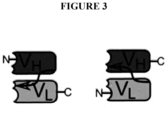
- Useful polypeptides that possess specific antigen binding function can be derived from the CDRs of the variable regions of antibodies. These two antibody variable domains, one of the light chain(VL) and one from the heavy chain (V H ), each with 3 CDRs can be fused in tandem, in either order, using a single, short linker peptide of 10 to about 25 amino acids to create a linear single-chain variable fragment (scFv) polypeptide comprising one each of heavy and light chain variable domains, Figure 3 ( Bird, R. E., Hardman, K. D., Jacobson, J. W., Johnson, S., Kaufman, B. M., Lee, S. M., Lee, T., Pope, S. H., Riordan, G.
- the linker is usually rich in glycine for flexibility, as well as serine, threonine, or charged amino acids for solubility, and can either connect the N-terminus of the V H with the C-terminus of the V L , or vice versa.
- This protein retains the specificity of the original immunoglobulin, despite removal of the constant regions and the introduction of the single linker.
- This format enables one ordinarily skilled in the art of recombinant DNA technology to genetically fuse the linear scFv to the N- or C-terminus of a parent protein in order to impart to the parent protein the antigen binding properties of the scFv.
- the present disclosure relates to modified ⁇ 1- ⁇ 2 domains of NKG2D ligands attached to polypeptides, in some embodiments antibodies or fragments of antibodies.
- the present disclosure relates to antigen-binding peptides derived from light and heavy chain antibody variable domains, which contain two linker regions and a split variable domain.
- the present invention relates to insertable variable fragment (iFv) peptides. Because the C-terminus and N-terminus of scFv molecules including polyvalent scFv structures are far apart spatially, scFv structures cannot be inserted into a loop region embedded within a protein fold of a parent or recipient protein without disrupting or destabilizing its fold(s) and/or without disrupting the Fv framework required to properly position the CDRs or hypervariable regions to retain their antigen-binding properties.
- iFv insertable variable fragment
- variable fragment of an antibody containing up to 6 CDRs into one or more loop regions of a nascent parent protein molecule without disrupting structural folds of the variable fragment or of the parent protein
- new structures contained two linker regions, rather than the traditional single linker of scFv structures, plus a split variable domain.
- VL variable light
- VH variable heavy
- That circular peptide structure containing all 6 CDRs of the Fv can then conceptually be split at one of several possible novel sites to create an insertable Fv (iFv).
- the non-natural split site can be created within either the light or the heavy chain variable domain at or near the apex or turn of a loop to create new, unique N- and C-termini spatially positioned proximal to each other, preferably within 0.5 to 1.5 nm, so as to be insertable into loops of other (parent or recipient) proteins or polypeptides without disrupting the structure, stability, or desirable function.
- This new class of peptides is called an insertable variable fragment (iFv).
- the binding or targeting specificity conveyed by an iFv to a recipient molecule can be changed by inserting into the recipient another or different iFV based on a different antibody or scFv or by replacing 1 or more of the CDRs of an existing insertable iFv.
- iFv polypeptides exhibiting specific antigen-binding properties of Fv domains into other proteins and thereby imparting novel binding properties will have multiple utilities. Such uses include but are not limited to enabling the parent protein to bind the specific antigen, target the antigen, detect the presence of antigen, remove the antigen, contact or draw near the antigen, to deliver a payload to the antigen or antigen-expressing cell, recruit the antigen, and image the presence of the antigen.
- a payload could be conjugated directly to one or both the amino-terminus and carboxy-terminus of an iFv or indirectly to an iFv via a parent protein or peptide.
- payloads include but are not limited to a chromophore, a fluorophore, a pharmacophore, an atom, a heavy or radioactive isotope, an imaging agent, a chemotherapeutic agent, or a toxin.
- a payloaded iFv can be used to locate or identify the presence of a target molecule to which the iFv specifically binds and as such can serve as in vitro or in vivo imaging agents or diagnostic agents that are small and stable.
- a chemotherapeutic agent or toxic molecule can be conjugated in order to create an iFv-drug conjugate, for example, as treatment for a malignancy or infection.
- a single payload may be conjugated to both the amino-terminus and the carboxy-terminus of an iFv peptide so as to span or connect the two termini; such spanning may further stabilize the iFv by blocking the termini from exopeptidase degradation or protecting the iFv from denaturation or unfolding.
- parent or recipient proteins or polypeptides that are candidates for insertions of iFv peptides include but are not limited to antibodies, proteins comprised of Ig folds or Ig domains, globulins, albumens, fibronectins and fibronectin domains, integrins, fluorescent proteins, enzymes, outer membrane proteins, receptor proteins, T-cell receptors, chimeric antigen receptors, viral antigens, virus capsids, viral ligands for cell receptors, high molecular weight bacteriocins, histones, hormones, knottins, cyclic peptides or polypeptides, major histocompatibility (MHC) family proteins, MIC proteins, lectins, and ligands for lectins. It is also possible to insert iFv structures into non-protein recipient molecules such a polysaccharides, dendrimers, polyglycols, peptidoglycans, antibiotics, and polyketides.
- MHC major histocomp
- Natural killer (NK) cells and certain (CD8+ ⁇ and y ⁇ ) T-cells of the immunity system have important roles in humans and other mammals as first-line, innate defense against neoplastic and virus-infected cells ( Cerwenka, A., and L.L. Lanier. 2001. NK cells, viruses and cancer. Nat. Rev. Immunol. 1:41-49 ).
- NK cells and certain T-cells exhibit on their surfaces NKG2D, a prominent, homodimeric, surface immunoreceptor responsible for recognizing a target cell and activating the innate defense against the pathologic cell ( Lanier, LL, 1998. NK cell receptors. Ann. Rev. Immunol. 16: 359-393 ; Houchins JP et al.
- NKG2D a family of related cDNA clones encoding type II integral membrane proteins on human NK cells. J. Exp. Med. 173: 1017-1020 ; Bauer, S et al., 1999. Activation of NK cells and T cells by NKG2D, a receptor for stress-inducible MICA. Science 285: 727-730 ).
- the human NKG2D molecule possesses a C-type lectin-like extracellular domain that binds to its cognate ligands, the 84% sequence identical or homologous, monomeric MICA and MICB, polymorphic analogs of the Major Histocompatibility Complex (MHC) Class I chain-related glycoproteins (MIC) ( Weis et al.
- MHC Major Histocompatibility Complex
- MIC Class I chain-related glycoproteins
- Non-pathologic expression of MICA and MICB is restricted to intestinal epithelium, keratinocytes, endothelial cells and monocytes, but aberrant surface expression of these MIC proteins occurs in response to many types of cellular stress such as proliferation, oxidation and heat shock and marks the cell as pathologic ( Groh et al. 1996. Cell stress-regulated human MHC class I gene expressed in GI epithelium. PNAS 93: 12445-12450 ; Groh et al. 1998. Recognition of stress-induced MHC molecules by intestinal ⁇ T cells. Science 279: 1737-1740 ; Zwirner et al. 1999. Differential expression of MICA by endothelial cells, fibroblasts, keratinocytes and monocytes.
- Viral infection is a common inducer of MIC protein expression and identifies the viral-infected cell for NK or T-cell attack (Groh et al. 1998; Groh et al. 2001. Co-stimulation of CD8+ ⁇ T-cells by NKG2D via engagement by MIC induced on virus-infected cells. Nat. Immunol. 2: 255-260 ; Cerwenka, A., and L.L. Lanier. 2001).
- cytomegalovirus and other viruses have evolved mechanisms that prevent the expression of MIC proteins on the surface of the cell they infect in order to escape the wrath of the innate immunity system ( Lodoen, M., K.
- the high resolution structure of human MICA bound to NKG2D has been solved and demonstrates that the ⁇ 3 domain of MICA has no direct interaction with the NKG2D ( Li et al. 2001. Complex structure of the activating immunoreceptor NKG2D and its MHC class I-like ligand MICA. Nature Immunol. 2: 443-451 ; Protein Data Bank accession code 1HYR).
- the ⁇ 3 domain of MICA like that of MICB, is connected to the ⁇ 1- ⁇ 2 platform domain by a short, flexible linker peptide, and itself is positioned naturally as "spacer" between the platform and the surface of the MIC expressing cell.
- This invention creates bispecific molecules comprised of the specifically modified non-natural ⁇ 1- ⁇ 2 domains and specific targeting heterologous molecules, including but not limited to heterologous peptides or polypeptides, that bind Chimeric Antigen Receptors (CARs) wherein the receptor of the CAR is comprised of a non-natural NKG2D receptor ectodomain that binds the modified ⁇ 1- ⁇ 2 domains with greater affinity than it does natural ⁇ 1- ⁇ 2 domains.
- CARs Chimeric Antigen Receptors
- T-cells and NK-cells can be modified using gene transfer technologies to directly and stably express on their surface binding domains of an antibody that confer novel antigen specificities ( Saar Gill & Carl H. June. Going viral: chimeric antigen receptor T-cell therapy for hematological malignancies. Immunological Reviews 2015. Vol. 263: 68-89 ; Wolfgang Glienke, Ruth Esser, Christoph Priesner, Julia D. Suerth, Axel Schambach, Winfried S. Wels, Manuel Grez, Stephan Kloess, Lubomir Arseniev and Ulrike Koehl. 2015. Advantages and applications of CAR-expressing natural killer cells. Front. Pharmacol. doi: 10.3389/fphar.2015.00021 ).
- CAR-T cells are applications of this approach that combines an antigen recognition domain of a specific antibody with an intracellular domain of the CD3- ⁇ chain, which is the primary transmitter of signals from endogenous T-Cell Receptors (TCRs), into a single chimeric protein along with a co-stimulatory molecule such as CD27, CD28, ICOS, 4-1BB, or OX40, Figure 16 .
- TCRs T-Cell Receptors
- CARs so constructed can trigger T cell activation upon binding the targeted antigen in a manner similar to an endogenous T cell receptor but independent of the major histocompatibility complex (MHC).
- MHC major histocompatibility complex
- a "soluble MIC protein”, “soluble MICA” and “soluble MICB” refer to a MIC protein containing the ⁇ 1, ⁇ 2, and ⁇ 3 domains of the MIC protein but without the transmembrane or intracellular domains.
- the NKG2D ligands, ULBP1-6 do not naturally possess an ⁇ 3 domain ( Cerwenka A, Lanier LL. 2004. NKG2D ligands: unconventional MHC class I-like molecules exploited by viruses and cancer. Tissue Antigens 61 (5): 335-43. doi:10.1034/j.1399-0039.2003.00070.x. PMID 12753652 ).
- An " ⁇ 1- ⁇ 2 domain" of an NKG2D ligand refers to the protein domain of the ligand that binds an NKG2D receptor.
- the ⁇ 1- ⁇ 2 domains of the non-natural NKG2D ligand proteins of the invention are at least 80% identical or homologous to the native or natural ⁇ 1- ⁇ 2 domain of an NKG2D ligand, SEQ ID NOs: 36-54.
- the modified ⁇ 1- ⁇ 2 domain is 85% identical to a native or natural ⁇ 1- ⁇ 2 domain of an NKG2D ligand.
- the modified ⁇ 1- ⁇ 2 domain is 90% identical to a native or natural ⁇ 1- ⁇ 2 domain of a natural NKG2D ligand protein and binds non-natural NKG2D.
- the ⁇ 1- ⁇ 2 platform domain of a soluble MIC protein is tethered to the ⁇ 3 domain and is diffusible in the intercellular or intravascular space of the mammal.
- the ⁇ 1- ⁇ 2 platform domains of the non-natural MIC proteins of the invention are at least 80% identical or homologous to a native or natural ⁇ 1- ⁇ 2 domain of a human MICA or MICB protein and bind NKG2D.
- the ⁇ 1- ⁇ 2 platform domain is 85% identical to a native or natural ⁇ 1- ⁇ 2 platform domain of a human MICA or MICB protein and binds NKG2D.
- the ⁇ 1- ⁇ 2 platform domain is 90%, 95%, 96%, 97%, 98%, or 99% identical to a native or natural ⁇ 1- ⁇ 2 platform domain of a human MICA or MICB protein and binds NKG2D.
- a heterologous peptide tag may be fused to the N-terminus or C-terminus of an ⁇ 1- ⁇ 2 domain or a soluble MIC protein to aid in the purification of the soluble MIC protein.
- Tag sequences include peptides such as a poly-histidine, myc-peptide or a FLAG tag. Such tags may be removed after isolation of the MIC molecule by methods known to one skilled in the art.
- specific mutations in ⁇ 1- ⁇ 2 domains of NKG2D ligands can be made to create non-natural ⁇ 1- ⁇ 2 domains that bind non-natural NKG2D receptors, themselves engineered so as to have reduced affinity for natural NKG2D ligands.
- This can be done, for example, through genetic engineering.
- a non-natural NKG2D receptor so modified can be used to create on the surface of NK- or T-cells of the immune system an NKG2D-based Chimeric Antigen Receptor (CAR) that can preferentially bind to and be activated by molecules comprised of the invented non-natural ⁇ 1- ⁇ 2 domains.
- CAR Chimeric Antigen Receptor
- CAR-T cells that employ the ligand-binding domain of the NKG2D receptor have been studied in animals and recently in humans ( Sentman CL, Meehan KR. NKG2D CARs as cell therapy for cancer. Cancer J. 2014 Mar-Apr;20(2):156-9. doi: 10.1097/PPO.0000000000000029 ; Manfred Lehner, Gabriel Götz, Julia Proff, Niels Schaft, Jan Dörrie, Florian Full, Armin Ensser, Yves A. Muller, Adelheid Cerwenka, Hinrich Abken, Ornella Parolini, Peter F. Ambros, Heinrich Kovar, Wolfgang Holter.
- NKG2D CAR was a fusion of the full-length NKG2D receptor and CD3 ⁇ (NKG2D ⁇ ); another was with only the ectodomain of NKG2D fused in opposite orientation to a second-generation CAR scaffold composed of transmembrane and intracellular domains from CD28 and the signaling domain of CD3 ⁇ (NKG2D28 ⁇ ).
- NKG2D ⁇ 10 NKG2D ⁇ 10
- T cells expressing any of the above NKG2D CARs produced IFN ⁇ and TNF ⁇ in response to NKG2D ligand stimulation and in vitro efficiently killed tumor targets expressing NKG2D ligands ( Heather VanSeggelen, Joanne A. Hammill, Anna Dvorkin-Gheva, Daniela G.M. Tantalo, Jacek M. Kwiecien, Galina F. Denisova, Brian Rabinovich, Yonghong Wan, Jonathan L.
- NK cells engineered with chimeric antigen receptors targeting NKG2D ligands display lethal toxicity in mice, Molecular Therapy accepted article preview online 30 June 2015; doi:10.1038/mt.2015.119 ).
- the cytotoxic potential of NK cells against a wide spectrum of tumor subtypes could also be markedly enhanced by expression of a CAR based on NKG2D-DAP10-CD3 ⁇ ( Yu-Hsiang Chang, John Connolly, Noriko Shimasaki, Kousaku Mimura, Koji Kono, and Dario Campana. Chimeric Receptor with NKG2D Specificity Enhances Natural Killer Cell Activation and Killing of Tumor Cells. Cancer Res; 73(6) March 15, 2013 ).
- CAR-T or CAR-NK cells comprised of ectodomains of non-natural NKG2D receptors that do not or only poorly bind natural NKG2D ligands will not be subject to the above form of activation and thus will not be toxigenic as a cell expressing CAR based on a natural NKG2D receptor.
- NKG2D receptors on cells will not be subject to down-regulation by natural NKG2D ligands in a soluble format or on Myeloid Derived Suppressor Cells (MDSC) ( Deng W, Gowen BG, Zhang L, Wang L, Lau S, Iannello A, Xu J, Rovis TL, Xiong N,Raulet DH, 2015. Antitumor immunity. A shed NKG2D ligand that promotes natural killer cell activation and tumor rejection. Science. 2015 Apr 3;348(6230):136-9. doi: 10.1126/science. 1258867. Epub 2015 Mar 5 ).
- MDSC Myeloid Derived Suppressor Cells
- the CAR-T or CAR-NK cells comprised of non-natural NKG2D receptor ectodomains are not activated except in the presence of an engaged bispecific molecule comprised of a cognate non-natural ⁇ 1- ⁇ 2 domains, their activation can be controlled by the administered bispecific molecules, which as biopharmaceuticals will exhibit pharmacokinetics and pharmacodynamics well known in the field.
- the physician can simply modify the dosing regimen of the administered bispecific molecule rather than having to deploy an induced suicide mechanism to destroy the infused CAR cells as currently done ( Monica Casucci and Attilio Bondanza. Suicide Gene Therapy to Increase the Safety of Chimeric Antigen Receptor-Redirected T Lymphocytes.
- bispecific molecules with different specific targeting motifs can be administered simultaneously or sequentially to help address tumor resistance and escape as a results of target antigen loss without having to create, expand and infuse multiple different autologous CAR cells (Gill & June, 2015). Since all CAR constructions can be identical for all CAR cells and the targeting specificity determined simply by the targeting motif of the produced bispecific molecule of the instant invention, manufacturing processes will be simplified and less expensive.
- the instant invention expands the diversity and practicality of this remarkable, very promising immunologic approach to managing cancer with CAR-T cells and CAR-NK cells while overcoming many of these current, recognized difficulties.
- peptide As used herein "peptide”, “polypeptide”, and “protein” are used interchangeably; and a “heterologous molecule”, “heterologous peptide”, “heterologous sequence” or “heterologous atom” is a molecule, peptide, nucleic acid or amino acid sequence, or atom, respectively, that is not naturally or normally found in physical conjunction with the subject molecule.
- “non-natural” and “modified” are used interchangeably.
- natural and “native” are used interchangeably and “NKG2D” and “NKG2D receptor” are used interchangeably.
- antibody herein is used in the broadest sense and specifically covers monoclonal antibodies, multispecific antibodies (e.g. bispecific antibodies), and antibody fragments, so long as they exhibit the desired biological activity.
- Antibody fragments comprise a portion of an intact antibody, preferably comprising the antigen binding region thereof. Examples of antibody fragments include Fab, Fab', F(ab') 2 , and Fv fragments; diabodies; linear antibodies; single-chain antibody molecules; and multi-specific antibodies formed from antibody fragment(s).
- compositions and methods corresponding to the scope of each of these phrases.
- a composition or method comprising recited elements or steps contemplates particular embodiments in which the composition or method consists essentially of or consists of those elements or steps.
- Example 1 ( iFv ).
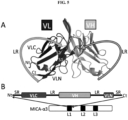
- a 1126 bp and a 1144 bp DNA fragment (SEQ ID NO:1 and 2, respectively) encoding in the following order: the ⁇ 3 domain of human MICA (as a parent peptide) amino acid 182 to amino acid 194 (the beginning of loop 1 of the ⁇ 3 domain), no spacer or a GGS amino acid spacer region (SR), an iFv peptide based on the structure of a Fibroblast Growth Factor Receptor 3 (FGFR3)-binding antibody (MAbR3; Qing, J., Du, X., Chen, Y., Chan, P., Li, H., Wu, P., Marsters, S., Stawicki, S., Tien, J., Totpal, K., Ross, S., Stinson, S., Dornan, D., French, D., Wang, Q.
- FGFR3 Fibroblast Growth Factor Receptor 3
- This iFv peptide itself (SEQ ID NO.:3), encoded by SEQ ID NO.:4, contained two identical, typical linker regions (LR) corresponding to residues GGSSRSSSSGGGGSGGGG (SEQ ID NO.:5) ( Andris-Widhopf, J., Steinberger, P., Fuller, R., Rader, C., and Barbas, C. F., 3rd. (2011) Generation of human Fab antibody libraries: PCR amplification and assembly of light- and heavy-chain coding sequences, Cold Spring Harbor protocols 2011 ) .
- a baculoviral expression vector to accommodate the DNA sequences (SEQ ID NOs:1 and 2) encoding the ⁇ 3-iFv.1 (SEQ ID NO.:6) and ⁇ 3-iFv.2 (SEQ ID NO.:7), respectively.
- the DNA fragments were amplified by PCR, digested using NcoI and EcoRI restriction enzymes, and subcloned into the baculoviral expression vector, SW403, replacing the wild-type ⁇ 3 domain.
- SW403 is a baculoviral expression vector derived from pVL1393 (Invitrogen, Inc.) into which wild-type sMICA (residues 1-276) had previously been cloned using 5' BamHI and 3' EcoRI sites.
- the new expression vector was co-transfected with baculoviral DNA into SF9 insect cells, and baculovirus was grown for two amplification cycles and used to express the His-tagged MICA- ⁇ 3-iFv proteins in T.ni insect cells according to manufacturer's protocol (Invitrogen). The expression was carried out in a 100 mL volume for three days and the growth medium was harvested for purification of the secreted soluble protein using Ni-affinity chromatography.
- Monomeric MICA- ⁇ 3-iFv was purified to >90% purity with the expected molecular weight of 60.9 kDa as determined by SDS-PAGE. Functional characterization was carried out using binding ELISAs and in vitro target cell killing assays.
- the purified MICA- ⁇ 3-iFv proteins were tested in a FGFR3-binding ELISA to confirm simultaneous binding to the FGFR3 target and the NKG2D receptor.
- FGFR3 in phosphate buffered saline (PBS) was coated onto Maxisorp plates at 2 ug/ml concentration.
- PBS phosphate buffered saline
- Each MICA protein was titrated, allowed to bind FGFR3 for 1 hour, and washed to remove unbound sMICA protein. Bound MICA- ⁇ 3-iFv protein was detected using NKG2D-Fc and anti-Fc-HRP conjugate.
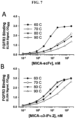
- FIG. 6 shows that the binding of both MICA- ⁇ 3-iFv.1 and MICA- ⁇ 3-iFv.2 to FGFR3 was comparable to that of a MICA-scFv, made by fusing to the C-terminus of soluble MICA a traditional scFv constructed from MAbR3.
- MICA- ⁇ 3-iFv The ability of MICA- ⁇ 3-iFv to redirect NK cell-mediated lysis of FGFR3-expressing target cells was demonstrated in vitro in a calcein-release assay.
- the Natural Killer (NK) cell line, NKL was co-cultured with calcein-loaded P815 target cells ectopically expressing FGFR3.
- the results in Figure 8 showed that the two MICA- ⁇ 3-iFv molecules induced significantly greater NK-mediated lysis compared to the traditional MICA-scFv fusion, while the non-targeted soluble MICA control had no killing activity.
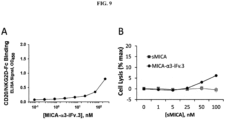
- Figure 9 shows that MICA- ⁇ 3-iFv.3 was able to specifically bind wells coated with CD20 in a plate-based ELISA as described above and also induced NK-mediated lysis of Ramos cells expressing CD20 in a calcein-release assay.
- Example 2 Modified ⁇ 1- ⁇ 2 Domains of NKG2D Ligands.
- Human proteins designated ULBP-1 through ULBP-6 are, like MICA and MICB, naturally occurring, stress-induced, cell surface ligands that bind NKG2D receptors on and activate human NK cells and certain T-cells (15; Cerwenka A, Lanier LL (2004).
- NKG2D ligands unconventional MHC class I-like molecules exploited by viruses and cancer.
- cowpox virus protein OMCP is a secreted domain that like the ⁇ 1- ⁇ 2 domain of MIC proteins binds NKG2D.
- OMCP exhibits a very high affinity for NKG2D, apparently in order to block NKG2D's recognition of the natural stress ligands induced by the virus on its infected host cell ( Eric Lazear, Lance W. Peterson, Chris A. Nelson, David H. Fremont. J Virol. 2013 January; 87(2): 840-850. doi: 10.1128/JVI.01948-12 ).
- ULBPs and OMCP are considered NKG2D ligands (NKG2DLs) that share the canonical ⁇ 1- ⁇ 2 domain structure
- the sequence homology with MICA ⁇ 1- ⁇ 2 is less than 27%, and they all naturally lack an ⁇ 3 domain for tethering targeting domains.
- We constructed a series of non-natural ULB and OMCP proteins by attaching the heterologous polypeptides that specifically targeted and killed FGFR3-expressing cells as the result of fusing to each of ULBP-1, ULBP-2, ULBP-3, ULBP-4, ULBP-6 and OMCP, a modified ⁇ 3 domain of MICA into which a targeting iFv had been inserted.
- KLM44 was a baculoviral expression vector derived from SW403 into which MICA- ⁇ 3-iFv.2 had previously been cloned (example 1).
- the new NKG2DL- ⁇ 3-iFv.2 constructs containing the ULBPs and OMCP ⁇ 1- ⁇ 2 domain fusions to ⁇ 3-iFv.2 (ULBP1- ⁇ 3-iFv.2, ULBP2- ⁇ 3-iFv.2, ULBP3- ⁇ 3-iFv.2, ULBP4- ⁇ 3-iFv.2, ULBP6- ⁇ 3-iFv.2, and OMCP- ⁇ 3-iFv.2; SEQ ID NO.:21-26, respectively), were co-transfected with baculoviral DNA into SF9 insect cells.
- Baculovirus was grown for two amplification cycles and used to express these His-tagged NKG2DL- ⁇ 3-iFv.2 proteins in T.ni insect cells according to manufacturer's protocol (Invitrogen). The expression was carried out in a 100 mL volume for three days and the growth medium was harvested for purification of the secreted soluble protein using Ni-affinity chromatography. Monomeric proteins of correct molecular weight were purified to >90% purity as determined by SDS-PAGE. Functional characterization was carried out using binding ELISAs and in vitro target cell killing assays.
- NKG2DL- ⁇ 3-iFv.2 proteins were tested in a FGFR3-binding ELISA to confirm simultaneous binding to the FGFR3 target and the NKG2D receptor.
- FGFR3 in phosphate buffered saline (PBS) was coated onto Maxisorp plates at 2 ug/ml concentration.
- PBS phosphate buffered saline
- Each NKG2DL- ⁇ 3-iFv.2 protein was titrated, allowed to bind FGFR3 for 1 hour, and washed to remove unbound protein.
- the bound NKG2DL- ⁇ 3-iFv.2 protein was detected using NKG2D-Fc and anti-Fc-HRP conjugate.
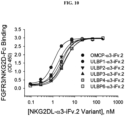
- Figure 10 shows that all 6 NKG2DL- ⁇ 3-iFv.2 proteins bound potently to FGFR3, as expected, through interaction with the iFv.2 domain, and the NKG2D binding activity was retained by the attached NKG2DL ⁇ 1- ⁇ 2 domains, which demonstrated that the attached ⁇ 3-iFv domain imparted functional FGFR3 binding activity to the ULBP and OMPC proteins that, like MIC proteins, bind NKG2D.
- NKG2DL- ⁇ 3-iFv.2 proteins The ability of the NKG2DL- ⁇ 3-iFv.2 proteins to redirect NK cell-mediated lysis of FGFR3-expressing target cells was demonstrated in vitro in a calcein-release assay.
- the Natural Killer (NK) cell line, NKL was co-cultured with calcein-loaded P815 target cells ectopically expressing FGFR3.
- the results in Figure 11 showed that OMCP- ⁇ 3-iFv.2 induced the greatest NK-mediated lysis, while the other NKG2DL- ⁇ 3-iFv.2 proteins all displayed specific killing activity with varying degrees of potency and amount of lysis.
- Example 3 Modified ⁇ 1- ⁇ 2 Domains of NKG2D Ligands. These are examples of attaching polypeptides to NKG2DLs which were modified to significantly enhance their binding affinity to the human NKG2D receptor.
- the ⁇ 1- ⁇ 2 domain of MIC proteins is an NKG2DL for the NKG2D receptor. This affinity is sufficient for physiologic activation of NK cells and stimulating lysis of cells expressing native full-length MIC proteins irreversibly tethered to the two-dimensional plasma membrane surface of a "target cell” ( Bauer S, Groh V, Wu J, Steinle A, Phillips JH, Lanier LL, Spies T., Science. 1999 Jul 30;285(5428):727-9 .).
- engineered soluble MIC proteins of the instant invention reversibly bind specific target antigens on the surface of a target cell
- the binding affinity of the engineered soluble MIC protein to NKG2D will directly affect the stability of the soluble MIC-dependent complex formed between NK cells and cells expressing target antigens.
- the affinity between sMICA and NKG2D is increased by a substantially slower dissociation rate or off-rate of the modified sMICA from NKG2D, the NK cell-based killing would be expected to be greater at lower densities of soluble MIC molecules bound to a target cell.
- This example of the instant invention relates to modifying the NKG2D binding affinity of soluble MIC proteins through engineering specific mutations at selected amino acid positions within the ⁇ 1- ⁇ 2 domain that influence the off-rate binding kinetics and thereby alter the NK cell-mediated killing activity of the invented non-natural, targeted MIC molecules.
- heterologous molecules such as a polypeptide to each of these 4 modified ⁇ 1- ⁇ 2 NKG2DLs using a linker peptide.
- His-tagged proteins SEQ ID NOs.: 31-34 consisting of modified NKG2DLs with attached heterologous molecules were expressed in insect cells and purified to characterize their NKG2D binding affinities and kinetic binding parameters.
- a competitive binding ELISA we determined the relative NKG2D binding affinities of the 4 modified ⁇ 1- ⁇ 2 variants.
- a soluble wild type (WT) NKG2DL, sMICA protein was coated in all wells of a maxisorp ELISA plate to provide a binding partner for the human NKG2D-Fc reagent.
- Solutions of the four ⁇ 1- ⁇ 2 variants as well as WT and WED- ⁇ 1- ⁇ 2 domains (SEQ ID NO.: 35) were titrated in the ELISA wells and allowed to competitively inhibit 2nM human NKG2D-Fc binding to the WT sMICA coated on the plate.
- the level of human NKG2D-Fc that bound to the WT NKG2DL on the plate was detected using an anti-Fc-HRP antibody.
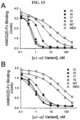
- Figure 13 Panel A, shows variants 16, 17, and 18 exhibited IC 50 values of 0.7, 0.6, 0.5 nM while variant 15 exhibited an IC 50 value of 1.7 nM, all possessing significantly better binding to NKG2D, 27, 32-, 38- and 11-fold better, than WT NKG2DL, respectively, as well as substantially better than WED-MICA (Table 3).
- Table 3 Equilibrium and kinetic binding parameters for ⁇ 1- ⁇ 2 variants. IC 50 values were derived from 4-parameter fits to the competition binding titrations ( Figure 12) and the kinetic binding parameters were derived from single exponential fits to the binding kinetics ( Figure 13).
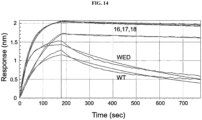
- both the on-rates and off-rates for the ⁇ 1- ⁇ 2 variant NKG2DLs binding to surface coated biotinylated human NKG2D were measured using biolayer interferometry (Octet) at 100 nM of each of the modified ⁇ 1- ⁇ 2 proteins. Consistent with results from the IC 50 ELISAs, variants 16, 17 and 18 each displayed significant reductions in the off-rate (18-fold relative to WT), which is largely responsible for the affinity increase ( ⁇ 30-fold relative to WT a1-a2)( Figure 14 ; Table 3).
- variant 15 displayed a similar slow off-rate as did 16, 17, and 18, its on-rate was decreased, resulting in an affinity stronger than WT but weaker variants 16, 17 and 18. Because the only difference between variant 15 (SEQ ID NO.:31 ) and 16 (SEQ ID NO.:32) was K125N versus K125L, the mutation at position 125 clearly altered the on-rate while the decreased off-rate was attributed to the H161R mutation.
- ⁇ 1- ⁇ 2 affinity variants to redirect NK cell-mediated lysis of FGFR3-expressing target cells was demonstrated in vitro in a calcein-release assay.
- the human Natural Killer (NK) cell line, NKL was co-cultured with calcein-loaded P815 target cells ectopically expressing FGFR3 and titrated with soluble modified MIC proteins.
- the results in Figure 15 showed that the killing activities of the FGFR3-specific soluble MIC variants correlated with their engineered ⁇ 1- ⁇ 2 affinities. Specifically, variants 16, 17, and 18 exhibited ⁇ 15-fold more killing than WT at 0.78 nM.
- the WED-MICA (SEQ ID NO.:35) was only slightly better than WT. Therefore, the invention describes amino acid substitutions within the ⁇ 1- ⁇ 2 domain that increased the NKG2D binding affinity by reducing the off-rate of soluble MIC protein binding to human NKG2D and consequentially led to the predictably increased killing potency.
- WED-MICA which exhibited somewhat greater affinity than WT MICA to NKG2D ( Figure 13 , Panel A) by increasing on-rate rather than reducing off-rate ( Figure 14 ), did not exhibit substantial improvement of target cell killing ( Figure 15 ).
- the ⁇ 1- ⁇ 2 domain of MICA and other NKG2D ligands bind the NKG2D receptor at a known specific site (Li et al 2001; Benjamin J. McFarland, Tanja Kortemme, Shuyuarn F. Yu, David Baker, and Roland K. Strong. Symmetry Recognizing Asymmetry: Analysis of the Interactions between the C-Type Lectin-like Immunoreceptor NKG2D and MHC Class I-like Ligands. Structure, Vol. 11, 411-422, April, 2003 ) and drive activation of the NKG2D receptor-bearing immune cell, which consequentially kills target cells displaying MICA or other ligands.
- the DNA polynucleotides encoding the 8 variant ⁇ 1- ⁇ 2 domains were amplified with PCR primers (SEQ ID NO.s: 63-64). Using Blp1 and Sap1 restriction enzymes, each was subcloned into a His-tagged ⁇ 1- ⁇ 2 - ⁇ 3-Fv fusion expression construct (SEQ ID NO.:65) to replace the sequence encoding the natural (wt) ⁇ 1- ⁇ 2 sequences with the mutated ⁇ 1- ⁇ 2 sequences.
- the 9 fusion proteins (SEQ ID NO.s: 66-74) were expressed in 293 cells (Expi293 TM Expression System, Life Technologies, Thermo Fisher, Inc.) and affinity purified using Ni-affinity chromatography (HisTrap HP, GE Healthcare Life Sciences).
- NKG2D receptor proteins To construct NKG2D receptor proteins, we synthesized DNA encoding the extracellular domain ("ectodomain") of the wild type receptor (SEQ ID No.:75) and used PCR primers (SEQ ID NO.s: 76-77) and XbaI and BamHI sites to clone the synthetic DNA into an N-terminal His-avitag expression vector (SEQ ID NO.: 78). The His-avitag-natural NKG2D (SEQ ID NO.:79) was expressed transiently in 293 cells and purified using Ni-affinity chromatography.
- NKG2D proteins were site-specifically biotinylated using BirA to attach a biotin group onto the avitag sequence (BirA biotin-protein ligase standard reaction kit, Avidity, LLC, Aurora, CO.).
- the selected ⁇ 1- ⁇ 2 domain mutations as fusions to heterologous polypeptides ⁇ 3-Fv of SEQ ID NO.s: 68-74 increased the ⁇ 1- ⁇ 2 domain affinity for natural NKG2D through significant reduction of the off-rate.
- the off-rates ranged from 20- to more than 100-fold slower than those of wt (SEQ ID NO.:66) and the previously described MICwed ⁇ 1- ⁇ 2 domain variant (SEQ ID NO.:67).
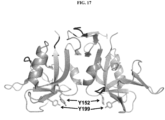
- NKG2D receptor proteins To construct the non-natural NKG2D receptor proteins, we used PCR primers (SEQ ID NO.s:76-77) to clone the DNA encoding the natural NKG2D ectodomain (SEQ ID NO.:75) and insert it into the N-terminal His-avitag expression vector SEQ ID NO.:78 to produce His-avitag-NKG2D (SEQ ID NO.:79). Site-directed mutagenesis was performed on the natural NKG2D ectodomain DNA construct to introduce Y152A, Y199A, or Y152A plus Y199A mutations and created three non-natural variants of human NKG2D (SEQ ID NO.s: 80-82, respectively).
- NKG2D and 3 non-natural NKG2D mutants with His-avitags were expressed transiently in 293 cells and purified using Ni-affinity chromatography. Following purification, the NKG2D proteins were site-specifically biotinylated using BirA to attach a biotin group onto the avitag sequence (BirA biotin-protein ligase standard reaction kit, Avidity, LLC, Aurora, CO.).
- the 3 fusion proteins, MICA-Fc (SEQ ID NO.: 84), MICwed-Fc (SEQ ID NO.: 85), and MICv25-Fc (SEQ ID NO.: 86) were expressed in 293 cells (Expi293 TM Expression System, Life Technologies, Thermo Fisher, Inc.) and affinity purified using Protein A affinity chromatography (cat. no. 20334, Pierce Biotechnology, Rockford, IL).
- NKG2D ligand-Fc fusion proteins MICB-Fc, ULBP1-Fc, ULBP2-Fc, ULBP3-Fc, and ULBP4-Fc were purchased from R&D Systems, Inc. (Minneapolis, MN). Binding of the different ⁇ 1- ⁇ 2 domain-Fc fusions to both natural and non-natural NKG2D ectodomain proteins was analyzed using a plate-based ELISA method.
- the biotinylated natural and non-natural NKG2D receptor proteins were titrated against the plate-bound NKG2D ligands for 2 hours at 20-22°C, washed 3 times with PBS/0.05% Tween20 at 20-22°C, and the bound NKG2D proteins subsequently detected using a streptavidin-HRP secondary detection step and developed with 1-Step Ultra TMB Elisa.
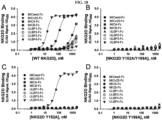
- the natural form of the ectodomain of NKG2D (SEQ ID NO.:75) was capable of binding all ⁇ 1- ⁇ 2 domain-Fc fusions tested ( Figure 18 , Panel A).
- NKG2D While the binding specificity of natural NKG2D shows preference for the high affinity non-natural ligands, its potent binding to the natural NKG2D ligands, which are present on certain healthy tissues and many stressed tissues, creates an extreme risk for toxicity using current NKG2D CAR approaches (VanSeggelen et al. 2015).
- the Y152A non-natural NKG2D receptor specifically bound to only the protein comprised of the high affinity non-natural ⁇ 1- ⁇ 2 domain engineered for a markedly decreased off-rate.
- Example 5 Modified ⁇ 1- ⁇ 2 Domains of NKG2D Ligands.
- This embodiment relates to additional ⁇ 1- ⁇ 2 NKG2DL affinity variants derived through engineering the ⁇ 1- ⁇ 2 domains of ULBP proteins.
- ULBP proteins contain ⁇ 1- ⁇ 2 domains, which are NKG2D ligands capable of binding to the NKG2D receptor ( Cerwenka A, Lanier LL (2004). NKG2D ligands: unconventional MHC class I-like molecules exploited by viruses and cancer. Tissue Antigens 61 (5): 335-43. doi:10.1034/j.1399-0039.2003.00070.x. PMID 12753652 ).
- NKG2D binding is sufficient for physiologic activation of NK cells and stimulating lysis of cells expressing native full-length ULBP proteins naturally and irreversibly tethered to the two-dimensional plasma membrane surface of a "target cell” ( Cerwenka A, Lanier LL (2004). NKG2D ligands: unconventional MHC class I-like molecules exploited by viruses and cancer. Tissue Antigens 61 (5): 335-43. doi:10.1034/j.1399-0039.2003.00070.x. PMID 12753652 ).
- engineered soluble ⁇ 1- ⁇ 2 domains fused to heterologous polypeptides in certain embodiments of the instant invention reversibly bind specific target antigens on the surface of a target cell
- the binding affinity of the engineered ULBP ⁇ 1- ⁇ 2 domains to NKG2D will directly affect the stability of the artificial synapse formed between NK cells and cells expressing target antigens, as already shown by engineered soluble MIC proteins (Examples 2-4).
- ULBP proteins were used as a substrate or starting point for phage display-based engineering of their NKG2D binding affinity.
- ULBP2 and ULBP3 were chosen for phage display and selection of mutants with high affinity NKG2D binding.
- Positions R162 and K165 in the ⁇ 1- ⁇ 2 domain of ULBP3 contained specific mutations that were identified as preferred amino acid substitutions with enhanced NKG2D-binding affinity ( Figure 19 , Panel B; and Table 7). These modified non-natural ⁇ 1- ⁇ 2 domains derived from ULBP2 and ULBP3 can be used for enhanced NKG2D binding in multiple therapeutic formats as single proteins or fusions to heterologous peptides or polypeptides. Table 7. Selected affinity mutations at the indicated 2 amino acid positions of the ⁇ 1- ⁇ 2 domain of ULBP3.
- Example 6 (Binding and Cytolysis by Modified ⁇ 1- ⁇ 2 Domains of ULBPs Fused to Antibody Peptides).
- the following example relates to attaching antibody polypeptides to NKG2DLs which were modified to significantly enhance their binding affinity to the human and murine NKG2D receptor.
- the ⁇ 1- ⁇ 2 domain of each ULBP protein is a natural ligand for the NKG2D receptor, i.e. an NKG2DL.
- Antibodies are highly stable glycoproteins made up of two large heavy chains and two small light chains ( Figure 1 ). There did not exist in the art an IgG antibody format that can directly activate immune cells using non-natural ULBP ⁇ 1- ⁇ 2 domains that bind more tightly than native ULBP domains to the NKG2D receptor.
- the ULBP ⁇ 1- ⁇ 2 domains provide alternative NKG2DLs to construct antibody fusions that may have differential in vivo properties relative to MICA ⁇ 1- ⁇ 2 domains.
- an in vivo anti-drug antibody response to MICA ⁇ 1- ⁇ 2 domains within an antibody fusion would likely not react to or interfere with modified ULBP ⁇ 1- ⁇ 2 domains due to the low sequence homology between ULBP and MICA ⁇ 1- ⁇ 2 domains ( Figure 20 ).
- the DNA sequences encoding the C8S modified ⁇ 1- ⁇ 2 domains of ULBP2 (SEQ ID NO.: 16) variants R80W and V151D (SEQ ID NO.s: 87 and 88, respectively) and the C103S modified ⁇ 1- ⁇ 2 domain of ULBP3 (SEQ ID NO.: 17) variant R162G (SEQ ID NO.: 89) were synthesized and cloned as C-terminal fusions to the heavy chain sequence from the Her2-specific antibody ( Carter, P., Presta, L., Gorman, CM., Ridgway, JB., Henner, D., Wong, WL., Rowland, AM., Kotts, C., Carver, ME., Shepard, HM.
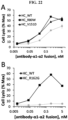
- Binding ELISAs performed on the ULBP2 and ULBP3 ⁇ 1- ⁇ 2 antibody heavy chain fusions demonstrated the modified ULBP2 fusions (HC_R80W and HC_V151D) and UBLP3 fusion (HC_R162G) bound with higher affinity to human NKG2D relative to their respective natural ⁇ 1- ⁇ 2 domains fused to the same heavy chain ( Figure 21 , Panels A and B).
- ULBP2 variant fusions HC_R80W and HC_V151D killed SKBR3 cells more effectively than antibody fusions containing either native ⁇ 1- ⁇ 2 domain.
- modified ⁇ 1- ⁇ 2 variant-antibody fusions are a universal platform for enabling IgG molecules to bind tightly to NKG2D and to direct antigen-specific cell lysis.
- Example 7 (constructing orthogonal non-natural ⁇ 1- ⁇ 2 domains with selective binding to Y152A non-natural NKG2D)
- non-natural NKG2D CAR-T cells which lack binding to all natural NKG2D ligands and can be controlled through the binding of high-affinity non-natural ⁇ 1- ⁇ 2 domains as demonstrated in Example 4.
- An additional requirement is for the non-natural ⁇ 1- ⁇ 2 domains to retain high affinity for non-natural NKG2D, and avoid binding to natural NKG2D domains.
- engineered ⁇ 1- ⁇ 2 domains that exhibit strong selectivity for non-natural NKG2D receptors over natural NKG2D represent an ideal system for selective control of non-natural NKG2D CAR receptors, or any receptor or protein fused to non-natural NKG2D ectodomains that can be selectively engaged by non-natural ⁇ 1- ⁇ 2 domains.
- phage display was employed to engineer orthogonal non-natural ⁇ 1- ⁇ 2 domains that exhibit selective binding to the Y152A NKG2D receptor.
- three non-natural ⁇ 1- ⁇ 2 domains with high affinity for natural NKG2D were selected as parent domains for further mutagenesis and screening by phage display.
- Synthetic DNA libraries were generated for the individual ⁇ 1- ⁇ 2 domain variants DSM25, ULBP2 R80W, and ULBP3 R162G (SEQ ID NO.s: 57, 87, and 89), whereby codons of amino acid residues that in the bound state are positioned in close proximity to the Y152 position on the NKG2D receptor were replaced with NNK codons.
- DSM 25 libraries consisted of NNK positions at residues 71-75 and 155-159, ULBP2 R80W libraries with NNK codons at positions 154-159, and ULBP3 R162G libraries with NNK codons at positions 155 -159.
- Libraries were cloned as fusions to the pill minor coat protein of M13 phage; and phage particles displaying the mutagenized ⁇ 1- ⁇ 2 domain variants were produced in SS320 E.coli cells according to standard methodologies ( Andris-Widhopf, J., Steinberger, P., Fuller, R., Rader, C., and Barbas, C. F., 3rd. (2011).
- the ⁇ 1- ⁇ 2 phage display libraries were sorted for high binding affinity to the non-natural Y152A NKG2D receptor by selectively capturing phage clones bound to biotinylated Y152A NKG2D-Fc protein in the presence of non-biotinylated natural NKG2D-Fc competitor protein. Selective clones were enriched by cycling through multiple rounds of competitive selection with increasing concentrations of non-biotinylated natural NKG2D-Fc.
- phage clones were sequenced to identify specific mutations within the NNK mutagenic regions.
- Tables 8, 9, and 10 show the selected amino acid residues that were found to be prevalent for each ⁇ 1- ⁇ 2 domain resulting from the Y152A NKG2D selective screening.
- Table 8. Selected mutations within DSM25 that resulted in Y152A-specific phage clones. K71 D72 L73 R74 M75 T155 H156 Y157 H158 A159 T T L L R I G G G L L F L R S S S I D R H R L L R W Table 9. Selected mutations within ULBP2 R80W that resulted in Y152A-specific phage clones.
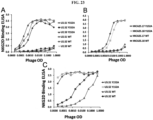
- phages were produced for the individual clones: MICA25.17, MICA25.18, ULBP2.S1, ULBP2.S2, ULBP2.S3, ULBP3.S1 and ULBP3.S2 (SEQ ID NOs: 90, 91, 92, 93, 94, 95, and 96 respectively) and titrated against Y152A or natural NKG2D in binding ELISAs.
- Figure 23 Panels A-C, demonstrated that all 7 phage clones displayed greater than 10-fold selective binding to non-natural Y152A NKG2D over natural or wild-type NKG2D.
- MICA25.17 and ULBP2.S3 as C-terminal fusions to the heavy chain of an FGFR3 specific antibody previously described (Qing et al, 2009. op cit; SEQ ID NO.s: 97 and 98, respectively).
- the resulting fusions were cloned into the mammalian expression vector pD2509 and co-expressed with the light chain of the parent antibody as paired full IgG antibodies (R3 HC25.17 and R3 HC.U2S3).
- Transient expressions were carried out in HEK293 cells using the Expi293 expression system according to the manufacturer's protocol (Life Technologies), and purified using standard protein-A affinity chromatography.
- ELISAs measuring the binding of R3 HC25.17 and R3 HC.U2S3 ⁇ 1- ⁇ 2 antibody heavy chain fusions to non-natural Y152A NKG2D and to natural NKG2D demonstrated their significantly greater binding affinity toward Y152A NKG2D relative to the natural NKG2D ( Figure 24 , Panels B and D).
- the antibody fusions to DSM25 and ULBP2 R80W exhibited preferred binding to natural NKG2D-Fc ( Figure 24 , panels A and C).
- Example 8 The targeting and killing activity of CAR-T cells with the non-natural NKG2D ectodomain are controlled using orthogonal ⁇ 1- ⁇ 2 domains fused to targeting antibodies).
- the resulting natural NKG2D CAR-T cells exhibited specific cell killing activity in vitro, consistent with recognition of the natural MICA ligand expressed on target cells.
- Figure 26 Panel A, showed that although natural NKG2D CAR-T cells killed P1 cells expressing natural MICA ligands, the non-natural Y152A NKG2D CAR-T cells were significantly disabled and exhibited much reduced killing of MICA expressing P1 cells.
- Figure 26 Panel B, showed that the orthogonal ⁇ 1- ⁇ 2 antibody heavy chain fusions, R3 HC25.17 and R3 HC.U2S3, selectively activated the non-natural Y152A CAR-T cells to kill FGFR3 expressing P1 target cells, but were not capable of redirecting the killing activity of natural NKG2D CAR-T cells. This was in contrast to the R3 HC25 and R3 HC.U2R80W ⁇ 1- ⁇ 2 antibody heavy chain fusions which were not selective for non-natural Y152A NKG2D and activated both natural and non-natural CAR-T cells to kill P1 target cells.
Landscapes
- Health & Medical Sciences (AREA)
- Life Sciences & Earth Sciences (AREA)
- Chemical & Material Sciences (AREA)
- General Health & Medical Sciences (AREA)
- Organic Chemistry (AREA)
- Animal Behavior & Ethology (AREA)
- Public Health (AREA)
- Veterinary Medicine (AREA)
- Immunology (AREA)
- Epidemiology (AREA)
- Medicinal Chemistry (AREA)
- Biochemistry (AREA)
- Biophysics (AREA)
- Genetics & Genomics (AREA)
- Molecular Biology (AREA)
- Proteomics, Peptides & Aminoacids (AREA)
- Cell Biology (AREA)
- Nuclear Medicine, Radiotherapy & Molecular Imaging (AREA)
- Chemical Kinetics & Catalysis (AREA)
- Pharmacology & Pharmacy (AREA)
- General Chemical & Material Sciences (AREA)
- Toxicology (AREA)
- Gastroenterology & Hepatology (AREA)
- Zoology (AREA)
- Virology (AREA)
- Oncology (AREA)
- Communicable Diseases (AREA)
- Peptides Or Proteins (AREA)
- Micro-Organisms Or Cultivation Processes Thereof (AREA)
- Medicines Containing Antibodies Or Antigens For Use As Internal Diagnostic Agents (AREA)
- Medicines Containing Material From Animals Or Micro-Organisms (AREA)
- Medicinal Preparation (AREA)
Applications Claiming Priority (3)
| Application Number | Priority Date | Filing Date | Title |
|---|---|---|---|
| US201562200949P | 2015-08-04 | 2015-08-04 | |
| PCT/US2016/045550 WO2017024131A1 (en) | 2015-08-04 | 2016-08-04 | Insertable variable fragments of antibodies and modified a1-a2 domains of nkg2d ligands, and non-natural nkg2d ligands that bind non-natural nkg2d receptors |
| EP16754043.4A EP3331912B1 (de) | 2015-08-04 | 2016-08-04 | Einsetzbare variable fragmente von antikörpern und modifizierten a1-a2-domänen von nkg2d-liganden und nicht-natürliche nkg2d-liganden, die an nicht-natürliche nkg2d-rezeptoren binden |
Related Parent Applications (1)
| Application Number | Title | Priority Date | Filing Date |
|---|---|---|---|
| EP16754043.4A Division EP3331912B1 (de) | 2015-08-04 | 2016-08-04 | Einsetzbare variable fragmente von antikörpern und modifizierten a1-a2-domänen von nkg2d-liganden und nicht-natürliche nkg2d-liganden, die an nicht-natürliche nkg2d-rezeptoren binden |
Publications (2)
| Publication Number | Publication Date |
|---|---|
| EP4400517A2 true EP4400517A2 (de) | 2024-07-17 |
| EP4400517A3 EP4400517A3 (de) | 2024-10-16 |
Family
ID=56740479
Family Applications (2)
| Application Number | Title | Priority Date | Filing Date |
|---|---|---|---|
| EP16754043.4A Active EP3331912B1 (de) | 2015-08-04 | 2016-08-04 | Einsetzbare variable fragmente von antikörpern und modifizierten a1-a2-domänen von nkg2d-liganden und nicht-natürliche nkg2d-liganden, die an nicht-natürliche nkg2d-rezeptoren binden |
| EP24172275.0A Pending EP4400517A3 (de) | 2015-08-04 | 2016-08-04 | Einsetzbare variable fragmente von antikörpern und modifizierten a1-a2-domänen von nkg2d-liganden und nichtnatürliche nkg2d-liganden zur bindung an nichtnatürliche nkg2d-rezeptoren |
Family Applications Before (1)
| Application Number | Title | Priority Date | Filing Date |
|---|---|---|---|
| EP16754043.4A Active EP3331912B1 (de) | 2015-08-04 | 2016-08-04 | Einsetzbare variable fragmente von antikörpern und modifizierten a1-a2-domänen von nkg2d-liganden und nicht-natürliche nkg2d-liganden, die an nicht-natürliche nkg2d-rezeptoren binden |
Country Status (16)
| Country | Link |
|---|---|
| US (1) | US10259858B2 (de) |
| EP (2) | EP3331912B1 (de) |
| JP (3) | JP6853250B2 (de) |
| KR (1) | KR20180037236A (de) |
| AU (1) | AU2016303611B2 (de) |
| CA (1) | CA2993354A1 (de) |
| DK (1) | DK3331912T3 (de) |
| FI (1) | FI3331912T3 (de) |
| HR (1) | HRP20240997T1 (de) |
| HU (1) | HUE067376T2 (de) |
| LT (1) | LT3331912T (de) |
| PL (1) | PL3331912T3 (de) |
| PT (1) | PT3331912T (de) |
| RS (1) | RS65746B1 (de) |
| SI (1) | SI3331912T1 (de) |
| WO (1) | WO2017024131A1 (de) |
Families Citing this family (30)
| Publication number | Priority date | Publication date | Assignee | Title |
|---|---|---|---|---|
| DK3143134T3 (da) | 2014-05-15 | 2021-01-04 | Nat Univ Singapore | Modificerede, naturlige dræberceller og anvendelser deraf |
| CA2963274C (en) * | 2014-12-05 | 2024-01-30 | Avidbiotics Corp. | Insertable variable fragments of antibodies and modified a1-a2 domains of nkg2d ligands |
| US11117969B2 (en) * | 2014-12-05 | 2021-09-14 | Xyphos Biosciences Inc. | Insertable variable fragments of antibodies and modified α1-α2 domains of NKG2D ligands |
| WO2016134371A2 (en) | 2015-02-20 | 2016-08-25 | Ohio State Innovation Foundation | Bivalent antibody directed against nkg2d and tumor associated antigens |
| JP2019523016A (ja) * | 2016-06-24 | 2019-08-22 | サイフォス、バイオサイエンシズ、インコーポレイテッドXyphos Biosciences Inc. | 抗体の挿入可能な可変フラグメントおよびnkg2dリガンドの改変型a1−a2ドメイン |
| CA3056591A1 (en) | 2017-03-27 | 2018-10-04 | National University Of Singapore | Stimulatory cell lines for ex vivo expansion and activation of natural killer cells |
| BR112019019917A2 (pt) * | 2017-03-27 | 2020-04-22 | Nat Univ Singapore | receptores quiméricos nkg2d truncados e seus usos em imunoterapia de células exterminadoras naturais |
| CN112236514A (zh) * | 2017-12-05 | 2021-01-15 | 塞利亚德股份公司 | 改善细胞过继转移的持久性的组合物和方法 |
| EP3749685A4 (de) | 2018-02-09 | 2021-12-22 | National University of Singapore | Aktivierung von chimären nkg2d-rezeptoren und verwendungen davon in der immuntherapie mit natürlichen killerzellen |
| JOP20200234A1 (ar) * | 2018-03-27 | 2020-09-15 | Xyphos Biosciences Inc | نطاقات a1-a2 معدلة لمركبات ترابطية nkg2d غير طبيعية ترتبط بمستقبلات nkg2d غير طبيعية. |
| JP7334985B2 (ja) | 2018-04-02 | 2023-08-29 | ナショナル ユニヴァーシティー オブ シンガポール | 免疫細胞で発現される膜結合抗サイトカイン非シグナル伝達バインダーによるヒトサイトカインの中和 |
| JP7427253B2 (ja) * | 2018-07-09 | 2024-02-05 | 国立大学法人 熊本大学 | 環状一本鎖抗体 |
| AU2019302603A1 (en) | 2018-07-13 | 2021-01-14 | Nanjing Legend Biotech Co., Ltd. | Co-receptor systems for treating infectious diseases |
| EP3844186A4 (de) | 2018-08-29 | 2022-08-17 | National University of Singapore | Verfahren zur spezifischen stimulation des überlebens und der expansion von genetisch modifizierten immunzellen |
| AU2019376632B2 (en) * | 2018-11-05 | 2025-07-24 | Xyphos Biosciences Inc. | Non-natural NKG2D receptors that do not directly signal the cells to which they are attached |
| CA3120563A1 (en) | 2018-11-26 | 2020-06-04 | Nkarta, Inc. | Methods for the simultaneous expansion of multiple immune cell types, related compositions and uses of same in cancer immunotherapy |
| CN109627342B (zh) * | 2018-12-10 | 2022-12-06 | 苏州近岸蛋白质科技股份有限公司 | 应用于nk细胞培养的蛋白质、培养基配方组合及制备方法 |
| JP7641223B2 (ja) * | 2019-01-28 | 2025-03-06 | サイフォス、バイオサイエンシズ、インコーポレイテッド | Car細胞上の非天然nkg2d受容体に、結合した異種分子を選択的に送達する改変非天然nkg2dリガンド |
| EP3927722A4 (de) * | 2019-02-18 | 2022-11-23 | Courier Therapeutics, Inc. | Bispezifisches fusionsprotein, das orthopoxvirus haupt-histokompatibilitätskomplex (mhc) klasse l-ähnliches protein (omcp) und tumorspezifischen bindungspartner verwendet |
| EP3773918A4 (de) | 2019-03-05 | 2022-01-05 | Nkarta, Inc. | Cd19-gerichtete chimäre antigenrezeptoren und deren verwendungen in der immuntherapie |
| JP2023516080A (ja) | 2020-03-06 | 2023-04-17 | ジーオー セラピューティクス,インコーポレイテッド | 抗グリコcd44抗体およびその使用 |
| CN112500497B (zh) * | 2020-12-14 | 2021-06-08 | 南京凯地医疗技术有限公司 | Cltx-nkg2d双特异性嵌合抗原受体细胞及其制备方法和应用 |
| EP4301782A1 (de) | 2021-03-05 | 2024-01-10 | Go Therapeutics, Inc. | Anti-glyco-cd44-antikörper und deren verwendungen |
| US20250101126A1 (en) | 2021-08-05 | 2025-03-27 | Go Therapeutics, Inc. | Anti-glyco-muc4 antibodies and their uses |
| EP4396232A1 (de) | 2021-09-03 | 2024-07-10 | Go Therapeutics, Inc. | Anti-glyco-lamp1-antikörper und deren verwendungen |
| CN118354789A (zh) | 2021-09-03 | 2024-07-16 | Go医疗股份有限公司 | 抗糖-cMET抗体及其用途 |
| CN116003627B (zh) * | 2022-09-16 | 2025-05-13 | 四川大学华西医院 | NKG2D-NKp46细胞接合器分子及其用途 |
| KR20250127134A (ko) | 2022-12-29 | 2025-08-26 | 아스텔라스세이야쿠 가부시키가이샤 | 조작된 자연 살상 세포 및 관련 방법 |
| CN120529915A (zh) | 2023-02-07 | 2025-08-22 | 修普霍斯生物科学有限公司 | 嵌合抗原受体和抗体-nkg2d配体结构域融合蛋白 |
| TW202448960A (zh) | 2023-02-07 | 2024-12-16 | 美商Go治療公司 | 包括抗醣MUC4抗體及MIC蛋白α1-α2結構域之抗體融合蛋白及其用途 |
Citations (1)
| Publication number | Priority date | Publication date | Assignee | Title |
|---|---|---|---|---|
| US8399645B2 (en) | 2003-11-05 | 2013-03-19 | St. Jude Children's Research Hospital, Inc. | Chimeric receptors with 4-1BB stimulatory signaling domain |
Family Cites Families (2)
| Publication number | Priority date | Publication date | Assignee | Title |
|---|---|---|---|---|
| US20150165065A1 (en) * | 2009-12-31 | 2015-06-18 | Avidbiotics Corp. | Non-natural mic proteins |
| CA2963274C (en) * | 2014-12-05 | 2024-01-30 | Avidbiotics Corp. | Insertable variable fragments of antibodies and modified a1-a2 domains of nkg2d ligands |
-
2016
- 2016-08-04 HR HRP20240997TT patent/HRP20240997T1/hr unknown
- 2016-08-04 JP JP2018526495A patent/JP6853250B2/ja active Active
- 2016-08-04 LT LTEPPCT/US2016/045550T patent/LT3331912T/lt unknown
- 2016-08-04 DK DK16754043.4T patent/DK3331912T3/da active
- 2016-08-04 CA CA2993354A patent/CA2993354A1/en active Pending
- 2016-08-04 EP EP16754043.4A patent/EP3331912B1/de active Active
- 2016-08-04 PL PL16754043.4T patent/PL3331912T3/pl unknown
- 2016-08-04 US US15/228,718 patent/US10259858B2/en active Active
- 2016-08-04 PT PT167540434T patent/PT3331912T/pt unknown
- 2016-08-04 KR KR1020187006205A patent/KR20180037236A/ko not_active Ceased
- 2016-08-04 WO PCT/US2016/045550 patent/WO2017024131A1/en not_active Ceased
- 2016-08-04 EP EP24172275.0A patent/EP4400517A3/de active Pending
- 2016-08-04 HU HUE16754043A patent/HUE067376T2/hu unknown
- 2016-08-04 FI FIEP16754043.4T patent/FI3331912T3/fi active
- 2016-08-04 RS RS20240812A patent/RS65746B1/sr unknown
- 2016-08-04 SI SI201631833T patent/SI3331912T1/sl unknown
- 2016-08-04 AU AU2016303611A patent/AU2016303611B2/en active Active
-
2021
- 2021-03-11 JP JP2021038801A patent/JP2021098741A/ja active Pending
-
2023
- 2023-02-16 JP JP2023022377A patent/JP7446501B2/ja active Active
Patent Citations (1)
| Publication number | Priority date | Publication date | Assignee | Title |
|---|---|---|---|---|
| US8399645B2 (en) | 2003-11-05 | 2013-03-19 | St. Jude Children's Research Hospital, Inc. | Chimeric receptors with 4-1BB stimulatory signaling domain |
Non-Patent Citations (69)
| Title |
|---|
| ANDRIS-WIDHOPF, J.STEINBERGER, P.FULLER, R.RADER, C.BARBAS, C. F.: "Generation of human Fab antibody libraries: PCR amplification and assembly of light- and heavy-chain coding sequences", COLD SPRING HARBOR PROTOCOLS, 2011 |
| BAHRAM ET AL.: "A second lineage of mammalian MHC class I genes", PNAS, vol. 91, 1994, pages 6259 - 6263, XP002057254, DOI: 10.1073/pnas.91.14.6259 |
| BAHRAM ET AL.: "Nucleotide sequence of the human MHC class I MICA gene", IMMUNOGENETICS, vol. 44, 1996, pages 80 - 81, XP002057253, DOI: 10.1007/s002510050092 |
| BAHRAMSPIES TA: "Nucleotide sequence of human MHC class I MICB cDNA", IMMUNOGENETICS, vol. 43, 1996, pages 230 - 233 |
| BAUER SGROH VWU JSTEINLE APHILLIPS JHLANIER LLSPIES T., SCIENCE, vol. 285, no. 5428, 30 July 1999 (1999-07-30), pages 727 - 9 |
| BAUER, S ET AL.: "Activation of NK cells and T cells by NKG2D, a receptor for stress-inducible MICA", SCIENCE, vol. 285, 1999, pages 727 - 730 |
| BENJAMIN J. MCFARLANDTANJA KORTEMMESHUYUARN F. YUDAVID BAKERROLAND K. STRONG: "Symmetry Recognizing Asymmetry: Analysis of the Interactions between the C-Type Lectin-like Immunoreceptor NKG2D and MHC Class I-like Ligands", STRUCTURE, vol. 11, April 2003 (2003-04-01), pages 411 - 422 |
| BIRD, R. E., HARDMAN, K. D., JACOBSON, J. W., JOHNSON, S., KAUFMAN, B. M., LEE, S. M., LEE, T., POPE, S. H., RIORDAN, G. S., WHITL: "Single-chain antigen-binding proteins", SCIENCE, vol. 242, 1988, pages 423 - 426, XP000575094, DOI: 10.1126/science.3140379 |
| BURGESS, SJ, IMMUNOL. RES., vol. 40, 2008, pages 18 - 34 |
| BUSCHE, A ET AL.: "NK cell mediated rejection of experimental human lung cancer by genetic over expression of MHC class I chain-related gene A", HUMAN GENE THERAPY, vol. 17, 2006, pages 135 - 146 |
| CANDICE S. E. LENGYELLINDSEY J. WILLISPATRICK MANNDAVID BAKERTANJA KORTEMMEROLAND K. STRONGBENJAMIN J. MCFARLAND: "Mutations Designed to Destabilize the Receptor-Bound Conformation Increase MICA-NKG2D Association Rate and Affinity", JOURNAL OF BIOLOGICAL CHEMISTRY, vol. 282, no. 42, 2007, pages 30658 - 30666, XP055432102, DOI: 10.1074/jbc.M704513200 |
| CARTER, P.PRESTA, L.GORMAN, CM.RIDGWAY, JB.HENNER, D.WONG, WL.ROWLAND, AMKOTTS, C.CARVER, ME.SHEPARD, HM., PROC NATL ACAD SCI, vol. 15, 1992, pages 4285 - 9 |
| CERWENKA ALANIER LL: "NKG2D ligands: unconventional MHC class I-like molecules exploited by viruses and cancer", TISSUE ANTIGENS, vol. 61, no. 5, 2004, pages 335 - 43 |
| CERWENKA, A.L.L. LANIER: "NK cells, viruses and cancer", NAT. REV. IMMUNOL., vol. 1, 2001, pages 41 - 49, XP009029995, DOI: 10.1038/35095564 |
| DAVID J. CULPEPPERMICHAEL K. MADDOX1ANDREW B. CALDWELLBENJAMIN J. MCFARLAND: "Systematic mutation and thermodynamic analysis of central tyrosine pairs in polyspecific NKG2D receptor interactions", MOL IMMUNOL, vol. 48, no. 4, January 2011 (2011-01-01), pages 516 - 523, XP027578520 |
| DAVID J. CULPEPPERMICHAEL K. MADDOXANDREW B. CALDWELLBENJAMIN J. MCFARLAND: "Systematic mutation and thermodynamic analysis of central tyrosine pairs in polyspecific NKG2D receptor interactions", MOL IMMUNOL., vol. 48, no. 4, January 2011 (2011-01-01), pages 516 - 523, XP027578520 |
| DENG WGOWEN BGZHANG LWANG LLAU SIANNELLO AXU JROVIS TLXIONG NRAULET DH: "Antitumor immunity. A shed NKG2D ligand that promotes natural killer cell activation and tumor rejection", SCIENCE, vol. 348, no. 6230, 3 April 2015 (2015-04-03), pages 136 - 9 |
| DOUBROVINA, ESMM DOUBROVINE VIDERRB SISSONRJ O'REILLYB DUPONTYM VYAS: "Evasion from NK Cell Immunity by MHC Class I Chain-Related Molecules Expressing Colon Adenocarcinoma", J. IMMUNOLOGY, 2003, pages 6891 - 99, XP002507236 |
| DU, J.WANG, H.ZHONG, C.PENG, B.ZHANG, M.LI, B.HUO, S.GUO, Y.DING, J.: "Structural basis for recognition of CD20 by therapeutic antibody Rituximab", THE JOURNAL OF BIOLOGICAL CHEMISTRY, vol. 282, 2007, pages 15073 - 15080, XP055094566, DOI: 10.1074/jbc.M701654200 |
| ERIC LAZEARLANCE W. PETERSONCHRIS A. NELSONDAVID H., FREMONT. J VIROL., vol. 87, no. 2, January 2013 (2013-01-01), pages 840 - 850 |
| FRIESE, M. ET AL.: "MICA/NKG2D-mediated immunogene therapy of experimental gliomas", CANCER RESEARCH, vol. 63, 2003, pages 8996 - 9006, XP002472716 |
| FUERTES, MB, MV GIRART, LL MOLINERO, CI DOMAICA, LE ROSSI, MM BARRIO, J MORDOH, GA RABINOVICH, NW ZWIRNER.: "Intracellular Retention of the NKG2D Ligand MHC Class I Chain-Related Gene A in Human Melanomas Confers Immune Privilege and Prevents NK Cell-Mediated Cytotoxicity", J. IMMUNOLOGY, vol. 180, 2008, pages 4606 - 4614 |
| GANNAGÉ MBUZYN ABOGIATZI SILAMBERT MSOUMELIS VDAL CORTIVO LCAVAZZANA-CALVO MBROUSSE NCAILLAT-ZUCMAN: "Induction of NKG2D ligands by gamma radiation and tumor necrosis factor-alpha may participate in the tissue damage during acute graft-versus-host disease", TRANSPLANTATION., vol. 85, no. 6, 27 March 2008 (2008-03-27), pages 911 - 5 |
| GROH ET AL.: "Cell stress-regulated human MHC class I gene expressed in GI epithelium", PNAS, vol. 93, 1996, pages 12445 - 12450, XP002057255, DOI: 10.1073/pnas.93.22.12445 |
| GROH ET AL.: "Co-stimulation of CD8+ af T-cells by NKG2D via engagement by MIC induced on virus-infected cells", NAT. IMMUNOL., vol. 2, 2001, pages 255 - 260 |
| GROH ET AL.: "Recognition of stress-induced MHC molecules by intestinal γδT cells", SCIENCE, vol. 279, 1998, pages 1737 - 1740 |
| HEATHER VANSEGGELENJOANNE A. HAMMILLANNA DVORKIN-GHEVADANIELA G.M. TANTALOJACEK M. KWIECIENGALINA F. DENISOVABRIAN RABINOVICHYONGH: "T cells engineered with chimeric antigen receptors targeting NKG2D ligands display lethal toxicity in mice", MOLECULAR THERAPY, 30 June 2015 (2015-06-30) |
| HENAGER, SAMUEL HMELISSA A. HALENICHOLAS J. MAURICEERIN C. DUNNINGTONCARTER J. SWANSONMEGAN J. PETERSONJOSEPH J. BANDAVID J. CULPE: "Combining different design strategies for rational affinity maturation of the MICA-NKG2D interface", PROTEIN SCIENCE, vol. 21, pages 1396 - 1402, XP055456979, DOI: 10.1002/pro.2115 |
| HOCHMAN JINBAR DGIVOL D: "An active antibody fragment (Fv) composed of the variable portions of heavy and light chains", BIOCHEMISTRY, vol. 12, no. 6, 1973, pages 1130 - 1135, XP055512115 |
| HOLMES ET AL.: "Structural Studies of Allelic Diversity of the MHC Class I Homolog MICB, a Stress-Inducible Ligand for the Activating Immunoreceptor NKG2D", J IMMUNOL., vol. 169, 2001, pages 1395 - 1400 |
| HOUCHINS JP ET AL.: "DNA sequence analysis of NKG2, a family of related cDNA clones encoding type II integral membrane proteins on human NK cells", J. EXP. MED., vol. 173, 1991, pages 1017 - 1020 |
| HOZUMI NTONEGAWA S: "Evidence for somatic rearrangement of immunoglobulin genes coding for variable and constant regions", PROC. NATL. ACAD. SCI. U.S.A., vol. 73, no. 10, 1976, pages 3628 - 3632 |
| HUSTON, J. S.LEVINSON, DMUDGETT-HUNTER, MTAI, M-SNOVOTNY, JMARGOLIES, M.N.RIDGE, R.BRUCCOLERI, RE.HABER, E.CREA, R.: "Protein engineering of antibody binding sites: Recovery of specific activity in an anti-digoxin single-chain Fv analogue produced in Escherichia coli.", PNAS, vol. 85, 1988, pages 5879 - 5883, XP000872837, DOI: 10.1073/pnas.85.16.5879 |
| KALOS MLEVINE, BLPORTER, DLKATZ, SGRUPP, SABAGG, AJUNE, C.: "T Cells with chimeric antigen receptors have potent antitumor effects and can establish memory in patients with advanced leukemia.", SCI TRANSL MED, vol. 3, 2011, pages 95ra73, XP002667262, DOI: 10.1126/scitranslmed.3002842 |
| LANIER, LL: "NK cell receptors", ANN. REV. IMMUNOL., vol. 16, 1998, pages 359 - 393, XP002459728, DOI: 10.1146/annurev.immunol.16.1.359 |
| LE GALL, F.KIPRIYANOV, SMMOLDENHAUER, GLITTLE, M: "Di-, tri- and tetrameric single chain Fv antibody fragments against human CD19: effect of valency on cell binding", FEBS LETTERS, vol. 453, no. 1, 1999, pages 164 - 168, XP071239699, DOI: 10.1016/S0014-5793(99)00713-9 |
| LENGYEL CSWILLIS LJMANN PBAKER DKORTEMME TSTRONG RKMCFARLAND BJ, J BIOL CHEM., vol. 282, no. 42, 8 August 2007 (2007-08-08), pages 30658 - 66 |
| LENGYEL CSWILLIS LJMANN PBAKER DKORTEMME TSTRONG RKMCFARLAND BJ., J BIOL CHEM., vol. 282, no. 42, 19 October 2007 (2007-10-19), pages 30658 - 66 |
| LI ET AL.: "Complex structure of the activating immunoreceptor NKG2D and its MHC class I-like ligand MICA", NATURE IMMUNOL., vol. 2, 2001, pages 443 - 451, XP009153395, DOI: 10.1038/87757 |
| LI PMORRIS DLWILLCOX BESTEINLE ASPIES TSTRONG RK., NAT IMMUNOL, vol. 2, no. 5, May 2001 (2001-05-01), pages 443 - 451 |
| LODOEN, M.K. OGASAWARAJ.A. HAMERMANH. ARASEJ.P. HOUCHINSE.S. MOCARSKIL.L. LANIER: "NKG2D-mediated NK cell protection against cytomegalovirus is impaired by gp40 modulation of RAE-1 molecules", J. EXP. MED., vol. 197, 2003, pages 1245 - 1253, XP002359221, DOI: 10.1084/jem.20021973 |
| MANFRED LEHNER, GABRIEL GOTZ, JULIA PROFF, NIELS SCHAFT, JAN DÖRRIE, FLORIAN FULL, ARMIN ENSSER, YVES A. MULLER, ADELHEID CERWENKA: "Redirecting T Cells to Ewing's Sarcoma Family of Tumors by a Chimeric NKG2D Receptor Expressed by Lentiviral Transduction or mRNA Transfection Research Article I", PLOS ONE, 15 February 2012 (2012-02-15) |
| MARKET EPAPAVASILIOU FN: "V(D)J recombination and the evolution of the adaptive immune system", PLOS BIOL., vol. 1, no. 1, October 2003 (2003-10-01), pages E16 |
| MILLER, B. R.DEMAREST, S. J.LUGOVSKOY, A.HUANG, F.WU, X.SNYDER, W. B.CRONER, L. J.WANG, N.AMATUCCI, A.MICHAELSON, J. S.: "Stability engineering of scFvs for the development of bispecific and multivalent antibodies", PROTEIN ENGINEERING, DESIGN & SELECTION : PEDS, vol. 23, 2010, pages 549 - 557, XP002690428, DOI: 10.1093/protein/gzq028 |
| MONICA CASUCCIATTILIO BONDANZA: "Suicide Gene Therapy to Increase the Safety of Chimeric Antigen Receptor-Redirected T Lymphocytes", J CANCER, vol. 2, 2011, pages 378 - 382, XP055846753 |
| MORGAN RAYANG JCKITANO MDUDLEY MELAURENCOT CMROSENBERG SA: "Case report of a serious adverse event following the administration of T cells transduced with a chimeric antigen receptor recognizing ERBB2", MOL THER, vol. 18, 2010, pages 843 - 851, XP055023624, DOI: 10.1038/mt.2010.24 |
| NORTH BLEHMANN ADUNBRACK RL: "A new clustering of antibody CDR loop conformations", J MOL BIOL, vol. 406, no. 2, 2010, pages 228 - 256, XP028129711, DOI: 10.1016/j.jmb.2010.10.030 |
| PORTER DLLEVINE BLKALOS MBAGG AJUNE CH: "Chimeric antigen receptor-modified T cells in chronic lymphoid leukemia", N ENGL J MED., vol. 365, pages 725 - 733, XP055579937, DOI: 10.1056/NEJMoa1103849 |
| QING, J.DU, X.CHEN, Y.CHAN, P.LI, H.WU, P.MARSTERS, S.STAWICKI, S.TIEN, J.TOTPAL, K.: "Antibody-based targeting of FGFR3 in bladder carcinoma and t(4;14)-positive multiple myeloma in mice", THE JOURNAL OF CLINICAL INVESTIGATION, vol. 119, 2009, pages 1216 - 1229, XP002594035, DOI: 10.1172/JCI38017 |
| RADAEV, S.ROSTRO, B.BROOKS, AG.COLONNA, M.SUN, PD.: "Conformational plasticity revealed by the cocrystal structure of NKG2D and its class I MHC-like Ligand ULBP3", IMMUNITY, vol. 15, 2001, pages 1039 - 49, XP055456733, DOI: 10.1016/S1074-7613(01)00241-2 |
| RAVETCH, JVLANIER LL: "Immune Inhibitory Receptors", SCIENCE, vol. 290, 2000, pages 84 - 89, XP003012961, DOI: 10.1126/science.290.5489.84 |
| SAAR GILLCARL H. JUNE: "Going viral: chimeric antigen receptor T-cell therapy for hematological malignancies", IMMUNOLOGICAL REVIEWS, vol. 263, 2015, pages 68 - 89, XP002760559, DOI: 10.1111/imr.12243 |
| SAMUEL H. HENAGERMELISSA A. HALENICHOLAS J. MAURICEERIN C. DUNNINGTONCARTER J. SWANSONMEGAN J. PETERSONJOSEPH J. BANDAVID J. CULPE: "Combining different design strategies for rational affinity maturation of the MICA-NKG2D interface", PROTEIN SCIENCE, vol. 21, 2012, pages 1396 - 1402, XP055456979, DOI: 10.1002/pro.2115 |
| SENTMAN CLMEEHAN KR: "NKG2D CARs as cell therapy for cancer", CANCER J, vol. 20, no. 2, March 2014 (2014-03-01), pages 156 - 9, XP055564692, DOI: 10.1097/PPO.0000000000000029 |
| SLAVULJICA, I A BUSCHEM BABICM MITROVICI GAŠPAROVICD CEKINOVICE MARKOVA CAREP PUGELA CIKOVICVJ LISNICWJ BRITT: "Recombinant mouse cytomegalovirus expressing a ligand for the NKG2D receptor is attenuated and has improved vaccine properties", J. CLIN. INVEST., vol. 120, 2010, pages 4532 - 4545, XP055742017, DOI: 10.1172/JCI43961 |
| SONG DGYE QSANTORO SFANG CBEST APOWELL DJ JR.: "Chimeric NKG2D CAR-expressing T cell-mediated attack of human ovarian cancer is enhanced by histone deacetylase inhibition", HUM GENE THER., vol. 24, no. 3, March 2013 (2013-03-01), pages 295 - 305, XP055370704, DOI: 10.1089/hum.2012.143 |
| SPEAR PWU MRSENTMAN MLSENTMAN CL: "NKG2D ligands as therapeutic targets", CANCER IMMUN., vol. 13, 1 May 2013 (2013-05-01), pages 8, XP055395298 |
| SPIES, T: "Regulation of NKG2D ligands: a purposeful but delicate affair", NATURE IMMUNOL, vol. 9, 2008, pages 1013 - 1015 |
| STEPHAN A.GRUPP, M.D., PH.D.MICHAEL KALOS, PH.D.DAVID BARRETT, M.D., PH.D.RICHARD APLENC, M.D., PH.D.DAVID L.PORTER, M.D.SUSAN R.R: "Chimeric Antigen Receptor-Modified T Cells for Acute Lymphoid Leukemia", N ENGL J MED, vol. 368, 2013, pages 1509 - 1518, XP055169041, DOI: 10.1056/NEJMoa1215134 |
| STEPHENS HA: "MICA and MICB genes: can the enigma of their polymorphism be resolved?", TRENDS IMMUNOL, vol. 22, 2001, pages 378 - 85, XP004247293, DOI: 10.1016/S1471-4906(01)01960-3 |
| STERN-GINOSSAR ET AL.: "Host immune system gene targeting by viral miRNA", SCIENCE, vol. 317, 2007, pages 376 - 381 |
| STERN-GINOSSAR ET AL.: "Human microRNAs regulate stress-induced immune responses mediated by the receptor NKG2D", NATURE IMMUNOLOGY, vol. 9, 2008, pages 1065 - 73 |
| WEATHERILL, E. E.CAIN, K. L.HEYWOOD, S. P.COMPSON, J. E.HEADS, J. T.ADAMS, R.HUMPHREYS, D. P.: "Towards a universal disulphide stabilised single chain Fv format: importance of interchain disulphide bond location and vL-vH orientation", PROTEIN ENGINEERING, DESIGN & SELECTION : PEDS, vol. 25, 2012, pages 321 - 329, XP055170699, DOI: 10.1093/protein/gzs021 |
| WEIS ET AL.: "The C-type lectin superfamily of the immune system", IMMUNOL. REV., vol. 163, 1998, pages 19 - 34, XP001024357, DOI: 10.1111/j.1600-065X.1998.tb01185.x |
| WOLFGANG GLIENKERUTH ESSERCHRISTOPH PRIESNERJULIA D. SUERTHAXEL SCHAMBACHWINFRIED S. WELSMANUEL GREZSTEPHAN KLOESSLUBOMIR ARSENIEV: "Advantages and applications of CAR-expressing natural killer cells", FRONT. PHARMACOL. DOI: 10.3389/FPHAR.2015.00021, 2015 |
| WOOF JBURTON D: "Human antibody- Fc receptor interactions illuminated by crystal structures.", NAT REV IMMUNOL, vol. 4, no. 2, 2004, pages 89 - 99, XP009051821, DOI: 10.1038/nri1266 |
| XIULONG XUGEETHA S RAOVERONIKA GROHTHOMAS SPIESPAOLO GATTUSOHOWARD L KAUFMANJANET PLATERICHARD A PRINZ: "Major histocompatibility complex class I-related chain A/B (MICA/B) expression in tumor tissue and serum of pancreatic cancer: Role of uric acid accumulation in gemcitabine-induced MICA/B expression", BMC CANCER, vol. 11, 2011, pages 194, XP021099336, DOI: 10.1186/1471-2407-11-194 |
| YU-HSIANG CHANGJOHN CONNOLLYNORIKO SHIMASAKIKOUSAKU MIMURAKOJI KONODARIO CAMPANA: "Chimeric Receptor with NKG2D Specificity Enhances Natural Killer Cell Activation and Killing of Tumor Cells", CANCER RES, vol. 73, no. 6, 15 March 2013 (2013-03-15), XP055262100, DOI: 10.1158/0008-5472.CAN-12-3558 |
| ZWIRNER ET AL.: "Differential expression of MICA by endothelial cells, fibroblasts, keratinocytes and monocytes", HUMAN IMMUNOL., vol. 60, 1999, pages 323 - 330 |
Also Published As
| Publication number | Publication date |
|---|---|
| WO2017024131A1 (en) | 2017-02-09 |
| US10259858B2 (en) | 2019-04-16 |
| HUE067376T2 (hu) | 2024-10-28 |
| JP2021098741A (ja) | 2021-07-01 |
| RS65746B1 (sr) | 2024-08-30 |
| KR20180037236A (ko) | 2018-04-11 |
| CA2993354A1 (en) | 2017-02-09 |
| DK3331912T3 (da) | 2024-07-29 |
| AU2016303611A1 (en) | 2018-02-15 |
| AU2016303611A2 (en) | 2019-03-14 |
| AU2016303611B2 (en) | 2019-09-26 |
| PL3331912T3 (pl) | 2024-09-02 |
| SI3331912T1 (sl) | 2024-09-30 |
| EP4400517A3 (de) | 2024-10-16 |
| FI3331912T3 (fi) | 2024-07-17 |
| PT3331912T (pt) | 2024-07-02 |
| HRP20240997T1 (hr) | 2024-10-25 |
| JP6853250B2 (ja) | 2021-03-31 |
| EP3331912A1 (de) | 2018-06-13 |
| LT3331912T (lt) | 2024-07-10 |
| JP2018529757A (ja) | 2018-10-11 |
| JP7446501B2 (ja) | 2024-03-08 |
| EP3331912B1 (de) | 2024-05-01 |
| JP2023058680A (ja) | 2023-04-25 |
| US20180134765A1 (en) | 2018-05-17 |
| WO2017024131A8 (en) | 2018-06-07 |
Similar Documents
| Publication | Publication Date | Title |
|---|---|---|
| EP3331912B1 (de) | Einsetzbare variable fragmente von antikörpern und modifizierten a1-a2-domänen von nkg2d-liganden und nicht-natürliche nkg2d-liganden, die an nicht-natürliche nkg2d-rezeptoren binden | |
| US20230002475A1 (en) | Insertable variable fragments of antibodies and modified a1-a2 domains of nkg2d ligands | |
| US11117969B2 (en) | Insertable variable fragments of antibodies and modified α1-α2 domains of NKG2D ligands | |
| AU2019243703A1 (en) | Modified a1-a2 domains of non-natural NKG2D ligands that bind non-natural NKG2D receptors | |
| WO2017222556A2 (en) | Insertable variable fragments of antibodies and modified a1-a2 domains of nkg2d ligands | |
| CA3127219A1 (en) | Modified non-natural nkg2d ligands that selectively deliver attached heterologous molecules to non-natural nkg2d receptors on car-cells |
Legal Events
| Date | Code | Title | Description |
|---|---|---|---|
| PUAI | Public reference made under article 153(3) epc to a published international application that has entered the european phase |
Free format text: ORIGINAL CODE: 0009012 |
|
| STAA | Information on the status of an ep patent application or granted ep patent |
Free format text: STATUS: THE APPLICATION HAS BEEN PUBLISHED |
|
| AC | Divisional application: reference to earlier application |
Ref document number: 3331912 Country of ref document: EP Kind code of ref document: P |
|
| AK | Designated contracting states |
Kind code of ref document: A2 Designated state(s): AL AT BE BG CH CY CZ DE DK EE ES FI FR GB GR HR HU IE IS IT LI LT LU LV MC MK MT NL NO PL PT RO RS SE SI SK SM TR |
|
| REG | Reference to a national code |
Ref country code: DE Ref legal event code: R079 Free format text: PREVIOUS MAIN CLASS: C07K0016320000 Ipc: C07K0016280000 |
|
| PUAL | Search report despatched |
Free format text: ORIGINAL CODE: 0009013 |
|
| AK | Designated contracting states |
Kind code of ref document: A3 Designated state(s): AL AT BE BG CH CY CZ DE DK EE ES FI FR GB GR HR HU IE IS IT LI LT LU LV MC MK MT NL NO PL PT RO RS SE SI SK SM TR |
|
| RIC1 | Information provided on ipc code assigned before grant |
Ipc: C07K 16/32 20060101ALI20240911BHEP Ipc: C12N 5/0783 20100101ALI20240911BHEP Ipc: C07K 14/47 20060101ALI20240911BHEP Ipc: C07K 14/74 20060101ALI20240911BHEP Ipc: C07K 16/28 20060101AFI20240911BHEP |
|
| STAA | Information on the status of an ep patent application or granted ep patent |
Free format text: STATUS: REQUEST FOR EXAMINATION WAS MADE |
|
| 17P | Request for examination filed |
Effective date: 20250415 |