EP4400575A1 - Installation de prétraitement de matières premières solides pour la production de biogaz, installation de biogaz et procédé de production de biogaz - Google Patents
Installation de prétraitement de matières premières solides pour la production de biogaz, installation de biogaz et procédé de production de biogaz Download PDFInfo
- Publication number
- EP4400575A1 EP4400575A1 EP23151440.7A EP23151440A EP4400575A1 EP 4400575 A1 EP4400575 A1 EP 4400575A1 EP 23151440 A EP23151440 A EP 23151440A EP 4400575 A1 EP4400575 A1 EP 4400575A1
- Authority
- EP
- European Patent Office
- Prior art keywords
- container
- mash
- biogas
- plant
- liquid
- Prior art date
- Legal status (The legal status is an assumption and is not a legal conclusion. Google has not performed a legal analysis and makes no representation as to the accuracy of the status listed.)
- Pending
Links
Images


Classifications
-
- C—CHEMISTRY; METALLURGY
- C12—BIOCHEMISTRY; BEER; SPIRITS; WINE; VINEGAR; MICROBIOLOGY; ENZYMOLOGY; MUTATION OR GENETIC ENGINEERING
- C12M—APPARATUS FOR ENZYMOLOGY OR MICROBIOLOGY; APPARATUS FOR CULTURING MICROORGANISMS FOR PRODUCING BIOMASS, FOR GROWING CELLS OR FOR OBTAINING FERMENTATION OR METABOLIC PRODUCTS, i.e. BIOREACTORS OR FERMENTERS
- C12M21/00—Bioreactors or fermenters specially adapted for specific uses
- C12M21/04—Bioreactors or fermenters specially adapted for specific uses for producing gas, e.g. biogas
-
- C—CHEMISTRY; METALLURGY
- C12—BIOCHEMISTRY; BEER; SPIRITS; WINE; VINEGAR; MICROBIOLOGY; ENZYMOLOGY; MUTATION OR GENETIC ENGINEERING
- C12M—APPARATUS FOR ENZYMOLOGY OR MICROBIOLOGY; APPARATUS FOR CULTURING MICROORGANISMS FOR PRODUCING BIOMASS, FOR GROWING CELLS OR FOR OBTAINING FERMENTATION OR METABOLIC PRODUCTS, i.e. BIOREACTORS OR FERMENTERS
- C12M27/00—Means for mixing, agitating or circulating fluids in the vessel
- C12M27/02—Stirrer or mobile mixing elements
- C12M27/04—Stirrer or mobile mixing elements with introduction of gas through the stirrer or mixing element
-
- C—CHEMISTRY; METALLURGY
- C12—BIOCHEMISTRY; BEER; SPIRITS; WINE; VINEGAR; MICROBIOLOGY; ENZYMOLOGY; MUTATION OR GENETIC ENGINEERING
- C12M—APPARATUS FOR ENZYMOLOGY OR MICROBIOLOGY; APPARATUS FOR CULTURING MICROORGANISMS FOR PRODUCING BIOMASS, FOR GROWING CELLS OR FOR OBTAINING FERMENTATION OR METABOLIC PRODUCTS, i.e. BIOREACTORS OR FERMENTERS
- C12M29/00—Means for introduction, extraction or recirculation of materials, e.g. pumps
- C12M29/06—Nozzles; Sprayers; Spargers; Diffusers
-
- C—CHEMISTRY; METALLURGY
- C12—BIOCHEMISTRY; BEER; SPIRITS; WINE; VINEGAR; MICROBIOLOGY; ENZYMOLOGY; MUTATION OR GENETIC ENGINEERING
- C12M—APPARATUS FOR ENZYMOLOGY OR MICROBIOLOGY; APPARATUS FOR CULTURING MICROORGANISMS FOR PRODUCING BIOMASS, FOR GROWING CELLS OR FOR OBTAINING FERMENTATION OR METABOLIC PRODUCTS, i.e. BIOREACTORS OR FERMENTERS
- C12M41/00—Means for regulation, monitoring, measurement or control, e.g. flow regulation
- C12M41/30—Means for regulation, monitoring, measurement or control, e.g. flow regulation of concentration
-
- C—CHEMISTRY; METALLURGY
- C12—BIOCHEMISTRY; BEER; SPIRITS; WINE; VINEGAR; MICROBIOLOGY; ENZYMOLOGY; MUTATION OR GENETIC ENGINEERING
- C12M—APPARATUS FOR ENZYMOLOGY OR MICROBIOLOGY; APPARATUS FOR CULTURING MICROORGANISMS FOR PRODUCING BIOMASS, FOR GROWING CELLS OR FOR OBTAINING FERMENTATION OR METABOLIC PRODUCTS, i.e. BIOREACTORS OR FERMENTERS
- C12M41/00—Means for regulation, monitoring, measurement or control, e.g. flow regulation
- C12M41/42—Means for regulation, monitoring, measurement or control, e.g. flow regulation of agitation speed
-
- C—CHEMISTRY; METALLURGY
- C12—BIOCHEMISTRY; BEER; SPIRITS; WINE; VINEGAR; MICROBIOLOGY; ENZYMOLOGY; MUTATION OR GENETIC ENGINEERING
- C12M—APPARATUS FOR ENZYMOLOGY OR MICROBIOLOGY; APPARATUS FOR CULTURING MICROORGANISMS FOR PRODUCING BIOMASS, FOR GROWING CELLS OR FOR OBTAINING FERMENTATION OR METABOLIC PRODUCTS, i.e. BIOREACTORS OR FERMENTERS
- C12M45/00—Means for pre-treatment of biological substances
- C12M45/02—Means for pre-treatment of biological substances by mechanical forces; Stirring; Trituration; Comminuting
-
- C—CHEMISTRY; METALLURGY
- C12—BIOCHEMISTRY; BEER; SPIRITS; WINE; VINEGAR; MICROBIOLOGY; ENZYMOLOGY; MUTATION OR GENETIC ENGINEERING
- C12M—APPARATUS FOR ENZYMOLOGY OR MICROBIOLOGY; APPARATUS FOR CULTURING MICROORGANISMS FOR PRODUCING BIOMASS, FOR GROWING CELLS OR FOR OBTAINING FERMENTATION OR METABOLIC PRODUCTS, i.e. BIOREACTORS OR FERMENTERS
- C12M45/00—Means for pre-treatment of biological substances
- C12M45/04—Phase separators; Separation of non fermentable material; Fractionation
Definitions
- the invention relates to a plant, called a turbo mash, for the pretreatment of solid feedstocks, also called substrates, for the production of biogas. Furthermore, a biogas plant and a method for producing biogas from solid substrates are described.
- Biogas is becoming increasingly important as an alternative energy source in light of the dwindling resources of non-renewable energy sources.
- Biogas is a combustible gas that is produced by fermenting biomass. It is produced in biogas plants, which can use both organic waste and renewable raw materials as starting materials. Traditionally, biogas production is based primarily on corn silage.
- Biogas plants must be converted to operate with these residual materials and also adapted to the flexible marketing of biogas in the form of heat and electricity or biomethane.
- Animal excrement is increasingly being considered as a feedstock for biogas plants.
- Manure from cattle, horses, pigs, chickens and other animals is particularly suitable in this respect, as it has a high energy content due to the straw from the bedding.
- the substrates should be mixed with liquid as thickly as possible in the turbo mash, because excess liquid would place unnecessary strain on the methane fermenter. This way, costs for the application of liquid fermentation residue can be avoided and the oxygen input into the liquid can be improved. However, the reduction in the amount of liquid is limited by the ability of the mash liquid to be stirred and pumped.
- aerobic biological processes take place in the turbo mash, which preferably take place in the temperature range between 30 °C and 38 °C and have a positive heat tone, which causes the container to heat itself by several degrees Celsius.
- manure in particular often has temperatures of up to 60 °C after a very short storage time.
- the liquid added for mixing often consists of pressed fermentation residue, which can have a temperature of up to 45 °C. This requires the container to be tempered, which must be heated in winter and, if necessary, cooled in summer.
- the manure In addition to sand and stones, the manure often contains significant amounts of impurities such as metal parts, pieces of wood, cords and equipment. These must be removed from the process before they reach a pump.
- the stone traps normally installed in front of pumps are hardly able to keep these impurities away from the pump in terms of type and quantity.
- the invention is based on the object of providing a plant for an improved process for producing biogas, which addresses the problems that still exist.
- the process is intended to eliminate the difficulties caused by fluctuations in substrate quality, which occur in particular when using residual materials as a substrate.
- turbo mash a plant for the pretreatment of solid substrates in biogas plants, called turbo mash, a biogas plant and an associated process for biogas production.
- the plant according to the invention is able to provide a quantity of biogas that is flexibly adapted to the energy requirement, despite the different available quantities and qualities of the various fibrous and contaminant-laden feedstocks.
- Structural viscosity also known as shear thinning, is the property of a fluid to show a decreasing viscosity at high shear forces. The stronger the shear acting on the fluid, the less viscous it becomes.
- a pseudoplastic liquid is present.
- Conventional viscosity measurements (for example by taking a sample and measuring with a viscometer) are not suitable for the pseudoplastic liquids present.
- the system according to the invention takes this into account by using the power consumption of the stirrer as a guide variable for the liquid supply in order to achieve the necessary supply of liquid to achieve the highest possible proportion of solid substrates.
- Controlling the amount of liquid to be supplied by comparing the current consumption (I actual ) of the agitator with a predetermined current consumption (I desired ) of the agitator has proven to be an advantageous method for liquid dosing.
- the amount of solid substrates to be supplied is controlled by comparing a current methane gas volume flow (V actual ) with a predetermined methane gas volume flow (V desired ).
- both the amount of liquid and the amount of substrate and the aeration are controlled by suitable control variables.
- the composition can be adjusted according to its pseudoplastic properties. Properties can be adjusted precisely. Controlling the ventilation through the exhaust air values and the fermentation acid spectrum ensures optimal biological decomposition of the substrates in the turbo mash.
- the selected height to diameter ratio of at least 1:3, preferably greater than 1.6:1 significantly reduces both the required investment expenditure and the expenditure on stirring energy. Furthermore, the path of the rising air through the container is significantly extended. This means that a larger proportion of the oxygen in the air is dissolved in the liquid for the same amount of air. The amount of air required is reduced and with it the effort required to ventilate the container.
- Biogas typically includes both methane and CO 2 , which are produced by the anaerobic fermentation of acetic acid or carbonic acid and hydrogen.
- the methane gas volume flow corresponds to the partial volume gas flow of methane in relation to the total biogas volume flow, i.e. the total biogas volume gas flow multiplied by the proportion of methane in the total biogas.
- the viscous liquid in the turbo mash comprising the biological substrates, is referred to as mash.
- the claimed system is preferably used in a modular manner for the pretreatment of substrates.
- the acetic acid produced is then converted to biogas in a fermenter. Therefore, the volume flow of the biogas is measured in the fermenter.
- the described system is thus designed to process an input signal relating to a current methane gas volume flow (V ist ) and to deliver an output signal to the turbo mash for control.
- V ist current methane gas volume flow
- system is described, wherein the system is designed for semi-continuous operation.
- the system is described, wherein the container has a height to diameter ratio of greater than 1:3.
- liquid additives can be pumped from an additive container into the container by means of an additive pump when required.
- the system is described, wherein the system further comprises a fan, wherein the fan is designed to extract exhaust air from the container and further preferably to clean it via an exhaust air filter.
- the system is described, wherein the amount of liquid to be supplied is determined from the comparison of the current power consumption (I actual ) of the agitator with the predetermined power consumption (I desired ) of the agitator in order to set the necessary temperature in the container by means of heating liquid and/or cooling liquid.
- liquid supply not only serves to regulate the viscosity, but can also be used to regulate the temperature in the mash.
- the system which further comprises at least one aeration device.
- at least one aeration device mounted near the container wall counteracts the formation of floating layers on the container wall by pushing the floating straw particles towards the agitator, which can then be captured by the agitator.
- the system is described, wherein the container has a height to diameter ratio of at least 1:1, preferably greater than 1.6:1 and has only one vertical large-blade propeller agitator.
- This embodiment is an alternative for the system design according to the specified ratio.
- the important height to diameter ratio is taken into account.
- both the investment required and the amount of stirring energy required are significantly reduced. Furthermore, the path of the rising air through the container is significantly longer. This means that a larger proportion of the oxygen in the air is dissolved in the liquid for the same amount of air. The amount of air required is reduced and with it the effort required to ventilate the container.
- the system is described, wherein the container has a height to diameter ratio of less than 1.0:1 and a second, inclined large-blade propeller agitator is used.
- This embodiment is another alternative for the system design corresponding to the specified lower height to diameter ratio. Again, according to this embodiment, the important height to diameter ratio is taken into account.
- the agitator required to mix in the solid substrates is too small in diameter to ensure the necessary radial and vertical mixing of the entire container and thus the even distribution of the solid substrates as well as the air fed in. It is therefore necessary to install a second or several preferably inclined agitators with at least two stirring stages in the container, which ensures complete mixing of the container.
- the plant is described, wherein the container is equipped with at least three propeller stages in the case of highly seasonal flexible biogas production in order to operate effectively with a smaller filling volume in the case of low gas production, e.g. in summer, and thus to save stirring energy.
- membrane aerators are used as aeration elements, which are mounted on the aeration pipe (8) and are replaceable.
- the system is described, wherein the height to diameter ratio is selected to be less than 1:2 and a second or, if necessary, third inner ventilation ring is arranged next to the outer ventilation ring in order to ensure uniform air distribution in the container.
- the important height to diameter ratio is taken into account.
- the plant is described, wherein the container is provided with an inspection opening through which maintenance work on aerators and stirrers can be carried out and coarse impurities can be removed if necessary.
- biogas plant according to the invention serves to carry out this method.
- the manipulated variable is the output variable (the position) of the actuator used in control and regulation technology, with the help of which a targeted intervention in the control or regulated system takes place.
- the viscosity of the composition in particular represents an important manipulated variable.
- stirrer speed In addition to the power consumption of the stirrer and the methane gas volume flow, other measured variables for the system are: the stirrer speed, and/or the exhaust air composition of the turbo mash and/or the biogas quantity and the biogas composition.
- the methane gas volume flow and the power consumption of the stirrer have proven to be particularly preferred.
- the measured quantity is the physical quantity in measurement technology to which a measurement applies.
- the term is used both for "measured quantity in the general sense” and for "special measured quantity”.
- the relevant measured quantity for the system in question is the current consumption of the stirrer in relation to the liquid addition.
- the regulation or control is a process in which a variable, the controlled variable, is continuously recorded, compared with another variable, the reference variable, and influenced in the sense of an adjustment to the reference variable.
- the air supply can be regulated according to the concentration of oxygen and carbon dioxide in the exhaust air of the turbo mash. Depending on the exhaust air composition of the turbo mash, the air supply is therefore regulated up or down.
- the substrate supply and the air supply can be regulated in a coordinated manner in order to achieve optimized operational management.
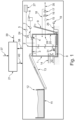
- Figure 1 shows a biogas plant with direct solids feed into the turbo mash for pretreatment of feedstocks in biogas plants.
- the plant includes a mixing and hydrolysis tank 1, which is referred to as a turbo mash.
- the insulated and temperature-controlled container is preferably made of a material resistant to acid effects, in particular of an internally coated concrete, enamelled or internally coated steel or other suitable material.
- the height of the container relative to the diameter is preferably chosen such that it is at least 1:3, preferably 1.6:1.
- the container 1 also comprises a closable feed opening 3, which can also be referred to as an insertion opening, for the supply of solid substrates.
- the solid substrates are introduced into the system through the closable feed opening from a solids dosing device 11 with a loosening device 12. This is done via a conveyor device 13, in particular a conveyor belt or conveyor screw, which introduces the feed materials into the turbo mash from above.
- the container contains a closable inspection opening 4, which allows the liquid surface to be observed in order to visually assess the mixing of the solid substrates and the bubble distribution and, if necessary, to take samples or add additives.
- a supply line for liquids for mixing the solids 14 and a device for tempering the turbo mash 10, which allows the container contents to be heated in winter and cooled in summer, are used.
- An inspection opening 20 is provided in the container.
- the pretreated mash material is conveyed into the methane fermenter through the mash extraction 28 via the mash line 35.
- the mash line contains a pump 17, which is able to transport viscous substances, and a wet shredding device 16, which is used to shred long-fiber material.
- a stone trap 15 is installed upstream of the wet shredding device. Liquid is occasionally removed from the turbo mash 1 to shred long fibrous materials and is pumped back into the turbo mash tank 1 via the impurity separator 15, wet shredding 16 and the mash pump 17 through a pumping line 18. An impurity discharge 9 is installed in the tank. Liquid additives are pumped from an additive tank 6 into the turbo mash via the additive line 25 using an additive pump 7 as required. The exhaust air from the turbo mash is pumped into the exhaust air treatment 27 via the exhaust air line 24 using the exhaust air blower 5.
- the predetermined control variables 37 temperature, methane volume flow, viscosity in the turbo mash and acid spectrum
- the predetermined control variables 37 temperature, methane volume flow, viscosity in the turbo mash and acid spectrum
- the measured variables of the turbo mash 38 electricity consumption of the stirrer, stirrer speed and exhaust air composition
- the measured variables 39 of the biogas fermenter biogas volume flow and biogas composition, in particular methane content
- the container is also provided with an inspection opening 20, through which maintenance work can be carried out on the aerators and stirrers and coarse impurities can be removed if necessary.
- the turbo mash also contains an impurity discharge consisting of a trough 32, horizontal screw 33 and inclined screw 34.
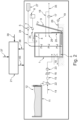
- FIG 2 shows a biogas plant with feeding of the feedstock mixture via an upstream solid-liquid mixing system. While in the embodiment according to Figure 1 during the hydrolysis reaction, liquid is temporarily removed from the turbo mash to chop up long fibers and is conveyed back into the turbo mash container 1 via the impurity separator 15, wet crushing 16 and mash pump 17 through a pumping line 18, this takes place in accordance with the embodiment according to Figure 2 through an upstream system consisting of a contaminant separator 15 and a wet shredding system 16.
- the system is therefore designed such that the turbo mash is fed by a suitable device for mixing solid feedstocks 22 with the required amount of liquid, followed by a contaminant separation 15, a wet comminution 16 and a substrate pump 23.
- the system is preferably designed such that the components 22, 15, 16 and 23 used for liquid feeding are combined in any way in one or more machines.
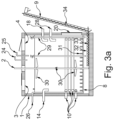
- Figure 3a shows the biogas reactor in vertical section, central, front view, while Figure 3b Biogas reactor in vertical section, central, side view.
- Figure 3c shows the biogas reactor in cross section below above the first propeller stage.
- the Figure 3a further shows the impurity discharge 9 in detail, which is installed in the container, which enables regular cleaning of the container bottom by means of a horizontal screw 33 located near the container bottom, which is guided in a trough 32, and an inclined screw 34 located outside the container when the feedstock has a high sand content.
- the system is further preferably designed such that the container is equipped with at least three propeller stages 30 in the case of highly seasonal biogas production, in order to operate effectively with a smaller filling volume when gas production is low, e.g. in summer, and thus save stirring energy. This is particularly clear from Figure 2a and Figure 2b.
- membrane aerators 31 are preferably used as aeration elements, which are mounted on the aeration pipe 8 and are replaceable, as can be seen from Figure 3a , Figure 3b and Figure 3c becomes clear.
- Figure 3c shows how the aerators are arranged in cross-section on the ventilation pipe.
- the turbo mash can preferably be designed such that, with a height to diameter ratio of less than 1:1, a second inner ventilation ring 36 or another inner ventilation ring is arranged next to the outer ventilation ring in order to ensure uniform air distribution in the container.
- the system has an exhaust air line 24, an additive line 25, an air supply line 26, a heating/cooling line 10 and a mash extraction line 28.
Landscapes
- Chemical & Material Sciences (AREA)
- Health & Medical Sciences (AREA)
- Life Sciences & Earth Sciences (AREA)
- Engineering & Computer Science (AREA)
- Wood Science & Technology (AREA)
- Bioinformatics & Cheminformatics (AREA)
- Organic Chemistry (AREA)
- Zoology (AREA)
- Genetics & Genomics (AREA)
- Sustainable Development (AREA)
- Microbiology (AREA)
- Biochemistry (AREA)
- General Engineering & Computer Science (AREA)
- General Health & Medical Sciences (AREA)
- Biotechnology (AREA)
- Biomedical Technology (AREA)
- Molecular Biology (AREA)
- Analytical Chemistry (AREA)
- Mechanical Engineering (AREA)
- General Chemical & Material Sciences (AREA)
- Oil, Petroleum & Natural Gas (AREA)
- Apparatus Associated With Microorganisms And Enzymes (AREA)
Priority Applications (2)
| Application Number | Priority Date | Filing Date | Title |
|---|---|---|---|
| EP23151440.7A EP4400575A1 (fr) | 2023-01-13 | 2023-01-13 | Installation de prétraitement de matières premières solides pour la production de biogaz, installation de biogaz et procédé de production de biogaz |
| PCT/EP2023/084747 WO2024149533A1 (fr) | 2023-01-13 | 2023-12-07 | Système de prétraitement de matières premières solides pour la production de biogaz, système de production de biogaz et procédé de production de biogaz |
Applications Claiming Priority (1)
| Application Number | Priority Date | Filing Date | Title |
|---|---|---|---|
| EP23151440.7A EP4400575A1 (fr) | 2023-01-13 | 2023-01-13 | Installation de prétraitement de matières premières solides pour la production de biogaz, installation de biogaz et procédé de production de biogaz |
Publications (1)
| Publication Number | Publication Date |
|---|---|
| EP4400575A1 true EP4400575A1 (fr) | 2024-07-17 |
Family
ID=84980889
Family Applications (1)
| Application Number | Title | Priority Date | Filing Date |
|---|---|---|---|
| EP23151440.7A Pending EP4400575A1 (fr) | 2023-01-13 | 2023-01-13 | Installation de prétraitement de matières premières solides pour la production de biogaz, installation de biogaz et procédé de production de biogaz |
Country Status (2)
| Country | Link |
|---|---|
| EP (1) | EP4400575A1 (fr) |
| WO (1) | WO2024149533A1 (fr) |
Citations (17)
| Publication number | Priority date | Publication date | Assignee | Title |
|---|---|---|---|---|
| DE3100324A1 (de) * | 1981-01-08 | 1982-08-05 | Clemens 8872 Burgau-Limbach Stahl | Vorrichtung zur umsetzung von biomasse in energie |
| EP0099634A2 (fr) * | 1982-06-07 | 1984-02-01 | University Of Waterloo | Réacteur assurant le contact des phases multiples |
| DE3327541A1 (de) * | 1983-07-30 | 1985-02-14 | Wilhelm 4284 Heiden Wissusek | Verfahren und vorrichtung zur gewinnung von biogas |
| US5356600A (en) * | 1990-09-24 | 1994-10-18 | Praxair Technology, Inc. | Oxygen enrichment method and system |
| WO1996027656A1 (fr) * | 1995-03-03 | 1996-09-12 | Kuehne Anton | Bioreacteur a surface agrandie |
| DE19909353A1 (de) * | 1998-11-06 | 2000-05-11 | Patrick Mueller | Verfahren und Vorrichtung zur Aufbereitung eines Organik enthaltenden Stoffgemisches |
| EP1854821A1 (fr) * | 2006-05-13 | 2007-11-14 | Evonik Degussa GmbH | Procéde pour préparer de polyaryléthercétones |
| DE202010013812U1 (de) * | 2009-11-12 | 2011-01-05 | Sartorius Stedim Biotech Gmbh | Begasungsvorrichtung für Bioreaktoren |
| US20120003733A1 (en) * | 2009-03-18 | 2012-01-05 | Sartorius Stedim Biotech S.A. | Mixing container comprising a shaft bearing in the upper part |
| EP2878365A2 (fr) * | 2013-11-07 | 2015-06-03 | Agraferm Technologies AG | Agitateur pour un digesteur à biogaz |
| DE102013114786A1 (de) * | 2013-12-23 | 2015-06-25 | Aev Energy Gmbh | Verfahren und Vorrichtung zur Biogasgewinnung |
| WO2016071447A1 (fr) * | 2014-11-07 | 2016-05-12 | Uts Biogastechnik Gmbh | Procédé permettant de faire fonctionner un agitateur et un fermenteur |
| EP3395936A1 (fr) * | 2017-04-28 | 2018-10-31 | Patent Plus B.V. | Installation de traitement de substances fermentables |
| EP3450537A1 (fr) * | 2017-08-29 | 2019-03-06 | Räss, Martin | Dispositif et procédé de détermination d'un paramètre d'état du substrat de fermentation dans une cuve de réacteur |
| DE102019116343A1 (de) * | 2019-06-17 | 2020-12-17 | Martin Hänsel | Verfahren zur Steuerung von Anlagen |
| DE102020005550A1 (de) * | 2020-09-10 | 2022-03-10 | Sartorius Stedim Biotech Gmbh | Bioreaktorsysteme sowie Verfahren zum Betreiben eines Bioprozesses |
| WO2022261276A1 (fr) * | 2021-06-09 | 2022-12-15 | Mott Corporation | Interface rotative pour ensembles fluides et procédés de fabrication et d'utilisation associés |
-
2023
- 2023-01-13 EP EP23151440.7A patent/EP4400575A1/fr active Pending
- 2023-12-07 WO PCT/EP2023/084747 patent/WO2024149533A1/fr not_active Ceased
Patent Citations (17)
| Publication number | Priority date | Publication date | Assignee | Title |
|---|---|---|---|---|
| DE3100324A1 (de) * | 1981-01-08 | 1982-08-05 | Clemens 8872 Burgau-Limbach Stahl | Vorrichtung zur umsetzung von biomasse in energie |
| EP0099634A2 (fr) * | 1982-06-07 | 1984-02-01 | University Of Waterloo | Réacteur assurant le contact des phases multiples |
| DE3327541A1 (de) * | 1983-07-30 | 1985-02-14 | Wilhelm 4284 Heiden Wissusek | Verfahren und vorrichtung zur gewinnung von biogas |
| US5356600A (en) * | 1990-09-24 | 1994-10-18 | Praxair Technology, Inc. | Oxygen enrichment method and system |
| WO1996027656A1 (fr) * | 1995-03-03 | 1996-09-12 | Kuehne Anton | Bioreacteur a surface agrandie |
| DE19909353A1 (de) * | 1998-11-06 | 2000-05-11 | Patrick Mueller | Verfahren und Vorrichtung zur Aufbereitung eines Organik enthaltenden Stoffgemisches |
| EP1854821A1 (fr) * | 2006-05-13 | 2007-11-14 | Evonik Degussa GmbH | Procéde pour préparer de polyaryléthercétones |
| US20120003733A1 (en) * | 2009-03-18 | 2012-01-05 | Sartorius Stedim Biotech S.A. | Mixing container comprising a shaft bearing in the upper part |
| DE202010013812U1 (de) * | 2009-11-12 | 2011-01-05 | Sartorius Stedim Biotech Gmbh | Begasungsvorrichtung für Bioreaktoren |
| EP2878365A2 (fr) * | 2013-11-07 | 2015-06-03 | Agraferm Technologies AG | Agitateur pour un digesteur à biogaz |
| DE102013114786A1 (de) * | 2013-12-23 | 2015-06-25 | Aev Energy Gmbh | Verfahren und Vorrichtung zur Biogasgewinnung |
| WO2016071447A1 (fr) * | 2014-11-07 | 2016-05-12 | Uts Biogastechnik Gmbh | Procédé permettant de faire fonctionner un agitateur et un fermenteur |
| EP3395936A1 (fr) * | 2017-04-28 | 2018-10-31 | Patent Plus B.V. | Installation de traitement de substances fermentables |
| EP3450537A1 (fr) * | 2017-08-29 | 2019-03-06 | Räss, Martin | Dispositif et procédé de détermination d'un paramètre d'état du substrat de fermentation dans une cuve de réacteur |
| DE102019116343A1 (de) * | 2019-06-17 | 2020-12-17 | Martin Hänsel | Verfahren zur Steuerung von Anlagen |
| DE102020005550A1 (de) * | 2020-09-10 | 2022-03-10 | Sartorius Stedim Biotech Gmbh | Bioreaktorsysteme sowie Verfahren zum Betreiben eines Bioprozesses |
| WO2022261276A1 (fr) * | 2021-06-09 | 2022-12-15 | Mott Corporation | Interface rotative pour ensembles fluides et procédés de fabrication et d'utilisation associés |
Also Published As
| Publication number | Publication date |
|---|---|
| WO2024149533A1 (fr) | 2024-07-18 |
Similar Documents
| Publication | Publication Date | Title |
|---|---|---|
| EP0621336B1 (fr) | Commande d'une installation de fermentation | |
| EP1979464B1 (fr) | Dispositif et procédé de fabrication de biogaz à partir de substances organiques | |
| EP3450536B1 (fr) | Procédé d'optimisation de fonctionnement d'un fermenteur à écoulement piston pour fermentation anaérobie de déchets organiques | |
| EP3574080B1 (fr) | Procédé et dispositif destinés a la production de biogaz | |
| WO2009071053A2 (fr) | Dispositif et procédé pour produire du biogaz à partir de substances organiques | |
| DE202011110507U1 (de) | Mehrfacher anaerober Fermenter für hohe Feststoffanteile | |
| EP2554638B1 (fr) | Procédé et dispositif de traitement mécanique ou mécanique-biologique des déchets | |
| EP0589155B1 (fr) | Traitement anaérobique de substrats à forte concentration en graisses | |
| DE102004054468A1 (de) | Verfahren zur anaeroben Vergärung pflanzlicher Substrate und deren Vorbehandlung mittels thermomechanischem Aufschluss | |
| EP4400575A1 (fr) | Installation de prétraitement de matières premières solides pour la production de biogaz, installation de biogaz et procédé de production de biogaz | |
| EP1095924A2 (fr) | Procédé et installation de fermentation | |
| DE102017206190B4 (de) | Verfahren zur Nutzung von Gülle und Biogasanlage zur Durchführung des Verfahrens | |
| EP2803729B1 (fr) | Procédé pour la production de biogaz avec fermentation en continu de mélanges de substrat et installation de biogaz destinée à la fermentation en continu de mélanges de substrat | |
| WO2006008039A2 (fr) | Installation de biogaz pour preparer des gaz contenant du methane | |
| EP2746383B1 (fr) | Dispositif et procédé destinés au traitement de biomasse | |
| DE10354597B4 (de) | Verfahren zum Erzeugen von Biogas sowie Anlage zum Durchführen dieses Verfahrens | |
| WO2009068005A2 (fr) | Procédé et dispositif de production d'un substrat de fermentation traité fini pour produire du biogaz | |
| DE102011012285B4 (de) | Hybrid Fermentation | |
| EP2392642B1 (fr) | Procédé destiné à produire du biogaz | |
| DE20218022U1 (de) | Vorrichtung zur Erzeugung von Biogas | |
| DE10254309A1 (de) | Vorrichtung und Verfahren zur Erzeugung von Biogas | |
| DE102021002380A1 (de) | Trommelreaktor und Verfahren zum Betreiben eines Trommelreaktors | |
| DE102004030558A1 (de) | Verfahren und Vorrichtung zur Konditionierung von Substrat als Vorstufe einer Vergärung | |
| DE10139348A1 (de) | Bioreaktrosystem zur Nutzung der Wärmeentwicklung biochemischer Reaktionen | |
| DE10254308A1 (de) | Verfahren zur Erzeugung von Biogas |
Legal Events
| Date | Code | Title | Description |
|---|---|---|---|
| PUAI | Public reference made under article 153(3) epc to a published international application that has entered the european phase |
Free format text: ORIGINAL CODE: 0009012 |
|
| STAA | Information on the status of an ep patent application or granted ep patent |
Free format text: STATUS: THE APPLICATION HAS BEEN PUBLISHED |
|
| AK | Designated contracting states |
Kind code of ref document: A1 Designated state(s): AL AT BE BG CH CY CZ DE DK EE ES FI FR GB GR HR HU IE IS IT LI LT LU LV MC ME MK MT NL NO PL PT RO RS SE SI SK SM TR |
|
| STAA | Information on the status of an ep patent application or granted ep patent |
Free format text: STATUS: REQUEST FOR EXAMINATION WAS MADE |
|
| 17P | Request for examination filed |
Effective date: 20240802 |
|
| RBV | Designated contracting states (corrected) |
Designated state(s): AL AT BE BG CH CY CZ DE DK EE ES FI FR GB GR HR HU IE IS IT LI LT LU LV MC ME MK MT NL NO PL PT RO RS SE SI SK SM TR |
|
| STAA | Information on the status of an ep patent application or granted ep patent |
Free format text: STATUS: EXAMINATION IS IN PROGRESS |
|
| 17Q | First examination report despatched |
Effective date: 20241113 |