EP4415213A2 - Système et procédé de commande d'un ensemble batterie d'aéronef - Google Patents
Système et procédé de commande d'un ensemble batterie d'aéronef Download PDFInfo
- Publication number
- EP4415213A2 EP4415213A2 EP24156408.7A EP24156408A EP4415213A2 EP 4415213 A2 EP4415213 A2 EP 4415213A2 EP 24156408 A EP24156408 A EP 24156408A EP 4415213 A2 EP4415213 A2 EP 4415213A2
- Authority
- EP
- European Patent Office
- Prior art keywords
- battery
- subset
- string
- reserve
- electrical distribution
- Prior art date
- Legal status (The legal status is an assumption and is not a legal conclusion. Google has not performed a legal analysis and makes no representation as to the accuracy of the status listed.)
- Pending
Links
Images



Classifications
-
- H—ELECTRICITY
- H02—GENERATION; CONVERSION OR DISTRIBUTION OF ELECTRIC POWER
- H02J—ELECTRIC POWER NETWORKS; CIRCUIT ARRANGEMENTS OR SYSTEMS FOR SUPPLYING OR DISTRIBUTING ELECTRIC POWER; SYSTEMS FOR STORING ELECTRIC ENERGY
- H02J7/00—Circuit arrangements for charging or discharging batteries or for supplying loads from batteries
- H02J7/50—Circuit arrangements for charging or discharging batteries or for supplying loads from batteries acting upon multiple batteries simultaneously or sequentially
-
- B—PERFORMING OPERATIONS; TRANSPORTING
- B60—VEHICLES IN GENERAL
- B60L—PROPULSION OF ELECTRICALLY-PROPELLED VEHICLES; SUPPLYING ELECTRIC POWER FOR AUXILIARY EQUIPMENT OF ELECTRICALLY-PROPELLED VEHICLES; ELECTRODYNAMIC BRAKE SYSTEMS FOR VEHICLES IN GENERAL; MAGNETIC SUSPENSION OR LEVITATION FOR VEHICLES; MONITORING OPERATING VARIABLES OF ELECTRICALLY-PROPELLED VEHICLES; ELECTRIC SAFETY DEVICES FOR ELECTRICALLY-PROPELLED VEHICLES
- B60L58/00—Methods or circuit arrangements for monitoring or controlling batteries or fuel cells, specially adapted for electric vehicles
- B60L58/10—Methods or circuit arrangements for monitoring or controlling batteries or fuel cells, specially adapted for electric vehicles for monitoring or controlling batteries
-
- B—PERFORMING OPERATIONS; TRANSPORTING
- B64—AIRCRAFT; AVIATION; COSMONAUTICS
- B64D—EQUIPMENT FOR FITTING IN OR TO AIRCRAFT; FLIGHT SUITS; PARACHUTES; ARRANGEMENT OR MOUNTING OF POWER PLANTS OR PROPULSION TRANSMISSIONS IN AIRCRAFT
- B64D27/00—Arrangement or mounting of power plants in aircraft; Aircraft characterised by the type or position of power plants
- B64D27/02—Aircraft characterised by the type or position of power plants
- B64D27/30—Aircraft characterised by electric power plants
- B64D27/33—Hybrid electric aircraft
-
- B—PERFORMING OPERATIONS; TRANSPORTING
- B64—AIRCRAFT; AVIATION; COSMONAUTICS
- B64D—EQUIPMENT FOR FITTING IN OR TO AIRCRAFT; FLIGHT SUITS; PARACHUTES; ARRANGEMENT OR MOUNTING OF POWER PLANTS OR PROPULSION TRANSMISSIONS IN AIRCRAFT
- B64D27/00—Arrangement or mounting of power plants in aircraft; Aircraft characterised by the type or position of power plants
- B64D27/02—Aircraft characterised by the type or position of power plants
- B64D27/30—Aircraft characterised by electric power plants
- B64D27/35—Arrangements for on-board electric energy production, distribution, recovery or storage
- B64D27/357—Arrangements for on-board electric energy production, distribution, recovery or storage using batteries
-
- B—PERFORMING OPERATIONS; TRANSPORTING
- B64—AIRCRAFT; AVIATION; COSMONAUTICS
- B64D—EQUIPMENT FOR FITTING IN OR TO AIRCRAFT; FLIGHT SUITS; PARACHUTES; ARRANGEMENT OR MOUNTING OF POWER PLANTS OR PROPULSION TRANSMISSIONS IN AIRCRAFT
- B64D35/00—Transmitting power from power plants to propellers or rotors; Arrangements of transmissions
- B64D35/02—Transmitting power from power plants to propellers or rotors; Arrangements of transmissions specially adapted for specific power plants
- B64D35/021—Transmitting power from power plants to propellers or rotors; Arrangements of transmissions specially adapted for specific power plants for electric power plants
- B64D35/022—Transmitting power from power plants to propellers or rotors; Arrangements of transmissions specially adapted for specific power plants for electric power plants of hybrid-electric type
- B64D35/024—Transmitting power from power plants to propellers or rotors; Arrangements of transmissions specially adapted for specific power plants for electric power plants of hybrid-electric type of series type
-
- F—MECHANICAL ENGINEERING; LIGHTING; HEATING; WEAPONS; BLASTING
- F02—COMBUSTION ENGINES; HOT-GAS OR COMBUSTION-PRODUCT ENGINE PLANTS
- F02C—GAS-TURBINE PLANTS; AIR INTAKES FOR JET-PROPULSION PLANTS; CONTROLLING FUEL SUPPLY IN AIR-BREATHING JET-PROPULSION PLANTS
- F02C7/00—Features, components parts, details or accessories, not provided for in, or of interest apart form groups F02C1/00 - F02C6/00; Air intakes for jet-propulsion plants
- F02C7/32—Arrangement, mounting, or driving, of auxiliaries
-
- G—PHYSICS
- G01—MEASURING; TESTING
- G01R—MEASURING ELECTRIC VARIABLES; MEASURING MAGNETIC VARIABLES
- G01R31/00—Arrangements for testing electric properties; Arrangements for locating electric faults; Arrangements for electrical testing characterised by what is being tested not provided for elsewhere
- G01R31/36—Arrangements for testing, measuring or monitoring the electrical condition of accumulators or electric batteries, e.g. capacity or state of charge [SoC]
- G01R31/382—Arrangements for monitoring battery or accumulator variables, e.g. SoC
- G01R31/3835—Arrangements for monitoring battery or accumulator variables, e.g. SoC involving only voltage measurements
-
- H—ELECTRICITY
- H01—ELECTRIC ELEMENTS
- H01M—PROCESSES OR MEANS, e.g. BATTERIES, FOR THE DIRECT CONVERSION OF CHEMICAL ENERGY INTO ELECTRICAL ENERGY
- H01M10/00—Secondary cells; Manufacture thereof
- H01M10/42—Methods or arrangements for servicing or maintenance of secondary cells or secondary half-cells
- H01M10/425—Structural combination with electronic components, e.g. electronic circuits integrated to the outside of the casing
-
- H—ELECTRICITY
- H01—ELECTRIC ELEMENTS
- H01M—PROCESSES OR MEANS, e.g. BATTERIES, FOR THE DIRECT CONVERSION OF CHEMICAL ENERGY INTO ELECTRICAL ENERGY
- H01M10/00—Secondary cells; Manufacture thereof
- H01M10/42—Methods or arrangements for servicing or maintenance of secondary cells or secondary half-cells
- H01M10/48—Accumulators combined with arrangements for measuring, testing or indicating the condition of cells, e.g. the level or density of the electrolyte
- H01M10/482—Accumulators combined with arrangements for measuring, testing or indicating the condition of cells, e.g. the level or density of the electrolyte for several batteries or cells simultaneously or sequentially
-
- H—ELECTRICITY
- H01—ELECTRIC ELEMENTS
- H01M—PROCESSES OR MEANS, e.g. BATTERIES, FOR THE DIRECT CONVERSION OF CHEMICAL ENERGY INTO ELECTRICAL ENERGY
- H01M10/00—Secondary cells; Manufacture thereof
- H01M10/42—Methods or arrangements for servicing or maintenance of secondary cells or secondary half-cells
- H01M10/48—Accumulators combined with arrangements for measuring, testing or indicating the condition of cells, e.g. the level or density of the electrolyte
- H01M10/486—Accumulators combined with arrangements for measuring, testing or indicating the condition of cells, e.g. the level or density of the electrolyte for measuring temperature
-
- H—ELECTRICITY
- H01—ELECTRIC ELEMENTS
- H01M—PROCESSES OR MEANS, e.g. BATTERIES, FOR THE DIRECT CONVERSION OF CHEMICAL ENERGY INTO ELECTRICAL ENERGY
- H01M16/00—Structural combinations of different types of electrochemical generators
-
- H—ELECTRICITY
- H01—ELECTRIC ELEMENTS
- H01M—PROCESSES OR MEANS, e.g. BATTERIES, FOR THE DIRECT CONVERSION OF CHEMICAL ENERGY INTO ELECTRICAL ENERGY
- H01M50/00—Constructional details or processes of manufacture of the non-active parts of electrochemical cells other than fuel cells, e.g. hybrid cells
- H01M50/20—Mountings; Secondary casings or frames; Racks, modules or packs; Suspension devices; Shock absorbers; Transport or carrying devices; Holders
- H01M50/204—Racks, modules or packs for multiple batteries or multiple cells
-
- H—ELECTRICITY
- H01—ELECTRIC ELEMENTS
- H01M—PROCESSES OR MEANS, e.g. BATTERIES, FOR THE DIRECT CONVERSION OF CHEMICAL ENERGY INTO ELECTRICAL ENERGY
- H01M50/00—Constructional details or processes of manufacture of the non-active parts of electrochemical cells other than fuel cells, e.g. hybrid cells
- H01M50/20—Mountings; Secondary casings or frames; Racks, modules or packs; Suspension devices; Shock absorbers; Transport or carrying devices; Holders
- H01M50/249—Mountings; Secondary casings or frames; Racks, modules or packs; Suspension devices; Shock absorbers; Transport or carrying devices; Holders specially adapted for aircraft or vehicles, e.g. cars or trains
-
- H—ELECTRICITY
- H01—ELECTRIC ELEMENTS
- H01M—PROCESSES OR MEANS, e.g. BATTERIES, FOR THE DIRECT CONVERSION OF CHEMICAL ENERGY INTO ELECTRICAL ENERGY
- H01M50/00—Constructional details or processes of manufacture of the non-active parts of electrochemical cells other than fuel cells, e.g. hybrid cells
- H01M50/50—Current conducting connections for cells or batteries
- H01M50/502—Interconnectors for connecting terminals of adjacent batteries; Interconnectors for connecting cells outside a battery casing
- H01M50/509—Interconnectors for connecting terminals of adjacent batteries; Interconnectors for connecting cells outside a battery casing characterised by the type of connection, e.g. mixed connections
-
- H—ELECTRICITY
- H01—ELECTRIC ELEMENTS
- H01M—PROCESSES OR MEANS, e.g. BATTERIES, FOR THE DIRECT CONVERSION OF CHEMICAL ENERGY INTO ELECTRICAL ENERGY
- H01M6/00—Primary cells; Manufacture thereof
- H01M6/50—Methods or arrangements for servicing or maintenance, e.g. for maintaining operating temperature
- H01M6/5044—Cells or batteries structurally combined with cell condition indicating means
-
- H—ELECTRICITY
- H02—GENERATION; CONVERSION OR DISTRIBUTION OF ELECTRIC POWER
- H02J—ELECTRIC POWER NETWORKS; CIRCUIT ARRANGEMENTS OR SYSTEMS FOR SUPPLYING OR DISTRIBUTING ELECTRIC POWER; SYSTEMS FOR STORING ELECTRIC ENERGY
- H02J7/00—Circuit arrangements for charging or discharging batteries or for supplying loads from batteries
- H02J7/50—Circuit arrangements for charging or discharging batteries or for supplying loads from batteries acting upon multiple batteries simultaneously or sequentially
- H02J7/585—Sequential battery discharge in systems with a plurality of batteries
-
- H—ELECTRICITY
- H02—GENERATION; CONVERSION OR DISTRIBUTION OF ELECTRIC POWER
- H02J—ELECTRIC POWER NETWORKS; CIRCUIT ARRANGEMENTS OR SYSTEMS FOR SUPPLYING OR DISTRIBUTING ELECTRIC POWER; SYSTEMS FOR STORING ELECTRIC ENERGY
- H02J7/00—Circuit arrangements for charging or discharging batteries or for supplying loads from batteries
- H02J7/80—Circuit arrangements for charging or discharging batteries or for supplying loads from batteries including monitoring or indicating arrangements
-
- B—PERFORMING OPERATIONS; TRANSPORTING
- B60—VEHICLES IN GENERAL
- B60L—PROPULSION OF ELECTRICALLY-PROPELLED VEHICLES; SUPPLYING ELECTRIC POWER FOR AUXILIARY EQUIPMENT OF ELECTRICALLY-PROPELLED VEHICLES; ELECTRODYNAMIC BRAKE SYSTEMS FOR VEHICLES IN GENERAL; MAGNETIC SUSPENSION OR LEVITATION FOR VEHICLES; MONITORING OPERATING VARIABLES OF ELECTRICALLY-PROPELLED VEHICLES; ELECTRIC SAFETY DEVICES FOR ELECTRICALLY-PROPELLED VEHICLES
- B60L2200/00—Type of vehicles
- B60L2200/10—Air crafts
-
- B—PERFORMING OPERATIONS; TRANSPORTING
- B64—AIRCRAFT; AVIATION; COSMONAUTICS
- B64D—EQUIPMENT FOR FITTING IN OR TO AIRCRAFT; FLIGHT SUITS; PARACHUTES; ARRANGEMENT OR MOUNTING OF POWER PLANTS OR PROPULSION TRANSMISSIONS IN AIRCRAFT
- B64D2221/00—Electric power distribution systems onboard aircraft
-
- F—MECHANICAL ENGINEERING; LIGHTING; HEATING; WEAPONS; BLASTING
- F05—INDEXING SCHEMES RELATING TO ENGINES OR PUMPS IN VARIOUS SUBCLASSES OF CLASSES F01-F04
- F05D—INDEXING SCHEME FOR ASPECTS RELATING TO NON-POSITIVE-DISPLACEMENT MACHINES OR ENGINES, GAS-TURBINES OR JET-PROPULSION PLANTS
- F05D2220/00—Application
- F05D2220/70—Application in combination with
- F05D2220/76—Application in combination with an electrical generator
-
- F—MECHANICAL ENGINEERING; LIGHTING; HEATING; WEAPONS; BLASTING
- F05—INDEXING SCHEMES RELATING TO ENGINES OR PUMPS IN VARIOUS SUBCLASSES OF CLASSES F01-F04
- F05D—INDEXING SCHEME FOR ASPECTS RELATING TO NON-POSITIVE-DISPLACEMENT MACHINES OR ENGINES, GAS-TURBINES OR JET-PROPULSION PLANTS
- F05D2260/00—Function
- F05D2260/80—Diagnostics
-
- H—ELECTRICITY
- H01—ELECTRIC ELEMENTS
- H01M—PROCESSES OR MEANS, e.g. BATTERIES, FOR THE DIRECT CONVERSION OF CHEMICAL ENERGY INTO ELECTRICAL ENERGY
- H01M10/00—Secondary cells; Manufacture thereof
- H01M10/42—Methods or arrangements for servicing or maintenance of secondary cells or secondary half-cells
- H01M10/425—Structural combination with electronic components, e.g. electronic circuits integrated to the outside of the casing
- H01M2010/4271—Battery management systems including electronic circuits, e.g. control of current or voltage to keep battery in healthy state, cell balancing
-
- H—ELECTRICITY
- H01—ELECTRIC ELEMENTS
- H01M—PROCESSES OR MEANS, e.g. BATTERIES, FOR THE DIRECT CONVERSION OF CHEMICAL ENERGY INTO ELECTRICAL ENERGY
- H01M2220/00—Batteries for particular applications
- H01M2220/20—Batteries in motive systems, e.g. vehicle, ship, plane
-
- H—ELECTRICITY
- H02—GENERATION; CONVERSION OR DISTRIBUTION OF ELECTRIC POWER
- H02J—ELECTRIC POWER NETWORKS; CIRCUIT ARRANGEMENTS OR SYSTEMS FOR SUPPLYING OR DISTRIBUTING ELECTRIC POWER; SYSTEMS FOR STORING ELECTRIC ENERGY
- H02J2105/00—Networks for supplying or distributing electric power characterised by their spatial reach or by the load
- H02J2105/30—Networks for supplying or distributing electric power characterised by their spatial reach or by the load the load networks being external to vehicles, i.e. exchanging power with vehicles
- H02J2105/32—Networks for supplying or distributing electric power characterised by their spatial reach or by the load the load networks being external to vehicles, i.e. exchanging power with vehicles for aircrafts
Definitions
- This invention relates generally to aircraft batteries and, more particularly, to systems and methods for controlling an aircraft battery including a main battery strings and reserve battery strings electrically connected in parallel.
- Aircraft may include one or more batteries for supplying electrical power for an electrical distribution system of the aircraft and/or its propulsion system(s).
- the electrical connection of the battery to the electrical distribution system may, under some conditions, be controlled supplement the electrical power of the battery which is available to supply to the electrical distribution system.
- Various systems and methods for controlling aircraft batteries are known in the art. While these known systems and methods have various advantages, there is still room in the art for improvement.
- an assembly for an aircraft includes an aircraft electrical distribution bus, a battery, and a battery monitoring system.
- the battery includes a plurality of battery strings. Each battery string is configured to be selectively electrically connected to the aircraft electrical distribution bus to direct electrical power to the aircraft electrical distribution bus.
- the plurality of battery strings is configured as a main subset of the plurality of battery strings and a reserve subset of the plurality of battery strings. Each of the main subset and the reserve subset include at least one battery string of the plurality of battery strings.
- the battery monitoring system includes a plurality of sensors. The plurality of sensors are configured to measure a bus voltage of the aircraft electrical distribution bus and a battery string voltage of each battery string.
- the battery monitoring system further includes a processor in communication with a non-transitory memory storing instructions, which instructions when executed by the processor, cause the processor to electrically connect the reserve subset of the plurality of battery strings to the aircraft electrical distribution bus by: determining the bus voltage and the battery string voltage of each battery string of the reserve subset of the plurality of battery strings with the plurality of sensors with at least one battery string of the main subset of the plurality of battery strings electrically connected to the aircraft electrical distribution bus, identifying a threshold voltage range of the reserve subset of the plurality of battery strings for electrically connecting the reserve subset of the plurality of battery strings to the aircraft electrical distribution bus, where identifying the threshold voltage range is based at least on the bus voltage, and electrically connecting at least one battery string of the reserve subset of the plurality of battery strings to the aircraft electrical distribution bus with the bus voltage within the identified threshold voltage range.
- the plurality of battery strings may be configured to be selectively electrically connected in parallel.
- each battery string of the plurality of battery strings may include a plurality of battery modules electrically connected in series.
- each battery string may include a string contactor.
- the string contactor may be positionable in a closed string position or an open string position.
- the string contactor in the closed string position may be configured to direct electrical power from the respective battery string to the aircraft electrical distribution bus.
- the string contactor in the open string position may be configured to electrically isolate the respective battery string from the aircraft electrical distribution bus.
- the at least one battery module of each battery string of the main subset of the plurality of battery strings may have a first battery chemistry configuration.
- the at least one battery module of each battery string of the reserve subset of the plurality of battery strings may have a second battery chemistry configuration.
- the first battery chemistry configuration may be different than the second battery chemistry configuration.
- the at least one battery module of each battery string of the main subset of the plurality of battery strings may be rechargeable.
- the at least one battery module of each battery string of the reserve subset of the plurality of battery strings may be non-rechargeable.
- the instructions when executed by the processor may further cause the processor to electrically connect the reserve subset of the plurality of battery strings to the aircraft electrical distribution bus by electrically connecting the at least one battery string of the reserve subset of the plurality of battery strings to the aircraft electrical distribution bus with the battery string voltage of the at least one battery string of the reserve subset of the plurality of battery strings greater than the battery string voltage of the at least one battery string of the main subset of the plurality of battery strings.
- the reserve subset of the plurality of battery strings may include at least a first reserve battery string and a second reserve battery string.
- the instructions when executed by the processor, may further cause the processor to electrically connect the reserve subset of the plurality of battery strings to the aircraft electrical distribution bus by determining the respective voltage range of the first reserve battery string and the second reserve battery string.
- the instructions when executed by the processor may further cause the processor to electrically connect the reserve subset of the plurality of battery strings to the aircraft electrical distribution bus by electrically connecting the at least one battery string of the reserve subset of the plurality of battery strings, including the first reserve battery string, to the aircraft electrical distribution bus while maintaining the second reserve battery string electrically disconnected from the aircraft electrical distribution bus.
- the assembly may further include an aircraft propulsion system including a rotational assembly.
- the rotational assembly may include a propeller, a rotatable shaft and an electric motor.
- the electrical motor may be electrically connected to the aircraft electrical distribution bus.
- the electric motor may be configured to selectively drive the rotatable shaft and the propeller.
- the plurality of sensors may be further configured to measure a temperature of the at least one battery module of each battery string. Identifying the threshold voltage range of the reserve subset of the plurality of battery strings for electrically connecting the reserve subset of the plurality of battery strings to the aircraft electrical distribution bus may be further based on the measured temperature.
- a method for operating a battery assembly for an aircraft includes supplying electrical power to an aircraft electrical distribution bus with a battery.
- the battery includes a plurality of battery strings.
- Each battery string includes at least one battery module.
- the plurality of battery strings are configured as a main subset of the plurality of battery strings and a reserve subset of the plurality of battery strings.
- Each of the main subset of the plurality of battery strings and the reserve subset of the plurality of battery strings include at least one battery string of the plurality of battery strings.
- the main subset of the plurality of battery strings is electrically connected to the aircraft electrical distribution bus.
- the reserve subset of the plurality of battery strings is electrically disconnected from the aircraft electrical distribution bus.
- the method further includes electrically connecting the reserve subset of the plurality of battery strings to the aircraft electrical distribution bus by determining a bus voltage of the aircraft electrical distribution bus and a battery string voltage of each battery string of the reserve subset of the plurality of battery strings, identifying a threshold voltage range between the aircraft electrical distribution bus and the reserve subset of the plurality of battery strings for electrically connecting the reserve subset of the plurality of battery strings to the aircraft electrical distribution bus, and electrically connecting at least one battery string of the reserve subset of the plurality of battery strings to the aircraft electrical distribution bus with a voltage range between the bus voltage and the at least one battery string of the reserve subset of the plurality of battery strings within the identified threshold voltage range.
- the plurality of battery strings may be configured to be selectively electrically connected in parallel.
- the threshold voltage range may be a predetermined value.
- the threshold voltage range may be dynamically determined based on at least the bus voltage.
- an assembly for an aircraft includes an aircraft electrical distribution bus, an aircraft propulsion system, a battery, and a battery monitoring system.
- the aircraft propulsion system includes a rotational assembly.
- the rotational assembly includes a rotatable shaft and an electric motor.
- the electric motor is electrically connected to the aircraft electrical distribution bus.
- the electric motor is configured to selectively drive the rotatable shaft.
- the battery includes a plurality of battery strings configured to be selectively electrically connected in parallel. Each battery string is configured to be selectively electrically connected to the aircraft electrical distribution bus to direct electrical power to the aircraft electrical distribution bus.
- the plurality of battery strings is configured as a main subset of the plurality of battery strings and a reserve subset of the plurality of battery strings.
- the battery monitoring system includes a plurality of sensors.
- the plurality of sensors are configured to measure a bus voltage of the aircraft electrical distribution bus and a battery string voltage of each battery string.
- the battery monitoring system further includes a processor in communication with a non-transitory memory storing instructions, which instructions when executed by the processor, cause the processor to electrically connect the reserve subset of the plurality of battery strings to the aircraft electrical distribution bus by determining the bus voltage and the battery string voltage of each battery string of the reserve subset of the plurality of battery strings with the plurality of sensors with at least one battery string of the main subset of the plurality of battery strings electrically connected to the aircraft electrical distribution bus, identifying a threshold voltage range of the reserve subset of the plurality of battery strings for electrically connecting the reserve subset of the plurality of battery strings to the aircraft electrical distribution bus, where identifying the threshold voltage range is based at least on the bus voltage, and electrically connecting at least one battery string of the reserve subset of the plurality of battery strings to the aircraft electrical distribution bus with the bus voltage within the
- the rotational assembly may further include a propeller.
- the electric motor may be configured to selectively drive the propeller via the rotatable shaft.
- each battery string of the plurality of battery strings may include a plurality of battery modules electrically connected in series.
- the plurality of battery modules of each battery string of the main subset of the plurality of battery strings may have a first battery chemistry configuration
- the plurality of battery modules of each battery string of the reserve subset of the plurality of battery strings may have a second battery chemistry configuration
- the first battery chemistry configuration may be different than the second battery chemistry configuration
- the plurality of battery modules of each battery string of the main subset of the plurality of battery strings may be rechargeable and the plurality of battery modules of each battery string of the reserve subset of the plurality of battery strings may be non-rechargeable.
- FIGS. 1 and 2 illustrate a propulsion system 20 configured for an aircraft, such as the aircraft 1000 of FIG. 1 .
- the aircraft may be a fixed-wing aircraft (e.g., an airplane), a rotary-wing aircraft (e.g., a helicopter), a tilt-rotor aircraft, a tilt-wing aircraft, or any other aerial vehicle.
- the aircraft may be a manned aerial vehicle or an unmanned aerial vehicle (UAV, e.g., a drone).
- the aircraft propulsion system 20 of FIG. 2 includes a gas turbine engine 22.
- the present invention is also applicable to propulsion systems which do not include gas turbine engines such as, but not limited to, a battery-electric propulsion system (e.g., an electric-motor driven propeller system).
- the propulsion system 20 additionally includes or is otherwise electrically connected to an electrical distribution system 24.
- FIG. 2 illustrates a side, cutaway view of the propulsion system 20 illustrating the gas turbine engine 22 and the electrical distribution system 24.
- the gas turbine engine 22 of FIG. 2 is configured as a hybrid-electric, multi-spool turboprop gas turbine engine.
- gas turbine engines such as, but not limited to, a turboshaft gas turbine engine, a turboprop gas turbine engine, a turbojet gas turbine engine, a propfan gas turbine engine, an open rotor gas turbine engine, an auxiliary power unit (APU), or the like.
- the gas turbine engine 22 of FIG. 2 includes an air inlet 26, a compressor 28, a combustor 30, a high-pressure turbine 32, a power turbine 34, an exhaust 36, and an engine static structure 38.
- the air inlet 26, the compressor 28, the combustor 30, the high-pressure turbine 32, the power turbine 34, and the exhaust 36 are arranged sequentially along an axial centerline 40 (e.g., a rotational axis) of the gas turbine engine 22.
- the engine static structure 38 may include, for example, one or more engine cases for the gas turbine engine 22.
- the engine static structure 38 may additionally include cowlings, bearing assemblies, and/or other structural components of the gas turbine engine 22.
- the one or more engine cases form, house, and/or structurally support one or more of the air inlet 26, the compressor 28, the combustor 30, the high-pressure turbine 32, the power turbine 34, and the exhaust 36.
- Components of the gas turbine engine 22 of FIG. 2 such as components of the compressor 28, the high-pressure turbine 32, and the power turbine 34, are arranged as a first rotational assembly 42 (e.g., a high-pressure spool) and a second rotational assembly 44 (e.g., a power spool).
- the first rotational assembly 42 and the second rotational assembly 44 are mounted for rotation about the axial centerline 40 relative to the engine static structure 38.
- the gas turbine engine 22 of FIG. 2 has a "free turbine" configuration in which power for aircraft propulsion is extracted by the second rotational assembly 44 downstream of (e.g., from the exhaust of) the first rotational assembly 42.
- the present invention is not limited to free turbine gas turbine engine configurations.
- the first rotational assembly 42 includes a first shaft 46, a bladed compressor rotor 48 for the compressor 28, and a bladed turbine rotor 50 for the high-pressure turbine 32.
- the first shaft 46 interconnects the bladed compressor rotor 48 and the bladed turbine rotor 50.
- the second rotational assembly 44 includes a second shaft 52, a bladed power turbine rotor 54 for the power turbine 34, and a propeller 56.
- the second shaft 52 is connected to the bladed power turbine rotor 54.
- the second shaft 52 may be directly or indirectly connected to the propeller 56.
- the second shaft 52 may be configured to rotatably drive the propeller 56 via a reduction gear box (RGB) 58.
- RGB reduction gear box
- the second rotation assembly 44 may include additional components (e.g., a propeller input shaft) for interconnecting the second shaft 52 with the bladed power turbine rotor 54 and the propeller 56.
- the RGB 58 may be configured to drive the propeller 56 at a reduced rotational speed relative to the second shaft 52.
- the second shaft 52 may directly interconnect the bladed power turbine rotor 54 and the propeller 56.
- ambient air enters the gas turbine engine 22 through the air inlet 26 and is directed into the compressor 28.
- the ambient air is compressed by the bladed compressor rotor 48 and directed into a combustion chamber 60 of the combustor 30.
- Fuel is injected into the combustion chamber 60 and mixed with the compressed air to provide a fuel-air mixture.
- This fuel-air mixture is ignited, and combustion products thereof flow through and sequentially cause the bladed turbine rotor 50 and the bladed power turbine rotor 54 to rotate.
- the rotation of the bladed turbine rotor 50 and the bladed power turbine rotor 54 respectively drive rotation of the first rotational assembly 42 and the second rotational assembly 44.
- Rotation of the second rotational assembly 44 further drives rotation of the propeller 56 to provide propulsion (e.g., thrust) for the propulsion system 20 and the aircraft 1000 (see FIG. 1 ).
- propulsion e.g., thrust
- Combustion exhaust gas flowing past the bladed power turbine rotor 54 along is directed out of the gas turbine engine 22 through the exhaust 36.
- the electrical distribution system 24 of FIG. 2 is configured to supply electrical power for electrical loads of the propulsion system 20 and/or the aircraft 1000 (see FIG. 1 ).
- Examples of electrical loads for the aircraft 1000 include, but are not limited to, electronic control systems, environmental control systems, electric motors, lighting systems, communication systems, AC/DC conversion systems, and the like.
- the electrical distribution system 24 of FIG. 2 includes an electric motor 62, a generator 64, an electrical distribution bus 66, and a battery assembly 68.
- the present invention is not limited to the particular configuration of the electrical distribution system 24 of FIG. 2 .
- the electrical distribution bus 66 is a direct current (DC) electrical distribution bus.
- the electrical distribution system 24 may include one or more additional electrical distribution buses (e.g., alternating current (AC) electrical distribution buses) which may be configured to receive and/or supply electrical current to the electrical distribution bus 66 using one or more AC/DC conversion systems.
- AC alternating current
- the electric motor 62 is configured to apply a rotational force to second rotational assembly 44.
- the electric motor 62 may be directly or indirectly coupled to the second shaft 52 to drive the second shaft 52 by applying a rotational force to the second shaft 52.
- the electric motor 62 may further include a clutch configured to selectively couple the electric motor 62 to the second shaft 52 or to an intermediate component of the second rotational assembly 44.
- the electric motor 62 may be configured to apply a rotational force to the second rotational assembly 44 to facilitate rotation of the propeller 56 by the second rotational assembly 44.
- the electric motor 62 in combination with the bladed power turbine rotor 54 may provide the rotational force for driving the propeller 56.
- the electric motor 62 may be selected to be sufficiently powerful to drive the propeller 56 during all flight conditions independent of the bladed power turbine rotor 54. Accordingly, the electric motor 62 may provide all of the rotational force for driving the propeller 56.
- the electric motor 62 is electrically connected to the electrical distribution bus 66 and configured to receive electrical power from the electrical distribution bus 66 for operation of the electric motor 62.
- the generator 64 is configured to supply electrical power to the electrical distribution system 24.
- the generator 64 of FIG. 2 is operably coupled to the first shaft 46.
- the generator 64 may be operably coupled to the first shaft 46 by an accessory gear box (not shown) or other speed-reducing gear assembly.
- the first shaft 46 drives rotation of the generator 64 to generate electrical power for the electrical distribution system 24.
- the generator 64 is connected in electrical communication with the electrical distribution bus 66 to supply electrical power to the electrical distribution bus 66 for electrical loads of the propulsion system 20 and/or the aircraft 1000 (see FIG. 1 ).
- the present invention is not limited to the particular generator 64 configuration of FIG. 2 .
- the generator 64 may alternatively be operably coupled to and driven by the second shaft 52.
- electrical power for the electrical distribution system 24 may additionally or alternatively be provided by other electrical power sources which are independent of the propulsion system 20 such as, but not limited to, a generator of another propulsion system (e.g., for multi-propulsion-system aircraft), an auxiliary power unit (APU), a fuel cell (e.g., hydrogen fuel cell) assembly, or another power source disposed on the aircraft 1000 or otherwise outside of the propulsion system 20, and/or a ground-based power supply (e.g., an airport electrical distribution system, generator, or other electrical power supply or battery charging device) external to the aircraft 1000.
- a generator of another propulsion system e.g., for multi-propulsion-system aircraft
- APU auxiliary power unit
- fuel cell e.g., hydrogen fuel cell
- ground-based power supply e.g., an airport electrical distribution system, generator, or other electrical power supply or battery charging device
- the battery assembly 68 includes a battery 70 and a battery monitoring system (BMS) 72.
- the battery 70 is configured to selectively supply electrical power to the electrical distribution bus 66 independently (e.g., as a single power source for the electrical distribution bus 66) or in combination with the generator 64 and/or other power sources.
- the battery 70 may be disposed, for example, in the aircraft 1000 and/or its propulsion systems 20.
- the battery 70 of FIG. 3 includes a plurality of battery modules 74 (e.g., battery packs). Each battery module 74 may include a plurality of discrete battery cells electrically connected together (e.g., using series and/or parallel electrical connections) to form the battery module 74.
- the present invention is not limited to this particular configuration of the battery modules 74.
- the battery modules 74 (e.g., and their battery cells) have a battery chemistry configuration which includes materials forming the anode, cathode, and/or electrolyte of the battery modules 74.
- the battery chemistry configurations for the battery modules 74 may include, but are not limited to, lead acid, nickel cadmium (NiCd), nickel-metal hydride (Ni-MH), lithium-ion (Li-ion), lithium-polymer (Li-poly), lithium metal, alkaline, carbon zinc, and the like.
- the battery modules 74 may be rechargeable or non-rechargeable.
- the battery modules 74 may be rechargeable, for example, where they are configured to be discharged and subsequently recharged by receiving an electrical current (e.g., from an electrical power source). In other words, rechargeable battery modules 74 have a battery chemistry configuration for which the associated electrochemical reaction is reversible.
- the battery modules 74 may be non-rechargeable, for example, where they cannot be meaningfully, subsequently recharged following discharge. In other words, non-rechargeable battery modules 74 have a battery chemistry configuration for which the associated electrochemical reaction is not reversible.
- These non-rechargeable battery modules 74 may be installed in the battery assembly 68 in a fully-charged or nearly fully charged condition. The non-rechargeable battery modules 74 may be discarded and replaced as the non-rechargeable battery modules 74 are discharged below suitable charge parameters.
- FIG. 3 schematically illustrates a group of the battery modules 74 electrically connected in series to form a battery string 80 of the battery 70.
- each battery module 74 of the battery string 80 of FIG. 3 is electrically connected in series (e.g., positive to negative or negative to positive) to one or more other battery modules 74 of the battery string 80 of FIG. 3 .
- the battery string 80 includes a positive string terminal 82 and a negative string terminal 84 for connecting the battery string 80 in electrical communication with other portions of the battery 70.
- the battery string 80 of FIG. 3 includes six (6) battery modules 74 electrically connected in series.
- the present invention is not limited to any particular number of battery modules 74 for the battery string 80.
- the battery modules 74 of the battery string 80 may be electrically connected together using series and/or parallel electrical connections as necessary to configure the battery string 80 with the desired electrical characteristics (e.g., voltage output, power output, etc.) for the battery string 80.
- FIG. 4 schematically illustrates a portion of the battery assembly 68 in which the battery 70 includes a plurality of the battery strings 80.
- the plurality of battery strings 80 of FIG. 4 includes five (5) battery strings S1-5 electrically connected together in parallel.
- the positive string terminals 82 e.g., S1+, S2+, S3+, S4+, S5+
- the negative string terminals 84 e.g., S1-, S2-, S3-, S4-, S5-
- Each battery string 80 of FIG. 4 includes a positive string contactor 90 and a negative string contactor 92.
- the positive string contactor 90 for each battery string 80 is disposed at (e.g., on, adjacent, or proximate) the respective positive string terminal 82 or otherwise electrically between the respective positive string terminal 82 and the positive battery terminal 86.
- the positive string contactor 90 is selectively positionable in a closed position or an open position. In the closed position, the positive string contactor 90 is configured to convey electrical current between the positive battery terminal 86 and the respective positive string terminal 82. In the open position, the positive string contactor 90 is configured to interrupt (e.g., obstruct, prevent, etc.) electrical current between the positive battery terminal 86 and the respective positive string terminal 82.
- the negative string contactor 92 for each battery string 80 is disposed at (e.g., on, adjacent, or proximate) the respective negative string terminal 84 or otherwise electrically between the respective negative string terminal 84 and the negative battery terminal 88.
- the negative string contactor 92 is selectively positionable in a closed position or an open position. In the closed position, the negative string contactor 92 is configured to convey electrical current between the negative battery terminal 88 and the respective negative string terminal 84. In the open position, the negative string contactor 92 is configured to interrupt (e.g., obstruct, prevent, etc.) electrical current between the negative battery terminal 88 and the respective negative string terminal 84.
- the positive string contactor 90 and the negative string contactor 92 may be controlled to selectively electrically connect or selectively electrically disconnect the respective battery string 80 from the battery terminals 86, 88 and/or the electrical distribution bus 66.
- the positive string contactor 90 and the negative string contactor 92 may be configured as electrically-controlled relays or switches which may be controlled by an electrical control signal to position the respective positive string contactor 90 and negative string contactor 92 in the closed position or the open position. While each battery string 80 of FIG.
- the present invention is not limited to the use of both the positive string contactor 90 and the negative string contactor 92 for the battery string 80 (e.g., the battery string 80 may include the positive string contactor 90 or the negative string contactor 92).
- the battery 70 may alternatively include other selective electrical power interruption devices such as, but not limited to electrical circuit breakers or electrical switches.
- the plurality of battery strings 80 may be configured as a main subset 106 of the plurality of battery strings 80 (e.g., a main battery) and a reserve subset 108 of the plurality of battery strings 80 (e.g., a reserve battery).
- Each of the main subset 106 and the reserve subset 108 may include at least one battery string 80 of the plurality of battery strings 80.
- the main subset 106 of FIG. 4 includes the battery strings S1-3 and the reserve subset 108 of FIG. 4 includes the battery strings S4-5.
- the present invention is not limited to any particular number or relative proportion of the battery strings 80 for the main subset 106 and the reserve subset 108.
- the main subset 106 may generally be electrically connected to the electrical distribution bus 66 (e.g., during a flight condition for the aircraft 1000) to provide electrical power for electrical loads of the propulsion system 20 and/or the aircraft 1000 (see FIGS. 1 and 2 ).
- the reserve subset 108 may generally be electrically disconnected from the electrical distribution bus 66.
- the reserve subset 108 may be electrically connected to the electrical distribution bus 66 during emergency conditions of the aircraft 1000 or its propulsion system 20 and/or when the battery strings 80 of the main subset 106 have been discharged below a minimum charge level (e.g., a predetermined minimum charge level).
- the main subset 106 (e.g., the battery modules 74 of the main subset 106) and the reserve subset 108 (e.g., the battery modules 74 of the reserve subset 108) may have a same or different string configuration.
- the battery modules 74 of the main subset 106 may have a different energy capacity, a different energy density, a battery chemistry configuration, a different electrical current limit, a different temperature limit, or one or more other configurational differences relative to the battery modules 74 of the reserve subset 108.
- the battery modules 74 of the main subset 106 may have a battery chemistry configuration such that the battery modules 74 of the main subset 106 are rechargeable.
- the battery modules 74 of the reserve subset 108 may have a battery chemistry configuration such that the battery modules 74 of the reserve subset 108 are non-rechargeable but have a greater energy density than the battery modules 74 of the main subset 106.
- the battery modules 74 of the reserve subset 108 may have a battery chemistry configuration such that the battery modules 74 of the reserve subset 108 are rechargeable, but only capable of being recharged a relatively small number of times (e.g., a low recharge cycle limit) relative to the battery modules 74 of the main subset 106.
- the battery 70 of FIG. 4 further includes a charger 94, main charger contactors 96, and main battery contactors 98.
- the charger 94 is an electrical power source configured to supply electrical power to the battery terminals 86, 88 for charging one or more of the battery strings 80 (e.g., the battery strings S1, S2, S3, S4, and/or S5 of FIG. 4 ).
- the charger 94 may be formed by or may otherwise include one or more electrical power sources such as, but not limited to, the generator 64, a generator of another propulsion system (e.g., for multi-propulsion-system aircraft), an auxiliary power unit (APU), a fuel cell (e.g., hydrogen fuel cell) assembly, or another power source disposed on the aircraft 1000 or otherwise outside of the propulsion system 20, and/or a ground-based power supply (e.g., an airport electrical distribution system, generator, or other electrical power supply or battery charging device) external to the aircraft 1000.
- the main charger contactors 96 are configured to selectively connect the charger 94 in electrical communication with the battery 70 (e.g., with the positive battery terminal 86 and the negative battery terminal 88).
- the main battery contactors 98 are configured to selectively connect the electrical distribution bus 66 in electrical communication with the battery 70 (e.g., with the positive battery terminal 86 and the negative battery terminal 88).
- Each of the main charger contactors 96 and the main battery contactors 98 is selectively positionable in a closed position or an open position. In the closed position, each of the main charger contactors 96 and the main battery contactors 98 is configured to convey electrical current. In the open position, each of the main charger contactors 96 and the main battery contactors 98 is configured to interrupt (e.g., obstruct, prevent, etc.) electrical current.
- the main charger contactors 96 and the main battery contactors 98 may be configured as electrically-controlled relays or switches which may be controlled by an electrical control signal to position the main charger contactors 96 and the main battery contactors 98 in their respective closed position or open position.
- the battery monitoring system 72 of FIGS. 2-4 includes a processor 100 and memory 102.
- the memory 102 is in signal communication with the processor 100.
- the processor 100 may include any type of computing device, computational circuit, or any type of process or processing circuit capable of executing a series of instructions that are stored in the memory 102, thereby causing the processor 100 to perform or control one or more steps or other processes.
- the processor 100 may include multiple processors and/or multicore CPUs and may include any type of processor, such as a microprocessor, digital signal processor, co-processors, a microcontroller, a microcomputer, a central processing unit, a field programmable gate array, a programmable logic device, a state machine, logic circuitry, analog circuitry, digital circuitry, etc., and any combination thereof.
- the instructions stored in memory 102 may represent one or more algorithms for controlling and/or monitoring aspects of the battery assembly 68, and the stored instructions are not limited to any particular form (e.g., program files, system data, buffers, drivers, utilities, system programs, etc.) provided they can be executed by the processor 100.
- the memory 102 may be a non-transitory computer readable storage medium configured to store instructions that when executed by one or more processors, cause the one or more processors to perform or cause the performance of certain functions.
- the memory 102 may be a single memory device or a plurality of memory devices.
- a memory device may include a storage area network, network attached storage, as well a disk drive, a read-only memory, random access memory, volatile memory, non-volatile memory, static memory, dynamic memory, flash memory, cache memory, and/or any device that stores digital information.
- One skilled in the art will appreciate, based on a review of this disclosure, that the implementation of the battery monitoring system 72 may be achieved via the use of hardware, software, firmware, or any combination thereof.
- the battery monitoring system 72 may also include input and output devices (e.g., keyboards, buttons, switches, touch screens, video monitors, sensor readouts, data ports, etc.) that enable the operator to input instructions, receive data, etc.
- the battery monitoring system 72 includes a plurality of sensors 104 to monitor operational parameters of the battery 70 including, but not limited to, voltage, current, and temperature.
- the battery monitoring system 72 may include one or more of the sensors 104 at (e.g., on, adjacent, or proximate) each battery module 74 to monitor the health of each battery module 74 and or to monitor operational parameters of each battery module 74 such as, but not limited to, voltage, current, and temperature.
- the battery monitoring system 72 may additionally include one or more sensors 104 for monitoring voltage and current parameters for each battery string 80, for the battery 70 (e.g., at the battery terminals 86, 88), and/or for the charger 94.
- the battery monitoring system 72 may be connected in electrical and/or electronic communication with the string contactors 90, 92.
- the battery monitoring system 72 may control the string contactors 90, 92 for positioning in their respective open positions or closed positions using a control signal (e.g., a control current, electronic signal, etc.).
- the battery monitoring system 72 may be connected in electrical and/or electronic communication with the main charger contactors 96 and/or the main battery contactors 98 to control the main charger contactors 96 and/or the main battery contactors 98 in their respective open positions or closed positions.
- the main battery contactors 98 may be controlled independent of the battery monitoring system 72, for example, manually (e.g., by a pilot or other operator) or by another control system of the propulsion system 20 or the aircraft (see FIG. 1 ).
- FIG. 5 illustrates a flowchart for the Method 500.
- the Method 500 may be performed for the battery assembly 68, as described herein.
- the battery monitoring system 72 may be used to execute or control one or more steps of the Method 500 for the battery 70.
- the processor 100 may execute instructions stored in memory 102, thereby causing the battery monitoring system 72 and/or its processor 100 to execute or otherwise control one or more steps of the Method 500.
- the Method 500 is not limited to use with the battery assembly 68 described herein. Unless otherwise noted herein, it should be understood that the steps of Method 500 are not required to be performed in the specific sequence in which they are discussed below and, in some embodiments, the steps of Method 500 may be performed separately or simultaneously.
- Step 502 includes supplying electrical power to the electrical distribution bus 66 with the battery 70.
- one or more battery strings 80 of the main subset 106 may be electrically connected to the electrical distribution bus 66 with the main battery contactors 98 and the respective string contactors 90, 92 for the one or more battery strings 80 of the main subset 106 in the closed position.
- the battery strings 80 of the reserve subset 108 may be electrically disconnected from the electrical distribution bus 66.
- the reserve subset 108 may be electrically disconnected from the electrical distribution bus 66 unless the reserve subset 108 is to be used for an emergency condition of the aircraft 1000 or its propulsion system 20 and/or when the battery strings 80 of the main subset 106 have been discharged below a minimum charge level.
- the battery strings 80 of the reserve subset 108 may be maintained at a lower battery string voltage, relative to the battery strings 80 of the main subset 106, to allow the battery strings 80 of the reserve subset 108 to be more easily electrically connected to the electrical distribution bus 66 as the battery strings 80 of the main subset 106 become increasingly discharged (e.g., as the electrical distribution bus 66 voltage decreases).
- Step 504 includes determining a bus voltage of the electrical distribution bus 66 and/or battery string voltages of the battery strings 80 of the reserve subset 108.
- the battery monitoring system 72 may determine the bus voltage of the electrical distribution bus 66 and the battery string voltage of each battery string 80 of the reserve subset 108 using the sensors 104.
- the battery strings 80 of the main subset 106 which are electrically connected to the electrical distribution bus 66 may have respective string voltages which are the same as or substantially the same as the bus voltage.
- Step 506 includes identifying a threshold voltage range for the battery strings 80 of the reserve subset 108.
- the battery monitoring system 72 may identify a threshold voltage range for each battery string 80 of the reserve subset 108.
- the threshold voltage range identifies a voltage range relative to the respective battery string of the reserve subset 108. With the bus voltage of the electrical distribution bus 66 within the threshold voltage range, the respective battery string 80 of the reserve subset 108 may be safely electrically connected to the electrical distribution bus 66.
- the threshold voltage range identifies a voltage range within which a respective battery string 80 of the reserve subset 108 may be electrically connected to the electrical distribution bus 66 (e.g., by closing the respective string contactors 90, 92) so as to prevent or minimize the likelihood of damage to the respective battery string 80, the respective string contactors 90, 92, and/or other components of the battery assembly 68 which may be caused by high electrical current, high temperatures, electric arcs (e.g., arc discharge), or the like. All or a substantially portion of the identified threshold voltage range for a respective battery string 80 of the reserve subset 108 may be less than the battery string voltage for the respective battery string 80 (e.g., the battery string voltage may be a maximum point for the threshold voltage range).
- the battery string voltage of the respective battery string 80 will be expected to decrease (e.g., because the battery string is experiencing electrical load) while the battery string voltages of the other battery strings 80 electrically connected to the electrical distribution bus 66 will be expected to increase (e.g., because the other battery strings 80 may experience a decrease in electrical load).
- the electrically-connected battery strings 80 of the main subset 106 and the reserve subset 108 may have substantially equalized battery string voltages as the battery strings 80 of the reserve subset 108 are electrically connected.
- the threshold voltage range may be a predetermined value (e.g., stored in memory 102).
- the threshold voltage range may be dynamically determined by the battery monitoring system 72 based on one or more factors such as, but not limited to, battery module 74 and/or battery string 80 energy capacity, battery module 74 chemistry configurations, battery module 74 temperatures, string contactor 90, 92 configurations and electrical current limits, and bus voltage of the electrical distribution bus 66. Routine experimentation may be performed by a person of ordinary skill in the art to determine a suitable threshold voltage range for electrically connecting battery strings 80 of the reserve subset 108 for a particular electrical distribution system 24 and battery assembly 68 in accordance with and as informed by one or more aspects of the present invention.
- Step 508 includes electrically connecting one or more of the battery strings 80 of the reserve subset 108 to the electrical distribution bus 66.
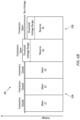
- each battery string 80 of the reserve subset 108 may be electrically connected to the electrical distribution bus 66 by the battery monitoring system 72 when the bus voltage for the electrical distribution bus 66 has decreased to within the threshold voltage range for each respective battery string 80 of the reserve subset 108 (see FIG. 6B ).
- the battery strings 80 of the reserve subset 108 may each have different battery string voltages, the battery strings 80 of the reserve subset 108 may not be electrically connected to the electrical distribution bus 66 at the same time (see FIG. 6C ).
- the battery monitoring system 72 may electrically connect one or more battery strings 80 of the reserve subset 108 to the electrical distribution bus 66 while maintaining one or more other battery strings 80 of the reserve subset 108 electrically disconnected from the electrical distribution bus 66.
- any one of these structures may describe the operations as a sequential process, many of the operations can be performed in parallel or concurrently.
- the order of the operations may be rearranged.
- a process may correspond to a method, a function, a procedure, a subroutine, a subprogram, etc.
- the terms “comprise”, “comprising”, or any other variation thereof, are intended to cover a non-exclusive inclusion, such that a process, method, article, or apparatus that comprises a list of elements does not include only those elements but may include other elements not expressly listed or inherent to such process, method, article, or apparatus.
Landscapes
- Engineering & Computer Science (AREA)
- Chemical & Material Sciences (AREA)
- Chemical Kinetics & Catalysis (AREA)
- Electrochemistry (AREA)
- General Chemical & Material Sciences (AREA)
- Power Engineering (AREA)
- Aviation & Aerospace Engineering (AREA)
- Manufacturing & Machinery (AREA)
- Mechanical Engineering (AREA)
- Combustion & Propulsion (AREA)
- Sustainable Development (AREA)
- Sustainable Energy (AREA)
- Transportation (AREA)
- Life Sciences & Earth Sciences (AREA)
- Physics & Mathematics (AREA)
- General Physics & Mathematics (AREA)
- Microelectronics & Electronic Packaging (AREA)
- General Engineering & Computer Science (AREA)
- Charge And Discharge Circuits For Batteries Or The Like (AREA)
- Secondary Cells (AREA)
- Remote Monitoring And Control Of Power-Distribution Networks (AREA)
Applications Claiming Priority (1)
| Application Number | Priority Date | Filing Date | Title |
|---|---|---|---|
| US202363443883P | 2023-02-07 | 2023-02-07 |
Publications (2)
| Publication Number | Publication Date |
|---|---|
| EP4415213A2 true EP4415213A2 (fr) | 2024-08-14 |
| EP4415213A3 EP4415213A3 (fr) | 2024-08-21 |
Family
ID=89854315
Family Applications (1)
| Application Number | Title | Priority Date | Filing Date |
|---|---|---|---|
| EP24156408.7A Pending EP4415213A3 (fr) | 2023-02-07 | 2024-02-07 | Système et procédé de commande d'un ensemble batterie d'aéronef |
Country Status (3)
| Country | Link |
|---|---|
| US (1) | US20240332987A1 (fr) |
| EP (1) | EP4415213A3 (fr) |
| CA (1) | CA3228447A1 (fr) |
Cited By (1)
| Publication number | Priority date | Publication date | Assignee | Title |
|---|---|---|---|---|
| EP4700818A1 (fr) * | 2024-08-19 | 2026-02-25 | Pratt & Whitney Canada Corp. | Système de propulsion pour un aéronef et et procédé d'identification d'une condition de fin de vie pour un contacteur électrique |
Family Cites Families (6)
| Publication number | Priority date | Publication date | Assignee | Title |
|---|---|---|---|---|
| US6713988B2 (en) * | 2001-07-20 | 2004-03-30 | Evionyx, Inc. | Selectively activated electrochemical cell system |
| KR20150081731A (ko) * | 2014-01-06 | 2015-07-15 | 삼성에스디아이 주식회사 | 배터리 팩, 배터리 팩을 포함하는 에너지 저장 시스템, 배터리 팩의 작동 방법 |
| WO2018053741A1 (fr) * | 2016-09-22 | 2018-03-29 | 深圳市大疆创新科技有限公司 | Procédé de commande de bloc-batterie, système de commande, support de stockage et aéronef sans pilote |
| US11296363B2 (en) * | 2019-09-20 | 2022-04-05 | Apple Inc. | Multi-cell battery pack |
| US20220029431A1 (en) * | 2020-07-23 | 2022-01-27 | Aurora Flight Sciences Corporation, a subsidiary of The Boeing Company | Switchable Battery Management System |
| EP4023487A1 (fr) * | 2021-01-04 | 2022-07-06 | Volvo Truck Corporation | Procédé de commande de connexion électrique de blocs-batteries |
-
2024
- 2024-02-07 US US18/435,591 patent/US20240332987A1/en active Pending
- 2024-02-07 CA CA3228447A patent/CA3228447A1/en active Pending
- 2024-02-07 EP EP24156408.7A patent/EP4415213A3/fr active Pending
Cited By (1)
| Publication number | Priority date | Publication date | Assignee | Title |
|---|---|---|---|---|
| EP4700818A1 (fr) * | 2024-08-19 | 2026-02-25 | Pratt & Whitney Canada Corp. | Système de propulsion pour un aéronef et et procédé d'identification d'une condition de fin de vie pour un contacteur électrique |
Also Published As
| Publication number | Publication date |
|---|---|
| CA3228447A1 (en) | 2025-04-15 |
| EP4415213A3 (fr) | 2024-08-21 |
| US20240332987A1 (en) | 2024-10-03 |
Similar Documents
| Publication | Publication Date | Title |
|---|---|---|
| EP4436002A1 (fr) | Système et procédé de commande d'un système de distribution électrique d'aéronef | |
| US20210206499A1 (en) | Electric propulsion system | |
| EP4415216A1 (fr) | Système et procédé de commande d'un ensemble batterie d'aéronef | |
| US11962147B2 (en) | Circuit and system for coupling battery packs to motor controller in electric or hybrid aircraft | |
| CN222432593U (zh) | 飞行器 | |
| EP4415213A2 (fr) | Système et procédé de commande d'un ensemble batterie d'aéronef | |
| CN118665718A (zh) | 电池管理系统、方法和电动设备 | |
| EP4467803A1 (fr) | Systèmes et procédés de commande d'un système de distribution électrique pour un système de propulsion d'aéronef hybride-électrique | |
| US20240333020A1 (en) | Aircraft battery charging system and method | |
| US20240332986A1 (en) | Aircraft battery charging system and method | |
| EP4491444A1 (fr) | Systèmes et procédés de commande d'une mise sous échange de bloc-batterie pour un aéronef | |
| US20260103082A1 (en) | Battery management system temperature sensing systems and methods | |
| US20260104294A1 (en) | Battery management system temperature sensing systems and methods | |
| US20260103081A1 (en) | Battery management system temperature sensing systems and methods | |
| EP4726963A1 (fr) | Ensemble électrique et procédés de connexion/déconnexion | |
| US20260050036A1 (en) | Systems and methods identifying an end-of-life condition for an electrical contactor | |
| US12391390B2 (en) | System and method for identifying a high-temperature condition of an electrical cable for an aircraft propulsion system | |
| US12565325B1 (en) | Propulsor reverse rotation protection for hybrid-electric aircraft propulsion systems | |
| US20260001653A1 (en) | Systems and methods for controlling an electric motor of an aircraft propulsion system | |
| EP4657709A1 (fr) | Système et procédé d'équilibrage de chaînes de batteries parallèles | |
| US20250010756A1 (en) | Systems and methods for controlling a battery pack loadout for an aircraft | |
| EP4674759A1 (fr) | Ensemble de commande pour systèmes de propulsion d'aéronef | |
| WO2025144582A2 (fr) | Systèmes et procédés de surveillance électrique et de précharge de blocs-batteries connectés |
Legal Events
| Date | Code | Title | Description |
|---|---|---|---|
| PUAI | Public reference made under article 153(3) epc to a published international application that has entered the european phase |
Free format text: ORIGINAL CODE: 0009012 |
|
| STAA | Information on the status of an ep patent application or granted ep patent |
Free format text: STATUS: THE APPLICATION HAS BEEN PUBLISHED |
|
| PUAL | Search report despatched |
Free format text: ORIGINAL CODE: 0009013 |
|
| AK | Designated contracting states |
Kind code of ref document: A2 Designated state(s): AL AT BE BG CH CY CZ DE DK EE ES FI FR GB GR HR HU IE IS IT LI LT LU LV MC ME MK MT NL NO PL PT RO RS SE SI SK SM TR |
|
| AK | Designated contracting states |
Kind code of ref document: A3 Designated state(s): AL AT BE BG CH CY CZ DE DK EE ES FI FR GB GR HR HU IE IS IT LI LT LU LV MC ME MK MT NL NO PL PT RO RS SE SI SK SM TR |
|
| RIC1 | Information provided on ipc code assigned before grant |
Ipc: H02J 7/00 20060101AFI20240718BHEP |
|
| STAA | Information on the status of an ep patent application or granted ep patent |
Free format text: STATUS: REQUEST FOR EXAMINATION WAS MADE |
|
| 17P | Request for examination filed |
Effective date: 20250221 |