EP4428954A1 - Matériau d'électrode positive ternaire à haute teneur en nickel, procédé de préparation, feuille d'électrode positive, batterie secondaire et utilisation - Google Patents
Matériau d'électrode positive ternaire à haute teneur en nickel, procédé de préparation, feuille d'électrode positive, batterie secondaire et utilisation Download PDFInfo
- Publication number
- EP4428954A1 EP4428954A1 EP23793220.7A EP23793220A EP4428954A1 EP 4428954 A1 EP4428954 A1 EP 4428954A1 EP 23793220 A EP23793220 A EP 23793220A EP 4428954 A1 EP4428954 A1 EP 4428954A1
- Authority
- EP
- European Patent Office
- Prior art keywords
- ternary cathode
- cathode material
- doping
- nickel
- nickel ternary
- Prior art date
- Legal status (The legal status is an assumption and is not a legal conclusion. Google has not performed a legal analysis and makes no representation as to the accuracy of the status listed.)
- Pending
Links
Images
Classifications
-
- H—ELECTRICITY
- H01—ELECTRIC ELEMENTS
- H01M—PROCESSES OR MEANS, e.g. BATTERIES, FOR THE DIRECT CONVERSION OF CHEMICAL ENERGY INTO ELECTRICAL ENERGY
- H01M4/00—Electrodes
- H01M4/02—Electrodes composed of, or comprising, active material
- H01M4/36—Selection of substances as active materials, active masses, active liquids
- H01M4/48—Selection of substances as active materials, active masses, active liquids of inorganic oxides or hydroxides
- H01M4/50—Selection of substances as active materials, active masses, active liquids of inorganic oxides or hydroxides of manganese
- H01M4/505—Selection of substances as active materials, active masses, active liquids of inorganic oxides or hydroxides of manganese of mixed oxides or hydroxides containing manganese for inserting or intercalating light metals, e.g. LiMn2O4 or LiMn2OxFy
-
- C—CHEMISTRY; METALLURGY
- C01—INORGANIC CHEMISTRY
- C01G—COMPOUNDS CONTAINING METALS NOT COVERED BY SUBCLASSES C01D OR C01F
- C01G53/00—Compounds of nickel
- C01G53/40—Complex oxides containing nickel and at least one other metal element
- C01G53/42—Complex oxides containing nickel and at least one other metal element containing alkali metals, e.g. LiNiO2
- C01G53/44—Complex oxides containing nickel and at least one other metal element containing alkali metals, e.g. LiNiO2 containing manganese
- C01G53/50—Complex oxides containing nickel and at least one other metal element containing alkali metals, e.g. LiNiO2 containing manganese of the type (MnO2)n-, e.g. Li(NixMn1-x)O2 or Li(MyNixMn1-x-y)O2
- C01G53/502—Complex oxides containing nickel and at least one other metal element containing alkali metals, e.g. LiNiO2 containing manganese of the type (MnO2)n-, e.g. Li(NixMn1-x)O2 or Li(MyNixMn1-x-y)O2 containing lithium and cobalt
- C01G53/504—Complex oxides containing nickel and at least one other metal element containing alkali metals, e.g. LiNiO2 containing manganese of the type (MnO2)n-, e.g. Li(NixMn1-x)O2 or Li(MyNixMn1-x-y)O2 containing lithium and cobalt with the molar ratio of nickel with respect to all the metals other than alkali metals higher than or equal to 0.5, e.g. Li(MzNixCoyMn1-x-y-z)O2 with x ≥ 0.5
- C01G53/506—Complex oxides containing nickel and at least one other metal element containing alkali metals, e.g. LiNiO2 containing manganese of the type (MnO2)n-, e.g. Li(NixMn1-x)O2 or Li(MyNixMn1-x-y)O2 containing lithium and cobalt with the molar ratio of nickel with respect to all the metals other than alkali metals higher than or equal to 0.5, e.g. Li(MzNixCoyMn1-x-y-z)O2 with x ≥ 0.5 with the molar ratio of nickel with respect to all the metals other than alkali metals higher than or equal to 0.8, e.g. Li(MzNixCoyMn1-x-y-z)O2 with x ≥ 0.8
-
- H—ELECTRICITY
- H01—ELECTRIC ELEMENTS
- H01M—PROCESSES OR MEANS, e.g. BATTERIES, FOR THE DIRECT CONVERSION OF CHEMICAL ENERGY INTO ELECTRICAL ENERGY
- H01M4/00—Electrodes
- H01M4/02—Electrodes composed of, or comprising, active material
- H01M4/04—Processes of manufacture in general
- H01M4/0471—Processes of manufacture in general involving thermal treatment, e.g. firing, sintering, backing particulate active material, thermal decomposition, pyrolysis
-
- H—ELECTRICITY
- H01—ELECTRIC ELEMENTS
- H01M—PROCESSES OR MEANS, e.g. BATTERIES, FOR THE DIRECT CONVERSION OF CHEMICAL ENERGY INTO ELECTRICAL ENERGY
- H01M4/00—Electrodes
- H01M4/02—Electrodes composed of, or comprising, active material
- H01M4/13—Electrodes for accumulators with non-aqueous electrolyte, e.g. for lithium-accumulators; Processes of manufacture thereof
- H01M4/139—Processes of manufacture
- H01M4/1391—Processes of manufacture of electrodes based on mixed oxides or hydroxides, or on mixtures of oxides or hydroxides, e.g. LiCoOx
-
- H—ELECTRICITY
- H01—ELECTRIC ELEMENTS
- H01M—PROCESSES OR MEANS, e.g. BATTERIES, FOR THE DIRECT CONVERSION OF CHEMICAL ENERGY INTO ELECTRICAL ENERGY
- H01M4/00—Electrodes
- H01M4/02—Electrodes composed of, or comprising, active material
- H01M4/36—Selection of substances as active materials, active masses, active liquids
- H01M4/362—Composites
- H01M4/366—Composites as layered products
-
- H—ELECTRICITY
- H01—ELECTRIC ELEMENTS
- H01M—PROCESSES OR MEANS, e.g. BATTERIES, FOR THE DIRECT CONVERSION OF CHEMICAL ENERGY INTO ELECTRICAL ENERGY
- H01M4/00—Electrodes
- H01M4/02—Electrodes composed of, or comprising, active material
- H01M4/36—Selection of substances as active materials, active masses, active liquids
- H01M4/48—Selection of substances as active materials, active masses, active liquids of inorganic oxides or hydroxides
- H01M4/52—Selection of substances as active materials, active masses, active liquids of inorganic oxides or hydroxides of nickel, cobalt or iron
- H01M4/525—Selection of substances as active materials, active masses, active liquids of inorganic oxides or hydroxides of nickel, cobalt or iron of mixed oxides or hydroxides containing iron, cobalt or nickel for inserting or intercalating light metals, e.g. LiNiO2, LiCoO2 or LiCoOxFy
-
- C—CHEMISTRY; METALLURGY
- C01—INORGANIC CHEMISTRY
- C01P—INDEXING SCHEME RELATING TO STRUCTURAL AND PHYSICAL ASPECTS OF SOLID INORGANIC COMPOUNDS
- C01P2002/00—Crystal-structural characteristics
- C01P2002/50—Solid solutions
- C01P2002/52—Solid solutions containing elements as dopants
-
- C—CHEMISTRY; METALLURGY
- C01—INORGANIC CHEMISTRY
- C01P—INDEXING SCHEME RELATING TO STRUCTURAL AND PHYSICAL ASPECTS OF SOLID INORGANIC COMPOUNDS
- C01P2002/00—Crystal-structural characteristics
- C01P2002/70—Crystal-structural characteristics defined by measured X-ray, neutron or electron diffraction data
- C01P2002/72—Crystal-structural characteristics defined by measured X-ray, neutron or electron diffraction data by d-values or two theta-values, e.g. as X-ray diagram
-
- C—CHEMISTRY; METALLURGY
- C01—INORGANIC CHEMISTRY
- C01P—INDEXING SCHEME RELATING TO STRUCTURAL AND PHYSICAL ASPECTS OF SOLID INORGANIC COMPOUNDS
- C01P2004/00—Particle morphology
- C01P2004/01—Particle morphology depicted by an image
- C01P2004/03—Particle morphology depicted by an image obtained by SEM
-
- C—CHEMISTRY; METALLURGY
- C01—INORGANIC CHEMISTRY
- C01P—INDEXING SCHEME RELATING TO STRUCTURAL AND PHYSICAL ASPECTS OF SOLID INORGANIC COMPOUNDS
- C01P2006/00—Physical properties of inorganic compounds
- C01P2006/12—Surface area
-
- C—CHEMISTRY; METALLURGY
- C01—INORGANIC CHEMISTRY
- C01P—INDEXING SCHEME RELATING TO STRUCTURAL AND PHYSICAL ASPECTS OF SOLID INORGANIC COMPOUNDS
- C01P2006/00—Physical properties of inorganic compounds
- C01P2006/40—Electric properties
-
- C—CHEMISTRY; METALLURGY
- C01—INORGANIC CHEMISTRY
- C01P—INDEXING SCHEME RELATING TO STRUCTURAL AND PHYSICAL ASPECTS OF SOLID INORGANIC COMPOUNDS
- C01P2006/00—Physical properties of inorganic compounds
- C01P2006/80—Compositional purity
-
- H—ELECTRICITY
- H01—ELECTRIC ELEMENTS
- H01M—PROCESSES OR MEANS, e.g. BATTERIES, FOR THE DIRECT CONVERSION OF CHEMICAL ENERGY INTO ELECTRICAL ENERGY
- H01M10/00—Secondary cells; Manufacture thereof
- H01M10/05—Accumulators with non-aqueous electrolyte
- H01M10/052—Li-accumulators
- H01M10/0525—Rocking-chair batteries, i.e. batteries with lithium insertion or intercalation in both electrodes; Lithium-ion batteries
-
- H—ELECTRICITY
- H01—ELECTRIC ELEMENTS
- H01M—PROCESSES OR MEANS, e.g. BATTERIES, FOR THE DIRECT CONVERSION OF CHEMICAL ENERGY INTO ELECTRICAL ENERGY
- H01M4/00—Electrodes
- H01M4/02—Electrodes composed of, or comprising, active material
- H01M2004/026—Electrodes composed of, or comprising, active material characterised by the polarity
- H01M2004/028—Positive electrodes
-
- Y—GENERAL TAGGING OF NEW TECHNOLOGICAL DEVELOPMENTS; GENERAL TAGGING OF CROSS-SECTIONAL TECHNOLOGIES SPANNING OVER SEVERAL SECTIONS OF THE IPC; TECHNICAL SUBJECTS COVERED BY FORMER USPC CROSS-REFERENCE ART COLLECTIONS [XRACs] AND DIGESTS
- Y02—TECHNOLOGIES OR APPLICATIONS FOR MITIGATION OR ADAPTATION AGAINST CLIMATE CHANGE
- Y02E—REDUCTION OF GREENHOUSE GAS [GHG] EMISSIONS, RELATED TO ENERGY GENERATION, TRANSMISSION OR DISTRIBUTION
- Y02E60/00—Enabling technologies; Technologies with a potential or indirect contribution to GHG emissions mitigation
- Y02E60/10—Energy storage using batteries
Definitions
- the present application relates to the field of lithium ion secondary battery technology, and particularly to a high-nickel ternary cathode material, a preparation method, a positive plate, a secondary battery, and an application.
- a high-nickel ternary cathode material LiNi x Co y Mn 1-x-y O 2 (x ⁇ 0.8, and x+y ⁇ 1) with a layered structure has advantages of a higher reversible specific capacity (more than 200mAhg -1 ), a higher working voltage (3.8V vs. Li/Li + ), or the like, and is successfully used, as a high-energy electrode material, in an electric automobile with a single-charge traveling distance of more than 500 kilometers.
- an increase in a nickel content in the traditional high-nickel ternary cathode material can significantly increase the capacity, the high-nickel ternary cathode material still has a problem of gradual deterioration of a cycle performance and thermal stability.
- the doping element X is distributed in bulk lattice of the material with the chemical formula of LiNi x Co y Mn z X a Y b O 2
- the doping element Y is enriched at a surface of the material with the chemical formula of LiNi x Co y Mn z X a Y b O 2 .
- a specific surface area of the high-nickel ternary cathode material is 0.4m 2 /g-0.7m 2 /g.
- a mass percent content of Li 2 CO 3 in the high-nickel ternary cathode material is 0.05wt% to 0.15wt%.
- a mass percent content of LiOH in the high-nickel ternary cathode material is 0.30wt% to 0.40wt%.
- a second aspect of the present application provides a preparation method for the high-nickel ternary cathode material according to the first aspect of the present application, including steps of:
- the precursor containing the nickel element, the cobalt element, and the manganese element includes a material with a chemical formula of Ni m Co n Mn 1-m-n (OH) 2 , 0.8 ⁇ m ⁇ 0.96, n>0, and m+n ⁇ 1 ;
- a lithium element in the lithium source and the precursor containing the nickel element, the cobalt element, and the manganese element have a molar ratio of (1.01-1.06):1.
- an amount of substance of the doping element X is 0.1% to 0.6% of a total amount of substance of the additive, the lithium source, and the precursor containing the nickel element, the cobalt element, and the manganese element in the mixed material; and an amount of substance of the doping element Y is 0.4% to 1% of the total amount of substance of the additive, the lithium source, and the precursor containing the nickel element, the cobalt element, and the manganese element in the mixed material.
- the sintering process includes the steps of: placing the mixed material in an oxygen-containing sintering atmosphere, and sintering for 2h to 10h at 450°C to 600°C, and then sintering for 10h to 20h at 650°C to 900°C; and optionally, volume percentage of oxygen in the oxygen-containing sintering atmosphere is greater than or equal to 97%.
- a third aspect of the present application provides a positive plate, including the high-nickel ternary cathode material according to the first aspect of the present application or the high-nickel ternary cathode material prepared by the preparation method according to the second aspect of the present application.
- a fourth aspect of the present application provides a secondary battery, including the positive plate according to the third aspect of the present application.
- a fifth aspect of the present application provides an electric device, including the secondary battery according to the fourth aspect of the present application.
- the high-nickel ternary cathode material, the preparation method, the positive plate, the secondary battery, and the application at least have the following advantages:
- the technical features described in an open type include a closed technical solution consisting of the listed features, and also include an open technical solution including the listed features.
- the element X and the element Y are co-doped in a bulk of the high-nickel ternary cathode material (i.e., an undoped high-nickel ternary cathode material), and competitive doping is formed using differences between different coordination space configurations and migration barriers of the two elements X and Y, such that element X substitution, lattice gap filling, and element Y enrichment on a surface of the bulk can be realized in one step, thereby inhibiting surface reconstruction in a cycle process of the high-nickel ternary cathode material while improving an ion interaction force and bond energy of the high-nickel ternary cathode material, with double functions of doping and surface coating being taken account, and further synergistically improving crystal structure stability and surface chemical stability of the high-nickel ternary cathode material, so as to improve cycle performance and thermal stability thereof, and solve problems of capacity attenuation, or the
- the stability of the high-nickel ternary cathode material can be improved to a certain extent in traditional element doping technologies, lithium insertion sites in bulk lattice is occupied while a bulk lattice structure of the high-nickel ternary cathode material is stabilized, such that part of the specific capacity of the high-nickel ternary cathode material is sacrificed.
- the competitive doping strategy in the present application can realize element X substitution and lattice gap filling without reducing a proportion of a nickel element in the high-nickel ternary cathode material, i.e., the specific capacity thereof, thus avoiding a lattice distortion and an obstruction to bulk diffusion caused by doping of the element Y with a smaller ionic radius to a gap position. Meanwhile, since a price of the nickel element is much lower than that of a cobalt element, the nickel element in the high-nickel ternary cathode material has a high proportion, and transition metal elements, such as the cobalt element, or the like, have low proportions, an advantage of a low cost of the raw material is taken into account.
- x may be, for example, 0.8, 0.82, 0.85, 0.87, 0.9, 0.92, 0.95, or the like
- a may be, for example, 0.001, 0.003, 0.005, 0.008, 0.01, 0.02, 0.03, 0.04, 0.05, or the like
- b may be, for example, 0.001, 0.003, 0.005, 0.008, 0.01, 0.02, 0.03, 0.04, 0.05, or the like.
- the doping element X is distributed in bulk lattice of the material with the chemical formula of LiNi x Co y Mn z X a Y b O 2
- the doping element Y is enriched at a surface of the material with the chemical formula of LiNi x Co y Mn z X a Y b O 2 .
- the doping site and a doping depth of the element can significantly affect an overall performance of the high-nickel ternary cathode material, and therefore, a doping type, the doping site and the doping depth of the element are critical to an improvement of the performance of the high-nickel ternary cathode material.
- the doping elements are selected to be X and Y.
- a migration barrier of the element Y in a bulk crystal structure is higher than that of the element X, and diffusion kinetics is slow, such that during co-doping of the element X and the element Y, the migration barrier of the element Y is significantly increased, the element Y tends to aggregate on the surface of the material with the chemical formula of LiNi x Co y Mn z X a Y b O 2 , and the element X is more prone to enter a transition metal layer of the material with the chemical formula of LiNi x Co y Mn z X a Y b O 2 .
- X includes one or more of Al and In
- Y includes one or more of B and Si
- 3s and 3p orbits of the element X can be hybridized with a d orbit into an sp 3 d 2 hybridized orbit which can be bonded to lattice oxygen to form an XOe octahedron, where X 3+ has an ionic radius that is close to a radius of a transition metal cation in the high-nickel ternary cathode material, and has a smaller diffusion barrier, therefore, it is more easily doped into the transition metal layer of the bulk lattice of the material with the chemical formula of LiNi x Co y Mn z X a Y b O 2 .
- the two elements X, Y are differently distributed in the material with the chemical formula of LiNi x Co y Mn z X a Y b O 2 , such that they can inhibit surface reconstruction in the cycle process of the high-nickel ternary cathode material while improving the ion interaction force and the bond energy of the high-nickel ternary cathode material, with the double functions of doping and surface coating being taken account, thereby synergistically improving the crystal structure stability and the surface chemical stability of the high-nickel ternary cathode material, so as to improve the cycle performance and the thermal stability thereof.
- y may include, but is not limited to, 0.001, 0.002, 0.005, 0.007, 0.009, 0.01, 0.03, 0.05, 0.08, 0.101, 0.132, 0.156, 0.173, 0.197, or the like;
- z may include, but is not limited to, 0.001, 0.003, 0.005, 0.007, 0.009, 0.01, 0.03, 0.05, 0.07, 0.112, 0.135, 0.159, 0.175, 0.197, or the like.
- z>y the cobalt element content in the high-nickel ternary cathode material is low, the high-nickel ternary cathode material is a high-nickel low-cobalt ternary cathode material, the high-nickel low-cobalt ternary cathode material has an advantage of a low cost, and the cycle performance, the thermal stability, or the like, of the high-nickel low-cobalt ternary cathode material are improved more significantly.
- the high-nickel ternary cathode material has a specific surface area of 0.4m 2 /g to 0.7m 2 /g. It may be understood that the specific surface area of the high-nickel ternary cathode material includes, but is not limited to, 0.4m 2 /g, 0.45m 2 /g, 0.5m 2 /g, 0.55m 2 /g, 0.6m 2 /g, 0.65m 2 /g, 0.7m 2 /g, or the like.
- Li 2 CO 3 in the high-nickel ternary cathode material has a mass percent content of 0.05wt% to 0.15wt%. It may be understood that the mass percent content of Li 2 CO 3 in the high-nickel ternary cathode material may be, for example, 0.05wt%, 0.06wt%, 0.07wt%, 0.08wt%, 0.09wt%, 0.1wt%, 0.11wt%, 0.12wt%, 0.13wt%, 0.14wt%, 0.15wt%, or the like.
- LiOH in the high-nickel ternary cathode material has a mass percent content of 0.30wt% to 0.40wt%. It may be understood that the mass percent content of LiOH in the high-nickel ternary cathode material may be, for example, 0.3wt%, 0.31wt%, 0.32wt%, 0.33wt%, 0.34wt%, 0.35wt%, 0.36wt%, 0.37wt%, 0.38wt%, 0.39wt%, 0.4wt%, or the like.
- Another embodiment of the present application provides a preparation method for the above high-nickel ternary cathode material, including the steps of:
- the doping elements X, Y have obviously different extranuclear electron arrangements and ionic radii, they can form different coordination space configurations, and show different diffusion energy barriers in the doping process.
- a migration barrier of the element Y in a bulk crystal structure is higher than that of the element X, and diffusion kinetics is slow, such that during co-doping of the element X and the element Y, the migration barrier of the element Y is significantly increased, the element Y tends to aggregate on the surface of the material with the chemical formula of LiNi x Co y Mn z X a Y b O 2 , and the element X is more prone to enter a transition metal layer of the material with the chemical formula of LiNi x Co y Mn z X a Y b O 2 .
- layered co-doping effects of X bulk uniform doping and Y surface enrichment can be achieved in one step, thereby synergistically improving crystal structure stability and surface chemical stability of the high-nickel ternary cathode material, further improving cycle performance and thermal stability thereof, and solving problems of capacity attenuation, or the like, caused by lattice collapse, surface reconstruction, or the like, in the cycle process of the traditional high-nickel ternary cathode material.
- the competitive doping strategy can realize element X substitution and lattice gap filling without reducing a proportion of a nickel element in the high-nickel ternary cathode material, i.e., the specific capacity thereof, thus avoiding a lattice distortion and an obstruction to bulk diffusion caused by doping of the element Y with a smaller ionic radius to a gap position.
- a price of the nickel element is much lower than that of a cobalt element
- the nickel element in the high-nickel ternary cathode material has a high proportion
- transition metal elements, such as the cobalt element, or the like have low proportions, such that an advantage of a low cost of the raw material is taken into account.
- the doping element X is distributed in bulk lattice of the material with the chemical formula of LiNi x Co y Mn z X a Y b O 2
- the doping element Y is distributed at a surface of the material with the chemical formula of LiNi x Co y Mn z X a Y b O 2 .
- the preparation method is simple and convenient and has a low cost, and the high-nickel ternary cathode material can be prepared with one sintering step, so that the preparation method according to the present application has more advantages in technology and cost compared with a traditional dual-sintering technology or three-time-sintering technology.
- the precursor containing the nickel element, the cobalt element, and the manganese element includes a material with a chemical formula of Ni m Co n Mn 1-m-n (OH) 2 , where 0.8 ⁇ m ⁇ 0.96, n>0, and m+n ⁇ 1. It may be understood that m may be 0.8, 0.82, 0.84, 0.86, 0.88, 0.9, 0.92, 0.94, or the like, and n may be, for example, 0.04, 0.05, 0.08, 0.1, 0.12, 0.15, 0.18, or the like.
- the additive includes one or more of oxide, carbonate, hydroxide, and acetate of the doping element X and the doping element Y. It should be noted that the additive contains not only the doping element X but also the doping element Y; the additive may include, but is not limited to, one or any combination of a compound containing both the doping element X and the doping element Y, a compound containing the doping element X but not containing the doping element Y, and a compound containing the doping element Y but not containing the doping element X, where the compound may be oxide, carbonate, hydroxide, and acetate, but is not limited thereto.
- the additive may include oxide containing the doping element X and oxide containing the doping element Y, or include oxide containing the doping element X and hydroxide containing the doping element Y, or include carbonate containing both the doping elements X and Y, or the like.
- the lithium source includes one or more of lithium hydroxide, lithium carbonate, lithium acetate, and lithium nitrate.
- a lithium element in the lithium source and the precursor containing the nickel element, the cobalt element, and the manganese element have a molar ratio of (1.01-1.06):1. It may be understood that the lithium element in the lithium source and the precursor containing the nickel element, the cobalt element, and the manganese element may, for example, have a molar ratio of 1.01:1, 1.02:1, 1.04:1, 1.06:1, or the like.
- an amount of substance of the doping element X is 0.1% to 0.6% of a total amount of substance of the additive, the lithium source and the precursor containing the nickel element, the cobalt element and the manganese element in the mixed material; and an amount of substance of the doping element Y is 0.4% to 1% of the total amount of substance of the additive, the lithium source, and the precursor containing the nickel element, the cobalt element, and the manganese element in the mixed material.
- a doping type, the doping quantity, a doping site, and a doping depth of the element are critical to an improvement of a performance of the high-nickel ternary cathode material.
- cycle stability and the thermal stability of the high-nickel ternary cathode material can be further improved by controlling quantity percentages of the doping element X and the doping element Y in the mixed material.
- the amount of substance percentage of the doping element X in the mixed material may be, for example, 0.2%, 0.3%, 0.4%, 0.5%, 0.6%, or the like, and the amount of substance percentage of the doping element Y in the mixed material may be, for example, 0.4%, 0.6%, 0.8%, 1%, or the like.
- the mixed material is obtained by mixing 0.005mol of Al 2 O 3 , 0.005mol of B 2 O 3 , 1.04mol of LiOH-H 2 O, and 1mol of N 10.83 Co 0.06 Mn 0.11 (OH) 2
- the amount of substance of the doping element Al is 0.488% of the total amount of substance of Al 2 O 3 , B 2 O 3 , LiOH-H 2 O, and Ni 0.83 Co 0.06 Mn 0.11 (OH) 2
- the amount of substance of the doping element B is 0.488% of the total amount of substance of Al 2 O 3 , B 2 O 3 , LiOH ⁇ H 2 O, and Ni 0.83 Co 0.06 Mn 0.11 (OH) 2 .
- the additive, the lithium source, and the precursor containing the nickel element, the cobalt element, and the manganese element are mixed using a dry airflow method, where a rotation speed of an airflow mixer is 500rpm/min to 1,000rpm/min, and a mixing time is 20min to 60min. Mixing by the dry airflow method can fully and uniformly mix the additive, the lithium source, and the precursor containing the nickel element, the cobalt element, and the manganese element, thereby facilitating subsequent sintering.
- the rotation speed of the airflow mixer may be, for example, 500rpm/min, 600rpm/min, 700rpm/min, 800rpm/min, 900rpm/min, 1,000rpm/min, or the like, and the mixing time may be, for example, 20min, 30min, 40min, 50min, 60min, or the like.
- the sintering process includes steps of: placing the mixed material in an oxygen-containing sintering atmosphere, sintering for 2h to 10h at 450°C to 600°C, and then sintering for 10h to 20h at 650°C to 900°C.
- the doping site and the doping depth of the element are critical to the improvement of the performance of the high-nickel ternary cathode material; in the present application, the doping sites and the doping depths of the element X and the element Y can be controlled by controlling technological conditions of sintering, thereby further improving the cycle stability and the thermal stability of the high-nickel ternary cathode material.
- the sintering temperature of 450°C to 600°C may be, for example, 450°C, 500°C, 550°C, 600°C, or the like, and the sintering duration of 2h to 10 h may be, for example, 2h, 4h, 6h, 8h, 10h, or the like.
- the sintering temperature of 650°C to 900°C may be, for example, 650°C, 700°C, 750°C, 800°C, 850°C, 900°C, or the like.
- sintering is carried out in an experimental furnace, and after sintering is finished, the obtained high-nickel ternary cathode material is naturally cooled, the experimental furnace is still kept in a sealed state in the period, and after a furnace temperature of the experimental furnace is reduced to below 50°C, the high-nickel ternary cathode material is taken out. More specifically, the obtained high-nickel ternary cathode material can be crushed and sieved for use, and a sieving mesh number can be 200 to 400.
- volume percentage of oxygen in the oxygen-containing sintering atmosphere is greater than or equal to 97%. It may be understood that the volume percentage of the oxygen in the oxygen-containing sintering atmosphere may be, for example, 97%, 97.5%, 98%, 98.5%, 99%, or the like.
- Another embodiment of the present application further provides a positive plate, including the above high-nickel ternary cathode material or the high-nickel ternary cathode material prepared by the above preparation method.
- the positive plate includes a positive current collector and an active substance layer, the active substance layer is applied on at least one surface of the positive current collector, and a cathode material in the active substance layer includes the above high-nickel ternary cathode material or the high-nickel ternary cathode material prepared by the above preparation method.
- the present application further provides a secondary battery, including the above positive plate.
- the above secondary battery may include, for example, the above positive plate, a negative plate, an electrolyte solution, and a separator.
- the separator is provided between the positive plate and the negative plate, mainly functions to prevent a short circuit of a positive electrode and a negative electrode, and meanwhile may allow ions to pass.
- the electrolyte solution functions to conduct the ions between the positive plate and the negative plate.
- lithium ions are inserted and extracted back and forth between the positive plate and the negative plate.
- the present application has no special limitation on the negative plate, the electrolyte solution, and the separator, and the negative plate prepared by a preparation method commonly used in the technical field and the electrolyte solution and the separator commonly used in the art can be used.
- the electric device may include any apparatus or device with a secondary battery as a driving source, such as a mobile phone, a notebook computer, an electric vehicle, a ship, a satellite, an energy storage apparatus, an intelligent household appliance, or the like, but is not limited thereto.
- the additives were Al 2 O 3 and B 2 O 3
- the lithium source was LiOH ⁇ H 2 O
- the precursor containing the nickel element, the cobalt element, and the manganese element was Ni 0.83 Co 0.06 Mn 0.11 (OH) 2 .
- the preparation method for a high-nickel ternary cathode material in the example included the following steps:
- the additives were Al 2 O 3 and B 2 O 3
- the lithium source was LiOH ⁇ H 2 O
- the precursor containing the nickel element, the cobalt element, and the manganese element was Ni 0.83 Co 0.06 Mn 0.11 (OH) 2 .
- the preparation method for a high-nickel ternary cathode material in the example included steps of:
- the additives were Al(OH) 3 and B 2 O 3
- the lithium source was LiOH ⁇ H 2 O
- the precursor containing the nickel element, the cobalt element, and the manganese element was Ni 0.83 Co 0.06 Mn 0.11 (OH) 2 .
- the preparation method for a high-nickel ternary cathode material in the example included steps of:
- the additives were Al 2 O 3 and SiO
- the lithium source was LiOH ⁇ H 2 O
- the precursor containing the nickel element, the cobalt element and the manganese element was Ni 0.83 Co 0.06 Mn 0.11 (OH) 2 .
- the preparation method for a high-nickel ternary cathode material in the example included steps of:
- the additives were In 2 O 3 and B 2 O 3
- the lithium source was LiOH ⁇ H 2 O
- the precursor containing the nickel element, the cobalt element and the manganese element was Ni 0.83 Co 0.06 Mn 0.11 (OH) 2 .
- the preparation method for a high-nickel ternary cathode material in the example included steps of:
- the additives were In 2 O 3 and SiO
- the lithium source was LiOH ⁇ H 2 O
- the precursor containing the nickel element, the cobalt element, and the manganese element was Ni 0.83 Co 0.06 Mn 0.11 (OH) 2 .
- the preparation method for a high-nickel ternary cathode material in the example included steps of:
- the lithium source was LiOH ⁇ H 2 O
- the precursor containing the nickel element, the cobalt element, and the manganese element was Ni 0.83 Co 0.06 Mn 0.11 (OH) 2 .
- the preparation method for a high-nickel ternary cathode material in the comparative example included steps of:
- the additive was Al 2 O 3
- the lithium source was LiOH ⁇ H 2 O
- the precursor containing the nickel element, the cobalt element, and the manganese element was Ni 0.83 Co 0.06 Mn 0.11 (OH) 2 .
- the preparation method for a high-nickel ternary cathode material in the comparative example included the following steps:
- the additive was B 2 O 3
- the lithium source was LiOH ⁇ H 2 O
- the precursor containing the nickel element, the cobalt element, and the manganese element was Ni 0.83 Co 0.06 Mn 0.11 (OH) 2 .
- the preparation method for a high-nickel ternary cathode material in the comparative example included steps of:
- the additive was In 2 O 3
- the lithium source was LiOH ⁇ H 2 O
- the precursor containing the nickel element, the cobalt element and the manganese element was Ni 0.83 Co 0.06 Mn 0.11 (OH) 2 .
- the preparation method for a high-nickel ternary cathode material in the comparative example included steps of:
- the additive was SiO
- the lithium source was LiOH ⁇ H 2 O
- the precursor containing the nickel element, the cobalt element, and the manganese element was Ni 0.83 Co 0.06 Mn 0.11 (OH) 2 .
- the preparation method for a high-nickel ternary cathode material in the comparative example included steps of:
- the components of the high-nickel ternary cathode materials prepared in each example and each comparative example were measured by an ICP-AES analyzer.
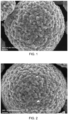
- FIG. 1 was an SEM image of the high-nickel ternary cathode material LiNi 0.83 Co 0.05 Mn 0.11 Al 0.01 B 0.02 O 2 prepared in example 1 at a magnification of 10,000
- FIG. 2 was an SEM image of the high-nickel ternary cathode material LiNi 0.83 Co 0.06 Mn 0.11 O 2 prepared in comparative example 1 at a magnification of 10,000.
- each of the high-nickel ternary cathode materials prepared in example 1 and comparative example 1 was composed of secondary microspheres assembled from primary nanoparticles, and had an average size of about 10 ⁇ m; furthermore, as could be seen from a comparison between FIG. 1 and FIG. 2 , a surface granular sensation of the primary particles of the high-nickel ternary cathode material prepared in example 1 was stronger, and surfaces of the primary particles of the high-nickel ternary cathode material prepared in comparative example 1 were smoother, which was mainly because the element B could not replace or occupy the gap position in the bulk lattice during the competitive doping process to be enriched on the surface.
- FIG. 3 was an XRD graph of the high-nickel ternary cathode material LiNi 0.83 Co 0.05 Mn 0.11 Al 0.01 B 0.02 O 2 prepared in example 1.
- the high-nickel ternary cathode material prepared in example 1 had a layered structure and had an ⁇ -NaFeO 2 rhombus structure of an R-3m space group.
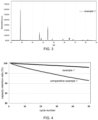
- the high-nickel ternary cathode materials prepared in examples 1 to 6 and comparative examples 1 to 5 were used as active substances, a conductive agent was SP, a binder was PVDF, a solvent was NMP, and the active substances, the conductive agent, and the binder were uniformly mixed according to a mass ratio of 96.5:1.5:2 into slurry, the slurry was applied on aluminum foil, then was cut into positive plate wafers after dried, and is assembled into a button battery in a glove box, where an electrolyte solution was formed by dissolving 1M LiPF 6 in a mixed solution of ethylene carbonate (EC), diethyl carbonate (DEC), and dimethyl carbonate (DMC) (a volume ratio was 1:1:1), the assembled button battery stood for 12h for an electrochemical performance test, and results were shown in table 1 and FIG. 4 .
- EC ethylene carbonate
- DEC diethyl carbonate
- DMC dimethyl carbonate
- the capacity retention ratios of the button batteries of example 1 and comparative example 1 after 50 cycles at 45°C and the current density of 0.3C were 97.91% and 91.42% respectively.
- the high-nickel ternary cathode material in comparative example 1 was subjected to competitive co-doping of the element Al and the element B, and the cycle stability in example 1 was remarkably improved, which was mainly because uniform bulk distribution of the element Al and surface enrichment of the element B could synergistically improve the crystal structure and the surface chemical structure of the high-nickel ternary cathode material.
- the high-nickel ternary cathode materials prepared in comparative examples 2 to 5 were only doped with the element X or the element Y, and the button batteries of comparative examples 2 to 5 had a poorer high-temperature cycle performance at 45°C and 0.3C than those in examples 1 to 6, which indicated that the cycle performance and the thermal stability of the high-nickel cathode materials in examples 1 to 6 were obviously improved by co-doping the element X and the element Y.
- the high-nickel ternary cathode material is doped with the element X and the element Y to generate the competitive layered doping effect, and the competitive layered doping allows the element X to be subjected to uniform bulk doping and the element Y to be enriched on the surface of the material in the co-doping process of the element X and the element Y.
- the uniform bulk lattice doping of the element X can effectively reduce sudden shrinkage of lattice parameters in a c direction and collapse of lithium atom layer spacing when charging is finished, thereby reducing the lattice collapse of anisotropy of the layered structure in the c direction.
- the element Y layer enriched on the surface assists in forming a stable surface/interface layer during cycling, thus inhibiting surface reconstruction during cycling. Therefore, the crystal structure and the surface chemical structure can be synergistically improved through competitive layered doping, the cycle stability of the high-nickel ternary cathode material is remarkably improved, and the problems of serious capacity and voltage attenuation, or the like, of the high-nickel ternary cathode material in the cycle process are effectively solved.
Landscapes
- Chemical & Material Sciences (AREA)
- Chemical Kinetics & Catalysis (AREA)
- Electrochemistry (AREA)
- General Chemical & Material Sciences (AREA)
- Engineering & Computer Science (AREA)
- Inorganic Chemistry (AREA)
- Manufacturing & Machinery (AREA)
- Organic Chemistry (AREA)
- Composite Materials (AREA)
- Materials Engineering (AREA)
- Battery Electrode And Active Subsutance (AREA)
Applications Claiming Priority (2)
| Application Number | Priority Date | Filing Date | Title |
|---|---|---|---|
| CN202310059173.XA CN116014139A (zh) | 2023-01-17 | 2023-01-17 | 高镍三元正极材料、制备方法、正极片、二次电池和应用 |
| PCT/CN2023/114163 WO2024152563A1 (fr) | 2023-01-17 | 2023-08-22 | Matériau d'électrode positive ternaire à haute teneur en nickel, procédé de préparation, feuille d'électrode positive, batterie secondaire et utilisation |
Publications (2)
| Publication Number | Publication Date |
|---|---|
| EP4428954A1 true EP4428954A1 (fr) | 2024-09-11 |
| EP4428954A4 EP4428954A4 (fr) | 2025-02-26 |
Family
ID=86026741
Family Applications (1)
| Application Number | Title | Priority Date | Filing Date |
|---|---|---|---|
| EP23793220.7A Pending EP4428954A4 (fr) | 2023-01-17 | 2023-08-22 | Matériau d'électrode positive ternaire à haute teneur en nickel, procédé de préparation, feuille d'électrode positive, batterie secondaire et utilisation |
Country Status (3)
| Country | Link |
|---|---|
| EP (1) | EP4428954A4 (fr) |
| CN (1) | CN116014139A (fr) |
| WO (1) | WO2024152563A1 (fr) |
Families Citing this family (4)
| Publication number | Priority date | Publication date | Assignee | Title |
|---|---|---|---|---|
| CN116014139A (zh) * | 2023-01-17 | 2023-04-25 | 天津巴莫科技有限责任公司 | 高镍三元正极材料、制备方法、正极片、二次电池和应用 |
| CN116868367A (zh) * | 2023-05-08 | 2023-10-10 | 广东邦普循环科技有限公司 | 一种锂电正极材料、其制备方法及应用 |
| CN116789189A (zh) * | 2023-07-07 | 2023-09-22 | 锂白新材料科技(江苏)有限公司 | 一种高镍正极材料及其制备方法、电池和用电装置 |
| CN118231646B (zh) * | 2023-12-29 | 2025-12-12 | 比亚迪股份有限公司 | 一种三元材料、其制备方法、正极片、锂离子电池及用电设备 |
Family Cites Families (9)
| Publication number | Priority date | Publication date | Assignee | Title |
|---|---|---|---|---|
| JP4110435B2 (ja) * | 1998-11-04 | 2008-07-02 | 戸田工業株式会社 | リチウムイオン二次電池用正極活物質 |
| JP2014116161A (ja) * | 2012-12-07 | 2014-06-26 | Agc Seimi Chemical Co Ltd | リチウムイオン二次電池用正極活物質の製造方法 |
| CN107394160B (zh) * | 2017-07-24 | 2019-09-10 | 合肥国轩高科动力能源有限公司 | 一种锂离子电池正极材料及其制备方法 |
| CN111463411A (zh) * | 2019-01-18 | 2020-07-28 | 天津国安盟固利新材料科技股份有限公司 | 一种单晶形貌的高镍三元正极材料及其制备方法 |
| CN110233253B (zh) * | 2019-06-28 | 2020-09-18 | 中国科学院化学研究所 | 一种二元掺杂的单晶三元正极材料及其制备方法 |
| CN110571427B (zh) * | 2019-09-09 | 2021-01-05 | 中伟新材料股份有限公司 | 三元正极材料及其制备方法和锂电池 |
| CN114256456B (zh) * | 2021-12-20 | 2024-01-16 | 珠海冠宇电池股份有限公司 | 一种高电压正极材料及含有该正极材料的电池 |
| CN115385398B (zh) * | 2022-09-22 | 2023-09-29 | 楚能新能源股份有限公司 | 一种掺杂改性的三元材料及其制备方法 |
| CN116014139A (zh) * | 2023-01-17 | 2023-04-25 | 天津巴莫科技有限责任公司 | 高镍三元正极材料、制备方法、正极片、二次电池和应用 |
-
2023
- 2023-01-17 CN CN202310059173.XA patent/CN116014139A/zh active Pending
- 2023-08-22 EP EP23793220.7A patent/EP4428954A4/fr active Pending
- 2023-08-22 WO PCT/CN2023/114163 patent/WO2024152563A1/fr not_active Ceased
Also Published As
| Publication number | Publication date |
|---|---|
| CN116014139A (zh) | 2023-04-25 |
| EP4428954A4 (fr) | 2025-02-26 |
| WO2024152563A1 (fr) | 2024-07-25 |
Similar Documents
| Publication | Publication Date | Title |
|---|---|---|
| EP4428954A1 (fr) | Matériau d'électrode positive ternaire à haute teneur en nickel, procédé de préparation, feuille d'électrode positive, batterie secondaire et utilisation | |
| CN102244237B (zh) | 一种高容量锂离子电池正极材料的合成方法 | |
| CN108807926A (zh) | 一种Co/B共包覆镍钴锰锂离子正极材料及其制备方法 | |
| CN113517425B (zh) | 一种锂离子电池正极材料及其制备方法 | |
| CN115275179A (zh) | 富锂锰基正极材料及其制备方法和应用 | |
| CN117558905B (zh) | 一种钠铁双位掺杂的聚阴离子正极材料及其制备方法 | |
| CN113921781A (zh) | 钛掺杂改性p2型层状钠离子电池正极材料及其制备方法 | |
| CN115939367B (zh) | 一种三元正极材料、制备方法及其应用 | |
| CN112723427A (zh) | 一种三元正极前驱体及其制备方法和用途 | |
| CN114784236A (zh) | 一种包覆型Al、F共掺杂单晶锰酸锂正极材料及其制备方法和应用 | |
| CN110156086A (zh) | 一种锰酸锂正极材料的制备方法 | |
| EP4317080A1 (fr) | Matériau composite et procédé de préparation associé et matériau d'électrode positive pour batterie au lithium-ion | |
| CN117790721A (zh) | 一种镍钴锰酸锂正极材料及其制备方法、锂离子电池 | |
| CN111320214B (zh) | 改性镍钴锰酸锂三元正极材料及其制备方法和应用 | |
| CN111009656A (zh) | 一种稀土金属掺杂的高镍三元电池正极材料的制备方法 | |
| CN114573041A (zh) | 一种正极材料的制备方法 | |
| CN118117075A (zh) | 一种高镍正极活性材料和制备方法及其应用 | |
| CN113871613B (zh) | 高镍三元镍钴锰酸锂正极材料及其制备方法 | |
| EP4682113A1 (fr) | Matériau d'électrode positive à oxyde stratifié à gradient dopé à haute teneur en nickel à surface à entropie élevée et intérieur à entropie moyenne et son procédé de préparation | |
| CN111634961A (zh) | 锂离子电池用正极材料及其制备方法 | |
| KR20260019562A (ko) | 산화물 전구체, 이의 제조 방법 및 응용 | |
| CN119361676A (zh) | 一种掺杂型富锂锰氧化物正极材料及其制备方法与应用 | |
| CN119153667A (zh) | 正极材料及其制备方法、正极极片、电池及用电设备 | |
| CN119275281A (zh) | 钠离子电池正极材料、制备方法及应用 | |
| CN117117109B (zh) | 一种无钴类单晶正极材料及其制备方法,以及锂离子电池 |
Legal Events
| Date | Code | Title | Description |
|---|---|---|---|
| STAA | Information on the status of an ep patent application or granted ep patent |
Free format text: STATUS: UNKNOWN |
|
| STAA | Information on the status of an ep patent application or granted ep patent |
Free format text: STATUS: THE INTERNATIONAL PUBLICATION HAS BEEN MADE |
|
| PUAI | Public reference made under article 153(3) epc to a published international application that has entered the european phase |
Free format text: ORIGINAL CODE: 0009012 |
|
| STAA | Information on the status of an ep patent application or granted ep patent |
Free format text: STATUS: REQUEST FOR EXAMINATION WAS MADE |
|
| 17P | Request for examination filed |
Effective date: 20231031 |
|
| AK | Designated contracting states |
Kind code of ref document: A1 Designated state(s): AL AT BE BG CH CY CZ DE DK EE ES FI FR GB GR HR HU IE IS IT LI LT LU LV MC ME MK MT NL NO PL PT RO RS SE SI SK SM TR |
|
| STAA | Information on the status of an ep patent application or granted ep patent |
Free format text: STATUS: EXAMINATION IS IN PROGRESS |
|
| A4 | Supplementary search report drawn up and despatched |
Effective date: 20250124 |
|
| RIC1 | Information provided on ipc code assigned before grant |
Ipc: H01M 4/1391 20100101ALI20250120BHEP Ipc: H01M 4/04 20060101ALI20250120BHEP Ipc: C01G 53/506 20250101ALI20250120BHEP Ipc: H01M 10/0525 20100101ALI20250120BHEP Ipc: H01M 4/131 20100101ALI20250120BHEP Ipc: H01M 4/525 20100101AFI20250120BHEP |
|
| 17Q | First examination report despatched |
Effective date: 20250207 |
|
| DAV | Request for validation of the european patent (deleted) | ||
| DAX | Request for extension of the european patent (deleted) |