EP4435007A2 - Trispezifische proteine und verfahren zur verwendung - Google Patents
Trispezifische proteine und verfahren zur verwendung Download PDFInfo
- Publication number
- EP4435007A2 EP4435007A2 EP24177635.0A EP24177635A EP4435007A2 EP 4435007 A2 EP4435007 A2 EP 4435007A2 EP 24177635 A EP24177635 A EP 24177635A EP 4435007 A2 EP4435007 A2 EP 4435007A2
- Authority
- EP
- European Patent Office
- Prior art keywords
- seq
- amino acid
- bcma
- sequence
- acid sequence
- Prior art date
- Legal status (The legal status is an assumption and is not a legal conclusion. Google has not performed a legal analysis and makes no representation as to the accuracy of the status listed.)
- Pending
Links
Images








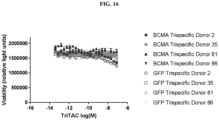


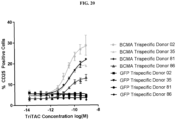


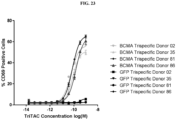
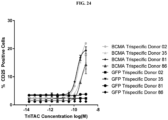





Classifications
-
- C—CHEMISTRY; METALLURGY
- C07—ORGANIC CHEMISTRY
- C07K—PEPTIDES
- C07K16/00—Immunoglobulins [IG], e.g. monoclonal or polyclonal antibodies
- C07K16/18—Immunoglobulins [IG], e.g. monoclonal or polyclonal antibodies against material from animals or humans
-
- A—HUMAN NECESSITIES
- A61—MEDICAL OR VETERINARY SCIENCE; HYGIENE
- A61K—PREPARATIONS FOR MEDICAL, DENTAL OR TOILETRY PURPOSES
- A61K39/00—Medicinal preparations containing antigens or antibodies
- A61K39/395—Antibodies; Immunoglobulins; Immune serum, e.g. antilymphocytic serum
-
- A—HUMAN NECESSITIES
- A61—MEDICAL OR VETERINARY SCIENCE; HYGIENE
- A61P—SPECIFIC THERAPEUTIC ACTIVITY OF CHEMICAL COMPOUNDS OR MEDICINAL PREPARATIONS
- A61P35/00—Antineoplastic agents
-
- C—CHEMISTRY; METALLURGY
- C07—ORGANIC CHEMISTRY
- C07K—PEPTIDES
- C07K16/00—Immunoglobulins [IG], e.g. monoclonal or polyclonal antibodies
- C07K16/18—Immunoglobulins [IG], e.g. monoclonal or polyclonal antibodies against material from animals or humans
- C07K16/28—Immunoglobulins [IG], e.g. monoclonal or polyclonal antibodies against material from animals or humans against receptors, cell surface antigens or cell surface determinants
- C07K16/2803—Immunoglobulins [IG], e.g. monoclonal or polyclonal antibodies against material from animals or humans against receptors, cell surface antigens or cell surface determinants against the immunoglobulin superfamily
- C07K16/2809—Immunoglobulins [IG], e.g. monoclonal or polyclonal antibodies against material from animals or humans against receptors, cell surface antigens or cell surface determinants against the immunoglobulin superfamily against the T-cell receptor (TcR)-CD3 complex
-
- C—CHEMISTRY; METALLURGY
- C07—ORGANIC CHEMISTRY
- C07K—PEPTIDES
- C07K16/00—Immunoglobulins [IG], e.g. monoclonal or polyclonal antibodies
- C07K16/18—Immunoglobulins [IG], e.g. monoclonal or polyclonal antibodies against material from animals or humans
- C07K16/28—Immunoglobulins [IG], e.g. monoclonal or polyclonal antibodies against material from animals or humans against receptors, cell surface antigens or cell surface determinants
- C07K16/2878—Immunoglobulins [IG], e.g. monoclonal or polyclonal antibodies against material from animals or humans against receptors, cell surface antigens or cell surface determinants against the NGF-receptor/TNF-receptor superfamily, e.g. CD27, CD30, CD40, CD95
-
- A—HUMAN NECESSITIES
- A61—MEDICAL OR VETERINARY SCIENCE; HYGIENE
- A61K—PREPARATIONS FOR MEDICAL, DENTAL OR TOILETRY PURPOSES
- A61K39/00—Medicinal preparations containing antigens or antibodies
- A61K2039/505—Medicinal preparations containing antigens or antibodies comprising antibodies
-
- C—CHEMISTRY; METALLURGY
- C07—ORGANIC CHEMISTRY
- C07K—PEPTIDES
- C07K2317/00—Immunoglobulins specific features
- C07K2317/20—Immunoglobulins specific features characterized by taxonomic origin
- C07K2317/21—Immunoglobulins specific features characterized by taxonomic origin from primates, e.g. man
-
- C—CHEMISTRY; METALLURGY
- C07—ORGANIC CHEMISTRY
- C07K—PEPTIDES
- C07K2317/00—Immunoglobulins specific features
- C07K2317/20—Immunoglobulins specific features characterized by taxonomic origin
- C07K2317/24—Immunoglobulins specific features characterized by taxonomic origin containing regions, domains or residues from different species, e.g. chimeric, humanized or veneered
-
- C—CHEMISTRY; METALLURGY
- C07—ORGANIC CHEMISTRY
- C07K—PEPTIDES
- C07K2317/00—Immunoglobulins specific features
- C07K2317/30—Immunoglobulins specific features characterized by aspects of specificity or valency
- C07K2317/31—Immunoglobulins specific features characterized by aspects of specificity or valency multispecific
-
- C—CHEMISTRY; METALLURGY
- C07—ORGANIC CHEMISTRY
- C07K—PEPTIDES
- C07K2317/00—Immunoglobulins specific features
- C07K2317/50—Immunoglobulins specific features characterized by immunoglobulin fragments
- C07K2317/56—Immunoglobulins specific features characterized by immunoglobulin fragments variable (Fv) region, i.e. VH and/or VL
-
- C—CHEMISTRY; METALLURGY
- C07—ORGANIC CHEMISTRY
- C07K—PEPTIDES
- C07K2317/00—Immunoglobulins specific features
- C07K2317/50—Immunoglobulins specific features characterized by immunoglobulin fragments
- C07K2317/56—Immunoglobulins specific features characterized by immunoglobulin fragments variable (Fv) region, i.e. VH and/or VL
- C07K2317/565—Complementarity determining region [CDR]
-
- C—CHEMISTRY; METALLURGY
- C07—ORGANIC CHEMISTRY
- C07K—PEPTIDES
- C07K2317/00—Immunoglobulins specific features
- C07K2317/50—Immunoglobulins specific features characterized by immunoglobulin fragments
- C07K2317/56—Immunoglobulins specific features characterized by immunoglobulin fragments variable (Fv) region, i.e. VH and/or VL
- C07K2317/569—Single domain, e.g. dAb, sdAb, VHH, VNAR or nanobody®
-
- C—CHEMISTRY; METALLURGY
- C07—ORGANIC CHEMISTRY
- C07K—PEPTIDES
- C07K2317/00—Immunoglobulins specific features
- C07K2317/60—Immunoglobulins specific features characterized by non-natural combinations of immunoglobulin fragments
- C07K2317/62—Immunoglobulins specific features characterized by non-natural combinations of immunoglobulin fragments comprising only variable region components
- C07K2317/622—Single chain antibody (scFv)
-
- C—CHEMISTRY; METALLURGY
- C07—ORGANIC CHEMISTRY
- C07K—PEPTIDES
- C07K2317/00—Immunoglobulins specific features
- C07K2317/70—Immunoglobulins specific features characterized by effect upon binding to a cell or to an antigen
- C07K2317/73—Inducing cell death, e.g. apoptosis, necrosis or inhibition of cell proliferation
-
- C—CHEMISTRY; METALLURGY
- C07—ORGANIC CHEMISTRY
- C07K—PEPTIDES
- C07K2317/00—Immunoglobulins specific features
- C07K2317/70—Immunoglobulins specific features characterized by effect upon binding to a cell or to an antigen
- C07K2317/73—Inducing cell death, e.g. apoptosis, necrosis or inhibition of cell proliferation
- C07K2317/732—Antibody-dependent cellular cytotoxicity [ADCC]
-
- C—CHEMISTRY; METALLURGY
- C07—ORGANIC CHEMISTRY
- C07K—PEPTIDES
- C07K2317/00—Immunoglobulins specific features
- C07K2317/70—Immunoglobulins specific features characterized by effect upon binding to a cell or to an antigen
- C07K2317/76—Antagonist effect on antigen, e.g. neutralization or inhibition of binding
-
- C—CHEMISTRY; METALLURGY
- C07—ORGANIC CHEMISTRY
- C07K—PEPTIDES
- C07K2317/00—Immunoglobulins specific features
- C07K2317/90—Immunoglobulins specific features characterized by (pharmaco)kinetic aspects or by stability of the immunoglobulin
- C07K2317/92—Affinity (KD), association rate (Ka), dissociation rate (Kd) or EC50 value
-
- C—CHEMISTRY; METALLURGY
- C07—ORGANIC CHEMISTRY
- C07K—PEPTIDES
- C07K2319/00—Fusion polypeptide
- C07K2319/30—Non-immunoglobulin-derived peptide or protein having an immunoglobulin constant or Fc region, or a fragment thereof, attached thereto
-
- C—CHEMISTRY; METALLURGY
- C07—ORGANIC CHEMISTRY
- C07K—PEPTIDES
- C07K2319/00—Fusion polypeptide
- C07K2319/31—Fusion polypeptide fusions, other than Fc, for prolonged plasma life, e.g. albumin
Definitions
- Cancer is the second leading cause of human death next to coronary disease. Worldwide, millions of people die from cancer every year. In the United States alone, cancer causes the death of well over a half-million people each year, with some 1.4 million new cases diagnosed per year. While deaths from heart disease have been declining significantly, those resulting from cancer generally are on the rise. In the early part of the next century, cancer is predicted to become the leading cause of death.
- Cancer is a complex disease characterized by genetic mutations that lead to uncontrolled cell growth. Cancerous cells are present in all organisms and, under normal circumstances, their excessive growth is tightly regulated by various physiological factors.
- NK natural killer
- CTLs cytotoxic T lymphocytes
- a B cell maturation agent (BCMA) binding trispecific protein that comprises: (a) a first domain (A) which specifically binds to human CD3; (b) a second domain (B) which is a half-life extension domain; and (c) a third domain (C) which specifically binds to BCMA, wherein the domains are linked in the order H2N-(A)-(C)-(B)-COOH, H2N-(B)-(A)-(C)-COOH, H2N-(C)-(B)-(A)-COOH, H2N-(C)-(A)-(B)-COOH, H2N-(A)-(B)-(C)-COOH, or H2N-(B)-(C)-(A)-COOH, wherein the domains are linked by linkers L1 and L2.
- the first domain can comprise a variable light domain and variable heavy domain, each of which is capable of specifically binding to human CD3.
- the first domain can be humanized or human.
- the second domain binds albumin.
- the second domain can comprise a single chain variable fragment (scFv), a variable heavy domain (VH), a variable light domain (VL), a single chain antibody binding domain devoid of light chain (a VHH domain), a peptide, a ligand, or a small molecule.
- the third domain is, in some cases, a single chain antibody binding domain devoid of light chain (a VHH domain), a scFv, a VH domain, a VL domain, a non-Ig domain, a ligand, a knottin, or a small molecule entity that specifically binds to BCMA.
- the third domain comprises a VHH domain.
- a BCMA binding trispecific protein where the VHH domain comprises complementarity determining regions CDR1, CDR2, and CDR3, wherein (a) the amino acid sequence of CDR1 is as set forth in X 1 X 2 X 3 X 4 X 5 X 6 X 7 PX 8 G(SEQ ID NO: 1), wherein X 1 is T or S; X 2 is N, D, or S; X 3 is I, D, Q, H, V, or E; X 4 is F, S, E, A, T, M, V, I, D, Q, P, R, or G; X 5 is S, M, R, or N; X 6 is I, K, S, T, R, E, D, N, V, H, L, A, Q, or G; X 7 is S, T, Y, R, or N; and X 8 is M, G, or Y; (b) the amino acid sequence of CDR2 is as set forth in AIX 9 GX 10 X 11
- the CDR1 does not comprise an amino acid sequence of SEQ ID NO: 599.
- the CDR2 does not comprise an amino acid sequence of SEQ ID NO: 600.
- the CDR3 does not comprise an amino acid sequence of SEQ ID NO: 601.
- the CDR1 and CDR2 do not comprise amino acid sequences of SEQ ID NO: 599 and 600, respectively.
- the CDR1 and CDR3 do not comprise amino acid sequences of SEQ ID NO: 599 and 601, respectively.
- the CDR2 and CDR3 do not comprise amino acid sequences of SEQ ID NO: 600 and 601, respectively.
- the CDR1, CDR2 and CDR3 do not comprise amino acid sequences of SEQ ID NO: 599, 600 and 601, respectively.
- a BCMA binding trispecific protein where the VHH domain comprises the following formula: f1-r1-f2-r2-f3-r3-f4; wherein, r1 is SEQ ID NO: 1; r2 is SEQ ID NO: 2; and r3 is SEQ ID NO: 3; and wherein f 1 , f 2 , f 3 and f 4 are framework residues selected so that said protein is from about eighty percent (80%) to about 99% identical to the amino acid sequence set forth in SEQ ID NO: 598 or 346.
- a BCMA binding trispecific protein where the VHH domain comprises the following formula: f1-r1-f2-r2-f3-r3-f4; wherein, r1 is SEQ ID NO: 1; r2 is SEQ ID NO: 2; and r3 is SEQ ID NO: 3; and wherein f 1 , f 2 , f 3 and f 4 are framework residues selected so that said protein is from about 80% to about 90% identical to the amino acid sequence set forth in SEQ ID NO: 598 or 346.
- the amino acid sequence of the single domain BCMA binding protein does not comprise SEQ ID NO: 598.
- r1 comprises an amino acid sequence set forth as any one of SEQ ID NOs: 4-117.
- r2 comprises an amino acid sequence set forth as any one of SEQ ID NOs: 118-231.
- r3 comprises an amino acid sequence set forth as any one of SEQ ID NOs: 232-345.
- the protein comprises an amino sequence set forth as any one of SEQ ID NOs: 346-460.
- f1 comprises, in some instances, SEQ ID NO: 461 or 462.
- f2 comprises, in some instances, SEQ ID NO: 463.
- f3 comprises, in some instances, SEQ ID NO: 464 or 465.
- f4 comprise, in some instances, SEQ ID NO: 466 or 467.
- r1 comprises SEQ ID NO: 76, 114, 115, 116 or 117. In one non-limiting example, r1 comprises SEQ ID NO: 76.
- r1 comprises SEQ ID NO: 76
- r2 is SEQ ID NO: 190
- r3 is SEQ ID NO: 304.
- r1 comprises SEQ ID NO: 114
- r2 comprises SEQ ID NO: 228
- r3 comprises SEQ ID NO: 342.
- r1 comprises SEQ ID NO: 115
- r2 comprises SEQ ID NO: 229
- r3 comprises SEQ ID NO: 343.
- r1 comprises SEQ ID NO: 117
- r2 comprises SEQ ID NO: 231
- r3 comprises SEQ ID NO: 345.
- r1 comprises SEQ ID NO: 116
- r2 comprises SEQ ID NO: 230
- r3 comprises SEQ ID NO: 344.
- the third domain in some cases, is a human VHH domain, a humanized VHH domain, an affinity matured VHH domain, or a combination thereof.
- the BCMA binding trispecific protein in some instances, has an elimination half-time of at least 12 hours, at least 20 hours, at least 25 hours, at least 30 hours, at least 35 hours, at least 40 hours, at least 45 hours, at least 50 hours, or at least 100 hours.
- a BCMA binding trispecific protein that is a VHH domain, where the VHH domain comprises a CDR1, a CDR2, and a CDR3, and wherein the protein comprises the sequence set forth as SEQ ID NO: 346 or 598, wherein one or more amino acid residues selected from amino acid positions 26, 27, 28, 29, 30, 31, 32 and/or 34 of CDR1; positions 52, 54, 55 and/or 57 of CDR2; and positions 101, 105, 106 and/or 108 of CDR3 are substituted, wherein amino acid position 26, if substituted, is substituted with S; amino acid position 27, if substituted, is substituted with D or S; amino acid position 28, if substituted, is substituted with D, Q, H, V, or E; amino acid position 29, if substituted, is substituted with S, E, A, T, M, V, I, D, Q, P, R, or G; amino acid position 30, if substituted, is substituted with M, R, or N; amino acid position 31, if
- a BCMA binding trispecific protein where the third domain binds to a human BCMA protein that comprises a sequence set forth as SEQ ID NO: 468.
- the third domain binds to an epitope of BCMA, wherein said epitope comprises the extracellular domain of BCMA.
- the third domain binds to an epitope of BCMA, wherein said epitope comprises amino acid residues 5-51 of SEQ ID NO: 468.
- linkers L1 and L2 aree each independently selected from (GS) n (SEQ ID NO: 472), (GGS) n (SEQ ID NO: 473), (GGGS) n (SEQ ID NO: 474), (GGSG) n (SEQ ID NO: 475), (GGSGG) n (SEQ ID NO: 476), (GGGGS) n (SEQ ID NO: 477), (GGGGG) n (SEQ ID NO: 478) or (GGG) n (SEQ ID NO: 479) wherein n is 1, 2, 3, 4, 5, 6, 7, 8, 9, or 10.
- the linkers L1 and L2 are each independently (GGGGS) 4 (SEQ ID NO: 480) or (GGGGS) 3 (SEQ ID NO: 481).
- the domains of a BCMA binding trispecific protein can be linked in the order H 2 N-(C)-(B)-(A)-COOH.
- a BCMA binding trispecific protein is less than about 80 kDa. In other instances, a BCMA binding trispecific protein can be about 50 to about 75 kDa. In other instances, a BCMA binding trispecific protein is less than about 60 kDa.
- a BCMA binding trispecific protein described herein in some instances, have an elimination half-time of at least about 50 hours, about 100 hours or more.
- a BCMA binding trispecific protein in some instances, exhibit increased tissue penetration as compared to an IgG to the same BCMA.
- a BCMA binding trispecific protein in some instances, comprises an amino acid sequence selected from the group consisting of SEQ ID NO: 483-597.
- a BCMA binding trispecific protein in some instances, comprises an amino acid sequence as set forth in SEQ ID NO: 520.
- a B cell maturation agent (BCMA) binding trispecific protein comprising: (a) a first domain (A) which specifically binds to human CD3; (b) a second domain (B) which is a half-life extension domain; and (c) a third domain (C) which specifically binds to BCMA,wherein the third domain comprises an amino sequence set forth as any one of SEQ ID NOS: 346-460.
- a B cell maturation agent (BCMA) binding trispecific protein comprising: (a) a first domain (A) which specifically binds to human CD3; (b) a second domain (B) which is a half-life extension domain; and (c) a third domain (C) which specifically binds to BCMA, wherein the third domain comprises complementarity determining regions CDR1, CDR2, and CDR3, wherein CDR1 comprises an amino acid sequence set forth as any one of SEQ ID NOS: 4-117, CDR2 comprises an amino acid sequence set forth as any one of SEQ ID NOS: 118-231, and CDR3 comprises an amino acid sequence set forth as any one of SEQ ID NOS: 232-345.
- BCMA B cell maturation agent
- composition comprising a BCMA binding trispecific protein as described herein and a pharmaceutically acceptable carrier.
- Also provided herein is a process for the production of a BCMA binding trispecific protein described herein, said process comprising culturing a host transformed or transfected with a vector comprising a nucleic acid sequence encoding a BCMA binding trispecific protein under conditions allowing the expression of the BCMA binding trispecific protein and recovering and purifying the produced protein from the culture.
- One embodiment provides a method for the treatment or amelioration of a tumorous disease, an autoimmune disease or an infection disease associated with BCMA in a subject in need thereof, comprising administering to the subject a pharmaceutical composition comprising a BCMA binding trispecific protein, wherein the BCMA binding protein comprises
- a method for the treatment or amelioration of a tumorous disease, an autoimmune disease or an infection disease associated with BCMA in a subject in need thereof comprising administering to the subject a pharmaceutical composition as described herein.
- a subject to be treated is, in some instances, a human.
- the method further comprises administration of one or more additional agents in combination with the BCMA binding trispecific protein.
- the methods described herein are useful for treatment or amelioration of a tumorous disease, wherein the BCMA binding trispecific protein selectively binds to tumor cells expressing BCMA.
- a tumorous disease to be treated with the described methods comprises a primary cancer or a metastasis thereof.
- the tumorous disease comprises a B cell lineage cancer.
- a B cell lineage cancer to be treated with the recited methods includes, but is not limited to, a multiple myeloma, a leukemia, a lymphoma, or a metastasis thereof.
- BCMA binding trispecific protein target B cell maturation antigen
- BCMA targeting trispecific protein referred to herein as BCMA binding trispecific protein, BCMA targeting trispecific protein, or BCMA trispecific antigen-binding protein
- nucleic acids recombinant expression vectors and host cells for making such proteins thereof.
- the BCMA targeting trispecific proteins are capable of specifically binding to BCMA as well as CD3 and have a half-life extension domain, such as a domain binding to human albumin (ALB).
- Fig. 1 depicts a non-limiting example of a trispecific BCMA-binding protein.
- an “antibody” typically refers to a Y-shaped tetrameric protein comprising two heavy (H) and two light (L) polypeptide chains held together by covalent disulfide bonds and non-covalent interactions.
- Human light chains comprise a variable domain (VL) and a constant domain (CL) wherein the constant domain may be readily classified as kappa or lambda based on amino acid sequence and gene loci.
- Each heavy chain comprises one variable domain (VH) and a constant region, which in the case of IgG, IgA, and IgD, comprises three domains termed CH1, CH2, and CH3 (IgM and IgE have a fourth domain, CH4).
- the CH1 and CH2 domains are separated by a flexible hinge region, which is a proline and cysteine rich segment of variable length (generally from about 10 to about 60 amino acids in IgG).
- the variable domains in both the light and heavy chains are joined to the constant domains by a "J" region of about 12 or more amino acids and the heavy chain also has a "D" region of about 10 additional amino acids.
- Each class of antibody further comprises inter-chain and intra-chain disulfide bonds formed by paired cysteine residues. There are two types of native disulfide bridges or bonds in immunoglobulin molecules: inter-chain and intra-chain disulfide bonds.
- inter-chain disulfide bonds vary according to the immunoglobulin class and species. Inter-chain disulfide bonds are located on the surface of the immunoglobulin, are accessible to solvent and are usually relatively easily reduced. In the human IgG1 isotype there are four inter-chain disulfide bonds, one from each heavy chain to the light chain and two between the heavy chains. The inter-chain disulfide bonds are not required for chain association. As is well known the cysteine rich IgG1 hinge region of the heavy chain has generally been held to consist of three parts: an upper hinge, a core hinge, and a lower hinge.
- the IgG1 hinge region contains the cysteines in the heavy chain that comprise the inter-chain disulfide bonds (two heavy/heavy, two heavy/light), which provide structural flexibility that facilitates Fab movements.
- the inter-chain disulfide bond between the light and heavy chain of IgG1 are formed between C214 of the kappa or lambda light chain and C220 in the upper hinge region of the heavy chain.
- the inter-chain disulfide bonds between the heavy chains are at positions C226 and C229 (all numbered per the EU index according to Kabat, et al., infra.).
- antibody includes polyclonal antibodies, multiclonal antibodies, monoclonal antibodies, chimeric antibodies, humanized and primatized antibodies, CDR grafted antibodies, human antibodies, recombinantly produced antibodies, intrabodies, multispecific antibodies, bispecific antibodies, monovalent antibodies, multivalent antibodies, anti-idiotypic antibodies, synthetic antibodies, including muteins and variants thereof, immunospecific antibody fragments such as Fd, Fab, F(ab')2, F(ab') fragments, single-chain fragments ( e.g ., ScFv and ScFvFc), disulfide-linked Fvs (sdFv), a Fd fragment consisting of the VH and CH1 domains, linear antibodies, single domain antibodies such as sdAb (VH, VL, or VHH domains); and derivatives thereof including Fc fusions and other modifications, and any other immunoreactive molecule so long as it comprises a domain having a binding site for preferential association or binding with a BC
- the term further comprises all classes of antibodies (i.e . IgA, IgD, IgE, IgG, and IgM) and all subclasses (i.e ., IgG1, IgG2, IgG3, IgG4, IgA1, and IgA2).
- Heavy-chain constant domains that correspond to the different classes of antibodies are typically denoted by the corresponding lower case Greek letter alpha , delta , epsilon , gamma, and mu , respectively.
- Light chains of the antibodies from any vertebrate species can be assigned to one of two clearly distinct types, called kappa (kappa) and lambda (lambda ), based on the amino acid sequences of their constant domains.
- the BCMA binding domain of the BCMA targeting trispecific proteins of this disclosure comprise a heavy chain only antibody, such as a VH or a VHH domain.
- the BCMA binding proteins comprise a heavy chain only antibody that is an engineered human VH domain.
- the engineered human VH domain is produced by panning of phage display libraries.
- the BCMA binding domain of the BCMA targeting trispecific proteins of this disclosure comprise a VHH.
- VHH refers to single chain antibody binding domain devoid of light chain.
- a VHH is derived from an antibody of the type that can be found in Camelidae or cartilaginous fish which are naturally devoid of light chains or to a synthetic and non-immunized VHH which can be constructed accordingly. Each heavy chain comprises a variable region encoded by V-, D- and J exons.
- a VHH in some cases, is a natural VHH, such as a Camelid-derived VHH, or a recombinant protein comprising a heavy chain variable domain.
- the VHH is derived from a species selected from the group consisting of camels, llamas, vicugnas, guanacos, and cartilaginous fish (such as, but not limited to, sharks).
- the VHH is derived from an alpaca (such as, but not limited to, a Huacaya Alpaca or a Suri alpaca).
- variable region refers to the fact that certain portions of the variable domains differ extensively in sequence among antibodies and are used in the binding and specificity of each particular antibody for its particular antigen. However, the variability is not evenly distributed throughout the variable domains of antibodies. It is concentrated in three segments called complementarity-determining regions (CDRs) or hypervariable regions both in the light-chain (VL) and the heavy-chain (VH) variable domains. The more highly conserved portions of variable domains are called the framework (FR).
- CDRs complementarity-determining regions
- FR framework
- the variable domains of native heavy and light chains each comprise four FR regions, largely adopting a ⁇ -sheet configuration, connected by three CDRs, which form loops connecting, and in some cases forming part of, the ⁇ sheet structure.
- the CDRs in each chain are held together in close proximity by the FR regions and, with the CDRs from the other chain, contribute to the formation of the antigen-binding site of antibodies (see Kabat et al., Sequences of Proteins of Immunological Interest, Fifth Edition, National Institute of Health, Bethesda, Md. (1991 )).
- the constant domains are not involved directly in binding an antibody to an antigen, but exhibit various effector functions, such as participation of the antibody in antibody-dependent cellular toxicity.
- ScFv fragments (or single chain fragment variable), which in some cases are obtained by genetic engineering, associate in a single polypeptide chain, the VH and the VL region of an antibody, separated by a peptide linker.
- the BCMA binding domain of the BCMA targeting trispecific proteins comprise heavy chain only antibodies, such as VH or VHH domains, and comprise three CDRs. Such heavy chain only antibodies, in some embodiments, bind BCMA as a monomer with no dependency on dimerization with a VL (light chain variable) region for optimal binding affinity.
- the CD3 binding domain of the BCMA targeting trispecific proteins comprises a scFv.
- the albumin binding domain of the BCMA targeting trispecific proteins comprise a heavy chain only antibody, such as a single domain antibody comprising a VH domain or a VHH domain.
- Framework residues refer to variable domain residues other than the CDR or hypervariable region residues as herein defined.
- a "human consensus framework” is a framework which represents the most commonly occurring amino acid residue in a selection of human immunoglobulin VL or VH framework sequences.
- Percent (%) amino acid sequence identity is defined as the percentage of amino acid residues in a candidate sequence that are identical with the amino acid residues in the specific sequence, after aligning the sequences and introducing gaps, if necessary, to achieve the maximum percent sequence identity, and not considering any conservative substitutions as part of the sequence identity. Alignment for purposes of determining percent amino acid sequence identity can be achieved in various ways that are within the skill in the art, for instance, using publicly available computer software such as EMBOSS MATCHER, EMBOSS WATER, EMBOSS STRETCHER, EMBOSS NEEDLE, EMBOSS LALIGN, BLAST, BLAST-2, ALIGN or Megalign (DNASTAR) software. Those skilled in the art can determine appropriate parameters for measuring alignment, including any algorithms needed to achieve maximal alignment over the full length of the sequences being compared.
- “elimination half-time” is used in its ordinary sense, as is described in Goodman and Gillman's The Pharmaceutical Basis of Therapeutics 21-25 (Alfred Goodman Gilman, Louis S. Goodman, and Alfred Gilman, eds., 6th ed. 1980 ). Briefly, the term is meant to encompass a quantitative measure of the time course of drug elimination.
- the elimination of most drugs is exponential (i.e., follows first-order kinetics), since drug concentrations usually do not approach those required for saturation of the elimination process.
- the rate of an exponential process may be expressed by its rate constant, k, which expresses the fractional change per unit of time, or by its half-time, t1/2 the time required for 50% completion of the process.
- binding affinity refers to the affinity of the proteins described in the disclosure to their binding targets, and is expressed numerically using "Kd" values. If two or more proteins are indicated to have comparable binding affinities towards their binding targets, then the Kd values for binding of the respective proteins towards their binding targets, are within ⁇ 2-fold of each other. If two or more proteins are indicated to have comparable binding affinities towards single binding target, then the Kd values for binding of the respective proteins towards said single binding target, are within ⁇ 2-fold of each other. If a protein is indicated to bind two or more targets with comparable binding affinities, then the Kd values for binding of said protein to the two or more targets are within ⁇ 2-fold of each other.
- a higher Kd value corresponds to a weaker binding.
- the "Kd” is measured by a radiolabeled antigen binding assay (RIA) or surface plasmon resonance assays using a BIAcore TM -2000 or a BIAcore TM -3000 (BIAcore, Inc., Piscataway, N.J.).
- an "on-rate” or “rate of association” or “association rate” or “kon” and an “off-rate” or “rate of dissociation” or “dissociation rate” or “koff' are also determined with the surface plasmon resonance technique using a BIAcore TM -2000 or a BIAcore TM -3000 (BIAcore, Inc., Piscataway, N.J.).
- the "Kd”, "kon”, and “koff” are measured using the OCTET ® Systems (Pall Life Sciences).
- the ligand e.g., biotinylated human or cynomolgus BCMA
- the OCTET ® streptavidin capillary sensor tip surface which streptavidin tips are then activated according to manufacturer's instructions using about 20-50 ⁇ g/ml human or cynomolgus BCMA protein.
- a solution of PBS/Casein is also introduced as a blocking agent.
- BCMA binding protein variants are introduced at a concentration ranging from about 10 ng/mL to about 100 ⁇ g/mL, about 50 ng/mL to about 5 ⁇ g/mL, or about 2 ng/mL to about 20 ⁇ g/mL.
- the BCMA binding single domain proteins are used at a concentration ranging from about 2 ng/mL to about 20 ⁇ g/mL. Complete dissociation is observed in case of the negative control, assay buffer without the binding proteins.
- the kinetic parameters of the binding reactions are then determined using an appropriate tool, e.g., ForteBio software.
- a health care worker e.g. a doctor, a registered nurse, a nurse practitioner, a physician's assistant, an orderly, or a hospice worker.
- the BCMA targeting trispecific proteins comprise a domain (A) which specifically binds to CD3, a domain (B) which specifically binds to human albumin (ALB), and a domain (C) which specifically binds to BCMA.
- the three domains in BCMA targeting trispecific proteins are arranged in any order.
- the domain order of the BCMA targeting trispecific proteins are:
- the BCMA targeting trispecific proteins have a domain order of H 2 N-(A)-(B)-(C)-COOH. In some embodiments, the BCMA targeting trispecific proteins have a domain order of H 2 N-(A)-(C)-(B)-COOH. In some embodiments, the BCMA targeting trispecific proteins have a domain order of H 2 N-(B)-(A)-(C)-COOH. In some embodiments, the BCMA targeting trispecific proteins have a domain order of H 2 N-(B)-(C)-(A)-COOH. In some embodiments, the BCMA targeting trispecific proteins have a domain order of H 2 N-(C)-(B)-(A)-COOH.
- the BCMA targeting trispecific proteins have a domain order of H 2 N-(C)-(A)-(B)-COOH.
- the anti-BCMA domain (the anti-target domain, T), the anti-CD3 domain (C), and the anti-ALB domain (A) are in an anti-CD3: anti-ALB: anti-BCMA (CAT) orientation.
- the anti-BCMA domain (the anti-target domain,T) the anti-CD3 domain (C), and the anti-ALB domain (A) are in an anti-BCMA: anti-ALB: anti-CD3 (TAC) orientation.
- the BCMA targeting trispecific proteins have the HSA binding domain as the middle domain, such that the domain order is H 2 N-(A)-(B)-(C)-COOH or H 2 N-(C)-(B)-(A)-COOH. It is contemplated that in such embodiments where the ALB binding domain as the middle domain, the CD3 and BCMA binding domains are afforded additional flexibility to bind to their respective targets.
- the BCMA targeting trispecific proteins described herein comprise a polypeptide having a sequence described in the Sequence Table (SEQ ID NO: 483-597) and subsequences thereof.
- the trispecific antigen binding protein comprises a polypeptide having at least 70%-95% or more homology to a sequence described in the Sequence Table (SEQ ID NO: 483-597).
- the trispecific antigen binding protein comprises a polypeptide having at least 70%, 75%, 80%, 85%, 90%, 95%, or more homology to a sequence described in the Sequence Table 1 (SEQ ID NO: 483-597).
- the BCMA targeting trispecific proteins described herein are designed to allow specific targeting of cells expressing BCMA by recruiting cytotoxic T cells. This improves efficacy compared to ADCC (antibody dependent cell-mediated cytotoxicity), which is using full length antibodies directed to a sole antigen and is not capable of directly recruiting cytotoxic T cells. In contrast, by engaging CD3 molecules expressed specifically on these cells, the BCMA targeting trispecific proteins can crosslink cytotoxic T cells with cells expressing BCMA in a highly specific fashion, thereby directing the cytotoxic potential of the T cell towards the target cell.
- the BCMA targeting trispecific proteins described herein engage cytotoxic T cells via binding to the surface-expressed CD3 proteins, which form part of the TCR.
- BCMA targeting trispecific proteins are contemplated to display strong, specific and efficient target cell killing.
- the BCMA targeting trispecific proteins described herein stimulate target cell killing by cytotoxic T cells to eliminate pathogenic cells (e.g., tumor cells expressing BCMA). In some of such embodiments, cells are eliminated selectively, thereby reducing the potential for toxic side effects.
- the BCMA targeting trispecific proteins described herein confer further therapeutic advantages over traditional monoclonal antibodies and other smaller bispecific molecules. Generally, the effectiveness of recombinant protein pharmaceuticals depends heavily on the intrinsic pharmacokinetics of the protein itself.
- One such benefit here is that the BCMA targeting trispecific proteins described herein have extended pharmacokinetic elimination half-time due to having a half-life extension domain such as a domain specific to HSA.
- the BCMA targeting trispecific proteins described herein have an extended serum elimination half-time of about two, three, about five, about seven, about 10, about 12, or about 14 days in some embodiments. This contrasts to other binding proteins such as BiTE or DART molecules which have relatively much shorter elimination half-times.
- the BiTE CD19 ⁇ CD3 bispecific scFv-scFv fusion molecule requires continuous intravenous infusion (i.v.) drug delivery due to its short elimination half-time.
- the longer intrinsic half-times of the BCMA targeting trispecific proteins solve this issue thereby allowing for increased therapeutic potential such as low-dose pharmaceutical formulations, decreased periodic administration and/or novel pharmaceutical compositions.
- the BCMA targeting trispecific proteins described herein also have an optimal size for enhanced tissue penetration and tissue distribution. Larger sizes limit or prevent penetration or distribution of the protein in the target tissues.
- the BCMA targeting trispecific proteins described herein avoid this by having a small size that allows enhanced tissue penetration and distribution. Accordingly, the BCMA targeting trispecific proteins described herein, in some embodiments have a size of about 50 kD to about 80 kD, about 50 kD to about 75 kD, about 50 kD to about 70 kD, or about 50 kD to about 65 kD.
- the size of the BCMA targeting trispecific proteins is advantageous over IgG antibodies which are about 150 kD and the BiTE and DART diabody molecules which are about 55 kD but are not half-life extended and therefore cleared quickly through the kidney.
- the BCMA targeting trispecific proteins described herein have an optimal size for enhanced tissue penetration and distribution.
- the BCMA targeting trispecific proteins are constructed to be as small as possible, while retaining specificity toward its targets. Accordingly, in these embodiments, the BCMA targeting trispecific proteins described herein have a size of about 20 kD to about 40 kD or about 25 kD to about 35 kD to about 40 kD, to about 45 kD, to about 50 kD, to about 55 kD, to about 60 kD, to about 65 kD.
- the BCMA targeting trispecific proteins described herein have a size of about 50kD, 49, kD, 48 kD, 47 kD, 46 kD, 45 kD, 44 kD, 43 kD, 42 kD, 41 kD, 40 kD, about 39 kD, about 38 kD, about 37 kD, about 36 kD, about 35 kD, about 34 kD, about 33 kD, about 32 kD, about 31 kD, about 30 kD, about 29 kD, about 28 kD, about 27 kD, about 26 kD, about 25 kD, about 24 kD, about 23 kD, about 22 kD, about 21 kD, or about 20 kD.
- an exemplary approach to the small size is through the use of single domain antibody (sdAb) fragments for each of the domains.
- sdAb single domain antibody
- a particular BCMA trispecific antigen-binding protein has an anti-CD3 sdAb, anti-ALB sdAb and an sdAb for BCMA. This reduces the size of the exemplary BCMA trispecific antigen-binding protein to under 40 kD.
- the domains of the BCMA targeting trispecific proteins are all single domain antibody (sdAb) fragments.
- the BCMA targeting trispecific proteins described herein comprise small molecule entity (SME) binders for ALB and/or the BCMA.
- SME small molecule entity
- SME binders are small molecules averaging about 500 to 2000 Da in size and are attached to the BCMA targeting trispecific proteins by known methods, such as sortase ligation or conjugation.
- one of the domains of BCMA trispecific antigen-binding protein is a sortase recognition sequence, e.g., LPETG (SEQ ID NO: 482).
- LPETG SEQ ID NO: 482
- SME binders include MIP-1072 and MIP-1095 which bind to BCMA.
- the domain which binds to BCMA of BCMA targeting trispecific proteins described herein comprise a knottin peptide for binding BCMA.
- Knottins are disulfide-stabilized peptides with a cysteine knot scaffold and have average sizes about 3.5 kD. Knottins have been contemplated for binding to certain tumor molecules such as BCMA.
- domain which binds to BCMA of BCMA targeting trispecific proteins described herein comprise a natural BCMA ligand.
- BCMA targeting trispecific proteins described herein are of a single-polypeptide design with flexible linkage of their domains. This allows for facile production and manufacturing of the BCMA targeting trispecific proteins as they can be encoded by single cDNA molecule to be easily incorporated into a vector. Further, because the BCMA targeting trispecific proteins described herein are a monomeric single polypeptide chain, there are no chain pairing issues or a requirement for dimerization. It is contemplated that the BCMA targeting trispecific proteins described herein have a reduced tendency to aggregate unlike other reported molecules such as bispecific proteins with Fc-gamma immunoglobulin domains.
- the domains are linked by internal linkers L1 and L2, where L1 links the first and second domain of the BCMA targeting trispecific proteins and L2 links the second and third domains of the BCMA targeting trispecific proteins.
- Linkers L1 and L2 have an optimized length and/or amino acid composition. In some embodiments, linkers L1 and L2 are the same length and amino acid composition. In other embodiments, L1 and L2 are different.
- internal linkers L1 and/or L2 are "short", i.e., consist of 0, 1, 2, 3, 4, 5, 6, 7, 8, 9, 10, 11 or 12 amino acid residues. Thus, in certain instances, the internal linkers consist of about 12 or less amino acid residues.
- the internal linker is a peptide bond.
- internal linkers L1 and/or L2 are "long", i.e., "consist of" 15, 20 or 25 amino acid residues. In some embodiments, these internal linkers consist of about 3 to about 15, for example 8, 9 or 10 contiguous amino acid residues.
- peptides are selected with properties that confer flexibility to the BCMA targeting trispecific proteins, do not interfere with the binding domains as well as resist cleavage from proteases. For example, glycine and serine residues generally provide protease resistance.
- internal linkers suitable for linking the domains in the BCMA targeting trispecific proteins include but are not limited to (GS)n (SEQ ID NO: 472), (GGS)n (SEQ ID NO: 473), (GGGS)n (SEQ ID NO: 474), (GGSG)n (SEQ ID NO: 475), (GGSGG)n (SEQ ID NO: 476), (GGGGS)n (SEQ ID NO: 477), (GGGGG)n (SEQ ID NO: 478), or (GGG)n (SEQ ID NO: 479), wherein n is 1, 2, 3, 4, 5, 6, 7, 8, 9, or 10.
- internal linker L1 and/or L2 is (GGGGS)4 (SEQ ID NO: 480) or (GGGGS)3 (SEQ ID NO: 481).
- CD3 is a protein complex that includes a CD3 ⁇ (gamma) chain, a CD3 ⁇ (delta) chain, and two CD3 ⁇ (epsilon) chains which are present on the cell surface.
- CD3 associates with the ⁇ (alpha) and ⁇ (beta) chains of the TCR as well as CD3 ⁇ (zeta) altogether to comprise the complete TCR.
- Clustering of CD3 on T cells, such as by immobilized anti-CD3 antibodies leads to T cell activation similar to the engagement of the T cell receptor but independent of its clone-typical specificity.
- the BCMA targeting trispecific proteins described herein comprise a domain which specifically binds to CD3. In one aspect, the BCMA targeting trispecific proteins described herein comprise a domain which specifically binds to human CD3. In some embodiments, the BCMA targeting trispecific proteins described herein comprise a domain which specifically binds to CD3 ⁇ . In some embodiments, the BCMA targeting trispecific proteins described herein comprise a domain which specifically binds to CD3 ⁇ . In some embodiments, the BCMA targeting trispecific proteins described herein comprise a domain which specifically binds to CD3 ⁇ .
- the BCMA targeting trispecific proteins described herein comprise a domain which specifically binds to the TCR. In certain instances, the BCMA targeting trispecific proteins described herein comprise a domain which specifically binds the ⁇ chain of the TCR. In certain instances, the BCMA targeting trispecific proteins described herein comprise a domain which specifically binds the ⁇ chain of the TCR.
- the CD3 binding domain of the BCMA trispecific antigen-binding protein can be any domain that binds to CD3 including but not limited to domains from a monoclonal antibody, a polyclonal antibody, a recombinant antibody, a human antibody, a humanized antibody.
- the antigen-binding domain comprises a humanized or human antibody or an antibody fragment, or a murine antibody or antibody fragment.
- the humanized or human anti-CD3 binding domain comprises one or more ( e.g., all three) light chain complementary determining region 1 (LC CDR1), light chain complementary determining region 2 (LC CDR2), and light chain complementary determining region 3 (LC CDR3) of a humanized or human anti- CD3 binding domain described herein, and/or one or more ( e.g., all three) heavy chain complementary determining region 1 (HC CDR1), heavy chain complementary determining region 2 (HC CDR2), and heavy chain complementary determining region 3 (HC CDR3) of a humanized or human anti-CD3 binding domain described herein, e.g., a humanized or human anti-CD3 binding domain comprising one or more, e.g., all three, LC CDRs and one or more, e.g., all three, HC CDRs.
- LC CDR1 light chain complementary
- the humanized or human anti-CD3 binding domain comprises a humanized or human light chain variable region specific to CD3 where the light chain variable region specific to CD3 comprises human or non-human light chain CDRs in a human light chain framework region.
- the light chain framework region is a ⁇ (lamda) light chain framework. In other instances, the light chain framework region is a ⁇ (kappa) light chain framework.
- the humanized or human anti-CD3 binding domain comprises a humanized or human heavy chain variable region specific to CD3 where the heavy chain variable region specific to CD3 comprises human or non-human heavy chain CDRs in a human heavy chain framework region.
- the complementary determining regions of the heavy chain and/or the light chain are derived from known anti-CD3 antibodies, such as, for example, muromonab-CD3 (OKT3), otelixizumab (TRX4), teplizumab (MGA031), visilizumab (Nuvion), SP34, TR-66 or X35-3, VIT3, BMA030 (BW264/56), CLB-T3/3, CRIS7, YTH12.5, F111-409, CLB-T3.4.2, TR-66, WT32, SPv-T3b, 11D8, XIII-141, XIII-46, XIII-87, 12F6, T3/RW2-8C8, T3/RW2-4B6, OKT3D, M-T301, SMC2, F101.01, UCHT-1 and WT-31.
- known anti-CD3 antibodies such as, for example, muromonab-CD3 (OKT3), otelixizumab (TRX
- the anti-CD3 binding domain is a single chain variable fragment (scFv) comprising a light chain and a heavy chain of an amino acid sequence provided herein.
- scFv single chain variable fragment
- single chain variable fragment or “scFv” refers to an antibody fragment comprising a variable region of a light chain and at least one antibody fragment comprising a variable region of a heavy chain, wherein the light and heavy chain variable regions are contiguously linked via a short flexible polypeptide linker, and capable of being expressed as a single polypeptide chain, and wherein the scFv retains the specificity of the intact antibody from which it is derived.
- the anti-CD3 binding domain comprises: a light chain variable region comprising an amino acid sequence having at least one, two or three modifications ( e.g., substitutions) but not more than 30, 20 or 10 modifications ( e.g., substitutions) of an amino acid sequence of a light chain variable region provided herein, or a sequence with 95-99% identity with an amino acid sequence provided herein; and/or a heavy chain variable region comprising an amino acid sequence having at least one, two or three modifications ( e.g., substitutions) but not more than 30, 20 or 10 modifications ( e.g., substitutions) of an amino acid sequence of a heavy chain variable region provided herein, or a sequence with 95-99% identity to an amino acid sequence provided herein.
- a light chain variable region comprising an amino acid sequence having at least one, two or three modifications ( e.g., substitutions) but not more than 30, 20 or 10 modifications ( e.g., substitutions) of an amino acid sequence of a heavy chain variable region provided herein, or a sequence with 95
- the humanized or human anti-CD3 binding domain is a scFv, and a light chain variable region comprising an amino acid sequence described herein, is attached to a heavy chain variable region comprising an amino acid sequence described herein, via a scFv linker.
- the light chain variable region and heavy chain variable region of a scFv can be, e.g., in any of the following orientations: light chain variable region- scFv linker-heavy chain variable region or heavy chain variable region- scFv linker-light chain variable region.
- scFvs which bind to CD3 are prepared according to known methods.
- scFv molecules can be produced by linking VH and VL regions together using flexible polypeptide linkers.
- the scFv molecules comprise a scFv linker (e.g., a Ser-Gly linker) with an optimized length and/or amino acid composition.
- the length of the scFv linker is such that the VH or VL domain can associate intermolecularly with the other variable domain to form the CD3 binding site.
- such scFv linkers are "short", i.e. consist of 0, 1, 2, 3, 4, 5, 6, 7, 8, 9, 10, 11 or 12 amino acid residues.
- the scFv linkers consist of about 12 or less amino acid residues. In the case of 0 amino acid residues, the scFv linker is a peptide bond. In some embodiments, these scFv linkers consist of about 3 to about 15, for example 8, 9 or 10 contiguous amino acid residues. Regarding the amino acid composition of the scFv linkers, peptides are selected that confer flexibility, do not interfere with the variable domains as well as allow inter-chain folding to bring the two variable domains together to form a functional CD3 binding site. For example, scFv linkers comprising glycine and serine residues generally provide protease resistance.
- linkers in a scFv comprise glycine and serine residues.
- the amino acid sequence of the scFv linkers can be optimized, for example, by phage-display methods to improve the CD3 binding and production yield of the scFv.
- Examples of peptide scFv linkers suitable for linking a variable light domain and a variable heavy domain in a scFv include but are not limited to (GS) n (SEQ ID NO: 472), (GGS) n (SEQ ID NO: 473), (GGGS) n (SEQ ID NO: 474), (GGSG) n (SEQ ID NO: 475), (GGSGG) n (SEQ ID NO: 476), (GGGGS) n (SEQ ID NO: 477), (GGGGG) n (SEQ ID NO: 478), or (GGG) n (SEQ ID NO: 479), wherein n is 1, 2, 3, 4, 5, 6, 7, 8, 9, or 10.
- internal linker L1 and/or L2 is (GGGGS) 4 (SEQ ID NO: 480) or (GGGGS) 3 (SEQ ID NO: 481). Variation in the linker length may retain or enhance activity, giving rise to superior efficacy in activity studies.
- CD3 binding domain of BCMA trispecific antigen-binding protein has an affinity to CD3 on CD3 expressing cells with a K D of 1000 nM or less, 500 nM or less, 200 nM or less, 100 nM or less, 80 nM or less, 50 nM or less, 20 nM or less, 10 nM or less, 5 nM or less, 1 nM or less, or 0.5 nM or less.
- the CD3 binding domain of BCMA trispecific antigen-binding protein has an affinity to CD3 ⁇ , ⁇ , or ⁇ with a K D of 1000 nM or less, 500 nM or less, 200 nM or less, 100 nM or less, 80 nM or less, 50 nM or less, 20 nM or less, 10 nM or less, 5 nM or less, 1 nM or less, or 0.5 nM or less.
- CD3 binding domain of BCMA trispecific antigen-binding protein has low affinity to CD3, i.e., about 100 nM or greater.
- the affinity to bind to CD3 can be determined, for example, by the ability of the BCMA trispecific antigen-binding protein itself or its CD3 binding domain to bind to CD3 coated on an assay plate; displayed on a microbial cell surface; in solution; etc.
- the binding activity of the BCMA trispecific antigen-binding protein itself or its CD3 binding domain of the present disclosure to CD3 can be assayed by immobilizing the ligand ( e.g., CD3) or the BCMA trispecific antigen-binding protein itself or its CD3 binding domain, to a bead, substrate, cell, etc.
- Agents can be added in an appropriate buffer and the binding partners incubated for a period of time at a given temperature. After washes to remove unbound material, the bound protein can be released with, for example, SDS, buffers with a high pH, and the like and analyzed, for example, by Surface Plasmon Resonance (SPR).
- SPR Surface Plasmon Resonance
- domains which extend the half-life of an antigen-binding domain.
- Such domains are contemplated to include but are not limited to Albumin binding domains, Fc domains, small molecules, and other half-life extension domains known in the art.
- Human albumin (molecular mass of about 67 kDa) is the most abundant protein in plasma, present at about 50 mg/ml (600 ⁇ M), and has a half-life of around 20 days in humans.
- ALB serves to maintain plasma pH, contributes to colloidal blood pressure, functions as carrier of many metabolites and fatty acids, and serves as a major drug transport protein in plasma.
- Noncovalent association with albumin extends the elimination half-time of short lived proteins.
- a recombinant fusion of an albumin binding domain to a Fab fragment resulted in an in vivo clearance of 25- and 58-fold and a half-life extension of 26- and 37-fold when administered intravenously to mice and rabbits respectively as compared to the administration of the Fab fragment alone.
- insulin is acylated with fatty acids to promote association with albumin
- a protracted effect was observed when injected subcutaneously in rabbits or pigs. Together, these studies demonstrate a linkage between albumin binding and prolonged action.
- the BCMA targeting trispecific proteins described herein comprise a half-life extension domain, for example a domain which specifically binds to ALB.
- the ALB binding domain of BCMA trispecific antigen-binding protein can be any domain that binds to ALB including but not limited to domains from a monoclonal antibody, a polyclonal antibody, a recombinant antibody, a human antibody, a humanized antibody.
- the ALB binding domain is a single chain variable fragments (scFv), single-domain antibody such as a heavy chain variable domain (VH), a light chain variable domain (VL) and a variable domain (VHH) of camelid derived single domain antibody, peptide, ligand or small molecule entity specific for HSA.
- the ALB binding domain is a single-domain antibody.
- the HSA binding domain is a peptide.
- the HSA binding domain is a small molecule.
- the HSA binding domain of BCMA trispecific antigen-binding protein is fairly small and no more than 25 kD, no more than 20 kD, no more than 15 kD, or no more than 10 kD in some embodiments. In certain instances, the ALB binding is 5 kD or less if it is a peptide or small molecule entity.
- the half-life extension domain of BCMA trispecific antigen-binding protein provides for altered pharmacodynamics and pharmacokinetics of the BCMA trispecific antigen-binding protein itself. As above, the half-life extension domain extends the elimination half-time. The half-life extension domain also alters pharmacodynamic properties including alteration of tissue distribution, penetration, and diffusion of the trispecific antigen-binding protein. In some embodiments, the half-life extension domain provides for improved tissue (including tumor) targeting, tissue distribution, tissue penetration, diffusion within the tissue, and enhanced efficacy as compared with a protein without a half-life extension domain. In one embodiment, therapeutic methods effectively and efficiently utilize a reduced amount of the trispecific antigen-binding protein, resulting in reduced side effects, such as reduced non-tumor cell cytotoxicity.
- the binding affinity of the half-life extension domain can be selected so as to target a specific elimination half-time in a particular trispecific antigen-binding protein.
- the half-life extension domain has a high binding affinity.
- the half-life extension domain has a medium binding affinity.
- the half-life extension domain has a low or marginal binding affinity.
- Exemplary binding affinities include KD concentrations at 10 nM or less (high), between 10 nM and 100 nM (medium), and greater than 100 nM (low).
- binding affinities to ALB are determined by known methods such as Surface Plasmon Resonance (SPR).
- ALB binding domains described herein comprise a single domain antibody.
- BCMA B Cell Maturation Antigen
- BCMA B cell maturation antigen
- TNFRSF17 CD269
- TNFRSF17 B cell maturation antigen
- TNFR tumor necrosis family receptor
- BCMA expression is restricted to the B cell lineage and mainly present on plasma cells and plasmablasts and to some extent on memory B cells, but virtually absent on peripheral and naive B cells.
- BCMA is also expressed on multiple myeloma (MM) cells, on leukemia cells and lymphoma cells.
- BCMA was identified through molecular analysis of a t(4;16)(q26;p13) translocation found in a human intestinal T cell lymphoma and an in-frame sequence was mapped to the 16p13.1 chromosome band.
- Human BCMA cDNA has an open reading frame of 552 bp that encodes a 184 amino acid polypeptide.
- the BCMA gene is organized into three exons that are separated by two introns, each flanked by GT donor and AG acceptor consensus splicing sites, and codes for a transcript of 1.2 kb.
- the structure of BCMA protein includes an integral transmembrane protein based on a central 24 amino acid hydrophobic region in an alpha-helix structure.
- the murine BCMA gene is located on chromosome 16 syntenic to the human 16p13 region, and also includes three exons that are separated by two introns. The gene encodes a 185 amino acid protein.
- Murine BCMA mRNA is expressed as a 404 bp transcript at the highest levels in plasmacytoma cells (J558) and at modest levels in the A20 B cell lymphoma line.
- Murine BCMA mRNA transcripts have also been detected at low levels in T cell lymphoma (EL4, BW5147) and dendritic cell (CB1D6, D2SC1) lines in contrast to human cell lines of T cell and dendritic cell origin.
- the murine BCMA cDNA sequence has 69.3% nucleotide identity with the human BCMA cDNA sequence and slightly higher identity (73.7%) when comparing the coding regions between these two cDNA sequences.
- Mouse BCMA protein is 62% identical to human BCMA protein and, like human BCMA, contains a single hydrophobic region, which may be an internal transmembrane segment.
- the N-terminal 40 amino acid domain of both murine and human BCMA protein have six conserved cysteine residues, consistent with the formation of a cysteine repeat motif found in the extracellular domain of TNFRs. Similar to members of the TNFR superfamily, BCMA protein contains a conserved aromatic residue four to six residues C-terminal from the first cysteine.
- BCMA is not expressed at the cell surface, but rather, is located on the Golgi apparatus.
- the amount of BCMA expression is proportional to the stage of cellular differentiation (highest in plasma cells).
- BAFF B cell activating factor, also designated as TALL-1 or TNFSF13B
- APRIL A proliferation inducing ligand
- BCMA regulates different aspects of humoral immunity, B cell development and homeostasis along with its family members TACI (transmembrane activator and cyclophylin ligand interactor) and BAFF-R (B cell activation factor receptor, also known as tumor necrosis factor receptor superfamily member 13C).
- TACI transmembrane activator and cyclophylin ligand interactor
- BAFF-R B cell activation factor receptor, also known as tumor necrosis factor receptor superfamily member 13C.
- Expression of BCMA appears rather late in B cell differentiation and contributes to the long term survival of plasmablasts and plasma cells in the bone marrow. BCMA also supports growth and survival of multiple myeloma (MM) cells.
- MM myeloma
- BCMA is mostly known for its functional activity in mediating the survival of plasma cells that maintain long-term humoral immunity.
- the present disclosure provides, in certain embodiments, single domain proteins which specifically bind to BCMA on the surface of tumor target cells.
- the binding domain to BCMA can be any type of binding domain, including but not limited to, domains from a monoclonal antibody, a polyclonal antibody, a recombinant antibody, a human antibody, a humanized antibody.
- the binding domain to BCMA is a single chain variable fragments (scFv), single-domain antibody such as a heavy chain variable domain (VH), a light chain variable domain (VL) and a variable domain (VHH) of camelid derived single domain antibody.
- the binding domain to BCMA is a non-Ig binding domain, i.e., antibody mimetic, such as anticalins, affilins, affibody molecules, affimers, affitins, alphabodies, avimers, DARPins, fynomers, kunitz domain peptides, and monobodies.
- the binding domain to BCMA is a ligand or peptide that binds to or associates with BCMA.
- the binding domain to BCMA is a knottin.
- the binding domain to BCMA is a small molecular entity.
- the BCMA binding domain binds to a protein comprising the sequence of SEQ ID NO: 469, 470 or 471. In some embodiments, the BCMA binding domain binds to a protein comprising a truncated sequence compared to SEQ ID NO: 469, 470 or 471.
- the BCMA binding domain is an anti-BCMA antibody or an antibody variant.
- antibody variant refers to variants and derivatives of an antibody described herein.
- amino acid sequence variants of the anti-BCMA antibodies described herein are contemplated.
- amino acid sequence variants of anti-BCMA antibodies described herein are contemplated to improve the binding affinity and/or other biological properties of the antibodies.
- Exemplary method for preparing amino acid variants include, but are not limited to, introducing appropriate modifications into the nucleotide sequence encoding the antibody, or by peptide synthesis. Such modifications include, for example, deletions from, and/or insertions into and/or substitutions of residues within the amino acid sequences of the antibody.
- antibody variants having one or more amino acid substitutions are provided.
- Sites of interest for substitution mutagenesis include the CDRs and framework regions. Examples of such substitutions are described below.
- Amino acid substitutions may be introduced into an antibody of interest and the products screened for a desired activity, e.g., retained/improved antigen binding, decreased immunogenicity, or improved T-cell mediated cytotoxicity (TDCC). Both conservative and non-conservative amino acid substitutions are contemplated for preparing the antibody variants.
- one or more hypervariable region residues of a parent antibody are substituted.
- variants are then selected based on improvements in desired properties compared to a parent antibody, for example, increased affinity, reduced affinity, reduced immunogenicity, increased pH dependence of binding.
- the BCMA binding domain of the BCMA targeting trispecific protein is a single domain antibody such as a heavy chain variable domain (VH), a variable domain (VHH) of a llama derived sdAb, a peptide, a ligand or a small molecule entity specific for BCMA.
- the BCMA binding domain of the BCMA targeting trispecific protein described herein is any domain that binds to BCMA including but not limited to domains from a monoclonal antibody, a polyclonal antibody, a recombinant antibody, a human antibody, a humanized antibody.
- the BCMA binding domain is a single-domain antibody.
- the BCMA binding domain is a peptide.
- the BCMA binding domain is a small molecule.
- Single domain antibody as used herein in its broadest sense is not limited to a specific biological source or to a specific method of preparation.
- Single domain antibodies are antibodies whose complementary determining regions are part of a single domain polypeptide. Examples include, but are not limited to, heavy chain antibodies, antibodies naturally devoid of light chains, single domain antibodies derived from conventional 4-chain antibodies, engineered antibodies and single domain scaffolds other than those derived from antibodies.
- Single domain antibodies may be any of the art, or any future single domain antibodies.
- Single domain antibodies may be derived from any species including, but not limited to mouse, human, camel, llama, goat, rabbit, bovine.
- the single domain antibodies of the disclosure are obtained: (1) by isolating the VHH domain of a naturally occurring heavy chain antibody; (2) by expression of a nucleotide sequence encoding a naturally occurring VHH domain; (3) by "humanization” of a naturally occurring VHH domain or by expression of a nucleic acid encoding a such humanized VHH domain; (4) by "camelization” of a naturally occurring VH domain from any animal species, and in particular from a species of mammal, such as from a human being, or by expression of a nucleic acid encoding such a camelized VH domain; (5) by "camelisation” of a "domain antibody” or “Dab", or by expression of a nucleic acid encoding such a camelized VH domain; (6) by using synthetic or semi-synthetic techniques for preparing proteins, polypeptides or other amino acid sequences; (7) by preparing a nucleic acid encoding a single domain antibody using techniques for
- a single domain antibody corresponds to the VHH domains of naturally occurring heavy chain antibodies directed against BCMA.
- VHH sequences can generally be generated or obtained by suitably immunizing a species of Llama with BCMA, (i.e., so as to raise an immune response and/or heavy chain antibodies directed against BCMA), by obtaining a suitable biological sample from said Llama (such as a blood sample, serum sample or sample of B-cells), and by generating VHH sequences directed against BCMA, starting from said sample, using any suitable technique known in the field.
- VHH domains against BCMA are obtained from naive libraries of Camelid VHH sequences, for example by screening such a library using BCMA, or at least one part, fragment, antigenic determinant or epitope thereof using one or more screening techniques known in the field.
- libraries and techniques are for example described in WO 99/37681 , WO 01/90190 , WO 03/025020 and WO 03/035694 .
- improved synthetic or semi-synthetic libraries derived from naive VHH libraries are used, such as VHH libraries obtained from naive VHH libraries by techniques such as random mutagenesis and/or CDR shuffling, as for example described in WO 00/43507 .
- yet another technique for obtaining VHH sequences directed against BCMA involves suitably immunizing a transgenic mammal that is capable of expressing heavy chain antibodies (i.e., so as to raise an immune response and/or heavy chain antibodies directed against BCMA), obtaining a suitable biological sample from said transgenic mammal (such as a blood sample, serum sample or sample of B-cells), and then generating VHH sequences directed against BCMA, starting from said sample, using any suitable technique known in the field.
- a suitable biological sample such as a blood sample, serum sample or sample of B-cells
- VHH sequences directed against BCMA starting from said sample, using any suitable technique known in the field.
- the heavy chain antibody-expressing rats or mice and the further methods and techniques described in WO 02/085945 and in WO 04/049794 can be used.
- an anti-BCMA single domain antibody of the BCMA targeting trispecific protein comprises a single domain antibody with an amino acid sequence that corresponds to the amino acid sequence of a naturally occurring VHH domain, but that has been "humanized", i.e., by replacing one or more amino acid residues in the amino acid sequence of said naturally occurring VHH sequence (and in particular in the framework sequences) by one or more of the amino acid residues that occur at the corresponding position(s) in a VH domain from a conventional 4-chain antibody from a human being (e.g., as indicated above).
- This can be performed in a manner known in the field, which will be clear to the skilled person, for example on the basis of the further description herein.
- humanized anti-BCMA single domain antibodies of the disclosure are obtained in any suitable manner known per se (i.e., as indicated under points (1)-(8) above) and thus are not strictly limited to polypeptides that have been obtained using a polypeptide that comprises a naturally occurring VHH domain as a starting material.
- a single domain anti-BCMA antibody comprises a single domain antibody with an amino acid sequence that corresponds to the amino acid sequence of a naturally occurring VH domain, but that has been "camelized", i.e., by replacing one or more amino acid residues in the amino acid sequence of a naturally occurring VH domain from a conventional 4-chain antibody by one or more of the amino acid residues that occur at the corresponding position(s) in a VHH domain of a heavy chain antibody.
- the VH sequence that is used as a starting material or starting point for generating or designing the camelized single domain is preferably a VH sequence from a mammal, more preferably the VH sequence of a human being, such as a VH3 sequence.
- camelized anti-BCMA single domain antibodies of the disclosure are obtained in any suitable manner known in the field (i.e., as indicated under points (1)-(8) above) and thus are not strictly limited to polypeptides that have been obtained using a polypeptide that comprises a naturally occurring VH domain as a starting material.
- both "humanization” and “camelization” is performed by providing a nucleotide sequence that encodes a naturally occurring VHH domain or VH domain, respectively, and then changing, one or more codons in said nucleotide sequence in such a way that the new nucleotide sequence encodes a "humanized” or “camelized” single domain antibody, respectively.
- This nucleic acid can then be expressed, so as to provide a desired anti-BCMA single domain antibody of the disclosure.
- the amino acid sequence of the desired humanized or camelized anti-BCMA single domain antibody of the disclosure are designed and then synthesized de novo using known techniques for peptide synthesis.
- a nucleotide sequence encoding the desired humanized or camelized anti-BCMA single domain antibody of the disclosure, respectively is designed and then synthesized de novo using known techniques for nucleic acid synthesis, after which the nucleic acid thus obtained is expressed in using known expression techniques, so as to provide the desired anti-BCMA single domain antibody of the disclosure.
- suitable methods and techniques for obtaining the anti-BCMA single domain antibody of the disclosure and/or nucleic acids encoding the same starting from naturally occurring VH sequences or VHH sequences for example comprises combining one or more parts of one or more naturally occurring VH sequences (such as one or more framework (FR) sequences and/or complementarity determining region (CDR) sequences), one or more parts of one or more naturally occurring VHH sequences (such as one or more FR sequences or CDR sequences), and/or one or more synthetic or semi-synthetic sequences, in a suitable manner, so as to provide an anti-BCMA single domain antibody of the disclosure or a nucleotide sequence or nucleic acid encoding the same.
- naturally occurring VH sequences such as one or more framework (FR) sequences and/or complementarity determining region (CDR) sequences
- CDR complementarity determining region
- the BCMA binding domain is an anti-BCMA specific antibody comprising a heavy chain variable complementarity determining region CDR1, a heavy chain variable CDR2, a heavy chain variable CDR3, a light chain variable CDR1, a light chain variable CDR2, and a light chain variable CDR3.
- the BCMA binding domain comprises any domain that binds to BCMA including but not limited to domains from a monoclonal antibody, a polyclonal antibody, a recombinant antibody, a human antibody, a humanized antibody, or antigen binding fragments such as single domain antibodies (sdAb), Fab, Fab', F(ab)2, and Fv fragments, fragments comprised of one or more CDRs, single-chain antibodies (e.g., single chain Fv fragments (scFv)), disulfide stabilized (dsFv) Fv fragments, heteroconjugate antibodies (e.g., bispecific antibodies), pFv fragments, heavy chain monomers or dimers, light chain monomers or dimers, and dimers consisting of one heavy chain and one light chain.
- the BCMA binding domain is a single domain antibody.
- the anti-BCMA single domain antibody comprises heavy chain variable complementarity determining regions (CDR), CDR1, CDR2, and C
- the BCMA binding protein of the present disclosure is a polypeptide comprising an amino acid sequence that is comprised of four framework regions/sequences (f1-f4) interrupted by three complementarity determining regions/sequences, as represented by the formula: f1-r1-f2-r2-f3-r3-f4, wherein r1, r2, and r3 are complementarity determining regions CDR1, CDR2, and CDR3, respectively, and f1, f2, f3, and f4 are framework residues.
- the r1 residues of the BCMA binding protein of the present disclosure comprise, for example, amino acid residues 26, 27, 28, 29, 30, 31, 32, 33 and 34;
- the r2 residues of the BCMA binding protein of the present disclosure comprise, for example, amino acid residues, for example, 50, 51, 52, 53, 54, 55, 56, 57, 58, 59,60, 61, 62 and 63;
- the r3 residues of the BCMA binding protein of the present disclosure comprise, for example, amino acid residues, for example, 97, 98, 99, 100, 101, 102, 103, 104, 105, 106, 107 and 108.
- the BCMA binding protein comprises an amino acid sequence selected from SEQ ID NOs: 346-460.
- the CDR1 does not comprise an amino acid sequence of SEQ ID NO: 599. In one embodiment, the CDR2 does not comprise an amino acid sequence of SEQ ID NO: 600. In one embodiment, the CDR3 does not comprise an amino acid sequence of SEQ ID NO: 601.
- the CDR1 comprises the amino acid sequence as set forth in SEQ ID NO: 1 or a variant thereof having one, two, three, four, five, six, seven, eight, nine, or ten amino acid substitutions.
- An exemplary CDR1 comprises the amino acid sequence as set forth in SEQ ID NO: 4.
- Another exemplary CDR1 comprises the amino acid sequence as set forth in SEQ ID NO: 5.
- Another exemplary CDR1 comprises the amino acid sequence as set forth in SEQ ID NO: 6.
- Another exemplary CDR1 comprises the amino acid sequence as set forth in SEQ ID NO: 7.
- Another exemplary CDR1 comprises the amino acid sequence as set forth in SEQ ID NO: 8.
- Another exemplary CDR1 comprises the amino acid sequence as set forth in SEQ ID NO: 9.
- Another exemplary CDR1 comprises the amino acid sequence as set forth in SEQ ID NO: 10. Another exemplary CDR1 comprises the amino acid sequence as set forth in SEQ ID NO: 11. Another exemplary CDR1 comprises the amino acid sequence as set forth in SEQ ID NO: 12. Another exemplary CDR1 comprises the amino acid sequence as set forth in SEQ ID NO: 13. Another exemplary CDR1 comprises the amino acid sequence as set forth in SEQ ID NO: 14. Another exemplary CDR1 comprises the amino acid sequence as set forth in SEQ ID NO: 15. Another exemplary CDR1 comprises the amino acid sequence as set forth in SEQ ID NO: 16. Another exemplary CDR1 comprises the amino acid sequence as set forth in SEQ ID NO: 17. Another exemplary CDR1 comprises the amino acid sequence as set forth in SEQ ID NO: 18.
- Another exemplary CDR1 comprises the amino acid sequence as set forth in SEQ ID NO: 19.
- Another exemplary CDR1 comprises the amino acid sequence as set forth in SEQ ID NO: 20.
- Another exemplary CDR1 comprises the amino acid sequence as set forth in SEQ ID NO: 21.
- Another exemplary CDR1 comprises the amino acid sequence as set forth in SEQ ID NO: 22.
- Another exemplary CDR1 comprises the amino acid sequence as set forth in SEQ ID NO: 23.
- Another exemplary CDR1 comprises the amino acid sequence as set forth in SEQ ID NO: 24.
- Another exemplary CDR1 comprises the amino acid sequence as set forth in SEQ ID NO: 25.
- Another exemplary CDR1 comprises the amino acid sequence as set forth in SEQ ID NO: 26.
- Another exemplary CDR1 comprises the amino acid sequence as set forth in SEQ ID NO: 27.
- Another exemplary CDR1 comprises the amino acid sequence as set forth in SEQ ID NO: 28.
- Another exemplary CDR1 comprises the amino acid sequence as set forth in SEQ ID NO: 29.
- Another exemplary CDR1 comprises the amino acid sequence as set forth in SEQ ID NO: 30.
- Another exemplary CDR1 comprises the amino acid sequence as set forth in SEQ ID NO: 31.
- Another exemplary CDR1 comprises the amino acid sequence as set forth in SEQ ID NO: 32.
- Another exemplary CDR1 comprises the amino acid sequence as set forth in SEQ ID NO: 33.
- Another exemplary CDR1 comprises the amino acid sequence as set forth in SEQ ID NO: 34.
- Another exemplary CDR1 comprises the amino acid sequence as set forth in SEQ ID NO: 35.
- Another exemplary CDR1 comprises the amino acid sequence as set forth in SEQ ID NO: 36.
- Another exemplary CDR1 comprises the amino acid sequence as set forth in SEQ ID NO: 37.
- Another exemplary CDR1 comprises the amino acid sequence as set forth in SEQ ID NO: 38.
- Another exemplary CDR1 comprises the amino acid sequence as set forth in SEQ ID NO: 39.
- Another exemplary CDR1 comprises the amino acid sequence as set forth in SEQ ID NO: 40.
- Another exemplary CDR1 comprises the amino acid sequence as set forth in SEQ ID NO: 41.
- Another exemplary CDR1 comprises the amino acid sequence as set forth in SEQ ID NO: 42.
- Another exemplary CDR1 comprises the amino acid sequence as set forth in SEQ ID NO: 43.
- Another exemplary CDR1 comprises the amino acid sequence as set forth in SEQ ID NO: 44.
- Another exemplary CDR1 comprises the amino acid sequence as set forth in SEQ ID NO: 45.
- Another exemplary CDR1 comprises the amino acid sequence as set forth in SEQ ID NO: 46.
- Another exemplary CDR1 comprises the amino acid sequence as set forth in SEQ ID NO: 47.
- Another exemplary CDR1 comprises the amino acid sequence as set forth in SEQ ID NO: 48.
- Another exemplary CDR1 comprises the amino acid sequence as set forth in SEQ ID NO: 49.
- Another exemplary CDR1 comprises the amino acid sequence as set forth in SEQ ID NO: 50.
- Another exemplary CDR1 comprises the amino acid sequence as set forth in SEQ ID NO: 51.
- Another exemplary CDR1 comprises the amino acid sequence as set forth in SEQ ID NO: 52.
- Another exemplary CDR1 comprises the amino acid sequence as set forth in SEQ ID NO: 53.
- Another exemplary CDR1 comprises the amino acid sequence as set forth in SEQ ID NO: 54.
- Another exemplary CDR1 comprises the amino acid sequence as set forth in SEQ ID NO: 55.
- Another exemplary CDR1 comprises the amino acid sequence as set forth in SEQ ID NO: 56.
- Another exemplary CDR1 comprises the amino acid sequence as set forth in SEQ ID NO: 57.
- Another exemplary CDR1 comprises the amino acid sequence as set forth in SEQ ID NO: 58.
- Another exemplary CDR1 comprises the amino acid sequence as set forth in SEQ ID NO: 59. Another exemplary CDR1 comprises the amino acid sequence as set forth in SEQ ID NO: 60. Another exemplary CDR1 comprises the amino acid sequence as set forth in SEQ ID NO: 61. Another exemplary CDR1 comprises the amino acid sequence as set forth in SEQ ID NO: 62. Another exemplary CDR1 comprises the amino acid sequence as set forth in SEQ ID NO: 63. Another exemplary CDR1 comprises the amino acid sequence as set forth in SEQ ID NO: 64. Another exemplary CDR1 comprises the amino acid sequence as set forth in SEQ ID NO: 65. Another exemplary CDR1 comprises the amino acid sequence as set forth in SEQ ID NO: 66.
- Another exemplary CDR1 comprises the amino acid sequence as set forth in SEQ ID NO: 67.
- Another exemplary CDR1 comprises the amino acid sequence as set forth in SEQ ID NO: 68.
- Another exemplary CDR1 comprises the amino acid sequence as set forth in SEQ ID NO: 69.
- Another exemplary CDR1 comprises the amino acid sequence as set forth in SEQ ID NO: 70.
- Another exemplary CDR1 comprises the amino acid sequence as set forth in SEQ ID NO: 71.
- Another exemplary CDR1 comprises the amino acid sequence as set forth in SEQ ID NO: 72.
- Another exemplary CDR1 comprises the amino acid sequence as set forth in SEQ ID NO: 73.
- Another exemplary CDR1 comprises the amino acid sequence as set forth in SEQ ID NO: 74.
- Another exemplary CDR1 comprises the amino acid sequence as set forth in SEQ ID NO: 75.
- Another exemplary CDR1 comprises the amino acid sequence as set forth in SEQ ID NO: 76.
- Another exemplary CDR1 comprises the amino acid sequence as set forth in SEQ ID NO: 77.
- Another exemplary CDR1 comprises the amino acid sequence as set forth in SEQ ID NO: 78.
- Another exemplary CDR1 comprises the amino acid sequence as set forth in SEQ ID NO: 79.
- Another exemplary CDR1 comprises the amino acid sequence as set forth in SEQ ID NO: 80.
- Another exemplary CDR1 comprises the amino acid sequence as set forth in SEQ ID NO: 81.
- Another exemplary CDR1 comprises the amino acid sequence as set forth in SEQ ID NO: 82.
- Another exemplary CDR1 comprises the amino acid sequence as set forth in SEQ ID NO: 83.
- Another exemplary CDR1 comprises the amino acid sequence as set forth in SEQ ID NO: 84.
- Another exemplary CDR1 comprises the amino acid sequence as set forth in SEQ ID NO: 85.
- Another exemplary CDR1 comprises the amino acid sequence as set forth in SEQ ID NO: 86.
- Another exemplary CDR1 comprises the amino acid sequence as set forth in SEQ ID NO: 87.
- Another exemplary CDR1 comprises the amino acid sequence as set forth in SEQ ID NO: 88.
- Another exemplary CDR1 comprises the amino acid sequence as set forth in SEQ ID NO: 89.
- Another exemplary CDR1 comprises the amino acid sequence as set forth in SEQ ID NO: 90.
- Another exemplary CDR1 comprises the amino acid sequence as set forth in SEQ ID NO: 91.
- Another exemplary CDR1 comprises the amino acid sequence as set forth in SEQ ID NO: 92.
- Another exemplary CDR1 comprises the amino acid sequence as set forth in SEQ ID NO: 93.
- Another exemplary CDR1 comprises the amino acid sequence as set forth in SEQ ID NO: 94.
- Another exemplary CDR1 comprises the amino acid sequence as set forth in SEQ ID NO: 95.
- Another exemplary CDR1 comprises the amino acid sequence as set forth in SEQ ID NO: 96.
- Another exemplary CDR1 comprises the amino acid sequence as set forth in SEQ ID NO: 97.
- Another exemplary CDR1 comprises the amino acid sequence as set forth in SEQ ID NO: 98.
- Another exemplary CDR1 comprises the amino acid sequence as set forth in SEQ ID NO: 99. Another exemplary CDR1 comprises the amino acid sequence as set forth in SEQ ID NO: 100. Another exemplary CDR1 comprises the amino acid sequence as set forth in SEQ ID NO: 101. Another exemplary CDR1 comprises the amino acid sequence as set forth in SEQ ID NO: 102. Another exemplary CDR1 comprises the amino acid sequence as set forth in SEQ ID NO: 103. Another exemplary CDR1 comprises the amino acid sequence as set forth in SEQ ID NO: 104. Another exemplary CDR1 comprises the amino acid sequence as set forth in SEQ ID NO: 105. Another exemplary CDR1 comprises the amino acid sequence as set forth in SEQ ID NO: 106.
- Another exemplary CDR1 comprises the amino acid sequence as set forth in SEQ ID NO: 107.
- Another exemplary CDR1 comprises the amino acid sequence as set forth in SEQ ID NO: 108.
- Another exemplary CDR1 comprises the amino acid sequence as set forth in SEQ ID NO: 109.
- Another exemplary CDR1 comprises the amino acid sequence as set forth in SEQ ID NO: 110.
- Another exemplary CDR1 comprises the amino acid sequence as set forth in SEQ ID NO: 111.
- Another exemplary CDR1 comprises the amino acid sequence as set forth in SEQ ID NO: 112.
- Another exemplary CDR1 comprises the amino acid sequence as set forth in SEQ ID NO: 113.
- Another exemplary CDR1 comprises the amino acid sequence as set forth in SEQ ID NO: 114.
- Another exemplary CDR1 comprises the amino acid sequence as set forth in SEQ ID NO: 115.
- Another exemplary CDR1 comprises the amino acid sequence as set forth in SEQ ID NO: 116.
- Another exemplary CDR1 comprises the amino acid sequence as set forth in SEQ ID NO: 117.
- the CDR2 comprises a sequence as set forth in SEQ ID NO: 2 or a variant having one, two, three, four, five, six, seven, eight, nine, or ten amino acid substitutions in SEQ ID NO: 2.
- Another exemplary CDR2 comprises the amino acid sequence as set forth in SEQ ID NO: 118.
- Another exemplary CDR2 comprises the amino acid sequence as set forth in SEQ ID NO: 119.
- Another exemplary CDR2 comprises the amino acid sequence as set forth in SEQ ID NO: 120.
- Another exemplary CDR2 comprises the amino acid sequence as set forth in SEQ ID NO: 121.
- Another exemplary CDR2 comprises the amino acid sequence as set forth in SEQ ID NO: 122.
- Another exemplary CDR2 comprises the amino acid sequence as set forth in SEQ ID NO: 123. Another exemplary CDR2 comprises the amino acid sequence as set forth in SEQ ID NO: 124. Another exemplary CDR2 comprises the amino acid sequence as set forth in SEQ ID NO: 125. Another exemplary CDR2 comprises the amino acid sequence as set forth in SEQ ID NO: 126. Another exemplary CDR2 comprises the amino acid sequence as set forth in SEQ ID NO: 127. Another exemplary CDR2 comprises the amino acid sequence as set forth in SEQ ID NO: 128. Another exemplary CDR2 comprises the amino acid sequence as set forth in SEQ ID NO: 129. Another exemplary CDR2 comprises the amino acid sequence as set forth in SEQ ID NO: 130.
- Another exemplary CDR2 comprises the amino acid sequence as set forth in SEQ ID NO: 131.
- Another exemplary CDR2 comprises the amino acid sequence as set forth in SEQ ID NO: 132.
- Another exemplary CDR2 comprises the amino acid sequence as set forth in SEQ ID NO: 133.
- Another exemplary CDR2 comprises the amino acid sequence as set forth in SEQ ID NO: 134.
- Another exemplary CDR2 comprises the amino acid sequence as set forth in SEQ ID NO: 135.
- Another exemplary CDR2 comprises the amino acid sequence as set forth in SEQ ID NO: 136.
- Another exemplary CDR2 comprises the amino acid sequence as set forth in SEQ ID NO: 137.
- Another exemplary CDR2 comprises the amino acid sequence as set forth in SEQ ID NO: 138.
- Another exemplary CDR2 comprises the amino acid sequence as set forth in SEQ ID NO: 139.
- Another exemplary CDR2 comprises the amino acid sequence as set forth in SEQ ID NO: 140.
- Another exemplary CDR2 comprises the amino acid sequence as set forth in SEQ ID NO: 141.
- Another exemplary CDR2 comprises the amino acid sequence as set forth in SEQ ID NO: 142.
- Another exemplary CDR2 comprises the amino acid sequence as set forth in SEQ ID NO: 143.
- Another exemplary CDR2 comprises the amino acid sequence as set forth in SEQ ID NO: 144.
- Another exemplary CDR2 comprises the amino acid sequence as set forth in SEQ ID NO: 145.
- Another exemplary CDR2 comprises the amino acid sequence as set forth in SEQ ID NO: 146.
- Another exemplary CDR2 comprises the amino acid sequence as set forth in SEQ ID NO: 147.
- Another exemplary CDR2 comprises the amino acid sequence as set forth in SEQ ID NO: 148.
- Another exemplary CDR2 comprises the amino acid sequence as set forth in SEQ ID NO: 149.
- Another exemplary CDR2 comprises the amino acid sequence as set forth in SEQ ID NO: 150.
- Another exemplary CDR2 comprises the amino acid sequence as set forth in SEQ ID NO: 151.
- Another exemplary CDR2 comprises the amino acid sequence as set forth in SEQ ID NO: 152.
- Another exemplary CDR2 comprises the amino acid sequence as set forth in SEQ ID NO: 153.
- Another exemplary CDR2 comprises the amino acid sequence as set forth in SEQ ID NO: 154.
- Another exemplary CDR2 comprises the amino acid sequence as set forth in SEQ ID NO: 155. Another exemplary CDR2 comprises the amino acid sequence as set forth in SEQ ID NO: 156. Another exemplary CDR2 comprises the amino acid sequence as set forth in SEQ ID NO: 157. Another exemplary CDR2 comprises the amino acid sequence as set forth in SEQ ID NO: 158. Another exemplary CDR2 comprises the amino acid sequence as set forth in SEQ ID NO: 159. Another exemplary CDR2 comprises the amino acid sequence as set forth in SEQ ID NO: 160. Another exemplary CDR2 comprises the amino acid sequence as set forth in SEQ ID NO: 161. Another exemplary CDR2 comprises the amino acid sequence as set forth in SEQ ID NO: 162.
- Another exemplary CDR2 comprises the amino acid sequence as set forth in SEQ ID NO: 163.
- Another exemplary CDR2 comprises the amino acid sequence as set forth in SEQ ID NO: 164.
- Another exemplary CDR2 comprises the amino acid sequence as set forth in SEQ ID NO: 165.
- Another exemplary CDR2 comprises the amino acid sequence as set forth in SEQ ID NO: 166.
- Another exemplary CDR2 comprises the amino acid sequence as set forth in SEQ ID NO: 167.
- Another exemplary CDR2 comprises the amino acid sequence as set forth in SEQ ID NO: 168.
- Another exemplary CDR2 comprises the amino acid sequence as set forth in SEQ ID NO: 169.
- Another exemplary CDR2 comprises the amino acid sequence as set forth in SEQ ID NO: 170.
- Another exemplary CDR2 comprises the amino acid sequence as set forth in SEQ ID NO: 171.
- Another exemplary CDR2 comprises the amino acid sequence as set forth in SEQ ID NO: 172.
- Another exemplary CDR2 comprises the amino acid sequence as set forth in SEQ ID NO: 173.
- Another exemplary CDR2 comprises the amino acid sequence as set forth in SEQ ID NO: 174.
- Another exemplary CDR2 comprises the amino acid sequence as set forth in SEQ ID NO: 175.
- Another exemplary CDR2 comprises the amino acid sequence as set forth in SEQ ID NO: 176.
- Another exemplary CDR2 comprises the amino acid sequence as set forth in SEQ ID NO: 177.
- Another exemplary CDR2 comprises the amino acid sequence as set forth in SEQ ID NO: 178.
- Another exemplary CDR2 comprises the amino acid sequence as set forth in SEQ ID NO: 179. Another exemplary CDR2 comprises the amino acid sequence as set forth in SEQ ID NO: 180. Another exemplary CDR2 comprises the amino acid sequence as set forth in SEQ ID NO: 181. Another exemplary CDR2 comprises the amino acid sequence as set forth in SEQ ID NO: 182. Another exemplary CDR2 comprises the amino acid sequence as set forth in SEQ ID NO: 183. Another exemplary CDR2 comprises the amino acid sequence as set forth in SEQ ID NO: 184. Another exemplary CDR2 comprises the amino acid sequence as set forth in SEQ ID NO: 185. Another exemplary CDR2 comprises the amino acid sequence as set forth in SEQ ID NO: 186.
- Another exemplary CDR2 comprises the amino acid sequence as set forth in SEQ ID NO: 187.
- Another exemplary CDR2 comprises the amino acid sequence as set forth in SEQ ID NO: 188.
- Another exemplary CDR2 comprises the amino acid sequence as set forth in SEQ ID NO: 189.
- Another exemplary CDR2 comprises the amino acid sequence as set forth in SEQ ID NO: 190.
- Another exemplary CDR2 comprises the amino acid sequence as set forth in SEQ ID NO: 191.
- Another exemplary CDR2 comprises the amino acid sequence as set forth in SEQ ID NO: 192.
- Another exemplary CDR2 comprises the amino acid sequence as set forth in SEQ ID NO: 193.
- Another exemplary CDR2 comprises the amino acid sequence as set forth in SEQ ID NO: 194.
- Another exemplary CDR2 comprises the amino acid sequence as set forth in SEQ ID NO: 195.
- Another exemplary CDR2 comprises the amino acid sequence as set forth in SEQ ID NO: 196.
- Another exemplary CDR2 comprises the amino acid sequence as set forth in SEQ ID NO: 197.
- Another exemplary CDR2 comprises the amino acid sequence as set forth in SEQ ID NO: 198.
- Another exemplary CDR2 comprises the amino acid sequence as set forth in SEQ ID NO: 199.
- Another exemplary CDR2 comprises the amino acid sequence as set forth in SEQ ID NO: 200.
- Another exemplary CDR2 comprises the amino acid sequence as set forth in SEQ ID NO: 201.
- Another exemplary CDR2 comprises the amino acid sequence as set forth in SEQ ID NO: 202.
- Another exemplary CDR2 comprises the amino acid sequence as set forth in SEQ ID NO: 203.
- Another exemplary CDR2 comprises the amino acid sequence as set forth in SEQ ID NO: 204.
- Another exemplary CDR2 comprises the amino acid sequence as set forth in SEQ ID NO: 205.
- Another exemplary CDR2 comprises the amino acid sequence as set forth in SEQ ID NO: 206.
- Another exemplary CDR2 comprises the amino acid sequence as set forth in SEQ ID NO: 207.
- Another exemplary CDR2 comprises the amino acid sequence as set forth in SEQ ID NO: 208.
- Another exemplary CDR2 comprises the amino acid sequence as set forth in SEQ ID NO: 209.
- Another exemplary CDR2 comprises the amino acid sequence as set forth in SEQ ID NO: 210.
- Another exemplary CDR2 comprises the amino acid sequence as set forth in SEQ ID NO: 211.
- Another exemplary CDR2 comprises the amino acid sequence as set forth in SEQ ID NO: 212.
- Another exemplary CDR2 comprises the amino acid sequence as set forth in SEQ ID NO: 213.
- Another exemplary CDR2 comprises the amino acid sequence as set forth in SEQ ID NO: 214.
- Another exemplary CDR2 comprises the amino acid sequence as set forth in SEQ ID NO: 215.
- Another exemplary CDR2 comprises the amino acid sequence as set forth in SEQ ID NO: 216.
- Another exemplary CDR2 comprises the amino acid sequence as set forth in SEQ ID NO: 217.
- Another exemplary CDR2 comprises the amino acid sequence as set forth in SEQ ID NO: 218.
- Another exemplary CDR2 comprises the amino acid sequence as set forth in SEQ ID NO: 219.
- Another exemplary CDR2 comprises the amino acid sequence as set forth in SEQ ID NO: 220.
- Another exemplary CDR2 comprises the amino acid sequence as set forth in SEQ ID NO: 221.
- Another exemplary CDR2 comprises the amino acid sequence as set forth in SEQ ID NO: 222.
- Another exemplary CDR2 comprises the amino acid sequence as set forth in SEQ ID NO: 223.
- Another exemplary CDR2 comprises the amino acid sequence as set forth in SEQ ID NO: 224.
- Another exemplary CDR2 comprises the amino acid sequence as set forth in SEQ ID NO: 225.
- Another exemplary CDR2 comprises the amino acid sequence as set forth in SEQ ID NO: 226.
- Another exemplary CDR2 comprises the amino acid sequence as set forth in SEQ ID NO: 227.
- Another exemplary CDR2 comprises the amino acid sequence as set forth in SEQ ID NO: 228.
- Another exemplary CDR2 comprises the amino acid sequence as set forth in SEQ ID NO: 229.
- Another exemplary CDR2 comprises the amino acid sequence as set forth in SEQ ID NO: 230.
- Another exemplary CDR3 comprises the amino acid sequence as set forth in SEQ ID NO: 231.
- the CDR3 comprises a sequence as set forth in SEQ ID NO: 3 or a variant having one, two, three, four, five, six, seven, eight, nine, or ten amino acid substitutions in SEQ ID NO: 3.
- Another exemplary CDR3 comprises the amino acid sequence as set forth in SEQ ID NO: 232.
- Another exemplary CDR3 comprises the amino acid sequence as set forth in SEQ ID NO: 233.
- Another exemplary CDR3 comprises the amino acid sequence as set forth in SEQ ID NO: 234.
- Another exemplary CDR3 comprises the amino acid sequence as set forth in SEQ ID NO: 235.
- Another exemplary CDR3 comprises the amino acid sequence as set forth in SEQ ID NO: 236.
- Another exemplary CDR3 comprises the amino acid sequence as set forth in SEQ ID NO: 237.
- Another exemplary CDR3 comprises the amino acid sequence as set forth in SEQ ID NO: 238.
- Another exemplary CDR3 comprises the amino acid sequence as set forth in SEQ ID NO: 239.
- Another exemplary CDR3 comprises the amino acid sequence as set forth in SEQ ID NO: 240.
- Another exemplary CDR3 comprises the amino acid sequence as set forth in SEQ ID NO: 241.
- Another exemplary CDR3 comprises the amino acid sequence as set forth in SEQ ID NO: 242.
- Another exemplary CDR3 comprises the amino acid sequence as set forth in SEQ ID NO: 243.
- Another exemplary CDR3 comprises the amino acid sequence as set forth in SEQ ID NO: 244.
- Another exemplary CDR3 comprises the amino acid sequence as set forth in SEQ ID NO: 245.
- Another exemplary CDR3 comprises the amino acid sequence as set forth in SEQ ID NO: 246.
- Another exemplary CDR3 comprises the amino acid sequence as set forth in SEQ ID NO: 247.
- Another exemplary CDR3 comprises the amino acid sequence as set forth in SEQ ID NO: 248.
- Another exemplary CDR3 comprises the amino acid sequence as set forth in SEQ ID NO: 249.
- Another exemplary CDR3 comprises the amino acid sequence as set forth in SEQ ID NO: 250.
- Another exemplary CDR3 comprises the amino acid sequence as set forth in SEQ ID NO: 251.
- Another exemplary CDR3 comprises the amino acid sequence as set forth in SEQ ID NO: 252.
- Another exemplary CDR3 comprises the amino acid sequence as set forth in SEQ ID NO: 253.
- Another exemplary CDR3 comprises the amino acid sequence as set forth in SEQ ID NO: 254.
- Another exemplary CDR3 comprises the amino acid sequence as set forth in SEQ ID NO: 255.
- Another exemplary CDR3 comprises the amino acid sequence as set forth in SEQ ID NO: 256.
- Another exemplary CDR3 comprises the amino acid sequence as set forth in SEQ ID NO: 257.
- Another exemplary CDR3 comprises the amino acid sequence as set forth in SEQ ID NO: 258.
- Another exemplary CDR3 comprises the amino acid sequence as set forth in SEQ ID NO: 259.
- Another exemplary CDR3 comprises the amino acid sequence as set forth in SEQ ID NO: 260.
- Another exemplary CDR3 comprises the amino acid sequence as set forth in SEQ ID NO: 261.
- Another exemplary CDR3 comprises the amino acid sequence as set forth in SEQ ID NO: 262.
- Another exemplary CDR3 comprises the amino acid sequence as set forth in SEQ ID NO: 263.
- Another exemplary CDR3 comprises the amino acid sequence as set forth in SEQ ID NO: 264.
- Another exemplary CDR3 comprises the amino acid sequence as set forth in SEQ ID NO: 265.
- Another exemplary CDR3 comprises the amino acid sequence as set forth in SEQ ID NO: 266.
- Another exemplary CDR3 comprises the amino acid sequence as set forth in SEQ ID NO: 267.
- Another exemplary CDR3 comprises the amino acid sequence as set forth in SEQ ID NO: 268.
- Another exemplary CDR3 comprises the amino acid sequence as set forth in SEQ ID NO: 269. Another exemplary CDR3 comprises the amino acid sequence as set forth in SEQ ID NO: 270. Another exemplary CDR3 comprises the amino acid sequence as set forth in SEQ ID NO: 271. Another exemplary CDR3 comprises the amino acid sequence as set forth in SEQ ID NO: 272. Another exemplary CDR3 comprises the amino acid sequence as set forth in SEQ ID NO: 273. Another exemplary CDR3 comprises the amino acid sequence as set forth in SEQ ID NO: 274. Another exemplary CDR3 comprises the amino acid sequence as set forth in SEQ ID NO: 275. Another exemplary CDR3 comprises the amino acid sequence as set forth in SEQ ID NO: 276.
- Another exemplary CDR3 comprises the amino acid sequence as set forth in SEQ ID NO: 277.
- Another exemplary CDR3 comprises the amino acid sequence as set forth in SEQ ID NO: 278.
- Another exemplary CDR3 comprises the amino acid sequence as set forth in SEQ ID NO: 279.
- Another exemplary CDR3 comprises the amino acid sequence as set forth in SEQ ID NO: 280.
- Another exemplary CDR3 comprises the amino acid sequence as set forth in SEQ ID NO: 281.
- Another exemplary CDR3 comprises the amino acid sequence as set forth in SEQ ID NO: 282.
- Another exemplary CDR3 comprises the amino acid sequence as set forth in SEQ ID NO: 283.
- Another exemplary CDR3 comprises the amino acid sequence as set forth in SEQ ID NO: 284.
- Another exemplary CDR3 comprises the amino acid sequence as set forth in SEQ ID NO: 285.
- Another exemplary CDR3 comprises the amino acid sequence as set forth in SEQ ID NO: 286.
- Another exemplary CDR3 comprises the amino acid sequence as set forth in SEQ ID NO: 287.
- Another exemplary CDR3 comprises the amino acid sequence as set forth in SEQ ID NO: 288.
- Another exemplary CDR3 comprises the amino acid sequence as set forth in SEQ ID NO: 289.
- Another exemplary CDR3 comprises the amino acid sequence as set forth in SEQ ID NO: 290.
- Another exemplary CDR3 comprises the amino acid sequence as set forth in SEQ ID NO: 291.
- Another exemplary CDR3 comprises the amino acid sequence as set forth in SEQ ID NO: 292.
- Another exemplary CDR3 comprises the amino acid sequence as set forth in SEQ ID NO: 293.
- Another exemplary CDR3 comprises the amino acid sequence as set forth in SEQ ID NO: 294.
- Another exemplary CDR3 comprises the amino acid sequence as set forth in SEQ ID NO: 295.
- Another exemplary CDR3 comprises the amino acid sequence as set forth in SEQ ID NO: 296.
- Another exemplary CDR3 comprises the amino acid sequence as set forth in SEQ ID NO: 297.
- Another exemplary CDR3 comprises the amino acid sequence as set forth in SEQ ID NO: 298.
- Another exemplary CDR3 comprises the amino acid sequence as set forth in SEQ ID NO: 299.
- Another exemplary CDR3 comprises the amino acid sequence as set forth in SEQ ID NO: 300.
- Another exemplary CDR3 comprises the amino acid sequence as set forth in SEQ ID NO: 301.
- Another exemplary CDR3 comprises the amino acid sequence as set forth in SEQ ID NO: 302.
- Another exemplary CDR3 comprises the amino acid sequence as set forth in SEQ ID NO: 303.
- Another exemplary CDR3 comprises the amino acid sequence as set forth in SEQ ID NO: 304.
- Another exemplary CDR3 comprises the amino acid sequence as set forth in SEQ ID NO: 305.
- Another exemplary CDR3 comprises the amino acid sequence as set forth in SEQ ID NO: 306.
- Another exemplary CDR3 comprises the amino acid sequence as set forth in SEQ ID NO: 307.
- Another exemplary CDR3 comprises the amino acid sequence as set forth in SEQ ID NO: 308.
- Another exemplary CDR3 comprises the amino acid sequence as set forth in SEQ ID NO: 309. Another exemplary CDR3 comprises the amino acid sequence as set forth in SEQ ID NO: 310. Another exemplary CDR3 comprises the amino acid sequence as set forth in SEQ ID NO: 311. Another exemplary CDR3 comprises the amino acid sequence as set forth in SEQ ID NO: 312. Another exemplary CDR3 comprises the amino acid sequence as set forth in SEQ ID NO: 313. Another exemplary CDR3 comprises the amino acid sequence as set forth in SEQ ID NO: 314. Another exemplary CDR3 comprises the amino acid sequence as set forth in SEQ ID NO: 315. Another exemplary CDR3 comprises the amino acid sequence as set forth in SEQ ID NO: 316.
- Another exemplary CDR3 comprises the amino acid sequence as set forth in SEQ ID NO: 317. Another exemplary CDR3 comprises the amino acid sequence as set forth in SEQ ID NO: 318. Another exemplary CDR3 comprises the amino acid sequence as set forth in SEQ ID NO: 319. Another exemplary CDR3 comprises the amino acid sequence as set forth in SEQ ID NO: 320. Another exemplary CDR3 comprises the amino acid sequence as set forth in SEQ ID NO: 321. Another exemplary CDR3 comprises the amino acid sequence as set forth in SEQ ID NO: 322. Another exemplary CDR3 comprises the amino acid sequence as set forth in SEQ ID NO: 323. Another exemplary CDR3 comprises the amino acid sequence as set forth in SEQ ID NO: 324.
- Another exemplary CDR3 comprises the amino acid sequence as set forth in SEQ ID NO: 325.
- Another exemplary CDR3 comprises the amino acid sequence as set forth in SEQ ID NO: 326.
- Another exemplary CDR3 comprises the amino acid sequence as set forth in SEQ ID NO: 327.
- Another exemplary CDR3 comprises the amino acid sequence as set forth in SEQ ID NO: 328.
- Another exemplary CDR3 comprises the amino acid sequence as set forth in SEQ ID NO: 329.
- Another exemplary CDR3 comprises the amino acid sequence as set forth in SEQ ID NO: 330.
- Another exemplary CDR3 comprises the amino acid sequence as set forth in SEQ ID NO: 331.
- Another exemplary CDR3 comprises the amino acid sequence as set forth in SEQ ID NO: 332.
- Another exemplary CDR3 comprises the amino acid sequence as set forth in SEQ ID NO: 333.
- Another exemplary CDR3 comprises the amino acid sequence as set forth in SEQ ID NO: 334.
- Another exemplary CDR3 comprises the amino acid sequence as set forth in SEQ ID NO: 335.
- Another exemplary CDR3 comprises the amino acid sequence as set forth in SEQ ID NO: 336.
- Another exemplary CDR3 comprises the amino acid sequence as set forth in SEQ ID NO: 337.
- Another exemplary CDR3 comprises the amino acid sequence as set forth in SEQ ID NO: 338.
- Another exemplary CDR3 comprises the amino acid sequence as set forth in SEQ ID NO: 339.
- Another exemplary CDR3 comprises the amino acid sequence as set forth in SEQ ID NO: 340.
- Another exemplary CDR3 comprises the amino acid sequence as set forth in SEQ ID NO: 341.
- Another exemplary CDR3 comprises the amino acid sequence as set forth in SEQ ID NO: 342.
- Another exemplary CDR3 comprises the amino acid sequence as set forth in SEQ ID NO: 343.
- Another exemplary CDR3 comprises the amino acid sequence as set forth in SEQ ID NO: 344.
- Another exemplary CDR3 comprises the amino acid sequence as set forth in SEQ ID NO: 345.
- the BCMA binding protein of the present disclosure has a CDR1 that has an amino acid sequence that is at least about 75%, about 76%, about 77%, about 78%, about 79%, about 80%, about 81%, about 82%, about 83%, about 84%, about 85%, about 86%, about 87%, about 88%, about 89%, about 90%, about 91%, about 92%, about 93%, about 94%, about 95%, about 96%, about 97%, about 98%, about 99%, or about 100% identical to an amino acid sequence selected from SEQ ID NOs: 4-117.
- the BCMA binding protein of the present disclosure has a CDR2 that has an amino acid sequence that is at least about 75%, about 76%, about 77%, about 78%, about 79%, about 80%, about 81%, about 82%, about 83%, about 84%, about 85%, about 86%, about 87%, about 88%, about 89%, about 90%, about 91%, about 92%, about 93%, about 94%, about 95%, about 96%, about 97%, about 98%, about 99%, or about 100% identical to an amino acid sequence selected from SEQ ID NOs: 118-231.
- a complementarity determining region of the BCMA binding protein of the present disclosure has a CDR3 that has an amino acid sequence that is at least about 10%, about 20%, about 30%, about 40%, about 50%, about 60%, about 70%, about 80%, about 81%, about 82%, about 83%, about 84%, about 85%, about 86%, about 87%, about 88%, about 89%, about 90%, about 91%, about 92%, about 93%, about 94%, about 95%, about 96%, about 97%, about 98%, about 99%, or about 100% identical to an amino acid sequence selected from SEQ ID NOs: 232-345.
- a BCMA binding protein of the present disclosure has an amino acid sequence that is at least about 10%, about 20%, about 30%, about 40%, about 50%, about 60%, about 70%, about 80%, about 81%, about 82%, about 83%, about 84%, about 85%, about 86%, about 87%, about 88%, about 89%, about 90%, about 91%, about 92%, about 93%, about 94%, about 95%, about 96%, about 97%, about 98%, about 99%, or about 100% identical to an amino acid sequence selected from SEQ ID NOs: 346-460.
- a BCMA binding protein of the present disclosure has a framework 1 (f1) that has an amino acid sequence that is at least about 10%, about 20%, about 30%, about 40%, about 50%, about 60%, about 70%, about 80%, about 81%, about 82%, about 83%, about 84%, about 85%, about 86%, about 87%, about 88%, about 89%, about 90%, about 91%, about 92%, about 93%, about 94%, about 95%, about 96%, about 97%, about 98%, about 99%, or about 100% identical to the amino acid sequence set forth in SEQ ID NO: 461 or SEQ ID NO: 462.
- a BCMA binding protein of the present disclosure has a framework 2 (f2) that has an amino acid sequence that is at least about 10%, about 20%, about 30%, about 40%, about 50%, about 60%, about 70%, about 80%, about 81%, about 82%, about 83%, about 84%, about 85%, about 86%, about 87%, about 88%, about 89%, about 90%, about 91%, about 92%, about 93%, about 94%, about 95%, about 96%, about 97%, about 98%, about 99%, or about 100% identical to the amino acid sequence set forth in SEQ ID NO: 463.
- a BCMA binding protein of the present disclosure has a framework 3 (f3) that has an amino acid sequence that is at least about 10%, about 20%, about 30%, about 40%, about 50%, about 60%, about 70%, about 80%, about 81%, about 82%, about 83%, about 84%, about 85%, about 86%, about 87%, about 88%, about 89%, about 90%, about 91%, about 92%, about 93%, about 94%, about 95%, about 96%, about 97%, about 98%, about 99%, or about 100% identical to the amino acid sequence set forth in SEQ ID NO: 464 or SEQ ID NO: 465.
- a BCMA binding protein of the present disclosure has a framework 4 (f4) that has an amino acid sequence that is at least about 10%, about 20%, about 30%, about 40%, about 50%, about 60%, about 70%, about 80%, about 81%, about 82%, about 83%, about 84%, about 85%, about 86%, about 87%, about 88%, about 89%, about 90%, about 91%, about 92%, about 93%, about 94%, about 95%, about 96%, about 97%, about 98%, about 99%, or about 100% identical to the amino acid sequence set forth in SEQ ID NO: 466 or SEQ ID NO: 467.
- the BCMA binding protein is a single domain antibody comprising the sequence of SEQ ID NO: 346. In some embodiments, the BCMA binding protein is a single domain antibody comprising the sequence of SEQ ID NO: 347. In some embodiments, the BCMA binding protein is a single domain antibody comprising the sequence of SEQ ID NO: 348. In some embodiments, the BCMA binding protein is a single domain antibody comprising the sequence of SEQ ID NO: 349. In some embodiments, the BCMA binding protein is a single domain antibody comprising the sequence of SEQ ID NO: 350. In some embodiments, the BCMA binding protein is a single domain antibody comprising the sequence of SEQ ID NO: 351.
- the BCMA binding protein is a single domain antibody comprising the sequence of SEQ ID NO: 352. In some embodiments, the BCMA binding protein is a single domain antibody comprising the sequence of SEQ ID NO: 353. In some embodiments, the BCMA binding protein is a single domain antibody comprising the sequence of SEQ ID NO: 354. In some embodiments, the BCMA binding protein is a single domain antibody comprising the sequence of SEQ ID NO: 355. In some embodiments, the BCMA binding protein is a single domain antibody comprising the sequence of SEQ ID NO: 356. In some embodiments, the BCMA binding protein is a single domain antibody comprising the sequence of SEQ ID NO: 357. In some embodiments, the BCMA binding protein is a single domain antibody comprising the sequence of SEQ ID NO: 358. In some embodiments, the BCMA binding protein is a single domain antibody comprising the sequence of SEQ ID NO: 359.
- the BCMA binding protein is a single domain antibody comprising the sequence of SEQ ID NO: 360. In some embodiments, the BCMA binding protein is a single domain antibody comprising the sequence of SEQ ID NO: 361. In some embodiments, the BCMA binding protein is a single domain antibody comprising the sequence of SEQ ID NO: 362. In some embodiments, the BCMA binding protein is a single domain antibody comprising the sequence of SEQ ID NO: 363. In some embodiments, the BCMA binding protein is a single domain antibody comprising the sequence of SEQ ID NO: 364. In some embodiments, the BCMA binding protein is a single domain antibody comprising the sequence of SEQ ID NO: 365.
- the BCMA binding protein is a single domain antibody comprising the sequence of SEQ ID NO: 366. In some embodiments, the BCMA binding protein is a single domain antibody comprising the sequence of SEQ ID NO: 367. In some embodiments, the BCMA binding protein is a single domain antibody comprising the sequence of SEQ ID NO: 368. In some embodiments, the BCMA binding protein is a single domain antibody comprising the sequence of SEQ ID NO: 369.
- the BCMA binding protein is a single domain antibody comprising the sequence of SEQ ID NO: 370. In some embodiments, the BCMA binding protein is a single domain antibody comprising the sequence of SEQ ID NO: 371. In some embodiments, the BCMA binding protein is a single domain antibody comprising the sequence of SEQ ID NO: 372. In some embodiments, the BCMA binding protein is a single domain antibody comprising the sequence of SEQ ID NO: 373. In some embodiments, the BCMA binding protein is a single domain antibody comprising the sequence of SEQ ID NO: 374. In some embodiments, the BCMA binding protein is a single domain antibody comprising the sequence of SEQ ID NO: 375.
- the BCMA binding protein is a single domain antibody comprising the sequence of SEQ ID NO: 376. In some embodiments, the BCMA binding protein is a single domain antibody comprising the sequence of SEQ ID NO: 377. In some embodiments, the BCMA binding protein is a single domain antibody comprising the sequence of SEQ ID NO: 378. In some embodiments, the BCMA binding protein is a single domain antibody comprising the sequence of SEQ ID NO: 379.
- the BCMA binding protein is a single domain antibody comprising the sequence of SEQ ID NO: 380. In some embodiments, the BCMA binding protein is a single domain antibody comprising the sequence of SEQ ID NO: 381. In some embodiments, the BCMA binding protein is a single domain antibody comprising the sequence of SEQ ID NO: 382. In some embodiments, the BCMA binding protein is a single domain antibody comprising the sequence of SEQ ID NO: 383. In some embodiments, the BCMA binding protein is a single domain antibody comprising the sequence of SEQ ID NO: 384. In some embodiments, the BCMA binding protein is a single domain antibody comprising the sequence of SEQ ID NO: 385.
- the BCMA binding protein is a single domain antibody comprising the sequence of SEQ ID NO: 386. In some embodiments, the BCMA binding protein is a single domain antibody comprising the sequence of SEQ ID NO: 387. In some embodiments, the BCMA binding protein is a single domain antibody comprising the sequence of SEQ ID NO: 388. In some embodiments, the BCMA binding protein is a single domain antibody comprising the sequence of SEQ ID NO: 389.
- the BCMA binding protein is a single domain antibody comprising the sequence of SEQ ID NO: 390. In some embodiments, the BCMA binding protein is a single domain antibody comprising the sequence of SEQ ID NO: 391. In some embodiments, the BCMA binding protein is a single domain antibody comprising the sequence of SEQ ID NO: 392. In some embodiments, the BCMA binding protein is a single domain antibody comprising the sequence of SEQ ID NO: 393. In some embodiments, the BCMA binding protein is a single domain antibody comprising the sequence of SEQ ID NO: 394. In some embodiments, the BCMA binding protein is a single domain antibody comprising the sequence of SEQ ID NO: 395.
- the BCMA binding protein is a single domain antibody comprising the sequence of SEQ ID NO: 396. In some embodiments, the BCMA binding protein is a single domain antibody comprising the sequence of SEQ ID NO: 397. In some embodiments, the BCMA binding protein is a single domain antibody comprising the sequence of SEQ ID NO: 398. In some embodiments, the BCMA binding protein is a single domain antibody comprising the sequence of SEQ ID NO: 399.
- the BCMA binding protein is a single domain antibody comprising the sequence of SEQ ID NO: 400. In some embodiments, the BCMA binding protein is a single domain antibody comprising the sequence of SEQ ID NO: 401. In some embodiments, the BCMA binding protein is a single domain antibody comprising the sequence of SEQ ID NO: 402. In some embodiments, the BCMA binding protein is a single domain antibody comprising the sequence of SEQ ID NO: 403. In some embodiments, the BCMA binding protein is a single domain antibody comprising the sequence of SEQ ID NO: 404. In some embodiments, the BCMA binding protein is a single domain antibody comprising the sequence of SEQ ID NO: 405.
- the BCMA binding protein is a single domain antibody comprising the sequence of SEQ ID NO: 406. In some embodiments, the BCMA binding protein is a single domain antibody comprising the sequence of SEQ ID NO: 407. In some embodiments, the BCMA binding protein is a single domain antibody comprising the sequence of SEQ ID NO: 408. In some embodiments, the BCMA binding protein is a single domain antibody comprising the sequence of SEQ ID NO: 409.
- the BCMA binding protein is a single domain antibody comprising the sequence of SEQ ID NO: 410. In some embodiments, the BCMA binding protein is a single domain antibody comprising the sequence of SEQ ID NO: 411. In some embodiments, the BCMA binding protein is a single domain antibody comprising the sequence of SEQ ID NO: 412. In some embodiments, the BCMA binding protein is a single domain antibody comprising the sequence of SEQ ID NO: 413. In some embodiments, the BCMA binding protein is a single domain antibody comprising the sequence of SEQ ID NO: 414. In some embodiments, the BCMA binding protein is a single domain antibody comprising the sequence of SEQ ID NO: 415.
- the BCMA binding protein is a single domain antibody comprising the sequence of SEQ ID NO: 416. In some embodiments, the BCMA binding protein is a single domain antibody comprising the sequence of SEQ ID NO: 417. In some embodiments, the BCMA binding protein is a single domain antibody comprising the sequence of SEQ ID NO: 418. In some embodiments, the BCMA binding protein is a single domain antibody comprising the sequence of SEQ ID NO: 419.
- the BCMA binding protein is a single domain antibody comprising the sequence of SEQ ID NO: 420. In some embodiments, the BCMA binding protein is a single domain antibody comprising the sequence of SEQ ID NO: 421. In some embodiments, the BCMA binding protein is a single domain antibody comprising the sequence of SEQ ID NO: 422. In some embodiments, the BCMA binding protein is a single domain antibody comprising the sequence of SEQ ID NO: 423. In some embodiments, the BCMA binding protein is a single domain antibody comprising the sequence of SEQ ID NO: 424. In some embodiments, the BCMA binding protein is a single domain antibody comprising the sequence of SEQ ID NO: 425.
- the BCMA binding protein is a single domain antibody comprising the sequence of SEQ ID NO: 426. In some embodiments, the BCMA binding protein is a single domain antibody comprising the sequence of SEQ ID NO: 427. In some embodiments, the BCMA binding protein is a single domain antibody comprising the sequence of SEQ ID NO: 428. In some embodiments, the BCMA binding protein is a single domain antibody comprising the sequence of SEQ ID NO: 429.
- the BCMA binding protein is a single domain antibody comprising the sequence of SEQ ID NO: 430. In some embodiments, the BCMA binding protein is a single domain antibody comprising the sequence of SEQ ID NO: 431. In some embodiments, the BCMA binding protein is a single domain antibody comprising the sequence of SEQ ID NO: 432. In some embodiments, the BCMA binding protein is a single domain antibody comprising the sequence of SEQ ID NO: 433. In some embodiments, the BCMA binding protein is a single domain antibody comprising the sequence of SEQ ID NO: 434. In some embodiments, the BCMA binding protein is a single domain antibody comprising the sequence of SEQ ID NO: 435.
- the BCMA binding protein is a single domain antibody comprising the sequence of SEQ ID NO: 436. In some embodiments, the BCMA binding protein is a single domain antibody comprising the sequence of SEQ ID NO: 437. In some embodiments, the BCMA binding protein is a single domain antibody comprising the sequence of SEQ ID NO: 438. In some embodiments, the BCMA binding protein is a single domain antibody comprising the sequence of SEQ ID NO: 439.
- the BCMA binding protein is a single domain antibody comprising the sequence of SEQ ID NO: 440. In some embodiments, the BCMA binding protein is a single domain antibody comprising the sequence of SEQ ID NO: 441. In some embodiments, the BCMA binding protein is a single domain antibody comprising the sequence of SEQ ID NO: 442. In some embodiments, the BCMA binding protein is a single domain antibody comprising the sequence of SEQ ID NO: 443. In some embodiments, the BCMA binding protein is a single domain antibody comprising the sequence of SEQ ID NO: 444. In some embodiments, the BCMA binding protein is a single domain antibody comprising the sequence of SEQ ID NO: 445.
- the BCMA binding protein is a single domain antibody comprising the sequence of SEQ ID NO: 446. In some embodiments, the BCMA binding protein is a single domain antibody comprising the sequence of SEQ ID NO: 447. In some embodiments, the BCMA binding protein is a single domain antibody comprising the sequence of SEQ ID NO: 448. In some embodiments, the BCMA binding protein is a single domain antibody comprising the sequence of SEQ ID NO: 449.
- the BCMA binding protein is a single domain antibody comprising the sequence of SEQ ID NO: 450. In some embodiments, the BCMA binding protein is a single domain antibody comprising the sequence of SEQ ID NO: 451. In some embodiments, the BCMA binding protein is a single domain antibody comprising the sequence of SEQ ID NO: 452. In some embodiments, the BCMA binding protein is a single domain antibody comprising the sequence of SEQ ID NO: 453. In some embodiments, the BCMA binding protein is a single domain antibody comprising the sequence of SEQ ID NO: 454. In some embodiments, the BCMA binding protein is a single domain antibody comprising the sequence of SEQ ID NO: 455.
- the BCMA binding protein is a single domain antibody comprising the sequence of SEQ ID NO: 456. In some embodiments, the BCMA binding protein is a single domain antibody comprising the sequence of SEQ ID NO: 457. In some embodiments, the BCMA binding protein is a single domain antibody comprising the sequence of SEQ ID NO: 458. In some embodiments, the BCMA binding protein is a single domain antibody comprising the sequence of SEQ ID NO: 459. In some embodiments, the BCMA binding protein is a single domain antibody comprising the sequence of SEQ ID NO: 460.
- a BCMA binding protein described herein can bind to human BCMA with a hKd ranges from about 0.1 nM to about 500 nM. In some embodiments, the hKd ranges from about 0.1 nM to about 450 nM. In some embodiments, the hKd ranges from about 0.1 nM to about 400 nM. In some embodiments, the hKd ranges from about 0.1 nM to about 350 nM. In some embodiments, the hKd ranges from about 0.1 nM to about 300 nM. In some embodiments, the hKd ranges from about 0.1 nM to about 250 nM.
- the hKd ranges from about 0.1 nM to about 200 nM. In some embodiments, the hKd ranges from about 0.1 nM to about 150 nM. In some embodiments, the hKd ranges from about 0.1 nM to about 100 nM. In some embodiments, the hKd ranges from about 0.1 nM to about 90 nM. In some embodiments, the hKd ranges from about 0.2 nM to about 80 nM. In some embodiments, the hKd ranges from about 0.3 nM to about 70 nM. In some embodiments, the hKd ranges from about 0.4 nM to about 50 nM.
- the hKd ranges from about 0.5 nM to about 30 nM. In some embodiments, the hKd ranges from about 0.6 nM to about 10 nM. In some embodiments, the hKd ranges from about 0.7 nM to about 8 nM. In some embodiments, the hKd ranges from about 0.8 nM to about 6 nM. In some embodiments, the hKd ranges from about 0.9 nM to about 4 nM. In some embodiments, the hKd ranges from about 1 nM to about 2 nM.
- any of the foregoing BCMA binding domains are affinity peptide tagged for ease of purification.
- the affinity peptide tag is six consecutive histidine residues, also referred to as a His tag or 6X-his (His-His-His-His-His-His-His; SEQ ID NO: 471).
- the BCMA binding domains of the present disclosure preferentially bind membrane bound BCMA over soluble BCMA.
- Membrane bound BCMA refers to the presence of BCMA in or on the cell membrane surface of a cell that expresses BCMA.
- Soluble BCMA refers to BCMA that is no longer on in or on the cell membrane surface of a cell that expresses or expressed BCMA.
- the soluble BCMA is present in the blood and/or lymphatic circulation in a subject.
- the BCMA binding domains bind membrane-bound BCMA at least 5 fold, 10 fold, 15 fold, 20 fold, 25 fold, 30 fold, 40 fold, 50 fold, 100 fold, 500 fold, or 1000 fold greater than soluble BCMA.
- the BCMA targeting trispecific antigen binding proteins of the present disclosure preferentially bind membrane-bound BCMA 30 fold greater than soluble BCMA. Determining the preferential binding of an antigen binding protein to membrane bound BCMA over soluble BCMA can be readily determined using assays well known in the art.
- a BCMA binding trispecific protein comprises an amino acid sequence selected from the group consisting of SEQ ID NO: 483-597.
- a BCMA binding trispecific protein comprises an amino acid sequence of SEQ ID NO: 483. In one example, a BCMA binding trispecific protein comprises an amino acid sequence of SEQ ID NO: 484. In one example, a BCMA binding trispecific protein comprises an amino acid sequence of SEQ ID NO: 485. In one example, a BCMA binding trispecific protein comprises an amino acid sequence of SEQ ID NO: 486. In one example, a BCMA binding trispecific protein comprises an amino acid sequence of SEQ ID NO: 487. In one example, a BCMA binding trispecific protein comprises an amino acid sequence of SEQ ID NO: 488. In one example, a BCMA binding trispecific protein comprises an amino acid sequence of SEQ ID NO: 489.
- a BCMA binding trispecific protein comprises an amino acid sequence of SEQ ID NO: 490. In one example, a BCMA binding trispecific protein comprises an amino acid sequence of SEQ ID NO: 491. In one example, a BCMA binding trispecific protein comprises an amino acid sequence of SEQ ID NO: 492. In one example, a BCMA binding trispecific protein comprises an amino acid sequence of SEQ ID NO: 493. In one example, a BCMA binding trispecific protein comprises an amino acid sequence of SEQ ID NO: 494. In one example, a BCMA binding trispecific protein comprises an amino acid sequence of SEQ ID NO: 495. In one example, a BCMA binding trispecific protein comprises an amino acid sequence of SEQ ID NO: 496.
- a BCMA binding trispecific protein comprises an amino acid sequence of SEQ ID NO: 497. In one example, a BCMA binding trispecific protein comprises an amino acid sequence of SEQ ID NO: 498. In one example, a BCMA binding trispecific protein comprises an amino acid sequence of SEQ ID NO: 499.
- a BCMA binding trispecific protein comprises an amino acid sequence of SEQ ID NO: 500. In one example, a BCMA binding trispecific protein comprises an amino acid sequence of SEQ ID NO: 501. In one example, a BCMA binding trispecific protein comprises an amino acid sequence of SEQ ID NO: 502. In one example, a BCMA binding trispecific protein comprises an amino acid sequence of SEQ ID NO: 503. In one example, a BCMA binding trispecific protein comprises an amino acid sequence of SEQ ID NO: 504. In one example, a BCMA binding trispecific protein comprises an amino acid sequence of SEQ ID NO: 505. In one example, a BCMA binding trispecific protein comprises an amino acid sequence of SEQ ID NO: 506.
- a BCMA binding trispecific protein comprises an amino acid sequence of SEQ ID NO: 507. In one example, a BCMA binding trispecific protein comprises an amino acid sequence of SEQ ID NO: 508. In one example, a BCMA binding trispecific protein comprises an amino acid sequence of SEQ ID NO: 509.
- a BCMA binding trispecific protein comprises an amino acid sequence of SEQ ID NO: 510. In one example, a BCMA binding trispecific protein comprises an amino acid sequence of SEQ ID NO: 511. In one example, a BCMA binding trispecific protein comprises an amino acid sequence of SEQ ID NO: 512. In one example, a BCMA binding trispecific protein comprises an amino acid sequence of SEQ ID NO: 513. In one example, a BCMA binding trispecific protein comprises an amino acid sequence of SEQ ID NO: 514. In one example, a BCMA binding trispecific protein comprises an amino acid sequence of SEQ ID NO: 515. In one example, a BCMA binding trispecific protein comprises an amino acid sequence of SEQ ID NO: 516.
- a BCMA binding trispecific protein comprises an amino acid sequence of SEQ ID NO: 517. In one example, a BCMA binding trispecific protein comprises an amino acid sequence of SEQ ID NO: 518. In one example, a BCMA binding trispecific protein comprises an amino acid sequence of SEQ ID NO: 519.
- a BCMA binding trispecific protein comprises an amino acid sequence of SEQ ID NO: 520. In one example, a BCMA binding trispecific protein comprises an amino acid sequence of SEQ ID NO: 521. In one example, a BCMA binding trispecific protein comprises an amino acid sequence of SEQ ID NO: 522. In one example, a BCMA binding trispecific protein comprises an amino acid sequence of SEQ ID NO: 523. In one example, a BCMA binding trispecific protein comprises an amino acid sequence of SEQ ID NO: 524. In one example, a BCMA binding trispecific protein comprises an amino acid sequence of SEQ ID NO: 525. In one example, a BCMA binding trispecific protein comprises an amino acid sequence of SEQ ID NO: 526.
- a BCMA binding trispecific protein comprises an amino acid sequence of SEQ ID NO: 527. In one example, a BCMA binding trispecific protein comprises an amino acid sequence of SEQ ID NO: 528. In one example, a BCMA binding trispecific protein comprises an amino acid sequence of SEQ ID NO: 529.
- a BCMA binding trispecific protein comprises an amino acid sequence of SEQ ID NO: 530. In one example, a BCMA binding trispecific protein comprises an amino acid sequence of SEQ ID NO: 531. In one example, a BCMA binding trispecific protein comprises an amino acid sequence of SEQ ID NO: 532. In one example, a BCMA binding trispecific protein comprises an amino acid sequence of SEQ ID NO: 533. In one example, a BCMA binding trispecific protein comprises an amino acid sequence of SEQ ID NO: 534. In one example, a BCMA binding trispecific protein comprises an amino acid sequence of SEQ ID NO: 535. In one example, a BCMA binding trispecific protein comprises an amino acid sequence of SEQ ID NO: 536.
- a BCMA binding trispecific protein comprises an amino acid sequence of SEQ ID NO: 537. In one example, a BCMA binding trispecific protein comprises an amino acid sequence of SEQ ID NO: 538. In one example, a BCMA binding trispecific protein comprises an amino acid sequence of SEQ ID NO: 539. In one example, a BCMA binding trispecific protein comprises an amino acid sequence of SEQ ID NO: 540.
- a BCMA binding trispecific protein comprises an amino acid sequence of SEQ ID NO: 541. In one example, a BCMA binding trispecific protein comprises an amino acid sequence of SEQ ID NO: 542. In one example, a BCMA binding trispecific protein comprises an amino acid sequence of SEQ ID NO: 543. In one example, a BCMA binding trispecific protein comprises an amino acid sequence of SEQ ID NO: 544. In one example, a BCMA binding trispecific protein comprises an amino acid sequence of SEQ ID NO: 545. In one example, a BCMA binding trispecific protein comprises an amino acid sequence of SEQ ID NO: 546. In one example, a BCMA binding trispecific protein comprises an amino acid sequence of SEQ ID NO: 547.
- a BCMA binding trispecific protein comprises an amino acid sequence of SEQ ID NO: 5048. In one example, a BCMA binding trispecific protein comprises an amino acid sequence of SEQ ID NO: 549. In one example, a BCMA binding trispecific protein comprises an amino acid sequence of SEQ ID NO: 550.
- a BCMA binding trispecific protein comprises an amino acid sequence of SEQ ID NO: 551. In one example, a BCMA binding trispecific protein comprises an amino acid sequence of SEQ ID NO: 552. In one example, a BCMA binding trispecific protein comprises an amino acid sequence of SEQ ID NO: 553. In one example, a BCMA binding trispecific protein comprises an amino acid sequence of SEQ ID NO: 554. In one example, a BCMA binding trispecific protein comprises an amino acid sequence of SEQ ID NO: 555. In one example, a BCMA binding trispecific protein comprises an amino acid sequence of SEQ ID NO: 556. In one example, a BCMA binding trispecific protein comprises an amino acid sequence of SEQ ID NO: 557. In one example, a BCMA binding trispecific protein comprises an amino acid sequence of SEQ ID NO: 558. In one example, a BCMA binding trispecific protein comprises an amino acid sequence of SEQ ID NO: 559.
- a BCMA binding trispecific protein comprises an amino acid sequence of SEQ ID NO: 560. In one example, a BCMA binding trispecific protein comprises an amino acid sequence of SEQ ID NO: 561. In one example, a BCMA binding trispecific protein comprises an amino acid sequence of SEQ ID NO: 562. In one example, a BCMA binding trispecific protein comprises an amino acid sequence of SEQ ID NO: 563. In one example, a BCMA binding trispecific protein comprises an amino acid sequence of SEQ ID NO: 564. In one example, a BCMA binding trispecific protein comprises an amino acid sequence of SEQ ID NO: 565. In one example, a BCMA binding trispecific protein comprises an amino acid sequence of SEQ ID NO: 566.
- a BCMA binding trispecific protein comprises an amino acid sequence of SEQ ID NO: 567. In one example, a BCMA binding trispecific protein comprises an amino acid sequence of SEQ ID NO: 568. In one example, a BCMA binding trispecific protein comprises an amino acid sequence of SEQ ID NO: 569.
- a BCMA binding trispecific protein comprises an amino acid sequence of SEQ ID NO: 570. In one example, a BCMA binding trispecific protein comprises an amino acid sequence of SEQ ID NO: 571. In one example, a BCMA binding trispecific protein comprises an amino acid sequence of SEQ ID NO: 572. In one example, a BCMA binding trispecific protein comprises an amino acid sequence of SEQ ID NO: 573. In one example, a BCMA binding trispecific protein comprises an amino acid sequence of SEQ ID NO: 574. In one example, a BCMA binding trispecific protein comprises an amino acid sequence of SEQ ID NO: 575. In one example, a BCMA binding trispecific protein comprises an amino acid sequence of SEQ ID NO: 576.
- a BCMA binding trispecific protein comprises an amino acid sequence of SEQ ID NO: 577. In one example, a BCMA binding trispecific protein comprises an amino acid sequence of SEQ ID NO: 578. In one example, a BCMA binding trispecific protein comprises an amino acid sequence of SEQ ID NO: 579.
- a BCMA binding trispecific protein comprises an amino acid sequence of SEQ ID NO: 580. In one example, a BCMA binding trispecific protein comprises an amino acid sequence of SEQ ID NO: 581. In one example, a BCMA binding trispecific protein comprises an amino acid sequence of SEQ ID NO: 582. In one example, a BCMA binding trispecific protein comprises an amino acid sequence of SEQ ID NO: 583. In one example, a BCMA binding trispecific protein comprises an amino acid sequence of SEQ ID NO: 584. In one example, a BCMA binding trispecific protein comprises an amino acid sequence of SEQ ID NO: 585. In one example, a BCMA binding trispecific protein comprises an amino acid sequence of SEQ ID NO: 586.
- a BCMA binding trispecific protein comprises an amino acid sequence of SEQ ID NO: 587. In one example, a BCMA binding trispecific protein comprises an amino acid sequence of SEQ ID NO: 588. In one example, a BCMA binding trispecific protein comprises an amino acid sequence of SEQ ID NO: 589.
- a BCMA binding trispecific protein comprises an amino acid sequence of SEQ ID NO: 590. In one example, a BCMA binding trispecific protein comprises an amino acid sequence of SEQ ID NO: 591. In one example, a BCMA binding trispecific protein comprises an amino acid sequence of SEQ ID NO: 592. In one example, a BCMA binding trispecific protein comprises an amino acid sequence of SEQ ID NO: 593. In one example, a BCMA binding trispecific protein comprises an amino acid sequence of SEQ ID NO: 594. In one example, a BCMA binding trispecific protein comprises an amino acid sequence of SEQ ID NO: 595. In one example, a BCMA binding trispecific protein comprises an amino acid sequence of SEQ ID NO: 596. In one example, a BCMA binding trispecific protein comprises an amino acid sequence of SEQ ID NO: 597.
- polynucleotide molecules encoding an anti-BCMA trispecific binding protein described herein.
- the polynucleotide molecules are provided as a DNA construct. In other embodiments, the polynucleotide molecules are provided as a messenger RNA transcript.
- the polynucleotide molecules are constructed by known methods such as by combining the genes encoding the three binding domains either separated by peptide linkers or, in other embodiments, directly linked by a peptide bond, into a single genetic construct operably linked to a suitable promoter, and optionally a suitable transcription terminator, and expressing it in bacteria or other appropriate expression system such as, for example CHO cells.
- a suitable promoter operably linked to a suitable promoter, and optionally a suitable transcription terminator, and expressing it in bacteria or other appropriate expression system such as, for example CHO cells.
- the polynucleotides contain genes encoding the CD3 binding domain and the half-life extension domain.
- the polynucleotides contain genes encoding the domains that bind to CD3 and BCMA.
- any number of suitable transcription and translation elements including constitutive and inducible promoters, may be used.
- the promoter is selected such that it drives the expression of the polynucleotide in the respective host
- the polynucleotide is inserted into a vector, preferably an expression vector, which represents a further embodiment.
- This recombinant vector can be constructed according to known methods.
- Vectors of particular interest include plasmids, phagemids, phage derivatives, virii (e.g., retroviruses, adenoviruses, adeno-associated viruses, herpes viruses, lentiviruses, and the like), and cosmids.
- a variety of expression vector/host systems may be utilized to contain and express the polynucleotide encoding the polypeptide of the described trispecific antigen-binding protein.
- Examples of expression vectors for expression in E.coli are pSKK ( Le Gall et al., J Immunol Methods. (2004) 285(1):111-27 ) or pcDNA5 (Invitrogen) for expression in mammalian cells.
- the BCMA targeting trispecific proteins as described herein are produced by introducing a vector encoding the protein as described above into a host cell and culturing said host cell under conditions whereby the protein domains are expressed, may be isolated and, optionally, further purified.
- the BCMA targeting trispecific antigen binding proteins of the present disclosure can, in certain examples, be incorporated into a chimeric antigen receptor (CAR).
- An engineered immune effector cell e.g., a T cell or NK cell, can be used to express a CAR that includes an anti-BCMA targeting trispecific protein containing an anti-BCMA single domain antibody as described herein.
- the CAR including an anti-BCMA targeting trispecific protein as described herein is connected to a transmembrane domain via a hinge region, and further a costimulatory domain, e.g., a functional signaling domain obtained from OX40, CD27, CD28, CD5, ICAM-1, LFA-1 (CD11a/CD18), ICOS (CD278), or 4-1BB.
- the CAR further comprises a sequence encoding a intracellular signaling domain, such as 4-1BB and/or CD3 zeta.
- BCMA targeting trispecific proteins described herein encompass derivatives or analogs in which (i) an amino acid is substituted with an amino acid residue that is not one encoded by the genetic code, (ii) the mature polypeptide is fused with another compound such as polyethylene glycol, or (iii) additional amino acids are fused to the protein, such as a leader or secretory sequence or a sequence for purification of the protein.
- Typical modifications include, but are not limited to, acetylation, acylation, ADP-ribosylation, amidation, covalent attachment of flavin, covalent attachment of a heme moiety, covalent attachment of a nucleotide or nucleotide derivative, covalent attachment of a lipid or lipid derivative, covalent attachment of phosphatidylinositol, cross-linking, cyclization, disulfide bond formation, demethylation, formation of covalent crosslinks, formation of cystine, formation of pyroglutamate, formylation, gamma carboxylation, glycosylation, GPI anchor formation, hydroxylation, iodination, methylation, myristoylation, oxidation, proteolytic processing, phosphorylation, prenylation, racemization, selenoylation, sulfation, transfer-RNA mediated addition of amino acids to proteins such as arginylation, and ubiquitination.
- Modifications are made anywhere in BCMA targeting trispecific proteins described herein, including the peptide backbone, the amino acid side-chains, and the amino or carboxyl termini.
- Certain common peptide modifications that are useful for modification of BCMA targeting trispecific proteins include glycosylation, lipid attachment, sulfation, gamma-carboxylation of glutamic acid residues, hydroxylation, blockage of the amino or carboxyl group in a polypeptide, or both, by a covalent modification, and ADP-ribosylation.
- compositions comprising an anti-BCMA trispecific binding protein described herein, a vector comprising the polynucleotide encoding the polypeptide of the BCMA targeting trispecific proteins or a host cell transformed by this vector and at least one pharmaceutically acceptable carrier.
- pharmaceutically acceptable carrier includes, but is not limited to, any carrier that does not interfere with the effectiveness of the biological activity of the ingredients and that is not toxic to the patient to whom it is administered. Examples of suitable pharmaceutical carriers are well known in the art and include phosphate buffered saline solutions, water, emulsions, such as oil/water emulsions, various types of wetting agents, sterile solutions etc.
- compositions are sterile. These compositions may also contain adjuvants such as preservative, emulsifying agents and dispersing agents. Prevention of the action of microorganisms may be ensured by the inclusion of various antibacterial and antifungal agents.
- a further embodiment provides one or more of the above described BCMA targeting trispecific proteins packaged in lyophilized form, or packaged in an aqueous medium.
- the BCMA targeting trispecific proteins described herein are encapsulated in nanoparticles.
- the nanoparticles are fullerenes, liquid crystals, liposome, quantum dots, superparamagnetic nanoparticles, dendrimers, or nanorods.
- the BCMA trispecific antigen-binding protein is attached to liposomes.
- the BCMA trispecific antigen-binding proteins are conjugated to the surface of liposomes.
- the BCMA trispecific antigen-binding proteins are encapsulated within the shell of a liposome.
- the liposome is a cationic liposome.
- the BCMA targeting trispecific proteins described herein are contemplated for use as a medicament.
- Administration is effected by different ways, e.g. by intravenous, intraperitoneal, subcutaneous, intramuscular, topical or intradermal administration.
- the route of administration depends on the kind of therapy and the kind of compound contained in the pharmaceutical composition.
- the dosage regimen will be determined by the attending physician and other clinical factors. Dosages for any one patient depends on many factors, including the patient's size, body surface area, age, sex, the particular compound to be administered, time and route of administration, the kind of therapy, general health and other drugs being administered concurrently.
- An "effective dose” refers to amounts of the active ingredient that are sufficient to affect the course and the severity of the disease, leading to the reduction or remission of such pathology and may be determined using known methods.
- the BCMA targeting trispecific proteins of this disclosure are administered at a dosage of up to 10 mg/kg at a frequency of once a week. In some cases, the dosage ranges from about 1 ng/kg to about 10 mg/kg. In some embodiments, the dose is from about 1 ng/kg to about 10 ng/kg, about 5 ng/kg to about 15 ng/kg, about 12 ng/kg to about 20 ng/kg, about 18 ng/kg to about 30 ng/kg, about 25 ng/kg to about 50 ng/kg, about 35 ng/kg to about 60 ng/kg, about 45 ng/kg to about 70 ng/kg, about 65 ng/kg to about 85 ng/kg, about 80 ng/kg to about 1 ⁇ g/kg, about 0.5 ⁇ g/kg to about 5 ⁇ g/kg, about 2 ⁇ g/kg to about 10 ⁇ g/kg, about 7 ⁇ g/kg to about 15 ⁇ g/kg, about 12 ⁇ g/kg to about 25
- the dosage is about 0.1 mg/kg to about 0.2 mg/kg; about 0.25 mg/kg to about 0.5 mg/kg, about 0.45 mg/kg to about 1 mg/kg, about 0.75 mg/kg to about 3 mg/kg, about 2.5 mg/kg to about 4 mg/kg, about 3.5 mg/kg to about 5 mg/kg, about 4.5 mg/kg to about 6 mg/kg, about 5.5 mg/kg to about 7 mg/kg, about 6.5 mg/kg to about 8 mg/kg, about 7.5 mg/kg to about 9 mg/kg, or about 8.5 mg/kg to about 10 mg/kg.
- the frequency of administration in some embodiments, is about less than daily, every other day, less than once a day, twice a week, weekly, once in 7 days, once in two weeks, once in two weeks, once in three weeks, once in four weeks, or once a month. In some cases, the frequency of administration is weekly. In some cases, the frequency of administration is weekly and the dosage is up to 10 mg/kg. In some cases, duration of administration is from about 1 day to about 4 weeks or longer.
- the BCMA targeting trispecific proteins of the disclosure reduce the growth of tumor cells in vivo when administered to a subject who has tumor cells that express BCMA.
- Measurement of the reduction of the growth of tumor cells can be determined by multiple different methodologies well known in the art. Non-limiting examples include direct measurement of tumor dimension, measurement of excised tumor mass and comparison to control subjects, measurement via imaging techniques (e.g., CT or MRI) that may or may not use isotopes or luminescent molecules (e.g., luciferase) for enhanced analysis, and the like.
- administration of the trispecific proteins of the disclosure results in a reduction of in vivo growth of tumor cells as compared to a control antigen binding agent by at least about 10%, 20%, 30%, 40%, 50%, 60%, 70%, 80%, 90% or 100%, with an about 100% reduction in tumor growth indicating a complete response and disappearance of the tumor.
- administration of the trispecific proteins of the disclosure results in a reduction of in vivo growth of tumor cells as compared to a control antigen binding agent by about 50-100%, about 75-100% or about 90-100%.
- administration of the trispecific proteins of the disclosure results in a reduction of in vivo growth of tumor cells as compared to a control antigen binding agent by about 50-60%, about 60-70%, about 70-80%, about 80-90%, or about 90-100%.
- kits and uses for stimulating the immune system of an individual in need thereof comprising administration of an anti-BCMA targeting trispecific protein as described herein.
- administration of an anti-BCMA targeting trispecific protein described herein induces and/or sustains cytotoxicity towards a cell expressing a target antigen.
- a BCMA binding protein as described herein.
- the administration of a BCMA binding protein described herein induces and/or sustains cytotoxicity towards a cell expressing a target antigen.
- the cell expressing a target antigen is a terminally differentiated B cell that is a cancer or tumor cell, or a metastatic cancer or tumor cell.
- Also provided herein are methods and uses for a treatment of a disease, disorder or condition associated with BCMA comprising administering to an individual in need thereof a BCMA binding protein or a multispecific binding protein comprising the BCMA binding protein described herein.
- BCMA Diseases, disorders or conditions associated with BCMA include, but are not limited to, a cancer or a metastasis that is of a B cell lineage.
- leukemias include, but are not limited to,: acute lymphoblastic leukemia (ALL), acute myeloid leukemia (AML), chronic lymphocytic leukemia (CLL) and chronic myeloid leukemia (CML), as well as a number of less common types such as, for example, Hairy cell leukemia (HCL), T-cell prolymphocytic leukemia (T-PLL), Large granular lymphocytic leukemia and Adult T-cell leukemia, etc.
- ALL acute lymphoblastic leukemia
- AML acute myeloid leukemia
- CLL chronic lymphocytic leukemia
- CML chronic myeloid leukemia
- HCL Hairy cell leukemia
- T-PLL T-cell prolymphocytic leukemia
- Large granular lymphocytic leukemia and Adult T-cell leukemia etc.
- Acute lymphoblastic leukemia (ALL) subtypes to be treated include, but are not limited to, precursor B acute lymphoblastic leukemia, precursor T acute lymphoblastic leukemia, Burkitt's leukemia, and acute biphenotypic leukemia.
- Chronic lymphocytic leukemia (CLL) subtypes to be treated include, but are not limited to, B-cell prolymphocytic leukemia.
- Acute myelogenous leukemia (AML) subtypes to be treated include, but are not limited to, acute promyelocytic leukemia, acute myeloblastic leukemia, and acute megakaryoblastic leukemia.
- Chronic myelogenous leukemia (CML) subtypes to be treated include, but are not limited to, chronic myelomonocytic leukemia.
- lymphoma to be treated with the subject methods include, but not limited to Hodgkin's disease, non-Hodgkin's disease, or any subtype of lymphoma.
- multiple myelomas include, but are not limited to, a multiple myeloma of the bone or other tissues including, for example, a smoldering multiple myeloma, a non-secretory myeloma, a osteosclerotic myeloma, etc.
- treatment or “treating” or “treated” refers to therapeutic treatment wherein the object is to slow (lessen) an undesired physiological condition, disorder or disease, or to obtain beneficial or desired clinical results.
- beneficial or desired clinical results include, but are not limited to, alleviation of symptoms; diminishment of the extent of the condition, disorder or disease; stabilization ( i.e., not worsening) of the state of the condition, disorder or disease; delay in onset or slowing of the progression of the condition, disorder or disease; amelioration of the condition, disorder or disease state; and remission (whether partial or total), whether detectable or undetectable, or enhancement or improvement of the condition, disorder or disease.
- Treatment includes eliciting a clinically significant response without excessive levels of side effects. Treatment also includes prolonging survival as compared to expected survival if not receiving treatment.
- treatment or “treating” or “treated” refers to prophylactic measures, wherein the object is to delay onset of or reduce severity of an undesired physiological condition, disorder or disease, such as, for example is a person who is predisposed to a disease ( e.g., an individual who carries a genetic marker for a disease such as breast cancer).
- the BCMA targeting trispecific proteins as described herein are administered in combination with an agent for treatment of the particular disease, disorder or condition.
- Agents include, but are not limited to, therapies involving antibodies, small molecules (e.g., chemotherapeutics), hormones (steroidal, peptide, and the like), radiotherapies (y-rays, X-rays, and/or the directed delivery of radioisotopes, microwaves, UV radiation and the like), gene therapies (e.g., antisense, retroviral therapy and the like) and other immunotherapies.
- an anti-BCMA targeting trispecific protein as described herein is administered in combination with anti-diarrheal agents, anti-emetic agents, analgesics, opioids and/or non-steroidal anti-inflammatory agents. In some embodiments, an anti-BCMA targeting trispecific protein as described herein is administered in combination with anti-cancer agents.
- Non-limiting examples of anti-cancer agents that can be used in the various embodiments of the disclosure, including pharmaceutical compositions and dosage forms and kits of the disclosure, include: acivicin; aclarubicin; acodazole hydrochloride; acronine; adozelesin; aldesleukin; altretamine; ambomycin; ametantrone acetate; aminoglutethimide; amsacrine; anastrozole; anthramycin; asparaginase; asperlin; azacitidine; azetepa; azotomycin; batimastat; benzodepa; bicalutamide; bisantrene hydrochloride; bisnafide dimesylate; bizelesin; bleomycin sulfate; brequinar sodium; bropirimine; busulfan; cactinomycin; calusterone; caracemide; carbetimer; carboplatin; carmustine; carubi
- anti-cancer drugs include, but are not limited to: 20-epi-1,25 dihydroxyvitamin D3; 5-ethynyluracil; abiraterone; aclarubicin; acylfulvene; adecypenol; adozelesin; aldesleukin; ALL-TK antagonists; altretamine; ambamustine; amidox; amifostine; aminolevulinic acid; amrubicin; amsacrine; anagrelide; anastrozole; andrographolide; angiogenesis inhibitors; antagonist D; antagonist G; antarelix; anti-dorsalizing morphogenetic protein-1; antiandrogen, prostatic carcinoma; antiestrogen; antineoplaston; antisense oligonucleotides; aphidicolin glycinate; apoptosis gene modulators; apoptosis regulators; apurinic acid; ara-CDP-DL-PT
- Additional anti-cancer drugs are 5-fluorouracil and leucovorin. These two agents are particularly useful when used in methods employing thalidomide and a topoisomerase inhibitor.
- the anti-BCMA targeting trispecific protein of the present disclosure is used in combination with gemcitabine.
- the anti-BCMA targeting trispecific protein as described herein is administered before, during, or after surgery.
- the anti-cancer agent is conjugated via any suitable means to the trispecific protein.
- kits for detecting expression of BCMA in vitro and/or in vivo include the foregoing BCMA targeting trispecific proteins (e.g., a trispecific protein containing a labeled anti-BCMA single domain antibody or antigen binding fragments thereof), and one or more compounds for detecting the label.
- the label is selected from the group consisting of a fluorescent label, an enzyme label, a radioactive label, a nuclear magnetic resonance active label, a luminescent label, and a chromophore label.
- BCMA expression is detected in a biological sample.
- the sample can be any sample, including, but not limited to, tissue from biopsies, autopsies and pathology specimens.
- Biological samples also include sections of tissues, for example, frozen sections taken for histological purposes.
- Biological samples further include body fluids, such as blood, serum, plasma, sputum, spinal fluid or urine.
- a biological sample is typically obtained from a mammal, such as a human or non-human primate.
- Samples to be obtained for use in an assay described herein include tissues and bodily fluids may be processed using conventional means in the art (e.g., homogenization, serum isolation, etc .). Accordingly, a sample obtained from a patient is transformed prior to use in an assay described herein. BCMA, if present in the sample, is further transformed in the methods described herein by virtue of binding to, for example, an antibody.
- a method of determining if a subject has cancer by contacting a sample from the subject with an anti-BCMA single domain antibody as disclosed herein; and detecting binding of the single domain antibody to the sample.
- An increase in binding of the antibody to the sample as compared to binding of the antibody to a control sample identifies the subject as having cancer.
- a method of confirming a diagnosis of cancer in a subject by contacting a sample from a subject diagnosed with cancer with an anti-BCMA single domain antibody as disclosed herein; and detecting binding of the antibody to the sample.
- An increase in binding of the antibody to the sample as compared to binding of the antibody to a control sample confirms the diagnosis of cancer in the subject.
- the BCMA single domain antibody of the trispecific protein is directly labeled.
- the methods further include contacting a second antibody that specifically binds the anti-BCMA single domain antibody with the sample; and detecting the binding of the second antibody.
- An increase in binding of the second antibody to the sample as compared to binding of the second antibody to a control sample detects cancer in the subject or confirms the diagnosis of cancer in the subject.
- the cancer is a leukemia, a lymphoma, a multiple myeloma, or any other type of cancer that expresses BCMA.
- control sample is a sample from a subject without cancer.
- sample is a blood or tissue sample.
- the antibody that binds (for example specifically binds) BCMA is directly labeled with a detectable label.
- the antibody that binds (for example, specifically binds) BCMA (the first antibody) is unlabeled and a second antibody or other molecule that can bind the antibody that specifically binds BCMA is labeled.
- a second antibody is chosen such that it is able to specifically bind the specific species and class of the first antibody. For example, if the first antibody is a llama IgG, then the secondary antibody may be an anti-llama-IgG.
- Other molecules that can bind to antibodies include, without limitation, Protein A and Protein G, both of which are available commercially.
- Suitable labels for the antibody or secondary antibody include various enzymes, prosthetic groups, fluorescent materials, luminescent materials, magnetic agents and radioactive materials.
- suitable enzymes include horseradish peroxidase, alkaline phosphatase, beta-galactosidase, or acetylcholinesterase.
- suitable prosthetic group complexes include streptavidin/biotin and avidin/biotin.
- suitable fluorescent materials include umbelliferone, fluorescein, fluorescein isothiocyanate, rhodamine, dichlorotriazinylamine fluorescein, dansyl chloride or phycoerythrin.
- a non-limiting exemplary luminescent material is luminol; a non-limiting exemplary a magnetic agent is gadolinium, and non-limiting exemplary radioactive labels include 125I, 131I, 35S or 3H.
- BCMA can be assayed in a biological sample by a competition immunoassay utilizing BCMA standards labeled with a detectable substance and an unlabeled antibody that specifically binds BCMA.
- a competition immunoassay utilizing BCMA standards labeled with a detectable substance and an unlabeled antibody that specifically binds BCMA.
- the biological sample, the labeled BCMA standards and the antibody that specifically bind BCMA are combined and the amount of labeled BCMA standard bound to the unlabeled antibody is determined.
- the amount of BCMA in the biological sample is inversely proportional to the amount of labeled BCMA standard bound to the antibody that specifically binds BCMA.
- the antibody that specifically binds BCMA may be used to detect the production of BCMA in cells in cell culture.
- the antibody can be used to detect the amount of BCMA in a biological sample, such as a tissue sample, or a blood or serum sample.
- the BCMA is cell-surface BCMA.
- the BCMA is soluble BCMA (e.g., BCMA in a cell culture supernatant or soluble BCMA in a body fluid sample, such as a blood or serum sample).
- kits for detecting BCMA in a biological sample such as a blood sample or tissue sample.
- a biological sample such as a blood sample or tissue sample.
- a biopsy can be performed to obtain a tissue sample for histological examination.
- a blood sample can be obtained to detect the presence of soluble BCMA protein or fragment.
- Kits for detecting a polypeptide will typically comprise a single domain antibody, according to the present disclosure, that specifically binds BCMA.
- an antibody fragment such as a scFv fragment, a VH domain, or a Fab is included in the kit.
- the antibody is labeled (for example, with a fluorescent, radioactive, or an enzymatic label).
- kits in one embodiment, includes instructional materials disclosing means of use of an antibody that binds BCMA.
- the instructional materials may be written, in an electronic form (such as a computer diskette or compact disk) or may be visual (such as video files), or provided through an electronic network, for example, over the internet, World Wide Web, an intranet, or other network.
- the kits may also include additional components to facilitate the particular application for which the kit is designed.
- the kit may additionally contain means of detecting a label (such as enzyme substrates for enzymatic labels, filter sets to detect fluorescent labels, appropriate secondary labels such as a secondary antibody, or the like).
- the kits may additionally include buffers and other reagents routinely used for the practice of a particular method. Such kits and appropriate contents are well known to those of skill in the art.
- the diagnostic kit comprises an immunoassay.
- the method of detecting BCMA in a biological sample generally includes the steps of contacting the biological sample with an antibody which specifically reacts, under immunologically reactive conditions, to a BCMA polypeptide.
- the antibody is allowed to specifically bind under immunologically reactive conditions to form an immune complex, and the presence of the immune complex (bound antibody) is detected directly or indirectly.
- the antibodies can be conjugated to other compounds including, but not limited to, enzymes, magnetic beads, colloidal magnetic beads, haptens, fluorochromes, metal compounds, radioactive compounds or drugs.
- the antibodies can also be utilized in immunoassays such as but not limited to radioimmunoassays (RIAs), ELISA, or immunohistochemical assays.
- the antibodies can also be used for fluorescence activated cell sorting (FACS).
- FACS employs a plurality of color channels, low angle and obtuse light-scattering detection channels, and impedance channels, among other more sophisticated levels of detection, to separate or sort cells (see U.S. Patent No.
- any of the single domain antibodies that bind BCMA, as disclosed herein, can be used in these assays.
- the antibodies can be used in a conventional immunoassay, including, without limitation, an ELISA, an RIA, FACS, tissue immunohistochemistry, Western blot or immunoprecipitation.
- TDCC assays T cell Dependent Cell Cytotoxicity assays
- T cells and target cancer cell line cells were mixed together at a 10:1 ratio in a 384-well plate, and varying amounts of the trispecific proteins being tested were added.
- the tumor cell lines were engineered to express luciferase protein. After 48 hours, to quantitate the remaining viable tumor cells, STEADY-GLO ® Luminescent Assay (Promega) was used.
- EJM cells were used, which is a cell line that serves as an in vitro model for multiple myeloma and plasma cell leukemia. Viability of the EJM cells is measured after 48 hours. It was seen that the trispecific proteins mediated T cell killing.
- Fig. 2 shows an example cell viability assay with test proteins 01H08, 01F07, 02F02 and BH253 compared to a negative control. The EC 50 for the TDCC activity of several other test trispecific proteins are listed below in Table 1.
- Molecules 01H08, 01F07, 01H06, 02G02, 02B05, 01C01, 02F02, 02E05, 01E08, 02C01, 02E06, 02B06, 02F04, 01G08, 02C06, 01H09, 01F04, 01D02, 02D11, 01A07, 02C03, 02F07, 01E04, 02H09, 01E03, 02F05, 01B05, 01C05, 02F12, 01H11, 02G06, 01E06, 01G11, 02A05, 01A08, 02G05, 01B09 have at least ten-fold increase TDCC potency and also show increase affinity compared to a molecule with the parental CDRs, 253BH10.
- An anti-GFP trispecific molecule included in these assays as a negative control, had no detectable BCMA binding and no effect on cell viability in the TDCC assay (data not shown).
- T-cell dependent cellular cytotoxicity (TDCC) assay was used to measure the ability of T cell engagers, including trispecific molecules, to direct T cells to kill tumor cells ( Nazarian et al., 2015. J. Biomol. Screen., 20:519-27 ).
- T cells and target cancer cell line cells are mixed together at a 10:1 ratio in a 384-well plate, and varying amounts of the trispecific proteins being tested are added.
- the tumor cell lines are engineered to express luciferase protein. After 48 hours, to quantitate the remaining viable tumor cells, Steady-Glo ® Luminescent Assay (Promega) was used.
- Jeko1 is a B cell lymphoma cell line.
- MOLP-8 is a myeloma cell line.
- OPM-2 is a human myeloma cell line.
- TDCC EC 50 Values for 3 Cell Lines for Select BCMA targeting trispecific proteins in TriTAC format anti-target (BCMA):anti-albumin:anti-CD3 binding domains.
- the data in Fig. 3 , Fig. 4 , Table 2 and Table 3 indicate the BCMA targeting trispecific proteins can be expressed and purified to greater than 90% purity.
- the purified proteins exhibit about 13 fold to 213 fold more potent TDCC activity compared to a trispecific protein with the parent BCMA targeting sequence.
- the purified trispecific proteins bind to BCMA with affinity of about 3 to 7 nM.
- An exemplary BCMA targeting trispecific protein described herein was evaluated in a xenograft model.
- NCG mice were subcutaneously inoculated with RPMI-8226 cells, and also intraperitoneally implanted with normal human peripheral blood mononuclear cells (PBMCs).
- Treatment with an exemplary BCMA targeting trispecific protein (02B05) (SEQ ID NO: 520) was also started on day 0 (qdx10) (once daily for 10 days).
- the dosage of administration was 5 ⁇ g/kg, 50 ⁇ g/kg, or 500 ⁇ g/kg of the BCMA targeting trispecific protein 02B05, or a vehicle as control. Tumor volumes were determined for 25 days. As shown in Fig.
- the mean tumor volumes were significantly lower in mice treated with the exemplary BCMA targeting trispecific protein (02B05) (at 50 ⁇ g/kg, or 500 ⁇ g/kg), as compared to the mice treated with the vehicle or the lower dose of BCMA targeting trispecific protein (02B05) (at 5 ⁇ g/kg).
- NCG mice were subcutaneously inoculated with Jeko 1 cells, and also intraperitoneally implanted with normal human peripheral blood mononuclear cells (PBMCs).
- Treatment with an exemplary BCMA targeting trispecific protein (02B05) (SEQ ID NO: 520) was started on day 3 (qdx10) (once daily for 10 days).
- the dosage of administration was 5 ⁇ g/kg, 50 ⁇ g/kg, or 500 ⁇ g/kg of the BCMA targeting trispecific protein 02B05, or a vehicle as control.
- Tumor volumes were determined for 25 days. As shown in Fig.
- the mean tumor volumes were significantly lower in mice treated with the exemplary BCMA targeting trispecific protein (02B05) (at 500 ⁇ g/kg), as compared to the mice treated with the vehicle or the lower doses of BCMA targeting trispecific protein (02B05) (at 5 ⁇ g/kg or 50 ⁇ g/kg).
- the maximum tolerated dose (MTD) will be determined in the phase I section of the trial.
- the goal is to identify the highest dose of BCMA targeting trispecific proteins of the previous examples that can be administered safely without severe or unmanageable side effects in participants.
- the dose given will depend on the number of participants who have been enrolled in the study prior and how well the dose was tolerated. Not all participants will receive the same dose.
- phase II section will be treated at the MTD with a goal of determining if therapy with therapy of BCMA targeting trispecific proteins of the previous examples results in at least a 20% response rate.
- Eligibility criteria for inclusion in the studies are as follows: Previously untreated patients with multiple myeloma and without serious or imminent complications (e.g. impending pathologic fracture, hypercalcemia, renal insufficiency). All asymptomatic patients with low or intermediate tumor mass will qualify.
- liver function including SGPT, bilirubin and LDH is required.
- Patients with idiopathic monoclonal gammopathy and non-secretory multiple myeloma are ineligible. Patients whose only prior therapy has been with local radiotherapy, alpha-IFN, or ATRA are eligible. Patients exposed to prior high-dose glucocorticoid or alkylating agent are not eligible.
- the aim of this study was to assess the affinity of an exemplary BCMA targeting trispecific protein of this disclosure (02B05) (SEQ ID NO: 520), toward human BCMA, cynomolgus BCMA, human CD3 ⁇ , cynomolgus CD3 ⁇ , human albumin, cynomolgus albumin, and mouse albumin.
- the affinities were measured using an Octet instrument.
- streptavidin tips were first loaded with 2.5 nM human BCMA-Fc, 2.5 nM cynomologus BCMA-Fc, 2.5 nM human CD3 ⁇ -Fc, 2.5 nM cynomolgus CD3 ⁇ -Fc, 50 nM human serum albumin (HSA), 50 nM cynomolgus serum albumin, or 50 nM mouse serum albumin.
- HSA human serum albumin
- the exemplary BCMA targeting trispecific protein 02B05 was incubated with the tips, and following an association period, the tips were moved to a buffer solution to allow the exemplary BCMA targeting trispecific protein (02B05) to disassociate.
- the affinities for binding to human and cynomolgus BCMA and CD3 ⁇ were measured in the presence of 15 mg/ml human serum albumin. Average calculated K D values from these studies are provided in Table 4 (n indicates the number of independent measurements, n/d indicates no binding detected under the conditions tested). Binding was detected to human BCMA, human CD3 ⁇ , cynomolgus CD3 ⁇ , human serum albumin, cynomolgus serum albumin, and mouse serum albumin. Under the conditions tested, no binding was detected to cynomolgus BCMA. Table 4. Measured K D values for exemplary BCMA targeting trispecific protein 02B05 to protein ligands.
- Exemplary BCMA targeting trispecific protein 02B05 was tested for its ability to bind to purified T cells. Briefly, the BCMA trispecific protein or phosphate buffered saline (PBS) were incubated with purified T cells from 4 different anonymous human donors. After washing unbound protein, the T cells were then incubated with an Alexa Fluor 647 conjugated antibody that recognizes the anti-albumin domain in the 02B05 BCMA trispecific antigen-binding protein. The T cells were then analyzed by flow cytometry. It was observed that human T cells incubated with the 02B05 BCMA trispecific antigen-binding protein had notable shifts associated with Alexa Fluor 647 staining compared to cells that were incubated with PBS. The results are shown in Figs. 5A, 5B, 5C, and 5D . In conclusion, this study indicated that the exemplary BCMA targeting trispecific protein was able to bind human T cells.
- PBS phosphate buffered saline
- Exemplary BCMA targeting trispecific protein 02B05 was tested for its ability to bind to BCMA expressing cells. Briefly, the 02B05 BCMA trispecific antigen-binding protein was incubated with cell lines expressing BCMA (NCI-H929; EJM; RPMI-8226; OPM2) or lacking BCMA (NCI-H510A; DMS-153). Expression of BCMA RNA in these cells is indicated by the FPKM (fragments per kilobase million) values listed in Figs. 6A -F: the RNA FPKM values are from the Cancer Cell Line Encyclopedia (Broad Institute, Cambridge, MA USA ).
- the cells were then incubated with an Alexa Fluor 647 conjugated antibody that recognizes the anti-albumin domain in the 02B05 BCMA trispecific antigen-binding protein.
- the cells were then analyzed by flow cytometry.
- As a negative control cells were incubated with a trispecific protein targeting GFP.
- Cells expressing BCMA RNA and incubated with the BCMA trispecific protein had notable shifts associated with Alexa Fluor 647 staining compared to cells that were incubated with GFP trispecific protein (as in Figs. 6A, 6B, 6D, and 6E ).
- Exemplary BCMA trispecific protein 02B05 (SEQ ID NO: 520) was tested for its ability to direct T cells to kill BCMA expressing cells in the presence and absence of human serum albumin (HSA) using a standard TDCC assay as described in Example 1. Because the exemplary BCMA trispecific protein contains an anti-albumin domain, this experiment was performed to confirm that binding to albumin would not prevent the BCMA trispecific antigen-binding protein from directing T cells to kill BCMA expressing cells. Five BCMA expressing cell lines were tested: EJM, Jeko, OPM2, MOLP8, and NCI-H929. Representative data for an experiment with the EJM cells are shown in Fig. 7 .
- Cell Line EC 50 without HSA (pM) EC 50 with HSA (pM)
- Fig. 8 TDCC assay with EJM cells
- Fig. 9 TDCC assay with OPM2 cells.
- near complete killing of the target cells was observed with a 1:10 target to effector cell ratio.
- the amount of killing was reduced with decreasing effector cells.
- the EC 50 values for cell killing with each ratio are listed in Table 6 (n/d indicates insufficient killing was observed to calculate an EC 50 value).
- the EC 50 values increased when fewer effector cells were present.
- reducing the number of effector cells to target cells reduced TDCC activity of the BCMA trispecific protein.
- T cells TDCC effector cells
- EJM cells target cells
- T cells effector cells
- the expectation was that with increased time, a 1 to 1 ratio would result in target cell killing.
- the experiment was performed in the presence of 15 mg/ml HSA.
- a GFP targeting trispecific protein was used as a negative control.
- Target cell viability was measured on days 1, 2, 3, and 4 following incubation of the target cells and effector cells, at a 1:1 ratio, in presence of the exemplary 02B05 BCMA trispecific antigen-binding protein and 15 mg/ml HSA, or the GFP targeting trispecific protein and 15 mg/ml HSA. While no target cell killing was observed on day 1, killing was observed at all other time points in the presence of the BCMA trispecific antigen-binding protein, with the amount of killing increasing with time ( Fig . 10 ). Killing with not observed with the GFP targeting trispecific protein.
- the EC 50 values calculated for cell killing on each day are provided in Table 7 (n/d indicates insufficient killing to determine an EC 50 value).
- TDCC EC 50 values for an exemplary BCMA targeting trispecific protein (02B05) with a 1to 1 target cell (EJM cells) to effector cell (T cells) ratios (tested in presence of 15 mg/ml HSA), at varied time points EC 50 (pM) Day 1 n/d Day 2 1859 Day 3 1420 Day 4 1012
- Exemplary BCMA trispecific protein 02B05 (SEQ ID NO: 520) was tested for its ability to direct T cells from four different anonymous human donors to kill four different BCMA expressing cells in the presence of 15 mg/ml human serum albumin (HSA) using a standard TDCC assay as described in Example 1.
- the BCMA expressing cell lines were EJM, NCI-H929, OPM2, and RPMI8226.
- As negative controls two cell lines that lack BCMA expression, OVCAR8 and NCI-H510A, were also tested in the TDCC assays.
- a control GFP targeting trispecific protein was also used as a negative control.
- the exemplary 02B05 BCMA trispecific antigen-binding protein did not direct killing of the cell lines lacking BCMA expression ( Figs. 15 and 16 ). Thus, it was inferred that the exemplary 02B05 BCMA trispecific antigen-binding protein was able to direct T cells from multiple donors to kill a spectrum of BCMA expressing cell lines.
- Table 8 Exemplary 02B05 BCMA trispecific protein EC 50 values from TDCC assays with four BCMA expressing cell lines and four T cell donors in presence of 15 mg/ml HSA EC50 (pM) H929 OPM2 RPMI822 6 EJM Donor 02 169 250 275 151 Donor 35 113 199 371 121 Donor 81 124 265 211 143 Donor 86 239 416 543 191
- Exemplary BCMA targeting trispecific protein 02B05 was tested for its ability to direct T cells from cynomolgus monkeys to kill BCMA expressing cells in the presence of 15 mg/ml human serum albumin (HSA).
- HSA human serum albumin
- the experimental conditions were the same as described in Example 1 except peripheral blood mononuclear cells (PBMC) from cynomolgus monkeys were used as a source of T cells.
- PBMC peripheral blood mononuclear cells
- Two BCMA expressing cell lines were tested, RPMI8226 and NCI-H929. As shown in Figs. 17 and 18 , the BCMA trispecific protein was able to direct T cells present in the cynomolgus PBMCs to kill the two BCMA expressing cell lines.
- the EC 50 values for the cell killing are listed in Table 9.
- a GFP trispecific protein did not affect viability of the BCMA expressing cells.
- the BCMA expressing trispecific protein which can bind cynomolgus CD3 ⁇ (as shown in Example 5 ), can direct cynomolgus T cells to kill cells expressing human BCMA.
- BCMA trispecifc antigen-binding protein and target tumor cell-mediated induction of T cell activation
- Exemplary BCMA targeting trispecific protein 02B05 was tested for its ability to activate T cells in the presence of BCMA expressing cells.
- the BCMA expressing cell lines were EJM, OPM2, and RPMI8226. As negative controls, two cells lines that lack BCMA expression were also included, OVCAR8 and NCI-H510A. T cells were obtained from four different anonymous human donors.
- the assays were set up using the conditions of a standard TDCC assay as described in Example 1 except the assay was adapted to 96 well format and the assay was carried out in the presence of 15 mg/ml HSA.
- T cell activation was assessed by using flow cytometry to measure expression of T cell activation biomarkers CD25 and CD69 on the surface of the T cells.
- T cell activation biomarkers CD25 and CD69 were assessed by using flow cytometry to measure expression of T cell activation biomarkers CD25 and CD69 on the surface of the T cells.
- the exemplary 02B05 BCMA trispecific antigen-binding protein increased expression of CD69 and CD25 was observed on T cells when co-cultured with the BCMA expressing cells (as shown in Figs. 19-24 ).
- the observed increased expression was dependent on interaction of the BCMA binding sequence within the exemplary 02B05 BCMA trispecific antigen-binding protein with BCMA, as little to no activation was observed with a control GFP trispecific protein (as shown in Figs. 19-24 ) or with target cells with no BCMA expression (as shown in Figs. 25-28 ).
- the exemplary 02B05 BCMA trispecific antigen-binding protein activated T cells in co-cultures containing BCMA expressing cells.
- expression of a cytokine, TNF ⁇ was measured in the medium collected from a co-culture of T cells and BCMA expressing target cells treated with increasing concentrations of the exemplary 02B05 BCMA trispecific antigen-binding protein or with the negative control GFP trispecific protein.
- the co-cultures were set up using the conditions of a standard TDCC assay (as described in Example 1 ) supplemented with 15 mg/ml HSA.
- TNF ⁇ was measured using an electrochemiluminescent assay (Meso Scale Discovery).
- Cynomolgus monkeys were administered single intravenous doses of an exemplary BCMA targeting trispecific protein (02B05) (SEQ ID NO: 520), at 0.01 mg/kg, 0.1 mg/kg, or 1 mg/kg. Two animals were included per dose group. Following the administration, serum samples were collected and analyzed by two different electrochemiluminescent assays. One assay used biotinylated CD3 ⁇ as a capture reagent and detected with sulfo tagged BCMA (termed the functional assay).
- Another assay used as a capture reagent a biotinylated antibody recognizing the anti-albumin domain in the exemplary BCMA targeting trispecific protein and used as a detection reagent a sulfo tagged antibody recognizing the anti-CD3 binding domain in the exemplary BCMA targeting trispecific protein (i.e., an anti-idiotype antibody).
- the results from the electrochemiluminescent assays are plotted in Fig. 32 .
- the exemplary BCMA targeting trispecific protein was detected in the cynomolgus serum samples, even after 504 hours after the administration.
- the exemplary BCMA targeting trispecific protein was identified using both the sulfo-tagged BCMA (lines labeled using the term “functional” in Fig. 32 ) and by the anti-idiotype antibody (lines labeled using the term "anti-idiotype” in Fig. 32 ).
- a GFP trispecific protein was included as a negative control. This study demonstrated that the exemplary BCMA targeting trispecific protein collected from the test cynomolgus monkeys' serum had identical activity as freshly diluted protein, and that the protein in the serum samples retained the ability to direct T cells to kill BCMA expressing target cells.
- X 1 is T or S
- X 2 is N, D, or S
- X 3 is I, D, Q, H, V, or E
- X 4 is F, S, E, A, T, M, V, I, D, Q, P, R, or G
- X 5 is S, M, R, or N
- X 6 is I, K, S, T, R, E, D, N, V, H, L, A, Q, or G
- X 7 is S, T, Y, R, or N
- X 8 is M, G, or Y 2.
- Exemplary CDR2 AIX 9 GX 10 X 11 TX 12 YADSVK where X 9 is H, N, or S; X 10 is F, G, K, R, P, D, Q, H, E, N, T, S, A, I, L, or V; X 11 is S, Q, E, T, K, or D; and X 12 is L, V, I, F, Y, or W 3.
- Exemplary CDR3 VPWGX 13 YHPX 14 X 15 VX 16 where X 13 is D, I, T, K, R, A, E, S, or Y; X 14 is R, G, L, K, T, Q, S, or N; X 15 is N, K, E, V, R, M, or D; and X 16 is Y, A, V, K, H, L, M, T, R, Q, C, S, or N SEQ ID NO: Name HCDR1 4. 01A01 TDIFSISPMG 5. 01A02 TNIFSSSPMG 6. 01A03 TNIFSISPGG 7. 01A04 TNIFMISPMG 8. 01A05 TNIFSSSPMG 9. 01A06 TNIFSIRPMG 10.
- 01D06 AIHGDSTLYADSVK 150 01D07 AIHGSSTLYADSVK 151. 01D10 AIHGSSTLYADSVK 152. 01E03 AIHGDSTLYADSVK 153. 01E04 AIHGTSTLYADSVK 154. 01E05 AIHGTSTLYADSVK 155. 01E06 AIHGDSTLYADSVK 156. 01E07 AIHGQSTLYADSVK 157. 01E08 AIHGDSTLYADSVK 158. 01E10 AIHGKSTLYADSVK 159. 01F02 AIHGTSTLYADSVK 160. 01F03 AIHGNSTLYADSVK 161. 01F04 AIHGFQTLYAD SVK 162.
- Exemplary 01H04 TriTAC sequence 501 Exemplary 02B07 TriTAC sequence 502. Exemplary 01A08 TriTAC sequence 503. Exemplary 01B07 TriTAC sequence 504. Exemplary 01F03 TriTAC sequence 505. Exemplary 02F05 TriTAC sequence 506. Exemplary 02H04 TriTAC sequence 507. Exemplary 02A07 TriTAC sequence 508. Exemplary 01D05 TriTAC sequence 509. Exemplary 01E05 TriTAC sequence 510. Exemplary 01F02 TriTAC sequence 511. Exemplary 02C06 TriTAC sequence 512. Exemplary 02F11 TriTAC sequence 513. Exemplary 01E06 TriTAC sequence 514. Exemplary 01A03 TriTAC sequence 515. Exemplary 02A11 TriTAC sequence 516.
- Exemplary 01D07 TriTAC sequence 517 Exemplary 01D10 TriTAC sequence 518. Exemplary 01A07 TriTAC sequence 519. Exemplary 02F12 TriTAC sequence 520. Exemplary 02B05 TriTAC sequence 521. Exemplary 01E04 TriTAC sequence 522. Exemplary 02A05 TriTAC sequence 523. Exemplary 02C03 TriTAC sequence 524. Exemplary 01E03 TriTAC sequence 525. Exemplary 01H09 TriTAC sequence 526. Exemplary 02G05 TriTAC sequence 527. Exemplary 01C01 TriTAC sequence 528. Exemplary 01D02 TriTAC sequence 529. Exemplary 02D09 TriTAC sequence 530. Exemplary 02C01 TriTAC sequence 531. Exemplary 02G02 TriTAC sequence 532.
- Exemplary 01F10 TriTAC sequence 565 Exemplary 02G08 TriTAC sequence 566. Exemplary 02G11 TriTAC sequence 567. Exemplary 02H06 TriTAC sequence 568. Exemplary 01B02 TriTAC sequence 569. Exemplary 02H11 TriTAC sequence 570. Exemplary 01F08 TriTAC sequence 571. Exemplary 01H01 TriTAC sequence 572. Exemplary 01E10 TriTAC sequence 573. Exemplary 01G01 TriTAC sequence 574. Exemplary 01G04 TriTAC sequence 575. Exemplary 01A04 TriTAC sequence 576. Exemplary 01F12 TriTAC sequence 577. Exemplary 01B06 TriTAC sequence 578. Exemplary 01C06 TriTAC sequence 579. Exemplary 01B08 TriTAC sequence 580.
- Exemplary 01C02 TriTAC sequence 581 Exemplary 01C10 TriTAC sequence 582. Exemplary 01F09 TriTAC sequence 583. Exemplary 02D06 TriTAC sequence 584. Exemplary 01A06 TriTAC sequence 585. Exemplary 01C07 TriTAC sequence 586. Exemplary 01G09 TriTAC sequence 587. Exemplary 01F05 TriTAC sequence 588. Exemplary 02B12 TriTAC sequence 589. Exemplary 02G01 TriTAC sequence 590. Exemplary 01A09 TriTAC sequence 591. Exemplary 01H05 TriTAC sequence 592. Exemplary 02F06 TriTAC sequence 593. Exemplary 02G07 TriTAC sequence 594. Exemplary 01F07-M34Y TriTAC sequence 595.
Landscapes
- Health & Medical Sciences (AREA)
- Chemical & Material Sciences (AREA)
- Immunology (AREA)
- Organic Chemistry (AREA)
- Medicinal Chemistry (AREA)
- Life Sciences & Earth Sciences (AREA)
- General Health & Medical Sciences (AREA)
- Biochemistry (AREA)
- Genetics & Genomics (AREA)
- Molecular Biology (AREA)
- Proteomics, Peptides & Aminoacids (AREA)
- Biophysics (AREA)
- Veterinary Medicine (AREA)
- Public Health (AREA)
- Animal Behavior & Ethology (AREA)
- Pharmacology & Pharmacy (AREA)
- Nuclear Medicine, Radiotherapy & Molecular Imaging (AREA)
- General Chemical & Material Sciences (AREA)
- Chemical Kinetics & Catalysis (AREA)
- Epidemiology (AREA)
- Bioinformatics & Cheminformatics (AREA)
- Microbiology (AREA)
- Mycology (AREA)
- Engineering & Computer Science (AREA)
- Peptides Or Proteins (AREA)
- Medicines That Contain Protein Lipid Enzymes And Other Medicines (AREA)
- Micro-Organisms Or Cultivation Processes Thereof (AREA)
- Medicinal Preparation (AREA)
- Medicines Containing Antibodies Or Antigens For Use As Internal Diagnostic Agents (AREA)
- Preparation Of Compounds By Using Micro-Organisms (AREA)
- Pharmaceuticals Containing Other Organic And Inorganic Compounds (AREA)
Applications Claiming Priority (3)
| Application Number | Priority Date | Filing Date | Title |
|---|---|---|---|
| US201762572381P | 2017-10-13 | 2017-10-13 | |
| PCT/US2018/055659 WO2019075359A1 (en) | 2017-10-13 | 2018-10-12 | TRISPECIFIC PROTEINS AND METHODS OF USE |
| EP18866651.5A EP3694529B1 (de) | 2017-10-13 | 2018-10-12 | Trispezifische proteine und verfahren zur verwendung |
Related Parent Applications (2)
| Application Number | Title | Priority Date | Filing Date |
|---|---|---|---|
| EP18866651.5A Division EP3694529B1 (de) | 2017-10-13 | 2018-10-12 | Trispezifische proteine und verfahren zur verwendung |
| EP18866651.5A Division-Into EP3694529B1 (de) | 2017-10-13 | 2018-10-12 | Trispezifische proteine und verfahren zur verwendung |
Publications (2)
| Publication Number | Publication Date |
|---|---|
| EP4435007A2 true EP4435007A2 (de) | 2024-09-25 |
| EP4435007A3 EP4435007A3 (de) | 2024-12-25 |
Family
ID=66097388
Family Applications (2)
| Application Number | Title | Priority Date | Filing Date |
|---|---|---|---|
| EP18866651.5A Active EP3694529B1 (de) | 2017-10-13 | 2018-10-12 | Trispezifische proteine und verfahren zur verwendung |
| EP24177635.0A Pending EP4435007A3 (de) | 2017-10-13 | 2018-10-12 | Trispezifische proteine und verfahren zur verwendung |
Family Applications Before (1)
| Application Number | Title | Priority Date | Filing Date |
|---|---|---|---|
| EP18866651.5A Active EP3694529B1 (de) | 2017-10-13 | 2018-10-12 | Trispezifische proteine und verfahren zur verwendung |
Country Status (32)
| Country | Link |
|---|---|
| US (3) | US11136403B2 (de) |
| EP (2) | EP3694529B1 (de) |
| JP (2) | JP7084990B2 (de) |
| KR (3) | KR102464826B1 (de) |
| CN (2) | CN111630070B (de) |
| AU (1) | AU2018347582B2 (de) |
| BR (1) | BR112020007196A2 (de) |
| CA (1) | CA3078969A1 (de) |
| CL (1) | CL2020000991A1 (de) |
| CO (1) | CO2020005645A2 (de) |
| CR (1) | CR20200196A (de) |
| DK (1) | DK3694529T3 (de) |
| DO (1) | DOP2020000071A (de) |
| EA (1) | EA202090817A1 (de) |
| EC (1) | ECSP20025070A (de) |
| ES (1) | ES2986619T3 (de) |
| FI (1) | FI3694529T3 (de) |
| HR (1) | HRP20241268T1 (de) |
| HU (1) | HUE068484T2 (de) |
| IL (1) | IL273918B2 (de) |
| LT (1) | LT3694529T (de) |
| MX (2) | MX2020003915A (de) |
| PE (1) | PE20201183A1 (de) |
| PH (1) | PH12020550258A1 (de) |
| PL (1) | PL3694529T3 (de) |
| PT (1) | PT3694529T (de) |
| RS (1) | RS65978B1 (de) |
| SG (1) | SG11202003359UA (de) |
| SI (1) | SI3694529T1 (de) |
| UA (1) | UA129446C2 (de) |
| WO (1) | WO2019075359A1 (de) |
| ZA (1) | ZA202002094B (de) |
Families Citing this family (33)
| Publication number | Priority date | Publication date | Assignee | Title |
|---|---|---|---|---|
| EA201792573A1 (ru) | 2015-05-21 | 2018-04-30 | Харпун Терапьютикс, Инк. | Триспецифические связанные белки и способы их применения |
| CN116987189A (zh) | 2016-05-20 | 2023-11-03 | 哈普恩治疗公司 | 单链可变片段cd3结合蛋白质 |
| US11623958B2 (en) | 2016-05-20 | 2023-04-11 | Harpoon Therapeutics, Inc. | Single chain variable fragment CD3 binding proteins |
| JP7101621B2 (ja) | 2016-05-20 | 2022-07-15 | ハープーン セラピューティクス,インク. | 単一ドメイン血清アルブミン結合タンパク質 |
| CN110198955A (zh) | 2016-11-23 | 2019-09-03 | 哈普恩治疗公司 | 前列腺特异性膜抗原结合蛋白质 |
| EP3544629A4 (de) | 2016-11-23 | 2020-06-17 | Harpoon Therapeutics, Inc. | Auf trispezifische proteine abzielende psma und verfahren zur verwendung |
| EP3589662A4 (de) | 2017-02-28 | 2020-12-30 | Harpoon Therapeutics, Inc. | Induzierbares monovalentes antigenbindendes protein |
| WO2018209304A1 (en) | 2017-05-12 | 2018-11-15 | Harpoon Therapeutics, Inc. | Msln targeting trispecific proteins and methods of use |
| AU2018265856B2 (en) | 2017-05-12 | 2023-04-27 | Harpoon Therapeutics, Inc. | Mesothelin binding proteins |
| IL315737A (en) | 2017-10-13 | 2024-11-01 | Harpoon Therapeutics Inc | B-cell maturation antigen-binding proteins |
| HRP20241268T1 (hr) | 2017-10-13 | 2024-12-06 | Harpoon Therapeutics, Inc. | Trispecifični proteini i postupci primjene |
| KR20210020903A (ko) | 2018-05-14 | 2021-02-24 | 하푼 테라퓨틱스, 인크. | 면역글로불린 분자의 조건부 활성화를 위한 결합 모이어티 |
| UY38251A (es) | 2018-06-01 | 2019-12-31 | Novartis Ag | Moléculas de unión contra bcma y usos de las mismas |
| MD4324851T2 (ro) | 2018-07-19 | 2025-12-31 | Regeneron Pharma | Receptori antigenici chimerici cu specificitate BCMA și utilizările acestora |
| TWI838389B (zh) | 2018-07-19 | 2024-04-11 | 美商再生元醫藥公司 | 雙特異性抗-BCMAx抗-CD3抗體及其用途 |
| WO2020061482A1 (en) | 2018-09-21 | 2020-03-26 | Harpoon Therapeutics, Inc. | Egfr binding proteins and methods of use |
| SG11202103022WA (en) | 2018-09-25 | 2021-04-29 | Harpoon Therapeutics Inc | Dll3 binding proteins and methods of use |
| US12516128B2 (en) | 2019-05-14 | 2026-01-06 | Harpoon Therapeutics, Inc. | EpCAM binding proteins and methods of use |
| CN118994397A (zh) * | 2019-05-21 | 2024-11-22 | 诺华股份有限公司 | 针对bcma的三特异性结合分子及其用途 |
| PE20220568A1 (es) | 2019-05-21 | 2022-04-20 | Novartis Ag | Moleculas de union a cd19 y usos de las mismas |
| EP3819007B1 (de) | 2019-11-11 | 2024-07-10 | Amgen Research (Munich) GmbH | Dosierschema für anti-bcma-wirkstoffe |
| WO2021163364A1 (en) * | 2020-02-12 | 2021-08-19 | Abbvie Biotechnology Ltd. | Trispecific binding molecules |
| CA3170833A1 (en) * | 2020-02-21 | 2021-08-26 | Harpoon Therapeutics, Inc. | Flt3 binding proteins and methods of use |
| FI4284512T3 (fi) | 2021-01-28 | 2025-05-22 | Regeneron Pharma | Koostumuksia ja menetelmiä sytokiinien vapautumisoireyhtymän hoitamiseksi |
| EP4347636A4 (de) * | 2021-06-03 | 2025-04-16 | Harpoon Therapeutics, Inc. | Auf trispezifische proteine abzielende bcma und verfahren zur verwendung |
| CN118696058A (zh) | 2021-12-03 | 2024-09-24 | 山东先声生物制药有限公司 | 抗bcma纳米抗体及其应用 |
| CN119546329A (zh) | 2022-04-11 | 2025-02-28 | 瑞泽恩制药公司 | 用于通用肿瘤细胞杀伤的组合物和方法 |
| KR20250151441A (ko) | 2023-02-17 | 2025-10-21 | 리제너론 파마슈티칼스 인코포레이티드 | Cd3/taa 이중특이적 항체에 대해 반응성인 유도된 nk 세포 |
| US12311033B2 (en) | 2023-05-31 | 2025-05-27 | Capstan Therapeutics, Inc. | Lipid nanoparticle formulations and compositions |
| WO2025076113A1 (en) | 2023-10-05 | 2025-04-10 | Capstan Therapeutics, Inc. | Ionizable cationic lipids with conserved spacing and lipid nanoparticles |
| WO2025076127A1 (en) | 2023-10-05 | 2025-04-10 | Capstan Therapeutics, Inc. | Constrained ionizable cationic lipids and lipid nanoparticles |
| WO2025217452A1 (en) | 2024-04-11 | 2025-10-16 | Capstan Therapeutics, Inc. | Constrained ionizable cationic lipids and lipid nanoparticles |
| WO2025217454A2 (en) | 2024-04-11 | 2025-10-16 | Capstan Therapeutics, Inc. | Ionizable cationic lipids and lipid nanoparticles |
Citations (9)
| Publication number | Priority date | Publication date | Assignee | Title |
|---|---|---|---|---|
| US5061620A (en) | 1990-03-30 | 1991-10-29 | Systemix, Inc. | Human hematopoietic stem cell |
| WO1994004678A1 (en) | 1992-08-21 | 1994-03-03 | Casterman Cecile | Immunoglobulins devoid of light chains |
| WO1999037681A2 (en) | 1998-01-26 | 1999-07-29 | Unilever Plc | Method for producing antibody fragments |
| WO2000043507A1 (en) | 1999-01-19 | 2000-07-27 | Unilever Plc | Method for producing antibody fragments |
| WO2001090190A2 (en) | 2000-05-26 | 2001-11-29 | National Research Council Of Canada | Single-domain antigen-binding antibody fragments derived from llama antibodies |
| WO2002085945A2 (en) | 2001-04-24 | 2002-10-31 | Erasmus Universiteit Rotterdam | Vhh single heavy chain antibody and a method for its preparation in a mammal |
| WO2003025020A1 (en) | 2001-09-13 | 2003-03-27 | Institute For Antibodies Co., Ltd. | Method of constructing camel antibody library |
| WO2003035694A2 (en) | 2001-10-24 | 2003-05-01 | Vlaams Interuniversitair Instituut Voor Biotechnologie Vzw | Functional heavy chain antibodies, fragments thereof, library thereof and methods of production thereof |
| WO2004049794A2 (en) | 2002-12-03 | 2004-06-17 | The Babraham Institute | Single chain antibodies produced in a transgenic mouse |
Family Cites Families (421)
| Publication number | Priority date | Publication date | Assignee | Title |
|---|---|---|---|---|
| FR901228A (fr) | 1943-01-16 | 1945-07-20 | Deutsche Edelstahlwerke Ag | Système d'aimant à entrefer annulaire |
| US4816567A (en) | 1983-04-08 | 1989-03-28 | Genentech, Inc. | Recombinant immunoglobin preparations |
| US4943533A (en) | 1984-03-01 | 1990-07-24 | The Regents Of The University Of California | Hybrid cell lines that produce monoclonal antibodies to epidermal growth factor receptor |
| US5225539A (en) | 1986-03-27 | 1993-07-06 | Medical Research Council | Recombinant altered antibodies and methods of making altered antibodies |
| US6548640B1 (en) | 1986-03-27 | 2003-04-15 | Btg International Limited | Altered antibodies |
| GB8607679D0 (en) | 1986-03-27 | 1986-04-30 | Winter G P | Recombinant dna product |
| US6303121B1 (en) | 1992-07-30 | 2001-10-16 | Advanced Research And Technology | Method of using human receptor protein 4-1BB |
| US6355476B1 (en) | 1988-11-07 | 2002-03-12 | Advanced Research And Technologyinc | Nucleic acid encoding MIP-1α Lymphokine |
| US6362325B1 (en) | 1988-11-07 | 2002-03-26 | Advanced Research And Technology Institute, Inc. | Murine 4-1BB gene |
| US6534055B1 (en) | 1988-11-23 | 2003-03-18 | Genetics Institute, Inc. | Methods for selectively stimulating proliferation of T cells |
| US6352694B1 (en) | 1994-06-03 | 2002-03-05 | Genetics Institute, Inc. | Methods for inducing a population of T cells to proliferate using agents which recognize TCR/CD3 and ligands which stimulate an accessory molecule on the surface of the T cells |
| US6905680B2 (en) | 1988-11-23 | 2005-06-14 | Genetics Institute, Inc. | Methods of treating HIV infected subjects |
| US5858358A (en) | 1992-04-07 | 1999-01-12 | The United States Of America As Represented By The Secretary Of The Navy | Methods for selectively stimulating proliferation of T cells |
| US5530101A (en) | 1988-12-28 | 1996-06-25 | Protein Design Labs, Inc. | Humanized immunoglobulins |
| US5703055A (en) | 1989-03-21 | 1997-12-30 | Wisconsin Alumni Research Foundation | Generation of antibodies through lipid mediated DNA delivery |
| US5399346A (en) | 1989-06-14 | 1995-03-21 | The United States Of America As Represented By The Department Of Health And Human Services | Gene therapy |
| US5585362A (en) | 1989-08-22 | 1996-12-17 | The Regents Of The University Of Michigan | Adenovirus vectors for gene therapy |
| US5859205A (en) | 1989-12-21 | 1999-01-12 | Celltech Limited | Humanised antibodies |
| GB8928874D0 (en) | 1989-12-21 | 1990-02-28 | Celltech Ltd | Humanised antibodies |
| EP0519596B1 (de) | 1991-05-17 | 2005-02-23 | Merck & Co. Inc. | Verfahren zur Verminderung der Immunogenität der variablen Antikörperdomänen |
| US5199942A (en) | 1991-06-07 | 1993-04-06 | Immunex Corporation | Method for improving autologous transplantation |
| EP1400536A1 (de) | 1991-06-14 | 2004-03-24 | Genentech Inc. | Verfahren zur Herstellung humanisierter Antikörper |
| US5851795A (en) | 1991-06-27 | 1998-12-22 | Bristol-Myers Squibb Company | Soluble CTLA4 molecules and uses thereof |
| ES2136092T3 (es) | 1991-09-23 | 1999-11-16 | Medical Res Council | Procedimientos para la produccion de anticuerpos humanizados. |
| WO1993007105A1 (en) | 1991-10-04 | 1993-04-15 | Iit Research Institute | Conversion of plastic waste to useful oils |
| GB9125768D0 (en) | 1991-12-04 | 1992-02-05 | Hale Geoffrey | Therapeutic method |
| EP1291360A1 (de) | 1991-12-13 | 2003-03-12 | Xoma Corporation | Verfahren und Materialien zur Herstellung von modifizierten Antikörper Variablen Domänen und deren therapeutischen Verwendung |
| US6005079A (en) | 1992-08-21 | 1999-12-21 | Vrije Universiteit Brussels | Immunoglobulins devoid of light chains |
| US5350674A (en) | 1992-09-04 | 1994-09-27 | Becton, Dickinson And Company | Intrinsic factor - horse peroxidase conjugates and a method for increasing the stability thereof |
| US5639641A (en) | 1992-09-09 | 1997-06-17 | Immunogen Inc. | Resurfacing of rodent antibodies |
| MD1367C2 (ro) | 1992-11-13 | 2000-11-30 | Idec Pharmaceuticals Corporation | Metode de tratament al limfomului celulelor B, anticorpi anti-CD20, hibridom. |
| CZ292061B6 (cs) | 1994-03-17 | 2003-07-16 | Merck Patent Gmbh | Jednořetězcové fragmenty protilátek a protilátky proti receptoru epidermálního růstového faktoru, způsob jejich přípravy a farmaceutický prostředek, který je obsahuje |
| US7175843B2 (en) | 1994-06-03 | 2007-02-13 | Genetics Institute, Llc | Methods for selectively stimulating proliferation of T cells |
| US5731168A (en) | 1995-03-01 | 1998-03-24 | Genentech, Inc. | Method for making heteromultimeric polypeptides |
| US6692964B1 (en) | 1995-05-04 | 2004-02-17 | The United States Of America As Represented By The Secretary Of The Navy | Methods for transfecting T cells |
| US7067318B2 (en) | 1995-06-07 | 2006-06-27 | The Regents Of The University Of Michigan | Methods for transfecting T cells |
| US5773292A (en) | 1995-06-05 | 1998-06-30 | Cornell University | Antibodies binding portions, and probes recognizing an antigen of prostate epithelial cells but not antigens circulating in the blood |
| US7060808B1 (en) | 1995-06-07 | 2006-06-13 | Imclone Systems Incorporated | Humanized anti-EGF receptor monoclonal antibody |
| US6051227A (en) | 1995-07-25 | 2000-04-18 | The Regents Of The University Of California, Office Of Technology Transfer | Blockade of T lymphocyte down-regulation associated with CTLA-4 signaling |
| US5811097A (en) | 1995-07-25 | 1998-09-22 | The Regents Of The University Of California | Blockade of T lymphocyte down-regulation associated with CTLA-4 signaling |
| US6136311A (en) | 1996-05-06 | 2000-10-24 | Cornell Research Foundation, Inc. | Treatment and diagnosis of cancer |
| US6107090A (en) | 1996-05-06 | 2000-08-22 | Cornell Research Foundation, Inc. | Treatment and diagnosis of prostate cancer with antibodies to extracellur PSMA domains |
| ATE218143T1 (de) | 1996-09-03 | 2002-06-15 | Gsf Forschungszentrum Umwelt | Verwendung bi-und trispezifischer antikörper zur induktion einer tumorimmunität |
| RU2192281C2 (ru) | 1996-10-11 | 2002-11-10 | Бристол-Маерс Сквибб Компани | Способы и композиции для иммуномодуляции |
| BR9813276A (pt) | 1997-10-27 | 2000-08-22 | Unilever Nv | Proteìna multivalente de ligação de antìgeno, sequências de nucleotìdeos, vetor de expressão, célula hospedeira, processo para preparação de proteìna multivalente de ligação de antìgeno, e, uso da mesma |
| HUP9900956A2 (hu) | 1998-04-09 | 2002-04-29 | Aventis Pharma Deutschland Gmbh. | Egyláncú, több antigéntkötőhely kialakítására képes molekulák, előállításuk és alkalmazásuk |
| US6682736B1 (en) | 1998-12-23 | 2004-01-27 | Abgenix, Inc. | Human monoclonal antibodies to CTLA-4 |
| EP1210428B1 (de) | 1999-08-23 | 2015-03-18 | Dana-Farber Cancer Institute, Inc. | Pd-1, ein rezeptor für b7-4, und dessen anwendungen |
| IL148079A0 (en) | 1999-08-24 | 2002-09-12 | Medarex Inc | Human ctla-4 antibodies and compositions containing the same |
| US7605238B2 (en) | 1999-08-24 | 2009-10-20 | Medarex, Inc. | Human CTLA-4 antibodies and their uses |
| JP4307775B2 (ja) | 1999-10-28 | 2009-08-05 | ゼイェトホサイン・アハリネヤート | Csf−1インヒビターの使用 |
| US6326193B1 (en) | 1999-11-05 | 2001-12-04 | Cambria Biosciences, Llc | Insect control agent |
| US20060228364A1 (en) | 1999-12-24 | 2006-10-12 | Genentech, Inc. | Serum albumin binding peptides for tumor targeting |
| EP1261376A1 (de) | 2000-01-27 | 2002-12-04 | Genetics Institute, LLC | Antikörper gegen ctla4(cd152), sie enthaltende konjugate und ihre verwendung |
| US6867041B2 (en) | 2000-02-24 | 2005-03-15 | Xcyte Therapies, Inc. | Simultaneous stimulation and concentration of cells |
| US6797514B2 (en) | 2000-02-24 | 2004-09-28 | Xcyte Therapies, Inc. | Simultaneous stimulation and concentration of cells |
| CA2406864A1 (en) | 2000-02-24 | 2001-08-30 | Life Technologies Corporation | Simultaneous stimulation and concentration of cells |
| US7572631B2 (en) | 2000-02-24 | 2009-08-11 | Invitrogen Corporation | Activation and expansion of T cells |
| US20020086018A1 (en) | 2000-05-12 | 2002-07-04 | Theill Lars Eyde | Methods and compositions of matter concerning APRIL/G70, BCMA, BLYS/AGP-3, and TACI |
| AU2001275474A1 (en) | 2000-06-12 | 2001-12-24 | Akkadix Corporation | Materials and methods for the control of nematodes |
| AU9263101A (en) | 2000-09-11 | 2002-03-26 | Donald W Kufe | Muc1 extracellular domain and cancer treatment compositions and methods derived therefrom |
| GB0100621D0 (en) | 2001-01-10 | 2001-02-21 | Vernalis Res Ltd | Chemical compounds VI |
| CN1294148C (zh) | 2001-04-11 | 2007-01-10 | 中国科学院遗传与发育生物学研究所 | 环状单链三特异抗体 |
| CN1195779C (zh) | 2001-05-24 | 2005-04-06 | 中国科学院遗传与发育生物学研究所 | 抗人卵巢癌抗人cd3双特异性抗体 |
| US7666414B2 (en) | 2001-06-01 | 2010-02-23 | Cornell Research Foundation, Inc. | Methods for treating prostate cancer using modified antibodies to prostate-specific membrane antigen |
| US7595378B2 (en) | 2001-06-13 | 2009-09-29 | Genmab A/S | Human monoclonal antibodies to epidermal growth factor receptor (EGFR) |
| NZ530212A (en) | 2001-06-13 | 2006-09-29 | Genmab As | An isolated human monoclonal antibody that binds to human epidermal growth factor receptor (EGFR) |
| WO2003034903A2 (en) | 2001-10-23 | 2003-05-01 | Psma Development Company, L.L.C. | Psma antibodies and protein multimers |
| US20050215472A1 (en) | 2001-10-23 | 2005-09-29 | Psma Development Company, Llc | PSMA formulations and uses thereof |
| US7745140B2 (en) | 2002-01-03 | 2010-06-29 | The Trustees Of The University Of Pennsylvania | Activation and expansion of T-cells using an engineered multivalent signaling platform as a research tool |
| BR0307216A (pt) | 2002-01-28 | 2005-12-20 | Medarex Inc | Anticorpos monoclonais humanos para antìgeno de membrana especìfica de próstata (psma) |
| US20040132101A1 (en) | 2002-09-27 | 2004-07-08 | Xencor | Optimized Fc variants and methods for their generation |
| SI2371392T1 (sl) | 2002-05-02 | 2015-10-30 | Wyeth Holdings Llc | Konjugati derivat-nosilec kaliheamicina |
| ES2263984T3 (es) | 2002-06-28 | 2006-12-16 | Domantis Limited | Ligandos doble-especificos con una vida media serica aumentada. |
| US9321832B2 (en) | 2002-06-28 | 2016-04-26 | Domantis Limited | Ligand |
| PL375144A1 (en) | 2002-07-30 | 2005-11-28 | Bristol-Myers Squibb Company | Humanized antibodies against human 4-1bb |
| CN101928344B (zh) | 2002-10-17 | 2014-08-13 | 根马布股份公司 | 抗cd20的人单克隆抗体 |
| WO2004042404A1 (en) | 2002-11-07 | 2004-05-21 | Erasmus Universiteit Rotterdam | Fret probes and methods for detecting interacting molecules |
| BR0316101A (pt) | 2002-11-07 | 2005-09-27 | Immunogen Inc | Anticorpos anticd33 e processo para tratamento de leucemia melóide aguda usando os mesmos |
| US9320792B2 (en) | 2002-11-08 | 2016-04-26 | Ablynx N.V. | Pulmonary administration of immunoglobulin single variable domains and constructs thereof |
| ES2655912T3 (es) | 2002-11-08 | 2018-02-22 | Ablynx N.V. | Anticuerpos de dominio simple dirigidos contra factor de necrosis tumoral-alfa y usos para los mismos |
| CA2505316C (en) | 2002-11-08 | 2014-08-05 | Ablynx N.V. | Single domain antibodies directed against tumour necrosis factor-alpha and uses therefor |
| WO2004041867A2 (en) | 2002-11-08 | 2004-05-21 | Ablynx N.V. | Camelidae antibodies against imminoglobulin e and use thereof for the treatment of allergic disorders |
| EP3263596A1 (de) | 2002-12-16 | 2018-01-03 | Genentech, Inc. | Immunoglobulinvarianten und ihre verwendungen |
| CN1753912B (zh) | 2002-12-23 | 2011-11-02 | 惠氏公司 | 抗pd-1抗体及其用途 |
| SI1629011T1 (sl) | 2003-05-31 | 2010-05-31 | Micromet Ag | Humane molekule za vezavo anti hu cd |
| KR20060041205A (ko) | 2003-07-01 | 2006-05-11 | 이뮤노메딕스, 인코오포레이티드 | 양특이성 항체들의 다가 담체들 |
| ES2393485T3 (es) | 2003-07-02 | 2012-12-21 | Innate Pharma | Anticuerpos del receptor de NK pan-kir2dl y su uso en diagnóstico y terapia |
| US7803376B2 (en) | 2003-07-24 | 2010-09-28 | Innate Pharma S.A. | Methods and compositions for increasing the efficiency of therapeutic antibodies using NK cell potentiating compounds |
| EP1660186B1 (de) | 2003-08-18 | 2013-12-25 | MedImmune, LLC | Humanisierung von antikörpern |
| WO2005035575A2 (en) | 2003-08-22 | 2005-04-21 | Medimmune, Inc. | Humanization of antibodies |
| US7288638B2 (en) | 2003-10-10 | 2007-10-30 | Bristol-Myers Squibb Company | Fully human antibodies against human 4-1BB |
| DE602004030811D1 (de) | 2003-10-16 | 2011-02-10 | Micromet Ag | Multispezifische deimmunisierte cd3-bindende moleküle |
| CN100376599C (zh) | 2004-04-01 | 2008-03-26 | 北京安波特基因工程技术有限公司 | 基因工程重组抗cea抗cd3抗cd28线性单链三特异抗体 |
| AU2005250408B2 (en) | 2004-05-27 | 2010-09-23 | The Trustees Of The University Of Pennsylvania | Novel artificial antigen presenting cells and uses therefor |
| EA012622B1 (ru) | 2004-06-01 | 2009-10-30 | Домэнтис Лимитед | Биспецифичные гибридные антитела с увеличенным периодом полувыведения из сыворотки |
| JP2008512352A (ja) | 2004-07-17 | 2008-04-24 | イムクローン システムズ インコーポレイティド | 新規な四価の二重特異性抗体 |
| US20080069772A1 (en) | 2004-08-26 | 2008-03-20 | Eberhard-Karls-Universitaet Tuebingen Universitaetsklinikum | Treatment of transformed or infected biological cells |
| EP1634603A1 (de) | 2004-08-26 | 2006-03-15 | Eberhard-Karls-Universität Tübingen Universitätsklinikum | Behandlung von transformierten oder infizierten biologischen Zellen |
| FR2879605B1 (fr) | 2004-12-16 | 2008-10-17 | Centre Nat Rech Scient Cnrse | Production de formats d'anticorps et applications immunologiques de ces formats |
| CN103555733A (zh) | 2005-01-05 | 2014-02-05 | F-星生物技术研究与开发有限公司 | 分子中互补决定区以外的区域中工程改造了的具有结合特性的合成免疫球蛋白结构域 |
| CN101103043A (zh) | 2005-01-06 | 2008-01-09 | 诺和诺德公司 | Kir结合剂和使用其的方法 |
| EP3072522B1 (de) | 2005-01-06 | 2019-04-24 | Novo Nordisk A/S | Behandlungen und verfahren mit anti-kir-kombination |
| AU2006230099B2 (en) | 2005-03-25 | 2012-04-19 | Gitr, Inc. | GITR binding molecules and uses therefor |
| US7833979B2 (en) | 2005-04-22 | 2010-11-16 | Amgen Inc. | Toxin peptide therapeutic agents |
| US20060252096A1 (en) | 2005-04-26 | 2006-11-09 | Glycofi, Inc. | Single chain antibody with cleavable linker |
| RU2494107C2 (ru) | 2005-05-09 | 2013-09-27 | Оно Фармасьютикал Ко., Лтд. | Моноклональные антитела человека к белку программируемой смерти 1 (pd-1) и способы лечения рака с использованием анти-pd-1-антител самостоятельно или в комбинации с другими иммунотерапевтическими средствами |
| WO2006122787A1 (en) | 2005-05-18 | 2006-11-23 | Ablynx Nv | Serum albumin binding proteins |
| ES2852423T3 (es) | 2005-05-20 | 2021-09-13 | Ablynx Nv | NanobodiesTM mejorados para el tratamiento de trastornos mediados por agregación |
| EP1726650A1 (de) | 2005-05-27 | 2006-11-29 | Universitätsklinikum Freiburg | Monoklonale Antikörper und Einzelkettenantikörper Fragments gegen das zelloberflächen Prostataspezifische Membranantigen |
| CN104356236B (zh) | 2005-07-01 | 2020-07-03 | E.R.施贵宝&圣斯有限责任公司 | 抗程序性死亡配体1(pd-l1)的人单克隆抗体 |
| KR20130108481A (ko) | 2005-08-19 | 2013-10-02 | 아보트 러보러터리즈 | 이원 가변 도메인 면역글로불린 및 이의 용도 |
| AU2006301492B2 (en) | 2005-10-11 | 2011-06-09 | Amgen Research (Munich) Gmbh | Compositions comprising cross-species-specific antibodies and uses thereof |
| AU2006301163B2 (en) | 2005-10-14 | 2012-02-23 | Innate Pharma | Compositions and methods for treating proliferative disorders |
| GB0521991D0 (en) | 2005-10-28 | 2005-12-07 | Univ Dundee | Siglec-9 binding agents |
| WO2007058823A2 (en) | 2005-11-12 | 2007-05-24 | Eli Lilly And Company | Anti-egfr antibodies |
| WO2007062466A1 (en) | 2005-11-29 | 2007-06-07 | The University Of Sydney | Demibodies: dimerisation-activated therapeutic agents |
| US7498142B2 (en) | 2006-01-31 | 2009-03-03 | Yeda Research And Development Co., Ltd. | Methods of identifying combinations of antibodies with an improved anti-tumor activity and compositions and methods using the antibodies |
| US20110038854A1 (en) | 2006-03-30 | 2011-02-17 | University Of Medicine And Dentistry Of New Jersey | Strategy for homo- or hetero-dimerization of various proteins in solution and in cell |
| CA2647282A1 (en) | 2006-04-05 | 2007-10-11 | Pfizer Products Inc. | Ctla4 antibody combination therapy |
| US20070269422A1 (en) | 2006-05-17 | 2007-11-22 | Ablynx N.V. | Serum albumin binding proteins with long half-lives |
| EP2057191A1 (de) | 2006-08-18 | 2009-05-13 | Ablynx N.V. | Gegen il-6r gerichtete aminosäuresequenzen und polypeptide, die diese enthalten, zur behandlung von mit der durch il-6 vermittelten signalübertragung assoziierten krankheiten und erkrankungen |
| CN101646689A (zh) | 2006-09-08 | 2010-02-10 | 埃博灵克斯股份有限公司 | 具有长半衰期的血清清蛋白结合蛋白 |
| US20100166734A1 (en) | 2006-12-20 | 2010-07-01 | Edward Dolk | Oral delivery of polypeptides |
| US20100189723A1 (en) | 2007-01-11 | 2010-07-29 | Peter Andreas Nicolai Reumert Wagtmann | Anti-kir antibodies, formulations, and uses thereof |
| WO2008119565A2 (en) | 2007-04-03 | 2008-10-09 | Micromet Ag | Cross-species-specific binding domain |
| JP2008278814A (ja) | 2007-05-11 | 2008-11-20 | Igaku Seibutsugaku Kenkyusho:Kk | アゴニスティック抗ヒトgitr抗体による免疫制御の解除とその応用 |
| CN101796072B (zh) | 2007-05-24 | 2014-09-24 | 埃博灵克斯股份有限公司 | 用于治疗骨疾病和病症的针对rank-l的氨基酸序列以及包括其的多肽 |
| CA2693053C (en) | 2007-05-30 | 2021-01-05 | Xencor, Inc. | Methods and compositions for inhibiting cd32b expressing cells |
| HRP20131167T1 (hr) | 2007-06-18 | 2014-01-03 | Merck Sharp & Dohme B.V. | Antitijela za humani receptor programirane smrti pd-1 |
| EP2014680A1 (de) | 2007-07-10 | 2009-01-14 | Friedrich-Alexander-Universität Erlangen-Nürnberg | Rekombinante, einkettige, trivalente trispezifische oder bispezifische Antikörperderivate |
| ES2776406T3 (es) | 2007-07-12 | 2020-07-30 | Gitr Inc | Terapias de combinación que emplean moléculas de enlazamiento a GITR |
| JP2010533004A (ja) | 2007-07-13 | 2010-10-21 | バク アイピー ベスローテン フェンノートシャップ | 哺乳動物IgGと結合する単一ドメイン抗原結合タンパク質 |
| CA2697032C (en) | 2007-08-22 | 2021-09-14 | The Regents Of The University Of California | Activatable binding polypeptides and methods of identification and use thereof |
| EP2195342A1 (de) | 2007-09-07 | 2010-06-16 | Ablynx N.V. | Bindungsmoleküle mit mehreren bindungsstellen, zusammensetzungen, die diese enthalten, und anwendungen davon |
| US7982016B2 (en) | 2007-09-10 | 2011-07-19 | Amgen Inc. | Antigen binding proteins capable of binding thymic stromal lymphopoietin |
| WO2009040562A1 (en) | 2007-09-26 | 2009-04-02 | Ucb Pharma S.A. | Dual specificity antibody fusions |
| EP2628753A1 (de) | 2008-01-24 | 2013-08-21 | Novo Nordisk A/S | Humanisierter monoklonaler Anti-human-NKG2A-Antikörper |
| PT2242773T (pt) | 2008-02-11 | 2017-09-15 | Cure Tech Ltd | Anticorpos monoclonais para o tratamento de tumores |
| WO2009114335A2 (en) | 2008-03-12 | 2009-09-17 | Merck & Co., Inc. | Pd-1 binding proteins |
| AU2009254501B2 (en) | 2008-06-05 | 2014-07-31 | Ablynx N.V. | Amino acid sequences directed against envelope proteins of a virus and polypeptides comprising the same for the treatment of viral diseases |
| US20100122358A1 (en) | 2008-06-06 | 2010-05-13 | Crescendo Biologics Limited | H-Chain-only antibodies |
| US8444976B2 (en) | 2008-07-02 | 2013-05-21 | Argen-X B.V. | Antigen binding polypeptides |
| NZ590667A (en) | 2008-07-02 | 2013-01-25 | Emergent Product Dev Seattle | Tgf-b antagonist multi-target binding proteins |
| DE102008036127A1 (de) | 2008-08-01 | 2010-02-04 | Emitec Gesellschaft Für Emissionstechnologie Mbh | Verfahren zum Betrieb einer Abgasanlage mit Lambda-Regelung |
| AR072999A1 (es) | 2008-08-11 | 2010-10-06 | Medarex Inc | Anticuerpos humanos que se unen al gen 3 de activacion linfocitaria (lag-3) y los usos de estos |
| CN102203132A (zh) | 2008-08-25 | 2011-09-28 | 安普利穆尼股份有限公司 | Pd-1拮抗剂的组合物和使用方法 |
| WO2010098788A2 (en) | 2008-08-25 | 2010-09-02 | Amplimmune, Inc. | Pd-i antagonists and methods for treating infectious disease |
| PL2352763T5 (pl) | 2008-10-01 | 2023-01-30 | Amgen Research (Munich) Gmbh | Bispecyficzne przeciwciała jednołańcuchowe o specyficzności wobec antygenów docelowych o dużej masie cząsteczkowej |
| JP6126782B2 (ja) | 2008-10-01 | 2017-05-10 | アムゲン リサーチ (ミュンヘン) ゲーエムベーハー | 異種間特異的psma×cd3二重特異性単鎖抗体 |
| CA2738568C (en) | 2008-10-01 | 2024-02-20 | Micromet Ag | Cross-species-specific single domain bispecific single chain antibody |
| CA2740561C (en) | 2008-10-14 | 2021-01-19 | National Research Council Of Canada | Bsa-specific antibodies |
| US8709411B2 (en) | 2008-12-05 | 2014-04-29 | Novo Nordisk A/S | Combination therapy to enhance NK cell mediated cytotoxicity |
| EP2356131A4 (de) | 2008-12-08 | 2012-09-12 | Tegopharm Corp | Maskierung von liganden zur umkehrbaren hemmung multivalenter verbindungen |
| AU2009333580B2 (en) | 2008-12-09 | 2016-07-07 | Genentech, Inc. | Anti-PD-L1 antibodies and their use to enhance T-cell function |
| US9345787B2 (en) | 2008-12-22 | 2016-05-24 | Targovax Oy | Adenoviral vectors and methods and uses related thereto |
| US20100189651A1 (en) | 2009-01-12 | 2010-07-29 | Cytomx Therapeutics, Llc | Modified antibody compositions, methods of making and using thereof |
| EP2210902A1 (de) | 2009-01-14 | 2010-07-28 | TcL Pharma | Rekombinante monovalente Antikörper |
| WO2010089411A2 (en) | 2009-02-09 | 2010-08-12 | Universite De La Mediterranee | Pd-1 antibodies and pd-l1 antibodies and uses thereof |
| EP2403531A4 (de) | 2009-03-05 | 2013-02-27 | Abbott Lab | Il-17-bindende proteine |
| EP2473531A4 (de) | 2009-09-03 | 2013-05-01 | Merck Sharp & Dohme | Anti-gitr-antikörper |
| US20110195494A1 (en) | 2009-10-02 | 2011-08-11 | Boehringer Ingelheim International Gmbh | Dll4-binging molecules |
| WO2011051327A2 (en) | 2009-10-30 | 2011-05-05 | Novartis Ag | Small antibody-like single chain proteins |
| WO2011066342A2 (en) | 2009-11-24 | 2011-06-03 | Amplimmune, Inc. | Simultaneous inhibition of pd-l1/pd-l2 |
| EP2507381A4 (de) | 2009-12-04 | 2016-07-20 | Hoffmann La Roche | Multispezifische antikörper, antikörperanaloge, zusammensetzungen und verfahren |
| EP2332994A1 (de) | 2009-12-09 | 2011-06-15 | Friedrich-Alexander-Universität Erlangen-Nürnberg | Trispezifische Therapeutika zur Behandlung akuter myeloischer Leukämie |
| PH12012500881A1 (en) | 2009-12-10 | 2017-07-26 | Hoffmann La Roche | Antibodies binding preferentially human csf1r extracellular domain 4 and their use |
| US20110165161A1 (en) | 2009-12-23 | 2011-07-07 | Shih-Yao Lin | Anti-epcam antibodies that induce apoptosis of cancer cells and methods using same |
| CN102958942A (zh) | 2009-12-29 | 2013-03-06 | 新兴产品开发西雅图有限公司 | 异二聚体结合蛋白及其应用 |
| GB2476681B (en) | 2010-01-04 | 2012-04-04 | Argen X Bv | Humanized camelid VH, VK and VL immunoglobulin domains |
| EP3907242A1 (de) | 2010-01-29 | 2021-11-10 | Chugai Seiyaku Kabushiki Kaisha | Anti-dll3-antikörper |
| CA2789076C (en) | 2010-03-05 | 2017-11-21 | F. Hoffmann-La Roche Ag | Antibodies against human colony stimulating factor-1 receptor and uses thereof |
| CN102918061B (zh) | 2010-03-05 | 2016-06-08 | 霍夫曼-拉罗奇有限公司 | 针对人csf-1r的抗体及其用途 |
| EP4012714A1 (de) | 2010-03-23 | 2022-06-15 | Iogenetics, LLC. | Bioinformatikverfahren zur bestimmung von peptidbindungen |
| US8937164B2 (en) | 2010-03-26 | 2015-01-20 | Ablynx N.V. | Biological materials related to CXCR7 |
| US9556273B2 (en) | 2010-03-29 | 2017-01-31 | Vib Vzw | Anti-macrophage mannose receptor single variable domains for targeting and in vivo imaging of tumor-associated macrophages |
| MX378336B (es) | 2010-05-04 | 2025-03-10 | Five Prime Therapeutics Inc | Anticuerpos que se unen a factor estimulante de colonias 1 (csf1r). |
| WO2011155607A1 (ja) | 2010-06-11 | 2011-12-15 | 協和発酵キリン株式会社 | 抗tim-3抗体 |
| PL391627A1 (pl) | 2010-06-25 | 2012-01-02 | Adamed Spółka Z Ograniczoną Odpowiedzialnością | Przeciwnowotworowe białko fuzyjne |
| WO2012021786A2 (en) | 2010-08-12 | 2012-02-16 | Theraclone Sciences, Inc. | Anti-hemagglutinin antibody compositions and methods of use thereof |
| MX340556B (es) | 2010-08-24 | 2016-07-14 | Roche Glycart Ag | Anticuerpos biespecificos activables. |
| WO2012025530A1 (en) | 2010-08-24 | 2012-03-01 | F. Hoffmann-La Roche Ag | Bispecific antibodies comprising a disulfide stabilized - fv fragment |
| EP2621953B1 (de) | 2010-09-30 | 2017-04-05 | Ablynx N.V. | Biologische stoffe im zusammenhang mit c-met |
| EP3974453A3 (de) | 2010-11-16 | 2022-08-03 | Amgen Inc. | Mittel und verfahren zur behandlung von mit bcma-expression korrelierenden erkrankungen |
| CN106963947A (zh) | 2010-11-22 | 2017-07-21 | 伊纳特医药股份有限公司 | Nk细胞调节治疗和用于治疗血液恶性疾病的方法 |
| CA2828940C (en) | 2011-03-10 | 2024-04-16 | Provectus Pharmaceuticals, Inc. | Combination of local and systemic immunomodulative therapies for enhanced treatment of cancer |
| EP2684953B1 (de) | 2011-03-11 | 2017-06-28 | Kaneka Corporation | Modifizierte aminotransferase, gen davon und verfahren zur herstellung einer optisch aktiven aminoverbindung damit |
| CN103547592A (zh) | 2011-03-30 | 2014-01-29 | 埃博灵克斯股份有限公司 | 使用针对TNFα的单结构域抗体治疗免疫病症的方法 |
| EP2694549B1 (de) | 2011-04-08 | 2018-08-15 | The United States of America, as represented by The Secretary, Department of Health and Human Services | Chimäre antigenrezeptoren des anti-egf-rezeptors variante iii und ihre verwendung zur behandlung von krebs |
| KR101970025B1 (ko) | 2011-04-20 | 2019-04-17 | 메디뮨 엘엘씨 | B7-h1 및 pd-1과 결합하는 항체 및 다른 분자들 |
| WO2012158818A2 (en) | 2011-05-16 | 2012-11-22 | Fabion Pharmaceuticals, Inc. | Multi-specific fab fusion proteins and methods of use |
| CA2836873C (en) | 2011-05-21 | 2019-10-22 | Macrogenics, Inc. | Deimmunized serum-binding domains and their use for extending serum half-life |
| SG10201603962TA (en) | 2011-05-25 | 2016-07-28 | Innate Pharma Sa | Anti-kir antibodies for the treatment of inflammatory disorders |
| CA2833820C (en) | 2011-05-27 | 2019-10-29 | Glaxo Group Limited | Bcma (cd269/tnfrsf17) -binding proteins |
| CN106046168A (zh) | 2011-06-23 | 2016-10-26 | 埃博灵克斯股份有限公司 | 结合血清白蛋白的蛋白 |
| US8841418B2 (en) | 2011-07-01 | 2014-09-23 | Cellerant Therapeutics, Inc. | Antibodies that specifically bind to TIM3 |
| UA117901C2 (uk) | 2011-07-06 | 2018-10-25 | Ґенмаб Б.В. | Спосіб посилення ефекторної функції вихідного поліпептиду, його варіанти та їх застосування |
| EP2753644A1 (de) | 2011-09-09 | 2014-07-16 | Universiteit Utrecht Holding B.V. | Breit neutralisierende vhh gegen hiv-1 |
| US20130108641A1 (en) | 2011-09-14 | 2013-05-02 | Sanofi | Anti-gitr antibodies |
| US20140220017A1 (en) | 2011-09-23 | 2014-08-07 | Universitat Stuttgart | Serum half-life extension using igbd |
| CN103889451B (zh) | 2011-09-30 | 2016-06-29 | 埃博灵克斯股份有限公司 | 与C-Met相关的生物物质 |
| TWI679212B (zh) | 2011-11-15 | 2019-12-11 | 美商安進股份有限公司 | 針對bcma之e3以及cd3的結合分子 |
| HRP20201595T1 (hr) | 2011-11-28 | 2020-12-11 | Merck Patent Gmbh | Anti-pd-l1 protutijela i njihova uporaba |
| BR112014012624A2 (pt) | 2011-12-15 | 2018-10-09 | F Hoffmann-La Roche Ag | anticorpos, composição farmacêutica, ácido nucleico, vetores de expressão, célula hospedeira, método para a produção de um anticorpo recombinante e uso do anticorpo |
| CA2859089A1 (en) | 2011-12-16 | 2013-06-20 | Pfizer Inc. | Combination of inotuzumab ozogamicin and torisel for the treatment of cancer |
| WO2013095973A1 (en) | 2011-12-19 | 2013-06-27 | The Rockefeller University | Hdc-sign binding peptides |
| PT2802607T (pt) | 2012-01-13 | 2018-01-03 | Univ Wuerzburg J Maximilians | Complementação funcional bipartida induzida por duplo antigénio |
| AU2013201422B2 (en) | 2012-01-23 | 2015-04-09 | Ablynx Nv | Sequences directed against hepatocyte growth factor (HFG) and polypeptides comprising the same for the treatment of cancers and/or tumors |
| RU2014136332A (ru) | 2012-02-06 | 2016-03-27 | Дженентек, Инк. | Композиции и способы применения ингибиторов csf1r |
| WO2013126712A1 (en) | 2012-02-22 | 2013-08-29 | The Trustees Of The University Of Pennsylvania | Compositions and methods for generating a persisting population of t cells useful for the treatment of cancer |
| PE20190658A1 (es) | 2012-02-24 | 2019-05-08 | Abbvie Stemcentrx Llc | Moduladores y metodos de empleo novedosos |
| GB201203442D0 (en) | 2012-02-28 | 2012-04-11 | Univ Birmingham | Immunotherapeutic molecules and uses |
| EP2820047B1 (de) | 2012-03-01 | 2018-04-25 | Amgen Research (Munich) GmbH | Langlebige polypeptidbindungsmoleküle |
| AR090263A1 (es) | 2012-03-08 | 2014-10-29 | Hoffmann La Roche | Terapia combinada de anticuerpos contra el csf-1r humano y las utilizaciones de la misma |
| CN104185474B (zh) | 2012-03-30 | 2017-08-25 | 拜尔健康护理有限责任公司 | 蛋白酶调节的抗体 |
| SG10201608307WA (en) | 2012-04-20 | 2016-11-29 | Emergent Product Dev Seattle | Cd3 binding polypeptides |
| CN104540518A (zh) | 2012-04-27 | 2015-04-22 | 西托姆克斯治疗公司 | 结合表皮生长因子受体的可活化的抗体其使用方法 |
| EP2847220A1 (de) | 2012-05-11 | 2015-03-18 | Five Prime Therapeutics, Inc. | Verfahren zur behandlung von erkrankungen mit antikörpern zur bindung des koloniestimulationsfaktor-1-rezeptors (csf1r) |
| CN113967253A (zh) | 2012-05-15 | 2022-01-25 | 百时美施贵宝公司 | 通过破坏pd-1/pd-l1信号传输的免疫治疗 |
| KR101566539B1 (ko) | 2012-06-08 | 2015-11-05 | 국립암센터 | 신규한 Th2 세포 전환용 에피토프 및 이의 용도 |
| WO2013192546A1 (en) | 2012-06-22 | 2013-12-27 | Cytomx Therapeutics, Inc. | Activatable antibodies having non-binding steric moieties and mehtods of using the same |
| US20140004121A1 (en) | 2012-06-27 | 2014-01-02 | Amgen Inc. | Anti-mesothelin binding proteins |
| AR091649A1 (es) | 2012-07-02 | 2015-02-18 | Bristol Myers Squibb Co | Optimizacion de anticuerpos que se fijan al gen de activacion de linfocitos 3 (lag-3) y sus usos |
| WO2014012085A2 (en) | 2012-07-13 | 2014-01-16 | Zymeworks Inc. | Bispecific asymmetric heterodimers comprising anti-cd3 constructs |
| CN112587671A (zh) | 2012-07-18 | 2021-04-02 | 博笛生物科技有限公司 | 癌症的靶向免疫治疗 |
| IN2015DN00138A (de) | 2012-08-31 | 2015-06-12 | Argen X Bv | |
| CN107759690A (zh) | 2012-08-31 | 2018-03-06 | 戊瑞治疗有限公司 | 用结合群落刺激因子1受体(csf1r)的抗体治疗病状的方法 |
| KR101963231B1 (ko) | 2012-09-11 | 2019-03-28 | 삼성전자주식회사 | 이중특이 항체의 제작을 위한 단백질 복합체 및 이를 이용한 이중특이 항체 제조 방법 |
| JOP20200236A1 (ar) | 2012-09-21 | 2017-06-16 | Regeneron Pharma | الأجسام المضادة لمضاد cd3 وجزيئات ربط الأنتيجين ثنائية التحديد التي تربط cd3 وcd20 واستخداماتها |
| CN104955845B (zh) | 2012-09-27 | 2018-11-16 | 美国政府(由卫生和人类服务部的部长所代表) | 间皮素抗体和引起有效的抗肿瘤活性的方法 |
| PL2904011T3 (pl) | 2012-10-02 | 2018-01-31 | Bristol Myers Squibb Co | Połączenie przeciwciał anty-kir i przeciwciał anty-pd-1 w leczeniu raka |
| US9243058B2 (en) | 2012-12-07 | 2016-01-26 | Amgen, Inc. | BCMA antigen binding proteins |
| ES2914814T3 (es) | 2012-12-17 | 2022-06-16 | Pf Argentum Ip Holdings Llc | Tratamiento de células enfermas CD47+ con fusiones SIRP Alfa-Fc |
| JO3519B1 (ar) | 2013-01-25 | 2020-07-05 | Amgen Inc | تركيبات أجسام مضادة لأجل cdh19 و cd3 |
| GB201302447D0 (en) | 2013-02-12 | 2013-03-27 | Oxford Biotherapeutics Ltd | Therapeutic and diagnostic target |
| BR112015019909A2 (pt) | 2013-02-22 | 2017-08-29 | Abbvie Stemcentrx Llc | Conjugados anticorpo-fármaco, composição farmacêutica, usos dos mesmos, e kit |
| WO2014132072A1 (en) | 2013-02-28 | 2014-09-04 | University Court Of The University Of Edinburgh | Csf1 therapeutics |
| EP3447072A3 (de) | 2013-03-05 | 2019-05-22 | Baylor College of Medicine | Engager-zellen, umfassend cd3-scfv und eine antigenerkennungsdomäne, die ein tumorantigen für die immunitätstherapie bindet |
| WO2014160030A2 (en) | 2013-03-13 | 2014-10-02 | Health Research, Inc. | Compositions and methods for use of recombinant t cell receptors for direct recognition of tumor antigen |
| CN105209493B (zh) | 2013-03-14 | 2019-05-03 | 德克萨斯州大学系统董事会 | 用于诊断和治疗用途的her3特异性单克隆抗体 |
| CN105283201B (zh) | 2013-03-14 | 2019-08-02 | 斯克利普斯研究所 | 靶向剂抗体偶联物及其用途 |
| CA2906095A1 (en) | 2013-03-15 | 2014-09-18 | Bayer Healthcare Llc | Pro-drug antibodies against tissue factor pathway inhibitor |
| WO2014140358A1 (en) | 2013-03-15 | 2014-09-18 | Amgen Research (Munich) Gmbh | Single chain binding molecules comprising n-terminal abp |
| US20140308285A1 (en) | 2013-03-15 | 2014-10-16 | Amgen Inc. | Heterodimeric bispecific antibodies |
| AR095374A1 (es) * | 2013-03-15 | 2015-10-14 | Amgen Res Munich Gmbh | Moléculas de unión para bcma y cd3 |
| AU2014236769B2 (en) | 2013-03-15 | 2018-09-27 | Amgen Inc. | Heterodimeric bispecific antibodies |
| US20140302037A1 (en) | 2013-03-15 | 2014-10-09 | Amgen Inc. | BISPECIFIC-Fc MOLECULES |
| UY35468A (es) | 2013-03-16 | 2014-10-31 | Novartis Ag | Tratamiento de cáncer utilizando un receptor quimérico de antígeno anti-cd19 |
| WO2014193973A2 (en) | 2013-05-28 | 2014-12-04 | Dcb-Usa Llc | Antibody locker for the inactivation of protein drug |
| CN105722859B (zh) | 2013-07-25 | 2021-05-07 | 西托姆克斯治疗公司 | 多特异性抗体、多特异性可活化抗体及其使用方法 |
| WO2015015003A1 (en) | 2013-08-01 | 2015-02-05 | Université Catholique de Louvain | Anti-garp protein and uses thereof |
| AR097306A1 (es) | 2013-08-20 | 2016-03-02 | Merck Sharp & Dohme | Modulación de la inmunidad tumoral |
| PE20160209A1 (es) | 2013-08-28 | 2016-05-09 | Stemcentrx Inc | Conjugados anti-dll3 (ligando3 tipo delta) manipulados y metodos de uso |
| TW201605896A (zh) | 2013-08-30 | 2016-02-16 | 安美基股份有限公司 | Gitr抗原結合蛋白 |
| EA034666B1 (ru) | 2013-09-13 | 2020-03-04 | Бейджин Свитзерланд Гмбх | Антитело против pd-1 и его применение для лечения рака или вирусной инфекции и фрагмент антитела |
| SG11201601763SA (en) | 2013-09-20 | 2016-04-28 | Bristol Myers Squibb Co | Combination of anti-lag-3 antibodies and anti-pd-1 antibodies to treat tumors |
| CA2925487C (en) | 2013-09-24 | 2023-11-07 | University Of Washington Through Its Center For Commercialization | Desmoglein 2 (dsg2) binding proteins and uses therefore in treating disorders associated with epithelial tissues |
| CN105814082A (zh) | 2013-09-26 | 2016-07-27 | 埃博灵克斯股份有限公司 | 双特异性纳米抗体 |
| US20160263087A1 (en) | 2013-11-08 | 2016-09-15 | Iteos Therapeutics | Novel 4-(indol-3-yl)-pyrazole derivatives, pharmaceutical compositions and methods for use |
| US9126984B2 (en) | 2013-11-08 | 2015-09-08 | Iteos Therapeutics | 4-(indol-3-yl)-pyrazole derivatives, pharmaceutical compositions and methods for use |
| WO2015082499A2 (en) | 2013-12-03 | 2015-06-11 | Iomet Pharma Ltd | Pharmaceutical compound |
| BR112016015140A2 (pt) | 2013-12-30 | 2018-01-23 | Epimab Biotherapeutics Inc. | imunoglobulina com fabs in-tandem e usos das mesmas |
| CA2939164A1 (en) | 2014-02-12 | 2015-08-20 | Iteos Therapeutics | Novel 3-(indol-3-yl)-pyridine derivatives, pharmaceutical compositions and methods for use |
| PE20161209A1 (es) | 2014-02-21 | 2016-11-10 | Abbvie Stemcentrx Llc | Conjugados de anticuerpos anti-drosophila similar a delta 3 (anti-dll3) y medicamentos para usarse en el tratamiento contra melanoma |
| EP3593812A3 (de) | 2014-03-15 | 2020-05-27 | Novartis AG | Behandlung von krebs mithilfe eines chimären antigenrezeptors |
| JP2017507983A (ja) | 2014-03-18 | 2017-03-23 | アイティーオス セラペウティクス | 新規な3−インドール置換誘導体、医薬組成物、および使用方法 |
| EP3122779B1 (de) | 2014-03-24 | 2019-05-22 | Cancer Research Technology Limited | Modifizierte antikörper mit modifizierten igg2-domänen zum hervorrufen agonistischer oder antagonistischer eigenschaften und verwendung davon |
| WO2015146437A1 (ja) | 2014-03-25 | 2015-10-01 | 国立大学法人東北大学 | 高機能性IgG2型二重特異性抗体 |
| UA117289C2 (uk) | 2014-04-02 | 2018-07-10 | Ф. Хоффманн-Ля Рош Аг | Мультиспецифічне антитіло |
| NZ725860A (en) | 2014-04-04 | 2019-08-30 | Iomet Pharma Ltd | Indole derivatives for use in medicine |
| JP2017518965A (ja) | 2014-05-02 | 2017-07-13 | モメンタ ファーマシューティカルズ インコーポレイテッ | エンジニアリングされたFc構築物に関連する組成物および方法 |
| PE20170247A1 (es) | 2014-05-15 | 2017-03-29 | Iteos Therapeutics | Derivados de pirrolidina-2,5-diona, composiciones farmaceuticas y metodos para usar como inhibidores ido1 |
| SG10201912986PA (en) | 2014-05-28 | 2020-02-27 | Agenus Inc | Anti-gitr antibodies and methods of use thereof |
| EP3152235B1 (de) * | 2014-05-29 | 2021-08-25 | MacroGenics, Inc. | Trispezifische bindemoleküle und verfahren zur verwendung davon |
| PT3151921T (pt) | 2014-06-06 | 2019-11-21 | Bristol Myers Squibb Co | Anticorpos contra recetor do fator de necrose tumoral induzido por glicocorticoide e utilizações dos mesmos |
| CN104102206A (zh) | 2014-07-10 | 2014-10-15 | 惠州Tcl移动通信有限公司 | 一种根据定位信息自动调控智能家居的方法及系统 |
| GB201412659D0 (en) | 2014-07-16 | 2014-08-27 | Ucb Biopharma Sprl | Molecules |
| TWI750110B (zh) | 2014-07-21 | 2021-12-21 | 瑞士商諾華公司 | 使用人類化抗-bcma嵌合抗原受體治療癌症 |
| JP7020909B2 (ja) | 2014-07-25 | 2022-02-16 | シトムクス セラピューティクス,インコーポレイティド | 抗-cd3抗体、活性化可能抗-cd3抗体、多重特異的抗-cd3抗体、多重特異的活性化可能抗-cd3抗体、及びそれらの使用方法 |
| AR101669A1 (es) | 2014-07-31 | 2017-01-04 | Amgen Res Munich Gmbh | Constructos de anticuerpos para cdh19 y cd3 |
| AU2015295242B2 (en) | 2014-07-31 | 2020-10-22 | Amgen Research (Munich) Gmbh | Bispecific single chain antibody construct with enhanced tissue distribution |
| GB201414730D0 (en) | 2014-08-19 | 2014-10-01 | Tpp Global Dev Ltd | Pharmaceutical compound |
| JP2017533255A (ja) | 2014-08-28 | 2017-11-09 | アカデミス・ジーケンハイス・ライデン・ハー・オー・デー・エヌ・エルユーエムセーAcademisch Ziekenhuis Leiden H.O.D.N. Lumc | Cd94/nkg2aおよび/またはcd94/nkg2b抗体、ワクチンの組み合わせ |
| CN109842529B (zh) | 2014-09-05 | 2021-10-26 | 华为技术有限公司 | 用于配置业务的方法、装置和网络系统 |
| JO3568B1 (ar) | 2014-09-05 | 2020-07-05 | Janssen Pharmaceutica Nv | عوامل ربط cd123 واستخداماتها |
| JP2017532025A (ja) | 2014-09-10 | 2017-11-02 | イナート・ファルマ・ソシエテ・アノニムInnate Pharma Pharma S.A. | 交差反応性siglec抗体 |
| CA2959463A1 (en) | 2014-09-16 | 2016-03-24 | Innate Pharma | Treatment regimens using anti-nkg2a antibodies |
| AU2015323313B2 (en) | 2014-09-25 | 2021-04-01 | Amgen Inc. | Protease-activatable bispecific proteins |
| JP2017531430A (ja) | 2014-10-07 | 2017-10-26 | セレクティスCellectis | Carによって誘導される免疫細胞の活性を調節するための方法 |
| RU2719446C2 (ru) | 2014-11-03 | 2020-04-17 | Айомет Фарма Лтд | Фармацевтическое соединение |
| GB201419579D0 (en) | 2014-11-03 | 2014-12-17 | Iomet Pharma Ltd | Pharmaceutical compound |
| DK3218406T4 (da) | 2014-11-10 | 2024-12-09 | Medimmune Ltd | Bindingsmolekyler, der er specifikke for cd73, og anvendelser deraf |
| BR112017011166A2 (pt) | 2014-11-26 | 2018-02-27 | Xencor, Inc. | anticorpos heterodiméricos que se ligam a cd3 e cd38 |
| EP3029068A1 (de) | 2014-12-03 | 2016-06-08 | EngMab AG | Bispezifische Antikörper gegen CD3-Epsilon-BCMA und zur Verwendung bei der Behandlung von Krankheiten |
| US11001625B2 (en) | 2014-12-10 | 2021-05-11 | Tufts University | VHH based binding antibodies for anthrax and botulinum toxins and methods of making and using therefor |
| WO2016105450A2 (en) | 2014-12-22 | 2016-06-30 | Xencor, Inc. | Trispecific antibodies |
| WO2016115274A1 (en) | 2015-01-14 | 2016-07-21 | Compass Therapeutics Llc | Multispecific immunomodulatory antigen-binding constructs |
| WO2016125017A1 (en) | 2015-02-03 | 2016-08-11 | Universite Catholique De Louvain | Anti-garp protein and uses thereof |
| EA038407B1 (ru) | 2015-02-05 | 2021-08-24 | Янссен Вэксинс Энд Превеншн Б.В. | Связывающие молекулы, направленные против гемагглютинина вируса гриппа, и пути их применения |
| EP3256495A4 (de) | 2015-02-11 | 2018-09-19 | Aptevo Research and Development LLC | Zusammensetzungen und verfahren zur kombinationstherapie mit prostataspezifischen membranantigenbindenden proteinen |
| US10227408B2 (en) | 2015-02-19 | 2019-03-12 | Compugen Ltd. | Anti-PVRIG antibodies and methods of use |
| EP3978929A1 (de) | 2015-02-19 | 2022-04-06 | Compugen Ltd. | Pvrig-polypeptide und verfahren zur behandlung |
| MA41613A (fr) | 2015-02-23 | 2018-01-02 | Abbvie Stemcentrx Llc | Récepteurs antigéniques chimériques anti-dll3 et procédés d'utilisation desdits récepteurs |
| WO2016147144A1 (en) | 2015-03-17 | 2016-09-22 | Pfizer Inc. | Novel 3-indol substituted derivatives, pharmaceutical compositions and methods for use |
| AU2016252027B9 (en) | 2015-04-22 | 2022-07-14 | AgBiome, Inc. | Insecticidal genes and methods of use |
| EP3778640A1 (de) | 2015-05-01 | 2021-02-17 | Genentech, Inc. | Maskierte anti-cd3-antikörper und verfahren zur verwendung |
| US10844122B2 (en) | 2015-05-06 | 2020-11-24 | Janssen Biotech, Inc. | Prostate specific membrane antigen (PSMA) bispecific binding agents and uses thereof |
| WO2016182064A1 (ja) | 2015-05-13 | 2016-11-17 | 中外製薬株式会社 | 多重抗原結合分子融合体、医薬組成物、線状エピトープの同定方法、および多重抗原結合分子融合体の製造方法 |
| CA3155409A1 (en) | 2015-05-13 | 2016-11-17 | Ablynx N.V. | T cell recruiting polypeptides based on cd3 reactivity |
| US10945994B2 (en) | 2015-05-14 | 2021-03-16 | Pfizer Inc. | Combinations comprising a pyrrolidine-2,5-dione IDO1 inhibitor and an anti-body |
| EP3297661B1 (de) | 2015-05-21 | 2021-06-30 | Full Spectrum Genetics, Inc. | Verfahren zur verbesserung der eigenschaften von proteinen |
| EA201792573A1 (ru) | 2015-05-21 | 2018-04-30 | Харпун Терапьютикс, Инк. | Триспецифические связанные белки и способы их применения |
| CN114805503A (zh) | 2015-06-03 | 2022-07-29 | 农业生物群落股份有限公司 | 杀虫基因和使用方法 |
| WO2016210447A1 (en) | 2015-06-26 | 2016-12-29 | University Of Southern California | Masking chimeric antigen receptor t cells for tumor-specific activation |
| GB201511790D0 (en) | 2015-07-06 | 2015-08-19 | Iomet Pharma Ltd | Pharmaceutical compound |
| SI3115376T1 (sl) | 2015-07-10 | 2018-12-31 | Merus N.V. | Humana protitelesa, ki vežejo CD3 |
| TWI793062B (zh) | 2015-07-31 | 2023-02-21 | 德商安美基研究(慕尼黑)公司 | Dll3及cd3抗體構築體 |
| TWI796283B (zh) | 2015-07-31 | 2023-03-21 | 德商安美基研究(慕尼黑)公司 | Msln及cd3抗體構築體 |
| TWI829617B (zh) | 2015-07-31 | 2024-01-21 | 德商安美基研究(慕尼黑)公司 | Flt3及cd3抗體構築體 |
| US10683369B2 (en) | 2015-08-03 | 2020-06-16 | Engmab Sàrl | Monoclonal antibodies against BCMA |
| EP3331913A1 (de) | 2015-08-07 | 2018-06-13 | Novartis AG | Behandlung von krebs mithilfe von chimären cd3-rezeptor-proteinen |
| EP3334733A1 (de) | 2015-08-10 | 2018-06-20 | Pfizer Inc | 3-indol-substituierte derivate, pharmazeutische zusammensetzungen und verfahren zur verwendung |
| CN105384825B (zh) * | 2015-08-11 | 2018-06-01 | 南京传奇生物科技有限公司 | 一种基于单域抗体的双特异性嵌合抗原受体及其应用 |
| WO2017025698A1 (en) | 2015-08-11 | 2017-02-16 | Queen Mary University Of London | Bispecific, cleavable antibodies |
| US10072088B2 (en) | 2015-08-17 | 2018-09-11 | Janssen Pharmaceutica, Nv | Anti-BCMA antibodies and uses thereof |
| CN108136015A (zh) | 2015-08-20 | 2018-06-08 | 艾伯维施特姆森特克斯有限责任公司 | 抗dll3抗体药物缀合物以及使用方法 |
| CN106519037B (zh) | 2015-09-11 | 2019-07-23 | 科济生物医药(上海)有限公司 | 可活化的嵌合受体 |
| TWI909341B (zh) | 2015-09-24 | 2025-12-21 | 日商第一三共股份有限公司 | 抗garp抗體及其製造方法及用途 |
| CA3003458A1 (en) | 2015-10-29 | 2017-05-04 | Alector Llc | Anti-siglec-9 antibodies and methods of use thereof |
| US20180320133A1 (en) | 2015-11-05 | 2018-11-08 | City Of Hope | Methods for preparing cells for adoptive t cell therapy |
| ES2873846T5 (en) | 2015-11-19 | 2025-06-23 | Revitope Ltd | Functional antibody fragment complementation for a two-components system for redirected killing of unwanted cells |
| CN121154828A (zh) | 2015-11-19 | 2025-12-19 | 豪夫迈·罗氏有限公司 | 使用b-raf抑制剂和免疫检查点抑制剂治疗癌症的方法 |
| EA201891338A1 (ru) | 2015-12-04 | 2018-12-28 | Новартис Аг | Композиции и способы для иммуноонкологии |
| WO2017123745A1 (en) | 2016-01-12 | 2017-07-20 | Palleon Pharma Inc. | Use of siglec-7 or siglec-9 antibodies for the treatment of cancer |
| US9624185B1 (en) | 2016-01-20 | 2017-04-18 | Yong Xu | Method for preparing IDO inhibitor epacadostat |
| CN116063544A (zh) | 2016-02-03 | 2023-05-05 | 安进研发(慕尼黑)股份有限公司 | Bcma和cd3双特异性t细胞接合抗体构建体 |
| WO2017136549A1 (en) | 2016-02-03 | 2017-08-10 | Youhealth Biotech, Limited | Compounds for treating eye disorders or diseases |
| CN105968201A (zh) | 2016-02-03 | 2016-09-28 | 南昌大学 | 针对前列腺特异性膜抗原的单域重链抗体 |
| CN105968204B (zh) | 2016-02-03 | 2020-01-21 | 中国人民解放军第三军医大学第一附属医院 | 一种抗前列腺特异性膜抗原的单域重链抗体 |
| KR20230041739A (ko) | 2016-03-08 | 2023-03-24 | 매버릭 테라퓨틱스, 인크. | 유도성 결합 단백질 및 사용 방법 |
| CN109476756B (zh) | 2016-03-15 | 2022-05-31 | 埃泰美德(香港)有限公司 | 一种多特异性Fab融合蛋白及其用途 |
| WO2017161206A1 (en) | 2016-03-16 | 2017-09-21 | Halozyme, Inc. | Conjugates containing conditionally active antibodies or antigen-binding fragments thereof, and methods of use |
| CR20180453A (es) | 2016-03-22 | 2018-12-05 | Hoffmann La Roche | Moleculas biespecíficas de células t activadas por proteasas |
| US11046782B2 (en) | 2016-03-30 | 2021-06-29 | Musc Foundation For Research Development | Methods for treatment and diagnosis of cancer by targeting glycoprotein A repetitions predominant (GARP) and for providing effective immunotherapy alone or in combination |
| CN116987189A (zh) | 2016-05-20 | 2023-11-03 | 哈普恩治疗公司 | 单链可变片段cd3结合蛋白质 |
| JP7101621B2 (ja) | 2016-05-20 | 2022-07-15 | ハープーン セラピューティクス,インク. | 単一ドメイン血清アルブミン結合タンパク質 |
| JP2019516705A (ja) | 2016-05-20 | 2019-06-20 | アッヴィ・ステムセントルクス・エル・エル・シー | 神経内分泌移行のリスクのある腫瘍を治療するための抗dll3薬物コンジュゲート |
| US11623958B2 (en) | 2016-05-20 | 2023-04-11 | Harpoon Therapeutics, Inc. | Single chain variable fragment CD3 binding proteins |
| EP3464365A1 (de) | 2016-06-01 | 2019-04-10 | Xencor, Inc. | Bispezifische antikörper, die cd123 und cd3 binden |
| KR102379464B1 (ko) | 2016-06-20 | 2022-03-29 | 키맵 리미티드 | 항-pd-l1 항체 |
| WO2018017864A2 (en) | 2016-07-20 | 2018-01-25 | Oncomed Pharmaceuticals, Inc. | Pvrig-binding agents and uses thereof |
| US20190309092A1 (en) | 2016-07-21 | 2019-10-10 | Development Center For Biotechnology | Modified antigen-binding fab fragments and antigen-binding molecules comprising the same |
| EP3494138A1 (de) * | 2016-08-02 | 2019-06-12 | TCR2 Therapeutics Inc. | Zusammensetzungen und verfahren für tcr-programmierung mit fusionsproteinen |
| JP7137563B2 (ja) | 2016-08-05 | 2022-09-14 | アラコス,インコーポレイティド | がん治療用の抗Siglec-7抗体 |
| US11324744B2 (en) | 2016-08-08 | 2022-05-10 | Acetylon Pharmaceuticals Inc. | Methods of use and pharmaceutical combinations of histone deacetylase inhibitors and CD20 inhibitory antibodies |
| CN110088132B (zh) | 2016-08-17 | 2020-10-27 | 康姆普根有限公司 | 抗tigit抗体,抗pvrig抗体及其组合 |
| WO2018048975A1 (en) | 2016-09-09 | 2018-03-15 | Bristol-Myers Squibb Company | Use of an anti-pd-1 antibody in combination with an anti-mesothelin antibody in cancer treatment |
| CA3036745A1 (en) | 2016-10-07 | 2018-04-12 | TCR2 Therapeutics Inc. | Compositions and methods for t-cell receptors reprogramming using fusion proteins |
| US20190225702A1 (en) | 2016-10-14 | 2019-07-25 | Harpoon Therapeutics, Inc. | Innate immune cell trispecific binding proteins and methods of use |
| WO2018073185A1 (en) | 2016-10-17 | 2018-04-26 | Vetoquinol Sa | Modified antibody constant region |
| WO2018075359A1 (en) | 2016-10-18 | 2018-04-26 | Boger Henry William | Wireless power transfer for process control |
| SG11201903867YA (en) | 2016-11-01 | 2019-05-30 | Anaptysbio Inc | Antibodies directed against t cell immunoglobulin and mucin protein 3 (tim-3) |
| EP4295918A3 (de) | 2016-11-02 | 2024-03-20 | Bristol-Myers Squibb Company | Bispezifische antikörper gegen bcma und cd3 und verwendung bei der behandlung von multiplem myelom |
| CN110198955A (zh) | 2016-11-23 | 2019-09-03 | 哈普恩治疗公司 | 前列腺特异性膜抗原结合蛋白质 |
| EP3544629A4 (de) | 2016-11-23 | 2020-06-17 | Harpoon Therapeutics, Inc. | Auf trispezifische proteine abzielende psma und verfahren zur verwendung |
| JOP20190133A1 (ar) | 2016-12-08 | 2019-06-02 | Innovent Biologics Suzhou Co Ltd | أجسام مضادة لـ Tim-3 لمزجها بأجسام مضادة لـ PD-1 |
| EP3551659A1 (de) | 2016-12-08 | 2019-10-16 | Eli Lilly and Company | Anti-tim-3-antikörper zur kombination mit anti-pd-l1-antikörpern |
| US11180554B2 (en) | 2016-12-13 | 2021-11-23 | Astellas Pharma Inc. | Anti-human CD73 antibody |
| WO2018115859A1 (en) | 2016-12-20 | 2018-06-28 | Kymab Limited | Multispecific antibody with combination therapy for immuno-oncology |
| WO2018119183A2 (en) | 2016-12-22 | 2018-06-28 | Amgen Inc. | Kras g12c inhibitors and methods of using the same |
| WO2018136725A1 (en) | 2017-01-19 | 2018-07-26 | Harpoon Therapeutics, Inc. | Innate immune cell inducible binding proteins and methods of use |
| ES3035979T3 (en) | 2017-01-23 | 2025-09-11 | Crage Medical Co Ltd | Bcma-targeting antibody and use thereof |
| WO2018160671A1 (en) | 2017-02-28 | 2018-09-07 | Harpoon Therapeutics, Inc. | Targeted checkpoint inhibitors and methods of use |
| EP3589662A4 (de) | 2017-02-28 | 2020-12-30 | Harpoon Therapeutics, Inc. | Induzierbares monovalentes antigenbindendes protein |
| WO2018165619A1 (en) | 2017-03-09 | 2018-09-13 | Cytomx Therapeutics, Inc. | Cd147 antibodies, activatable cd147 antibodies, and methods of making and use thereof |
| WO2018183366A1 (en) | 2017-03-28 | 2018-10-04 | Syndax Pharmaceuticals, Inc. | Combination therapies of csf-1r or csf-1 antibodies and a t-cell engaging therapy |
| EP3619234A4 (de) | 2017-05-03 | 2021-05-26 | Harpoon Therapeutics, Inc. | Zusammensetzungen und verfahren für adoptive zelltherapien |
| AU2018265856B2 (en) | 2017-05-12 | 2023-04-27 | Harpoon Therapeutics, Inc. | Mesothelin binding proteins |
| US20200270362A1 (en) | 2017-05-12 | 2020-08-27 | Harpoon Therapeutics, Inc. | Msln targeting trispecific proteins and methods of use |
| WO2018209304A1 (en) | 2017-05-12 | 2018-11-15 | Harpoon Therapeutics, Inc. | Msln targeting trispecific proteins and methods of use |
| CN118772278A (zh) | 2017-06-02 | 2024-10-15 | 辉瑞公司 | Flt3的特异性抗体及其用途 |
| EP3638295A1 (de) | 2017-06-13 | 2020-04-22 | TCR2 Therapeutics Inc. | Zusammensetzungen und verfahren zur tcr-reprogrammierung mithilfe von fusionsproteinen |
| AU2018298676A1 (en) | 2017-07-10 | 2019-12-19 | Innate Pharma | Siglec-9-neutralizing antibodies |
| AU2018298673A1 (en) | 2017-07-10 | 2019-12-19 | Innate Pharma | Combination therapy using antibody to human Siglec-9 and antibody to human NKG2A for treating cancer |
| US10988546B2 (en) | 2017-08-01 | 2021-04-27 | Medimmune, Llc | BCMA monoclonal antibody-drug conjugate |
| JP7151175B2 (ja) | 2017-09-15 | 2022-10-12 | 日本電産株式会社 | 変速機及びアクチュエータ |
| IL315737A (en) | 2017-10-13 | 2024-11-01 | Harpoon Therapeutics Inc | B-cell maturation antigen-binding proteins |
| HRP20241268T1 (hr) | 2017-10-13 | 2024-12-06 | Harpoon Therapeutics, Inc. | Trispecifični proteini i postupci primjene |
| US11564946B2 (en) | 2017-11-01 | 2023-01-31 | Juno Therapeutics, Inc. | Methods associated with tumor burden for assessing response to a cell therapy |
| WO2019136305A1 (en) | 2018-01-04 | 2019-07-11 | Neumedicines Inc. | Cell-based and immune checkpoint inhibitor therapies combined with il-12 for treating cancer |
| AU2019228128A1 (en) | 2018-03-02 | 2020-09-03 | Cdr-Life Ag | Trispecific antigen binding proteins |
| KR20210020903A (ko) | 2018-05-14 | 2021-02-24 | 하푼 테라퓨틱스, 인크. | 면역글로불린 분자의 조건부 활성화를 위한 결합 모이어티 |
| EP3794044A4 (de) | 2018-05-14 | 2022-02-16 | Harpoon Therapeutics, Inc. | Doppelbindungseinheit |
| US20210269530A1 (en) | 2018-05-14 | 2021-09-02 | Harpoon Therapeutics, Inc. | Conditionally activated binding protein comprising a sterically occluded target binding domain |
| UY38251A (es) | 2018-06-01 | 2019-12-31 | Novartis Ag | Moléculas de unión contra bcma y usos de las mismas |
| EP3806889A4 (de) | 2018-06-18 | 2022-07-13 | Anwita Biosciences, Inc. | Zytokinfusionsproteine und verwendungen davon |
| EP4410375A3 (de) | 2018-09-11 | 2024-11-06 | iTeos Belgium SA | Thiocarbamatderivate als a2a-inhibitoren, pharmazeutische zusammensetzung daraus und kombinationen mit antikrebsmitteln |
| US20220054544A1 (en) | 2018-09-21 | 2022-02-24 | Harpoon Therapeutics, Inc. | Conditionally active receptors |
| WO2020061482A1 (en) | 2018-09-21 | 2020-03-26 | Harpoon Therapeutics, Inc. | Egfr binding proteins and methods of use |
| US20210355219A1 (en) | 2018-09-21 | 2021-11-18 | Harpoon Therapeutics, Inc. | Conditionally activated target-binding molecules |
| SG11202103022WA (en) | 2018-09-25 | 2021-04-29 | Harpoon Therapeutics Inc | Dll3 binding proteins and methods of use |
| WO2020092792A2 (en) | 2018-10-31 | 2020-05-07 | Oncotracker, Inc. | Method of enhancing immune-based therapy |
| WO2020097403A1 (en) | 2018-11-08 | 2020-05-14 | Juno Therapeutics, Inc. | Methods and combinations for treatment and t cell modulation |
| CN109593786A (zh) | 2019-01-09 | 2019-04-09 | 上海怡豪生物科技有限公司 | 联合EpCAM和MSLN单链抗体的双靶点CAR载体及其构建方法和在乳腺癌应用 |
| US20220144949A1 (en) | 2019-03-05 | 2022-05-12 | Takeda Pharmaceutical Limited Company | CONDITIONALLY ACTIVATED BINDING PROTEINS CONTAINING Fc REGIONS AND MOIETIES TARGETING TUMOR ANTIGENS |
| US12516128B2 (en) | 2019-05-14 | 2026-01-06 | Harpoon Therapeutics, Inc. | EpCAM binding proteins and methods of use |
| EP3983439A1 (de) | 2019-06-13 | 2022-04-20 | CytomX Therapeutics, Inc. | Verwendung eines aktivierbaren anti-pdl1-antikörpers und eines anti-ctla-4-antikörpers in einer kombinationstherapie zur behandlung von krebs |
| KR20220024729A (ko) | 2019-06-24 | 2022-03-03 | 노파르티스 아게 | B-세포 성숙 항원을 표적으로 하는 다중특이성 항체에 대한 투여 요법 및 병용 요법 |
| CR20210687A (es) | 2019-06-25 | 2022-03-03 | Gilead Sciences Inc | PROTEÍNAS DE FUSIÓN FLT3L-Fc Y MÉTODOS DE USO |
| WO2021097060A1 (en) | 2019-11-13 | 2021-05-20 | Harpoon Therapeutics, Inc. | Pro immune modulating molecule comprising a clustering moiety |
| CA3170833A1 (en) | 2020-02-21 | 2021-08-26 | Harpoon Therapeutics, Inc. | Flt3 binding proteins and methods of use |
| WO2021231434A1 (en) | 2020-05-12 | 2021-11-18 | Harpoon Therapeutics, Inc. | Psma targeting tritacs and methods of use |
| WO2022032006A2 (en) | 2020-08-05 | 2022-02-10 | Synthekine, Inc. | Il2rb binding molecules and methods of use |
| WO2022031884A2 (en) | 2020-08-05 | 2022-02-10 | Synthekine, Inc. | Il2rg binding molecules and methods of use |
| WO2022098909A1 (en) | 2020-11-06 | 2022-05-12 | Harpoon Therapeutics, Inc. | Epcam targeting trispecific protein for treatment of cancer |
| WO2022212732A1 (en) | 2021-04-01 | 2022-10-06 | Harpoon Therapeutics, Inc. | Psma targeting tritacs and methods of use |
| WO2022256498A1 (en) | 2021-06-03 | 2022-12-08 | Harpoon Therapeutics, Inc. | Msln targeting trispecific proteins and methods of use |
| EP4347636A4 (de) | 2021-06-03 | 2025-04-16 | Harpoon Therapeutics, Inc. | Auf trispezifische proteine abzielende bcma und verfahren zur verwendung |
| JP2024523003A (ja) | 2021-06-03 | 2024-06-25 | ハープーン セラピューティクス,インク. | Dll3標的化三重特異性タンパク質およびそれらの使用方法 |
| EP4359443A4 (de) | 2021-06-25 | 2026-02-25 | Harpoon Therapeutics Inc | Immunzellen in verbindung mit verlängerter freisetzung und behandlungsverfahren |
| WO2023064945A2 (en) | 2021-10-15 | 2023-04-20 | Harpoon Therapeutics, Inc. | Conditional activation of immunoglobulin molecules |
-
2018
- 2018-10-12 HR HRP20241268TT patent/HRP20241268T1/hr unknown
- 2018-10-12 CN CN201880080873.4A patent/CN111630070B/zh active Active
- 2018-10-12 SI SI201831152T patent/SI3694529T1/sl unknown
- 2018-10-12 IL IL273918A patent/IL273918B2/en unknown
- 2018-10-12 KR KR1020227025317A patent/KR102464826B1/ko active Active
- 2018-10-12 LT LTEPPCT/US2018/055659T patent/LT3694529T/lt unknown
- 2018-10-12 CN CN202411066206.4A patent/CN118978600A/zh active Pending
- 2018-10-12 EP EP18866651.5A patent/EP3694529B1/de active Active
- 2018-10-12 EA EA202090817A patent/EA202090817A1/ru unknown
- 2018-10-12 CR CR20200196A patent/CR20200196A/es unknown
- 2018-10-12 DK DK18866651.5T patent/DK3694529T3/da active
- 2018-10-12 WO PCT/US2018/055659 patent/WO2019075359A1/en not_active Ceased
- 2018-10-12 KR KR1020207013399A patent/KR102425983B1/ko active Active
- 2018-10-12 MX MX2020003915A patent/MX2020003915A/es unknown
- 2018-10-12 SG SG11202003359UA patent/SG11202003359UA/en unknown
- 2018-10-12 UA UAA202002479A patent/UA129446C2/uk unknown
- 2018-10-12 CA CA3078969A patent/CA3078969A1/en active Pending
- 2018-10-12 KR KR1020227038646A patent/KR102569133B1/ko active Active
- 2018-10-12 US US16/159,554 patent/US11136403B2/en active Active
- 2018-10-12 PT PT188666515T patent/PT3694529T/pt unknown
- 2018-10-12 AU AU2018347582A patent/AU2018347582B2/en active Active
- 2018-10-12 PL PL18866651.5T patent/PL3694529T3/pl unknown
- 2018-10-12 FI FIEP18866651.5T patent/FI3694529T3/fi active
- 2018-10-12 JP JP2020520245A patent/JP7084990B2/ja active Active
- 2018-10-12 BR BR112020007196-0A patent/BR112020007196A2/pt unknown
- 2018-10-12 RS RS20241025A patent/RS65978B1/sr unknown
- 2018-10-12 HU HUE18866651A patent/HUE068484T2/hu unknown
- 2018-10-12 PE PE2020000394A patent/PE20201183A1/es unknown
- 2018-10-12 ES ES18866651T patent/ES2986619T3/es active Active
- 2018-10-12 EP EP24177635.0A patent/EP4435007A3/de active Pending
-
2020
- 2020-04-13 PH PH12020550258A patent/PH12020550258A1/en unknown
- 2020-04-13 CL CL2020000991A patent/CL2020000991A1/es unknown
- 2020-05-04 ZA ZA2020/02094A patent/ZA202002094B/en unknown
- 2020-05-06 DO DO2020000071A patent/DOP2020000071A/es unknown
- 2020-05-06 CO CONC2020/0005645A patent/CO2020005645A2/es unknown
- 2020-05-07 EC ECSENADI202025070A patent/ECSP20025070A/es unknown
- 2020-07-13 MX MX2024015256A patent/MX2024015256A/es unknown
-
2021
- 2021-09-14 US US17/475,216 patent/US12371504B2/en active Active
-
2022
- 2022-06-02 JP JP2022090389A patent/JP7385707B2/ja active Active
-
2025
- 2025-06-25 US US19/249,844 patent/US20260109773A1/en active Pending
Patent Citations (9)
| Publication number | Priority date | Publication date | Assignee | Title |
|---|---|---|---|---|
| US5061620A (en) | 1990-03-30 | 1991-10-29 | Systemix, Inc. | Human hematopoietic stem cell |
| WO1994004678A1 (en) | 1992-08-21 | 1994-03-03 | Casterman Cecile | Immunoglobulins devoid of light chains |
| WO1999037681A2 (en) | 1998-01-26 | 1999-07-29 | Unilever Plc | Method for producing antibody fragments |
| WO2000043507A1 (en) | 1999-01-19 | 2000-07-27 | Unilever Plc | Method for producing antibody fragments |
| WO2001090190A2 (en) | 2000-05-26 | 2001-11-29 | National Research Council Of Canada | Single-domain antigen-binding antibody fragments derived from llama antibodies |
| WO2002085945A2 (en) | 2001-04-24 | 2002-10-31 | Erasmus Universiteit Rotterdam | Vhh single heavy chain antibody and a method for its preparation in a mammal |
| WO2003025020A1 (en) | 2001-09-13 | 2003-03-27 | Institute For Antibodies Co., Ltd. | Method of constructing camel antibody library |
| WO2003035694A2 (en) | 2001-10-24 | 2003-05-01 | Vlaams Interuniversitair Instituut Voor Biotechnologie Vzw | Functional heavy chain antibodies, fragments thereof, library thereof and methods of production thereof |
| WO2004049794A2 (en) | 2002-12-03 | 2004-06-17 | The Babraham Institute | Single chain antibodies produced in a transgenic mouse |
Non-Patent Citations (9)
| Title |
|---|
| "Cancer Cell Line Encyclopedia", BROAD INSTITUTE |
| "Handbook of Therapeutic Antibodies", 2007, WILY-VCH VERLAG GMBH AND CO |
| FISHMAN ET AL.: "Medicine", 1985, J.B. LIPPINCOTT CO. |
| GOODMANGILLMAN'S: "The Pharmaceutical Basis of Therapeutics", 1980, pages: 21 - 25 |
| KABAT ET AL.: "Sequences of Proteins of Immunological Interest", 1991, US DEPT. OF HEALTH AND HUMAN SERVICES |
| LE GALL ET AL., J IMMUNOL METHODS, vol. 285, no. 1, 2004, pages 111 - 27 |
| MURPHY ET AL.: "Informed Decisions: The Complete Book of Cancer Diagnosis, Treatment, and Recovery, Viking Penguin, Penguin Books", 1997, INC., UNITED STATES OF AMERICA |
| NAZARIAN ET AL., J. BIOMOL. SCREEN., vol. 20, 2015, pages 519 - 27 |
| RUNNING DEERALLISON, BIOTECHNOL PROG., vol. 20, 2004, pages 880 - 9 |
Also Published As
Similar Documents
| Publication | Publication Date | Title |
|---|---|---|
| US12371504B2 (en) | Trispecific proteins and methods of use | |
| US11976125B2 (en) | B cell maturation antigen binding proteins | |
| US20240254250A1 (en) | Bcma targeting trispecific proteins and methods of use | |
| HK40035538B (en) | Trispecific proteins and methods of use | |
| HK40035538A (en) | Trispecific proteins and methods of use | |
| EA043237B1 (ru) | Триспецифические белки и способы их применения | |
| EA043081B1 (ru) | Белки, связывающие антиген созревания в-клеток |
Legal Events
| Date | Code | Title | Description |
|---|---|---|---|
| PUAI | Public reference made under article 153(3) epc to a published international application that has entered the european phase |
Free format text: ORIGINAL CODE: 0009012 |
|
| STAA | Information on the status of an ep patent application or granted ep patent |
Free format text: STATUS: THE APPLICATION HAS BEEN PUBLISHED |
|
| AC | Divisional application: reference to earlier application |
Ref document number: 3694529 Country of ref document: EP Kind code of ref document: P |
|
| AK | Designated contracting states |
Kind code of ref document: A2 Designated state(s): AL AT BE BG CH CY CZ DE DK EE ES FI FR GB GR HR HU IE IS IT LI LT LU LV MC MK MT NL NO PL PT RO RS SE SI SK SM TR |
|
| REG | Reference to a national code |
Ref country code: DE Ref legal event code: R079 Free format text: PREVIOUS MAIN CLASS: C07K0016280000 Ipc: A61K0031708800 |
|
| PUAL | Search report despatched |
Free format text: ORIGINAL CODE: 0009013 |
|
| AK | Designated contracting states |
Kind code of ref document: A3 Designated state(s): AL AT BE BG CH CY CZ DE DK EE ES FI FR GB GR HR HU IE IS IT LI LT LU LV MC MK MT NL NO PL PT RO RS SE SI SK SM TR |
|
| RIC1 | Information provided on ipc code assigned before grant |
Ipc: A61K 39/00 20060101ALN20241120BHEP Ipc: C07K 16/28 20060101ALI20241120BHEP Ipc: C07K 16/18 20060101ALI20241120BHEP Ipc: A61K 39/395 20060101ALI20241120BHEP Ipc: A61K 38/10 20060101ALI20241120BHEP Ipc: A61K 35/76 20150101ALI20241120BHEP Ipc: A61K 35/12 20150101ALI20241120BHEP Ipc: A61K 31/7088 20060101AFI20241120BHEP |
|
| STAA | Information on the status of an ep patent application or granted ep patent |
Free format text: STATUS: REQUEST FOR EXAMINATION WAS MADE |
|
| 17P | Request for examination filed |
Effective date: 20250625 |
|
| STAA | Information on the status of an ep patent application or granted ep patent |
Free format text: STATUS: EXAMINATION IS IN PROGRESS |
|
| 17Q | First examination report despatched |
Effective date: 20260312 |