EP4438041A2 - Composé de pipéridine substitué et son utilisation - Google Patents
Composé de pipéridine substitué et son utilisation Download PDFInfo
- Publication number
- EP4438041A2 EP4438041A2 EP24181501.8A EP24181501A EP4438041A2 EP 4438041 A2 EP4438041 A2 EP 4438041A2 EP 24181501 A EP24181501 A EP 24181501A EP 4438041 A2 EP4438041 A2 EP 4438041A2
- Authority
- EP
- European Patent Office
- Prior art keywords
- group
- cis
- methyl
- oxy
- piperidin
- Prior art date
- Legal status (The legal status is an assumption and is not a legal conclusion. Google has not performed a legal analysis and makes no representation as to the accuracy of the status listed.)
- Pending
Links
Images
Classifications
-
- A—HUMAN NECESSITIES
- A61—MEDICAL OR VETERINARY SCIENCE; HYGIENE
- A61K—PREPARATIONS FOR MEDICAL, DENTAL OR TOILETRY PURPOSES
- A61K31/00—Medicinal preparations containing organic active ingredients
- A61K31/33—Heterocyclic compounds
- A61K31/395—Heterocyclic compounds having nitrogen as a ring hetero atom, e.g. guanethidine or rifamycins
- A61K31/435—Heterocyclic compounds having nitrogen as a ring hetero atom, e.g. guanethidine or rifamycins having six-membered rings with one nitrogen as the only ring hetero atom
-
- A—HUMAN NECESSITIES
- A61—MEDICAL OR VETERINARY SCIENCE; HYGIENE
- A61P—SPECIFIC THERAPEUTIC ACTIVITY OF CHEMICAL COMPOUNDS OR MEDICINAL PREPARATIONS
- A61P19/00—Drugs for skeletal disorders
-
- A—HUMAN NECESSITIES
- A61—MEDICAL OR VETERINARY SCIENCE; HYGIENE
- A61P—SPECIFIC THERAPEUTIC ACTIVITY OF CHEMICAL COMPOUNDS OR MEDICINAL PREPARATIONS
- A61P19/00—Drugs for skeletal disorders
- A61P19/08—Drugs for skeletal disorders for bone diseases, e.g. rachitism, Paget's disease
-
- A—HUMAN NECESSITIES
- A61—MEDICAL OR VETERINARY SCIENCE; HYGIENE
- A61P—SPECIFIC THERAPEUTIC ACTIVITY OF CHEMICAL COMPOUNDS OR MEDICINAL PREPARATIONS
- A61P23/00—Anaesthetics
-
- A—HUMAN NECESSITIES
- A61—MEDICAL OR VETERINARY SCIENCE; HYGIENE
- A61P—SPECIFIC THERAPEUTIC ACTIVITY OF CHEMICAL COMPOUNDS OR MEDICINAL PREPARATIONS
- A61P25/00—Drugs for disorders of the nervous system
-
- A—HUMAN NECESSITIES
- A61—MEDICAL OR VETERINARY SCIENCE; HYGIENE
- A61P—SPECIFIC THERAPEUTIC ACTIVITY OF CHEMICAL COMPOUNDS OR MEDICINAL PREPARATIONS
- A61P25/00—Drugs for disorders of the nervous system
- A61P25/28—Drugs for disorders of the nervous system for treating neurodegenerative disorders of the central nervous system, e.g. nootropic agents, cognition enhancers, drugs for treating Alzheimer's disease or other forms of dementia
-
- A—HUMAN NECESSITIES
- A61—MEDICAL OR VETERINARY SCIENCE; HYGIENE
- A61P—SPECIFIC THERAPEUTIC ACTIVITY OF CHEMICAL COMPOUNDS OR MEDICINAL PREPARATIONS
- A61P3/00—Drugs for disorders of the metabolism
- A61P3/04—Anorexiants; Antiobesity agents
-
- A—HUMAN NECESSITIES
- A61—MEDICAL OR VETERINARY SCIENCE; HYGIENE
- A61P—SPECIFIC THERAPEUTIC ACTIVITY OF CHEMICAL COMPOUNDS OR MEDICINAL PREPARATIONS
- A61P5/00—Drugs for disorders of the endocrine system
- A61P5/48—Drugs for disorders of the endocrine system of the pancreatic hormones
- A61P5/50—Drugs for disorders of the endocrine system of the pancreatic hormones for increasing or potentiating the activity of insulin
-
- A—HUMAN NECESSITIES
- A61—MEDICAL OR VETERINARY SCIENCE; HYGIENE
- A61P—SPECIFIC THERAPEUTIC ACTIVITY OF CHEMICAL COMPOUNDS OR MEDICINAL PREPARATIONS
- A61P7/00—Drugs for disorders of the blood or the extracellular fluid
-
- A—HUMAN NECESSITIES
- A61—MEDICAL OR VETERINARY SCIENCE; HYGIENE
- A61P—SPECIFIC THERAPEUTIC ACTIVITY OF CHEMICAL COMPOUNDS OR MEDICINAL PREPARATIONS
- A61P9/00—Drugs for disorders of the cardiovascular system
- A61P9/04—Inotropic agents, i.e. stimulants of cardiac contraction; Drugs for heart failure
-
- C—CHEMISTRY; METALLURGY
- C07—ORGANIC CHEMISTRY
- C07D—HETEROCYCLIC COMPOUNDS
- C07D211/00—Heterocyclic compounds containing hydrogenated pyridine rings, not condensed with other rings
- C07D211/04—Heterocyclic compounds containing hydrogenated pyridine rings, not condensed with other rings with only hydrogen or carbon atoms directly attached to the ring nitrogen atom
- C07D211/06—Heterocyclic compounds containing hydrogenated pyridine rings, not condensed with other rings with only hydrogen or carbon atoms directly attached to the ring nitrogen atom having no double bonds between ring members or between ring members and non-ring members
- C07D211/08—Heterocyclic compounds containing hydrogenated pyridine rings, not condensed with other rings with only hydrogen or carbon atoms directly attached to the ring nitrogen atom having no double bonds between ring members or between ring members and non-ring members with hydrocarbon or substituted hydrocarbon radicals directly attached to ring carbon atoms
- C07D211/18—Heterocyclic compounds containing hydrogenated pyridine rings, not condensed with other rings with only hydrogen or carbon atoms directly attached to the ring nitrogen atom having no double bonds between ring members or between ring members and non-ring members with hydrocarbon or substituted hydrocarbon radicals directly attached to ring carbon atoms with substituted hydrocarbon radicals attached to ring carbon atoms
- C07D211/20—Heterocyclic compounds containing hydrogenated pyridine rings, not condensed with other rings with only hydrogen or carbon atoms directly attached to the ring nitrogen atom having no double bonds between ring members or between ring members and non-ring members with hydrocarbon or substituted hydrocarbon radicals directly attached to ring carbon atoms with substituted hydrocarbon radicals attached to ring carbon atoms with hydrocarbon radicals, substituted by singly bound oxygen or sulphur atoms
- C07D211/24—Heterocyclic compounds containing hydrogenated pyridine rings, not condensed with other rings with only hydrogen or carbon atoms directly attached to the ring nitrogen atom having no double bonds between ring members or between ring members and non-ring members with hydrocarbon or substituted hydrocarbon radicals directly attached to ring carbon atoms with substituted hydrocarbon radicals attached to ring carbon atoms with hydrocarbon radicals, substituted by singly bound oxygen or sulphur atoms by sulfur atoms to which a second hetero atom is attached
-
- C—CHEMISTRY; METALLURGY
- C07—ORGANIC CHEMISTRY
- C07D—HETEROCYCLIC COMPOUNDS
- C07D211/00—Heterocyclic compounds containing hydrogenated pyridine rings, not condensed with other rings
- C07D211/04—Heterocyclic compounds containing hydrogenated pyridine rings, not condensed with other rings with only hydrogen or carbon atoms directly attached to the ring nitrogen atom
- C07D211/06—Heterocyclic compounds containing hydrogenated pyridine rings, not condensed with other rings with only hydrogen or carbon atoms directly attached to the ring nitrogen atom having no double bonds between ring members or between ring members and non-ring members
- C07D211/36—Heterocyclic compounds containing hydrogenated pyridine rings, not condensed with other rings with only hydrogen or carbon atoms directly attached to the ring nitrogen atom having no double bonds between ring members or between ring members and non-ring members with hetero atoms or with carbon atoms having three bonds to hetero atoms with at the most one bond to halogen, e.g. ester or nitrile radicals, directly attached to ring carbon atoms
-
- C—CHEMISTRY; METALLURGY
- C07—ORGANIC CHEMISTRY
- C07D—HETEROCYCLIC COMPOUNDS
- C07D211/00—Heterocyclic compounds containing hydrogenated pyridine rings, not condensed with other rings
- C07D211/04—Heterocyclic compounds containing hydrogenated pyridine rings, not condensed with other rings with only hydrogen or carbon atoms directly attached to the ring nitrogen atom
- C07D211/06—Heterocyclic compounds containing hydrogenated pyridine rings, not condensed with other rings with only hydrogen or carbon atoms directly attached to the ring nitrogen atom having no double bonds between ring members or between ring members and non-ring members
- C07D211/36—Heterocyclic compounds containing hydrogenated pyridine rings, not condensed with other rings with only hydrogen or carbon atoms directly attached to the ring nitrogen atom having no double bonds between ring members or between ring members and non-ring members with hetero atoms or with carbon atoms having three bonds to hetero atoms with at the most one bond to halogen, e.g. ester or nitrile radicals, directly attached to ring carbon atoms
- C07D211/56—Nitrogen atoms
-
- C—CHEMISTRY; METALLURGY
- C07—ORGANIC CHEMISTRY
- C07D—HETEROCYCLIC COMPOUNDS
- C07D213/00—Heterocyclic compounds containing six-membered rings, not condensed with other rings, with one nitrogen atom as the only ring hetero atom and three or more double bonds between ring members or between ring members and non-ring members
- C07D213/02—Heterocyclic compounds containing six-membered rings, not condensed with other rings, with one nitrogen atom as the only ring hetero atom and three or more double bonds between ring members or between ring members and non-ring members having three double bonds between ring members or between ring members and non-ring members
- C07D213/04—Heterocyclic compounds containing six-membered rings, not condensed with other rings, with one nitrogen atom as the only ring hetero atom and three or more double bonds between ring members or between ring members and non-ring members having three double bonds between ring members or between ring members and non-ring members having no bond between the ring nitrogen atom and a non-ring member or having only hydrogen or carbon atoms directly attached to the ring nitrogen atom
- C07D213/24—Heterocyclic compounds containing six-membered rings, not condensed with other rings, with one nitrogen atom as the only ring hetero atom and three or more double bonds between ring members or between ring members and non-ring members having three double bonds between ring members or between ring members and non-ring members having no bond between the ring nitrogen atom and a non-ring member or having only hydrogen or carbon atoms directly attached to the ring nitrogen atom with substituted hydrocarbon radicals attached to ring carbon atoms
- C07D213/28—Radicals substituted by singly-bound oxygen or sulphur atoms
- C07D213/30—Oxygen atoms
-
- C—CHEMISTRY; METALLURGY
- C07—ORGANIC CHEMISTRY
- C07D—HETEROCYCLIC COMPOUNDS
- C07D213/00—Heterocyclic compounds containing six-membered rings, not condensed with other rings, with one nitrogen atom as the only ring hetero atom and three or more double bonds between ring members or between ring members and non-ring members
- C07D213/02—Heterocyclic compounds containing six-membered rings, not condensed with other rings, with one nitrogen atom as the only ring hetero atom and three or more double bonds between ring members or between ring members and non-ring members having three double bonds between ring members or between ring members and non-ring members
- C07D213/04—Heterocyclic compounds containing six-membered rings, not condensed with other rings, with one nitrogen atom as the only ring hetero atom and three or more double bonds between ring members or between ring members and non-ring members having three double bonds between ring members or between ring members and non-ring members having no bond between the ring nitrogen atom and a non-ring member or having only hydrogen or carbon atoms directly attached to the ring nitrogen atom
- C07D213/60—Heterocyclic compounds containing six-membered rings, not condensed with other rings, with one nitrogen atom as the only ring hetero atom and three or more double bonds between ring members or between ring members and non-ring members having three double bonds between ring members or between ring members and non-ring members having no bond between the ring nitrogen atom and a non-ring member or having only hydrogen or carbon atoms directly attached to the ring nitrogen atom with hetero atoms or with carbon atoms having three bonds to hetero atoms with at the most one bond to halogen, e.g. ester or nitrile radicals, directly attached to ring carbon atoms
- C07D213/61—Halogen atoms or nitro radicals
-
- C—CHEMISTRY; METALLURGY
- C07—ORGANIC CHEMISTRY
- C07D—HETEROCYCLIC COMPOUNDS
- C07D213/00—Heterocyclic compounds containing six-membered rings, not condensed with other rings, with one nitrogen atom as the only ring hetero atom and three or more double bonds between ring members or between ring members and non-ring members
- C07D213/02—Heterocyclic compounds containing six-membered rings, not condensed with other rings, with one nitrogen atom as the only ring hetero atom and three or more double bonds between ring members or between ring members and non-ring members having three double bonds between ring members or between ring members and non-ring members
- C07D213/04—Heterocyclic compounds containing six-membered rings, not condensed with other rings, with one nitrogen atom as the only ring hetero atom and three or more double bonds between ring members or between ring members and non-ring members having three double bonds between ring members or between ring members and non-ring members having no bond between the ring nitrogen atom and a non-ring member or having only hydrogen or carbon atoms directly attached to the ring nitrogen atom
- C07D213/60—Heterocyclic compounds containing six-membered rings, not condensed with other rings, with one nitrogen atom as the only ring hetero atom and three or more double bonds between ring members or between ring members and non-ring members having three double bonds between ring members or between ring members and non-ring members having no bond between the ring nitrogen atom and a non-ring member or having only hydrogen or carbon atoms directly attached to the ring nitrogen atom with hetero atoms or with carbon atoms having three bonds to hetero atoms with at the most one bond to halogen, e.g. ester or nitrile radicals, directly attached to ring carbon atoms
- C07D213/72—Nitrogen atoms
- C07D213/74—Amino or imino radicals substituted by hydrocarbon or substituted hydrocarbon radicals
-
- C—CHEMISTRY; METALLURGY
- C07—ORGANIC CHEMISTRY
- C07D—HETEROCYCLIC COMPOUNDS
- C07D213/00—Heterocyclic compounds containing six-membered rings, not condensed with other rings, with one nitrogen atom as the only ring hetero atom and three or more double bonds between ring members or between ring members and non-ring members
- C07D213/02—Heterocyclic compounds containing six-membered rings, not condensed with other rings, with one nitrogen atom as the only ring hetero atom and three or more double bonds between ring members or between ring members and non-ring members having three double bonds between ring members or between ring members and non-ring members
- C07D213/04—Heterocyclic compounds containing six-membered rings, not condensed with other rings, with one nitrogen atom as the only ring hetero atom and three or more double bonds between ring members or between ring members and non-ring members having three double bonds between ring members or between ring members and non-ring members having no bond between the ring nitrogen atom and a non-ring member or having only hydrogen or carbon atoms directly attached to the ring nitrogen atom
- C07D213/60—Heterocyclic compounds containing six-membered rings, not condensed with other rings, with one nitrogen atom as the only ring hetero atom and three or more double bonds between ring members or between ring members and non-ring members having three double bonds between ring members or between ring members and non-ring members having no bond between the ring nitrogen atom and a non-ring member or having only hydrogen or carbon atoms directly attached to the ring nitrogen atom with hetero atoms or with carbon atoms having three bonds to hetero atoms with at the most one bond to halogen, e.g. ester or nitrile radicals, directly attached to ring carbon atoms
- C07D213/72—Nitrogen atoms
- C07D213/75—Amino or imino radicals, acylated by carboxylic or carbonic acids, or by sulfur or nitrogen analogues thereof, e.g. carbamates
-
- C—CHEMISTRY; METALLURGY
- C07—ORGANIC CHEMISTRY
- C07D—HETEROCYCLIC COMPOUNDS
- C07D215/00—Heterocyclic compounds containing quinoline or hydrogenated quinoline ring systems
- C07D215/02—Heterocyclic compounds containing quinoline or hydrogenated quinoline ring systems having no bond between the ring nitrogen atom and a non-ring member or having only hydrogen atoms or carbon atoms directly attached to the ring nitrogen atom
- C07D215/16—Heterocyclic compounds containing quinoline or hydrogenated quinoline ring systems having no bond between the ring nitrogen atom and a non-ring member or having only hydrogen atoms or carbon atoms directly attached to the ring nitrogen atom with hetero atoms or with carbon atoms having three bonds to hetero atoms with at the most one bond to halogen, e.g. ester or nitrile radicals, directly attached to ring carbon atoms
- C07D215/38—Nitrogen atoms
- C07D215/42—Nitrogen atoms attached in position 4
- C07D215/44—Nitrogen atoms attached in position 4 with aryl radicals attached to said nitrogen atoms
-
- C—CHEMISTRY; METALLURGY
- C07—ORGANIC CHEMISTRY
- C07D—HETEROCYCLIC COMPOUNDS
- C07D401/00—Heterocyclic compounds containing two or more hetero rings, having nitrogen atoms as the only ring hetero atoms, at least one ring being a six-membered ring with only one nitrogen atom
- C07D401/02—Heterocyclic compounds containing two or more hetero rings, having nitrogen atoms as the only ring hetero atoms, at least one ring being a six-membered ring with only one nitrogen atom containing two hetero rings
- C07D401/06—Heterocyclic compounds containing two or more hetero rings, having nitrogen atoms as the only ring hetero atoms, at least one ring being a six-membered ring with only one nitrogen atom containing two hetero rings linked by a carbon chain containing only aliphatic carbon atoms
-
- C—CHEMISTRY; METALLURGY
- C07—ORGANIC CHEMISTRY
- C07D—HETEROCYCLIC COMPOUNDS
- C07D401/00—Heterocyclic compounds containing two or more hetero rings, having nitrogen atoms as the only ring hetero atoms, at least one ring being a six-membered ring with only one nitrogen atom
- C07D401/02—Heterocyclic compounds containing two or more hetero rings, having nitrogen atoms as the only ring hetero atoms, at least one ring being a six-membered ring with only one nitrogen atom containing two hetero rings
- C07D401/12—Heterocyclic compounds containing two or more hetero rings, having nitrogen atoms as the only ring hetero atoms, at least one ring being a six-membered ring with only one nitrogen atom containing two hetero rings linked by a chain containing hetero atoms as chain links
-
- C—CHEMISTRY; METALLURGY
- C07—ORGANIC CHEMISTRY
- C07D—HETEROCYCLIC COMPOUNDS
- C07D401/00—Heterocyclic compounds containing two or more hetero rings, having nitrogen atoms as the only ring hetero atoms, at least one ring being a six-membered ring with only one nitrogen atom
- C07D401/14—Heterocyclic compounds containing two or more hetero rings, having nitrogen atoms as the only ring hetero atoms, at least one ring being a six-membered ring with only one nitrogen atom containing three or more hetero rings
-
- C—CHEMISTRY; METALLURGY
- C07—ORGANIC CHEMISTRY
- C07D—HETEROCYCLIC COMPOUNDS
- C07D403/00—Heterocyclic compounds containing two or more hetero rings, having nitrogen atoms as the only ring hetero atoms, not provided for by group C07D401/00
- C07D403/02—Heterocyclic compounds containing two or more hetero rings, having nitrogen atoms as the only ring hetero atoms, not provided for by group C07D401/00 containing two hetero rings
- C07D403/12—Heterocyclic compounds containing two or more hetero rings, having nitrogen atoms as the only ring hetero atoms, not provided for by group C07D401/00 containing two hetero rings linked by a chain containing hetero atoms as chain links
-
- C—CHEMISTRY; METALLURGY
- C07—ORGANIC CHEMISTRY
- C07D—HETEROCYCLIC COMPOUNDS
- C07D405/00—Heterocyclic compounds containing both one or more hetero rings having oxygen atoms as the only ring hetero atoms, and one or more rings having nitrogen as the only ring hetero atom
- C07D405/02—Heterocyclic compounds containing both one or more hetero rings having oxygen atoms as the only ring hetero atoms, and one or more rings having nitrogen as the only ring hetero atom containing two hetero rings
- C07D405/06—Heterocyclic compounds containing both one or more hetero rings having oxygen atoms as the only ring hetero atoms, and one or more rings having nitrogen as the only ring hetero atom containing two hetero rings linked by a carbon chain containing only aliphatic carbon atoms
-
- C—CHEMISTRY; METALLURGY
- C07—ORGANIC CHEMISTRY
- C07D—HETEROCYCLIC COMPOUNDS
- C07D405/00—Heterocyclic compounds containing both one or more hetero rings having oxygen atoms as the only ring hetero atoms, and one or more rings having nitrogen as the only ring hetero atom
- C07D405/02—Heterocyclic compounds containing both one or more hetero rings having oxygen atoms as the only ring hetero atoms, and one or more rings having nitrogen as the only ring hetero atom containing two hetero rings
- C07D405/12—Heterocyclic compounds containing both one or more hetero rings having oxygen atoms as the only ring hetero atoms, and one or more rings having nitrogen as the only ring hetero atom containing two hetero rings linked by a chain containing hetero atoms as chain links
-
- C—CHEMISTRY; METALLURGY
- C07—ORGANIC CHEMISTRY
- C07D—HETEROCYCLIC COMPOUNDS
- C07D405/00—Heterocyclic compounds containing both one or more hetero rings having oxygen atoms as the only ring hetero atoms, and one or more rings having nitrogen as the only ring hetero atom
- C07D405/14—Heterocyclic compounds containing both one or more hetero rings having oxygen atoms as the only ring hetero atoms, and one or more rings having nitrogen as the only ring hetero atom containing three or more hetero rings
-
- C—CHEMISTRY; METALLURGY
- C07—ORGANIC CHEMISTRY
- C07D—HETEROCYCLIC COMPOUNDS
- C07D409/00—Heterocyclic compounds containing two or more hetero rings, at least one ring having sulfur atoms as the only ring hetero atoms
- C07D409/02—Heterocyclic compounds containing two or more hetero rings, at least one ring having sulfur atoms as the only ring hetero atoms containing two hetero rings
- C07D409/06—Heterocyclic compounds containing two or more hetero rings, at least one ring having sulfur atoms as the only ring hetero atoms containing two hetero rings linked by a carbon chain containing only aliphatic carbon atoms
-
- C—CHEMISTRY; METALLURGY
- C07—ORGANIC CHEMISTRY
- C07D—HETEROCYCLIC COMPOUNDS
- C07D409/00—Heterocyclic compounds containing two or more hetero rings, at least one ring having sulfur atoms as the only ring hetero atoms
- C07D409/02—Heterocyclic compounds containing two or more hetero rings, at least one ring having sulfur atoms as the only ring hetero atoms containing two hetero rings
- C07D409/12—Heterocyclic compounds containing two or more hetero rings, at least one ring having sulfur atoms as the only ring hetero atoms containing two hetero rings linked by a chain containing hetero atoms as chain links
-
- C—CHEMISTRY; METALLURGY
- C07—ORGANIC CHEMISTRY
- C07D—HETEROCYCLIC COMPOUNDS
- C07D413/00—Heterocyclic compounds containing two or more hetero rings, at least one ring having nitrogen and oxygen atoms as the only ring hetero atoms
- C07D413/02—Heterocyclic compounds containing two or more hetero rings, at least one ring having nitrogen and oxygen atoms as the only ring hetero atoms containing two hetero rings
- C07D413/06—Heterocyclic compounds containing two or more hetero rings, at least one ring having nitrogen and oxygen atoms as the only ring hetero atoms containing two hetero rings linked by a carbon chain containing only aliphatic carbon atoms
-
- C—CHEMISTRY; METALLURGY
- C07—ORGANIC CHEMISTRY
- C07D—HETEROCYCLIC COMPOUNDS
- C07D417/00—Heterocyclic compounds containing two or more hetero rings, at least one ring having nitrogen and sulfur atoms as the only ring hetero atoms, not provided for by group C07D415/00
- C07D417/02—Heterocyclic compounds containing two or more hetero rings, at least one ring having nitrogen and sulfur atoms as the only ring hetero atoms, not provided for by group C07D415/00 containing two hetero rings
- C07D417/06—Heterocyclic compounds containing two or more hetero rings, at least one ring having nitrogen and sulfur atoms as the only ring hetero atoms, not provided for by group C07D415/00 containing two hetero rings linked by a carbon chain containing only aliphatic carbon atoms
-
- C—CHEMISTRY; METALLURGY
- C07—ORGANIC CHEMISTRY
- C07D—HETEROCYCLIC COMPOUNDS
- C07D417/00—Heterocyclic compounds containing two or more hetero rings, at least one ring having nitrogen and sulfur atoms as the only ring hetero atoms, not provided for by group C07D415/00
- C07D417/14—Heterocyclic compounds containing two or more hetero rings, at least one ring having nitrogen and sulfur atoms as the only ring hetero atoms, not provided for by group C07D415/00 containing three or more hetero rings
-
- C—CHEMISTRY; METALLURGY
- C07—ORGANIC CHEMISTRY
- C07F—ACYCLIC, CARBOCYCLIC OR HETEROCYCLIC COMPOUNDS CONTAINING ELEMENTS OTHER THAN CARBON, HYDROGEN, HALOGEN, OXYGEN, NITROGEN, SULFUR, SELENIUM OR TELLURIUM
- C07F7/00—Compounds containing elements of Groups 4 or 14 of the Periodic Table
- C07F7/02—Silicon compounds
- C07F7/08—Compounds having one or more C—Si linkages
- C07F7/18—Compounds having one or more C—Si linkages as well as one or more C—O—Si linkages
- C07F7/1804—Compounds having Si-O-C linkages
Definitions
- the present invention relates to a substituted piperidine compound, particularly, a substituted piperidine compound having an orexin type 2 receptor agonist activity.
- Orexin is a neuropeptide specifically produced in particular neurons located sparsely in the lateral hypothalamus and its surrounding area, and consists of two subtypes, orexin A and orexin B. Both orexin A and orexin B are endogenous ligands of the orexin receptors, which are G protein-coupled receptors mainly present in the brain, and two types of subtypes, type 1 and type 2, are known for the orexin receptors (non-patent document 1).
- orexin-producing neurons are localized in the vicinity of the feeding center, and intraventricular administration of orexin peptide results in an increase in food intake, orexin initially attracted attention as a neuropeptide having a feeding behavioral regulation. Thereafter, however, it was reported that the cause of dog narcolepsy is genetic variation of orexin type 2 receptor (non-patent document 2), and the role of orexin in controlling sleep and wakefulness has been also attracted.
- Orexin type 2 receptor agonist will be a therapeutic drug for cardiac failure (patent document 1, non-patent document 11).
- orexin regulates bone formation and bone loss and orexin type 2 receptor agonist will be a therapeutic drug for diseases related to bone loss such as osteoporosis, rheumatoid arthritis and the like (patent document 2).
- orexin receptor agonist is useful for the prophylaxis or treatment of sepsis, severe sepsis and septic shock, since the mortality was significantly improved by mere continuous administration of orexin from the periphery in septic shock model mouse (patent document 3).
- a compound having an orexin type 2 receptor agonist activity is expected to be useful as a novel therapeutic drug for narcolepsy, idiopathic hypersomnia, hypersomnia, sleep apnea syndrome, disturbance of consciousness such as coma and the like, narcolepsy syndrome accompanied by narcolepsy-like symptoms, hypersomnia syndrome accompanied by daytime hypersomnia (e.g., Parkinson's disease, Guillain-Barre syndrome and Kleine Levin syndrome), Alzheimer, obesity, insulin resistance syndrome, cardiac failure, diseases related to bone loss, sepsis and the like, further, anesthetic antagonist, a prophylactic or therapeutic drug for side effects and complications due to anesthesia.
- narcolepsy idiopathic hypersomnia, hypersomnia, sleep apnea syndrome, disturbance of consciousness such as coma and the like
- narcolepsy syndrome accompanied by narcolepsy-like symptoms hypersomnia syndrome accompanied by daytime
- such compounds include a compound represented by the formula
- such compounds include a compound represented by the formula
- such compounds include a compound represented by the formula
- the present invention aims to provide a substituted piperidine compound having an orexin type 2 receptor agonist activity.
- the present invention relates to
- the compound of the present invention has an orexin type 2 receptor agonist activity, and is useful as a prophylactic or therapeutic agent for narcolepsy.
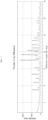
- Fig.1 is a powder X-ray diffraction chart of the crystals obtained in Example 5A.
- halogen atom examples include fluorine, chlorine, bromine and iodine.
- examples of the "C 1-6 alkyl group” include methyl, ethyl, propyl, isopropyl, butyl, isobutyl, sec-butyl, tert-butyl, pentyl, isopentyl, neopentyl, 1-ethylpropyl, hexyl, isohexyl, 1,1-dimethylbutyl, 2,2-dimethylbutyl, 3,3-dimethylbutyl and 2-ethylbutyl.
- examples of the "optionally halogenated C 1-6 alkyl group” include a C 1-6 alkyl group optionally having 1 to 7, preferably 1 to 5, a halogen atoms. Specific examples thereof include methyl, chloromethyl, difluoromethyl, trichloromethyl, trifluoromethyl, ethyl, 2-bromoethyl, 2,2,2-trifluoroethyl, tetrafluoroethyl, pentafluoroethyl, propyl, 2,2-difluoropropyl, 3,3,3-trifluoropropyl, isopropyl, butyl, 4,4,4-trifluorobutyl, isobutyl, sec-butyl, tert-butyl, pentyl, isopentyl, neopentyl, 5,5,5-trifluoropentyl, hexyl and 6,6,6-trifluorohexyl.
- examples of the "C 2-6 alkenyl group” include ethenyl, 1-propenyl, 2-propenyl, 2-methyl-1-propenyl, 1-butenyl, 2-butenyl, 3-butenyl, 3-methyl-2-butenyl, 1-pentenyl, 2-pentenyl, 3-pentenyl, 4-pentenyl, 4-methyl-3-pentenyl, 1-hexenyl, 3-hexenyl and 5-hexenyl.
- examples of the "C 2-6 alkynyl group” include ethynyl, 1-propynyl, 2-propynyl, 1-butynyl, 2-butynyl, 3-butynyl, 1-pentynyl, 2-pentynyl, 3-pentynyl, 4-pentynyl, 1-hexynyl, 2-hexynyl, 3-hexynyl, 4-hexynyl, 5-hexynyl and 4-methyl-2-pentynyl.
- examples of the "C 3-10 cycloalkyl group” include cyclopropyl, cyclobutyl, cyclopentyl, cyclohexyl, cycloheptyl, cyclooctyl, bicyclo[2.2.1]heptyl, bicyclo[2.2.2]octyl, bicyclo[3.2.1]octyl and adamantyl.
- examples of the "optionally halogenated C 3-10 cycloalkyl group” include a C 3-10 cycloalkyl group optionally having 1 to 7, preferably 1 to 5, a halogen atoms. Specific examples thereof include cyclopropyl, 2,2-difluorocyclopropyl, 2,3-difluorocyclopropyl, cyclobutyl, difluorocyclobutyl, cyclopentyl, cyclohexyl, cycloheptyl and cyclooctyl.
- examples of the "C 3-10 cycloalkenyl group” include cyclopropenyl, cyclobutenyl, cyclopentenyl, cyclohexenyl, cycloheptenyl and cyclooctenyl.
- examples of the "C 6-14 aryl group” include phenyl, 1-naphthyl, 2-naphthyl, 1-anthryl, 2-anthryl and 9-anthryl.
- examples of the "C 7-16 aralkyl group” include benzyl, phenethyl, naphthylmethyl and phenylpropyl.
- examples of the "C 1-6 alkoxy group” include methoxy, ethoxy, propoxy, isopropoxy, butoxy, isobutoxy, sec-butoxy, tert-butoxy, pentyloxy and hexyloxy.
- examples of the "optionally halogenated C 1-6 alkoxy group” include a C 1-6 alkoxy group optionally having 1 to 7, preferably 1 to 5, a halogen atoms. Specific examples thereof include methoxy, difluoromethoxy, trifluoromethoxy, ethoxy, 2,2,2-trifluoroethoxy, propoxy, isopropoxy, butoxy, 4,4,4-trifluorobutoxy, isobutoxy, sec-butoxy, pentyloxy and hexyloxy.
- examples of the "C 3-10 cycloalkyloxy group” include cyclopropyloxy, cyclobutyloxy, cyclopentyloxy, cyclohexyloxy, cycloheptyloxy and cyclooctyloxy.
- C 1-6 alkylthio group examples include methylthio, ethylthio, propylthio, isopropylthio, butylthio, sec-butylthio, tert-butylthio, pentylthio and hexylthio.
- examples of the "optionally halogenated C 1-6 alkylthio group” include a C 1-6 alkylthio group optionally having 1 to 7, preferably 1 to 5, a halogen atoms. Specific examples thereof include methylthio, difluoromethylthio, trifluoromethylthio, ethylthio, propylthio, isopropylthio, butylthio, 4,4,4-trifluorobutylthio, pentylthio and hexylthio.
- examples of the "C 1-6 alkyl-carbonyl group” include acetyl, propanoyl, butanoyl, 2-methylpropanoyl, pentanoyl, 3-methylbutanoyl, 2-methylbutanoyl, 2,2-dimethylpropanoyl, hexanoyl and heptanoyl.
- examples of the "optionally halogenated C 1-6 alkyl-carbonyl group” include a C 1-6 alkyl-carbonyl group optionally having 1 to 7, preferably 1 to 5, a halogen atoms. Specific examples thereof include acetyl, chloroacetyl, trifluoroacetyl, trichloroacetyl, propanoyl, butanoyl, pentanoyl and hexanoyl.
- examples of the "C 1-6 alkoxy-carbonyl group” include methoxycarbonyl, ethoxycarbonyl, propoxycarbonyl, isopropoxycarbonyl, butoxycarbonyl, isobutoxycarbonyl, sec-butoxycarbonyl, tert-butoxycarbonyl, pentyloxycarbonyl and hexyloxycarbonyl.
- examples of the "C 6-14 aryl-carbonyl group” include benzoyl, 1-naphthoyl and 2-naphthoyl.
- examples of the "C 7-16 aralkyl-carbonyl group” include phenylacetyl and phenylpropionyl.
- examples of the "5- to 14-membered aromatic heterocyclylcarbonyl group” include nicotinoyl, isonicotinoyl, thenoyl and furoyl.
- examples of the "3- to 14-membered non-aromatic heterocyclylcarbonyl group” include morpholinylcarbonyl, piperidinylcarbonyl and pyrrolidinylcarbonyl.
- examples of the "mono- or di-C 1-6 alkyl-carbamoyl group” include methylcarbamoyl, ethylcarbamoyl, dimethylcarbamoyl, diethylcarbamoyl and N-ethyl-N-methylcarbamoyl.
- examples of the "mono- or di-C 7-16 aralkyl-carbamoyl group” include benzylcarbamoyl and phenethylcarbamoyl.
- examples of the "C 1-6 alkylsulfonyl group” include methylsulfonyl, ethylsulfonyl, propylsulfonyl, isopropylsulfonyl, butylsulfonyl, sec-butylsulfonyl and tert-butylsulfonyl.
- examples of the "optionally halogenated C 1-6 alkylsulfonyl group” include a C 1-6 alkylsulfonyl group optionally having 1 to 7, preferably 1 to 5, a halogen atoms. Specific examples thereof include methylsulfonyl, difluoromethylsulfonyl, trifluoromethylsulfonyl, ethylsulfonyl, propylsulfonyl, isopropylsulfonyl, butylsulfonyl, 4,4,4-trifluorobutylsulfonyl, pentylsulfonyl and hexylsulfonyl.
- examples of the "C 6-14 arylsulfonyl group” include phenylsulfonyl, 1-naphthylsulfonyl and 2-naphthylsulfonyl.
- examples of the "substituent” include a halogen atom, a cyano group, a nitro group, an optionally substituted hydrocarbon group, an optionally substituted heterocyclic group, an acyl group, an optionally substituted amino group, an optionally substituted carbamoyl group, an optionally substituted thiocarbamoyl group, an optionally substituted sulfamoyl group, an optionally substituted hydroxy group, an optionally substituted sulfanyl (SH) group and an optionally substituted silyl group.
- a halogen atom a cyano group, a nitro group, an optionally substituted hydrocarbon group, an optionally substituted heterocyclic group, an acyl group, an optionally substituted amino group, an optionally substituted carbamoyl group, an optionally substituted thiocarbamoyl group, an optionally substituted sulfamoyl group, an optionally substituted hydroxy group, an optionally substitute
- examples of the "hydrocarbon group” include a C 1-6 alkyl group, a C 2-6 alkenyl group, a C 2-6 alkynyl group, a C 3-10 cycloalkyl group, a C 3-10 cycloalkenyl group, a C 6-14 aryl group and a C 7-16 aralkyl group.
- examples of the "optionally substituted hydrocarbon group” include a hydrocarbon group optionally having substituent(s) selected from the following substituent group A.
- the number of the above-mentioned substituents in the "optionally substituted hydrocarbon group” is, for example, 1 to 5, preferably 1 to 3.
- the respective substituents may be the same or different.
- heterocyclic group examples include (i) an aromatic heterocyclic group, (ii) a non-aromatic heterocyclic group and (iii) a 7- to 10-membered bridged heterocyclic group, each containing, as a ring-constituting atom besides carbon atom, 1 to 4 hetero atoms selected from a nitrogen atom, a sulfur atom and an oxygen atom.
- examples of the "aromatic heterocyclic group” include a 5- to 14-membered (preferably 5- to 10-membered) aromatic heterocyclic group containing, as a ring-constituting atom besides carbon atom, 1 to 4 hetero atoms selected from a nitrogen atom, a sulfur atom and an oxygen atom.
- aromatic heterocyclic group examples include 5- or 6-membered monocyclic aromatic heterocyclic groups such as thienyl, furyl, pyrrolyl, imidazolyl, pyrazolyl, thiazolyl, isothiazolyl, oxazolyl, isoxazolyl, pyridyl, pyrazinyl, pyrimidinyl, pyridazinyl, 1,2,4-oxadiazolyl, 1,3,4-oxadiazolyl, 1,2,4-thiadiazolyl, 1,3,4-thiadiazolyl, triazolyl, tetrazolyl, triazinyl and the like; and 8- to 14-membered fused polycyclic (preferably bi or tricyclic) aromatic heterocyclic groups such as benzothiophenyl, benzofuranyl, benzimidazolyl, benzoxazolyl, benzisoxazolyl, benzothiazolyl,
- non-aromatic heterocyclic group examples include a 3- to 14-membered (preferably 4- to 10-membered) non-aromatic heterocyclic group containing, as a ring-constituting atom besides carbon atom, 1 to 4 hetero atoms selected from a nitrogen atom, a sulfur atom and an oxygen atom.
- non-aromatic heterocyclic group examples include 3- to 8-membered monocyclic non-aromatic heterocyclic groups such as aziridinyl, oxiranyl, thiiranyl, azetidinyl, oxetanyl, thietanyl, tetrahydrothienyl, tetrahydrofuranyl, pyrrolinyl, pyrrolidinyl, imidazolinyl, imidazolidinyl, oxazolinyl, oxazolidinyl, pyrazolinyl, pyrazolidinyl, thiazolinyl, thiazolidinyl, tetrahydroisothiazolyl, tetrahydrooxazolyl, tetrahydroisoxazolyl, piperidinyl, piperazinyl, tetrahydropyridinyl, dihydropyridinyl
- preferable examples of the "7- to 10-membered bridged heterocyclic group” include quinuclidinyl and 7-azabicyclo[2.2.1]heptanyl.
- examples of the "nitrogen-containing heterocyclic group” include the “heterocyclic group” containing at least one nitrogen atom as a ring-constituting atom.
- examples of the "optionally substituted heterocyclic group” include a heterocyclic group optionally having substituent(s) selected from the aforementioned substituent group A.
- the number of the substituents in the "optionally substituted heterocyclic group” is, for example, 1 to 3. When the number of the substituents is two or more, the respective substituents may be the same or different.
- examples of the "acyl group” include a formyl group, a carboxy group, a carbamoyl group, a thiocarbamoyl group, a sulfino group, a sulfo group, a sulfamoyl group and a phosphono group, each optionally having "1 or 2 substituents selected from a C 1-6 alkyl group, a C 2-6 alkenyl group, a C 3-10 cycloalkyl group, a C 3-10 cycloalkenyl group, a C 6-14 aryl group, a C 7-16 aralkyl group, a 5- to 14-membered aromatic heterocyclic group and a 3- to 14-membered non-aromatic heterocyclic group, each of which optionally has 1 to 3 substituents selected from a halogen atom, an optionally halogenated C 1-6 alkoxy group, a hydroxy group, a nitro group,
- acyl group also include a hydrocarbon-sulfonyl group, a heterocyclylsulfonyl group, a hydrocarbon-sulfinyl group and a heterocyclylsulfinyl group.
- the hydrocarbon-sulfonyl group means a hydrocarbon group-bonded sulfonyl group
- the heterocyclylsulfonyl group means a heterocyclic group-bonded sulfonyl group
- the hydrocarbon-sulfinyl group means a hydrocarbon group-bonded sulfinyl group
- the heterocyclylsulfinyl group means a heterocyclic group-bonded sulfinyl group.
- acyl group examples include a formyl group, a carboxy group, a C 1-6 alkyl-carbonyl group, a C 2-6 alkenyl-carbonyl group (e.g., crotonoyl), a C 3-10 cycloalkyl-carbonyl group (e.g., cyclobutanecarbonyl, cyclopentanecarbonyl, cyclohexanecarbonyl, cycloheptanecarbonyl), a C 3-10 cycloalkenyl-carbonyl group (e.g., 2-cyclohexenecarbonyl), a C 6-14 aryl-carbonyl group, a C 7-16 aralkyl-carbonyl group, a 5- to 14-membered aromatic heterocyclylcarbonyl group, a 3- to 14-membered non-aromatic heterocyclylcarbonyl group, a C 1-6 alkoxy-carbonyl group, a C 6
- examples of the "optionally substituted amino group” include an amino group optionally having "1 or 2 substituents selected from a C 1-6 alkyl group, a C 2-6 alkenyl group, a C 3-10 cycloalkyl group, a C 6-14 aryl group, a C 7-16 aralkyl group, a C 1-6 alkyl-carbonyl group, a C 6-14 aryl-carbonyl group, a C 7-16 aralkyl-carbonyl group, a 5- to 14-membered aromatic heterocyclylcarbonyl group, a 3- to 14-membered non-aromatic heterocyclylcarbonyl group, a C 1-6 alkoxy-carbonyl group, a 5- to 14-membered aromatic heterocyclic group, a carbamoyl group, a mono- or di-C 1-6 alkyl-carbamoyl group, a mono- or di-C 7-16 aralkyl-carbamoy
- the optionally substituted amino group include an amino group, a mono- or di-(optionally halogenated C 1-6 alkyl)amino group (e.g., methylamino, trifluoromethylamino, dimethylamino, ethylamino, diethylamino, propylamino, dibutylamino), a mono- or di-C 2-6 alkenylamino group (e.g., diallylamino), a mono- or di-C 3-10 cycloalkylamino group (e.g., cyclopropylamino, cyclohexylamino), a mono- or di-C 6-14 arylamino group (e.g., phenylamino), a mono- or di-C 7-16 aralkylamino group (e.g., benzylamino, dibenzylamino), a mono- or di-(optionally halogenated C 1-6 alkyl)a
- examples of the "optionally substituted carbamoyl group” include a carbamoyl group optionally having "1 or 2 substituents selected from a C 1-6 alkyl group, a C 2-6 alkenyl group, a C 3-10 cycloalkyl group, a C 6-14 aryl group, a C 7-16 aralkyl group, a C 4-6 alkyl-carbonyl group, a C 6-14 aryl-carbonyl group, a C 7-16 aralkyl-carbonyl group, a 5- to 14-membered aromatic heterocyclylcarbonyl group, a 3- to 14-membered non-aromatic heterocyclylcarbonyl group, a C 1-6 alkoxy-carbonyl group, a 5- to 14-membered aromatic heterocyclic group, a carbamoyl group, a mono- or di-C 1-6 alkyl-carbamoyl group and a mono- or di-C 7-16 a
- the optionally substituted carbamoyl group include a carbamoyl group, a mono- or di-C 1-6 alkyl-carbamoyl group, a mono- or di-C 2-6 alkenyl-carbamoyl group (e.g., diallylcarbamoyl), a mono- or di-C 3-10 cycloalkyl-carbamoyl group (e.g., cyclopropylcarbamoyl, cyclohexylcarbamoyl), a mono- or di-C 6-14 aryl-carbamoyl group (e.g., phenylcarbamoyl), a mono- or di-C 7-16 aralkyl-carbamoyl group, a mono- or di-C 1-6 alkyl-carbonyl-carbamoyl group (e.g., acetylcarbamoyl, propionylcarbam
- examples of the "optionally substituted thiocarbamoyl group” include a thiocarbamoyl group optionally having "1 or 2 substituents selected from a C 1-6 alkyl group, a C 2-6 alkenyl group, a C 3-10 cycloalkyl group, a C 6-14 aryl group, a C 7-16 aralkyl group, a C 1-6 alkyl-carbonyl group, a C 6-14 aryl-carbonyl group, a C 7-16 aralkyl-carbonyl group, a 5- to 14-membered aromatic heterocyclylcarbonyl group, a 3- to 14-membered non-aromatic heterocyclylcarbonyl group, a C 1-6 alkoxy-carbonyl group, a 5- to 14-membered aromatic heterocyclic group, a carbamoyl group, a mono- or di-C 1-6 alkyl-carbamoyl group and a mono-
- thiocarbamoyl group examples include a thiocarbamoyl group, a mono- or di-C 1-6 alkyl-thiocarbamoyl group (e.g., methylthiocarbamoyl, ethylthiocarbamoyl, dimethylthiocarbamoyl, diethylthiocarbamoyl, N-ethyl-N-methylthiocarbamoyl), a mono- or di-C 2-6 alkenyl-thiocarbamoyl group (e.g., diallylthiocarbamoyl), a mono- or di-C 3-10 cycloalkyl-thiocarbamoyl group (e.g., cyclopropylthiocarbamoyl, cyclohexylthiocarbamoyl), a mono- or di-C 6-14 aryl-thiocarbam
- examples of the "optionally substituted sulfamoyl group” include a sulfamoyl group optionally having "1 or 2 substituents selected from a C 1-6 alkyl group, a C 2-6 alkenyl group, a C 3-10 cycloalkyl group, a C 6-14 aryl group, a C 7-16 aralkyl group, a C 1-6 alkyl-carbonyl group, a C 6-14 aryl-carbonyl group, a C 7-16 aralkyl-carbonyl group, a 5- to 14-membered aromatic heterocyclylcarbonyl group, a 3- to 14-membered non-aromatic heterocyclylcarbonyl group, a C 1-6 alkoxy-carbonyl group, a 5- to 14-membered aromatic heterocyclic group, a carbamoyl group, a mono- or di-C 1-6 alkyl-carbamoyl group and a mono- or di
- the optionally substituted sulfamoyl group include a sulfamoyl group, a mono- or di-C 1-6 alkyl-sulfamoyl group (e.g., methylsulfamoyl, ethylsulfamoyl, dimethylsulfamoyl, diethylsulfamoyl, N-ethyl-N-methylsulfamoyl), a mono- or di-C 2-6 alkenyl-sulfamoyl group (e.g., diallylsulfamoyl), a mono- or di-C 3-10 cycloalkyl-sulfamoyl group (e.g., cyclopropylsulfamoyl, cyclohexylsulfamoyl), a mono- or di-C 6-14 aryl-sulfamoyl group (e.g., phenyl
- examples of the "optionally substituted hydroxy group” include a hydroxyl group optionally having "a substituent selected from a C 1-6 alkyl group, a C 2-6 alkenyl group, a C 3-10 cycloalkyl group, a C 6-14 aryl group, a C 7-16 aralkyl group, a C 1-6 alkyl-carbonyl group, a C 6-14 aryl-carbonyl group, a C 7-16 aralkyl-carbonyl group, a 5- to 14-membered aromatic heterocyclylcarbonyl group, a 3- to 14-membered non-aromatic heterocyclylcarbonyl group, a C 1-6 alkoxy-carbonyl group, a 5- to 14-membered aromatic heterocyclic group, a carbamoyl group, a mono- or di-C 1-6 alkyl-carbamoyl group, a mono- or di-C 7-16 aralkyl-carbamo
- the optionally substituted hydroxy group include a hydroxy group, a C 1-6 alkoxy group, a C 2-6 alkenyloxy group (e.g., allyloxy, 2-butenyloxy, 2-pentenyloxy, 3-hexenyloxy), a C 3-10 cycloalkyloxy group (e.g., cyclohexyloxy), a C 6-14 aryloxy group (e.g., phenoxy, naphthyloxy), a C 7-16 aralkyloxy group (e.g., benzyloxy, phenethyloxy), a C 1-6 alkyl-carbonyloxy group (e.g., acetyloxy, propionyloxy, butyryloxy, isobutyryloxy, pivaloyloxy), a C 6-14 aryl-carbonyloxy group (e.g., benzoyloxy), a C 7-16 aralkyl-carbonyloxy group
- examples of the "optionally substituted sulfanyl group” include a sulfanyl group optionally having "a substituent selected from a C 1-6 alkyl group, a C 2-6 alkenyl group, a C 3-10 cycloalkyl group, a C 6-14 aryl group, a C 7-16 aralkyl group, a C 1-6 alkyl-carbonyl group, a C 6-14 aryl-carbonyl group and a 5- to 14-membered aromatic heterocyclic group, each of which optionally has 1 to 3 substituents selected from substituent group A" and a halogenated sulfanyl group.
- the optionally substituted sulfanyl group include a sulfanyl (-SH) group, a C 1-6 alkylthio group, a C 2-6 alkenylthio group (e.g., allylthio, 2-butenylthio, 2-pentenylthio, 3-hexenylthio), a C 3-10 cycloalkylthio group (e.g., cyclohexylthio), a C 6-14 arylthio group (e.g., phenylthio, naphthylthio), a C 7-16 aralkylthio group (e.g., benzylthio, phenethylthio), a C 1-6 alkyl-carbonylthio group (e.g., acetylthio, propionylthio, butyrylthio, isobutyrylthio, pivaloylthio), a C 6-14 ary
- examples of the "optionally substituted silyl group” include a silyl group optionally having "1 to 3 substituents selected from a C 1-6 alkyl group, a C 2-6 alkenyl group, a C 3-10 cycloalkyl group, a C 6-14 aryl group and a C 7-16 aralkyl group, each of which optionally has 1 to 3 substituents selected from substituent group A".
- the optionally substituted silyl group include a tri-C 1-6 alkylsilyl group (e.g., trimethylsilyl, tert-butyl(dimethyl)silyl).
- examples of the "C 3-6 cycloalkyl group” include the above-mentioned “C 3-10 cycloalkyl group” wherein the carbon number is 3 to 6.
- examples of the "3- to 6-membered saturated cyclic group” include the above-mentioned “C 3-10 cycloalkyl group” wherein the carbon number is 3 to 6 (C 3-6 cycloalkyl group), the above-mentioned “3- to 8-membered monocyclic non-aromatic heterocyclic group” which is 3- to 6-membered and saturated (3- to 6-membered saturated monocyclic non-aromatic heterocyclic group).
- examples of the "mono- or di-C 1-6 alkylamino group” include an amino group mono- or di-substituted by the above-mentioned "C 4-6 alkyl group”.
- C 4-6 alkyl group When it is a di-C 1-6 alkylamino group, two C 1-6 alkyl groups may be the same or different (e.g., N-ethyl-N-methylamino etc.).
- R 1 is an acyl group, or a hydrogen atom.
- R 1 is preferably (1) a hydrogen atom, (2) an optionally substituted C 1-6 alkyl-carbonyl group (e.g., methylcarbonyl, ethylcarbonyl, propylcarbonyl, isopropylcarbonyl, isobutylcarbonyl, tert-butylcarbonyl, neopentylcarbonyl), (3) an optionally substituted C 3-10 (preferably C 3-6 ) cycloalkyl-carbonyl group (e.g., cyclopropanecarbonyl, cyclobutanecarbonyl, cyclopentanecarbonyl, cyclohexanecarbonyl), (4) an optionally substituted C 1-6 alkoxy-carbonyl group (e.g., methoxycarbonyl, ethoxycarbonyl, isopropoxycarbonyl, tert-butoxycarbonyl), (5) an optionally substituted C 3-10 cycloalkyloxy-carbonyl group (e.g
- R 1 is more preferably (1) a hydrogen atom, (2) a C 1-6 alkyl-carbonyl group (e.g., methylcarbonyl, ethylcarbonyl, propylcarbonyl, isopropylcarbonyl, isobutylcarbonyl, tert-butylcarbonyl, neopentylcarbonyl) optionally substituted by 1 to 7 substituents selected from a halogen atom (e.g., fluorine atom), a cyano group, a hydroxy group, a C 3-10 cycloalkyl group (e.g., cyclopropyl), a C 1-6 alkoxy group (e.g., methoxy), a C 6-14 aryl group (e.g., phenyl), a C 6-14 aryloxy group (e.g., phenoxy), a 5- to 14-membered aromatic heterocyclic group (e.g., pyrazolyl, thiazoly
- R 1 is preferably an acyl group.
- R 1 is preferably a C 1-6 alkyl-carbonyl group, a C 1-6 alkoxy-carbonyl group, a C 3-6 cycloalkyl-carbonyl group or a mono- or di-C 1-6 alkyl-carbamoyl group optionally substituted by one hydroxy group.
- R 1 is preferably a hydrogen atom.
- R 1 is preferably (1) a hydrogen atom, (2) a C 1-6 alkyl-carbonyl group optionally substituted by a hydroxy group, (3) a cyclopropanecarbonyl group, (4) a C 1-6 alkoxy-carbonyl group or (5) a mono- or di-C 1-6 alkyl-carbamoyl group.
- R 1 is preferably (1) a C 1-6 alkyl-carbonyl group optionally substituted by a hydroxy group, (2) a C 1-6 alkoxy-carbonyl group or (3) a mono- or di-C 1-6 alkyl-carbamoyl group.
- R 1 is preferably a C 1-6 alkoxy-carbonyl group (preferably methoxycarbonyl).
- R 1 is preferably a C 1-6 alkyl-carbonyl group optionally substituted by a hydroxy group.
- R 1 is preferably a mono- or di-C 1-6 alkyl-carbamoyl group.
- R 2 is an optionally substituted 3- to 6-membered saturated cyclic group.
- a C 3-6 cycloalkyl group e.g., cyclobutyl, cyclopentyl, cyclohexyl
- a 3- to 6-membered saturated monocyclic non-aromatic heterocyclic group e.g., pyrrolidinyl, piperidinyl, dioxanyl
- the above-mentioned “substituent” can be mentioned, and (1) deuterium, (2) a halogen atom (e.g., fluorine atom), (3) a hydroxy group, (4) an optionally substituted C 1-6 alkyl group (e.g., methyl, isopropyl), (5) a C 3-10 cycloalkyl group (e.g., cyclohexyl), (6) an optionally substituted C 1-6 alkoxy group (e.g., methoxy), (7) an optionally substituted C 6-14 aryl group (e.g., phenyl), (8) a C 6-14 aryloxy group (e.g., phenoxy), (9) a tri-C 1-6 alkylsilyloxy group (e.g., tert-butyl(dimethyl)silyloxy), (10) an optionally substituted 5-
- the "optionally substituted 3- to 6-membered saturated cyclic group" for R 2 has two substituents on one carbon constituting the "3- to 6-membered saturated cyclic group"
- a spiro ring system e.g., 3H-spiro[2-benzofuran-1,1'-cyclohexane]-4'-yl, 1,4-dioxaspiro[4.5]dec-8-yl
- R 2 is preferably a C 3-6 cycloalkyl group (e.g., cyclobutyl, cyclopentyl, cyclohexyl) or a 3- to 6-membered saturated monocyclic non-aromatic heterocyclic group (e.g., pyrrolidinyl, piperidinyl, dioxanyl), each of which is optionally substituted by 1 to 3 substituents selected from (1) deuterium, (2) a halogen atom (e.g., fluorine atom), (3) a hydroxy group, (4) an optionally substituted C 1-6 alkyl group (e.g., methyl, isopropyl), (5) a C 3-10 cycloalkyl group (e.g., cyclohexyl), (6) an optionally substituted C 1-6 alkoxy group (e.g., methoxy), (7) an optionally substituted C 6-14 aryl group (e.g., phenyl), (8) a C 6
- R 2 is further more preferably, (A) a C 3-6 cycloalkyl group (e.g., cyclobutyl, cyclopentyl, cyclohexyl) optionally substituted by 1 to 3 substituents selected from (1) deuterium, (2) a halogen atom (e.g., fluorine atom), (3) a hydroxy group, (4) a C 1-6 alkyl group (e.g., methyl, isopropyl) optionally substituted by 1 to 3 substituents selected from a halogen atom (e.g., fluorine atom) and a C 6-14 aryl group (e.g., phenyl), (5) a C 3-10 cycloalkyl group (e.g., cyclohexyl), (6) a C 1-6 alkoxy group (e.g., methoxy) optionally substituted by a C 3-10 cycloalkyl group (e.g., cyclopropyl),
- R 2 is preferably a C 3-6 cycloalkyl group substituted by one optionally substituted phenyl group.
- R 2 is preferably a C 3-6 cycloalkyl group substituted by one phenyl group optionally substituted by 1 to 3 substituents selected from a halogen atom, a C 1-6 alkyl group optionally substituted by 1 to 3 halogen atoms, and a C 1-6 alkoxy group.
- R 2 is preferably a piperidinyl group substituted by one pyrimidinyl group.
- R 2 is preferably a C 3-6 cycloalkyl group, a pyrrolidinyl group, a piperidinyl group or a dioxanyl group, each of which is optionally substituted by 1 to 3 substituents selected from (1) deuterium, (2) a halogen atom, (3) a hydroxy group, (4) a C 1-6 alkyl group optionally substituted by 1 to 3 substituents selected from a halogen atom and a C 6-14 aryl group, (5) a C 3-10 cycloalkyl group, (6) a C 1-6 alkoxy group optionally substituted by a C 3-10 cycloalkyl group, (7) a C 6-14 aryl group optionally substituted by 1 to 3 substituents selected from a halogen atom, a cyano group, a C 1-6 alkyl group optionally substituted by 1 to 3 halogen atoms, a C 1-6 alkoxy group optionally substituted
- R 2 is preferably a cyclobutyl group, a cyclopentyl group, a cyclohexyl group, a pyrrolidinyl group, a piperidinyl group or a dioxanyl group, each of which is optionally substituted by 1 to 3 substituents selected from (1) deuterium, (2) a halogen atom, (3) a hydroxy group, (4) a C 1-6 alkyl group optionally substituted by 1 to 3 substituents selected from a halogen atom and a phenyl group, (5) a cyclohexyl group, (6) a C 1-6 alkoxy group optionally substituted by a cyclopropyl group, (7) a phenyl group optionally substituted by 1 to 3 substituents selected from a halogen atom, a cyano group, a C 1-6 alkyl group optionally substituted by 1 to 3 halogen atoms, a C
- R 2 is preferably (A) a cyclohexyl group optionally substituted by 1 to 3 substituents selected from (1) a C 1-6 alkyl group and (2) a phenyl group optionally substituted by 1 to 3 substituents selected from a halogen atom, a C 1-6 alkyl group optionally substituted by 1 to 3 halogen atoms and a C 1-6 alkoxy group or (B) a piperidinyl group optionally substituted by 1 to 3 pyrimidinyl groups.
- R 2 is preferably a cyclohexyl group optionally substituted by 1 to 3 substituents selected from (1) a C 1-6 alkyl group and (2) a phenyl group optionally substituted by 1 to 3 halogen atoms.
- R 2 is preferably a cyclohexyl group optionally substituted by a phenyl group.
- R 2 is preferably a cyclohexyl group optionally substituted by a phenyl group optionally substituted by 1 to 3 halogen atoms.
- R 2 is preferably a cyclohexyl group optionally substituted by a C 1-6 alkyl group.
- R 3 is an optionally substituted C 1-6 alkyl group, a mono- or di-C 1-6 alkylamino group or a C 3-6 cycloalkyl group; preferably an optionally substituted C 1-6 alkyl group, or a mono- or di-C 1-6 alkylamino group.
- substituent of the "optionally substituted C 1-6 alkyl group" for R 3 the above-mentioned “substituent” can be mentioned, and a halogen atom (e.g., fluorine atom) or a C 6-14 aryl group (e.g., phenyl) is preferable.
- a halogen atom e.g., fluorine atom
- a C 6-14 aryl group e.g., phenyl
- R 3 is preferably a C 1-6 alkyl group (e.g., methyl, ethyl, propyl, isopropyl, isobutyl) optionally substituted by 1 to 3 substituents selected from a halogen atom (e.g., fluorine atom) and a C 6-14 aryl group (e.g., phenyl), or a mono- or di-C 1-6 alkylamino group (e.g., ethylamino, dimethylamino), more preferably, a C 1-6 alkyl group (e.g., methyl), or a mono- or di-C 1-6 alkylamino group (e.g., dimethylamino).
- a halogen atom e.g., fluorine atom
- C 6-14 aryl group e.g., phenyl
- a mono- or di-C 1-6 alkylamino group e.g., ethyla
- R 3 is preferably an optionally substituted C 1-6 alkyl group.
- R 3 is preferably a C 1-6 alkyl group or a di-C 1-6 alkylamino group, more preferably a C 1-6 alkyl group (preferably methyl).
- compound (I) is represented by the formula: wherein R 1 , R 2 and R 3 are as defined above.
- R 1 is (1) a hydrogen atom, (2) an optionally substituted C 1-6 alkyl-carbonyl group (e.g., methylcarbonyl, ethylcarbonyl, propylcarbonyl, isopropylcarbonyl, isobutylcarbonyl, tert-butylcarbonyl, neopentylcarbonyl), (3) an optionally substituted C 3-10 (preferably C 3-6 ) cycloalkyl-carbonyl group (e.g., cyclopropanecarbonyl, cyclobutanecarbonyl, cyclopentanecarbonyl, cyclohexanecarbonyl), (4) an optionally substituted C 1-6 alkoxy-carbonyl group (e.g., methoxycarbonyl, ethoxycarbonyl, isopropoxycarbonyl, tert-butoxycarbonyl), (5) an optionally substituted C 3-10 cycloalkyloxy-carbonyl group
- R 2 is a C 3-6 cycloalkyl group (e.g., cyclobutyl, cyclopentyl, cyclohexyl) or a 3- to 6-membered saturated monocyclic non-aromatic heterocyclic group (e.g., pyrrolidinyl, piperidinyl, dioxanyl), each of which is optionally substituted by 1 to 3 substituents selected from (1) deuterium, (2) a halogen atom (e.g., fluorine atom), (3) a hydroxy group, (4) an optionally substituted C 1-6 alkyl group (e.g., methyl, isopropyl), (5) a C 3-10 cycloalkyl group (e.g., cyclohexyl), (6) an optionally substituted C 1-6 alkoxy group (e.g., methoxy), (7) an optionally substituted C 6-14 aryl group (e.g., phenyl), (8) a C 6-14
- R 3 is a C 1-6 alkyl group (e.g., methyl, ethyl, propyl, isopropyl, isobutyl) optionally substituted by 1 to 3 substituents selected from a halogen atom (e.g., fluorine atom) and a C 6-14 aryl group (e.g., phenyl), or a mono- or di-C 1-6 alkylamino group (e.g., ethylamino, dimethylamino).
- a halogen atom e.g., fluorine atom
- C 6-14 aryl group e.g., phenyl
- a mono- or di-C 1-6 alkylamino group e.g., ethylamino, dimethylamino
- R 1 is (1) a hydrogen atom, (2) a C 1-6 alkyl-carbonyl group (e.g., methylcarbonyl, ethylcarbonyl, propylcarbonyl, isopropylcarbonyl, isobutylcarbonyl, tert-butylcarbonyl, neopentylcarbonyl) optionally substituted by 1 to 7 substituents selected from a halogen atom (e.g., fluorine atom), a cyano group, a hydroxy group, a C 3-10 cycloalkyl group (e.g., cyclopropyl), a C 1-6 alkoxy group (e.g., methoxy), a C 6-14 aryl group (e.g., phenyl), a C 6-14 aryloxy group (e.g., phenoxy), a 5- to 14-membered aromatic heterocyclic group (e.g., pyrazolyl, a C 1-6 alky
- R 2 is a C 3-6 cycloalkyl group (e.g., cyclobutyl, cyclopentyl, cyclohexyl) or a 3- to 6-membered saturated monocyclic non-aromatic heterocyclic group (e.g., pyrrolidinyl, piperidinyl, dioxanyl), each of which is optionally substituted by 1 to 3 substituents selected from (1) deuterium, (2) a halogen atom (e.g., fluorine atom), (3) a hydroxy group, (4) a C 1-6 alkyl group (e.g., methyl, isopropyl) optionally substituted by 1 to 3 substituents selected from a halogen atom (e.g., fluorine atom) and a C 6-14 aryl group (e.g., phenyl), (5) a C 3-10 cycloalkyl group (e.g., cyclohexyl), (6) a C 1-6
- R 3 is a C 1-6 alkyl group (e.g., methyl), or a mono- or di-C 1-6 alkylamino group (e.g., dimethylamino).
- R 1 is (1) a C 1-6 alkyl-carbonyl group (e.g., methylcarbonyl) optionally substituted by a hydroxy group, (2) a C 3-6 cycloalkyl-carbonyl group (e.g., cyclopropanecarbonyl), (3) a C 1-6 alkoxy-carbonyl group (e.g., methoxycarbonyl, isopropoxycarbonyl) or (4) a mono- or di-C 1-6 alkyl-carbamoyl group (e.g., ethylcarbamoyl);
- R 1 is (1) a C 1-6 alkyl-carbonyl group (e.g., methylcarbonyl) optionally substituted by a hydroxy group, (2) a C 3-6 cycloalkyl-carbonyl group (e.g., cyclopropanecarbonyl), (3) a C 1-6 alkoxy-carbonyl group (e.g., methoxycarbonyl, iso
- R 2 is (A) a C 3-6 cycloalkyl group (e.g., cyclohexyl) optionally substituted by 1 to 3 substituents selected from (1) a C 1-6 alkyl group (e.g., isopropyl) and (2) a C 6-14 aryl group (e.g., phenyl) optionally substituted by 1 to 3 substituents selected from a halogen atom (e.g., fluorine atom), a C 1-6 alkyl group (e.g., methyl) optionally substituted by 1 to 3 halogen atoms (e.g., fluorine atom) and a C 1-6 alkoxy group (e.g., methoxy) or (B) a 3- to 6-membered saturated monocyclic non-aromatic heterocyclic group (e.g., piperidinyl) optionally substituted by 1 to 3 substituents selected from a 5-to 14-membered aromatic heterocyclic group (e.g.
- R 3 is a C 1-6 alkyl group (e.g., methyl) or a di-C 1-6 alkylamino group (e.g., dimethylamino).
- R 3 is a C 1-6 alkyl group, or a mono- or di-C 1-6 alkylamino group.
- compound (I) include the compounds of the below-mentioned Examples 1 - 372, of which
- a pharmacologically acceptable salt is preferable, and examples of such salt include a salt with inorganic base, a salt with organic base, a salt with inorganic acid, a salt with organic acid, a salt with basic or acidic amino acid and the like.
- the salt with inorganic base include alkali metal salts such as sodium salt, potassium salt and the like, alkaline earth metal salts such as calcium salt, magnesium salt and the like, aluminum salt, ammonium salt and the like.
- the salt with organic base include salts with trimethylamine, triethylamine, pyridine, picoline, ethanolamine, diethanolamine, triethanolamine, tromethamine[tris(hydroxymethyl)methylamine], tert-butylamine, cyclohexylamine, benzylamine, dicyclohexylamine, N,N-dibenzylethylenediamine and the like.
- salt with inorganic acid examples include salts with hydrochloric acid, hydrobromic acid, nitric acid, sulfuric acid, phosphoric acid and the like.
- the salt with organic acid include salts with formic acid, acetic acid, trifluoroacetic acid, phthalic acid, fumaric acid, oxalic acid, tartaric acid, maleic acid, citric acid, succinic acid, malic acid, methanesulfonic acid, benzenesulfonic acid, p-toluenesulfonic acid and the like.
- salt with basic amino acid examples include salts with arginine, lysine, ornithine and the like.
- salt with acidic amino acid include salts with aspartic acid, glutamic acid and the like.
- a prodrug of the compound (I) means a compound which is converted to the compound (I) of the present invention with a reaction due to an enzyme, an gastric acid, etc. under the physiological condition in the living body, that is, a compound which is converted to the compound (I) of the present invention with oxidation, reduction, hydrolysis, etc. according to an enzyme; a compound which is converted to the compound (I) of the present invention by hydrolysis etc. due to gastric acid, etc.
- a prodrug of compound (I) may be a compound obtained by subjecting an amino group in compound (I) to an acylation, alkylation or phosphorylation (e.g., a compound obtained by subjecting an amino group in compound (I) to an eicosanoylation, alanylation, pentylaminocarbonylation, (5-methyl-2-oxo-1,3-dioxolen-4-yl)methoxycarbonylation, tetrahydrofuranylation, pyrrolidylmethylation, pivaloyloxymethylation and tert-butylation, etc.); a compound obtained by subjecting a hydroxy group in compound (I) to an acylation, alkylation, phosphorylation or boration (e.g., a compound obtained by subjecting an hydroxy group in compound (I) to an acetylation, palmitoylation, propanoylation, pivaloylation, succinylation, fumarylation, alanylation, dimethyl
- a prodrug for compound (I) may also be one which is converted into compound (I) under a physiological condition, such as those described in IYAKUHIN no KAIHATSU (Development of Pharmaceuticals), Vol.7, Design of Molecules, p.163-198, Published by HIROKAWA SHOTEN (1990 ).
- a prodrug may form a salt, and as such salt, those exemplified as a salt of the compound represented by the aforementioned formula (I) can be mentioned.
- Compound (I) may be labeled with an isotope (e.g., 3 H, 13 C, 14 C, 18 F, 35 S, 125 I) and the like.
- an isotope e.g., 3 H, 13 C, 14 C, 18 F, 35 S, 125 I
- Compound (I) labeled with or substituted by an isotope can be used, for example, as a tracer used for Positron Emission Tomography (PET) (PET tracer), and is useful in the field of medical diagnosis and the like.
- PET tracer Positron Emission Tomography
- compound (I) may be a hydrate or a non-hydrate, or a non-solvate (e.g., anhydride), or a solvate (e.g., hydrate).
- Compound (I) also encompasses a deuterium conversion form wherein 1 H is converted to 2 H(D).
- compound (I) may be a pharmaceutically acceptable cocrystal or cocrystal salt.
- the cocrystal or cocrystal salt means a crystalline substance constituted with two or more special solids at room temperature, each having different physical properties (e.g., structure, melting point, melting heat, hygroscopicity, solubility and stability).
- the cocrystal or cocrystal salt can be produced by a cocrystallization method known per se.
- Compound (I) or a prodrug thereof (hereinafter sometimes to be simply abbreviated as the compound of the present invention) is low in its toxicity and can be used as it is or in the form of a pharmaceutical composition (also referred to as a medicament) by mixing with a pharmacologically acceptable carrier etc. to mammals (e.g., human, mouse, rat, rabbit, dog, cat, bovine, horse, swine, monkey) as an agent for the prophylaxis or treatment of various diseases mentioned below.
- mammals e.g., human, mouse, rat, rabbit, dog, cat, bovine, horse, swine, monkey
- various organic or inorganic carrier substances conventionally used as preparation materials can be used as preparation materials. These are incorporated as excipient, lubricant, binder and disintegrant for solid preparations; or solvent, solubilizing agent, suspending agent, isotonicity agent, buffer and soothing agent for liquid preparations; and the like; and preparation additives such as preservative, antioxidant, colorant, sweetening agent and the like can be added as necessary.
- excipient examples include lactose, sucrose, D-mannitol, D-sorbitol, starch, gelatinated starch, dextrin, crystalline cellulose, low-substituted hydroxypropylcellulose, sodium carboxymethylcellulose, gum arabic, pullulan, light anhydrous silicic acid, synthetic aluminum silicate and magnesium alumino metasilicate.
- lubricant examples include magnesium stearate, calcium stearate, talc and colloidal silica.
- binder examples include gelatinated starch, sucrose, gelatin, gum arabic, methylcellulose, carboxymethylcellulose, sodium carboxymethylcellulose, crystalline cellulose, sucrose, D-mannitol, trehalose, dextrin, pullulan, hydroxypropylcellulose, hydroxypropylmethylcellulose and polyvinylpyrrolidone.
- disintegrant examples include lactose, sucrose, starch, carboxymethylcellulose, calcium carboxymethylcellulose, croscarmellose sodium, sodium carboxymethyl starch, light anhydrous silicic acid and low-substituted hydroxypropylcellulose.
- the solvent include water for injection, physiological brine, Ringer's solution, alcohol, propylene glycol, polyethylene glycol, sesame oil, corn oil, olive oil and cottonseed oil.
- solubilizing agent examples include polyethylene glycol, propylene glycol, D-mannitol, trehalose, benzyl benzoate, ethanol, trisaminomethane, cholesterol, triethanolamine, sodium carbonate, sodium citrate, sodium salicylate and sodium acetate.
- the suspending agent include surfactants such as stearyltriethanolamine, sodium lauryl sulfate, lauryl aminopropionate, lecithin, benzalkonium chloride, benzethonium chloride, glycerol monostearate and the like; hydrophilic polymers such as poly(vinyl alcohol), polyvinylpyrrolidone, carboxymethylcellulose sodium, methylcellulose, hydroxymethylcellulose, hydroxyethylcellulose, hydroxypropylcellulose and the like, polysorbates; and polyoxyethylene hydrogenated castor oil.
- surfactants such as stearyltriethanolamine, sodium lauryl sulfate, lauryl aminopropionate, lecithin, benzalkonium chloride, benzethonium chloride, glycerol monostearate and the like
- hydrophilic polymers such as poly(vinyl alcohol), polyvinylpyrrolidone, carboxymethylcellulose sodium, methylcellulose, hydroxymethylcellulose, hydroxyeth
- isotonicity agent examples include sodium chloride, glycerol, D-mannitol, D-sorbitol and glucose.
- buffers include buffers of phosphate, acetate, carbonate, citrate etc.
- the soothing agent include benzyl alcohol.
- preservatives include p-oxybenzoate esters, chlorobutanol, benzyl alcohol, phenethyl alcohol, dehydroacetic acid and sorbic acid.
- antioxidants include sulfite salts and ascorbate salts.
- the colorant include aqueous food tar colors (e.g., food colors such as Food Color Red Nos. 2 and 3, Food Color Yellow Nos. 4 and 5, Food Color Blue Nos. 1 and 2 and the like food colors), water insoluble lake dyes (e.g., aluminum salt of the aforementioned aqueous food tar color), natural dyes (e.g., ⁇ -carotene, chlorophyll, red iron oxide) and the like.
- aqueous food tar colors e.g., food colors such as Food Color Red Nos. 2 and 3, Food Color Yellow Nos. 4 and 5, Food Color Blue Nos. 1 and 2 and the like food colors
- water insoluble lake dyes e.g., aluminum salt of the aforementioned aqueous food tar color
- natural dyes e.g., ⁇ -carotene, chlorophyll, red iron oxide
- sweetening agent examples include saccharin sodium, dipotassium glycyrrhizinate, aspartame and stevia.
- Examples of the dosage form of the aforementioned pharmaceutical composition include oral preparations such as tablet (including sugar-coated tablet, film-coated tablet, sublingual tablet, orally disintegrating tablet), capsule (including soft capsule, microcapsule), granule, powder, troche, syrup, emulsion, suspension, films (e.g., orally disintegrable films) and the like; and parenteral agents such as injection (e.g., subcutaneous injection, intravenous injection, intramuscular injection, intraperitoneal injection, drip infusion), external preparation (e.g., dermal preparation, ointment), suppository (e.g., rectal suppository, vaginal suppository), pellet, nasal preparation, pulmonary preparation (inhalant), eye drop and the like, which can be respectively safely administered orally or parenterally (e.g., topical, rectal, intravenous administration).
- parenteral agents such as injection (e.g., subcutaneous injection, intravenous injection, intramuscular injection, intraperitoneal injection,
- These preparations may be a release control preparation (e.g., sustained-release microcapsule) such as an immediate-release preparation, a sustained-release preparation and the like.
- a release control preparation e.g., sustained-release microcapsule
- immediate-release preparation e.g., immediate-release preparation, a sustained-release preparation and the like.
- the pharmaceutical composition can be produced according to a method conventionally used in the field of pharmaceutical the formulation, for example, the method described in the Japanese Pharmacopoeia, and the like.
- the content of the compound of the present invention in the pharmaceutical composition of the present invention varies depending on the dosage form, dose of the compound of the present invention and the like, it is, for example, about 0.1 to 100 wt%.
- coating When an oral preparation is produced, coating may be applied where necessary for the purpose of taste masking, enteric solubility or sustainability.
- coating base used for coating examples include sugar coating base, water-soluble film coating base, enteric film coating base, and sustained-release film coating base.
- sucrose is used, and one or more kinds selected from talc, precipitated calcium carbonate, gelatin, gum arabic, pullulan, carnauba wax and the like may be further used in combination.
- water-soluble film coating base examples include cellulose polymers such as hydroxypropylcellulose, hydroxypropylmethylcellulose, hydroxyethylcellulose, methylhydroxyethylcellulose and the like; synthetic polymers such as polyvinyl acetal diethylaminoacetate, aminoalkylmethacrylate copolymer E [Eudragit E (trade name)], polyvinylpyrrolidone and the like; and polysaccharides such as pullulan and the like.
- cellulose polymers such as hydroxypropylcellulose, hydroxypropylmethylcellulose, hydroxyethylcellulose, methylhydroxyethylcellulose and the like
- synthetic polymers such as polyvinyl acetal diethylaminoacetate, aminoalkylmethacrylate copolymer E [Eudragit E (trade name)], polyvinylpyrrolidone and the like
- polysaccharides such as pullulan and the like.
- enteric film coating base examples include cellulose polymers such as hydroxypropylmethylcellulose phthalate, hydroxypropylmethylcellulose acetate succinate, carboxymethylethylcellulose, cellulose acetate phthalate and the like; acrylic acid polymers such as methacrylic acid copolymer L [Eudragit L (trade name)], methacrylic acid copolymer LD [Eudragit L-30D-55 (trade name)], methacrylic acid copolymer S [Eudragit S (trade name)] and the like; and naturally-occurring substances such as shellac and the like.
- cellulose polymers such as hydroxypropylmethylcellulose phthalate, hydroxypropylmethylcellulose acetate succinate, carboxymethylethylcellulose, cellulose acetate phthalate and the like
- acrylic acid polymers such as methacrylic acid copolymer L [Eudragit L (trade name)], methacrylic acid copolymer LD [Eudragit L-30D-55
- sustained-release film coating base examples include cellulose polymers such as ethylcellulose and the like; and acrylic acid polymers such as aminoalkylmethacrylate copolymer RS [Eudragit RS (trade name)], ethyl acrylate-methyl methacrylate copolymer suspension [Eudragit NE (trade name)] and the like.
- cellulose polymers such as ethylcellulose and the like
- acrylic acid polymers such as aminoalkylmethacrylate copolymer RS [Eudragit RS (trade name)], ethyl acrylate-methyl methacrylate copolymer suspension [Eudragit NE (trade name)] and the like.
- Two or more kinds of the above-mentioned coating bases may be used in a mixture at an appropriate ratio.
- light shielding agents such as titanium oxide, red ferric oxide and the like may also be used during coating.
- the compound of the present invention shows low toxicity (e.g., acute toxicity, chronic toxicity, genetic toxicity, reproductive toxicity, cardiotoxicity, carcinogenicity) and less side effects, it can be used as a prophylactic or therapeutic agent, or diagnostic agent for various diseases in mammals (e.g., human, bovine, horse, dog, cat, monkey, mouse, rat).
- mammals e.g., human, bovine, horse, dog, cat, monkey, mouse, rat.
- Orexin type 2 receptors have been considered to be involved in a wide range of biological functions. This suggests that this receptor plays a role in diverse disease processes in humans or other species.
- the compound of the present invention is useful for treating, preventing, or ameliorating the risk of one or more of the following symptoms or diseases of various neurological and psychiatric diseases associated with one or more orexin type 2 receptors.
- narcolepsy idiopathic hypersomnia, hypersomnia, sleep apnea syndrome, narcolepsy syndrome accompanied by narcolepsy-like symptoms
- hypersomnia syndrome accompanied by daytime hypersomnia (e.g., Kleine Levin syndrome, major depression with hypersomnia, Lewy body dementia, Parkinson's disease, progressive supranuclear paralysis, Prader-Willi syndrome, Mobius syndrome, hypoventilation syndrome, Niemann-Pick disease type C, brain contusion, cerebral infarction, brain tumor, muscular dystrophy, multiple sclerosis, acute disseminated encephalomyelitis, Guillain-Barre syndrome, Rasmussen's encephalitis, Wernicke's encephalitis, limbic encephalitis, Hashimoto's encephalopathy), coma, loss of consciousness, obesity (e.g., malignant mastocytosis, exogenous obesity, hyperinsulinar obesity, hyperplasm
- the compound of the present invention is useful as a therapeutic or prophylactic drug for narcolepsy, idiopathic hypersomnia, hypersomnia, sleep apnea syndrome, narcolepsy syndrome accompanied by narcolepsy-like symptoms, hypersomnia syndrome accompanied by daytime hypersomnia (e.g., Parkinson's disease, Guillain-Barre syndrome and Kleine Levin syndrome), Alzheimer, obesity, insulin resistance syndrome, cardiac failure, diseases related to bone loss, sepsis, disturbance of consciousness such as coma and the like, side effects and complications due to anesthesia, and the like, or anesthetic antagonist.
- narcolepsy idiopathic hypersomnia, hypersomnia, sleep apnea syndrome, narcolepsy syndrome accompanied by narcolepsy-like symptoms
- hypersomnia syndrome accompanied by daytime hypersomnia e.g., Parkinson's disease, Guillain-Barre syndrome and Kleine Levin
- the dose of the compound of the present invention varies depending on the subject of administration, administration route, target disease, symptom and the like, for example, when the compound of the present invention is administered orally or parenterally to an adult patient, its dose is for example, about 0.01 to 100 mg/kg body weight per dose, preferably 0.1 to 50 mg/kg body weight per dose and more preferably 0.5 to 20 mg/kg body weight per dose. This amount is desirably administered in one to 3 portions daily.
- the compound of the present invention can be used in combination with other drugs (hereinafter to be abbreviated as concomitant drug).
- the compound of the present invention and a concomitant drug used in combination are referred to as the "combination agent of the present invention".
- the administration time of the compound of the present invention and the concomitant drug is not restricted, and the compound of the present invention or a pharmaceutical composition thereof, or the concomitant drug or a pharmaceutical composition thereof can be administered to an administration subject simultaneously, or may be administered at different times.
- the dosage of the concomitant drug may be determined according to the dose clinically used, and can be appropriately selected depending on an administration subject, administration route, disease, combination and the like.
- administration mode of the combination agent of the present invention and the concomitant drug is not particularly limited, and the compound of the present invention and the concomitant drug only need to be combined on administration.
- administration mode include the following:
- the dose of the concomitant drug can be appropriately determined based on the dose employed in clinical situations.
- the mixing ratio of the compound of the present invention and a concomitant drug can be appropriately determined depending on the administration subject, administration route, target disease, symptom, combination and the like.
- the content of the compound of the present invention in the combination agent of the present invention differs depending on the form of a preparation, and usually from about 0.01 to about 100 wt%, preferably from about 0.1 to about 50 wt%, further preferably from about 0.5 to about 20 wt%, based on the whole preparation.
- the content of the concomitant drug in the combination agent of the present invention differs depending on the form of a preparation, and usually from about 0.01 to about 100 wt%, preferably from about 0.1 to about 50 wt%, further preferably from about 0.5 to about 20 wt%, based on the whole preparation.
- the content of additives such as a carrier and the like in the combination agent of the present invention differs depending on the form of a preparation, and usually from about 1 to about 99.99 wt%, preferably from about 10 to about 90 wt%, based on the preparation.
- concomitant drug examples include, but are not limited to, the following.
- a therapeutic drug for narcolepsy e.g., methylphenidate, amphetamine, pemoline, phenelzine, protriptyline, sodium oxybate, modafinil, caffeine
- antiobesity drug e.g., amphetamine, benzfetamine, bromocriptine, bupropion, diethylpropion, exenatide, fenfluramine, liothyronine, liraglutide, mazindol, methamphetamine, octreotide, octreotide, orlistat, phendimetrazine, phendimetrazine, phenmetrazine, phentermine, Qnexa (registered trade mark), phenylpropanolamine, pramlintide, propylhexedrine, recombinant leptin, sibutr
- Parkinson's disease e.g., dopamine receptor agonist (e.g., L-DOPA, bromocriptine, pergolide, talipexole, pramipexole, cabergoline, amantadine), monoamine oxidase enzyme (MAO) inhibitor (e.g., deprenyl, selegiline, remacemide, riluzole), anticholinergic agent (e.g., trihexyphenidyl, biperiden), COMT inhibitor (e.g., entacapone)], therapeutic drug for amyotrophic lateral s
- dopamine receptor agonist e.g., L-DOPA, bromocriptine, pergolide, talipexole, pramipexole, cabergoline, amantadine
- MAO monoamine oxidase enzyme
- anticholinergic agent e.g., trihexyphenidyl, biperiden
- Two or more kinds of the above-mentioned concomitant drug may be used in a mixture at an appropriate ratio.
- the compound of the present invention when applied to each of the above-mentioned diseases, it can also be used in combination with biologics (e.g., antibody drug, nucleic acid or nucleic acid derivative, aptamer drug, vaccine preparation), or can be combined with a gene therapy method and the like and applied as a combination therapy, or can also be used in combination with a treatment in psychiatric field without using drugs.
- biologics e.g., antibody drug, nucleic acid or nucleic acid derivative, aptamer drug, vaccine preparation
- the antibody and vaccine preparation examples include vaccine preparation against angiotensin II, vaccine preparation against CETP, CETP antibody, antibody against TNF ⁇ antibody and other cytokines, amyloid ⁇ vaccine preparation, vaccine for type 1 diabetes (e.g., DIAPEP-277 of Peptor), anti-HIV antibody and HIV vaccine preparation, as well as antibodies or vaccine preparations against cytokines, renin-angiotensin type enzymes and products thereof, antibodies or vaccine preparations against enzymes or proteins involved in blood lipid metabolism, antibodies or vaccines relating to enzymes and proteins involved in blood coagulation or fibrinolysis system, antibodies or vaccine preparations against proteins involved in sugar metabolism and insulin resistance, and the like. In addition, it can be used in combination with biologics relating to growth factors such as GH, IGF and the like.
- Examples of the gene therapy method include a treatment method using gene relating to cytokine, renin-angiotensin type enzyme and product thereof, G protein, G protein conjugated receptor and phosphorylating enzyme thereof, a treatment method using a DNA decoy such as NF ⁇ B decoy and the like, a treatment method using antisense, a treatment method using a gene relating to a enzyme or protein involved in blood lipid metabolism (e.g., a gene relating to metabolism, excretion and absorption of cholesterol or triglyceride or HDL-cholesterol or blood phospholipid), a treatment method using a gene relating to a enzyme or protein involved in angiogenesis therapy for peripheral vascular obstruction and the like (e.g., growth factors such as HGF, VEGF etc.), a treatment method using a gene relating to a protein involved in glucose metabolism and insulin resistance, antisense against cytokines such as TNF etc., and the like.
- Examples of the treatment method in the psychiatric field without using drug include modified electroconvulsive therapy, deep brain stimulation therapy, repetitive transcranial magnetic stimulation therapy, psychotherapy including cognitive behavioral therapy and the like.
- organ regeneration methods such as cardiac regeneration, renal regeneration, pancreatic regeneration, revascularization and the like, cell transplantation therapy utilizing bone marrow cells (bone marrow-derived mononuclear cell, myelogenic stem cell), or artificial organ utilizing tissue engineering (e.g., artificial blood vessel, cardiomyocyte sheet).
- bone marrow cells bone marrow-derived mononuclear cell, myelogenic stem cell
- tissue engineering e.g., artificial blood vessel, cardiomyocyte sheet
- the compound of the present invention can be administered orally, parenterally (e.g., intramuscular, intraperitoneal, intravenous, intraarterial, intraventricular, intracisternal injection or infusion; subcutaneous injection; or implant), and by topical route such as inhalation spray, intratracheal, nasal, vaginal, rectal, sublingual, subdermal, transdermal and ocular instillation administration, in a suitable unit dosage form containing a pharmaceutically acceptable conventional nontoxic carrier, adjuvant and vehicle suitable for each administration route.
- parenterally e.g., intramuscular, intraperitoneal, intravenous, intraarterial, intraventricular, intracisternal injection or infusion; subcutaneous injection; or implant
- topical route such as inhalation spray, intratracheal, nasal, vaginal, rectal, sublingual, subdermal, transdermal and ocular instillation administration, in a suitable unit dosage form containing a pharmaceutically acceptable conventional nontoxic carrier, adjuvant and vehicle suitable for each
- a pharmaceutical composition for the administration of the compound of the present invention may conveniently be given in a unit dosage form and may be prepared by any of the methods well known in the pharmaceutical field. All methods include a step of mixing the active ingredient and one or more carriers constituting the auxiliary components. Generally, a pharmaceutical composition is prepared by uniformly and completely admixing the active ingredient with liquid carrier or finely-divided solid carrier or both, and then molding the product into a desirable dosage form as necessary. In a pharmaceutical composition, the active compound of interest is included in an amount sufficient to produce a desired effect on the process or condition of a disease.
- composition is intended to encompass a product comprising specified amounts of specified ingredients and all products obtained directly or indirectly from the combination of the specified amounts of the specified ingredients.
- a pharmaceutical composition for oral use may be prepared according to any method known in the this field relating to the manufacture of pharmaceutical compositions, and such composition may contain one or more agents selected from the group consisting of sweetener, flavor, colorant and preservative to provide a preparation having pharmaceutically high quality and good taste.
- a tablet contains an active ingredient in admixture with a pharmaceutically acceptable non-toxic excipient suitable for the manufacture of tablets.
- excipients may be, for example, inert diluents such as calcium carbonate, sodium carbonate, lactose, calcium phosphate, sodium phosphate and the like; granulating agent and disintegrant such as cornstarch, alginic acid and the like; binder such as starch, gelatin, acacia and the like; and lubricant such as magnesium stearate, stearic acid, talc and the like. Tablets may not be coated or coated by a known technique for delaying disintegration and absorption in the gastrointestinal tract, whereby a sustained action is provided over a longer period of time.
- inert diluents such as calcium carbonate, sodium carbonate, lactose, calcium phosphate, sodium phosphate and the like
- granulating agent and disintegrant such as cornstarch, alginic acid and the like
- binder such as starch, gelatin, acacia and the like
- lubricant such as magnesium stearate
- a composition for oral use may also be provided as a hard gelatin capsule wherein the active ingredient is mixed with an inert solid diluent such as calcium carbonate, calcium phosphate and kaolin, or as a soft gelatin capsule wherein the active ingredient is mixed with water or an oil medium, such as peanut oil, liquid paraffin and olive oil.
- An aqueous suspension contains an active material in admixture with excipients suitable for the manufacture of an aqueous suspension.
- An oily suspension may be formulated by suspending the active ingredient in a suitable oil.
- An oil-in-water emulsion may also be adopted.
- Dispersible powders and granules suitable for the preparation of an aqueous suspension by the addition of water provide an active ingredient in admixture with a dispersing or wetting agent, a suspending agent, and one or more preservatives.
- the pharmaceutical composition of the present compound may be in the form of a sterile injectable aqueous or oily suspension.
- the compound of the invention may also be administered in the form of a suppository for rectal administration.
- cream, ointment, jelly, solution, suspension and the like containing the compound of the present invention may be employed.
- the compound of the present invention may also be formulated for the administration by inhalation.
- the compound of the present invention may also be administered by a transdermal patch according to a method known in this field.
- Compound (I) is produced, for example, by the method shown in the following scheme 1. wherein R 5 is a carbonyl group or a sulfonyl group substituted by R 3 , and other symbols are as defined above.
- compound (II) to be a starting material for example, a commercially available compound or a compound known per se or a compound produced by a method analogous to the production method thereof can be used (e.g., Organic Letters 2008, V10(13), 2701-2704 ) and the like).
- Step 1 can be performed by a method known per se or a method analogous thereto.
- alkylation reaction e.g., S.R. Sandler and W. Karo, Organic Functional Group Preparations I, 2nd ed., Academic Press, 1983, Chapter 13 ) and the like
- alkylation reaction e.g., S.R. Sandler and W. Karo, Organic Functional Group Preparations I, 2nd ed., Academic Press, 1983, Chapter 13
- alkylation reaction e.g., S.R. Sandler and W. Karo, Organic Functional Group Preparations I, 2nd ed., Academic Press, 1983, Chapter 13
- step 2 for example, a method known per se (e.g., Journal of Organic Chemistry, 77(16), 6908-6916; 2012 and the like) and the like can be used.
- Step 3 shows the production of compound (V) by reaction of compound (IV) with sulfonyl chloride, acyl chloride or isocyanate in the presence of a base.
- organic bases e.g., triethylamine, pyridine, diethylisopropylamine, sodium methoxide, sodium ethoxide and the like
- inorganic bases e.g., sodium hydroxide, potassium hydroxide, sodium carbonate, potassium carbonate, sodium hydrogen carbonate, potassium hydrogen carbonate, cesium carbonate, sodium hydride, metal sodium and the like
- the amount of the base to be used is generally 1 to 10 mol, preferably 1 to 3 mol, per 1 mol of compound (IV).
- an organic base is preferable, and triethylamine, pyridine, diethylisopropylamine and the like, particularly pyridine, are preferable.
- This reaction can be advantageously performed in a solvent.
- a solvent hydrocarbons (e.g., pentane, hexane, cyclohexane, benzene, toluene and the like), ethers (e.g., diethyl ether, tetrahydrofuran, dioxane and the like), amides (e.g., N,N-dimethylformamide, hexamethylphosphoric acid triamide and the like), halogenated hydrocarbons (e.g., dichloromethane, chloroform and the like), sulfoxides (e.g., dimethyl sulfoxide and the like), ureas (e.g., 1,3-dimethyl-3,4,5,6-tetrahydro-2(1H)-pyrimidine) and the like are used.
- hydrocarbons e.g., pentane, hexane, cyclohexane, benzene, tol
- the aforementioned organic base is a liquid (e.g., triethylamine, pyridine, diethylisopropylamine and the like), it can also be used as a solvent.
- solvents may be used alone or two or more kinds thereof may be mixed at a suitable ratio and used.
- the amount of the solvent to be used is generally 1 to 100 ml, preferably 5 to 20 ml, per 1 g of compound (IV).
- the reaction temperature is generally -20°C to the boiling point of the solvent to be used for the reaction, preferably 0°C to 60°C. While the reaction time varies depending on the kind and amount of the base to be used and the like, it is 10 min to 3 days, preferably 1 hr to 24 hr.
- Step 4 can be performed according to, for example, a method known per se (e.g., Organic Letters 2011, V13(10), 2564-2567 ) and the like).
- Step 5 can be performed according to, for example, a method known per se (e.g., WO 2011119541 A1 and the like).
- Step 6 can be performed according to a method known per se (e.g., S.R. Sandler and W. Karo, Organic Functional Group Preparations II, 2nd ed., Academic Press, 1989, Chapter 6 ) and the like).
- an intramolecular functional group can also be converted to an object functional group by a combination of chemical reactions known per se.
- the chemical reaction include oxidation reaction, reduction reaction, alkylation reaction, acylation reaction, ureation reaction, hydrolysis reaction, amination reaction, esterification reaction, aryl coupling reaction, deprotection reaction and the like.
- a protecting group generally used in the peptide chemistry may be introduced into these groups, and the object compound can be obtained by removing the protecting group as necessary after the reaction.
- amino-protecting group examples include formyl group, C 1-6 alkyl-carbonyl group, C 1-6 alkoxy-carbonyl group, benzoyl group, C 7-10 aralkyl-carbonyl group (e.g., benzylcarbonyl), C 7-14 aralkyloxy-carbonyl group (e.g., benzyloxycarbonyl, 9-fluorenylmethoxycarbonyl), trityl group, phthaloyl group, N,N-dimethylaminomethylene group, substituted silyl group (e.g., trimethylsilyl, triethylsilyl, dimethylphenylsilyl, tert-butyldimethylsilyl, tert-butyldiethylsilyl), C 2-6 alkenyl group (e.g., 1-allyl) and the like. These groups may be substituted by 1 to 3 substituents selected from a halogen atom, a C 1-6 al
- carboxyl-protecting group examples include C 1-6 alkyl group, C 7-10 aralkyl group (e.g., benzyl), phenyl group, trityl group, substituted silyl group (e.g., trimethylsilyl, triethylsilyl, dimethylphenylsilyl, tert-butyldimethylsilyl, tert-butyldiethylsilyl), C 2-6 alkenyl group (e.g., 1-allyl) and the like. These groups may be substituted by 1 to 3 substituents selected from a halogen atom, a C 1-6 alkoxy group and a nitro group.
- aralkyl group e.g., benzyl
- phenyl group e.g., phenyl group
- trityl group substituted silyl group
- substituted silyl group e.g., trimethylsilyl, triethylsilyl
- hydroxy-protecting group examples include C 1-6 alkyl group, phenyl group, trityl group, C 7-10 aralkyl group (e.g., benzyl), formyl group, C 1-6 alkyl-carbonyl group, benzoyl group, a C 7-10 aralkyl-carbonyl group (e.g., benzylcarbonyl), 2-tetrahydropyranyl group, 2-tetrahydrofuranyl group, substituted silyl group (e.g., trimethylsilyl, triethylsilyl, dimethylphenylsilyl, tert-butyldimethylsilyl, tert-butyldiethylsilyl), C 2-6 alkenyl group (e.g., 1-allyl) and the like. These groups may be substituted by 1 to 3 substituents selected from a halogen atom, a C 1-6 alkyl group, a C 1-6 alkoxy group and
- carbonyl-protecting group examples include cyclic acetal (e.g., 1,3-dioxane), non-cyclic acetal (e.g., di-C 1-6 alkylacetal) and the like.
- Examples of the mercapto-protecting group include C 1-6 alkyl group, phenyl group, trityl group, C 7-10 aralkyl group (e.g., benzyl), C 1-6 alkyl-carbonyl group, benzoyl group, C 7-10 aralkyl-carbonyl group (e.g., benzylcarbonyl), C 1-6 alkoxy-carbonyl group, C 6-14 aryloxy-carbonyl group (e.g., phenyloxycarbonyl), C 7-14 aralkyloxy-carbonyl group (e.g., benzyloxycarbonyl, 9-fluorenylmethoxycarbonyl), 2-tetrahydropyranyl group, C 1-6 alkylaminocarbonyl group (e.g., methylaminocarbonyl, ethylaminocarbonyl) and the like. These groups may be substituted by 1 to 3 substituents selected from a halogen
- the above-mentioned protecting groups can be removed by a deprotection reaction known per se.
- Compound (I) obtained by the above-mentioned production method can be isolated and purified by a known means, such as solvent extraction, liquid conversion, phase transfer, crystallization, recrystallization, chromatography and the like.
- compound (I) contains optical isomer, stereoisomer, regio isomer and rotamer
- these compounds are also included in compound (I), and each can be obtained as a single product by a synthesis method or a separation method known per se.
- an optical isomer exists in compound (I)
- an optical isomer resolved from the compound is also encompassed in compound (I).
- an optical isomer can be produced by a method known per se.
- Compound (I) may be a crystal.
- a crystal of compound (I) (hereinafter sometimes to be abbreviated as the crystal of the present invention) can be produced by crystallizing compound (I), by applying a crystallization method known per se.
- the crystal of the present invention is superior in the physicochemical properties (e.g., melting point, solubility, stability) and biological properties (e.g., pharmacokinetics (absorbability, distribution, metabolism, excretion), efficacy expression), and is extremely useful as a medicament.
- physicochemical properties e.g., melting point, solubility, stability
- biological properties e.g., pharmacokinetics (absorbability, distribution, metabolism, excretion), efficacy expression
- room temperature in the following Examples is generally about 10°C to about 35°C.
- the ratio for a mixed solvent is, unless otherwise specified, a volume mixing ratio and % means wt% unless otherwise specified.
- the elution by column chromatography in the Examples was performed under the observation by TLC (Thin Layer Chromatography) unless otherwise specified.
- TLC Thin Layer Chromatography
- 60 F 254 manufactured by Merck was used as a TLC plate
- the solvent used as an elution solvent in column chromatography was used as an eluent
- UV detector was used for the detection.
- silica gel column chromatography the indication of NH means use of aminopropylsilane-bonded silica gel and the indication of Diol means use of 3-(2,3-dihydroxypropoxy)propylsilane-bonded silica gel.
- the indication of C18 means use of octadecyl-bonded silica gel.
- the ratio of elution solvents is, unless otherwise specified, a volume mixing ratio.
- THF tetrahydrofuran
- DMSO dimethylsulfoxide
- DME 1,2-dimethoxyethane
- IPE isopropyl ether
- PdCl 2 (dppf) 1,1'-bis(diphenylphosphino)ferrocene-palladium(II) dichloride
- NMP 1-methyl-2-pyrrolidone
- MPa megapascal
- psi psi
- CDCl 3 deuterochloroform
- DMSO-d 6 deuterodimethyl sulfoxide
- 1 H NMR proto nuclear magnetic resonance
- ACD/SpecManager trade name
- MS mass spectrum
- LC/MS liquid chromatograph mass spectrometer
- ESI electrospray ionization
- APCI atomospheric pressure chemical ionization
- the crystallinity by powder X-ray diffraction in the Examples was calculated by the Hermans method.
- the obtained crystal was dissolved in ethyl acetate-10% aqueous potassium carbonate solution, and the mixture was extracted with ethyl acetate. The extract was washed with saturated brine, dried over anhydrous sodium sulfate, and the solvent was evaporated under reduced pressure to give the title compound (1.09 g).
- X-ray powder diffraction patterns of the obtained crystals were generated using Ultima IV with Cu K ⁇ radiation.
- the obtained crystal showed a powder X-ray diffraction pattern having characteristic peaks at the diffraction angle (20) of 8.8°, 11.0°, 13.4°, 15.3°, 17.6°, 19.2°, 20.4°and 23.4°.
- N-(cis-2-(((cis-4-(3,5-difluorophenyl)cyclohexyl)oxy)methyl)piperidin-3-yl)methanesulfonamide acetate (1.15 g) was dissolved in ethyl acetate and the mixture was basified with 1 mol/l aqueous sodium hydroxide solution. The organic layer was washed with saturated brine, dried over anhydrous sodium sulfate, and the solvent was evaporated under reduced pressure.
- reaction mixture was aerated with an argon stream for 20 min, di-tert-butyl(2',4',6'-triisopropylbiphenyl-2-yl)phosphine (178 mg) and tris(dibenzylideneacetone)dipalladium(0) (192 mg) were added, and the mixture was sealed and stirred under an argon atmosphere at 120°C for 4 hr.
- the reaction mixture was filtered through celite, and the residue was washed with ethyl acetate. The filtrate was successively washed with water and saturated brine, dried over anhydrous sodium sulfate, and the solvent was evaporated under reduced pressure.
- the extract was successively washed with saturated aqueous sodium hydrogen carbonate solution, and saturated brine, dried over anhydrous sodium sulfate, and the solvent was evaporated under reduced pressure.
- the residue was dissolved in methanol (2 ml), 1 mol/l aqueous sodium hydroxide solution (1.25 ml) was added at 0°C, and the mixture was stirred at room temperature for 1 hr.
- To the reaction mixture was added water at room temperature, and the mixture was extracted with ethyl acetate.
- the extract was washed with saturated brine, dried over anhydrous sodium sulfate, and the solvent was evaporated under reduced pressure.
- reaction mixture was neutralized with 1 mol/l hydrochloric acid, and extracted with ethyl acetate. The organic layer was washed with saturated brine, and the solvent was evaporated under reduced pressure. The residue was purified by silica gel chromatography (ethyl acetate/hexane, methanol/ethyl acetate) and NH silica gel chromatography (ethyl acetate/hexane) to give the title compound (4.10 g). MS, found: 415.2.
- Example 33-339 and 341-372 were produced according to the aforementioned production methods, a method shown in the Examples, or a method analogous thereto.
- the Example compounds produced are shown in the following Tables. In the Tables, MS shows measured values. [Table 1-1] Ex. No.
- human orexin type 2 receptor cDNA was inserted into pcDNA3.1(+) plasmid vector (Invitrogen), and a plasmid DNA for expression of human orexin type 2 receptor (pcDNA3.1(+)/hOX2R) was cloned.
- the plasmid DNA was introduced into CHO-dhfr cell by an electroporation method, and human orexin type 2 receptor expressing clone cells were obtained by limiting dilution method by using G418 drug resistance as a selection marker.
- CHO Chinese hamster ovary
- hOX2R human orexin type 2 receptor
- assay buffer 1 (0.1% bovine serum albumin (Wako Pure Chemical Industries, Ltd.), 1.25 mM probenecid, 10% B2-Quencher, 2.5 ⁇ g/mL Fluo-4AM, 10 mM HEPES (DOJINDO)
- assay buffer 2 20 mM HEPES, Hanks' balanced salt solution (Invitrogen), 0.1% bovine serum albumin).
- a test compound solution (10 ⁇ L) was added using Fluorescent Imaging Plate Reader TETRA (FLIPR TETRA; manufactured by Molecular Devices), a fluorescence value (excitation wavelength 488 nm, measurement wavelength 570 nm) of each well was measured every one second for 1 min, and the agonist activity was determined using the area of the fluorescence value as an indicator of intracellular Ca 2+ concentration.
- the agonist activity of the test compound was calculated assuming that the fluorescence value of the well added with only the dilution buffer was 0% and the fluorescence value of the well added with 10 nM human orexin B (PEPTIDE INSTITUTE, INC.) buffer was 100%.
- the agonist activity values EC 50 and Emax of each compound are shown below.
- Emax indicates the value at 30 uM concentration when orexin B is converted to a full agonist (maximum value of agonist activity: 100%).
- the compound of the present invention was shown to have an agonist activity on hOX2R. [Table 2-1] Ex. No.
- CHO cells forcibly expressing human OX2 receptor were seeded in each well of 384 well black transparent bottom plate (BD Falcon) at 7,500 cells/well, and cultured for one day in a 5% CO 2 incubator at 37°C. After removal of the medium in the cell plate, assay buffer A containing a calcium indicator (HBSS (Life Technologies), 20 mM HEPES (Life Technologies), 0.1% BSA (Wako Pure Chemical Industries, Ltd.), 2.5 ⁇ g/mL Fluo-4 AM (DOJINDO Chemical), 0.08% Pluronic F127 (DOJINDO Chemical), 1.25 mM probenecid (DOJINDO Chemical)) was added at 30 ⁇ L/well.
- assay buffer A containing a calcium indicator (HBSS (Life Technologies), 20 mM HEPES (Life Technologies), 0.1% BSA (Wako Pure Chemical Industries, Ltd.), 2.5 ⁇ g/mL Fluo-4 AM (DOJINDO Chemical), 0.08% Pluronic F127 (DOJINDO Chemical), 1.25 mM pro
- test compound prepared by diluting with assay buffer B (HBSS, 20 mM HEPES, 0.1 % BSA) was added at 10 ⁇ L/well, and the fluorescence value was measured by FDSS ⁇ CELL (Hamamatsu Photonics K.K.) every one sec for 1 min, and thereafter every two sec for 1 min 40 sec.
- the activity (%) of the test compound was calculated assuming that variation in the fluorescence value when DMSO was added instead of the test compound was 0% inhibition, and variation in the fluorescence value when OX-A was added at the final concentration of 10 nM was 100% inhibition. [Table 2-4] Ex. No.
- Increased locomotor activity is one of the indexes of arousal action together with increase in wakefulness time, increase in body temperature, enhancement of cardiovascular system parameters and the like.
- the arousal action effective for the treatment of narcolepsy was evaluated by measuring the locomotor activity of mouse.
- Male C57BL/6J mice (6-10 weeks old, Japan CLEA) were used for the measurement of locomotor activity (8 mice each group), infrared rays were irradiated from the top part of the cage, and a locomotor activity measuring device (MDC system - Neurosciences Idea) capable of quantifying the number of times the mice pass through the irradiated rays was used.
- MDC system - Neurosciences Idea capable of quantifying the number of times the mice pass through the irradiated rays was used.
- mice were placed in the cage of the device and acclimatized for 4 hours or longer, and a test compound was intraperitoneally administered (dose: 30 mg/kg body weight). The locomotor activity was measured for 2 hr after the administration.
- a solution obtained by dissolving the test compound in a solvent composition: 10% DMSO, 10% Cremophor EL (trade name), 20% polyethylene glycol 400 (20% PEG400, 60% H 2 0)
- the control group only the aforementioned solvent not containing the test compound was administered to mice.
- Table 3 test compound control group
- Example 2 Example 5
- the compound of the present invention enhanced the locomotor activity of mice.
- the compound of the present invention has a waking-up effect and was shown to be effective for the treatment of narcolepsy.
- the compound of the present invention has an orexin type 2 receptor agonist activity, and is useful as a prophylactic or therapeutic agent for narcolepsy.
Landscapes
- Chemical & Material Sciences (AREA)
- Organic Chemistry (AREA)
- Health & Medical Sciences (AREA)
- Veterinary Medicine (AREA)
- Animal Behavior & Ethology (AREA)
- Public Health (AREA)
- General Health & Medical Sciences (AREA)
- Medicinal Chemistry (AREA)
- Pharmacology & Pharmacy (AREA)
- Life Sciences & Earth Sciences (AREA)
- Engineering & Computer Science (AREA)
- Bioinformatics & Cheminformatics (AREA)
- Chemical Kinetics & Catalysis (AREA)
- General Chemical & Material Sciences (AREA)
- Nuclear Medicine, Radiotherapy & Molecular Imaging (AREA)
- Neurology (AREA)
- Biomedical Technology (AREA)
- Neurosurgery (AREA)
- Diabetes (AREA)
- Hematology (AREA)
- Obesity (AREA)
- Child & Adolescent Psychology (AREA)
- Physical Education & Sports Medicine (AREA)
- Epidemiology (AREA)
- Cardiology (AREA)
- Hospice & Palliative Care (AREA)
- Endocrinology (AREA)
- Rheumatology (AREA)
- Orthopedic Medicine & Surgery (AREA)
- Heart & Thoracic Surgery (AREA)
- Psychiatry (AREA)
- Anesthesiology (AREA)
- Pharmaceuticals Containing Other Organic And Inorganic Compounds (AREA)
- Hydrogenated Pyridines (AREA)
- Plural Heterocyclic Compounds (AREA)
Applications Claiming Priority (4)
| Application Number | Priority Date | Filing Date | Title |
|---|---|---|---|
| JP2016019834 | 2016-02-04 | ||
| EP17705706.4A EP3411358B1 (fr) | 2016-02-04 | 2017-02-01 | Composé de pipéridine substituée et son utilisation |
| PCT/JP2017/003610 WO2017135306A1 (fr) | 2016-02-04 | 2017-02-01 | Composé de pipéridine substituée et son utilisation |
| EP21209107.8A EP3984994B1 (fr) | 2016-02-04 | 2017-02-01 | Composé de pipéridine substituée en tant qu'agoniste du récepteur orexin 2 pour le traitement de la narcolepsie |
Related Parent Applications (2)
| Application Number | Title | Priority Date | Filing Date |
|---|---|---|---|
| EP17705706.4A Division EP3411358B1 (fr) | 2016-02-04 | 2017-02-01 | Composé de pipéridine substituée et son utilisation |
| EP21209107.8A Division EP3984994B1 (fr) | 2016-02-04 | 2017-02-01 | Composé de pipéridine substituée en tant qu'agoniste du récepteur orexin 2 pour le traitement de la narcolepsie |
Publications (2)
| Publication Number | Publication Date |
|---|---|
| EP4438041A2 true EP4438041A2 (fr) | 2024-10-02 |
| EP4438041A3 EP4438041A3 (fr) | 2025-01-01 |
Family
ID=58054473
Family Applications (3)
| Application Number | Title | Priority Date | Filing Date |
|---|---|---|---|
| EP21209107.8A Active EP3984994B1 (fr) | 2016-02-04 | 2017-02-01 | Composé de pipéridine substituée en tant qu'agoniste du récepteur orexin 2 pour le traitement de la narcolepsie |
| EP24181501.8A Pending EP4438041A3 (fr) | 2016-02-04 | 2017-02-01 | Composé de pipéridine substitué et son utilisation |
| EP17705706.4A Active EP3411358B1 (fr) | 2016-02-04 | 2017-02-01 | Composé de pipéridine substituée et son utilisation |
Family Applications Before (1)
| Application Number | Title | Priority Date | Filing Date |
|---|---|---|---|
| EP21209107.8A Active EP3984994B1 (fr) | 2016-02-04 | 2017-02-01 | Composé de pipéridine substituée en tant qu'agoniste du récepteur orexin 2 pour le traitement de la narcolepsie |
Family Applications After (1)
| Application Number | Title | Priority Date | Filing Date |
|---|---|---|---|
| EP17705706.4A Active EP3411358B1 (fr) | 2016-02-04 | 2017-02-01 | Composé de pipéridine substituée et son utilisation |
Country Status (36)
| Country | Link |
|---|---|
| US (7) | US10287305B2 (fr) |
| EP (3) | EP3984994B1 (fr) |
| JP (1) | JP6609060B2 (fr) |
| KR (1) | KR102734774B1 (fr) |
| CN (2) | CN108884043B (fr) |
| AR (1) | AR107519A1 (fr) |
| AU (1) | AU2017215021B2 (fr) |
| BR (1) | BR112018015574B1 (fr) |
| CA (1) | CA3013428C (fr) |
| CL (1) | CL2018002099A1 (fr) |
| CO (1) | CO2018008705A2 (fr) |
| CY (1) | CY1125003T1 (fr) |
| DK (2) | DK3411358T3 (fr) |
| EA (1) | EA036166B1 (fr) |
| EC (1) | ECSP18066504A (fr) |
| ES (2) | ES2907373T3 (fr) |
| FI (1) | FI3984994T3 (fr) |
| HR (2) | HRP20220127T1 (fr) |
| HU (2) | HUE057696T2 (fr) |
| IL (1) | IL260835B (fr) |
| LT (2) | LT3411358T (fr) |
| MA (1) | MA43963A (fr) |
| MX (1) | MX382435B (fr) |
| MY (1) | MY186905A (fr) |
| PH (1) | PH12018501666B1 (fr) |
| PL (2) | PL3411358T3 (fr) |
| PT (2) | PT3984994T (fr) |
| RS (2) | RS65984B1 (fr) |
| SG (1) | SG11201806429PA (fr) |
| SI (2) | SI3984994T1 (fr) |
| TN (1) | TN2018000262A1 (fr) |
| TW (2) | TWI755374B (fr) |
| UA (1) | UA122433C2 (fr) |
| UY (1) | UY37103A (fr) |
| WO (1) | WO2017135306A1 (fr) |
| ZA (1) | ZA201805544B (fr) |
Families Citing this family (62)
| Publication number | Priority date | Publication date | Assignee | Title |
|---|---|---|---|---|
| AR107512A1 (es) | 2016-02-04 | 2018-05-09 | VIIV HEALTHCARE UK Nº 5 LTD | Triterpenoides modificados en c-3 y c-17 como inhibidores del vih-1 |
| PL3411358T3 (pl) | 2016-02-04 | 2022-02-28 | Takeda Pharmaceutical Company Limited | Podstawiony związek piperydynowy i jego zastosowanie |
| US11034700B2 (en) | 2017-03-08 | 2021-06-15 | Takeda Pharmaceutical Company Limited | Substituted pyrrolidine compound and use thereof |
| WO2018164191A1 (fr) | 2017-03-08 | 2018-09-13 | 武田薬品工業株式会社 | Composé de pyrrolidine substituée et son utilisation |
| US11319286B2 (en) | 2017-08-03 | 2022-05-03 | Takeda Pharmaceutical Company Limited | Heterocyclic compound and application thereof |
| US20200207734A1 (en) | 2017-08-03 | 2020-07-02 | Takeda Pharmaceutical Company Limited | Heterocyclic compound and use thereof |
| WO2019117148A1 (fr) | 2017-12-12 | 2019-06-20 | 国立大学法人 筑波大学 | Dérivé de sulfonamide ou sel d'addition d'acide pharmaceutiquement acceptable |
| EA202192934A1 (ru) * | 2017-12-25 | 2022-02-09 | Такеда Фармасьютикал Компани Лимитед | Гетероциклическое соединение и его применение |
| US12077522B2 (en) | 2018-06-29 | 2024-09-03 | Takeda Pharmaceutical Company Limited | Heterocyclic compound and application thereof |
| JP7413261B2 (ja) * | 2018-06-29 | 2024-01-15 | 武田薬品工業株式会社 | 複素環化合物およびその用途 |
| JP7379374B2 (ja) * | 2018-12-12 | 2023-11-14 | 武田薬品工業株式会社 | 複素環化合物 |
| EP3896060B1 (fr) | 2018-12-12 | 2023-08-16 | Takeda Pharmaceutical Company Limited | Composé hétérocyclique |
| SG11202106791XA (en) * | 2019-01-31 | 2021-07-29 | Takeda Pharmaceuticals Co | Heterocyclic compound and use thereof |
| WO2020167701A1 (fr) | 2019-02-13 | 2020-08-20 | Merck Sharp & Dohme Corp. | Agonistes du récepteur de l'orexine de type pyrrolidine |
| US11098029B2 (en) | 2019-02-13 | 2021-08-24 | Merck Sharp & Dohme Corp. | 5-alkyl pyrrolidine orexin receptor agonists |
| WO2021026047A1 (fr) | 2019-08-08 | 2021-02-11 | Merck Sharp & Dohme Corp. | Agonistes du récepteur de l'orexine de type pyrrolidine et pipéridine hétéroaryle |
| BR112022004576A2 (pt) * | 2019-09-13 | 2022-06-14 | Takeda Pharmaceuticals Co | Métodos para diminuir ou tratar sonolência excessiva, tratar narcolepsia tipo 2 ou hipersonia idiopática, tratar distúrbio de trabalho de turno, aumentar latência de sono em manutenção de teste de insônia, melhorar classificação de escaça de sonolência de karolinska, diminuir ou melhorar sonolência subjetiva, aumentar insônia ou diminuir sonolência excessiva, melhorar classificação de escala de sonolência epworth, tratar narcolepsia tipo 2, diminuir ou tratar sonolência diurna excessiva, e, composição farmacêutica |
| CA3154321A1 (fr) * | 2019-09-13 | 2021-03-18 | Takeda Pharmaceutical Company Limited | Tak-925 destine a etre utilise dans le traitement de la narcolepsie |
| FI4065585T3 (fi) | 2019-11-25 | 2025-09-26 | Alkermes Inc | Substituoituja makrosyklisiä yhdisteitä ja niihin liittyviä hoitomenetelmiä |
| US11352357B2 (en) | 2019-11-27 | 2022-06-07 | Sumitomo Dainippon Pharma Co., Ltd. | Cycloalkylurea derivative |
| WO2021106975A1 (fr) | 2019-11-27 | 2021-06-03 | 武田薬品工業株式会社 | Composé hétérocyclique |
| CA3157769A1 (fr) * | 2019-11-27 | 2021-06-03 | Eiji IDEUE | Derive de cycloalkyl uree |
| MX2022008392A (es) | 2020-01-10 | 2022-08-08 | Takeda Pharmaceuticals Co | Metodo para mejorar la farmacocinetica o aumentar la concentracion de plasma de 3-((metilsulfonil)amino)-2-(((4-fenilci clohexil)oxi)metil)piperidina-1-carboxilato de metilo o una sal del mismo con un inhibidor de citocromo p450. |
| BR112023002957A2 (pt) | 2020-08-18 | 2023-04-04 | Merck Sharp & Dohme Llc | Composto, composição farmacêutica, e, métodos para tratar narcolepsia e para tratar hipersonia em um sujeito mamífero |
| EP4199925A4 (fr) * | 2020-08-18 | 2024-08-28 | Merck Sharp & Dohme LLC | Agonistes du récepteur de l'orexine cyclopentapyrrole |
| US12503475B2 (en) | 2020-09-03 | 2025-12-23 | Centessa Pharmaceuticals (Uk) Limited | Bicyclic-heterocycle derivatives and their uses as orexin-2 receptor agonists |
| JP2022064180A (ja) * | 2020-10-13 | 2022-04-25 | 武田薬品工業株式会社 | 複素環化合物 |
| US12029718B2 (en) | 2021-11-09 | 2024-07-09 | Cct Sciences, Llc | Process for production of essentially pure delta-9-tetrahydrocannabinol |
| WO2022109117A1 (fr) * | 2020-11-23 | 2022-05-27 | Merck Sharp & Dohme Corp. | Agonistes du récepteur de l'orexine de type 3-amino pyrrolidine et pipéridine macrocyclique |
| US12006330B2 (en) | 2020-12-21 | 2024-06-11 | Alkermes, Inc. | Substituted macrocyclic compounds and related methods of treatment |
| US11760747B2 (en) * | 2020-12-21 | 2023-09-19 | Alkermes, Inc. | Substituted piperidino compounds and related methods of treatment |
| TW202302100A (zh) | 2021-03-12 | 2023-01-16 | 日商武田藥品工業股份有限公司 | 食慾激素2受體促效劑於治療食慾激素介導之疾病或病症之用途 |
| BR112023020104A2 (pt) * | 2021-04-02 | 2023-11-14 | Takeda Pharmaceuticals Co | Métodos para recuperação pós-operação, para facilitar a recuperação ou reduzir o tempo de recuperação da anestesia, para prevenir ou tratar distúrbios/depressão respiratória pós-operatória ou distúrbios/depressão respiratória induzida por opioides, sedação pós-operatória ou sedação induzida por opioides e para reduzir um efeito colateral de opioides |
| WO2022232025A1 (fr) | 2021-04-26 | 2022-11-03 | Alkermes, Inc. | Composés macrocycliques d'amide substitués ayant une activité agoniste du récepteur de l'orexine 2 |
| KR20240004802A (ko) * | 2021-05-03 | 2024-01-11 | 재즈 파마슈티칼즈 아일랜드 리미티드 | 오렉신 수용체 효능제 및 그의 용도 |
| CA3219888A1 (fr) | 2021-05-26 | 2022-12-01 | Masafumi KOMIYA | Derive de phenyle uree |
| EP4347046A1 (fr) * | 2021-05-26 | 2024-04-10 | Alkermes, Inc. | Composés macrocycliques bicycliques fusionnés substitués et méthodes de traitement associées |
| WO2022251304A1 (fr) | 2021-05-26 | 2022-12-01 | Alkerme, Inc. | Composés macrocycliques de carbamate substitués et méthodes de traitement associées |
| JP7668768B2 (ja) * | 2021-05-26 | 2025-04-25 | 住友ファーマ株式会社 | シクロアルキルウレア誘導体を含有する医薬組成物 |
| EP4359387A1 (fr) * | 2021-06-25 | 2024-05-01 | Jazz Pharmaceuticals Ireland Limited | Agonistes du récepteur de l'orexine à base de sulfonamide et leurs utilisations |
| EP4508027A1 (fr) * | 2022-04-12 | 2025-02-19 | Takeda Pharmaceutical Company Limited | Composé hétérocyclique |
| CA3248959A1 (fr) | 2022-04-22 | 2025-02-03 | Sumitomo Pharma Co., Ltd. | Dérivé de bicycloamine carboxamide |
| CN119730850A (zh) * | 2022-06-21 | 2025-03-28 | 阿尔克姆斯有限公司 | 取代的稠合二环化合物以及相关的治疗方法 |
| AU2023286426A1 (en) * | 2022-06-21 | 2025-01-09 | Alkermes, Inc. | Substituted pyrrolidinyl and piperidinyl compounds and related methods of treatment |
| JP2025521507A (ja) * | 2022-06-21 | 2025-07-10 | アルカームス インコーポレーテッド | 置換縮合二環式化合物および関連する治療方法 |
| AR130709A1 (es) | 2022-10-07 | 2025-01-08 | Kissei Pharmaceutical | Compuesto de ciclopentano |
| WO2024095158A1 (fr) | 2022-10-31 | 2024-05-10 | Takeda Pharmaceutical Company Limited | Dosage d'agonistes du récepteur de type 2 de l'orexine |
| AR130906A1 (es) | 2022-10-31 | 2025-01-29 | Takeda Pharmaceuticals Co | Compuesto heterocíclico que tiene actividad agonista del receptor de orexina tipo 2 |
| TW202440562A (zh) | 2022-11-30 | 2024-10-16 | 日商武田藥品工業股份有限公司 | 雜環化合物及其用途 |
| TW202430169A (zh) | 2022-12-16 | 2024-08-01 | 日商第一三共股份有限公司 | 2-氮雜雙環[3.1.1]庚烷化合物 |
| KR20250155550A (ko) | 2023-03-16 | 2025-10-30 | 다케다 야쿠힌 고교 가부시키가이샤 | 매크로시클릭 헤테로시클 화합물 및 이의 용도 |
| TW202502342A (zh) | 2023-06-02 | 2025-01-16 | 日商武田藥品工業股份有限公司 | 食慾素2受體促效劑用於改善睡眠期間之呼吸功能的用途 |
| WO2025124698A1 (fr) | 2023-12-12 | 2025-06-19 | Idorsia Pharmaceuticals Ltd | Dérivés d'arylsulfone et de sulfanone utilisés en tant que modulateurs du récepteur de l'orexine |
| TW202542165A (zh) | 2023-12-19 | 2025-11-01 | 瑞士商愛杜西亞製藥有限公司 | 大環食慾素激動劑 |
| TW202547460A (zh) * | 2024-04-04 | 2025-12-16 | 日商橘生藥品工業股份有限公司 | 取代磺醯胺化合物 |
| TW202547576A (zh) * | 2024-04-04 | 2025-12-16 | 日商橘生藥品工業股份有限公司 | 取代磺醯胺巨環狀化合物 |
| WO2025224168A1 (fr) | 2024-04-24 | 2025-10-30 | Idorsia Pharmaceuticals Ltd | Dérivés d'arylsulfone et de sulfanone utilisés en tant que modulateurs du récepteur de l'orexine |
| WO2025229493A1 (fr) | 2024-04-29 | 2025-11-06 | Takeda Pharmaceutical Company Limited | Dosage d'agonistes du récepteur de l'orexine de type 2 |
| WO2025229495A1 (fr) | 2024-04-29 | 2025-11-06 | Takeda Pharmaceutical Company Limited | Composé hétérocyclique |
| WO2025229492A1 (fr) | 2024-04-29 | 2025-11-06 | Takeda Pharmaceutical Company Limited | Microcapsules agonistes du récepteur de type 2 de l'orexine pour dosage à libération prolongée |
| WO2025229494A1 (fr) | 2024-04-29 | 2025-11-06 | Takeda Pharmaceutical Company Limited | Composé hétérocyclique |
| WO2026017128A1 (fr) * | 2024-07-17 | 2026-01-22 | 江苏恩华药业股份有限公司 | Dérivé de cycloalcène agissant en tant qu'agoniste du récepteur de l'orexine, composition et utilisation associées |
Citations (9)
| Publication number | Priority date | Publication date | Assignee | Title |
|---|---|---|---|---|
| WO2001000663A2 (fr) | 1999-06-28 | 2001-01-04 | Oklahoma Medical Research Foundation | Memapsine recombinante catalytiquement active et procedes d'utilisation |
| WO2011119541A1 (fr) | 2010-03-26 | 2011-09-29 | Schering Corporation | Nouveaux dérivés spiro d'imidazolone au titre d'antagonistes de récepteurs de glucagone, compositions, et méthodes pour leur utilisation |
| US8258163B2 (en) | 2008-06-04 | 2012-09-04 | Board Of Regents, The University Of Texas System | Small-molecule agonists for type-2 orexin receptor |
| WO2014198880A1 (fr) | 2013-06-14 | 2014-12-18 | Ferrer Internacional, S.A. | Composés 2-(2-aminophénoxy)-3-chloronaphthalène-1,4-diones ayant une activité agoniste des récepteurs des orexines de type 2 |
| WO2015048091A1 (fr) | 2013-09-24 | 2015-04-02 | The Board Of Regents Of The University Of Texas System | Régulation de l'ostéogenèse et de la perte de substance osseuse par l'orexine |
| WO2015073707A1 (fr) | 2013-11-15 | 2015-05-21 | The Board Of Trustees Of The Leland Stanford Junior University | Procédés de traitement d'une insuffisance cardiaque avec des agonistes de récepteur 2 d'hypocrétine |
| WO2015088000A1 (fr) | 2013-12-12 | 2015-06-18 | 国立大学法人筑波大学 | Dérivé de sulfamide ou son sel d'addition acide pharmaceutiquement acceptable |
| WO2015147240A1 (fr) | 2014-03-28 | 2015-10-01 | 国立大学法人筑波大学 | Agent prophylactique et thérapeutique de la septicémie |
| JP2016019834A (ja) | 2015-09-30 | 2016-02-04 | 株式会社スクウェア・エニックス | ビデオゲーム処理プログラム、及びビデオゲーム処理システム |
Family Cites Families (24)
| Publication number | Priority date | Publication date | Assignee | Title |
|---|---|---|---|---|
| FR2608602A1 (fr) | 1986-12-23 | 1988-06-24 | Cerm Cent Europ Rech Mauvernay | Nouvelles 3-piperidineamines ou 3-azepineamines substituees, leur preparation et leurs applications en therapeutique |
| SE9003652D0 (sv) | 1990-11-15 | 1990-11-15 | Astra Ab | New heterocyclic compounds |
| US5854204A (en) | 1995-03-14 | 1998-12-29 | Praecis Pharmaceuticals, Inc. | Aβ peptides that modulate β-amyloid aggregation |
| WO1997034895A1 (fr) | 1996-03-15 | 1997-09-25 | Novartis Ag | NOUVELLES N-7-HETEROCYCLYL-PYRROLO[2,3-d]PYRIMIDINES ET LEUR UTILISATION |
| JP2001500852A (ja) | 1996-08-27 | 2001-01-23 | プレーシス ファーマスーティカルズ インコーポレイテッド | D―アミノ酸を含むβ―アミロイドペプチド凝集のモジュレーター |
| US6166193A (en) | 1997-07-25 | 2000-12-26 | Board Of Regents, University Of Texas System | Polynucleotides encoding MY1 receptor |
| US6750344B1 (en) | 1997-09-05 | 2004-06-15 | Isis Pharmaceuticals, Inc. | Amine compounds and combinatorial libraries comprising same |
| US6300341B1 (en) | 1998-09-30 | 2001-10-09 | The Procter & Gamble Co. | 2-substituted heterocyclic sulfonamides |
| US6307049B1 (en) | 1998-09-30 | 2001-10-23 | The Procter & Gamble Co. | Heterocyclic 2-substituted ketoamides |
| WO2001008720A2 (fr) | 1999-07-30 | 2001-02-08 | The Board Of Trustees Of The Leland Stanford Junior University | Hypocretine et recepteurs d'hypocretine pour la regulation du sommeil et des troubles du sommeil |
| WO2001074162A1 (fr) | 2000-04-04 | 2001-10-11 | The Regents Of The University Of California | Traitement des troubles du sommeil par l'hypocretine 1 |
| EP1581648A2 (fr) | 2002-09-09 | 2005-10-05 | Nura, Inc. | Recepteurs couples a la proteine g et leurs utilisations |
| JP2006518709A (ja) | 2002-12-13 | 2006-08-17 | ジヤンセン・フアーマシユーチカ・ナームローゼ・フエンノートシヤツプ | ヒトオレキシン−2受容体のモジュレーターを同定する方法 |
| NZ580887A (en) * | 2007-05-23 | 2012-03-30 | Merck Sharp & Dohme | Pyridyl piperidine orexin receptor antagonists |
| WO2009049215A1 (fr) | 2007-10-10 | 2009-04-16 | Wake Forest University Health Sciences | Procédés pour réduire les effets du manque de sommeil |
| GB0823467D0 (en) * | 2008-12-23 | 2009-01-28 | Glaxo Group Ltd | Novel Compounds |
| EP2694472B1 (fr) | 2011-04-05 | 2020-03-11 | Takeda Pharmaceutical Company Limited | Dérivé de sulfonamide et son utilisation |
| CA2842015A1 (fr) | 2011-07-20 | 2013-01-24 | Universite Pierre Et Marie Curie (Paris 6) | C-glycosides d'iminosucres, leur preparation et utilisation |
| EP2870144B1 (fr) * | 2012-07-03 | 2017-04-19 | Heptares Therapeutics Limited | Antagonistes du récepteur de l'orexine |
| WO2014170343A1 (fr) | 2013-04-15 | 2014-10-23 | Icm (Institut Du Cerveau Et De La Moelle Épinière) | Agents de dépolarisation et modulateurs du récepteur nicotinique de l'acétylcholine pour le traitement de troubles dopaminergiques |
| SG11201607183PA (en) | 2014-03-06 | 2016-10-28 | Shanghai Haiyan Pharmaceutical Technology Co Ltd | Piperidine derivatives as orexin receptor antagonist |
| EP3029024A1 (fr) | 2014-12-02 | 2016-06-08 | Ferrer Internacional, S.A. | Composés de 2-(2-aminophénoxy)-3-chloronaphthalène-1,4-dione présentant une activité d'agoniste du récepteur d'orexine 2 |
| WO2016133160A1 (fr) | 2015-02-19 | 2016-08-25 | 国立大学法人筑波大学 | Dérivé de sulfamide ou sel d'addition d'acide pharmaceutiquement acceptable correspondant |
| PL3411358T3 (pl) | 2016-02-04 | 2022-02-28 | Takeda Pharmaceutical Company Limited | Podstawiony związek piperydynowy i jego zastosowanie |
-
2017
- 2017-02-01 PL PL17705706T patent/PL3411358T3/pl unknown
- 2017-02-01 EP EP21209107.8A patent/EP3984994B1/fr active Active
- 2017-02-01 ES ES17705706T patent/ES2907373T3/es active Active
- 2017-02-01 MA MA043963A patent/MA43963A/fr unknown
- 2017-02-01 UA UAA201809035A patent/UA122433C2/uk unknown
- 2017-02-01 EP EP24181501.8A patent/EP4438041A3/fr active Pending
- 2017-02-01 US US15/421,702 patent/US10287305B2/en active Active
- 2017-02-01 TN TNP/2018/000262A patent/TN2018000262A1/en unknown
- 2017-02-01 MX MX2018009494A patent/MX382435B/es unknown
- 2017-02-01 KR KR1020187023351A patent/KR102734774B1/ko active Active
- 2017-02-01 RS RS20241054A patent/RS65984B1/sr unknown
- 2017-02-01 HU HUE17705706A patent/HUE057696T2/hu unknown
- 2017-02-01 RS RS20220092A patent/RS62861B1/sr unknown
- 2017-02-01 PT PT212091078T patent/PT3984994T/pt unknown
- 2017-02-01 LT LTEPPCT/JP2017/003610T patent/LT3411358T/lt unknown
- 2017-02-01 HU HUE21209107A patent/HUE068362T2/hu unknown
- 2017-02-01 AU AU2017215021A patent/AU2017215021B2/en active Active
- 2017-02-01 WO PCT/JP2017/003610 patent/WO2017135306A1/fr not_active Ceased
- 2017-02-01 US US16/075,240 patent/US10508083B2/en active Active
- 2017-02-01 SI SI201731551T patent/SI3984994T1/sl unknown
- 2017-02-01 SG SG11201806429PA patent/SG11201806429PA/en unknown
- 2017-02-01 PL PL21209107.8T patent/PL3984994T3/pl unknown
- 2017-02-01 HR HRP20220127TT patent/HRP20220127T1/hr unknown
- 2017-02-01 CA CA3013428A patent/CA3013428C/fr active Active
- 2017-02-01 MY MYPI2018702715A patent/MY186905A/en unknown
- 2017-02-01 CN CN201780021073.0A patent/CN108884043B/zh active Active
- 2017-02-01 DK DK17705706.4T patent/DK3411358T3/da active
- 2017-02-01 LT LTEP21209107.8T patent/LT3984994T/lt unknown
- 2017-02-01 EA EA201891742A patent/EA036166B1/ru not_active IP Right Cessation
- 2017-02-01 HR HRP20241334TT patent/HRP20241334T1/hr unknown
- 2017-02-01 CN CN202111369338.0A patent/CN114181136A/zh active Pending
- 2017-02-01 ES ES21209107T patent/ES2991028T3/es active Active
- 2017-02-01 JP JP2018540491A patent/JP6609060B2/ja active Active
- 2017-02-01 DK DK21209107.8T patent/DK3984994T3/da active
- 2017-02-01 PT PT177057064T patent/PT3411358T/pt unknown
- 2017-02-01 SI SI201731054T patent/SI3411358T1/sl unknown
- 2017-02-01 BR BR112018015574-8A patent/BR112018015574B1/pt active IP Right Grant
- 2017-02-01 EP EP17705706.4A patent/EP3411358B1/fr active Active
- 2017-02-01 PH PH1/2018/501666A patent/PH12018501666B1/en unknown
- 2017-02-01 FI FIEP21209107.8T patent/FI3984994T3/fi active
- 2017-02-02 TW TW106103448A patent/TWI755374B/zh active
- 2017-02-02 UY UY0001037103A patent/UY37103A/es not_active Application Discontinuation
- 2017-02-02 TW TW111101305A patent/TW202220959A/zh unknown
- 2017-02-02 AR ARP170100262A patent/AR107519A1/es not_active Application Discontinuation
-
2018
- 2018-07-29 IL IL260835A patent/IL260835B/en unknown
- 2018-08-03 CL CL2018002099A patent/CL2018002099A1/es unknown
- 2018-08-20 ZA ZA201805544A patent/ZA201805544B/en unknown
- 2018-08-21 CO CONC2018/0008705A patent/CO2018008705A2/es unknown
- 2018-09-04 EC ECSENADI201866504A patent/ECSP18066504A/es unknown
-
2019
- 2019-05-13 US US16/410,463 patent/US10898737B2/en active Active
- 2019-12-13 US US16/713,667 patent/US11292766B2/en active Active
-
2021
- 2021-01-21 US US17/154,712 patent/US20220081399A1/en not_active Abandoned
-
2022
- 2022-02-22 CY CY20221100147T patent/CY1125003T1/el unknown
-
2023
- 2023-07-05 US US18/347,345 patent/US12281073B2/en active Active
-
2025
- 2025-01-17 US US19/029,115 patent/US20260001843A1/en active Pending
Patent Citations (9)
| Publication number | Priority date | Publication date | Assignee | Title |
|---|---|---|---|---|
| WO2001000663A2 (fr) | 1999-06-28 | 2001-01-04 | Oklahoma Medical Research Foundation | Memapsine recombinante catalytiquement active et procedes d'utilisation |
| US8258163B2 (en) | 2008-06-04 | 2012-09-04 | Board Of Regents, The University Of Texas System | Small-molecule agonists for type-2 orexin receptor |
| WO2011119541A1 (fr) | 2010-03-26 | 2011-09-29 | Schering Corporation | Nouveaux dérivés spiro d'imidazolone au titre d'antagonistes de récepteurs de glucagone, compositions, et méthodes pour leur utilisation |
| WO2014198880A1 (fr) | 2013-06-14 | 2014-12-18 | Ferrer Internacional, S.A. | Composés 2-(2-aminophénoxy)-3-chloronaphthalène-1,4-diones ayant une activité agoniste des récepteurs des orexines de type 2 |
| WO2015048091A1 (fr) | 2013-09-24 | 2015-04-02 | The Board Of Regents Of The University Of Texas System | Régulation de l'ostéogenèse et de la perte de substance osseuse par l'orexine |
| WO2015073707A1 (fr) | 2013-11-15 | 2015-05-21 | The Board Of Trustees Of The Leland Stanford Junior University | Procédés de traitement d'une insuffisance cardiaque avec des agonistes de récepteur 2 d'hypocrétine |
| WO2015088000A1 (fr) | 2013-12-12 | 2015-06-18 | 国立大学法人筑波大学 | Dérivé de sulfamide ou son sel d'addition acide pharmaceutiquement acceptable |
| WO2015147240A1 (fr) | 2014-03-28 | 2015-10-01 | 国立大学法人筑波大学 | Agent prophylactique et thérapeutique de la septicémie |
| JP2016019834A (ja) | 2015-09-30 | 2016-02-04 | 株式会社スクウェア・エニックス | ビデオゲーム処理プログラム、及びビデオゲーム処理システム |
Non-Patent Citations (18)
| Title |
|---|
| "Development of Pharmaceuticals", vol. 7, 1990, HIROKAWA SHOTEN, article "Design of Molecules", pages: 163 - 198 |
| BIOCHEM. J., vol. 340, no. 1, 1999, pages 283 - 289 |
| BRAIN, vol. 130, 2007, pages 1586 - 1595 |
| CELL METABOLISM, vol. 9, 2009, pages 64 - 76 |
| CELL, vol. 92, 1998, pages 573 - 585 |
| CELL, vol. 98, 1999, pages 437 - 451 |
| CNS DRUGS, vol. 27, 2013, pages 83 - 90 |
| JOURNAL OF MEDICINAL CHEMISTRY, vol. 58, pages 7931 - 7937 |
| JOURNAL OF ORGANIC CHEMISTRY, vol. 77, no. 16, 2012, pages 6908 - 6916 |
| JOURNAL OF THE AMERICAN COLLEGE OF CARDIOLOGY, vol. 66, 2015, pages 2522 - 2533 |
| NEURON, vol. 38, 2003, pages 715 - 730 |
| NEUROSCIENCE, vol. 121, 2003, pages 855 - 863 |
| ORGANIC LETTERS, vol. 10, no. 13, 2008, pages 2701 - 2704 |
| ORGANIC LETTERS, vol. V13, no. 10, 2011, pages 2564 - 2567 |
| PEPTIDES, vol. 23, 2002, pages 1683 - 1688 |
| PROC. NATL. ACAD. SCI. USA, vol. 101, 2004, pages 4649 - 4654 |
| RESPIRATION, vol. 71, 2004, pages 575 - 579 |
| S.R. SANDLERW. KARO: "Organic Functional Group Preparations", 1989, ACADEMIC PRESS |
Also Published As
Similar Documents
| Publication | Publication Date | Title |
|---|---|---|
| US12281073B2 (en) | Substituted piperidine compound and use thereof | |
| EP3917616B1 (fr) | Composés hétérocycliques et leur utilisation | |
| EP3816153B1 (fr) | Composé hétérocyclique et son utilisation | |
| EP3816154B1 (fr) | Composé hétérocyclique et son application | |
| EP4066893B1 (fr) | Composé de 6,7,8,9-tetrahydro-4h-quinolizin-4-one comme agoniste du récepteur de type 2 de l'oréxine | |
| EP3663281A1 (fr) | Composé hétérocyclique et son application | |
| HK1260284B (en) | Substituted piperidine compound and use thereof | |
| HK40127534A (en) | Heterocyclic compound and use thereof |
Legal Events
| Date | Code | Title | Description |
|---|---|---|---|
| PUAI | Public reference made under article 153(3) epc to a published international application that has entered the european phase |
Free format text: ORIGINAL CODE: 0009012 |
|
| STAA | Information on the status of an ep patent application or granted ep patent |
Free format text: STATUS: THE APPLICATION HAS BEEN PUBLISHED |
|
| AC | Divisional application: reference to earlier application |
Ref document number: 3411358 Country of ref document: EP Kind code of ref document: P Ref document number: 3984994 Country of ref document: EP Kind code of ref document: P |
|
| AK | Designated contracting states |
Kind code of ref document: A2 Designated state(s): AL AT BE BG CH CY CZ DE DK EE ES FI FR GB GR HR HU IE IS IT LI LT LU LV MC MK MT NL NO PL PT RO RS SE SI SK SM TR |
|
| PUAL | Search report despatched |
Free format text: ORIGINAL CODE: 0009013 |
|
| AK | Designated contracting states |
Kind code of ref document: A3 Designated state(s): AL AT BE BG CH CY CZ DE DK EE ES FI FR GB GR HR HU IE IS IT LI LT LU LV MC MK MT NL NO PL PT RO RS SE SI SK SM TR |
|
| RIC1 | Information provided on ipc code assigned before grant |
Ipc: C07D 417/14 20060101ALI20241127BHEP Ipc: C07D 417/06 20060101ALI20241127BHEP Ipc: C07D 413/06 20060101ALI20241127BHEP Ipc: C07D 409/12 20060101ALI20241127BHEP Ipc: C07D 409/06 20060101ALI20241127BHEP Ipc: C07D 405/14 20060101ALI20241127BHEP Ipc: C07D 405/12 20060101ALI20241127BHEP Ipc: C07D 405/06 20060101ALI20241127BHEP Ipc: C07D 401/06 20060101ALI20241127BHEP Ipc: C07D 401/14 20060101ALI20241127BHEP Ipc: C07D 401/12 20060101ALI20241127BHEP Ipc: C07D 211/56 20060101ALI20241127BHEP Ipc: C07D 211/36 20060101ALI20241127BHEP Ipc: C07D 211/24 20060101ALI20241127BHEP Ipc: C07D 213/74 20060101ALI20241127BHEP Ipc: A61K 31/435 20060101AFI20241127BHEP |
|
| STAA | Information on the status of an ep patent application or granted ep patent |
Free format text: STATUS: REQUEST FOR EXAMINATION WAS MADE |
|
| 17P | Request for examination filed |
Effective date: 20250701 |
|
| RAV | Requested validation state of the european patent: fee paid |
Extension state: MA Effective date: 20250701 Extension state: MD Effective date: 20250701 |
|
| RAX | Requested extension states of the european patent have changed |
Extension state: BA Payment date: 20250701 Extension state: ME Payment date: 20250701 |
|
| STAA | Information on the status of an ep patent application or granted ep patent |
Free format text: STATUS: EXAMINATION IS IN PROGRESS |
|
| 17Q | First examination report despatched |
Effective date: 20260324 |