EP4449876A2 - Verbesserung der fermentierbarkeit unlöslicher fasern und der produktion kurzkettiger fettsäuren durch bifidobacterium longum - Google Patents
Verbesserung der fermentierbarkeit unlöslicher fasern und der produktion kurzkettiger fettsäuren durch bifidobacterium longum Download PDFInfo
- Publication number
- EP4449876A2 EP4449876A2 EP24191738.4A EP24191738A EP4449876A2 EP 4449876 A2 EP4449876 A2 EP 4449876A2 EP 24191738 A EP24191738 A EP 24191738A EP 4449876 A2 EP4449876 A2 EP 4449876A2
- Authority
- EP
- European Patent Office
- Prior art keywords
- fibre
- longum
- probiotic
- bifidobacterium
- plant
- Prior art date
- Legal status (The legal status is an assumption and is not a legal conclusion. Google has not performed a legal analysis and makes no representation as to the accuracy of the status listed.)
- Withdrawn
Links
Images






Classifications
-
- A—HUMAN NECESSITIES
- A23—FOODS OR FOODSTUFFS; TREATMENT THEREOF, NOT COVERED BY OTHER CLASSES
- A23K—FODDER
- A23K10/00—Animal feeding-stuffs
- A23K10/10—Animal feeding-stuffs obtained by microbiological or biochemical processes
- A23K10/16—Addition of microorganisms or extracts thereof, e.g. single-cell proteins, to feeding-stuff compositions
- A23K10/18—Addition of microorganisms or extracts thereof, e.g. single-cell proteins, to feeding-stuff compositions of live microorganisms
-
- A—HUMAN NECESSITIES
- A23—FOODS OR FOODSTUFFS; TREATMENT THEREOF, NOT COVERED BY OTHER CLASSES
- A23K—FODDER
- A23K20/00—Accessory food factors for animal feeding-stuffs
- A23K20/10—Organic substances
- A23K20/163—Sugars; Polysaccharides
-
- A—HUMAN NECESSITIES
- A23—FOODS OR FOODSTUFFS; TREATMENT THEREOF, NOT COVERED BY OTHER CLASSES
- A23L—FOODS, FOODSTUFFS OR NON-ALCOHOLIC BEVERAGES, NOT OTHERWISE PROVIDED FOR; PREPARATION OR TREATMENT THEREOF
- A23L33/00—Modifying nutritive qualities of foods; Dietetic products; Preparation or treatment thereof
- A23L33/10—Modifying nutritive qualities of foods; Dietetic products; Preparation or treatment thereof using additives
- A23L33/135—Bacteria or derivatives thereof, e.g. probiotics
-
- A—HUMAN NECESSITIES
- A23—FOODS OR FOODSTUFFS; TREATMENT THEREOF, NOT COVERED BY OTHER CLASSES
- A23L—FOODS, FOODSTUFFS OR NON-ALCOHOLIC BEVERAGES, NOT OTHERWISE PROVIDED FOR; PREPARATION OR TREATMENT THEREOF
- A23L33/00—Modifying nutritive qualities of foods; Dietetic products; Preparation or treatment thereof
- A23L33/20—Reducing nutritive value; Dietetic products with reduced nutritive value
- A23L33/21—Addition of substantially indigestible substances, e.g. dietary fibres
-
- A—HUMAN NECESSITIES
- A23—FOODS OR FOODSTUFFS; TREATMENT THEREOF, NOT COVERED BY OTHER CLASSES
- A23L—FOODS, FOODSTUFFS OR NON-ALCOHOLIC BEVERAGES, NOT OTHERWISE PROVIDED FOR; PREPARATION OR TREATMENT THEREOF
- A23L33/00—Modifying nutritive qualities of foods; Dietetic products; Preparation or treatment thereof
- A23L33/20—Reducing nutritive value; Dietetic products with reduced nutritive value
- A23L33/21—Addition of substantially indigestible substances, e.g. dietary fibres
- A23L33/22—Comminuted fibrous parts of plants, e.g. bagasse or pulp
-
- A—HUMAN NECESSITIES
- A61—MEDICAL OR VETERINARY SCIENCE; HYGIENE
- A61K—PREPARATIONS FOR MEDICAL, DENTAL OR TOILETRY PURPOSES
- A61K35/00—Medicinal preparations containing materials or reaction products thereof with undetermined constitution
- A61K35/66—Microorganisms or materials therefrom
- A61K35/74—Bacteria
- A61K35/741—Probiotics
- A61K35/744—Lactic acid bacteria, e.g. enterococci, pediococci, lactococci, streptococci or leuconostocs
- A61K35/745—Bifidobacteria
-
- A—HUMAN NECESSITIES
- A61—MEDICAL OR VETERINARY SCIENCE; HYGIENE
- A61K—PREPARATIONS FOR MEDICAL, DENTAL OR TOILETRY PURPOSES
- A61K36/00—Medicinal preparations of undetermined constitution containing material from algae, lichens, fungi or plants, or derivatives thereof, e.g. traditional herbal medicines
- A61K36/18—Magnoliophyta (angiosperms)
- A61K36/185—Magnoliopsida (dicotyledons)
- A61K36/48—Fabaceae or Leguminosae (Pea or Legume family); Caesalpiniaceae; Mimosaceae; Papilionaceae
-
- A—HUMAN NECESSITIES
- A61—MEDICAL OR VETERINARY SCIENCE; HYGIENE
- A61K—PREPARATIONS FOR MEDICAL, DENTAL OR TOILETRY PURPOSES
- A61K36/00—Medicinal preparations of undetermined constitution containing material from algae, lichens, fungi or plants, or derivatives thereof, e.g. traditional herbal medicines
- A61K36/18—Magnoliophyta (angiosperms)
- A61K36/88—Liliopsida (monocotyledons)
- A61K36/899—Poaceae or Gramineae (Grass family), e.g. bamboo, corn or sugar cane
-
- A—HUMAN NECESSITIES
- A61—MEDICAL OR VETERINARY SCIENCE; HYGIENE
- A61P—SPECIFIC THERAPEUTIC ACTIVITY OF CHEMICAL COMPOUNDS OR MEDICINAL PREPARATIONS
- A61P1/00—Drugs for disorders of the alimentary tract or the digestive system
- A61P1/14—Prodigestives, e.g. acids, enzymes, appetite stimulants, antidyspeptics, tonics, antiflatulents
-
- A—HUMAN NECESSITIES
- A61—MEDICAL OR VETERINARY SCIENCE; HYGIENE
- A61P—SPECIFIC THERAPEUTIC ACTIVITY OF CHEMICAL COMPOUNDS OR MEDICINAL PREPARATIONS
- A61P29/00—Non-central analgesic, antipyretic or antiinflammatory agents, e.g. antirheumatic agents; Non-steroidal antiinflammatory drugs [NSAID]
-
- A—HUMAN NECESSITIES
- A61—MEDICAL OR VETERINARY SCIENCE; HYGIENE
- A61P—SPECIFIC THERAPEUTIC ACTIVITY OF CHEMICAL COMPOUNDS OR MEDICINAL PREPARATIONS
- A61P37/00—Drugs for immunological or allergic disorders
-
- C—CHEMISTRY; METALLURGY
- C12—BIOCHEMISTRY; BEER; SPIRITS; WINE; VINEGAR; MICROBIOLOGY; ENZYMOLOGY; MUTATION OR GENETIC ENGINEERING
- C12N—MICROORGANISMS OR ENZYMES; COMPOSITIONS THEREOF; PROPAGATING, PRESERVING, OR MAINTAINING MICROORGANISMS; MUTATION OR GENETIC ENGINEERING; CULTURE MEDIA
- C12N1/00—Microorganisms; Compositions thereof; Processes of propagating, maintaining or preserving microorganisms or compositions thereof; Processes of preparing or isolating a composition containing a microorganism; Culture media therefor
- C12N1/20—Bacteria; Culture media therefor
-
- C—CHEMISTRY; METALLURGY
- C12—BIOCHEMISTRY; BEER; SPIRITS; WINE; VINEGAR; MICROBIOLOGY; ENZYMOLOGY; MUTATION OR GENETIC ENGINEERING
- C12N—MICROORGANISMS OR ENZYMES; COMPOSITIONS THEREOF; PROPAGATING, PRESERVING, OR MAINTAINING MICROORGANISMS; MUTATION OR GENETIC ENGINEERING; CULTURE MEDIA
- C12N1/00—Microorganisms; Compositions thereof; Processes of propagating, maintaining or preserving microorganisms or compositions thereof; Processes of preparing or isolating a composition containing a microorganism; Culture media therefor
- C12N1/22—Processes using, or culture media containing, cellulose or hydrolysates thereof
-
- A—HUMAN NECESSITIES
- A23—FOODS OR FOODSTUFFS; TREATMENT THEREOF, NOT COVERED BY OTHER CLASSES
- A23V—INDEXING SCHEME RELATING TO FOODS, FOODSTUFFS OR NON-ALCOHOLIC BEVERAGES AND LACTIC OR PROPIONIC ACID BACTERIA USED IN FOODSTUFFS OR FOOD PREPARATION
- A23V2002/00—Food compositions, function of food ingredients or processes for food or foodstuffs
-
- A—HUMAN NECESSITIES
- A61—MEDICAL OR VETERINARY SCIENCE; HYGIENE
- A61K—PREPARATIONS FOR MEDICAL, DENTAL OR TOILETRY PURPOSES
- A61K35/00—Medicinal preparations containing materials or reaction products thereof with undetermined constitution
- A61K2035/11—Medicinal preparations comprising living procariotic cells
- A61K2035/115—Probiotics
-
- A—HUMAN NECESSITIES
- A61—MEDICAL OR VETERINARY SCIENCE; HYGIENE
- A61K—PREPARATIONS FOR MEDICAL, DENTAL OR TOILETRY PURPOSES
- A61K2236/00—Isolation or extraction methods of medicinal preparations of undetermined constitution containing material from algae, lichens, fungi or plants, or derivatives thereof, e.g. traditional herbal medicine
Definitions
- Insoluble complex dietary fibres have poor fermentability in the human gut because their structure makes them recalcitrant to utilization by the gut microbiota. This greatly reduces their beneficial physiological impact.
- Soluble non-digestible oligosaccharides that are commonly used to increase dietary fibre content in food products may cause gastrointestinal discomfort due to their fast fermentation rate in the gut. Furthermore, they are perceived as unnatural and therefore not consumer friendly.
- the invention provides the use of a Bifidobacterium probiotic to improve fermentability of a plant fibre, wherein said plant fibre has an insoluble fraction of between 40 to 80% (w/w).
- the invention provides a composition comprising an effective amount of a Leguminoseae plant fibre and a Bifidobacterium probiotic, wherein said plant fibre has an insoluble fraction of between 40 to 80% (w/w).
- the invention provides a composition comprising an effective amount of a Leguminoseae plant fibre and a Bifidobacterium probiotic, wherein said plant fibre has an insoluble fraction of between 40 to 80% (w/w), and wherein said Bifidobacterium is obtained by a process comprising the steps of
- the invention provides a composition as described herein for use as a medical food.
- the present invention relates in general to the use of a Bifidobacterium longum probiotic.
- it relates to the use of a Bifidobacterium longum subsp. longum to improve fermentability of a plant fibre, wherein said plant fibre has an insoluble fraction of between 40 to 80% (w/w). In one embodiment, it relates to the use of a Bifidobacterium longum subsp. longum to improve in vivo fermentability of a plant fibre in a human subject.
- the probiotic Bifidobacterium longum subsp. longum is pre-conditioned by growing in the presence of fibre.
- the probiotic Bifidobacterium longum subsp. longum is pre-conditioned by growing in the presence of fibre in vitro.
- the probiotic is B. longum NCC 3001 (ATCC BAA-999).
- the probiotic B. longum NCC 3001 is pre-conditioned by growing in the presence of fibre in vitro.
- Poaceae fibres such as corn fibre with high insoluble fractions can be used.
- the Poaceae fibre has an insoluble fraction of between 70 to 80% (w/w).
- the Poaceae fibre is corn fibre.
- the corn fibre is a corn fibre mix comprising about 45% (w/w) corn fibre.
- the probiotic B. longum NCC 3001 is pre-conditioned by growing in the presence of corn fibre in vitro.
- Leguminoseae fibres such as pea cell wall fibre with low insoluble fractions can be used.
- the Leguminoseae fibre has an insoluble fraction of between 40-50% (w/w).
- the Leguminoseae fibre is pea cell wall fibre.
- the probiotic Bifidobacterium longum subsp. longum is pre-conditioned by growing in the presence of fibre in vitro.
- the probiotic is B. longum NCC 3001 (ATCC BAA-999).
- the probiotic B. longum NCC 3001 is pre-conditioned by growing in the presence of pea cell wall fibre in vitro.
- the plant fibre can be a combination of a Poaceae and a Leguminoseae fibre.
- improvement of plant fibre fermentability corresponds to reduced gas formation, for example in the gastro-intestinal tract of a subject.
- improvement of plant fibre fermentability corresponds to reduced gas formation, for example in the gastro-intestinal tract of a subject, wherein the probiotic is B. longum NCC 3001 (ATCC BAA-999), and wherein B. longum NCC 3001 is pre-conditioned by growing in the presence of pea cell wall fibre in vitro.
- improvement of plant fibre fermentability corresponds to increased total short chain fatty acid production, for example in the gastro-intestinal tract of a subject. In one embodiment, improvement of plant fibre fermentability corresponds to increased acetate production, for example in the gastro-intestinal tract of a subject. In one embodiment, improvement of plant fibre fermentability corresponds to increased propionate production, for example in the gastro-intestinal tract of a subject.
- improvement of plant fibre fermentability corresponds to increased total short chain fatty acid production, for example in the gastro-intestinal tract of a subject, wherein the probiotic is B. longum NCC 3001 (ATCC BAA-999), and wherein B. longum NCC 3001 is pre-conditioned by growing in the presence of pea cell wall fibre in vitro.
- the increased short chain fatty acid production corresponds to increased IL6 and IL10 production, for example in the gastro-intestinal tract passage of a subject.
- the increased IL6 and IL10 production in the human gastro-intestinal tract passage corresponds to improved anti-inflammatory status.
- IL6 has a positive effect on the regeneration of the intestinal epithelium and wound healing.
- IL6 is involved in the induction of cells that have a key role in host defense against extracellular microbes in mucosal tissues.
- IL-10 is an anti-inflammatory cytokine, able to suppress several innate and adaptive immune cell types participate to the restoration of immune homeostasis.
- Fermenting the said plant fibers with Bifidobacterium appears to have a beneficial effect, particularly for Poaceae plant fibres such as corn fibre.
- the present invention further relates to a composition
- a composition comprising an effective amount of a Poaceae and/or Leguminoseae plant fibre and Bifidobacterium probiotic, wherein said plant fibre has an insoluble fraction of between 40 to 80% (w/w), and wherein said Bifidobacterium probiotic is obtained by a process comprising the steps of
- the plant fibre is a Poaceae plant fibre, for example corn fibre.
- the plant fibre is a Leguminoseae plant fibre, for example pea cell wall fibre.
- the composition is a food, a medical food, a tube feed, or a nutritional supplement.
- the food is selected from milk, yoghurt, curd, cheese, fermented milks, milk based fermented products, rice based products, milk based powders, infant formulae and pet food.
- the composition is a pharmaceutical composition wherein the pharmaceutical composition comprises one or more pharmaceutically acceptable carriers, diluents and/or excipients.
- compositions disclosed herein may lack any element that is not specifically disclosed.
- a disclosure of an embodiment using the term “comprising” includes a disclosure of embodiments “consisting essentially of and “consisting of the components identified.
- the methods disclosed herein may lack any step that is not specifically disclosed herein.
- a disclosure of an embodiment using the term “comprising” includes a disclosure of embodiments “consisting essentially of and “consisting of the steps identified.
- the term “subject” is often used herein to refer to a human, the present disclosure is not so limited. Accordingly, the terms “individual” and “patient” refer to any animal, mammal that can benefit from the treatment.
- an "effective amount” is an amount that prevents a deficiency, treats a disorder, condition, or disease in a subject or, more generally, reduces symptoms, manages progression of the diseases or provides a nutritional, physiological, or medical benefit to the subject.
- treatment and “treating” include any effect that results in the improvement of the condition or disorder, for example lessening/ameliorating, reducing, modulating, or eliminating the condition or disorder.
- the term does not necessarily imply that a subject is treated until total recovery.
- Non-limiting examples of “treating” or “treatment of a condition or disorder include: (1) inhibiting the condition or disorder, i.e. arresting the development of the condition or disorder or its clinical symptoms and (2) relieving the condition or disorder, i.e. causing the temporary or permanent regression of the condition or disorder or its clinical symptoms.
- a treatment can be patient- or doctor-related.
- prevention means causing the clinical symptoms of the referenced condition or disorder to not develop or reducing the risk of their development in an individual.
- the individual may be exposed or predisposed to the condition or disorder but does not yet experience or display symptoms of the condition or disorder.
- condition and disorder mean any disease, condition, symptom, or indication.
- the terms "food,” “food product” and “food composition” mean a product or composition that is intended for ingestion by an individual such as a human and provides at least one nutrient to the individual.
- the food product may be, for example, a nutritionally complete formula (for example an infant formula or a clinical nutrition product), a dairy product, a beverage powder, a dehydrated soup, a dietary supplement, a meal replacement, a nutritional bar, a cereal, a confectionery product or a complete and balanced pet food, e.g. dry pet food composition or wet pet food composition.
- pet food or “pet food composition” means any food composition intended to be consumed by a pet.
- the term “pet” means any animal which could benefit from or enjoy the compositions provided by the present disclosure.
- the pet can be an avian, bovine, canine, equine, feline, hircine, lupine, murine, ovine, or porcine animal, but the pet can be any suitable animal.
- the pet can be a companion animal.
- the term “cat food composition” means any food composition intended to be ingested by a cat and the term “dog food composition” means any composition intended to be ingested by a dog.
- complete and balanced when referring to a food composition means a food composition that contains all known required nutrients in appropriate amounts and proportions based on recommendations of recognized authorities in the field of animal nutrition, and are therefore capable of serving as a sole source of dietary intake to maintain life or promote production, without the addition of supplemental nutritional sources.
- Nutritionally balanced pet food and animal food compositions are widely known and widely used in the art, e.g., complete and balanced food compositions formulated according to standards established by the Association of American Feed Control Officials (AAFCO).
- “Wet pet food” means a pet food having a moisture content from about 50% to about 90%, and in one aspect, from about 70% to about 90%.
- “Dry pet food” means a pet food having a moisture content less than about 20%, and in one aspect, less than about 15%, and in a specific aspect, less than about 10%.
- “Semi-moist food” means a pet food having a moisture content from about 20% to about 50%, and in one aspect, from about 25% to about 35%.
- the pet food compositions can comprise a protein.
- the protein can be crude protein material and may comprise vegetable proteins such as soybean meal, soy protein concentrate, corn gluten meal, wheat gluten, cottonseed, and peanut meal, or animal proteins such as casein, albumin, and meat protein.
- meat protein useful herein include beef, pork, lamb, equine, poultry, fish, and mixtures thereof.
- the food compositions can comprises the protein in amounts from about 5%, 10%, 15%, 20%, 25%, 30%, 35%, 40%, 45%, 50%, 55%, or even 60% to about 25%, 30%, 35%, 40%, 45%, 50%, 55%, 60%, 65%, or even 70%, including various subranges within these amounts.
- the protein can be from about 30% to about 55% of the food composition.
- the pet food compositions can comprise carbohydrates.
- any type of carbohydrate can be used in the food compositions.
- suitable carbohydrates include grains or cereals such as rice, corn, millet, sorghum, alfalfa, barley, soybeans, canola, oats, wheat, rye, triticale and mixtures thereof.
- the compositions may also optionally comprise other materials such as dried whey and other dairy by-products.
- the carbohydrate comprises from about 5% to about 10% of the food composition.
- the carbohydrate comprises from about 10% to about 15% of the food compositions.
- the carbohydrate can be present in amounts from about 5%, 10%, 15%, 20%, 25%, 30%, 35%, or even 40% to about 10%, 15%, 20%, 25%, 30%, 35%, 40%, 45%, or even 50%.
- the pet food compositions can include fat.
- suitable fats include animal fats and vegetable fats.
- the fat source can be an animal fat source such as tallow or poultry fat. Vegetable oils such as corn oil, sunflower oil, safflower oil, grape seed oil, soy bean oil, olive oil and other oils rich in monounsaturated and polyunsaturated fatty acids, may also be used.
- the food compositions can comprises the fat in amounts from about 5%, 10%, 15%, 20%, 25%, 30%, or even 35% to about 10%, 15%, 20%, 25%, 30%, 35%, or even 40%, including various subranges within these amounts. In one aspect, the fat comprises from about 25% to about 35% of the food composition.
- the administration of the pet food composition can be performed on as-needed basis, an as-desired basis, a regular basis, or intermittent basis.
- the pet food composition can be administered to the animal on a regular basis.
- at least weekly administration can be performed. More frequent administration or consumption, such as twice or three times weekly, can be performed in certain embodiments.
- an administration regimen can comprise at least once daily consumption.
- the pet food composition can be suitable for consumption by an animal, including companion animals such as dogs and cats, as a meal, component of a meal, a snack, supplement, or a treat.
- Such compositions can include complete foods intended to supply the necessary dietary requirements for an animal. Examples of such food compositions include but are not limited to dry foods, wet foods, semi-moist foods, drinks, bars, frozen prepared foods, shelf prepared foods, and refrigerated prepared foods.
- the pet food compositions may be administered to an animal alone as a complete nutritionally balanced diet, as a supplement, or in conjunction with dietary supplements, vitamins and/or other nutritionally beneficial agents familiar to one of skill in the art, as part of an overall wellness program for the animal.
- Compositions of the invention may also be useful as a veterinary therapeutic product.
- the compositions may optionally contain a carrier, diluent, or an excipient, the suitability of which for the intended use being familiar to one of skill in the art.
- prebiotic means a substrate that is selectively utilized by host microorganisms conferring a health benefit' (Expert consensus document: The International Scientific Association for Probiotics and Prebiotics (ISAPP) consensus statement on the definition and scope of prebiotics, Nature Reviews Gastroenterology & Hepatology, 2017, 14, 491-502 ).
- probiotic means live microorganisms that, when administered in adequate amounts, confer a health benefit on the host (FAO/WHO, 2002).
- the microbial cells are generally bacteria or yeasts.
- the term “synbiotic” means nutritional compositions or food supplements combining both probiotic(s) and prebiotic(s) and in which the prebiotic(s) selectively favours the probiotic(s) (see DeVrese and Schrezenmeir, Probiotics, prebiotics and synbiotics in food biotechnology, Springer Berlin Heidelberg, pp1-66 .
- the term “synbiotic effect” refers herein to the increase of the advantageous health effect of the synbiotic compared to the effect of the probiotic alone.
- compositions of the present disclosure can comprise, consist of, or consist essentially of the essential elements and limitations described herein, as well as any additional or optional ingredients, components, or limitations described herein or otherwise useful in a diet.
- the invention relates in general to the use of a Bifidobacterium probiotic to improve fermentability of a plant fibre.
- it relates to the use of a Bifidobacterium longum subsp. longum to improve in vivo fermentability of a plant fibre in a human subject.
- the invention relates to the use of a Bifidobacterium longum probiotic to improve fermentability of a plant fibre, wherein said plant fibre has an insoluble fraction of greater than 40% (w/w), preferably between 40 to 80% (w/w).
- Improvement of plant fibre fermentability with Bifidobacterium longum is associated with a reduction of gas formation in the gastro-intestinal tract of a subject, preferably a human subject.
- Improvement of plant fibre fermentability also corresponds to increased total short chain fatty acids production in the gastro-intestinal tract of a subject, preferably a human subject. Improvement of plant fibre fermentability may also correspond to reduced gut microbiota proteolytic activity in the gastro-intestinal tract of a subject, preferably a human subject.
- the short chain fatty acid may be acetate, or propionate or may be a combination of acetate and propionate.
- the increased short chain fatty acid production corresponds to increased IL production in the gastro-intestinal tract passage of a subject.
- the increased short chain fatty acids production corresponds to increased IL6 and IL10 production in the gastro-intestinal tract passage of a subject, preferably a human subject.
- the increased short chain fatty acid production, particularly acetate and propionate corresponds to increased IL6 and IL10 production in the gastro-intestinal tract passage of a human subject.
- the increased IL production in the gastro-intestinal tract passage corresponds to improved anti-inflammatory status in a subject.
- the increased IL6 and IL10 production in the gastro-intestinal tract passage corresponds to improved anti-inflammatory status in a subject, preferably a human subject.
- the invention further relates to a method of improving fermentability of a plant fiber, wherein said method comprises growing Bifidobacterium longum in a culture medium, characterised in that said culture medium comprises a Poaceae and/or Leguminoseae plant fiber or a combination thereof.
- said Bifidobacterium longum is Bifidobacterium longum subsp. longum.
- the invention further relates to a composition
- a composition comprising an effective amount of a plant fibre and Bifidobacterium probiotic, wherein said plant fibre has an insoluble fraction of between 40 to 80% (w/w).
- the invention relates to a composition
- a composition comprising an effective amount of a Poaceae and/or Leguminoseae plant fibre and Bifidobacterium probiotic, wherein said plant fibre has an insoluble fraction of between 40 to 80% (w/w).
- the invention relates to a composition
- a composition comprising an effective amount of a Poaceae and/or Leguminoseae plant fibre and Bifidobacterium probiotic, wherein said plant fibre has an insoluble fraction of between 40 to 80% (w/w).
- the invention relates to a composition
- a composition comprising an effective amount of a Poaceae and/or Leguminoseae plant fibre and Bifidobacterium probiotic, wherein said plant fibre has an insoluble fraction of between 40 to 80% (w/w), and wherein said Bifidobacterium probiotic is obtained by a process comprising the steps of
- the bacterial growth medium comprises Poaceae and/or Leguminoseae plant fiber.
- composition of the present invention may be in the form of a food, a medical food, a tube feed, a nutritional composition, or a nutritional supplement.
- nutritional supplement refers to a product which is intended to supplement the general diet of a subject.
- the food is selected from milk, yoghurt, curd, cheese, fermented milks, milk based fermented products, rice based products, milk based powders, infant formulae and pet food.
- the composition may be in the form of a medical food.
- medical food refers to a food product specifically formulated for the dietary management of a medical disease or condition.
- the medical food may be administered under medical supervision.
- the medical food may be for oral ingestion or tube feeding.
- the composition may be in the form of a tube feed.
- tube feed refers to a product which is intended for introducing nutrients directly into the gastrointestinal tract of a subject by a feeding tube.
- a tube feed may be administered by, for example, a feeding tube placed through the nose of a subject (such as nasogastric, nasoduodenal, and nasojejunal tubes), or a feeding tube placed directly into the abdomen of a subject (such as gastrostomy, gastrojejunostomy, or jejunostomy feeding tube).
- composition may in the form of a pharmaceutical composition and may comprise one or more suitable pharmaceutically acceptable carriers, diluents and/or excipients.
- suitable carriers include lactose, starch, glucose, methyl cellulose, magnesium stearate, mannitol, sorbitol and the like.
- suitable diluents include ethanol, glycerol and water.
- compositions may comprise as, or in addition to, the carrier, excipient or diluent any suitable binder(s), lubricant(s), suspending agent(s), coating agent(s) and/or solubilising agent(s).
- binders include starch, gelatin, natural sugars such as glucose, anhydrous lactose, free-flow lactose, beta-lactose, corn sweeteners, natural and synthetic gums, such as acacia, tragacanth or sodium alginate, carboxymethyl cellulose and polyethylene glycol.
- suitable lubricants include sodium oleate, sodium stearate, magnesium stearate, sodium benzoate, sodium acetate, sodium chloride and the like.
- Preservatives Preservatives, stabilisers, dyes and even flavouring agents may be provided in the composition.
- preservatives include sodium benzoate, sorbic acid and esters of p hydroxybenzoic acid.
- Antioxidants and suspending agents may be also used.
- Nutritionally acceptable carriers, diluents and excipients include those suitable for human or animal consumption that are used as standard in the food industry. Typical nutritionally acceptable carriers, diluents and excipients will be familiar to the skilled person in the art.
- composition may be in the form of a tablet, dragee, lozenges, capsule, gel cap, powder, granule, solution, emulsion, suspension, coated particle, spray-dried particle or pill.
- an ideal dose will depend on the subject to be treated, its health condition, sex, age, or weight, for example, and the route of administration.
- the dose to be ideally used will consequently vary but can be determined easily by those of skill in the art.
- the composition of the present invention comprises between 10 6 and 10 10 cfu and/or between 10 6 and 10 10 cells of Bifidobacterium longum subsp longum per daily dose. It may also comprise between 10 6 and 10 11 cfu and/or between 10 6 and 10 11 cells of Bifidobacterium longum subsp longum per g of the dry weight of the composition.
- Poaceae plant fibre may be derived from Corn, Barley, Oats, Rice, Rye, Sorghum, Wheat, or Millet.
- the plant fibre is derived from Corn.
- the plant fibre may be produced as a byproduct of milling, for example in the form of a fibre mix.
- the insoluble fraction is preferably between 70 to 80% (w/w).
- the corn fibre may be in the form of a corn fibre mix.
- the mix may comprise between 30 to 60% (w/w), or 35 to 55% (w/w), or 40 to 50% (w/w), or about 45% (w/w) dietary fibre; and/or between 20 to 50% (w/w), or 30 to 40% (w/w), or about 33% (w/w) corn bran; and/or between 1 to 10% (w/w) wheat flour, preferably whole grain wheat flour, preferably about 5.3% (w/w) whole grain wheat flour; and/or between 1 to 10% (w/w) dextrin, preferably resistant dextrin, preferably about 5% resistant dextrin; and/or between 1 to 5% (w/w) gum, preferably guar gum, preferably about 0.8% guar gum; and/or between 1 to 5% (w/w) carboxymethylcellulose, preferably about 0.5% (w/w) carboxymethylcellulose.
- the Poaceae fibre comprises corn fibre, preferably about 45% (w/w) corn fibre. In some embodiments, said Poaceae fibre further comprises about 5% (w/w) resistant dextrin, about 2.5% (w/w) wheat bran, about 1% (w/w) guar gum and about 0.5% (w/w) carboxymethylcellulose.
- the Bifidobacterium probiotic may be pre-conditioned with the Poaceae plant fibre.
- B. longum NCC 3001 may be pre-conditioned by growing in the presence of corn fibre.
- the plant fibre may be a Leguminoseae fibre.
- the insoluble fraction is preferably between 40 to 50% (w/w).
- Leguminoseae include a number of important agricultural and food plants, including Pisum sativum (pea), Glycine max (soybean), Phaseolus (beans), Cicer arietinum (chickpeas), Medicago sativa (alfalfa), Arachis hypogaea (peanut), Ceratonia siliqua (carob), and Glycyrrhiza glabra (liquorice).
- the Leguminoseae fibre is pea fibre.
- the pea fibre is pea cell wall fibre.
- the Bifidobacterium probiotic may be pre-conditioned with the Leguminoseae plant fibre.
- B. longum NCC 3001 may be pre-conditioned by growing in the presence of pea cell wall fibre.
- the Bifidobacterium probiotic of the invention may be Bifidobacterium longum, Bifidobacterium animalis ssp. lactis, or Bifidobacterium breve. Most preferably, it is Bifidobacterium longum, for example B. longum subsp. longum, B. longum subsp. infantis, or B. longum subsp. suis, preferably B. longum subsp. longum.
- the B. longum subsp. longum can be selected from Bifidobacterium longum ATCC BAA-999, Bifidobacterium longum ATCC 15707, and Bifidobacterium longum CNCM I-2618. Most preferably, it is Bifidobacterium longum ATCC BAA-999 (NC3001).
- B. longum ATCC BAA-999 is also known as NCC 3001 and may be obtained commercially from specialist suppliers, for example from Morinaga Milk Industry Co. Ltd. of Japan under the trademark BB536.
- the term " B. longum ATCC BAA-999" includes the bacterium, parts of the bacterium, and/or a growth medium fermented by the bacterium.
- ATCC B longum ATCC BAA-999 was deposited and is publicly available in ATCC's general bacteriology collection by Tomoko Yaeshima, Morinaga Milk Industry Co. Ltd, Higashihara, Zama-City, Kanagawa-pref., Japan, on June 7, 2004 at AMERICAN TYPE CULTURE COLLECTION, 10801 University Boulevard, Manassas, Virginia 20110-2209.
- the B . longum ATCC BAA-999 may be cultured according to any suitable method.
- B . longum ATCC BAA-999 may be added to a composition in any technically feasible form e.g. a freeze-dried or spray-dried form.
- Strain ATCC 15707 was deposited prior to 1990 and is commercially available. Strain CNCM I-2618 was deposited by Nestec S.A., avenue Nestlé 55, 1800 Vevey, Switzerland on January 29, 2001. Since then, Nestec S.A. has merged into cios des Produits Nestlé S.A. Accordingly, Institut des Produits Nestlé S.A. is the successor in title of Nestec S.A., under article 2(ix) of the Budapest Treaty.
- ATCC refers to American Type Culture Collection, 10801 University Boulevard., Manassas, Virginia 20110-2209, U.S.A. CNCM refers to CollectionInstitut de cultures de micro-organismes, Institut Pasteur, 28, rue du Dr Roux, F-75724 Paris Cedex 15, France.
- the Bifidobacterium probiotic of the invention is a live probiotic bacteria. Bacteria are considered as "live” when they are able to multiply under controlled culture conditions and form colonies or suspensions or when the microorganism metabolic activity and/or membrane integrity can be established using methods known to the person skilled in the art, such as for example flow cytometry.
- the invention further relates to a food product comprising the composition as herein described.
- the food product may be a cereal bar, biscuit, yoghurt, powdered beverage, or the like.
- the invention further relates to a composition or a food product as herein described, for use as a medical food to prevent or treat a condition or disease in a subject.
- said composition is for use as a medical food for weight management, irritable bowel syndrome, chronic enteropathy, and/or atopic dermatitis in a subject.
- said composition is for use as a medical food for irritable bowel syndrome, or chronic enteropathy in a subject.
- the medical food is to prevent or treat irritable bowel syndrome.
- the medical food is to prevent or treat chronic enteropathy.
- the medical food is to prevent or treat atopic dermatitis.
- the medical food is to prevent or treat inflammation.
- the medical food is to prevent or treat colon cancer.
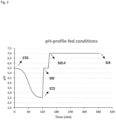
- Incubation started by feeding the probiotics and prebiotics samples of this study with 7 g/L fructose for 2 hours at 37°C with mixing, where pH decreased from 5.5 to 2.5 ( Figure 2 ).
- a specific gastric suspension (Pepsin, phosphatidylcholine, fructose and additional nutritional medium) was then added to simulate the stomach stage.
- a standardized pancreatic juice containing pancreatin from porcine pancreas and 10 mM bovine bile extract was added to simulate duodenal stage.
- the reactor contents were transferred to a dialysis membrane (regenerated cellulose, 3.5 kDa) which was submerged in a solution containing the same bicarbonate concentration as the content of the membrane, 4 times the volume, and at pH 7. Dialysis was performed for 3.67 hours to simulate jejunal and ileal incubation.
- a dialysis membrane regenerated cellulose, 3.5 kDa
- Short-term colonic incubations for gut microbial metabolic analysis were performed using a representative colon medium containing host-derived and diet-derived compounds and a colonic microbiota of a single healthy human adult donor.
- Upper GIT suspension (containing non-absorbed fraction of fructose) was administered to the colonic incubations, in three biological replicates, without additional fermentable carbohydrates, except for samples with prebiotic fibres.
- upper GIT suspension containing only the non-absorbed fraction of fructose (no probiotic or prebiotic added) in the gastric juice was administered. Incubations were performed at 37°C anaerobically for 48 hours at pH 6.5.
- SCFA short chain fatty acids
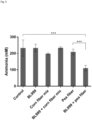
- Quantification of ammonium production at the end of the colonic incubations is an indicator of the overall proteolytic fermentation undergoing in the system. Statistically significantly less ammonium was produced when NCC 3001 was co-supplemented with pea fibre as compared to the experiments performed with pea fibre alone or with the corn bran mix ( Figure 5 ). This could imply the presence of a synergistic effect on the decrease in proteolytic fermentation upon dosing of B. longum together with pea fibre.
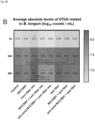
- Colonic microbiota was determined, using live/dead flow cytometry coupled to microbiome profiling using 16S-targeted Illumina18. Live/dead flow cytometry was performed on a BDFacs verse by preparing samples in a ten-fold dilution series in phosphate buffered saline. Assessment of viable, non-viable and total cell count in culture sample was done by staining with SYTO 24 and propidium iodide. Growth of Bifidobacteriaceae family was induced after 48h of colonic incubation ( Figure 6A ), particularly when pea fibre was supplemented with NCC 3001. This increase is not only due to the increased presence of NCC 3001 and other B. longum subspecies ( Figure 6B ), but as well to the increased presence of B. pseudocatenulatum ( Figure 6C ) (a key acetate producer), and increase in B. bifidum ( Figure 6D ).
- the synbiotic NCC3001 and pea fibre also significantly induced an increase of abundance of several species from the Bifidobacteriaceae, Bacteroidaceae and Acidaminococcaceae families.
- a long-term SHIME study is planned to validate probiotic survivability and health benefits after 4 weeks of GIT incubation with daily supplementation of the probiotics. Additionally, specific quantifications of B. longum subsp. longum NCC3001 in the colonic cultures are currently being analysed by qPCR in order to identify the specific quantity of this strain relative to the total Bifidobacteria OTUs and thus confirm the survivability of the probiotic in the colon.
- Bifidobacterium longum and its synbiotic combinations upon colonic fermentation on gut-wall functioning was investigated in terms of modulation of a 'leaky gut' under inflammatory conditions.
- B. longum was formulated together with a mixture of fibers and pea fiber.
- the endpoints were related to immune markers (pro- and anti-inflammatory cytokines and chemokines) in an in vitro Caco-2/THP1 co-culture model.
- Colonic samples were selected from a phase 1 study which allowed to evaluate the effects induced by the products and their fermentation-derived metabolites produced by the gut microbiota.
- the basolateral supernatant was discarded and the cells were stimulated with LPS. After 6h of stimulation, the basolateral supernatant was collected to measure cytokines and chemokines secreted in the medium.
- Synbiotic 6 (pea fiber + B. longum ), under native conditions, tended to increase the IL-6 secretion compared to treatment with fiber 4 (pea fiber) or probiotic 3 ( B. longum ) ( Figure 7A ).
- Native synbiotic 6 significantly increased the IL-10 secretion compared to probiotic 3 ( Figure 7B ).
- the levels also tended to be higher compared to their respective fibers.
- Synbiotic 6 decreased the secretion of TNF- ⁇ compared to treatment with fiber 4 ( Figure 8A ).
- Native synbiotic 6 tended to decrease IL-8 secretion compared to probiotic treatment alone; however, levels were still increased compared to treatment with fiber 4 alone ( Figure 8B ).
Landscapes
- Health & Medical Sciences (AREA)
- Life Sciences & Earth Sciences (AREA)
- Chemical & Material Sciences (AREA)
- Engineering & Computer Science (AREA)
- Natural Medicines & Medicinal Plants (AREA)
- Microbiology (AREA)
- Medicinal Chemistry (AREA)
- General Health & Medical Sciences (AREA)
- Mycology (AREA)
- Pharmacology & Pharmacy (AREA)
- Animal Behavior & Ethology (AREA)
- Public Health (AREA)
- Veterinary Medicine (AREA)
- Biotechnology (AREA)
- Organic Chemistry (AREA)
- Bioinformatics & Cheminformatics (AREA)
- Polymers & Plastics (AREA)
- Zoology (AREA)
- Epidemiology (AREA)
- Nutrition Science (AREA)
- Food Science & Technology (AREA)
- Genetics & Genomics (AREA)
- Wood Science & Technology (AREA)
- Botany (AREA)
- Nuclear Medicine, Radiotherapy & Molecular Imaging (AREA)
- General Chemical & Material Sciences (AREA)
- Chemical Kinetics & Catalysis (AREA)
- Alternative & Traditional Medicine (AREA)
- Biomedical Technology (AREA)
- Molecular Biology (AREA)
- Medical Informatics (AREA)
- Biochemistry (AREA)
- Virology (AREA)
- Tropical Medicine & Parasitology (AREA)
- General Engineering & Computer Science (AREA)
- Animal Husbandry (AREA)
- Rheumatology (AREA)
- Pain & Pain Management (AREA)
- Physiology (AREA)
- Immunology (AREA)
Applications Claiming Priority (3)
| Application Number | Priority Date | Filing Date | Title |
|---|---|---|---|
| EP20175624 | 2020-05-20 | ||
| PCT/EP2021/063162 WO2021233923A1 (en) | 2020-05-20 | 2021-05-18 | Improvement of insoluble fibre fermentability and short chain fatty acid production by bifidobacterium longum |
| EP21726644.4A EP4153200A1 (de) | 2020-05-20 | 2021-05-18 | Verbesserung der fermentierbarkeit unlöslicher fasern und der produktion kurzkettiger fettsäuren durch bifidobacterium longum |
Related Parent Applications (1)
| Application Number | Title | Priority Date | Filing Date |
|---|---|---|---|
| EP21726644.4A Division EP4153200A1 (de) | 2020-05-20 | 2021-05-18 | Verbesserung der fermentierbarkeit unlöslicher fasern und der produktion kurzkettiger fettsäuren durch bifidobacterium longum |
Publications (2)
| Publication Number | Publication Date |
|---|---|
| EP4449876A2 true EP4449876A2 (de) | 2024-10-23 |
| EP4449876A3 EP4449876A3 (de) | 2025-01-15 |
Family
ID=71069646
Family Applications (2)
| Application Number | Title | Priority Date | Filing Date |
|---|---|---|---|
| EP24191738.4A Withdrawn EP4449876A3 (de) | 2020-05-20 | 2021-05-18 | Verbesserung der fermentierbarkeit unlöslicher fasern und der produktion kurzkettiger fettsäuren durch bifidobacterium longum |
| EP21726644.4A Pending EP4153200A1 (de) | 2020-05-20 | 2021-05-18 | Verbesserung der fermentierbarkeit unlöslicher fasern und der produktion kurzkettiger fettsäuren durch bifidobacterium longum |
Family Applications After (1)
| Application Number | Title | Priority Date | Filing Date |
|---|---|---|---|
| EP21726644.4A Pending EP4153200A1 (de) | 2020-05-20 | 2021-05-18 | Verbesserung der fermentierbarkeit unlöslicher fasern und der produktion kurzkettiger fettsäuren durch bifidobacterium longum |
Country Status (5)
| Country | Link |
|---|---|
| US (1) | US12496324B2 (de) |
| EP (2) | EP4449876A3 (de) |
| JP (1) | JP7761591B2 (de) |
| CN (1) | CN115666608A (de) |
| WO (1) | WO2021233923A1 (de) |
Family Cites Families (3)
| Publication number | Priority date | Publication date | Assignee | Title |
|---|---|---|---|---|
| TR201807143T4 (tr) * | 2009-08-25 | 2018-06-21 | Nestec Sa | Bifidobacterium longum ve fonksiyonel gastrointestinal bozukluklar. |
| CN106666091A (zh) | 2016-12-11 | 2017-05-17 | 唐林元 | 一种肠溶型益生菌发酵酸化剂颗粒的制备方法 |
| CN108070542A (zh) | 2017-12-18 | 2018-05-25 | 江南大学 | 一种高活性双歧杆菌菌粉喷雾干燥生产工艺及应用 |
-
2021
- 2021-05-18 US US17/999,226 patent/US12496324B2/en active Active
- 2021-05-18 WO PCT/EP2021/063162 patent/WO2021233923A1/en not_active Ceased
- 2021-05-18 CN CN202180035960.XA patent/CN115666608A/zh active Pending
- 2021-05-18 EP EP24191738.4A patent/EP4449876A3/de not_active Withdrawn
- 2021-05-18 JP JP2022569090A patent/JP7761591B2/ja active Active
- 2021-05-18 EP EP21726644.4A patent/EP4153200A1/de active Pending
Non-Patent Citations (4)
| Title |
|---|
| "Remington's Pharmaceutical Sciences", 1985, MACK PUBLISHING CO. |
| DEVRESESCHREZENMEIR: "Probiotics, prebiotics and synbiotics in food biotechnology", 1994, SPRINGER BERLIN HEIDELBERG, pages: 1 - 66 |
| NATURE REVIEWS GASTROENTEROLOGY & HEPATOLOGY, vol. 14, 2017, pages 491 - 502 |
| TOMOKO YAESHIMAMORINAGA MILK INDUSTRY CO. LTDHIGASHIHARAZAMA-CITYKANAGAWA-PREF.JAPAN: "AMERICAN TYPE CULTURE COLLECTION", 7 June 2004, UNIVERSITY BOULEVARD, pages: 20110 - 2209 |
Also Published As
| Publication number | Publication date |
|---|---|
| US20230218695A1 (en) | 2023-07-13 |
| EP4449876A3 (de) | 2025-01-15 |
| EP4153200A1 (de) | 2023-03-29 |
| US12496324B2 (en) | 2025-12-16 |
| JP2023526288A (ja) | 2023-06-21 |
| CN115666608A (zh) | 2023-01-31 |
| WO2021233923A1 (en) | 2021-11-25 |
| JP7761591B2 (ja) | 2025-10-28 |
Similar Documents
| Publication | Publication Date | Title |
|---|---|---|
| Guerra et al. | Production of four potentially probiotic lactic acid bacteria and their evaluation as feed additives for weaned piglets | |
| Ross et al. | Effects of probiotic administration in swine | |
| CN101415342B (zh) | 饮食用组合物 | |
| US20190069586A1 (en) | Food Compositions for Weaning | |
| Jiang et al. | Effects of supplementation with Lactobacillus plantarum 299v on the performance, blood metabolites, rumen fermentation and bacterial communities of preweaning calves | |
| Wang et al. | Effects of Lactobacillus johnsonii XS4 supplementation on reproductive performance, gut environment, and blood biochemical and immunological index in lactating sows | |
| JP2010535731A (ja) | ラクトバチルスラムノサス及び体重管理 | |
| EA006441B1 (ru) | Способ и композиция для уменьшения воспалительного процесса и/или аномальной активации неспецифической иммунной реакции | |
| CN108244252A (zh) | 益生菌多元蛋白粉及其制备方法 | |
| JP7296454B2 (ja) | 炎症関連胃腸障害の処置のためのプロバイオティクスの組み合わせ | |
| AU2019410036A1 (en) | Probiotic combination for treatment of allergic disorders | |
| Taboada et al. | Administration of selected probiotic mixture improves body weight gain and meat fatty acid composition of creole goats. | |
| JP2025520641A (ja) | 飼料効率を改善するための乳酸菌の使用 | |
| JP2025502713A (ja) | メタン生産菌の増殖を阻害し、メタン排出を減少させるための乳酸菌の使用 | |
| US12496324B2 (en) | Insoluble fibre fermentability and short chain fatty acid production by Bifidobacterium longum | |
| Hasiri et al. | LACTOBACILLUS RHAMNOSUS AS A PROBIOTIC FOR THE HEALTH OF ADULT DOGS. | |
| CN110973630A (zh) | 一种抗肠道衰老的组合物及其应用 | |
| US20230090660A1 (en) | Beneficial effect of poaceae and/or leguminoseae fiber on survivability and metabolic activity of bifidobacterium longum | |
| CN116635516A (zh) | 包含丙酸菌属菌或其处理物的组合物 | |
| JP6675521B1 (ja) | 乳酸菌、血中鉄増加剤、及び貧血改善剤 | |
| Stensland et al. | Use of probiotics and prebiotics in pig nutrition in the post-weaning period | |
| CN118716464A (zh) | 一种宠物犬猫用高耐受发酵食品 | |
| CN116548609A (zh) | 益生质组合物及其用途 | |
| SUPRIYA | Master of Veterinary Science |
Legal Events
| Date | Code | Title | Description |
|---|---|---|---|
| PUAI | Public reference made under article 153(3) epc to a published international application that has entered the european phase |
Free format text: ORIGINAL CODE: 0009012 |
|
| STAA | Information on the status of an ep patent application or granted ep patent |
Free format text: STATUS: THE APPLICATION HAS BEEN PUBLISHED |
|
| AC | Divisional application: reference to earlier application |
Ref document number: 4153200 Country of ref document: EP Kind code of ref document: P |
|
| AK | Designated contracting states |
Kind code of ref document: A2 Designated state(s): AL AT BE BG CH CY CZ DE DK EE ES FI FR GB GR HR HU IE IS IT LI LT LU LV MC MK MT NL NO PL PT RO RS SE SI SK SM TR |
|
| REG | Reference to a national code |
Ref country code: DE Ref legal event code: R079 Free format text: PREVIOUS MAIN CLASS: A23K0010180000 Ipc: A61K0035745000 |
|
| PUAL | Search report despatched |
Free format text: ORIGINAL CODE: 0009013 |
|
| AK | Designated contracting states |
Kind code of ref document: A3 Designated state(s): AL AT BE BG CH CY CZ DE DK EE ES FI FR GB GR HR HU IE IS IT LI LT LU LV MC MK MT NL NO PL PT RO RS SE SI SK SM TR |
|
| RIC1 | Information provided on ipc code assigned before grant |
Ipc: A23L 33/22 20160101ALI20241212BHEP Ipc: A23L 33/21 20160101ALI20241212BHEP Ipc: A23K 20/163 20160101ALI20241212BHEP Ipc: A23K 10/18 20160101ALI20241212BHEP Ipc: A61P 37/00 20060101ALI20241212BHEP Ipc: A61P 29/00 20060101ALI20241212BHEP Ipc: A61P 1/14 20060101ALI20241212BHEP Ipc: A23L 33/135 20160101ALI20241212BHEP Ipc: A23K 10/12 20160101ALI20241212BHEP Ipc: A61K 36/48 20060101ALI20241212BHEP Ipc: A61K 36/899 20060101ALI20241212BHEP Ipc: A61K 35/745 20150101AFI20241212BHEP |
|
| P01 | Opt-out of the competence of the unified patent court (upc) registered |
Free format text: CASE NUMBER: APP_11471/2025 Effective date: 20250310 |
|
| STAA | Information on the status of an ep patent application or granted ep patent |
Free format text: STATUS: THE APPLICATION HAS BEEN WITHDRAWN |
|
| 18W | Application withdrawn |
Effective date: 20250701 |