EP4450126A2 - Utilisation du tradipitant contre le mal des transports - Google Patents
Utilisation du tradipitant contre le mal des transports Download PDFInfo
- Publication number
- EP4450126A2 EP4450126A2 EP24197970.7A EP24197970A EP4450126A2 EP 4450126 A2 EP4450126 A2 EP 4450126A2 EP 24197970 A EP24197970 A EP 24197970A EP 4450126 A2 EP4450126 A2 EP 4450126A2
- Authority
- EP
- European Patent Office
- Prior art keywords
- tradipitant
- pharmaceutical composition
- use according
- subject
- motion sickness
- Prior art date
- Legal status (The legal status is an assumption and is not a legal conclusion. Google has not performed a legal analysis and makes no representation as to the accuracy of the status listed.)
- Withdrawn
Links
Images



Classifications
-
- A—HUMAN NECESSITIES
- A61—MEDICAL OR VETERINARY SCIENCE; HYGIENE
- A61K—PREPARATIONS FOR MEDICAL, DENTAL OR TOILETRY PURPOSES
- A61K31/00—Medicinal preparations containing organic active ingredients
- A61K31/33—Heterocyclic compounds
- A61K31/395—Heterocyclic compounds having nitrogen as a ring hetero atom, e.g. guanethidine or rifamycins
- A61K31/435—Heterocyclic compounds having nitrogen as a ring hetero atom, e.g. guanethidine or rifamycins having six-membered rings with one nitrogen as the only ring hetero atom
- A61K31/44—Non condensed pyridines; Hydrogenated derivatives thereof
- A61K31/4427—Non condensed pyridines; Hydrogenated derivatives thereof containing further heterocyclic ring systems
- A61K31/444—Non condensed pyridines; Hydrogenated derivatives thereof containing further heterocyclic ring systems containing a six-membered ring with nitrogen as a ring heteroatom, e.g. amrinone
-
- A—HUMAN NECESSITIES
- A61—MEDICAL OR VETERINARY SCIENCE; HYGIENE
- A61K—PREPARATIONS FOR MEDICAL, DENTAL OR TOILETRY PURPOSES
- A61K31/00—Medicinal preparations containing organic active ingredients
- A61K31/33—Heterocyclic compounds
- A61K31/395—Heterocyclic compounds having nitrogen as a ring hetero atom, e.g. guanethidine or rifamycins
- A61K31/41—Heterocyclic compounds having nitrogen as a ring hetero atom, e.g. guanethidine or rifamycins having five-membered rings with two or more ring hetero atoms, at least one of which being nitrogen, e.g. tetrazole
- A61K31/4192—1,2,3-Triazoles
-
- A—HUMAN NECESSITIES
- A61—MEDICAL OR VETERINARY SCIENCE; HYGIENE
- A61P—SPECIFIC THERAPEUTIC ACTIVITY OF CHEMICAL COMPOUNDS OR MEDICINAL PREPARATIONS
- A61P1/00—Drugs for disorders of the alimentary tract or the digestive system
- A61P1/08—Drugs for disorders of the alimentary tract or the digestive system for nausea, cinetosis or vertigo; Antiemetics
Definitions
- the application relates generally to the use of NK-1 receptor antagonists. More particularly, the application relates the use of the NK-1 antagonist, tradipitant in motion sickness.
- Motion sickness is a disorder defined by a constellation of symptoms that can result from real or perceived sickness-inducing motion. Such motion may include, e.g., motion involving the head of a subject that can produce one or more symptoms characteristic of motion sickness.
- the sickness-inducing motion that gives rise to motion sickness may commonly include riding in any form of transportation such as, e.g., automobiles, buses, trains, other ground or rail transportation, boats under power, ferries, cruise ships, sailboats, personal water craft, canoes, kayaks, row boats, airplanes and helicopters, amusement rides, and certain gymnastic maneuvers such as somersaults.
- the symptoms of motion sickness typically can include, but are not limited to, nausea, vomiting, dizziness, headache, fullness, cold sweats, sweating, pallor, disorientation, and anorexia.
- Motion sickness has been reported to affect up to 30% of the general population under ordinary travel conditions that include sea, air, and land travel.
- the prevalence of motion sickness in one epidemiological study during bus travel found 28% of passengers reporting feeling ill while 13% reported experiencing nausea.
- NKs neurokinins
- SP substance P
- NKA neurokinin-A
- NKB neurokinin-B
- SP the most abundant NK, preferentially binds to the neurokinin type-1 (NK-1) receptor and is involved in the regulation of many physiological processes.
- NK-1 receptors have been mapped in the central nervous system and were found to have a broad distribution in the brain, including the mid-brain, basal ganglia, hypothalamus, and limbic system. Neurokinin receptors are also widely distributed in the gut, the bronchial tree, and the vascular system.
- NK-1 receptor has been identified as a potential therapeutic target for the treatment of motion sickness.
- Maropitant another neurokinin 1 receptor antagonist, is approved for the prevention of vomiting due to motion sickness in dogs and cats.
- a crossover study showed that the therapy reduced the occurrence of vomiting in over 75% of dogs as compared to placebo.
- This data supports the exploration of the effects of NK-1 antagonists on motion sickness in humans, though maropitant has a different molecular composition and pharmacokinetics from other NK-1 antagonists.
- Another NK1-receptor antagonist, aprepitant is approved for postoperative nausea and vomiting (PONV) in adults, and for use with other medications in children and adults to prevent nausea and vomiting caused by certain anti-cancer (chemotherapy) medicines.
- PONV postoperative nausea and vomiting
- chemotherapy anti-cancer
- tradipitant is being tested in clinical trials for the treatment of nausea and vomiting in patients with gastroparesis.
- available therapies are not effective for all patients and some of the medications used have significant side effect profiles
- Tradipitant is a highly potent, selective, centrally penetrating, and orally active neurokinin-1 (NK-1) receptor antagonist, depicted below as the compound of Formula (I)
- Tradipitant is disclosed in US Pat. 7,320,994 , and contains six main structural components: the 3,5-bis-trifluoromethylphenyl moiety, two pyridine rings, the triazol ring, the chlorophenyl ring, and the methanone.
- Tradipitant is known by the chemical names: 2-[1-[[3,5-bis(trifluoromethyl)phenyl]methyl]-5-(4-pyridinyl)-1H-1,2,3-triazol-4-yl]-3-pyridinyl](2-chlorophenyl)-methanone, and ⁇ 2-[1-(3,5-bistrifluoromethylbenzyl)-5-pyridin-4-yl-1H-[1,2,3]triazol-4-yl]-pyridin-3-yl ⁇ -(2-chlorophenyl)-methanone, and has also been known as LY686017 and as VLY-686. Crystalline Forms IV and V of tradipitant are disclosed in US Pat.
- tradipitant produces a long-lasting blockade of brain NK-1 receptors. Although the distinct pathways of nausea and vomiting are largely undetermined, a definitive role of SP acting at NK-1 receptors in the nucleus tractus solitarus has been confirmed. Previous clinical studies have demonstrated the efficacy of NK-1 antagonism in the prevention of chemotherapy induced and postoperative nausea and vomiting (CINV and PONV).
- the dose may be administered in advance of engaging in a sickness-inducing motion, typically about 30 minutes before commencing such motion.
- Administration of such an effective amount prior to commencing sickness-inducing motion can prevent or reduce the severity or frequency of one or more symptoms of motion sickness, including the prevention of nausea, vomiting, dizziness, headache, fullness, cold sweats, sweating, pallor, or disorientation.
- a second aspect of the invention provides a method of treating motion sickness or one or more symptoms thereof, in an individual experiencing the manifestation of motion sickness, comprising administering tradipitant to said individual in an amount effective to treat the motion sickness or the symptom thereof.
- Treatment of motion sickness may be considered to include a reduction in severity of symptoms, the prevention of progression, or the complete resolution of one or more symptoms of motion sickness after such symptom or symptoms have manifest in the individual.
- the amount of tradipitant that is effective to treat motion sickness or a symptom thereof may be, e.g., 100-400 mg, 100-300 mg, or 100-200 mg.
- the effective amount can be about 170 mg.
- the effective amount may be administered in a single dose, such as a single oral dose, and may or may not be in a single dosage unit form.
- the dose may be administered after the onset of at least one symptom of motion sickness, preferably soon after the onset of the at least one symptom, and more preferably, immediately after the onset of the at least one symptom.
- Administration of such an effective amount after motion sickness has begun to manifest can reduce the severity of the symptom(s), eliminate the symptom(s), prevent the progression or intensification of the symptom(s) of motion sickness, for example from dizziness to nausea, from nausea to vomiting, etc.
- a third aspect of the invention provides tradipitant for use in any of the methods of treatment or prevention described in the preceding aspects.
- a fourth aspect of the invention provides a pharmaceutical composition comprising tradipitant for use in any of the preceding methods of treatment or prevention.
- a fifth aspect of the invention provides tradipitant for use in the manufacture of a pharmaceutical composition comprising tradipitant for use in any of the preceding methods of treatment or prevention.
- the method of using tradipitant as described herein requires administering an amount of tradipitant that is effective to prevent or treat motion sickness or a symptom thereof.
- the amount administered to a subject being treated depends upon a number of factors, including the species being treated, the weight of the subject being treated, and the subject's condition otherwise.
- the method specifically involves the prevention and amelioration of motion sickness in human beings, including adult human beings. In adult human beings the typical dose effective to prevent motion sickness or a symptom thereof is 100-400 mg, 100-300 mg, or 100-200 mg.
- One specific regime involves administration of about 85-170 mg, or more particularly about 170 mg.
- the terms "patient,” “subject,” and “individual” refer to a mammal who is administrated tradipitant. Guinea pigs, dogs, cats, gerbils, horses, cattle, sheep, and humans are within the scope of the terms “patient,” “subject,” and “individual.” The most preferred subject is a human being.
- the term "effective amount,” i.e., dose, of tradipitant refers to an amount that is effective in treating or preventing the disorders described herein, or symptoms thereof.
- a method for preventing motion sickness or a symptom thereof, in an individual anticipating experiencing sickness-inducing motion.
- Such method comprises prophylactically administering tradipitant to said individual in an amount effective to prevent the manifestation of motion sickness or one or more symptoms thereof.
- the effective amount of tradipitant to prevent motion sickness or a symptom thereof may be, e.g., 100-400 mg, 100-300 mg, 100-200 mg, or 85-170 mg, and may particularly be about 170 mg.
- the effective amount may be administered in a single dose such as, e.g., a single oral dose, and may or may not be in a single dosage unit form.
- the dose may be administered in advance of engaging in a sickness-inducing motion, for example, in advance of boarding an airplane, train, boat, or other vehicle, or getting into an automobile, or before an anticipated airplane takeoff or commencement of motion on board any other type of vehicle.
- the dose may be administered about thirty (30) minutes prior to commencement of the potentially motion sickness-inducing motion or activity.
- Such administration of an effective amount of tradipitant can prevent the manifestation of one or more symptoms of motion sickness, including the prevention of nausea, vomiting, dizziness, headache, fullness, or disorientation, or may limit the symptom(s) experienced by the individual and the severity thereof.
- a method for treating motion sickness or a symptom thereof after such motion sickness has already manifest or begun to manifest in the individual includes administering tradipitant to said individual in an amount effective to treat the motion sickness or the symptom thereof.
- Treatment of motion sickness in the present context includes all processes in which there may be a slowing, interrupting, arresting, controlling, or stopping of the progression of motion sickness and/or symptoms thereof.
- such treatment may include the prevention of progression, or the partial or complete resolution of one or more symptoms of motion sickness after such symptom or symptoms have manifest in the individual.
- the amount of tradipitant that is effective to treat motion sickness or a symptom thereof may be, e.g., 100-400 mg, 100-300 mg, 100-200 mg, 85-170 mg, or particularly about 170 mg.
- the effective amount may be administered in a single dose, including a single oral dose, which may or may not be in a single dosage unit form.
- the effective amount of tradipitant may be administered after the onset of at least one symptom of motion sickness.
- the effective amount is administered soon after the onset of the at least one symptom, for example up to thirty (30) minutes after the onset of the at least one symptom, and more preferably, the effective amount is administered immediately or substantially immediately after the onset of the at least one symptom.
- Administration of such an effective amount after motion sickness has begun to manifest can reduce the severity of the symptom(s), eliminate the symptom(s), or prevent the progression or intensification of the symptom(s) of motion sickness, for example from dizziness to nausea, from nausea to vomiting, etc.
- Tradipitant is a selective neurokinin-1 (NK-1) receptor antagonist.
- NK-1 receptor antagonist a selective neurokinin-1 receptor antagonist.
- tradipitant potently inhibits NK-1 receptor binding and antagonizes the effects of an NK-1 agonist in a functional assay. No significant activity is observed in a panel of 74 additional receptors, enzymes, and ion channels including the NK-2 and NK-3 receptors.
- tradipitant is also a potent centrally active NK-1 antagonist in vivo.
- Tradipitant inhibits [ 125 I]substance P (SP) binding to the NK-1 receptor expressed by IM-9 cells with a K i of 0.062 nM and inhibits the SP-induced mobilization of intracellular calcium in U373 cells with a K b of 0.095 nM (Table 1).
- SP [ 125 I]substance P
- Table 1 Affinity of tradipitant for NK-1 Receptors In Vitro Antagonist IM-9 Human Cell Membrane Binding K i (nM) Calcium Mobilization in U373 Cells K b (nM) Tradipitant 0.062 ⁇ 0.012 0.095 ⁇ 0.025 Aprepitant 0.14 ⁇ 0.03 0.14 ⁇ 0.01 CP-122721 0.027 ⁇ 0.01 0.034 ⁇ 0.009
- tradipitant is a highly selective NK-1 antagonist in vitro.
- Example 1.2 Efficacy Models for in vivo evaluation of brain NK-1 receptor occupancy and efficacy of tradipitant
- NK-1 receptor antagonists Differences in species selectivity of NK-1 receptors pose challenges to characterization of NK-1 receptor antagonists in vivo.
- Gerbil NK-1 receptors have previously been shown to be similar to those in humans. Gerbils exhibit a characteristic stereotypic foot-tapping behavior in response to distress, fear, or aversive stimuli.
- Intracerebroventricular (icv) administration of substance P or a selective NK-1 receptor agonist such as GR73632 produces rapid rhythmic tapping of the hind feet lasting approximately 5 minutes, which can be inhibited by systemic administration of a brain penetrating antagonist of the NK-1 receptor.
- This response is selective for NK-1 agonists, since selective NK-2 and NK-3 agonists do not elicit a similar response.
- This behavioral response is further characterized and modified to enable identification and optimization, in vivo, of potent NK-1 receptor antagonists including tradipitant.
- the San Diego Instruments "SR" DOS-based computer program is used on a PC to record the number of foot-taps over the following 6 to 10 minutes, beginning 30 seconds after the floor is lightly tapped.
- Raw data are converted with a Microsoft ® Excel ® (Microsoft ® and Excel ® are registered trademarks of Microsoft Corp., Redmond, WA) macro that determines the number of events over threshold (125) in each 250-millisecond time bin over the 5.5 minutes following onset of observation. The total number and average intensity of events over the duration is determined. Total number of taps is analyzed with one-way ANOVA and post-hoc Dunnett's test using JMP statistical software.
- a dose-response curve (with doses of 0.3, 1, 3 and 10 pmols, icv) is initially generated with the NK-1 agonist GR73632. Maximal foot-tapping behavior is achieved with 3 and 10 pmol doses; the 3 pmol dose is subsequently chosen as the dose of choice for antagonism experiments.
- NK-1 antagonists are tested for their ability to attenuate GR73632-induced foot tapping. NK-1 antagonists are administered (po) via oral feeding tube at doses and time points specified in each experiment. All animals receive only one dose of NK-1 antagonists in all tests.
- NK-1 antagonists are administered at multiple doses (at least 3; one dose per animal) and response to GR73632 is measured.
- NK-1 receptor antagonists are administered at multiple pre-treatment times (one administration per animal) including at 0.5, 1, 2, 4, 7, 16, and 24 hours prior to GR73632 injection.
- GR73632 (Peninsula Labs, CA) is dissolved in saline.
- Tradipitant is dissolved in 1% CMC/0.5% SLS/0.085% PVP vehicle.
- CP-122721 and aprepitant are synthesized at Lilly Laboratories and dissolved in 10%ethanol/emulphor and 1% CMC/0.5% SLS/0.085% PVP respectively.
- orally administered tradipitant potently inhibits NK-1 agonist-induced foot-tapping behavior in gerbils 2 hours after administration of drug in a dose-dependent manner, with an ED 50 of 0.03 ⁇ 0.004 mg/kg (*p ⁇ 0.05 compared to vehicle for 0.1 mg/kg and 0.3 mg/kg doses).
- Data shown in FIG. 1 are expressed in number of foot-tapping events occurring in five (5) minutes.
- FIG. 2 depicts a comparison of the efficacy of tradipitant to that of other NK-1 antagonists, with data expressed as percent control of vehicle (vehicle response to 3 pmol GR73632).
- FIG. 3 depicts the effects of tradipitant over a time course on NK-1 agonist (GR 73632, 3 pmol, icv)-induced foot-tapping behavior after oral administration, compared with that of NK-1 antagonists aprepitant and CP-122721.
- Tradipitant 0.1 mg/kg, po
- tradipitant shows greater than 50% inhibition of foot-tapping behavior 16 hours after administration.
- the duration of effect of tradipitant is longer than that of CP-122721 (up to 2 hours after administration, 3 mg/kg) while aprepitant (1 mg/kg) shows inhibition of foot-tapping behavior up to 24 hours after administration. Data are expressed as percent control of vehicle (vehicle response to 3 pmol GR73632).
- tradipitant is a very potent, centrally acting NK-1 receptor antagonist in vivo in the gerbil with a relatively long duration of action.
- aprepitant a positive control
- tradipitant a known emetic
- Each animal is administered a different dose on a particular dosing day, so that each dose of tradipitant, aprepitant, and apomorphine alone is represented. Over the five (5) weeks of the study, each animal receives each of the treatments, but only one per week. The purpose of this study is to determine if tradipitant suppresses apomorphine-induced emesis.
- the low dose of tradipitant is 10 times the ED 50 in the gerbil foot-tapping model of NK-1 receptor antagonism (Example 1.2.1).
- the high dose is 100 times this efficacious dose, and is also the dose of aprepitant that has previously been determined to be efficacious against apomorphine-induced emesis in the dog.
- the mid dose of tradipitant is the approximate half-log interval between the low and high doses.
- the oral route of administration is selected for tradipitant because this is the route proposed or currently used clinically.
- the intravenous route is typically used for experimental apomorphine administration.
- the beagle dog is considered an effective species for demonstration of antagonism of apomorphine-induced emesis.
- a single oral dose of 0, 0.3, 1.0, or 3.0 mg/kg tradipitant, or 3.0 mg/kg aprepitant is administered to each male dog once a week in gelatin capsules. All animals are dosed over a period of five (5) weeks, with each dog receiving one of five different treatments on each day of dosing.
- a dose of 0.1 mg/kg apomorphine is administered by intravenous injection approximately two (2) hours after each administration of tradipitant or aprepitant. In cases where apomorphine is administered alone, without prior treatment with tradipitant or aprepitant, apomorphine is given at approximately the same time as when given in combination with tradipitant or aprepitant.
- All dogs are fasted overnight prior to each treatment day and then fed approximately one (1) hour after oral dosing (approximately one (1) hour prior to administration of apomorphine). Individual doses are adjusted weekly for changes in body weight.
- the dose regimen consists of a 5x5 Latin square design, in which each subject receives 1 dose or dose combination per week (6 day washout) as shown in Table 3 below.
- Table 3 Latin Square Design Study week 1 2 3 4 5 Dog 1 APO + 0.3 mg/kg tradipitant APO + aprepitant APO + 3 mg/kg tradipitant APO APO + 1 mg/kg tradipitant Dog 2 APO + aprepitant APO + 1 mg/kg tradipitant APO APO + 0.3 mg/kg tradipitant APO + 3 mg/kg tradipitant Dog 3 APO + 3 mg/kg tradipitant APO APO + aprepitant APO + 1 mg/kg tradipitant APO + 0.3 mg/kg tradipitant Dog 4 APO APO + 0.3 mg/kg tradipitant APO + 1 mg/kg tradipitant APO + 3 mg/kg tradipitant Dog 5 APO + 1
- the number of emetic episodes is recorded for approximately one hour following the injection of apomorphine, and plasma concentrations at anticipated Tmax of tradipitant (2 hours post-dosing) are evaluated.
- Table 4 provides individual and mean and standard deviation values for the 2 hour plasma concentrations of tradipitant. All animals administered tradipitant have measurable levels at 2 hours post-dose. In general, plasma concentrations at 2 hours post-dose increase with increasing dose in a sub-proportional manner. As observed in other studies in dogs, the exposure to tradipitant is variable between animals. Individual animal data reveal no relationship between plasma concentrations and week of administration.
- Table 4 Plasma concentrations of tradipitant (ng/ml) Administered Dose 0.3 mg/kg 1.0 mg/kg 3.0 mg/kg Concentration of tradipitant (ng/ml) Concentration of tradipitant (ng/ml) Concentration of tradipitant (ng/ml) Dog 1 51.20 175.58 122.73 Dog 2 41.33 86.49 256.58 Dog 3 90.93 240.84 316.20 Dog 4 83.38 100.97 682.91 Dog 5 22.59 61.56 119.79 Mean (SD) 57.89 (28.75) 133.09 (73.71) 299.64 (230.58)
- emesis occurs after each treatment, with the largest incidence of emesis occurring in the apomorphine alone group.
- One dog (Dog 3) has a single episode of emesis at each dose of tradipitant and aprepitant; this dog also has the greatest number of emetic episodes with apomorphine alone (12). No emesis occurs in the remaining four (4) dogs at any dose of tradipitant or aprepitant. These dogs have an average of four (4) emetic episodes with apomorphine alone. The antiemetic effect of aprepitant supports the validity of this model.
- Table 5 Emetic episodes by treatment group Test article* Dose level (mg/kg) Total No.
- Emetic Episodes APO control 0 28 aprepitant 3.0 1** tradipitant 0.3 1 ** tradipitant 1.0 1 ** tradipitant 3.0 1** *Apomorphine is administered as a challenge dose to all groups. **All episodes occur in same dog (Dog 3).
- NK-1 receptor agonist substance P SP
- This behavioral assay is used to demonstrate potency and CNS penetration of NK-1 antagonists in the guinea pig, a species that has receptor affinity for NK-1 antagonists that is similar to humans.
- GR73632 SP analog
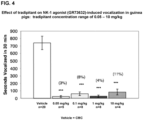
- Male Dunkin/Hartley guinea pigs (200 to 250 grams) are orally administered either vehicle or an NK-1 antagonist. Approximately 45 minutes later (for dose response studies), the animals are anesthetized and 0.1 nmol of GR73632 (SP analog) in a vehicle volume of 5 ⁇ l is injected into the cerebral ventricle at the intersection of bregma and the midline of the skull. Animals are placed in a dark testing chamber located inside of a sound attenuation cubicle and vocalizations are recorded for 30 minutes following recovery from anesthesia. The time spent vocalizing is quantified for each animal.
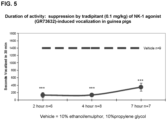
- 0.1 mg/kg of tradipitant or vehicle solution is administered orally and then 2, 4, or 7 hours later, 0.1 nmol of GR73632 is administered into the cerebral ventricle as described above. Vocalizations are recorded and quantified as indicated above.
- Vehicle solutions are either CMC ( FIG. 4 data) or an ethanol/emulphor solution ( FIGS. 5 and 6 ). Data is analyzed using one-tailed t-tests.
- oral administration of tradipitant produces significant inhibition of agonist-induced vocalization at doses of 10 mg/kg (p ⁇ .001), 1.0 mg/kg (p ⁇ 0.001), 0.1 mg/kg (p ⁇ .001), and 0.05 mg/kg (p ⁇ .001).
- Data shown parenthetically in FIG. 4 indicate percent of control response. Activity of tradipitant does not wane at the lower doses, indicating that even lower doses would be required to produce a dose response function.
- the effect of 0.1 mg/kg tradipitant is significantly active in suppressing agonist-induced vocalization at 7 hours following oral administration of the antagonist compound.
- Tradipitant significantly inhibits NK-1 agonist-induced vocalization in guinea pigs, indicating that this compound is an orally available and brain-penetrant NK-1 antagonist.
- the minimum effective dose (MED) that produces this effect is 0.025 mg/kg.
- Tradipitant, administered orally, is shown to have a duration of activity that exceeds 7 hours. In this experimental paradigm, tradipitant is substantially more potent than aprepitant and CP-122721.
- a tracer NK-1 antagonist compound (GR205171) is used to evaluate the ability of other NK-1 antagonists to occupy the brain NK-1 receptors.
- the test compounds are administered orally and the tracer compound is administered intravenously afterward.
- the occupancy of the NK-1 receptors is evaluated by quantitating the amount of the tracer compound bound to the brain NK-1 receptors after increasing doses of the test compounds.
- tradipitant has an estimated ED 50 of 0.04 mg/kg p.o. and is substantially more potent than the other antagonists evaluated.
- a single-center, randomized, double-blind, placebo-controlled study is conducted to investigate the effect of tradipitant on small bowel transit time.
- a total of 15 healthy subjects including 12 men and 3 women between the ages of 19 and 63 years, are enrolled in the study and receive at least 1 dose of study medication.
- a total of 13 subjects complete the study.
- Subjects are randomized to receive 20 mg of tradipitant, 200 mg of tradipitant, or placebo as a single oral dose within each of 3 periods, co-administered with a capsule radiolabeled with a maximum of 1MBq 111 In.
- Four hours post-dose all subjects also receive a second capsule radiolabeled with a maximum of 4MBq 99m Tc.
- a randomized, double blind, placebo-controlled clinical study of motion sickness is conducted, in which 126 human subjects ("study participants"), each having a prior history of motion sickness, are subjected to sea travel in the Pacific Ocean under varied weather conditions.
- Subjects are randomized to receive either tradipitant 170 mg or placebo by mouth in a blinded fashion, prior to travel initiation. Participants report their symptoms at predetermined time intervals during the travel period. Primary end points of the study include: percentage of participants vomiting, and Motion Sickness Severity Scale (MSSS) Worst score. The MSSS is a 7 point scale ranging from 0 ("no symptoms") to 6 ("vomiting"). An exploratory analysis is also performed to evaluate the effects of tradipitant under "calm" and "rough” seas.
- MSSS Motion Sickness Severity Scale
- this invention can be seen to comprise one or more of the following illustrative embodiments:
- the terms “first,” “second,” and the like, do not denote any order, quantity, or importance, but rather are used to distinguish one element from another, and the terms “a” and “an” herein do not denote a limitation of quantity, but rather denote the presence of at least one of the referenced item.
- the modifier “about” used in connection with a quantity is inclusive of the stated value and has the meaning dictated by the context (e.g., includes the degree of error associated with measurement of the particular quantity).
- the suffix "(s)” as used herein is intended to include both the singular and the plural of the term that it modifies, thereby including one or more of that term (e.g., the metal(s) includes one or more metals).
- Ranges disclosed herein are inclusive and independently combinable (e.g., ranges of "up to about 25 mg, or, more specifically, about 5 mg to about 20 mg,” is inclusive of the endpoints and all intermediate values of the ranges of "about 5 mg to about 25 mg,” etc.).
Landscapes
- Health & Medical Sciences (AREA)
- Chemical & Material Sciences (AREA)
- Medicinal Chemistry (AREA)
- Pharmacology & Pharmacy (AREA)
- Life Sciences & Earth Sciences (AREA)
- Animal Behavior & Ethology (AREA)
- General Health & Medical Sciences (AREA)
- Public Health (AREA)
- Veterinary Medicine (AREA)
- Epidemiology (AREA)
- Engineering & Computer Science (AREA)
- Organic Chemistry (AREA)
- Hospice & Palliative Care (AREA)
- Bioinformatics & Cheminformatics (AREA)
- Chemical Kinetics & Catalysis (AREA)
- General Chemical & Material Sciences (AREA)
- Nuclear Medicine, Radiotherapy & Molecular Imaging (AREA)
- Otolaryngology (AREA)
- Pharmaceuticals Containing Other Organic And Inorganic Compounds (AREA)
- Medicines That Contain Protein Lipid Enzymes And Other Medicines (AREA)
- Acyclic And Carbocyclic Compounds In Medicinal Compositions (AREA)
- Peptides Or Proteins (AREA)
- Steroid Compounds (AREA)
- Medicinal Preparation (AREA)
- Oscillators With Electromechanical Resonators (AREA)
Applications Claiming Priority (4)
| Application Number | Priority Date | Filing Date | Title |
|---|---|---|---|
| US201862737992P | 2018-09-28 | 2018-09-28 | |
| US201962874927P | 2019-07-16 | 2019-07-16 | |
| EP19783926.9A EP3856338B1 (fr) | 2018-09-28 | 2019-09-26 | Utilisation du tradipitant contre le mal des transports |
| PCT/US2019/053107 WO2020069092A1 (fr) | 2018-09-28 | 2019-09-26 | Utilisation de tradipitant dans le mal des transports |
Related Parent Applications (2)
| Application Number | Title | Priority Date | Filing Date |
|---|---|---|---|
| EP19783926.9A Division-Into EP3856338B1 (fr) | 2018-09-28 | 2019-09-26 | Utilisation du tradipitant contre le mal des transports |
| EP19783926.9A Division EP3856338B1 (fr) | 2018-09-28 | 2019-09-26 | Utilisation du tradipitant contre le mal des transports |
Publications (2)
| Publication Number | Publication Date |
|---|---|
| EP4450126A2 true EP4450126A2 (fr) | 2024-10-23 |
| EP4450126A3 EP4450126A3 (fr) | 2025-02-19 |
Family
ID=68165866
Family Applications (2)
| Application Number | Title | Priority Date | Filing Date |
|---|---|---|---|
| EP19783926.9A Active EP3856338B1 (fr) | 2018-09-28 | 2019-09-26 | Utilisation du tradipitant contre le mal des transports |
| EP24197970.7A Withdrawn EP4450126A3 (fr) | 2018-09-28 | 2019-09-26 | Utilisation de tradipitant dans le mal des transports |
Family Applications Before (1)
| Application Number | Title | Priority Date | Filing Date |
|---|---|---|---|
| EP19783926.9A Active EP3856338B1 (fr) | 2018-09-28 | 2019-09-26 | Utilisation du tradipitant contre le mal des transports |
Country Status (20)
| Country | Link |
|---|---|
| US (2) | US20220249444A1 (fr) |
| EP (2) | EP3856338B1 (fr) |
| JP (1) | JP7468964B2 (fr) |
| KR (2) | KR102863233B1 (fr) |
| CN (1) | CN111918701B (fr) |
| AU (1) | AU2019348001B2 (fr) |
| BR (1) | BR112020015484A2 (fr) |
| CA (1) | CA3089238A1 (fr) |
| CL (1) | CL2020002165A1 (fr) |
| DK (1) | DK3856338T3 (fr) |
| ES (1) | ES3010832T3 (fr) |
| FI (1) | FI3856338T3 (fr) |
| HR (1) | HRP20250097T1 (fr) |
| HU (1) | HUE070000T2 (fr) |
| IL (1) | IL281569B2 (fr) |
| MX (1) | MX2020008456A (fr) |
| PT (1) | PT3856338T (fr) |
| SI (1) | SI3856338T1 (fr) |
| WO (1) | WO2020069092A1 (fr) |
| ZA (1) | ZA202004594B (fr) |
Families Citing this family (5)
| Publication number | Priority date | Publication date | Assignee | Title |
|---|---|---|---|---|
| ES2824552T3 (es) * | 2015-03-04 | 2021-05-12 | Vanda Pharmaceuticals Inc | Método de tratamiento con tradipitant |
| JP7791832B2 (ja) | 2020-03-26 | 2025-12-24 | バンダ・ファーマシューティカルズ・インコーポレイテッド | トラジピタントによる下気道感染症の治療 |
| WO2023019084A1 (fr) * | 2021-08-12 | 2023-02-16 | Vanda Pharmaceuticals Inc. | Traitement de l'accommodation gastrique avec du tradipitant |
| US20240350469A1 (en) | 2021-08-31 | 2024-10-24 | Vanda Pharmaceuticals Inc. | Treatment of lower respiratory tract infection with tradipitant |
| AU2023413130A1 (en) | 2022-12-21 | 2025-06-05 | Vanda Pharmaceuticals Inc. | Methods of treatment with tradipitant |
Citations (2)
| Publication number | Priority date | Publication date | Assignee | Title |
|---|---|---|---|---|
| US7320994B2 (en) | 2002-04-26 | 2008-01-22 | Eli Lilly And Company | Triazole derivatives as tachykinin receptor antagonists |
| US7381826B2 (en) | 2003-10-24 | 2008-06-03 | Eli Lilly And Company | Crystalline forms of {2-[1-(3,5-bis-trifluoromethyl-benzyl)-5-pyridin-4-yl-1H-[1,2,3]triazol-4-yl]-pyridin-3-yl}-(2-chlorophenyl)-methanone |
Family Cites Families (4)
| Publication number | Priority date | Publication date | Assignee | Title |
|---|---|---|---|---|
| PT1035115E (pt) * | 1999-02-24 | 2005-01-31 | Hoffmann La Roche | Derivados de 4-fenilpiridina e a sua utilizacao como antagonistas do receptor nk-1 |
| EP2722045B1 (fr) * | 2009-11-18 | 2016-07-06 | Helsinn Healthcare SA | Compositions pour traiter les nausées et vomissements à médiation centrale |
| ES2824552T3 (es) * | 2015-03-04 | 2021-05-12 | Vanda Pharmaceuticals Inc | Método de tratamiento con tradipitant |
| CN119074729A (zh) * | 2017-11-17 | 2024-12-06 | 万达制药公司 | 使用川地匹坦治疗胃肠疾病的方法 |
-
2019
- 2019-09-26 HU HUE19783926A patent/HUE070000T2/hu unknown
- 2019-09-26 FI FIEP19783926.9T patent/FI3856338T3/fi active
- 2019-09-26 BR BR112020015484-9A patent/BR112020015484A2/pt unknown
- 2019-09-26 WO PCT/US2019/053107 patent/WO2020069092A1/fr not_active Ceased
- 2019-09-26 JP JP2020568453A patent/JP7468964B2/ja active Active
- 2019-09-26 EP EP19783926.9A patent/EP3856338B1/fr active Active
- 2019-09-26 KR KR1020207022180A patent/KR102863233B1/ko active Active
- 2019-09-26 SI SI201930892T patent/SI3856338T1/sl unknown
- 2019-09-26 IL IL281569A patent/IL281569B2/en unknown
- 2019-09-26 MX MX2020008456A patent/MX2020008456A/es unknown
- 2019-09-26 AU AU2019348001A patent/AU2019348001B2/en active Active
- 2019-09-26 DK DK19783926.9T patent/DK3856338T3/da active
- 2019-09-26 EP EP24197970.7A patent/EP4450126A3/fr not_active Withdrawn
- 2019-09-26 CA CA3089238A patent/CA3089238A1/fr active Pending
- 2019-09-26 KR KR1020257030873A patent/KR20250140634A/ko active Pending
- 2019-09-26 CN CN201980018140.2A patent/CN111918701B/zh active Active
- 2019-09-26 ES ES19783926T patent/ES3010832T3/es active Active
- 2019-09-26 PT PT197839269T patent/PT3856338T/pt unknown
- 2019-09-26 HR HRP20250097TT patent/HRP20250097T1/hr unknown
-
2020
- 2020-07-24 ZA ZA2020/04594A patent/ZA202004594B/en unknown
- 2020-08-21 CL CL2020002165A patent/CL2020002165A1/es unknown
-
2022
- 2022-04-28 US US17/731,831 patent/US20220249444A1/en not_active Abandoned
-
2024
- 2024-05-01 US US18/652,776 patent/US20240285588A1/en active Pending
Patent Citations (2)
| Publication number | Priority date | Publication date | Assignee | Title |
|---|---|---|---|---|
| US7320994B2 (en) | 2002-04-26 | 2008-01-22 | Eli Lilly And Company | Triazole derivatives as tachykinin receptor antagonists |
| US7381826B2 (en) | 2003-10-24 | 2008-06-03 | Eli Lilly And Company | Crystalline forms of {2-[1-(3,5-bis-trifluoromethyl-benzyl)-5-pyridin-4-yl-1H-[1,2,3]triazol-4-yl]-pyridin-3-yl}-(2-chlorophenyl)-methanone |
Also Published As
| Publication number | Publication date |
|---|---|
| JP2022511194A (ja) | 2022-01-31 |
| JP7468964B2 (ja) | 2024-04-16 |
| EP3856338B1 (fr) | 2024-11-06 |
| CL2020002165A1 (es) | 2021-01-04 |
| HRP20250097T1 (hr) | 2025-03-28 |
| CN111918701B (zh) | 2024-08-02 |
| BR112020015484A2 (pt) | 2021-04-27 |
| EP3856338A1 (fr) | 2021-08-04 |
| NZ766397A (en) | 2023-09-29 |
| KR20250140634A (ko) | 2025-09-25 |
| ES3010832T3 (en) | 2025-04-04 |
| CA3089238A1 (fr) | 2020-04-02 |
| EP4450126A3 (fr) | 2025-02-19 |
| SI3856338T1 (sl) | 2025-04-30 |
| US20240285588A1 (en) | 2024-08-29 |
| US20220249444A1 (en) | 2022-08-11 |
| IL281569A (en) | 2021-05-31 |
| HUE070000T2 (hu) | 2025-04-28 |
| AU2019348001A1 (en) | 2020-08-06 |
| AU2019348001B2 (en) | 2023-09-21 |
| PT3856338T (pt) | 2025-01-31 |
| FI3856338T3 (fi) | 2025-02-03 |
| IL281569B2 (en) | 2025-04-01 |
| IL281569B1 (en) | 2024-12-01 |
| ZA202004594B (en) | 2024-12-18 |
| WO2020069092A1 (fr) | 2020-04-02 |
| DK3856338T3 (da) | 2025-02-10 |
| CN111918701A (zh) | 2020-11-10 |
| MX2020008456A (es) | 2020-09-25 |
| KR20210067980A (ko) | 2021-06-08 |
| KR102863233B1 (ko) | 2025-09-22 |
Similar Documents
| Publication | Publication Date | Title |
|---|---|---|
| US20240285588A1 (en) | Use of tradipitant in motion sickness | |
| US20210008037A1 (en) | Use of tradipitant in motion sickness | |
| EP3710000B1 (fr) | Tradipitant destiné à être utilisé dans le traitement de la gastroparésie | |
| US20220096449A1 (en) | Method of treatment with tradipitant | |
| US20200197383A1 (en) | Composition and method for treatment of neurophychiatric disorders | |
| US20240299373A1 (en) | Improved use of tradipitant in motion sickness | |
| RU2728721C2 (ru) | Композиции стимуляторов, предотвращающие злоупотребление ими | |
| RU2808669C2 (ru) | Применение традипитанта от укачивания | |
| NZ766397B2 (en) | Use of tradipitant in motion sickness | |
| CN120919102A (zh) | 蛋氨酸在制备用于改善精神分裂症社交障碍的药物或组合物中的用途 |
Legal Events
| Date | Code | Title | Description |
|---|---|---|---|
| PUAI | Public reference made under article 153(3) epc to a published international application that has entered the european phase |
Free format text: ORIGINAL CODE: 0009012 |
|
| STAA | Information on the status of an ep patent application or granted ep patent |
Free format text: STATUS: THE APPLICATION HAS BEEN PUBLISHED |
|
| AC | Divisional application: reference to earlier application |
Ref document number: 3856338 Country of ref document: EP Kind code of ref document: P |
|
| AK | Designated contracting states |
Kind code of ref document: A2 Designated state(s): AL AT BE BG CH CY CZ DE DK EE ES FI FR GB GR HR HU IE IS IT LI LT LU LV MC MK MT NL NO PL PT RO RS SE SI SK SM TR |
|
| REG | Reference to a national code |
Ref country code: DE Ref legal event code: R079 Free format text: PREVIOUS MAIN CLASS: A61P0001080000 Ipc: A61K0031444000 |
|
| PUAL | Search report despatched |
Free format text: ORIGINAL CODE: 0009013 |
|
| AK | Designated contracting states |
Kind code of ref document: A3 Designated state(s): AL AT BE BG CH CY CZ DE DK EE ES FI FR GB GR HR HU IE IS IT LI LT LU LV MC MK MT NL NO PL PT RO RS SE SI SK SM TR |
|
| RIC1 | Information provided on ipc code assigned before grant |
Ipc: A61P 1/08 20060101ALI20250113BHEP Ipc: A61K 31/444 20060101AFI20250113BHEP |
|
| STAA | Information on the status of an ep patent application or granted ep patent |
Free format text: STATUS: THE APPLICATION IS DEEMED TO BE WITHDRAWN |
|
| 18D | Application deemed to be withdrawn |
Effective date: 20250820 |