EP4452267B1 - Dérivés 4-phényl-tétrahydropyridine pour le traitement de maladies auditives - Google Patents
Dérivés 4-phényl-tétrahydropyridine pour le traitement de maladies auditives Download PDFInfo
- Publication number
- EP4452267B1 EP4452267B1 EP22844112.7A EP22844112A EP4452267B1 EP 4452267 B1 EP4452267 B1 EP 4452267B1 EP 22844112 A EP22844112 A EP 22844112A EP 4452267 B1 EP4452267 B1 EP 4452267B1
- Authority
- EP
- European Patent Office
- Prior art keywords
- unilateral
- bilateral
- group
- compound
- hearing loss
- Prior art date
- Legal status (The legal status is an assumption and is not a legal conclusion. Google has not performed a legal analysis and makes no representation as to the accuracy of the status listed.)
- Active
Links
Images





Classifications
-
- A—HUMAN NECESSITIES
- A61—MEDICAL OR VETERINARY SCIENCE; HYGIENE
- A61K—PREPARATIONS FOR MEDICAL, DENTAL OR TOILETRY PURPOSES
- A61K31/00—Medicinal preparations containing organic active ingredients
- A61K31/33—Heterocyclic compounds
- A61K31/395—Heterocyclic compounds having nitrogen as a ring hetero atom, e.g. guanethidine or rifamycins
- A61K31/435—Heterocyclic compounds having nitrogen as a ring hetero atom, e.g. guanethidine or rifamycins having six-membered rings with one nitrogen as the only ring hetero atom
- A61K31/44—Non condensed pyridines; Hydrogenated derivatives thereof
- A61K31/445—Non condensed piperidines, e.g. piperocaine
- A61K31/451—Non condensed piperidines, e.g. piperocaine having a carbocyclic group directly attached to the heterocyclic ring, e.g. glutethimide, meperidine, loperamide, phencyclidine, piminodine
-
- C—CHEMISTRY; METALLURGY
- C07—ORGANIC CHEMISTRY
- C07D—HETEROCYCLIC COMPOUNDS
- C07D211/00—Heterocyclic compounds containing hydrogenated pyridine rings, not condensed with other rings
- C07D211/04—Heterocyclic compounds containing hydrogenated pyridine rings, not condensed with other rings with only hydrogen or carbon atoms directly attached to the ring nitrogen atom
- C07D211/68—Heterocyclic compounds containing hydrogenated pyridine rings, not condensed with other rings with only hydrogen or carbon atoms directly attached to the ring nitrogen atom having one double bond between ring members or between a ring member and a non-ring member
- C07D211/70—Heterocyclic compounds containing hydrogenated pyridine rings, not condensed with other rings with only hydrogen or carbon atoms directly attached to the ring nitrogen atom having one double bond between ring members or between a ring member and a non-ring member with only hydrogen atoms, hydrocarbon or substituted hydrocarbon radicals, directly attached to ring carbon atoms
-
- A—HUMAN NECESSITIES
- A61—MEDICAL OR VETERINARY SCIENCE; HYGIENE
- A61K—PREPARATIONS FOR MEDICAL, DENTAL OR TOILETRY PURPOSES
- A61K31/00—Medicinal preparations containing organic active ingredients
- A61K31/33—Heterocyclic compounds
- A61K31/395—Heterocyclic compounds having nitrogen as a ring hetero atom, e.g. guanethidine or rifamycins
- A61K31/435—Heterocyclic compounds having nitrogen as a ring hetero atom, e.g. guanethidine or rifamycins having six-membered rings with one nitrogen as the only ring hetero atom
- A61K31/44—Non condensed pyridines; Hydrogenated derivatives thereof
- A61K31/4418—Non condensed pyridines; Hydrogenated derivatives thereof having a carbocyclic group directly attached to the heterocyclic ring, e.g. cyproheptadine
-
- A—HUMAN NECESSITIES
- A61—MEDICAL OR VETERINARY SCIENCE; HYGIENE
- A61K—PREPARATIONS FOR MEDICAL, DENTAL OR TOILETRY PURPOSES
- A61K47/00—Medicinal preparations characterised by the non-active ingredients used, e.g. carriers or inert additives; Targeting or modifying agents chemically bound to the active ingredient
- A61K47/06—Organic compounds, e.g. natural or synthetic hydrocarbons, polyolefins, mineral oil, petrolatum or ozokerite
- A61K47/08—Organic compounds, e.g. natural or synthetic hydrocarbons, polyolefins, mineral oil, petrolatum or ozokerite containing oxygen, e.g. ethers, acetals, ketones, quinones, aldehydes, peroxides
- A61K47/10—Alcohols; Phenols; Salts thereof, e.g. glycerol; Polyethylene glycols [PEG]; Poloxamers; PEG/POE alkyl ethers
-
- A—HUMAN NECESSITIES
- A61—MEDICAL OR VETERINARY SCIENCE; HYGIENE
- A61K—PREPARATIONS FOR MEDICAL, DENTAL OR TOILETRY PURPOSES
- A61K47/00—Medicinal preparations characterised by the non-active ingredients used, e.g. carriers or inert additives; Targeting or modifying agents chemically bound to the active ingredient
- A61K47/06—Organic compounds, e.g. natural or synthetic hydrocarbons, polyolefins, mineral oil, petrolatum or ozokerite
- A61K47/08—Organic compounds, e.g. natural or synthetic hydrocarbons, polyolefins, mineral oil, petrolatum or ozokerite containing oxygen, e.g. ethers, acetals, ketones, quinones, aldehydes, peroxides
- A61K47/14—Esters of carboxylic acids, e.g. fatty acid monoglycerides, medium-chain triglycerides, parabens or PEG fatty acid esters
-
- A—HUMAN NECESSITIES
- A61—MEDICAL OR VETERINARY SCIENCE; HYGIENE
- A61K—PREPARATIONS FOR MEDICAL, DENTAL OR TOILETRY PURPOSES
- A61K47/00—Medicinal preparations characterised by the non-active ingredients used, e.g. carriers or inert additives; Targeting or modifying agents chemically bound to the active ingredient
- A61K47/30—Macromolecular organic or inorganic compounds, e.g. inorganic polyphosphates
- A61K47/36—Polysaccharides; Derivatives thereof, e.g. gums, starch, alginate, dextrin, hyaluronic acid, chitosan, inulin, agar or pectin
-
- A—HUMAN NECESSITIES
- A61—MEDICAL OR VETERINARY SCIENCE; HYGIENE
- A61K—PREPARATIONS FOR MEDICAL, DENTAL OR TOILETRY PURPOSES
- A61K47/00—Medicinal preparations characterised by the non-active ingredients used, e.g. carriers or inert additives; Targeting or modifying agents chemically bound to the active ingredient
- A61K47/30—Macromolecular organic or inorganic compounds, e.g. inorganic polyphosphates
- A61K47/36—Polysaccharides; Derivatives thereof, e.g. gums, starch, alginate, dextrin, hyaluronic acid, chitosan, inulin, agar or pectin
- A61K47/38—Cellulose; Derivatives thereof
-
- A—HUMAN NECESSITIES
- A61—MEDICAL OR VETERINARY SCIENCE; HYGIENE
- A61K—PREPARATIONS FOR MEDICAL, DENTAL OR TOILETRY PURPOSES
- A61K47/00—Medicinal preparations characterised by the non-active ingredients used, e.g. carriers or inert additives; Targeting or modifying agents chemically bound to the active ingredient
- A61K47/44—Oils, fats or waxes according to two or more groups of A61K47/02-A61K47/42; Natural or modified natural oils, fats or waxes, e.g. castor oil, polyethoxylated castor oil, montan wax, lignite, shellac, rosin, beeswax or lanolin
-
- A—HUMAN NECESSITIES
- A61—MEDICAL OR VETERINARY SCIENCE; HYGIENE
- A61K—PREPARATIONS FOR MEDICAL, DENTAL OR TOILETRY PURPOSES
- A61K9/00—Medicinal preparations characterised by special physical form
- A61K9/0012—Galenical forms characterised by the site of application
- A61K9/0019—Injectable compositions; Intramuscular, intravenous, arterial, subcutaneous administration; Compositions to be administered through the skin in an invasive manner
-
- A—HUMAN NECESSITIES
- A61—MEDICAL OR VETERINARY SCIENCE; HYGIENE
- A61K—PREPARATIONS FOR MEDICAL, DENTAL OR TOILETRY PURPOSES
- A61K9/00—Medicinal preparations characterised by special physical form
- A61K9/0012—Galenical forms characterised by the site of application
- A61K9/0019—Injectable compositions; Intramuscular, intravenous, arterial, subcutaneous administration; Compositions to be administered through the skin in an invasive manner
- A61K9/0024—Solid, semi-solid or solidifying implants, which are implanted or injected in body tissue
-
- A—HUMAN NECESSITIES
- A61—MEDICAL OR VETERINARY SCIENCE; HYGIENE
- A61K—PREPARATIONS FOR MEDICAL, DENTAL OR TOILETRY PURPOSES
- A61K9/00—Medicinal preparations characterised by special physical form
- A61K9/0012—Galenical forms characterised by the site of application
- A61K9/0046—Ear
-
- A—HUMAN NECESSITIES
- A61—MEDICAL OR VETERINARY SCIENCE; HYGIENE
- A61K—PREPARATIONS FOR MEDICAL, DENTAL OR TOILETRY PURPOSES
- A61K9/00—Medicinal preparations characterised by special physical form
- A61K9/0012—Galenical forms characterised by the site of application
- A61K9/0053—Mouth and digestive tract, i.e. intraoral and peroral administration
-
- A—HUMAN NECESSITIES
- A61—MEDICAL OR VETERINARY SCIENCE; HYGIENE
- A61K—PREPARATIONS FOR MEDICAL, DENTAL OR TOILETRY PURPOSES
- A61K9/00—Medicinal preparations characterised by special physical form
- A61K9/0012—Galenical forms characterised by the site of application
- A61K9/0053—Mouth and digestive tract, i.e. intraoral and peroral administration
- A61K9/006—Oral mucosa, e.g. mucoadhesive forms, sublingual droplets; Buccal patches or films; Buccal sprays
-
- A—HUMAN NECESSITIES
- A61—MEDICAL OR VETERINARY SCIENCE; HYGIENE
- A61K—PREPARATIONS FOR MEDICAL, DENTAL OR TOILETRY PURPOSES
- A61K9/00—Medicinal preparations characterised by special physical form
- A61K9/06—Ointments; Bases therefor; Other semi-solid forms, e.g. creams, sticks, gels
-
- A—HUMAN NECESSITIES
- A61—MEDICAL OR VETERINARY SCIENCE; HYGIENE
- A61P—SPECIFIC THERAPEUTIC ACTIVITY OF CHEMICAL COMPOUNDS OR MEDICINAL PREPARATIONS
- A61P27/00—Drugs for disorders of the senses
- A61P27/16—Otologicals
Definitions
- the present invention relates to 4-phenyl-tetrahydropyridine derivatives for use in the treatment of hearing diseases, in particular in the treatment of unilateral or bilateral sensorineural hearing loss and/or of unilateral or bilateral cochlear synaptopathy, optionally combined with unilateral or bilateral tinnitus.
- the present invention also relates to a pharmaceutical composition allowing a trans-tympanic administration of 4-phenyl-tetrahydropyridine derivatives and to said pharmaceutical composition for use in the treatment of hearing diseases, in particular in the treatment of unilateral or bilateral sensorineural hearing loss and/or of unilateral or bilateral cochlear synaptopathy, optionally combined with unilateral or bilateral tinnitus.
- SNHL sensorineural hearing loss
- hearing medical devices such as hearing aids or cochlear implants
- cochlear synaptopathy which may be either a hidden form of hearing loss or associated with a hearing loss. Patients suffering from cochlear synaptopathy have a speech-in-noise intelligibility deficit. In addition, cochlear synaptopathy is often associated to the occurrence of tinnitus and/or hyperacusis. However, there are currently no available treatments for cochlear synaptopathy.
- the present invention aims at providing means for treating hearing diseases such as hearing loss, cochlear synaptopathy and tinnitus, in particular the hearing loss being sensorineural hearing loss.
- WO9848802 describes the use of tetrahydropyridine derivatives to prepare medicines for treating diseases causing demyelination such as multiple sclerosis.
- 4-phenyl-tetrahydropyridine derivatives could lead to an improvement of the hearing function.
- the present invention relates to a compound of formula (I) or a pharmaceutically acceptable salt and/or solvate thereof, for use in the treatment of a hearing disease in a subject, wherein formula (I) is: wherein
- R 1 is a CF 3 group.
- R 2 and R 3 are a hydrogen atom, more preferably R 2 and R 3 are each a hydrogen atom.
- A is a biphenyl radical or a non-substituted 2-naphthyl radical.
- the salt is a hydrochloride salt or a fumarate salt of the compound of formula (I).
- said compound is administered to the subject by oral route or by trans-tympanic route. More advantageously, said compound is administered to the subject by oral route or by trans-tympanic route, wherein the administration by trans-tympanic route consists in an injection between the eardrum and the round window by means of a needle which crosses the eardrum. Even more preferably, the compound is administered to the subject by trans-tympanic route, wherein the administration by trans-tympanic route consists in an injection between the eardrum and the round window by means of a needle which crosses the eardrum.
- said compound is administered by trans-tympanic route at a dose ranging from 10 ⁇ g to 400 mg, between once a month and once every 12 months.
- said administration by trans-tympanic route consists in an injection between the eardrum and the round window by means of a needle which crosses the eardrum.
- the hearing disease is selected from the group consisting of unilateral or bilateral hearing loss, unilateral or bilateral tinnitus, unilateral or bilateral hyperacusis, hidden hearing loss such as cochlear synaptopathy associated with a normal threshold, speech-intelligibility deficit, unilateral or bilateral temporary auditory threshold shift, central auditory processing disorder, unilateral or bilateral auditory recruitment, acoustic neuroma, single sided deafness, excitotoxicity, ototoxicity such as drug-induced ototoxicity and any combination thereof.
- hidden hearing loss such as cochlear synaptopathy associated with a normal threshold, speech-intelligibility deficit, unilateral or bilateral temporary auditory threshold shift, central auditory processing disorder, unilateral or bilateral auditory recruitment, acoustic neuroma, single sided deafness, excitotoxicity, ototoxicity such as drug-induced ototoxicity and any combination thereof.
- the hearing disease is selected from the group consisting of unilateral and bilateral hearing loss such as a unilateral and bilateral sensorineural hearing loss, unilateral or bilateral tinnitus, unilateral or bilateral hyperacusis, hidden hearing loss such as cochlear synaptopathy associated with a normal threshold, and speech-intelligibility deficit.
- unilateral and bilateral hearing loss such as a unilateral and bilateral sensorineural hearing loss, unilateral or bilateral tinnitus, unilateral or bilateral hyperacusis, hidden hearing loss such as cochlear synaptopathy associated with a normal threshold, and speech-intelligibility deficit.
- the hearing disease is a unilateral or bilateral sensorineural hearing loss selected from the group consisting of unilateral or bilateral noise-induced sensorineural hearing loss, unilateral or bilateral inflammation-induced sensorineural hearing loss, unilateral or bilateral sudden idiopathic sensorineural hearing loss, unilateral or bilateral ototoxic chemicals-induced sensorineural hearing loss and unilateral or bilateral aged-induced sensorineural hearing loss such as presbycusis. More preferably, the hearing disease is a unilateral or bilateral sensorineural hearing loss selected from the group consisting of unilateral or bilateral noise-induced sensorineural hearing loss and unilateral or bilateral aged-induced sensorineural hearing loss.
- the hearing disease is a unilateral or bilateral inflammation-induced sensorineural hearing loss caused by a chronic inflammatory disease, more preferably said chronic inflammatory disease is selected from the group consisting of diabetes, chronic kidney disease, inflammatory bowel diseases and rheumatoid arthritis.
- the hearing disease is a unilateral or bilateral hearing loss with a tonal audiometric threshold above 30 dB at 3 contiguous frequencies optionally associated with unilateral or bilateral tinnitus. More preferably, the hearing disease is a unilateral or bilateral hearing loss with a tonal audiometric threshold from 30 dB to 70 dB at 3 contiguous frequencies optionally associated with unilateral or bilateral tinnitus, the tonal audiometric threshold being measured by auditory brainstem response or pure-tone audiometry.
- the hearing disease is selected from the group consisting of labyrinthine dysfunction, vestibular neuronitis, acute unilateral vestibulopathy, benign paroxysmal positional vertigo, vertigo of central origin, Meniere's disease, Meniere's syndrome and any combination thereof.
- said subject is wearing at least one hearing device.
- the compound of formula (I) or a pharmaceutically acceptable salt and/or solvate thereof is administered to the subject during a cochlear surgery, for example during a cochlear implant surgery.
- said subject is a mammalian animal with an eardrum, preferably said mammalian animal with an eardrum is selected from the group consisting of a human, a cat, a dog and a non-human primate animal, more preferably said mammalian animal with an eardrum is a dog.
- the present invention also relates to a pharmaceutical composition
- a pharmaceutical composition comprising a compound of formula (I) or a pharmaceutically acceptable salt and/or solvate thereof according to the invention, and at least one pharmaceutically acceptable excipient selected from the group consisting of poloxamers, polyethoxylated castor oil, phospholipids, triglycerides and any combination thereof.
- the present invention also relates to a pharmaceutical transtympanic composition
- a pharmaceutical transtympanic composition comprising a compound of formula (I) or a pharmaceutically acceptable salt and/or solvate thereof according to the invention, and a combination of a mixture of polyoxyethylated triglycerides and poloxamers, said pharmaceutical composition being a thermoreversible gel.
- the present invention further relates to a pharmaceutical composition for use in the treatment of a hearing disease in a subject, said pharmaceutical composition comprising a compound of formula (I) or a pharmaceutically acceptable salt and/or solvate thereof according to the invention, and at least one pharmaceutically acceptable excipient.
- said hearing disease is as defined in the present description.
- the trans-tympanic administration consists in the administration of an active agent or a composition in the external ear canal, wherein said active agent or the active agent of said composition is able to cross the eardrum, for example by diffusion.
- the formulation of the active agent or of the composition may be any formulation suitable for administration in the external ear canal.
- the formulation of the active agent or of the composition is selected from the group consisting of a semi-solid formulation, gel formulation and liquid formulation.
- the liquid formulation may be selected from the group consisting of a suspension, an emulsion and a solution.
- the gel formulation may be selected from the group consisting of a thermoreversible gel, hydrogel, glycerin-based gel, conjugated gal, crosslinked gel and alginate-based gel.
- the formulation of the active agent or of the composition may be an osmotic dosage formulation, a diffusion dosage formulation or an erodible formulation. More preferably, the formulation of the active agent or of the composition is selected from the group consisting of a gel formulation and a liquid formulation, for example an ear gel or ear drops.
- the trans-tympanic administration consists in an injection between the eardrum and the round window by means of a needle which crosses the eardrum. After the trans-tympanic injection, the injected substance diffuses through the round window to the cochlea.
- the gauge of the needle is from 21 to 33, more preferably from 21 to 30, more preferably from 24 to 30, more preferably from 25 to 30, even more preferably from 25 to 27, even more preferably from 25 to 26.
- the needle is selected from the group consisting of a trans-tympanic injection needle and a spinal needle. More advantageously, the needle is a trans-tympanic injection needle.
- the needle may be the product "MediPlast ENT, Otology, Trans- Intratympanic Injection Needle, Single Use With Luer-lock 0.4 x 90mm" marketed by company Mediplast ® .
- the formulation of the active agent or of the composition is selected from the group consisting of a semi-solid formulation, gel formulation and liquid formulation.
- the liquid formulation may be selected from the group consisting of a suspension, an emulsion and a solution.
- the solution may be a mucoadhesive solution, in particular a lipid-based mucoadhesive solution.
- the gel formulation may be selected from the group consisting of a thermoreversible gel, hydrogel, glycerin-based gel, conjugated gal, crosslinked gel and alginate-based gel.
- the formulation of the active agent or of the composition may be an osmotic dosage formulation, a diffusion dosage formulation or an erodible formulation. More preferably, the formulation of the active agent or of the composition is selected from the group consisting of a gel formulation and a liquid formulation.
- the formulation of the active agent or of the composition is selected from the group consisting of a thermoreversible gel and a solution; the solution is in particular a mucoadhesive solution, more particularly a lipid-based mucoadhesive solution.
- Treating " or " treatment” refers to any action which makes it possible to prevent, delay, reduce in severity and/or frequency or suppress at least one symptom associated with a pathological condition, or to prevent, slow down or suppress the underlying cause of a pathological condition, or the improvement or remediation of damage.
- treatment refers to a curative treatment.
- treatment refers to a preventive treatment.
- treatment refers to a preventive and/or curative treatment.
- Unilateral or bilateral refers to a hearing disease that may affect either one ear (this is a unilateral hearing disease) or both ears (this is a bilateral hearing disease).
- a unilateral hearing disease may affect either the right ear or the left ear.
- Xaliproden refers to the chemical molecule 1-[2-(2-naphthyl)ethyl]-4-(3-trifluoromethylphenyl)-1,2,3,6-tetrahydropyridine, of the following chemical formula:
- the present invention relates to a compound of formula (I) or a pharmaceutically acceptable salt and/or solvate thereof, for use in the treatment of a hearing disease in a subject.
- the present invention also relates to a method of treating a hearing disease by administering to a subject in need thereof an effective amount of a compound of formula (I) or a pharmaceutically acceptable salt and/or solvate thereof.
- references to methods of treatment in this description are to be interpreted as references to the compounds, pharmaceutical compositions or medicaments of the present invention for use in those.
- the present invention also relates to the use of a compound of formula (I) or a pharmaceutically acceptable salt and/or solvate thereof for the treatment of a hearing disease in a subject.
- R 1 is a CF 3 group.
- R 2 and R 3 are a hydrogen atom. More preferably, R 2 and R 3 are each a hydrogen atom.
- A is a biphenyl radical or a non-substituted 2-naphthyl radical.
- formula (I) is:
- the compound of formula (I) or a pharmaceutically acceptable salt and/or solvate thereof is 1-[2-(4-biphenylyl)ethyl]-4-(3-trifluoromethylphenyl)-1,2,3,6-tetrahydropyridine, also named paliroden, or a pharmaceutically acceptable salt and/or solvate thereof.
- formula (I) is: According to this embodiment, the compound of formula (I) or a pharmaceutically acceptable salt and/or solvate thereof is 1-[2-(2-naphthyl)ethyl]-4-(3-trifluoromethylphenyl)-1,2,3,6-tetrahydropyridine, also named xaliproden, or a pharmaceutically acceptable salt and/or solvate thereof.
- the salt is selected from the group consisting of a hydrochloride salt, a fumarate salt and a besylate salt of the compound of formula (I). More advantageously, the salt is selected from the group consisting of a hydrochloride salt and a fumarate salt of the compound of formula (I).
- the compound of formula (I) or a pharmaceutically acceptable salt and/or solvate thereof is a fumarate salt of 1-[2-(4-biphenylyl)ethyl]-4-(3-trifluoromethylphenyl)-1,2,3,6-tetrahydropyridine, also named paliroden fumarate.
- the compound of formula (I) or a pharmaceutically acceptable salt and/or solvate thereof is a hydrochloride salt of 1-[2-(2-naphthyl)ethyl]-4-(3-trifluoromethylphenyl)-1,2,3,6-tetrahydropyridine, also named xaliproden hydrochloride.
- the compound of formula (I) or a pharmaceutically acceptable salt and/or solvate thereof as defined above is for use in the treatment of a hearing disease in a subject.
- the hearing disease is selected from the group consisting of unilateral or bilateral hearing loss, unilateral or bilateral tinnitus, hidden hearing loss such as cochlear synaptopathy associated with a normal threshold, otosclerosis such as non-obliterative and obliterative otosclerosis involving oval window and cochlear otosclerosis, acoustic neuroma, single sided deafness, ototoxicity such as drug-induced ototoxicity, labyrinthine dysfunction, vestibular neuronitis, excitotoxicity, autoimmune inner ear disease, acute unilateral vestibulopathy, benign paroxysmal positional vertigo, vertigo of central origin, Meniere's disease, Meniere's syndrome, unilateral or bilateral auditory recruitment, diplacusis, unilateral or bilateral hyperacusis, unilateral or bilateral temporary auditory threshold shift, central auditory processing disorder and any combination thereof.
- hidden hearing loss such as cochlear synaptopathy associated with a normal threshold
- otosclerosis such as non-obliter
- the unilateral or bilateral hearing loss is selected from the group consisting of unilateral or bilateral sensorineural hearing loss, unilateral or bilateral cochlear synaptopathy associated with an increased threshold, and unilateral or bilateral mixed conductive and sensorineural hearing loss.
- the unilateral or bilateral sensorineural hearing loss is selected from the group consisting of unilateral or bilateral noise-induced sensorineural hearing loss, unilateral or bilateral inflammation-induced sensorineural hearing loss, unilateral or bilateral sudden idiopathic sensorineural hearing loss, unilateral or bilateral ototoxic chemicals-induced sensorineural hearing loss and unilateral or bilateral aged-induced sensorineural hearing loss such as presbycusis.
- the unilateral or bilateral sensorineural hearing loss is selected from the group consisting of unilateral or bilateral noise-induced sensorineural hearing loss, unilateral or bilateral aged-induced sensorineural hearing loss such as presbycusis, and unilateral or bilateral inflammation-induced sensorineural hearing loss.
- the unilateral or bilateral inflammation-induced sensorineural hearing loss may be induced by a chronic inflammatory disease.
- the unilateral or bilateral sensorineural hearing loss is selected from the group consisting of unilateral or bilateral noise-induced sensorineural hearing loss and unilateral or bilateral aged-induced sensorineural hearing loss such as presbycusis.
- the unilateral or bilateral cochlear synaptopathy associated with an increased threshold is selected from the group consisting of unilateral or bilateral noise-induced cochlear synaptopathy associated with an increased threshold, unilateral or bilateral inflammation-induced cochlear synaptopathy associated with an increased threshold, and unilateral or bilateral aged-induced cochlear synaptopathy associated with an increased threshold.
- the unilateral or bilateral noise-induced cochlear synaptopathy associated with an increased threshold may be induced by chronic noise exposure.
- the unilateral or bilateral inflammation-induced cochlear synaptopathy associated with an increased threshold may be induced by a chronic inflammatory disease.
- the hearing disease is selected from the group consisting of unilateral and bilateral sensorineural hearing loss, unilateral and bilateral cochlear synaptopathy associated with an increased threshold, unilateral or bilateral tinnitus, cochlear synaptopathy associated with a normal threshold, acoustic neuroma, sudden idiopathic hearing loss, drug-induced hearing loss, single sided deafness, excitotoxicity, ototoxicity, drug-induced ototoxicity, labyrinthine dysfunction, vestibular neuronitis, acute unilateral vestibulopathy, benign paroxysmal positional vertigo, vertigo of central origin, Meniere's disease and Meniere's syndrome.
- the hearing disease is selected from the group consisting of unilateral or bilateral hearing loss, unilateral or bilateral tinnitus, hidden hearing loss such as cochlear synaptopathy associated with a normal threshold, otosclerosis such as non-obliterative and obliterative otosclerosis involving oval window and cochlear otosclerosis, acoustic neuroma, single sided deafness, ear infection, ototoxicity such as drug-induced ototoxicity, excitotoxicity, acute unilateral vestibulopathy, vestibular neuronitis and any combination thereof.
- hidden hearing loss such as cochlear synaptopathy associated with a normal threshold
- otosclerosis such as non-obliterative and obliterative otosclerosis involving oval window and cochlear otosclerosis
- acoustic neuroma single sided deafness
- ototoxicity such as drug-induced ototoxicity, excitotoxicity, acute unilateral vestibulopathy, vestibular neuronitis
- the hearing disease is selected from the group consisting of unilateral or bilateral hearing loss, unilateral or bilateral tinnitus, hidden hearing loss such as cochlear synaptopathy associated with a normal threshold, single sided deafness, acute unilateral vestibulopathy, vestibular neuronitis, unilateral or bilateral auditory recruitment, diplacusis, unilateral or bilateral hyperacusis, unilateral or bilateral temporary auditory threshold shift, central auditory processing disorder and any combination thereof.
- the hearing disease is selected from the group consisting of unilateral or bilateral tinnitus, unilateral or bilateral auditory recruitment, diplacusis, unilateral or bilateral hyperacusis, unilateral or bilateral temporary auditory threshold shift, central auditory processing disorder and any combination thereof.
- These hearing diseases correspond to those of the classes H93.1 and H93.2 of the International Classification of Diseases ICD-10, version 2019.
- the hearing disease is selected from the group consisting of unilateral or bilateral hearing loss, unilateral or bilateral tinnitus, hidden hearing loss such as cochlear synaptopathy associated with a normal threshold and any combination thereof.
- the hearing disease is selected from the group consisting of unilateral or bilateral hearing loss, unilateral or bilateral tinnitus, hidden hearing loss such as cochlear synaptopathy associated with a normal threshold and any combination thereof, wherein the unilateral or bilateral hearing loss is selected from the group consisting of unilateral or bilateral sensorineural hearing loss, unilateral or bilateral mixed conductive and sensorineural hearing loss, and unilateral or bilateral cochlear synaptopathy associated with an increased threshold.
- the hearing disease is a unilateral or bilateral hearing loss, wherein the unilateral or bilateral hearing loss is selected from the group consisting of 1) a unilateral or bilateral sensorineural hearing loss, such as a noise-induced sensorineural hearing loss, or an aged-induced sensorineural hearing loss such as presbycusis, and 2) a unilateral or bilateral cochlear synaptopathy associated with an increased threshold, such as a noise-induced cochlear synaptopathy associated with an increased threshold or an aged-induced cochlear synaptopathy associated with an increased threshold.
- a unilateral or bilateral sensorineural hearing loss such as a noise-induced sensorineural hearing loss, or an aged-induced sensorineural hearing loss such as presbycusis
- a unilateral or bilateral cochlear synaptopathy associated with an increased threshold such as a noise-induced cochlear synaptopathy associated with an increased threshold or an aged-induced cochlear synaptopathy associated with an increased threshold.
- the hearing disease is selected from the group consisting of unilateral or bilateral sensorineural hearing loss such as noise-induced sensorineural hearing loss or aged-induced sensorineural hearing loss such as presbycusis, unilateral or bilateral cochlear synaptopathy associated with an increased threshold, unilateral or bilateral tinnitus, hidden hearing loss such as cochlear synaptopathy associated with a normal threshold and any combination thereof.
- the hearing disease is selected from the group consisting of unilateral or bilateral sensorineural hearing loss such as noise-induced sensorineural hearing loss or aged-induced sensorineural hearing loss such as presbycusis, unilateral or bilateral tinnitus and any combination thereof.
- the hearing disease is a combination of a unilateral or bilateral sensorineural hearing loss, such as noise-induced sensorineural hearing loss or aged-induced sensorineural hearing loss, and unilateral or bilateral tinnitus.
- the hearing disease is a combination of unilateral or bilateral tinnitus and a hidden hearing loss such as cochlear synaptopathy associated with a normal threshold.
- the hearing disease is a combination of a unilateral or bilateral sensorineural hearing loss, such as noise-induced sensorineural hearing loss or aged-induced sensorineural hearing loss, and a hidden hearing loss such as cochlear synaptopathy associated with a normal threshold.
- a unilateral or bilateral sensorineural hearing loss such as noise-induced sensorineural hearing loss or aged-induced sensorineural hearing loss
- a hidden hearing loss such as cochlear synaptopathy associated with a normal threshold.
- the hearing disease is a combination of a unilateral or bilateral sensorineural hearing loss, such as noise-induced sensorineural hearing loss or aged-induced sensorineural hearing loss, and a unilateral or bilateral cochlear synaptopathy associated with an increased threshold.
- a unilateral or bilateral sensorineural hearing loss such as noise-induced sensorineural hearing loss or aged-induced sensorineural hearing loss
- a unilateral or bilateral cochlear synaptopathy associated with an increased threshold.
- the hearing disease is a combination of a unilateral or bilateral tinnitus, and a unilateral or bilateral cochlear synaptopathy associated with an increased threshold.
- the hearing disease is a unilateral or bilateral sensorineural hearing loss, preferably the unilateral or bilateral sensorineural hearing loss is selected from a noise-induced sensorineural hearing loss and an aged-induced sensorineural hearing loss such as presbycusis.
- the hearing disease is unilateral or bilateral tinnitus.
- the hearing disease is a hidden hearing loss such as cochlear synaptopathy associated with a normal threshold.
- the hearing disease is a unilateral or bilateral cochlear synaptopathy associated with an increased threshold.
- the hearing disease according to the invention is not induced by a decrease or an increase in TGF- ⁇ (Transforming Growth Factor ⁇ ).
- TGF- ⁇ Transforming Growth Factor ⁇
- the hearing disease according to the invention is not induced by a demyelinating disease nor by a demyelination of the auditory nerve.
- the hearing disease according to the invention is an inflammation-induced unilateral or bilateral sensorineural hearing loss caused by a chronic inflammatory disease, preferably said chronic inflammatory disease is selected from the group consisting of diabetes preferably type 2 diabetes, chronic kidney disease, inflammatory bowel diseases and rheumatoid arthritis.
- the hearing disease according to the invention is an inflammation-induced unilateral or bilateral cochlear synaptopathy associated with an increased threshold caused by a chronic inflammatory disease, preferably said chronic inflammatory disease is selected from the group consisting of diabetes preferably type 2 diabetes, chronic kidney disease, inflammatory bowel diseases and rheumatoid arthritis.
- the hearing disease according to the invention is a sensorineural hearing loss that is not caused by diabetes, chronic kidney disease, inflammatory bowel diseases or rheumatoid arthritis, preferably the hearing disease according to the invention is a sensorineural hearing loss that is not caused by a chronic inflammatory disease.
- the hearing disease according to the invention is a unilateral or bilateral cochlear synaptopathy associated with an increased threshold that is not caused by diabetes, chronic kidney disease, inflammatory bowel diseases or rheumatoid arthritis, preferably the hearing disease according to the invention is a unilateral or bilateral cochlear synaptopathy associated with an increased threshold that is not caused by a chronic inflammatory disease.
- the hearing disease is a unilateral or bilateral hearing loss with a tonal audiometric threshold above 30 dB at 3 contiguous frequencies, optionally associated with unilateral or bilateral tinnitus, the tonal audiometric threshold being measured by auditory brainstem response or pure-tone audiometry.
- the hearing disease is a unilateral or bilateral hearing loss with a tonal audiometric threshold from 30 dB to 70 dB at 3 contiguous frequencies, optionally associated with unilateral or bilateral tinnitus, the tonal audiometric threshold being measured by auditory brainstem response or pure-tone audiometry.
- the hearing disease is a unilateral or bilateral hearing loss with a tonal audiometric threshold greater than or equal to 71 dB at 3 contiguous frequencies, optionally associated with unilateral or bilateral tinnitus, the tonal audiometric threshold being measured by auditory brainstem response or pure-tone audiometry.
- the hearing disease is a bilateral hearing loss with a tonal audiometric threshold greater than or equal to 71 dB at 3 contiguous frequencies, the tonal audiometric threshold being measured by auditory brainstem response or pure-tone audiometry.
- the hearing disease is a unilateral or bilateral hearing loss with a tonal audiometric threshold greater than 91 dB at 3 contiguous frequencies, optionally associated with unilateral or bilateral tinnitus, the tonal audiometric threshold being measured by auditory brainstem response or pure-tone audiometry.
- the hearing disease is a unilateral hearing loss with a tonal audiometric threshold greater than or equal to 91 dB at 3 contiguous frequencies, associated with unilateral or bilateral tinnitus, the tonal audiometric threshold being measured by auditory brainstem response or pure-tone audiometry.
- the subject is wearing at least one hearing device.
- the subject may be wearing one hearing device.
- the subject may also be wearing two hearing devices.
- administering a compound of formula (I), for example paliroden or xaliproden, or a pharmaceutically acceptable salt and/or solvate thereof, to a subject wearing at least one hearing device leads to an improvement of speech-in-noise intelligibility.
- the compound of formula (I) or a pharmaceutically acceptable salt and/or solvate thereof is administered to the subject during a cochlear surgery, for example during a cochlear implant surgery.
- administering a compound of formula (I), for example paliroden or xaliproden, or a pharmaceutically acceptable salt and/or solvate thereof, to a subject during a cochlear surgery, for example during a cochlear implant surgery allowing better preservation of residual hearing and/or facilitating rehabilitation post-surgery (better and/or faster post-surgery rehabilitation).
- cochlear implant surgery is generally safe; however, risks of cochlear implantation include loss of residual hearing.
- the inventors have surprisingly discovered that administering a compound of formula (I), for example paliroden or xaliproden, or a pharmaceutically acceptable salt and/or solvate thereof, leads to an improvement of the hearing function materialized by a decrease in pure-tone audiometric threshold and/or ABR threshold shift of at least 10 dB at three contiguous frequencies.
- a compound of formula (I) for example paliroden or xaliproden, or a pharmaceutically acceptable salt and/or solvate thereof, leads to an improvement of the hearing function materialized by a decrease in pure-tone audiometric threshold and/or ABR threshold shift of at least 10 dB at three contiguous frequencies.
- a compound of formula (I) for example paliroden or xaliproden, or a pharmaceutically acceptable salt and/or solvate thereof, leads to an improvement of speech intelligibility in silence materialized by a 10% improvement in word recognition score (number of correctly identified words in a list of 50 words presented at 30 dB above audiometric threshold).
- a compound of formula (I) for example paliroden or xaliproden, or a pharmaceutically acceptable salt and/or solvate thereof, leads to an improvement of speech-in-noise intelligibility materialized by a reduction of 4 dB in the SNR (signal-to-noise ratio) necessary to achieve 50% correct word understanding.
- a compound of formula (I) for example paliroden or xaliproden, or a pharmaceutically acceptable salt and/or solvate thereof, exhibits a beneficial effect following noise exposure with ABR threshold shifts reduction.
- the compound of formula (I), for example paliroden or xaliproden, or a pharmaceutically acceptable salt and/or solvate thereof may be administered to the subject by any suitable administration route.
- the compound of formula (I), for example paliroden or xaliproden, or a pharmaceutically acceptable salt and/or solvate thereof is administered to the subject by any administration route suitable for allowing said compound to reach the inner ear.
- the route suitable for allowing said compound to reach the inner ear is a route selected from the group consisting of a systemic route and a local route.
- the systemic route may be selected from the group consisting of oral route, intraperitoneal route, intravenous route, intramuscular route, intraarterial route and subcutaneous route.
- the local route may be selected from the group consisting of external ear route on the eardrum, trans-tympanic route, intrabullar route, intracochlear route and round window niche route.
- the compound of formula (I), for example paliroden or xaliproden, or a pharmaceutically acceptable salt and/or solvate thereof is administered to the subject by trans-tympanic route.
- the compound of formula (I) or a pharmaceutically acceptable salt and/or solvate thereof is administered to the subject by trans-tympanic route in one ear, for example the right ear or the left ear.
- the compound of formula (I) or a pharmaceutically acceptable salt and/or solvate thereof is administered to the subject by trans-tympanic route in both ears.
- the administration by trans-tympanic route consists in an injection between the eardrum and the round window by means of a needle which crosses the eardrum.
- the compound of formula (I), for example paliroden or xaliproden, or a pharmaceutically acceptable salt and/or solvate thereof is administered to the subject by oral route.
- the oral route has the advantages of promoting compliance by the subject and facilitating administration, especially when the subject is a non-human mammal, such as a cat or dog.
- the compound of formula (I), for example paliroden or xaliproden, or a pharmaceutically acceptable salt and/or solvate thereof is administered to the subject by trans-tympanic route at a dose per ear ranging from 10 ⁇ g to 400 mg, preferably from 0.1 mg to 10 mg, more preferably from 1 mg to 10 mg, even more preferably from 4 mg to 6 mg, even more preferably about 5 mg.
- the administration by trans-tympanic route consists in an injection between the eardrum and the round window by means of a needle which crosses the eardrum.
- the compound of formula (I) or a pharmaceutically acceptable salt and/or solvate thereof is administered to the subject by trans-tympanic route at a dose per ear ranging from 10 ⁇ g to 400 mg, preferably from 0.1 mg to 20 mg, more preferably from 1 mg to 20 mg, even more preferably from 8 mg to 12 mg, even more preferably about 10 mg.
- the compound of formula (I) or a pharmaceutically acceptable salt and/or solvate thereof is administered to the subject by trans-tympanic route at a dose per ear ranging from 10 ⁇ g to 400 mg, preferably from 1 mg to 30 mg, more preferably from 5 mg to 25 mg, even more preferably from 17 mg to 23 mg, even more preferably about 20 mg.
- the compound of formula (I) or a pharmaceutically acceptable salt and/or solvate thereof is administered to the subject by trans-tympanic route at a dose per ear ranging from 10 ⁇ g to 400 mg, preferably from 1 mg to 300 mg, more preferably from 50 mg to 200 mg, even more preferably from 100 mg to 150 mg, even more preferably about 125 mg.
- the compound of formula (I) or a pharmaceutically acceptable salt and/or solvate thereof is administered to the subject by trans-tympanic route at a dose per ear of about 10 ⁇ g, 0.1 mg, 0.5 mg, 0.75 mg, 1 mg, 1.25 mg, 1.5 mg, 1.75 mg, 2 mg, 2.25 mg, 2.5 mg, 2.75 mg, 3 mg, 3.25 mg, 3.5 mg, 3.75 mg, 4 mg, 4.25 mg, 4.5 mg, 4.75 mg, 5 mg, 5.25 mg, 5.5 mg, 5.75 mg, 6 mg, 6.25 mg, 6.5 mg, 6.75 mg, 7 mg, 7.25 mg, 7.5 mg, 7.75 mg, 8 mg, 8.25 mg, 8.5 mg, 8.75 mg, 9 mg, 9.25 mg, 9.5 mg, 9.75 mg, 10 mg, 10.25 mg, 10.5 mg, 10.75 mg, 11 mg, 11.25 mg, 11.5 mg, 12 mg, 12.5 mg, 13 mg, 13.5 mg,14 mg, 14.5 mg, 15 mg, 15.5 mg, 16 mg
- Said dose may be administered in one ear, for example the right ear or the left ear, between once a month and once every 12 months. Said dose may also be administered in both ears between once a month and once every 12 months.
- the administration by trans-tympanic route consists in an injection between the eardrum and the round window by means of a needle which crosses the eardrum.
- the compound of formula (I), for example paliroden or xaliproden, or a pharmaceutically acceptable salt and/or solvate thereof is administered to the subject by oral route at a dose ranging from 100 ⁇ g to 4 mg, preferably from 1 mg to 4 mg, more preferably from 2 mg to 4 mg, even more preferably about 3 mg, said dose being administered between twice a day and once a week, advantageously said dose being administered once a day.
- This oral dose may in particular be administered to a human.
- the compound of formula (I) or a pharmaceutically acceptable salt and/or solvate thereof is administered by oral route at a dose ranging from 1 mg/kg/day to 10 mg/kg/day, preferably from 3 mg/kg/day to 7 mg/kg/day, more preferably about 5 mg/kg/day, said dose being administered between twice a day and once a week, advantageously said dose being administered once a day.
- This oral dose may in particular be administered to a non-human subject.
- the compound of formula (I), for example paliroden or xaliproden, or a pharmaceutically acceptable salt and/or solvate thereof is administered in a micronized form.
- the compound of formula (I), for example paliroden or xaliproden, or a pharmaceutically acceptable salt and/or solvate thereof is administered in an atomized form.
- the subject is a dog.
- the subject is diabetic (type 1 diabetes or type 2 diabetes, preferably type 2 diabetes).
- the present invention also relates to a pharmaceutical composition
- a pharmaceutical composition comprising a compound of formula (I) or a pharmaceutically acceptable salt and/or solvate thereof as defined above and at least one pharmaceutically acceptable excipient selected from the group consisting of poloxamers, polyethoxylated castor oil, phospholipids, triglycerides and any combination thereof.
- the present invention also relates to a pharmaceutical composition
- a pharmaceutical composition comprising a compound of formula (I) or a pharmaceutically acceptable salt and/or solvate thereof as defined above, wherein said pharmaceutical composition is a thermoreversible gel, and preferably, said pharmaceutical composition is a pharmaceutical trans-tympanic composition.
- said pharmaceutical composition is a pharmaceutical trans-tympanic composition, i.e. a pharmaceutical composition intended to be administered by trans-tympanic route.
- said pharmaceutical composition comprises from 0.1 to 15 mg of the compound of formula (I) or a pharmaceutically acceptable salt and/or solvate thereof per mL of said pharmaceutical composition.
- said pharmaceutical composition comprises from 0.1 to 15 mg of paliroden or a pharmaceutically acceptable salt and/or solvate thereof per mL of said pharmaceutical composition.
- said pharmaceutical composition comprises from 0.1 to 15 mg of xaliproden or a pharmaceutically acceptable salt and/or solvate thereof per mL of said pharmaceutical composition.
- the at least one pharmaceutically acceptable excipient is selected from the group consisting of poloxamers, polyethoxylated castor oil, triglycerides, combinations of phospholipids and triglycerides, and any combination thereof.
- the at least one pharmaceutically acceptable excipient is selected from the group consisting of poloxamers, triglycerides, and any combination thereof. According to one embodiment, the at least one pharmaceutically acceptable excipient is selected from the group consisting of poloxamers, triglycerides, combinations of phospholipids and triglycerides, and any combination thereof. In one embodiment, the triglycerides are polyoxyethylated.
- the at least one pharmaceutically acceptable excipient is at least one poloxamer, preferably said poloxamer being selected from the group consisting of poloxamer 407, poloxamer 188 and any combination thereof.
- the at least one pharmaceutically acceptable excipient is a mixture of polyoxyethylated triglycerides, obtained by reacting castor oil with ethylene oxide in a molar ratio of 1:35.
- the at least one pharmaceutically acceptable excipient may be the commercialized product Cremophor EL ® , which CAS number is 61791-12-6 .
- the at least one pharmaceutically acceptable excipient is a combination of poloxamers and a mixture of polyoxyethylated triglycerides, preferably a mixture of polyoxyethylated triglycerides obtained by reacting castor oil with ethylene oxide in a molar ratio of 1:35 such as Cremophor EL ® . More preferably, the pharmaceutical composition comprising said excipients is a thermoreversible gel.
- the at least one pharmaceutically acceptable excipient is a combination of poloxamer 407 and a mixture of polyoxyethylated triglycerides, preferably a mixture of polyoxyethylated triglycerides obtained by reacting castor oil with ethylene oxide in a molar ratio of 1:35 such as Cremophor EL ® .
- the at least one pharmaceutically acceptable excipient is a combination of poloxamer 407, poloxamer 188 and a mixture of polyoxyethylated triglycerides, preferably a mixture of polyoxyethylated triglycerides obtained by reacting castor oil with ethylene oxide in a molar ratio of 1:35 such as Cremophor EL ® .
- the at least one pharmaceutically acceptable excipient comprises or consists of a combination of:
- the at least one pharmaceutically acceptable excipient is a combination of phospholipids and triglycerides.
- said combination of phospholipids and triglycerides comprises phosphatidylcholine and medium-chain triglycerides such as caprylic/capric triglycerides.
- said combination of phospholipids and triglycerides may be the commercialized product Phosal@ 53 MCT.
- the compound of formula (I) or a pharmaceutically acceptable salt and/or solvate thereof is in a micronized form in the pharmaceutical composition.
- the compound of formula (I), for example paliroden or xaliproden, or a pharmaceutically acceptable salt and/or solvate thereof is in an atomized form in the pharmaceutical composition.
- said pharmaceutical composition is a sustained release composition.
- said pharmaceutical composition has a viscosity from 500 to 5000 mPa.s (or cP). In a preferred embodiment, said pharmaceutical composition has a viscosity from 600 to 800 mPa.s, preferably from 650 to 800 mPa.s, preferably from 650 to 750 mPa.s, more preferably about 700 mPa.s. In another preferred embodiment, said pharmaceutical composition has a viscosity from 4000 to 5000 mPa.s, preferably from 4500 to 5000 mPa.s, more preferably about 4750 mPa.s. The viscosity is the dynamic viscosity, measured with a viscometer using the capillary tube method, at 25°C.
- Such a pharmaceutical composition allows a compound of formula (I) or a pharmaceutically acceptable salt and/or solvate thereof, such as paliroden or xaliproden, to be administered by trans-tympanic administration, in particular by injection between the eardrum and the round window by means of a needle which crosses the eardrum.
- This trans-tympanic administration in particular by injection between the eardrum and the round window by means of a needle which crosses the eardrum, has the advantage of allowing a higher concentration of the compound of formula (I), such as paliroden or xaliproden, or a pharmaceutically acceptable salt and/or solvate thereof, in the inner ear fluid to be reached (above 500 ng/mL, i.e. approximately 1 ⁇ M), than the oral administration, while reducing the systemic exposure compared to the oral administration.
- a mucoadhesive composition by trans-tympanic route, in particular by injection between the eardrum and the round window by means of a needle which crosses the eardrum, allows said composition to adhere to a mucous membrane of the ear, in particular to the mucous membrane of the middle ear. Then, the active agent diffuses through the round window to the cochlea.
- the muco-adhesive feature of the composition ensures that the active agent reaches the cochlea.
- Excipients such as polyethoxylated castor oil, triglycerides and combinations of triglyderides and phospholipids allow to confer the mucoadhesive feature to a composition.
- the viscosity of the pharmaceutical composition according to the invention is involved in allowing this composition to remain longer in the middle ear after injection between the eardrum and the round window by means of a needle which crosses the eardrum. Therefore, it allows the compound of formula (I), such as paliroden or xaliproden, or a pharmaceutically acceptable salt and/or solvate thereof, to diffuse for a longer through the round window to the cochlea, ensuring a greater amount of the compound of formula (I), such as paliroden or xaliproden, or a pharmaceutically acceptable salt and/or solvate thereof, to reach the cochlea.
- the compound of formula (I) such as paliroden or xaliproden, or a pharmaceutically acceptable salt and/or solvate thereof
- the present invention also relates to a pharmaceutical composition for use in the treatment of a hearing disease in a subject, said pharmaceutical composition comprising a compound of formula (I) or a pharmaceutically acceptable salt and/or solvate thereof as defined above and at least one pharmaceutically acceptable excipient.
- the present invention also relates to a method of treating a hearing disease by administering to a subject in need thereof an effective amount of a pharmaceutical composition, said pharmaceutical composition comprising a compound of formula (I) or a pharmaceutically acceptable salt and/or solvate thereof as defined above and at least one pharmaceutically acceptable excipient.
- the present invention also relates to the use of a pharmaceutical composition for the manufacture of a medicament for the treatment of a hearing disease in a subject, said pharmaceutical composition comprising a compound of formula (I) or a pharmaceutically acceptable salt and/or solvate thereof as defined above.
- the present invention also relates to the use of a pharmaceutical composition for the treatment of a hearing disease in a subject, said pharmaceutical composition comprising a compound of formula (I) or a pharmaceutically acceptable salt and/or solvate thereof as defined above.
- said hearing disease is as defined above in the present description.
- Said pharmaceutical composition may be administered to the subject by any suitable administration route.
- said pharmaceutical composition is administered to the subject by any administration route suitable for allowing the compound of formula (I) or a pharmaceutically acceptable salt and/or solvate thereof to reach the inner ear.
- the route suitable for allowing the compound of formula (I) or a pharmaceutically acceptable salt and/or solvate thereof to reach the inner ear is a route selected from the group consisting of a systemic route and a local route.
- the systemic route may be selected from the group consisting of oral route, intraperitoneal route, intravenous route, intramuscular route, intraarterial route and subcutaneous route.
- the local route may be selected from the group consisting of external ear route on the eardrum, trans-tympanic route, intrabullar route, intracochlear route and round window niche route.
- said pharmaceutical composition may be administered to the subject by an administration route selected from the group consisting of external ear route on the eardrum, trans-tympanic route, intrabullar route, intracochlear route, round window niche route, oral route, intraperitoneal route, intravenous route, intramuscular route, intraarterial route and subcutaneous route.
- an administration route selected from the group consisting of external ear route on the eardrum, trans-tympanic route, intrabullar route, intracochlear route, round window niche route, oral route, intraperitoneal route, intravenous route, intramuscular route, intraarterial route and subcutaneous route.
- said pharmaceutical composition is administered to the subject by trans-tympanic route or by oral route. More advantageously, the administration by trans-tympanic route consists in an injection between the eardrum and the round window by means of a needle which crosses the eardrum.
- said pharmaceutical composition is administered to the subject by trans-tympanic route.
- said pharmaceutical composition is administered to the subject by trans-tympanic route in one ear, for example the right ear or the left ear.
- said pharmaceutical composition is administered to the subject by trans-tympanic route in both ears.
- the administration by trans-tympanic route consists in an injection between the eardrum and the round window by means of a needle which crosses the eardrum.
- the pharmaceutical composition that is administered to the subject by trans-tympanic route is as defined above in part "pharmaceutical composition" of the present description.
- the oral galenic form may be coated, for example with an aqueous film coating system comprising polyvinyl alcohol, such as Opadry ® II (for example Opadry ® II 32K28708 white).
- an aqueous film coating system comprising polyvinyl alcohol, such as Opadry ® II (for example Opadry ® II 32K28708 white).
- a pharmaceutical composition comprising a compound of formula (I), such as paliroden or xaliproden, or pharmaceutically acceptable salt and/or solvate thereof allows said compound of formula (I) or a pharmaceutically acceptable salt and/or solvate thereof, such as paliroden or xaliproden, to reach concentrations in the inner ear fluid that are higher than 5 ng/mL (i.e. about 10 nM).
- Example 1 Inner ear exposition of paliroden and xaliproden following oral administration to male Wistar rats
- composition A and composition B were administered to male Wistar rats (5 animals per active agent and timepoint), as described below.
- Composition A was administered to 15 male Wistar rats, once, at time T0, via oral injection by gavage, at a dose of 5 mL of composition A per kilogram of the animal, i.e. a dose of 30 mg of paliroden fumarate per kilogram of the animal.
- the concentration of paliroden in rats plasma and in rats inner ear fluid (IEF) was measured at 6 timepoints, 5 rats being used at each timepoint for the concentration measurements (in the plasma and optionally in the IEF).
- the timepoints are T0+1hour, T0+2hours, T0+4hours, T0+6hours, T0+8hours and T0+24hours for the concentration measurement in the rats plasma.
- the timepoints are T0+2hours, T0+4hours and T0+24hours for the concentration measurement in the rats inner ear fluid, as part of a terminal procedure including cochlea sampling and inner ear fluids collection from both ears of the rats.
- Bioanalytical methods were validated in both matrices (lithium heparin plasma and inner ear fluid) with a range of 0.25 to 500 ng/mL in plasma and 0.25 to 100 ng/mL in inner ear fluids.
- Composition B was administered to 15 others male Wistar rats, once, at time T0, via oral injection by gavage, at a dose of 5 mL of composition B per kilogram of the animal, i.e. a dose of 20 mg of xaliproden hydrochloride per kilogram of the animal.
- the concentration of xaliproden in rats plasma and in rats inner ear fluid (IEF) was measured at 6 timepoints, 5 rats being used at each timepoint for the concentrations measurements (in the plasma and optionally in the IEF).
- the timepoints are T0+1hour, T0+2hours, T0+4hours, T0+6hours, T0+8hours and T0+24hours for the concentration measurement in the rats plasma.
- the timepoints are T0+2hours, T0+4hours and T0+24hours for the concentration measurement in the rats inner ear fluid, as part of a terminal procedure including cochlea sampling and inner ear fluids collection from both ears of the rats.
- Bioanalytical methods were validated in both matrices (lithium heparin plasma and inner ear fluid) with a range of 0.25 to 500 ng/mL in plasma and 0.25 to 500 ng/mL in inner ear fluids.
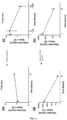
- paliroden and xaliproden salts when administered by oral route, are able to cross the blood-labyrinth barrier and reach the inner ear. They are present in the IEF at concentrations ranging from about 2 ng/mL to about 20 ng/mL of IEF (approximately 4 to 40 nM).
- Example 2 Compositions of paliroden and xaliproden for trans-tympanic administration (by injection between the eardrum and the round window by means of a needle which crosses the eardrum)
- thermoreversible gel compositions were prepared: four thermoreversible gel compositions and four lipid-based mucoadhesive solutions. These eight compositions were prepared both with paliroden fumarate as active agent, and with xaliproden hydrochloride as active agent.
- composition 1X for 100 g of the composition, the composition comprises 15 g of Poloxamer 407, 85 g of bicarbonate buffer and xaliproden is solubilized at a concentration of 0,07 mg/ml.
- Compositions 1X, 2X and 3X are solutions.
- Composition 4X is a suspension and the percentages "% w/v" are expressed in relation to the total volume of the composition.
- the four lipid-based mucoadhesive solutions comprising paliroden are as follows: Table 5 Composition 5P Composition 6P Composition 7P Composition 8P Plurol ® Oleique CC 497 100 % v/v - - - INTRALIPIDE 20% - 100 % v/v - - Cremophor EL ® - - 100 % v/v - Phosal ® 53 MCT - - - 100 % v/v Micronized paliroden (fumarate salt) 0.81 mg/mL 1.5 mg/mL 8.1 mg/mL > 10 mg/mL The percentages "% v/v" are expressed in relation to the total volume of each composition. Compositions 5P, 6P, 7P and 8P are solutions.
- the four lipid-based mucoadhesive solutions comprising xaliproden are as follows: Table 6 Composition 5X Composition 6X Composition 7X Composition 8X Plurol ® Oleique CC 497 100 % v/v - - - INTRALIPIDE 20% - 100 % v/v - - Cremophor EL ® - - 100 % v/v - Phosal ® 53 MCT - - - 100 % v/v Micronized xaliproden (hydrochloride salt) 2.4 mg/mL 2.1 mg/mL 6.4 mg/mL > 10 mg/mL The percentages "% v/v" are expressed in relation to the total volume of each composition. Compositions 5X, 6X, 7X and 8X are solutions.
- thermoreversible gel compositions and lipid-based mucoadhesive solutions contained a significant portion of paliroden or xaliproden in solution, compared with a solubility of less than 0.1 mg/mL in water for both molecules. This makes it possible to expect that paliroden or xaliproden will be able to cross the round window membrane and enter the inner ear when administered in compositions 2P to 8P or 2X to 8X respectively.
- thermoreversible gel compositions the highest solubilities of paliroden and xaliproden were obtained respectively in compositions 4P and 4X. These compositions 4P and 4X were shown to gel in less than 10 minutes at 37°C and are usable below 25°C for injection through a 26G needle for trans-tympanic injection.
- compositions 7P, 8P and 7X, 8X were obtained respectively in compositions 7P, 8P and 7X, 8X.
- Compositions 7P and 7X had viscosity values between 600 and 750 mPa.s (cP).
- Compositions 8P and 8X had viscosity values up to 5000 mPa.s (or cP).
- Compositions 7P, 8P, 7X and 8X were shown to be able to pass through a 26G needle for transtympanic injection.
- Example 3 Pharmacokinetic profiles of paliroden and xaliproden in the inner ear fluid of male Wistar rats following trans-tympanic injection in a lipid-based mucoadhesive solution
- composition 7P and composition 7X as described in example 2 were administered to male Wistar rats (5 animals per active agent and timepoint), as described below.
- composition 7P were administered to 15 rats, in a single ear via trans-tympanic injection.
- the dose of paliroden fumarate that has been administered is thus of 243 ⁇ g in one ear of each rat.
- composition 7X were administered to 15 other rats, in a single ear via trans-tympanic injection.
- the dose of xaliproden hydrochloride that has been administered is thus of 181.2 ⁇ g in one ear of each rat.
- composition 7P For the 15 rats that have received composition 7P and for the 15 rats that have received composition 7X, plasmatic and inner ear expositions were determined via blood and cochlea terminal sampling in order to achieve lithium-heparin plasma and inner ear fluid preparation, at T+1 hour, T+24 hours and T+168 hours. Bioanalytical methods were validated in both matrices (lithium heparin plasma and inner ear fluid) with a range of 0.2 to 815 ng/mL for paliroden (fumarate salt) and 0.2 to 763 ng/mL for xaliproden (hydrochloride salt).
- paliroden and xaliproden when administered in a lipid-based mucoadhesive solution via a trans-tympanic injection, are able to cross the round window membrane and rapidly reach high concentrations in the inner ear fluid of approximately 5000 ng/mL and 2500 ng/mL respectively (approximately 10 ⁇ M and 5 ⁇ M in the IEF).
- Example 4 Pharmacokinetic profiles of paliroden and xaliproden in the inner ear fluid of male Wistar rats following trans-tympanic injection in a thermoreversible hydrogel composition
- composition 4P and composition 4X as described in example 2 were administered to male Wistar rats (5 animals per active agent and timepoint), as described below.
- composition 4P were administered to 15 rats, in a single ear via trans-tympanic injection.
- the dose of paliroden fumarate that has been administered is thus of 300 ⁇ g in one ear of each rat.
- composition 4X were administered to 15 other rats, in a single ear via trans-tympanic injection.
- the dose of xaliproden hydrochloride that has been administered is thus of 150 ⁇ g in one ear of each rat.
- composition 4P For the 15 rats that have received composition 4P and for the 15 rats that have received composition 4X, plasmatic and inner ear expositions were determined via blood and cochlea terminal sampling in order to achieve lithium-heparin plasma and inner ear fluid preparation, at T+1 hour, T+24 hours and T+168 hours. Bioanalytical methods were validated in both matrices (lithium heparin plasma and inner ear fluid) with a range of 0.2 to 815 ng/mL for paliroden (fumarate salt) and 0.38 to 763 ng/mL for xaliproden (hydrochloride salt).
- paliroden and xaliproden when administered as suspensions in a thermoreversible hydrogel composition via a trans-tympanic injection, are able to cross the round window membrane and rapidly reach high concentrations in the inner ear fluid of approximately 5000 ng/mL (approximately 10 ⁇ M in the IEF) and are sustainably released over 7 consecutive days with concentrations in the inner ear fluid at 7days post injection of approximately 600ng/ml (approximately 1.2 ⁇ M) and 100ng/ml (approximately 0.2 ⁇ M) for paliroden and xaliproden respectively.
- Example 5 Trans-tympanic administration (by injection between the eardrum and the round window by means of a needle which crosses the eardrum) of paliroden or xaliproden following acoustic trauma in male Wistar rats achieves hearing thresholds reduction
- the "sham” group comprises 7 rats, which received neither noise exposure nor trans-tympanic injection.
- the "untraumatized vehicle” group comprises 6 rats, which did not receive noise exposure but received a trans-tympanic injection of placebo (a composition comprising only Cremophor EL ® ).
- the "traumatized” group comprises 9 rats, which received noise exposure only and no treatment.
- the "traumatized vehicle” group comprises 7 rats, which received noise exposure and a trans-tympanic injection of placebo (a composition comprising only Cremophor EL ® ).
- the "traumatized paliroden” group comprises 7 rats, which received noise exposure and a trans-tympanic injection of a composition comprising paliroden (fumarate salt), corresponding to composition 7P described in Example 2.
- the "traumatized xaliproden” group comprises 7 rats, which received noise exposure and a trans-tympanic injection of a composition comprising xaliproden (hydrochloride salt), corresponding to composition 7X described in Example 2.
- compositions comprising either paliroden or xaliproden as active agent were administered once in both ears of each rat of the treatment groups (30 ⁇ L per ear) via trans-tympanic administration by injection between the eardrum and the round window by means of a needle which crosses the eardrum, 4 hours after the start of the noise exposure (i.e. at T0+4 hours, thus 2 hours after the end of the noise exposure), under isoflurane anesthesia.
- the compositions correspond respectively to compositions 7P and 7X described in Example 2, i.e. they comprise only Cremophor EL ® as excipient and either paliroden (fumarate salt) or xaliproden (hydrochloride salt) as active agent.
- the dose of paliroden (fumarate salt) that is administered is 240 ⁇ g per ear of the rats belonging to the "traumatized paliroden” group (240 ⁇ g in the 30 ⁇ L that are injected via trans-tympanic route by injection between the eardrum and the round window by means of a needle which crosses the eardrum).
- the dose of xaliproden (hydrochloride salt) that is administered is 192 ⁇ g per ear of the rats belonging to the "traumatized xaliproden” group (192 ⁇ g in the 30 ⁇ L that are injected via trans-tympanic route by injection between the eardrum and the round window by means of a needle which crosses the eardrum).
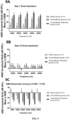
- the protocol used in this study (8-16 kHz sound at 115 dB SPL RMS, 2 hours, sound emitted in open field) induced hearing loss in Wistar rats after noise exposure as demonstrated in all traumatized groups by a significant increase of ABR thresholds at T0 + 1 day (see figure 4 ).
- the hearing impairments were still observed at T0 + 7 days for the traumatized animals, with threshold shifts superior to 20 dB from 8 to 32 kHz (see figure 4 ).
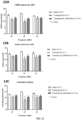
- the trans-tympanic administration of the vehicle alone without combination to noise-trauma, induced an increase of ABR thresholds in comparison to control animals (see figure 4 ). Therefore, the groups treated with paliroden (fumarate salt) or xaliproden (hydrochloride salt) were compared to the traumatized vehicle group (and not traumatized untreated group, data not shown), in order to take into consideration the effect of the trans-tympanic injection of vehicle on the ABR thresholds.
- Paliroden at 240 ⁇ g/ear and xaliproden at 192 ⁇ g/ear allow an additional hearing recovery of approximately 5 to 10 dB from 32 to 25 kHz for xaliproden and from 5 to 20dB from 32 to 16kHz for paliroden treatments in comparison to the traumatized vehicle group between T0 + 7 days and T0 + 1 day ( Figure 5 ).
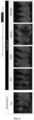
- Example 6 Treatment of noise-induced synaptopathy in male Wistar rats with permanent hearing loss by immediate trans-tympanic administration (by injection between the eardrum and the round window by means of a needle which crosses the eardrum) of paliroden or xaliproden.
- Fifty male Wistar rats were selected and distributed to treatment ("traumatized paliroden” group and “traumatized xaliproden” group) and control groups ("sham” group, “traumatized” group and “traumatized vehicle” group), each group comprising at least 9 rats at the end of the study. Randomization was performed using the ABR threshold in the left ear at 16 kHz as a criterium.
- compositions comprising either paliroden or xaliproden as active agent were administered once in both ears of each rat of the treatment groups (30 ⁇ L per ear) via trans-tympanic administration by injection between the eardrum and the round window by means of a needle which crosses the eardrum, 4 hours after the start of the noise exposure (i.e. at T0+4 hours, thus 2 hours after the end of the noise exposure) and 8 days post-noise exposure, under isoflurane anesthesia.
- the compositions correspond respectively to compositions 4P and 4X described in Example 2, i.e.
- paliroden (fumarate salt) or xaliproden (hydrochloride salt) as active agent.
- the dose of paliroden (fumarate salt) that is administered is 300 ⁇ g per ear of the rats belonging to the "traumatized paliroden" group (300 ⁇ g in the 30 ⁇ L that are injected via trans-tympanic route by injection between the eardrum and the round window by means of a needle which crosses the eardrum).
- the dose of xaliproden (hydrochloride salt) that is administered is 150 ⁇ g per ear of the rats belonging to the "traumatized xaliproden" group (150 ⁇ g in the 30 ⁇ L that are injected via trans-tympanic route by injection between the eardrum and the round window by means of a needle which crosses the eardrum).
Landscapes
- Health & Medical Sciences (AREA)
- Chemical & Material Sciences (AREA)
- Public Health (AREA)
- Life Sciences & Earth Sciences (AREA)
- General Health & Medical Sciences (AREA)
- Animal Behavior & Ethology (AREA)
- Medicinal Chemistry (AREA)
- Pharmacology & Pharmacy (AREA)
- Veterinary Medicine (AREA)
- Epidemiology (AREA)
- Engineering & Computer Science (AREA)
- General Chemical & Material Sciences (AREA)
- Chemical Kinetics & Catalysis (AREA)
- Oil, Petroleum & Natural Gas (AREA)
- Organic Chemistry (AREA)
- Dermatology (AREA)
- Nutrition Science (AREA)
- Physiology (AREA)
- Nuclear Medicine, Radiotherapy & Molecular Imaging (AREA)
- Bioinformatics & Cheminformatics (AREA)
- Inorganic Chemistry (AREA)
- Biomedical Technology (AREA)
- Neurosurgery (AREA)
- Pharmaceuticals Containing Other Organic And Inorganic Compounds (AREA)
- Acyclic And Carbocyclic Compounds In Medicinal Compositions (AREA)
- Medicinal Preparation (AREA)
Claims (15)
- Composé de formule (I) ou un sel et/ou un solvate pharmaceutiquement acceptable de celui-ci, pour utilisation dans le traitement d'une maladie auditive chez un sujet, dans lequel la formule (I) est :
 R1 est un atome d'halogène, un groupe CF3, un groupe (C1-C4) alkyle ou un groupe (C1-C4) alcoxy;R2 et R3 sont indépendamment un atome d'hydrogène ou un groupe (C1-C3) alkyle ; etA est :- un radical phényle substitué par un substituant X, dans lequel X est :(a) un groupe choisi parmi : (C3-C6) cycloalkyle, (C3-C6) cycloalkylméthyle, (C3-C6) cycloalkoxy, (C3-C6) cycloalkylamino et cyclohexényle ; ou(b) un groupe choisi parmi : phényle, phénylméthyle, phénylcarbonyle, phénoxy, phénylamino, N-(C1-C3)alkyl-phénylamino, phénylthio, phénylsulfinyle et phénylsulfonyle ; ou- un radical 1-naphtyle ou 2-naphtyle, soit non substitué soit substitué en position 5, 6, 7 et/ou 8 par un ou deux groupes hydroxyle, un ou deux groupes (C1-C4) alcoxy ou un groupe 6,7-méthylènedioxy.
 - Composé pour utilisation selon la revendication 1, dans lequel R1 est un groupe CF3.
- Composé pour utilisation selon la revendication 1 ou 2, dans lequel au moins un de R2 et R3 est un atome d'hydrogène, de préférence R2 et R3 sont chacun un atome d'hydrogène.
- Composé pour utilisation selon l'une quelconque des revendications 1 à 3, dans lequel A est un radical biphényle ou un radical 2-naphtyle non substitué.
- Composé pour utilisation selon l'une quelconque des revendications 1 à 4, dans lequel le sel est un sel de chlorhydrate ou un sel de fumarate du composé de formule (I).
- Composé pour utilisation selon l'une quelconque des revendications 1 à 5, dans lequel ledit composé est administré au sujet par voie orale ou par voie trans-tympanique, de préférence ledit composé est administré au sujet par voie orale ou par voie trans-tympanique dans laquelle l'administration par voie trans-tympanique consiste en une injection entre le tympan et la fenêtre ronde au moyen d'une aiguille qui traverse le tympan, plus préférentiellement, le composé est administré au sujet par voie trans-tympanique dans laquelle l'administration par voie trans-tympanique consiste en une injection entre le tympan et la fenêtre ronde au moyen d'une aiguille qui traverse le tympan.
- Composé pour utilisation selon l'une quelconque des revendications 1 à 6, dans lequel ledit composé est administré par voie trans-tympanique à une dose allant de 10 µg à 400 mg, entre une fois par mois et une fois tous les 12 mois, de préférence ladite administration par voie trans-tympanique consiste en une injection entre le tympan et la fenêtre ronde au moyen d'une aiguille qui traverse le tympan.
- Composé pour utilisation selon l'une quelconque des revendications 1 à 7, dans lequel la maladie auditive est choisie dans le groupe constitué par la perte d'audition unilatérale ou bilatérale, acouphène unilatéral ou bilatéral, hyperacousie unilatérale ou bilatérale, perte d'audition cachée telle que synaptopathie cochléaire associée à un seuil normal, déficit d'intelligibilité de la parole, décalage temporaire unilatéral ou bilatéral du seuil auditif, trouble du traitement auditif central, recrutement auditif unilatéral ou bilatéral, neurinome acoustique, surdité unilatérale, excitotoxicité, ototoxicité telle que l'ototoxicité induite par médicament et toute combinaison de ceux-ci,préférentiellement, la maladie auditive est choisie dans le groupe constitué par la perte d'audition unilatérale et bilatérale telle que la perte d'audition neurosensorielle unilatérale et bilatérale, acouphène unilatéral ou bilatéral, hyperacousie unilatérale ou bilatérale, perte d'audition cachée telle qu'une synaptopathie cochléaire associée à un seuil normal, et déficit d'intelligibilité de la parole,plus préférentiellement, la maladie auditive est une perte d'audition neurosensorielle unilatérale ou bilatérale choisie dans le groupe constitué par la perte d'audition neurosensorielle unilatérale ou bilatérale induite par le bruit, la perte d'audition neurosensorielle unilatérale ou bilatérale induite par l'inflammation, la perte d'audition neurosensorielle idiopathique soudaine unilatérale ou bilatérale, la perte d'audition neurosensorielle unilatérale ou bilatérale induite par des produits chimiques ototoxiques et la perte d'audition neurosensorielle unilatérale ou bilatérale induite par l'âge telle que la presbyacousie,encore plus préférentiellement, la maladie auditive est une perte d'audition neurosensorielle unilatérale ou bilatérale choisie dans le groupe constitué par la perte d'audition neurosensorielle unilatérale ou bilatérale induite par le bruit et la perte d'audition neurosensorielle unilatérale ou bilatérale induite par l'âge.
- Composé pour utilisation selon l'une quelconque des revendications 1 à 8, dans lequel la maladie auditive est une perte d'audition neurosensorielle unilatérale ou bilatérale induite par l'inflammation et causée par une maladie inflammatoire chronique, de préférence ladite maladie inflammatoire chronique est choisie dans le groupe constitué par le diabète, les maladies rénales chroniques, les maladies intestinales inflammatoires et l'arthrite rhumatoïde.
- Composé pour utilisation selon l'une quelconque des revendications 1 à 9, dans lequel la maladie auditive est une perte d'audition unilatérale ou bilatérale avec un seuil audiométrique tonal supérieur à 30 dB à 3 fréquences contiguës, optionnellement associée à un acouphène unilatéral ou bilatéral, de préférence la maladie auditive est une perte d'audition unilatérale ou bilatérale avec un seuil audiométrique tonal de 30 dB à 70 dB à 3 fréquences contiguës, optionnellement associée à un acouphène unilatéral ou bilatéral, le seuil audiométrique tonal étant mesuré par la réponse auditive du tronc cérébral ou par l'audiométrie tonale pure.
- Composé pour utilisation selon l'une quelconque des revendications 1 à 10, dans lequel le sujet porte au moins un dispositif auditif.
- Composé pour utilisation selon l'une quelconque des revendications 1 à 11, dans lequel le composé de formule (I) ou un sel et/ou un solvate pharmaceutiquement acceptable de celui-ci est administré au sujet au cours d'une chirurgie cochléaire, par exemple au cours d'une chirurgie d'implantation cochléaire.
- Composé pour utilisation selon l'une quelconque des revendications 1 à 12, dans lequel le sujet est un animal mammifère doté d'un tympan, de préférence ledit animal mammifère doté d'un tympan est choisi dans le groupe constitué par un humain, un chat, un chien et un animal primate non humain, plus préférentiellement ledit animal mammifère doté d'un tympan est un chien.
- Composition pharmaceutique transtympanique comprenant un composé de formule (I) ou un sel et/ou un solvate pharmaceutiquement acceptable de celui-ci tels que définis dans l'une quelconque des revendications 1 à 5 et une combinaison d'un mélange de triglycérides polyoxyéthylés et de poloxamères, ladite composition pharmaceutique étant un gel thermoréversible.
- Composition pharmaceutique pour utilisation dans le traitement d'une maladie auditive chez un sujet, ladite composition pharmaceutique comprenant un composé de formule (I) ou un sel et/ou un solvate pharmaceutiquement acceptable de celui-ci selon l'une quelconque des revendications 1 à 5 et au moins un excipient pharmaceutiquement acceptable, de préférence ladite maladie auditive étant telle que définie dans l'une quelconque des revendications 8 à 10.
Priority Applications (3)
| Application Number | Priority Date | Filing Date | Title |
|---|---|---|---|
| EP25163348.3A EP4545066A3 (fr) | 2021-12-23 | 2022-12-23 | Derives de 4-phenyl-tetrahydropyridine pour le traitement de maladies auditives |
| SI202230131T SI4452267T1 (sl) | 2021-12-23 | 2022-12-23 | 4-fenil-tetrahidropiridinski derivati za zdravljenje motenj sluha |
| HRP20250600TT HRP20250600T1 (hr) | 2021-12-23 | 2022-12-23 | Derivati 4-fenil-tetrahidropiridina za liječenje bolesti sluha |
Applications Claiming Priority (2)
| Application Number | Priority Date | Filing Date | Title |
|---|---|---|---|
| EP21306931 | 2021-12-23 | ||
| PCT/EP2022/087667 WO2023118544A1 (fr) | 2021-12-23 | 2022-12-23 | Dérivés de 4-phényl-tétrahydropyridine pour le traitement de troubles auditifs |
Related Child Applications (2)
| Application Number | Title | Priority Date | Filing Date |
|---|---|---|---|
| EP25163348.3A Division EP4545066A3 (fr) | 2021-12-23 | 2022-12-23 | Derives de 4-phenyl-tetrahydropyridine pour le traitement de maladies auditives |
| EP25163348.3A Division-Into EP4545066A3 (fr) | 2021-12-23 | 2022-12-23 | Derives de 4-phenyl-tetrahydropyridine pour le traitement de maladies auditives |
Publications (2)
| Publication Number | Publication Date |
|---|---|
| EP4452267A1 EP4452267A1 (fr) | 2024-10-30 |
| EP4452267B1 true EP4452267B1 (fr) | 2025-04-23 |
Family
ID=79831487
Family Applications (2)
| Application Number | Title | Priority Date | Filing Date |
|---|---|---|---|
| EP22844112.7A Active EP4452267B1 (fr) | 2021-12-23 | 2022-12-23 | Dérivés 4-phényl-tétrahydropyridine pour le traitement de maladies auditives |
| EP25163348.3A Pending EP4545066A3 (fr) | 2021-12-23 | 2022-12-23 | Derives de 4-phenyl-tetrahydropyridine pour le traitement de maladies auditives |
Family Applications After (1)
| Application Number | Title | Priority Date | Filing Date |
|---|---|---|---|
| EP25163348.3A Pending EP4545066A3 (fr) | 2021-12-23 | 2022-12-23 | Derives de 4-phenyl-tetrahydropyridine pour le traitement de maladies auditives |
Country Status (19)
| Country | Link |
|---|---|
| US (1) | US20230390273A1 (fr) |
| EP (2) | EP4452267B1 (fr) |
| JP (1) | JP2024546180A (fr) |
| KR (1) | KR20240125025A (fr) |
| CN (1) | CN118715014A (fr) |
| AU (1) | AU2022419307A1 (fr) |
| CA (1) | CA3241657A1 (fr) |
| DK (1) | DK4452267T3 (fr) |
| ES (1) | ES3030316T3 (fr) |
| FI (1) | FI4452267T3 (fr) |
| HR (1) | HRP20250600T1 (fr) |
| HU (1) | HUE071387T2 (fr) |
| IL (1) | IL313499A (fr) |
| LT (1) | LT4452267T (fr) |
| MX (1) | MX2024007944A (fr) |
| PL (1) | PL4452267T3 (fr) |
| PT (1) | PT4452267T (fr) |
| SI (1) | SI4452267T1 (fr) |
| WO (1) | WO2023118544A1 (fr) |
Cited By (1)
| Publication number | Priority date | Publication date | Assignee | Title |
|---|---|---|---|---|
| EP4545066A3 (fr) * | 2021-12-23 | 2025-06-25 | Cilcare Dev | Derives de 4-phenyl-tetrahydropyridine pour le traitement de maladies auditives |
Family Cites Families (6)
| Publication number | Priority date | Publication date | Assignee | Title |
|---|---|---|---|---|
| FR2762514B1 (fr) | 1997-04-29 | 1999-10-22 | Sanofi Sa | Utilisation de derives de la tetrahydropyridine pour la preparation de medicaments pour le traitement des maladies entrainant une demyelinisation |
| MXPA02009071A (es) * | 2000-03-17 | 2003-05-23 | Alcon Inc | Compuestos con actividad agonista de 5-ht 1a para tratar glaucoma.. |
| WO2008139984A1 (fr) * | 2007-04-26 | 2008-11-20 | Eisai R & D Management Co., Ltd. | Composés de cinnamide destinés au traitement de la démence |
| EP2278999B1 (fr) * | 2008-04-21 | 2025-01-29 | Dompé farmaceutici S.p.A. | Préparations auriculaires de traitement de maladies et états otiques |
| EP3406259A1 (fr) * | 2017-05-24 | 2018-11-28 | Dompé farmaceutici S.p.A. | Neurotrophines destinées à être utilisées dans le traitement de la perte auditive |
| EP4452267B1 (fr) * | 2021-12-23 | 2025-04-23 | Cilcare Dev | Dérivés 4-phényl-tétrahydropyridine pour le traitement de maladies auditives |
-
2022
- 2022-12-23 EP EP22844112.7A patent/EP4452267B1/fr active Active
- 2022-12-23 EP EP25163348.3A patent/EP4545066A3/fr active Pending
- 2022-12-23 CA CA3241657A patent/CA3241657A1/fr active Pending
- 2022-12-23 JP JP2024538335A patent/JP2024546180A/ja active Pending
- 2022-12-23 SI SI202230131T patent/SI4452267T1/sl unknown
- 2022-12-23 KR KR1020247024537A patent/KR20240125025A/ko active Pending
- 2022-12-23 ES ES22844112T patent/ES3030316T3/es active Active
- 2022-12-23 MX MX2024007944A patent/MX2024007944A/es unknown
- 2022-12-23 CN CN202280085786.4A patent/CN118715014A/zh active Pending
- 2022-12-23 IL IL313499A patent/IL313499A/en unknown
- 2022-12-23 HU HUE22844112A patent/HUE071387T2/hu unknown
- 2022-12-23 HR HRP20250600TT patent/HRP20250600T1/hr unknown
- 2022-12-23 FI FIEP22844112.7T patent/FI4452267T3/fi active
- 2022-12-23 PL PL22844112.7T patent/PL4452267T3/pl unknown
- 2022-12-23 DK DK22844112.7T patent/DK4452267T3/da active
- 2022-12-23 PT PT228441127T patent/PT4452267T/pt unknown
- 2022-12-23 LT LTEPPCT/EP2022/087667T patent/LT4452267T/lt unknown
- 2022-12-23 WO PCT/EP2022/087667 patent/WO2023118544A1/fr not_active Ceased
- 2022-12-23 AU AU2022419307A patent/AU2022419307A1/en active Pending
-
2023
- 2023-07-05 US US18/347,041 patent/US20230390273A1/en active Pending
Cited By (1)
| Publication number | Priority date | Publication date | Assignee | Title |
|---|---|---|---|---|
| EP4545066A3 (fr) * | 2021-12-23 | 2025-06-25 | Cilcare Dev | Derives de 4-phenyl-tetrahydropyridine pour le traitement de maladies auditives |
Also Published As
| Publication number | Publication date |
|---|---|
| HRP20250600T1 (hr) | 2025-07-18 |
| SI4452267T1 (sl) | 2025-07-31 |
| WO2023118544A1 (fr) | 2023-06-29 |
| US20230390273A1 (en) | 2023-12-07 |
| KR20240125025A (ko) | 2024-08-19 |
| LT4452267T (lt) | 2025-06-10 |
| EP4452267A1 (fr) | 2024-10-30 |
| ES3030316T3 (en) | 2025-06-27 |
| EP4545066A2 (fr) | 2025-04-30 |
| DK4452267T3 (da) | 2025-05-26 |
| MX2024007944A (es) | 2024-09-10 |
| CN118715014A (zh) | 2024-09-27 |
| FI4452267T3 (fi) | 2025-06-03 |
| EP4545066A3 (fr) | 2025-06-25 |
| JP2024546180A (ja) | 2024-12-17 |
| IL313499A (en) | 2024-08-01 |
| PT4452267T (pt) | 2025-05-16 |
| HUE071387T2 (hu) | 2025-08-28 |
| AU2022419307A1 (en) | 2024-06-27 |
| PL4452267T3 (pl) | 2025-06-23 |
| CA3241657A1 (fr) | 2023-06-29 |
Similar Documents
| Publication | Publication Date | Title |
|---|---|---|
| CN1137685C (zh) | 无刺激性、无过敏反应、无耳毒性的耳用抗菌组合物 | |
| EP1928405B1 (fr) | Compositions pharmaceutiques pour le traitement de pathologies de l oreille interne | |
| RU2460526C2 (ru) | Профилактическое или терапевтическое средство для возрастной дегенерации желтого пятна | |
| RU2068260C1 (ru) | Глазные капли | |
| JP6837486B2 (ja) | 加齢に関連する認知障害及び神経炎症を予防及び/又は治療する方法 | |
| KR20140056280A (ko) | 비마토프로스트 및 브리모니딘의 고정된 용량 조합 | |
| US20230046943A1 (en) | Oral pharmaceutical composition comprising zonisamide and process of preparation thereof | |
| JP2012506436A (ja) | 代謝型グルタミン酸受容体の調節による内耳の疾病の処置および/または予防 | |
| EP0807434A1 (fr) | Gouttes oculaires anti-inflammatoires | |
| EP4452267B1 (fr) | Dérivés 4-phényl-tétrahydropyridine pour le traitement de maladies auditives | |
| US20200306260A1 (en) | Compositions of midazolam for buccal administration in the treatment of seizures to obtain rapid onset of action | |
| EP3442537B1 (fr) | (+) -azasetron pour son utilisation dans le traitement des troubles de l'oreille | |
| JP2009535368A (ja) | 液体医薬製剤 | |
| JP6629877B2 (ja) | 鼻粘膜投与用医薬組成物 | |
| KR102356603B1 (ko) | 안구건조증 치료를 위한 레코플라본 함유 점안 조성물 | |
| JP2001172183A (ja) | 眼科用医薬組成物 | |
| RU2218156C2 (ru) | Способ изготовления состава местных бета-блокаторов улучшенного действия | |
| CN109310698B (zh) | 用于治疗耳部病症的(+)-阿扎司琼 | |
| US6110926A (en) | Eyedrop composition | |
| KR100261585B1 (ko) | 항염증점안제 | |
| YAPAR et al. | A recent overview of locally administered topical otic dosage forms | |
| EP4251127A1 (fr) | Composition pharmaceutique pour le traitement de troubles de l'oreille interne par administration locale dans la zone tympanique | |
| EP4479048A1 (fr) | Composition de bilastine pour administration parentérale une fois par jour | |
| BR112018071123B1 (pt) | (+)-azasetron para uso no tratamento de distúrbios de ouvido |
Legal Events
| Date | Code | Title | Description |
|---|---|---|---|
| REG | Reference to a national code |
Ref country code: HR Ref legal event code: TUEP Ref document number: P20250600T Country of ref document: HR |
|
| STAA | Information on the status of an ep patent application or granted ep patent |
Free format text: STATUS: UNKNOWN |
|
| STAA | Information on the status of an ep patent application or granted ep patent |
Free format text: STATUS: THE INTERNATIONAL PUBLICATION HAS BEEN MADE |
|
| PUAI | Public reference made under article 153(3) epc to a published international application that has entered the european phase |
Free format text: ORIGINAL CODE: 0009012 |
|
| STAA | Information on the status of an ep patent application or granted ep patent |
Free format text: STATUS: REQUEST FOR EXAMINATION WAS MADE |
|
| 17P | Request for examination filed |
Effective date: 20240723 |
|
| AK | Designated contracting states |
Kind code of ref document: A1 Designated state(s): AL AT BE BG CH CY CZ DE DK EE ES FI FR GB GR HR HU IE IS IT LI LT LU LV MC ME MK MT NL NO PL PT RO RS SE SI SK SM TR |
|
| GRAP | Despatch of communication of intention to grant a patent |
Free format text: ORIGINAL CODE: EPIDOSNIGR1 |
|
| STAA | Information on the status of an ep patent application or granted ep patent |
Free format text: STATUS: GRANT OF PATENT IS INTENDED |
|
| DAV | Request for validation of the european patent (deleted) | ||
| DAX | Request for extension of the european patent (deleted) | ||
| INTG | Intention to grant announced |
Effective date: 20241113 |
|
| REG | Reference to a national code |
Ref country code: HK Ref legal event code: DE Ref document number: 40112028 Country of ref document: HK |
|
| GRAS | Grant fee paid |
Free format text: ORIGINAL CODE: EPIDOSNIGR3 |
|
| GRAA | (expected) grant |
Free format text: ORIGINAL CODE: 0009210 |
|
| STAA | Information on the status of an ep patent application or granted ep patent |
Free format text: STATUS: THE PATENT HAS BEEN GRANTED |
|
| P01 | Opt-out of the competence of the unified patent court (upc) registered |
Free format text: CASE NUMBER: APP_8982/2025 Effective date: 20250221 |
|
| AK | Designated contracting states |
Kind code of ref document: B1 Designated state(s): AL AT BE BG CH CY CZ DE DK EE ES FI FR GB GR HR HU IE IS IT LI LT LU LV MC ME MK MT NL NO PL PT RO RS SE SI SK SM TR |
|
| REG | Reference to a national code |
Ref country code: GB Ref legal event code: FG4D |
|
| REG | Reference to a national code |
Ref country code: CH Ref legal event code: EP |
|
| REG | Reference to a national code |
Ref country code: DE Ref legal event code: R096 Ref document number: 602022013702 Country of ref document: DE |
|
| REG | Reference to a national code |
Ref country code: PT Ref legal event code: SC4A Ref document number: 4452267 Country of ref document: PT Date of ref document: 20250516 Kind code of ref document: T Free format text: AVAILABILITY OF NATIONAL TRANSLATION Effective date: 20250512 |
|
| REG | Reference to a national code |
Ref country code: NL Ref legal event code: FP Ref country code: IE Ref legal event code: FG4D |
|
| REG | Reference to a national code |
Ref country code: DK Ref legal event code: T3 Effective date: 20250521 |
|
| REG | Reference to a national code |
Ref country code: FI Ref legal event code: FGE |
|
| REG | Reference to a national code |
Ref country code: SE Ref legal event code: TRGR |
|
| REG | Reference to a national code |
Ref country code: ES Ref legal event code: FG2A Ref document number: 3030316 Country of ref document: ES Kind code of ref document: T3 Effective date: 20250627 |
|
| REG | Reference to a national code |
Ref country code: SK Ref legal event code: T3 Ref document number: E 46464 Country of ref document: SK |
|
| REG | Reference to a national code |
Ref country code: HR Ref legal event code: T1PR Ref document number: P20250600 Country of ref document: HR |
|
| REG | Reference to a national code |
Ref country code: GR Ref legal event code: EP Ref document number: 20250401085 Country of ref document: GR Effective date: 20250707 |
|
| REG | Reference to a national code |
Ref country code: HU Ref legal event code: AG4A Ref document number: E071387 Country of ref document: HU |
|
| REG | Reference to a national code |
Ref country code: EE Ref legal event code: FG4A Ref document number: E025148 Country of ref document: EE Effective date: 20250523 |
|
| PG25 | Lapsed in a contracting state [announced via postgrant information from national office to epo] |
Ref country code: RS Free format text: LAPSE BECAUSE OF FAILURE TO SUBMIT A TRANSLATION OF THE DESCRIPTION OR TO PAY THE FEE WITHIN THE PRESCRIBED TIME-LIMIT Effective date: 20250723 |
|
| REG | Reference to a national code |
Ref country code: CH Ref legal event code: U11 Free format text: ST27 STATUS EVENT CODE: U-0-0-U10-U11 (AS PROVIDED BY THE NATIONAL OFFICE) Effective date: 20260101 |
|
| PGFP | Annual fee paid to national office [announced via postgrant information from national office to epo] |
Ref country code: IS Payment date: 20251211 Year of fee payment: 4 Ref country code: DE Payment date: 20251211 Year of fee payment: 4 |
|
| PGFP | Annual fee paid to national office [announced via postgrant information from national office to epo] |
Ref country code: LT Payment date: 20251124 Year of fee payment: 4 |
|
| PG25 | Lapsed in a contracting state [announced via postgrant information from national office to epo] |
Ref country code: SM Free format text: LAPSE BECAUSE OF FAILURE TO SUBMIT A TRANSLATION OF THE DESCRIPTION OR TO PAY THE FEE WITHIN THE PRESCRIBED TIME-LIMIT Effective date: 20250423 |
|
| PGFP | Annual fee paid to national office [announced via postgrant information from national office to epo] |
Ref country code: AT Payment date: 20260113 Year of fee payment: 4 Ref country code: PT Payment date: 20251211 Year of fee payment: 4 |
|
| PGFP | Annual fee paid to national office [announced via postgrant information from national office to epo] |
Ref country code: FI Payment date: 20251224 Year of fee payment: 4 Ref country code: DK Payment date: 20251224 Year of fee payment: 4 |
|
| PGFP | Annual fee paid to national office [announced via postgrant information from national office to epo] |
Ref country code: LU Payment date: 20251219 Year of fee payment: 4 Ref country code: HU Payment date: 20251223 Year of fee payment: 4 Ref country code: NL Payment date: 20251219 Year of fee payment: 4 Ref country code: FR Payment date: 20251229 Year of fee payment: 4 |
|
| PGFP | Annual fee paid to national office [announced via postgrant information from national office to epo] |
Ref country code: TR Payment date: 20251217 Year of fee payment: 4 Ref country code: GR Payment date: 20251222 Year of fee payment: 4 Ref country code: BE Payment date: 20251219 Year of fee payment: 4 |
|
| PGFP | Annual fee paid to national office [announced via postgrant information from national office to epo] |
Ref country code: SE Payment date: 20251219 Year of fee payment: 4 |
|
| PGFP | Annual fee paid to national office [announced via postgrant information from national office to epo] |
Ref country code: IE Payment date: 20251219 Year of fee payment: 4 Ref country code: CZ Payment date: 20251218 Year of fee payment: 4 Ref country code: CY Payment date: 20251120 Year of fee payment: 4 |
|
| PGFP | Annual fee paid to national office [announced via postgrant information from national office to epo] |
Ref country code: LV Payment date: 20251218 Year of fee payment: 4 Ref country code: MT Payment date: 20251128 Year of fee payment: 4 |
|
| PGFP | Annual fee paid to national office [announced via postgrant information from national office to epo] |
Ref country code: BG Payment date: 20251219 Year of fee payment: 4 Ref country code: PL Payment date: 20251128 Year of fee payment: 4 |
|
| PGFP | Annual fee paid to national office [announced via postgrant information from national office to epo] |
Ref country code: EE Payment date: 20251229 Year of fee payment: 4 |
|
| REG | Reference to a national code |
Ref country code: DE Ref legal event code: R097 Ref document number: 602022013702 Country of ref document: DE |
|
| PGFP | Annual fee paid to national office [announced via postgrant information from national office to epo] |
Ref country code: RO Payment date: 20251216 Year of fee payment: 4 Ref country code: SK Payment date: 20251218 Year of fee payment: 4 |
|
| PGFP | Annual fee paid to national office [announced via postgrant information from national office to epo] |
Ref country code: SI Payment date: 20251212 Year of fee payment: 4 |
|
| REG | Reference to a national code |
Ref country code: HR Ref legal event code: ODRP Ref document number: P20250600 Country of ref document: HR Payment date: 20251212 Year of fee payment: 4 |
|
| PLBE | No opposition filed within time limit |
Free format text: ORIGINAL CODE: 0009261 |
|
| STAA | Information on the status of an ep patent application or granted ep patent |
Free format text: STATUS: NO OPPOSITION FILED WITHIN TIME LIMIT |
|
| REG | Reference to a national code |
Ref country code: CH Ref legal event code: L10 Free format text: ST27 STATUS EVENT CODE: U-0-0-L10-L00 (AS PROVIDED BY THE NATIONAL OFFICE) Effective date: 20260304 |
|
| 26N | No opposition filed |
Effective date: 20260126 |
|
| PGFP | Annual fee paid to national office [announced via postgrant information from national office to epo] |
Ref country code: ES Payment date: 20260130 Year of fee payment: 4 |
|
| PGFP | Annual fee paid to national office [announced via postgrant information from national office to epo] |
Ref country code: NO Payment date: 20251230 Year of fee payment: 4 |
|
| PGFP | Annual fee paid to national office [announced via postgrant information from national office to epo] |
Ref country code: HR Payment date: 20260116 Year of fee payment: 4 |
|
| PGFP | Annual fee paid to national office [announced via postgrant information from national office to epo] |
Ref country code: IT Payment date: 20251231 Year of fee payment: 4 |
|
| PGFP | Annual fee paid to national office [announced via postgrant information from national office to epo] |
Ref country code: CH Payment date: 20260101 Year of fee payment: 4 |