EP4455281A1 - Verfahren zur herstellung von hydrophoben porösen alginatträgern mit eingebauten mikroorganismen - Google Patents
Verfahren zur herstellung von hydrophoben porösen alginatträgern mit eingebauten mikroorganismen Download PDFInfo
- Publication number
- EP4455281A1 EP4455281A1 EP23169641.0A EP23169641A EP4455281A1 EP 4455281 A1 EP4455281 A1 EP 4455281A1 EP 23169641 A EP23169641 A EP 23169641A EP 4455281 A1 EP4455281 A1 EP 4455281A1
- Authority
- EP
- European Patent Office
- Prior art keywords
- alginate
- carriers
- microorganisms
- hydrophobic
- cacl
- Prior art date
- Legal status (The legal status is an assumption and is not a legal conclusion. Google has not performed a legal analysis and makes no representation as to the accuracy of the status listed.)
- Pending
Links
Images



Classifications
-
- A—HUMAN NECESSITIES
- A01—AGRICULTURE; FORESTRY; ANIMAL HUSBANDRY; HUNTING; TRAPPING; FISHING
- A01N—PRESERVATION OF BODIES OF HUMANS OR ANIMALS OR PLANTS OR PARTS THEREOF; BIOCIDES, e.g. AS DISINFECTANTS, AS PESTICIDES OR AS HERBICIDES; PEST REPELLANTS OR ATTRACTANTS; PLANT GROWTH REGULATORS
- A01N25/00—Biocides, pest repellants or attractants, or plant growth regulators, characterised by their forms, or by their non-active ingredients or by their methods of application, e.g. seed treatment or sequential application; Substances for reducing the noxious effect of the active ingredients to organisms other than pests
- A01N25/02—Biocides, pest repellants or attractants, or plant growth regulators, characterised by their forms, or by their non-active ingredients or by their methods of application, e.g. seed treatment or sequential application; Substances for reducing the noxious effect of the active ingredients to organisms other than pests containing liquids as carriers, diluents or solvents
- A01N25/04—Dispersions, emulsions, suspoemulsions, suspension concentrates or gels
-
- A—HUMAN NECESSITIES
- A01—AGRICULTURE; FORESTRY; ANIMAL HUSBANDRY; HUNTING; TRAPPING; FISHING
- A01N—PRESERVATION OF BODIES OF HUMANS OR ANIMALS OR PLANTS OR PARTS THEREOF; BIOCIDES, e.g. AS DISINFECTANTS, AS PESTICIDES OR AS HERBICIDES; PEST REPELLANTS OR ATTRACTANTS; PLANT GROWTH REGULATORS
- A01N63/00—Biocides, pest repellants or attractants, or plant growth regulators containing microorganisms, viruses, microbial fungi, animals or substances produced by, or obtained from, microorganisms, viruses, microbial fungi or animals, e.g. enzymes or fermentates
- A01N63/20—Bacteria; Substances produced thereby or obtained therefrom
-
- B—PERFORMING OPERATIONS; TRANSPORTING
- B09—DISPOSAL OF SOLID WASTE; RECLAMATION OF CONTAMINATED SOIL
- B09C—RECLAMATION OF CONTAMINATED SOIL
- B09C1/00—Reclamation of contaminated soil
- B09C1/10—Reclamation of contaminated soil microbiologically, biologically or by using enzymes
-
- C—CHEMISTRY; METALLURGY
- C02—TREATMENT OF WATER, WASTE WATER, SEWAGE, OR SLUDGE
- C02F—TREATMENT OF WATER, WASTE WATER, SEWAGE, OR SLUDGE
- C02F3/00—Biological treatment of water, waste water, or sewage
- C02F3/34—Biological treatment of water, waste water, or sewage characterised by the microorganisms used
-
- C—CHEMISTRY; METALLURGY
- C12—BIOCHEMISTRY; BEER; SPIRITS; WINE; VINEGAR; MICROBIOLOGY; ENZYMOLOGY; MUTATION OR GENETIC ENGINEERING
- C12N—MICROORGANISMS OR ENZYMES; COMPOSITIONS THEREOF; PROPAGATING, PRESERVING, OR MAINTAINING MICROORGANISMS; MUTATION OR GENETIC ENGINEERING; CULTURE MEDIA
- C12N11/00—Carrier-bound or immobilised enzymes; Carrier-bound or immobilised microbial cells; Preparation thereof
- C12N11/02—Enzymes or microbial cells immobilised on or in an organic carrier
- C12N11/04—Enzymes or microbial cells immobilised on or in an organic carrier entrapped within the carrier, e.g. gel or hollow fibres
-
- C—CHEMISTRY; METALLURGY
- C02—TREATMENT OF WATER, WASTE WATER, SEWAGE, OR SLUDGE
- C02F—TREATMENT OF WATER, WASTE WATER, SEWAGE, OR SLUDGE
- C02F3/00—Biological treatment of water, waste water, or sewage
- C02F2003/001—Biological treatment of water, waste water, or sewage using granular carriers or supports for the microorganisms
Definitions
- the present invention belongs to the field of biotechnology, more precisely to the field of method for preparation of products containing incorporated microorganisms.
- the invention relates to a method for preparation of hydrophobic porous alginate carriers with incorporated microorganisms and to hydrophobic porous alginate carriers with incorporated microorganisms prepared with said method.
- One aspect of the invention also relates to use of said hydrophobic porous alginate carriers.
- bacterial attachment to various carriers is used in different biotechnological processes, such as wastewater treatment plants and soil bioremediation, antibiotic and antibody production, in food industry, and in pharmacy such as drugs production.
- Carriers used in bioremediation processes with microbial bioaugmentation (MB) harbour cells and enable (1) prolonged use of cell biomass, (2) protection of cells from harsh environmental conditions, (3) decreasing microbial competition with autochthonous microbiota as well as prevent protozoan grazing of introduced microbial biomass and (4) providing a stable local environment (pH, ionic strength, nutrients).
- the material that is used for making carriers should possess the following properties:
- the hydrophilic Ca 2+ crosslinked alginate-based carriers have been described for cell immobilisation in documents US 5766907A , US5073491A and US4927761A , EP0784651B1 ).
- the alginate hydrogels are suitable for cell immobilisation due to liquid retaining properties, rigidity, density and structure. All of these parameters can be controlled by altering the concentration of alginate and the type and concentrations of cation used.
- alginate matrix crosslinked with Ca 2+ can fulfil the above-mentioned criteria for hydrophilic pollutants, this matrix is not appropriate for hydrophobic pollutants.
- alginate matrix Since the regular form of alginate is hydrophilic, it requires to be treated to become hydrophobic. It has been shown that introduction of ZrOCl 2 or Zr 2+ ions instead of Ca 2+ , in alginate matrix alters surface properties and makes the matrix hydrophobic (Wang et al. 2019; doi: 10.1016/j.jcis.2018.08.073)). Hence, the Zr 2+ salts can change alginate to obtain hydrophobic properties, that enables adsorption of hydrophobic substrates due to the differences in partition coefficients. This results in an increase of the local concentration of the hydrophobic substances that result in increased efficiency of microbes to degrade or transform such substrates.
- this can be applied in stimulated bioremediation of PAH polluted environments.
- the procedure that is used in preparation of hydrophobic alginate results in highly acidic, extremely hydrophobic and nonporous matrix that does not enable efficient exchange of water-soluble nutrients.
- the local environment is highly toxic for microorganisms and accordingly not suitable for MB.
- the hydrophobic alginate is becoming porous by other way than it is currently used it enables direct contact with the nutrients on one way and with the substrate, the pollutant, on other.
- the porosity of alginate can be achieved in various ways.
- the use of CaCO 3 that is mixed along with sodium alginate is described. The prepared mixture was put in an autoclave, where it was pressurised with gaseous carbon dioxide up to 50 bars at room temperature. Further on, hydrogels were dried in a high-pressure autoclave at 120 bar pressure of CO 2 atmosphere.
- Patent AU776009B2 describes a much more suitable method for producing porous alginate hydrogels, which is achieved by the release of gas from the reaction of acid and base.
- the present invention addresses the technical problem of optimization of known processes for preparation of hydrophobic porous alginate carriers that will not be lethal to the microbes.
- the aim of the invention is to provide an efficient and reliable method for the preparation of said hydrophobic alginate carriers with incorporated microorganisms suitable for use in various applications, particularly in bioremediation.
- Patent US8252317B2 describes novel metal alginates prepared from non-cross-linked alginate monomers such as sodium alginate and an aqueous solution of a group 4, 5, or 6 metal oxyhalide.
- the novel group 4, 5, and 6 metal alginates are useful in the preparation of cell culture supports, exhibit useful X-ray contrast properties, and exhibit unanticipated stability to standard autoclave conditions relative to known metal alginates such as calcium alginate.
- the novel metal alginates provided by the present invention offer features and properties not observed in known metal alginates such as calcium or barium alginates.
- Zr 2+ ions with sodium alginate were used to increase thermal stability of alginate as a support material for cultivation of eukaryotic cells and not as an encapsulation substrate, since cells by such method cannot be entrapped inside this matrix.
- Patent US8252317B2 suggests use of Zr 2+ ions for sodium alginate crosslinking and gelation in order to alter the final physicochemical properties of the matrix such as better heat stability and suitability in x-ray imaging.
- the carrier must be prepared in such a way that it is not toxic and provides an initial source of nutrients.
- the present invention aims to address this problem.
- the method for preparation of hydrophobic porous alginate carriers with incorporated microorganisms comprises treatment of alginic acid or its salts with monovalent cations (e.g. Na-alginate, K-alginate) with a combination of compounds from which HCO 3 1- and CO 3 2- ions can be released, divalent cations such as Ca 2+ , Ba 2+ , Cu 2+ , Sr 2+ , Zn 2+ , Fe 2+ , Fe 3+ Mn 2+ , Al 3+ , ions and treating gel with the Zr 4+ ions either simultaneously as the induction of gelation or after the gelation.
- Said combination of ions ensures more suitable conditions for survival of microorganisms and suitable carrier properties with sufficient porosity and surface hydrophobic properties. Furthermore, the methods are performed under standard conditions.
- divalent Ca ions originate either from CaCO 3 , CaCl 2 or any other compound releasing said Ca ions, wherein Zr ions may originate from ZrOCl 2 or any other compound releasing Zr ions.
- Said sources of ions may also be used in combinations, for example CaCOs and CaCl 2 .
- said treatment of alginic acid is step-wise, wherein addition of Zr ions releasing compound is performed after treatment with Ca 2+ releasing compound.
- Microorganisms and nutrients may be added to the alginic acid prior to the treatment with Ca and Zr ions or post treatment, i.e., after preparation of alginate carriers is finalized.
- a suitable microbial suspension is added to the prepared carriers and vacuum is used to impregnate the carriers with microbes.
- a further step of treatment with CaCl 2 is performed to ensure gelation of alginate trapped within the pores of the carrier.
- Populations and consortia of microbes are used in the group of Gram negative and Gram positive, mesophilic, thermophilic, psychrophilic aerobic and anaerobic as well as halotolerant, nonhalophiles as well as slight halophiles bacteria as well as fungi.
- the method comprises the following steps:
- Addition of microorganisms and nutrients can be performed before addition of ZrOCl 2 or after washing with the buffer.
- alginate and CaCO 3 are not pre-gelated with Ca 2+ ions prior to Zr treatment.
- the acidity of ZrOCl 2 decrease pH and release Ca 2+ ions from CaCOs that are then competing with Zr 4+ ions for cross-linking alginate polymers and together forming hydrophobic and porous alginate.
- the alginate molecules can be additionally cross-linked in CaCl 2 solution if it is necessary to obtain stronger gels.
- the method comprises the following steps:
- Addition of microorganisms and nutrients can be performed before addition of CaCl 2 or after washing with the buffer.
- CaCOs in formed alginate beads or in any other forms of alginates, including as a solution impregnating solid porous carrier is then reacting with acidic ZrOCl 2 solution.
- CaCOs does not only provide the indirect production of pores, but by neutralising acidity through the CaCOs buffering capacity, protects viable bacterial cells from toxic effects of acidic ZrOCl 2 solution.
- the incubation times of carriers in ZrOCl 2 solution may be adjusted, according to the presence of bacterial cells in sodium alginate and CaCOs in the suspension. After exposure to the Zr salts the treatment is stopped by the addition of phosphate buffer. The time of the exposure also determines size of pores that are formed within the gelated alginate.
- the method comprises the following steps:
- Addition of microorganisms and nutrients can be performed before addition of CaCl 2 , either separately or together with addition of the solid support carriers, or after washing with the buffer.
- Solid support carriers may be selected in the group comprising expanded clay, porous sandstones, vermiculite, straw particles, cellulose, and similar.
- CaCOs in formed alginate beads or in any other forms of alginates, including as a solution impregnating solid porous carrier is then reacting with acidic ZrOCl 2 solution.
- CaCOs does not only provide the indirect production of pores, but by neutralising acidity through the CaCOs buffering capacity, protects viable bacterial cells from toxic effects of acidic ZrOCl 2 solution.
- the incubation times of carriers in ZrOCl 2 solution may be adjusted, according to the presence of bacterial cells in sodium alginate and CaCOs in the suspension. After exposure to the Zr salts the treatment is stopped by the addition of phosphate buffer. The time of the exposure also determines size of pores that are formed within the gelated alginate.
- the method comprises the following steps:
- porous alginate matrix is prepared in advance, wherein alginate is made porous with different harsh methods and is crosslinked with Ca 2+ ions as well as treated with solution containing Zr 4+ .
- the bacterial cells are introduced using depressurisation methods such as those known from patent SI24910A .
- the method comprises the following steps:
- porous alginate matrix is prepared in advance, wherein alginate is made porous with different harsh methods and is crosslinked with Ca 2+ ions as well as treated with solution containing Zr 4+ .
- the bacterial cells are introduced using depressurisation methods such as those known from patent SI24910A.
- the methods according to the invention enable synthesis of novel alginate hydrogel for use as a bacterial carrier for removal of hydrophobic pollutants such as oil.
- the carriers according to the invention can be used in bioremediation of water and soil as they exhibit all three crucial properties:
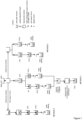
- Figure 1 shows a schematic representation of preparation of hydrophobic porous alginate carriers with confined bacteria using different approaches.
- a solution of sodium alginate and calcium carbonate is prepared. Aseptic conditions are maintained throughout the experiment and all solutions are sterilised prior to their use either by autoclaving or filtration.
- the optimal alginate concentration in distilled water was found to be 4 %, but concentrations from 0.5 % to 5 % can be used.
- Alginate is gradually added to water, preferably heated water (temperatures from 18°C to 50°C), to ensure adequate solubilization. Afterwards, 0.1 to 10%, most preferably 1 % w/v CaCOs with particle sizes in the range from 50 nm to 10 ⁇ m is used as a source of HCO 3 1- ions. However, other divalent soluble salts might be used.
- ultrasonic bath is used for a time period of 5 min to 30 min at 40 Hz to 75 Hz, preferably for 15 min at 60 Hz. Then the mixture is well mixed using a magnetic stirrer at 1300 RPM and heated between 50°C to 95°C.
- microorganisms may be added together with nutrients. However, they can be added at a later stage as illustrated in Figure 2 . Detailed exemplary embodiments of the method according to the invention will be described based on figures 1 and 2 .
- Method 1 Separate preparation of hydrophobic carriers and consequent addition of microbial cells
- This method comprises the following steps:
- this method enables formation of small beads of the 30 ⁇ m size in diameter (see arrow 1) using microfluidic approach of formation of hydrophobic beads during the incubation in ZrClO 2 solution after pores are introduced (see arrow 2) using the HCl treatment.
- the pores in these small beads are filled with the hydrophilic alginate containing cells (see arrow 3) by applying the vacuuming impregnation procedure.
- This method comprises the following steps:
- Method 3 Preparation of hydrophobic carriers by impregnation of solid porous material with matrix containing embedded microbial cells
- This method comprises the following steps:
- the alginate carriers comprising bacterial cells were prepared as follows:
- Table 1 Loading capacity of microorganisms HCl dissolution of CaCO3 for 15 minutes weight before vacuum (g) w eight after vacuum (g) difference gig carriers average sd 0.86 0.94 0.08 0.09 0.12 0.03 0.85 0.83 -0.02 -0.02 0.87 1 0.13 0.15 ZrOCl2 dissolution of CaCO3 for 60 minutes weight before vacuum (g) weight afte r vacuum (g) difference g/g carriers average sd 1 1.19 0.19 0.19 0.20 0.03 1.01 1.25 0.24 0.24 1 1.16 0.16 0.16 0.16 0.16
- the graph is showing the growth curves following emGFP fluorescence intensities monitored at the 485 nm excitation and 528 nm emission wavelengths. The results suggest that concentrations below 1% allow growth of E . coli.
- Example 2 Preparation of carriers using method 2 as described above with addition of bacterial cells in the last step
- the alginate carriers comprising bacterial cells were prepared as follows:
- Example 3 Preparation of carriers using method 2 as described above with addition of bacterial cells prior to gelation
- the alginate carriers comprising bacterial cells were prepared as follows:
- the alginate carriers comprising bacterial cells were prepared as follows:
- MM minimal media
- 1ml autoclaved PAS salts and 1-2 ml/l of filtered diesel fraction is added to the 500 ml autoclaved MM.
- the alginate carriers comprising bacterial cells were prepared as follows:
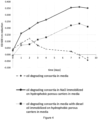
- Oil degrading activity of immobilized oil degrading bacterial consortia isolated from an oil polluted environment was determined, wherein polyaromatic hydrocarbons (PAH) as the only carbon source together with DCPIP as indicator of metabolic activity were added ( Fig.4 ).
- PAH polyaromatic hydrocarbons
- DCPIP 2,6-dichlorophenolindophenol
Landscapes
- Life Sciences & Earth Sciences (AREA)
- Engineering & Computer Science (AREA)
- Health & Medical Sciences (AREA)
- General Health & Medical Sciences (AREA)
- Microbiology (AREA)
- Zoology (AREA)
- Chemical & Material Sciences (AREA)
- Wood Science & Technology (AREA)
- Biotechnology (AREA)
- Organic Chemistry (AREA)
- Dispersion Chemistry (AREA)
- Biomedical Technology (AREA)
- Environmental Sciences (AREA)
- Dentistry (AREA)
- Plant Pathology (AREA)
- Pest Control & Pesticides (AREA)
- Environmental & Geological Engineering (AREA)
- Bioinformatics & Cheminformatics (AREA)
- Genetics & Genomics (AREA)
- Agronomy & Crop Science (AREA)
- Biochemistry (AREA)
- Biodiversity & Conservation Biology (AREA)
- General Engineering & Computer Science (AREA)
- Hydrology & Water Resources (AREA)
- Soil Sciences (AREA)
- Mycology (AREA)
- Virology (AREA)
- Molecular Biology (AREA)
- Water Supply & Treatment (AREA)
- Toxicology (AREA)
- Immobilizing And Processing Of Enzymes And Microorganisms (AREA)
- Micro-Organisms Or Cultivation Processes Thereof (AREA)
Priority Applications (1)
| Application Number | Priority Date | Filing Date | Title |
|---|---|---|---|
| EP23169641.0A EP4455281A1 (de) | 2023-04-24 | 2023-04-24 | Verfahren zur herstellung von hydrophoben porösen alginatträgern mit eingebauten mikroorganismen |
Applications Claiming Priority (1)
| Application Number | Priority Date | Filing Date | Title |
|---|---|---|---|
| EP23169641.0A EP4455281A1 (de) | 2023-04-24 | 2023-04-24 | Verfahren zur herstellung von hydrophoben porösen alginatträgern mit eingebauten mikroorganismen |
Publications (1)
| Publication Number | Publication Date |
|---|---|
| EP4455281A1 true EP4455281A1 (de) | 2024-10-30 |
Family
ID=86226640
Family Applications (1)
| Application Number | Title | Priority Date | Filing Date |
|---|---|---|---|
| EP23169641.0A Pending EP4455281A1 (de) | 2023-04-24 | 2023-04-24 | Verfahren zur herstellung von hydrophoben porösen alginatträgern mit eingebauten mikroorganismen |
Country Status (1)
| Country | Link |
|---|---|
| EP (1) | EP4455281A1 (de) |
Citations (9)
| Publication number | Priority date | Publication date | Assignee | Title |
|---|---|---|---|---|
| US4927761A (en) | 1987-03-09 | 1990-05-22 | The Secretary Of State For United Kingdom Atomic Energy Authority In Her Britannic Majesty's Government Of The United Kingdom Of Great Britain And Northern Ireland | Immobilization of cells with alginate and agarose |
| US5073491A (en) | 1988-12-23 | 1991-12-17 | Hoffman-La Roche Inc. | Immobilization of cells in alginate beads containing cavities for growth of cells in airlift bioreactors |
| US5766907A (en) | 1995-07-12 | 1998-06-16 | Korea Advanced Institute Of Science & Technology | Method for immobilization of whole microbial cells in calcium alginate capsules |
| EP0784651B1 (de) | 1994-10-05 | 2001-12-12 | Isp Investments Inc. | Alginatgele |
| AU776009B2 (en) | 1999-04-09 | 2004-08-26 | Regents Of The University Of Michigan, The | Preparing porous hydrogel products |
| US8252317B2 (en) | 2009-02-26 | 2012-08-28 | General Electric Company | Metal alginate hydrogel and articles thereof |
| SI24910A (sl) | 2015-01-27 | 2016-07-29 | Inštitut za metagenomiko in mikrobne tehnologije d.o.o. | Postopek impregnacije in pritrditve mikroorganizmov v porozne materiale |
| CN108976468A (zh) | 2018-06-22 | 2018-12-11 | 南京林业大学 | 一种海藻酸钠海绵的疏水改性方法及其产品与应用 |
| US11028247B2 (en) | 2014-05-19 | 2021-06-08 | Basf Se | Process for producing porous alginate-based aerogels |
-
2023
- 2023-04-24 EP EP23169641.0A patent/EP4455281A1/de active Pending
Patent Citations (9)
| Publication number | Priority date | Publication date | Assignee | Title |
|---|---|---|---|---|
| US4927761A (en) | 1987-03-09 | 1990-05-22 | The Secretary Of State For United Kingdom Atomic Energy Authority In Her Britannic Majesty's Government Of The United Kingdom Of Great Britain And Northern Ireland | Immobilization of cells with alginate and agarose |
| US5073491A (en) | 1988-12-23 | 1991-12-17 | Hoffman-La Roche Inc. | Immobilization of cells in alginate beads containing cavities for growth of cells in airlift bioreactors |
| EP0784651B1 (de) | 1994-10-05 | 2001-12-12 | Isp Investments Inc. | Alginatgele |
| US5766907A (en) | 1995-07-12 | 1998-06-16 | Korea Advanced Institute Of Science & Technology | Method for immobilization of whole microbial cells in calcium alginate capsules |
| AU776009B2 (en) | 1999-04-09 | 2004-08-26 | Regents Of The University Of Michigan, The | Preparing porous hydrogel products |
| US8252317B2 (en) | 2009-02-26 | 2012-08-28 | General Electric Company | Metal alginate hydrogel and articles thereof |
| US11028247B2 (en) | 2014-05-19 | 2021-06-08 | Basf Se | Process for producing porous alginate-based aerogels |
| SI24910A (sl) | 2015-01-27 | 2016-07-29 | Inštitut za metagenomiko in mikrobne tehnologije d.o.o. | Postopek impregnacije in pritrditve mikroorganizmov v porozne materiale |
| CN108976468A (zh) | 2018-06-22 | 2018-12-11 | 南京林业大学 | 一种海藻酸钠海绵的疏水改性方法及其产品与应用 |
Non-Patent Citations (3)
| Title |
|---|
| QIUSHENG ZHOU ET AL: "Porous zirconium alginate beads adsorbent for fluoride adsorption from aqueous solutions", vol. 5, no. 3, 5 December 2014 (2014-12-05), pages 2100 - 2112, XP093091040, Retrieved from the Internet <URL:https://pubs.rsc.org/en/content/articlepdf/2015/ra/c4ra12036a> DOI: 10.1039/C4RA12036A * |
| TARIQ AYESHA ET AL: "Bioremediation of Mercury Compounds by using Immobilized Nitrogenfixing Bacteria", INTERNATIONAL JOURNAL OF AGRICULTURE AND BIOLOGY, 31 December 2014 (2014-12-31), Faisalabad, pages 1129 - 1134, XP093093028, Retrieved from the Internet <URL:https://www.fspublishers.org/published_papers/83723_..pdf> [retrieved on 20231019] * |
| WANG YAN ET AL: "Conductive and hydrophobically modified sodium alginate hydrogels for enhanced gaseous para-xylene removal by functional bacteria", CHEMICAL ENGENEERING JOURNAL, ELSEVIER, AMSTERDAM, NL, vol. 461, 18 February 2023 (2023-02-18), XP087287610, ISSN: 1385-8947, [retrieved on 20230218], DOI: 10.1016/J.CEJ.2023.142005 * |
Similar Documents
| Publication | Publication Date | Title |
|---|---|---|
| Girijan et al. | Immobilized biomass systems: an approach for trace organics removal from wastewater and environmental remediation | |
| Zhang | Immobilization of activated sludge using improved polyvinyl alcohol (PVA) gel | |
| EP3411339B1 (de) | Verfahren zur aeroben nitrierung von ammoniak | |
| KR101278577B1 (ko) | 포괄 고정화 담체 및 그 제조방법 | |
| Mollaei et al. | Enhanced phenol degradation by Pseudomonas sp. SA01: gaining insight into the novel single and hybrid immobilizations | |
| KR102143837B1 (ko) | 방오 활성을 가지는 효소기반 수처리용 멤브레인 및 이의 제조방법 | |
| Halma et al. | Bacteria encapsulated in layered double hydroxides: towards an efficient bionanohybrid for pollutant degradation | |
| Tran et al. | Bacterial cellulose and composites for the treatment of water pollution: A review | |
| EP4455281A1 (de) | Verfahren zur herstellung von hydrophoben porösen alginatträgern mit eingebauten mikroorganismen | |
| Ramachandran et al. | Nostoc calcicola immobilized in silica-coated calcium alginate and silica gel for applications in heavy metal biosorption | |
| Lee et al. | Enhancing the physical properties and lifespan of bacterial quorum quenching media through combination of ionic cross-linking and dehydration | |
| CN113577636A (zh) | 亲油疏水高活性负载微生物沥青多孔材料的制备与应用 | |
| KR101840221B1 (ko) | 규조류담지용 탄소섬유의 제조방법 및 상기 탄소섬유에 규조류를 고정화하는 방법 | |
| Islam et al. | Quorum quenching cell entrapping bead by polyvinyl alcohol method for biofouling mitigation in lab-scale MBR | |
| CN119591256A (zh) | 一种微生物复合水凝胶及其制备方法和应用 | |
| Siripattanakul-Ratpukdi et al. | Municipal wastewater treatment using barium alginate entrapped activated sludge: adjustment of utilization conditions | |
| CN102965364A (zh) | 应用于处理水中氨氮和溶解性有机物的生物微胶囊制备方法 | |
| Paje et al. | Degradation of benzene by a Rhodococcus sp. using immobilized cell systems | |
| CN115125233A (zh) | 亲油疏水高活性负载微生物活性污泥多孔材料的制备与应用 | |
| JP3420306B2 (ja) | 高吸水性ポリマーを用いた汚染土壌浄化方法 | |
| JPH06340876A (ja) | 土壌修復用微生物剤、微生物保持用担体及びこれらを用いた土壌修復方法 | |
| CN110964711B (zh) | 一种耐酸性的微生物胶囊包埋液、微生物胶囊及其制备方法和应用 | |
| KR100442086B1 (ko) | 백색부후균을 함유한 폐수처리용 고정화 담체, 그제조방법 및 이 담체를 이용한 폐수처리방법 | |
| CN115896089B (zh) | 一种耐高盐度群体感应淬灭菌凝胶载体的制备与应用 | |
| CN121405499B (zh) | 鱼池过滤复合炭材料的制备方法以及鱼池过滤复合炭材料 |
Legal Events
| Date | Code | Title | Description |
|---|---|---|---|
| PUAI | Public reference made under article 153(3) epc to a published international application that has entered the european phase |
Free format text: ORIGINAL CODE: 0009012 |
|
| STAA | Information on the status of an ep patent application or granted ep patent |
Free format text: STATUS: THE APPLICATION HAS BEEN PUBLISHED |
|
| AK | Designated contracting states |
Kind code of ref document: A1 Designated state(s): AL AT BE BG CH CY CZ DE DK EE ES FI FR GB GR HR HU IE IS IT LI LT LU LV MC ME MK MT NL NO PL PT RO RS SE SI SK SM TR |
|
| STAA | Information on the status of an ep patent application or granted ep patent |
Free format text: STATUS: REQUEST FOR EXAMINATION WAS MADE |
|
| 17P | Request for examination filed |
Effective date: 20250404 |
|
| STAA | Information on the status of an ep patent application or granted ep patent |
Free format text: STATUS: EXAMINATION IS IN PROGRESS |
|
| 17Q | First examination report despatched |
Effective date: 20260209 |