EP4455662A1 - Zelllyseüberwachungsverfahren und verfahren zur herstellung von polyhydroxyalkanoaten unter verwendung davon - Google Patents
Zelllyseüberwachungsverfahren und verfahren zur herstellung von polyhydroxyalkanoaten unter verwendung davon Download PDFInfo
- Publication number
- EP4455662A1 EP4455662A1 EP22912029.0A EP22912029A EP4455662A1 EP 4455662 A1 EP4455662 A1 EP 4455662A1 EP 22912029 A EP22912029 A EP 22912029A EP 4455662 A1 EP4455662 A1 EP 4455662A1
- Authority
- EP
- European Patent Office
- Prior art keywords
- crushing
- pha
- cells
- degree
- pressure
- Prior art date
- Legal status (The legal status is an assumption and is not a legal conclusion. Google has not performed a legal analysis and makes no representation as to the accuracy of the status listed.)
- Pending
Links
Images

Classifications
-
- G—PHYSICS
- G01—MEASURING; TESTING
- G01N—INVESTIGATING OR ANALYSING MATERIALS BY DETERMINING THEIR CHEMICAL OR PHYSICAL PROPERTIES
- G01N33/00—Investigating or analysing materials by specific methods not covered by groups G01N1/00 - G01N31/00
- G01N33/48—Biological material, e.g. blood, urine; Haemocytometers
- G01N33/483—Physical analysis of biological material
- G01N33/4833—Physical analysis of biological material of solid biological material, e.g. tissue samples, cell cultures
-
- C—CHEMISTRY; METALLURGY
- C12—BIOCHEMISTRY; BEER; SPIRITS; WINE; VINEGAR; MICROBIOLOGY; ENZYMOLOGY; MUTATION OR GENETIC ENGINEERING
- C12P—FERMENTATION OR ENZYME-USING PROCESSES TO SYNTHESISE A DESIRED CHEMICAL COMPOUND OR COMPOSITION OR TO SEPARATE OPTICAL ISOMERS FROM A RACEMIC MIXTURE
- C12P7/00—Preparation of oxygen-containing organic compounds
- C12P7/62—Carboxylic acid esters
-
- C—CHEMISTRY; METALLURGY
- C12—BIOCHEMISTRY; BEER; SPIRITS; WINE; VINEGAR; MICROBIOLOGY; ENZYMOLOGY; MUTATION OR GENETIC ENGINEERING
- C12P—FERMENTATION OR ENZYME-USING PROCESSES TO SYNTHESISE A DESIRED CHEMICAL COMPOUND OR COMPOSITION OR TO SEPARATE OPTICAL ISOMERS FROM A RACEMIC MIXTURE
- C12P7/00—Preparation of oxygen-containing organic compounds
- C12P7/62—Carboxylic acid esters
- C12P7/625—Polyesters of hydroxy carboxylic acids
-
- C—CHEMISTRY; METALLURGY
- C12—BIOCHEMISTRY; BEER; SPIRITS; WINE; VINEGAR; MICROBIOLOGY; ENZYMOLOGY; MUTATION OR GENETIC ENGINEERING
- C12N—MICROORGANISMS OR ENZYMES; COMPOSITIONS THEREOF; PROPAGATING, PRESERVING, OR MAINTAINING MICROORGANISMS; MUTATION OR GENETIC ENGINEERING; CULTURE MEDIA
- C12N1/00—Microorganisms; Compositions thereof; Processes of propagating, maintaining or preserving microorganisms or compositions thereof; Processes of preparing or isolating a composition containing a microorganism; Culture media therefor
- C12N1/06—Lysis of microorganisms
- C12N1/066—Lysis of microorganisms by physical processes
-
- G—PHYSICS
- G01—MEASURING; TESTING
- G01N—INVESTIGATING OR ANALYSING MATERIALS BY DETERMINING THEIR CHEMICAL OR PHYSICAL PROPERTIES
- G01N15/00—Investigating characteristics of particles; Investigating permeability, pore-volume or surface-area of porous materials
- G01N15/10—Investigating individual particles
- G01N15/14—Optical investigation techniques, e.g. flow cytometry
- G01N15/1434—Optical arrangements
-
- G—PHYSICS
- G01—MEASURING; TESTING
- G01N—INVESTIGATING OR ANALYSING MATERIALS BY DETERMINING THEIR CHEMICAL OR PHYSICAL PROPERTIES
- G01N21/00—Investigating or analysing materials by the use of optical means, i.e. using sub-millimetre waves, infrared, visible or ultraviolet light
- G01N21/17—Systems in which incident light is modified in accordance with the properties of the material investigated
- G01N21/25—Colour; Spectral properties, i.e. comparison of effect of material on the light at two or more different wavelengths or wavelength bands
- G01N21/31—Investigating relative effect of material at wavelengths characteristic of specific elements or molecules, e.g. atomic absorption spectrometry
-
- G—PHYSICS
- G01—MEASURING; TESTING
- G01N—INVESTIGATING OR ANALYSING MATERIALS BY DETERMINING THEIR CHEMICAL OR PHYSICAL PROPERTIES
- G01N33/00—Investigating or analysing materials by specific methods not covered by groups G01N1/00 - G01N31/00
- G01N33/48—Biological material, e.g. blood, urine; Haemocytometers
- G01N33/483—Physical analysis of biological material
- G01N33/487—Physical analysis of biological material of liquid biological material
- G01N33/48707—Physical analysis of biological material of liquid biological material by electrical means
- G01N33/48735—Investigating suspensions of cells, e.g. measuring microbe concentration
-
- G—PHYSICS
- G01—MEASURING; TESTING
- G01N—INVESTIGATING OR ANALYSING MATERIALS BY DETERMINING THEIR CHEMICAL OR PHYSICAL PROPERTIES
- G01N15/00—Investigating characteristics of particles; Investigating permeability, pore-volume or surface-area of porous materials
- G01N15/10—Investigating individual particles
- G01N2015/1006—Investigating individual particles for cytology
-
- G—PHYSICS
- G01—MEASURING; TESTING
- G01N—INVESTIGATING OR ANALYSING MATERIALS BY DETERMINING THEIR CHEMICAL OR PHYSICAL PROPERTIES
- G01N15/00—Investigating characteristics of particles; Investigating permeability, pore-volume or surface-area of porous materials
- G01N15/10—Investigating individual particles
- G01N15/14—Optical investigation techniques, e.g. flow cytometry
- G01N15/1434—Optical arrangements
- G01N2015/144—Imaging characterised by its optical setup
- G01N2015/1445—Three-dimensional imaging, imaging in different image planes, e.g. under different angles or at different depths, e.g. by a relative motion of sample and detector, for instance by tomography
-
- G—PHYSICS
- G01—MEASURING; TESTING
- G01N—INVESTIGATING OR ANALYSING MATERIALS BY DETERMINING THEIR CHEMICAL OR PHYSICAL PROPERTIES
- G01N15/00—Investigating characteristics of particles; Investigating permeability, pore-volume or surface-area of porous materials
- G01N15/10—Investigating individual particles
- G01N15/14—Optical investigation techniques, e.g. flow cytometry
- G01N2015/1493—Particle size
- G01N2015/1495—Deformation of particles
-
- G—PHYSICS
- G01—MEASURING; TESTING
- G01N—INVESTIGATING OR ANALYSING MATERIALS BY DETERMINING THEIR CHEMICAL OR PHYSICAL PROPERTIES
- G01N21/00—Investigating or analysing materials by the use of optical means, i.e. using sub-millimetre waves, infrared, visible or ultraviolet light
- G01N21/17—Systems in which incident light is modified in accordance with the properties of the material investigated
- G01N2021/1765—Method using an image detector and processing of image signal
Definitions
- the present invention relates to a method for monitoring cell crush and to a method for producing a polyhydroxyalkanoate (PHA) using the same.
- Polyhydroxyalkanoates are biodegradable polymers composed of several types of hydroxyl carboxylic acids produced by numerous microorganisms and used as intracellular storage materials.
- Polyhydroxyalkanoates have physical properties similar to those of conventional petroleum-derived synthetic polymers such as polybutylene adipate terephthalate (PBAT), polybutylene succinate (PBS), polybutylene succinate terephthalate (PBST), and polybutylene succinate adipate (PBSA), exhibit complete biodegradability, and are excellent in biocompatibility.
- PBAT polybutylene adipate terephthalate
- PBS polybutylene succinate
- PBST polybutylene succinate terephthalate
- PBSA polybutylene succinate adipate
- PHA has the characteristic of forming and accumulating granules inside microbial cells
- the most important step in the preparation and utilization processes of PHA is a step of extracting PHA granules from inside the cells through cell crush.
- This extraction method of PHA granules may be mainly classified into three types: organic solvent extraction method, chemical extraction method, and physical crushing method.
- the organic solvent extraction method is a method of dissolving and extracting PHA granules using an organic solvent. Although it can obtain high-purity PHA, it has the disadvantage of requiring dedicated equipment for the use of organic solvents.
- the chemical extraction method extracts PHA granules by disrupting the cell walls at high temperatures under acidic or basic conditions. Although the recovery of PHA granules is easy, problems may arise, such as a decrease in the molecular weight of the extracted PHA due to harsh acid or base conditions and temperature conditions.
- the physical crushing method is a method of extracting PHA granules after disrupting the cell walls with physical energy such as high pressure. It has the disadvantage of low purity of the extracted PHA granules due to its lower ability to remove impurities attached to the PHA granules as compared with the above methods. However, it has the advantage of minimizing a decrease in the molecular weight and the degradation of PHA: for, they are extracted under mild conditions.
- This physical crushing method includes ultrasonic crushing, high-pressure crushing, or milling crushing.
- High-pressure crushing includes cell crushing using a high-pressure homogenizer (HPH), and milling crushing includes a colloid mill, a bead mill, and a ball mill.
- HPH high-pressure homogenizer
- the degree of cell crush may vary depending on the state of cells (size, PHA content in the cells, cell wall thickness and components, and the like) even when equal physical energy is applied.
- quantitative and qualitative monitoring of cell status in real time is required before, during, or after the cell crushing step.
- conventional crush indicators used in physical crushing methods include optical microscopy, measurement of protein content, measurement of changes in target material concentration, dielectric spectroscopy, flow cytometry, confirmation of particle size distribution, SDS-page, and the like. They have disadvantages in that the analysis is complicated, the analysis time is long, and sample pretreatment is necessary.
- the present inventors have devised the present invention to solve the problems of the prior art, which fails to allow an immediate change of process conditions according to the degree of cell crush during physical crushing using a high-pressure homogenizer, and to provide an effective crush indicator method.
- Non-patent Document 1 Britta, Eggenreich, "A combination of HPLC and automated data analysis for monitoring the efficiency of high-pressure homogenization," Microbial Cell Factories, Volume 16, Article No.: 134 (2017 )
- the present invention provides a method for monitoring cell crush to determine the degree of cell crush by measuring cell length and cell sphericity through three-dimensional image analysis using differences in the refractive index of cells; and a method for producing a polyhydroxyalkanoate (PHA) using the same to set optimal cell crushing conditions and increase the stability of an impurity removal step subsequent to the crushing step.
- PHA polyhydroxyalkanoate
- a method for monitoring cell crush wherein the degree of cell crush is confirmed, or the crushing conditions are determined by analyzing a morphological parameter of cells or a polyhydroxyalkanoate (PHA) contained in a culture medium containing the PHA through three-dimensional image analysis.
- PHA polyhydroxyalkanoate
- a method for monitoring cell crush in which the three-dimensional image analysis is a three-dimensional image analysis using holotomography analysis, and the morphological parameter is one or more selected from the group consisting of length, sphericity, volume, and surface area.
- a method for producing a polyhydroxyalkanoate that comprises preparing a culture medium containing a polyhydroxyalkanoate (PHA); preparing a feed solution containing the culture medium (or a supernatant obtained by centrifuging the culture medium); crushing the cells or PHA contained in the feed solution; and analyzing a morphological parameter of the cells or PHA before, during, or after the crushing step.
- analyzing a morphological parameter of the cells or PHA contained in the culture medium is carried out before the crushing step, and the method comprises quantifying the analyzed morphological parameter to detect a degree of autolysis; and determining the initially set pressure of the high-pressure homogenizer or the number of crushing treatments according to the degree of autolysis as a first pre-determination step of crushing conditions.
- analyzing a morphological parameter of the cells or PHA contained in the feed solution is carried out before the crushing step, and the method comprises quantifying the analyzed morphological parameter to detect a feed status; and determining the crushing pressure of the high-pressure homogenizer or the number of crushing treatments according to the feed status as a second pre-determination step of crushing conditions.
- analyzing a morphological parameter of the cells or PHA contained in the crushed product solution is carried out during, or after, the crushing step, and the method comprises quantifying the analyzed morphological parameter to detect a degree of crush; and determining the crushing pressure of the high-pressure homogenizer or the number of crushing treatments according to the degree of crush as a first re-determination step of crushing conditions.
- the crushing pressure in the crushing step is 300 to 1,500 bar.
- the method comprises preparing a culture medium containing a polyhydroxyalkanoate (PHA); preparing a feed solution containing the culture medium (or a supernatant obtained by centrifuging the culture medium); a first analysis step of analyzing a morphological parameter of the cells or PHA contained in the feed solution; a second pre-determination step of crushing conditions to determine the crushing pressure of the high-pressure homogenizer or the number of crushing treatments according to the first analysis results; a step of crushing the cells or PHA contained in the feed solution; a second analysis step of analyzing a morphological parameter of the cells or PHA contained in the crushed product solution; and a first re-determination step of crushing conditions to determine the crushing pressure of the high-pressure homogenizer or the number of crushing treatments according to the second analysis results.
- PHA polyhydroxyalkanoate
- the degree of protein solubilization according to the following Equation 1 is 75 to 110%.
- Degree of protein solubilization % ABS1/ABS0 ⁇ 100 %
- ABSO is the absorbance at a wavelength of 280 nm measured after 5 times repeatedly crushing the culture medium, feed solution, or crushed product solution at 800 bar at room temperature
- ABS 1 is the absorbance at a wavelength of 280 nm measured after 1 time crushing the culture medium, feed solution, or crushed product solution at 300 to 1,500 bar at room temperature.
- the pressure is reduced by 10 to 100 bar from the initial set pressure in the step of crushing the cells or PHA contained in the feed solution.
- the pressure is raised by 10 to 100 bar from the crushing pressure in the step of crushing the cells or PHA contained in the feed solution.
- the method further comprises carrying out an agglomeration test to measure the degree of agglomeration of the crushed product solution after the second analysis step is carried out; and as a second re-determination step of crushing conditions determining the crushing pressure of the high-pressure homogenizer or the number of crushing treatments according to the degree of agglomeration.
- a system for monitoring cell crush in which the degree of cell crush is confirmed, or the crushing conditions are determined by analyzing a morphological parameter of cells or a polyhydroxyalkanoate (PHA) contained in a culture medium containing the PHA through three-dimensional image analysis.
- PHA polyhydroxyalkanoate
- the monitoring method enables accurate and real-time determination of the status of cells or a PHA even when a simple measurement method and a small amount of analysis sample are used, and it enables visualization of cell crush by implementing 3D stereoscopic photos. This allows an immediate change of the crushing process conditions depending on the status of the cells or PHA.
- the method for producing a polyhydroxyalkanoate (PHA) utilizes the above monitoring method, it is possible to immediately determine the status of cells or a PHA, allowing an immediate change of the crushing process conditions depending on the status of the cells or PHA. Specifically, the status of cells or a PHA contained in a culture medium is measured to set the crushing conditions in advance, and the feed status or degree of the crush of cells or a PHA is measured to change the crushing conditions in real time.
- the method for producing a polyhydroxyalkanoate (PHA) determines the optimal crushing pressure or the number of crushing treatments through the above monitoring method without additionally manipulating the temperature to high temperatures, it is possible to efficiently change the crushing conditions in real time.
- PHA polyhydroxyalkanoate
- the degree of cell crush can be confirmed, or the crushing conditions can be determined by analyzing a morphological parameter of cells or a polyhydroxyalkanoate (PHA) contained in a culture medium containing the PHA through three-dimensional image analysis.
- PHA polyhydroxyalkanoate
- the degree of cell crush can be confirmed, or the crushing conditions can be determined by analyzing a morphological parameter of cells or a polyhydroxyalkanoate (PHA) contained in a culture medium containing the PHA through three-dimensional image analysis.
- PHA polyhydroxyalkanoate
- the three-dimensional image analysis of an embodiment of the present invention may be a three-dimensional image analysis using holotomography analysis (HTA), and the morphological parameter is one or more types selected from the group consisting of length, sphericity, volume, and surface area.
- HTA holotomography analysis
- the holotomography analysis is a laser technology that measures the three-dimensional refractive index of a microscopic sample such as cells and is a type of three-dimensional microscope. It can provide quantitative image information about the morphological parameters of cells through the measured refractive index. As a result, the length, sphericity, volume, surface area, density, or mass of cells can be calculated.
- the holotomography analysis can clearly image cell membranes or intracellular organelles even without using exogenous labels; thus, there are no problems with phototoxicity, photobleaching, or photodamage. It is possible to visualize the degree of cell crush by achieving three-dimensional stereoscopic photos through holotomography analysis.
- holotomography analysis provides a spatial resolution of approximately 100 nm and a temporal resolution of hundreds of frames per second depending on the number of apertures of the objective lens used and the resolution of the image sensor, enabling accurate measurement even with a small amount of sample of 10 ⁇ l of a diluent. Since the total measurement time is 10 minutes or less, quick measurement is possible. Thus, the status of cells can be checked in real time by using holotomography analysis. Thus, the crushing process conditions can be changed immediately or set in advance.
- the holotomography analysis can be performed by diluting a sample to be analyzed 10 to 100 times using distilled water (DIW) and taking a three-dimensional image, and the refractive index (RI) used in taking the three-dimensional image may be 1.35 to 1.50 or 1.35 to 1.45, but they are not limited thereto.
- DIW distilled water
- RI refractive index
- the length, sphericity, volume, surface area, density, or mass of cells or a PHA can be calculated through the three-dimensional image analysis.
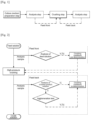
- the method for producing a polyhydroxyalkanoate (PHA) comprises preparing a culture medium containing a polyhydroxyalkanoate (PHA) (culture medium preparation step); preparing a feed solution containing the culture medium (or a supernatant obtained by centrifuging the culture medium) (feed solution preparation step); crushing the cells or PHA contained in the feed solution (crushing step); and analyzing a morphological parameter of the cells or PHA before, during, or after the crushing step (analysis step).
- the method for producing a polyhydroxyalkanoate that comprises the step of analyzing a morphological parameter of the cells or PHA before, during, and/or after the crushing step (analysis step) is shown in Fig. 1 or Fig. 2 .
- Cell crush can be carried out as a batch-type reaction or as a continuous production process.
- the morphological parameter of the cells or PHA is analyzed in real time, and then the crushing step can be carried out by adjusting the crushing conditions for the feed solution continuously fed in real time according to the analysis results.
- the crushing conditions may be the same or different.
- the crushing step can be carried out by repeating the above procedure and re-determining the crushing conditions in real time.
- the method for producing a polyhydroxyalkanoate (PHA) of the present invention may comprise analyzing a morphological parameter of the cells or PHA contained in the feed solution (first analysis step); and crushing the cells or PHA contained in the feed solution (crushing step).
- analyzing a morphological parameter of the cells or PHA contained in the crushed product solution is carried out during, or after, the crushing step, and the method may comprise quantifying the analyzed morphological parameter to detect the degree of crush (second analysis step); and determining the crushing pressure of the high-pressure homogenizer or the number of crushing treatments according to the degree of crush as a first re-determination step of crushing conditions.
- the method for producing a polyhydroxyalkanoate (PHA) of the present invention may comprise preparing a culture medium containing a polyhydroxyalkanoate (PHA) (culture medium preparation step); analyzing a morphological parameter of the cells or PHA contained in the culture medium (preliminary analysis step); determining the initially set conditions of the culture medium according to the preliminary analysis results (first crushing conditions pre-determination step); preparing a feed solution containing the culture medium (or a supernatant obtained by centrifuging the culture medium) (feed solution preparation step); a first analysis step of analyzing a morphological parameter of the cells or PHA contained in the feed solution (first analysis step); determining the crushing pressure of the high-pressure homogenizer or the number of crushing treatments according to the first analysis results (second crushing conditions pre-determination step); crushing the cells or PHA contained in the feed solution (crushing step); a second analysis step of analyzing a morphological parameter of the cells or PHA contained in the crushed product solution (second analysis step); determining the crushing
- the preliminary analysis step, first crushing conditions pre-determination step, first analysis step, second crushing conditions pre-determination step, second analysis step, first crushing conditions re-determination step, agglomeration test step, and second crushing conditions re-determination step are each independent and may be carried out selectively.
- the method for producing a polyhydroxyalkanoate (PHA) according to an embodiment of the present invention may be carried out by the following exemplary method.
- the method for producing a polyhydroxyalkanoate (PHA) may be carried out by various steps in addition to the steps exemplified above. If necessary, the first analysis step, the first or second crushing conditions pre-determination step, the first or second crushing conditions re-determination step, and the crushing step may be repeatedly carried out.
- the method for producing a polyhydroxyalkanoate (PHA) comprises preparing a culture medium containing a polyhydroxyalkanoate (PHA).
- a polyhydroxyalkanoates can be produced by a microbial fermentation process.
- the crude product of a polyhydroxyalkanoate may also be obtained through fermentation.
- the method for producing a polyhydroxyalkanoate (PHA) through fermentation may be carried out by a known method.
- a polyhydroxyalkanoate can be produced through fermentation using wild-type or transgenic microorganisms cultured on a specific substrate, and it is not particularly limited.
- the microorganism may be a microorganism of the Escherichia genus or Escherichia coli, but it is not limited thereto.
- the culture medium is cultured with various microorganisms capable of producing a polyhydroxyalkanoate (PHA).
- the culture medium may be prepared by a conventional method in which microorganisms are cultured at 15 to 50°C or 30 to 40°C for 1 to 160 hours using a bioreactor in a normal medium appropriately containing a carbon source, a nitrogen source, a phosphorus source, an inorganic compound, amino acids, and/or vitamins.
- Compounds such as sodium hydroxide, ammonium hydroxide, potassium hydroxide, ammonia, phosphoric acid, sulfuric acid, and the like may be added to the medium in an appropriate manner during the cultivation of the microorganisms to adjust the pH of the medium, but it is not limited thereto.
- Examples of the carbon source include carbohydrates such as glucose, saccharose, lactose, fructose, sucrose, and maltose; sugar alcohols such as mannitol and sorbitol; organic acids such as pyruvic acid, lactic acid, and citric acid; and amino acids such as glutamic acid, methionine, and lysine.
- natural organic nutrient sources such as starch hydrolyzate, molasses, blackstrap molasses, rice bran, cassava, bagasse, and corn steep liquor may be used.
- Other carbon sources in appropriate amounts may be used in a variety of ways without limitation. These carbon sources may be used alone or in combination of two or more types, but they are not limited thereto.
- the polyhydroxyalkanoate may be formed by an enzyme-catalyzed polymerization of one or more monomer repeat units in living cells. It may be classified as crystalline, semicrystalline, or amorphous polyhydroxyalkanoate depending on its molecular structure.
- repeat units that constitute the polyhydroxyalkanoate include lactic acid, glycolic acid, 2-hydroxybutyrate (2-HB), 3-hydroxybutyrate (3-HB), 3-hydroxypropionate (3-HP), 3-hydroxyvalerate (3-HV), 3-hydroxyhexanoate (3-HH), 3-hydroxyheptanoate (3-HHep), 3-hydroxyoctanoate (3-HO), 3-hydroxynonanoate (3-HN), 3-hydroxydecanoate (3-HD), 3-hydroxydodecanoate (3-HDd), 4-hydroxybutyrate (4-HB), 4-hydroxyvalerate (4-HV), 5-hydroxyvalerate (5-HV), and 6-hydroxyhexanoate (6-HH).
- the PHA may comprise one or more repeat units selected from the above.
- the PHA may be poly-3-hydroxybutyrate-co-4-hydroxybutyrate (hereinafter, referred to as 3HB-co-4HB).
- the polyhydroxyalkanoate may be a homopolymer or a copolymer.
- the polyhydroxyalkanoate may comprise a copolymer, specifically, a copolymer comprising two or more different repeat units with the different repeat units randomly distributed in the polymer chain.
- polyhydroxyalkanoate may comprise isomers.
- the polyhydroxyalkanoate may comprise structural isomers, enantiomers, or geometric isomers.
- the polyhydroxyalkanoate may comprise structural isomers.
- the polyhydroxyalkanoate may comprise a 4-hydroxybutyrate (4-HB) repeat unit.
- the content of a 4-HB repeat unit in the polyhydroxyalkanoate may be 0.1% by weight or more, 1% by weight or more, 5% by weight or more, 10% by weight or more, 20% by weight or more, 30% by weight or more, 40% by weight or more, 50% by weight or more, or 60% by weight or more; 100% by weight or less, 99% by weight or less, 90% by weight or less, 80% by weight or less, 70% by weight or less, or 60% by weight or less; and 0.1 to 60% by weight, 0.1 to 55% by weight, 0.5 to 60% by weight, 0.5 to 55% by weight, 1 to 60% by weight, 1 to 55% by weight, 1 to 50% by weight, 2 to 55% by weight, 3 to 55% by weight, 3 to 50% by weight, 5 to 55% by weight, 5 to 50% by weight, 10 to 55% by weight, 10 to 50% by weight, or 1 to 40% by weight, based
- the polyhydroxyalkanoate (PHA) may have a weight average molecular weight of 10,000 to 1,200,000 g/mole.
- the weight average molecular weight of the PHA may be 10,000 to 1,200,000 g/mole, 50,000 to 1,200,000 g/mole, 100,000 to 1,000,000 g/mole, 100,000 to 900,000 g/mole, 200,000 to 800,000 g/mole, 10,000 to 600,000 g/mole, or 600,000 to 1,200,000 g/mole.
- the microbial cells for producing the polyhydroxyalkanoate (PHA) may be cells in a normal state, but they may be in a state of autolysis, a state in which the cell walls are weakened or the cells burst due to overcultivation or a self-digestion reaction.
- the crushing step can be carried out effectively even when the cells are in a normal state or in an autolysis state, and the productivity of a PHA finally obtained can be enhanced.
- the centrifugation may be carried out at a speed of 3,000 to 8,000 rpm, 4,000 to 6,000 rpm, or 4,000 to 5,000 rpm for 10 to 50 minutes, 20 to 40 minutes, or 25 to 35 minutes, but it is not limited thereto.
- the cells and PHA of the feed solution may be mixed with distilled water such that the total solids content is 5 to 20% by weight, preferably, the total solids content is 10 to 15% by weight.
- a crushing step can be carried out efficiently.
- the feed solution may comprise a pH-adjusting agent.
- the pH-adjusting agent may be one or more basic solutions selected from the group consisting of sodium hydroxide, potassium hydroxide, lithium hydroxide, and sodium carbonate.
- the concentration of the basic solution is such that the basic solute is 20 to 60 w/w%, 30 to 50 w/w%, or 35 to 45 w/w% based on the total weight of the basic solution.
- the pH of the feed solution comprising the pH-adjusting agent may be pH 8 to pH 13, or pH 9 to pH 12, preferably pH 10 to pH 11.
- the feed solution may comprise a surfactant.
- the surfactant may be one or more anionic surfactants selected from the group consisting of sodium laureth sulfate, sodium lauryl sulfate, dodecyl sodium sulfate, and dodecyl sodium benzene sulfonate.
- the surfactant may be employed in an amount of 0.05 to 0.5% by weight, 0.1 to 0.2% by weight, preferably 0.13 to 0.15% by weight, based on the total weight of the feed solution.
- content of the surfactant is adjusted to the above range, a cell crushing step and subsequent steps can be more readily carried out.
- Step of crushing the cells or PHA crushing step
- the method for producing a polyhydroxyalkanoate (PHA) comprises crushing the cells or PHA contained in the feed solution.
- the crushing step is a physical cell crushing step using a high-pressure homogenizer.
- the high-pressure homogenizer is a device that crushes cells by applying high pressure to the cells.
- the crushing pressure may be 300 to 1,500 bar, 300 to 600 bar, 300 to 500 bar, 400 to 1,000 bar, 400 to 700 bar, 400 to 600 bar, 400 to 500 bar, 600 to 1,000 bar, or 600 to 800 bar.
- the target degree of cell crush can be reached, an appropriate viscosity range can be maintained, which allows subsequent steps to be readily carried out, and the productivity of a PHA can be increased.
- the crushing temperature may be 0 to 40°C, 5 to 35°C, 10 to 30°C, 20 to 40°C, or 23 to 35°C.
- cooling water is flowed to keep the temperature constant.
- Crushing time may vary depending on the flow rate entering or exiting the high-pressure homogenizer or the throughput per hour.
- the crushing step is carried out once on the feed solution that passes through the high-pressure homogenizer. If the crushing step is carried out by changing the crushing conditions one or more times through a crushing conditions pre-determination step and/or a crushing conditions re-determination step, the determined crushing conditions (pressure, etc.) may be the same or different.
- the crushing conditions may be determined according to the analysis results of a morphological parameter. Specifically, the morphological parameter of cells or a PHA may be analyzed before, during, or after the crushing step, and the number and conditions of crushing may be determined according to the analysis results. Details thereof will be described below in the crushing conditions pre-determination step and the crushing conditions re-determination step.
- Step of centrifuging the cell-crushed product solution to obtain a crude polyhydroxyalkanoate solution Step of centrifuging the cell-crushed product solution to obtain a crude polyhydroxyalkanoate solution (separation step)
- the method for producing a polyhydroxyalkanoate (PHA) comprises centrifuging the cell-crushed product solution to obtain a crude polyhydroxyalkanoate solution.
- the step of preparing a crude polyhydroxyalkanoate solution is a step of centrifuging the cell-crushed product solution to separate impurities and the cells and PHA contained in the crushed product solution.
- the centrifugation may be carried out at a speed of 10,000 to 20,000 rpm, 12,000 to 18,000 rpm, or 15,000 to 16,000 rpm for 10 to 30 minutes or 10 to 20 minutes.
- the centrifugation may be carried out at a temperature of 0 to 40°C, 5 to 35°C, 10 to 30°C, 20 to 40°C, or 23 to 35°C.
- a crude polyhydroxyalkanoate solution containing the retentate formed through the centrifugation is obtained.
- the crude polyhydroxyalkanoate solution thus obtained is then subjected to a washing step and an impurity removal step through additional chemical or enzymatical treatment to be formulated.
- Step of analyzing a morphological parameter of the cells or PHA analysis step
- the method for producing a polyhydroxyalkanoate (PHA) comprises analyzing a morphological parameter of the cells or PHA.
- the step of analyzing a morphological parameter may be three-dimensional image analysis using holotomography analysis, but it is not limited thereto.
- the morphological parameter may be one or more selected from the group consisting of length, sphericity, mass, protein concentration, volume, and surface area.
- HTA holotomography analysis
- the step of analyzing a morphological parameter of the cells or PHA may comprise a preliminary analysis step and a first analysis step carried out before the crushing step; and/or a second analysis step carried out during or after the crushing step.
- the analysis step may comprise a preliminary analysis step of collecting some analysis samples from the culture medium, feed solution, and/or crushed product solution, and analyzing a morphological parameter of the cells or PHA contained in the culture medium according to the analysis sample collection point; a first analysis step of analyzing a morphological parameter of the cells or PHA contained in the feed solution; and/or a second analysis step of analyzing a morphological parameter of the cells or PHA contained in the crushed product solution.
- each analysis step is a separate step and is selected individually as needed.
- each analysis step may be carried out in the following order: preliminary analysis step, first analysis step, second analysis step, and auxiliary analysis step.
- the preliminary analysis step is a step of analyzing a morphological parameter of the cells or PHA contained in the culture medium and quantifying the analyzed morphological parameter to detect the degree of autolysis.
- the average sphericity of the cells contained in the culture medium may be 0.4 or more, 0.5 or more, 0.6 or more, or 0.7 or more.
- the average length of the cells may be 3.0 ⁇ m or more or 3.5 ⁇ m or more, and may be 6.0 ⁇ m or less, 5.0 ⁇ m or less, or 4.0 ⁇ m or less.
- the average sphericity of the PHA contained in the culture medium may be 0.5 or more, 0.6 or more, 0.7 or more, or 0.8 or more.
- the average length of the cells in the culture medium becomes shorter, and the average sphericity of the cells or PHA increases.
- the step of analyzing a morphological parameter of the cells or PHA may comprise a first analysis step carried out before the crushing step.
- the first analysis step is a step of analyzing a morphological parameter of the cells or PHA contained in the feed solution and quantifying the analyzed morphological parameter to detect the feed status.
- the average sphericity of the cells contained in the feed solution may be 0.6 or more, 0.65 or more, 0.7 or more, 0.75 or more, 0.8 or more, 0.85 or more, or 0.9 or more.
- the average length of the cells may be 3.28 ⁇ m or more, 3.4 ⁇ m or more, 3.6 ⁇ m or more, 3.8 ⁇ m or more, 4.0 ⁇ m or more, or 4.2 ⁇ m or more, and 6.0 ⁇ m or less, 5.5 ⁇ m or less, 5.0 ⁇ m or less, or 4.8 ⁇ m or less.
- the average length of the cells contained in the feed solution may be 3.28 ⁇ m to 4.8 ⁇ m, 3.28 ⁇ m to 4.2 ⁇ m, or 4.0 ⁇ m to 4.8 ⁇ m, and the average sphericity of the cells may be 0.6 to 0.99, 0.65 to 0.9, 0.7 to 0.9, 0.6 to 0.7, or 0.75 to 0.85.
- the cells contained in the feed solution may comprise cells having a sphericity of 0 to 0.8 at a proportion of 40 to 90%, 40 to 80%, 45 to 70%, 50 to 70%, 55 to 65%, or 60 to 65%.
- the cells may comprise cells having a sphericity of 0.8 to 1.0 at a proportion of 10 to 60%, 20 to 55%, 30 to 55%, 30 to 50%, or 35 to 45%.
- the average sphericity of the PHA contained in the feed solution may be 0.6 or more, 0.65 or more, 0.7 or more, 0.75 or more, 0.8 or more, 0.85 or more, or 0.9 or more.
- the PHA may comprise a PHA having a sphericity of 0 to 0.8 at a proportion of 23% or more, 25% or more, 30% or more, 34% or more, 35% or more, 40% or more, 45% or more, 50% or more, 55% or more, 60% or more, or 65% or more, and it may comprise a PHA having a sphericity of 0.8 to 1.0 at a proportion of 77% or less, 75% or less, 70% or less, 66% or less, 65% or less, 60% or less, 55% or less, 50% or less, 45% or less, 40% or less, or 35% or less.
- the step of analyzing a morphological parameter of the cells or PHA may comprise a second analysis step carried out during or after the crushing step.
- the second analysis step is a step of analyzing a morphological parameter of the cells or PHA contained in the crushed product solution and quantifying the analyzed morphological parameter to detect the degree of crush.
- Final cells and a PHA contained in the crushed product solution thus prepared may be obtained through the method for producing a polyhydroxyalkanoate (PHA) according to an embodiment of the present invention.
- the average sphericity of the cells contained in the crushed product solution may be 0.65 or more, 0.7 or more, 0.8 or more, or 0.9 or more.
- the average length of the cells may be 3.0 ⁇ m or more or 3.5 ⁇ m or more, and may be 4.5 ⁇ m or less or 4.0 ⁇ m or less.
- the average sphericity of the PHA contained in the crushed product solution may be 0.6 or more, 0.65 or more, 0.7 or more, 0.75 or more, 0.8 or more, 0.85 or more, or 0.9 or more.
- the PHA may comprise a PHA having a sphericity of 0.8 to 1.0 at a proportion of 34% or more, 35% or more, 40% or more, 45% or more, 50% or more, 55% or more, 60% or more, or 65% or more, and it may comprise a PHA having a sphericity of 0 to 0.8 at a proportion of 66% or less, 65% or less, 60% or less, 55% or less, 50% or less, 45% or less, 40% or less, or 35% or less.
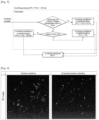
- Fig. 6 Three-dimensional images measured before and after cell crush are shown in Fig. 6 .
- the bright parts (green) indicate cell walls or cytoplasm, and the dark parts (red) indicate a PHA. It can be visually confirmed through the three-dimensional images that, upon crush, the length of the cells or PHA has decreased, and the sphericity of the cells or PHA has increased.
- Step of analyzing the degree of protein solubilization or aggregation (auxiliary analysis step)
- Analysis of the degree of protein solubilization or an aggregation test may be carried out as an auxiliary indicator to determine whether the cells and PHA contained in the crushed product solution are sufficiently crushed to proceed with the subsequent steps and to ensure the stability of the process.
- the degree of protein solubilization is an auxiliary indicator to determine cell rupture and cell crush and may be calculated according to the following Equation 1 by measuring the absorbance at a wavelength of 280 nm with a UV-spectrometer.
- Degree of protein solubilization % ABS1/ABS0 ⁇ 100 %
- ABSO is the absorbance at a wavelength of 280 nm measured after 5 times repeatedly crushing the culture medium, feed solution, or crushed product solution at 800 bar at room temperature
- ABS 1 is the absorbance at a wavelength of 280 nm measured after 1 time crushing the culture medium, feed solution, or crushed product solution at 300 to 1,500 bar at room temperature. More specifically, ABSO and ABS1 are each the absorbance measured by crushing the culture medium, feed solution, or crushed product solution under the above conditions, centrifuging it for 5 minutes at 15,000 rpm, and diluting the supernatant 100 times with distilled water.
- room temperature refers to a constant temperature and may be a temperature of 10 to 40°C, 20 to 35°C, 23 to 35°C, or about 25°C.
- heat exchange is performed by flowing cooling water from the outside to keep constant the temperature of the apparatus such as a high-pressure homogenizer.
- the degree of protein solubilization of the crushed product solution according to an embodiment of the present invention according to the above Equation 1 is 75 to 110%. Specifically, the degree of protein solubilization of the crushed product solution may be 85% or more, 90% or more, or 95% or more. If the degree of protein solubilization is less than 85%, the efficiency of cell crush decreases; thus, the efficiency of obtaining PHA granules in the PHA production method may decrease.
- the agglomeration test may be used as an auxiliary indicator to confirm the stability of solid-liquid separation after cell crush. Whether the cells or PHA is agglomerated, and the degree of aggregation thereof, are measured by applying shear force or centrifugal force to the cell-crushed product solution after physical cell crushing using a high-pressure homogenizer, from which the stability of the subsequent washing step and impurity removal step can be confirmed.
- the cell-crushed product solution is centrifuged at 3,800 rpm for 20 minutes, the supernatant is removed, and the crude polyhydroxyalkanoate solution is passed through a 150- ⁇ m sieve using washing water.
- the degree of agglomeration can be checked from the residue that is not dissolved in the washing water and does not pass through the sieve. If the degree of agglomeration is high, agglomeration would be highly likely to occur during the subsequent washing step and impurity removal step.
- the production of a polyhydroxyalkanoate (PHA) is carried out by adjusting the crushing pressure or changing the process conditions of the washing step and impurity removal step.
- analyzing a morphological parameter of the cells or PHA contained in the culture medium is carried out before the crushing step, and the method comprises quantifying the analyzed morphological parameter to detect the degree of autolysis (preliminary analysis step); and determining the initially set pressure of the high-pressure homogenizer or the number of crushing treatments according to the degree of autolysis as a first pre-determination step of crushing conditions.
- analyzing a morphological parameter of the cells or PHA contained in the feed solution is carried out before the crushing step, and the method comprises quantifying the analyzed morphological parameter to detect the feed status (first analysis step); and determining the crushing pressure of the high-pressure homogenizer or the number of crushing treatments for the feed solution according to the feed status as a second pre-determination step of crushing conditions.
- Each crushing conditions pre-determination step is a separate step and is individually selected as needed.
- the second crushing conditions pre-determination step may reduce the pressure by 10 to 100 bar from the initially set pressure in the step of crushing the cells or PHA contained in the feed solution.
- the second crushing conditions pre-determination step may determine the crushing pressure in the step of crushing the cells or PHA contained in the feed solution to be the same as the initially set pressure.
- the method for controlling the crushing pressure in the second crushing conditions pre-determination step is specifically shown in Fig. 3 .
- Fig. 3 relates to the step of determining the crushing pressure (P1) in the step of crushing the cells or PHA contained in the feed solution with respect to the initially set pressure (P0) of the high-pressure homogenizer (second crushing conditions pre-determination step).
- the crushing pressure (P1) in the step of crushing the cells or PHA contained in the feed solution is maintained to be the same as the initially set pressure (P0).
- the crushing pressure (P1) in the step of crushing the cells or PHA contained in the feed solution is reduced by 10 to 100 bar, for example, 50 bar, from the initially set pressure (P0).
- analyzing a morphological parameter of the cells or PHA contained in the crushed product solution is carried out during, or after, the crushing step, and the method may comprise quantifying the analyzed morphological parameter to detect the degree of crush; and determining the crushing pressure of the high-pressure homogenizer or the number of crushing treatments according to the degree of crush as a first re-determination step of crushing conditions.
- a step of analyzing a morphological parameter of the cells or PHA contained in the crushed product solution is carried out during, or after, the crushing step, and the method may further comprise carrying out an agglomeration test to measure the degree of agglomeration of the crushed product solution after the step of quantifying the analyzed morphological parameter to detect the degree of crush; and a second pre-determination step of crushing conditions to determine the crushing pressure of the high-pressure homogenizer or the number of crushing treatments according to the degree of agglomeration.
- Each crushing conditions re-determination step is a separate step and is individually selected as needed.
- a step of analyzing a morphological parameter of the cells or PHA contained in the crushed product solution is carried out during, or after, the crushing step, and the method may comprise a first crushing conditions re-determination step to quantify the analyzed morphological parameter to re-determine the crushing pressure of the high-pressure homogenizer or the number of crushing treatments for the feed solution continuously fed.
- the first crushing conditions re-determination step may raise the pressure by 10 to 100 bar from the crushing pressure in the step of crushing the cells or PHA contained in the feed solution.
- the first crushing conditions re-determination step may raise the pressure by 10 to 100 bar from the crushing pressure in the step of crushing the cells or PHA contained in the feed solution.
- the degree of crush can be measured through the average sphericity of the cells or PHA contained in the crushed product solution or the degree of protein solubilization thereof. Based on the measurement results, the crushing conditions may be adjusted: if the degree of crush is determined to be insufficient, the crushing pressure may be raised; or if the crush degree is determined to be excessive, the crushing pressure may be reduced.
- a step of analyzing a morphological parameter of the cells or PHA contained in the crushed product solution is carried out during, or after, the crushing step, and the method may comprise carrying out an agglomeration test to measure the degree of agglomeration of the crushed product solution; and a second crushing conditions re-determination step to determine the crushing pressure of the high-pressure homogenizer or the number of crushing treatments for the feed solution continuously fed according to the degree of agglomeration.
- the second crushing conditions re-determination step may reduce the pressure by 10 to 100 bar from the crushing pressure in the step of crushing the cells or PHA contained in the feed solution.
- the second crushing conditions re-determination step may maintain or raise the pressure by 10 to 100 bar from the crushing pressure in the step of crushing the cells or PHA contained in the feed solution.
- the method for controlling the crushing pressure in the crushing conditions re-determination step is specifically shown in Figs. 4 and 5 .
- Fig. 4 relates to the step of re-determining the crushing pressure (P2) of the high-pressure homogenizer for the feed solution continuously fed with respect to the crushing pressure (P1) in the step of crushing the cells or PHA contained in the feed solution.
- a step of crushing the cells or PHA contained in the feed solution (P1); and an analysis step of analyzing a morphological parameter of the cells or PHA contained in the crushed product solution are carried out.
- a pressure raised by 50 bar from the crushing pressure (P1) in the step of crushing the cells or PHA contained in the feed solution is determined to be the crushing pressure (P2) of the high-pressure homogenizer for the feed solution continuously fed.
- a pressure raised by 50 bar from the crushing pressure (P1) in the step of crushing the cells or PHA contained in the feed solution is determined to be the crushing pressure (P2) of the high-pressure homogenizer for the feed solution continuously fed.
- a pressure reduced by 50 bar from the crushing pressure (P1) in the step of crushing the cells or PHA contained in the feed solution is determined to be the crushing pressure (P2) of the high-pressure homogenizer for the feed solution continuously fed.
- Fig. 5 shows the crushing conditions re-determination step after the pressure is adjusted according to the agglomeration test in another embodiment of the present invention. It relates to the step of re-determining the crushing pressure (Pn+1) of the high-pressure homogenizer for the feed solution continuously fed after a crushed product solution is prepared at the crushing pressure (Pn) of the step of crushing the cells or PHA contained in the feed solution by increasing or reducing the pressure by 10 to 100 bar from the previously set crushing pressure (Pn-1).
- a step of crushing the cells or PHA contained in the feed solution at a crushing pressure (Pn) reduced by 50 bar from the previously set crushing pressure (Pn-1); and an analysis step of analyzing a morphological parameter of the cells or PHA contained in the crushed product solution are carried out.
- the first crushing conditions re-determination step determines a pressure to be determined between the previously set crushing pressure (Pn-1) and the crushing pressure (Pn) in the step of crushing the cells or PHA contained in the feed solution as the crushing pressure (Pn+1) of the high-pressure homogenizer for the feed solution continuously fed.
- the second crushing conditions re-determination step determines a pressure that is the same as the crushing pressure (Pn) in the step of crushing the cells or PHA contained in the feed solution as the crushing pressure (Pn+1) of the high-pressure homogenizer for the feed solution continuously fed.
- the second crushing conditions re-determination step determines a pressure that is reduced by 50 bar from the crushing pressure (Pn) in the step of crushing the cells or PHA contained in the feed solution as the crushing pressure (Pn+1) of the high-pressure homogenizer for the feed solution continuously fed.
- the criteria for determining the crushing conditions according to the morphological parameter, the degree of protein solubilization, or the degree of agglomeration of the cells or PHA may be adjusted according to the culture medium fed to the entire process.
- a genetically engineered E. coli strain was used to prepare a PHA culture medium. First, the PHA-producing strain was seed-cultured to secure a certain amount, and main fermentation was then carried out. For the fermentation of the PHA-producing strain, sucrose was used as a carbon source, and various mineral components were added as nutrients. A sodium hydroxide solution or ammonia gas was used to adjust the fermentation pH. The fermentation process using the PHA-producing strain was carried out at 30 to 40°C and a pH of 6 to 9.
- Example 1 and 2 separate culture media using a genetically engineered E. coli strain and sucrose as a carbon source were used. Although the culture media of Examples 1 and 2 were prepared under the same culture conditions, the morphological parameters of the cells or PHA measured in Example 1 or 2 may be different due to the nature of the strain as a living cell.
- the degree of autolysis refers to the degree to which cell walls weaken or cells burst due to autolysis.
- autolysis conditions were simulated using an ultrasonic disperser (SONICS, Vibra cell).
- SONICS Vibra cell
- a normally fermented culture was treated with an ultrasonic disperser at an amplitude of 40% and a pulse of 10/10 for 1 or 2 minutes to burst the cells to simulate the degree of autolysis, and a cell crushing process was then carried out.
- Example 1-1 was the culture medium of Example 1 without treatment with an ultrasonic disperser
- Example 1-2 or 1-3 were the culture media of Example 1 treated with an ultrasonic disperser for 1 minute or 2 minutes, respectively.
- Examples 2-1 to 2-3 were culture media treated with ultrasonic waves according to Table 2 below.
- Each culture medium was subjected to the separation of impurities from the biomass containing the cells and/or PHA contained in the culture medium using a centrifuge (Hanil, Combi-514 R).
- the separated biomass was diluted using distilled water to have a total solids content of 10 to 15% by weight.
- the diluted solution was adjusted to a pH of 10 to 11 using sodium hydroxide (40 w/w%, Deoksan Science) and then added with sodium laureth sulfate (30 w/w%, Miwon), an anionic surfactant, at 0.13 to 0.15% by weight in the liquid phase to prepare a feed solution.
- the feed solution for crushing was sufficiently stirred and subjected to physical cell crushing using a high-pressure homogenizer (Bertoli, ATOMO 3.0) at 600 to 1,000 bar and 1 to 5 times, respectively.
- the analysis samples (culture medium, feed solution, or crushed product solution) of the Examples and Comparative Examples were each diluted 10 times or 100 times in a 1.5-ml microtube using distilled water (DIW). 20 ⁇ l of the diluted sample was dispensed into TomoDish (Tomo Cube Co., Ltd.) and covered with a cover slide. Three-dimensional images of the prepared sample were taken using holotomography analysis (Tomo Cube Co., Ltd., HT-1H) to measure cell length and sphericity.
- DIW distilled water
- the refractive index (RI) used for the three-dimensional image implementation and data measurement was 1.3513 to 1.3745 (for cells) and 1.3748 to 1.4081 (for PHA).
- RI refractive index
- Ten three-dimensional images were taken for each individual sample.
- TomoStudio TM Tomo Cube Co., Ltd. was used to implement three-dimensional images and analyze imaging sphericity. The average mass, volume, length, and sphericity of the cells and PHA were calculated.
- the analysis samples (feed solution or crushed product solution) of the Examples and Comparative Examples were each crushed under the conditions of 300 to 1,500 bar at room temperature and then centrifuged at 15,000 rpm for 5 minutes using a microcentrifuge (Eppendorf, 5414R). The centrifuged supernatant was diluted 100 times in a 2.0-ml microtube with distilled water, and the absorbance was then measured at a wavelength of 280 nm using a UV-spectrometer (HACH, DR6000). When absorbance was measured, calibration was carried out with distilled water.
- HACH UV-spectrometer
- the degree of protein solubilization was calculated according to the following Equation 1.
- Degree of protein solubilization % ABS1 / ABS0 ⁇ 100 %
- ABSO is the absorbance at a wavelength of 280 nm measured after repeatedly crushing the analysis sample 5 times at 800 bar at room temperature
- ABS1 is the absorbance at a wavelength of 280 nm measured after crushing the analysis sample 1 time at 300 to 1,500 bar at room temperature.
- the degree of agglomeration was classified into ⁇ , ⁇ , ⁇ , and ⁇ and shown in Tables 3 and 4 below. If the degree of agglomeration is ⁇ or ⁇ , it was determined to be below the predetermined value (Y in Figs. 4 and 5 ).
- the culture media of Examples 1 and 2 were each used to prepare a feed solution.
- the degree of agglomeration was observed at a low level or almost not observed. In particular, when it was 70.0% or more, the degree of agglomeration was hardly observed.
- Example 1 or 2 the degree of protein solubilization was calculated based on the ABSO of Example 1-1 or Example 2-1, which was a culture medium not subjected to ultrasonic treatment, respectively.
- Example 1-1 or Example 2-1 a culture medium not subjected to ultrasonic treatment, respectively.
- protein solubilization was 90% or more in Examples 1-1, 1-2, and 2-1, whereas the protein solubilization was less than 90% in Examples 1-3, 2-2, and 2-3 in which the degree of autolysis was high.
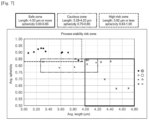
- Fig. 7 is an example prepared based on the culture media of Examples 1 and 2 during fermentation, and the culture media tend to agglomerate together relatively well; thus, the range of the cautious zone and safe zone of length and sphericity appears relatively narrow in Fig. 7 .
- the value of each zone may vary as the strain or type of carbon source in the culture medium changes.
Landscapes
- Life Sciences & Earth Sciences (AREA)
- Chemical & Material Sciences (AREA)
- Health & Medical Sciences (AREA)
- Engineering & Computer Science (AREA)
- Organic Chemistry (AREA)
- Physics & Mathematics (AREA)
- General Health & Medical Sciences (AREA)
- Biochemistry (AREA)
- Wood Science & Technology (AREA)
- Zoology (AREA)
- Biomedical Technology (AREA)
- Bioinformatics & Cheminformatics (AREA)
- Biotechnology (AREA)
- Genetics & Genomics (AREA)
- General Physics & Mathematics (AREA)
- Analytical Chemistry (AREA)
- Immunology (AREA)
- Pathology (AREA)
- Microbiology (AREA)
- General Engineering & Computer Science (AREA)
- General Chemical & Material Sciences (AREA)
- Chemical Kinetics & Catalysis (AREA)
- Medicinal Chemistry (AREA)
- Spectroscopy & Molecular Physics (AREA)
- Urology & Nephrology (AREA)
- Biophysics (AREA)
- Hematology (AREA)
- Molecular Biology (AREA)
- Food Science & Technology (AREA)
- Dispersion Chemistry (AREA)
- Optics & Photonics (AREA)
- Virology (AREA)
- Tropical Medicine & Parasitology (AREA)
- Mycology (AREA)
- Preparation Of Compounds By Using Micro-Organisms (AREA)
- Measuring Or Testing Involving Enzymes Or Micro-Organisms (AREA)
Applications Claiming Priority (2)
| Application Number | Priority Date | Filing Date | Title |
|---|---|---|---|
| KR1020210187341A KR20230097635A (ko) | 2021-12-24 | 2021-12-24 | 세포 파쇄 모니터링 방법 및 이를 이용한 폴리하이드록시알카노에이트를 생산하기 위한 방법 |
| PCT/KR2022/021206 WO2023121396A1 (ko) | 2021-12-24 | 2022-12-23 | 세포 파쇄 모니터링 방법 및 이를 이용한 폴리하이드록시알카노에이트를 생산하기 위한 방법 |
Publications (2)
| Publication Number | Publication Date |
|---|---|
| EP4455662A1 true EP4455662A1 (de) | 2024-10-30 |
| EP4455662A4 EP4455662A4 (de) | 2026-02-25 |
Family
ID=86903175
Family Applications (1)
| Application Number | Title | Priority Date | Filing Date |
|---|---|---|---|
| EP22912029.0A Pending EP4455662A4 (de) | 2021-12-24 | 2022-12-23 | Zelllyseüberwachungsverfahren und verfahren zur herstellung von polyhydroxyalkanoaten unter verwendung davon |
Country Status (8)
| Country | Link |
|---|---|
| US (1) | US20250043321A1 (de) |
| EP (1) | EP4455662A4 (de) |
| JP (1) | JP2025500153A (de) |
| KR (1) | KR20230097635A (de) |
| CN (1) | CN118475831A (de) |
| AU (1) | AU2022419047B2 (de) |
| CA (1) | CA3244181A1 (de) |
| WO (1) | WO2023121396A1 (de) |
Families Citing this family (1)
| Publication number | Priority date | Publication date | Assignee | Title |
|---|---|---|---|---|
| CN117368072A (zh) * | 2023-10-10 | 2024-01-09 | 苏州科技大学 | 一种活性污泥中微生物细胞破裂程度的快速评价方法 |
Family Cites Families (5)
| Publication number | Priority date | Publication date | Assignee | Title |
|---|---|---|---|---|
| DE19633475C2 (de) * | 1996-08-20 | 2002-03-14 | Buna Sow Leuna Olefinverb Gmbh | Verfahren zur Gewinnung von Polyhydroxyalkanoaten und deren Verwendung |
| HRP20131138T1 (hr) * | 2009-10-16 | 2014-01-17 | Bio On S.R.L. | Upotreba staniäśnog debrija nastalog prilikom prikupljanja pha radi pojaäśanog staniäśnog rasta |
| ITMI20131276A1 (it) * | 2013-07-30 | 2015-01-31 | Bio On S R L | Processo per recuperare e purificare poliidrossialcanoati da una coltura cellulare |
| CN108348619A (zh) * | 2015-09-25 | 2018-07-31 | 瑟日尼有限责任公司 | Sn-117m标记的甘露糖偶联的葡聚糖胺 |
| JP2021108581A (ja) * | 2020-01-10 | 2021-08-02 | 株式会社カネカ | 形質転換微生物、及びポリヒドロキシアルカン酸の製造方法 |
-
2021
- 2021-12-24 KR KR1020210187341A patent/KR20230097635A/ko active Pending
-
2022
- 2022-12-23 WO PCT/KR2022/021206 patent/WO2023121396A1/ko not_active Ceased
- 2022-12-23 AU AU2022419047A patent/AU2022419047B2/en active Active
- 2022-12-23 US US18/717,881 patent/US20250043321A1/en active Pending
- 2022-12-23 CA CA3244181A patent/CA3244181A1/en active Pending
- 2022-12-23 JP JP2024533057A patent/JP2025500153A/ja active Pending
- 2022-12-23 CN CN202280085220.1A patent/CN118475831A/zh active Pending
- 2022-12-23 EP EP22912029.0A patent/EP4455662A4/de active Pending
Also Published As
| Publication number | Publication date |
|---|---|
| US20250043321A1 (en) | 2025-02-06 |
| WO2023121396A1 (ko) | 2023-06-29 |
| CN118475831A (zh) | 2024-08-09 |
| KR20230097635A (ko) | 2023-07-03 |
| AU2022419047A1 (en) | 2024-06-27 |
| CA3244181A1 (en) | 2025-06-13 |
| AU2022419047B2 (en) | 2025-10-16 |
| JP2025500153A (ja) | 2025-01-09 |
| EP4455662A4 (de) | 2026-02-25 |
Similar Documents
| Publication | Publication Date | Title |
|---|---|---|
| Shen et al. | Effect of subgrain and the associated DRX behaviour on the texture modification of Mg-6.63 Zn-0.56 Zr alloy during hot tensile deformation | |
| DE60120415T2 (de) | Herstellung von polyhydroxyalkanoaten aus polyolen | |
| EP4455662A1 (de) | Zelllyseüberwachungsverfahren und verfahren zur herstellung von polyhydroxyalkanoaten unter verwendung davon | |
| US4401755A (en) | Process for measuring microbiologically active material | |
| CN102224251A (zh) | 聚-3-羟基烷酸的生产方法及其凝集体 | |
| Lee et al. | Quantified high-throughput screening of Escherichia coli producing poly (3-hydroxybutyrate) based on FACS | |
| US8211675B2 (en) | Lactic acid production from concentrated raw sugar beet juice | |
| US20160177257A1 (en) | Optimised method for breaking chlorella cell walls by means of very high pressure homogenisation | |
| CN109070092A (zh) | 用于碾磨玉米并由此制备乙醇的方法和系统 | |
| Kedia et al. | Addressing the challenge of optimum polyhydroxyalkanoate harvesting: Monitoring real time process kinetics and biopolymer accumulation using dielectric spectroscopy | |
| Fukuda et al. | The relationship of dipicolinate and lysine biosynthesis in Bacillus megaterium | |
| WO2010067541A1 (ja) | ポリ-3-ヒドロキシアルカン酸の生産方法 | |
| Werker et al. | Production Quality Control of Mixed Culture Poly (3-hydroxbutyrate-co-3-hydroxyvalerate) blends using full-scale municipal activated sludge and non-chlorinated solvent extraction | |
| KR20160026967A (ko) | 기계적 압착에 의해 클로렐라 세포벽을 파괴하기 위한 최적화된 방법 | |
| Belini et al. | Online monitoring of the morphology of an industrial sugarcane biofuel yeast strain via in situ microscopy | |
| US20050196827A1 (en) | Method for degradation of nucleic acids and use thereof | |
| Agrawal et al. | Use of automation, dynamic image analysis, and process analytical technologies to enable data rich particle engineering efforts at the Drug Substance/Drug Product interface: A case study using Lovastatin | |
| DE102005056669A1 (de) | Fermentative Herstellung organischer Verbindungen unter Einsatz Dextrin-haltiger Medien | |
| EP4567122A1 (de) | Verfahren und system zur steuerung eines reinigungsverfahrens durch farbwertüberwachung und verfahren zur herstellung von polyhydroxyalkanoatharz | |
| EP2460882B1 (de) | Verfahren zur herstellung von d-milchsäure | |
| Hong et al. | Development of four unit processes for biobased PLA manufacturing | |
| Tripathi et al. | Kinetic study of biopolymer (PHB) synthesis in Alcaligenes sp. in submerged fermentation process using TEM | |
| Mas et al. | On‐line size measurement of yeast aggregates using image analysis | |
| CN115552027A (zh) | 使用了玉米皮的蛋白质的制造方法 | |
| Pons et al. | Beyond filamentous species... |
Legal Events
| Date | Code | Title | Description |
|---|---|---|---|
| STAA | Information on the status of an ep patent application or granted ep patent |
Free format text: STATUS: THE INTERNATIONAL PUBLICATION HAS BEEN MADE |
|
| PUAI | Public reference made under article 153(3) epc to a published international application that has entered the european phase |
Free format text: ORIGINAL CODE: 0009012 |
|
| STAA | Information on the status of an ep patent application or granted ep patent |
Free format text: STATUS: REQUEST FOR EXAMINATION WAS MADE |
|
| 17P | Request for examination filed |
Effective date: 20240724 |
|
| AK | Designated contracting states |
Kind code of ref document: A1 Designated state(s): AL AT BE BG CH CY CZ DE DK EE ES FI FR GB GR HR HU IE IS IT LI LT LU LV MC ME MK MT NL NO PL PT RO RS SE SI SK SM TR |
|
| DAV | Request for validation of the european patent (deleted) | ||
| DAX | Request for extension of the european patent (deleted) | ||
| REG | Reference to a national code |
Ref country code: DE Ref legal event code: R079 Free format text: PREVIOUS MAIN CLASS: G01N0033483000 Ipc: C12P0007625000 |
|
| A4 | Supplementary search report drawn up and despatched |
Effective date: 20260127 |
|
| RIC1 | Information provided on ipc code assigned before grant |
Ipc: C12P 7/625 20220101AFI20260121BHEP Ipc: G01N 33/483 20060101ALI20260121BHEP Ipc: G01N 21/31 20060101ALI20260121BHEP Ipc: C12P 7/62 20220101ALI20260121BHEP Ipc: G01N 21/17 20060101ALI20260121BHEP Ipc: C12N 1/066 20260101ALN20260121BHEP |