EP4460448B1 - Procédé de commande d'une distance restante pour un véhicule - Google Patents
Procédé de commande d'une distance restante pour un véhicule Download PDFInfo
- Publication number
- EP4460448B1 EP4460448B1 EP23709326.5A EP23709326A EP4460448B1 EP 4460448 B1 EP4460448 B1 EP 4460448B1 EP 23709326 A EP23709326 A EP 23709326A EP 4460448 B1 EP4460448 B1 EP 4460448B1
- Authority
- EP
- European Patent Office
- Prior art keywords
- vehicle
- maneuver
- predetermined
- current situation
- allowed
- Prior art date
- Legal status (The legal status is an assumption and is not a legal conclusion. Google has not performed a legal analysis and makes no representation as to the accuracy of the status listed.)
- Active
Links
Images




Classifications
-
- B—PERFORMING OPERATIONS; TRANSPORTING
- B60—VEHICLES IN GENERAL
- B60W—CONJOINT CONTROL OF VEHICLE SUB-UNITS OF DIFFERENT TYPE OR DIFFERENT FUNCTION; CONTROL SYSTEMS SPECIALLY ADAPTED FOR HYBRID VEHICLES; ROAD VEHICLE DRIVE CONTROL SYSTEMS FOR PURPOSES NOT RELATED TO THE CONTROL OF A PARTICULAR SUB-UNIT
- B60W30/00—Purposes of road vehicle drive control systems not related to the control of a particular sub-unit, e.g. of systems using conjoint control of vehicle sub-units
- B60W30/18—Propelling the vehicle
- B60W30/18009—Propelling the vehicle related to particular drive situations
- B60W30/18109—Braking
-
- B—PERFORMING OPERATIONS; TRANSPORTING
- B60—VEHICLES IN GENERAL
- B60W—CONJOINT CONTROL OF VEHICLE SUB-UNITS OF DIFFERENT TYPE OR DIFFERENT FUNCTION; CONTROL SYSTEMS SPECIALLY ADAPTED FOR HYBRID VEHICLES; ROAD VEHICLE DRIVE CONTROL SYSTEMS FOR PURPOSES NOT RELATED TO THE CONTROL OF A PARTICULAR SUB-UNIT
- B60W30/00—Purposes of road vehicle drive control systems not related to the control of a particular sub-unit, e.g. of systems using conjoint control of vehicle sub-units
- B60W30/06—Automatic manoeuvring for parking
-
- B—PERFORMING OPERATIONS; TRANSPORTING
- B60—VEHICLES IN GENERAL
- B60W—CONJOINT CONTROL OF VEHICLE SUB-UNITS OF DIFFERENT TYPE OR DIFFERENT FUNCTION; CONTROL SYSTEMS SPECIALLY ADAPTED FOR HYBRID VEHICLES; ROAD VEHICLE DRIVE CONTROL SYSTEMS FOR PURPOSES NOT RELATED TO THE CONTROL OF A PARTICULAR SUB-UNIT
- B60W30/00—Purposes of road vehicle drive control systems not related to the control of a particular sub-unit, e.g. of systems using conjoint control of vehicle sub-units
- B60W30/18—Propelling the vehicle
- B60W30/18009—Propelling the vehicle related to particular drive situations
- B60W30/18018—Start-stop drive, e.g. in a traffic jam
-
- B—PERFORMING OPERATIONS; TRANSPORTING
- B60—VEHICLES IN GENERAL
- B60W—CONJOINT CONTROL OF VEHICLE SUB-UNITS OF DIFFERENT TYPE OR DIFFERENT FUNCTION; CONTROL SYSTEMS SPECIALLY ADAPTED FOR HYBRID VEHICLES; ROAD VEHICLE DRIVE CONTROL SYSTEMS FOR PURPOSES NOT RELATED TO THE CONTROL OF A PARTICULAR SUB-UNIT
- B60W30/00—Purposes of road vehicle drive control systems not related to the control of a particular sub-unit, e.g. of systems using conjoint control of vehicle sub-units
- B60W30/18—Propelling the vehicle
- B60W30/182—Selecting between different operative modes, e.g. comfort and performance modes
-
- B—PERFORMING OPERATIONS; TRANSPORTING
- B60—VEHICLES IN GENERAL
- B60W—CONJOINT CONTROL OF VEHICLE SUB-UNITS OF DIFFERENT TYPE OR DIFFERENT FUNCTION; CONTROL SYSTEMS SPECIALLY ADAPTED FOR HYBRID VEHICLES; ROAD VEHICLE DRIVE CONTROL SYSTEMS FOR PURPOSES NOT RELATED TO THE CONTROL OF A PARTICULAR SUB-UNIT
- B60W40/00—Estimation or calculation of non-directly measurable driving parameters for road vehicle drive control systems not related to the control of a particular sub unit, e.g. by using mathematical models
- B60W40/02—Estimation or calculation of non-directly measurable driving parameters for road vehicle drive control systems not related to the control of a particular sub unit, e.g. by using mathematical models related to ambient conditions
- B60W40/06—Road conditions
-
- B—PERFORMING OPERATIONS; TRANSPORTING
- B60—VEHICLES IN GENERAL
- B60W—CONJOINT CONTROL OF VEHICLE SUB-UNITS OF DIFFERENT TYPE OR DIFFERENT FUNCTION; CONTROL SYSTEMS SPECIALLY ADAPTED FOR HYBRID VEHICLES; ROAD VEHICLE DRIVE CONTROL SYSTEMS FOR PURPOSES NOT RELATED TO THE CONTROL OF A PARTICULAR SUB-UNIT
- B60W40/00—Estimation or calculation of non-directly measurable driving parameters for road vehicle drive control systems not related to the control of a particular sub unit, e.g. by using mathematical models
- B60W40/02—Estimation or calculation of non-directly measurable driving parameters for road vehicle drive control systems not related to the control of a particular sub unit, e.g. by using mathematical models related to ambient conditions
- B60W40/06—Road conditions
- B60W40/076—Slope angle of the road
-
- B—PERFORMING OPERATIONS; TRANSPORTING
- B62—LAND VEHICLES FOR TRAVELLING OTHERWISE THAN ON RAILS
- B62D—MOTOR VEHICLES; TRAILERS
- B62D15/00—Steering not otherwise provided for
- B62D15/02—Steering position indicators ; Steering position determination; Steering aids
- B62D15/027—Parking aids, e.g. instruction means
- B62D15/0285—Parking performed automatically
-
- B—PERFORMING OPERATIONS; TRANSPORTING
- B60—VEHICLES IN GENERAL
- B60W—CONJOINT CONTROL OF VEHICLE SUB-UNITS OF DIFFERENT TYPE OR DIFFERENT FUNCTION; CONTROL SYSTEMS SPECIALLY ADAPTED FOR HYBRID VEHICLES; ROAD VEHICLE DRIVE CONTROL SYSTEMS FOR PURPOSES NOT RELATED TO THE CONTROL OF A PARTICULAR SUB-UNIT
- B60W50/00—Details of control systems for road vehicle drive control not related to the control of a particular sub-unit, e.g. process diagnostic or vehicle driver interfaces
- B60W2050/0001—Details of the control system
- B60W2050/0002—Automatic control, details of type of controller or control system architecture
- B60W2050/0008—Feedback, closed loop systems or details of feedback error signal
-
- B—PERFORMING OPERATIONS; TRANSPORTING
- B60—VEHICLES IN GENERAL
- B60W—CONJOINT CONTROL OF VEHICLE SUB-UNITS OF DIFFERENT TYPE OR DIFFERENT FUNCTION; CONTROL SYSTEMS SPECIALLY ADAPTED FOR HYBRID VEHICLES; ROAD VEHICLE DRIVE CONTROL SYSTEMS FOR PURPOSES NOT RELATED TO THE CONTROL OF A PARTICULAR SUB-UNIT
- B60W2552/00—Input parameters relating to infrastructure
- B60W2552/15—Road slope, i.e. the inclination of a road segment in the longitudinal direction
-
- B—PERFORMING OPERATIONS; TRANSPORTING
- B60—VEHICLES IN GENERAL
- B60W—CONJOINT CONTROL OF VEHICLE SUB-UNITS OF DIFFERENT TYPE OR DIFFERENT FUNCTION; CONTROL SYSTEMS SPECIALLY ADAPTED FOR HYBRID VEHICLES; ROAD VEHICLE DRIVE CONTROL SYSTEMS FOR PURPOSES NOT RELATED TO THE CONTROL OF A PARTICULAR SUB-UNIT
- B60W2554/00—Input parameters relating to objects
- B60W2554/20—Static objects
-
- B—PERFORMING OPERATIONS; TRANSPORTING
- B60—VEHICLES IN GENERAL
- B60W—CONJOINT CONTROL OF VEHICLE SUB-UNITS OF DIFFERENT TYPE OR DIFFERENT FUNCTION; CONTROL SYSTEMS SPECIALLY ADAPTED FOR HYBRID VEHICLES; ROAD VEHICLE DRIVE CONTROL SYSTEMS FOR PURPOSES NOT RELATED TO THE CONTROL OF A PARTICULAR SUB-UNIT
- B60W2554/00—Input parameters relating to objects
- B60W2554/80—Spatial relation or speed relative to objects
-
- B—PERFORMING OPERATIONS; TRANSPORTING
- B60—VEHICLES IN GENERAL
- B60W—CONJOINT CONTROL OF VEHICLE SUB-UNITS OF DIFFERENT TYPE OR DIFFERENT FUNCTION; CONTROL SYSTEMS SPECIALLY ADAPTED FOR HYBRID VEHICLES; ROAD VEHICLE DRIVE CONTROL SYSTEMS FOR PURPOSES NOT RELATED TO THE CONTROL OF A PARTICULAR SUB-UNIT
- B60W2554/00—Input parameters relating to objects
- B60W2554/80—Spatial relation or speed relative to objects
- B60W2554/802—Longitudinal distance
-
- B—PERFORMING OPERATIONS; TRANSPORTING
- B60—VEHICLES IN GENERAL
- B60W—CONJOINT CONTROL OF VEHICLE SUB-UNITS OF DIFFERENT TYPE OR DIFFERENT FUNCTION; CONTROL SYSTEMS SPECIALLY ADAPTED FOR HYBRID VEHICLES; ROAD VEHICLE DRIVE CONTROL SYSTEMS FOR PURPOSES NOT RELATED TO THE CONTROL OF A PARTICULAR SUB-UNIT
- B60W2556/00—Input parameters relating to data
- B60W2556/25—Data precision
Definitions
- the invention relates to a method for residual distance control for a vehicle for stopping the vehicle at a predetermined stopping position.
- a method for regulating or controlling the longitudinal movement of a vehicle according to a target trajectory planned in dependence on a detected environmental situation is known.
- the system switches from acceleration control to path control or path control before the vehicle is brought to a standstill.
- the system switches from acceleration control to path control or path control before the vehicle is brought to a standstill if the speed falls below a specified threshold.
- a method and a device for automatically selecting a driving mode on a vehicle while driving along a route is known, wherein information relating to the route ahead of the vehicle is detected in advance and wherein the driving mode is selected based on the information detected in advance.
- a method and a device for controlling a vehicle to a target position are known, wherein an orientation of the vehicle at the target position is determined and wherein a trajectory leading to the target position is determined taking into account the orientation of the vehicle at the target position and a direction from an actual position to the target position.
- a method and a device for controlling a longitudinal speed of a vehicle during an automatically executed driving maneuver is known, wherein a target point is specified and a target speed of the vehicle is determined based on a remaining distance from a current vehicle position to the target point.
- the DE 11 2019 005023 T5 discloses a method relating to a residual distance control for stopping a vehicle at a predetermined target stop position, in which a braking force is adjusted as a function of a specific driving speed.
- a method relating to residual distance control for stopping a vehicle at a predetermined stopping position is known, wherein a speed mode designed for comfort is set for a long remaining distance and a more precise acceleration mode is set shortly before reaching the predetermined stopping position.
- the invention is based on the object of specifying a novel method for a remaining distance control for a vehicle for stopping the vehicle at a predetermined stopping position.
- the remaining distance control is optionally carried out in one of two modes, one of the two modes being a comfort mode, i.e. a mode designed for comfort, and the other mode being a high-precision mode, i.e. a mode designed for high accuracy.
- a comfort mode i.e. a mode designed for comfort
- a high-precision mode i.e. a mode designed for high accuracy.
- the method is used for a multi-move maneuver in which the vehicle is guided to the specified stopping position in several maneuvers. The individual maneuvers each end in a target position at which the vehicle is to be stopped.
- a current situation is determined taking into account at least one maneuver that has already been carried out, in particular taking into account a maneuver execution accuracy of the at least one maneuver that has already been carried out.
- a selection is made as to which of the two modes the remaining distance control should be carried out in, i.e. whether the remaining distance control should be carried out in comfort mode or in high-precision mode.
- the selection is based on a comparison of the current situation with a list of predefined situations.
- the list predetermines the mode in which the remaining distance control should be performed for each of the predefined situations. It is therefore predetermined in which of the predefined situations the remaining distance control should be performed in comfort mode and in which of the predefined situations the remaining distance control should be performed in high-precision mode.
- the comparison of the current situation with the list of predefined situations is preferably carried out by identifying a predefined situation corresponding to the current situation from the list, depending on the current situation, and selecting the mode predetermined for this situation for implementing the remaining distance control. In particular, it is determined which of the listed predefined situations best fits the current situation, and the mode predetermined for this situation is selected as the mode in which the remaining distance control is to be implemented.
- a real residual distance control is inherently subject to variations along the entire chain of effects, which can result in uncomfortable or incomprehensible maneuvers for a vehicle user.
- target braking is subject to a standard distribution.
- the present method advantageously enables switching between the comfort mode and the In high-precision mode, a situation-adapted remaining distance control is implemented, which minimizes the number of unnecessary, harsh and uncomfortable braking of the vehicle during a multi-move maneuver.
- a longitudinally guided assistance function of the remaining distance control can approximate human maneuvering behavior, thus significantly increasing comfort. This significantly improves the customer experience with regard to assisted vehicle maneuvering.
- the current situation In particular, the maneuver execution accuracy, on the basis of which the current situation is determined, is determined taking into account a stopping accuracy with which the vehicle has reached the respective target position in at least one maneuver.
- the current situation in particular the maneuver execution accuracy on the basis of which the current situation is determined, is determined taking into account at least one maneuver train that was terminated at an early stopping point before reaching the respective target position.
- the current situation in particular the maneuver execution accuracy on the basis of which the current situation is determined, is determined taking into account at least one maneuver move during or after the execution of which a remaining distance to the respective target position falls below a predetermined value.
- variations in the stopping accuracy of all executed maneuvers are determined and stored and taken into account when determining the current situation.
- the variations thus influence the mode selection and are taken into account in the maneuver continuation of each subsequent maneuver.
- This allows, for example, an interface between a trajectory controller and a higher- or lower-level controller to incorporate variations in the remaining distance control into a trajectory control or remaining distance specification. This enables a further improvement in the simulation of human shunting behavior.
- the current situation is calculated taking into account a gradient of the vehicle's driving surface and/or a clearance between the vehicle and at least one obstacle. This particularly advantageously enables a simple and reliable assessment and determination of the situation. By taking the clearance into account during remaining distance control and by switching between the two, a high level of comfort for the vehicle user can often be achieved depending on the situation. By taking the gradient of the road surface into account, the vehicle can accelerate faster during a maneuver.
- assisted maneuvers can be carried out particularly precisely and reliably.
- FIG. 1 A top view of a traffic situation with a vehicle 1 and several objects O1 to O5 is shown.
- Object O1 is a wall and objects O2 to O5 are vehicles.
- Vehicle 1 performs an automated parking maneuver in two maneuvers.
- a target position POS1 of a first maneuver is located on a roadway.
- vehicle 1 reverses from its displayed starting position and turns the steering to the left.
- a target position ZPOS of the entire parking maneuver i.e., after completion of a second maneuver, is located on a parking space next to object O5 and in front of object O1, which is designed as a wall.
- Vehicle 1 reaches this target position ZPOS starting from the target position POS1 of the first maneuver by driving forward and turning the steering to the right.
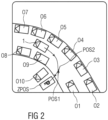
- Figure 2 shows a top view of a traffic situation with a vehicle 1 and several objects O1 to O10.
- the objects O1 to O10 are vehicles.
- vehicle 1 performs an automated parking maneuver in three maneuvers.
- a target position POS1 of a first maneuver is located on a roadway, with vehicle 1 To reach this target position POS1, vehicle 1 reverses from its displayed starting position and turns the steering to the left.
- a target position POS2 of a second maneuver is also on the roadway, whereby vehicle 1, to reach this target position POS2, drives forwards from the target position POS1 of the first maneuver and turns the steering to the right.
- a target position ZPOS of the entire parking maneuver i.e. after completion of a third maneuver, is in a parking space next to object O10. Vehicle 1 reaches this target position ZPOS starting from the target position POS2 of the second maneuver by reversing and turning the steering to the left.
- the remaining distance control In general, if the remaining distance control only has information about an (estimated) own motion and no further feedback from the vehicle environment available, the remaining distance control must be supplied with information about a required guidance of vehicle 1, which the remaining distance control must fulfill for a current maneuvering train.
- Figure 3 shows a probability p of an occurrence of remaining distances s after a target braking of a vehicle 1 has been carried out.
- a first parameter P1 relates, for example, to starting and stopping comfort
- a second parameter P2 relates, for example, to robustness against disturbances
- a third parameter relates to stability and reproducibility
- a fourth parameter P4 relates to the total duration of a maneuver
- a fifth parameter P5 relates to stopping accuracy.
- a remaining distance specification trajectory planner is designed to request different performance characteristics from a higher-level and/or lower-level controller. This results in a shift in the trade-offs.
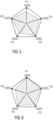
- the Figures 5 and 6 show dependency diagrams with different weightings of the parameters P1 to P5 for the high-precision mode ( Figure 5 ) and comfort mode ( Figure 6 ) and thus examples of how a compromise between the parameters P1 to P5 can be resolved for two different performance characteristics.
- the weighting of the parameters P1 to P5 depends on what a vehicle user considers pleasant. perceived and is therefore at least partially subject to subjective evaluation. It is also possible to configure more than the two performance characteristics shown (high-precision mode and comfort mode), such as an exploit stroke (maximum utilization of the remaining distance specification). This parameter could also be assigned to stopping accuracy, but here it refers to the avoidance of what is, from the customer's perspective, a very unpleasant retardation (starting off again in the same direction after premature target braking).
- a remaining distance controller could also be tuned to avoid this as often as possible, which de facto results in a shift and/or compression of the standard distribution of target braking to the left. It can be specified that the degree of fulfillment of this parameter is maximum for comfort mode or that the trajectory controller accepts premature stopping. In high-precision mode, it can be assumed that the parameter is fulfilled anyway, but a stricter controller will bring the vehicle to a stop too early more often.
- the parameter P3 concerning the stability and reproducibility of the maneuver and the parameter P5 concerning the stopping accuracy are given a higher weighting than the other parameters P1, P2, P4.
- the parameter P1 relating to starting and stopping comfort, the parameter P2 relating to robustness against disturbances and the parameter P4 relating to compliance with the total duration of a maneuvering train are given higher weighting than the other parameters P3 and P5.
- the high-precision mode continues to be implemented in comparison to the comfort mode within the framework of the setting of parameter P2, which concerns robustness against disturbances, in such a way that surface properties of a driving surface of the vehicle 1 have minimal influence on the accuracy, and rolling back of the vehicle 1 when starting on an incline and/or driving over a curb is not permitted.
- a release for rolling of the vehicle 1 against the engaged driving position is dependent on the clearance R and exceeding the remaining distance s in the last maneuver, for example during hard braking.
- the high-precision mode continues to be implemented in relation to the comfort mode within the framework of the setting of parameter P4, which concerns the total duration of a maneuvering train, in such a way that compliance with the total duration of a maneuvering train is given lower priority.
- the high-precision mode is activated, for example, when there is little clearance R in the direction of travel to the respective target position POS1, POS2, ZPOS.
- the number of maneuvers can also be minimized by avoiding underutilizing a specified remaining distance s, thus avoiding additional maneuvers.
- a continuation of a maneuver after vehicle 1 has come to a standstill is also permitted if premature target braking occurs.
- the high-precision mode is particularly useful in tight situations, for example, when an entire maneuver takes place in a confined environment, such as a one-way street, and all maneuvers must be executed with high accuracy, even though a current target position POS1, POS2, ZPOS offers sufficient clearance R.
- the high-precision mode is particularly useful when obstacles are nearby, in order to avoid overrunning a target position POS1, POS2, ZPOS when driving towards an obstacle. Furthermore, the high-precision mode is particularly useful when dynamic obstacles are nearby, whereby Collision avoidance algorithms may require a strict limitation of a maximum speed of the vehicle 1 to ensure collision avoidance in a current scene.
- the comfort mode continues to be implemented in contrast to the high-precision mode within the framework of the setting of parameter P2, which relates to robustness against disturbances, in such a way that a rollback of the vehicle 1 is permitted when starting on an incline and/or driving over a curb.
- a release for rolling of the vehicle 1 towards the engaged driving position is selected depending on the clearance R and an exceeding of the remaining distance s in the last maneuver, for example, during hard braking.
- the comfort mode continues to be implemented in relation to the high-precision mode within the framework of the setting of the parameter P3, which concerns the stability and reproducibility of the maneuver, in such a way that a greater tolerance to exceeding a maximum speed of the vehicle 1 is permitted and/or a reduced reproducibility of a maneuver delay is permitted.
- the comfort mode continues to be implemented in comparison to the high-precision mode within the framework of the setting of the parameter P4, which concerns the total duration of a maneuvering train, in such a way that, while maintaining the total duration of the maneuvering train, an acceleration of the starting process is permitted, an acceleration of reaching a maximum speed of the vehicle 1 is permitted and a greater uniformity of the braking process at a target position POS1, POS2, ZPOS is specified.
- a larger possible number of permitted maneuvers of the vehicle during or after which a remaining distance falls below a predetermined value a larger possible number of permitted maneuvers of the vehicle which at a An early stopping point can be terminated, and a larger standard deviation can be permitted.
- Maneuvers can also be aborted and replanned. Maneuvers with an early stopping point are permitted, for example, when switching from high-precision mode to comfort mode because more clearance R is available.
- the comfort mode is activated, for example, when there is a large clearance R in the direction of travel to the respective target position POS1, POS2, ZPOS.
- Figure 7 shows a block diagram of a possible embodiment of a system 2 for remaining distance control for a vehicle 1.
- System 2 comprises a real-world model 2.1, a trajectory management module 2.2, a remaining distance control module 2.3 and an ego-motion module 2.4.
- the trajectory management module 2.2 which is implemented on-board in the vehicle 1 or in an infrastructure external to the vehicle, receives the respective target position POS1, POS2, ZPOS of a maneuvering train from the model 2.1 of the real world and from the self-motion module 2.4, which determines self-motion data of the vehicle 1, for example from an inertial measurement sensor system, a radar-based sensor system and/or an approach speed detection, in particular standstill information SI and information SL about a gradient of a driving surface of the vehicle 1.
- the trajectory management module 2.2 determines a current situation and corresponding control parameters SP in a method step V2, for example a remaining distance of the vehicle 1 to an obstacle and a maximum speed of the vehicle 1 in a maneuvering train, and transmits these to the remaining distance control module 2.3.
- the remaining distance control module 2.3 begins in process step V3 with the remaining distance control, including a performance request for a current situation or scene and a respective maneuver.
- the performance request includes the mode in which the remaining distance control should be executed—that is, comfort mode or high-precision mode.
- the remaining distance control module 2.3 determines, in particular continuously, an estimated stopping distance in a method step V4 and transmits this to the trajectory management module 2.2.
- the trajectory management module 2.2 determines a clearance R of the vehicle 1 to an obstacle at the respective target position POS1, POS2, ZPOS of a maneuver in a process step V5.
- the trajectory management module 2.2 makes a request to change the performance requirement in a further process step V6, i.e. to change from comfort mode to high-precision mode or from high-precision mode to comfort mode.
- the trajectory management module 2.2 After performing a target braking, the trajectory management module 2.2 receives a result of the target braking in a further process step V7 and decides whether the result is acceptable. After each target braking, the trajectory management module 2.2 stores a remaining distance s and, depending on this, the stopping distance estimated in process step V4, and the result of the target braking, decides whether the trajectory needs to be replanned.
- next maneuvering step to reach the corresponding target position POS1, POS2, ZPOS is continued, taking into account the last value of the remaining distance s when selecting the comfort mode in the high-precision mode, until the target position ZPOS of the entire maneuver is reached.
- Figure 8 are a course of a remaining distance s and a vehicle speed v as a function of time t during a maneuver with two maneuver moves, for example a parking maneuver according to Figure 1 , shown.
- the remaining distance control In addition to decelerating vehicle 1, the remaining distance control also accelerates vehicle 1 in order to carry out a complete maneuver from starting up to reaching a standstill again.
Landscapes
- Engineering & Computer Science (AREA)
- Transportation (AREA)
- Mechanical Engineering (AREA)
- Automation & Control Theory (AREA)
- Physics & Mathematics (AREA)
- Mathematical Physics (AREA)
- Chemical & Material Sciences (AREA)
- Combustion & Propulsion (AREA)
- Control Of Driving Devices And Active Controlling Of Vehicle (AREA)
- Regulating Braking Force (AREA)
- Traffic Control Systems (AREA)
Claims (10)
- Procédé permettant une commande de distance restante pour un véhicule (1) pour l'arrêt du véhicule (1) à une position d'arrêt prédéfinie, dans lequel la commande de distance restante est réalisée sélectivement dans l'un de deux modes, dont l'un est un mode confort et l'autre est un mode haute précision,
caractérisé en ce que- le véhicule (1) est guidé en plusieurs déplacements de manœuvre prédéfinis vers la position d'arrêt prédéfinie, dans lequel les déplacements de manœuvre individuels se terminent respectivement dans une position cible (POS1, POS2, ZPOS) à laquelle le véhicule (1) doit être arrêté,- une situation actuelle est déterminée en tenant compte d'au moins un déplacement de manœuvre déjà exécuté et- en fonction de la situation actuelle, on choisit dans lequel des deux modes la commande de distance restante doit être réalisée, dans lequel le choix est basé sur une comparaison de la situation actuelle avec une liste de situations prédéfinies, dans lequel dans la liste est prédéterminé, pour chacune des situations prédéfinies, dans quel mode la commande de distance restante doit être réalisée. - Procédé selon la revendication 1, dans lequel la comparaison de la situation actuelle avec la liste des situations prédéfinies est effectuée en identifiant, en fonction de la situation actuelle, dans la liste des situations prédéfinies, une situation prédéfinie correspondant à la situation actuelle et en sélectionnant le mode prédéterminé pour cette situation pour la réalisation de la commande de distance restante.
- Procédé selon la revendication 1 ou 2, dans lequel la situation actuelle est déterminée en tenant compte d'une précision d'exécution de manœuvre de l'au moins un déplacement de manœuvre déjà exécuté.
- Procédé selon l'une des revendications précédentes, dans lequel, la situation actuelle est déterminée en tenant compte d'une précision d'arrêt avec laquelle le véhicule (1) a atteint la position cible (POS1, POS2, ZPOS) respective dans au moins un déplacement de manœuvre exécuté.
- Procédé selon l'une des revendications précédentes, dans lequel la situation actuelle est déterminée en tenant compte d'au moins un déplacement de manœuvre exécuté qui s'est terminé à un point d'arrêt précoce avant d'atteindre la position cible (POS1, POS2, ZPOS) respective.
- Procédé selon l'une des revendications précédentes, dans lequel la situation actuelle est déterminée en tenant compte d'au moins un déplacement de manœuvre, lors de ou après l'exécution duquel une distance restante (s) résiduelle vers la position cible (POS1, POS2, ZPOS) respective est inférieure à une valeur prédéfinie.
- Procédé selon l'une des revendications précédentes, dans lequel des dispersions dans les précisions d'arrêt de tous les déplacements de manœuvre exécutés sont déterminées et enregistrées et sont prises en compte lors de la détermination de la situation actuelle.
- Procédé selon l'une des revendications précédentes,
dans lequel la situation actuelle est déterminée en tenant compte- d'une pente d'une surface de conduite du véhicule (1) et/ou- d'un espace libre (R) entre le véhicule (1) et au moins un obstacle. - Procédé selon l'une des revendications précédentes,
dans lequel en mode confort par rapport au mode haute précision- un plus grand nombre possible de déplacements de manœuvre autorisés du véhicule (1), lors de ou après l'exécution desquels une distance restante (s) résiduelle est inférieure à une valeur prédéfinie, est prédéfini et/ou- un plus grand nombre possible de déplacements de manœuvre autorisés du véhicule (1), qui se terminent à un point d'arrêt précoce, est prédéfini et/ou- un moment possible plus précoce est autorisé pour une opération de démarrage dans un déplacement de manœuvre et/ou- une plus grande régularité de consigne d'une opération de freinage sur une position cible (POS1, POS2, ZPOS) est prédéfinie et/ou- un recul du véhicule (1) est autorisé lors d'une opération démarrage en côte et/ou du franchissement d'une bordure de trottoir et/ou- une plus grande tolérance est autorisée vis-à-vis d'un dépassement d'une vitesse maximale du véhicule (1) et/ou- une reproductibilité réduite d'un déplacement de manœuvre est autorisée et/ou- une accélération de l'opération de démarrage est autorisée, une accélération d'une atteinte de la vitesse maximale est autorisée et une plus grande régularité d'une opération de freinage à une position cible (POS1, POS2, ZPOS) est prédéfinie, tout en respectant une durée totale d'un déplacement de manœuvre. - Procédé selon l'une des revendications précédentes,
dans lequel en mode haute précision par rapport au mode confort- un nombre possible plus faible de déplacements de manœuvre autorisés du véhicule (1), lors de ou après l'exécution desquels une distance restante (s) résiduelle est inférieure à une valeur prédéfinie, est prédéfini et/ou- une poursuite de déplacements de manœuvre du véhicule (1), qui se terminent à un point d'arrêt précoce, est autorisée et/ou- des moments plus tardifs sont autorisés pour des opérations de démarrage des déplacements de manœuvre et/ou- une régularité de consigne plus faible d'une opération de freinage sur une position cible (POS1, POS2, ZPOS) est autorisée et/ou- un recul du véhicule (1) n'est pas autorisé lors d'une opération démarrage en côte et/ou du franchissement d'une bordure de trottoir et/ou- une tolérance moindre est autorisée vis-à-vis d'un dépassement d'une vitesse maximale du véhicule (1) et/ou- une reproductibilité accrue d'un déplacement de manœuvre est prédéfinie et/ou- une faible priorisation d'un respect d'une durée totale d'un déplacement de manœuvre est autorisée.
Applications Claiming Priority (2)
| Application Number | Priority Date | Filing Date | Title |
|---|---|---|---|
| DE102022001119.0A DE102022001119A1 (de) | 2022-03-31 | 2022-03-31 | Verfahren zu einer Restwegregelung für ein Fahrzeug |
| PCT/EP2023/054838 WO2023186429A1 (fr) | 2022-03-31 | 2023-02-27 | Procédé de commande d'une distance restante pour un véhicule |
Publications (3)
| Publication Number | Publication Date |
|---|---|
| EP4460448A1 EP4460448A1 (fr) | 2024-11-13 |
| EP4460448C0 EP4460448C0 (fr) | 2025-05-07 |
| EP4460448B1 true EP4460448B1 (fr) | 2025-05-07 |
Family
ID=85505640
Family Applications (1)
| Application Number | Title | Priority Date | Filing Date |
|---|---|---|---|
| EP23709326.5A Active EP4460448B1 (fr) | 2022-03-31 | 2023-02-27 | Procédé de commande d'une distance restante pour un véhicule |
Country Status (7)
| Country | Link |
|---|---|
| US (1) | US20250206311A1 (fr) |
| EP (1) | EP4460448B1 (fr) |
| JP (1) | JP7746599B2 (fr) |
| KR (1) | KR20240131477A (fr) |
| CN (1) | CN118843570A (fr) |
| DE (1) | DE102022001119A1 (fr) |
| WO (1) | WO2023186429A1 (fr) |
Families Citing this family (2)
| Publication number | Priority date | Publication date | Assignee | Title |
|---|---|---|---|---|
| US12583479B2 (en) * | 2024-03-06 | 2026-03-24 | GM Global Technology Operations LLC | Vehicle trajectory control for precise route following |
| DE102024206568A1 (de) | 2024-07-11 | 2026-01-15 | Robert Bosch Gesellschaft mit beschränkter Haftung | Verfahren zum Ausführen eines autonomen Parkmanövers, Parkvorrichtung und Fahrzeug |
Family Cites Families (11)
| Publication number | Priority date | Publication date | Assignee | Title |
|---|---|---|---|---|
| DE102013013867A1 (de) * | 2013-08-20 | 2015-03-12 | Audi Ag | Kraftfahrzeug und Verfahren zur Steuerung eines Kraftfahrzeugs |
| DE102014215259B4 (de) | 2014-08-04 | 2017-03-02 | Bayerische Motoren Werke Aktiengesellschaft | Verfahren und Vorrichtung zum automatischen Wählen eines Fahrmodus an einem Kraftfahrzeug |
| DE102015200044B4 (de) * | 2015-01-06 | 2022-07-07 | Ford Global Technologies, Llc | Verfahren und Vorrichtung zur Unterstützung eines Manövriervorganges eines Kraftfahrzeugs |
| DE102016006213A1 (de) | 2016-05-19 | 2017-02-09 | Daimler Ag | Verfahren zur Durchführung eines automatischen Fahrmanövers eines Fahrzeugs und Fahrzeug |
| DE102017206310B4 (de) * | 2017-04-12 | 2022-03-10 | Ford Global Technologies, Llc | Fahrassistenzsystem mit Kurzdistanz-Abstandsbestimmung und Betriebsverfahren |
| US11155257B2 (en) * | 2017-06-26 | 2021-10-26 | Hitachi Automotive Systems, Ltd. | Automatic parking control device |
| CN108545069B (zh) * | 2018-03-30 | 2020-03-10 | 北京图森未来科技有限公司 | 一种车辆停车控制方法及装置 |
| DE102018207964A1 (de) | 2018-05-22 | 2019-11-28 | Zf Friedrichshafen Ag | Verfahren und Steuergerät zum Steuern eines Fahrzeugs |
| WO2020095636A1 (fr) * | 2018-11-09 | 2020-05-14 | 日立オートモティブシステムズ株式会社 | Dispositif d'aide au stationnement et procédé d'aide au stationnement |
| DE102020201921A1 (de) | 2020-02-17 | 2021-08-19 | Robert Bosch Gesellschaft mit beschränkter Haftung | Verfahren und Fahrerassistenzsystem zur Regelung der Geschwindigkeit einer Längsbewegung eines Fahrzeugs |
| DE102021005088A1 (de) | 2021-10-12 | 2021-11-25 | Daimler Ag | Verfahren zur Regelung oder Steuerung einer Längsbewegung eines Fahrzeuges |
-
2022
- 2022-03-31 DE DE102022001119.0A patent/DE102022001119A1/de active Pending
-
2023
- 2023-02-27 CN CN202380025944.1A patent/CN118843570A/zh active Pending
- 2023-02-27 WO PCT/EP2023/054838 patent/WO2023186429A1/fr not_active Ceased
- 2023-02-27 US US18/852,043 patent/US20250206311A1/en active Pending
- 2023-02-27 KR KR1020247028241A patent/KR20240131477A/ko active Pending
- 2023-02-27 EP EP23709326.5A patent/EP4460448B1/fr active Active
- 2023-02-27 JP JP2024557442A patent/JP7746599B2/ja active Active
Also Published As
| Publication number | Publication date |
|---|---|
| US20250206311A1 (en) | 2025-06-26 |
| WO2023186429A1 (fr) | 2023-10-05 |
| DE102022001119A1 (de) | 2023-10-05 |
| JP2025510936A (ja) | 2025-04-15 |
| EP4460448C0 (fr) | 2025-05-07 |
| EP4460448A1 (fr) | 2024-11-13 |
| KR20240131477A (ko) | 2024-08-30 |
| CN118843570A (zh) | 2024-10-25 |
| JP7746599B2 (ja) | 2025-09-30 |
Similar Documents
| Publication | Publication Date | Title |
|---|---|---|
| EP3144920B1 (fr) | Détermination d'une trajectoire théorique d'un véhicule | |
| EP3144197B1 (fr) | Procede d'adaptation automatique de l'acceleration sur un vehicule automobile | |
| DE102020108857A1 (de) | Verfahren zur Planung einer Soll-Trajektorie | |
| EP2456653B1 (fr) | Dispositif de stationnement d'un véhicule au moyen de parcours de stationnement qui présentent au moins une trajectoire | |
| EP4460448B1 (fr) | Procédé de commande d'une distance restante pour un véhicule | |
| DE102017118651A1 (de) | Verfahren und System zur Kollisionsvermeidung eines Fahrzeugs | |
| DE102009006331A1 (de) | Robuste Ein- und Ausparkstrategie | |
| WO2017207378A1 (fr) | Procédé de manœuvre d'un véhicule automobile dans un emplacement de stationnement par détermination d'une trajectoire de prise de stationnement, système d'aide à la conduite et véhicule automobile | |
| DE102014003343A1 (de) | Verfahren zum Ermitteln eines Spurwechselbedarfs eines Systemfahrzeugs | |
| WO2019096357A1 (fr) | Procédé de commande d'une opération de stationnement d'un véhicule automobile | |
| DE102019129879A1 (de) | Verfahren sowie Steuergerät zum Steuern eines Kraftfahrzeugs | |
| DE102011109712A1 (de) | Verfahren und Vorrichtung zum unterstützten Einparken eines Kraftfahrzeugs | |
| EP4363294A1 (fr) | Procédé de replanification d'une trajectoire de stationnement | |
| DE102011086440A1 (de) | Verfahren zum Unterstützen der Durchführung eines Parkvorgangs eines Fahrzeuges, Parkassistenzsystem für ein Fahrzeug sowie Fahrzeug | |
| DE102010006979A1 (de) | Verfahren und Vorrichtung zur Einparkunterstützung | |
| EP4392310B1 (fr) | Procédé pour commander un véhicule à l'intérieur d'un site confiné, unité de commande et véhicule | |
| EP4565467A1 (fr) | Procédé et dispositif d'aide au stationnement pour la planification dynamique d'une trajectoire de stationnement d'un véhicule pendant un processus de stationnement au moins partiellement automatique | |
| DE102022212567A1 (de) | Verfahren zur Kontrolle eines Spurwechsels eines Fahrzeuges | |
| DE19601831C5 (de) | Verfahren zur Erkennung von relevanten Objekten | |
| DE102022104696A1 (de) | Verfahren zum Steuern eines Fahrzeuges in einer Stausituation sowie Steuergerät und Fahrzeug | |
| DE102023109804B3 (de) | Durchführen eines komplexen Fahrspurwechsels bei einer Geschwindigkeitsregelung | |
| DE102020211260A1 (de) | Einlernen von Trajektorien bei einem Kraftfahrzeug | |
| DE102018213552A1 (de) | Betriebsverfahren, Vorrichtung, sowie korrespondierendes Computerprodukt zum Betreiben eines Fahrzeugs | |
| DE102017116740A1 (de) | Verfahren zum zumindest semi-autonomen Einparken eines Kraftfahrzeugs, Fahrerassistenzsystem sowie Kraftfahrzeug | |
| DE102021206007A1 (de) | Verfahren zum Durchführen eines Anfahrvorgangs für ein wenigstens teilweise automatisiertes Fahrzeug |
Legal Events
| Date | Code | Title | Description |
|---|---|---|---|
| STAA | Information on the status of an ep patent application or granted ep patent |
Free format text: STATUS: UNKNOWN |
|
| STAA | Information on the status of an ep patent application or granted ep patent |
Free format text: STATUS: THE INTERNATIONAL PUBLICATION HAS BEEN MADE |
|
| PUAI | Public reference made under article 153(3) epc to a published international application that has entered the european phase |
Free format text: ORIGINAL CODE: 0009012 |
|
| STAA | Information on the status of an ep patent application or granted ep patent |
Free format text: STATUS: REQUEST FOR EXAMINATION WAS MADE |
|
| 17P | Request for examination filed |
Effective date: 20240809 |
|
| AK | Designated contracting states |
Kind code of ref document: A1 Designated state(s): AL AT BE BG CH CY CZ DE DK EE ES FI FR GB GR HR HU IE IS IT LI LT LU LV MC ME MK MT NL NO PL PT RO RS SE SI SK SM TR |
|
| GRAP | Despatch of communication of intention to grant a patent |
Free format text: ORIGINAL CODE: EPIDOSNIGR1 |
|
| STAA | Information on the status of an ep patent application or granted ep patent |
Free format text: STATUS: GRANT OF PATENT IS INTENDED |
|
| GRAS | Grant fee paid |
Free format text: ORIGINAL CODE: EPIDOSNIGR3 |
|
| DAV | Request for validation of the european patent (deleted) | ||
| DAX | Request for extension of the european patent (deleted) | ||
| INTG | Intention to grant announced |
Effective date: 20250227 |
|
| GRAA | (expected) grant |
Free format text: ORIGINAL CODE: 0009210 |
|
| STAA | Information on the status of an ep patent application or granted ep patent |
Free format text: STATUS: THE PATENT HAS BEEN GRANTED |
|
| AK | Designated contracting states |
Kind code of ref document: B1 Designated state(s): AL AT BE BG CH CY CZ DE DK EE ES FI FR GB GR HR HU IE IS IT LI LT LU LV MC ME MK MT NL NO PL PT RO RS SE SI SK SM TR |
|
| REG | Reference to a national code |
Ref country code: GB Ref legal event code: FG4D Free format text: NOT ENGLISH |
|
| REG | Reference to a national code |
Ref country code: CH Ref legal event code: EP |
|
| REG | Reference to a national code |
Ref country code: DE Ref legal event code: R096 Ref document number: 502023000964 Country of ref document: DE |
|
| REG | Reference to a national code |
Ref country code: IE Ref legal event code: FG4D Free format text: LANGUAGE OF EP DOCUMENT: GERMAN |
|
| U01 | Request for unitary effect filed |
Effective date: 20250530 |
|
| U07 | Unitary effect registered |
Designated state(s): AT BE BG DE DK EE FI FR IT LT LU LV MT NL PT RO SE SI Effective date: 20250610 |
|
| PG25 | Lapsed in a contracting state [announced via postgrant information from national office to epo] |
Ref country code: ES Free format text: LAPSE BECAUSE OF FAILURE TO SUBMIT A TRANSLATION OF THE DESCRIPTION OR TO PAY THE FEE WITHIN THE PRESCRIBED TIME-LIMIT Effective date: 20250507 |
|
| PG25 | Lapsed in a contracting state [announced via postgrant information from national office to epo] |
Ref country code: GR Free format text: LAPSE BECAUSE OF FAILURE TO SUBMIT A TRANSLATION OF THE DESCRIPTION OR TO PAY THE FEE WITHIN THE PRESCRIBED TIME-LIMIT Effective date: 20250808 Ref country code: NO Free format text: LAPSE BECAUSE OF FAILURE TO SUBMIT A TRANSLATION OF THE DESCRIPTION OR TO PAY THE FEE WITHIN THE PRESCRIBED TIME-LIMIT Effective date: 20250807 |
|
| PG25 | Lapsed in a contracting state [announced via postgrant information from national office to epo] |
Ref country code: PL Free format text: LAPSE BECAUSE OF FAILURE TO SUBMIT A TRANSLATION OF THE DESCRIPTION OR TO PAY THE FEE WITHIN THE PRESCRIBED TIME-LIMIT Effective date: 20250507 |
|
| PG25 | Lapsed in a contracting state [announced via postgrant information from national office to epo] |
Ref country code: HR Free format text: LAPSE BECAUSE OF FAILURE TO SUBMIT A TRANSLATION OF THE DESCRIPTION OR TO PAY THE FEE WITHIN THE PRESCRIBED TIME-LIMIT Effective date: 20250507 |
|
| PG25 | Lapsed in a contracting state [announced via postgrant information from national office to epo] |
Ref country code: RS Free format text: LAPSE BECAUSE OF FAILURE TO SUBMIT A TRANSLATION OF THE DESCRIPTION OR TO PAY THE FEE WITHIN THE PRESCRIBED TIME-LIMIT Effective date: 20250807 |
|
| PG25 | Lapsed in a contracting state [announced via postgrant information from national office to epo] |
Ref country code: IS Free format text: LAPSE BECAUSE OF FAILURE TO SUBMIT A TRANSLATION OF THE DESCRIPTION OR TO PAY THE FEE WITHIN THE PRESCRIBED TIME-LIMIT Effective date: 20250907 |
|
| PG25 | Lapsed in a contracting state [announced via postgrant information from national office to epo] |
Ref country code: SM Free format text: LAPSE BECAUSE OF FAILURE TO SUBMIT A TRANSLATION OF THE DESCRIPTION OR TO PAY THE FEE WITHIN THE PRESCRIBED TIME-LIMIT Effective date: 20250507 |
|
| PG25 | Lapsed in a contracting state [announced via postgrant information from national office to epo] |
Ref country code: CZ Free format text: LAPSE BECAUSE OF FAILURE TO SUBMIT A TRANSLATION OF THE DESCRIPTION OR TO PAY THE FEE WITHIN THE PRESCRIBED TIME-LIMIT Effective date: 20250507 |
|
| PG25 | Lapsed in a contracting state [announced via postgrant information from national office to epo] |
Ref country code: SK Free format text: LAPSE BECAUSE OF FAILURE TO SUBMIT A TRANSLATION OF THE DESCRIPTION OR TO PAY THE FEE WITHIN THE PRESCRIBED TIME-LIMIT Effective date: 20250507 |
|
| PLBE | No opposition filed within time limit |
Free format text: ORIGINAL CODE: 0009261 |
|
| STAA | Information on the status of an ep patent application or granted ep patent |
Free format text: STATUS: NO OPPOSITION FILED WITHIN TIME LIMIT |
|
| REG | Reference to a national code |
Ref country code: CH Ref legal event code: L10 Free format text: ST27 STATUS EVENT CODE: U-0-0-L10-L00 (AS PROVIDED BY THE NATIONAL OFFICE) Effective date: 20260318 |
|
| U20 | Renewal fee for the european patent with unitary effect paid |
Year of fee payment: 4 Effective date: 20260224 |
|
| 26N | No opposition filed |
Effective date: 20260210 |