EP4471112A2 - Procédé de fabrication de briquettes à partir de déchets et briquette à partir de déchets - Google Patents
Procédé de fabrication de briquettes à partir de déchets et briquette à partir de déchets Download PDFInfo
- Publication number
- EP4471112A2 EP4471112A2 EP24207880.6A EP24207880A EP4471112A2 EP 4471112 A2 EP4471112 A2 EP 4471112A2 EP 24207880 A EP24207880 A EP 24207880A EP 4471112 A2 EP4471112 A2 EP 4471112A2
- Authority
- EP
- European Patent Office
- Prior art keywords
- briquette
- fraction
- waste material
- briquettes
- maximum
- Prior art date
- Legal status (The legal status is an assumption and is not a legal conclusion. Google has not performed a legal analysis and makes no representation as to the accuracy of the status listed.)
- Pending
Links
Images

Classifications
-
- C—CHEMISTRY; METALLURGY
- C10—PETROLEUM, GAS OR COKE INDUSTRIES; TECHNICAL GASES CONTAINING CARBON MONOXIDE; FUELS; LUBRICANTS; PEAT
- C10L—FUELS NOT OTHERWISE PROVIDED FOR; NATURAL GAS; SYNTHETIC NATURAL GAS OBTAINED BY PROCESSES NOT COVERED BY SUBCLASSES C10G OR C10K; LIQUIFIED PETROLEUM GAS; USE OF ADDITIVES TO FUELS OR FIRES; FIRE-LIGHTERS
- C10L5/00—Solid fuels
- C10L5/40—Solid fuels essentially based on materials of non-mineral origin
-
- C—CHEMISTRY; METALLURGY
- C22—METALLURGY; FERROUS OR NON-FERROUS ALLOYS; TREATMENT OF ALLOYS OR NON-FERROUS METALS
- C22B—PRODUCTION AND REFINING OF METALS; PRETREATMENT OF RAW MATERIALS
- C22B9/00—General processes of refining or remelting of metals; Apparatus for electroslag or arc remelting of metals
- C22B9/16—Remelting metals
-
- C—CHEMISTRY; METALLURGY
- C22—METALLURGY; FERROUS OR NON-FERROUS ALLOYS; TREATMENT OF ALLOYS OR NON-FERROUS METALS
- C22B—PRODUCTION AND REFINING OF METALS; PRETREATMENT OF RAW MATERIALS
- C22B1/00—Preliminary treatment of ores or scrap
- C22B1/02—Roasting processes
-
- C—CHEMISTRY; METALLURGY
- C10—PETROLEUM, GAS OR COKE INDUSTRIES; TECHNICAL GASES CONTAINING CARBON MONOXIDE; FUELS; LUBRICANTS; PEAT
- C10L—FUELS NOT OTHERWISE PROVIDED FOR; NATURAL GAS; SYNTHETIC NATURAL GAS OBTAINED BY PROCESSES NOT COVERED BY SUBCLASSES C10G OR C10K; LIQUIFIED PETROLEUM GAS; USE OF ADDITIVES TO FUELS OR FIRES; FIRE-LIGHTERS
- C10L5/00—Solid fuels
- C10L5/02—Solid fuels such as briquettes consisting mainly of carbonaceous materials of mineral or non-mineral origin
- C10L5/04—Raw material of mineral origin to be used; Pretreatment thereof
-
- C—CHEMISTRY; METALLURGY
- C10—PETROLEUM, GAS OR COKE INDUSTRIES; TECHNICAL GASES CONTAINING CARBON MONOXIDE; FUELS; LUBRICANTS; PEAT
- C10L—FUELS NOT OTHERWISE PROVIDED FOR; NATURAL GAS; SYNTHETIC NATURAL GAS OBTAINED BY PROCESSES NOT COVERED BY SUBCLASSES C10G OR C10K; LIQUIFIED PETROLEUM GAS; USE OF ADDITIVES TO FUELS OR FIRES; FIRE-LIGHTERS
- C10L5/00—Solid fuels
- C10L5/02—Solid fuels such as briquettes consisting mainly of carbonaceous materials of mineral or non-mineral origin
- C10L5/06—Methods of shaping, e.g. pelletizing or briquetting
- C10L5/08—Methods of shaping, e.g. pelletizing or briquetting without the aid of extraneous binders
-
- C—CHEMISTRY; METALLURGY
- C21—METALLURGY OF IRON
- C21B—MANUFACTURE OF IRON OR STEEL
- C21B5/00—Making pig-iron in the blast furnace
- C21B5/001—Injecting additional fuel or reducing agents
-
- C—CHEMISTRY; METALLURGY
- C21—METALLURGY OF IRON
- C21B—MANUFACTURE OF IRON OR STEEL
- C21B5/00—Making pig-iron in the blast furnace
- C21B5/06—Making pig-iron in the blast furnace using top gas in the blast furnace process
-
- C—CHEMISTRY; METALLURGY
- C21—METALLURGY OF IRON
- C21B—MANUFACTURE OF IRON OR STEEL
- C21B7/00—Blast furnaces
- C21B7/002—Evacuating and treating of exhaust gases
-
- C—CHEMISTRY; METALLURGY
- C21—METALLURGY OF IRON
- C21C—PROCESSING OF PIG-IRON, e.g. REFINING, MANUFACTURE OF WROUGHT-IRON OR STEEL; TREATMENT IN MOLTEN STATE OF FERROUS ALLOYS
- C21C7/00—Treating molten ferrous alloys, e.g. steel, not covered by groups C21C1/00 - C21C5/00
- C21C7/0006—Adding metallic additives
-
- C—CHEMISTRY; METALLURGY
- C21—METALLURGY OF IRON
- C21C—PROCESSING OF PIG-IRON, e.g. REFINING, MANUFACTURE OF WROUGHT-IRON OR STEEL; TREATMENT IN MOLTEN STATE OF FERROUS ALLOYS
- C21C7/00—Treating molten ferrous alloys, e.g. steel, not covered by groups C21C1/00 - C21C5/00
- C21C7/0025—Adding carbon material
-
- C—CHEMISTRY; METALLURGY
- C22—METALLURGY; FERROUS OR NON-FERROUS ALLOYS; TREATMENT OF ALLOYS OR NON-FERROUS METALS
- C22B—PRODUCTION AND REFINING OF METALS; PRETREATMENT OF RAW MATERIALS
- C22B1/00—Preliminary treatment of ores or scrap
- C22B1/14—Agglomerating; Briquetting; Binding; Granulating
- C22B1/24—Binding; Briquetting ; Granulating
-
- C—CHEMISTRY; METALLURGY
- C22—METALLURGY; FERROUS OR NON-FERROUS ALLOYS; TREATMENT OF ALLOYS OR NON-FERROUS METALS
- C22B—PRODUCTION AND REFINING OF METALS; PRETREATMENT OF RAW MATERIALS
- C22B15/00—Obtaining copper
- C22B15/0026—Pyrometallurgy
- C22B15/0054—Slag, slime, speiss, or dross treating
-
- C—CHEMISTRY; METALLURGY
- C22—METALLURGY; FERROUS OR NON-FERROUS ALLOYS; TREATMENT OF ALLOYS OR NON-FERROUS METALS
- C22B—PRODUCTION AND REFINING OF METALS; PRETREATMENT OF RAW MATERIALS
- C22B15/00—Obtaining copper
- C22B15/0026—Pyrometallurgy
- C22B15/0056—Scrap treating
-
- C—CHEMISTRY; METALLURGY
- C10—PETROLEUM, GAS OR COKE INDUSTRIES; TECHNICAL GASES CONTAINING CARBON MONOXIDE; FUELS; LUBRICANTS; PEAT
- C10L—FUELS NOT OTHERWISE PROVIDED FOR; NATURAL GAS; SYNTHETIC NATURAL GAS OBTAINED BY PROCESSES NOT COVERED BY SUBCLASSES C10G OR C10K; LIQUIFIED PETROLEUM GAS; USE OF ADDITIVES TO FUELS OR FIRES; FIRE-LIGHTERS
- C10L2200/00—Components of fuel compositions
- C10L2200/02—Inorganic or organic compounds containing atoms other than C, H or O, e.g. organic compounds containing heteroatoms or metal organic complexes
- C10L2200/0204—Metals or alloys
-
- C—CHEMISTRY; METALLURGY
- C10—PETROLEUM, GAS OR COKE INDUSTRIES; TECHNICAL GASES CONTAINING CARBON MONOXIDE; FUELS; LUBRICANTS; PEAT
- C10L—FUELS NOT OTHERWISE PROVIDED FOR; NATURAL GAS; SYNTHETIC NATURAL GAS OBTAINED BY PROCESSES NOT COVERED BY SUBCLASSES C10G OR C10K; LIQUIFIED PETROLEUM GAS; USE OF ADDITIVES TO FUELS OR FIRES; FIRE-LIGHTERS
- C10L2200/00—Components of fuel compositions
- C10L2200/02—Inorganic or organic compounds containing atoms other than C, H or O, e.g. organic compounds containing heteroatoms or metal organic complexes
- C10L2200/0204—Metals or alloys
- C10L2200/0209—Group I metals: Li, Na, K, Rb, Cs, Fr, Cu, Ag, Au
-
- C—CHEMISTRY; METALLURGY
- C10—PETROLEUM, GAS OR COKE INDUSTRIES; TECHNICAL GASES CONTAINING CARBON MONOXIDE; FUELS; LUBRICANTS; PEAT
- C10L—FUELS NOT OTHERWISE PROVIDED FOR; NATURAL GAS; SYNTHETIC NATURAL GAS OBTAINED BY PROCESSES NOT COVERED BY SUBCLASSES C10G OR C10K; LIQUIFIED PETROLEUM GAS; USE OF ADDITIVES TO FUELS OR FIRES; FIRE-LIGHTERS
- C10L2200/00—Components of fuel compositions
- C10L2200/04—Organic compounds
- C10L2200/0461—Fractions defined by their origin
- C10L2200/0469—Renewables or materials of biological origin
-
- C—CHEMISTRY; METALLURGY
- C10—PETROLEUM, GAS OR COKE INDUSTRIES; TECHNICAL GASES CONTAINING CARBON MONOXIDE; FUELS; LUBRICANTS; PEAT
- C10L—FUELS NOT OTHERWISE PROVIDED FOR; NATURAL GAS; SYNTHETIC NATURAL GAS OBTAINED BY PROCESSES NOT COVERED BY SUBCLASSES C10G OR C10K; LIQUIFIED PETROLEUM GAS; USE OF ADDITIVES TO FUELS OR FIRES; FIRE-LIGHTERS
- C10L2230/00—Function and purpose of a components of a fuel or the composition as a whole
- C10L2230/08—Inhibitors
-
- C—CHEMISTRY; METALLURGY
- C10—PETROLEUM, GAS OR COKE INDUSTRIES; TECHNICAL GASES CONTAINING CARBON MONOXIDE; FUELS; LUBRICANTS; PEAT
- C10L—FUELS NOT OTHERWISE PROVIDED FOR; NATURAL GAS; SYNTHETIC NATURAL GAS OBTAINED BY PROCESSES NOT COVERED BY SUBCLASSES C10G OR C10K; LIQUIFIED PETROLEUM GAS; USE OF ADDITIVES TO FUELS OR FIRES; FIRE-LIGHTERS
- C10L2290/00—Fuel preparation or upgrading, processes or apparatus therefore, comprising specific process steps or apparatus units
- C10L2290/02—Combustion or pyrolysis
-
- C—CHEMISTRY; METALLURGY
- C10—PETROLEUM, GAS OR COKE INDUSTRIES; TECHNICAL GASES CONTAINING CARBON MONOXIDE; FUELS; LUBRICANTS; PEAT
- C10L—FUELS NOT OTHERWISE PROVIDED FOR; NATURAL GAS; SYNTHETIC NATURAL GAS OBTAINED BY PROCESSES NOT COVERED BY SUBCLASSES C10G OR C10K; LIQUIFIED PETROLEUM GAS; USE OF ADDITIVES TO FUELS OR FIRES; FIRE-LIGHTERS
- C10L2290/00—Fuel preparation or upgrading, processes or apparatus therefore, comprising specific process steps or apparatus units
- C10L2290/24—Mixing, stirring of fuel components
-
- C—CHEMISTRY; METALLURGY
- C10—PETROLEUM, GAS OR COKE INDUSTRIES; TECHNICAL GASES CONTAINING CARBON MONOXIDE; FUELS; LUBRICANTS; PEAT
- C10L—FUELS NOT OTHERWISE PROVIDED FOR; NATURAL GAS; SYNTHETIC NATURAL GAS OBTAINED BY PROCESSES NOT COVERED BY SUBCLASSES C10G OR C10K; LIQUIFIED PETROLEUM GAS; USE OF ADDITIVES TO FUELS OR FIRES; FIRE-LIGHTERS
- C10L2290/00—Fuel preparation or upgrading, processes or apparatus therefore, comprising specific process steps or apparatus units
- C10L2290/28—Cutting, disintegrating, shredding or grinding
-
- C—CHEMISTRY; METALLURGY
- C10—PETROLEUM, GAS OR COKE INDUSTRIES; TECHNICAL GASES CONTAINING CARBON MONOXIDE; FUELS; LUBRICANTS; PEAT
- C10L—FUELS NOT OTHERWISE PROVIDED FOR; NATURAL GAS; SYNTHETIC NATURAL GAS OBTAINED BY PROCESSES NOT COVERED BY SUBCLASSES C10G OR C10K; LIQUIFIED PETROLEUM GAS; USE OF ADDITIVES TO FUELS OR FIRES; FIRE-LIGHTERS
- C10L2290/00—Fuel preparation or upgrading, processes or apparatus therefore, comprising specific process steps or apparatus units
- C10L2290/30—Pressing, compressing or compacting
-
- C—CHEMISTRY; METALLURGY
- C10—PETROLEUM, GAS OR COKE INDUSTRIES; TECHNICAL GASES CONTAINING CARBON MONOXIDE; FUELS; LUBRICANTS; PEAT
- C10L—FUELS NOT OTHERWISE PROVIDED FOR; NATURAL GAS; SYNTHETIC NATURAL GAS OBTAINED BY PROCESSES NOT COVERED BY SUBCLASSES C10G OR C10K; LIQUIFIED PETROLEUM GAS; USE OF ADDITIVES TO FUELS OR FIRES; FIRE-LIGHTERS
- C10L2290/00—Fuel preparation or upgrading, processes or apparatus therefore, comprising specific process steps or apparatus units
- C10L2290/52—Hoppers
-
- C—CHEMISTRY; METALLURGY
- C10—PETROLEUM, GAS OR COKE INDUSTRIES; TECHNICAL GASES CONTAINING CARBON MONOXIDE; FUELS; LUBRICANTS; PEAT
- C10L—FUELS NOT OTHERWISE PROVIDED FOR; NATURAL GAS; SYNTHETIC NATURAL GAS OBTAINED BY PROCESSES NOT COVERED BY SUBCLASSES C10G OR C10K; LIQUIFIED PETROLEUM GAS; USE OF ADDITIVES TO FUELS OR FIRES; FIRE-LIGHTERS
- C10L5/00—Solid fuels
- C10L5/02—Solid fuels such as briquettes consisting mainly of carbonaceous materials of mineral or non-mineral origin
- C10L5/34—Other details of the shaped fuels, e.g. briquettes
- C10L5/36—Shape
- C10L5/361—Briquettes
-
- C—CHEMISTRY; METALLURGY
- C10—PETROLEUM, GAS OR COKE INDUSTRIES; TECHNICAL GASES CONTAINING CARBON MONOXIDE; FUELS; LUBRICANTS; PEAT
- C10L—FUELS NOT OTHERWISE PROVIDED FOR; NATURAL GAS; SYNTHETIC NATURAL GAS OBTAINED BY PROCESSES NOT COVERED BY SUBCLASSES C10G OR C10K; LIQUIFIED PETROLEUM GAS; USE OF ADDITIVES TO FUELS OR FIRES; FIRE-LIGHTERS
- C10L5/00—Solid fuels
- C10L5/40—Solid fuels essentially based on materials of non-mineral origin
- C10L5/44—Solid fuels essentially based on materials of non-mineral origin on vegetable substances
-
- C—CHEMISTRY; METALLURGY
- C10—PETROLEUM, GAS OR COKE INDUSTRIES; TECHNICAL GASES CONTAINING CARBON MONOXIDE; FUELS; LUBRICANTS; PEAT
- C10L—FUELS NOT OTHERWISE PROVIDED FOR; NATURAL GAS; SYNTHETIC NATURAL GAS OBTAINED BY PROCESSES NOT COVERED BY SUBCLASSES C10G OR C10K; LIQUIFIED PETROLEUM GAS; USE OF ADDITIVES TO FUELS OR FIRES; FIRE-LIGHTERS
- C10L5/00—Solid fuels
- C10L5/40—Solid fuels essentially based on materials of non-mineral origin
- C10L5/46—Solid fuels essentially based on materials of non-mineral origin on sewage, house, or town refuse
-
- C—CHEMISTRY; METALLURGY
- C10—PETROLEUM, GAS OR COKE INDUSTRIES; TECHNICAL GASES CONTAINING CARBON MONOXIDE; FUELS; LUBRICANTS; PEAT
- C10L—FUELS NOT OTHERWISE PROVIDED FOR; NATURAL GAS; SYNTHETIC NATURAL GAS OBTAINED BY PROCESSES NOT COVERED BY SUBCLASSES C10G OR C10K; LIQUIFIED PETROLEUM GAS; USE OF ADDITIVES TO FUELS OR FIRES; FIRE-LIGHTERS
- C10L5/00—Solid fuels
- C10L5/40—Solid fuels essentially based on materials of non-mineral origin
- C10L5/48—Solid fuels essentially based on materials of non-mineral origin on industrial residues and waste materials
-
- C—CHEMISTRY; METALLURGY
- C21—METALLURGY OF IRON
- C21C—PROCESSING OF PIG-IRON, e.g. REFINING, MANUFACTURE OF WROUGHT-IRON OR STEEL; TREATMENT IN MOLTEN STATE OF FERROUS ALLOYS
- C21C7/00—Treating molten ferrous alloys, e.g. steel, not covered by groups C21C1/00 - C21C5/00
- C21C7/0025—Adding carbon material
- C21C2007/0031—Adding carbon material being plastics, organic compounds, polymers
-
- Y—GENERAL TAGGING OF NEW TECHNOLOGICAL DEVELOPMENTS; GENERAL TAGGING OF CROSS-SECTIONAL TECHNOLOGIES SPANNING OVER SEVERAL SECTIONS OF THE IPC; TECHNICAL SUBJECTS COVERED BY FORMER USPC CROSS-REFERENCE ART COLLECTIONS [XRACs] AND DIGESTS
- Y02—TECHNOLOGIES OR APPLICATIONS FOR MITIGATION OR ADAPTATION AGAINST CLIMATE CHANGE
- Y02E—REDUCTION OF GREENHOUSE GAS [GHG] EMISSIONS, RELATED TO ENERGY GENERATION, TRANSMISSION OR DISTRIBUTION
- Y02E50/00—Technologies for the production of fuel of non-fossil origin
- Y02E50/10—Biofuels, e.g. bio-diesel
-
- Y—GENERAL TAGGING OF NEW TECHNOLOGICAL DEVELOPMENTS; GENERAL TAGGING OF CROSS-SECTIONAL TECHNOLOGIES SPANNING OVER SEVERAL SECTIONS OF THE IPC; TECHNICAL SUBJECTS COVERED BY FORMER USPC CROSS-REFERENCE ART COLLECTIONS [XRACs] AND DIGESTS
- Y02—TECHNOLOGIES OR APPLICATIONS FOR MITIGATION OR ADAPTATION AGAINST CLIMATE CHANGE
- Y02E—REDUCTION OF GREENHOUSE GAS [GHG] EMISSIONS, RELATED TO ENERGY GENERATION, TRANSMISSION OR DISTRIBUTION
- Y02E50/00—Technologies for the production of fuel of non-fossil origin
- Y02E50/30—Fuel from waste, e.g. synthetic alcohol or diesel
-
- Y—GENERAL TAGGING OF NEW TECHNOLOGICAL DEVELOPMENTS; GENERAL TAGGING OF CROSS-SECTIONAL TECHNOLOGIES SPANNING OVER SEVERAL SECTIONS OF THE IPC; TECHNICAL SUBJECTS COVERED BY FORMER USPC CROSS-REFERENCE ART COLLECTIONS [XRACs] AND DIGESTS
- Y02—TECHNOLOGIES OR APPLICATIONS FOR MITIGATION OR ADAPTATION AGAINST CLIMATE CHANGE
- Y02P—CLIMATE CHANGE MITIGATION TECHNOLOGIES IN THE PRODUCTION OR PROCESSING OF GOODS
- Y02P10/00—Technologies related to metal processing
- Y02P10/20—Recycling
Definitions
- the invention relates to a method for producing briquettes from a waste material, as well as a briquette from a waste material and the use of such a briquette in a reactor.
- shredder light fractions as an example of residues from shredding plants containing heavy metals, or other waste material with a large proportion of organic and mineral ingredients and a small proportion of metallic ingredients, have been disposed of in landfills, as backfill or in waste incineration plants.
- this method does not make it possible to recover and reuse some of the valuable ingredients in this waste.
- the object of the present invention was to overcome the disadvantages of the prior art and to provide a process for producing briquettes and a briquette with properties which enable ecological processing and, moreover, economical recovery of valuable materials.
- the invention relates to a method for producing briquettes from a waste material.
- a waste material which comprises at least one metal and at least one organic material.
- the waste material can be These are residues from mechanical processing that contain at least one metal, for example residues from the processing of electrical and electronic waste or shredder residues.
- the organic material can be, for example, any type of plastic, any non-compostable organic material, but also any type of cellulose-containing material such as wood or natural fibers.
- the organic material can also be, for example, epoxy resin, which can be a component of electronic waste.
- the waste material is mechanically processed in one or more stages and at least a first fraction is separated from the waste material.
- the first fraction can be a fraction of shredder residues with a comparatively low recyclable material content. Due to the fine-grained, intergrown nature of the recyclable material or of the at least one metal, the first fraction differs from the nature of the metals contained in a shredder light fraction or a shredder heavy fraction.
- a calorific value of the briquette mixture is set.
- the desired or required calorific value can be continuously adjusted or varied so that briquettes with a calorific value that is suitable or even ideal for a subsequent processing or combustion process can always be produced from the briquette mixture. It can be useful if the calorific value of the briquette mixture is measured or checked continuously or discontinuously at suitable intervals. This can be done, for example, using a control, regulation and measurement system.
- the method according to the invention has the advantage that briquettes are produced with a defined calorific value and with a defined chemical composition, and with a defined valuable material content, namely a defined copper content, so that the briquettes correspond as best as possible to the process engineering requirements of any subsequent processing process or can be processed as best as possible in such a process.
- the briquettes can be used in any subsequent processing or melting process in a controlled, process-safe and therefore extremely economical manner.
- the at least one first fraction is provided as a fine fraction, or comprising a fine fraction, which fine fraction predominantly comprises components with a maximum grain size of less than 15 mm, preferably of less than 10 mm.
- the at least one first fraction does not consist exclusively of a single fraction, namely a single fine fraction, but can also be a mixture of several fractions.
- the term fine fraction is known in the mechanical processing of waste material and refers to a fraction of sand and fine material produced in the course of a single or multi-stage mechanical waste processing.
- the fine fraction is therefore usually a mixture of, for example, glass, fine-grained iron, rust, thin copper cables, lead and zinc-containing dust, plastic particles, fluff and paint residues.
- the fine fraction is usually comparatively light and therefore requires a lot of space for storage and transport.
- the calorific value of the fine fraction is usually in the range of 5 MJ/kg +/- 5 MJ/kg.
- the fine fraction can contain a high proportion of oxidic materials, which can serve as slag formers in a possible subsequent melting process.
- the fine fraction can have an iron content of up to 20% by weight.
- the fine fraction can have a non-ferrous metal content (e.g. copper, zinc, gold, etc.) of up to 5% by weight.
- fluff fraction or fluff is known in the mechanical processing of waste material and refers to a mixture of light, porous and/or fibrous materials (textile fibers, foams, wood or pulp, foils, etc.) produced in the course of a single- or multi-stage mechanical waste processing process.
- the calorific value of the fluff fraction is usually in the range of 22.5 MJ/kg +/- 10 MJ/kg and is therefore usually significantly higher than the calorific value of the fine fraction.
- the fluff fraction contains lead, zinc and/or chlorine compounds.
- the fluff fraction can have an iron content of up to 6% by weight.
- the plastic fraction can have a non-ferrous metal content (e.g. copper, zinc, gold, etc.) of up to 5% by weight.
- a non-ferrous metal content e.g. copper, zinc, gold, etc.
- the fine fraction falls under the key number SN 91103 for residues from mechanical processing. This classification also applies to this type of material outside Austria and even if the material is not classified as waste material.
- the first and second fractions can comprise predominantly fine-grained components.
- the at least one second fraction can be a plastic fraction, such as a plastic fraction from a shredder plant.
- a plastic fraction usually comprises solid and lumpy material or rounded fragments from a mechanical processing of waste material.
- the calorific value of the plastic fraction is usually in the range of 18.5 MJ/kg +/- 10 MJ/kg.
- the plastic fraction can also contain a high proportion of chlorine compounds.
- the plastic fraction can have an iron content of up to 5% by weight.
- the plastic fraction can have a non-ferrous metal content (e.g. copper, zinc, gold, etc.) of up to 5% by weight.
- the use of a plastic fraction as a second fraction can make it easier and more flexible to adjust the calorific value of the briquette mixture.
- the second fraction is a fluff fraction or comprises a fluff fraction.
- the second fraction does not consist exclusively of a single fraction, namely a single fluff fraction, but can also be a mixture of several fractions.
- the use of a fluff fraction as a second fraction in addition to the fine fraction as the first fraction can make it easier and more flexible to adjust the calorific value of the briquette mixture.
- the waste material comprises at least one mineral material.
- the briquettes which are produced from the waste material are oxidized or burned in a reactor, in particular in a melting furnace, a proportion of mineral material can be advantageous. Due to the presence of mineral mineral in the waste material The formation of a slag phase with a suitable viscosity can be promoted in a reactor and thus the separation of a metal phase can be positively influenced.
- the briquettes with a calorific value of 8 MJ/kg to 25 MJ/kg, preferably 11 MJ/kg to 18 MJ/kg.
- This calorific value has proven to be particularly useful for precise and efficient process control in a reactor, as it promotes autothermal combustion, i.e. combustion without the addition of additional fuels.
- the briquettes are produced with a maximum copper content of 0.3 wt.% to 10 wt.%, preferably 0.5 wt.% to 3 wt.%. This copper content has proven to be particularly expedient for precise and efficient process control in a reactor.
- the briquettes can be heated or cooled after pressing. Depending on the composition and properties of the briquettes, heating or cooling can have a positive effect on the dimensional stability and strength of the briquettes.
- the briquettes from the briquetting device are fed into a reactor continuously or discontinuously. This can be done directly, i.e. in-line, or via an intermediate storage and/or transport step.
- the briquette mixture it is possible for the briquette mixture to be composed in such a way that the calorific value of the waste material contained therein is so high that the at least one metal contained therein can be melted in a combustion in the reactor during an ongoing process together with other briquettes, without the addition of further fuels or without the addition of energy. This enables an autothermal reaction and promotes precise and efficient process control in a reactor.
- a coarse fraction of the waste material can, for example, be a fraction from a shredder pre-sorting, which has a comparatively high proportion of metals, especially non-ferrous metals.
- a coarse fraction can also be, for example, electronic scrap, scrap metal and/or a plastic fraction.
- a composition of the briquette mixture or the calorific value of the briquette mixture is continuously adapted to process parameters of the reactor.
- Process parameters are, for example, the temperature in an afterburning system downstream of the reactor, the oxygen content of the process gas in the reactor or in an afterburning system and/or the exhaust gas composition of the process gas in the reactor or in an afterburning system.
- the object of the invention is also achieved independently by a briquette made from a waste material.
- the waste material comprises at least one metal and at least one organic material.
- the briquette is preferably produced in a process according to one of the claims. It is provided that the briquette is produced from a briquette mixture containing at least a first fraction of the waste material, which at least a first fraction has a calorific value of 0 MJ/kg to 30 MJ/kg, and that the briquette has a calorific value of 5 MJ/kg to 30 MJ/kg and a maximum copper content of 0.1 wt.% to 20 wt.%.
- the previous description parts and advantages are examples of the previous description parts and advantages.
- the briquette according to the invention has the advantage that it has a defined calorific value and a defined valuable material content, namely a defined copper content.
- the briquette can be used together with other briquettes in a possible subsequent processing or melting process in a controlled, process-safe and thus extremely economical manner.
- the first fraction is composed predominantly of fine-grained material and is subsequently intended for processing, combustion or melting in a reactor, processing the first fraction into briquettes can be advantageous. This is also because briquettes are easy to handle and can also be dosed in a simple manner.
- briquettes can be used in a The unbriquetted first fraction is introduced into the reactor with reduced dust and therefore remains in the process chamber.
- the proportion of slag-forming components can also be precisely adjusted, which can also have a beneficial effect on any subsequent processing or melting process.
- the at least one first fraction is a fine fraction, or comprises a fine fraction, which fine fraction predominantly has components with a maximum grain size of less than 15 mm, preferably less than 10 mm.
- the briquette mixture contains a second fraction, which second fraction has a different calorific value than the first fraction.
- the second fraction is a fluff fraction or comprises a fluff fraction.
- the ratio of fine fraction to fluff fraction is a maximum of 0.1 to 6, preferably a maximum of 0.3 to 5, particularly preferably a maximum of 0.5 to 3.
- a briquette produced with these mixing ratios has ideal properties for combustion or melting in a reactor, in particular in a melting reactor. These properties include, among others, the calorific value, the content of valuable materials, in particular the content of metal or copper, and also the viscosity of the melt.
- the waste material comprises at least one mineral material.
- the briquette may have a calorific value of 8 MJ/kg to 25 MJ/kg, preferably 11 MJ/kg to 18 MJ/kg.
- the briquette has a maximum copper content of 0.3 wt.% to 10 wt.%, preferably, of 0.5 wt.% to 3 wt.%.
- the briquette mixture is composed in such a way that the calorific value of the waste material contained therein is so high that the at least one metal contained therein can be melted in a combustion in a reactor during an ongoing process together with other briquettes, without the addition of further fuels or without the addition of energy.
- the waste material contains at least one other metal, and that a total proportion of metals in the briquette mixture is a maximum of 35 wt. %, preferably a maximum of 25 wt. %, particularly preferably a maximum of 20 wt. %.
- a total proportion of metals consisting of copper and metals which are more noble than copper according to the periodic table of elements is a maximum of 25 wt. %, particularly preferably a maximum of 15 wt. %, particularly preferably a maximum of 10 wt. %.
- briquettes with a high calorific value can be provided. These are particularly well suited for the calorific use of the waste heat during briquette combustion.
- thermostable means that the briquette is stable for a long enough time to be stored, transported and fed into a reactor, but is not too stable so that the briquette quickly disintegrates, burns and melts in the reactor. This can be ensured with the specified temperature.
- the briquette is preferably at least substantially cylindrical in shape and that a length and a diameter of the briquette are at least substantially equal, or that the briquette is preferably at least substantially cubic in shape and that a length and a width of the briquette are at least substantially equal.
- the side length(s) of the briquette and/or the diameter of the briquette can be from 10 mm to 200 mm, preferably from 20 mm to 150 mm, particularly preferably from 50 mm to 120 mm.
- a ratio of the length of the briquette to the diameter of the briquette or of the length of the briquette to the Width of the briquette is a maximum of 0.3 to 5, preferably a maximum of 0.5 to 3, particularly preferably a maximum of 0.7 to 2.
- the object of the invention is also achieved independently by the use of a briquette in a reactor for melting into at least one liquid slag phase and at least one liquid metal-containing phase.
- the briquette is a briquette according to one of the claims and/or the briquette was produced in a process according to one of the claims. In order to avoid unnecessary repetition, reference is made to the preceding parts of the description and advantages.
- the present invention relates to a method for processing a waste material containing metal and other substances, especially when it is in the form of fluff or the like, for example shredder light fractions, in order to recover the metal.
- the waste material is compacted into briquettes, then introduced into a melting reactor and melted in the melting reactor into at least two phases.
- melt reactors Basically, the use of melt reactors is known in which waste material can be melted to produce different phases that contain individual raw materials selectively or grouped together into raw material groups.
- Compacting into briquettes initially enables continuous charging into the melting reactor at a defined charging rate.
- compacting into briquettes enables the conversion reactions of the waste material in the melting reactor to take place under well and safely controllable conditions.
- compacting into briquettes enables precise adjustment of the materials introduced into the melting reactor, in particular the material mix required for an autothermal reaction, and thus the reaction mixture of waste material, pyrolysis gases and air inside the melting reactor. In this way, it can be ensured in an efficient and easily controllable manner that the correct ratio of the individual reaction partners to one another, in particular the ratio of waste material to air, prevails in the melting reactor.
- the method according to the invention enables a large part of the energy contained in the waste material to be used when melting it through an autothermal melting reaction, without having to forego the possibility of recovering the metal also contained in the waste material. It can therefore be recovered in a particularly energy-efficient manner. Furthermore, any mineral content of the waste material, for example a mineral fraction of shredder light fractions, can be recycled in addition to the recovery of the metal, in particular non-ferrous and precious metals.
- the briquettes are preferably produced by compressing the waste material in a press designed as a piston compressor.
- a press designed as a piston compressor.
- Such a device also known as a briquetting press, is basically known. In comparison to other options for compressing the waste material, this is easy and reliable, even in large quantities and in continuous operation.
- the metal of the waste material comprises copper, lead, tin, zinc, nickel and iron as well as precious metals.
- the process described herein can be reliably carried out for these metals, but other metals can also be recovered from the waste material in the manner described herein.
- the other substances in the waste material preferably comprise organic and/or mineral substances.
- the waste material particularly preferably comprises a high proportion of organic and mineral ingredients and a low proportion of metallic, in particular heavy metallic, ingredients. These types of waste material can be processed particularly reliably and advantageously using the method described herein.
- the briquettes are autothermally utilized in the melting reactor with the addition of air, so that hot process gases are generated.
- Compacting the waste material into briquettes is particularly advantageous here because the briquettes make it much easier to charge the waste material into the melting reactor continuously and at a precisely measured rate than with processes that do not introduce the waste material into the melting reactor in another form.
- the reactants can therefore be composed in such a way that no further energy supply is required for the reaction.
- the hot process gases preferably generate steam, at least in part, in a waste heat boiler.
- the steam can be fed, for example, to a steam turbine for generating electricity or the like.
- the hot process gases in particular their thermal energy, can also be used in other ways, for example in a district heating system.
- the hot process gases can also contribute at least partially to melting the waste material in the melting reactor by supplying their thermal energy to the reaction.
- the hot process gases therefore ensure that the metal and mineral components in the waste material are melted.
- a slag phase is produced which is poor in, preferably essentially free of, valuable metal, in particular poor in, preferably essentially free of, copper, lead, tin, zinc, nickel, iron or precious metals.
- the slag phase is considered to be poor in valuable metal if it contains 0.7% by weight or less of the valuable metal.
- the slag phase is considered to be essentially free of valuable metal if it contains 0.5% by weight or less of the valuable metal.
- a liquid metal phase in particular a liquid copper phase, is produced which is mixed with other heavy metals, in particular with lead, tin, zinc, nickel and enriched with precious metals.
- the slag phase and enriched liquid copper phase allow a relatively simple selective recovery of the individual components of the waste material.
- the atmosphere in the smelting reactor can be controlled particularly well, especially continuously, by feeding the waste material in the form of briquettes.
- the melted waste material is transferred to a separation furnace in which a separation, in particular a gravimetric separation, of the slag phase and the metal phase takes place.
- the problem is also solved independently by an industrial plant which is designed to carry out a process for processing waste material containing metal and other substances in order to recover the metal.
- the industrial plant comprises a press, preferably designed as a piston compressor, for compressing the waste material into briquettes and a melting reactor for melting the briquettes into at least two phases.
- the Fig. 1 shows a rough schematic process flow diagram of the most important process steps and material flows. It goes without saying that not all of the plant components and material flows shown or described below are absolutely necessary. In addition to the plant components and material flows shown or described below, other components and material flows may also be provided.
- the briquetting plant 15 and the feeding plant 16 are structurally designed as a complete plant.
- the complete plant is essentially fed via a main conveyor path for additives 17 and a main conveyor path for the waste material 2.
- the briquetting plant 15 and the feeding plant 16 are used to produce briquettes 1 and optionally also to store, mix and provide lumpy material, in particular a coarse fraction 18 from the waste material 2 or from another or additional waste material 19.
- a coarse fraction of the waste material it can, for example, be a fraction from a shredder pre-sorting which has a comparatively high proportion of metals, in particular non-ferrous metals.
- a coarse fraction of another waste material 19 can, for example, be electronic scrap, scrap metal and/or a plastic fraction.
- a material flow comprising the briquettes 1 and possibly other components, such as a coarse fraction 18, can then be fed continuously or discontinuously from the entire system to a reactor system 20 with a reactor 12. It can also be the case - although this is not shown in the figure - that the briquettes 1 are produced in a structurally or spatially separate briquetting system 15 and that the briquettes 1 are merely stored in the subsequent feeding system 16 and conveyed from there to the reactor system 20 as required.
- a feeding system 16 can also be designed as a component of a reactor system 20.
- the briquetting system 15 and feeding system 16 comprise a large number of conveying means 21 and storage means 22, for example screw conveyors, sieves, pipelines, intermediate bunkers, silos, one or more briquetting devices 7 designed, for example, as a briquetting press 23, one or more containers equipped with load cells 24, and conveyor belts.
- the load cells 24 enable the reactor system 20 or the reactor 12 to be fed with the briquettes 1 in precisely dosed amounts.
- the storage silos for the coarse fraction 18 and also for additives 17 can also be designed with load cells 24.
- a waste material 2 is first provided, which waste material 2 comprises at least one metal 3, in particular copper, and at least one organic material 4.
- the waste material 2 can also comprise at least one mineral material 11.
- the waste material 2 can also contain at least one further metal, wherein a total proportion of metals in the briquette mixture 6 is a maximum of 35 wt. %, preferably a maximum of 25 wt. %, particularly preferably a maximum of 20 wt. %.
- a total proportion of metals consisting of copper and metals which are listed as nobler than copper according to the Periodic Table of Elements can be a maximum of 25 wt. %, preferably a maximum of 15 wt. %, particularly preferably a maximum of 10 wt. %.
- waste processing plant 25 can also be designed structurally or spatially separate from the briquetting plant 15 and the feeding plant 16.
- the waste processing plant 25 can also be used to process another waste material 19.
- the second fraction 9 can also be produced in the waste processing plant 25. It would of course also be conceivable if the waste processing plant 25 is part of the overall plant.
- the waste processing plant 25 and/or in the briquetting plant 15 at least a first fraction 5 is separated from the waste material 2.
- the Fig. 1 The material flows shown are - as mentioned at the beginning - to be understood as merely schematic and exemplary.
- the briquetting plant 15 may be designed with one or more sieves or conveyor screws, which can be used to adequately separate the material flows.
- the Fig. 1 The arrangement of conveying means 21 or conveyor screws shown is to be understood as merely an example. The actual arrangement of the conveying means 21 depends on the type and nature of the material to be transported and is the responsibility of the expert. However, it may also be the case - although this is not shown in the figure - that not the briquetting plant 15, but rather the waste processing plant 25 is designed with one or more sieves or conveyor screws, which can be used to adequately separate the material flows.
- a briquette mixture 6 containing the at least one first fraction 5 is produced, wherein the first fraction 5 has a calorific value of 0 MJ/kg to 30 MJ/kg.
- a calorific value of the briquette mixture 6 is produced by varying at least the first fraction 5. Such a variation can be carried out, for example, by means of the conveyor means 21.
- the at least one first fraction 5 can be provided as a fine fraction 8, which fine fraction 8 predominantly has components with a maximum grain size of less than 15 mm, preferably less than 10 mm.
- At least one second fraction 9 can also be added to the briquette mixture 6, which has a different calorific value from the first fraction 5.
- the second fraction 9 can also originate from the waste processing plant 25.
- the second fraction 9 can be a fluff fraction 10.
- a ratio of fine fraction 8 to fluff fraction 10 is a maximum of 0.1 to 6, preferably a maximum of 0.3 to 5, particularly preferably a maximum of 0.5 to 3.
- Both the fractions 5, 9 for the briquette mixture 6 and the finished mixed briquette mixture 6 are stored in suitable storage means 22, for example in silos. Furthermore, the briquette mixture 6 is conveyed by means of the conveying means 21 to the briquetting devices 7 or to the briquetting presses 23.
- the briquetting presses 23 can be designed, for example, as piston compressors or as extrusion presses with eccentric drive. In the Fig. 1 Four briquetting presses 23 are shown as examples, although the actual number naturally depends on the size of the system or the system capacity. The briquetting presses 23 can be operated in parallel or alternately. It goes without saying that a precise design of the entire system is within the skill of the expert.
- the briquette mixture 6 is then pressed into briquettes 1 in the briquetting devices 7 or in the briquetting presses 23, so that briquettes 1 with a calorific value of 5 MJ/kg to 30 MJ/kg and with a maximum copper content of 0.1 wt.% to 20 wt.% are produced.
- the briquettes 1 can have a calorific value of 8 MJ/kg to 25 MJ/kg, preferably from 11 MJ/kg to 18 MJ/kg.
- the briquettes 1 may have a maximum copper content of 0.3 wt.% to 10 wt.%, preferably 0.5 wt.% to 3 wt.%.
- a ratio of the length of the briquette 1 to the diameter of the briquette 1 or of the length of the briquette 1 to the width of the briquette 1 is a maximum of 0.3 to 5, preferably a maximum of 0.5 to 3, particularly preferably a maximum of 0.7 to 2.
- the briquette mixture 6 is composed in such a way that the calorific value of the waste material 2 contained therein is so high that the at least one metal 3 contained therein can be melted in a combustion in the reactor 12 during an ongoing process together with other briquettes 1, without the addition of further fuels or without the addition of energy.
- a composition of the briquette mixture 1 or the calorific value of the briquette mixture 6 is continuously adapted to the process parameters of the reactor 12.
- the process parameters can be, for example, the temperature of a flue gas in a post-combustion system downstream of the reactor 12, the oxygen content of this flue gas, or the composition of this flue gas.
- Such continuous measurement of process parameters, as well as control of the process based on the process parameters, can be carried out with the aid of a controller 26.
- the entire system can be designed with a central controller 26, which enables monitoring, measurement, control and regulation of individual system areas. However, it may also be the case that the main system areas or individual system areas have a separate or separate control system 26.
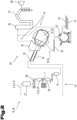
- Fig. 2 shows a further simplified schematic representation of a system in which a preferred method can be carried out. In an overall process or in an overall system, it is shown how briquettes 1 produced according to the method are used or processed in a reactor system 20.
- Shredder light fractions as the present example of a waste material 2 containing metal 3 and other substances, the metal content of which is to be largely recovered, are first introduced into a storage bunker 27 in order to be further processed from there. From the storage bunker 27, the waste material 2 is fed via conveyor screws 28 and the like to a briquetting press 23 designed as a piston compressor 29, where the waste material 2 is compressed into briquettes 1.
- the shredder light fractions can contain, in particular, copper, lead, tin, zinc, nickel and/or precious metals as metal 3.
- four briquetting presses 23 designed as piston compressors 29 can compress and briquette approximately 10 tonnes of shredder light fractions per hour.
- the melting reactor 33 Before the briquettes 1 are introduced into the melting reactor 33, the latter is heated up, for example to 1200°C to 1250°C.
- the amount of organic material 4 introduced into the interior of the melting reactor 33 can be set very precisely. For example, a proportion of 35% to 50% organic material 4 of the introduced mass has proven to be effective in order to react autothermally with the participation of the air and pyrolysis gases supplied by a separate compressed air lance 34.
- the autothermal reaction can be stabilized by controlling the amount of air and pyrolysis gases supplied, whereby it is essential to know how much organic material 4 involved in the reaction is present in the melt reactor 33. Only enough air is supplied so that the reaction takes place in the melt reactor 33, ie the organic material 4 and the pyrolysis gases burn. The supply of air is limited, however, so as not to let all the pyrolysis gases burn directly, so as not to overload the melt reactor 33. overheat. This reaction can take place in the melting reactor 33, for example, for 5 to 5.5 hours without external firing, and in this way a bath of liquid slag 13 and liquid metal 14 forms inside the melting reactor 33.
- the autothermal reaction produces hot process gases 44, which are extracted via an extraction hood 35 and fed through an afterburning chamber 36 to a boiler 37, in which steam can be generated in the usual way, which can be used to generate electrical energy via a turbine 38.
- the steam can alternatively and additionally be used in local heating and district heating networks.
- the melting reactor 33 can be poured out and its liquid contents can be conveyed further via a transport path 39.
- the bath of liquid slag 13 and liquid metal 14 is thus fed to a separation furnace 40, which can be implemented as a drum furnace, for example, and in which a temperature of, for example, 1200°C to 1250°C can prevail.
- the separation furnace 40 is externally fired in order to reach and maintain its temperature, since no further reaction is to take place in it. After the melting reactor 33 has been emptied, it can be filled with another batch of waste material 2.
- the slag phase 13 can be separated from the metal phase 14 over a period of, for example, 5 to 5.5 hours. Gravimetric separation is suitable for this, since the slag phase 13 has a density of approximately 3 t/m 3 to 3.5 t/m 3 , while the metal phase 14 has a density of approximately 8 t/m 3 , although these values are only examples and naturally vary from material to material. If the two or more phases have different densities, they will separate from one another in layers in the separation furnace 40.
- the slag can be set in the separation furnace 40 over a period of, for example, 3 hours to 4 hours and then granulated over a period of, for example, 2 hours to 3 hours and removed from the separation furnace 40 via a slag discharge line 41.
- the metal 3 can then preferably be removed from the separation furnace 40 via a metal output section 42 and thus recovered.
- the metal 3 can be present, for example, as a liquid metal phase 14, for example a copper phase, which can be enriched with other metals or heavy metals such as lead, tin, zinc, nickel and/or precious metals.
Landscapes
- Chemical & Material Sciences (AREA)
- Engineering & Computer Science (AREA)
- Organic Chemistry (AREA)
- Metallurgy (AREA)
- Materials Engineering (AREA)
- Manufacturing & Machinery (AREA)
- Geology (AREA)
- Environmental & Geological Engineering (AREA)
- Life Sciences & Earth Sciences (AREA)
- Geochemistry & Mineralogy (AREA)
- General Life Sciences & Earth Sciences (AREA)
- Mechanical Engineering (AREA)
- Oil, Petroleum & Natural Gas (AREA)
- Manufacture And Refinement Of Metals (AREA)
- Processing Of Solid Wastes (AREA)
- Incineration Of Waste (AREA)
- Gasification And Melting Of Waste (AREA)
- Solid Fuels And Fuel-Associated Substances (AREA)
Applications Claiming Priority (3)
| Application Number | Priority Date | Filing Date | Title |
|---|---|---|---|
| DE102020206095.9A DE102020206095A1 (de) | 2020-05-14 | 2020-05-14 | Verfahren zum Präparieren von Abfallmaterial |
| EP21726628.7A EP4150032B1 (fr) | 2020-05-14 | 2021-05-14 | Procédé de la production d'une briquette des déchetes et une briquette des déchets |
| PCT/EP2021/062814 WO2021229048A1 (fr) | 2020-05-14 | 2021-05-14 | Procédé de production de briquettes à partir d'un matériau de rebut et briquette fabriquée à partir d'un matériau de rebut |
Related Parent Applications (2)
| Application Number | Title | Priority Date | Filing Date |
|---|---|---|---|
| EP21726628.7A Division-Into EP4150032B1 (fr) | 2020-05-14 | 2021-05-14 | Procédé de la production d'une briquette des déchetes et une briquette des déchets |
| EP21726628.7A Division EP4150032B1 (fr) | 2020-05-14 | 2021-05-14 | Procédé de la production d'une briquette des déchetes et une briquette des déchets |
Publications (2)
| Publication Number | Publication Date |
|---|---|
| EP4471112A2 true EP4471112A2 (fr) | 2024-12-04 |
| EP4471112A3 EP4471112A3 (fr) | 2025-03-05 |
Family
ID=76011949
Family Applications (3)
| Application Number | Title | Priority Date | Filing Date |
|---|---|---|---|
| EP21727787.0A Active EP4150033B1 (fr) | 2020-05-14 | 2021-05-14 | Procédé pour la séparation des déchets |
| EP21726628.7A Active EP4150032B1 (fr) | 2020-05-14 | 2021-05-14 | Procédé de la production d'une briquette des déchetes et une briquette des déchets |
| EP24207880.6A Pending EP4471112A3 (fr) | 2020-05-14 | 2021-05-14 | Procédé de fabrication de briquettes à partir de déchets et briquette à partir de déchets |
Family Applications Before (2)
| Application Number | Title | Priority Date | Filing Date |
|---|---|---|---|
| EP21727787.0A Active EP4150033B1 (fr) | 2020-05-14 | 2021-05-14 | Procédé pour la séparation des déchets |
| EP21726628.7A Active EP4150032B1 (fr) | 2020-05-14 | 2021-05-14 | Procédé de la production d'une briquette des déchetes et une briquette des déchets |
Country Status (12)
| Country | Link |
|---|---|
| US (2) | US12129528B2 (fr) |
| EP (3) | EP4150033B1 (fr) |
| JP (3) | JP7746294B2 (fr) |
| KR (2) | KR20230010696A (fr) |
| CN (2) | CN115715316A (fr) |
| AU (2) | AU2021269849A1 (fr) |
| BR (2) | BR112022022987A2 (fr) |
| CA (2) | CA3183127A1 (fr) |
| DE (1) | DE102020206095A1 (fr) |
| MX (2) | MX2022014218A (fr) |
| WO (2) | WO2021229048A1 (fr) |
| ZA (2) | ZA202212654B (fr) |
Families Citing this family (1)
| Publication number | Priority date | Publication date | Assignee | Title |
|---|---|---|---|---|
| KR102949025B1 (ko) | 2023-05-04 | 2026-04-06 | 주식회사 영풍 | 폐리튬이온배터리를 재활용하기 위한 원료 성형방법 |
Family Cites Families (19)
| Publication number | Priority date | Publication date | Assignee | Title |
|---|---|---|---|---|
| CH669929A5 (fr) | 1986-05-22 | 1989-04-28 | Holzmag Ag | |
| JP3079051B2 (ja) * | 1995-11-28 | 2000-08-21 | 株式会社荏原製作所 | 廃棄物のガス化処理方法 |
| JPH09189412A (ja) * | 1996-01-10 | 1997-07-22 | Mitsui Mining & Smelting Co Ltd | シュレッダーダストの燃焼溶融処理方法 |
| JP3558033B2 (ja) * | 1996-09-20 | 2004-08-25 | 住友金属工業株式会社 | 廃棄物のガス化溶融炉およびガス化溶融方法 |
| JP3774994B2 (ja) | 1997-06-06 | 2006-05-17 | 月島機械株式会社 | 資源分離法および装置 |
| JP3725684B2 (ja) * | 1997-11-20 | 2005-12-14 | 新日本製鐵株式会社 | 廃棄物溶融処理方法及び廃棄物溶融処理装置 |
| JP2001049357A (ja) | 1999-08-03 | 2001-02-20 | Kiriu Mach Mfg Co Ltd | キュポラ用燃料ブリケットとその製造方法 |
| JP2003129138A (ja) * | 2001-10-19 | 2003-05-08 | Nkk Corp | 使用済み自動車又は使用済み家電機器のリサイクル処理方法 |
| JP2003313619A (ja) * | 2002-04-24 | 2003-11-06 | Mitsui Mining & Smelting Co Ltd | 低品位銅原料からの銅の回収方法 |
| KR100872739B1 (ko) * | 2003-03-26 | 2008-12-08 | 호서대학교 산학협력단 | 폐기물을 이용한 전자파 차폐 및 난연 복합 기능성 성형체조성물 및 그 제조방법 |
| JP3694520B1 (ja) * | 2004-07-29 | 2005-09-14 | 新日本製鐵株式会社 | 複合廃棄物の再資源化方法 |
| US20080145685A1 (en) * | 2005-02-07 | 2008-06-19 | Hoei Shokai Co., Ltd. | Lump Object and Method of Producing the Same |
| DE102008038966B3 (de) | 2008-08-13 | 2009-08-06 | Lanner Anlagenbau Gmbh | Vorrichtung zum Verpressen von Metallspänen in Metallbriketts |
| BR112013003261A2 (pt) | 2010-08-09 | 2016-06-14 | Onesteel Nsw Pty Ltd | produtos compósitos e método de fabricação. |
| KR101728286B1 (ko) * | 2013-07-24 | 2017-04-18 | 신닛테츠스미킨 카부시키카이샤 | 배기 가스 처리 방법 및 배기 가스 처리 설비 |
| DE102015011067B4 (de) | 2015-08-27 | 2020-06-18 | CTG Chemisch-Technische Gesellschaft mbH | Verfahren zur Brikettierung pulverförmiger Legierungszuschläge der Stahl-, Gießerei- und NE-Metallurgie mit Hilfe faserhaltiger Strukturbildner und ein Brikett |
| ITUB20153608A1 (it) * | 2015-09-14 | 2017-03-14 | Danieli Off Mecc | Impianto e metodo di recupero e trattamento di residui di frantumazione di rottami ferrosi |
| CN109457113B (zh) * | 2018-11-02 | 2020-09-04 | 唐山市丰润区明营再生资源有限公司 | 一种冶金炉协同处置危险废物的方法 |
| CN116445727B (zh) | 2023-06-14 | 2023-09-15 | 浙江凤登绿能环保股份有限公司 | 有机废弃物高温熔融气化制有效气并回收稀贵金属的方法 |
-
2020
- 2020-05-14 DE DE102020206095.9A patent/DE102020206095A1/de active Pending
-
2021
- 2021-05-14 JP JP2022569220A patent/JP7746294B2/ja active Active
- 2021-05-14 CN CN202180045442.6A patent/CN115715316A/zh active Pending
- 2021-05-14 EP EP21727787.0A patent/EP4150033B1/fr active Active
- 2021-05-14 CA CA3183127A patent/CA3183127A1/fr active Pending
- 2021-05-14 AU AU2021269849A patent/AU2021269849A1/en active Pending
- 2021-05-14 BR BR112022022987A patent/BR112022022987A2/pt unknown
- 2021-05-14 MX MX2022014218A patent/MX2022014218A/es unknown
- 2021-05-14 KR KR1020227043545A patent/KR20230010696A/ko active Pending
- 2021-05-14 EP EP21726628.7A patent/EP4150032B1/fr active Active
- 2021-05-14 US US17/924,889 patent/US12129528B2/en active Active
- 2021-05-14 AU AU2021269850A patent/AU2021269850B2/en active Active
- 2021-05-14 WO PCT/EP2021/062814 patent/WO2021229048A1/fr not_active Ceased
- 2021-05-14 CN CN202180045432.2A patent/CN115715315A/zh active Pending
- 2021-05-14 KR KR1020227043546A patent/KR20230011989A/ko active Pending
- 2021-05-14 MX MX2022014301A patent/MX2022014301A/es unknown
- 2021-05-14 BR BR112022022875A patent/BR112022022875A2/pt unknown
- 2021-05-14 CA CA3183130A patent/CA3183130A1/fr active Pending
- 2021-05-14 JP JP2022569199A patent/JP2023526298A/ja active Pending
- 2021-05-14 EP EP24207880.6A patent/EP4471112A3/fr active Pending
- 2021-05-14 US US17/925,000 patent/US12203151B2/en active Active
- 2021-05-14 WO PCT/EP2021/062813 patent/WO2021229047A1/fr not_active Ceased
-
2022
- 2022-11-21 ZA ZA2022/12654A patent/ZA202212654B/en unknown
- 2022-11-21 ZA ZA2022/12653A patent/ZA202212653B/en unknown
-
2025
- 2025-10-28 JP JP2025003713U patent/JP3254965U/ja active Active
Also Published As
Similar Documents
| Publication | Publication Date | Title |
|---|---|---|
| EP0262144B1 (fr) | Procede de recuperation de sous-produits gazeux a partir d'ordures | |
| CH682725A5 (de) | Verfahren zur Nutzbarmachung von Entsorgungsgütern. | |
| EP0443596A1 (fr) | Procédé pour le transport, le stockage intermédiaire et l'utilisation énergétique et matérielle de déchets et dispositif pour la mise en oeuvre du procédé | |
| DE2619302A1 (de) | Verfahren zum umwandeln von festen abfallstoffen in brenngas | |
| EP4150032B1 (fr) | Procédé de la production d'une briquette des déchetes et une briquette des déchets | |
| EP0661368B1 (fr) | Procédé de valorisation de déchets dans lequel les déchets sont traités thermiquement et soumis à une transformation complète de substances | |
| DE2810313B1 (de) | Verfahren zur Vernichtung von Gummiabfaellen,insbesondere von abgenutzten Kraftfahrzeugreifen,unter industrieller Neuverwertung ihrer Bestandteile und Zersetzungsprodukte | |
| EP0543133A1 (fr) | Procédé et appareillage pour le traitement de la boue d'épuration épaissie | |
| EP0937504B1 (fr) | Procédé et dispositif pour la valorisation des déchets ménagers | |
| EP0028341B1 (fr) | Procédé de récupération de déchets produits lors de la fabrication et du travail de l'acier | |
| EP1359374B1 (fr) | Procédé de traitement de résidues d'une installation d'incinération | |
| DE3248494C2 (de) | Verfahren zum Herstellen eines Brennstoffes für eine Müllverbrennungsanlage | |
| DE2950324A1 (de) | Verfahren zur herstellung eines festen brennstoffes aus abfaellen, insbesondere aus hausmuell | |
| EP1386013B1 (fr) | Procede de valorisation des boues de battitures de laminage et des fines de charbon | |
| AT524875B1 (de) | Verfahren zur abfallfreien Herstellung von Dämmstoffprodukten aus Mineralwolle | |
| EP1419114B1 (fr) | Procede de traitement de boues | |
| DE19807539C2 (de) | Verfahren zur thermischen Behandlung von Abfällen | |
| DE19520651A1 (de) | Verfahren zur Verwertung und Entsorgung von Klär- bzw. Wasserwerksschlämmen | |
| DE4120061C2 (de) | Verfahren zur vollständigen Stoffumwandlung von Entsorgungsgütern aller Art | |
| DE202020102644U1 (de) | Anlage zur Rückgewinnung von Kunststoffgemischen aus ASR | |
| AT510612B1 (de) | Verfahren zum aufarbeiten von metallhaltigen verbundmaterialien | |
| DE102007056353A1 (de) | Verfahren und Anlage zur Abfallbehandlung | |
| DE19632731C2 (de) | Verfahren zur thermischen Behandlung oder Verwertung organische Bestandteile enthaltender Abfallstoffe | |
| EP1053058A1 (fr) | Procede de traitement thermique de dechets | |
| EP1656995A1 (fr) | Procédé pour l'utilisation de déchets broyés |
Legal Events
| Date | Code | Title | Description |
|---|---|---|---|
| PUAI | Public reference made under article 153(3) epc to a published international application that has entered the european phase |
Free format text: ORIGINAL CODE: 0009012 |
|
| STAA | Information on the status of an ep patent application or granted ep patent |
Free format text: STATUS: THE APPLICATION HAS BEEN PUBLISHED |
|
| AC | Divisional application: reference to earlier application |
Ref document number: 4150032 Country of ref document: EP Kind code of ref document: P |
|
| AK | Designated contracting states |
Kind code of ref document: A2 Designated state(s): AL AT BE BG CH CY CZ DE DK EE ES FI FR GB GR HR HU IE IS IT LI LT LU LV MC MK MT NL NO PL PT RO RS SE SI SK SM TR |
|
| PUAL | Search report despatched |
Free format text: ORIGINAL CODE: 0009013 |
|
| AK | Designated contracting states |
Kind code of ref document: A3 Designated state(s): AL AT BE BG CH CY CZ DE DK EE ES FI FR GB GR HR HU IE IS IT LI LT LU LV MC MK MT NL NO PL PT RO RS SE SI SK SM TR |
|
| RIC1 | Information provided on ipc code assigned before grant |
Ipc: C21B 5/00 20060101ALI20250127BHEP Ipc: C10L 5/40 20060101AFI20250127BHEP |
|
| STAA | Information on the status of an ep patent application or granted ep patent |
Free format text: STATUS: REQUEST FOR EXAMINATION WAS MADE |
|
| 17P | Request for examination filed |
Effective date: 20250901 |
|
| STAA | Information on the status of an ep patent application or granted ep patent |
Free format text: STATUS: EXAMINATION IS IN PROGRESS |
|
| 17Q | First examination report despatched |
Effective date: 20251205 |