EP4474351A1 - Verfahren zur behandlung von bauxit - Google Patents
Verfahren zur behandlung von bauxit Download PDFInfo
- Publication number
- EP4474351A1 EP4474351A1 EP24164064.8A EP24164064A EP4474351A1 EP 4474351 A1 EP4474351 A1 EP 4474351A1 EP 24164064 A EP24164064 A EP 24164064A EP 4474351 A1 EP4474351 A1 EP 4474351A1
- Authority
- EP
- European Patent Office
- Prior art keywords
- bauxite
- leaching
- calcination
- lime
- alumina
- Prior art date
- Legal status (The legal status is an assumption and is not a legal conclusion. Google has not performed a legal analysis and makes no representation as to the accuracy of the status listed.)
- Pending
Links
Images


Classifications
-
- B—PERFORMING OPERATIONS; TRANSPORTING
- B01—PHYSICAL OR CHEMICAL PROCESSES OR APPARATUS IN GENERAL
- B01J—CHEMICAL OR PHYSICAL PROCESSES, e.g. CATALYSIS OR COLLOID CHEMISTRY; THEIR RELEVANT APPARATUS
- B01J19/00—Chemical, physical or physico-chemical processes in general; Their relevant apparatus
-
- C—CHEMISTRY; METALLURGY
- C01—INORGANIC CHEMISTRY
- C01F—COMPOUNDS OF THE METALS BERYLLIUM, MAGNESIUM, ALUMINIUM, CALCIUM, STRONTIUM, BARIUM, RADIUM, THORIUM, OR OF THE RARE-EARTH METALS
- C01F7/00—Compounds of aluminium
- C01F7/02—Aluminium oxide; Aluminium hydroxide; Aluminates
- C01F7/04—Preparation of alkali metal aluminates; Aluminium oxide or hydroxide therefrom
- C01F7/14—Aluminium oxide or hydroxide from alkali metal aluminates
- C01F7/144—Aluminium oxide or hydroxide from alkali metal aluminates from aqueous aluminate solutions by precipitation due to cooling, e.g. as part of the Bayer process
-
- B—PERFORMING OPERATIONS; TRANSPORTING
- B01—PHYSICAL OR CHEMICAL PROCESSES OR APPARATUS IN GENERAL
- B01D—SEPARATION
- B01D11/00—Solvent extraction
- B01D11/02—Solvent extraction of solids
- B01D11/0288—Applications, solvents
-
- B—PERFORMING OPERATIONS; TRANSPORTING
- B01—PHYSICAL OR CHEMICAL PROCESSES OR APPARATUS IN GENERAL
- B01D—SEPARATION
- B01D3/00—Distillation or related exchange processes in which liquids are contacted with gaseous media, e.g. stripping
- B01D3/04—Distillation or related exchange processes in which liquids are contacted with gaseous media, e.g. stripping pipe stills
-
- B—PERFORMING OPERATIONS; TRANSPORTING
- B01—PHYSICAL OR CHEMICAL PROCESSES OR APPARATUS IN GENERAL
- B01D—SEPARATION
- B01D9/00—Crystallisation
- B01D9/0059—General arrangements of crystallisation plant, e.g. flow sheets
-
- C—CHEMISTRY; METALLURGY
- C01—INORGANIC CHEMISTRY
- C01B—NON-METALLIC ELEMENTS; COMPOUNDS THEREOF; METALLOIDS OR COMPOUNDS THEREOF NOT COVERED BY SUBCLASS C01C
- C01B33/00—Silicon; Compounds thereof
- C01B33/20—Silicates
- C01B33/32—Alkali metal silicates
-
- C—CHEMISTRY; METALLURGY
- C01—INORGANIC CHEMISTRY
- C01F—COMPOUNDS OF THE METALS BERYLLIUM, MAGNESIUM, ALUMINIUM, CALCIUM, STRONTIUM, BARIUM, RADIUM, THORIUM, OR OF THE RARE-EARTH METALS
- C01F7/00—Compounds of aluminium
- C01F7/02—Aluminium oxide; Aluminium hydroxide; Aluminates
- C01F7/04—Preparation of alkali metal aluminates; Aluminium oxide or hydroxide therefrom
- C01F7/06—Preparation of alkali metal aluminates; Aluminium oxide or hydroxide therefrom by treating aluminous minerals or waste-like raw materials with alkali hydroxide, e.g. leaching of bauxite according to the Bayer process
- C01F7/0613—Pretreatment of the minerals, e.g. grinding
-
- C—CHEMISTRY; METALLURGY
- C01—INORGANIC CHEMISTRY
- C01F—COMPOUNDS OF THE METALS BERYLLIUM, MAGNESIUM, ALUMINIUM, CALCIUM, STRONTIUM, BARIUM, RADIUM, THORIUM, OR OF THE RARE-EARTH METALS
- C01F7/00—Compounds of aluminium
- C01F7/02—Aluminium oxide; Aluminium hydroxide; Aluminates
- C01F7/04—Preparation of alkali metal aluminates; Aluminium oxide or hydroxide therefrom
- C01F7/06—Preparation of alkali metal aluminates; Aluminium oxide or hydroxide therefrom by treating aluminous minerals or waste-like raw materials with alkali hydroxide, e.g. leaching of bauxite according to the Bayer process
- C01F7/062—Digestion
-
- C—CHEMISTRY; METALLURGY
- C01—INORGANIC CHEMISTRY
- C01F—COMPOUNDS OF THE METALS BERYLLIUM, MAGNESIUM, ALUMINIUM, CALCIUM, STRONTIUM, BARIUM, RADIUM, THORIUM, OR OF THE RARE-EARTH METALS
- C01F7/00—Compounds of aluminium
- C01F7/02—Aluminium oxide; Aluminium hydroxide; Aluminates
- C01F7/04—Preparation of alkali metal aluminates; Aluminium oxide or hydroxide therefrom
- C01F7/14—Aluminium oxide or hydroxide from alkali metal aluminates
- C01F7/144—Aluminium oxide or hydroxide from alkali metal aluminates from aqueous aluminate solutions by precipitation due to cooling, e.g. as part of the Bayer process
- C01F7/147—Apparatus for precipitation
-
- C—CHEMISTRY; METALLURGY
- C01—INORGANIC CHEMISTRY
- C01F—COMPOUNDS OF THE METALS BERYLLIUM, MAGNESIUM, ALUMINIUM, CALCIUM, STRONTIUM, BARIUM, RADIUM, THORIUM, OR OF THE RARE-EARTH METALS
- C01F7/00—Compounds of aluminium
- C01F7/02—Aluminium oxide; Aluminium hydroxide; Aluminates
- C01F7/44—Dehydration of aluminium oxide or hydroxide, i.e. all conversions of one form into another involving a loss of water
- C01F7/441—Dehydration of aluminium oxide or hydroxide, i.e. all conversions of one form into another involving a loss of water by calcination
-
- B—PERFORMING OPERATIONS; TRANSPORTING
- B01—PHYSICAL OR CHEMICAL PROCESSES OR APPARATUS IN GENERAL
- B01D—SEPARATION
- B01D9/00—Crystallisation
- B01D2009/0086—Processes or apparatus therefor
Definitions
- the invention relates to the field of ore processing, and more particularly to the physical and chemical treatments of bauxite.
- the invention relates in particular to a method for the thermal treatment and chemical treatments of bauxite with a low alumina/silica mass ratio.
- the ore is first depleted of silicon by thermal pretreatment followed by leaching, and then this pretreated ore is used in the Bayer process to extract the aluminium therefrom in the form of aluminium trihydrate, which can be transformed into alumina.
- Aluminum is the third most abundant chemical element in the Earth's crust, after oxygen and silicon. Associated with oxygen, it is found in a very large number of rocks.
- the main industrial ore of aluminum is bauxite, discovered in 1821 in the village of Les Baux (France) by the geologist Pierre Berthier.
- Bauxite represents a complex mixture of oxides of aluminum, iron and silicon that can include various impurities such as titanium, calcium, magnesium.
- bauxite is an ore comprising mainly three aluminum minerals, namely gibbsite, boehmite and diaspore, mixed with smaller amounts of iron minerals, namely goethite and hematite (which gives bauxite its characteristic color), as well as aluminosilicates (kaolinite, illite, ...) and titanium minerals (anatase, rutile, ilmenite).
- the main industrial process used to extract aluminium (in the form of oxide) from bauxite is the Bayer process, developed at the end of the 19th century. It essentially comprises two stages: a first stage of leaching the ore under pressure by a soda solution (see the patent FROM 43,977 of August 3, 1888), and a second stage of precipitation of pure hydrated alumina from the sodium aluminate solution thus obtained, by seeding with hydrated alumina crystals (see the patent FROM 65604 of November 3, 1892).
- This hydrated precipitation alumina can then be subjected to heat treatments to dehydrate it; this heat treatment also determines the structure and morphology of the alumina obtained, with a view to its use (in the Hall-Héroult process to produce aluminum by electrochemical reduction of alumina in molten salt, or as technical alumina, particularly in the ceramics industry).
- the Bayer process consists mainly of a selective attack (digestion) of the alumina hydrates contained in the bauxite by a solution (called “liquor”) of hot caustic soda, which is recycled.
- the sodium aluminate-enriched soda solution is cooled and then decomposed (crystallization phase) to precipitate and extract the alumina trihydrate (Al 2 O 3 -3H 2 O); the latter is then washed and calcined at high temperature to give alumina (Al 2 O 3 ).
- the sodium aluminate-depleted liquor after the crystallization phase and diluted by the water inlets, mainly from washing the bauxite residues, is evaporated and recycled to the attack.
- composition of bauxite depends on its geographical origin. This variation in composition concerns both its content of main elements (Al, O, Si), its content of impurities, and its mineralogical structure.
- lateric bauxites on alumino-silicate geological substrate
- gibbsite which is a trihydrate
- karst bauxites on carbonate geological substrate
- aluminum is mainly in the form of boehmite and diaspore (two modifications of monohydrates).
- a simple parameter to represent the quality of a bauxite is the alumina to silica ratio, abbreviated "AIS ratio".
- AIS ratio alumina to silica ratio
- bauxites from Guinea typically have Al 2 O 3 /SiO 2 ratios of the order of 20 or more, and bauxites from Western Australia have ratios greater than 15.
- aluminium is present mainly as boehmite and gibbsite.
- the aluminium content is not the only criterion: this aluminium must also be in a chemical and crystallographic form that can be extracted from bauxite by the Bayer process. It is known that the traditional Bayer process does not solubilise the aluminium contained in aluminosilicates: this part of the aluminium is lost in the red mud. Furthermore, it is known that the aluminosilicates contained in the red mud can carry away part of the soda and thus increase the overall consumption of soda in the Bayer process; this is described in the publication " Basic Research on Calcification Transformation, Process of Low Grade Bauxite” by Xiaofeng Zhu et al., published in Light Metals 2013, p. 239-244 (TMS).
- bauxite is traded on a global market and often transported thousands of kilometres to its place of use.
- some countries prefer to limit their supply on the global market in favour of using their domestic mineral resources, even if these are of lower quality. This is particularly the case in China.
- China the world's largest aluminium producer, has bauxite deposits and mines that do not (or no longer) have as high an A/S ratio as Australian bauxites, for example. More specifically, in China, low-silicon alumina deposits (A/S > 8 or even > 6) are becoming rare, while high-silicon bauxite exists in considerable quantities.
- silicon is present largely in the form of kaolinite, an aluminosilicate that also contains some of the aluminium present in bauxite; They also contain a small fraction of quartz (a silicate) and muscovite (another aluminosilicate).
- quartz a silicate
- muscovite another aluminosilicate
- thermochemical activation process for bauxite (called in English “roast-leach process”) was described by Smith and Xu-Parker (“Options for processing of high silica bauxites”, ICSOBA work Vol. 35(39), 184-192 (2010 )). This process was initially developed for clay-type raw materials (see US 2,939,764 ) and illite (see T Jiang et al., “Desilication from illite by thermochemical activation”, Trans. Nonferrous Met. Soc. China, Vol 14(5), p.
- the residue (the calcined and leached bauxite) is then introduced into the traditional Bayer process.
- This process initially has the disadvantage of requiring additional thermal energy for the calcination of bauxite, to arrive at a calcined and leached bauxite which has characteristics comparable to those of a good quality bauxite. This overconsumption of energy can present a brake on the development of the process.
- the process requires an additional raw material, namely lime, to precipitate the silicate resulting from the solubilization of the amorphous silica formed during the calcination of the bauxite.
- the Roast-Leach process has given rise to a fairly extensive scientific literature, which has focused on the calcination step, with divergent indications as to the optimum calcination temperature.
- the maximum value of the calcination temperature seems to be given by the formation of mullite: According to Xu et al.
- the problem that the present invention seeks to solve is to develop an improved and economically viable method or process for using low alumina bauxites (A/S ⁇ 5 and preferably ⁇ 4 and even more preferably ⁇ 3) in a Bayer process type process.
- the problem is solved by a method of treating bauxite which comprises a pretreatment of the bauxite, which improves its suitability for use as a raw material in the Bayer process, known as such, and by adapting the Bayer process to this pretreated bauxite.
- Said pretreatment of bauxite comprises a first pretreatment step, which is a physical, namely thermal, pretreatment.
- This thermal pretreatment is intended to cause a chemical and crystallographic modification of the bauxite (or at least of some of its mineralogical phases).
- This first pretreatment step of the bauxite is advantageously carried out on a crushed bauxite. It leads to a modified bauxite which can then be introduced into the Bayer process, or be subjected to a second pretreatment step, chemical.
- said heat pretreatment is carried out at a temperature and for a duration such that at least a portion of the silicates present in the bauxite is transformed into amorphous silica.
- this temperature is advantageously between 1000°C and 1050°C, preferably between 1015°C and 1030°C, and even more preferably between 1015°C and 1025°C.
- this temperature is approximately 40°C lower and is between approximately 960°C and approximately 1000°C and preferably between 970°C and 990°C.
- This process can be implemented partly on the industrial bauxite production site or entirely on the industrial site where the Bayer process is installed. It requires dedicated equipment, namely a furnace. This process is advantageously implemented on crushed bauxite.
- the bauxite treatment process comprises a second pretreatment step, which is a chemical step. It comprises the leaching of the modified bauxite by soda. During this step, and under the appropriate conditions of temperature, residence time, soda concentration and solid/liquid ratio, the amorphous silica obtained during calcination is dissolved while the alumina passes very little into solution.
- This leaching step must be carried out on crushed bauxite, and for this reason it is advantageous for the grinding to be carried out upstream of the thermal pretreatment step.
- the grinding process and the target grain size can be similar to those used for the traditional Bayer process. It is also possible to regrind the treated bauxite before its introduction into the Bayer process.
- pre-treated bauxite which is distinguished, both chemically and mineralogically, from a natural bauxite.
- a simple parameter which expresses this particularity of pre-treated bauxite is its loss on ignition; this loss on ignition is much lower (typically by a factor of ten to twenty) than that of a natural bauxite (not pre-treated).
- a first subject of the invention is a method for manufacturing alumina trihydrate or alumina from a bauxite pretreated by a method comprising calcination and leaching, said pretreated bauxite being characterized in that it has a loss on ignition of less than 2.5% by mass, preferably less than 2.0%, and even more preferably less than 1.5%.
- this pretreated bauxite is also characterized by the absence of diaspore and the presence of amorphous silica.
- step (e) is necessary.
- the temperature in step (a) is between 150°C and 350°C, preferably between 200°C and 300°C, more preferably between 220°C and 280°C, and even more preferably between 250°C and 270°C.
- Said pretreated bauxite advantageously has a mass ratio of Al 2 O 3 / SiO 2 greater than 8, and preferably greater than 9, and even more preferably greater than 10. Its mass content of alumina is advantageously greater than 60%, preferably greater than 65%, and even more preferably greater than 70%. Its mass silica content is less than 12%, preferably less than 10%, and even more preferably less than 8%.
- the liquid phase from step (d) is reintroduced into the aqueous sodium hydroxide solution used in step (a).
- said pretreated bauxite has been pretreated by calcination at a temperature of between approximately 920°C and approximately 1,200°C.
- This temperature is preferably between approximately 950°C and approximately 1,070°C, and even more preferably between approximately 1,000°C and approximately 1,050°C, in particular in the case of diasporic bauxites; for boehmitic bauxites, a lower calcination temperature of between approximately 950°C and approximately 1,100°C, more particularly between approximately 960°C and approximately 1,000°C, and more preferably between approximately 970°C and approximately 990°C, is preferred.
- This calcination leads to a chemical and crystallographic transformation of the bauxite. More specifically, a largely majority fraction (and often all) of the diaspore (which is the form in which the vast majority (and often almost all) of the alumina is found in bauxites with a low AIS ratio) is transformed into alpha alumina. This transformation is accompanied by the departure of certain volatile materials present in the bauxite or formed during said chemical and crystallographic transformation. The loss on ignition is an easily determinable parameter which expresses in a synthetic manner the state of this chemical and crystallographic transformation during calcination.
- Calcined bauxite has a better solubility of aluminum contained in particular in aluminosilicates under the usual conditions of the so-called bauxite digestion stage of the Bayer process, and a better solubility of silicon under milder conditions than those of the digestion stage of the Bayer process.
- the treatment of calcined bauxite by leaching with an aqueous solution of sodium hydroxide under milder reaction conditions than those of the digestion stage of the Bayer process makes it possible to solubilize the silica.
- pretreated bauxite Due to the chemical and crystallographic transformation that occurs during calcination, pretreated bauxite has a mass rate of diaspore that is much lower than in bauxite; after calcination this rate is preferably less than 5%, more preferably less than 3%, even more preferably less than 2%, and optimally less than 1%.
- the mass rate of kaolinite in pretreated bauxite is preferably less than 4%, more preferably less than 3%, even more preferably less than 2%, and optimally less than 1%.
- a preferred pretreated bauxite for use in the method of the invention has a loss on ignition of less than 2%, a diaspore content of less than 3% and a kaolinite content of less than 3%, these percentages being mass percentages. More preferably, this pretreated bauxite has a loss on ignition of less than 2%, a diaspore content of less than 2% and a kaolinite content of less than 2%, and even more preferably a loss on ignition of less than 1.5%, a diaspore content of less than 1% and a kaolinite content of less than 2%.
- Said bauxite capable, after pretreatment by calcination and leaching with soda, of entering into the process according to the invention, advantageously has an Al 2 O 3 / SiO 2 ratio of between 1 and 8, preferably between 1 and 7, even more preferably between 1 and 5.5, even more preferably between 1 and 4, and even between 1 and 3 or between 2 and 3.
- the pretreatment of bauxite according to the invention leads to a significant increase in the Al 2 O 3 / SiO 2 ratio, typically by a factor of two to three.
- the process may not be economically viable, because using pretreated bauxite rather than natural bauxite does not lead to a sufficiently interesting additional yield of alumina, and the potential for reducing soda consumption is limited.
- Another subject of the invention is an alumina capable of being obtained by the process according to the invention.
- said Bayer liquor from said solid-liquid separation unit used to separate the crystallized aluminum trihydrate from the liquid phase is recirculated to the digestion stage.
- Bauxite from a bauxite mine is crushed (step 1100 ) in the presence of a liquid phase, which is sodium aluminate, as will be explained in more detail below.
- the purpose of crushing is to increase the specific surface area of the bauxite accessible to the action of the liquid phase during the attack for the digestion of the bauxite.
- a grain size of a few hundred ⁇ m is typically targeted.
- Crushing is done with the addition of lime (step 1102 ), in the form of milk or in solid form.
- Lime has a triple action: (i) During the digestion of bauxite, lime reduces the consumption of sodium because it promotes the precipitation of soluble silicates in the form of calcium silico-aluminates rather than in the form of sodium silico-aluminates (which would otherwise carry away some of the sodium from the soda, which is more expensive than lime); (ii) lime promotes the dissolution of aluminium and improves the extraction yield of alumina during digestion; and (iii) lime improves the settling of sludge after attack, because it promotes the transformation of goethite, which is difficult to settle and filter, into hematite, which is better crystallized.
- the crushed bauxite is then attacked by an aqueous solution of sodium hydroxide (step 1110 ) under pressure and at high temperature in autoclaves or tubular exchangers.
- This attack leads to the partial digestion of the bauxite (step 1120 ), more precisely, it is the soluble part of the aluminum minerals (alumina in particular, whether present in the form of monohydrate or trihydrate) which forms aluminate ions.
- digestion is carried out at a temperature between 250 °C and 270 °C in closed autoclaves or tubular exchangers.
- Said aqueous solution of sodium hydroxide is in practice an aqueous solution of sodium aluminate.
- a sodium hydroxide concentration of between 235 g Na 2 O IL and 245 g Na 2 O IL is typically used.
- the person skilled in the art knows how to finely adapt the parameters of this step, in particular the temperature, the residence time and the concentration of the soda, to the composition of the bauxite; the same remark applies to the quantity of lime added in step 1102.
- bauxites with a high content of monohydrated aluminas (boehmite, and especially diaspore) require higher digestion temperatures than bauxites with a high trihydrate content (gibbsite).
- the temperature range between 250 °C and 270 °C ensures that all the soluble alumina contained in the bauxite (including the diaspore fraction, which is the most difficult to dissolve among the aluminum oxides, and whose content can be very variable) is digested.
- karst bauxites which are the main field of application of the present invention, require this temperature range.
- Some plants using karst bauxites are even designed to work at a temperature of up to 280 °C, in order to be able to adapt if necessary to the use of bauxites of very specific composition.
- the bauxite can be brought into contact with the preheated liquor (so-called double-flow process), or the bauxite suspension in the Bayer liquor is formed before being heated (so-called single-flow process).
- the 1120 digestion step is carried out in two stages, each operated at a different temperature, in order to first dissolve the easily soluble fractions and then, at a higher temperature, the solid residue from the first stage. This double digestion variant can save energy, but it requires a greater investment and complicates the process.
- red mud the residue
- the solid residue is called “red mud”; it contains all the crystalline phases originating from the bauxite not reactive to digestion ( 1120 ) and those formed during the Bayer cycle.
- Red mud is recovered (step 1140 ) and washed with water (step 1142 ) in order to recover a maximum of the liquor; this washing is generally done with raw water and countercurrent (in order to minimize the quantity of water used); it is followed by a decantation and/or filtration step (not shown in the figure).
- Red mud is a powdery residue that is not easy to recover and which still frequently ends up in specific storage facilities.
- the liquid phase (“L”) from phase separation step 1130 is a sodium aluminate solution.
- the aluminum trihydrate is crystallized (step 1170 ) by cooling the aluminate and adding aluminum trihydrate seeds (also called “primers”) (step 1160 ). This crystallization step is called “decomposition” in the profession; its duration is around 40 hours. Dilution with cold water (step 1150 ) reuses the red mud wash water.
- This step 1170 calls upon a certain know-how, known to those skilled in the art, in order to adapt the numerous parameters of the process (saturation of the liquor at the entrance to the decomposition, concentration of Na 2 O and impurities of different natures, temperatures at the top and at the end of decomposition, initiation surface, crystallization technology, particle size classification) as best as possible to the nature of the desired alumina product; the physicochemical phenomena which intervene mainly relate to nucleation (spontaneous formation of fine particles within a suspension), agglomeration of fine particles, particle size classification by cycloning and/or decantation.
- the precipitated trihydrate is separated by decantation and filtration (step 1180 ) using various known technologies; it is recovered (step 1190 ). A significant portion of the trihydrate must be recycled in the decomposition step 1160, the remainder is dried (step 1192 ) and calcined (step 1194 ) into alumina. The latter is stored (step 1196 ) for transport to a consumer site.
- the drying step (step 1192 ) is typically carried out as the first step of the calcination (step 1194 ) which takes place in several stages. During this temperature increase, the impregnation water is first eliminated, from approximately 100 °C, then the water of constitution of the trihydrate (at approximately 1000 °C); the temperature increase is then continued to obtain the desired crystal structure.
- CFB circulating Fluidized bed furnace
- GSC calcination in suspension in hot gases
- the liquid phase from phase separation step 1180 is an aqueous solution of sodium hydroxide, more diluted than that used in step 1110 because of the various water entries in the flow (red mud washing water (step 1142 ) and trihydrate, dilution water (step 1150 )). For this reason it must be concentrated by evaporation of water (step 1210 ) to be recycled (step 1220 ) in the sodium hydroxide solution used for the digestion step (step 1120 ). It is also reused (step 1222 ) in the bauxite wet grinding step (step 1100 ).
- the trihydrate obtained in step 1190 can be washed before drying; this wash water can be reused in the washing of the red mud in step 1142 (not shown in the figure).
- soda is consumed during the treatment of bauxite to produce alumina. More precisely, this consumption is linked to three mechanisms: (i) the formation of insoluble sodium silico-aluminate phases during the attack (digestion step 1120 ); (ii) the residual soda carried along with the sludge ( 1140 ) despite its washing (step 1142 ); (iii) the co-precipitation with the alumina during the crystallization phase ( 1170 ). These losses must be compensated by the addition of new soda (step 1110 ). As far as possible, all liquid washing phases containing soda (including during the chemical cleaning of the tanks and pipes) are recycled into the Bayer liquor.
- FIG 2 An embodiment of the method according to the invention is illustrated in the figure 2 . It includes a pretreatment of bauxite.
- the pretreated bauxite is introduced into the Bayer process.
- the Bayer process steps denoted 11xx and 12xx on the figure 1 are designated on the figure 2 by the 21xx and 22xx markers, while the preprocessing steps bear the 20xx markers.
- Pretreated bauxite is a product that does not exist as such in nature; it is necessarily a product resulting from an industrial process, namely the pretreatment process. Its chemical composition differs from that of the natural bauxite from which it is derived by two essential characteristics: it has a higher A/S ratio (because it contains fewer silicates), and it contains very little water of crystallization. Furthermore, its mineral composition is different, following the transformations it undergoes during the various stages of pretreatment, as will be explained in greater detail below.
- the essential differences concern the dehydration of the diaspore and its transformation into mainly alpha alumina, as well as the kaolinite which after its dehydration transforms into metakaolinite (as explained in section 2.3 below), allowing the solubilization of the silica by soda.
- the very low water of crystallization content distinguishes the chemical composition of the pretreated bauxite also from that of natural bauxites with a similar A/S ratio.
- the loss of water of crystallization is the main parameter that enters into the (mass) loss on ignition.
- a natural diasporic bauxite generally has a loss on ignition greater than about 10%
- a bauxite pretreated according to the invention has a loss on ignition of less than 2.5%, preferably less than 2.0%, and even more preferably less than 1.5%.
- the loss on ignition is a parameter known to those skilled in the art; further explanations are given below in section 2.3.
- bauxite from a bauxite mine is crushed (step 2000 ) after adding water (step 2002 ), filtered (step 2004 ), and the solid residue after filtration (step 2004 ) is calcined (step 2010 ).
- this intermediate product here "calcined bauxite”.
- An aqueous solution of soda is added (step 2020 ) and the calcined bauxite is leached (step 2030 ).
- phase separation step 2040
- the solid phase is recovered, which is called here “leached calcined bauxite” or “pretreated bauxite” and introduced into the Bayer process; depending on the grain size obtained during grinding in step 2000 it may be necessary to regrind it (step 2100, not shown in the figure). figure 2 ).
- the liquid phase resulting from the phase separation in step 2040 is treated with lime to precipitate the silicates (step 2050 ).
- a new phase separation step 2060
- the residue, a white sludge is recovered (step 2070 ).
- the liquid phase resulting from the phase separation in step 2060 is an aqueous sodium hydroxide solution; it is recovered (step 2080 ) and partly recycled into the attack solution of the Bayer process.
- the lime ( 2052 ) is introduced in the form of lime milk.
- this pretreatment method may include numerous variants.
- the phase separation step 2060 may be followed by an additional step of filtration of the liquid phase (step not shown in the figure 2 , designated here 2062 ). It may include washing of the white sludge (step not shown on the figure 2 , herein designated 2064 ) after the phase separation step 2060, the wash water being recycled to step 1150.
- the bauxite can also be dry ground, in which case the step goes directly to the calcination step ( 2010 ).
- the implementation of the pretreated bauxite in the Bayer process can be carried out in the same plant, i.e. with the same equipment, and according to the same process flowsheet, as the implementation of the non-pretreated bauxite.
- the only exception is the evaporation step 2210 which can be omitted in certain variants of the process according to the invention.
- the same operating parameters are used for the implementation of the pretreated bauxite (for example the duration, the temperature and/or the concentration of the soda) a different result is obtained from that which would be obtained with an untreated bauxite.
- the operating parameters are modified compared to a usual operation of the Bayer process.
- the temperature of the calcination (step 2010 ) of the bauxite strongly influences the extraction yield of the alumina from the leached bauxite.
- this temperature must be greater than 980°C for a diasporic bauxite.
- the kaolinite is activated and is not completely transformed, it reacts to the leaching (step 2030 ) to give an insoluble compound of the zeolite type.
- a calcination temperature greater than 990°C is preferred.
- it is greater than 1,000°C.
- the transformation of the kaolinite is total; a temperature between 1,020°C and 1,030°C is preferred.
- the calcination process is followed by leaching which will be explained below.
- the pretreated, improved bauxite resulting from this roast-leach process can be introduced as is into the Bayer process.
- this method is modified. More precisely, certain operational parameters are modified, which makes it possible to significantly reduce, among other things, energy consumption.
- step 2000 grinding can be carried out in a cylindrical mill containing steel balls or bars.
- the amount of water (step 2002 ) can be of the order of 0.7 m3 per tonne of bauxite, with a bauxite charge of the order of 1,000 kg per m3 .
- a residual water impregnation of the order of 10% by mass is acceptable.
- the grain size targeted for grinding can be the same as that in the case of the traditional Bayer process, namely a few hundred ⁇ m.
- the calcined bauxite is immersed in a sodium hydroxide solution (step 2020 ).
- This leaching step solubilizes the transformed silica as well as certain impurities.
- the sodium hydroxide content of the liquid phase can be between approximately 70 g NaOH/L and approximately 160 g NaOH/L, preferably between approximately 90 g/L and approximately 150 g NaOH/L, and even more preferably between approximately 110 g/L and approximately 140 g NaOH/L. For example, a content of 129 g NaOH/L has been used successfully.
- This solution can be obtained from a mixture of recycled sodium hydroxide and 50% sodium hydroxide solution, the quantities of which are adjusted to obtain the concentration required for leaching.
- a residence time i.e. a contact time between the solid phase and the liquid phase
- the stock of sodium hydroxide solution circulating in the process installations is diluted too much.
- the risk of loss of aluminium by dissolution of alumina becomes significant.
- the temperature of the aqueous sodium hydroxide solution is typically between 80 °C and 120 °C; if the temperature is too low, the silica dissolves poorly, if the temperature is too high, alumina tends to dissolve.
- calcined bauxite and soda solution ( 2010 ) can be introduced into a stirred reactor tank so as to obtain an initial suspension containing about 80 kg/m 3 of solid.
- a reaction temperature of about 100°C is suitable; the residence time at the reaction temperature can be of the order of 45 min.
- Phase separation (step 2040 )
- Phase separation at step 2040 can be done by filtration on a filter, of the filter press type, fed with the suspension from the leaching reactor ( 2030 ).
- the solid residue is the "leached calcined bauxite" or "pretreated bauxite”; a residual impregnation of leaching liquor of the order of 10% by mass is acceptable.
- the liquid phase is a liquor loaded with dissolved silica from leaching ( 2030 ); it is purified by adding lime ( 2052 ).
- the raw material advantageously consists of quicklime (CaO) or milk of lime (Ca(OH) 2 ). It is preferred to use a quicklime with a fine particle size, containing at least 85% CaO; typically it contains between 85% and 95% CaO.
- Milk of lime can be made by slaking this lime (of the order of 100 kg of CaO/ m3 ) with hot water in a stirred reactor tank.
- the silicate precipitation step forms an insoluble calcium silicate.
- the precipitation of the silica can be carried out in a stirred reactor tank in the presence of quicklime or milk of lime (100 g CaO/L) at 100°C for 2 hours.
- the stoichiometric ratio CaO: SiO2 is advantageously between 1.1 and 1.5.
- a suspension is typically obtained which contains, at the end of the operation, of the order of 35 kg/ m3 to 50 kg/ m3 of solid, preferably between 39 kg/ m3 and 46 kg/ m3 of solid.
- the phase separation (step 2060 ) can advantageously be done by decantation of the suspension.
- the clear liquid phase (“Over-flow") is advantageously recycled in the soda circuit of the process, preferably partly in leaching ( 2030 ), and partly upstream of the digestion stage of the Bayer process ( 2120 ).
- the thickened suspension consisting of calcium silicate (typically 600 to 700 kg of solid/m 3 ), called white mud ( 2070 ), is extracted from the decanter. It can feed a filter, of the belt filter type, on which a methodical washing is carried out (step 2072 ) with water in order to reduce the concentration of the impregnation liquor.
- the washed white mud can have a residual impregnation of diluted liquor of the order of 10%; the soda concentration of this impregnation liquor is typically of the order of 6 to 10 g NaOH IL.
- the white mud is composed of a calcium silicate which is close to that of Tobermorite (approximately Ca 4.31 Si 5.51 Al 0.5 O 16 (OH) 2 ⁇ 4 H 2 O). It can be directed to an intermediate storage pending its recovery.
- the washing water from the silicate sludge (white sludge 2070 ) recovered at the end of step 2072 can join the circuit of the liquid phase 2080 obtained in step 2060 to be used in the leaching step (step 2030 ) and in the Bayer process (step 2120 ). In the latter case, it requires a readjustment of its sodium hydroxide content (step 2110 ) which will have become lower than the initial content at step 2030 (for example 129 g NaOH/l). This readjustment is carried out with the addition of an aliquot of 50% sodium hydroxide solution.
- the pretreatment according to the invention generates a certain loss of soda, by occlusion of sodium in the precipitated silicate and by impregnation of the white sludge. This loss must be compensated by the addition of soda lye, typically at 50% (step 2110 ). However, as will be explained below, the modified Bayer process according to the invention consumes less soda than the traditional Bayer process, reduced to the ton of alumina produced.
- the Bayer liquor is recirculated (step 2200 ); it consists of a mixture of liquor from the trihydrate filtration step (step 2180 ) which has or has not undergone concentration by evaporation of water (step 2210 ) and addition of sodium hydroxide solution (step 2110 ).
- loss on ignition is a parameter that is an integral part of the usual characterization of bauxite; this value, expressed in mass percent, appears on the certificate of analysis that accompanies any delivery of bauxite intended for the Bayer process. It is generally determined by calcination at 1060 °C for 2 hours, after pre-drying at 105 °C. Calcination of bauxite always results in a net loss of mass, which is caused by the release of volatile matter, although there may be oxidation reactions which, taken in isolation, lead to an increase in mass. This release of volatile matter results from physical phenomena (notably sublimation) and chemical phenomena (notably thermal decomposition, such as dehydration, dehydroxylation and thermal dissociation, and reduction). More specifically, the loss on ignition mainly corresponds to the elimination of water of constitution (i.e. water molecules that are integrated into the crystallographic structure), carbon dioxide from organic matter and mineral carbonates, and certain other volatile compounds, notably sulphur oxides.
- water of constitution i.e. water
- the loss on ignition of bauxite depends on its chemical and mineral composition.
- bauxite intended for the Bayer process its order of magnitude is typically between 10% and 30%. It can be determined by simple weighing before and after calcination under the indicated conditions. Differential thermogravimetry can also be used, which also allows the characterization of the mineral species present in the bauxite.
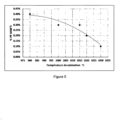
- figure 5 shows the loss on ignition (determined after calcination at 1060 °C for 2 hours) of a diasporic bauxite calcined according to the invention at different temperatures ranging from 980 °C to 1030 °C. It can be seen that the loss on ignition after calcination at 1030 °C is extremely low (0.10%), or in other words: when this material is heated above 1030 °C and up to 1060 °C, the amount of volatile matter released is extremely low.
- Phase separation allows, preferably after filtration, to separate the solid from the liquor in order to be able to use the pretreated bauxite in the digestion step (step 2120 ) of the Bayer process.
- the inventors made a certain number of observations which led them to modify certain steps of the Bayer process; this modification constitutes an essential characteristic of the present invention.
- Digestion consists in solubilizing the aluminous phases contained in the pretreated bauxite in a soda liquor.
- the alpha alumina contained in the pretreated bauxite which was generated during calcination, is solubilized by the Bayer liquor at high temperature, together with the pre-existing soluble alumina.
- This step can be carried out under temperature and pressure conditions similar to those of the traditional Bayer process, namely: a temperature typically between 250 °C and 270 °C in closed autoclaves or in a pressurized tubular system (approximately 50 bars to 60 bars). Heating is advantageously done by gradually increasing the temperature to the reaction temperature.
- the residence time at the reaction temperature is advantageously between 30 min and 60 min, preferably between 30 min and 50 min, and even more preferably between 35 min and 45 min.
- this concentration is between 140 g Na 2 O/L and 200 g Na 2 O/L, preferably between 155 g Na 2 O/L and 190 g Na 2 O/L, and even more preferably between 160 g Na 2 O/L and 180 g Na 2 O/L.
- This concentration is advantageously monitored continuously by measuring the electrical conductivity of the liquor; it can also be the subject of a chemical analysis in the laboratory.
- the inventors have found that despite a higher circulating flow rate of the attack liquor (12.11 m 3 /t compared to 8.52 m 3 /t) due to a lower concentration of caustic soda (162 g/L compared to 240 g/L) in the digestion liquor, the alumina extraction yields remain very high; they are greater than 96% on alumina minus silica by adapting the workshop adjustment parameters for example, the saturation of the liquor (alumina concentration and RP of the lime addition (8 to 10.4%) and the temperature (260 °C).
- the suspension is relaxed, that is to say it is brought back to atmospheric pressure by successive relaxations; this operation allows a significant quantity of water to evaporate (self-evaporation).
- the process according to the invention uses a Bayer liquor with a significantly lower sodium hydroxide concentration than the traditional Bayer process, the amount of water to be evaporated is much lower. Furthermore, the pretreated bauxite generates less red mud ( 2140 ) than the majority of natural bauxites, which reduces the amount of mud wash water ( 2150 ) required, knowing that this soda-laden wash water will be introduced into the Bayer liquor circuit. In some cases, the evaporation during the autoclave expansion (step 2124 ) at digestion ( 2120 ) is sufficient to maintain the concentration of the recycled aluminate liquor ( 2220 ); the evaporation step 2210 can then be omitted. The evaporation step 2210 consumes thermal energy and requires a significant investment in evaporators; Being able to minimize or even eliminate this step is of significant economic interest.
- the suspension is diluted with an aluminate liquor from the first stage of washing of the red mud at step 2140.
- This dilution is regulated according to the washing water inlet. It makes it possible to reach a concentration of the liquor compatible with the solid-liquid separation and the crystallization at step 2160.
- Decantation is carried out in a device called a "decanter", a large diameter tank (most often with a flat or conical bottom) equipped with slow agitation allowing separation. Decantation is optimized by the use of additives called flocculants in order to increase the sedimentation speed of solid particles.
- the thickened suspension (Under-flow) is sent to the first washing stage.
- the clarified liquor (Over-flow) is sent to the so-called "safety" filtration which aims to eliminate very fine sludge particles in order to guarantee a liquor free of impurities for crystallization.
- the washing of the red sludge at step 2140 is preferably carried out counter-currently; the washing water is introduced at the last stage of the washing chain.
- the washing chain can be completed by filtration of the sludge from the last washer using a filter press.
- the use of flocculant improves sedimentation in order to ensure better washing of the sludge.
- the small amount of red mud generated (typically reduced by about 60%) by the digestion ( 2120 ) of pretreated bauxite requires a smaller amount of water (typically reduced by about 50%) than that required for washing the mud generated by the digestion of untreated bauxite.
- the inventors have found that with bauxite pretreated by the process according to the invention, judicious adjustment of the main parameters of the Bayer process, in particular the attack (residence time, saturation of the liquors, quantity of lime added, etc.) allows to maintain excellent alumina solubilization yields (greater than 96% on alumina minus silica) with attack liquors with low caustic soda concentration (of the order of 160 to 170 g/L for 238 g/L to 240 g/L for conventional attacks).
- attack liquors with low caustic soda concentration of the order of 160 to 170 g/L for 238 g/L to 240 g/L for conventional attacks.
- the process according to the invention leads to a significant reduction in the quantity of sludge, even taking into account the fact that the desilication step ( 2050 ) (also called “desilication") by precipitation of silicates generates specific sludge ("white sludge") which do not appear in the traditional Bayer process with non-pretreated bauxites: in the process according to the invention it is noted that the reduction in the quantity of red sludge is much greater than the quantity of white sludge. Furthermore, the subsequent fate (and the possible recovery in usable products) of these types of sludge is not the same.
- the process according to the invention reduces the quantity of sludge to be decanted (steps 2040, 2060 and 2130 ), typically by 10 to 40%, and preferably by 20% to 40%. For red sludge this reduction can reach 65% (step 2130 ). In addition, these sludges have a better suitability for decantation due to the transformation, during the ore calcination phase, of goethite into hematite.
- the consumption of soda during the Bayer process is linked to the formation of solid compounds including sodium (silicoaluminate, sodium crystallized with alumina) on the one hand and to the loss in liquid form of soda (impregnation liquor of red mud, and trihydrate) on the other hand.
- the pretreatment process by calcination-leaching also generates losses by sodium occlusion (occlusion in the silicate) and by losses in liquid form of soda (impregnation of white sludge). All these losses are compensated by the addition of 50% soda lye.
- the energy consumption of the Bayer process for diasporic bauxites with a low AI/Si ratio is of the order of 8 GJ per tonne of alumina obtained, without taking into account the calcination of the trihydrate (step 1194, 2194 ); since the energy consumption of the calcination of the trihydrate does not depend on the origin of the bauxite, we compare here only the process up to the trihydrate ( 1190 , 2190 ).
- this consumption is reduced by 1.9 GJ/t thanks to the elimination of the evaporation step 2210.
- the pretreatment process comprising the calcination step ( 2010 ) and the leaching step ( 2030 ), adds a consumption of approximately 2.2 GJ per tonne of alumina obtained
- the process according to the invention leads to an excess energy consumption of 0.3 GJ per tonne of alumina. This excess consumption corresponds to approximately 4% of the energy consumption of the process according to the invention.
- the process according to the invention consumes less water and less soda than the traditional Bayer process applied to a poor karst bauxite.
- the consumption of soda goes from 490 kg of NaOH to 104 kg of NaOH per tonne of alumina produced.
- the consumption of lime certainly doubles, from about 360 kg per tonne of alumina to about 800 kg per tonne of alumina, but the cost of lime amounts to about 10% of the cost of NaOH.
- This investment consists of adding a pre-treatment unit to an existing plant that operates the Bayer process: no modification of the equipment is necessary within this existing plant (apart from the integration of the Bayer liquor flows between the two "pre-treatment” and "Bayer” units which is a matter of piping): the modification that the present invention brings to the Bayer process is significant, but it only concerns the operating parameters of the Bayer process, and not the industrial equipment.
- red mud essentially silicates
- white mud essentially silicates
- red mud contains fewer heavy metals and other potentially toxic substances (if they were to go into solution) than red mud; its economic value is not negative.
- the mineralogy of calcium silicate in the form of Tobermorite suggests applications in particular in the field of construction.
- the greatest advantage of the method according to the invention is certainly the possibility of increasing the deposits that can be used in bauxite in accounting (microeconomic or macroeconomic), by allowing the use of mineral resources that cannot be used with the methods according to the state of the art in competitive economic conditions.
- the possibility thus offered to certain plants to use bauxites from geographically close mines generates related savings in transport costs.
- this pretreated bauxite can come either from a separate bauxite pretreatment plant (for example installed near a bauxite mine, in order to save on the cost of transporting the bauxite), or from an integrated plant (pretreatment unit + Bayer unit) which has excess capacity in pretreated bauxite.
- This first embodiment with a separate pretreatment unit is however not preferred because the recovery of the liquid phase loaded with soda from the leaching step 2040 and the washing of the white sludge 2072 cannot in this case be done by recirculation in the Bayer liquor.
- the process according to the invention has many advantages. Its main advantage is to allow the implementation, within the framework of the Bayer process, of bauxites with a low Al/Si ratio which cannot be used according to the state of the art, or with a low yield only, and with a significantly higher production cost compared to bauxites with a higher Al/Si ratio.
- the pretreatment according to the invention removes not only silicon, but also almost all of the organic carbon and a large part of the sulfur naturally contained in the bauxite. It is known that organic carbon accumulates in the sodium aluminate liquor and some of it can precipitate as oxalate on the trihydrate. It is known that in the desirable case where the oxalate concentration of the Bayer liquor is low, there is greater latitude to adapt the parameters of the decomposition step 2160 (in particular the temperature, the residence time and the recycling rate of the primers) to the needs of obtaining a product with a controlled particle size, a particle size distribution and a crystallite shape. Furthermore, the yield of this crystallization step is higher if the oxalate concentration of the Bayer liquor is low.
- red mud is reduced (up to 60%). This has two advantages: in terms of phase separation, and in terms of their ultimate treatment. More precisely, the process according to the invention makes it possible to reduce the amount of red mud; it certainly generates a new type of residue, white mud, but the sum of white and red mud is reduced (up to 25%) compared to red mud according to the traditional Bayer process.
- the red mud generated in the process according to the invention shows a better suitability for decantation (due to the transformation during calcination (step 2010 ) of goethite into hematite), which makes it possible to reduce the amount of flocculating agent added to the suspensions, to facilitate the management of the decantation workshop, to reduce the cost of its maintenance, and to reduce the consumption of electrical energy.
- Another advantage is the possible reduction of hard deposit of aluminosilicates on the surfaces of the various equipment used in digestion (step 2120 ) and downstream of the digestion step; this hard deposit tends to hinder heat exchange and must be removed from time to time in specific maintenance operations.
- Yet another advantage is that the residual iron and silica content of the alumina obtained by the process according to the invention is particularly low.
- Another advantage is the reduction of the amount of water to be evaporated in the water evaporation step (step 2210 ), which can be omitted in many cases. This contributes significantly to energy saving.
- the process according to the invention comprises an additional calcination step (step 2010 ) which consumes thermal energy and soda.
- step 2010 this soda can be recycled to a large extent in the Bayer process and the energy consumption of the calcination step is almost offset by the savings made on the Bayer process.
- the process according to the invention can be used advantageously with a pretreated bauxite obtained from natural bauxites having an A/S ratio of between 1 and 8 and preferably between 1.5 and 7. Above a value of 7 or 8 the benefit in terms of additional alumina made available by the process of pretreatment of bauxite by calcination and leaching becomes lower, and the advantage of the reduction in soda consumption is more limited because there is less silica likely to entrain soda. This upper threshold depends on certain technical-economic parameters which can vary according to the economic data. For a value of 1 the mineral resource is mainly kaolinite, which has other technical applications. Natural bauxites rarely have an A/S ratio less than about 2.5 or 2, and the preferred lower limit of the process according to the invention is the use of a pretreated bauxite obtained from a natural bauxite having an A/S ratio equal to 2.
- Bauxite powder was sourced from Jiaokou (China) whose chemical analysis is detailed in Table 1 below. ⁇ u>Table 1 ⁇ /u> Chemical composition of Jiaokou bauxite Al 2 O 3 SiO 2 Fe 2 O 3 TiO 2 MgO CaO K 2 O Total CO2 S total 61.4 13.46 4.4 2.8 0.25 1.15 0.39 0.82 0.05
- This crude ore contains a relatively large amount of alumina, but is also rich in silicon (low A/S ratio, about 4.6), and the silica is mainly present in the form of kaolinite (88%), the remainder (12%) being in the form of muscovite.
- Samples of 200 g of this bauxite were calcined at 980 °C or 1030 °C. Calcination was carried out in a muffle furnace preheated to 200 °C - 250 °C, with the temperature rising as quickly as possible. The calcination time was 30 minutes at the target temperature (980 °C or 1030 °C). At the end of calcination the bauxite was cooled in a desiccator. Its chemical composition was analyzed by X-ray fluorescence, its structure by X-ray diffraction, its volatile matter content (in English “loss on ignition”, abbreviated LOI) by weighing before and after heating to 1060°C.
- LOI loss on ignition
- Leaching was carried out on a suspension at a rate of 90 g/L of calcined bauxite, with a pure sodium hydroxide solution at 100 g/L of Na 2 O, for a suspension volume of 500 mL.
- the suspension thus obtained was kept for one hour at 100 °C, and was then filtered on a Millipore membrane filter (5 ⁇ m). The filtrate was kept in an oven at 90 °C, an aliquot was taken for analysis.
- the leached bauxite was washed and dried.
- Na 2 O ctq refers to the useful (“caustic”) fraction of the soda
- Na 2 O cbte refers to the fraction of Na 2 O which corresponds to the carbonate residues (“cbte”
- Silicon was precipitated by adding milk of lime; the amount of lime added varied between 2.5% and 4%. This is described in more detail in Example 2 below.
- the bauxite charge was adjusted to obtain an RP value (alumina/soda ratio) at the end of the attack which varied between 1.00 and 1.28.
- Silica precipitation was carried out with lime milk at 100 g/L CaO and with solid CaO, at a temperature of 100 °C for 2 hours.
- the lime milk was prepared under stirring at 70 °C for 90 min and then at 85 °C for 60 min.
- the filtrate was analyzed ( SiO2 , CaO and Al2O3 ) and the filter cake was characterized by chemical analyses ( SiO2 , CaO and Al2O3 ), X - ray diffraction and scanning electron microscopy (SEM).
- Silica precipitation was carried out on a volume of 300 ml of the first hot filtration solution of the leaching test of a Wanji bauxite calcined at 1020 °C. Thus, two tests were carried out, one for precipitation with milk of lime and the other for precipitation with solid lime.
- Precipitation with Leaching solution [g/L] Precipitation filtrate [g/L] Precipitate [%] SiO 2 Al 2 O 3 CaO SiO 2 Al 2 O 3 CaO SiO 2 Al 2 O 3 CaO Solid lime 5,794 1,849 0.012 1,528 1,117 0.035 26.49 3.76 39.05 Lime milk 6,081 1,830 0.015 0.782 0.937 0.011 26.76 4.03 42.39
- Table 6 shows the result of the chemical analysis of the liquor before desilication
- Table 8 shows the result of the chemical analysis of the liquor after desilication.
- Table 9 provides information on the precipitation yield of silica and alumina. ⁇ u>Table 6 ⁇ /u> Operating conditions of desilication tests of the leaching liquor of Jiaokou bauxite calcined at 1030°C Desilication Temperature 98°C Test No.
- Table 10 shows the analysis of the precipitated silicate (white mud). ⁇ u>Table 10 ⁇ /u> Analysis of precipitated silicate Essay No. 1 2 3 4 Mass of sludge weighed g 3.28 3.39 1.41 1.61 Loss on fire % 18.90 18.90 19.90 19.90 Al 2 O 3 % 2.5 2.5 2.1 2.1 SiO 2 % 31.96 31.96 30.16 30.16 Fe 2 O 3 % 0.4 0.4 0.3 0.3 TiO 2 % 0.05 0.05 0.04 0.04 Na 2 O % 0.05 0.05 0.05 0.05 0.05 0.05 0.05 0.05 0.05 CaO % 44.28 44.28 43.95 43.95 Total % 98.14 98.14 96.50 96.50 CaO/SiO 2 % 1.39 1.39 1.46 1.46 Na 2 O/SiO 2 % 0.002 0.002 0.002 0.002 0.002 Calculated introduced CaO % 55.10 55.10 72.39 72.39 Al 2 O 3 in the mud
- the precipitation rate is between 87 and 90%, for precipitation with milk of lime, and 74% when using solid lime.
- the insolubilization of soda is estimated at 0.0017 points per point of dissolved silica.
- Bauxite powder was sourced from Xiao Yi (Shanxi, China) and its chemical analysis is detailed in Table 11 below. ⁇ u>Table 11 ⁇ /u> Composition of Xiao Yi Bauxite Al 2 O 3 SiO 2 Fe 2 O 3 TiO 2 MgO CaO K 2 O Total CO2 S total F 51.59 19.27 8.24 2.67 0.15 0.33 0.38 0.5 0.05 0.1
- This raw ore has a composition that is significantly different from that of Jiaokou bauxite.
- its aluminum content is lower, and its silicon content is higher: the A/S ratio is very low, approximately 2.7; the silica is mainly present in the form of kaolinite.
- Ore samples of 30 g were placed in silica crucibles; these were introduced into a muffle furnace at 1020 °C in a muffle furnace with a residence time of 30 min. After calcination, the samples were removed from the furnace and allowed to cool in ambient air; they were then weighed.
- the calcined bauxite was then leached at 100 °C for 45 min in a 100 g/L Na2O solution (corresponding to 130 g/L NaOH), with a solid concentration of 80 g/L.
- This leaching was carried out in a double-jacketed reactor heated with a thermostatically controlled oil bath.
- the suspension was filtered through a slow filtration paper filter (Whatman ref. 589/3) in a Büchner funnel mounted on a flask connected to a vacuum pump. A first filtration was carried out hot, then two other filtrations were carried out after repulping the cake with demineralized water at room temperature. The cake from the second filtration was washed on the filter with ethanol.
- the raw ore, calcined bauxite and leach residue were characterized by chemical analyses, X-ray diffraction (XRD), infrared spectroscopy (DRIFTS) and scanning electron microscopy (SEM).
- XRD X-ray diffraction
- DRIFTS infrared spectroscopy
- SEM scanning electron microscopy
- TGA thermogravimetric analysis
- DTA differential thermal analysis
- X-ray diffraction characterization showed that the crystallized phases of the starting bauxite are, in decreasing order of importance: diaspore (AIO(OH)), kaolinite (Al 2 Si 2 O 5 (OH) 4 ), magnetite (Fe 3 O 4 ), anatase (TiO 2 ), rutile (TiO 2 ), hematite (Fe 2 O 3 ), goethite (FeO(OH)), quartz (SiO 2 ), a mica (illite, muscovite (Al 2 O 3 AlO 10 (OH) 2 K), calcite (CaCO 3 ), palygorskite (MgAl) 4 Si 3 O 23 (OH) 2 -8H 2 O.
- the high silica content therefore comes mainly from kaolinite and, to a lesser extent, from quartz and other phyllosilicates (micas, palygorskite).
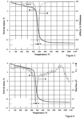
- Thermogravimetric analysis (TGA) coupled with differential thermal analysis (DTA) essentially shows the dehydroxylation of diaspore and kaolinite (see Figures 3 and 4 ). Around 900°C an aspect of the curve was observed which suggests the hypothesis of the crystallization of a newly formed compound which could be mullite. These results led the inventors to set the calcination temperature at 1020°C.
- the desilication rate is 74.2%.
- Mineralogical characterization by XRD of bauxite after leaching highlights the presence of the same crystallized phases as before leaching, namely: corundum ( ⁇ -Al 2 O 3 ), magnetite, hematite, anatase, rutile and quartz.
- corundum ⁇ -Al 2 O 3
- magnetite hematite
- anatase rutile
- quartz quartz
- the IR spectrum indicates that the product has become globally very hydrophilic, which is favorable to its suspension, and that the signals relating to Si-O elongations have considerably decreased in intensity, which is consistent with a dissolution of the silicate phases.
- Table 14 compares the chemical analyses of the original bauxite, after calcination and after leaching: ⁇ u>Table 14 ⁇ /u> Chemical analysis of raw, calcined and calcined-leached (“pre-treated”) bauxite Al 2 O 3 [%] SiO 2 [%] Fe 2 O 3 [%] TiO 2 [%] MgO [%] CaO [%] K 2 O [%] Na 2 O [%] Total CO2 [%] S total [%] F [%] PAF [%] A/S Bauxite bully 51.59 19.27 8.24 2.67 0.15 0.33 0.38 0.03 0.5 0.05 0.1 13.69 2.7 calcined 59.46 22.66 9.97 3.1 0.17 0.38 0.45 0.04 0.02 0.05 0.06 0.33 2.6 Leached 71.51 7.08 11.55 3.74 0.2 0.48 0.08 1.85 0.33 0.03 0.07 2.16 10.1 “PAF” denotes loss on ignition (mass), “A/S” denote
- the leached bauxite was crushed (all passing 300 ⁇ m) and dried in an oven at 110 °C.
- the attack was carried out in a 150 ml autoclave heated to 260 °C for 40 min.
- the lime added to the attack was from a Chinese alumina plant; it contains 86.02% CaO.
- the lime was slaked and was added in the form of milk. Different amounts of lime were tried.
- the suspension was filtered.
- the solid was washed and prepared for chemical and crystallographic analyses (loss on ignition, X-ray fluorescence and X-ray diffraction).
- the liquor was analyzed with Methrom (Na 2 O, Al 2 O 3 , carbonate).
- the observed dispersion is probably partly linked to the difference in the quantity of lime added to the attack. This important parameter has an influence on the yield, the yield curves as a function of the alumina/caustic soda weight ratio, and the quantity of insoluble soda.
- Example 4 Digestion tests on Xiao Yi bauxite, pretreated by the calcination-leaching process according to the invention, at low sodium hydroxide concentration
- Example 3 Based on the excellent results of Example 3, the inventors sought to further improve their process. Given that the bauxite pretreatment process (Roast-Leach process) significantly reduces the mass of bauxite at the inlet of the Bayer process and therefore of the red mud at the outlet (at a constant mass of alumina produced), it can be assumed that the washing of the mud will be more efficient in the context of the process according to the invention. If the washing efficiency is kept the same, the quantity of net water for washing the mud can therefore be reduced, which makes it possible to reduce the total quantity of water to be evaporated in the context of the Bayer process. This significantly reduces energy consumption at this stage of the process.
- the bauxite pretreatment process Roast-Leach process
- the reduction in evaporation is necessarily accompanied by a reduction in the caustic soda concentration of the liquor used for digestion.
- the inventors therefore carried out digestion tests on Xiao Yi bauxite leached at a Na 2 O ctq concentration of 171.5 g/L, which represents a significant decrease compared to the first tests (Example 3) carried out with a concentration of 238 g/L.
- the concentration of 171.5 g/L of Na 2 O ctq corresponds to a Bayer unit (called in the trade a “refinery”) which would operate without evaporators.
- Example 4 the Xiao Yi bauxite used in Example 3 was treated by the same process as that described in Example 3, but its digestion in the Bayer process was carried out at a reduced sodium hydroxide concentration: the Na 2 O ctq concentration was reduced from 238 g/L to 171.5 g/L.
- Table 17 Results of low-soda digestion of leached Xiao Yi bauxite Raw bauxite Calcined and leached bauxite (invention) Test No.
- solubilization yield of alumina remains very high despite a considerable drop in the caustic soda concentration of the attack liquor.
- the X-ray diffraction characterization indicates the following crystallized phases: Diaspore (AIO(OH)), muscovite ((K 1-x , Na x ) (Al 2-y Fe y ) (AlSi 3 ) (O 10 (OH) 2 ), kaolinite (Al 2 Si 2 O 5 (OH) 4 ), quartz (SiO 2 ), siderite (FeCO 3 ), goethite (FeO(OH)), hematite (Fe 2 O 3 ), magnetite (Fe 3 O 4 ), anatase and rutile (TiO 2 ).
- the SiO2 content therefore comes mainly from muscovite and quartz, and secondarily from kaolinite.
- X-ray diffraction characterization highlights the disappearance of kaolinite, the transformation of diaspore into corundum ( ⁇ -Al 2 O 3 ), of siderite and goethite into hematite.
- the other phases, muscovite (residual structure), quartz, magnetite, anatase and rutile are still present.
- the detection limit of this X-ray characterization is less than 1% by mass.
- Leaching in a sodium medium allows the SiO2 content to be reduced from 12.58 to 8.58%, a decrease of 4 points, and the alumina/silica ratio to increase from 4.0 to 7.3 (see table Z2 above).
- Another bauxite has been sourced from Shanxi, China. It has an alumina/silica ratio of 1.94. X-ray diffraction analysis indicates that it is a diasporic bauxite with silicates consisting mainly of kaolinite, a small proportion of muscovite, and quartz. Iron is present mainly as goethite.
- This bauxite was calcined for 30 minutes at 1030 °C.
- the leaching of this calcined bauxite was carried out at 100 °C with soda at 100 g Na 2 OI / liter for 45 minutes.
- X-ray diffraction characterization highlights the disappearance of kaolinite and the appearance of a siliceous phase, mullite.
- a bulge in the diffractogram is observed in a 2 ⁇ zone between 18° and 20°, reflecting the formation of a poorly crystallized silica phase.
- the diaspore has disappeared.
- Corundum is present.
- the goethite has been transformed into hematite.
- X-ray diffraction characterization shows that mullite is still present.
- the bulge in the diffractogram has disappeared.
- Most of the amorphous silica has gone into solution.
- the corundum, hematite, rutile and anatase phases are still present.
- Leaching of the calcined ore in a sodium medium allows the SiO 2 content to be reduced from 27.75% to 14.49%, i.e. an increase in the alumina/silica ratio from 1.94 to 5.06.
- the desilication yield is 62.9%.
- the incorporation of sodium hydroxide is 0.98%.
Landscapes
- Chemical & Material Sciences (AREA)
- Organic Chemistry (AREA)
- Life Sciences & Earth Sciences (AREA)
- Inorganic Chemistry (AREA)
- Geology (AREA)
- Chemical Kinetics & Catalysis (AREA)
- General Life Sciences & Earth Sciences (AREA)
- Geochemistry & Mineralogy (AREA)
- Crystallography & Structural Chemistry (AREA)
- Health & Medical Sciences (AREA)
- General Health & Medical Sciences (AREA)
- Nutrition Science (AREA)
- Compounds Of Alkaline-Earth Elements, Aluminum Or Rare-Earth Metals (AREA)
Applications Claiming Priority (3)
| Application Number | Priority Date | Filing Date | Title |
|---|---|---|---|
| FR1760259A FR3072956B1 (fr) | 2017-10-31 | 2017-10-31 | Procede de traitement de bauxite |
| EP18803751.9A EP3704061A1 (de) | 2017-10-31 | 2018-10-29 | Verfahren zur verarbeitung von bauxit |
| PCT/FR2018/052678 WO2019086792A1 (fr) | 2017-10-31 | 2018-10-29 | Procédé de traitement de bauxite |
Related Parent Applications (2)
| Application Number | Title | Priority Date | Filing Date |
|---|---|---|---|
| FR1760259A Previously-Filed-Application FR3072956B1 (fr) | 2017-10-31 | 2017-10-31 | Procede de traitement de bauxite |
| EP18803751.9A Division EP3704061A1 (de) | 2017-10-31 | 2018-10-29 | Verfahren zur verarbeitung von bauxit |
Publications (1)
| Publication Number | Publication Date |
|---|---|
| EP4474351A1 true EP4474351A1 (de) | 2024-12-11 |
Family
ID=62143233
Family Applications (2)
| Application Number | Title | Priority Date | Filing Date |
|---|---|---|---|
| EP24164064.8A Pending EP4474351A1 (de) | 2017-10-31 | 2018-10-29 | Verfahren zur behandlung von bauxit |
| EP18803751.9A Pending EP3704061A1 (de) | 2017-10-31 | 2018-10-29 | Verfahren zur verarbeitung von bauxit |
Family Applications After (1)
| Application Number | Title | Priority Date | Filing Date |
|---|---|---|---|
| EP18803751.9A Pending EP3704061A1 (de) | 2017-10-31 | 2018-10-29 | Verfahren zur verarbeitung von bauxit |
Country Status (6)
| Country | Link |
|---|---|
| EP (2) | EP4474351A1 (de) |
| CN (3) | CN122079202A (de) |
| AU (2) | AU2018359800B2 (de) |
| FR (1) | FR3072956B1 (de) |
| SA (1) | SA520411880B1 (de) |
| WO (1) | WO2019086792A1 (de) |
Families Citing this family (4)
| Publication number | Priority date | Publication date | Assignee | Title |
|---|---|---|---|---|
| EP4261299A1 (de) * | 2022-04-12 | 2023-10-18 | Dubai Aluminium PJSC | Verfahren zur verarbeitung von bauxitrückständen aus dem bayer-prozess und nach diesem verfahren erhaltenes mineralprodukt |
| CN114685016A (zh) * | 2022-04-13 | 2022-07-01 | 广西田东锦鑫化工有限公司 | 一种氧化铝生产中赤泥高效脱碱的装置和处理工艺 |
| CN115469045A (zh) * | 2022-09-30 | 2022-12-13 | 内蒙古鑫旺再生资源有限公司 | 拜耳法生产氢氧化铝中表面草酸盐的测定方法 |
| CN116161671B (zh) * | 2023-02-15 | 2025-12-16 | 中南大学 | 一种赤泥与钢铁粉尘协同处置利用的方法 |
Citations (9)
| Publication number | Priority date | Publication date | Assignee | Title |
|---|---|---|---|---|
| US2939764A (en) | 1958-03-07 | 1960-06-07 | Vaw Ver Aluminium Werke Ag | Method for reducing the silica content of alumina-containing materials of the clay type |
| CN101767807A (zh) | 2010-01-20 | 2010-07-07 | 潘爱芳 | 一种从铝土矿中提取高纯氧化铝与硅胶的方法 |
| CN101875129A (zh) | 2010-06-08 | 2010-11-03 | 中南大学 | 一种高铁铝土矿综合利用的方法 |
| CN102180498A (zh) | 2011-01-07 | 2011-09-14 | 潘爱芳 | 一种从铝土矿中提取氧化铝的方法 |
| CN203408047U (zh) | 2013-08-28 | 2014-01-29 | 哈尔滨医科大学 | 脑电监测仪 |
| CN103614547A (zh) | 2013-11-28 | 2014-03-05 | 中南大学 | 一种从一水硬铝石型铝土矿中分离铁铝硅的方法 |
| CN104163445A (zh) | 2014-07-25 | 2014-11-26 | 中国铝业股份有限公司 | 一种铝土矿的综合利用方法 |
| CN205603238U (zh) | 2016-02-06 | 2016-09-28 | 杭州锦江集团有限公司 | 一种利用低品位铝土矿生产氧化铝的系统 |
| CN106517277A (zh) * | 2016-11-07 | 2017-03-22 | 中国铝业股份有限公司 | 一种铝土矿生产氧化铝联产硅肥的方法 |
Family Cites Families (8)
| Publication number | Priority date | Publication date | Assignee | Title |
|---|---|---|---|---|
| FR2715153B1 (fr) * | 1994-01-18 | 1996-03-01 | Pechiney Aluminium | Procédé de traitement de bauxite à trihydrate d'alumine. |
| CN1273942A (zh) * | 2000-03-09 | 2000-11-22 | 中南工业大学 | 一水硬铝石型铝土矿脱硅方法 |
| CN1266816A (zh) * | 2000-03-09 | 2000-09-20 | 中南工业大学 | 一水硬铝石型铝土矿脱硅方法 |
| FR2870535B1 (fr) * | 2004-05-18 | 2007-02-16 | Aluminium Pechiney Soc Par Act | Perfectionnement au procede bayer de production de trihydrate d'alumine par attaque alcaline de bauxite, ledit procede comportant une etape de predessilicatation |
| CN101607724B (zh) * | 2008-06-19 | 2010-12-15 | 北京化工大学 | 一种利用氢氧化钠溶出铝土矿中氧化铝的方法 |
| CN101456572B (zh) * | 2008-12-26 | 2011-02-16 | 东北大学 | 一种利用高硫铝土矿生产氧化铝的方法 |
| CN104108735A (zh) * | 2013-04-16 | 2014-10-22 | 中国科学院过程工程研究所 | 一种利用koh溶液处理中低品位铝土矿生产氧化铝的方法 |
| CN103663520B (zh) * | 2013-12-06 | 2016-06-22 | 贵州派腾科技服务有限公司 | 一种黑灰铝土矿拜耳法氧化铝生产方法 |
-
2017
- 2017-10-31 FR FR1760259A patent/FR3072956B1/fr active Active
-
2018
- 2018-10-29 CN CN202610220110.1A patent/CN122079202A/zh active Pending
- 2018-10-29 AU AU2018359800A patent/AU2018359800B2/en active Active
- 2018-10-29 EP EP24164064.8A patent/EP4474351A1/de active Pending
- 2018-10-29 WO PCT/FR2018/052678 patent/WO2019086792A1/fr not_active Ceased
- 2018-10-29 EP EP18803751.9A patent/EP3704061A1/de active Pending
- 2018-10-29 CN CN202410420133.8A patent/CN118183811A/zh active Pending
- 2018-10-29 CN CN201880071309.6A patent/CN111315688A/zh active Pending
-
2020
- 2020-04-30 SA SA520411880A patent/SA520411880B1/ar unknown
-
2024
- 2024-05-15 AU AU2024203245A patent/AU2024203245B2/en active Active
Patent Citations (9)
| Publication number | Priority date | Publication date | Assignee | Title |
|---|---|---|---|---|
| US2939764A (en) | 1958-03-07 | 1960-06-07 | Vaw Ver Aluminium Werke Ag | Method for reducing the silica content of alumina-containing materials of the clay type |
| CN101767807A (zh) | 2010-01-20 | 2010-07-07 | 潘爱芳 | 一种从铝土矿中提取高纯氧化铝与硅胶的方法 |
| CN101875129A (zh) | 2010-06-08 | 2010-11-03 | 中南大学 | 一种高铁铝土矿综合利用的方法 |
| CN102180498A (zh) | 2011-01-07 | 2011-09-14 | 潘爱芳 | 一种从铝土矿中提取氧化铝的方法 |
| CN203408047U (zh) | 2013-08-28 | 2014-01-29 | 哈尔滨医科大学 | 脑电监测仪 |
| CN103614547A (zh) | 2013-11-28 | 2014-03-05 | 中南大学 | 一种从一水硬铝石型铝土矿中分离铁铝硅的方法 |
| CN104163445A (zh) | 2014-07-25 | 2014-11-26 | 中国铝业股份有限公司 | 一种铝土矿的综合利用方法 |
| CN205603238U (zh) | 2016-02-06 | 2016-09-28 | 杭州锦江集团有限公司 | 一种利用低品位铝土矿生产氧化铝的系统 |
| CN106517277A (zh) * | 2016-11-07 | 2017-03-22 | 中国铝业股份有限公司 | 一种铝土矿生产氧化铝联产硅肥的方法 |
Non-Patent Citations (11)
| Title |
|---|
| "Beneficiation of low-grade bauxites by hydrometallurgical methods", ICSOBA, 1981, pages 135 - 142 |
| "Options for processing of high silica bauxites", ICSOBA, vol. 35, no. 39, 2010, pages 184 - 192 |
| DESILICATION STUDIES OF DIASPORIC BAUXITE BYTHERMOCHEMICAL TREATMENT, PROC. XI INT. SEMINAR ON MINERALS PROCESSING TECHNOLOGY, 2010, pages 832 - 838 |
| K. YILMAZ ET AL.: "Pre-beneficiation of low grade Diasporic bauxite ore by réduction roasting", INT. J. CHEMICAL, MOLECULAR, NUCLEAR, MATERIALS AND METALLURGICAL ENGINEERING, vol. 9, no. 9, 2015, pages 1023 - 1026 |
| LI: "Desilication of bauxite ores bearing multi-aluminosilicates by thermochemcial activation process", LIGHT METALS TMS, 2009, pages 57 - 61 |
| Q ZHOU ET AL.: "Temperature dependence of crystal structure and digestibility of roasted diaspore", TRANS. NONFERROUS MET. SOC. CHINA, vol. 14, no. 1, 2004, pages 180 - 183 |
| SELON XU ET AL.: "Thermal behaviors of kaolinite-diasporic bauxite and desilication from it by roasting-alkali leaching process", LIGHT METALS TMS, 2002 |
| SMITH ET AL: "The processing of high silica bauxites - Review of existing and potential processes", HYDROMETALLURGY, ELSEVIER SCIENTIFIC PUBLISHING CY. AMSTERDAM, NL, vol. 98, no. 1-2, 1 August 2009 (2009-08-01), pages 162 - 176, XP026172174, ISSN: 0304-386X, [retrieved on 20090424], DOI: 10.1016/J.HYDROMET.2009.04.015 * |
| T JIANG ET AL.: "Desilication from illite by thermochemical activation", TRANS. NONFERROUS MET. SOC. CHINA, vol. 14, no. 5, 2004, pages 1000 - 1005 |
| TING'AN ZHANGK. YILMAZ ET AL.: "Calcification - carbonation method for alumina production by using low-grade bauxite", LIGHT METALS, 2013, pages 233 - 238 |
| XIAOFENG ZHU ET AL.: "Basic Research on Calcification Transfomation, Process of Low Grade Bauxite", LIGHT METALS, 2013, pages 239 - 244 |
Also Published As
| Publication number | Publication date |
|---|---|
| AU2018359800A1 (en) | 2020-04-30 |
| WO2019086792A1 (fr) | 2019-05-09 |
| AU2018359800B2 (en) | 2024-06-13 |
| FR3072956B1 (fr) | 2024-03-01 |
| CN122079202A (zh) | 2026-05-26 |
| EP3704061A1 (de) | 2020-09-09 |
| AU2024203245B2 (en) | 2026-01-22 |
| SA520411880B1 (ar) | 2024-03-10 |
| FR3072956A1 (fr) | 2019-05-03 |
| CN118183811A (zh) | 2024-06-14 |
| AU2024203245A1 (en) | 2024-06-06 |
| CN111315688A (zh) | 2020-06-19 |
Similar Documents
| Publication | Publication Date | Title |
|---|---|---|
| JP6889115B2 (ja) | HClスパージを行うことを含むリチウム含有材料の処理 | |
| EP3704061A1 (de) | Verfahren zur verarbeitung von bauxit | |
| FR2870535A1 (fr) | Perfectionnement au procede bayer de production de trihydrate d'alumine par attaque alcaline de bauxite, ledit procede comportant une etape de predessilicatation | |
| JP4222631B2 (ja) | ボーキサイトからのシリカ除去 | |
| Yang et al. | Hydrothermal precipitation and separation of Li as intermediate product Li2SiO3 from the alkali leach liquor | |
| RU2483131C1 (ru) | Способ получения оксида скандия из красного шлама | |
| EP0748294A1 (de) | Verfahren zur entfernung von eisen aus natriumaluminatlaugen resultierend aus alkaliattacke auf aluminiummonohydratenthaltendem bauxit | |
| CN104780982B (zh) | 碱性铝土矿残渣的处理 | |
| Wellington | Effect of thermal treatment of bauxite ore on carbon (organic and inorganic) content and solubility in Bayer process liquor | |
| WO2020221968A1 (fr) | Procede de traitement de residus d'enrichissement physique de bauxite | |
| EP0652181B1 (de) | Verfahren zur Behandlung von einer Mischung von Aluminiumoxydtrihydrat und Aluminiumoxydmonohydrat enthaltenden Bauxiten | |
| EP0739309B1 (de) | Verfahren zur behandlung von aluminiumtrihydrat enthaltendem bauxit | |
| HK40106031A (en) | Method for processing bauxite | |
| JP2002523326A (ja) | 改良されたアルミナ処理性能のための供給物処理 | |
| JP2002525261A (ja) | アルミナプロセス性能を改善するための供給原料の処理 | |
| WO1987001107A1 (fr) | Procede pour l'obtention d'hydroaluminate d'un metal alcalin | |
| FR2794449A1 (fr) | Procede d'epuration des liqueurs d'aluminate de sodium contenant de l'oxalate de sodium permettant de valoriser les residus | |
| RU2375307C1 (ru) | Способ получения глинозема из боксита | |
| AU716537B2 (en) | Removal of silica from bauxite | |
| HK40023807A (en) | Method for processing bauxite | |
| OA13269A (fr) | Procédé pour réduire l'encrassement de échangeurs thermiques d'un circuit Bayer. | |
| OA21680A (fr) | Procédé de récupération et de séparation de l'alumine et du phosphate contenu dans les phosphates d'alumine. | |
| EE01613U1 (et) | Sadestatud kaltsiumkarbonaadi sünteesimise meetod | |
| OA10337A (fr) | Procédé de traitement de bauxite à trihydrate d'alumine comportant une double dessilicatation |
Legal Events
| Date | Code | Title | Description |
|---|---|---|---|
| PUAI | Public reference made under article 153(3) epc to a published international application that has entered the european phase |
Free format text: ORIGINAL CODE: 0009012 |
|
| STAA | Information on the status of an ep patent application or granted ep patent |
Free format text: STATUS: THE APPLICATION HAS BEEN PUBLISHED |
|
| AC | Divisional application: reference to earlier application |
Ref document number: 3704061 Country of ref document: EP Kind code of ref document: P |
|
| AK | Designated contracting states |
Kind code of ref document: A1 Designated state(s): AL AT BE BG CH CY CZ DE DK EE ES FI FR GB GR HR HU IE IS IT LI LT LU LV MC MK MT NL NO PL PT RO RS SE SI SK SM TR |
|
| STAA | Information on the status of an ep patent application or granted ep patent |
Free format text: STATUS: REQUEST FOR EXAMINATION WAS MADE |
|
| 17P | Request for examination filed |
Effective date: 20250401 |