EP4481446A2 - Récipient contenant du diisocyanate de xylylène, procédé de stockage de diisocyanate de xylylène et procédé de transport de diisocyanate de xylylène - Google Patents
Récipient contenant du diisocyanate de xylylène, procédé de stockage de diisocyanate de xylylène et procédé de transport de diisocyanate de xylylène Download PDFInfo
- Publication number
- EP4481446A2 EP4481446A2 EP24212476.6A EP24212476A EP4481446A2 EP 4481446 A2 EP4481446 A2 EP 4481446A2 EP 24212476 A EP24212476 A EP 24212476A EP 4481446 A2 EP4481446 A2 EP 4481446A2
- Authority
- EP
- European Patent Office
- Prior art keywords
- container
- xylylene diisocyanate
- xdi
- ppm
- composition
- Prior art date
- Legal status (The legal status is an assumption and is not a legal conclusion. Google has not performed a legal analysis and makes no representation as to the accuracy of the status listed.)
- Pending
Links
Images



Classifications
-
- B—PERFORMING OPERATIONS; TRANSPORTING
- B65—CONVEYING; PACKING; STORING; HANDLING THIN OR FILAMENTARY MATERIAL
- B65D—CONTAINERS FOR STORAGE OR TRANSPORT OF ARTICLES OR MATERIALS, e.g. BAGS, BARRELS, BOTTLES, BOXES, CANS, CARTONS, CRATES, DRUMS, JARS, TANKS, HOPPERS, FORWARDING CONTAINERS; ACCESSORIES, CLOSURES, OR FITTINGS THEREFOR; PACKAGING ELEMENTS; PACKAGES
- B65D9/00—Containers having bodies formed by interconnecting or uniting two or more rigid, or substantially rigid, components made wholly or mainly of wood or substitutes therefor
- B65D9/30—Applications of laminates as wall material, e.g. plywood
-
- C—CHEMISTRY; METALLURGY
- C07—ORGANIC CHEMISTRY
- C07C—ACYCLIC OR CARBOCYCLIC COMPOUNDS
- C07C263/00—Preparation of derivatives of isocyanic acid
- C07C263/18—Separation; Purification; Stabilisation; Use of additives
-
- B—PERFORMING OPERATIONS; TRANSPORTING
- B65—CONVEYING; PACKING; STORING; HANDLING THIN OR FILAMENTARY MATERIAL
- B65D—CONTAINERS FOR STORAGE OR TRANSPORT OF ARTICLES OR MATERIALS, e.g. BAGS, BARRELS, BOTTLES, BOXES, CANS, CARTONS, CRATES, DRUMS, JARS, TANKS, HOPPERS, FORWARDING CONTAINERS; ACCESSORIES, CLOSURES, OR FITTINGS THEREFOR; PACKAGING ELEMENTS; PACKAGES
- B65D7/00—Containers having bodies formed by interconnecting or uniting two or more rigid, or substantially rigid, components made wholly or mainly of metal
- B65D7/12—Containers having bodies formed by interconnecting or uniting two or more rigid, or substantially rigid, components made wholly or mainly of metal characterised by wall construction or by connections between walls
- B65D7/22—Containers having bodies formed by interconnecting or uniting two or more rigid, or substantially rigid, components made wholly or mainly of metal characterised by wall construction or by connections between walls with double walls, e.g. double end walls
-
- B—PERFORMING OPERATIONS; TRANSPORTING
- B65—CONVEYING; PACKING; STORING; HANDLING THIN OR FILAMENTARY MATERIAL
- B65D—CONTAINERS FOR STORAGE OR TRANSPORT OF ARTICLES OR MATERIALS, e.g. BAGS, BARRELS, BOTTLES, BOXES, CANS, CARTONS, CRATES, DRUMS, JARS, TANKS, HOPPERS, FORWARDING CONTAINERS; ACCESSORIES, CLOSURES, OR FITTINGS THEREFOR; PACKAGING ELEMENTS; PACKAGES
- B65D25/00—Details of other kinds or types of rigid or semi-rigid containers
- B65D25/14—Linings or internal coatings
-
- C—CHEMISTRY; METALLURGY
- C07—ORGANIC CHEMISTRY
- C07C—ACYCLIC OR CARBOCYCLIC COMPOUNDS
- C07C265/00—Derivatives of isocyanic acid
- C07C265/14—Derivatives of isocyanic acid containing at least two isocyanate groups bound to the same carbon skeleton
-
- C—CHEMISTRY; METALLURGY
- C08—ORGANIC MACROMOLECULAR COMPOUNDS; THEIR PREPARATION OR CHEMICAL WORKING-UP; COMPOSITIONS BASED THEREON
- C08G—MACROMOLECULAR COMPOUNDS OBTAINED OTHERWISE THAN BY REACTIONS ONLY INVOLVING UNSATURATED CARBON-TO-CARBON BONDS
- C08G18/00—Polymeric products of isocyanates or isothiocyanates
- C08G18/06—Polymeric products of isocyanates or isothiocyanates with compounds having active hydrogen
- C08G18/08—Processes
- C08G18/16—Catalysts
- C08G18/22—Catalysts containing metal compounds
- C08G18/24—Catalysts containing metal compounds of tin
- C08G18/244—Catalysts containing metal compounds of tin tin salts of carboxylic acids
- C08G18/246—Catalysts containing metal compounds of tin tin salts of carboxylic acids containing also tin-carbon bonds
-
- C—CHEMISTRY; METALLURGY
- C08—ORGANIC MACROMOLECULAR COMPOUNDS; THEIR PREPARATION OR CHEMICAL WORKING-UP; COMPOSITIONS BASED THEREON
- C08G—MACROMOLECULAR COMPOUNDS OBTAINED OTHERWISE THAN BY REACTIONS ONLY INVOLVING UNSATURATED CARBON-TO-CARBON BONDS
- C08G18/00—Polymeric products of isocyanates or isothiocyanates
- C08G18/06—Polymeric products of isocyanates or isothiocyanates with compounds having active hydrogen
- C08G18/28—Polymeric products of isocyanates or isothiocyanates with compounds having active hydrogen characterised by the compounds used containing active hydrogen
- C08G18/30—Low-molecular-weight compounds
- C08G18/38—Low-molecular-weight compounds having heteroatoms other than oxygen
- C08G18/3855—Low-molecular-weight compounds having heteroatoms other than oxygen having sulfur
- C08G18/3876—Low-molecular-weight compounds having heteroatoms other than oxygen having sulfur containing mercapto groups
-
- C—CHEMISTRY; METALLURGY
- C08—ORGANIC MACROMOLECULAR COMPOUNDS; THEIR PREPARATION OR CHEMICAL WORKING-UP; COMPOSITIONS BASED THEREON
- C08G—MACROMOLECULAR COMPOUNDS OBTAINED OTHERWISE THAN BY REACTIONS ONLY INVOLVING UNSATURATED CARBON-TO-CARBON BONDS
- C08G18/00—Polymeric products of isocyanates or isothiocyanates
- C08G18/06—Polymeric products of isocyanates or isothiocyanates with compounds having active hydrogen
- C08G18/70—Polymeric products of isocyanates or isothiocyanates with compounds having active hydrogen characterised by the isocyanates or isothiocyanates used
- C08G18/72—Polyisocyanates or polyisothiocyanates
- C08G18/74—Polyisocyanates or polyisothiocyanates cyclic
- C08G18/76—Polyisocyanates or polyisothiocyanates cyclic aromatic
- C08G18/7614—Polyisocyanates or polyisothiocyanates cyclic aromatic containing only one aromatic ring
- C08G18/7628—Polyisocyanates or polyisothiocyanates cyclic aromatic containing only one aromatic ring containing at least one isocyanate or isothiocyanate group linked to the aromatic ring by means of an aliphatic group
- C08G18/7642—Polyisocyanates or polyisothiocyanates cyclic aromatic containing only one aromatic ring containing at least one isocyanate or isothiocyanate group linked to the aromatic ring by means of an aliphatic group containing at least two isocyanate or isothiocyanate groups linked to the aromatic ring by means of an aliphatic group having a primary carbon atom next to the isocyanate or isothiocyanate groups, e.g. xylylene diisocyanate or homologues substituted on the aromatic ring
-
- C—CHEMISTRY; METALLURGY
- C09—DYES; PAINTS; POLISHES; NATURAL RESINS; ADHESIVES; COMPOSITIONS NOT OTHERWISE PROVIDED FOR; APPLICATIONS OF MATERIALS NOT OTHERWISE PROVIDED FOR
- C09D—COATING COMPOSITIONS, e.g. PAINTS, VARNISHES OR LACQUERS; FILLING PASTES; CHEMICAL PAINT OR INK REMOVERS; INKS; CORRECTING FLUIDS; WOODSTAINS; PASTES OR SOLIDS FOR COLOURING OR PRINTING; USE OF MATERIALS THEREFOR
- C09D163/00—Coating compositions based on epoxy resins; Coating compositions based on derivatives of epoxy resins
-
- C—CHEMISTRY; METALLURGY
- C09—DYES; PAINTS; POLISHES; NATURAL RESINS; ADHESIVES; COMPOSITIONS NOT OTHERWISE PROVIDED FOR; APPLICATIONS OF MATERIALS NOT OTHERWISE PROVIDED FOR
- C09D—COATING COMPOSITIONS, e.g. PAINTS, VARNISHES OR LACQUERS; FILLING PASTES; CHEMICAL PAINT OR INK REMOVERS; INKS; CORRECTING FLUIDS; WOODSTAINS; PASTES OR SOLIDS FOR COLOURING OR PRINTING; USE OF MATERIALS THEREFOR
- C09D163/00—Coating compositions based on epoxy resins; Coating compositions based on derivatives of epoxy resins
- C09D163/04—Epoxynovolacs
-
- G—PHYSICS
- G02—OPTICS
- G02B—OPTICAL ELEMENTS, SYSTEMS OR APPARATUS
- G02B1/00—Optical elements characterised by the material of which they are made; Optical coatings for optical elements
- G02B1/04—Optical elements characterised by the material of which they are made; Optical coatings for optical elements made of organic materials, e.g. plastics
-
- G—PHYSICS
- G02—OPTICS
- G02B—OPTICAL ELEMENTS, SYSTEMS OR APPARATUS
- G02B1/00—Optical elements characterised by the material of which they are made; Optical coatings for optical elements
- G02B1/04—Optical elements characterised by the material of which they are made; Optical coatings for optical elements made of organic materials, e.g. plastics
- G02B1/041—Lenses
Definitions
- the present invention relates to a xylylene diisocyanate-containing container, a method for storing a xylylene diisocyanate, and a method for transporting a xylylene diisocyanate.
- an optical lens requiring excellent transparency is formed from a poly(thio)urethane resin.
- a xylylene diisocyanate composition containing a xylylene diisocyanate has been known (ref: for example, Patent Document 1).
- Patent Document 1 International Patent Publication No. WO2018/190290
- the xylylene diisocyanate composition described in Patent Document 1 when the xylylene diisocyanate composition described in Patent Document 1 is accommodated in a metal container, and stored and transported, the xylylene diisocyanate composition may be colored particularly in a case of a long period of time of storage and transportation.
- the poly(thio)urethane resin when the poly(thio)urethane resin is produced using the xylylene diisocyanate composition accommodated in the metal container, the poly(thio)urethane resin may be colored.
- the present invention provides a xylylene diisocyanate-containing container having excellent low coloring properties, a method for storing a xylylene diisocyanate, and a method for transporting a xylylene diisocyanate.
- the present invention [1] includes a xylylene diisocyanate-containing container including a xylylene diisocyanate and a container accommodating the xylylene diisocyanate, wherein a resin layer is provided on an inner surface of the container.
- the present invention [2] includes the xylylene diisocyanate-containing container described in the above-described [1], wherein the resin layer contains an epoxy resin.
- the present invention [4] includes a xylylene diisocyanate-containing container including a xylylene diisocyanate having an acid content of below 15 ppm and a container accommodating the xylylene diisocyanate, wherein a zinc phosphate coating is provided on an inner surface of the container.
- the present invention [5] includes a method for storing a xylylene diisocyanate, the method including storing a xylylene diisocyanate in a container provided with a resin layer on an inner surface.
- the present invention [6] includes the method for storing a xylylene diisocyanate described in the above-described [5], wherein the resin layer contains an epoxy resin.
- the present invention [7] includes the method for storing a xylylene diisocyanate described in the above-described [6], wherein the resin layer contains an epoxy phenol resin.
- the present invention [8] includes a method for storing a xylylene diisocyanate, the method including storing a xylylene diisocyanate having an acid content of below 15 ppm in a first container provided with a zinc phosphate coating on an inner surface.
- the present invention includes the method for storing a xylylene diisocyanate described in the above-described [8], the method including a step of measuring an acid content of a xylylene diisocyanate, and a step of accommodating the xylylene diisocyanate in a second container provided with a resin layer on an inner surface when the measured acid content is 15 ppm or more and accommodating the xylylene diisocyanate in the first container when the measured acid content is below 15 ppm.
- the present invention [10] includes a method for transporting a xylylene diisocyanate, the method including storing and transporting a xylylene diisocyanate in a container provided with a resin layer on an inner surface.
- the present invention [11] includes the method for transporting a xylylene diisocyanate described in the above-described [10], wherein the resin layer contains an epoxy resin.
- the present invention [12] includes the method for transporting a xylylene diisocyanate described in the above-described [11], wherein the resin layer contains an epoxy phenol resin.
- the present invention [13] includes a method for transporting a xylylene diisocyanate, the method including storing and transporting a xylylene diisocyanate having an acid content of below 15 ppm in a first container provided with a zinc phosphate coating on an inner surface.
- the resin layer is provided on the inner surface of the container, it is possible to suppress coloring of the xylylene diisocyanate even when the xylylene diisocyanate is accommodated in the container, and stored and transported over a long period of time. Further, it is possible to suppress the coloring of a poly(thio)urethane resin produced from the xylylene diisocyanate.
- the zinc phosphate coating is provided on the inner surface of the container, it is possible to suppress the coloring of the xylylene diisocyanate even when the xylylene diisocyanate having an acid content of below 15 ppm is accommodated in the container, and stored and transported over a long period of time. Further, it is possible to suppress the coloring of the poly(thio)urethane resin produced from the xylylene diisocyanate.
- the xylylene diisocyanate since the xylylene diisocyanate is stored in the above-described container, it is possible to suppress the coloring of the poly(thio)urethane resin, while suppressing the coloring of the xylylene diisocyanate.
- the method for transporting a xylylene diisocyanate of the present invention since the xylylene diisocyanate is stored and transported in the above-described container, it is possible to suppress the coloring of the poly(thio)urethane resin, while suppressing the coloring of the xylylene diisocyanate.
- a xylylene diisocyanate-containing container 1 includes a xylylene diisocyanate (hereinafter, referred to as an XDI) and a container 2 accommodating the XDI.
- XDI xylylene diisocyanate
- Examples of the XDI accommodated in the container 2 include 1,2-XDI (o-XDI), 1,3-XDI (m-XDI), and 1,4-XDI (p-XDI).
- XDIs may be used alone or in combination of two or more.
- 3-XDI m-XDI
- the XDI can be also obtained, for example, as a commercially available product (for example, MR-7A etc., manufactured by Mitsui Chemicals, Inc.), and can be also produced by a known method.
- the known method include a gas phase method in which a vaporized xylylene diamine (hereinafter, referred to as an XDA) reacts with phosgene, a hydrochloride method in which hydrochloride of the XDA reacts with the phosgene, a one-stage method in which the XDA directly reacts with the phosgene in one stage, and a cold and heat two-stage method in which the XDA reacts with the phosgene at low temperature to be subsequently reacted at high temperature.
- a gas phase method in which a vaporized xylylene diamine (hereinafter, referred to as an XDA) reacts with phosgene
- a hydrochloride method in which hydrochloride of
- the XDI is purified by a known method such as rectification (distillation), extraction, or the like, if necessary.
- the purity of the XDI is, for example, 95% by mass or more, preferably 98% by mass or more, more preferably 99% by mass or more, further more preferably 99.5% by mass or more, particularly preferably 99.9% by mass or more, and for example, 100% by mass or less.
- the purity of the XDI can be measured in conformity with the method described in Examples to be described later.
- the container 2 accommodates an XDI composition containing the XDI and the other component.
- Examples of the other component include chloromethylbenzyl isocyanate, dichloromethylbenzyl isocyanate, and hydrolyzable chlorine (HC).
- a content ratio of the chloromethylbenzyl isocyanate to the total mass of the XDI composition before being accommodated in the container 2 is, for example, 0.2 ppm or more, preferably 6 ppm or more, more preferably 100 ppm or more, and for example, 5000 ppm or less, preferably 4000 ppm or less, more preferably 3000 ppm or less, particularly preferably 1600 ppm or less, especially preferably 1000 ppm or less.
- the content ratio of the chloromethylbenzyl isocyanate can be measured in conformity with the method described in the [0377] paragraph of Japanese Patent No. 6373536 (hereinafter, the same applies).
- the content ratio of the dichloromethylbenzyl isocyanate to the total mass of the XDI composition before being accommodated in the container 2 is, for example, 0.1 ppm or more, preferably 0.3 ppm or more, more preferably 0.6 ppm or more, further more preferably 1.0 ppm or more, and for example, 60 ppm or less, preferably 50 ppm or less, more preferably 30 ppm or less, further more preferably 20 ppm or less, even more preferably 10 ppm or less, even more preferably 5 ppm or less.
- the content ratio of the dichloromethylbenzyl isocyanate can be measured in conformity with the method described in the [0375] and [0376] paragraphs of Japanese Patent No. 6373536 (hereinafter, the same applies).
- the concentration of the hydrolyzable chlorine (HC) with respect to the total mass of the XDI composition before being accommodated in the container 2 is, for example, 10 ppm or more, preferably 20 ppm or more, more preferably 30 ppm or more, and for example, 1000 ppm or less, preferably 500 ppm or less, more preferably 200 ppm or less.
- the concentration of the hydrolyzable chlorine (HC) is measured in conformity with the method for determining the hydrolyzable chlorine described in JIS K-1603-3 (2007) (hereinafter, the same applies).
- An acid content of the XDI composition before being accommodated in the container 2 is, for example, 3000 ppm or less, preferably 2000 ppm or less, more preferably 1000 ppm or less, further more preferably 100 ppm or less, even more preferably 50 ppm or less, even more preferably 30 ppm or less, even more preferably below 15 ppm.
- a lower limit value of the acid content of the XDI composition before being accommodated in the container 2 is not limited.
- the acid content of the XDI composition before being accommodated in the container 2 is, for example, 1 ppm or more.
- the acid content is measured by the method described in Examples to be described later (hereinafter, the same applies).
- the XDI composition may contain only one kind or two or more kinds of the other components.
- Examples of the container 2 include various shaped containers such as funnel cans, drum cans, pail cans, and canister cans, and preferably, funnel cans and drum cans are used.
- FIG. 1 shows a drum can-shaped container 2.
- a size of the container 2 is not particularly limited, and various sizes are used.
- the volume of the container 2 is, for example, 0.5 L or more, preferably 1 L or more, more preferably 16 L or more, and for example, 20000 L or less, preferably 250 L or less.
- a material for the container 2 usually includes iron and/or zinc.
- a resin layer 4 is provided on an inner surface of the container 2.
- the container 2 includes a container body 3 and, if necessary, the resin layer 4.
- the container 2 includes the resin layer 4.
- the container 2 may not include the resin layer 4 or may include the resin layer 4.
- the container body 3 includes a metal plate 3a which forms the outer shape of the container 2.
- the container body 3 includes, if necessary, a surface treatment layer 3b laminated on one surface of the metal plate 3a (inner surface of the container 2). Specifically, when the container 2 does not include the resin layer 4, the container body 3 includes the surface treatment layer 3b. When the container 2 includes the resin layer 4, the container body 3 may not include the surface treatment layer 3b.
- the metal plate 3a is not particularly limited, and examples thereof include metal plates containing iron and/or zinc. Specifically, a steel plate is used, more specifically, a carbon steel plate is used, further more specifically, a cold rolling steel plate and a hot rolling steel plate are used.
- a thickness of the metal plate 3a is, for example, 0.5 mm or more, preferably 1.0 mm or more, and for example, 2.0 mm or less, preferably 1.6 mm or less.
- Examples of the surface treatment layer 3b include chemical conversion coating formed by a known chemical conversion treatment.
- the chemical conversion coating is not particularly limited, and examples thereof include iron plating coating, zinc plating coating, tin plating coating, chromium plating coating, aluminum plating coating, nickel plating coating, iron-zinc plating coating, aluminum-zinc plating coating, nickel-zinc plating coating, iron phosphate plating coating, and zinc phosphate plating coating. These chemical conversion coating may be used alone or in combination of two or more.
- Examples of the surface treatment layer 3b usually include coating containing iron and/or zinc. Specifically, iron plating coating, zinc plating coating, iron phosphate coating, and zinc phosphate plating coating are used, more specifically, iron phosphate coating and zinc phosphate plating coating are used, further more specifically, zinc phosphate coatings are used.
- the thickness of the surface treatment layer 3b is, for example, 2 ⁇ m or more, preferably 5 ⁇ m or more, and for example, 100 ⁇ m or less, preferably 50 ⁇ m or less.
- a coating layer, a primer layer, or the like may be also formed on one surface of the metal plate 3a (inner surface of the container 2), the other surface of the metal plate 3a (outer surface of the container 2), one surface of the surface treatment layer 3b (inner surface of the container 2), an interface between the metal plate 3a and the surface treatment layer 3b, or the like.
- the resin layer 4 is provided on the inner surface of the container body 3.
- the resin layer 4 is laminated on the inner surface of the container body 3.
- the resin layer 4 is provided on the surface at the opposite side to the metal plate 3a in the surface treatment layer 3b.
- the resin layer 4 is formed on the inner surface of the container body 3 by laminating the resin.
- the resin examples include polyolefin resins (for example, polyethylene resin, polypropylene resin, cyclic polyolefin resin, etc.), AS (acrylonitrile styrene) resins, ABS (acrylonitrile butadiene styrene) resins, polyvinyl chloride resins, fluorine-based resins, polyester resins (for example, polyethylene terephthalate resin, polyethylene naphthalate resin, etc.), phenol resins, polyacrylic resins, epoxy resins (for example, epoxy phenol resin, epoxy amine resins, etc.), polyimide resins, polyamide resins (for example, various nylon, polyamideimide resin, etc.), poly(thio)urethane resins, cellulose-based resins, silicone-based resins, and polycarbonate resins.
- polyolefin resins for example, polyethylene resin, polypropylene resin, cyclic polyolefin resin, etc.
- AS acrylonitrile sty
- the poly(thio)urethane resin includes a polyurethane resin and a polythiourethane resin.
- the polyurethane resin is a reaction product of isocyanate and polyol.
- the polythiourethane resin is a reaction product of isocyanate and polythiol.
- These resins may be used alone or in combination of two or more.
- the resin preferably, an epoxy resin is used, more preferably, an epoxy phenol resin and an epoxy amine resin are used, further more preferably, an epoxy phenol resin is used.
- the resin layer 4 preferably contains an epoxy resin, more preferably contains an epoxy phenol resin and/or an epoxy amine resin, further more preferably contains an epoxy phenol resin, and particularly preferably consists of an epoxy phenol resin.
- the resin layer 4 contains the epoxy resin, it is possible to stably suppress coloring of the XDI composition accommodated in the container 2.
- the resin layer 4 contains the epoxy phenol resin, it is possible to stably suppress the coloring of the poly(thio)urethane resin produced from the XDI composition accommodated in the container 2.
- a method for forming the resin layer 4 is not particularly limited, and a known method is used.
- the resin layer 4 is formed by coating the above-described resin on the inner surface of the container body 3, for example, by a known resin coating method such as spray coating method, dip coating method, electrostatic coating method, and powder coating method.
- the resin layer 4 is also formed by laminating a film (single-layer film, multiple layer film) of the above-described resin on the inner surface of the container body 3 by a known resin laminate method such as dry laminate and hot melt laminate.
- the thickness of the resin layer 4 is, for example, 5 ⁇ m or more, preferably 10 ⁇ m or more, and for example, 1000 ⁇ m or less, preferably 500 ⁇ m or less.
- the container 2 include epoxy coating cans, and preferably, an epoxy phenol coating can and an epoxy amine coating can are used, more preferably, an epoxy phenol coating can is used.
- an XDI composition (XDI) having an acid content of 15 ppm or more is stored in a container without the resin layer 4
- iron and/or zinc contained in the container body 3 may elute into the XDI composition, and the XDI composition may contain iron and/or zinc. Therefore, it is not preferable that the container 2 without the resin layer 4 accommodates the XDI composition having an acid content of 15 ppm or more.
- the container 2 provided with the resin layer 4 on the inner surface even when the XDI composition (XDI) having an acid content of 15 ppm or more is accommodated and stored in the container 2, it is possible to suppress elution of iron and/or zinc into the XDI composition. Therefore, the container 2 provided with the resin layer 4 on the inner surface can accommodate the XDI composition (XDI) having an acid content of 15 ppm or more.
- the container 2 provided with the resin layer 4 on the inner surface can also accommodate the XDI composition (XDI) having an acid content of below 15 ppm.
- the container 2 When the XDI composition having an acid content of below 15 ppm is stored in the container 2 provided with the surface treatment layer 3b without the resin layer 4 on the inner surface, the elution of iron and/or zinc into the XDI composition is suppressed by the surface treatment layer 3b. Therefore, though it is not preferable that the container 2 provided with the surface treatment layer 3b without the resin layer 4 on the inner surface accommodates the XDI composition having an acid content of 15 ppm or more, the container 2 can accommodate the XDI composition having an acid content of below 15 ppm.
- the iron content in the XDI composition at the time of storage of being accommodated in the container 2 is, for example, 1 ppb or more, and for example, 1000 ppb or less, preferably 500 ppb or less.
- the zinc content in the XDI composition at the time of storage of being accommodated in the container 2 is, for example, 1 ppb or more, and for example, 1000 ppb or less, preferably 500 ppb or less.
- the content ratio of the chloromethylbenzyl isocyanate to the total mass of the XDI composition at the time of storage of being accommodated in the container 2 is, for example, 0.2 ppm or more, preferably 6 ppm or more, more preferably 100 ppm or more, and for example, 5000 ppm or less, preferably 4000 ppm or less, more preferably 3000 ppm or less, further more preferably 1600 ppm or less, even more preferably 1000 ppm or less.
- the content ratio of the dichloromethylbenzyl isocyanate to the total mass of the XDI composition at the time of storage of being accommodated in the container 2 is, for example, 0.1 ppm or more, preferably 0.3 ppm or more, more preferably 0.6 ppm or more, further more preferably 1.0 ppm or more, and for example, 60 ppm or less, preferably 50 ppm or less, more preferably 30 ppm or less, further more preferably 20 ppm or less, even more preferably 10 ppm or less, particularly preferably 5 ppm or less.
- the concentration of the hydrolyzable chlorine (HC) with respect to the total mass of the XDI composition at the time of storage of being accommodated in the container 2 is, for example, 10 ppm or more, preferably 20 ppm or more, more preferably 30 ppm or more, and for example, 1000 ppm or less, preferably 500 ppm or less, more preferably 200 ppm or less.
- the XDI-containing container 1 may be sealed with an inert gas such as nitrogen gas, if necessary.
- the XDI composition (XDI) is stored in a state of being accommodated in the above-described container 2.
- the XDI composition (XDI) having an acid content of 15 ppm or more is stored in the container 2 provided with the resin layer 4 on the inner surface.
- the XDI composition (XDI) having an acid content of below 15 ppm is stored in the container 2 provided with a zinc phosphate coating without the resin layer 4 on the inner surface.
- the XDI composition (XDI) having an acid content of below 15 ppm may be stored in the container 2 provided with the resin layer 4 on the inner surface.
- the xylylene diisocyanate when the acid content of the xylylene diisocyanate is measured, and the measured acid content is 15 ppm or more, and when the xylylene diisocyanate is accommodated in the container 2 provided with the resin layer on the inner surface, and the measured acid content is below 15 ppm, the xylylene diisocyanate is accommodated in the container 2 provided with the zinc phosphate coating without the resin layer 4 on the inner surface.
- a storage temperature is, for example, -5°C or more, preferably 0°C or more, and for example, 50°C or less, preferably 40°C or less, more preferably 30°C or less, further more preferably 25°C or less.
- the storage temperature is, for example, 5°C or less, preferably 1°C or less at the time of storage at low temperature.
- the storage temperature is the above-described upper limit or less, it is possible to stably suppress the coloring of the XDI composition.
- a storage period is, for example, 1 day or more, preferably 10 days or more, more preferably 1 month or more, further more preferably 3 months or more, particularly preferably 6 months or more, and for example, 3 years or less, preferably 1 year or less.
- the XDI composition (XDI) is transported in a state of being accommodated in the above-described container 2.
- the XDI composition (XDI) having an acid content of 15 ppm or more is stored and transported in the container 2 provided with the resin layer 4 on the inner surface.
- the XDI composition (XDI) having an acid content of below 15 ppm is stored and transported in the container 2 provided with the zinc phosphate coating without the resin layer 4 on the inner surface.
- the XDI composition (XDI) having an acid content of below 15 ppm may be stored and transported in the container 2 provided with the resin layer 4 on the inner surface.
- the above-described storage temperature can be applied as the temperature during the transportation.
- the XDI in the XDI-containing container 1 can be widely used as a material for the poly(thio)urethane resin, and is preferably used, for example, in the production of optical lenses and coatings.
- the optical lens is, for example, produced by reaction of the XDI with polythiol.
- a casting method can be used.
- optical lens examples include transparent lenses, sunglass lenses, polarizing lenses, spectacle lenses, camera lenses, pick-up lenses, and contact lenses.
- the coating is produced, for example, from a two-component curable coating material containing an A agent as a curing agent and a B agent as a main agent.
- the XDI is available for both the A agent and the B agent.
- the A agent contains, for example, an XDI modified product (for example, isocyanurate modified product, urethane modified product, etc.) which is modified from the XDI and/or an isocyanate group-terminated prepolymer which is a reaction product of the XDI and the polyol.
- an XDI modified product for example, isocyanurate modified product, urethane modified product, etc.
- the B agent contains, for example, a polyurethane polyol which is a reaction product of the XDI and the polyol.
- Examples of the coating include paints and adhesives.
- the resin layer 4 is provided on the inner surface of the container 2. Therefore, even when the XDI is accommodated in the container 2, and stored and transported over a long period of time, it is possible to suppress the coloring of the XDI (XDI composition). Further, it is possible to suppress the coloring of the poly(thio)urethane resin produced from the XDI (XDI composition).
- the resin layer 4 contains the epoxy phenol resin, it is possible to further more reliably suppress the coloring of the XDI (XDI composition).
- a calibration curve was prepared from an area value of the obtained gas chromatogram by analyzing an m-XDI having the purity of 99 mol% as a reference material by an internal reference method using gas chromatography under the following conditions.
- the m-XDI composition obtained by the rectification was analyzed by the gas chromatography under the following conditions, thereby obtaining the number of moles of the m-XDI.
- the obtained number of moles was converted into the mass, thereby calculating a content ratio (purity) of the m-XDI in an m-XDI composition.
- the retention time of an internal reference material was 8.8 minutes, and the retention time of the m-XDI was 13.8 minutes.
- NBDI NBDI Composition Containing Mixture of 2,5-bis(isocyanatomethyl)bicyclo[2.2.1]heptane and 2,6-bis(isocyanatomethyl)bicyclo[2.2.1]heptane
- a calibration curve was prepared from an area value of the obtained gas chromatogram by analyzing an NBDI having the purity of 99 mol% as a reference material by an internal reference method using gas chromatography under the following conditions.
- an NBDI composition obtained by the rectification was analyzed by the gas chromatography under the following conditions, thereby obtaining the number of moles of the NBDI.
- the obtained number of moles was converted into the mass, thereby calculating a content ratio (purity) of the NBDI in the NBDI composition.
- the retention time of an internal reference material was 8.8 minutes, and the retention time of the NBDI was 13.0.
- Measurement was carried out by the method in conformity with JIS K 0071 (1998). Specifically, the APHA was obtained by comparison with a dilution solution of a reference solution having the same level of concentration as the color of a sample using a reference solution prepared by dissolving a reagent of platinum and cobalt. A "degree” thereof was referred to as a measurement value. The smaller the degree, the more excellent the color hue.
- the YI. was referred to as a numerical value of the color hue of the XDI composition, and the higher the numerical value, the greater the degree of coloring.
- a resin was prepared as a circular flat plate plastic lens having a thickness of 9 mm and a diameter of 75 mm, and the chromaticity coordinates x, y were measured using a color-difference meter CT-210 manufactured by Minolta Co., Ltd.
- the Y.I. was calculated by the above-described formula (1) based on the values of x and y as the measurement results.
- An autoclave with a pressure regulator (inner volume of 2 m 3 ) equipped with a reflux cooling tube, a stirring blade, a thermometer, a hydrogen chloride gas introduction tube, a phosgene introduction tube, a material tank, and a material charging pump was used as a reactor.
- 846 kg of orthodichlorobenzene as an inert solvent was charged, and 136.2 kg (1.0 k mol) of m-xylylenediamine and 621 kg of orthodichlorobenzene were charged in the material tank (total amine concentration of 8.5% by mass).
- the temperature in the reactor was increased to 120°C, and thereafter, the internal pressure was adjusted to be higher than the atmospheric pressure by 0.01 MPa.
- a hydrogen chloride gas was started to be charged from the hydrogen chloride gas introduction tube into the reactor at a rate of 43.8 kg/hr, and at the same time, the m-xylylenediamine diluted with an inert solvent was started to be charged from the material tank at a rate of 379 kg/hr with the material charging pump, and the entire amount thereof was charged over two hours. Thereafter, the mixture was further aged for one hour, while the hydrogen chloride gas was charged at 20 kg/hr.
- reaction solution hydrochloride slurry
- phosgene was introduced from a phosgene introduction tube at 100 kg/hr (1.0 k mol/hr) and reacted for eight hours, while the temperature thereof was kept.
- the unreacted phosgene and the hydrogen chloride gas were removed by purging nitrogen into the reactor.
- the reaction solution was filtered to remove 0.8 kg (dry weight) of the unreacted hydrochloride.
- the resulting filtrate was desolvated, thereby obtaining 188.6 kg of m-XDI composition having the m-XDI purity of 98.10%.
- the obtained m-XDI composition was rectified, thereby obtaining an m-XDI composition having the m-XDI purity of 99.99% by mass.
- the obtained m-XDI composition was blown with a hydrochloric acid gas, thereby preparing the m-XDI composition having the acid content of 20 ppm.
- the acid content was measured by the following method.
- a sample (20 g) was accurately weighed into a 200-ml beaker containing a stirrer, and 100 ml of a solvent (mixture of acetone and ethanol at a ratio of 1 to 1 (volume ratio)) was added thereto to be placed on a hot plate. The resulting sample was dissolved by heating, and thereafter, was reacted, while stirred at room temperature for 10 to 20 minutes.
- a solvent mixture of acetone and ethanol at a ratio of 1 to 1 (volume ratio)
- the acid content (%) was calculated in accordance with the following formula from the titration results.
- A was a used amount (ml) of the N/100 methanolic potassium hydroxide solution required for titrating the sample
- B was a used amount (ml) of the N/100 methanolic potassium hydroxide solution required for the blank test
- f was a factor of the N/100 methanolic potassium hydroxide solution
- S was the weight (g) of the sample.
- An m-XDI composition having the m-XDI purity of 99.99% by mass was obtained in the same manner as in Preparation Example 1.
- a hydrochloric acid gas was blown into the obtained m-XDI composition, thereby preparing the m-XDI composition having the acid content of 2 ppm.
- the temperature in the reactor was increased to 120°C, and thereafter, the inside of the autoclave was adjusted to be higher than the atmospheric pressure by 0.01 MPa.
- a hydrogen chloride gas was started to be charged from the hydrogen chloride gas introduction tube into the reactor at a rate of 43.8 g/hr, and at the same time, the mixture of the 2,5-bis(aminomethyl)bicyclo[2.2.1]heptane and the 2,6-bis(aminomethyl)bicyclo[2.2.1]heptane diluted with a solvent was started to be charged from the material tank at a rate of 428.1 g/hr with the material charging pump, and the entire amount thereof was charged over two hours. Furthermore, the mixture was aged for one hour, while the hydrogen chloride gas was charged at 20 g/hr.
- the obtained NBDI composition was rectified, thereby obtaining the NBDI composition having the NBDI purity of 99.99% by mass.
- a first m-XDI composition or a second m-XDI composition was charged into the container shown in Table 1 below, and thoroughly sealed with a nitrogen gas to be completely closed.
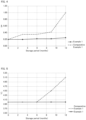
- each container was opened to collect the sample at the timing shown in Table 1. Then, APHA, Y.I., and b* of each sample (m-XDI composition) were measured. The results are shown in Table 1 and FIGS. 2 to 4 .
- an optical lens (polythiourethane resin) was prepared by reacting the sample (m-XDI composition) collected at the timing shown in Table 1 with 4-mercaptomethyl-1,8-dimercapto-3,6-dithiaoctane (active hydrogen compound).
- the liquid mixture was defoamed at 600 Pa for 1 hour, and thereafter, filtered through a 3- ⁇ m PTFE filter. Thereafter, the filtered product was injected into a mold consisting of a glass mold and a tape. The mold was put into an oven, and the temperature was gradually increased from 10°C to 120°C to be polymerized for 18 hours. After completion of the polymerization, the mold was taken out from the oven to be released, thereby obtaining a resin. The obtained resin was further annealed at 130°C for 4 hours. The YI of the optical lens of the obtained resin was measured. The results are shown in Table 1 and FIG. 5 .
- Example 1 in which the container was an epoxy phenol coating can could decrease the APHA, the YI., and the b* of the m-XDI composition and decrease the Y.I. of the optical lens as compared with Comparative Example 1 (embodiment in which the acid content was 15 ppm or more and the container was a zinc phosphate treatment drum can).
- Example 2 in which the acid content was below 15 ppm and the container was a zinc phosphate treatment drum can could decrease the APHA of the m-XDI composition as compared with Comparative Example 1.
- Example 1 epoxy phenol coating can (drum can including the epoxy phenol resin layer on the inner surface of container)
- Example 2 and Comparative Example 1 zinc phosphate treatment drum can (drum can made of the zinc phosphate treatment steel plate (manufactured by JFE CONTAINER CO., LTD.)
- NBDI composition was left to stand to collect the sample in the same manner as in Example 1, except that the m-XDI composition was changed to the NBDI composition.
- the APHA of each sample was measured in the same manner as the description above. The results are shown in Table 1. In Reference Example 1, it was confirmed that when the container was the epoxy phenol can, the APHA of the NBDI composition did not deteriorate.
- NBDI composition was left to stand to collect the sample in the same manner as in Comparative Example 1, except that the m-XDI composition was changed to the NBDI composition.
- the APHA of each sample was measured in the same manner as the description above. The results are shown in Table 1. It was confirmed that when the container was the zinc phosphate treatment drum can, the APHA of the NBDI composition did not deteriorate.
- each container was opened to collect the sample at the timing shown in Table 2. Then, the APHA of each sample (m-XDI composition) was measured. The results are shown in Table 2.
- an optical lens (polythiourethane resin) was prepared by reacting the sample (m-XDI composition) collected at the timing shown in Table 2 with pentaerythritol tetrakismercaptopropionate (active hydrogen compound). Specifically, in a sufficiently dried flask, 43.5 g of m-XDI composition, 0.008 g of dibutyltin dichloride, 0.10 g of ZELEC UN (trade name, acid phosphate ester, internal mold release agent, manufactured by Stepan Company), and 0.05 g of BIOSORB 583 (trade name, ultraviolet absorber, manufactured by Sakai Chemical Industry Co., Ltd.) were weighed, and stirred at 25°C for 1 hour to be mixed and dissolved. Thereafter, 56.5 g of pentaerythritol tetrakismercaptopropionate was charged and mixed, thereby preparing a liquid mixture (polymerizable composition).
- the liquid mixture was defoamed at 600 Pa for 1 hour, and thereafter, filtered through a 3- ⁇ m PTFE filter. Thereafter, the filtered product was injected into a mold consisting of a glass mold and a tape. The mold was put into an oven, and the temperature was gradually increased from 20°C to 120°C to be polymerized for 22 hours. After completion of the polymerization, the mold was taken out from the oven to be released, thereby obtaining a resin. The obtained resin was further annealed at 120°C for 2 hours. The YI of the obtained resin was measured. The results are shown in Table 2 and FIG. 6 .
- Example 3 in which the container was an epoxy phenol coating can could decrease the Y.I. of the optical lens (resin) as compared with Example 4 (embodiment in which the container was an epoxy amine coating can).
- each container was opened to collect the sample at the timing shown in Table 2. Then, the APHA of each sample (m-XDI composition) was measured. The results are shown in Table 2.
- an optical lens (polythiourethane resin) was prepared by reacting the sample (m-XDI composition) collected at the timing shown in Table 2 with 4-mercaptomethyl-1,8-dimercapto-3,6-dithiaoctane (active hydrogen compound).
- the liquid mixture was defoamed at 600 Pa for 1 hour, and thereafter, filtered through a 3- ⁇ m PTFE filter. Thereafter, the filtered product was injected into a mold consisting of a glass mold and a tape. The mold was put into an oven, and the temperature was gradually increased from 10°C to 120°C to be polymerized for 18 hours. After completion of the polymerization, the mold was taken out from the oven to be released, thereby obtaining a resin. The obtained resin was further annealed at 130°C for 4 hours. The YI of the obtained resin was measured. The results are shown in Table 2 and FIG. 7 .
- Example 5 in which the container was an epoxy phenol coating can could decrease the Y.I. of the optical lens (resin) as compared with Example 6 (embodiment in which the container was an epoxy amine coating can).
- epoxy phenol coating can drum can including the epoxy phenol resin layer on the inner surface of the container
- epoxy amine coating can drum can including the epoxy amine resin layer on the inner surface of the container
- Non-limiting embodiments of the present disclosure include the following.
- Embodiment A A xylylene diisocyanate-containing container comprising a xylylene diisocyanate and a container accommodating the xylylene diisocyanate, wherein a resin layer is provided on an inner surface of the container.
- Embodiment B The xylylene diisocyanate-containing container according to embodiment A, wherein the resin layer contains an epoxy resin.
- Embodiment C The xylylene diisocyanate-containing container according to embodiment B, wherein the resin layer contains an epoxy phenol resin.
- Embodiment D A xylylene diisocyanate-containing container comprising a xylylene diisocyanate having an acid content of below 15 ppm and a container accommodating the xylylene diisocyanate, wherein a zinc phosphate coating is provided on an inner surface of the container.
- Embodiment E A method for storing a xylylene diisocyanate, the method comprising storing a xylylene diisocyanate in a container provided with a resin layer on an inner surface.
- Embodiment F The method for storing a xylylene diisocyanate according to embodiment E, wherein the resin layer contains an epoxy resin.
- Embodiment G The method for storing a xylylene diisocyanate according to embodiment F, wherein the resin layer contains an epoxy phenol resin.
- Embodiment H A method for storing a xylylene diisocyanate, the method comprising storing a xylylene diisocyanate having an acid content of below 15 ppm in a first container provided with a zinc phosphate coating without a resin layer on an inner surface.
- Embodiment I The method for storing a xylylene diisocyanate according to embodiment H, the method comprising a step of measuring an acid content of a xylylene diisocyanate, and a step of accommodating the xylylene diisocyanate in a second container provided with a resin layer on an inner surface when the measured acid content is 15 ppm or more and accommodating the xylylene diisocyanate in the first container when the measured acid content is below 15 ppm.
- Embodiment J A method for transporting a xylylene diisocyanate, the method comprising storing and transporting a xylylene diisocyanate in a container provided with a resin layer on an inner surface.
- Embodiment K The method for transporting a xylylene diisocyanate according to embodiment J, wherein the resin layer contains an epoxy resin.
- Embodiment L The method for transporting a xylylene diisocyanate according to embodiment K, wherein the resin layer contains an epoxy phenol resin.
- Embodiment M A method for transporting a xylylene diisocyanate, the method comprising storing and transporting a xylylene diisocyanate having an acid content of below 15 ppm in a first container provided with a zinc phosphate coating without a resin layer on an inner surface.
- Embodiment N The method for transporting a xylylene diisocyanate according to embodiment M, the method comprising a step of measuring an acid content of a xylylene diisocyanate, and a step of accommodating the xylylene diisocyanate in a second container provided with a resin layer on an inner surface when the measured acid content is 15 ppm or more and accommodating the xylylene diisocyanate in the first container when the measured acid content is below 15 ppm.
Landscapes
- Chemical & Material Sciences (AREA)
- Organic Chemistry (AREA)
- Engineering & Computer Science (AREA)
- Life Sciences & Earth Sciences (AREA)
- Wood Science & Technology (AREA)
- Mechanical Engineering (AREA)
- Physics & Mathematics (AREA)
- Materials Engineering (AREA)
- Chemical Kinetics & Catalysis (AREA)
- Medicinal Chemistry (AREA)
- Polymers & Plastics (AREA)
- Health & Medical Sciences (AREA)
- General Physics & Mathematics (AREA)
- Optics & Photonics (AREA)
- Organic Low-Molecular-Weight Compounds And Preparation Thereof (AREA)
- Packages (AREA)
- Polyurethanes Or Polyureas (AREA)
- Containers Having Bodies Formed In One Piece (AREA)
- Details Of Rigid Or Semi-Rigid Containers (AREA)
Applications Claiming Priority (3)
| Application Number | Priority Date | Filing Date | Title |
|---|---|---|---|
| JP2020105488 | 2020-06-18 | ||
| PCT/JP2021/022480 WO2021256417A1 (fr) | 2020-06-18 | 2021-06-14 | Récipient contenant du diisocyanate de xylylène, procédé de stockage de diisocyanate de xylylène et procédé de transport de diisocyanate de xylylène |
| EP21824852.4A EP4116208B1 (fr) | 2020-06-18 | 2021-06-14 | Récipient contenant du diisocyanate de xylylène, procédé de stockage de diisocyanate de xylylène et procédé de transport de diisocyanate de xylylène |
Related Parent Applications (2)
| Application Number | Title | Priority Date | Filing Date |
|---|---|---|---|
| EP21824852.4A Division EP4116208B1 (fr) | 2020-06-18 | 2021-06-14 | Récipient contenant du diisocyanate de xylylène, procédé de stockage de diisocyanate de xylylène et procédé de transport de diisocyanate de xylylène |
| EP21824852.4A Division-Into EP4116208B1 (fr) | 2020-06-18 | 2021-06-14 | Récipient contenant du diisocyanate de xylylène, procédé de stockage de diisocyanate de xylylène et procédé de transport de diisocyanate de xylylène |
Publications (2)
| Publication Number | Publication Date |
|---|---|
| EP4481446A2 true EP4481446A2 (fr) | 2024-12-25 |
| EP4481446A3 EP4481446A3 (fr) | 2025-03-05 |
Family
ID=79267980
Family Applications (2)
| Application Number | Title | Priority Date | Filing Date |
|---|---|---|---|
| EP21824852.4A Active EP4116208B1 (fr) | 2020-06-18 | 2021-06-14 | Récipient contenant du diisocyanate de xylylène, procédé de stockage de diisocyanate de xylylène et procédé de transport de diisocyanate de xylylène |
| EP24212476.6A Pending EP4481446A3 (fr) | 2020-06-18 | 2021-06-14 | Récipient contenant du diisocyanate de xylylène, procédé de stockage de diisocyanate de xylylène et procédé de transport de diisocyanate de xylylène |
Family Applications Before (1)
| Application Number | Title | Priority Date | Filing Date |
|---|---|---|---|
| EP21824852.4A Active EP4116208B1 (fr) | 2020-06-18 | 2021-06-14 | Récipient contenant du diisocyanate de xylylène, procédé de stockage de diisocyanate de xylylène et procédé de transport de diisocyanate de xylylène |
Country Status (6)
| Country | Link |
|---|---|
| US (1) | US20230166883A1 (fr) |
| EP (2) | EP4116208B1 (fr) |
| JP (2) | JP7286882B2 (fr) |
| KR (1) | KR20220054849A (fr) |
| CN (3) | CN118124940A (fr) |
| WO (1) | WO2021256417A1 (fr) |
Families Citing this family (7)
| Publication number | Priority date | Publication date | Assignee | Title |
|---|---|---|---|---|
| JP7727763B2 (ja) | 2022-01-27 | 2025-08-21 | 三井化学株式会社 | ポリチオール組成物及びその応用 |
| CN119731153A (zh) | 2022-08-29 | 2025-03-28 | 三井化学株式会社 | 多硫醇组合物的制造方法、多胺化合物的制造方法及它们的应用 |
| US20250019487A1 (en) | 2022-09-14 | 2025-01-16 | Mitsui Chemicals, Inc. | Polythiol composition, polymerizable composition, resin, molded body, optical material, and lens |
| EP4603479A1 (fr) | 2022-10-14 | 2025-08-20 | Mitsui Chemicals, Inc. | Composition de polythiol, composition polymérisable, résine, corps moulé, matériau optique et lentille |
| WO2024080384A1 (fr) | 2022-10-14 | 2024-04-18 | 三井化学株式会社 | Composition de polythiol, composition polymérisable, résine, corps moulé, matériau optique et lentille |
| CN121548596A (zh) | 2023-07-27 | 2026-02-17 | 三井化学株式会社 | 聚合性组合物及其制造方法、树脂、成型体、光学材料以及透镜 |
| WO2025042219A1 (fr) | 2023-08-23 | 2025-02-27 | 한화솔루션 주식회사 | Composition d'isocyanate |
Citations (1)
| Publication number | Priority date | Publication date | Assignee | Title |
|---|---|---|---|---|
| JP6373536B1 (ja) | 2017-04-10 | 2018-08-15 | 三井化学株式会社 | キシリレンジイソシアネート組成物、キシリレンジイソシアネート変性体組成物、二液型樹脂原料および樹脂 |
Family Cites Families (11)
| Publication number | Priority date | Publication date | Assignee | Title |
|---|---|---|---|---|
| MY129938A (en) * | 1991-03-19 | 2007-05-31 | Mitsui Toatsu Chemicals | Stabilizing method of isocyanate compounds and isocyanate compositions stabilized thereby. |
| JP4920187B2 (ja) * | 2004-07-21 | 2012-04-18 | 三井化学株式会社 | メチレン架橋ポリフェニレンポリイソシアネートの製造方法 |
| JP5446688B2 (ja) * | 2009-09-30 | 2014-03-19 | Jfeスチール株式会社 | 容器用樹脂被覆鋼板 |
| JP5605012B2 (ja) * | 2010-06-25 | 2014-10-15 | Jfeスチール株式会社 | 容器用樹脂被覆金属板 |
| KR101400358B1 (ko) * | 2012-05-23 | 2014-05-27 | 주식회사 케이오씨솔루션 | 신규한 폴리티올 화합물의 제조방법 및 이를 포함하는 광학재료용 중합성 조성물 |
| WO2015125184A1 (fr) * | 2014-02-21 | 2015-08-27 | Jfeスチール株式会社 | Feuille métallique revêtue de résine pour un récipient et procédé de fabrication associé |
| JP6471431B2 (ja) * | 2014-09-03 | 2019-02-20 | 東洋製罐株式会社 | 耐傷付き性及び防汚性に優れたダイレクトブローボトル |
| JP6810361B2 (ja) * | 2016-08-05 | 2021-01-06 | セントラル硝子株式会社 | Z−1−クロロ−3,3,3−トリフルオロプロペンの保存容器及び保存方法 |
| JP2018177273A (ja) * | 2017-04-07 | 2018-11-15 | 三井化学株式会社 | ペンタメチレンジイソシアネート入り容器、および、ペンタメチレンジイソシアネートの保存方法 |
| KR101842254B1 (ko) * | 2017-05-17 | 2018-03-27 | 에스케이씨 주식회사 | 안정성 및 반응성이 개선된 자이릴렌디이소시아네이트 조성물, 및 이를 이용한 광학 렌즈 |
| KR101988494B1 (ko) * | 2017-12-05 | 2019-06-12 | 에스케이씨 주식회사 | 안정성 및 반응성이 개선된 자이릴렌디이소시아네이트 조성물, 및 이를 이용한 광학 렌즈 |
-
2021
- 2021-06-14 EP EP21824852.4A patent/EP4116208B1/fr active Active
- 2021-06-14 EP EP24212476.6A patent/EP4481446A3/fr active Pending
- 2021-06-14 KR KR1020227010584A patent/KR20220054849A/ko not_active Ceased
- 2021-06-14 WO PCT/JP2021/022480 patent/WO2021256417A1/fr not_active Ceased
- 2021-06-14 JP JP2022531796A patent/JP7286882B2/ja active Active
- 2021-06-14 CN CN202410471545.4A patent/CN118124940A/zh active Pending
- 2021-06-14 CN CN202180005633.XA patent/CN114502476A/zh active Pending
- 2021-06-14 CN CN202410471541.6A patent/CN118124939A/zh active Pending
- 2021-06-14 US US17/995,491 patent/US20230166883A1/en active Pending
-
2023
- 2023-05-24 JP JP2023085292A patent/JP2023104999A/ja active Pending
Patent Citations (2)
| Publication number | Priority date | Publication date | Assignee | Title |
|---|---|---|---|---|
| JP6373536B1 (ja) | 2017-04-10 | 2018-08-15 | 三井化学株式会社 | キシリレンジイソシアネート組成物、キシリレンジイソシアネート変性体組成物、二液型樹脂原料および樹脂 |
| WO2018190290A1 (fr) | 2017-04-10 | 2018-10-18 | 三井化学株式会社 | Composition de diisocyanate de xylylène, composition de modification de diisocyanate de xylylène, matériau de départ de résine à deux composants et résine |
Also Published As
| Publication number | Publication date |
|---|---|
| US20230166883A1 (en) | 2023-06-01 |
| CN118124940A (zh) | 2024-06-04 |
| KR20220054849A (ko) | 2022-05-03 |
| EP4116208B1 (fr) | 2024-12-18 |
| JP7286882B2 (ja) | 2023-06-05 |
| EP4481446A3 (fr) | 2025-03-05 |
| CN114502476A (zh) | 2022-05-13 |
| EP4116208A4 (fr) | 2023-09-06 |
| WO2021256417A1 (fr) | 2021-12-23 |
| JPWO2021256417A1 (fr) | 2021-12-23 |
| JP2023104999A (ja) | 2023-07-28 |
| CN118124939A (zh) | 2024-06-04 |
| EP4116208A1 (fr) | 2023-01-11 |
Similar Documents
| Publication | Publication Date | Title |
|---|---|---|
| EP4116208B1 (fr) | Récipient contenant du diisocyanate de xylylène, procédé de stockage de diisocyanate de xylylène et procédé de transport de diisocyanate de xylylène | |
| US11254783B2 (en) | Xylylenediisocyanate composition, xylylenediisocyanate-modified composition, two-component resin material, and resin | |
| JP2023115018A (ja) | キシリレンジイソシアネート組成物、キシリレンジイソシアネート変性体組成物、重合性組成物、樹脂、成形体、光学素子およびレンズ | |
| EP3831861A1 (fr) | Composition de diisocyanate, son procédé de préparation et matériau optique l'utilisant | |
| EP3831806B1 (fr) | Composition de diisocyanate pour lentille optique et son procédé de préparation | |
| EP4151623A1 (fr) | Composition de diisocyanate de xylylène, composition polymérisable pour matériaux optiques, résine, corps moulé, élément optique et lentille | |
| KR102218225B1 (ko) | 담색 tdi-폴리이소시아네이트를 제조하는 방법 | |
| CN116018336B (zh) | 包含非氯化衍生物的异氰酸酯化合物的制备方法及其组合物 | |
| EP4198069A1 (fr) | Composition de diisocyanate de xylylène, composition polymérisable, résine, corps moulé, élément optique et lentille | |
| US11760719B2 (en) | Diamine composition, and method of preparing diisocyanate composition | |
| CN115894296B (zh) | 一种异氰酸酯组合物、改性异氰酸酯、聚氨酯树脂和光学材料 | |
| EP3778687B1 (fr) | Procédé de production d'une composition polymérisable | |
| US20250197555A1 (en) | Isocyanate composition, modified isocyanate, polyurethane resin and optical material | |
| JP2018177273A (ja) | ペンタメチレンジイソシアネート入り容器、および、ペンタメチレンジイソシアネートの保存方法 | |
| WO2020041183A1 (fr) | Composition de polythiol | |
| EP3778203A1 (fr) | Procédé de production d'élément optique | |
| KR20240148402A (ko) | 펜타에리트리톨메르캅토카르복실산에스테르의 제조 방법, 중합성 조성물, 수지, 광학 재료 및 안경 렌즈 | |
| EP3831808A1 (fr) | Procédé de préparation de composition de diisocyanate et lentille optique | |
| WO2022162968A1 (fr) | Composition de diisocyanate de xylylène, composition de diisocyanate de xylylène modifié, composition polymérisable, résine, corps moulé, élément optique et lentille | |
| KR20170134507A (ko) | 층간 충전용 경화성 수지 조성물 | |
| EP4484110A1 (fr) | Méthode de production d'élément optique et élément optique | |
| JP2023120565A (ja) | ブロックイソシアネート、および、コーティング剤 |
Legal Events
| Date | Code | Title | Description |
|---|---|---|---|
| PUAI | Public reference made under article 153(3) epc to a published international application that has entered the european phase |
Free format text: ORIGINAL CODE: 0009012 |
|
| STAA | Information on the status of an ep patent application or granted ep patent |
Free format text: STATUS: THE APPLICATION HAS BEEN PUBLISHED |
|
| AC | Divisional application: reference to earlier application |
Ref document number: 4116208 Country of ref document: EP Kind code of ref document: P |
|
| AK | Designated contracting states |
Kind code of ref document: A2 Designated state(s): AL AT BE BG CH CY CZ DE DK EE ES FI FR GB GR HR HU IE IS IT LI LT LU LV MC MK MT NL NO PL PT RO RS SE SI SK SM TR |
|
| REG | Reference to a national code |
Ref country code: DE Ref legal event code: R079 Free format text: PREVIOUS MAIN CLASS: G02B0001040000 Ipc: B65D0006140000 |
|
| PUAL | Search report despatched |
Free format text: ORIGINAL CODE: 0009013 |
|
| AK | Designated contracting states |
Kind code of ref document: A3 Designated state(s): AL AT BE BG CH CY CZ DE DK EE ES FI FR GB GR HR HU IE IS IT LI LT LU LV MC MK MT NL NO PL PT RO RS SE SI SK SM TR |
|
| RIC1 | Information provided on ipc code assigned before grant |
Ipc: G02B 1/04 20060101ALI20250130BHEP Ipc: C08G 18/76 20060101ALI20250130BHEP Ipc: C07C 265/14 20060101ALI20250130BHEP Ipc: B65D 6/14 20060101AFI20250130BHEP |
|
| STAA | Information on the status of an ep patent application or granted ep patent |
Free format text: STATUS: REQUEST FOR EXAMINATION WAS MADE |
|
| 17P | Request for examination filed |
Effective date: 20250703 |
|
| STAA | Information on the status of an ep patent application or granted ep patent |
Free format text: STATUS: EXAMINATION IS IN PROGRESS |
|
| 17Q | First examination report despatched |
Effective date: 20250911 |
|
| GRAP | Despatch of communication of intention to grant a patent |
Free format text: ORIGINAL CODE: EPIDOSNIGR1 |
|
| STAA | Information on the status of an ep patent application or granted ep patent |
Free format text: STATUS: GRANT OF PATENT IS INTENDED |
|
| INTG | Intention to grant announced |
Effective date: 20260126 |