EP4481846A1 - Negativelektrode für sekundärbatterie und herstellungsverfahren für negativelektrode für sekundärbatterie - Google Patents
Negativelektrode für sekundärbatterie und herstellungsverfahren für negativelektrode für sekundärbatterie Download PDFInfo
- Publication number
- EP4481846A1 EP4481846A1 EP24182453.1A EP24182453A EP4481846A1 EP 4481846 A1 EP4481846 A1 EP 4481846A1 EP 24182453 A EP24182453 A EP 24182453A EP 4481846 A1 EP4481846 A1 EP 4481846A1
- Authority
- EP
- European Patent Office
- Prior art keywords
- negative electrode
- active material
- electrode active
- material layer
- weight
- Prior art date
- Legal status (The legal status is an assumption and is not a legal conclusion. Google has not performed a legal analysis and makes no representation as to the accuracy of the status listed.)
- Pending
Links
Images



Classifications
-
- H—ELECTRICITY
- H01—ELECTRIC ELEMENTS
- H01M—PROCESSES OR MEANS, e.g. BATTERIES, FOR THE DIRECT CONVERSION OF CHEMICAL ENERGY INTO ELECTRICAL ENERGY
- H01M4/00—Electrodes
- H01M4/02—Electrodes composed of, or comprising, active material
- H01M4/13—Electrodes for accumulators with non-aqueous electrolyte, e.g. for lithium-accumulators; Processes of manufacture thereof
-
- H—ELECTRICITY
- H01—ELECTRIC ELEMENTS
- H01M—PROCESSES OR MEANS, e.g. BATTERIES, FOR THE DIRECT CONVERSION OF CHEMICAL ENERGY INTO ELECTRICAL ENERGY
- H01M4/00—Electrodes
- H01M4/02—Electrodes composed of, or comprising, active material
- H01M4/13—Electrodes for accumulators with non-aqueous electrolyte, e.g. for lithium-accumulators; Processes of manufacture thereof
- H01M4/133—Electrodes based on carbonaceous material, e.g. graphite-intercalation compounds or CFx
-
- H—ELECTRICITY
- H01—ELECTRIC ELEMENTS
- H01M—PROCESSES OR MEANS, e.g. BATTERIES, FOR THE DIRECT CONVERSION OF CHEMICAL ENERGY INTO ELECTRICAL ENERGY
- H01M10/00—Secondary cells; Manufacture thereof
- H01M10/05—Accumulators with non-aqueous electrolyte
- H01M10/052—Li-accumulators
-
- H—ELECTRICITY
- H01—ELECTRIC ELEMENTS
- H01M—PROCESSES OR MEANS, e.g. BATTERIES, FOR THE DIRECT CONVERSION OF CHEMICAL ENERGY INTO ELECTRICAL ENERGY
- H01M4/00—Electrodes
- H01M4/02—Electrodes composed of, or comprising, active material
- H01M4/04—Processes of manufacture in general
- H01M4/0402—Methods of deposition of the material
- H01M4/0404—Methods of deposition of the material by coating on electrode collectors
-
- H—ELECTRICITY
- H01—ELECTRIC ELEMENTS
- H01M—PROCESSES OR MEANS, e.g. BATTERIES, FOR THE DIRECT CONVERSION OF CHEMICAL ENERGY INTO ELECTRICAL ENERGY
- H01M4/00—Electrodes
- H01M4/02—Electrodes composed of, or comprising, active material
- H01M4/13—Electrodes for accumulators with non-aqueous electrolyte, e.g. for lithium-accumulators; Processes of manufacture thereof
- H01M4/134—Electrodes based on metals, Si or alloys
-
- H—ELECTRICITY
- H01—ELECTRIC ELEMENTS
- H01M—PROCESSES OR MEANS, e.g. BATTERIES, FOR THE DIRECT CONVERSION OF CHEMICAL ENERGY INTO ELECTRICAL ENERGY
- H01M4/00—Electrodes
- H01M4/02—Electrodes composed of, or comprising, active material
- H01M4/13—Electrodes for accumulators with non-aqueous electrolyte, e.g. for lithium-accumulators; Processes of manufacture thereof
- H01M4/139—Processes of manufacture
-
- H—ELECTRICITY
- H01—ELECTRIC ELEMENTS
- H01M—PROCESSES OR MEANS, e.g. BATTERIES, FOR THE DIRECT CONVERSION OF CHEMICAL ENERGY INTO ELECTRICAL ENERGY
- H01M4/00—Electrodes
- H01M4/02—Electrodes composed of, or comprising, active material
- H01M4/13—Electrodes for accumulators with non-aqueous electrolyte, e.g. for lithium-accumulators; Processes of manufacture thereof
- H01M4/139—Processes of manufacture
- H01M4/1393—Processes of manufacture of electrodes based on carbonaceous material, e.g. graphite-intercalation compounds or CFx
-
- H—ELECTRICITY
- H01—ELECTRIC ELEMENTS
- H01M—PROCESSES OR MEANS, e.g. BATTERIES, FOR THE DIRECT CONVERSION OF CHEMICAL ENERGY INTO ELECTRICAL ENERGY
- H01M4/00—Electrodes
- H01M4/02—Electrodes composed of, or comprising, active material
- H01M4/13—Electrodes for accumulators with non-aqueous electrolyte, e.g. for lithium-accumulators; Processes of manufacture thereof
- H01M4/139—Processes of manufacture
- H01M4/1395—Processes of manufacture of electrodes based on metals, Si or alloys
-
- H—ELECTRICITY
- H01—ELECTRIC ELEMENTS
- H01M—PROCESSES OR MEANS, e.g. BATTERIES, FOR THE DIRECT CONVERSION OF CHEMICAL ENERGY INTO ELECTRICAL ENERGY
- H01M4/00—Electrodes
- H01M4/02—Electrodes composed of, or comprising, active material
- H01M4/36—Selection of substances as active materials, active masses, active liquids
- H01M4/362—Composites
- H01M4/364—Composites as mixtures
-
- H—ELECTRICITY
- H01—ELECTRIC ELEMENTS
- H01M—PROCESSES OR MEANS, e.g. BATTERIES, FOR THE DIRECT CONVERSION OF CHEMICAL ENERGY INTO ELECTRICAL ENERGY
- H01M4/00—Electrodes
- H01M4/02—Electrodes composed of, or comprising, active material
- H01M4/36—Selection of substances as active materials, active masses, active liquids
- H01M4/362—Composites
- H01M4/366—Composites as layered products
-
- H—ELECTRICITY
- H01—ELECTRIC ELEMENTS
- H01M—PROCESSES OR MEANS, e.g. BATTERIES, FOR THE DIRECT CONVERSION OF CHEMICAL ENERGY INTO ELECTRICAL ENERGY
- H01M4/00—Electrodes
- H01M4/02—Electrodes composed of, or comprising, active material
- H01M4/36—Selection of substances as active materials, active masses, active liquids
- H01M4/38—Selection of substances as active materials, active masses, active liquids of elements or alloys
- H01M4/386—Silicon or alloys based on silicon
-
- H—ELECTRICITY
- H01—ELECTRIC ELEMENTS
- H01M—PROCESSES OR MEANS, e.g. BATTERIES, FOR THE DIRECT CONVERSION OF CHEMICAL ENERGY INTO ELECTRICAL ENERGY
- H01M4/00—Electrodes
- H01M4/02—Electrodes composed of, or comprising, active material
- H01M4/36—Selection of substances as active materials, active masses, active liquids
- H01M4/48—Selection of substances as active materials, active masses, active liquids of inorganic oxides or hydroxides
- H01M4/483—Selection of substances as active materials, active masses, active liquids of inorganic oxides or hydroxides for non-aqueous cells
-
- H—ELECTRICITY
- H01—ELECTRIC ELEMENTS
- H01M—PROCESSES OR MEANS, e.g. BATTERIES, FOR THE DIRECT CONVERSION OF CHEMICAL ENERGY INTO ELECTRICAL ENERGY
- H01M4/00—Electrodes
- H01M4/02—Electrodes composed of, or comprising, active material
- H01M4/36—Selection of substances as active materials, active masses, active liquids
- H01M4/58—Selection of substances as active materials, active masses, active liquids of inorganic compounds other than oxides or hydroxides, e.g. sulfides, selenides, tellurides, halogenides or LiCoFy; of polyanionic structures, e.g. phosphates, silicates or borates
- H01M4/583—Carbonaceous material, e.g. graphite-intercalation compounds or CFx
-
- H—ELECTRICITY
- H01—ELECTRIC ELEMENTS
- H01M—PROCESSES OR MEANS, e.g. BATTERIES, FOR THE DIRECT CONVERSION OF CHEMICAL ENERGY INTO ELECTRICAL ENERGY
- H01M4/00—Electrodes
- H01M4/02—Electrodes composed of, or comprising, active material
- H01M4/36—Selection of substances as active materials, active masses, active liquids
- H01M4/58—Selection of substances as active materials, active masses, active liquids of inorganic compounds other than oxides or hydroxides, e.g. sulfides, selenides, tellurides, halogenides or LiCoFy; of polyanionic structures, e.g. phosphates, silicates or borates
- H01M4/583—Carbonaceous material, e.g. graphite-intercalation compounds or CFx
- H01M4/587—Carbonaceous material, e.g. graphite-intercalation compounds or CFx for inserting or intercalating light metals
-
- H—ELECTRICITY
- H01—ELECTRIC ELEMENTS
- H01M—PROCESSES OR MEANS, e.g. BATTERIES, FOR THE DIRECT CONVERSION OF CHEMICAL ENERGY INTO ELECTRICAL ENERGY
- H01M4/00—Electrodes
- H01M4/02—Electrodes composed of, or comprising, active material
- H01M4/62—Selection of inactive substances as ingredients for active masses, e.g. binders, fillers
- H01M4/624—Electric conductive fillers
- H01M4/625—Carbon or graphite
-
- H—ELECTRICITY
- H01—ELECTRIC ELEMENTS
- H01M—PROCESSES OR MEANS, e.g. BATTERIES, FOR THE DIRECT CONVERSION OF CHEMICAL ENERGY INTO ELECTRICAL ENERGY
- H01M10/00—Secondary cells; Manufacture thereof
- H01M10/05—Accumulators with non-aqueous electrolyte
- H01M10/052—Li-accumulators
- H01M10/0525—Rocking-chair batteries, i.e. batteries with lithium insertion or intercalation in both electrodes; Lithium-ion batteries
-
- H—ELECTRICITY
- H01—ELECTRIC ELEMENTS
- H01M—PROCESSES OR MEANS, e.g. BATTERIES, FOR THE DIRECT CONVERSION OF CHEMICAL ENERGY INTO ELECTRICAL ENERGY
- H01M4/00—Electrodes
- H01M4/02—Electrodes composed of, or comprising, active material
- H01M2004/021—Physical characteristics, e.g. porosity, surface area
-
- H—ELECTRICITY
- H01—ELECTRIC ELEMENTS
- H01M—PROCESSES OR MEANS, e.g. BATTERIES, FOR THE DIRECT CONVERSION OF CHEMICAL ENERGY INTO ELECTRICAL ENERGY
- H01M4/00—Electrodes
- H01M4/02—Electrodes composed of, or comprising, active material
- H01M2004/026—Electrodes composed of, or comprising, active material characterised by the polarity
- H01M2004/027—Negative electrodes
-
- Y—GENERAL TAGGING OF NEW TECHNOLOGICAL DEVELOPMENTS; GENERAL TAGGING OF CROSS-SECTIONAL TECHNOLOGIES SPANNING OVER SEVERAL SECTIONS OF THE IPC; TECHNICAL SUBJECTS COVERED BY FORMER USPC CROSS-REFERENCE ART COLLECTIONS [XRACs] AND DIGESTS
- Y02—TECHNOLOGIES OR APPLICATIONS FOR MITIGATION OR ADAPTATION AGAINST CLIMATE CHANGE
- Y02E—REDUCTION OF GREENHOUSE GAS [GHG] EMISSIONS, RELATED TO ENERGY GENERATION, TRANSMISSION OR DISTRIBUTION
- Y02E60/00—Enabling technologies; Technologies with a potential or indirect contribution to GHG emissions mitigation
- Y02E60/10—Energy storage using batteries
Definitions
- the embodiments of the present disclosure relate to a negative electrode for secondary batteries and a manufacturing method of the negative electrode for secondary batteries.
- a lithium secondary battery includes a positive electrode, a negative electrode, and a separator disposed therebetween, and a positive electrode and a negative electrode are each provided with an active material which lithium ions may be inserted to and extracted from.
- the capacity may rapidly decrease as the negative electrode active material repeatedly undergo volume expansion and contraction.
- the volume change may be more severe. Therefore, a new type of negative electrode that can overcome these problems is required.
- a negative electrode for a secondary battery with a large capacity and a long cycle life, and a method for manufacturing the negative electrode for a secondary battery.
- the battery cell of the present disclosure can be widely applied in the field of electric vehicles, battery charging stations, energy storage system (ESS), and green technology, such photovoltaics, and wind power generation using batteries.
- ESS energy storage system
- the battery cell of the present disclosure can be used in eco-friendly electric vehicles mobility to prevent climate change by suppressing air pollution and greenhouse gas emissions, including electric vehicles and hybrid vehicles.
- a negative electrode for secondary batteries includes: a negative electrode current collector; a first negative electrode active material layer formed on at least one surface of the negative electrode current collector and including a first silicon-based negative electrode active material; and a second negative electrode active material layer formed on the first negative electrode active material, including a second silicon-based negative electrode active material, and having a greater thickness than that of the first negative electrode active material layer, wherein in the first negative electrode active material layer, the content of the first silicon-based negative electrode active material is 5% by weight or less based on the total weight of the first negative electrode active material layer, and the weight percentage of the second silicon-based negative electrode active material in the second negative electrode active material layer based on the total weight of the second negative electrode active material layer is greater than the weight percentage of the first silicon-based negative electrode active material in the first negative electrode active material layer based on the total weight of the first negative electrode active material layer.
- the first silicon-based negative electrode active material and the second silicon-based negative electrode active material may include one or more selected from the group consisting of SiO x (0 ⁇ x ⁇ 2), an Si/C composite, and an Si alloy.
- the first negative electrode active material layer and the second negative electrode active material layer may further include a carbon-based negative electrode active material.
- the carbon-based negative electrode active material may include one or more selected from the group consisting of artificial graphite, natural graphite, hard carbon, soft carbon, carbon black, and graphene.
- the sum of the contents of the first silicon-based negative electrode active material and the second silicon-based negative electrode active material included in the entire first negative electrode active material layer and the second negative electrode active material layer may be 5% by weight to 20% by weight based on the total weight of the entire first negative electrode active material layer and the second negative electrode active material layer.
- the content of the carbon-based negative electrode active material included in the entire first negative electrode active material layer and the second negative electrode active material layer may be 75% by weight to 95% by weight based on the total weight of the entire first negative electrode active material layer and the second negative electrode active material layer.
- the ratio of the thickness of the first negative electrode active material layer to the thickness of the second negative electrode active material layer may be 4:6 to 1:9.
- the content of the second silicon-based negative electrode active material in the second negative electrode active material layer may be 6% by weight to 35% by weight based on the total weight of the second negative electrode active material layer.
- the first negative electrode active material layer and the second negative electrode active material layer may further include a conductive material.
- the first negative electrode active material layer and the second negative electrode active material layer may further include a binder.
- the weight percentage of the binder in the first negative electrode active material layer based on the total weight of the first negative electrode active material layer may be greater than the weight percentage of the binder in the second negative electrode active material layer based on the total weight of the second negative electrode active material layer.
- the weight percentage of the carbon-based negative electrode active material in the first negative electrode active material layer based on the total weight of the first negative electrode active material layer may be greater than the weight percentage of the carbon-based negative electrode active material in the second negative electrode active material layer based on the total weight of the second negative electrode active material layer.
- the sum of the contents of the fist silicon-based negative electrode active material and the carbon-based negative electrode active material in the first negative electrode active material layer based on the total weight of the first negative electrode active material layer may be 85% by weight to 98% by weight.
- the sum of the contents of the second silicon-based negative electrode active material and the carbon-based negative electrode active material in the second negative electrode active material layer based on the total weight of the second negative electrode active material layer is 85% by weight to 98% by weight.
- a manufacturing method of a negative electrode for secondary batteries includes: a step of forming a first layer by applying a first composition including a first silicon-based negative electrode active material onto a negative electrode current collector; and a step of forming a second layer that is thicker than the first layer by applying a second composition including a second silicon-based negative electrode active material onto the first layer, wherein the content of the first silicon-based negative electrode active material in the first composition is 5% by weight or less based on the total weight of solids included in the first composition, and the weight percentage of the second silicon-based negative electrode active material in the second composition based on the total weight of solids included in the second composition is greater than the weight percentage of the first silicon-based negative electrode active material in the first composition based on the total weight of solids included in the first composition.
- the first composition and the second composition may further include a carbon-based negative electrode active material.
- the weight percentage of the carbon-based negative electrode active material in the first composition based on the total weight of solids included in the first composition may be greater than the weight percentage of the carbon-based negative electrode active material in the second composition based on the total weight of solids included in the second composition.
- the first composition and the second composition may further include a binder.
- the weight percentage of binder in the first composition based on the total weight of solids included in the first composition may be greater than the weight percentage of the binder in the second composition based on the total weight of solids included in the second composition.
- the ratio of the thickness of the first layer to the thickness of the second layer is 4:6 to 1:9.
- a negative electrode for secondary batteries with a large capacity and a long cycle life and a manufacturing method for the negative electrode for secondary batteries may be provided.
- a negative electrode for secondary batteries includes: a negative electrode current collector; a first negative electrode active material layer formed on at least one surface of the negative electrode current collector and including a first silicon-based negative electrode active material; and a second negative electrode active material layer formed on the first negative electrode active material, including a second silicon-based negative electrode active material, and having a greater thickness than that of the first negative electrode active material layer, wherein in the first negative electrode active material layer, the content of the first silicon-based negative electrode active material is 5% by weight or less based on the total weight of the first negative electrode active material layer, and the weight percentage of the second silicon-based negative electrode active material in the second negative electrode active material layer based on the total weight of the second negative electrode active material layer is greater than the weight percentage of the first silicon-based negative electrode active material in the first negative electrode active material layer based on the total weight of the first negative electrode active material layer.
- FIG. 1 is a diagram for explaining a negative electrode for secondary batteries according to one embodiment of the present disclosure.
- a negative electrode for secondary batteries according to an embodiment of the present disclosure will be described with reference to FIG. 1 .
- a negative electrode 100 includes a negative electrode current collector and a negative electrode active material layer 20.
- a negative electrode current collector 10 is not particularly limited as long as it is conductive without causing chemical changes in a secondary battery.
- copper, stainless steel, aluminum, nickel, titanium, calcined carbon, copper or stainless steel surface-treated with carbon, nickel, titanium, silver, or the like, an aluminum-cadmium alloy, or the like may be used.
- fine irregularities may be formed on the surface to strengthen the bonding power of a negative electrode active material, and it may be used in various forms such as films, sheets, foils, nets, porous materials, foams, and non-woven fabrics.
- a negative electrode active material layer 20 may be formed on at least one surface of a negative electrode current collector 10.
- a negative electrode active material layer 20 may be formed on one side of a negative electrode current collector 10 or on both sides of the negative electrode current collector 10.
- a negative electrode active material layer 20 includes a first negative electrode active material layer 21 and a second negative electrode active material layer 22.
- a first negative electrode active material layer 21 is formed on at least one surface of a negative electrode current collector 10.
- a first negative electrode active material layer 21 includes a first silicon-based negative electrode active material.
- a first silicon-based negative active material may include one or more selected from the group consisting of SiO x (0 ⁇ x ⁇ 2), an Si/C composite, and an Si alloy.
- the x corresponds to the number ratio of O to Si included in the SiO x (0 ⁇ x ⁇ 2).
- the average particle diameter (D 50 ) of SiO x (0 ⁇ x ⁇ 2) may be 4 ⁇ m to 9 ⁇ m, or 5 ⁇ m to 7 ⁇ m.
- the specific surface area of SiO x (0 ⁇ x ⁇ 2) may be 4 m 2 /g to 9 m 2 /g, or 5 m 2 /g to 8 m 2 /g.
- a conductive network with a conductive material may be improved.
- An Si/C composite is made by heat treatment (firing) while carbon is combined with SiO x (0 ⁇ x ⁇ 2) particles, so that it may be in the form of a carbon material coated on the surface of SiO x (0 ⁇ x ⁇ 2) particles or in the form of carbon dispersed in an atomic state inside SiO x (0 ⁇ x ⁇ 2) particles.
- An Si alloy (Si-alloy) may be a form in which Si is alloyed with one or more metals selected from the group consisting of Zn, Al, Mn, Ti, Fe, and Sn.
- a silicon-based negative electrode active material may exhibit higher capacity compared to a carbon-based material, implementing a high energy density per equal volume.
- the content of a first silicon-based negative electrode active material in a first negative electrode active material layer 21 may be 5% by weight or less based on the total weight of the first negative electrode active material layer 21.
- a first silicon-based negative electrode active material may be included in an amount of 0.2% by weight to 4.5% by weight based on the total weight of the first negative electrode active material layer 21, and more specifically, it may be included in an amount of 0.5% by weight to 4% by weight.
- a first silicon-based negative electrode active material in the same content as the above-described range is included in a first negative electrode active material layer 21, a higher capacity may be achieved due to the inclusion of a silicon-based active material, and at the same time, conductivity deterioration according to the change in volume may be prevented.
- a first negative electrode active material layer 21 may further include a carbon-based negative electrode active material.
- a carbon-based negative electrode active material may include one or more selected from the group consisting of artificial graphite, natural graphite, hard carbon, soft carbon, carbon black, and graphene.
- the carbon black may include one or more selected from the group consisting of acetylene black, Ketjen Black, and Super P.
- the content of a carbon-based negative electrode active material in a first negative electrode active material layer 21 may be 70% by weight to 99% by weight based on the total weight of the first negative electrode active material layer 21, and specifically, it may be 80% by weight to 98% by weight, more specifically 90% by weight to 97% by weight.
- the adhesion of a negative electrode may increase, and the electrical conductivity within a negative electrode may be improved.
- the sum of the contents of a first silicon-based negative electrode active material and a carbon-based negative electrode active material in a first negative electrode active material layer 21 may be 80% by weight to 99.5% by weight based on the total weight of the first negative electrode active material layer 21, and specifically, it may be 80% by weight to 99t% by weight, more specifically, 85% by weight to 98% by weight.
- the energy density and capacity of a negative electrode may be improved, and at the same time, the long-term performance may be improved.
- a first negative electrode active material layer 21 may further include a conductive material.
- a conductive material may provide conductivity to a negative electrode 100.
- a conductive material may include, for example, one or more selected from the group consisting of metal-based conductive materials, carbon-based conductive materials, and conductive polymers.
- Metallic conductive materials may be, for example, metal powder or metal fibers of copper, nickel, aluminum, silver, or the like; conductive whiskers such as zinc oxide and potassium titanate; or a conductive metal oxide such as titanium oxide.
- a carbon-based conductive material may be, for example, graphite, carbon black, graphene, or carbon nanotubes.
- a conductive polymer may be, for example, a polyphenylene derivative.
- a first negative electrode active material layer 21 may include carbon nanotubes as a conductive material. Carbon nanotubes may form a conductive network between silicon-based materials, thereby minimizing the problem of isolation of conductive paths by expansion of the volume of silicon-based materials due to long-term use of a secondary battery. Carbon nanotubes may include single-walled carbon nanotubes and multi-walled carbon nanotubes.
- a first negative electrode active material layer 21 may include a conductive material other than single-walled carbon nanotubes, in consideration of the economic aspects.
- a first negative active material layer 21 may be advantageous in terms of conductivity because it includes a relatively small proportion of a bulky silicon-based active material during charging and discharging, and accordingly, single-walled carbon nanotubes with high conductivity may be replaced by another conductive material.
- multi-walled carbon nanotubes, graphite, carbon black, or the like may be included as a conductive material.
- Multi-walled carbon nanotubes refer to carbon nanotubes containing multiple single-walled carbon nanotubes. Multi-walled carbon nanotubes are more economical than single-walled carbon nanotubes, and when disposed on the surface of a silicon-based material together with single-walled carbon nanotubes, they may contribute to forming a conductive network with adjacent silicon-based materials.
- the average diameter of multi-walled carbon nanotubes may be 5 nm to 200 nm, 5 nm to 100 nm, or 5 nm to 50 nm. When the above range is satisfied, they may be easily dispersed in a negative electrode active material composition, and a conductive network may be effectively formed between silicon-based materials.
- the average diameter is a value obtained by measuring the diameters of 100 multi-walled carbon nanotubes in a negative electrode active material layer using a scanning electron microscope (SEM) and then calculating their average.
- the average length of the multi-walled carbon nanotubes may be 0.1 ⁇ m to 100 ⁇ m, 0.1 ⁇ m to 50 ⁇ m, or 0.1 ⁇ m to 3 ⁇ m. When the above range is satisfied, the formation of a conductive network may be maximized even with a small content in a negative electrode active material composition.
- the average length is a value obtained by measuring the length of 100 multi-walled carbon nanotubes in a negative electrode active material layer using a SEM and then calculating their average.
- a conductive material in a first negative electrode active material layer 21 may be included in an amount of 0.01% by weight to 3.0% by weight, and specifically, it may be included in an amount of 0.02% by weight to 2.5% by weight, more specifically, 0.05% by weight to 2.0% by weight based on the total weight of the first negative electrode active material layer 21.
- the adhesion and electrical conductivity of a negative electrode may be significantly improved, and a secondary battery with excellent output characteristics and lifespan characteristics may be obtained.
- a binder may further include a thickener that may enhance the cohesion of the binder. That is, in the present specification, a binder and a thickener may be collectively referred to as a binder.
- a thickener may improve the problem of cracks generated on the surface of a negative electrode by strengthening the cohesion of a binder.
- a thickener may include, for example, one or more selected from the group consisting of carboxymethyl cellulose, methyl cellulose, hydroxypropyl cellulose, methyl hydroxypropyl cellulose, ethyl hydroxyethyl cellulose, methyl ethyl hydroxyethyl cellulose, and cellulose gum.
- the content of a binder in a first negative electrode active material layer 21 may be 0.05% by weight to 10.0% by weight, 0.1% by weight to 8.0% by weight, 0.2% by weight to 7.0% by weight, or 0.3% by weight to 5.0% by weight based on the total weight of the first negative electrode active material layer 21.
- excellent negative electrode adhesion may be achieved while minimizing an increase of the negative electrode resistance.
- a second negative electrode active material layer 22 is formed on at least one surface of a negative electrode current collector 10.
- a second negative electrode active material layer 22 includes a second silicon-based negative electrode active material.
- a second silicon-based negative active material may include one or more selected from the group consisting of SiO x (0 ⁇ x ⁇ 2), an Si/C composite, and an Si alloy.
- the x corresponds to the number ratio of O to Si included in the SiO x (0 ⁇ x ⁇ 2).
- the average particle diameter (D50) of SiO x (0 ⁇ x ⁇ 2) may be 4 ⁇ m to 9 ⁇ m, or 5 ⁇ m to 7 ⁇ m.
- the specific surface area of SiO x (0 ⁇ x ⁇ 2) may be 4 m 2 /g to 9 m 2 /g, or 5 m 2 /g to 8 m 2 /g.
- a conductive network with a conductive material may be improved.
- An Si/C composite is made by heat treatment (firing) while carbon is combined with SiO x (0 ⁇ x ⁇ 2) particles, so that it may be in the form of a carbon material coated on the surface of SiO x (0 ⁇ x ⁇ 2) particles or in the form of carbon dispersed in an atomic state inside SiO x (0 ⁇ x ⁇ 2) particles.
- An Si alloy (Si-alloy) may be a form in which Si is alloyed with one or more metals selected from the group consisting of Zn, Al, Mn, Ti, Fe, and Sn.
- a silicon-based negative electrode active material may exhibit higher capacity compared to a carbon-based material, implementing a high energy density per equal volume.
- a second silicon-based negative electrode active material may be the same material as a first silicon-based negative electrode active material, but is not limited thereto, and a first silicon-based negative electrode active material and a second silicon-based negative electrode active material may be different from each other.
- the content of a second silicon-based negative electrode active material in a second negative electrode active material layer 22 may be 6% by weight to 35% by weight based on the total weight of the second negative electrode active material layer 22.
- the content of a second silicon-based negative electrode active material in a second negative electrode active material layer 22 may be 7% by weight to 25% by weight, and more specifically, it may be 8% by weight to 20% by weight based on the total weight of the second negative electrode active material layer 22.
- the weight percentage of a second silicon-based negative electrode active material in a second negative electrode active material layer 22 based on the total weight of the second negative electrode active material layer 22 is greater than the weight percentage of a first silicon-based negative electrode active material in the a negative electrode active material layer 21 based on the total weight of the first negative electrode active material layer 21.
- a second silicon-based negative electrode active material in the same content as the above-described range is included in a second negative electrode active material layer 22, there is an effect of achieving capacity of a higher content for including a silicon-based active material, and at the same time, improving long-term performance by controlling the increase in stress due to the volume expansion of the silicon-based active material within an appropriate range.
- a second negative electrode active material layer 22 may further include a carbon-based negative electrode active material.
- a carbon-based negative electrode active material may include one or more selected from the group consisting of artificial graphite, natural graphite, hard carbon, soft carbon, carbon black, and graphene.
- the carbon black may include one or more selected from the group consisting of acetylene black, Ketjen Black, and Super P.
- the content of a carbon-based negative electrode active material in a second negative electrode active material layer 22 may be 60% by weight to 95% by weight, and specifically, it may be 65% by weight to 93% by weight, more specifically 70% by weight to 92% by weight based on the total weight of the second negative electrode active material layer 22.
- the weight percentage of a carbon-based negative electrode active material in a second negative electrode active material layer 22 based on the total weight of the second negative electrode active material layer 22 may be smaller than the weight percentage of a carbon-based negative electrode active material in a first negative electrode active material layer 21 based on the total weight of the first negative active material layer 21.
- the energy density of a negative electrode may be improved, the negative electrode adhesion may be increased, and the electrical conductivity within a negative electrode may be improved.
- the sum of the contents of a second silicon-based negative electrode active material and a carbon-based negative electrode active material in a second negative electrode active material layer 22 may be 80% by weight to 99.5% by weight based on the total weight of the second negative electrode active material layer 22, and specifically, it may be 80% by weight to 99% by weight, and more specifically, 85% by weight to 98% by weight.
- the energy density and capacity of a negative electrode may be improved and at the same time, the long-term performance may be improved.
- a second negative electrode active material layer 22 may further include a conductive material.
- a conductive material may provide conductivity to a negative electrode 100.
- a conductive material may include, for example, one or more selected from the group consisting of metal-based conductive materials, carbon-based conductive materials, and conductive polymers.
- Metallic conductive materials may be, for example, metal powder or metal fibers of copper, nickel, aluminum, silver, or the like; conductive whiskers such as zinc oxide and potassium titanate; or a conductive metal oxide such as titanium oxide.
- a carbon-based conductive material may be, for example, graphite, carbon black, graphene, or carbon nanotubes.
- a conductive polymer may be, for example, a polyphenylene derivative.
- a second negative electrode active material layer 22 may include carbon nanotubes as a conductive material.
- Carbon nanotubes may form a conductive network between silicon-based materials, thereby minimizing the problem of isolation of conductive paths by expansion of the volume of silicon-based materials due to long-term use of a secondary battery.
- Carbon nanotubes may include single-walled carbon nanotubes and multi-walled carbon nanotubes.
- a second negative electrode active material layer 22 may include single-walled carbon nanotubes as a conductive material.
- Single-walled carbon nanotubes have a smaller diameter and longer length than multi-walled carbon nanotubes, so they may maximize a conductive effect when the same amount is applied, and their high flexibility allows them to more effectively form a conductive network between silicon-based materials. Therefore, the energy capacity retention rate of a secondary battery may be improved.
- the average diameter of single-walled carbon nanotubes may be 0.1 nm to 8.0 nm, 1.5 nm to 5.0 nm, or 1.5 nm to 3.0 nm.
- the average diameter is a value obtained by measuring the diameters of 100 single-walled carbon nanotubes in a negative electrode active material layer using a SEM and then calculating their average.
- the average length of the single-walled carbon nanotubes may be 3 ⁇ m to 20 ⁇ m, 4 ⁇ m to 20 ⁇ m, or 5 ⁇ m to 20 ⁇ m.
- a conductive network connecting silicon-based materials may be maintained despite excessive volume change of the silicon-based materials, and so the energy capacity retention rate of a secondary battery may be further improved.
- the average length is a value obtained by measuring the length of 100 single-walled carbon nanotubes in a negative electrode active material layer using a SEM and then calculating their average.
- the content of a conductive material in a second negative electrode active material layer 22 may be 0.01% by weight to 3.0% by weight, and specifically, it may be 0.02% by weight to 2.5% by weight, more specifically, 0.05% by weight to 2.0% by weight based on the total weight of the second negative electrode active material layer 22.
- the adhesion and electrical conductivity of a negative electrode may be significantly improved, and a secondary battery with excellent output characteristics and lifespan characteristics may be obtained.
- a second negative electrode active material layer 22 may further include a binder.
- a binder may improve the bonding force between negative electrode active materials.
- a binder may include, for example, one or more selected from the group consisting of polyvinylidene fluoride, carboxymethylcellulose, styrene butadiene rubber, polyacrylic acid, polyimide, polyamide imide, polyvinyl alcohol, hydroxypropylcellulose, polyvinyl chloride, carboxylated polyvinyl chloride, polyvinyl fluoride, polymers containing an ethylene oxide, polyvinylpyrrolidone, polyurethane, polytetrafluoroethylene, polyethylene, polypropylene, acrylated styrene-butadiene rubbers, and epoxy resins.
- carboxymethyl cellulose, styrene butadiene rubber, polyacrylic acid, and polyvinyl alcohol may be used as a binder.
- a binder may further include a thickener that may enhance the cohesion of the binder.
- a thickener may improve the problem of cracks generated on the surface of a negative electrode by strengthening the cohesion of a binder.
- a thickener may include, for example, one or more selected from the group consisting of carboxymethyl cellulose, methyl cellulose, hydroxypropyl cellulose, methyl hydroxypropyl cellulose, ethyl hydroxyethyl cellulose, methyl ethyl hydroxyethyl cellulose, and cellulose gum.
- the content of a binder in a second negative electrode active material layer 22 may be 0.01% by weight to 8.0% by weight, 0.05% by weight to 6.0% by weight, 0.1% by weight to 5.0% by weight, or 0.5% by weight to 3.0% by weight based on the total weight of the second negative electrode active material layer 22.
- the weight percentage of a binder in the second negative electrode active material layer 22 based on the total weight of the second negative electrode active material layer 22 may be smaller than the weight percentage of a binder in the first negative electrode active material layer 21 based on the total weight of the first negative electrode active material layer 21.
- the thickness of a second negative electrode active material layer 22 is greater than the thickness of a first negative electrode active material layer 21.
- the ratio of the thickness of a first negative electrode active material layer 21 to the thickness of a second negative electrode active material layer 22 may be 4.5:5.5 to 0.5:9.5, and more specifically, it may be 4:6 to 1:9.
- the thickness of a second negative electrode active material layer 22, which has a relatively high content of a silicon-based negative electrode active material, may be greater than the thickness of a first negative electrode active material layer 21, which has a relatively low content of a silicon-based negative electrode active material. Accordingly, even though a second negative electrode active material layer 22 includes a large amount of silicon-based negative electrode active materials, the distance between the silicon-based negative electrode active materials in the second negative electrode active material layer 22 may be relatively increased.
- the distance between silicon-based negative electrode active materials may be extremely short in the second negative electrode active material layer 22.
- a decrease in the long-duration cyclic characteristics may occur due to a volume change of a silicon-based active material during charging and discharging.
- the thickness of a second negative electrode active material layer 22, which has a relatively high content of a silicon-based negative electrode active material, may be set to be greater than the thickness of a first negative electrode active material layer 21, which has a relatively low content of a silicon-based negative electrode active material so that, even when the volume of a silicon-based negative electrode active material changes during charging and discharging, the long-duration cyclic characteristics of a secondary battery may be improved by minimizing the change in porosity.
- the sum of the contents of a first silicon-based negative electrode active material and a second silicon-based negative electrode active material included in an entire negative electrode active material layer 20 may be 5% by weight to 20% by weight based on the total weight of the negative electrode active material layer 20, and specifically, it may be 6% by weight to 15% by weight.
- the energy density of a negative electrode may be improved, and the energy capacity retention rate of a secondary battery may be improved.
- the content of a carbon-based negative electrode active material included in an entire negative electrode active material layer 20 may be 75% by weight to 95% by weight, and specifically, it may be 80% by weight to 93% by weight.
- the energy density of a negative electrode may be improved, the negative electrode adhesion may be increased, and the electrical conductivity within a negative electrode may be improved.
- a manufacturing method of a negative electrode for secondary batteries including: a step of forming a first layer by applying a first composition including a first silicon-based negative electrode active material onto a negative electrode current collector; and a step of forming a second layer that is thicker than the first layer by applying a second composition including a second silicon-based negative electrode active material onto the first layer, wherein the content of the first silicon-based negative electrode active material in the first composition is 5% by weight or less based on the total weight of solids included in the first composition, and the weight percentage of the second silicon-based negative electrode active material in the second composition based on the total weight of solids included in the second composition is greater than the weight percentage of the first silicon-based negative electrode active material in the first composition based on the total weight of solids included in the first composition.
- FIG. 2 is a flowchart for explaining a manufacturing method of a negative electrode for secondary batteries according to an embodiment of the present disclosure.
- a manufacturing method of a negative electrode for secondary batteries according to an embodiment of the present disclosure will be described with reference to FIG. 2 .
- a first composition is applied onto a negative electrode current collector. More specifically, a first composition may be applied onto at least one surface of a negative electrode current collector. A first layer may be formed by applying a first composition.
- a first composition includes a first silicone-based negative electrode active material. All of the contents mentioned in the description of a negative electrode for secondary batteries may be applied to a first silicon-based negative electrode active material.
- the content of a first silicon-based negative electrode active material in a first composition may be 5% by weight or less based on the total weight of solids included in the first composition.
- the content of a first silicon-based negative electrode active material in a first composition may be 0.2% by weight to 4.5% by weight based on the total weight of solids included in the first composition, and more specifically, it may be 0.5% by weight to 4% by weight.
- a first composition may further include a carbon-based negative electrode active material. All of the contents mentioned in the description of a negative electrode for secondary batteries may be applied to a carbon-based negative electrode active material.
- the content of a carbon-based negative active material in a first composition may be 70% by weight to 99% by weight based on the total weight of solids included in the first composition, and specifically, it may be 80% by weight to 98% by weight, and more specifically, 90% by weight to 97% by weight.
- a first composition may further include a conductive material. All of the contents mentioned in the description of a negative electrode for secondary batteries may be applied to a conductive material.
- the content of a conductive material in a first composition may be 0.01% by weight to 3.0% by weight based on the total weight of solids included in the first composition, and specifically, it may be 0.02% by weight to 2.5% by weight, and more specifically, 0.05% by weight to 2.0% by weight.
- a first composition may further include a binder. All of the contents mentioned in the description of a negative electrode for secondary batteries may be applied to a binder.
- the content of a binder in a first composition may be 0.05% by weight to 10.0% by weight, 0.1% by weight to 8.0% by weight, 0.2% by weight to 7.0% by weight, 0.3% by weight to 5.0% by weight based on the total weight of solids included in the first composition.
- a first composition may in a form including the above-described first silicon-based negative electrode active material, a carbon-based negative electrode active material, a conductive material, and a binder in a solvent, and in one embodiment, it may be a composition in the form of a slurry.
- the solvent may include, for example, one or more substances selected from the group consisting of water, methanol, ethanol, ethylene glycol, diethylene glycol, and glycerol.
- Step S200 a second composition is applied onto a first layer.
- a second layer may be formed by applying a second composition.
- a second composition includes a second silicone-based negative electrode active material. All of the contents mentioned in the description of a negative electrode for secondary batteries may be applied to a second silicon-based negative electrode active material.
- the content of a second silicone-based negative electrode active material in a second composition may be 6% by weight to 35% by weight based on the total weight of solids included in the second composition.
- the content of a second silicone-based negative electrode active material in a second composition may be 7% by weight to 25% by weight based on the total weight of solids included in the second composition, and more specifically, it may be 8% by weight to 20% by weight.
- the weight percentage of a second silicon-based negative electrode active material in a second composition based on the total weight of solids included in the second composition may greater than the weight percentage of a first silicon-based negative electrode active material in a first composition based on the total weight of solids included in the first composition.
- a second composition may further include a carbon-based negative electrode active material. All of the contents mentioned in the description of a negative electrode for secondary batteries may be applied to a carbon-based negative electrode active material.
- the content of a carbon-based negative active material in a second composition may be 60% by weight to 95% by weight based on the total weight of solids included in the second composition, and specifically, it may be 65% by weight to 93% by weight, and more specifically, 70% by weight to 92% by weight.
- the weight percentage of a carbon-based negative active material in a second composition based on the total weight of solids included in the second composition may smaller than the weight percentage of a carbon-based negative active material in a first composition based on the total weight of solids included in the first composition.
- a second composition may further include a conductive material. All of the contents mentioned in the description of a negative electrode for secondary batteries may be applied to a conductive material.
- the content of a conductive material in a second composition may be 0.01% by weight to 3.0% by weight based on the total weight of solids included in the second composition, and specifically, it may be 0.02% by weight to 2.5% by weight, and more specifically, 0.05% by weight to 2.0% by weight.
- a second composition may further include a binder. All of the contents mentioned in the description of a negative electrode for secondary batteries may be applied to a binder.
- the content of a binder in a second composition may be 0.01% by weight to 8.0% by weight, 0.05% by weight to 6.0% by weight, 0.1% by weight to 5.0% by weight, 0.5% by weight to 3.0% by weight based on the total weight of solids included in the second composition.
- the weight percentage of a binder in a second composition based on the total weight of solids included in the second composition may smaller than the weight percentage of a binder in a first composition based on the total weight of solids included in the first composition.
- a second composition may in a form including the above-described second silicon-based negative electrode active material, a carbon-based negative electrode active material, a conductive material, and a binder in a solvent, and in one embodiment, it may be a composition in the form of a slurry.
- the solvent may include, for example, one or more substances selected from the group consisting of water, methanol, ethanol, ethylene glycol, diethylene glycol, and glycerol.
- Step S100 of applying a first composition and Step S200 of applying a second composition may be performed sequentially or simultaneously.
- a first composition and a second composition may be simultaneously applied on a negative electrode current collector using dual coating equipment.
- Step S200 a step of drying a first composition and a second composition applied onto at least one surface of a negative electrode current collector may be further included.
- a first layer manufactured by a first composition and a second layer manufactured by a second composition are dried to form a first negative electrode active material layer and a second negative electrode active material layer.
- the ratio of the thickness of a first layer to a second layer before drying may be 4.5:5.5 to 0.5:9.5, and more specifically, it may be 4:6 to 1:9.
- the ratio of the thickness of a first negative electrode active material layer to a second negative electrode active material layer after drying may be 4.5:5.5 to 0.5:9.5, and more specifically, it may be 4:6 to 1:9.
- a secondary battery including the above-described negative electrode for secondary batteries may be provided.
- a negative electrode for secondary batteries may include a negative electrode current collector and a negative electrode active material layer, and the negative electrode active material layer may include a first negative electrode active material layer and a second negative electrode active material layer.
- a secondary battery includes a positive electrode and a separator in addition to a negative electrode according to the present disclosure.
- a positive electrode may include a positive electrode current collector and an active material layer disposed on the positive electrode current collector.
- An active material layer may include an active material.
- a positive electrode active material layer may include a positive electrode active material, and the positive active material may be a material which lithium ions may be inserted to and extracted from.
- a positive electrode active material may be a lithium metal oxide.
- a positive electrode active material may be one of a lithium manganese-based oxide, a lithium nickel-based oxide, a lithium cobalt-based oxide, a lithium nickel manganese-based oxide, a lithium nickel cobalt aluminum-based oxide, a lithium iron phosphate-based compound, a lithium manganese phosphate-based compound, and a lithium cobalt phosphate-based compound, and a lithium vanadium phosphate-based compound, and is not necessarily limited to a specific example.
- a separator may be interposed between a negative electrode and a positive electrode.
- a separator is formed to prevent electrical short-circuiting between a negative electrode and a positive electrode and to generate a flow of ions.
- a separator may include a porous polymer film or a porous non-woven fabric.
- the porous polymer film may be formed to be a single layer or a multilayer including a polyolefin-based polymer such as an ethylene polymer, a propylene polymer, an ethylene/butene copolymer, an ethylene/hexene copolymer, and an ethylene/methacrylate copolymer.
- the porous nonwoven fabric may include glass fibers with a high melting point and polyethylene terephthalate fibers.
- a separator may be a highly heat-resistant separator (CCS; ceramic coated separator; CCS) including ceramic.
- a negative electrode, a positive electrode, and a separator may be manufactured into an electrode assembly by winding, lamination, folding, or zigzag stacking processes.
- an electrode assembly may be provided together with an electrolyte solution to manufacture a secondary battery according to the present disclosure.
- a secondary battery may be any one of a cylindrical type using a can, a prismatic type, a pouch type, or a coin type, but is not limited thereto.
- An electrolyte solution may be a non-aqueous electrolyte solution.
- An electrolyte solution may include a lithium salt and an organic solvent.
- An organic solvent may include at least any one of propylene carbonate (PC), ethylene carbonate (EC), diethyl carbonate (DEC), dimethyl carbonate (DMC), ethylmethyl carbonate (EMC), methylpropyl carbonate (MPC), dipropyl carbonate (DPC), vinylene carbonate (VC), dimethyl sulfoxide, acetonitrile, dimethoxyethane, diethoxyethane, sulfolane, gamma-butyrolactone, propylene sulfide, or tetrahydrofuran.
- PC propylene carbonate
- EC ethylene carbonate
- DEC diethyl carbonate
- DMC dimethyl carbonate
- EMC ethylmethyl carbonate
- MPC methylpropyl carbonate
- VPC
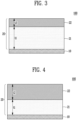
- FIG. 3 is a diagram for explaining a negative electrode for secondary batteries according to one comparative example of the present disclosure.
- FIG. 4 is a diagram for explaining a negative electrode for secondary batteries according to another comparative example of the present disclosure.
- FIG. 5 is a diagram for explaining a negative electrode for secondary batteries according to still another comparative example of the present disclosure.
- a carbon-based negative electrode active material prepared by mixing artificial graphite (D 50 : 13 ⁇ m) and natural graphite (D 50 : 10 ⁇ m) in water as a solvent, silicon oxide (SiO), single-walled carbon nanotubes (SWCNT), and CMC, and SBR were mixed at a ratio of 86.63:10.57:1.0:1.2:0.6 by weight to prepare a second composition.
- a first composition and a second composition that were prepared were simultaneously applied onto a copper thin film using a dual-layer slot die, and accordingly, a first layer resulting from the first composition was formed on the copper thin film, which was a negative electrode current collector, and a second layer resulting from the second composition was formed on the first layer. Afterwards, drying was performed under vacuum at 130 °C for one hour to manufacture a negative electrode provided with a first negative electrode active material layer formed by drying the first layer and a second negative electrode active material layer formed by drying the second layer.
- electrolyte solution was injected through the electrolyte solution injection portion, and the remaining surface was sealed and impregnated for 12 hours or longer.
- the electrolyte solution used was 1 M LiPF 6 dissolved in a mixed solvent of EC/EMC/DEC.
- pre-charging was performed for 36 minutes with a current corresponding to 0.25 C. Degassing was performed after one hour, and after aging for 24 hours or longer, formation charging and discharging were performed (charging conditions: CC-CV 0.2 C, 4.2 V, 0.05 C CUT-OFF; discharge conditions: CC 0.2 C 2.5 V CUTOFF). Afterwards, standard charging and discharging were performed (charging conditions: CC-CV 0.33 C, 4.2 V, 0.05 C CUT-OFF; discharging conditions: CC 0.33 C, 2.5 V, CUT-OFF) to manufacture a secondary battery.
- a carbon-based negative electrode active material prepared by mixing artificial graphite (D 50 : 13 ⁇ m) and natural graphite (D 50 : 10 ⁇ m) in water as a solvent, silicon oxide (SiO), MWCNT, and CMC, and SBR were mixed at a ratio of 94.15:1.25:1.0:1.2:2.4 by weight to prepare a first composition.
- a carbon-based negative electrode active material prepared by mixing artificial graphite (D 50 : 13 ⁇ m) and natural graphite (D 50 : 10 ⁇ m) in water as a solvent, silicon oxide (SiO), SWCNT, and CMC, and SBR were mixed at a ratio of 62.2:35.0:1.0:1.2:0.6 by weight to prepare a second composition.
- a negative electrode was manufactured in the same manner as in Example 1, except that the above-described first composition and second composition were applied so that the thickness ratio of the first layer and the second layer was 8:2.
- a positive electrode was manufactured in the same manner as in Example 1.
- a secondary battery was manufactured in the same manner as in Example 1, except that the above-described negative electrode was used.
- a carbon-based negative electrode active material prepared by mixing artificial graphite (D 50 : 13 ⁇ m) and natural graphite (D 50 : 10 ⁇ m) in water as a solvent, silicon oxide (SiO), SWCNT, and CMC, and SBR were mixed at a ratio of 83.2:14.0:1.0:1.2:0.6 by weight to prepare a second composition.
- a negative electrode was manufactured in the same manner as in Example 1, except that the above-described first composition and second composition were applied so that the thickness ratio of the first layer and the second layer was 5:5.
- the structure of the negative electrode of Comparative Example 2 may be understood with reference to FIG. 4 .
- a positive electrode was manufactured in the same manner as in Example 1.
- a secondary battery was manufactured in the same manner as in Example 1, except that the above-described negative electrode was used.
- a carbon-based negative electrode active material prepared by mixing artificial graphite (D 50 : 13 ⁇ m) and natural graphite (D 50 : 10 ⁇ m) in water as a solvent, silicon oxide (SiO), MWCNT, and CMC, and SBR were mixed at a ratio of 87.4:8.0:1.0:1.2:2.4 by weight to prepare a first composition.
- a negative electrode was manufactured in the same manner as in Example 1, except that the above-described first composition and second composition were applied.
- the structure of the negative electrode of Comparative Example 3 may be understood with reference to FIG. 1 .
- a positive electrode was manufactured in the same manner as in Example 1.
- a secondary battery was manufactured in the same manner as in Example 1, except that the above-described negative electrode was used.
- a carbon-based negative electrode active material prepared by mixing artificial graphite (D 50 : 13 ⁇ m) and natural graphite (D 50 : 10 ⁇ m) in water as a solvent, silicon oxide (SiO), MWCNT, and CMC, and SBR were mixed at a ratio of 88.30:8.0:1.0:1.2:1.5 by weight to prepare a first composition.
- the prepared negative electrode active material composition was applied onto a copper thin film and dried under vacuum at 130 °C for one hour.
- the structure of the negative electrode of Comparative Example 4 may be understood with reference to FIG. 5 .
- a positive electrode was manufactured in the same manner as in Example 1.
- a secondary battery was manufactured in the same manner as in Example 1, except that the above-described negative electrode was used.
- Example 1 Electrode information Layer Graphite (wt%) Silicon oxide (wt%) SWCNT (wt%) MWCNT (wt%) CMC (wt%) SBR (wt%) Occurrence of negative electrode detachment
- Comparative Example 3 First layer 87.40 200 - 100 1.20 2.40 X Second layer 83.20 1400 100 - 1.20 0.60 Total 88.30 800 0.50 0.50 1.20 1.50 Comparative Example
- Example 1 and Comparative Examples 1 to 3 in which the first layer in contact with the current collector included a relatively large amount of SBR, the adhesion between the current collector and the negative electrode active material layer was excellent, and thus detachment of the negative electrode did not occur, but in Comparative Example 4 in which the first layer and the second layer were not separated but formed as a single layer, due to the migration of SBR, a binder, which occurred during the drying process, the adhesion between the negative electrode active material layer and the negative electrode current collector was relatively low, and thus detachment of the negative electrode occurred.
- FIG. 6 shows simulation results representing a change in porosity of a negative electrode for secondary batteries according to one embodiment of the present disclosure.
- FIG. 7 shows simulation results representing a change in porosity of a negative electrode for secondary batteries according to one comparative example of the present disclosure.
- FIG. 8 shows simulation results representing a change in porosity of a negative electrode for secondary batteries according to another comparative example of the present disclosure.
- FIG. 9 shows simulation results representing a change in porosity of a negative electrode for secondary batteries according to still another comparative example of the present disclosure.
- Example 1 After measuring the negative electrodes of Example 1, Comparative Example 1, Comparative Example 2, and Comparative Example 4 with a 3D X-ray microscope (XRM), under the assumption that the x-axis and y-axis are fixed and volume expansion occurs only along the z-axis in the thickness direction, the change in porosity within the negative electrode was simulated through volume expansion simulation for graphite and silicon oxide. At this time, the volume expansion of graphite was assumed to be 20%, and the volume expansion of silicon oxide was assumed to be 150%. The simulation results according to this are shown in FIGS. 6 to 9 . In FIG. 6 to 9 , the y-axis direction (vertical direction) is the thickness direction of the electrode, and the smaller the color deviation, the more uniform the porosity.
- XRM 3D X-ray microscope
- the negative electrode of Comparative Example 4 has the disadvantage that the adhesion between the negative electrode active material layer and the negative electrode current collector decreases due to the migration of SBR, a binder, during the drying process, so its application may be limited.
- FIG. 10 is a graph showing capacity maintenance rates of an embodiment and comparative examples of the present disclosure, according to an experimental example of the present disclosure.
- FIG. 11 is a graph showing capacity maintenance rates of an embodiment and a comparative example of the present disclosure, according to an experimental example of the present disclosure.
- Example 1 showed almost no decrease in capacity even when charging and discharging progressed, and that the capacity was greater than that of the secondary battery of Comparative Example 2.
- the cycle characteristics were superior in Example 1 in which the second layer had a relatively thick thickness compared to Comparative Example 2 in which the first layer and the second layer had the same thickness.
- Example 1 showed almost no decrease in capacity even when charging and discharging progressed, and that the capacity was greater than that of the secondary battery of Comparative Example 3.
- the cycle characteristics were superior in Example 1 in which the first layer had a relatively low silicon oxide content compared to Comparative Example 3 in which the first layer had a relatively high silicon oxide content.
Landscapes
- Chemical & Material Sciences (AREA)
- Chemical Kinetics & Catalysis (AREA)
- Electrochemistry (AREA)
- General Chemical & Material Sciences (AREA)
- Engineering & Computer Science (AREA)
- Materials Engineering (AREA)
- Composite Materials (AREA)
- Manufacturing & Machinery (AREA)
- Inorganic Chemistry (AREA)
- Battery Electrode And Active Subsutance (AREA)
Applications Claiming Priority (1)
| Application Number | Priority Date | Filing Date | Title |
|---|---|---|---|
| KR1020230078720A KR20240177411A (ko) | 2023-06-20 | 2023-06-20 | 이차전지용 음극 및 이차전지용 음극 제조방법 |
Publications (1)
| Publication Number | Publication Date |
|---|---|
| EP4481846A1 true EP4481846A1 (de) | 2024-12-25 |
Family
ID=91582070
Family Applications (1)
| Application Number | Title | Priority Date | Filing Date |
|---|---|---|---|
| EP24182453.1A Pending EP4481846A1 (de) | 2023-06-20 | 2024-06-16 | Negativelektrode für sekundärbatterie und herstellungsverfahren für negativelektrode für sekundärbatterie |
Country Status (4)
| Country | Link |
|---|---|
| US (1) | US20240429379A1 (de) |
| EP (1) | EP4481846A1 (de) |
| KR (1) | KR20240177411A (de) |
| CN (1) | CN119170734A (de) |
Citations (4)
| Publication number | Priority date | Publication date | Assignee | Title |
|---|---|---|---|---|
| US20160351892A1 (en) * | 2014-01-31 | 2016-12-01 | Sanyo Electric Co., Ltd. | Nonaqueous-electrolyte secondary-battery negative electrode |
| EP3751641A1 (de) * | 2018-10-02 | 2020-12-16 | Lg Chem, Ltd. | Mehrschichtige strukturierte anode mit einer verbindung auf siliciumbasis und lithiumsekundärbatterie damit |
| EP3968407A1 (de) * | 2020-04-30 | 2022-03-16 | Contemporary Amperex Technology Co., Limited | Sekundärbatterie und herstellungsverfahren dafür sowie vorrichtung mit einer sekundärbatterie |
| EP4064383A1 (de) * | 2021-03-25 | 2022-09-28 | SK Innovation Co., Ltd. | Anode für sekundärbatterie und lithium-sekundärbatterie damit |
-
2023
- 2023-06-20 KR KR1020230078720A patent/KR20240177411A/ko active Pending
-
2024
- 2024-06-13 CN CN202410759420.1A patent/CN119170734A/zh active Pending
- 2024-06-16 EP EP24182453.1A patent/EP4481846A1/de active Pending
- 2024-06-18 US US18/746,190 patent/US20240429379A1/en active Pending
Patent Citations (4)
| Publication number | Priority date | Publication date | Assignee | Title |
|---|---|---|---|---|
| US20160351892A1 (en) * | 2014-01-31 | 2016-12-01 | Sanyo Electric Co., Ltd. | Nonaqueous-electrolyte secondary-battery negative electrode |
| EP3751641A1 (de) * | 2018-10-02 | 2020-12-16 | Lg Chem, Ltd. | Mehrschichtige strukturierte anode mit einer verbindung auf siliciumbasis und lithiumsekundärbatterie damit |
| EP3968407A1 (de) * | 2020-04-30 | 2022-03-16 | Contemporary Amperex Technology Co., Limited | Sekundärbatterie und herstellungsverfahren dafür sowie vorrichtung mit einer sekundärbatterie |
| EP4064383A1 (de) * | 2021-03-25 | 2022-09-28 | SK Innovation Co., Ltd. | Anode für sekundärbatterie und lithium-sekundärbatterie damit |
Also Published As
| Publication number | Publication date |
|---|---|
| CN119170734A (zh) | 2024-12-20 |
| KR20240177411A (ko) | 2024-12-27 |
| US20240429379A1 (en) | 2024-12-26 |
Similar Documents
| Publication | Publication Date | Title |
|---|---|---|
| EP3188298B1 (de) | Gestapelte zelle und herstellungsverfahren dafür | |
| JP6196329B2 (ja) | カソード活性材料、電極及びリチウムイオン移動度及び電池容量が改良された二次バッテリー | |
| JP5991717B2 (ja) | 非水電解質二次電池及びその製造方法 | |
| EP2764564B1 (de) | Positivelektrodenmaterialien, verfahren zu ihrer herstellung sowie ihre verwendung in lithiumsekundärbatterien | |
| US9379387B2 (en) | Cathode current collector coated with primer and magnesium secondary battery comprising the same | |
| US10622616B2 (en) | All-solid state battery and method of manufacturing the same | |
| US11817585B2 (en) | Positive electrode having improved adhesion and energy density, and lithium secondary battery including the same | |
| JP2023520192A (ja) | 二次電池 | |
| EP3866223B1 (de) | Negativelektrode für sekundärbatterien mit einem wasserfreien elektrolyt und sekundärbatterie mit einem wasserfreien elektrolyt damit | |
| JP2019067543A (ja) | 非水電解質二次電池及びその製造方法 | |
| KR102914058B1 (ko) | 음극 및 이를 포함하는 이차전지 | |
| KR20190029320A (ko) | 이중층 전극, 및 이를 포함하는 리튬 이차전지 | |
| KR102869626B1 (ko) | 음극 및 이를 포함하는 이차전지 | |
| EP4481846A1 (de) | Negativelektrode für sekundärbatterie und herstellungsverfahren für negativelektrode für sekundärbatterie | |
| JP2024512901A (ja) | 単一壁炭素ナノチューブが適用された負極およびそれを含む二次電池 | |
| EP4345928A2 (de) | Anode für sekundärbatterie und sekundärbatterie damit | |
| KR102658395B1 (ko) | 이차전지용 음극 및 이를 포함하는 이차전지 | |
| KR102669404B1 (ko) | 이차전지용 음극 및 이의 제조방법 | |
| US20250118736A1 (en) | Negative active material for secondary battery, negative electrode for secondary battery | |
| EP4553916A1 (de) | Lithiumsekundärbatterie, herstellungsverfahren für negativelektrodenaktivmaterial und herstellungsverfahren für lithiumsekundärbatterie | |
| EP4651219A1 (de) | Negativelektrode, kit zur herstellung einer negativelektrodenmischschicht und negativelektrodenherstellungsverfahren | |
| EP4224547A1 (de) | Negativelektrode, verfahren zur herstellung einer negativelektrode und sekundärbatterie mit negativelektrode | |
| EP4354528A1 (de) | Lithiumsekundärbatterie | |
| KR20250104136A (ko) | 이차전지용 프라이머 조성물, 이차전지용 음극 및 이의 제조방법 | |
| JP2023066929A (ja) | 二次電池用電極、及び二次電池用電極の製造方法 |
Legal Events
| Date | Code | Title | Description |
|---|---|---|---|
| PUAI | Public reference made under article 153(3) epc to a published international application that has entered the european phase |
Free format text: ORIGINAL CODE: 0009012 |
|
| STAA | Information on the status of an ep patent application or granted ep patent |
Free format text: STATUS: REQUEST FOR EXAMINATION WAS MADE |
|
| 17P | Request for examination filed |
Effective date: 20240616 |
|
| AK | Designated contracting states |
Kind code of ref document: A1 Designated state(s): AL AT BE BG CH CY CZ DE DK EE ES FI FR GB GR HR HU IE IS IT LI LT LU LV MC ME MK MT NL NO PL PT RO RS SE SI SK SM TR |