EP4484379A1 - Oxyde composite poreux à base de zircone et procédé de fabrication d'oxyde composite poreux à base de zircone - Google Patents
Oxyde composite poreux à base de zircone et procédé de fabrication d'oxyde composite poreux à base de zircone Download PDFInfo
- Publication number
- EP4484379A1 EP4484379A1 EP23819714.9A EP23819714A EP4484379A1 EP 4484379 A1 EP4484379 A1 EP 4484379A1 EP 23819714 A EP23819714 A EP 23819714A EP 4484379 A1 EP4484379 A1 EP 4484379A1
- Authority
- EP
- European Patent Office
- Prior art keywords
- less
- composite oxide
- based composite
- range
- porous zirconia
- Prior art date
- Legal status (The legal status is an assumption and is not a legal conclusion. Google has not performed a legal analysis and makes no representation as to the accuracy of the status listed.)
- Pending
Links
Images





Classifications
-
- B—PERFORMING OPERATIONS; TRANSPORTING
- B01—PHYSICAL OR CHEMICAL PROCESSES OR APPARATUS IN GENERAL
- B01J—CHEMICAL OR PHYSICAL PROCESSES, e.g. CATALYSIS OR COLLOID CHEMISTRY; THEIR RELEVANT APPARATUS
- B01J23/00—Catalysts comprising metals or metal oxides or hydroxides, not provided for in group B01J21/00
- B01J23/002—Mixed oxides other than spinels, e.g. perovskite
-
- B—PERFORMING OPERATIONS; TRANSPORTING
- B01—PHYSICAL OR CHEMICAL PROCESSES OR APPARATUS IN GENERAL
- B01J—CHEMICAL OR PHYSICAL PROCESSES, e.g. CATALYSIS OR COLLOID CHEMISTRY; THEIR RELEVANT APPARATUS
- B01J21/00—Catalysts comprising the elements, oxides, or hydroxides of magnesium, boron, aluminium, carbon, silicon, titanium, zirconium, or hafnium
- B01J21/06—Silicon, titanium, zirconium or hafnium; Oxides or hydroxides thereof
- B01J21/066—Zirconium or hafnium; Oxides or hydroxides thereof
-
- B—PERFORMING OPERATIONS; TRANSPORTING
- B01—PHYSICAL OR CHEMICAL PROCESSES OR APPARATUS IN GENERAL
- B01J—CHEMICAL OR PHYSICAL PROCESSES, e.g. CATALYSIS OR COLLOID CHEMISTRY; THEIR RELEVANT APPARATUS
- B01J23/00—Catalysts comprising metals or metal oxides or hydroxides, not provided for in group B01J21/00
- B01J23/10—Catalysts comprising metals or metal oxides or hydroxides, not provided for in group B01J21/00 of rare earths
-
- B—PERFORMING OPERATIONS; TRANSPORTING
- B01—PHYSICAL OR CHEMICAL PROCESSES OR APPARATUS IN GENERAL
- B01J—CHEMICAL OR PHYSICAL PROCESSES, e.g. CATALYSIS OR COLLOID CHEMISTRY; THEIR RELEVANT APPARATUS
- B01J27/00—Catalysts comprising the elements or compounds of halogens, sulfur, selenium, tellurium, phosphorus or nitrogen; Catalysts comprising carbon compounds
- B01J27/14—Phosphorus; Compounds thereof
- B01J27/16—Phosphorus; Compounds thereof containing oxygen, i.e. acids, anhydrides and their derivates with N, S, B or halogens without carriers or on carriers based on C, Si, Al or Zr; also salts of Si, Al and Zr
- B01J27/18—Phosphorus; Compounds thereof containing oxygen, i.e. acids, anhydrides and their derivates with N, S, B or halogens without carriers or on carriers based on C, Si, Al or Zr; also salts of Si, Al and Zr with metals other than Al or Zr
- B01J27/1802—Salts or mixtures of anhydrides with compounds of other metals than V, Nb, Ta, Cr, Mo, W, Mn, Tc, Re, e.g. phosphates, thiophosphates
- B01J27/1804—Salts or mixtures of anhydrides with compounds of other metals than V, Nb, Ta, Cr, Mo, W, Mn, Tc, Re, e.g. phosphates, thiophosphates with rare earths or actinides
-
- B—PERFORMING OPERATIONS; TRANSPORTING
- B01—PHYSICAL OR CHEMICAL PROCESSES OR APPARATUS IN GENERAL
- B01J—CHEMICAL OR PHYSICAL PROCESSES, e.g. CATALYSIS OR COLLOID CHEMISTRY; THEIR RELEVANT APPARATUS
- B01J35/00—Catalysts, in general, characterised by their form or physical properties
- B01J35/60—Catalysts, in general, characterised by their form or physical properties characterised by their surface properties or porosity
- B01J35/61—Surface area
- B01J35/613—10-100 m2/g
-
- B—PERFORMING OPERATIONS; TRANSPORTING
- B01—PHYSICAL OR CHEMICAL PROCESSES OR APPARATUS IN GENERAL
- B01J—CHEMICAL OR PHYSICAL PROCESSES, e.g. CATALYSIS OR COLLOID CHEMISTRY; THEIR RELEVANT APPARATUS
- B01J35/00—Catalysts, in general, characterised by their form or physical properties
- B01J35/60—Catalysts, in general, characterised by their form or physical properties characterised by their surface properties or porosity
- B01J35/61—Surface area
- B01J35/615—100-500 m2/g
-
- B—PERFORMING OPERATIONS; TRANSPORTING
- B01—PHYSICAL OR CHEMICAL PROCESSES OR APPARATUS IN GENERAL
- B01J—CHEMICAL OR PHYSICAL PROCESSES, e.g. CATALYSIS OR COLLOID CHEMISTRY; THEIR RELEVANT APPARATUS
- B01J35/00—Catalysts, in general, characterised by their form or physical properties
- B01J35/60—Catalysts, in general, characterised by their form or physical properties characterised by their surface properties or porosity
- B01J35/63—Pore volume
- B01J35/633—Pore volume less than 0.5 ml/g
-
- B—PERFORMING OPERATIONS; TRANSPORTING
- B01—PHYSICAL OR CHEMICAL PROCESSES OR APPARATUS IN GENERAL
- B01J—CHEMICAL OR PHYSICAL PROCESSES, e.g. CATALYSIS OR COLLOID CHEMISTRY; THEIR RELEVANT APPARATUS
- B01J35/00—Catalysts, in general, characterised by their form or physical properties
- B01J35/60—Catalysts, in general, characterised by their form or physical properties characterised by their surface properties or porosity
- B01J35/63—Pore volume
- B01J35/635—0.5-1.0 ml/g
-
- B—PERFORMING OPERATIONS; TRANSPORTING
- B01—PHYSICAL OR CHEMICAL PROCESSES OR APPARATUS IN GENERAL
- B01J—CHEMICAL OR PHYSICAL PROCESSES, e.g. CATALYSIS OR COLLOID CHEMISTRY; THEIR RELEVANT APPARATUS
- B01J35/00—Catalysts, in general, characterised by their form or physical properties
- B01J35/60—Catalysts, in general, characterised by their form or physical properties characterised by their surface properties or porosity
- B01J35/63—Pore volume
- B01J35/638—Pore volume more than 1.0 ml/g
-
- B—PERFORMING OPERATIONS; TRANSPORTING
- B01—PHYSICAL OR CHEMICAL PROCESSES OR APPARATUS IN GENERAL
- B01J—CHEMICAL OR PHYSICAL PROCESSES, e.g. CATALYSIS OR COLLOID CHEMISTRY; THEIR RELEVANT APPARATUS
- B01J35/00—Catalysts, in general, characterised by their form or physical properties
- B01J35/60—Catalysts, in general, characterised by their form or physical properties characterised by their surface properties or porosity
- B01J35/64—Pore diameter
- B01J35/647—2-50 nm
-
- B—PERFORMING OPERATIONS; TRANSPORTING
- B01—PHYSICAL OR CHEMICAL PROCESSES OR APPARATUS IN GENERAL
- B01J—CHEMICAL OR PHYSICAL PROCESSES, e.g. CATALYSIS OR COLLOID CHEMISTRY; THEIR RELEVANT APPARATUS
- B01J35/00—Catalysts, in general, characterised by their form or physical properties
- B01J35/60—Catalysts, in general, characterised by their form or physical properties characterised by their surface properties or porosity
- B01J35/64—Pore diameter
- B01J35/651—50-500 nm
-
- B—PERFORMING OPERATIONS; TRANSPORTING
- B01—PHYSICAL OR CHEMICAL PROCESSES OR APPARATUS IN GENERAL
- B01J—CHEMICAL OR PHYSICAL PROCESSES, e.g. CATALYSIS OR COLLOID CHEMISTRY; THEIR RELEVANT APPARATUS
- B01J37/00—Processes, in general, for preparing catalysts; Processes, in general, for activation of catalysts
- B01J37/02—Impregnation, coating or precipitation
- B01J37/03—Precipitation; Co-precipitation
- B01J37/031—Precipitation
-
- B—PERFORMING OPERATIONS; TRANSPORTING
- B01—PHYSICAL OR CHEMICAL PROCESSES OR APPARATUS IN GENERAL
- B01J—CHEMICAL OR PHYSICAL PROCESSES, e.g. CATALYSIS OR COLLOID CHEMISTRY; THEIR RELEVANT APPARATUS
- B01J37/00—Processes, in general, for preparing catalysts; Processes, in general, for activation of catalysts
- B01J37/08—Heat treatment
- B01J37/082—Decomposition and pyrolysis
- B01J37/088—Decomposition of a metal salt
-
- B—PERFORMING OPERATIONS; TRANSPORTING
- B01—PHYSICAL OR CHEMICAL PROCESSES OR APPARATUS IN GENERAL
- B01J—CHEMICAL OR PHYSICAL PROCESSES, e.g. CATALYSIS OR COLLOID CHEMISTRY; THEIR RELEVANT APPARATUS
- B01J37/00—Processes, in general, for preparing catalysts; Processes, in general, for activation of catalysts
- B01J37/20—Sulfiding
-
- C—CHEMISTRY; METALLURGY
- C01—INORGANIC CHEMISTRY
- C01G—COMPOUNDS CONTAINING METALS NOT COVERED BY SUBCLASSES C01D OR C01F
- C01G25/00—Compounds of zirconium
-
- C—CHEMISTRY; METALLURGY
- C01—INORGANIC CHEMISTRY
- C01G—COMPOUNDS CONTAINING METALS NOT COVERED BY SUBCLASSES C01D OR C01F
- C01G25/00—Compounds of zirconium
- C01G25/006—Compounds containing zirconium, with or without oxygen or hydrogen, and containing two or more other elements
-
- B—PERFORMING OPERATIONS; TRANSPORTING
- B01—PHYSICAL OR CHEMICAL PROCESSES OR APPARATUS IN GENERAL
- B01J—CHEMICAL OR PHYSICAL PROCESSES, e.g. CATALYSIS OR COLLOID CHEMISTRY; THEIR RELEVANT APPARATUS
- B01J2523/00—Constitutive chemical elements of heterogeneous catalysts
- B01J2523/20—Constitutive chemical elements of heterogeneous catalysts of Group II (IIA or IIB) of the Periodic Table
- B01J2523/24—Strontium
-
- B—PERFORMING OPERATIONS; TRANSPORTING
- B01—PHYSICAL OR CHEMICAL PROCESSES OR APPARATUS IN GENERAL
- B01J—CHEMICAL OR PHYSICAL PROCESSES, e.g. CATALYSIS OR COLLOID CHEMISTRY; THEIR RELEVANT APPARATUS
- B01J2523/00—Constitutive chemical elements of heterogeneous catalysts
- B01J2523/30—Constitutive chemical elements of heterogeneous catalysts of Group III (IIIA or IIIB) of the Periodic Table
- B01J2523/36—Yttrium
-
- B—PERFORMING OPERATIONS; TRANSPORTING
- B01—PHYSICAL OR CHEMICAL PROCESSES OR APPARATUS IN GENERAL
- B01J—CHEMICAL OR PHYSICAL PROCESSES, e.g. CATALYSIS OR COLLOID CHEMISTRY; THEIR RELEVANT APPARATUS
- B01J2523/00—Constitutive chemical elements of heterogeneous catalysts
- B01J2523/30—Constitutive chemical elements of heterogeneous catalysts of Group III (IIIA or IIIB) of the Periodic Table
- B01J2523/37—Lanthanides
- B01J2523/3706—Lanthanum
-
- B—PERFORMING OPERATIONS; TRANSPORTING
- B01—PHYSICAL OR CHEMICAL PROCESSES OR APPARATUS IN GENERAL
- B01J—CHEMICAL OR PHYSICAL PROCESSES, e.g. CATALYSIS OR COLLOID CHEMISTRY; THEIR RELEVANT APPARATUS
- B01J2523/00—Constitutive chemical elements of heterogeneous catalysts
- B01J2523/30—Constitutive chemical elements of heterogeneous catalysts of Group III (IIIA or IIIB) of the Periodic Table
- B01J2523/37—Lanthanides
- B01J2523/3712—Cerium
-
- B—PERFORMING OPERATIONS; TRANSPORTING
- B01—PHYSICAL OR CHEMICAL PROCESSES OR APPARATUS IN GENERAL
- B01J—CHEMICAL OR PHYSICAL PROCESSES, e.g. CATALYSIS OR COLLOID CHEMISTRY; THEIR RELEVANT APPARATUS
- B01J2523/00—Constitutive chemical elements of heterogeneous catalysts
- B01J2523/30—Constitutive chemical elements of heterogeneous catalysts of Group III (IIIA or IIIB) of the Periodic Table
- B01J2523/37—Lanthanides
- B01J2523/3718—Praseodymium
-
- B—PERFORMING OPERATIONS; TRANSPORTING
- B01—PHYSICAL OR CHEMICAL PROCESSES OR APPARATUS IN GENERAL
- B01J—CHEMICAL OR PHYSICAL PROCESSES, e.g. CATALYSIS OR COLLOID CHEMISTRY; THEIR RELEVANT APPARATUS
- B01J2523/00—Constitutive chemical elements of heterogeneous catalysts
- B01J2523/30—Constitutive chemical elements of heterogeneous catalysts of Group III (IIIA or IIIB) of the Periodic Table
- B01J2523/37—Lanthanides
- B01J2523/3725—Neodymium
-
- B—PERFORMING OPERATIONS; TRANSPORTING
- B01—PHYSICAL OR CHEMICAL PROCESSES OR APPARATUS IN GENERAL
- B01J—CHEMICAL OR PHYSICAL PROCESSES, e.g. CATALYSIS OR COLLOID CHEMISTRY; THEIR RELEVANT APPARATUS
- B01J2523/00—Constitutive chemical elements of heterogeneous catalysts
- B01J2523/40—Constitutive chemical elements of heterogeneous catalysts of Group IV (IVA or IVB) of the Periodic Table
- B01J2523/48—Zirconium
-
- B—PERFORMING OPERATIONS; TRANSPORTING
- B01—PHYSICAL OR CHEMICAL PROCESSES OR APPARATUS IN GENERAL
- B01J—CHEMICAL OR PHYSICAL PROCESSES, e.g. CATALYSIS OR COLLOID CHEMISTRY; THEIR RELEVANT APPARATUS
- B01J2523/00—Constitutive chemical elements of heterogeneous catalysts
- B01J2523/50—Constitutive chemical elements of heterogeneous catalysts of Group V (VA or VB) of the Periodic Table
- B01J2523/51—Phosphorus
-
- C—CHEMISTRY; METALLURGY
- C01—INORGANIC CHEMISTRY
- C01P—INDEXING SCHEME RELATING TO STRUCTURAL AND PHYSICAL ASPECTS OF SOLID INORGANIC COMPOUNDS
- C01P2004/00—Particle morphology
- C01P2004/51—Particles with a specific particle size distribution
-
- C—CHEMISTRY; METALLURGY
- C01—INORGANIC CHEMISTRY
- C01P—INDEXING SCHEME RELATING TO STRUCTURAL AND PHYSICAL ASPECTS OF SOLID INORGANIC COMPOUNDS
- C01P2004/00—Particle morphology
- C01P2004/60—Particles characterised by their size
- C01P2004/61—Micrometer sized, i.e. from 1-100 micrometer
-
- C—CHEMISTRY; METALLURGY
- C01—INORGANIC CHEMISTRY
- C01P—INDEXING SCHEME RELATING TO STRUCTURAL AND PHYSICAL ASPECTS OF SOLID INORGANIC COMPOUNDS
- C01P2006/00—Physical properties of inorganic compounds
- C01P2006/12—Surface area
-
- C—CHEMISTRY; METALLURGY
- C01—INORGANIC CHEMISTRY
- C01P—INDEXING SCHEME RELATING TO STRUCTURAL AND PHYSICAL ASPECTS OF SOLID INORGANIC COMPOUNDS
- C01P2006/00—Physical properties of inorganic compounds
- C01P2006/14—Pore volume
-
- C—CHEMISTRY; METALLURGY
- C01—INORGANIC CHEMISTRY
- C01P—INDEXING SCHEME RELATING TO STRUCTURAL AND PHYSICAL ASPECTS OF SOLID INORGANIC COMPOUNDS
- C01P2006/00—Physical properties of inorganic compounds
- C01P2006/16—Pore diameter
-
- C—CHEMISTRY; METALLURGY
- C01—INORGANIC CHEMISTRY
- C01P—INDEXING SCHEME RELATING TO STRUCTURAL AND PHYSICAL ASPECTS OF SOLID INORGANIC COMPOUNDS
- C01P2006/00—Physical properties of inorganic compounds
- C01P2006/16—Pore diameter
- C01P2006/17—Pore diameter distribution
-
- Y—GENERAL TAGGING OF NEW TECHNOLOGICAL DEVELOPMENTS; GENERAL TAGGING OF CROSS-SECTIONAL TECHNOLOGIES SPANNING OVER SEVERAL SECTIONS OF THE IPC; TECHNICAL SUBJECTS COVERED BY FORMER USPC CROSS-REFERENCE ART COLLECTIONS [XRACs] AND DIGESTS
- Y02—TECHNOLOGIES OR APPLICATIONS FOR MITIGATION OR ADAPTATION AGAINST CLIMATE CHANGE
- Y02A—TECHNOLOGIES FOR ADAPTATION TO CLIMATE CHANGE
- Y02A50/00—TECHNOLOGIES FOR ADAPTATION TO CLIMATE CHANGE in human health protection, e.g. against extreme weather
- Y02A50/20—Air quality improvement or preservation, e.g. vehicle emission control or emission reduction by using catalytic converters
Definitions
- the present invention relates to a porous zirconia-based composite oxide and a method for manufacturing a porous zirconia-based composite oxide.
- Exhaust gas discharged from internal combustion engines of automobiles and the like, or combustion engines such as boilers contains hazardous substances such as carbon monoxide (CO), hydrocarbon (HC), and nitrogen oxide (NOx) which cause air pollution and the like. Efficient purification of these hazardous substances is an important issue from the viewpoint of preventing environmental contamination and the like.
- Exhaust gas purification catalysts which can purify the three hazardous substances at the same time have been actively studied. In the case of the exhaust gas purification catalysts, noble metal, such as rhodium, palladium, or platinum, is supported on a zirconia-based composite oxide, and then the product is applied to a honeycomb for use.
- Patent Document 1 discloses a zirconia-based porous body having peaks in pore diameters of 8 to 20 nm and 30 to 100 nm in a pore distribution based on the BJH method and a total pore volume of 0.4 cc/g or more, and a zirconia-based porous body having a peak in a pore diameter of 20 to 110 nm in a pore distribution based on the BJH method and a total pore volume of 0.4 cc/g or more (particularly see claim 1).
- Patent Document 2 discloses a zirconia-based porous body which has a total pore volume of at least 0.75 ml/g after heat treatment at 1000°C for 3 hours and in which the pore volume of pores having a diameter of 10 to 100 nm after heat treatment at 1000°C for 3 hours is at least 30% of the total pore volume (particularly see claim 1).
- Patent Document 3 discloses a cerium-zirconium based composite oxide characterized by having a total pore volume of at least 0.4 ml/g, the volume of pores having a diameter of 10 to 100 nm being 0.25 ml/g or more, the volume of pores having a diameter of 100 nm to 10 ⁇ m being 0.2 ml/g or less (particularly see claim 1).
- Patent Document 4 discloses a zirconia-based porous body having (1) a peak in a pore diameter of 20 to 100 nm in a pore distribution based on the BJH method, a P/W ratio of 0.05 or more, in which W represents a half width of a peak obtained in a measured pore distribution curve and P represents a height of the peak, and a total pore volume of 0.5 cm 3 /g or more; and (2) a peak in a pore diameter of 20 to 100 nm, the P/W ratio of 0.03 or more, a specific surface area of at least 40 m 2 /g, and a total pore volume of 0.3 cm 3 /g or more, after heat treatment at 1000°C for 12 hours (particularly see claim 1).
- Patent Document 5 discloses a mixed oxide of zirconium, of cerium, of lanthanum and optionally of at least one rare earth metal other than cerium and lanthanum (REM), the proportions by weight are between 8% and 45% of cerium; between 1% and 10% of lanthanum; between 0% and 15% of the rare earth metal other than cerium and lanthanum; the remainder as zirconium, characterized in that the mixed oxide exhibits: after calcination at a temperature of 1100°C for 4 hours, a BET specific surface area of at least 30 m 2 /g; after calcination at a temperature of 1000°C for 4 hours, a BET specific surface area of at least 55 m 2 /g; and characterized in that the derivative curve (dV/dlog D) obtained by mercury porosimetry on the mixed oxide after calcination at a temperature of 1100°C for 4 hours exhibits, in the range of the pores with a diameter of less than or equal to 200 nm, a peak for
- the present inventor has intensively studied zirconia-based composite oxides. As a result, it has been found that, in a zirconia-based composite oxide serving as a catalyst carrier for exhaust gas purification, the volume of mesopores (diameter: 2 to 50 nm) is conventionally increased in order to improve the heat resistance of specific surface area, but when the volume of mesopores of the zirconia-based composite oxide is increased, the volume of macropores (50 nm or more) is also increased.
- the term "heat resistance of specific surface area” means that a decrease in specific surface area due to heating is small.
- macropores having a diameter of 100 nm or more do not contribute to improvement of the heat resistance of specific surface area. Therefore, there is a problem that such macropores contribute a little also to improvement of functions as a catalyst carrier.
- the present inventor has found that it is important in order to improve the heat resistance of specific surface area that there is a sharp peak in the mesopore region and the pore volume in the mesopore region is large.
- the present invention has been devised in view of the above-described problems, and an object of the present invention is to provide a porous zirconia-based composite oxide in which a decrease in specific surface area due to heating is small. Another object of the present invention is to provide a method for manufacturing the porous zirconia-based composite oxide.
- the present invention provides the following.
- the dV/dlogD peak is in the range of 2 nm or more and 100 nm or less, the maximum value of the dV/dlogD peak is 1.5 or more, and the pore volume in the range of 2 nm or more and 100 nm or less is 0.30 cm 3 /g or more, it can be said that there is a sharp peak in the range of 2 nm or more and 100 nm or less contributing to the heat resistance of specific surface area, and the pore volume is large.
- the pore volume in the range of more than 100 nm and 1000 nm or less is 0.25 cm 3 /g or less, it can be said that there are few pores that do not contribute to the heat resistance of specific surface area.
- macropores may cause a decrease in performance because the supported noble metal is buried in the inside of the particle due to aggregation of the material at a high temperature, and is not effectively employed for purification reactions.
- an increase in the number of macropores leads to an increase in water absorbability, and causes deterioration in handling during adjustment of a catalyst slurry.
- the pore volume in the range of 100 nm or more and 1000 nm or less is 0.25 cm 3 /g or less, the amount of noble metal buried in the particle is small even when heated at a high temperature. Therefore, deterioration in performance when heated at a high temperature is inhibited.
- the pore volume in the range of more than 100 nm and 1000 nm or less is 0.25 cm 3 /g or less, water absorbability is low, and handling during adjustment of a catalyst slurry is good.
- the reason why a value obtained using the BJH method is used for pores in the range of 2 nm or more and 100 nm or less is that the BJH method is superior in accuracy of measurement of pores in the range of 2 nm or more and 200 nm or less because the BJH method is pore measurement by gas adsorption, but analysis by the gas adsorption method cannot be appropriately performed for the range of more than 200 nm.
- a value obtained using the mercury intrusion method is used for pores in the range of more than 100 nm and 1000 nm or less is that measurement in the region of 200 nm or more cannot be appropriately performed by the gas adsorption method.
- Patent Documents 1 to 5 discloses that there is a sharp dV/dlogD peak with a maximum value of the peak being 1.5 or more in the range of 2 nm or more and 100 nm or less, and the pore volume of macropores of 100 nm or more is small. Therefore, zirconia-based composite oxides such as those disclosed in Patent Document 1 to 5 have less effect of inhibiting the decrease in specific surface area due to heating as compared with that of the configuration of [1].
- Patent Document 5 discloses that in the graph of the derivative curve (dV/dlogD) obtained by mercury porosimetry after heat treatment at a temperature of 1100°C for 4 hours, the pore volume of macropores of 100 nm or more is relatively small. In general, however, macropores are easily reduced by heat treatment. That is, it cannot be said that Patent Document 5 discloses that the pore volume of macropores of 100 nm or more is small in the state before the heat treatment.
- the configuration of [1] is characterized in that the pore volume in the range of more than 100 nm and 1000 nm or less is 0.25 cm 3 /g or less in the state before heat treatment, and such a configuration is not disclosed in Patent Document 5.
- the maximum value of the dV/dlogD peak is 1.0 or more
- the pore volume in the range of 2 nm or more and 100 nm or less is 0.25 cm 3 /g or more
- the pore volume in the range of more than 100 nm and 1000 nm or less after heat treatment at 1000°C for 3 hours is 0.20 cm 3 /g or less, it can be said that there are few pores that do not contribute to the heat resistance of specific surface area.
- porous zirconia-based composite oxide with the configuration of [1] or [2], in which the porous zirconia-based composite oxide has a specific surface area of 40 m 2 /g or more and 100 m 2 /g or less after heat treatment at 1000°C for 3 hours under atmospheric pressure in the air atmosphere (0.1013 MPa).
- porous zirconia-based composite oxide with the configuration of [1] to [3], in which the porous zirconia-based composite oxide has a specific surface area (initial specific surface area) of 45 m 2 /g or more and 150 m 2 /g or less.
- the specific surface area before the heat treatment is 45 m 2 /g or more, the specific surface area after heating can be maintained high even if the specific surface area is somewhat reduced by heating.
- the zirconium salt solution is heated under the condition of 100°C or more and 150°C or less to form hydrated zirconia (first step), and then the sulfating agent is added (second step), thereby affording particles (basic zirconium sulfate-containing slurry) having many mesopores and few macropores.
- the present invention it is possible to provide a porous zirconia-based composite oxide that exhibits a small decrease in specific surface area due to heating.
- the present invention can provide a method for manufacturing the porous zirconia-based composite oxide.
- a porous zirconia-based composite oxide according to the present embodiment will be described in detail later, but the zirconia-based composite oxide contains zirconia as an essential component, and is a composite oxide with an oxide other than zirconia (other metal oxide).
- the application of the porous zirconia-based composite oxide according to the present embodiment is not particularly limited, but the porous zirconia-based composite oxide is useful as a catalyst carrier for exhaust gas purification.
- examples of a catalyst which can be supported include a noble metal catalyst.
- the pore volume in the range of more than 100 nm and 1000 nm or less is 0.25 cm 3 /g or less, it can be said that there are few pores that do not contribute to the heat resistance of specific surface area.
- macropores may cause a decrease in performance because the supported noble metal is buried in the inside of the particle due to aggregation of the material at a high temperature, and is not effectively employed for purification reactions.
- an increase in the number of macropores leads to an increase in water absorbability, and causes deterioration in handling during adjustment of a catalyst slurry.
- the porous zirconia-based composite oxide since the pore volume in the range of 100 nm or more and 1000 nm or less is 0.25 cm 3 /g or less, the amount of noble metal buried in the particle is small even when heated at a high temperature. Therefore, deterioration in performance when heated at a high temperature is inhibited. In addition, since the pore volume in the range of more than 100 nm and 1000 nm or less is 0.25 cm 3 /g or less, water absorbability is low, and handling during adjustment of a catalyst slurry is good.
- the dV/dlogD peak in the above (1) is preferably in a range of 5 nm or more and 95 nm or less, and more preferably in a range of 10 nm or more and 80 nm or less.
- the maximum value of the dV/dlogD peak in the above (2) is preferably 1.7 or more, and more preferably 2.0 or more.
- the maximum value of the dV/dlogD peak is preferably as large as possible, but is, for example, 4.0 or less, 4.5 or less, or the like.
- the pore volume in the range of 2 nm or more and 100 nm or less in the above (3) is preferably 0.35 cm 3 /g or more, and more preferably 0.40 cm 3 /g or more.
- the pore volume in the range of 2 nm or more and 100 nm or less is preferably as large as possible, but is, for example, 1.30 cm 3 /g or less, 1.40 cm 3 /g or less, or the like.
- the pore volume in the range of more than 100 nm and 1000 nm or less is preferably 0.22 cm 3 /g or less, and more preferably 0.20 cm 3 /g or less.
- the pore volume in the range of more than 100 nm and 1000 nm or less is preferably as small as possible, but is, for example, 0.02 cm 3 /g or more, 0.05 cm 3 /g or more, or the like.
- the method for satisfying all of the above (1) to (3) and adjusting the pore volume in the range of more than 100 nm and 1000 nm or less to the range of 0.01 cm 3 /g or more and 0.25 cm 3 /g or less is not particularly limited, and examples thereof include a method of performing the adjustment by the manufacturing method described later.
- the pore volume in the entire measurement range (0.0036 um or more and 10.3 um or less) is preferably 0.70 cm 3 /g or more, and more preferably 1.00 cm 3 /g or more.
- the pore volume in the entire measurement range (0.0036 um or more and 10.3 um or less) is preferably as large as possible, but is, for example, 2.00 cm 3 /g or less, 2.30 cm 3 /g or less, or the like.
- the porous zirconia-based composite oxide described above preferably satisfies all of the following (4) to (6) in a range of 2 nm or more and 200 nm or less in a pore distribution based on the BJH method after heat treatment at 1000°C for 3 hours under atmospheric pressure in an air atmosphere, and
- the maximum value of the dV/dlogD peak is 1.0 or more
- the pore volume in the range of 2 nm or more and 100 nm or less is 0.25 cm 3 /g or more
- the pore volume in the range of more than 100 nm and 1000 nm or less after heat treatment at 1000°C for 3 hours is 0.20 cm 3 /g or less, it can be said that there are few pores that do not contribute to the heat resistance of specific surface area.
- the dV/dlogD peak after the heat treatment at 1000°C for 3 hours in the above (4) is preferably in the range of 5 nm or more and 95 nm or less, and more preferably in the range of 10 nm or more and 90 nm or less.
- the maximum value of the dV/dlogD peak after the heat treatment at 1000°C for 3 hours in the above (5) is preferably 1.2 or more, and more preferably 1.4 or more.
- the maximum value of the dV/dlogD peak is preferably as large as possible, but is, for example, 3.3 or less, 3.5 or less, or the like.
- the pore volume in the range of 2 nm or more and 100 nm or less after the heat treatment at 1000°C for 3 hours in the above (6) is preferably 0.27 cm 3 /g or more, and more preferably 0.30 cm 3 /g or more.
- the pore volume in the range of 2 nm or more and 100 nm or less is preferably as large as possible, but is, for example, 0.90 cm 3 /g or less, 0.95 cm 3 /g or less, or the like.
- the pore volume in the range of more than 100 nm and 1000 nm or less after the heat treatment at 1000°C for 3 hours is preferably 0.19 cm 3 /g or less, and more preferably 0.18 cm 3 /g or less.
- the pore volume in the range of more than 100 nm and 1000 nm or less is preferably as small as possible, but is, for example, 0.02 cm 3 /g or more, 0.05 cm 3 /g or more, or the like.
- the method for satisfying all of the above (4) to (6) and adjusting the pore volume in the range of more than 100 nm and 1000 nm or less after heat treatment at 1000°C for 3 hours to the range of 0.01 cm 3 /g or more and 0.20 cm 3 /g or less is not particularly limited, and examples thereof include a method of performing the adjustment by the manufacturing method described later.
- the pore volume in the entire measurement range (0.0036 um or more and 10.3 um or less) in the pore distribution based on the mercury intrusion method after heat treatment at 1000°C for 3 hours is preferably 0.50 cm 3 /g or more and 2.00 cm 3 /g or less.
- the pore volume in the entire measurement range (0.0036 um or more and 10.3 um or less) in the pore distribution based on the mercury intrusion method after heat treatment at 1000°C for 3 hours is 0.50 cm 3 /g or more
- the porous zirconia-based composite oxide is more superior in performance as a catalyst carrier.
- the pore volume in the entire measurement range (0.0036 um or more and 10.3 um or less) after heat treatment at 1000°C for 3 hours is preferably 0.60 cm 3 /g or more, and more preferably 0.70 cm 3 /g or more.
- the pore volume in the entire measurement range (0.0036 um or more and 10.3 um or less) after heat treatment at 1000°C for 3 hours is preferably as large as possible, but is, for example, 1.80 cm 3 /g or less, 1.90 cm 3 /g or less, or the like.
- the porous zirconia-based composite oxide preferably has a specific surface area after heat treatment at 1000°C for 3 hours under atmospheric pressure in the air atmosphere of 45 m 2 /g or more and 100 m 2 /g or less.
- a specific surface area after heat treatment at 1000°C for 3 hours under atmospheric pressure in the air atmosphere is 45 m 2 /g or more, it can be said that a further reduced decrease in specific surface area is caused by heating.
- the specific surface area after heat treatment at 1000°C for 3 hours is preferably 48 m 2 /g or more, more preferably 50 m 2 /g or more, and still more preferably 55 m 2 /g or more.
- the specific surface area after the heat treatment at 1000°C for 3 hours is preferably as large as possible, but is, for example, 90 m 2 /g or less, 95 m 2 /g or less, or the like.
- the specific surface area after the heat treatment at 1000°C for 3 hours is generally not larger than the specific surface area before the heat treatment, and if the heat resistance is high, the specific surface area is only equal to or slightly lower than that before the heat treatment.
- the porous zirconia-based composite oxide preferably has a specific surface area of 15 m 2 /g or more and 70 m 2 /g or less after heat treatment at 1100°C for 3 hours under atmospheric pressure in the air atmosphere.
- the specific surface area after heat treatment at 1100°C for 3 hours under atmospheric pressure in the air atmosphere is 15 m 2 /g or more, it can be said that a further reduced decrease in specific surface area is caused by heating.
- the specific surface area after the heat treatment at 1100°C for 3 hours is generally lower than that before the heat treatment or after heat treatment at 1000°C for 3 hours.
- the specific surface area after the heat treatment at 1100°C for 3 hours is preferably 18 m 2 /g or more, more preferably 20 m 2 /g or more, and still more preferably 22 m 2 /g or more.
- the specific surface area after the heat treatment at 1100°C for 3 hours is preferably as large as possible, but is, for example, 60 m 2 /g or less, 65 m 2 /g or less, or the like.
- the porous zirconia-based composite oxide preferably has a specific surface area (initial specific surface area) of 45 m 2 /g or more and 150 m 2 /g or less.
- a specific surface area initial specific surface area
- the specific surface area after heating can be maintained high even if the specific surface area is somewhat reduced by heating.
- the specific surface area initial specific surface area refers to a specific surface area in a state where heat treatment or pulverization treatment or the like is not performed after the porous zirconia-based composite oxide is manufactured.
- the specific surface area is preferably 47 m 2 /g or more, more preferably 50 m 2 /g or more, still more preferably 52 m 2 /g or more.
- the specific surface area is preferably as large as possible, but is, for example, 140 m 2 /g or less, 145 m 2 /g or less, or the like.
- the specific surface area after the heat treatment at 1000°C for 3 hours, the specific surface area after the heat treatment at 1100°C for 3 hours, and the specific surface area (initial specific surface area) refer to values obtained by the methods described in Examples.
- the particle diameter D 50 of the porous zirconia-based composite oxide is preferably 1.0 um or more and 30.0 um or less.
- the particle diameter D 50 is more preferably 1.5 um or more, and still more preferably 2.0 um or more.
- the particle diameter D 50 is more preferably 29.0 um or less, and still more preferably 28.0 um or less.
- the porous zirconia-based composite oxide can be suitably used as a catalyst carrier.
- the particle diameter D 10 of the porous zirconia-based composite oxide is preferably 0.5 um or more and 10.0 um or less.
- the particle diameter D 10 is more preferably 0.6 um or more, and still more preferably 0.7 um or more.
- the particle diameter D 10 is more preferably 9.5 um or less, and still more preferably 9.0 um or less.
- the porous zirconia-based composite oxide can be suitably used as a catalyst carrier.
- the particle diameter D 90 of the porous zirconia-based composite oxide is preferably 5.0 um or more and 100.0 um or less.
- the particle diameter D 90 is more preferably 7.0 um or more, and still more preferably 10.0 um or more.
- the particle diameter D 90 is more preferably 90.0 um or less, and still more preferably 80.0 um or less.
- the porous zirconia-based composite oxide can be suitably used as a catalyst carrier.
- the particle diameter D 10 , the particle diameter D 50 , and the particle diameter D 90 refer to particle diameters in a state where the porous zirconia-based composite oxide has been manufactured, and has then not been pulverized or heat-treated.
- the above “pulverizing” refers to finely pulverizing, and pulverizing due to a general technique such as a planetary mill, a ball mill, or a jet mill.
- the particle diameter D 10 , the particle diameter D 50 , and the particle diameter D 90 refer to values obtained by the methods described in Examples.
- the porous zirconia-based composite oxide contains zirconia.
- the content of the zirconia is preferably 30% by mass or more, more preferably 35% by mass or more, still more preferably 40% by mass or more, and particularly preferably 45% by mass or more, based on 100 mass% of the entire porous zirconia-based composite oxide.
- the upper limit of the content of the zirconia is not particularly limited, but the content of the zirconia is preferably 95% by mass or less, more preferably 92% by mass or less, still more preferably 90% by mass or less, and particularly preferably 85% by mass or less.
- the porous zirconia-based composite oxide can be suitably used as a catalyst carrier.
- the porous zirconia-based composite oxide preferably contains oxides of one or more selected from rare earth elements.
- the rare earth elements refer to Sc, Y, La, Ce, Pr, Nd, Pm, Sm, Eu, Gd, Tb, Dy, Ho, Er, Tm, Yb, and Lu.
- the porous zirconia-based composite oxide does not contain Pm. That is, it is more preferable that the porous zirconia-based composite oxide contains oxides of one or more selected from rare earth elements other than Pm.
- the thermal stability of the specific surface area can be improved. That is, the amount of a change in the specific surface area can be reduced before and after being exposed to a high temperature, and as a result, the catalytic performance can be prevented from being significantly reduced.
- the porous zirconia-based composite oxide preferably contains one or more oxides selected from the group consisting of lanthanum oxide, cerium oxide, neodymium oxide, praseodymium oxide, and yttrium oxide.
- the porous zirconia-based composite oxide may contain, in addition to zirconia and the oxides of the rare earth elements described above, oxides of one or more elements selected from the group consisting of:
- the elements shown in A) to D) are referred to as "other elements".
- the content of the oxides of the other elements may be 0.1% by mass or more in terms of oxide based on 100% by mass of the entire porous zirconia-based composite oxide.
- the upper limit of the content of the oxides of the other elements is not particularly limited, but the content may be 20% by mass or less, 10% by mass or less, 7% by mass or less, 5% by mass or less, or the like.
- transition metal examples include Ti, V, Cr, Mn, Fe, Co, Ni, Cu, Nb, Mo, Ta, W, and Ag.
- alkaline earth metal examples include Mg, Ca, Sr, and Ba.
- platinum family examples include Rh, Pd, Pt, and Ir.
- the total content of zirconia and a rare earth oxide is preferably 80% by mass or more and 100% by mass or less.
- the total content of zirconia and the rare earth oxide is more preferably 85% by mass or more, and still more preferably 90% by mass or more.
- the total content of zirconia and the rare earth oxide is more preferably 99% by mass or less, and still more preferably 98% by mass or less.
- composition ratios of the porous zirconia-based composite oxide include combinations not exceeding 100% in total given as examples in the following (1) to (4).
- composition of the porous zirconia-based composite oxide is specified by the method described in Examples.
- a zirconium salt solution is heated and hydrolyzed under the condition of 100°C or more and 150°C or less to form hydrated zirconia (first step).
- a sulfating agent is added to afford a basic zirconium sulfate-containing slurry (second step).
- the heating temperature in the above process is preferably 105°C or more, and more preferably 110°C or more.
- the heating temperature in the above process is preferably 145°C or less, and more preferably 140°C or less.
- the heating time is preferably 20 minutes or more and 10 hours or less.
- the heating time is more preferably 30 minutes or more, and still more preferably 40 minutes or more.
- the heating time is more preferably 9 hours or less, and still more preferably 8 hours or less. Setting the mixing time within the above range of time makes it possible to well mature the basic zirconium sulfate formed.
- the basic zirconium sulfate is not limited, and examples thereof include hydrates of compounds such as ZrOSO 4• ZrO 2 , 5ZrO 2• 3SO 3 , and 7ZrO 2• 3SO 3 .
- the basic zirconium sulfate may be one or a mixture of two or more thereof.
- the heating and mixing may be performed either under atmospheric pressure or under pressure.
- the pressure is not particularly limited, but is preferably 0.10 MPa or more, more preferably 0.11 MPa or more in terms of absolute pressure.
- the pressure is not particularly limited, but is preferably 0.8 MPa or less, 0.6 MPa or less, or 0.55 MPa.
- reaction solution is preferably cooled to 60°C or less.
- the cooling is preferably performed to 50°C or lower, and more preferably 40°C or lower.
- the lower limit temperature for the cooling is not particularly limited, but is preferably about a temperature at which the reaction solution is not frozen, and examples thereof include 10°C or higher and 20°C or higher.
- the cooling rate does not need to be particularly controlled, and may be natural cooling. However, when the scale is large, it takes time to perform natural cooling, whereby the cooling may be performed using a heat exchanger or the like. In this case, the cooling rate may be appropriately set within a range of, for example, 0.1°C/min or more and 20°C/min or less.
- the sulfating agent is not limited as long as the sulfating agent reacts with zirconium ions to form a sulfate (that is, a sulfating reagent), and examples thereof include sodium sulfate, potassium sulfate, and ammonium sulfate.
- the sulfating agent may be in any form such as a powder or solution form, but a solution (particularly, an aqueous solution) is preferable. The concentration of the solution to be used can be appropriately set.
- the free acid concentration of the mixed solution is preferably set to 0.2 to 2.2 N (normal).
- Examples of the free acid include sulfuric acid, nitric acid, and hydrochloric acid.
- the type of the free acid is not limited, but hydrochloric acid is preferable in terms of its high productivity on an industrial scale.
- zirconium salt is only required to supply zirconium ions, and for example, zirconium oxynitrate, zirconium oxychloride, and zirconium nitrate and the like can be used. These may be used singly or in combination of two or more of them.
- a solvent for forming the zirconium salt solution may be selected according to the type of the zirconium salt. Usually, water (pure water or ion-exchanged water) is preferable.
- the concentration of the zirconium salt solution is not particularly limited, but generally, 5 to 250 g (particularly, 20 to 150 g) of zirconium oxide (ZrO 2 ) is desirably contained in 1000 g of the solvent.
- the size or the pore volume of mesopores can be adjusted to fall within suitable ranges.
- the size of mesopores tends to increase, and the pore volume tends to increase as the amount of the sulfating agent to be added is increased.
- the sulfating agent to be added is preferably added such that the weight ratio of sulfate radical (SO 4 2- ) to ZrO 2 is 0.3 or more and 0.7 or less.
- porous zirconia-based composite oxide contains oxides of one or more selected from the group consisting of rare earth elements and other elements
- salt solutions or compounds of one or two or more metals selected from the group consisting of rare earth elements and other elements are added in predetermined amounts to the basic zirconium sulfate-containing slurry before a neutralization step to be described later.
- the step described above is preferably performed in an autoclave in which the temperature and the pressure are easily managed.
- zirconium hydroxide is formed by neutralizing the basic zirconium sulfate.
- zirconium hydroxide is formed by neutralizing the basic zirconium sulfate with an alkali.
- the alkali is not limited, and for example, ammonium hydroxide, ammonium bicarbonate, sodium hydroxide, and potassium hydroxide and the like can be used. Among these, sodium hydroxide is preferable from the viewpoint of industrial cost.
- the amount of the alkali added is not particularly limited as long as zirconium hydroxide can be formed as a precipitate from a basic zirconium sulfate solution.
- the alkali is added such that the pH of the solution is 11 or more, and preferably 12 or more.
- the zirconium hydroxide-containing solution is preferably held at 35 to 60°C for 1 hour or more. As a result, the precipitate formed is aged and is rendered easy to be collected by filtration.
- the zirconium hydroxide is collected by a solid-liquid separation method.
- filtration, centrifugation, and decantation and the like can be used.
- the zirconium hydroxide is preferably washed with water to remove impurities adhering.
- the zirconium hydroxide may be dried by natural drying or heat drying.
- the zirconium hydroxide is subjected to heat treatment (fired) to obtain a porous zirconia-based composite oxide.
- the heat treatment temperature is not particularly limited, but the zirconium hydroxide is preferably subjected to heat treatment at about 400 to 900°C for about 1 to 5 hours.
- the heat treatment atmosphere is preferably air or an oxidizing atmosphere.
- the obtained porous zirconia-based composite oxide may be subjected to treatment for disaggregating for the purpose of improving handleability, if necessary.
- porous zirconia-based composite oxides obtained in Examples and Comparative Examples contain 1 to 3 mass% of hafnium as unavoidable impurities with respect to zirconium (calculated by the following formula (X)). ([Mass of hafnium]/([mass of zirconium] + [mass of hafnium])) ⁇ 100 (%)
- the solution obtained was placed in an autoclave, heated to 120°C, and held for 1 hour, then 756 g of 5% sodium sulfate (sulfating agent) was added, and the mixture was held for 30 minutes. Then, the solution was allowed to cool to room temperature (25°C), affording a basic zirconium sulfate-containing slurry.
- the obtained hydroxide precipitate was filtered, and sufficiently washed with water.
- the obtained hydroxide was dried at 105°C for 24 hours.
- the dried hydroxide was heat-treated (calcined) at 700°C for 5 hours in the air, affording a porous zirconia-based composite oxide according to Example 1.
- the solution obtained was placed in an autoclave, heated to 110°C, and held for 1 hour, then 770 g of 5% sodium sulfate (sulfating agent) was added, and the mixture was held for 30 minutes. Then, the solution was allowed to cool to room temperature (25°C), affording a basic zirconium sulfate-containing slurry.
- the obtained hydroxide precipitate was filtered, and sufficiently washed with water.
- the obtained hydroxide was dried at 105°C for 24 hours.
- the dried hydroxide was heat-treated (calcined) at 800°C for 5 hours in the air, affording a porous zirconia-based composite oxide according to Example 2.
- the solution obtained was placed in an autoclave, heated to 120°C, and held for 1 hour, then 630 g of 5% sodium sulfate (sulfating agent) was added, and the mixture was held for 30 minutes. Then, the solution was allowed to cool to room temperature (25°C), affording a basic zirconium sulfate-containing slurry.
- the obtained hydroxide precipitate was filtered, and sufficiently washed with water.
- the obtained hydroxide was dried at 105°C for 24 hours.
- the dried hydroxide was heat-treated (calcined) at 650°C for 5 hours in the air, affording a porous zirconia-based composite oxide according to Example 3.
- the solution obtained was placed in an autoclave, heated to 120°C, and held for 1 hour, then 1250 g of 5% sodium sulfate (sulfating agent) was added, and the mixture was additionally held for 60 minutes. Then, the solution was allowed to cool to room temperature (25°C), affording a basic zirconium sulfate-containing slurry.
- the obtained hydroxide precipitate was filtered, and sufficiently washed with water.
- the obtained hydroxide was dried at 105°C for 24 hours.
- the dried hydroxide was heat-treated (calcined) at 700°C for 5 hours in the air, affording a porous zirconia-based composite oxide according to Example 4.
- the solution obtained was placed in an autoclave, heated to 120°C, and held for 1 hour, then 977 g of 5% sodium sulfate (sulfating agent) was added, and the mixture was held for 30 minutes. Then, the solution was allowed to cool to room temperature (25°C), affording a basic zirconium sulfate-containing slurry.
- the obtained hydroxide precipitate was filtered, and sufficiently washed with water.
- the obtained hydroxide was dried at 105°C for 24 hours.
- the dried hydroxide was heat-treated (calcined) at 700°C for 5 hours in the air, affording a porous zirconia-based composite oxide according to Example 5.
- the solution obtained was placed in an autoclave, heated to 120°C, and held for 1 hour, then 866 g of 5% sodium sulfate (sulfating agent) was added, and the mixture was held for 30 minutes. Then, the solution was allowed to cool to room temperature (25°C), affording a basic zirconium sulfate-containing slurry.
- the obtained hydroxide precipitate was filtered, and sufficiently washed with water.
- the obtained hydroxide was dried at 105°C for 24 hours.
- the dried hydroxide was heat-treated (calcined) at 700°C for 5 hours in the air, affording a porous zirconia-based composite oxide according to Example 6.
- the obtained hydroxide precipitate was filtered, and sufficiently washed with water.
- the obtained hydroxide was dried at 105°C for 24 hours.
- the dried hydroxide was heat-treated (calcined) at 700°C for 5 hours in the air, affording a porous zirconia-based composite oxide according to Example 7.
- the solution obtained was placed in an autoclave, heated to 120°C, and held for 1 hour, then 882 g of 5% sodium sulfate (sulfating agent) was added, and the mixture was held for 15 minutes. Then, the solution was allowed to cool to room temperature (25°C), affording a basic zirconium sulfate-containing slurry.
- the obtained hydroxide precipitate was filtered, and sufficiently washed with water.
- the obtained hydroxide was dried at 105°C for 24 hours.
- the dried hydroxide was heat-treated (calcined) at 650°C for 5 hours in the air, affording a porous zirconia-based composite oxide according to Example 8.
- the solution obtained was placed in an autoclave, heated to 130°C, and held for 1 hour, then 938 g of 5% sodium sulfate (sulfating agent) was added, and the mixture was held for 15 minutes. Then, the solution was allowed to cool to room temperature (25°C), affording a basic zirconium sulfate-containing slurry.
- the obtained hydroxide precipitate was filtered, and sufficiently washed with water.
- the obtained hydroxide was dried at 105°C for 24 hours.
- the dried hydroxide was heat-treated (calcined) at 650°C for 5 hours in the air, affording a porous zirconia-based composite oxide according to Example 9.
- the solution obtained was placed in an autoclave, heated to 120°C, and held for 1 hour, then 980 g of 5% sodium sulfate (sulfating agent) was added, and the mixture was held for 15 minutes. Then, the solution was allowed to cool to room temperature (25°C), affording a basic zirconium sulfate-containing slurry.
- the obtained hydroxide precipitate was filtered, and sufficiently washed with water.
- the obtained hydroxide was dried at 105°C for 24 hours.
- the dried hydroxide was heat-treated (calcined) at 650°C for 5 hours in the air, affording a porous zirconia-based composite oxide according to Example 10.
- the solution obtained was placed in an autoclave, heated to 120°C, and held for 1 hour, then 882 g of 5% sodium sulfate (sulfating agent) was added, and the mixture was held for 15 minutes.
- the solution obtained was placed in an autoclave, heated to 120°C, and held for 1 hour. Then, the solution was allowed to cool to room temperature (25°C), affording a basic zirconium sulfate-containing slurry.
- the obtained hydroxide precipitate was filtered, and sufficiently washed with water.
- the obtained hydroxide was dried at 105°C for 24 hours.
- the dried hydroxide was heat-treated (calcined) at 650°C for 5 hours in the air, affording a porous zirconia-based composite oxide according to Example 11.
- the solution obtained was placed in an autoclave, heated to 120°C, and held for 1 hour, then 826 g of 5% sodium sulfate (sulfating agent) was added, and the mixture was held for 15 minutes. Then, the solution was allowed to cool to room temperature (25°C), affording a basic zirconium sulfate-containing slurry.
- the hydroxide precipitate obtained was collected by filtration and sufficiently washed with water. With the resulting hydroxide was mixed strontium hydroxide (1 g in terms of SrO), and the mixture was dried at 105°C for 24 hours. The dried hydroxide was heat-treated (calcined) at 700°C for 5 hours in the air, affording a porous zirconia-based composite oxide according to Example 12.
- zirconium salt solution obtained was added 756 g of 5% sodium sulfate (sulfating agent), and the mixture was held for 15 minutes.
- the solution obtained was placed in an autoclave, heated to 120°C, and held for 1 hour and 30 minutes. Then, the solution was allowed to cool to room temperature (25°C), affording a basic zirconium sulfate-containing slurry.
- the obtained hydroxide precipitate was filtered, and sufficiently washed with water.
- the obtained hydroxide was dried at 105°C for 24 hours.
- the dried hydroxide was heat-treated (calcined) at 700°C for 5 hours in the air, affording a porous zirconia-based composite oxide according to Comparative Example 1.
- zirconium salt solution obtained was added 770 g of 5% sodium sulfate (sulfating agent), and the mixture was held for 15 minutes.
- the solution obtained was placed in an autoclave, heated to 110°C, and held for 1hour and 30 minutes. Then, the solution was allowed to cool to room temperature (25°C), affording a basic zirconium sulfate-containing slurry.
- the obtained hydroxide precipitate was filtered, and sufficiently washed with water.
- the obtained hydroxide was dried at 105°C for 24 hours.
- the dried hydroxide was heat-treated (calcined) at 800°C for 5 hours in the air, affording a porous zirconia-based composite oxide according to Comparative Example 2.
- the resulting zirconium salt solution was placed in an autoclave, the pressure was adjusted to 2 ⁇ 10 5 Pa, the temperature was raised to 120°C, 1035 g of 5% sodium sulfate (sulfating agent) was added at that temperature, and the mixture was held for 15 minutes. Then, the solution was allowed to cool to room temperature (25°C), affording a basic zirconium sulfate-containing slurry.
- the resulting zirconium hydroxide-containing slurry was filtered and washed with water, and then calcined at 600°C for 5 hours, affording an oxide.
- the cerium solution and 100 g of a lanthanum nitrate solution (concentration in terms of La 2 O 3 : 10%) were added to the basic zirconium sulfate slurry, 500 g of 25% sodium hydroxide was added thereto, and decantation was then repeated until impurities were removed. Finally, the slurry was filtered and washed with water to afford a hydroxide, which was then calcined at 600°C for 5 hours, affording an oxide.
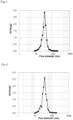
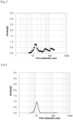
- a pore distribution was obtained by the BJH method using a pore distribution measuring device "Belsorp mini II (manufactured by MicrotracBEL Corp.)". The measurement conditions were set as follows.
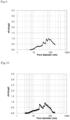
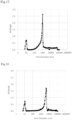
- the pore distribution of the porous zirconia-based composite oxide of each of Examples and Comparative Examples was obtained by a mercury intrusion method using a pore distribution measuring device ("Autopore IV9500" manufactured by Micromeritics). The measurement conditions were set as follows.
- the pore volume in the entire measurement range (0.0036 um or more and 10.3 um or less) and the pore volume in the range of more than 100 nm and 1000 nm or less were determined.
- the results are shown in Tables 1 and 2.
- the porous zirconia-based composite oxide of each of Examples and Comparative Examples was heat-treated at 1000°C for 3 hours under atmospheric pressure (0.1013 MPa) in the air atmosphere. Then, a pore distribution was obtained by the BJH method using a pore distribution measuring device "Belsorp mini II (manufactured by MicrotracBEL Corp.)". The measurement conditions were the same as those for the measurement of a pore distribution based on the BJH method before heat treatment.
- the porous zirconia-based composite oxide of each of Examples and Comparative Examples was heat-treated at 1000°C for 3 hours under atmospheric pressure (0.1013 MPa) in the air atmosphere. Then, a pore distribution was obtained by the mercury intrusion method using a pore distribution measuring device ("Autopore IV9500 manufactured by Micromeritics)". The measurement conditions were the same as those for the measurement of a pore distribution based on the mercury intrusion method before heat treatment.
- the porous zirconia-based composite oxide of each of Examples and Comparative Examples was heat-treated at 1000°C for 3 hours under atmospheric pressure (0.1013 MPa) in the air atmosphere.
- the specific surface area of the porous zirconia-based composite oxide after heat treatment at 1000°C for 3 hours was measured in the same manner as in "Measurement of specific surface area before heat treatment". The results are shown in Tables 1 and 2.
- the porous zirconia-based composite oxide of each of Examples and Comparative Examples was heat-treated at 1100°C for 3 hours under atmospheric pressure (0.1013 MPa) in the air atmosphere.
- the specific surface area of the porous zirconia-based composite oxide after heat treatment at 1100°C for 3 hours was measured in the same manner as in "Measurement of specific surface area before heat treatment". The results are shown in Tables 1 and 2.
- Example 1 Example 2
- Example 3 Example 4
- Example 5 Example 6
- Example 7 Example 8 Composition (wt%) ZrO 2 54 55 45 70
- 60 45 50 63 CeO 2 30 40 50
- 20 30 45 35 - La 2 O 3 - 5 5 2 3 5 3 12 Nd 2 O 3 8 - - 8 7 5 - - Pr 6 O 11 8 - - - - - - - Y 2 O 3 - - - - - - 12 25 P 2 O 5 - - - - - - - - SrO - - - - - - - - - - -
- Pore diameter distribution by BJH method Before heat treatment
- Pore volume (cm 3 /g) in range of 2 nm or more and 100 nm or less 0.64 0.59 0.61
- Example 9 Example 10
- Example 12 Comparative Example 1 Comparative Example 2 Comparative Example 3 Comparative Example 4
- 40 20 40 La 2 O 3 5 - 12 5 - 5 2 10 Nd 2 O 3 - 30 - - 8 - 8 - Pr 6 O 11 14 - - - 8 - - - Y 2 O 3 14 - 25 5 - - - - - P 2 O 5 - - 1 - - - - - SrO - - - 5 - - - - Pore diameter distribution by BJH method (Before heat treatment) Maximum value of peak in range of 2 nm or more and 100 nm or less 3.1 2.8 3.0 2.8 0.8 1.0 1.0 0.9 Pore volume (cm 3 /g) in range of 2 nm or more and 100 nm or less 0.54 0.54 0.
Landscapes
- Chemical & Material Sciences (AREA)
- Organic Chemistry (AREA)
- Engineering & Computer Science (AREA)
- Materials Engineering (AREA)
- Chemical Kinetics & Catalysis (AREA)
- Inorganic Chemistry (AREA)
- Physics & Mathematics (AREA)
- Thermal Sciences (AREA)
- Catalysts (AREA)
- Inorganic Compounds Of Heavy Metals (AREA)
Applications Claiming Priority (2)
| Application Number | Priority Date | Filing Date | Title |
|---|---|---|---|
| JP2022091386A JP7178526B1 (ja) | 2022-06-06 | 2022-06-06 | 多孔質ジルコニア系複合酸化物、及び、多孔質ジルコニア系複合酸化物の製造方法 |
| PCT/JP2023/020062 WO2023238734A1 (fr) | 2022-06-06 | 2023-05-30 | Oxyde composite poreux à base de zircone et procédé de fabrication d'oxyde composite poreux à base de zircone |
Publications (2)
| Publication Number | Publication Date |
|---|---|
| EP4484379A1 true EP4484379A1 (fr) | 2025-01-01 |
| EP4484379A4 EP4484379A4 (fr) | 2026-02-25 |
Family
ID=84191692
Family Applications (1)
| Application Number | Title | Priority Date | Filing Date |
|---|---|---|---|
| EP23819714.9A Pending EP4484379A4 (fr) | 2022-06-06 | 2023-05-30 | Oxyde composite poreux à base de zircone et procédé de fabrication d'oxyde composite poreux à base de zircone |
Country Status (5)
| Country | Link |
|---|---|
| US (1) | US20250214063A1 (fr) |
| EP (1) | EP4484379A4 (fr) |
| JP (1) | JP7178526B1 (fr) |
| CN (1) | CN119317603A (fr) |
| WO (1) | WO2023238734A1 (fr) |
Families Citing this family (2)
| Publication number | Priority date | Publication date | Assignee | Title |
|---|---|---|---|---|
| JP7696488B1 (ja) * | 2024-11-19 | 2025-06-20 | 第一稀元素化学工業株式会社 | ジルコニア系多孔質体、及び、ジルコニア系多孔質体の製造方法 |
| JP7649417B1 (ja) * | 2024-12-10 | 2025-03-19 | 第一稀元素化学工業株式会社 | ジルコニア系複合酸化物粉末、及び、ジルコニア系複合酸化物粉末の製造方法 |
Family Cites Families (7)
| Publication number | Priority date | Publication date | Assignee | Title |
|---|---|---|---|---|
| JP4660135B2 (ja) | 2004-07-26 | 2011-03-30 | 第一稀元素化学工業株式会社 | ジルコニア系多孔質体及びその製造方法 |
| EP1894620B2 (fr) * | 2006-08-22 | 2023-06-07 | Daiichi Kigenso Kagaku Kogyo Co., Ltd. | Procédé de production d'une poudre de zircone poreuse |
| JP5063252B2 (ja) * | 2006-08-22 | 2012-10-31 | 第一稀元素化学工業株式会社 | 多孔質ジルコニア系粉末及びその製造方法 |
| JP5164665B2 (ja) | 2008-04-09 | 2013-03-21 | 第一稀元素化学工業株式会社 | セリウム−ジルコニウム系複合酸化物及びその製造方法 |
| JP5744274B1 (ja) | 2014-03-28 | 2015-07-08 | 第一稀元素化学工業株式会社 | ジルコニア系多孔質体及びその製造方法 |
| FR3050450A1 (fr) | 2016-04-26 | 2017-10-27 | Rhodia Operations | Oxyde mixte a base de cerium et de zirconium |
| CN114127030B (zh) * | 2019-07-30 | 2024-01-30 | 第一稀元素化学工业株式会社 | 氧化锆系复合氧化物以及氧化锆系复合氧化物的制造方法 |
-
2022
- 2022-06-06 JP JP2022091386A patent/JP7178526B1/ja active Active
-
2023
- 2023-05-30 WO PCT/JP2023/020062 patent/WO2023238734A1/fr not_active Ceased
- 2023-05-30 EP EP23819714.9A patent/EP4484379A4/fr active Pending
- 2023-05-30 US US18/852,872 patent/US20250214063A1/en active Pending
- 2023-05-30 CN CN202380044869.3A patent/CN119317603A/zh active Pending
Also Published As
| Publication number | Publication date |
|---|---|
| JP7178526B1 (ja) | 2022-11-25 |
| WO2023238734A1 (fr) | 2023-12-14 |
| US20250214063A1 (en) | 2025-07-03 |
| JP2023178603A (ja) | 2023-12-18 |
| CN119317603A (zh) | 2025-01-14 |
| EP4484379A4 (fr) | 2026-02-25 |
Similar Documents
| Publication | Publication Date | Title |
|---|---|---|
| US7919429B2 (en) | Zirconia-ceria-yttria-based mixed oxide and process for producing the same | |
| EP1872851B1 (fr) | Oxyde mixte à base d'oxyde de cérium et de zirconium et procédé de production correspondant | |
| EP1894620B1 (fr) | Poudre de zircone poreuse et son procédé de production | |
| JP5063252B2 (ja) | 多孔質ジルコニア系粉末及びその製造方法 | |
| EP3885317B1 (fr) | Corps poreux à base de zircone | |
| US12077449B2 (en) | Alumina-based composite oxide and production method for same | |
| EP3950596A1 (fr) | Oxyde composite à base de zircone et méthode de fabrication d'oxyde composite à base de zircone | |
| EP2794488B1 (fr) | Oxyde composite, son procédé de production et catalyseur pour la purification de gaz d'échappement | |
| US11958039B2 (en) | Zirconia-based porous body and method for manufacturing zirconia-based porous body | |
| US20250214063A1 (en) | Porous zirconia-based composite oxide and method for manufacturing porous zirconia-based composite oxide | |
| WO2013092557A1 (fr) | Oxyde composite, son procédé de production et catalyseur pour la purification de gaz d'échappement | |
| JP6325010B2 (ja) | アルミナ系複合酸化物及びその製造方法 | |
| EP4378895A1 (fr) | Oxyde composite de zirconium et procédé de production d'oxyde composite de zirconium | |
| JP7696488B1 (ja) | ジルコニア系多孔質体、及び、ジルコニア系多孔質体の製造方法 | |
| JP2024146344A (ja) | アルミナ系複合酸化物、及び、アルミナ系複合酸化物の製造方法 |
Legal Events
| Date | Code | Title | Description |
|---|---|---|---|
| STAA | Information on the status of an ep patent application or granted ep patent |
Free format text: STATUS: THE INTERNATIONAL PUBLICATION HAS BEEN MADE |
|
| PUAI | Public reference made under article 153(3) epc to a published international application that has entered the european phase |
Free format text: ORIGINAL CODE: 0009012 |
|
| STAA | Information on the status of an ep patent application or granted ep patent |
Free format text: STATUS: REQUEST FOR EXAMINATION WAS MADE |
|
| 17P | Request for examination filed |
Effective date: 20240927 |
|
| AK | Designated contracting states |
Kind code of ref document: A1 Designated state(s): AL AT BE BG CH CY CZ DE DK EE ES FI FR GB GR HR HU IE IS IT LI LT LU LV MC ME MK MT NL NO PL PT RO RS SE SI SK SM TR |
|
| DAV | Request for validation of the european patent (deleted) | ||
| DAX | Request for extension of the european patent (deleted) | ||
| A4 | Supplementary search report drawn up and despatched |
Effective date: 20260126 |
|
| RIC1 | Information provided on ipc code assigned before grant |
Ipc: C01G 25/00 20060101AFI20260120BHEP Ipc: B01J 21/06 20060101ALI20260120BHEP Ipc: B01J 23/10 20060101ALI20260120BHEP Ipc: B01J 32/00 20060101ALI20260120BHEP |