EP4484424A1 - Polymorph eines dipeptidylpeptidase-1-inhibitors, herstellungsverfahren und verwendung davon - Google Patents
Polymorph eines dipeptidylpeptidase-1-inhibitors, herstellungsverfahren und verwendung davon Download PDFInfo
- Publication number
- EP4484424A1 EP4484424A1 EP23759204.3A EP23759204A EP4484424A1 EP 4484424 A1 EP4484424 A1 EP 4484424A1 EP 23759204 A EP23759204 A EP 23759204A EP 4484424 A1 EP4484424 A1 EP 4484424A1
- Authority
- EP
- European Patent Office
- Prior art keywords
- crystal form
- polymorph
- compound
- ray powder
- powder diffraction
- Prior art date
- Legal status (The legal status is an assumption and is not a legal conclusion. Google has not performed a legal analysis and makes no representation as to the accuracy of the status listed.)
- Pending
Links
Images



Classifications
-
- C—CHEMISTRY; METALLURGY
- C07—ORGANIC CHEMISTRY
- C07D—HETEROCYCLIC COMPOUNDS
- C07D413/00—Heterocyclic compounds containing two or more hetero rings, at least one ring having nitrogen and oxygen atoms as the only ring hetero atoms
- C07D413/02—Heterocyclic compounds containing two or more hetero rings, at least one ring having nitrogen and oxygen atoms as the only ring hetero atoms containing two hetero rings
- C07D413/12—Heterocyclic compounds containing two or more hetero rings, at least one ring having nitrogen and oxygen atoms as the only ring hetero atoms containing two hetero rings linked by a chain containing hetero atoms as chain links
-
- A—HUMAN NECESSITIES
- A61—MEDICAL OR VETERINARY SCIENCE; HYGIENE
- A61K—PREPARATIONS FOR MEDICAL, DENTAL OR TOILETRY PURPOSES
- A61K31/00—Medicinal preparations containing organic active ingredients
- A61K31/33—Heterocyclic compounds
- A61K31/395—Heterocyclic compounds having nitrogen as a ring hetero atom, e.g. guanethidine or rifamycins
- A61K31/55—Heterocyclic compounds having nitrogen as a ring hetero atom, e.g. guanethidine or rifamycins having seven-membered rings, e.g. azelastine, pentylenetetrazole
- A61K31/553—Heterocyclic compounds having nitrogen as a ring hetero atom, e.g. guanethidine or rifamycins having seven-membered rings, e.g. azelastine, pentylenetetrazole having at least one nitrogen and one oxygen as ring hetero atoms, e.g. loxapine, staurosporine
-
- A—HUMAN NECESSITIES
- A61—MEDICAL OR VETERINARY SCIENCE; HYGIENE
- A61P—SPECIFIC THERAPEUTIC ACTIVITY OF CHEMICAL COMPOUNDS OR MEDICINAL PREPARATIONS
- A61P11/00—Drugs for disorders of the respiratory system
-
- C—CHEMISTRY; METALLURGY
- C07—ORGANIC CHEMISTRY
- C07D—HETEROCYCLIC COMPOUNDS
- C07D267/00—Heterocyclic compounds containing rings of more than six members having one nitrogen atom and one oxygen atom as the only ring hetero atoms
- C07D267/02—Seven-membered rings
- C07D267/08—Seven-membered rings having the hetero atoms in positions 1 and 4
- C07D267/10—Seven-membered rings having the hetero atoms in positions 1 and 4 not condensed with other rings
-
- C—CHEMISTRY; METALLURGY
- C07—ORGANIC CHEMISTRY
- C07B—GENERAL METHODS OF ORGANIC CHEMISTRY; APPARATUS THEREFOR
- C07B2200/00—Indexing scheme relating to specific properties of organic compounds
- C07B2200/13—Crystalline forms, e.g. polymorphs
Definitions
- the present invention belongs to the pharmaceutical field, and in particular relates to a dipeptidyl peptidase 1 inhibitor polymorph, and a preparation method therefor and the use thereof.
- DPP1 Dipeptidyl peptidase 1
- cathepsin C Dipeptidyl peptidase 1
- NSPs neutrophil serine proteases
- NE neutrophil elastase
- Pr3 proteinase 3
- CatG cathepsin G
- DPP1 can have a good therapeutic effect on highly inflammatory lung diseases caused by neutrophils, such as bronchiectasis, chronic obstructive pulmonary disease (COPD) and acute lung injury. Therefore, inhibiting the over-activation of NSPs by targeting DPP1 may have a potential therapeutic effect on bronchiectasis.
- neutrophils such as bronchiectasis, chronic obstructive pulmonary disease (COPD) and acute lung injury. Therefore, inhibiting the over-activation of NSPs by targeting DPP1 may have a potential therapeutic effect on bronchiectasis.
- COPD chronic obstructive pulmonary disease
- a DPP1 small molecule inhibitor as shown in the formula below is prepared.
- the compound exhibits relatively high DPP1 inhibitory activity and excellent bioavailability and pharmacokinetic characteristics and has the advantages of low toxicity and high safety. It is intended to be used to treat lung diseases such as non-cystic fibrosis bronchiectasis, chronic obstructive pulmonary disease (COPD), acute lung injury and cystic fibrosis bronchiectasis.
- COPD chronic obstructive pulmonary disease
- the present invention provides a polymorph of a compound as shown in formula I with a high suitability as a pharmaceutical.
- the polymorph has excellent characteristics of high purity, good solubility, stable physical and chemical properties, resistance to high temperature, high humidity, and strong illumination, low hygroscopicity, etc.
- the polymorph of the compound as shown in formula I is an anhydrous crystal form, i.e., n is 0, and the polymorph is described as crystal form B, which has an X-ray powder diffraction pattern comprising characteristic diffraction peaks at 12.32 ⁇ 0.2°, 14.30 ⁇ 0.2°, 15.43 ⁇ 0.2°, 16.38 ⁇ 0.2° and 18.56 ⁇ 0.2° 2 ⁇ , as determined by using Cu-K ⁇ radiation.
- the crystal form B has an X-ray powder diffraction pattern further comprising characteristic diffraction peaks at 17.06 ⁇ 0.2°, 18.21 ⁇ 0.2°, 18.94 ⁇ 0.2°, 19.59 ⁇ 0.2°, 20.79 ⁇ 0.2°, 21.19 ⁇ 0.2°, 22.55 ⁇ 0.2°, 22.97 ⁇ 0.2°, 23.37 ⁇ 0.2°, 24.25 ⁇ 0.2° and 25.46 ⁇ 0.2° 2 ⁇ .
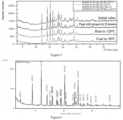
- the crystal form B has an X-ray powder diffraction pattern comprising characteristic diffraction peaks at the following positions (2 ⁇ ): No. Pos. [°2 ⁇ ] 1 4.68 2 8.97 3 12.32 4 14.30 5 15.43 6 16.38 7 17.06 8 18.21 9 18.56 10 18.94 11 19.59 12 20.79 13 21.19 14 22.55 15 22.97 16 23.37 17 24.25 18 25.46 19 31.03
- the crystal form B has an X-ray powder diffraction pattern substantially as shown in Figure 1 .
- the crystal form B has a DSC pattern as shown in Figure 2 and/or a TGA pattern as shown in Figure 3 .
- the polymorph of the compound as shown in formula I is a monohydrate crystal form, i.e., n is 1, and the polymorph is described as crystal form C, which has an X-ray powder diffraction pattern comprising characteristic diffraction peaks at 8.93 ⁇ 0.2°, 12.10 ⁇ 0.2°, 14.14 ⁇ 0.2°, 20.38 ⁇ 0.2°, 23.86 ⁇ 0.2° and 25.07 ⁇ 0.2° 20, as determined by using Cu-K ⁇ radiation.
- the crystal form C has an X-ray powder diffraction pattern further comprising characteristic diffraction peaks at 15.19 ⁇ 0.2°, 15.92 ⁇ 0.2°, 16.06 ⁇ 0.2°, 17.55 ⁇ 0.2°, 17.90 ⁇ 0.2°, 18.90 ⁇ 0.2°, 19.10 ⁇ 0.2°, 20.81 ⁇ 0.2° and 24.33 ⁇ 0.2° 2 ⁇ .
- the crystal form C has an X-ray powder diffraction pattern comprising characteristic diffraction peaks at the following positions (2 ⁇ ): No. Pos. [°2 ⁇ ] 1 4.68 2 8.93 3 12.10 4 14.14 5 15.19 6 15.92 7 16.06 8 17.55 9 17.90 10 18.90 11 19.10 12 20.38 13 20.81 14 23.32 15 23.86 16 24.33 17 25.07 18 25.91 19 26.99 20 28.45 21 29.67 22 31.41 23 36.26
- the crystal form C has an X-ray powder diffraction pattern substantially as shown in Figure 6 .
- the crystal form C has a DSC pattern as shown in Figure 7 and/or a TGA pattern as shown in Figure 8 .
- the polymorph of the compound as shown in formula I is an anhydrous crystal form, i.e., n is 0, and the polymorph is described as crystal form D, which has an X-ray powder diffraction pattern comprising characteristic diffraction peaks at 8.68 ⁇ 0.2°, 11.74 ⁇ 0.2°, 13.64 ⁇ 0.2°, 17.40 ⁇ 0.2°, 18.23 ⁇ 0.2°, 20.12 ⁇ 0.2° and 26.21 ⁇ 0.2° 2 ⁇ , as determined by using Cu-K ⁇ radiation.
- the crystal form D has an X-ray powder diffraction pattern further comprising characteristic diffraction peaks at 8.99 ⁇ 0.2°, 13.51 ⁇ 0.2°, 27.49 ⁇ 0.2°, 32.19 ⁇ 0.2° and 32.97 ⁇ 0.2° 2 ⁇ .
- the crystal form D has an X-ray powder diffraction pattern comprising characteristic diffraction peaks at the following positions (2 ⁇ ): No. Pos. [°2 ⁇ ] 1 4.49 2 8.68 3 8.99 4 11.74 5 13.51 6 13.64 7 14.80 8 15.59 9 17.40 10 18.23 11 20.12 12 22.82 13 23.60 14 24.08 15 26.21 16 27.49 17 28.57 18 32.19 19 32.97 20 36.98
- the present invention also provides the use of the crystal form B, crystal form C or crystal form D or the pharmaceutical composition comprising same in the preparation of a medicament for treating a DPP1-mediated disease.
- the DPP1-mediated disease includes, but is not limited to non-cystic fibrosis bronchiectasis, cystic fibrosis bronchiectasis, acute lung injury, obstructive airway disease, bronchiectasis, cystic fibrosis, asthma, emphysema and chronic obstructive pulmonary disease.
- the crystal form B, crystal form C or crystal form D of the present invention is present in an amount accounting for about 5 wt% to about 100 wt% of the bulk drug; in certain embodiments, in an amount accounting for about 10 wt% to about 100 wt% of the bulk drug; in certain embodiments, in an amount accounting for about 15 wt% to about 100 wt% of the bulk drug; in certain embodiments, in an amount accounting for about 20 wt% to about 100 wt% of the bulk drug; in certain embodiments, in an amount accounting for about 25 wt% to about 100 wt% of the bulk drug; in certain embodiments, in an amount accounting for about 30 wt% to about 100 wt% of the bulk drug; in certain embodiments, in an amount accounting for about 35 wt% to about 100 wt% of the bulk drug; in certain embodiments, in an amount accounting for about 40 wt% to about 100 wt% of the bulk drug; in certain embodiments, in an amount accounting for about 45 wt% to
- the present invention also provides a method for preparing the crystal form B, crystal form C or crystal form D, which method comprises:
- the crystal form B is obtained by suspending a free base of compound I in an IPAc solvent and stirring same for 2-5 days.
- the crystal form B is obtained by adding a free base of compound I to a mixed solvent of a nitrile solvent and an alcohol solvent, heating the mixture until the solution is clear, and then cooling the solution for crystallization.
- the nitrile solvent is selected from acetonitrile
- the alcohol solvent is selected from methanol, ethanol, propyl alcohol, isopropyl alcohol or a combination thereof.
- the solvent is a mixed solvent of acetonitrile and ethanol.
- the volume ratio of the nitrile solvent to the alcohol solvent is (1-3) : (1-3); in some embodiments, the volume ratio of the nitrile solvent to the alcohol solvent is (1-2) : (1-2); and in some embodiments, the volume ratio of the nitrile solvent to the alcohol solvent is 1 : 1.
- the crystal form is obtained by first cooling the clear solution to 50°C-60°C, adding a seed crystal (which can be prepared by other methods, such as the method described in the previous embodiment), and then continuing to cool the solution for crystallization.
- a seed crystal which can be prepared by other methods, such as the method described in the previous embodiment
- the crystal form C is obtained by suspending a free base of compound I in H 2 O and stirring same for 2-5 days.
- the crystal form D is obtained by adding a free base of compound I to an alcohol solvent, heating the mixture until the solution is clear, and then slowly cooling the solution for crystallization.
- the alcohol solvent is selected from methanol, ethanol, propyl alcohol, isopropyl alcohol or a combination thereof. In some embodiments, the solvent is methanol.
- the present invention has the following beneficial effects:
- the crystal form of the present invention has excellent physical and chemical properties, such as good flowability and significantly improved viscosity, which can significantly reduce the filtration time, shorten the production cycle and save the costs during the formulation preparation process of the crystal form of the present invention.
- the crystal form of the present invention has good light stability, thermal stability and wet stability, which can ensure the reliability of the crystal form during storage and transportation, thereby ensuring the safety and long-term efficacy of the formulation.
- the crystal form does not require special packaging against light, temperature and humidity, thereby reducing the costs.
- the crystal form will not be degraded by light, high temperature and high humidity, and patients taking the crystal form do not need to worry about photosensitivity reactions caused by the formulation due to exposure to sunlight.
- the crystal form also has a relatively high solubility, which is conducive to the dissolution of the drug and improves the bioavailability.
- the crystal form of the present invention also has good stability.
- the crystal form of the present invention does not change after DVS tests (60%RH-95%RH-0%RH-95%RH or 0%RH-95%RH-0%RH) or after being placed at 25°C/60%RH and 40°C/75%RH for 1 week to 1 month.
- the crystal form of the present invention further has grinding stability.
- the crystal form of the present invention has a simple and effective preparation method, and its scale-up production is easily realized.
- the crystal form has the advantages of good flowability, good compressibility, high bulk density, low hygroscopicity and uniform particle size distribution, and is convenient for formulation production.
- the formulation prepared with the crystal form of the present invention can achieve reduced irritation and improved absorption, thereby solving the problems of metabolic rate, toxicity and safety and effectively ensuring the quality and efficacy of the formulation.
- the crystallized compounds of the present invention have TGA and DSC patterns comprising characteristic peak positions, which have substantially the same properties as the TGA and DSC patterns provided in the drawings of the present invention, with an error tolerance of measured values within ⁇ 5°C, which is generally required to be within ⁇ 3°C.
- terapéuticaally effective amount means an amount that causes a physiological or medical response in a tissue, system or subject and is a desirable amount, including the amount of a compound that is, when administered to a subject to be treated, sufficient to prevent occurrence of one or more symptoms of the disease or condition to be treated or to reduce the symptom(s) to a certain degree.
- room temperature refers to: 10°C-30°C.
- carrier refers to: a system that does not cause significant irritation to the organism and does not eliminate the biological activity and characteristics of the administered compound and can change the way the drug enters the human body and the distribution of the drug in the body, control the release rate of the drug and delivery the drug to targeted organs.
- Non-limiting examples of the carrier include microcapsule, microsphere, nanoparticle, liposome, etc.
- excipient refers to: a substance that is not a therapeutic agent per se, but used as a diluent, adjuvant, adhesive and/or vehicle for addition to a pharmaceutical composition, thereby improving the disposal or storage properties thereof, or allowing to or promoting the formation of a compound or a pharmaceutical composition into a unit dosage form for administration.
- a pharmaceutically acceptable excipient can provide various functions and can be described as a wetting agent, a buffer, a suspending agent, a lubricant, an emulsifier, a disintegrating agent, an absorbent, a preservative, a surfactant, a colorant, a flavouring agent and a sweetening agent.
- Examples of pharmaceutically acceptable excipients include, but are not limited to: (1) sugars, such as lactose, glucose and sucrose; (2) starch, such as corn starch and potato starch; (3) cellulose and its derivatives, such as sodium carboxymethyl cellulose, ethyl cellulose, cellulose acetate, hydroxypropyl methylcellulose, hydroxypropyl cellulose, microcrystalline cellulose and croscarmellose (such as croscarmellose sodium); (4) tragacanth powder; (5) malt; (6) gelatine; (7) talc; (8) excipients, such as cocoa butter or suppository wax; (9) oils, such as peanut oil, cottonseed oil, safflower oil, sesame oil, olive oil, corn oil and soybean oil; (10) diols, such as propylene glycol; (11) polyols, such as glycerol, sorbitol, mannitol and polyethylene glycol; (12) esters, such as eth
- crystal form refers to any solid substance that exhibits a three-dimensional order, and in contrast to an amorphous solid substance, produces a characteristic XRPD pattern with well-defined peaks.
- seed crystal refers to an insoluble additive that is added in the crystallization method to form a crystal nucleus, thereby accelerating or promoting the growth of enantiomeric crystals that have the same crystal form or stereo configuration as the additive.
- X-ray powder diffraction pattern refers to an experimentally observed diffraction pattern or a parameter, data or value derived therefrom.
- An XRPD pattern is typically characterized by peak positions (abscissa) and/or peak intensities (ordinate).
- the term "2 ⁇ " refers to the position of the peak expressed in degrees (°) and set based on the X-ray diffraction experiment and is typically the unit of the abscissa in the diffraction pattern. If the reflection beam is diffracted when the incident beam forms an angle ⁇ with a lattice plane, the experimental setup requires that the reflection beam be recorded at an angle 2 ⁇ . It should be understood that a particular 2 ⁇ value for a particular crystal form referred to herein is intended to mean the 2 ⁇ value (expressed in degrees) measured using the X-ray diffraction experimental conditions described herein.
- the XRPD measurements are analysed using an X-ray powder diffractometer, Panalytical EMPYREAN.
- the scanning parameters are as shown in Table 2: Table 2 Test parameters of XRPD Parameter Instrument 1 Instrument 2 Instrument 3 Model Empyrean X' Pert3 X' Pert3 X ray Cu, K ⁇ , K ⁇ 1 ( ⁇ ): 1.540598, K ⁇ 2 ( ⁇ ): 1.544426 Cu, K ⁇ , K ⁇ 1 ( ⁇ ): 1.540598, K ⁇ 2 ( ⁇ ): 1.544426 Cu, K ⁇ , K ⁇ 1 ( ⁇ ): 1.540598, K ⁇ 2 ( ⁇ ): 1.544426 K ⁇ 2/K ⁇ 1 intensity ratio: 0.50 K ⁇ 2/K ⁇ 1 intensity ratio: 0.50 K ⁇ 2/K ⁇ 1 intensity ratio: 0.50 Settings of X-ray tube 45 kV, 40 mA 45 kV, 40 mA 45 kV, 40 mA 45 kV, 40 mA Divergence slit 1/8° 1/8° 1/8° S
- TGA and DSC measurements are obtained on a TA Q5000/5500 thermal gravimetric analyser and a TA 2500 differential scanning calorimeter, respectively, and the test parameters are as shown in Table 3: Table 3 Test parameters of DSC and TGA Parameter TGA DSC Method Linear temperature rise Linear temperature rise Sample tray Aluminium tray, open Aluminium tray, capped/uncapped Temperature range Room temperature - set final temperature 25°C - set final temperature Scanning rate (°C/min) 10 10 Protective gas Nitrogen gas Nitrogen gas
- the known starting materials of the present invention can be synthesized by or according to methods known in the art, or can be purchased from Titan Technology Co., Ltd., Energy Chemical Co., Ltd., Shanghai Demo Co., Ltd., Chengdu Kelong Chemical Co., Ltd., Accela ChemBio Co., Ltd., J&K Scientific Co., Ltd. and other companies.
- a solution refers to an aqueous solution.
- reaction liquid was warmed to 80°C ⁇ 5°C and reacted for about 2 hours. Then, a sample was collected and monitored with HPLC, and when the target value for in-process control, i.e., the content of compound a-2 was ⁇ 1.0%, the reaction was terminated.
- Post treatment to the reaction liquid was added purified water (5.000 kg), and the mixture was cooled to 10°C ⁇ 5°C. Purified water (10.005 kg) was added, and the resulting mixture was stirred and crystallized for about 1 hour at 10°C ⁇ 5°C and filtered. The filter cake was washed twice with purified water (2.500 kg x 2) and collected. Anhydrous ethanol (12.605 kg) and the filter cake were added to a 50-L reaction kettle, the mixture was stirred at 20°C ⁇ 5°C for about 0.5 hours and filtered, and the filter cake was washed twice with anhydrous ethanol (1.000 kg x 2) and collected.
- Post treatment the reaction mixture was filtered, and the filter cake was washed with acetonitrile (1.670 kg) and collected. Acetonitrile (2.1381 kg) and filter cake were added to a reaction kettle, and the mixture was warmed to 80°C ⁇ 5°C and stirred for 3 hours. The resulting mixture was cooled to 20°C ⁇ 5°C and stirred for 1 hour. The reaction mixture was filtered, and the filter cake was washed with acetonitrile (1.670 kg) and collected.
- the reaction liquid was washed successively with sodium bicarbonate solution (which was prepared by dissolving 1.070 kg of sodium bicarbonate in 20.350 kg of water), citric acid solution (which was prepared by dissolving 2.150 kg of citric acid monohydrate in 19.275 kg of water) and sodium chloride (which was prepared by dissolving 4.300 kg of sodium chloride in 17.135 kg of water).
- sodium bicarbonate solution which was prepared by dissolving 1.070 kg of sodium bicarbonate in 20.350 kg of water
- citric acid solution which was prepared by dissolving 2.150 kg of citric acid monohydrate in 19.275 kg of water
- sodium chloride which was prepared by dissolving 4.300 kg of sodium chloride in 17.135 kg of water.
- To the organic phase was added medicinal charcoal (0.210 kg), and the mixture was stirred for about 0.5 hours.
- the resulting mixture was filtered through a pad of celite (0.540 kg), and the filter cake was washed with ethyl acetate (1.905 kg).
- Post treatment the reaction liquid was cooled to 10°C ⁇ 5°C, and dilute aqueous ammonia (a mixture of 1.075 kg of aqueous ammonia and 36.000 kg of purified water) was added dropwise while the material temperature was controlled below 25°C. After the addition, the mixture was cooled to 10°C ⁇ 5°C to allow crystallization for 2 hours. The resulting mixture was filtered, and the filter cake was washed with purified water (11.930 kg). The filter cake and ethanol (14.890 kg) were added to a 50-L double-layer glass reaction kettle and the mixture was stirred at 20°C ⁇ 5°C for 0.5 hours and filtered. The filter cake was washed with ethanol (1.860 kg) and collected. The filter cake was dried at 55°C ⁇ 5°C under vacuum (vacuum degree ⁇ -0.07 MPa) for about 13 hours and collected to obtain crude compound I (1.6627 kg, molar yield: 85.6%).
- dilute aqueous ammonia
- Example 2 The compound (200 mg) prepared in Example 1 was weighed, suspended in an IPAc solvent at room temperature and stirred for 3 days and the mixture was filtered and dried. The sample was tested by XRPD and the free base crystal form was described as crystal form B.
- Example 2 The compound (1.0 g) prepared in Example 1 was weighed, and acetonitrile (5 ml) and ethanol (5 ml) were added. The mixture was warmed until a clear solution was obtained, and then slowly cooled to 50°C-60°C, a seed crystal (Example 2) was added, and the resulting mixture was cooled to room temperature, filtered and dried. The sample was characterized by XRPD, DSC and TGA and was the crystal form B.
- Example 2 The compound (4.0 g) prepared in Example 1 was weighed, and dimethyl sulphoxide (15 ml) was added. The mixture was warmed to 75°C until a clear solution was obtained. After a clear solution was obtained, ethanol (70 ml) was added, and the resulting mixture was stirred for 30 min while the temperature was maintained constant. The seed crystal obtained in Example 3 was added and the mixture was cooled to room temperature, filtered and dried to obtain the crystal form B (3.36 g, yield: 84.0%).
- Example 2 The compound (200 mg) prepared in Example 1 was weighed, suspended in H 2 O at room temperature and stirred for 3 days and the mixture was filtered and dried. The sample was tested by XRPD and the crystal form was described as crystal form C.
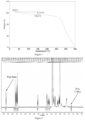
- the DSC/TGA results are shown in Figures 7 and 8 , and the results showed that the sample had a weight loss of 4.5% when heated to 150°C and had three endothermic peaks at 103.5°C, 113.4°C and 183.0°C (peak temperatures).
- the sample was heated to 120°C and cooled to room temperature, and then an XRPD test was performed.
- the results showed that the crystal form C was transformed into the crystal form B upon heating. Based on the fact of crystal transformation of the sample upon heating in combination with the stepwise weight loss of the TGA, it is speculated that the crystal form C is a monohydrate.
- Example 2 The compound (200 mg) prepared in Example 1 was weighed and added to methanol (20 mg). The mixture was heated to reflux and filtered while hot. The resulting mixture was slowly cooled to room temperature for crystallization, filtered and dried. The sample was characterized by XRPD and the crystal form was described as crystal form D.
- the hygroscopicity of the crystal forms B and C was evaluated by a dynamic vapour sorption (DVS) instrument.
- the test collected the percentage change in the mass of the samples when the humidity changed (60%RH-95%RH-0%RH-95%RH or 0%RH-95%RH-0%RH) at a constant temperature of 25°C, wherein for the crystal form C, the test started at ambient humidity (about 60%RH), and for the crystal form B, the test started at 0% relative humidity (0%RH).
- the test results are shown in Figures 12 and 13 , respectively.
- the results showed that the moisture sorption of the crystal form B and crystal form C at 25°C/80%RH were 0.19% and 0.97%, respectively.
- the crystal form of all samples did not change after the DVS test. This indicates that the crystal form of the present invention has low hygroscopicity and low requirements for drug packaging and storage conditions.
- the crystal forms B and C were placed at 25°C/60%RH and 40°C/75%RH without any protection, and then the physical and chemical stabilities thereof were tested by XRPD and UPLC, respectively.
- the results are summarized in Table 8. The results showed that after the samples were placed at 25°C/60%RH and 40°C/75%RH for 1 week to 1 month, the crystal form of each sample did not change, and the purity thereof did not decrease significantly, indicating good stability.
- the inner packaging material is a double-layer medicinal low-density polyethylene bag
- the outer packaging material is a polyester/aluminium/polyethylene medicinal composite bag.
- Table 9 Results of accelerated experiment Examination item Time point (month) 0 1 2 3 6 Crystal form Crystal form B Crystal form B Crystal form B Crystal form B Crystal form B Crystal form B Moisture 0.2% 0.3% 0.2% 0.2% 0.2% Purity 99.93% 99.87% 99.88% 99.87% 99.88 % Content 100.5% 100.4% 101.1% 100.1% 101.3%
- the inner packaging material is a double-layer medicinal low-density polyethylene bag
- the outer packaging material is a polyester/aluminium/polyethylene medicinal composite bag.
- Table 10 Results of long-term experiment 1 Examination item Time point (month) 0 3 6 9 12 Crystal form Crystal form B Crystal form B Crystal form B Crystal form B Crystal form B Crystal form B Moisture 0.2% 0.3% 0.2% 0.1% 0.2% Purity 99.93% 99.87% 99.90% 99.89% 99.88% Content 100.5% 100.6% 100.7% 101.6% 99.5%
- the inner packaging material is a double-layer medicinal low-density polyethylene bag
- the outer packaging material is a polyester/aluminium/polyethylene medicinal composite bag.
- Table 11 Results of long-term experiment 2 Examination item Time point (month) 0 3 6 9 12 Crystal form Crystal form B Crystal form B Crystal form B Crystal form B Crystal form B Moisture 0.2% 0.3% 0.2% 0.1% 0.2% Purity 99.93% 99.87% 99.90% 99.90% 99.89% Content 100.5% 100.6% 101.6% 100.7% 99.2%
- the inner packaging material is a double-layer medicinal low-density polyethylene bag
- the outer packaging material is a polyester/aluminium/polyethylene medicinal composite bag.
- Table 12 Results of long-term experiment 3 Examination item Time point (month) 0 3 6 9 12 Crystal form Crystal form B Crystal form B Crystal form B Crystal form B Crystal form B Crystal form B Moisture 0.2% 0.3% 0.3% 0.2% 0.2% Purity 99.93% 99.87% 99.89% 99.89% 99.89% Content 100.5% 100.5 % 100.0% 101.6% 101.0%
- the analysis method of purity is as follows: High performance liquid chromatograph (HPLC) Instrument Model HPLC 1260infinity Parameter and method Chromatographic column Hypersil GOLD TM C18, 4.6 mm ⁇ 250 mm, 5 ⁇ m Trap column ghost-Sniper Column 4.6 mm ⁇ 50 mm Column temperature 30°C Flow rate 1.0 mL/min Detection wavelength 226 nm Injection volume 10 ⁇ L Run time 31 min Mobile phase mobile phase A: 0.02 mol/L ammonium dihydrogen phosphate solution (adjusted to pH 4.0 with phosphoric acid); mobile phase B: methanol : acetonitrile (50 : 50) Running gradient Time (min) A (%) B (%) 0 60 40 5 60 40 10 40 60 20 20 80 25 20 80 26 60 40 31 60 40
- Recombinant human DPP1 enzyme (R&D Systems, Cat. No. 1071-CY) at a final concentration of 100 ⁇ g/mL was mixed with recombinant human cathepsin L (R&D Systems, Cat. No. 952-CY) at a final concentration of 20 ⁇ g/mL were mixed and incubated at room temperature for 1 hour to activate the DPP1 enzyme.
- the activated DPP1 enzyme was diluted 100-fold, and 5 ⁇ L of compounds at different concentrations and 5 ⁇ L of the diluted DPP1 enzyme were added to a 384-well plate and incubated at room temperature for 30 minutes. After 10 ⁇ L of the substrate Gly-Arg-AMC (bachem, Cat. No.
- mice Male SD rats, about 220 g, 6-8 weeks old, 6 rats/compound. Purchased from Chengdu Ddossy Experimental Animals Co., Ltd.
- Vehicle for intravenous administration 5% DMA+5% Solutol+90% Saline
- vehicle for intragastric administration 0.5% MC
- control compound INS1007 namely compound 2 in patent WO 2015110826A1 , was prepared with reference to the method of the patent.
- 0.1 ml of blood was taken from the orbit of the animals under isoflurane anaesthesia and placed in an EDTAK2 centrifuge tube. The blood was centrifuged at 5000 rpm and 4°C for 10 min to collect the plasma.
- Blood sampling time points for the intravenous administration group 0, 5 min, 15 min, 30 min, 1 h, 2 h, 4 h, 6 h, 8 h, and 24 h; and blood sampling time points for the intragastric administration group: 0, 5 min, 15 min, 30 min, 1 h, 2 h, 4 h, 6 h, 8 h, and 24 h. Before analysis and detection, all samples were stored at - 80°C.
- the compound of the present invention has relatively good bioavailability and pharmacokinetic characteristics.
- the SD rats were randomly divided into the following groups: vehicle control group (0.5% MC), INS1007 (30, 100, and 300 mg/kg) groups, and compound I (30, 100, and 300 mg/kg) groups.
- vehicle control group 0.5% MC
- INS1007 30, 100, and 300 mg/kg
- compound I 30, 100, and 300 mg/kg
- 16 rats were included in each group, and for the vehicle control group, 10 rats were included, with an equal number of male and female rats in each of the groups.
- the rats were orally gavaged with the drug or vehicle at the corresponding concentrations every day for 14 consecutive days, with a recovery period of 7 days.
- general symptoms were observed, and body weight and food intake were measured for each group.
- haematology tests, serum biochemistry test and gross anatomy were performed on the rats in each group separately.
- the compound of the present invention is less toxic than INS 1007 and thus is safer at the same dosage.
Landscapes
- Chemical & Material Sciences (AREA)
- Organic Chemistry (AREA)
- Health & Medical Sciences (AREA)
- Veterinary Medicine (AREA)
- Medicinal Chemistry (AREA)
- Pharmacology & Pharmacy (AREA)
- Life Sciences & Earth Sciences (AREA)
- Animal Behavior & Ethology (AREA)
- General Health & Medical Sciences (AREA)
- Public Health (AREA)
- Epidemiology (AREA)
- Engineering & Computer Science (AREA)
- Bioinformatics & Cheminformatics (AREA)
- Pulmonology (AREA)
- Chemical Kinetics & Catalysis (AREA)
- General Chemical & Material Sciences (AREA)
- Nuclear Medicine, Radiotherapy & Molecular Imaging (AREA)
- Pharmaceuticals Containing Other Organic And Inorganic Compounds (AREA)
- Nitrogen Condensed Heterocyclic Rings (AREA)
- Organic Low-Molecular-Weight Compounds And Preparation Thereof (AREA)
Applications Claiming Priority (2)
| Application Number | Priority Date | Filing Date | Title |
|---|---|---|---|
| CN202210160848 | 2022-02-22 | ||
| PCT/CN2023/077649 WO2023160579A1 (zh) | 2022-02-22 | 2023-02-22 | 一种二肽基肽酶1抑制剂多晶型物及其制备方法和用途 |
Publications (2)
| Publication Number | Publication Date |
|---|---|
| EP4484424A1 true EP4484424A1 (de) | 2025-01-01 |
| EP4484424A4 EP4484424A4 (de) | 2026-02-11 |
Family
ID=87764771
Family Applications (1)
| Application Number | Title | Priority Date | Filing Date |
|---|---|---|---|
| EP23759204.3A Pending EP4484424A4 (de) | 2022-02-22 | 2023-02-22 | Polymorph eines dipeptidylpeptidase-1-inhibitors, herstellungsverfahren und verwendung davon |
Country Status (12)
| Country | Link |
|---|---|
| US (1) | US20250163036A1 (de) |
| EP (1) | EP4484424A4 (de) |
| JP (1) | JP2025505824A (de) |
| KR (1) | KR20240151762A (de) |
| CN (1) | CN118696040A (de) |
| AU (1) | AU2023224769A1 (de) |
| CA (1) | CA3244653A1 (de) |
| CL (1) | CL2024002492A1 (de) |
| MX (1) | MX2024010266A (de) |
| TW (1) | TW202333739A (de) |
| WO (1) | WO2023160579A1 (de) |
| ZA (1) | ZA202406504B (de) |
Families Citing this family (3)
| Publication number | Priority date | Publication date | Assignee | Title |
|---|---|---|---|---|
| IL314855A (en) * | 2022-02-22 | 2024-10-01 | Haisco Pharmaceuticals Pte Ltd | Preparation method of nitrogen-containing heterocyclic compound |
| JP2026503035A (ja) | 2023-01-06 | 2026-01-27 | インスメッド インコーポレイテッド | 新規な可逆性dpp1阻害剤及びその用途 |
| WO2026012369A1 (zh) * | 2024-07-09 | 2026-01-15 | 西藏海思科制药有限公司 | 一种pde3/4双重抑制剂的晶型物及其制备方法和应用 |
Family Cites Families (3)
| Publication number | Priority date | Publication date | Assignee | Title |
|---|---|---|---|---|
| NO2699580T3 (de) * | 2014-01-24 | 2018-02-24 | ||
| WO2016139355A1 (en) | 2015-03-05 | 2016-09-09 | Prozymex A/S | N-substituted 3,3'-(biphenyl-4,4'-diyl)bis-2-aminopropanenitriles as dppi inhibitors |
| CN114591315A (zh) * | 2020-12-04 | 2022-06-07 | 瑞石生物医药有限公司 | 一种组织蛋白酶c小分子抑制剂 |
-
2023
- 2023-02-22 TW TW112106541A patent/TW202333739A/zh unknown
- 2023-02-22 CN CN202380021619.8A patent/CN118696040A/zh active Pending
- 2023-02-22 EP EP23759204.3A patent/EP4484424A4/de active Pending
- 2023-02-22 AU AU2023224769A patent/AU2023224769A1/en active Pending
- 2023-02-22 WO PCT/CN2023/077649 patent/WO2023160579A1/zh not_active Ceased
- 2023-02-22 KR KR1020247027090A patent/KR20240151762A/ko active Pending
- 2023-02-22 JP JP2024549145A patent/JP2025505824A/ja active Pending
- 2023-02-22 US US18/840,731 patent/US20250163036A1/en active Pending
- 2023-02-22 CA CA3244653A patent/CA3244653A1/en active Pending
- 2023-02-22 MX MX2024010266A patent/MX2024010266A/es unknown
-
2024
- 2024-08-20 CL CL2024002492A patent/CL2024002492A1/es unknown
- 2024-08-23 ZA ZA2024/06504A patent/ZA202406504B/en unknown
Also Published As
| Publication number | Publication date |
|---|---|
| ZA202406504B (en) | 2025-05-28 |
| CL2024002492A1 (es) | 2024-12-20 |
| KR20240151762A (ko) | 2024-10-18 |
| AU2023224769A1 (en) | 2024-08-29 |
| EP4484424A4 (de) | 2026-02-11 |
| CA3244653A1 (en) | 2025-01-24 |
| MX2024010266A (es) | 2024-08-28 |
| CN118696040A (zh) | 2024-09-24 |
| JP2025505824A (ja) | 2025-02-28 |
| WO2023160579A1 (zh) | 2023-08-31 |
| US20250163036A1 (en) | 2025-05-22 |
| TW202333739A (zh) | 2023-09-01 |
Similar Documents
| Publication | Publication Date | Title |
|---|---|---|
| EP4484424A1 (de) | Polymorph eines dipeptidylpeptidase-1-inhibitors, herstellungsverfahren und verwendung davon | |
| CN103923169B (zh) | (3s)‑3‑[n‑(n’‑(2‑叔丁基苯基)草氨酰基)丙氨酰基]氨基‑5‑(2’,3’,5’,6’‑四氟苯氧基)‑4‑氧代戊酸的结晶形式 | |
| EP2989084B1 (de) | Kristallmodifikationen von elobixibat | |
| EP3652148B1 (de) | Amorphe form von vilanterol-trifenatat und verfahren zu ihrer herstellung | |
| US20250188067A1 (en) | Salt and crystal form of dipeptidyl peptidase inhibitor compound | |
| CA2962724C (en) | Salt of dicarboxylic acid compound | |
| JP4184279B2 (ja) | 結晶形リボフラノシルウロナミド誘導体及びヒトアデノシンA2a受容体アゴニスト | |
| EA051477B1 (ru) | Полиморф ингибитора дипептидилпептидазы 1, способ его получения и применение | |
| JP5265876B2 (ja) | アンドラストの新規で安定な結晶構造体 | |
| WO2022106551A1 (en) | Co-crystals of a ror gamma inhibitor | |
| EP4477652A1 (de) | Polymorph als schilddrüsenhormonrezeptoragonisten und verwendung davon | |
| EP3412661A1 (de) | Co-kristalle von vortioxetin-hydrobromid und resorcin | |
| EA053095B1 (ru) | Соль и кристаллическая форма соединения, являющегося ингибитором дипептидилпептидазы | |
| EP4653441A1 (de) | Salz einer antidepressivumverbindung und herstellungsverfahren dafür, pharmazeutische zusammensetzung damit und verwendung davon | |
| CN116396305A (zh) | 一种稠环衍生物的晶型、其制备方法及其应用 | |
| HK1109629A (en) | A new crystalline and stable form of andolast | |
| HK1221224B (en) | Crystal modifications of elobixibat | |
| HK1194358B (en) | New crystal form vii of agomelatine, preparation method and use thereof and pharmaceutical composition containing same |
Legal Events
| Date | Code | Title | Description |
|---|---|---|---|
| STAA | Information on the status of an ep patent application or granted ep patent |
Free format text: STATUS: THE INTERNATIONAL PUBLICATION HAS BEEN MADE |
|
| PUAI | Public reference made under article 153(3) epc to a published international application that has entered the european phase |
Free format text: ORIGINAL CODE: 0009012 |
|
| STAA | Information on the status of an ep patent application or granted ep patent |
Free format text: STATUS: REQUEST FOR EXAMINATION WAS MADE |
|
| 17P | Request for examination filed |
Effective date: 20240813 |
|
| AK | Designated contracting states |
Kind code of ref document: A1 Designated state(s): AL AT BE BG CH CY CZ DE DK EE ES FI FR GB GR HR HU IE IS IT LI LT LU LV MC ME MK MT NL NO PL PT RO RS SE SI SK SM TR |
|
| DAV | Request for validation of the european patent (deleted) | ||
| DAX | Request for extension of the european patent (deleted) | ||
| A4 | Supplementary search report drawn up and despatched |
Effective date: 20260109 |
|
| RIC1 | Information provided on ipc code assigned before grant |
Ipc: C07D 413/12 20060101AFI20260102BHEP Ipc: C07D 267/10 20060101ALI20260102BHEP Ipc: A61K 31/553 20060101ALI20260102BHEP Ipc: A61P 11/00 20060101ALI20260102BHEP |