EP4487916A2 - Modulateurs de canaux ioniques - Google Patents
Modulateurs de canaux ioniques Download PDFInfo
- Publication number
- EP4487916A2 EP4487916A2 EP24200923.1A EP24200923A EP4487916A2 EP 4487916 A2 EP4487916 A2 EP 4487916A2 EP 24200923 A EP24200923 A EP 24200923A EP 4487916 A2 EP4487916 A2 EP 4487916A2
- Authority
- EP
- European Patent Office
- Prior art keywords
- mmol
- compound
- mixture
- methyl
- give
- Prior art date
- Legal status (The legal status is an assumption and is not a legal conclusion. Google has not performed a legal analysis and makes no representation as to the accuracy of the status listed.)
- Pending
Links
Images




Classifications
-
- A—HUMAN NECESSITIES
- A61—MEDICAL OR VETERINARY SCIENCE; HYGIENE
- A61K—PREPARATIONS FOR MEDICAL, DENTAL OR TOILETRY PURPOSES
- A61K45/00—Medicinal preparations containing active ingredients not provided for in groups A61K31/00 - A61K41/00
- A61K45/06—Mixtures of active ingredients without chemical characterisation, e.g. antiphlogistics and cardiaca
-
- C—CHEMISTRY; METALLURGY
- C07—ORGANIC CHEMISTRY
- C07D—HETEROCYCLIC COMPOUNDS
- C07D471/00—Heterocyclic compounds containing nitrogen atoms as the only ring hetero atoms in the condensed system, at least one ring being a six-membered ring with one nitrogen atom, not provided for by groups C07D451/00 - C07D463/00
- C07D471/02—Heterocyclic compounds containing nitrogen atoms as the only ring hetero atoms in the condensed system, at least one ring being a six-membered ring with one nitrogen atom, not provided for by groups C07D451/00 - C07D463/00 in which the condensed system contains two hetero rings
- C07D471/04—Ortho-condensed systems
-
- A—HUMAN NECESSITIES
- A61—MEDICAL OR VETERINARY SCIENCE; HYGIENE
- A61P—SPECIFIC THERAPEUTIC ACTIVITY OF CHEMICAL COMPOUNDS OR MEDICINAL PREPARATIONS
- A61P23/00—Anaesthetics
-
- A—HUMAN NECESSITIES
- A61—MEDICAL OR VETERINARY SCIENCE; HYGIENE
- A61P—SPECIFIC THERAPEUTIC ACTIVITY OF CHEMICAL COMPOUNDS OR MEDICINAL PREPARATIONS
- A61P25/00—Drugs for disorders of the nervous system
-
- A—HUMAN NECESSITIES
- A61—MEDICAL OR VETERINARY SCIENCE; HYGIENE
- A61P—SPECIFIC THERAPEUTIC ACTIVITY OF CHEMICAL COMPOUNDS OR MEDICINAL PREPARATIONS
- A61P25/00—Drugs for disorders of the nervous system
- A61P25/08—Antiepileptics; Anticonvulsants
-
- A—HUMAN NECESSITIES
- A61—MEDICAL OR VETERINARY SCIENCE; HYGIENE
- A61P—SPECIFIC THERAPEUTIC ACTIVITY OF CHEMICAL COMPOUNDS OR MEDICINAL PREPARATIONS
- A61P29/00—Non-central analgesic, antipyretic or antiinflammatory agents, e.g. antirheumatic agents; Non-steroidal antiinflammatory drugs [NSAID]
-
- C—CHEMISTRY; METALLURGY
- C07—ORGANIC CHEMISTRY
- C07D—HETEROCYCLIC COMPOUNDS
- C07D487/00—Heterocyclic compounds containing nitrogen atoms as the only ring hetero atoms in the condensed system, not provided for by groups C07D451/00 - C07D477/00
- C07D487/02—Heterocyclic compounds containing nitrogen atoms as the only ring hetero atoms in the condensed system, not provided for by groups C07D451/00 - C07D477/00 in which the condensed system contains two hetero rings
- C07D487/04—Ortho-condensed systems
-
- A—HUMAN NECESSITIES
- A61—MEDICAL OR VETERINARY SCIENCE; HYGIENE
- A61K—PREPARATIONS FOR MEDICAL, DENTAL OR TOILETRY PURPOSES
- A61K31/00—Medicinal preparations containing organic active ingredients
- A61K31/33—Heterocyclic compounds
- A61K31/395—Heterocyclic compounds having nitrogen as a ring hetero atom, e.g. guanethidine or rifamycins
- A61K31/435—Heterocyclic compounds having nitrogen as a ring hetero atom, e.g. guanethidine or rifamycins having six-membered rings with one nitrogen as the only ring hetero atom
- A61K31/44—Non condensed pyridines; Hydrogenated derivatives thereof
- A61K31/4427—Non condensed pyridines; Hydrogenated derivatives thereof containing further heterocyclic ring systems
- A61K31/444—Non condensed pyridines; Hydrogenated derivatives thereof containing further heterocyclic ring systems containing a six-membered ring with nitrogen as a ring heteroatom, e.g. amrinone
-
- A—HUMAN NECESSITIES
- A61—MEDICAL OR VETERINARY SCIENCE; HYGIENE
- A61K—PREPARATIONS FOR MEDICAL, DENTAL OR TOILETRY PURPOSES
- A61K31/00—Medicinal preparations containing organic active ingredients
- A61K31/33—Heterocyclic compounds
- A61K31/395—Heterocyclic compounds having nitrogen as a ring hetero atom, e.g. guanethidine or rifamycins
- A61K31/495—Heterocyclic compounds having nitrogen as a ring hetero atom, e.g. guanethidine or rifamycins having six-membered rings with two or more nitrogen atoms as the only ring heteroatoms, e.g. piperazine or tetrazines
- A61K31/4985—Pyrazines or piperazines ortho- or peri-condensed with heterocyclic ring systems
-
- A—HUMAN NECESSITIES
- A61—MEDICAL OR VETERINARY SCIENCE; HYGIENE
- A61K—PREPARATIONS FOR MEDICAL, DENTAL OR TOILETRY PURPOSES
- A61K31/00—Medicinal preparations containing organic active ingredients
- A61K31/33—Heterocyclic compounds
- A61K31/395—Heterocyclic compounds having nitrogen as a ring hetero atom, e.g. guanethidine or rifamycins
- A61K31/495—Heterocyclic compounds having nitrogen as a ring hetero atom, e.g. guanethidine or rifamycins having six-membered rings with two or more nitrogen atoms as the only ring heteroatoms, e.g. piperazine or tetrazines
- A61K31/50—Pyridazines; Hydrogenated pyridazines
- A61K31/5025—Pyridazines; Hydrogenated pyridazines ortho- or peri-condensed with heterocyclic ring systems
-
- C—CHEMISTRY; METALLURGY
- C07—ORGANIC CHEMISTRY
- C07B—GENERAL METHODS OF ORGANIC CHEMISTRY; APPARATUS THEREFOR
- C07B2200/00—Indexing scheme relating to specific properties of organic compounds
- C07B2200/07—Optical isomers
-
- C—CHEMISTRY; METALLURGY
- C07—ORGANIC CHEMISTRY
- C07B—GENERAL METHODS OF ORGANIC CHEMISTRY; APPARATUS THEREFOR
- C07B2200/00—Indexing scheme relating to specific properties of organic compounds
- C07B2200/13—Crystalline forms, e.g. polymorphs
Definitions
- the compound is of the Formula I-a: or a pharmaceutically acceptable salt thereof, wherein the variables are as defined herein.
- the compound is of the Formula I-b: or a pharmaceutically acceptable salt thereof, wherein the variables are as defined herein.
- the compound is of the Formula II: or a pharmaceutically acceptable salt thereof, wherein the variables are as defined herein.
- the compound is of the Formula III: or a pharmaceutically acceptable salt thereof, wherein the variables are as defined herein.
- the compound is of the Formula I-c: or a pharmaceutically acceptable salt thereof, wherein the variables are as defined herein.
- the present disclosure provides a ompound having the Formula I -d: or a pharmaceutically acceptable salt thereof, wherein
- the compound is of the Formula V: or a pharmaceutically acceptable salt thereof, wherein the variables are as defined herein.
- the compound is of the Formula VII: or a pharmaceutically acceptable salt thereof, wherein the variables are as defined herein.
- the compound is of the Formula VIII: or a pharmaceutically acceptable salt thereof, wherein the variables are as defined herein.
- the compound is of the Formula VIII: or a pharmaceutically acceptable salt thereof, wherein the variables are as defined herein.
- Compound described herein may also comprise one or more isotopic substitutions.
- H may be in any isotopic form, including 1 H, 2 H (D or deuterium), and 3 H (T or tritium);
- C may be in any isotopic form, including 12 C, 13 C, and 14 C;
- O may be in any isotopic form, including 16 O and 18 O;
- F may be in any isotopic form, including 18 F and 19 F; and the like.
- alkyl refers to a radical of a straight-chain or branched saturated hydrocarbon group, e.g., having 1 to 20 carbon atoms (“C 1-20 alkyl”). In some embodiments, an alkyl group has 1 to 10 carbon atoms (“C 1-10 alkyl”). In some embodiments, an alkyl group has 1 to 9 carbon atoms ("C 1-9 alkyl”). In some embodiments, an alkyl group has 1 to 8 carbon atoms (“C 1-8 alkyl”). In some embodiments, an alkyl group has 1 to 7 carbon atoms (“C 1-7 alkyl”). In some embodiments, an alkyl group has 1 to 6 carbon atoms ("C 1-6 alkyl”).
- alkenyl refers to a radical of a straight-chain or branched hydrocarbon group having from 2 to 20 carbon atoms, one or more carbon-carbon double bonds (e.g., 1, 2, 3, or 4 carbon-carbon double bonds), and optionally one or more carbon-carbon triple bonds (e.g., 1, 2, 3, or 4 carbon-carbon triple bonds) ("C 2-20 alkenyl"). In certain embodiments, alkenyl does not contain any triple bonds. In some embodiments, an alkenyl group has 2 to 10 carbon atoms (“C 2-10 alkenyl”). In some embodiments, an alkenyl group has 2 to 9 carbon atoms (“C 2-9 alkenyl").
- an alkenyl group has 2 carbon atoms ("C 2 alkenyl").
- the one or more carbon-carbon double bonds can be internal (such as in 2-butenyl) or terminal (such as in 1-butenyl).
- Examples of C 2-4 alkenyl groups include ethenyl (C 2 ), 1-propenyl (C 3 ), 2-propenyl (C 3 ), 1-butenyl (C 4 ), 2-butenyl (C 4 ), butadienyl (C 4 ), and the like.
- an alkynyl group has 2 to 8 carbon atoms ("C 2-8 alkynyl”). In some embodiments, an alkynyl group has 2 to 7 carbon atoms ("C 2-7 alkynyl”). In some embodiments, an alkynyl group has 2 to 6 carbon atoms ("C 2-6 alkynyl”). In some embodiments, an alkynyl group has 2 to 5 carbon atoms ("C 2-5 alkynyl”). In some embodiments, an alkynyl group has 2 to 4 carbon atoms (“C 2-4 alkynyl”). In some embodiments, an alkynyl group has 2 to 3 carbon atoms ("C 2-3 alkynyl”).
- an alkynyl group has 2 carbon atoms ("C 2 alkynyl").
- the one or more carbon-carbon triple bonds can be internal (such as in 2-butynyl) or terminal (such as in 1-butynyl).
- Examples of C 2-4 alkynyl groups include, without limitation, ethynyl (C 2 ), 1-propynyl (C 3 ), 2-propynyl (C 3 ), 1-butynyl (C 4 ), 2-butynyl (C 4 ), and the like.
- C 2-6 alkenyl groups include the aforementioned C 2-4 alkynyl groups as well as pentynyl (C 5 ), hexynyl (C 6 ), and the like. Additional examples of alkynyl include heptynyl (C 7 ), octynyl (C 8 ), and the like.
- alkylene As used herein, “alkylene,” “alkenylene,” and “alkynylene,” refer to a divalent radical of an alkyl, alkenyl, and alkynyl group respectively. When a range or number of carbons is provided for a particular “alkylene,” “alkenylene,” or “alkynylene,” group, it is understood that the range or number refers to the range or number of carbons in the linear carbon divalent chain.
- Alkylene,” “alkenylene,” and “alkynylene,” groups may be substituted or unsubstituted with one or more substituents as described herein.
- aryl refers to a radical of a monocyclic or polycyclic (e.g., bicyclic or tricyclic) 4n+2 aromatic ring system (e.g., having 6, 10, or 14 ⁇ electrons shared in a cyclic array) having 6-14 ring carbon atoms and zero heteroatoms provided in the aromatic ring system ("C 6-14 aryl”).
- an aryl group has six ring carbon atoms (“C 6 aryl”; e.g., phenyl).
- Typical aryl groups include, but are not limited to, groups derived from aceanthrylene, acenaphthylene, acephenanthrylene, anthracene, azulene, benzene, chrysene, coronene, fluoranthene, fluorene, hexacene, hexaphene, hexalene, as-indacene, s-indacene, indane, indene, naphthalene, octacene, octaphene, octalene, ovalene, penta-2,4-diene, pentacene, pentalene, pentaphene, perylene, phenalene, phenanthrene, picene, pleiadene, pyrene, pyranthrene, rubicene, triphenylene, and trinaphthalene.
- Particularly aryl groups include pheny
- heteroaryl refers to a radical of a 5-10 membered monocyclic or bicyclic 4n+2 aromatic ring system (e.g., having 6 or 10 electrons shared in a cyclic array) having ring carbon atoms and 1-4 ring heteroatoms provided in the aromatic ring system, wherein each heteroatom is independently selected from nitrogen, oxygen and sulfur ("5-10 membered heteroaryl").
- heteroaryl groups that contain one or more nitrogen atoms, the point of attachment can be a carbon or nitrogen atom, as valency permits.
- Heteroaryl bicyclic ring systems can include one or more heteroatoms in one or both rings.
- Heteroaryl includes ring systems wherein the heteroaryl ring, as defined above, is fused with one or more carbocyclyl or heterocyclyl groups wherein the point of attachment is on the heteroaryl ring, and in such instances, the number of ring members continue to designate the number of ring members in the heteroaryl ring system.
- Heteroaryl also includes ring systems wherein the heteroaryl ring, as defined above, is fused with one or more aryl groups wherein the point of attachment is either on the aryl or heteroaryl ring, and in such instances, the number of ring members designates the number of ring members in the fused (aryl/heteroaryl) ring system.
- a heteroaryl group is a 5-10 membered aromatic ring system having ring carbon atoms and 1-4 ring heteroatoms provided in the aromatic ring system, wherein each heteroatom is independently selected from nitrogen, oxygen, and sulfur ("5-10 membered heteroaryl").
- a heteroaryl group is a 5-8 membered aromatic ring system having ring carbon atoms and 1-4 ring heteroatoms provided in the aromatic ring system, wherein each heteroatom is independently selected from nitrogen, oxygen, and sulfur ("5-8 membered heteroaryl").
- a heteroaryl group is a 5-6 membered aromatic ring system having ring carbon atoms and 1-4 ring heteroatoms provided in the aromatic ring system, wherein each heteroatom is independently selected from nitrogen, oxygen, and sulfur ("5-6 membered heteroaryl").
- the 5-6 membered heteroaryl has 1-3 ring heteroatoms selected from nitrogen, oxygen, and sulfur.
- the 5-6 membered heteroaryl has 1-2 ring heteroatoms selected from nitrogen, oxygen, and sulfur.
- the 5-6 membered heteroaryl has 1 ring heteroatom selected from nitrogen, oxygen, and sulfur.
- Exemplary 5-membered heteroaryl groups containing one heteroatom include, without limitation, pyrrolyl, furanyl and thiophenyl.
- Exemplary 5-membered heteroaryl groups containing two heteroatoms include, without limitation, imidazolyl, pyrazolyl, oxazolyl, isoxazolyl, thiazolyl, and isothiazolyl.
- Exemplary 5-membered heteroaryl groups containing three heteroatoms include, without limitation, triazolyl, oxadiazolyl, and thiadiazolyl.
- Exemplary 5-membered heteroaryl groups containing four heteroatoms include, without limitation, tetrazolyl.
- Exemplary 5,6-bicyclic heteroaryl groups include, without limitation, indolyl, isoindolyl, indazolyl, benzotriazolyl, benzothiophenyl, isobenzothiophenyl, benzofuranyl, benzoisofuranyl, benzimidazolyl, benzoxazolyl, benzisoxazolyl, benzoxadiazolyl, benzthiazolyl, benzisothiazolyl, benzthiadiazolyl, indolizinyl, and purinyl.
- Exemplary 6,6-bicyclic heteroaryl groups include, without limitation, naphthyridinyl, pteridinyl, quinolinyl, isoquinolinyl, cinnolinyl, quinoxalinyl, phthalazinyl, and quinazolinyl.
- heteroaryls examples include the following: wherein each Z is selected from carbonyl, N, NR 65 , O, and S; and R 65 is independently hydrogen, C 1 - 8 alkyl, C 3 - 10 carbocyclyl, 4-10 membered heterocyclyl, C 6 -C 10 aryl, and 5-10 membered heteroaryl.
- Exemplary C 3-8 carbocyclyl groups include, without limitation, the aforementioned C 3-6 carbocyclyl groups as well as cycloheptyl (C 7 ), cycloheptenyl (C 7 ), cycloheptadienyl (C 7 ), cycloheptatrienyl (C 7 ), cyclooctyl (C 8 ), cyclooctenyl (C 8 ), bicyclo[2.2.1]heptanyl (C 7 ), bicyclo[2.2.2]octanyl (C 8 ), and the like.
- cycloalkyl refers to a monovalent saturated cyclic, bicyclic, or bridged cyclic (e.g., adamantyl) hydrocarbon group of 3-12, 3-8, 4-8, or 4-6 carbons, referred to herein, e.g., as "C 4-8 cycloalkyl,” derived from a cycloalkane.
- exemplary cycloalkyl groups include, but are not limited to, cyclohexanes, cyclopentanes, cyclobutanes and cyclopropanes.
- Heterocyclyl also includes ring systems wherein the heterocyclyl ring, as defined above, is fused with one or more carbocyclyl groups wherein the point of attachment is either on the carbocyclyl or heterocyclyl ring, or ring systems wherein the heterocyclyl ring, as defined above, is fused with one or more aryl or heteroaryl groups, wherein the point of attachment is on the heterocyclyl ring, and in such instances, the number of ring members continue to designate the number of ring members in the heterocyclyl ring system.
- the terms “heterocycle,” “heterocyclyl,” “heterocyclyl ring,” “heterocyclic group,” “heterocyclic moiety,” and “heterocyclic radical,” may be used interchangeably.
- a heterocyclyl group is a 5-8 membered non-aromatic ring system having ring carbon atoms and 1-4 ring heteroatoms, wherein each heteroatom is independently selected from nitrogen, oxygen, and sulfur ("5-8 membered heterocyclyl").
- a heterocyclyl group is a 5-6 membered non-aromatic ring system having ring carbon atoms and 1-4 ring heteroatoms, wherein each heteroatom is independently selected from nitrogen, oxygen, and sulfur ("5-6 membered heterocyclyl").
- the 5-6 membered heterocyclyl has 1-3 ring heteroatoms selected from nitrogen, oxygen, and sulfur.
- the 5-6 membered heterocyclyl has 1-2 ring heteroatoms selected from nitrogen, oxygen, and sulfur.
- the 5-6 membered heterocyclyl has one ring heteroatom selected from nitrogen, oxygen, and sulfur.
- Exemplary 3-membered heterocyclyl groups containing one heteroatom include, without limitation, azirdinyl, oxiranyl, thiorenyl.
- Exemplary 4-membered heterocyclyl groups containing one heteroatom include, without limitation, azetidinyl, oxetanyl and thietanyl.
- Exemplary 5-membered heterocyclyl groups containing one heteroatom include, without limitation, tetrahydrofuranyl, dihydrofuranyl, tetrahydrothiophenyl, dihydrothiophenyl, pyrrolidinyl, dihydropyrrolyl and pyrrolyl-2,5-dione.
- Exemplary 5-membered heterocyclyl groups fused to a C 6 aryl ring include, without limitation, indolinyl, isoindolinyl, dihydrobenzofuranyl, dihydrobenzothienyl, benzoxazolinonyl, and the like.
- Exemplary 6-membered heterocyclyl groups fused to an aryl ring include, without limitation, tetrahydroquinolinyl, tetrahydroisoquinolinyl, and the like.
- Nitrogen atoms can be substituted or unsubstituted as valency permits, and include primary, secondary, tertiary, and quarternary nitrogen atoms.
- pharmaceutically acceptable salt refers to those salts which are, within the scope of sound medical judgment, suitable for use in contact with the tissues of humans and lower animals without undue toxicity, irritation, allergic response and the like, and are commensurate with a reasonable benefit/risk ratio.
- Pharmaceutically acceptable salts are well known in the art. For example, Berge et al., describes pharmaceutically acceptable salts in detail in J. Pharmaceutical Sciences (1977) 66:1-19 .
- Pharmaceutically acceptable salts of the compounds of this invention include those derived from suitable inorganic and organic acids and bases.
- a "subject" to which administration is contemplated includes, but is not limited to, humans (i.e., a male or female of any age group, e.g., a pediatric subject (e.g, infant, child, adolescent) or adult subject (e.g., young adult, middle-aged adult or senior adult)) and/or a non-human animal, e.g., a mammal such as primates (e.g., cynomolgus monkeys, rhesus monkeys), cattle, pigs, horses, sheep, goats, rodents, cats, and/or dogs.
- the subject is a human.
- the subject is a non-human animal.
- the terms "human,” “patient,” and “subject” are used interchangeably herein.
- the terms “treat,” “treating” and “treatment” contemplate an action that occurs while a subject is suffering from the specified disease, disorder or condition, which reduces the severity of the disease, disorder or condition, or retards or slows the progression of the disease, disorder or condition ("therapeutic treatment”), and also contemplates an action that occurs before a subject begins to suffer from the specified disease, disorder or condition (“prophylactic treatment").
- the "effective amount" of a compound refers to an amount sufficient to elicit the desired biological response.
- the effective amount of a compound of the invention may vary depending on such factors as the desired biological endpoint, the pharmacokinetics of the compound, the disease being treated, the mode of administration, and the age, health, and condition of the subject.
- An effective amount encompasses therapeutic and prophylactic treatment.
- a "therapeutically effective amount" of a compound is an amount sufficient to provide a therapeutic benefit in the treatment of a disease, disorder or condition, or to delay or minimize one or more symptoms associated with the disease, disorder or condition.
- a therapeutically effective amount of a compound means an amount of therapeutic agent, alone or in combination with other therapies, which provides a therapeutic benefit in the treatment of the disease, disorder or condition.
- the term "therapeutically effective amount” can encompass an amount that improves overall therapy, reduces or avoids symptoms or causes of disease or condition, or enhances the therapeutic efficacy of another therapeutic agent.
- the present invention provides a compound having the Formula I: or a pharmaceutically acceptable salt thereof, wherein
- the compound is of the Formula I-a: or a pharmaceutically acceptable salt thereof, wherein the variables are as defined herein.
- the compound is of the Formula I-b: or a pharmaceutically acceptable salt thereof, wherein the variables are as defined herein.
- the compound is of the Formula II: or a pharmaceutically acceptable salt thereof, wherein the variables are as defined herein.
- the compound is of the Formula III: or a pharmaceutically acceptable salt thereof, wherein the variables are as defined herein.
- the compound is of the Formula I-c: or a pharmaceutically acceptable salt thereof, wherein the variables are as defined herein.
- the compound is of the Formula V: or a pharmaceutically acceptable salt thereof, wherein the variables are as defined herein.
- the compound is of the Formula VII: or a pharmaceutically acceptable salt thereof, wherein the variables are as defined herein.
- the compound is of the Formula VIII: or a pharmaceutically acceptable salt thereof, wherein the variables are as defined herein.
- the compound is of the Formula VIII: or a pharmaceutically acceptable salt thereof, wherein the variables are as defined herein.
- R 1 is N-(2-aminoethyl)-2-aminoethyl-N-(2-aminoethyl)-2-aminoethyl-N-(2-aminoethyl)-2-aminoethyl-N-(2-aminoethyl)-2-aminoethyl-N-(2-aminoethyl)-2-aminoethyl
- R 1 is cyclobutyl optionally substituted with one or more R a .
- R 3 is C 1 - 4 alkyl and R 4 is hydrogen or C 1 - 4 alkyl. In some embodiments, R 3 and R 4 are each C 1 - 4 alkyl. In some embodiments, R 3 and R 4 are each methyl. In some embodiments, R 3 is methyl and R 4 is hydrogen. In some embodiments, R 3 and R 4 are each hydrogen.
- R 6 is -CF 2 -OR c .
- R c is C 1 - 4 alkyl optionally substituted with cyclopropyl. In some embodiments, R c is cyclopropyl.
- R 6 is - C(F 2 )OCH 2 CH(CH 3 ) 2 , -C(F 2 )OCH 3 , -C(F 2 )OCH 2 CH 3 , -C(F 2 )OCH(CH 3 ) 2 , or -C(F 2 )OCH 2 C 3 H 5 .
- R 6 is -CH 2 -OR c .
- R c is C 1-4 alkyl.
- R 6 is -CH 2 OCH 3 , -CH 2 OCH 2 CH 3 , or - CH 2 OCH 2 CH(CH 3 ) 2 .
- R a is C 1 - 4 haloalkyl. In some embodiments, R a is CF 3 . In some embodiments, R a is fluoro.
- t is 1. In some embodiments, t is 0.
- R d is methyl. In some embodiments, R d is hydrogen.
- the compound is selected from the group consisting of: or a pharmaceutically acceptable salt thereof.
- the compound is selected from the group consisting of: and or a pharmaceutically acceptable salt thereof.
- the present invention provides a crystalline compound of formula: wherein the crystalline compound exhibits an X-ray powder diffraction pattern comprising peaks at the following diffraction angles (2 ⁇ ): 6.9 ⁇ 0.2, 16.5 ⁇ 0.2, and 20.8 ⁇ 0.2.
- the crystalline compound exhibits an X-ray powder diffraction pattern comprising peaks at the following diffraction angles (2 ⁇ ): 6.9 ⁇ 0.2, 13.9 ⁇ 0.2, 16.5 ⁇ 0.2, 19.5 ⁇ 0.2, and 20.8 ⁇ 0.2.
- the crystalline compound exhibits an X-ray powder diffraction pattern substantially the same as depicted in FIG. 2A .
- the crystalline compound has a melting point onset as determined by differential scanning calorimetry at about 140 °C.
- the crystalline compound has a differential scanning calorimetry curve substantially the same as shown in FIG. 2B .
- the crystalline compound exhibits an X-ray powder diffraction pattern comprising peaks at the following diffraction angles (2 ⁇ ): 7.2 ⁇ 0.2, 14.4 ⁇ 0.2, 16.7 ⁇ 0.2, 19.0 ⁇ 0.2, 20.4 ⁇ 0.2, and 25.7 ⁇ 0.2.
- the crystalline compound exhibits an X-ray powder diffraction pattern comprising peaks at the following diffraction angles (2 ⁇ ): 7.2 ⁇ 0.2, 14.4 ⁇ 0.2, 16.7 ⁇ 0.2, 17.9 ⁇ 0.2, 19.0 ⁇ 0.2, 20.4 ⁇ 0.2, 20.8 ⁇ 0.2, 23.2 ⁇ 0.2, 25.7 ⁇ 0.2, and 28.0 ⁇ 0.2.
- the crystalline compound exhibits an X-ray powder diffraction pattern substantially the same as depicted in FIG. 3A .
- the crystalline compound has a melting point onset as determined by differential scanning calorimetry at about 68 °C.
- the crystalline compound has a differential scanning calorimetry curve substantially the same as shown in FIG. 3B .
- the present invention provides a crystalline compound of formula: wherein the crystalline compound exhibits an X-ray powder diffraction pattern comprising peaks at the following diffraction angles (2 ⁇ ): 7.3 ⁇ 0.2, 14.5 ⁇ 0.2, and 21.9 ⁇ 0.2.
- the crystalline compound exhibits an X-ray powder diffraction pattern comprising peaks at the following diffraction angles (2 ⁇ ): 7.3 ⁇ 0.2, 14.5 ⁇ 0.2, 17.9 ⁇ 0.2, 19.0 ⁇ 0.2, and 21.9 ⁇ 0.2.
- the crystalline compound exhibits an X-ray powder diffraction pattern comprising peaks at the following diffraction angles (2 ⁇ ): 7.3 ⁇ 0.2, 13.7 ⁇ 0.2, 14.5 ⁇ 0.2, 17.9 ⁇ 0.2, 19.0 ⁇ 0.2, 20.3 ⁇ 0.2, 21.9 ⁇ 0.2, 24.7 ⁇ 0.2, and 25.4 ⁇ 0.2.
- the crystalline compound exhibits an X-ray powder diffraction pattern substantially the same as depicted in FIG. 4A .
- the crystalline compound has a melting point onset as determined by differential scanning calorimetry at about 136 °C.
- the crystalline compound has a differential scanning calorimetry curve substantially the same as shown in FIG. 4B .
- the crystalline compound exhibits an X-ray powder diffraction pattern comprising peaks at the following diffraction angles (2 ⁇ ): 10.7 ⁇ 0.2, 12.3 ⁇ 0.2, 12.6 ⁇ 0.2, 15.8 ⁇ 0.2, 18.6 ⁇ 0.2, and 22.6 ⁇ 0.2.
- the crystalline compound exhibits an X-ray powder diffraction pattern comprising peaks at the following diffraction angles (2 ⁇ ): 10.7 ⁇ 0.2, 12.3 ⁇ 0.2, 12.6 ⁇ 0.2, 14.9 ⁇ 0.2, 15.8 ⁇ 0.2, 16.6 ⁇ 0.2, 16.8 ⁇ 0.2, 18.6 ⁇ 0.2, 21.0 ⁇ 0.2 and 22.6 ⁇ 0.2.
- the crystalline compound exhibits an X-ray powder diffraction pattern substantially the same as depicted in FIG. 5A .
- the crystalline compound has a melting point onset as determined by differential scanning calorimetry at about 107 °C.
- the crystalline compound has a differential scanning calorimetry curve substantially the same as shown in FIG. 5B .
- the crystalline compound exhibits an X-ray powder diffraction pattern comprising peaks at the following diffraction angles (2 ⁇ ): 5.8 ⁇ 0.2, 14.5 ⁇ 0.2, 15.3 ⁇ 0.2, 19.7 ⁇ 0.2, 21.0 ⁇ 0.2, and 24.2 ⁇ 0.2.
- the crystalline compound exhibits an X-ray powder diffraction pattern comprising peaks at the following diffraction angles (2 ⁇ ): 5.8 ⁇ 0.2, 11.6 ⁇ 0.2, 12.0 ⁇ 0.2, 14.5 ⁇ 0.2, 15.3 ⁇ 0.2, 19.1 ⁇ 0.2, 19.7 ⁇ 0.2, 21.0 ⁇ 0.2, 22.4 ⁇ 0.2, and 24.2 ⁇ 0.2.
- the crystalline compound exhibits an X-ray powder diffraction pattern substantially the same as depicted in FIG. 6A .
- the crystalline compound has a melting point onset as determined by differential scanning calorimetry at about 94 °C.
- the crystalline compound has a differential scanning calorimetry curve substantially the same as shown in FIG. 6B .
- the present invention provides a crystalline compound of formula: wherein the crystalline compound exhibits an X-ray powder diffraction pattern comprising peaks at the following diffraction angles (2 ⁇ ): 7.3 ⁇ 0.2, 16.6 ⁇ 0.2, and 18.4 ⁇ 0.2.
- the crystalline compound exhibits an X-ray powder diffraction pattern comprising peaks at the following diffraction angles (2 ⁇ ): 7.3 ⁇ 0.2, 13.8 ⁇ 0.2, 16.6 ⁇ 0.2, 18.4 ⁇ 0.2, 20.3 ⁇ 0.2, and 24.3 ⁇ 0.2.
- the crystalline compound exhibits an X-ray powder diffraction pattern comprising peaks at the following diffraction angles (2 ⁇ ): 7.3 ⁇ 0.2, 10.8 ⁇ 0.2, 13.8 ⁇ 0.2, 16.6 ⁇ 0.2, 17.8 ⁇ 0.2, 18.4 ⁇ 0.2, 19.5 ⁇ 0.2, 20.3 ⁇ 0.2, 21.2 ⁇ 0.2, and 24.3 ⁇ 0.2.
- the crystalline compound exhibits an X-ray powder diffraction pattern substantially the same as depicted in FIG. 7A .
- the crystalline compound has a melting point onset as determined by differential scanning calorimetry at about 103 °C.
- the crystalline compound has a differential scanning calorimetry curve substantially the same as shown in FIG. 7B .
- the present invention provides a crystalline compound of formula: wherein the crystalline compound exhibits an X-ray powder diffraction pattern comprising peaks at the following diffraction angles (2 ⁇ ): 6.9 ⁇ 0.2, 16.4 ⁇ 0.2, and 19.5 ⁇ 0.2.
- the crystalline compound exhibits an X-ray powder diffraction pattern comprising peaks at the following diffraction angles (2 ⁇ ): 6.9 ⁇ 0.2, 16.4 ⁇ 0.2, 17.4 ⁇ 0.2, 18.0 ⁇ 0.2, 19.5 ⁇ 0.2, and 20.8 ⁇ 0.2.
- the crystalline compound exhibits an X-ray powder diffraction pattern comprising peaks at the following diffraction angles (2 ⁇ ): 6.9 ⁇ 0.2, 11.2 ⁇ 0.2, 13.6 ⁇ 0.2, 13.9 ⁇ 0.2, 16.4 ⁇ 0.2, 17.4 ⁇ 0.2, 18.0 ⁇ 0.2, 19.5 ⁇ 0.2, and 20.8 ⁇ 0.2.
- the crystalline compound exhibits an X-ray powder diffraction pattern substantially the same as depicted in FIG. 8A .
- the crystalline compound has a melting point onset as determined by differential scanning calorimetry at about 133 °C.
- the crystalline compound has a differential scanning calorimetry curve substantially the same as shown in FIG. 8B .
- the present disclosure provides a crystalline compound of formula: wherein the crystalline compound exhibits an X-ray powder diffraction pattern comprising peaks at the following diffraction angles (2 ⁇ ): 9.9 ⁇ 0.2, 19.8 ⁇ 0.2, and 23.7 ⁇ 0.2.
- the crystalline compound exhibits an X-ray powder diffraction pattern comprising peaks at the following diffraction angles (2 ⁇ ): 9.9 ⁇ 0.2, 12.3 ⁇ 0.2, 14.1 ⁇ 0.2, 19.8 ⁇ 0.2, 20.7 ⁇ 0.2, and 23.7 ⁇ 0.2.
- the crystalline compound exhibits an X-ray powder diffraction pattern comprising peaks at the following diffraction angles (2 ⁇ ): 7.3 ⁇ 0.2, 9.9 ⁇ 0.2, 12.3 ⁇ 0.2, 14.1 ⁇ 0.2, 16.5 ⁇ 0.2, 17.2 ⁇ 0.2, 19.8 ⁇ 0.2, 20.7 ⁇ 0.2, 23.7 ⁇ 0.2, 24.8 ⁇ 0.2, 27.7 ⁇ 0.2, and 29.1 ⁇ 0.2.
- the crystalline compound exhibits an X-ray powder diffraction pattern substantially the same as depicted in FIG. 9A .
- the crystalline compound has a melting point onset as determined by differential scanning calorimetry at about 111 °C.
- the crystalline compound has a differential scanning calorimetry curve substantially the same as shown in FIG. 9B .
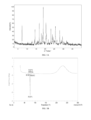
- the crystalline compound exhibits an X-ray powder diffraction pattern comprising peaks at the following diffraction angles (2 ⁇ ): 9.3 ⁇ 0.2, 16.1 ⁇ 0.2, 18.8 ⁇ 0.2, 21.1 ⁇ 0.2, 21.4 ⁇ 0.2, and 21.6 ⁇ 0.2.
- the crystalline compound exhibits an X-ray powder diffraction pattern comprising peaks at the following diffraction angles (2 ⁇ ): 9.3 ⁇ 0.2, 16.1 ⁇ 0.2, 18.8 ⁇ 0.2, 21.1 ⁇ 0.2, 21.4 ⁇ 0.2, 21.6 ⁇ 0.2, 22.6 ⁇ 0.2, 23.9 ⁇ 0.2, 26.0 ⁇ 0.2, and 26.4 ⁇ 0.2.
- the crystalline compound exhibits an X-ray powder diffraction pattern substantially the same as depicted in FIG. 1A .
- the crystalline compound has a melting point onset as determined by differential scanning calorimetry at about 122 °C.
- the crystalline compound has a differential scanning calorimetry curve substantially the same as shown in FIG. 1B .
- the X-ray powder diffraction pattern was obtained using Cu K ⁇ radiation.
- compositions that contain, as the active ingredient, one or more of the compounds described, or a pharmaceutically acceptable salt or ester thereof, and one or more pharmaceutically acceptable excipients, carriers, including inert solid diluents and fillers, diluents, including sterile aqueous solution and various organic solvents, permeation enhancers, solubilizers and adjuvants.
- the pharmaceutical compositions may be administered alone or in combination with other therapeutic agents.
- Such compositions are prepared in a manner well known in the pharmaceutical art (see, e.g., Remington's Pharmaceutical Sciences, Mace Publishing Co., Philadelphia, Pa. 17th Ed. (1985 ); and Modern Pharmaceutics, Marcel Dekker, Inc. 3rd Ed. (G. S. Banker & C. T. Rhodes, Eds .)
- compositions may be administered in either single or multiple doses by any of the accepted modes of administration of agents having similar utilities, for example as described in those patents and patent applications incorporated by reference, including rectal, buccal, intranasal and transdermal routes, by intra-arterial injection, intravenously, intraperitoneally, parenterally, intramuscularly, subcutaneously, orally, topically, as an inhalant, or via an impregnated or coated device such as a stent, for example, or an artery-inserted cylindrical polymer.
- agents having similar utilities for example as described in those patents and patent applications incorporated by reference, including rectal, buccal, intranasal and transdermal routes, by intra-arterial injection, intravenously, intraperitoneally, parenterally, intramuscularly, subcutaneously, orally, topically, as an inhalant, or via an impregnated or coated device such as a stent, for example, or an artery-inserted cylindrical polymer.
- compositions of the present invention are parenteral, particularly by injection.
- forms in which the novel compositions of the present invention may be incorporated for administration by injection include aqueous or oil suspensions, or emulsions, with sesame oil, corn oil, cottonseed oil, or peanut oil, as well as elixirs, mannitol, dextrose, or a sterile aqueous solution, and similar pharmaceutical vehicles.
- Aqueous solutions in saline are also conventionally used for injection, but less preferred in the context of the present invention.
- Ethanol, glycerol, propylene glycol, liquid polyethylene glycol, and the like (and suitable mixtures thereof), cyclodextrin derivatives, and vegetable oils may also be employed.
- the proper fluidity can be maintained, for example, by the use of a coating, such as lecithin, by the maintenance of the required particle size in the case of dispersion and by the use of surfactants.
- Sterile injectable solutions are prepared by incorporating a compound according to the present invention in the required amount in the appropriate solvent with various other ingredients as enumerated above, as required, followed by filtered sterilization.
- dispersions are prepared by incorporating the various sterilized active ingredients into a sterile vehicle which contains the basic dispersion medium and the required other ingredients from those enumerated above.
- the preferred methods of preparation are vacuum-drying and freeze-drying techniques which yield a powder of the active ingredient plus any additional desired ingredient from a previously sterile-filtered solution thereof.
- Oral administration is another route for administration of compounds in accordance with the invention. Administration may be via capsule or enteric coated tablets, or the like.
- the active ingredient is usually diluted by an excipient and/or enclosed within such a carrier that can be in the form of a capsule, sachet, paper or other container.
- the excipient serves as a diluent, it can be in the form of a solid, semi-solid, or liquid material (as above), which acts as a vehicle, carrier or medium for the active ingredient.
- compositions can be in the form of tablets, pills, powders, lozenges, sachets, cachets, elixirs, suspensions, emulsions, solutions, syrups, aerosols (as a solid or in a liquid medium), ointments containing, for example, up to 10% by weight of the active compound, soft and hard gelatin capsules, sterile injectable solutions, and sterile packaged powders.
- excipients include lactose, dextrose, sucrose, sorbitol, mannitol, starches, gum acacia, calcium phosphate, alginates, tragacanth, gelatin, calcium silicate, microcrystalline cellulose, polyvinylpyrrolidone, cellulose, sterile water, syrup, and methyl cellulose.
- the formulations can additionally include: lubricating agents such as talc, magnesium stearate, and mineral oil; wetting agents; emulsifying and suspending agents; preserving agents such as methyl and propylhydroxy-benzoates; sweetening agents; and flavoring agents.
- compositions of the invention can be formulated so as to provide quick, sustained or delayed release of the active ingredient after administration to the patient by employing procedures known in the art.
- Controlled release drug delivery systems for oral administration include osmotic pump systems and dissolutional systems containing polymer-coated reservoirs or drug-polymer matrix formulations. Examples of controlled release systems are given in U.S. Pat. Nos. 3,845,770 ; 4,326,525 ; 4,902,514 ; and 5,616,345 .
- Another formulation for use in the methods of the present invention employs transdermal delivery devices ("patches"). Such transdermal patches may be used to provide continuous or discontinuous infusion of the compounds of the present invention in controlled amounts.
- transdermal patches for the delivery of pharmaceutical agents is well known in the art. See, e.g., U.S. Pat. Nos. 5,023,252 , 4,992,445 and 5,001,139 . Such patches may be constructed for continuous, pulsatile, or on demand delivery of pharmaceutical agents.
- compositions are preferably formulated in a unit dosage form.
- unit dosage forms refers to physically discrete units suitable as unitary dosages for human subjects and other mammals, each unit containing a predetermined quantity of active material calculated to produce the desired therapeutic effect, in association with a suitable pharmaceutical excipient (e.g., a tablet, capsule, ampoule).
- the compounds are generally administered in a pharmaceutically effective amount.
- each dosage unit contains from 1 mg to 2 g of a compound described herein, and for parenteral administration, preferably from 0.1 to 700 mg of a compound a compound described herein.
- the amount of the compound actually administered usually will be determined by a physician, in the light of the relevant circumstances, including the condition to be treated, the chosen route of administration, the actual compound administered and its relative activity, the age, weight, and response of the individual patient, the severity of the patient's symptoms, and the like.
- the principal active ingredient is mixed with a pharmaceutical excipient to form a solid preformulation composition containing a homogeneous mixture of a compound of the present invention.
- a pharmaceutical excipient for preparing solid compositions such as tablets, the principal active ingredient is mixed with a pharmaceutical excipient to form a solid preformulation composition containing a homogeneous mixture of a compound of the present invention.
- these preformulation compositions as homogeneous, it is meant that the active ingredient is dispersed evenly throughout the composition so that the composition may be readily subdivided into equally effective unit dosage forms such as tablets, pills and capsules.
- the tablets or pills of the present invention may be coated or otherwise compounded to provide a dosage form affording the advantage of prolonged action, or to protect from the acid conditions of the stomach.
- the tablet or pill can comprise an inner dosage and an outer dosage component, the latter being in the form of an envelope over the former.
- the two components can be separated by an enteric layer that serves to resist disintegration in the stomach and permit the inner component to pass intact into the duodenum or to be delayed in release.
- enteric layers or coatings such materials including a number of polymeric acids and mixtures of polymeric acids with such materials as shellac, cetyl alcohol, and cellulose acetate.
- compositions for inhalation or insufflation include solutions and suspensions in pharmaceutically acceptable, aqueous or organic solvents, or mixtures thereof, and powders.
- the liquid or solid compositions may contain suitable pharmaceutically acceptable excipients as described supra.
- the compositions are administered by the oral or nasal respiratory route for local or systemic effect.
- Compositions in preferably pharmaceutically acceptable solvents may be nebulized by use of inert gases. Nebulized solutions may be inhaled directly from the nebulizing device or the nebulizing device may be attached to a facemask tent, or intermittent positive pressure breathing machine. Solution, suspension, or powder compositions may be administered, preferably orally or nasally, from devices that deliver the formulation in an appropriate manner.
- a pharmaceutical composition comprising a disclosed compound, or pharmaceutically acceptable salt thereof, and a pharmaceutically acceptable carrier.
- a compound provided by the present invention is effective in the treatment of epilepsy or an epilepsy syndrome, a neurodevelopmental disorder, pain, or a neuromuscular disorder.
- a provided compound, pharmaceutically acceptable salt thereof, or composition may also modulate all sodium ion channels, or may be specific to only one or a plurality of sodium ion channels, e.g., Na V 1.1, 1.2, 1.3, 1.4, 1.5, 1.6, 1.7, 1.8, and/or 1.9.
- the present invention is intended to encompass the compounds disclosed herein, and the pharmaceutically acceptable salts, pharmaceutically acceptable esters, tautomeric forms, polymorphs, and prodrugs of such compounds.
- the present invention includes a pharmaceutically acceptable addition salt, a pharmaceutically acceptable ester, a solvate (e.g., hydrate) of an addition salt, a tautomeric form, a polymorph, an enantiomer, a mixture of enantiomers, a stereoisomer or mixture of stereoisomers (pure or as a racemic or non-racemic mixture) of a compound described herein, e.g. a compound of Formula I, I', I-a, I-b, I-c, I-d, II, III, V, VII, VIII, or IX); such as a compound of Formula named herein.
- Epilepsy is a CNS disorder in which nerve cell activity in the brain becomes disrupted, causing seizures or periods of unusual behavior, sensations and sometimes loss of consciousness. Seizure symptoms will vary widely, from a simple blank stare for a few seconds to repeated twitching of their arms or legs during a seizure.
- Epilepsy may involve a generalized seizure or a partial or focal seizure. All areas of the brain are involved in a generalized seizure. A person experiencing a generalized seizure may cry out or make some sound, stiffen for several seconds to a minute a then have rhythmic movements of the arms and legs. The eyes are generally open, the person may appear not to be breathing and may actually turn blue. The return to consciousness is gradual and the person maybe confused from minutes to hours. There are six main types of generalized seizures: tonic-clonic, tonic, clonic, myoclonic, absence, and atonic seizures. In a partial or focal seizure, only part of the brain is involved, so only part of the body is affected. Depending on the part of the brain having abnormal electrical activity, symptoms may vary.
- Epilepsy includes a generalized, partial, complex partial, tonic clonic, clonic, tonic, refractory seizures, status epilepticus, absence seizures, febrile seizures, or temporal lobe epilepsy.
- the compounds described herein may also be useful in the treatment of epilepsy syndromes.
- Severe syndromes with diffuse brain dysfunction caused, at least partly, by some aspect of epilepsy are also referred to as epileptic encephalopathies. These are associated with frequent seizures that are resistant to treatment and severe cognitive dysfunction, for instance West syndrome.
- the epilepsy syndrome comprises an epileptic encephalopathy, such as Dravet syndrome, Angelman syndrome, CDKL5 disorder, frontal lobe epilepsy, infantile spasms, West's syndrome, Juvenile Myoclonic Epilepsy, Landau-Kleffner syndrome, Lennox-Gastaut syndrome, Ohtahara syndrome, PCDH19 epilepsy, or Glut1 deficiency.
- an epileptic encephalopathy such as Dravet syndrome, Angelman syndrome, CDKL5 disorder, frontal lobe epilepsy, infantile spasms, West's syndrome, Juvenile Myoclonic Epilepsy, Landau-Kleffner syndrome, Lennox-Gastaut syndrome, Ohtahara syndrome, PCDH19 epilepsy, or Glut1 deficiency.
- the epilepsy or epilepsy syndrome is a genetic epilepsy or a genetic epilepsy syndrome.
- epilepsy or an epilepsy syndrome comprises epileptic encephalopathy, epileptic encephalopathy with SCN1A, SCN2A, SCN8A mutations, early infantile epileptic encephalopathy, Dravet syndrome, Dravet syndrome with SCN1A mutation, generalized epilepsy with febrile seizures, intractable childhood epilepsy with generalized tonic-clonic seizures, infantile spasms, benign familial neonatal-infantile seizures, SCN2A epileptic encephalopathy, focal epilepsy with SCN3A mutation, cryptogenic pediatric partial epilepsy with SCN3A mutation, SCN8A epileptic encephalopathy, sudden unexpected death in epilepsy, Rasmussen encephalitis, malignant migrating partial seizures of infancy, autosomal dominant nocturnal frontal lobe epilepsy, sudden expected death in epilepsy
- the methods described herein further comprise identifying a subject having epilepsy or an epilepsy syndrome (e.g., epileptic encephalopathy, epileptic encephalopathy with SCN1A, SCN2A, SCN8A mutations, early infantile epileptic encephalopathy, Dravet syndrome, Dravet syndrome with SCN1A mutation, generalized Epilepsy with febrile seizures, intractable childhood epilepsy with generalized tonic-clonic seizures, infantile spasms, benign familial neonatal-infantile seizures, SCN2A epileptic encephalopathy, focal epilepsy with SCN3A mutation, cryptogenic pediatric partial epilepsy with SCN3A mutation, SCN8A epileptic encephalopathy, sudden unexpected death in epilepsy, Rasmussen encephalitis, malignant migrating partial seizures of infancy, autosomal dominant nocturnal frontal lobe epilepsy, sudden unexpected death in epilepsy (SUDEP), KCNQ2 epileptic syndrome
- the present invention features a method of treating epilepsy or an epilepsy syndrome (e.g., epileptic encephalopathy, epileptic encephalopathy with SCN1A, SCN2A, SCN8A mutations, early infantile epileptic encephalopathy, Dravet syndrome, Dravet syndrome with SCN1A mutation, generalized Epilepsy with febrile seizures, intractable childhood epilepsy with generalized tonic-clonic seizures, infantile spasms, benign familial neonatal-infantile seizures, SCN2A epileptic encephalopathy, focal epilepsy with SCN3A mutation, cryptogenic pediatric partial epilepsy with SCN3A mutation, SCN8A epileptic encephalopathy, sudden unexpected death in epilepsy, Rasmussen encephalitis, malignant migrating partial seizures of infancy, autosomal dominant nocturnal frontal lobe epilepsy, sudden expected death in epilepsy (SUDEP), KCNQ2 epileptic encephalopathy,
- a compound of the present invention may also be used to treat an epileptic encephalopathy, wherein the subject has a mutation in one or more of ALDH7A1, ALG13, ARHGEF9, ARX, ASAH1, CDKL5, CHD2, CHRNA2, CHRNA4, CHRNB2, CLN8, CNTNAP2, CPA6, CSTB, DEPDC5, DNM1, EEF1A2, EPM2A, EPM2B, GABRA1, GABRB3, GABRG2, GNAO1, GOSR2, GRIN1, GRIN2A, GRIN2B, HCN1, IER3IP1, KCNA2, KCNB1, KCNC1, KCNMA1, KCNQ2, KCNQ3, KCNT1, KCTD7, LGI1, MEF2C, NHLRC1, PCDH19, PLCB1, PNKP, PN
- the methods described herein further comprise identifying a subject having a mutation in one or more of ALDH7A1, ALG13, ARHGEF9, ARX, ASAH1, CDKL5, CHD2, CHRNA2, CHRNA4, CHRNB2, CLN8, CNTNAP2, CPA6, CSTB, DEPDC5, DNM1, EEF1A2, EPM2A, EPM2B, GABRA1, GABRB3, GABRG2, GNAO1, GOSR2, GRIN1, GRIN2A, GRIN2B, HCN1, IER3IP1, KCNA2, KCNB1, KCNC1, KCNMA1, KCNQ2, KCNQ3, KCNT1, KCTD7, LGI1, MEF2C, NHLRC1, PCDH19, PLCB1, PNKP, PNPO, PRICKLE1, PRICKLE2, PRRT2, RELN, SCARB2, SCN1A, SCN1B, SCN2A, SCN8A, SCN9A, SIAT9, SIK1, S
- the neurodevelopmental disorder comprises autism, autism with epilepsy, tuberous sclerosis, Fragile X syndrome, Rett syndrome, Angelman syndrome, Dup15q syndrome, 22q13.3 Deletion syndrome, Prader-Willi syndrome, velocardiofacial syndrome, Smith-Lemli-Opitz syndrome, or a neurodevelopmental disorder with epilepsy.
- the methods described herein further comprise identifying a subject having a neurodevelopmental disorder (e.g., autism, autism with epilepsy, tuberous sclerosis, Fragile X syndrome, Rett syndrome, Angelman syndrome, Dup15q syndrome, 22q13.3 Deletion syndrome, Prader-Willi syndrome, velocardiofacial syndrome, Smith-Lemli-Opitz syndrome, or a neurodevelopmental disorder with epilepsy) prior to administration of a compound described herein (e.g., a compound of Formula I, I', I-a, I-b, I-c, I-d, II, III, V, VII, VIII, or IX).
- a neurodevelopmental disorder e.g., autism, autism with epilepsy, tuberous sclerosis, Fragile X syndrome, Rett syndrome, Angelman syndrome, Dup15q syndrome, 22q13.3 Deletion syndrome, Prader-Willi syndrome, velocardiofacial syndrome, Smith-Lemli-Opitz syndrome
- the present invention features a method of treating a neurodevelopmental disorder (e.g., autism, autism with epilepsy, tuberous sclerosis, Fragile X syndrome, Rett syndrome, Angelman syndrome, Dup15q syndrome, 22q13.3 Deletion syndrome, Prader-Willi syndrome, velocardiofacial syndrome, Smith-Lemli-Opitz syndrome, or a neurodevelopmental disorder with epilepsy) comprising administering to a subject in need thereof a compound of Formula (I): or a pharmaceutically acceptable salt thereof, wherein the variables are as defined herein. Pain
- a neurodevelopmental disorder e.g., autism, autism with epilepsy, tuberous sclerosis, Fragile X syndrome, Rett syndrome, Angelman syndrome, Dup15q syndrome, 22q13.3 Deletion syndrome, Prader-Willi syndrome, velocardiofacial syndrome, Smith-Lemli-Opitz syndrome, or a neurodevelopmental disorder with epilepsy
- a neurodevelopmental disorder
- the pain comprises neuropathic pain, trigeminal neuralgia, migraine, hemiplegic migraine, familial hemiplegic migraine, familial hemiplegic migraine type 3, cluster headache, trigeminal neuralgia, cerebellar ataxia, or a related headache disorder.
- the methods described herein further comprise identifying a subject having pain (e.g., neuropathic pain, trigeminal neuralgia, migraine, hemiplegic migraine, familial hemiplegic migraine, familial hemiplegic migraine type 3, cluster headache, trigeminal neuralgia, cerebellar ataxia, or a related headache disorder) prior to administration of a compound described herein (e.g., a compound of Formula I, I', I-a, I-b, I-c, I-d, II, III, V, VII, VIII, or IX).
- pain e.g., neuropathic pain, trigeminal neuralgia, migraine, hemiplegic migraine, familial hemiplegic migraine, familial hemiplegic migraine type 3, cluster headache, trigeminal neuralgia, cerebellar ataxia, or a related headache disorder
- a compound described herein e.g., a compound of Formula I, I', I-
- the present invention features a method of treating pain (e.g., neuropathic pain, trigeminal neuralgia, migraine, hemiplegic migraine, familial hemiplegic migraine, familial hemiplegic migraine type 3, cluster headache, trigeminal neuralgia, cerebellar ataxia, or a related headache disorder) comprising administering to a subject in need thereof a compound of Formula (I): or a pharmaceutically acceptable salt thereof, wherein the variables are as defined herein.
- pain e.g., neuropathic pain, trigeminal neuralgia, migraine, hemiplegic migraine, familial hemiplegic migraine, familial hemiplegic migraine type 3, cluster headache, trigeminal neuralgia, cerebellar ataxia, or a related headache disorder
- the compounds described herein may be useful in the treatment of a neuromuscular disorder.
- the neuromuscular disorder comprises amyotrophic lateral sclerosis, multiple sclerosism, myotonia, paramyotonia congenita, potassium-aggravated myotonia, periodic paralysis, hyperkalemic periodic paralysis, hypokalemic periodic paralysis, or laryngospasm with SCN4A mutation.
- the methods described herein further comprise identifying a subject having a neuromuscular disorder (e.g., amyotrophic lateral sclerosis, multiple sclerosism, myotonia, paramyotonia congenita, potassium-aggravated myotonia, periodic paralysis, hyperkalemic periodic paralysis, hypokalemic periodic paralysis, or laryngospasm with SCN4A mutation) prior to administration of a compound described herein (e.g., a compound of Formula I, I', I-a, I-b, I-c, I-d, II, III, V, VII, VIII, or IX).
- a neuromuscular disorder e.g., amyotrophic lateral sclerosis, multiple sclerosism, myotonia, paramyotonia congenita, potassium-aggravated myotonia, periodic paralysis, hyperkalemic periodic paralysis, hypokalemic periodic paralysis, or laryngospasm with SCN4A mutation
- a compound described herein
- the present invention features a method of treating a neuromuscular disorder (e.g., amyotrophic lateral sclerosis, multiple sclerosism, myotonia, paramyotonia congenita, potassium-aggravated myotonia, periodic paralysis, hyperkalemic periodic paralysis, hypokalemic periodic paralysis, or laryngospasm with SCN4A mutation) comprising administering to a subject in need thereof a compound of Formula (I): or a pharmaceutically acceptable salt thereof, wherein the variables are as defined herein.
- a neuromuscular disorder e.g., amyotrophic lateral sclerosis, multiple sclerosism, myotonia, paramyotonia congenita, potassium-aggravated myotonia, periodic paralysis, hyperkalemic periodic paralysis, hypokalemic periodic paralysis, or laryngospasm with SCN4A mutation
- a compound of the present invention may have appropriate pharmacokinetic properties such that they may be active with regard to the central and/or peripheral nervous system.
- the compounds provided herein are used to treat a cardiovascular disease such as atrial and ventricular arrhythmias, including atrial fibrillation, Prinzmetal's (variant) angina, stable angina, unstable angina, ischemia and reperfusion injury in cardiac, kidney, liver and the brain, exercise induced angina, pulmonary hypertension, congestive heart disease including diastolic and systolic heart failure, recurrent ischemia, cerebral ischemia, stroke, renal ischemia, ischemia associated with organ transplant, acute coronary syndrome, peripheral arterial disease, intermittent claudication, and myocardial infarction.
- a cardiovascular disease such as atrial and ventricular arrhythmias, including atrial fibrillation, Prinzmetal's (variant) angina, stable angina, unstable angina, ischemia and reperfusion injury in cardiac, kidney, liver and the brain, exercise induced angina, pulmonary hypertension, congestive heart disease including diastolic and systolic heart failure, re
- the compounds provided herein may be used in the treatment of diseases affecting the neuromuscular system resulting in itching, seizures, or paralysis, or in the treatment of diabetes or reduced insulin sensitivity, and disease states related to diabetes, such as diabetic peripheral neuropathy.
- a disclosed method comprises administering the pharmaceutical composition.
- provided herein is a method of treating a neurological disorder or a psychiatric disorder, wherein the method comprises administering to a subject in need thereof a compound disclosed herein, or a pharmaceutically acceptable salt thereof or a pharmaceutical composition disclosed herein.
- a compound or composition described herein may be administered in combination with another agent or therapy.
- a subject to be administered a compound disclosed herein may have a disease, disorder, or condition, or a symptom thereof, that would benefit from treatment with another agent or therapy.
- diseases or conditions can relate to epilepsy or an epilepsy syndrome, a neurodevelopmental disorder, pain, or a neuromuscular disorder.
- Anti-epilepsy agents include brivaracetam, carbamazepine, clobazam, clonazepam, diazepam, divalproex, eslicarbazepine, ethosuximide, ezogabine, felbamate, gabapentin, lacosamide, lamotrigine, levetiracetam, lorazepam, oxcarbezepine, permpanel, phenobarbital, phenytoin, pregabalin, primidone, rufinamide, tigabine, topiramate, valproic acid, vigabatrin, zonisamide, and cannabidiol.
- Cardiovascular related diseases or conditions that can benefit from a combination treatment of the sodium channel blockers of the invention with other therapeutic agents include, without limitation, angina including stable angina, unstable angina (UA), exercised-induced angina, variant angina, arrhythmias, intermittent claudication, myocardial infarction including non-STE myocardial infarction (NSTEMI), pulmonary hypertension including pulmonary arterial hypertension, heart failure including congestive (or chronic) heart failure and diastolic heart failure and heart failure with preserved ejection fraction (diastolic dysfunction), acute heart failure, or recurrent ischemia.
- angina including stable angina, unstable angina (UA), exercised-induced angina, variant angina, arrhythmias, intermittent claudication, myocardial infarction including non-STE myocardial infarction (NSTEMI), pulmonary hypertension including pulmonary arterial hypertension, heart failure including congestive (or chronic) heart failure and diastolic heart failure and heart failure with preserved ejection fraction (
- Therapeutic agents suitable for treating cardiovascular related diseases or conditions include anti-anginals, heart failure agents, antithrombotic agents, antiarrhythmic agents, antihypertensive agents, and lipid lowering agents.
- the co-administration of the sodium channel blockers of the invention with therapeutic agents suitable for treating cardiovascular related conditions allows enhancement in the standard of care therapy the patient is currently receiving.
- Anti-anginals include beta-blockers, calcium channel blockers, and nitrates. Beta blockers reduce the heart's need for oxygen by reducing its workload resulting in a decreased heart rate and less vigorous heart contraction.
- beta-blockers include acebutolol (Sectral), atenolol (Tenormin), betaxolol (Kerlone), bisoprolol/hydrochlorothiazide (Ziac), bisoprolol (Zebeta), carteolol (Cartrol), esmolol (Brevibloc), labetalol (Normodyne, Trandate), metoprolol (Lopressor, Toprol XL), nadolol (Corgard), propranolol (Inderal), sotalol (Badorece), and timolol (Blocadren).
- Nitrates dilate the arteries and veins thereby increasing coronary blood flow and decreasing blood pressure.
- examples of nitrates include nitroglycerin, nitrate patches, isosorbide dinitrate, and isosorbide-5-mononitrate.
- Calcium channel blockers prevent the normal flow of calcium into the cells of the heart and blood vessels causing the blood vessels to relax thereby increasing the supply of blood and oxygen to the heart.
- Examples of calcium channel blockers include amlodipine (Norvasc, Lotrel), bepridil (Vascor), diltiazem (Cardizem, Tiazac), felodipine (Plendil), nifedipine (Adalat, Procardia), nimodipine (Nimotop), nisoldipine (Sular), verapamil (Calan, Isoptin, Verelan), and nicardipine.
- Diuretics eliminate excess fluids in the tissues and circulation thereby relieving many of the symptoms of heart failure.
- diuretics include hydrochlorothiazide, metolazone (Zaroxolyn), furosemide (Lasix), bumetanide (Bumex), spironolactone (Aldactone), and eplerenone (lnspra).
- Angiotensin converting enzyme (ACE) inhibitors reduce the workload on the heart by expanding the blood vessels and decreasing resistance to blood flow.
- ACE inhibitors include benazepril (Lotensin), captopril (Capoten), enalapril (Vasotec), fosinopril (Monopril), lisinopril (Prinivil, Zestril), moexipril (Univasc), perindopril (Aceon), quinapril (Accupril), ramipril (Altace), and trandolapril (Mavik).
- Vasodilators reduce pressure on the blood vessels by making them relax and expand.
- vasodilators include hydralazine, diazoxide, prazosin, clonidine, and methyldopa.
- ACE inhibitors, nitrates, potassium channel activators, and calcium channel blockers also act as vasodilators.
- Cardiac glycosides are compounds that increase the force of the heart's contractions. These compounds strengthen the pumping capacity of the heart and improve irregular heartbeat activity. Examples of cardiac glycosides include digitalis, digoxin, and digitoxin.
- Antithrombotics inhibit the clotting ability of the blood.
- Platelet inhibitors inhibit the clotting activity of platelets, thereby reducing clotting in the arteries.
- platelet inhibitors include acetylsalicylic acid (aspirin), ticlopidine, clopidogrel (plavix), dipyridamole, cilostazol, persantine sulfinpyrazone, dipyridamole, indomethacin, and glycoprotein IIb/IIIa inhibitors, such as abciximab, tirofiban, and eptifibatide (Integrelin).
- Beta blockers and calcium channel blockers also have a platelet-inhibiting effect.
- Anticoagulants prevent blood clots from growing larger and prevent the formation of new clots.
- anticoagulants include bivalirudin (Angiomax), warfarin (Coumadin), unfractionated heparin, low molecular weight heparin, danaparoid, lepirudin, and argatroban.
- Thrombolytic agents act to break down an existing blood clot.
- examples of thrombolytic agents include streptokinase, urokinase, and tenecteplase (TNK), and tissue plasminogen activator (t-PA).
- Antiarrhythmic agents are used to treat disorders of the heart rate and rhythm.
- Examples of antiarrhythmic agents include amiodarone, dronedarone, quinidine, procainamide, lidocaine, and propafenone.
- Cardiac glycosides and beta blockers are also used as antiarrhythmic agents.
- Combinations with amiodarone and dronedarone are of particular interest given the recently discovered synergistic effects of the sodium channel blocker ranolazine and amioarone and dronedarone.
- Antihypertensive agents are used to treat hypertension, a condition in which the blood pressure is consistently higher than normal. Hypertension is associated with many aspects of cardiovascular disease, including congestive heart failure, atherosclerosis, and clot for illation.
- antihypertensive agents include alpha-1-adrenergic antagonists, such as prazosin (Minipress), doxazosin mesylate (Cardura), prazosin hydrochloride (Minipress), prazosin, polythiazide (Minizide), and terazosin hydrochloride (Hytrin); beta-adrenergic antagonists, such as propranolol (Inderal), nadolol (Corgard), timolol (Blocadren), metoprolol (Lopressor), and pindolol (Visken); central alpha-adrenoceptor agonists, such as clonidine hydrochloride (Catapres), clonidine hydrochlor
- Lipid lowering agents are used to lower the amounts of cholesterol or fatty sugars present in the blood.
- lipid lowering agents include bezafibrate (Bezalip), ciprofibrate (Modalim), and statins, such as atorvastatin (Lipitor), fluvastatin (Lescol), lovastatin (Mevacor, Altocor), mevastatin, pitavastatin (Livalo, Pitava) pravastatin (Lipostat), rosuvastatin (Crestor), and simvastatin (Zocor).
- statins such as atorvastatin (Lipitor), fluvastatin (Lescol), lovastatin (Mevacor, Altocor), mevastatin, pitavastatin (Livalo, Pitava) pravastatin (Lipostat), rosuvastatin (Crestor), and simvastatin (Zocor).
- the patient presenting with an acute coronary disease event often suffers from secondary medical conditions such as one or more of a metabolic disorder, a pulmonary disorder, a peripheral vascular disorder, or a gastrointestinal disorder.
- secondary medical conditions such as one or more of a metabolic disorder, a pulmonary disorder, a peripheral vascular disorder, or a gastrointestinal disorder.
- Such patients can benefit from treatment of a combination therapy comprising administering to the patient ranolazine in combination with at least one therapeutic agent.
- Pulmonary disorder refers to any disease or condition related to the lungs.
- pulmonary disorders include, without limitation, asthma, chronic obstructive pulmonary disease (COPD), bronchitis, and emphysema.
- COPD chronic obstructive pulmonary disease
- bronchitis bronchitis
- emphysema emphysema
- therapeutics agents used to treat pulmonary disorders include bronchodilators including beta2 agonists and anticholinergics, corticosteroids, and electrolyte supplements.
- Specific examples of therapeutic agents used to treat pulmonary disorders include epinephrine, terbutaline (Brethaire, Bricanyl), albuterol (Proventil), salmeterol (Serevent, Serevent Diskus), theophylline, ipratropium bromide (Atrovent), tiotropium (Spiriva), methylprednisolone (Solu-Medrol, Medrol), magnesium, and potassium.
- metabolic disorders include, without limitation, diabetes, including type I and type II diabetes, metabolic syndrome, dyslipidemia, obesity, glucose intolerance, hypertension, elevated serum cholesterol, and elevated triglycerides.
- therapeutic agents used to treat metabolic disorders include antihypertensive agents and lipid lowering agents, as described in the section "Cardiovascular Agent Combination Therapy" above.
- Additional therapeutic agents used to treat metabolic disorders include insulin, sulfonylureas, biguanides, alpha-glucosidase inhibitors, and incretin mimetics.
- Peripheral vascular disorders are disorders related to the blood vessels (arteries and veins) located outside the heart and brain, including, for example peripheral arterial disease (PAD), a condition that develops when the arteries that supply blood to the internal organs, arms, and legs become completely or partially blocked as a result of atherosclerosis.
- PAD peripheral arterial disease
- Gastrointestinal disorders refer to diseases and conditions associated with the gastrointestinal tract. Examples of gastrointestinal disorders include gastroesophageal reflux disease (GERD), inflammatory bowel disease (IBD), gastroenteritis, gastritis and peptic ulcer disease, and pancreatitis.
- GFD gastroesophageal reflux disease
- IBD inflammatory bowel disease
- pancreatitis pancreatitis
- therapeutic agents used to treat gastrointestinal disorders include proton pump inhibitors, such as pantoprazole (Protonix), lansoprazole (Prevacid), esomeprazole (Nexium), omeprazole (Prilosec), rabeprazole; H2 blockers, such as cimetidine (Tagamet), ranitidine (Zantac), famotidine (Pepcid), nizatidine (Axid); prostaglandins, such as misoprostoL (Cytotec); sucralfate; and antacids.
- proton pump inhibitors such as pantoprazole (Protonix), lansoprazole (Prevacid), esomeprazole (Nexium), omeprazole (Prilosec), rabeprazole
- H2 blockers such as cimetidine (Tagamet), ranitidine (Zantac), famotidine (Pepcid), nizatidine (Axid);
- Patients presenting with an acute coronary disease event may exhibit conditions that benefit from administration of therapeutic agent or agents that are antibiotics, analgesics, antidepressant and anti-anxiety agents in combination with ranolazine.
- Antibiotics are therapeutic agents that kill, or stop the growth of, microorganisms, including both bacteria and fungi.
- Example of antibiotic agents include .beta.-Lactam antibiotics, including penicillins (amoxicillin), cephalosporins, such as cefazolin, cefuroxime, cefadroxil (Duricef), cephalexin (Keflex), cephradine (Velosef), cefaclor (Ceclor), cefuroxime axtel (Ceftin), cefprozil (Cefzil), loracarbef (Lorabid), cefixime (Suprax), cefpodoxime proxetil (Vantin), ceftibuten (Cedax), cefdinir (Omnicef), ceftriaxone (Rocephin), carbapenems, and monobactams; tetracyclines, such as tetracycline; macrolide antibiotics, such as
- Analgesics are therapeutic agents that are used to relieve pain.
- Examples of analgesics include opiates and morphinomimetics, such as fentanyl and morphine; paracetamol; NSAIDs, and COX-2 inhibitors.
- opiates and morphinomimetics such as fentanyl and morphine
- paracetamol such as fentanyl and morphine
- NSAIDs such as fentanyl and morphine
- COX-2 inhibitors COX-2 inhibitors.
- Antidepressant and anti-anxiety agents include those agents used to treat anxiety disorders, depression, and those used as sedatives and tranquillizers.
- Examples of antidepressant and anti-anxiety agents include benzodiazepines, such as diazepam, lorazepam, and midazolam; benzodiazepines; barbiturates; glutethimide; chloral hydrate; meprobamate; sertraline (Zoloft, Lustral, Apo-Sertral, Asentra, Gladem, Serlift, Stimuloton); escitalopram (Lexapro, Cipralex); fluoxetine (Prozac, Sarafem, Fluctin, Fontex, Prodep, Fludep, Lovan); venlafaxine (Effexor XR, Efexor); citalopram (Celexa, Cipramil, Talohexane); paroxetine (Paxil, Seroxat, Aropax); traz
- one aspect of the invention provides for a composition comprising the sodium channel blockers of the invention and at least one therapeutic agent.
- the composition comprises the sodium channel blockers of the invention and at least two therapeutic agents.
- the composition comprises the sodium channel blockers of the invention and at least three therapeutic agents, the sodium channel blockers of the invention and at least four therapeutic agents, or the sodium channel blockers of the invention and at least five therapeutic agents.
- the methods of combination therapy include co-administration of a single formulation containing the sodium channel blockers of the invention and therapeutic agent or agents, essentially contemporaneous administration of more than one formulation comprising the sodium channel blocker of the invention and therapeutic agent or agents, and consecutive administration of a sodium channel blocker of the invention and therapeutic agent or agents, in any order, wherein preferably there is a time period where the sodium channel blocker of the invention and therapeutic agent or agents simultaneously exert their therapeutic effect.
- the compounds provided herein can be prepared from readily available starting materials using the following general methods and procedures. It will be appreciated that where typical or preferred process conditions (i.e., reaction temperatures, times, mole ratios of reactants, solvents, pressures, etc.) are given, other process conditions can also be used unless otherwise stated. Optimal reaction conditions may vary with the particular reactants or solvent used, but such conditions can be determined by one skilled in the art by routine optimization.
- protecting groups may be necessary to prevent certain functional groups from undergoing undesired reactions.
- the choice of a suitable protecting group for a particular functional group as well as suitable conditions for protection and deprotection are well known in the art. For example, numerous protecting groups, and their introduction and removal, are described in T. W. Greene and P. G. M. Wuts, Protecting Groups in Organic Synthesis, Second Edition, Wiley, New York, 1991 , and references cited therein.
- the compounds provided herein may be isolated and purified by known standard procedures. Such procedures include recrystallization, filtration, flash chromatography, trituration, high pressure liquid chromatography (HPLC), or supercritical fluid chromatography (SFC). Note that flash chromatography may either be performed manually or via an automated system.
- the compounds provided herein may be characterized by known standard procedures, such as nuclear magnetic resonance spectroscopy (NMR) or liquid chromatography mass spectrometry (LCMS). NMR chemical shifts are reported in part per million (ppm) and are generated using methods well known to those of skill in the art.
- Example 1 3-[cyclopropylmethoxy(difluoro)methyl]-6-[5-fluoro-6-(2,2,2-tritluoroethoxy)-3-pyridyl]-[1,2,4]triazolo[4,3-a]pyridine
- Example 7 3-[difluoro(methoxy)methyl]-6-[5-fluoro-6-[(1R)-2,2,2-trifluoro-1-methyl-ethoxy]-3-pyridyl]-[1,2,4]triazolo[4,3-a]pyridine
- Example 8 3-[cyclopropylmethoxy(difluoro)methyl]-6-[5-fluoro-6-(2,2,2-trifluoroethoxy)-3-pyridyl]-[1,2,4]triazolo[4,3-alpyrazine
- Example 12 3-[difluoro(methoxy)methyl]-6-[5-fluoro-6-[(1R)-2,2,2-trifluoro-1-methyl-ethoxy]-3-pyridyl]-[1,2,4]triazolo[4,3-b]pyridazine
- Example 13 3-[cyclopropylmethoxy(difluoro)methyl]-6-[5-fluoro-6-(2,2,2-tritluoroethoxy)-3-pyridyl]-[1,2,4]triazolo[4,3-b]pyridazine
- the mixture was filtered through Celite, eluted with EtOAc (20 mL ⁇ 2), and the filtrate was concentrated to give the crude product.
- Example 17 3-[difluoro(methoxy)methyl]-6-[5-fluoro-6-[1-(trifluoromethyl)cyclobutoxy]-3-pyridyl]-[1,2,4]triazolo[4,3-a]pyridine
- Example 36 3-[cyclopropoxy(difluoro)methyl]-6-[5-fluoro-6-[(1S)-2,2,2-trifluoro-1-methyl-ethoxy]-3-pyridyl]-[1,2,4]triazolo[4,3-a]pyridine
- Example 37 6-[5-fluoro-6-[(1 S )-2,2,2-trifluoro-1-methyl-ethoxy]-3-pyridyl]-3-(methoxymethyl)-[1,2,4]triazolo[4,3-a]pyrazine
- Example 48 3-[difluoro(isobutoxy)methyl]-6-[5-fluoro-6-[(1R)-2,2,2-trifluoro-1-methyl-ethoxy]-3-pyridyl]-[1,2,4]triazolo[4,3-b]pyridazine
- Example 50 3-[cyclopropoxy(difluoro)methyl]-6-[5-fluoro-6-[(1R)-2,2,2-trifluoro-1-methyl-ethoxy]-3-pyridyl]-[1,2,4]triazolo[4,3-a]pyrazine
- Example 54 3-[chloro(difluoro)methyl]-6-[6-[1-(trifluoromethyl)cyclobutoxy]-3-pyridyl]-[1,2,4]triazolo[4,3-a]pyrazine
- Example 58 3-[difluoro(methoxy)methyl]-6-[5-fluoro-6-[(1R)-2,2,2-trifluoro-1-methyl-ethoxy]-3-pyridyl]-5-methyl-[1,2,4]triazolo[4,3-a]pyrazine
- Example 60 3-[difluoro(methoxy)methyl]-6-[6-[(1R)-2,2,2-trifluoro-1-methyl-ethoxy]-3-pyridyl]-[1,2,4]triazolo[4,3-a]pyrazine
- Example 64 3-[difluoro(methoxy)methyl]-6-[5-fluoro-6-[(1R)-2,2,2-trifluoro-1-methyl-ethoxy]-3-pyridyl]-7-methyl-[1,2,4]triazolo[4,3- b ]pyridazine
- Example 65 3-[ethoxy(difluoro)methyl]-6-[5-fluoro-6-[(1S)-2,2,2-trifluoro-1-methyl-ethoxy]-3-pyridyl]-5-methyl-[1,2,4]triazolo[4,3- a ]pyrazine
- Example 66 3-[difluoro(methoxy)methyl]-6-[5-fluoro-6-[(1S)-2,2,2-trifluoro-1-methyl-ethoxy]-3-pyridyl]-7-methyl-[1,2,4]triazolo[4,3- b ]pyridazine
- Example 70 6-[5-fluoro-6-[(1R)-2,2,2-trifluoro-1-methyl-ethoxy]-3-pyridyl]-3-(methoxymethyl)-7-methyl-[1,2,4]triazolo[4,3- b ]pyridazine
- Example 72 3-(cyclopropoxydifluoromethyl)-6-(6-(2,2,2-trifluoroethoxy)pyridin-3-yl)-[1,2,4]triazolo[4,3- a ]pyrazine
- Example 74 3-(difluoro(methoxy)methyl)-6-(6-(3,3-difluorocyclobutoxy)-5-fluoropyridin-3-yl)-[1,2,4]triazolo[4,3- a ]pyrazine
- Example 75 6-(6-(3,3-difluorocyclobutoxy)-5-fluoropyridin-3-yl)-3-(ethoxydifluoromethyl)-[1,2,4]triazolo[4,3- a ]pyrazine
- Example 77 3-(ethoxymethyl)-6-(5-fluoro-6-((1,1,1-trifluoro-2-methylpropan-2-yl)oxy)pyridin-3-yl)-[1,2,4]triazolo[4,3- a ]pyrazine
- Example 80 3-(difluoro(isobutoxy)methyl)-6-(5-fluoro-6-(2,2,2-trifluoroethoxy)pyridin-3-yl)-[1,2,4]triazolo[4,3- a ]pyrazine
- Example 81 5-[3-[difluoro(methoxy)methyl]-[1,2,4]triazolo[4,3- a ]pyrazin-6-yl]pyridin-2-ol and 6-(6-benzyloxy-5-fluoro-3-pyridyl)-3-[ethoxy(difluoro)methyl]-[1,2,4]triazolo[4,3-a]pyrazine
- Example 82 3-(difluoro(methoxy)methyl)-6-(6-(3,3-difluorocyclobutoxy)-5-fluoropyridin-3-yl)-[1,2,4]triazolo[4,3-a]pyridine
- Example 84 3-(methoxymethyl)-6-(6-((1,1,1-trifluoro-2-methylpropan-2-yl)oxy)pyridin-3-yl)-[1,2,4]triazolo[4,3-a]pyridine
- A20-a A mixture of 2-chloro-5-[5-fluoro-6-(2,2,2-trifluoroethoxy)-3-pyridyl]pyrazine (2.5 g, 8.13 mmol) and hydrazine (2.6 g, 81.27 mmol) in CH 3 CN (60 mL) was stirred at 85 °C for 4 days. After cooling to room temperature, the reaction was quenched with sat.NH 4 Cl (50 mL) and the mixture was extracted with EtOAc (40 mL x 2).
- Example 98 Efficacy of exemplary compounds in the modulation of late sodium current (INaL)
- HEK-293 cells expressing recombinant, human NaV1.6 (hNaV1.6) were grown in DMEM/high-glucose Dulbecco's modified, 10% FBS, 2 mM sodium pyruvate, 10 mM HEPES and 400 ⁇ g/mL G418. Cells were grown to 50% - 80% confluency prior to harvesting.
- Trypsinized cells were washed, allowed to recover for 1 hour and then resuspended in extracellular recording solution at a concentration of 1 x 10⁶ cells/ml.
- the onboard liquid handling facility of the PatchXpress was used for dispensing cells and applying test compounds.
- NaV late currents were evoked by the application of 300 nM ATX-II.
- INaL was evoked by depolarizing pulses to 0 mV for 200 ms from a non-inactivating holding potential (e.g., -120 mV) at a frequency of 0.1 Hz.
- INaL amplitude and stability were determined by analyzing the mean current amplitude over the final 20ms of thetest pulse.
- a Na+ free solution containing an impermeant cation e.g., Choline or NDMG
- Percent steady-state inhibition of INaL was calculated as: [(INaL_compound)/( INaL_control)]*100, where INaL_compound and INaL _control represent INaL recorded in the presence or absence of compound, respectively.
Landscapes
- Health & Medical Sciences (AREA)
- Chemical & Material Sciences (AREA)
- Organic Chemistry (AREA)
- Pharmacology & Pharmacy (AREA)
- Animal Behavior & Ethology (AREA)
- Veterinary Medicine (AREA)
- Public Health (AREA)
- General Health & Medical Sciences (AREA)
- Life Sciences & Earth Sciences (AREA)
- Medicinal Chemistry (AREA)
- Chemical Kinetics & Catalysis (AREA)
- Nuclear Medicine, Radiotherapy & Molecular Imaging (AREA)
- General Chemical & Material Sciences (AREA)
- Pain & Pain Management (AREA)
- Biomedical Technology (AREA)
- Neurology (AREA)
- Engineering & Computer Science (AREA)
- Neurosurgery (AREA)
- Bioinformatics & Cheminformatics (AREA)
- Epidemiology (AREA)
- Anesthesiology (AREA)
- Rheumatology (AREA)
- Pharmaceuticals Containing Other Organic And Inorganic Compounds (AREA)
- Nitrogen Condensed Heterocyclic Rings (AREA)
Applications Claiming Priority (4)
| Application Number | Priority Date | Filing Date | Title |
|---|---|---|---|
| US201862677903P | 2018-05-30 | 2018-05-30 | |
| US201862738508P | 2018-09-28 | 2018-09-28 | |
| EP19810530.6A EP3801535A4 (fr) | 2018-05-30 | 2019-05-30 | Modulateurs de canaux ioniques |
| PCT/US2019/034653 WO2019232209A1 (fr) | 2018-05-30 | 2019-05-30 | Modulateurs de canaux ioniques |
Related Parent Applications (1)
| Application Number | Title | Priority Date | Filing Date |
|---|---|---|---|
| EP19810530.6A Division EP3801535A4 (fr) | 2018-05-30 | 2019-05-30 | Modulateurs de canaux ioniques |
Publications (2)
| Publication Number | Publication Date |
|---|---|
| EP4487916A2 true EP4487916A2 (fr) | 2025-01-08 |
| EP4487916A3 EP4487916A3 (fr) | 2025-03-19 |
Family
ID=68696775
Family Applications (2)
| Application Number | Title | Priority Date | Filing Date |
|---|---|---|---|
| EP19810530.6A Pending EP3801535A4 (fr) | 2018-05-30 | 2019-05-30 | Modulateurs de canaux ioniques |
| EP24200923.1A Pending EP4487916A3 (fr) | 2018-05-30 | 2019-05-30 | Modulateurs de canaux ioniques |
Family Applications Before (1)
| Application Number | Title | Priority Date | Filing Date |
|---|---|---|---|
| EP19810530.6A Pending EP3801535A4 (fr) | 2018-05-30 | 2019-05-30 | Modulateurs de canaux ioniques |
Country Status (13)
| Country | Link |
|---|---|
| US (6) | US11866439B2 (fr) |
| EP (2) | EP3801535A4 (fr) |
| JP (4) | JP7359847B2 (fr) |
| KR (2) | KR20250070142A (fr) |
| CN (4) | CN112423760A (fr) |
| AU (2) | AU2019278814B2 (fr) |
| BR (1) | BR112020024379A2 (fr) |
| CA (1) | CA3101324A1 (fr) |
| IL (3) | IL309843B1 (fr) |
| MX (3) | MX2020012838A (fr) |
| SG (1) | SG11202011879RA (fr) |
| TW (2) | TW202436298A (fr) |
| WO (1) | WO2019232209A1 (fr) |
Families Citing this family (19)
| Publication number | Priority date | Publication date | Assignee | Title |
|---|---|---|---|---|
| DK3548033T3 (da) | 2016-11-28 | 2024-07-15 | Praxis Prec Medicines Inc | Forbindelser og deres fremgangsmåde til anvendelse |
| US11261188B2 (en) | 2016-11-28 | 2022-03-01 | Praxis Precision Medicines, Inc. | Fused heteroaryl compounds, and methods thereof for treating diseases, disorders, and conditions relating to aberrant function of a sodium channel |
| US11492345B2 (en) | 2017-02-13 | 2022-11-08 | Praxis Precision Medicines, Inc. | Compounds and their methods of use |
| WO2018187480A1 (fr) | 2017-04-04 | 2018-10-11 | Praxis Precision Medicines, Inc. | Composés et leurs méthodes d'utilisation |
| WO2019035951A1 (fr) | 2017-08-15 | 2019-02-21 | Praxis Precision Medicines, Inc. | Composés et leurs méthodes d'utilisation |
| WO2019232209A1 (fr) * | 2018-05-30 | 2019-12-05 | Praxis Precision Medicines, Inc. | Modulateurs de canaux ioniques |
| BR112021003224A2 (pt) | 2018-08-20 | 2021-07-20 | Rogcon, Inc. | oligonucleotídeos antissentido direcionados a scn2a para o tratamento de encefalopatias por scn1a |
| EA202092908A1 (ru) | 2018-09-28 | 2021-05-14 | Праксис Пресижн Медсинз, Инк. | Модуляторы ионных каналов |
| US12419865B2 (en) | 2018-12-06 | 2025-09-23 | Arisan Therapeutics Inc. | Compounds for the treatment of arenavirus infection |
| US11773099B2 (en) | 2019-05-28 | 2023-10-03 | Praxis Precision Medicines, Inc. | Compounds and their methods of use |
| US11279700B2 (en) * | 2019-05-31 | 2022-03-22 | Praxis Precision Medicines, Inc. | Ion channel modulators |
| US11505554B2 (en) | 2019-05-31 | 2022-11-22 | Praxis Precision Medicines, Inc. | Substituted pyridines as ion channel modulators |
| US11767325B2 (en) | 2019-11-26 | 2023-09-26 | Praxis Precision Medicines, Inc. | Substituted [1,2,4]triazolo[4,3-a]pyrazines as ion channel modulators |
| EP4065124A4 (fr) * | 2019-11-26 | 2023-12-06 | Praxis Precision Medicines, Inc. | Modulateurs de canal ionique |
| US12552797B2 (en) * | 2019-11-27 | 2026-02-17 | Praxis Precision Medicines, Inc. | Process for making (3-[cyclopropylethoxy(difluoro)methyl]-6-6[5-fluoro-6-(2,2,2-trifluoroethoxy-3-pyridyl]- [1,2,4]triazolo[4,3-a]pyrazine |
| WO2023211859A1 (fr) * | 2022-04-26 | 2023-11-02 | Praxis Precision Medicines, Inc. | Traitement de troubles neurologiques |
| MX2024013240A (es) | 2022-04-26 | 2024-12-06 | Praxis Prec Medicines Inc | Tratamiento de trastornos neurologicos |
| WO2025059464A1 (fr) * | 2023-09-15 | 2025-03-20 | Praxis Precision Medicines, Inc. | Détermination de l'effet d'un médicament sur la base de l'activité cérébrale et d'un modèle d'apprentissage automatique entraîné |
| WO2025207826A1 (fr) * | 2024-03-26 | 2025-10-02 | Praxis Precision Medicines, Inc. | Méthodes de traitement de troubles neurologiques |
Citations (8)
| Publication number | Priority date | Publication date | Assignee | Title |
|---|---|---|---|---|
| US3845770A (en) | 1972-06-05 | 1974-11-05 | Alza Corp | Osmatic dispensing device for releasing beneficial agent |
| US4326525A (en) | 1980-10-14 | 1982-04-27 | Alza Corporation | Osmotic device that improves delivery properties of agent in situ |
| US4902514A (en) | 1988-07-21 | 1990-02-20 | Alza Corporation | Dosage form for administering nilvadipine for treating cardiovascular symptoms |
| US4992445A (en) | 1987-06-12 | 1991-02-12 | American Cyanamid Co. | Transdermal delivery of pharmaceuticals |
| US5001139A (en) | 1987-06-12 | 1991-03-19 | American Cyanamid Company | Enchancers for the transdermal flux of nivadipine |
| US5023252A (en) | 1985-12-04 | 1991-06-11 | Conrex Pharmaceutical Corporation | Transdermal and trans-membrane delivery of drugs |
| US5616345A (en) | 1983-12-22 | 1997-04-01 | Elan Corporation Plc | Controlled absorption diltiazen formulation for once-daily administration |
| US20090203707A1 (en) | 2008-02-06 | 2009-08-13 | Sridharan Rajamani | Methods for treating pain |
Family Cites Families (59)
| Publication number | Priority date | Publication date | Assignee | Title |
|---|---|---|---|---|
| US4230705A (en) | 1976-09-22 | 1980-10-28 | American Cyanamid Company | 6-Phenyl-1,2,4-triazolo[4,3-b]pyridazines and their uses in treating anxiety |
| CA1080712A (fr) | 1976-09-22 | 1980-07-01 | Jay D. Albright | Agent hypotenseur |
| US4112095A (en) | 1976-10-07 | 1978-09-05 | American Cyanamid Company | 6-Phenyl-1,2,4-triazolo[4,3-b]pyridazine hypotensive agents |
| US4242515A (en) | 1979-03-28 | 1980-12-30 | American Cyanamid Company | Substituted 3-alkyl-6-phenyl-1,2,4-triazolo-[4,3-a]pyridines |
| GB9507348D0 (en) | 1995-04-08 | 1995-05-31 | Knoll Ag | Therapeutic agents |
| WO2002006286A2 (fr) * | 2000-07-14 | 2002-01-24 | Bristol-Myers Squibb Pharma Company | Imidazo[1,2-a]pyrazines destinees au traitement d'affections neurologiques |
| WO2006061428A2 (fr) | 2004-12-10 | 2006-06-15 | Universität Zürich | Agents therapeutiques selectifs destines a supprimer la douleur |
| US20100088778A1 (en) | 2005-06-16 | 2010-04-08 | John Charles Mulley | Methods of Treatment, and Diagnosis of Epilepsy by Detecting Mutations in the SCN1A Gene |
| HUE030390T2 (en) * | 2005-12-21 | 2017-05-29 | Janssen Pharmaceutica Nv | Triazolopyridazines as tyrosine kinase modulators |
| US8198448B2 (en) | 2006-07-14 | 2012-06-12 | Amgen Inc. | Fused heterocyclic derivatives and methods of use |
| PE20080403A1 (es) | 2006-07-14 | 2008-04-25 | Amgen Inc | Derivados heterociclicos fusionados y metodos de uso |
| US8217177B2 (en) | 2006-07-14 | 2012-07-10 | Amgen Inc. | Fused heterocyclic derivatives and methods of use |
| KR100858357B1 (ko) | 2006-10-02 | 2008-09-11 | (주) 디지탈바이오텍 | 벤조퓨란계 유도체 화합물을 유효성분으로 함유하는인지기능 장애의 예방 및 치료용 조성물 |
| FR2915198B1 (fr) | 2007-04-18 | 2009-12-18 | Sanofi Aventis | Derives de triazolopyridine-carboxamides et triazolopyridine -carboxamides, leur preparation et leur application en therapeutique. |
| WO2010053757A1 (fr) | 2008-10-29 | 2010-05-14 | Gilead Palo Alto, Inc. | Inhibiteurs, à base de 2-oxoquinoxaline, des canaux sodiques tardifs |
| WO2010074807A1 (fr) | 2008-10-30 | 2010-07-01 | Gilead Palo Alto, Inc. | Dérivés 3, 4-dihydroquinolin-2 (1h) -one utilisés comme modulateurs de canaux sodiques |
| US20100125091A1 (en) | 2008-11-14 | 2010-05-20 | Gilead Palo Alto, Inc. | Substituted heterocyclic compounds as ion channel modulators |
| JP5657566B2 (ja) | 2008-12-24 | 2015-01-21 | バイアル ポルテラ アンド シーエイ エス エイBIAL−Portela & Ca, S.A. | 医薬品 |
| CN102439008B (zh) | 2009-05-12 | 2015-04-29 | 杨森制药有限公司 | 1,2,4-三唑并[4,3-a]吡啶衍生物及其用于治疗或预防神经和精神病症的用途 |
| US8952034B2 (en) | 2009-07-27 | 2015-02-10 | Gilead Sciences, Inc. | Fused heterocyclic compounds as ion channel modulators |
| WO2011056985A2 (fr) | 2009-11-04 | 2011-05-12 | Gilead Sciences, Inc. | Composés hétérocycliques substitués |
| FR2953520B1 (fr) | 2009-12-04 | 2011-11-25 | Sanofi Aventis | Derives de diphenyl-pyrazolopyridines, leur preparation et leur application en therapeutique |
| US20130315895A1 (en) * | 2010-07-01 | 2013-11-28 | Takeda Pharmaceutical Company Limited | COMBINATION OF A cMET INHIBITOR AND AN ANTIBODY TO HGF AND/OR cMET |
| BR112012033402A2 (pt) | 2010-07-02 | 2017-01-24 | Gilead Sciences Inc | moduladores de canais de íons conforme os compostos heterocíclicos fundidos |
| WO2012065297A1 (fr) | 2010-11-16 | 2012-05-24 | Impact Therapeutics, Inc. | 3-aryl-6-aryl-[1,2,4]triazolo[4,3-a]pyridines en tant qu'inhibiteurs de la prolifération cellulaire et leur utilisation |
| US9139576B2 (en) | 2011-05-03 | 2015-09-22 | Merck Sharp & Dohme Corp. | Aminomethyl biaryl benzotriazole derivatives |
| CA2834164A1 (fr) | 2011-05-10 | 2012-11-15 | Gilead Sciences, Inc. | Benzoxazinones fusionnees comme modulateurs de canal ionique |
| NO3175985T3 (fr) | 2011-07-01 | 2018-04-28 | ||
| CA2849505A1 (fr) | 2011-09-21 | 2013-03-28 | Gilead Sciences, Inc. | Bloqueurs des canaux sodiques reduisant la secretion de glucagon |
| US9586963B2 (en) | 2011-09-27 | 2017-03-07 | Genfit | Derivatives of 6-substituted triazolopyridazines as Rev-Erb agonists |
| JP2016511744A (ja) | 2012-12-21 | 2016-04-21 | エピザイム,インコーポレイティド | Prmt5を阻害する方法 |
| RU2015143906A (ru) * | 2013-03-14 | 2017-04-18 | Дженентек, Инк. | Замещенные триазолопиридины и способы их применения |
| US20140329755A1 (en) | 2013-05-01 | 2014-11-06 | Gilead Sciences, Inc. | Combination therapy for the treatment of arrhythmias or heart failure |
| CA2915838C (fr) | 2013-06-21 | 2023-04-18 | Zenith Epigenetics Corp. | Inhibiteurs de bromodomaine bicycliques |
| DK3035926T3 (da) | 2013-08-19 | 2020-08-31 | Univ California | Forbindelser og fremgangsmåder til behandling af en epilepsilidelse |
| GB201321740D0 (en) | 2013-12-09 | 2014-01-22 | Ucb Pharma Sa | Therapeutic agents |
| AU2014364783B2 (en) | 2013-12-19 | 2017-01-05 | Gilead Sciences, Inc. | Fused heterocyclic compounds as ion channel modulators |
| WO2015157955A1 (fr) | 2014-04-17 | 2015-10-22 | Abbvie Inc. | Inhibiteurs de tyrosine kinase de bruton (btk) hétérocyclique |
| ES2912073T3 (es) | 2014-06-20 | 2022-05-24 | Mitsubishi Chem Corp | Policarbonatodiol, método para producir el mismo, y poliuretano producido usando el mismo |
| TWI713455B (zh) | 2014-06-25 | 2020-12-21 | 美商伊凡克特治療公司 | MnK抑制劑及其相關方法 |
| KR101819433B1 (ko) | 2014-06-26 | 2018-01-16 | 에프. 호프만-라 로슈 아게 | 인돌린-2-온 또는 피롤로-피리딘-2-온 유도체 |
| JP2017001991A (ja) | 2015-06-11 | 2017-01-05 | 大日本住友製薬株式会社 | 新規ベンズオキサゾロン化合物 |
| WO2018013430A2 (fr) | 2016-07-12 | 2018-01-18 | Arisan Therapeutics Inc. | Composés hétérocycliques pour le traitement d'une infection à arenavirus |
| TW201819376A (zh) | 2016-10-06 | 2018-06-01 | 比利時商健生藥品公司 | 經取代之1H-咪唑並[4,5-b]吡啶-2(3H)-酮及其作為GLUN2B受體調節劑之用途 |
| DK3548033T3 (da) | 2016-11-28 | 2024-07-15 | Praxis Prec Medicines Inc | Forbindelser og deres fremgangsmåde til anvendelse |
| US11261188B2 (en) | 2016-11-28 | 2022-03-01 | Praxis Precision Medicines, Inc. | Fused heteroaryl compounds, and methods thereof for treating diseases, disorders, and conditions relating to aberrant function of a sodium channel |
| US20210188839A1 (en) | 2016-11-28 | 2021-06-24 | Praxis Precision Medicines, Inc. | Compounds and their methods of use |
| US11492345B2 (en) | 2017-02-13 | 2022-11-08 | Praxis Precision Medicines, Inc. | Compounds and their methods of use |
| WO2018187480A1 (fr) | 2017-04-04 | 2018-10-11 | Praxis Precision Medicines, Inc. | Composés et leurs méthodes d'utilisation |
| WO2019035951A1 (fr) | 2017-08-15 | 2019-02-21 | Praxis Precision Medicines, Inc. | Composés et leurs méthodes d'utilisation |
| EA201991306A1 (ru) | 2017-08-30 | 2020-03-20 | Праксис Пресижн Медсинз, Инк. | Соединения и способы их применения |
| WO2019232209A1 (fr) * | 2018-05-30 | 2019-12-05 | Praxis Precision Medicines, Inc. | Modulateurs de canaux ioniques |
| EA202092908A1 (ru) | 2018-09-28 | 2021-05-14 | Праксис Пресижн Медсинз, Инк. | Модуляторы ионных каналов |
| US11773099B2 (en) | 2019-05-28 | 2023-10-03 | Praxis Precision Medicines, Inc. | Compounds and their methods of use |
| US11505554B2 (en) | 2019-05-31 | 2022-11-22 | Praxis Precision Medicines, Inc. | Substituted pyridines as ion channel modulators |
| US11279700B2 (en) | 2019-05-31 | 2022-03-22 | Praxis Precision Medicines, Inc. | Ion channel modulators |
| US11767325B2 (en) | 2019-11-26 | 2023-09-26 | Praxis Precision Medicines, Inc. | Substituted [1,2,4]triazolo[4,3-a]pyrazines as ion channel modulators |
| EP4065124A4 (fr) | 2019-11-26 | 2023-12-06 | Praxis Precision Medicines, Inc. | Modulateurs de canal ionique |
| US12552797B2 (en) | 2019-11-27 | 2026-02-17 | Praxis Precision Medicines, Inc. | Process for making (3-[cyclopropylethoxy(difluoro)methyl]-6-6[5-fluoro-6-(2,2,2-trifluoroethoxy-3-pyridyl]- [1,2,4]triazolo[4,3-a]pyrazine |
-
2019
- 2019-05-30 WO PCT/US2019/034653 patent/WO2019232209A1/fr not_active Ceased
- 2019-05-30 SG SG11202011879RA patent/SG11202011879RA/en unknown
- 2019-05-30 KR KR1020257015904A patent/KR20250070142A/ko active Pending
- 2019-05-30 TW TW113103893A patent/TW202436298A/zh unknown
- 2019-05-30 CN CN201980047216.4A patent/CN112423760A/zh active Pending
- 2019-05-30 EP EP19810530.6A patent/EP3801535A4/fr active Pending
- 2019-05-30 CN CN202311479943.2A patent/CN117756800A/zh active Pending
- 2019-05-30 IL IL309843A patent/IL309843B1/en unknown
- 2019-05-30 JP JP2021516850A patent/JP7359847B2/ja active Active
- 2019-05-30 MX MX2020012838A patent/MX2020012838A/es unknown
- 2019-05-30 CN CN202411285845.XA patent/CN119350320A/zh active Pending
- 2019-05-30 CA CA3101324A patent/CA3101324A1/fr active Pending
- 2019-05-30 US US17/058,187 patent/US11866439B2/en active Active
- 2019-05-30 CN CN202411285923.6A patent/CN119371426A/zh active Pending
- 2019-05-30 KR KR1020207037964A patent/KR102809796B1/ko active Active
- 2019-05-30 AU AU2019278814A patent/AU2019278814B2/en active Active
- 2019-05-30 TW TW108118813A patent/TWI831786B/zh active
- 2019-05-30 BR BR112020024379-5A patent/BR112020024379A2/pt unknown
- 2019-05-30 EP EP24200923.1A patent/EP4487916A3/fr active Pending
-
2020
- 2020-11-24 US US17/102,586 patent/US11014931B2/en active Active
- 2020-11-27 MX MX2024000150A patent/MX2024000150A/es unknown
- 2020-11-27 MX MX2025001282A patent/MX2025001282A/es unknown
- 2020-11-29 IL IL279064A patent/IL279064B1/en unknown
-
2021
- 2021-03-26 US US17/214,343 patent/US11731976B2/en active Active
-
2022
- 2022-03-23 US US17/702,518 patent/US11731978B2/en active Active
-
2023
- 2023-08-21 JP JP2023133988A patent/JP7603118B2/ja active Active
- 2023-08-21 US US18/236,156 patent/US12325711B2/en active Active
-
2024
- 2024-03-25 JP JP2024048085A patent/JP7738930B2/ja active Active
- 2024-10-31 JP JP2024192056A patent/JP2025013427A/ja not_active Withdrawn
-
2025
- 2025-05-08 US US19/202,859 patent/US20250376475A1/en active Pending
- 2025-11-25 AU AU2025271306A patent/AU2025271306B2/en active Active
- 2025-12-23 IL IL325565A patent/IL325565A/en unknown
Patent Citations (8)
| Publication number | Priority date | Publication date | Assignee | Title |
|---|---|---|---|---|
| US3845770A (en) | 1972-06-05 | 1974-11-05 | Alza Corp | Osmatic dispensing device for releasing beneficial agent |
| US4326525A (en) | 1980-10-14 | 1982-04-27 | Alza Corporation | Osmotic device that improves delivery properties of agent in situ |
| US5616345A (en) | 1983-12-22 | 1997-04-01 | Elan Corporation Plc | Controlled absorption diltiazen formulation for once-daily administration |
| US5023252A (en) | 1985-12-04 | 1991-06-11 | Conrex Pharmaceutical Corporation | Transdermal and trans-membrane delivery of drugs |
| US4992445A (en) | 1987-06-12 | 1991-02-12 | American Cyanamid Co. | Transdermal delivery of pharmaceuticals |
| US5001139A (en) | 1987-06-12 | 1991-03-19 | American Cyanamid Company | Enchancers for the transdermal flux of nivadipine |
| US4902514A (en) | 1988-07-21 | 1990-02-20 | Alza Corporation | Dosage form for administering nilvadipine for treating cardiovascular symptoms |
| US20090203707A1 (en) | 2008-02-06 | 2009-08-13 | Sridharan Rajamani | Methods for treating pain |
Non-Patent Citations (20)
| Title |
|---|
| "Remington's Pharmaceutical Sciences", 1985, MACE PUBLISHING CO. |
| ANDERSON L. L. ET AL.: "Antiepileptic activity of preferential inhibitors of persistent sodium current", EPILEPSIA, vol. 55, no. 8, 2014, pages 1274 - 1283, XP055438234, DOI: 10.1111/epi.12657 |
| ANDERSON L. L. ET AL.: "Unexpected efficacy of a novel sodium channel modulator in Dravel syndrome", SCI. REP., vol. 10, no. 1, 2017, pages 1682 |
| BAKER E. M. ET AL.: "The novel sodium channel modulator GS-458967 (GS967) in an effective treatment in a mouse model of SCN8A encephalopathy", EPILEPSIA, vol. 59, no. 6, 2018, pages 1166 - 76, XP071213936, DOI: 10.1111/epi.14196 |
| BERGE ET AL., J. PHARMACEUTICAL SCIENCES, vol. 66, 1977, pages 1 - 19 |
| BURBANO L. ET AL.: "Characterization of a Novel Knock-in Mouse Model of KCNT1 Epileptic Encephalopathy (P2.273", NEUROLOGY, vol. 90, April 2018 (2018-04-01) |
| CARRUTHERS: "Some Modern Methods of Organic Synthesis", 1987, CAMBRIDGE UNIVERSITY PRESS |
| CHAPLAN, S. R.BACH, F. W.POGREL, J. W.CHUNG, J. M.YAKSH, T. L.: "Quantitative assessment of tactile allodynia in the rat paw", J NEUROSCI METH, vol. 53, 1994, pages 55 - 63, XP024352718, DOI: 10.1016/0165-0270(94)90144-9 |
| ELIEL: "Stereochemistry of Carbon Compounds", 1962, MCGRAW-HILL |
| JACQUES ET AL.: "Enantiomers, Racemates and Resolutions", 1981, WILEY INTERSCIENCE |
| KEARNEY J. A. ET AL.: "A gain-of-function mutation in the sodium channel gene Scn2a results in seizures and behavioral abnormalities", NEUROSCIENCE, vol. 102, no. 2, 2001, pages 307 - 317, XP002208817, DOI: 10.1016/S0306-4522(00)00479-6 |
| KIM, S.CHUNG, J.: "An experimental model for peripheral neuropathy produced by segmental spinal nerve ligation in the rat", PAIN, vol. 50, 1992, pages 355 - 363, XP024378108, DOI: 10.1016/0304-3959(92)90041-9 |
| LAROCK: "Comprehensive Organic Transformations", 1989, VCH PUBLISHERS, INC. |
| PATEL, R.KUCHARCZYK, M.MONTAGUT-BORDAS, C.LOCKWOOD, S.DICKENSON, A. H.: "Neuropathy following spinal nerve injury shares features with the irritable nociceptor phenotype: A back-translational study of oxcarbazepine", EUR J PAIN, vol. 23, 2019, pages 183 - 197 |
| PHARMACOL THER, vol. 119, 2008, pages 326 - 339 |
| T. W. GREENEP. G. M. WUTS: "Protecting Groups in Organic Synthesis", 1991, MARCEL DEKKER, INC. |
| THOMAS SORRELL: "Handbook of Chemistry and Physics", 1999, UNIVERSITY SCIENCE BOOKS |
| WAGNON J. L. ET AL.: "Convulsive seizures and SUDEP in a mous mouse model of SCN8A epileptic encephalopathy", HUMAN MOLECULAR GENETICS, vol. 24, no. 2, 2015, pages 506 - 515, XP055957226, DOI: 10.1093/hmg/ddu470 |
| WILEN ET AL., TETRAHEDRON, vol. 33, 1977, pages 2725 |
| WILEN: "Tables of Resolving Agents and Optical Resolutions", 1972, UNIV. OF NOTRE DAME PRESS, pages: 268 |
Also Published As
Similar Documents
| Publication | Publication Date | Title |
|---|---|---|
| US12325711B2 (en) | 3-(ethoxydifluoromethyl)-6-(5-fluoro-6-(2,2,2-trifluoroethoxy)pyridin-3-yl)-[1,2,4]triazolo[4,3-α]pyrazine as an ion channel modulator | |
| US12479844B2 (en) | Ion channel modulators | |
| EP3548033B1 (fr) | Composés et procédés d'utilisation desdits composés | |
| EP4065124A1 (fr) | Modulateurs de canal ionique | |
| WO2018098491A1 (fr) | Composés et procédés d'utilisation desdits composés | |
| WO2018098500A1 (fr) | Composés et leurs procédés d'utilisation | |
| HK40121613A (en) | Ion channel modulators | |
| EA050464B1 (ru) | Модуляторы ионных каналов | |
| EA046738B1 (ru) | Модуляторы ионных каналов |
Legal Events
| Date | Code | Title | Description |
|---|---|---|---|
| PUAI | Public reference made under article 153(3) epc to a published international application that has entered the european phase |
Free format text: ORIGINAL CODE: 0009012 |
|
| STAA | Information on the status of an ep patent application or granted ep patent |
Free format text: STATUS: THE APPLICATION HAS BEEN PUBLISHED |
|
| AC | Divisional application: reference to earlier application |
Ref document number: 3801535 Country of ref document: EP Kind code of ref document: P |
|
| AK | Designated contracting states |
Kind code of ref document: A2 Designated state(s): AL AT BE BG CH CY CZ DE DK EE ES FI FR GB GR HR HU IE IS IT LI LT LU LV MC MK MT NL NO PL PT RO RS SE SI SK SM TR |
|
| REG | Reference to a national code |
Ref country code: DE Ref legal event code: R079 Free format text: PREVIOUS MAIN CLASS: A61P0029000000 Ipc: C07D0471040000 |
|
| PUAL | Search report despatched |
Free format text: ORIGINAL CODE: 0009013 |
|
| AK | Designated contracting states |
Kind code of ref document: A3 Designated state(s): AL AT BE BG CH CY CZ DE DK EE ES FI FR GB GR HR HU IE IS IT LI LT LU LV MC MK MT NL NO PL PT RO RS SE SI SK SM TR |
|
| RIC1 | Information provided on ipc code assigned before grant |
Ipc: A61K 45/06 20060101ALI20250211BHEP Ipc: A61P 29/00 20060101ALI20250211BHEP Ipc: A61P 25/08 20060101ALI20250211BHEP Ipc: C07D 471/04 20060101AFI20250211BHEP |
|
| REG | Reference to a national code |
Ref country code: HK Ref legal event code: DE Ref document number: 40121613 Country of ref document: HK |
|
| STAA | Information on the status of an ep patent application or granted ep patent |
Free format text: STATUS: REQUEST FOR EXAMINATION WAS MADE |
|
| 17P | Request for examination filed |
Effective date: 20250915 |
|
| STAA | Information on the status of an ep patent application or granted ep patent |
Free format text: STATUS: EXAMINATION IS IN PROGRESS |
|
| 17Q | First examination report despatched |
Effective date: 20260309 |