EP4488370A2 - Rekombinante virusprodukte und verfahren zur hemmung der expression von dux4 - Google Patents
Rekombinante virusprodukte und verfahren zur hemmung der expression von dux4 Download PDFInfo
- Publication number
- EP4488370A2 EP4488370A2 EP24192181.6A EP24192181A EP4488370A2 EP 4488370 A2 EP4488370 A2 EP 4488370A2 EP 24192181 A EP24192181 A EP 24192181A EP 4488370 A2 EP4488370 A2 EP 4488370A2
- Authority
- EP
- European Patent Office
- Prior art keywords
- dux4
- vector
- raav
- aav
- cells
- Prior art date
- Legal status (The legal status is an assumption and is not a legal conclusion. Google has not performed a legal analysis and makes no representation as to the accuracy of the status listed.)
- Pending
Links
Images


Classifications
-
- C—CHEMISTRY; METALLURGY
- C12—BIOCHEMISTRY; BEER; SPIRITS; WINE; VINEGAR; MICROBIOLOGY; ENZYMOLOGY; MUTATION OR GENETIC ENGINEERING
- C12N—MICROORGANISMS OR ENZYMES; COMPOSITIONS THEREOF; PROPAGATING, PRESERVING, OR MAINTAINING MICROORGANISMS; MUTATION OR GENETIC ENGINEERING; CULTURE MEDIA
- C12N15/00—Mutation or genetic engineering; DNA or RNA concerning genetic engineering, vectors, e.g. plasmids, or their isolation, preparation or purification; Use of hosts therefor
- C12N15/09—Recombinant DNA-technology
- C12N15/63—Introduction of foreign genetic material using vectors; Vectors; Use of hosts therefor; Regulation of expression
- C12N15/79—Vectors or expression systems specially adapted for eukaryotic hosts
- C12N15/85—Vectors or expression systems specially adapted for eukaryotic hosts for animal cells
- C12N15/86—Viral vectors
-
- A—HUMAN NECESSITIES
- A61—MEDICAL OR VETERINARY SCIENCE; HYGIENE
- A61P—SPECIFIC THERAPEUTIC ACTIVITY OF CHEMICAL COMPOUNDS OR MEDICINAL PREPARATIONS
- A61P21/00—Drugs for disorders of the muscular or neuromuscular system
-
- C—CHEMISTRY; METALLURGY
- C12—BIOCHEMISTRY; BEER; SPIRITS; WINE; VINEGAR; MICROBIOLOGY; ENZYMOLOGY; MUTATION OR GENETIC ENGINEERING
- C12N—MICROORGANISMS OR ENZYMES; COMPOSITIONS THEREOF; PROPAGATING, PRESERVING, OR MAINTAINING MICROORGANISMS; MUTATION OR GENETIC ENGINEERING; CULTURE MEDIA
- C12N15/00—Mutation or genetic engineering; DNA or RNA concerning genetic engineering, vectors, e.g. plasmids, or their isolation, preparation or purification; Use of hosts therefor
- C12N15/09—Recombinant DNA-technology
- C12N15/11—DNA or RNA fragments; Modified forms thereof; Non-coding nucleic acids having a biological activity
- C12N15/113—Non-coding nucleic acids modulating the expression of genes, e.g. antisense oligonucleotides; Antisense DNA or RNA; Triplex- forming oligonucleotides; Catalytic nucleic acids, e.g. ribozymes; Nucleic acids used in co-suppression or gene silencing
-
- C—CHEMISTRY; METALLURGY
- C12—BIOCHEMISTRY; BEER; SPIRITS; WINE; VINEGAR; MICROBIOLOGY; ENZYMOLOGY; MUTATION OR GENETIC ENGINEERING
- C12N—MICROORGANISMS OR ENZYMES; COMPOSITIONS THEREOF; PROPAGATING, PRESERVING, OR MAINTAINING MICROORGANISMS; MUTATION OR GENETIC ENGINEERING; CULTURE MEDIA
- C12N2310/00—Structure or type of the nucleic acid
- C12N2310/10—Type of nucleic acid
- C12N2310/11—Antisense
-
- C—CHEMISTRY; METALLURGY
- C12—BIOCHEMISTRY; BEER; SPIRITS; WINE; VINEGAR; MICROBIOLOGY; ENZYMOLOGY; MUTATION OR GENETIC ENGINEERING
- C12N—MICROORGANISMS OR ENZYMES; COMPOSITIONS THEREOF; PROPAGATING, PRESERVING, OR MAINTAINING MICROORGANISMS; MUTATION OR GENETIC ENGINEERING; CULTURE MEDIA
- C12N2310/00—Structure or type of the nucleic acid
- C12N2310/10—Type of nucleic acid
- C12N2310/14—Type of nucleic acid interfering nucleic acids [NA]
- C12N2310/141—MicroRNAs, miRNAs
-
- C—CHEMISTRY; METALLURGY
- C12—BIOCHEMISTRY; BEER; SPIRITS; WINE; VINEGAR; MICROBIOLOGY; ENZYMOLOGY; MUTATION OR GENETIC ENGINEERING
- C12N—MICROORGANISMS OR ENZYMES; COMPOSITIONS THEREOF; PROPAGATING, PRESERVING, OR MAINTAINING MICROORGANISMS; MUTATION OR GENETIC ENGINEERING; CULTURE MEDIA
- C12N2320/00—Applications; Uses
- C12N2320/30—Special therapeutic applications
-
- C—CHEMISTRY; METALLURGY
- C12—BIOCHEMISTRY; BEER; SPIRITS; WINE; VINEGAR; MICROBIOLOGY; ENZYMOLOGY; MUTATION OR GENETIC ENGINEERING
- C12N—MICROORGANISMS OR ENZYMES; COMPOSITIONS THEREOF; PROPAGATING, PRESERVING, OR MAINTAINING MICROORGANISMS; MUTATION OR GENETIC ENGINEERING; CULTURE MEDIA
- C12N2330/00—Production
- C12N2330/50—Biochemical production, i.e. in a transformed host cell
- C12N2330/51—Specially adapted vectors
-
- C—CHEMISTRY; METALLURGY
- C12—BIOCHEMISTRY; BEER; SPIRITS; WINE; VINEGAR; MICROBIOLOGY; ENZYMOLOGY; MUTATION OR GENETIC ENGINEERING
- C12N—MICROORGANISMS OR ENZYMES; COMPOSITIONS THEREOF; PROPAGATING, PRESERVING, OR MAINTAINING MICROORGANISMS; MUTATION OR GENETIC ENGINEERING; CULTURE MEDIA
- C12N2750/00—MICROORGANISMS OR ENZYMES; COMPOSITIONS THEREOF; PROPAGATING, PRESERVING, OR MAINTAINING MICROORGANISMS; MUTATION OR GENETIC ENGINEERING; CULTURE MEDIA ssDNA viruses
- C12N2750/00011—Details
- C12N2750/00032—Use of virus as therapeutic agent, other than vaccine, e.g. as cytolytic agent
-
- C—CHEMISTRY; METALLURGY
- C12—BIOCHEMISTRY; BEER; SPIRITS; WINE; VINEGAR; MICROBIOLOGY; ENZYMOLOGY; MUTATION OR GENETIC ENGINEERING
- C12N—MICROORGANISMS OR ENZYMES; COMPOSITIONS THEREOF; PROPAGATING, PRESERVING, OR MAINTAINING MICROORGANISMS; MUTATION OR GENETIC ENGINEERING; CULTURE MEDIA
- C12N2750/00—MICROORGANISMS OR ENZYMES; COMPOSITIONS THEREOF; PROPAGATING, PRESERVING, OR MAINTAINING MICROORGANISMS; MUTATION OR GENETIC ENGINEERING; CULTURE MEDIA ssDNA viruses
- C12N2750/00011—Details
- C12N2750/14011—Parvoviridae
- C12N2750/14111—Dependovirus, e.g. adenoassociated viruses
- C12N2750/14132—Use of virus as therapeutic agent, other than vaccine, e.g. as cytolytic agent
-
- C—CHEMISTRY; METALLURGY
- C12—BIOCHEMISTRY; BEER; SPIRITS; WINE; VINEGAR; MICROBIOLOGY; ENZYMOLOGY; MUTATION OR GENETIC ENGINEERING
- C12N—MICROORGANISMS OR ENZYMES; COMPOSITIONS THEREOF; PROPAGATING, PRESERVING, OR MAINTAINING MICROORGANISMS; MUTATION OR GENETIC ENGINEERING; CULTURE MEDIA
- C12N2750/00—MICROORGANISMS OR ENZYMES; COMPOSITIONS THEREOF; PROPAGATING, PRESERVING, OR MAINTAINING MICROORGANISMS; MUTATION OR GENETIC ENGINEERING; CULTURE MEDIA ssDNA viruses
- C12N2750/00011—Details
- C12N2750/14011—Parvoviridae
- C12N2750/14111—Dependovirus, e.g. adenoassociated viruses
- C12N2750/14141—Use of virus, viral particle or viral elements as a vector
- C12N2750/14143—Use of virus, viral particle or viral elements as a vector viral genome or elements thereof as genetic vector
Definitions
- the present invention relates to RNA interference-based methods for inhibiting the expression of the DUX4 gene, a double homeobox gene on human chromosome 4q35.
- Recombinant adeno-associated viruses of the invention deliver DNAs encoding microRNAs that knock down the expression of DUX4.
- the methods have application in the treatment of muscular dystrophies such as facioscapulohumeral muscular dystrophy.
- MDs Muscular dystrophies
- the group is characterized by progressive weakness and degeneration of the skeletal muscles that control movement. Some forms of MD develop in infancy or childhood, while others may not appear until middle age or later. The disorders differ in terms of the distribution and extent of muscle weakness (some forms of MD also affect cardiac muscle), the age of onset, the rate of progression, and the pattern of inheritance.
- Facioscapulohumeral muscular dystrophy is a complex autosomal dominant disorder characterized by progressive and asymmetric weakness of facial, shoulder and limb muscles. Symptoms typically arise in adulthood with most patients showing clinical features before age thirty. About five percent of patients develop symptoms as infants or juveniles and these are generally more severely affected. Clinical presentation can vary from mild (some limited muscle weakness) to severe (wheelchair dependence). Historically, FSHD was classified as the third most common MD, affecting one in 20,000 individuals worldwide. However, recent data indicate FSHD is the most common MD in Europe, suggesting its worldwide incidence may be underestimated.
- Typical FSHD cases are linked to heterozygous chromosomal deletions that decrease the copy number of 3.3 kilobase (kb) D4Z4 repeats on human chromosome 4q35.
- FSHD Typical FSHD cases
- FSHD1A heretofore referred to as FSHD
- kb kilobase
- FSHD-associated D4Z4 contractions must occur on specific disease-permissive chromosome 4q35 backgrounds.
- no genes are completely lost or structurally mutated as a result of FSHD-associated deletions.
- the pathogenic mechanisms remain unresolved.
- D4Z4 contractions are proposed to cause epigenic changes that permit expression of genes with myopathic potential.
- aberrant over-expression of otherwise silent or near-silent genes may ultimately cause MD.
- This model is consistent with data showing normal 4q35 D4Z4 repeats have heterochromatin characteristics, while FSHD-linked D4Z4 repeats contain marks more indicative of actively transcribed euchromatin.
- Pathol., 3(4): 386-400 (2010 ) highlighting the FSHD region gene 1 (frg1).
- Neguembor and Gabellini, Epigenomics, 2(2): 271-287 (2010 ) is a recent review article regarding FSHD.
- RNA interference is a mechanism of gene regulation in eukaryotic cells that has been considered for the treatment of various diseases. RNAi refers to post-transcriptional control of gene expression mediated by microRNAs (miRNAs).
- miRNAs microRNAs
- the miRNAs are small (21-25 nucleotides), noncoding RNAs that share sequence homology and base-pair with 3' untranslated regions of cognate messenger RNAs (mRNAs).
- mRNAs messenger RNAs
- the interaction between the miRNAs and mRNAs directs cellular gene silencing machinery to prevent the translation of the mRNAs.
- the RNAi pathway is summarized in Duan (Ed.), Section 7.3 of Chapter 7 in Muscle Gene Therapy, Springer Science+Business Media, LLC (2010 ).
- RNAi pathways As an understanding of natural RNAi pathways has developed, researchers have designed artificial miRNAs for use in regulating expression of target genes for treating disease. As described in Section 7.4 of Duan, supra, artificial miRNAs can be transcribed from DNA expression cassettes. The miRNA sequence specific for a target gene is transcribed along with sequences required to direct processing of the miRNA in a cell. Viral vectors such as adeno-associated virus have been used to deliver miRNAs to muscle [ Fechner et al., J. Mol. Med., 86: 987-997 (2008 )].
- Adeno-associated virus is a replication-deficient parvovirus, the single-stranded DNA genome of which is about 4.7 kb in length including 145 nucleotide inverted terminal repeat (ITRs).
- ITRs nucleotide inverted terminal repeat
- AAV serotypes There are multiple serotypes of AAV.
- the nucleotide sequences of the genomes of the AAV serotypes are known.
- the complete genome of AAV-1 is provided in GenBank Accession No. NC_002077
- the complete genome of AAV-2 is provided in GenBank Accession No. NC_001401 and Srivastava et al., J. Virol., 45: 555-564 ⁇ 1983
- the complete genome of AAV-3 is_provided in GenBank Accession No.
- NC_1829 the complete genome of AAV-4 is provided in GenBank Accession No. NC_001829; the AAV-5 genome is provided in GenBank Accession No. AF085716; the complete genome of AAV-6 is provided in GenBank Accession No. NC_00 1862; at least portions of AAV-7 and AAV-8 genomes are provided in GenBank Accession Nos. AX753246 and AX753249, respectively; the AAV -9 genome is provided in Gao et al., J. Virol., 78: 6381-6388 (2004 ); the AAV-10 genome is provided in Mol. Ther., 13(1): 67-76 (2006 ); and the AAV-11 genome is provided in Virology, 330(2): 375-383 (2004 ).
- Cis-acting sequences directing viral DNA replication (rep), encapsidation/packaging and host cell chromosome integration are contained within the AAV ITRs.
- Three AAV promoters (named p5, p19, and p40 for their relative map locations) drive the expression of the two AAV internal open reading frames encoding rep and cap genes.
- the two rep promoters (p5 and p19), coupled with the differential splicing of the single AAV intron (at nucleotides 2107 and 2227), result in the production of four rep proteins (rep 78, rep 68, rep 52, and rep 40) from the rep gene.
- Rep proteins possess multiple enzymatic properties that are ultimately responsible for replicating the viral genome.
- the cap gene is expressed from the p40 promoter and it encodes the three capsid proteins VP1, VP2, and VP3. Alternative splicing and non-consensus translational start sites are responsible for the production of the three related capsid proteins.
- a single consensus polyadenylation site is located at map position 95 of the AAV genome. The life cycle and genetics of AAV are reviewed in Muzyczka, Current Topics in Microbiology and Immunology, 158: 97-129 (1992 ).
- AAV possesses unique features that make it attractive as a vector for delivering foreign DNA to cells, for example, in gene therapy.
- AAV infection of cells in culture is noncytopathic, and natural infection of humans and other animals is silent and asymptomatic.
- AAV infects many mammalian cells allowing the possibility of targeting many different tissues in vivo.
- AAV transduces slowly dividing and non-dividing cells, and can persist essentially for the lifetime of those cells as a transcriptionally active nuclear episome (extrachromosomal element).
- the AAV proviral genome is infectious as cloned DNA in plasmids which makes construction of recombinant genomes feasible.
- AAV genome encapsidation and integration
- some or all of the internal approximately 4.3 kb of the genome encoding replication and structural capsid proteins, rep-cap
- the rep and cap proteins may be provided in trans.
- Another significant feature of AAV is that it is an extremely stable and hearty virus. It easily withstands the conditions used to inactivate adenovirus (56° to 65°C for several hours), making cold preservation of AAV less critical. AAV may even be lyophilized.
- AAV-infected cells are not resistant to superinfection.
- the present invention provides methods and products for preventing or inhibiting the expression of the DUX4 gene.
- the methods of the invention utilize RNAi to prevent or inhibit the expression of the DUX4 gene.
- the methods involve delivering inhibitory RNAs specific for the DUX4 gene to muscle cells.
- the DUX4 inhibitory RNAs contemplated include, but are not limited to, antisense RNAs, small inhibitory RNAs (siRNAs), short hairpin RNAs (shRNAs) or artificial microRNAs (DUX4 miRNAs) that inhibit expression of DUX4.
- Use of the methods and products is indicated, for example, in preventing or treating FSHD.
- Some embodiments of the invention exploit the unique properties of AAV to deliver DNA encoding DUX4 inhibitory RNAs to muscle cells.
- Other embodiments of the invention utilize other vectors (for example, other viral vectors such as adenovirus, retrovirus, lentivirus, equine-associated virus, alphavirus, pox viruses, herpes virus, polio virus, Sindbis virus and vaccinia viruses) to deliver polynucleotides encoding DUX4 inhibitory RNAs.
- viral vectors for example, other viral vectors such as adenovirus, retrovirus, lentivirus, equine-associated virus, alphavirus, pox viruses, herpes virus, polio virus, Sindbis virus and vaccinia viruses
- the invention provides DUX4 miRNAs.
- the invention provides rAAV encoding the DUX4 miRNAs wherein the rAAV lack rep and cap genes.
- the DUX4 miRNA comprises an miRNA antisense guide strand selected from those set out in SEQ ID NO: 10 through SEQ ID NO: 10912. These sequences comprise antisense "guide" strand sequences of the invention of varying sizes.
- the antisense guide strand is the strand of the mature miRNA duplex that becomes the RNA component of the RNA induced silencing complex ultimately responsible for sequence-specific gene silencing. See Section 7.3 of Duan, supra.
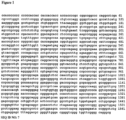
- the first antisense guide strand in SEQ ID NO: 10 corresponds to (is the reverse complement of) the 3' end of the DUX4 sequence set out in Figure 1 .
- the second antisense guide strand (SEQ ID NO: 11) is offset one nucleotide from the first and so on.
- the GC content of the antisense guide strand is 60% or less, and/or the 5' end of the antisense guide strand is more AU rich while the 3' end is more GC rich.
- Exemplified DUX4 miRNA are encoded by the DNAs are set out in SEQ ID NOs: 1 and 2.
- the invention provides a composition comprising a rAAV encoding a DUX4 miRNA (for example, a rAAV comprising the DNA set out in SEQ ID NO: 1 or 2) wherein the rAAV lacks rep and cap genes.
- a rAAV encoding a DUX4 miRNA for example, a rAAV comprising the DNA set out in SEQ ID NO: 1 or 2 wherein the rAAV lacks rep and cap genes.
- the invention provides a method of preventing or inhibiting expression of the DUX4 gene in a cell comprising contacting the cell with a rAAV encoding a DUX4 miRNA (for example, a rAAV comprising the DNA set out in SEQ ID NO: 1 or 2) wherein the rAAV lacks rep and cap genes.
- Expression of DUX4 may be inhibited by at least 10, 20, 30, 40, 50, 60, 70, 80, 90, 95 or 99 percent.
- the invention provides a method of delivering DNA encoding a DUX4 miRNAto an animal in need thereof, comprising administering to the animal a rAAV a DUX4 miRNA (for example, a rAAV comprising the DNA set out in SEQ ID NO: 1 or 2) wherein the rAAV lacks rep and cap genes.
- a rAAV for example, a rAAV comprising the DNA set out in SEQ ID NO: 1 or 2
- the rAAV lacks rep and cap genes.
- the invention provides a method of preventing or treating a muscular dystrophy (including, but not limited to, FSHD) comprising administering a rAAV encoding a DUX4 miRNA (for example, a rAAV comprising the DNA set out in SEQ ID NO: 1 or 2) wherein the rAAV lacks rep and cap genes.
- "Treating” includes ameliorating one or more symptoms of the muscular dystrophy (such as FSHD).
- Molecular, biochemical, histological and functional endpoints demonstrate the therapeutic efficacy of DUX4 miRNAs. Endpoints contemplated by the invention include one or more of: the reduction or elimination of DUX4 protein in affected muscles, DUX4 gene knockdown, increase in myofiber diameters, and improvement in muscle strength.
- Recombinant AAV genomes of the invention comprise one or more AAV ITRs flanking a polynucleotide encoding, for example, one or more DUX4 miRNAs.
- the polynucleotide is operatively linked to transcriptional control DNA, specifically promoter DNA that is functional in target cells.
- Commercial providers such as Ambion Inc. (Austin, TX), Darmacon Inc. (Lafayette, CO), InvivoGen (San Diego, CA), and Molecular Research Laboratories, LLC (Herndon, VA) generate custom inhibitory RNA molecules.
- Embodiments include a rAAV genome comprising the DNA set out in SEQ ID NO: 1 encoding the DUX4 miRNA named "miDux4.405” and a rAAV genome comprising the DNA set out in SEQ ID NO: 2 encoding the DUX4 miRNA named "miDux4.1156.”
- the rAAV genomes of the invention lack AAV rep and cap DNA.
- AAV DNA in the rAAV genomes may be from any AAV serotype for which a recombinant virus can be derived including, but not limited to, AAV serotypes AAV-1, AAV-2, AAV-3, AAV-4, AAV-5, AAV-6, AAV-7, AAV-8, AAV-9, AAV-10 and AAV-11.
- AAV serotypes AAV-1, AAV-2, AAV-3, AAV-4, AAV-5, AAV-6, AAV-7, AAV-8, AAV-9, AAV-10 and AAV-11.
- DNA plasmids of the invention comprise rAAV genomes of the invention.
- the DNA plasmids are transferred to cells permissible for infection with a helper virus of AAV (e.g., adenovirus, E1-deleted adenovirus or herpesvirus) for assembly of the rAAV genome into infectious viral particles.
- helper virus of AAV e.g., adenovirus, E1-deleted adenovirus or herpesvirus
- Techniques to produce rAAV particles, in which an AAV genome to be packaged, rep and cap genes, and helper virus functions are provided to a cell are standard in the art.
- rAAV Production of rAAV requires that the following components are present within a single cell (denoted herein as a packaging cell): a rAAV genome, AAV rep and cap genes separate from ( i.e ., not in) the rAAV genome, and helper virus functions.
- the AAV rep and cap genes may be from any AAV serotype for which recombinant virus can be derived and may be from a different AAV serotype than the rAAV genome ITRs, including, but not limited to, AAV serotypes AAV-1, AAV-2, AAV-3, AAV-4, AAV-5, AAV-6, AAV-7, AAV-8, AAV-9, AAV-10 and AAV-11.
- Production of pseudotyped rAAV is disclosed in, for example, WO 01/83692 which is incorporated by reference herein in its entirety.
- a method of generating a packaging cell is to create a cell line that stably expresses all the necessary components for AAV particle production.
- a plasmid (or multiple plasmids) comprising a rAAV genome lacking AAV rep and cap genes, AAV rep and cap genes separate from the rAAV genome, and a selectable marker, such as a neomycin resistance gene, are integrated into the genome of a cell.
- AAV genomes have been introduced into bacterial plasmids by procedures such as GC tailing ( Samulski et al., 1982, Proc. Natl. Acad. S6.
- packaging cells that produce infectious rAAV.
- packaging cells may be stably transformed cancer cells such as HeLa cells, 293 cells and PerC.6 cells (a cognate 293 line).
- packaging cells are cells that are not transformed cancer cells, such as low passage 293 cells (human fetal kidney cells transformed with E1 of adenovirus), MRC-5 cells (human fetal fibroblasts), WI-38 cells (human fetal fibroblasts), Vero cells (monkey kidney cells) and FRhL-2 cells (rhesus fetal lung cells).
- Recombinant AAV (i.e. , infectious encapsidated rAAV particles) of the invention comprise a rAAV genome.
- Embodiments include, but are not limited to, the rAAV named "AAV.miDUX4.405” including a genome encoding the DUX4 miRNA hDux.mi405 (encoded by the DNA set out in SEQ ID NO: 1 and the rAAV named "AAV.miDUX4.1156” including a genome encoding the DUX4 miRNA hDux.mi1156 (encoded by the DNA set out in SEQ ID NO: 2).
- the genomes of both rAAV lack AAV rep and cap DNA, that is, there is no AAV rep or cap DNA between the ITRs of the genomes.
- the rAAV may be purified by methods standard in the art such as by column chromatography or cesium chloride gradients. Methods for purifying rAAV vectors from helper virus are known in the art and include methods disclosed in, for example, Clark et al., Hum. Gene Ther., 10(6): 1031-1039 (1999 ); Schenpp and Clark, Methods Mol. Med., 69 427-443 (2002 ); U.S. Patent No. 6,566,118 and WO 98/09657 .
- compositions comprising rAAV of the present invention.
- Compositions of the invention comprise rAAV in a pharmaceutically acceptable carrier.
- the compositions may also comprise other ingredients such as diluents and adjuvants.
- Acceptable carriers, diluents and adjuvants are nontoxic to recipients and are preferably inert at the dosages and concentrations employed, and include buffers such as phosphate, citrate, or other organic acids; antioxidants such as ascorbic acid; low molecular weight polypeptides; proteins, such as serum albumin, gelatin, or immunoglobulins; hydrophilic polymers such as polyvinylpyrrolidone; amino acids such as glycine, glutamine, asparagine, arginine or lysine; monosaccharides, disaccharides, and other carbohydrates including glucose, mannose, or dextrins; chelating agents such as EDTA; sugar alcohols such as mannitol or sorbitol; salt-for
- Titers of rAAV to be administered in methods of the invention will vary depending, for example, on the particular rAAV, the mode of administration, the treatment goal, the individual, and the cell type(s) being targeted, and may be determined by methods standard in the art. Titers of rAAV may range from about 1 ⁇ 10 6 , about 1 ⁇ 10 7 , about 1 ⁇ 10 8 , about 1 ⁇ 10 9 , about 1 ⁇ 10 10 , about 1 ⁇ 10 11 , about 1 ⁇ 10 12 , about 1 ⁇ 10 13 to about 1 ⁇ 10 14 or more DNase resistant particles (DRP) per ml. Dosages may also be expressed in units of viral genomes (vg).
- DNase resistant particles DNase resistant particles
- the in vivo methods comprise the step of administering an effective dose, or effective multiple doses, of a composition comprising a rAAV of the invention to an animal (including a human being) in need thereof. If the dose is administered prior to development of a disorder/disease, the administration is prophylactic. If the dose is administered after the development of a disorder/disease, the administration is therapeutic.
- an effective dose is a dose that alleviates (eliminates or reduces) at least one symptom associated with the disorder/disease state being treated,that slows or prevents progression to a disorder/disease state,that slows or prevents progression of a disorder/disease state, that diminishes the extent of disease, that results in remission (partial or total) of disease, and/or that prolongs survival.
- An example of a disease contemplated for prevention or treatment with methods of the invention is FSHD.
- Combination therapies are also contemplated by the invention.
- Combination as used herein includes both simultaneous treatment or sequential treatments.
- Combinations of methods of the invention with standard medical treatments e.g., corticosteroids
- compositions may be by routes standard in the art including, but not limited to, intramuscular, parenteral, intravenous, oral, buccal, nasal, pulmonary, intracranial, intraosseous, intraocular, rectal, or vaginal.
- routes standard in the art including, but not limited to, intramuscular, parenteral, intravenous, oral, buccal, nasal, pulmonary, intracranial, intraosseous, intraocular, rectal, or vaginal.
- Route(s) of administration and serotype(s) of AAV components of the rAAV (in particular, the AAV ITRs and capsid protein) of the invention may be chosen and/or matched by those skilled in the art taking into account the infection and/or disease state being treated and the target cells/tissue(s) that are to express the DUX4 miRNAs.
- rAAV of the present invention may be accomplished by using any physical method that will transport the rAAV recombinant vector into the target tissue of an animal.
- Administration according to the invention includes, but is not limited to, injection into muscle, the bloodstream and/or directly into the liver. Simply resuspending a rAAV in phosphate buffered saline has been demonstrated to be sufficient to provide a vehicle useful for muscle tissue expression, and there are no known restrictions on the carriers or other components that can be co-administered with the rAAV (although compositions that degrade DNA should be avoided in the normal manner with rAAV).
- Capsid proteins of a rAAV may be modified so that the rAAV is targeted to a particular target tissue of interest such as muscle. See, for example, WO 02/053703 , the disclosure of which is incorporated by reference herein.
- Pharmaceutical compositions can be prepared as injectable formulations or as topical formulations to be delivered to the muscles by transdermal transport. Numerous formulations for both intramuscular injection and transdermal transport have been previously developed and can be used in the practice of the invention.
- the rAAV can be used with any pharmaceutically acceptable carrier for ease of administration and handling.
- solutions in an adjuvant such as sesame or peanut oil or in aqueous propylene glycol can be employed, as well as sterile aqueous solutions.
- aqueous solutions can be buffered, if desired, and the liquid diluent first rendered isotonic with saline or glucose.
- Solutions of rAAV as a free acid (DNA contains acidic phosphate groups) or a pharmacologically acceptable salt can be prepared in water suitably mixed with a surfactant such as hydroxpropylcellulose.
- a dispersion of rAAV can also be prepared in glycerol, liquid polyethylene glycols and mixtures thereof and in oils. Under ordinary conditions of storage and use, these preparations contain a preservative to prevent the growth of microorganisms.
- the sterile aqueous media employed are all readily obtainable by standard techniques well-known to those skilled in the art.
- the pharmaceutical forms suitable for injectable use include sterile aqueous solutions or dispersions and sterile powders for the extemporaneous preparation of sterile injectable solutions or dispersions.
- the form must be sterile and must be fluid to the extent that easy syringability exists. It must be stable under the conditions of manufacture and storage and must be preserved against the contaminating actions of microorganisms such as bacteria and fungi.
- the carrier can be a solvent or dispersion medium containing, for example, water, ethanol, polyol (for example, glycerol, propylene glycol, liquid polyethylene glycol and the like), suitable mixtures thereof, and vegetable oils.
- the proper fluidity can be maintained, for example, by the use of a coating such as lecithin, by the maintenance of the required particle size in the case of a dispersion and by the use of surfactants.
- the prevention of the action of microorganisms can be brought about by various antibacterial and antifungal agents, for example, parabens, chlorobutanol, phenol, sorbic acid, thimerosal and the like. In many cases it will be preferable to include isotonic agents, for example, sugars or sodium chloride.
- Prolonged absorption of the injectable compositions can be brought about by use of agents delaying absorption, for example, aluminum monostearate and gelatin.
- Sterile injectable solutions are prepared by incorporating rAAV in the required amount in the appropriate solvent with various other ingredients enumerated above, as required, followed by filter sterilization.
- dispersions are prepared by incorporating the sterilized active ingredient into a sterile vehicle which contains the basic dispersion medium and the required other ingredients from those enumerated above.
- the preferred methods of preparation are vacuum drying and the freeze drying technique that yield a powder of the active ingredient plus any additional desired ingredient from the previously sterile-filtered solution thereof.
- Transduction with rAAV may also be carried out in vitro.
- desired target muscle cells are removed from the subject, transduced with rAAV and reintroduced into the subject.
- syngeneic or xenogeneic muscle cells can be used where those cells will not generate an inappropriate immune response in the subject.
- cells can be transduced in vitro by combining rAAV with muscle cells, e.g., in appropriate media, and screening for those cells harboring the DNA of interest using conventional techniques such as Southern blots and/or PCR, or by using selectable markers.
- Transduced cells can then be formulated into pharmaceutical compositions, and the composition introduced into the subject by various techniques, such as by intramuscular, intravenous, subcutaneous and intraperitoneal injection, or by injection into smooth and cardiac muscle, using e.g., a catheter.
- Transduction of cells with rAAV of the invention results in sustained expression of DUX4 miRNAs.
- the present invention thus provides methods of administering/delivering rAAV which express DUX4 miRNAs to an animal, preferably a human being. These methods include transducing tissues (including, but not limited to, tissues such as muscle, organs such as liver and brain, and glands such as salivary glands) with one or more rAAV of the present invention. Transduction may be carried out with gene cassettes comprising tissue specific control elements.
- one embodiment of the invention provides methods of transducing muscle cells and muscle tissues directed by muscle specific control elements, including, but not limited to, those derived from the actin and myosin gene families, such as from the myoD gene family [See Weintraub et al., Science, 251: 761-766 (1991 )], the myocyte-specific enhancer binding factor MEF-2 [ Cseijesi and Olson, Mol Cell Biol 11: 4854-4862 (1991 )], control elements derived from the human skeletal actin gene [ Muscat et al., Mol Cell Biol, 7: 4089-4099 (1987 )], the cardiac actin gene, muscle creatine kinase sequence elements [See Johnson et al., Mol Cell Biol, 9:3393-3399 (1989 )] and the murine creatine kinase enhancer (mCK) element, control elements derived from the skeletal fast-twitch troponin C gene, the slow-twitch cardiac troponin C gene and the slow
- Muscle tissue is an attractive target for in vivo DNA delivery, because it is not a vital organ and is easy to access.
- the invention contemplates sustained expression of miRNAs from transduced myofibers.
- muscle cell or “muscle tissue” is meant a cell or group of cells derived from muscle of any kind (for example, skeletal muscle and smooth muscle, e.g. from the digestive tract, urinary bladder, blood vessels or cardiac tissue). Such muscle cells may be differentiated or undifferentiated, such as myoblasts, myocytes, myotubes, cardiomyocytes and cardiomyoblasts.
- transduction is used to refer to the administration/delivery of DUX4 miRNAs to a recipient cell either in vivo or in vitro, via a replication-deficient rAAV of the invention resulting in expression of a DUX4 miRNA by the recipient cell.
- the invention provides methods of administering an effective dose (or doses, administered essentially simultaneously or doses given at intervals) of rAAV that encode DUX4 miRNAs to a patient in need thereof.
- Figure 1 shows the human DUX4 DNA sequence.
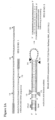
- FIGS 2A and 2B set out sequences of DUX4 targeted miRNAs.
- the top sequences indicate the DNA templates from which each respective miRNA is transcribed.
- the DNA template miDUX4.405 is SEQ ID NO: 1.
- the DNA template miDUX4.1156 is SEQ ID NO: 2.
- the folded miRNA transcripts are shown as hairpin structures.
- the miDUX4.405 folded miRNA is SEQ ID NO: 8.
- the miDUX4.1156 folded miRNA is SEQ ID NO: 9.
- the mature miDUX4.405 and miDUX4.1156 sequences arise following processing in target cells by host miRNA processing machinery (including Drosha, DGCR8, Dicer, and Exportin-5).
- Sequences shaded in gray indicate restriction sites used for cloning each miRNA into the U6T6 vector.
- CTCGAG is an XhoI site and ACTAGT is a SpeI site (CUCGAG and ACUAGU in RNA, where the U is a uracil base).
- the red sequence indicates the mature miRNA antisense guide strand that ultimately helps catalyze cleavage of the DUX4 target mRNA. This sequence is also underlined in the miRNA hairpin portions of this diagram.
- the gray and black arrowheads indicate Drosha- and Dicer- catalyzed cleavage sites, respectively.
- the numbers 13, 35, 53, and 75 are provided for orientation.
- the sequences between (and including) positions 35-53 are derived from the natural human mir-30a sequence, except the A at position 39, which is a G is the normal mir-30a sequence. We changed this nucleotide to an A to facilitate folding of the miRNA loop, based on in silico RNA folding models.
- the base of the stem (5' of position 13 and 3' of position 75) is also derived from mir-30a structure and sequence with some modifications depending on the primary sequence of the guide strand. Specifically, the nucleotide at position 13 can vary to help facilitate a required mismatched between the position 13 and 75 nucleotides. This bulged structure is hypothesized to facilitate proper Drosha cleavage.
- Figure 3 relates to a luciferase assay used for initial miDUX4 efficacy screens.
- Figure 3A shows the dual luciferase reporter plasmid used for in vitro screens. This vector is modified from a commercially available plasmid (psiCheck2) obtained from Promega. The human DUX4 cDNA was cloned downstream of the Renilla luciferase gene, as shown. This conformation does not produce a Luciferase - DUX4 fusion protein, since the DUX4 sequences are placed after the Renilla luciferase stop codon.
- psiCheck2 commercially available plasmid
- a fusion mRNA in which the DUX4 sequences are the de facto 3' untranslated region (3' UTR) of Renilla luciferase.
- any effective DUX4-targeted miRNA will reduce the Renilla Luciferase-DUX4 fusion mRNA, which subsequently decreases Renilla luciferase protein expression in transfected cells.
- Figure 3B shows Firefly and Renilla luciferase activity quantified separately in cells using a Dual Luciferase Assay Kit (Promega). DUX4 gene silencing is therefore measured indirectly and indicated by a low ratio of Renilla:Firefly luciferase activity. All samples in this assay are normalized to cells co-transfected with our reporter vector and the U6.miGFP control miRNA. Samples transfected with miDUX4.405 and miDUX4.1156 had consistently lower Renilla luciferase activity, indicating DUX4 gene silencing. Data in B are representative of two independent experiments performed on different days in triplicate. Error bars indicate standard error of the mean (s.e.m.).
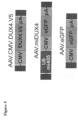
- Figure 4A is a diagram of constructs used in Western blot experiments showing AAV.miDUX4 proviral plasmids reduce DUX4 protein expression in vitro.
- the black rectangles indicate AAV inverted terminal repeats (ITRs), CMV is the cytomegalovirus promoter, hrGFP is a green fluorescent protein coding region, pA is the SV40 polyA signal and V5 refers to the V5 epitope which was inserted in frame at the C terminus of human DUX4 to facilitate detection with commercially available V5 epitope antibodies (Invitrogen).
- ITRs AAV inverted terminal repeats
- CMV is the cytomegalovirus promoter
- hrGFP is a green fluorescent protein coding region
- pA is the SV40 polyA signal
- V5 refers to the V5 epitope which was inserted in frame at the C terminus of human DUX4 to facilitate detection with commercially available V5 epitope antibodies (Invitrogen
- the U6.miDUX4 sequences (405 and 1156) and U6.miGFP control were cloned upstream of the CMV.hrGFP.pA cassette, as shown.
- Proviral plasmids were co-transfected into HEK293 cells with the CMV.DUX4.V5 expression vector shown at the top of Figure 4A.
- Figure 4B shows Western blots using antibodies targeting the V5 epitope (DUX4) demonstrating DUX4 gene silencing by both miDUX4 sequences, compared to the non-targeting miGFP control. GAPDH antibodies were used to control for equivalent loading of protein extracts for the experiment.
- the 'Unt' lane contains protein extracts from untransfected HEK293 cells.
- Figure 5 is a diagram of genomes of rAAV encoding DUX4 miRNAs.
- D4Z4 repeats are not pseudogenes.
- the DUX4 locus produces 1.7 kb and 2.0 kb full-length mRNAs with identical coding regions, and D4Z4 repeats also harbor smaller sense and antisense transcripts, including some resembling microRNAs.
- Over-expressed DUX4 transcripts and a ⁇ 50 kDa full-length DUX4 protein are found in biopsies and cell lines from FSHD patients. These data are consistent with a transcriptional de-repression model of FSHD pathogenesis.
- D4Z4 repeats and DUX4 likely have functional importance, since tandemly-arrayed D4Z4 repeats are conserved in at least eleven different placental mammalian species (non-placental animals lack D4Z4 repeats), with the greatest sequence conservation occurring within the DUX4 ORF.
- over-expressed DUX4 is toxic to tissue culture cells and embryonic progenitors of developing lower organisms in vivo.
- This toxicity occurs at least partly through a pro-apoptotic mechanism, indicated by Caspase-3 activation in DUX4 transfected cells, and presence of TUNEL-positive nuclei in developmentally arrested Xenopus embryos injected with DUX4 mRNA at the two-cell stage.
- Human DUX4 inhibits differentiation of mouse C2C12 myoblasts in vitro, potentially by interfering with PAX3 and/or PAX7, and causes developmental arrest and reduced staining of some muscle markers when delivered to progenitor cells of zebrafish or Xenopus embryos. Finally, aberrant DUX4 function is directly associated with potentially important molecular changes seen in FSHD patient muscles. Specifically, full-length human DUX4 encodes an approximately 50 kDa double homeodomain transcription factor, and its only known target, Pitx1, was elevated in DUX4 over-expressing FSHD patient muscles. These data support that DUX4 catalyzes numerous downstream molecular changes that are incompatible with maintaining normal muscle integrity.
- Example 1 describes miRNAs specific for the DUX4 gene.
- Example 2 describes the effect of the miRNAs on the expression of DUX4 as measured by luciferase assay.
- Example 3 describes the in vitro effect of proviral plasmids expressing the miRNAs on the expression of DUX4 as measured by Western blot.
- Example 4 describes rAAV vectors encoding DUX4 miRNAs.
- Example 5 describes mitigation of DUX4-induced myopathy by AAV6.miDUX4.405 vectors.
- Example 6 describes protection of muscles from pathological muscles changes associated with FSHD.
- Example 7 describes the protection of mice from DUX4-associated grip strength deficits.
- Two miRNAs specific for the DUX4 gene were generated by PCR.
- Four PCR primers were used that had the following sequences.
- DNA encoding a miRNA designated hDux.mi405 was generated using primers 662 and 663.
- DNA encoding miRNA designated hDux.mi1156 was generated using primers 665and 667.
- each primer was added to a 1 cycle primer extension reaction: 95°C for 5 min.; 94° C for 2min.; 52° C for 1min.; 72° C for 15min.; and then holding at 4°C.
- the PCR products were cleaned up with the Qiagen QIAquick PCR Purification kit before being digested overnight with XHOI and SPEI restriction enzymes. The digestion product was then run on a 1.5% TBE gel and the band excised and purified using the Qiagen QIAquick Gel Extraction Kit.
- the sequences of the miRNAs are set out below and in Figures 2A and 2B , respectively.
- the two PCR products were ligated overnight to a U6T6 vector (viaXhoI and XbaI) that contains a mouse U6 promoter and an RNA polymerase III termination signal (six thymidine nucleotides).
- MiRNAs are cloned into XhoI and XbaI restriction sites located between the 3' end of the U6 promoter and termination signal (SpeI site on the 3' end of the DNA template for each miRNA has complementary cohesive ends with the XbaI site).
- the ligation product was transformed into chemically competent E-coli cells with a 42°C heat shock and incubated at 37°C shaking for 1 hour before being plated on kanamycin selection plates. The colonies were allowed to grow overnight at 37°. The following day they were mini-prepped and sequenced for accuracy.
- DUX4 target sequence expressed in the presence of the DUX4 miRNAs was assayed.
- a lipofectamine 2000 transfection was done in 293 cells in a 96-well, white-walled assay plate. 140,000 cells were transfected with 20 ng of a Renilla-firefly plasmid containing the DUX4 target sequence ( Figure 3A ) and 180 ng of various DUX4 miRNA-encoding vectors, including U6T6-driven miDux4.405 or miDux4. 1 156 vectors from Example 1. A luciferase assay was performed 24 hours later.
- the media was removed from the cells and 20 ⁇ l of lysis buffer was added per well.
- the plate was put on a shaker for 15 minutes at room temperature before adding 50 ⁇ l of luciferase substrate. The first reading was taken 10 minutes later. Next, 50 ⁇ l of Stop and Glo luciferase substrate was added and the second reading was taken 10 minutes later.
- the Renilla expression was divided by the firefly expression to calculate the relative expression. The relative expression was then normalized to the expression of cells that were transfected with a control miRNA that targets eGFP. Results are shown in Figure 3B .
- the DUX4 miRNAs miDUX4.405 and miDUX4.1156 were the most effective at reducing luciferase protein expression in transfected cells.
- U6T6.miDUX4 miRNA expression cassettes were cloned into AAV.CMV.hrGFP proviral plasmids as shown in the Figure 4A .
- the proviral plasmids were then co-transfected with a DUX4.V5 expression plasmid into 293 cells and the effect of expression of DUX4 miRNAs from the proviral plasmids was assayed by Western blot.
- a U6.miGFP sequence, which does not target DUX4 was used as a negative control for gene silencing.
- the samples were boiled for 10 min and then put on ice.
- blots were placed in chemiluminescent working solution (Immobilon Western Chemiluminescent HRP Substrate, Millipore, Cat. No. WBKLS0500), incubated with agitation for 5 min at room temperature, and then exposed to X-ray film.
- chemiluminescent working solution Immobilon Western Chemiluminescent HRP Substrate, Millipore, Cat. No. WBKLS0500
- the membranes were washed for 20 min, changing the wash buffer every 10 min.
- the membranes were washed again for 30 min, changing the wash buffer every 10 min.
- the membranes were blocked again and re-probed with Anti-GAPDH primary antibody solution (Chemicon, Cat. No. MAB374, 1:200) and peroxidase-conjugated Goat Anti-Mouse Antibody (Jackson ImmunoReserch, Cat. No. 115-035-146, 1:100,000) was used as secondary antibody.
- the AAV.miDUX4 proviral plasmids reduced DUX4 protein expression in vitro.
- AA V -CMV -miDUX4.405 was the most effective at knocking down DUX4 expression.
- Vector was produced by co-transfection in HEK293 cells of three plasmids (pAdhelper, AAV helper, and the rAAV genome containing miDUX4; described in detail below), followed by cell-harvesting, vector purification, titration, and quality control assays.
- Plasmids pAdhelper contains the adenovirus genes E2A, E4 ORF6, and VA I/II;
- AAV helper plasmids contain AAV rep2 and cap6 (for example, for an AAV serotype 6 preparation, the capsid gene would be called cap6);
- the rAAV plasmid contains AAV inverted terminal repeat (ITRs) sequences flanking the genetic elements to be packaged into the vector.
- ITRs inverted terminal repeat
- Plasmids were transfected into 293 cells (Corning 10-Stack) using CaPO 4 at a 4:4:1 ratio (20 ug pAd helper: 20 ug AAV helper: 5 ug rAAV vector plasmid per plate.
- Cell harvesting Forty-eight hr post-transfection, cells were harvested and resuspended in 20 mM Tris (pH 8.0), 1 mM MgCl 2 and 150 mM NaCl (T20M1N150) at a density of 5 ⁇ 10 6 cells/ml. Cells were lysed by four sequential freeze/thaw cycles and Benzonase nuclease (AIC, Stock: 250 U/ul) added to a final concentration of 90 U/ml before cell lysate clarification.
- AIC Benzonase nuclease
- Clarified lysates were subjected to iodixanol step gradient purification as previously described ( Xiao, X, et al. J. Virol 72:2224-32 ).
- the 40% iodixanol layer (containing rAAV) was diluted 5-fold with a no-salt dilution buffer (pH varying depending on serotype) and applied to a Hi-Trap HP-Q/S column.
- AAV6.miDUX4s mitigated DUX4-associated muscle toxicity in vivo
- mice that received DUX4 and eGFP vectors showed histological indicators of muscle damage. Specifically, these muscle sections contained abundant myofibers with centrally-located nuclei, small-bore myofibers (both of which indicate newly regenerated muscle), and deposition of fibrotic tissue. At 4 weeks, miDUX4-treated animals were indistinguishable from sham-injected normal wild-type muscles.
- MiDUX4-treatment significantly mitigated DUX4-induced muscle degeneration, compared to control GFP-injected muscles.
- AAV6.miDUX4s protected muscles from pathological molecular changes associated with FSHD
- Caspase-3 is expressed in myofibers of FSHD patients and is activated by DUX4 expression in mouse muscle. The effect of expression of DUX4 in the presence and absence of AAV6.miDUX4 was examined.
- mice received 50 ⁇ l direct intramuscular injections into the tibialis anterior.
- Premixed virus cocktails contained 8 ⁇ 10 8 DNAse resistant particles of AAV6.DUX4 and 3 ⁇ 10 10 of either AAV6.miDUX4 or AAV6.eGFP.
- Muscle samples were prepared as described in Example 5 and stained with cleaved Caspase-3 (Cell Signaling Technology, Danvers, MA) polyclonal antibodies by standard methods.
- Uninhibited DUX4 expression was associated with caspase-3 positive lesions in AAV6.DUX4-transduced control muscles in mice. In contrast, there were no caspase-3 positive myofibers in muscles coinjected with AAV6.DUX4 and AAV.miDUX4 vectors.
- AAV6.miDUX4s protect mice from DUX4-associated grip strength deficits
- mice injected with AAV6.DUX4 alone or AAV6.DUX4 with control AAV.eGFP showed significantly reduced grip strength compared to all other groups. This timepoint is consistent with the onset of degeneration in muscle cryosections. Weakness resolved in three weeks, as regenerative processes were underway.
- mice coinjected with AAV6.DUX4 and AAV6.miDUX4 were not significantly weaker than saline-injected wild type mice at any timepoint following injection. Mice that received AAV ⁇ .rniDUX4 alone were unaffected, indicating miDUX4 expression was well-tolerated by normal muscles.
Landscapes
- Health & Medical Sciences (AREA)
- Life Sciences & Earth Sciences (AREA)
- Genetics & Genomics (AREA)
- Engineering & Computer Science (AREA)
- Biomedical Technology (AREA)
- Chemical & Material Sciences (AREA)
- Bioinformatics & Cheminformatics (AREA)
- Organic Chemistry (AREA)
- Zoology (AREA)
- Wood Science & Technology (AREA)
- Biotechnology (AREA)
- General Engineering & Computer Science (AREA)
- Molecular Biology (AREA)
- General Health & Medical Sciences (AREA)
- Plant Pathology (AREA)
- Microbiology (AREA)
- Biophysics (AREA)
- Physics & Mathematics (AREA)
- Biochemistry (AREA)
- Virology (AREA)
- General Chemical & Material Sciences (AREA)
- Chemical Kinetics & Catalysis (AREA)
- Public Health (AREA)
- Animal Behavior & Ethology (AREA)
- Pharmacology & Pharmacy (AREA)
- Nuclear Medicine, Radiotherapy & Molecular Imaging (AREA)
- Medicinal Chemistry (AREA)
- Veterinary Medicine (AREA)
- Physical Education & Sports Medicine (AREA)
- Orthopedic Medicine & Surgery (AREA)
- Neurology (AREA)
- Medicines That Contain Protein Lipid Enzymes And Other Medicines (AREA)
- Medicines Containing Material From Animals Or Micro-Organisms (AREA)
- Micro-Organisms Or Cultivation Processes Thereof (AREA)
- Pharmaceuticals Containing Other Organic And Inorganic Compounds (AREA)
Applications Claiming Priority (4)
| Application Number | Priority Date | Filing Date | Title |
|---|---|---|---|
| US201161511319P | 2011-07-25 | 2011-07-25 | |
| EP12816988.5A EP2736539B1 (de) | 2011-07-25 | 2012-07-24 | Rekombinante virusprodukte und verfahren zur expressionshemmung von dux4 |
| EP17181302.5A EP3290055B1 (de) | 2011-07-25 | 2012-07-24 | Rekombinante virusprodukte und verfahren zur expressionshemmung von dux4 |
| PCT/US2012/047999 WO2013016352A1 (en) | 2011-07-25 | 2012-07-24 | Recombinant virus products and methods for inhibition of expression of dux4 |
Related Parent Applications (2)
| Application Number | Title | Priority Date | Filing Date |
|---|---|---|---|
| EP17181302.5A Division EP3290055B1 (de) | 2011-07-25 | 2012-07-24 | Rekombinante virusprodukte und verfahren zur expressionshemmung von dux4 |
| EP12816988.5A Division EP2736539B1 (de) | 2011-07-25 | 2012-07-24 | Rekombinante virusprodukte und verfahren zur expressionshemmung von dux4 |
Publications (1)
| Publication Number | Publication Date |
|---|---|
| EP4488370A2 true EP4488370A2 (de) | 2025-01-08 |
Family
ID=47601499
Family Applications (3)
| Application Number | Title | Priority Date | Filing Date |
|---|---|---|---|
| EP12816988.5A Active EP2736539B1 (de) | 2011-07-25 | 2012-07-24 | Rekombinante virusprodukte und verfahren zur expressionshemmung von dux4 |
| EP17181302.5A Active EP3290055B1 (de) | 2011-07-25 | 2012-07-24 | Rekombinante virusprodukte und verfahren zur expressionshemmung von dux4 |
| EP24192181.6A Pending EP4488370A2 (de) | 2011-07-25 | 2012-07-24 | Rekombinante virusprodukte und verfahren zur hemmung der expression von dux4 |
Family Applications Before (2)
| Application Number | Title | Priority Date | Filing Date |
|---|---|---|---|
| EP12816988.5A Active EP2736539B1 (de) | 2011-07-25 | 2012-07-24 | Rekombinante virusprodukte und verfahren zur expressionshemmung von dux4 |
| EP17181302.5A Active EP3290055B1 (de) | 2011-07-25 | 2012-07-24 | Rekombinante virusprodukte und verfahren zur expressionshemmung von dux4 |
Country Status (6)
| Country | Link |
|---|---|
| US (4) | US9469851B2 (de) |
| EP (3) | EP2736539B1 (de) |
| AU (4) | AU2012286994B2 (de) |
| CA (3) | CA3280905A1 (de) |
| ES (2) | ES2990023T3 (de) |
| WO (1) | WO2013016352A1 (de) |
Families Citing this family (103)
| Publication number | Priority date | Publication date | Assignee | Title |
|---|---|---|---|---|
| WO2012024535A2 (en) * | 2010-08-18 | 2012-02-23 | Fred Hutchinson Cancer Research Center | Methods for determining the presence or risk of developing facioscapulohumeral dystrophy (fshd) |
| US20120225034A1 (en) | 2010-09-02 | 2012-09-06 | Universite De Mons | Agents useful in treating facioscapulohumeral muscular dystrophy |
| AU2012286994B2 (en) * | 2011-07-25 | 2017-08-10 | Nationwide Children's Hospital, Inc. | Recombinant virus products and methods for inhibition of expression of DUX4 |
| DK2958943T3 (da) | 2013-02-20 | 2019-12-09 | Univ Pennsylvania | Behandling af cancer ved anvendelse af humaniseret anti-EGFRvIII kimær antigenreceptor |
| TW201446794A (zh) | 2013-02-20 | 2014-12-16 | Novartis Ag | 利用抗-cd123嵌合抗原受體工程化t細胞之初級人類白血病有效靶向 |
| EP2970426B1 (de) | 2013-03-15 | 2019-08-28 | Michael C. Milone | Anzielung zytotoxischer zellen mit chimären rezeptoren für eine adoptive immuntherapie |
| UY35468A (es) | 2013-03-16 | 2014-10-31 | Novartis Ag | Tratamiento de cáncer utilizando un receptor quimérico de antígeno anti-cd19 |
| CN105377039A (zh) * | 2013-05-15 | 2016-03-02 | 明尼苏达大学董事会 | 腺相关病毒介导的基因向中枢神经系统转移 |
| ES2918501T3 (es) | 2013-12-19 | 2022-07-18 | Novartis Ag | Receptores de antígenos quiméricos de mesotelina humana y usos de los mismos |
| US10287354B2 (en) | 2013-12-20 | 2019-05-14 | Novartis Ag | Regulatable chimeric antigen receptor |
| US11028143B2 (en) | 2014-01-21 | 2021-06-08 | Novartis Ag | Enhanced antigen presenting ability of RNA CAR T cells by co-introduction of costimulatory molecules |
| WO2015114005A1 (en) * | 2014-01-28 | 2015-08-06 | Qiagen Gmbh | Method of amplification of a short tandem repeat locus |
| AU2015244039B2 (en) | 2014-04-07 | 2021-10-21 | Novartis Ag | Treatment of cancer using anti-CD19 chimeric antigen receptor |
| SG10201913765YA (en) | 2014-07-21 | 2020-03-30 | Novartis Ag | Treatment of cancer using a cd33 chimeric antigen receptor |
| TWI750110B (zh) | 2014-07-21 | 2021-12-21 | 瑞士商諾華公司 | 使用人類化抗-bcma嵌合抗原受體治療癌症 |
| US11542488B2 (en) | 2014-07-21 | 2023-01-03 | Novartis Ag | Sortase synthesized chimeric antigen receptors |
| KR20170037625A (ko) | 2014-07-21 | 2017-04-04 | 노파르티스 아게 | Cll-1 키메라 항원 수용체를 사용한 암의 치료 |
| ES2791248T3 (es) | 2014-08-19 | 2020-11-03 | Novartis Ag | Receptor antigénico quimérico (CAR) anti-CD123 para su uso en el tratamiento del cáncer |
| KR20250067191A (ko) | 2014-09-17 | 2025-05-14 | 노파르티스 아게 | 입양 면역요법을 위한 키메라 수용체에 의한 세포독성 세포의 표적화 |
| KR20170068504A (ko) | 2014-10-08 | 2017-06-19 | 노파르티스 아게 | 키메라 항원 수용체 요법에 대한 치료 반응성을 예측하는 바이오마커 및 그의 용도 |
| CA3193811A1 (en) | 2014-11-14 | 2016-05-19 | Voyager Therapeutics, Inc. | Compositions and methods of treating amyotrophic lateral sclerosis (als) |
| CN119876138A (zh) | 2014-11-14 | 2025-04-25 | 沃雅戈治疗公司 | 调节性多核苷酸 |
| CA3197849A1 (en) | 2014-12-29 | 2016-07-07 | Novartis Ag | Methods of making chimeric antigen receptor-expressing cells |
| WO2016115482A1 (en) | 2015-01-16 | 2016-07-21 | Novartis Pharma Ag | Phosphoglycerate kinase 1 (pgk) promoters and methods of use for expressing chimeric antigen receptor |
| US10538763B2 (en) | 2015-01-16 | 2020-01-21 | Ionis Pharmaceuticals, Inc. | Compounds and methods for modulation of DUX4 |
| US11161907B2 (en) | 2015-02-02 | 2021-11-02 | Novartis Ag | Car-expressing cells against multiple tumor antigens and uses thereof |
| ES2918975T3 (es) * | 2015-02-06 | 2022-07-21 | Association Inst De Myologie | Tratamiento de la distrofia facioescapulohumeral |
| MX2017012939A (es) | 2015-04-08 | 2018-05-22 | Novartis Ag | Terapias cd20, terapias cd22 y terapias de combinacion con una celula que expresa un receptor quimerico de antigeno (car) de cd19. |
| SG11201708516YA (en) | 2015-04-17 | 2017-11-29 | David Maxwell Barrett | Methods for improving the efficacy and expansion of chimeric antigen receptor-expressing cells |
| EP3286211A1 (de) | 2015-04-23 | 2018-02-28 | Novartis AG | Behandlung von krebs mit chimärem antigenrezeptor- und proteinkinase-a-blocker |
| WO2017007886A2 (en) * | 2015-07-08 | 2017-01-12 | Idera Pharmaceuticals, Inc. | Compositions for inhibiting dux4 gene expression and uses thereof |
| AU2016297014B2 (en) | 2015-07-21 | 2021-06-17 | Novartis Ag | Methods for improving the efficacy and expansion of immune cells |
| EP3331913A1 (de) | 2015-08-07 | 2018-06-13 | Novartis AG | Behandlung von krebs mithilfe von chimären cd3-rezeptor-proteinen |
| JP6905163B2 (ja) | 2015-09-03 | 2021-07-21 | ザ トラスティーズ オブ ザ ユニバーシティ オブ ペンシルバニア | サイトカイン放出症候群を予測するバイオマーカー |
| CA3005633C (en) | 2015-11-16 | 2023-11-21 | Research Institute Of Nationwide Children's Hospital | Materials and methods for treatment of titin-based myopathies and other titinopathies |
| EA201891338A1 (ru) | 2015-12-04 | 2018-12-28 | Новартис Аг | Композиции и способы для иммуноонкологии |
| EP3393504B1 (de) | 2015-12-22 | 2025-09-24 | Novartis AG | Mesothelin-spezifischer chimärischer antigenrezeptor (car) und antikörper gegen pd-l1zur kombinierten verwendung bei therapie gegen krebs |
| AU2017222653B2 (en) | 2016-02-26 | 2023-06-01 | Research Institute At Nationwide Children's Hospital | Recombinant virus products and methods for inducing DUX4 exon skipping |
| US11549099B2 (en) | 2016-03-23 | 2023-01-10 | Novartis Ag | Cell secreted minibodies and uses thereof |
| JP2019513371A (ja) | 2016-04-01 | 2019-05-30 | アビディティー バイオサイエンシーズ エルエルシー | 核酸ポリペプチド組成物とその使用 |
| BR112018070249A2 (pt) * | 2016-04-02 | 2019-01-29 | Research Institute At Nationwide Children's Hospital | sistema promotor de u6 modificada para expressão específica de tecido |
| AU2017250791B2 (en) | 2016-04-15 | 2022-11-24 | Research Institute At Nationwide Children's Hospital | Adeno-associated virus vector delivery of micro-dystrophin to treat muscular dystrophy |
| IL305449B2 (en) | 2016-04-15 | 2026-01-01 | Univ Pennsylvania | Gene therapy for the treatment of mucocutaneous type ii diabetes |
| CA3024448C (en) | 2016-05-18 | 2025-09-09 | Voyager Therapeutics, Inc. | MODULATING POLYNUCLEOTIDES |
| CA3074723A1 (en) * | 2016-09-23 | 2018-03-29 | University Of Massachusetts | Silencing of dux4 by recombinant gene editing complexes |
| EP3523331A1 (de) | 2016-10-07 | 2019-08-14 | Novartis AG | Chimäre antigenrezeptoren zur behandlung von krebs |
| MX2019011046A (es) | 2017-03-17 | 2019-10-17 | Res Inst Nationwide Childrens Hospital | Administracion de vectores del virus adenoasociado de microdistrofina especifica del musculo para tratar la distrofia muscular. |
| WO2019012336A2 (en) | 2017-03-17 | 2019-01-17 | Newcastle University | ADENO-ASSOCIATED VIRAL VECTOR DELIVERY OF A MICRO-DYSTROPHIN FRAGMENT FOR TREATING MUSCLE DYSTROPHY |
| WO2018175636A2 (en) | 2017-03-22 | 2018-09-27 | Novartis Ag | Compositions and methods for immunooncology |
| CA3099522C (en) * | 2017-09-19 | 2024-10-08 | The Governors Of The University Of Alberta | GAPMERES AND METHODS OF USING THESE FOR THE TREATMENT OF MUSCULAR DYSTROPHY |
| TWI835747B (zh) | 2017-09-22 | 2024-03-21 | 賓州大學委員會 | 用於治療黏多醣病 ii 型之基因治療 |
| AU2018345772B2 (en) * | 2017-10-02 | 2025-04-17 | Research Institute At Nationwide Children's Hospital | MiRNA detargeting system for tissue specific interference |
| JP7585034B2 (ja) | 2017-10-18 | 2024-11-18 | ノバルティス アーゲー | 選択的タンパク質分解のための組成物及び方法 |
| JP7213238B2 (ja) | 2017-10-18 | 2023-01-26 | リサーチ インスティチュート アット ネイションワイド チルドレンズ ホスピタル | 筋ジストロフィーを治療するための筋特異的マイクロジストロフィンのアデノ随伴ウイルスベクター送達 |
| AU2018351528B2 (en) | 2017-10-20 | 2025-02-27 | Research Institute At Nationwide Children's Hospital | Methods and materials for NT-3 gene therapy |
| TW201930591A (zh) | 2018-01-08 | 2019-08-01 | 瑞士商諾華公司 | 用於與嵌合抗原受體療法併用之免疫增強rna |
| MX2020007876A (es) | 2018-01-31 | 2020-12-03 | Res Inst Nationwide Childrens Hospital | Terapia genica para la distrofia muscular de cinturas tipo 2c. |
| CA3100724A1 (en) | 2018-06-13 | 2019-12-19 | Novartis Ag | B-cell maturation antigen protein (bcma) chimeric antigen receptors and uses thereof |
| CN120393053A (zh) | 2018-06-18 | 2025-08-01 | 全国儿童医院研究所 | 用于治疗肌营养不良的肌肉特异性微小肌营养不良蛋白的腺相关病毒载体递送 |
| MX2020014119A (es) | 2018-06-29 | 2021-06-18 | Res Inst Nationwide Childrens Hospital | Productos y métodos de virus adenoasociado recombinante para el tratamiento de la distrofia muscular de cinturas 2a. |
| US12018087B2 (en) | 2018-08-02 | 2024-06-25 | Dyne Therapeutics, Inc. | Muscle-targeting complexes comprising an anti-transferrin receptor antibody linked to an oligonucleotide and methods of delivering oligonucleotide to a subject |
| US20220193250A1 (en) | 2018-08-02 | 2022-06-23 | Dyne Therapeutics, Inc. | Muscle targeting complexes and uses thereof for treating facioscapulohumeral muscular dystrophy |
| AU2019419494B2 (en) * | 2018-12-31 | 2026-03-26 | Research Institute At Nationwide Children's Hospital | DUX4 RNA silencing using RNA targeting CRISPR-Cas13b |
| MX2021010356A (es) | 2019-02-26 | 2022-03-04 | Res Inst Nationwide Childrens Hospital | SUMINISTRO DE ß-SARCOGLICANO MEDIANTE VECTORES DE VIRUS ADENOASOCIADO Y EL TRATAMIENTO DE LA DISTROFIA MUSCULAR. |
| TW202104595A (zh) * | 2019-03-29 | 2021-02-01 | 日商田邊三菱製藥股份有限公司 | 用來調節dux4的表現之化合物、方法及醫藥組成物 |
| BR112021024764A2 (pt) * | 2019-07-12 | 2022-04-19 | Daiichi Sankyo Co Ltd | Oligonucleotídeo antissenso capaz de alterar o splicing de pré-mrna de dux4 |
| PT4017871T (pt) | 2019-08-21 | 2024-04-22 | Res Inst Nationwide Childrens Hospital | Distribuição de vetor de vírus adeno-associado de alfasarcoglicano e o tratamento da distrofia muscular |
| PH12022551291A1 (en) | 2019-11-26 | 2023-11-20 | Novartis Ag | Chimeric antigen receptors binding bcma and cd19 and uses thereof |
| IL292924A (en) | 2019-11-26 | 2022-07-01 | Novartis Ag | Chimeric antigen receptors cd19 and cd22 and their uses |
| KR20220125801A (ko) * | 2020-01-10 | 2022-09-14 | 다인 세라퓨틱스, 인크. | 근육 표적화 복합체 및 안면견갑상완 근육 이영양증을 치료하기 위한 그의 용도 |
| KR20220155999A (ko) | 2020-02-18 | 2022-11-24 | 더 리서치 인스티튜트 앳 네이션와이드 칠드런스 하스피탈 | X-연관 장애의 치료에서의 miRNA의 AAV-매개 표적화 |
| US11555190B2 (en) | 2020-03-19 | 2023-01-17 | Avidity Biosciences, Inc. | Compositions and methods of treating Facioscapulohumeral muscular dystrophy |
| CA3174286A1 (en) * | 2020-04-02 | 2021-10-07 | Robert PLACE | Targeted inhibition using engineered oligonucleotides |
| EP4153742A4 (de) * | 2020-05-22 | 2024-06-12 | University Of Florida Research Foundation, Incorporated | Verfahren und zusammensetzungen zur verbreitung von proteinfrachten über multinukleierte zellen |
| EP4164668A1 (de) | 2020-06-15 | 2023-04-19 | Research Institute at Nationwide Children's Hospital | Adeno-assoziierte virusvektorverabreichung für muskeldystrophien |
| AR123420A1 (es) * | 2020-09-01 | 2022-11-30 | Ultragenyx Pharmaceutical Inc | Inhibidores de dux4 y métodos de uso de estos |
| IL301187A (en) | 2020-09-11 | 2023-05-01 | Arrowhead Pharmaceuticals Inc | RNAi agents for suppressing DUX4 expression, preparations containing them and uses thereof |
| WO2022060841A2 (en) | 2020-09-15 | 2022-03-24 | Research Institute At Nationwide Children's Hospital | Aav-mediated homology-independent targeted integration gene editing for correction of diverse dmd mutations in patients with muscular dystrophy |
| IL303230A (en) | 2020-11-30 | 2023-07-01 | Res Inst Nationwide Childrens Hospital | Compositions and methods for treating facioscapulohumeral muscular dystrophy (fshd) |
| US20240336915A1 (en) * | 2021-01-22 | 2024-10-10 | Ionis Pharmaceuticals, Inc. | Compounds and methods for reducing dux4 expression |
| WO2022169922A1 (en) | 2021-02-03 | 2022-08-11 | Research Institute At Nationwide Children's Hospital | Compositions and methods for treating disease associated with dux4 overexpression |
| WO2022187571A1 (en) | 2021-03-04 | 2022-09-09 | Research Institute At Nationwide Children's Hospital | Products and methods for treatment of dystrophin-based myopathies using crispr-cas9 to correct dmd exon duplications |
| CA3218350A1 (en) | 2021-05-17 | 2022-11-24 | Sarepta Therapeutics, Inc. | Production of recombinant aav vectors for treating muscular dystrophy |
| EP4108263A3 (de) | 2021-06-02 | 2023-03-22 | Research Institute at Nationwide Children's Hospital | Rekombinante adeno-assoziierte virusprodukte und verfahren zur behandlung von gliedergürtel-muskeldystrophie 2a |
| EP4358950A1 (de) | 2021-06-24 | 2024-05-01 | Research Institute at Nationwide Children's Hospital | Salviansäure oder adenosindialdehyd zur behandlung von faccioskapulohumeraler muskeldystrophie (fshd) |
| US11638761B2 (en) | 2021-07-09 | 2023-05-02 | Dyne Therapeutics, Inc. | Muscle targeting complexes and uses thereof for treating Facioscapulohumeral muscular dystrophy |
| US11969475B2 (en) | 2021-07-09 | 2024-04-30 | Dyne Therapeutics, Inc. | Muscle targeting complexes and uses thereof for treating facioscapulohumeral muscular dystrophy |
| EP4370678A2 (de) * | 2021-07-14 | 2024-05-22 | Mirecule, Inc. | Oligonukleotide und zusammensetzungen davon für neuromuskuläre erkrankungen |
| MX2024003266A (es) | 2021-09-16 | 2024-04-03 | Avidity Biosciences Inc | Composiciones y metodos de tratamiento de la distrofia muscular facioescapulohumeral. |
| JP2023059858A (ja) | 2021-10-15 | 2023-04-27 | リサーチ インスティチュート アット ネイションワイド チルドレンズ ホスピタル | 自己相補的アデノ随伴ウイルスベクター及び筋ジストロフィーの治療におけるその使用 |
| EP4186919A1 (de) | 2021-11-30 | 2023-05-31 | Research Institute at Nationwide Children's Hospital | Selbstkomplementärer adeno-assoziierter virusvektor und dessen verwendung bei der behandlung von muskeldystrophie |
| KR20250090396A (ko) | 2022-09-23 | 2025-06-19 | 사렙타 쎄러퓨틱스 인코퍼레이티드 | 근이영양증 치료를 위한 재조합 aav 벡터 |
| EP4637841A1 (de) * | 2022-12-22 | 2025-10-29 | Mammoth Biosciences, Inc. | Zusammensetzungen und verfahren zur modifizierung von dux4 |
| AU2024265701A1 (en) | 2023-05-02 | 2025-12-04 | Research Institute At Nationwide Children's Hospital | A modular system to convert therapeutic microrna expression cassettes from polymerase iii-based to polymerase ii-based promoters |
| WO2024229115A1 (en) | 2023-05-02 | 2024-11-07 | Research Institute At Nationwide Children's Hospital | Treatment of multiple sclerosis using nt-3 gene therapy |
| WO2025096498A1 (en) | 2023-10-30 | 2025-05-08 | Research Institute At Nationwide Children's Hospital | Compositions and methods for treating diseases or conditions associated with progerin expression |
| US12522830B2 (en) * | 2023-11-22 | 2026-01-13 | Wyvern Pharmaceuticals Inc. | Composition for regulating production of interfering ribonucleic acid |
| WO2025179121A1 (en) | 2024-02-21 | 2025-08-28 | Research Institute At Nationwide Children's Hospital | Exon 17-targeted nucleic acids, compositions, and methods for treatment of dystrophin-based myopathies |
| WO2025212838A1 (en) | 2024-04-03 | 2025-10-09 | Research Institute At Nationwide Children's Hospital | Products and methods for treating diseases or disorders associated with dux4 overexpression |
| WO2025240690A2 (en) | 2024-05-15 | 2025-11-20 | Research Institute At Nationwide Children's Hospital | Products and methods for treating diseases or conditions associated with progerin expression from an aberrant lmna gene |
| WO2025260007A1 (en) | 2024-06-14 | 2025-12-18 | Research Institute At Nationwide Children's Hospital | Methods for diagnosing and treating muscular dystrophy diseases |
| WO2026011009A1 (en) | 2024-07-02 | 2026-01-08 | Kate Therapeutics, Inc. | Compositions and methods for muscle disorders |
| WO2026030242A1 (en) | 2024-07-29 | 2026-02-05 | Kate Therapeutics, Inc. | Adeno-associated virus compositions for the treatment of facioscapulohumeral muscular dystrophy |
Citations (20)
| Publication number | Priority date | Publication date | Assignee | Title |
|---|---|---|---|---|
| US5173414A (en) | 1990-10-30 | 1992-12-22 | Applied Immune Sciences, Inc. | Production of recombinant adeno-associated virus vectors |
| WO1995013392A1 (en) | 1993-11-09 | 1995-05-18 | Medical College Of Ohio | Stable cell lines capable of expressing the adeno-associated virus replication gene |
| WO1995013365A1 (en) | 1993-11-09 | 1995-05-18 | Targeted Genetics Corporation | Generation of high titers of recombinant aav vectors |
| WO1996017947A1 (en) | 1994-12-06 | 1996-06-13 | Targeted Genetics Corporation | Packaging cell lines for generation of high titers of recombinant aav vectors |
| WO1997006243A1 (fr) | 1995-08-10 | 1997-02-20 | Pasteur Merieux Serums Et Vaccins | Procede de purification de virus par chromatographie |
| WO1997008298A1 (en) | 1995-08-30 | 1997-03-06 | Genzyme Corporation | Chromatographic purification of adenovirus and aav |
| WO1997009441A2 (en) | 1995-09-08 | 1997-03-13 | Genzyme Corporation | Improved aav vectors for gene therapy |
| WO1997021825A1 (en) | 1995-12-15 | 1997-06-19 | Systemix, Inc. | Method for obtaining retroviral packaging cell lines producing high transducing efficiency retroviral supernatant |
| WO1998009657A2 (en) | 1996-09-06 | 1998-03-12 | Trustees Of The University Of Pennsylvania | Method for recombinant adeno-associated virus-directed gene therapy |
| US5786211A (en) | 1994-06-06 | 1998-07-28 | Children's Hospital, Inc. | Adeno-associated virus materials and methods |
| US5871982A (en) | 1994-10-28 | 1999-02-16 | The Trustees Of The University Of Pennsylvania | Hybrid adenovirus-AAV virus and methods of use thereof |
| WO1999011764A2 (en) | 1997-09-05 | 1999-03-11 | Targeted Genetics Corporation | Methods for generating high titer helper-free preparations of recombinant aav vectors |
| US6258595B1 (en) | 1999-03-18 | 2001-07-10 | The Trustees Of The University Of Pennsylvania | Compositions and methods for helper-free production of recombinant adeno-associated viruses |
| WO2001083692A2 (en) | 2000-04-28 | 2001-11-08 | The Trustees Of The University Of Pennsylvania | Recombinant aav vectors with aav5 capsids and aav5 vectors pseudotyped in heterologous capsids |
| WO2002053703A2 (en) | 2001-01-05 | 2002-07-11 | Children's Hospital, Inc. | Aav2 vectors and methods |
| US6566118B1 (en) | 1997-09-05 | 2003-05-20 | Targeted Genetics Corporation | Methods for generating high titer helper-free preparations of released recombinant AAV vectors |
| US9614423B2 (en) | 2012-04-07 | 2017-04-04 | Traugott Weller | Method for producing rotating electrical machines |
| US9613872B2 (en) | 2014-09-29 | 2017-04-04 | Kabushiki Kaisha Toshiba | Method of manufacturing semiconductor device |
| US9620777B2 (en) | 2013-09-30 | 2017-04-11 | Tdk Corporation | Positive electrode and lithium ion secondary battery using thereof |
| US9818600B2 (en) | 2014-03-21 | 2017-11-14 | Hitachi Kokusai Electric, Inc. | Substrate processing apparatus and method of manufacturing semiconductor device |
Family Cites Families (8)
| Publication number | Priority date | Publication date | Assignee | Title |
|---|---|---|---|---|
| WO2004061124A2 (en) | 2002-12-31 | 2004-07-22 | Mmi Genomics, Inc. | Compositions, methods, and systems for inferring bovine breed |
| WO2006107826A2 (en) | 2005-04-04 | 2006-10-12 | The Board Of Regents Of The University Of Texas System | Micro-rna's that regulate muscle cells |
| CA2693178C (en) * | 2006-11-29 | 2018-12-04 | Nationwide Children's Hospital, Inc. | Myostatin inhibition for enhancing muscle and/or improving muscle function |
| JPWO2009148137A1 (ja) * | 2008-06-04 | 2011-11-04 | 協和発酵キリン株式会社 | 肥満細胞の脱顆粒を制御する核酸 |
| CA2796464C (en) * | 2010-04-16 | 2021-08-03 | Immune Disease Institute, Inc. | Sustained polypeptide expression from synthetic, modified rnas and uses thereof |
| WO2012024535A2 (en) | 2010-08-18 | 2012-02-23 | Fred Hutchinson Cancer Research Center | Methods for determining the presence or risk of developing facioscapulohumeral dystrophy (fshd) |
| US20120225034A1 (en) * | 2010-09-02 | 2012-09-06 | Universite De Mons | Agents useful in treating facioscapulohumeral muscular dystrophy |
| AU2012286994B2 (en) * | 2011-07-25 | 2017-08-10 | Nationwide Children's Hospital, Inc. | Recombinant virus products and methods for inhibition of expression of DUX4 |
-
2012
- 2012-07-24 AU AU2012286994A patent/AU2012286994B2/en active Active
- 2012-07-24 CA CA3280905A patent/CA3280905A1/en active Pending
- 2012-07-24 EP EP12816988.5A patent/EP2736539B1/de active Active
- 2012-07-24 ES ES17181302T patent/ES2990023T3/es active Active
- 2012-07-24 US US14/234,413 patent/US9469851B2/en active Active
- 2012-07-24 EP EP17181302.5A patent/EP3290055B1/de active Active
- 2012-07-24 ES ES12816988.5T patent/ES2648169T3/es active Active
- 2012-07-24 EP EP24192181.6A patent/EP4488370A2/de active Pending
- 2012-07-24 CA CA3106285A patent/CA3106285C/en active Active
- 2012-07-24 CA CA2842798A patent/CA2842798C/en active Active
- 2012-07-24 WO PCT/US2012/047999 patent/WO2013016352A1/en not_active Ceased
-
2016
- 2016-10-17 US US15/295,591 patent/US10301649B2/en active Active
-
2017
- 2017-11-10 AU AU2017258945A patent/AU2017258945A1/en not_active Abandoned
-
2019
- 2019-03-12 US US16/299,456 patent/US11802291B2/en active Active
-
2020
- 2020-01-16 AU AU2020200323A patent/AU2020200323B2/en active Active
-
2022
- 2022-03-16 AU AU2022201820A patent/AU2022201820B2/en active Active
-
2023
- 2023-09-21 US US18/471,708 patent/US20240318201A1/en active Pending
Patent Citations (21)
| Publication number | Priority date | Publication date | Assignee | Title |
|---|---|---|---|---|
| US5173414A (en) | 1990-10-30 | 1992-12-22 | Applied Immune Sciences, Inc. | Production of recombinant adeno-associated virus vectors |
| US5658776A (en) | 1993-11-09 | 1997-08-19 | Targeted Genetics Corporation | Generation of high titers of recombinant AAV vectors |
| WO1995013392A1 (en) | 1993-11-09 | 1995-05-18 | Medical College Of Ohio | Stable cell lines capable of expressing the adeno-associated virus replication gene |
| WO1995013365A1 (en) | 1993-11-09 | 1995-05-18 | Targeted Genetics Corporation | Generation of high titers of recombinant aav vectors |
| US5786211A (en) | 1994-06-06 | 1998-07-28 | Children's Hospital, Inc. | Adeno-associated virus materials and methods |
| US5871982A (en) | 1994-10-28 | 1999-02-16 | The Trustees Of The University Of Pennsylvania | Hybrid adenovirus-AAV virus and methods of use thereof |
| WO1996017947A1 (en) | 1994-12-06 | 1996-06-13 | Targeted Genetics Corporation | Packaging cell lines for generation of high titers of recombinant aav vectors |
| WO1997006243A1 (fr) | 1995-08-10 | 1997-02-20 | Pasteur Merieux Serums Et Vaccins | Procede de purification de virus par chromatographie |
| WO1997008298A1 (en) | 1995-08-30 | 1997-03-06 | Genzyme Corporation | Chromatographic purification of adenovirus and aav |
| WO1997009441A2 (en) | 1995-09-08 | 1997-03-13 | Genzyme Corporation | Improved aav vectors for gene therapy |
| WO1997021825A1 (en) | 1995-12-15 | 1997-06-19 | Systemix, Inc. | Method for obtaining retroviral packaging cell lines producing high transducing efficiency retroviral supernatant |
| WO1998009657A2 (en) | 1996-09-06 | 1998-03-12 | Trustees Of The University Of Pennsylvania | Method for recombinant adeno-associated virus-directed gene therapy |
| WO1999011764A2 (en) | 1997-09-05 | 1999-03-11 | Targeted Genetics Corporation | Methods for generating high titer helper-free preparations of recombinant aav vectors |
| US6566118B1 (en) | 1997-09-05 | 2003-05-20 | Targeted Genetics Corporation | Methods for generating high titer helper-free preparations of released recombinant AAV vectors |
| US6258595B1 (en) | 1999-03-18 | 2001-07-10 | The Trustees Of The University Of Pennsylvania | Compositions and methods for helper-free production of recombinant adeno-associated viruses |
| WO2001083692A2 (en) | 2000-04-28 | 2001-11-08 | The Trustees Of The University Of Pennsylvania | Recombinant aav vectors with aav5 capsids and aav5 vectors pseudotyped in heterologous capsids |
| WO2002053703A2 (en) | 2001-01-05 | 2002-07-11 | Children's Hospital, Inc. | Aav2 vectors and methods |
| US9614423B2 (en) | 2012-04-07 | 2017-04-04 | Traugott Weller | Method for producing rotating electrical machines |
| US9620777B2 (en) | 2013-09-30 | 2017-04-11 | Tdk Corporation | Positive electrode and lithium ion secondary battery using thereof |
| US9818600B2 (en) | 2014-03-21 | 2017-11-14 | Hitachi Kokusai Electric, Inc. | Substrate processing apparatus and method of manufacturing semiconductor device |
| US9613872B2 (en) | 2014-09-29 | 2017-04-04 | Kabushiki Kaisha Toshiba | Method of manufacturing semiconductor device |
Non-Patent Citations (37)
| Title |
|---|
| "GenBank", Database accession no. NC_00 1862 |
| "Muscle Gene Therapy", 2010, SPRINGER SCIENCE BUSINESS MEDIA, LLC |
| CARTER, CURRENT OPINIONS IN BIOTECHNOLOGY, vol. 1533, 1992, pages 539 |
| CLARK ET AL., GENE THERAPY, vol. 3, 1996, pages 1124 - 1132 |
| CLARK ET AL., HUM. GENE THER., vol. 10, no. 6, 1999, pages 1031 - 1039 |
| CSEIJESIOLSON, MOL CELL BIOL, vol. 11, 1991, pages 4854 - 4862 |
| FECHNER ET AL., J. MOL. MED., vol. 86, 2008, pages 987 - 997 |
| GAO ET AL., J. VIROL., vol. 78, 2004, pages 6381 - 6388 |
| HERMONAT ET AL., PROC. NATL. ACAD. SCI. USA, vol. 81, 1984, pages 6466 |
| JACKSON, IMMUNORESERCH |
| JOHNSON ET AL., MOL CELL BIOL, vol. 9, 1989, pages 3393 - 3399 |
| LAUGHLIN ET AL., GENE, vol. 23, 1983, pages 65 - 73 |
| LEBKOWSKI ET AL., MOL. CELL. BIOL., vol. 7, 1988, pages 349 |
| LEMMERS ET AL., SCIENCEXPRESS, 19 August 2010 (2010-08-19) |
| MADERWHITE, PROC. NATL. ACAD. SCI. USA, vol. 90, 1993, pages 5603 - 5607 |
| MCLAUGHLIN ET AL., J. VIROL., vol. 62, 1988, pages 1963 |
| MOL. THER., vol. 13, no. 1, 2006, pages 67 - 76 |
| MUSCAT ET AL., MOL CELL BIOL, vol. 7, 1987, pages 4089 - 4099 |
| MUZYCZKA, CURR. TOPICS IN MICROBIAL. AND IMMUNOL., vol. 158, 1992, pages 97 - 129 |
| MUZYCZKA, CURRENT TOPICS IN MICROBIOLOGY AND IMMUNOLOGY, vol. 158, 1992, pages 97 - 129 |
| NEGUEMBORGABELLINI, EPIGENOMICS, vol. 2, no. 2, 2010, pages 271 - 287 |
| PAUL ET AL., HUMAN GENE THERAPY, vol. 4, 1993, pages 609 - 615 |
| PERRIN ET AL., VACCINE, vol. 13, 1995, pages 1244 - 1250 |
| RATSCHIN ET AL., MOL. CELL. BIOL, vol. 4, 1984, pages 2072 |
| SAMULSKI ET AL., J. VIROL., vol. 63, 1989, pages 3822 - 3828 |
| SAMULSKI ET AL., PROC. NATL. ACAD. S6, 1982 |
| SCHNEPPCLARK, METHODS MOL. MED., vol. 69, 2002, pages 427 - 443 |
| SEMENZA ET AL., PROC NATL ACAD SCI USA, vol. 88, 1991, pages 5680 - 5684 |
| SENAPATHYCARTER, J. BIOL. CHEM., vol. 259, 1984, pages 4661 - 4666 |
| SRIVASTAVA ET AL., J. VIROL., vol. 45, 1983, pages 555 - 564 |
| TRATSCHIN ET AL., MOL. CELL. BIOL, vol. 5, 1985, pages 3251 |
| VIROLOGY, vol. 330, no. 2, 2004, pages 375 - 383 |
| WALLACE ET AL., ANN. NEUROL, vol. 69, 2011, pages 540 - 552 |
| WALLACE ET AL., MOL. THER., vol. 17, 2009, pages S200 |
| WEINTRAUB ET AL., SCIENCE, vol. 251, 1991, pages 761 - 766 |
| WUEBBLES ET AL., INT. J. CLIN. EXP. PATHOL., vol. 3, no. 4, 2010, pages 386 - 400 |
| XIAO, X ET AL., J. VIROL, vol. 72, pages 2224 - 32 |
Also Published As
| Publication number | Publication date |
|---|---|
| CA2842798C (en) | 2021-02-23 |
| AU2020200323B2 (en) | 2022-03-31 |
| HK1252157A1 (en) | 2019-05-17 |
| AU2012286994A1 (en) | 2014-02-13 |
| AU2017258945A1 (en) | 2018-01-04 |
| WO2013016352A1 (en) | 2013-01-31 |
| CA3106285C (en) | 2026-01-13 |
| US9469851B2 (en) | 2016-10-18 |
| AU2022201820A1 (en) | 2022-04-07 |
| EP3290055A3 (de) | 2018-05-30 |
| CA3280905A1 (en) | 2026-03-02 |
| US20140322169A1 (en) | 2014-10-30 |
| EP2736539A1 (de) | 2014-06-04 |
| CA2842798A1 (en) | 2013-01-31 |
| AU2022201820B2 (en) | 2025-06-26 |
| ES2648169T3 (es) | 2017-12-28 |
| EP2736539B1 (de) | 2017-08-23 |
| EP3290055A2 (de) | 2018-03-07 |
| US20240318201A1 (en) | 2024-09-26 |
| US20170029849A1 (en) | 2017-02-02 |
| US11802291B2 (en) | 2023-10-31 |
| ES2990023T3 (es) | 2024-11-28 |
| EP2736539A4 (de) | 2015-04-08 |
| AU2012286994B2 (en) | 2017-08-10 |
| WO2013016352A8 (en) | 2013-09-12 |
| CA3106285A1 (en) | 2013-01-31 |
| US10301649B2 (en) | 2019-05-28 |
| EP3290055B1 (de) | 2024-08-28 |
| AU2020200323A1 (en) | 2020-02-06 |
| US20190300903A1 (en) | 2019-10-03 |
Similar Documents
| Publication | Publication Date | Title |
|---|---|---|
| US20240318201A1 (en) | Recombinant virus products and methods for inhibition of expression of dux4 | |
| US11939579B2 (en) | Modified U6 promoter system for tissue specific expression | |
| WO2019070741A1 (en) | MIARN DECIBLATION SYSTEM FOR SPECIFIC INTERFERENCE OF A FABRIC | |
| EP2699673B1 (de) | Rekombinante virusprodukte und verfahren zur expressionshemmung von myotilin | |
| HK40119328A (en) | Recombinant virus products and methods for inhibition of expresssion of dux4 | |
| HK1252157B (en) | Recombinant virus products and methods for inhibition of expression of dux4 | |
| HK40108731A (en) | Modified u6 promoter system for tissue specific expression | |
| HK40009865A (en) | Recombinant virus products and methods for inhibition of expression of myotilin |
Legal Events
| Date | Code | Title | Description |
|---|---|---|---|
| PUAI | Public reference made under article 153(3) epc to a published international application that has entered the european phase |
Free format text: ORIGINAL CODE: 0009012 |
|
| STAA | Information on the status of an ep patent application or granted ep patent |
Free format text: STATUS: THE APPLICATION HAS BEEN PUBLISHED |
|
| AC | Divisional application: reference to earlier application |
Ref document number: 2736539 Country of ref document: EP Kind code of ref document: P Ref document number: 3290055 Country of ref document: EP Kind code of ref document: P |
|
| AK | Designated contracting states |
Kind code of ref document: A2 Designated state(s): AL AT BE BG CH CY CZ DE DK EE ES FI FR GB GR HR HU IE IS IT LI LT LU LV MC MK MT NL NO PL PT RO RS SE SI SK SM TR |
|
| REG | Reference to a national code |
Ref country code: HK Ref legal event code: DE Ref document number: 40119328 Country of ref document: HK |
|
| REG | Reference to a national code |
Ref country code: DE Ref legal event code: R079 Free format text: PREVIOUS MAIN CLASS: C12N0015090000 Ipc: C12N0015113000 |
|
| PUAL | Search report despatched |
Free format text: ORIGINAL CODE: 0009013 |