EP4491726A2 - Proteinangereicherte mikrovesikel und verfahren zur herstellung und verwendung davon - Google Patents
Proteinangereicherte mikrovesikel und verfahren zur herstellung und verwendung davon Download PDFInfo
- Publication number
- EP4491726A2 EP4491726A2 EP24200340.8A EP24200340A EP4491726A2 EP 4491726 A2 EP4491726 A2 EP 4491726A2 EP 24200340 A EP24200340 A EP 24200340A EP 4491726 A2 EP4491726 A2 EP 4491726A2
- Authority
- EP
- European Patent Office
- Prior art keywords
- micro
- protein
- dimerization
- vesicle
- cell
- Prior art date
- Legal status (The legal status is an assumption and is not a legal conclusion. Google has not performed a legal analysis and makes no representation as to the accuracy of the status listed.)
- Pending
Links
Images



Classifications
-
- C—CHEMISTRY; METALLURGY
- C12—BIOCHEMISTRY; BEER; SPIRITS; WINE; VINEGAR; MICROBIOLOGY; ENZYMOLOGY; MUTATION OR GENETIC ENGINEERING
- C12N—MICROORGANISMS OR ENZYMES; COMPOSITIONS THEREOF; PROPAGATING, PRESERVING, OR MAINTAINING MICROORGANISMS; MUTATION OR GENETIC ENGINEERING; CULTURE MEDIA
- C12N5/00—Undifferentiated human, animal or plant cells, e.g. cell lines; Tissues; Cultivation or maintenance thereof; Culture media therefor
- C12N5/06—Animal cells or tissues; Human cells or tissues
- C12N5/0602—Vertebrate cells
-
- C—CHEMISTRY; METALLURGY
- C07—ORGANIC CHEMISTRY
- C07K—PEPTIDES
- C07K14/00—Peptides having more than 20 amino acids; Gastrins; Somatostatins; Melanotropins; Derivatives thereof
- C07K14/005—Peptides having more than 20 amino acids; Gastrins; Somatostatins; Melanotropins; Derivatives thereof from viruses
-
- C—CHEMISTRY; METALLURGY
- C07—ORGANIC CHEMISTRY
- C07K—PEPTIDES
- C07K14/00—Peptides having more than 20 amino acids; Gastrins; Somatostatins; Melanotropins; Derivatives thereof
- C07K14/435—Peptides having more than 20 amino acids; Gastrins; Somatostatins; Melanotropins; Derivatives thereof from animals; from humans
- C07K14/43504—Peptides having more than 20 amino acids; Gastrins; Somatostatins; Melanotropins; Derivatives thereof from animals; from humans from invertebrates
- C07K14/43595—Peptides having more than 20 amino acids; Gastrins; Somatostatins; Melanotropins; Derivatives thereof from animals; from humans from invertebrates from coelenteratae, e.g. medusae
-
- C—CHEMISTRY; METALLURGY
- C07—ORGANIC CHEMISTRY
- C07K—PEPTIDES
- C07K17/00—Carrier-bound or immobilised peptides; Preparation thereof
- C07K17/02—Peptides being immobilised on, or in, an organic carrier
- C07K17/06—Peptides being immobilised on, or in, an organic carrier attached to the carrier via a bridging agent
-
- C—CHEMISTRY; METALLURGY
- C12—BIOCHEMISTRY; BEER; SPIRITS; WINE; VINEGAR; MICROBIOLOGY; ENZYMOLOGY; MUTATION OR GENETIC ENGINEERING
- C12N—MICROORGANISMS OR ENZYMES; COMPOSITIONS THEREOF; PROPAGATING, PRESERVING, OR MAINTAINING MICROORGANISMS; MUTATION OR GENETIC ENGINEERING; CULTURE MEDIA
- C12N5/00—Undifferentiated human, animal or plant cells, e.g. cell lines; Tissues; Cultivation or maintenance thereof; Culture media therefor
-
- C—CHEMISTRY; METALLURGY
- C12—BIOCHEMISTRY; BEER; SPIRITS; WINE; VINEGAR; MICROBIOLOGY; ENZYMOLOGY; MUTATION OR GENETIC ENGINEERING
- C12N—MICROORGANISMS OR ENZYMES; COMPOSITIONS THEREOF; PROPAGATING, PRESERVING, OR MAINTAINING MICROORGANISMS; MUTATION OR GENETIC ENGINEERING; CULTURE MEDIA
- C12N9/00—Enzymes; Proenzymes; Compositions thereof; Processes for preparing, activating, inhibiting, separating or purifying enzymes
- C12N9/0004—Oxidoreductases (1.)
- C12N9/0012—Oxidoreductases (1.) acting on nitrogen containing compounds as donors (1.4, 1.5, 1.6, 1.7)
- C12N9/0026—Oxidoreductases (1.) acting on nitrogen containing compounds as donors (1.4, 1.5, 1.6, 1.7) acting on CH-NH groups of donors (1.5)
- C12N9/0028—Oxidoreductases (1.) acting on nitrogen containing compounds as donors (1.4, 1.5, 1.6, 1.7) acting on CH-NH groups of donors (1.5) with NAD or NADP as acceptor (1.5.1)
- C12N9/003—Dihydrofolate reductase [DHFR] (1.5.1.3)
-
- C—CHEMISTRY; METALLURGY
- C12—BIOCHEMISTRY; BEER; SPIRITS; WINE; VINEGAR; MICROBIOLOGY; ENZYMOLOGY; MUTATION OR GENETIC ENGINEERING
- C12N—MICROORGANISMS OR ENZYMES; COMPOSITIONS THEREOF; PROPAGATING, PRESERVING, OR MAINTAINING MICROORGANISMS; MUTATION OR GENETIC ENGINEERING; CULTURE MEDIA
- C12N9/00—Enzymes; Proenzymes; Compositions thereof; Processes for preparing, activating, inhibiting, separating or purifying enzymes
- C12N9/10—Transferases (2.)
- C12N9/12—Transferases (2.) transferring phosphorus containing groups, e.g. kinases (2.7)
- C12N9/1241—Nucleotidyltransferases (2.7.7)
-
- C—CHEMISTRY; METALLURGY
- C12—BIOCHEMISTRY; BEER; SPIRITS; WINE; VINEGAR; MICROBIOLOGY; ENZYMOLOGY; MUTATION OR GENETIC ENGINEERING
- C12P—FERMENTATION OR ENZYME-USING PROCESSES TO SYNTHESISE A DESIRED CHEMICAL COMPOUND OR COMPOSITION OR TO SEPARATE OPTICAL ISOMERS FROM A RACEMIC MIXTURE
- C12P21/00—Preparation of peptides or proteins
- C12P21/02—Preparation of peptides or proteins having a known sequence of two or more amino acids, e.g. glutathione
-
- C—CHEMISTRY; METALLURGY
- C12—BIOCHEMISTRY; BEER; SPIRITS; WINE; VINEGAR; MICROBIOLOGY; ENZYMOLOGY; MUTATION OR GENETIC ENGINEERING
- C12Y—ENZYMES
- C12Y105/00—Oxidoreductases acting on the CH-NH group of donors (1.5)
- C12Y105/01—Oxidoreductases acting on the CH-NH group of donors (1.5) with NAD+ or NADP+ as acceptor (1.5.1)
- C12Y105/01003—Dihydrofolate reductase (1.5.1.3)
-
- C—CHEMISTRY; METALLURGY
- C07—ORGANIC CHEMISTRY
- C07K—PEPTIDES
- C07K2319/00—Fusion polypeptide
-
- C—CHEMISTRY; METALLURGY
- C07—ORGANIC CHEMISTRY
- C07K—PEPTIDES
- C07K2319/00—Fusion polypeptide
- C07K2319/70—Fusion polypeptide containing domain for protein-protein interaction
-
- C—CHEMISTRY; METALLURGY
- C12—BIOCHEMISTRY; BEER; SPIRITS; WINE; VINEGAR; MICROBIOLOGY; ENZYMOLOGY; MUTATION OR GENETIC ENGINEERING
- C12N—MICROORGANISMS OR ENZYMES; COMPOSITIONS THEREOF; PROPAGATING, PRESERVING, OR MAINTAINING MICROORGANISMS; MUTATION OR GENETIC ENGINEERING; CULTURE MEDIA
- C12N2501/00—Active agents used in cell culture processes, e.g. differentation
- C12N2501/998—Proteins not provided for elsewhere
-
- C—CHEMISTRY; METALLURGY
- C12—BIOCHEMISTRY; BEER; SPIRITS; WINE; VINEGAR; MICROBIOLOGY; ENZYMOLOGY; MUTATION OR GENETIC ENGINEERING
- C12N—MICROORGANISMS OR ENZYMES; COMPOSITIONS THEREOF; PROPAGATING, PRESERVING, OR MAINTAINING MICROORGANISMS; MUTATION OR GENETIC ENGINEERING; CULTURE MEDIA
- C12N2760/00—MICROORGANISMS OR ENZYMES; COMPOSITIONS THEREOF; PROPAGATING, PRESERVING, OR MAINTAINING MICROORGANISMS; MUTATION OR GENETIC ENGINEERING; CULTURE MEDIA ssRNA viruses negative-sense
- C12N2760/00011—Details
- C12N2760/00022—New viral proteins or individual genes, new structural or functional aspects of known viral proteins or genes
-
- C—CHEMISTRY; METALLURGY
- C12—BIOCHEMISTRY; BEER; SPIRITS; WINE; VINEGAR; MICROBIOLOGY; ENZYMOLOGY; MUTATION OR GENETIC ENGINEERING
- C12N—MICROORGANISMS OR ENZYMES; COMPOSITIONS THEREOF; PROPAGATING, PRESERVING, OR MAINTAINING MICROORGANISMS; MUTATION OR GENETIC ENGINEERING; CULTURE MEDIA
- C12N2760/00—MICROORGANISMS OR ENZYMES; COMPOSITIONS THEREOF; PROPAGATING, PRESERVING, OR MAINTAINING MICROORGANISMS; MUTATION OR GENETIC ENGINEERING; CULTURE MEDIA ssRNA viruses negative-sense
- C12N2760/00011—Details
- C12N2760/20011—Rhabdoviridae
- C12N2760/20211—Vesiculovirus, e.g. vesicular stomatitis Indiana virus
- C12N2760/20222—New viral proteins or individual genes, new structural or functional aspects of known viral proteins or genes
Definitions
- Cell modification finds use in a variety of different applications, including research, diagnostic and therapeutic applications. Cell modification may be achieved using a number of different approaches, including the introduction of exogenous nucleic acids and/or proteins into a cell.
- Protein enriched micro-vesicles and methods of making and using the same are provided. Aspects of the methods include maintaining a cell having a membrane-associated protein comprising a first dimerization domain and a target protein having a second dimerization domain under conditions sufficient to produce a micro-vesicle from the cell, wherein the micro-vesicle includes the target protein. Also provided are cells, reagents and kits that find use in making the micro-vesicles, as well as methods of using the micro-vesicles, e.g., in research and therapeutic applications.
- aspects of the methods include maintaining a micro-vesicle producing cell under conditions sufficient to produce a micro-vesicle from the cell, where the micro-vesicle includes one or more target proteins.
- the micro-vesicle producing cell has a membrane-associated protein that includes a first dimerization domain and a target protein that includes a second dimerization domain.
- Cells employed in methods of making micro-vesicles include a membrane-associated protein having a first dimerization domain.
- the cell may include any convenient membrane-associated protein that includes a first dimerization domain.
- a membrane-associated protein is a protein that is capable of stably associating with, e.g., via a binding interaction, the membrane of a micro-vesicle, where the membrane-associated protein, when associated with a micro-vesicle membrane, may be configured so that the dimerization domain contacts the cytosol of the micro-vesicle.
- Membrane-associated proteins may vary in size, ranging in some instances from 5kDa to 250 kDa, such as 10kDa to 1 00kDa and including 12kDa to 50kDa.
- the membrane-associated protein may be modified to include a single dimerization domain or two or more dimerization domains (e.g., as described in greater detail below). In some cases, two or more membrane-associated proteins may be included in the subject cells and micro-vesicles. Each of the two or more membrane-associated proteins may independently include a dimerization domain for forming a dimerized complex with a target protein.
- AnnexinV by binding to phosphatidyl-serine, a lipid component of the cell membrane bilayer and the like; membrane anchor proteins; transmembrane proteins, e.g., transferrin receptors and portions thereof; viral membrane fusion proteins, e.g., as described below, VSV-G, and the like.
- the cell may include a single target protein or two or more distinct target proteins of differing sequence which are desired to be packaged into a micro-vesicle.
- a micro-vesicle producing cell may include a single target protein or two or more distinct target proteins of differing sequence, e.g., 3 or more, 4 or more 5 or more, etc., where in some instances the number of distinct target proteins ranges from 1 to 10, such as 1 to 5, including 1 to 4.
- Target proteins according to the invention include a second dimerization domain.
- the second dimerization domain may vary widely, where the second dimerization domain is a domain that dimerizes (e.g., stably associates with, such as by non-covalent bonding interaction, either directly or through a mediator) with the first dimerization domain of the membrane associated protein, either directly or through a dimerization mediator, e.g., as described in greater detail below.
- a given target protein may include a single type of a given domain (e.g., dimerization domain) or multiple copies of a given domain, e.g., 2 or more, 3 or more, etc.
- Additional domains may be present in a given target protein molecule, e.g., linker domains, etc., as desired.
- the protein domain and dimerization domain(s) may be heterologous to each other, such that they are not naturally associated with each other. As such, the target protein of such embodiments is not a naturally occurring protein.
- the two domains of these proteins are stably associated with each other, they do not dissociate from each other under cellular conditions, e.g., conditions at the surface of a cell, conditions inside of a cell, etc.
- the two domains may be associated with each other directly or via an amino acid linker, as desired.
- An amino acid linker may have any convenient amino acid sequence and length.
- these domains are domains that participate in a binding event, either directly or via a dimerization mediator, where the binding event results in production of the desired multimeric, e.g., dimeric, complex of the membrane associated and target proteins.
- the first and second dimerization domains are domains that participate in the binding complex that includes the membrane-associated protein and target protein.
- the first and second dimerization domains specifically bind to each other or to a dimerization mediator, as desired.
- the first and second dimerization domains are domains that are capable of binding each other in a multimeric, e.g., dimeric, complex.
- any two convenient polypeptide domains that are capable of forming a complex with each other may be selected for use as the first and second dimerization domains.
- the first and second dimerization domains may be included as part of the membrane-associated protein and the one or more target proteins, respectfully, using any convenient method.
- the membrane-associated protein and/or the one or more target proteins are fusion proteins that have been engineered to include a dimerization domain.
- the dimerization domain may be separated from the membrane-associated protein and/or the target protein by a linking sequence.
- the dimerization domain may be a natural domain contained within the membrane-associated protein and/or the one or more target proteins.
- the first and second dimerization domains may be selected from DmrA and DmrC domains, DmrB domains, DmrD domains, dimerization domains of the dihydrofolate reductase system, dimerization domains of TAg and p53, and dimerization domains of SH2 and a PTRK protein.
- the first and second dimerization domains may also bind to a dimerization mediator to produce the desired complexes of membrane-associated protein and target protein.
- a dimerization mediator may promote the complexation of the first and second dimerization domains, e.g., where both the first and second dimerization domains specifically bind to different regions of the dimerization mediator.
- Any convenient dimerization mediator may be employed.
- a dimerization mediator is a compound that induces proximity of the membrane associated and target proteins under intracellular conditions. By “induces proximity" is meant that two or more, such as three or more, including four or more, molecules are spatially associated with each other through a binding event mediated by the dimerization mediator compound.
- Spatial association is characterized by the presence of a binding complex that includes the dimerization mediator and the at least membrane associated and target protein molecules.
- each member or component is bound to at least one other member of the complex.
- binding amongst the various components may vary.
- the dimerization mediator may mediate a direct binding event between domains of membrane associated and target protein molecules.
- the mediated binding event may be one that does not occur in the absence of the mediator, or one that occurs to a lesser extent in the absence of the mediator, such that the mediator results in enhanced dimer production as compared to control situations where the mediator is absent.
- any convenient compound that functions as a dimerization mediator may be employed.
- Applicable and readily observable or measurable criteria for selecting a dimerization mediator include: (A) the ligand is physiologically acceptable (i.e., lacks undue toxicity towards the cell or animal for which it is to be used); (B) it has a reasonable therapeutic dosage range; (C) it can cross the cellular and other membranes, as necessary (where in some instances it may be able to mediate dimerization from outside of the cell), and (D) binds to the target domains of the chimeric proteins for which it is designed with reasonable affinity for the desired application.
- a first desirable criterion is that the compound is relatively physiologically inert, but for its dimerization mediator activity. In some instances, the ligands will be non-peptide and non-nucleic acid.
- Dimerization mediator compounds of interest include small molecules and are non-toxic.
- small molecule is meant a molecule having a molecular weight of 5000 daltons or less, such as 2500 daltons or less, including 1000 daltons or less, e.g., 500 daltons or less.
- non-toxic is meant that the inducers exhibit substantially no, if any, toxicity at concentrations of 1 g or more/kg body weight, such as 2.5 g or more /kg body weight, including 5g or more/kg body weight.
- dimerization mediator of interest is a compound (as well as homo- and hetero-oligomers (e.g., dimers) thereof), that is capable of binding to an FKBP protein and/or to a cyclophilin protein.
- Such compounds include, but are not limited to: cyclosporin A, FK506, FK520, and rapamycin, and derivatives thereof. Many derivatives of such compounds are already known, including synthetic analogs of rapamycin, which can be adapted for use in the subject methods as desired.
- the dimerization mediator is a rapamycin analog (i.e., a rapalog). Any suitable rapalog may be modified for use as a dimerization mediator in the subject methods.
- rapalogs refers to a class of compounds comprising the various analogs, homologs and derivatives of rapamycin and other compounds related structurally to rapamycin.
- Rapalogs include but are not limited to, variants of rapamycin having one or more of the following modifications relative to rapamycin: demethylation, elimination or replacement of the methoxy at C7, C42 and/or C29; elimination, derivatization or replacement of the hydroxy at C13, C43 and/or C28; reduction, elimination or derivatization of the ketone at C14, C24 and/or C30; replacement of the 6-membered pipecolate ring with a 5-membered prolyl ring; and elimination, derivatization or replacement of one or more substituents of the cyclohexyl ring or replacement of the cyclohexyl ring with a substituted or unsubstituted cyclopentyl ring.
- Rapalogs do not include rapamycin itself, and in some instances do not contain an oxygen bridge between C1 and C30. Rapalogs that may be used as dimerization mediators in embodiments of the invention include, but are not limited to, those compounds described in: US 7,067,526 ; and US 7,196,192 ; the disclosures of which are herein incorporated by reference.
- rapalogs are disclosed in the following documents: US 6,693,189 ; US6,984,635 , WO9641865 , WO9710502 , WO9418207 , WO9304680 , US 5527907 , US 5225403 , WO9641807 , WO9410843 , WO9214737 , US 5484799 , US 5221625 , WO9635423 , WO9409010 , WO9205179 , US 5457194 , US 5210030 , WO9603430 , WO9404540 , US 5604234 , US 5457182 , US 5208241 , WO9600282 , WO9402485 , US 5597715 , US 5,362,735 , US 5200411 , WO9516691 , WO9402137 , US 5583139 , US 5324644 , US 5198421 ,
- Dimerization domains that may be incorporated into the membrane-associated and target proteins for use with such dimerization mediators may vary.
- the dimerization domains may be selected from naturally occurring peptidyl-prolyl isomerase family proteins or derivatives, e.g., mutants (including point and deletion), thereof. Examples of domains of interest for these embodiments include, but are not limited to: FKBP, FRB, and the like.
- FKBP dimerization domains may contain all or part of the peptide sequence of an FKBP domain.
- a corresponding dimerization mediator e.g., a rapalog
- Kd value e.g. 100 nM or less, such as about 10 nM or less, or even about 1 nM or less, as measured by direct binding measurement (e.g. fluorescence quenching), competition binding measurement (e.g. versus FK506), inhibition of FKBP enzyme activity (rotamase), or other assay methodology.
- ASC dimerization mediator compound of interest is an alkenyl substituted cycloaliphatic (ASC) dimerization mediator compound.
- ASC dimerization mediator compounds include a cycloaliphatic ring substituted with an alkenyl group.
- the cycloaliphatic ring is further substituted with a hydroxyl and/or oxo group.
- the carbon of the cycloaliphatic ring that is substituted with the alkenyl group is further substituted with a hydroxyl group.
- the cycloaliphatic ring system may be an analog of a cyclohex-2-enone ring system.
- the ASC dimerization mediator compound includes a cyclohexene or a cyclohexane ring, such as is found in a cyclohexenone group (e.g. a cyclohex-2-enone), a cyclohexanone group, a hydroxycyclohexane group, a hydroxy-cyclohexene group (e.g., a cyclohex-2-enol group) or a methylenecyclohexane group (e.g.
- ASC binding dimerization domains of interest include, but are not limited to: the abscisic acid binding domains of the pyrabactin resistance (PYR) / PYR1-like (PYL) / regulatory component of ABA receptor (RCAR) family of intracellular proteins.
- the PYR/PYL/RCAR abscisic acid binding domains are those domains or regions of PYR/PYL/RCAR proteins, (e.g., pyrabactin resistance 1, PYR1-Like proteins, etc.) that specifically bind to abscisic acid.
- the PP2C inducer domains are those PYR/PYL binding domains found in group A type 2 C protein phosphatases (PP2Cs), where PP2Cs have PYL(+ABA) binding domains.
- ASC inducer binding domains include the full length PP2C proteins (e.g., ABI1), as well as portions or mutants thereof that bind to abscisic acid, e.g., amino acid residues 126-423 of ABI1 from Arabidopsis thaliana.
- dimerization mediator compound of interest is an N-oxalyl-pipecolyl or N-oxalyl-prolyl-type compound.
- N-oxalyl-pipecolyl and N-oxalyl-prolyl-type compounds include immunophilin multimerizing agents described in WO 1996/06097 , the disclosure of which is herein incorporated by reference.
- Another type of dimerization mediator compound of interest is an oligonucleotide ligand containing compound.
- Oligonucleotide ligand containing compounds include multi-functional oligonucleotide ligands described in WO 1993/03052 , the disclosure of which is herein incorporated by reference.
- the modified MDM has significantly reduced affinity for the dimerization domains of the membrane-associated protein and/or the target protein, e.g., an affinity that is reduced by 2-fold or more, such as 3-fold or more, 4-fold or more, 5-fold or more, 10-fold or more, 30-fold or more, 50-fold or more, 100-fold or more, or even 1000-fold or more, as compared to the corresponding affinity of the unmodified MDM.
- the Kd value of a MDM (e.g., a rapalog-derived or a ASC-derived MCIP), for a dimerization domain (e.g., a FKBP domain or a ASC binding domain) may be raised from about 10 nM or less (e.g., about 3 nM or less or about 1nM or less) to about 20 nM or more, such as about 30 nM or more, about 40 nM or more, about 50 nM or more, about 100nM or more, about 200nM or more, about 500nM or more, or even about 1 ⁇ M or more.
- a MDM e.g., a rapalog-derived or a ASC-derived MCIP
- a dimerization domain e.g., a FKBP domain or a ASC binding domain
- the MDM includes a cleavable group where application of the stimulus cleaves the cleavable group. Application of the stimulus may produce two cleaved MDM products, where each product independently retains affinity for only one of the first and second dimerization domains.
- the MDM includes a cleavable linker connecting a first binding moiety that specifically binds the first dimerization domain, and a second binding moiety that specifically binds the second dimerization domain, such that cleavage of the linker leads to dissociation of the membrane-associated protein and the target protein.
- application of the stimulus produces a modified MDM where one of the first and second binding moieties is changed in nature such that it has significantly reduced affinity (e.g., as described herein) for a corresponding dimerization domain.
- the binding affinity of the other binding moiety may be unaffected, or alternatively, it may also be significantly reduced (e.g., as described herein).
- the MDM may include a first binding moiety (A) that specifically binds to a first dimerization domain and a second binding moiety (B) that specifically binds to a second dimerization domain, and a modifiable group (X).
- a MDM of the invention may be described by formula (I): wherein A is a first binding moiety, B is a second binding moiety and X is a modifiable group.
- X may be a part of A or a part of B, or X may be connected to A and/or B via a linker.
- the MDM specifically binds the first and second dimerization domains independently, e.g., formation of a ternary complex may occur via initial binding of the MDM to either the first or the second dimerization domain.
- specific binding of the MDM to the second dimerization domain is dependent on prior formation of a MDM/first dimerization domain complex.
- dependent is meant that the second target molecule has a higher affinity for the complex of MDM/first dimerization domain than it has for the MDM alone.
- MDMs which form such ternary complexes include a first binding moiety (A) that specifically binds a first dimerization domain (e.g., a rapalog that specifically binds a FKBP domain, or an alkenyl substituted cycloaliphatic (ASC) inducer compound that specifically binds an PYL ASC binding domain), and the second binding moiety (B) that specifically binds a second dimerization domain (e.g., a rapalog that specifically binds a FRB domain, or an ASC inducer compound that specifically binds an ABI ASC binding domain) where binding of the second dimerization domain is dependent on the prior binding of A and the first dimerization domain.
- the complex of MDM/ first dimerization domain specifically binds the second dimerization domain without direct contacts being formed between the MDM and the target protein. In such cases, the MDM mediates the binding of the membrane-associated protein and the target protein.
- the modifiable group (X) may be included at any convenient position in the structure of an MDM.
- the modifiable group (X) is part of the first binding moiety (A) or is part of the second binding moiety (B).
- X may be included in that part of the structure which specifically binds the first dimerization domain (e.g., a FKBP domain or ASC binding domain), or alternatively, may be included in that part of the structure which specifically binds the second dimerization domain (e.g., a FRB domain or a ASC binding domain).
- X may be separate from the binding moieties A and B. As such, X may be located at a position of the structure that is not involved in specific binding interactions with the first or second dimerization domains, e.g., in a linker that connects A and B.
- MDMs are the MCIPs and dimerization systems described in conjunction therewith as described in U.S. Provisional Patent Application No. 61/700,683 filed on September 13, 2012 , the disclosure of which is herein incorporated by reference.
- micro-vesicle inducer refers to an agent that promotes (i.e., enhances) the production of micro-vesicles from a cell.
- the micro-vesicle inducer is a molecule that does not become part of the micro-vesicles, but where the presence of the micro-vesicle inducer results in the cell producing micro-vesicles.
- the micro-vesicle inducer becomes part of the produced micro-vesicles.
- the production of micro-vesicles can be accomplished through the overexpression of a micro-vesicle inducer within a mammalian cell. In certain cases, overexpression of a micro-vesicle inducer in a cell results in shedding of micro-vesicles into the medium surrounding the transfected cell.
- the micro-vesicle inducer may be a protein, small molecule inducer, endogenous "cell-blebbing" e.g., during apoptosis, and the like.
- Protein micro-vesicle inducers include, but are not limited to: proteins that induce membrane budding, viral membrane fusion proteins, small molecule inducers of vesicle formation, etc.
- the micro-vesicle inducer is a protein that induces membrane budding such that the production of micro-vesicles is enhanced.
- the expression "protein which induces membrane budding” refers to any protein that can promote the deformation of lipid bilayers and mediate the formation of vesicles. Any convenient cellular or viral proteins may be utilized to induce membrane budding.
- Cellular proteins of interest that induce membrane budding include, but are not limited to, proteolipid protein PLP1 ( Trajkovic et al. 2008 Science, vol 319, p 1244-1247 ), clathrin adaptor complex AP1 ( Camus et al., 2007.
- Viral proteins of interest that induce membrane budding include, but are not limited to, tetherin/CD317 antagonists such as the Vpu protein of HIV ( Neil et al. 2008. Nature vol 451, p425-4431 ) and various viral structural proteins such as retroviral GAG ( Camus et al., 2007. Mol Biol Cell vol 18, p3193-3203 ) and Ebola VP40 ( Timmins et al., Virology 2001 ).
- the micro-vesicle inducer is a viral membrane fusion protein (e.g., viral fusion glycoprotein).
- the viral membrane fusion protein may be a class I viral membrane fusion protein such as the influenza-virus hemagglutinin, a class II viral membrane fusion protein or a class III viral membrane fusion protein (e.g., as described in Backovic et al., Curr. Opin. Struct. Biol. 2009, 19(2): 189-96 ; Courtney et al., Virology Journal 2008, 5: 28 ).
- the viral membrane fusion protein is a class I viral membrane fusion protein.
- Class I viral membrane fusion proteins of interest include, but are not limited to, Baculovirus F proteins, F proteins of the nucleopolyhedrovirus (NPV) genera, such as Spodoptera exigua MNPV (SeMNPV) F protein and Lymantria dispar MNPV (LdMNPV) F protein.
- NPV nucleopolyhedrovirus
- the micro-vesicle inducer may be a class III viral membrane fusion protein, where Class III viral membrane fusion proteins of interest include, but are not limited to, rhabdovirus G (such as the fusogenic protein G of the Vesicular Stomatatis Virus (VSV-G)), herpesvirus gB (such as the glycoprotein B of Herpes Simplex virus 1 (HSV-1 gB)), EBV gB, thogotovirus G, baculovirus gp64 (such as Autographa California multiple NPV (AcMNPV) gp64), and the Borna disease virus (BDV) glycoprotein (BDV G).
- VSV-G the fusogenic protein G of the Vesicular Stomatatis Virus
- herpesvirus gB such as the glycoprotein B of Herpes Simplex virus 1 (HSV-1 gB)
- EBV gB thogotovirus G
- baculovirus gp64 such as Autograph
- the micro-vesicle inducer is VSV-G, such as the VSV-G polypeptide as defined in GenBank AN: M35219.1, or any functional fragments or their functional derivatives retaining fusogenic properties.
- VSV-G fusogenic polypeptides of interest include but are not limited to, those described in U.S. Patent Publication Nos. 7,323,337 ; 5,670,354 ; 5,512,421 ; 20100167377 ; and the like.
- Small molecule inducers of vesicle formation include, but are not limited to: Apoptosis inducer causing cell blebbing e.g. Staurosporin, and the like.
- a micro-vesicle inducer may be provided in the cell using any convenient protocol.
- the cell may be configured to express the micro-vesicle inducer from a coding sequence in the cell, or a micro-vesicle inducer may be added to the cells using any convenient method.
- Methods of adding a micro-vesicle inducer to a cell include, but are not limited to, transfection or transduction of the cell with a construct encoding a micro-vesicle inducing protein, and contact of the cell with a chemical inducer (e.g., a small molecule), etc.
- the cell is a eukaryotic cell.
- Cells of interest include eukaryotic cells, e.g., animal cells, where specific types of animal cells include, but are not limited to: insect, worm, avian or mammalian cells.
- Various mammalian cells may be used, including, by way of example, equine, bovine, ovine, canine, feline, murine, non- human primate and human cells.
- various types of cells may be used, such as hematopoietic, neural, glial, mesenchymal, cutaneous, mucosal, stromal, muscle (including smooth muscle cells), spleen, reticulo- endothelial, epithelial, endothelial, hepatic, kidney, gastrointestinal, pulmonary, fibroblast, and other cell types.
- Hematopoietic cells of interest include any of the nucleated cells which may be involved with the erythroid, lymphoid or myelomonocytic lineages, as well as myoblasts and fibroblasts.
- stem and progenitor cells such as hematopoietic, neural, stromal, muscle, hepatic, pulmonary, gastrointestinal and mesenchymal stem cells, such as ES cells, epi-ES cells and induced pluripotent stem cells (iPS cells).
- Specific cells of interest include, but are not limited to: mammalian cells, e.g., HEK-293 and HEK-293T cells, COS7 cells, Hela cells, HT1080,3T3 cells etc.; insect cells, e.g., High5 cells, Sf9 cells, Sf21 and the like. Additional cells of interest include, but are not limited to, those described in US Publication No. 20120322147 , the disclosure of which cells are herein incorporated by reference.
- the cells are ones that include a membrane-associated protein, a target protein and, where desired, a micro-vesicle inducer, e.g., as described in greater detail above.
- the cells are cells that have been engineered to include the membrane-associated and target proteins.
- the protocol by which the cells are engineered to include the desired proteins may vary depending on one or more different considerations, such as the nature of the target cell, the nature of the molecules, etc.
- the cell may include expression constructs having coding sequences for the proteins under the control of a suitable promoter, where the promoter may be an inducible promoter or constitutively active.
- the coding sequences will vary depending on the particular nature of the protein encoded thereby, and will include at least a first domain that encodes the dimerization domains and a second domain that encodes the membrane associated or target domains.
- the two domains may be joined directly or linked to each other by a linking domain.
- the domains encoding these fusion proteins are in operational combination, i.e., operably linked, with requisite transcriptional mediation or regulatory element(s).
- Requisite transcriptional mediation elements that may be present in the expression module include promoters (including tissue specific promoters), enhancers, termination and polyadenylation signal elements, splicing signal elements, and the like. Of interest in some instances are inducible expression systems.
- the various expression constructs in the cell may be chromosomally integrated or maintained episomally, as desired. Accordingly, in some instances the expression constructs are chromosomally integrated in a cell. Alternatively, one or more of the expression constructs may be episomally maintained, as desired. The expression constructs may be expressed stably in the cell or transiently, as needed/desired.
- the cells may be prepared using any convenient protocol, where the protocol may vary depending on nature of the cell, the location of the cell, e.g., in vitro or in vivo, etc.
- vectors such as plasmids or viral vectors, may be employed to engineer the cell to express the various system components, e.g., membrane-associated and target proteins, optional micro-vesicle inducer, etc., as desired.
- Protocols of interest include those described in published PCT application WO1999/041258 , the disclosure of which protocols are herein incorporated by reference.
- protocols of interest may include electroporation, particle gun technology, calcium phosphate precipitation, direct microinjection, viral infection and the like.
- the choice of method is generally dependent on the type of cell being transformed and the circumstances under which the transformation is taking place (i.e., in vitro, ex vivo, or in vivo).
- a general discussion of these methods can be found in Ausubel, et al, Short Protocols in Molecular Biology, 3rd ed., Wiley & Sons, 1995 .
- lipofectamine and calcium mediated gene transfer technologies are used.
- the cell is may be incubated, normally at 37°C, sometimes under selection, for a period of about 1-24 hours in order to allow for the expression of the chimeric protein.
- a number of viral-based expression systems may be utilized to express a chimeric protein(s).
- the chimeric protein coding sequence of interest may be ligated to an adenovirus transcription/translation control complex, e.g., the late promoter and tripartite leader sequence. This chimeric gene may then be inserted in the adenovirus genome by in vitro or in vivo recombination.
- Insertion in a non-essential region of the viral genome will result in a recombinant virus that is viable and capable of expressing the chimeric protein in infected hosts.
- a recombinant virus that is viable and capable of expressing the chimeric protein in infected hosts.
- the efficiency of expression may be enhanced by the inclusion of appropriate transcription enhancer elements, transcription terminators, etc. (see Bittner et al., Methods in Enzymol. 153:51-544 (1987 )).
- cell lines which stably express the chimeric protein
- host cells can be transformed with chimeric protein expression cassettes and a selectable marker.
- engineered cells may be allowed to grow for 1-2 days in an enriched media, and then are switched to a selective media.
- the selectable marker in the recombinant plasmid confers resistance to the selection and allows cells to stably integrate the plasmid into a chromosome and grow to form foci which in turn can be cloned and expanded into cell lines.
- the coding sequences can be inserted by means of zinc finger nucleases, meganucleases, TAL effector nucleases, or RGEN mediated methods followed by HR or homologous recombination into "safe harbor" regions of the human or other genomes.
- Safe harbor regions of interest include regions that are single copy, diploid or aneuploid and are not near genes that regulate growth or are likely to cause cancerous transformation or other non-therapeutic perturbations if not properly regulated.
- aspects of the methods include maintaining a micro-vesicle producing cell, e.g., as described above, under conditions sufficient to produce one or more micro-vesicles from the cell, where the micro-vesicles include a dimerization complex of a membrane associated protein and a target protein. Any convenient methods of maintaining the cell under conditions sufficient to produce a micro-vesicle may be utilized in the subject methods. In some cases, the cell is maintained for a period of time ranging from 30 minutes to 1 week, such as from 1 hour to 3 days, 1 hour to 2 days, including 1 hour to 24 hours.
- the cell is maintained for a period of time ranging from 30 minutes to 72 hours, such as 2 to 72 hours, 6 to 72 hours, 12 to 72 hours, 24 to 72 hours, 36 to 72 hours, including 48 to 72 hours.
- the cell may be maintained at a temperature that supports micro-vesicle production from the cell, where temperatures of interest include 4 to 42oC, such as 15 to 37oC
- the cell may be maintained in a suitable culture medium, as desired, where culture media of interest include, but are not limited to: DMEM, HAMs F12, RPMI1640, serum free conditions, and the like.
- aspects of the methods may include a step of inducing expression of the one or more of the membrane associated protein, the target protein and the micro-vesicle inducer, if present. Expression of one or more of these proteins may be controlled by an inducible promoter, such as an inducible promoter of a Lac-based system or a Tet-based system.
- the methods may include introducing into the cell an expression inducer, e.g., by contacting the cell with a medium that includes the inducer, etc.
- aspects of the methods may include contacting a cell with a micro-vesicle inducer in a manner sufficient to cause micro-vesicle production from the cell.
- the methods may include contacting the cell with a medium that includes a sufficient concentration of the micro-vesicle inducer.
- micro-vesicle production may be induced by modifying the cell culture conditions of the cell, such as modifying the temperature, e.g., to a value ranging from 15 to 42oC, modifying the Ca 2+ concentration, e.g., as described in Biochemistry. 1998 Nov 3;37(44):15383-91 , etc.
- aspects of the methods may include a step of introducing into the cell a dimerization mediator.
- the dimerization mediator may be introduced into the cell using any convenient protocol. The particular protocol that is employed may vary, e.g., depending on whether the micro-vesicle producing cell is in vitro or in vivo. For in vitro protocols, introduction of the dimerization mediator into the cell may be achieved using any convenient protocol.
- the sample includes cells that are maintained in a suitable culture medium, and the dimerization mediator is introduced into the culture medium.
- any convenient administration protocol may be employed.
- various protocols may be employed.
- the method further includes separating the micro-vesicle from the cell. Any convenient separation protocol may be employed. Examples of suitable separation protocols include, but are not limited to: filtration, centrifugation, precipitation, surface and/or antibody based capture and the like.
- micro-vesicles are harvested from the cell supernatant post-transfection.
- the micro-vesicles may be isolated by filtration (for example on 0.45 um pore filters) of the cell supernatant of the cells according to the invention and ultracentrifugation for example, by ultracentrifugation at 110,000 g for 1.5 hours or centrifugation at 7500 g for 16 hours .
- the micro-vesicles may be frozen and stored at -80°C without losing their ability to transfer material to the target cell.
- the micro-vesicles do not include any nucleic acid coding for the target protein of interest.
- the micro-vesicles are virus free.
- the amount of the target protein in the micro-vesicle may be evaluated at any convenient time during the subject methods, e.g., during the maintaining of cells step, or before or after an optional separating step, and utilizing any convenient method.
- a given method only employs a single membrane associated protein/target protein pair.
- given method may employ two or more distinct membrane associated/target protein pairs, such as where the production of micro-vesicles having two or more target proteins packaged therein is desired.
- two or more distinct target proteins may be configured to dimerize to a common dimerization domain of membrane associated protein, such that one has a single membrane associated protein with two or more distinct target proteins.
- micro-vesicles may include one or more membrane-associated proteins and one or more target proteins, e.g., as described above, inside of a lipid bilayer envelope.
- the lipid bilayer component of the micro-vesicle includes membrane components of the cell from which the micro-vesicle is produce, e.g., phospholipids, membrane proteins, etc.
- the micro-vesicle has a cytosol that includes components found in the cell from which the micro-vesicle is produced, e.g., solutes, proteins, nucleic acids, etc., but not all of the components of a cell, e.g., they lack a nucleus.
- the micro-vesicles are considered to be exosome-like.
- the micro-vesicles may vary in size, and in some instances have a diameter ranging from 30 and 300 nm, such as from 30 and 150 nm, and including from 40 to 100 nm.
- the membrane-associated protein and the target protein are present in a dimerized complex.
- the first and second dimerization domains are specifically bound to each other in a dimerized complex.
- the first and second dimerization domains are bound to each other by a dimerization mediator, e.g., as described above.
- the micro-vesicle includes a micro-vesicle inducer, e.g., a viral membrane fusion protein, such as VSV-G.
- the first dimerization domain of the membrane-associated protein contacts the cytosol of the micro-vesicle.
- aspects of the invention include methods of introducing a protein into a target cell.
- Such methods include contacting the target cell with a micro-vesicle, e.g., as described above, where the micro-vesicle may be present in a composition of a population of micro-vesicles (for example where the number of micro-vesicles ranges from 10 3 to 10 16 , such as 10 4 to 10 13 , including as 10 4 to 10 9 ), under conditions sufficient for the micro-vesicle to fuse with the target cell and deliver the target protein contained in the micro-vesicle into the cell.
- Any convenient protocol for contacting the cell with the micro-vesicle may be employed.
- target cells may be maintained with micro-vesicles in a suitable culture medium under conditions sufficient for the micro-vesicles to fuse with the target cells.
- suitable culture media include, but are not limited to: DMEM, Hams F12, RPMI1640and the like.
- the target cells and micro-vesicles may be maintained for a period of time sufficient for the micro-vesicles to fuse with the cells, where the period of time ranges, in some instances, from 5 mins to 72 hrs, such as 30 mins to 2 hrs.
- the target cells and micro-vesicles may be maintained at a suitable temperature, e.g., a temperature ranging from 4oC to 42oC, such as 15oC to 37oC.
- a suitable temperature e.g., a temperature ranging from 4oC to 42oC, such as 15oC to 37oC.
- any convenient administration protocol may be employed.
- the manner of administration e.g. i.v., s.c., i.p., oral, etc., the half-life, the number of cells present, various protocols may be employed.
- the method further includes disrupting (i.e., dissociating) the dimerized complex in the micro-vesicle. Dissociation of the dimerized complex may lead to faster release of the target protein in the cell resulting in a faster and or larger biological response in the cell.
- the dimerized complex may be disrupted using any convenient protocol.
- the method may include contacting the micro-vesicle with a solubilizer, i.e., dimerization disruptor, compound to dissociate the complex of the target protein and the membrane-associated protein in the micro-vesicle. Any convenient solubilizer compounds may be utilized.
- Solubilizer compounds of interest include, but are not limited to, the D/D solubilizer compound (Clontech, Mountain View, CA).
- the D/D solubilizer may dissociate dimeric complexes that include DmrD dimerization domains, by binding to the DmrD domain in a manner that disrupts (reverses) their self-association.
- the D/D solubilizer also dissociates complexes that include the DmrB homodimerization domain.
- excess mediator may be introduced into the micro-vesicles, e.g., as described above, in order to dissociate the complex.
- dissociation of the complex may include applying a stimulus to the micro-vesicle to modify a modifiable dimerization mediator to dissociate the dimeric complex of target protein and membrane-associated protein.
- the target cells may be maintained for any convenient period of time prior to application of a stimulus, such as a photon, a chemical agent or an enzyme, to the cells.
- further aspects of embodiments of the method include application of a stimulus to a sample that includes the target cells and the micro-vesicles to modify the modifiable dimerization domain and disrupt dimerization complex of the membrane-associated protein and the target protein, respectively.
- the method further includes assessing, i.e., evaluating, a function of the target protein in the cell.
- assessing i.e., evaluating, a function of the target protein in the cell.
- the occurrence of a particular biological event triggered by the introduction of the target protein into the cell may be evaluated.
- Evaluation of the cells may be performed using any convenient method, and at any convenient time before, during and/or after contact of the micro-vesicles with the cells. Evaluation of the cells may be performed continuously, or by sampling at one or more time points during the subject method.
- the evaluating step is performed prior to the contacting step.
- the evaluating step is performed prior to application of a stimulus.
- the evaluation is performed using a cell-based assay that measures the occurrence of a biological event triggered by the target protein. Any observable biological property of interest may be used in the evaluating steps of the subject methods.
- Embodiments of the methods are characterized by providing for transient activity of the delivered protein in the target cell.
- transient is meant that the delivered protein remains active for a limited period of time, and in some embodiments the limited period of time ranges from 10 min to 96 hr, including 2hr to 48 hr. It yet other embodiments, the protein may remain active for longer period of time, e.g., 96 hr or longer, such as 100 hr or longer, including 200 hr or longer.
- micro-vesicles, cells and methods of the invention find use in a variety of applications where the introduction of a protein or proteins of interest into a target cell is of interest.
- Applications of interest include, but are not limited to: research applications, diagnostic applications and therapeutic applications.
- target proteins that may be delivered using methods of the invention include research proteins, diagnostic proteins and therapeutic proteins.
- Research proteins are proteins whose activity finds use in a research protocol. As such, research proteins are proteins that are employed in an experimental procedure.
- the research protein may be any protein that has such utility, where in some instances the research protein is a protein domain that is also provided in research protocols by expressing it in a cell from an encoding vector.
- transcription modulators of inducible expression systems include, but are not limited to: transcription modulators of inducible expression systems, members of signal production systems, e.g., enzymes and substrates thereof, hormones, prohormones, proteases, enzyme activity modulators, perturbimers and peptide aptamers, antibodies, modulators of protein-protein interactions, genomic modification proteins, such as CRE recombinase, meganucleases, Zinc-finger nucleases, CRISPR/Cas-9 nuclease, TAL effector nucleases, etc., cellular reprogramming proteins, such as Oct 3/4, Sox2, Klf4, c-Myc, Nanog, Lin-28, etc., and the like.
- transcription modulators of inducible expression systems include, but are not limited to: transcription modulators of inducible expression systems, members of signal production systems, e.g., enzymes and substrates thereof, hormones, prohormones, proteases, enzyme activity modulators, perturbimers and
- Diagnostic proteins are proteins whose activity finds use in a diagnostic protocol. As such, diagnostic proteins are proteins that are employed in a diagnostic procedure.
- the diagnostic protein may be any protein that has such utility. Examples of specific types of diagnostic proteins include, but are not limited to: members of signal production systems, e.g., enzymes and substrates thereof, labeled binding members, e.g., labeled antibodies and binding fragments thereof, peptide aptamers and the like.
- Proteins of interest further include therapeutic proteins.
- Therapeutic proteins of interest include without limitation, hormones and growth and differentiation factors including, without limitation, insulin, glucagon, growth hormone (GH), parathyroid hormone (PTH), growth hormone releasing factor (GHRF), follicle stimulating hormone (FSH), luteinizing hormone (LH), human chorionic gonadotropin (hCG), vascular endothelial growth factor (VEGF), angioproteinetins, angiostatin, granulocyte colony stimulating factor (GCSF), erythroproteinetin (EPO), connective tissue growth factor (CTGF), basic fibroblast growth factor (bFGF), acidic fibroblast growth factor (aFGF), epidermal growth factor (EGF), transforming growth factor .alpha.
- hormones and growth and differentiation factors including, without limitation, insulin, glucagon, growth hormone (GH), parathyroid hormone (PTH), growth hormone releasing factor (GHRF), follicle stimulating hormone (FSH), luteinizing hormone (LH), human
- TGF ⁇ platelet-derived growth factor
- IGF-I and IGF-II insulin growth factors I and II
- BMP bone morphogenic proteins
- any one of the heregluin/neuregulin/ARIA/neu differentiation factor (NDF) family of growth factors nerve growth factor (NGF), brain-derived neurotrophic factor (BDNF), neurotrophins NT-3 and NT-4/5, ciliary neurotrophic factor (CNTF), glial cell line derived neurotrophic factor (GDNF), neurturin, agrin, any one of the family of semaphorins/collapsins, netrin-1 and netrin-2, hepatocyte growth factor (HGF), ephrins, noggin, sonic hedgehog and tyrosine hydroxylase.
- HGF hepatocyte growth factor
- HGF ephrins, noggin, sonic hedgehog and tyrosine hydroxylase
- Proteins of interest further include, but are not limited to: fibrinolytic proteins, including without limitation, urokinase-type plasminogen activator (u-PA), and tissue plasminogen activator (tpA); procoagulant proteins, such as Factor VIIa, Factor VIII, Factor IX and fibrinogen; plasminogen activator inhibitor-1 (PAI-1), von Willebrand factor, Factor V, ADAMTS-13 and plasminogen for use in altering the hemostatic balance at sites of thrombosis; etc.
- fibrinolytic proteins including without limitation, urokinase-type plasminogen activator (u-PA), and tissue plasminogen activator (tpA); procoagulant proteins, such as Factor VIIa, Factor VIII, Factor IX and fibrinogen; plasminogen activator inhibitor-1 (PAI-1), von Willebrand factor, Factor V, ADAMTS-13 and plasminogen for use in altering the hemostatic balance at sites of thrombosis;
- transcription factors such as jun, fos, max, mad, serum response factor (SRF), AP-1, AP2, myb, MyoD, myogenin, ETS-box containing proteins, TFE3, E2F, ATF1, ATF2, ATF3, ATF4, ZF5, NFAT, CREB, HNF4, C/EBP, SP1, CCAAT-box binding proteins, interferon regulation factor (IRF-1), Wilms tumor protein, ETS-binding protein, STAT, GATA-box binding proteins, e.g., GATA-3, and the forkhead family of winged helix proteins.
- SRF serum response factor
- AP-1 AP-1
- AP2F myb
- MyoD myogenin
- ETS-box containing proteins TFE3, E2F, ATF1, ATF2, ATF3, ATF4, ZF5, NFAT, CREB, HNF4, C/EBP, SP1, CCAAT-box binding proteins
- IRF-1 interferon regulation factor
- carbamoyl synthetase I ornithine transcarbamylase
- arginosuccinate synthetase arginosuccinate lyase
- arginase fumarylacetacetate hydrolase
- phenylalanine hydroxylase alpha-1 antitrypsin
- glucose-6-phosphatase porphobilinogen deaminase
- factor VIII factor IX
- cystathione beta-synthase branched chain ketoacid decarboxylase
- albumin isovaleryl-coA dehydrogenase, propionyl CoA carboxylase, methyl malonyl CoA mutase, glutaryl CoA dehydrogenase, insulin, beta-glucosidase, pyruvate carboxylate, hepatic phosphorylase, phosphorylase kinase, glycine decarboxylase, H-protein, T-protein, a cyst
- Target cells to which proteins may be delivered in accordance with the invention may vary widely.
- Target cells of interest include, but are not limited to: cell lines, HeLa,HEK, CHO, 293 and the like, Mouse embryonic stem cells, human stem cells, mesenchymal stem cells, primary cells, tissue samples and the like
- kits include one or more components employed in methods of making protein enriched microvesicles, e.g., as described above.
- the kits may include genetic constructs which can be used to make a micro-vesicle producing cell.
- Such genetic constructs may include a coding sequence for the membrane-associated protein, e.g., as described above, where the coding sequence may be present in an expression cassette, where the promoter of the expression cassette may or may not be inducible.
- Genetic constructs present in the kit may include a coding sequence for the target protein, e.g., as described above, where the coding sequence may be present in an expression cassette, where the promoter of the expression cassette may or may not be inducible.
- the genetic construct provided in the kit may be an expression cassette configured to receive a coding sequence for a target protein, but that lacks the target protein coding sequence.
- the genetic construct may include a promoter separated from a dimerization domain by a restriction site (e.g., a multiple cloning site).
- Genetic constructs present in the kit may include a coding sequence for the micro-vesicle inducer, e.g., as described above, where the coding sequence may be present in an expression cassette, where the promoter of the expression cassette may or may not be inducible.
- kits include micro-vesicle producing cells, e.g., as described above.
- the kits may include additional reagents, such as micro-vesicle inducers, dimerization mediators, dimerization disruptors, etc.
- the various components of the kits may be present in separate containers, or some or all of them may be pre-combined into a reagent mixture in a single container, as desired.
- Kits may also include a quantity of control microvesicles expressing a detectable prtein (e.g., AcGFP, etc) as a control.
- the kits may also include antibodiesfor detecting the microvesicles, substrates for quantifying microvesicle containing reporter proteins like luciferase or tranasfection reagents or purification systems or kits for purifying of concentrating the microvesicles.
- the subject kits may further include (in certain embodiments) instructions for practicing the subject methods.
- These instructions may be present in the subject kits in a variety of forms, one or more of which may be present in the kit.
- One form in which these instructions may be present is as printed information on a suitable medium or substrate, e.g., a piece or pieces of paper on which the information is printed, in the packaging of the kit, in a package insert, etc.
- Yet another form of these instructions is a computer readable medium, e.g., diskette, compact disk (CD), portable flash drive, Hard Drive etc., on which the information has been recorded.
- Yet another form of these instructions that may be present is a website address which may be used via the internet to access the information at a removed site.
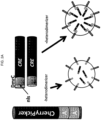
- the binding partners consisted of the CherryPicker protein (a membrane-targeted red fluorescent protein) fused to two DmrA domains and the CRE recombinase enzyme fused to a single DmrC domain, as illustrated in FIG. 2A .
- the CherryPicker and CRE expression plasmids were co-transfected with a VSV-G expression plasmid into 293T cells as illustrated in FIG. 1 and allowed to incubate for 48-72 hours to produce micro-vesicles either in the presence or absence of the A/C heterodimerizer.
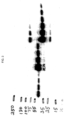
- Micro-vesicles were collected and assayed for relative CRE protein amount by Western blot using an anti-DmrC antibody.
- micro-vesicles were also assayed for CRE activity in a cell-based assay.
- CRE micro-vesicles were added to a cell line that required CRE to express a LacZ marker through removal of a stop cassette flanked by IoxP sites.
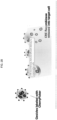
- CRE Recombinase microvesicles when applied to target cells, fuse with the plasma membrane and discharge CRE Recombinase into the cell, as illustrated in FIG. 2B .
- CRE Recombinase is transported to the nucleus via a nuclear localization signal where it can carry out CRE-mediated recombination between LoxP sites, as illustrated in FIG. 2C .
- CRE Recombinase microvesicles are labeled with the CherryPicker (Clontech, Mountain View, CA) so that treated target cells can be easily visualized by fluorescent microscopy.
- FIG. 2D Rapid and efficient genome modification using CRE Recombinase Gesicles is also shown in FIG. 2D .
- a cell line harboring an integrated, IoxP-conditional LacZ expression cassette was either transfected for 6 hr with a plasmid expressing CRE recombinase (middle image) or treated with 20 ⁇ l CRE Recombinase-containing microvesicles for 3 hr (right image). 24 hr after treatment, cells were stained for LacZ expression using the Beta-Galactosidase Staining Kit from Clontech (Cat. No. 631780).
- Beta Galactosidase gene is only expressed when the upstream IoxP-flanked stop codon is excised by CRE Recombinase. Results showed that, compared to plasmid transfection delivery of CRE Recombinase, using microvesicles resulted in faster and more efficient excision
- cytoplasmic proteins Yielding an 8 to 10 fold increase of target protein packaging efficiency into the gesicles.
- CherryPicker and AcGFP expression plasmids were co-transfected with a VSV-G expression plasmid into 293T cells to produce micro-vesicles either in the presence or absence of the A/C heterodimerizer.
- Micro-vesicles were collected and assayed for relative AcGFP protein amount by Western blot using an anti-DmrC antibody.
Landscapes
- Chemical & Material Sciences (AREA)
- Life Sciences & Earth Sciences (AREA)
- Health & Medical Sciences (AREA)
- Organic Chemistry (AREA)
- Engineering & Computer Science (AREA)
- Genetics & Genomics (AREA)
- Zoology (AREA)
- Wood Science & Technology (AREA)
- Bioinformatics & Cheminformatics (AREA)
- General Health & Medical Sciences (AREA)
- Biochemistry (AREA)
- Biotechnology (AREA)
- General Engineering & Computer Science (AREA)
- Biomedical Technology (AREA)
- Molecular Biology (AREA)
- Microbiology (AREA)
- Medicinal Chemistry (AREA)
- Proteomics, Peptides & Aminoacids (AREA)
- Biophysics (AREA)
- Gastroenterology & Hepatology (AREA)
- Cell Biology (AREA)
- Chemical Kinetics & Catalysis (AREA)
- General Chemical & Material Sciences (AREA)
- Tropical Medicine & Parasitology (AREA)
- Toxicology (AREA)
- Virology (AREA)
- Peptides Or Proteins (AREA)
- Micro-Organisms Or Cultivation Processes Thereof (AREA)
- Medicinal Preparation (AREA)
- Preparation Of Compounds By Using Micro-Organisms (AREA)
Applications Claiming Priority (5)
| Application Number | Priority Date | Filing Date | Title |
|---|---|---|---|
| US201361833880P | 2013-06-11 | 2013-06-11 | |
| US201361872115P | 2013-08-30 | 2013-08-30 | |
| PCT/US2014/038161 WO2014200659A1 (en) | 2013-06-11 | 2014-05-15 | Protein enriched microvesicles and methods of making and using the same |
| EP14810531.5A EP3008192B1 (de) | 2013-06-11 | 2014-05-15 | Proteinangereicherte mikrovesikel und verfahren zur herstellung und verwendung davon |
| EP19186554.2A EP3663405B8 (de) | 2013-06-11 | 2014-05-15 | Proteinangereicherte mikrovesikel und verfahren zur herstellung und verwendung davon |
Related Parent Applications (3)
| Application Number | Title | Priority Date | Filing Date |
|---|---|---|---|
| EP19186554.2A Division EP3663405B8 (de) | 2013-06-11 | 2014-05-15 | Proteinangereicherte mikrovesikel und verfahren zur herstellung und verwendung davon |
| EP19186554.2A Division-Into EP3663405B8 (de) | 2013-06-11 | 2014-05-15 | Proteinangereicherte mikrovesikel und verfahren zur herstellung und verwendung davon |
| EP14810531.5A Division EP3008192B1 (de) | 2013-06-11 | 2014-05-15 | Proteinangereicherte mikrovesikel und verfahren zur herstellung und verwendung davon |
Publications (2)
| Publication Number | Publication Date |
|---|---|
| EP4491726A2 true EP4491726A2 (de) | 2025-01-15 |
| EP4491726A3 EP4491726A3 (de) | 2025-03-05 |
Family
ID=52005990
Family Applications (3)
| Application Number | Title | Priority Date | Filing Date |
|---|---|---|---|
| EP19186554.2A Active EP3663405B8 (de) | 2013-06-11 | 2014-05-15 | Proteinangereicherte mikrovesikel und verfahren zur herstellung und verwendung davon |
| EP24200340.8A Pending EP4491726A3 (de) | 2013-06-11 | 2014-05-15 | Proteinangereicherte mikrovesikel und verfahren zur herstellung und verwendung davon |
| EP14810531.5A Active EP3008192B1 (de) | 2013-06-11 | 2014-05-15 | Proteinangereicherte mikrovesikel und verfahren zur herstellung und verwendung davon |
Family Applications Before (1)
| Application Number | Title | Priority Date | Filing Date |
|---|---|---|---|
| EP19186554.2A Active EP3663405B8 (de) | 2013-06-11 | 2014-05-15 | Proteinangereicherte mikrovesikel und verfahren zur herstellung und verwendung davon |
Family Applications After (1)
| Application Number | Title | Priority Date | Filing Date |
|---|---|---|---|
| EP14810531.5A Active EP3008192B1 (de) | 2013-06-11 | 2014-05-15 | Proteinangereicherte mikrovesikel und verfahren zur herstellung und verwendung davon |
Country Status (6)
| Country | Link |
|---|---|
| US (4) | US9593356B2 (de) |
| EP (3) | EP3663405B8 (de) |
| JP (2) | JP6525971B2 (de) |
| CN (1) | CN105283553B (de) |
| CA (1) | CA2905229C (de) |
| WO (1) | WO2014200659A1 (de) |
Families Citing this family (59)
| Publication number | Priority date | Publication date | Assignee | Title |
|---|---|---|---|---|
| JP6261500B2 (ja) | 2011-07-22 | 2018-01-17 | プレジデント アンド フェローズ オブ ハーバード カレッジ | ヌクレアーゼ切断特異性の評価および改善 |
| WO2013119602A1 (en) | 2012-02-06 | 2013-08-15 | President And Fellows Of Harvard College | Arrdc1-mediated microvesicles (armms) and uses thereof |
| US10634668B2 (en) | 2012-09-13 | 2020-04-28 | Takara Bio Usa, Inc. | Modifiable chemical inducers of proximity and methods of using the same |
| US9593356B2 (en) * | 2013-06-11 | 2017-03-14 | Takara Bio Usa, Inc. | Protein enriched microvesicles and methods of making and using the same |
| US20150044192A1 (en) | 2013-08-09 | 2015-02-12 | President And Fellows Of Harvard College | Methods for identifying a target site of a cas9 nuclease |
| US9359599B2 (en) | 2013-08-22 | 2016-06-07 | President And Fellows Of Harvard College | Engineered transcription activator-like effector (TALE) domains and uses thereof |
| US9388430B2 (en) | 2013-09-06 | 2016-07-12 | President And Fellows Of Harvard College | Cas9-recombinase fusion proteins and uses thereof |
| US9526784B2 (en) | 2013-09-06 | 2016-12-27 | President And Fellows Of Harvard College | Delivery system for functional nucleases |
| US9340799B2 (en) | 2013-09-06 | 2016-05-17 | President And Fellows Of Harvard College | MRNA-sensing switchable gRNAs |
| AU2014346559B2 (en) | 2013-11-07 | 2020-07-09 | Editas Medicine,Inc. | CRISPR-related methods and compositions with governing gRNAs |
| US20150165054A1 (en) | 2013-12-12 | 2015-06-18 | President And Fellows Of Harvard College | Methods for correcting caspase-9 point mutations |
| WO2015122967A1 (en) | 2014-02-13 | 2015-08-20 | Clontech Laboratories, Inc. | Methods of depleting a target molecule from an initial collection of nucleic acids, and compositions and kits for practicing the same |
| US10907219B2 (en) * | 2014-02-18 | 2021-02-02 | Unm Rainforest Innovations | Compositions and methods for controlling cellular function |
| WO2016022363A2 (en) | 2014-07-30 | 2016-02-11 | President And Fellows Of Harvard College | Cas9 proteins including ligand-dependent inteins |
| US9816080B2 (en) | 2014-10-31 | 2017-11-14 | President And Fellows Of Harvard College | Delivery of CAS9 via ARRDC1-mediated microvesicles (ARMMs) |
| US20160222372A1 (en) * | 2015-01-30 | 2016-08-04 | The Government Of The United States Of America, As Represented By The Secretary Of The Navy | Enzyme/Protein Packaged Bacterial Vesicles for Therapeutic Delivery |
| US10060850B2 (en) | 2015-04-03 | 2018-08-28 | Captl Llc | Particle detection using reflective surface |
| US10613096B2 (en) | 2015-08-28 | 2020-04-07 | Captl Llc | Multi-spectral microparticle-fluorescence photon cytometry |
| WO2017068077A1 (en) | 2015-10-20 | 2017-04-27 | Institut National De La Sante Et De La Recherche Medicale (Inserm) | Methods and products for genetic engineering |
| JP7109784B2 (ja) | 2015-10-23 | 2022-08-01 | プレジデント アンド フェローズ オブ ハーバード カレッジ | 遺伝子編集のための進化したCas9蛋白質 |
| GB201609216D0 (en) * | 2016-05-25 | 2016-07-06 | Evox Therapeutics And Isis Innovation Ltd | Exosomes comprising therapeutic polypeptides |
| KR102547316B1 (ko) | 2016-08-03 | 2023-06-23 | 프레지던트 앤드 펠로우즈 오브 하바드 칼리지 | 아데노신 핵염기 편집제 및 그의 용도 |
| US11661590B2 (en) | 2016-08-09 | 2023-05-30 | President And Fellows Of Harvard College | Programmable CAS9-recombinase fusion proteins and uses thereof |
| US11542509B2 (en) | 2016-08-24 | 2023-01-03 | President And Fellows Of Harvard College | Incorporation of unnatural amino acids into proteins using base editing |
| US11730823B2 (en) | 2016-10-03 | 2023-08-22 | President And Fellows Of Harvard College | Delivery of therapeutic RNAs via ARRDC1-mediated microvesicles |
| EP3526320A1 (de) | 2016-10-14 | 2019-08-21 | President and Fellows of Harvard College | Aav-abgabe von nukleobasen-editoren |
| WO2018119359A1 (en) | 2016-12-23 | 2018-06-28 | President And Fellows Of Harvard College | Editing of ccr5 receptor gene to protect against hiv infection |
| TW201839136A (zh) | 2017-02-06 | 2018-11-01 | 瑞士商諾華公司 | 治療血色素異常症之組合物及方法 |
| WO2018148647A2 (en) | 2017-02-10 | 2018-08-16 | Lajoie Marc Joseph | Genome editing reagents and their use |
| JP2020510038A (ja) | 2017-03-09 | 2020-04-02 | プレジデント アンド フェローズ オブ ハーバード カレッジ | がんワクチン |
| EP3592853A1 (de) | 2017-03-09 | 2020-01-15 | President and Fellows of Harvard College | Unterdrückung von schmerzen durch geneditierung |
| JP2020510439A (ja) | 2017-03-10 | 2020-04-09 | プレジデント アンド フェローズ オブ ハーバード カレッジ | シトシンからグアニンへの塩基編集因子 |
| CA3057192A1 (en) | 2017-03-23 | 2018-09-27 | President And Fellows Of Harvard College | Nucleobase editors comprising nucleic acid programmable dna binding proteins |
| WO2018191497A2 (en) | 2017-04-13 | 2018-10-18 | Captl Llc | Photon counting and spectroscopy |
| CN110799205A (zh) * | 2017-04-21 | 2020-02-14 | 通用医疗公司 | 利用CRISPR-Cpf1的可诱导、可调和多重的人类基因调节 |
| AU2018266111B2 (en) | 2017-05-08 | 2024-11-07 | Flagship Pioneering Innovations V, Inc. | Compositions for facilitating membrane fusion and uses thereof |
| WO2018209320A1 (en) | 2017-05-12 | 2018-11-15 | President And Fellows Of Harvard College | Aptazyme-embedded guide rnas for use with crispr-cas9 in genome editing and transcriptional activation |
| WO2019023680A1 (en) | 2017-07-28 | 2019-01-31 | President And Fellows Of Harvard College | METHODS AND COMPOSITIONS FOR EVOLUTION OF BASIC EDITORS USING PHAGE-ASSISTED CONTINUOUS EVOLUTION (PACE) |
| EP3676376B1 (de) | 2017-08-30 | 2025-01-15 | President and Fellows of Harvard College | Hocheffiziente baseneditoren mit gam |
| KR20250107288A (ko) | 2017-10-16 | 2025-07-11 | 더 브로드 인스티튜트, 인코퍼레이티드 | 아데노신 염기 편집제의 용도 |
| WO2019118949A1 (en) | 2017-12-15 | 2019-06-20 | The Broad Institute, Inc. | Systems and methods for predicting repair outcomes in genetic engineering |
| CA3091478A1 (en) | 2018-02-17 | 2019-08-22 | Flagship Pioneering Innovations V, Inc. | Compositions and methods for membrane protein delivery |
| EP3797160A1 (de) | 2018-05-23 | 2021-03-31 | The Broad Institute Inc. | Baseneditoren und verwendungen davon |
| US12522807B2 (en) | 2018-07-09 | 2026-01-13 | The Broad Institute, Inc. | RNA programmable epigenetic RNA modifiers and uses thereof |
| WO2020012335A1 (en) | 2018-07-10 | 2020-01-16 | Alia Therapeutics S.R.L. | Vesicles for traceless delivery of guide rna molecules and/or guide rna molecule/rna-guided nuclease complex(es) and a production method thereof |
| WO2020092453A1 (en) | 2018-10-29 | 2020-05-07 | The Broad Institute, Inc. | Nucleobase editors comprising geocas9 and uses thereof |
| US12496274B2 (en) | 2018-11-14 | 2025-12-16 | Flagship Pioneering Innovations V, Inc. | Compositions and methods for compartment-specific cargo delivery |
| US12351837B2 (en) | 2019-01-23 | 2025-07-08 | The Broad Institute, Inc. | Supernegatively charged proteins and uses thereof |
| JP7657726B2 (ja) | 2019-03-19 | 2025-04-07 | ザ ブロード インスティテュート,インコーポレーテッド | 編集ヌクレオチド配列を編集するための方法および組成物 |
| US12473543B2 (en) | 2019-04-17 | 2025-11-18 | The Broad Institute, Inc. | Adenine base editors with reduced off-target effects |
| WO2020252455A1 (en) | 2019-06-13 | 2020-12-17 | The General Hospital Corporation | Engineered human-endogenous virus-like particles and methods of use thereof for delivery to cells |
| KR20220108036A (ko) | 2019-09-26 | 2022-08-02 | 프레지던트 앤드 펠로우즈 오브 하바드 칼리지 | 최소 아레스틴 도메인 함유 단백질 1 (arrdc1) 구축물 |
| US12435330B2 (en) | 2019-10-10 | 2025-10-07 | The Broad Institute, Inc. | Methods and compositions for prime editing RNA |
| CN117965431A (zh) * | 2020-01-20 | 2024-05-03 | 医微细胞生物技术(广州)有限公司 | 一种囊泡及其应用 |
| CN113134015B (zh) | 2020-01-20 | 2023-11-17 | 医微细胞生物技术(广州)有限公司 | 细胞外囊泡及其在皮肤产品的用途 |
| DE112021002672T5 (de) | 2020-05-08 | 2023-04-13 | President And Fellows Of Harvard College | Vefahren und zusammensetzungen zum gleichzeitigen editieren beider stränge einer doppelsträngigen nukleotid-zielsequenz |
| EP4185600A4 (de) | 2020-07-24 | 2024-12-04 | The General Hospital Corporation | Verbesserte virusähnliche partikel und verfahren zur verwendung davon zur abgabe an zellen |
| WO2023220459A1 (en) * | 2022-05-13 | 2023-11-16 | Northwestern University | Active loading of cargo entity into lipid bilayer particles using dimerization domains |
| WO2024038407A1 (en) * | 2022-08-19 | 2024-02-22 | Seqirus Inc. | Lipid nanoparticle comprising a dna-binding protein |
Citations (72)
| Publication number | Priority date | Publication date | Assignee | Title |
|---|---|---|---|---|
| US5091389A (en) | 1991-04-23 | 1992-02-25 | Merck & Co., Inc. | Lipophilic macrolide useful as an immunosuppressant |
| US5093338A (en) | 1991-04-23 | 1992-03-03 | Merck & Co., Inc. | Lipophilic macrolide useful as an immunosuppressant |
| WO1992005179A1 (en) | 1990-09-19 | 1992-04-02 | American Home Products Corporation | Carboxylic acid esters of rapamycin |
| US5109112A (en) | 1989-01-19 | 1992-04-28 | Merck & Co., Inc. | FK-506 cytosolic binding protein |
| US5116756A (en) | 1991-01-28 | 1992-05-26 | Merck & Co., Inc. | Process for producing FK-506 |
| US5140018A (en) | 1991-05-07 | 1992-08-18 | Abbott Laboratories | 1,3,2-benzodithiazole-1-oxide compounds |
| WO1992014737A1 (en) | 1991-02-19 | 1992-09-03 | Smithkline Beecham Plc | 3-desmethylrapamycin or derivatives thereof, processes for their preparation and their use as antifungal agents and immunosuppressants |
| US5147877A (en) | 1991-04-18 | 1992-09-15 | Merck & Co. Inc. | Semi-synthetic immunosuppressive macrolides |
| WO1993003052A1 (en) | 1991-08-08 | 1993-02-18 | Arizona Board Of Regents For And On Behalf Of The University Of Arizona | Multidomain dna ligands for protein and nucleic acid affinity chromatography and processing of solid-phase dna |
| WO1993004680A1 (en) | 1991-09-05 | 1993-03-18 | Abbott Laboratories | Macrocyclic immunomodulators |
| US5198421A (en) | 1991-04-26 | 1993-03-30 | Merck & Co., Inc. | Phosphorylated cyclic lipopeptide |
| US5200411A (en) | 1989-06-14 | 1993-04-06 | Sandoz, Ltd. | Heteroatoms-containing tricyclic compounds |
| US5208241A (en) | 1991-09-09 | 1993-05-04 | Merck & Co., Inc. | N-heteroaryl, n-alkylheteroaryl, n-alkenylheteroaryl and n-alkynylheteroarylmacrolides having immunosuppressive activity |
| US5210030A (en) | 1990-06-25 | 1993-05-11 | Merck & Co., Inc. | Process for selectively acylating immunomycin |
| WO1993010122A1 (en) | 1991-11-18 | 1993-05-27 | American Home Products Corporation | Rapamycin pyrazoles |
| WO1993011130A1 (en) | 1991-12-03 | 1993-06-10 | Smithkline Beecham Plc | Rapamycin derivative and its medicinal use |
| US5221625A (en) | 1992-01-10 | 1993-06-22 | Merck & Co., Inc. | Cyclcic FR-900520 microbial biotransformation agent |
| US5225403A (en) | 1991-06-25 | 1993-07-06 | Merck & Co., Inc. | C-21 hydroxylated FK-506 antagonist |
| WO1993013663A1 (en) | 1992-01-17 | 1993-07-22 | Abbott Laboratories | Method of directing biosynthesis of specific polyketides |
| WO1993018043A1 (en) | 1992-03-05 | 1993-09-16 | American Home Products Corporation | Novel rapamycin 42-sulfonates and 42-(n-carboalkoxy)sulfamates useful as immunosuppressive agents |
| US5247076A (en) | 1991-09-09 | 1993-09-21 | Merck & Co., Inc. | Imidazolidyl macrolides having immunosuppressive activity |
| US5252732A (en) | 1991-09-09 | 1993-10-12 | Merck & Co., Inc. | D-heteroaryl, O-alkylheteroaryl, O-alkenylheteroaryl and O-alkynylheteroarylmacrolides having immunosuppressive activity |
| US5258389A (en) | 1992-11-09 | 1993-11-02 | Merck & Co., Inc. | O-aryl, O-alkyl, O-alkenyl and O-alkynylrapamycin derivatives |
| WO1993025533A1 (en) | 1992-06-05 | 1993-12-23 | Abbott Laboratories | Methods and reagents for the determination of immunosuppressive agents |
| WO1994002137A1 (en) | 1992-07-17 | 1994-02-03 | Smithkline Beecham Corporation | Rapamycin derivatives |
| WO1994002136A1 (en) | 1992-07-17 | 1994-02-03 | Smithkline Beecham Corporation | Rapamycin derivatives |
| WO1994002485A1 (en) | 1992-07-17 | 1994-02-03 | Smithkline Beecham Corporation | Rapamycin derivatives |
| WO1994004540A1 (en) | 1992-08-13 | 1994-03-03 | American Home Products Corporation | 27-hydroxyrapamycin and derivatives thereof |
| WO1994009010A1 (en) | 1992-10-09 | 1994-04-28 | Sandoz Ltd. | O-alkylated rapamycin derivatives and their use, particularly as immunosuppressants |
| US5310901A (en) | 1993-03-05 | 1994-05-10 | Merck & Co., Inc. | O-heteroaryl, O-alkylheteroaryl, O-alkenylheteroaryl and O-alkynlheteroarylrapamycin derivatives |
| US5310903A (en) | 1993-03-05 | 1994-05-10 | Merck & Co., Inc. | Imidazolidyl rapamycin derivatives |
| WO1994010843A1 (en) | 1992-11-10 | 1994-05-26 | Smithkline Beecham Corporation | Rapamycin derivatives |
| US5318895A (en) | 1992-10-05 | 1994-06-07 | Merck & Co., Inc. | Aspergillus niger mutants |
| US5324644A (en) | 1992-07-28 | 1994-06-28 | Merck & Co., Inc. | Process for producing immunosuppressant agent |
| WO1994018207A1 (en) | 1993-02-02 | 1994-08-18 | Sandoz Ltd. | Rapamycin-like macrolide and a new strain of streptomyces which produces it |
| WO1994021644A1 (en) | 1993-03-17 | 1994-09-29 | Abbott Laboratories | Thio-heterocyclic macrolactam immunomodulators |
| US5362735A (en) | 1994-02-23 | 1994-11-08 | Smithkline Beecham Corporation | Rapamycin derivatives |
| WO1994025022A1 (en) | 1993-04-23 | 1994-11-10 | Abbott Laboratories | Rapamycin conjugates and antibodies |
| WO1995004060A1 (en) | 1993-07-31 | 1995-02-09 | Smithkline Beecham Plc | Rapamycin derivative with antimicrobial, anticancer and immunomodulation activity |
| WO1995004738A1 (en) | 1993-08-10 | 1995-02-16 | American Home Products Corporation | C-22 ring stabilized rapamycin derivatives |
| WO1995007468A1 (en) | 1993-09-08 | 1995-03-16 | Sandoz Ltd. | Assay kit |
| WO1995015328A1 (en) | 1993-11-30 | 1995-06-08 | Abbott Laboratories | Macrocyclic immunomodulators with novel cyclohexyl ring replacements |
| WO1995016691A1 (en) | 1993-12-17 | 1995-06-22 | Sandoz Ltd. | Rapamycin derivatives useful as immunosuppressants |
| US5457182A (en) | 1994-02-15 | 1995-10-10 | Merck & Co., Inc. | FK-506 cytosolic binding protein, FKBP12.6 |
| WO1996000282A1 (en) | 1994-06-23 | 1996-01-04 | Merck & Co., Inc. | Expression cassettes useful in construction of integrative and replicative expression vectors for streptomyces |
| US5484799A (en) | 1993-12-09 | 1996-01-16 | Abbott Laboratories | Antifungal dorrigocin derivatives |
| WO1996003430A1 (en) | 1994-07-27 | 1996-02-08 | Sandoz Ltd. | Organic compounds |
| WO1996006097A1 (en) | 1994-08-18 | 1996-02-29 | Ariad Gene Therapeutics, Inc. | New multimerizing agents |
| US5512421A (en) | 1991-02-19 | 1996-04-30 | The Regents Of The University Of California | Generation, concentration and efficient transfer of VSV-G pseudotyped retroviral vectors |
| US5527907A (en) | 1993-11-19 | 1996-06-18 | Abbott Laboratories | Macrolide immunomodulators |
| US5534632A (en) | 1991-09-05 | 1996-07-09 | Abbott Laboratories | Macrocyclic carbamate immunomodulators |
| US5541189A (en) | 1993-03-17 | 1996-07-30 | Abbott Laboratories | Substituted aliphatic amine-containing macrocyclic immunomodulators |
| US5541193A (en) | 1991-09-05 | 1996-07-30 | Abbott Laboratories | Heterocycle-containing macrocyclic immunomodulators |
| US5561137A (en) | 1991-09-05 | 1996-10-01 | Abbott Laboratories | Thio-heterocyclic macrolactam immunomodulators |
| US5563172A (en) | 1991-09-05 | 1996-10-08 | Abbott Laboratories | Macrocyclic amide and urea immunomodulators |
| WO1996035423A1 (en) | 1995-05-12 | 1996-11-14 | Novartis Ag | Antifungal composition |
| US5583139A (en) | 1993-11-19 | 1996-12-10 | Abbott Laboratories | Marcolide immunomodulators |
| WO1996041807A1 (en) | 1995-06-09 | 1996-12-27 | Novartis Ag | Rapamycin derivatives |
| WO1996041865A1 (en) | 1995-06-07 | 1996-12-27 | Ariad Gene Therapeutics, Inc. | Rapamcycin-based regulation of biological events |
| US5597715A (en) | 1993-02-10 | 1997-01-28 | Smithkline Beecham P.L.C. | 7,42-Bis(O-demethyl)rapamycin |
| US5604234A (en) | 1991-09-05 | 1997-02-18 | Abbott Laboratories | Substituted thiol macrolactam immunomodulators |
| WO1997010502A1 (en) | 1995-09-15 | 1997-03-20 | Merck & Co., Inc. | A high throughput assay using fusion proteins |
| WO1999041258A1 (en) | 1998-02-13 | 1999-08-19 | President And Fellows Of Harvard College | Novel dimerizing agents, their production and use |
| WO2003029827A2 (en) | 2001-10-01 | 2003-04-10 | Bioimage A/S | A method of detecting intracellular protein-protein interactions using three heterologous conjugates |
| US6693189B2 (en) | 1996-07-12 | 2004-02-17 | Ariad Gene Therapeutics, Inc. | Materials and method for treating or preventing pathogenic fungal infection |
| US6984635B1 (en) | 1998-02-13 | 2006-01-10 | Board Of Trustees Of The Leland Stanford Jr. University | Dimerizing agents, their production and use |
| US7067526B1 (en) | 1999-08-24 | 2006-06-27 | Ariad Gene Therapeutics, Inc. | 28-epirapalogs |
| US7196192B2 (en) | 1999-08-24 | 2007-03-27 | Ariad Gene Therapeutics, Inc. | 28-epirapalogs |
| US7323337B2 (en) | 2001-06-08 | 2008-01-29 | Dnavec Research Inc. | Gene transfer into primate embryonic stem cells using VSV-G pseudotyped simian immunodeficiency virus vectors |
| US20100167377A1 (en) | 1997-12-22 | 2010-07-01 | Whitt Michael A | Recombinant viruses comprising the membrane-proximal domain of VSV G protein |
| WO2011163029A2 (en) | 2010-06-21 | 2011-12-29 | The Board Of Trustees Of The Leland Stanford Junior University | Alkenyl substituted cycloaliphatic compounds as chemical inducers of proximity |
| US20120322147A1 (en) | 2009-11-13 | 2012-12-20 | Inserm(Institut National De La Sante Et De La Recherche Medicale) | Direct protein delivery with engineered microvesicles |
Family Cites Families (16)
| Publication number | Priority date | Publication date | Assignee | Title |
|---|---|---|---|---|
| CZ206195A3 (en) | 1993-02-12 | 1996-04-17 | Univ Leland Stanford Junior | Controlled transcription of target genes and other biological materials |
| HUT73100A (en) | 1993-07-16 | 1996-06-28 | Harvard College | Regulated apoptosis |
| EP0754238A4 (de) | 1994-04-05 | 1998-01-28 | Pharmagenics Inc | Die bestimmung und identifikation von aktiven substanzen in substanzbibliotheken |
| US6150527A (en) * | 1994-08-18 | 2000-11-21 | Ariad Pharmaceuticals, Inc. | Synthetic multimerizing agents |
| JPH11511643A (ja) | 1994-10-25 | 1999-10-12 | ザ・ボード・オブ・トラスティーズ・オブ・ザ・リランド・スタンフォード・ジュニア・ユニバーシティ | 遺伝子工学処理された細胞の条件的形質転換 |
| EP0787207B1 (de) | 1994-11-01 | 2005-10-26 | Ariad Gene Therapeutics, Inc. | Neue methode zum auffindenund bewerten biologisch aktiver moleküle |
| AU2270101A (en) | 1999-12-20 | 2001-07-03 | Merck & Co., Inc. | Pharmaceutical kit |
| US7741367B2 (en) | 2006-02-08 | 2010-06-22 | Virginia Tech Intellectual Properties, Inc. | Method of using abscisic acid to treat diseases and disorders |
| EP1939218A1 (de) | 2006-12-29 | 2008-07-02 | Thrombotargets Europe, S.L. | Mikrovesikel aus rekombinanter Hefe mit blutstillender Wirkung und Verwendung dafür |
| CA2685223A1 (en) | 2007-05-03 | 2008-11-13 | Basf Plant Science Gmbh | Plants having enhanced yield-related traits and a method for making the same |
| JP5667180B2 (ja) * | 2009-07-01 | 2015-02-12 | イオン メディックス インコーポレイテッド | 哺乳類の有核細胞に由来するマイクロベシクル及びその用途 |
| JP2013510563A (ja) | 2009-11-13 | 2013-03-28 | アンスティチュ ナショナル ドゥ ラ サンテ エ ドゥ ラ ルシェルシュ メディカル | 操作された微小胞を用いた真核細胞のリプログラミング |
| CN103079592B (zh) | 2010-07-01 | 2015-10-21 | 浦项工科大学校产学协力团 | 使用来自细胞的微泡治疗和诊断癌症的方法 |
| CN104540382A (zh) * | 2012-06-12 | 2015-04-22 | 弗·哈夫曼-拉罗切有限公司 | 用于产生条件性敲除等位基因的方法和组合物 |
| US10634668B2 (en) * | 2012-09-13 | 2020-04-28 | Takara Bio Usa, Inc. | Modifiable chemical inducers of proximity and methods of using the same |
| US9593356B2 (en) * | 2013-06-11 | 2017-03-14 | Takara Bio Usa, Inc. | Protein enriched microvesicles and methods of making and using the same |
-
2014
- 2014-05-15 US US14/278,714 patent/US9593356B2/en active Active
- 2014-05-15 JP JP2016519512A patent/JP6525971B2/ja active Active
- 2014-05-15 EP EP19186554.2A patent/EP3663405B8/de active Active
- 2014-05-15 EP EP24200340.8A patent/EP4491726A3/de active Pending
- 2014-05-15 CA CA2905229A patent/CA2905229C/en active Active
- 2014-05-15 WO PCT/US2014/038161 patent/WO2014200659A1/en not_active Ceased
- 2014-05-15 EP EP14810531.5A patent/EP3008192B1/de active Active
- 2014-05-15 CN CN201480032802.9A patent/CN105283553B/zh active Active
-
2017
- 2017-01-25 US US15/415,754 patent/US10793828B2/en active Active
-
2019
- 2019-05-07 JP JP2019087642A patent/JP6771068B2/ja active Active
-
2020
- 2020-08-21 US US16/999,399 patent/US11643635B2/en active Active
-
2023
- 2023-03-31 US US18/129,292 patent/US12319934B2/en active Active
Patent Citations (75)
| Publication number | Priority date | Publication date | Assignee | Title |
|---|---|---|---|---|
| US5109112A (en) | 1989-01-19 | 1992-04-28 | Merck & Co., Inc. | FK-506 cytosolic binding protein |
| US5200411A (en) | 1989-06-14 | 1993-04-06 | Sandoz, Ltd. | Heteroatoms-containing tricyclic compounds |
| US5210030A (en) | 1990-06-25 | 1993-05-11 | Merck & Co., Inc. | Process for selectively acylating immunomycin |
| WO1992005179A1 (en) | 1990-09-19 | 1992-04-02 | American Home Products Corporation | Carboxylic acid esters of rapamycin |
| US5116756A (en) | 1991-01-28 | 1992-05-26 | Merck & Co., Inc. | Process for producing FK-506 |
| US5512421A (en) | 1991-02-19 | 1996-04-30 | The Regents Of The University Of California | Generation, concentration and efficient transfer of VSV-G pseudotyped retroviral vectors |
| WO1992014737A1 (en) | 1991-02-19 | 1992-09-03 | Smithkline Beecham Plc | 3-desmethylrapamycin or derivatives thereof, processes for their preparation and their use as antifungal agents and immunosuppressants |
| US5670354A (en) | 1991-02-19 | 1997-09-23 | The Regents Of The University Of California | Use of VSV-G pseudotyped vectors for transfer of genes into embryos |
| US5147877A (en) | 1991-04-18 | 1992-09-15 | Merck & Co. Inc. | Semi-synthetic immunosuppressive macrolides |
| US5093338A (en) | 1991-04-23 | 1992-03-03 | Merck & Co., Inc. | Lipophilic macrolide useful as an immunosuppressant |
| US5091389A (en) | 1991-04-23 | 1992-02-25 | Merck & Co., Inc. | Lipophilic macrolide useful as an immunosuppressant |
| US5198421A (en) | 1991-04-26 | 1993-03-30 | Merck & Co., Inc. | Phosphorylated cyclic lipopeptide |
| US5140018A (en) | 1991-05-07 | 1992-08-18 | Abbott Laboratories | 1,3,2-benzodithiazole-1-oxide compounds |
| US5225403A (en) | 1991-06-25 | 1993-07-06 | Merck & Co., Inc. | C-21 hydroxylated FK-506 antagonist |
| WO1993003052A1 (en) | 1991-08-08 | 1993-02-18 | Arizona Board Of Regents For And On Behalf Of The University Of Arizona | Multidomain dna ligands for protein and nucleic acid affinity chromatography and processing of solid-phase dna |
| US5534632A (en) | 1991-09-05 | 1996-07-09 | Abbott Laboratories | Macrocyclic carbamate immunomodulators |
| US5541193A (en) | 1991-09-05 | 1996-07-30 | Abbott Laboratories | Heterocycle-containing macrocyclic immunomodulators |
| US5561228A (en) | 1991-09-05 | 1996-10-01 | Abbott Laboratories | Macrocyclic immunomodulators |
| US5561137A (en) | 1991-09-05 | 1996-10-01 | Abbott Laboratories | Thio-heterocyclic macrolactam immunomodulators |
| WO1993004680A1 (en) | 1991-09-05 | 1993-03-18 | Abbott Laboratories | Macrocyclic immunomodulators |
| US5563172A (en) | 1991-09-05 | 1996-10-08 | Abbott Laboratories | Macrocyclic amide and urea immunomodulators |
| US5604234A (en) | 1991-09-05 | 1997-02-18 | Abbott Laboratories | Substituted thiol macrolactam immunomodulators |
| US5252732A (en) | 1991-09-09 | 1993-10-12 | Merck & Co., Inc. | D-heteroaryl, O-alkylheteroaryl, O-alkenylheteroaryl and O-alkynylheteroarylmacrolides having immunosuppressive activity |
| US5247076A (en) | 1991-09-09 | 1993-09-21 | Merck & Co., Inc. | Imidazolidyl macrolides having immunosuppressive activity |
| US5208241A (en) | 1991-09-09 | 1993-05-04 | Merck & Co., Inc. | N-heteroaryl, n-alkylheteroaryl, n-alkenylheteroaryl and n-alkynylheteroarylmacrolides having immunosuppressive activity |
| WO1993010122A1 (en) | 1991-11-18 | 1993-05-27 | American Home Products Corporation | Rapamycin pyrazoles |
| WO1993011130A1 (en) | 1991-12-03 | 1993-06-10 | Smithkline Beecham Plc | Rapamycin derivative and its medicinal use |
| US5221625A (en) | 1992-01-10 | 1993-06-22 | Merck & Co., Inc. | Cyclcic FR-900520 microbial biotransformation agent |
| WO1993013663A1 (en) | 1992-01-17 | 1993-07-22 | Abbott Laboratories | Method of directing biosynthesis of specific polyketides |
| WO1993018043A1 (en) | 1992-03-05 | 1993-09-16 | American Home Products Corporation | Novel rapamycin 42-sulfonates and 42-(n-carboalkoxy)sulfamates useful as immunosuppressive agents |
| WO1993025533A1 (en) | 1992-06-05 | 1993-12-23 | Abbott Laboratories | Methods and reagents for the determination of immunosuppressive agents |
| WO1994002137A1 (en) | 1992-07-17 | 1994-02-03 | Smithkline Beecham Corporation | Rapamycin derivatives |
| WO1994002136A1 (en) | 1992-07-17 | 1994-02-03 | Smithkline Beecham Corporation | Rapamycin derivatives |
| WO1994002485A1 (en) | 1992-07-17 | 1994-02-03 | Smithkline Beecham Corporation | Rapamycin derivatives |
| US5324644A (en) | 1992-07-28 | 1994-06-28 | Merck & Co., Inc. | Process for producing immunosuppressant agent |
| WO1994004540A1 (en) | 1992-08-13 | 1994-03-03 | American Home Products Corporation | 27-hydroxyrapamycin and derivatives thereof |
| US5318895A (en) | 1992-10-05 | 1994-06-07 | Merck & Co., Inc. | Aspergillus niger mutants |
| WO1994009010A1 (en) | 1992-10-09 | 1994-04-28 | Sandoz Ltd. | O-alkylated rapamycin derivatives and their use, particularly as immunosuppressants |
| US5258389A (en) | 1992-11-09 | 1993-11-02 | Merck & Co., Inc. | O-aryl, O-alkyl, O-alkenyl and O-alkynylrapamycin derivatives |
| WO1994010843A1 (en) | 1992-11-10 | 1994-05-26 | Smithkline Beecham Corporation | Rapamycin derivatives |
| WO1994018207A1 (en) | 1993-02-02 | 1994-08-18 | Sandoz Ltd. | Rapamycin-like macrolide and a new strain of streptomyces which produces it |
| US5597715A (en) | 1993-02-10 | 1997-01-28 | Smithkline Beecham P.L.C. | 7,42-Bis(O-demethyl)rapamycin |
| US5310901A (en) | 1993-03-05 | 1994-05-10 | Merck & Co., Inc. | O-heteroaryl, O-alkylheteroaryl, O-alkenylheteroaryl and O-alkynlheteroarylrapamycin derivatives |
| US5310903A (en) | 1993-03-05 | 1994-05-10 | Merck & Co., Inc. | Imidazolidyl rapamycin derivatives |
| US5457194A (en) | 1993-03-17 | 1995-10-10 | Abbott Laboratories | Substituted aliphatic amine-containing macrocyclic immunomodulators |
| WO1994021644A1 (en) | 1993-03-17 | 1994-09-29 | Abbott Laboratories | Thio-heterocyclic macrolactam immunomodulators |
| US5541189A (en) | 1993-03-17 | 1996-07-30 | Abbott Laboratories | Substituted aliphatic amine-containing macrocyclic immunomodulators |
| WO1994025022A1 (en) | 1993-04-23 | 1994-11-10 | Abbott Laboratories | Rapamycin conjugates and antibodies |
| WO1995004060A1 (en) | 1993-07-31 | 1995-02-09 | Smithkline Beecham Plc | Rapamycin derivative with antimicrobial, anticancer and immunomodulation activity |
| WO1995004738A1 (en) | 1993-08-10 | 1995-02-16 | American Home Products Corporation | C-22 ring stabilized rapamycin derivatives |
| WO1995007468A1 (en) | 1993-09-08 | 1995-03-16 | Sandoz Ltd. | Assay kit |
| US5527907A (en) | 1993-11-19 | 1996-06-18 | Abbott Laboratories | Macrolide immunomodulators |
| US5583139A (en) | 1993-11-19 | 1996-12-10 | Abbott Laboratories | Marcolide immunomodulators |
| WO1995015328A1 (en) | 1993-11-30 | 1995-06-08 | Abbott Laboratories | Macrocyclic immunomodulators with novel cyclohexyl ring replacements |
| US5484799A (en) | 1993-12-09 | 1996-01-16 | Abbott Laboratories | Antifungal dorrigocin derivatives |
| WO1995016691A1 (en) | 1993-12-17 | 1995-06-22 | Sandoz Ltd. | Rapamycin derivatives useful as immunosuppressants |
| US5457182A (en) | 1994-02-15 | 1995-10-10 | Merck & Co., Inc. | FK-506 cytosolic binding protein, FKBP12.6 |
| US5362735A (en) | 1994-02-23 | 1994-11-08 | Smithkline Beecham Corporation | Rapamycin derivatives |
| WO1996000282A1 (en) | 1994-06-23 | 1996-01-04 | Merck & Co., Inc. | Expression cassettes useful in construction of integrative and replicative expression vectors for streptomyces |
| WO1996003430A1 (en) | 1994-07-27 | 1996-02-08 | Sandoz Ltd. | Organic compounds |
| WO1996006097A1 (en) | 1994-08-18 | 1996-02-29 | Ariad Gene Therapeutics, Inc. | New multimerizing agents |
| WO1996035423A1 (en) | 1995-05-12 | 1996-11-14 | Novartis Ag | Antifungal composition |
| WO1996041865A1 (en) | 1995-06-07 | 1996-12-27 | Ariad Gene Therapeutics, Inc. | Rapamcycin-based regulation of biological events |
| WO1996041807A1 (en) | 1995-06-09 | 1996-12-27 | Novartis Ag | Rapamycin derivatives |
| WO1997010502A1 (en) | 1995-09-15 | 1997-03-20 | Merck & Co., Inc. | A high throughput assay using fusion proteins |
| US6693189B2 (en) | 1996-07-12 | 2004-02-17 | Ariad Gene Therapeutics, Inc. | Materials and method for treating or preventing pathogenic fungal infection |
| US20100167377A1 (en) | 1997-12-22 | 2010-07-01 | Whitt Michael A | Recombinant viruses comprising the membrane-proximal domain of VSV G protein |
| US6984635B1 (en) | 1998-02-13 | 2006-01-10 | Board Of Trustees Of The Leland Stanford Jr. University | Dimerizing agents, their production and use |
| WO1999041258A1 (en) | 1998-02-13 | 1999-08-19 | President And Fellows Of Harvard College | Novel dimerizing agents, their production and use |
| US7067526B1 (en) | 1999-08-24 | 2006-06-27 | Ariad Gene Therapeutics, Inc. | 28-epirapalogs |
| US7196192B2 (en) | 1999-08-24 | 2007-03-27 | Ariad Gene Therapeutics, Inc. | 28-epirapalogs |
| US7323337B2 (en) | 2001-06-08 | 2008-01-29 | Dnavec Research Inc. | Gene transfer into primate embryonic stem cells using VSV-G pseudotyped simian immunodeficiency virus vectors |
| WO2003029827A2 (en) | 2001-10-01 | 2003-04-10 | Bioimage A/S | A method of detecting intracellular protein-protein interactions using three heterologous conjugates |
| US20120322147A1 (en) | 2009-11-13 | 2012-12-20 | Inserm(Institut National De La Sante Et De La Recherche Medicale) | Direct protein delivery with engineered microvesicles |
| WO2011163029A2 (en) | 2010-06-21 | 2011-12-29 | The Board Of Trustees Of The Leland Stanford Junior University | Alkenyl substituted cycloaliphatic compounds as chemical inducers of proximity |
Non-Patent Citations (20)
| Title |
|---|
| "GenBank", Database accession no. M35219.1 |
| AUSUBEL ET AL.: "Short Protocols in Molecular Biology", 1995, WILEY & SONS |
| BACKOVIC ET AL., CURR. OPIN. STRUCT. BIOL., vol. 19, no. 2, 2009, pages 189 - 96 |
| BEIYI SHEN, NING WU, JR-MING YANG, STEPHEN J. GOULD: "Protein Targeting to Exosomes/Microvesicles by Plasma Membrane Anchors", JOURNAL OF BIOLOGICAL CHEMISTRY, vol. 286, no. 16, 22 April 2011 (2011-04-22), US , pages 14383 - 14395, XP055498705, ISSN: 0021-9258, DOI: 10.1074/jbc.M110.208660 |
| BIOCHEMISTRY, vol. 37, no. 44, 3 November 1998 (1998-11-03), pages 15383 - 91 |
| BITTNER ET AL., METHODS IN ENZYMOL., vol. 153, 1987, pages 51 - 544 |
| CAMUS ET AL., MOL BIOL CELL, vol. 18, 2007, pages 3193 - 3203 |
| CASTELLANO ET AL.: "Inducible recruitment of Cdc42 or WASP to a cell-surface receptor triggers actin polymerization and filopodium formation", CURR. BIOL., vol. 9, no. 7, 1999, pages 351 - 360 |
| CLACKSON ET AL.: "Redesigning an FKBP-ligand interface to generate chemical dimerizers with novel specificity", PROC. NATL. ACAD. SCI. USA, vol. 95, no. 18, 1998, pages 10437 - 10442, XP002441024, DOI: 10.1073/pnas.95.18.10437 |
| COURTNEY ET AL., VIROLOGY JOURNAL, vol. 5, 2008, pages 28 |
| CRABTREE ET AL.: "Proximity and orientation underlie signaling by the non-receptor tyrosine kinase ZAP70", EMBO. J., vol. 16, no. 18, 1997, pages 5618 - 5628, XP055263591, DOI: 10.1093/emboj/16.18.5618 |
| CRABTREE, G. R.SCHREIBER, S. L.: "Three-part inventions: intracellular signaling and induced proximity", TRENDS BIOCHEM. SCI., vol. 21, no. 11, 1996, pages 418 - 422, XP002300706, DOI: 10.1016/S0968-0004(96)20027-1 |
| JIN ET AL.: "In vivo selection using a cell-growth switch", NAT. GENET., vol. 26, no. 1, 2000, pages 64 - 66, XP002481535, DOI: 10.1038/79194 |
| LOGANSHENK, PROC. NATL. ACAD. SCI. USA, vol. 81, 1984, pages 355 - 359 |
| MUTHUSWAMY ET AL.: "Controlled dimerization of ErbB receptors provides evidence for differential signaling by homo- and heterodimers", MOL. CELL. BIOL., vol. 19, no. 10, 1999, pages 6845 - 6857, XP055531159, DOI: 10.1128/MCB.19.10.6845 |
| NEIL, NATURE, vol. 451, 2008, pages 425 - 4431 |
| TIMMINS ET AL., VIROLOGY, 2001 |
| TRAJKOVIC ET AL., SCIENCE, vol. 319, 2008, pages 1244 - 1247 |
| YU ET AL., CANCER RES, vol. 66, 2006, pages 4795 - 4801 |
| YU ET AL., FEBS J., vol. 276, 2009, pages 2201 - 2212 |
Also Published As
| Publication number | Publication date |
|---|---|
| JP2019141093A (ja) | 2019-08-29 |
| WO2014200659A1 (en) | 2014-12-18 |
| EP4491726A3 (de) | 2025-03-05 |
| CA2905229A1 (en) | 2014-12-18 |
| JP2016521573A (ja) | 2016-07-25 |
| US20200377852A1 (en) | 2020-12-03 |
| EP3663405B1 (de) | 2024-09-18 |
| EP3008192A1 (de) | 2016-04-20 |
| EP3663405B8 (de) | 2024-10-30 |
| US20140364588A1 (en) | 2014-12-11 |
| EP3008192A4 (de) | 2016-12-28 |
| EP3008192B1 (de) | 2019-07-17 |
| US20230235278A1 (en) | 2023-07-27 |
| US20170130197A1 (en) | 2017-05-11 |
| CA2905229C (en) | 2023-10-10 |
| US9593356B2 (en) | 2017-03-14 |
| JP6525971B2 (ja) | 2019-06-05 |
| JP6771068B2 (ja) | 2020-10-21 |
| CN105283553B (zh) | 2021-06-25 |
| US12319934B2 (en) | 2025-06-03 |
| US10793828B2 (en) | 2020-10-06 |
| EP3663405A1 (de) | 2020-06-10 |
| US11643635B2 (en) | 2023-05-09 |
| CN105283553A (zh) | 2016-01-27 |
Similar Documents
| Publication | Publication Date | Title |
|---|---|---|
| US12319934B2 (en) | Protein enriched microvesicles and methods of making and using the same | |
| US20150315252A1 (en) | Protein enriched microvesicles and methods of making and using the same | |
| WO2015191911A2 (en) | Protein enriched microvesicles and methods of making and using the same | |
| EP3693398A1 (de) | In-vitro-herstellung von erythrozyten mit sortasefähigen proteinen | |
| CN104718296B (zh) | 包含嵌合巨细胞病毒启动子和增强子序列的表达载体 | |
| CN105658792B (zh) | 靶向组蛋白乙酰化 | |
| US20160032295A1 (en) | Methods, compositions and kits for a one-step dna cloning system | |
| WO2012071549A2 (en) | Inducible expression system transcription modulators comprising a distributed protein transduction domain and methods for using the same | |
| EP3152326B1 (de) | Leckarmes zelluläres biosensorsystem | |
| Liu et al. | GAL4–NF-κB fusion protein augments transgene expression from neuronal promoters in the rat brain | |
| EP3341484B1 (de) | Säugerexpressionssystem | |
| LU103239B1 (en) | Baculoviral vector system for delivery of heterologous gene products into mammalian cells | |
| US20120190107A1 (en) | Enhanced protein transduction | |
| CN115927466B (zh) | 一种检测分子伴侣介导的自噬活性的报告系统及其应用 | |
| WO2025040524A1 (en) | Controllable expression in mammalian cells | |
| Bhat et al. | The tobacco BY-2 cell line as a model system to understand in planta nuclear coactivator interactions | |
| OSTAD et al. | Sorting analysis of mouse peroxisomal protein by in vitro studies | |
| HK40034057A (en) | In vitro production of red blood cells with sortaggable proteins | |
| US20140356905A1 (en) | Mammalian Cell Culture System for Large-Scale Expression of Recombinant Proteins | |
| JPH02466A (ja) | 遺伝子産物の製法 | |
| HK1232253B (zh) | 生产多肽的方法 | |
| HK1206061B (en) | Expression vectors comprising chimeric cytomegalovirus promoter and enhancer sequences |
Legal Events
| Date | Code | Title | Description |
|---|---|---|---|
| PUAI | Public reference made under article 153(3) epc to a published international application that has entered the european phase |
Free format text: ORIGINAL CODE: 0009012 |
|
| STAA | Information on the status of an ep patent application or granted ep patent |
Free format text: STATUS: THE APPLICATION HAS BEEN PUBLISHED |
|
| AC | Divisional application: reference to earlier application |
Ref document number: 3008192 Country of ref document: EP Kind code of ref document: P Ref document number: 3663405 Country of ref document: EP Kind code of ref document: P |
|
| AK | Designated contracting states |
Kind code of ref document: A2 Designated state(s): AL AT BE BG CH CY CZ DE DK EE ES FI FR GB GR HR HU IE IS IT LI LT LU LV MC MK MT NL NO PL PT RO RS SE SI SK SM TR |
|
| REG | Reference to a national code |
Ref country code: DE Ref legal event code: R079 Free format text: PREVIOUS MAIN CLASS: C12N0015090000 Ipc: C12N0015880000 |
|
| PUAL | Search report despatched |
Free format text: ORIGINAL CODE: 0009013 |
|
| AK | Designated contracting states |
Kind code of ref document: A3 Designated state(s): AL AT BE BG CH CY CZ DE DK EE ES FI FR GB GR HR HU IE IS IT LI LT LU LV MC MK MT NL NO PL PT RO RS SE SI SK SM TR |
|
| RIC1 | Information provided on ipc code assigned before grant |
Ipc: C12N 15/09 20060101ALI20250130BHEP Ipc: C12N 15/63 20060101ALI20250130BHEP Ipc: C12N 15/88 20060101AFI20250130BHEP |
|
| STAA | Information on the status of an ep patent application or granted ep patent |
Free format text: STATUS: REQUEST FOR EXAMINATION WAS MADE |
|
| 17P | Request for examination filed |
Effective date: 20250905 |
|
| TPAC | Observations filed by third parties |
Free format text: ORIGINAL CODE: EPIDOSNTIPA |
|
| STAA | Information on the status of an ep patent application or granted ep patent |
Free format text: STATUS: EXAMINATION IS IN PROGRESS |
|
| 17Q | First examination report despatched |
Effective date: 20260206 |