EP4494636A2 - Compositions anticancéreuses - Google Patents
Compositions anticancéreuses Download PDFInfo
- Publication number
- EP4494636A2 EP4494636A2 EP24202355.4A EP24202355A EP4494636A2 EP 4494636 A2 EP4494636 A2 EP 4494636A2 EP 24202355 A EP24202355 A EP 24202355A EP 4494636 A2 EP4494636 A2 EP 4494636A2
- Authority
- EP
- European Patent Office
- Prior art keywords
- arn
- hpmcas
- solid dispersion
- formulation
- prostate cancer
- Prior art date
- Legal status (The legal status is an assumption and is not a legal conclusion. Google has not performed a legal analysis and makes no representation as to the accuracy of the status listed.)
- Pending
Links
Images


Classifications
-
- A—HUMAN NECESSITIES
- A61—MEDICAL OR VETERINARY SCIENCE; HYGIENE
- A61K—PREPARATIONS FOR MEDICAL, DENTAL OR TOILETRY PURPOSES
- A61K31/00—Medicinal preparations containing organic active ingredients
- A61K31/33—Heterocyclic compounds
- A61K31/395—Heterocyclic compounds having nitrogen as a ring hetero atom, e.g. guanethidine or rifamycins
- A61K31/41—Heterocyclic compounds having nitrogen as a ring hetero atom, e.g. guanethidine or rifamycins having five-membered rings with two or more ring hetero atoms, at least one of which being nitrogen, e.g. tetrazole
- A61K31/4164—1,3-Diazoles
- A61K31/4184—1,3-Diazoles condensed with carbocyclic rings, e.g. benzimidazoles
-
- A—HUMAN NECESSITIES
- A61—MEDICAL OR VETERINARY SCIENCE; HYGIENE
- A61K—PREPARATIONS FOR MEDICAL, DENTAL OR TOILETRY PURPOSES
- A61K31/00—Medicinal preparations containing organic active ingredients
- A61K31/33—Heterocyclic compounds
- A61K31/395—Heterocyclic compounds having nitrogen as a ring hetero atom, e.g. guanethidine or rifamycins
- A61K31/435—Heterocyclic compounds having nitrogen as a ring hetero atom, e.g. guanethidine or rifamycins having six-membered rings with one nitrogen as the only ring hetero atom
- A61K31/44—Non condensed pyridines; Hydrogenated derivatives thereof
- A61K31/4427—Non condensed pyridines; Hydrogenated derivatives thereof containing further heterocyclic ring systems
- A61K31/4439—Non condensed pyridines; Hydrogenated derivatives thereof containing further heterocyclic ring systems containing a five-membered ring with nitrogen as a ring hetero atom, e.g. omeprazole
-
- A—HUMAN NECESSITIES
- A61—MEDICAL OR VETERINARY SCIENCE; HYGIENE
- A61K—PREPARATIONS FOR MEDICAL, DENTAL OR TOILETRY PURPOSES
- A61K31/00—Medicinal preparations containing organic active ingredients
- A61K31/33—Heterocyclic compounds
- A61K31/395—Heterocyclic compounds having nitrogen as a ring hetero atom, e.g. guanethidine or rifamycins
- A61K31/435—Heterocyclic compounds having nitrogen as a ring hetero atom, e.g. guanethidine or rifamycins having six-membered rings with one nitrogen as the only ring hetero atom
- A61K31/44—Non condensed pyridines; Hydrogenated derivatives thereof
- A61K31/4427—Non condensed pyridines; Hydrogenated derivatives thereof containing further heterocyclic ring systems
- A61K31/444—Non condensed pyridines; Hydrogenated derivatives thereof containing further heterocyclic ring systems containing a six-membered ring with nitrogen as a ring heteroatom, e.g. amrinone
-
- A—HUMAN NECESSITIES
- A61—MEDICAL OR VETERINARY SCIENCE; HYGIENE
- A61K—PREPARATIONS FOR MEDICAL, DENTAL OR TOILETRY PURPOSES
- A61K9/00—Medicinal preparations characterised by special physical form
- A61K9/0012—Galenical forms characterised by the site of application
- A61K9/0053—Mouth and digestive tract, i.e. intraoral and peroral administration
-
- A—HUMAN NECESSITIES
- A61—MEDICAL OR VETERINARY SCIENCE; HYGIENE
- A61K—PREPARATIONS FOR MEDICAL, DENTAL OR TOILETRY PURPOSES
- A61K9/00—Medicinal preparations characterised by special physical form
- A61K9/14—Particulate form, e.g. powders, Processes for size reducing of pure drugs or the resulting products, Pure drug nanoparticles
- A61K9/141—Intimate drug-carrier mixtures characterised by the carrier, e.g. ordered mixtures, adsorbates, solid solutions, eutectica, co-dried, co-solubilised, co-kneaded, co-milled, co-ground products, co-precipitates, co-evaporates, co-extrudates, co-melts; Drug nanoparticles with adsorbed surface modifiers
-
- A—HUMAN NECESSITIES
- A61—MEDICAL OR VETERINARY SCIENCE; HYGIENE
- A61K—PREPARATIONS FOR MEDICAL, DENTAL OR TOILETRY PURPOSES
- A61K9/00—Medicinal preparations characterised by special physical form
- A61K9/14—Particulate form, e.g. powders, Processes for size reducing of pure drugs or the resulting products, Pure drug nanoparticles
- A61K9/141—Intimate drug-carrier mixtures characterised by the carrier, e.g. ordered mixtures, adsorbates, solid solutions, eutectica, co-dried, co-solubilised, co-kneaded, co-milled, co-ground products, co-precipitates, co-evaporates, co-extrudates, co-melts; Drug nanoparticles with adsorbed surface modifiers
- A61K9/146—Intimate drug-carrier mixtures characterised by the carrier, e.g. ordered mixtures, adsorbates, solid solutions, eutectica, co-dried, co-solubilised, co-kneaded, co-milled, co-ground products, co-precipitates, co-evaporates, co-extrudates, co-melts; Drug nanoparticles with adsorbed surface modifiers with organic macromolecular compounds
-
- A—HUMAN NECESSITIES
- A61—MEDICAL OR VETERINARY SCIENCE; HYGIENE
- A61K—PREPARATIONS FOR MEDICAL, DENTAL OR TOILETRY PURPOSES
- A61K9/00—Medicinal preparations characterised by special physical form
- A61K9/14—Particulate form, e.g. powders, Processes for size reducing of pure drugs or the resulting products, Pure drug nanoparticles
- A61K9/16—Agglomerates; Granulates; Microbeadlets ; Microspheres; Pellets; Solid products obtained by spray drying, spray freeze drying, spray congealing,(multiple) emulsion solvent evaporation or extraction
-
- A—HUMAN NECESSITIES
- A61—MEDICAL OR VETERINARY SCIENCE; HYGIENE
- A61K—PREPARATIONS FOR MEDICAL, DENTAL OR TOILETRY PURPOSES
- A61K9/00—Medicinal preparations characterised by special physical form
- A61K9/14—Particulate form, e.g. powders, Processes for size reducing of pure drugs or the resulting products, Pure drug nanoparticles
- A61K9/16—Agglomerates; Granulates; Microbeadlets ; Microspheres; Pellets; Solid products obtained by spray drying, spray freeze drying, spray congealing,(multiple) emulsion solvent evaporation or extraction
- A61K9/1605—Excipients; Inactive ingredients
- A61K9/1629—Organic macromolecular compounds
- A61K9/1652—Polysaccharides, e.g. alginate, cellulose derivatives; Cyclodextrin
-
- A—HUMAN NECESSITIES
- A61—MEDICAL OR VETERINARY SCIENCE; HYGIENE
- A61K—PREPARATIONS FOR MEDICAL, DENTAL OR TOILETRY PURPOSES
- A61K9/00—Medicinal preparations characterised by special physical form
- A61K9/14—Particulate form, e.g. powders, Processes for size reducing of pure drugs or the resulting products, Pure drug nanoparticles
- A61K9/16—Agglomerates; Granulates; Microbeadlets ; Microspheres; Pellets; Solid products obtained by spray drying, spray freeze drying, spray congealing,(multiple) emulsion solvent evaporation or extraction
- A61K9/1682—Processes
-
- A—HUMAN NECESSITIES
- A61—MEDICAL OR VETERINARY SCIENCE; HYGIENE
- A61K—PREPARATIONS FOR MEDICAL, DENTAL OR TOILETRY PURPOSES
- A61K9/00—Medicinal preparations characterised by special physical form
- A61K9/20—Pills, tablets, discs, rods
- A61K9/2004—Excipients; Inactive ingredients
- A61K9/2022—Organic macromolecular compounds
- A61K9/205—Polysaccharides, e.g. alginate, gums; Cyclodextrin
- A61K9/2054—Cellulose; Cellulose derivatives, e.g. hydroxypropyl methylcellulose
-
- A—HUMAN NECESSITIES
- A61—MEDICAL OR VETERINARY SCIENCE; HYGIENE
- A61K—PREPARATIONS FOR MEDICAL, DENTAL OR TOILETRY PURPOSES
- A61K9/00—Medicinal preparations characterised by special physical form
- A61K9/20—Pills, tablets, discs, rods
- A61K9/2072—Pills, tablets, discs, rods characterised by shape, structure or size; Tablets with holes, special break lines or identification marks; Partially coated tablets; Disintegrating flat shaped forms
- A61K9/2077—Tablets comprising drug-containing microparticles in a substantial amount of supporting matrix; Multiparticulate tablets
-
- A—HUMAN NECESSITIES
- A61—MEDICAL OR VETERINARY SCIENCE; HYGIENE
- A61P—SPECIFIC THERAPEUTIC ACTIVITY OF CHEMICAL COMPOUNDS OR MEDICINAL PREPARATIONS
- A61P35/00—Antineoplastic agents
Definitions
- the present invention concerns pharmaceutical formulations of ARN-509, which can be administered to a mammal, in particular a human, suffering from an androgen receptor (AR)-related disease or condition, in particular cancer, more in particular prostate cancer, including but not limited to castration-resistant prostate cancer, metastatic castration resistant prostate cancer, chemotherapy-naive metastatic castration resistant prostate cancer, biochemically relapsed hormone sensitive prostate cancer, or high-risk, non-metastatic castration-resistant prostate cancer.
- these formulations comprise a solid dispersion of ARN-509 and H PMCAS.
- the solid dispersion of ARN-509 and HPMCAS is obtainable, in particular is obtained, by melt-extruding a mixture comprising ARN-509 and HPMCAS and optionally subsequently milling said melt-extruded mixture.
- the solid dispersion of ARN-509 and HPMCAS is obtainable, in particular is obtained, by spray drying a mixture comprising ARN-509 and HPMCAS in a suitable solvent.
- the solid dispersion of ARN-509 and HPMCAS may be further formulated with a pharmaceutically acceptable carrier into a pharmaceutical formulation, such formulation providing improved stability or improved shelf life.
- a pharmaceutical formulation such formulation providing improved stability or improved shelf life.
- ARN-509 is a potent and specific antagonist of the androgen receptor (AR). ARN-509's mechanism of action is antagonism of androgen receptor signaling through inhibition of AR nuclear translocation and DNA binding to androgen response elements.
- AR-related diseases or conditions include, but are not limited to, benign prostate hyperplasia, hirsutism, acne, adenomas and neoplasias of the prostate, benign or malignant tumor cells containing the androgen receptor, hyperpilosity, seborrhea, endometriosis, polycystic ovary syndrome, androgenic alopecia, hypogonadism, osteoporosis, suppression of spermatogenesis, libido, cachexia, anorexia, androgen supplementation for age related decreased testosterone levels, prostate cancer, breast cancer, endometrial cancer, uterine cancer, hot flashes, Kennedy's disease muscle atrophy and weakness, skin atrophy, bone loss, anemia, arteriosclerosis, cardiovascular disease, loss of energy, loss of well-being, type 2 diabetes, and abdominal fat accumulation.
- ARN-509 is useful for the treatment of cancer, in particular prostate cancer, including but not limited to castration-resistant prostate cancer, metastatic castration resistant prostate cancer, chemotherapy-naive metastatic castration resistant prostate cancer, biochemically relapsed hormone sensitive prostate cancer, or high-risk, non-metastatic castration-resistant prostate cancer.
- ARN-509 The chemical structure of ARN-509 is:
- ARN-509 or 4-[7-(6-cyano-5-trifluoromethylpyridin-3-yl)-8-oxo-6-thioxo-5,7-diazaspiro[3.4]oct-5-yl]-2-fluoro- N -methylbenzamide is currently in clinical development as a nonaqueous, lipid-based solution that is filled into softgcl capsules, each containing 30 mg ARN-509.
- the daily dose being studied is 240 mg/day by oral administration (or 8 softgel capsules). It has been found that in use, the softgel capsules containing ARN-509 have a shelf life of only 6 months and need cold chain storage.
- An aspect of the invention relates to pharmaceutical formulations, in particular solid pharmaceutical formulations, more in particular solid pharmaceutical formulations for oral adminstration of ARN-509, where such formulations have an improved stability, a longer shelf life, or provide for a reduced pill burden for the patient, in particular the cancer patient.
- the pharmaceutical formulations of the present invention provide a means to increase therapy adherence and therapy efficiency.
- An aspect of the invention is a solid dispersion comprising ARN-509 and HPMCAS.
- HPMCAS or hydroxypropyl methylcellulose acetate succinate or hypromellose acetate succinate is a mixture of acetic acid and monosuccinic acid esters of hydroxypropylmethyl cellulose (IUPAC name : cellulose, 2-hydroxypropyl methyl ether, acetate, hydrogen butanedioate).
- IUPAC name cellulose, 2-hydroxypropyl methyl ether, acetate, hydrogen butanedioate.
- Different grades are available differentiated based on degree/ratio of substitution (acetyl content, succinoyl content) and particle size (micronized and granular).
- the HPMCAS in the dispersions with ARN-509 is HPMCAS LG (granular grade) or HPMCAS LF (micronized grade) (Shin-Etsu Chemical Co., Ltd), in particular HPMCAS LG.
- An aspect of the invention is a solid dispersion comprising ARN-509 and HPMCAS LG.
- An aspect of the invention is a solid dispersion comprising ARN-509 and HPMCAS LF.
- An aspect of the invention is a solid dispersion consisting of ARN-509 and HPMCAS.
- An aspect of the invention is a solid dispersion consisting of ARN-509 and HPMCAS LG.
- An aspect of the invention is a solid dispersion consisting of ARN-509 and HPMCAS LF.
- HPMCAS LG A preferred grade of HPMCAS in the solid dispersions of the invention is HPMCAS LG, because of its better and safer handling properties.
- the weight-by-weight ratio of ARN-509 : HPMCAS in the solid dispersion as described herein is in the range from 1 : 1 to 1 : 10, preferably from 1 : 1 to 1 : 5, more preferably from 1 : 1 to 1 : 3 or from 1 : 2 to 1 : 3.
- the weight-by-weight ratio of ARN-509 : HPMCAS is 1:2.
- the weight-by-weight ratio of ARN-509 : HPMCAS is 1:3.
- the weight-by-weight ratio of ARN-509 : HPMCAS LG is 1:2.
- the weight-by-weight ratio of ARN-509 : HPMCAS LG is 1:3. In an aspect of the invention, the weight-by-weight ratio of ARN-509 : HPMCAS LF is 1:2. In an aspect of the invention, the weight-by-weight ratio of ARN-509 : HPMCAS LF is 1:3.
- An aspect of the invention is a particle consisting of a solid dispersion as described herein.
- An aspect of the invention is a particle consisting of a solid dispersion comprising ARN-509 and HPMCAS, in particular wherein the weight-by-weight ratio of ARN-509 : HPMCAS is 1:2 or 1:3.
- An aspect of the invention is a particle consisting of a solid dispersion comprising ARN-509 and HPMCAS LG, in particular wherein the weight-by-weight ratio of ARN-509 : HPMCAS LG is 1:2 or 1:3.
- An aspect of the invention is a particle consisting of a solid dispersion comprising ARN-509 and HPMCAS LF, in particular wherein the weight-by-weight ratio of ARN-509 : HPMCAS LF is 1:2 or 1:3.
- An aspect of the invention is a particle consisting of a solid dispersion consisting of ARN-509 and HPMCAS, in particular wherein the weight-by-weight ratio of ARN-509 : HPMCAS is 1:2 or 1:3.
- An aspect of the invention is a particle consisting of a solid dispersion consisting of ARN-509 and HPMCAS LG, in particular wherein the weight-by-weight ratio of ARN-509 : HPMCAS LG is 1:2 or 1:3.
- An aspect of the invention is a particle consisting of a solid dispersion consisting of ARN-509 and HPMCAS LF, in particular wherein the weight-by-weight ratio of ARN-509 : HPMCAS LF is 1:2 or 1:3.
- An aspect of the invention is a particle comprising a solid dispersion as described hereinabove.
- An aspect of the invention is a particle comprising a solid dispersion comprising ARN-509 and HPMCAS, in particular wherein the weight-by-weight ratio of ARN-509 : HPMCAS is 1:2 or 1:3.
- An aspect of the invention is a particle comprising a solid dispersion comprising ARN-509 and HPMCAS LG, in particular wherein the weight-by-weight ratio of ARN-509 : HPMCAS LG is 1:2 or 1:3.
- An aspect of the invention is a particle comprising a solid dispersion comprising ARN-509 and HPMCAS LF, in particular wherein the weight-by-weight ratio of ARN-509 : HPMCAS LF is 1:2 or 1:3.
- An aspect of the invention is a particle comprising a solid dispersion consisting of ARN-509 and HPMCAS, in particular wherein the weight-by-weight ratio of ARN-509 : HPMCAS is 1:2 or 1:3.
- An aspect of the invention is a particle comprising a solid dispersion consisting of ARN-509 and HPMCAS LG, in particular wherein the weight-by-weight ratio of ARN-509 : HPMCAS LG is 1:2 or 1:3.
- An aspect of the invention is a particle comprising a solid dispersion consisting of ARN-509 and HPMCAS LF, in particular wherein the weight-by-weight ratio of ARN-509 : HPMCAS LF is 1:2 or 1:3.
- the particles as described herein are obtainable, in particular are obtained, by melt-extruding a mixture comprising ARN-509 and HPMCAS and subsequently milling said melt-extruded mixture.
- the particles as described herein are obtainable, in particular are obtained, by melt-extruding a mixture consisting of ARN-509 and HPMCAS and subsequently milling said melt-extruded mixture.
- the weight-by-weight ratio of ARN-509 : HPMCAS is 1:2 or 1:3.
- the particles as described herein are obtainable, in particular are obtained, by melt-extruding a mixture comprising ARN-509 and HPMCAS LG and subsequently milling said melt-extruded mixture.
- the particles as described herein are obtainable, in particular are obtained, by melt-extruding a mixture consisting of ARN-509 and HPMCAS LG and subsequently milling said melt-extruded mixture.
- the weight-by-weight ratio of ARN-509 : HPMCAS LG is 1:2 or 1:3.
- the particles as described herein are obtainable, in particular are obtained, by melt-extruding a mixture comprising ARN-509 and HPMCAS LF and subsequently milling said melt-extruded mixture.
- the particles as described herein are obtainable, in particular are obtained, by melt-extruding a mixture consisting of ARN-509 and HPMCAS LF and subsequently milling said melt-extruded mixture.
- the weight-by-weight ratio of ARN-509 : HPMCAS LF is 1:2 or 1:3.
- the particles as described herein are obtainable, in particular are obtained, by spray drying a mixture comprising ARN-509 and HPMCAS in a suitable solvent.
- the particles as described herein are obtainable, in particular are obtained, by spray drying a mixture consisting of ARN-509 and HPMCAS in a suitable solvent.
- the weight-by-weight ratio of ARN-509 : HPMCAS is 1:2 or 1:3.
- the particles as described herein are obtainable, in particular are obtained, by spray drying a mixture comprising ARN-509 and HPMCAS LG in a suitable solvent.
- the particles as described herein are obtainable, in particular are obtained, by spray drying a mixture consisting of ARN-509 and HPMCAS LG in a suitable solvent.
- the weight-by-weight ratio of ARN-509 : HPMCAS LG is 1:2 or 1:3.
- the particles as described herein are obtainable, in particular are obtained, by spray drying a mixture comprising ARN-509 and HPMCAS LF in a suitable solvent.
- the particles as described herein are obtainable, in particular are obtained, by spray drying a mixture consisting of ARN-509 and HPMCAS LF in a suitable solvent.
- the weight-by-weight ratio of ARN-509 : HPMCAS LF is 1:2 or 1:3.
- An aspect of the invention is a pharmaceutical formulation comprising a pharmaceutically acceptable carrier and a solid dispersion as described herein.
- An aspect of the invention is a pharmaceutical formulation comprising a pharmaceutically acceptable carrier and particles as described herein.
- An aspect of the invention is a pharmaceutical formulation comprising a pharmaceutically acceptable carrier and a solid dispersion, said solid dispersion comprising ARN-509 and HPMCAS.
- An aspect of the invention is a pharmaceutical formulation comprising a pharmaceutically acceptable carrier and a solid dispersion, said solid dispersion consisting of ARN-509 and HPMCAS.
- the weight-by-weight ratio of ARN-509 : HPMCAS is 1:2 or 1:3.
- An aspect of the invention is a pharmaceutical formulation comprising a pharmaceutically acceptable carrier and a solid dispersion, said solid dispersion comprising ARN-509 and HPMCAS LG.
- An aspect of the invention is a pharmaceutical formulation comprising a pharmaceutically acceptable carrier and a solid dispersion, said solid dispersion consisting of ARN-509 and HPMCAS LG.
- the weight-by-weight ratio of ARN-509 : HPMCAS LG is 1:2 or 1:3.
- An aspect of the invention is a pharmaceutical formulation comprising a pharmaceutically acceptable carrier and a solid dispersion, said solid dispersion comprising ARN-509 and HPMCAS LF.
- An aspect of the invention is a pharmaceutical formulation comprising a pharmaceutically acceptable carrier and a solid dispersion, said solid dispersion consisting of ARN-509 and HPMCAS LF.
- the weight-by-weight ratio of ARN-509 : HPMCAS LF is 1:2 or 1:3.
- An aspect of the invention is a pharmaceutical formulation comprising a pharmaceutically acceptable carrier and particles comprising a solid dispersion, said solid dispersion comprising ARN-509 and HPMCAS.
- An aspect of the invention is a pharmaceutical formulation comprising a pharmaceutically acceptable carrier and particles comprising a solid dispersion, said solid dispersion consisting of ARN-509 and HPMCAS.
- the weight-by-weight ratio of ARN-509 : HPMCAS is 1:2 or 1:3.
- the particles are obtainable, in particular are obtained, by spray drying as described herein.
- the particles are obtainable, in particular are obtained, by melt extrusion as described herein.
- An aspect of the invention is a pharmaceutical formulation comprising a pharmaceutically acceptable carrier and particles consisting of a solid dispersion, said solid dispersion comprising ARN-509 and HPMCAS.
- An aspect of the invention is a pharmaceutical formulation comprising a pharmaceutically acceptable carrier and particles consisting of a solid dispersion, said solid dispersion consisting of ARN-509 and HPMCAS.
- the particles are obtainable, in particular are obtained, by spray drying as described herein.
- the particles are obtainable, in particular are obtained, by melt extrusion as described herein.
- An aspect of the invention is a pharmaceutical formulation comprising a pharmaceutically acceptable carrier and particles comprising a solid dispersion, said solid dispersion comprising ARN-509 and HPMCAS LG.
- An aspect of the invention is a pharmaceutical formulation comprising a pharmaceutically acceptable carrier and particles comprising a solid dispersion, said solid dispersion consisting of ARN-509 and HPMCAS LG.
- the weight-by-weight ratio of ARN-509 : HPMCAS LG is 1:2 or 1:3.
- the particles are obtainable, in particular are obtained, by spray drying as described herein.
- the particles are obtainable, in particular are obtained, by melt extrusion as described herein.
- An aspect of the invention is a pharmaceutical formulation comprising a pharmaceutically acceptable carrier and particles comprising a solid dispersion, said solid dispersion comprising ARN-509 and HPMCAS LF.
- An aspect of the invention is a pharmaceutical formulation comprising a pharmaceutically acceptable carrier and particles comprising a solid dispersion, said solid dispersion consisting of ARN-509 and HPMCAS LF.
- the weight-by-weight ratio of ARN-509 : HPMCAS LF is 1:2 or 1:3.
- the particles are obtainable, in particular are obtained, by spray drying as described herein.
- the particles are obtainable, in particular are obtained, by melt extrusion as described herein.
- An aspect of the invention is a pharmaceutical formulation comprising a pharmaceutically acceptable carrier and particles consisting of a solid dispersion, said solid dispersion comprising ARN-509 and HPMCAS LG.
- An aspect of the invention is a pharmaceutical formulation comprising a pharmaceutically acceptable carrier and particles consisting of a solid dispersion, said solid dispersion consisting of ARN-509 and HPMCAS LG.
- the weight-by-weight ratio of ARN-509 : HPMCAS LG is 1:2 or 1:3.
- the particles are obtainable, in particular are obtained, by spray drying as described herein.
- the particles are obtainable, in particular are obtained, by melt extrusion as described herein.
- An aspect of the invention is a pharmaceutical formulation comprising a pharmaceutically acceptable carrier and particles consisting of a solid dispersion, said solid dispersion comprising ARN-509 and HPMCAS LF.
- An aspect of the invention is a pharmaceutical formulation comprising a pharmaceutically acceptable carrier and particles consisting of a solid dispersion, said solid dispersion consisting of ARN-509 and HPMCAS LF.
- the weight-by-weight ratio of ARN-509 : HPMCAS LF is 1:2 or 1:3.
- the particles are obtainable, in particular are obtained, by spray drying as described herein.
- the particles are obtainable, in particular are obtained, by melt extrusion as described herein.
- An aspect of the invention is a solid dispersion as described herein wherein no surfactant is present.
- An aspect of the invention is a particle as described herein wherein no surfactant is present.
- An aspect of the invention is a pharmaceutical formulation as described herein wherein no surfactant is present.
- An aspect of the invention is a solid dispersion as described herein wherein ARN-509 is the only active pharmaceutical ingredient.
- An aspect of the invention is a particle as described herein wherein ARN-509 is the only active pharmaceutical ingredient.
- An aspect of the invention is a pharmaceutical formulation as described herein wherein ARN-509 is the only active pharmaceutical ingredient.
- ARN-509 is present in base form or as a pharmaceutically acceptable addition salt, in particular as a pharmaceutically acceptable acid addition salt.
- ARN-509 is present in base form.
- the pharmaceutically acceptable addition salts are meant to comprise the therapeutically active non-toxic salt forms.
- the acid addition salt forms can be obtained by treating the base form of ARN-509 with an appropriate acid, such as inorganic acids, including but not limited to, hydrohalic acids, e.g.
- hydrochloric acid, hydrobromic acid and the like acids sulfuric acid; nitric acid; phosphoric acid; metaphosphoric acid and the like acids; or organic acids, including but not limited to, acetic acid, trifluoroacetic acid, trimethylacetic acid, propanoic acid, hydroxyacetic acid, 2-hydroxypropanoic acid, 2-oxopropanoic acid, glycolic acid, oxalic acid, malonic acid, succinic acid, maleic acid, fumaric acid, malic acid, mandelic acid, tartaric acid, 2-hydroxy-1,2,3-propanctricarboxylic acid, methanesulfonic acid, ethanesulfonic acid, 1,2-ethanedisulfonic acid, 2- hydroxyethanesulfonic acid, benzoic acid, cinnamic acid, hydrocinnamic acid, benzenesulfonic acid, 4-methylbenzenesulfonic acid, 2- naphthalenesulfonic acid
- salt forms can be converted by treatment with an appropriate base into the free base form.
- hydrates also included are the hydrates, the solvent addition forms and mixtures thereof which ARN-509 and its salts are able to form.
- examples of such forms are e.g. hydrates, alcoholates and the like, for instance an ethanolate.
- doses employed for adult human treatment are typically in the range from 0.01 mg to 5000 mg per day. In one aspect, doses employed for adult human treatment are from about 1 mg to about 1000 mg per day. In another aspect, doses employed for adult human treatment are from about 100 mg to about 500 mg per day. In another aspect, the dose employed for adult human treatment is 240 mg per day.
- the exact dosage and frequency of administration of ARN-509 may depend on the particular condition being treated, the severity of the condition being treated, the age, weight and general physical condition of the particular patient as well as other medication the individual may be taking, as is known to those skilled in the art. Furthermore, it is evident that said daily amounts may be lowered or increased depending on the response of the treated subject and/or depending on the evaluation of the physician prescribing ARN-509.
- the daily dose is conveniently presented in a single dose or in divided doses administered simultaneously (or over a short period of time) or at appropriate intervals, for example as two, three, four or more sub-doses per day.
- the daily dose is administered in 4 divided doses.
- the daily dose is administered in 4 divided doses administered simultaneously (or over a short period of time).
- the daily dose is administered in 3 divided doses.
- the daily dose is administered in 3 divided doses administered simultaneously (or over a short period of time).
- the daily dose is administered in 2 divided doses.
- the daily dose is administered in 2 divided doses administered simultaneously (or over a short period of time).
- the pharmaceutical formulation comprises 240 mg of ARN-509.
- the pharmaceutical formulation comprises 120 mg of ARN-509.
- the pharmaceutical formulation comprises 60 mg of ARN-509.
- the pharmaceutical formulation comprises 240 mg of ARN-509.
- the pharmaceutical formulation is administered once daily.
- the pharmaceutical formulation comprises 120 mg of ARN-509. Two of said formulations are administered daily, preferably simultaneously (or over a short period of time).
- the pharmaceutical formulation comprises 60 mg of ARN-509. Four of said formulations are administered daily, preferably simultaneously (or over a short period of time).
- the formulation of the present invention can also be used in combination with another anticancer agent, in particular with another anti prostate cancer agent, more in particular with an androgen biosynthesis inhibitor, that inhibits 17 ⁇ -hydroxylase/C17,20-lyasc (CYP17), in particular abirtterone acetate.
- Another anticancer agent in particular with another anti prostate cancer agent, more in particular with an androgen biosynthesis inhibitor, that inhibits 17 ⁇ -hydroxylase/C17,20-lyasc (CYP17), in particular abirtterone acetate.
- CYP17 17 ⁇ -hydroxylase/C17,20-lyasc
- the formulation of the present invention can further be combined with prednisone.
- the present invention also relates to a combination of a pharmaceutical formulation according to the invention and another anticancer agent, in particular another anti prostate cancer agent, more in particular an androgen biosynthesis inhibitor, that inhibits 17 ⁇ -hydroxylase/C17,20-lyase (CYP17), in particular abiraterone acetate.
- another anticancer agent in particular another anti prostate cancer agent, more in particular an androgen biosynthesis inhibitor, that inhibits 17 ⁇ -hydroxylase/C17,20-lyase (CYP17), in particular abiraterone acetate.
- another anticancer agent in particular another anti prostate cancer agent, more in particular an androgen biosynthesis inhibitor, that inhibits 17 ⁇ -hydroxylase/C17,20-lyase (CYP17), in particular abiraterone acetate.
- CYP17 17 ⁇ -hydroxylase/C17,20-lyase
- Said combination may further comprise prednisone.
- a solid dispersion means a system in a solid state (as opposed to a liquid or gaseous state) comprising at least two components, wherein one component is dispersed more or less evenly throughout the other component or components.
- a solid solution When said dispersion of the components is such that the system is chemically and physically uniform or homogenous throughout or consists of one phase as defined in thermodynamics, such a solid dispersion will be called “a solid solution” herein.
- Solid solutions are preferred physical systems because the components therein are usually readily bioavailable to the organisms to which they are administered. This advantage can probably be explained by the ease with which said solid solutions can form liquid solutions when contacted with a liquid medium such as gastric juice.
- the ease of dissolution may be attributed at least in part to the fact that the energy required for dissolution of the components from a solid solution is less than that required for the dissolution of components from a crystalline or microcrystalline solid phase.
- a solid dispersion also comprises dispersions which are less homogenous throughout than solid solutions. Such dispersions are not chemically and physically uniform throughout or comprise more than one phase.
- a solid dispersion also relates to a system in a solid state comprising at least two components (a) and (b) and having domains or small regions wherein amorphous, microcrystalline or crystalline (a), or amorphous, microcrystalline or crystalline (b), or both, are dispersed more or less evenly in another phase comprising (b), or (a), or a solid solution comprising (a) and (b). Said domains are regions distinctively marked by some physical feature, small in size compared to the size of the system as a whole, and evenly and randomly distributed throughout the system.
- the solid dispersions may be in the form of a dispersion wherein amorphous or microcrystalline ARN-509 or amorphous or microcrystalline HPMCAS is dispersed more or less evenly in a solid solution comprising ARN-509 and HPMCAS.
- ARN-509 is present in the solid dispersions as described herein in amorphous form.
- the solid dispersion as described herein is a solid solution.
- melt-extrusion e.g. hot melt extrusion
- spray-drying e.g. spray-drying
- solution-evaporation in particular hot melt-extrusion and spray-drying, spray-drying being preferred.
- the particles according to the invention can be prepared by first preparing a solid dispersion of the components, and then optionally grinding or milling said dispersion.
- the melt-extrusion process comprises the following steps :
- melt and melting do not only mean the alteration from a solid state to a liquid state, but can also refer to a transition to a glassy state or a rubbery state, and in which it is possible for one component of the mixture to get embedded more or less homogeneously into the other. In particular cases, one component will melt and the other component(s) will dissolve in the melt thus forming a solution, which upon cooling may form a solid solution having advantageous dissolution properties.
- the operating temperature preferably ranges between about 160°C and about 190°C, more preferably ranges between about 160°C and 175°C.
- the lower temperature limit is defined by the point at which ARN-509 is still melting during extrusion with a given set of extrusion conditions.
- ARN-509 is not completely molten, the extrudate may not provide the desired bioavailability.
- the viscosity of the mixture is too high, the process of melt extrusion will be difficult. At higher temperatures the components may decompose to an unacceptable level.
- a person skilled in the art will recognize the most appropriate temperature range to be used.
- the throughput rate is also of importance because the components may start to decompose when they remain too long in contact with the heating element.
- the working temperatures will also be determined by the kind of extruder or the kind of configuration within the extruder that is used. Most of the energy needed to melt, mix and dissolve the components in the extruder can be provided by the heating elements. However, the friction of the material within the extruder may also provide a substantial amount of energy to the mixture and aid in the formation of a homogenous melt of the components.
- extruder such as, for example, a single screw, a twin screw extruder or a multi-screw extruder, for the preparation of the subject-matter of the present invention.
- Spray-drying of a mixture of the components in a suitable solvent also yields a solid dispersion of said components or particles comprising or consisting of a solid dispersion of said components and may be a useful alternative to the melt-extrusion process, particularly in those cases where the HPMCAS is not sufficiently stable to withstand the extrusion conditions and where residual solvent can effectively be removed from the solid dispersion.
- Yet another possible preparation consists of preparing a mixture of the components in a suitable solvent, pouring said mixture onto a large surface so as to form a thin film, and evaporating the solvent therefrom.
- Solvents suitable for spray-drying can be any organic solvent in which ARN-509 and HPMCAS, in particular HPMCAS LG or HPMCAS LF, are miscable.
- the boiling point of the solvent is lower than the Tg (glass transition temperature) of the solid dispersion.
- the solvent should have relatively low toxicity and be removed from the dispersion to a level that is acceptable according to The International Committee on Harmonization (ICH) guidelines. Removal of solvent to this level may require a post drying step such as for instance tray-drying, subsequent to the spray-drying process.
- Solvents include alcohols such as methanol, ethanol, n-propanol, iso-propanol, and butanol, in particular methanol; ketones such as acetone, methyl ethyl ketone and methyl iso-butyl ketone; esters such as ethyl acetate and propylacetate; and various other solvents such as acetonitrile, dichloromethane, toluene, and 1,1,1-trichloroethane. Lower volatility solvents such as dimethyl acetamide or dimethylsulfoxide can also be used.
- the solvent suitable for spray drying is a mixture of solvents.
- the solvent for spray drying is a mixture of an alcohol and dichloromethane, in particular a mixture of methanol and dichloromethane, more in particular a mixture of methanol and dichloromethane 6:4 (w:w) or 5:5 (w/w), 6:4 (w:w) being preferred.
- the particles as described herein have a d 50 of about 1500 ⁇ m, of about 1000 ⁇ m, of about 500 ⁇ m, of about 400 ⁇ m, of about 250 ⁇ m, of about 200 ⁇ m, of about 150 ⁇ m, of about 125 ⁇ m, of about 100 ⁇ m, of about 70 ⁇ m, of about 65 ⁇ m, of about 60 ⁇ m, of about 55 ⁇ m, of about 50 ⁇ m, of about 45 ⁇ m, of about 40 ⁇ m, of about 35 ⁇ m, of about 30 ⁇ m, of about 25 ⁇ m, or of about 20 ⁇ m.
- Particles obtained by spray drying have preferably a d 50 -value falling in the range from about 20 ⁇ m to about 100 ⁇ m, in particular a d 50 -value falling in the range from about 20 ⁇ m to about 70 ⁇ m, more in particular a d 50 -value of about 20 ⁇ m, of about 25 ⁇ m, of about 30 ⁇ m, of about 35 ⁇ m, of about 40 ⁇ m, of about 45 ⁇ m, of about 50 ⁇ m, of about 55 ⁇ m, of about 60 ⁇ m, of about 65 ⁇ m, or of about 70 ⁇ m.
- the term d 50 has its conventional meaning as known to the person skilled in the art and can be measured by art-known particle size measuring techniques such as, for example, sedimentation field flow fractionation, photon correlation spectroscopy, laser diffraction or disk centrifugation.
- the d 50 mentioned herein may be related to volume distributions of the particles. In that instance, by "a d 50 of 50 ⁇ m" it is meant that at least 50% of the volume of the particles has a particle size of less than 50 ⁇ m. The same applies to the other particle sizes mentioned.
- the d 50 particle size may be related to weight distributions of the particles.
- d 50 of 50 ⁇ m it is meant that at least 50% of the weight of the particles has a particle size of less than 50 ⁇ m.
- volume and weight distribution result in the same or about the same value for the average particle size.
- the particle size can be an important factor determining the tabletting speed, in particular the flowability and therefore the manufacturability on a large scale of a particular dosage form or formulation, and the quality of the final product.
- the particle size may range preferably from about 100 to about 1500 ⁇ m (d 50 ); for tablets the particle size is preferably less than 250 ⁇ m, more preferably less than 100 ⁇ m (d 50 ). Too small particles ( ⁇ 10-20 ⁇ m) often cause sticking on the tablet punches and manufacturability issues.
- the particles or solid dispersions as described herein may further comprise one or more pharmaceutically acceptable excipients such as, for example, plasticizers, flavors, colorants, preservatives and the like.
- excipients such as, for example, plasticizers, flavors, colorants, preservatives and the like.
- said excipients should not be heat-sensitive, in other words, they should not show any appreciable degradation or decomposition at the working temperature of the melt-extruder.
- Suitable plasticizers are pharmaceutically acceptable and include low molecular weight polyalcohols such as ethylene glycol, propylene glycol, 1,2 butylene glycol, 2,3-butylene glycol, styrene glycol; polyethylene glycols such as diethylene glycol, triethylene glycol, tetraethylene glycol; other polyethylene glycols having a molecular weight lower than 1,000 g/mol; polypropylene glycols having a molecular weight lower than 200 g/mol; glycol ethers such as monopropylene glycol monoisopropyl ether; propylene glycol monoethyl ether; diethylene glycol monoethyl ether; ester type plasticizers such as triethyl citrate, sorbitol lactate, ethyl lactate, butyl lactate, ethyl glycolate, allyl glycollate; and amines such as monoethanolamine, diethanolamine, triethanolamine, monoisopropanolamine
- the particles or solid dispersions as described herein do not contain a plasticizer.
- the solid dispersions or the particles of the present invention can be formulated into pharmaceutical formulations comprising a therapeutically effective amount of ARN-509.
- pharmaceutical formulations for oral administration such as tablets and capsules
- the solid dispersions or the particles of the present invention can also be used to prepare pharmaceutical formulations e.g. for rectal administration.
- Preferred formulations are those adapted for oral administration shaped as a tablet. They can be produced by conventional tabletting techniques with conventional ingredients or excipients (pharmaceutically acceptable carrier) and with conventional tabletting machines.
- the formulations of the invention may include one or more conventional excipients (pharmaceutically acceptable carrier) such as disintegrants, diluents, fillers, binders, buffering agents, lubricants, glidants, thickening agents, sweetening agents, flavors, and colors.
- excipients can serve multiple purposes.
- the formulations of the present invention include a disintegrant, a diluent or filler, a lubricant and glidant.
- Suitable disintegrants are those that have a large coefficient of expansion. Examples thereof are hydrophilic, insoluble or poorly water-soluble crosslinked polymers such as crospovidone (crosslinked polyvinylpyrrolidone) and croscarmellose sodium (crosslinked sodium carboxymethylcellulose).
- the amount of disintegrant in the tablets according to the present invention may conveniently range from about 3 to about 15 % (w/w) and preferably range from about 3 to 7 %, in particular is about 5 % (w/w). Because disintegrants by their nature yield sustained release formulations when employed in bulk, it is advantageous to dilute them with an inert substance called a diluent or filler.
- a variety of materials may be used as diluents or fillers. Examples are lactose monohydrate, anhydrous lactose, sucrose, dextrose, mannitol, sorbitol, starch, cellulose (e.g. micro-crystalline cellulose (Avicel TM ), silicified microcrystalline cellulose), dihydrated or anhydrous dibasic calcium phosphate, and others known in the art, and mixtures thereof (e.g. spray-dried mixture of lactose monohydrate (75 %) with microcrystalline cellulose (25 %) which is commercially availble as Microcelac TM ). Preferred is microcrystalline cellulose and silicified microcrystalline cellulose.
- the amount of diluent or filler in the tablets may conveniently range from about 20 % to about 70 % (w/w) and preferably ranges from about 55 % to about 60 % (w/w).
- Lubricants and glidants can be employed in the manufacture of certain dosage forms, and will usually be employed when producing tablets.
- examples of lubricants and glidants are hydrogenated vegetable oils, e.g hydrogenated Cottonseed oil, magnesium stearate, stearic acid, sodium lauryl sulfate, magnesium lauryl sulfate, colloidal silica, colloidal anhydrous silica talc, mixtures thereof, and others known in the art.
- interesting lubricants are magnesium stearate, and mixtures of magnesium stearate with colloidal silica.
- a preferred lubricant is magnesium stearate.
- a preferred glidant is colloidal anhydrous silica.
- Glidants generally comprise 0.2 to 7.0 % of the total tablet weight, in particular 0.5 to 1.5%, more in particular 1 to 1.5% (w/w).
- Lubricants generally comprise 0.2 to 7.0 % of the total tablet weight, in particular 0.2 to 1%, more in particular 0.5 to 1% (w/w).
- Coloring agents and pigments include titanium dioxide and dyes suitable for food.
- a coloring agent is an optional ingredient in the formulation of the invention, but when used the coloring agent can be present in an amount up to 3.5 % based on the total tablet weight.
- Flavors are optional in the formulation and may be chosen from synthetic flavor oils and flavoring aromatics or natural oils, extracts from plants leaves, flowers, fruits and so forth and combinations thereof. These may include cinnamon oil, oil of wintergreen, peppermint oils, bay oil, anise oil, eucalyptus, thyme oil. Also useful as flavors are vanilla, citrus oil, including lemon, orange, grape, lime and grapefruit, and fruit essences, including apple, banana, pear, peach, strawberry, raspberry, cherry, plum, pineapple, apricot and so forth, The amount of flavor may depend on a number of factors including the organoleptic effect desired. Generally the flavor will be present in an amount from about 0 % to about 3 % (w/w).
- tablet blends may be dry-granulated or wet-granulated before tabletting.
- the tabletting process itself is otherwise standard and readily practised by forming a tablet from desired blend or mixture of ingredients into the appropriate shape using a conventional tablet press.
- Tablets of the present invention may further be film-coated e.g. to improve taste, to provide ease of swallowing and an elegant appearance.
- suitable polymeric film-coating materials are known in the art.
- a preferred film-coating material is Opadry II 85F210036 Green.
- Other suitable film-forming polymers also may be used herein, including, hydroxypropylcellulose, hydroxypropyl methylcellulose (HPMC), especially HPMC 2910 5 mPa.s, and acrylate-methacrylate copolymers.
- the film coat may further comprise a plasticizer (e.g. propylene glycol) and optionally a pigment (e.g. titanium dioxide).
- the film-coating suspension also may contain talc as an anti-adhesive.
- the film coat in terms of weight preferably accounts for about 3 % (w/w) or less of the total tablet weight.
- Preferred formulations are those wherein the weight of the particles or solid dispersions as described herein ranges from 20 to 40 %, in particular from 30 to 40 % of the total weight of the formulation.
- the present invention further concerns a process of preparing solid dispersions as described herein, comprising blending ARN-509 and HPMCAS and extruding said blend at a temperature in the range from about 160°C to about 190°C.
- the present invention further concerns a process of preparing particles as described herein, comprising blending ARIV-509 and HPMCAS, extruding said blend at a temperature in the range from about 160°C to about 190 °C, grinding the extrudate, and optionally sieving the particles.
- Suitable extruders that may be used are the Haake mini-extruder, Leistritz 18 mm extruder, and the Leistritz 27 mm extruder.
- the present invention further concerns a process of preparing particles or solid dispersions as described herein comprising mixing ARN-509 and HPMCAS in a suitable solvent and spray drying said mixture.
- the suitable solvent is a mixture of dichloromethane and methanol.
- the suitable solvent is a mixture of dichloromethane and methanol wherein the weight:weight ratio of dichloromethane to methanol in the mixture is 4 : 6 or 5:5, 4:6 being preferred.
- a preferred crystalline form of ARN-509 for preparing the solid dispersions or particles as described herein is Form B, which is an anhydrous crystalline form (see hereinafter and reference is also made to WO2013/184681 , which is incorporated herein by reference).
- this invention concerns a solid dispersion or particles as described herein, for use in preparing a pharmaceutical formulation for administration, in particular oral administration, to a mammal, in particular a human, suffering from an androgen receptor (AR)-related disease or condition, in particular cancer, more in particular prostate cancer, including but not limited to castration-resistant prostate cancer, metastatic castration resistant prostate cancer, chemotherapy-naive metastatic castration resistant prostate cancer, biochemically relapsed hormone sensitive prostate cancer, or high-risk, non-metastatic castration-resistant prostate cancer.
- AR androgen receptor
- the present invention also concerns the use of a solid dispersion or particles as described herein, for the preparation of a pharmaceutical formulation for administration, in particular oral administration, to a mammal, in particular a human, suffering from an androgen receptor (AR)-related disease or condition, in particular cancer, more in particular prostate cancer, including but not limited to castration-resistant prostate cancer, metastatic castration resistant prostate cancer, chemotherapy-naive metastatic castration resistant prostate cancer, biochemically relapsed hormone sensitive prostate cancer, or high-risk, non-metastatic castration-resistant prostate cancer.
- AR androgen receptor
- the invention also relates to a method of treating an androgen receptor (AR)-related disease or condition, in particular cancer, more in particular prostate cancer, including but not limited to castration-resistant prostate cancer, metastatic castration resistant prostate cancer, chemotherapy-naive metastatic castration resistant prostate cancer, biochemically relapsed hormone sensitive prostate cancer, or high-risk, non-metastatic castration-resistant prostate cancer, in a mammal, in particular a human, which comprises administering, in particular orally, to said mammal, in particular human, an effective anticancer amount of a pharmaceutical formulation as described herein.
- AR androgen receptor
- the invention further concerns the use of a pharmaceutical formulation as specified herein, for the manufacture of a medicament for treating an androgen receptor (AR)-related disease or condition, in particular cancer, more in particular prostate cancer, including but not limited to castration-resistant prostate cancer, metastatic castration resistant prostate cancer, chemotherapy-naive metastatic castration resistant prostate cancer, biochemically relapsed hormone sensitive prostate cancer, or high-risk, non-metastatic castration-resistant prostate cancer.
- AR androgen receptor
- the invention concerns a pharmaceutical formulation as specified herein for use in the treatment of an androgen receptor (AR)-related disease or condition, in particular cancer, more in particular prostate cancer, including but not limited to castration-resistant prostate cancer, metastatic castration resistant prostate cancer, chemotherapy-naive metastatic castration resistant prostate cancer, biochemically relapsed hormone sensitive prostate cancer, or high-risk, non-metastatic castration-resistant prostate cancer.
- AR androgen receptor
- the invention also relates to a pharmaceutical package suitable for commercial sale comprising a container, a pharmaceutical formulation as described herein, and associated with said package written matter.
- Example 1 ARN-509 forms
- ARN-509 For the preparation of different (crystalline) forms of ARN-509, reference is made to WO2013/184681 , which is incorporated herein by reference. Different (crystalline or amorphous) forms of ARN-509 can be used to prepare the solid dispersions, particles or formulations according to the present invention.
- ARN-509 for use in the preparation of the solid dispersions, particles or formulations according to the present invention is ARN-509 Form B, which is an anhydrous crystal. It was prepared by suspending ARN-509 Form A (reference is made to WO2013/184681 , including for the diffraction data) in USP water and heating the slurry to 55 ⁇ 5 °C, holding at said temperature for at least 24 hours, followed by cooling the slurry to 25 ⁇ 5 °C. The resulting slurry was filtered, and the wet cake washed once with USP water. The wet cake was unloaded from the filter and dried under vacuum to afford ARN-509 Form B. Reference is also made to Example 2 below.
- Solubility of Form A 0.01 mg/ml in water.
- Solubility of Form B 0.004 mg/ml in water.
- X-ray powder diffraction (XRPD) analyses were carried out on a PANalytical (Philips) X'PertPRO MPD diffractometer. The instrument is equipped with a Cu LFF X-ray tube.
- the compound was spread on a zero background sample holder.
- generator voltage 45 kV generator amperage: 40 mA geometry: Bragg-Brentano stage: spinner stage
- the X-ray powder diffraction pattern of ARN-509 Form B shows diffraction peaks without the presence of a halo, indicating that this compound is present as a crystalline product.
- the XRD pattern of ARN-509 Form B is shown in Figure 1 .
- Thermo Nexus 670 FTIR spectrometer number of scans 32 resolution: 1 cm -1 wavelength range: 4000 to 400 cm -1 detector: DTGS with KBr windows beamsplitter: Ge on KBr micro ATR accessory: Harrick Split Pea with Si crystal
- DSC Differential scanning calorimetry
- the compound was transferred into a standard aluminum TA-Instrument sample pan.
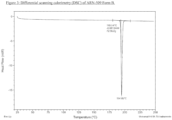
- the sample pan was closed with the appropriate cover and the DSC curve was recorded on a TA-Instruments Q1000 MTDSC equipped with a RCS cooling unit, using the following parameters: initial temperature: 25°C heating rate: 10°C/min final temperature: 250°C
- the DSC curve of ARN-509 Form B shows the melting of the product at 194.9°C with a heat of fusion of 73J/g. See Figure 3 .
- the spray dried product (SDP) was dried in a suitable dryer, e.g. tray dryer using vacuum, nitrogen flow and a drying temperature of 40 °C.
- Example 3.2 Preparation of tablets comprising a solid dispersion of ARN-509:HPMCAS 1:3
- SDP Spray dried powder of Example 3.1 7,200g Colloidal Anhydrous Silica 273g Croscarmellose sodium 1,050g Microcrystalline Cellulose 8,865g Silicified Microcrystalline Cellulose 3,507g Magnesium stearate a 105g a Vegetable grade for 30,000 tablets
- the SDP was sieved and mixed with part (10/13) of the colloidal anhydrous silica to a homogeneous blend using a suitable blender.
- Part (1/2) of the croscarmellose sodium and the microcrystalline cellulose (all) were sieved and added to the blend and mixed using a suitable blender.
- a dry granulate was made by using a suitable compaction technique, e.g. roller compaction.
- the silicified microcrystalline cellulose, remainder of the croscarmellose sodium (1/2) and colloidal anhydrous silica (3/13) were sieved and added to the dry granulate and mixed using a suitable blender.
- the magnesium stearate was sieved, added to the blend and mixed using a suitable blender.
- the blend was compressed into tablets (containing 60 mg of ARN 509) using a suitable tablet press.
- the purified water was transferred into a suitable container.
- the coating powder was added and mixed with a suitable mixer.
- the core tablets were film coated with the coating suspension using a suitable coater.
- the acetone was transferred into a suitable container, and HPMCAS and ARN-509 Form B were added. After mixing the ingredients using a suitable mixer, the mixture was spray dried using a suitable spray dryer, e.g. Buchi mini spray dryer with the following parameters : spray rate in the range from 6.2-6.7 gram/minute, outlet temperature in the range from 46 °C -49 °C and a condenser temperature in the range from -18 °C to-21 °C.
- a suitable spray dryer e.g. Buchi mini spray dryer with the following parameters : spray rate in the range from 6.2-6.7 gram/minute, outlet temperature in the range from 46 °C -49 °C and a condenser temperature in the range from -18 °C to-21 °C.
- the spray dried product (SDP) was dried in a suitable dryer, e.g. tray dryer using vacuum, nitrogen flow and a drying temperature of 40 °C.
- Example 4.2 Preparation of tablets comprising a solid dispersion of ARN-509:HPMCAS 1:2
- the SDP, part (7110/9448) of the silicified microcrystalline cellulose, part (10/13) of the colloidal anhydrous silica and part (1/2) of the croscarmellose sodium were sieved and mixed to a homogenous blend using a suitable blender.
- a dry granulate was made by using a suitable compaction technique.
- the remainder of the silicified microcrystalline cellulose (2338/9448), colloidal anhydrous silica (3/13) and croscarmellose sodium (1/2) were sieved and added to the dry granulate and further mixed using a suitable blender.
- Magnesium stearate was sieved and added to the blend and mixed further using a suitable blender.
- the blend was compressed into tablets using a suitable tablet press.
- HPMCAS and ARN-509 Form B were blended in a suitable recipient using a suitable blender.
- Hot melt extrusion was performed in a Haake extruder, flush mode, maximum temperature 180 0 C, screw speed 50 rpm.
- the hot melt extrudate was collected and milled in a suitable mill.
- the milled hot melt extrudate was sieved using a suitable sieve (250 ⁇ m).
- Example 5.2 Preparation of tablets comprising a solid dispersion of ARN-509:HPMCAS LF 1:3 (HME)
- silicified microcrystalline cellulose, croscarmellose sodium and colloidal anhydrous silica were sieved and mixed with the hot melt extrudate to a homogenous blend using a suitable blender.
- Magnesium stearate was sieved and added to the blend and mixed further using a suitable blender.
- the blend was compressed into tablets using an eccentric tableting press.
- the acetone was transferred into a suitable container and HPMCAS LF and ARN-509 Form B were added. After mixing the ingredients using a suitable mixer, the mixture was spray dried using a suitable spray dryer, e.g. Buchi mini spray dryer with the following parameters : spray rate in the range from 5.9-6.6 gram/minute, outlet temperature in the range from 46 °C - 49 °C and a condenser temperature in the range from -15 °C to -21 °C.
- a suitable spray dryer e.g. Buchi mini spray dryer with the following parameters : spray rate in the range from 5.9-6.6 gram/minute, outlet temperature in the range from 46 °C - 49 °C and a condenser temperature in the range from -15 °C to -21 °C.
- the spray dried product (SDP) was dried in a suitable dryer, e.g. tray dryer using vacuum, nitrogen flow and a drying temperature of 40 °C.
- Example 6.2 Preparation of tablets comprising a solid dispersion of ARN-509: HPMCAS 1:3
- the SDP, part (2955/4124) of the silicified microcrystalline cellulose, part (10/13) of the colloidal anhydrous silica and part (1/2) of the croscarmellose sodium were sieved and mixed to a homogenous blend using a suitable blender.
- a dry granulate was made by using a suitable compaction technique.
- the remainder of the silicified microcrystalline cellulose (1169/4124), colloidal anhydrous silica (3/13) and croscarmellose sodium (1/2) were sieved and added to the dry granulate and further mixed using a suitable blender.
- Magnesium stearate was sieved and added to the blend and mixed further using a suitable blender.
- the blend was compressed into tablets using an eccentric tabletting press.
- Formulation 1 60 mg tablet containing ARN-509-HPMC AS-LF ratio 1/3
- SDP Formulation 2 60 mg tablet containing ARN-509-HPMC AS-LF ratio 1/3
- HME Formulation 3 a nonaqueous, lipid-based solution filled into softgel capsules, each containing 30 mg ARN-509
- Blood samples (2 ml on EDTA) were taken from a jugular vein. Within 1 hour of sampling, the blood samples were centrifuged and within 2 hours after the start of centrifugation, plasma was stored in the freezer.
- Example 3.1 and Example 5.1 stored under different storage conditions as indicated in table a1 and a2 below.
- the water content was determined by means of a vaporized coulometric Karl Fischer determination in accordance with USP/Ph. Eur.
- Example 3.1 or Example 5.1 was stored as indicated in table a1 or a2 below.
- Example 3.1 and Example 5.1 stored under different storage conditions were followed up using powder X-Ray diffraction.
- the XRD pattern of the powder was compared to the XRD pattern of the corresponding powder measured at time zero (amorphous product).
- the powder was brought on to the zero background sample holder. A X-ray measurement of the sample was performed.
- the concentration of ARN-509 and its degradation products in powders of Example 3.1 and Example 5.1 stored under different storage conditions were determined by gradient Reversed-Phase UHPLC with UV Detection.
- Powders were stored as indicated in table b1 and b2 below.
- the sample solution is stable for 4 days, if stored in refrigerator, protected from light (closed cabinet).
- the water activity was determined with a Novasina a w -meter.
- Example 3.1 The test was performed on powders of Example 3.1 and Example 5.1.
- Table c1 Test conditions and results for powders of Example 3.1 stored in LDPE/Alu Bags -Water activity results Parameter Water activity Storage condition Storage time (months) Initial 0.21 30°C/75%RH 12 0.38
- Table c2 Test conditions and results for powders of Example 5.1 stored in LDPE; Alu Bags -Water activity results Parameter Water activity Storage condition Storage time (months) Initial 0.44
- the water content was determined by means of a vaporized coulometric Karl Fischer determination in accordance with USP/Ph. Eur.
- Example 3.3 Tablets of Example 3.3 were stored as indicated in table 1 below.
- Tablets were grinded using a Retsch Mixer Mill. Immediately after grinding, about 50.00 mg ( ⁇ 5.00 mg) of the sample was weighted accurately into a vial and the vial was crimped securely.
- Example 3.3 The physical stability of different tablets of Example 3.3 stored under different storage conditions was followed up using powder X-Ray diffraction. The XRD pattern of the tablets was compared to the XRD pattern of the corresponding tablets at time zero (amorphous product).
- One tablet was gently grinded to a fine powder using a mortar and pestle.
- the powder was loaded into the 16 mm sample holder using the back loading technique.
- a X-ray measurement of the sample was performed.
- the concentration of ARN-509 and its degradation products in tablets of Example 3.3 stored under different storage conditions were determined by gradient Reversed-Phase UHPLC with UV Detection.
- the sample solution is stable for 4 days, if stored in refrigerator, protected from light (closed cabinet).
- the dissolution test was performed using Paddle Apparatus (USP type 2, Ph.Eur., JP.) at 75 rpm in 900 mL of 0.5% (w/v) cetyltrimethylammonium bromide (CTAB) in 0.05 M sodium phosphate buffer pH 4.5.
- PCB cetyltrimethylammonium bromide
- Samples were taken by Distek ® sample needles with solid housing and samples were filtered with Whatman ® Spartan ® 0.45 ⁇ m RC (regenerated cellulose) membrane 30 mm diameter filters.
- the determination of the quantity of ARN-509 present in the dissolution samples was based upon an isocratic ultra high performance liquid chromatographic (UHPLC) method with UV detection.
- Dissolution Instrument Paddle apparatus (USP type 2, Ph. Eur., JP).
- Trifluoroacetic acid HPLC Grade, 99.0% Purity.
- Acetonitrile HPLC Grade.
- the water activity was determined with a Novasina a w -meter.
- Table 5 Test conditions and results for tablets of Example 3.3 stored in HDPE Bottles with Desiccant silica gel)-Water activity results Parameter Water activity Storage condition Storage time (months) Initial 0.50 5°C 12 0.14 25°C/60%RH 12 0.22 30°C/75%RH 12 0.27
- Example 3.3 The microbiological purity of the tablets of Example 3.3 was tested according to USP ⁇ 61> and ⁇ 62>, and Ph.Eur.2.6.12 and 2.6.13.
- Results are reported in table 6 below.
- Table 6 Test conditions and results for tablets of Example 3.3 stored in HDPE Bottles with Desiccant (silica gel)-Microbiological Purity Results Parameter Total Aerobic Microbial count (cfu/g) Total combined Molds and Yeasts Count (cfu/g) Pathogens : E.Coli Storage condition Storage time (months) USP ⁇ 61>/ Ph.Eur.2.6.12 USP ⁇ 61>/ Ph.Eur.2.6.12 USP ⁇ 62>/ Ph.Eur.2.6.13
Landscapes
- Health & Medical Sciences (AREA)
- Chemical & Material Sciences (AREA)
- Medicinal Chemistry (AREA)
- Pharmacology & Pharmacy (AREA)
- Life Sciences & Earth Sciences (AREA)
- Animal Behavior & Ethology (AREA)
- General Health & Medical Sciences (AREA)
- Public Health (AREA)
- Veterinary Medicine (AREA)
- Epidemiology (AREA)
- Engineering & Computer Science (AREA)
- Bioinformatics & Cheminformatics (AREA)
- Nutrition Science (AREA)
- Physiology (AREA)
- Chemical Kinetics & Catalysis (AREA)
- General Chemical & Material Sciences (AREA)
- Nuclear Medicine, Radiotherapy & Molecular Imaging (AREA)
- Organic Chemistry (AREA)
- Medicinal Preparation (AREA)
- Pharmaceuticals Containing Other Organic And Inorganic Compounds (AREA)
- Medicines That Contain Protein Lipid Enzymes And Other Medicines (AREA)
- Medicines Containing Material From Animals Or Micro-Organisms (AREA)
Applications Claiming Priority (3)
| Application Number | Priority Date | Filing Date | Title |
|---|---|---|---|
| EP14196594 | 2014-12-05 | ||
| PCT/US2015/063661 WO2016090098A1 (fr) | 2014-12-05 | 2015-12-03 | Compositions anti-cancéreuses |
| EP15817641.2A EP3226841B1 (fr) | 2014-12-05 | 2015-12-03 | Compositions anticancéreuses |
Related Parent Applications (1)
| Application Number | Title | Priority Date | Filing Date |
|---|---|---|---|
| EP15817641.2A Division EP3226841B1 (fr) | 2014-12-05 | 2015-12-03 | Compositions anticancéreuses |
Publications (2)
| Publication Number | Publication Date |
|---|---|
| EP4494636A2 true EP4494636A2 (fr) | 2025-01-22 |
| EP4494636A3 EP4494636A3 (fr) | 2025-04-30 |
Family
ID=52006906
Family Applications (2)
| Application Number | Title | Priority Date | Filing Date |
|---|---|---|---|
| EP24202355.4A Pending EP4494636A3 (fr) | 2014-12-05 | 2015-12-03 | Compositions anticancéreuses |
| EP15817641.2A Active EP3226841B1 (fr) | 2014-12-05 | 2015-12-03 | Compositions anticancéreuses |
Family Applications After (1)
| Application Number | Title | Priority Date | Filing Date |
|---|---|---|---|
| EP15817641.2A Active EP3226841B1 (fr) | 2014-12-05 | 2015-12-03 | Compositions anticancéreuses |
Country Status (29)
| Country | Link |
|---|---|
| US (3) | US20170360754A1 (fr) |
| EP (2) | EP4494636A3 (fr) |
| JP (2) | JP6937692B2 (fr) |
| KR (2) | KR102348320B1 (fr) |
| CN (2) | CN114886852A (fr) |
| AR (1) | AR102926A1 (fr) |
| AU (3) | AU2015358490B2 (fr) |
| BR (1) | BR112017011788A2 (fr) |
| CA (1) | CA2969656A1 (fr) |
| CL (1) | CL2017001371A1 (fr) |
| CO (1) | CO2017005572A2 (fr) |
| CR (1) | CR20170216A (fr) |
| EA (1) | EA201791222A1 (fr) |
| ES (1) | ES2996833T3 (fr) |
| HR (1) | HRP20241719T1 (fr) |
| HU (1) | HUE069689T2 (fr) |
| IL (2) | IL252323B (fr) |
| MA (1) | MA41107B1 (fr) |
| MD (1) | MD3226841T2 (fr) |
| MX (2) | MX387933B (fr) |
| NZ (1) | NZ770528A (fr) |
| PH (1) | PH12017500964A1 (fr) |
| PL (1) | PL3226841T3 (fr) |
| RS (1) | RS66323B1 (fr) |
| SG (1) | SG11201704267VA (fr) |
| SM (1) | SMT202400518T1 (fr) |
| TW (2) | TWI702966B (fr) |
| UA (1) | UA120950C2 (fr) |
| WO (1) | WO2016090098A1 (fr) |
Families Citing this family (21)
| Publication number | Priority date | Publication date | Assignee | Title |
|---|---|---|---|---|
| CN115737643A (zh) | 2012-09-26 | 2023-03-07 | 阿拉贡药品公司 | 用于治疗非转移性去势抵抗性前列腺癌的抗雄激素 |
| US10285948B2 (en) | 2014-12-05 | 2019-05-14 | Janssen Pharmaceutica Nv | Anticancer compositions |
| EA201791222A1 (ru) | 2014-12-05 | 2017-09-29 | Арагон Фармасьютикалз, Инк. | Противораковые композиции |
| MX2020003845A (es) | 2017-10-16 | 2020-11-06 | Aragon Pharmaceuticals Inc | Antiandrógenos para el tratamiento de cáncer de próstata no metastásico resistente a la castración. |
| WO2020144647A1 (fr) | 2019-01-10 | 2020-07-16 | Aragon Pharmaceuticals, Inc. | Composition pharmaceutique comprenant de l'apalutamide dispersé dans une compote de pomme |
| JP2022523094A (ja) | 2019-01-30 | 2022-04-21 | アラゴン ファーマシューティカルズ,インコーポレイテッド | 転移性去勢感受性前立腺癌の治療のための抗アンドロゲン剤 |
| CN113711316A (zh) | 2019-01-30 | 2021-11-26 | 詹森药业有限公司 | 基于分子亚型治疗前列腺癌的方法 |
| WO2020239478A1 (fr) | 2019-05-28 | 2020-12-03 | Pharma Mar, S.A. | Trabectédine pour le traitement de sarcomes basé sur des marqueurs génomiques |
| EP3811932A1 (fr) | 2019-10-22 | 2021-04-28 | Zentiva K.S. | Forme posologique d'apalutamide |
| EP4054572A1 (fr) | 2019-11-04 | 2022-09-14 | Aragon Pharmaceuticals, Inc. | Inhibiteurs du récepteur des androgènes pour le traitement du cancer de la prostate non métastatique résistant à la castration chez des sujets présentant une déficience hépatique grave |
| WO2021245285A1 (fr) | 2020-06-05 | 2021-12-09 | Janssen Pharmaceutica Nv | Méthodes de traitement du cancer de la prostate sur la base de sous-types moléculaires |
| TW202228794A (zh) | 2020-09-04 | 2022-08-01 | 美商艾瑞岡醫藥公司 | 用於治療前列腺癌之方法 |
| WO2022195407A1 (fr) | 2021-03-19 | 2022-09-22 | Aragon Pharmaceuticals, Inc. | Méthodes de traitement du cancer de la prostate |
| WO2023122842A1 (fr) * | 2021-12-31 | 2023-07-06 | Gador Limitada | Procédé de préparation d'apalutamide, intermédiaires de synthèse et dispersion solide amorphe le contenant |
| WO2023152611A1 (fr) | 2022-02-11 | 2023-08-17 | Aragon Pharmaceuticals, Inc. | Apalutamide et relugolix pour le traitement du cancer de la prostate |
| WO2023209555A1 (fr) | 2022-04-26 | 2023-11-02 | Aragon Pharmaceuticals, Inc. | Produits médicamenteux approuvés et méthodes de traitement du cancer de la prostate |
| CN116183787A (zh) * | 2022-12-26 | 2023-05-30 | 郑州德迈药业有限公司 | 醋酸羟丙甲纤维素琥珀酸酯在阿帕他胺溶出检测中的应用以及检测方法 |
| KR20250157532A (ko) | 2023-03-16 | 2025-11-04 | 바이엘 컨수머 케어 악티엔게젤샤프트 | 호르몬 감수성 전립선암의 생화학적 재발이 있는 환자의 치료를 위한 안드로겐 수용체 길항제 |
| WO2025153768A1 (fr) * | 2024-01-18 | 2025-07-24 | Nanoform Finland Oyj | Composition contenant de l'apalutamide nanométrique cristallin |
| WO2025174375A1 (fr) * | 2024-02-15 | 2025-08-21 | Aragon Pharmaceuticals, Inc. | Compositions anticancéreuses |
| WO2026052846A1 (fr) | 2024-09-09 | 2026-03-12 | Synthon B.V. | Formulation pharmaceutique comprenant de l'apalutamide |
Citations (1)
| Publication number | Priority date | Publication date | Assignee | Title |
|---|---|---|---|---|
| WO2013184681A1 (fr) | 2012-06-07 | 2013-12-12 | Aragon Pharmaceuticals, Inc. | Formes cristallines d'un modulateur du récepteur des androgènes |
Family Cites Families (38)
| Publication number | Priority date | Publication date | Assignee | Title |
|---|---|---|---|---|
| GB2265624B (en) | 1992-03-31 | 1995-04-19 | British Tech Group | 17-substituted steroids useful in cancer treatment |
| DK0901786T3 (da) | 1997-08-11 | 2007-10-08 | Pfizer Prod Inc | Faste farmaceutiske dispersioner med foröget biotilgængelighed |
| US20030068374A1 (en) | 2000-02-21 | 2003-04-10 | Shigeru Kamei | Sustained release preparations of physiologically active compound hardly soluble in water and production process and use of the same |
| ATE307571T1 (de) | 2001-02-27 | 2005-11-15 | Pharmazeutische formulierung enthaltend bicalutamid | |
| CA2443040A1 (fr) | 2001-04-02 | 2002-10-17 | Nicola Frances Bateman | Composition pharmaceutique solide contenant 4-cyano-trifluoro-3-(4-fluorophenyl-sulphonyl) -2-hydroxy-2-methylpropiono-m-toluidiure et pvp |
| WO2003000292A1 (fr) * | 2001-06-22 | 2003-01-03 | Pfizer Products Inc. | Preparations pharmaceutiques comprenant des medicaments faiblement solubles et/ou sensibles a l'acide et des polymeres acides neutralises |
| SE0103424D0 (sv) * | 2001-10-15 | 2001-10-15 | Astrazeneca Ab | Pharmaceutical formulation |
| JP2005523260A (ja) | 2002-02-01 | 2005-08-04 | ファイザー・プロダクツ・インク | 圧力ノズルを用いた均質噴霧乾燥固体非晶質薬剤分散体の製造方法 |
| WO2003077827A1 (fr) | 2002-03-19 | 2003-09-25 | Nippon Shinyaku Co., Ltd. | Procede de production de medicament solide en dispersion |
| AU2003292509B2 (en) | 2003-12-15 | 2007-08-02 | Council Of Scientific And Industrial Research | Taste masked pharmaceutical compositions comprising bitter drug and pH sensitive polymer |
| GB0502790D0 (en) | 2005-02-10 | 2005-03-16 | Univ London Pharmacy | Solid dispersion of hydrophobic bioactive |
| CA2608436C (fr) | 2005-05-13 | 2015-03-24 | The Regents Of The University Of California | Composes diarylhydantoines et leur utilisation dans le traitement de troubles hyperproliferants |
| ES2689292T3 (es) * | 2006-03-27 | 2018-11-13 | The Regents Of The University Of California | Modulador del receptor de andrógenos para el tratamiento del cáncer de próstata y enfermedades asociadas con el receptor de andrógenos |
| HUE027598T2 (en) | 2009-04-03 | 2016-10-28 | Hoffmann La Roche | Propane-1-sulfonic acid {3- [5- (4-chlorophenyl) -1H-pyrrolo [2,3-B] pyridine-3-carbonyl] -2,4-difluorophenyl} amide compositions and their uses |
| SG10201907588XA (en) | 2010-02-16 | 2019-09-27 | Aragon Pharmaceuticals Inc | Androgen Receptor Modulators And Uses Thereof |
| CN102525876B (zh) | 2010-12-15 | 2014-03-12 | 西安力邦医药科技有限责任公司 | 阿司匹林固体分散体、其制备方法、药物组合物和用途 |
| WO2012174436A1 (fr) | 2011-06-15 | 2012-12-20 | The United States Of America, As Represented By The Secretary, Department Of Health And Human Services | Modulateurs de récepteurs nucléaires et leur utilisation pour le traitement et la prévention d'un cancer |
| US20150037407A1 (en) | 2012-03-21 | 2015-02-05 | Emphascience, Inc. | Method to improve the safety of handling of high potency drugs in solid dosage forms without changing their efficacy |
| WO2013152342A1 (fr) * | 2012-04-06 | 2013-10-10 | OSI Pharmaceuticals, LLC | Inhibiteur de mtor anticancéreux et combinaison anti-androgène |
| US10668156B2 (en) | 2012-06-22 | 2020-06-02 | Basf Se | Active-ingredient-containing solid dispersions based on diethylaminoethyl methacrylate copolymers |
| CN104981483B (zh) * | 2012-08-24 | 2017-10-24 | 陶氏环球技术有限责任公司 | 新的羟烷基甲基醋酸琥珀酸纤维素 |
| US9977033B2 (en) | 2012-09-11 | 2018-05-22 | The Board Of Regents Of The University Of Texas System | Methods for assessing cancer recurrence |
| TWI673051B (zh) * | 2012-09-11 | 2019-10-01 | 美商梅維森前列腺療法有限責任公司 | 恩雜魯它脈(enzalutamide)之調和物 |
| CN115737643A (zh) | 2012-09-26 | 2023-03-07 | 阿拉贡药品公司 | 用于治疗非转移性去势抵抗性前列腺癌的抗雄激素 |
| DK2945628T3 (da) | 2013-01-15 | 2020-05-04 | Aragon Pharmaceuticals Inc | Androgen receptormodulator i kombination med abirateronacetat og prednison til behandling af prostatacancer |
| SG11201504499VA (en) | 2013-01-22 | 2015-08-28 | Hoffmann La Roche | Pharmaceutical composition with improved bioavailability |
| EP2969227B1 (fr) | 2013-03-15 | 2019-05-08 | Iceutica Inc. | Formulation d'acétate d'abiratérone |
| WO2014167428A2 (fr) | 2013-04-10 | 2014-10-16 | Shilpa Medicare Limited | 4-(3-(4-cyano-3-(trifluorométhyl)phényl)-5,5-diméthyl-4-oxo-2-thioxoimidazolidin-1-yl)-2-fluoro-n-méthylbenzamide amorphe |
| EP3033088A4 (fr) * | 2013-08-12 | 2017-03-08 | Tokai Pharmaceuticals, Inc. | Biomarqueurs pour le traitement de troubles néoplasiques à l'aide de thérapies ciblant les androgènes |
| US9566280B2 (en) | 2014-01-28 | 2017-02-14 | Massachusetts Institute Of Technology | Combination therapies and methods of use thereof for treating cancer |
| MX386859B (es) * | 2014-02-05 | 2025-03-19 | Lek Pharmaceuticals | Composiciones farmacéuticas sólidas de antagonistas de los receptores de andrógenos. |
| TWI831347B (zh) | 2014-08-08 | 2024-02-01 | 日商中外製藥股份有限公司 | 包含4環性化合物的非晶質體之固體分散體及製劑 |
| HUE051888T2 (hu) | 2014-12-05 | 2021-03-29 | Aragon Pharmaceuticals Inc | Rákellenes készítmények |
| US10285948B2 (en) | 2014-12-05 | 2019-05-14 | Janssen Pharmaceutica Nv | Anticancer compositions |
| EA201791222A1 (ru) * | 2014-12-05 | 2017-09-29 | Арагон Фармасьютикалз, Инк. | Противораковые композиции |
| JP2019517497A (ja) | 2016-06-03 | 2019-06-24 | アラゴン ファーマシューティカルズ,インコーポレイテッド | 抗癌性組成物 |
| WO2019242439A1 (fr) | 2018-06-20 | 2019-12-26 | 苏州科睿思制药有限公司 | Formes cristallines de l'arn-509, procédé de préparation correspondant et utilisation associée |
| EP3811932A1 (fr) | 2019-10-22 | 2021-04-28 | Zentiva K.S. | Forme posologique d'apalutamide |
-
2015
- 2015-12-03 EA EA201791222A patent/EA201791222A1/ru unknown
- 2015-12-03 MA MA41107A patent/MA41107B1/fr unknown
- 2015-12-03 KR KR1020177018239A patent/KR102348320B1/ko active Active
- 2015-12-03 SM SM20240518T patent/SMT202400518T1/it unknown
- 2015-12-03 HU HUE15817641A patent/HUE069689T2/hu unknown
- 2015-12-03 NZ NZ770528A patent/NZ770528A/en unknown
- 2015-12-03 CN CN202210133724.8A patent/CN114886852A/zh active Pending
- 2015-12-03 CA CA2969656A patent/CA2969656A1/fr active Pending
- 2015-12-03 JP JP2017529604A patent/JP6937692B2/ja active Active
- 2015-12-03 CR CR20170216A patent/CR20170216A/es unknown
- 2015-12-03 KR KR1020207035390A patent/KR20200141533A/ko not_active Ceased
- 2015-12-03 BR BR112017011788A patent/BR112017011788A2/pt not_active Application Discontinuation
- 2015-12-03 UA UAA201707020A patent/UA120950C2/uk unknown
- 2015-12-03 ES ES15817641T patent/ES2996833T3/es active Active
- 2015-12-03 PL PL15817641.2T patent/PL3226841T3/pl unknown
- 2015-12-03 MX MX2017007203A patent/MX387933B/es unknown
- 2015-12-03 US US15/533,188 patent/US20170360754A1/en not_active Abandoned
- 2015-12-03 WO PCT/US2015/063661 patent/WO2016090098A1/fr not_active Ceased
- 2015-12-03 MD MDE20170152T patent/MD3226841T2/ro unknown
- 2015-12-03 SG SG11201704267VA patent/SG11201704267VA/en unknown
- 2015-12-03 EP EP24202355.4A patent/EP4494636A3/fr active Pending
- 2015-12-03 HR HRP20241719TT patent/HRP20241719T1/hr unknown
- 2015-12-03 RS RS20241412A patent/RS66323B1/sr unknown
- 2015-12-03 CN CN201580066233.4A patent/CN106999431B/zh active Active
- 2015-12-03 AU AU2015358490A patent/AU2015358490B2/en active Active
- 2015-12-03 EP EP15817641.2A patent/EP3226841B1/fr active Active
- 2015-12-04 AR ARP150103982A patent/AR102926A1/es not_active Application Discontinuation
- 2015-12-04 TW TW104140822A patent/TWI702966B/zh active
- 2015-12-04 TW TW109112959A patent/TWI754258B/zh active
-
2017
- 2017-05-16 IL IL252323A patent/IL252323B/en active IP Right Grant
- 2017-05-25 PH PH12017500964A patent/PH12017500964A1/en unknown
- 2017-05-29 CL CL2017001371A patent/CL2017001371A1/es unknown
- 2017-06-05 MX MX2021013965A patent/MX2021013965A/es unknown
- 2017-06-05 CO CONC2017/0005572A patent/CO2017005572A2/es unknown
-
2020
- 2020-04-23 JP JP2020076516A patent/JP7174006B2/ja active Active
- 2020-12-29 IL IL279833A patent/IL279833B/en unknown
-
2021
- 2021-03-30 AU AU2021201979A patent/AU2021201979B2/en active Active
-
2023
- 2023-03-29 US US18/192,244 patent/US20230233529A1/en not_active Abandoned
- 2023-05-02 AU AU2023202710A patent/AU2023202710A1/en not_active Abandoned
-
2024
- 2024-05-10 US US18/660,698 patent/US12303493B2/en active Active
Patent Citations (1)
| Publication number | Priority date | Publication date | Assignee | Title |
|---|---|---|---|---|
| WO2013184681A1 (fr) | 2012-06-07 | 2013-12-12 | Aragon Pharmaceuticals, Inc. | Formes cristallines d'un modulateur du récepteur des androgènes |
Also Published As
Similar Documents
| Publication | Publication Date | Title |
|---|---|---|
| US12303493B2 (en) | Anticancer compositions | |
| US20240293321A1 (en) | Anticancer compositions | |
| US20190216829A1 (en) | Anticancer Compositions | |
| HK40055486A (en) | Anticancer compositions | |
| HK40078336A (en) | Anticancer compositions | |
| EA043321B1 (ru) | Противораковая композиция | |
| HK1241764B (en) | Anticancer compositions | |
| HK1241764A1 (en) | Anticancer compositions | |
| HK1241758A1 (en) | Anticancer compositions |
Legal Events
| Date | Code | Title | Description |
|---|---|---|---|
| PUAI | Public reference made under article 153(3) epc to a published international application that has entered the european phase |
Free format text: ORIGINAL CODE: 0009012 |
|
| STAA | Information on the status of an ep patent application or granted ep patent |
Free format text: STATUS: THE APPLICATION HAS BEEN PUBLISHED |
|
| AC | Divisional application: reference to earlier application |
Ref document number: 3226841 Country of ref document: EP Kind code of ref document: P |
|
| AK | Designated contracting states |
Kind code of ref document: A2 Designated state(s): AL AT BE BG CH CY CZ DE DK EE ES FI FR GB GR HR HU IE IS IT LI LT LU LV MC MK MT NL NO PL PT RO RS SE SI SK SM TR |
|
| REG | Reference to a national code |
Ref country code: DE Ref legal event code: R079 Free format text: PREVIOUS MAIN CLASS: A61K0009200000 Ipc: A61K0009140000 |
|
| PUAL | Search report despatched |
Free format text: ORIGINAL CODE: 0009013 |
|
| AK | Designated contracting states |
Kind code of ref document: A3 Designated state(s): AL AT BE BG CH CY CZ DE DK EE ES FI FR GB GR HR HU IE IS IT LI LT LU LV MC MK MT NL NO PL PT RO RS SE SI SK SM TR |
|
| RIC1 | Information provided on ipc code assigned before grant |
Ipc: A61P 35/00 20060101ALI20250326BHEP Ipc: A61K 31/4184 20060101ALI20250326BHEP Ipc: A61K 9/20 20060101ALI20250326BHEP Ipc: A61K 9/14 20060101AFI20250326BHEP |
|
| RAP3 | Party data changed (applicant data changed or rights of an application transferred) |
Owner name: ARAGON PHARMACEUTICALS, INC. |
|
| STAA | Information on the status of an ep patent application or granted ep patent |
Free format text: STATUS: REQUEST FOR EXAMINATION WAS MADE |
|
| 17P | Request for examination filed |
Effective date: 20251030 |
|
| RAV | Requested validation state of the european patent: fee paid |
Extension state: MA Effective date: 20251030 |
|
| RAX | Requested extension states of the european patent have changed |
Extension state: BA Payment date: 20251030 Extension state: ME Payment date: 20251030 |