EP4495908A1 - Procédé de fourniture d'informations, programme, et système de fourniture d'informations - Google Patents
Procédé de fourniture d'informations, programme, et système de fourniture d'informations Download PDFInfo
- Publication number
- EP4495908A1 EP4495908A1 EP23770856.5A EP23770856A EP4495908A1 EP 4495908 A1 EP4495908 A1 EP 4495908A1 EP 23770856 A EP23770856 A EP 23770856A EP 4495908 A1 EP4495908 A1 EP 4495908A1
- Authority
- EP
- European Patent Office
- Prior art keywords
- information
- mobile object
- security personnel
- emergency situation
- operator
- Prior art date
- Legal status (The legal status is an assumption and is not a legal conclusion. Google has not performed a legal analysis and makes no representation as to the accuracy of the status listed.)
- Pending
Links
Images




Classifications
-
- G—PHYSICS
- G06—COMPUTING OR CALCULATING; COUNTING
- G06Q—INFORMATION AND COMMUNICATION TECHNOLOGY [ICT] SPECIALLY ADAPTED FOR ADMINISTRATIVE, COMMERCIAL, FINANCIAL, MANAGERIAL OR SUPERVISORY PURPOSES; SYSTEMS OR METHODS SPECIALLY ADAPTED FOR ADMINISTRATIVE, COMMERCIAL, FINANCIAL, MANAGERIAL OR SUPERVISORY PURPOSES, NOT OTHERWISE PROVIDED FOR
- G06Q10/00—Administration; Management
- G06Q10/04—Forecasting or optimisation specially adapted for administrative or management purposes, e.g. linear programming or "cutting stock problem"
-
- G—PHYSICS
- G06—COMPUTING OR CALCULATING; COUNTING
- G06N—COMPUTING ARRANGEMENTS BASED ON SPECIFIC COMPUTATIONAL MODELS
- G06N5/00—Computing arrangements using knowledge-based models
- G06N5/02—Knowledge representation; Symbolic representation
- G06N5/022—Knowledge engineering; Knowledge acquisition
-
- G—PHYSICS
- G06—COMPUTING OR CALCULATING; COUNTING
- G06Q—INFORMATION AND COMMUNICATION TECHNOLOGY [ICT] SPECIALLY ADAPTED FOR ADMINISTRATIVE, COMMERCIAL, FINANCIAL, MANAGERIAL OR SUPERVISORY PURPOSES; SYSTEMS OR METHODS SPECIALLY ADAPTED FOR ADMINISTRATIVE, COMMERCIAL, FINANCIAL, MANAGERIAL OR SUPERVISORY PURPOSES, NOT OTHERWISE PROVIDED FOR
- G06Q10/00—Administration; Management
- G06Q10/06—Resources, workflows, human or project management; Enterprise or organisation planning; Enterprise or organisation modelling
- G06Q10/063—Operations research, analysis or management
- G06Q10/0631—Resource planning, allocation, distributing or scheduling for enterprises or organisations
- G06Q10/06311—Scheduling, planning or task assignment for a person or group
- G06Q10/063114—Status monitoring or status determination for a person or group
-
- G—PHYSICS
- G06—COMPUTING OR CALCULATING; COUNTING
- G06Q—INFORMATION AND COMMUNICATION TECHNOLOGY [ICT] SPECIALLY ADAPTED FOR ADMINISTRATIVE, COMMERCIAL, FINANCIAL, MANAGERIAL OR SUPERVISORY PURPOSES; SYSTEMS OR METHODS SPECIALLY ADAPTED FOR ADMINISTRATIVE, COMMERCIAL, FINANCIAL, MANAGERIAL OR SUPERVISORY PURPOSES, NOT OTHERWISE PROVIDED FOR
- G06Q10/00—Administration; Management
- G06Q10/06—Resources, workflows, human or project management; Enterprise or organisation planning; Enterprise or organisation modelling
- G06Q10/063—Operations research, analysis or management
- G06Q10/0635—Risk analysis of enterprise or organisation activities
-
- G—PHYSICS
- G06—COMPUTING OR CALCULATING; COUNTING
- G06Q—INFORMATION AND COMMUNICATION TECHNOLOGY [ICT] SPECIALLY ADAPTED FOR ADMINISTRATIVE, COMMERCIAL, FINANCIAL, MANAGERIAL OR SUPERVISORY PURPOSES; SYSTEMS OR METHODS SPECIALLY ADAPTED FOR ADMINISTRATIVE, COMMERCIAL, FINANCIAL, MANAGERIAL OR SUPERVISORY PURPOSES, NOT OTHERWISE PROVIDED FOR
- G06Q10/00—Administration; Management
- G06Q10/06—Resources, workflows, human or project management; Enterprise or organisation planning; Enterprise or organisation modelling
- G06Q10/063—Operations research, analysis or management
- G06Q10/0639—Performance analysis of employees; Performance analysis of enterprise or organisation operations
- G06Q10/06398—Performance of employee with respect to a job function
-
- G—PHYSICS
- G06—COMPUTING OR CALCULATING; COUNTING
- G06Q—INFORMATION AND COMMUNICATION TECHNOLOGY [ICT] SPECIALLY ADAPTED FOR ADMINISTRATIVE, COMMERCIAL, FINANCIAL, MANAGERIAL OR SUPERVISORY PURPOSES; SYSTEMS OR METHODS SPECIALLY ADAPTED FOR ADMINISTRATIVE, COMMERCIAL, FINANCIAL, MANAGERIAL OR SUPERVISORY PURPOSES, NOT OTHERWISE PROVIDED FOR
- G06Q50/00—Information and communication technology [ICT] specially adapted for implementation of business processes of specific business sectors, e.g. utilities or tourism
- G06Q50/10—Services
- G06Q50/26—Government or public services
- G06Q50/265—Personal security, identity or safety
-
- G—PHYSICS
- G06—COMPUTING OR CALCULATING; COUNTING
- G06Q—INFORMATION AND COMMUNICATION TECHNOLOGY [ICT] SPECIALLY ADAPTED FOR ADMINISTRATIVE, COMMERCIAL, FINANCIAL, MANAGERIAL OR SUPERVISORY PURPOSES; SYSTEMS OR METHODS SPECIALLY ADAPTED FOR ADMINISTRATIVE, COMMERCIAL, FINANCIAL, MANAGERIAL OR SUPERVISORY PURPOSES, NOT OTHERWISE PROVIDED FOR
- G06Q50/00—Information and communication technology [ICT] specially adapted for implementation of business processes of specific business sectors, e.g. utilities or tourism
- G06Q50/40—Business processes related to the transportation industry
-
- G—PHYSICS
- G06—COMPUTING OR CALCULATING; COUNTING
- G06Q—INFORMATION AND COMMUNICATION TECHNOLOGY [ICT] SPECIALLY ADAPTED FOR ADMINISTRATIVE, COMMERCIAL, FINANCIAL, MANAGERIAL OR SUPERVISORY PURPOSES; SYSTEMS OR METHODS SPECIALLY ADAPTED FOR ADMINISTRATIVE, COMMERCIAL, FINANCIAL, MANAGERIAL OR SUPERVISORY PURPOSES, NOT OTHERWISE PROVIDED FOR
- G06Q90/00—Systems or methods specially adapted for administrative, commercial, financial, managerial or supervisory purposes, not involving significant data processing
- G06Q90/20—Destination assistance within a business structure or complex
-
- G—PHYSICS
- G08—SIGNALLING
- G08G—TRAFFIC CONTROL SYSTEMS
- G08G1/00—Traffic control systems for road vehicles
- G08G1/01—Detecting movement of traffic to be counted or controlled
- G08G1/0104—Measuring and analyzing of parameters relative to traffic conditions
- G08G1/0108—Measuring and analyzing of parameters relative to traffic conditions based on the source of data
- G08G1/012—Measuring and analyzing of parameters relative to traffic conditions based on the source of data from other sources than vehicle or roadside beacons, e.g. mobile networks
-
- G—PHYSICS
- G08—SIGNALLING
- G08G—TRAFFIC CONTROL SYSTEMS
- G08G1/00—Traffic control systems for road vehicles
- G08G1/01—Detecting movement of traffic to be counted or controlled
- G08G1/0104—Measuring and analyzing of parameters relative to traffic conditions
- G08G1/0125—Traffic data processing
- G08G1/0133—Traffic data processing for classifying traffic situation
-
- G—PHYSICS
- G08—SIGNALLING
- G08G—TRAFFIC CONTROL SYSTEMS
- G08G1/00—Traffic control systems for road vehicles
- G08G1/01—Detecting movement of traffic to be counted or controlled
- G08G1/0104—Measuring and analyzing of parameters relative to traffic conditions
- G08G1/0137—Measuring and analyzing of parameters relative to traffic conditions for specific applications
- G08G1/0145—Measuring and analyzing of parameters relative to traffic conditions for specific applications for active traffic flow control
-
- G—PHYSICS
- G08—SIGNALLING
- G08G—TRAFFIC CONTROL SYSTEMS
- G08G1/00—Traffic control systems for road vehicles
- G08G1/09—Arrangements for giving variable traffic instructions
- G08G1/0962—Arrangements for giving variable traffic instructions having an indicator mounted inside the vehicle, e.g. giving voice messages
- G08G1/0967—Systems involving transmission of highway information, e.g. weather, speed limits
- G08G1/096708—Systems involving transmission of highway information, e.g. weather, speed limits where the received information might be used to generate an automatic action on the vehicle control
- G08G1/096725—Systems involving transmission of highway information, e.g. weather, speed limits where the received information might be used to generate an automatic action on the vehicle control where the received information generates an automatic action on the vehicle control
-
- G—PHYSICS
- G08—SIGNALLING
- G08G—TRAFFIC CONTROL SYSTEMS
- G08G1/00—Traffic control systems for road vehicles
- G08G1/09—Arrangements for giving variable traffic instructions
- G08G1/0962—Arrangements for giving variable traffic instructions having an indicator mounted inside the vehicle, e.g. giving voice messages
- G08G1/0967—Systems involving transmission of highway information, e.g. weather, speed limits
- G08G1/096766—Systems involving transmission of highway information, e.g. weather, speed limits where the system is characterised by the origin of the information transmission
- G08G1/096775—Systems involving transmission of highway information, e.g. weather, speed limits where the system is characterised by the origin of the information transmission where the origin of the information is a central station
-
- G—PHYSICS
- G08—SIGNALLING
- G08G—TRAFFIC CONTROL SYSTEMS
- G08G1/00—Traffic control systems for road vehicles
- G08G1/09—Arrangements for giving variable traffic instructions
- G08G1/0962—Arrangements for giving variable traffic instructions having an indicator mounted inside the vehicle, e.g. giving voice messages
- G08G1/0968—Systems involving transmission of navigation instructions to the vehicle
- G08G1/096833—Systems involving transmission of navigation instructions to the vehicle where different aspects are considered when computing the route
- G08G1/096844—Systems involving transmission of navigation instructions to the vehicle where different aspects are considered when computing the route where the complete route is dynamically recomputed based on new data
-
- G—PHYSICS
- G08—SIGNALLING
- G08G—TRAFFIC CONTROL SYSTEMS
- G08G1/00—Traffic control systems for road vehicles
- G08G1/09—Arrangements for giving variable traffic instructions
- G08G1/0962—Arrangements for giving variable traffic instructions having an indicator mounted inside the vehicle, e.g. giving voice messages
- G08G1/0968—Systems involving transmission of navigation instructions to the vehicle
- G08G1/0969—Systems involving transmission of navigation instructions to the vehicle having a display in the form of a map
-
- G—PHYSICS
- G08—SIGNALLING
- G08G—TRAFFIC CONTROL SYSTEMS
- G08G1/00—Traffic control systems for road vehicles
- G08G1/16—Anti-collision systems
- G08G1/164—Centralised systems, e.g. external to vehicles
-
- G—PHYSICS
- G08—SIGNALLING
- G08G—TRAFFIC CONTROL SYSTEMS
- G08G1/00—Traffic control systems for road vehicles
- G08G1/20—Monitoring the location of vehicles belonging to a group, e.g. fleet of vehicles, countable or determined number of vehicles
- G08G1/205—Indicating the location of the monitored vehicles as destination, e.g. accidents, stolen, rental
-
- G—PHYSICS
- G08—SIGNALLING
- G08B—SIGNALLING SYSTEMS, e.g. PERSONAL CALLING SYSTEMS; ORDER TELEGRAPHS; ALARM SYSTEMS
- G08B31/00—Predictive alarm systems characterised by extrapolation or other computation using updated historic data
Definitions
- the present disclosure relates to an information output method, a program, and an information output system for outputting information on a mobile object that moves through autonomous movement and a remote operation by an operator.
- Patent Literature (PTL) 1 discloses a management system that manages the vehicle state of an automated driving vehicle by having an automated driving assistance center periodically communicate with the automated driving vehicle. In the event that communication between the automated driving assistance center and the automated driving vehicle is interrupted, this management system determines whether to contact an assistant who provides assistance to the automated driving vehicle based on the communication situation.
- the present disclosure provides an information output method and the like that can quickly improve a situation in which the autonomous movement of a mobile object and the remote operation by an operator become difficult.
- the information output method is an information output method executed by a computer, the information output method including: obtaining first information on at least one of a state of a mobile object or an environment surrounding the mobile object, the mobile object moving through at least one of autonomous movement or a remote operation by an operator; predicting whether an emergency situation that makes the autonomous movement or the remote operation of the mobile object difficult will occur, based on the first information obtained; and outputting a prediction result of whether the emergency situation will occur.
- the information output method is an information output method executed by a computer, the information output method including: obtaining first information on at least one of a state of a mobile object or an environment surrounding the mobile object, the mobile object moving through at least one of autonomous movement or a remote operation by an operator; predicting whether an emergency situation that makes the autonomous movement or the remote operation of the mobile object difficult will occur, based on the first information obtained; and outputting a prediction result of whether the emergency situation will occur.
- a remote control center can refer to the prediction result and notify an operator or security personnel of an occurrence of an emergency situation before the emergency situation occurs. Therefore, measures can be taken to improve the emergency situation more quickly compared to when an operator or security personnel is notified after the emergency situation occurs. Situations that make it difficult for a mobile object to move autonomously and for an operator to remotely control the mobile object can be improved quickly.
- the first information may include information on a communication state of the mobile object, information on a state of a battery mounted on the mobile object, information on a state of a moving route along which the mobile object moves, or information on weather while the mobile object is moving.
- the emergency situation may include a situation in which communication between the mobile object and a remote control system that remotely monitors the mobile object is interrupted, a situation in which a remaining battery charge of a battery mounted on the mobile object falls below a predetermined value, or a situation in which the mobile object approaches a location where a natural disaster or a man-made disaster has occurred.
- the prediction of whether the emergency situation will occur is further based on a load of work of the operator.
- second information on a dispatch of a security personnel may be output to at least one of the operator and the security personnel who goes to a position of the mobile object and responds to the emergency situation.
- the second information may include information on a location to which the security personnel is to be dispatched, information on a content of the emergency situation, or information on work that should be performed by the security personnel.
- a determination may be made as to whether to output the second information to the security personnel based on the prediction result of the emergency situation and a load of work of the operator.
- the mobile object may be instructed to change a moving route to avoid the emergency situation.
- the emergency situation is avoided by changing a moving route, so that security personnel need not to be dispatched.
- third information on a status of the security personnel may be further obtained, and the security personnel to be dispatched may be determined based on the obtained third information.
- the third information may include information on a position of the security personnel, or information indicating whether the security personnel is performing work.
- the security personnel to be dispatched may be determined based further on a distance between an area where the emergency situation is predicted to occur and the security personnel, and the time required for the security personnel to reach the area.
- predictive map information that reflects the prediction result of the emergency situation in map information including a moving route of the mobile object may be generated, and the generated predictive map information may be output to the operator.
- a program according to one embodiment of the present disclosure causes a computer to execute the information output method described above.
- a remote control center can refer to the prediction result and notify an operator or security personnel of an occurrence of an emergency situation before the emergency situation occurs. Therefore, measures can be taken to improve the emergency situation more quickly compared to when an operator or security personnel is notified after the emergency situation occurs. Situations that make it difficult for a mobile object to move autonomously and for an operator to remotely control the mobile object can be improved quickly.
- An information output system includes an obtainer, a predictor, and an outputter.
- the obtainer obtains first information on at least one of a state of a mobile object or an environment surrounding the mobile object, the mobile object moving through at least one of autonomous movement or a remote operation by an operator.
- the predictor predicts whether an emergency situation that makes the autonomous movement and the remote operation of the mobile object difficult will occur, based on the first information obtained by the obtainer.
- the outputter outputs a prediction result of the predictor.
- a remote control center can refer to the prediction result and notify an operator or security personnel of an occurrence of an emergency situation before the emergency situation occurs. Therefore, measures can be taken to improve the emergency situation more quickly compared to when an operator or security personnel is notified after the emergency situation occurs. Situations that make it difficult for a mobile object to move autonomously and for an operator to remotely control the mobile object can be improved quickly.
- FIG. 1 is a block diagram illustrating an example of information output system 100 according to an embodiment.
- Information output system 100 is a system for outputting information about mobile object 1 that moves autonomously and by remote operation of operator 6 (see FIG. 5 ).
- Mobile object 1 includes an autonomous mobile robot, such as an automatic delivery robot and the like.
- Mobile object 1 may be any type of autonomous mobile object, and may include vehicles other than robots, such as automobiles or motorcycles.
- mobile object 1 is not completely autonomous, and is remotely monitored by operator 6 via remote control system 2, which will be described later. In some cases, mobile object 1 may be moved by remote operation by operator 6 via remote control system 2.
- Information output system 100 is an example of a computer that executes an information output method.
- the components included in information output system 100 may be provided in a single housing, or may be distributed. When the components included in information output system 100 are distributed, the information output method may be executed by a plurality of computers.
- mobile object 1 includes obtainer 11, predictor 12, communicator (outputter) 13, position detector 14, processing unit 15, remote operation controller 16, and automatic driving controller 17.
- Obtainer 11, predictor 12, communicator 13, position detector 14, processing unit 15, remote operation controller 16, and automatic driving controller 17 are realized by a processor that executes a program stored in a memory, a communication interface, and the like.
- the memory is a read only memory (ROM), a random access memory (RAM), and the like, and can store a program executed by the processor.
- obtainer 11, predictor 12, and communicator 13 are included in a part of information output system 100.
- Obtainer 11 obtains first information on at least one of the state of mobile object 1 or the environment around mobile object 1.
- the first information may include, for example, information on the communication state of mobile object 1, information on the state of the battery mounted on mobile object 1, information on the state of the moving route along which mobile object 1 moves, or information on the weather while mobile object 1 is moving.
- Information on the communication state of mobile object 1 can be obtained, for example, by measuring the communication state between remote control system 2 and mobile object 1.
- information on the state of the battery mounted on mobile object 1 can be obtained, for example, by measuring the battery voltage or the like.
- information on the state of the moving route along which mobile object 1 moves can be obtained, for example, from images captured by a camera mounted on mobile object 1, sounds picked up by a microphone, or the detection result of a sensor that detects the surrounding environment, such as a light detection and ranging (LiDAR) mounted on mobile object 1.
- this information can also be obtained, for example, from a server that provides road traffic information via network N1 such as the Internet.
- information on the weather during the movement of mobile object 1 can be obtained, for example, from a server that provides weather information via network N1.
- Predictor 12 predicts whether an emergency situation will occur based on the first information obtained by obtainer 11.
- an emergency situation is a situation in which autonomous movement and remote operation of mobile object 1 becomes difficult. That is, when an emergency situation occurs, mobile object 1 enters a state in which it becomes difficult or impossible to move autonomously due to some factor. In addition, when an emergency situation occurs, mobile object 1 enters a state in which it becomes difficult or impossible to move even by remote operation by operator 6 via remote control system 2. In the embodiment, predictor 12 predicts whether such an emergency situation will occur before it occurs.
- An emergency situation includes, for example, a situation in which communication between remote control system 2 and mobile object 1 is interrupted. That is, when communication between remote control system 2 and mobile object 1 is interrupted, mobile object 1 cannot be remotely monitored via remote control system 2, which makes it practically in a difficult state for mobile object 1 to move autonomously. In addition, in this case, it becomes in a difficult state for operator 6 to remotely operate mobile object 1 via remote control system 2.
- the emergency situation includes, for example, a situation in which the remaining battery charge of mobile object 1 falls below a predetermined value. That is, when the remaining battery charge of mobile object 1 falls below a predetermined value, mobile object 1 becomes in an inoperable state, so that mobile object 1 cannot move autonomously and cannot be remotely operated by operator 6 via remote control system 2.
- the emergency situation includes, for example, a situation in which an abnormity occurs in a device related to the movement of mobile object 1, or the device breaks down.
- a device is, for example, a motor, an engine, a wheel, a tire, a brake, an accelerator, or the like.
- a motor for example, a motor, an engine, a wheel, a tire, a brake, an accelerator, or the like.
- determining whether an abnormity has occurred in the tire based on a change in the air pressure of the tire it is possible to determine whether the movement of mobile object 1 will be impeded.
- the emergency situation includes, for example, a situation in which an abnormity occurs in a camera, a sensor such as LiDAR, or a positioning system such as a global positioning system (GPS) described below, which is mounted on mobile object 1, or any of these fails.
- a sensor such as LiDAR
- a positioning system such as a global positioning system (GPS) described below
- GPS global positioning system
- the image captured by the camera contains water droplets at a rate greater than a predetermined rate, this may interfere with the autonomous movement of mobile object 1, and the like, so that it is possible to determine that an abnormity has occurred in the camera.
- the emergency situation includes, for example, a situation in which security measures need to take priority over the movement of mobile object 1.
- the emergency situation includes a situation in which mobile object 1 approaches a location where a natural disaster or a man-made disaster has occurred.
- a location includes, for example, a location where emergency vehicles such as police vehicles, ambulances, and fire engines are dispatched, such as the location of an accident or fire.
- a location includes, for example, a location where localized heavy rainfall, localized heavy snowfall, localized dense fog, or localized strong winds occur.
- the site is in chaos and the urgency is relatively high, so even if operator 6 can remotely operate mobile object 1, it is considered easier to respond quickly by dispatching security personnel 7 to the site and responding according to instructions from the site.
- the emergency situation includes, for example, a situation in which mobile object 1 approaches a location that would cause a traffic obstruction if autonomous movement and remote operation of mobile object 1 were no longer possible.
- a location includes, as an example, a location such as urban areas where traffic is likely to be obstructed due to the presence of a large number of people or vehicles.
- a location includes, for example, a construction site where guides direct traffic control on roads, sidewalks, or the like.
- such a location includes a location where there is a lot of on-street parking or bicycle parking on sidewalks.
- such a location includes narrow roads where it is impossible to pass oncoming vehicles. Also in such a location, even if operator 6 can remotely operate mobile object 1, it is considered easier to respond quickly by dispatching security personnel 7 to the site to respond.
- the emergency situation includes, for example, a situation in which mobile object 1 approaches a location that does not impede traffic, but would be problematic if mobile object 1 could not move autonomously or be remotely controlled.
- a location includes, for example, mountainous areas where falling rocks, collapse of road shoulders, landslides, road cave-ins, or the like may occur. Also in such a location, even if operator 6 can remotely operate mobile object 1, it is considered easier to respond quickly by dispatching security personnel 7 to the site to respond.
- the emergency situation includes, for example, a situation in which remote operation of mobile object 1 by operator 6 is possible, but the number of available operators 6 is low because operators 6 are dealing with other matters or the like, in other words, a situation in which a load of work of operator 6 has increased excessively (more than a predetermined load or work). That is, if the load of work of operator 6 increases excessively, it becomes impossible to remotely monitor mobile object 1 via remote control system 2, and it becomes practically in a difficult state for mobile object 1 to move autonomously. In addition, in this case, it becomes in a difficult state for operator 6 to remotely operate mobile object 1 via remote control system 2.
- the emergency situation includes, for example, a situation in which an abnormity occurs in the delivery item being delivered by mobile object 1, which interferes with the autonomous movement of mobile object 1 and the remote operation by the operator.
- An abnormity in the delivery item may occur, for example, when the delivery item is fragile, due to vibration being applied to the delivery item.
- an abnormity in the delivery item may occur, for example, when the delivery item requires refrigerated or frozen storage, due to the temperature of the storeroom (refrigerator or freezer) exceeding the normal temperature.
- predictor 12 predicts whether an emergency situation will occur based on the communication situation between remote control system 2 and mobile object 1. For example, predictor 12 predicts that an emergency situation will occur when the round-trip time (RTT) value exceeds an allowable value (e.g., several seconds) or when the behavior of the RTT value differs from normal behavior. In addition, for example, predictor 12 predicts that an emergency situation will occur when the packet loss rate exceeds an allowable value or when the behavior of the packet loss differs from normal behavior. In addition, for example, predictor 12 predicts that an emergency situation will occur when data transmitted from either remote control system 2 or mobile object 1 to the other is not transmitted within an allowable time, that is, when a timeout occurs.
- RTT round-trip time
- predictor 12 predicts whether an emergency situation will occur based on the remaining battery charge, the amount of battery consumption based on the distance or time from mobile object 1 to the charging station, and parameters that lead to accidental battery consumption.
- the parameters include, for example, a history of the number of remote operations by operator 6.
- the parameters include the frequency of stopping or detouring mobile object 1 based on the detection of an obstacle by a sensor mounted on mobile object 1.
- the parameters include the frequency of deceleration or stopping of mobile object 1 based on the situation of the moving route.
- the amount of battery consumption may be calculated by further taking into consideration the traffic congestion situations in the road traffic information. That is, predictor 12 may predict that an emergency situation will occur when it determines that the battery will run out of power before mobile object 1 reaches a charging station due to mobile object 1 being caught in traffic congestion.
- predictor 12 may frequently predict the occurrence of an emergency situation. Therefore, predictor 12 may predict the occurrence of an emergency situation when mobile object 1 remains stopped for a predetermined period of time or more and the remaining battery charge falls below a threshold value. In this case, it becomes easier to avoid frequent predictions of the occurrence of an emergency situation, as mentioned above.
- the parameter includes the stopping of mobile object 1 based on detection of the stoppage during movement by a sensor mounted on mobile object 1, the time from stopping to starting to run again, or the frequency of stopping.
- predictor 12 predicts whether an emergency situation will occur based on road traffic information or weather information. It should be noted that predictor 12 may predict whether an emergency situation will occur based on, instead of or in addition to the road traffic information, for example, an image captured by a camera mounted on mobile object 1, a sound picked up by a microphone, or a detection result of a sensor that detects the surrounding environment, such as a LiDAR mounted on mobile object 1.
- Communicator (outputter) 13 is a wireless communication interface for communicating with remote control system 2 via network N1. Communicator 13 transmits to remote control system 2 position information indicating the position of mobile object 1 detected by position detector 14, information on the state of mobile object 1 such as information on the battery state, and the prediction result predicted by predictor 12. In addition, communicator 13 receives, for example, an instruction signal indicating an instruction for remote control of mobile object 1 transmitted from remote control system 2.
- Communicator (outputter) 13 outputs the prediction result of predictor 12. That is, communicator 13 transmits the prediction result of predictor 12 to remote control system 2, regardless of whether predictor 12 has predicted the occurrence of an emergency situation.
- Position detector 14 detects the position of mobile object 1.
- Position detector 14 detects the position of mobile object 1 based on a positioning result of a positioning system such as a global positioning system (GPS) and the like.
- GPS global positioning system
- Processing unit 15 is the main controller of mobile object 1. Processing unit 15 manages and controls entire mobile object 1 by coordinating with each of obtainer 11, predictor 12, communicator (outputter) 13, position detector 14, remote operation controller 16, and automatic driving controller 17.
- remote operation controller 16 controls mobile object 1 according to the contents of the instruction signal. Accordingly, mobile object 1 is remotely operated according to the instruction of operator 6.
- Automatic driving controller 17 moves mobile object 1 autonomously by controlling mobile object 1 according to contents instructed to mobile object 1 from remote control system 2 via network N1.
- the instruction here is different from the instruction of operator 6 mentioned above.
- automatic driving controller 17 moves mobile object 1 autonomously according to instructions to move towards one or more delivery destinations.
- Remote control system 2 operates in a remote control center where a plurality of operators 6 are stationed, or in a server device, and is a system in which each operator 6 remotely monitors and, in some cases, remotely operates a plurality of mobile objects 1.
- Each operator 6 uses operator terminal 4 which is an information terminal such as a personal computer and the like to monitor the situation of each mobile object 1 displayed on a display attached to operator terminal 4.
- each operator 6 remotely operates mobile object 1, for example, when a request for remote operation is received from mobile object 1, or when operator 6 determines that mobile object 1 is in a state where it should be remotely operated. It should be noted that operator terminal 4 may be connected to remote control system 2 without going through network N1.
- remote control system 2 includes communicator 21, processing unit 22, predictive map information generator 23, security personnel information generator 24, operator notification determiner 25, and security personnel notification determiner 26.
- remote control system 2 further includes first storage 31, second storage 32, third storage 33, and fourth storage 34. It should be noted that first storage 31, second storage 32, third storage 33, and fourth storage 34 may not be included as components of remote control system 2, and for example, they may be included in a server device separate from remote control system 2.
- predictive map information generator 23, security personnel information generator 24, operator notification determiner 25, and security personnel notification determiner 26 are included in part of information output system 100. That is, in the embodiment, information output system 100 is realized by mobile object 1 and remote control system 2 cooperating with each other.
- Remote control system 2 is a computer including a processor, a communication interface, a memory, and the like.
- the memory is ROM, RAM, and the like, and can store programs executed by the processor.
- Communicator 21, processing unit 22, predictive map information generator 23, security personnel information generator 24, operator notification determiner 25, and security personnel notification determiner 26 are realized by a processor that executes programs stored in the memory, the communication interface, and the like.
- Communicator 21 is a wireless communication interface for communicating with each mobile object 1 via network N1.
- Communicator 21 receives, for each mobile object 1, position information transmitted from mobile object 1, information on the state of mobile object 1 such as information on the battery state, and the prediction result of predictor 12.
- communicator 21 transmits an instruction signal generated in response to the operation of operator terminal 4 of operator 6 to mobile object 1 to be remotely controlled.
- communicator 21 communicates with security personnel terminal 5 used by security personnel 7 (see FIG. 5 ) via network N1.
- Security personnel terminal 5 is, for example, an information terminal such as a smartphone, a tablet terminal, a personal computer, or the like.
- communicator 21 communicates with each of the plurality of security personnel terminals 5.
- security personnel 7 are personnel who, in the event of an emergency situation, go to the position of mobile object 1 and respond to the emergency situation. Specifically, security personnel 7 go to the position of mobile object 1 and attempt to resolve the emergency situation by manually driving mobile object 1 to an appropriate location, by resolving any abnormities occurring in mobile object 1 to restore mobile object 1, or by recovering mobile object 1. In the embodiment, security personnel 7 will go to the position of mobile object 1 not only when an emergency situation has occurred, but also when it is predicted that an emergency situation will occur and it is determined that the dispatch of security personnel 7 is necessary.
- communicator 21 obtains third information on the situation of security personnel 7 by communicating with security personnel terminal 5 via network N1.
- the third information includes information on the position of security personnel 7, or information indicating whether security personnel 7 is performing work.
- the third information includes both of these two pieces of information.
- the information indicating whether security personnel 7 is performing work is specifically information indicating one of the following three situations.
- the first situation is a situation in which security personnel 7 is on the way to the site (i.e., the position of target mobile object 1) or security personnel 7 is responding at the site.
- the second situation is a situation in which security personnel 7 is patrolling.
- the third situation is a situation in which security personnel 7 is waiting at a waiting location such as a home or office.
- Processing unit 22 is the main controller of remote control system 2. Processing unit 22 manages and controls entire remote control system 2 by cooperating with each of communicator 21, predictive map information generator 23, security personnel information generator 24, operator notification determiner 25, and security personnel notification determiner 26.
- Predictive map information generator 23 generates predictive map information indicating an area where an emergency situation may occur, for each mobile object 1 or for each area where information output system 100 performs remote control of a plurality of moving objects 1, based on the time information at which predictor 12 of mobile object 1 predicts that an emergency situation will occur, the position information of mobile object 1 on the map information, and the emergency situation predicted to occur.
- predictive map information generator 23 generates predictive map information for each mobile object 1 or for each area where information output system 100 performs remote control of a plurality of mobile objects 1, in which the prediction result of the emergency situation is reflected in map information including the moving route of mobile object 1.
- predictive map information generator 23 updates the predictive map information by generating predictive map information each time it obtains a prediction result of an emergency situation.
- the predictive map information includes a history of areas where an emergency situation has been predicted to occur in the past by predictor 12 of mobile object 1.
- the predictive map information generated by predictive map information generator 23 is, for example, referred to in the processing executed by operator notification determiner 25, as described below.
- the predictive map information is output to the operator by being displayed on a display attached to operator terminal 4, for example, when operator notification determiner 25 cannot determine whether to notify operator 6 of the second information, as described below.
- operator 6 can grasp the position of mobile object 1 where an emergency situation is predicted to occur. Then, by referring to the predictive map information, operator 6 can determine whether to dispatch security personnel 7.
- Security personnel information generator 24 generates security personnel information for each security personnel 7 based on the third information obtained from security personnel terminal 5.
- the security personnel information basically includes the contents included in the third information, that is, the position of security personnel 7 and information indicating whether security personnel 7 is currently performing work.
- security personnel information generator 24 updates the security personnel information by generating security personnel information each time it obtains the third information.
- Operator notification determiner 25 determines whether to notify operator 6 of the second information on the dispatch of security personnel 7 based on the prediction result of predictor 12 of mobile object 1 or based on both the prediction result and the predictive map information when the predictive map information includes a history of areas where an emergency situation has been predicted to occur in the past. That is, information output system 100 does not notify operator 6 simply because predictor 12 of mobile object 1 has predicted that an emergency situation will occur, but rather notifies operator 6 after determining the certainty of the prediction. Operator notification determiner 25 may notify all operators 6 by notifying all operator terminals 4, for example, or may notify only operator 6 in charge of target mobile object 1.
- operator notification determiner 25 may further notify operator 6 of information indicating the certainty of the prediction.
- the certainty of the prediction is indicated, for example, by the ratio of the number of times the same prediction was made at the same location multiple times in the past, and the number of times the emergency situation actually occurred out of the multiple predictions. As an example, if a prediction is made 10 times and the actual number of times the emergency situation occurs is 7 times, the certainty of the prediction is indicated by 70%. In this case, if the certainty of the prediction is relatively high, such as 70%, operator 6 can easily take measures such as preparing to dispatch security personnel 7 as soon as possible.
- the display mode on the display attached to operator terminal 4 may be changed according to the degree of certainty of the prediction.
- the color of the character string and the like indicating the certainty of the prediction or the font size may be changed according to the degree of certainty of the prediction.
- the second information may include information on the location to which security personnel 7 is dispatched (e.g., the position of mobile object 1, and the like), information on the contents of the emergency situation, or information on the work to be performed by security personnel 7.
- the information on the location described above includes, for example, the position of mobile object 1, the position of the area where the emergency situation is predicted to occur or the like.
- operator notification determiner 25 may notify operator 6 of the time it will take for mobile object 1 described above to reach the area of the position where the emergency situation described above is predicted to occur.
- security personnel notification determiner 26 may notify security personnel 7 of information on the position of mobile object 1, the position of the area where the emergency situation described above is predicted to occur, or the like.
- the information on the contents described above includes, for example, information indicating that there is a possibility that communication between remote control system 2 and mobile object 1 will be interrupted, and the like.
- the information on the work described above includes, for example, information indicating that mobile object 1 will be manually driven to move to a predetermined location, and the like. It should be noted that the second information may simply be information indicating that security personnel 7 should be dispatched.
- predictive map information generator 23 updates the predictive map information by reflecting the identifier of that mobile object 1, the position of mobile object 1 at the time of obtaining the prediction result, and the time in the predictive map information each time predictive map information generator 23 obtains the prediction result of predictor 12 of mobile object 1. Accordingly, the predictive map information reflects the history of prediction results of past emergency situations. Then, operator notification determiner 25 refers to the predictive map information, and when the prediction result that an emergency situation will occur is still obtained at a time when mobile object 1 approaches the area where the emergency situation is predicted to occur, operator notification determiner 25 notifies operator 6.
- operator notification determiner 25 does not notify operator 6, and invalidates the prediction that an emergency situation will occur in the predictive map information. It should be noted that operator notification determiner 25 may notify operator 6 if the difference between the time when the predictive map information is updated and the time when the prediction that an emergency situation will occur is resolved is shorter than a predetermined time. In this way, operator notification determiner 25 may determine whether to output second information to operator 6 based on the prediction result of the emergency situation and the predictive map information (the history of the prediction results of the emergency situation in the past).
- operator notification determiner 25 may set the importance level of the notification to operator 6 based on predictive map information (the history of areas where emergency situations have been predicted to occur in the past). For example, operator notification determiner 25 sets the importance level high in areas where emergency situations have been predicted to occur in the past, depending on the predicted frequency. In addition, for example, operator notification determiner 25 sets the importance level high when security personnel 7 have actually been dispatched to that area. It should be noted that, for example, when the importance level is reflected in the predictive map information, operator notification determiner 25 may set the importance level of the notification to the operator by reading out the importance level included in the predictive map information.
- operator notification determiner 25 may set the importance level according to, for example, the area in which an emergency situation is predicted to occur, the distance between that area and mobile object 1, and the time required for mobile object 1 to reach that area. For example, the shorter the distance described above and the time described above, the higher the importance level is set by operator notification determiner 25.
- Operator notification determiner 25 notifies operator 6 in descending order of importance level. It should be noted that operator notification determiner 25 notifies operator 6 only when the importance level exceeds a threshold value, and does not have to notify operator 6 when the importance level is below the threshold value.
- operator 6 determines whether it is necessary to dispatch security personnel 7 based on the content of the notification. If it is determined that security personnel 7 need to be dispatched, operator 6 determines which security personnel 7 to dispatch, for example, based on the importance level of the notification, and notifies the determined security personnel 7. On the other hand, if operator 6 determines that it is not necessary to dispatch security personnel 7, operator 6 invalidates the registration described above, for example.
- Security personnel notification determiner 26 determines whether to notify security personnel 7 of the second information on the dispatch of security personnel 7 based on at least one of the prediction result of predictor 12 of mobile object 1, the predictive map information, or the security personnel information (third information). Security personnel notification determiner 26 may notify all of security personnel 7 by notifying all of security personnel terminals 5, for example, or may notify only target security personnel 7.
- security personnel notification determiner 26 notifies security personnel 7 when operator notification determiner 25 notifies operator 6. That is, in the embodiment, information output system 100 notifies both operator 6 and security personnel 7 when notifying operator 6.
- security personnel notification determiner 26 may determine whether to notify security personnel 7 as follows. For example, security personnel notification determiner 26 calculates the number of mobile objects 1 for which an emergency situation is predicted to occur, based on the prediction result of predictor 12 for a plurality of mobile objects 1. Then, if the number of operators 6 available to respond is less than the calculated number of mobile objects 1, security personnel notification determiner 26 notifies security personnel 7. In this case, since there will be moving objects 1 that operators 6 cannot remotely operate, security personnel 7 who receive the notification will act on behalf of operators 6 to improve the situation in which the autonomous movement of mobile objects 1 and the remote operation of operators 6 are difficult, and the like.
- predictive map information generator 23 may reflect the location where the remote operation request from mobile object 1 was made and the time when the remote operation of mobile object 1 was performed in the predictive map information as a history.
- security personnel notification determiner 26 may notify security personnel 7 when the number of available operators 6 is less than a predetermined number in a situation where mobile object 1 is moving in an area where the frequency of remote operation requests is relatively high and an area where remote operation is performed for a relatively long time by referring to the predictive map information. That is, when the number of available operators 6 is insufficient in an area where remote operation requests are relatively high, it is easier to respond quickly by notifying security personnel 7 and having security personnel 7 respond, rather than waiting for operators 6 to be able to respond.
- security personnel notification determiner 26 may perform the same operation as described above by reading out and referring to the information on the request for remote operation from that storage.
- security personnel notification determiner 26 may notify security personnel 7 when there are a sufficient number of available operators 6 but a small number of operators 6 with high proficiency.
- the proficiency of operator 6 increases, for example, the longer the cumulative time spent performing remote operation.
- security personnel notification determiner 26 may determine whether to output second information to security personnel 7 based on the prediction result of the emergency situation and the load of work of operator 6.
- Information on the proficiency of operator 6 may be stored, for example, in a storage included in remote control system 2.
- security personnel notification determiner 26 may determine security personnel 7 to be dispatched based on the security personnel information (third information). For example, security personnel notification determiner 26 may determine security personnel 7 to be dispatched based on the distance between the area where an emergency situation is predicted to occur and security personnel 7, and the time required for security personnel 7 to reach that area.
- security personnel notification determiner 26 may determine security personnel 7 to be dispatched depending on the state of security personnel 7 by referring to the security personnel information (third information). For example, security personnel notification determiner 26 determines that security personnel 7 to be dispatched with priority will be security personnel 7 who are on standby.
- security personnel notification determiner 26 may determine security personnel 7 to be dispatched based on the proficiency of security personnel 7.
- the proficiency of security personnel 7 increases, for example, the greater the cumulative number of locations to which security personnel 7 has been dispatched or the cumulative number of times security personnel 7 has been dispatched.
- the proficiency of security personnel 7 increases, for example, the longer the cumulative response time at the dispatch destination. For example, when the work of resolving an emergency situation is difficult, security personnel notification determiner 26 determines security personnel 7 with high proficiency to be dispatched.
- Information on the proficiency of security personnel 7 may be stored in fourth storage 34 as part of the security personnel information (third information), or may be stored in a separate storage.
- security personnel 7 determines whether it is necessary to go to the site based on the content of the notification. If security personnel 7 determines that it is necessary to go to the site, security personnel 7 notifies operator 6 that security personnel 7 will go to the site and goes to the site. On the other hand, if security personnel 7 determines that it is not necessary to go to the site, security personnel 7 notifies operator 6 of that effect.
- information output system 100 notifies at least one of operator 6 or security personnel 7 (here, both) based on the prediction result of the emergency situation (i.e., outputs second information on the dispatch of security personnel 7).
- First storage 31 stores mobile object information on mobile objects 1 for each mobile object 1 or for each area in which information output system 100 performs remote control of a plurality of mobile objects 1.
- the mobile object information includes, for example, position information indicating the position of mobile object 1, an identifier of mobile object 1, and the like.
- the mobile object information is updated each time position information is obtained from mobile object 1.
- Second storage 32 stores map information including the moving route along which mobile object 1 moves for each mobile object 1 or for each area in which information output system 100 remotely controls a plurality of mobile objects 1.
- the map information is updated each time the moving route along which mobile object 1 moves is changed.
- Third storage 33 stores the predictive map information generated by predictive map information generator 23 for each mobile object 1 or for each area in which information output system 100 remotely controls a plurality of mobile objects 1.
- the predictive map information is updated each time predictive map information is generated by predictive map information generator 23.
- Fourth storage 34 stores security personnel information on security personnel 7 for each security personnel 7.
- the security personnel information is updated each time security personnel information is generated by security personnel information generator 24.
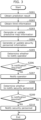
- FIG. 2 is a flow chart illustrating an example of the operation of mobile object 1 according to the embodiment.
- obtainer 11 periodically obtains the first information (S101).
- predictor 12 predicts whether an emergency situation will occur based on the first information obtained by obtainer 11 (S102).
- communicator (outputter) 13 transmits (outputs) the prediction result of predictor 12 to remote control system 2 via network N1 (S103).
- step S101 to step S103 described above are repeated while mobile object 1 is in operation.
- FIG. 3 is a flowchart illustrating an example of the operation of remote control system 2 according to the embodiment.
- communicator 21 obtains the prediction result of predictor 12 transmitted from mobile object 1 (S201). In addition, communicator 21 obtains the third information transmitted from security personnel terminal 5 (S202). It should be noted that steps S201 and S202 do not have to be in this order, and may be in the reverse order.
- predictive map information generator 23 generates or updates predictive map information by reflecting the prediction result obtained by communicator 21 in the map information (S203).
- security personnel information generator 24 generates or updates security personnel information based on the third information obtained by communicator 21 (S204). It should be noted that steps S203 and S204 do not have to be in this order, and may be in the reverse order.
- operator notification determiner 25 determines whether to notify operator 6 of the second information based on the prediction result or based on both the prediction result and the predictive map information when the predictive map information includes the history of areas where an emergency situation has been predicted to occur in the past (S205). If it is determined that notification is necessary (S206: Yes), operator notification determiner 25 notifies operator 6 (S207). On the other hand, if it is determined that notification is not necessary (S206: No), operator notification determiner 25 does not execute anything in particular.
- security personnel notification determiner 26 determines whether to notify the second information to security personnel 7 based on at least one of the prediction result, the predictive map information, or the security personnel information (third information) (S208). If it is determined that notification is necessary (S209: Yes), security personnel notification determiner 26 notifies the security personnel 7 (S210). On the other hand, if it is determined that notification is not necessary (S209: No), security personnel notification determiner 26 does not execute anything in particular.
- steps S201 to S210 described above are repeated during the operation of remote control system 2.
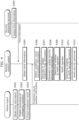
- FIG. 4 is a sequence diagram illustrating an example of the operation of the overall configuration including mobile object 1, remote control system 2, and security personnel terminal 5 according to the embodiment. It should be noted that in the example illustrated in FIG. 4 , the process of determining whether to notify operator 6 will be described as determining that notification to operator 6 is necessary. In addition, in the example illustrated in FIG. 4 , the process of determining whether to notify security personnel 7 will be described as determining that notification to security personnel 7 is necessary.
- obtainer 11 periodically obtains the first information (S301). Then, predictor 12 predicts whether an emergency situation will occur based on the first information obtained by obtainer 11 (S302). Then, communicator (outputter) 13 transmits (outputs) the prediction result to remote control system 2 (S303).
- communicator 13 also transmits position information indicating the position of mobile object 1 detected by position detector 14 together with the prediction result. It should be noted that the position information is periodically transmitted to remote control system 2 regardless of whether the prediction result is transmitted.
- security personnel terminal 5 transmits (outputs) the third information to remote control system 2 in response to a specified operation by security personnel 7, or periodically and automatically (S304).
- communicator 21 obtains the third information transmitted from security personnel terminal 5 (S305). In addition, communicator 21 obtains the prediction result and the position information transmitted from mobile object 1 (S306). It should be noted that the order of steps S305 and S306 is not limited to this order, and may be in the reverse order.
- predictive map information generator 23 generates or updates predictive map information by reflecting the prediction result obtained by communicator 21 in the map information (S307).
- security personnel information generator 24 generates or updates security personnel information based on the third information obtained by communicator 21 (S308). It should be noted that steps S307 and S308 do not have to be in this order, and may be in the reverse order.
- operator notification determiner 25 determines whether to notify operator 6 of the second information based on the prediction result or based on both the prediction result and the predictive map information when the predictive map information includes the history of areas where an emergency situation has been predicted to occur in the past (S309).
- operator notification determiner 25 determines that notification is necessary and notifies operator 6 (S310).
- security personnel notification determiner 26 determines whether to notify security personnel 7 of the second information based on at least one of the prediction result, the predictive map information, or the security personnel information (third information) (S311).
- security personnel notification determiner 26 determines that notification is necessary and notifies the security personnel 7 (S312).
- FIG. 5 is a schematic diagram illustrating an example of use of information output system 100 according to the embodiment.
- information output system 100 in mobile object 1A predicts the occurrence of an emergency situation in which communication with remote control system 2 will be interrupted, and transmits the prediction result to remote control system 2.
- information output system 100 in mobile object 1B predicts the occurrence of an emergency situation in which a traffic accident has occurred on the moving route and mobile object 1 will approach the site of the traffic accident, and transmits the prediction result to remote control system 2.
- Information output system 100 in remote control system 2 determines whether to notify operator 6 and security personnel 7 of the second information based on the prediction result of mobile object 1A or based on both the prediction result and the predictive map information when the predictive map information includes the history of areas where an emergency situation has been predicted to occur in the past. If it is determined that the second information should be notified, information output system 100 notifies operator 6 and security personnel 7 of the second information. For example, upon receiving notification of the second information, operator 6 notifies security personnel 7A, who is on standby, to go to the position of mobile object 1A and deal with the emergency situation. In addition, for example, operator 6 notifies security personnel 7B, who is patrolling in a location relatively close to mobile object 1B, to go to the position of mobile object 1B and deal with the emergency situation.
- FIG. 6 is a schematic diagram illustrating an example of predictive map information.
- Map M1 illustrated in FIG. 6 is displayed on a display attached to operator terminal 4. Areas A1 and A2 are displayed on map M1. Area A1 indicates a point where mobile object 1A predicts that an emergency situation will occur (see the circle in area A1). Area A2 indicates a point where mobile object 1B predicts that an emergency situation will occur (see the circle in area A2). By looking at the predictive map information, operator 6 can determine whether security personnel 7 should be dispatched to each of areas A1 and A2.
- the information output method and information output system 100 outputs a prediction result when it predicts the occurrence of an emergency situation that will make the autonomous movement and remote operation of mobile object 1 difficult. For this reason, for example, in a remote control center, by referring to the prediction result, it is possible to notify operator 6 or security personnel 7 of the occurrence of an emergency situation before the emergency situation occurs. Therefore, measures can be taken to improve the emergency situation more quickly compared to when operator 6 or security personnel 7 is notified after the emergency situation occurs. That is, it is possible to quickly improve a situation that makes the autonomous movement of mobile object 1 and the remote operation of operator 6 difficult.
- operator notification determiner 25 may determine whether it is possible to change the moving route to one that avoids the area predicted to occur in the emergency situation, for example by referring to predictive map information. If it is determined that the moving route can be changed to one that avoids the area described above, operator notification determiner 25 may transmit a change signal indicating a change of moving route to mobile object 1 via network N1. In this case, mobile object 1 that receives the change signal can avoid the emergency situation by changing its moving route. It should be noted that if it is determined that the moving route cannot be changed to one that avoids the area described above, operator notification determiner 25 may instruct mobile object 1 to change its moving route so that dispatched security personnel 7 can reach the location of mobile object 1 within an allowable time.
- operator notification determiner 25 may transmit a stop signal, which indicates to instruct mobile object 1 to stop at the nearest safe location such as a roadside, to mobile object 1 via network N1.
- a stop signal which indicates to instruct mobile object 1 to stop at the nearest safe location such as a roadside
- mobile object 1 that receives the stop signal can easily avoid the emergency situation by stopping at the location described above.
- operator notification determiner 25 may transmit a speed change signal, which indicates to instruct mobile object 1 to decelerate or accelerate, to mobile object 1 via network N1.
- speed change signal which indicates to instruct mobile object 1 to decelerate or accelerate
- operator notification determiner 25 may transmit a change signal, which indicates to instruct mobile object 1 to stop, decelerate, or accelerate, to mobile object 1 via network N1.
- mobile object 1 that has received the change signal indicating that it is to stop can stop and wait for security personnel 7 to reach the location of mobile object 1.
- mobile object 1 that has received the change signal indicating that it is to decelerate or accelerate can change its moving speed and makes it easier for security personnel 7 to reach the location of mobile object 1 within the allowable time.
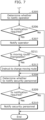
- FIG. 7 is a flowchart illustrating another operation example of information output system 100 according to the embodiment.
- the example illustrated in FIG. 7 differs from the operation example illustrated in FIG. 3 in that remote control system 2 further executes steps S211 and S212 between step S206 or S207 and step S208.
- operator notification determiner 25 after determining whether to notify operator 6 of the second information, determines whether the moving route can be changed to avoid the area where the emergency situation is predicted to occur (S211). If it is determined that the moving route can be changed (S211: Yes), operator notification determiner 25 instructs mobile object 1 to change the moving route by transmitting a change signal to mobile object 1 (S212). On the other hand, if it is determined that the moving route cannot be changed (S211: No), operator notification determiner 25 does not execute anything in particular.
- the notification of the predictive map information to operator 6 may reflect the area where an emergency situation is predicted to occur and the area where the emergency situation actually occurred in different display modes.
- the area where an emergency situation is predicted to occur and the area where the emergency situation actually occurred may be displayed in different colors on the display attached to operator terminal 4. In this mode, for example, when the number of requests for dispatch of security personnel 7 reaches or exceeds a predetermined number, operator 6 can easily visually grasp the area where an emergency situation is predicted to occur and the area where the emergency situation actually occurred, which has the advantage that it becomes easier to take measures such as partially canceling the dispatch of security personnel 7 to the area where an emergency situation is predicted to occur.
- the notification of the predictive map information to operator 6 may reflect the area where an emergency situation is predicted to occur and security personnel 7 dispatched to that area, including a display mode showing the relationship between them.
- the area where an emergency situation is predicted to occur and a mark showing security personnel 7 dispatched to that area may be displayed in the same color on a display attached to operator terminal 4. This mode has the advantage that it becomes easier for operator 6 to visually grasp which security personnel 7 have been dispatched to the area where an emergency situation is predicted to occur.
- the notification of the predictive map information to operator 6 may reflect the area where the emergency situation is predicted to occur, including a display mode showing the cause of that emergency situation.
- the display color on the display attached to operator terminal 4 may be different when the cause of the emergency situation is caused by the area, such as a deterioration in communication conditions, and when the cause of the emergency situation is caused by mobile object 1, such as the remaining battery power of mobile object 1 being depleted. This mode has the advantage that operator 6 can easily visually grasp the cause of the emergency situation, and therefore can easily take measures appropriate to the cause of the emergency situation.
- operator 6 can determine that the need to dispatch security personnel 7 is relatively low, taking into consideration the possibility that the deterioration of the communication conditions is temporary.
- the cause of the emergency situation is the remaining battery power of mobile object 1 being depleted, the remaining battery power does not increase, and therefore operator 6 can determine that the need to dispatch security personnel 7 is relatively high.
- the notification of the predictive map information to operator 6 may reflect the area where an emergency situation is predicted to occur, including a display mode indicating whether the emergency situation has actually occurred. For example, when the prediction is switched to that an emergency situation will not occur in an area where an emergency situation is predicted to occur, a character string or image indicating that an emergency situation will not occur and the time may be displayed on a display attached to operator terminal 4. In addition, for example, when an emergency situation actually occurs in an area where an emergency situation is predicted to occur, a character string or image indicating that an emergency situation has occurred and the time of occurrence may be displayed on a display attached to operator terminal 4.
- operator 6 can easily visually grasp whether an emergency situation has actually occurred in an area where an emergency situation is predicted to occur, there is an advantage that operator 6 can easily determine whether to dispatch security personnel 7. For example, if an emergency situation has actually occurred, operator 6 can determine to promptly dispatch security personnel 7. In addition, for example, if an emergency situation has not occurred, operator 6 can determine to notify security personnel 7 who have already been dispatched to stop dispatching.
- the notification of the predictive map information to operator 6 may reflect the area where an emergency situation is predicted to occur, including a display mode indicating the predicted time at which the emergency situation will occur.
- a character string indicating the predicted time may be displayed, on a display attached to operator terminal 4, in the area where an emergency situation is predicted to occur.
- communicator (outputter) 13 outputs the prediction result of predictor 12 regardless of whether predictor 12 predicts that an emergency situation will occur, but the present disclosure is not limited thereto.
- communicator 13 may output the prediction result of predictor 12 when predictor 12 predicts that an emergency situation will occur.
- remote control system 2 includes both operator notification determiner 25 and security personnel notification determiner 26, but the present disclosure is not limited thereto.
- remote control system 2 may include only one of operator notification determiner 25 and security personnel notification determiner 26.
- obtainer 11, predictor 12, and communicator (outputter) 13 are mounted on mobile object 1, but the present disclosure is not limited thereto.
- obtainer 11, predictor 12, and communicator 13 may be mounted on remote control system 2. That is, in the embodiment, information output system 100 is realized by mobile object 1 and remote control system 2 cooperating with each other, but it may be realized by only remote control system 2.
- predictor 12 can predict whether an emergency situation will occur, for example, by regarding a situation in which the load on remote control system 2 increases excessively as an emergency situation. That is, when the load on remote control system 2 increases excessively, just as in the case in which communication between remote control system 2 and mobile object 1 is interrupted, it becomes impossible to remotely monitor mobile object 1 via remote control system 2, and it becomes in a difficult state for operator 6 to remotely operate mobile object 1 via remote control system 2.
- predictor 12 can predict whether the emergency situation described above will occur based on the amount of communication traffic in remote control system 2 or the amount of processing load in remote control system 2. For example, predictor 12 predicts that an emergency situation will occur when the delay in the display time of a graphical user interface (GUI) related to mobile object 1 in remote control system 2 exceeds an allowable time.
- GUI graphical user interface
- the present disclosure can be realized as a program for causing a processor to execute the steps included in the information output method.
- the present disclosure can be realized as a non-transitory computer-readable recording medium such as a CD-ROM having a program thereon.
- each step is executed by running the program using hardware resources such as a CPU, a memory, input/output circuits of a computer. That is, each step is executed by the CPU obtaining data from the memory, the input/output circuits, or the like to perform calculations, and outputting the results of the calculations to the memory, the input/output circuits, or the like.
- hardware resources such as a CPU, a memory, input/output circuits of a computer. That is, each step is executed by the CPU obtaining data from the memory, the input/output circuits, or the like to perform calculations, and outputting the results of the calculations to the memory, the input/output circuits, or the like.
- each component included in information output system 100 may be realized by being configured with dedicated hardware, or by executing a software program suitable for each component.
- Each component may be realized by a program executor such as a CPU or processor reading out and executing a software program recorded on a recording medium such as a hard disk or a semiconductor memory.
- LSI is an integrated circuit. These may be individually integrated into a single chip, or may be integrated into a single chip that includes some or all of the functions.
- the integrated circuit construction is not limited to an LSI, and may be realized using a dedicated circuit or a general-purpose processor.
- a field programmable gate array (FPGA) that can be programmed after the LSI is manufactured, or a reconfigurable processor that can reconfigure the connections and settings of circuit cells inside the LSI may also be used.
- This disclosure is applicable to systems that manage mobile objects that move autonomously and through remote operation by an operator.
Landscapes
- Business, Economics & Management (AREA)
- Engineering & Computer Science (AREA)
- Human Resources & Organizations (AREA)
- Physics & Mathematics (AREA)
- General Physics & Mathematics (AREA)
- Economics (AREA)
- Strategic Management (AREA)
- Theoretical Computer Science (AREA)
- Tourism & Hospitality (AREA)
- General Business, Economics & Management (AREA)
- Entrepreneurship & Innovation (AREA)
- Development Economics (AREA)
- Marketing (AREA)
- Educational Administration (AREA)
- Operations Research (AREA)
- Quality & Reliability (AREA)
- Game Theory and Decision Science (AREA)
- Analytical Chemistry (AREA)
- Chemical & Material Sciences (AREA)
- General Engineering & Computer Science (AREA)
- Mathematical Physics (AREA)
- General Health & Medical Sciences (AREA)
- Atmospheric Sciences (AREA)
- Health & Medical Sciences (AREA)
- Radar, Positioning & Navigation (AREA)
- Primary Health Care (AREA)
- Remote Sensing (AREA)
- Life Sciences & Earth Sciences (AREA)
- Artificial Intelligence (AREA)
- Computational Linguistics (AREA)
- Data Mining & Analysis (AREA)
- Evolutionary Computation (AREA)
- Computing Systems (AREA)
- Software Systems (AREA)
- Computer Security & Cryptography (AREA)
- Alarm Systems (AREA)
Applications Claiming Priority (2)
| Application Number | Priority Date | Filing Date | Title |
|---|---|---|---|
| JP2022044630 | 2022-03-18 | ||
| PCT/JP2023/010170 WO2023176903A1 (fr) | 2022-03-18 | 2023-03-15 | Procédé de fourniture d'informations, programme, et système de fourniture d'informations |
Publications (2)
| Publication Number | Publication Date |
|---|---|
| EP4495908A1 true EP4495908A1 (fr) | 2025-01-22 |
| EP4495908A4 EP4495908A4 (fr) | 2025-06-18 |
Family
ID=88023438
Family Applications (1)
| Application Number | Title | Priority Date | Filing Date |
|---|---|---|---|
| EP23770856.5A Pending EP4495908A4 (fr) | 2022-03-18 | 2023-03-15 | Procédé de fourniture d'informations, programme, et système de fourniture d'informations |
Country Status (5)
| Country | Link |
|---|---|
| US (1) | US20240428090A1 (fr) |
| EP (1) | EP4495908A4 (fr) |
| JP (1) | JPWO2023176903A1 (fr) |
| CN (1) | CN118871962A (fr) |
| WO (1) | WO2023176903A1 (fr) |
Families Citing this family (1)
| Publication number | Priority date | Publication date | Assignee | Title |
|---|---|---|---|---|
| EP4345715A1 (fr) * | 2022-09-29 | 2024-04-03 | Jio Platforms Limited | Système et procédé de suivi contextuel d'unités d'étiquette et d'optimisation de la consommation d'énergie de celles-ci |
Family Cites Families (9)
| Publication number | Priority date | Publication date | Assignee | Title |
|---|---|---|---|---|
| US9720410B2 (en) * | 2014-03-03 | 2017-08-01 | Waymo Llc | Remote assistance for autonomous vehicles in predetermined situations |
| US9720418B2 (en) * | 2014-05-27 | 2017-08-01 | Here Global B.V. | Autonomous vehicle monitoring and control |
| JP6732129B2 (ja) * | 2016-11-30 | 2020-07-29 | ニッサン ノース アメリカ,インク | 問題の状況に対処するための自律走行車の遠隔操作 |
| JP2019079326A (ja) * | 2017-10-25 | 2019-05-23 | トヨタ自動車株式会社 | 電動車両 |
| JP2020042764A (ja) * | 2018-09-06 | 2020-03-19 | 株式会社Soken | 車両遠隔操作支援システム |
| JP7172937B2 (ja) * | 2019-09-30 | 2022-11-16 | 株式会社デンソー | 遠隔支援装置、方法及びプログラム |
| JP7276072B2 (ja) * | 2019-10-22 | 2023-05-18 | 株式会社デンソー | 遠隔支援システム、車載装置、遠隔支援方法、及び遠隔支援プログラム |
| JP7172946B2 (ja) | 2019-10-29 | 2022-11-16 | 株式会社デンソー | 管理システム、管理方法、及び管理プログラム |
| JP7722686B2 (ja) * | 2021-07-15 | 2025-08-13 | 国立研究開発法人農業・食品産業技術総合研究機構 | 報酬決定装置、報酬決定プログラム、報酬決定方法、報酬決定システム、および、農作業支援装置 |
-
2023
- 2023-03-15 EP EP23770856.5A patent/EP4495908A4/fr active Pending
- 2023-03-15 CN CN202380025962.XA patent/CN118871962A/zh active Pending
- 2023-03-15 WO PCT/JP2023/010170 patent/WO2023176903A1/fr not_active Ceased
- 2023-03-15 JP JP2024508233A patent/JPWO2023176903A1/ja active Pending
-
2024
- 2024-09-05 US US18/825,328 patent/US20240428090A1/en active Pending
Also Published As
| Publication number | Publication date |
|---|---|
| JPWO2023176903A1 (fr) | 2023-09-21 |
| WO2023176903A1 (fr) | 2023-09-21 |
| EP4495908A4 (fr) | 2025-06-18 |
| CN118871962A (zh) | 2024-10-29 |
| US20240428090A1 (en) | 2024-12-26 |
Similar Documents
| Publication | Publication Date | Title |
|---|---|---|
| US11501640B2 (en) | Processing device, processing method, and processing program | |
| CN114556456B (zh) | 管理系统、管理方法、以及管理程序 | |
| US20230040713A1 (en) | Simulation method for autonomous vehicle and method for controlling autonomous vehicle | |
| JP7111022B2 (ja) | 管制装置 | |
| CN110234959A (zh) | 用于自主车辆的预先威胁警示 | |
| CN108335521A (zh) | 用于警告停车场内的交通参与者的方法、系统和停车场 | |
| JP7745166B2 (ja) | 情報処理装置及び情報処理方法 | |
| JP7786492B2 (ja) | 物流システム、制御方法、及び物流ロボット | |
| JP7594064B2 (ja) | 自動運転車両、制御方法、及び自動運転プログラム | |
| JP7643551B2 (ja) | 監視システム、監視装置、及び監視方法 | |
| US20240428090A1 (en) | Information output method, recording medium, and information output system | |
| US20240078611A1 (en) | Insurance-premium calculation method, recording medium, and insurance-premium calculation system | |
| US20240119765A1 (en) | Log management apparatus, log management method, and non-transitory computer readable recording medium | |
| US20220357738A1 (en) | Remote assistance management system, remote assistance management method, and non-transitory computer-readable storage medium | |
| EP4006680B1 (fr) | Systèmes et procédés pour commander un véhicule robotisé | |
| KR20230074479A (ko) | 정보 처리 시스템 및 정보 처리 방법 | |
| WO2023223907A1 (fr) | Procédé de traitement d'informations, dispositif de traitement d'informations, et programme | |
| US12377884B2 (en) | Remote assistance management for reducing the load of operators by remote assistance prediction and categorization | |
| EP4365866B1 (fr) | Procédé de sortie d'informations, dispositif de sortie d'informations et programme | |
| US12619248B2 (en) | Remote assistance device and method for remotely assisting driving of autonomous driving vehicles | |
| US20240184303A1 (en) | Remote assistance device and method for remotely assisting driving of autonomous driving vehicles | |
| EP4535332A1 (fr) | Dispositif de supervision, machine de bord de route, système de commande de mouvement, programme, procédé de commande de mouvement et corps mobile | |
| EP4535331A1 (fr) | Dispositif de coordination, unité de bord de route, système de commande de mouvement, programme, procédé de commande de mouvement et corps mobile | |
| JP7829463B2 (ja) | 管制装置、管制システム、管制方法および管制プログラム | |
| US20250371720A1 (en) | Information processing method, recording medium, information processing system, and information terminal |
Legal Events
| Date | Code | Title | Description |
|---|---|---|---|
| STAA | Information on the status of an ep patent application or granted ep patent |
Free format text: STATUS: THE INTERNATIONAL PUBLICATION HAS BEEN MADE |
|
| PUAI | Public reference made under article 153(3) epc to a published international application that has entered the european phase |
Free format text: ORIGINAL CODE: 0009012 |
|
| STAA | Information on the status of an ep patent application or granted ep patent |
Free format text: STATUS: REQUEST FOR EXAMINATION WAS MADE |
|
| 17P | Request for examination filed |
Effective date: 20240829 |
|
| AK | Designated contracting states |
Kind code of ref document: A1 Designated state(s): AL AT BE BG CH CY CZ DE DK EE ES FI FR GB GR HR HU IE IS IT LI LT LU LV MC ME MK MT NL NO PL PT RO RS SE SI SK SM TR |
|
| A4 | Supplementary search report drawn up and despatched |
Effective date: 20250520 |
|
| RIC1 | Information provided on ipc code assigned before grant |
Ipc: G06Q 90/00 20060101ALI20250514BHEP Ipc: G06Q 50/40 20240101ALI20250514BHEP Ipc: G08G 1/01 20060101ALI20250514BHEP Ipc: G06Q 10/0635 20230101ALI20250514BHEP Ipc: G06Q 50/26 20240101ALI20250514BHEP Ipc: G06Q 10/0639 20230101ALI20250514BHEP Ipc: G06Q 10/0631 20230101ALI20250514BHEP Ipc: G06Q 10/04 20230101ALI20250514BHEP Ipc: G08G 1/00 20060101ALI20250514BHEP Ipc: G08G 1/16 20060101ALI20250514BHEP Ipc: G08G 1/0969 20060101ALI20250514BHEP Ipc: G08G 1/0968 20060101ALI20250514BHEP Ipc: G08G 1/0967 20060101ALI20250514BHEP Ipc: G08B 31/00 20060101ALI20250514BHEP Ipc: G08B 25/04 20060101ALI20250514BHEP Ipc: G08G 1/09 20060101AFI20250514BHEP |
|
| DAV | Request for validation of the european patent (deleted) | ||
| DAX | Request for extension of the european patent (deleted) | ||
| STAA | Information on the status of an ep patent application or granted ep patent |
Free format text: STATUS: THE APPLICATION IS DEEMED TO BE WITHDRAWN |