EP4497331A1 - Composition de sauce alimentaire pour conférer une croustillance et une commodité de consommation, et procédé de préparation d'aliment utilisant celle-ci - Google Patents
Composition de sauce alimentaire pour conférer une croustillance et une commodité de consommation, et procédé de préparation d'aliment utilisant celle-ci Download PDFInfo
- Publication number
- EP4497331A1 EP4497331A1 EP24785144.7A EP24785144A EP4497331A1 EP 4497331 A1 EP4497331 A1 EP 4497331A1 EP 24785144 A EP24785144 A EP 24785144A EP 4497331 A1 EP4497331 A1 EP 4497331A1
- Authority
- EP
- European Patent Office
- Prior art keywords
- sauce composition
- fried food
- sauce
- food
- coating
- Prior art date
- Legal status (The legal status is an assumption and is not a legal conclusion. Google has not performed a legal analysis and makes no representation as to the accuracy of the status listed.)
- Pending
Links
Images






Classifications
-
- A—HUMAN NECESSITIES
- A23—FOODS OR FOODSTUFFS; TREATMENT THEREOF, NOT COVERED BY OTHER CLASSES
- A23L—FOODS, FOODSTUFFS OR NON-ALCOHOLIC BEVERAGES, NOT OTHERWISE PROVIDED FOR; PREPARATION OR TREATMENT THEREOF
- A23L23/00—Soups; Sauces; Preparation or treatment thereof
-
- A—HUMAN NECESSITIES
- A23—FOODS OR FOODSTUFFS; TREATMENT THEREOF, NOT COVERED BY OTHER CLASSES
- A23L—FOODS, FOODSTUFFS OR NON-ALCOHOLIC BEVERAGES, NOT OTHERWISE PROVIDED FOR; PREPARATION OR TREATMENT THEREOF
- A23L13/00—Meat products; Meat meal; Preparation or treatment thereof
- A23L13/06—Meat products; Meat meal; Preparation or treatment thereof with gravy or sauce
-
- A—HUMAN NECESSITIES
- A23—FOODS OR FOODSTUFFS; TREATMENT THEREOF, NOT COVERED BY OTHER CLASSES
- A23L—FOODS, FOODSTUFFS OR NON-ALCOHOLIC BEVERAGES, NOT OTHERWISE PROVIDED FOR; PREPARATION OR TREATMENT THEREOF
- A23L13/00—Meat products; Meat meal; Preparation or treatment thereof
- A23L13/03—Coating with a layer; Stuffing, laminating, binding, or compressing of original meat pieces
-
- A—HUMAN NECESSITIES
- A23—FOODS OR FOODSTUFFS; TREATMENT THEREOF, NOT COVERED BY OTHER CLASSES
- A23L—FOODS, FOODSTUFFS OR NON-ALCOHOLIC BEVERAGES, NOT OTHERWISE PROVIDED FOR; PREPARATION OR TREATMENT THEREOF
- A23L13/00—Meat products; Meat meal; Preparation or treatment thereof
- A23L13/50—Poultry products, e.g. poultry sausages
- A23L13/55—Treatment of original pieces or parts
- A23L13/57—Coating with a layer or stuffing
-
- A—HUMAN NECESSITIES
- A23—FOODS OR FOODSTUFFS; TREATMENT THEREOF, NOT COVERED BY OTHER CLASSES
- A23L—FOODS, FOODSTUFFS OR NON-ALCOHOLIC BEVERAGES, NOT OTHERWISE PROVIDED FOR; PREPARATION OR TREATMENT THEREOF
- A23L13/00—Meat products; Meat meal; Preparation or treatment thereof
- A23L13/70—Tenderised or flavoured meat pieces; Macerating or marinating solutions specially adapted therefor
-
- A—HUMAN NECESSITIES
- A23—FOODS OR FOODSTUFFS; TREATMENT THEREOF, NOT COVERED BY OTHER CLASSES
- A23L—FOODS, FOODSTUFFS OR NON-ALCOHOLIC BEVERAGES, NOT OTHERWISE PROVIDED FOR; PREPARATION OR TREATMENT THEREOF
- A23L13/00—Meat products; Meat meal; Preparation or treatment thereof
- A23L13/70—Tenderised or flavoured meat pieces; Macerating or marinating solutions specially adapted therefor
- A23L13/72—Tenderised or flavoured meat pieces; Macerating or marinating solutions specially adapted therefor using additives, e.g. by injection of solutions
- A23L13/75—Tenderised or flavoured meat pieces; Macerating or marinating solutions specially adapted therefor using additives, e.g. by injection of solutions using macerating or marinating solutions, e.g. marinades containing spices, acids, condiments or flavouring agents
-
- A—HUMAN NECESSITIES
- A23—FOODS OR FOODSTUFFS; TREATMENT THEREOF, NOT COVERED BY OTHER CLASSES
- A23L—FOODS, FOODSTUFFS OR NON-ALCOHOLIC BEVERAGES, NOT OTHERWISE PROVIDED FOR; PREPARATION OR TREATMENT THEREOF
- A23L13/00—Meat products; Meat meal; Preparation or treatment thereof
- A23L13/70—Tenderised or flavoured meat pieces; Macerating or marinating solutions specially adapted therefor
- A23L13/77—Tenderised or flavoured meat pieces; Macerating or marinating solutions specially adapted therefor by mechanical treatment, e.g. kneading, rubbing or tumbling
-
- A—HUMAN NECESSITIES
- A23—FOODS OR FOODSTUFFS; TREATMENT THEREOF, NOT COVERED BY OTHER CLASSES
- A23L—FOODS, FOODSTUFFS OR NON-ALCOHOLIC BEVERAGES, NOT OTHERWISE PROVIDED FOR; PREPARATION OR TREATMENT THEREOF
- A23L27/00—Spices; Flavouring agents or condiments; Artificial sweetening agents; Table salts; Dietetic salt substitutes; Preparation or treatment thereof
- A23L27/30—Artificial sweetening agents
-
- A—HUMAN NECESSITIES
- A23—FOODS OR FOODSTUFFS; TREATMENT THEREOF, NOT COVERED BY OTHER CLASSES
- A23L—FOODS, FOODSTUFFS OR NON-ALCOHOLIC BEVERAGES, NOT OTHERWISE PROVIDED FOR; PREPARATION OR TREATMENT THEREOF
- A23L27/00—Spices; Flavouring agents or condiments; Artificial sweetening agents; Table salts; Dietetic salt substitutes; Preparation or treatment thereof
- A23L27/30—Artificial sweetening agents
- A23L27/33—Artificial sweetening agents containing sugars or derivatives
-
- A—HUMAN NECESSITIES
- A23—FOODS OR FOODSTUFFS; TREATMENT THEREOF, NOT COVERED BY OTHER CLASSES
- A23L—FOODS, FOODSTUFFS OR NON-ALCOHOLIC BEVERAGES, NOT OTHERWISE PROVIDED FOR; PREPARATION OR TREATMENT THEREOF
- A23L5/00—Preparation or treatment of foods or foodstuffs, in general; Food or foodstuffs obtained thereby; Materials therefor
- A23L5/10—General methods of cooking foods, e.g. by roasting or frying
- A23L5/11—General methods of cooking foods, e.g. by roasting or frying using oil
-
- A—HUMAN NECESSITIES
- A23—FOODS OR FOODSTUFFS; TREATMENT THEREOF, NOT COVERED BY OTHER CLASSES
- A23P—SHAPING OR WORKING OF FOODSTUFFS, NOT FULLY COVERED BY A SINGLE OTHER SUBCLASS
- A23P20/00—Coating of foodstuffs; Coatings therefor; Making laminated, multi-layered, stuffed or hollow foodstuffs
- A23P20/10—Coating with edible coatings, e.g. with oils or fats
-
- A—HUMAN NECESSITIES
- A23—FOODS OR FOODSTUFFS; TREATMENT THEREOF, NOT COVERED BY OTHER CLASSES
- A23P—SHAPING OR WORKING OF FOODSTUFFS, NOT FULLY COVERED BY A SINGLE OTHER SUBCLASS
- A23P20/00—Coating of foodstuffs; Coatings therefor; Making laminated, multi-layered, stuffed or hollow foodstuffs
- A23P20/10—Coating with edible coatings, e.g. with oils or fats
- A23P20/12—Apparatus or processes for applying powders or particles to foodstuffs, e.g. for breading; Such apparatus combined with means for pre-moistening or battering
-
- A—HUMAN NECESSITIES
- A23—FOODS OR FOODSTUFFS; TREATMENT THEREOF, NOT COVERED BY OTHER CLASSES
- A23P—SHAPING OR WORKING OF FOODSTUFFS, NOT FULLY COVERED BY A SINGLE OTHER SUBCLASS
- A23P20/00—Coating of foodstuffs; Coatings therefor; Making laminated, multi-layered, stuffed or hollow foodstuffs
- A23P20/10—Coating with edible coatings, e.g. with oils or fats
- A23P20/15—Apparatus or processes for coating with liquid or semi-liquid products
-
- A—HUMAN NECESSITIES
- A23—FOODS OR FOODSTUFFS; TREATMENT THEREOF, NOT COVERED BY OTHER CLASSES
- A23P—SHAPING OR WORKING OF FOODSTUFFS, NOT FULLY COVERED BY A SINGLE OTHER SUBCLASS
- A23P20/00—Coating of foodstuffs; Coatings therefor; Making laminated, multi-layered, stuffed or hollow foodstuffs
- A23P20/10—Coating with edible coatings, e.g. with oils or fats
- A23P20/15—Apparatus or processes for coating with liquid or semi-liquid products
- A23P20/18—Apparatus or processes for coating with liquid or semi-liquid products by spray-coating, fluidised-bed coating or coating by casting
-
- A—HUMAN NECESSITIES
- A23—FOODS OR FOODSTUFFS; TREATMENT THEREOF, NOT COVERED BY OTHER CLASSES
- A23P—SHAPING OR WORKING OF FOODSTUFFS, NOT FULLY COVERED BY A SINGLE OTHER SUBCLASS
- A23P30/00—Shaping or working of foodstuffs characterised by the process or apparatus
-
- A—HUMAN NECESSITIES
- A23—FOODS OR FOODSTUFFS; TREATMENT THEREOF, NOT COVERED BY OTHER CLASSES
- A23V—INDEXING SCHEME RELATING TO FOODS, FOODSTUFFS OR NON-ALCOHOLIC BEVERAGES AND LACTIC OR PROPIONIC ACID BACTERIA USED IN FOODSTUFFS OR FOOD PREPARATION
- A23V2002/00—Food compositions, function of food ingredients or processes for food or foodstuffs
-
- A—HUMAN NECESSITIES
- A23—FOODS OR FOODSTUFFS; TREATMENT THEREOF, NOT COVERED BY OTHER CLASSES
- A23V—INDEXING SCHEME RELATING TO FOODS, FOODSTUFFS OR NON-ALCOHOLIC BEVERAGES AND LACTIC OR PROPIONIC ACID BACTERIA USED IN FOODSTUFFS OR FOOD PREPARATION
- A23V2200/00—Function of food ingredients
- A23V2200/14—Mouthfeel improving agent
-
- A—HUMAN NECESSITIES
- A23—FOODS OR FOODSTUFFS; TREATMENT THEREOF, NOT COVERED BY OTHER CLASSES
- A23V—INDEXING SCHEME RELATING TO FOODS, FOODSTUFFS OR NON-ALCOHOLIC BEVERAGES AND LACTIC OR PROPIONIC ACID BACTERIA USED IN FOODSTUFFS OR FOOD PREPARATION
- A23V2200/00—Function of food ingredients
- A23V2200/15—Flavour affecting agent
-
- A—HUMAN NECESSITIES
- A23—FOODS OR FOODSTUFFS; TREATMENT THEREOF, NOT COVERED BY OTHER CLASSES
- A23V—INDEXING SCHEME RELATING TO FOODS, FOODSTUFFS OR NON-ALCOHOLIC BEVERAGES AND LACTIC OR PROPIONIC ACID BACTERIA USED IN FOODSTUFFS OR FOOD PREPARATION
- A23V2300/00—Processes
- A23V2300/20—Freezing
-
- A—HUMAN NECESSITIES
- A23—FOODS OR FOODSTUFFS; TREATMENT THEREOF, NOT COVERED BY OTHER CLASSES
- A23V—INDEXING SCHEME RELATING TO FOODS, FOODSTUFFS OR NON-ALCOHOLIC BEVERAGES AND LACTIC OR PROPIONIC ACID BACTERIA USED IN FOODSTUFFS OR FOOD PREPARATION
- A23V2300/00—Processes
- A23V2300/24—Heat, thermal treatment
Definitions
- the present disclosure relates to a sauce composition for coating fried food which imparts crispy texture and eating convenience, and a method of manufacturing sauce-coated fried food using the same.
- the frozen food refers to food rapidly frozen at sub-zero temperatures for the purpose of preserving manufactured, processed, or cooked food for a long time.
- the frozen food is convenient for cooking and storing, but as ice crystals are produced in a process of rapidly freezing food, food cells are destroyed so that the quality is lower than the quality of food before rapid freezing.
- processed meat frozen food such as frozen chicken is manufactured by rapidly freezing after applying a sauce on fried meat in order to increase flavor, and due to the use of an excessive amount of sauce, there is a limit to implementing crispness and high flavor.
- a sauce is coated by an immersion method of pouring a sauce into fried meat or dipping the fried meat in a sauce and then mixing, the fried meat is overly coated with the sauce.
- sauce is overly coated as such, moisture transfer into batter occurs rapidly, so that fried meat is processed in a damp state, and thus, it is difficult to obtain crispy texture when eating.
- processed meat frozen food may be manufactured without being coated with a sauce during a manufacturing process of the processed meat frozen food, and then be mixed with a sauce when eating, but a separate process of preparing and mixing a sauce is involved, which reduces eating convenience of consumers.
- An object of the present disclosure is to provide a sauce composition for coating fried food which may improve eating convenience of consumers while improving crispy texture and flavor of fried food.
- Another object of the present disclosure is to provide a method of manufacturing sauce-coated fried food, using the sauce composition for coating fried food.
- Another object of the present disclosure is to provide frozen fried food coated with the sauce composition.
- Still another object of the present disclosure is to provide a use of a sauce composition including sucrose for coating fried food.
- An aspect of the present disclosure provides a sauce composition which comprises sucrose.
- Another aspect of the present disclosure provides frozen fried food coated with the sauce composition of the aspect of the present disclosure.
- Another aspect of the present disclosure provides a method of manufacturing fried food including: applying batter on a surface of a food raw material; frying the food raw material covered with the batter to obtain fried food; and coating a surface of the fried food with the sauce composition of the aspect of the present disclosure by spraying the sauce composition on the fried food.
- An aspect of the present disclosure provides a sauce composition comprising sucrose.
- the sauce composition of the present disclosure may have a sugar content of 60 to 90 brix.
- the sugar content may be in a range between one lower limit selected from the group consisting of 60 brix, 62 brix, 64 brix, 66 brix, 68 brix, 69 brix, 70 brix, 72 brix, 74 brix, 76 brix, and 78 brix; and one upper limit selected from the group consisting of 90 brix, 88 brix, 86 brix, 85 brix, 84 brix, 82 brix, and 80 brix; and for example, may be 60 to 90 brix, 60 to 88 brix, 60 to 86 brix, 60 to 85 brix, 60 to 84 brix, 60 to 82 brix, 60 to 80 brix, 62 to 90 brix, 62 to 88 brix, 64 to 86 brix, 64 to 85 brix, 66 to 90 brix, 66 to 88 brix, 66 to 86 brix, 66 to
- the sugar content of the sauce composition is within the range
- the fried food for example, food obtained by frying
- a proportion of moisture in the sauce composition, which is absorbed or transferred into the surface of the fried food or the batter is lowered, thereby preventing dampness of the fried food or batter, and thus, imparting crispy texture to the fried food.
- the unit of the sugar content, brix (%) refers to a concentration (content) of saccharide components included in an any sample solution, and for example, when 5 g of the saccharide component is included in 100 g of the sauce composition which is an any sample solution, it means 5 brix (5 wt%).
- a method of measuring the sugar content of the sauce composition is not particularly limited as long as it is a commonly known method, and for example, the sugar content may be measured by confirming the specific gravity or the refractive index of the sauce composition. Specifically, the sugar content (brix) of the sauce composition may be confirmed by measuring the specific gravity of the sauce composition with a saccharimeter or measuring the refractive index of the sauce composition with a refractometer.
- the sauce composition of the present disclosure may have a viscosity of 50 to 1,000 cP.
- the viscosity may be in a range between one lower limit selected from the group consisting of 50 cP, 55 cP, 60 cP, 70 cP, 80 cP, 85 cP, 90 cP, 95 cP, 100 cP, 110 cP, 120 cP, 130 cP, 140 cP, 150 cP, 160 cP, 170 cP, and 180 cP; and one upper limit selected from the group consisting of 1,000 cP, 970 cP, 950 cP, 900 cP, 870 cP, 850 cP, 820 cP, 800 cP, 780 cP, 760 cP, 700 cP, 650 cP, 600 cP, 560 cP, 530 cP, 500 cP, 450 cP, 420 cP, 410 cP, 400 cP, 390 cP, 380 cP, 370 cP,
- the viscosity may be measured at 40°C, 45°C, 50°C, 55°C, 60°C, 65°C, 70°C, 75°C, or 80°C.
- the viscosity may be measured through the steps of heating 40 g of a sample of the composition to the above temperature first and then measuring the viscosity by using a viscosity measuring device, RVA Perten4500 (Rapid Visco Analyzer, Paten4500) while stirring the sample at a speed of 450 RPM or 250 RPM.
- the sauce composition when fried food is coated with the sauce composition, the sauce may be coated uniformly and thinly to implement fried food having crispy texture while minimizing overuse of the sauce composition.
- the sauce composition has the viscosity within the range, when a process of spraying the sauce composition is performed, blockage in the lines transfering the sauce composition and injection nozzles may be minimized, so that spraying may be performed well.
- the sauce composition of the present disclosure may include saccharides.
- the saccharides are not particularly limited as long as it is a commonly known seasoning ingredient making a sweet taste, and specifically, may include monosaccharides, disaccharides, oligosaccharides, or combinations thereof.
- the monosaccharide may be arabinose, xylose, fructose, high fructose, tagatose, allose, glucose, or galactose
- the disaccharide may be sucrose, lactose, maltose, trehalose, turanose, or cellobiose
- the oligosaccharide may be fructooligosaccharide, isomaltooligosaccharide, xyliooligosaccharide, gentiooligosaccharide, maltooligosaccharide, or galactooligosaccharide.
- the saccharide may include sucrose, honey, fructose, high fructose, maltose, oligosaccharide, or lactose.
- the sauce composition of the present disclosure may include sucrose, and a proportion of the sucrose may be 10 to 95 wt% with respect to 100 wt% of the sauce composition.
- a proportion of the sucrose may be in a range between one lower limit selected from the group consisting of 10 wt%, 15 wt%, 17 wt%, 18 wt%, 20 wt%, 21 wt%, 23 wt%, 25 wt%, 27 wt%, 30 wt%, 35 wt%, 40 wt%, 45 wt%, and 50 wt%; and one upper limit selected from the group consisting of 95 wt%, 90 wt%, 85 wt%, 80 wt%, 75 wt%, 70 wt%, 65 wt%, 63 wt%, 61 wt%, and 60 wt%, and for example, may be 10 to 95 wt%, 10 to 90 wt%, 10
- the sauce composition of the present disclosure may include a saccharide and sucrose, and the proportion of the sucrose may be 10 to 95 wt% with respect to 100 wt% of the saccharide included in the sauce composition.
- a proportion of the sucrose may be in a range between one lower limit selected from the group consisting of 10 wt%, 15 wt%, 17 wt%, 18 wt%, 20 wt%, 25 wt%, 30 wt%, 35 wt%, 40 wt%, 45 wt%, and 50 wt%; and one upper limit selected from the group consisting of 95 wt%, 90 wt%, 85 wt%, 80 wt%, 75 wt%, 70 wt%, 65 wt%, and 60 wt%, and for example, may be 10 to 95 wt%, 10 to 90 wt%, 10 to 85 wt%, 10 to 80 wt%, 10 to 75 wt%
- the proportion of the sucrose is within the range with respect to 100 wt% of the sauce composition or 100 wt% of the saccharides
- a proportion of moisture in the sauce composition which is absorbed or transferred into the surface of the fried food or the batter is lowered, thereby preventing dampness of the fried food or batter, and thus, imparting crispy texture to the fried food.
- the sauce composition of the present disclosure has a characteristic in which when a sponge having an area of 6.75 cm 2 is coated with 2.5 g of the sauce composition, it takes 1 minute or more to completely absorb the sauce composition into the sponge.
- a sponge having an area of 6.75 cm 2 when coated with 2.5 g of the sauce composition of the present disclosure, it takes 1 minute or more to completely absorb the composition into the sponge, and for example, it may take 1 minute to 200 minutes, 1 minute to 180 minutes, 1 minute to 160 minutes, 1 minute to 150 minutes, 1 minute to 140 minutes, 1 minute to 130 minutes, 1 minute to 120 minutes, 1 minute to 100 minutes, 1 minute to 80 minutes, 1 minute to 60 minutes, 1 minute to 40 minutes, 1 minute to 20 minutes, 1 minute to 15 minutes, 1 minute to 13 minutes, 1 minute to 12 minutes, 1 minute to 11 minute, or 1 minute to 10 minutes, but the present disclosure is not limited thereto.
- the sponge may be manufactured from synthetic resin, specifically made of a melamine material, and more specifically may use commercially available Frog Magic Block (trade name, available from BASF, Germany), but is not limited thereto.
- the sauce composition of the present disclosure may include sucrose and starch sugar.
- a weight ratio of the sucrose to the starch sugar in the sauce composition may be 20:45 to 62:3.
- the weight ratio of the sucrose to the starch sugar in the sauce composition may be 20:45 to 62:3, 20:45 to 61:4, 25:40 to 62:3, 25:40 to 61:4, 30:35 to 62:3, 30:35 to 61:4, 35:30 to 62:3, 35:30 to 61:4, 40:25 to 62:3, 40:25 to 61:4, 45:20 to 62:3, 45:20 to 61:4, 50:15 to 62:3, 50:15 to 61:4, but is not limited thereto.
- the starch sugar is a sugar derived from starch, and may include one or more selected from the group consisting of high fructose, maltose, and starch syrup, and may be in the form of powder or liquid (syrup).
- the starch sugar is in a liquid form, the solid content may be 70 to 90 parts by weight, 72 to 85 parts by weight, 73 to 80 parts by weight, 74 to 78 parts by weight, or 75 to 77 parts by weight, based on 100 parts by weight of the starch sugar liquid.
- the weight ratio of the sucrose to the starch sugar in the sauce composition of the present disclosure is the ratio described above
- a proportion of moisture being in the sauce composition which is absorbed or transferred into the surface of the fried food or the batter is lowered, thereby preventing dampness of the fried food or batter, and thus, imparting crispy texture to the fried food.
- the sauce composition may further include a fermented sauce, and the fermented sauce is not particularly limited as long as it is known in the art.
- the fermented sauce may be fermented condiments, and for example, may include soy sauce, red pepper paste, or soybean paste, or may include a sauce manufactured using soy sauce, red pepper paste, or soybean paste as a base.
- the fermented sauce may be included at 20 to 45 wt% based on the total sauce composition. Specifically, it may be included at 20 to 45 wt%, 20 to 43 wt%, 20 to 40 wt%, 25 to 45 wt%, 25 to 43 wt%, 25 to 40 wt%, 30 to 45 wt%, 30 to 43 wt%, 30 to 40 wt%, 35 to 45 wt%, 35 to 43 wt%, or 35 to 40 wt%.
- the soy sauce is not particularly limited as long as it is commonly known soy sauce, and specifically, may be soy sauce for soup, dark soy sauce, brewed soy sauce, tasty soy sauce, or acid hydrolyzed soy sauce (amino acid soy sauce). More specifically, it is preferred that the soy sauce is dark soy sauce which has pleasant taste, salty taste, and sweet taste and may serve as a source of salt, amino acid, and protein.
- the content of the soy sauce may be 4 to 8 wt%, 4.5 to 7.5 wt% 5.0 to 7.0 wt%, or 5.5 to 6.5 wt%, based on the total weight of the sauce composition. Since the content of the soy sauce is within the range, harmony of sweet and salty tastes of the sauce composition may be optimized to implement food having significantly improved flavor.
- the red pepper paste is not particularly limited as long as it is commonly known red pepper paste, and specifically, may be glutinous rice red pepper paste, nonglutinous rice red pepper paste, brown rice red pepper paste, wheat flour red pepper paste, barley red pepper paste, taffy red pepper paste, or sauteed red pepper paste.
- the red pepper paste may serve as a source of beneficial nutritional ingredients such as protein, fat, vitamin B2, vitamin C, and carotene.
- the content of the red pepper paste may be 1.0 to 8.0 wt%, 2.0 to 7.0 wt%, 3.0 to 6.0 wt%, or 3.5 to 5.5 wt%, based on the total weight of the sauce composition.
- the soybean paste is not particularly limited as long as it is commonly known soybean paste, and specifically, may be makdoenjang, tojang, makjang, tofu paste, or cheongtaejang.
- the soybean paste may serve to remove odor and supply beneficial bacteria such as Bacillus.
- the sauce composition of the present disclosure may commonly further comprise a known seasoning ingredient.
- the seasoning ingredient may be a material having a liquid, solid, powder, or gel form.
- the seasoning ingredient may be a material for sweet, salty, spicy, or savory taste.
- the seasoning ingredient may include one or more selected from the group consisting of sweet ingredients such as oligosaccharide, lactose, honey, and fruit juice; salty ingredients such as refined salt and bamboo salt; spicy ingredients such as red pepper powder and capsaicin; and savory ingredients such as oyster sauce, mipung, brown sauce, kelp concentrate, Dashida, ketchup, mayonnaise, fermented soybean concentrate, soybean oil, Worcester sauce, oleoresin paprika, garlic, pepper, cinnamon powder, doubanjiang, and tsuyu.
- sweet ingredients such as oligosaccharide, lactose, honey, and fruit juice
- salty ingredients such as refined salt and bamboo salt
- spicy ingredients such as red pepper powder and capsaicin
- savory ingredients such as oyster sauce, mipung, brown sauce, kelp concentrate, Dashida, ketchup, mayonnaise, fermented soybean concentrate, soybean oil, Worcester sauce, oleoresin paprika, garlic, pepper, cinnamon powder, do
- the content of the seasoning ingredient may be appropriately adjusted depending on the desired physical properties and taste of the sauce composition of the present disclosure.
- the sauce composition of the present disclosure is used for coating fried food.
- the coating may be coating by spray coating.
- the fried food may be food manufactured by frying a raw material of food selected from the group consisting of chicken, pork, beef, fish flesh, and vegetable protein raw materials.
- the fried food may be manufactured by applying batter on the surface of the raw material and then frying.
- the applying of batter may include curing the raw material; aging the cured raw material; and powdering and battering the aged raw material.
- the description of the fried food refers to the description of the fried food below and will not be repeated.
- Another aspect of the present disclosure provides a use of the sauce composition comprising sucrose for coating fried food.
- the sauce composition may have a sugar content of 60 to 90 brix.
- the sauce composition may have a viscosity of 50 to 1,000 cP.
- the sauce composition may include saccharides.
- the sauce composition may include sucrose, and a proportion of the sucrose may be 10 to 95 wt% with respect to 100 wt% of the sauce composition.
- the sauce composition may include a saccharide and sucrose, and the proportion of the sucrose may be 10 to 95 wt% with respect to 100 wt% of the saccharide included in the sauce composition.
- the sauce composition has a characteristic in which when a sponge having an area of 6.75 cm 2 is coated with 2.5 g of the sauce composition, it takes 1 minute or more to completely absorb the sauce composition into the sponge.
- the sauce composition may include sucrose and starch sugar.
- a weight ratio of the sucrose to the starch sugar in the sauce composition may be 20:45 to 62:3.
- the sauce composition may further include a fermented sauce, and the fermented sauce is not particularly limited as long as it is known in the art.
- the fried food to which the sauce composition is applied in the present disclosure is the same as the fried food described in the method of manufacturing fried food described later, the detailed description of the fried food refers to the description of the fried food below and will not be repeated.
- Another aspect of the present disclosure provides a method of manufacturing fried food including:
- the manufacturing method of the present disclosure includes applying batter on a surface of a food raw material.
- the applying of batter on a surface of a food raw material may include: curing the food raw material; aging the cured food raw material; and powdering and battering the aged food raw material.
- the food raw material is not particularly limited, considering consumer preference, food processability, long-term storage of food, and the like, the food raw material may be selected from the group consisting of chicken, pork, beef, fish flesh, and vegetable protein raw materials (Textured Vegetable Protein).
- the food raw material may be stored in a frozen state after dismantling and washing.
- a method of cooking the raw material is not particularly limited, and specifically, boiling, simmering, blanching, frying, steaming, stir-frying, baking, or a combination thereof may be applied.
- the curing of the food raw material may include mixing a raw material with a saline solution and then tumbling.
- the saline solution may be a commonly known saline solution, and specifically, may include one or more selected from the group consisting of water (purified water), isolated soy protein, corn starch, refined salt, and powdered pepper.
- water purified water
- isolated soy protein isolated soy protein
- corn starch corn starch
- refined salt refined salt
- powdered pepper powdered pepper
- the raw material when the raw material is in a frozen state, the raw material may be mixed with the saline solution, after microwave high-frequency thawing, radio frequency (RF) thawing, or natural thawing at room temperature.
- RF radio frequency
- the tumbling of the raw material mixed with the saline solution may be performed at a speed of 3 to 10 rpm for 20 to 50 minutes. Since the tumbling is performed under the conditions, the raw material and the saline solution may be uniformly mixed. Specifically, the tumbling may be performed at a speed of 3 to 10 rpm, 4 to 9 rpm, or 3 to 8 rpm for 20 to 50 minutes, 20 to 45 minutes, or 35 to 40 minutes. Since the tumbling is performed under the conditions, the raw material and the saline solution may be uniformly mixed.
- the aging of the cured food raw material may include storing the cured raw material obtained after the tumbling process at a low temperature. Specifically, the cured raw material may be aged in a cold-storage warehouse at 0 to 10°C for 2 to 30 hours. Specifically, the raw material may be aged by storing it in a cold-storage warehouse at 0 to 10°C or 1 to 7°C for 2 to 30 hours or 5 to 25 hours. Since the aging is performed under the conditions, an aged raw material which is soft and into which the saline solution penetrates well may be obtained. The aged raw material obtained as such may be further subjected to a process of cutting it into a required size before powdering and battering.
- the powdering and battering of the aged food raw material may include putting powder on the aged food raw material and then mixing it with a battering solution, or mixing the aged food raw material with a mixed dough of powder and a battering solution.
- the powder and the battering solution may be those commonly known in the art.
- the amount of the powder used may be 1 to 10 wt% of the weight of the aged raw material, and the amount of the battering solution used may be 10 to 40 wt% of the weight of the aged raw material.
- the manufacturing method of the present disclosure may include obtaining fried food by frying the food raw material covered with the batter.
- the frying of the food raw material covered with the batter may be performed by an oil bath treatment known in the art.
- the conditions of the oil bath treatment may be adjusted by the conditions and the sizes of the powdered and battered raw material.
- the oil bath treatment may be performed once or more times, specifically 1 to 3 times for increasing crispness of the surface of the fried food formed by the oil bath treatment.
- the oil bath treatment may include adding a food raw material covered with the batter to oil at a temperature of 170 to 190°C, specifically 175 to 185°C, performing a first heat treatment and taking out the material, and then adding the first heat-treated raw material to oil again and performing a second heat treatment.
- the first and second heat treatments may be performed within 10 minutes.
- the first heat treatment may be performed for 40 to 80 seconds, specifically 45 to 75 seconds
- the second heat treatment may be performed for 200 to 300 seconds, specifically 220 to 280 seconds, but is not limited thereto.
- the manufacturing method of the present disclosure includes coating a surface of the fried food with the sauce composition of the aspect of the present disclosure by spraying the sauce composition on the fried food.
- the coating may include mixing the fried food with the sauce composition while spraying the sauce composition on fried food.
- An example of a method used for mixing includes tumbling (rotating) or using a conveyor belt, but is not limited thereto.
- coating a surface of the fried food with the sauce composition may be carried out while tumbling (rotating) the fried food in a tumbler.
- the fried food is added to a tumbler and the sauce composition is sprayed on the fried food while tumbling (rotating) to coat the surface of the fried food with the sauce composition.
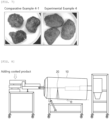
- the step may include adding the fried food to sauce coating equipment and moving the fried food along an equipment line, and adding the moved fried food to a tumbler and performing tumbling.
- the fried food (cooked food) when added to sauce coating equipment, it moves along the equipment line and is added to a tumbler 10. Subsequently, the fried food (cooked food) added to the tumbler 10 may be tumbled by rotation of the tumbler 10.
- an amount of the fried food (cooked food) added may be automatically measured in real time by a system which controls the sauce coating equipment.
- a rotation speed of the tumbler 10 is not particularly limited, and may be adjusted depending on the weight of the fried food (cooked food) added.
- the rotation speed of the tumbler 10 may be 2 to 12 rpm. More specifically, the rotation speed may be 2.2 to 11.8 rpm, 2.4 to 11.6 rpm, 2.6 to 11.4 rpm, 2.8 to 11.2 rpm, 3.0 to 11.0 rpm, 3.5 to 10.5 rpm, or 3 to 10 rpm. Since the rotation speed of the tumbler 10 is within the range, the fried food (cooked food) may be uniformly coated with the sauce composition while minimizing the fried food (cooked food) sticking together.
- the tumbler 10 may be tilted so as to have a predetermined inclination angle.
- the inclination angle ( ⁇ ) of the tumbler 10 may be 4° to 6°. More specifically, the inclination angle ( ⁇ ) of the tumbler 10 may be 4.2° to 5.8°, 4.5° to 5.5°, or 4.8° to 5.3°. Since the inclination angle ( ⁇ ) of the tumbler 10 is within the range, the fried food (cooked food) may be uniformly coated with the sauce composition while minimizing the fried food (cooked food) sticking together.
- the surface of the fried food may be thinly coated with the sauce composition.
- an injection pressure of spraying the sauce composition may be 0.2 to 3.5 bar.
- the injection pressure may be 0.2 to 3.4 bar, 0.2 to 3.2 bar, 0.2 to 3 bar, 0.2 to 2.3 bar, 0.2 to 2.5 bar, 0.3 to 3.4 bar, 0.3 to 3 bar, 0.3 to 2.3 bar, 0.3 to 2.5 bar, 0.3 to 2.0 bar, 0.3 to 1 bar, 0.3 to 1.5 bar, or 0.3 to 0.8 bar.
- the surface of the fried food may be thinly coated with the sauce composition while supplying the sauce composition to the fried food well.
- the spray of the sauce composition may be performed through an injection nozzle.
- the spray may be performed by controlling the injection conditions of the nozzle.
- the conditions of the spray of the sauce composition are not particularly limited, and may be adjusted depending on the weight of the fried food added to the tumbler 10.
- the sauce composition may be sprayed through an injection nozzle 20.
- An injection pressure of the sauce composition which is sprayed through the injection nozzle 20 may be 0.2 to 3.5 bar. Specifically, the injection pressure may be 0.2 to 3 bar, 0.2 to 2.5 bar, 0.3 to 2.5 bar, 0.3 to 2.0 bar, 0.3 to 1.5 bar, or 0.3 to 0.8 bar.
- the injection pressure of the sauce composition may be pressure formed in piping between a sauce supply tank and a spray injection nozzle.
- 1.0 to 4.0 bar of air may be injected to a supply line of the sauce composition with the sauce composition.
- air having a pressure of 1.3 to 3.8 bar, 1.5 to 3.4 bar, 1.5 to 3.3 bar, 1.5 to 3.2 bar, 1.6 to 3.1 bar, or 1.8 to 3.0 bar may be injected. Since the air is injected within the pressure range, the sauce composition may be sprayed finely and uniformly to obtain fried food covered with the sauce composition to a desired level.
- the sauce composition in the coating of the surface of the fried food with the sauce composition described above, is heated to a certain temperature and then sprayed on the fried food to coat the fried food with the sauce composition.
- the temperature of the sauce composition to be sprayed may be 40°C to 90°C, and specifically, in a range between a lower limit selected from the group consisting of 40°C, 45°C, 50°C, 55°C, 57°C, 58°C, 60°C, 62°C, 65°C, 67°C, 70°C, 72°C, 75°C, 77°C, 80°C, and 85°C; and an upper limit selected from the group consisting of 90°C, 88°C, 86°C, 84°C, 82°C, 80°C, 75°C, 70°C, 67°C, 66°C, and 65°C, and as an example, may be 45 to 90°C, 50 to 90°C, 50 to 85°C, 55 to 90°C, 55 to 85°C, 55 to 80°C, 55 to 75°C, 45 to 80 °C, 48 to 77 °C, 51 to 74 °C, 54 to 71 °C, 57
- the sauce composition When the temperature of the sauce composition is within the range, the sauce composition has a viscosity appropriate for being sprayed, so that the sauce composition may be uniformly sprayed on the fried food without causing a nozzle blockage problem.
- the temperature at which the sauce composition is coated may be 0°C to 50°C, and specifically 0 to 50°C, 0 to 45°C, 0 to 40°C, 5 to 50°C, 5 to 45°C, 5 to 40°C, 10 to 50°C, 10 to 45°C, 10 to 40°C, 10 to 35°C, 15 to 50°C, 15 to 45°C, 15 to 40°C, 15 to 35°C, 20 to 50°C, 20 to 45°C, 20 to 40°C, 20 to 35°C, 25 to 50°C, 25 to 45°C, 25 to 40°C, 25 to 35°C, 30 to 50°C, 30 to 45°C, 30 to 40°C, or 30 to 35°C, and the temperature at which the sauce composition is coated may be maintained at a temperature lower than the temperature of the sauce composition being sprayed described above.
- the sauce composition may be uniformly sprayed on the fried food and bound to the food.
- the sauce composition which is sprayed on the fried food may be a sauce composition in an aspect of the present disclosure.
- the sprayed sauce composition is a sauce composition for coating fried food, which includes sucrose, and has a sugar content of 60 to 90 brix and a viscosity at 80°C of 50 to 1,000 cP.
- the coating with the sauce composition may include spraying the sauce composition on fried food and mixing the sauce composition and the fried food, and an example of a mixing method includes tumbling (rotating) or using a conveyor belt, but is not limited thereto.
- coating of a surface of the fried food with the sauce composition may be carried out while tumbling (rotating) the fried food in a tumbler.
- the spraying the sauce composition may be performed simultaneously with the tumbling or after the tumbling.
- the coating with the sauce composition may be performed at a sauce application rate (Equation 1) of 2 to 30% so that the fried food has flavor and crispy texture to a required level.
- the application rate of the sauce composition on the fried food may be 2 to 30%, 2 to 26%, 2 to 25%, 2 to 24%, 2 to 20%, 2 to 18%, 2 to 17%, 2 to 15%, 3 to 20%, 3 to 18%, 3 to 15%, 2 to 14%, 3 to 14%, 2 to 13%, 3 to 13%, 4 to 20%, 4 to 18%, 4 to 15%, 4 to 13%, 5 to 20%, 5 to 18%, 5 to 15%, 5 to 13%, 6 to 20%, 6 to 18%, 6 to 15%, 6 to 13%, 7 to 20%, 7 to 18%, 7 to 15%, 7 to 13%, 8 to 20%, 8 to 18%, 8 to 15%, or 8 to 13%.
- the sauce application rate refers to a value calculated by the following Equation 1:
- Application rate % W 1 ⁇ W 0 / W
- the time to coat the fried food with the sauce composition may vary with the spray speed and the application rate of the sauce composition, but may be within 5 minutes based on the time for the fried food to pass through a sauce composition spray device.
- the sauce composition coating time for the fried food may be 1 second to 5 minutes, 1 second to 4 minutes, 1 second to 3 minutes, 1 second to 2 minutes, 1 second to 1 minute, 10 seconds to 4 minutes, 10 seconds to 2 minutes, 10 seconds to 3 minutes, 10 seconds to 1 minute, 20 seconds to 4 minutes, 20 seconds to 3 minutes, 20 seconds to 2 minutes, 20 seconds to 1 minute, 30 seconds to 4 minutes, 30 seconds to 3 minutes, 30 seconds to 2 minutes, or within 30 seconds to 1 minute, but is not limited thereto.
- the time for the fried food to be coated with the sauce composition may vary with the spray speed and the application rate of the sauce composition, but may be within 5 minutes based on the time for the fried food to pass through the tumbler.
- the sauce composition coating time for the fried food may be 1 second to 5 minutes, 1 second to 4 minutes, 1 second to 3 minutes, 1 second to 2 minutes, 1 second to 1 minute, 10 seconds to 4 minutes, 10 seconds to 2 minutes, 10 seconds to 3 minutes, 10 seconds to 1 minute, 20 seconds to 4 minutes, 20 seconds to 3 minutes, 20 seconds to 2 minutes, 20 seconds to 1 minute, 30 seconds to 4 minutes, 30 seconds to 3 minutes, 30 seconds to 2 minutes, or within 30 seconds to 1 minute, based on the time for the fried food to pass through the tumbler, but is not limited thereto.
- the method of the present disclosure may further include freezing the fried food coated with the sauce composition.
- the freezing may be quickly freezing the fried food coated with the sauce composition.
- the quick-freezing may be performed by treating it at a temperature of -45°C to -35°C for 1 minute to 80 minutes. Specifically, it may be performed by treating it at a temperature of -45°C to -35°C for 1 minute to 80 minutes, 1 minute to 70 minutes, 1 minute to 60 minutes, or 1 minute to 50 minutes.
- the quick-freezing process may be performed by a commonly known process.
- the quick-freezing may be performed by transferring the fried food coated with the sauce composition to a quick-freezing device at -45°C to -35°C through a conveyor, and freezing the cooked food to -10°C or lower for 20 to 70 minutes by a cooling fan. Fried food coated with the sauce composition in a frozen state may be obtained through the quick-freezing.
- the obtained frozen food may be commercialized through post-processing, a packaging process, and the like.
- frozen fried food coated with the sauce composition described above is provided.
- the fried food may be manufactured by a manufacturing method including:
- the sauce composition coated on the frozen fried food may be the sauce composition in an aspect of the present disclosure.
- the sauce composition is a sauce composition for coating fried food, which includes sucrose, has a sugar content of 60 to 90 brix and has a viscosity at 80°C of 50 to 1,000 cP.
- the application rate of the sauce composition on the frozen fried food may be 2 to 30%, 2 to 26%, 2 to 25%, 2 to 24%, 2 to 20%, 2 to 18%, 2 to 17%, 2 to 15%, 3 to 20%, 3 to 18%, 3 to 15%, 2 to 14%, 3 to 14%, 3 to 14%, 2 to 13%, 3 to 13%, 4 to 20%, 4 to 18%, 4 to 15%, 4 to 13%, 5 to 20%, 5 to 18%, 5 to 15%, 5 to 13%, 6 to 20%, 6 to 18%, 6 to 15%, 6 to 13%, 7 to 20%, 7 to 18%, 7 to 15%, 7 to 13%, 8 to 20%, 8 to 18%, 8 to 15%, or 8 to 13%.
- an amount of the sauce composition absorbed into the batter of the fried food is minimized and most of the sauce composition is placed on the outermost surface of the batter, so that dampness of the fried food is prevented, thereby significantly improving crispy texture of the fried food.
- the fried food may be food for a microwave, oven, or air fryer.
- microwave cooking may be cooking with a microwave oven (1,000 W or 700 W) and a cooking time may be 1 minute to 5 minutes, 1 minute 30 seconds to 3 minutes, 2 minutes to 3 minutes, and oven or air fryer cooking may be set at a temperature of 130 to 200°C, 130 to 190°C, 130 to 180°C, 140°C to 200°C, 140 to 190°C, 140 to 180°C, or 140 to 150°C for 3 minutes to 20 minutes, 4 minutes to 18 minutes, 5 minutes to 15 minutes, 7 minutes to 13 minutes, 8 minutes to 12 minutes, 9 minutes to 12 minutes, or 10 minutes to 12 minutes.
- the frozen fried food is thawed using the cooking method, and the crispy texture of the fried food may be significantly improved.
- the sauce composition of the present disclosure has a high sugar content and a high viscosity, and thus, when fried food is coated with the sauce composition, an amount of sauce or moisture included in the sauce adsorbed or transferred into fried food or batter is minimized, and most of the sauce is placed on the outermost surface of the batter. Thus, dampness of the fried food is prevented and the crispy texture and flavor of the fried food may be implemented.
- the sauce-coated fried food of the present disclosure may be obtained without a step of mixing the fried food with separate sauce, eating convenience of consumers may be improved.
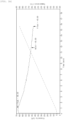
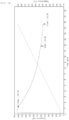
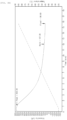
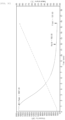
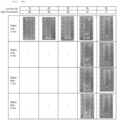
- the viscosities of the sauces of Comparative Example 1-1 and Experimental Examples 1-1 to 1-4, manufactured in Example 1 were measured while adjusting the temperature from 25°C to 80°C.
- the viscosities of the sauce compositions were measured using RVA Perten4500. Specifically, the viscosities of samples (samples of the sauce compositions) were measured in various temperature sections while stirring the samples at a speed of 450 RPM based on 40 g ( FIGS. 1A to 1E ). Table 2 shows the results of measuring viscosity. When the viscosity of the sauce composition was 1,000 cP or less, the sauce composition had flowability to allow spraying through a nozzle.
- Example 1 of Experimental Example 1 The sauce composition manufactured in Example 1 of Experimental Example 1 was applied on chicken nuggets (CJ Cheiljedang Corp.) with a brush at an application rate of 10%, and the chicken nuggets were quickly frozen and kept frozen for 5 days to manufacture frozen chicken.
- the manufactured frozen chicken was cooked at 140°C for 11 minutes using an air fryer (Phillips, HD9860/95), and cooled for 10 minutes.
- the average gradient, the force, and the number of peaks were measured using a physical property analyzer (Texture Analyzer Perten 4500).
- the measurement probe for measurement with the physical property analyzer was a blade type having a width of 1.2 cm, and the measurement was performed at a pre-test speed of 1 mm/s, a test speed of 1 mm/s, and a deformation of 2 cm.
- Table 3 shows the results of measuring average gradient.
- Experimental Example 1-2 (brix: 76) had both the highest average peak force and average gradient to have the highest crispness intensity
- Experimental Example 1-3 (brix: 80) and Experimental Example 1-4 (brix: 85) had the next crispness intensity.
- Experimental Example 1-1 (brix: 60) and Comparative Example 1-1 (brix: 50) had relatively low crispness intensity ( FIG. 2 ).
- the sauce compositions having the sucrose and high fructose contents of Experimental Examples 2-1 to 2-5 had stability without crystal precipitation at room temperature, and when the content of sucrose was increased as compared with that of Experimental Example 2-5, a small amount of crystals were precipitated at room temperature.
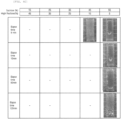
- Example 1 of Experimental Example 2 The viscosity of the sauce manufactured in Example 1 of Experimental Example 2 was measured in the same manner as in Example 2 of Experimental Example 1 by adjusting to 250 rpm ( FIGS. 3A to 3E ).
- Table 5 shows the results of measuring viscosity.
- the sauce composition of Experimental Example 1-2 was applied on chicken nuggets (CJ Cheiljedang Corp.) according to each application rate (3% to 25%) with a brush (Table 7). Specifically, the same amount of batter solution (3.5 g) was applied on one surface of the chicken nuggets, the chicken nuggets were fried for 2 minutes and 30 seconds, and the sauce composition was applied on the fried chicken according to each application rate (3% to 25%). Thereafter, the chicken was quickly frozen for 1 hour and stored in a freezer for 5 days, and then the frozen chicken was cooked with an air fryer (Phillips HD9860/95) at 140° C to manufacture chicken.
- an air fryer Phillips HD9860/95
- the absorption rate of the sauce depending on the application rate of chicken manufactured in Example 1 of Experimental Example 3 was confirmed by observing appearance and cross section of chicken with the naked eye.
- the application rate was 3% to 13% (Experimental Examples 3-1 to 3-4, the sauce was placed on the outermost surface of the batter, and when the application rate was 16% (Experimental Example 3-5), a part of the sauce was absorbed and transferred inside the batter.
- the application rate was 25% (Experimental Example 3-6), most of the sauce was transferred into the batter ( FIG. 6 ).
- Fried meat was prepared by common curing, aging, powdering, and frying processes of chicken meat.
- frozen chicken breast as the chicken meat was completely thawed by RF (5000 ⁇ 1000v, 55 ⁇ 10kW, 25 min ⁇ 25 min) and natural thawing, added to a saline solution including 26 g of water, 0.6 g of soy protein isolate, 0.6 g of corn starch, 0.18 g of refined salt, and 0.03 g of pepper powder, and tumbled at a speed of 5 to 7 rpm for 30 minutes to cure the chicken breast.
- the cured chicken breast was aged in a cold-storage warehouse for 6 to 24 hours.
- the aged cured chicken breast was cut into 17.5 ⁇ 2.5 g, and powdered and battered with prepared powder (soft flour) and battering solution (GOURMET Crunchwing batter).
- the process was performed so that the powder had a weight of ⁇ 3% and the battering solution had a weight of ⁇ 5%, as compared with the weight of the cured chicken breast.
- battered fried meat fried chicken was manufactured by a first heat treatment and then a second heat treatment at an oil bath temperature of 180 ⁇ 5°C within 10 minutes.
- the manufactured fried meat (fried chicken) was added to a tumbler, and the sauce composition having the composition of Experimental Example 1-2 was spray injected with tumbling to coat the sauce composition until the application rate of the fried meat (fried chicken) was 10%.
- the sauce composition was coated, the sauce composition was sprayed at a high pressure (0.3 - 2.0 bar, based on pipeline pressure between a sauce supply tank and a spray nozzle) in a heated state to the temperature of 60°C or higher to perform coating.
- the tumbler was disposed to have an inclination angle of about 5° and adjusted to have a temperature inside of 30 to 50°C, the rotation speed of the tumbler was set to 3 to 10 rpm, and a time for the fried meat to be added into the tumbler and then pass through and be discharged from the tumbler was set to within 1 minute, thereby performing sauce coating.
- the manufactured fried meat coated with the sauce composition was quickly frozen (at -40°C for 50 minutes) to manufacture frozen chicken.
- the manufactured fried meat was coated with the sauce composition in a manner of dipping in the same sauce composition as Experimental Example 4.
- Application was performed to have an application rate of 10% for having the same application rate as Experimental Example 4, and the fried meat coated with the sauce composition was quickly frozen (at -40°C for 50 minutes) to manufacture frozen chicken.
- the manufactured fried meat was coated with the sauce composition in a manner of dipping in the same sauce composition as Experimental Example 4.
- the entire surface of the manufactured fried meat was coated with the sauce composition as thin as possible, and at this time, the application rate was about 30%.
- the fried meat coated with the sauce composition was quickly frozen (at -40°C 50 minutes) to manufacture frozen chicken.
- the frozen chicken of Experimental Example 4 and Comparative Example 4-2 was cooked using a microwave oven or an air fryer to perform sensory evaluation.
- microwave cooking was performed for 2 minutes and 15 seconds in a microwave oven (1,000 W, Samsung), and air fryer cooking was performed at 140°C for 11 minutes in an air fryer (HD9860/95, Phillips).
- the sensory evaluation was performed blindly among trained researchers, and the cooked products were eaten simultaneously, and the sensory evaluation of microwave cooking and the sensory evaluation of air fryer cooking were performed by different researchers from each other.
- the first half score (average) of crispness intensity and preference were shown based on a 5-point scale. As the crispness intensity and the preference were close to 5 points, the crispness intensity was high and the crispness preference was high.
- Product preference was measured by the proportion of the selected sample among the total respondents.
Landscapes
- Chemical & Material Sciences (AREA)
- Engineering & Computer Science (AREA)
- Life Sciences & Earth Sciences (AREA)
- Polymers & Plastics (AREA)
- Food Science & Technology (AREA)
- Nutrition Science (AREA)
- Health & Medical Sciences (AREA)
- Oil, Petroleum & Natural Gas (AREA)
- Mechanical Engineering (AREA)
- Proteomics, Peptides & Aminoacids (AREA)
- Seeds, Soups, And Other Foods (AREA)
- General Preparation And Processing Of Foods (AREA)
- Formation And Processing Of Food Products (AREA)
- Meat, Egg Or Seafood Products (AREA)
Applications Claiming Priority (3)
| Application Number | Priority Date | Filing Date | Title |
|---|---|---|---|
| KR20230043423 | 2023-04-03 | ||
| KR1020240043500A KR102770005B1 (ko) | 2023-04-03 | 2024-03-29 | 바삭함 및 취식 편의성을 부여하는 식품용 소스 조성물 및 이를 이용한 식품의 제조방법 |
| PCT/KR2024/004195 WO2024210438A1 (fr) | 2023-04-03 | 2024-04-01 | Composition de sauce alimentaire pour conférer une croustillance et une commodité de consommation, et procédé de préparation d'aliment utilisant celle-ci |
Publications (2)
| Publication Number | Publication Date |
|---|---|
| EP4497331A1 true EP4497331A1 (fr) | 2025-01-29 |
| EP4497331A4 EP4497331A4 (fr) | 2025-06-18 |
Family
ID=92972084
Family Applications (1)
| Application Number | Title | Priority Date | Filing Date |
|---|---|---|---|
| EP24785144.7A Pending EP4497331A4 (fr) | 2023-04-03 | 2024-04-01 | Composition de sauce alimentaire pour conférer une croustillance et une commodité de consommation, et procédé de préparation d'aliment utilisant celle-ci |
Country Status (6)
| Country | Link |
|---|---|
| US (1) | US20240389623A1 (fr) |
| EP (1) | EP4497331A4 (fr) |
| JP (1) | JP7825079B2 (fr) |
| KR (1) | KR20250029077A (fr) |
| CN (1) | CN120936255A (fr) |
| WO (1) | WO2024210438A1 (fr) |
Family Cites Families (9)
| Publication number | Priority date | Publication date | Assignee | Title |
|---|---|---|---|---|
| JP3347793B2 (ja) * | 1993-01-22 | 2002-11-20 | 日本食品化工株式会社 | 食品用タレ組成物 |
| JP2004313071A (ja) * | 2003-04-16 | 2004-11-11 | Kazuyo Obara | 揚げ物食品及びその製造方法並びに揚げ物食品用のソース及びその製造方法 |
| JP5006359B2 (ja) * | 2009-03-17 | 2012-08-22 | キユーピー株式会社 | 加熱済高糖度ソース |
| KR101417342B1 (ko) * | 2012-09-19 | 2014-07-16 | 주식회사 하림홀딩스 | 아이스치킨제조방법 |
| US20190008187A1 (en) * | 2015-08-20 | 2019-01-10 | San-Ei Gen F.F.I., Inc. | Welan gum-containing composition |
| KR102351047B1 (ko) * | 2016-12-30 | 2022-01-14 | 주식회사 풀무원 | 소스 코팅이 안정화된 냉동식품의 제조방법 |
| KR102012321B1 (ko) * | 2018-01-22 | 2019-10-21 | 윤영우 | 돈강정 제조방법 |
| KR20220010278A (ko) * | 2020-07-17 | 2022-01-25 | 주식회사 진성바이오 | 마늘이 첨가된 치킨용 액상소스 조성물 및 그 제조방법 |
| KR20220100168A (ko) | 2021-01-08 | 2022-07-15 | 주식회사 하림 | 냉동식품 제조 방법 |
-
2024
- 2024-04-01 CN CN202480023490.9A patent/CN120936255A/zh active Pending
- 2024-04-01 WO PCT/KR2024/004195 patent/WO2024210438A1/fr not_active Ceased
- 2024-04-01 EP EP24785144.7A patent/EP4497331A4/fr active Pending
- 2024-04-01 JP JP2024573654A patent/JP7825079B2/ja active Active
- 2024-07-03 US US18/764,118 patent/US20240389623A1/en not_active Abandoned
-
2025
- 2025-02-13 KR KR1020250018589A patent/KR20250029077A/ko active Pending
Also Published As
| Publication number | Publication date |
|---|---|
| JP2025521011A (ja) | 2025-07-04 |
| EP4497331A4 (fr) | 2025-06-18 |
| WO2024210438A1 (fr) | 2024-10-10 |
| JP7825079B2 (ja) | 2026-03-05 |
| CN120936255A (zh) | 2025-11-11 |
| KR20250029077A (ko) | 2025-03-04 |
| US20240389623A1 (en) | 2024-11-28 |
Similar Documents
| Publication | Publication Date | Title |
|---|---|---|
| EP3412155B1 (fr) | Méthode de production de farine de blé modifiée pour l'enrobage d'aliments frits et matériau d'enrobage d'aliments frits enrobés | |
| CN107846943A (zh) | 油炸食品用撒粉混合物 | |
| WO2018181749A1 (fr) | Pâte à frire pour aliments frits | |
| JPWO2019188637A1 (ja) | 揚げ物用衣材 | |
| KR102555774B1 (ko) | 수비드 조리법을 이용한 양념 돼지고기 목살의 조리방법 | |
| JP5885167B2 (ja) | 穀類加工食品およびその製造方法 | |
| KR101973401B1 (ko) | 냉장, 냉동 육류가공식품의 제조방법 | |
| WO2022260155A1 (fr) | Procédé de production de produit alimentaire transformé pour aliment frit dans une pâte à frire | |
| US20240389623A1 (en) | Sauce composition for food imparting crispy texture and convenient consumption, and method of preparing food using the same | |
| KR102770005B1 (ko) | 바삭함 및 취식 편의성을 부여하는 식품용 소스 조성물 및 이를 이용한 식품의 제조방법 | |
| HK40121180A (en) | Food sauce composition for imparting crispiness and eating convenience, and food preparation method using same | |
| KR101993589B1 (ko) | 스트로이젤을 묻힌 튀김의 제조 방법 | |
| JP3280779B2 (ja) | 調理食品及び当該食品製造用調味液 | |
| US9743677B2 (en) | Wheat flour for frying batter | |
| KR20260048122A (ko) | 식품용 소스 조성물 및 이를 이용한 식품의 제조방법 | |
| KR20260048471A (ko) | 식품용 소스 조성물 및 이를 이용한 식품의 제조방법 | |
| US20240365819A1 (en) | Coating composition for fried food | |
| JP3024899B2 (ja) | 電子レンジ調理用調味料 | |
| JP7525563B2 (ja) | 揚げ物の具材の食感改良用組成物、衣のひき抑制用組成物、油ちょう時間および/または油ちょう温度の低減用組成物ならびに揚げ物の製造方法 | |
| KR20250148961A (ko) | 유통 안정성이 개선된 냉동 유통 식품의 제조 방법 | |
| CN119486608A (zh) | 带面衣油炸食品的制造方法 | |
| HK40119813A (en) | Method for producing battered fried food | |
| JPS58205473A (ja) | フライ済み冷凍とりから揚げの製造法 | |
| JPH07231763A (ja) | 電子レンジ調理用調味料 | |
| EP3967152A1 (fr) | Composition de revêtement alimentaire, et aliment traité et son procédé de fabrication |
Legal Events
| Date | Code | Title | Description |
|---|---|---|---|
| STAA | Information on the status of an ep patent application or granted ep patent |
Free format text: STATUS: THE INTERNATIONAL PUBLICATION HAS BEEN MADE |
|
| PUAI | Public reference made under article 153(3) epc to a published international application that has entered the european phase |
Free format text: ORIGINAL CODE: 0009012 |
|
| STAA | Information on the status of an ep patent application or granted ep patent |
Free format text: STATUS: REQUEST FOR EXAMINATION WAS MADE |
|
| 17P | Request for examination filed |
Effective date: 20241021 |
|
| AK | Designated contracting states |
Kind code of ref document: A1 Designated state(s): AL AT BE BG CH CY CZ DE DK EE ES FI FR GB GR HR HU IE IS IT LI LT LU LV MC ME MK MT NL NO PL PT RO RS SE SI SK SM TR |
|
| A4 | Supplementary search report drawn up and despatched |
Effective date: 20250515 |
|
| RIC1 | Information provided on ipc code assigned before grant |
Ipc: A23P 20/15 20160101ALI20250512BHEP Ipc: A23P 20/12 20160101ALI20250512BHEP Ipc: A23P 20/10 20160101ALI20250512BHEP Ipc: A23L 13/50 20160101ALI20250512BHEP Ipc: A23L 13/00 20160101ALI20250512BHEP Ipc: A23P 30/00 20160101ALI20250512BHEP Ipc: A23P 20/18 20160101ALI20250512BHEP Ipc: A23L 13/75 20230101ALI20250512BHEP Ipc: A23L 13/77 20230101ALI20250512BHEP Ipc: A23L 13/70 20230101ALI20250512BHEP Ipc: A23L 27/30 20160101ALI20250512BHEP Ipc: A23L 23/00 20160101AFI20250512BHEP |
|
| REG | Reference to a national code |
Ref country code: HK Ref legal event code: DE Ref document number: 40121180 Country of ref document: HK |