EP4497435A1 - Skelettmuskelverstärkungsmittel - Google Patents
Skelettmuskelverstärkungsmittel Download PDFInfo
- Publication number
- EP4497435A1 EP4497435A1 EP23774937.9A EP23774937A EP4497435A1 EP 4497435 A1 EP4497435 A1 EP 4497435A1 EP 23774937 A EP23774937 A EP 23774937A EP 4497435 A1 EP4497435 A1 EP 4497435A1
- Authority
- EP
- European Patent Office
- Prior art keywords
- muscle
- skeletal muscle
- atrophy
- skeletal
- damage
- Prior art date
- Legal status (The legal status is an assumption and is not a legal conclusion. Google has not performed a legal analysis and makes no representation as to the accuracy of the status listed.)
- Pending
Links
Images




Classifications
-
- A—HUMAN NECESSITIES
- A61—MEDICAL OR VETERINARY SCIENCE; HYGIENE
- A61K—PREPARATIONS FOR MEDICAL, DENTAL OR TOILETRY PURPOSES
- A61K31/00—Medicinal preparations containing organic active ingredients
- A61K31/13—Amines
- A61K31/132—Amines having two or more amino groups, e.g. spermidine, putrescine
-
- A—HUMAN NECESSITIES
- A61—MEDICAL OR VETERINARY SCIENCE; HYGIENE
- A61P—SPECIFIC THERAPEUTIC ACTIVITY OF CHEMICAL COMPOUNDS OR MEDICINAL PREPARATIONS
- A61P21/00—Drugs for disorders of the muscular or neuromuscular system
Definitions
- the present invention relates to a skeletal muscle enhancer comprising spermidine or a pharmaceutically acceptable salt thereof, which is administered intramuscularly.
- the homeostasis of skeletal muscle is controlled by a synthesis system and a degradation system (Non Patent Literature 1). If the maintenance of homeostasis fails and the degradation system becomes dominant, a decrease in skeletal muscle mass (hereinafter, also referred to as “muscle atrophy”) occurs.
- Non Patent Literature 2 The muscle atrophy that frequently occurs in the elderly due to aging is also called sarcopenia (Non Patent Literature 2). If sarcopenia is developed and muscle atrophy progresses in the whole body, activities of daily living decrease and care and support are required, and thus sarcopenia is a major problem in an aging society. Further, sarcopenia is considered as one cause of chronic low back pain (Non Patent Literature 11).
- Disuse muscle atrophy occurs due to plaster casting for treatment of a bone fracture caused by injury or osteoporosis, prolonged bed rest (bedridden) due to aging, or the like.
- Non Patent Literature 1 As a mechanism of muscle atrophy, enhancement of activity of muscle-specific ubiquitin proteasome systems and involvement of a negative regulator of muscle growth are known (Non Patent Literature 1).
- Tirm63 (MuRF1) is a representative muscle-specific ubiquitin ligase involved in muscle atrophy, and it has been reported that muscle atrophy is suppressed by depletion of its expression (Non Patent Literature 3).
- Myostatin (Mstn) is a negative regulator of muscle growth, and it has been reported that if its expression is suppressed, the muscle mass remarkably increases (Non Patent Literature 4).
- muscle damage There is skeletal muscle damage (hereinafter, also referred to as “muscle damage”) as a decrease in the skeletal muscle mass occurs due to causes different from the disruption of homeostasis.
- Muscle damage is clinically classified into muscle strain (pulled muscle), high energy trauma, damage caused by surgical operation, and the like. Muscle damage is known to cause various complications (dysfunction, muscle atrophy, local pain, and the like) (Non Patent Literature 9).
- Non Patent Literature 10 muscle strain caused by blunt external force (bruise) is the most frequent sports injury (Non Patent Literature 10). Although there are no accurate statistics, it is considered that the number of patients in Japan is about several tens of thousands per year.
- RICE treatment As a first aid to muscle damage, RICE treatment (Rest, Icing, Compression, Elevation) has been recommended so far. After the first aid treatment, symptomatic treatment for pain, rehabilitation, and the like have been conducted.
- Skeletal muscle tissue has a mechanism for regeneration from the damage. It is known that muscle satellite cells are essential for muscle regeneration. The muscle satellite cells that reside in the vicinity of the muscle fiber basement membrane, exist in a quiescent state under normal conditions, but when muscle damage is caused, the cells are activated and differentiated into myoblasts and form muscle fibers via cell fusion. When the muscle regeneration is completed, the remaining muscle satellite cells enter the quiescent state again (Non Patent Literatures 5 and 6).
- Non Patent Literature 7 As the factor that promotes muscle regeneration, a hepatocyte growth factor (HGF) (Non Patent Literature 7) and an insulin-like growth factor 1 (IGF-1) (Non Patent Literature 8) are known. Further, it has been reported that muscle hypertrophy can be induced by suppressing a factor that inhibits muscle regeneration (Patent Literature 1).
- HGF hepatocyte growth factor
- IGF-1 insulin-like growth factor 1
- part of muscle tissue may be replaced with the scar tissue derived from collagen that has remained in the muscle tissue for a long period of time. Since the scar tissue reduces the strength of plastic muscles, the risk of recurrence of muscle damage is high (Non Patent Literature 9).
- Non Patent Literatures 5 and 6 It is known that muscle regeneration is promoted when the homeostasis of skeletal muscle becomes dominant in the synthesis system, leading to the formation of muscle fibers.
- Patent Literature 1 WO 2013/039244 A
- the present inventors performed intensive studies to solve the problems, and as a result, found that when spermidine is administered intramuscularly to a subject suffering from muscle atrophy or muscle damage, suppresses the degradation system or promotes the synthesis system in skeletal muscle homeostasis, resulting in an increase in skeletal muscle weight (that is, skeletal muscle is enhanced), and completed the present invention. That is, the present invention relates to the following [1] to [10].
- the skeletal muscle enhancer according to the present invention can enhance skeletal muscle.
- the skeletal muscle enhancer according to the present invention contains spermidine or a pharmaceutically acceptable salt thereof as an active ingredient.
- salt thereof for example, a hydrochloride, a phosphate, etc. are mentioned.
- the salt of spermidine include solvate with a pharmaceutically acceptable solvent such as water or ethanol.
- skeletal muscle enhancement used herein means the increase of the skeletal muscle mass reduced by muscle atrophy, muscle damage, or the like.
- the present invention is not limited by a specific theory, it is considered that the increase in the skeletal muscle mass is achieved by suppression of the degradation system or promotion of the synthesis system in the homeostasis of skeletal muscle, whereby the synthesis system becomes dominant (muscle regeneration is promoted), and the number of single muscle fibers constituting the skeletal muscle is increased and/or the single muscle fibers themselves are enlarged, or the like.
- muscle atrophy used herein means the decrease in the skeletal muscle mass caused by the predominance of the degradation system among the synthesis system and the degradation system that maintain homeostasis of skeletal muscle.
- muscle damage used herein means the decrease in the skeletal muscle mass caused by a cause different from the disruption of homeostasis (such as external force or necrosis of muscle fibers due to myogenic disease).
- muscle damage due to an external force for example, muscle strain (caused by external force (for example, a bruise or the like)), pulled muscle (caused by internal force such as a rapid contraction of muscle), and cervical sprain (so-called whiplash), are mentioned.
- myogenic disease that causes muscle damage for example, muscular dystrophy and distal myopathy, etc. are mentioned.
- muscle damage due to an external force and muscle damage due to myogenic disease are common to each other in that muscle regeneration compensating for necrosis of muscle fibers (muscle damage) occurs.
- Skeletal muscle enhancers used in drug therapy are suitable for treatment of subjects having difficulty in exercise therapy, particularly, subjects having muscle atrophy due to aging (sarcopenia), muscle atrophy due to disuse muscle atrophy, muscle damage due to external force (in particular, muscle strain (pulled muscle)), or muscle damage due to myogenic disease.
- the concentration of spermidine or a salt thereof in a skeletal muscle enhancer can be appropriately set depending on the degree of muscle atrophy, muscle damage, and the like.
- the skeletal muscle enhancers can be applied to an animal having skeletal muscle without any limitation.
- the application target is preferably a mammal (a human, or a non-human mammal (for example, a horse or a cow)), and more preferably a human. Further, there are no restrictions on the sex and age of the application target.
- the skeletal muscle enhancer is administered intramuscularly into skeletal muscle. Intramuscular administration exerts a higher effect than other administration routes.
- a sterilized pharmaceutical formulation in a liquid state such as a solution or a suspension, specifically, or an injection can be mentioned.
- the formulation can be conducted by using a common formulation technique.
- the pharmaceutical formulation for intramuscular administration may contain a pharmaceutically acceptable solvent or diluent in addition to an active ingredient.
- a lidocaine hydrochloride aqueous solution for intramuscular injection
- a saline solution for intramuscular injection
- a liquid for intravenous injection for example, an aqueous solution of citric acid, sodium citrate, or the like
- an electrolyte solution for intravenous drip infusion or intravenous injection
- a mixed solution thereof a mixed solution thereof, etc.
- the injection may be prepared in the form of predissolved active ingredient, and further may be prepared in the form that is dissolved at the time of use as a powder of the active ingredient as it is or a powder of the active ingredient added with an appropriate carrier.
- the injection can contain, for example, 0.005 to 25% by mass of an active ingredient based on the total mass of the pharmaceutical formulation.
- Spermidine and salts thereof can treat muscle atrophy and muscle damage by enhancing skeletal muscle. Accordingly, the skeletal muscle enhancer according to the present invention can be grasped also as a therapeutic agent for atrophy or damage of skeletal muscle.
- the description about the active ingredient and formulation of the skeletal muscle enhancer is applied to the therapeutic agent.
- the left hindlimb of the mouse in a bent state was fixed with a surgical stapler (Kaiser Plus. KEISEI MEDICAL INDUSTRIAL CO., LTD.).
- the right hindlimb of the same mouse was assigned to the sham-treatment side, and no fixation treatment was performed.
- the tibialis anterior muscle one of skeletal muscles was collected by dissection. The sample collected after 3 days was supplied to the expression analysis of the muscle atrophy-related genes, and the sample collected after 7 days was supplied to the measurement of a muscle weight and the preparation of a muscle tissue section.
- the extracted RNA was recovered with 2-propanol and 75% ethanol, and then subjected to the reverse transcription reaction (using ReverTra Ace qPCR RT Master Mix (Toyobo Co., Ltd.) according to the attached protocol) to synthesize cDNA.
- the synthesized cDNA was subjected to the real-time PCR method (using Applied Biosystems 7500 Real-Time PCR System (Thermo Fisher Scientific)) to measure mRNA expression of three genes, Trim63 (MuRF1), myostatin (Mstn), and Gapdh. Primer sequences used are as follows.
- Tirm63 has been reported to suppress muscle atrophy by depletion of its expression (Non Patent Literature 3), and is a gene that acts on enhancement of the degradation system in the homeostasis of skeletal muscle.
- Myostatin has been reported to be a negative regulator of muscle growth (Non Patent Literature 4), and is a gene that acts on suppression of the synthesis system (in other words, enhancement of the degradation system) in the homeostasis of skeletal muscle.
- Gapdh was used as a control for normalizing the expression levels of muscle atrophy-related genes.
- the expression levels of mRNA of Trim63 and Mstn were calculated as a ratio to the expression level of mRNA of Gapdh (mGapdh).
- the evaluation was performed based on the proportion (%) of the expression level in the other administration group when the expression level in the fixed left hind paw of the Vehicle administration group (details will be described later) was set to 100%.
- a model animal to which muscle damage had been caused by administion of snake venom cardiotoxin (CTX) was used.
- the model animal has been widely used in studies on regeneration from muscle damage.
- CTX phosphate buffer
- Body weight of the mouse was measured before collecting the tibialis anterior muscle. Furthermore, the weight of the collected tibialis anterior muscle was measured. From these measured values, the ratio (%) of the skeletal muscle weight per body weight of the mouse (weight of tibialis anterior muscle/body weight of mouse) was calculated.
- the tibialis anterior muscle was immersed in isopentane cooled with liquid nitrogen and was rapidly frozen.
- the frozen muscle tissue was cut into slices each having a thickness of 10 ⁇ m by using a cryostat (Leica Biosystems), and the slice was attached onto an antistripping coated slide glass (Matsunami Glass Ind., Ltd.).
- the histogram of the SPD intramuscular administration group was shifted to the right side (in a direction in which the area becomes larger) as compared with histogram of the Vehicle administration group, and a significant increase in the mean muscle fiber area was observed ( Fig. 2 , *** P ⁇ 0.001).
- a preparation made by dissolving SPD in a PBS SPD concentration: 196 mM was used.
- This preparation (volume: 10 ⁇ L) was injected into the tibialis anterior muscle of both legs of a model once a day from the day before the left hindlimb fixation to the day before the dissection.
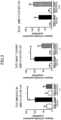
- the intramuscular administration group (Staple, Spermidine) showed the significant expression suppression of 65.6% reduction as compared with the Vehicle administration group (Staple, Vehicle) ( Fig. 3 , * P ⁇ 0.05).
- the expression suppression was reduced only by 42.3% as compared with the Vehicle administration group (Staple, Vehicle), and the oral administration group showed no expression suppression ( Fig. 3 , ** P ⁇ 0.01).
- the intramuscular administration group (Staple, Spermidine) showed the significant expression suppression of 61.1% reduction as compared with the Vehicle administration group (Staple, Vehicle) ( Fig. 4 , ** P ⁇ 0.01).
- the intraperitoneal administration group and the oral administration group did not show significant expression suppression ( Fig. 4 ).
- SPD Spermidine trihydrochloride
- a preparation made by dissolving SPD in a PBS SPD concentration: 196 mM
- This preparation volume: 10 ⁇ L
- a preparation made by dissolving SPD in water (SPD concentration: 30 mM) was used. This preparation was administered orally by free drinking from the day before CTX administration to immediately before dissection. The mean water intake during the oral administration period was 2.32 mL/day per mouse.
- PBS Vehicle
- water was used as a control in the oral administration group.
- Fig. 5 muscle weight
- Fig. 6 to 8 regenerated single-muscle fiber area
Landscapes
- Health & Medical Sciences (AREA)
- Medicinal Chemistry (AREA)
- Veterinary Medicine (AREA)
- Public Health (AREA)
- General Health & Medical Sciences (AREA)
- Animal Behavior & Ethology (AREA)
- Chemical & Material Sciences (AREA)
- Life Sciences & Earth Sciences (AREA)
- Pharmacology & Pharmacy (AREA)
- Physical Education & Sports Medicine (AREA)
- Nuclear Medicine, Radiotherapy & Molecular Imaging (AREA)
- Organic Chemistry (AREA)
- General Chemical & Material Sciences (AREA)
- Chemical Kinetics & Catalysis (AREA)
- Orthopedic Medicine & Surgery (AREA)
- Neurology (AREA)
- Bioinformatics & Cheminformatics (AREA)
- Engineering & Computer Science (AREA)
- Epidemiology (AREA)
- Pharmaceuticals Containing Other Organic And Inorganic Compounds (AREA)
- Medicines That Contain Protein Lipid Enzymes And Other Medicines (AREA)
Applications Claiming Priority (2)
| Application Number | Priority Date | Filing Date | Title |
|---|---|---|---|
| JP2022045904 | 2022-03-22 | ||
| PCT/JP2023/011182 WO2023182342A1 (ja) | 2022-03-22 | 2023-03-22 | 骨格筋増強剤 |
Publications (2)
| Publication Number | Publication Date |
|---|---|
| EP4497435A1 true EP4497435A1 (de) | 2025-01-29 |
| EP4497435A4 EP4497435A4 (de) | 2025-08-13 |
Family
ID=88101118
Family Applications (1)
| Application Number | Title | Priority Date | Filing Date |
|---|---|---|---|
| EP23774937.9A Pending EP4497435A4 (de) | 2022-03-22 | 2023-03-22 | Skelettmuskelverstärkungsmittel |
Country Status (4)
| Country | Link |
|---|---|
| US (1) | US20250228796A1 (de) |
| EP (1) | EP4497435A4 (de) |
| JP (1) | JPWO2023182342A1 (de) |
| WO (1) | WO2023182342A1 (de) |
Families Citing this family (1)
| Publication number | Priority date | Publication date | Assignee | Title |
|---|---|---|---|---|
| WO2025070707A1 (ja) * | 2023-09-29 | 2025-04-03 | 東洋紡株式会社 | フレイルを予防、又は改善するためのジアミン、及び/又はポリアミンを含む組成物 |
Family Cites Families (5)
| Publication number | Priority date | Publication date | Assignee | Title |
|---|---|---|---|---|
| JPS5998015A (ja) * | 1982-11-27 | 1984-06-06 | Microbial Chem Res Found | 免疫賦活剤 |
| MXPA00009705A (es) * | 1998-04-03 | 2003-07-14 | Univ Manitoba | Uso de poliaminas en el tratamiento de sintomas dermatologicos. |
| EP2756849B1 (de) | 2011-09-15 | 2016-03-16 | Seikagaku Corporation | Skelettmuskelregenerationsförderer |
| CA3086250A1 (en) * | 2017-12-20 | 2019-06-27 | Societe Des Produits Nestle S.A. | Compositions and methods using a combination of autophagy inducer and high protein for induction of autophagy |
| EP4129404A4 (de) * | 2020-04-03 | 2023-06-21 | Mitsubishi Gas Chemical Company, Inc. | Muskelverstärker |
-
2023
- 2023-03-22 EP EP23774937.9A patent/EP4497435A4/de active Pending
- 2023-03-22 US US18/849,050 patent/US20250228796A1/en active Pending
- 2023-03-22 JP JP2024509154A patent/JPWO2023182342A1/ja active Pending
- 2023-03-22 WO PCT/JP2023/011182 patent/WO2023182342A1/ja not_active Ceased
Also Published As
| Publication number | Publication date |
|---|---|
| WO2023182342A1 (ja) | 2023-09-28 |
| EP4497435A4 (de) | 2025-08-13 |
| JPWO2023182342A1 (de) | 2023-09-28 |
| US20250228796A1 (en) | 2025-07-17 |
Similar Documents
| Publication | Publication Date | Title |
|---|---|---|
| Miyazaki et al. | Indoxyl sulfate increases the gene expressions of TGF-β1 TIMP-1 and pro-α1 (1) collagen in uremic rat kidneys. | |
| EP3718561A1 (de) | Therapeutikum für entzündliche darmerkrankung | |
| CN115315267B (zh) | 用于预防或治疗脱发的肽及其用途 | |
| TW201244734A (en) | Therapeutic agent for alopecia | |
| EP4497435A1 (de) | Skelettmuskelverstärkungsmittel | |
| Goldspink et al. | Growth factors, muscle function and doping | |
| EP3870180B1 (de) | Kombination enthaltend sildenafil zur verwendung bei der behandlung von osteoarthritis | |
| US12133869B2 (en) | Using autologous mesenchymal stem cells to treat multiple system atrophy | |
| JP6198742B2 (ja) | 肺高血圧症 | |
| AU2019368245A1 (en) | Next generation synthetic transcription factors | |
| Limback et al. | A comprehensive review of Duchenne muscular dystrophy: genetics, clinical presentation, diagnosis, and treatment | |
| JP2023526249A (ja) | うつ病の処置 | |
| WO2020201444A1 (en) | Repurposing small molecules for senescence-related diseases and disorders | |
| Nakamura et al. | A case of refractory heart failure in Becker muscular dystrophy improved with corticosteroid therapy | |
| US20200031873A1 (en) | Repurposing cell penetrating peptides and their novel derivatives and iopromide and iodo-aryl carbonates for treatment of senescence-related diseases and disorders | |
| CN114555630A (zh) | 用于治疗脊髓损伤和/或髓鞘再生的肽的全身施用 | |
| US20240293441A1 (en) | New therapeutic use of type 2 iodothyronine deiodinase (d2) inhibitors | |
| CN113853211B (zh) | 包含环(组氨酸-脯氨酸)二肽及甲状旁腺激素的组合物用于预防、改善或治疗骨质流失疾病的用途 | |
| JP6566520B2 (ja) | 筋疾患の治療または予防のための医薬組成物 | |
| EP2224947B1 (de) | Verwendung von somatostatin analoga zur behandlung von meningiomen | |
| HK40060509A (en) | Combination comprising sildenafil for use in the treatment of osteoarthritis | |
| HK40060509B (en) | Combination comprising sildenafil for use in the treatment of osteoarthritis | |
| WO2018027149A1 (en) | Methods of treating alport syndrome | |
| JP2024020797A (ja) | 筋萎縮の治療剤 | |
| CN112587662A (zh) | 一种miR-155/PEA15信号通路抑制剂在病理性心脏重构药物中的应用 |
Legal Events
| Date | Code | Title | Description |
|---|---|---|---|
| STAA | Information on the status of an ep patent application or granted ep patent |
Free format text: STATUS: THE INTERNATIONAL PUBLICATION HAS BEEN MADE |
|
| PUAI | Public reference made under article 153(3) epc to a published international application that has entered the european phase |
Free format text: ORIGINAL CODE: 0009012 |
|
| STAA | Information on the status of an ep patent application or granted ep patent |
Free format text: STATUS: REQUEST FOR EXAMINATION WAS MADE |
|
| 17P | Request for examination filed |
Effective date: 20241017 |
|
| AK | Designated contracting states |
Kind code of ref document: A1 Designated state(s): AL AT BE BG CH CY CZ DE DK EE ES FI FR GB GR HR HU IE IS IT LI LT LU LV MC ME MK MT NL NO PL PT RO RS SE SI SK SM TR |
|
| DAV | Request for validation of the european patent (deleted) | ||
| DAX | Request for extension of the european patent (deleted) | ||
| A4 | Supplementary search report drawn up and despatched |
Effective date: 20250714 |
|
| RIC1 | Information provided on ipc code assigned before grant |
Ipc: A61K 31/132 20060101AFI20250708BHEP Ipc: A61P 21/00 20060101ALI20250708BHEP |