EP4502887A1 - Procédé et appareil de génération de phrase en langage naturel pour décrire un flux de travail, et support de stockage - Google Patents
Procédé et appareil de génération de phrase en langage naturel pour décrire un flux de travail, et support de stockage Download PDFInfo
- Publication number
- EP4502887A1 EP4502887A1 EP22939113.1A EP22939113A EP4502887A1 EP 4502887 A1 EP4502887 A1 EP 4502887A1 EP 22939113 A EP22939113 A EP 22939113A EP 4502887 A1 EP4502887 A1 EP 4502887A1
- Authority
- EP
- European Patent Office
- Prior art keywords
- placeholder
- determining
- subject
- predicate
- natural language
- Prior art date
- Legal status (The legal status is an assumption and is not a legal conclusion. Google has not performed a legal analysis and makes no representation as to the accuracy of the status listed.)
- Pending
Links
Images



Classifications
-
- G—PHYSICS
- G06—COMPUTING OR CALCULATING; COUNTING
- G06Q—INFORMATION AND COMMUNICATION TECHNOLOGY [ICT] SPECIALLY ADAPTED FOR ADMINISTRATIVE, COMMERCIAL, FINANCIAL, MANAGERIAL OR SUPERVISORY PURPOSES; SYSTEMS OR METHODS SPECIALLY ADAPTED FOR ADMINISTRATIVE, COMMERCIAL, FINANCIAL, MANAGERIAL OR SUPERVISORY PURPOSES, NOT OTHERWISE PROVIDED FOR
- G06Q10/00—Administration; Management
- G06Q10/06—Resources, workflows, human or project management; Enterprise or organisation planning; Enterprise or organisation modelling
-
- G—PHYSICS
- G06—COMPUTING OR CALCULATING; COUNTING
- G06F—ELECTRIC DIGITAL DATA PROCESSING
- G06F40/00—Handling natural language data
- G06F40/20—Natural language analysis
- G06F40/237—Lexical tools
- G06F40/247—Thesauruses; Synonyms
-
- G—PHYSICS
- G06—COMPUTING OR CALCULATING; COUNTING
- G06F—ELECTRIC DIGITAL DATA PROCESSING
- G06F40/00—Handling natural language data
- G06F40/20—Natural language analysis
- G06F40/279—Recognition of textual entities
-
- G—PHYSICS
- G06—COMPUTING OR CALCULATING; COUNTING
- G06F—ELECTRIC DIGITAL DATA PROCESSING
- G06F40/00—Handling natural language data
- G06F40/30—Semantic analysis
-
- G—PHYSICS
- G06—COMPUTING OR CALCULATING; COUNTING
- G06F—ELECTRIC DIGITAL DATA PROCESSING
- G06F40/00—Handling natural language data
- G06F40/40—Processing or translation of natural language
- G06F40/55—Rule-based translation
- G06F40/56—Natural language generation
Definitions
- Embodiments of this application relate to the field of industrial technologies, and in particular, to a method and an apparatus for generating a natural language sentence describing a workflow, and a storage medium.
- a workflow may be simply defined as a description of a series of operating processes.
- the workflow is widely used in fields such as automation systems, artificial intelligence, and robotics.
- a workflow of a product sorting line in an automation system may be simply described as starting, photographing, classifying, and moving a product to a target position.
- a model deployment workflow in the field of artificial intelligence may be described as data collection, data annotation, model training, model deployment, and the like.
- Embodiments of this application provide a method and an apparatus for generating a natural language sentence describing a workflow, and a storage medium.
- an implementation of the present invention provides a method for generating a natural language sentence describing a workflow.
- the method includes: determining a subject placeholder based on a first selection operation performed on a language element library; determining, from a subject thesaurus associated with the subject placeholder, a subject occupying the subject placeholder, where the subject corresponds to a resource; determining a predicate placeholder based on a second selection operation performed on the language element library; determining, from a predicate thesaurus associated with the subject, a predicate occupying the predicate placeholder, where the predicate corresponds to a service operation of the resource; and generating the natural language sentence based on the occupied subject placeholder and the occupied predicate placeholder, where the natural language sentence is adapted to be converted into a low-code representation describing a workflow, and the workflow represents that the resource performs the service operation.
- the workflow may be conveniently described as the natural language sentence by using the semantic language element, and a person without programming knowledge may also conveniently describe the workflow by using the natural language sentence, which reduce implementation difficulty of the workflow.
- the natural language sentence may be converted into the low-code representation that can be recognized by an underlying device, which further enriches implementations of the workflow.
- the method further includes at least one of the following: determining an object placeholder based on a third selection operation performed on the language element library, and determining, from a bill of materials (BOM) associated with the service operation, an object occupying the object placeholder, where the object serves as an execution target of the service operation; determining an adverbial placeholder based on a fourth selection operation performed on the language element library, and determining an adverbial occupying the adverbial placeholder based on input data of the service operation; determining a complement placeholder based on a fifth selection operation performed on the language element library, and determining, from the BOM associated with the service operation, a complement occupying the complement placeholder, where the complement serves as a supplementary description of the service operation; determining an attributive placeholder based on a sixth selection operation performed on the language element library, and determining, from a user input or the BOM associated with the service operation, an attributive occupying the attributive placeholder, where the attributive serves
- the method further includes: determining a logic placeholder and a semantic expression placeholder based on a tenth selection operation performed on the language element library, determining, from the user input, a logic keyword occupying the logic placeholder and a semantic expression occupying the semantic expression placeholder; determining a logic execution branch based on the logic keyword and the semantic expression; and determining a natural language sentence corresponding to each logic execution branch.
- the method further includes: generating a label of the natural language sentence based on an execution order of the natural language sentence.
- the method further includes: determining an exception placeholder based on an eleventh selection operation performed on the language element library; determining, from the user input, a label corresponding to the exception placeholder; selecting an exception type from an exception library corresponding to the exception placeholder; determining an exception execution branch when the exception type occurs during execution of a natural language sentence of the label; and determining a natural language sentence corresponding to the exception execution branch.
- the method further includes: determining a keypoint placeholder based on a twelfth selection operation performed on the language element library; and determining, from the user input, a keypoint occupying the keypoint placeholder, where the low-code representation includes a control corresponding to the keypoint, and when the control is triggered, a next keypoint of the keypoint in the workflow is executed.
- semantic elements are further extended, to provide support for necessary low-code constituents such as a behavior tree logic, the semantic expression, the exception, the keypoint, the annotation, the figure, the video, and an index.
- the method further includes: receiving a change request for the occupied subject placeholder in the natural language sentence; displaying the subject thesaurus based on the change request; determining, from the subject thesaurus, an updated subject updating the occupied subject placeholder, where the updated subject corresponds to an updated resource; displaying a predicate thesaurus associated with the updated subject; determining, from the predicate thesaurus associated with the updated subject, an updated predicate updating the occupied predicate placeholder, where the updated predicate corresponds to a service operation of the updated resource; and updating the natural language sentence based on the updated occupied subject placeholder and the updated occupied predicate placeholder.
- the method further includes: receiving a change request for the occupied predicate placeholder in the natural language sentence; displaying the predicate thesaurus associated with the subject based on the change request; determining, from the predicate thesaurus, an updated predicate updating the occupied predicate placeholder, where the updated predicate corresponds to an updated service operation of the resource; and updating the natural language sentence based on the occupied subject placeholder and the updated occupied predicate placeholder.
- the predicate may be conveniently changed to change the service operation in the workflow.
- an implementation of the present invention provides an apparatus for generating a natural language sentence describing a workflow.
- the apparatus includes: a first determining module, configured to determine a subject placeholder based on a first selection operation performed on a language element library; a second determining module, configured to determine, from a subject thesaurus associated with the subject placeholder, a subject occupying the subject placeholder, where the subject corresponds to a resource; a third determining module, configured to determine a predicate placeholder based on a second selection operation performed on the language element library; a fourth determining module, configured to determine, from a predicate thesaurus associated with the subject, a predicate occupying the predicate placeholder, where the predicate corresponds to a service operation of the resource; and a generation module, configured to generate the natural language sentence based on the occupied subject placeholder and the occupied predicate placeholder, where the natural language sentence is adapted to be converted into a low-code representation describing a workflow, and the workflow represents that the resource
- the apparatus further includes a fifth determining module, configured to perform at least one of the following: determining an object placeholder based on a third selection operation performed on the language element library, and determining, from a BOM associated with the service operation, an object occupying the object placeholder, where the object serves as an execution target of the service operation; determining an adverbial placeholder based on a fourth selection operation performed on the language element library, and determining an adverbial occupying the adverbial placeholder based on input data of the service operation; determining a complement placeholder based on a fifth selection operation performed on the language element library, and determining, from the BOM associated with the service operation, a complement occupying the complement placeholder, where the complement serves as a supplementary description of the service operation; determining an attributive placeholder based on a sixth selection operation performed on the language element library, and determining, from a user input or the BOM associated with the service operation, an attributive occupying the attributive placeholder, where
- the apparatus further includes the fifth determining module, configured to perform at least one of the following: determining a logic placeholder and a semantic expression placeholder based on a tenth selection operation performed on the language element library, determining, from the user input, a logic keyword occupying the logic placeholder and a semantic expression occupying the semantic expression placeholder; determining a plurality of logic execution branches based on the logic keyword and the semantic expression, and determining a natural language sentence corresponding to each logic execution branch; determining an exception placeholder based on an eleventh selection operation performed on the language element library, determining, from the user input, a label corresponding to the exception placeholder, where the label is determined based on an execution order of the natural language sentence, selecting an exception type from an exception library corresponding to the exception placeholder, determining an exception execution branch when the exception type occurs during execution of a natural language sentence of the label, and determining a natural language sentence corresponding to the exception execution branch; and determining a keypoint placeholder based on a twelfth selection operation performed on the
- the apparatus further includes an update module, configured to perform at least one of the following: receiving a change request for the occupied subject placeholder in the natural language sentence, displaying the subject thesaurus based on the change request, determining, from the subject thesaurus, an updated subject updating the occupied subject placeholder, where the updated subject corresponds to an updated resource, displaying a predicate thesaurus associated with the updated subject, determining, from the predicate thesaurus associated with the updated subject, an updated predicate updating the occupied predicate placeholder, where the updated predicate corresponds to a service operation of the updated resource; and updating the natural language sentence based on the updated occupied subject placeholder and the updated occupied predicate placeholder; and receiving a change request for the occupied predicate placeholder in the natural language sentence, displaying the predicate thesaurus associated with the subject based on the change request, determining, from the predicate thesaurus, an updated predicate updating the occupied predicate placeholder, where the updated predicate corresponds to an updated service operation
- an implementation of the present invention provides an apparatus for generating a natural language sentence describing a workflow.
- the apparatus includes: at least one memory, configured to store computer-readable code; and at least one processor, configured to invoke the computer-readable code to perform the steps of the method for generating a natural language sentence describing a workflow in any of the above implementations.
- an implementation of the present invention provides a computer-readable medium, storing computer-readable instructions.
- the computer-readable instructions when executed by a processor, cause the processor to perform the steps of the method for generating a natural language sentence describing a workflow in any of the above implementations.
- an implementation of the present invention provides a computer program product, tangibly stored in a computer-readable medium and including computer-readable instructions.
- the computer-readable instructions when executed, cause at least one processor to perform the steps of the method for generating a natural language sentence describing a workflow in any of the above implementations.
- Reference numerals are as follows: 100 Method for generating a natural language sentence describing a workflow 101 to 105 Step 302 No-code universal language editor 303 No-code semantic standard operating procedure (SOP) editor 304 Universal runtime engineering exchange model 305 Low-code behavior tree/function block type diagram (FBTD) 306 Interpreter-driven runtime 307 Logic library 308 Resource library 309 Function block library 310 Customized thesaurus 311 Bill of materials (BOM) 312 Universal language extension thesaurus 313 Keypoint library 400 Language element library 401 Subject placeholder 402 Predicate placeholder 403 Adverbial placeholder 404 Object placeholder 405 Logic placeholder 406 Annotation placeholder 407 Semantic expression placeholder 408 exception placeholder 409 Keypoint placeholder 410 Figure placeholder 411 Video placeholder 412 Attributive placeholder 413 Complement placeholder 414 Automatic generation processing 415 Automatic label generation processing 416 Automatic preposition generation processing 417 Label 418 Subject thesaurus 419 Natural language sentence after a subject is determined 420 Natural language sentence after a predicate placeholder is dragged 421 Pre
- a term “include” and its variants represent open terms, and mean “including but not limited to”.
- the term “based on” means “at least partially based on”.
- Terms “one embodiment” and “an embodiment” mean “at least one embodiment”.
- a term “another embodiment” means “at least one other embodiment”.
- Terms “first”, “second”, and the like may represent different objects or the same object. Other definitions may be included explicitly or implicitly in the following. Unless otherwise clearly specified in the context, a definition of a term is consistent throughout the specification.
- a method for describing a workflow for example, an information technology (IT)/operational technology (OT) process
- the semantic language elements may come from a predetermined thesaurus.
- a semantic standard operating procedure (SOP) or a more commonly used local language can be inputted into a low-code platform, and a generated low-code workflow can be executed finally at runtime.
- definitions of the semantic language elements are extended, to provide support for necessary low-code constituents such as a behavior tree logic, a semantic expression, an exception, a keypoint, an annotation, a figure, a video, and an index marking. Therefore, bidirectional conversion between a semantic no-code representation of a workflow and a low-code representation of the workflow (for example, a function block type diagram (FBTD) and an Internet of Things (IoT) behavior tree) becomes possible.
- FBTD function block type diagram
- IoT Internet of Things
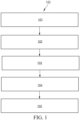
- FIG. 1 is an exemplary flowchart of a method for generating a natural language sentence describing a workflow according to an embodiment of this application.
- the method 100 includes: Step 101: Determine a subject placeholder based on a first selection operation performed on a language element library.
- the language element library includes a plurality of types of placeholders.
- the plurality of types of placeholders are listed in the language element library on a human-computer interaction interface in forms of icons.
- Each placeholder includes a type attribute, and each placeholder is adapted to be occupied by a sentence constituent matching the type attribute.
- sentence constituents of modern Chinese usually include a subject, a predicate, an object, a verb, an attributive, an adverbial, a complement, a head, and the like. Therefore, a language element library of Chinese may include a subject placeholder, a predicate placeholder, an object placeholder, a verb placeholder, an attributive placeholder, an adverbial placeholder, a complement placeholder, a head placeholder, and the like.
- sentence constituents of an English sentence usually include a subject, a predicate, an object, a predicative, an attributive, an adverbial, a complement, and an appositive.
- a language element library of English may include a subject placeholder, a predicate placeholder, an object placeholder, a predicative placeholder, an attributive placeholder, an adverbial placeholder, a complement placeholder, and an appositive placeholder.
- similar placeholders may be set based on a language habit and a grammar.
- a user may first select the subject placeholder from the language element library through, for example, a human-computer interaction interface, and drag the subject placeholder to a natural language sentence editing interface to determine the subject placeholder.
- Step 102 Determine, from a subject thesaurus associated with the subject placeholder, a subject occupying the subject placeholder, where the subject corresponds to a resource.
- the resource may be a resource in a workcell according to the present invention, or may be a resource in a resource library in another type of low-code platform.
- the workcell may be a combination of resources such as a system or a device that can achieve a relatively complete and independent control process and operation. Workflow creation is performed by using the workcell as a basic cell, which is more in line with the characteristics of industrial control, can improve development integration, and reduce development complexity. For example, in the field of industrial technologies, the workcell may be defined based on an actual industrial scenario.
- a process may be defined as corresponding to a workcell, or a workstation in the process may be defined as a workcell, or a workbench in the workstation may be defined as corresponding to a workcell, etc.
- Different workcells have different processes.
- service operations may be performed by different entities.
- the entities may be physical devices, may be persons, or may be other virtualized resources.
- the physical devices, the persons, the virtualization terminology resources, and the like may be collectively referred to as resources.
- the resources usually refer to various operating entities that can execute the workflow on site.
- a resource as an operating entity may be used as a common configuration parameter of a function block node, and corresponding resource configuration may be performed on the required function block node during creation of a behavior tree.
- the resource as the operating entity is configured for the function block node, so that the resource configuration does not need to be performed on the required function block node during the creation of the behavior tree.
- these resources may be represented in forms of resource nodes, and the resource nodes may be stored in forms of resource knowledge graphs.
- Each resource knowledge graph includes resource nodes, and a connection line representing a relationship between resource nodes.
- the subject thesaurus associated with the subject placeholder may be displayed in a new pop-up window on the natural language sentence editing interface, and the subject occupying the subject placeholder may be determined from the subject thesaurus based on user selection, that is, the resource in the workcell may be determined.
- the subject thesaurus may be displayed on the natural language sentence editing interface through a pull-down menu.
- Step 103 Determine a predicate placeholder based on a second selection operation performed on the language element library.
- the user may select the predicate placeholder from the language element library, and drag the predicate placeholder to the natural language sentence editing interface to determine the predicate placeholder. Since dragging positions of the user are different, the predicate placeholder may be dragged to a rear of the subject placeholder, or may be dragged to a front of the subject placeholder. When the predicate placeholder is dragged to the front of the subject placeholder, the predicate placeholder may be automatically adjusted to the rear of the subject placeholder, to conform to a language habit.
- Step 104 Determine, from a predicate thesaurus associated with the subject, a predicate occupying the predicate placeholder, where the predicate corresponds to a service operation of the resource.
- the predicate thesaurus associated with the subject may be displayed in the new pop-up window on the natural language sentence editing interface, and the predicate occupying the predicate placeholder may be determined from the predicate thesaurus based on user selection, that is, the service operation that the resource can perform.
- the predicate thesaurus may be displayed through the pull-down menu on the natural language sentence editing interface.
- Step 105 Generate the natural language sentence based on the occupied subject placeholder and the occupied predicate placeholder, where the natural language sentence is adapted to be converted into a low-code representation describing a workflow, and the workflow represents that resource performs service operation.
- the generated natural language sentence instructs the resource to perform the service operation, and therefore can be converted into the low-code representation describing the workflow. It may be learned that, in this implementation of the present invention, based on the operations performed on the placeholders and the libraries, the workflow may be conveniently described as the natural language sentence by using the semantic language element, so that person without programming knowledge may conveniently describe the workflow by using the natural language sentence, which reduce implementation difficulty of the workflow. Moreover, the natural language sentence may be converted into the low-code representation that can be recognized by an underlying device, which further enriches implementations of the workflow.
- the method 100 further includes at least one of the following:
- the method 100 further includes: determining a logic placeholder and a semantic expression placeholder based on a tenth selection operation performed on the language element library; determining, from the user input, a logic keyword occupying the logic placeholder and a semantic expression occupying the semantic expression placeholder; determining a logic execution branch based on the logic keyword and the semantic expression; and determining a natural language sentence corresponding to each logic execution branch.
- the logic keyword may be a logic keyword in condition determining (if-then-else), or a composite logic (for example, switch-case-default, fallback, or guard), or the like.
- a logic value (which is usually true or false) corresponding to the semantic expression is calculated, and the preset logic execution branch corresponding to the logic value is selected the logic value determined by using the logic keyword.
- the method 100 further includes generating a label of the natural language sentence based on an execution order of the natural language sentence.
- the label may be used for representing an order serial number of the natural language sentence.
- the label may be displayed at a beginning, or an end, or the like of the natural language sentence, to be used for identifying the execution order of the natural language sentence.
- the method 100 further includes: determining an exception placeholder based on an eleventh selection operation performed on the language element library; determining, from the user input, a label corresponding to the exception placeholder; selecting an exception type from an exception library corresponding to the exception placeholder; determining an exception execution branch when the exception type occurs during execution of a natural language sentence of the label; and determining a natural language sentence corresponding to the exception execution branch.
- the exception type includes overheating and overvoltage.
- the exception execution branch includes an exception processing process when the overheating occurs and an exception processing process when the overvoltage occurs.
- the method 100 further includes: determining a keypoint placeholder based on a twelfth selection operation performed on the language element library; and determining, from the user input, a keypoint occupying the keypoint placeholder, where the low-code representation includes a control corresponding to the keypoint, and when the control is triggered, a next keypoint of the keypoint in the workflow is executed.
- semantic elements are further extended, to provide support for necessary low-code constituents such as a behavior tree logic, the semantic expression, the exception, the keypoint, the annotation, the figure, the video, and an index.
- the method 100 further includes: receiving a change request for the occupied subject placeholder in the natural language sentence; displaying the subject thesaurus, especially automatically displaying the subject thesaurus, based on the change request; determining, by the user from the subject thesaurus, an updated subject updating the occupied subject placeholder, where the updated subject corresponds to the updated resource; displaying (for example, automatically displaying) a predicate thesaurus associated with the updated subject; determining, from the predicate thesaurus associated with the updated subject, an updated predicate updating the occupied predicate placeholder (for example, the user selects the updated predicate from the predicate thesaurus associated with the updated subject), where the updated predicate corresponds to a service operation of the updated resource; and updating (for example, automatically updating) the natural language sentence based on the updated occupied subject placeholder and the updated occupied predicate placeholder. It may be learned that, in this implementation of the present invention, the subject may be conveniently changed to change the resource in the workflow.
- the method 100 further includes: receiving a change request for the occupied predicate placeholder in the natural language sentence; displaying (for example, automatically displaying) the predicate thesaurus associated with the subject based on the change request; determining, from the predicate thesaurus, an updated predicate updating the occupied predicate placeholder (for example, the user selects the updated predicate from the predicate thesaurus), where the updated predicate corresponds to an updated service operation of the resource; and updating (for example, automatically updating) the natural language sentence based on the occupied subject placeholder and the updated occupied predicate placeholder. It may be learned that, in this implementation of the present invention, the predicate may be conveniently changed to change the service operation in the workflow.
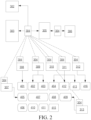
- FIG. 2 exemplarily shows an exemplary schematic diagram for describing a workflow in a low-code architecture provided according to an embodiment of this application in a no-code manner according to an embodiment of this application.
- the architecture all exchange workpieces adopt a standardized universal runtime engineering exchange format, and metadata of the universal runtime engineering exchange format is easily tracked and managed.
- a universal runtime engineering exchange model 304 includes a logic library 307 (for example, the logic library may be a behavior tree logic library) of a low-code platform, a resource library 308, a function block library 309, a customized thesaurus 310, a BOM 311, a universal language extension thesaurus 312, and a keypoint library 313.
- the logic library may be a behavior tree logic library of a low-code platform
- a resource library 308 for example, the logic library may be a behavior tree logic library of a low-code platform
- a resource library 308 for example, the logic library may be a behavior tree logic library of a low-code platform
- a resource library 308 for example, a resource library 308, a function block library 309, a customized thesaurus 310, a BOM 311, a universal language extension thesaurus 312, and a keypoint library 313.
- the logic library 307 provides a logic for occupying a logic placeholder 405, a semantic expression for occupying a semantic expression placeholder 407, and an exception type for occupying an exception placeholder 408.
- the keypoint library 313 provides a keypoint for occupying a keypoint placeholder 409.
- the resource library 308 provides a resource for occupying a subject placeholder 401.
- the function block library 309 provides a service operation for occupying a predicate placeholder 402 and input data of the service operation for occupying an adverbial placeholder 403.
- the BOM 311 provides an object for occupying an object placeholder 404, an attributive for occupying an attributive placeholder 412, and a complement for occupying a complement placeholder 413.
- the universal language extension thesaurus 312 provides a preposition automatically inserted into a natural language sentence.
- the natural language sentence may be generated and edited.
- a SOP in a natural language form may be generated by using a SOP editor without code semantics.
- the generated natural language sentence (including the SOP) may be converted into a low-code behavior tree/FBTD 305.
- function block node is presented in a form of a label graph.
- the function block node is presented in a form of a type graph.
- the low-code represented behavior tree/the FBTD 305 is parsed by using interpreter-driven runtime 306, to obtain a workflow represented in a form of node link assembly, and the workflow represented in the form of the node link assembly is compiled and downloaded to runtime of a main controller of a corresponding workcell, to execute the workflow.
- the behavior tree/the FBTD 305 may be stored in a markup language, for example, an extensible markup language (XML), and may be validated by an XML Schema (XSD) prototype, to verify that an XML format of the behavior tree/the FBTD 305 is correct.
- XML extensible markup language
- XSD XML Schema
- the interpreter-driven runtime 306 may obtain the workflow represented in the form of the node link assembly, and then compile and download the workflow to the runtime of the main controller of the corresponding workcell, to execute the workflow.
- An implementation of the present invention further provides a natural language sentence conversion method, which may convert a natural language sentence determined based on the above manner into an FBTD.
- the method includes: Step (1): Determine a first mapping relationship between a subject of a natural language sentence and a function block head of a function block, where the subject corresponds to a resource.
- Step (3) Convert the natural language sentence into the function block, or convert the function block into the natural language sentence based on the first mapping relationship and the second mapping relationship, where the function block is presented in an FBTD, the function block is adapted to describe a workflow, and the workflow represents the resource to perform the service operation.
- a specific process of converting the natural language sentence into the FBTD is exemplarily described above. A person skilled in the art may realize that the description is merely exemplary and is not intended to limit the protection scope of the implementations of the present invention.
- the FBTD may be further converted into a behavior tree, which is not limited in this implementation of the present invention.
- An OT domain generally refers to an OT, which integrates hardware and software, and detects or triggers a change or an event occurring in a process in an enterprise by directly monitoring and/or controlling a physical device (which is referred to as an OT device).
- the OT monitors or changes, for example, a physical state of an industrial control system (ICS) by using a computer.
- the ICS is a facility, a system, and a device achieved based on the computer, and is configured to remotely monitor and/or control a key industrial process, to achieve a physical function.
- the term "OT" is used for distinguish the ICS from a conventional IT system in terms of technical implementation and function.
- IT low-code development tools or platforms exist on a market.
- the above method for generating a natural language sentence generation describing a workflow in this embodiment may be used in the OT domain as a no-code OT domain development method.
- the workflow may be an OT domain workflow.
- the workcell may be a workcell in the OT domain.
- the OT device may include but is not limited to an IoT device, a programmable logic controller (PLC), robotics, a manual process, and an industrial personal computer (IPC).
- PLC programmable logic controller
- IPC industrial personal computer
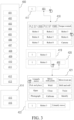
- FIG. 3 is an exemplary schematic diagram of a human-computer interaction based on a language element library according to an implementation of this application.
- a language element library 400 is displayed.
- the language element library 400 includes a subject placeholder 401, a predicate placeholder 402, an adverbial placeholder 403, an object placeholder 404, a logic placeholder 405, an annotation placeholder 406, a semantic expression placeholder 407, an exception placeholder 408, a keypoint placeholder 409, a figure placeholder 410, a video placeholder 411, an attributive placeholder 412, and a complement placeholder 413.
- the interaction process further includes automatic label generation processing 415 and automatic preposition generation processing 416.
- the automatic preposition generation processing 416 may generate a preposition for a natural language sentence to improve readability.
- the automatic label generation processing 415 automatically generates a label 417 for the natural language sentence based on an execution order of the natural language sentence.
- the label 417 is a serial number label.
- a user drags any placeholder from the language element library 400 to a natural language sentence editing interface.
- the user first drags the subject placeholder 401, and the label 417 for the natural language sentence is automatically generated.
- a subject thesaurus 418 may be automatically displayed or displayed through triggering of the user, to help the user to select a subject occupying the subject placeholder 401 from the subject thesaurus 418. Assuming that the user selects a "robot 3", the "robot 3" occupies the subject placeholder 401, and a natural language sentence 419 after the subject is determined is obtained.
- the user drags the predicate placeholder 402 from the language element library 400 after the "robot 3" of the natural language sentence 419 after the subject is determined, and obtains a natural language sentence 420 after the predicate placeholder is dragged.
- a predicate thesaurus 421 associated with the "robot 3” (that is, a service operation that the "robot 3” may perform) is displayed, for the user to select a predicate occupying the predicate placeholder 402 from the predicate thesaurus 421. Assuming that the user selects "linearly move”, the "linearly move” occupies the predicate placeholder 402, and a natural language sentence 422 "A robot 3 linearly moves" after the predicate is determined is obtained.
- the user may click/tap the "robot 3" to re-display the subject thesaurus 418, to help the user change the subject.
- the user may click/tap the "linearly move” to re-display the predicate thesaurus 421, to help the user change the predicate.
- FIG. 4 is a schematic diagram of a universal language word order template of a SOP according to an embodiment of this application.
- a template 431 includes a plurality of natural language sentences determined based on the interaction process shown in FIG. 3 , and each of the natural language sentences has a label to distinguish between execution orders. Natural language sentences including all of the execution orders may be combined into a complete SOP.
- a label E1 represents exception processing.
- the exception processing is configured to automatically perform processing on an exception during execution of a natural language sentence corresponding to a label 2.
- the exception processing process includes a natural language sentence with a label of E1.1 and a natural language sentence with a label of E1.2.
- An implementation of the present invention further provides a method for adjusting a natural language sentence, which improves readability of the natural language sentence by automatically adding a preposition to the natural language sentence.
- the "preposition” herein is a vocabulary or an affix used for expressing a grammatical function of a word in grammar.
- the preposition is generally used before a pronoun or a noun phrase, and forms a preposition structure with the words, to represent a word such as a place, time, a state, a manner, a reason, a purpose, or a comparison object.
- the preposition may include: (1) a preposition positioned before a time or a place, such as since, in, to, toward, at, when, toward, with, along, following, or the like; (2). a preposition positioned before a manner, such as according to, on the basis of, in accordance with, in line with, by way of, through, based on, by, by means of, or the like; (3). a preposition positioned before a purpose, such as for, for the sake of, or the like; (4). a preposition positioned before a reason, such as due to, since, because, only, or the like; (5).
- a preposition positioned before an object or content such as to, for, by, from, following, with, about, or the like; (6). a preposition positioned before excluding, such as except, besides, unless, or the like; (7). a preposition positioned before passivity, such as is/are, named, allowed, given, enabled, or the like; (8). a preposition positioned before comparison, such as than, to, as, or the like; and (9). a preposition positioned before an identity, such as as and the like.
- the method for adjusting a natural language sentence includes: Step (1): Receive a natural language sentence including a placeholder, where the placeholder includes a type attribute, and the placeholder is occupied by a sentence constituent matching the type attribute. Step (2): Determine a position of the placeholder in the natural language sentence. Step (3): Add a preposition to the natural language sentence based on the type attribute of the placeholder and the position of the placeholder in the natural language sentence.
- step (3) includes: determining a first sentence constituent occupying a subject placeholder in the natural language sentence as a subject of the natural language sentence; determining a second sentence constituent occupying a predicate placeholder in the natural language sentence as a predicate of the natural language sentence; determining a third sentence constituent occupying an object placeholder in the natural language sentence as an object of the natural language sentence; adding a first preposition (for example, by) between the object and the subject when the object is located between the subject and the predicate; and adding a second preposition (for example, is/are) between the object and the subject when the object is located before the subject and the predicate.
- step (3) includes: determining a fourth sentence constituent occupying a complement placeholder in the natural language sentence as a first complement of the natural language sentence, where the first complement is determined based on a user input; and adding a third preposition (for example, from or to) before the first complement.
- the third preposition is a preposition (for example, from) adapted to the starting object.
- the third preposition is a preposition (for example, to) adapted to the end object.
- step (3) of adding a preposition to the natural language sentence based on the type of the placeholder and the position of the placeholder in the natural language sentence includes: determining a fifth sentence constituent occupying the complement placeholder in the natural language sentence as a second complement of the natural language sentence, where the second complement is determined based on output data of the service operation, and the service operation is determined based on the predicate occupying the predicate placeholder in the natural language sentence; and adding a fourth preposition (for example, from or to) before the second complement.
- step (3) includes: determining a sixth sentence constituent occupying an adverbial placeholder in the natural language sentence as an adverbial of the natural language sentence, where the adverbial is determined based on input data of the service operation, and the service operation is determined based on the predicate occupying the predicate placeholder in the natural language sentence; and adding a fifth preposition (for example, by) before the adverbial.
- a change instruction for example, a touch instruction for an automatically generated preposition on an interface
- a preposition thesaurus is displayed in response to the change instruction, so that a user selects a change preposition to replace the automatically generated preposition, and replace the automatically generated preposition with the change preposition. It may be learned that the automatically generated preposition may be modified based on the user instruction, thereby further improving readability.
- the method for adjusting a natural language sentence further includes: moving the placeholder in the natural language sentence based on a user-triggered instruction; determining an updated position of the placeholder in the natural language sentence; and updating the preposition in the natural language sentence based on the type attribute of the placeholder and the update position of the placeholder in the natural language sentence.
- the natural language sentence is adapted to describe a workflow.
- the workflow represents that a resource in a workcell performs the service operation.
- the method for adjusting a natural language sentence further includes: converting the natural language sentence into a low-code representation describing the workflow; parsing the low-code representation, to obtain a workflow represented in a form of node link assembly; and compiling and downloading the workflow represented in the form of the node link assembly to runtime of a main controller of a corresponding workcell, to execute the workflow.
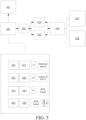
- FIG. 5 is a schematic diagram of an architecture for automatically generating a preposition according to an embodiment of this application.
- a process of automatically generating the preposition is described by using a SOP template 431 as an example.
- a language specific grammar 436 determines to use a Chinese semantic thesaurus 437 including Chinese prepositions (for example, ) or an English semantic thesaurus 438 including English prepositions (for example, from, in, at, for, on, into, by, when).
- a rule-based linking engine 432 parses the SOP template 431.
- the linking engine 432 automatically analyzes placeholders at different positions in the SOP template 431 to generate prepositions 433 included in a determined thesaurus (the Chinese semantic thesaurus 437 or the English semantic thesaurus 438).
- the preposition 433 includes a prepositional preposition 434 and a postpositional preposition 435.
- a preposition-complement structure may be adopted, to generate the preposition before the complement, for example, "to a detection station”.
- a preposition-adverbial structure may be adopted, to generate the preposition before the adverbial, for example, "with a torque of 450 N".
- a preposition-object structure may be adopted, to generate the preposition before the object, for example, "to a circuit board”.
- an objectpreposition structure may be adopted, to generate the preposition after the object, for example, "a circuit board is”.
- FIG. 6 is an exemplary schematic diagram of automatically generating a preposition according to an embodiment of this application.
- "Employee use torque wrench 450 torques twist screw circuit board” may be obtained through a placeholder occupation operation performed on a placeholder.
- a preposition "use” may be automatically generated between an “employee” and a “torque wrench”
- a preposition "by” may be automatically generated between the “torque wrench” and "450 torques”
- a preposition "to” can be automatically generated between a “screw” and a "circuit board”.
- a user may move a placeholder based on a personal habit to change a position of the placeholder.
- the preposition is updated based on the updated position of the placeholder.
- FIG. 4E four natural language sentences with the label of 1.1 have the same meaning, and may be converted into the same low-code representation.
- complement-to-subject conversion processing 450 may be performed.
- the complement-to-subject conversion processing 450 when an automation upgrade is completed, the complement may be converted into the subject.
- an end executor for example, a torque wrench
- the torque wrench serves as a body of a controller, and therefore is referred to as a subject.
- the original subject (“employee 1 ") and the preposition (that is, "by using”) before the complement converted into the subject are deleted.
- FIG. 7 is an exemplary schematic diagram of an overall semantic editing process according to an embodiment of this application.
- the overall semantic editing process includes:
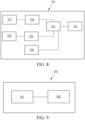
- FIG. 8 is an exemplary structural diagram of an apparatus for generating a natural language sentence describing a workflow according to embodiments of this application.
- the apparatus 700 for generating a natural language sentence describing a workflow includes: a first determining module 701, configured to determine a subject placeholder based on a first selection operation performed on a language element library; a second determining module 702, configured to determine, from a subject thesaurus associated with the subject placeholder, a subject occupying the subject placeholder, where the subject corresponds to a resource; a third determining module 703, configured to determine a predicate placeholder based on a second selection operation performed on the language element library; a fourth determining module 704, configured to determine, from a predicate thesaurus associated with the subject, a predicate occupying the predicate placeholder, where the predicate corresponds to a service operation of the resource; and a generation module 705, configured to generate the natural language sentence based on the occupied subject placeholder and the occupied predicate placeholder, where the natural language sentence is adapted to be converted into a low-code representation describing a workflow, and the workflow represents that the resource performs the service operation.
- the apparatus 700 further includes a fifth determining module 706, configured to perform at least one of the following: (1). determining an object placeholder based on a third selection operation performed on the language element library, and determining, from a BOM associated with the service operation, an object occupying the object placeholder, where the object serves as an execution target of the service operation; (2). determining an adverbial placeholder based on a fourth selection operation performed on the language element library, and determining an adverbial occupying the adverbial placeholder based on input data of the service operation; (3).
- determining a complement placeholder based on a fifth selection operation performed on the language element library and determining, from the BOM associated with the service operation, a complement occupying the complement placeholder, where the complement serves as a supplementary description of the service operation; (4). determining an attributive placeholder based on a sixth selection operation performed on the language element library, and determining, from a user input or the BOM associated with the service operation, an attributive occupying the attributive placeholder, where the attributive serves as a limiting description of the subject or the object; (5).
- the apparatus 700 further includes the fifth determining module 706, configured to perform at least one of the following: (1). determining a logic placeholder and a semantic expression placeholder based on a tenth selection operation performed on the language element library, determining, from the user input, a logic keyword occupying the logic placeholder and a semantic expression occupying the semantic expression placeholder, determining a plurality of logic execution branches based on the logic keyword and the semantic expression, and determining a natural language sentence corresponding to each logic execution branch; (2).
- determining an exception placeholder based on an eleventh selection operation performed on the language element library determining, from the user input, a label corresponding to the exception placeholder, where the label is determined based on an execution order of the natural language sentence, selecting an exception type from an exception library corresponding to the exception placeholder, determining an exception execution branch when the exception type occurs during execution of a natural language sentence of the label, and determining a natural language sentence corresponding to the exception execution branch; and (3).
- determining a keypoint placeholder based on a twelfth selection operation performed on the language element library and determining, from the user input, a keypoint occupying the keypoint placeholder, where the low-code representation includes a control corresponding to the keypoint, and when the control is triggered, a next keypoint of the keypoint in the workflow is executed.
- the apparatus 700 further includes an update module 707, configured to perform at least one of the following: (1) receiving a change request for the occupied subject placeholder in the natural language sentence, displaying the subject thesaurus based on the change request, determining, from the subject thesaurus, an updated subject updating the occupied subject placeholder, where the updated subject corresponds to an updated resource, displaying a predicate thesaurus associated with the updated subject, determining, from the predicate thesaurus associated with the updated subject, an updated predicate updating the occupied predicate placeholder, where the updated predicate corresponds to a service operation of the updated resource, and updating the natural language sentence based on the updated occupied subject placeholder and the updated occupied predicate placeholder; and (2).
- an update module 707 configured to perform at least one of the following: (1) receiving a change request for the occupied subject placeholder in the natural language sentence, displaying the subject thesaurus based on the change request, determining, from the subject thesaurus, an updated subject updating the occupied subject placeholder, where the updated subject corresponds to an
- FIG. 9 is an exemplary structural diagram of an apparatus with a memory-processor structure for generating a natural language sentence describing a workflow according to embodiments of this application.
- An apparatus 500 includes at least one memory 501 and at least one processor 502. The at least one processor 502 is configured to invoke a computer program stored in the at least one memory 501, to perform the method for generating a natural language sentence describing a workflow in the embodiments of this application.
- a system or a device equipped with a storage medium may be provided.
- the storage medium stores computer-readable code for implementing the functions of any of the above implementations, and enables a computer (or a central processing unit (CPU) or a microprocessor unit (MPU)) of the system or the device to read and execute the computer-readable code stored in the storage medium.
- a computer or a central processing unit (CPU) or a microprocessor unit (MPU)
- CPU central processing unit
- MPU microprocessor unit
- an operating system or the like running in the computer may be enabled through computer-readable code-based instructions to complete some or all actual operations.
- the computer-readable code read from the storage medium may also be written into a memory arranged in an extension board inserted in the computer, or may be written into a memory arranged in an extension unit connected to the computer, and then a CPU or the like mounted to the extension board or the extension unit may be enabled to execute some or all of the actual operations through the computer-readable code-based instructions, to implement the functions of any of the above implementations.
- an embodiment of the computer-readable medium includes, but is not limited to, a floppy disk, a portable compact disk read-only memory (CD-ROM), a magnetic disk, an optical disk (for example, the CD-ROM, a compact disk-recordable (CD-R), a compact disk-rewritable (CD-RW), a digital video disk-read only memory (DVD-ROM), a digital video diskrandom access memory (DVD-RAM), a digital video disk-rewritable (DVD-RW), a DVD+RW), a memory chip, a ROM, a RAM, an application specific integrated circuit (ASIC), a configured processor, an all-optical medium, all magnetic tapes, or another magnetic medium, or any another medium from which a computer processor may read instructions.
- CD-ROM compact disk-recordable
- CD-RW compact disk-rewritable
- DVD-ROM digital video disk-read only memory
- DVD-RAM digital video diskrandom access memory
- DVD-RW digital video
- computer-readable media in various other forms may send or carry instructions to the computer, including a router, a private or public network, or another wired and wireless transmission device or channel.
- computer-readable instructions may be downloaded from a server computer or a cloud through a communication network.
- the instructions may include code of any computer programming language, including C, C++, C language, Visual Basic, java, and JavaScript.
Landscapes
- Engineering & Computer Science (AREA)
- Theoretical Computer Science (AREA)
- Physics & Mathematics (AREA)
- General Physics & Mathematics (AREA)
- Health & Medical Sciences (AREA)
- Artificial Intelligence (AREA)
- Audiology, Speech & Language Pathology (AREA)
- Computational Linguistics (AREA)
- General Health & Medical Sciences (AREA)
- General Engineering & Computer Science (AREA)
- Business, Economics & Management (AREA)
- Economics (AREA)
- Entrepreneurship & Innovation (AREA)
- Human Resources & Organizations (AREA)
- Strategic Management (AREA)
- Development Economics (AREA)
- Educational Administration (AREA)
- Game Theory and Decision Science (AREA)
- Marketing (AREA)
- Operations Research (AREA)
- Quality & Reliability (AREA)
- Tourism & Hospitality (AREA)
- General Business, Economics & Management (AREA)
- Machine Translation (AREA)
Applications Claiming Priority (1)
| Application Number | Priority Date | Filing Date | Title |
|---|---|---|---|
| PCT/CN2022/089976 WO2023206261A1 (fr) | 2022-04-28 | 2022-04-28 | Procédé et appareil de génération de phrase en langage naturel pour décrire un flux de travail, et support de stockage |
Publications (2)
| Publication Number | Publication Date |
|---|---|
| EP4502887A1 true EP4502887A1 (fr) | 2025-02-05 |
| EP4502887A4 EP4502887A4 (fr) | 2026-01-21 |
Family
ID=88516844
Family Applications (1)
| Application Number | Title | Priority Date | Filing Date |
|---|---|---|---|
| EP22939113.1A Pending EP4502887A4 (fr) | 2022-04-28 | 2022-04-28 | Procédé et appareil de génération de phrase en langage naturel pour décrire un flux de travail, et support de stockage |
Country Status (4)
| Country | Link |
|---|---|
| US (1) | US20250272494A1 (fr) |
| EP (1) | EP4502887A4 (fr) |
| CN (1) | CN118946892A (fr) |
| WO (1) | WO2023206261A1 (fr) |
Family Cites Families (6)
| Publication number | Priority date | Publication date | Assignee | Title |
|---|---|---|---|---|
| JP4033011B2 (ja) * | 2003-03-20 | 2008-01-16 | 富士ゼロックス株式会社 | 自然言語処理システム及び自然言語処理方法、並びにコンピュータ・プログラム |
| CN107169569A (zh) * | 2017-04-17 | 2017-09-15 | 湖南本体信息科技研究有限公司 | 一种逻辑推理机、机器模拟人脑学习和工作的方法及人工智能系统 |
| CN108052501A (zh) * | 2017-12-13 | 2018-05-18 | 北京数洋智慧科技有限公司 | 一种基于人工智能的实体关系对识别方法及系统 |
| JP7192332B2 (ja) * | 2018-09-12 | 2022-12-20 | 富士フイルムビジネスイノベーション株式会社 | 情報処理装置及びプログラム |
| CN109816231A (zh) * | 2019-01-16 | 2019-05-28 | 深圳壹账通智能科技有限公司 | 工作流处理方法、电子装置及可读存储介质 |
| CN113052544A (zh) * | 2019-12-26 | 2021-06-29 | 东软集团(上海)有限公司 | 工作流依用户行为智能适配方法、装置以及存储介质 |
-
2022
- 2022-04-28 WO PCT/CN2022/089976 patent/WO2023206261A1/fr not_active Ceased
- 2022-04-28 EP EP22939113.1A patent/EP4502887A4/fr active Pending
- 2022-04-28 CN CN202280094215.7A patent/CN118946892A/zh active Pending
- 2022-04-28 US US18/859,399 patent/US20250272494A1/en active Pending
Also Published As
| Publication number | Publication date |
|---|---|
| EP4502887A4 (fr) | 2026-01-21 |
| WO2023206261A1 (fr) | 2023-11-02 |
| US20250272494A1 (en) | 2025-08-28 |
| CN118946892A (zh) | 2024-11-12 |
Similar Documents
| Publication | Publication Date | Title |
|---|---|---|
| KR100650427B1 (ko) | 자연어 인식 애플리케이션 구축을 위한 통합 개발 툴 | |
| US11138005B2 (en) | Methods and systems for automatically generating documentation for software | |
| JP5536518B2 (ja) | システムの自然言語仕様から当該システム用のシステム・モデル化メタモデル言語モデルを自動的に抽出するための方法、装置及びコンピュータ・ | |
| Soeken et al. | Assisted behavior driven development using natural language processing | |
| US9575939B2 (en) | Linked code generation report | |
| EP0907923B1 (fr) | Procede et systeme de calcul de formes de logique semantique dans des arborescences syntaxiques | |
| AU753108B2 (en) | Data input and retrieval apparatus | |
| US20060026559A1 (en) | Automatic content completion of valid values for method argument variables | |
| CN106919434A (zh) | 一种代码生成方法及装置 | |
| Carvalho et al. | NAT2TEST tool: From natural language requirements to test cases based on CSP | |
| RU2421784C2 (ru) | Моделирование отношений | |
| Harris et al. | Generating formal hardware verification properties from natural language documentation | |
| US7437709B2 (en) | Providing assistance for editing markup document based on inferred grammar | |
| Tommila et al. | Controlled natural language requirements in the design and analysis of safety critical I&C systems | |
| Cunningham et al. | Developing language processing components with GATE (a user guide) | |
| CN118484200A (zh) | 一种sql语言编辑器的构建方法及装置 | |
| CN114219438A (zh) | 基于rpa及ai的公文文件分发方法、装置、设备及介质 | |
| NL2025739B1 (en) | Artificial intelligence and augmented reality system and method | |
| CN101198957A (zh) | 与三维几何体相关的参数模型的生成方法和设备 | |
| EP4502887A1 (fr) | Procédé et appareil de génération de phrase en langage naturel pour décrire un flux de travail, et support de stockage | |
| EP4498279A1 (fr) | Procédé et appareil d'ajustement d'instruction en langage naturel, et support de stockage | |
| Rico et al. | Lemonade: A web assistant for creating and debugging ontology lexica | |
| EP4495824A1 (fr) | Procédé et appareil de conversion pour phrase en langage naturel, et support de stockage | |
| Ii et al. | Improving accuracy of automatic derivation of state variables and transitions from a japanese requirements specification | |
| Schroeder et al. | Flexible automatic converting of NC programs. A cross-compiler for structured text |
Legal Events
| Date | Code | Title | Description |
|---|---|---|---|
| STAA | Information on the status of an ep patent application or granted ep patent |
Free format text: STATUS: THE INTERNATIONAL PUBLICATION HAS BEEN MADE |
|
| PUAI | Public reference made under article 153(3) epc to a published international application that has entered the european phase |
Free format text: ORIGINAL CODE: 0009012 |
|
| STAA | Information on the status of an ep patent application or granted ep patent |
Free format text: STATUS: REQUEST FOR EXAMINATION WAS MADE |
|
| 17P | Request for examination filed |
Effective date: 20241025 |
|
| AK | Designated contracting states |
Kind code of ref document: A1 Designated state(s): AL AT BE BG CH CY CZ DE DK EE ES FI FR GB GR HR HU IE IS IT LI LT LU LV MC MK MT NL NO PL PT RO RS SE SI SK SM TR |
|
| DAV | Request for validation of the european patent (deleted) | ||
| DAX | Request for extension of the european patent (deleted) | ||
| REG | Reference to a national code |
Ref country code: DE Ref legal event code: R079 Free format text: PREVIOUS MAIN CLASS: G06Q0010000000 Ipc: G06F0040300000 |
|
| A4 | Supplementary search report drawn up and despatched |
Effective date: 20251222 |
|
| RIC1 | Information provided on ipc code assigned before grant |
Ipc: G06F 40/30 20200101AFI20251216BHEP Ipc: G06F 40/56 20200101ALI20251216BHEP Ipc: G06F 40/247 20200101ALI20251216BHEP Ipc: G06Q 10/06 20230101ALI20251216BHEP Ipc: G06F 40/279 20200101ALI20251216BHEP |