EP4506332A1 - Pharmazeutisches salz eines polyaminderivats, kristalline form davon und herstellungsverfahren dafür - Google Patents
Pharmazeutisches salz eines polyaminderivats, kristalline form davon und herstellungsverfahren dafür Download PDFInfo
- Publication number
- EP4506332A1 EP4506332A1 EP23859208.3A EP23859208A EP4506332A1 EP 4506332 A1 EP4506332 A1 EP 4506332A1 EP 23859208 A EP23859208 A EP 23859208A EP 4506332 A1 EP4506332 A1 EP 4506332A1
- Authority
- EP
- European Patent Office
- Prior art keywords
- dimethoxyphenylpropionyl
- bis
- aminopropylamine
- aminopropyl
- crystal form
- Prior art date
- Legal status (The legal status is an assumption and is not a legal conclusion. Google has not performed a legal analysis and makes no representation as to the accuracy of the status listed.)
- Pending
Links
Images

Classifications
-
- C—CHEMISTRY; METALLURGY
- C07—ORGANIC CHEMISTRY
- C07C—ACYCLIC OR CARBOCYCLIC COMPOUNDS
- C07C235/00—Carboxylic acid amides, the carbon skeleton of the acid part being further substituted by oxygen atoms
- C07C235/02—Carboxylic acid amides, the carbon skeleton of the acid part being further substituted by oxygen atoms having carbon atoms of carboxamide groups bound to acyclic carbon atoms and singly-bound oxygen atoms bound to the same carbon skeleton
- C07C235/32—Carboxylic acid amides, the carbon skeleton of the acid part being further substituted by oxygen atoms having carbon atoms of carboxamide groups bound to acyclic carbon atoms and singly-bound oxygen atoms bound to the same carbon skeleton the carbon skeleton containing six-membered aromatic rings
- C07C235/34—Carboxylic acid amides, the carbon skeleton of the acid part being further substituted by oxygen atoms having carbon atoms of carboxamide groups bound to acyclic carbon atoms and singly-bound oxygen atoms bound to the same carbon skeleton the carbon skeleton containing six-membered aromatic rings having the nitrogen atoms of the carboxamide groups bound to hydrogen atoms or to acyclic carbon atoms
-
- A—HUMAN NECESSITIES
- A61—MEDICAL OR VETERINARY SCIENCE; HYGIENE
- A61K—PREPARATIONS FOR MEDICAL, DENTAL OR TOILETRY PURPOSES
- A61K31/00—Medicinal preparations containing organic active ingredients
- A61K31/16—Amides, e.g. hydroxamic acids
- A61K31/165—Amides, e.g. hydroxamic acids having aromatic rings, e.g. colchicine, atenolol, progabide
-
- A—HUMAN NECESSITIES
- A61—MEDICAL OR VETERINARY SCIENCE; HYGIENE
- A61P—SPECIFIC THERAPEUTIC ACTIVITY OF CHEMICAL COMPOUNDS OR MEDICINAL PREPARATIONS
- A61P29/00—Non-central analgesic, antipyretic or antiinflammatory agents, e.g. antirheumatic agents; Non-steroidal antiinflammatory drugs [NSAID]
-
- A—HUMAN NECESSITIES
- A61—MEDICAL OR VETERINARY SCIENCE; HYGIENE
- A61P—SPECIFIC THERAPEUTIC ACTIVITY OF CHEMICAL COMPOUNDS OR MEDICINAL PREPARATIONS
- A61P37/00—Drugs for immunological or allergic disorders
-
- A—HUMAN NECESSITIES
- A61—MEDICAL OR VETERINARY SCIENCE; HYGIENE
- A61P—SPECIFIC THERAPEUTIC ACTIVITY OF CHEMICAL COMPOUNDS OR MEDICINAL PREPARATIONS
- A61P37/00—Drugs for immunological or allergic disorders
- A61P37/02—Immunomodulators
- A61P37/06—Immunosuppressants, e.g. drugs for graft rejection
-
- C—CHEMISTRY; METALLURGY
- C07—ORGANIC CHEMISTRY
- C07C—ACYCLIC OR CARBOCYCLIC COMPOUNDS
- C07C231/00—Preparation of carboxylic acid amides
- C07C231/12—Preparation of carboxylic acid amides by reactions not involving the formation of carboxamide groups
-
- C—CHEMISTRY; METALLURGY
- C07—ORGANIC CHEMISTRY
- C07C—ACYCLIC OR CARBOCYCLIC COMPOUNDS
- C07C231/00—Preparation of carboxylic acid amides
- C07C231/22—Separation; Purification; Stabilisation; Use of additives
- C07C231/24—Separation; Purification
-
- C—CHEMISTRY; METALLURGY
- C07—ORGANIC CHEMISTRY
- C07B—GENERAL METHODS OF ORGANIC CHEMISTRY; APPARATUS THEREFOR
- C07B2200/00—Indexing scheme relating to specific properties of organic compounds
- C07B2200/13—Crystalline forms, e.g. polymorphs
-
- Y—GENERAL TAGGING OF NEW TECHNOLOGICAL DEVELOPMENTS; GENERAL TAGGING OF CROSS-SECTIONAL TECHNOLOGIES SPANNING OVER SEVERAL SECTIONS OF THE IPC; TECHNICAL SUBJECTS COVERED BY FORMER USPC CROSS-REFERENCE ART COLLECTIONS [XRACs] AND DIGESTS
- Y02—TECHNOLOGIES OR APPLICATIONS FOR MITIGATION OR ADAPTATION AGAINST CLIMATE CHANGE
- Y02A—TECHNOLOGIES FOR ADAPTATION TO CLIMATE CHANGE
- Y02A50/00—TECHNOLOGIES FOR ADAPTATION TO CLIMATE CHANGE in human health protection, e.g. against extreme weather
- Y02A50/30—Against vector-borne diseases, e.g. mosquito-borne, fly-borne, tick-borne or waterborne diseases whose impact is exacerbated by climate change
Definitions
- the present invention relates to the technical field of chemical medicines, and particularly relates to a bis((N-3-aminopropyl)-(N-(3,4-dimethoxyphenylpropionyl)))aminopropylamine phosphate and a crystal form thereof and a preparation method therefor.
- Systemic inflammatory response syndrome and an autoimmune disorder-related disease are two categories of diseases caused by the body's own excessive immune response.
- Sepsis refers to systemic inflammatory response syndrome (SIRS) mediated by infectious factors, which affects up to 19 million people worldwide every year.
- SIRS systemic inflammatory response syndrome
- PAMPs pathogen-associated molecular patterns
- PRRs pattern recognition receptors
- PAMP molecules that cause sepsis mainly include bacterial lipopolysaccharide (LPS), bacterial genome DNA (CpG DNA), peptidoglycan (PGN), lipoteichoic acid (LTA), viral RNA, and zymosan.
- Patent document CN105348137B discloses a pharmaceutically acceptable salt of a polyamine derivative, a preparation method therefor, and use thereof for treating sepsis, of which the pharmaceutically acceptable salt of the polyamine derivative is hydrochloride of bis((N-3-aminopropyl)-(N-(3,4-dimethoxyphenylpropionyl)))aminopropylamine with an acid-base ratio of 3.
- the present invention provides a bis((N-3-aminopropyl)-(N-(3,4-dimethoxyphenylpropionyl)))aminopropylamine phosphate and a crystal form thereof and a preparation method therefor.
- a bis((N-3-aminopropyl)-(N-(3,4-dimethoxyphenylpropionyl)))aminopropylamine phosphate is provided.
- the bis((N-3-aminopropyl)-(N-(3,4-dimethoxyphenylpropionyl)))aminopropylamine phosphate has the following structure: wherein x represents the number of mole(s) of phosphoric acid combined with per mole of bis((N-3-aminopropyl)-(N-(3,4-dimethoxyphenylpropionyl)))aminopropylamine; further, x is 1-3 (e.g., 1, 1.1, 1.2, 1.3, 1.4, 1.5, 1.6, 1.7, 1.8, 1.9, 2.0, 2.1, 2.2, 2.3, 2.4, 2.5, 2.6, 2.7, 2.8, 2.9, and 3.0); preferably, x is 1.5-2.5; more preferably, x is 1.9-2.1; and most preferably, x is 2.0.
- x represents the number of mole(s) of phosphoric acid combined with per mole of bis((N-3-amin
- the phosphate is:
- the phosphate is in a crystal form, non-crystal form, or a mixed form of crystal and non-crystal.
- a preparation method for the bis((N-3-aminopropyl)-(N-(3,4-dimethoxyphenylpropionyl)))aminopropylamine phosphate according to the first aspect, wherein the preparation method comprises a step of mixing bis((N-3-aminopropyl)-(N-(3,4-dimethoxyphenylpropionyl)))aminopropylamine with phosphoric acid.
- the preparation method is: mixing bis((N-3-aminopropyl)-(N-(3,4-dimethoxyphenylpropionyl)))aminopropylamine with phosphoric acid for reaction.
- a solvent for the reaction is selected from one or more of: ethyl acetate, dichloromethane, methanol, water, chloroform, ethanol, acetone, acetonitrile, butanol, dimethylformamide, dimethyl sulfoxide, methyl tert-butyl ether, isopropylamine, and isopropanol; preferably, the solvent for the reaction is selected from one or more of: methanol, ethanol, ethyl acetate, acetone, and dichloromethane; and more preferably, the solvent for the reaction is methanol or ethanol.
- reaction is performed at a temperature of 0-30°C (e.g., 0°C, 5°C, 15°C, 20°C, 25°C, and 30°C), and preferably, the reaction is performed at a temperature of 0-15°C.
- reaction is performed for 2-6 h (e.g., 2 h, 3 h, 4 h, 5 h, and 6 h), preferably 3-5 h, and more preferably 4 h.
- seed crystals are added during the reaction process.
- the equivalent ratio of the bis((N-3-aminopropyl)-(N-(3,4-dimethoxyphenylpropionyl)))aminopropylamine to the phosphoric acid is in the range of 1:1-1:2.5 (e.g., 1:1, 1:1.1, 1:1.2, 1:1.3, 1:1.4, 1:1.5, 1:1.6, 1:1.7, 1:1.8, 1:1.9, 1:2, 1:2.1, 1:2.2, 1:2.3, 1:2.4, and 1:2.5), preferably the equivalent ratio is in the range of 1:1-1:2, and more preferably the equivalent ratio is in the range of 1:1.8-1:2; the equivalent ratio is a molar ratio.
- the preparation method for the bis((N-3-aminopropyl)-(N-(3,4-dimethoxyphenylpropionyl)))aminopropylamine phosphate further comprises a step of separating the product.
- the separation comprises a step of filtration or centrifugation.
- the filtration operation refers to filtering the reaction system obtained after the reaction to obtain a filter cake, and optionally washing the filter cake.
- a solvent for use in the washing is selected from:one of: methanol, ethyl acetate, ethanol, and isopropanol, and preferably, the washing solvent is methanol or ethyl acetate.
- the preparation method for the bis((N-3-aminopropyl)-(N-(3,4-dimethoxyphenylpropionyl)))aminopropylamine phosphate further comprises a step of drying.
- the step of drying refers to performing drying treatment under normal pressure or reduced pressure for the separated substance.
- the drying is performed at a temperature of 0-35°C (e.g., 0°C, 5°C, 10°C, 15°C, 20°C, 25°C, 30°C, and 35°C), and preferably, the drying is performed at a temperature of 25-35°C.
- the bis((N-3-aminopropyl)-(N-(3,4-dimethoxyphenylpropionyl)))aminopropylamine may be prepared on a gram scale or a kilogram scale according to any several different methods, for example, the preparation method described in patent document CN201510729318.8 , which is incorporated herein by reference.
- the preparation method for the bis((N-3-aminopropyl)-(N-(3,4-dimethoxyphenylpropionyl)))aminopropylamine phosphate further comprises a step of purifying (refining) the bis((N-3-aminopropyl)-(N-(3,4-dimethoxyphenylpropionyl)))aminopropylamine phosphate.
- the step of purification (refining) comprises recrystallization and/or washing.
- a solvent for the recrystallization is selected from one or a combination of two of: methanol, ethanol, and water, particularly methanol-water, ethanol-water, water-methanol, and water-ethanol.
- a solvent for the washing is selected from one of: methanol, ethanol, ethyl acetate, and isopropanol, and preferably, the solvent for washing the crystal is methanol or ethyl acetate.
- the step of purification (refining) comprises adding seed crystals.
- a preparation method for a non-crystal form of the bis((N-3-aminopropyl)-(N-(3,4-dimethoxyphenylpropionyl)))aminopropylamine phosphate according to the first aspect.
- the preparation method is selected from one or a combination of two or more of: a gas-liquid diffusion method, a high polymer induction method, a slow volatilization method, and a slow cooling method, and preferably, the preparation method is selected from one or a combination of two or more of: a gas-liquid diffusion method, a high polymer induction method, and a slow volatilization method.
- the gas-liquid diffusion method comprises the following steps: placing a target product in an open container and dissolving with a positive solvent, then placing the open container in a sealed container filled with an anti-solvent and standing (at room temperature), and finally, collecting the solid.
- the high polymer induction method comprises the following steps: dissolving a target product with a solvent, filtering the mixture with a syringe membrane filter, adding a high polymer to the filtrate, and volatilizing the mixture at room temperature to obtain a solid.
- the slow volatilization method comprises the following steps: dissolving a target product with a solvent, and then drying the mixture to obtain a solid.
- the slow cooling method comprises the following steps: dissolving a target product with a solvent, heating the mixture at 40-60°C, stirring and equilibrating for 1-4 h; filtering after the solution becomes clear, and slowly cooling the filtrate from 40-60°C to 0-10°C, and standing at a constant temperature of -10-30°C (e.g., 10°C, 15°C, 20°C, 25°C, and 30°C) for 3-8 days; the filtrate is still clear, and finally, subjecting to volatilization treatment at 40-60°C (e.g., 40°C, 45°C, 50°C, 55°C, and 60°C).
- the preparation method for the non-crystal form of the bis((N-3-aminopropyl)-(N-(3,4-dimethoxyphenylpropionyl)))aminopropylamine phosphate is a slow volatilization method, specifically, weighing 10-20 mg of the bis((N-3-aminopropyl)-(N-(3,4-dimethoxyphenylpropionyl)))aminopropylamine phosphate in a 4 mL glass bottle, and dissolving with a mixed solution of DMSO and water at a volume ratio of 2:1, filtering with a syringe membrane filter (pore size: 0.22 ⁇ m), sealing the filtrate with Parafilm ® with 5 pinholes, and slowly volatilizing the filtrate under the set temperature.
- a slow volatilization method specifically, weighing 10-20 mg of the bis((N-3-aminopropyl)-(N-(3,4-dimethoxyphenylpro
- the final solid obtained is characterized by XRPD.
- the experimental results show that amorphous bis((N-3-aminopropyl)-(N-(3,4-dimethoxyphenylpropionyl)))aminopropylamine phosphate is obtained by slow volatilization method at room temperature.
- the XRPD pattern of the crystal form A has characteristic peaks (major characteristic diffraction peaks) in at least three (or all) of positions having 2 ⁇ values of 6.4° ⁇ 0.2°, 9.7° ⁇ 0.2°, 16.2° ⁇ 0.2°, 19.5° ⁇ 0.2°, 22.9° ⁇ 0.2°, and 26.1° ⁇ 0.2°.
- the XRPD pattern of the crystal form A has characteristic peaks (major characteristic diffraction peaks) in at least three (or all) of positions having 2 ⁇ values of 6.4° ⁇ 0.2°, 9.7° ⁇ 0.2°, 11.80° ⁇ 0.2°, 13.0° ⁇ 0.2°, 14.8° ⁇ 0.2°, 16.2° ⁇ 0.2°, 19.5° ⁇ 0.2°, 22.9° ⁇ 0.2°, and 26.1° ⁇ 0.2°.
- the XRPD pattern of the crystal form A has characteristic peaks (secondary characteristic diffraction peaks) in at least three (at least four or all) of positions having 2 ⁇ values of 11.80° ⁇ 0.2°, 13.0° ⁇ 0.2°, 14.8° ⁇ 0.2°, 15.3° ⁇ 0.2°, 18.7° ⁇ 0.2°, 20.8° ⁇ 0.2°, 22.6° ⁇ 0.2°, and 23.7° ⁇ 0.2°.
- the crystal form A has an XRPD pattern substantially as shown in FIG. 1 .
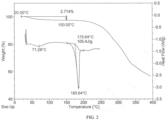
- the DSC pattern of the crystal form A has an endothermic peak at 175-195°C (e.g., about 175°C, 180°C, 185°C, 190°C, and 195°C).
- the crystal form A has a DSC pattern substantially as shown in FIG. 2 .
- the weight loss of the crystal form A is about 3% (e.g., 1.5%, 2.0%, 2.5%, and 3.0%) upon heating from 22°C to 150°C.
- the crystal form A has a TGA pattern substantially as shown in FIG. 2 .
- a preparation method for the crystal form A according to the fourth aspect is provided.
- the preparation method is an anti-solvent crystallization method and an anti-anti-solvent crystallization method.
- the anti-solvent crystallization method comprises the following steps: dissolving a target product with a positive solvent, and then adding an anti-solvent into the system, wherein the anti-solvent can not dissolve or only slightly dissolve the substance to be crystallized, thus reducing the solubility of the crystallized substance and precipitating it from the mixed solution.
- the anti-anti-solvent crystallization method comprises: dissolving a solution of a target product with a positive solvent, and adding the solution into one or more anti-solvents, so that the product is in a slightly soluble state in the solution, thereby precipitating crystals after the solution reaches a supersaturated state.
- the anti-solvent crystallization method for the crystal form A of bis((N-3-aminopropyl)-(N-(3,4-dimethoxyphenylpropionyl))) aminopropylamine phosphate specifically comprises:
- the anti-solvent in step (1) is selected from one or more of: methanol, ethanol, tetrahydrofuran, ethyl acetate, or toluene.
- the cooling in step (3) refers to reducing the temperature to 0-15°C (e.g., 0°C, 5°C, 10°C, and 15°C), and preferably, the cooling in step (3) refers to reducing the temperature to 5°C.
- the cooling in step (3) is performed for 3-16 h (e.g., 3 h, 4 h, 5 h, 6 h, 7 h, 8 h, 9 h, 10 h, 11 h, 12 h, 13 h, 14 h, 15 h, and 16 h); preferably, the cooling in step (3) is performed for 8-14 h (e.g., 8 h, 9 h, 10 h, 11 h, 12 h, 13 h, and 14 h); and further preferably, the cooling in step (3) is performed for 12 h.
- 3-16 h e.g., 3 h, 4 h, 5 h, 6 h, 7 h, 8 h, 9 h, 10 h, 11 h, 12 h, 13 h, 14 h, 15 h, and 16 h
- the cooling in step (3) is performed for 8-14 h (e.g., 8 h, 9 h, 10 h, 11 h, 12 h, 13 h,
- the separation method in step (3) comprises centrifugation, filtration, and/or vacuum filtration.
- the centrifugation refers to centrifuging the mixed solution after the reaction to obtain a solid.
- step (4) is performed at a temperature of 25-35°C (e.g., 25°C, 30°C, and 35°C), and preferably, the drying is performed at a temperature of 30°C.
- the PAMP is selected from one or more of: bacterial lipopolysaccharide (LPS), bacterial genome DNA (CpG DNA), peptidoglycan (PGN), lipoteichoic acid (LTA), viral RNA, and zymosan.
- LPS bacterial lipopolysaccharide
- CpG DNA bacterial genome DNA
- PPN peptidoglycan
- LTA lipoteichoic acid
- viral RNA and zymosan.
- systemic inflammatory response syndrome is sepsis.
- an eighth aspect of the present invention provided is use of the bis((N-3-aminopropyl)-(N-(3,4-dimethoxyphenylpropionyl)))aminopropylamine phosphate and crystal form A thereof in preparing a medicament for preventing and/or treating an autoimmune disease.
- the autoimmune disease is selected from one or more of: organ-specific autoimmune disease, systemic lupus erythematosus, rheumatoid arthritis, systemic vasculitis, scleroderma, pemphigus, dermatomyositis, mixed connective tissue disease, autoimmune hemolytic anemia, thyroid autoimmune disease, and ulcerative colitis.
- the bis((N-3-aminopropyl)-(N-(3,4-dimethoxyphenylpropionyl)))aminopropylamine phosphate has better stability and higher dynamic solubility, and is conducive to industrial production, wherein bis((N-3-aminopropyl)-(N-(3,4-dimethoxyphenylpropionyl)))aminopropylamine diphosphate is more stable than bis((N-3-aminopropyl)-(N-(3,4-dimethoxyphenylpropionyl)))aminopropylamine triphosphate, which is more conducive to medication safety.
- the salt can be easily precipitated from the reaction system, and can be separated from the system by simple filtration operation, which is greatly conducive to industrial mass production.
- crystal form is confirmed by X-ray powder diffraction pattern characterization.
- X-ray powder diffraction pattern characterization Those skilled in the art can appreciate that the physicochemical properties discussed herein can be characterized with experimental error depending on the conditions of the instrument, sample preparation, purity of the sample, etc.
- the X-ray diffraction pattern will generally vary with the conditions of the instrument.
- the relative intensities of the X-ray powder diffraction patterns may also vary with the experimental conditions, so that the order of the peak intensities cannot be the only or decisive factor.
- the relative intensities of the diffraction peaks in the XRPD pattern are related to the preferred orientation of the crystals, and the peak intensities shown herein are illustrative and not for absolute comparison.
- experimental errors in peak angles are typically 5% or less, and these angles should also be taken into account, typically allowing errors of ⁇ 0.2°.
- an overall shift in peak angle is caused, and a certain shift is usually allowed.
- the X-ray powder diffraction pattern of a crystal form of the present invention is not required to be identical to that of the examples referred to herein, that the "XRPD patterns are identical" described herein does not mean absolutely identical, and that the identical peak positions may differ by ⁇ 0.2° and a certain variability in peak intensities is permitted. Any crystal form having the same or similar pattern as the characteristic peaks in these patterns falls within the scope of the present invention. Those skilled in the art can compare the patterns listed in the present invention with a pattern of an unknown crystal form to confirm whether the two sets of patterns reflect the same or different crystal forms.
- the crystal form A of the present invention is pure, single, and substantially free of any other crystal forms in admixture.
- substantially free when used in reference to a novel crystal form, means that the crystal form contains less than 20% by weight of other crystal forms, in particular less than 10% by weight of other crystal forms, more particularly less than 5% by weight of other crystal forms, and even more particularly less than 1% by weight of other crystal forms.
- the particular crystal form of the diffraction pattern obtained from a crystalline compound is often characteristic, wherein the relative intensities of the bands (especially at low angles) may vary due to the preferential orientation effects resulting from differences in crystallization conditions, particle sizes, relative content of mixtures, and other test conditions. Therefore, the relative intensities of the diffraction peaks are not characteristic for the crystal concerned, and in the case of judging whether the crystals are identical to the known crystal forms, the positions of the peaks should be noted rather than the relative intensities thereof.
- the term "substantially as shown in FIG." means that at least 50%, at least 60%, at least 70%, at least 80%, at least 90%, at least 95%, or at least 99% of the peaks in the XRPD pattern, the DSC pattern, or the TGA pattern are shown in the figure.
- the term "room temperature” means that the temperature of an article is close to or the same as the temperature of a space (e.g., the location of a fume hood in which the article is located). Typically, the room temperature is about 20°C to about 30°C, or about 22°C to 27°C, or about 25°C.
- the anti-solvent crystallization (also called anti-solvent addition, precipitation crystallization, salting out, or crystallization) method is generally a method comprising precipitating crystals after bringing a solution into a supersaturated state by adding one or more anti-solvents to the solution in which a target product is dissolved with a positive solvent, the product being in a slightly soluble state in the solution.
- the anti-anti-solvent crystallization method is generally a method comprising precipitating crystals after bringing a solution into a supersaturated state by adding one or more anti-solvents to the solution in which a target product is dissolved with a positive solvent, the product being in a slightly soluble state in the solution.
- an anti-solvent for dissolving a target product is poorer than that of a positive solvent, e.g., by more than 10%, 20%, 30%, 40%, 50%, 60%, 70%, or 80%, and therefore, the anti-solvent in a system is a relative term.
- the positive solvent and the anti-solvent may be polar or nonpolar solvents, and for example, may be selected from: one or more of dimethylformamide (DMF), dimethyl sulfoxide (DMSO), water, alcoholic solvents, ether solvents, ketone solvents, ester solvents, alkane solvents, aromatic solvents, and nitrile solvents, wherein the alcoholic solvents include, but are not limited to, methanol, ethanol, propanol, isopropanol or 1,3-propanediol, 1,2-propanediol or chlorobutanol or a combination thereof; ether solvents include, but are not limited to, such as tetrahydrofuran, methyl tert- butyl ether or 1,4-dioxane or a combination thereof; ketone solvents include, but are not limited to, acetone, methyl ethyl ketone or 4-methyl-2-pentanone or a combination thereof; ester solvent
- Anti-solvent crystallization and anti-anti-solvent crystallization may be performed by batch, semi-batch, or continuous crystallization operations.
- the addition of an anti-solvent to a solution (anti-solvent crystallization) or the addition of a product solution to an anti-solvent (anti-anti-solvent crystallization) may either be dropwise addition at a constant rate or be dropwise addition slowly at the beginning and then gradually increasing in rate.
- the X-ray tube was a tube of Cu target (K ⁇ ) with a K ⁇ 2/K ⁇ 1 strength ratio of 0.50 (1.54439 ⁇ /1.5406 ⁇ ).
- TGA Thermogravimetric analysis
- DSC differential scanning calorimetry
- Thermogravimetric data of phosphate(s) was collected by using a TA Discovery-series thermogravimetric analyzer (TGA). Several milligrams of a sample were placed in a Tzero aluminum pan and heated from room temperature to the target temperature under N 2 atmosphere, with an N 2 flow rate of 25 mL/min and a heating rate of 10°C/min. Thermal data of a sample(s) was collected by using a TADiscovery-series differential scanning calorimeter (DSC).
- TGA thermogravimetric analyzer
- a crystal form sample For a crystal form sample, several milligrams of the sample were weighed and placed in a Tzero aluminum pan, sealed with a Tzero sealing lid, and heated under N 2 atmosphere with an N 2 flow rate of 50 mL/min and a heating rate of 10°C/min.
- the modulation mode was set for testing: about 10 mg of the sample was weighed and placed in a Tzero aluminum pan, sealed with a Tzero sealing lid, and heated under N 2 atmosphere with an N 2 flow rate of 50 mL/min.
- the modulation temperature amplitude was ⁇ 1°C
- the modulation period was 40 s
- the heating rate was 1°C/min
- the range of the test temperature was 25-200°C.
- Table 3 Biological vehicle Preparation method Simulated fasting intestinal juice FaSSIF Weighing 210 mg of NaOH, 1975 mg of NaH 2 PO 4 •2H 2 O, and 3095 mg of NaCl into a 500 mL beaker, and dissolving by adding 450 mL of deionized water; adjusting the pH to 6.5 with 1 N NaOH or 1 N HCl; and fixing the volume up to 500 mL with deionized water to obtain FaSSIF blank vehicle.
- Simulated feeding intestinal juice FeSSIF Weighing 2020 mg of NaOH, 4325 mg of glacial acetic acid, and 5935 mg of NaCl into a 500 mL beaker, and dissolving by adding 450 mL of deionized water; adjusting the pH to 5.0 with 1 N NaOH or 1 N HCl, and fixing the volume up to 500 mL with deionized water to obtain FeSSIF blank vehicle; weighing 280 mg of SIF powder into 15 mL of the FeSSIF blank vehicle described above, and stirring until dissolved; fixing the volume up to 25 mL with the FeSSIF blank vehicle to obtain vehicle FeSSIF; standing at room temperature before use, and ensuring that it is a clear solution.
- Simulated gastric juice SGF Weighing 1000 mg of NaCl into a 500 mL beaker, and dissolving by adding 450 mL of deionized water; adjusting the pH to 1.6 with 1 N HCl, and fixing the volume up to 500 mL with deionized water to obtain SGF blank vehicle; weighing 6 mg of SIF powder into 50 mL of the SGF blank vehicle described above, and stirring until dissolved; fixing the volume up to 100 mL with the SGF blank vehicle to obtain vehicle SGF; standing at room temperature before use, and ensuring that it is a clear solution.
- the hygroscopicity was determined by referring to the guiding principle of the hygroscopicity test of medicaments in the Phamacopoeia of the People's Republic of China 2015 Editi on.
- the specific test method is as follows:
- a solution of bis((N-3-aminopropyl)-(N-(3,4-dimethoxyphenylpropionyl)))aminopropylamine free base (hereinafter referred to as free base) in ethanol was prepared at room temperature.
- An acid solution was weighed into an HPLC vial according to an acid-base molar feeding ratio of 1:1, the solution of free base in ethanol was added thereto, and the resulting mixture was magnetically stirred at room temperature. After the mixture was magnetically stirred for 2-4 days at room temperature, a few systems gave turbid solids, phenomena of wall sticking and gelling were observed in some systems, and the rest systems were still clear.
- the subsequent processing steps were as follows: 1) the turbid system(s) was centrifuged to separate solids; 2) the wall-sticking and gelling system(s) was subjected to cyclic heating and cooling treatment at 25-50°C (the heating and cooling procedure is shown in Table 5) for the purpose of trying to improve the apparent state/obtain solids; 3) the clear or slightly turbid system(s) was magnetically stirred at 5°C for about 5 h, and then left to stand at - 20°C overnight for the purpose of trying to collect a sufficient amount of solids for subsequent characterization, and if the amount of solids was still low, slow volatilization at room temperature was performed; if the system(s) was still clear ultimately, anti-solvent addition (n-heptane) or slow volatilization at room temperature was performed.
- ⁇ The acid-base molar feeding ratio was 3:1. *: The solid content was less or the system was clear, and slow volatilization at room temperature (18-22°C) was performed after the treatment at a low temperature of 5°C/-20°C. # : The solid content was less or the system was clear, and anti-solvent addition was performed after the treatment at a low temperature of 5°C/-20°C. ⁇ : The system was gelled, and the state was not improved after cyclic heating and cooling treatment at 25-50°C. & : The reaction gave a small amount of solids, but the system was gelled after vacuum drying at 30°C for 17 h.
- the phosphate prepared with an acid-base feeding ratio of 1 had no obvious change in properties and purity after being placed under the selected conditions for 5 days and 2 weeks, while the hydrochloride, sulfate, and oxalate prepared with an acid-base feeding ratio of 1 and the phosphate prepared with an acid-base feeding ratio of 3 were observed to change into liquid from powdery solid on the fourth day and had a certain degree of purity reduction; the phosphate prepared with an acid-base feeding ratio of 1 had a hygroscopicity value of 1.29%, which was slightly hygroscopic; and other samples had a hygroscopicity value of more than 15%, which were extremely hygroscopic.
- the above experimental data showed that only the phosphate prepared with an acid-base feeding ratio of 1 was relatively stable among the five salt forms.
- the solid phosphate prepared with an acid-base feeding ratio of 1 or 3 was sampled to measure the acid-base ratio, and the test method for the content of phosphate radical ions is shown in Table 2.
- the test results showed that the acid-base ratio of the phosphate prepared with an acid-base feeding ratio of 1 was 1.9, and the acid-base ratio of the phosphate prepared with an acid-base feeding ratio of 3 was 3.0.
- the stability of the samples were determined by HPLC, and specifically, Agilent 1260 Infinity II LC System (equipped with a DAD detector) was used to collect the purity and solubility data of samples.
- the test method is shown in Table 1.
- the hygroscopicity of samples was determined according to the method in the Phamacopoeia of the People's Republic of China, and the specific determination method is shown in section "6. Determination of hygroscopicity" of the specification.
- the phosphate was subjected to dynamic solubility tests in water and 3 biological vehicles (simulated gastric juice SGF, simulated fasting intestinal juice FaSSIF, and simulated feeding intestinal juice FeSSIF) at 37°C, and the specific method for the solubility tests were as follows: four samples of 30 mg each were weighed, and added into 3 mL of water and 3 biological solvents separately, and shaken at a constant temperature of 37°C (100 rpm); and 1.0 mL of the suspension (or clear solution) was taken at 1/4/24 h separately and centrifuged for 3 min, and the supernatant/clear solution was filtered, and then subjected to solubility tests (HPLC) and pH determination (pH meter).
- Table 3 biological vehicles simulated gastric juice SGF, simulated fasting intestinal juice FaSSIF, and simulated feeding intestinal juice FeSSIF
- the solubility of the phosphate in water/SGF/FaSSIF/FeSSIF was >9 mg/mL.
- the solubility of samples was determined by HPLC, and specifically, Agilent 1260 Infinity II LC System (equipped with a DAD detector) was used to collect the purity and solubility data of samples.
- the test method is shown in Table 1 above.
- the pH value did not change within 24 h.
- the phosphate had good solubility both in water and simulated in-vivo environment.
- the bis((N-3-aminopropyl)-(N-(3,4-dimethoxyphenylpropionyl)))aminopropylamine free base has lower stability, and a purity reduced from 97.56% to 73.73% after left at room temperature for 7 days, and thus needs to be stored at -20°C.
- the bis((N-3-aminopropyl)-(N-(3,4-dimethoxyphenylpropionyl)))aminopropylamine hydrochloride is extremely hygroscopic, and present in colloidal form at room temperature, and it is impossible to obtain a sample with good solid properties without vacuum drying.
- the sulfate prepared with an acid-base feeding ratio of 1 can form a solid at room temperature, but the formed salt has poor stability at room temperature and is extremely hygroscopic.
- the L-tartrate can form a solid at room temperature, but the obtained solid was gelled after being sealed and placed at room temperature for 1 week.
- the oxalate and the phosphate prepared with an acid-base feeding ratio of 3 are extremely hygroscopic with poor stability. Due to the extremely hygroscopic property, different degrees of wall sticking will occur in the preparation process, which is not conducive to industrial production.
- the phosphate prepared with an acid-base feeding ratio of 1 has a good suspension state in the salt-forming process, and the salt can be easily precipitated and separated from the system.
- the phosphate prepared has good stability and no obvious change in properties and purity after being placed for two weeks, with relatively lower hygroscopicity, which is greatly conducive to industrial mass production.
- phosphoric acid (347.8 mg, 85%) was added, and then methanol (5 g) was added to obtain a solution of phosphoric acid in methanol, which was shaken well for later use.
- phosphoric acid (1.65 g, 85%) was added, and then methanol (25 g) was added to obtain a solution of phosphoric acid in methanol, which was shaken well for later use.
- phosphoric acid (1.12 g, 85%) was added to a 50 mL beaker, and methanol (17 g) was added to obtain a solution of phosphoric acid in methanol. The solution was shaken well for later use.
- phosphoric acid (558.3 mg, 85%) was added, and then methanol (5 g) was added to obtain a solution of phosphoric acid in methanol which was shaken well for later use.
- the acid-base ratio is the molar amount of phosphoric acid/the molar amount of bis((N-3-aminopropyl)-(N-(3,4-dimethoxyphenylpropionyl)))aminopropylamine, namely the acid-base molar ratio.
- the test method for the content of phosphate radical ions is shown in Table 2, and the test results are shown in Table 7.
- the acid-base ratio of the phosphate having an acid-base ratio of 3 prepared was reduced by more than 10% after recrystallization in methanol-water or water-methanol recrystallization system, that is, the phosphate having an acid-base ratio of 3 prepared with a phosphoric acid equivalent ratio of 3.05 eq was unstable.
- the purity of the product obtained was higher, and compared to the starting material, the purity was not reduced but improved by 1%, that is, the salt-forming process of the free base and phosphoric acid has a greater impurity removal effect.
- the bis((N-3-aminopropyl)-(N-(3,4-dimethoxyphenylpropionyl)))aminopropylamine phosphate prepared through the reaction had an acid-base ratio of 1.9-2.1. Meanwhile, in the preparation process, the salt was easily precipitated from the reaction system, and could be separated from the system by a simple filtration operation, which is greatly conducive to industrial mass production.
- Bis((N-3-aminopropyl)-(N-(3,4-dimethoxyphenylpropionyl)))aminopropylamine phosphate was prepared according to the method in Example 4. 3.27 g of the bis((N-3-aminopropyl)-(N-(3,4-dimethoxyphenylpropionyl)))aminopropylamine phosphate prepared was added into 11.4 g of purified water, and then 13.3 g of methanol was slowly added to the reaction vessel. The internal temperature of the reaction vessel was adjusted to 0-10°C, and then 193.0 g of methanol was slowly added to the reaction vessel.
- the internal temperature of the reaction vessel was controlled to 0-10°C, and the mixture was stirred for 3-16 h to obtain a white solid.
- the white solid was separated by centrifugation to obtain a wet product, which was dried under vacuum at 25°C and then characterized by XRPD. It was found that the bis((N-3-aminopropyl)-(N-(3,4-dimethoxyphenylpropionyl)))aminopropylamine phosphate was in phosphate crystal form A.
- the XRPD pattern of the crystal form A is shown in FIG. 1 .
- Table 8 The corresponding X-ray powder diffraction pattern data is shown in Table 8, which lists the diffraction angle 2 ⁇ and relative intensity (expressed as a percentage relative to the most intense peak).
- Table 8 Angle [2 ⁇ ] D value Relative intensity 6.449 ° 13.69497 ⁇ 88.2% 9.681 ° 9.12838 ⁇ 17.1% 11.837 ° 7.47012 ⁇ 31.4% 13.021 ° 6.79357 ⁇ 36.5% 14.780 ° 5.98887 ⁇ 87.4% 15.291 ° 5.78988 ⁇ 64.0% 16.227 ° 5.45785 ⁇ 63.5% 16.532 ° 5.35780 ⁇ 40.1% 16.958 ° 5.22415 ⁇ 44.0% 17.420 ° 5.08677 ⁇ 8.1% 18.404 ° 4.81696 ⁇ 45.3% 18.665 ° 4.75006 ⁇ 71.8% 19.464 ° 4.55698 ⁇ 62.2% 20.819 ° 4.26325 ⁇
- the phosphate crystal form A was characterized by TGA and DSC, and the results are shown in FIG. 2 .
- the TGA results showed that the sample has a weight loss of 2.714% when heated from 22°C to 150°C, and the weight loss is weight loss of water desorption.
- the DSC results showed that the sample has an endothermic peak at 71.28°C, which is the peak of water desorption; the sample has an endothermic peak at 185.64°C, which is the peak corresponding to the crystal form transition of the sample; and the DSC heating initiation signal is presumed to be an instrument signal.
- the phosphate crystal form A prepared has an acid-base ratio of 2.0, and is slightly hygroscopic; and has good stability, showing no change in crystal form after being placed under the conditions of 25°C/60% RH, illumination, 60°C and 80°C for 2 weeks.
Landscapes
- Health & Medical Sciences (AREA)
- Chemical & Material Sciences (AREA)
- Organic Chemistry (AREA)
- Chemical Kinetics & Catalysis (AREA)
- Animal Behavior & Ethology (AREA)
- General Health & Medical Sciences (AREA)
- Veterinary Medicine (AREA)
- Immunology (AREA)
- Medicinal Chemistry (AREA)
- Life Sciences & Earth Sciences (AREA)
- Public Health (AREA)
- Pharmacology & Pharmacy (AREA)
- Nuclear Medicine, Radiotherapy & Molecular Imaging (AREA)
- General Chemical & Material Sciences (AREA)
- Bioinformatics & Cheminformatics (AREA)
- Engineering & Computer Science (AREA)
- Pain & Pain Management (AREA)
- Rheumatology (AREA)
- Transplantation (AREA)
- Epidemiology (AREA)
- Organic Low-Molecular-Weight Compounds And Preparation Thereof (AREA)
- Acyclic And Carbocyclic Compounds In Medicinal Compositions (AREA)
- Medicinal Preparation (AREA)
Applications Claiming Priority (2)
| Application Number | Priority Date | Filing Date | Title |
|---|---|---|---|
| CN202211042237 | 2022-08-29 | ||
| PCT/CN2023/114282 WO2024046175A1 (zh) | 2022-08-29 | 2023-08-22 | 一种多胺衍生物药用盐及其晶型和制备方法 |
Publications (2)
| Publication Number | Publication Date |
|---|---|
| EP4506332A1 true EP4506332A1 (de) | 2025-02-12 |
| EP4506332A4 EP4506332A4 (de) | 2025-10-29 |
Family
ID=88806998
Family Applications (1)
| Application Number | Title | Priority Date | Filing Date |
|---|---|---|---|
| EP23859208.3A Pending EP4506332A4 (de) | 2022-08-29 | 2023-08-22 | Pharmazeutisches salz eines polyaminderivats, kristalline form davon und herstellungsverfahren dafür |
Country Status (6)
| Country | Link |
|---|---|
| EP (1) | EP4506332A4 (de) |
| JP (1) | JP7784008B2 (de) |
| KR (1) | KR20250004278A (de) |
| CN (1) | CN117105808B (de) |
| TW (1) | TW202408987A (de) |
| WO (1) | WO2024046175A1 (de) |
Families Citing this family (1)
| Publication number | Priority date | Publication date | Assignee | Title |
|---|---|---|---|---|
| WO2025214481A1 (zh) * | 2024-04-12 | 2025-10-16 | 武汉武药科技有限公司 | 多胺衍生物药物的制备方法及其成盐中间体 |
Family Cites Families (6)
| Publication number | Priority date | Publication date | Assignee | Title |
|---|---|---|---|---|
| TWI372749B (en) | 2005-03-10 | 2012-09-21 | Theravance Inc | Crystalline forms of a biphenyl compound |
| CN102464591B (zh) * | 2010-11-10 | 2016-08-24 | 中国人民解放军第三军医大学第一附属医院 | 苦柯胺b盐及制备方法和用途 |
| CN103819356A (zh) * | 2014-02-12 | 2014-05-28 | 天津红日药业股份有限公司 | 一种苦柯胺b的类似物或其药用盐的制备方法及用途 |
| CN105348137B (zh) * | 2015-10-29 | 2018-06-12 | 重庆安体新生物技术有限公司 | 多胺衍生物药用盐及制备方法和用途 |
| CN111961204B (zh) * | 2020-08-19 | 2022-12-30 | 重庆安体新生物技术有限公司 | 一种聚砜衍生物及其制备方法和用途 |
| CN114644654A (zh) | 2020-12-18 | 2022-06-21 | 上海翰森生物医药科技有限公司 | 芳基磷氧化衍生物、酸式盐或其晶型及其制备方法和应用 |
-
2023
- 2023-08-22 EP EP23859208.3A patent/EP4506332A4/de active Pending
- 2023-08-22 KR KR1020247037766A patent/KR20250004278A/ko active Pending
- 2023-08-22 CN CN202311065854.3A patent/CN117105808B/zh active Active
- 2023-08-22 WO PCT/CN2023/114282 patent/WO2024046175A1/zh not_active Ceased
- 2023-08-22 JP JP2024564538A patent/JP7784008B2/ja active Active
- 2023-08-28 TW TW112132326A patent/TW202408987A/zh unknown
Also Published As
| Publication number | Publication date |
|---|---|
| CN117105808B (zh) | 2024-08-02 |
| WO2024046175A1 (zh) | 2024-03-07 |
| JP2025516011A (ja) | 2025-05-23 |
| EP4506332A4 (de) | 2025-10-29 |
| JP7784008B2 (ja) | 2025-12-10 |
| CN117105808A (zh) | 2023-11-24 |
| TW202408987A (zh) | 2024-03-01 |
| KR20250004278A (ko) | 2025-01-07 |
Similar Documents
| Publication | Publication Date | Title |
|---|---|---|
| US11680050B2 (en) | Crystalline forms of ozanimod and ozanimod hydrochloride, and processes for preparation thereof | |
| US20250263420A1 (en) | Method for synthesizing furoimidazopyridine compound, polymorphic substance and polymorphic substance of salt | |
| US11773113B2 (en) | Crystal forms of crisaborole in free form and preparation method and use thereof | |
| US20200247753A1 (en) | Polymorphs and co-crystals of roxadustat | |
| CN118434732A (zh) | Tolebrutinib的晶型及其制备方法和用途 | |
| CN113906035B (zh) | 呋喃并咪唑并吡啶类化合物的合成方法、呋喃并咪唑并吡啶类化合物的晶型及其盐的晶型 | |
| KR20230038229A (ko) | 우파다시티닙의 결정형, 이의 제조 방법 및 이의 용도 | |
| EP4506332A1 (de) | Pharmazeutisches salz eines polyaminderivats, kristalline form davon und herstellungsverfahren dafür | |
| CN110903239A (zh) | 乐伐替尼甲磺酸盐的新晶型及其制备方法 | |
| US11447506B2 (en) | Crystal forms of crisaborole in free form and preparation method and use thereof | |
| CN115427397B (zh) | 硝羟喹啉前药的晶型、含其的药物组合物及其制备方法和应用 | |
| CN115894440B (zh) | 奥布替尼化合物的晶型及其制备方法 | |
| US12528795B2 (en) | Crystal form of multi-substituted benzene ring compound maleate, and preparation method therefor and use thereof | |
| EP4450488A1 (de) | Kristalline form eines aromatischen ringderivats sowie herstellungsverfahren dafür und anwendung davon | |
| TW202500551A (zh) | 吡啶氮氧化合物與富馬酸的共晶體及其組合物、用途和製備方法 | |
| HK40078390A (en) | Crystal form of ozanimod hydrochloride and preparation method thereof | |
| CN121399108A (zh) | Baxdrostat的晶型及其制备方法和用途 | |
| CN121471170A (zh) | 化合物盐酸盐的晶型及其制备方法和用途 | |
| HK40076636A (en) | Crystal form of nitroxoline prodrug, pharmaceutical composition containing same, and preparation method therefor and application thereof | |
| CN119161312A (zh) | 化合物马来酸盐的晶型及其制备方法和用途 | |
| CN120965677A (zh) | 一种Sparsentan晶型DCI及其制备方法和用途 | |
| HK40064095B (zh) | 一种羟基积雪草苷的纯化方法 | |
| EA050378B1 (ru) | Способ синтеза фуроимидазопиридинового соединения, кристаллическая форма фуроимидазопиридинового соединения и кристаллическая форма его соли | |
| EA045390B1 (ru) | Способ синтеза фуроимидазопиридинового соединения, кристаллическая форма фуроимидазопиридинового соединения и кристаллическая форма его соли | |
| EA047316B1 (ru) | Способ синтеза фуроимидазопиридинового соединения, кристаллическая форма фуроимидазопиридинового соединения и кристаллическая форма его соли |
Legal Events
| Date | Code | Title | Description |
|---|---|---|---|
| STAA | Information on the status of an ep patent application or granted ep patent |
Free format text: STATUS: THE INTERNATIONAL PUBLICATION HAS BEEN MADE |
|
| PUAI | Public reference made under article 153(3) epc to a published international application that has entered the european phase |
Free format text: ORIGINAL CODE: 0009012 |
|
| STAA | Information on the status of an ep patent application or granted ep patent |
Free format text: STATUS: REQUEST FOR EXAMINATION WAS MADE |
|
| 17P | Request for examination filed |
Effective date: 20241105 |
|
| AK | Designated contracting states |
Kind code of ref document: A1 Designated state(s): AL AT BE BG CH CY CZ DE DK EE ES FI FR GB GR HR HU IE IS IT LI LT LU LV MC ME MK MT NL NO PL PT RO RS SE SI SK SM TR |
|
| A4 | Supplementary search report drawn up and despatched |
Effective date: 20250926 |
|
| RIC1 | Information provided on ipc code assigned before grant |
Ipc: C07C 235/34 20060101AFI20250922BHEP Ipc: C07C 231/12 20060101ALI20250922BHEP Ipc: A61K 31/165 20060101ALI20250922BHEP Ipc: A61P 29/00 20060101ALI20250922BHEP Ipc: A61P 37/00 20060101ALI20250922BHEP |
|
| DAV | Request for validation of the european patent (deleted) | ||
| DAX | Request for extension of the european patent (deleted) |