EP4506347A1 - Verfahren zur herstellung einer hochreinen verbindung und reinigungsverfahren - Google Patents
Verfahren zur herstellung einer hochreinen verbindung und reinigungsverfahren Download PDFInfo
- Publication number
- EP4506347A1 EP4506347A1 EP23780672.4A EP23780672A EP4506347A1 EP 4506347 A1 EP4506347 A1 EP 4506347A1 EP 23780672 A EP23780672 A EP 23780672A EP 4506347 A1 EP4506347 A1 EP 4506347A1
- Authority
- EP
- European Patent Office
- Prior art keywords
- benzodiazepin
- pyrido
- dihydro
- salt
- diethylamino
- Prior art date
- Legal status (The legal status is an assumption and is not a legal conclusion. Google has not performed a legal analysis and makes no representation as to the accuracy of the status listed.)
- Pending
Links
Images

Classifications
-
- C—CHEMISTRY; METALLURGY
- C07—ORGANIC CHEMISTRY
- C07D—HETEROCYCLIC COMPOUNDS
- C07D471/00—Heterocyclic compounds containing nitrogen atoms as the only ring hetero atoms in the condensed system, at least one ring being a six-membered ring with one nitrogen atom, not provided for by groups C07D451/00 - C07D463/00
- C07D471/02—Heterocyclic compounds containing nitrogen atoms as the only ring hetero atoms in the condensed system, at least one ring being a six-membered ring with one nitrogen atom, not provided for by groups C07D451/00 - C07D463/00 in which the condensed system contains two hetero rings
- C07D471/04—Ortho-condensed systems
-
- A—HUMAN NECESSITIES
- A61—MEDICAL OR VETERINARY SCIENCE; HYGIENE
- A61K—PREPARATIONS FOR MEDICAL, DENTAL OR TOILETRY PURPOSES
- A61K31/00—Medicinal preparations containing organic active ingredients
- A61K31/33—Heterocyclic compounds
- A61K31/395—Heterocyclic compounds having nitrogen as a ring hetero atom, e.g. guanethidine or rifamycins
- A61K31/55—Heterocyclic compounds having nitrogen as a ring hetero atom, e.g. guanethidine or rifamycins having seven-membered rings, e.g. azelastine, pentylenetetrazole
- A61K31/551—Heterocyclic compounds having nitrogen as a ring hetero atom, e.g. guanethidine or rifamycins having seven-membered rings, e.g. azelastine, pentylenetetrazole having two nitrogen atoms, e.g. dilazep
- A61K31/5513—1,4-Benzodiazepines, e.g. diazepam or clozapine
-
- A—HUMAN NECESSITIES
- A61—MEDICAL OR VETERINARY SCIENCE; HYGIENE
- A61P—SPECIFIC THERAPEUTIC ACTIVITY OF CHEMICAL COMPOUNDS OR MEDICINAL PREPARATIONS
- A61P27/00—Drugs for disorders of the senses
- A61P27/02—Ophthalmic agents
-
- A—HUMAN NECESSITIES
- A61—MEDICAL OR VETERINARY SCIENCE; HYGIENE
- A61P—SPECIFIC THERAPEUTIC ACTIVITY OF CHEMICAL COMPOUNDS OR MEDICINAL PREPARATIONS
- A61P27/00—Drugs for disorders of the senses
- A61P27/02—Ophthalmic agents
- A61P27/06—Antiglaucoma agents or miotics
-
- A—HUMAN NECESSITIES
- A61—MEDICAL OR VETERINARY SCIENCE; HYGIENE
- A61P—SPECIFIC THERAPEUTIC ACTIVITY OF CHEMICAL COMPOUNDS OR MEDICINAL PREPARATIONS
- A61P27/00—Drugs for disorders of the senses
- A61P27/02—Ophthalmic agents
- A61P27/10—Ophthalmic agents for accommodation disorders, e.g. myopia
Definitions
- the present invention relates to a preparation method and a purification method of (R)-11-[2-[2-[(diethylamino)methyl]-1-piperidinyl]acetyl]-5,11-dihydro-6H-pyrido[2,3-b][1,4]benzodiazepin-6-one (hereinafter also referred to as "AFDX0250”) or a salt thereof in high purity.
- the present invention relates to AFDX0250 or a salt thereof in high purity and a pharmaceutical composition comprising AFDX0250 or a salt thereof in high purity wherein the pharmaceutical composition is substantially free of impurities such as 11-(2-chloroacetyl)-5,11-dihydro-6H-pyrido[2,3-b][1,4]benzodiazepin-6-one (hereinafter also referred to as "Compound 1").
- impurities such as 11-(2-chloroacetyl)-5,11-dihydro-6H-pyrido[2,3-b][1,4]benzodiazepin-6-one
- AFDX0250 is (+)-11-[2-[2-[(diethylamino)methyl]-1-piperidinyl]acetyl]-5,11-dihydro-6H-pyrido[2,3-b][1,4]benzodiazepin-6-one having the following structure and is useful for the treatment of an eye disease such as glaucoma, ocular hypertension and myopia (Patent Document 1 and Patent Document 2).
- Non-Patent Document 1 discloses that according to the general procedure of reacting in acetonitrile in the presence of sodium carbonate, 11-(chloroacetyl)-5,11-dihydro-6H-pyrido[2,3-b][1 ,4]benzodiazepin-6-one and (-)-2-[(diethylamino)methyl]piperidine are reacted to prepare AFDX0250.
- Patent Document 3 also discloses that according to the example of reacting in acetonitrile in the presence of sodium carbonate, 11-(chloroacetyl)-5,11-dihydro-6H-pyrido[2,3-b][1,4]benzodiazepin-6-one and (-)-2-[(diethylamino)methyl]piperidine are reacted to prepare AFDX0250, but the yield of AFDX0250 is as low as 59%.
- AFDX0250 in high yield and effectively purify the manufactured AFDX0250 in order to manufacture and provide AFDX0250 as a pharmaceutical product as well as to remove impurities from the crude product and manufacture AFDX0250 in high purity to avoid undesirable effects.
- Non-Patent Document 1 Wolfnard W. Engel et al., J. Med. Chem., 1989, 32(8), 1718-1724
- Non-Patent Document 1 and Patent Document 3 disclose a preparation method of AFDX0250. On the other hand, it is disclosed that the yield of the prepared AFDX0250 is low. Hence, there is room for improvement of the conventional preparation methods of AFDX0250 to use AFDX0250 as pharmaceutical products.
- the present inventors have found that 11-(2-chloroacetyl)-5,11-dihydro-6H-pyrido[2,3-b] [1,4]benzodiazepin-6-one contained in the prepared AFDX0250 is positive in Ames test in the development stage of a pharmaceutical composition comprising AFDX0250 or a salt thereof. As a result, they have thought that it is desirable to remove the compound from the viewpoint of the expression of side effects.
- An object of the present invention is to provide an effective preparation method and an effective purification method of AFDX0250 in high yield and high purity which is free of impurities, particularly 11-(2-chloroacetyl)-5,11-dihydro-6H-pyrido[2,3-b][1,4]benzodiazepin-6-one.
- another object of the present invention is to provide AFDX0250 or a salt thereof in high yield and high purity which is substantially free of impurities and a pharmaceutical composition comprising AFDX0250 in high purity with high safety.
- the present inventors have studied to solve the objects and have found a specific condition for preparing AFDX0250 or a salt thereof in high yield and high purity from 11-(2-chloroacetyl)-5,11-dihydro-6H-pyrido[2,3-b][1,4]benzodiazepin-6-one or a salt thereof and (R)-2-(diethylamino)methylpiperidine or a salt thereof as well as a specific condition of the crystallization for purifying AFDX0250 or a salt thereof in high purity.
- AFDX0250 or a salt thereof in high yield and high purity can be prepared by reacting 11-(2-chloroacetyl)-5,11-dihydro-6H-pyrido[2,3-b][1,4]benzodiazepin-6-one or a salt thereof and (R)-2-(diethylamino)methylpiperidine or a salt thereof in an organic solvent comprising acetonitrile in an amount of 15 to 50 mL per g of 11-(2-chloroacetyl)-5,11-dihydro-6H-pyrido[2,3-b][1,4]benzodiazepin-6-one or a salt thereof under a basic condition in the presence of an alkali metal iodide and that the resulting crude product of AFDX0250 can be crystallized to higher purity by appropriately adjusting the solvent and temperature used. Based on the findings, the present invention has been completed.
- the present invention provides the following embodiments.
- Each feature of the above [Item 1] to [Item 17] may be optionally selected and combined two or more.
- the present invention further provides the following embodiments.
- (R)-11-[2-[2-[(diethylamino)methyl]-1-piperidinyl]acetyl]-5,11-dihydro-6H-pyrido[2,3-b][1,4]benzodiazepin-6-one or a salt thereof in higher yield and higher purity can be prepared as compared to known methods.
- the present invention can reduce the amount of impurities such as 11-(2-chloroacetyl)-5,11-dihydro-6H-pyrido[2,3-b][1,4]benzodiazepin-6-one.
- the present invention can provide (R)-11-[2-[(diethylamino)methyl]-1-piperidinyl]acetyl]-5,11-dihydro-6H-pyrido[2,3-b][1,4]benzodiazepin-6-one or a salt thereof in high purity and a pharmaceutical composition comprising (R)-11-[2-[(diethylamino)methyl]-1-piperidinyl]acetyl]-5,11-dihydro-6H-pyrido[2,3-b][1,4]benzodiazepin-6-one or a salt thereof in high purity.
- the present invention provides a method of preparing (R)-11-[2-[2-[(diethylamino)methyl]-1-piperidinyl]acetyl]-5,11-dihydro-6H-pyrido[2,3-b][1,4]benzodiazepin-6-one or a salt thereof.
- the method comprises reacting 11-(2-chloroacetyl)-5,11-dihydro-6H-pyrido[2,3-b][1,4]benzodiazepin-6-one or a salt thereof and (R)-2-(diethylamino)methylpiperidine or a salt thereof in an organic solvent including acetonitrile, preferably acetonitrile under a basic condition in the presence of an alkali metal iodide.
- the reaction mixture may be prepared by mixing 11-(2-chloroacety1)-5,11-dihydro-6H-pyrido[2,3-b][1,4]benzodiazepin-6-one or a salt thereof, (R)-2-(diethylamino)methylpiperidine or a salt thereof, an organic solvent including acetonitrile, preferably acetonitrile, an alkali metal iodide and a base, heating and stirring the mixture, and then concentrating the mixture.
- the starting materials in the process 11-(2-chloroacetyl)-5,11-dihydro-6H-pyrido[2,3-b][1,4]benzodiazepin-6-one or a salt thereof and (R)-2-(diethylamino)methylpiperidine or a salt thereof may be commercially available products or may be prepared by any well-known methods.
- the "organic solvent” in the process is an organic solvent including acetonitrile, preferably acetonitrile alone.
- the amount of acetonitrile added is 15 v/w to 50 v/w, preferably 15 v/w to 40 v/w, more preferably 15 v/w to 30 v/w, furthermore preferably 18 v/w to 25 v/w, and most preferably 20 v/w.
- v/w in the amount of acetonitrile added means the volume (mL) of acetonitrile relative to the mass (1 g) of 11-(2-chloroacetyl)-5,11-dihydro-6H-pyrido[2,3-b][1,4]benzodiazepin-6-one.
- v/w in the amount of acetonitrile added means the volume (mL) of acetonitrile relative to the mass (1 g) of 11-(2-chloroacetyl)-5,11-dihydro-6H-pyrido[2,3-b][1,4]benzodiazepin-6-one.
- alkali metal iodide examples include sodium iodide, potassium iodide, calcium iodide, lithium iodide, and others. It is preferably sodium iodide. Also, the alkali metal iodide may be used alone or two or more alkali metal iodides may be used in any combination and ratio. The amount of the alkali metal iodide added is, for example, 0.01 to 2 equivalents, preferably 0.05 to 1.5 equivalents, more preferably 0.1 to 1 equivalent, furthermore preferably 0.15 to 0.5 equivalent, particularly preferably 0.2 to 0.4 equivalent, and most preferably 0.25 equivalent.
- the term "equivalent" in the amount of the alkali metal iodide added means the amount (mol) of an alkali metal iodide relative to the amount (1 mol) of 11-(2-chloroacetyl)-5,11-dihydro-6H-pyrido[2,3-b][1,4]benzodiazepin-6-one.
- the same shall apply to the followings unless otherwise specified.
- Examples of the "basic condition" in the process include basic conditions with lithium carbonate, sodium carbonate, cesium carbonate, potassium carbonate, lithium hydrogen carbonate, sodium hydrogen carbonate, potassium hydrogen carbonate, lithium hydride, sodium hydride, potassium hydride, lithium hydroxide, sodium hydroxide, potassium hydroxide, lithium tert -butoxide, sodium tert -butoxide, potassium tert- butoxide, alkyllithium (e.g., normal-butyllithium, sec -butyllithium, tert -butyllithium, normal -hexyllithium), lithium amide (e.g., lithium diisopropylamide, lithium hexamethyldisilazide), sodium methoxide, sodium ethoxide, tert -amine (e.g., trimethylamine, triethylamine, tripropylamine, triisopropylamine, diisopropylethylamine), or others.
- the base may be used alone or two or more of the bases may be used in any combination and ratio.
- the amount of the base added is, for example, 1 to 20 equivalents, preferably 1.5 to 15 equivalents, more preferably 2 to 10 equivalents, furthermore preferably 2.5 to 8 equivalents, particularly preferably 3 to 5 equivalents, and most preferably 3.15 equivalents.
- the term "equivalent" in the amount of the base added means the amount (mol) of a base relative to the amount (1 mol) of 11-(2-chloroacetyl)-5,11-dihydro-6H-pyrido[2,3-b][1,4]benzodiazepin-6-one.
- the same shall apply to the followings unless otherwise specified.
- the reaction temperature in the process is, for example, 40 to 100 °C, preferably 50 to 90 °C, more preferably 60 to 80 °C, furthermore preferably 65 to 78 °C, and most preferably 70 to 75 °C.
- the reaction time in the process is not particularly limited because it varies depending on various conditions such as reaction temperature.
- the reaction time is appropriately selected from, for example, 1 to 48 hours.
- the reaction time is preferably 3 to 36 hours, more preferably 6 to 30 hours, furthermore preferably 12 to 27 hours, particularly preferably 18 to 24 hours, and most preferably 20 hours.
- the preparation method of the present invention comprises concentrating the reaction mixture prepared in the above process to, for example, 3 to 12 v/w, preferably 4 to 10 v/w, more preferably 5 to 8 v/w, most preferably 6 to 7 v/w, adding water and an acid to adjust the pH of the mixture to a pH at which (R)-11-[2-[2-[(diethylamino)methyl]-1-piperidinyl]acetyl]-5,11-dihydro-6H-pyrido[2,3-b][1,4]benzodiazepin-6-one or a salt thereof can be dissolved in water, and then extracting the mixture with an organic solvent.
- reaction mixture to the reaction mixture were added water and then an acid to adjust the pH thereof to acidity, for example, 3.0 or less, more preferably 2.0 or less, and most preferably 1.0 or less, and the mixture is extracted with an organic solvent one or more times, preferably two or more times, more preferably three or more times, and most preferably four or more times.
- an acid to adjust the pH thereof to acidity, for example, 3.0 or less, more preferably 2.0 or less, and most preferably 1.0 or less
- organic solvent one or more times, preferably two or more times, more preferably three or more times, and most preferably four or more times.
- v/w in the amount of the reaction mixture means the volume (mL) of the reaction mixture relative to the mass (1 g) of 11-(2-chloroacetyl)-5,11-dihydro-6H-pyrido[2,3-b][1,4]benzodiazepin-6-one.
- the amount of water added in the process is, for example, 3 to 50 v/w, preferably 5 to 30 v/w, more preferably 7 to 20 v/w, furthermore preferably 8 to 15 v/w, and most preferably 10 v/w.
- v/w in the amount of water added means the volume (mL) of the water relative to the mass (1 g) of 11-(2-chloroacetyl)-5,11-dihydro-6H-pyrido[2,3-b][1,4]benzodiazepin-6-one.
- v/w in the amount of water added means the volume (mL) of the water relative to the mass (1 g) of 11-(2-chloroacetyl)-5,11-dihydro-6H-pyrido[2,3-b][1,4]benzodiazepin-6-one.
- the acid in the process is not particularly limited as long as it is an acid which can adjust the pH to a pH at which (R)-11-[2-[2-[(diethylamino)methyl]-1-piperidinyl]acetyl]-5,11-dihydro-6H-pyrido[2,3-b][1,4]benzodiazepin-6-one or a salt thereof can be dissolved in water.
- the acid include hydrochloric acid, sulfuric acid, nitric acid, and others. It is preferably hydrochloric acid.
- the amount of the acid added is not particularly limited as long as it is an amount which can adjust the pH to a pH at which (R)-11-[2-[2-[(diethylamino)methyl]-1-piperidinyl]acetyl]-5,11-dihydro-6H-pyrido[2,3-b][1,4]benzodiazepin-6-one or a salt thereof can be dissolved in water.
- organic solvent in the process examples include chloroform, dichloromethane, diethyl ether, tetrahydrofuran (THF), ethyl acetate, hexane, toluene, and others. It is preferably ethyl acetate.
- the amount of the organic solvent added is, for example, 5 v/w to 50 v/w, preferably 10 v/w to 40 v/w, and most preferably 10 v/w.
- v/w in the amount of the organic solvent added means the volume (mL) of the organic solvent relative to the mass (1 g) of 11-(2-chloroacetyl)-5,11-dihydro-6H-pyrido[2,3-b][1,4]benzodiazepin-6-one.
- the temperature when water and an acid are added in the process is, for example, -10 to 30 °C, preferably -5 to 20 °C, more preferably 0 to 15 °C, and most preferably 0 to 10 °C.
- the preparation method of the present invention comprises adding a solvent into the organic layer obtained in the above process and crystallizing the compound therein.
- (R)-11-[2-[2-[(diethylamino)methyl]-1-piperidinyl]acetyl]-5,11-dihydro-6H-pyrido[2,3-b][1,4]benzodiazepin-6-one or a salt thereof can be crystallized by adding a solvent to the organic layer, adding a base to adjust the pH of the mixture to alkalinity, preferably 8 to 12, more preferably 9 to 11, and then stirring the mixture.
- the solvent in the process examples include water, a mixture of methanol and water, a mixture of ethanol and water, a mixture of acetone and water, a mixture of methyl ethyl ketone and water, a mixture of acetonitrile and water, a mixture of N,N-dimethylformamide and water, and others. It is preferably a mixture of acetonitrile and water.
- the volume ratio of acetonitrile and water is, for example, 1:1 to 1:10, preferably 1:2 to 1:6, and most preferably 1:3 to 1:5.
- the amount of the solvent added is, for example, 5 to 20 v/w, preferably 8 to 16 v/w, and more preferably 10 to 14 v/w.
- v/w in the amount of the solvent added means the volume (mL) of the solvent relative to the mass (1 g) of 11-(2-chloroacetyl)-5,11-dihydro-6H-pyrido[2,3-b][1,4]benzodiazepin-6-one.
- the base in the process is not particularly limited as long as it is a base which can adjust the pH to alkalinity, preferably 8 to 12, more preferably 9 to 11.
- Examples of the base include lithium carbonate, sodium carbonate, potassium carbonate, sodium hydroxide, potassium hydroxide, lithium hydroxide, and others. It is preferably potassium hydroxide.
- the amount of the base added is not particularly limited as long as it is an amount which can adjust the pH to alkalinity, preferably 8 to 12, more preferably 9 to 11.
- the temperature when stirring in the process is, for example, -10 to 20 °C, preferably -5 to 15 °C, and most preferably 0 to 10°C.
- the stirring time in the process is not particularly limited because it varies depending on various reaction conditions such as temperature.
- the stirring time is appropriately selected from, for example, 1 to 24 hours.
- the stirring time is preferably 1 to 12 hours, more preferably 2 to 8 hours, and most preferably 3 to 5 hours.
- the drying temperature in the process is not particularly limited as long as it is a temperature range which can remove adhered moisture or solution.
- the drying temperature is, for example, 30 to 100 °C, preferably about 50 °C.
- the preparation method of the present invention can remove 11-(2-chloroacetyl)-5,11-dihydro-6H-pyrido[2,3-b][1,4]benzodiazepin-6-one or a salt thereof.
- the present invention also provides a method of preparing (R)-11-[2-[2-[(diethylamino)methyl]-1-piperidinyl]acetyl]-5,11-dihydro-6H-pyrido[2,3-b][1,4]benzodiazepin-6-one or a salt thereof, which comprises reacting 11-(2-iodoacetyl)-5,11-dihydro-6H-pyrido[2,3-b][1,4]benzodiazepin-6-one or a salt thereof and (R)-2-(diethylamino)methylpiperidine or a salt thereof in an organic solvent under a basic condition.
- organic solvent examples include acetonitrile, dimethylformamide (DMF), dimethylacetamide (DMA), dimethyl sulfoxide (DMSO), ethyl acetate, and others.
- the amount of the organic solvent added is, for example, 3 v/w to 50 v/w, preferably 5 v/w to 30 v/w, more preferably 7 v/w to 20 v/w, furthermore preferably 8 v/w to 15 v/w, and most preferably 10 v/w.
- v/w in the amount of the solvent added means the volume (mL) of the organic solvent relative to the mass (1 g) of 11-(2-iodoacetyl)-5,11-dihydro-6H-pyrido[2,3-b][1,4]benzodiazepin-6-one.
- Examples of the "basic condition" in the method include basic conditions with sodium carbonate, cesium carbonate, potassium carbonate, sodium hydrogen carbonate, potassium hydrogen carbonate, sodium hydride, potassium hydride, sodium hydroxide, potassium hydroxide, sodium tert -butoxide, potassium tert -butoxide, alkyllithium (e.g., normal-butyllithium, sec -butyllithium, tert -butyllithium, normal-hexyllithium), lithium amide (e.g., lithium diisopropylamide, lithium hexamethyldisilazide), sodium methoxide, tert -amine (e.g., trimethylamine, triethylamine, triisopropylamine, diisopropylethylamine), or others.
- alkyllithium e.g., normal-butyllithium, sec -butyllithium, tert -butyllithium, normal-hexy
- the base may be used alone or two or more of the bases may be used in any combination and ratio.
- the amount of the base added is 1 to 20 equivalents, preferably 1.5 to 15 equivalents, more preferably, 2 to 10 equivalents, furthermore preferably 2.5 to 8 equivalents, particularly preferably 3 to 5 equivalents, and most preferably 3.15 equivalents.
- the term "equivalent" in the amount of the base added means the amount (mol) of a base relative to the amount (1 mol) of 11-(2-iodoacetyl)-5,11-dihydro-6H-pyrido[2,3-b][1,4]benzodiazepin-6-one.
- the reaction temperature in the method is, for example, 40 to 100 °C, preferably 50 to 90 °C, more preferably 60 to 80 °C, furthermore preferably 65 to 78 °C, and most preferably 70 to 75 °C.
- the present invention provides a method of purifying (R)-11-[2-[2-[(diethylamino)methyl]-1-piperidinyl]acetyl]-5,11-dihydro-6H-pyrido[2,3-b][1,4]benzodiazepin-6-one or a salt thereof in high purity, which comprises crystallizing (R)-11-[2-[2-[(diethylamino)methyl]-1-piperidinyl]acetyl]-5,11-dihydro-6H-pyrido[2,3-b][1,4]benzodiazepin-6-one or a salt thereof obtained as a crude product in the preparation method of present invention in a mixture of 1-propanol and water.
- the amount of 1-propanol added in the purification method is, for example, 1 to 10 v/w, preferably 2 to 8 v/w, more preferably 3 to 15 v/w, and most preferably 4 v/w.
- the amount of water added in the purification method is, for example, 1 to 15 v/w, preferably 2 to 10 v/w, more preferably 4 to 8 v/w, and most preferably 6 v/w.
- v/w in the amounts of 1-propanol and water added means the amounts (mL) of 1-propanol and water relative to the mass (1 g) of (R)-11-[2-[2-[(diethylamino)methyl]-1-piperidinyl]acetyl]-5,11-dihydro-6H-pyrido[2,3-b][1,4]benzodiazepin-6-one or a salt thereof, respectively.
- the temperature in each process of the purification method may be appropriately adjusted.
- the temperature in the process of stirring in 1-propanol, the temperature is heated to, for example, 80 to 100 °C, preferably 85 to 95 °C.
- the temperature is then cooled to 40 to 60 °C, preferably 45 to 55 °C, and the addition of water and stirring are performed.
- the temperature is then further cooled to -5 to 10 °C, preferably 0 to 5 °C, and aging may be performed.
- the drying temperature in each process is not limited as long as it is the temperature range which can remove adhered moisture or solution.
- the drying temperature is, for example, 80 °C or less, preferably about 50 °C.
- the time when stirring in 1-propanol in the purification method is not particularly limited.
- the time is appropriately selected from, for example, 1 to 5 hours.
- the time is preferably 2 to 4 hours, and most preferably 3 hours.
- the stirring time after the addition of water is appropriately selected from, for example, 10 minutes to 5 hours.
- the stirring time is preferably 20 minutes to 4 hours, and most preferably 30 minutes to 3 hours.
- the present invention also provides a method of purifying (R)-11-[2-[2-[(diethylamino)methyl]-1-piperidinyl]acetyl]-5,11-dihydro-6H-pyrido[2,3-b][1,4]benzodiazepin-6-one or a salt thereof in high purity, which comprises recrystallizing (R)-11-[2-[2-[(diethylamino)methyl]-1-piperidinyl]acetyl]-5,11-dihydro-6H-pyrido[2,3-b][1,4]benzodiazepin-6-one or a salt thereof obtained as a crude product in the preparation method of the present invention in a solvent.
- the purification method comprises treating (R)-11-[2-[2-[(diethylamino)methyl]-1-piperidinyl]acetyl]-5,11-dihydro-6H-pyrido[2,3-b][1,4]benzodiazepin-6-one or a salt thereof with activated carbon in an alcohol solvent, and/or recrystallizing the treated compound with a mixture of an alcohol solvent and a ketone solvent.
- the treatment process with activated carbon comprises mixing AFDX0250 and activated carbon with an alcohol solvent that is good solvent, heating and stirring the mixture, filtrating the mixture through the activated carbon, and concentrating the filtrate.
- the recrystallization process comprises adding a ketone solvent that is poor solvent to the concentrated product, heating and stirring the mixture and cooling to crystallize AFDX0250, aging the precipitated crystal, removing the crystal by filtration, washing, and drying the filtrate.
- AFDX0250 in high purity can be obtained by the recrystallization process.
- the same operations excluding the addition of activated carbon and filtration through the activated carbon may be repeated multiple times to obtain AFDX0250 in higher purity.
- only the recrystallization process may be performed without the treatment process with activated carbon.
- alcohol solvent examples include methanol, ethanol, 1-propanol, 2-propanol, 1-butanol, 2-butanol, and others. It is preferably ethanol and 1-propanol.
- the amount of the alcohol solvent added is, for example, 5 to 50 v/w, preferably 10 to 40 v/w, more preferably 15 to 30 v/w, and most preferably 20 v/w.
- v/w in the amount of the alcohol solvent added means the volume (mL) of the alcohol solvent relative to the mass (1 g) of (R)-11-[2-[2-[(diethylamino)methyl]-1-piperidinyl]acetyl]-5,11-dihydro-6H-pyrido[2,3-b][1,4]benzodiazepin-6-one or a salt thereof.
- Examples of the "activated carbon" in the purification method include Shirasagi A, Shirasagi P, and others. It is preferably Shirasagi A.
- the amount of the activated carbon added is, for example, 0.01 to 0.3 w/w, preferably 0.03 to 0.2w/w, and most preferably 0.05 to 0.15 w/w.
- w/w in the amount of the activated carbon added means the mass (g) of the activated carbon relative to the mass (1 g) of (R)-11-[2-[2-[(diethylamino)methyl]-1-piperidinyl]acetyl]-5,11-dihydro-6H-pyrido[2,3-b][1,4]benzodiazepin-6-one or a salt thereof.
- the mixture is concentrated after the filtration through activated carbon so that the alcohol solvent is, for example, 0.5 to 3 v/w, preferably 1 to 3 v/w, more preferably 2 to 2.5 v/w.
- the ketone solvent is added in an amount of, for example, 3 to 15 v/w, preferably 5 to 10 v/w, more preferably 7 to 8 v/w to prepare a mixture of the alcohol solvent and the ketone solvent.
- a mixture of an alcohol solvent and a ketone solvent is similarly used as the solvent for recrystallization.
- v/w in the amount of the alcohol solvent in the mixture and the amounts of the alcohol solvent and the ketone solvent added means the volume (mL) of the mixture, the alcohol solvent or the ketone solvent relative to the mass (1 g) of (R)-11-[2-[2-[(diethylamino)methyl]-1-piperidinyl]acetyl]-5,11-dihydro-6H-pyrido[2,3-b][1,4]benzodiazepin-6-one or a salt thereof, respectively.
- ketone solvent examples include acetone, methyl ethyl ketone (MEK), methyl isobutyl ketone (MIBK), diethyl ketone, and others. It is preferably acetone, MEK and MIBK.
- the temperature in each process in the purification method may be appropriately adjusted.
- the treatment process with activated carbon may be performed by heating and stirring the mixture at a temperature of, for example, 50 to 90 °C, preferably 60 to 80 °C, and more preferably 65 to 75 °C.
- the recrystallization process may be performed by crystallization at a temperature of, for example, 50 to 80 °C, preferably 60 to 70 °C, more preferably 63 to 67 °C, followed by stirring as appropriate and cooling to, for example, -10 to 15 °C, preferably -5 to 10 °C, more preferably 0 to 5 °C.
- the aging in the recrystallization process may be performed at a temperature of, for example, -10 to 15 °C, preferably -5 to 10 °C, more preferably 0 to 5 °C.
- the time when heating and stirring in the treatment process with activated carbon in the purification method is not particularly limited because it varies depending on various conditions.
- the time is appropriately selected from, for example, 30 minutes to 24 hours.
- the time is preferably 40 minutes to 12 hours, more preferably 50 minutes to 6 hours, furthermore preferably 1 to 3 hours, and most preferably 1 hour.
- the time when aging in the recrystallization process is, for example, 6 to 48 hours, preferably 12 to 36 hours, and most preferably 24 hours.
- the starting material, intermediate and/or prepared compound may be in a salt form.
- the preparation method of the present invention also encompasses preparation methods related to their salt forms.
- the salts of the compounds are not particularly limited as long as they are pharmaceutically acceptable salts.
- salts include salts with an inorganic acid such as hydrochloric acid, hydrobromic acid, hydroiodic acid, nitric acid, sulfuric acid, phosphoric acid; salts with an organic acid such as acetic acid, oxalic acid, fumaric acid, maleic acid, succinic acid, malic acid, citric acid, tartaric acid, adipic acid, gluconic acid, glucoheptonic acid, glucuronic acid, terephthalic acid, methanesulfonic acid, alanine, lactic acid, hippuric acid, 1,2-ethanedisulfonic acid, isethionic acid, lactobionic acid, oleic acid, gallic acid, pamoic acid, polygalacturonic acid, stearic acid, tannic acid, trifluoromethanesulfonic acid, benzenesulfonic acid, p-toluenesulfonic acid, lauryl sulfate,
- the starting material, intermediate and/or prepared compound (AFDX0250) or salts thereof may be in the form of a hydrate or a solvate.
- the purity of (R)-11-[2-[2-[(diethylamino)methyl]-1-piperidinyl]acetyl]-5,11-dihydro-6H-pyrido[2,3-b][1,4]benzodiazepin-6-one or a salt thereof is basically 95% or more, preferably 97% or more, more preferably 99% or more, and most preferably 99.5% or more.
- the amount of impurities in (R)-11-[2-[2-[(diethylamino)methyl]-1-piperidinyl]acetyl]-5,11-dihydro-6H-pyrido[2,3-b][1,4]benzodiazepin-6-one or a salt thereof can be reduced to, for example, less than 5%, preferably less than 3%, more preferably 1%, and most preferably 0.5%.
- impurities are impurities derived from (R)-11-[2-[2-[(diethylamino)methyl]-1-piperidinyl]acetyl]-5,11-dihydro-6H-pyrido[2,3-b][1,4]benzodiazepin-6-one or a salt thereof and means 11-(2-chloroacetyl)-5,11-dihydro-6H-pyrido[2,3-b][1,4]benzodiazepin-6-one, 5,11-dihydro-6H-pyrido[2,3-b][1,4]benzodiazepin-6-one, 11-(2-iodoacetyl)-5,11-dihydro-6H-pyrido[2,3-b][1,4]benzodiazepin-6-one and other substances contaminated during the preparation or purification of (R)-11-[2-[2-[(diethylamino)methyl]-1-piperidinyl]acetyl]-5,11-d
- the purity of (R)-11-[2-[2-[(diethylamino)methyl]-1-piperidinyl]acetyl]-5,11-dihydro-6H-pyrido[2,3-b][1,4]benzodiazepin-6-one or a salt thereof and the amount of impurities therein may be measured by quantifying the peak area ratio in liquid chromatography (HPLC), which is the well-known method in the analytical chemistry, by the area normalization method and quantifying by liquid chromatography mass spectrometry (LC/MS).
- HPLC liquid chromatography
- the amount of AFDX0250 or a salt thereof can be measured by, for example, the following procedure.
- AFDX250 (about 10 mg) is accurately weighed and Eluent A is added to adjust the solution exactly to 100 mL.
- Sample solutions are prepared by the following procedure.
- Detector UV absorption spectrophotometer (Measurement Wavelength 210nm) ⁇ Column: AQUITY UPLC HSS T3 (Inner Diameter 2.1 mm, Length 100 mm, Particle Size 1.8 ⁇ m; Waters) ⁇ ghost Trap: ghost Trap DS-HP (P/N: 228-59931-91) (Shimadzu Corporation) or Ghost Trap with equivalent performance quality (Ghost Trap is connected after mobile phase mixer in order to remove impurities in mobile phase.) ⁇ Column Temperature: About 40 °C ⁇ Sample Cooler Temperature: About 10 °C ⁇ Mobile phase A: 0.1 mol/L sodium perchlorate solution (pH 3.0) ⁇ Mobile phase B: Acetonitrile ⁇ Liquid delivery of mobile phase: The mixing ratio of Mobile phase A and Mobile phase B is controlled by concentration gradient as shown in Table 1.
- Amount of AFDX0250 % 100 ⁇ AAp/ATp
- Amount of AFDX0250 % 100 ⁇ MS ⁇ AT ⁇ 10/ MT ⁇ AS ⁇ 100
- the amount of Compound 1 contained in (R)-11-[2-[2-[(diethylamino)methyl]-1-piperidinyl]acetyl]-5,11-dihydro-6H-pyrido[2,3-b][1,4]benzodiazepin-6-one or a salt thereof can be measured by, for example, the following procedure.
- Sample solutions are prepared by the following procedure.
- Each sample solution is measured by liquid chromatography mass spectrometry based on the following condition in the order and number of measurements shown in Table 3 below.
- calibration curves are created from the concentrations ( ⁇ g/mL) and the peak areas of standard solutions (using the total 6 results of standard solutions 1 to 3), and the concentration of Compound 1 ( ⁇ g/mL) in each sample solution and the amount of Compound 1 (ppm) in AFDX0250 are calculated according to the following calculation formula.
- Sample solution E (when measurement target is aqueous layer):
- the high purity of (R)-11-[2-[(diethylamino)methyl]-1-piperidinyl]acetyl]-5,11-dihydro-6H-pyrido[2,3-b][1,4]benzodiazepin-6-one of the present invention has higher purity of 95% or more and contains smaller amounts of impurities than (R)-11-[2-[2-[(diethylamino)methyl]-1-piperidinyl]acetyl]-5,11-dihydro-6H-pyrido[2,3-b][1,4]benzodiazepin-6-one prepared by the conventional known methods, and thus it is expected that it is used as pharmaceutical products with higher safety.
- the present invention also provides a pharmaceutical composition
- a pharmaceutical composition comprising (R)-11-[2-[2-[(diethylamino)methyl]-1-piperidinyl]acetyl]-5,11-dihydro-6H-pyrido[2,3-b][1,4]benzodiazepin-6-one or a salt thereof, wherein the pharmaceutical composition is substantially free of impurities.
- the pharmaceutical composition of the present invention comprises (R)-11-[2-[2-[(diethylamino)methyl]-1-piperidinyl]acetyl]-5,11-dihydro-6H-pyrido[2,3-b][1,4]benzodiazepin-6-one or a salt thereof with a purity of 95% or more, preferably a purity of 97% or more, more preferably a purity of 99% or more, and most preferably a purity of 99.5% or more.
- the pharmaceutical composition of the present invention preferably is substantially free of 11-(2-chloroacetyl)-5,11-dihydro-6H-pyrido[2,3-b][1,4]benzodiazepin-6-one or a salt thereof, more preferably is substantially free of further 5,11-dihydro-6H-pyrido[2,3-b][1,4]benzodiazepin-6-one or a salt thereof, and particularly preferably is substantially free of not only 11-(2-chloroacetyl)-5,11-dihydro-6H-pyrido[2,3-b][1,4]benzodiazepin-6-one and 5,11-dihydro-6H-pyrido[2,3-b][1,4]benzodiazepin-6-one but also substances contaminated during the preparation or purification of (R)-11-[2-[2-[(diethylamino)methyl]-1-piperidinyl]acetyl]-5,11-dihydro-6H-pyrido
- substantially free of means that no impurity such as 11-(2-chloroacetyl)-5,11-dihydro-6H-pyrido[2,3-b][1,4]benzodiazepin-6-one is contained, that the presence of impurities cannot be detected by commonly-used methods for the analysis of pharmaceutical products such as liquid column chromatography using chiral column (Detector: UV absorption spectrophotometer), or that impurities are contained in an amount such that they do not produce their effects and side effects.
- the amounts of impurities in the pharmaceutical composition is less than 5%, preferably less than 3%, more preferably less than 1%, and most preferably less than 0.5%, relative to (R)-11-[2-[2-[(diethylamino)methyl]-1-piperidinyl]acetyl]-5,11-dihydro-6H-pyrido[2,3-b][1,4]benzodiazepin-6-one or a salt thereof.
- the amount of 11-(2-chloroacetyl)-5,11-dihydro-6H-pyrido[2,3-b][1,4]benzodiazepin-6-one or a salt thereof in the pharmaceutical composition is, for example, less than 1000 ppm, preferably less than 700 ppm, more preferably less than 500 ppm, furthermore preferably less than 300 ppm, even more preferably less than 100 ppm, particularly preferably less than 10 ppm, and most preferably less than 2 ppm, relative to (R)-11-[2-[2-[(diethylamino)methyl]-1-piperidinyl]acetyl]-5,11-dihydro-6H-pyrido[2,3-b][1,4]benzodiazepin-6-one or a salt thereof.
- the amount of 5,11-dihydro-6H-pyrido[2,3-b][1,4]benzodiazepin-6-one or a salt thereof in the pharmaceutical composition is, for example, less than 1000 ppm, more preferably less than 800 ppm, more preferably less than 600 ppm, and most preferably less than 500 ppm, relative to (R)-11-[2-[2-[(diethylamino)methyl]-1-piperidinyl]acetyl]-5,11-dihydro-6H-pyrido[2,3-b][1,4]benzodiazepin-6-one or a salt thereof.
- the total amount of 11-(2-chloroacetyl)-5,11-dihydro-6H-pyrido[2,3-b][1,4]benzodiazepin-6-one and 5,11-dihydro-6H-pyrido[2,3-b][1,4]benzodiazepin-6-one in the pharmaceutical composition is, for example, less than 2000 ppm, preferably less than 1000 ppm, more preferably less than 700 ppm, and most preferably less than 500 ppm, relative to (R)-11-[2-[2-[(diethylamino)methyl]-1-piperidinyl]acetyl]-5,11-dihydro-6H-pyrido[2,3-b][1,4]benzodiazepin-6-one or a salt thereof.
- the pharmaceutical composition of the present invention may comprise a pharmaceutically acceptable active ingredient other than (R)-11-[2-[2-[(diethylamino)methyl]-1-piperidinyl]acetyl]-5,11-dihydro-6H-pyrido[2,3-b][1,4]benzodiazepin-6-one or a salt thereof unless otherwise specified.
- the pharmaceutical composition of the present invention comprises no pharmaceutically acceptable active ingredient other than (R)-11-[2-[2-[(diethylamino)methyl]-1-piperidinyl]acetyl]-5,11-dihydro-6H-pyrido[2,3-b][1,4]benzodiazepin-6-one or a salt thereof.
- the pharmaceutical composition of the present invention may comprise an additive as appropriate.
- the additive include a surfactant, a tonicity agent, a stabilizing agent, a preservative, an antioxidant, a high molecular weight polymer, a pH adjuster, and a base.
- the pharmaceutical composition of the present invention is preferably an aqueous pharmaceutical composition, but may be a non-aqueous pharmaceutical composition.
- the pharmaceutical composition of the present invention may be administered orally or parenterally.
- the administration route include oral administration, intravenous administration, transdermal administration, ocular topical administration (e.g., instillation administration, conjunctival sac administration, intravitreal administration, sub-conjunctival administration, sub-Tenon's administration), and others.
- the dosage form of the pharmaceutical composition of the present invention is not particularly limited as long as it can be used as a pharmaceutical product. Examples thereof include an eye drop, an eye gel, an injection, and others.
- the pharmaceutical composition of the present invention is particularly preferably used as an eye drop. Also, when the pharmaceutical composition of the present invention is used as a non-aqueous pharmaceutical composition, it may be formulated as a non-aqueous preparation.
- a desired eye drop can be prepared by adding an active ingredient into a medium such as purified water and buffer solution and stirring, and then adjusting the pH of the solution with a pH adjuster.
- an additive which is commonly-used in an eye drop may be used as appropriate.
- the additive include an isotonic agent, a buffering agent, a surfactant, a stabilizing agent, a preservative, a solubilizing agent, and others.
- Examples of the bulking agent include lactose, crystalline cellulose, starch, vegetable oil, and others
- examples of the lubricant include magnesium stearate, talc, and others
- examples of the binding agent include hydroxypropyl cellulose, polyvinylpyrrolidone, and others
- examples of the disintegrant include calcium carboxymethylcellulose, lowsubstituted hydroxypropyl methylcellulose, and others
- examples of the coating agent include hydroxypropyl methylcellulose, macrogol (polyethylene glycol), silicone resin, and others
- examples of the filming agent include gelatin film and others.
- the dose and usage of the pharmaceutical composition of the present invention may be appropriately varied according to various factors such as the dosage form, the symptom, age, body weight or age at onset of disease of a patient, and physician's decision.
- the dose and usage thereof are not particularly limited as long as they are sufficient to produce the desired efficacy. It may be administered to eyes at a dose of one drop to several drops per time once to several times (e.g., once to four times, once to six times, once to eight times) daily.
- the pharmaceutical composition of the present invention may be used when wearing contact lenses.
- the pharmaceutical composition of the present invention may be used for the treatment of an eye disease such as glaucoma, ocular hypertension, and myopia.
- HPLC (UHPLC) analysis and LC/MS analysis are performed under the following condition unless otherwise specified.
- ⁇ Detector UV absorption spectrophotometer (Measurement Wavelength 210nm)
- Column AQUITY UPLC HSS T3 (Inner Diameter 2.1 mm, Length 100 mm, Particle Size 1.8 ⁇ m; Waters)
- Ghost Trap ghost Trap DS-HP (P/N: 228-59931-91) (Shimadzu Corporation) or Ghost Trap with equivalent performance quality (Ghost Trap is connected after mobile phase mixer in order to remove impurities in mobile phase.)
- Column Temperature About 40 °C ⁇ Sample Cooler Temperature: About 10 °C ⁇
- Mobile phase A 0.1 mol/L sodium perchlorate solution (pH 3.0)
- Mobile phase B Acetonitrile
- Liquid delivery of mobile phase The mixing ratio of Mobile phase A and Mobile phase B is controlled by concentration gradient as shown in Table 4.
- Detector Mass Spectrometer ⁇ Monitor Ion: m/z 288 (ESI, Positive) ⁇ Column: X Bridge C18 (Inner Diameter 2.1 mm, Length 150 mm, Particle Size 3.5 ⁇ m; Waters) ⁇ Column Temperature: About 40 °C ⁇ Sample Cooler Temperature: Ambient temperature ⁇ Mobile phase C: 10 mM ammonium acetate solution ⁇ Mobile phase B: Acetonitrile ⁇ Liquid delivery of mobile phase: The mixing ratio of Mobile phase C and Mobile phase B is controlled by concentration gradient as shown in Table 5.
- Step 1 After the reaction for 5 hours in Step 1, the reaction solution was cooled and concentrated to obtain AFDX0250 (1231.56 g) as a crude product. Water (1800 g) was added thereto and concentrated hydrochloric acid (155 mL) was added dropwise at an internal temperature of 4.0 to 5.5°C until the pH was 1 or less (pH 0.8), and then the mixture was separated with ethyl acetate (1800 g) three times. The separated aqueous layer at each point was measured by liquid chromatography (UHPLC) to quantify AFDX0250 and Compound 3 by the area normalization method. Also, the amount of Compound 1 was measured by liquid chromatography mass spectrometry (LC/MS).
- UHPLC liquid chromatography
- Step 2 To the aqueous layer obtained in Step 2 were added water (1400 g) and acetonitrile (780 g), the mixture was stirred at an internal temperature of 2.0 to 5.0°C, and then 3.25N aqueous potassium hydroxide solution was added dropwise until the pH is 11 or less, and the mixture was stirred for 5 hours.
- the precipitated solid was filtrated in vacuo and the filtrated product was washed with water (2000 g), and then the mixture was dried in vacuo at 50 °C to obtain crude AFDX0250 (274.35 g, Yield 93.3%) as a light brown solid.
- the resulting light brown solid was measured by liquid chromatography (UHPLC) to quantify AFDX0250 and Compound 3 by the area normalization method. Also, the amount of Compound 1 was measured by liquid chromatography mass spectrometry (LC/MS).
- the amounts of AFDX0250 and Compound 3 in the reaction solution obtained in Step 1, the aqueous layer obtained in Step 2 and the solid obtained in Step 3 as well as the amount of Compound 1 in the reaction solution obtained in Step 1 were measured by (1) Measurement method of amount of AFDX0250 or a salt thereof as described herein.
- the amount of Compound 1 contained in AFDX0250 in the aqueous layer obtained in Step 2 and the solid obtained in Step 3 was measured by (2) Measurement method of amount of Compound 1 as described herein.
- Table 7 shows the amounts of AFDX0250, Compound 1 and Compound 3.
- the "a)" in the table shows the amount of Compound 1 measured in liquid chromatography mass spectrometry.
- AFDX0250 could be prepared even when using triethylamine in place of sodium hydrogen carbonate in the above Step 1.
- Example 2 Assay of AFDX0250 prepared in preparation method of the present invention and known preparation method
- the assay of AFDX0250 prepared in the preparation method of the present invention (20 mL acetonitrile per g of Compound 1 was used as reaction solvent) and the known preparation method (10 mL acetonitrile per g of Compound 1 was used) was performed to compare the area % of AFDX0250 and impurities.
- AFDX0250 was prepared in the same manner as in Example 1 changing the batch amount of Compound 1 from 200 g to 95 g and using the amounts (equivalents per amount of Compound 1) of Compound 2 and reagents in the same amounts as Example 1 (Example 2). Also, AFDX0250 was prepared in the same manner as in Example 2 except that 10 mL of acetonitrile per g of Compound 1 was used in place of 20 mL of acetonitrile per g of Compound 1 (Comparative Example 1). Sample solution was prepared using the resulting reaction solution in the same manner as in Example 1. UHPLC analysis was performed for each sample solution.
- a solution of the crude AFDX0250 (250 g, 0.593 mol) obtained in Example 1 in 1-propanol (800 g) prepared at room temperature under nitrogen atmosphere was heated and stirred at an internal temperature of 89.7 to 90.1 °C for 3 hours, cooled to an internal temperature of 50.1 °C at a cooling rate of 0.5 °C/min, water (1500 g) was added thereto over 30 minutes at an internal temperature of 48.1 to 50.9 °C, and then the mixture was stirred at 50.3 to 50.9 °C for 30 minutes. The mixture was then cooled to an internal temperature of 6.3 °C at a cooling rate of 0.5 °C/min and stirred at an internal temperature of 0.8 to 6.3 °C for 17 hours.
- the precipitated solid was filtrated in vacuo and the filtrated product was washed with water (2500 g), and then the mixture was dried in vacuo at 50 °C to obtain crude AFDX0250 (217.09 g, Yield 86.8%) purified as a light brown solid.
- the resulting light brown solid measured by liquid chromatography (UHPLC) to quantify AFDX0250, Compound 1, Compound 3, and the compound with a relative retention time of 1.06 (hereinafter also referred to as "Compound 5”) by the area normalization method. Also, the amount of Compound 1 was measured by liquid chromatography mass spectrometry (LC/MS).
- the crude AFDX0250 was dissolved in an organic solvent with heating, an activated carbon was added thereto and the mixture was stirred, the activated carbon was removed by filtration and the filtrate was decolorized, and colored ingredients were removed to purify AFDX0250.
- each sample was prepared using Shirasagi A (0.05 w/w, 0.10 w/w and 0.15 w/w) and Shirasagi P (0.10 w/w and 0.15 w/w) as activated carbon and ethanol (EtOH), 1-propanol (1-PrOH) and N-methylpyrrolidone (NMP) as organic solvent.
- EtOH ethanol
- NMP N-methylpyrrolidone
- the amounts of ethanol and 1-propanol added were 20 mL per g of the crude AFDX0250, respectively, and the stirring temperature was 70 °C.
- the amount of NMP added was 2.5 mL per g of the crude AFDX0250 and the stirring temperature was 70 °C.
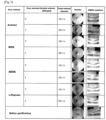
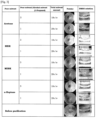
- the properties of the samples comprising ethanol, 1-propanol and NMP before and after the treatment with activated carbon were confirmed.
- the HPLC analysis was performed for each sample at each point (before the addition of activated carbon, 1 hour after the addition of activated carbon, 3 hours after the addition of activated carbon).
- each sample (powder and DMSO solution) before and after the treatment with activated carbon are shown in Fig. 1 .
- the appearances of each powder were confirmed by filtrating each sample comprising each organic solvent in vacuo, concentrating the resulting filtrate in vacuo, drying the resulting wet solid in vacuo at 50 °C, and the appearances of each DMSO solution were confirmed by dissolving the resulting solid in 10% dimethyl sulfoxide (DMSO).
- DMSO dimethyl sulfoxide
- Ethanol or 1-propanol was used as the alcohol solvent and acetone, methyl ethyl ketone (MEK), methyl isobutyl ketone (MIBK) which are ketone solvents or n-heptane was used as the poor solvent.
- MEK methyl ethyl ketone
- MIBK methyl isobutyl ketone
- the recrystallization with each combination of the alcohol solvent and the poor solvent at the total solvent amounts of 10 v/w (Ratio 1:3) and 20 v/w (Ratio 1:1) was performed as follows.
- a solution of AFDX0250 in an alcohol solvent was heated and stirred at 50 °C for 0.5 hour to 1 hour, each poor solvent was added to the solution, and then the mixture was heated and stirred for additional 1 hour.
- the mixture was then cooled to 5 °C and aged for 24 hours.
- the suspension was filtrated and the filtrated product was dried in vacuo at 90 °C. The appearance of the resulting dried product was confirmed and the HPLC analysis was performed for the dried product. Also, the dried product was prepared in 10% dimethyl sulfoxide (DMSO) solution and the appearance of the solution was confirmed.
- DMSO dimethyl sulfoxide
- Alcohol solvent Ethanol Poor solvent Poor solvent/Alcohol solvent Total solvent amount HPLC (Area%) Yield AFDX0250 Compound 1 Acetone 3 10 v/w 98.98% 0.77% 70.8% 1 20 v/w 98.59% 1.07% 54.6% MEK 3 10 v/w 99.17% 0.68% 72.9% 1 20 v/w 98.51% 1.23% 57.6% MIBK 3 10 v/w 99.46% 0.49% 77.0% 1 20 v/w 98.49% 1.24% 67.8% n-Heptane 3 10 v/w 97.62% 1.92% 88.3% 1 20 v/w 98.40% 1.47% 78.1% Before purification 94.80% 3.71% [Table 14] Alcohol solvent: 1-Propanol Poor solvent Poor solvent/Alcohol solvent Total solvent amount HPLC (Area%) Yield AFDX0250 Compound 1 Acetone 3 10 v/w 99.12% 0.67%
- MIBK methyl isobutyl ketone
- sample solution was prepared using the resulting AFDX0250, and the HPLC analysis was performed for the sample solution.
- the resulting AFDX0250 was dissolved in ethanol and the solution was subjected to 2nd recrystallization in a similar manner to the 1st recrystallization.
- the resulting wet solid AFDX0250 was dried at 90 °C for 14 hours and 35 minutes to obtainAFDX0250 (152.27 g, Yield 76.1%).
- sample solution was prepared using the resulting AFDX0250 as with AFDX0250 obtained by the 1st recrystallization, and the HPLC analysis was performed for the sample solution.
- (R)-11-[2-[2-[(diethyl)methyl]-1-piperidinyl]acetyl]-5,11-dihydro-6H-pyrido[2,3-b][1,4]benzodiazepin-6-one or a salt thereof in higher yield and higher purity can be prepared as compared to the known methods.
- the present invention can reduce the amounts of impurities such as 11-(2-chloroacetyl)-5,11-dihydro-6H-pyrido[2,3-b][1,4]benzodiazepin-6-one.
- the present invention can provide (R)-11-[2-[(diethyl)methyl]-1-piperidinyl]acetyl]-5,11-dihydro-6H-pyrido[2,3-b][1,4]benzodiazepin-6-one or a salt thereof in high purity and a pharmaceutical composition comprising (R)-11-[2-[(diethyl)methyl]-1-piperidinyl]acetyl]-5,11-dihydro-6H-pyrido[2,3-b][1,4]benzodiazepin-6-one or a salt thereof in high purity.
Landscapes
- Health & Medical Sciences (AREA)
- Chemical & Material Sciences (AREA)
- Organic Chemistry (AREA)
- Medicinal Chemistry (AREA)
- Pharmacology & Pharmacy (AREA)
- Life Sciences & Earth Sciences (AREA)
- Animal Behavior & Ethology (AREA)
- General Health & Medical Sciences (AREA)
- Public Health (AREA)
- Veterinary Medicine (AREA)
- Ophthalmology & Optometry (AREA)
- Engineering & Computer Science (AREA)
- Bioinformatics & Cheminformatics (AREA)
- Chemical Kinetics & Catalysis (AREA)
- General Chemical & Material Sciences (AREA)
- Nuclear Medicine, Radiotherapy & Molecular Imaging (AREA)
- Epidemiology (AREA)
- Nitrogen Condensed Heterocyclic Rings (AREA)
Applications Claiming Priority (2)
| Application Number | Priority Date | Filing Date | Title |
|---|---|---|---|
| JP2022056754 | 2022-03-30 | ||
| PCT/JP2023/012761 WO2023190663A1 (ja) | 2022-03-30 | 2023-03-29 | 高純度化合物の製造方法および精製方法 |
Publications (2)
| Publication Number | Publication Date |
|---|---|
| EP4506347A1 true EP4506347A1 (de) | 2025-02-12 |
| EP4506347A4 EP4506347A4 (de) | 2026-03-25 |
Family
ID=88202044
Family Applications (1)
| Application Number | Title | Priority Date | Filing Date |
|---|---|---|---|
| EP23780672.4A Pending EP4506347A4 (de) | 2022-03-30 | 2023-03-29 | Verfahren zur herstellung einer hochreinen verbindung und reinigungsverfahren |
Country Status (7)
| Country | Link |
|---|---|
| US (1) | US20250214992A1 (de) |
| EP (1) | EP4506347A4 (de) |
| JP (1) | JPWO2023190663A1 (de) |
| KR (1) | KR20240168375A (de) |
| CN (1) | CN118946564A (de) |
| TW (1) | TW202402753A (de) |
| WO (1) | WO2023190663A1 (de) |
Family Cites Families (9)
| Publication number | Priority date | Publication date | Assignee | Title |
|---|---|---|---|---|
| DE3409237A1 (de) | 1984-03-14 | 1985-09-19 | Dr. Karl Thomae Gmbh, 7950 Biberach | Kondensierte diazepinone, verfahren zu ihrer herstellung und diese verbindungen enthaltende arzneimittel |
| DE3626095A1 (de) * | 1986-07-31 | 1988-02-11 | Thomae Gmbh Dr K | Neue substituierte pyrido(2,3-b)(1,4)benzodiazepin-6-one, verfahren zu ihrer herstellung und diese verbindungen enthaltende arzneimittel |
| US5716952A (en) | 1992-03-18 | 1998-02-10 | Allergan | Method for reducing intraocular pressure in the mammalian eye by administration of muscarinic antagonists |
| JPH09318772A (ja) | 1996-05-28 | 1997-12-12 | Rhythm Watch Co Ltd | 装飾装置 |
| JP2017535545A (ja) * | 2014-11-21 | 2017-11-30 | ラボラトリオス・デル・デエレ・エステベ・エセ・ア | 疼痛に対する多様な活性を有するスピロ−イソキノリン−1,4’−ピペリジン化合物 |
| CN114302726A (zh) | 2020-08-04 | 2022-04-08 | 参天制药株式会社 | 用于治疗近视、预防近视及/或抑制近视发展的药剂 |
| JP7253813B2 (ja) | 2020-08-07 | 2023-04-07 | 株式会社ユニバーサルエンターテインメント | 遊技機 |
| WO2022080397A1 (ja) * | 2020-10-14 | 2022-04-21 | 参天製薬株式会社 | 安定な医薬組成物 |
| EP4501329A4 (de) * | 2022-03-30 | 2026-03-25 | Santen Pharmaceutical Co Ltd | Sterilisationsverfahren für pharmazeutische zubereitung und verpackung |
-
2023
- 2023-03-29 CN CN202380031604.XA patent/CN118946564A/zh active Pending
- 2023-03-29 TW TW112111992A patent/TW202402753A/zh unknown
- 2023-03-29 JP JP2024512662A patent/JPWO2023190663A1/ja active Pending
- 2023-03-29 EP EP23780672.4A patent/EP4506347A4/de active Pending
- 2023-03-29 WO PCT/JP2023/012761 patent/WO2023190663A1/ja not_active Ceased
- 2023-03-29 KR KR1020247035203A patent/KR20240168375A/ko active Pending
- 2023-03-29 US US18/851,293 patent/US20250214992A1/en active Pending
Also Published As
| Publication number | Publication date |
|---|---|
| EP4506347A4 (de) | 2026-03-25 |
| WO2023190663A1 (ja) | 2023-10-05 |
| US20250214992A1 (en) | 2025-07-03 |
| KR20240168375A (ko) | 2024-11-29 |
| CN118946564A (zh) | 2024-11-12 |
| TW202402753A (zh) | 2024-01-16 |
| JPWO2023190663A1 (de) | 2023-10-05 |
Similar Documents
| Publication | Publication Date | Title |
|---|---|---|
| US9493428B2 (en) | Process for the preparation of a chiral compound | |
| KR102442536B1 (ko) | 리나글립틴 결정형 및 이의 제조방법 | |
| EP3686183A1 (de) | L-ornithin-phenyl-acetat und verfahren zur herstellung davon | |
| EP3903785A1 (de) | Kristall einer pyrophosphorsäureverbindung | |
| EP4205745B1 (de) | Pharmazeutische cariprazinzusammensetzung, herstellungsverfahren und anwendung davon | |
| EP3022209B1 (de) | Dolutegravir-kaliumsalz | |
| JP5476436B2 (ja) | スルホンアミド化合物塩の製造方法 | |
| AU2022283638B2 (en) | Co-crystal forms of a novobiocin analog and proline | |
| EP3115356A1 (de) | Polymorphe von bromfenacnatrium und verfahren zur herstellung von bromfenacnatriumpolymorphen | |
| EP4506347A1 (de) | Verfahren zur herstellung einer hochreinen verbindung und reinigungsverfahren | |
| EP3523310B1 (de) | Polymorphe eines muscarin-acetylcholin-rezeptor-agonisten | |
| EP4313950A1 (de) | Verfahren zur herstellung von chinolinderivatverbindungen | |
| US20250228866A1 (en) | Crystalline form of (r)-1-(3-(3-(4-aminopyrimidin-2-yl)-5-chlorophenyl)morpholino)prop-2-en-1-one | |
| EP3368527B1 (de) | Palbociclib-tosylat | |
| EP4660196A1 (de) | Kristallform einer verbindung, herstellungsverfahren dafür und verwendung davon | |
| WO2026018176A1 (en) | 2-(4-chloro-2 methoxyphenyl)-2-((3-methoxy-5-(methylsulfonyl)phenyl)amino)-1-(5-(trifluoro¬methoxy)-1h-indol-3-yl)ethanone and pharmaceutical compositions comprising the same | |
| HK40128637A (en) | Crystal form of compound, preparation method therefor and use thereof | |
| AU2024206378A1 (en) | Solid forms and methods of use | |
| EP2721013B1 (de) | Verfahren zur herstellung einer chiralen verbindung | |
| EA049105B1 (ru) | Формы сокристаллов аналога новобиоцина и пролина | |
| CN110938001A (zh) | 绿原酸乙醇胺盐及用途 | |
| NZ792812A (en) | Crystalline polymorphs of a muscarinic acetylcholine receptor agonist |
Legal Events
| Date | Code | Title | Description |
|---|---|---|---|
| STAA | Information on the status of an ep patent application or granted ep patent |
Free format text: STATUS: THE INTERNATIONAL PUBLICATION HAS BEEN MADE |
|
| PUAI | Public reference made under article 153(3) epc to a published international application that has entered the european phase |
Free format text: ORIGINAL CODE: 0009012 |
|
| STAA | Information on the status of an ep patent application or granted ep patent |
Free format text: STATUS: REQUEST FOR EXAMINATION WAS MADE |
|
| 17P | Request for examination filed |
Effective date: 20241010 |
|
| AK | Designated contracting states |
Kind code of ref document: A1 Designated state(s): AL AT BE BG CH CY CZ DE DK EE ES FI FR GB GR HR HU IE IS IT LI LT LU LV MC ME MK MT NL NO PL PT RO RS SE SI SK SM TR |
|
| DAV | Request for validation of the european patent (deleted) | ||
| DAX | Request for extension of the european patent (deleted) | ||
| A4 | Supplementary search report drawn up and despatched |
Effective date: 20260225 |
|
| RIC1 | Information provided on ipc code assigned before grant |
Ipc: C07D 471/04 20060101AFI20260219BHEP Ipc: A61K 31/5513 20060101ALI20260219BHEP Ipc: A61P 27/02 20060101ALI20260219BHEP Ipc: A61P 27/06 20060101ALI20260219BHEP |