EP4509174A2 - Zusammensetzungen und verfahren zur förderung der hautgesundheit - Google Patents
Zusammensetzungen und verfahren zur förderung der hautgesundheit Download PDFInfo
- Publication number
- EP4509174A2 EP4509174A2 EP24200683.1A EP24200683A EP4509174A2 EP 4509174 A2 EP4509174 A2 EP 4509174A2 EP 24200683 A EP24200683 A EP 24200683A EP 4509174 A2 EP4509174 A2 EP 4509174A2
- Authority
- EP
- European Patent Office
- Prior art keywords
- strain
- acnes
- composition
- strains
- subject
- Prior art date
- Legal status (The legal status is an assumption and is not a legal conclusion. Google has not performed a legal analysis and makes no representation as to the accuracy of the status listed.)
- Withdrawn
Links
Images



Classifications
-
- A—HUMAN NECESSITIES
- A61—MEDICAL OR VETERINARY SCIENCE; HYGIENE
- A61K—PREPARATIONS FOR MEDICAL, DENTAL OR TOILETRY PURPOSES
- A61K35/00—Medicinal preparations containing materials or reaction products thereof with undetermined constitution
- A61K35/66—Microorganisms or materials therefrom
- A61K35/74—Bacteria
-
- A—HUMAN NECESSITIES
- A61—MEDICAL OR VETERINARY SCIENCE; HYGIENE
- A61K—PREPARATIONS FOR MEDICAL, DENTAL OR TOILETRY PURPOSES
- A61K31/00—Medicinal preparations containing organic active ingredients
- A61K31/70—Carbohydrates; Sugars; Derivatives thereof
- A61K31/7135—Compounds containing heavy metals
- A61K31/714—Cobalamins, e.g. cyanocobalamin, i.e. vitamin B12
-
- A—HUMAN NECESSITIES
- A61—MEDICAL OR VETERINARY SCIENCE; HYGIENE
- A61K—PREPARATIONS FOR MEDICAL, DENTAL OR TOILETRY PURPOSES
- A61K8/00—Cosmetics or similar toiletry preparations
- A61K8/18—Cosmetics or similar toiletry preparations characterised by the composition
- A61K8/30—Cosmetics or similar toiletry preparations characterised by the composition containing organic compounds
- A61K8/33—Cosmetics or similar toiletry preparations characterised by the composition containing organic compounds containing oxygen
- A61K8/36—Carboxylic acids; Salts or anhydrides thereof
-
- A—HUMAN NECESSITIES
- A61—MEDICAL OR VETERINARY SCIENCE; HYGIENE
- A61K—PREPARATIONS FOR MEDICAL, DENTAL OR TOILETRY PURPOSES
- A61K8/00—Cosmetics or similar toiletry preparations
- A61K8/18—Cosmetics or similar toiletry preparations characterised by the composition
- A61K8/30—Cosmetics or similar toiletry preparations characterised by the composition containing organic compounds
- A61K8/60—Sugars; Derivatives thereof
- A61K8/606—Nucleosides; Nucleotides; Nucleic acids
-
- A—HUMAN NECESSITIES
- A61—MEDICAL OR VETERINARY SCIENCE; HYGIENE
- A61K—PREPARATIONS FOR MEDICAL, DENTAL OR TOILETRY PURPOSES
- A61K8/00—Cosmetics or similar toiletry preparations
- A61K8/18—Cosmetics or similar toiletry preparations characterised by the composition
- A61K8/30—Cosmetics or similar toiletry preparations characterised by the composition containing organic compounds
- A61K8/67—Vitamins
- A61K8/673—Vitamin B group
- A61K8/675—Vitamin B3 or vitamin B3 active, e.g. nicotinamide, nicotinic acid, nicotinyl aldehyde
-
- A—HUMAN NECESSITIES
- A61—MEDICAL OR VETERINARY SCIENCE; HYGIENE
- A61K—PREPARATIONS FOR MEDICAL, DENTAL OR TOILETRY PURPOSES
- A61K8/00—Cosmetics or similar toiletry preparations
- A61K8/18—Cosmetics or similar toiletry preparations characterised by the composition
- A61K8/96—Cosmetics or similar toiletry preparations characterised by the composition containing materials, or derivatives thereof of undetermined constitution
- A61K8/99—Cosmetics or similar toiletry preparations characterised by the composition containing materials, or derivatives thereof of undetermined constitution from microorganisms other than algae or fungi, e.g. protozoa or bacteria
-
- A—HUMAN NECESSITIES
- A61—MEDICAL OR VETERINARY SCIENCE; HYGIENE
- A61P—SPECIFIC THERAPEUTIC ACTIVITY OF CHEMICAL COMPOUNDS OR MEDICINAL PREPARATIONS
- A61P17/00—Drugs for dermatological disorders
- A61P17/10—Anti-acne agents
-
- A—HUMAN NECESSITIES
- A61—MEDICAL OR VETERINARY SCIENCE; HYGIENE
- A61Q—SPECIFIC USE OF COSMETICS OR SIMILAR TOILETRY PREPARATIONS
- A61Q17/00—Barrier preparations; Preparations brought into direct contact with the skin for affording protection against external influences, e.g. sunlight, X-rays or other harmful rays, corrosive materials, bacteria or insect stings
- A61Q17/005—Antimicrobial preparations
-
- A—HUMAN NECESSITIES
- A61—MEDICAL OR VETERINARY SCIENCE; HYGIENE
- A61Q—SPECIFIC USE OF COSMETICS OR SIMILAR TOILETRY PREPARATIONS
- A61Q19/00—Preparations for care of the skin
-
- A—HUMAN NECESSITIES
- A61—MEDICAL OR VETERINARY SCIENCE; HYGIENE
- A61Q—SPECIFIC USE OF COSMETICS OR SIMILAR TOILETRY PREPARATIONS
- A61Q19/00—Preparations for care of the skin
- A61Q19/08—Anti-ageing preparations
-
- C—CHEMISTRY; METALLURGY
- C12—BIOCHEMISTRY; BEER; SPIRITS; WINE; VINEGAR; MICROBIOLOGY; ENZYMOLOGY; MUTATION OR GENETIC ENGINEERING
- C12Q—MEASURING OR TESTING PROCESSES INVOLVING ENZYMES, NUCLEIC ACIDS OR MICROORGANISMS; COMPOSITIONS OR TEST PAPERS THEREFOR; PROCESSES OF PREPARING SUCH COMPOSITIONS; CONDITION-RESPONSIVE CONTROL IN MICROBIOLOGICAL OR ENZYMOLOGICAL PROCESSES
- C12Q1/00—Measuring or testing processes involving enzymes, nucleic acids or microorganisms; Compositions therefor; Processes of preparing such compositions
- C12Q1/02—Measuring or testing processes involving enzymes, nucleic acids or microorganisms; Compositions therefor; Processes of preparing such compositions involving viable microorganisms
- C12Q1/04—Determining presence or kind of microorganism; Use of selective media for testing antibiotics or bacteriocides; Compositions containing a chemical indicator therefor
-
- G—PHYSICS
- G01—MEASURING; TESTING
- G01N—INVESTIGATING OR ANALYSING MATERIALS BY DETERMINING THEIR CHEMICAL OR PHYSICAL PROPERTIES
- G01N33/00—Investigating or analysing materials by specific methods not covered by groups G01N1/00 - G01N31/00
- G01N33/48—Biological material, e.g. blood, urine; Haemocytometers
- G01N33/50—Chemical analysis of biological material, e.g. blood, urine; Testing involving biospecific ligand binding methods; Immunological testing
- G01N33/82—Chemical analysis of biological material, e.g. blood, urine; Testing involving biospecific ligand binding methods; Immunological testing involving vitamins or their receptors
-
- A—HUMAN NECESSITIES
- A61—MEDICAL OR VETERINARY SCIENCE; HYGIENE
- A61K—PREPARATIONS FOR MEDICAL, DENTAL OR TOILETRY PURPOSES
- A61K2800/00—Properties of cosmetic compositions or active ingredients thereof or formulation aids used therein and process related aspects
- A61K2800/80—Process related aspects concerning the preparation of the cosmetic composition or the storage or application thereof
- A61K2800/81—Preparation or application process involves irradiation
-
- G—PHYSICS
- G01—MEASURING; TESTING
- G01N—INVESTIGATING OR ANALYSING MATERIALS BY DETERMINING THEIR CHEMICAL OR PHYSICAL PROPERTIES
- G01N2800/00—Detection or diagnosis of diseases
- G01N2800/20—Dermatological disorders
Definitions
- Propionibacterium acnes is a major commensal bacterium residing on the human skin. It plays important roles in maintaining skin health, but has also been implicated in the pathogenesis of several diseases and infections, including sarcoidosis, SAPHO syndrome, endodontic lesions, eye infections, prosthetic joint infections, prostate cancer, and acne vulgaris (commonly called acne). Acne is the most common skin disease affecting more than 80% of adolescents and young adults worldwide. Despite the clinical importance of the disease, the etiology of acne is not yet clear. P. acnes dominates the skin of both acne patients and healthy individuals, and thus its role in acne pathogenesis has not been well understood.
- the invention relates to a method of preventing or treating a skin condition in a subject, comprising administering to the skin of the subject a composition comprising an RT1, RT2, RT3, RT6, RT8, RT16, or Type III strain of Propionibacterium acnes.
- compositions are formulated for oral delivery for treating a skin condition or maintaining skin health, comprising an RT1, RT2, RT3, RT6, RT8, RT16, or Type III strain of Propionibacterium acnes.
- the compositions comprise more than one strain. A strain of P.
- acnes may be selected from HL042PA3, HL050PA2, HL025PA1, HL001PA1, HL103PA1, HL106PA1, HL110PA3, HL025PA2, HL046PA1, HL110PA2, HL053PA2, HL059PA1, HL201PA1, 17A, and 20C.
- the condition may be acne, skin aging, rosacea, or porphyria cutanea tarda.
- the invention relates to a topical composition for treating a skin condition or maintaining skin health, comprising an RT2 strain of Propionibacterium acnes.
- the strain may be, for example, HL001PA1.
- HL001PA1 is a clonal complex 72 (CC72) strain based on the Harbor MLST 8 classification scheme; and
- HL001PA1 is a clonal complex 60 (CC60) strain based on the Aarhus MLST 9 classification scheme.
- the invention relates to a method for determining the risk that a subject will develop vitamin B 12 -induced acne, comprising measuring the porphyrin production of P. acnes obtained from the subject.
- the invention relates to a method for determining a risk that a subject will develop vitamin B 12 -induced acne, comprising identifying one or more strains of P. acnes obtained from the subject, and diagnosing the subject with an elevated risk of developing vitamin B 12 -induced acne if one or more of the strains of P. acnes is sensitive to vitamin B 12 .
- the invention relates to a method for determining a risk that a subject will develop vitamin B 12 -induced acne, comprising identifying one or more strains of P. acnes obtained from the subject, and diagnosing the subject with an elevated risk of developing vitamin B 12 -induced acne if one or more of the strains of P. acnes produces elevated levels of porphyrins.
- the invention relates to a topical composition, comprising a nucleic acid encoding deoR. In other aspects, the invention relates to a composition formulated for oral delivery comprising a nucleic acid encoding deoR.
- the invention relates to a method for treating a skin condition in a subject, comprising: measuring the porphyrin production of P. acnes obtained from the subject; and treating the subject with photodynamic therapy if the porphyrin production is above a threshold value.
- the invention relates to a method for treating a skin condition in a subject, comprising determining the identity of a strain of P. acnes obtained from the subject; and treating the subject with photodynamic therapy if the strain of P. acnes produces elevated porphyrin levels.
- the invention relates to compositions and methods for treating a skin condition in a subject, comprising administering to the subject a composition comprising P . acnes, wherein the P. acnes comprises a nucleic acid encoding deoR.
- the composition may be formulated for topical delivery.
- the compositions may be formulated for oral delivery.
- provided herein are methods of reducing the amount of porphyrins on the skin of a subject by administering a composition comprising one or more strains of Propionibacterium acnes to the subject.
- the subject may have acne, skin aging, rosacea, or porphyria cutanea tarda.
- compositions formulated for oral delivery for treating a skin condition or maintaining skin health comprising an RT1, RT2, RT3, RT6, RT8, RT16, or Type III strain of Propionibacterium acnes.
- compositions e.g., oral or topical compositions
- for treating a skin condition or maintaining skin health comprising a strain of Propionibacterium acnes, wherein the strain of Propionibacterium acnes comprises a nucleic acid encoding deoR.
- a strain of P is provided herein.
- acnes may be selected from HL042PA3, HL050PA2, HL025PA1, HL001PA1, HL103PA1, HL106PA1, HL110PA3, HL025PA2, HL046PA1, HL110PA2, HL053PA2, HL059PA1, HL201PA1, 17A, or 20C.
- Some aspects of the invention are based on the finding that vitamin B 12 supplementation increases P. acnes production of porphyrins, a group of pro-inflammatory metabolites important in acne development.
- the porphyrin production and regulation of multiple P. acnes strains from acne- and health-associated lineages were compared.
- Acne-associated strains inherently produced significantly higher levels of porphyrins, which were further enhanced by vitamin B 12 supplementation.
- health-associated strains produced low levels of porphyrins and did not respond to vitamin B 12 .
- porphyrin biosynthesis can be modulated at the metabolic level.
- the repressor gene ( deoR ) of porphyrin biosynthesis was encoded in all health-associated strains, but not in acne-associated strains.
- the expression of deoR suggests additional regulation of porphyrin production at the transcriptional level in health-associated strains.
- Vitamin B 12 modulation of porphyrin production is strain-specific, and suggests that the P. acnes strain composition of an individual's skin microbiota contributes to vitamin B 12 -induced acne. Individuals harboring acne-associated strains are likely to be at increased risk for developing acne in response to high vitamin B 12 levels due to the ability of their skin bacteria to produce more porphyrins. On the other hand, individuals whose skin is dominated by health-associated strains may have lower porphyrin levels produced by the bacterium, leading to a reduced risk for acne development when supplemented with vitamin B 12 .
- preventing is art-recognized, and when used in relation to a condition such as a local recurrence (e.g ., blemish), a disease such as acne, or an injury such as scarring, is well understood in the art, and includes administration of a composition which reduces the frequency of, or delays the onset of, symptoms of a medical condition in a subject relative to a subject which does not receive the composition.
- a condition such as a local recurrence (e.g ., blemish), a disease such as acne, or an injury such as scarring
- prevention of acne includes, for example, reducing the number of detectable blemishes (e.g ., lesions) in a population of patients receiving a prophylactic treatment relative to an untreated control population, and/or delaying the appearance of detectable blemishes in a treated population versus an untreated control population, e.g., by a statistically and/or clinically significant amount.
- detectable blemishes e.g ., lesions
- prophylactic treatment and therapeutic treatment are art-recognized and include administration to a subject one or more of compositions. If a composition is administered prior to clinical manifestation of the unwanted condition (e.g ., disease or other unwanted state of the host animal) then the treatment is prophylactic ( i.e ., it protects the subject against developing the unwanted condition), whereas if it is administered after manifestation of the unwanted condition, the treatment is therapeutic ( i.e ., it is intended to diminish, ameliorate, or stabilize the existing unwanted condition or side effects thereof).
- the unwanted condition e.g ., disease or other unwanted state of the host animal
- subject refers to a mammal, including, but not limited to, a human or non-human mammal, such as a primate, bovine, equine, ovine, porcine, canine, lagomorph, feline, or rodent.
- a human or non-human mammal such as a primate, bovine, equine, ovine, porcine, canine, lagomorph, feline, or rodent.
- the subject is a human.
- a “therapeutically effective amount” of a compound with respect to the subject method of treatment refers to an amount of the compound(s) in a preparation which, when administered as part of a desired dosage regimen (to a mammal, preferably a human) alleviates a symptom, ameliorates a condition, or slows the onset of disease conditions according to clinically acceptable standards for the disorder or condition to be treated or the cosmetic purpose, e.g ., at a reasonable benefit/risk ratio applicable to any medical treatment.
- treating includes reversing, reducing, or arresting the symptoms, clinical signs, and underlying pathology of a condition in a manner to improve or stabilize a subject's condition.
- the invention relates to a composition for treating or preventing a condition in a subject.
- the invention relates to a composition for maintaining skin health.
- the composition may be a topical composition.
- the composition may be formulated for oral delivery.
- the condition may be a skin condition.
- the skin conditions may be acne, skin aging, rosacea, or porphyria cutanea tarda.
- a composition may comprise a strain of Propionibacterium acnes.
- a strain of P. acnes may be selected from, for example, RT1, RT2, and RT6.
- the strain of P. acnes is selected from RT3, RT8, RT16, or Type III.
- the strain may be selected from HL001PA1, HL103PA1, HL042PA3, HL106PA1, HL110PA3, HL050PA2, or HL025PA1.
- the strain may be selected from HL025PA2, HL046PA1, HL110PA2, HL053PA2, HL059PA1, HL201PA1, 17A, or 20C.
- the strain may be RT2, and the RT2 strain may be HL001PA1, HL103PA1, or HL106PA1.
- the strain may be RT1 and the RT1 strain may be HL050PA2 or HL025PA1.
- the strain may be RT6 and the RT6 strain may be HL042PA3 or HL110PA3.
- the strain may be a type II strain or a type III strain of P. acnes.
- the strain may be an RT3 strain, such as HL025PA2 or HL046PA1.
- the strain may be a RT8, such as HL110PA2 or HL053PA2.
- the strain may be a RT16 strain, such as HL059PA1.
- the strain may be a Type III strain, such as HL201PA1, 17A, or 20C.
- the composition may be formulated for oral delivery.
- the composition may be a topical composition.
- the composition may comprise more than one strain of P. acnes.
- the composition may comprise at least 2, at least 3, at least 4, at least 5, at least 6, or at least 7 strains of P. acnes.
- the composition is substantially free from an RT4 strain of P. acnes. In preferred embodiments, the composition is substantially free from an RT5 strain of P. acnes. In preferred embodiments, the composition does not comprise HL045PA1, HL043PA1, HL043PA2, or HL053PA2. In some embodiments, the composition is substantially free from a type IA-1, IA-2, IB-1, and/or IC strain of P. acnes. In preferred embodiments, the composition is substantially free from a type IA-1, IA-2, and/or IC strain of P. acnes. In some embodiments, the composition is substantially free of strains that does not express, harbor, and/or encode deoR.
- substantially free indicates that the composition does not comprise the indicated strain to an extent that compromises the therapeutic efficacy of the beneficial strains in the composition.
- a composition is substantially free of a strain if it comprises less than 10%, preferably less than 5%, and most preferably less than 1% of the indicated strain.
- a composition may comprise a nucleic acid encoding deoR (i.e., the nucleic acid may comprise the deoR nucleotide sequence).
- the composition may comprise a vector and the vector may comprise the nucleic acid.
- the composition may comprise a strain of P. acnes and the strain of P. acnes may comprise the nucleic acid.
- the nucleic acid may be DNA or RNA.
- the vector may be a phage or a plasmid.
- the vector may be a phage, and the phage may have a tropism for Propionibacterium acnes, e.g., such that the phage can transform a P. acnes cell with the nucleic acid.
- the nucleic acid may comprise a promoter, and the promoter and deoR may be operably linked, e.g., such that a cell comprising the nucleic acid can transcribe RNA from the nucleic acid.
- the nucleic acid may be a recombinant nucleic acid.
- deoR may be operably linked to a promoter other than a native deoR promoter.
- deoR may be present in a vector that is not native to P. acnes, such as a vector comprising an origin of replication of a different species such as E. coli or a vector comprising a packaging signal for a bacteriophage.
- the nucleic acid may be the P. acnes genome and deoR may be randomly integrated into the genome.
- a composition may comprise one or more strains of P. acnes that comprise the nucleic acid, e.g., wherein the nucleic acid is the P. acnes genome, the nucleic acid is a plasmid, or the nucleic acid is RNA.
- a composition may comprise one or more strains of P. acnes that comprise a deoR protein product (e.g., a transcriptional repressor protein). For example, such strains may express a deoR protein product.
- a composition may comprise one or more strains of P. acnes that encode or harbor a deoR gene.
- a composition may comprise one or more strains of P.
- a composition may comprise a clonal complex 72 (CC72) strain as determined by the Harbor MLST 8 classification scheme.
- a composition may comprise a clonal complex 60 (CC60) strain as determined by the Aarhus MLST 9 classification scheme.
- a composition may comprise one or more strains of P. acnes selected from RT3, RT8, RT16, or Type III, and/or strains comprising a recombinant nucleic acid encoding deoR.
- a composition may further comprise levulinic acid, 4, 6-dioxoheptanoic acid, and/or isonicotinic acid hydrazide.
- compositions described herein may be used for oral administration to the gastrointestinal tract.
- the formulation for a composition (e.g., a probiotic composition) of the present invention may also include other probiotic agents or nutrients which promote spore germination and/or bacterial growth.
- An exemplary material is a bifidogenic oligosaccharide, which promotes the growth of beneficial probiotic bacteria.
- the probiotic bacterial composition is administered with a therapeutically-effective dose of an (preferably, broad spectrum) antibiotic, or an anti-fungal agent.
- the compositions described herein are encapsulated into an enterically-coated, time-released capsule or tablet.
- the composition may be a food product, such as, but not limited to, a dairy product.
- the diary product may be cultured or a non-cultured (e.g., milk) dairy product.
- cultured dairy products include yogurt, cottage cheese, sour cream, kefir, buttermilk, etc.
- Dairy products also often contain various specialty dairy ingredients, e.g. whey, non-fat dry milk, whey protein concentrate solids, etc.
- the dairy product may be processed in any way known in the art to achieve desirable qualities such as flavor, thickening power, nutrition, specific microorganisms and other properties such as mold growth control.
- the compositions of the present invention may also include known antioxidants, buffering agents, and other agents such as coloring agents, flavorings, vitamins, or minerals.
- compositions of the present invention are combined with a carrier (e.g., a pharmaceutically acceptable carrier) which is physiologically compatible with the gastrointestinal tissue of the subject(s) to which it is administered.
- a carrier e.g., a pharmaceutically acceptable carrier
- Carriers can be comprised of solid-based, dry materials for formulation into tablet, capsule or powdered form; or the carrier can be comprised of liquid or gel-based materials for formulations into liquid or gel forms.
- the specific type of carrier, as well as the final formulation depends, in part, upon the selected route(s) of administration.
- the therapeutic composition of the present invention may also include a variety of carriers and/or binders.
- the carrier is micro-crystalline cellulose (MCC) added in an amount sufficient to complete the one gram dosage total weight.
- Carriers can be solid-based dry materials for formulations in tablet, capsule or powdered form, and can be liquid or gel-based materials for formulations in liquid or gel forms, which forms depend, in part, upon the routes of administration.
- Typical carriers for dry formulations include, but are not limited to: trehalose, malto-dextrin, rice flour, microcrystalline cellulose (MCC) magnesium sterate, inositol, FOS, GOS, dextrose, sucrose, and like carriers.
- Suitable liquid or gel-based carriers include but are not limited to: water and physiological salt solutions; urea; alcohols and derivatives (e.g., methanol, ethanol, propanol, butanol); glycols (e.g., ethylene glycol, propylene glycol, and the like).
- water-based carriers possess a neutral pH value (i.e., pH 7.0).
- Other carriers or agents for administering the compositions described herein are known in the art, e.g., in U.S. Patent No. 6,461,607 .
- a composition may comprise a vehicle, solvent, and/or dilutent.
- Suitable topical vehicles and vehicle components for use with the formulations of the invention are well known in the cosmetic and pharmaceutical arts, and include such vehicles (or vehicle components) as water; organic solvents such as alcohols (particularly lower alcohols readily capable of evaporating from the skin such as ethanol), glycols (such as propylene glycol, butylene glycol, and glycerol (glycerin)), aliphatic alcohols (such as lanolin); mixtures of water and organic solvents (such as water and alcohol), and mixtures of organic solvents such as alcohol and glycerol (optionally also with water); lipid-based materials such as fatty acids, acylglycerols (including oils, such as mineral oil, and fats of natural or synthetic origin), phosphoglycerides, sphingolipids and waxes; protein-based materials such as collagen and gelatin; silicone-based materials (both non-volatile and volatile) such as cyclomethi
- compositions of the present invention are oil-in-water emulsions.
- Liquids suitable for use in formulating compositions of the present invention include water, and water-miscible solvents such as glycols (e.g ., ethylene glycol, butylene glycol, isoprene glycol, propylene glycol), glycerol, liquid polyols, dimethyl sulfoxide, and isopropyl alcohol.
- glycols e.g ethylene glycol, butylene glycol, isoprene glycol, propylene glycol
- glycerol glycerol
- liquid polyols e.g ethylene glycol, butylene glycol, isoprene glycol, propylene glycol
- glycerol e.g., glycerol
- liquid polyols e.g ethylene glycol, butylene glycol, isoprene glycol, propylene glycol
- glycerol
- formulations without methanol, ethanol, propanols, or butanols are desirable.
- a composition may comprise a surfactant and/or emulsifier.
- Many topical formulations contain chemical emulsions which use surface active ingredients (emulsifiers and surfactants) to disperse dissimilar chemicals in a particular solvent system.
- surface active ingredients emulsifiers and surfactants
- lipid-like (oily or fatty) or lipophilic ingredients do not uniformly disperse in aqueous solvents unless they are first combined with emulsifiers, which form microscopic aqueous soluble structures (droplets) that contain a lipophilic interior and a hydrophilic exterior, resulting in an oil-in-water emulsion.
- a molecule In order to be soluble in aqueous media, a molecule must be polar or charged so as to favorably interact with water molecules, which are also polar.
- an emulsifier is typically used which forms stable structures that contain the hydrophilic components in the interior of the structure while the exterior is lipophilic so that it can dissolve in the lipophilic solvent to form a water-in-oil emulsion. It is well known that such emulsions can be destabilized by the addition of salts or other charged ingredients which can interact with the polar or charged portions of the emulsifier within an emulsion droplet. Emulsion destabilization results in the aqueous and lipophilic ingredients separating into two layers, potentially destroying the commercial value of a topical product.
- Surfactants suitable for use in the present invention may be ionic or non-ionic. These include, but are not limited to: cetyl alcohol, polysorbates (Polysorbate 20, Polysorbate 40, Polysorbate 60, Polysorbate 80), steareth-10 (Brij 76), sodium dodecyl sulfate (sodium lauryl sulfate), lauryl dimethyl amine oxide, cetyltrimethylammonium bromide (CTAB), polyethoxylated alcohols, polyoxyethylene sorbitan, octoxynol, N,N-dimethyldodecylamine-N-oxide, hexadecyltrimethylammonium bromide (HTAB), polyoxyl 10 lauryl ether, bile salts (such as sodium deoxycholate or sodium cholate), polyoxyl castor oil, nonylphenol ethoxylate, cyclodextrins, lecithin, dimethicone copolyol
- surfactants may also serve as emulsifiers in formulations of the present invention.
- emulsifiers for use in the formulations of the present invention include, but are not limited to, behentrimonium methosulfate-cetearyl alcohol, non-ionic emulsifiers like emulsifying wax, polyoxyethylene oleyl ether, PEG-40 stearate, cetostearyl alcohol (cetearyl alcohol), ceteareth-12, ceteareth-20, ceteareth-30, ceteareth alcohol, Ceteth-20 (Ceteth-20 is the polyethylene glycol ether of cetyl alcohol where n has an average value of 20), oleic acid, oleyl alcohol, glyceryl stearate, PEG-75 stearate, PEG-100 stearate, and PEG-100 stearate, ceramide 2, ceramide 3, stearic acid, cholesterol, steareth-2, and steareth-20, or combinations/mixtures thereof, as well as cationic emulsifiers like stearamido
- a composition may comprise a moisturizer, emollient, and/or humectant.
- a moisturizer emollient
- humectant emollient
- white petrolatum is an excellent moisturizer and skin protectant, it is rarely used alone, especially on the face, because it is greasy, sticky, does not rub easily into the skin and may soil clothing. Consumers highly value products which are aesthetically elegant and have an acceptable tactile feel and performance on their skin.
- Suitable moisturizers for use in the formulations of the present invention include, but are not limited to, lactic acid and other hydroxy acids and their salts, glycerol, propylene glycol, butylene glycol, sodium PCA, sodium hyaluronate, Carbowax 200, Carbowax 400, and Carbowax 800.
- Suitable emollients or humectants for use in the formulations of the present invention include, but are not limited to, panthenol, cetyl palmitate, glycerol (glycerin), PPG-15 stearyl ether, lanolin alcohol, lanolin, lanolin derivatives, cholesterol, petrolatum, isostearyl neopentanoate, octyl stearate, mineral oil, isocetyl stearate, myristyl myristate, octyl dodecanol, 2-ethylhexyl palmitate (octyl palmitate), dimethicone, phenyl trimethicone, cyclomethicone, C 12 -C 15 alkyl benzoates, dimethiconol, propylene glycol, Theobroma grandiflorum seed butter, ceramides (e.g., ceramide 2 or ceramide 3), hydroxypropyl bis
- a composition may comprise components adapted to improve the stability or effectiveness of the applied formulation, such as a preservative and/or antioxidant.
- Suitable preservatives for use in the present invention include, but are not limited to: ureas, such as imidazolidinyl urea and diazolidinyl urea; phenoxyethanol; sodium methyl paraben, methylparaben, ethylparaben, and propylparaben; potassium sorbate; sodium benzoate; sorbic acid; benzoic acid; formaldehyde; citric acid; sodium citrate; chlorine dioxide; quaternary ammonium compounds, such as benzalkonium chloride, benzethonium chloride, cetrimide, dequalinium chloride, and cetylpyridinium chloride; mercurial agents, such as phenylmercuric nitrate, phenylmercuric acetate, and thimerosal; piroctone olamine; Vitis vinifera seed
- Suitable antioxidants include, but are not limited to, ascorbic acid and its esters, sodium bisulfite, butylated hydroxytoluene, butylated hydroxyanisole, tocopherols, tocopheryl acetate, sodium ascorbate/ascorbic acid, ascorbyl palmitate, propyl gallate, and chelating agents like EDTA (e.g. , disodium EDTA), citric acid, and sodium citrate.
- EDTA e.g. , disodium EDTA
- the antioxidant or preservative comprises (3-(4-chlorophenoxy)-2-hydroxypropyl)carbamate.
- antioxidants or preservatives of the present invention may also function as a moisturizer or emollient, for example.
- a composition can also contain any other agent that has a desired effect when applied topically to a mammal, particularly a human.
- suitable classes of active agents include, but are not limited to, antibiotic agents, antimicrobial agents, anti-acne agents, antibacterial agents, antifungal agents, antiviral agents, steroidal anti-inflammatory agents, non-steroidal anti-inflammatory agents, anesthetic agents, antipruriginous agents, antiprotozoal agents, anti-oxidants, antihistamines, vitamins, and hormones. Mixtures of any of these active agents may also be employed. Additionally, dermatologically-acceptable salts and esters of any of these agents may be employed.
- antimicrobials such as antibiotics can be bactericidal or bacteriostatic, limiting and reducing the quantity of bacteria in our bodies.
- Retinoids also reduce the amount of bacteria in pilosebacous units and microcomedones.
- Light based therapies work via photothermal heating, photochemical inactivation of bacteria, and various photoimmunological reactions to improve clinical skin outcomes. In general, the above therapies directly act to reduce the amount of pathogenic bacteria in a patient.
- the invention proposes that any such therapy that achieves the same goal of reducing the number of pathogenic organisms, when used in combination with subsequent topical probiotic treatment, would lead to replacement of the pathogenic microflora involved in the diseased state with natural microflora enriched in healthy skin or mucous membranes, or less pathogenic species occupying the same ecological niche as the type causing a disease state.
- Suitable antibacterial compounds include capreomycins, including capreomycin IA, capreomycin IB, capreomycin IIA and capreomycin IIB; carbomycins, including carbomycin A; carumonam; cefaclor, cefadroxil, cefamandole, cefatrizine, cefazedone, cefazolin, cefbuperazone, cefcapene pivoxil, cefclidin, cefdinir, cefditoren, cefime, ceftamet, cefmenoxime, cefmetzole, cefminox, cefodizime, cefonicid, cefoperazone, ceforanide, cefotaxime, cefotetan, cefotiam, cefoxitin, cefpimizole, cefpiramide, cefpirome, cefprozil, cefroxadine, cefsulodin, ceftazidime, cef
- Suitable anti-fungal compounds include ketoconazole, miconazole, fluconazole, clotrimazole, undecylenic acid, sertaconazole, terbinafine, butenafine, clioquinol, haloprogin, nystatin, naftifine, tolnaftate, ciclopirox, amphotericin B, or tea tree oil and analogs, derivatives, pharmaceutically acceptable salts, esters, prodrugs, and protected forms thereof.
- Suitable antiviral agents include acyclovir, azidouridine, anismoycin, amantadine, bromovinyldeoxusidine, chlorovinyldeoxusidine, cytarabine, delavirdine, didanosine, deoxynojirimycin, dideoxycytidine, dideoxyinosine, dideoxynucleoside, desciclovir, deoxyacyclovir, efavirenz, enviroxime, fiacitabine, foscamet, fialuridine, fluorothymidine, floxuridine, ganciclovir, hypericin, idoxuridine, interferon, interleukin, isethionate, nevirapine, pentamidine, ribavirin, rimantadine, stavudine, sargramostin, suramin, trichosanthin, tribromothymidine, trichlorothymidine, tri
- antiviral agents include 2',3'-dideoxyadenosine (ddA), 2',3'-dideoxyguanosine (ddG), 2',3'-dideoxycytidine (ddC), 2',3'-dideoxythymidine (ddT), 2'3'-dideoxy-dideoxythymidine (d4T), 2'-deoxy-3'-thia-cytosine (3TC or lamivudime), 2',3'-dideoxy-2'-fluoroadenosine, 2',3'-dideoxy-2'-fluoroinosine, 2',3'-dideoxy-2'-fluorothymidine, 2',3'-dideoxy-2'-fluorocytosine, 2'3'-dideoxy-2',3'-didehydro-2'-fluorothymidine (Fd4T), 2'3'-dideoxy-2'-beta-fluoroade
- the antiviral agent is selected from trisodium phosphomonoformate, ganciclovir, trifluorothymidine, acyclovir, 3'-azido-3'-thymidine (AZT), dideoxyinosine (ddI), and idoxuridine and analogs, derivatives, pharmaceutically acceptable salts, esters, prodrugs, and protected forms thereof.
- a composition may comprise a buffer or salt.
- Suitable buffer salts are well-known in the art. Examples of suitable buffer salts include, but are not limited to sodium citrate, citric acid, sodium phosphate monobasic, sodium phosphate dibasic, sodium phosphate tribasic, potassium phosphate monobasic, potassium phosphate dibasic, and potassium phosphate tribasic.
- a composition may comprise a viscosity modifier.
- Suitable viscosity adjusting agents i.e., thickening and thinning agents or viscosity modifying agents
- Suitable viscosity adjusting agents include, but are not limited to, protective colloids or non-ionic gums such as hydroxyethylcellulose, xanthan gum, and sclerotium gum, as well as magnesium aluminum silicate, silica, microcrystalline wax, beeswax, paraffin, and cetyl palmitate.
- protective colloids or non-ionic gums such as hydroxyethylcellulose, xanthan gum, and sclerotium gum
- magnesium aluminum silicate silica
- microcrystalline wax beeswax
- paraffin paraffin
- cetyl palmitate appropriate combinations or mixtures of these viscosity adjusters may be utilized according to the present invention.
- Additional constituents suitable for incorporation into the emulsions of the present invention include, but are not limited to: skin protectants, adsorbents, demulcents, emollients, moisturizers, sustained release materials, solubilizing agents, skin-penetration agents, skin soothing agents, deodorant agents, antiperspirants, sun screening agents, sunless tanning agents, vitamins, hair conditioning agents, anti-irritants, anti-aging agents, abrasives, absorbents, anti-caking agents, anti-static agents, astringents (e.g., witch hazel, alcohol, and herbal extracts such as chamomile extract), binders/excipients, buffering agents, chelating agents, film forming agents, conditioning agents, opacifying agents, lipids, immunomodulators, and pH adjusters (e.g., citric acid, sodium hydroxide, and sodium phosphate).
- skin protectants e.g., adsorbents, demulcents, emolli
- lipids normally found in healthy skin may be incorporated into the emulsions of the present invention.
- the lipid is selected from the group consisting of ceramides, cholesterol, and free fatty acids.
- examples of lipids include, but are not limited to, ceramide 1, ceramide 2, ceramide 3, ceramide 4, ceramide 5, ceramide 6, hydroxypropyl bispalmitamide MEA, and hydroxypropyl bislauramide MEA, and combinations thereof.
- Examples of peptides that interact with protein structures of the dermal-epidermal junction include palmitoyl dipeptide-5 diaminobutyloyl hydroxythreonine and palmitoyl dipeptide-6 diaminohydroxybutyrate.
- Examples of skin soothing agents include, but are not limited to algae extract, mugwort extract, stearyl glycyrrhetinate, bisabolol, allantoin, aloe, avocado oil, green tea extract, hops extract, chamomile extract, colloidal oatmeal, calamine, cucumber extract, and combinations thereof.
- compositions comprise bergamot or bergamot oil.
- Bergamot oil is a natural skin toner and detoxifier. In certain embodiments, it may prevent premature aging of skin and may have excellent effects on oily skin conditions and acne.
- vitamins examples include, but are not limited to, vitamins A, D, E, K, and combinations thereof.
- Vitamin analogues are also contemplated; for example, the vitamin D analogues calcipotriene or calcipotriol.
- the vitamin may be present as tetrahexyldecyl ascorbate.
- This compound exhibits anti-oxidant activity, inhibiting lipid peroxidation.
- use can mitigate the damaging effects of UV exposure. Studies have shown it to stimulate collagen production as well as clarifying and brightening the skin by inhibiting melanogenesis (the production of pigment) thereby promoting a more even skin tone.
- sunscreens include, but are not limited to, p-aminobenzoic acid, avobenzone, cinoxate, dioxybenzone, homosalate, menthyl anthranilate, octocrylene, octyl methoxycinnamate, octyl salicylate, oxybenzone, padimate O, phenylbenzimidazole sulfonic acid, sulisobenzone, titanium dioxide, trolamine salicylate, zinc oxide, 4-methylbenzylidene camphor, methylene bis-benzotriazolyl tetramethylbutylphenol, bis-ethylhexyloxyphenol methoxyphenyl triazine, terephthalylidene dicamphor sulfonic acid, drometrizole trisiloxane, disodium phenyl dibenzimidazole tetrasulfonate, diethylamino hydroxybenzoyl
- Suitable fragrances and colors may be used in the formulations of the present invention.
- Examples of fragrances and colors suitable for use in topical products are known in the art.
- Suitable immunomodulators include, but are not limited to, tetrachlorodecaoxide, deoxycholic acid, tacrolimus, pimecrolimus, and beta-glucan.
- palmitoyl-lysyl-valyl-lysine bistrifluoroacetate is added. This peptide stimulates collagen synthesis in human fibroblasts.
- one constituent of a composition may accomplish several functions.
- the present invention relates to constituents that may act as a lubricant, an emollient, or a skin-penetrating agent.
- the multi-functional constituent is socetyl stearate, isopropyl isostearate, isopropyl palmitate, or isopropyl myristate.
- the invention relates to a method of preventing or treating a condition in a subject, comprising administering a composition to the subject.
- the condition may be a skin condition.
- the composition may be any composition described herein.
- Administration may comprise topical administration.
- Administration may comprise oral administration.
- the method may comprise administering to the subject a composition comprising an RT1, RT2, and/or RT6 strain of Propionibacterium acnes.
- the method may comprise administering to the subject a composition disclosed herein comprising an RT3, RT8, RT16, or Type III strain of Propionibacterium acnes.
- the method may comprise administering a strain expressing, encoding, or harboring deoR.
- the skin condition may be acne, skin aging, rosacea, or porphyria cutanea tarda.
- the subject may be receiving at least 2 ⁇ g of vitamin B 12 per day, such as at least 3 ⁇ g, 4 ⁇ g, 5 ⁇ g, 6 ⁇ g, 7 ⁇ g, 8 ⁇ g, 9 ⁇ g, or at least 10 ⁇ g of vitamin B 12 per day.
- a subject may be receiving about 2 ⁇ g to about 10 mg of vitamin B 12 per day, such as about 2 ⁇ g to about 1 mg of vitamin B 12 per day, about 3 ⁇ g to about 1 mg, about 4 ⁇ g to about 1 mg, about 5 ⁇ g to about 1 mg, about 6 ⁇ g to about 1 mg, about 7 ⁇ g to about 1 mg, about 8 ⁇ g to about 1 mg, about 9 ⁇ g to about 1 mg, or about 10 ⁇ g to about 1 mg of vitamin B 12 per day.
- the invention relates to a method for determining the risk that a subject will develop vitamin B 12 -induced acne.
- the method may comprise calculating the porphyrin concentration of a cell suspension comprising P. acnes obtained from the subject.
- the method may comprise identifying a strain of P. acnes obtained from the subject.
- the method may comprise identifying the proportion of P. acnes obtained from the subject that belong to a particular ribotype, that comprise a gene encoding deoR, or that are otherwise associated with acne or healthy skin.
- Calculating porphyrin concentration may comprise measuring a concentration of coproporphyrin III or coproporphyrin I, e.g., in a cell suspension of P. acnes obtained from a subject.
- Calculating porphyrin concentration may comprise measuring an absorbance of light, e.g., wherein the light has a wavelength of about 380 nm to about 430 nm, such as about 400 nm, about 405 nm, or about 410 nm.
- Calculating a porphyrin concentration may comprise measuring the cell suspension density, e.g., to normalize the porphyrin concentration measurement.
- Measuring the cell suspension density may comprise measuring light transmittance through the cell suspension at a wavelength of about 580 nm to about 620 nm, such as a wavelength of about 590 nm, about 595 nm, about 600 nm, or about 605 nm.
- the method may or may not comprise culturing P. acnes obtained from a subject, e.g., prior to calculating a porphyrin concentration.
- a method may comprise diagnosing a subject with an elevated risk of developing vitamin B 12 -induced acne if the porphyrin concentration of a suspension of P. acnes obtained from the subject is higher than about 2 ⁇ M, such as higher than about 3 ⁇ M.
- a method may comprise diagnosing a subject with a low risk of developing vitamin B 12 -induced acne if the porphyrin concentration of a suspension of P. acnes obtained from the subject is less than about 2 ⁇ M.
- the method may comprise identifying a strain of P. acnes obtained from the subject, and diagnosing the subject with an elevated risk of developing vitamin B 12 -induced acne if the strain of P. acnes is sensitive to vitamin B 12 .
- the subject may be diagnosed as having an elevated risk of developing vitamin B 12 -induced acne if the strain of P. acnes is RT4 or RT5.
- the subject may be diagnosed as having an elevated risk of developing vitamin B 12 -induced acne if the strain of P. acnes is RT3 strain HL063PA2 or RT8 strain HL082PA1.
- the subject may be diagnosed as having an elevated risk of developing vitamin B 12 -induced acne if the strain of P. acnes is RT1 strain HL005PA2 or HL083PA1.
- the method may comprise identifying a strain of P. acnes obtained from the subject and diagnosing the subject with a low risk of developing vitamin B 12 -induced acne if the strain of P. acnes is not sensitive to vitamin B 12 .
- a subject may be diagnosed as having a low risk of developing vitamin B 12 -induced acne if the strain of P. acnes is RT2 or RT6.
- a subject may be diagnosed as not having an elevated risk of developing vitamin B 12 -induced acne if the strain of P. acnes is RT2 or RT6.
- a subject may be diagnosed as not having an elevated risk of developing vitamin B 12 -induced acne if the strain of P.
- acnes is RT3 (i.e., an RT3 strain that is not HL063PA2), RT8 (i.e., an RT8 strain that is not HL082PA1 or HL053PA2), or RT16.
- the subject may be diagnosed as not having an elevated risk of developing vitamin B 12 -induced acne if the strain of P. acnes is Type II and Type III.
- the subject may be diagnosed with a low risk of developing vitamin B 12 -induced acne if the subject has one or more strains of P.acnes, but the majority of P.acnes strains are RT2, RT6, RT3 (i.e., an RT3 strain that is not HL063PA2), RT8 (i.e., an RT8 strain that is not HL082PA1 or HL053PA2), RT16, or Type III.
- Identifying a strain of P. acnes may comprise sequencing a nucleic acid of the strain of P. acnes.
- identifying a strain of P. acnes may comprise sequencing a nucleotide sequence encoding the 16S rRNA of the strain, or identifying a strain of P. acnes may comprise sequencing a nucleotide sequence encoding all or part of the porphyrin biosynthesis gene operon of the strain.
- a method may comprise treating a subject with photodynamic therapy if the subject has an elevated risk of developing vitamin B 12 -induced acne.
- a method may comprise treating a subject with a treatment other than photodynamic therapy (e.g ., with antibiotics, such as topical or oral antibiotics) if the subject has a low risk of developing vitamin B 12 -induced acne.
- a method may comprise administering vitamin B 12 to a subject if the subject is not diagnosed with an elevated risk of developing vitamin B 12 -induced acne.
- a method may comprise administering vitamin B 12 to a subject if the subject is diagnosed with a low risk of developing vitamin B 12 -induced acne.
- the invention relates to a method for treating a skin condition in a subject, comprising treating the subject with photodynamic therapy.
- the method may comprise treating a subject with photodynamic therapy if a P. acnes strain of the subject is either an RT4 strain or an RT5 strain.
- the method may comprise treating a subject with photodynamic therapy if the porphyrin concentration of a cell suspension of P. acnes obtained from the subject is above a threshold value, such as above about 1 ⁇ M, about 2 ⁇ M, about 3 ⁇ M, about 4 ⁇ M, about 5 ⁇ M, or about 6 ⁇ M.
- a method may comprise treating a subject with a treatment other than photodynamic therapy if no P. acnes strain of the subject is either an RT4 strain or an RT5 strain.
- the method may comprise treating a subject with a treatment other than photodynamic therapy if the porphyrin concentration of a cell suspension of P. acnes obtained from the subject is lower than a threshold value, such as lower than about 1 ⁇ M, about 2 ⁇ M, about 3 ⁇ M, about 4 ⁇ M, about 5 ⁇ M, or about 6 ⁇ M.
- the method may comprise not treating a subject with photodynamic therapy if the strain of P. acnes is RT2 or RT6.
- the subject is not treated with photodynamic therapy if the strain of P. acnes is Type III.
- the method may comprise calculating the porphyrin concentration of a cell suspension comprising P. acnes obtained from the subject as described herein, e.g., with or without culturing the P. acnes prior to measuring the porphyrin concentration.
- the method comprises reducing the amount of porphyrins on the skin of a subject by administering a composition (e.g., an oral or topical composition disclosed herein) comprising one or more strains of Propionibacterium acnes disclosed herein to the subject.
- a composition e.g., an oral or topical composition disclosed herein
- a composition comprising one or more strains of Propionibacterium acnes disclosed herein to the subject.
- the method may comprise determining whether a subject is at risk for a skin condition, the method by obtaining a skin sample from the subject, optionally isolating bacterial DNA from the skin sample, sequencing the bacterial DNA in the skin sample, and if deoR transcriptional repressor is not expressed, expressed at low levels, or is not present in the bacterial DNA, the subject is considered at risk for a skin disease.
- P. acnes strains and cultures P. acnes strains and cultures.
- P. acnes strains used in this study (Table 1) were isolated from the facial skin of acne patients and healthy individuals as described by Fitz-Gibbon et al. (J Invest Dermatol 133:2152-2160 (2013 )). Briefly, each strain was isolated from the content collected from multiple hair follicles on the nose of an acne patient or healthy individual. The sampled skin site of acne patients may or may not have visible acne lesions; therefore, the strains do not necessarily correspond to the diseased or healthy state.
- acnes strains HL053PA1, HL045PA1, HL043PA1, and HL043PA2, were selected to represent type IA-2 strains, which were associated with the disease based on a 16S metagenomic study ( J Invest Dermatol 133:2152-2160 (2013 )).
- RT4 and RT5 strains these strains harbor mutations in their 16S and 23S rRNA genes, which confer antibiotic resistance.
- Three RT2 and RT6 strains HL001PA1, HL103PA1, and HL042PA3, were selected to represent type II strains that were associated with healthy skin.
- porphyrins were extracted using the method described by Kang et al.(Sci Transl Med 7:293ra103 (2015 )). Briefly, 500 ⁇ L of bacterial culture was extracted in ethyl acetate and acetic acid (4:1, v/v), and solubilized in 1.5M HCl. The absorbance at 405 nm was measured from 200 ⁇ L of the soluble phase using a Tecan Genios Spectrophotometer M1000 (Tecan US Inc, Morrisville, NC). The standard curve to convert absorbance to concentration was generated using coproporphyrin III standards of known concentration (C654-3, Frontier Sci).
- Porphyrin levels were measured in P. acnes strain KPA171202 using the quantification method described by Wollenberg et al. (MBio 5:e01286-01214 (2014 )). The measurement, which was 206 pmol/mg, is consistent with the reported value of 220 pmol/mg by Wollenberg et al. This indicates that the method is comparable to previous studies. Porphyrins were extracted from cultures at stationary phase. The results from cultures at mid-log phase displayed a consistent trend found in cultures at stationary phase. Bacterial culture density was measured at OD 595 for normalization of porphyrin levels. For mass spectrometry experiments, extracted porphyrins were directly injected onto an Agilent 6460 Triple Quad LC/MS system and each strain's m/z in the negative ion mode was identified.
- deoR transcription repressor Identification of deoR transcription repressor.
- RNA extraction and cDNA synthesis were lysed with bead beating. Total RNA was extracted using the standard phenolchloroform method and purified using RNeasy kit (Qiagen). DNA was removed using the Turbo DNA-free kit (Life Technologies). RNA quality was assessed using gel electrophoresis. Single-stranded complementary DNA (cDNA) was synthesized using SuperScript III First-Strand Synthesis SuperMix (Life Technologies).
- qRT-PCR was performed using the LightCycler 480 High Resolution Melting Master Mix (Roche) on a LightCycler 480 (Roche) with the following primers: cbiL -forward, 5'-GCGCGAGGCAGACGTGATCC-3', and cbiL -reverse, 5'-GACACCGGACCTCTCCCGCA-3'.
- the following qRT-PCR protocol was used: initial denaturation at 95°C for 5 min, followed by 50 cycles of 95°C for 10 sec, 62°C for 30 sec, and 72°C for 30 sec. The fold change in cbiL gene expression between cultures with vitamin B 12 supplementation and cultures without supplementation was calculated.
- the gene expression level of cbiL in each sample was normalized against the 16S rRNA transcript level. Melting curve analysis was performed using the Light Cycler 480 software Version 1.5 (Roche) to verify the specificity of the amplified products based on their melting temperatures. All reactions were run in triplicate.
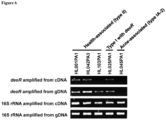
- deoR was amplified from the cDNA and genomic DNA of several P. acnes strains using a C1000 Thermal Cycler (BioRad). The following primers were used in the PCR: deoR -forward, 5'-CTGGCACGAGAAGGAACAA-3', and deoR- reverse, 5'-GAATCGAGCAGAACTAGGTCAC-3'. The following PCR protocol was used: initial denaturation at 95°C for 5 min, followed by 35 cycles of 95°C for 10 sec, 62°C for 30 sec, 72°C for 30 sec, followed by one cycle at 72°C for 5 min. Amplified deoR products were visualized on a 2% agarose gel. The amplification of 16S rRNA was included as a positive control. Acne-associated strain HL045PA1 was used as a negative control for deoR expression.
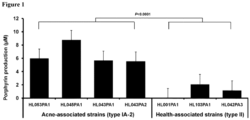
- Acne-associated P. acnes strains produced significantly more porphyrins than health-associated strains.
- the types of porphyrins secreted by multiple P. acnes strains where characterized using mass spectrometry.
- the secreted porphyrins in the seven P. acnes strains were quantified ( Fig. 1 ).
- the average porphyrin level produced by acne-associated type IA-2 strains was 6.5 ⁇ M (5.6 - 8.8 ⁇ M), which was significantly greater than that produced by health-associated type II strains, 1.1 ⁇ M (0 - 2.1 ⁇ M, P ⁇ 0.0001 ( Figure 1 )).
- the RT2 strain HL001PA1 produced no detectable porphyrins in all experiments.
- This strain belongs to clonal complex 72 (CC72) based on the Harbor MLST8 scheme (Table 1), and the strain was isolated from healthy skin.
- Vitamin B 12 supplementation significantly increased porphyrin production in acne-associated strains, but not in health-associated strains.
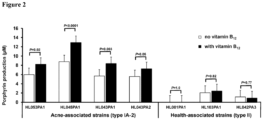
- Vitamin B 12 modulates P. acnes porphyrin production in a strain-specific manner the levels of porphyrins produced by different P. acnes strains were compared with and without vitamin B 12 supplementation.
- Vitamin B 12 supplementation led to increased porphyrin production in all tested acne-associated type IA-2 strains (average porphyrin level increasing from 6.5 ⁇ M to 9.2 ⁇ M), with statistical significance in three of the four tested strains ( P ⁇ 0.02) ( Fig. 2 ).
- vitamin B 12 supplementation had no significant effect on porphyrin production in health-associated type II strains (average porphyrin level remaining at 1.1 ⁇ M, P ⁇ 0.77).
- the porphyrin levels in HL001PA1 remained undetectable.
- porphyrin production was measured, with and without the addition of vitamin B 12, in three additional type II strains, HL110PA3 (RT6), HL106PA1 (RT2), and HL050PA2 (RT1). These strains produced similarly low levels of porphyrins (1.4 ⁇ 1.2 ⁇ M) and the production level was not significantly affected by vitamin B12 supplementation.
- vitamin B 12 modulates porphyrin production in acne-associated type IA-2 strains, but not in health-associated type II strains, indicating a molecular link between P. acnes strain composition of the skin microbiota and the observation that vitamin B 12 induces acne in a subset of individuals.
- Vitamin B 12 supplementation repressed vitamin B 12 biosynthesis gene expression.
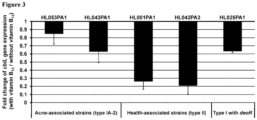
- qRT-PCR was performed to measure the expression level of cbiL, a gene in the vitamin B 12 biosynthesis pathway.
- the cbiL gene encodes precorrin-2 C20-methyltransferase, one key enzyme involved in corrin ring formation in the vitamin B 12 biosynthesis pathway.
- the addition of vitamin B 12 to P. acnes cultures resulted in the down-regulation of cbiL gene expression, with an average fold change of 0.74 in acne-associated type IA-2 strains and 0.24 in health-associated type II strains ( Figure 3 ).
- cbiL gene expression is consistent with the previous finding that vitamin B 12 supplementation repressed the vitamin B 12 biosynthesis pathway, leading to increased porphyrin production.
- the expression of cbiL was down-regulated in both type IA-2 and type II strains, despite the observation that the porphyrin production in type II strains was unaffected by vitamin B 12 supplementation. This suggests that additional mechanisms are involved in inhibiting porphyrin production in health-associated type II strains.
- 5-aminolevulinic acid 5-ALA
- the porphyrin and vitamin B 12 biosynthesis pathways in P. acnes share the same initial enzymatic steps and a common precursor, 5-ALA, the substrate of the rate-limiting enzyme, porphobilinogen synthase.
- 5-ALA the substrate of the rate-limiting enzyme
- porphobilinogen synthase the rate-limiting enzyme
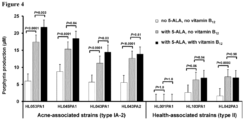
- the porphyrin production levels of P. acnes strains was compared with and without the addition of the substrate. Additionally, the effect of vitamin B 12 on porphyrin production was assessed in combination with 5-ALA.
- porphyrin production was significantly increased by an average of 2.2 fold in acne-associated type IA-2 strains (P ⁇ 0.0001) and 3.4 fold in health-associated type II strains ( P ⁇ 0.06, except HL001PA1) compared to untreated controls ( Fig. 4 ).
- HL001PA1 consistently produced no detectable porphyrins, even upon addition of 5-ALA.
- Supplementation of 5-ALA in combination with vitamin B 12 further enhanced porphyrin production in acne-associated type IA-2 strains (2.7 fold increase compared to substrate only) with statistical significance in three of the four tested strains ( P ⁇ 0.04), but not in health-associated type II strains ( P ⁇ 0.94).
- LA levulinic acid
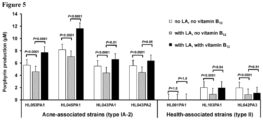
- LA 0.1 mg/mL significantly reduced porphyrin production in all strains except HL001PA1 with an average of 30% reduction compared to untreated cultures ( P ⁇ 0.0001) ( Fig. 5 ).
- P ⁇ 0.0001 a range of concentrations of LA from 0.1 mg/mL to 1.0 mg/mL
- LA significantly reduced porphyrin production in all strains except HL001PA1 with an average of 30% reduction compared to untreated cultures ( P ⁇ 0.0001) ( Fig. 5 ).
- Vitamin B 12 supplementation counteracted the inhibition of porphyrin biosynthesis by LA specifically in acne-associated type IA-2strains, but not in health-associated type II strains.
- Health-associated strains harbor a porphyrin biosynthesis repressor gene, deoR.
- deoR porphyrin biosynthesis repressor gene
- deoR This gene is absent in all acne-associated type IA-2 strains.
- gene expression analysis was performed and found to be expressed in two of the three health-associated type II strains, HL001PA1 and HL042PA3, but not in HL103PA1 ( Figure 6 ). Characterizations of deoR -like repressors in multiple other species have revealed their roles in regulating cellular processes such as sugar phosphotransferase activity, daptomycin production, and fatty acid beta-oxidation.
- the close proximity of deoR to the porphyrin biosynthesis genes in the genome and the presence and expression of deoR in health-associated type II strains suggest that deoR may function as a transcriptional repressor in porphyrin biosynthesis. This may partly explain the low porphyrin levels produced by health-associated type II strains and their associations with healthy skin.
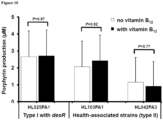
- HL025PA1 represents a distinct lineage within type I and is phylogenetically more similar to type IA-2strains than to type II strains ( Figure 9 ).
- HL025PA1 encodes and expresses deoR in its porphyrin biosynthesis operon ( Figure 6 ).
Landscapes
- Health & Medical Sciences (AREA)
- Life Sciences & Earth Sciences (AREA)
- General Health & Medical Sciences (AREA)
- Chemical & Material Sciences (AREA)
- Public Health (AREA)
- Veterinary Medicine (AREA)
- Animal Behavior & Ethology (AREA)
- Engineering & Computer Science (AREA)
- Molecular Biology (AREA)
- Epidemiology (AREA)
- Medicinal Chemistry (AREA)
- Dermatology (AREA)
- Organic Chemistry (AREA)
- Birds (AREA)
- Biochemistry (AREA)
- Pharmacology & Pharmacy (AREA)
- Microbiology (AREA)
- Biotechnology (AREA)
- Immunology (AREA)
- Bioinformatics & Cheminformatics (AREA)
- Physics & Mathematics (AREA)
- Hematology (AREA)
- Proteomics, Peptides & Aminoacids (AREA)
- Urology & Nephrology (AREA)
- Wood Science & Technology (AREA)
- Zoology (AREA)
- Biomedical Technology (AREA)
- Analytical Chemistry (AREA)
- Nuclear Medicine, Radiotherapy & Molecular Imaging (AREA)
- Tropical Medicine & Parasitology (AREA)
- Mycology (AREA)
- General Chemical & Material Sciences (AREA)
- Chemical Kinetics & Catalysis (AREA)
- Gerontology & Geriatric Medicine (AREA)
- Toxicology (AREA)
- General Engineering & Computer Science (AREA)
- Genetics & Genomics (AREA)
- General Physics & Mathematics (AREA)
- Pathology (AREA)
- Cell Biology (AREA)
Applications Claiming Priority (3)
| Application Number | Priority Date | Filing Date | Title |
|---|---|---|---|
| US201662291665P | 2016-02-05 | 2016-02-05 | |
| EP17748282.5A EP3411011B1 (de) | 2016-02-05 | 2017-02-03 | Zusammensetzungen und verfahren zur förderung der hautgesundheit |
| PCT/US2017/016526 WO2017136738A2 (en) | 2016-02-05 | 2017-02-03 | Compositions and methods for promoting skin health |
Related Parent Applications (1)
| Application Number | Title | Priority Date | Filing Date |
|---|---|---|---|
| EP17748282.5A Division EP3411011B1 (de) | 2016-02-05 | 2017-02-03 | Zusammensetzungen und verfahren zur förderung der hautgesundheit |
Publications (1)
| Publication Number | Publication Date |
|---|---|
| EP4509174A2 true EP4509174A2 (de) | 2025-02-19 |
Family
ID=59501079
Family Applications (2)
| Application Number | Title | Priority Date | Filing Date |
|---|---|---|---|
| EP24200683.1A Withdrawn EP4509174A2 (de) | 2016-02-05 | 2017-02-03 | Zusammensetzungen und verfahren zur förderung der hautgesundheit |
| EP17748282.5A Active EP3411011B1 (de) | 2016-02-05 | 2017-02-03 | Zusammensetzungen und verfahren zur förderung der hautgesundheit |
Family Applications After (1)
| Application Number | Title | Priority Date | Filing Date |
|---|---|---|---|
| EP17748282.5A Active EP3411011B1 (de) | 2016-02-05 | 2017-02-03 | Zusammensetzungen und verfahren zur förderung der hautgesundheit |
Country Status (6)
| Country | Link |
|---|---|
| US (2) | US20190030090A1 (de) |
| EP (2) | EP4509174A2 (de) |
| JP (1) | JP2019509263A (de) |
| KR (1) | KR20180123475A (de) |
| CN (1) | CN109562048A (de) |
| WO (1) | WO2017136738A2 (de) |
Families Citing this family (13)
| Publication number | Priority date | Publication date | Assignee | Title |
|---|---|---|---|---|
| EP3360560A1 (de) * | 2012-03-17 | 2018-08-15 | The Regents of the University of California | Personalisierte behandlungen für akne |
| CA3021690A1 (en) | 2015-04-20 | 2016-10-27 | S-Biomedic Nv | Methods and compositions for changing the composition of the skin microbiome using complex mixtures of bacterial strains |
| JP2019514885A (ja) * | 2016-04-21 | 2019-06-06 | ネイキッド バイオーム,インク. | 皮膚障害の処置のための組成物および方法 |
| PL3528825T3 (pl) * | 2016-10-19 | 2022-01-31 | S-Biomedic Nv | Sposoby i kompozycje do zmiany składu mikrobiomu skóry z wykorzystaniem złożonych mieszanek szczepów bakteryjnych |
| MX2020013073A (es) | 2018-06-14 | 2021-05-27 | Beiersdorf Ag | Preparacion cosmetica contra el acne. |
| WO2021011875A1 (en) * | 2019-07-18 | 2021-01-21 | The Regents Of The University Of California | Compositions and methods for treating skin conditions |
| MX2022004050A (es) * | 2019-10-03 | 2022-05-02 | S Biomedic | Composicion novedosa para el cuidado de la piel. |
| MX2022004052A (es) * | 2019-10-03 | 2022-05-02 | S Biomedic | Composicion novedosa para el cuidado de la piel. |
| DE102019007505A1 (de) * | 2019-10-28 | 2021-04-29 | Beiersdorf Ag | Zusammensetzung mit probiotischen Bakterien und Licochalcon A |
| CN114555040A (zh) * | 2019-11-20 | 2022-05-27 | 拜尔斯道夫股份有限公司 | 具有选择性抗微生物活性的带有茴香酸和乙酰丙酸的化妆品制剂 |
| BR112022026237A2 (pt) * | 2020-06-23 | 2023-01-17 | Crown Laboratories Inc | Formulações probióticas para a pele |
| KR20230117105A (ko) | 2020-11-04 | 2023-08-07 | 엘리고 바이오사이언스 | 큐티박테리움 아크네스 재조합 파지, 그의 제조 방법 및 용도 |
| US12414962B2 (en) | 2023-07-24 | 2025-09-16 | Eligo Bioscience | Method for treating C. acnes bacteria-associated diseases |
Citations (1)
| Publication number | Priority date | Publication date | Assignee | Title |
|---|---|---|---|---|
| US6461607B1 (en) | 1998-08-24 | 2002-10-08 | Ganeden Biotech, Inc. | Probiotic, lactic acid-producing bacteria and uses thereof |
Family Cites Families (7)
| Publication number | Priority date | Publication date | Assignee | Title |
|---|---|---|---|---|
| DE69731477D1 (de) * | 1996-09-13 | 2004-12-09 | Univ Clemson | Mittel zur akne behandlung |
| JP2003226641A (ja) * | 2001-12-10 | 2003-08-12 | Microbiotech Co Ltd | レブリン酸及びその誘導体を含んだ抗生剤、機能性化粧品及び機能性食品 |
| EP3360560A1 (de) * | 2012-03-17 | 2018-08-15 | The Regents of the University of California | Personalisierte behandlungen für akne |
| WO2015171899A1 (en) * | 2014-05-07 | 2015-11-12 | The Regents Of The University Of California | Compositions and methods for treating skin and mucous membrane diseases |
| EP3445448A4 (de) * | 2016-04-21 | 2020-03-18 | Naked Biome, Inc. | Therapeutika für hauterkrankungen und verfahren zur verwendung |
| JP2019514885A (ja) * | 2016-04-21 | 2019-06-06 | ネイキッド バイオーム,インク. | 皮膚障害の処置のための組成物および方法 |
| EP3538119A4 (de) * | 2016-11-08 | 2020-07-01 | The Regents of The University of California | Zusammensetzungen und verfahren zur behandlung von hauterkrankungen und bewahrung von gesunder haut |
-
2017
- 2017-02-03 EP EP24200683.1A patent/EP4509174A2/de not_active Withdrawn
- 2017-02-03 WO PCT/US2017/016526 patent/WO2017136738A2/en not_active Ceased
- 2017-02-03 US US16/074,936 patent/US20190030090A1/en not_active Abandoned
- 2017-02-03 JP JP2018540791A patent/JP2019509263A/ja active Pending
- 2017-02-03 EP EP17748282.5A patent/EP3411011B1/de active Active
- 2017-02-03 KR KR1020187022877A patent/KR20180123475A/ko not_active Ceased
- 2017-02-03 CN CN201780015108.XA patent/CN109562048A/zh active Pending
-
2020
- 2020-09-04 US US17/012,531 patent/US20210137997A1/en not_active Abandoned
Patent Citations (1)
| Publication number | Priority date | Publication date | Assignee | Title |
|---|---|---|---|---|
| US6461607B1 (en) | 1998-08-24 | 2002-10-08 | Ganeden Biotech, Inc. | Probiotic, lactic acid-producing bacteria and uses thereof |
Non-Patent Citations (3)
| Title |
|---|
| FITZ-GIBBON ET AL., J INVEST DERMATOL, vol. 133, 2013, pages 2152 - 2160 |
| KANG ET AL., SCI TRANSL MED, vol. 7, 2015, pages 293 - 103 |
| WOLLENBERG ET AL., MBIO, vol. 5, 2014, pages e01286 - 01214 |
Also Published As
| Publication number | Publication date |
|---|---|
| US20210137997A1 (en) | 2021-05-13 |
| US20190030090A1 (en) | 2019-01-31 |
| JP2019509263A (ja) | 2019-04-04 |
| WO2017136738A2 (en) | 2017-08-10 |
| WO2017136738A3 (en) | 2018-08-23 |
| EP3411011B1 (de) | 2024-09-18 |
| CN109562048A (zh) | 2019-04-02 |
| KR20180123475A (ko) | 2018-11-16 |
| EP3411011A2 (de) | 2018-12-12 |
| EP3411011A4 (de) | 2019-08-14 |
Similar Documents
| Publication | Publication Date | Title |
|---|---|---|
| EP3411011B1 (de) | Zusammensetzungen und verfahren zur förderung der hautgesundheit | |
| US20240299473A1 (en) | Compositions and methods for treating skin diseases and maintaining healthy skin | |
| JP3991063B2 (ja) | 皮膚外用剤 | |
| CA2659892A1 (en) | Mitochondria-targeted antioxidants | |
| US20190008930A1 (en) | Mycobacterium lysterase: a novel treatment for acne | |
| US9522109B2 (en) | Skin collagen enhancing agent | |
| JP2006070025A (ja) | 防腐防黴剤含有組成物 | |
| US20220257646A1 (en) | Compositions and methods for treating skin conditions | |
| CN102596165A (zh) | 含有泛硫乙胺磷酸酯的外用剂 | |
| CN101222856B (zh) | 有机化合物的新颖用途 | |
| JP2013126965A (ja) | 正常皮膚細胞用Nrf2活性化剤 | |
| WO2007011066A1 (ja) | 繊維芽細胞賦活剤、コラーゲン産生促進剤、コラーゲン収縮促進剤、ヒアルロン酸産生促進剤、atp産生促進剤、メラニン生成抑制剤、皮膚外用剤 | |
| WO2021016347A1 (en) | Compositions and methods for treating skin infections and other diseases | |
| US20230355500A1 (en) | Topical composition | |
| US20230310515A1 (en) | Compositions and methods for treating skin infections and other diseases | |
| US20210069259A1 (en) | Compositions and methods for treating skin infections and other diseases | |
| WO2006101119A1 (ja) | コラーゲン合成促進剤 | |
| JP2015063510A (ja) | 肌の保湿機能向上に関わる保湿関連遺伝子発現促進剤 | |
| KR102723348B1 (ko) | 발효 돈태반 추출물과 히알루론산을 포함하는 피부개선효능이 증진된 조성물 | |
| CN115340990A (zh) | 精氨酸酶产生促进剂 | |
| JP2024095885A (ja) | 皮膚外用剤及び飲食品 | |
| WO2024204676A1 (ja) | 肌質改善剤、アレルギー抑制剤および歯周病抑制剤 | |
| KR20250141867A (ko) | 세포 표적 지향형 고분자 자기회합 나노 마이셀 및 이의 제조 방법 | |
| JP2010229064A (ja) | 酸化障害抑制剤 |
Legal Events
| Date | Code | Title | Description |
|---|---|---|---|
| PUAI | Public reference made under article 153(3) epc to a published international application that has entered the european phase |
Free format text: ORIGINAL CODE: 0009012 |
|
| STAA | Information on the status of an ep patent application or granted ep patent |
Free format text: STATUS: THE APPLICATION HAS BEEN PUBLISHED |
|
| AC | Divisional application: reference to earlier application |
Ref document number: 3411011 Country of ref document: EP Kind code of ref document: P |
|
| AK | Designated contracting states |
Kind code of ref document: A2 Designated state(s): AL AT BE BG CH CY CZ DE DK EE ES FI FR GB GR HR HU IE IS IT LI LT LU LV MC MK MT NL NO PL PT RO RS SE SI SK SM TR |
|
| STAA | Information on the status of an ep patent application or granted ep patent |
Free format text: STATUS: THE APPLICATION IS DEEMED TO BE WITHDRAWN |
|
| 18D | Application deemed to be withdrawn |
Effective date: 20250902 |