EP4509599A2 - Verfahren zur herstellung eines gebackenen produktes ohne zusatz von zucker - Google Patents
Verfahren zur herstellung eines gebackenen produktes ohne zusatz von zucker Download PDFInfo
- Publication number
- EP4509599A2 EP4509599A2 EP24207890.5A EP24207890A EP4509599A2 EP 4509599 A2 EP4509599 A2 EP 4509599A2 EP 24207890 A EP24207890 A EP 24207890A EP 4509599 A2 EP4509599 A2 EP 4509599A2
- Authority
- EP
- European Patent Office
- Prior art keywords
- dough
- weight
- sugar
- baked product
- optionally
- Prior art date
- Legal status (The legal status is an assumption and is not a legal conclusion. Google has not performed a legal analysis and makes no representation as to the accuracy of the status listed.)
- Pending
Links
Images









Classifications
-
- A—HUMAN NECESSITIES
- A21—BAKING; EDIBLE DOUGHS
- A21D—TREATMENT OF FLOUR OR DOUGH FOR BAKING, e.g. BY ADDITION OF MATERIALS; BAKING; BAKERY PRODUCTS
- A21D2/00—Treatment of flour or dough by adding materials thereto before or during baking
- A21D2/08—Treatment of flour or dough by adding materials thereto before or during baking by adding organic substances
- A21D2/14—Organic oxygen compounds
- A21D2/18—Carbohydrates
- A21D2/181—Sugars or sugar alcohols
-
- A—HUMAN NECESSITIES
- A21—BAKING; EDIBLE DOUGHS
- A21D—TREATMENT OF FLOUR OR DOUGH FOR BAKING, e.g. BY ADDITION OF MATERIALS; BAKING; BAKERY PRODUCTS
- A21D13/00—Finished or partly finished bakery products
- A21D13/06—Products with modified nutritive value, e.g. with modified starch content
- A21D13/062—Products with modified nutritive value, e.g. with modified starch content with modified sugar content; Sugar-free products
-
- A—HUMAN NECESSITIES
- A21—BAKING; EDIBLE DOUGHS
- A21D—TREATMENT OF FLOUR OR DOUGH FOR BAKING, e.g. BY ADDITION OF MATERIALS; BAKING; BAKERY PRODUCTS
- A21D13/00—Finished or partly finished bakery products
- A21D13/40—Products characterised by the type, form or use
-
- A—HUMAN NECESSITIES
- A21—BAKING; EDIBLE DOUGHS
- A21D—TREATMENT OF FLOUR OR DOUGH FOR BAKING, e.g. BY ADDITION OF MATERIALS; BAKING; BAKERY PRODUCTS
- A21D13/00—Finished or partly finished bakery products
- A21D13/80—Pastry not otherwise provided for elsewhere, e.g. cakes, biscuits or cookies
-
- A—HUMAN NECESSITIES
- A21—BAKING; EDIBLE DOUGHS
- A21D—TREATMENT OF FLOUR OR DOUGH FOR BAKING, e.g. BY ADDITION OF MATERIALS; BAKING; BAKERY PRODUCTS
- A21D6/00—Other treatment of flour or dough before baking, e.g. cooling, irradiating or heating
- A21D6/001—Cooling
-
- A—HUMAN NECESSITIES
- A21—BAKING; EDIBLE DOUGHS
- A21D—TREATMENT OF FLOUR OR DOUGH FOR BAKING, e.g. BY ADDITION OF MATERIALS; BAKING; BAKERY PRODUCTS
- A21D8/00—Methods for preparing or baking dough
- A21D8/02—Methods for preparing dough; Treating dough prior to baking
- A21D8/04—Methods for preparing dough; Treating dough prior to baking treating dough with microorganisms or enzymes
- A21D8/042—Methods for preparing dough; Treating dough prior to baking treating dough with microorganisms or enzymes with enzymes
-
- A—HUMAN NECESSITIES
- A21—BAKING; EDIBLE DOUGHS
- A21D—TREATMENT OF FLOUR OR DOUGH FOR BAKING, e.g. BY ADDITION OF MATERIALS; BAKING; BAKERY PRODUCTS
- A21D8/00—Methods for preparing or baking dough
- A21D8/02—Methods for preparing dough; Treating dough prior to baking
- A21D8/04—Methods for preparing dough; Treating dough prior to baking treating dough with microorganisms or enzymes
- A21D8/047—Methods for preparing dough; Treating dough prior to baking treating dough with microorganisms or enzymes with yeasts
-
- A—HUMAN NECESSITIES
- A21—BAKING; EDIBLE DOUGHS
- A21D—TREATMENT OF FLOUR OR DOUGH FOR BAKING, e.g. BY ADDITION OF MATERIALS; BAKING; BAKERY PRODUCTS
- A21D8/00—Methods for preparing or baking dough
- A21D8/06—Baking processes
-
- C—CHEMISTRY; METALLURGY
- C12—BIOCHEMISTRY; BEER; SPIRITS; WINE; VINEGAR; MICROBIOLOGY; ENZYMOLOGY; MUTATION OR GENETIC ENGINEERING
- C12N—MICROORGANISMS OR ENZYMES; COMPOSITIONS THEREOF; PROPAGATING, PRESERVING, OR MAINTAINING MICROORGANISMS; MUTATION OR GENETIC ENGINEERING; CULTURE MEDIA
- C12N9/00—Enzymes; Proenzymes; Compositions thereof; Processes for preparing, activating, inhibiting, separating or purifying enzymes
- C12N9/14—Hydrolases (3)
- C12N9/24—Hydrolases (3) acting on glycosyl compounds (3.2)
- C12N9/2402—Hydrolases (3) acting on glycosyl compounds (3.2) hydrolysing O- and S- glycosyl compounds (3.2.1)
- C12N9/2405—Glucanases
- C12N9/2408—Glucanases acting on alpha -1,4-glucosidic bonds
- C12N9/2411—Amylases
-
- C—CHEMISTRY; METALLURGY
- C12—BIOCHEMISTRY; BEER; SPIRITS; WINE; VINEGAR; MICROBIOLOGY; ENZYMOLOGY; MUTATION OR GENETIC ENGINEERING
- C12N—MICROORGANISMS OR ENZYMES; COMPOSITIONS THEREOF; PROPAGATING, PRESERVING, OR MAINTAINING MICROORGANISMS; MUTATION OR GENETIC ENGINEERING; CULTURE MEDIA
- C12N9/00—Enzymes; Proenzymes; Compositions thereof; Processes for preparing, activating, inhibiting, separating or purifying enzymes
- C12N9/14—Hydrolases (3)
- C12N9/24—Hydrolases (3) acting on glycosyl compounds (3.2)
- C12N9/2402—Hydrolases (3) acting on glycosyl compounds (3.2) hydrolysing O- and S- glycosyl compounds (3.2.1)
- C12N9/2405—Glucanases
- C12N9/2408—Glucanases acting on alpha -1,4-glucosidic bonds
- C12N9/2411—Amylases
- C12N9/2414—Alpha-amylase (3.2.1.1.)
-
- C—CHEMISTRY; METALLURGY
- C12—BIOCHEMISTRY; BEER; SPIRITS; WINE; VINEGAR; MICROBIOLOGY; ENZYMOLOGY; MUTATION OR GENETIC ENGINEERING
- C12N—MICROORGANISMS OR ENZYMES; COMPOSITIONS THEREOF; PROPAGATING, PRESERVING, OR MAINTAINING MICROORGANISMS; MUTATION OR GENETIC ENGINEERING; CULTURE MEDIA
- C12N9/00—Enzymes; Proenzymes; Compositions thereof; Processes for preparing, activating, inhibiting, separating or purifying enzymes
- C12N9/14—Hydrolases (3)
- C12N9/24—Hydrolases (3) acting on glycosyl compounds (3.2)
- C12N9/2402—Hydrolases (3) acting on glycosyl compounds (3.2) hydrolysing O- and S- glycosyl compounds (3.2.1)
- C12N9/2405—Glucanases
- C12N9/2408—Glucanases acting on alpha -1,4-glucosidic bonds
- C12N9/2411—Amylases
- C12N9/2428—Glucan 1,4-alpha-glucosidase (3.2.1.3), i.e. glucoamylase
-
- C—CHEMISTRY; METALLURGY
- C12—BIOCHEMISTRY; BEER; SPIRITS; WINE; VINEGAR; MICROBIOLOGY; ENZYMOLOGY; MUTATION OR GENETIC ENGINEERING
- C12Y—ENZYMES
- C12Y302/00—Hydrolases acting on glycosyl compounds, i.e. glycosylases (3.2)
- C12Y302/01—Glycosidases, i.e. enzymes hydrolysing O- and S-glycosyl compounds (3.2.1)
- C12Y302/01001—Alpha-amylase (3.2.1.1)
-
- C—CHEMISTRY; METALLURGY
- C12—BIOCHEMISTRY; BEER; SPIRITS; WINE; VINEGAR; MICROBIOLOGY; ENZYMOLOGY; MUTATION OR GENETIC ENGINEERING
- C12Y—ENZYMES
- C12Y302/00—Hydrolases acting on glycosyl compounds, i.e. glycosylases (3.2)
- C12Y302/01—Glycosidases, i.e. enzymes hydrolysing O- and S-glycosyl compounds (3.2.1)
- C12Y302/01003—Glucan 1,4-alpha-glucosidase (3.2.1.3), i.e. glucoamylase
-
- C—CHEMISTRY; METALLURGY
- C12—BIOCHEMISTRY; BEER; SPIRITS; WINE; VINEGAR; MICROBIOLOGY; ENZYMOLOGY; MUTATION OR GENETIC ENGINEERING
- C12Y—ENZYMES
- C12Y302/00—Hydrolases acting on glycosyl compounds, i.e. glycosylases (3.2)
- C12Y302/01—Glycosidases, i.e. enzymes hydrolysing O- and S-glycosyl compounds (3.2.1)
- C12Y302/01133—Glucan 1,4-alpha-maltohydrolase (3.2.1.133), i.e. maltogenic alpha-amylase
Definitions
- the present invention relates to a baked product made without any addition of sugar, which still has a suitable sweetness intensity and a good taste.
- the baked product has a very low content of fructose and, thus, it may be suitable for use also for fructose-intolerant humans.
- the baked product is obtained by a two-step enzymatic process involving a first step of providing sugar from starch, suitable for a fermentation process, followed by a second step of enzymatic hydrolysis of polysaccharides, oligosaccharides and disaccharides, notably to form primarily glucose and maltose.
- the novel process further allows for an optimized and/or shortened proofing of the dough in the first step.
- the shortened proofing time is advantageous as it reduces the total time it takes for the production of the baked product.
- sugar consumption has become very high on the health agenda.
- sugar replacement ingredients include artificial sweeteners (polyols), natural sweeteners (inulin, oligofructose), which are mainly hydrolyzed by acids or by enzymes.
- WO 2016/005452 Patent Application Laidi BV
- WO 2016/005452 describes products formed from dough comprising a thermally stable amyloglucosidase, and a raw starch degrading amyloglycosidase and/or an anti-staling amylase, which may be a maltogenic amylase. It is stated that the level of added sugar included in the dough can be substantially reduced, and even eliminated, while still achieving a sweet product.
- WO 91/01088 (Kama Danish Pastry A/S ) describes a method for preparing a frozen yeast dough, wherein the dough is prepared from flour, water, yeast and one or more amylases and possibly other conventional dough ingredients.
- WO 2013/028071 (CSM Nederland B.V. ) describes the use of an anti-staling enzyme mixture consisting of a maltogenic amylase and an amyloglucosidase.
- CN 101461392 relates to a sugar-free bread made from high wheat gluten, low wheat gluten, anhydrous butter, sugar-free modifying agent, sugar-free milk powder, bread improver, yeast, egg. It may contain a fungal alpha-amylase.
- WO 2019/238423 describes a method for producing a dough with a reduced amount of sugar comprising adding a raw starch degrading alpha-amylase (GH13_1 amylase), a glucoamylase and an alpha-amylase to dough ingredients.
- GH13_1 amylase raw starch degrading alpha-amylase
- the present invention relates to a process for producing a baked product with no-added sugar, the process comprising
- the present invention also relates to a process for producing a baked product with no-added sugar, the process comprising
- the present invention also relates to a process for producing an un-baked product with no-added sugar. In such cases, the consumer will buy the un-baked product in frozen form and arrange for the final baking.
- the process comprises
- the pre-baking step is included in the process. In other aspects both the baking step is included in the process.
- the present invention relates to a process for producing a product with no-added sugar, the process comprising
- steps i), ii), and v) are included, where step v) is a baking step the final product is a baked product).
- steps i), ii), and v) are included, where step v) is a pre-baking step the final product is a pre-baked product).
- steps i), ii), and v) are included, where step v) is a pre-baking step followed by step iv) (the final product is a frozen, pre-baked product).
- steps i), ii), iii) and v) are included, where step v) is a baking step (the final product is a baked, shaped product).
- steps i), and iv) are included (the final product is a non-proofed, frozen, un-baked product).
- steps i), iii), and iv) are included (the final product is a non-proofed, shaped, frozen, un-baked product).
- steps i), ii), and iv) are included (the final product is a proofed, frozen, un-baked product).
- steps i), ii), iii) and iv) are included (the final product is a proofed, shaped, frozen, un-baked product).
- the present invention also relates to the products obtained by the processes described above.
- Important features of a process according to the invention are a) no addition of sugar and b) the use of a two-step enzymatic process.
- no addition of sugar and “with no-added sugar” mean that none of the ingredients used in the production of a baked product according to the present invention is a sugar in the form of a monosaccharide such as e.g. glucose, fructose, or a disaccharide such as e.g. maltose or saccharose, i.e. there is no external addition of sugar in the baking process.
- a monosaccharide such as e.g. glucose, fructose, or a disaccharide such as e.g. maltose or saccharose, i.e. there is no external addition of sugar in the baking process.
- ingredients such as flour may contain oligosaccharides or polysaccharides that enzymatically can be degraded to mono- or disaccharides and they may contain a minor amount of a mono- or disaccharide, such as about 1-2% by weight of eg glucose, fructose, sucrose and raffinose.
- a person skilled in the art will know that the amounts of mono-, di-, oligo- and polysaccharides in a flour may vary dependent on the particular flour used.
- Proofing of the dough is normally obtained by a fermentation process; whereby yeast organisms consume sugar in the dough and produce ethanol and carbon dioxide as waste products. The carbon dioxide forms bubbles in the dough and expands it (proofing).
- Damaged starch refers to the portion of kernel starch that has been physically broken or fragmented during milling. Damaged starch is believed to have a strong influence on the dough and baking process.
- damaged starch is a suitable substrate for the alpha-amylase to provide the necessary sugar molecules that are required for the fermentation process by the yeast. It is envisaged that the alpha-amylase (most likely with some contribution from the combination of amyloglucosidase and maltogenic amylase) relatively fast produces the necessary sugars and in a sufficient amount in to order to obtain fast proofing. It is assumed that the sugars formed are consumed approximately at the same time as they are formed. This is supported by the observation done by the inventors that the proofing time is reduced for dough with no-added sugar compared to dough with sugar added.
- Figure 1A and 1B show that the proofing step is controlled either with yeast or with proofing time, or both.
- the upper graph in both figures relates to a product without any sugar added.
- the other graphs relate to products having 7% sugar added.
- the proofing time can be reduced from the proofing time from 40 min to 20 min, thus, in general a 50% reduction in proofing time.
- the choice and content of yeast can control the proofing stage and volume.
- Danish standard yeast Merteser yeast
- a reduction in proof time of from 25 to 30% is obtained. Experimental details are given in Example 4.
- amyloglucosidase used is thermostable, it has some activity at proofing temperature, which normally is in a range of from about 20 to about 40 °C. The same applies to the maltogenic amylase.
- maltogenic amylase contributes to the release of maltose from starch and that some of the maltose released from the starch by action of alpha-amylase and (maybe) by action of maltogenic amylase is further degraded to glucose by action of the amyloglucosidase present in the combination.
- Another challenge in restraining from adding sugar to the dough is how to obtain a baked product that is palatable.
- taste, smell, aroma, consistency etc. of the baked product influence whether a consumer finds the baked product palatable.
- the process of the invention leads to baked products with a low content of mono- and di-saccharides.
- the total concentration of mono- and di-saccharides is at the most about 10% w/w of the baked product, and the concentration of the individual sugar is:
- the concentration of individual sugar is based on the total weight of the baked product.
- the present invention also relates to baked product with the above-mentioned contents of sugars.
- Baked products with a low content of sugars are highly relevant for many consumers. According to a recent survey 60% of consumers both in Europe and in the USA reported that they are trying to reduce their sugar consumption.
- a cocktail of three enzymes is used in a process of the present invention.
- the enzymes including the activity of the enzymes.
- the activities stated are measured in in vitro systems under standardized conditions (temperature, pH, humidity etc.).
- the activity of an enzyme is dependent on the conditions under which the enzyme is present.
- the activity in a dough and during baking may differ from the in vitro activities given herein.
- the alpha-amylase used (EC 3.2.1.1) is an enzyme, which hydrolyzes the degradation of alpha-1,4-glucosidic bonds in oligo- or polysaccharides such as in starch to yield maltose, but it does not act on maltose itself. Intermediate oligosaccharides such as dextrins are formed in the process.
- Alpha-amylase is an endoglucosidase which cleaves an internal glucosidic bond within an oligo- or polysaccharide.
- the alpha-amylase may be an alpha-amylase of fungal or bacterial origin. Preferred is an alpha-amylase of fungal origin.
- the fungal origin may be from Aspergillus, such as Aspergillus oryzae, Aspergillus niger or Aspergillus kawachii.
- compositions comprising alpha-amylases are FUNGAMYL TM , including Fungamyl 4000 SG and Fungamyl Prime BAN ® (all from Novozymes, Denmark), MYCOLASE ® , Bakezyme P180, Bakezyme P500 (DSM, Gist Brocades), Grindamyl A 1000, Grindamyl A 5000, Grindamyl A 10000, Grindamyl A 14000 (from IFF/Dupont) and Veron M4 /from AB Enzymes).
- FUNGAMYL TM including Fungamyl 4000 SG and Fungamyl Prime BAN ® (all from Novozymes, Denmark), MYCOLASE ® , Bakezyme P180, Bakezyme P500 (DSM, Gist Brocades), Grindamyl A 1000, Grindamyl A 5000, Grindamyl A 10000, Grindamyl A 14000 (from IFF/Dupont) and Veron M4 /from
- Alpha-amylases of bacterial origin suitable for use in the present invention includes Biobake 2500 (Kerry Ingredients), BAN 800 MG (Novozymes), Bakezymes AN 301 (DSM) and Grindamyl Max life (IFF/Dupont.
- an alpha-amylase which is a fungal alpha-amylase that is an endo-amylase that hydrolyzes (1,4)-alpha-D-glucosidic linkages in starch polysaccharides, and the fungal alpha-amylase is obtained from Aspergillus oryzae.
- Alpha-amylases are normally used in bread inter alia to improve brown curst colour, to ensure fine and uniform crumb structure and/or to increase the volume of the bread.
- an important feature of the alpha-amylase is its ability to degrade starch to provide mono- and disaccharides for use in the yeast fermentation process.
- a suitable alpha-amylase for use in the present invention is contained in the commercial product Fungamyl ® 4000 SG from Novozymes, Copenhagen. Other alpha-amylases have also been tested and found suitable for use.
- Fungamyl ® 4000 SG contains alpha-amylase from Aspergillus oryzae. It has an activity of 4000 FAU-F/g. According to a datasheet from Novozymes, the enzyme is yellow to light brown and appears as a granulate having a particle size of approx. 50-212 microns; it has an approx. density of 0.6 g/ml.; it is readily soluble in water at all concentrations that occur in normal usage.
- alpha-amylases having the same characteristics, or characteristics that deviate at the most 10% from the characteristics mentioned above are contemplated to be suitable for use in the present invention; fx: one characteristic is the activity - this may be within a range of from 3600 - 4400 FAU-F/g; the particle size may be from 45 - 233 micron and the density may be from 0.54-0.66 g/ml.
- FAU-F is a measure for enzyme activity.
- FAU refers to Fungal Alpha-amylase Unit, ie the amount of enzyme which breaks down 5.26 g starch per hour at Novozymes' standard method for determination of alpha-amylase. Tests for alpha-amylase activity are well known in the art.
- the alpha-amylase has an activity in a range of from 30 to 65 °C (relative activity at least 40% of maximal activity) and about 100% relative activity at a temperature of 50 to 55°C. Likewise, it has an optimum activity at a pH in a range of from 3.5 to 7.3 (more than 30% relative activity) and about 100% relative activity at about pH 4.5 to about 5.3. At temperatures from approx. 60-65 °C, the activity decreases and at approx. 75°C, the enzymes is 100% inactivated. The alpha-amylase begins rapidly to be inactivated at temperatures greater than about 55 °C, i.e.
- the alpha-amylase is believed to have no (or only little) contribution to the final sugar content in the baked product.
- the commercial product, Fungamyl ® 4000 SG contains approximately 59% w/w alpha-amylase CAS No. 900-90-2 (defined as enzyme concentration on dry matter basis), approximately 14% w/w wheat flour CAS No. 130498-22-5 , approximately 10% w/w wheat starch CAS No. 9005-25-8 , approx. 10% w/w of water CAS No. 7732-18-15 and approximately 7% w/w of dextrin CAS No. 9004-53-9 .
- Fungamyl ® 4000 SG When Fungamyl ® 4000 SG is employed, it is normally used in an amount in a range for from about 5 to about 15 ppm/kg flour such as in a range of from about 6 to about 12 ppm/kg flour or in a range of from about 7 to about 10 ppm/kg flour such as about 8 ppm/kg flour. If another alpha-amylase is used a person skilled in the art will know how to calculate a suitable amount based on the activities given for Fungamyl ® 4000 SG and the other alpha-amylase used.
- alpha-amylase such as Fungamyl ® the following applies:
- thermolabile alpha-amylase is typically used in an amount corresponding to a range of from about 20 to about 48 Fau/kg flour such as from about 28 to about 40 Fau/kg flour.
- a suitable alpha-amylase composition may be a composition, wherein there may be a variation in the content of flour (another flour than wheat may be used), there may be a variation in the concentration of flour (another concentration than 90% by weight may be used) etc.
- a composition comprising an alpha-amylase suitable for use in the present invention may comprise:
- compositions are only examples of suitable compositions.
- Other compositions may also be suitable provided that they contain an alpha-amylase suitable for the present use.
- such compositions contain one or more ingredients that make the enzyme stable for storages or that enable easy handling of the enzymes.
- a suitable composition may be in solid form or it may be in the form of a liquid.
- Minor amounts of trace elements from the production process may be present in a composition. Normally, not more than a few percent at maximum is present.
- Glucoamylase (1,4-alpha-D-glucan glucohydrolase, EC 3.2.1.3), also denoted amyloglucosidase, is an enzyme, which catalyses the release of beta-D-glucose from the non-reducing ends of starch or related oligo- and polysaccharides.
- the glucose sweetness intensity obtained in the final baked product is believed to come mainly from the action of the amyloglucosidase and its ability to release glucose. Moreover, it is believed to participate in the Maillard reaction yielding a richer, golden crust of the baked product.
- An amyloglucosidase for use in the enzymatic combination for use in the present invention is an enzyme, which has optimum activity at about 60-65 °C and which has almost no activity at temperatures exceeding 75 °C. It has about 50% relative activity at a temperature of from about 40 to about 75 °C, the activity being measured at pH 5.0 after 30 min incubation time at the relevant temperature.
- Amyloglucosidases are normally used in the baking industry to obtain more colour.
- a suitable amyloglucosidase is GoldCrust 3300BG from Novozymes, Denmark.
- Other suitable amyloglucosidases are Grindamyl AG 1500C, FD48, plussweet G (all from IFF/Dupont), Bakezyme AG 800 and Bakezyme AG 1100 (both from DSM) and AMG 1100 BG (from Novozymes).
- Gold Crust 3300BG is derived from Aspergillus niger.
- the enzyme activity is determined based on the release of glucose and calculated relative to an enzyme standard ( ESFA Journal, 16 (10), October 2018 - https://dol.org/10.2903/j.efsa.2018.5450 .
- Gold Crustl ® 3300BG When Gold Crustl ® 3300BG is employed, it is normally used in an amount in a range for from about 100 to about 500 ppm/kg flour such as in a range of from about 150 to about 400 ppm/kg flour or in a range of from about 175 to about 400 ppm/kg flour such as about 200 or 400 ppm/kg flour. If another amyloglucosidase is used a person skilled in the art will know how to calculate a suitable amount based on the activities given for Gold Crust ® 3300BG and the other amyloglucosidase used.
- thermo-stable amyloglucosidase such as Gold Crustl ® the following applies:
- thermostable amyloglucosidade is typically used in an amount corresponding to a range of from about 578 to about1650 AGU/kg flour such as from about 660 to about 1650 AGU/kg flour.
- compositions are only an example of a suitable composition.
- Other compositions may also be suitable provided that they contain an alpha-amylase suitable for the present use.
- such compositions contain one or more ingredients that make the enzyme stable for storages or that enable easy handling of the enzymes.
- a suitable composition may be in solid or liquid form.
- a maltogenic amylase (EC 3.2.1.133) is able to hydrolyze starch, amylose and amylopectin to maltose.
- a maltogenic amylase may be produced from bacteria such as Bacillus subtilis (Novamyl ® 10000 BG) or Bacillus stearothermophilus. The enzyme used in the Examples herein is from Bacillus subtilis.
- Maltogenic amylases are normally used in the baking industry for improving softness.
- the crust of bread forms through the Maillard reaction, which is a chemical reaction between sugars and amino acids that occur at high heat. Amino acids are abundant in the flour and are not a limiting factor, whereas the content of sugar is believed to be a limiting factor.
- the maltogenic amylase contained in the commercial product Novamyl ® 10000 BG has proved to be suitable in the present context.
- Other suitable maltogenic amylases are Grindamyl Max life P100, U4, E50, Powerfresh 8100, Powerfresh 3000, Powerfresh 9740, Powerfresh 9450, Powerfresh 9460, Powerfresh 7001, Powerfresh 7002 (all from IFF/Dupont), Novamyl 3D, Sensea BG, Novamyl Rye, Novamyl Pro 80 BG and Novamyl Ro 12 BG (all from Novozymes), Bakemaster Master, Bakemaster Fresh XL, Bakemaster Man 10000, Bakemaster Alpha (all from DSM), Veron 1000, Veron AC, Veron BA, Veron Sort+, Veron ELS and Amylofresh (all from AB Enzymes).
- Novamyl ® 10000 BG contains a maltogenic amylase obtained from Bacillus subtilis. It has an activity of 10000 MANU/g. It appears as a light brown powder in the form of a free-flowing, low-dusting granulate having a mean particle size of approximately 50-212 microns. It has an approximate density of 0.6% g/ml. It is readily soluble in water at all concentrations that occur in normal usage.
- maltogenic amylases having the same characteristics, or characteristics that deviate at the most 10% from the characteristics mentioned above, are contemplated to be suitable for use in the present invention; e.g.: one characteristic is the activity - this may be within a range of from 9000 - 11000 MANU/g; the particle size may be from 45 -233 micron and the density may be from 0.54-0.66 g/ml.
- MANU Maltogenic Amylase Novo Units.
- the enzymatic hydrolysis of maltotriose results in the release of glucose, which can be determined quantitatively using a hexokinase assay ( EFSA Journal, 16 (5), May 2018 - https://doi.org/10.2903/j.efsa.2018.5171 ).
- the maltogenic amylase has an optimal activity in a range of from 50 to 75 °C (relative activity at least 80%) and about 100% relative activity at a temperature of 57 to 65°C and a pH of 5.5. Likewise, it has an optimum activity at a pH in a range of from 3.5 to 7.0 (more than 30% relative activity) and about 100% relative activity at about pH 4.0 to about 5.0.
- the effect of temperature on maltogenic amylase activity Maltogenic amylase was incubated at different temperatures for 30 minutes at pH 5.5 using maltotriose as substrate.
- the commercial product contains approximately 90% by weight of wheat flour, CAS No. 130498-22-5 5% by weight of sodium chloride CAS NI. 7647-14-5 , 4% by weight of maltogenic amylase (defined as enzyme concentration on dry matter basis) CAS No. 160611-47-2 and 1% by weight of water CAS No. 7732-18-5 .
- maltogenic amylase defined as enzyme concentration on dry matter basis
- Other commercial products may contain the same maltogenic amylase or another maltogenic amylase suitable for use in the present invention. Such products are also contemplated to be suitable for use in the present invention.
- a suitable maltogenic amylase composition may be a composition, wherein there is a variation in the content of flour (another flour than wheat may be used), there may also be a variation in the concentration of flour (another concentration than 90% by weight may be used) etc.
- a composition comprising a maltogenic amylase suitable for use in the present invention may comprise:
- Minor amounts of trace elements from the production process may be present in a composition.
- Novamyl ® 10000 BG When Novamyl ® 10000 BG is employed, it is normally used in an amount in a range for from about 50 to about 300 ppm/kg flour such as in a range of from about 100 to about 250 ppm/kg flour or in a range of from about 125 to about 200 ppm/kg flour such as about 150 ppm/kg flour. If another maltogenic amylase is used a person skilled in the art will know how to calculate a suitable amount based on the activities given for Novamyl ® 10000 BG and the other maltogenic amylase used.
- a maltogenic amylase such as Novamyl -stable amyloglucosidase such as Gold Crustl ® the following applies:
- a maltogenic amylase is typically used in an amount corresponding to a range of from about 500 to about 2500 Manu/kg flour such as from about 1000 to about 2500 Manu/kg flour.
- compositions are only examples of suitable compositions.
- Other compositions may also be suitable provided that they contain an alpha-amylase suitable for the present use.
- such compositions contain one or more ingredients that make the enzyme stable for storages or that enable easy handling of the enzymes.
- a suitable composition may be in solid form or it may be in the form of a liquid.
- the enzymes also impart other beneficial properties to the final product.
- the final product has excellent properties with respect to crust colour, shape of the product, uniformity, cell size, cell wall, cell form and crumb colour.
- the dough may also contain other enzymes such as thermo-stable alpha-amylases, lipases, xylanases etc. However, these enzymes do not contribute to the content of sugar in the final product nor to the proofing time observed.
- the flour used in the present process can be of any origin, provided it contains the necessary amount of damaged starch.
- the flour may be wheat flour, whole wheat flour, heat-treated flour, cake flour, rye flour, sifted rye, oat flour, barley flour, triticale (bread) flour, rice flour, corn flour, potato flour, heat-treated flour, bleached flour, or mixtures thereof, and/or it may include tapioca starch, corn starch, potato starch etc.
- a flour suitable for use in the present invention is wheat flour.
- the wheat flour may be any suitable wheat flour for example, one or more selected from the group consisting of all-purpose flour, bread flour, German type 550 flour, Reform flour, Manitoba flour, durum wheat flour, wheat flour based on soft or hard wheat types, Emmer, spelt & cake flours, other commercially available wheat flour, and combinations thereof.
- White flour is made from endosperm only of the wheat grain.
- Brown flour includes some of the grains's germ and bran, while whole grain or wholemade flour is made from the entire grain, including the bran, endosperm and germ.
- Germ flour is made from the endosperm and germ, excluding the bran. All four types are suitable for use in the present invention.
- the flour used must have a certain content of damaged starch.
- the content of damaged starch is at the most 20% w/w.
- a suitable content of damaged starch is in a range of from 5 to 20% w/w or 6% w/w or more, 7% w/w or more, 8% w/w or more, 9% w/w or more, 10% w/w or more, 11% w/w or more or 12% w/w or more.
- flour is used, wherein the content of damaged starch is from 5 to 12%, notably from 7 to 9% w/w (based on the total weight of flour) is suitable. If flour is used in combination with a starch, the total content of damaged starch is as described above.
- a yeast suitable for use in the present invention is any yeast conventionally used in yeast-raised bakery. Suitable yeasts include dry yeast, sugar stable yeast and normal yeast. An especially suitable yeast is Saccharomyces cervisae. In the examples herein Danish standard yeast (Malteser yeast) has been used.
- pH of the dough is adjusted to a pH in a range of from about 4 to about 5 such as from about 4.5 to 5 by addition of one or more pH-adjusting agents.
- the adjustment of pH may be made to ensure the desired activity of the enzymes.
- the dough may also comprise other commonly used ingredients in a dough. Such ingredients are typically mixed together with the other ingredients during preparation of the dough.
- Suitable additives include one of more of: emulsifiers, fibers (such as maltodextrins, polydextrose, inulins, etc.), triglyceride, fat, pH adjusting additives, proofing adjusting additives, shortening agents, dough strengtheners, flour improvers, other enzymes including such enzymes that strengthen the dough; oxidizing enzymes, hemicellulose, lipase, protease, combinations thereof, ascorbic acid, sodium chloride, preservation agent, chemical leaving agent and other commonly used ingredients in baked products.
- Mixing can be done with any suitable methods including a continuous mixer system, a spiral mixer of a fork mixer.
- the dough obtained is left to proofing at suitable conditions.
- the proofing time is markedly reduced compared with doughs having added sugar.
- the proofing time may be reduced by 30% such as 40% or even 50%.
- the proofing is normally carried out at slightly elevated temperatures compared to room temperature.
- the temperature is normally in a range of from about 20 to about 40 °C, notably from about 25 to about 35 °C or from about 25 to about 30 °C and at a relative humidity in a range of from 75-90% RH.
- the dough may also be obtained using other methods such as sponge dough, straight dough, poolished dough, liquid sponge, CBP (Chorleywood bread process), long fermentation or freezing technology.
- a sponge dough is a two-step bread making process. In the first step a sponge is made and allowed to ferment for a period of time, and in a second step the sponge is added to the final dough's ingredients.
- a straight dough is a single-mix process of making bread. The dough is made from all ingredients, and they are placed together and combined in one kneading or mixing session followed by fermentation.
- the CBP (Chorleywood bread process) process allows the use of lower-protein wheats and reduces processing time.
- the dough may also be prepared in a stepwise manner.
- Such a stepwise manner could include a pre-step to soften the dough followed by addition of the enzymes and the proofing the dough.
- enzymes are not added in the pre-step, but there could be situations, where inclusion of one or more of the enzymes is beneficial for the end result of the final product.
- the dough obtained after mixing and the dough obtained after proofing are also subject of the present invention.
- An object of the present invention is also the dough itself.
- objects of the present invention are:
- bake-off products are also objects of the present invention, ie proofed dough that has been baked to a certain extent, but the product need further baking before intake thereof (pre-baked products).
- the dough of the present invention contains flour with a content of damaged starch in a range of from 5% w/w or more (based on the total content of flour) such as from 5 to 10% w/w, from 6 to 10% w/w or from 7 to 9% w/w, a thermo-labile alpha-amylase and a composition containing a thermo-stable amyloglucosidase and a maltogenic amylase; a yeast; water, and optionally other ingredients common for preparing a dough.
- the dough contains no added sugar.
- the content of damaged flour is described above.
- the dough may also contain one or more fibers such as maltodextrin or inulin.
- the content of the enzymes has been described herein before.
- the dough Before or after proofing, the dough may be shaped into the desired form. It may be subject to freezing, which normally involves a pre-freezing step at a temperature of from about -35 to - 45 such as about -38 °C for a time period of from about 10 to about 40 min such as from about 15 to about 30 min followed by stable freezing at about -18 °C.
- the frozen product may be thawed before baking or directly placed in an oven for baking.
- the freezing step is normally carried out when the product is sold as a pre-proofed or non-proofed product, i.e. the consumer smust baked the product themselves.
- the consumer For the non-proofed product, the consumers must both proof and bake the product themselves.
- the dough may be frozen so that the consumer only needs to bake the dough in order to obtain the baked product.
- the present invention also relates to the dough obtained after proofing and wherein the dough has been frozen.
- the frozen dough is baked it results in a baked product as described in the following. Freezing of the dough is typically used for laminated doughs.
- the proofed product is baked or otherwise handled to obtain the final product.
- the baking is typically carried out at a temperature in a range of from about 150 to 280 °C or from about 180 to 250 °C, and the core temperature of the product is from 60 to 100 °C, from 70 to 100 °C, from 90 to 100 °C or from 95 to 100 °C.
- the dough may be subjected to steam and hence, the product is obtained as a steambread.
- the steaming is normally carried out at a temperature of about 100 °C, but the core temperature of the product is the same as if baking has been employed.
- the dough may also be subject to proofing followed by cooking and baking. Thus, the step of baking may be replaced by a step of steaming.
- the temperature of the dough is close to room temperature and as the temperature of the dough rises when placed in the oven, the alpha-amylase will become inactive (or much less active) and the yeast will be inactivated.
- the combination of the amyloglucosidase and the maltogenic amylase is active.
- this second step provides sugar to the baked product so that the consumer finds it palatable, tasty, having a distinct pleasant flavour and texture. Therefore, all enzymes are not active (or equally active) at the temperatures, where mixing and proofing take place.
- the baking results in a baked product.
- a baked product has a total content of mono- and di-saccharides that is higher than that in the ingredients making up the dough.
- a softer bun and more crispy croissants are obtained.
- the invention also relates to a baked product comprising
- the total concentration of mono- and di-saccharides is at the most about 10% w/w such as in a range of from 7.5 to 10% w/w based on the total weight of the baked product.
- the concentrations of the individual sugars are:
- the baked product may obtain:
- the concentration of the individual sugars can also be based on the total amount of sugar in the baked product. Based on the total content of sugars in the product (notably the content of fructose, glucose, lactose, maltose and saccharose), the content of the individual sugars may be:
- a baked product according to the invention may be obtained by a process as described herein.
- a baked product according to the invention may be in the form of burger buns, sandwich bread, whole bread, bread, muffins, pretzels, rolls, tortillas, pizza, bagels, pitas, ciabattas, gluten-free, foccacias, baguettes, loaves, sandwiches, waffles, pan cakes, laminated dough, croissants, pastry puff, cookies and biscuits etc.
- a baked product according to the invention may be a steambread.
- a baked product according to the present invention or obtained by a process according the present invention may be consumed by humans suffering from fructose intolerance.
- Fructose intolerance may be hereditary fructose intolerance (HFI), which is an inborn error of fructose metabolism caused by a deficiency of the enzyme aldolase B. If fructose is ingested, the enzymatic block at aldolase B causes an accumulation of fructose-1-phosphate, which, over time, results in the death of liver cells.
- Symptoms of HFI include vomiting, convulsions, irritability, hypoglycemia, hemorrhage, and potential kidney failure.
- the invention also relates to a synergistic combination of a thermolabile alpha-amylase, a thermostable amyloglucosidase and a maltogenic amylase, which combination - when used in a process for producing a baked product without any addition of sugar - results in a baked product that contains 1% w/w or less fructose, notably 0.7% w/w or less, the weight being based on the weight of the baked product.
- a synergistic effect of the enzymes present in the dough is obtained in the first enzymatic step.
- alpha-amylase is responsible for providing sugar to the yeast to consume during fermentation, but there may also be contribution from the combination of amyloglucosidase and maltogenic amylase in such a manner that the maltogenic amylase, although not very active at room and proofing temperature, contributes to the release of maltose, and that the amyloglucosidase contributes to the release of glucose, e.g. from maltose.
- the cocktail of enzymes of the present invention may also be used in situations where the "no-added sugar" is not the aim, but where a reduction in added sugar is the aim.
- the synergistic combination is used in a process according to the invention to obtain a baked product according to the invention.
- the synergistic combination typically comprises the thermo-labile alpha-amylase, the termo-stable amyloglucoside and the maltogenic amylase in ratios corresponding to
- 1 g of the combination should contain from 20 to 48 Fau or from 28 to 40 Fau of the thermo-labile alpha-amylase, from 578 to 1650 Agu or from 660 to 1650 Agu of the thermo-stable amyloglucosidase, and from 500 to 2500 Manu or from 100-2500 Manu of the maltogenic amylase.
- 10 g of the synergistic combination/kg flour should contain from 20 to 48 Fau or from 28 to 40 Fau of the thermo-labile alpha-amylase, from 578 to 1650 Agu or from 660 to 1650 Agu of the thermo-stable amyloglucosidase, and from 500 to 2500 Manu or from 100-2500 Manu of the maltogenic amylase.
- composition of the synergistic combination may be adapted to specific uses.
- a synergistic combination may contain the thermo-labile alpha-amylase, the termo-stable amyloglucoside and the maltogenic amylase in ratios corresponding to
- the invention also relates to a bread premix or a premix to obtain a baked product.
- the premix typically contains flour, the enzyme combinationas described herein, and optionally other ingredients such as emulgators,sodium chloride, yeast, fibers, ascorbic acid, nuts, grains etc.). No added sugar is contained in the premix.
- the flour may be flour from grains such as wheat flour, corn flour rye flour, barley flour, oat flour, rice flour, sorghum, soy flour, and combinations thereof.
- the premix may be suitable for obtaining bread, buns etc. or for obtaining products based on laminated dough (such as e.g. croissants). When a product is made from the premix, water and yeast are added to the premix and the dough obtained is ready for proofing and baking.
- the flour used in the examples all contain damaged starch in a concentration of 7-9% w/w based on the total weight of the flour.
- thermolabile alpha-amylase thermo-stable amyloglucosidase and maltogenic amylase are used in the examples in amounts/kg flour as follows: 8 ppm/kg flour of thermo-labile alpha-amylase, 200 ppm/ka flour or 400 ppm/kg flour of thermo-stable amyloglucosidase and 150 ppm/kg flour of maltogenic amylase.
- the activity of the enzymes used can be calculated based on the text herein regarding the individual enzymes.
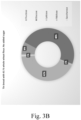
- Figure 3 shows the content of individual sugars given as a percentage of total amount of sugar.
- thermo-labilemylase 400 ppm thermo-labilemylase 8 ppm
- Xylanase 50 ppm Lipase 30 ppm
- Novamyl 150 ppm Lipase 30 ppm
- Novamyl 150 ppm Ascorbic acid 40 ppm
- all ppm is ppm/kg of flour; for activity see text herein
- Stickiness From 0 to 10 From little to very 5 is control Softness From 0 to 10 From less to more 5 is control Extensibility From 0 to 10 From low/short to high/long 5 is control Elasticity From 0 to 10 From low/weak to high/strong 5 is control Dough temperature From 0 to 10 From low to high/strong 5 is control Crust colour From 0 to 10 From light to dark 5 is control Shape of product From 0 to 10 From low to high 5 is control Crumb structure From 0 to 10 From less to more 5 is control Uniform From 0 to 10 From less to more 5 is control Cell size From 0 to 10 From open to fine/small 5 is control Cell wall From 0 to 10 From thick to thin 5 is control Cell form From 0 to 10 From round/deep to elongate/shallow 5 is control Crumb colour From 0 to 10 From dark to light 5 is control
- Figure 4 shows the content of individual sugars given as a percentage of total amount of sugar.
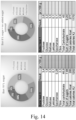
- the content of the individual sugars was measured with the following results: 14% sugar Result g/100g Fructose 4.3 Glucose 3.6 Laktose 0.1 Maltose 1.6 Saccharose 0.1 Sum of sugar 9.5 Total calories Kcal 274 Total calories KJ 1159 No sugar Result g/100g Fructose 0.5 Glucose 1.7 Laktose 0.1 Maltose 2.9 Saccharose 0.1 Sum of sugar 5.1 Total calories Kcal 256 Total calories KJ 1083
- Figure 6 shows the content of individual sugars given as a percentage of total amount of sugar.
- the dough was made from the following ingredient.
- the thermolabile alpha-amylase, amyloglucosidase and maltogenic amylase tested were added in amounts corresponding to those used in Example 1 or 2.
- thermolabile alpha-amylase Fra
- thermostable amyloglucosidase Gluco
- maltogenic amylase Manu
- the results are shown in Figure 7 .
- the left-hand figure shows a synergistic effect when alpha-amylase and amyloglucosidase is combined and the volume after proofing is increased from 3.3 (no sugar added) to 4.3 (i.e. 30%) or from 3.64 (when 3% sugar was added to the recipe) to 4.3 (i.e. 18%).
- the volume index, when dough with no enzymes and no sugar is 100, is as follows:
- the right hand figure shows that addition of alpha-amylase or amyloglucosidase as single enzymes gives increased volume after proofing compared to dough with no enzymes added and either having no sugar added or 3% sugar added. When all three enzymes are added, the best result regarding volume is achieved.
- the volume index, when dough with no enzymes and no sugar is 100, is as follows:
- the doughs containing enzymes are better than the dough without enzymes and sugar and better or alike the dough containing 3% sugar and no enzymes.
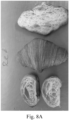
- Croissants were made with no-added sugar, but with content of thermolabile alpha-amylase, thermostable amyloglucosidase and maltogenic amylase.
- the results of the baked croissants are shown in Figure 8A (reference) and 8B (no-added sugar).
- Proofing heights based on toast recipe Proofing heights 50 g dough ball for proofing Process
- Straight dough toast recipe
- Flour Dana flour from Cerealia Ingredients % gram Flour 100 2000 Water 56 1120 Yeast 3,5 70 Sugar 0%/3 % / 6 % 0/40 / 100 Oil 1,5 30 salt 1,8 36 Datem 0,3 6 Ascorbic acid 40 ppm / kg flour 0,080
- Process toast Process toast:
- the enzymes used were:
- Figs. 10 and 11 The results are shown in Figs. 10 and 11 .
- an increase in height after 30 min is about 66% for the dough with the three enzymes compared with about 33% for the doughs containing 3% or 6% sugar.
- the increase is about 133% for the dough with the three enzymes compared with about 80% for the doughs containing 3% or 6% sugar.
- the increase is about 200% for the dough with the three enzymes compared with about 80-150% for the doughs containing 3% or 6% sugar.
- a toast dough containing the combination of the three enzymes accoding to the invention will reach this at least 15 min faster than that obtained for dough with 0%, 3%, 6% sugar without the combination of enzymes.
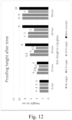
- Proofing heights based on bun recipe Proofing heights 50 g dough ball for proofing Process
- Straight dough (bun recipe)
- Flour Dana flour from Cerealia Ingredients % gram Flour 100 2000 Water 56 1120 Yeast 4,5 90 Sugar 0% /7 %/ 14 % 0/140/280 Oil 5 100 salt 1,8 36 Datem 0,4 8 Ascorbic acid 60 ppm / kg flour 0,120 No added sugar concept* 1 20 •
- Two doughs with 0% sugar were made; one of which had the three enzymes added (“no-added sugar concept") whereas the other 0% sugar dough did not contain the enzyme blend.
- the enzymes used were (ppm/kg flour):
- Bun improver ppm or g Add dosages pr. kg Solution you want to add from flour in % Fungamyl 4000 SG ppm/kg 10 1 Novamyl 10 000 BG ppm/kg 150 1 GoldCrust 3300 BG ppm/kg 450 1 Asc ppm/kg 60 1
- Figs. 12 and 13 The results are shown in Figs. 12 and 13 .
- an increase in height after 30 min is about 266% for the dough with the three enzymes compared with about 43%-66% for the doughs containing 6% or 14% sugar.
- the increase is about 200% for the dough with the three enzymes compared with about 66%-133% for the doughs containing 6% or 14% sugar.
- the increase is about 233% for the dough with the three enzymes compared with about 133%-200% for the doughs containing 6% or 14% sugar.
- a bun dough containing the combination of the three enzymes accoding to the invention will reach this at least 15 min faster than that obtained for dough with 6% or 14% sugar without the combination of enzymes.
- the doughs also contain 6-8 ppm thermo-labile alpha amylase (Fungamyl).
Landscapes
- Life Sciences & Earth Sciences (AREA)
- Chemical & Material Sciences (AREA)
- Health & Medical Sciences (AREA)
- Engineering & Computer Science (AREA)
- Organic Chemistry (AREA)
- Bioinformatics & Cheminformatics (AREA)
- Genetics & Genomics (AREA)
- Wood Science & Technology (AREA)
- Zoology (AREA)
- General Health & Medical Sciences (AREA)
- General Engineering & Computer Science (AREA)
- Biochemistry (AREA)
- Microbiology (AREA)
- Food Science & Technology (AREA)
- Molecular Biology (AREA)
- Biomedical Technology (AREA)
- Biotechnology (AREA)
- Medicinal Chemistry (AREA)
- Nutrition Science (AREA)
- Physics & Mathematics (AREA)
- Thermal Sciences (AREA)
- Mycology (AREA)
- Bakery Products And Manufacturing Methods Therefor (AREA)
- Preparation Of Compounds By Using Micro-Organisms (AREA)
- Saccharide Compounds (AREA)
- Meat, Egg Or Seafood Products (AREA)
- Seeds, Soups, And Other Foods (AREA)
- Enzymes And Modification Thereof (AREA)
Applications Claiming Priority (3)
| Application Number | Priority Date | Filing Date | Title |
|---|---|---|---|
| DKPA202070088 | 2020-02-14 | ||
| PCT/EP2021/053474 WO2021160812A1 (en) | 2020-02-14 | 2021-02-12 | A process for the production of a baked product without addition of sugar |
| EP21705923.7A EP4102974B1 (de) | 2020-02-14 | 2021-02-12 | Verfahren zur herstellung eines gebackenen produktes ohne zusatz von zucker |
Related Parent Applications (1)
| Application Number | Title | Priority Date | Filing Date |
|---|---|---|---|
| EP21705923.7A Division EP4102974B1 (de) | 2020-02-14 | 2021-02-12 | Verfahren zur herstellung eines gebackenen produktes ohne zusatz von zucker |
Publications (2)
| Publication Number | Publication Date |
|---|---|
| EP4509599A2 true EP4509599A2 (de) | 2025-02-19 |
| EP4509599A3 EP4509599A3 (de) | 2025-04-16 |
Family
ID=77292793
Family Applications (2)
| Application Number | Title | Priority Date | Filing Date |
|---|---|---|---|
| EP24207890.5A Pending EP4509599A3 (de) | 2020-02-14 | 2021-02-12 | Verfahren zur herstellung eines gebackenen produktes ohne zusatz von zucker |
| EP21705923.7A Active EP4102974B1 (de) | 2020-02-14 | 2021-02-12 | Verfahren zur herstellung eines gebackenen produktes ohne zusatz von zucker |
Family Applications After (1)
| Application Number | Title | Priority Date | Filing Date |
|---|---|---|---|
| EP21705923.7A Active EP4102974B1 (de) | 2020-02-14 | 2021-02-12 | Verfahren zur herstellung eines gebackenen produktes ohne zusatz von zucker |
Country Status (19)
| Country | Link |
|---|---|
| US (1) | US20230404087A1 (de) |
| EP (2) | EP4509599A3 (de) |
| JP (1) | JP2023518346A (de) |
| KR (1) | KR20220160562A (de) |
| CN (2) | CN118872704A (de) |
| AU (1) | AU2021220297A1 (de) |
| BR (1) | BR112022016228A2 (de) |
| CA (1) | CA3167952A1 (de) |
| CO (1) | CO2022012946A2 (de) |
| ES (1) | ES2997259T3 (de) |
| HR (1) | HRP20241776T1 (de) |
| HU (1) | HUE069953T2 (de) |
| MX (1) | MX2022009995A (de) |
| PE (1) | PE20230351A1 (de) |
| PH (1) | PH12022552128A1 (de) |
| PL (1) | PL4102974T3 (de) |
| RS (1) | RS66414B1 (de) |
| SM (1) | SMT202400516T1 (de) |
| WO (1) | WO2021160812A1 (de) |
Families Citing this family (5)
| Publication number | Priority date | Publication date | Assignee | Title |
|---|---|---|---|---|
| CN106659168A (zh) | 2014-07-08 | 2017-05-10 | 卡拉万成分股份有限公司 | 产生糖和结构改善的焙烤方法和由该方法形成的产品 |
| CN119789789A (zh) * | 2022-09-08 | 2025-04-08 | 诺维信公司 | 用于制备脂肪减少的烘焙产品的方法 |
| CN115918700B (zh) * | 2022-11-28 | 2025-01-10 | 福建灵雀谷生物科技有限公司 | 一种用于面包保湿保软的复配改良剂及其应用 |
| KR102682959B1 (ko) * | 2023-01-20 | 2024-07-08 | 에스피씨 주식회사 | 효소를 이용한 빵의 제조방법 |
| WO2025238185A1 (en) | 2024-05-15 | 2025-11-20 | Mauri Technology B.V. | Improver composition for a freezer-to-oven bakery product |
Citations (6)
| Publication number | Priority date | Publication date | Assignee | Title |
|---|---|---|---|---|
| WO1991001088A1 (en) | 1989-07-14 | 1991-02-07 | Kama Danish Pastry A/S | A method of preparing a frozen yeast dough product |
| CN101461392A (zh) | 2007-12-18 | 2009-06-24 | 天津金世制药有限公司 | 一种无糖面包及其制做方法 |
| WO2013028071A1 (en) | 2011-08-25 | 2013-02-28 | Csm Nederland B.V. | Use of an anti-staling enzyme mixture in the preparation of baked bread |
| WO2016005452A1 (en) | 2014-07-08 | 2016-01-14 | Caravan Ingredients Inc. | Sugar-producing and texture-improving bakery methods and products formed therefrom |
| US20180177202A1 (en) | 2015-06-29 | 2018-06-28 | Lesaffre Et Compagnie | Improver and breadmaking method for precooked loaves stored without freezing |
| WO2019238423A1 (en) | 2018-06-12 | 2019-12-19 | Novozymes A/S | Less added sugar in baked products |
Family Cites Families (10)
| Publication number | Priority date | Publication date | Assignee | Title |
|---|---|---|---|---|
| EP0585988B1 (de) * | 1992-07-27 | 1996-03-13 | Gist-Brocades N.V. | Enzymprodukt und Verfahren zur Verbesserung der Qualität von Brot |
| EP2961281A2 (de) * | 2013-03-01 | 2016-01-06 | DSM IP Assets B.V. | Kombination aus alpha-amylase und einer g4-bildenden amylase |
| DK2981170T3 (da) * | 2013-04-05 | 2020-02-17 | Novozymes As | Fremgangsmåde til fremstilling af et bagt produkt med alfa-amylase, lipase og phospholipase |
| US20190029272A1 (en) * | 2016-02-10 | 2019-01-31 | Novozymes A/S | Preparation of a Baked Product Comprising Fibers Treated by a Cellulase |
| JP7017288B2 (ja) * | 2017-09-20 | 2022-02-08 | 日清オイリオグループ株式会社 | ベーカリー生地及びベーカリー食品 |
| CN108184948B (zh) * | 2018-02-11 | 2021-07-02 | 天津味多美科技股份有限公司 | 一种预烘烤冷冻面团及制作方法 |
| US20190313653A1 (en) * | 2018-04-12 | 2019-10-17 | The United States Of America, As Represented By The Secretary Of Agriculture | Bean-based flour |
| CN108935594A (zh) * | 2018-07-02 | 2018-12-07 | 河南鼎元食品科技有限公司 | 一种速冻油条的制备方法 |
| EP3869978A4 (de) * | 2018-10-22 | 2022-11-23 | DuPont Nutrition Biosciences ApS | Enzyme für ein infusionsverfahren im technischen bereich der zusatzbrauerei |
| WO2020182879A1 (en) * | 2019-03-13 | 2020-09-17 | Novozymes A/S | Production of par-baked products with improved freshness employing combination of gh8 xylanase and phospholipase |
-
2021
- 2021-02-12 CN CN202410953008.3A patent/CN118872704A/zh active Pending
- 2021-02-12 CN CN202180028816.3A patent/CN115397245B/zh active Active
- 2021-02-12 PH PH1/2022/552128A patent/PH12022552128A1/en unknown
- 2021-02-12 HU HUE21705923A patent/HUE069953T2/hu unknown
- 2021-02-12 MX MX2022009995A patent/MX2022009995A/es unknown
- 2021-02-12 EP EP24207890.5A patent/EP4509599A3/de active Pending
- 2021-02-12 HR HRP20241776TT patent/HRP20241776T1/hr unknown
- 2021-02-12 EP EP21705923.7A patent/EP4102974B1/de active Active
- 2021-02-12 BR BR112022016228A patent/BR112022016228A2/pt unknown
- 2021-02-12 WO PCT/EP2021/053474 patent/WO2021160812A1/en not_active Ceased
- 2021-02-12 PE PE2022001753A patent/PE20230351A1/es unknown
- 2021-02-12 ES ES21705923T patent/ES2997259T3/es active Active
- 2021-02-12 US US17/799,466 patent/US20230404087A1/en active Pending
- 2021-02-12 SM SM20240516T patent/SMT202400516T1/it unknown
- 2021-02-12 CA CA3167952A patent/CA3167952A1/en active Pending
- 2021-02-12 PL PL21705923.7T patent/PL4102974T3/pl unknown
- 2021-02-12 RS RS20241451A patent/RS66414B1/sr unknown
- 2021-02-12 JP JP2022549194A patent/JP2023518346A/ja active Pending
- 2021-02-12 KR KR1020227031743A patent/KR20220160562A/ko active Pending
- 2021-02-12 AU AU2021220297A patent/AU2021220297A1/en active Pending
-
2022
- 2022-09-13 CO CONC2022/0012946A patent/CO2022012946A2/es unknown
Patent Citations (6)
| Publication number | Priority date | Publication date | Assignee | Title |
|---|---|---|---|---|
| WO1991001088A1 (en) | 1989-07-14 | 1991-02-07 | Kama Danish Pastry A/S | A method of preparing a frozen yeast dough product |
| CN101461392A (zh) | 2007-12-18 | 2009-06-24 | 天津金世制药有限公司 | 一种无糖面包及其制做方法 |
| WO2013028071A1 (en) | 2011-08-25 | 2013-02-28 | Csm Nederland B.V. | Use of an anti-staling enzyme mixture in the preparation of baked bread |
| WO2016005452A1 (en) | 2014-07-08 | 2016-01-14 | Caravan Ingredients Inc. | Sugar-producing and texture-improving bakery methods and products formed therefrom |
| US20180177202A1 (en) | 2015-06-29 | 2018-06-28 | Lesaffre Et Compagnie | Improver and breadmaking method for precooked loaves stored without freezing |
| WO2019238423A1 (en) | 2018-06-12 | 2019-12-19 | Novozymes A/S | Less added sugar in baked products |
Non-Patent Citations (4)
| Title |
|---|
| EFSA JOURNAL, vol. 16, no. 5, May 2018 (2018-05-01), Retrieved from the Internet <URL:https://doi.org/10.2903/j.efsa.2018.5171> |
| ESFA JOURNAL, vol. 16, no. 130498-22-5, October 2018 (2018-10-01) |
| no. 160611-47-2 |
| SIGMA ALDRICHBERNFELD, P., METHODS IN ENZYMOLOGY, vol. 1, 1955, pages 149 - 158 |
Also Published As
| Publication number | Publication date |
|---|---|
| EP4102974C0 (de) | 2024-10-23 |
| US20230404087A1 (en) | 2023-12-21 |
| CN115397245A (zh) | 2022-11-25 |
| KR20220160562A (ko) | 2022-12-06 |
| PH12022552128A1 (en) | 2024-01-29 |
| CO2022012946A2 (es) | 2022-09-20 |
| MX2022009995A (es) | 2022-11-09 |
| RS66414B1 (sr) | 2025-02-28 |
| WO2021160812A1 (en) | 2021-08-19 |
| CN115397245B (zh) | 2024-08-13 |
| CN118872704A (zh) | 2024-11-01 |
| EP4102974B1 (de) | 2024-10-23 |
| JP2023518346A (ja) | 2023-05-01 |
| AU2021220297A1 (en) | 2022-09-22 |
| PL4102974T3 (pl) | 2025-04-22 |
| ES2997259T3 (en) | 2025-02-14 |
| EP4102974A1 (de) | 2022-12-21 |
| HUE069953T2 (hu) | 2025-04-28 |
| CA3167952A1 (en) | 2021-08-19 |
| PE20230351A1 (es) | 2023-03-02 |
| EP4509599A3 (de) | 2025-04-16 |
| SMT202400516T1 (it) | 2025-03-12 |
| HRP20241776T1 (hr) | 2025-02-28 |
| BR112022016228A2 (pt) | 2022-10-25 |
Similar Documents
| Publication | Publication Date | Title |
|---|---|---|
| EP4102974B1 (de) | Verfahren zur herstellung eines gebackenen produktes ohne zusatz von zucker | |
| US12256743B2 (en) | Sugar-producing and texture-improving bakery methods and products formed therefrom | |
| US6270813B1 (en) | Preparation of dough and baked products | |
| EP2981170B1 (de) | Verfahren zur herstellung von backwaren mit alpha-amylase, lipase und phospholipase | |
| US6355282B1 (en) | Dough composition and preparation thereof | |
| EP2747574B1 (de) | Verwendung einer enzymmischung zur vermeidung von altbackenwerden bei der herstellung von gebackenem brot | |
| CN1937928A (zh) | 改善含淀粉食品特性的方法和特性改良剂 | |
| EP2429302B1 (de) | Verfahren gegen altbackenwerden für fladenbrot | |
| US20250275542A1 (en) | Baked and Par-Baked Products with Thermostable AMG Variants from Penicillium | |
| CN1216901A (zh) | 糊精糖基转移酶在烘烤中的用途 | |
| OA20865A (en) | A process for the production of baked product without addition of sugar | |
| JP2025528466A (ja) | 熱安定性アミログルコシダーゼ(amg)バリアント(ec3.2.1.3)及び低添加糖による焼成 | |
| JP2025536360A (ja) | 熱安定性AMGバリアント及びα-アミラーゼを用いた焼成方法 | |
| JP2023128735A (ja) | パン改良剤 |
Legal Events
| Date | Code | Title | Description |
|---|---|---|---|
| PUAI | Public reference made under article 153(3) epc to a published international application that has entered the european phase |
Free format text: ORIGINAL CODE: 0009012 |
|
| STAA | Information on the status of an ep patent application or granted ep patent |
Free format text: STATUS: THE APPLICATION HAS BEEN PUBLISHED |
|
| AC | Divisional application: reference to earlier application |
Ref document number: 4102974 Country of ref document: EP Kind code of ref document: P |
|
| AK | Designated contracting states |
Kind code of ref document: A2 Designated state(s): AL AT BE BG CH CY CZ DE DK EE ES FI FR GB GR HR HU IE IS IT LI LT LU LV MC MK MT NL NO PL PT RO RS SE SI SK SM TR |
|
| REG | Reference to a national code |
Ref country code: DE Ref legal event code: R079 Free format text: PREVIOUS MAIN CLASS: C12N0009260000 Ipc: A21D0008040000 |
|
| PUAL | Search report despatched |
Free format text: ORIGINAL CODE: 0009013 |
|
| AK | Designated contracting states |
Kind code of ref document: A3 Designated state(s): AL AT BE BG CH CY CZ DE DK EE ES FI FR GB GR HR HU IE IS IT LI LT LU LV MC MK MT NL NO PL PT RO RS SE SI SK SM TR |
|
| RIC1 | Information provided on ipc code assigned before grant |
Ipc: C12N 9/34 20060101ALI20250307BHEP Ipc: C12N 9/26 20060101ALI20250307BHEP Ipc: A21D 13/062 20170101ALI20250307BHEP Ipc: A21D 8/04 20060101AFI20250307BHEP |
|
| STAA | Information on the status of an ep patent application or granted ep patent |
Free format text: STATUS: REQUEST FOR EXAMINATION WAS MADE |
|
| 17P | Request for examination filed |
Effective date: 20251015 |