EP4510236A1 - Anodenmaterial und batterie - Google Patents
Anodenmaterial und batterie Download PDFInfo
- Publication number
- EP4510236A1 EP4510236A1 EP23861672.6A EP23861672A EP4510236A1 EP 4510236 A1 EP4510236 A1 EP 4510236A1 EP 23861672 A EP23861672 A EP 23861672A EP 4510236 A1 EP4510236 A1 EP 4510236A1
- Authority
- EP
- European Patent Office
- Prior art keywords
- anode material
- graphite
- asphalt
- pores
- material according
- Prior art date
- Legal status (The legal status is an assumption and is not a legal conclusion. Google has not performed a legal analysis and makes no representation as to the accuracy of the status listed.)
- Pending
Links
Images
Classifications
-
- H—ELECTRICITY
- H01—ELECTRIC ELEMENTS
- H01M—PROCESSES OR MEANS, e.g. BATTERIES, FOR THE DIRECT CONVERSION OF CHEMICAL ENERGY INTO ELECTRICAL ENERGY
- H01M4/00—Electrodes
- H01M4/02—Electrodes composed of, or comprising, active material
- H01M4/36—Selection of substances as active materials, active masses, active liquids
- H01M4/58—Selection of substances as active materials, active masses, active liquids of inorganic compounds other than oxides or hydroxides, e.g. sulfides, selenides, tellurides, halogenides or LiCoFy; of polyanionic structures, e.g. phosphates, silicates or borates
- H01M4/583—Carbonaceous material, e.g. graphite-intercalation compounds or CFx
- H01M4/587—Carbonaceous material, e.g. graphite-intercalation compounds or CFx for inserting or intercalating light metals
-
- C—CHEMISTRY; METALLURGY
- C01—INORGANIC CHEMISTRY
- C01B—NON-METALLIC ELEMENTS; COMPOUNDS THEREOF; METALLOIDS OR COMPOUNDS THEREOF NOT COVERED BY SUBCLASS C01C
- C01B32/00—Carbon; Compounds thereof
- C01B32/20—Graphite
-
- C—CHEMISTRY; METALLURGY
- C01—INORGANIC CHEMISTRY
- C01B—NON-METALLIC ELEMENTS; COMPOUNDS THEREOF; METALLOIDS OR COMPOUNDS THEREOF NOT COVERED BY SUBCLASS C01C
- C01B32/00—Carbon; Compounds thereof
- C01B32/20—Graphite
- C01B32/205—Preparation
-
- C—CHEMISTRY; METALLURGY
- C01—INORGANIC CHEMISTRY
- C01B—NON-METALLIC ELEMENTS; COMPOUNDS THEREOF; METALLOIDS OR COMPOUNDS THEREOF NOT COVERED BY SUBCLASS C01C
- C01B32/00—Carbon; Compounds thereof
- C01B32/20—Graphite
- C01B32/21—After-treatment
-
- H—ELECTRICITY
- H01—ELECTRIC ELEMENTS
- H01M—PROCESSES OR MEANS, e.g. BATTERIES, FOR THE DIRECT CONVERSION OF CHEMICAL ENERGY INTO ELECTRICAL ENERGY
- H01M10/00—Secondary cells; Manufacture thereof
- H01M10/05—Accumulators with non-aqueous electrolyte
- H01M10/058—Construction or manufacture
-
- H—ELECTRICITY
- H01—ELECTRIC ELEMENTS
- H01M—PROCESSES OR MEANS, e.g. BATTERIES, FOR THE DIRECT CONVERSION OF CHEMICAL ENERGY INTO ELECTRICAL ENERGY
- H01M10/00—Secondary cells; Manufacture thereof
- H01M10/42—Methods or arrangements for servicing or maintenance of secondary cells or secondary half-cells
- H01M10/4235—Safety or regulating additives or arrangements in electrodes, separators or electrolyte
-
- H—ELECTRICITY
- H01—ELECTRIC ELEMENTS
- H01M—PROCESSES OR MEANS, e.g. BATTERIES, FOR THE DIRECT CONVERSION OF CHEMICAL ENERGY INTO ELECTRICAL ENERGY
- H01M4/00—Electrodes
- H01M4/02—Electrodes composed of, or comprising, active material
- H01M4/13—Electrodes for accumulators with non-aqueous electrolyte, e.g. for lithium-accumulators; Processes of manufacture thereof
- H01M4/133—Electrodes based on carbonaceous material, e.g. graphite-intercalation compounds or CFx
-
- H—ELECTRICITY
- H01—ELECTRIC ELEMENTS
- H01M—PROCESSES OR MEANS, e.g. BATTERIES, FOR THE DIRECT CONVERSION OF CHEMICAL ENERGY INTO ELECTRICAL ENERGY
- H01M4/00—Electrodes
- H01M4/02—Electrodes composed of, or comprising, active material
- H01M4/36—Selection of substances as active materials, active masses, active liquids
- H01M4/362—Composites
- H01M4/366—Composites as layered products
-
- H—ELECTRICITY
- H01—ELECTRIC ELEMENTS
- H01M—PROCESSES OR MEANS, e.g. BATTERIES, FOR THE DIRECT CONVERSION OF CHEMICAL ENERGY INTO ELECTRICAL ENERGY
- H01M4/00—Electrodes
- H01M4/02—Electrodes composed of, or comprising, active material
- H01M4/62—Selection of inactive substances as ingredients for active masses, e.g. binders, fillers
-
- C—CHEMISTRY; METALLURGY
- C01—INORGANIC CHEMISTRY
- C01P—INDEXING SCHEME RELATING TO STRUCTURAL AND PHYSICAL ASPECTS OF SOLID INORGANIC COMPOUNDS
- C01P2002/00—Crystal-structural characteristics
- C01P2002/70—Crystal-structural characteristics defined by measured X-ray, neutron or electron diffraction data
- C01P2002/78—Crystal-structural characteristics defined by measured X-ray, neutron or electron diffraction data by stacking-plane distances or stacking sequences
-
- C—CHEMISTRY; METALLURGY
- C01—INORGANIC CHEMISTRY
- C01P—INDEXING SCHEME RELATING TO STRUCTURAL AND PHYSICAL ASPECTS OF SOLID INORGANIC COMPOUNDS
- C01P2004/00—Particle morphology
- C01P2004/01—Particle morphology depicted by an image
- C01P2004/03—Particle morphology depicted by an image obtained by SEM
-
- C—CHEMISTRY; METALLURGY
- C01—INORGANIC CHEMISTRY
- C01P—INDEXING SCHEME RELATING TO STRUCTURAL AND PHYSICAL ASPECTS OF SOLID INORGANIC COMPOUNDS
- C01P2004/00—Particle morphology
- C01P2004/60—Particles characterised by their size
- C01P2004/61—Micrometer sized, i.e. from 1-100 micrometer
-
- C—CHEMISTRY; METALLURGY
- C01—INORGANIC CHEMISTRY
- C01P—INDEXING SCHEME RELATING TO STRUCTURAL AND PHYSICAL ASPECTS OF SOLID INORGANIC COMPOUNDS
- C01P2006/00—Physical properties of inorganic compounds
- C01P2006/10—Solid density
-
- C—CHEMISTRY; METALLURGY
- C01—INORGANIC CHEMISTRY
- C01P—INDEXING SCHEME RELATING TO STRUCTURAL AND PHYSICAL ASPECTS OF SOLID INORGANIC COMPOUNDS
- C01P2006/00—Physical properties of inorganic compounds
- C01P2006/12—Surface area
-
- C—CHEMISTRY; METALLURGY
- C01—INORGANIC CHEMISTRY
- C01P—INDEXING SCHEME RELATING TO STRUCTURAL AND PHYSICAL ASPECTS OF SOLID INORGANIC COMPOUNDS
- C01P2006/00—Physical properties of inorganic compounds
- C01P2006/14—Pore volume
-
- C—CHEMISTRY; METALLURGY
- C01—INORGANIC CHEMISTRY
- C01P—INDEXING SCHEME RELATING TO STRUCTURAL AND PHYSICAL ASPECTS OF SOLID INORGANIC COMPOUNDS
- C01P2006/00—Physical properties of inorganic compounds
- C01P2006/16—Pore diameter
- C01P2006/17—Pore diameter distribution
-
- C—CHEMISTRY; METALLURGY
- C01—INORGANIC CHEMISTRY
- C01P—INDEXING SCHEME RELATING TO STRUCTURAL AND PHYSICAL ASPECTS OF SOLID INORGANIC COMPOUNDS
- C01P2006/00—Physical properties of inorganic compounds
- C01P2006/40—Electric properties
-
- H—ELECTRICITY
- H01—ELECTRIC ELEMENTS
- H01M—PROCESSES OR MEANS, e.g. BATTERIES, FOR THE DIRECT CONVERSION OF CHEMICAL ENERGY INTO ELECTRICAL ENERGY
- H01M10/00—Secondary cells; Manufacture thereof
- H01M10/05—Accumulators with non-aqueous electrolyte
- H01M10/052—Li-accumulators
- H01M10/0525—Rocking-chair batteries, i.e. batteries with lithium insertion or intercalation in both electrodes; Lithium-ion batteries
-
- H—ELECTRICITY
- H01—ELECTRIC ELEMENTS
- H01M—PROCESSES OR MEANS, e.g. BATTERIES, FOR THE DIRECT CONVERSION OF CHEMICAL ENERGY INTO ELECTRICAL ENERGY
- H01M4/00—Electrodes
- H01M4/02—Electrodes composed of, or comprising, active material
- H01M2004/021—Physical characteristics, e.g. porosity, surface area
-
- H—ELECTRICITY
- H01—ELECTRIC ELEMENTS
- H01M—PROCESSES OR MEANS, e.g. BATTERIES, FOR THE DIRECT CONVERSION OF CHEMICAL ENERGY INTO ELECTRICAL ENERGY
- H01M4/00—Electrodes
- H01M4/02—Electrodes composed of, or comprising, active material
- H01M2004/026—Electrodes composed of, or comprising, active material characterised by the polarity
- H01M2004/027—Negative electrodes
-
- Y—GENERAL TAGGING OF NEW TECHNOLOGICAL DEVELOPMENTS; GENERAL TAGGING OF CROSS-SECTIONAL TECHNOLOGIES SPANNING OVER SEVERAL SECTIONS OF THE IPC; TECHNICAL SUBJECTS COVERED BY FORMER USPC CROSS-REFERENCE ART COLLECTIONS [XRACs] AND DIGESTS
- Y02—TECHNOLOGIES OR APPLICATIONS FOR MITIGATION OR ADAPTATION AGAINST CLIMATE CHANGE
- Y02E—REDUCTION OF GREENHOUSE GAS [GHG] EMISSIONS, RELATED TO ENERGY GENERATION, TRANSMISSION OR DISTRIBUTION
- Y02E60/00—Enabling technologies; Technologies with a potential or indirect contribution to GHG emissions mitigation
- Y02E60/10—Energy storage using batteries
Definitions
- the present disclosure relates to the technical field of anode materials, in particular to an anode material and a battery.
- Lithium ion batteries have also shown good application prospects in the fields of portable consumer electronics, electric tools, new energy vehicles, energy storage and the like due to their excellent performance. From the commercialization of lithium ion batteries to date, the most mature anode material used are graphitic anode material. At present, the main development direction of lithium ion batteries is high capacity, high rate and high safety, so the development of high-performance graphite negative electrodes is critical for obtaining lithium ion batteries with high rate performance and good cycle performance.
- a special layered structure of graphite determines that Li+ can only be intercalated from the end face of a material and gradually diffused into particles, resulting in a low diffusion rate of lithium ions and poor rate performance, meanwhile, lithium intercalation at a large rate easily causes lithium ion enrichment on the surface of a graphite negative electrode, when the concentration of lithium ions at the interface reaches saturation, lithium ions can be deposited in a metal form, resulting in a diffusion pathway and an electrochemical reaction area cannot be fully utilized.
- the present disclosure aims to provide a camera lens, which can achieve a high optical performance while satisfying design requirements for ultra-thin, wide-angle lenses having a big aperture.
- the present disclosure provides a camera optical lens.
- the camera optical lens includes, from an object side to an image side: a first lens; a second lens; a third lens; a fourth lens; a fifth lens; a sixth lens; a seventh lens; and an eighth lens.
- the camera optical lens satisfies following conditions: 1.90 ⁇ f1/f ⁇ 3.00; f2 ⁇ 0.00; and 1.55 ⁇ n3 ⁇ 1.70, where f denotes a focal length of the camera optical lens; f1 denotes a focal length of the first lens; f2 denotes a focal length of the second lens; and n3 denotes a refractive index of the third lens.
- the present disclosure can achieve ultra-thin, wide-angle lenses having good optical characteristics and a big aperture, which are especially suitable for camera lens assembly of mobile phones and WEB camera lenses formed by CCD, CMOS and other imaging elements for high pixels.
- the present disclosure provides a new anode material and battery, and the anode material achieves accurate regulation of internal and/or surface pore volume, specific surface area and true density, so that the anode material is maintained in a reasonable range by combination, thereby improving capacity and rate performance of the anode material.
- the present disclosure provides an anode material, the anode material includes graphite, a surface and/or an interior of the graphite has pores, a pore volume of the anode material is V cm 3 /kg, a true density is D g/cm 3 , a specific surface area is S m 2 /g, and a degree of graphitization is G%, wherein 0.7 ⁇ V*S/D ⁇ 3.95, and 89 ⁇ G ⁇ 93;
- the pore volume is tested by ASAP2460 device from American Micromeritics, and calculated in a pore size range of 17 ⁇ to 3000 ⁇ by a model of BJH Desortation cumulative volume of pores.
- the pore volume of the anode material is V cm 3 /kg, 1.812 ⁇ V ⁇ 4.987.
- the specific surface area of the anode material is S m 2 /g, and 0.872 ⁇ S ⁇ 1.773.
- the true density of the anode material is D g/cm 3 , 2.238 ⁇ D ⁇ 2.257.
- the pores include at least one of micro-pores and meso-pores.
- the pores extend from the surface of the graphite to the interior.
- the graphite is artificial graphite.
- the average pore size of the pores is 50 ⁇ to 200 ⁇ .
- the anode material is measured by X-ray diffraction, and a crystal plane layer spacing of a plane (002) is d 002 , where 3.356 ⁇ d 002 ⁇ 3.364 ⁇ .
- the particle size D 50 of the anode material is 10 ⁇ m to 20 ⁇ m.
- the anode material further includes amorphous carbon, and the amorphous carbon is present on a surface of graphite and/or dispersed among graphite particles.
- the anode material further includes an amorphous carbon coating layer located on a surface of the graphite, and a thickness of the amorphous carbon coating layer is 10 nm to 500 nm.
- the mass ratio of the amorphous carbon in the anode material is 0.1 wt% to 3 wt%.
- the present disclosure provides a battery, the battery includes the anode material according to the first aspect.
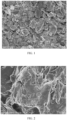
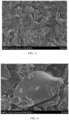
- the anode material provided by the disclosure includes graphite, the surface and/or the interior of the graphite has pores, the pores extend from the surface of the graphite to the interior, and rich pores are generated in the surface and the near surface of the graphite while a regular graphite layered structure of the anode material is reserved.
- the anode material has a pore volume of V cm 3 /kg, a true density of D g/cm 3 , a specific surface area of S m 2 /g, and a degree of graphitization of G%, wherein 0.7 ⁇ V*S/D ⁇ 3.95, and 89 ⁇ G ⁇ 93.
- the pore volume within a certain range is beneficial to the intercalation of Li + from the surface of the material along the pore structure, the diffusion rate of lithium ions is improved, the specific surface area within a certain range can ensure a sufficient electrochemical reaction interface, promoting the diffusion of lithium ions at the solid-liquid interface and in the solid phase, reducing the concentration polarization, and improving the capacity and the rate performance of the anode material.
- the rate performance of the anode material has a larger improvement space when only the proper pore volume and specific surface area are met, the reason is that, after the lithium ions diffuse to the surface of the graphite, if the carbon atoms in the graphite are disordered and the degree of order is not sufficient, the lithium ions are more hindered from entering the interior of the graphite material and combining with carbon atoms to have an electrochemical reaction, meanwhile, because the graphite is polycrystalline, especially artificial graphite, grain boundary defects are present between the crystal grains, the grain boundary defects have uneven stress, the grain boundary belongs to one of the crystal plane defects, cracks easily occur, and under the condition of external force, the cracks are more easily split along the grain boundary direction, and the cracks occur along the crystal plane, finally, the split crystal plane parallel to the plane direction of the graphite crystal layer forms the outer surface of the graphite particles.
- the carbon planes must be crossed, so that the lithium ions are difficult to enter the interior of the graphite, meanwhile, the lithium ions can be aggregated on the surface of the carbon to form lithium clusters, thereby the diffusion of the lithium is inhibited or the lithium deposition is formed, finally, the diffusion pathway and the electrochemical reaction area cannot be fully utilized, therefore, in this disclosure, good diffusion paths are provided for lithium ion diffusion by controlling the degree of graphitization and the true density, meanwhile, the stress in the graphite is concentrated to the periphery of the pores in combination with the design of the pore pathway structure and the pore distribution, the stress at the grain boundary is dispersed, when the graphite is subjected to external force, cracks are formed from the pore pathways at first, which is conducive to the formation of transcrystalline rupture, the pore pathways are finally constructed to be the outer surfaces of the graphite particles after being exposed, transcrystalline rupture is facilitated to increase the pathway
- the high degree of graphitisation affects the number of graphite polycrystalline grain boundaries as well as lattice distortions to a certain extent, the degree of order of the interlayer arrangement is high and compact, which is beneficial to improve the true density, and it ensures that the anode material exerts a relatively high specific capacity.
- the V*S/D of the anode material is controlled within the above range, and meanwhile the degree of graphitization of the material is controlled, which is beneficial to the combination of lithium ions and sufficient carbon atoms under the condition of low resistance, thereby the anode material has a sufficient lithium deintercalation reaction space, and the anode material with better rate performance and capacity is obtained.
- the present disclosure provides an anode material, the anode material includes graphite, a surface and/or an interior of the graphite has pores, the pores extend from the surface of the graphite to the interior, the anode material has a pore volume of V cm 3 /kg, a true density of D g/cm 3 , a specific surface area of S m 2 /g, a specific surface area is S m 2 /g, and a degree of graphitization is G%, wherein 0.7 ⁇ V*S/D ⁇ 3.95, and 89 ⁇ G ⁇ 93;
- the pore volume is tested by ASAP2460 device from American Micromeritics, and calculated in a pore size range of 17 ⁇ to 3000 ⁇ by a model of BJH Desortation cumulative volume of pores.
- the anode material according to the disclosure includes graphite, the surface and/or the interior of the graphite has pores, the pores extend from the surface of the graphite to the interior, and rich pores are generated in the surface and the near surface of the graphite while a regular graphite layered structure of the anode material is reserved.
- the anode material has a pore volume of V cm 3 /kg, a true density of D g/cm 3 , a specific surface area of S m 2 /g, and a degree of graphitization of G%, wherein 0.7 ⁇ V*S/D ⁇ 3.95, and 89 ⁇ G ⁇ 93.
- the pore volume within a certain range is beneficial to the intercalation of Li + from the surface of the material along the pore structure, the diffusion rate of lithium ions is improved, the specific surface area within a certain range can ensure a sufficient electrochemical reaction interface, promoting the diffusion of lithium ions at the solid-liquid interface and in the solid phase, reducing the concentration polarization, and improving the capacity and the rate performance of the anode material.
- the rate performance of the anode material has a larger improvement space when only the proper pore volume and specific surface area are met, the reason is that, after the lithium ions diffuse to the surface of the graphite, if the carbon atoms in the graphite are disordered and the degree of order is not sufficient, the lithium ions are more hindered from entering the interior of the graphite material and combining with carbon atoms to have an electrochemical reaction, meanwhile, because the graphite is polycrystalline, especially artificial graphite, grain boundary defects are present between the crystal grains, the grain boundary defects have uneven stress, cracks easily occur, and under the condition of external force, the cracks are more easily split, finally, the split crystal plane parallel to the plane direction of the graphite crystal layer forms the outer surface of the graphite particles.
- the carbon planes must be crossed, so that the lithium ions are difficult to enter the interior of the graphite, meanwhile, the lithium ions can be aggregated on the surface of the carbon to form lithium clusters, thereby the diffusion of the lithium is inhibited or the lithium deposition is formed, finally, the diffusion pathway and the electrochemical reaction area cannot be fully utilized, therefore, in this disclosure, good diffusion paths are provided for lithium ion diffusion by controlling the degree of graphitization and the true density, meanwhile, the stress in the graphite is more concentrated to the periphery of the pores in combination with the design of the pore pathway structure and the pore distribution, the stress at the grain boundary is reduced, when the graphite is subjected to external force, cracks are formed from the pore pathways at first, the pore pathways are finally constructed to be the outer surfaces of the graphite particles, so more graphite microcrystalline surfaces parallel to the lithium ion diffusion paths can be constructed, which not only create more
- the V*S/D of the anode material is controlled within the above range, and meanwhile the degree of graphitization of the material is controlled, which is beneficial to the combination of lithium ions and sufficient carbon atoms under the condition of low resistance, thereby the anode material has a sufficient lithium deintercalation reaction space, and the anode material with better rate performance and capacity is obtained.
- the pore volume V cm 3 /kg of the anode material 1.812 ⁇ V ⁇ 4.987, such as 1.812, 2.016, 2.582, 2.897, 3.348, 3.476, 3.755, 3.896, 4.013, 4.167, 4.275, 4.512 or 4.987, etc., which is not limited herein.
- the pores create more lithium ion diffusion pathways and electrochemical reaction interfaces for the anode material, promoting the diffusion of the lithium ions at the solid-liquid interface and in the solid phase, reducing concentration polarization, and improving the rate performance of the anode material.
- the specific surface area of the anode material is S m 2 /g, 0.872 ⁇ S ⁇ 1.773, such as 1.773, 1.643, 1.593, 1.532, 1.498, 1.446, 1.386, 1.315, 1.267, 1.157, 1.044, 0.9, or 0.872, etc., which is not limited herein. It can be understood that an excessively large specific surface area easily results in the formation of the excessive solid electrolyte interface, and consumes too much irreversible lithium salt, thereby reducing initial efficiency of the battery.
- the true density of the anode material is D g/cm 3 , 2.210 ⁇ D ⁇ 2.265, such as 2.2385, 2.2481, 2.2440, 2.2372, 2.2476, 2.2502, 2.2514 or 2.262, etc., which is not limited herein.
- the degree of graphitization of the anode material is G%, 89 ⁇ G ⁇ 93, such as 89, 90, 90.5, 91, 91.5, 92, 92.5 or 93, etc., which is not limited herein.
- the pores include at least one of micro-pores and meso-pores.
- the average pore size of the pores is 50 ⁇ , 60 ⁇ , 70 ⁇ , 80 ⁇ , 90 ⁇ , 100 ⁇ , 120 ⁇ , 140 ⁇ , 160 ⁇ or 200 ⁇ , etc., which is not limited herein. Controlling the average pore size of the pores to be within the above range is beneficial for the Li + to be transmitted from the surface of the material along the pore structure into the interior of the graphite, and the lithium deintercalation reaction further occurs.
- the average pore size of the pores is 80 ⁇ to 140 ⁇ .
- the pores extend from the surface of the graphite to the interior.
- the graphite is artificial graphite.
- the particle size D 50 of the anode material is 10 ⁇ m to 20 ⁇ m, such as 10 ⁇ m, 11 ⁇ m, 12 ⁇ m, 13 ⁇ m, 14 ⁇ m, 15 ⁇ m, 18 ⁇ m, 19 ⁇ m or 20 ⁇ m, etc., which is not limited herein. It should be noted that the volume reference cumulative particle size distribution measured by the particle size distribution is measured by laser diffraction, and D 50 represents the particle size corresponding to the cumulative particle size distribution percentage reaching 50%.
- the anode material is measured by X-ray diffraction, and a crystal plane layer spacing of a plane (002) is d 002 , where 3.356 ⁇ d 002 ⁇ 3.364 ⁇ .
- the crystal plane layer spacing d 002 is within the above range, and it can be seen that the artificial graphite particles have high graphite crystallinity, namely a high graphitization degree and the high capacity of the product.
- the anode material further includes an amorphous carbon coating layer located on a surface of the graphite, and a thickness of the amorphous carbon coating layer is 10 nm to 500 nm, such as 10 nm, 15 nm, 20 nm, 30 nm, 50 nm, 80 nm, 100 nm, 150 nm, 180 nm, 200 nm, 400 nm or 500 nm; preferably, the thickness of the amorphous carbon coating layer is 10nm to 100 nm.
- the anode material further includes amorphous carbon, and the amorphous carbon is present on a surface of graphite and/or dispersed among graphite particles.
- the graphite particles can be embedded in the amorphous carbon material by taking the amorphous carbon material as a matrix, and part of the graphite particles are exposed on the surface of the amorphous carbon material.
- the anode material further includes amorphous carbon
- the mass ratio of the amorphous carbon in the anode material is 0.1 wt% to 3 wt%
- the mass ratio of the amorphous carbon in the anode material may be 0.1 wt%, 0.3 wt%, 0.5 wt%, 1 wt%, 2 wt%, 2.5 wt% or 3 wt%
- the presence of the amorphous carbon provides more irregular and more open diffusion paths for lithium ions, which is beneficial to improving the rate performance of the material.
- the capacity retention of 500th cycle at the rate of 1C is greater than or equal to 90%, which may be 91.8%, 92.3%, 90.6%, 92.4%, 93.5%, etc., which is not limited herein.
- the present disclosure further provides a method for preparing an anode material, including the following steps:
- the asphalt is mixed with the low-concentration alkaline solution, and the pore structure is formed in the interior of the asphalt through in-situ etching by ultrasonic means, so that the effective reaction area of the material is improved, and the lithium ion intercalation path is increased, and then the powder subjected to in-situ etching is carbonized, and in the carbonization process, impurities, volatile matters and unstable substances in the material can decompose and escape, so that the pore size and the pore depth formed by etching are further enlarged.
- the carbonized product is subjected to graphitization treatment to form graphite with rich and regular pores, the pore volume of the graphite is accurately controlled, the internal stress distribution of the graphite is adjusted to a certain extent, finally the reactive area of the negative electrode active material in the electrode is increased, which is beneficial to improve the high rate charge-discharge performance of the material.
- the process method is simple, the production cost is low, and the prepared graphite anode material has the characteristics of high specific capacity, excellent high rate charge-discharge performance, excellent cycle performance and the like, and can meet the requirements of consumer and power end users on negative electrode energy density and fast charge performance.
- the asphalt includes coal asphalt and/or petroleum asphalt, which may be modified asphalt and mesophase asphalt, and the like.
- the mass content ratio of the saturate to the aromatics in the asphalt is (5 to 20): (95 to 80) such as 5: 95, 8: 92, 10: 90, 13: 87, 15: 85, 18: 82, 20: 80, etc., or may be other values within the above range, which is not limited herein.
- the volatile matter decomposes and escapes in the carbonization process, so that the pore formed by etching further expands the pore size and the pore depth, the stress in the graphite is more concentrated to the periphery of the pores, the stress at the grain boundary is reduced, when the graphite is subjected to external force, cracks are formed from the pore pathways at first, the pore pathways are finally constructed to be the outer surfaces of the graphite particles, so more graphite microcrystalline surfaces parallel to the lithium ion diffusion paths can be constructed, which not only create more lithium ion diffusion paths in interior of the graphite particles, but also more pathway inlets of the surfaces of the particle are created for the lithium ions entering.
- the asphalt is heated to 50 °C to 80 °C to soften to form liquid asphalt.
- the softening temperature may be 50 °C, 55 °C, 60 °C, 65 °C, 70 °C, 75 °C, 80 °C, etc., or may be another value within the above range, which is not limited herein.
- the alkaline solution includes at least one of a NaOH solution and a KOH solution.
- the concentration of the alkaline solution is 0.01 mol/L to 0.05 mol/L, which may be 0.01 mol/L, 0.02 mol/L, 0.03 mol/L, 0.04 mol/L, 0.045 mol/L or 0.05 mol/L, etc. It may also be other values within the above range, which is not limited herein.
- the concentration of the alkaline solution is too large, resulting in too many pores formed by etching the surface of the asphalt, thereby resulting in an excessively large pore volume and a relatively large specific surface area of the final graphite anode material, and it is difficult to control the ratio of V*S/D within an ideal range, which is not beneficial to improve the high rate charge-discharge performance and cycle performance of the anode material.
- the ratio of V*S/D of the anode material is controlled within the above range, so that the anode material has sufficient lithium deintercalation chemical reaction space, which is beneficial to obtain an anode material with better rate performance and capacity.
- the material ratio of the asphalt to the alkaline solution is 50g/100ml to 100g/100ml, which may be 50g/100ml, 60g/100ml, 70g/100ml, 75g/100ml, 80g/100ml, 85g/100ml, 90g/100ml or 100g/100ml, etc., it may also be other values within the above ranges, which are not limited herein.
- Controlling the material ratio of the asphalt to the alkaline solution can facilitate sufficient etching of the softened asphalt by the alkaline solution, thereby etching the surface of the asphalt to form an adaptive number of holes, reducing the stress at the grain boundary of the graphite obtained after graphitization, facilitating creation of more lithium ion diffusion paths, and improving the specific capacity and rate performance of the anode material.
- the time of ultrasonic treatment under heat preservation is 5h to 10h, which may be 5h, 6h, 7h, 8h, 9h or 10h, etc., but is not limited to the recited values, and other unrecited values within the numerical range are also applicable.
- an alkaline solution continuously impacts and etches asphalt, so that a pore structure is formed in the interior of the asphalt small particles through in-situ etching, the pore structure creates more lithium ion diffusion pathways and electrochemical reaction interfaces for the anode material, promoting the diffusion of the lithium ions at the solid-liquid interface and in the solid phase, reducing concentration polarization, and it is beneficial to improve the rate performance of the anode material.
- S20, drying and crushing the solid product washed with the mixture to obtain a powder D 50 of 10 ⁇ m to 20 ⁇ m;
- the softened asphalt is cooled to room temperature, washed and filtered repeatedly with distilled water until the filtrate is neutral, and a solid product is obtained by solid-liquid separation.
- the solid-liquid separation manner includes at least one of centrifugation and filtration
- the filtration may be at least one of atmospheric pressure filtration, vacuum filtration and reduced pressure filtration.
- the drying temperature is 80 °C to 120 °C, which may be 80 °C, 90 °C, 100 °C, 110 °C, and 120 °C, etc., but is not limited to the recited values, and other unrecited values within the numerical range are also applicable.
- the median particle size D 50 of the powder obtained by crushing is 10 ⁇ m to 20 ⁇ m, and may be 12 ⁇ m, 13 ⁇ m, 14 ⁇ m, 16 ⁇ m, 18 ⁇ m, 18.5 ⁇ m, 19 ⁇ m or 20 ⁇ m, etc., but is not limited to the recited values, and other unrecited values within the numerical range are also applicable. It is found through multiple tests that the median particle size of the powder is controlled within the above range, which is beneficial to considering the processability, capacity and rate performance.
- a heating rate of the carbonization treatment may specifically be 2 °C/min, 3 °C/min, 5 °C/min, 6 °C/min, 8 °C/min, 9 °C/min or 10 °C/min, etc., It can be understood that the heating rate of the carbonization treatment is within the above range, which is beneficial for the volatile matter in the raw materials to escape at different rates, the pore size of the pore structure is further enlarged and/or deepened, and is combined with the heating rate in the subsequent graphitization process to obtain the anode material satisfying 0.70 ⁇ V*S/D ⁇ 3.95.
- the temperature of the carbonization treatment may specifically be 500°C, 550°C, 600°C, 700°C, 750°C, 800°C, 850°C, 900°C, 1000°C, or 1200°C, etc., but is not limited to the recited values, and other unrecited values within the numerical range are also applicable. It can be understood that the carbonization treatment temperature is within the above range, which is beneficial to discharge of volatile matter and the like in the powder.
- the heat preservation time of the carbonization treatment is 2h to 10h, such as 2h, 3h, 4h, 4.5h, 5h, 6h, 8h or 10h, etc., but is not limited to the recited values, and other unrecited values within the numerical range are also applicable.
- the heat preservation temperature of the graphitization treatment may be 2800°C, 2850°C, 2900°C, 2950°C, 3000°C, 3100°C, or 3200°C, etc., but is not limited to the recited values, and other unrecited values within the numerical range are also applicable.
- the heat preservation time of the graphitization treatment is 2h to 10h, which may be 2h, 3h, 4h, 4.5h, 5h, 6h, 8h or 10h, etc., but is not limited to the recited values, and other unrecited values within the numerical range are also applicable.
- the heating rate of the graphitization treatment may be 2°C/min to 10°C/min, such as 2°C/min, 3°C/min, 4°C/min, 6°C/min 8°C/min or 10°C/min, etc., but is not limited to the recited values, and other unrecited values within the numerical range are also applicable.
- a specific heating rate may facilitate controlling the formation of internal and/or surface pores and specific surface area of the material graphite.
- At least one of crushing, sieving and demagnetizing is further performed.
- crushing, demagnetizing and sieving are sequentially performed.
- the crushing manner is any one of a mechanical crusher, an airflow crusher, and a low-temperature crusher.
- the sieving manner includes any one of a fixed sieve, a drum sieve, a resonance sieve, a roller sieve, a vibrating sieve and a chain sieve.
- the number of the sieving is 100 meshes to 500 meshes, and specifically 100 meshes, 200 meshes, 250 meshes, 325 meshes, 400 meshes, and 500 meshes.
- the particle size of the anode material is controlled within the above range, which is beneficial to the improvement of the processability of the anode material.
- the demagnetizing device is any one of a permanent magnet drum magnetic separator, an electromagnetic iron remover and a pulsating high gradient magnetic separator, and the demagnetizing is to ultimately control the magnetic substance content of the anode material, reduce the discharge effect of the magnetic substance on the lithium ion battery, and ensure the safety of the battery during use.
- the present disclosure further provides a battery including the above anode material.
- the preparation method of the anode material of this example included the following steps:
- the preparation method of the anode material of this example included the following steps:
- the preparation method of the anode material of this example included the following steps:
- the preparation method of the anode material of this example included the following steps:
- the preparation method of the anode material of this example included the following steps:
- the preparation method of the anode material of this example included the following steps:
- the preparation method of the anode material of this example included the following steps:
- the preparation method of the anode material of this example included the following steps:
- the preparation method of the anode material of this example included the following steps:
- the preparation method of the anode material of this example included the following steps:
- step (1) after the asphalt is heated to 60 °C and softened, it is mixed with 0.05 mol/L NaOH alkaline solution, and ultrasonic treatment is performed at 60 °C for 6h to obtain a mixture, wherein, the asphalt is mainly saturated and aromatic, and the ratio of the content of saturated and aromatic is 20: 80.
- step (1) after the asphalt is heated to 60 °C and softened, it is mixed with 0.04 mol/L NaOH alkaline solution, and ultrasonic treatment is performed at 60 °C for 6h to obtain a mixture, wherein, the asphalt is mainly saturated and aromatic, and the ratio of the content of saturated and aromatic is 20: 80.
- step (1) after the asphalt is heated to 60 °C and softened, it is mixed with 0.03 mol/L NaOH alkaline solution, and ultrasonic treatment is performed at 60 °C for 6h to obtain a mixture, wherein, the asphalt is mainly saturated and aromatic, and the ratio of the content of saturated and aromatic is 20: 80.
- step (1) after the asphalt is heated to 60 °C and softened, it is mixed with 0.02 mol/L NaOH alkaline solution, and ultrasonic treatment is performed at 60 °C for 6h to obtain a mixture, wherein, the asphalt is mainly saturated and aromatic, and the ratio of the content of saturated and aromatic is 20: 80.
- step (1) after the asphalt is heated to 60 °C and softened, it is mixed with 0.01 mol/L NaOH alkaline solution, and ultrasonic treatment is performed at 60 °C for 6h to obtain a mixture, wherein, the asphalt is mainly saturated and aromatic, and the ratio of the content of saturated and aromatic is 20: 80.
- step (1) after the asphalt is heated to 50 °C and softened, it is mixed with 0.05 mol/L NaOH alkaline solution, and ultrasonic treatment is performed at 50 °C for 5h to obtain a mixture, wherein, the asphalt is mainly saturated and aromatic, and the ratio of the content of saturated and aromatic is 20: 80.
- step (1) after the asphalt is heated to 50 °C and softened, it is mixed with 0.04 mol/L NaOH alkaline solution, and ultrasonic treatment is performed at 50 °C for 5h to obtain a mixture, wherein, the asphalt is mainly saturated and aromatic, and the ratio of the content of saturated and aromatic is 20: 80.
- step (1) after the asphalt is heated to 50 °C and softened, it is mixed with 0.03 mol/L NaOH alkaline solution, and ultrasonic treatment is performed at 50 °C for 5h to obtain a mixture, wherein, the asphalt is mainly saturated and aromatic, and the ratio of the content of saturated and aromatic is 20: 80.
- step (1) after the asphalt is heated to 50 °C and softened, it is mixed with 0.02 mol/L NaOH alkaline solution, and ultrasonic treatment is performed at 50 °C for 5h to obtain a mixture, wherein, the asphalt is mainly saturated and aromatic, and the ratio of the content of saturated and aromatic is 20: 80.
- step (1) after the asphalt is heated to 50 °C and softened, it is mixed with 0.01 mol/L NaOH alkaline solution, and ultrasonic treatment is performed at 50 °C for 5h to obtain a mixture, wherein, the asphalt is mainly saturated and aromatic, and the ratio of the content of saturated and aromatic is 20: 80.
- the preparation method of the anode material of this comparative example included the following steps:
- the preparation method of the anode material of this comparative example included the following steps:
- the capacity/initial efficiency test was performed on the LAND battery tester, and the charging and discharging conditions were as follows: rest for 2h; discharging: 0.1C to 0 ⁇ 005V, 0.09C, 0.08C... 0.02C to 0.001V; restfor 15min; charging: 0.1C to 1.5V; rest for 15min.
- a button half-battery was tested for rate performance at 25 ⁇ 2°C to obtain charge and discharge specific capacity and coulombic efficiency of 0.2C, 1C and 2C.
- the charging and discharging conditions were tested for a buckling rate: 1 discharged at 0.1C to 0.01V, maintained voltage for 5 hours, charged at 0.1C to 1.5V; 2 discharged at 0.2C to 0.01V, maintained voltage to 0.01C, charged at 0.2C to 1.5V; (3) discharged at 0.2C to 0.01V, maintained voltage to 0.01C, charged at 2C to 1.5V; 4 discharged at 0.2C to 0.01V, maintained voltage to 0.01C, charged at 0.2C to 1.5V; (5) discharged at 1C to 0.01V, maintained voltage to 0.01C; charged 0.2C to 1.5V; 6 discharged at 2C to 0.01V.
- the anode material prepared in each embodiment was used as a negative electrode active material.
- the negative electrode active material, a conductive agent, the binder, and the dispersant were dissolved and mixed in deionized water according to a mass percentage of 95.2:1.5:2:1.3, with a controlled solid content of 50 wt%, then coated on a copper foil current collector with a thickness of 8 ⁇ m, and dried in vacuum to prepare a negative electrode.
- Lithium iron phosphate, polyvinylidene fluoride and conductive agent carbon black were uniformly mixed with a solvent NMP (N-methylpyrrolidone) according to a mass ratio of 95:2:3, then coated on an aluminum foil with a thickness of 16 ⁇ m, and dried in vacuum to prepare a positive electrode.
- the coated positive electrode and the coated negative electrode were subjected to the procedures of sheet preparation, winding, drying, liquid injection, sealing, formation and volume separation to prepare a 554065-type soft package lithium ion battery.
- the obtained soft package battery was charged and discharged on a LAND battery test system of Wuhan Kono Electronics Co., Ltd. Under normal temperature conditions, charging and discharging are conducted at a rate of 1C/1C. The charge and discharge voltage was controlled to 3.0V to 4.35V, and first effect and 500 cycles capacity retention rate tests was conducted (the compaction density of the negative electrode was 1.60g/cm 3 ).
- Performance test results of the anode material obtained in the above examples are shown in Table 1 below, and performance test results of the battery made of the anode material are shown in Table 2 below: Table 1.
- Performance Comparison Results of Anode materials Sample Pore volume V (cm 3 /kg) Specific Surface Area S (m 2 /g) True density D (g/cm 3 ) V*S/D Degree of Graphitization G (%) Average Pore Size ( ⁇ ) D 50 ( ⁇ m) d 002 ( ⁇ ) S1 4.987 1.773 2.2385 3.95 91.2 118.3 16.77 3.3612 S2 5.012 1.733 2.2481 3.86 90.6 112.4 17.12 3.3616 S3 4.512 1.643 2.2440 3.30 89.7 117.6 16.38 3.3621 S4 4.275 1.593 2.2425 3.04 92.2 114.5 15.93 3.3618 S5 4.167 1.544 2.2432 2.87 92.5 111.3 15.66 3.3609 S6 4.013 1.532 2.2431 2.74 91.4 108.7 16.
- the pore were formed inside and/or at the surface of the graphite prepared in embodiments of the present disclosure, thereby improving high rate charging performance of the material.
- the parameters 0.7 ⁇ V*S/D ⁇ 3.95 and 89 ⁇ G ⁇ 93 of the anode material are controlled, which is beneficial to the combination of lithium ions and sufficient carbon atoms under the condition of low resistance, the lithium ions are rapidly diffused at the solid-liquid interface and in the solid phase, the formation of lithium deposition is inhibited, the concentration polarization is reduced, the lithium ion diffusion pathway of the anode material is fully utilized, so that the anode material has sufficient lithium deintercalation reaction space, and the anode material with better rate performance and capacity is obtained.
- the concentration of the adopted alkaline solution is too large, the pore volume generated by etching is too large, the specific surface area is too large, V*S/D is out of the above range, after the pores between the anode material particles are infiltrated, a solid electrolyte interface is formed on the surfaces of the anode material particles, and surface lithium storage is formed at the same time, more electrolyte lithium ions aggregated on the surfaces of the graphite particles generate concentration polarization, lithium deposition is formed, then diffusion of lithium ions is inhibited, the surfaces of the particles cannot generate electrochemical reaction, the "effective electrochemical reaction space" of the anode material is reduced, and the cycle performance of the material is poor.
Landscapes
- Chemical & Material Sciences (AREA)
- Chemical Kinetics & Catalysis (AREA)
- Electrochemistry (AREA)
- General Chemical & Material Sciences (AREA)
- Inorganic Chemistry (AREA)
- Organic Chemistry (AREA)
- Engineering & Computer Science (AREA)
- Composite Materials (AREA)
- General Life Sciences & Earth Sciences (AREA)
- Geology (AREA)
- Life Sciences & Earth Sciences (AREA)
- Manufacturing & Machinery (AREA)
- Materials Engineering (AREA)
- Carbon And Carbon Compounds (AREA)
- Battery Electrode And Active Subsutance (AREA)
Applications Claiming Priority (1)
| Application Number | Priority Date | Filing Date | Title |
|---|---|---|---|
| PCT/CN2023/103369 WO2025000284A1 (zh) | 2023-06-28 | 2023-06-28 | 负极材料、电池 |
Publications (2)
| Publication Number | Publication Date |
|---|---|
| EP4510236A1 true EP4510236A1 (de) | 2025-02-19 |
| EP4510236A4 EP4510236A4 (de) | 2025-03-19 |
Family
ID=89237669
Family Applications (1)
| Application Number | Title | Priority Date | Filing Date |
|---|---|---|---|
| EP23861672.6A Pending EP4510236A4 (de) | 2023-06-28 | 2023-06-28 | Anodenmaterial und batterie |
Country Status (7)
| Country | Link |
|---|---|
| US (1) | US20250233149A1 (de) |
| EP (1) | EP4510236A4 (de) |
| JP (1) | JP2025524253A (de) |
| KR (1) | KR20250003453A (de) |
| CN (3) | CN121964637A (de) |
| MA (1) | MA71507A1 (de) |
| WO (1) | WO2025000284A1 (de) |
Family Cites Families (15)
| Publication number | Priority date | Publication date | Assignee | Title |
|---|---|---|---|---|
| CN102299307B (zh) * | 2011-09-03 | 2014-01-01 | 深圳市贝特瑞新能源材料股份有限公司 | 电极负极材料及其制备方法 |
| JP2015207408A (ja) * | 2014-04-18 | 2015-11-19 | 昭和電工株式会社 | 黒鉛負極材及びリチウムイオン二次電池 |
| US11031587B2 (en) * | 2015-07-02 | 2021-06-08 | Showa Denko K. K. | Negative electrode material for lithium-ion batteries including non-flaky artificial graphite including silicon-containing particles, artificial graphite particles and carbonaceous material |
| CN108155351B (zh) * | 2016-12-06 | 2021-06-22 | 宁德时代新能源科技股份有限公司 | 锂离子电池及其负极材料 |
| CN109553085B (zh) * | 2018-10-10 | 2020-03-24 | 湖南晋烨高科股份有限公司 | 锂离子电池负极活性材料、锂离子电池负极、锂离子电池、电池组及电池动力车 |
| US12113218B2 (en) * | 2018-10-10 | 2024-10-08 | Hunan Jinye High-tech Co., Ltd. | Lithium-ion battery negative electrode active material, lithium-ion battery negative electrode, lithium ion battery, battery pack and battery-powered vehicle |
| JP7547753B2 (ja) * | 2019-03-28 | 2024-09-10 | 三菱ケミカル株式会社 | 非水系二次電池用負極材、非水系二次電池用負極及び非水系二次電池 |
| JP7615537B2 (ja) * | 2020-03-27 | 2025-01-17 | 三菱ケミカル株式会社 | 非水系二次電池用負極材原料、非水系二次電池用負極材、非水系二次電池用負極及び非水系二次電池 |
| CN114843508B (zh) * | 2021-02-02 | 2024-07-02 | 贝特瑞新材料集团股份有限公司 | 改性天然石墨材料及其制备方法、负极极片和锂离子电池 |
| WO2022193123A1 (zh) * | 2021-03-16 | 2022-09-22 | 宁德新能源科技有限公司 | 负极材料及其制备方法, 电化学装置及电子装置 |
| CN115377393A (zh) * | 2022-09-23 | 2022-11-22 | 深圳市贝特瑞新能源技术研究院有限公司 | 负极材料及其制备方法、锂离子电池 |
| CN115939377B (zh) * | 2022-10-28 | 2025-02-25 | 宁德时代新能源科技股份有限公司 | 石墨及其制备方法、阳极浆料、负极极片、电池及用电设备 |
| WO2024103273A1 (zh) * | 2022-11-16 | 2024-05-23 | 开封瑞丰新材料有限公司 | 负极材料、电池 |
| CN115881952A (zh) * | 2022-12-22 | 2023-03-31 | 开封瑞丰新材料有限公司 | 负极材料及电池 |
| CN115954472B (zh) * | 2023-03-10 | 2023-08-25 | 贝特瑞新材料集团股份有限公司 | 负极材料、电池 |
-
2023
- 2023-06-28 JP JP2024513858A patent/JP2025524253A/ja active Pending
- 2023-06-28 US US18/691,388 patent/US20250233149A1/en active Pending
- 2023-06-28 CN CN202512001942.2A patent/CN121964637A/zh active Pending
- 2023-06-28 CN CN202512004787.XA patent/CN121964638A/zh active Pending
- 2023-06-28 KR KR1020247008064A patent/KR20250003453A/ko active Pending
- 2023-06-28 EP EP23861672.6A patent/EP4510236A4/de active Pending
- 2023-06-28 WO PCT/CN2023/103369 patent/WO2025000284A1/zh not_active Ceased
- 2023-06-28 MA MA71507A patent/MA71507A1/fr unknown
- 2023-06-28 CN CN202380009570.4A patent/CN117321802B/zh active Active
Also Published As
| Publication number | Publication date |
|---|---|
| MA71507A1 (fr) | 2026-02-27 |
| WO2025000284A1 (zh) | 2025-01-02 |
| EP4510236A4 (de) | 2025-03-19 |
| CN117321802A (zh) | 2023-12-29 |
| CN117321802B (zh) | 2026-01-16 |
| JP2025524253A (ja) | 2025-07-28 |
| KR20250003453A (ko) | 2025-01-07 |
| CN121964637A (zh) | 2026-05-01 |
| CN121964638A (zh) | 2026-05-01 |
| US20250233149A1 (en) | 2025-07-17 |
Similar Documents
| Publication | Publication Date | Title |
|---|---|---|
| KR102838200B1 (ko) | 음극 활물질, 그의 제조방법, 2차전지 및 2차전지를 포함하는 배터리 모듈, 배터리 팩 및 디바이스 | |
| CN100347887C (zh) | 锂离子二次电池的复合石墨负极材料及其制备方法 | |
| JP7250908B2 (ja) | 負極活物質、並びに、それを用いた電気化学装置及び電子装置 | |
| WO2021108982A1 (zh) | 人造石墨、二次电池、制备方法及装置 | |
| CN108862235B (zh) | 一种可用于钠离子电池负极的纤维状中空硬碳材料及其制备方法 | |
| CN112736232A (zh) | 硅碳复合材料及其制备方法、负极片和锂离子二次电池 | |
| CN114497508A (zh) | 一种功率型人造石墨复合材料及其制备方法 | |
| CN117558917A (zh) | 负极材料及电池 | |
| CN115663131A (zh) | 一种碳纳米管/硅/碳复合负极材料及其制备方法 | |
| CN114937758B (zh) | 一种负极活性材料及含有该负极活性材料的负极片和电池 | |
| CN118073635B (zh) | 一种基于橄榄石结构磷酸铁的钠离子电池及应用 | |
| EP4510236A1 (de) | Anodenmaterial und batterie | |
| CN119361702A (zh) | 负极材料、电池 | |
| CN114975955A (zh) | 一种硅基材料和电池 | |
| EP4513595A1 (de) | Negatives elektrodenmaterial und batterie | |
| CN117543012B (zh) | 负极材料及电池 | |
| CN120955126B (zh) | 硅碳负极材料及其制备方法、负极极片和电化学装置 | |
| EP4394921A1 (de) | Negatives elektrodenmaterial und batterie | |
| US20250329737A1 (en) | Anode material and battery | |
| US20250391862A1 (en) | Anode material and battery | |
| US20250329713A1 (en) | Anode material and battery | |
| CN114975916A (zh) | 一种锂离子电池的负极复合材料及其制备方法 | |
| CN121812536A (zh) | 石墨复合材料及其制备方法、负极片、电化学装置和电子设备 | |
| WO2026045224A1 (zh) | 二次电池和用电装置 | |
| US20250105290A1 (en) | Negative active material, negative electrode plate, and battery |
Legal Events
| Date | Code | Title | Description |
|---|---|---|---|
| STAA | Information on the status of an ep patent application or granted ep patent |
Free format text: STATUS: UNKNOWN |
|
| STAA | Information on the status of an ep patent application or granted ep patent |
Free format text: STATUS: THE INTERNATIONAL PUBLICATION HAS BEEN MADE |
|
| PUAI | Public reference made under article 153(3) epc to a published international application that has entered the european phase |
Free format text: ORIGINAL CODE: 0009012 |
|
| STAA | Information on the status of an ep patent application or granted ep patent |
Free format text: STATUS: REQUEST FOR EXAMINATION WAS MADE |
|
| 17P | Request for examination filed |
Effective date: 20240314 |
|
| AK | Designated contracting states |
Kind code of ref document: A1 Designated state(s): AL AT BE BG CH CY CZ DE DK EE ES FI FR GB GR HR HU IE IS IT LI LT LU LV MC ME MK MT NL NO PL PT RO RS SE SI SK SM TR |
|
| A4 | Supplementary search report drawn up and despatched |
Effective date: 20250218 |
|
| RIC1 | Information provided on ipc code assigned before grant |
Ipc: C01B 32/20 20170101ALI20250212BHEP Ipc: H01M 10/058 20100101ALI20250212BHEP Ipc: H01M 10/0525 20100101ALI20250212BHEP Ipc: H01M 4/133 20100101ALI20250212BHEP Ipc: H01M 4/583 20100101ALI20250212BHEP Ipc: H01M 4/587 20100101AFI20250212BHEP |
|
| STAA | Information on the status of an ep patent application or granted ep patent |
Free format text: STATUS: EXAMINATION IS IN PROGRESS |
|
| 17Q | First examination report despatched |
Effective date: 20251107 |